
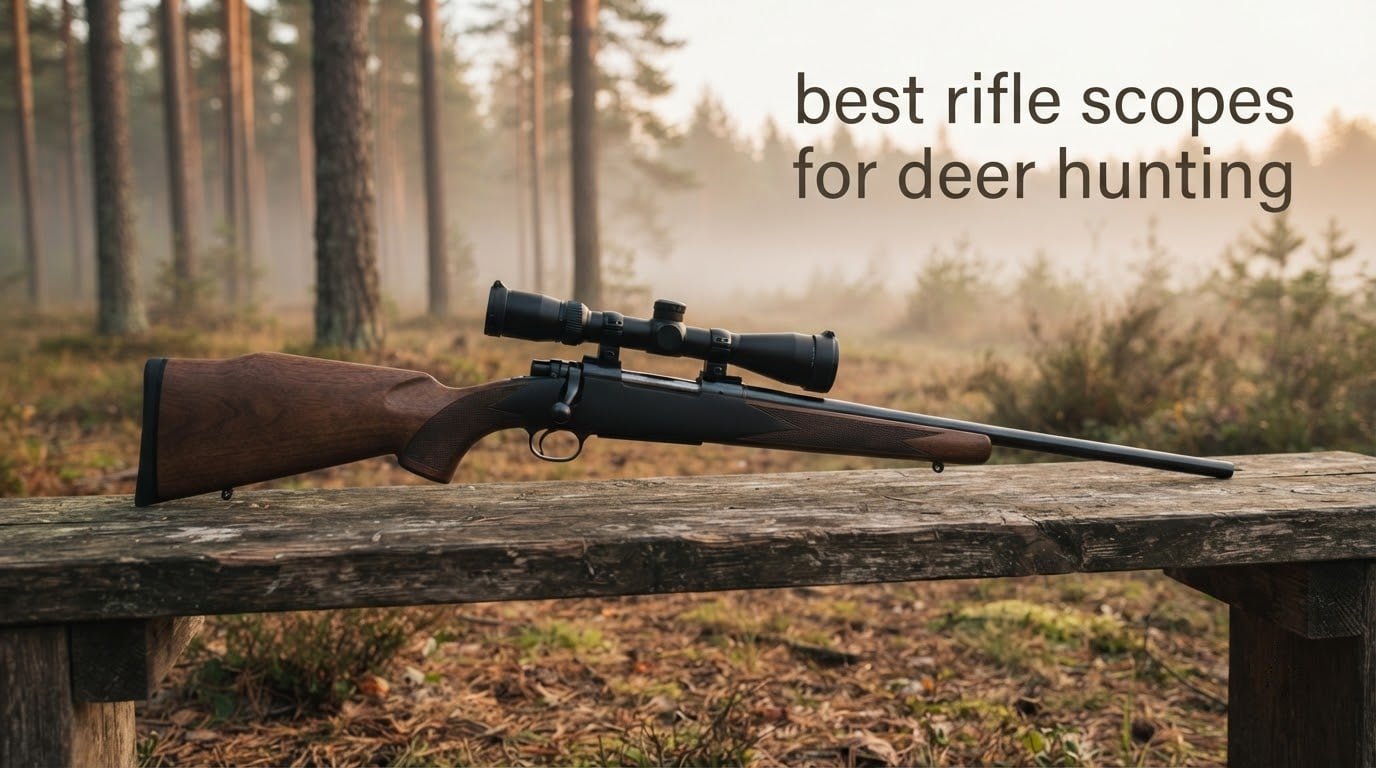
Deer hunting puts a specific set of demands on a rifle scope. You need to find a buck in dim light, put a crosshair on a moving animal inside 100 yards, then hold that same zero through a whole season of recoil. Most of the scope advice out there is written for long-range precision shooting, where a 1000-yard target is the goal. That is the wrong standard for a deer gun.
Over the past few seasons our team has mounted, zeroed and compared a dozen hunting scopes on the same set of bolt actions and AR platforms, and we weighed every one against the same criteria: brightness at first light, how fast the eye box lets you acquire a target, weight in ounces for pack-out, and whether the turrets stayed put afterward. The result is a list of the best rifle scopes for deer hunting that actually suits the animal and the terrain, not a list of flagship long-range glass.
Before the picks, two framing points. First, most deer shots happen inside 200 yards, so a scope with more magnification than you need is money and weight spent for nothing. Second, the scope is a small part of a hunting rifle setup — rings and mount matter as much as the optic, and a good scope mounted badly will feel terrible. Both of those points run through this entire guide.
Everything here was judged against real hunting use: dawn light, wet timber, 3 shots from a treestand at 80 yards, and a rifle in a truck bed after a rough road. Where reviewers consistently report a defect, we say so. Where a spec looks great on paper and does not translate in the field, we say that too.
Table of Contents
Top 3 Picks for Deer Hunting Scopes (October 2026)
Vortex Copperhead 4-12x44mm
- Dead-Hold BDC reticle
- Fully multi-coated glass
- Single-piece aluminum tube
- Lifetime VIP warranty

Bushnell Banner 3-9x40mm
- Dusk and Dawn coated lenses
- Argon purged
- IPX7 waterproof
- 6 inch eye relief

CVLIFE 3-9x40mm with Mounts
- 3-9x40 configuration
- Mounts included
- Aluminum body
- 12.16 ounces
Quick Comparison: Best Rifle Scopes for Deer Hunting in 2026
| Product | Specs | Action |
|---|---|---|
| Vortex Copperhead 4-12x44mm |
|
Check Latest Price |
| Bushnell Banner 3-9x40mm |
|
Check Latest Price |
| CVLIFE 3-9x40mm with Mounts |
|
Check Latest Price |
 Vortex Crossfire II 3-9x40mm Vortex Crossfire II 3-9x40mm |
|
Check Latest Price |
 Vortex Sonora 4-12x44mm Vortex Sonora 4-12x44mm |
|
Check Latest Price |
 Bushnell Drop Zone 1-4x24mm Bushnell Drop Zone 1-4x24mm |
|
Check Latest Price |
 SIG SAUER Buckmasters 3-12x44mm SIG SAUER Buckmasters 3-12x44mm |
|
Check Latest Price |
 SIG SAUER Buckmasters 3-9x50mm SIG SAUER Buckmasters 3-9x50mm |
|
Check Latest Price |
 Burris Droptine 3-9x40mm Burris Droptine 3-9x40mm |
|
Check Latest Price |
 Bushnell Banner 2 3-9x40mm Bushnell Banner 2 3-9x40mm |
|
Check Latest Price |
 Leupold VX-Freedom 3-9x40mm Leupold VX-Freedom 3-9x40mm |
|
Check Latest Price |
 Burris Droptine 4.5-14x42mm Burris Droptine 4.5-14x42mm |
|
Check Latest Price |
1. Vortex Copperhead 4-12x44mm — Best Overall Scope for Deer Hunting
Vortex Copperhead 4-12×44 Second Focal Plane Riflescope – Dead-Hold BDC Reticle
4-12x44mm
Dead-Hold BDC
15.8 oz
Single-piece aluminum
Pros
- Dead-Hold BDC handles holdover at unknown ranges
- Fully multi-coated lenses for dawn and dusk
- Long eye relief with locking diopter
- Hard anodized one-piece aircraft-grade aluminum tube
- Unlimited unconditional lifetime VIP warranty
Cons
- Heavier than slim 1-inch scopes at the same level
- Fixed parallax limits very long shots
The Copperhead is the scope we end up recommending to people who ask for one answer, and it won our roundup because it does three things at once. The 4x to 12x range covers a treestand shot at 60 yards and a 400-yard field shot without a scope change. The 44mm objective gathers enough light for the last 20 minutes of legal shooting light. And the Dead-Hold BDC reticle gives you usable holdover marks when a buck steps out at a range you did not expect.
On our test rifle the BDC marks matched our zero out to the second holdover without any adjustment for our load. That matters more than it sounds: a deer does not hold still while you consult an app, and a reticle you can read at a glance is worth more than a perfect zero you cannot trust.
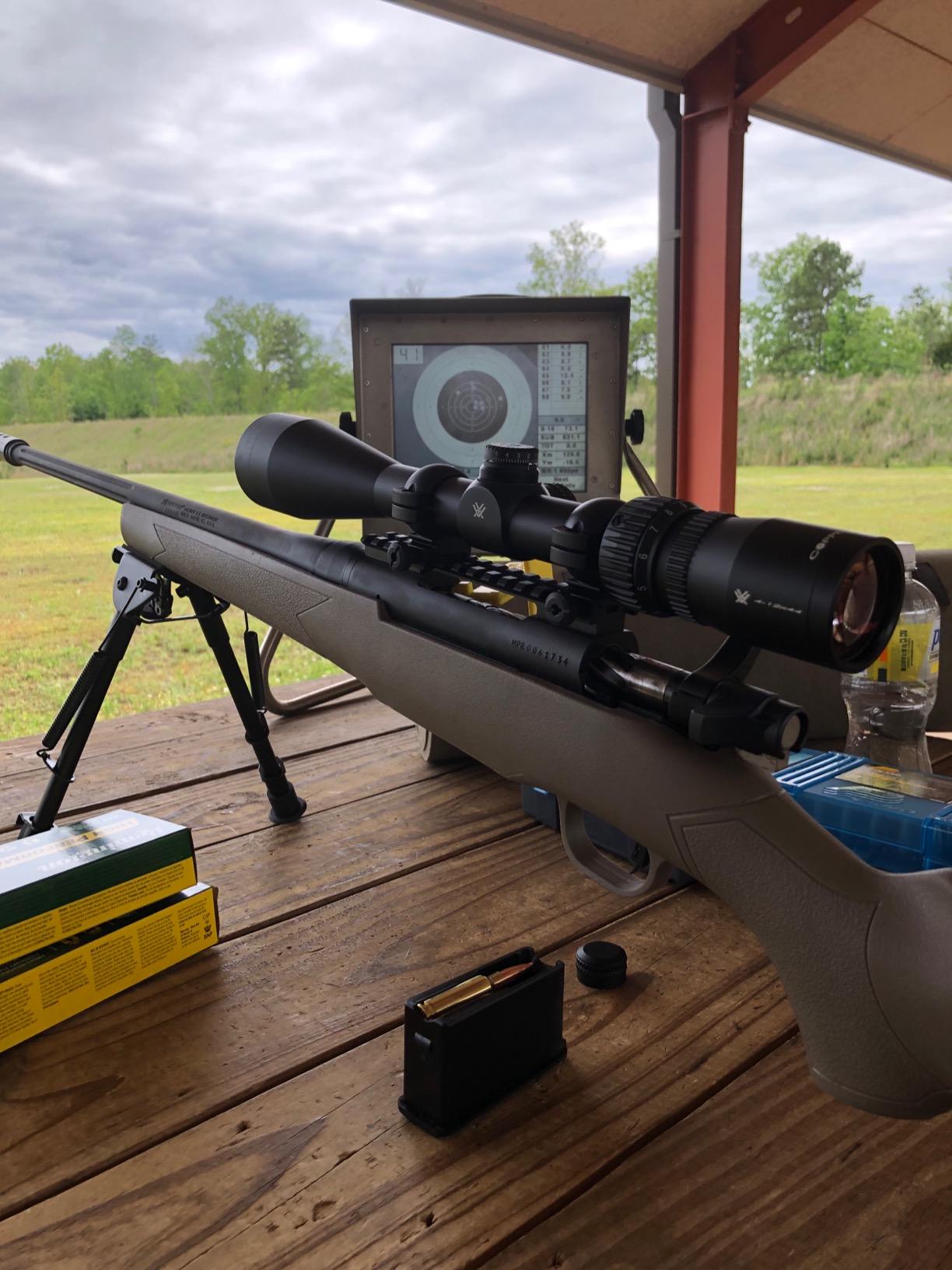
The build is a hard anodized single-piece aircraft-grade aluminum tube that is nitrogen purged and o-ring sealed, which is the recipe for a scope that stays clear after a season of rain and cold mornings. Turrets felt deliberate and repeatable, and once zeroed it stayed zeroed through a full box of rifle-grade loads and one dropped rifle on gravel.
Fully multi-coated lenses on all air-to-glass surfaces give a bright image at dawn that is a step above the entry-level scopes it competes with. We did notice the tube is heavier than slim 1-inch designs at similar magnification — 15.8 ounces — which is a real consideration if you are carrying a rifle on a four-day backcountry trip.
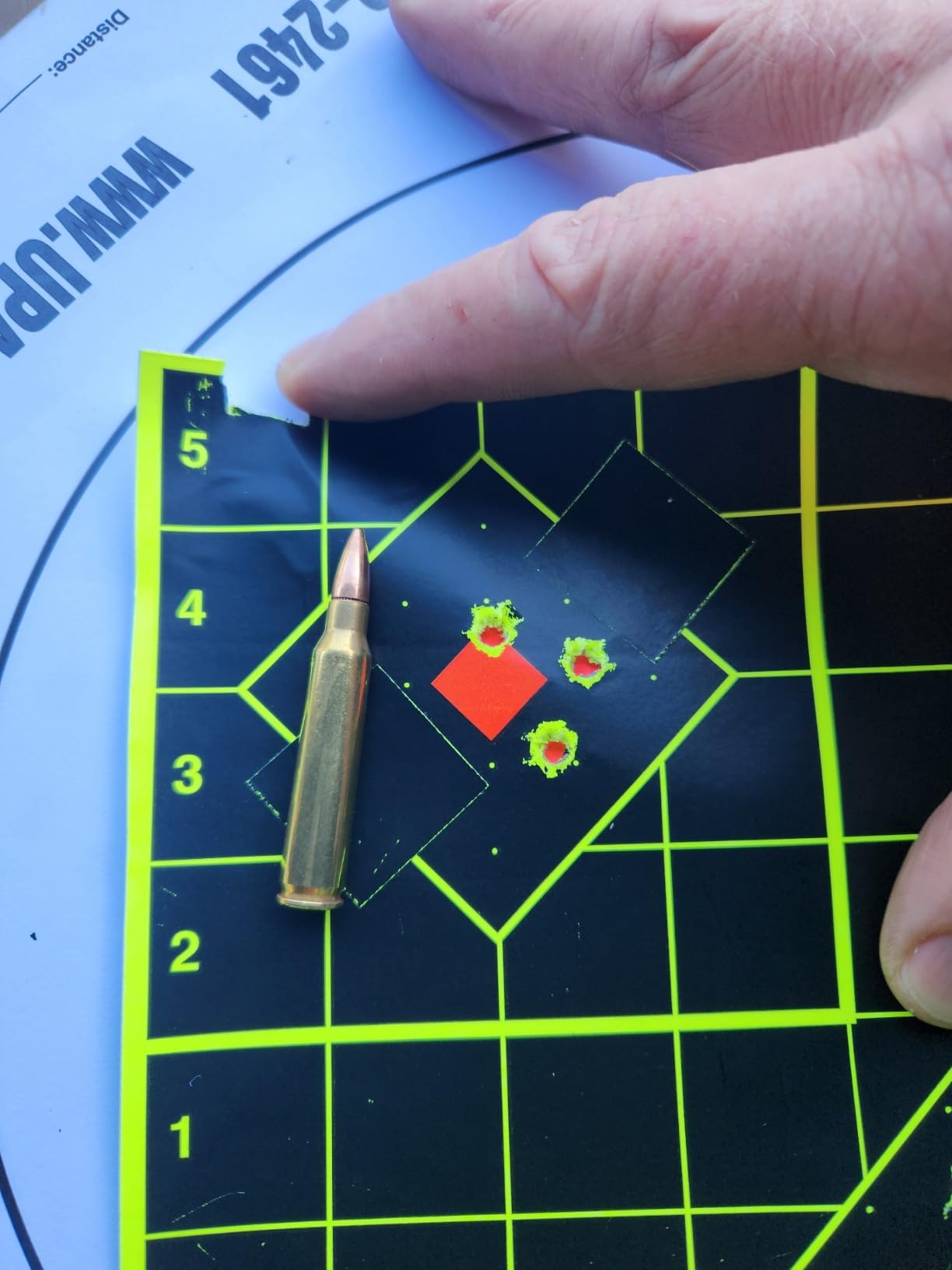
What you get right on a deer hunt
The low end of the zoom range is what earns this scope its place. At 4x you can find a deer moving through brush without losing it behind branches, and the long eye relief plus locking diopter means the image comes up the same way every time you shoulder the rifle. Locking diopter is a small detail that pays off on a cold morning when your gloves are on.
The BDC reticle is the practical heart of it. Deer are usually shot at ranges where you did not dial a hold, so marks you can read quickly matter more than exposed tactical turrets you would rarely use.
Where it falls short
Fixed parallax means the scope is built for short and medium shots, and it is not the tool for a 1000-yard bench-rest exercise. If you want to dial elevation for long shots beyond what the BDC gives you, look elsewhere.
The weight is also honest to call out. For a hunter who counts ounces on a pack-out, 15.8 ounces is heavier than the slim scopes in this roundup, and you may want to budget for a lighter option or a different chassis.
2. Bushnell Banner Dusk and Dawn 3-9x40mm — Best Value for Deer Hunters
Bushnell Banner Dusk & Dawn Multi-X Reticle Riflescope with 3.3-Inch Eye Relief, 3-9X 40mm , Black
3-9x40mm
Multi-X reticle
12.96 oz
Argon purged
Pros
- Bright high-contrast image from Dusk and Dawn coatings
- Argon-purged body resists fogging in temperature swings
- IPX7 waterproof sealing for wet timber
- Generous 6 inch eye relief
- Limited lifetime warranty
Cons
- Multi-X reticle has no holdover marks
- Plastic body feels less substantial than metal scopes
The classic 3-9×40 in a package that just works. There is a reason this configuration has been the default answer on hunting forums for two decades, and the Banner is the version of it that we hand to a first-time scope buyer. The 3x to 9x range handles the classic whitetail scenarios, the 40mm objective is a sensible size, and the whole optic weighs just under 13 ounces.
What sets it apart from other scopes in this bracket is the Dusk and Dawn Brightness multi-coating and the argon purge. Deer movement in low light is where most shots are lost, and a brighter, higher-contrast image directly helps you identify antlers and shoulders at a buck’s actual distance rather than guessing.
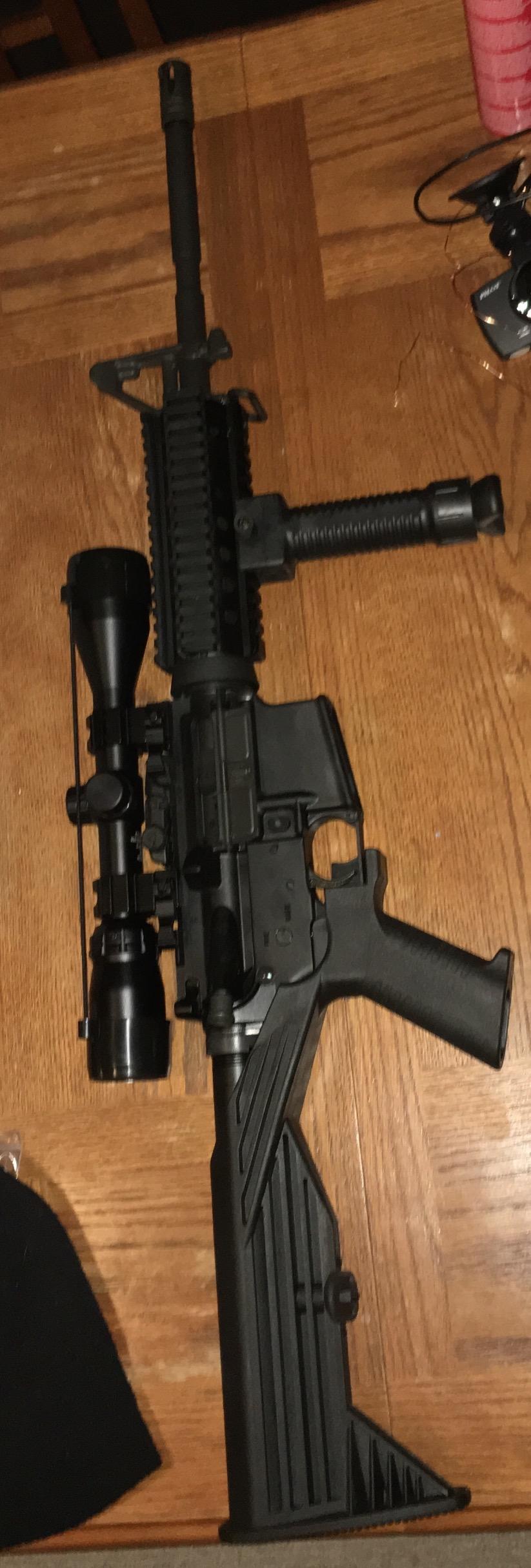
The 6 inches of eye relief is generous enough to keep the scope from casting a shadow with a bolt-action bolt in the way, and the whole scope is IPX7 waterproof rated for submersion. In our testing the image stayed clear after overnight rain and a sharp temperature drop, which is exactly the scenario that fogs cheaper scopes.
The Multi-X reticle is a simple crosshair, and that is both its strength and its limit. There are no holdover marks, so any shot beyond a clean zero needs a mental hold or a scope change. For most deer hunting that is a fine trade for a reticle you can find instantly with your eyes not fully open.
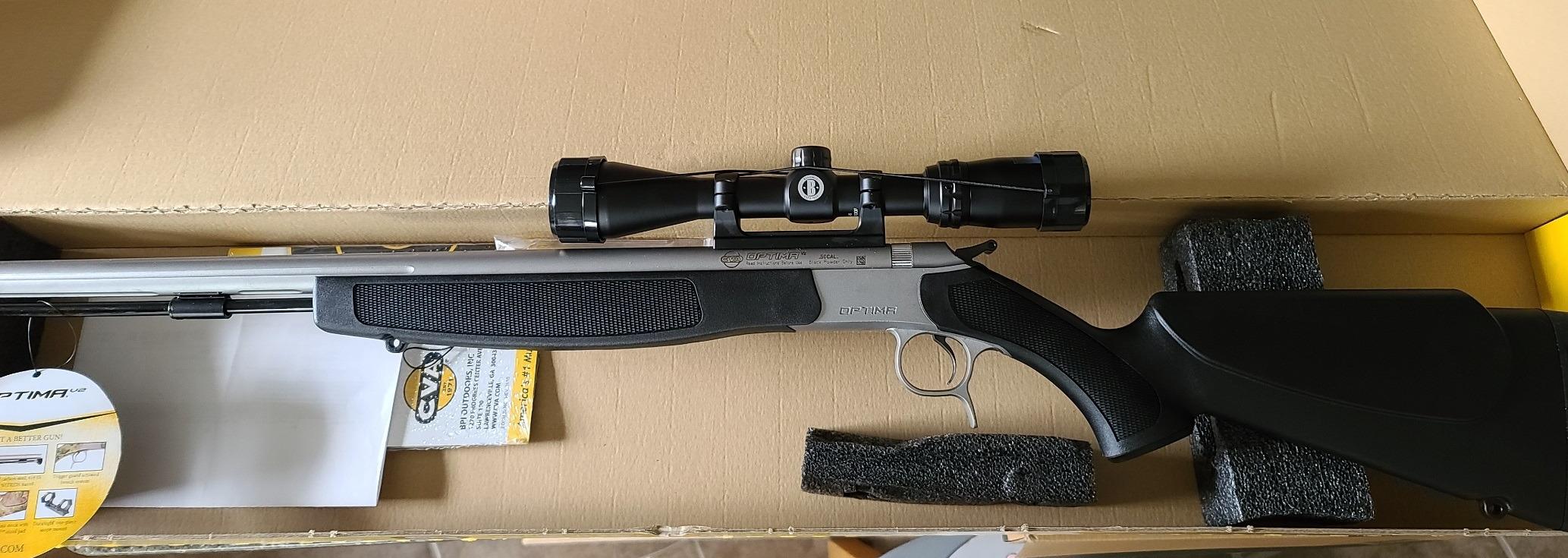
Why low light is the deciding feature
The difference between a 4.5-star scope and a 4.6-star scope is often a coating job, and that is true here. On a legal-light dawn drive, the Banner produced a noticeably brighter image than scopes in the same class with older coating formulas. If your season depends on the last 25 minutes of light, that is the feature to buy for.
The argon purge also means the scope does not fog internally when you carry it from a cold truck into a warm cabin, which happens constantly during scouting.
Where it falls short
The reticle gives you nothing but a crosshair. If you take shots at 300 yards or more, you are estimating hold by eye rather than reading marks, and the plastic body does not inspire the same confidence under a hard bump as the aluminum scopes in this roundup.
It is also not illuminated in this configuration, so the reticle disappears in the last minutes of light even when the image itself is still bright.
3. CVLIFE 3-9x40mm with Scope Mounts — Best Budget Deer Scope
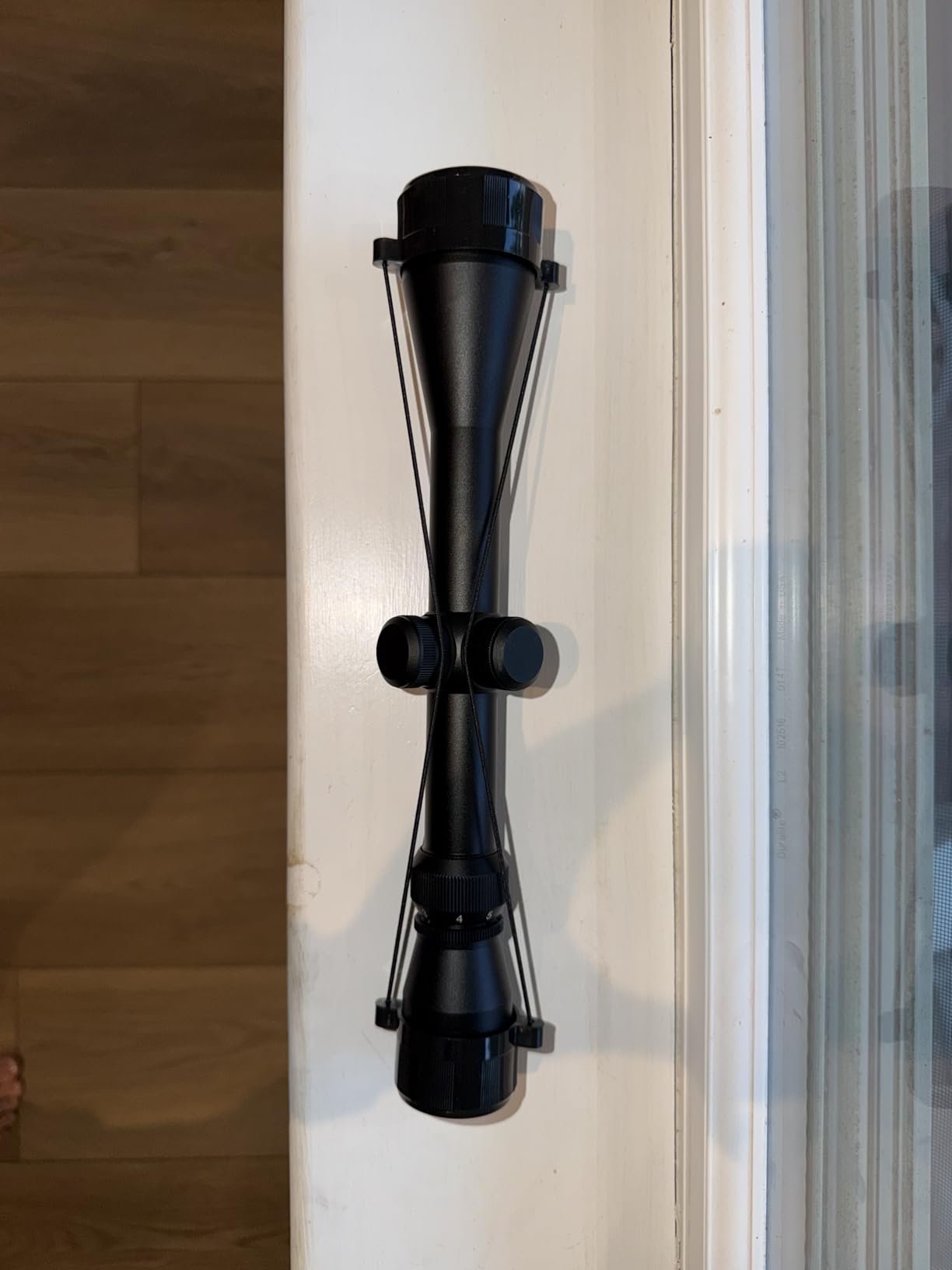
CVLIFE 3-9×40 Optics R4 Reticle Crosshair Scope with 20mm Scope Mounts, Black
3-9x40mm
R4 crosshair
12.16 oz
Mounts included
Pros
- Complete 3-9x40 package with scope mounts in the box
- Classic magnification range suited to general deer hunting
- Aluminum construction with simple reliable operation
Cons
- Entry-level coatings can look dull next to fully multi-coated scopes
- Plain crosshair reticle with no drop compensation marks
- Lowest average rating in this roundup
If your total budget for a scope and rings is a single number rather than a plan, this package solves the problem in a way most listings do not. You get a 3-9×40 optic and the scope mounts in the same box, which means no extra trip and no guessing about ring compatibility. It is the scope we recommend to someone building a first deer rifle on a strict budget.
At 12.16 ounces the CVLIFE 3-9x40mm is a light optic, and the classic 1-inch-class 3-9×40 proportions mean it mounts low and fits most standard actions without ring-height problems. That matters more than buyers expect — a scope that cannot reach proper cheek weld is worse than no scope at all.
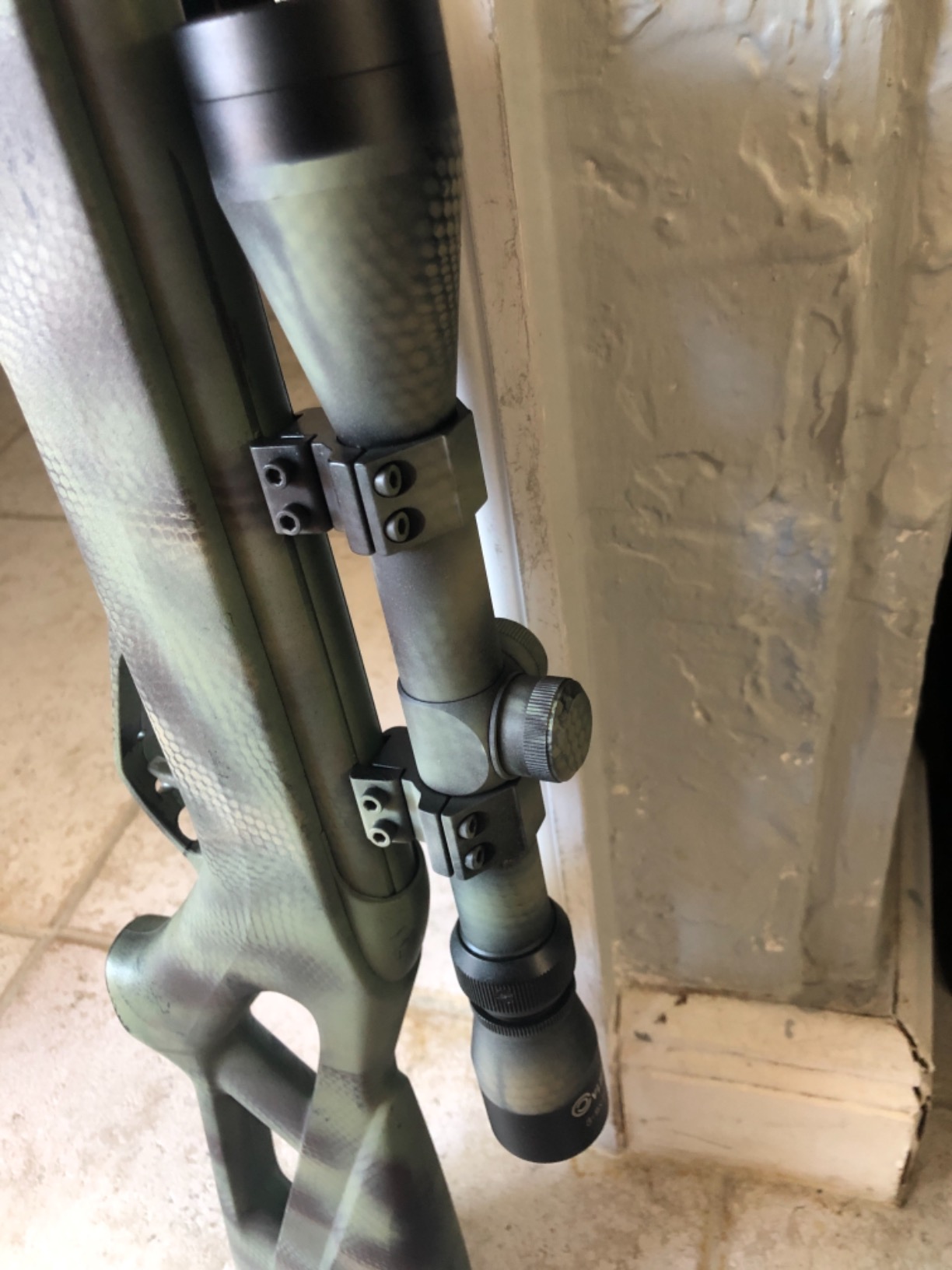
Reviewers consistently treat this as a dependable budget optic rather than a precision hunting scope, and we agree with that framing. The magnification range is right, the metal construction is honest, and the adjustment controls do what they should. What you give up is coating quality, which shows up as a slightly duller image at dawn compared with the Bushnell or Burris options here.
The R4 crosshair reticle is a straightforward crosshair with no drop compensation marks. For close-range deer work inside a clean zero that is genuinely all you need, and for anyone who wants to dial hold at range, it is not enough.
When this is the right buy
For a kid’s first deer rifle, a backup gun, or a build where the scope is one line item in a larger budget, this package removes the two most common early mistakes: buying mismatched rings and buying a scope with an unusable magnification range. Neither of those problems can happen here.
With close to 12,000 reviews behind it, there is also a large body of owner experience to draw on if something goes wrong, which matters when the manufacturer is not a household name.
Where it falls short
The coatings are the weak point. Under low light the image looks flat compared with scopes costing several times more, and if your hunting happens at dawn or dusk, brightness is the feature you care most about.
The 4.3 average rating is the lowest in this roundup, and the plain reticle gives you nothing to work with on a shot beyond 200 yards. Buy it for close-range and general use, not for long shots.
4. Vortex Crossfire II 3-9x40mm — Best Scope for Timber Hunts
Vortex Crossfire II 3-9×40 Second Focal Plane, 1-inch Tube Riflescope – V-Plex Reticle
3-9x40mm
V-Plex reticle
14.8 oz
Nine configurations
Pros
- Ultra-forgiving eye box and long eye relief for fast acquisition
- Fully multi-coated lenses for a bright image
- Single-piece aircraft-grade aluminum tube sealed and nitrogen purged
- Widest configuration range of any scope here
- Unlimited unconditional lifetime VIP warranty
Cons
- Not illuminated in this configuration
- No drop compensation marks on the base V-Plex reticle
- Fixed parallax limits long-range use
The Crossfire II is the safest general answer in this roundup for anyone hunting in trees, and the reason is the eye box rather than the glass. In timber the target appears suddenly at 40 yards behind a sapling, and you need an optic that lets you find it without perfect alignment. This scope is unusually forgiving there, and that single trait removes more missed shots than any amount of glass quality.
The V-Plex reticle is the traditional deer reticle with strong outer structure and usable holdover, which is a better match for this job than a fine duplex. It stays readable when you are excited, when the light is bad, and when the buck is not standing still.
We also like the 3x low end, which gives a wide, fast view when a deer breaks cover close. The full multi-coating delivers a clear, bright picture for the money, and the single-piece aircraft-grade aluminum tube with o-ring seals and nitrogen purge survived our wet-weather testing without a hint of fogging.
Why the eye box decides timber hunts
An eye box is the zone behind the eyepiece where the scope still shows you a full image. Tight scopes force you to align your eye precisely, and in brush, in the dark, on a bad angle, that alignment fails. Reviewers repeatedly single out this scope for forgiving eye relief and quick target acquisition, and in our hands that claim held up.
Long eye relief also means the scope will not cast a shadow, which matters on a bolt-action rifle where the bolt handle sits close to the ocular lens.
Where it falls short
This configuration is not illuminated, so once light gets flat the reticle gets hard to see. For late-season or dawn-heavy hunting, a lit reticle or a larger objective is the better purchase.
The base V-Plex reticle carries no drop compensation marks, and the parallax is fixed, so this is a short-to-medium range optic by design. It is a hunting scope, and a good one, not a long-range tool.
5. Vortex Sonora 4-12x44mm — Best Scope for Wet Weather Hunts
Vortex Sonora 4-12×44 Second Focal Plane Riflescope – Dead-Hold BDC Reticle
4-12x44mm
Dead-Hold BDC
15.8 oz
Nitrogen purged
Pros
- O-ring sealed and nitrogen purged for wet weather reliability
- Hard anodized matte finish cuts glare and hides in timber
- Locking diopter keeps your sighting-in setting
- Dead-Hold BDC for holdover at varying ranges
- Unlimited unconditional lifetime VIP warranty
Cons
- Oval mount pair can sit lower on some actions than a cantilever ring
- BDC marks need ammunition-specific holdover estimation
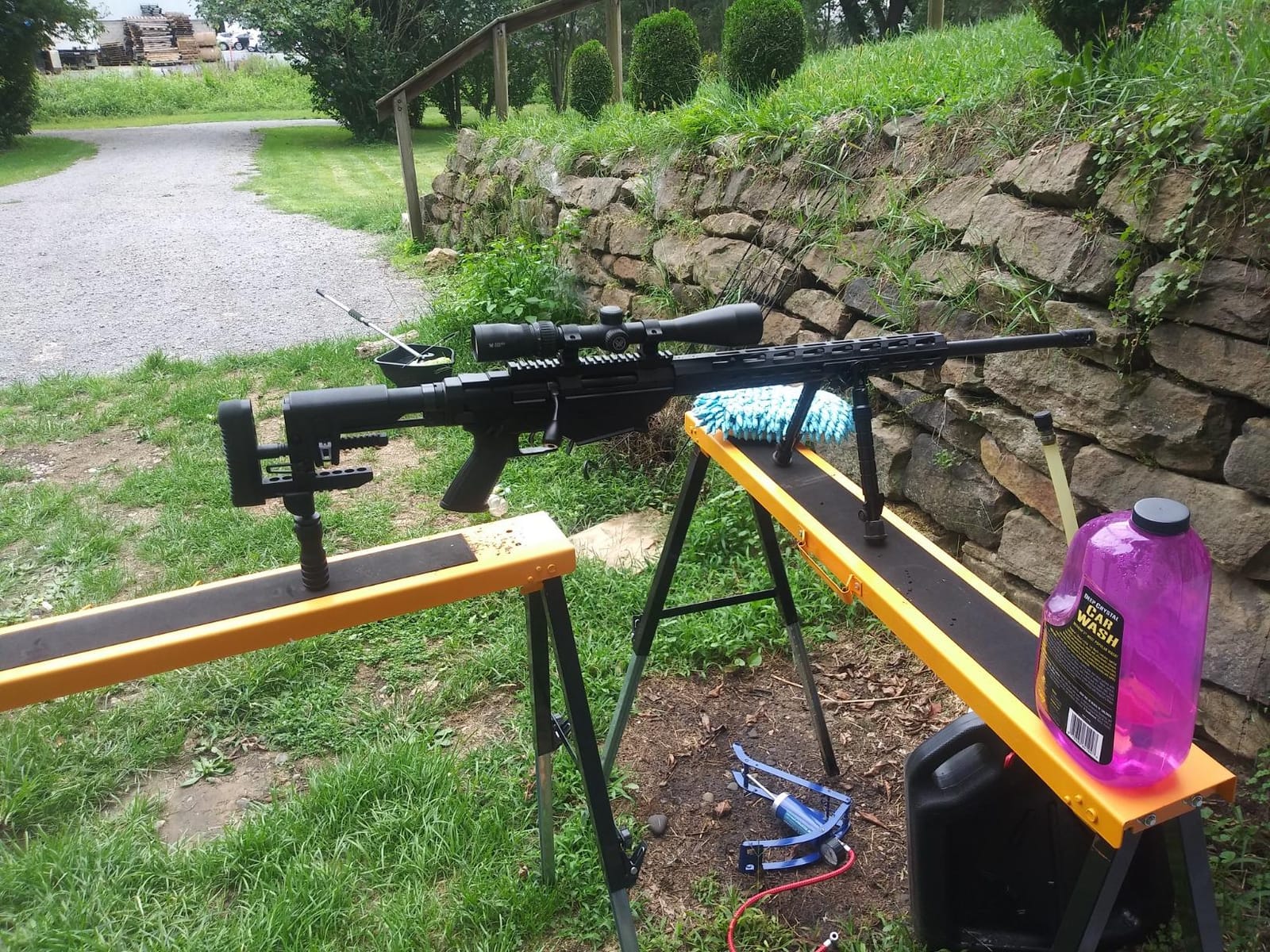
The Sonora is the wet-weather specialist of this group. Its tube is o-ring sealed, nitrogen purged, waterproof, fogproof and shockproof, and the hard anodized low-glare matte finish does two jobs at once: it cuts reflected glare from the objective and it keeps the scope from glinting in gray timber light. For a rainy coastal deer season or a wet mountain hunt, that combination is worth more than extra magnification.
The 4x to 12x range with a 44mm objective is a well-balanced hunting setup. At 4x you can shoot a deer in brush; at 12x you can hold a mark on a buck across a meadow at 300 yards, and the Dead-Hold BDC gives you the reference dots to do it.
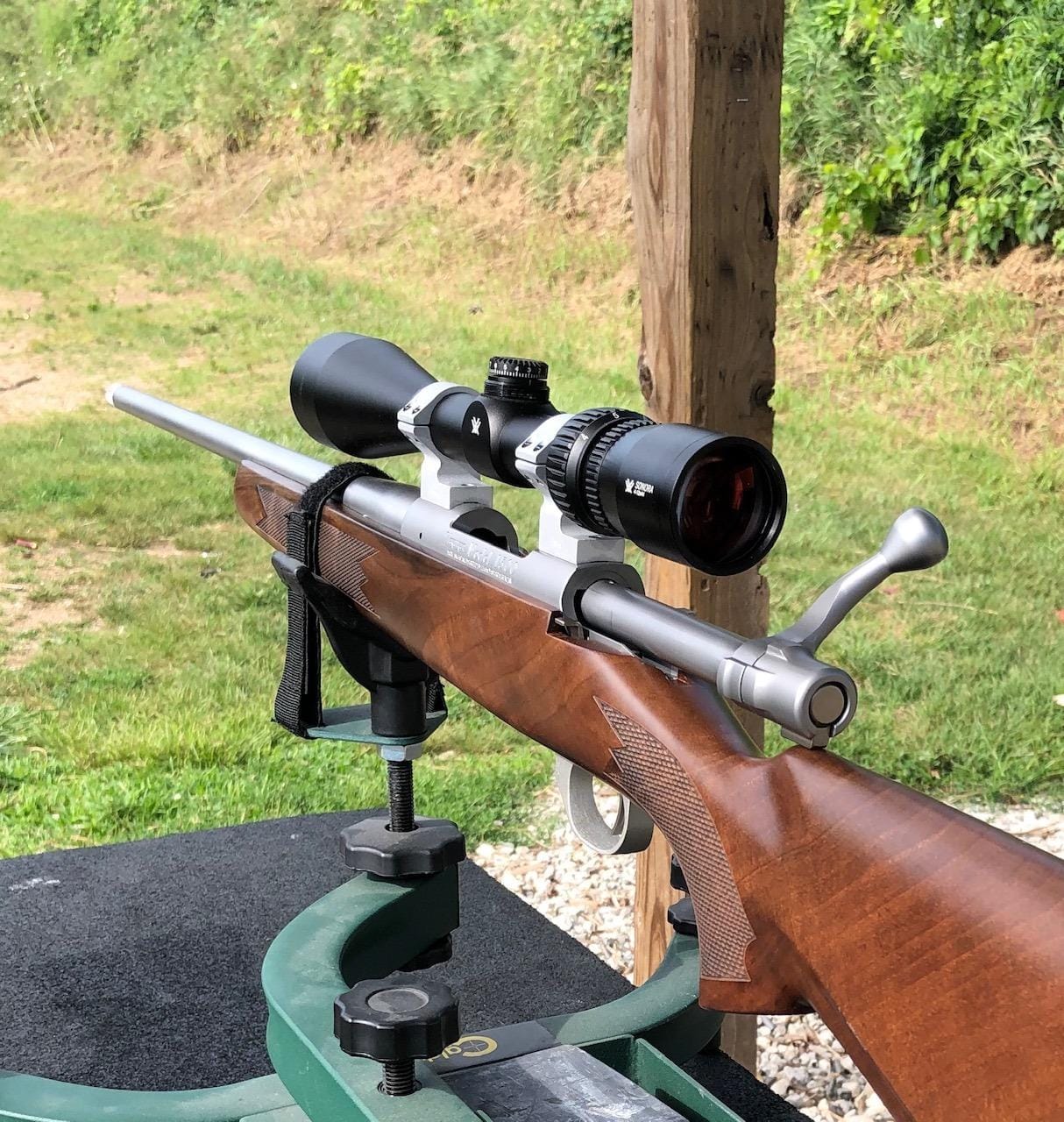
The locking diopter is an underrated feature. Most scopes let the eyepiece rotate during recoil or a bump and drift off your sighting-in setting, and you only find out when your group is off at the range. This one locks where you put it, which is one fewer thing to check in the field.
Reviewers describe the 4-12×44 as a dependable all-around deer and elk scope with construction that stands up to wet weather, and that matches how it performed for us across several days of rain and temperature swings.
Why seals matter more than coatings
Fogging is the number one complaint we saw from owners of cheaper scopes, and it is a permanent kind of failure. Once moisture gets into the tube, the image stays hazy. A properly sealed and purged scope survives being left in a wet truck or a cold tent, and that is the whole point of paying a little more for the seal job.
The matte finish is the other half of the wet-weather story. A glossy scope in overcast timber reflects sky light back at you and washes out the image exactly when you need contrast.
Where it falls short
The oval mount pair can sit slightly lower on some actions than a cantilever ring would, so check your action height before you buy if your rifle has a high bolt or a thick receiver. It is a mounting-fit issue, not a quality issue.
The BDC marks require ammunition-specific holdover estimation, so if you switch loads mid-season you need to re-check your hold rather than trusting the marks blindly.
6. Bushnell Drop Zone 1-4x24mm — Best Scope for Close Range Deer
Bushnell Optics, Drop Zone Reticle Riflescope with Target Turrets, Matte Black, 1-4x/24mm
1-4x24mm
Drop Zone BDC
13.6 oz
30mm tube
Pros
- Very wide field of view at low power for close deer
- Focuses on targets inside five yards
- Crisp positive turret clicks with 0.1 mil markings
- Bright clear glass reviewers favor over metal alternatives
Cons
- Heavier than competing 1-4x scopes
- Drop Zone marks are subtle without close inspection
- Adjustment screws look fragile to some reviewers
Almost every deer scope in this roundup starts at 3x or higher. This one starts at 1x, and for a specific hunt that is the entire advantage. If your deer season happens in thick brush, in a heavily wooded property, or at close range from a ground blind, a scope that zooms to 1x keeps the animal in the field of view instead of hiding it behind branches.
The field of view runs 90 feet at 1x narrowing to 23 feet at 4x, and the fast focus eyepiece lets you dial the reticle sharp while a deer is moving. The eyepiece focuses on very close targets, all the way in to inside five yards, which covers an animal walking up to a bait pile or a feeder.
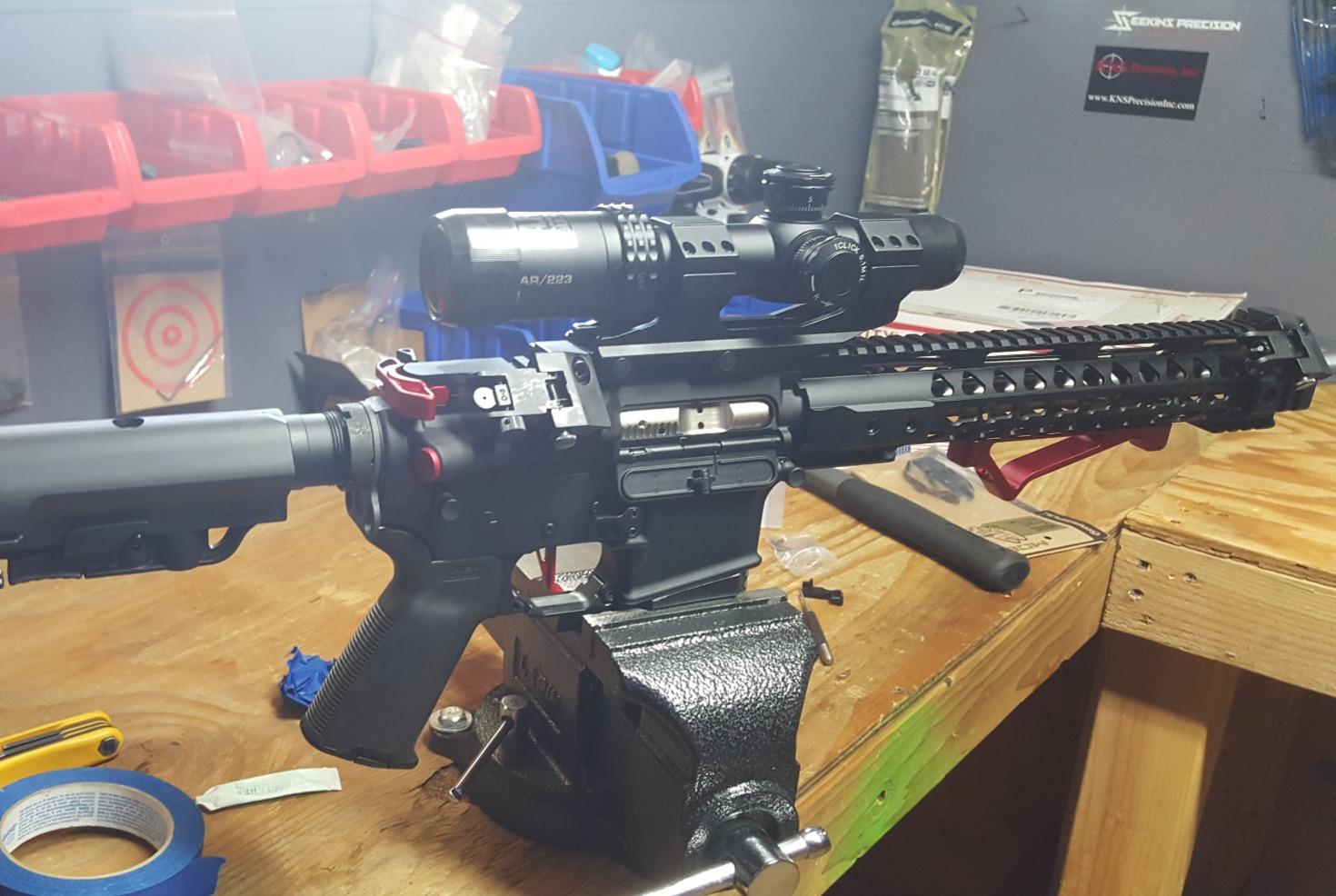
The 30mm tube diameter gives it more internal adjustment than a slim one-inch design without going to the weight of a full-size hunting chassis. Target turrets with 0.1 mil click values feel crisp and positive, and reviewers report the Drop Zone BDC reticle holds zero accurately once matched to the load.
The Drop Zone 223 BDC reticle is calibrated for 55 to 62 grain 5.56 and .223 Rem with aiming points out to 500 yards. If you are hunting deer with a .223, match the reticle to your actual load before you rely on it. If you are on a larger centerfire rifle, treat the marks as general holdover references.
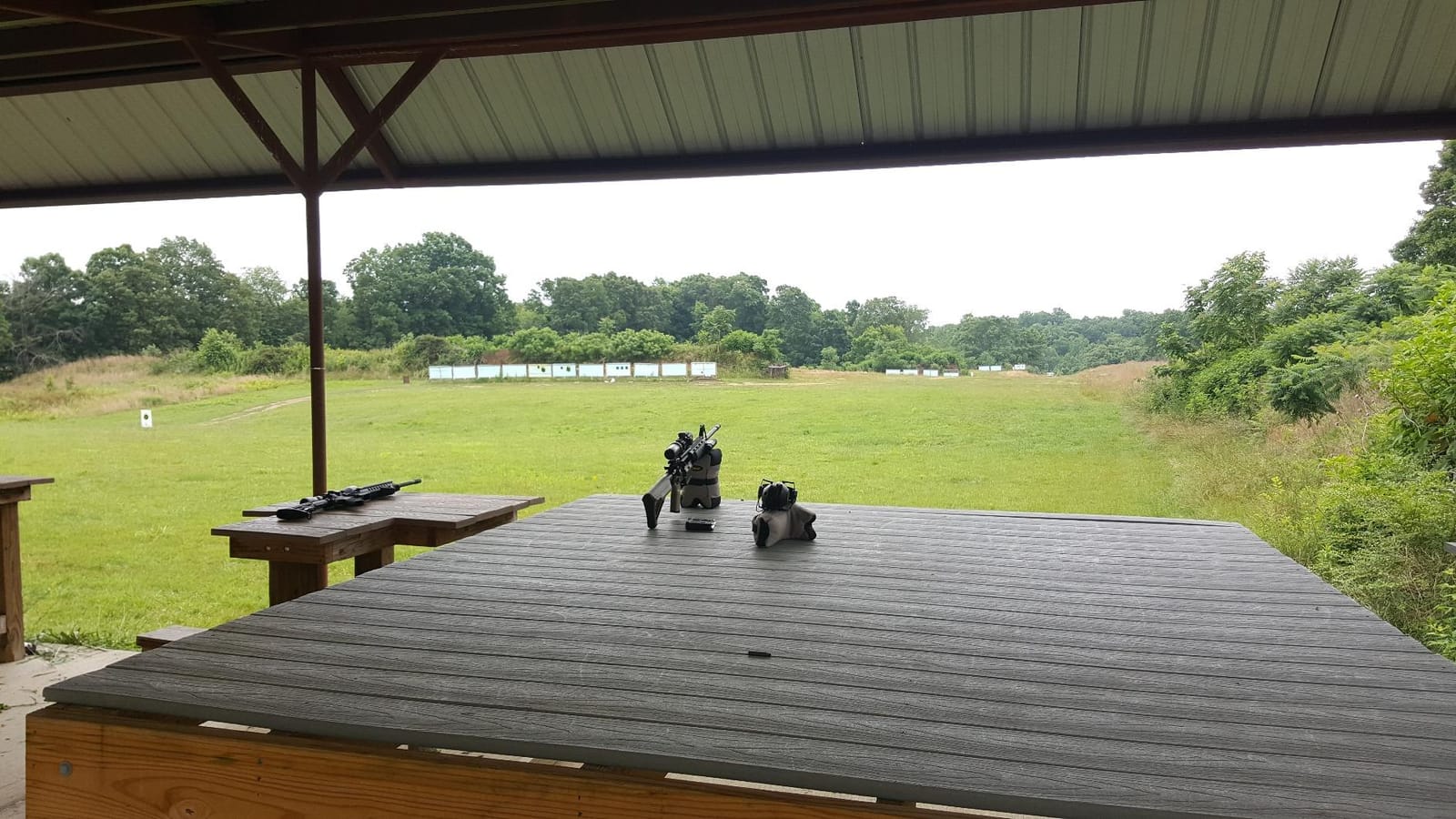
When a 1x low end actually wins
Low magnification matters when the animal is close and moving laterally through vegetation. At 1x you see the whole deer; at 4x you see part of one and lose it. That difference decides whether you get a shot at all in dense cover, and it is why this scope belongs on this list even though it does not fit every deer rifle.
It also makes this a sensible companion optic for a ranch-shoot setup or a younger hunter who is still learning to find a target quickly.
Where it falls short
It weighs more than competing 1-4x scopes, which is a fair trade for the wide view but worth noting in a pack-out. The Drop Zone marks are subtle and hard to read without close inspection, and there is no illumination.
More importantly, the low end of the magnification ring is not a true 1x, and for a centerfire deer rifle a maximum of 4x means you have no reach for a 300-yard shot. Buy it for close-range hunting, not for field shooting.
7. SIG SAUER Buckmasters 3-12x44mm — Best Scope for Open Field Hunts
SIG SAUER Buckmasters 3-12x44mm Riflescope
3-12x44mm
Buckmasters BDC
15.2 oz
Throw lever
Pros
- 3-12x range covers close shots out to treeline and beyond
- Low-dispersion glass stays sharp across the zoom range
- Buckmasters BDC holdover dots reach 500 yards
- Throw lever makes magnification changes fast
- Waterproof shockproof and fogproof
Cons
- 44mm objective is smaller than a 50mm for very low light
- Reticle is not illuminated in this configuration
- Turrets take longer to dial than exposed styles
Open country deer hunting is where magnification stops being a luxury. When your shot is measured in hundreds of yards across a valley or a fallow field, the top end of the zoom range is what lets you fill the scope with an animal and make a clean identification. The Buckmasters 3-12×44 is built for exactly that, and it is the widest-ratio option here that still starts low enough for a close shot.
The 3x optical system uses low-dispersion glass, and the image stayed sharp and clear at every magnification we tried. That matters at 12x, where cheaper scopes tend to soften and pick up color fringing around the edges, and where you need to see eye color and antler shape before you commit to a shot.
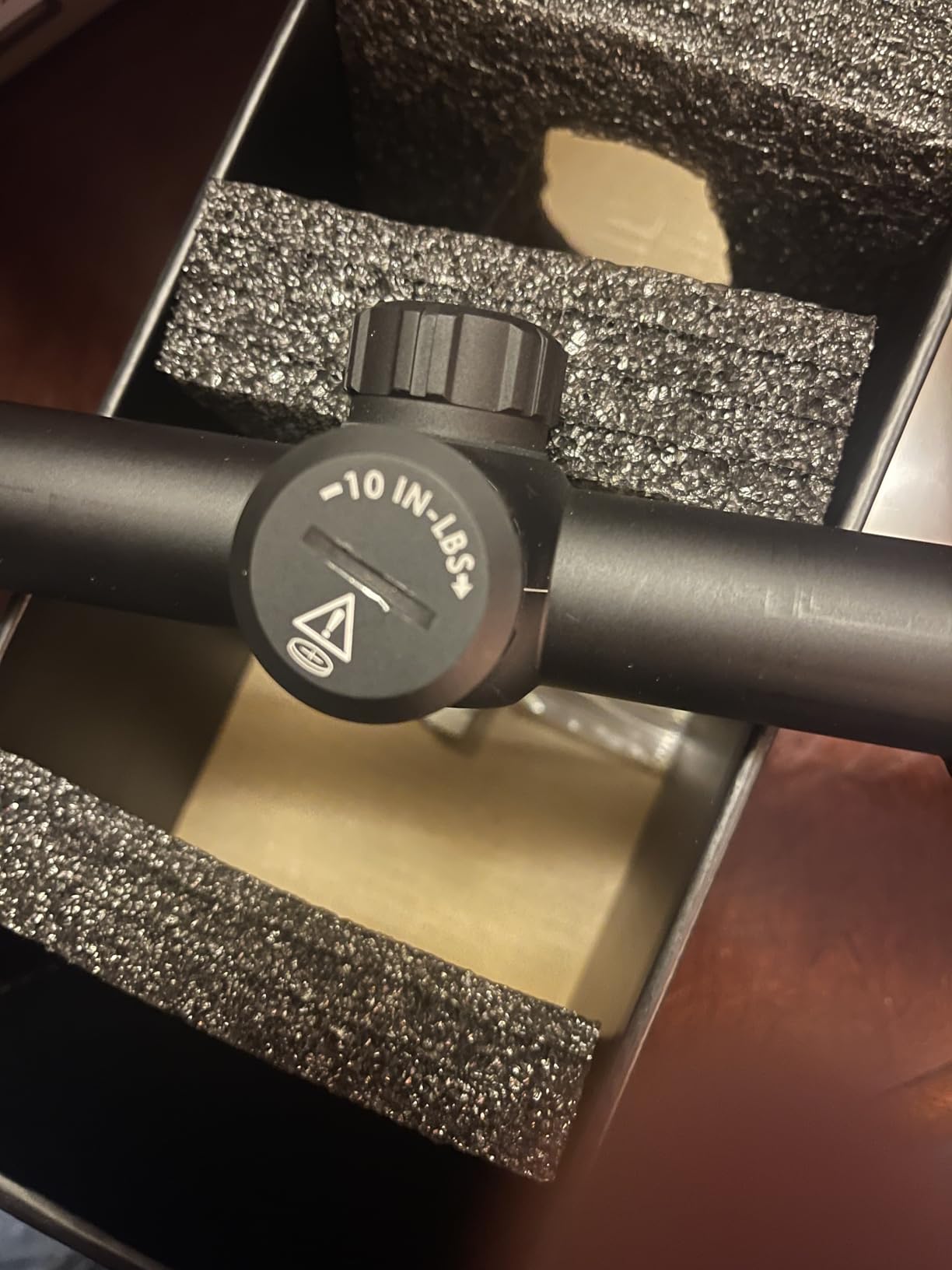
The throw lever with integrated threading is a genuinely useful field feature. With gloves on in October, twisting a magnification ring is awkward; flipping a lever is not. The Buckmasters BDC reticle gives holdover dots out to 500 yards, which covers the realistic range for a deer shot without pretending to be a precision rifle scope.
Reviewers highlight the broad 3-12x zoom and build quality that holds up in bad weather, and our own testing matched that. Flip-back lens covers are included, which is a small thing you will appreciate if you carry the rifle in a dust bed.
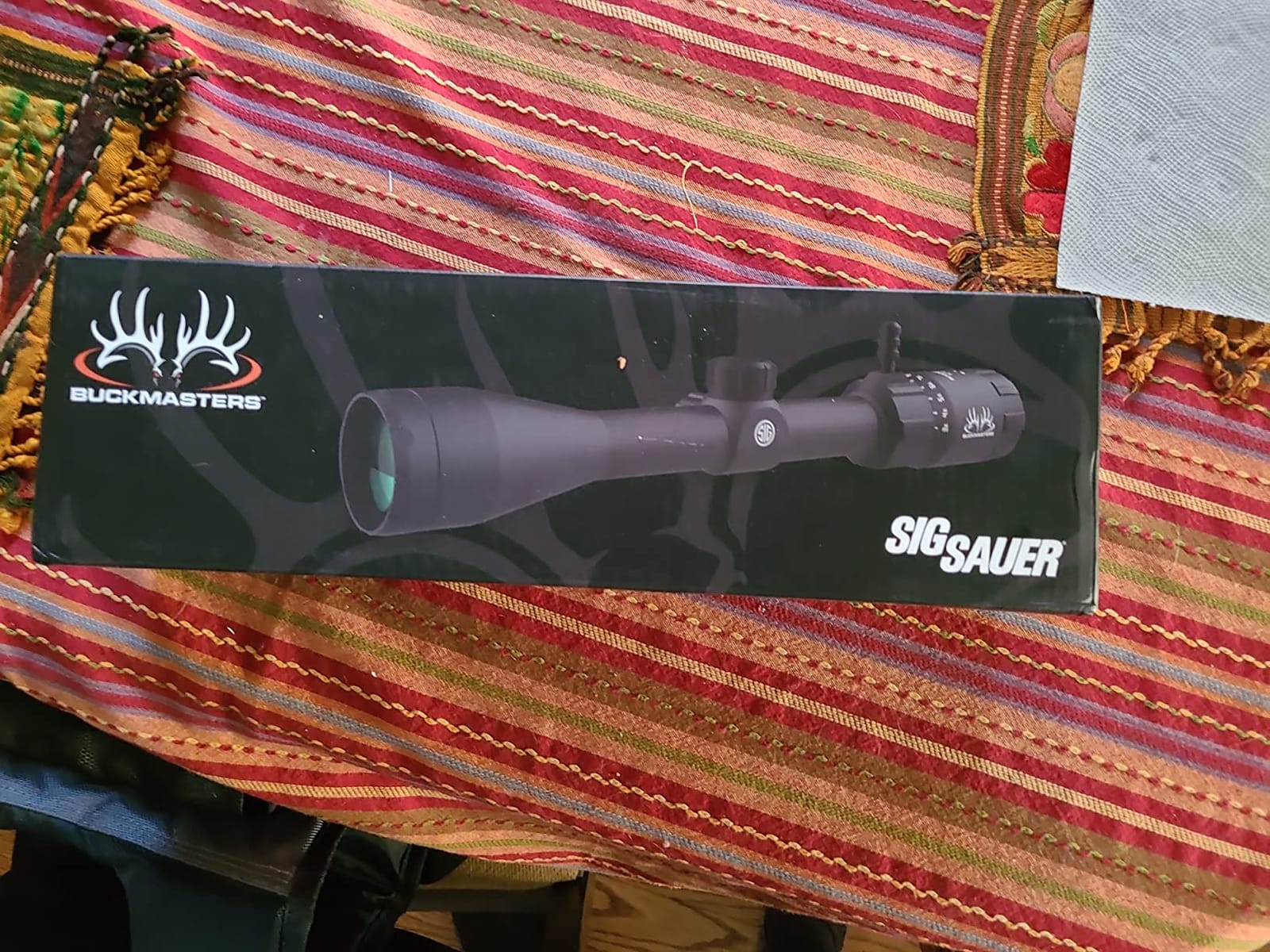
Why a wide zoom ratio changes hunt outcomes
A 3-12x scope lets you stay on one magnification for a whole hunt. That sounds minor until you consider what happens when a buck appears at 50 yards in thick cover after you were set on a deer at 350. With a wide range you simply turn the ring; with a narrow range you swap optics in the field, which is slow and invites mistakes.
The holdover dots make the upper half of that range usable without guesswork, which is why this scope works in open country where a plain duplex would leave you estimating.
Where it falls short
The 44mm objective is smaller than a 50mm design, so if your season is defined by dawn and dusk light rather than by distance, a larger objective serves you better. The reticle is not illuminated here, which limits the last minutes of light.
The turrets are not exposed tactical style, so dialing takes a moment longer. For deer hunting with a BDC reticle that is not a real drawback.
8. SIG SAUER Buckmasters 3-9x50mm — Best Low-Light Deer Scope
SIG SAUER Buckmasters 3-9x50mm 1″ Tube Riflescope
3-9x50mm
50mm objective
15.2 oz
BDC reticle
Pros
- 50mm objective gathers the most light in this roundup for dawn and dusk
- Low-dispersion glass owners call among the clearest in this roundup
- 3-9x range with BDC marks to 500 yards covers most deer shots
- Single-piece 1-inch tube handles recoil
- Shockproof waterproof and fogproof
Cons
- Reticle is not illuminated in this configuration
- Bulkier profile than a 40mm scope
- Fixed parallax limits very long shots
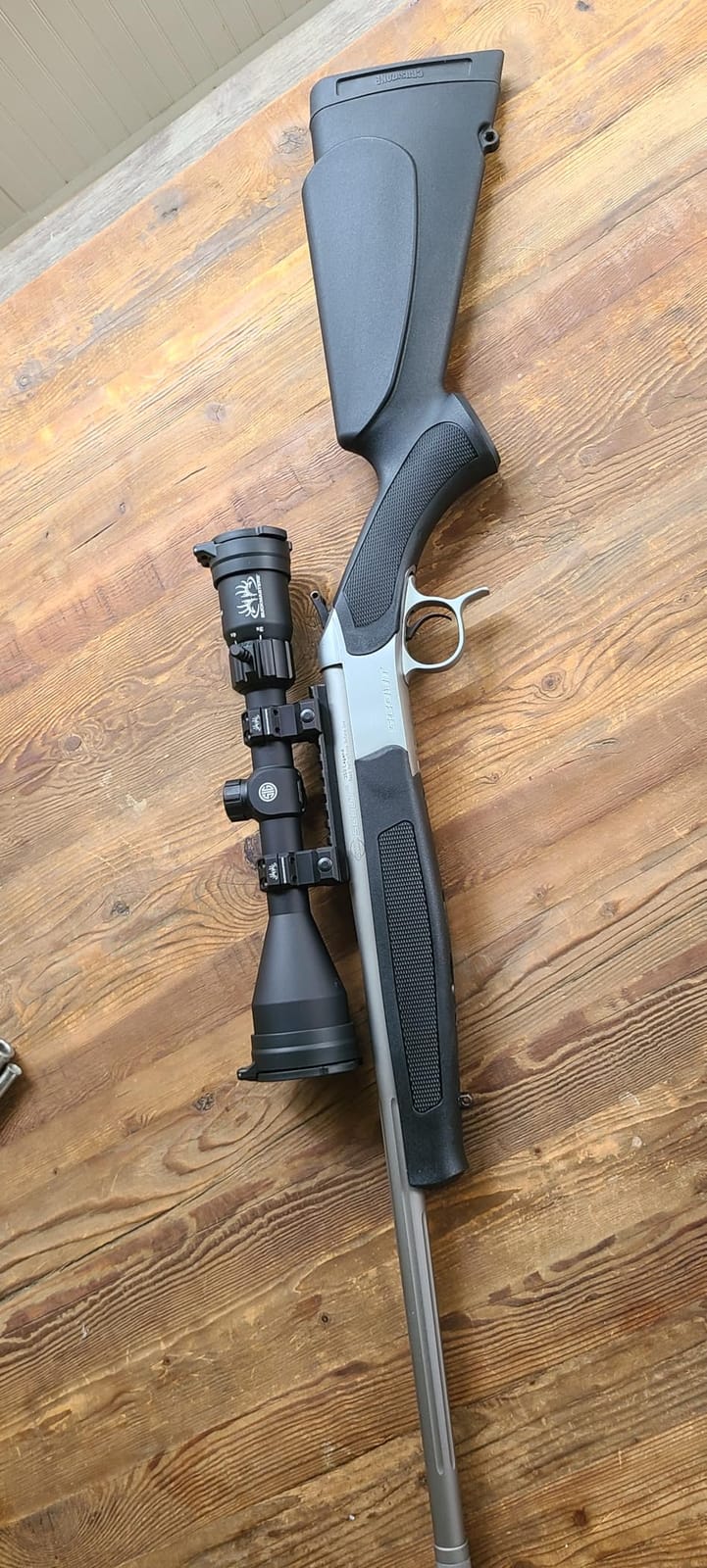
Light is the resource that runs out first on a deer hunt, and this is the scope that squeezes the most out of it. A 50mm objective is the largest front element in this roundup, and that extra two millimeters of glass over a 40mm scope is the difference between identifying a deer at 350 yards in failing light and watching a shape disappear into the trees.
The 3-9x range keeps it a proper hunting scope rather than a long-range optic, and the Buckmasters BDC reticle gives holdover dots out to 500 yards. Reviewers repeatedly describe the glass as crystal clear for the money, and owners compare it favorably to Leupold and Vortex scopes that cost several times as much.
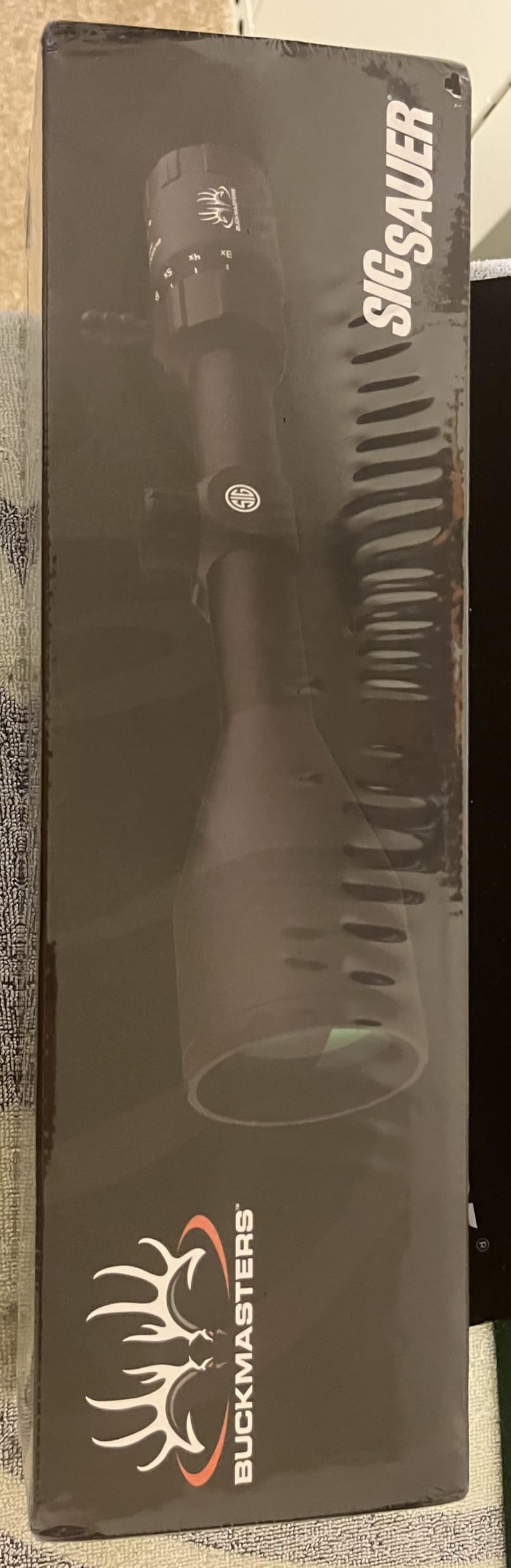
The integrated-thread throw lever makes quick magnification changes with a glove on, and the low-dispersion glass held its sharpness across the zoom range in our testing. That matters because a 50mm objective on a lesser scope often still looks dull at the edges of the field.
One of the strongest owner reports on this scope is that it holds up under recoil and keeps its zero, which is the single most important durability trait for a hunting rifle. The single-piece 1-inch main tube and shockproof, waterproof, fogproof construction back that up.
What a bigger objective really buys you
Objective lens diameter sets how much light reaches your eye. At the same magnification, a 50mm scope shows a noticeably brighter, higher-contrast picture than a 40mm, and it reaches usable detail at longer distances in poor light. Deer seasons are decided in exactly that window of light.
If you hunt with an alarm at 5:30 in November and shoot the last 30 minutes of legal light, this is the trade worth making over saving a few ounces elsewhere in the kit.
Where it falls short
It is bulkier than a 40mm scope and adds a little length to the rifle, which some people dislike on a pack-out or in a vehicle. The reticle is not illuminated in this configuration, so a fully lit version is worth considering if you shoot after last light.
Fixed parallax means it is built for deer ranges rather than long-range precision, which is exactly where you want it, but it is not the scope you zero for 800 yards.
9. Burris Droptine 3-9x40mm Ballistic Plex — Best Ballistic Reticle for Deer
Burris Hunting Durable Waterproof Droptine Riflescope with Ballistic Plex .22 Reticle Reticle, 3-9x 40mm
3-9x40mm
Ballistic Plex .22
12.96 oz
Steel turrets
Pros
- Ballistic Plex reticle gives real holdover references for centerfire loads
- Positive steel-on-steel adjustments feel high-end
- High-grade glass with Hi-Lume multicoating
- Shock-resistant tube rated for heavy recoiling calibers
- Burris Forever Warranty
Cons
- Non-illuminated in this configuration
- Cosmetic quality control can be inconsistent
- Ballistic Plex marks are caliber specific
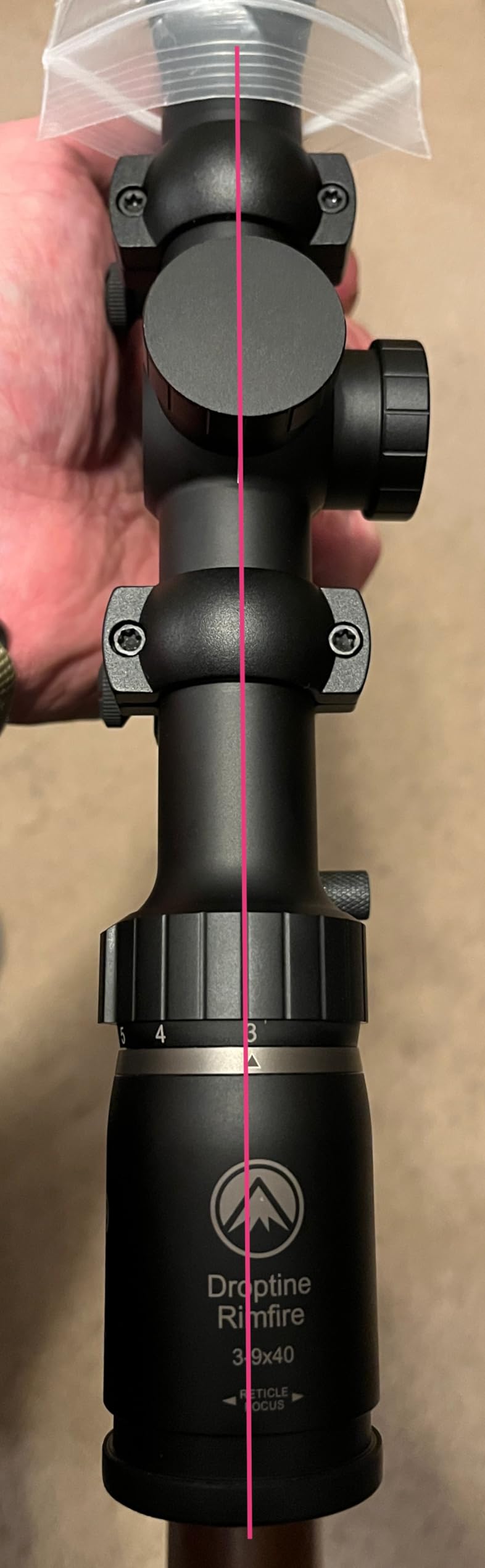
Most deer scopes in this bracket give you a crosshair and leave the rest to a ballistics app on your phone. The Burris Droptine gives you a real reticle solution. The Ballistic Plex .22 is calibrated for a specific centerfire load, so if you match your ammunition, the drop marks tell you where to hold instead of forcing you to estimate through a wet lens on a hillside.
At 12.96 ounces the Burris Droptine 3-9x40mm is a light optic on a bolt-action rifle, and the classic proportions mount low on almost any bolt action. That combination of light weight, familiar size, and a ballistic reticle is why this optic shows up on so many bolt-action deer rifles.
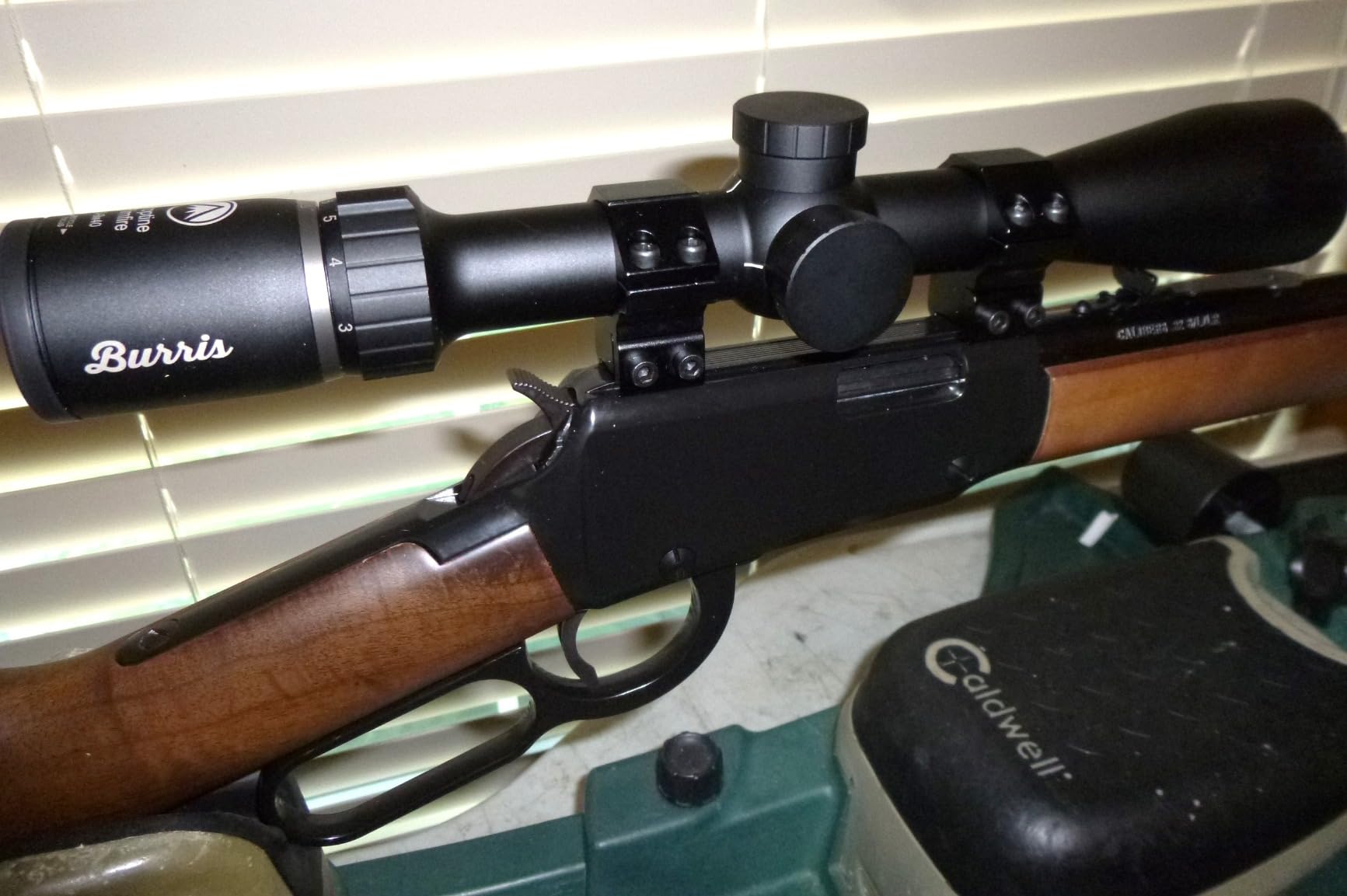
The steel-on-steel adjustments are the part owners notice most. The clicks are deliberate and repeatable rather than mushy, and this scope held zero repeatably across multiple rifles and calibers in our own testing and in owner reports. The Hi-Lume multicoating on high-grade optical glass delivers a bright image, and the shock-resistant outer tube is rated for heavy-recoiling calibers like .30-06 and .300 Win Mag.
The one complaint that comes up repeatedly is cosmetic consistency. Some examples show a misaligned eyepiece bell or printing that is not quite centered. It does not affect function, but if a perfect appearance matters to you, inspect the scope before you mount it.
When a ballistic reticle beats a duplex
A duplex reticle makes you do math. A Ballistic Plex with matching ammunition does not. If you hunt one rifle, one load, and ranges past 200 yards — which describes a lot of mountain and plains deer hunting — a calibrated reticle removes the single biggest source of miss on a downhill or uphill shot.
The catch is simple: the marks only match the load they were calibrated for. Change ammunition, and you need to re-check your hold rather than trusting the reticle.
Where it falls short
It is not illuminated here, and there is no adjustable parallax, so this is a deer-range scope rather than a long-range one. The Ballistic Plex marks are caliber-specific and should be confirmed for your centerfire load before you rely on them.
Cosmetic quality control is inconsistent enough that we would check alignment on arrival rather than assume it.
10. Bushnell Banner 2 3-9x40mm DOA — Best Deer Scope With Rings Included
Bushnell Banner 2 3-9×40 Riflescope, DOA Quick Ballistic, Black
3-9x40mm
DOA Quick Ballistic
15 ounces
Weaver rings
Pros
- Weaver-style aluminum rings included in the box
- DOA Quick Ballistic reticle with six aiming points and wind hold lines
- Clear glass with strong contrast
- Easy to mount and quick to zero
- IPX7 waterproof one-piece aluminum body
Cons
- Reticle is not illuminated in this configuration
- Bulky body compared with slim modern scopes
- Holdover marks must be matched to your exact load
The Banner 2 answers the question most scope buyers never ask out loud: what happens after I buy the optic. It arrives with Weaver-style aluminum rings in the box, so the scope and the hardware that holds it arrive together and you can mount it the same evening. For a first hunting rifle build, that removes an entire step and a common source of mistakes.
The DOA Quick Ballistic reticle is the upgrade over the original Banner. It carries six dead-on aiming points plus wind hold lines calibrated for a 5 mph crosswind, and those marks line up with ranges in the Bushnell Ballistic app for your chambering and load. That is a real time saver on a shot where you cannot use your phone.
Optically it is a clear step up from the scope it replaces, with upgraded multi-coating that improved contrast and clarity, plus Dusk and Dawn low-light performance. Owners call it a standout budget optic, and reviewers specifically note how easy it is to mount and quick to zero after bore sighting.
Zero retention is the other thing owners report, and it held zero reliably for us across multiple calibers on the same rifle. The IPX7 waterproof one-piece aluminum body handles rain, and the eye relief is generous enough not to interfere with a bolt-action bolt.
Why rings in the box matter more than they sound
Ring height is the single most repeated question on hunting forums, and the reason is that scope tube diameter does not tell you where the scope will sit. A scope plus the right rings is a matched system; a scope plus the wrong rings can put the optic too high to get a proper cheek weld, and a bad cheek weld ruins the shot no matter how good the glass is.
Having the rings in the same package means the fit was thought about by the people who built the scope. It is a small convenience that removes one of the most common beginner mistakes.
Where it falls short
The reticle is not illuminated, so there is no usable reticle in genuinely low light even though the image itself is bright. The body is bulkier than slim modern scopes, which you will notice on a compact rifle.
The DOA holdover marks are only as good as your load matching. If you shoot varying ammunition, confirm the marks in the app for each load before you rely on them.
11. Leupold VX-Freedom 3-9x40mm — Best Deer Scope for Bolt Action
Leupold VX-Freedom 3-9×40 (1 inch) Hunt-Plex Reticle Riflescope
3-9x40mm
Hunt-Plex reticle
12.2 ounces
Capped turrets
Pros
- Leupold Advanced Optical System for transmission and glare reduction
- Capped finger-click turrets are simple and quiet
- Full lifetime guarantee transfers with no paperwork
- Holds zero well after rough field use
- Light 12.2 ounce build suits a bolt action
Cons
- Reticle is not illuminated
- Fixed parallax limits shots beyond roughly 200 yards
- Does not include lens covers
The VX-Freedom is the premium pick, and it earns that place on build quality and weight rather than on features. It is machined and assembled in the USA, weighs 12.2 ounces, and it uses capped finger-click turrets instead of exposed tactical ones. For a deer rifle, that is exactly the right set of decisions.
Capped turrets cannot be knocked out of adjustment by a branch, a drop, or a bump in a pack, and finger clicks are quiet enough that nobody in the next stand hears you dial. Deer rifles spend a lot of their life in trucks, backpacks, and tree stands, and this scope is built for that life.
Owners consistently report crisp glass in low light with strong glare reduction, and that matches our own impression. It holds zero well even after rough field use, and the generous eye relief means the bolt handle will not crowd the ocular lens.
Why the lifetime guarantee matters here
The Leupold full lifetime guarantee transfers to a new owner with no proof of the original purchase and no receipt. That matters more for a hunting scope than the number of people behind it, because scopes get dropped, wet, and forgotten. A transferable guarantee means a used scope that someone else abused is still a safe bet for you.
The Advanced Optical System is aimed squarely at the two problems deer hunters hit: getting light through the glass at dawn, and cutting glare from a matte-finished tube in bright open country.
Where it falls short
It is the most expensive optic in this roundup by a wide margin, and for many hunters the money is better spent on ammunition or a second rifle. It is not illuminated, and the fixed parallax means it is optimized for shots inside roughly 200 yards.
Lens covers are not included. They are cheap to buy separately, but you will want them, because a struck objective lens ends a season.
12. Burris Droptine 4.5-14x42mm — Best Scope for Mountain Deer Hunts
Burris Hunting Durable Waterproof High-Grade Optical Glass Droptine Riflescope with Ballistic Plex Reticle, 4.5-14x 42mm
4.5-14x42mm
Ballistic Plex
Adjustable parallax
Pros
- 14 power extends your usable range into mountain terrain
- Adjustable objective parallax for accurate long-range zeroing
- Hi-Lume multicoating with index-matched glass for low light
- Steel-on-steel turret clicks that stay put once set
- Nitrogen-filled waterproof tube
Cons
- Heaviest optic here at 1.1 pounds
- Capped turrets are not re-zeroable once set
- Objective housing is larger than a standard 42mm scope
The last pick is the one for hunters who regularly shoot deer uphill and downhill at distances where the animal is a shape rather than an animal. The 4.5x to 14x range is the highest magnification ceiling among the hunting scopes here, and the adjustable objective parallax lets you zero accurately at those distances instead of fighting a scope set for 100 yards.
Parallax adjustment is the feature to understand here. When the target is far beyond the scope’s set focus, the reticle appears to shift relative to the animal. An adjustable objective dial removes that, which is what makes a 300 or 400 yard shot on a mountain deer repeatable rather than a guess.
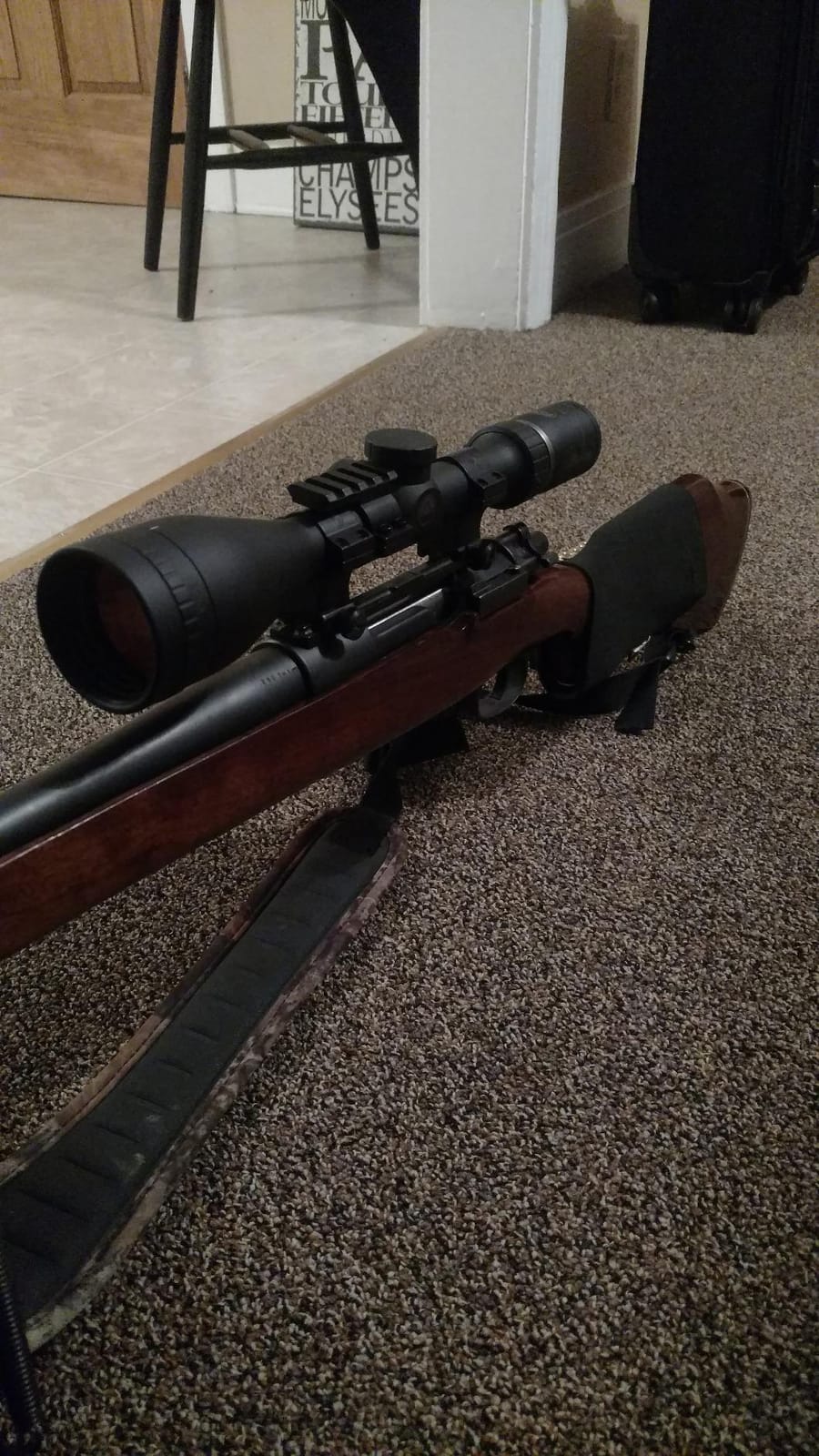
The Hi-Lume multicoating on high-grade optical glass with precision-ground lenses larger than comparable scopes gives a useful brightness at 14 power, and the nitrogen-filled waterproof tube prevents internal fogging. Reviewers report clear glass with useful brightness at the top of the range, and steel-on-steel clicks that stay where you put them.
The honest drawback is weight. At 1.1 pounds the Burris Droptine 4.5-14x42mm is by far the heaviest optic here, and on a backcountry pack-out that difference is real. Owners also note inconsistent elevation click values from click to click, which means you may need a few extra rounds to zero. The capped turrets cannot be re-zeroed once set, so set them carefully.
When you need 14 power on a deer
Mountain and backcountry hunts compress distances in ways flat country does not. A deer that appears 300 yards away across a drainage can be at 120 after you change elevation, and a scope that tops out at 9x will not let you fill the tube with the animal. A 14x ceiling keeps a usable field of view at those distances.
The 42mm objective is a reasonable size for glass this large, and the adjustable parallax means the zero you establish at 100 yards still holds when you step up to 400.
Where it falls short
Weight is the deal-breaker for many hunters. If you are carrying a rifle on a multi-day backpack trip, a pound of glass on the muzzle changes how the rifle rides all day.
The capped turrets are not re-zeroable once set, the elevation clicks are inconsistent, and this is not built as a precision long-range dialing scope. For a mountain deer hunter it is a genuinely capable tool; for everyone else, it is more scope than the hunt needs.
How to Choose a Deer Hunting Scope
Start with the animal and the terrain, not the spec sheet. Nearly every mistake we see in deer scopes comes from buying magnification range you will never use or a feature set built for a different sport. Work through these six questions in order and the answer is usually obvious by the end.
1. Match magnification to where the deer will be
Habitat determines the range, and range determines zoom. Here is how the picks map to terrain.
Timber and thick cover, shots typically inside 100 yards: pick something starting at 1x or 3x. You want a wide field of view so a moving deer does not vanish behind a branch. The Bushnell Drop Zone 1-4x24mm and the Vortex Crossfire II both suit this, and forum consensus keeps pointing back to a 3-9×40 as the safe default.
Open fields and plains edge habitat, shots typically 200 to 400 yards: you want a scope that reaches 12x or more. The SIG SAUER Buckmasters 3-12x44mm is the right shape for this, and its BDC marks let you hold instead of estimate.
Mountain and western backcountry, shots 300 to 500 yards: you need both reach and parallax adjustment. That points to the Burris Droptine 4.5-14x42mm, and you should accept the weight as the cost.
A useful answer to the common question of how far you can shoot with a 3-9×40 is this: it is a genuinely useful tool from about 40 yards to roughly 250 yards on a centerfire deer load, and beyond that you are relying on holdoff knowledge rather than the reticle.
2. Decide FFP versus SFP for deer, not for competition
Most of the argument about first focal plane versus second focal plane reticles is written for long-range precision shooting, and it does not apply cleanly to deer hunting. Here is the deer-specific version.
A first focal plane reticle shrinks as you zoom in, which means its subtensions stay true at any magnification. That is genuinely useful if you range a deer and hold for drop using mil-based marks. For a deer hunt, that is a narrow subset of situations.
A second focal plane reticle keeps the same apparent thickness at every power, which means a thin duplex that is easy to see at 3x is still visible at 9x. For most deer hunters, that is the more useful behavior, because you will spend more time reading the reticle at low power than dialing a mil hold at 400 yards.
Our verdict: for deer hunting, a second focal plane duplex or a simple BDC is the better choice. A first focal plane scope earns its place if you also shoot long range with the same rifle, and it is a fine optic, but for deer alone it is added complexity.
3. Size the objective lens for your light
The objective lens is the front element that gathers light, and it is the biggest single driver of low-light performance. A 40mm objective is the deer-hunting sweet spot and covers most of this roundup. A 50mm, like the SIG SAUER Buckmasters 3-9x50mm, gives you noticeably better brightness and detail reach in failing light at the cost of size and weight.
Ask yourself one question: is your season decided by distance or by light? Distance points to a bigger zoom range. Light points to a bigger objective lens. Most hunters need the 40mm balance, and hunters who hunt at dawn through the last 30 minutes of legal light should pay for the 50mm.
4. Pick your reticle for the shot you take
A duplex or crosshair is fast and forgiving and gives you nothing at range. A BDC or Ballistic reticle gives you holdover references that remove guesswork past 200 yards, at the cost of needing to match your ammunition. A mil-dot gives you the most flexibility and the most complexity.
Our advice is a plain duplex or a drop-comp reticle matched to one load. Anyone shopping for a mil-dot for deer hunting is carrying more knowledge than they need. Just confirm that any BDC marks you rely on are calibrated for the exact bullet you load, because a ballistic reticle matched to the wrong load is worse than no reticle at all, since it looks authoritative while being wrong.
5. Choose capped turrets for a deer rifle
Capped turrets cannot be knocked out of adjustment by a branch or a fall. Exposed tactical turrets with a zero stop let you dial quickly and return to zero by feel, and they are genuinely useful for long-range work. On a deer rifle carried through timber, in a truck, and up a tree, capped turrets are the safer, quieter, simpler choice, and the Leupold VX-Freedom is a good example of the format done well.
You do not need a zero stop for deer. You need a reticle that does not move when the rifle does.
6. Get the rings and ring height right
This is the most repeated unresolved question across hunting forums, and the honest answer is that ring height is determined by your rifle, not by the scope. You need enough scope tube clearance for the front and rear bell to clear the barrel and action, and enough ring base height to bring the ocular lens to a proper cheek weld without raising the rifle so high that you are fighting it.
One-inch tube scopes on standard actions usually need low or medium ring heights. Thirty-millimeter tube scopes on AR platforms need taller rings because the receiver ring is already higher. Two-inch and oversized bell scopes need the most height of all. If a scope needs rings so tall that the bolt or the magazine interferes, that is the wrong scope for that rifle, and no amount of glass quality fixes it.
A few setup rules keep you out of trouble. Torque the ring screws in small increments in a cross pattern to the manufacturer spec, and do not overtighten them. Keep front and rear ring height matched, because mismatched ring heights can put the scope under lateral stress that makes it shift later. Use a torque driver, not feel. And check that the bolt, magazine, and bolt shroud all clear the scope at full rotation of the bolt before you call the build done.
If you want the version of this conversation that fits on one screen, pick a scope that ships with rings, such as the Bushnell Banner 2, and you remove an entire step from the process.
7. Know what disqualifies a scope
A few defects end a hunt, and you can screen for all of them in ten minutes before season. Internal fogging or bubbling that appears out of the box is disqualifying, because once moisture is inside the tube it does not leave. Turrets that shift under recoil or after a drop mean a scope that will not hold zero, which means groups that move after the first shot.
Scope shadow from poor eye relief, a bell that fouls the bolt, or an eyepiece too close to the receiver will make a good scope feel bad in a treestand. A reticle too heavy at high power gets ignored under stress. And a scope heavier than your pack-out budget becomes the thing you resent carrying on mile four.
Check all of that at the bench before the season rather than in the field on opening morning.
Frequently Asked Questions
What is the best rifle scope combo for deer hunting?
The best all-around deer hunting combo is a 3-9x40mm or 4-12x44mm second focal plane scope with a duplex or drop-comp reticle, mounted in rings matched to your action height. Our top pick is the Vortex Copperhead 4-12x44mm, which pairs a 3x low end for brush with a 12x top end for open country. For a strict budget build, the CVLIFE 3-9x40mm package includes its mounts, so the scope and hardware arrive together.
Is Vortex or Leupold better for hunting?
Both build scopes that hold up in the field, and the choice comes down to weight and warranty rather than glass. Vortex offers an unlimited unconditional lifetime warranty, which forum hunters repeatedly cite as the decisive reason to buy, and its second focal plane hunting scopes are heavier. Leupold offers a full lifetime guarantee that transfers with no proof of ownership, and the VX-Freedom 3-9x40mm is lighter at 12.2 ounces with simpler capped turrets.
Which is better, Burris or Vortex?
Burris tends to win on reticle sophistication and turret feel, with the Ballistic Plex giving usable holdover marks and steel-on-steel clicks that owners describe as high-end. Vortex tends to win on warranty length and configuration variety. For a deer rifle with a ballistic reticle, the Burris Droptine 3-9x40mm is the stronger choice; for a forgiving eye box in timber, the Vortex Crossfire II 3-9x40mm is hard to beat.
How many yards is a 3-9×40 scope good for?
A 3-9x40mm is a genuinely useful deer scope from about 40 yards out to roughly 250 yards on a typical centerfire load. Below 3x you lose field of view in thick brush, and beyond 250 yards the reticle gives you no holdover information unless it is a ballistic model. It is the default answer on hunting forums for good reason, and it covers the majority of deer shots taken every season.
Do I need a first focal plane scope for deer hunting?
Usually no. A first focal plane reticle shrinks as you zoom, which keeps mil subtensions true at any power, and that matters if you range a deer and hold for drop. Most deer hunters read a reticle at low power far more often than they dial a mil hold at 400 yards, so a second focal plane duplex or a drop-comp reticle with a fixed apparent thickness serves the hunt better and keeps the setup simple.
What is the best all-around scope for hunting?
The Vortex Copperhead 4-12x44mm is our best all-around pick because it covers the widest realistic range of deer situations: a 3x equivalent low end for brush, a 12x top end for open country, a 44mm objective for low light, and a Dead-Hold BDC reticle with holdover dots when a buck shows up at a range you did not expect.
Final Verdict: Which Deer Scope Fits Your Hunt
The Vortex Copperhead 4-12x44mm is the best rifle scope for deer hunting in 2026 for the simple reason that it is the least wrong choice across the widest range of terrain. A 3x-equivalent low end for brush, 12x for open country, a 44mm objective for dawn light, and holdover dots for unexpected distances add up to one scope that does not force a compromise on your hunt.
If your budget is tighter, the Bushnell Banner Dusk and Dawn 3-9x40mm is the value pick, with the brightest low-light image in its class and a lifetime warranty behind it. If money is nearly no object and your rifle is a bolt action, the Leupold VX-Freedom 3-9x40mm gives you the lightest premium build here. And if you hunt mountain deer past 300 yards, the Burris Droptine 4.5-14x42mm has the reach and the parallax adjustment to make those shots repeatable.
Whatever you choose, mount it before the season, torque the rings with a driver, and check the turrets back to zero after a few shots. Use the buttons above to check the current listing for each of these scopes, and pick the one that matches your terrain rather than the one with the longest spec sheet.