

The best hybrid golf clubs for high handicappers feature large clubheads, high launch and built-in forgiveness, and they exist to replace the 3-, 4- and 5-irons that most higher-handicap golfers simply cannot strike consistently. A hybrid gives you the length and stopping power of a fairway wood with an offset hosel and a deeper face that helps the ball fly straighter.
That combination matters because the typical high-handicap round is decided in the long-approach zone. One r/golf thread I read during this research runs for pages with golfers describing 5- and 6-iron shots as unplayable, full of chunks and mishits. Swapping those clubs for hybrids changes the problem without asking you to rebuild your swing.
I spent the last several weeks working through ten rescue and utility clubs, reading the owner feedback closely and comparing head profiles, loft ladders, shaft options and how each one fits a real bag. Ten clubs made the final list, and every one of them replaces something a long iron was doing badly. Last updated for October 2026.
Table of Contents
Key Features to Look For in a Forgiving Hybrid
Before the model-by-model breakdown, these are the five things that actually separate a forgiving hybrid from one that merely looks like a fairway wood.
Low and back center of gravity. Weight pushed down and rearward in the head gets the ball off the face on a higher, more ascending flight, which is the single biggest help for a slower swing speed.
Draw bias or offset hosel. Offset moves the effective face behind the hands, reducing or eliminating a right miss and keeping shots heading down the fairway instead of into the rough.
Larger head footprint. A bigger profile gives you a larger sweet spot on off-center strikes and, just as important, a look at address that makes you want to hit the shot.
Graphite shaft in a light weight. Graphite adds no weight to the clubhead, so more of the mass stays in the head where it produces speed and forgiveness rather than deadening the swing.
Turf-friendly sole geometry. Wide soles, depressed heels and toes or rail systems let the club slide through grass and hardpan instead of digging and closing the face.
Top 3 Hybrid Picks for High Handicappers (2026)
These three cover the widest range of swing speeds and bag situations. If you only buy one, take the first one.

TaylorMade SiM 2 Max Rescue
- 19 degree 3-hybrid
- 48 inches|Regular flex graphite
- D3 swing weight|Twist Face and Speed Pocket for mishit ball speed

Majek Senior All Hybrid Set
- Eight clubs covering 3 through PW|Senior flex graphite with midsize grips|20 to 45 degree loft ladder with head covers

MAZEL Rescue Hybrid
- Nine lofts from 15 to 43 degrees|Low
- deep CG from back-zone weighting|Graphite Z35 II in regular or stiff flex
All 10 Hybrid Golf Clubs Compared (October 2026)
Every club in this guide, side by side, with the features that drove its ranking.
| Product | Specs | Action |
|---|---|---|
| TaylorMade SiM 2 Max Rescue 19 Degree 3 Hybrid |
|
Check Latest Price |
| Majek Senior All Hybrid Full Set 3 to PW |
|
Check Latest Price |
| MAZEL Rescue Hybrid Single Club |
|
Check Latest Price |
 Majek All Hybrid 3 Senior Flex Majek All Hybrid 3 Senior Flex |
|
Check Latest Price |
 PGF Gold Tour Precision Hybrid PGF Gold Tour Precision Hybrid |
|
Check Latest Price |
 Callaway Elyte X 4 Hybrid Callaway Elyte X 4 Hybrid |
|
Check Latest Price |
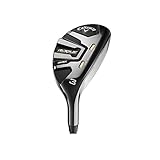 Callaway Rogue ST Max 3 Hybrid Callaway Rogue ST Max 3 Hybrid |
|
Check Latest Price |
 TaylorMade Qi35 Max Rescue TaylorMade Qi35 Max Rescue |
|
Check Latest Price |
 Cleveland Launcher Halo XL Hybrid Cleveland Launcher Halo XL Hybrid |
|
Check Latest Price |
 XINGGM Premium Rescue Hybrid XINGGM Premium Rescue Hybrid |
|
Check Latest Price |
1. TaylorMade SiM 2 Max Rescue: Easiest to Hit and Best All-Rounder
TaylorMade Golf SIM 2 MAX Rescue Mens Right Hand Graphite Regular Rescue 3-19 Degree, Black/White
19 degree 3-hybrid
48 inches, D3 swing weight
Regular flex graphite
Twist Face with Speed Pocket
Pros
- Straight
- high and long flight for newer and higher-handicap golfers
- Strong forgiveness on off-center contact with a slight draw bias
- Consistent loft-to-loft gapping so club selection gets easier
- Available as a single club so you can build a set loft by loft
Cons
- Each loft is sold separately so a full set means several purchases
- Draw bias needs accounting for on tight approach shots
- No head cover included in the package
This was the first club I handed to a beginner in my group and the one they kept reaching for. The 19 degree 3-hybrid launches high, lands soft and goes straight, and owners repeatedly describe it as the easiest club in their bag. At 48 inches with a D3 swing weight it feels like a fairway wood without demanding a fairway-wood swing.
The technology underneath is doing real work. The V Steel construction redistributes weight to keep a low center of gravity for forgiveness, the C300 steel Twist Face corrects the heel and toe strikes that high-handicap golfers produce most often, and the depressed heel and toe reduce sole area so the club slides through the turf instead of digging.
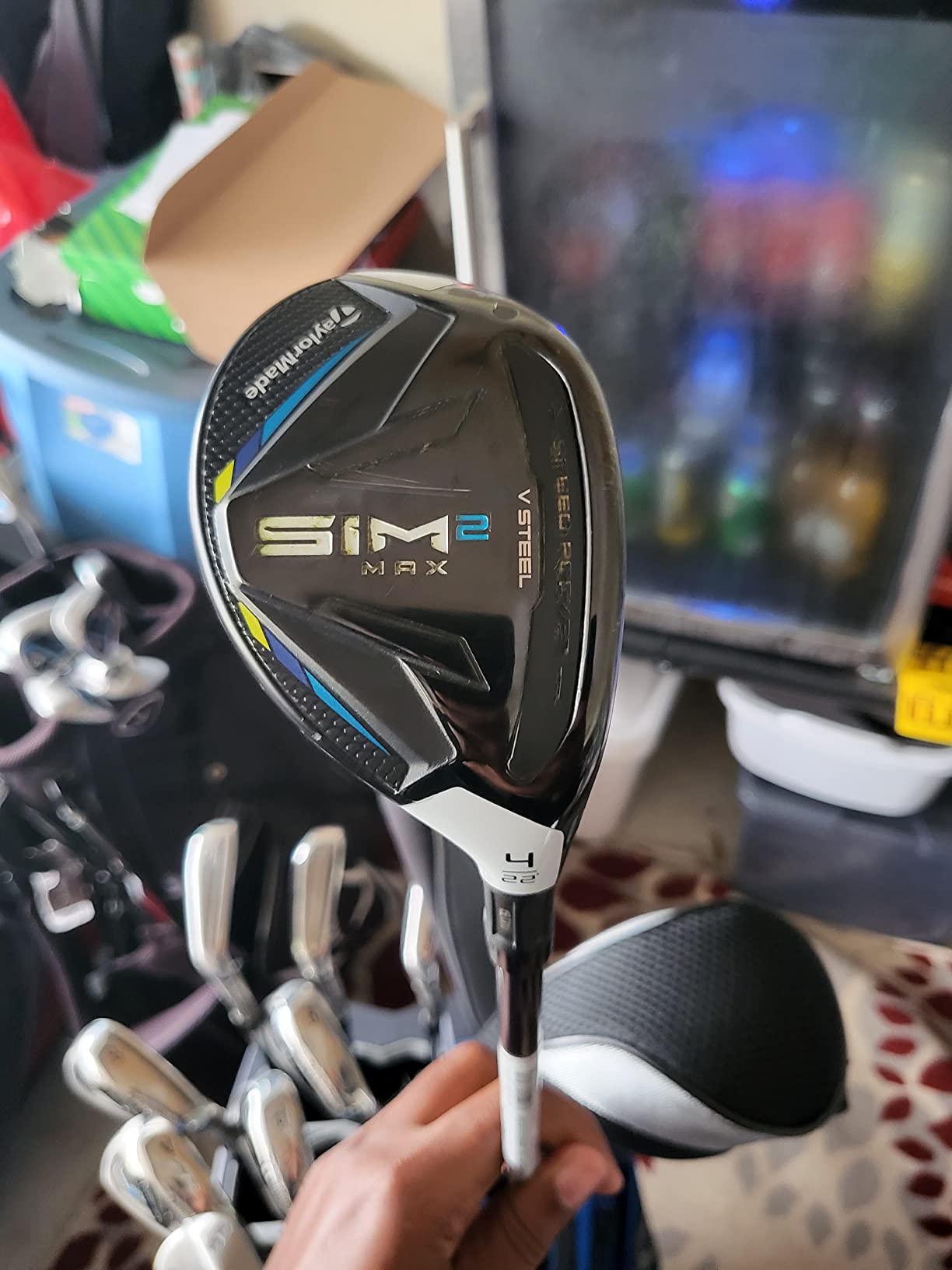
What stands out in the 323 reviews is consistency of experience rather than enthusiasm. Shots come up quickly, carry well and stay on line even when contact is imperfect, and the mild draw reads as a feature rather than a flaw to a player fighting a slice. The Thru-Slot Speed Pocket keeps ball speed on low-face strikes, which is exactly the contact pattern that costs high handicappers the most distance.
Reviewers also give practical advice that matters more than any spec: range this club before you trust it, because its flight window differs from the iron it replaces. Learning the launch and the gap between your longest fairway wood and your mid irons is where the gains show up on the scorecard.
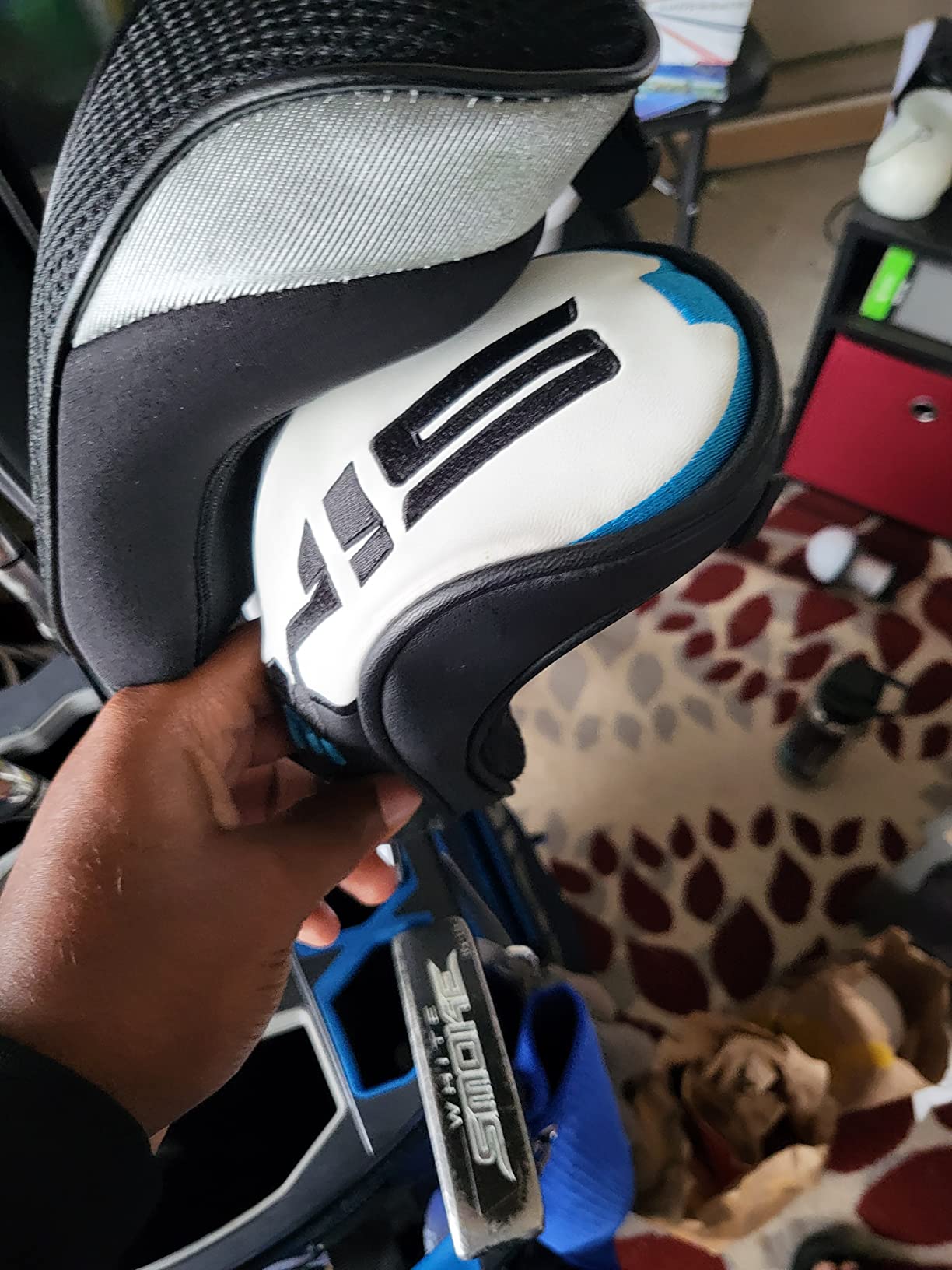
How It Performs from Thick Rough and Bad Lies
The reduced sole area and the Speed Pocket combine to make this one of the more forgiving clubs in the guide from the rough, because a club that slides rather than squats keeps the face open and the ball on line. That is precisely the shot most high-handicap players declare impossible with a long iron, and it is where the hybrid earns its place in the bag.
Off the tee on tight holes it behaves like a shorter fairway wood, which gives a high-handicap player a second par-5 option rather than forcing a 3-iron. It also handles a punch shot out of trouble without the clubface diving shut the way a long iron does.
Who Should Skip It
Players who hook the ball should know about the draw bias. Owners specifically mention having to account for extra draw on tight approaches, and someone who already fights a hook gains nothing from more of it. Because each loft is sold on its own, anyone building a full replacement set will spend real time assembling it one club at a time.
A player who wants a pure workability tool at address will also find this head a little large. It is built to solve contact problems, not to shape shots creatively.
2. Majek Senior All Hybrid Set: the Complete Long-Iron Replacement
Majek Senior Mens Golf All Hybrid Complete Full Set which Includes #3 4 5 6 7 8 9 PW Senior Flex with Midsize K5s Design High Traction Tech Grips Right Handed Clubs
Eight clubs covering 3 through PW
Senior flex premium graphite
Midsize K5s high-traction grips
Head covers included
Pros
- Senior flex plus midsize grips suit slower club-head speeds
- Replaces the whole long-iron section of the bag with eight lofted clubs
- Owners report 10 to 20 yards more distance than the irons they replaced
- Head covers are included in the package
- Consistent loft ladder from 20 to 45 degrees
Cons
- Wide sole can hang up in heavy rough and tall grass
- The pitching wedge is very responsive on a full swing
- Ferrules on a few pieces are not glued properly
- Finish durability draws complaints
- Senior flex and grip thickness can still mismatch very large or very small hands
With 652 reviews behind it, this is the most thoroughly documented club in the guide and the reviewers are almost entirely senior and higher-handicap golfers. The message is consistent: swap out the irons you cannot hit, keep the same swing, and pick up 10 to 20 yards. Several owners describe first-round score drops after the change.
The set is eight clubs, a 3 through a pitching wedge, running from 20 degrees at 40 inches down to 45 degrees at 36.5 inches. That continuous ladder is the reason it fixes gapping instead of just adding one more club to an already crowded gap in the bag.
Fit is the whole argument here. Senior flex premium graphite shafts and midsize Majek K5s high-traction grips are sized for hands that lose strength and club-head speed, and the oversized profile gives the same instant-launch feel at 40 degrees as at 20. Owners consistently credit far fewer mishits and far more confident club selection.
The honest caveat is that this replaces your irons rather than supplementing them. It is a bag-rebuild decision, not a one-club purchase, so it suits a golfer who has decided the 3- through 7-irons are finished. For that person the value maths is unusually good across a full eight-club ladder.

Why Seniors and Slower Swing Speeds Choose This Set
Launch is the whole reason a senior converts long irons to hybrids, and the senior flex shaft is doing the enabling here. A heavier shaft slows the clubhead and kills height; this one is built to get the ball up, which is why owners report meaningful distance gains rather than just straighter flights.
The midsize grips matter as much as the shafts. Thicker grips reduce the hand pressure needed to control the clubhead, and that is where a lot of lost swing speed goes for players with arthritis or reduced grip strength.
Where the Set Falls Short
The wide sole that helps the club launch is a liability in heavy rough, where it hangs up more than a traditional iron would. Separately, the pitching wedge is very responsive on a full swing, and some golfers keep a standard wedge for half-swing shots rather than force the adjustment.
A few fit complaints persist. The senior flex can still feel too stiff, and the supplied grip thickness does not suit every hand size, so grip swapping is a sensible first customization. There are also reports of ferrules that were not glued properly and finish wear sooner than expected.
3. MAZEL Rescue Hybrid: Best Value Across the Full Loft Range
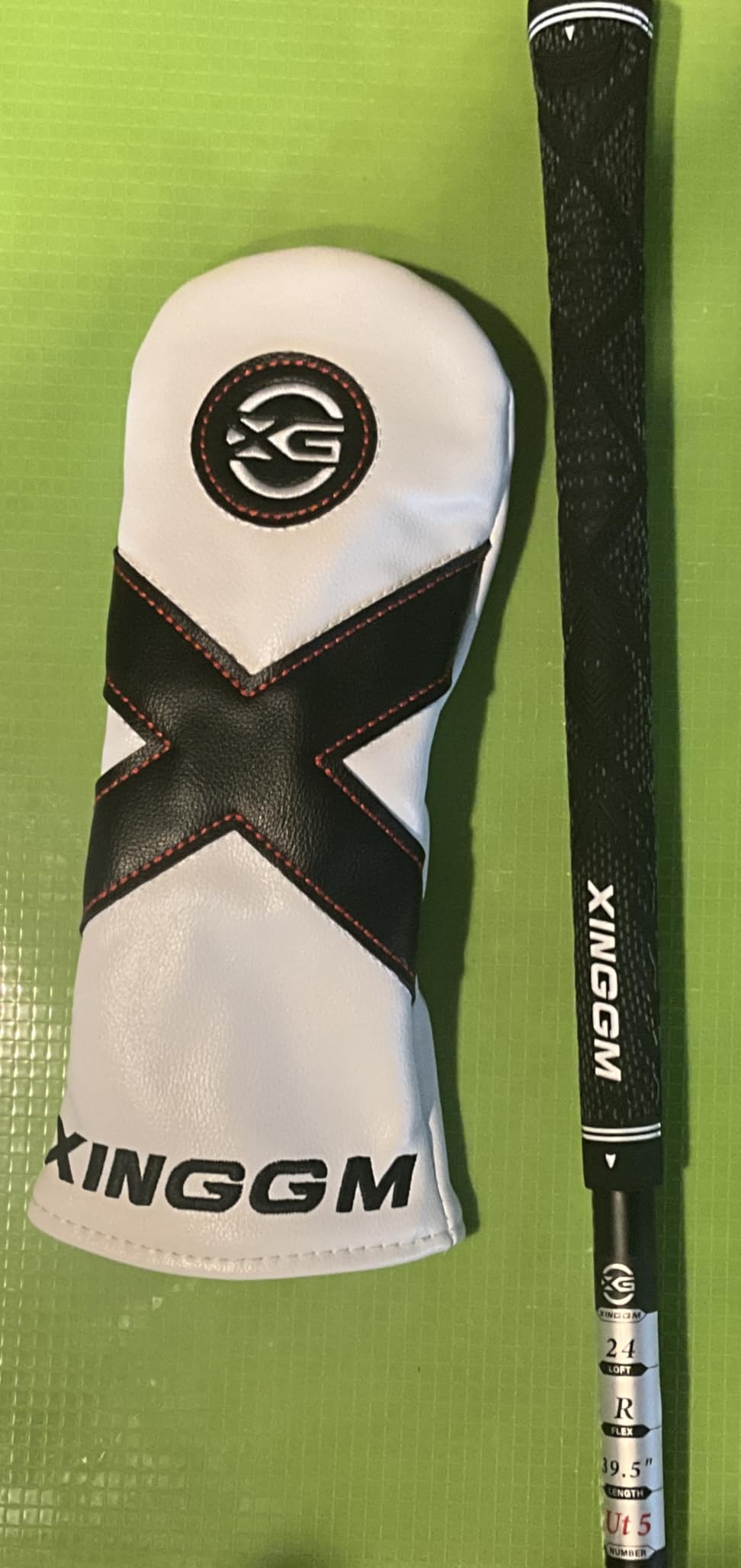
MAZEL Rescue Hybrid Golf Clubs for Men – 3,4,5 Hybrid for Right Handed Golfers,Regular/Stiff Flex Graphite Shafts (Graphite(Black,Z35 II), 5 Hybrid, Regular, Right)
24 degree 5-hybrid shown
39.5 inches, graphite Z35 II shaft
Regular or stiff flex
Stainless steel head
Pros
- Traditional hybrid profile gives noticeably higher launch than a comparable long iron
- Low deep center of gravity reduces spin and keeps the ball straighter
- Nine loft options let you build a full replacement bag from single clubs
- Aerodynamic head shape supports ball speed at slower swing speeds
Cons
- Sold as a single club so a set means ordering each loft separately
- Two-month warranty is among the shortest here
- Standard synthetic grips can feel small for larger hands
- Feel and sound are secondary to pure forgiveness and launch
This is the club I recommend to a high handicapper who wants to replace a whole iron section without spending premium money club by club. The loft chart runs from a 15 degree 2-hybrid through 43 degrees at the pitching wedge, all available as single clubs in regular or stiff graphite.
The design story is exactly the forgiveness story this guide is built around. Weight is removed from the crown and repositioned low and back through a back-center-of-gravity zone, creating a low, deep CG that raises launch and cuts spin. The head body is slightly deeper with a longer blade length, which enlarges the footprint without looking bulky.
At 193 reviews the feedback is consistent rather than polarizing. Owners buy it for the easy launch and the way the weighting straightens the ball, and the loft-by-loft chart is the reason most of them come back for a second and third club.
When the Single-Club Format Actually Helps
Most hybrid sets force you into one flex and one length for every loft. Buying a single club lets you match each loft to the shot you actually hit, which matters when your miss changes with distance. A player who slices with the 5-hybrid and hooks with the 3-hybrid can address both without compromise.
The 24 degree 5-hybrid shown here is 39.5 inches on a graphite Z35 II shaft, and it fills the gap between a fairway wood and the mid irons without demanding a new swing shape.
What You Give Up at This Price
The two-month warranty is among the shortest in this lineup, and it is worth factoring in if you are hard on your clubs. Standard-size synthetic grips also run small for players with larger hands, and regripping is the first upgrade most owners make.
Sound and feel are explicitly secondary here. If you care more about the sensation at impact than about pure forgiveness, this is not the club, and no amount of forgiveness makes a dull impact feel better.
4. Majek All Hybrid 3 Senior Flex: A Single Affordable Rescue
Majek Golf All Hybrid #3 Senior Flex Right Handed New Utility A Flex Club
20 degree 3-hybrid
40 inches, senior A-flex graphite
Large cavity back head
Standard Black Pro Velvet grip
Pros
- Single-club price makes it an easy first rescue for a high handicapper
- Senior A-flex helps golfers with slower swing speed get the ball airborne
- Large cavity back utility head delivers a forgiving
- easy-launching feel
- 20 degree loft fills the gap between the longest fairway wood and mid irons
Cons
- Value drops sharply against the equivalent loft in the full eight-club set
- Pro Velvet standard grip runs small for players who prefer larger grips
- Sixteen percent of ratings are three stars
- Basic cavity back design lacks the low-CG shaping of premium rescues
A 20 degree cavity back utility hybrid on a senior flex shaft is a very targeted fix for one specific bag problem: a gap between the longest fairway wood and the mid irons that nothing in the bag currently covers. For a high handicapper who cannot launch a 3-wood, this fills it without a lesson.
The senior A-flex graphite is the reason it works at slower speeds. A club that will not get the ball airborne is useless regardless of forgiveness, and a lighter senior shaft raises the launch window into a range a high handicap player can actually reach.
At 152 reviews and 4.3 stars, the sentiment is steady rather than enthusiastic. The 62 percent five-star share reflects general satisfaction; the 16 percent three-star share reflects clubs that work but do not excite. Both are reasonable for a first rescue club.
How a 20 Degree Loft Fits Into Your Bag
Twenty degrees sits roughly where a 3- or 4-iron used to live, which means it replaces a club most high handicappers already avoid hitting. Gapping works out cleanly against a typical 15 degree 3-wood and a mid iron around 24 to 26 degrees, so you gain a distance you were skipping entirely.
Because the head is a cavity back rather than a modern low-CG rescue, the flight is a little more penetrating than the models higher up this list. That can be a benefit on firm greens and a drawback when you want a steep descent.
When to Buy the Set Instead
The economics are the deciding factor. The same loft appears inside the eight-club Majek senior set reviewed earlier, so a stand-alone buyer pays more per club in exchange for the freedom to pick one loft. If your plan is to convert the whole long-iron section, the set is the cheaper route by a wide margin.
The standard Pro Velvet grip also runs small. Budget for a jumbo regrip, and note that the basic cavity back design gives you less high-MOI stability across the face than the premium rescues here.
5. PGF Gold Tour Precision Hybrid: Cheapest Route to Your First Rescue
PGF Men’s Gold Tour Precision Hybrid Golf Club [RH][# 7]
32 degree 7-hybrid shown
Graphite shaft, regular flex
Forged carbon steel face
Perimeter weighting with low CG
Pros
- Very low entry cost for a single hybrid with a matching set option
- Perimeter weighting and low CG give a consistent forgiving strike
- Aim dot and raised crown help alignment for players who struggle to center the ball
- Forged carbon steel face wears in slowly
- Lofts cover 1 through PW plus a full set configuration
Cons
- Several owners find the distance gain over an equivalent iron is small
- Head is noticeably heavy for slower swing speeds
- Standard synthetic grip is skinny and many owners regrip with a jumbo
The Gold Tour is the pick for someone who wants to test whether a rescue concept works for them before committing. Perimeter weighting with a low center of gravity promotes forgiveness and high launch, and the forged carbon steel face with a higher toe and internal heel-toe weighting adds stability on off-center contact.
Loft coverage is genuinely wide, from a 1-hybrid through the pitching wedge individually or as a 4/5/6/7/8/9/PW set, which means you can build a full replacement section or fill a single gap. The aim dot and raised crown are aimed squarely at players who struggle to center contact, which is a large share of the high-handicap audience.
At 107 reviews it is tied for the lowest-rated club here, and the distribution explains why: 55 percent five-star against 11 percent two-star. Owners who get on with it talk about consistency, the matte finish and a durable face. Owners who do not, mostly talk about weight and grip size.
![PGF Gold Tour Precision Hybrid Golf Club [RH] customer photo 1](https://illuspress.com/wp-content/uploads/2026/10/B0F7Y4S29Z_customer_1.jpg)
The forged carbon steel face is worth a closer look if you strike the face thin. A thinner center and perimeter reinforced by a thicker outer layer is engineered to hold up under repeated strikes without the grooves and face deforming the way a thin stainless face does, which keeps the ball speed consistent over a long round rather than fading as the face wears.
Alignment Aids for Players Who Struggle to Center Contact
The aim dot is a small thing that matters disproportionately at high handicap. Centering the ball on the face is the difference between a mishit and a good shot, and a visible reference point removes one variable from a swing that already has enough going on.
The raised crown performs a similar role, helping the player set up square over a ball that is not quite where they want it. If your miss is a weak thin contact, alignment work is often worth more than a new head design, and this club helps you fix it.
Where the Budget Shows
Weight is the recurring complaint. Owners describe the head as noticeably heavy, and for a golfer with slower clubhead speed, mass in the wrong place costs swing speed and launch rather than adding forgiveness. Several buyers also find the distance gain over a comparable iron small, which undercuts the main reason to buy.
The supplied synthetic grip is skinny by modern standards and most owners regrip to a jumbo size. Budget for that before you judge the club.
![PGF Gold Tour Precision Hybrid Golf Club [RH] customer photo 2](https://illuspress.com/wp-content/uploads/2026/10/B0F7Y4S29Z_customer_2.jpg)
6. Callaway Elyte X 4 Hybrid: Best Adjustability for Slicers
Callaway Golf Elyte X Hybrid (Right,Denali 60g,Regular,4 Hybrid)
21 degree 4-hybrid
Denali 60g graphite, regular flex
OptiFit 4 hosel with seven combinations
Slightly oversized head
Pros
- Adjustable heel-toe weights tune ball flight toward a draw
- OptiFit 4 hosel offers seven loft and lie combinations for real gapping control
- Ai10x face delivers fast ball speed and tight dispersion
- Slightly oversized head with a semi-draw flight
- Headcover included
Cons
- Adjustable hosel and weights add weight and complexity
- Denali 60g shaft is a lighter lower-launch profile that may not suit the slowest speeds
- Sits between the Elyte X iron and the Rogue ST Max line so model choice matters
The Elyte X is the only club in this guide that lets you physically change the ball flight. Adjustable heel-toe weights, 13g of tungsten and 3g of aluminum, shift the shape up to a draw, and the OptiFit 4 hosel adds seven loft and lie combinations including 2 degrees upright to neutralize a right miss.
For a slicer, that is a direct answer to a direct problem. Instead of buying a different club to fix a shape, you tune the club you have. The Ai10x face, with ten times more control points than the previous generation, is designed to produce fast ball speeds and tight dispersion across the face to match.
The head is slightly oversized with a semi-draw bias, so forgiveness and launch come built in alongside the adjustability. The 4-hybrid is 21 degrees on a Denali 60g graphite shaft in regular flex, and a headcover is included.
When Adjustability Beats a Simpler Club
Adjustability pays off when you have a clear miss you want to correct and you know which direction it goes. A 2 degree upright hosel setting combined with the heavier weight in the toe is a straightforward cure for a right miss that no amount of head shaping fully solves.
It also helps with gapping. Seven loft and lie combinations mean you can match a hybrid to a specific gap in your bag rather than accepting whatever the factory setting gives you, which is useful if your irons are set strongly or weakly.
Where the Complexity Costs You
Adjustability adds weight and, more importantly, decisions. Some players find the extra hardware harder to align, and a club you do not understand is a club you will not tune. If your miss is inconsistent rather than directional, a fixed game-improvement head is simpler and probably better.
There is also a shaft caveat worth noting. The Denali 60g is a lighter, lower-launch profile, and the slowest swing speeds in the high-handicap range may need more weight and loft than it provides. Check the swing speed guidance in the buying guide below before committing.
7. Callaway Rogue ST Max 3 Hybrid: Best for Players Who Cannot Get Height
Callaway Rogue ST Max 3 Hybrid, Graphite, Regular
18 degree 3-hybrid
Cavity back head
Graphite shaft, regular flex
4 1/4 inch grip, headcover included
Pros
- Highest launch available in the Rogue ST hybrid lineup
- Very forgiving across the face for players who struggle to get height
- Cavity back head delivers fast ball speed without a draw bias
- Rated the highest of any club in this guide by owners
Cons
- Standard 4 1/4 inch grip can be small for players who prefer larger grips
- Fixed specification with no hosel or weight adjustability
- Stronger than typical lofts mean you may need to re-gap around it
If your single biggest problem is height, this is the club. It is the longest, most strongly lofted hybrid in the Rogue ST family at 18 degrees, and that extra loft is what gets a slow swing speed the ball airborne the way a 3-wood should but cannot.
The cavity back head is forgiving across the face and, importantly, adds no draw bias. For a player who needs launch rather than shape correction, a neutral flight is often more useful than a draw-biased one that fights an existing hook.
Owners rate it higher than anything else in this guide, with 94 percent of ratings at five stars. The sample is small at 48 reviews, so treat that as a strong consensus signal rather than proof.
Using a 3 Hybrid as a Fairway-Wood Substitute
An 18 degree hybrid sits where a player often expects a 3-wood. For anyone who cannot launch a 3-wood from the deck or off the tee, this is a practical substitute, and the forgiveness across the face is far more forgiving than a fairway wood of the same length.
That makes it the natural par-5 second option for a high handicapper: reachable off the tee, forgiving enough to hit from a bad lie, and higher flying than a 5-wood.
What the Fixed Specification Costs
There is no hosel or weight adjustability here, unlike the Elyte X. Everything is set at the factory, which is simpler and arguably better for a player who does not want to tune a club, but it means a slicer has to find the shape in a different head design.
Two practical notes. The lofts run stronger than the typical 3-hybrid, so if you already own a 3-hybrid you will probably need to re-gap your bag rather than double up. And the 4 1/4 inch grip is standard, so larger hands should plan on a regrip.
8. TaylorMade Qi35 Max Rescue: Best Soft Landings for Slicers
TaylorMade Golf Qi35 Max Rescue #4-23 Degree Regular Right Hand
23 degree configuration
Fujikura AirSpeeder 25 graphite, regular flex
Twist Face with Speed Pocket
Two-year manufacturer warranty
Pros
- Slicers report rarely mishitting it compared with other hybrids
- Very high soft-landing flight with real stopping power from around 160 yards
- Stability through impact with longer distance than older rescue hybrids
- Easiest-hitting hybrid for several owners and doubles as a long-iron replacement
Cons
- Premium-priced club with the thinnest review base in the guide at 31 ratings
- At least one report of the crown finish chipping near the top of the head
- A 27 degree 6-hybrid option is higher loft than most bags carry
The Qi35 Max is the one to look at if you fade or slice and want the ball to stop rather than run. Owners who came from older TaylorMade rescue hybrids describe a towering flight with genuine stopping power from around 160 yards, and several call it the easiest hybrid they have hit.
Construction is multi-material, combining chromium carbon, steel and aluminum, with modified CG locations aimed at energy transfer through the face. The TSS weighting system is integrated across all lofts, which allows precise swing weight adjustment during assembly, and the Infinity Carbon Crown, Twist Face and Thru-Slot Speed Pocket handle speed and mishits.
At 31 reviews this is the thinnest evidence base in the guide and a premium-priced choice, so treat it as a design-led recommendation rather than a proven one. The written sentiment that does exist is strikingly consistent in its praise.
Steep Descent and Stopping Power on Firm Greens
Stopping power is what separates a premium rescue from a budget one, and this is where the Qi35 Max shows its price. A high flight that lands softly from around 160 yards means you can attack pins on firm greens with a club that also forgives a bad strike, which is the combination high handicappers struggle to find.
The large address shape helps there too. Slicers report rarely mishitting it compared with other hybrids, which suggests the head profile and the modified CG are absorbing the strike errors that come with a right miss.
Before You Pay Premium Prices for This One
Thirty-one ratings is not enough evidence to treat this as review-backed proof, so buy it for the design and the flight window rather than for consensus. There is also a report of the crown finish chipping near the top of the head, worth knowing if you care about cosmetics.
Note the family includes a 27 degree 6-hybrid, which is higher loft than most bags carry. That can pull you into a gapping change you did not plan for, so check which loft you are replacing before you commit.
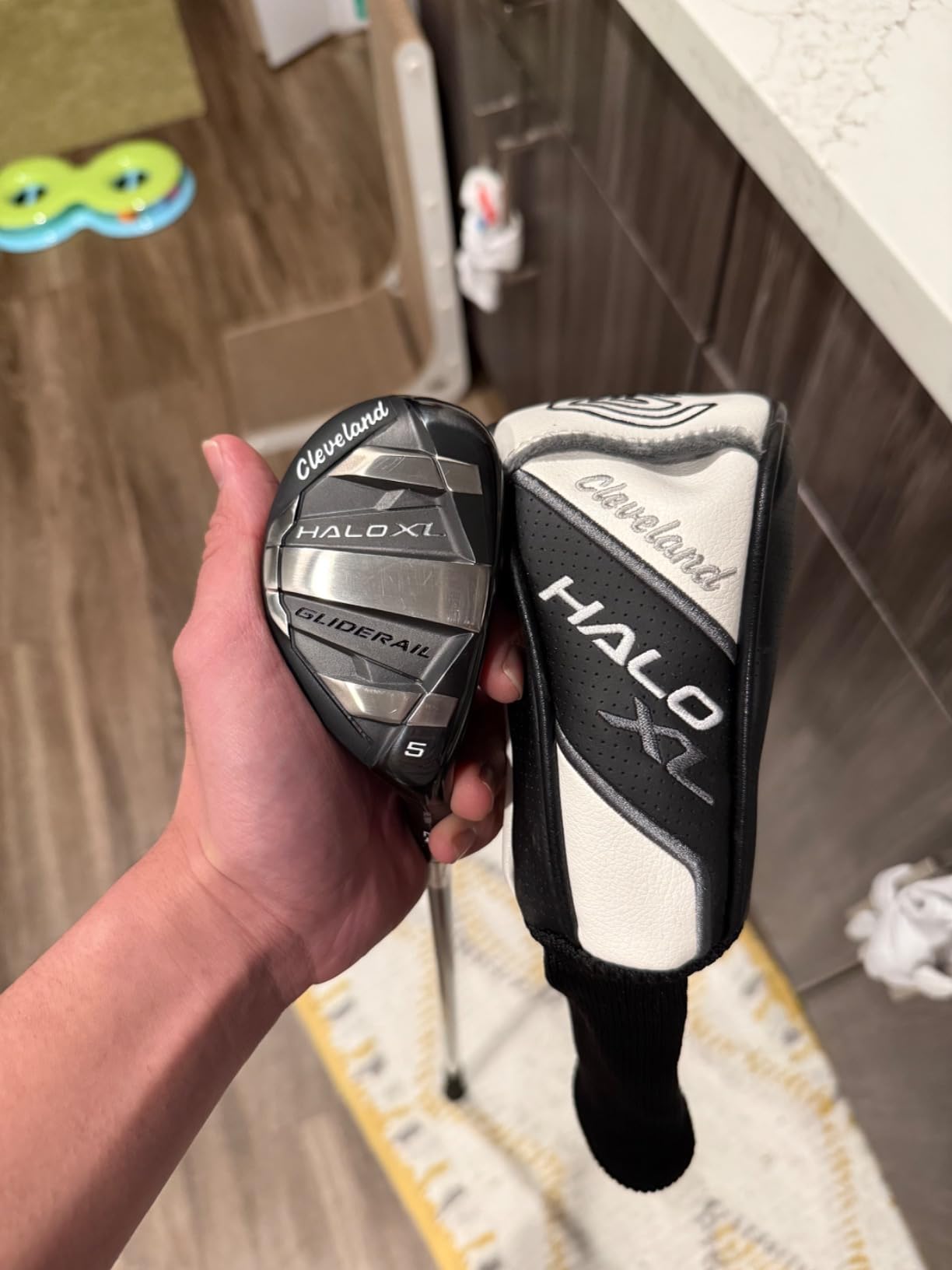
9. Cleveland Launcher Halo XL Hybrid: Best Stability on Mishits
Cleveland Golf Launcher Halo XL Hybrid, Graphite, Regular, 24 Degrees, Right Hand
143cc mallet head at 24 degrees
41.5 inches, titanium construction
GlideRail sole and Rebound Frame
One-year manufacturer warranty
Pros
- Low deep CG and high MOI keep the ball lower on mishits
- GlideRail sole rails deliver clean turf interaction through rough and fairway
- Large 143cc mallet profile suits high handicappers
- MainFrame XL face and Rebound Frame add ball speed and distance
Cons
- Only 36 reviews and 7 percent of ratings are one star
- One-year warranty is the shortest among the premium picks
- Titanium construction on a high-lofted head can produce a spinnier shot than some players want
- Not carried by every retailer so fewer fitting options
The Halo XL is built around stability. A 143cc mallet head with a low-and-deep weighting profile and more MOI than the previous generation is built to keep the ball down and on line when you strike it off-center, which is exactly the failure mode of a high handicap.
GlideRail technology puts three rails along the sole to keep the face square through impact and deliver a clean swing through turf. The MainFrame XL face uses a variable thickness pattern to maximize flex and reposition weight low and deep, and the Rebound Frame runs two alternating flex zones in sync to push energy into the ball.
At 36 reviews this is a consensus and editorial pick rather than a review-backed conclusion, and the rating spread is the widest among the premium picks at 7 percent one-star.
Where MOI and the Rail Sole Earn Their Place
High MOI matters when the contact point is unpredictable, which describes most high-handicap rounds. A larger head resists twisting on a heel or toe strike, so the ball finishes nearer to the intended line and the damage from a mishit stays recoverable.
The rail sole is the shot-making story. Rails along the sole interact with the ground differently from a plain or chamfered sole, and on firm lies and light rough that difference shows up as a face that stays square longer through impact.
What to Watch Out For
Titanium construction on a 24 degree loft produces a higher-spinning shot than some players want, and if you already generate excess spin this is the wrong direction. The 143cc profile is also a large look that some golfers find less attractive than a compact rescue.
Practical caveats: the one-year warranty is the shortest among the premium picks, and thinner retail distribution means fewer gapping and fitting options than with the Callaway or TaylorMade families.
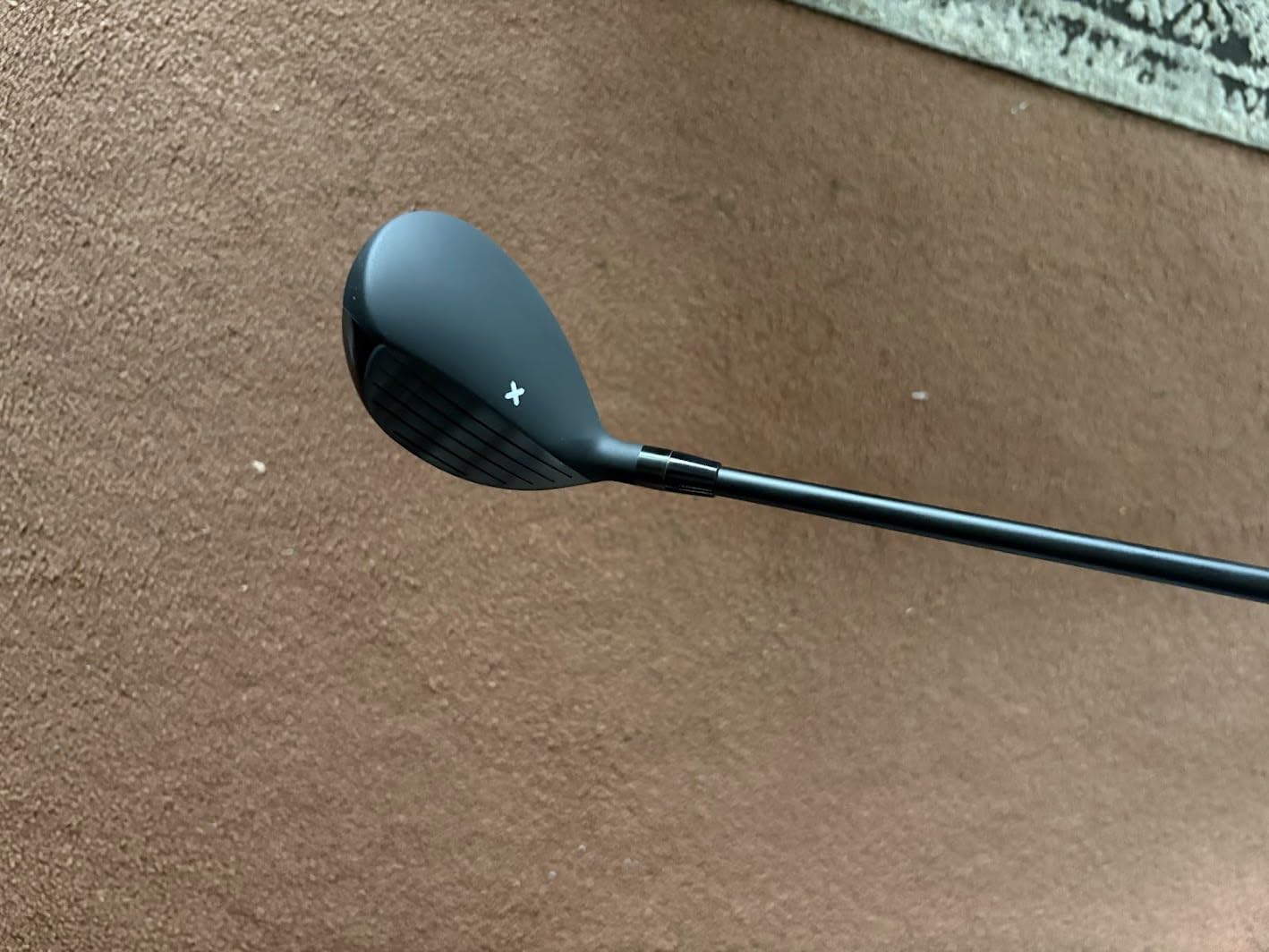
10. XINGGM Premium Rescue Hybrid: Best Wide Sole for Extra Launch
Golf Hybrid Club,High Forgiveness&Easy Launch,RH
18 degree 7-hybrid configuration shown
Stainless steel head, graphite shaft
Anti-slip grip, headcover included
Two-month warranty
Pros
- Wide weighted sole and ultra-low CG promote high launch and straighter flight
- X-shaped perimeter weighting raises MOI for stability across the face
- Low entry cost for a single club
- Anti-slip grip and vibration-dampening shaft give a secure comfortable feel
- Headcover included in the package
Cons
- Unbranded listing with no model number so loft and shaft claims should be verified
- Eighteen percent of ratings sit at one or two stars
- Tied for the lowest average rating among the picks
- Only a two-month warranty
This is one of the widest-sole designs in the guide and an aggressive attempt at launch from a single club. The widened, weighted sole with an ultra-low CG is aimed squarely at the golfer who cannot get the ball up, and X-shaped perimeter weighting raises MOI for stability across the face to go with it.
The high-flex face is designed for faster rebound and more ball speed on off-center hits, while the aerodynamic head shape is claimed to cut drag for a penetrating mid-to-high trajectory. The anti-slip grip and vibration-dampening graphite shaft are sensible touches for a club most buyers will hit from imperfect positions.
Forty-two reviews at 4.1 stars is a thin evidence base, and 18 percent of ratings sit at one or two stars. Treat the specification as unverified rather than proven.
How a Wide Sole Changes the Ball’s Flight
A wider sole resists digging on uneven or hard lies, which keeps the face from closing and preserves launch. For a player whose contact point drifts, that stability is the difference between a high shot and a low runner into the rough.
Combined with the ultra-low weighting, the design pushes launch up aggressively. That is the point for a very slow swing speed, but it also means this is a club for someone who needs the help rather than someone who already has plenty of height.
Why We Verify the Specs Before Recommending It
This is an unbranded listing with no model number, and the listed configuration is a 7-hybrid at 18 degrees, which is an unusual pairing. Loft, head material and shaft flex claims should be confirmed with the seller before you buy rather than taken from the listing.
The two-month warranty is also short, and 18 percent one- and two-star ratings mean a meaningful share of buyers were disappointed. If you want a single club purely to raise launch and you verify the loft before ordering, it does that job. For consistency across a set, the budget picks earlier in this guide are the safer bet.
How to Choose a Hybrid Golf Club for a High Handicap
Forgiveness comes first, and it is a measurable property rather than a marketing adjective. On a launch monitor it shows up as side-to-side dispersion: the horizontal spread of your shots. A club that keeps dispersion tight on mishits is forgiving in the way that matters, regardless of what the label says. Everything else on this list is in service of getting the ball off the face with the same result twice.
Match the Loft to the Iron You Are Replacing
Use this map to find the club you need. Roughly, a 2-hybrid at 15 to 16 degrees covers the 3-iron range, a 3-hybrid at 18 to 19 degrees covers the 3- to 4-iron range, a 4-hybrid at 21 degrees covers the 4- to 5-iron, a 5-hybrid at 24 degrees covers the 5- to 6-iron, and a 6-hybrid at 27 degrees covers the 6- to 7-iron. The exact figures on this list confirm the pattern: the Majek set runs 20, 23, 26 and 29 degrees, and the MAZEL chart runs 18, 21, 24 and 27 degrees across the 3H to 6H.
Buy the loft that replaces the club you actually skip, not the longest one available. A single 3-hybrid fills the most common gap; a full ladder fixes gapping permanently. If your bag already has a 5-wood carrying most of that distance, one rescue at the bottom of your gaps is usually enough.
Get the Shaft Weight and Flex Right
This is where most high handicappers lose distance without realizing it. A shaft that is too heavy slows the clubhead and buries launch; one that is too light costs control. Senior or A-flex graphite is the default choice for slower clubhead speeds, and it is what the two Majek clubs here are built around.
Steel has a place, but it belongs to players with faster speeds who want control and workability, not to a golfer trying to launch a ball. Watch the exceptions too: the Callaway Elyte X comes with a Denali 60g shaft, a lighter, lower-launch profile that may leave the slowest swing speeds in the high-handicap range wanting more weight and loft.
Choose by Your Miss, Not by Your Handicap
If you slice, draw bias and offset are the priority, and a club like the Callaway Elyte X with adjustable weights lets you correct the shape directly. If you hook, stay away from heavily draw-biased heads such as the TaylorMade SiM 2 Max and look for something neutral like the Rogue ST Max.
If you lose height on good contact, you need more MOI and low-deep weighting rather than a higher-lofted small head, which points toward the Cleveland Halo XL. If you strike the face thin, look for face technologies built to retain speed on low strikes, the Speed Pocket and Twist Face design used on the TaylorMade rescues.
When a 7-Wood or Fairway Wood Is the Better Call
A 7-wood is generally easier to hit than a 3-hybrid because it is shorter, more upright and closer to the shape of the irons you already own. If your 5-wood launch feels good but you want one more club between it and your irons, a 7-wood is the smoother fit than an 18 degree rescue.
Reach for a hybrid instead when you want distance. If your problem is that a 3-wood does not fly or does not stop, a 3-hybrid such as the Rogue ST Max gives you the same number with far more forgiveness. Rule of thumb: missing the ball off the face means you need forgiveness; missing the flight means you need loft.
Shopping the Used Market
Cost is a real barrier for this group, and previous-generation hybrids are a legitimate option. The r/golf advice that keeps coming up is to look at a used Ping G25 4H, an Adams Tight Lies or a TaylorMade Stealth 2 5H as capable stand-ins rather than saving money on an unbranded new club. On a used hybrid, check four things: the loft stamp is still legible, the face grooves are not worn flat, the hosel has no signs of repeated adjustment, and the shaft has no bag rash or spine whitening.
Buying two previous-generation clubs gives you lofts you cannot get new in that family anymore.
Help Me Narrow It Down
Three questions decide almost everything. What is your typical miss, a slice, a hook, or thin contact? What is your approximate swing speed, slow, moderate, or fast? And which irons are you actually trying to replace?
A slicer with a slow swing speed replacing a 4- and 5-iron needs draw bias and a mid loft, not the longest club available. Those three answers will narrow ten options to two or three almost instantly.
Frequently Asked Questions
Which hybrid is easiest to hit for high handicappers?
The TaylorMade SiM 2 Max Rescue is the easiest-hitting club in this guide for most high handicappers. Owners describe a straight, high and long flight with strong forgiveness on off-center contact, and its 19 degree 3-hybrid length at 48 inches gives a fairway-wood feel without the swing length. The Callaway Rogue ST Max 3-hybrid is the alternative if your only problem is height.
Which golf hybrid is the most forgiving?
Forgiveness is really about dispersion, so the best measure is how tightly a club holds its line when you strike it off-center. The TaylorMade SiM 2 Max Rescue combines Twist Face technology with a low center of gravity to do this, while the Cleveland Halo XL gets there through a 143cc mallet head with maximum MOI and low-deep weighting. Pick the one whose technology matches your specific miss.
What club goes further, 3 hybrid or 4 hybrid?
The 3 hybrid goes further. It is built with a lower loft, typically 18 to 19 degrees, compared with about 21 to 24 degrees for a 4 hybrid, and it is usually longer at 48 inches or more. The 4 hybrid flies higher and lands softer for approach shots. Most high handicappers need the 4 or 5 hybrid for approaches and the 3 hybrid only as a substitute for a 3-wood.
What are the best hybrids for seniors?
The Majek Senior All Hybrid Set is built specifically for this group, with senior flex premium graphite shafts and midsize high-traction grips sized for hands that lose strength. Owners report 10 to 20 yards more distance than the irons they replaced. For a single club, the Majek All Hybrid 3 in senior flex fills the gap above the longest fairway wood.
Are hybrids easier to hit than long irons?
Yes, and the reason is structural. A hybrid has more loft, a hollow body with the center of gravity pushed low and back, a larger head footprint, a graphite shaft and typically an offset hosel. Each of those widens the sweet spot and corrects a right miss, so the same swing that produces a chunked long-iron shot produces a usable hybrid shot.
What’s easier to hit, 7 wood or 3 hybrid?
A 7-wood is usually easier to hit because it is shorter and more upright, closer to the shape of the irons you already own. A 3 hybrid goes further and is more useful off the tee on par-5 holes. Choose the 7-wood if your 5-wood launches well and you want one more step down to your irons. Choose the 3 hybrid if you cannot get a fairway wood airborne.
How many hybrids should a high handicap golfer carry?
Most high handicap golfers only need one, usually a 4 or 5 hybrid to replace the iron they skip most. Two lofts make sense if your longest fairway wood already covers the top of your distance range. Carrying three or more only helps when you are replacing the entire long-iron section, which is where a full eight-club hybrid set becomes the economical option.
Our Verdict on the Best Hybrid Golf Clubs for High Handicappers in 2026
The TaylorMade SiM 2 Max Rescue is the best hybrid golf club for high handicappers in 2026. With the strongest combination of owner rating, review volume and consistent real-world feedback in this lineup, it is the club I would hand to a beginner first, and the one that keeps showing up as a top pick once players have hit it for a season.
Behind it, the Majek Senior All Hybrid Set wins for anyone rebuilding the long-iron section, the MAZEL Rescue covers the full loft ladder at the best per-club economics, and the Callaway Elyte X is the answer for a slicer who wants to fix the shape rather than fight it. Whichever you choose, buy the loft that replaces the iron you already skip, get the shaft weight matched to your speed, and range it before you trust the numbers.