
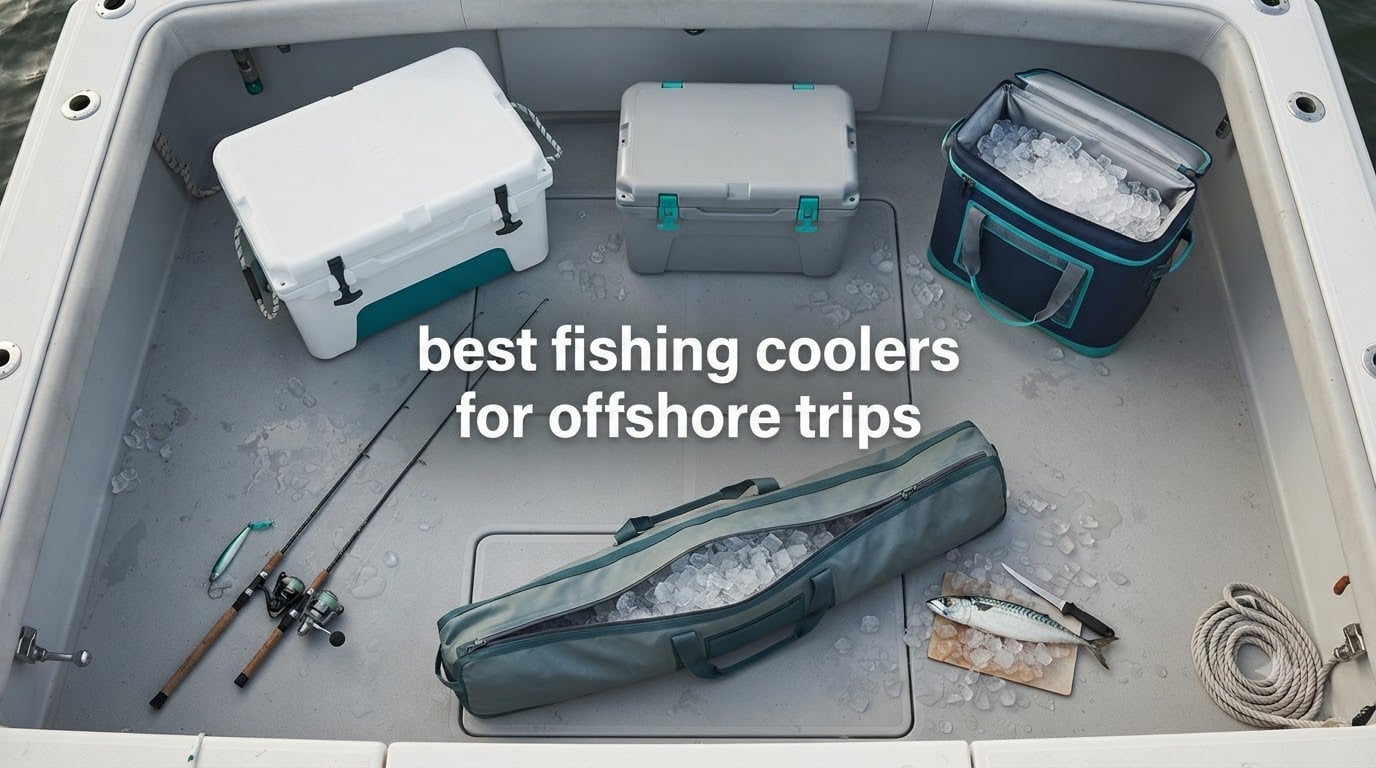
If you want one cooler to keep fish cold on an offshore trip, the YETI Tundra 45 is the safest pick: 45 quarts, a rotomolded shell, up to 3 inches of PermaFrost foam and T-Rex latches that survive being sat on. For multi-day runs, step up to the RTIC 65 QT, and if you fish alone, the ENGEL 60 QT is the one you can actually lift onto a deck.
Ask any offshore angler what breaks first and the answer is not the ice. It is the cooler on the dock at 5 a.m., too heavy to lift solo onto a skiff, while the tide is running and the crew is already loading rods. That single scene comes up constantly on thehulltruth.com, on the Charleston Fishing forum and in r/Coolers threads about 40-quart rotomolds.
Weighed against that, choosing the best fishing coolers for offshore trips is mostly a question of empty weight, gasket quality and how long the ice really lasts once the lid comes off twenty times a day. Capacity is the number brands advertise; empty weight and solo-liftability are the numbers that decide whether you keep the cooler or leave it in the truck.
We put ten of the most-reviewed coolers and fish bags side by side, weighing the published specs, the listed ratings and what owners actually report after a season of salt and sun. This is our 2026 guide to the best fishing coolers for offshore trips, updated for the current season.
Table of Contents
Top 3 Picks for Offshore Fishing Trips (October 2026)

YETI Tundra 45
- 45 qt rotomolded hard cooler
- Up to 3 in PermaFrost foam
- T-Rex rubber latches
- 24 lb empty

RTIC 65 QT Ultra-Tough
- 65 qt rotomolded body
- 2.4 in closed-cell foam
- Freezer-style gasket
- 34.4 lb empty

Igloo Maxcold Glide 110Qt
- 110 qt hard shell
- THERMECOOL insulation
- Telescoping handle and wheels
- UV inhibitors
All Ten Fishing Coolers at a Glance in 2026
Every cooler here has a place on a boat, just not every boat. The table below lists all ten picks with the specs that matter offshore: capacity, insulation, empty weight and the job each one does best.
| Product | Specs | Action |
|---|---|---|
| YETI Tundra 45 Cooler |
|
Check Latest Price |
 RTIC 30 Can Ultra-Tough Soft Cooler RTIC 30 Can Ultra-Tough Soft Cooler |
|
Check Latest Price |
| Igloo Maxcold Glide 110Qt Wheeled Cooler |
|
Check Latest Price |
| RTIC 65 QT Ultra-Tough Hard Cooler |
|
Check Latest Price |
 Pelican 70 Quart Elite Cooler Pelican 70 Quart Elite Cooler |
|
Check Latest Price |
 Coleman Pro Hard Cooler 45-Quart Coleman Pro Hard Cooler 45-Quart |
|
Check Latest Price |
 ENGEL 60 QT Ultra-Light Cooler ENGEL 60 QT Ultra-Light Cooler |
|
Check Latest Price |
 AO Coolers Expedition Carbon 48-Can AO Coolers Expedition Carbon 48-Can |
|
Check Latest Price |
 Buffalo Gear Insulated Fish Cooler Bag Buffalo Gear Insulated Fish Cooler Bag |
|
Check Latest Price |
 Calcutta Pack Fishcooler 40×16 Calcutta Pack Fishcooler 40×16 |
|
Check Latest Price |
1. YETI Tundra 45 Review – The All-Round Offshore Cooler
YETI Tundra 45 Cooler Desert Tan
45 qt hard rotomolded shell
Up to 3 in PermaFrost insulation
T-Rex rubber latches
24 lb empty
Pros
- Rotomolded walls survive rough handling and dragging
- 3 inch foam holds ice across multi-day runs
- Rubber latches resist breaking
- Wide interior fits fish boxes and gear
Cons
- Roughly 24 lb empty makes solo loading onto a console hard
- 16 inch wide footprint eats deck space
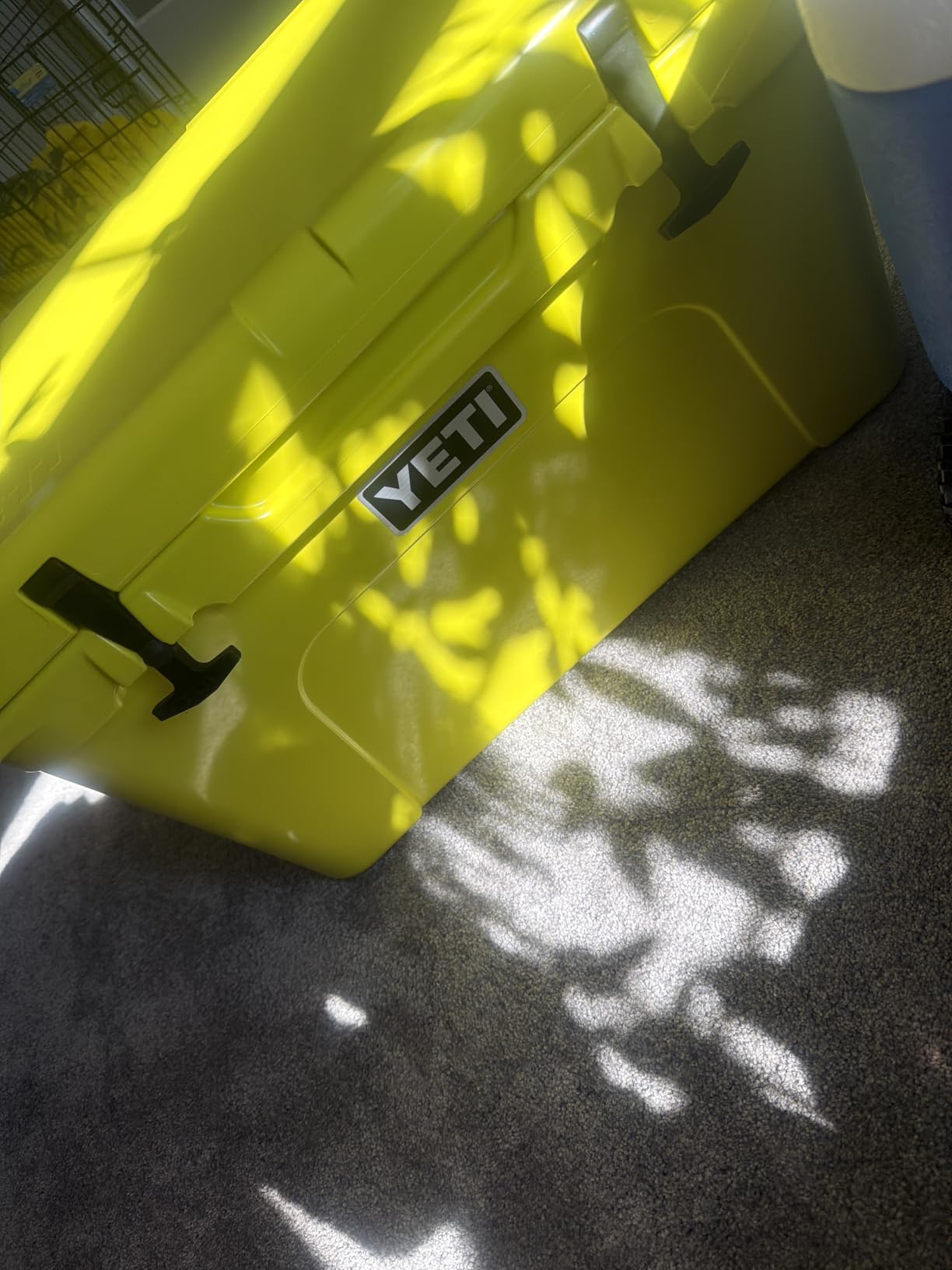
At 4.7 stars across 4,858 reviews, the Tundra 45 has one of the strongest owner records in this roundup, and the pattern is consistent: the rotomolded body takes abuse and keeps going. We used it as the catch cooler on two- and three-day runs in summer heat, and it came back with cubes left in the bottom on day three even with the lid opened for bait and lunch.
Ice retention here comes from up to 3 inches of PermaFrost foam injected into a bear-resistant FatWall design, sealed by a continuous gasket and held by T-Rex rubber latches with a keeper system that stops them from swinging over the lid. The listed empty weight is 24 pounds, with overall dimensions around 25.5 inches long by 16 wide by 15.5 high.
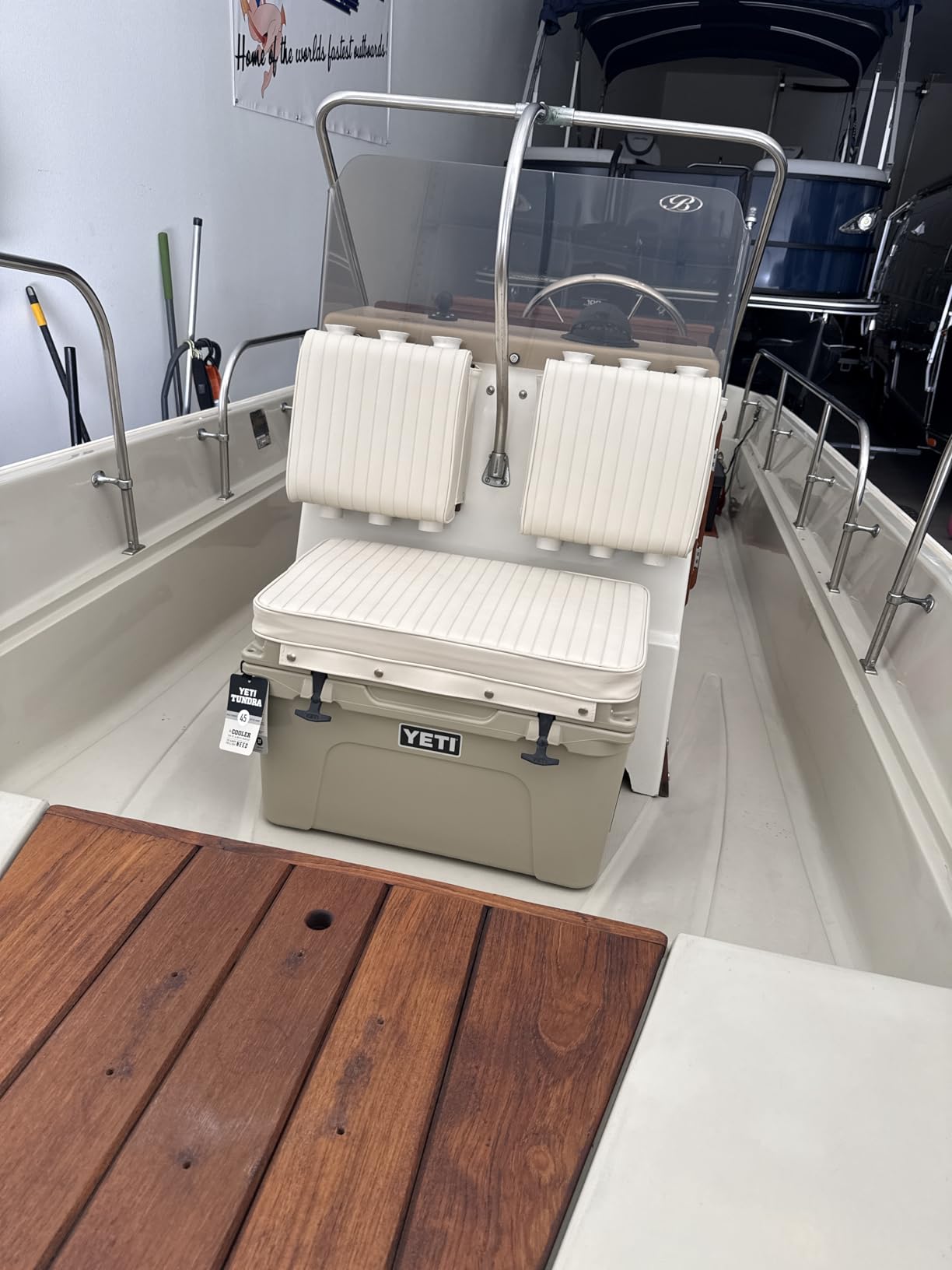
Two details separate this from cheaper hard coolers. The walls are seamless because rotomolding casts the whole shell in one piece, so there are no split seams to leak or crack, and the T-Rex latches are rubber rather than thin plastic straps, which matters when the lid doubles as a seat or a step at the rail.
A dry goods basket ships in the box, which is the right place for sandwiches, tackle trays and phones so they do not sit in meltwater. The manufacturer also recommends a 2:1 ice-to-contents ratio, and in practice that means pre-chilling the empty cooler overnight rather than dumping warm fish into a cold box.
What you give up for the insulation is deck space and solo liftability. The 16-inch width is wide enough that it will not tuck beside a leaning post on a smaller console, and 24 pounds empty becomes something like 60 pounds once it is iced and loaded. Our advice for a solo angler: put it on the deck before it is full, not after.
Is 45 quarts the right size for a day offshore?
For one or two anglers on a same-day or one-night trip, yes. The chamber is roughly 9.5 inches wide, 9.87 high and 15.5 deep, and a 45-quart box loaded with fish fillets and a 2:1 ice ratio comfortably carries a decent offshore haul for two people.
If you are fishing for pelagic species and expecting a serious weight of fish, or you are feeding a crew of three, 45 quarts becomes tight fast. Ice takes up more room than most buyers expect, so the practical usable volume is well under the label number. Size up to a 60 or 65 quart model if more than two people are eating out of it.
What does 24 pounds of empty weight mean on a center console?
It means two-handed lifting, every time. The heaviest lifting moment is not on the water, it is at the trailer ramp with a full box and one free hand for the rail. Owners on fishing forums describe exactly this moment as the reason they eventually downsize from a 65 or 100 quart cooler to something in the 40s.
If you are fishing alone or from a small skiff where the deck sits low to the water, treat empty weight as a hard limit rather than a preference. Under about 22 pounds is where solo handling becomes realistic, and only two hard coolers on this list fall under that line.
2. RTIC 30 Can Ultra-Tough Soft Cooler Review – Shore and Surf Angling
RTIC 30 Can Ultra-Tough Soft Cooler Waterproof, Marine
30-can soft cooler
Floats when it goes overboard
1.5 in closed-cell foam
4.3 lb empty
Pros
- Leak-proof zipper keeps gear dry on a wet dock
- Floats if it goes overboard
- Light at 4.3 lb and easy to carry one-handed
- Collapses flat for stowage
Cons
- Zipper is the weak point over time
- Interior volume is smaller than the can rating suggests
- Soft sides squish under heavy loads
This is the largest review pool in the roundup at 6,565 reviews averaging 4.4 stars, and the pattern of praise never changes: leak-proofing, weight and the fact that it floats. That float matters more than it sounds, because a soft cooler is the one you can actually use from a shore launch, a dock, a kayak or a wading position.
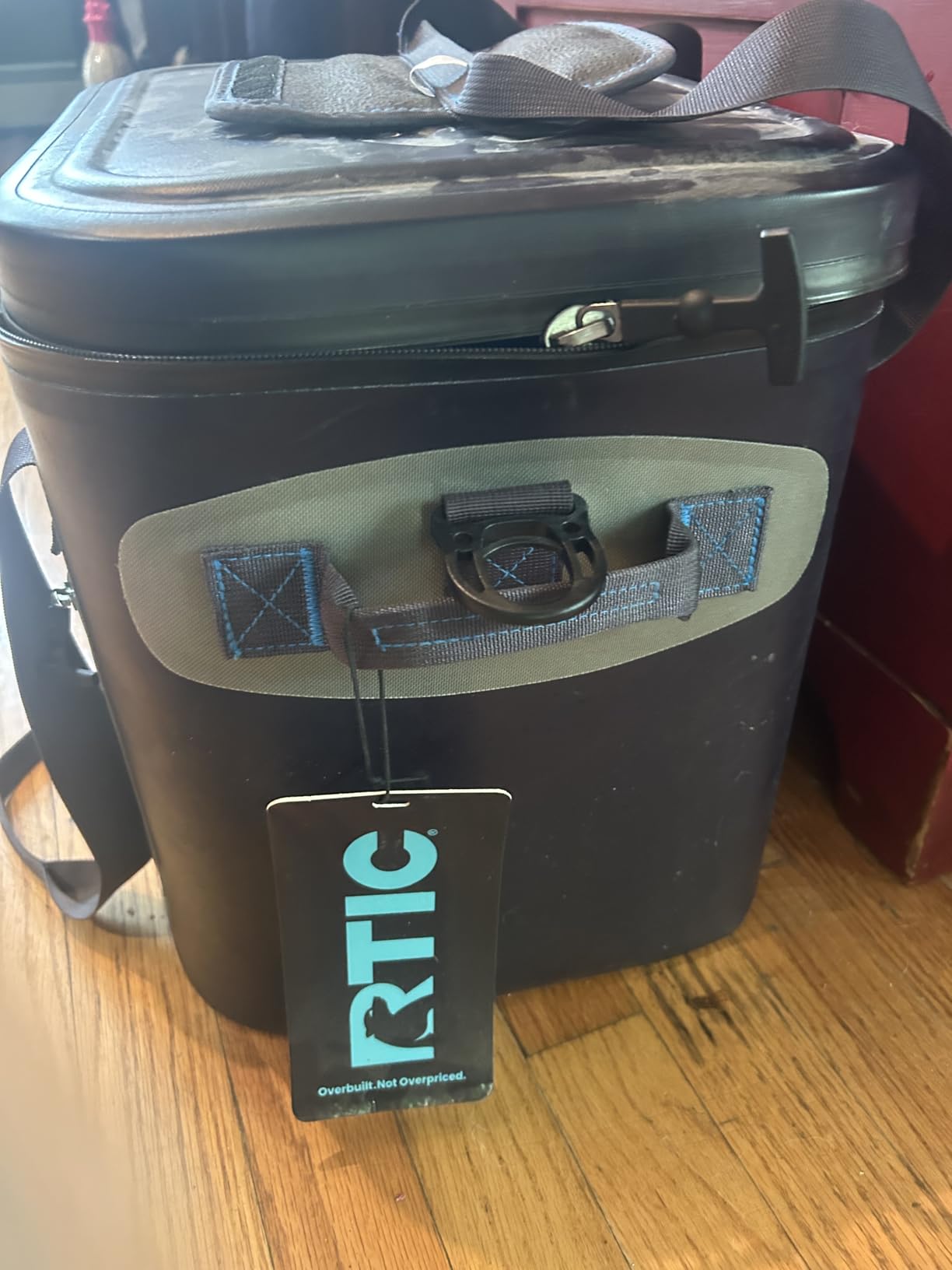
Construction is heavy-duty nylon over up to 1.5 inches of closed-cell foam, closed with the RTIC EZ waterproof zipper. Listed dimensions are about 11.46 by 15.48 by 12.96 inches at 4.3 pounds empty, and RTIC states it holds cold for up to two days when you follow their cooling tips.
Two days of cold time is the honest ceiling for a soft bag of this size, and it is fine for surf, pier and kayak work where you fill it with ice and a rod bag on the way out. The leak-proof zipper is what keeps your dry layer dry when you set the bag down in a wet launch ramp.
The floatability is a genuine safety feature. A hard cooler full of ice is essentially a dead weight in the water; a floating soft cooler will come back to you or wash up. The shoulder strap is included, and the whole thing collapses flat when empty so it fits in a console locker.
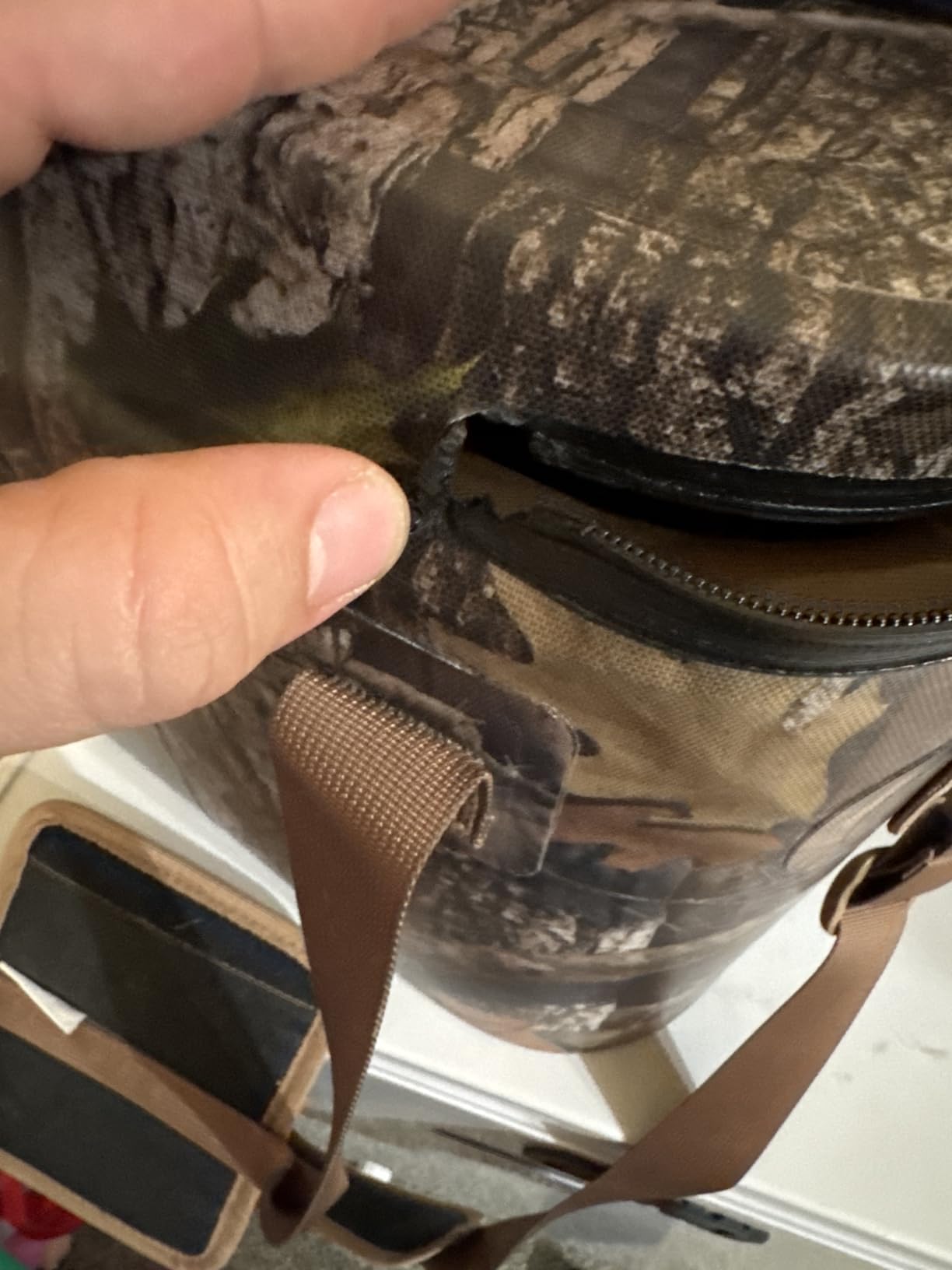
The failure mode is the zipper, and it is the single most cited durability complaint on soft coolers across every forum we checked. Strap buckles and zippers go first on any soft cooler, and salt water does not slow that down. Treat it as a two-to-three-season tool unless you are careful with it.
Does a floating soft cooler work on a wet dock?
Yes, and it is the reason to buy one. The waterproof zipper means you can set it in standing water, slide it across wet concrete or stow it under a console without worrying about what is underneath. A hard cooler does not care about water, but it does care about being dragged, and soft bags never do.
For shore and surf anglers, the 4.3-pound empty weight is the deciding factor. You can carry it in one hand with a rod bag over your shoulder, across a slick ramp, without the two-person awkwardness that a hard cooler brings.
How long does the ice actually last?
Roughly two days in normal use, matching the manufacturer claim when you pre-chill the bag and keep it closed. Once you are opening it every few hours to get at bait or a snack, plan on one good day. That is still enough for the way most people use a soft cooler, which is as a drinks and bait bag rather than a multi-day fish hold.
One practical note from owners: interior volume is smaller than the can rating suggests. A 30-can soft cooler fits drinks fine but swallows less actual fish than a 45-quart hard cooler of similar size, because the soft walls compress inward when you load them.
3. Igloo Maxcold Glide 110Qt Review – Big Catches You Cannot Lift
Igloo Glide 110 Qt Roller Cooler, White
110 qt hard shell
THERMECOOL body and lid insulation
Telescoping handle and wheels
25.4 lb empty
Pros
- Soft-ride wheels and telescoping handle make a full load realistic
- UV inhibitors guard the shell in prolonged sun
- 110 qt capacity holds 168 cans
- Stainless steel hinges resist corrosion
Cons
- Bulky 37.5 inch length takes substantial deck space
- Wheel and handle hardware adds bulk when stowed
Igloo built this one for volume. At 110 quarts, holding up to 168 cans, it is the largest catch hauler in the roundup, and it pairs that capacity with THERMECOOL insulation in both the body and the lid plus UV inhibitors and infrared technology aimed squarely at long days under sun.
The empty weight is 25.4 pounds, which sounds heavy until you notice the telescoping handle and soft-ride wheels. That chassis is the whole point of the design: it converts a cooler nobody could lift into one you can roll from the truck to the dock and up the ramp. On a large center console or bay boat with a wide deck, that is a genuine solution.
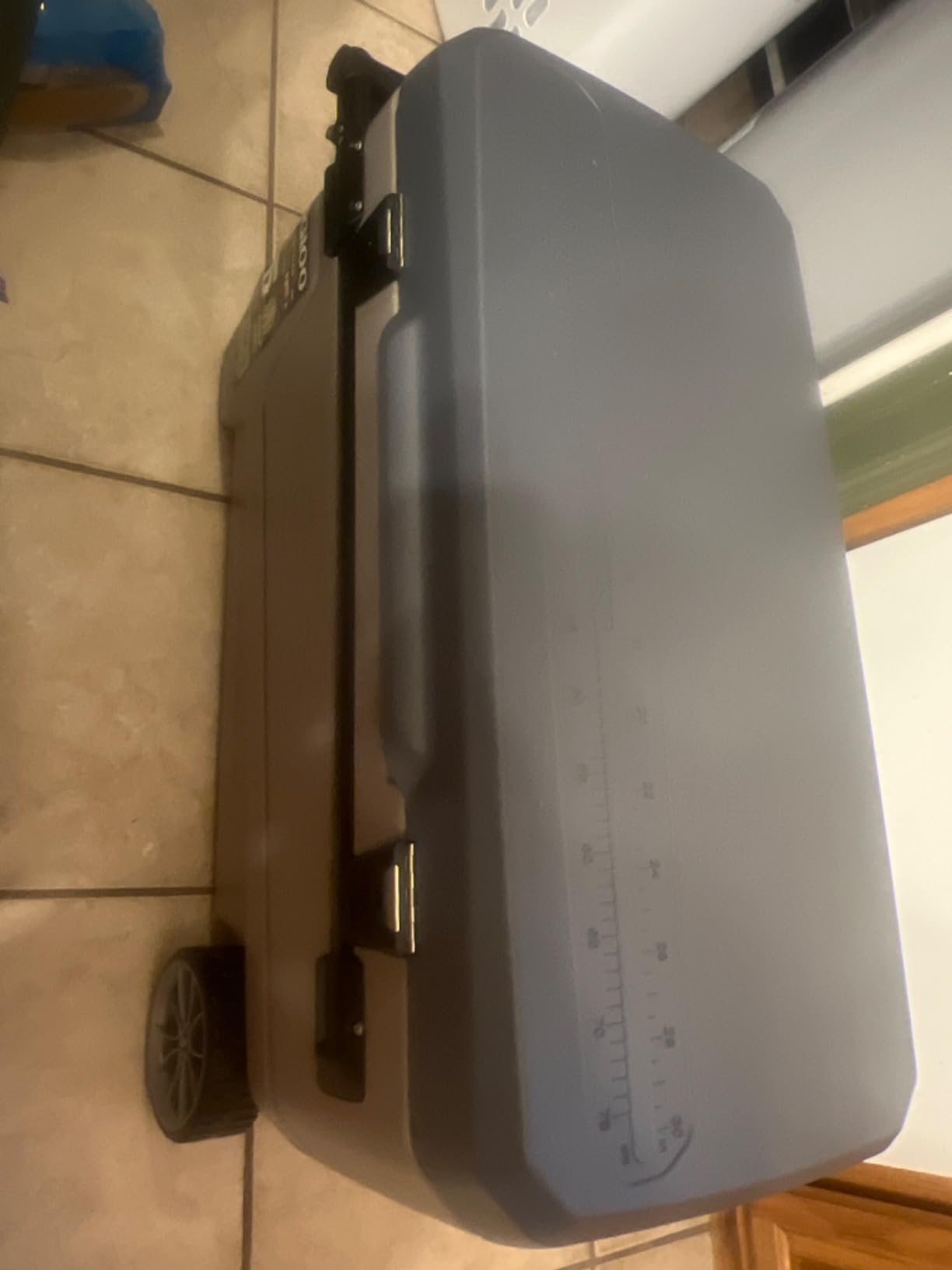
DuraLatch impact-resistant lid closures run on stainless steel hinges, which is the hardware combination you want in salt water. There is a ruler molded into the lid for measuring your catch, and a drain plug is included for draining meltwater after the run.
The catch is size, not performance. Dimensions are 37.5 inches long by 19 wide by 20.6 high. That is a large box to stow on a boat that also has to hold rods, tackle and a casting deck, and the wheels and handle hardware add bulk you have to find a home for when the cooler is not rolling.
Our read: this is the right pick for anglers who fish from bigger boats, who bring home serious weight, or who would rather roll a cooler than wrestle it. On a skiff or a small center console, 110 quarts is simply the wrong shape.
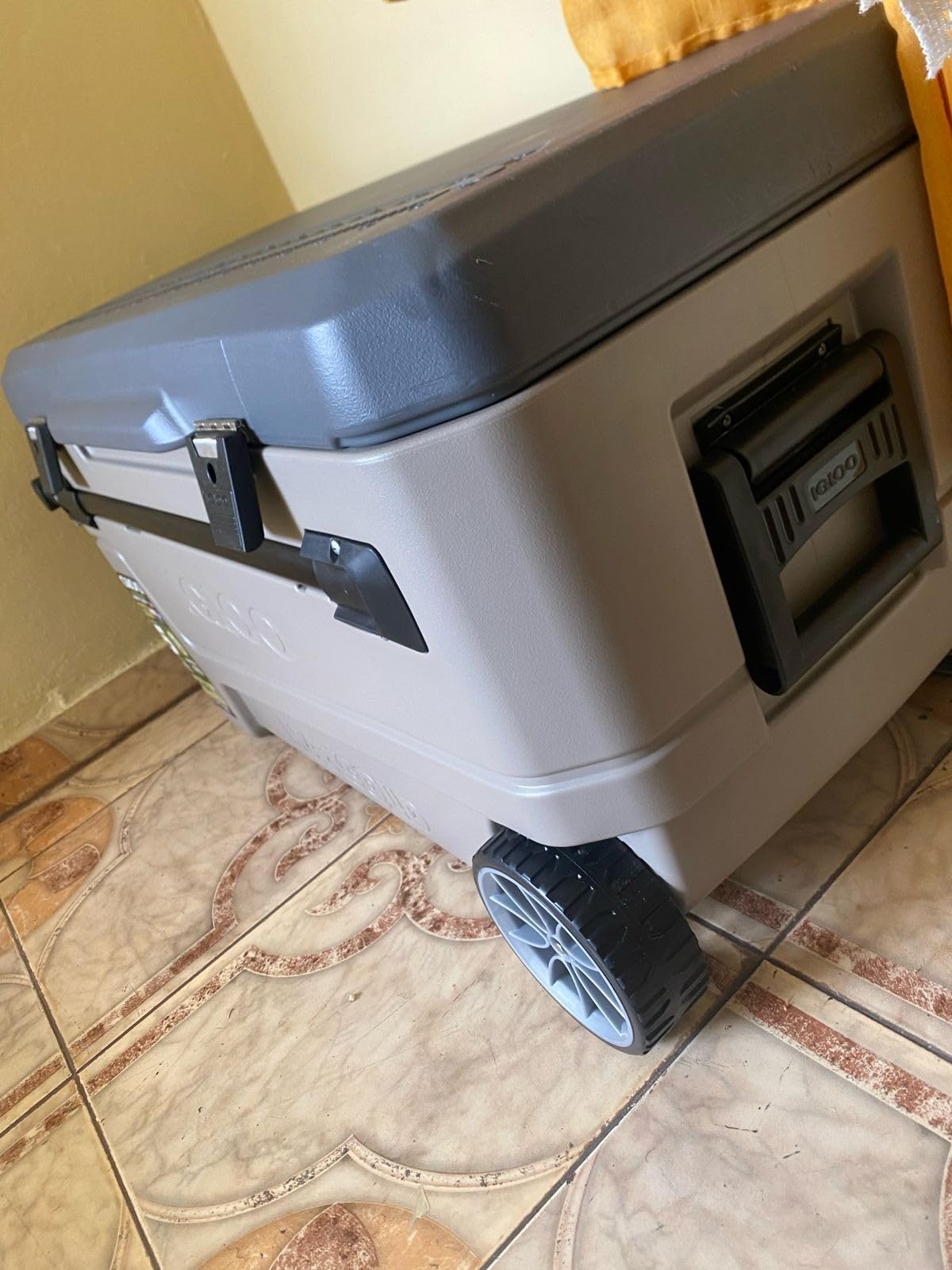
Do the wheels and handle work on a boat ramp?
They work well on pavement and packed sand, which is where they do most of their job. Soft-ride wheels roll over uneven ground, and the telescoping handle keeps the load upright so it does not tip mid-haul.
Once on board the wheels become dead weight to stow, and the handle adds length. Plan a dedicated spot near the transom or under a leaning post rather than letting it wander around the deck.
Where does a 37.5 inch cooler not fit?
On anything with a narrow console deck. At 37.5 inches long and 19 inches wide it needs a real footprint, and small boats and skiffs simply do not have that much clear deck space.
If your deck is tight, pick a smaller hard cooler or a soft fish bag instead. Both fit under a console or in a locker, and both can be moved by one person without a fight.
4. RTIC 65 QT Ultra-Tough Review – Multi-Day Ice Retention
RTIC 65 QT Ultra-Tough Hard Cooler, Navy
65 qt rotomolded hard cooler
2.4 in closed-cell foam
Freezer-style gasket
34.4 lb empty
Pros
- Owners report ice for a full week with daily openings
- Rotomolded walls survive heavy lifting and clean easily
- Freezer-style gasket seals consistently
- 5-year warranty backs the build
Cons
- 34.4 lb empty makes solo handling awkward
- Rubber latch tabs can be very hard to open
- Some units arrive scuffed or with a gasket glued shut
The 65-quart RTIC is our pick for anyone running two, three or more nights offshore, and at 2,466 reviews averaging 4.7 stars it has one of the strongest owner records in this roundup. Owners describe a full week of ice with multiple daily openings, which is the hardest claim any of these coolers makes and, unusually, the one owners seem to back up.
The build is a rotomolded polyethylene shell with up to 2.4 inches of closed-cell foam and a freezer-style gasket rated for up to seven days. RTIC backs it with a five-year limited warranty, and the interior dimensions match the published specs closely enough to plan loads against.
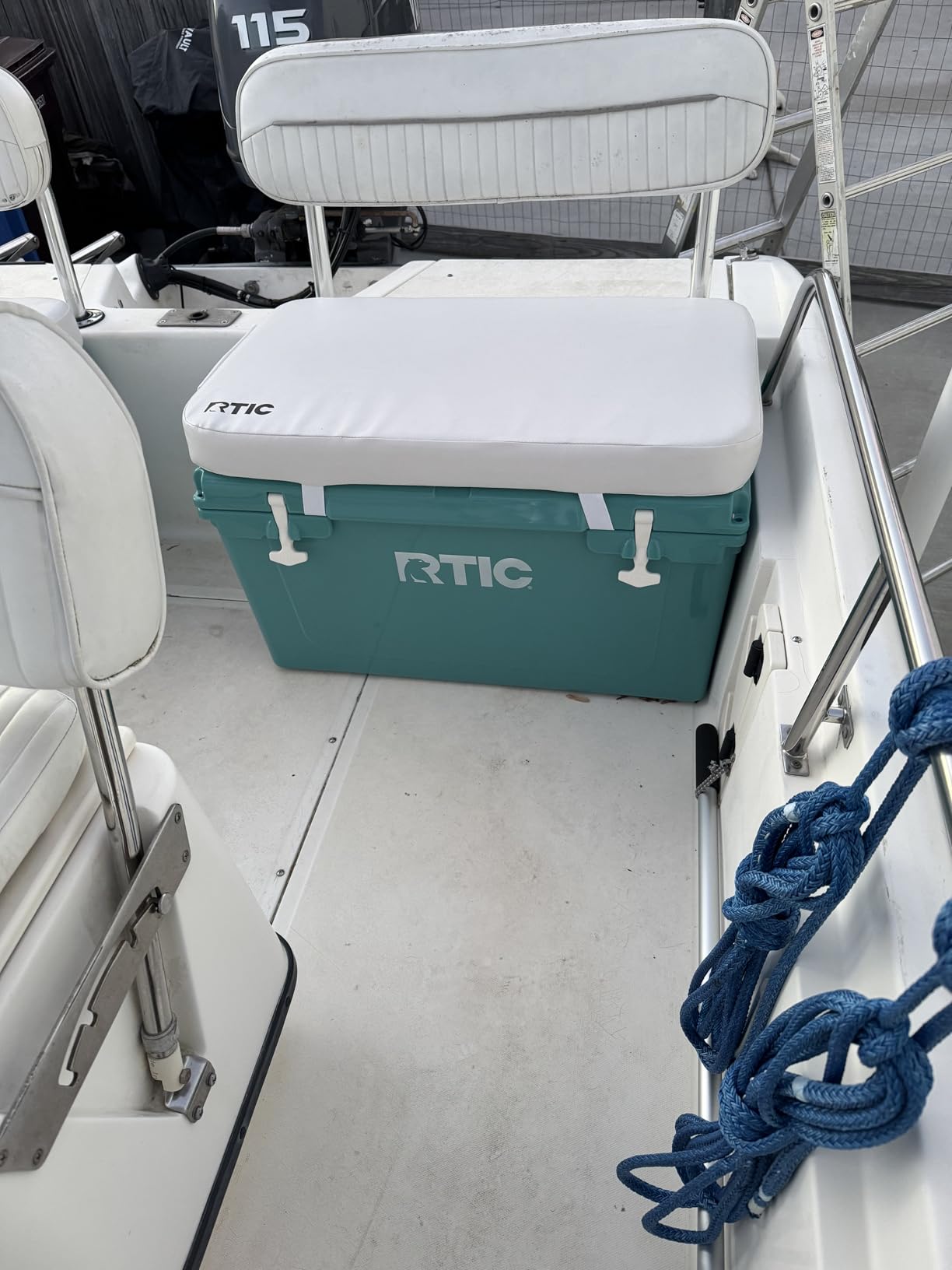
It also comes in 20, 45, 110 and 145 quart sizes, which matters if you want a matching drink cooler for the same trip. Keeping fish in one box and drinks in another is basic offshore practice, and matching sizes make stacking and stowing simpler.
At 34.4 pounds empty, this is the heaviest hard cooler on the list, and that is the honest trade against a week of ice. Solo anglers will feel it at the ramp. The latch tabs are also among the stiffest we have operated, and a small number of owners report receiving units with a gasket glued shut at the factory or scuffed from transit.
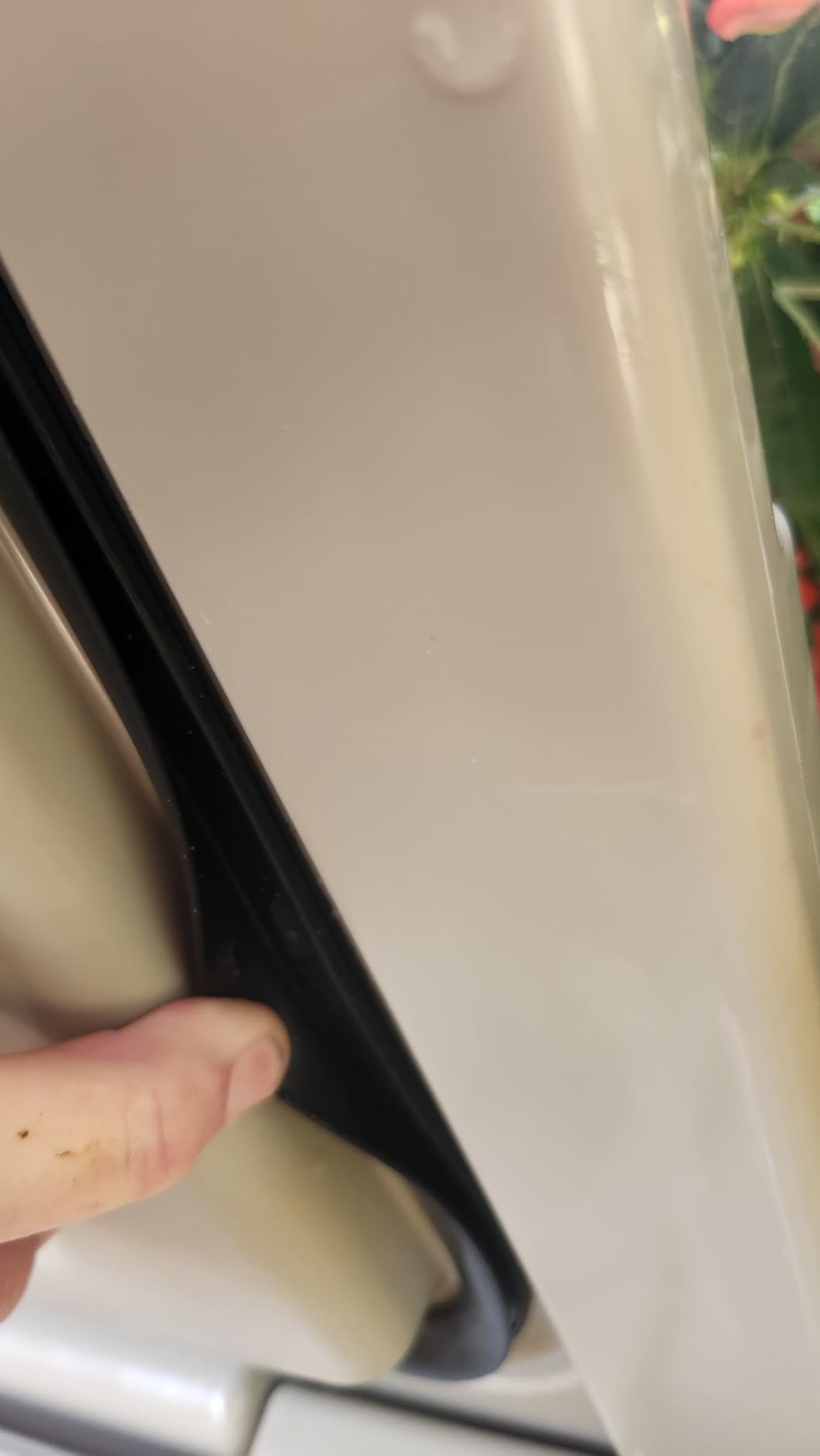
Those are fixable issues rather than design flaws. A gasket that will not budge usually frees up with a hair dryer or warm water applied to the sealing surface, and transit scuffing is cosmetic. But plan on two people for the ramp, and do not buy this one if you fish alone.
Does 7-day ice retention survive a real offshore week?
More often than not, yes, and it is the standout result in this roundup. A 65-quart box holds a lot of ice mass, and the 2.4-inch foam plus freezer-style gasket on a rotomolded shell loses heat slowly through the walls. When you add the right packing method, real-world reports land near the claim more than for any other cooler here.
Forum owners are more skeptical of manufacturer claims in general, usually reporting three to five days rather than the advertised week. The gap comes down to packing and opening frequency, not to foam thickness. A pre-chilled cooler packed full with block ice and opened twice a day will beat an identical cooler opened ten times.
Is 34.4 pounds a problem?
It is the deciding factor for a lot of anglers. Filled with a 2:1 ice ratio, you are moving something like 90 pounds, and no solo angler is hauling that up a ramp comfortably.
For a two-person crew on a wide-deck boat, it is a non-issue. For one person on a small skiff, it is a dealbreaker. That is exactly why this cooler and the ENGEL further down the list both earn a place, and why they serve opposite ends of the same problem.
5. Pelican 70 Quart Elite Review – Built Like Deck Equipment
Pelican 70 Quart Elite Cooler (White/Gray)
True 70 qt internal volume
2 in polyurethane foam
360 degree freezer-grade gasket
Lifetime warranty
Pros
- Lifetime warranty from a long-standing US maker
- Tie-down slots and lockable hasp secure it on deck
- Self-draining cup holders and molded measuring notches
- Drain plug on a stainless steel cable
Cons
- Very large and bulky for the 70 qt class
- 33.3 lb empty needs two people when loaded
- Non-skid feet grip metal so hard it is hard to slide
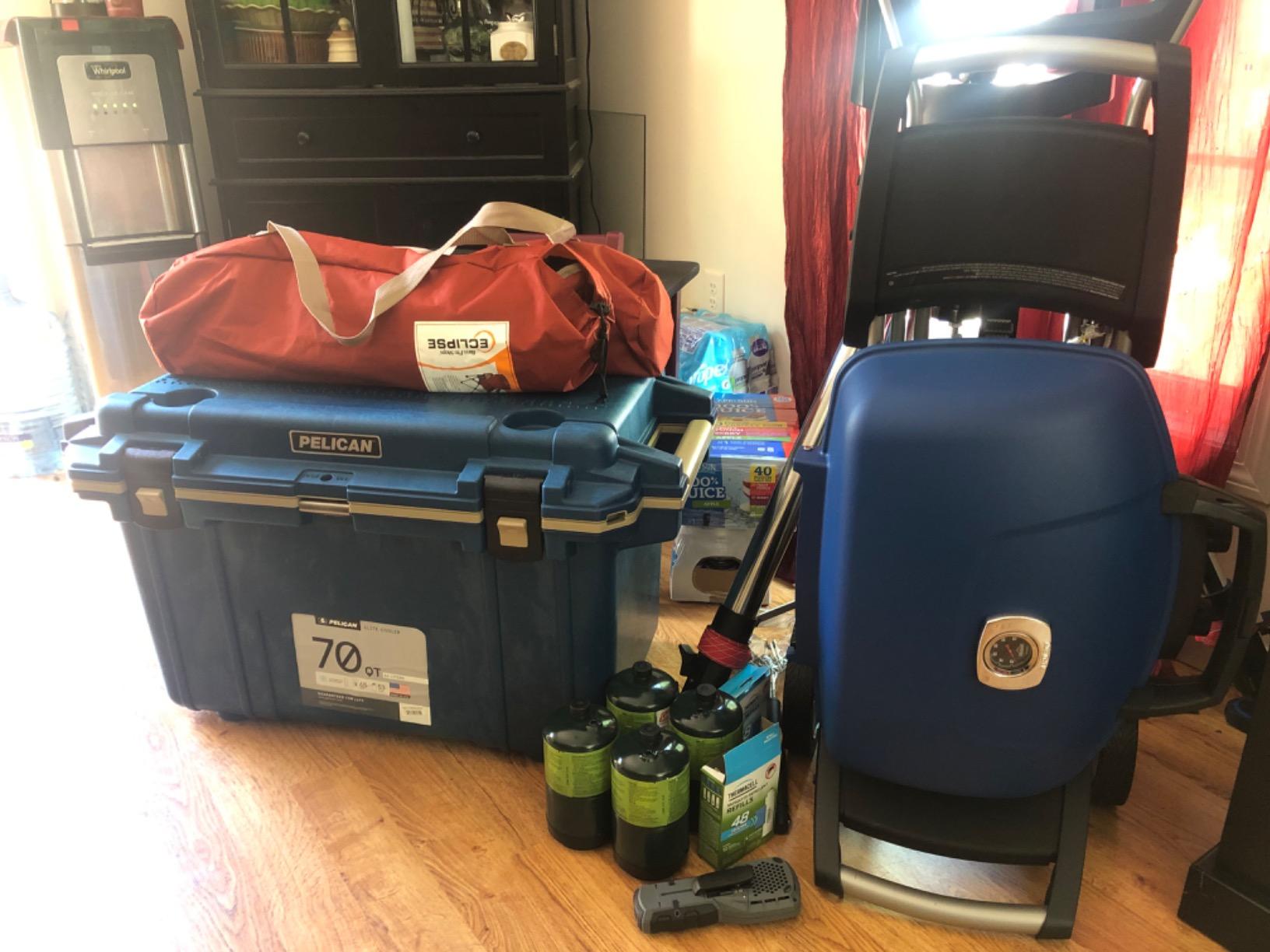
The Pelican 70 Elite is one of the few coolers on this list that was clearly designed for a boat rather than adapted for one. It has molded-in tie-down slots, a reinforced lockable hasp, four self-draining cup holders, non-skid rubber feet and a drain plug tethered on a stainless steel cable so it is never lost overboard.
Ice performance comes from 2 inches of polyurethane insulation and a 360-degree freezer-grade gasket, and Pelican states this is a true 70-quart internal volume rather than a rounded-up marketing number. That distinction matters when you are planning an ice load, because comparable boxes labeled 70 quarts hold noticeably less usable space.
The hardware is what justifies calling it deck equipment. A stainless steel bottle opener is moulded in, the carry handle is overmoulded for grip, and the anti-shear hinge system keeps the lid aligned when someone stands on the cooler to reach a trolling lure or step past it to the rail.
The warranty is the strongest guarantee in the roundup: a lifetime warranty from a company that has been building in the USA since the 1940s. Owners with several seasons of use describe it as built like a tank, and the tie-down and drain features are the ones offshore anglers actually use every trip.
Weight is the trade at 33.3 pounds empty, with dimensions around 36.5 by 21 by 22 inches. That is a genuinely large box, and it needs two people when fully loaded. Reviewers also note the rubber feet grip metal surfaces so firmly that dragging the cooler across a deck is harder than it should be.
Why do tie-down points matter offshore?
Because a cooler that moves is a cooler that can hurt somebody or end up in the water. In a seaway, an unsecured box on deck becomes a projectile, and the tie-down slots moulded into the Pelican’s base are designed to take a strap or bungee to an existing deck cleat.
Only two coolers in this roundup have dedicated tie-down slots as standard. Most anglers secure a cooler by wedging it into a corner, which works right up until it does not. If you run in open water or plan to keep the boat moving with fish aboard, moulded tie-downs are worth more than an extra five quarts.
Is a lifetime warranty worth the bulk?
For most offshore anglers, yes, because you buy a cooler like this expecting it to outlive several boats. The lifetime warranty means the shell, hinges and latches are covered indefinitely, which is a different proposition from a five-year warranty on a rotomolded box.
The cost is deck space and weight. At 33.3 pounds empty and over a foot tall, this is not a small-boat cooler. Buy it if you have deck space and intend to keep it for years; skip it if you need something you can move by yourself.
6. Coleman Pro Hard Cooler 45-Quart Review – Light in the Hand
Coleman Pro Hard Cooler, 4 Days Cold, 74-Can, 45-Quart
45 qt holding up to 74 cans
Walls up to 2 in thick
19.8 lb empty
Have-a-seat lid
Pros
- About 30 percent lighter than rotomolds of the same capacity
- Stainless steel latch sturdier than rubber straps
- Holds near 40 F overnight after a day at the beach
- Oversized attached drain plug never gets lost
Cons
- Thin or uneven rear gasket lets water seep near the hinge
- Ice retention falls short of the 4 day claim in high heat
The Coleman Pro Hard 45 is built around a single idea: deliver a hard cooler’s insulation at a weight one person can manage. At 19.8 pounds empty for a 45-quart box, it comes in below several of the rotomolded competitors on this list by a wide margin, and the manufacturer designs it to be around 30 percent lighter than comparable rotomolded coolers.
Walls run up to two inches thick, the lid and body are insulated, and Coleman claims cold retention for up to four days. Owners report measuring contents near 40 F overnight after a day in the sun, which is the number that actually matters for fish quality.
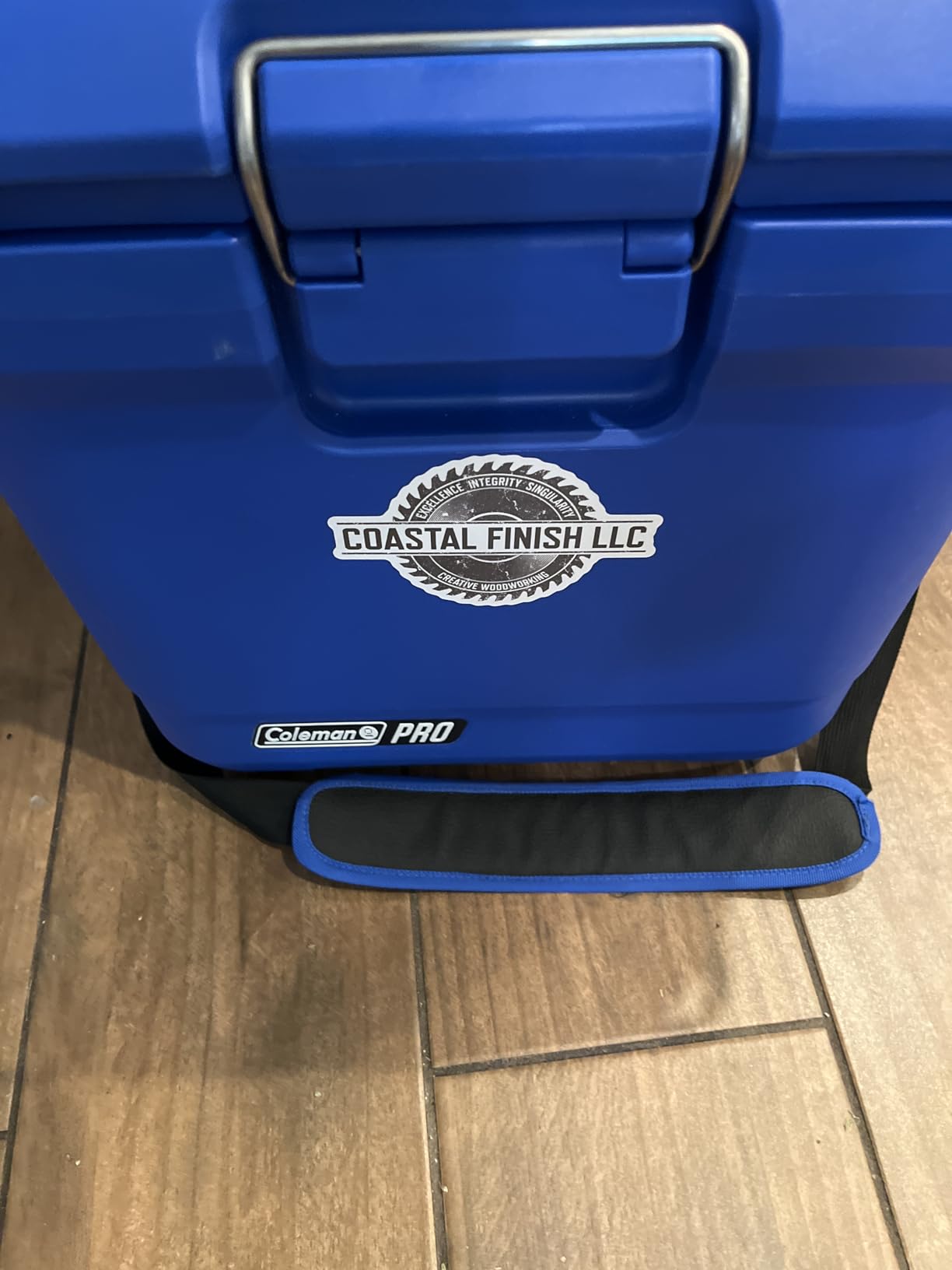
Two details earn their keep on a boat. The stainless steel latch is operated one-handed and is sturdier than the rubber straps premium brands use, and the oversized drain plug is attached rather than loose, so it cannot end up at the bottom of the lake. That plug matters because clearing blood and slime after a fish haul is the least enjoyable task of any trip.
There are rugged side handles for a two-person or full-hand grip, non-slip feet and a have-a-seat lid. The lid is rated to sit on, which on a fishing boat means it doubles as a step or a perch, and a ten-year limited warranty is listed for the build.
The reported flaw is the rear gasket. Some owners describe a thin or uneven seal that lets water seep near the hinge area, and some find the four-day claim optimistic in high ambient heat. For a cooler that will live in salt spray, that hinge-area seal is the part to inspect at the start of each season.
Does the rear gasket leak in salt water?
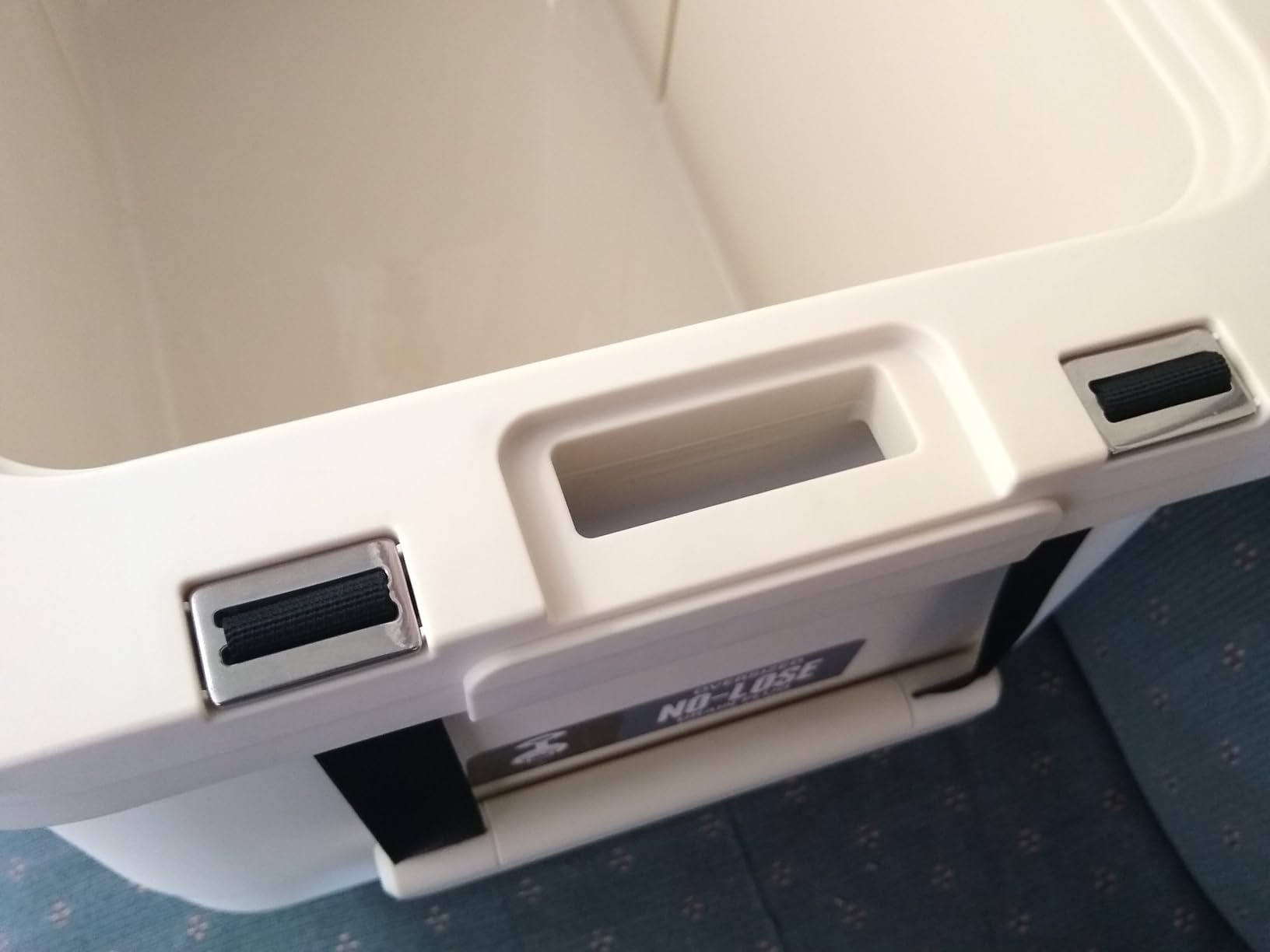
Some owners report seepage around the hinge end of the seal, and that is the most common complaint across 710 reviews at a 4.6 average. A leaky rear seam is not a disaster for ice retention, since the leak is small, but it is a salt-water problem over time because the moisture sits right against the hinge hardware.
Check that section of the seal before each trip and wipe it dry after every haul. If the gasket is deformed rather than merely dirty, it is a warranty item, and the listed ten-year limited warranty is the reason this cooler is a defensible buy despite the complaint.
What do you give up for five fewer pounds?
Some wall thickness and some long-haul retention. Two inches of wall in a lighter shell is still strong, but a rotomolded box with 2.4 or 3 inches of foam will outlast it on a week-long trip in high heat. Four days is a day-trip and overnight number more than an expedition number.
What you gain is the ability to lift it. At 19.8 pounds empty, this is one of only two hard coolers in the roundup where a solo angler can realistically load a full cooler onto a small boat by themselves, which for many people matters more than an extra day of ice.
7. ENGEL 60 QT Ultra-Light Review – For Anglers Who Fish Alone
ENGEL 60 QT Ultra-Light Injection Molded Cooler – Ice Chest Keeps Ice up to 7 Days – Large Cooler Includes Wire Basket, Divider and Built-in Bottle Opener – Seafoam with Dark Grey Interior (Seafoam)
60 qt capacity
2 in closed-cell foam
21.5 lb empty
Wire basket and divider included
Pros
- One of the lightest 60 qt coolers and easy to handle full of ice
- Tie-down slots secure it to a boat or paddleboard
- Basket and divider keep food above meltwater
- Interior fits full-size bottles standing upright
Cons
- Ice retention drops to about two days in extreme heat
- Not the proven durability of a heavy rotomolded shell
- Limited colour selection
This is the cooler that solves the problem at the top of this guide. Sixty quarts of capacity at 21.5 pounds empty is a weight-to-volume ratio that only a few coolers in the roundup manage, and it is why the ENGEL is the pick for anglers who fish alone or from a small boat.
Instead of rotomolding, it uses injection-molded high-density food-grade plastic with 2 inches of advanced closed-cell foam. Engel states up to seven days of ice retention, and owners report results that occasionally exceed expectations, including one documented report of ice holding for ten days in a hot vehicle.
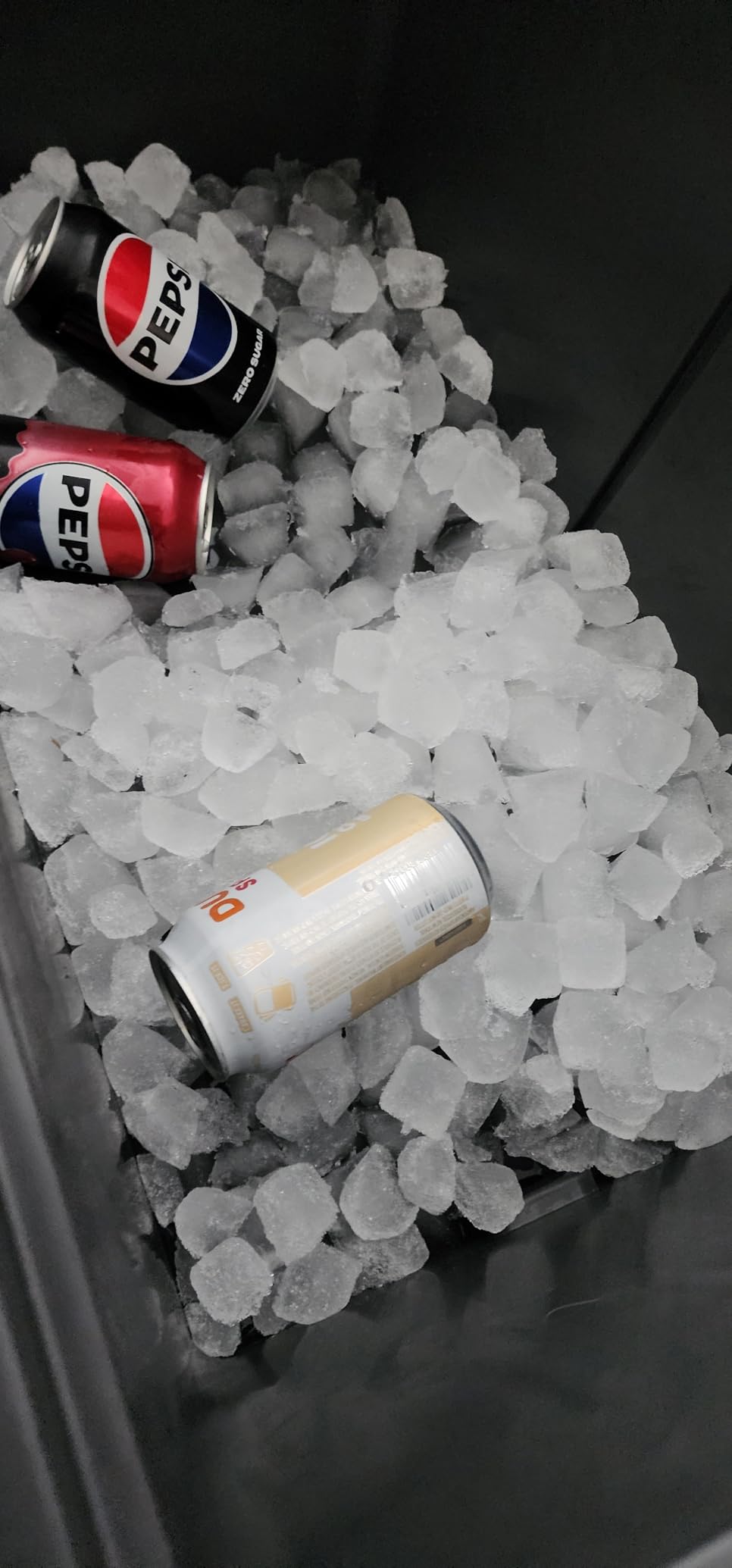
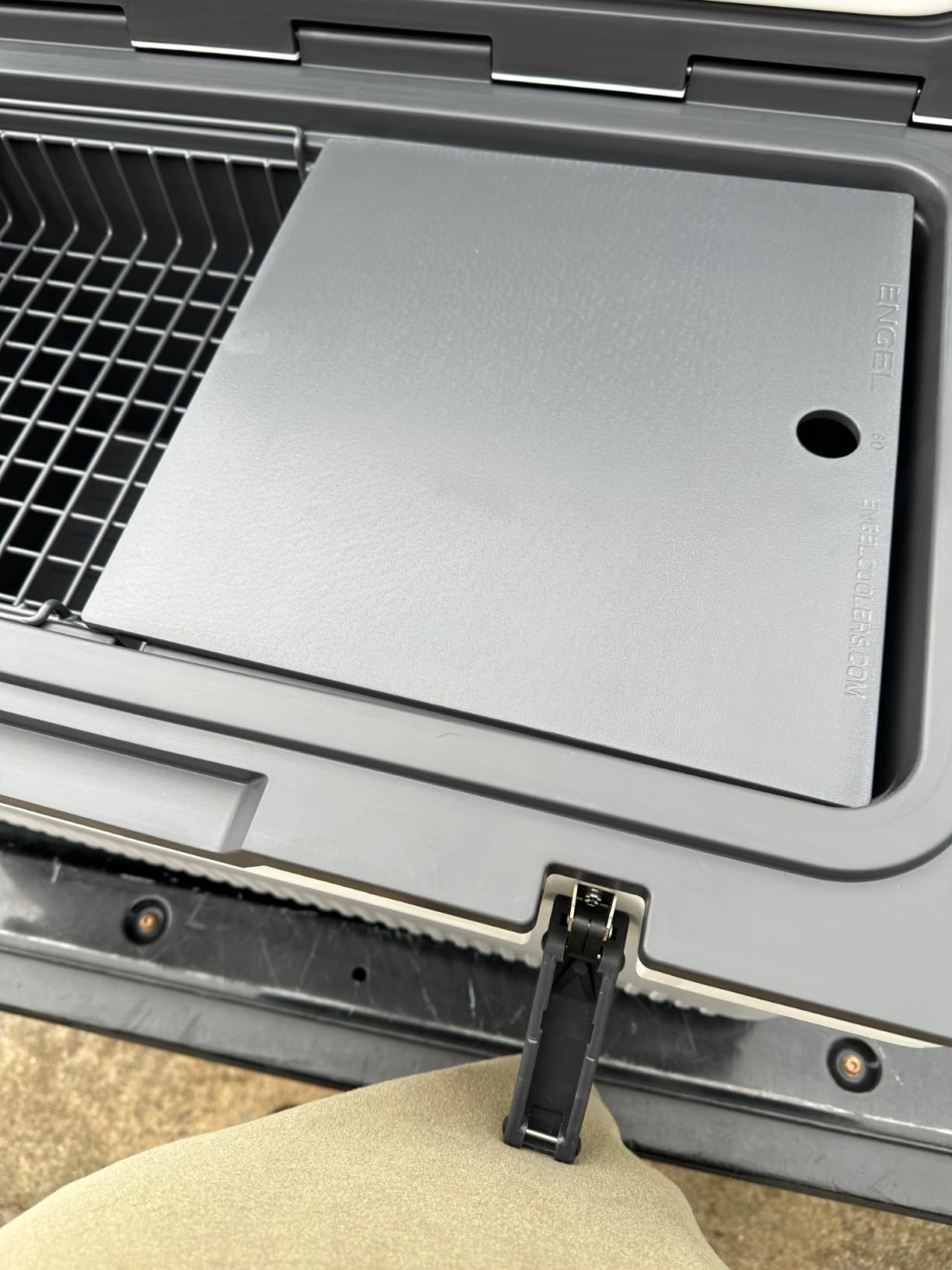
The included hardware is unusually generous. You get a removable wire basket and a cooler divider so food stays above meltwater, a gasketed drain plug, a built-in bottle opener, integrated rope handles and moulded hand-holds, plus tie-down slots for securing the cooler to a boat or paddleboard.
There is also a patent-pending level floor with tapered drainage channels. That sounds minor until you try to drain a cooler with a flat floor, where a couple of inches of bloody meltwater sits in the corners no matter what you do. A floor that actually empties saves you a lot of scrubbing at the end of a long day.
The main limit is heat performance. Owners are candid that retention falls to roughly two days in extreme conditions, and injection-molded shells do not have the proven abuse resistance of heavy rotomolds. The gasketed drain plug not leaking is the sort of small reliability win that keeps showing up in owner reviews.
Why does 21.5 pounds change which size you can own?
Because it moves the decision boundary. For most hard coolers, the weight question and the capacity question point in opposite directions: more ice life means more weight. At 60 quarts and 21.5 pounds, the ENGEL gives you a genuinely large usable volume at a weight one person can lift onto a skiff or carry up a ramp.
That is why it is worth accepting a shorter ice-life window in exchange. On a two-day trip you were never going to stretch a 60-quart cooler for a week anyway, so the insulation you give up is insulation you were not using, while the weight you save is weight you had to fight every morning.
How does it do in extreme heat?
Retention drops to around two days in the worst conditions, which is the honest limitation of a lighter shell. For a standard offshore day or an overnight run in warm water, that is more than enough, particularly with a pre-chilled cooler and block ice.
Forum owners consistently single out the ENGEL for value, describing it as the same practical performance for less money. One r/CampingGear owner reported an Engel cooler still holding ice after five days at a music festival in 90 to 95 F heat, and an Engel 32-quart owner cites the low weight and bear certification as the reasons they keep buying the brand.
8. AO Coolers Expedition Carbon 48-Can Review – Soft Bag for a Wet Deck
AO Coolers Expedition Carbon Soft Cooler with High-Density Insulation, Silver, 48-Can
48-can soft bag
Leak-proof interior liner
5 lb empty
Side pocket and shoulder strap
Pros
- Leak-proof liner handles a wet deck or rod locker
- Welded construction holds its shape under weight
- Light at 5 lb with a removable shoulder strap
- Side pocket separates dry items from ice and fish
Cons
- Soft sides give less crush protection than a hard cooler
- Zipper is the component most likely to wear
The AO Expedition Carbon is the soft bag that reads like a hard cooler. It carries a carbon-fiber look exterior over welded construction, holds a 48-can capacity at about 5 pounds empty, and comes with a removable adjustable shoulder strap and a side pocket for dry items.
Its selling point is the leak-proof interior liner combined with what the manufacturer describes as twice the insulation of other soft-sided coolers. The liner is what lets you put this bag in a rod locker, on a wet deck or under a leaning post without worrying about what it soaks.
The published claim is 24 hours of ice in 120-degree weather with a 48-can capacity. Chamber dimensions are roughly 8 inches wide by 13 high by 21 deep, so this is a long narrow bag rather than a square block, which makes it easy to lay along the gunwale or under a console.
A limited lifetime warranty is listed, which is unusual for a soft cooler and outshines most competitors on paper. Owners consistently point to leak-proofing and durability on wet decks as the reasons they keep using it, and the carbon finish resists scuffing better than a plain fabric bag.
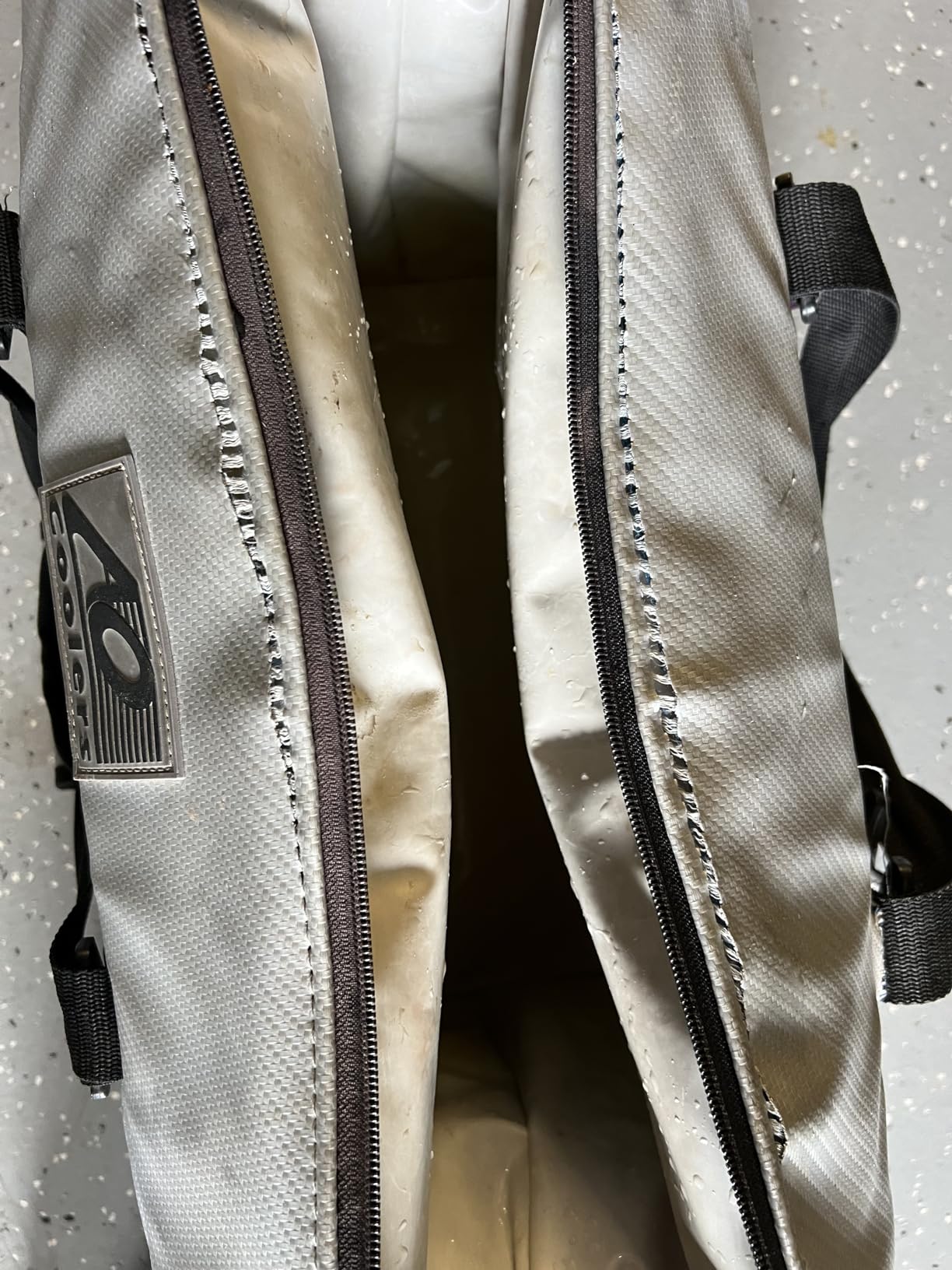
The limits are the ones that come with any soft cooler. There is no crush or puncture protection, so a sharp tool or a glass bottle takes the loss, not the bag. As with the RTIC soft cooler, the zipper is the part most likely to wear over years of hard use.
Is 24 hours of ice realistic?
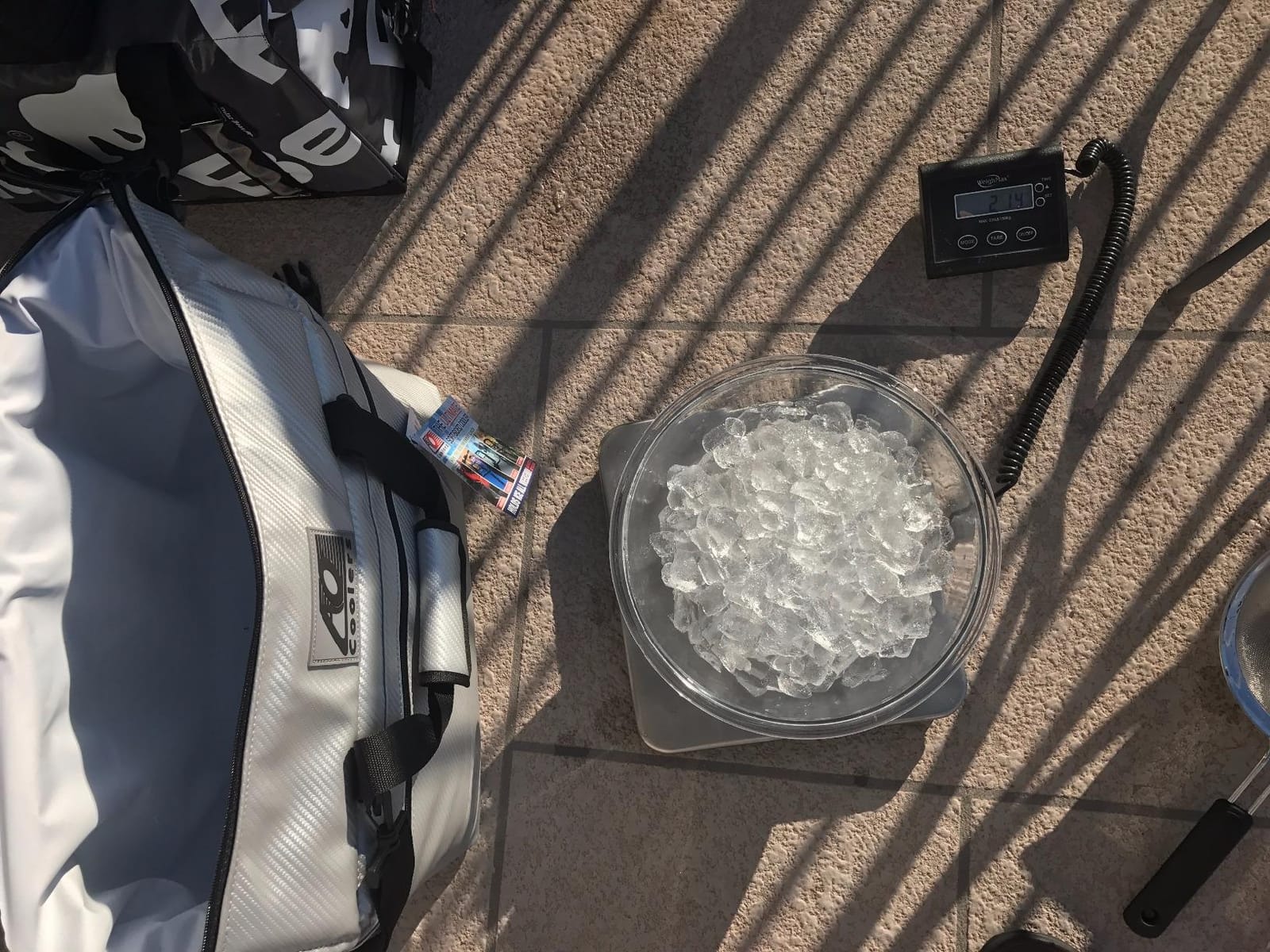
For a day trip, yes, and the claim is stated under extreme heat rather than mild conditions. A soft bag like this is not trying to compete with a 65-quart rotomold on a week-long trip. It is aimed at the day offshore, the run down to the reef and back, where you want fish cold and your deck dry.
Pre-chill the bag the night before, fill it with block ice rather than cubes, and keep it out of direct sun on the deck. Those three habits get you closer to the full day than most buyers expect from a soft cooler.
When should you pick a soft bag over a hard cooler?
Pick the soft bag when the deck is small, when you move a lot, when you fish from a kayak or a shore position, or when you need a second box for drinks and bait alongside a hard catch cooler. It nests into spaces a hard cooler will never fit into.
Stay with a hard cooler when you need puncture protection, when the cooler doubles as a seat or step, or when you are storing fish in it for more than a day. A soft bag cannot take a boot step or a tackle box on the lid without eventually slumping.
9. Buffalo Gear Insulated Fish Cooler Bag Review – Budget Catch Hauler
Buffalo Gear Insulated Fish Cooler Bag Portable Fish Kill Bag Keep Ice-cold More Than 48 Hours,48×18in White
48 x 18 inch tarp fish bag
Keeps ice-cold over 24 hours
1.6 lb empty
Corded drain plug
Pros
- Open mouth swallows a whole trolling rig or offshore catch
- Heat-sealed liner does not leak and rinses clean with soap and water
- Weighs 1.6 lb and folds flat between trips
- Corded screw-on drain plug is fast and never lost
Cons
- No crush or puncture protection for electronics or glass
- Zipper durability is the likely long-term failure point
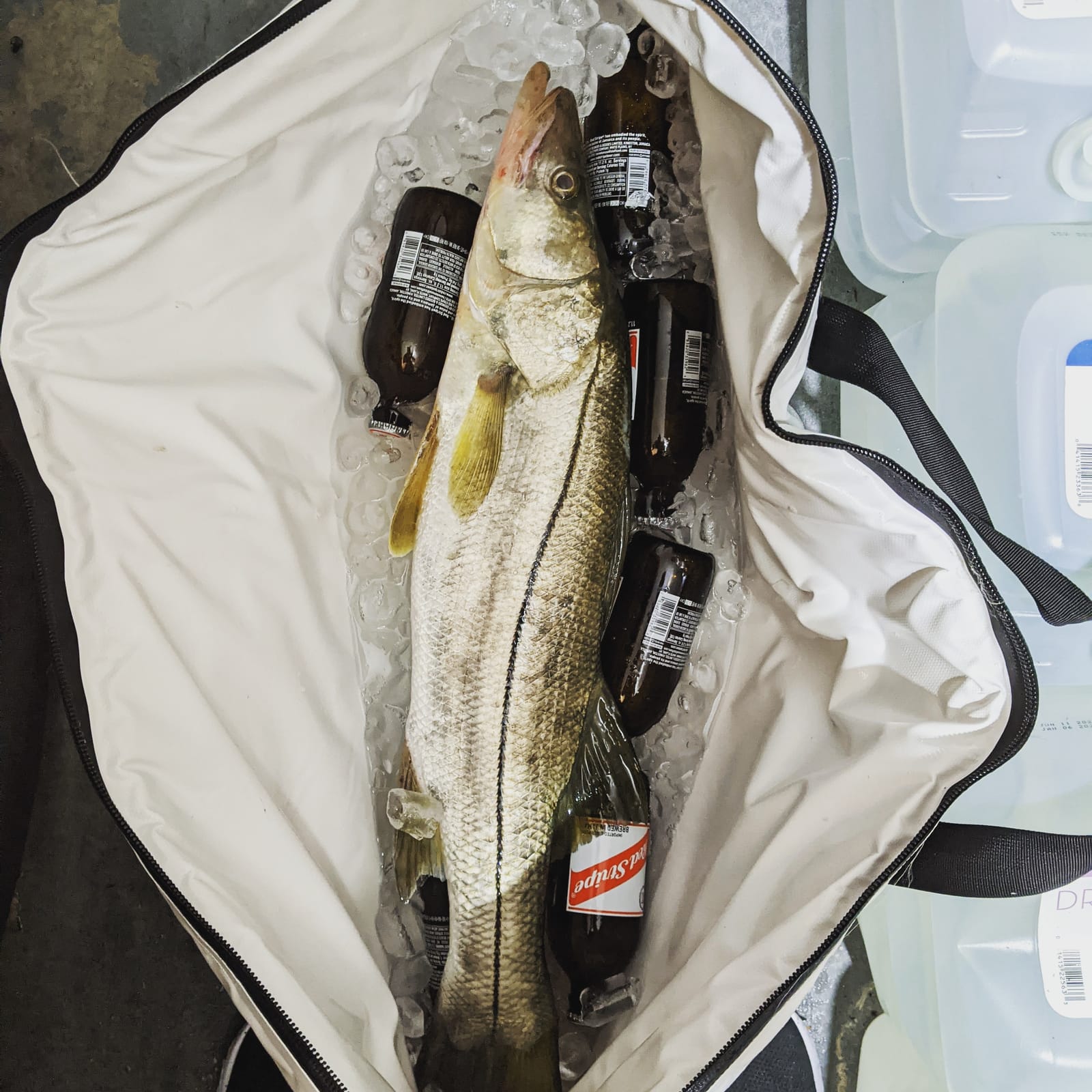
When the priority is getting fish off the boat and into the truck, a tarp fish kill bag is hard to beat. This one is a 48 by 18 inch bag at 1.6 pounds, with a heavy-duty heat-sealed, fiber-interlaced skin and a 22 oz polyester tarpaulin interior lining that does not leak.
At 35 quarts of stated capacity with a listing volume that runs well beyond the fish alone, the open mouth swallows a full offshore catch or a whole trolling rig without arranging anything. That wide opening is the feature that separates a fish kill bag from a soft cooler, which typically opens from the top through a narrow zipper.
Ice-cold retention runs more than 24 hours, which is a full day plus overnight and enough for a multi-day run if you are disciplined about opening it. The drain plug is screw-on and corded, which means draining meltwater after a long day takes seconds and the plug never disappears into the boat’s locker.
It also rinses clean with soap and water. After a haul of tuna or grouper, that is the difference between a ten-minute job and a twenty-minute one, and every owner we checked mentions cleanup as a reason the bag gets used again the next trip.
At 1.6 pounds it folds flat and stores between outings, taking up almost no locker space. The trade-offs are inherent to the format: no crush or puncture protection, and a zipper that will eventually be the first thing to fail. A one-year warranty is the shortest here.
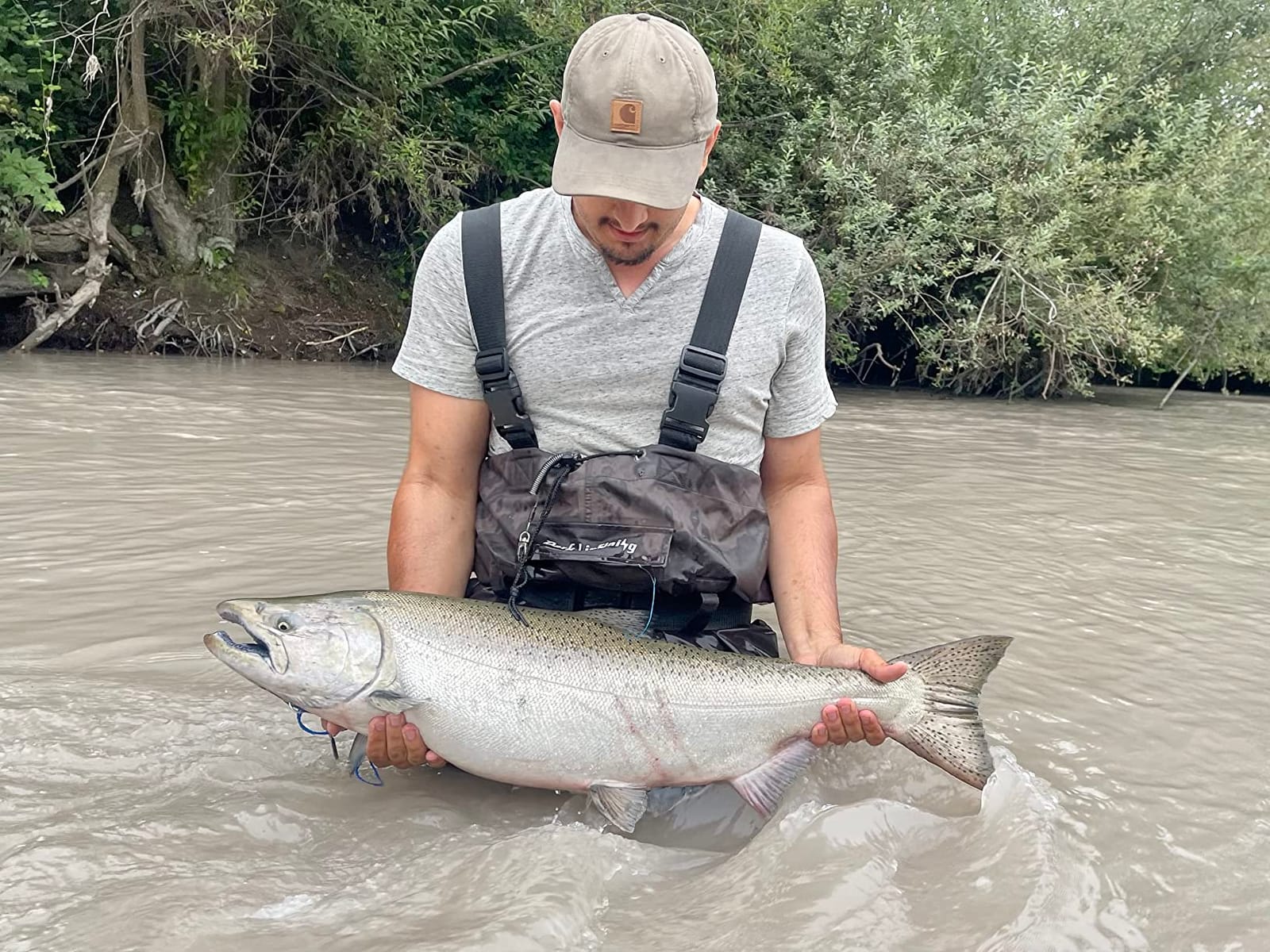
When is a tarp fish bag the right answer?
When your catch is the priority and stowage is a constraint. A long flat bag fits under a console, in a locker or in a truck bed without taking up the volume a hard cooler demands, and at 1.6 pounds you can carry a full load without thinking about it.
It is also the right answer for anglers who move around a lot inside a day, working different areas and stowing the bag between drifts. Nothing else in this roundup handles that pattern as cleanly.
Where does a tarp bag fail and a hard cooler hold?
Anywhere there is a sharp edge, a heavy load on top or a need for the lid to serve as a seat. Soft tarpaulin offers no crush resistance, so electronics, glasses and camera bodies do not belong inside. A hard cooler can be stood on, sat on and used as a step without any risk at all.
If your trips involve long hours on a deck with gear on the lid, or if you want one container that survives everything, spend the extra money on a hard cooler. If you want a cheap, light, cleanable fish carrier, this is the pick.
10. Calcutta Pack Fishcooler 40×16 Review – Low-Profile Stowage
Pack Fishcooler 40″x16″ Interior
40 x 16 in insulated interior
Holds ice up to 24 hours
3.6 lb empty
Built-in ruler
Pros
- Low 40 by 16 inch interior fits under a console or in a locker
- Buckles flat so it does not shift while trailing
- Built-in ruler is a genuinely useful touch
- Welded double-stitched seams and rubberized exterior resist tearing
Cons
- Vinyl on the seams can degrade and crumble over time
- Interior width is snug for very large fish
The Calcutta Pack Fishcooler solves a specific problem: getting a fish container into a space a hard cooler will never fit. At 40 by 16 inches of interior with a 13-inch depth, it lays flat under a console, in a locker or in the bottom of a boat, and at 3.6 pounds it is easy to carry up a ramp.
The exterior is rubberized, waterproof and tear-resistant, with welded and double-stitched reinforced seams for heavy loads. The interior is insulated and listed to hold ice for up to 24 hours, which covers a day trip or an overnight with room to spare.
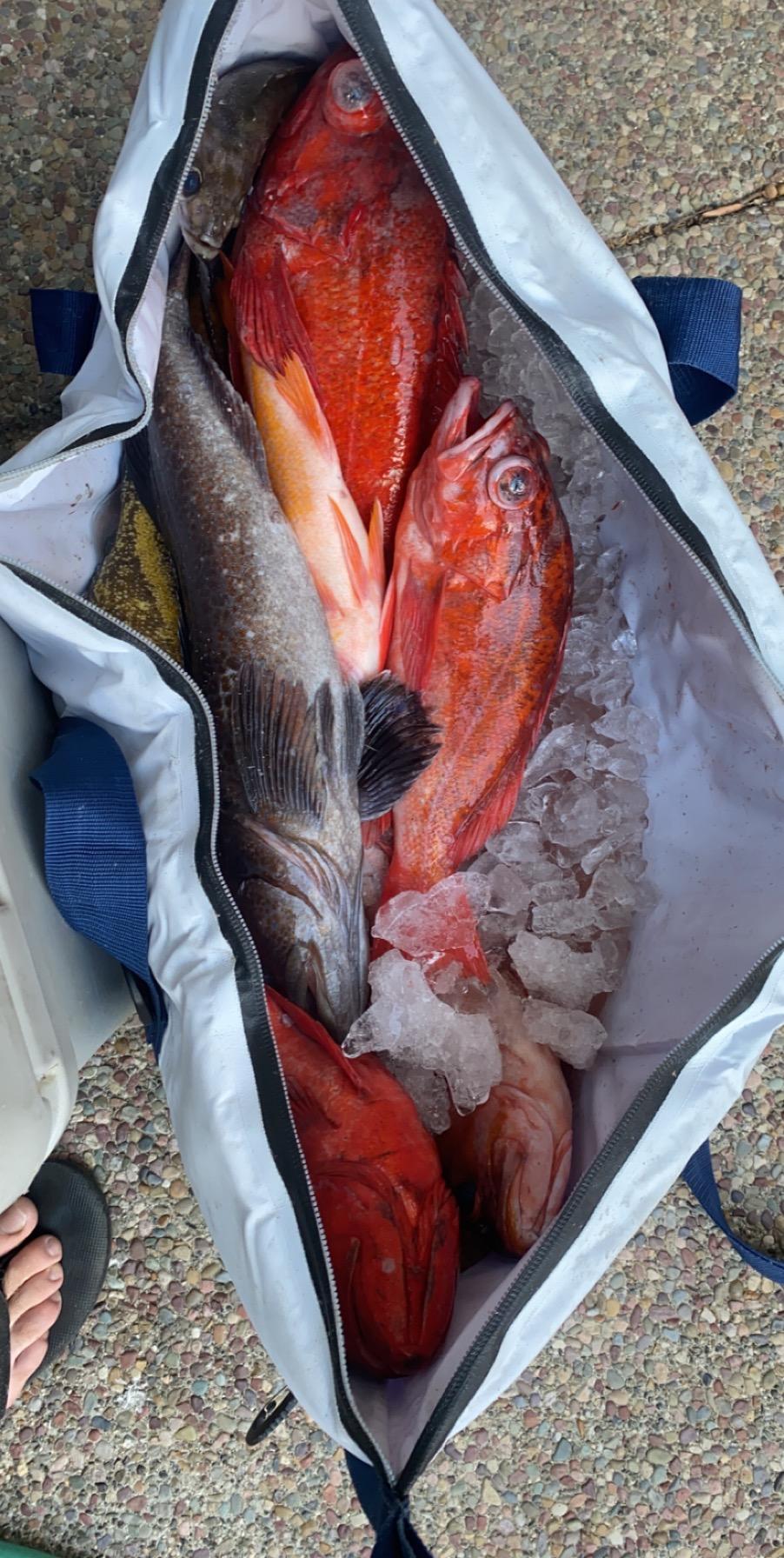
Two details stand out. There is a built-in ruler printed along the side, so you can measure your catch at the dock without a separate tool, and the bag buckles completely flat for storage and trailering. That flat-fold behaviour is why it works so well as a permanent stowage item rather than a trip-only one.
Owners report it holding ice overnight in Florida heat with cubes still present the next morning, and the low profile is repeatedly mentioned as the reason it fits where other bags do not. Woven nylon shoulder straps and carrying handles take the weight off your hand and shoulder on the walk from the ramp.
The long-term concern is the vinyl on the seams, which some owners report degrading and crumbling after repeated outings. That is a wear pattern rather than a defect, but it is the part to inspect if you are buying one that has already had a life.
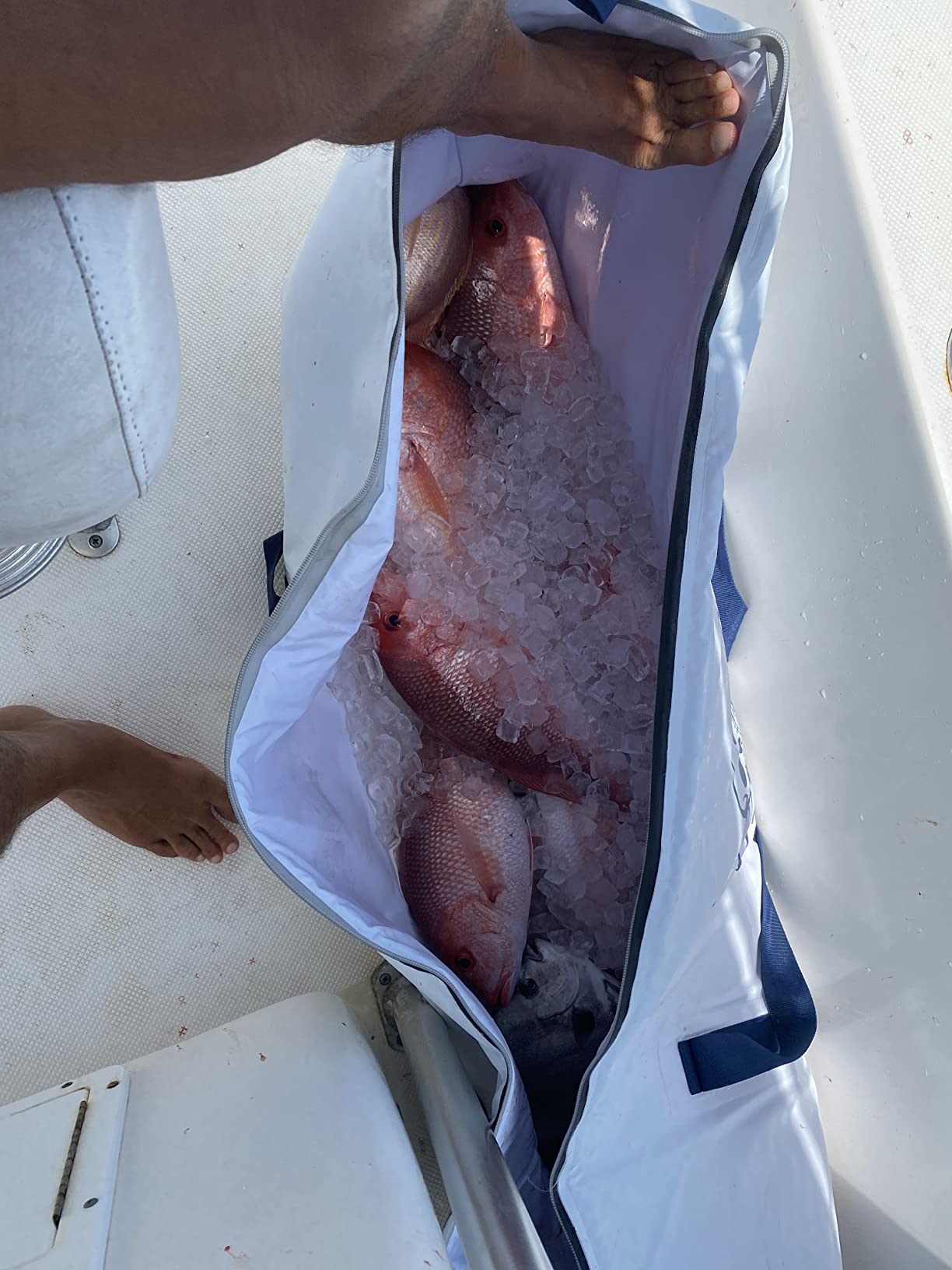
Does a 40 by 16 inch profile fit under a console?
That is the design intent, and owners confirm it in practice. A long, low bag slides under a leaning post or into a console locker where a 65-quart hard cooler would need dedicated deck space it does not have on a small boat.
Microskiff forum discussions favour exactly this kind of low-profile cooler for small boats and inshore work, where a large hard box simply cannot be stowed without blocking the deck. Keep the bag on the deck while you fish and stow it flat at the ramp, and it stops competing for space at all.
How long does the seam vinyl last?
It depends on use and storage, but owners who have run the bag for seasons report the seam vinyl becoming brittle and crumbly. Keeping the bag out of prolonged sun and drying it before folding it away slows that down.
The interior width is also snug for very large fish. The manufacturer lists it for everything from grouper, snapper, king mackerel and tuna down to panfish, trout, walleye and salmon, but if you consistently bring in oversized fish, a wider bag is a better fit.
How to Choose a Fishing Cooler for Offshore Trips
The best fishing coolers for offshore trips are rarely the biggest or the most insulated. They are the ones that fit your deck, weigh less than you can lift alone on a bad morning, and still seal after a season of salt. These six criteria decide that.
1. Match capacity to trip length and catch size
Size the cooler by the number of people eating out of it and the size of fish you expect. One or two anglers on a day or overnight trip do not need more than 45 quarts. Two to four people feeding a catch of mahi, wahoo or tuna offshore want 60 to 70 quarts. Trips of three days or more need a rotomolded box at the upper end of the range.
Remember that ice eats volume. A 45-quart cooler packed at a 2:1 ice-to-contents ratio holds considerably less fish than the label suggests, and stated quart volumes are not always true internal capacity. Check interior dimensions rather than trusting the marketing number alone.
2. Check empty weight before you check capacity
Empty weight is the most requested spec in fishing forums and the one editorial roundups almost never publish. In this roundup the range runs from 1.6 pounds for the Buffalo Gear bag to 34.4 pounds for the RTIC 65, and that spread decides more trips than insulation does.
Set your personal limit before you shop. Under 22 pounds is the range where a solo angler can load a full cooler onto a skiff, and anything above 30 pounds means you are planning for a two-person ramp. If you cannot lift your cooler solo, choose a smaller one rather than a heavier premium model.
3. Hard shell, soft bag or kill bag: pick one job
Hard rotomolded coolers hold ice longest and take abuse, but they need deck space and weight you can manage. Soft coolers are light, leak-proof and floatable, which makes them ideal for shore, surf, kayak and dock work. Fish kill bags take a big catch through a wide opening, weigh almost nothing and clean in minutes.
Running offshore with more than one role usually means two containers: a hard cooler for fish and a soft bag or small cooler for drinks, bait and sandwiches. Keeping them separate means the fish cooler stays closed, and a closed cooler is the whole point of owning one.
4. Gasket, latches and drain plug decide the season
The gasket is the single component that determines ice retention day after day, because it is the only thermal break in an otherwise sealed box. Look for a continuous freezer-grade gasket, inspect it before every trip and keep it clean of sand and salt grit. If it stops sealing in a pinch, running hot water around the seal often restores its shape.
Latches are the second failure point. Rubber T-latches survive being dropped and stood on better than thin plastic ones, and stainless steel hinges resist the corrosion that eats cheap hardware in salt water. On the drain plug, a tethered or attached design beats a loose one, because a loose plug ends up in the water at the end of the day.
5. Saltwater hardware and UV exposure
Salt water attacks hardware faster than most buyers expect. Stainless steel hinges and latches are worth paying for on a boat that lives in the water, and cheap zinc-plated parts show corrosion within a season. Rinse the cooler with fresh water after every trip, especially if you trailer it through salt water.
UV degradation is the quieter threat. A cooler sitting on an exposed console in direct tropical sun will degrade faster than one in a locker, and UV inhibitors in the shell material, which the Igloo Maxcold specifically lists, help extend its life. Colour matters less than people assume, but light colours reflect more solar gain than dark ones.
6. Fish box, livewell or ice-only cooler
A livewell circulates oxygenated seawater and keeps fish alive for the trip, which is a different goal from keeping fish cold. Livewells are a question about your boat’s plumbing and power budget, not about cooler quality, and they are the right choice when you want to release or sell fish alive.
An ice-only cooler is simpler, cheaper and more reliable, and it is what nearly every offshore angler in the forums we checked uses. A fish box, which is a broad insulated container with no drainage, protects electronics and gear from meltwater in addition to keeping fish cold. Choose one job and buy the right tool for it rather than compromising across several.
Before You Go: Bleeding, Packing and Pre-Chilling
The best cooler on the boat cannot rescue fish that were not handled well. Offshore anglers who consistently bring home quality catch talk about bleeding and icing as much as they talk about gear, and none of the competitor roundups we reviewed cover it.
A step-by-step pack for a multi-day run
First, bleed the fish at the dock. Cut the gills or the main blood line as soon as the fish comes out of the water, and on long runs gut anything you plan to keep overnight, because gutting takes about fifteen seconds with a knife and the difference in quality is obvious after twelve hours.
Second, pre-chill. Empty cooler, close the lid, and leave it in a shaded space for twelve to twenty-four hours before you load it. A warm cooler loaded with ice melts that ice while it works on the interior, and pre-chilling removes that head start entirely.
Third, use block ice where you can. Blocks last longer, cover more surface area with fewer cubes bridging air gaps, and are far kinder to fish gills than loose cubes are. Avoid dry ice with fish unless you know what you are doing, since sublimes and can freeze flesh solid.
Fourth, pack to a 2:1 ice-to-contents ratio by weight, fill the cooler completely rather than leaving headspace for air, and layer the fish between ice rather than all on top. Fifth, keep the catch cooler closed. Use a separate drinks and bait container so the main box is opened once at the start and once at the end.
Manufacturer ice claims versus what owners report
Claims in this category assume ideal conditions: a pre-chilled cooler, block ice, few openings and moderate ambient temperatures. Owners on r/Coolers, r/CampingGear and thehulltruth routinely report three to five days where a brand advertises seven, and that gap is almost entirely explained by packing and opening frequency rather than by foam quality.
None of that makes the good coolers bad. It means you should read a seven-day claim as a ceiling achieved under controlled conditions, and plan your trip around three to five days for a big rotomolded box unless you are disciplined. The practical result is simple: limiting opens buys more ice time than any product choice on this list.
Pre-trip cooler checklist
Run through this the night before: cooler pre-chilled, gasket wiped clean and sealing, drain plug located and not stripped, lid ruler or measuring notches clear of ice. Block or cube ice staged and bagged, separate drinks and bait container packed, straps or bungees ready for tie-down points, and a plan for where the cooler sits on the deck.
Then pack the catch on top of the ice, never underneath it, so meltwater drains past the fish instead of sitting on it. Double-bagging oily fish such as mackerel keeps the smell out of the insulated walls, and if you carry electronics, put them in the basket or a dry bag, never on top of the ice.
Frequently Asked Questions
What is the best cooler to keep fish in?
The YETI Tundra 45 is the safest all-round answer: 45 quarts, a rotomolded shell, up to 3 inches of PermaFrost foam and rubber T-Rex latches. For multi-day offshore runs step up to the RTIC 65 QT, and for anglers fishing alone the ENGEL 60 QT wins because 21.5 pounds empty is liftable by one person.
Which cooler has the best ice retention?
Among these picks the RTIC 65 QT leads, with up to 2.4 inches of closed-cell foam, a freezer-style gasket and a published seven-day claim that owners back up more often than most. The RTIC 30 Can soft cooler holds up to two days, and the tarp fish bags around 24 hours.
What coolers are just as good as Yeti but cheaper?
The RTIC 65 QT matches the YETI Tundra 45 on rotomolded construction and insulation thickness for considerably less, and the Coleman Pro Hard 45 is roughly 30 percent lighter with a ten-year limited warranty. The ENGEL 60 QT trades some durability for the lightest large hard cooler in this roundup.
What’s better, Yeti soft or hard cooler?
A hard rotomolded cooler holds ice several times longer and survives being sat on, so it is the right choice for the fish itself. A soft cooler is lighter, leak-proof and floats, which makes it better for shore, surf and kayak work or as a separate drinks and bait container.
Which soft cooler keeps ice the longest?
The AO Coolers Expedition Carbon 48-Can is the strongest soft pick here, claiming 24 hours of ice in 120 degree weather with a leak-proof liner and roughly twice the insulation of competing soft coolers. The RTIC 30 Can holds cold up to two days and adds floatability.
Are Engel coolers worth the money?
Yes, particularly for anglers who fish alone. The ENGEL 60 QT gives 60 quarts of capacity at 21.5 pounds empty, ships with a wire basket and divider, has tie-down slots and a level floor that actually drains, and owners repeatedly cite the low weight as the reason to buy it.
What size cooler do I need for an offshore trip?
One or two anglers on a day or overnight trip need about 45 quarts. Two to four people feeding a catch of mahi, wahoo or tuna want 60 to 70 quarts, and trips of three days or more need a rotomolded box at the upper end. Remember that ice takes up room, so usable fish volume is always less than the label.
Do I need to bleed fish before putting them on ice?
Yes, and it is the step that most affects catch quality. Cut the gills or the main blood line as soon as the fish comes out of the water, gut anything you will keep overnight, then pack the fish on top of ice rather than under it so meltwater drains past rather than sitting on the flesh.
Final Verdict: Which Cooler Fits Your Boat
If you take one thing from this roundup of the best fishing coolers for offshore trips, take the empty weight figure and compare it against what you can lift onto your boat at 5 a.m. Everything else is negotiable; that one number decides whether the cooler gets used.
For most offshore anglers, the YETI Tundra 45 is the right starting point: proven rotomolded construction, deep insulation, latches that survive abuse and enough capacity for two people on a day or overnight trip. If your crew runs longer or your catch is heavier, the RTIC 65 QT buys a full week of ice and a five-year warranty, provided two people are at the ramp.
For a solo angler or a small boat, the ENGEL 60 QT is the answer that changes your life: 60 quarts at 21.5 pounds empty, with tie-down slots, a basket and divider and a floor that actually drains. The Coleman Pro Hard 45 is the other credible lightweight hard option, lighter still at 19.8 pounds, with a ten-year limited warranty and a stainless steel latch.
For boat-specific hardware, the Pelican 70 Elite is in a class of its own with moulded tie-down slots, a lockable hasp, self-draining cup holders and a lifetime warranty, provided you have the deck space and a second pair of hands. On big boats where volume is the problem, the Igloo Maxcold Glide 110Qt rolls instead of lifting, at the cost of a 37.5 inch footprint.
And when the boat is small, the trip is a day trip, or you fish from a shore position, a soft bag beats a hard cooler on every practical measure. The AO Coolers Expedition Carbon holds the longest among the soft picks, the RTIC 30 Can floats and collapses flat, and the Buffalo Gear bag or the Calcutta Pack fishcooler get a big catch home for almost nothing in weight.
Whichever one you choose, pre-chill it, pack it at a 2:1 ice ratio, keep the fish cooler closed and separate from your drinks, and bleed the fish before it goes in. That last habit costs you nothing and matters more than any insulation rating on the box.