

A propane generator solves the power problem and then ruins the campsite. If you have ever run one at a quiet site at 6am, you already know: noise carries, exhaust fumes drift into tents, and fuel logistics eat your trip budget. A battery-powered station does the same job with zero fumes and near-zero noise, and it recharges from a wall outlet, your car, or solar panels you already own.
That is what this roundup covers. We compared 12 of the most-reviewed portable power stations for camping, reading the spec sheets and the customer review patterns side by side, then working out what each unit actually does with a real camping load. The question is not which battery has the biggest number printed on the label. It is which one fits your gear, your vehicle, and the way you camp.
Everything here is updated for 2026. The short answer for most people: the Jackery Explorer 300 handles phones, lights and a small cooler for a weekend, the Anker SOLIX C1000 Gen 2 is the all-round pick for a fridge plus a weekend of charging, and the Anker SOLIX S2000 is the one to buy if you are running multiple days away from a wall outlet. The sections below explain how we got there and where each of the cheaper options fits.
Table of Contents
Top 3 Portable Power Stations for Camping (October 2026)
The three picks below cover the widest range of camping styles. Each one earns its place for a different reason: one is the dependable all-rounder, one is the fastest to refill, and one is the cheapest to carry into the backcountry.
Best overall: Anker SOLIX C1000 Gen 2 (1,024Wh, 2,000W, about 25 lb) refills in 49 minutes and powers a fridge plus every phone in camp.
Best for light trips: Jackery Explorer 300 (292Wh, 300W, 7.1 lb) is the lightest unit here that still runs a real AC appliance.
Best for long trips and heavy loads: Anker SOLIX S2000 (2,010Wh, 1,500W) holds up to 35 hours of fridge runtime on one charge.
Best value at the 1,000Wh class: OUPES Mega 1 (1,024Wh, 2,000W) expands to 5,120Wh and charges to 80% in 36 minutes.
All 12 Portable Power Stations Compared Side by Side
Every station below stores energy in watt-hours and delivers it through an inverter. The two numbers that decide most camping purchases are capacity (how long you can run things) and continuous output in watts (whether the appliance will start at all). Weight matters just as much, because the battery has to come out of the car.
| Product | Specs | Action |
|---|---|---|
 Jackery Explorer 300 Jackery Explorer 300 |
|
Check Latest Price |
 Jackery Explorer 1000 v2 Jackery Explorer 1000 v2 |
|
Check Latest Price |
 Anker SOLIX C1000 Gen 2 Anker SOLIX C1000 Gen 2 |
|
Check Latest Price |
 Anker SOLIX C300 Anker SOLIX C300 |
|
Check Latest Price |
 EF ECOFLOW RIVER 2 EF ECOFLOW RIVER 2 |
|
Check Latest Price |
 OUPES Mega 1 OUPES Mega 1 |
|
Check Latest Price |
 DJI Power 1000 V2 DJI Power 1000 V2 |
|
Check Latest Price |
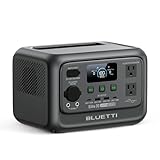 BLUETTI Elite 30 V2 BLUETTI Elite 30 V2 |
|
Check Latest Price |
 ZeroKor 300W Solar Kit ZeroKor 300W Solar Kit |
|
Check Latest Price |
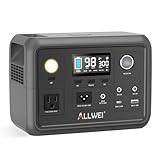 ALLWEI 300W Solar Generator ALLWEI 300W Solar Generator |
|
Check Latest Price |
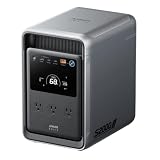 Anker SOLIX S2000 Anker SOLIX S2000 |
|
Check Latest Price |
 HOWEASY 120W Solar Generator HOWEASY 120W Solar Generator |
|
Check Latest Price |
One note before the individual reviews. The watt-hour figure on the box is the cell capacity, not the amount you can actually deliver to a 120V appliance. Inverters lose roughly 15% to heat and conversion overhead, and lighter loads pay an extra penalty from the unit’s own idle draw. That is why a station that lists 1,024Wh will not run a 1,024Wh worth of fridge, and it is why we work through real numbers later in the runtime section.
1. Jackery Explorer 300 Portable Power Station, 292Wh
Jackery Explorer 300 Portable Power Station,292Wh
292Wh
300W output, 600W surge
7.1 lb
2 year warranty
Pros
- Lightest full-size AC unit here at 7.1 lb
- Handles six devices at once
- 4000+ cycle LiFePO4 chemistry
- Rated for 4000+ cycles before hitting 70% capacity
Cons
- 292Wh runs out fast on a fridge or kettle
- Solar panel sold separately
- Two AC outlets only
This is the unit I keep coming back to for weekend car camping. At 7.1 pounds it is one of the few in this roundup you can carry from the trunk to the picnic table in one trip, and the integrated handle means there is no separate bag to lose.
Over eleven thousand buyers have rated it, and the pattern in those reviews is consistent. People do not complain about the output for its size, because 300W continuous with 600W of surge covers lights, phone charging, a fan, a small cooler and a laptop without straining.
Output runs through two AC outlets, 100W USB-C PD, two USB-A ports and a 120W car socket. That is six simultaneous devices, which is enough for a family of four plus gear.
Charge times are unremarkable and that is fine. Reviewers put a full wall recharge at about four hours, and 80% capacity in roughly 2.8 hours from a 100W Jackery panel. Plan on charging it overnight in your hotel room or at home before the trip, not during the drive.
Jackery rates the cells for more than 4,000 cycles before they reach 70% of original capacity. Even with weekly use, that is a decade of ownership before the battery is genuinely finished, and a 2-year manufacturer warranty covers the early years.
Who the Jackery Explorer 300 suits
Two-night trips, tent camping with a car parked nearby, and anyone who needs a small compressor or a medical device rather than a full kitchen. At 7.1 lb it also works as a walk-in support unit for photographers carrying camera batteries and a drone.
If your load is lights, cables and a CPAP machine, 292Wh is genuinely enough. Forum users running a machine overnight without a heated humidifier report roughly two nights of runtime from a battery in this size range.
Who should skip the Jackery Explorer 300
Anyone running a 12V fridge for more than a day. At 60W draw, 292Wh of capacity is about four hours of fridge runtime once inverter losses are counted.
Coffee makers, hair dryers, power tools and window air conditioners are all out. The 600W surge figure exists for motor startup, not for sustained heating elements, and pushing that limit is where units trip and shut down.
2. Jackery Explorer 1000 v2 Portable Power Station, 1070Wh
Jackery Explorer 1000 v2 Portable Power Station,1070Wh,1500W
1,070Wh
1,500W AC, 3,000W surge
23.8 lb
1 year warranty
Pros
- 1500W continuous with 3000W surge
- One-hour emergency charge via the app
- 4000+ cycle LFP cells
- Three pure sine wave AC outlets
Cons
- 23.8 lb is too heavy to hike with
- Jackery-branded panels only
- Panel sold separately
This is the unit for a family campground with a fridge, a couple of laptops and a need to top everything up overnight. 1,070Wh of LFP capacity with 1,500W of continuous AC output is the first step up where appliances stop being an experiment.
The feature reviewers mention most is emergency charging. Enable it in the Jackery app and the station goes from empty to usable in about an hour, or roughly 1.7 hours in the default mode. It is the fastest recovery in this roundup that still has a one-kWh class battery.
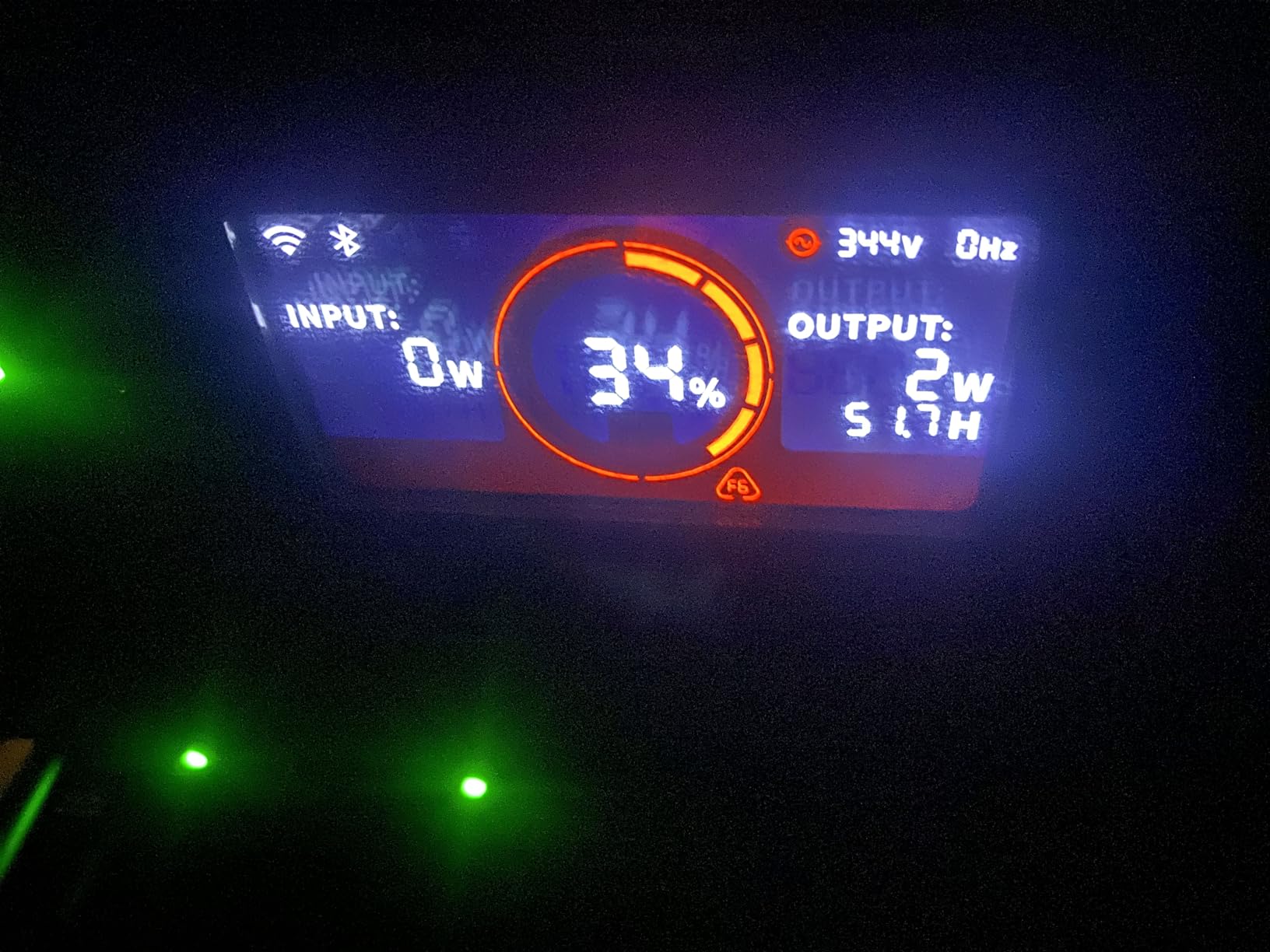
Port layout is generous: seven outlets in total, including three pure sine wave AC sockets, two USB-C, one USB-A and a DC car port. The pure sine wave output is what you want for a CPAP, a router or anything with a motor in it, because modified sine wave output makes fans and compressors run hot and loud.
There is also a 30 dB quiet overnight charging mode, which matters more than it sounds. In a tent at 2am, a charging fan is the difference between sleeping and lying awake.
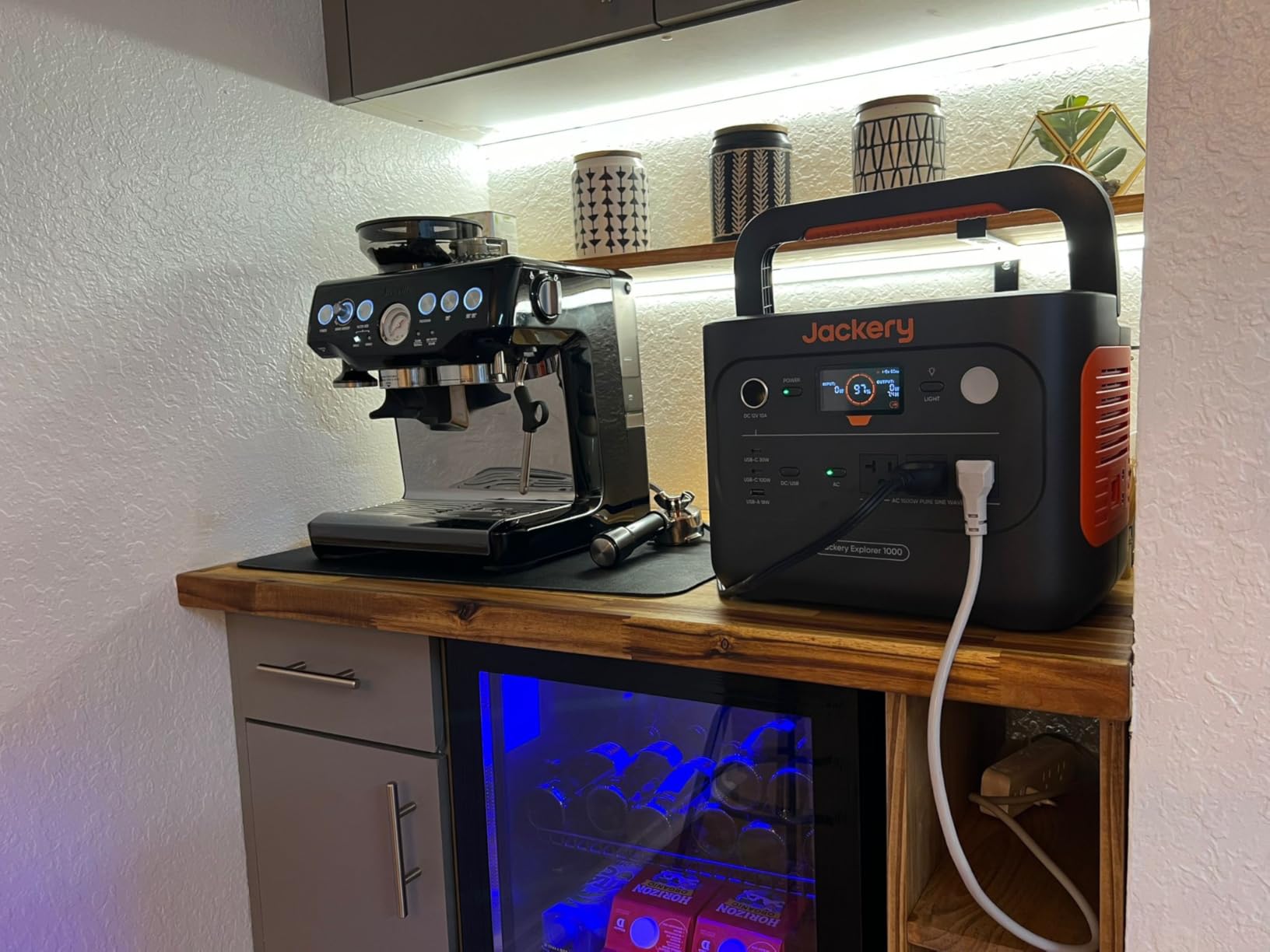
The honest drawback is weight. At 23.8 pounds, this is a two-hand load from the trunk and a decision you make once per trip, not something you reposition while setting up camp. The foldable handle helps with carrying, not with lifting into a vehicle.
Who the Jackery Explorer 1000 v2 suits
Family camping trips of three to five nights where a 12V fridge, a couple of laptops and a phone or two need to run together. 1,070Wh gives you a full day of moderate use and a night of charging without planning.
It also suits anyone who has Jackery solar panels already. The proprietary connector is a pain when you own panels from another brand, and a non-issue when you do not.
Who should skip the Jackery Explorer 1000 v2
Buy a different brand if you already own third-party panels. The solar input accepts Jackery-branded panels only, so a folding 200W panel from another maker will not work without an adapter most owners say they had to source separately.
The 1-year warranty is also the shortest of the 1,000Wh class. Buyers comparing support and long-term reliability tend to favor the brands offering five years, and that gap is worth weighing against the fast recharge times.
3. Anker SOLIX C1000 Gen 2 Portable Power Station
Anker SOLIX C1000 Gen 2 Portable Power Station
1,024Wh
2,000W output, 3,000W peak
600W solar
5 year warranty
Pros
- 49 minute full recharge at 1600W
- 1024Wh and 2000W across up to 10 devices
- 600W solar input
- 10 ms UPS switchover
Cons
- Gen 2 drops the expansion battery option
- Companion app is basic
- Measured harmonic distortion under heavy loads
If you are choosing one station and stopping, this is it. 1,024Wh of LiFePO4 capacity, 2,000W of continuous output, 3,000W of surge headroom, and a full recharge in 49 minutes when you enable HyperFlash charging in the app.
Nine power outlets cover a camp of any size, and the unit powers up to ten devices at once. On an overlanding trip where the vehicle is the only charger, that refill speed is the feature that matters most: you top it up at a lunch stop and it is full before you break camp.
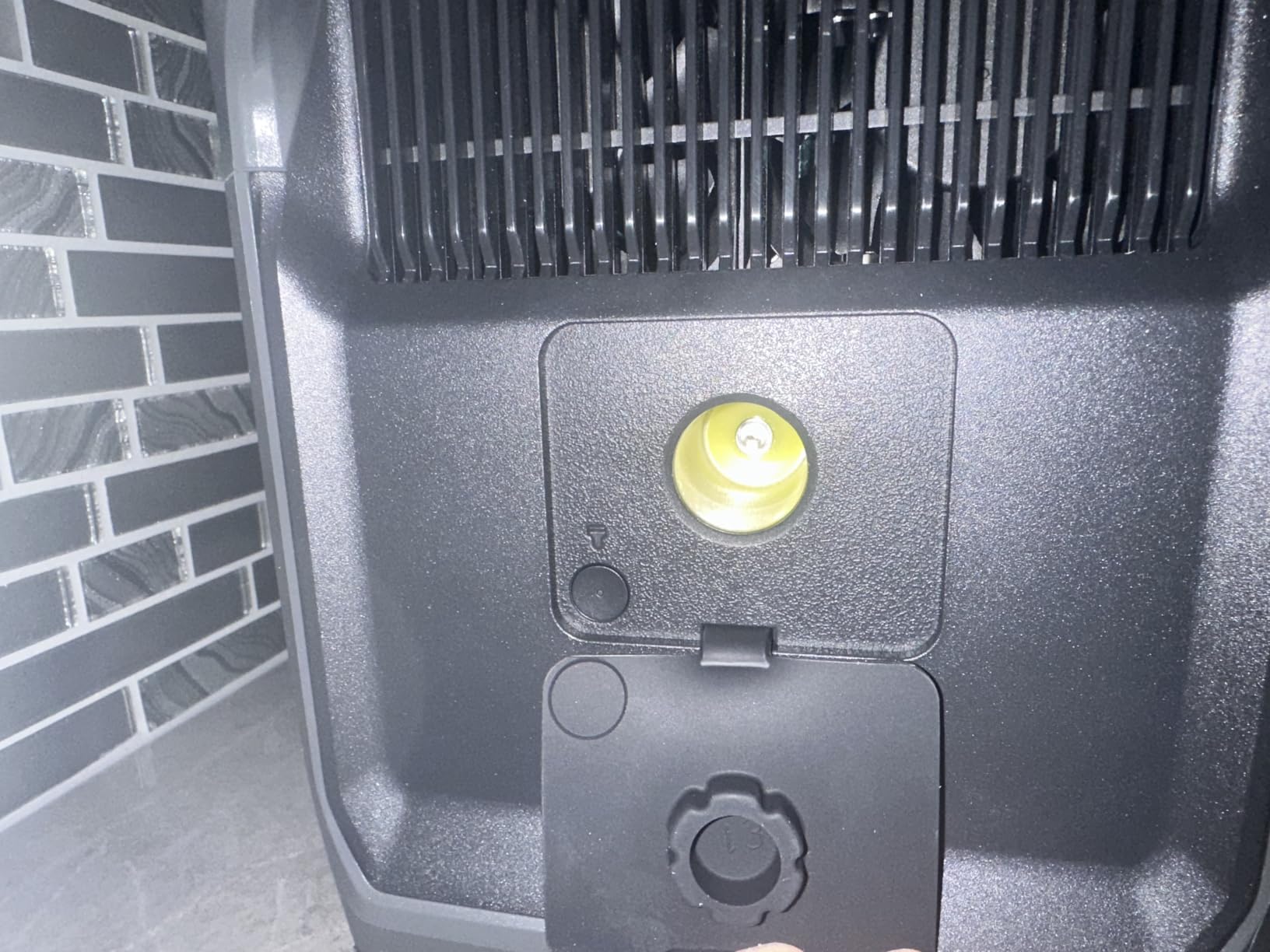
Solar input is the best number in this roundup. Up to 600W of panels at 60V maximum means a single folding panel and a second panel can both connect, and reviewers report about 1.8 hours for a full solar recharge on a good day. That number assumes ideal conditions, so treat it as a best case.
The 10 ms UPS switchover is what makes this work for CPAP machines, laptops and network gear. Interruptions under about 20 ms are short enough that most sensitive electronics do not notice the switch to battery, which is not true of every competitor here.
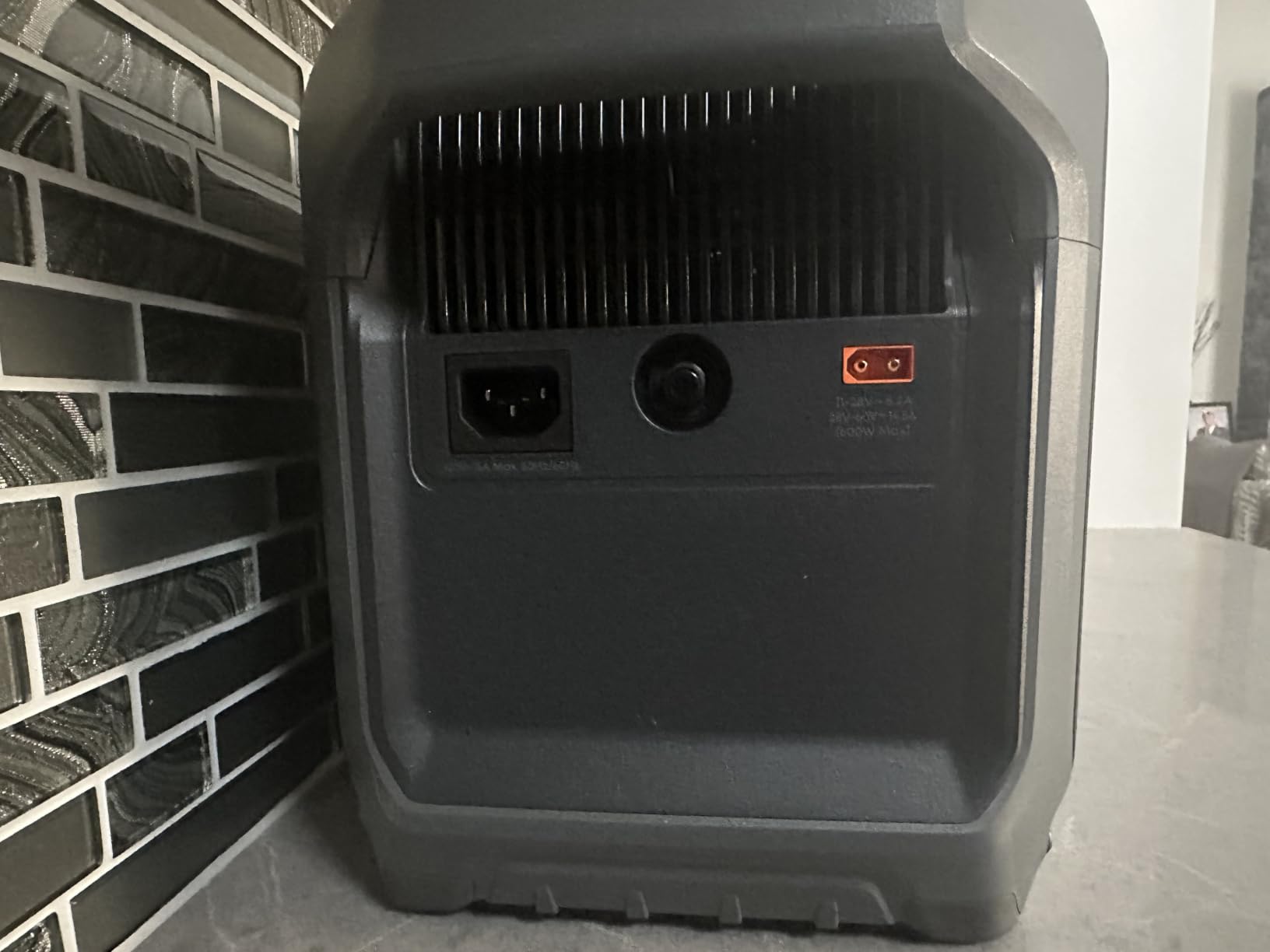
Two things give us pause. The second generation dropped the expansion battery option that the first generation offered, so capacity is fixed at 1,024Wh for the life of the unit. And the app is functional but plain, with Bluetooth monitoring and time-of-use scheduling rather than detailed telemetry.
Who the Anker SOLIX C1000 Gen 2 suits
Overlanders and van campers who drive daily, since car charging time is the slow link in most setups and this unit recharges fastest from a wall. It also suits anyone running medical devices overnight who needs a sub-20ms switchover.
Reviewers who already use third-party solar report good results with the 600W input ceiling, though the connector standard is worth checking against the panel you plan to buy.
Who should skip the Anker SOLIX C1000 Gen 2
If you expect to add capacity later, skip it. The expansion battery from Gen 1 does not fit, and that decision is permanent for this model.
One electrical engineer reviewer measured roughly 15% to 20% harmonic distortion driving a microwave. Sensitive audio gear, some ham radio setups and medical monitors are the cases where that shows up, so check your equipment if precision matters.
4. Anker SOLIX C300 Portable Power Station, 288Wh
Anker SOLIX C300 Portable Power Station, 288Wh Solar Generator for Camping
288Wh
300W output, 600W surge
25 dB
5 year warranty
Pros
- Runs at only 25 dB
- 80% recharge in 50 minutes
- Dual 140W two-way USB-C ports
- 3000 cycle LiFePO4 cells
Cons
- Smallest capacity in the Anker camping line
- Shoulder strap sold separately
- Not compatible with Anker PS30
- PS200 or PS400 panels
At 25 dB measured from about 3.3 feet, this is the quietest unit we recommend for sleeping near. If the last thing you want is a cooling fan running beside your head all night, that number settles the argument.
Capacity is 288Wh with 300W of continuous output and 600W of surge, which puts it in the same weight class as the Jackery Explorer 300 but with a different port mix. Three AC outlets, a 120W car socket, two USB-C ports at 140W each, a 15W USB-C and a USB-A give you eight ports total.

The two 140W USB-C ports are the sleeper feature. Most camping gear now ships with USB-C, and 140W is enough to charge a laptop at full speed from the station rather than through a wall adapter.
It reaches 80% charge in 50 minutes from a wall outlet, solar, car or a PD 3.1 USB-C source. The LiFePO4 cells are rated for 3,000 cycles and the warranty runs five years, which is strong for the size class.
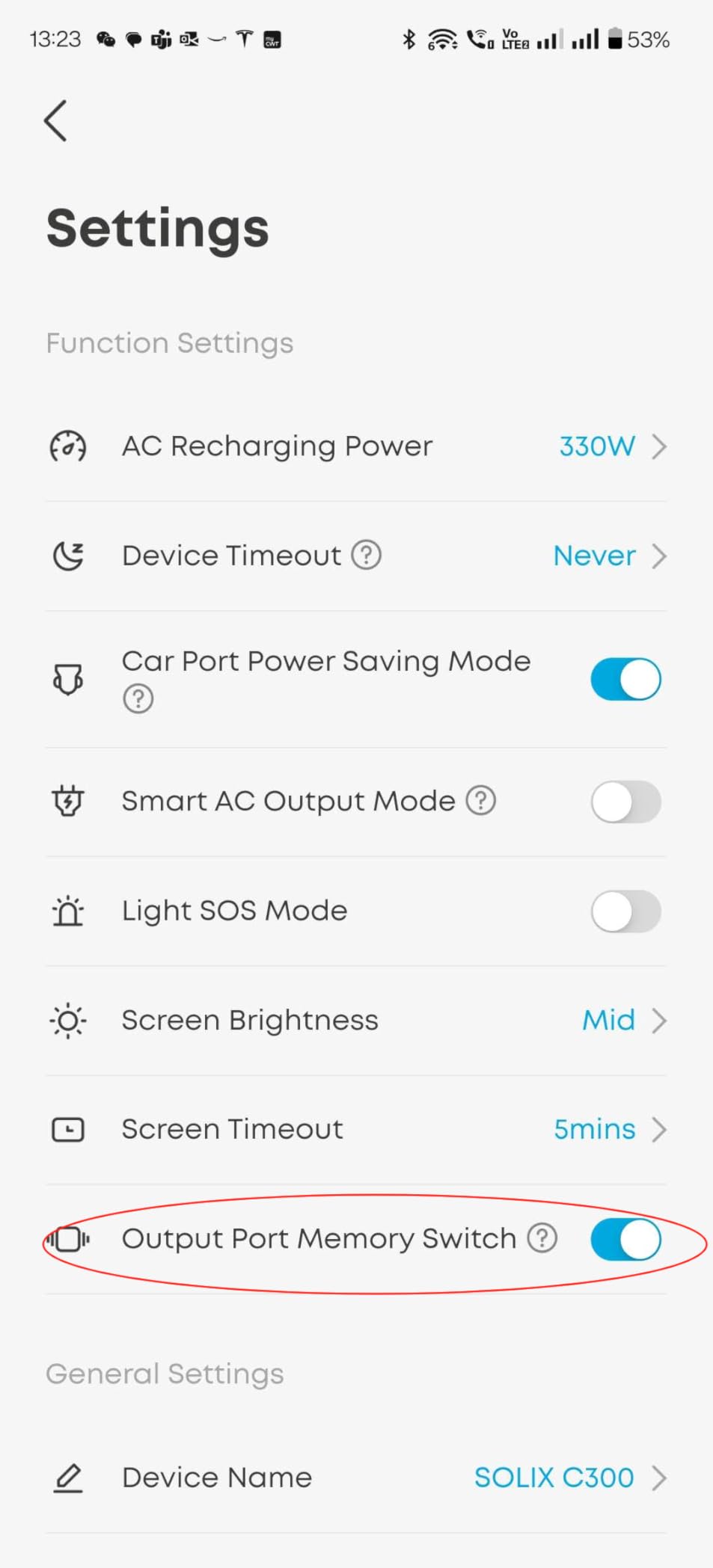
Reviewers are consistent about the solar limitation: this unit does not work with the Anker SOLIX PS30, PS200 or PS400 panels. If you own those, this is not your station.
Who the Anker SOLIX C300 suits
Sleeping campers, couples on a two-night trip, and anyone whose gear is USB-C heavy. Laptops, phones, camera batteries, a CPAP and a small fan all fit comfortably inside 288Wh.
It also works well as a quiet unit inside an RV or a tent where noise is the deciding factor, and the 4.13 kg weight keeps it a one-hand carry.
Who should skip the Anker SOLIX C300
Anyone with a portable fridge. 288Wh at a 60W draw is under four hours of runtime, and a fridge cycling overnight will empty it.
Skip it too if you already own Anker SOLIX PS-series panels, and note the shoulder strap is a separate purchase if you plan to walk any distance with it.
5. EF ECOFLOW RIVER 2, 256Wh 300W
EF ECOFLOW Portable Power Station RIVER 2, 256Wh 300W
256Wh
300W rated, 600W X-Boost
7.7 lb
5 year service
Pros
- Full AC recharge in one hour
- Over 3000 cycle LFP cells
- Solar recharge in as little as 2.3 hours
- 7.7 lb with a built-in handle
Cons
- 300W AC ceiling blocks kettles and microwaves
- Only one USB-C port
- Fan audible during maximum-speed charging
The RIVER 2 has more reviews than anything else in this roundup at 4,530, and the 4.3 rating reflects a real split. Owners love the charging speed and weight, and they consistently flag the same limitation: the output ceiling.
One-hour full recharge from a wall outlet is the headline. X-Stream technology pushes enough power through the AC input to refill 256Wh in the time it takes to eat a meal, which makes the station practical for a trip where you move locations every couple of days.
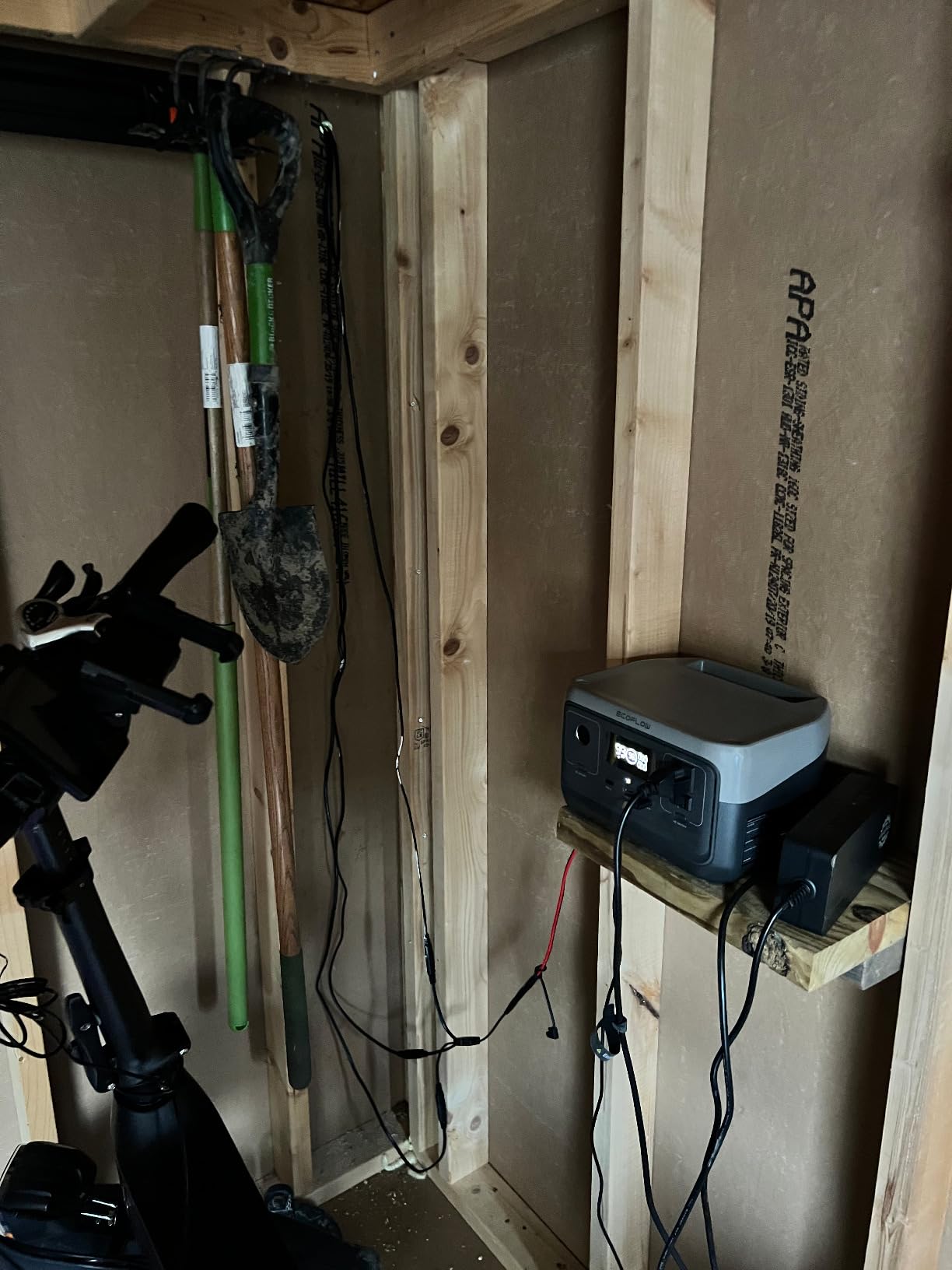
X-Boost mode raises the usable output to 600W by briefly supporting resistive loads above the 300W rating. It helps with a small kettle or a hair dryer, but it is not a substitute for real headroom and it draws from the same battery faster.
Solar input tops out at 110W, and reviewers report recharging in as little as 2.3 hours. The unit needs a panel that actually delivers 25W or more before it registers consistently, so a very small or very poor-condition panel can make it look broken.
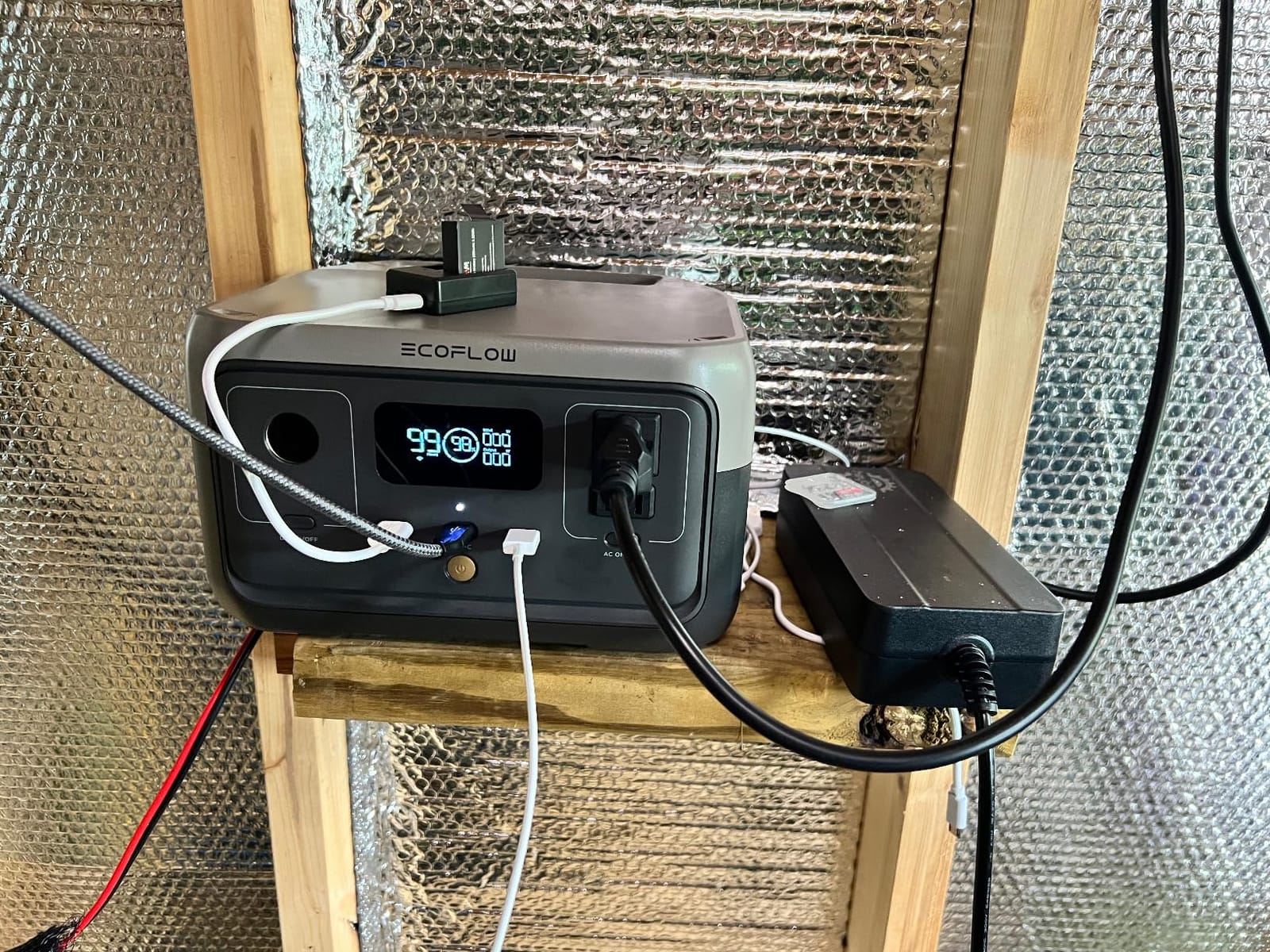
The most common complaint in reviews is the cooling fan. It becomes audible whenever the unit is charging at maximum speed, which is exactly when you might be sitting nearby. Owners also note that the single USB-C port is limiting for modern gear.
Who the EF ECOFLOW RIVER 2 suits
Campers on a tight schedule who need to refill fast between stops, and anyone running a light load of lights, phones, a laptop and a fan. The 7.7 lb weight and built-in handle make it easy to move.
It also suits people who want the EPS emergency power supply mode, which switches over in under 30 ms and keeps a router alive through brief outages.
Who should skip the EF ECOFLOW RIVER 2
Coffee makers, microwaves, hair dryers and any window air conditioner. The 300W ceiling is real, and reviewers note that AC charging efficiency runs around 80% before inverter overhead.
There is also a minority of owners reporting inaccurate battery percentage readings after extended use, which matters if you are planning solar-only trips and relying on the display to judge remaining charge.
6. OUPES Mega 1 Portable Power Station, 1024Wh 2000W
OUPES Mega 1 Portable Power Station 1024Wh 2000W (4500W Surge)
1,024Wh
2,000W continuous
expands to 5,120Wh
5 year warranty
Pros
- 0-80% recharge in 36 minutes
- Expands to 5120Wh with two extra batteries
- 3500+ cycle LiFePO4 cells
- Under 20 ms UPS transfer
Cons
- Measured surge well under the advertised 4500W
- Cooling fans are loud under heavy draw
- Basic app with unreliable Wi-Fi pairing
The Mega 1 is the capacity-per-dollar pick in the 1,000Wh class, and the expandability is the part most buyers do not expect. Daisy-chaining two B2 extra batteries takes it to 5,120Wh, which turns a weekend station into a base-camp system.
Charging is fast: 0 to 80% in 36 minutes from AC, or 26 minutes when you combine AC and solar. 2,000W of continuous pure sine wave output handles a fridge, a router, a projector and a laptop at the same time.
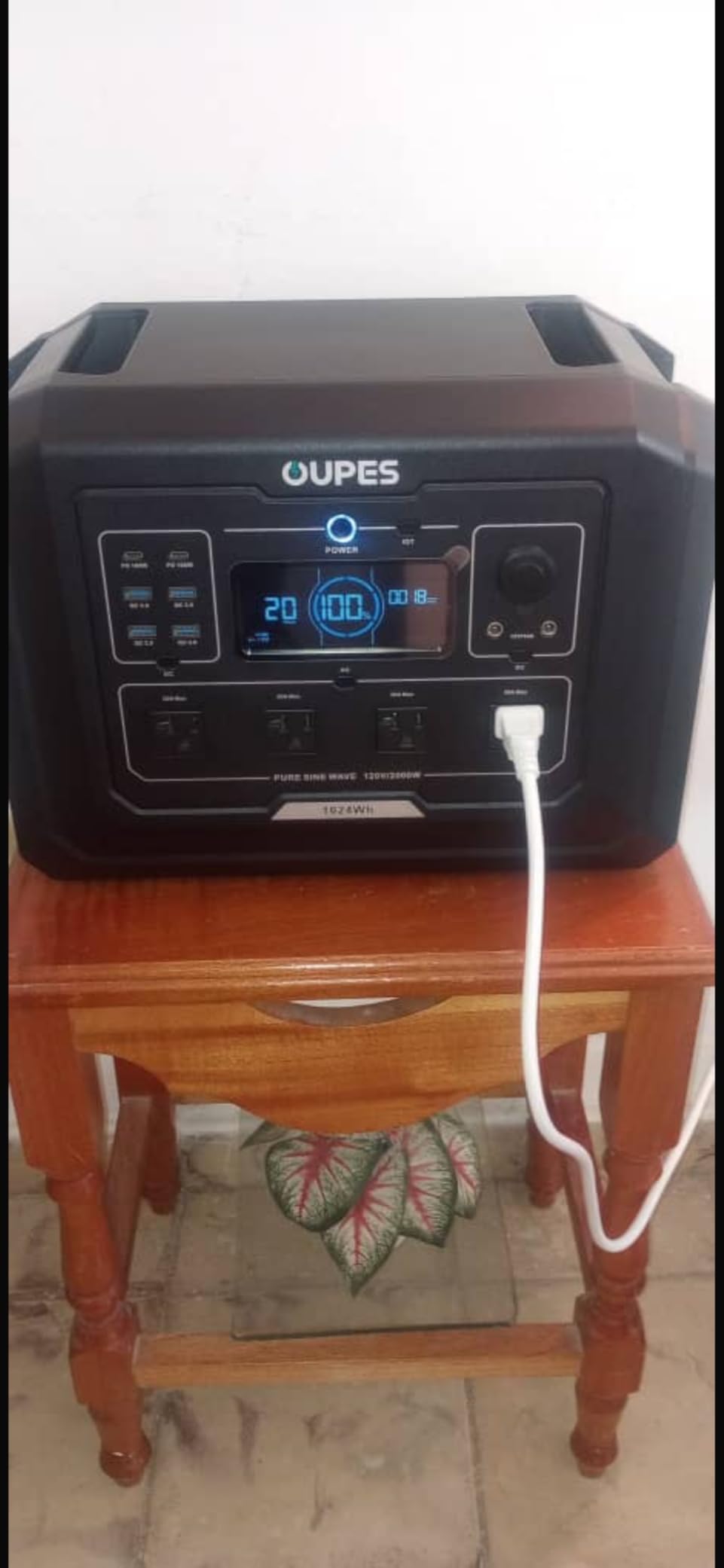
Solar input runs up to 800W through MC4 connectors, and the box includes both a car-to-Anderson cable and an MC4-to-Anderson cable. That is the most flexible standard-connector solar setup in this roundup, and it avoids the proprietary-plug problem.
Two 100W USB-C PD ports and four QC3.0 USB-A ports cover charging-heavy setups, and the under-20ms UPS transfer protects servers and medical devices during short outages.
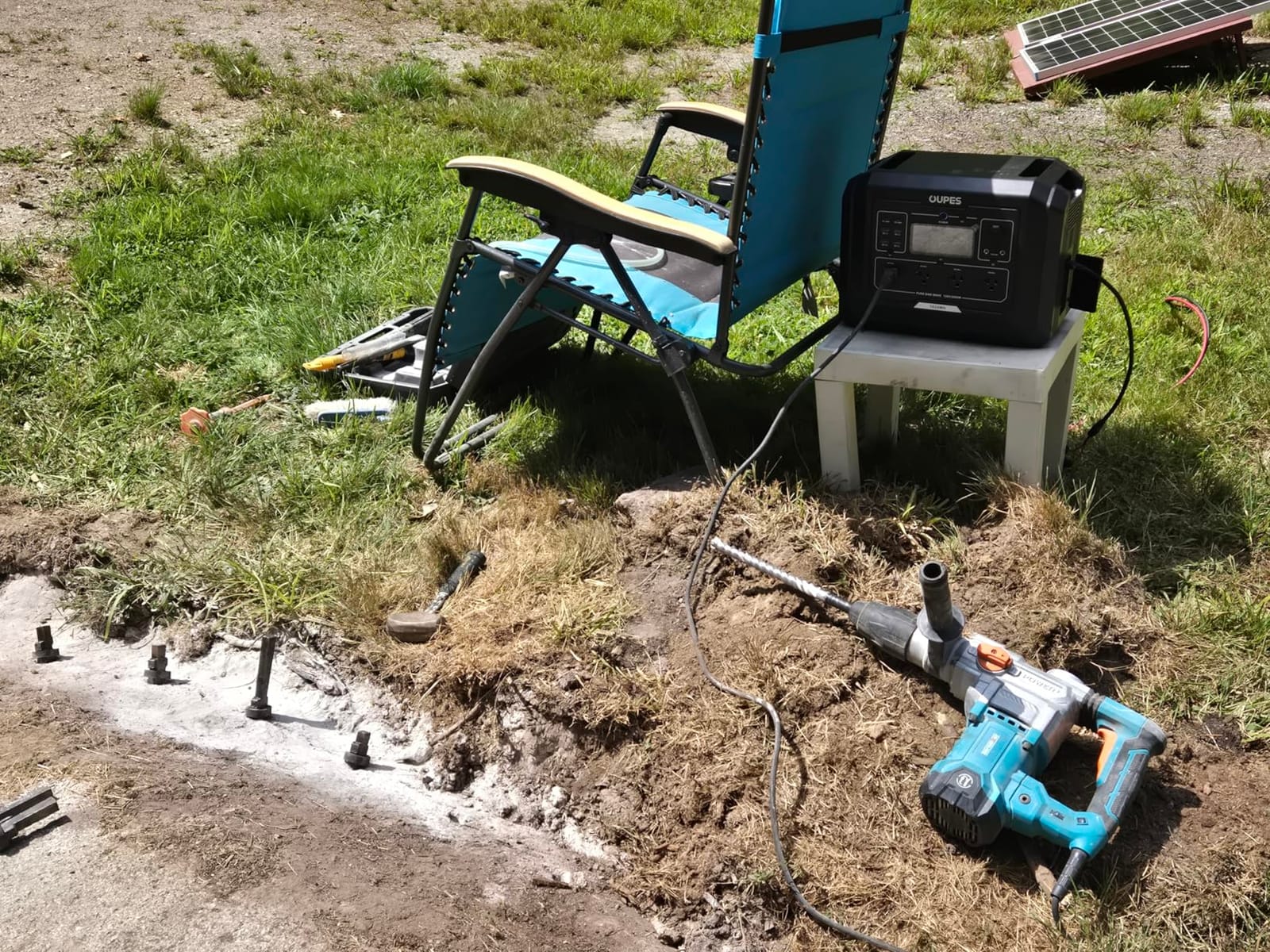
Now the honest parts. The advertised 4,500W surge is not what reviewers measured. One owner recorded the unit tripping between roughly 2,050W and 2,200W, so treat 2,200W as the realistic ceiling and leave headroom for compressor startup.
Cooling fans also run aggressively under heavy draws, and owners describe them as loud in a quiet tent. The Bluetooth app is very basic, with no cell or temperature telemetry, and Wi-Fi pairing is unreliable. The charging cable is proprietary and hard to source if it is lost.
Who the OUPES Mega 1 suits
Overlanders and van campers planning a build-out. The 800W MC4 solar input, the expansion path to 5,120Wh and the 2,000W output cover a multi-day build that smaller models cannot reach.
It is a good fit for anyone who already owns standard MC4 panels and wants to avoid adapter hunting. The 27.8 lb weight is heavy, so it suits a vehicle-based camp rather than a walk-in.
Who should skip the OUPES Mega 1
Skip it if you care about quiet. The fan behavior under load is the single most repeated complaint, and it sits right in the 1,000W to 1,500W range that a fridge cycling triggers.
The plastic housing has no weather resistance, so it belongs under cover. Reviewers also note the unit is not returnable through Amazon, which makes the five-year warranty your only recourse if something goes wrong.
7. DJI Power 1000 V2 Portable Power Station, 1024Wh
DJI Power 1000 V2 Portable Power Station, 1024Wh LFP Battery
1,024Wh LFP
dual 140W USB-C
26 dB
5 year warranty
Pros
- 0-80% recharge in 37 minutes
- Dual 140W USB-C delivering 280W combined
- 26 dB minimum noise
- 10 ms UPS switchover
Cons
- Solar and car charging modules are separate purchases
- App control dongle sold separately
- High idle draw of roughly 24-30W
If you fly drones, this unit solves a problem the others do not. SDC Super Fast Charging lets DJI drone batteries take off after roughly half an hour on the station, and the dual 140W USB-C ports deliver 280W combined for laptop charging.
Charging speed is exceptional for the class: 0 to 80% in 37 minutes. That is the kind of number that changes trip planning, because it means you refill the station during a coffee stop rather than over an evening.
Noise is a real strength at 26 dB minimum operating noise, which reviewers specifically call out as suitable for sleeping in an RV or camper. The 10 ms UPS switchover is twice as fast as the original Power 1000.
Output is listed at 1,000W continuous with a 2,600W surge figure, and the manufacturer states it can handle kettles, cookers, projectors, saws and drills. The 4.3 rating across 1,165 reviews is the second lowest here, and the reasons are consistent.
The first is that the MPPT and car charging modules are not built in. Solar panels and car batteries need separate adapters, and the Bluetooth or Wi-Fi dongle for app control is another purchase. Owners planning an off-grid setup should price all of that in before deciding.
The second is idle draw of roughly 24W to 30W. On lighter loads that overhead eats a meaningful slice of usable capacity, and a few one-star reviews also report overheating, error codes and charging shutdowns in high ambient heat.
Who the DJI Power 1000 V2 suits
Drone pilots and photographers who need fast turnaround in the field, especially anyone already invested in the DJI ecosystem. USB-C-heavy laptop setups also benefit from the 280W combined output.
It works well in an RV where noise matters and where the wall outlet is available, since the 37-minute recharge cycle fits between breakfast and breaking camp.
Who should skip the DJI Power 1000 V2
Solar-first campers. Without a separate charge controller module and the right adapters, this is one of the more expensive paths to off-grid power, and the solar controller itself has narrow voltage and current limits.
Users running small continuous loads for days should also weigh the 24W to 30W idle draw, which reduces effective capacity far more on a 1,024Wh battery than the headline figure suggests.
8. BLUETTI Elite 30 V2 Portable Power Station, 288Wh 600W
BLUETTI Elite 30 V2 Portable Power Station 288Wh 600W LFP Solar Generator
288Wh
600W continuous, 1,500W lifting
9.4 lb
5 year warranty
Pros
- 600W output from a 288Wh body
- Only 9.4 lb
- 0-80% in 45 minutes
- 10 ms UPS for CPAP and servers
Cons
- One owner reported faster-than-expected self-discharge
- No USB passthrough comms port like a computer UPS
- Pro mode pascode must be reconfigured
This is the specification outlier in the sub-300Wh class. Where most competitors stop at 300W, the Elite 30 V2 delivers 600W of continuous output, which is double what you get from a unit the same size.
That headroom is what lets a small fridge, a CPAP and a laptop run together from 288Wh. Power Lifting Mode pushes output to 1,500W for small kettles and toasters, though treat that as a short-duration convenience rather than a rating.
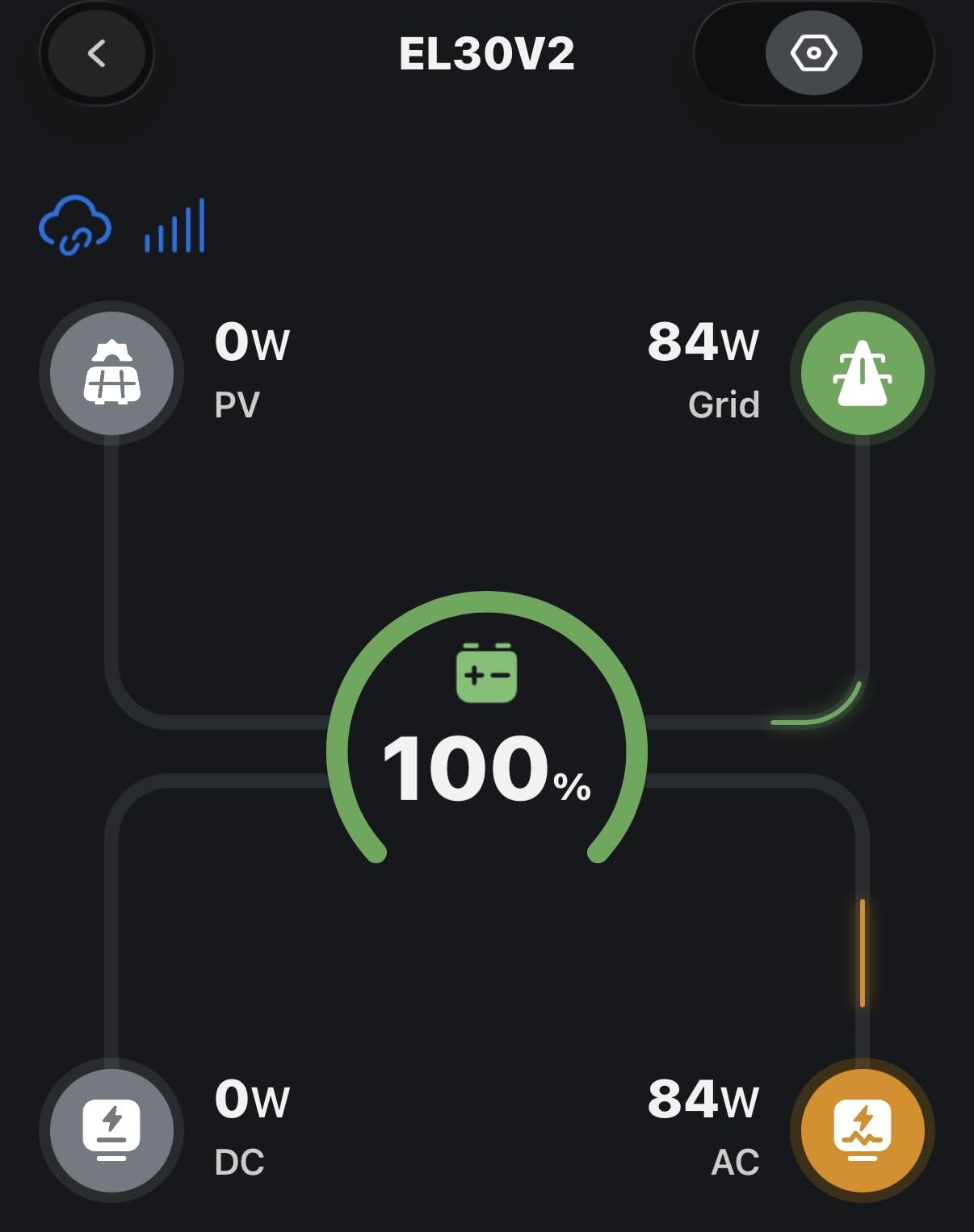
Charging is quick: 0 to 80% in 45 minutes and 0 to 100% in 70 minutes on a 380W wall charger, with eight charging modes covering wall, solar and car input. The 4.5W standby draw is one of the lowest here, and UltraCell technology and smart cooling are credited with cutting standby consumption roughly in half.
For sensitive electronics the pure sine wave output and 10 ms UPS work well. Reviewers running servers and CPAP machines overnight report clean, uninterrupted power, and the unit supports both Bluetooth and Wi-Fi monitoring.
Two limitations show up in reviews. One owner reported faster-than-expected self-discharge over a night of CPAP use, which is worth knowing about if your plan depends on overnight standby. The unit also lacks the USB communication port that a desktop UPS would use to signal a computer that power failed.
Who the BLUETTI Elite 30 V2 suits
CPAP users, anyone with a small 12V fridge, and campers with medical or networking equipment that needs clean output and a fast switchover. The 9.4 lb weight is the lightest of the 600W-output options here.
It also suits people already in the BLUETTI ecosystem, since it uses the standard solar connector rather than a proprietary plug, and supports both Bluetooth and Wi-Fi monitoring through the app.
Who should skip the BLUETTI Elite 30 V2
Anyone needing to be woken or alerted by a computer UPS signal, since the USB passthrough interface is missing. Do not rely on it for unattended overnight CPAP without testing discharge first, given the reported self-discharge issue.
One more practical note: the Pro mode pascode defaults to 888888 and must be configured if you want the unit to auto-restart after a full discharge.
9. ZeroKor Portable Solar Generator 300W with 60W Solar Panel
Portable Solar Generator 300W Portable Power Station with 60W Solar Panel
280Wh
300W max AC
5.1 lb
12 month warranty
Pros
- 60W foldable monocrystalline panel included
- 5.1 lb with pure sine wave output
- Can charge and discharge at the same time
- Built-in MPPT with AC
- car and solar input
Cons
- Measured output well under the advertised 300W
- Bundled panel has reported wiring failures
- Solar junction box is not waterproof
The reason this unit is on the list is the box. It is the only product here that ships with a solar panel, a 60W foldable monocrystalline unit rated at 20.5% conversion efficiency. If you are starting from zero, that removes the single most common first purchase.
Everything else about it is competent. The 280Wh battery delivers pure sine wave AC output, the unit weighs 5.1 pounds, and the flashlight has steady, reading and SOS modes that are genuinely useful around camp.
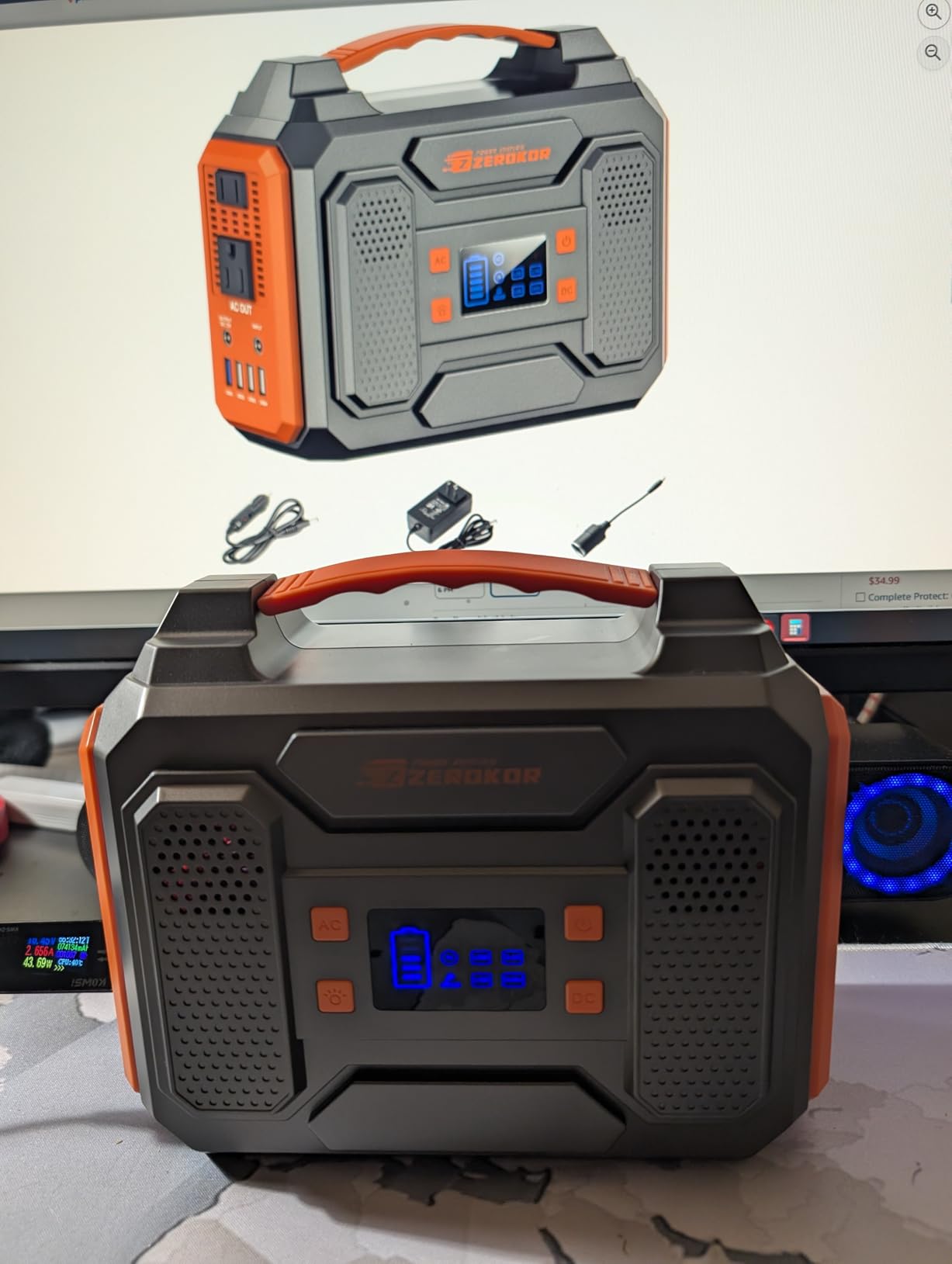
It supports simultaneous charge and discharge, so you can run devices while the panel is topping it up. The built-in MPPT controller handles solar, and there are AC wall and 12V car recharge paths as alternatives.
Five-layer battery management covers short circuit, over-current, over-voltage, overload and overheat cutoffs, which is a more complete protection list than most competitors publish. The support team has been responsive in reviews, including free replacement units.
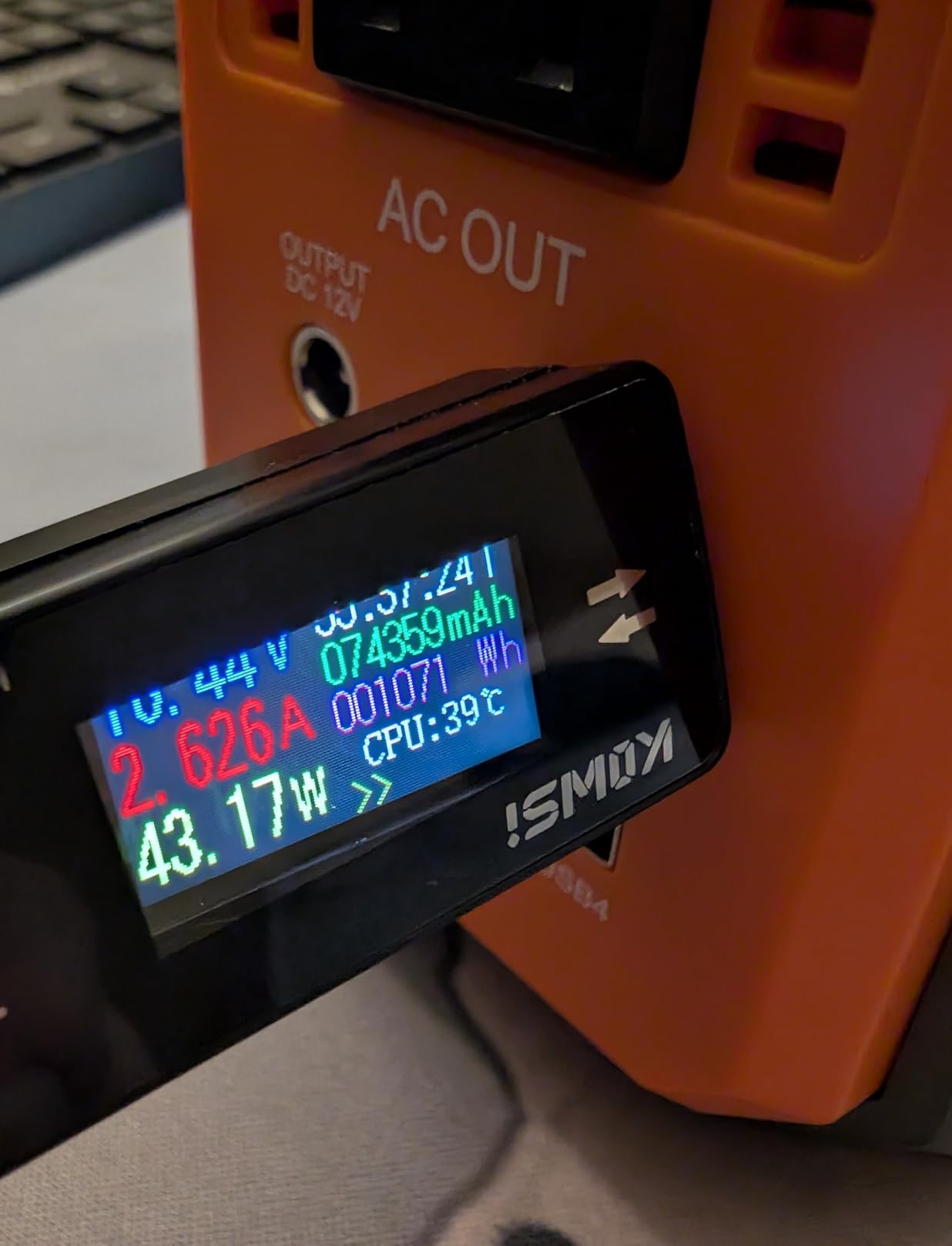
Now the part that gives this its 4.2 rating, the lowest in the set. Multiple reviewers report continuous output well under the advertised 300W, in testing closer to 100W. One owner measured solar intake at about 13V and 2.4A from a 100W panel, which questions the MPPT claim.
The bundled folding panel has broken internal wiring for some owners, and the junction box is not waterproof. The warranty runs just 12 months, the shortest here, and the unit should be kept between 60% and 80% charge or it can enter a protection state.
Who the ZeroKor 300W Solar Kit suits
First-time buyers who want a working solar setup out of one box at a modest weight. 5.1 pounds is genuinely easy to carry, and the included panel is the reason to consider it at all.
It also works as a weekend emergency pack for a group that only needs lights, phones, a fan and a small cooler, and it can charge and run devices at the same time.
Who should skip the ZeroKor 300W Solar Kit
Anyone running a fridge or a CPAP overnight. Real-world output under 100W rules out sustained loads, and the 12-month warranty offers little protection if the panel or the cells fail.
Skip it for all-weather camping. The panel junction box is not waterproof, and a panel that fails on day two leaves you with a station that is difficult to top up away from a wall outlet.
10. ALLWEI Portable Power Station 300W, 256Wh LiFePO4
ALLWEI Portable Power Station 300W, 256Wh Solar Generator LiFePO4 Battery
256Wh LiFePO4
300W continuous, 600W surge
6.4 lb
2 year warranty
Pros
- 256Wh with 300W continuous and 600W surge
- 3000 cycle LiFePO4 cells
- Pass-through charging
- 6.4 lb and compact
Cons
- Solar input capped at 120W
- No 24V output for RV users
- Some units lose charge hold within about a year
At 6.4 pounds with 256Wh of LiFePO4 capacity, this is the value pick for a first camping power station. The chemistry is the reason: 3,000 rated charge cycles in a package this small and this light is unusual.
Output is 300W continuous with 600W of pure sine wave surge, delivered across six ports including one AC outlet, two DC5521, a car port, an 18W USB-A fast charge and a 60W USB-C PD port. That mix covers most camping gear without an adapter bag.
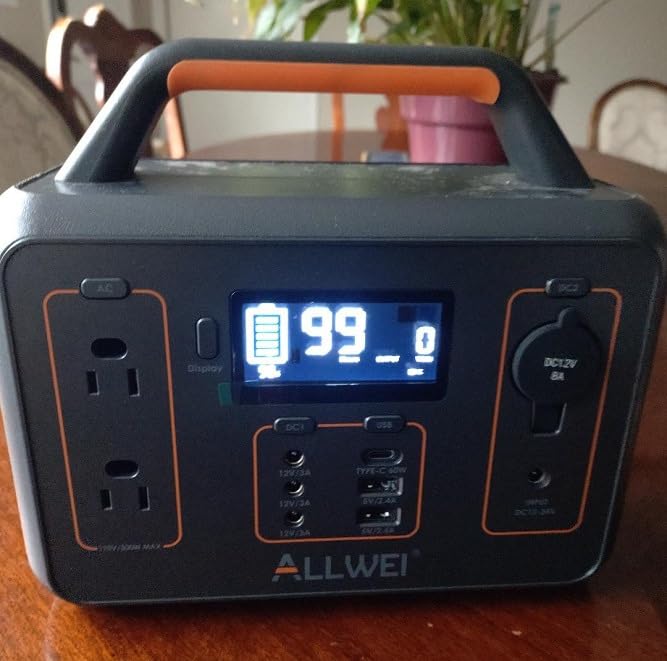
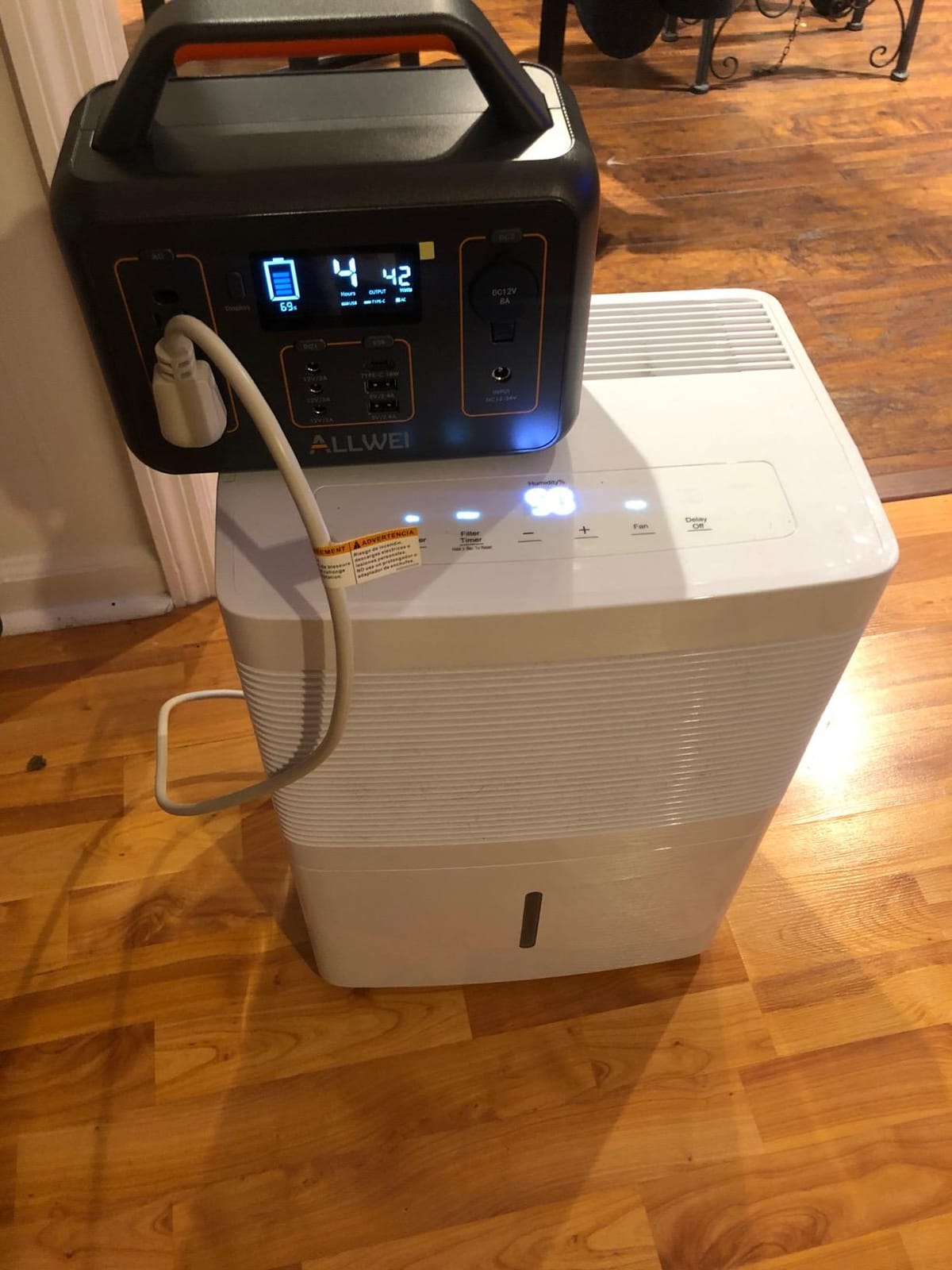
It has four recharge paths, including AC wall, 12V car, solar, and simultaneous AC plus solar. Pass-through charging means you can run devices while the station is refilling, which is the feature that separates it from some cheaper kits.
The three-level LED light with SOS mode is a nice touch, and the 9.25 by 5 by 6.81 inch footprint packs into a small bag rather than taking over a trunk.
The 120W solar input cap is the first limitation. If you plan to run a 200W folding panel, this station cannot accept it, and that constrains you to smaller panels or longer charge times.
The second is durability reports. A number of owners report units losing the ability to hold a charge within about a year, with a loud fan running in the meantime. Customer support has also been reported as wanting extensive data before engaging, and the 2-year warranty is on the short side compared with the five years offered by BLUETTI, Anker and DJI.
Who the ALLWEI 300W suits
Weekend campers on a tight budget who already know their load will be small. Lights, phones, cameras, a fan and a small medical device are all comfortably inside 256Wh.
Pass-through charging makes it work during long drives, and the 6.4 lb weight means one person can carry it from the car every time. Owners running CPAP machines report it as one of the more capable units in this size range.
Who should skip the ALLWEI 300W
RVs needing 24V output, and anyone planning a 200W panel. The 120W solar ceiling rules out the panels most campers buy first.
If you intend to keep the unit for multiple seasons, weigh the charge-hold reports and the two-year warranty against alternatives with five-year coverage. That is the trade: you save money now and accept more uncertainty later.
11. Anker SOLIX S2000 Portable Power Station, 2,010Wh
Anker SOLIX S2000 Portable Power Station, 2,010Wh, 1,500W
2,010Wh
1,500W output, 3,000W peak
400W solar
5 year warranty
Pros
- 2010Wh from cells rated for 10000 cycles
- Up to 35 hours of fridge runtime
- 6W idle draw
- Six recharge methods including 400W solar
Cons
- No 12V DC port for some camping gear
- Fan gets loud during 1200W fast charging
- 35.7 lb with no dedicated handle
This is the biggest battery in the roundup and the only one that changes the planning conversation. 2,010Wh from 314Ah LFP cells rated for 10,000 cycles or a 15-year lifespan means a single unit can cover a full week of camping without a wall outlet.
Reviewers confirm the headline runtime: a full-size refrigerator runs for roughly 35 hours on one charge. Do the math on that against your own fridge and trip length before assuming it will get you through, because compressor fridges vary widely.
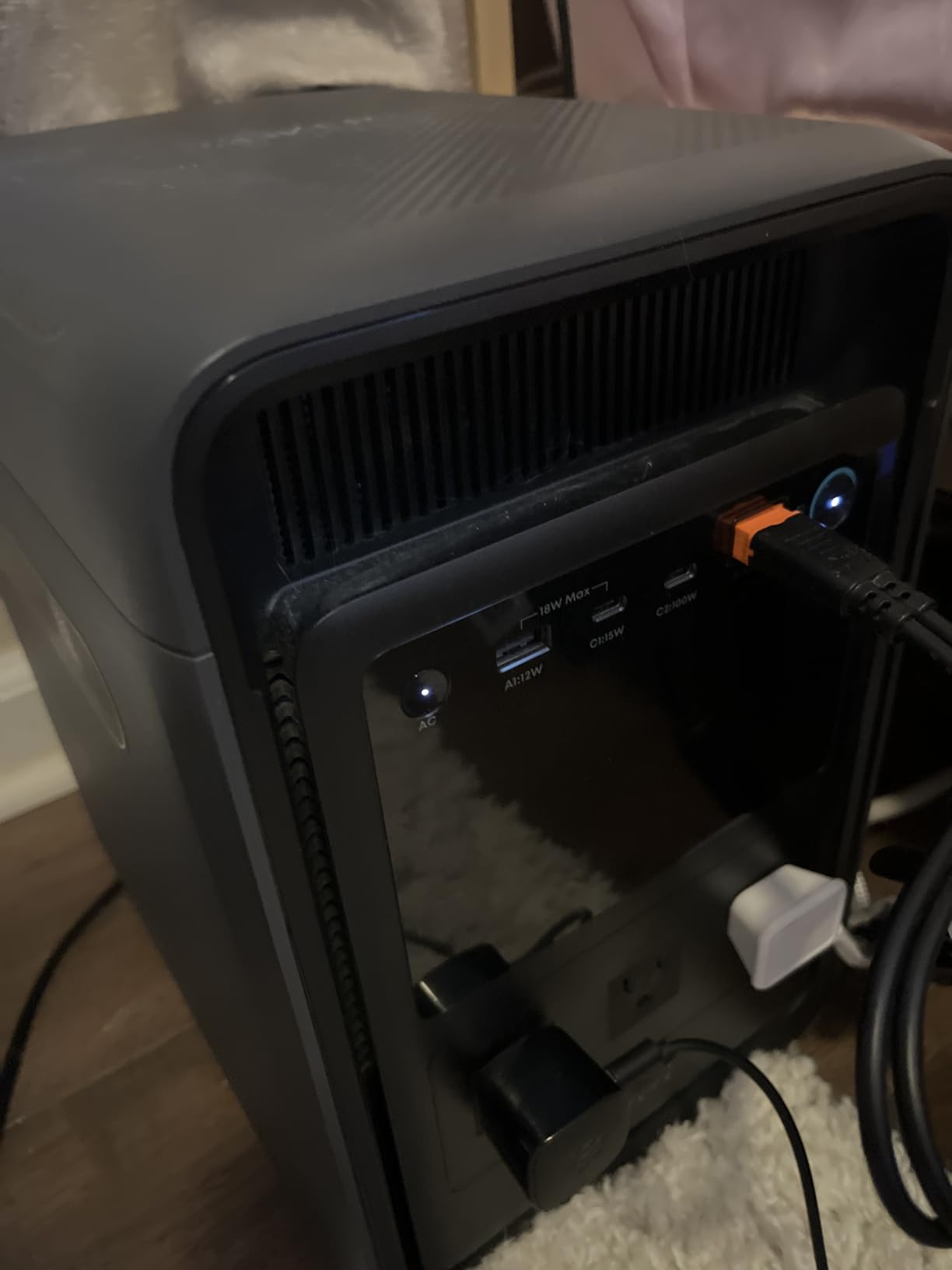
Efficiency work shows up in the numbers. A 6W idle draw and roughly 10% higher conversion efficiency are credited with running about 20% longer than comparable 2kWh units, and at 35.7 pounds the unit is quoted as 30% smaller and 25% lighter than the industry average for that capacity.
Recharging options are the broadest here: AC plus solar, wall, generator, solar, alternator and car, with up to 400W of solar input. That flexibility is what makes it useful for overlanding and remote-cabin setups.
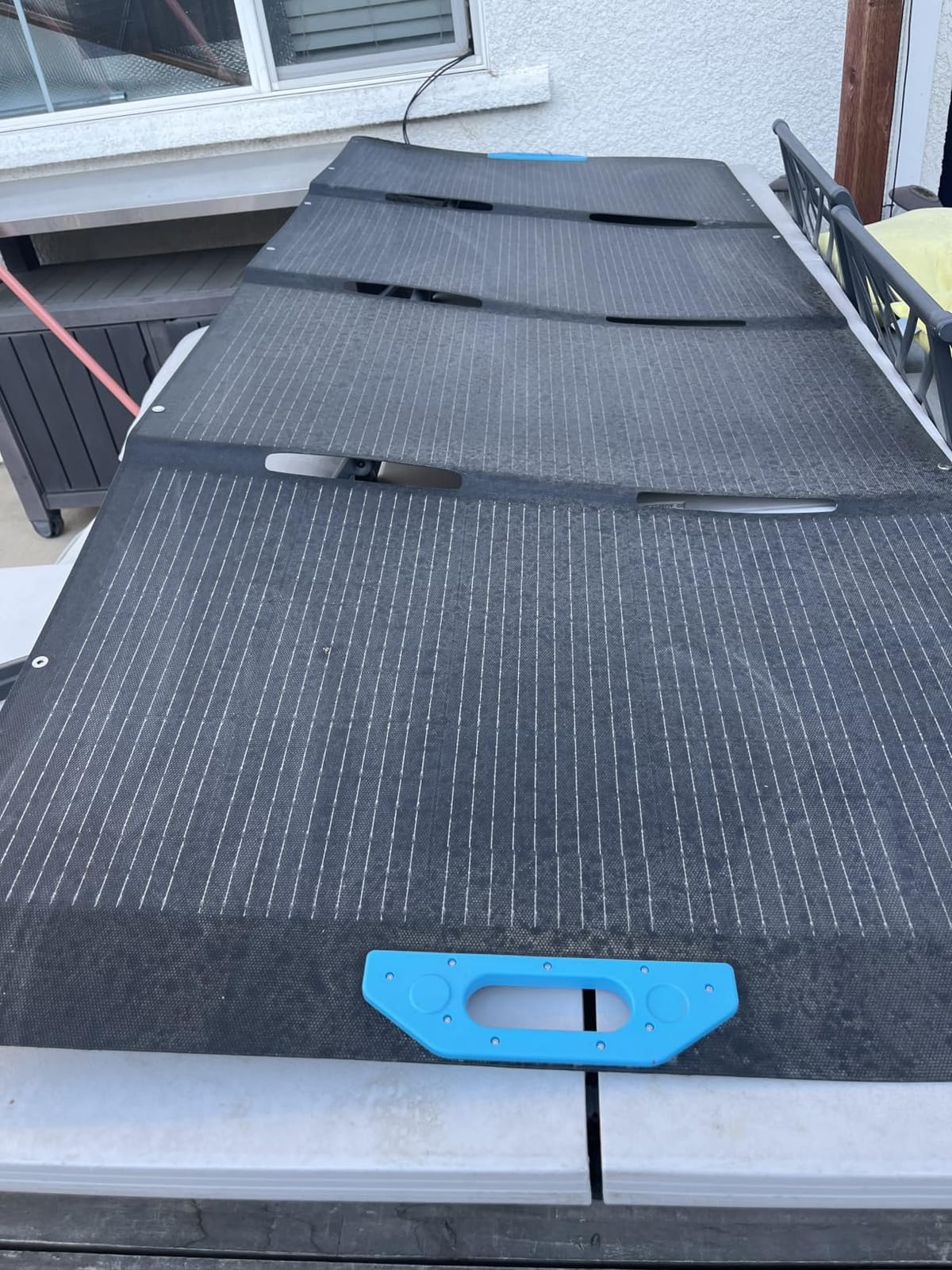
There is no 12V DC port, which rules out direct connection to some 12V camping gear and a number of coolers that expect that socket. The fan also becomes loud during 1,200W fast charging, and the first charge produces a strong burn-off odor for several hours.
At 35.7 pounds with no dedicated handle, this is a two-handed carry from the vehicle. It suits a camp you set up once and stay at, not a camp you move daily.
Who the Anker SOLIX S2000 suits
Multi-day and week-long trips where resupplying power means driving, and base camps with a full-size fridge as the main load. Six recharge paths including alternator and generator input cover long overlanding routes.
Anyone who plans to keep a station for a decade should look at the 10,000-cycle cell rating and five-year warranty, since that is the strongest long-ownership case in this roundup.
Who should skip the Anker SOLIX S2000
Skip it if you move camp every day or if your gear depends on a 12V DC socket. Both are hard limits, not preferences.
Also consider the fan behavior if you plan to charge inside a tent at night, and be aware that the app is required for some settings, which adds a step when you want the unit to work immediately.
12. HOWEASY Portable Power Station, 120W Solar Generator
HOWEASY Portable Power Station,120W(240W Peak) Solar Generator
88Wh
120W output, 240W peak
2.3 lb
2 year warranty
Pros
- Only 2.3 lb with a hidden handle
- Eight output ports for a small unit
- Three recharge methods
- Over 1500 charge cycles
Cons
- 120W ceiling cannot run any real appliance
- Phone charging slower than a dedicated power bank
- Charge lasts about three days
- Panel not included
At 2.3 pounds, this is the lightest unit here and the smallest by a wide margin. The hidden handle means it disappears into a side pocket, which is why it shows up in backpacking and hiking kits rather than car camping setups.
It has eight output ports for its size, including two AC sockets, a USB-C port, two QC 3.0 USB ports, a USB-A port and two DC outputs. The 120W ceiling is real, so the AC sockets are for small electronics rather than appliances.
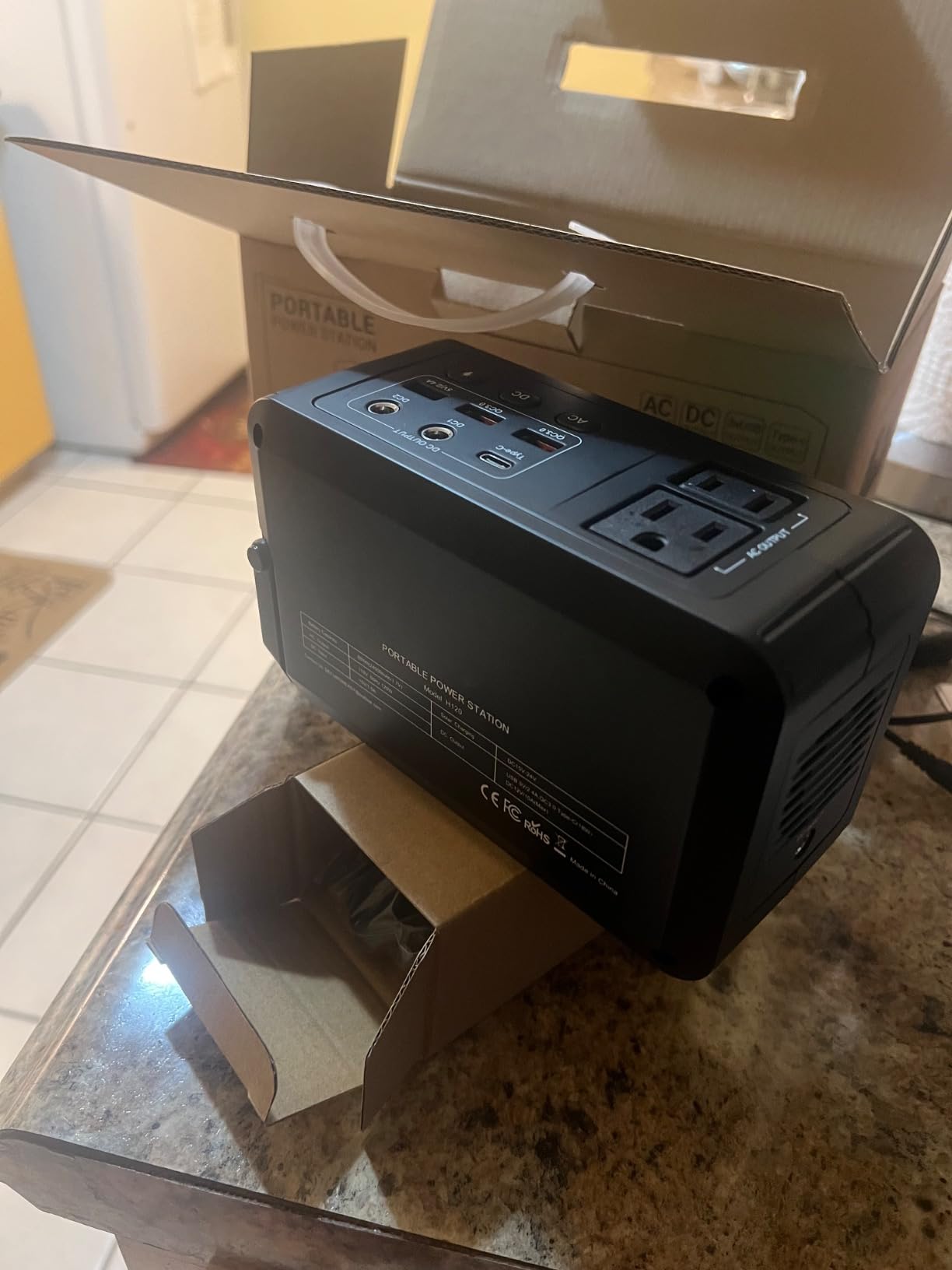
Recharging works three ways: AC wall, 15V to 24V solar and a 12V or 24V car socket. It also supports simultaneous charge and use, and the cycle life is rated above 1,500 charges.
Owners treat it as an inexpensive emergency pack rather than a power station. Phones, headlamps, a small fan, camera batteries and a string of lights are the realistic load, and the 88Wh capacity is about three days of that kind of use.
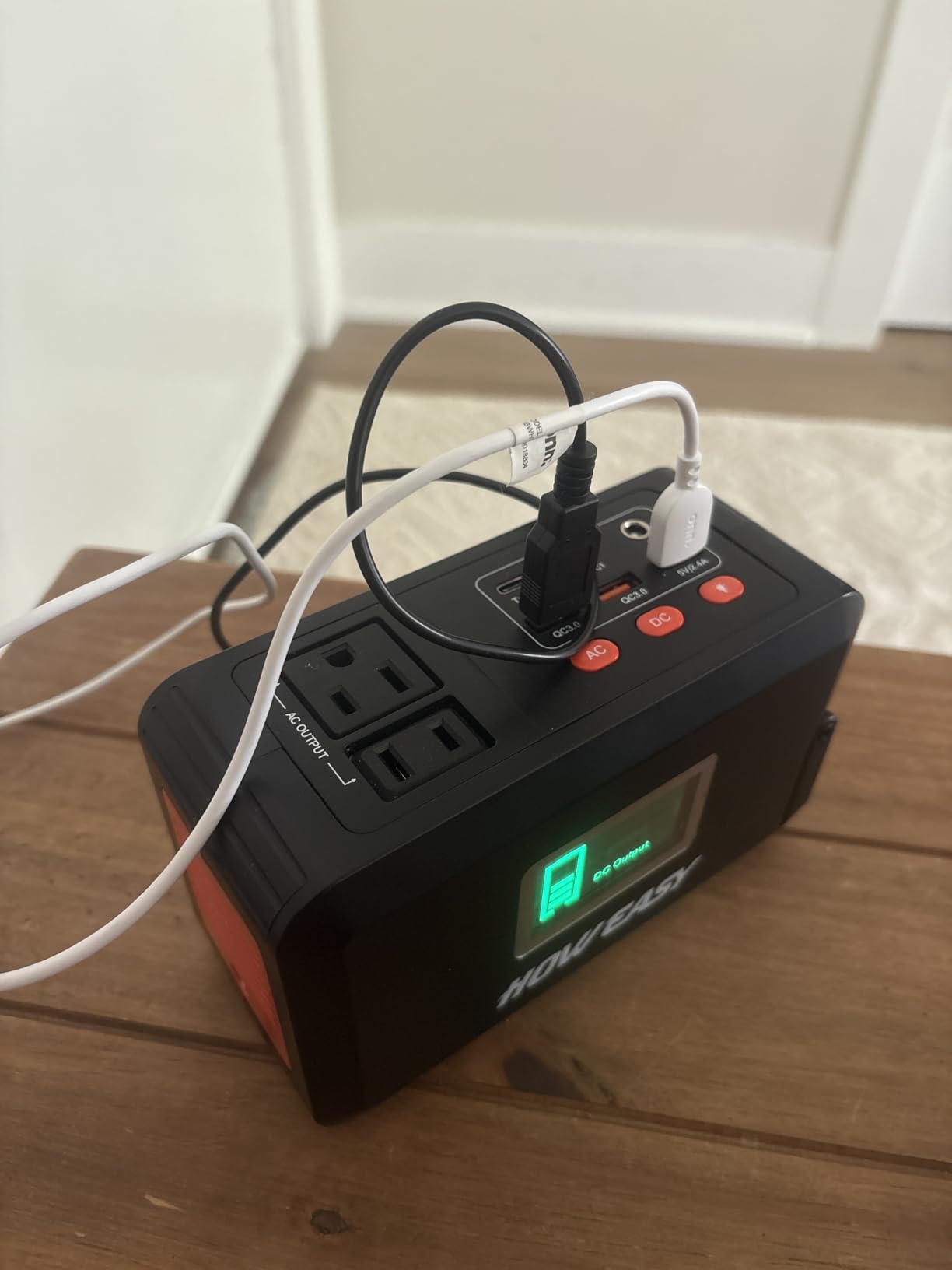
The limitations are straightforward. A 120W output means no coffee maker, no microwave, no hair dryer, and no fridge. Phone charging is reported as slower than a dedicated power bank, which is a fair comparison given what a power bank is built to do.
Who the HOWEASY 120W suits
Backpackers, hikers and ultralight campers who want emergency power for a phone and a light without carrying kilos of battery. It is also a sensible backup that lives in a go-bag year round.
Tailgating, beach trips and festival weekends fit too, where the load is lights and phones and the station spends most of its life in a bag until the evening.
Who should skip the HOWEASY 120W
Anyone whose plan involves a fridge, a CPAP machine, a laptop that needs real charging time, or a multi-day trip away from a vehicle. The capacity and output ceiling make those trips impossible.
Skip it for solar-only camping as a primary station, since a 60W panel would take well over a day to refill 88Wh, and no panel is included with the unit.
How to Choose a Portable Power Station for Camping
Choose by load, not by marketing. Work through these seven factors in order and the model will pick itself.
1. Size the battery from your device list, not your trip length
Write down every device you plan to run, add the watts, then multiply by the hours you need it. Add a 20% buffer for inverter losses and reserve. A 60W portable fridge for 10 hours plus phone charging for 20 hours is about 840Wh of usable demand, which points at a station in the 1,000Wh class.
2. Check chemistry before anything else
LiFePO4 is the only chemistry worth considering for a station you plan to keep. Every model here is rated from 1,500 cycles on the smallest battery to 10,000 cycles on the Anker SOLIX S2000, and LiFePO4 chemistry also tolerates heat and deep discharge better than the older lithium-ion cells. Watch for inflated claims: some brands list cell capacity rather than usable output capacity, so take the watt-hour figure and reduce it by about 15% in your own math.
3. Continuous output matters more than surge
Surge wattage only covers the startup spike of a compressor or motor. What limits you day to day is continuous output, and heating elements like kettles, hair dryers and space heaters draw far more than any camping station here can deliver. The 600W options from BLUETTI and the 2,000W options from Anker and OUPES are the practical ceilings in this list.
4. Cold weather changes the rules for LiFePO4
This is the caveat no top-ranking guide explains clearly. Most LiFePO4 models refuse to charge below about 32F, and charging a lithium iron phosphate cell below freezing can damage it permanently. Unless the model has a built-in heater, you must bring the battery to temperature before charging it. In deep winter, keep the station in the vehicle or inside a sleeping bag between uses, and never leave it to charge on a cold morning.
Discharge in cold weather is less restrictive than charging, but expect a capacity drop of roughly 20% at temperatures near 14F. Cold-weather performance is the single most common complaint in overlanding forum threads.
5. Match solar input to the panel you will actually own
Solar input limits vary enormously across this roundup: 120W on the ALLWEI, 110W on the RIVER 2, 400W on the Anker SOLIX S2000, 600W on the C1000 Gen 2 and 800W on the OUPES Mega 1. Buying a 400W panel for a station capped at 120W wastes most of the panel.
Connector type matters just as much. Standard MC4 opens up every panel on the market, while proprietary plugs restrict you to one brand. The Anker SOLIX C300 does not accept the PS30, PS200 or PS400 panels, and the Jackery Explorer 1000 v2 accepts Jackery-branded panels only. For multi-day trips, a mid-range 200W folding panel is the sweet spot; anything beyond that is real weight.
6. Fan noise decides sleep quality
Cooling fans are the most repeated complaint in forums. Measured noise here ranges from 25 dB on the Anker SOLIX C300 to noticeably loud under heavy load on the OUPES Mega 1 and Anker SOLIX S2000. If you sleep next to the station, noise should be a bigger factor than capacity.
7. Warranty and support, plus pass-through charging
Warranties here run from 12 months on the ZeroKor kit to five years on the Anker, BLUETTI, DJI and OUPES units. Users consistently value US-based support and an easy return process, and those two things matter more than a small spec difference.
Pass-through charging, which lets the station charge while it powers devices, is not universal. It is listed on the ZeroKor, ALLWEI and HOWEASY units, and the Anker SOLIX S2000 supports bypass-style charging. Check it before a long drive if you plan to run gear in the car. UPS mode with a sub-20ms switchover is a related feature, and it is what protects a CPAP machine or a router during a brief outage.
Air travel and campground rules
Batteries above 100Wh are not permitted in carry-on luggage, and larger lithium packs need approval for checked baggage under aviation rules. That rules out the Anker SOLIX S2000 and most 1,000Wh models for fly-in camping. Some campgrounds also restrict lithium batteries above 100Wh or require them to be kept in a vehicle rather than a tent, so check your site before unloading the trunk.
Runtime Math: How Long Each Size Actually Lasts
Here is the number most product pages leave out. Divide watt-hours by device watts, then multiply by 0.85 to account for inverter and conversion losses. That gives realistic hours from a single charge.
For a 60W portable fridge, the most common camping load: the Jackery Explorer 300 gives about 4.1 hours, the Anker SOLIX C1000 Gen 2 about 14.5 hours, the DJI Power 1000 V2 about 14.5 hours before accounting for its higher idle draw, and the Anker SOLIX S2000 about 28 hours against its manufacturer claim of up to 35 hours on a full-size refrigerator.
For a 100W device such as a coffee maker or a power tool, halve those figures. Nothing in this roundup under 1,000Wh is meant for sustained loads at that level, which is the practical dividing line between a weekend station and a base-camp system.
For light loads, the math changes in a way that matters. A 288Wh station powering a 10W light string and a fan might deliver 20 hours rather than the 24 hours a clean division suggests, because standby draw becomes a meaningful share of capacity. The BLUETTI Elite 30 V2 and Anker SOLIX S2000 have the lowest standby draw in this roundup, which is why they hold up best on low-wattage loads.
Frequently Asked Questions
Which portable power station is best for camping?
The Anker SOLIX C1000 Gen 2 is the best all-round choice, with 1,024Wh of LiFePO4 capacity, 2,000W of continuous output, a 49-minute wall recharge and 600W of solar input. For a small 288Wh unit, the BLUETTI Elite 30 V2 offers the most output per pound, and the Jackery Explorer 300 remains the lightest option that still runs a real AC appliance.
Is Jackery or Anker better for camping?
It depends on your solar setup and recharge speed. Anker stations recharge faster and accept more third-party solar, with the SOLIX C1000 Gen 2 supporting up to 600W of panel input. Jackery units are well regarded for reliability, and the Explorer 1000 v2 reaches 80% in about 2.8 hours on a 100W Jackery panel, but its solar port accepts Jackery-branded panels only.
Which one is better, Jackery or EcoFlow?
The EF ECOFLOW RIVER 2 wins on recharge speed, reaching a full charge in about one hour and recharging from 110W solar in as little as 2.3 hours. Jackery offers more conservative output ratings and a wider product ladder. The RIVER 2’s 300W AC ceiling and single USB-C port are the main reasons buyers pick a Jackery unit instead.
How many watt hours do I need for camping?
For a weekend trip with lights, phones and a fan, 250Wh to 300Wh is enough. A 12V portable fridge running around 60W needs roughly 500Wh for overnight use and closer to 1,000Wh for a multi-day trip. Divide your device watts by the hours you need, add 20% for inverter losses, and you have your number.
Do portable power stations work in cold weather?
They discharge in cold weather, but expect a capacity drop of roughly 20% near 14F. Charging is the real restriction: LiFePO4 units generally refuse to charge below about 32F, and charging a lithium iron phosphate cell below freezing can damage it. Warm the unit to room temperature before charging, and keep it in the vehicle or insulated between uses.
Can you use a portable power station while it is charging?
Yes, on units that support pass-through or bypass charging. The ZeroKor 300W kit, the ALLWEI 300W and the HOWEASY 120W all list simultaneous charge and use, and the OUPES Mega 1 supports bypass charging. Not every model does this, so check the specification before planning to run gear from a station while it refills from solar or a car socket.
The Bottom Line on Camping Power Stations
The Jackery Explorer 300 is our pick as the best portable power stations for camping entry point, and for most weekend trips it is all you need. When the load grows to a fridge and multiple days off-grid, the Anker SOLIX C1000 Gen 2 is the strongest all-round choice, and the Anker SOLIX S2000 carries a full week. Whichever one you choose, size it against your device list, check the solar connector before you buy a panel, and remember that LiFePO4 units should be warmed up before charging in cold weather.