
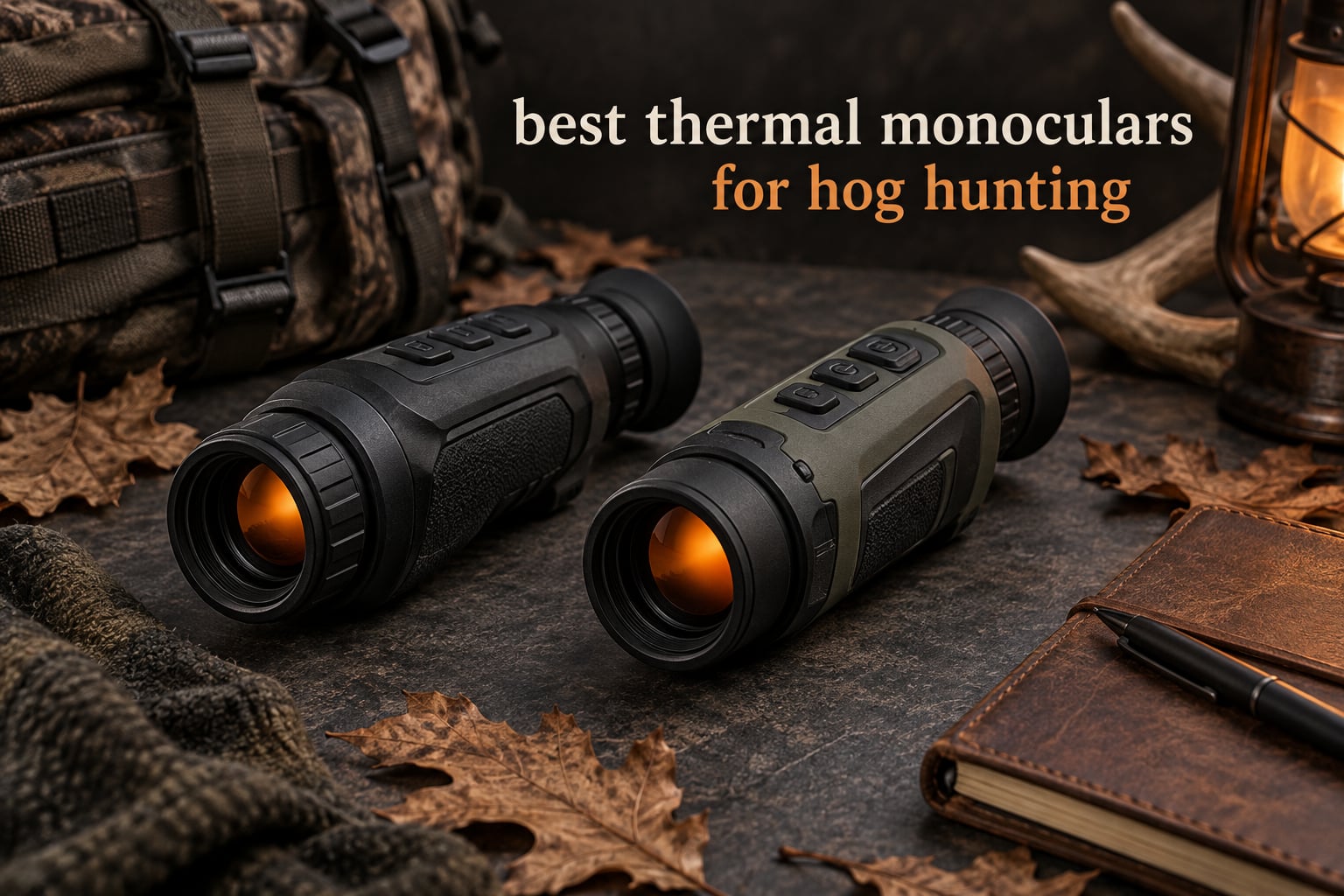
If you want one answer before you read anything else: the AGM Rattler V2 is the best thermal monocular for hog hunting overall, because it is the most consistently praised unit here and it doubles as a scope on a quick-detach mount. The GOYOJO G210 is the cheapest serious way in, the RIX Pocket K3 gives you the sharpest handheld image for close brush work, and the FLIR Breach PTQ136 is the one to buy if tracking a running boar matters more than everything else.
Most hog shots happen at night, inside 150 yards, with the animal somewhere in a thicket you cannot see into. That single fact drives every pick in this roundup of the best thermal monoculars for hog hunting. A white-light setup fails on coarse hog hair that reflects poorly, and an image intensifier tube washes out the moment any moonlight or starlight enters the picture. Thermal does not care about ambient light at all, because it reads the heat difference between a warm animal and a cool background.
Our team pulled specs, owner feedback and forum field reports for twelve handheld thermals, then ranked them on the things that actually change your night in the woods. The result is a list that starts near the entry tier and climbs to a premium optic built for fast movers, with an honest note on where each one stops being useful.
Table of Contents
Top 3 Thermal Monoculars for Hog Hunting (October 2026)

AGM Rattler V2
- 256x192 12um core
- 25mm lens
- 3.5x base
- 1250 yard detection
- dual battery to 11.5 hours
- quick-detach mount
GOYOJO G210
- 256x192 12um detector
- 10mm lens
- 17.5 degree FOV
- six palettes
- replaceable 18650 cells
- IP65
Quick Overview: All 12 Thermal Monoculars Compared in 2026
| Product | Specs | Action |
|---|---|---|
| AGM Rattler V2 |
|
Check Latest Price |
 TOPDON TS004 TOPDON TS004 |
|
Check Latest Price |
| GOYOJO G210 |
|
Check Latest Price |
 RIX Pocket K2 RIX Pocket K2 |
|
Check Latest Price |
 Teslong TTS260 Teslong TTS260 |
|
Check Latest Price |
 ATN OTS XLT ATN OTS XLT |
|
Check Latest Price |
 FLIR Scout TKx FLIR Scout TKx |
|
Check Latest Price |
 FLIR Breach PTQ136 FLIR Breach PTQ136 |
|
Check Latest Price |
| RIX Pocket K3 |
|
Check Latest Price |
 GOYOJO G215 GOYOJO G215 |
|
Check Latest Price |
 ATN BlazeSeeker-210 ATN BlazeSeeker-210 |
|
Check Latest Price |
 MiLESEEY TNV10PRO MiLESEEY TNV10PRO |
|
Check Latest Price |
1. AGM Rattler V2 – Editor’s Choice for Hog Hunting
AGM Global Vision Rattler V2 25-256 Thermal Scope High-Sensitivity Sensor
256x192 12um core
25mm lens, 3.5x base
1250 yard detection
Dual batteries to 11.5 hours
Pros
- Highest rating in this roundup at 4.7 stars with 84% five-star feedback
- Florida hunters report many hogs taken at 10-50 yards
- Quick-detach mount holds zero across repeated swaps
- Case cables and charger all included with two rechargeable cells
- IP67 waterproof and rated to -22F
Cons
- 3.5x base magnification is narrow for sweeping brush
- No daylight color mode to match against what your eye sees
- Occasional two-second freeze in the video feed
- Menus are steep for a first-time thermal user
The Rattler V2 is the only optic in this roundup that showed up in hog country stories over and over. One Florida hunter credits it with many hogs taken at 10 to 50 yards, and that is exactly the range where most people actually shoot. Owners also pick it as a first thermal because they can glass a property without shouldering a rifle, which removes the dumbest part of night hog work: sweeping a barrel-mounted light across a treeline.
What makes it work as a scope and a handheld in one body is the quick-detach Picatinny mount. Buyers report that it holds zero through repeated mount changes, so you can shoot it on a rifle for the sit and pull it off to walk toward a downed animal without disturbing the setup.
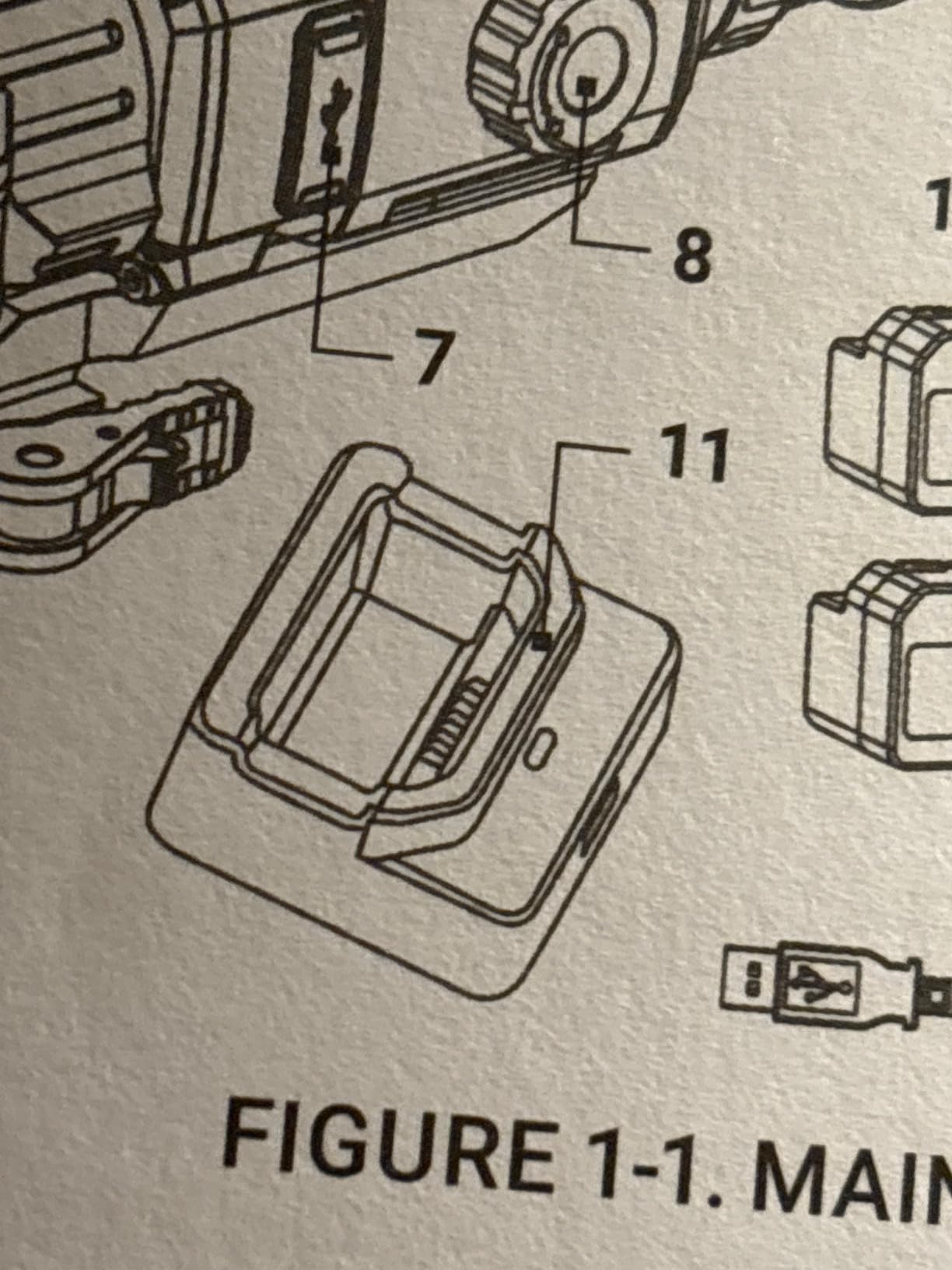
The box is unusually complete. Two rechargeable cells, a charger, USB cable, lens cloth, mount and a soft case all come in the box, which removes the most common complaint people have about mid-tier optics: the extra battery and mount purchases that quietly double the cost of entry.
Under the hood it is a 256×192 12-micron core behind a 25mm Germanium lens with 3.5x base magnification and up to 8x digital zoom, rated to detect heat signatures out to 1,250 yards. The stadiametric rangefinder, ten reticle options and shot-activated recording with audio cover the shooting use case well.
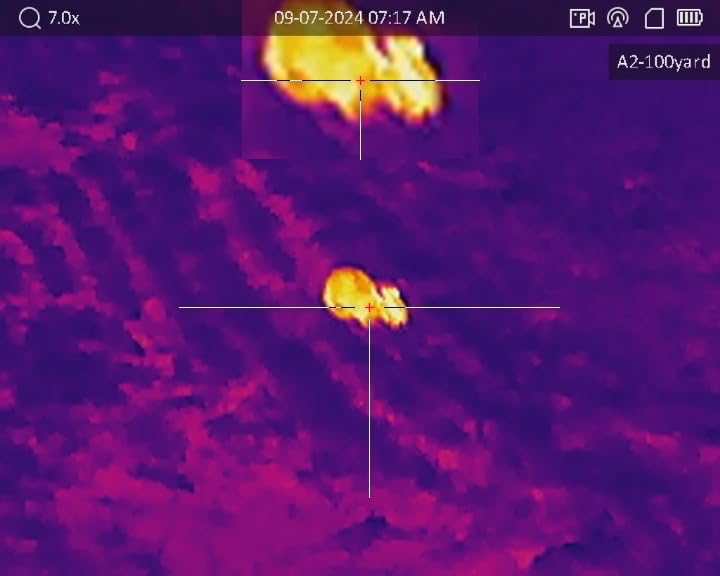
Where the Rattler V2 earns its spot
Anyone hunting hogs inside 100 yards who wants one device that handles both the glassing and the shooting gets the most out of this optic. The dual-battery system holding through long sits removes the anxiety that drives forum threads about thermal gear, where people keep asking how many spare cells they actually need in December.
It is also the sensible first thermal for a hunter who cares more about putting hogs in the freezer than about owning the newest gadget. The 5-year manufacturer warranty and the IP67 rating mean rain and mud are not a reason to leave it in the truck.
Where the Rattler V2 falls short
The 3.5x base magnification is the biggest complaint in the reviews, and hunters on forums who shoot hogs argue the same thing from the other direction: they want a wider starting view to sweep brush. You can zoom, but you cannot zoom wide.
There is also no daylight color mode, so correlating the thermal picture with the landscape you can see in daylight takes practice. A handful of owners hit an occasional two-second freeze in the video feed, and the menu system is deep enough that first-time users should budget an evening with the manual.
2. TOPDON TS004 – Best Value Thermal for Night Scans
TOPDON TS004 Thermal Imaging Monocular, 13mm 50Hz Night Vision
256x192 TISR core
50Hz refresh, 13mm lens
Up to 11 hour runtime
IP67 drop resistant to 2 m
Pros
- Finds hogs and coyotes out to 75-150 yards for a fraction of FLIR-class pricing
- 5000mAh battery consistently reported past 10 hours
- White hot
- black hot and predator-style red and yellow palettes
- Still and video capture with audio plus phone app streaming
- IP67 shell at only 70 g
Cons
- Zoom is digital only so the image degrades fast
- Identification gets hard past roughly 150 yards
- Battery life drops sharply while streaming to a phone
- No neck lanyard and files route through the app
The TS004 has the largest review sample in this roundup at 402 ratings, and the pattern in those reviews is remarkably consistent: owners treat it as the value entry point and report finding hogs, deer, coyotes and even mice out to 75 to 150 yards. Buyers who own FLIR-class gear say the detection performance is comparable for far less money.
For hog work specifically, the 50Hz refresh is the spec that matters most and it is the one this unit gets right. Hogs move in bursts, and a higher refresh keeps a walking sow readable instead of smearing her into the background between frames.
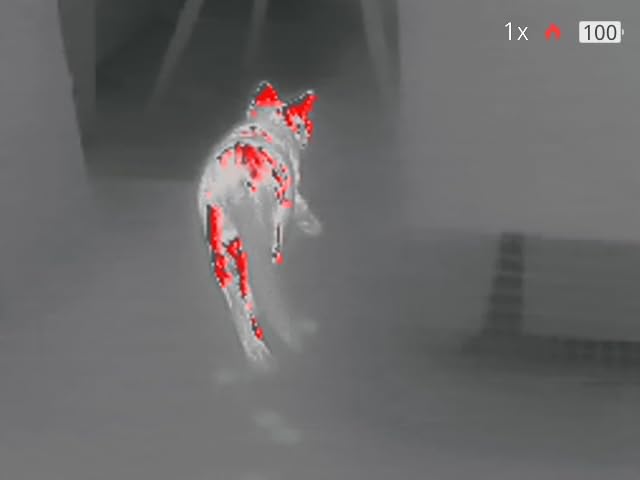
The battery is a 5000mAh lithium-ion pack rated for up to 11 hours, and owners routinely report all-day runtime. The silicone outer shell and IP67 rating survived rain and rough handling in multiple field reports, and at 70 g the whole thing disappears into a jacket pocket.
The 13mm objective lens gives a 13.5-degree field of view, with detection quoted up to 410 meters and clear detail inside 100 yards. That figure lines up with what buyers actually describe, which is rare in this category.
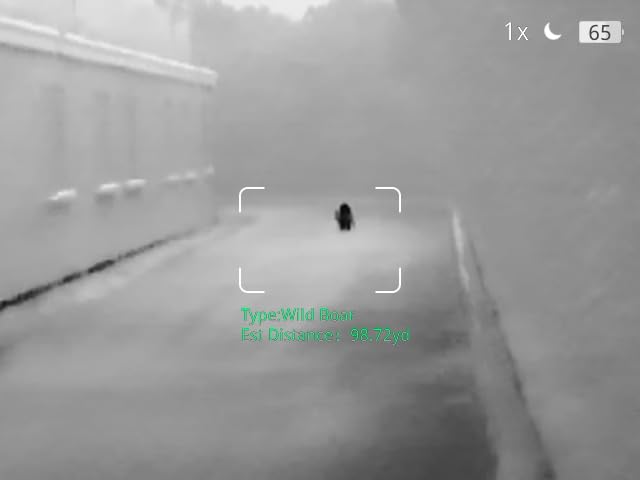
Where the TS004 earns its spot
This is the pick if your budget is the first constraint and you shoot inside 150 yards. The TopInfrared app lets a partner on the other end of the property watch the live feed, which is a genuine advantage when you are calling shots to someone holding a flashlight on a treeline.
It also works as a general property tool. Multiple reviews describe using it for predator work, varmint runs and even home inspection, so the money is not locked into one narrow use.
Where the TS004 falls short
There is no optical zoom. Everything past the first magnification step is digital, and buyers describe the image getting grainy fast, which caps how useful the unit is past roughly 150 yards.
Streaming to a phone cuts stated battery life noticeably, and files cannot be moved directly to a computer without going through the app. If you record a lot, plan for the phone step in your workflow.
3. GOYOJO G210 – Budget Pick with the Widest Cheap Field of View
GOYOJO G210 Thermal Monocular, 256×192 Thermal Imaging Monoscope Camera for Adults, 10mm Focal Lens Vision Goggles Thermal Scopes for Night Hunting Camping
256x192 12um detector
25Hz refresh
17.5 degree FOV
Replaceable 18650 cells
Pros
- Finds animal signatures in tall grass and brush where night vision fails
- Six palettes including red hot which located a downed animal
- Six-plus hours on replaceable cells so spares go in the pack
- Light sealed body with positive-clicking buttons
- Integrated red dot and laser pointer help confirm centering
Cons
- The 10mm lens is soft for identification
- One owner reported a cell that would not recharge
- Brightness resets between sessions
- No microphone so recordings are silent
The G210 is the cheapest entry on this list that still feels like real equipment in the hand, and its wide 17.5-degree field of view is the reason. When you are walking a treeline at night hoping a sounder is on the other side, covering ground quickly with the optic matters more than the last detail on a distant sow.
Owners report finding animals hidden in tall grass and thick brush, which is exactly the claim thermal optics need to defend against skepticism. Several describe identifying small animals at 200 feet in complete darkness.
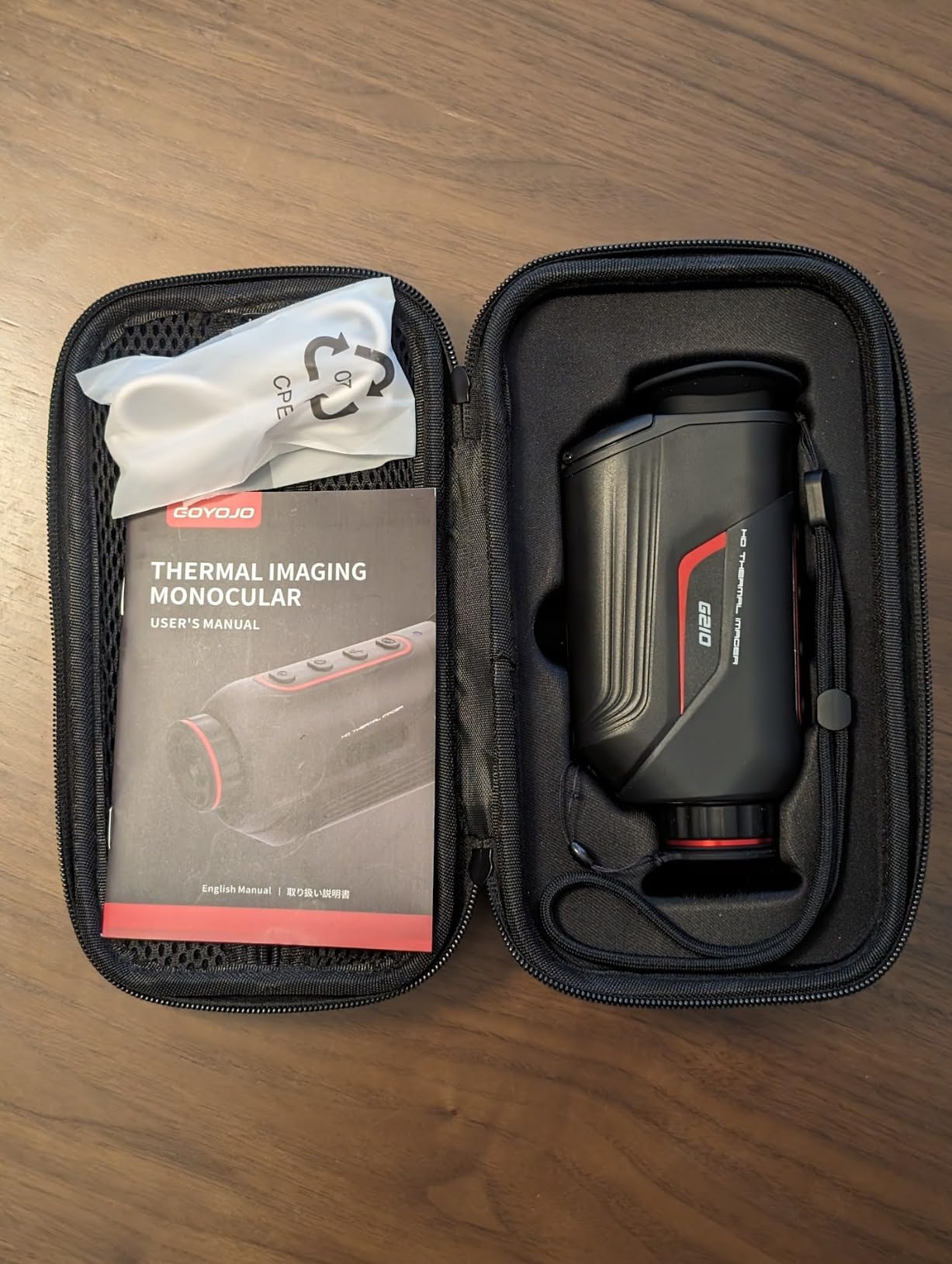
The replaceable 18650 lithium-polymer cells matter more than they sound. Instead of planning your night around one fixed pack, you carry two spares and top up in the truck between sits, which is the single most common battery complaint in hunting thermal forums.
There are six palettes, 16GB of internal storage, 4x digital zoom, a dedicated app for sharing the live feed and an integrated laser pointer and red dot. The buttons are well sealed and click positively, and the whole unit is compact enough for a jacket pocket.
Where the G210 earns its spot
Budget new hunters who want to learn night glassing without a big commitment do well here. The rugged monocular form factor also beats a phone thermal dongle on one specific point: the eyepiece does not glow and give away your position.
It is a genuinely useful second optic for someone who already owns a rifle scope and wants a dedicated handheld that will not get knocked off a rifle in the dark.
Where the G210 falls short
The 10mm lens is the wide, short-focal-length option, and it is noticeably softer than the 15mm GOYOJO model below. Good for detection, weaker for telling a hog from a deer at the moment you decide whether to shoot.
One owner reported an included battery that died quickly and would not recharge, and brightness settings do not persist between sessions. Test the cell and the controls early, inside the return window.
4. RIX Pocket K2 – Best for Low-Contrast Detection Under 25mK
RIX Pocket K2 Portable Thermal Monocular for Hunting, 256×192 (50Hz), Wi-Fi, Handheld Night Vision Monocular
NETD under 25mK at 50Hz
800x600 OLED display
200 g pocket build
IP67 with EIS
Pros
- Sensitivity figure is the lowest in this roundup which helps in humid nights
- Lighter than a smartphone with a sliding lens cover that cannot be lost
- EIS steadies the view and cuts hand-shake vertigo
- App streaming runs with very little lag
- One owner identified a rabbit in brush at 200 yards
Cons
- Identification past roughly 150 yards gets difficult
- Fixed focus frustrates some owners
- One documented power-on failure within two months
- Menus are awkward to navigate
The K2’s headline number is NETD under 25mK, and that is the spec to pay attention to on humid nights. NETD, or thermal sensitivity in millikelvin, describes the smallest temperature difference the sensor can resolve. A lower number means the picture holds contrast when the air is warm and the ground is hot, which is precisely the Texas and Oklahoma summer condition that flattens cheap optics.
Second is the build. At 200 g this is lighter than a smartphone, and the integrated sliding lens cover is a small design decision that removes an entire category of field problem.
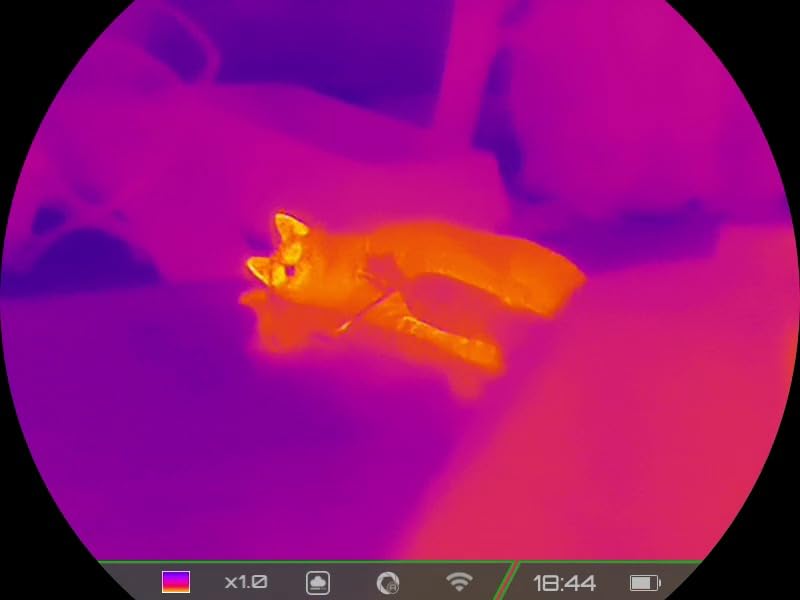
The 800×600 OLED display is unusually good for the class, and 50Hz refresh keeps walking hogs readable. Electronic image stabilization is the sleeper feature for handheld glassing, because it reduces the arm fatigue and mild vertigo that come from holding a small optic steady for twenty minutes.
RIX also layers its Resolution Enhanced Technology on top of the 256×192 sensor, which uses pixel-doubling to make the image read cleaner than the native resolution suggests. The 9mm lens produces a 19.4-degree field of view, among the widest here, and there is IP67 sealing plus a five-year warranty.
Where the K2 earns its spot
Hunters who glass wooded country rather than open field benefit from the wide field of view and low sensitivity threshold. Owner reports of reliable spotting to 150 or 200 yards put it ahead of most of the 256×192 competition on identification distance.
It is also a good pre-dawn and after-dark scout for anyone who does not want to carry a full size optic up a treeline. The pocketable weight means you will actually bring it.
Where the K2 falls short
Fixed focus is the most common owner gripe, and it is a real inconvenience when the temperature swings enough to shift focus. The menus are also described as a pain to learn for a first thermal.
One detailed one-star report describes a unit that degraded into a power-on failure within two months of light use. That is an isolated account rather than a pattern, but it is why the five-year warranty matters on a device this small.
5. Teslong TTS260 – Best for Recording and Reviewing Sightings
Teslong TTS260 Thermal Monocular 256 x 192, Super Resolution 512 x 384
256x192 native with super resolution
32GB storage, HDMI and USB-C
Eight hours per charge
Eight color modes
Pros
- Largest eyepiece in this group at 0.32 inch giving a full rectangular view
- 218 yard detection and 55 yard recognition figures owners find realistic
- 32GB built-in plus USB-C and HDMI for offloading footage
- Eight-hour battery with a -4F to 122F operating range
- Adjustable diopter works for glasses wearers and buttons take gloves
Cons
- 12mm lens gives a modest 15 degree field of view
- Super resolution is upscaled so fine detail stays soft
- Limited digital zoom
- Weather resistant but no stated IP rating
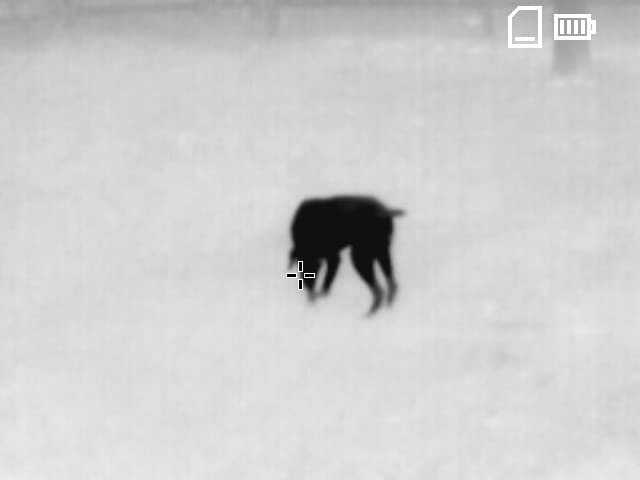
The TTS260 is the pick if you want a record of what you saw. With 32GB of internal storage plus both USB-C and Mini HDMI output, it is the easiest unit here to offload footage onto a laptop or television without special cables, and eight color modes let you tune the contrast for the scene in front of you.
Hot spot tracking follows the warmest object in frame, which speeds up acquisition when a sow and a couple of shoats are all moving through a brush edge at once.
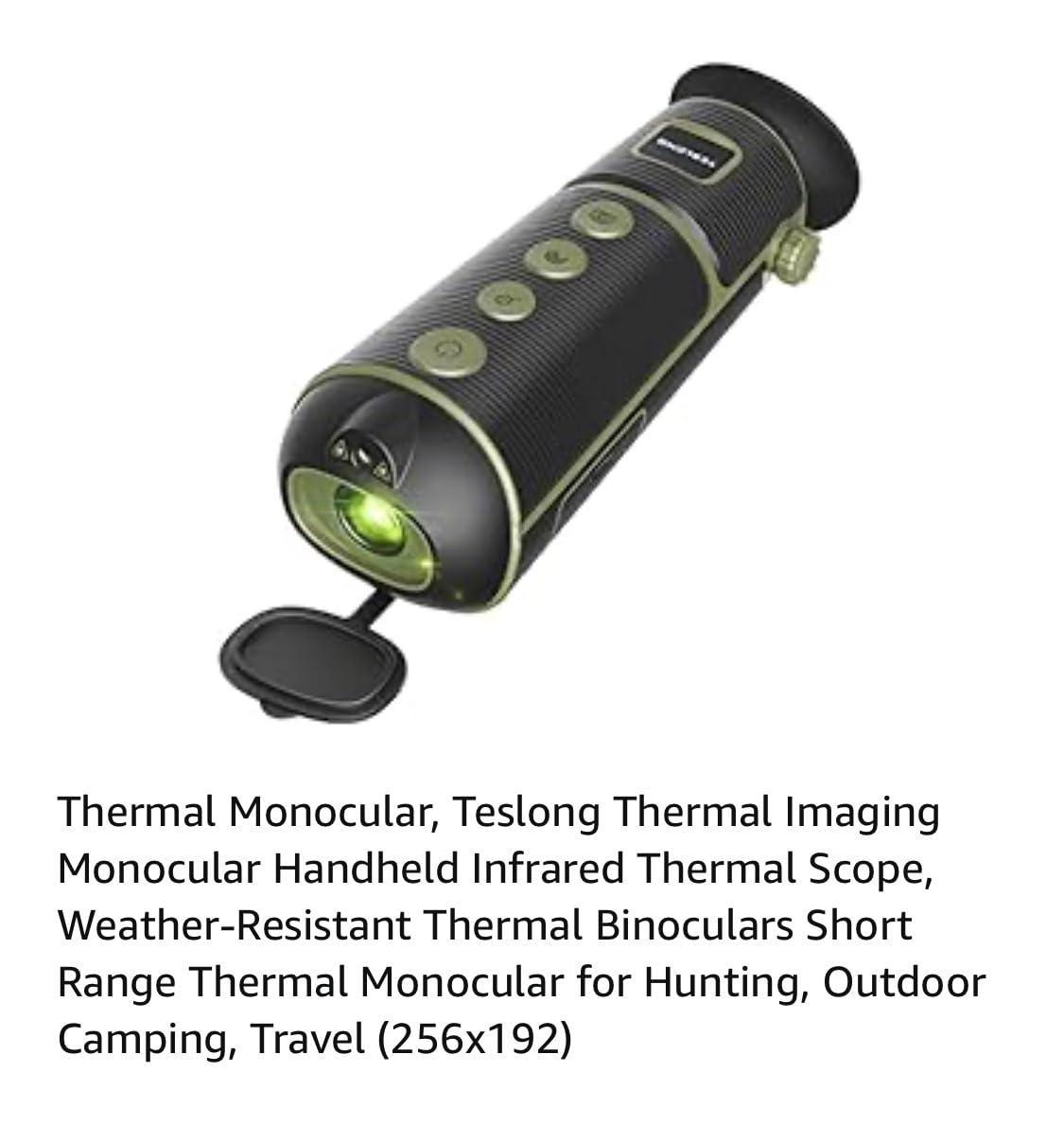
The 0.32-inch 800×600 OLED eyepiece is the largest in this roundup and produces a more complete rectangular field of view than most rivals. Owners using it on a tripod or window mount value the stated 218-yard detection and 55-yard recognition figures, because they are measured claims rather than marketing round numbers.
Battery life of up to eight hours per charge and a -4F to 122F operating range suit overnight sits and winter hog seasons better than most of the cheap class.
Where the TTS260 earns its spot
Hunters who want to review a hunt afterward, share clips with a partner or show a landowner where the pressure is heaviest get the most from this unit. The removable-style tripod mount and altazimuth setup make it easy to park on a fence post and watch a crossing.
It is also a fair pick for farmers confirming where hogs are moving through a pasture before a weekend hunt, which is the scouting use case more than the shooting one.
Where the TTS260 falls short
Super resolution is upscaling rather than native resolution, so the fine detail of a boar at range stays soft next to a true 384-class sensor. The 12mm lens yields a modest 15-degree field of view that asks you to sweep more deliberately.
Ten percent of ratings are one-star, the largest dissatisfied group among the mid-priced options, and the unit carries no stated IP waterproof rating. Keep it out of sustained driving rain.
6. ATN OTS XLT – Best Budget Rangefinder Setup
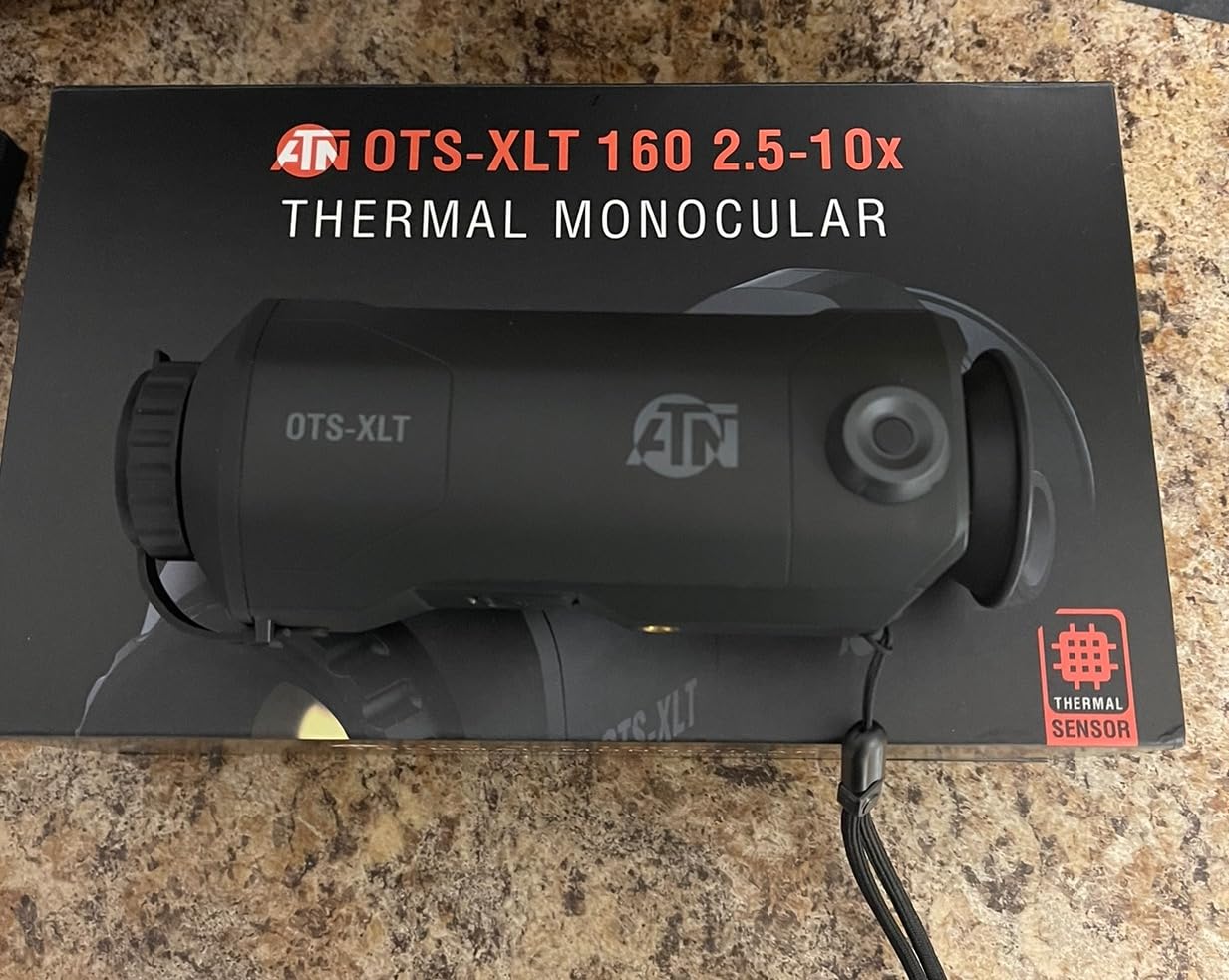
ATN OTS-XLT Compact Lightweight Thermal Viewer, 2-8x
50Hz refresh
22.5 degree field of view
25mm lens, 2-8x
Smart rangefinder, 10+ hour battery
Pros
- Documented use avoiding a sounder of feral hogs at 50 yards in the dark
- Smart rangefinder in a handheld at an entry price
- 10-plus hour battery that held up over 30 charge cycles for one owner
- 50Hz keeps moving hogs trackable and 0.8 lb body pockets easily
- Also useful for home heat inspection
Cons
- Narrow field of view for an entry-level optic
- Image is fuzzy without a strong heat gradient
- Struggles below about 0F where the screen washes white
- Smart rangefinder is useless on a moving target in the crosshairs
The OTS XLT has the most documented hog-hunting story in the set: one buyer used it to avoid walking straight into a sounder of feral hogs at 50 yards in the dark after a hunting light failed. That is the safety argument for a handheld thermal better than any spec sheet, because most night hog injuries happen when a person cannot see what is in front of them.
It is also the only entry-level optic here with a smart rangefinder built into a handheld body. When a boar holds at 40 yards behind a grass edge, that is worth having.
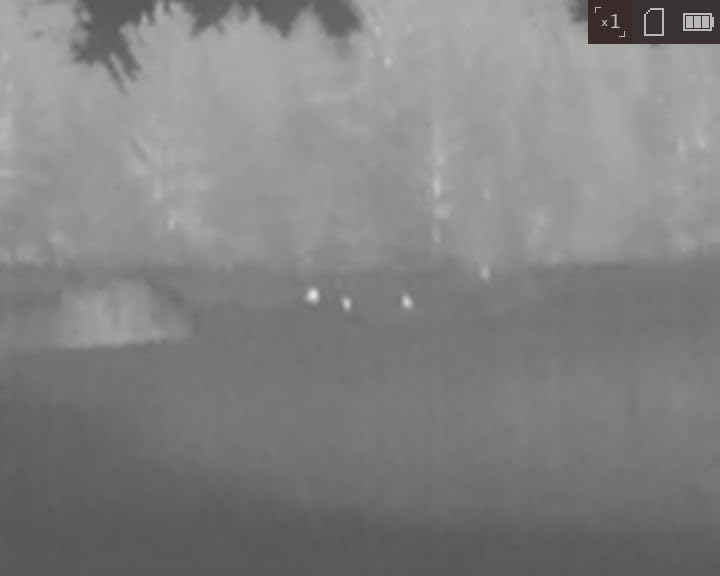
The 50Hz sensor, 22.5-degree field of view and 25mm lens give a wider view than most of the class, and owners report identifying deer out to about 300 yards in open field while detecting movement at 50 to 75 yards through dense thickets using red hot.
One owner reports the 10-plus hour battery holding up across 30 charge cycles with no degradation, which is exactly the durability data that is hard to find on a budget optic.
Where the OTS XLT earns its spot
Anyone who walks country at night to remove hogs near a home, feedlot or crop field gets real value from the long battery and the light 0.8-pound body. Scanning without shouldering a rifle is safer and quieter, and hunters say so directly.
Owners with a thermal background say it picks up heat signatures like cell towers and aircraft at long range that match far more expensive hardware.
Where the OTS XLT falls short
This is the most polarizing unit in the roundup, with 55 percent five-star feedback against 8 percent one-star. Critics point to a fuzzy image without a strong heat gradient, a narrow field of view for the class, and digital zoom that pixelates badly beyond 2x.
It also struggles in fog, snow and temperatures below about 0F, where the screen washes out white, and the smart rangefinder needs high and low points set before it works, which makes it useless on a moving animal. Several owners also reported batteries losing capacity within months, so test it daily early on.
7. FLIR Scout TKx – Best Close-Range Pocket Watcher
FLIR Scout TKx – Compact Infrared/Thermal Imaging Monocular for Wildlife Viewing, Hunting & Outdoor
5.92 ounce body
IP67 and IM-67 sealed
Seven hours per charge
90 meter detection claim
Pros
- Genuinely compact and well built
- Weather-tight shell for the wettest conditions
- Buyers with military thermal experience find it sharp for the money
- Much lower parasitic drain than the older Scout TK
- Nine palettes including Graded Fire for clutter
Cons
- 8Hz refresh feels sluggish and cannot track movement
- Very narrow 9.5 degree field of view
- Effective identification range is about 50 yards
- No zoom and no tripod mount
The Scout TKx is the smallest optic here at 5.92 ounces and the one with the most polarizing feedback, sitting at 3.7 stars with 16 percent one-star ratings. Owners who have used military thermal gear are genuinely surprised by the sharpness, and several note the new model’s much lower parasitic battery drain compared with the older Scout TK.
Used as intended, it is a close-range watcher. Reviews describe it as very sharp inside 50 feet and still usable out to about 100 yards, which lines up with a 9.5-degree field of view and a rated 90-meter detection figure.
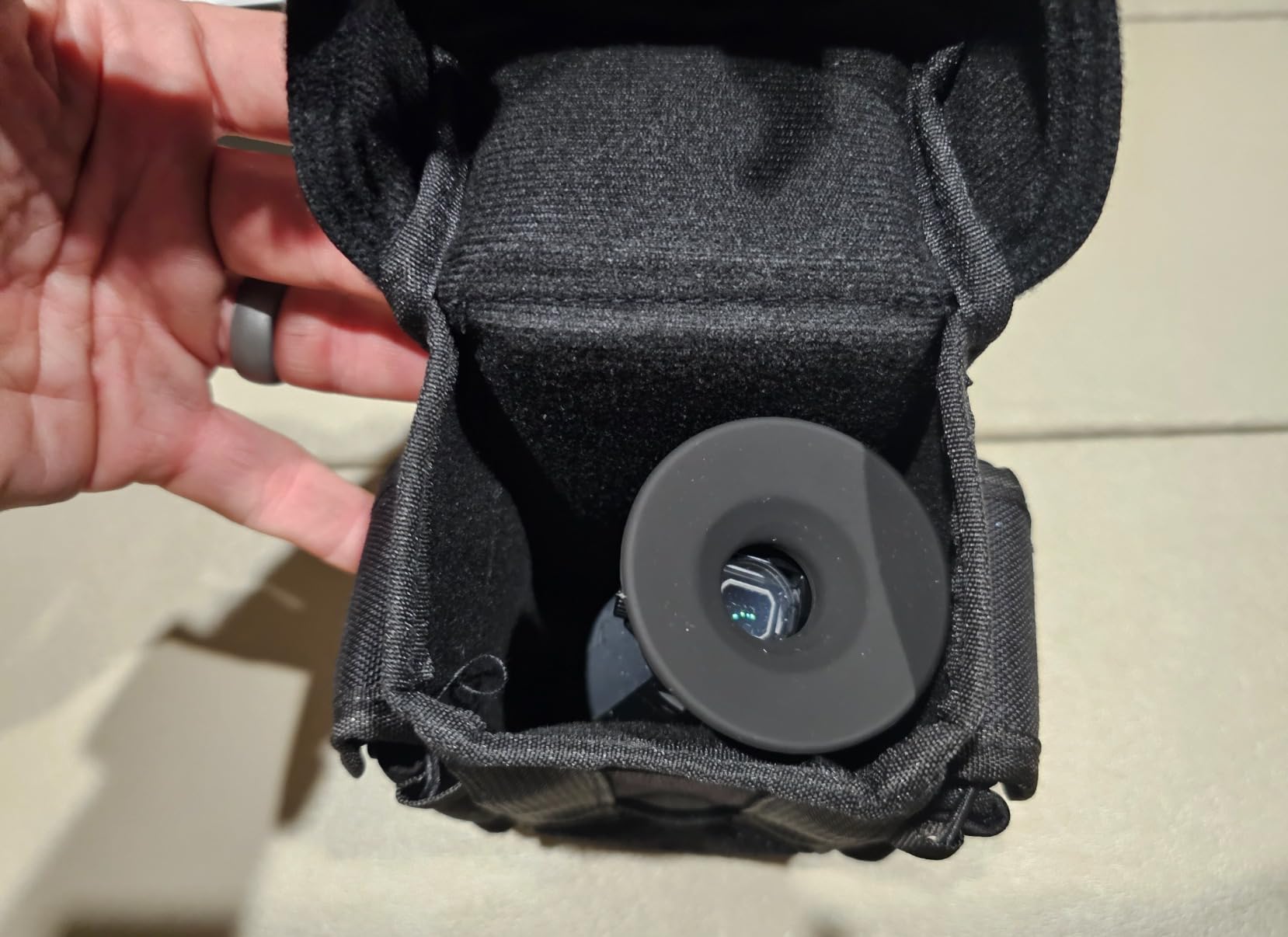
The IP67 and IM-67 sealing makes it the most weather-tight body on the list, and buyers note the shell handles the wettest conditions without complaint. Palette selection is generous, with white hot, red hot, instant alert, rainbow, iron, lava, color wheel and two graded fire options.
Several owners use it around barns and coops to catch raccoons or people, which is the kind of second use that justifies a compact thermal even outside hunting season.
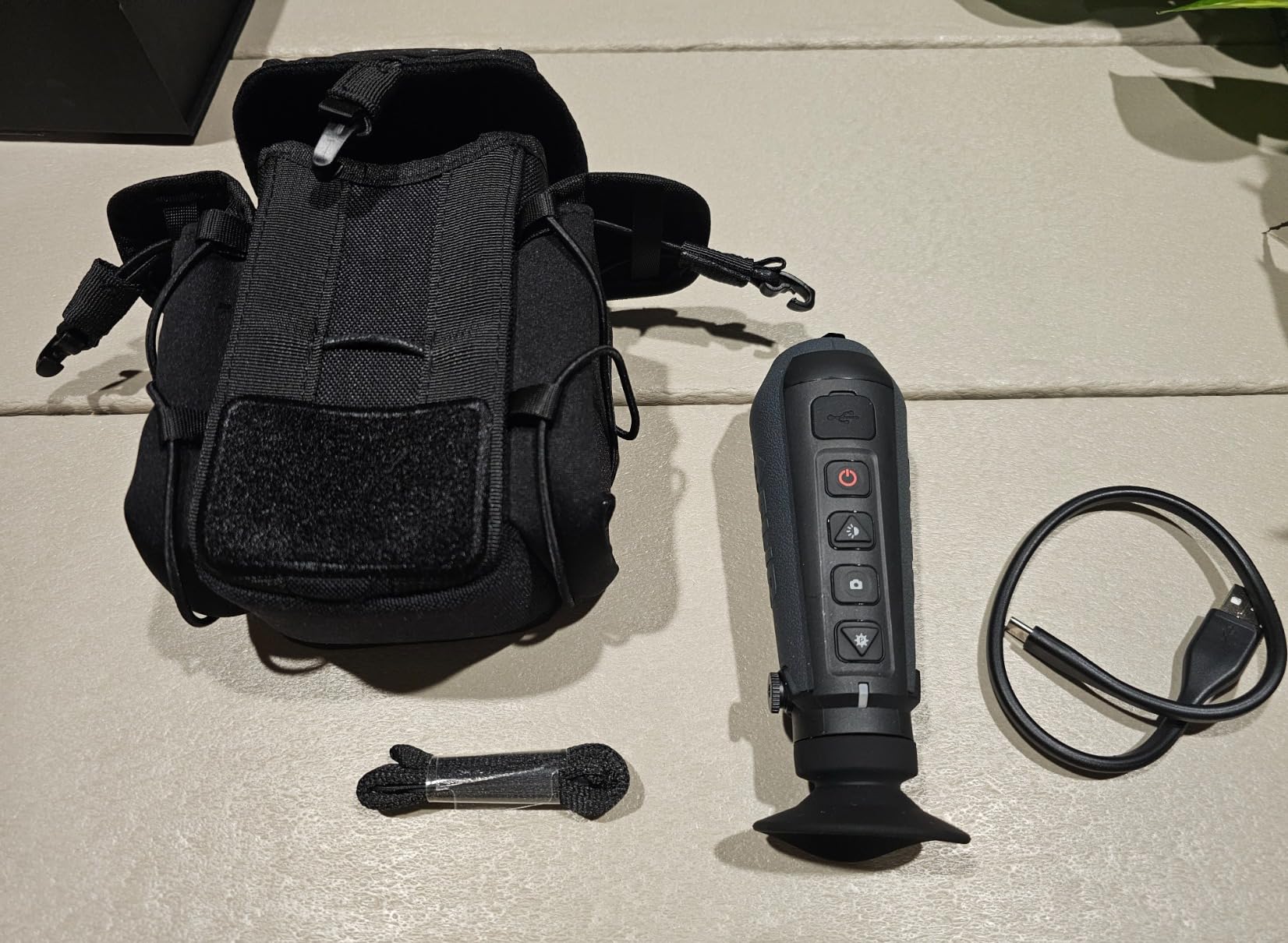
Where the Scout TKx earns its spot
For watching hogs at the edge of a feed plot from a fixed position inside about 50 yards, this works, and the size means you will keep it on the porch instead of in a case. It is also a very easy first thermal to live with because there is almost nothing to learn.
If your only goal is confirming that hogs are in a draw before you walk in, it does that job cleanly in rough weather.
Where the Scout TKx falls short
The 8Hz refresh rate is the flaw that decides it for most hog hunters. It feels sluggish and cannot track a moving animal, which is a problem because the second you confirm a hog you usually want to know whether it is walking toward you.
There is no zoom and no tripod mount, the field of view is very narrow, and video has to come off over a wired component-to-USB cable. The rated 100-yard detection is widely considered overstated.
8. FLIR Breach PTQ136 – Best for Tracking Fast Moving Hogs
Flir Breach PTQ136 Thermal Monocular, 320×256 Boson, 60Hz, IP67
Boson 320x256 core at 60Hz
24 degree field of view
7.36 ounce body
Mini-rail helmet mount
Pros
- Only optic here with a 320x256 Boson core running at 60Hz
- Fastest refresh in the roundup for tracking running hogs
- Light enough at 7.36 ounces for helmet mounting
- Onboard recording with storage for 1000 snapshots
- Seven palettes including Ironbow and Rainbow HC cut through clutter
Cons
- The most expensive optic in this roundup
- Modest 1-4x digital zoom for a premium unit
- Runs on disposable CR123A cells rather than a rechargeable pack
- 12 percent one-star feedback
The Breach PTQ136 is the reason this roundup includes a premium pick. It is the only monocular here with a 320×256 Boson core running at 60Hz, and that combination is what you want when a boar decides to move instead of standing.
A wounded hog is the hardest night-vision problem there is. A panicked animal covers ground fast, crosses open ground in seconds, and is often moving perpendicular to your line of sight. Frame rate is what separates seeing movement from seeing a smear.
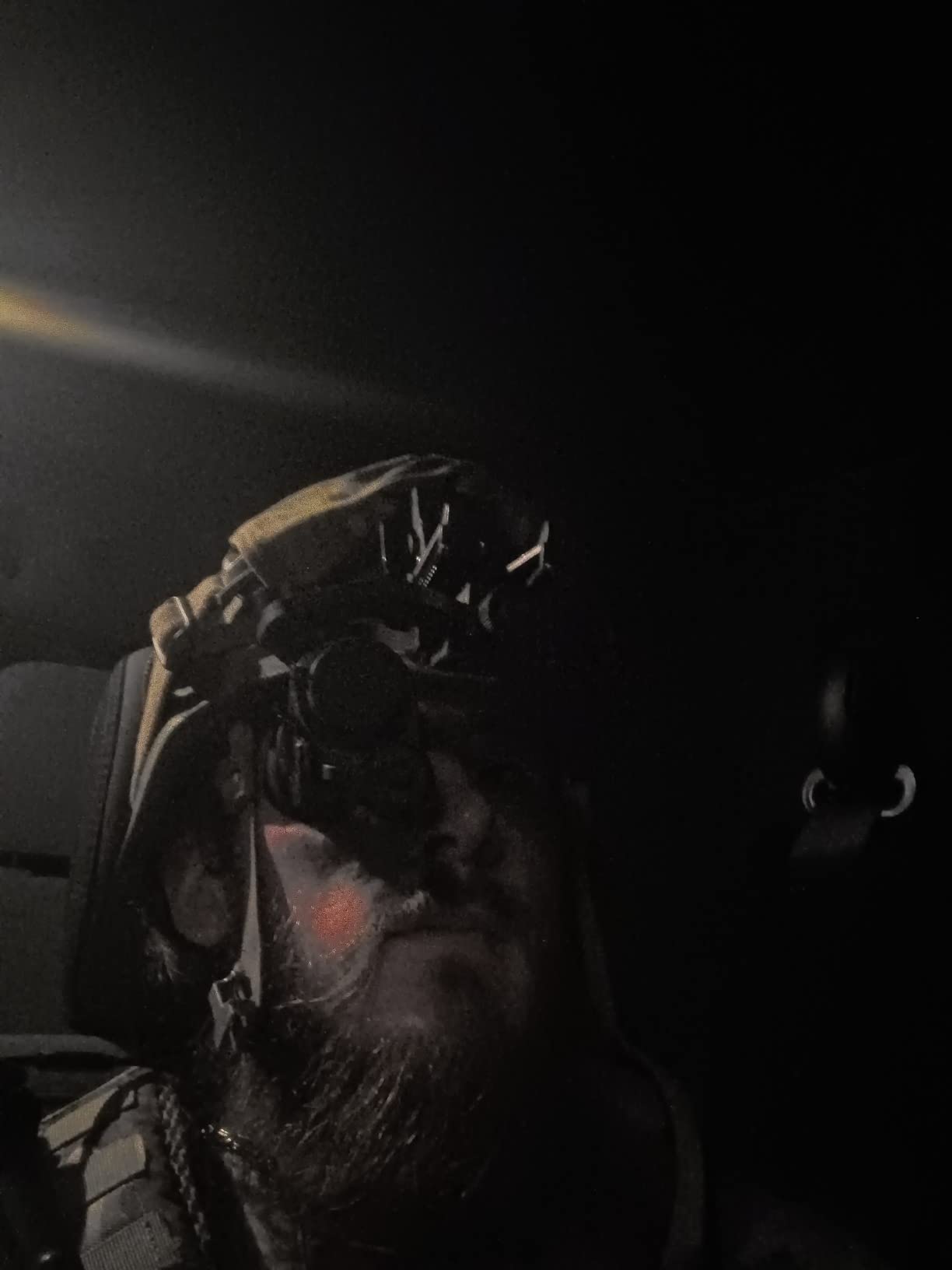
Reviewers also credit it with sharp detail through smoke, fog and total darkness, which matters on the nights when fog rolls into lowland hog country and washes out the ambient light that any night-vifiability approach depends on.
The build is tactical-grade, with IP67 sealing, a digital compass, a 24-degree field of view, a 16mm exit pupil and a built-in mini-rail for helmet mounting. Recording and image storage hold up to 1,000 snapshots reviewable over USB-C, which is useful for documenting a night removal run.
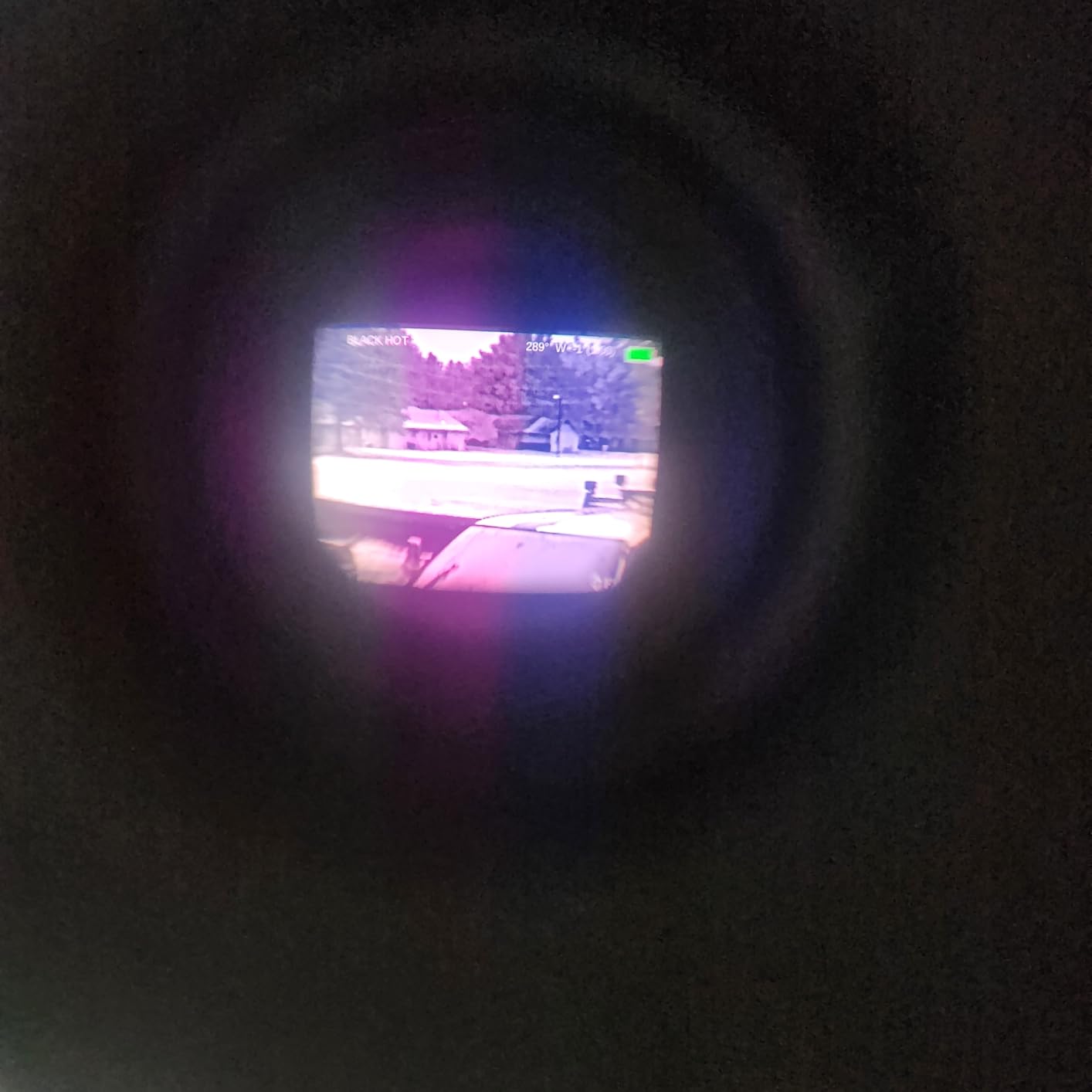
Where the Breach PTQ136 earns its spot
Hunters who pursue wounded boars, hunt open country where hogs are visible from a distance, or run feral hog removal work where money comes from the number of animals confirmed get the most value here. It is also the natural choice for anyone who wants one optic for daytime scouting and night work.
If you already own a rifle with a thermal scope, this is the handheld that matches what the scope shows you, which makes ranging and calling shots much easier.
Where the Breach PTQ136 falls short
The price puts it well beyond casual hog-hunting budgets, and for someone shooting inside 100 yards it is more capability than the situation demands. The 1-4x digital zoom is modest for a premium optic, so it is not the tool for long-range confirmation.
It runs on disposable CR123A cells rather than a rechargeable pack, which is an ongoing cost on the nights you use it most. Twelve percent of ratings are one-star, which is the largest dissatisfied group among the higher-priced options here.
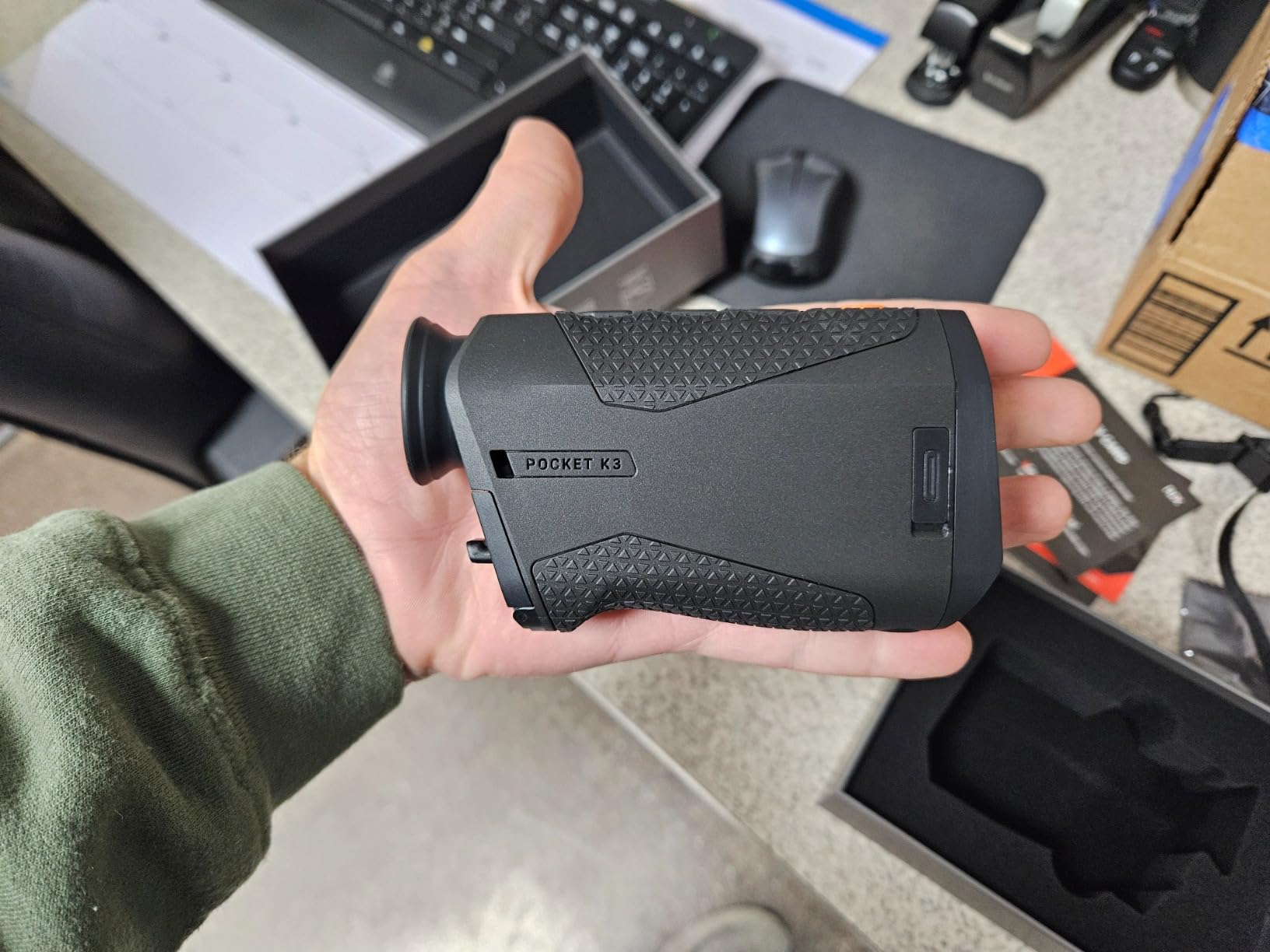
9. RIX Pocket K3 – Sharpest Handheld Image in the Lineup
RIX Pocket K3 Thermal Monocular for Hunting, 384×288 Night Vision Monocular
384x288 sensor
15mm lens at 2x base
50Hz with EIS
8GB internal, IP67
Pros
- Only true 384x288 handheld here so you can actually identify at range
- 15mm objective gives better target focus than 9-12mm lenses
- 50Hz plus EIS limits blur on moving hogs
- Weighs 7.52 ounces and fits a jacket pocket
- Five-year warranty with a universal replaceable power unit
Cons
- The 853 yard detection figure is a controlled-test number
- Only 8GB of internal memory for video
- 2x base magnification widens the view but limits detail
- Seven percent one-star feedback
The Pocket K3 is the resolution upgrade in this roundup, with a native 384×288 sensor instead of the 256×192 found in most of the list. Owners who moved up from a 256-class unit describe the 15mm objective lens as a real step in target focus and identification, which is the difference between seeing a warm shape and knowing a sow is standing there.
For brush hogs at 80 to 150 yards, that difference is the whole game. Hogs hold partially behind mesquite and cactus, and image detail decides whether you wait for the shoulder to clear.
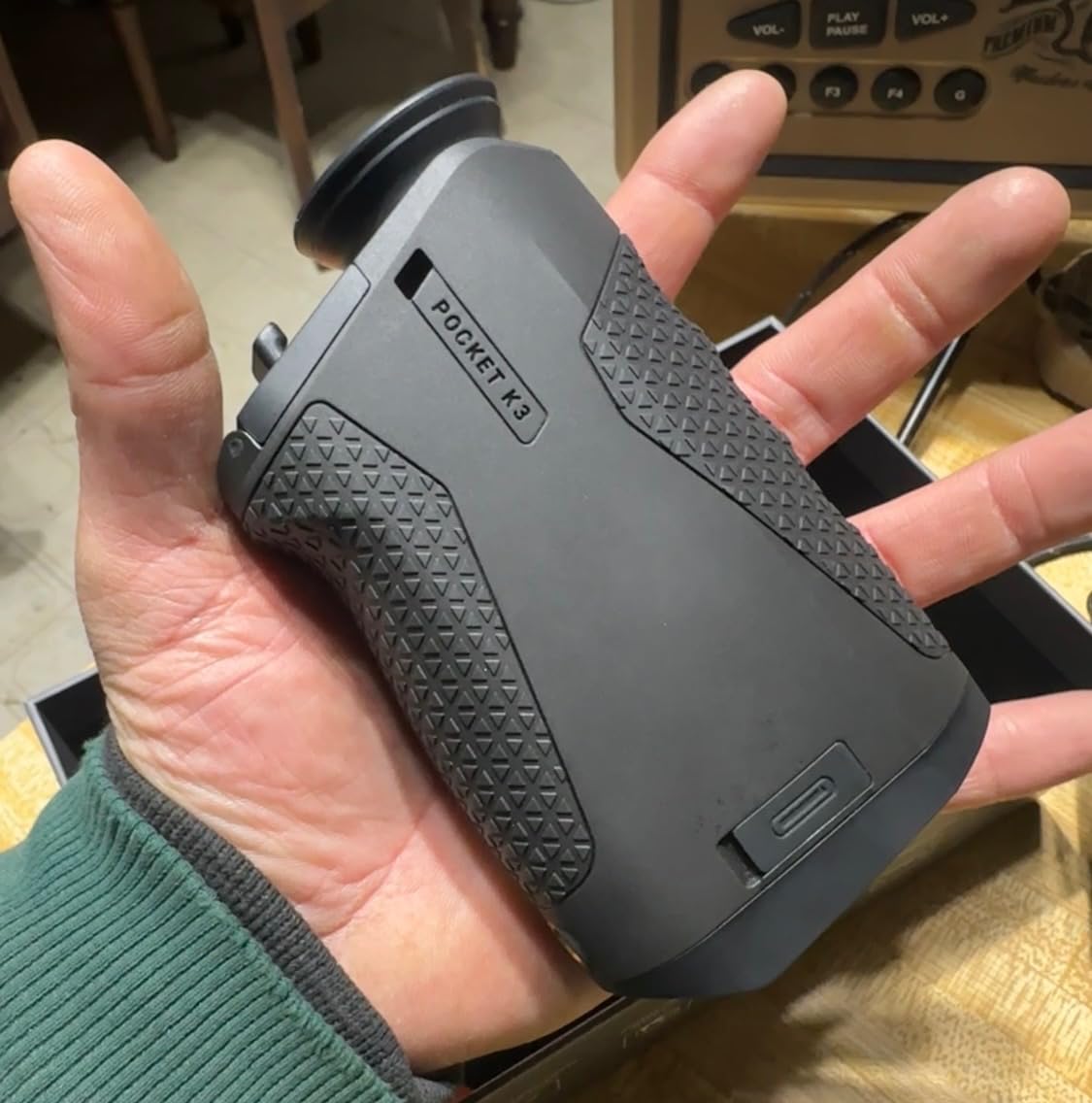
At 50Hz with electronic image stabilization, moving animals stay readable, and the 800×600 OLED display is bright enough for a dark scene. Recording captures photo, audio and video to 8GB internally, with Wi-Fi for remote viewing and transfer.
The body is 4.9 by 1.8 by 2.9 inches and weighs 7.52 ounces, with a 1/4-20 tripod interface and IP67 sealing. The universal replaceable power supply unit means you are not tied to one internal battery pack.
Where the K3 earns its spot
Anyone whose hogs live in mixed brush where a 256-class sensor produces a blob rather than an animal benefits most from this unit. It is also the best choice here for combining with a conventional scope, because the image quality supports positive identification before you take a shot.
Hunters who already own a thermal scope and want a handheld that speaks the same visual language will find the 384×288 class much easier to pair up.
Where the K3 falls short
The advertised detection range up to 853 yards is a controlled-test figure. Real-world performance depends on temperature contrast, humidity, target size and terrain, and buyers should treat it as a laboratory number rather than a field promise.
Eight gigabytes of internal memory is small for video, and the 2x base magnification widens the view at the cost of detail if you need to hold an animal steady. Seven percent of ratings are one-star, reflecting some durability and expectation complaints.
10. GOYOJO G215 – Best Budget Clarity with a 15mm Lens
GOYOJO G215 Thermal Imaging Monocular for Hunting, 256×192 (50Hz) Infrared Night Vision Telescope, 15mm Focal Lens Thermal Scopes for Outdoor Night Vision Camera Telescope
256x192 at 50Hz
15mm focal length lens
Six palettes
Replaceable cells, IP65
Pros
- The 15mm lens is clearly sharper than the 10mm G210 for identification
- Owners who tried both kept this one
- 50Hz refresh for smooth scanning and moving hogs
- Replaceable batteries let you carry spares for a full night
- Six palettes including Iron-Red for separating targets from brush
Cons
- Narrow 11.7 degree field of view means more sweeping
- Native 256x192 is low next to the RIX K3
- No SD card support with 16GB internal only
- Smallest review sample among the well-regarded picks
The G215 is the G210 with a different lens, and that one change is the entire product. Owners who tried both report the 15mm front-focus lens produces clearly better clarity, and that was enough for them to keep the G215 and pass on the other. Seventy percent five-star feedback reflects that.
Focal length drives magnification math, so a 15mm lens on a 256×192 core gives roughly 2x base against about 1.3x on the 10mm model. More base power means a hog at 100 yards fills more of the frame, which is where identification happens.
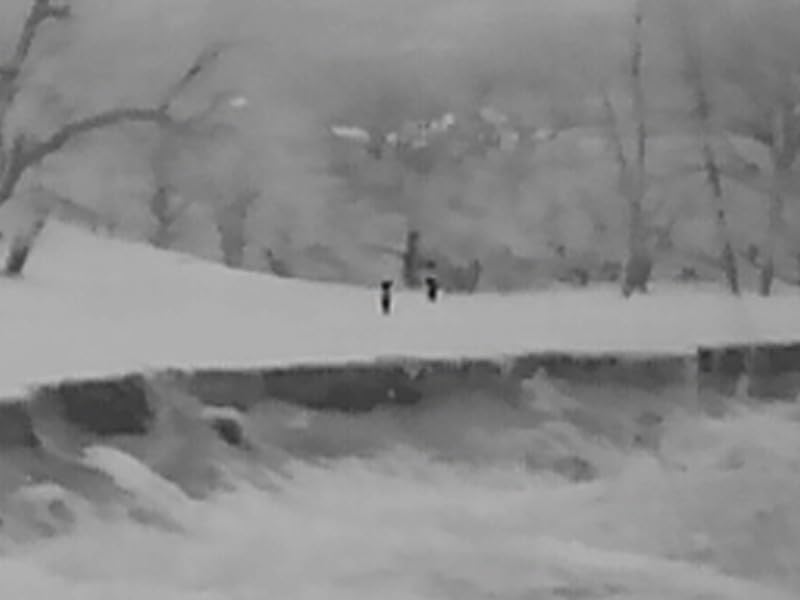
The 50Hz refresh keeps moving animals smooth, which pairs well with the longer lens. Six palettes, 4x zoom and 16GB of internal storage cover the basics, and Wi-Fi app control with USB-C gives you a larger live view on a phone plus easy sharing of a sighting.
IP65 weather resistance handles heavy rain and dust, and replaceable batteries deliver six-plus hours each, so a full night is a matter of carrying spares.

Where the G215 earns its spot
Budget hunters who want more magnification than the cheapest class without stepping up to a 384 sensor get the best balance here. It is a strong second thermal for a partner who walks the treeline while you hold a position.
If you want a simple tool for confirming hogs at feeds and water holes before a shoot, the sharper image reduces the number of times you stand there unsure of what you saw.
Where the G215 falls short
The 11.7-degree field of view is narrow, so covering a long tree line takes more sweeping than the wider handhelds. Native 256×192 resolution is also low compared with the RIX K3, and any zoom past the base power is digital.
SD cards are not supported, so 16GB of internal memory is all you get, and the listed item weight is heavy for a handheld. At 91 reviews it also has the smallest sample among the higher-rated picks, so treat the rating as encouraging rather than settled.
11. ATN BlazeSeeker-210 – Best Budget Zoom Range
ATN BlazeSeeker-210 Thermal Imaging Monocular 256×192; 1.5-12x 12 Micron <35 NETD 50 Hz
1.5-12x zoom
256x192 12 micron, NETD under 35mK
MicroSD to 256GB
Wi-Fi, 9.6 ounces
Pros
- Documented ranch use identifying feral hogs at night
- 1.5-12x zoom gives more magnification flexibility than most handhelds
- MicroSD support up to 256GB unlike several rivals
- Sleep mode carries multiple 4-hour sits on one charge
- Easy to learn with a simple menu and auto focus
Cons
- Image quality is entry-level 256x192 with soft detail
- NETD under 35mK is less sensitive than units under 25mK
- One owner found range inadequate beyond 20 yards
- One report of a battery that would not hold a charge
The BlazeSeeker-210 has owners who hunt feral hogs on ranches at night and report identifying pigs reliably, which is the sort of use case most budget listings never document. Several report identifying deer, pigs and coyotes at about 120 yards.
Its distinguishing feature is the 1.5x to 12x zoom range. Most handheld thermals in this class top out near 4x digital, so this one gives you room to check a distant animal without changing equipment.
It is also one of very few options here with MicroSD expansion up to 256GB, and Wi-Fi with an app for remote viewing. Five palettes including Iron Red and Sepia cover most hunting conditions, and auto focus with a dust-resistant, slip-resistant body suits rough ground.
Battery management is a highlight: owners report the unit carrying multiple 4-hour sits when put into sleep mode between scans, at 9.6 ounces with a three-year manufacturer warranty.
Where the BlazeSeeker-210 earns its spot
Ranch hands and farmers who need to confirm hog pressure before a weekend hunt get good value from the zoom flexibility and expandable storage. The handheld form factor means scanning never disturbs a set-up rifle, which several owners call the main benefit.
Anyone who wants to record a lot without running out of memory also gets more headroom here than with the fixed-storage handhelds.
Where the BlazeSeeker-210 falls short
The 256×192 sensor produces the soft, blocky image expected at this entry level, and it is not comparable to a 384 or 600 class sensor. NETD under 35mK is also less sensitive than units specifying under 25mK, which shows up on humid nights.
One owner found the practical range inadequate for conventional use beyond 20 yards, and another reported a battery that would not hold a charge followed by difficulty getting warranty service resolved. Nine percent one-star feedback names warranty service as a recurring theme.
12. MiLESEEY TNV10PRO – Best for All-Night Battery Life
MiLESEEY TNV10PRO Thermal Monocular, 400×300 SR 320×240 IR Resolution, Aircraft Mg-Al Alloy, 13mm 50Hz Handheld Thermal Camera, Night Vision Imager, Hot Spot Tracking
True 320x240 sensor
50Hz with UHD mode
12 hour runtime
Aircraft Mg-Al alloy body
Pros
- True 320x240 sensor rather than upscaled super resolution
- Longest rated runtime here at 12 hours from a 4500mAh pack
- Only 1 percent one-star feedback
- the most consistent ratings here
- UHD mode reveals up to 50 percent more definition in low contrast
- Hot spot tracking locks onto the framed animal automatically
Cons
- Only 56 reviews so long-term reliability is less documented
- 13mm lens is shorter than the 15mm options on two rivals
- Listed 1.41 pound weight is heavy for a handheld
- Five palettes and 4x zoom are modest
The TNV10PRO makes a claim that matters in this category: its 320×240 is a true sensor rather than an upscaled super-resolution image. MiLESEEY calls that out explicitly, and it is a real differentiator in a price class where several rivals advertise interpolated resolution that looks softer under a hog at range.
The rating distribution backs the claim. Seventy percent five-star with only 1 percent one-star is the most favorable spread in the roundup, and owners respond to a 12-hour battery, 50Hz refresh and a UHD mode that reveals up to 50 percent more definition.
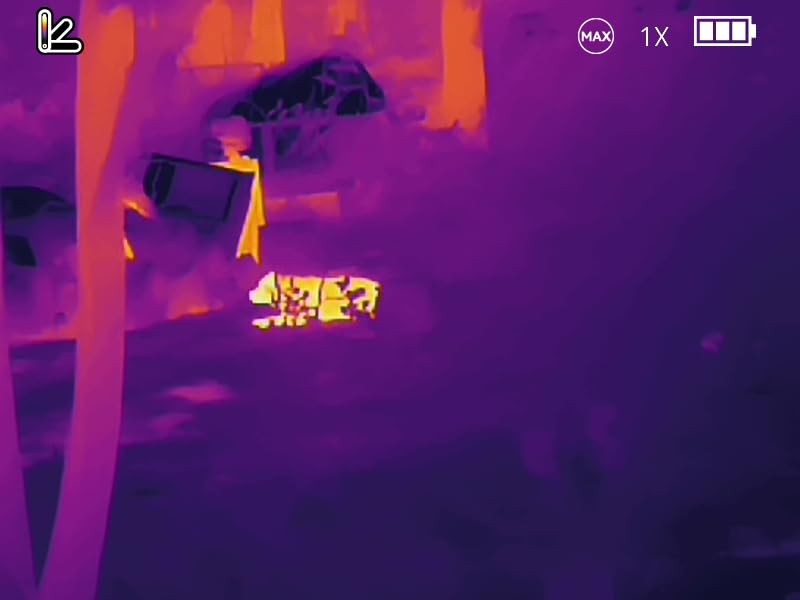
Video records at 400×300, and the magnesium-aluminium body takes the kind of abuse a fixed-sit hunter hands it. Hot spot tracking can be left to lock onto the warmest object in frame once a sow appears at the edge of a draw, which cuts the gap between spotting movement and centering on the animal.
Owners running it on fixed points report the 4500mAh pack still holding charge well past midnight, and the 30/60-minute auto-off stops it from draining while you walk between setups.
Where the TNV10PRO earns its spot
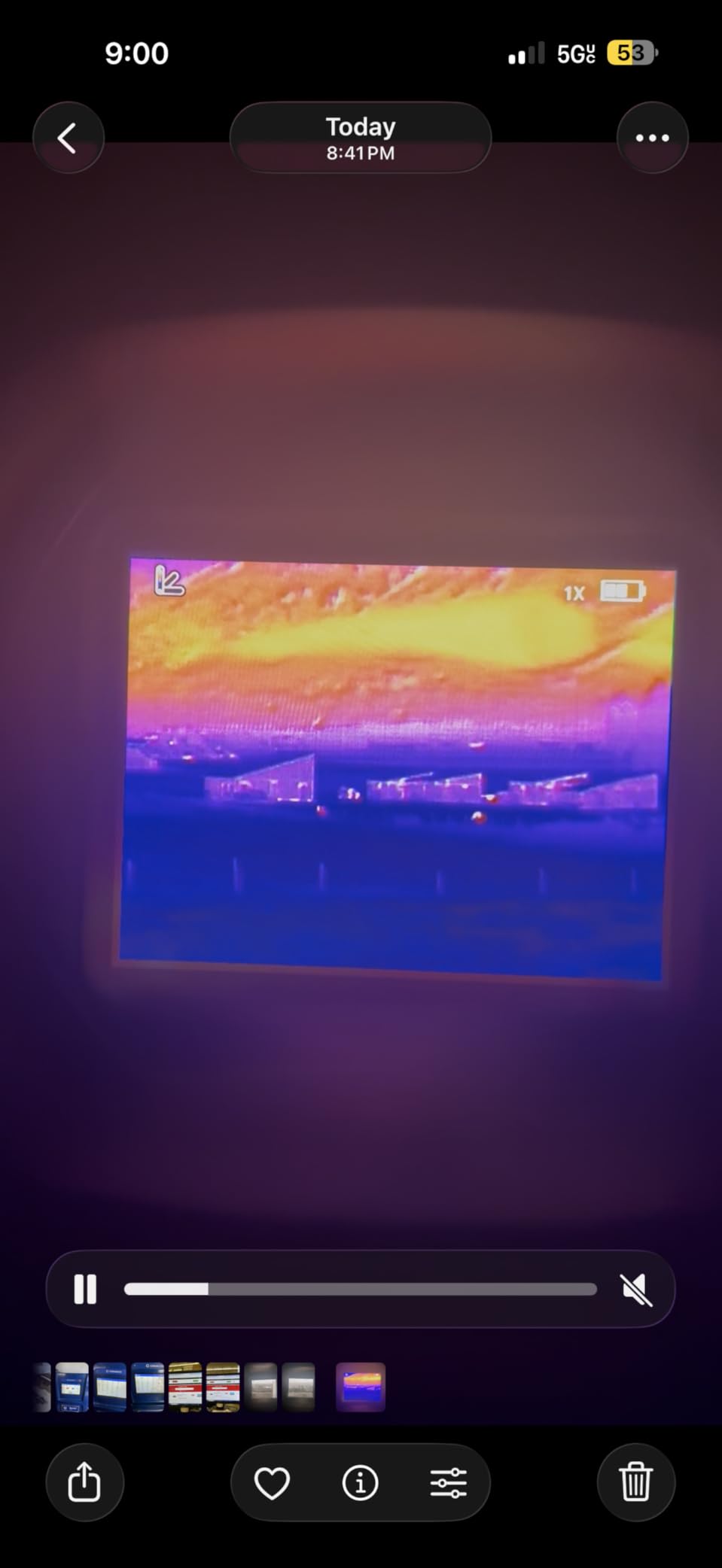
Hunters who sit on a fixed point late in the season rather than walking country get the most from the 12-hour runtime, and the 30/60-minute auto-off stops it from draining while you are walking between setups. Low-contrast scenes in wet grass are where the UHD mode earns its keep.
Hot spot tracking is useful when a sow and her piglets cross in sequence, and the aircraft-grade magnesium-aluminium body takes abuse at a mid-range price. IP65 sealing and a -20C to 60C operating range cover cold winter sits.
Where the TNV10PRO falls short
At 56 reviews it has the smallest sample in the roundup, so long-term durability is not well documented and the ratings deserve caution. Twelve percent two-star feedback indicates a group that finds the image quality lacking.
The 13mm lens is shorter than the 15mm options on the GOYOJO G215 and RIX K3, and the listed 1.41-pound weight is heavy for a handheld. Five palettes and 4x zoom are modest against rivals that offer more.
How We Evaluated These Thermal Monoculars for Hog Hunting
We scored every optic on the same weighted rubric rather than picking favorites by brand. Sensor resolution carried 25 percent of the score, refresh rate 20 percent, base magnification and field of view 20 percent, battery 15 percent, durability 10 percent and value 10 percent.
Specs came from manufacturer listings, and the behavioral claims come from owner feedback and hunting forum field reports. Where a manufacturer range figure disagreed with what owners actually reported, we weighted the field reports.
Two rules kept the ranking honest. First, a headline detection number never scored higher than owner reports of usable identification distance. Second, every unit had to be judged on hog distances, which is mostly inside 150 yards, rather than on long-range wildlife watching where most marketing is aimed.
Sensor Resolution and NETD: What Actually Matters for Hogs
Resolution is the number buyers fixate on, and it is the one most often marketed loosely. Most units here use a 256×192 core, a handful use 320-class, and one runs 384×288. Pixel pitch of 12 microns explains why the numbers look tiny next to a phone camera: the pixels are physically large so they can gather enough infrared light to work in the dark.
For hog hunting the jump that matters is from 256×192 to 384×288. At 100 yards, the extra detail is the difference between a warm blob and an identifiable animal with a head, a shoulder and a back line. Whether that jump is worth the money depends on how far you actually shoot.
NETD, measured in millikelvin, is the second number and the more technical one. Under 25mK is better than under 35mK, and the gap shows on humid nights when the ground and the air are close in temperature and the image flattens.
One caution: several units advertise super resolution or enhanced modes that interpolate the native image upward. Those can look good on a spec sheet and softer in the field. True native resolution, or a genuine second sensor tier, is what separates the RIX K3 and the MiLESEEY TNV10PRO from the rest of this list.
Refresh Rate and Base Magnification for Moving, Close-Range Hogs
Refresh rate is measured in hertz, and it decides how a moving hog looks. The FLIR Scout TKx runs at 8Hz, which feels sluggish and cannot track movement. The Teslong and GOYOJO G210 sit at 25Hz, and four units in this roundup run at 50Hz. The FLIR Breach PTQ136 runs at 60Hz, and it is the one to own if a wounded boar is part of the job.
Base magnification is the other half of the decision, and it is where hog hunting breaks from general wildlife viewing. One hunting forum observation makes the case plainly: with most shots taken inside 100 yards, a 2x base magnification gives the wider field of view you need to sweep brush.
A wider field of view finds more animals. A higher base magnification identifies them better. For a hog hunter who shoots close, 2x is the more useful starting point, which is why the RIX Pocket K3 and GOYOJO G215 earn their places here.
Thermal vs Night Vision for Hog Hunting
Thermal wins for hog hunting in almost every situation that matters. Image intensifier night vision needs ambient light, and hogs are active on the darkest nights of the new and full moon phases precisely because the darkness gives them confidence. Add the fact that coarse hog hair reflects white light poorly, and a light plus intensifier setup often produces a bright glare with no readable animal behind it.
Thermal reads heat instead, so ambient light is irrelevant. You can scan a treeline in full moonlight, in no moonlight, or in fog, and the image looks similar. The compromise is detail: at long range and in heavy cover, a high-end night vision tube resolves more fine detail than a mid-tier thermal.
The practical rule: thermal for finding and tracking hogs at night, especially in brush and on cold-season nights when a warm body contrasts hard against the background. Night vision for daylight predator work and long-range detail if your budget stretches there.
Thermal Monocular vs Thermal Scope: When Each Wins
A monocular is a scanning tool and a scope is a shooting tool, and the forum consensus is that they solve different problems. Glassing a property with a handheld means you find hogs without shouldering a barrel, pointing a light, or announcing your position to every sow in the draw.
A scope earns its place when you have already located an animal and need to put a reticle on it. It also keeps your hands on the rifle, which matters when the hog is close and the brush is thick.
The smart move for many hunters is one optic that does both. The AGM Rattler V2 uses a quick-detach mount, holds zero through repeated swaps, and lets you shoot it mounted or pull it off to walk to a downed animal without disturbing the rifle.
What Thick Brush, Rain and Humidity Do to Your Image
Thermal does not see through foliage, and any listing that implies otherwise is overselling. What it does do is ignore the color and shadow problems that defeat white light, so a hog standing behind light cover at 40 yards is often readable when the same animal in open moonlight is invisible.
Warm summer nights are the hardest case. When air temperature and ground temperature converge, background detail flattens and only a moving warm body stands out. That is the night a lower NETD number pays for itself, and it is the reason the RIX Pocket K2 sits where it does.
Cold runs the other way. In winter, a hog’s heat signature stands out harder against frozen ground, which makes winter hog season the easiest thermal hunting of the year. Fog and falling snow are the real problems, and reviewers report screens washing out white below about 0F on some units.
Detection vs Identification vs Recognition at 50, 100 and 200 Yards
Manufacturers quote detection range, which means you can see that something warm exists. Identification means you can tell what it is. Recognition means you can tell what it is and whether it is safe to shoot. The three numbers are wildly different, and only the first one ever appears in advertising.
At 50 yards, every unit in this roundup will identify a hog. That is inside the working range of the 256×192 class, and it covers the majority of real shots. At 100 yards, a 15mm lens helps, and the 384 and 320 class units are meaningfully clearer.
At 200 yards, expect detection rather than identification from the entry tier. A 256×192 core with a 12mm lens can show you a warm shape in a field, and a 384 or 320 class unit gives you a real chance of calling the species. If your hogs are consistently beyond 150 yards, resolution and lens focal length matter more than anything else on this list.
Battery Life, Cold Weather and Building the Rest of Your Kit
Battery anxiety is the most repeated complaint in hunting thermal forums, and the pattern is consistent. Advertised hours assume a warm cell at room temperature with no recording and no streaming. Cold nights, phone streaming and video capture all cut into that figure.
Buy spares and treat them like ammunition. The GOYOJO G210 and G215 use replaceable 18650 cells, the AGM Rattler V2 ships with two rechargeable batteries, and the RIX K3 uses a universal replaceable power supply. The FLIR Breach takes disposable CR123A cells, which is a running cost rather than a one-time purchase.
Turn off wireless streaming when you are not sharing a feed. On several units here, owners report a visible drop in runtime when the phone app is streaming live, and that stream is the feature you do not need in the twenty minutes before a shot.
Use sleep mode between scans. Owners of the ATN BlazeSeeker-210 report multiple four-hour sits on a single charge that way. Then add the rest of the kit: a tripod interface helps on fixed points, and a case protects the sensor when the unit lives in a truck bed.
Where AGM, FLIR, RIX and the Rest of the Brands Sit
The brands in this roundup occupy genuinely different corners of the market, and knowing which corner a brand lives in saves buyers from comparing the wrong things. AGM arrived as the value-first thermal house and has built its reputation on complete kits: the Rattler V2 ships with two batteries, a charger, cables, a mount and a case, which removes the accessory cost that quietly doubles cheaper purchases.
FLIR sits at the other end with tactical-grade optics from its outdoor and tactical systems line. The Breach PTQ136 carries a Boson 320×256 core at 60Hz and a mini-rail for helmet mounting, hardware you normally meet in professional work. The Scout TKx is the same company’s compact entry point, and it shows the trade-off immediately: 5.92 ounces and IP67 sealing against an 8Hz refresh that cannot track a moving animal.
RIX plays the sensitivity and portability angle. Both Pocket models use a 12-micron sensor, with the K2 rated under 25mK and the K3 stepping up to native 384×288 with a 15mm lens. The 800×600 OLED display and electronic image stabilization on both are class-leading features at this size, and both carry five-year warranties.
ATN, GOYOJO, TOPDON, Teslong and MiLESEEY compete aggressively below the midpoint. GOYOJO separates its two models by lens choice alone, with the 10mm G210 for wide scanning and the 15mm G215 for identification. MiLESEEY’s differentiator is sensor honesty, marketing its 320×240 as true rather than upscaled.
One name does not appear in our picks but comes up constantly in hunting forum threads: Nocpix. A hunting forum recommendation for close-range hog work argues that when most of your shots are inside 100 yards, a 2x base magnification with a wide field of view is the right call, and that a larger sensor is money you do not need for a hog at 60 yards. That is the same logic behind the 2x base picks in this list.
Hog Behavior That Changes How You Use a Thermal
Wild hogs are not deer, and the difference matters at night. Sows travel in sounders with piglets, and a sounder crossing a clearing produces several heat signatures at once rather than one clean target. Hot spot tracking on the MiLESEEY TNV10PRO and the Teslong TTS260 helps here, because the automatic lock reduces the time between spotting movement and centering on the animal you intend to shoot.
Coarse hair is the other behavioral detail. Hog bristles scatter light instead of reflecting it, which is why white-light setups fail at the exact moment you need them. A thermal that reads body heat is not fighting that problem at all.
Wounded animals are the hardest case and the reason refresh rate became a top-three criterion in our rubric. A boar that decides to move covers ground fast and often crosses open country in seconds. At 8Hz you watch a smear; at 50Hz you track a shape; at 60Hz you follow a running animal. That is the whole argument for the FLIR Breach in one sentence.
Finally, sound and scent still matter more than any optic. A thermal tells you where the hogs are, not whether they know you are there, and most hunters who switch to a handheld report the bigger change is that they move quietly and stop broadcasting with a light.
Frequently Asked Questions
What is the best thermal optic for hog hunting?
The AGM Rattler V2 is the best overall pick because it carries the highest rating in this roundup, comes with two rechargeable batteries and a full accessory kit, and swaps between rifle and handheld use on a quick-detach mount that holds zero. For the cheapest serious start, the GOYOJO G210 works. For the sharpest handheld image, the RIX Pocket K3 runs a native 384×288 sensor.
Is night vision or thermal better for hog hunting?
Thermal is better for hog hunting. Hogs are most active on the darkest nights, and image intensifier night vision needs ambient light to work at all. Coarse hog hair also reflects white light poorly, so a light and intensifier setup often gives you glare instead of an animal. Thermal reads body heat instead, so the image looks similar in moonlight, darkness or fog.
Do I need 640×480 resolution for hog hunting?
Usually not. Most hog shots happen inside 150 yards, and every unit in this roundup identifies a hog reliably at 50 yards. The step that actually changes your results is moving from a 256×192 sensor to a 320 or 384 class sensor with a 15mm lens, which is what the RIX Pocket K3 and the MiLESEEY TNV10PRO deliver. Reserve higher resolution for hogs you routinely shoot past 200 yards.
What base magnification do I need for hogs under 100 yards?
About 2x. Hunters report taking most hog shots inside 100 yards, so a wider field of view at low power matters more than maximum magnification. The RIX Pocket K3 and the GOYOJO G215 both start near 2x, which lets you sweep brush and still hold a readable image. Buy zoom for long confirmation shots, not for the sweep.
Can thermal monoculars find hogs in thick brush?
Thermal cannot see through foliage, and no listing should claim otherwise. What it does is ignore the color and shadow problems that defeat white light, so a hog at 40 yards behind light cover is often readable when the same animal is invisible in moonlight. Dense cane and heavy wet vegetation still hide body heat, and warm humid nights flatten contrast because air and ground temperatures converge.
What is the best thermal imaging monocular for close-range hog hunting?
Several strong options sit in the entry and mid tiers, including the GOYOJO G210 and G215, the TOPDON TS004, the Teslong TTS260 and the RIX Pocket K3. Among them the K3 stands out for native 384×288 resolution with a 15mm lens and a 50Hz refresh, which is the combination that gives you identification at range rather than just detection. The GOYOJO G210 is the cheapest of the group and still finds hogs in brush.
The Best Thermal Monocular for Hog Hunting: Final Word
The best thermal monoculars for hog hunting are not the ones with the biggest numbers on the box. They are the ones that read a hog clearly at the distance you actually shoot, hold a charge through a cold sit, and stay out of your way while you walk.
For most people, that is the AGM Rattler V2. It earned our Editor’s Choice for the simplest reason in this roundup: it is the most consistently praised optic here, it comes with everything you need, and it works mounted or handheld. Buy that one.
If money is tighter, the GOYOJO G210 gets you into the game for very little, and the TOPDON TS004 is the better buy if you want more runtime and a phone app. If your hogs hold in brush past 100 yards, step up to the RIX Pocket K3 for real resolution, or the MiLESEEY TNV10PRO for a true 320×240 sensor and long runtime. And if wounded boar recovery is part of what you do, the FLIR Breach PTQ136 is the only optic here built for it.
Whatever you choose in 2026, test it in the dark on familiar ground before the season starts, and shoot it with spare cells in your pocket.