
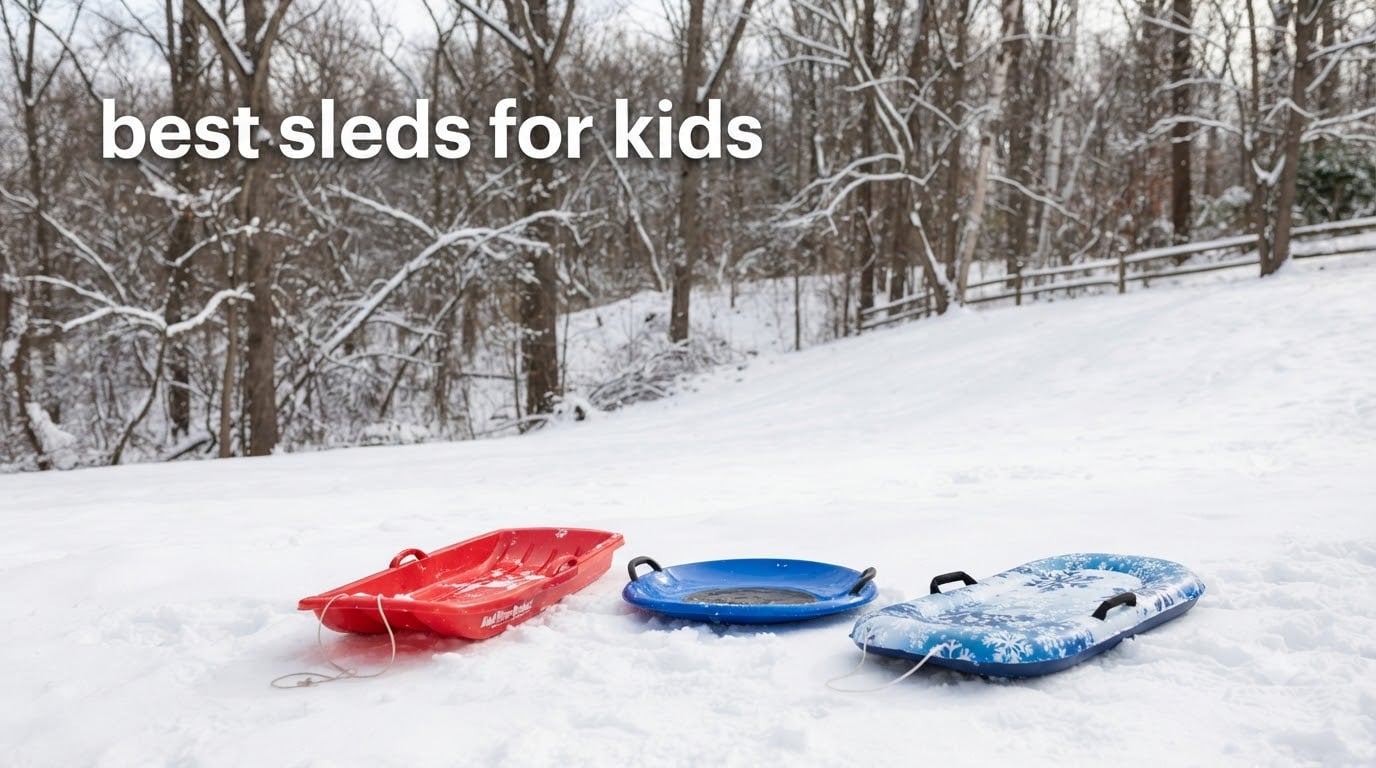
The best sleds for kids depend almost entirely on two things: how old the child is, and whether an adult rides with them or tows them across the yard. A child who cannot yet sit up unassisted needs a pull sled with a harness and a high back. A five-year-old wants a steerable plastic toboggan they can turn themselves, and a ten-year-old is after speed on a steep hill.
That is the short answer, and it is the answer most parents need before they spend anything. Below that, I compared twelve current sleds on the details that actually change how a run feels: weight capacity, deck size, whether the bottom is plastic, foam or steel, whether a tow rope comes in the box, and how much the thing weighs when a seven-year-old has to drag it back up the hill alone.
One confusion comes up on parent forums more than any other, so I want to clear it up first. A pull sled is towed by an adult on a rope across flat ground or a very gentle slope. It is not for riding downhill. A ride sled is the opposite: the child sits on it and goes down the hill under their own weight. Buying the wrong one is the single most common sledding purchase mistake, and it usually ends with a disappointed child who is either strapped in going nowhere or set loose on a slope they cannot handle.
Everything below is organized the way buyers actually shop: by age band first, then by sled type. Every pick includes an honest drawback, because the sleds that fail are almost never the ones advertised on the box.
Table of Contents
Top 3 Best Snow Sleds for Kids (October 2026)

Slippery Racer Downhill Xtreme
- 48-inch deck for two riders
- IceVex cold-resistant coating
- 150 lb capacity
- Built-in pull rope

Best Choice Products 35in…
- Two mid-sled steering handles
- Pull rope included
- 250 lb capacity
- Weighs just 2 lbs

Flexible Flyer Premium…
- Cushioned foam slider
- Two built-in handles
- 1 or 2 riders
- 200 lb capacity
The Slippery Racer Xtreme takes the top slot because it pairs the highest rating in this group with by far the largest body of owner feedback, which means fewer surprises. The Best Choice Products toboggan is the lightest thing a small child can realistically carry uphill, and the Flexible Flyer foam sled is the only pick here that genuinely absorbs bumps.
Best Sleds for Kids in 2026: Quick Comparison
| Product | Specs | Action |
|---|---|---|
| Slippery Racer Downhill Xtreme 48in Toboggan |
|
Check Latest Price |
 Gizmo Riders Baby Rider Toddler Sled Gizmo Riders Baby Rider Toddler Sled |
|
Check Latest Price |
 ArcticThrill ExploRide Sledge ArcticThrill ExploRide Sledge |
|
Check Latest Price |
| Best Choice Products 35in Toboggan |
|
Check Latest Price |
 Slippery Racer Downhill Sprinter 35in Slippery Racer Downhill Sprinter 35in |
|
Check Latest Price |
 Flybar Kids 36in Husky Dog Foam Toboggan Flybar Kids 36in Husky Dog Foam Toboggan |
|
Check Latest Price |
| Flexible Flyer Premium Foam Sled |
|
Check Latest Price |
 Flexible Flyer 26in Flying Saucer 3-Pack Flexible Flyer 26in Flying Saucer 3-Pack |
|
Check Latest Price |
 Flexible Flyer Winter Lightning 3-Pack Flexible Flyer Winter Lightning 3-Pack |
|
Check Latest Price |
 Gizmo Riders Stratos Steerable Sled Gizmo Riders Stratos Steerable Sled |
|
Check Latest Price |
 Retrospec Retrorider 35in Sled Retrospec Retrorider 35in Sled |
|
Check Latest Price |
 Confer Plastics Retro Racer 37in Sled Confer Plastics Retro Racer 37in Sled |
|
Check Latest Price |
Two things stand out in that table. Only four of the twelve come with a pull rope already attached, and the weight limits range from 50 kg all the way to 260 pounds, which is a much wider spread than most parents expect.
1. Slippery Racer Downhill Xtreme 48-Inch Toboggan – Best Two-Rider Sled
Slippery Racer Downhill Xtreme Flexible Adults and Kids Plastic Toboggan Snow Sled for Up to 2 Riders with Pull Rope and Handles, Red
48in toboggan
IceVex coating
Two riders
150 lb
3 lbs
Pull rope
Pros
- Long 48-inch deck fits two riders
- Slick flexible plastic gives a fast agile ride
- Two sets of reinforced handles
- IceVex coating holds up in extreme cold
- Only 3 lbs and the pull rope is built in
Cons
- 150 lb combined rating limits bigger adult and child pairs
- No brake and no steering so control is entirely speed-based
This is the sled I keep coming back to for families with more than one child. The 48-inch deck is long enough for a big kid in front and a smaller one behind, and it holds 150 pounds combined, which covers most sibling pairs comfortably without pushing the rating.
Two sets of reinforced handles matter more than they sound. The front rider has somewhere to grip that does not require leaning forward, which is what stops the very common problem of a child’s legs swinging up into their face on a fast run.
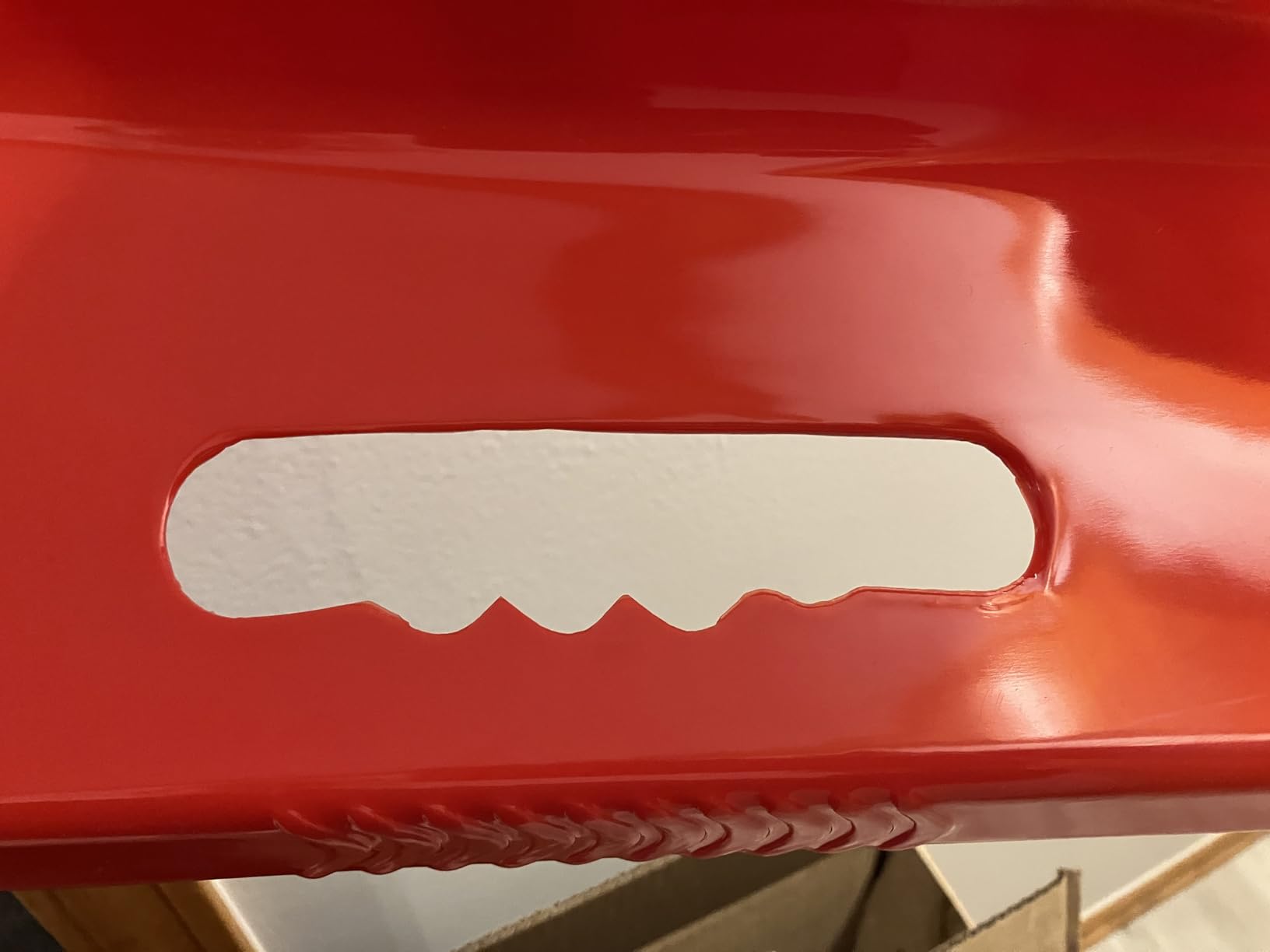
The build is where this one separates itself from the pack. It uses heavy-duty flexible slick-coated plastic, which flexes rather than snapping when it hits a frozen rut, and the IceVex coating is specifically for the coldest conditions. Owner feedback consistently praises speed and cold tolerance rather than comfort, so know what you are buying: this is a fast rigid sled, not a cushioned one.
At 3 pounds it is light for a 48-inch deck, and the pull rope is built into the sled rather than sold separately. That detail alone removes a step that trips up a lot of first-time buyers who assume the rope comes in the box.
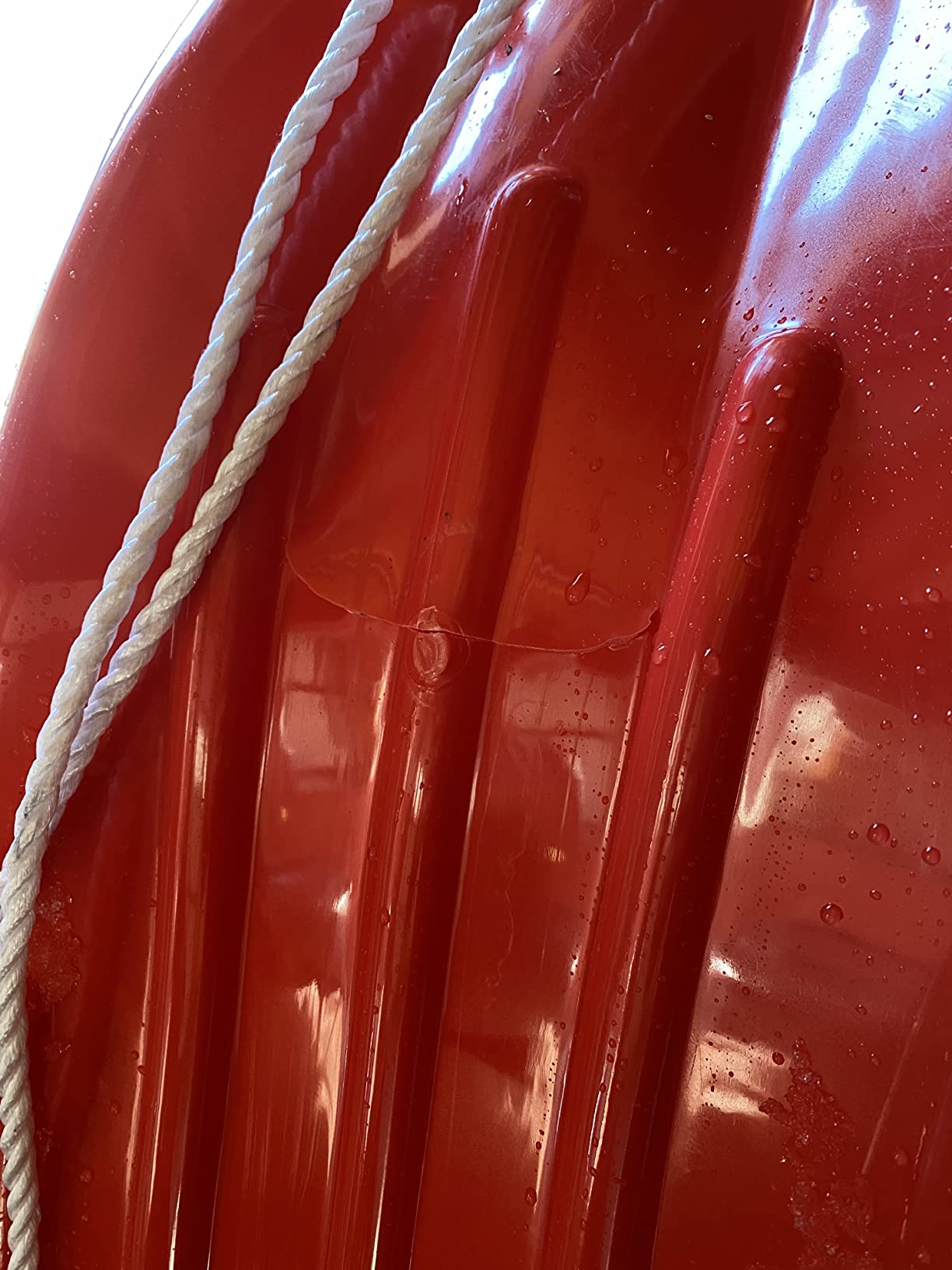
What to check before you buy it
Add up the weights of everyone who will ride together. A parent plus an older child can approach 150 pounds quickly, and the sled flexes and tracks worse near its limit. If a grown-up is riding on it, look at a model with a higher rating instead.
There is no brake and no steering mechanism. Riders control speed by leaning and by dragging a foot, which works fine on a packed family hill and works badly on a long steep slope. If your nearest hill is genuinely steep, a sled with an actual brake is the safer buy.
Who should skip it
Toddlers should not be anywhere near it. The deck is long, low and has no back support, so a child under three simply slides off the back. Save it for kids who can sit up unprompted, brace with their feet, and steer with a shift of body weight.
It is also not a first sled for a cautious child on their very first outing. A softer foam model is far more forgiving when a seven-year-old lands sideways for the tenth time in a row.
2. Gizmo Riders Baby Rider – Best Sled for Toddlers
Gizmo Riders Baby Rider, Toddler Sled – 3-Point Harness, Anti-Slip Seat, Front Tow Strap, Durable Plastic, Ideal for 6 Months to 3 Years, Supports Up to 55 lbs, Winter Fun for Little Ones
Ages 6 months to 3 years
3-point harness
Anti-slip foam seat
55 lb cap
1.34 kg
Pros
- 3-point harness keeps infants and toddlers strapped in securely
- Anti-slip foam seat adds comfort and stability
- Retractable tow strap makes uphill pulling easy
- Rated up to 55 lbs for ages 6 months to 3 years
Cons
- 55 lb limit makes it strictly a toddler sled
- Not steerable so the adult controls the ride direction entirely
This is the sled to buy when your child is not yet old enough to sit up on their own. The 3-point harness is the whole point: it holds a baby upright against the high back so they are not slumped forward, which is exactly the failure mode parents describe when they try to tow a child on a flat plastic saucer.
The measurements are 29 inches long by 13 wide by 15 high, and the height is doing real work. A toddler who cannot yet control their head needs that much back support, and most flat sleds simply do not provide it.
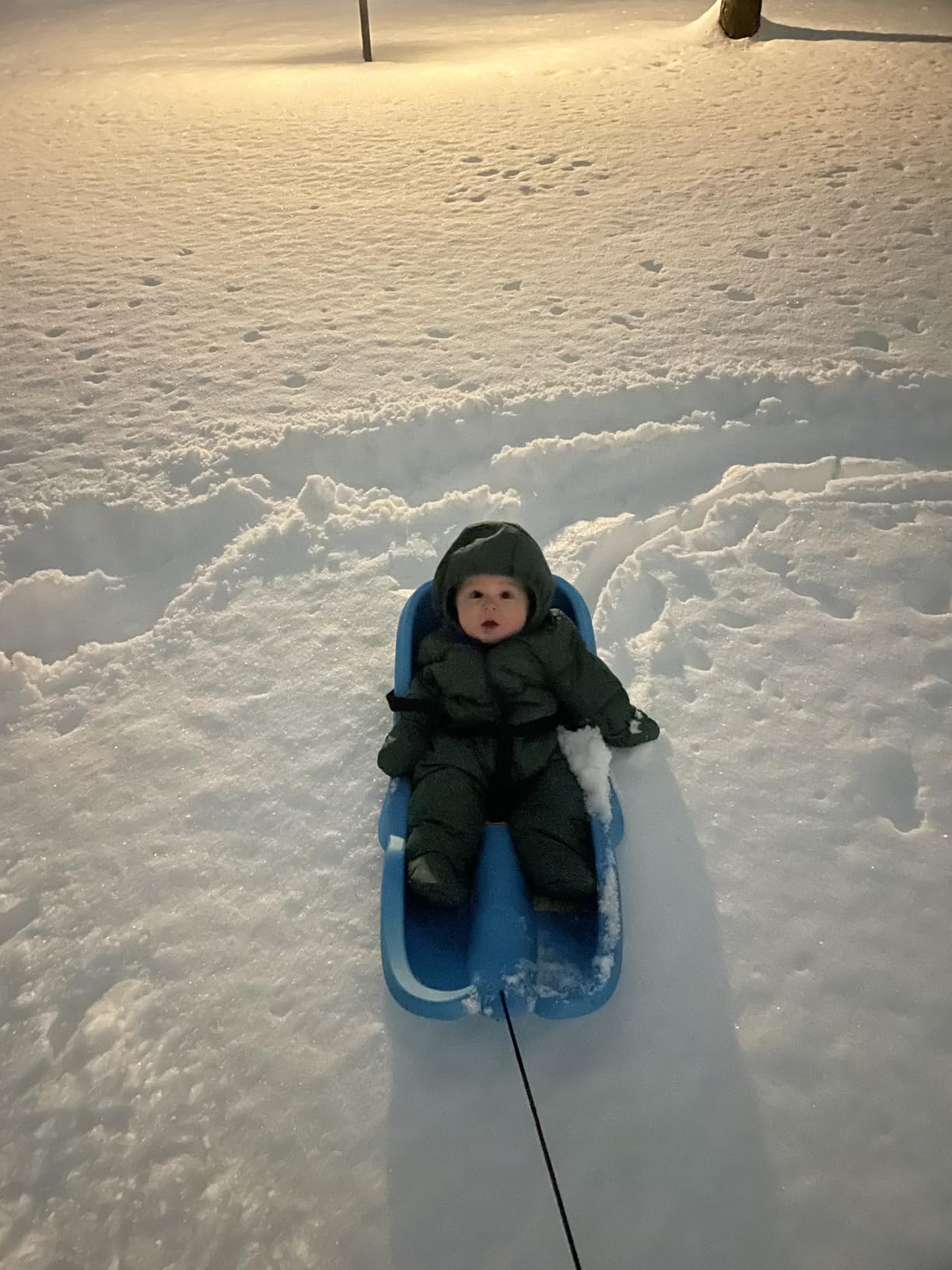
Owner reviews on this one mention something practical that is easy to miss: the side profile digs into deeper snow, which adds stability when you are towing across a yard. On a flattened driveway that grip disappears, and parents note it can be pulled faster than feels comfortable.
That is a useful warning, because a driveway is exactly where a lot of first-year sledding happens. Keep the pace slow on packed flat ground, and let the child ride rather than tow if they are able.
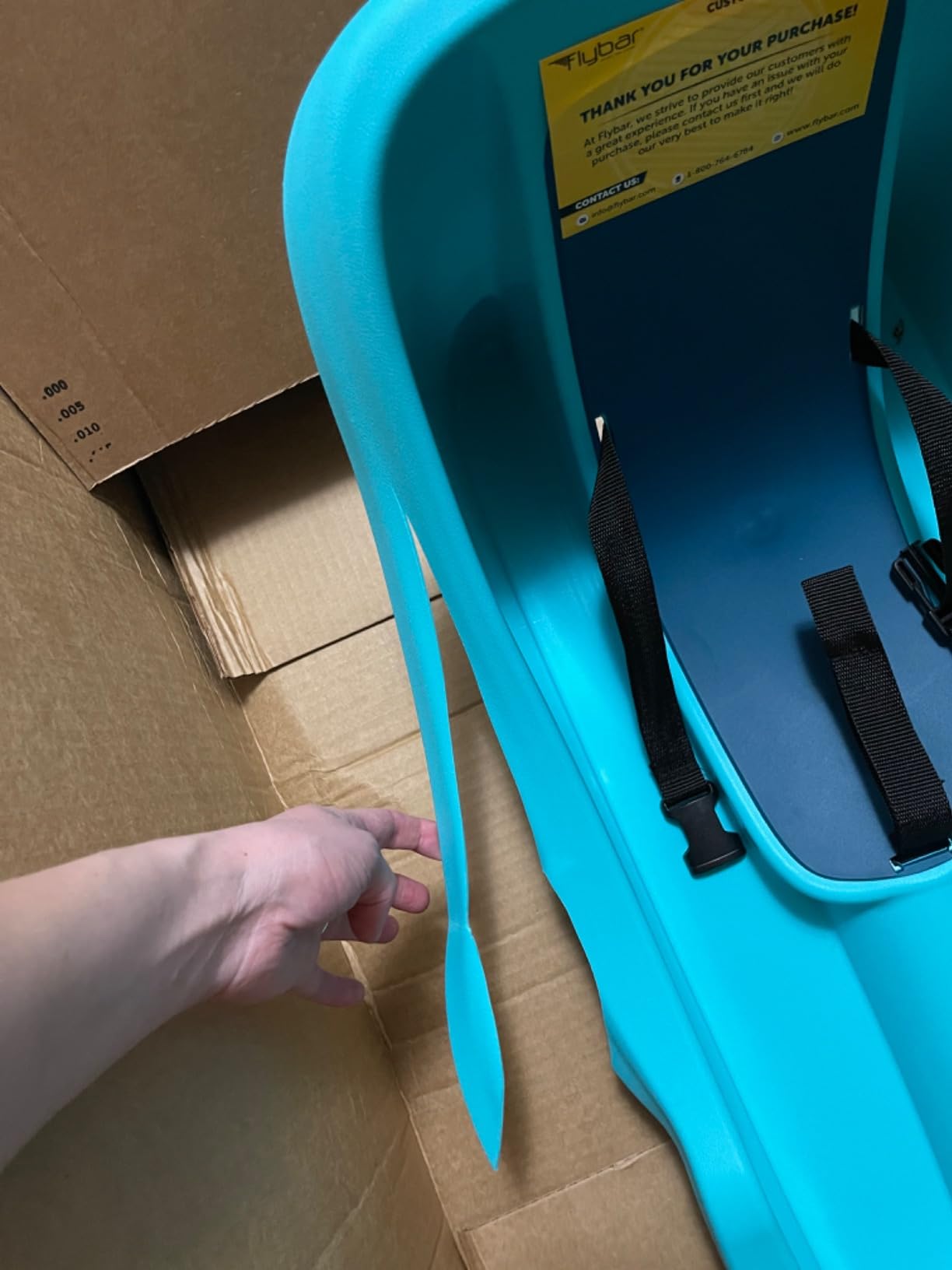
When the harness actually matters
The harness earns its keep between about six months and two years, which is the window where children want to be outdoors but cannot yet brace with their feet or grip a handle. Without it, they slide forward, their face ends up near the snow, and the ride ends early.
Check the strap adjustment before the first outing. Harnesses fitted for a winter coat over a one-year-old can be loose on the same child in a thinner jacket, and a loose harness is worse than none because it gives a false sense of security.
Where it falls short
The 55 pound limit rules it out the moment the child grows, and there is no way to stretch that. Plan on one or two seasons, not a decade.
It is also strictly a tow sled. The 15-inch height and the harness make downhill riding impractical and not what the product is built for. Use it on a flat yard or a very gentle slope with an adult walking behind.
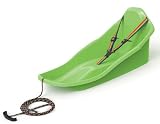
3. ArcticThrill ExploRide Sledge – Best Sled for Ages 2 to 3
ArcticThrill Snow Sled for Kids – ExploRide Sledge – Toboggan with Pull Rope and Safety Belt; Outdoor Plastic Winter Sleigh for Toddlers & Kids
28.5in toboggan
Safety belt
Back support
50 kg cap
0.88 kg
Pros
- Safety belt holds the child in place while an adult pulls
- Molded legroom and back support make toboggan rides comfortable
- Raised front end gives riders somewhere to brace their feet
- Lightweight molded plastic is easy to carry and store
Cons
- Lowest average rating in the group at 4.0 stars
- Built for adult-pulled tobog rides rather than downhill sledding
This one fills the gap between a harness sled and a ride sled, which is the age band most roundups skip. The child sits inside a molded seat with a safety belt, a raised front end to brace feet against, and back support, while an adult pulls it from a front rope.
For a two or three-year-old who is past the floppy-baby stage but still cannot steer or brake, that arrangement is genuinely useful. The molded legroom is the detail reviewers mention most, because most toboggan-style sleds of this size leave a toddler sitting in a smooth plastic trough with nowhere to put their feet.
At 0.88 kg it is also one of the lighter pull sleds here, and it carries up to 50 kg, so it will outlast the age range the product page implies.
Pulling it versus riding it
Decide which use case you are buying for before you buy. As a tow sled it does its job well: the belt keeps the child seated, the back support keeps them upright, and the weight is manageable for a parent walking uphill.
As a downhill ride it is weak. The shape is a seated toboggan tub with no steering and no brake, and the low rating in this group reflects how owners respond when expectations and use do not match.
Who should look elsewhere
If your child is confident on their feet and wants speed, this is the wrong category entirely. The appeal of a pull sled ends the day the child decides they would rather go down the hill themselves.
The 4.0 star average is the lowest of the twelve here, and a 13 percent share of three-star reviews points at comfort and fit complaints rather than build quality. If your child is between the sizes, the harness sled above is the more proven choice.
4. Best Choice Products 35-Inch Toboggan – Top Rated
Best Choice Products 35in Kids Plastic Toboggan Snow Sled w/Pull Rope, 2 Handles – Red
34.5in toboggan
Two steering handles
Pull rope
250 lb cap
2 lbs
Pros
- Highest-rated option in the group at 4.6 stars across nearly 900 reviews
- Only 2 lbs so young kids can carry it uphill themselves
- Two mid-sled handles give kids real steering control
- Pull rope included for dragging up steep hills
Cons
- Seats only one small child so it is not a two-rider sled
- Handle-centered steering means an adult cannot easily steer from the front
This is the sled I suggest most often to parents of a single child aged four to eight on a normal family hill. It weighs two pounds, it holds 250 pounds, and the pull rope is in the box. Nothing about it is exotic, and that is exactly why it works.
Two easy-grip handles sit in the middle of the deck, which is where a child of this age can actually reach them. Steering is done by pulling one handle or the other, so the child is genuinely directing the sled rather than sliding helplessly on a fixed shape.
The 4.6 star average across 895 reviews is the highest in this group, and only 3 percent of ratings are one star. That is an unusually clean distribution for a product in a category where parents routinely report cracked plastic.
The weather-resistant plastic is a single molded shell rather than a thin, multi-part construction, which is why owners report it lasting for many seasons. There is no separate bottom layer to split away from the deck.
Why the weight matters more than the rating
Two pounds is the number that will show up in your life most often. A three-year-old can pick it up, carry it to the top of a short hill, and turn around without an adult helping. Every heavier sled in this roundup turns the return trip into a job for a grown-up.
That changes the whole shape of an afternoon. If the family can get to the hill unaided, everyone can keep going for an hour instead of doing four runs and then standing at the bottom watching.
Where it will disappoint you
It is a one-child sled. The 17-inch width is fine for a single rider and cramped for two, and the single seating position is the reason this one is not a double-rider pick.
There are no runners and no brake, so speed is entirely a function of the hill. On a flat backyard it is pleasant and slow. On a genuinely steep slope a child has to drag a foot, which is a skill that takes a few seasons to learn.
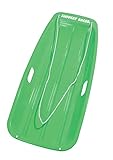
5. Slippery Racer Downhill Sprinter 35-Inch – Best for Cold Weather
Slippery Racer Downhill Sprinter Flexible Kids Toddler Plastic Cold-Resistant Toboggan Snow Sled with Pull Rope and Handles -35 Inch (Green, 1 Pack)
35in toboggan
IceVex coating
Reinforced handles
250 lb cap
2 lbs
Pros
- Very slick bottom that slides fast and smooth on steeper hills
- Holds up over repeated use where cheaper sleds crack
- Light 2 lb weight that both kids and adults can carry
- IceVex coating keeps it usable in very cold temperatures
Cons
- Sled body is fairly narrow so it suits one rider rather than a pair
- Some owners wish the included pull rope were longer
Cold-cracking is the durability fear that comes up constantly in parent forums, and this is the sled built specifically to answer it. The IceVex cold-resistant coating is the reason it stays usable when the temperature drops and cheaper plastics turn brittle.
It also happens to be a genuinely good first sled on its own merits. The 35 by 18 by 5 inch deck is a proven size for a single child, and at 250 pounds it will hold a parent riding with a small child if the combined weight fits.
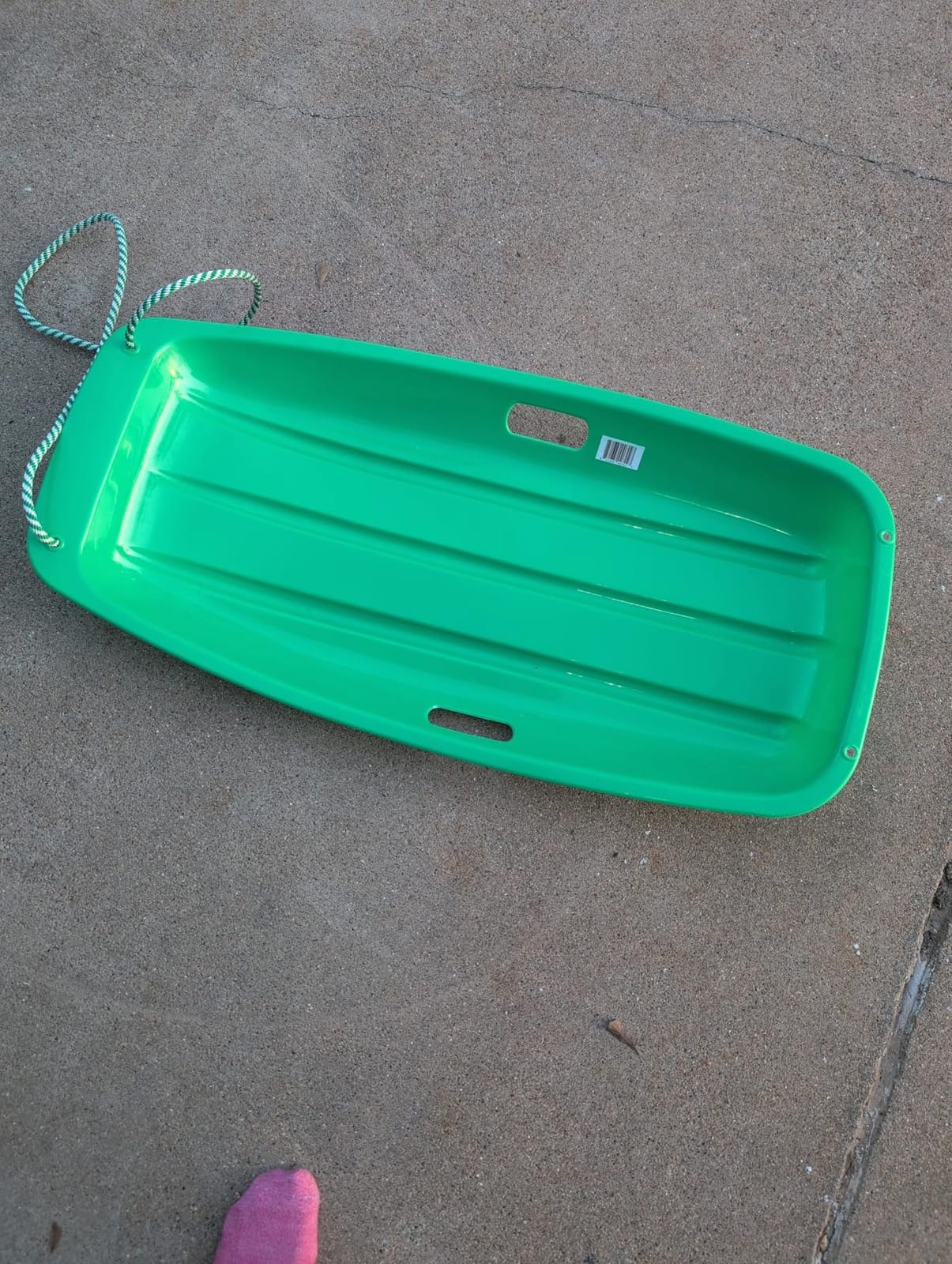
Owners repeatedly compare it favourably to cheaper sleds in the same price bracket, specifically on the bottom. The flexible slick-coated plastic glides over packed snow without the catching and juddering that gets reported with harder, thinner shells.
Reinforced grip handles are moulded into the deck rather than attached, and they are the part of the sled least likely to break first. That matters more than it sounds, because a snapped handle ends the season immediately.
How to think about cold-resistant coatings
Thin moulded plastic gets brittle as it cools, and a sled that flexes comfortably at forty degrees can crack along a stress line when the temperature drops into the teens. A cold-resistant coating changes the polymer behaviour so the shell keeps flexing rather than fracturing.
That is the difference between a sled that survives a Northern winter and one that breaks the first time someone sits on it in frozen snow. If you are anywhere that sees sustained below-freezing temperatures, this is worth paying for specifically.
Its limits
The deck is narrow. It is built for one rider, and a second child hanging on the side is exactly the scenario that produces a cracked sled and a complaint.
It is rated for ages four and up, so it is not a toddler sled under any circumstances. The pull rope is included but owners mention wishing it were longer for walking uphill with an adult at normal height.
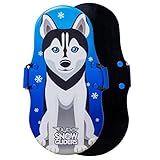
6. Flybar Husky Dog 36-Inch Foam Toboggan – Budget Pick
Flybar Kids 36″ Husky Dog Foam Toboggan Snow Sled with Slick Bottom & PE Core Build for Boys and Girls Ages 5+, Holds Up to 110 Lbs
36in foam toboggan
Slick PE core bottom
110 lb cap
Ages 5+
0.41 kg
Pros
- Lightweight saucer-style design young kids can carry up the hill alone
- Cushioned foam top softens bumps while the slick bottom still flies
- Two large sturdy ergonomic handles give a confident grip
- Many owners report theirs lasting multiple seasons
Cons
- 110 lb weight limit rules out most teens and adults
- Some reviewers note edge cracking after heavy seasons of use
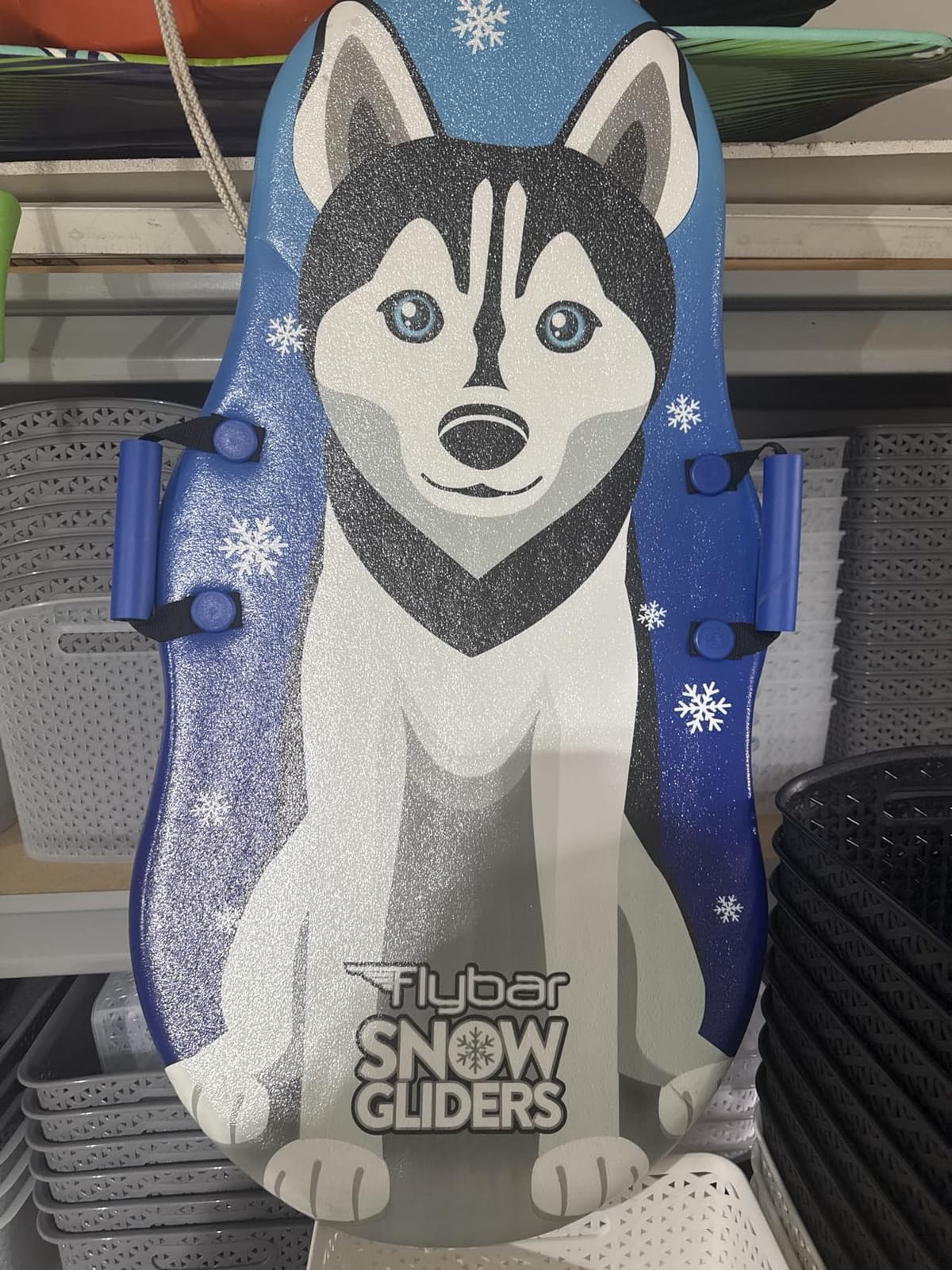
At 0.41 kg this is the second-lightest sled in the roundup, and parents buying for a single six or seven-year-old on a small hill will find that weight more useful than any extra feature. It also carries a 4.6 star average across 490 reviews.
The construction is the interesting part. It pairs a cushioned foam top that absorbs bumps and sticks with a durable polyethylene core and a slick bottom, so it is not a soft mushy foam slider that stalls in loose snow. It still moves.
Two large ergonomic handles are the feature owners mention most. They are genuinely easy for small hands to close around, which solves the single most common complaint about saucer and disc designs where a child ends up clutching a flat edge.
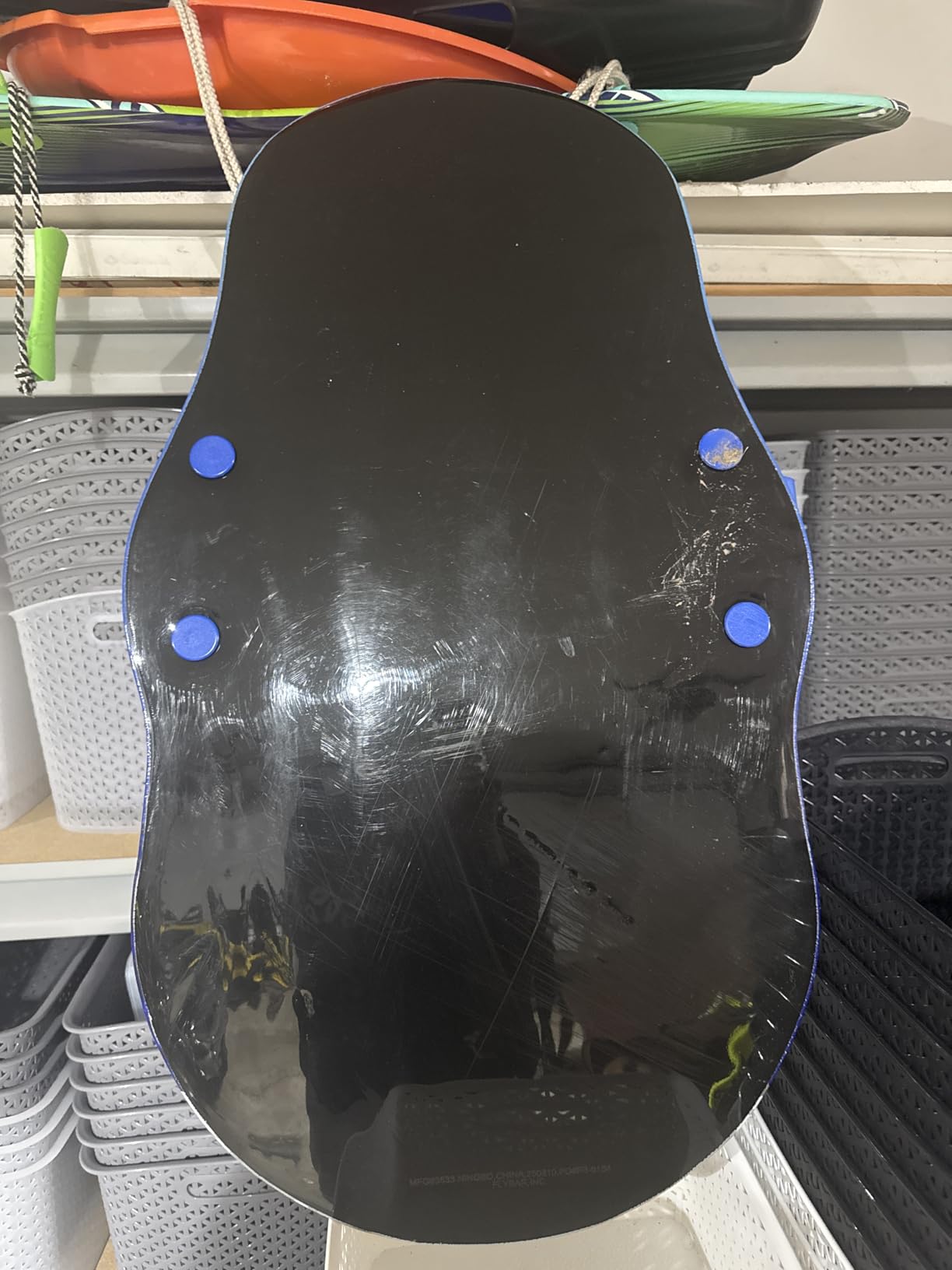
Reviews on this one describe it as the sled that gets handed down. Parents report multiple seasons of use from a single unit, and the 4.6 rating with an 80 percent five-star share backs that up for normal family use.
It is a single-rider sled by design. The 36 by 19 inch footprint gives one child room to sit cross-legged or kneel, and the 1 inch height is enough to grip the handles comfortably.
Who it suits best
A child between five and nine on a gentle to moderate hill who will be doing a lot of walking back up. The weight is the selling point. Nothing else in this list lets a small child manage the return trip without asking for help.
It is also a good candidate for a hand-me-down within a family, since the construction holds up better across owners than the foam products further down this list.
Where the rating breaks down
The 110 pound limit is low for this category. It covers a child comfortably and rules out most teenagers, so families outgrow it faster than the price suggests.
A small number of owners report cracking and wear around the foam edges after heavy seasons of daily use. If the plan is intensive daily sledding rather than weekend afternoons, expect to replace it sooner.
7. Flexible Flyer Premium Foam Sled – Most Versatile
Flexible Flyer Snow Rocket Premium Foam Sled for Kids and Adults – 42″ Snow Sled, 1 or 2 Person Winter Toboggan Slider with Handles, Extremely Lightweight, for Ages 5 & Up
42in foam slider
Two built-in handles
1 or 2 riders
200 lb
Ages 5+
Pros
- Cushioned foam slider absorbs bumps better than rigid plastic sleds
- Extremely light and easy for a child to carry back uphill
- Rides sitting up or lying down alone or with a passenger
- Owners report it holds up for many seasons with normal use
Cons
- Multiple reviewers report the bottom cracking under heavy use
- Foam handle grips can tear and it may arrive creased from packaging
This is the one I recommend when the complaint is that sledding hurts. The soft polyethylene foam is laminated between a tough top layer and a crack-resistant bottom, and it genuinely absorbs the impact of a bump or a jump in a way no rigid plastic sled in this roundup does.
It is also unusually flexible in how it can be ridden. The 42-inch deck works sitting up or lying down, alone or with a second smaller rider, up to 200 pounds. Parents on forums who prefer foam consistently recommend one small sled per child rather than one large shared sled, and this is a case where that advice is worth following.
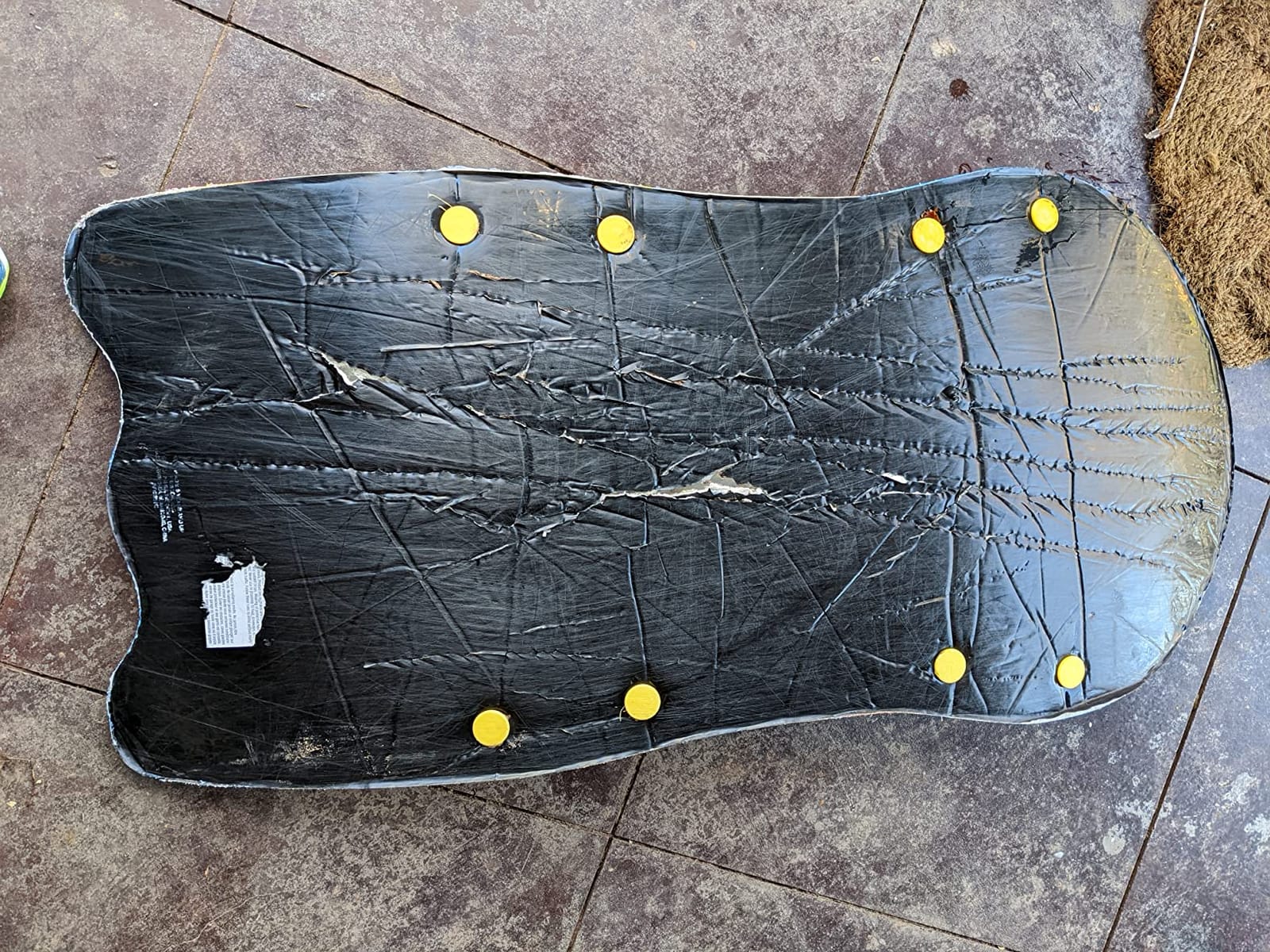
The honest wrinkle is durability, and owners split sharply on it. Light to moderate use holds up across many seasons and accounts for most of the positive reviews. Heavy daily use produces cracked bottoms and torn handle grips, and that pattern is specific enough that it is not just noise.
Performance in deep unpacked powder is another weak point. The slick bottom needs packed snow to do its best, and in fresh powder this one plods where a rigid sled slides.
Foam or rigid: which suits your child
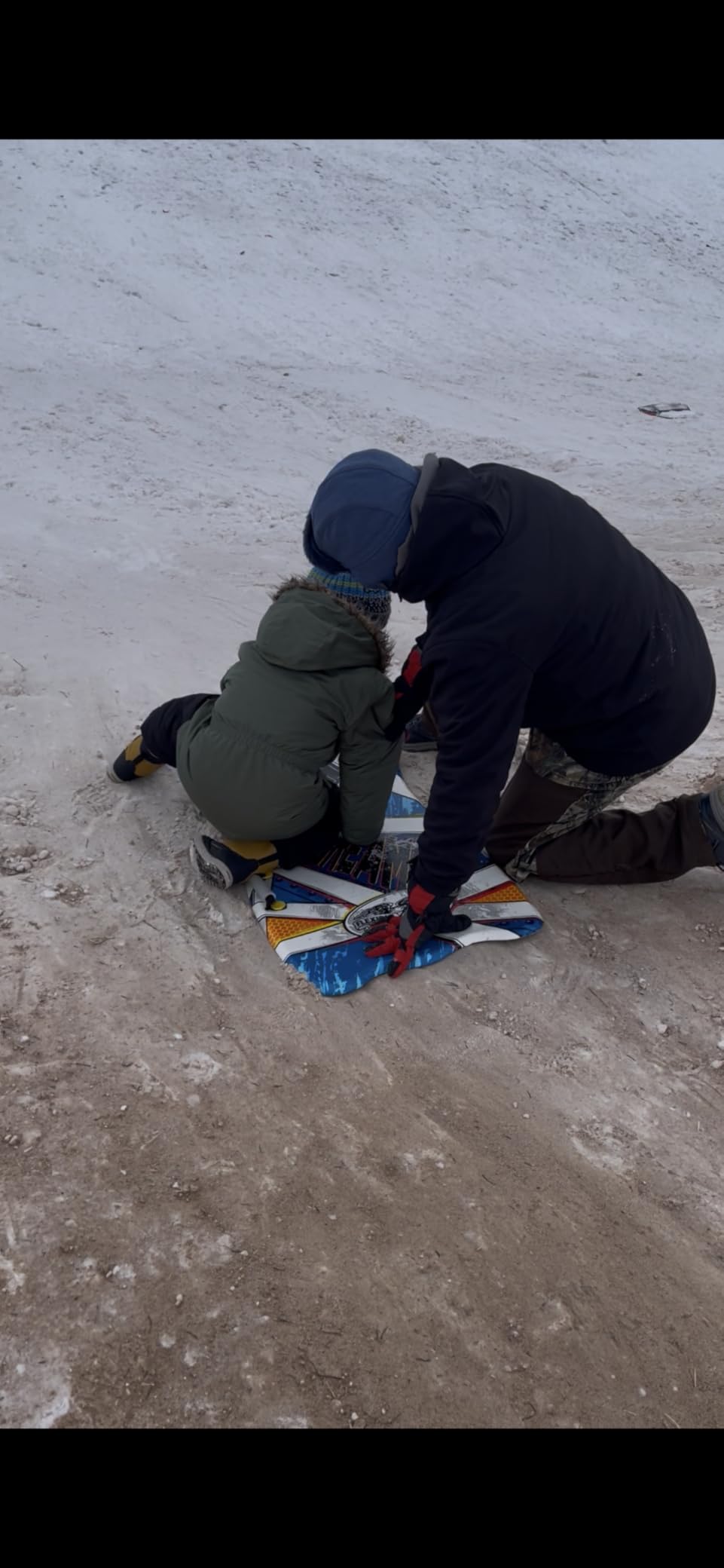
Choose foam for a child who is cautious, learning to balance, riding on bumpy or short hills, or simply has a sensitive back. The cushioning removes a whole category of complaints and makes a beginner far more willing to get back on the sled.
Choose rigid plastic for speed, for longer smooth runs, and for a child who sleds hard every weekend. Rigid bottoms hold their line better at speed because they do not flex or drag.
What to watch for
Inspect the bottom before the season and again in mid-winter. Foam sleds fail at the crease line, and a hairline crack there is the signal that the sled is finished rather than a repair opportunity.
Tighten and check the handle grips, because those are the part most likely to tear with repeated use. And allow for the fact that these can arrive creased from packaging, which does not affect performance but does make the sled look used before it has ever been outside.
8. Flexible Flyer 26-Inch Flying Saucer 3-Pack – Best for Schools and Camps
Flexible Flyer 26″ Plastic Flying Saucer Sleds – 3 Pack Orange/Green/Blue
26in saucers
3-pack
High-density polyethylene
150 lb per disc
Ages 4+
Pros
- Fast smooth ride on packed snow or ice from the slick bottom
- Stackable 26-inch discs that store compactly when winter ends
- Very light at 1.5 lbs each so kids can carry them uphill
- Popular with schools camps and daycares needing multiple units
Cons
- Not designed for adults and heavier riders can crack them
- Some reviewers find the discs smaller and flimsier than expected
Saucer sleds get dismissed as cheap toys, and for a single family that is largely fair. For anyone who needs several sleds at once, the maths is different, and this three-pack is built for that.
Three 26-inch discs in orange, lime green and blue, made from heavy-gauge high-density polyethylene, at 1.5 pounds each. They stack for storage, which matters in a garage or a classroom closet, and a child can carry one up a hill without an adult helping.
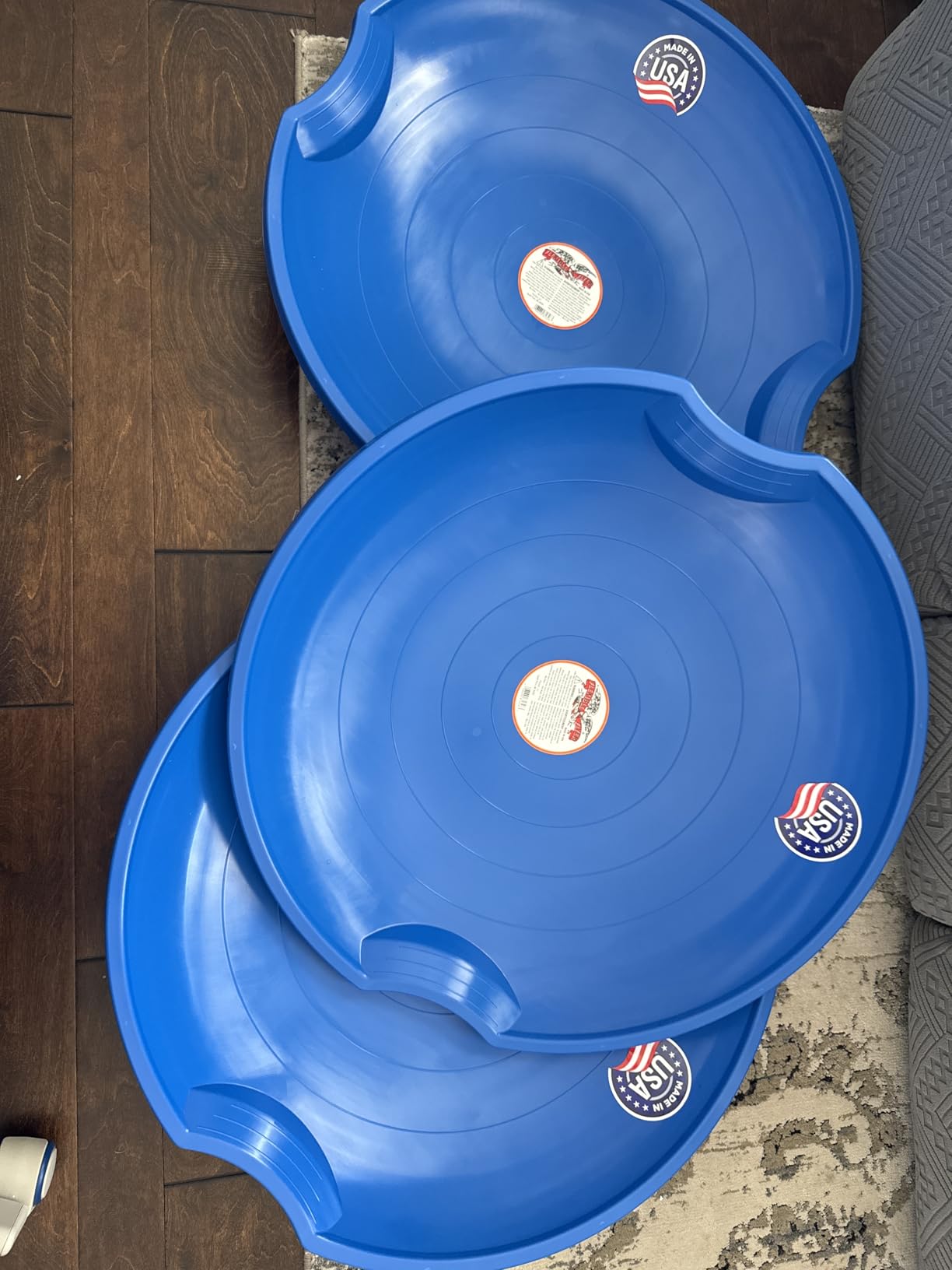
Schools, camps and daycares buy in bulk for exactly these reasons, and molded hand grips on each disc are a genuine safety improvement over flat discs where small hands slide off the edge. The slick bottom is fast and smooth on packed snow or ice.
A disc has no fixed direction, so the rider spins and slides rather than tracking straight. Children who dislike the feeling of a toboggan pointing at them tend to relax immediately on a saucer.
When a saucer makes more sense
Go with a saucer for a child who is easily spooked by speed or direction. Spinning is unpredictable in a way that feels safe, and there is no steering to get wrong on the first run.
They are also the easiest sleds to hand around. A stack of three fits in a boot, and a group of children can share one so nobody is stuck waiting for a turn on a single deck.
Its limits
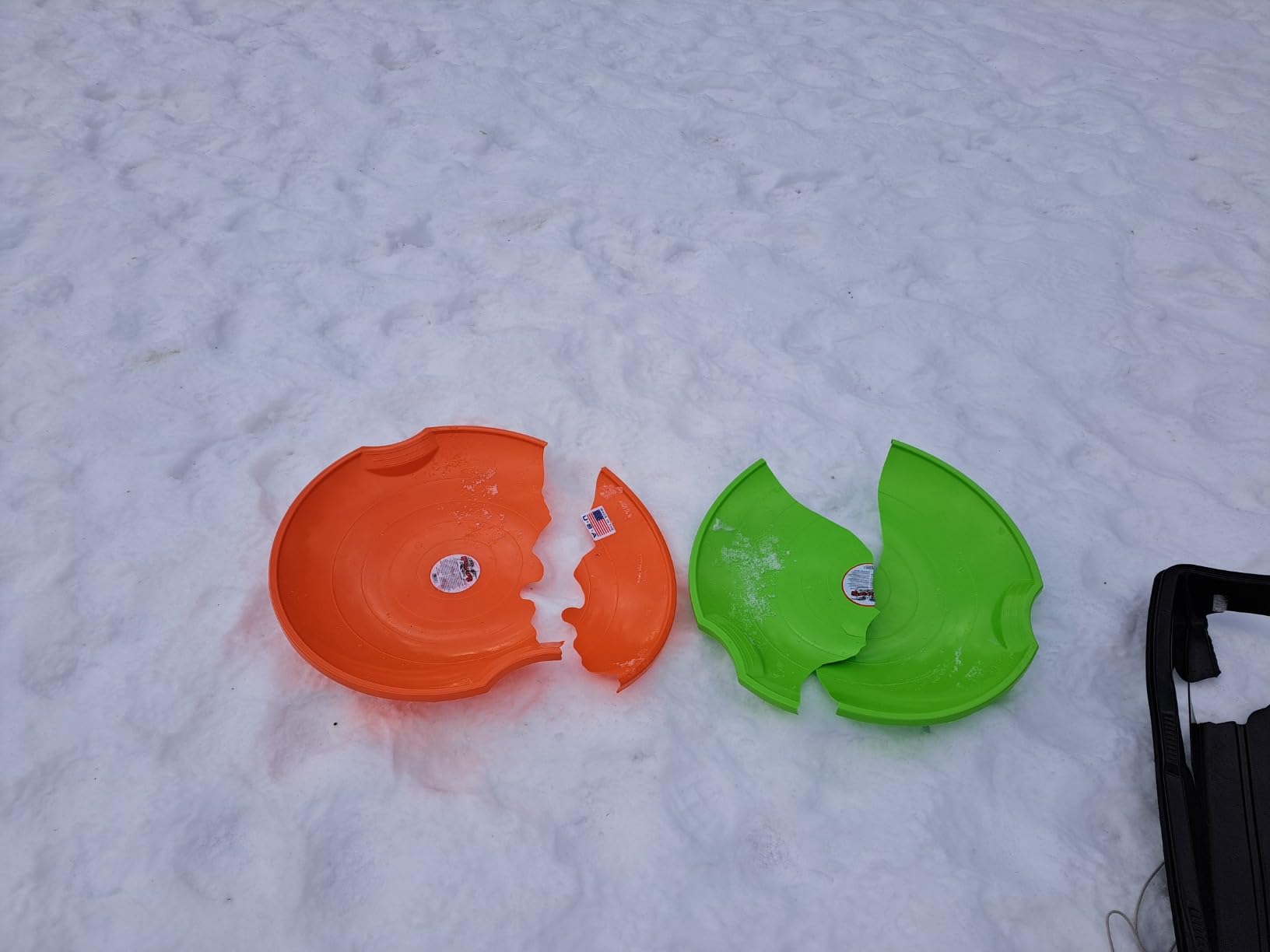
These are built for children, not adults, and owners report that heavier riders crack them. Each disc supports up to 150 pounds, but a grown adult pushing past that is what produces the cracks reviewers describe.
Several buyers report the discs feel smaller and flimsier than the photographs suggest. A 26-inch disc fits a child, not a ten-year-old plus a sibling, so check the footprint against the rider rather than the age label.
9. Flexible Flyer Winter Lightning 48-Inch 3-Pack – Best for Two Riders
Flexible Flyer Winter Lightning Snow Sleds for Kids and Adults (3-Pack) – 48 Inch Toboggan Style Plastic Sled with Hard Bottom for Fast, Smooth Rides – 1 or 2 Riders (Blue, Green, Orange)
48in toboggan
3-pack
Hard plastic bottom
200 lb per sled
Ages 4+
Pros
- Three sleds in one pack so the whole family or a group can ride together
- Classic slick hard-plastic bottom that flies over packed snow
- Each 48-inch sled comfortably fits two riders
- Only 3.25 lbs per sled so kids can carry them uphill
Cons
- Pull rope is not included and you have to add your own
- The wide 3-pack takes more storage room than a single sled
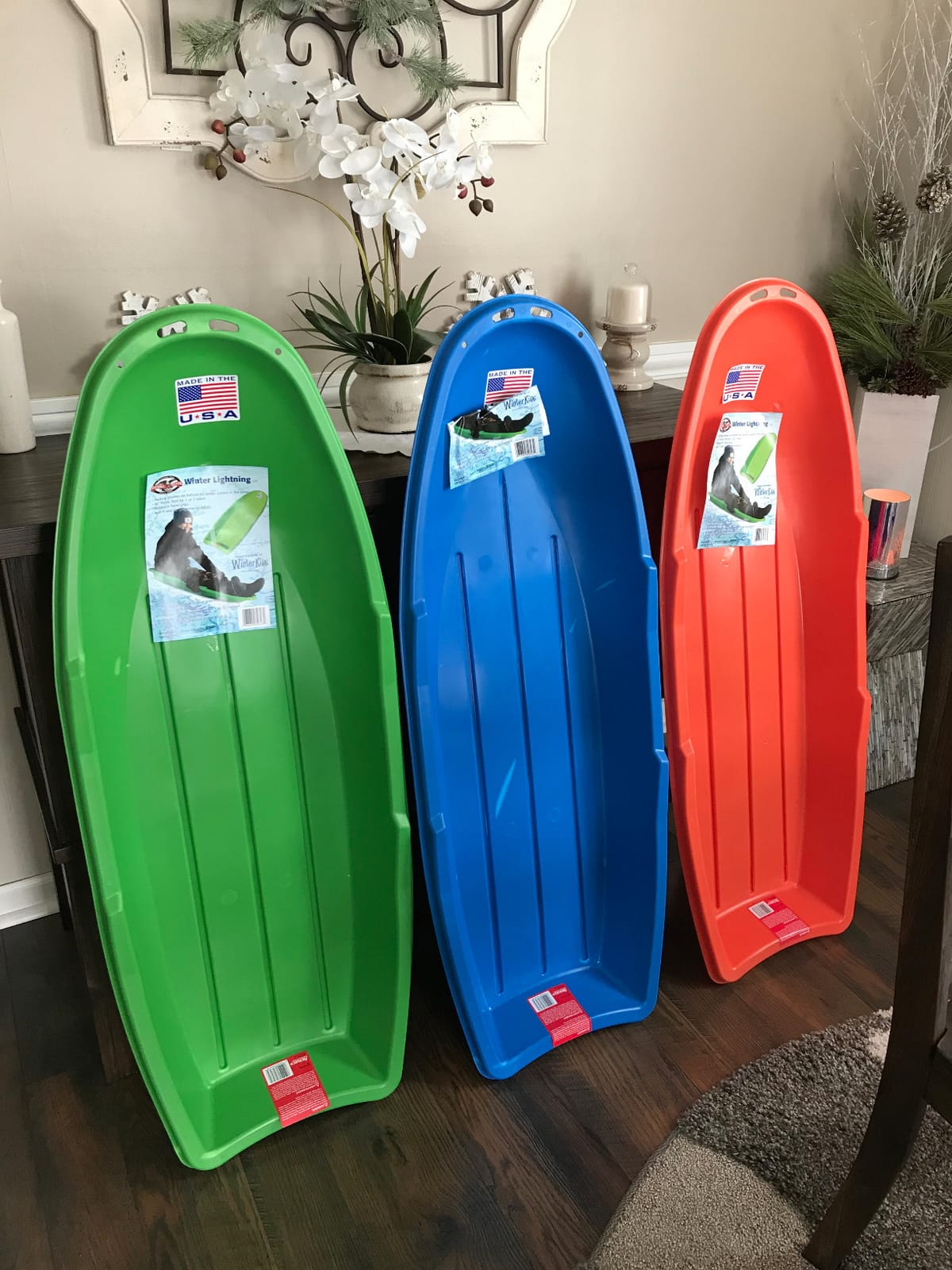
Three 48-inch sleds at 3.25 pounds each is an unusual combination, and it solves two problems at once: there is a spare for everyone in the family, and each sled is light enough for a child to carry back up the hill alone.
The Winter Lightning uses a super-slick hard plastic bottom in a classic toboggan shape, and owners describe the ride as fast and smooth over packed snow. Each sled takes one or two riders and supports up to 200 pounds.
It is also the only pick here built for a large group. A family of four, or a group of friends, can all ride at once instead of taking turns, which is the difference between a successful afternoon and an argument.
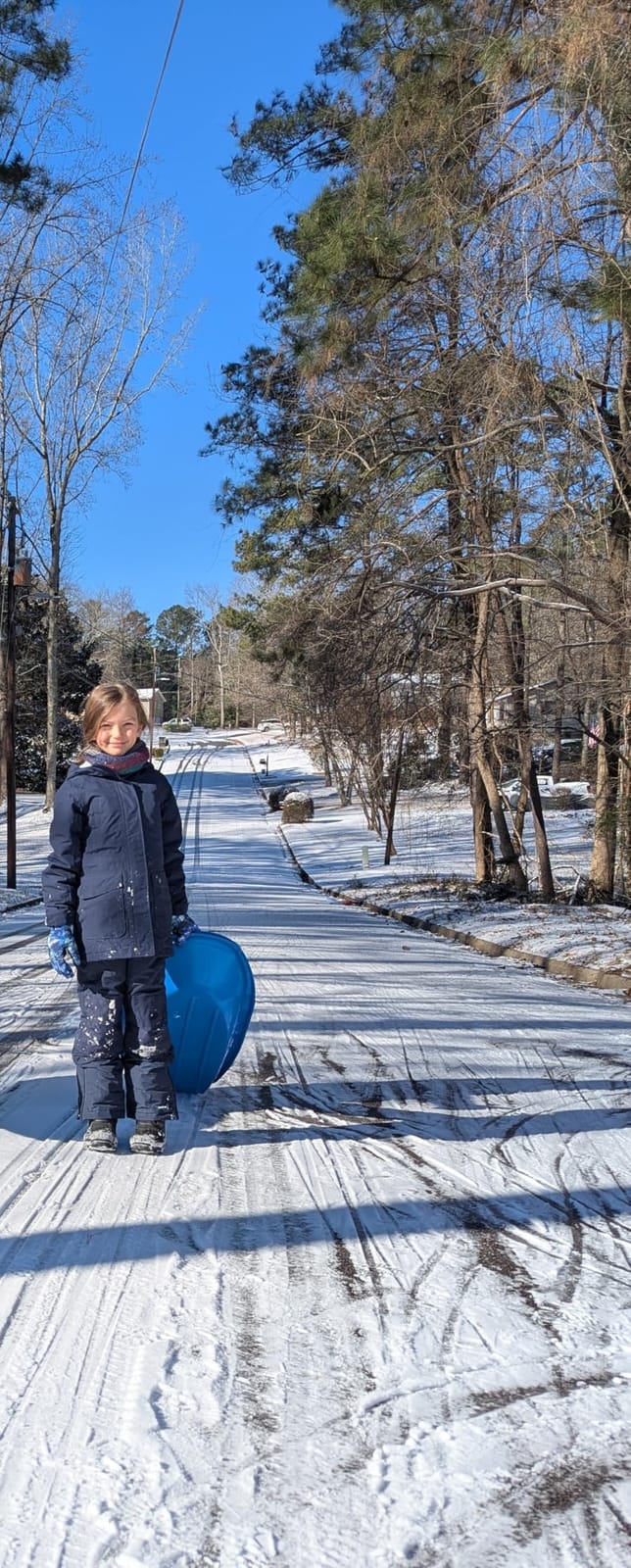
The resin is a newer, stronger heavy-duty formulation than older versions of this sled, and it flexes rather than cracks under impact. That is where the durability complaints in this category usually come from, and it is the reason this one holds together over repeated seasons.
Each sled measures 48 by 18 by 4 inches, which is a long deck relative to a small child’s height. Riders sit rather than kneel, and two smaller children fit comfortably where a larger pair would not.
Get the rope sorted first
The sleds have built-in holes for a pull rope, but the rope is not included. Add your own before the first outing, and check the length against your stride rather than assuming the default is right.
A rope too short means an adult is walking hunched over, which is a fast route to a sore back after twenty runs. This is the most common frustration families report, and it is entirely avoidable.
Who it does not suit
If you have one child and a small hill, three sleds is more than you need and more to store. The pack is a genuine advantage for a group and clutter for a single-rider household.
At 4.1 stars it is the second-lowest average in this group, and reviews point at the absence of a rope and the sheer bulk rather than at ride quality. The sled itself is well regarded; the package is what draws criticism.
10. Gizmo Riders Stratos Snow Sled – Best with Hand Brakes
Gizmo Riders Snow Sled for Kids, Adults – Toboggan Sled, Easy Turning Steering Wheel, Anti-Slip Seat, Pull Up Brake, Durable Plastic Sled, Lightweight, Snow Sleds, Age 3+, 260 lbs
38.58in steerable sled
Steering wheel
Pull-up brake
260 lb cap
8.7 lbs
Pros
- Steering wheel gives kids real control while a locking differential keeps speed up
- Pull-up brake lets riders stop on a steep slope on their own
- Retractable tow rope makes hauling the sled back uphill quick
- Highest weight capacity in the group at 260 pounds
Cons
- Heaviest sled here at 8.7 lbs which is hard for a small child to carry
- Uses the lowest average rating in the group at 4.0 stars
This is the only sled in the roundup with a working brake, and on a steep hill that changes the safety conversation completely. A rider can slow down on a command rather than digging a heel in and hoping.
The steering wheel is connected to a locking differential system, which is the reason the sled holds speed instead of washing out in every turn. Riders genuinely control the line, and the anti-slip seat keeps them planted while they do it.
At 260 pounds it has the highest capacity in this group, and it is rated for riders aged three and up, so a parent can ride it with an older child on the same deck.
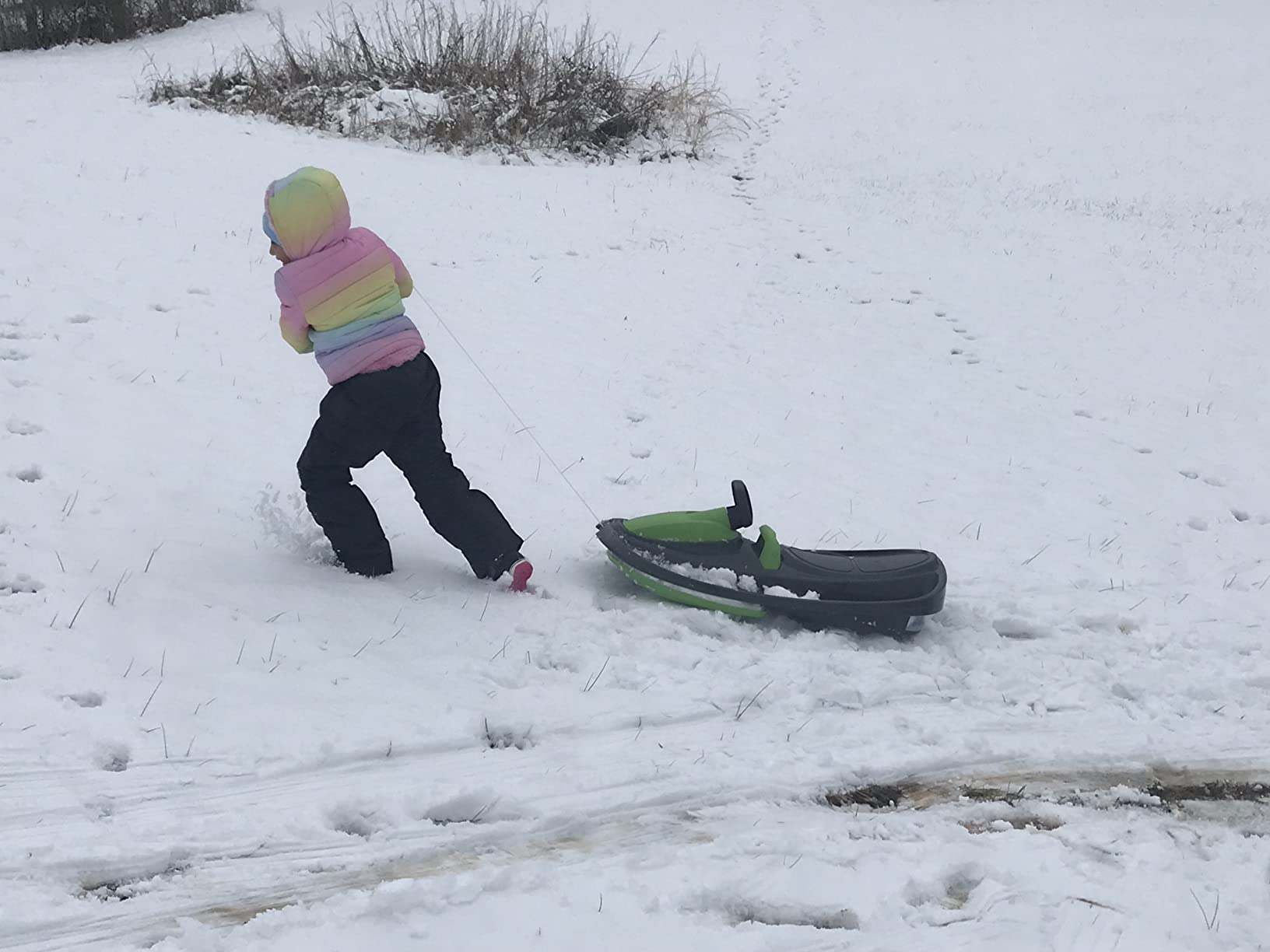
The 38.58 by 22.05 inch footprint is wider than any other sled here, which is where the steering authority comes from. Wide plus heavy plus a brake is a genuinely different vehicle from a plastic toboggan, and buyers who switch from a big-box sled notice the speed difference immediately.
A retractable tow rope handles the uphill return, which matters on a 5.7 pound sled. Without one, an adult is carrying this up the hill by hand after every run.
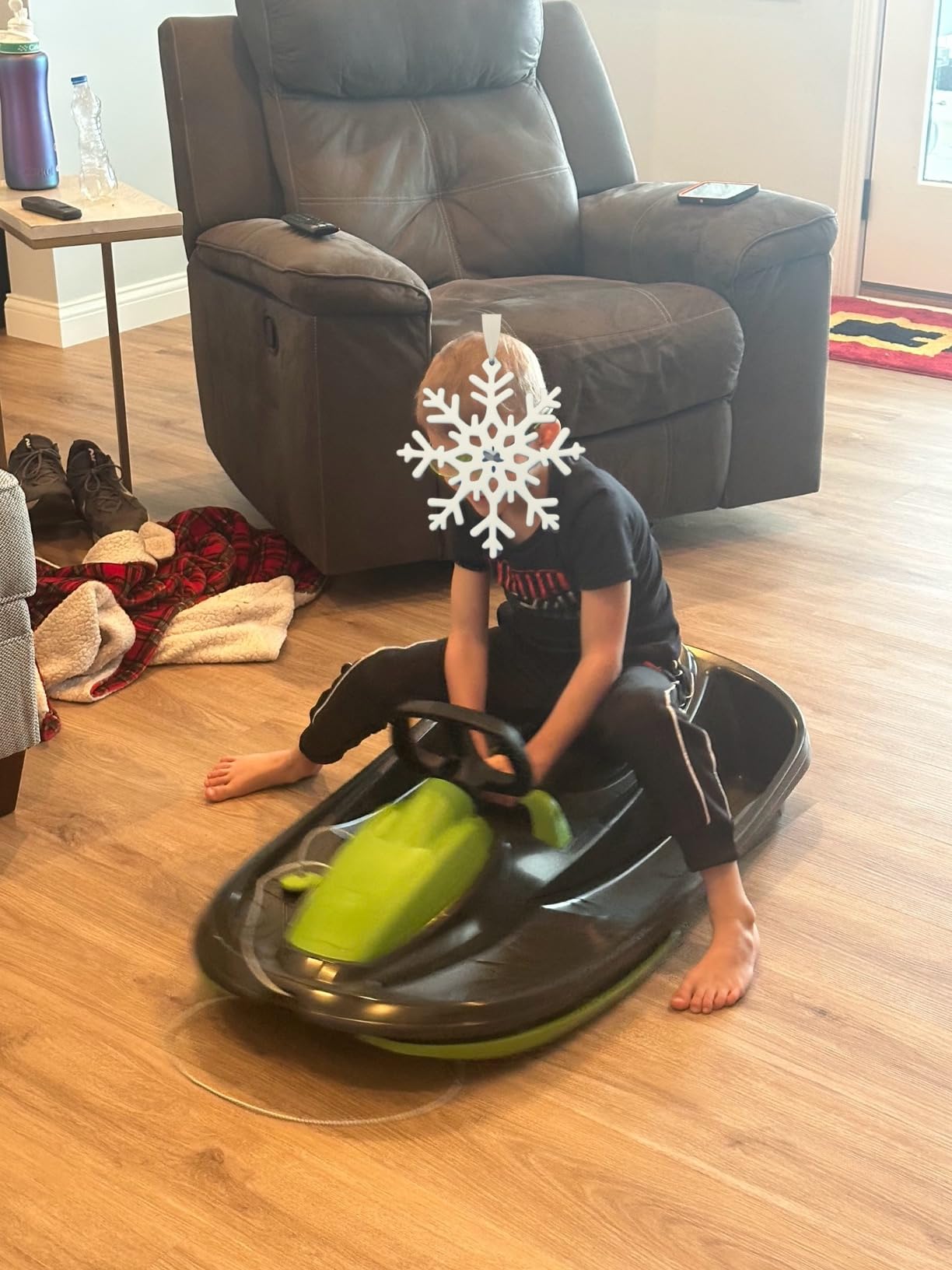
What the steering wheel actually gives you
A conventional toboggan is steered by leaning, which requires core strength, balance and confidence. A young child on a short sled often cannot manage it and simply travels wherever the hill points.
A wheel changes that. Turning becomes a hand movement rather than a whole-body correction, so a child aged five or six can hold a line on a hill they would otherwise lose. The locking differential is what keeps the sled from pivoting in place during the turn.
Its real drawbacks
It weighs 8.7 pounds, the heaviest sled here, and that is not an abstract number. A child under about nine will not carry it up a hill on their own, which means the return trip is an adult job every single run.
The 4.0 star average is the lowest of the twelve, with a 13 percent one-star share. That points at durability and finish rather than at the concept, since reviewers who get it working tend to rate it highly and reviewers whose sled broke tend not to.
11. Retrospec Retrorider 35-Inch Sled – Best for Teens
Retrospec Retrorider Plastic Snow Sled for Kids and Adults – Toboggan Style with Pull Rope, Cold-Resistant Construction & Hard Bottom for Fast Downhill Rides
35in HDPE sled
Hard bottom
Cold-resistant to minus 22F
130 lb cap
Pros
- Hard bottom that genuinely cuts through snow for fast runs
- Cold-resistant coating rated to minus 22F
- Pre-knotted nylon pull rope is ready to use out of the box
- Tough HDPE body rated to take repeated crashes
Cons
- 130 lb weight limit is lower than many toboggan-style competitors
- Fixed toboggan shape gives no steering control
Once a child is tall enough to want speed rather than scenery, the question stops being about harnesses and starts being about how hard the bottom is. The hard-bottom design on this sled is what does that work, cutting through snow rather than settling into it.
The cold-resistant coating is rated to minus 22F, the lowest temperature figure attached to any sled in this roundup. For a Northern climate where the snow sits hard and cold for weeks, that rating is the relevant one.
It also holds a 4.4 star average across 374 reviews and sits at the top of the Snow Sleds sales category, which tells you something about how current it is.
Why the pull rope detail matters
It comes with a pre-knotted nylon rope. This sounds trivial until you are standing at the bottom of a hill in gloves with a loose knot, and it removes the single most annoying pre-outing task in this category.
A rope is also what keeps a hard, sharp-edged sled from being a hazard on the walk back. Carrying a 35-inch HDPE sled by its edges is not a good idea, especially on ice-covered ground.
Where it will not suit
The 130 pound limit is lower than most toboggan-style competitors and rules out a heavier adult. A parent-and-child pairing has to be checked against that number, not assumed to work.
There is no steering mechanism at all. The toboggan shape is fixed, so riders control direction by weight shift alone. Enthusiast forums treat that as a limitation rather than a defect, but it is worth knowing before you buy for a child who wants to carve.
12. Confer Plastics Retro Racer – Best for Durability
The Original Retro Racer Snow Sled by Confer Plastics, Cool Blue Color, Durable Design for All Ages, Made in USA, Available as a Single Sled for Quick Rides
37in plastic sled
Made in USA
Five-year warranty
225 lb cap
Rope included
Pros
- Made in the USA with a five-year warranty behind it
- Retro styling in a range of colourways
- Includes a pull rope out of the box
- Solid 225 lb capacity for teens and adults
Cons
- Narrow 16-inch deck is less stable than wider toboggan models
- Heritage retro design favours durability over outright speed
Every other sled in this roundup carries a one-year warranty or a satisfaction guarantee. This one carries five years, and that is the entire argument for it. It is the pick for a household that plans to keep a sled for a decade and pass it down.
It is made in Niagara County, New York, by a company that makes pool ladders and patio furniture, so the manufacturing is rotational moulding rather than thin extrusion. That process produces a thicker, stiffer shell than most competitors in this price bracket.
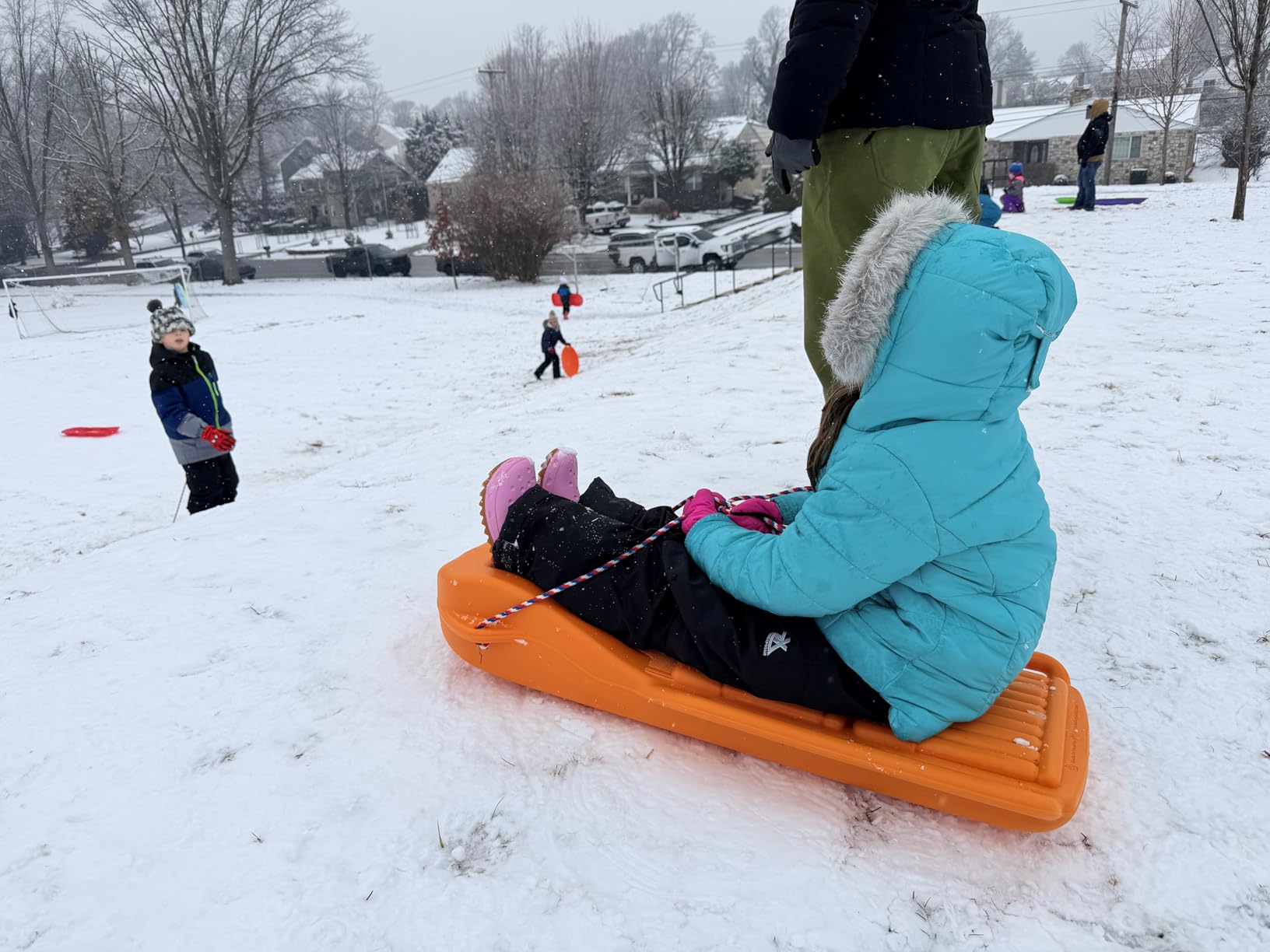
The 225 pound rating covers a parent riding with a child, which is one of the recurring questions on parent forums that most roundups never answer. The pull rope is included, which keeps it in line with the two sleds above it rather than the four that do not.
Styling is a genuine factor here. This is the one retro-styled sled in the group, with the white and blue mountain motif, and for a child who is suspicious of anything that looks like a garden toy that helps.
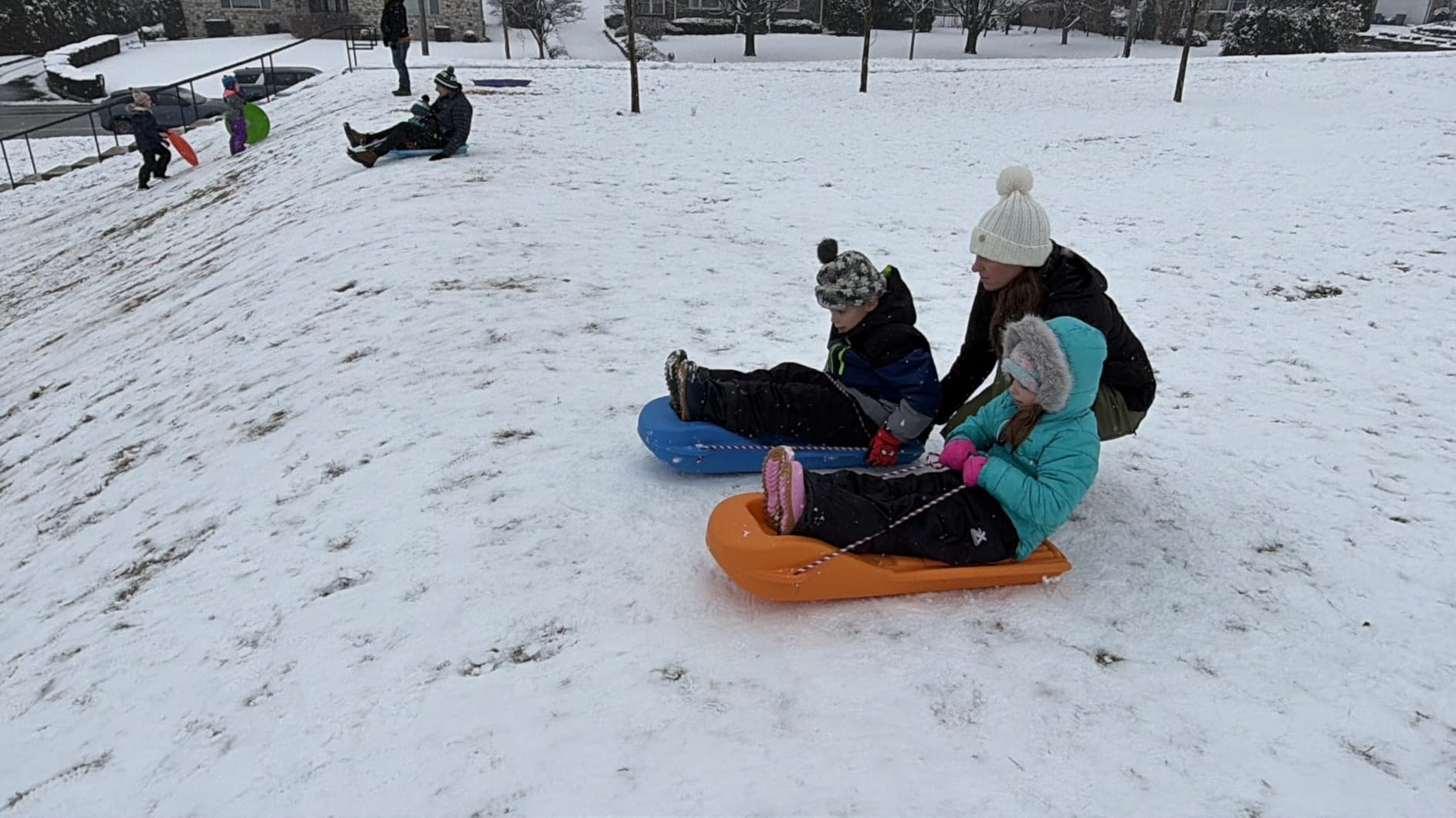
When the warranty changes the decision
A five-year warranty is not marketing here, it is a statement about the shell. If a moulded plastic sled flexes without cracking for five winters of use, it will outlast three cheaper sleds bought in sequence.
That can make the cost per season the lowest of the twelve over a five-year window, which matters more in this category than people expect. A plastic sled that lasts one winter is not a bargain no matter what it cost.
Its compromises
The 16-inch deck is the narrowest here, and narrow means less lateral stability. A rider who leans hard into a turn will feel the edge sooner than on a 22-inch deck, and younger children find that less forgiving.
It is not built for speed, and the heritage styling comes at a higher outlay than a basic toboggan. If the child wants a fast rigid run rather than a durable keepsake, the Slippery Racer options are the better use of the money.
What Is the Safest Type of Sled?
The safest type of sled for a young child is a pull sled with a harness or safety belt, a high back, and a flat or very gentle slope. The safest type for an older child is a steerable sled with a brake, a deck wide enough for two feet, and a hill chosen by an adult rather than by the child.
Everything else in the safety conversation follows from age, and age really is the dividing line. Under three, a child cannot reliably brace with their feet or hold a handle, which means they cannot slow themselves down or steer out of trouble. Remove their ability to ride unassisted and the risk drops sharply.
For children over three, the design features that matter most are high side walls so a lean does not become a fall, a non-slip seat so a bracing child does not slide forward, and grip cutouts or handles small hands can actually close around. Sleds with no grip points are the ones that end runs early.
One rule covers more injuries than any product choice: feet first, head back, and never sit forward facing the direction of travel. Most sledding head injuries happen when a child sits facing downhill or lies face-down on a run.
Match the sled to the hill, not the other way round. A gentle, open slope with a long runout is safe; a steep drop with trees, fences or a road at the bottom is not, regardless of the sled.
Keep sledding areas away from roads, frozen ponds, ice-covered water and any drop with a hard landing at the base.
Supervise directly with toddlers. One adult per small child, within arm’s reach, is the rule that forum advice converges on.
Use a helmet and wrist guards for any child on a steep or crowded hill, and for any child learning to steer a toboggan or mini-luge.
If anyone sleds near open water, everyone wears a flotation device. Snow that reads as solid can hide moving water, and a slide into a partially frozen pond is the worst-case scenario in this sport.
Never let two riders share a sled rated for one. Exceeding the weight capacity is the most common way an intact plastic sled cracks in a rider’s hands.
Walk the route before the first run. Look for ice patches, buried objects, fence lines and the uphill path back.
Two more practical points that rarely make it into product listings. Most of the physical effort in a family sledding session is the uphill return, so a sled with a tow rope and low weight is a safety feature as much as a convenience. And a helmet is cheap compared with everything else here.
How to Choose the Right Sled: Types, Materials and Specs
Start with the ride, not the shape. A pull sled has a seat, a belt or harness and a rope, and an adult tows the child on flat or gentle ground. A ride sled is everything else: the child sits on it and goes downhill. A toboggan is a long flat-bottomed sled sitting directly on the snow, carrying one or two riders. A saucer or disc sled is round and runnerless, so it spins in any direction. A runner sled puts steel runners under a deck and is the fastest traditional design. A steerable sled has a wheel or bar the rider turns, and it is the only design that lets a child actively choose a line.
Material decides more than appearance. Plastic is fast, light and cheap, and cold-resistant coatings are what separate a plastic sled that lasts five winters from one that cracks in the first freeze. Foam absorbs bumps, feels safer for beginners and light children, but wears out faster under heavy daily use and performs poorly in deep loose powder. Wood and steel runners are the fastest and most durable, and the most vulnerable to rust and to a hard impact, and none appear in this roundup because the current kid market has moved to coated plastic.
On the question that comes up most often, is a plastic or foam sled better: plastic wins on speed, price and cold durability, foam wins on comfort and forgiveness. For a child aged three to six on a gentle hill, foam is the safer introduction. For a child who wants to go fast and has been doing it for a few seasons, plastic is the better tool.
Snow tubes are a separate category rather than a sled, and they are harder to control. There is no steering, most have no handles, and a child spinning on a tube has no way to slow down. They work well on a controlled commercial tubing hill and poorly on a family hill with variable snow, which is why none appear as a main pick here.
Seven things to check before you buy
Weight capacity, not age label. A 110 lb sled is finished for a child the year they turn ten, and age ranges on listings are optimistic.
Recommended age against your child’s actual ability. Can they sit up unassisted, brace with their feet, and grip a handle?
Whether a tow rope is included. Only four of the twelve sleds in this roundup ship with one, and adding it later is the step everyone forgets.
Rope length for pull sleds, measured against an adult’s walking stride rather than the child’s.
Side wall height and seat texture. High walls plus a non-slip seat stop a lean from becoming a fall.
Grip points sized for small hands. Cutout handles or moulded grips, not a flat edge to clutch.
The weight of the sled itself, tested against who has to carry it uphill. This is the constraint that decides how long the afternoon lasts.
If you are inheriting a sled rather than buying one, check four things before anyone rides it. Look for cracks along the bottom and around the steering mounts, which is where stress concentrates. Check for UV brittleness, which shows up as a dull, chalky surface that no longer flexes. Look at any runner for rust pitting. And check every harness and belt strap for fraying at the buckle and the anchor points, because that is a safety component rather than a comfort feature.
Storage is worth thinking about in October rather than after the sledding season. Rigid sleds stack but do not compress, and three of them fill a garage corner. Inflatable options deflate for storage, which is the one genuine advantage they have in a small home. Nothing here folds flat, so measure before you buy if space is tight.
Finally, timing. Snow-sled demand spikes with the first real snowfall, and parent forums report local retailers emptying out within a day or two of a storm. Buying before the first snowfall of the season is how you avoid that, and it also gives you time to test the sled on a small hill before the family relies on it.
Frequently Asked Questions
What is the best snow sledge for kids?
The best sled depends on age and ride style. Children under three need a pull sled with a 3-point harness or safety belt, a high back and a flat surface, towed by an adult. Children aged three to nine generally do best on a steerable plastic toboggan with grip handles, two sets of grips, or a cushioning foam sled if they are a cautious beginner. Older kids who want speed do well on a long hard-bottom toboggan with a cold-resistant coating. Avoid buying a pull sled for a child who wants to ride downhill, and avoid a ride sled for a child who cannot yet sit up unassisted.
What is the safest type of sled?
The safest sled for a young child is a pull sled with a harness or safety belt, a high back and raised side walls, used on a flat or very gentle slope with an adult supervising within arm’s reach. For older children, a steerable sled with a working brake and a deck wide enough for two feet gives the most control on a slope. Across all ages the non-negotiables are feet-first positioning, sitting back rather than forward, a helmet and wrist guards on steep or crowded hills, keeping sledding away from roads and ice-covered water, and never exceeding the sled’s weight capacity.
What is the best toboggan for a 3-year-old child?
At three years old the deciding factor is whether the child can sit up unassisted and brace their feet. If they can, a lightweight single-rider toboggan with mid-deck steering handles, a pull rope and a low weight they can carry uphill is the right choice, since the child is directing the sled themselves. If they cannot yet hold a seated position, use a pull sled with a safety belt, molded back support and a raised front end instead. A wide two-rider toboggan is also worth considering at this age so a sibling can ride along.
Are snow tubes or sleds better?
Sleds are better for most family situations. A toboggan gives a child handles or a steering mechanism, a predictable direction and a stable seat, and most rigid sleds include a pull rope for the walk back uphill. Snow tubes have no steering and often no handles, so a rider cannot slow down or adjust their line, and they rotate in an uncontrolled way. Tubes work well on a controlled commercial tubing hill with soft snow. On a variable family hill with ice patches, obstacles and other sledders, a steerable rigid sled is the safer and more controllable option.
Is a plastic or foam sled better?
Plastic is faster, cheaper, lighter and, with a cold-resistant coating, more durable in freezing temperatures, so it suits older children who want speed on packed snow. Foam absorbs bumps, feels safer for a beginner and is comfortable on short or uneven hills, but it wears out faster under heavy daily use and performs poorly in deep loose powder. For a cautious child aged three to six on a gentle slope, foam is the better introduction. For a confident rider doing long fast runs, plastic is the better tool.
How old should a child be to sled?
A child who cannot sit up unassisted should only be towed on a pull sled with a harness or safety belt, on flat or very gentle ground with an adult supervising. Independent downhill riding usually becomes realistic somewhere between three and four years old, once a child can sit up without help, brace their feet against the front of the sled, and grip a handle. There is no single legal age, and the sled’s own age rating and weight capacity are a better guide than a birthday. Check both every year, since a child outgrows a 110 lb sled well before they outgrow their enthusiasm for it.
Final Verdict: Our Best Sleds for Kids
After going through twelve current sleds, the pick that fits the most families is the Slippery Racer Downhill Xtreme. It carries a 4.6 star average across nearly 1500 owner reviews, the 48-inch deck fits two children, and the IceVex coating is the answer to the cold-cracking problem that ends so many cheaper plastic sleds after one winter.
For a child under three, the Gizmo Riders Baby Rider is the only one I would put on a list. The 3-point harness and 15-inch back are what make towing a non-sitting baby possible, and nothing else here does that job. For a single child on a small hill, the Best Choice Products 35-inch toboggan is the most useful object in this roundup at two pounds.
Match the sled to the child’s age and to whether they are towed or riding, buy it before the first snowfall, and take the uphill haul into account when you choose. Get those three right and the choice takes about two minutes.