
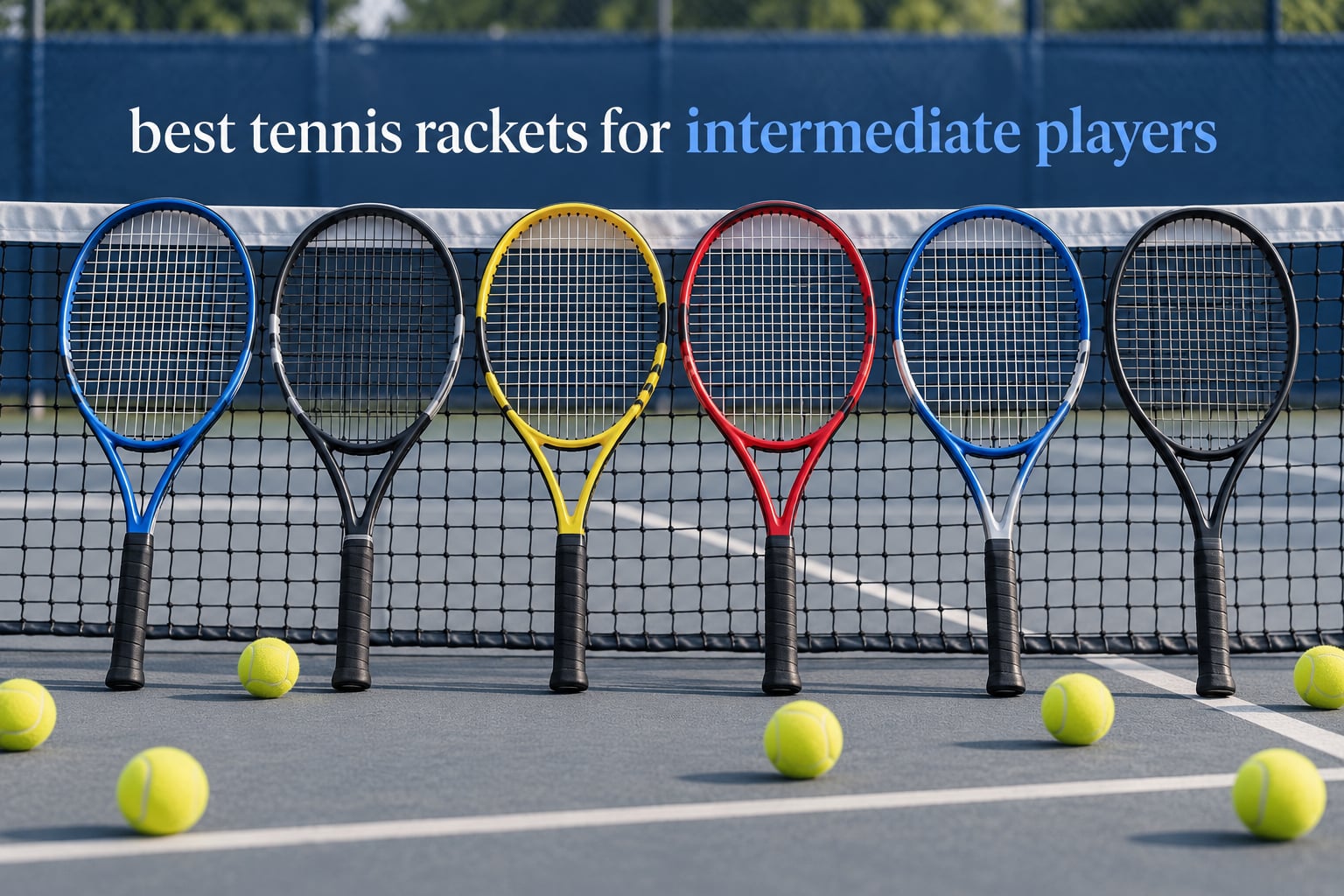
If you only need one answer, the HEAD Ti S6 is the best tennis racket for most intermediate players: a 115 square inch graphite-shaft frame weighing 8.6 ounces strung, with an extended 27.7 inch length and an open 16×19 pattern that gives you free depth, spin and reach on every ball.
That is not the last word on intermediate rackets, though. Six frames made the cut for our best tennis rackets for intermediate players guide, and they disagree with each other in useful ways. One is built for players with elbow sensitivity, one for players who want to hit heavy topspin, one for players who still want control over direction.
An intermediate player is roughly an NTRP 3.0 to 4.0 adult. You own your stroke shapes, you hit a consistent topspin rally from the baseline, your serve is developing but not yet a weapon, and you have already outgrown the super-oversized frame that got you started. You play a couple of times a week, usually on public hard courts, often with doubles mixed in.
Every frame below is described with the same numbers, in the same units, because spec confusion is what costs intermediate players money. Head size in square inches, weight in ounces and grams, string pattern, balance, grip size, and what happens to the frame when you restring it. Where a pick falls short, we say so. Forum threads about this exact question run long because buyers are rightly suspicious of lists with no downsides listed.
We also lean on what owners actually report. Several players on the intermediate racket threads named frames like this because they were leaving an oversized beginner racket behind and wanted something they could grow into rather than replace next season. The recurring themes were flexibility, vibration, and how the racket behaves when you hit slightly off-centre.
Table of Contents
Top 3 Tennis Rackets for Intermediate Players (October 2026)

HEAD Ti S6 Tennis Racket
- 115 sq in head
- 8.6 oz strung
- Graphite/titanium shaft
- 27.7 inch length

Short version: the Ti S6 is the frame we would hand to an intermediate player who wants one stick that covers everything. The Tour Slam is the pick if you want the biggest, most forgiving sweet spot per pound of effort and you play doubles as often as singles. The Ti. Conquest is the lightest-feeling frame here and the one most often recommended to players with a tender forearm.
Best Tennis Rackets for Intermediate Players at a Glance in 2026
| Product | Specs | Action |
|---|---|---|
| HEAD Ti S6 Tennis Racket |
|
Check Latest Price |
| Wilson Tour Slam Adult Recreational Tennis Rackets |
|
Check Latest Price |
 HEAD Ti. Conquest Tennis Racquet HEAD Ti. Conquest Tennis Racquet |
|
Check Latest Price |
 Wilson Hyper Hammer 5.3 Adult Recreational Tennis Rackets Wilson Hyper Hammer 5.3 Adult Recreational Tennis Rackets |
|
Check Latest Price |
 HEAD Geo Speed Tennis Racquet HEAD Geo Speed Tennis Racquet |
|
Check Latest Price |
 Wilson Energy XL Adult Recreational Tennis Racket Wilson Energy XL Adult Recreational Tennis Racket |
|
Check Latest Price |
Five of the six frames here run between 108 and 115 square inches, which is larger than the 100 square inch window most players eventually settle into. That is deliberate, and it is worth being upfront about it: these are the best of what is available at this level of the market, not tour-level 98 square inch frames.
Used as oversized frames, they give you depth, forgiveness and a comfortable arm. The trade-off is directional precision. If your serve is already fast and your groundstrokes land deep without effort, a 100 or 98 square inch graphite frame would suit you better. The buying guide below explains how to tell whether you are there yet.
1. HEAD Ti S6 Tennis Racket: The Best All-Rounder for a Developing Intermediate
HEAD Ti S6 Tennis Racket, 4 3/8″ Grip
115 sq in head
8.6 oz strung
Graphite/titanium build
27.7 in length
4 3/8 in grip
Pros
- Huge forgiving sweet spot
- Very light at 8.6 oz strung so it never slows your swing
- Graphite shaft adds stability to an oversize head
- Extended 27.7 in length for reach and depth
- Pre-strung so you can hit with it today
Cons
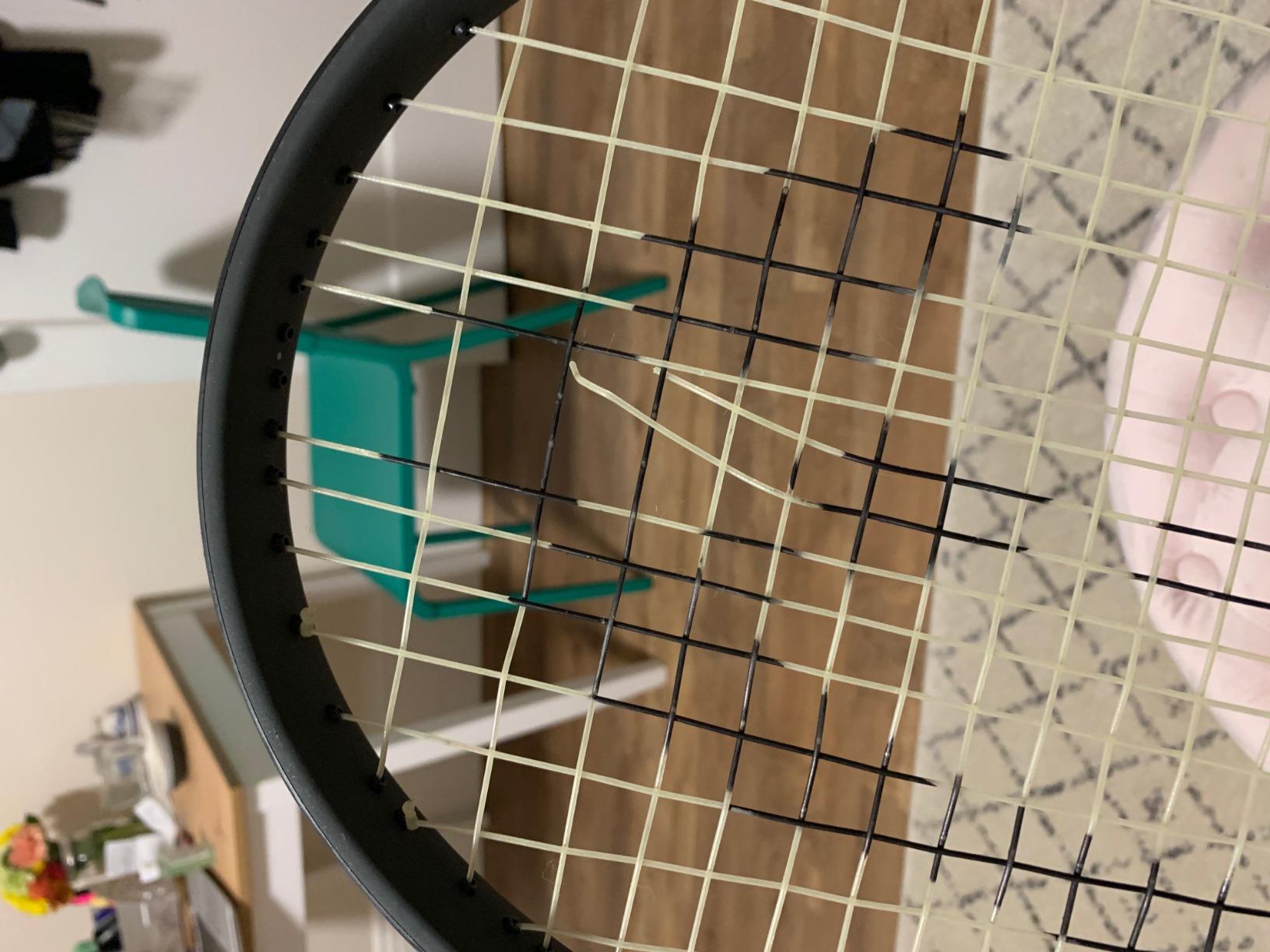
- Factory strings can break sooner than expected
- Too flexible for players who generate their own pace
- You must measure your grip before ordering
The Ti S6 is the frame I keep coming back to for intermediate players, and it earned the top spot here on the strength of owner satisfaction more than any spec sheet. Nearly two thousand reviews average a 4.7, which is the highest rating of any racket in this guide.
The reason is that it does two things at once that most single-purpose frames do not. The 115 square inch head gives you a sweet spot so generous that off-centre contact barely changes the outcome, and the graphite and titanium shaft keeps that oversized head from turning mushy when you hit hard.
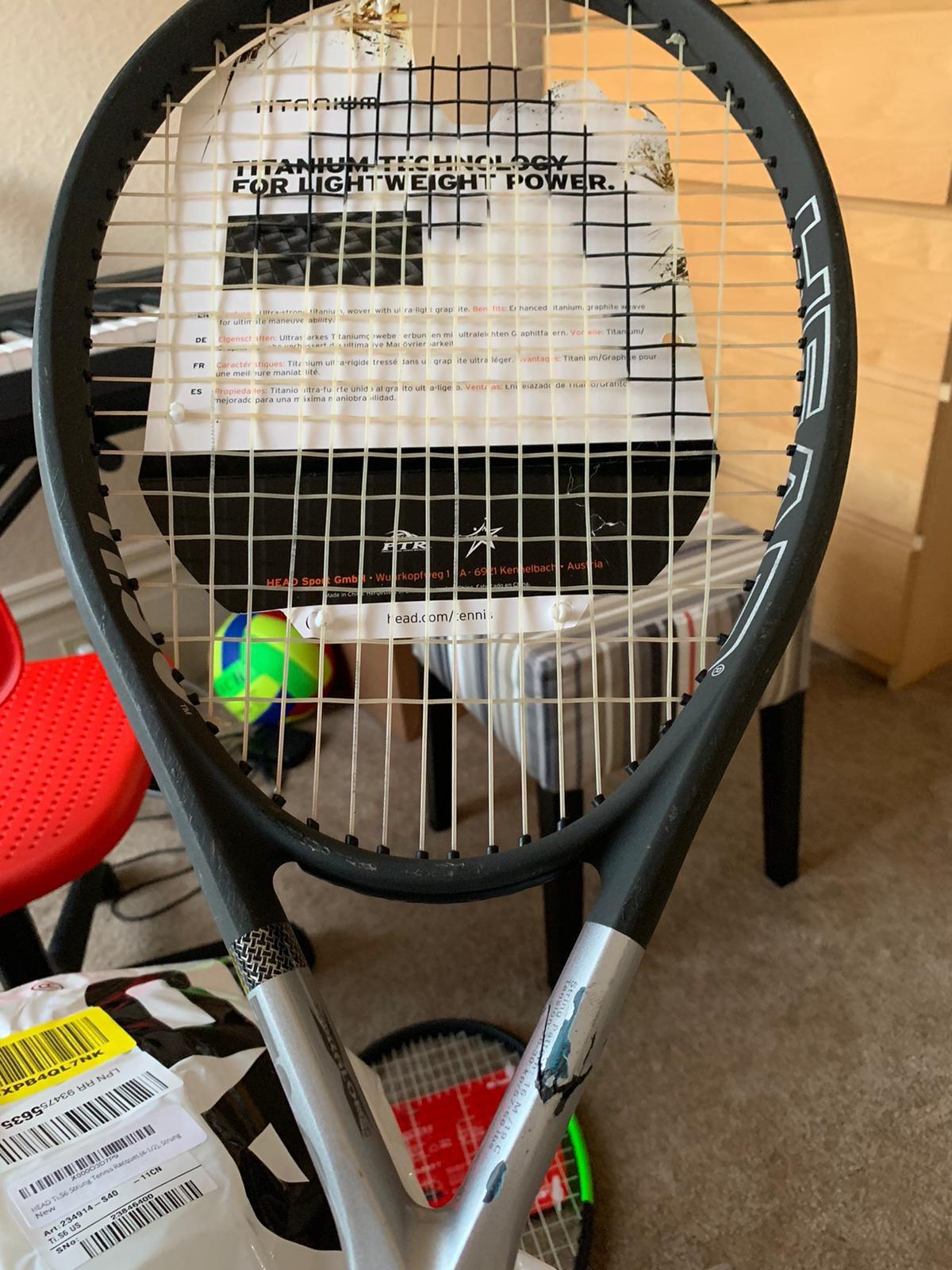
At 8.6 ounces strung it is the lightest-feeling frame in this group, and that lightness matters more than it sounds. A light racket is easier to accelerate through contact, which is what lets an intermediate player swing freely enough to generate topspin without pressing. The longer 27.7 inch body adds leverage on the serve and extra reach on wide balls.
The open 16×19 string pattern is the other quiet advantage. The gaps between strings grip the ball and launch it upward, so you get heavy topspin on short, defensive swings where a closed pattern would just push the ball into the court.
Where it disappoints is stiffness. The frame flexes noticeably, which is why some reviewers say it cannot produce power for a player who already supplies it. That flex is also precisely why most players with a tender elbow get along with it.
Who the Ti S6 Suits
This is the one to buy if you have moved off a beginner frame and want something you can keep for years rather than a season. It suits an all-court player who serves once or twice a week, hits a heavy topspin rally, and wants the ball to clear the net on a short swing.
It also fits anyone who has felt sting in their elbow on a graphite frame and assumed it was their technique. A flexible oversize head with an open pattern is about the gentlest combination available at this level.
Where the Ti S6 Falls Short
If your game is already built on flat pace, control and depth, an oversized head works against you. The 115 square inch bed takes spin out of the ball and gives you a smaller effective platform for precise directional shots.
Expect to restring it. Owners frequently mention that the supplied strings do not last, and a good restring turns this from a beginner racket into an intermediate weapon. Budget for a poly or a soft multifilament at a moderate tension.
2. Wilson Tour Slam Adult Recreational Tennis Rackets: Top Rated Oversize Frame
WILSON Tour Slam Adult Recreational Tennis Racket – Grip Size 2-4 1/4″, Pink/Grey
Oversize V-Matrix head
AirLite Alloy frame
Stop Shock Pads
Pre-strung
4 1/4 in grip
Pros
- Largest review base of any frame here at more than 4400 reviews
- Stop Shock Pads cut string vibration cleanly
- V-Matrix sweet spot is genuinely forgiving
- AirLite Alloy frame is durable and light to swing
- Several grip sizes and colours available
Cons
- Aluminum construction gives less control and feel than graphite
- Listed package weight of 16 oz is heavier than most adult frames
- Best suited to casual doubles and lessons rather than competitive play
The Tour Slam has more owner reviews than any other racket in this guide, and that volume is itself useful information. When roughly four thousand people take a frame to the courts, the failure modes show up clearly, and this one’s are all cosmetic rather than structural.
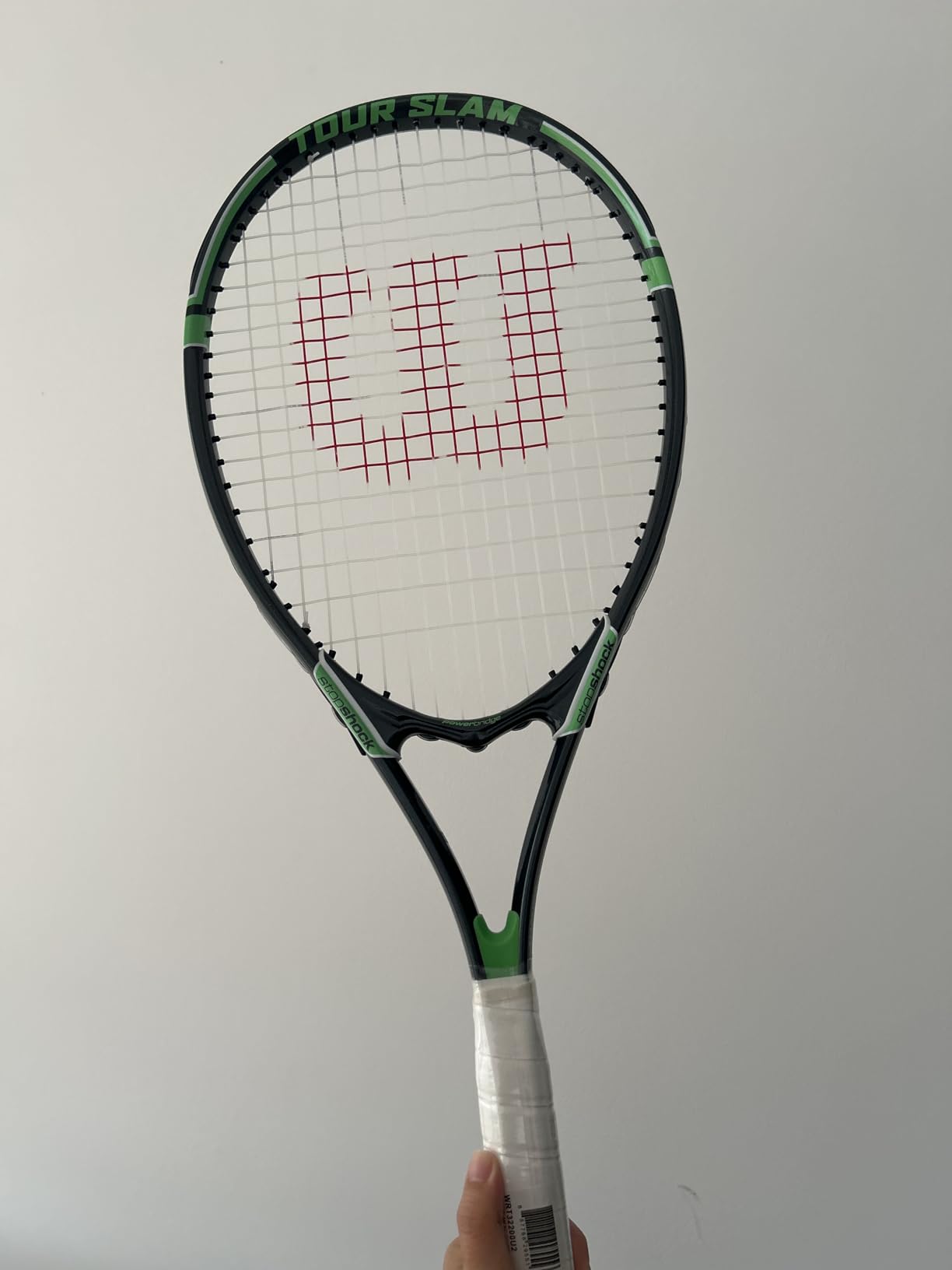
Its selling point is the V-Matrix technology, which enlarges the sweet spot at the edges of the string bed. For an intermediate player double-hitting against a bigger opponent from the backhand corner, that extra forgiveness is worth more than any handle feel.
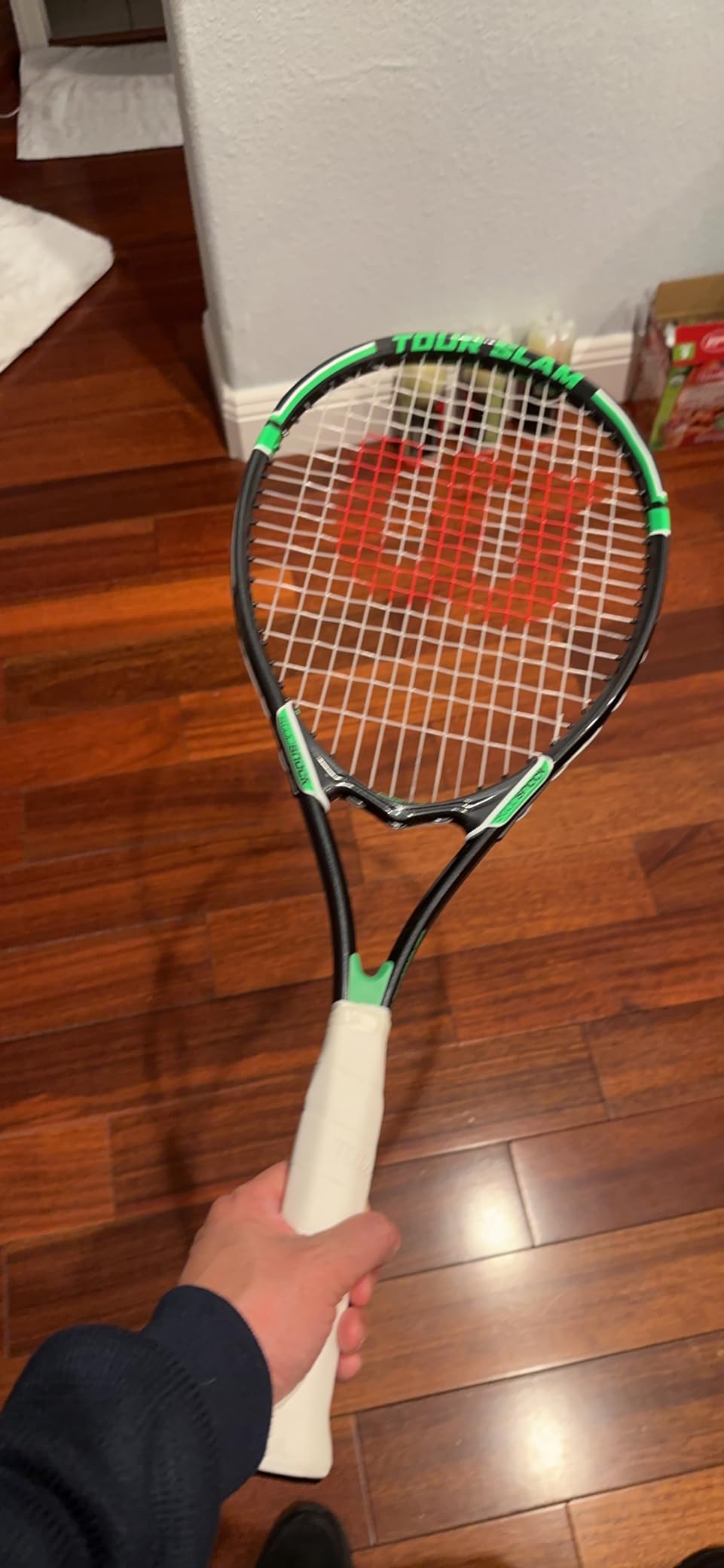
Wilson built in Stop Shock Pads at the throat and sides of the frame, which absorb the highest-vibration flex points. Owners with elbow history single those pads out as the reason the racket feels forgiving on a long session, and it is the reason I put this frame on the arm-health shortlist.
Power Strings and the Volcanic frame technology are doing the work on pace. There is very little the player has to generate beyond contact, which suits a club player who has not yet developed a serve they trust.
The honest weakness is material. AirLite Alloy is an aluminum composite, so the response is less connected than a graphite frame and the frame does not hold tension or shape as well over years of hard play.
Who the Tour Slam Suits
This is the pick for doubles. The oversized head handles the sharp angles at the net and the extra pace of a partner’s stray shot without punishing you, and the light construction keeps it manageable when you have to react fast at the net.
It also suits anyone taking lessons twice a week who wants forgiveness over feel. Several reviewers describe it as the frame that made lessons affordable, because the ball keeps landing in.
Where the Tour Slam Falls Short
Directional control is the limit. If you are learning to aim at a target or to shape a crosscourt passing shot, the big bed will not give you the reference point a 100 or 98 square inch frame provides.
Check the listed package weight before you commit. Reviewers mention a 16 ounce figure, which is heavier than most adult recreational rackets and probably includes the packaging, but it tells you this is a frame with mass rather than a featherweight.
3. HEAD Ti. Conquest Tennis Racquet: Best for Light Weight and a Big Head
HEAD Ti. Conquest Tennis Racquet, 4 1/2″ Grip
108 sq in head
9.7 oz weight
Titanium O-Beam frame
4 1/2 in grip
27 in length
Pros
- Very light frame that reduces fatigue over long sessions
- Oversized 108 sq in head is forgiving on off-centre hits
- Head-light balance helps control at the net
- Frequently bought by players with elbow sensitivity
- Four and a half inch grip suits larger hands
Cons
- Factory strings and grip are basic and worth upgrading
- Feel and build trail graphite frames at the price above
- Short 27 in length gives less reach than a standard adult frame
The Ti. Conquest sits at an interesting middle point between the very light Ti S6 and the heavier frames further down this list. At 9.7 ounces with a 108 square inch head, it gives you more mass than the lightest option and noticeably less head area than the biggest one.
HEAD’s O-Beam titanium construction is what makes that weight manageable. The frame cross-section is shaped for strength without adding bulk, so the racket swings easily even late in a match when your arm is tired.
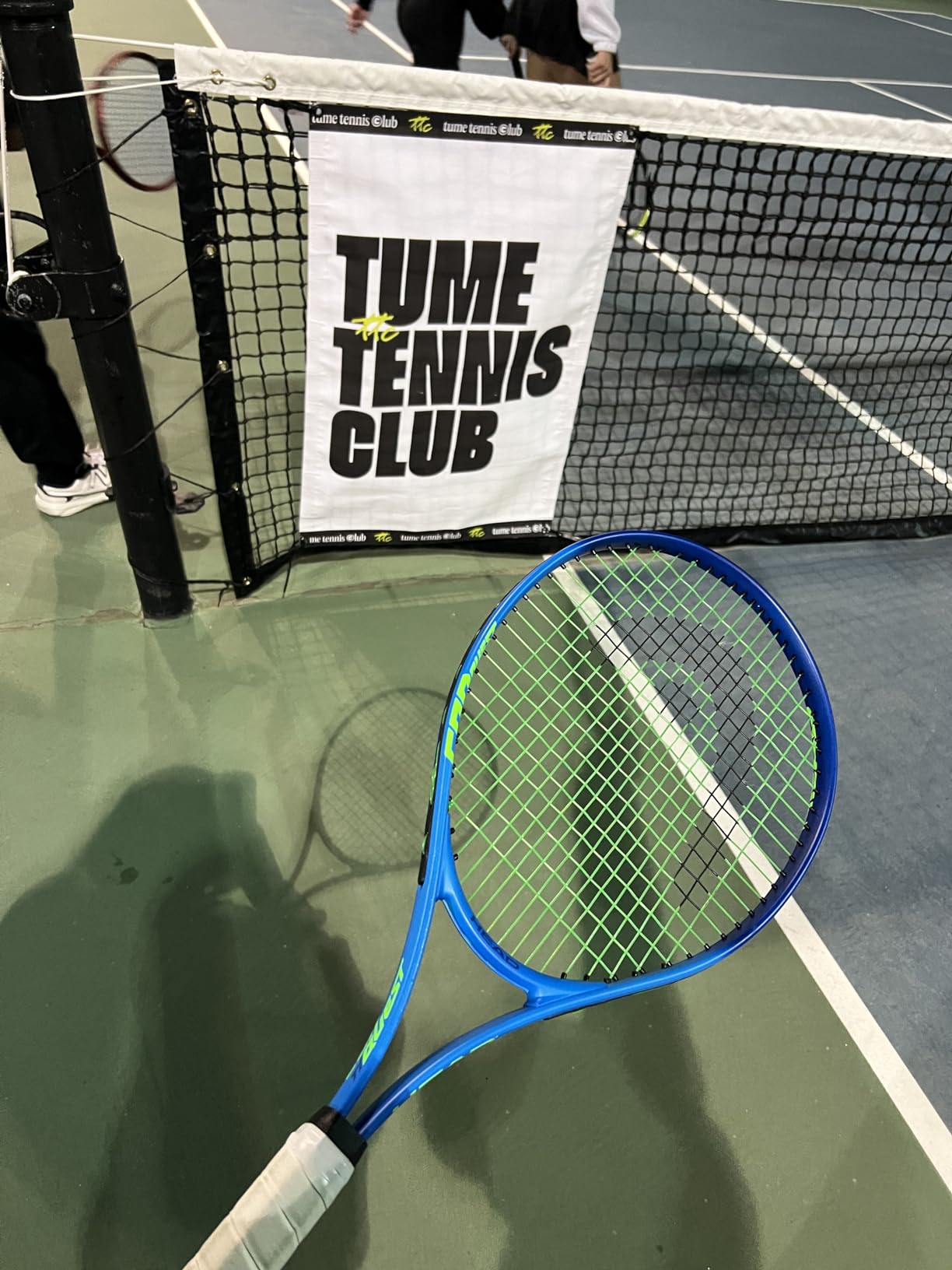
The 4 1/2 inch grip is the largest here, and for intermediate players with bigger hands it is the reason to look at this frame rather than a 4 1/4 or 4 3/8. A grip that is too small costs you control and forces a new grip and often a re-string.
Elbow-sensitive players show up repeatedly in the reviews for this model. That is less about the frame being engineered for impact and more about total weight being low and the head being large enough to soften impact.
The 27 inch length is the one spec that works against you. Standard adult frames run closer to 27 to 27.25 inches, and the extra length on a Ti S6 or Energy XL gives real reach on wide balls.
Who the Ti. Conquest Suits
This suits a recreational or league player with larger hands who wants a featherweight frame with a big sweet spot. It is a strong candidate if you have returned to tennis after a long break and your arm fatigues before your legs do.
It is also the easiest frame here to hand to a doubles partner who is not serious about the sport. There is nothing in the construction to intimidate a newer player.
Where the Ti. Conquest Falls Short
Feel is the compromise. A titanium frame with factory strings gives almost no connected feedback, so a player who wants to shape the ball or develop a serve with touch will be disappointed.
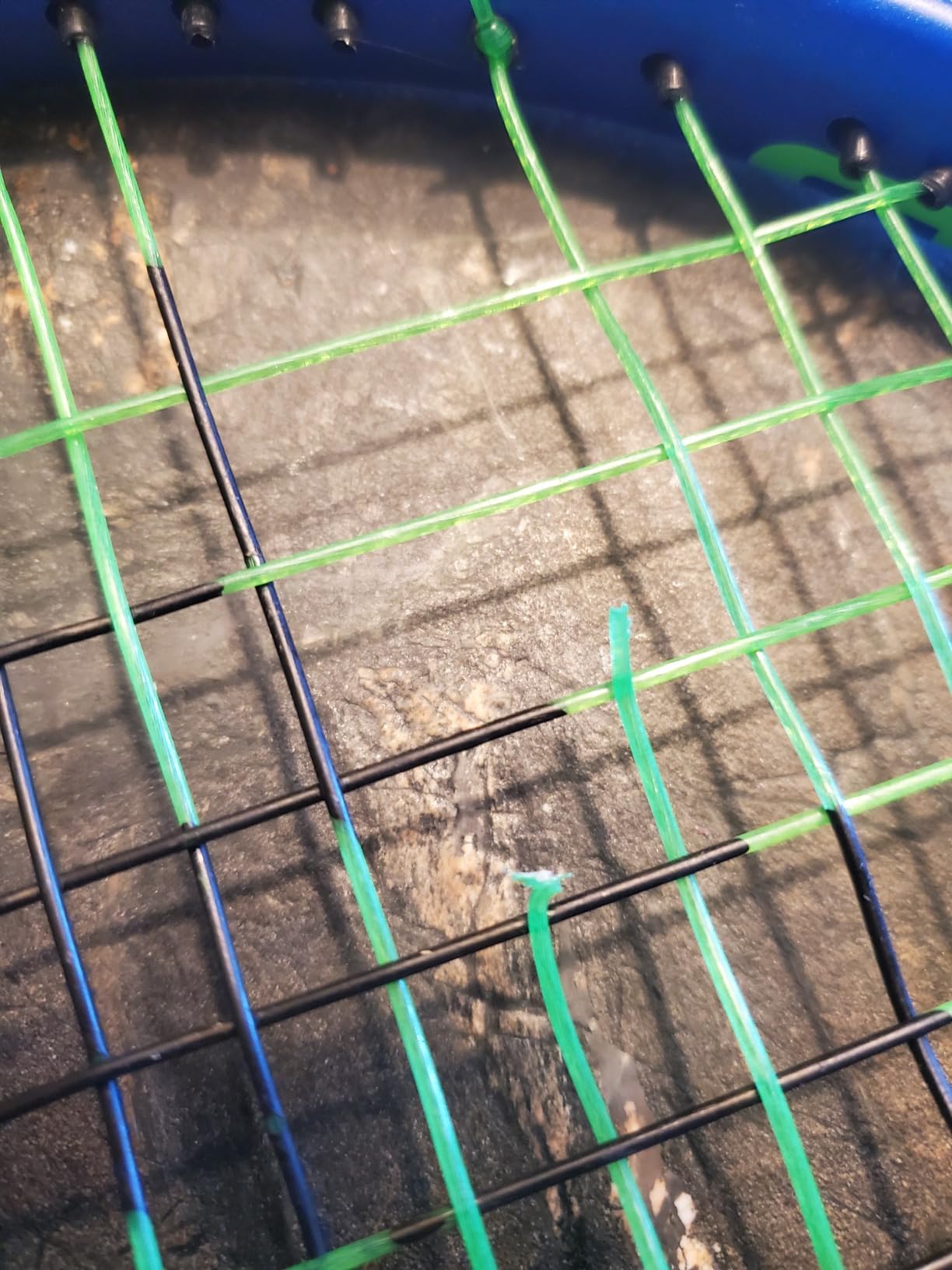
Owners commonly recommend upgrading the strings and the grip as the first improvement. Both are cheap, both change the racket substantially, and neither requires a new frame.
4. Wilson Hyper Hammer 5.3 Adult Recreational Tennis Rackets: Best for Heavy Topspin
Wilson Hyper Hammer 5.3 Strung Tennis Racket (Black/White, 4 3/8)
Head-heavy balance
Hammer technology for sweet spot
Open string pattern
4 3/8 in grip
27.5 in length
Pros
- Generates heavy topspin and a solid heavy serve
- Head-heavy balance adds real stability to a light frame
- Oversize head gives a large sweet spot and easy power
- Good control near the net and from the baseline
- Weighs about 8.5 oz so it stays easy on the arm
Cons
- Factory strings can sit loose in the outer mains
- Noticeable vibration on full-power shots without a dampener
- Open pattern lets strings move on heavy topspin swings
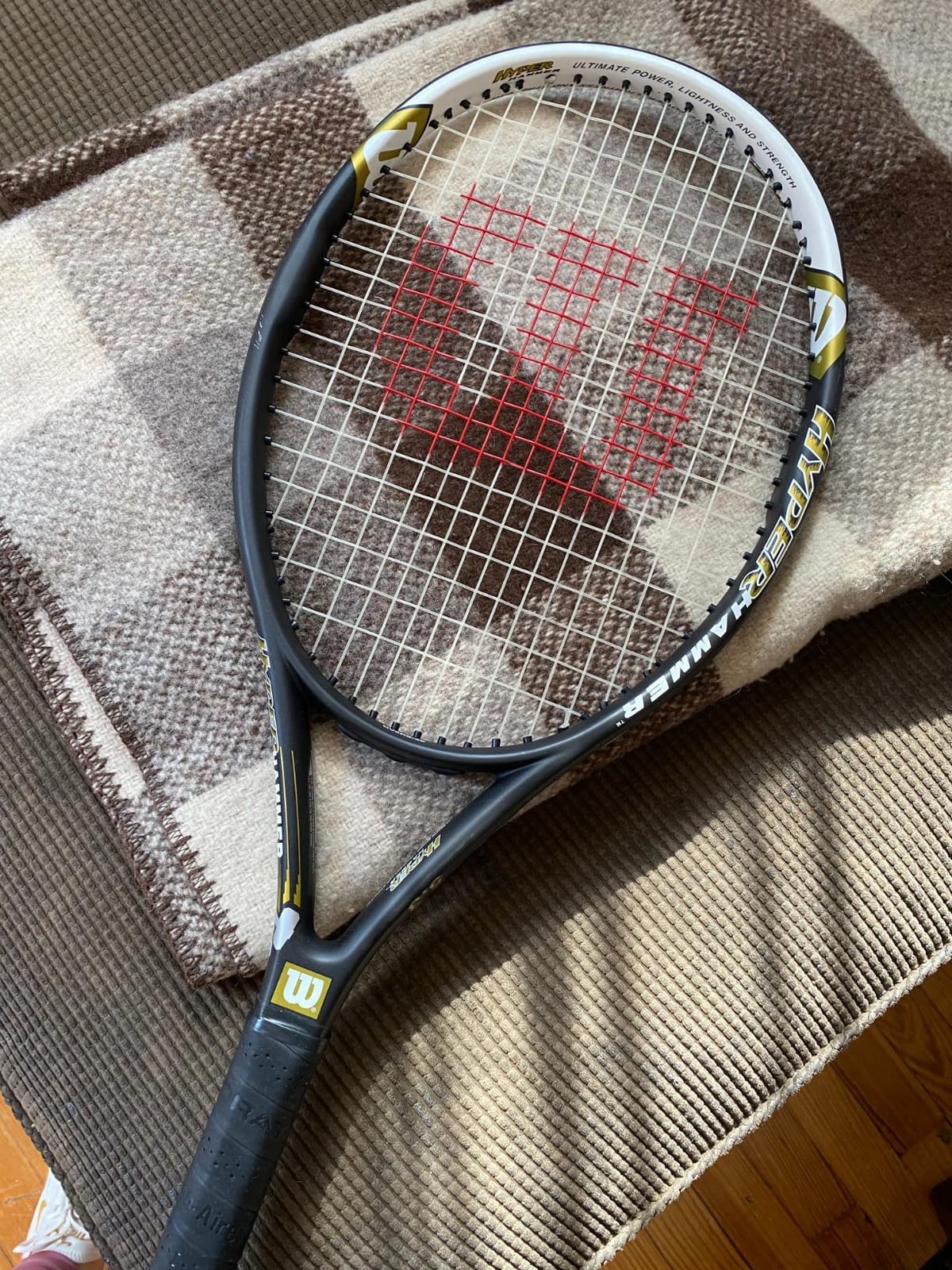
The Hyper Hammer 5.3 is the most interesting frame here on the balance point. It weighs roughly 8.5 ounces yet sits head-heavy, which means the mass is out in the string bed where it stabilises the racket rather than out at the end where it just adds weight.
That head-heavy mass is what produces the heavy topspin and serve reviewers describe. The ball leaves the frame with more energy than a 300 gram graphite frame at the same swing speed, and stability off-centre keeps the bounce predictable.
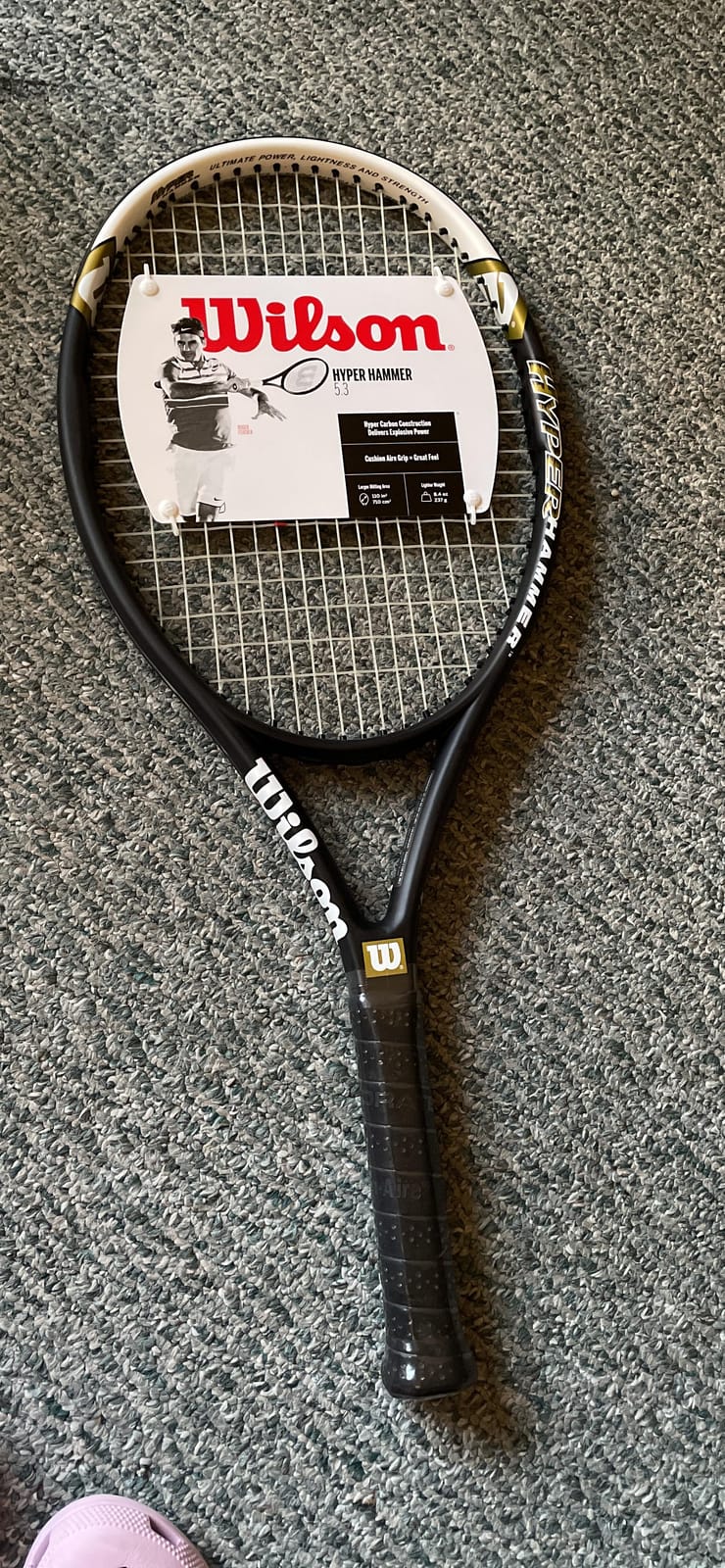
Hammer technology is Wilson’s name for the enlarged beam section that grows the sweet spot. Combined with an open string pattern, it is a straightforward power-and-spin recipe, and it works best for a player with a compact, short swing who wants pace without generating it.
This is the frame for an intermediate baseliner who loves a big looping topspin ball and reaches for the racket late. If you take the ball on the rise and hit inside the court, that same head-heavy mass feels awkward.
It is also worth noting that the open pattern moves a lot on heavy shots. Reviewers report strings shifting in the outer mains, which is a restring signal rather than a frame problem.
Who the Hyper Hammer 5.3 Suits
Choose this if your serve is still a work in progress and you want free pace while you build it. The head-heavy weight gives you a bigger ball on both the serve and the groundstroke for very little extra effort.
It also suits a doubles baseliner who mostly hits from the back half of the court and wants depth on every ball without dialling a tension down.
Where the Hyper Hammer 5.3 Falls Short
The factory string job is the weak link. Loose outer mains and vibration on full-power shots are the two most common complaints, and both are solved with a fresh string and a dampener rather than a new racket.
Maneuverability is also limited for a genuine all-court player. A head-heavy frame is easier to swing than it is to turn quickly, so if you finish lots of points at the net, look at a more neutral frame.
5. HEAD Geo Speed Tennis Racquet: Best Value for Control First
HEAD Geo Speed Tennis Racquet, 4 3/8″ Grip
105 sq in head
10.4 oz weight
Head-light balance
Titanium with graphite shaft
Pre-strung synthetic gut
Pros
- Smallest head here at 105 sq in so it is the most control-oriented
- Head-light balance reduces vibration and aids accuracy
- Comes pre-strung with synthetic gut so no setup needed
- Reasonable cost for an adult returning to tennis
- Swingweight stays low despite the heavier figure
Cons
- Marketing lists it as a beginner frame rather than an intermediate one
- 105 sq in head gives less forgiveness than a 115 sq in frame
- Heavier at 10.4 oz than most competing recreational rackets
The Geo Speed is the odd one out in this list, and that is why it is worth reading about. Every other frame here is an oversized beginner or recreational model, and the Geo Speed is labelled that way on Amazon as well, so if you want a genuine intermediate frame this is not it.
What it does offer is a head-light balance, which no other frame in this guide has. That means the mass sits toward your hand, so the racket turns quickly, resists twisting on off-centre hits, and sends noticeably less vibration up the forearm.
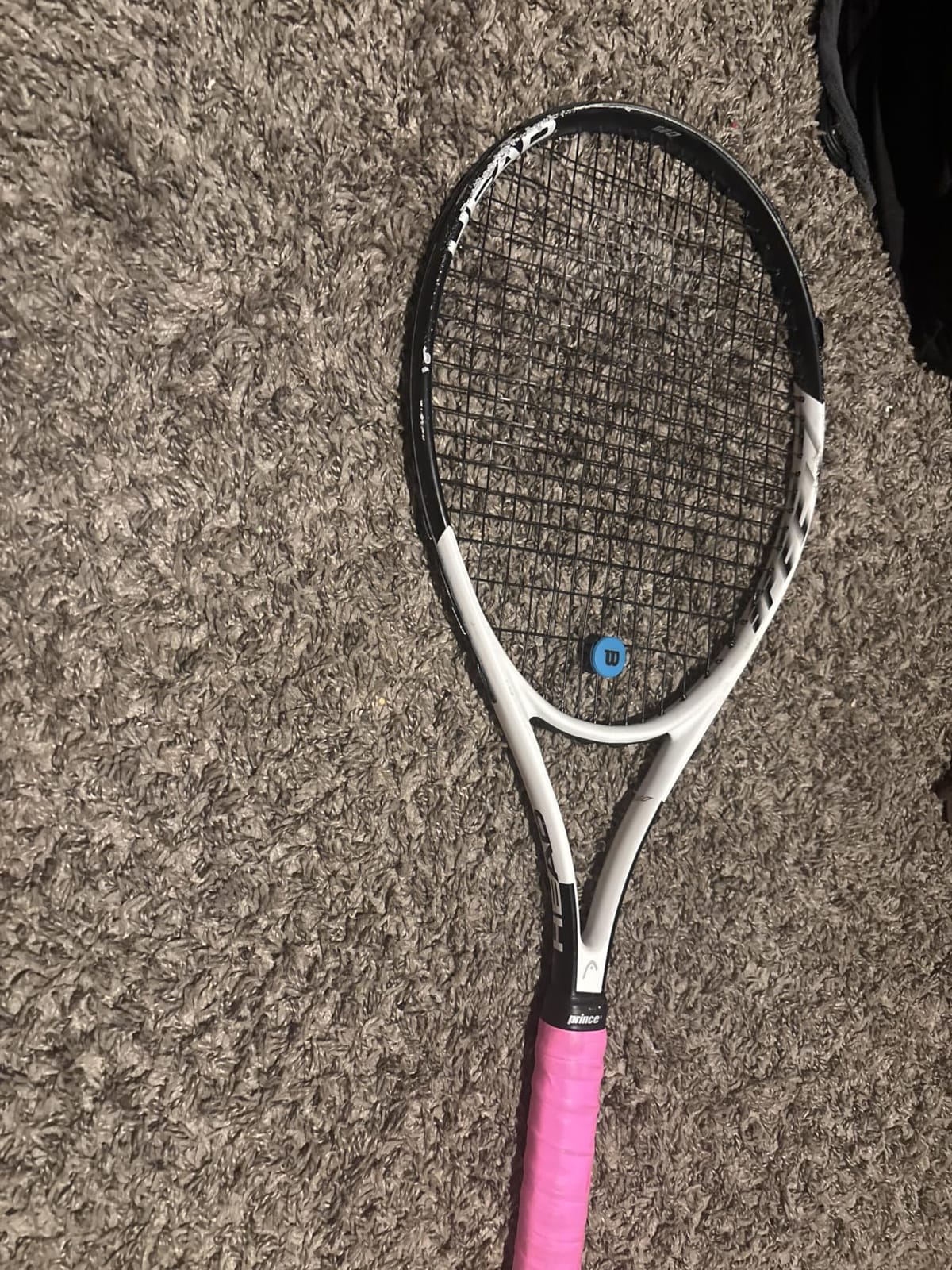
At 105 square inches, the head is also the smallest here, and smaller means a more defined sweet spot and better directional control. If the one thing holding you back is aim rather than depth, this is the frame to try.
Geo Power technology shapes the shaft for a balance of power and control, and the graphite shaft gives it more stability than the all-aluminium frames at this level.
The 10.4 ounce strung weight is the highest figure in this roundup, which makes sense for a control-oriented frame. It slows the swing slightly, and for a player with a fast swing that is a feature rather than a flaw.

Who the Geo Speed Suits
This suits an older or returning player who wants control and a quiet racket more than raw power. The head-light balance is a genuine asset if you are holding the racket with two hands on the backhand and value clean contact.
It is also a sensible first step up from a very light aluminium racket, because the added mass gives more stability without the swingweight of a 300 gram graphite frame.
Where the Geo Speed Falls Short
It is not built for generating pace. A player who wants to hit through the ball faster will find the 105 square inch bed and the slower swing speed limiting.
Its 738 reviews are the smallest sample here, which means fewer long-term owners reporting how it holds up over several seasons of club play.
6. Wilson Energy XL Adult Recreational Tennis Racket: Best for Extra Length and Dampening
Wilson Energy XL Adult Recreational Tennis Racket – Grip Size 3 – 4 3/8″, Yellow/Black
Oversize V-Matrix head
9.6 oz AirLite Alloy
Stop Shock Sleeves at 3 and 9
Extra length
4 3/8 in grip
Pros
- Stop Shock Sleeves dampen vibration at both sidewalls
- Lightweight 9.6 oz frame is easy on the arm
- Extra length adds genuine reach and court coverage
- Large forgiving sweet spot from V-Matrix technology
- One year manufacturer warranty included
Cons
- Composite and alloy frame gives limited control and power versus graphite
- Bulkier head and length can feel unwieldy at the net
- Built for recreational play rather than competitive performance
The Energy XL takes the basic idea behind the Tour Slam and adds one thing the Tour Slam does not have: an extra-long body. That length, combined with a 9.6 ounce AirLite Alloy frame, gives you reach at the baseline and pace on the serve without turning the racket into a heavy object.
Its real selling point is the Stop Shock Sleeves, mounted at the three and nine o’clock positions on the frame. Those are the two points that flex most on impact, and damping them directly is the most targeted vibration control in this roundup.
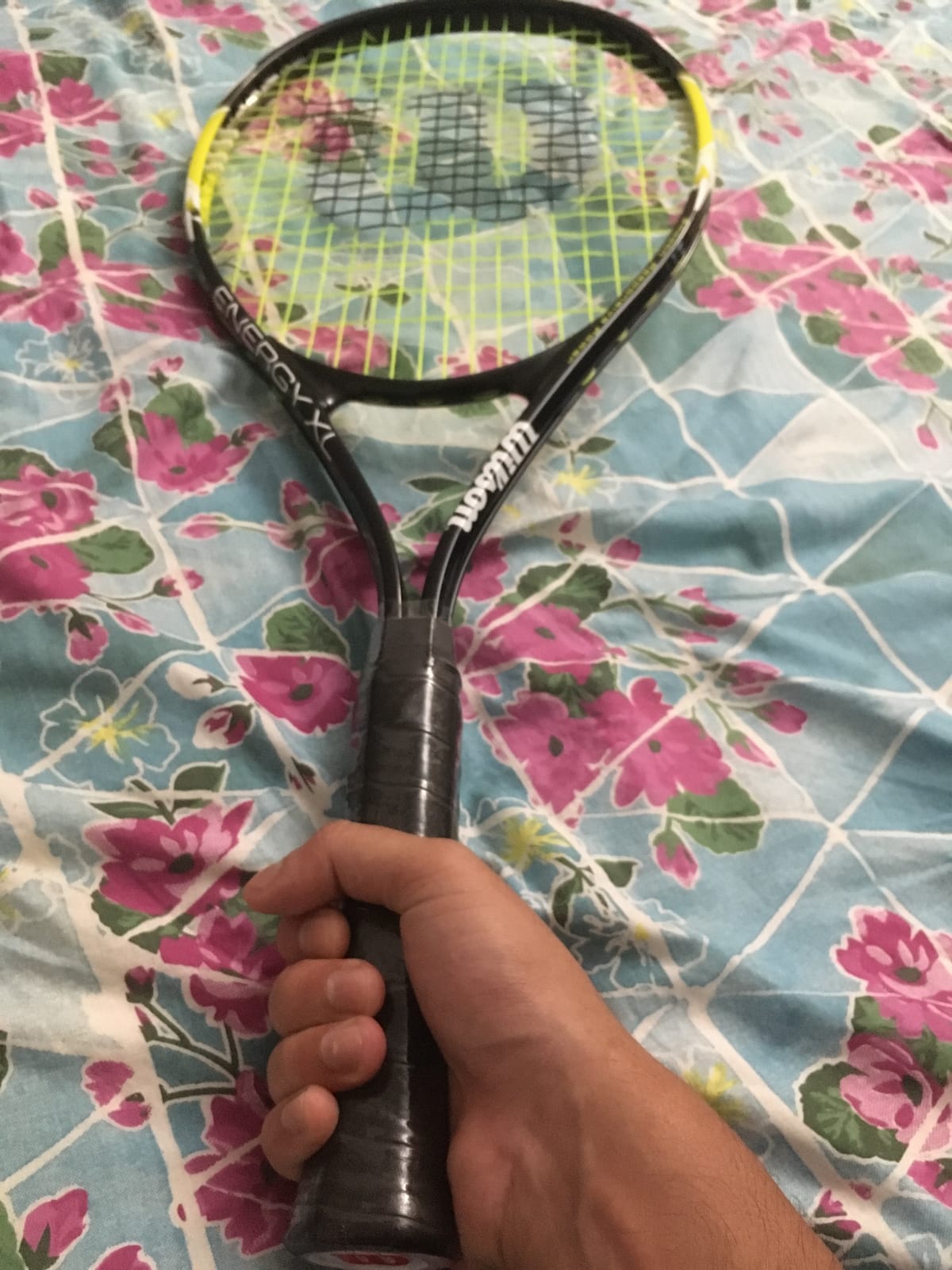
If your elbow is the deciding factor in your purchase, the combination of dampening, low weight and a large sweet spot is exactly what the forum threads asking about tennis elbow are really asking for. Several reviewers describe it as comfortable over long sessions for that reason.
V-Matrix technology supplies the forgiveness, and reviewers consistently report easy power generation without having to swing hard. That makes it a good confidence-builder during the intermediate stage, when depth is still inconsistent.
The frame material is the limit. A composite and alloy layup with a carbon fibre shaft will not give you the connected feel or the directional precision of a graphite player frame.
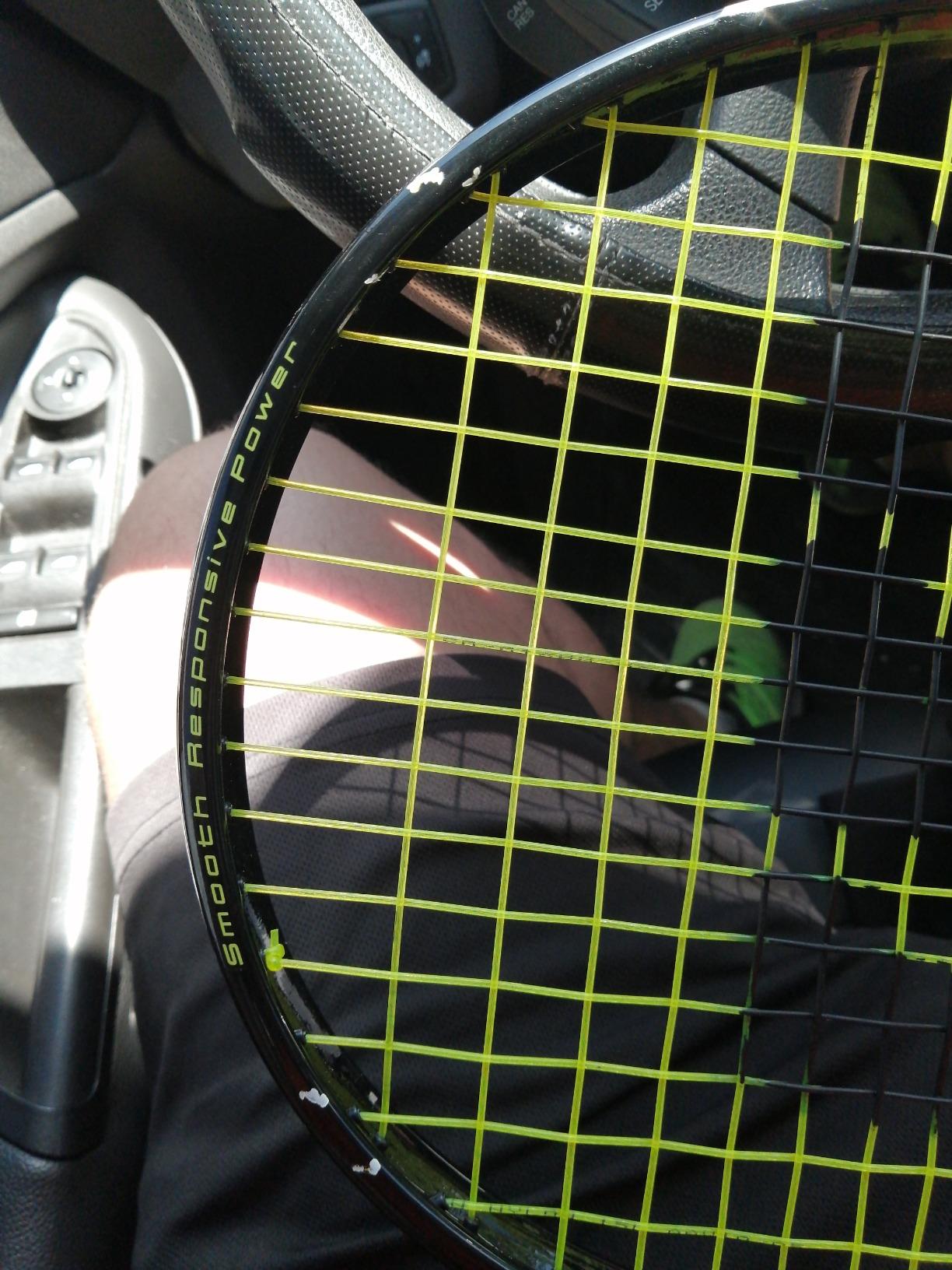
Who the Energy XL Suits
This is the arm-health pick in our list. If you have had tennis elbow, tendonitis in the forearm, or simply notice sting after a two-hour session, the sidewall dampeners give you the softest ride of the six frames.
It also suits a club player who covers a lot of ground and wants free reach, and a doubles player who often has to play balls behind them.
Where the Energy XL Falls Short
Bulk is the complaint to expect. The oversized head plus extra length can feel unwieldy at the net, so a player who lives on serve-and-volley will feel the frame fighting them on direction changes.
On pure performance it sits near the bottom of this list. The alloy and composite build trades control and power potential for forgiveness and price, which is a good trade early and a limiting one later.
How We Picked These Rackets
We compared six frames on the same criteria rather than on marketing language, because spec vocabulary in this category is genuinely confusing and most buying guides get it wrong.
First, we checked the manufacturer and retailer specs against each other, using the same units for every frame so that a 9.7 ounce racket can be compared with a 10.4 ounce racket without a conversion error.
Second, we weighted owner reviews heavily. A frame with a thousand reviews tells you more about long-term behaviour than a spec sheet, and it is where the recurring failure modes show up, like the loose outer mains on the Hyper Hammer and the breakable factory strings on the Ti S6.
Third, we insisted on honest downsides. Every frame here has at least two real drawbacks stated, because intermediate players can tell instantly when a list is selling rather than advising.
Fourth, we looked at what happens after the string bed is changed. On an oversized frame the string setup matters as much as the frame itself, and any pick that cannot take a decent string job was flagged.
Racket Specs Explained Before You Buy
Head Size: Why Bigger Frames Forgive More
Head size is the simplest forgiveness tool in the sport. A larger head spreads the impact of the ball across more strings, so a mishit still lands in and still goes somewhere sensible. A 115 square inch head is at the forgiving end; a 98 square inch head is at the precise end.
For intermediate players the practical rule is simple. If depth is your problem, stay big or go bigger. If aim and spin rate are your problem, a smaller head gives you a firmer platform and better feedback.
Do not buy a 105 square inch frame thinking it is a compromise between 98 and 100. It is not. Head size is not linear, and the jump from 100 to 105 costs you a noticeable amount of control.
Weight Bands and What They Change
Racket weight is listed as strung weight, meaning the frame plus strings plus grip. Across this list the frames run from 8.5 ounces strung on the Hyper Hammer to 10.4 ounces on the Geo Speed, which is a wide spread for one skill level.
Lighter frames are easier to accelerate and easier on the arm, but they give up stability against heavier balls. Heavier frames feel more solid and hit harder from the same swing, but they demand a faster swing to keep up with the ball.
Balance matters as much as the number. A head-heavy 8.5 ounce frame puts the mass where it stabilises the ball. A head-light frame puts it where it helps you swing the racket. Total weight alone does not tell you how a frame feels.
String Pattern: 16×19 for Spin, 18×20 for Control
The pattern is the mains by the crosses. An open pattern such as 16×19 has more spacing, so the ball grips and hops, which produces more spin and slightly less control. A closed pattern such as 18×20 has more strings in a smaller space, which firms up the bed for flat hitting.
The open pattern on the Ti S6 is a genuine advantage for an intermediate player because it generates spin on short defensive swings. That means you can clear the net without swinging hard, which protects your elbow and improves your consistency at the same time.
Grip Size and How to Measure Your Hand
Grip size is the spec people most often get wrong, and a wrong grip size costs money twice. A grip that is too small has to be replaced, and it makes you grip harder than you should, which contributes to arm strain.
To measure, take the distance in inches from the crease along your palm to the tip of your ring finger. That number maps to a grip size: about 4 1/8 inches for a 7 7/8 inch hand, 4 1/4 inches for 8 inches, 4 3/8 inches for 8 1/8 inches, 4 1/2 inches for 8 3/8 inches, and 4 5/8 inches for 8 5/8 inches.
Check the measurement before ordering. Most of the frames in this roundup come in more than one grip size, and the Ti. Conquest runs to the wider 4 1/2 inch option.
Balance: Head-Heavy vs Head-Light
Balance describes where the mass sits along the length of the racket. A head-heavy frame swings through the ball harder and stays stable on off-centre contact. A head-light frame turns faster and is easier to manipulate at the net.
Among these six, the Hyper Hammer 5.3 is the most head-heavy, and the Geo Speed and Ti. Conquest are the most head-light. Everything else sits near neutral, which is the sensible default for an all-court intermediate player.
Tennis Elbow and Arm-Friendly Racket Choices
Elbow and forearm pain came up in almost every intermediate racket discussion we looked at, and it is the criterion most lists ignore. It should be the first criterion, because a racket you cannot use for three months is more expensive than any frame on this page.
There are three levers, and they work together. Start with frame flex. The Ti S6 and the Ti. Conquest are the most flexible frames here, and flexible frames absorb energy instead of passing it into your elbow. Stiff graphite frames are what most players test first and regret later.
Second, look at dampening built into the frame rather than a clip-on damper. The Wilson Energy XL mounts Stop Shock Sleeves at the three and nine o’clock positions, which are the flex points that generate the most vibration, and the Tour Slam uses Stop Shock Pads for the same purpose.
Third, string soft and string low. A soft multifilament at a modest tension reduces the shock reaching your arm more than any frame change will, and it is the first thing to try before buying a new racket. One player we read about changed strings and dropped tension to 48 to 50 pounds and the pain persisted, which is exactly the case where frame flexibility starts to matter more.
Our arm-health ranking puts the Energy XL first, the Ti S6 and the Tour Slam close behind, and the head-light Geo Speed a strong fourth because a head-light balance sends noticeably less energy up the forearm.
Stringing and Tension Recommendations for Each Frame
String setup changes how a frame feels more than most buyers expect, and all six of these frames arrive with basic factory strings. Budget for a restring when you buy.
On the Ti S6, use a soft multifilament at a moderate tension if your elbow is sensitive, and a polyester one notch lower than you think you need if you want spin and control. An open 16×19 bed is at its best slightly below the top of the tension range.
On the Tour Slam, stick with synthetic gut or a soft multi at a moderate tension. An aluminum frame at high tension feels harsh and works against the forgiveness that makes the frame worth having.
On the Ti. Conquest, almost any string will feel fine because the frame is so light. Owners who upgrade usually pick a better grip and a nicer-feeling multifilament, and both improve the racket more than the frame swap would.
On the Hyper Hammer 5.3, a fresh poly at a normal tension fixes the two most common complaints, which are loose outer mains and vibration on full-power shots. Add a dampener.
On the Geo Speed, the factory synthetic gut is serviceable. Moving to a slightly firmer multi gives you more control while staying comfortable.
On the Energy XL, keep tension modest and lean on the frame’s own damping. The whole point of this frame is a softer ride, and a stiff string setup cancels that out.
Upgrading From a Beginner Racket: What Actually Changes
If you are reading this with a super-oversized aluminium racket in your bag, you are not in the wrong place. Plenty of intermediate players still use one, and the honest truth is that the racket is rarely what is holding their game back.
What changes is not the score, it is the feedback. An oversized frame hides contact mistakes. Move to a slightly smaller, better-balanced frame and you suddenly know where on the strings you actually struck the ball, which is what lets you fix a grip or a swing path.
Forums fill up with this exact question, usually phrased as which racket lets you grow into it long-term instead of needing another upgrade in two years. The honest answer from experienced players is that no frame grows with you forever. The practical answer is to buy the most balanced frame you can comfortably swing rather than the most extreme one.
One repeated piece of advice is worth passing on: a heavy frame can genuinely slow down a fast swing and give you time to set up. If your problem is that you rush, a heavier frame or a lower tension will help more than a better technique lesson.
Frequently Asked Questions
What is the best racket for intermediate players?
The HEAD Ti S6 is our pick for most intermediate players: a 115 square inch head with a graphite and titanium shaft at 8.6 ounces strung, an extended 27.7 inch length, and an open 16×19 pattern that generates topspin on short swings. Players who already hit with pace and want control should look at a smaller 100 or 98 square inch graphite frame instead, which sits outside this roundup.
What is the best mid-priced tennis racket for intermediate players?
The Wilson Tour Slam is the best mid-priced pick here. Its V-Matrix oversize head delivers a large forgiving sweet spot, the AirLite Alloy frame stays light to swing, and Stop Shock Pads take the sting out of string vibration. Two specs justify the choice: a genuinely large head for an inconsistent contact window, and built-in dampening at the frame flex points.
Should I get a 98 or 100 racket?
Pick 100 square inches if your consistency is still developing and you want a forgiving sweet spot with free power. Pick 98 square inches if your stroke mechanics and spin are already reliable and you want control and feel. A 105 square inch head is not a compromise between the two; it costs you real control. Most intermediate players should stay at 100 or larger until depth becomes automatic.
What head size and weight should an intermediate player use?
Most intermediate players do best between 100 and 110 square inches at roughly 280 to 300 grams unstrung. The frames in this roundup run larger, from 105 to 115 square inches and 8.5 to 10.4 ounces strung, because forgiveness matters more while technique is still settling. If your serve and groundstrokes are already consistent, a 100 square inch frame around 300 grams is the step up.
What string pattern and tension are best for an intermediate player?
A 16×19 open pattern produces more spin and helps you clear the net on short swings, which is why it suits a developing topspin player. An 18×20 closed pattern gives better control for flat hitting. For tension, stay in the middle of the range recommended for the frame rather than at the top, and string soft if you have any elbow sensitivity.
Is Wilson or Babolat better?
Neither is objectively better. Wilson skews toward comfort, dampening and versatility, with the Clash-style flexible frames leading that line. Babolat skews toward spin and power, with the Aero and Drive lines leading that one. Choose by playing style and arm tolerance rather than brand, and demo a frame before committing.
Final Verdict on the Best Tennis Rackets for Intermediate Players in 2026
Pick the HEAD Ti S6 and you get the most complete package in this roundup: the largest sweet spot, the lightest feel, a graphite shaft that keeps the head stable, and the highest owner rating of the six. It is the frame we would put in one bag and use for everything from league doubles to a singles match.
The Wilson Tour Slam is the pick if you play doubles often, want the most forgiving bed you can get, and need something your arm will not complain about. The HEAD Ti. Conquest is the lightest-feeling frame here and the best fit for larger hands. The Wilson Hyper Hammer 5.3 gives you the most free topspin and serve pace from a head-heavy balance. The HEAD Geo Speed is the control-first, head-light option for a returning player. The Wilson Energy XL is the arm-health pick, with dampeners at both sidewalls and extra length off the ground.
If you buy only one: the HEAD Ti S6, restrung with a soft multifilament at a moderate tension. Then measure your grip before you order, because getting that wrong is the most expensive mistake in this entire guide.