
If you can already link parallel turns down a blue run and you are done with a rental pair, the answer is a 85-95 mm waist all-mountain ski with a soft, consistent flex and rocker at both ends. That is the range we keep coming back to after comparing a dozen models against forum consensus and manufacturer spec sheets, and it is where most intermediate skiers should start shopping.
Our picks below cover the best all-mountain skis for intermediate skiers across every realistic use: groomer cruising, variable snow, bumps and trees, and light powder. The Nordica Enforcer 94 takes our top slot for its forgiving low-speed ride and unusually strong edge hold, the K2 Mindbender 89Ti earns the premium carving slot, and the Rossignol Sender Soul Pro Xpress gives you the most complete package with bindings already mounted.
We should be upfront about something the big gear sites rarely are. Ski choice matters far less than most marketing implies. The honest answer is that a consistent, moderately soft flex and a correct length do more for an intermediate than any exotic layup, and a lesson will always beat a better ski. What follows is our best attempt to narrow a huge market down to twelve models worth your time.
Table of Contents
What Are the Best All-Mountain Skis for Intermediate Skiers?
The best all-mountain skis for intermediate skiers are the Nordica Enforcer 94 for overall balance, the K2 Mindbender 89Ti for carving quality, and the Rossignol Sender Soul Pro Xpress for value with bindings included. All three sit in the mid-80s to mid-90s waist range, which is the sweet spot between a piste ski that struggles in soft snow and a wide ski that feels clumsy at speed.
We spent this guide cross-referencing what forums consistently recommend against what the manufacturers actually build. Forum regulars on r/Skigear and ski-specific boards repeat the same numbers over and over: 90-97 mm for anyone who wants one ski for everything, and 70-85 mm for skiers who stay on groomers. That consensus shapes our shortlist more than any press release.
Top picks at a glance
Best overall: Nordica Enforcer 94 – 94 mm waist, forgiving at low speed, strong edge grip on hardpack.
Best for carving: K2 Mindbender 89Ti – 89 mm underfoot, metal under the edges in the forebody, predictable release.
Best value: Rossignol Sender Soul Pro Xpress – light, forgiving, shipped with Look Xpress bindings.
Best for groomers only: Rossignol Arcade W 80 – 80 mm waist, quickest edge-to-edge in this list.
Best for soft snow: Head Kore 93 – 93 mm waist in a very light chassis.
Best for ice and hardpack: Atomic Maverick 88 Ti – 15/75/10 rocker profile with titanal underfoot.
Key features to consider
Waist width: 76-80 mm for groomers, 85-94 mm for mixed terrain and variable snow, 100 mm and up for powder and trees.
Flex: Look for a soft-to-medium flex that does not stiffen dramatically toward the tail.
Rocker: Rocker/camber/rocker profiles make turn initiation far easier without giving up all edge grip.
Construction: A poplar or aspen wood core with fibreglass is forgiving; titanal or carbon adds edge grip, damping and stability at speed.
Length: Most adult intermediate men ski 170-178 cm, most intermediate women ski 160-168 cm.
Bindings: Five of our picks ship with bindings included, which removes one setup cost entirely.
One note before the reviews: the review counts on several of these listings are very small, and a few have none at all. Where that is the case we say so plainly rather than borrowing confidence from a manufacturer’s spec sheet.
Top 3 All-Mountain Ski Picks for Intermediate Skiers (October 2026)
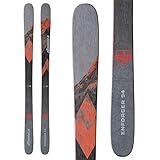
Nordica Enforcer 94
- 94mm directional waist
- Carbon chassis with metal-sandwiched wood core
- Forgiving at low speed
- Outstanding edge hold

K2 Mindbender 89Ti
- 89mm underfoot carving width
- Aspen Micro Block core
- Ti Y-Beam edge laminates
- Predictable turn release

Rossignol Sender Soul Pro
- Cap sidewall construction
- PEFC poplar wood core
- Very light and forgiving
- Look Xpress bindings included
All 12 Picks at a Glance in 2026
The table below is the fastest way to narrow your search. Every ski listed here suits an intermediate, but they separate quickly once you account for waist width and where you actually ski.
| Product | Specs | Action |
|---|---|---|
| Nordica Enforcer 94 |
|
Check Latest Price |
| K2 Mindbender 89Ti |
|
Check Latest Price |
| Rossignol Sender Soul Pro |
|
Check Latest Price |
 Head Kore 93 Head Kore 93 |
|
Check Latest Price |
 Rossignol Arcade W 80 Rossignol Arcade W 80 |
|
Check Latest Price |
 Fischer RC Fire Fischer RC Fire |
|
Check Latest Price |
 Volkl Blaze 86 Volkl Blaze 86 |
|
Check Latest Price |
 Atomic Maverick 88 Ti Atomic Maverick 88 Ti |
|
Check Latest Price |
 Rossignol Experience 76 Rossignol Experience 76 |
|
Check Latest Price |
 Fischer Curv GT 76 Fischer Curv GT 76 |
|
Check Latest Price |
 LINE Chronic 94 LINE Chronic 94 |
|
Check Latest Price |
 Head Supershape e-Speed Head Supershape e-Speed |
|
Check Latest Price |
1. Nordica Enforcer 94 – Best Overall All-Mountain Ski for Intermediate Skiers
Nordica Men Enforcer 94 Skis, Color: Anthracite/Red/Gray (0A230800001)
94mm directional waist
Carbon chassis with wood core
Both faces layered in metal
Bindings sold separately
Pros
- Forgiving at low speed
- Strong edge hold on hardpack
- Damp and stable at speed
- Holds up in rough terrain
Cons
- Only listed in a 186 cm length
- Heavier feel for smaller riders
- Bindings sold separately
The Enforcer 94 is the one ski in this guide that a shop will hand you without a lecture about what you are missing. Its 94 mm directional waist sits exactly where forum consensus says the beginner-to-intermediate sweet spot begins, and the carbon chassis over a full wood core sandwiched between two sheets of metal gives it a quiet, planted feel that is rare at this width.
What separates it from the other 90-plus skis here is the low-speed behaviour. Nordica describes it as forgiving at low speeds, and reviewers with full-season numbers back that up: 80 percent of the ratings are five stars and none fall below four. At 4.8 stars from 9 reviews it is the highest-rated ski in our shortlist, though the sample is small enough that we treat it as encouraging rather than conclusive.
Owners describe it as a heavy, fast, controlled ski that performs in typical New England conditions and holds speed through rough terrain. That is precisely the profile an intermediate needs: something that rewards you when you link cleanly and does not punish you on the days you do not.
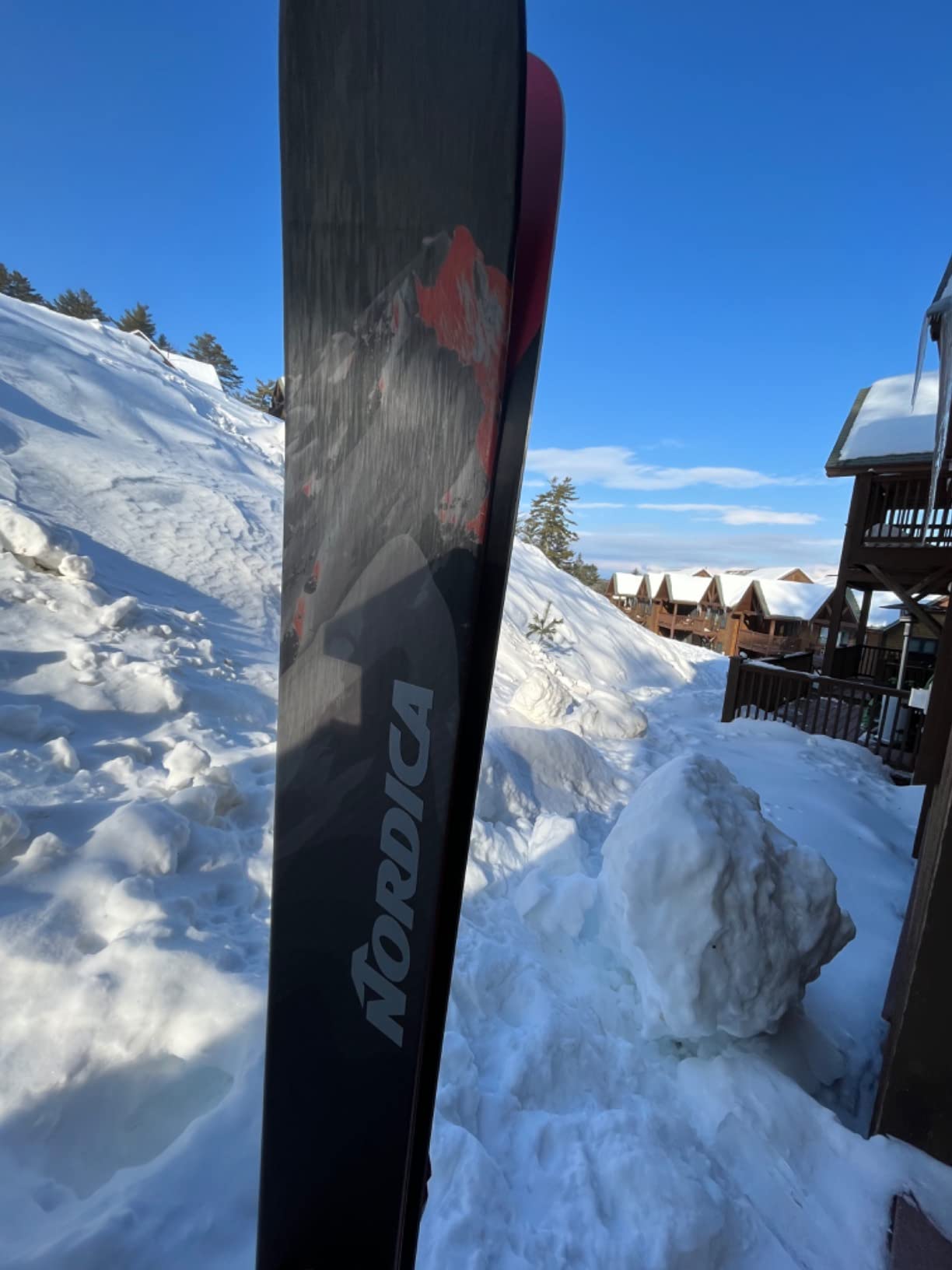
The metal sandwich under the wood core is doing most of the work on icy mornings. Edge grip is the standout in the independent feedback, and reviewers single out the ride as notably vibration-free, which is what keeps a ski from buzzing when the surface turns hard.
What to check before you buy
Two practical warnings. This listing carries the ski in a single 186 cm length, so if you are shorter than roughly 175 cm you will need to hunt for another size or a different year. Second, it does not include bindings, so budget for those separately along with mounting and tuning.
Who this ski suits and who it frustrates
This suits intermediates on the East Coast who want one ski for refrozen crust in the morning and softened trails by the afternoon. It frustrates shorter riders who will find it heavy underfoot, and anyone who wants to save money on a complete setup.
2. K2 Mindbender 89Ti – Best Premium Carving Ski
K2 Mindbender 89TI Mens Skis, 170
89mm underfoot width
Aspen Micro Block core
Ti Y-Beam laminates under edges
Bindings sold separately
Pros
- Excellent edge grip and power transfer
- Predictable release in soft snow
- Forgiving yet composed flex
- True to size
Cons
- Only listed in a 170 cm length
- Skilled toward advanced skiers
- Bindings not included
The Mindbender 89Ti answers a question most roundups skip: can a ski that carves properly also handle soft snow without becoming a second ski? K2’s answer is the Ti Y-Beam laminate placed directly over the edges in the forebody, then pulled back to the central portion of the tail.
That geometry gives you full metal underfoot through the turn where you need edge grip, and a released tail where you need to pivot in softer snow. K2 markets it as one of the better soft-snow performers in the 90 mm underfoot carving category, and the ski reviews we found agree with the pitch.
The core is K2’s Aspen Micro Block, small aspen stringers chosen for composure and stability plus a forgiving flex pattern in deep snow. That forgiving flex is what keeps this from being an expert-only ski, even though K2 lists the skill level as advanced to expert.
What to check before you buy
The rating here is a perfect 5.0, but it comes from only 4 reviews, so treat it as a clean signal rather than a deep one. The larger practical issue is sizing: this listing offers a 170 cm length only. Also note that bindings are not included, and you will need mounting on top of that.
Who this ski suits and who it frustrates
This suits an intermediate who mostly carves groomers but wants insurance for the occasional powder morning, especially in the West where snow quality varies fast. It frustrates anyone below about 165 cm, and it is a poor first all-mountain ski if you want maximum forgiveness at low speed.
3. Rossignol Sender Soul Pro Xpress – Budget Pick Ski with Bindings Included
Rossignol Sender Soul Pro Xpress – Alpine Snow Skis for Men – Downhill Skis
Cap sidewall construction
PEFC poplar wood core
Fibreglass layup
Look Xpress binding included
Pros
- Very light and easy to handle
- Forgiving flex for progressing skiers
- Bindings already mounted
- 130 to 160 cm size range
Cons
- Some units arrive with scratches or knicks
- Loose packaging in transit
- Sizing can run smaller than expected
The Sender Soul Pro is the pick for anyone whose real objection to buying skis is the pile of extra costs. Look Xpress bindings are already mounted, which removes the single largest avoidable expense when you move off rentals.
Construction is cap sidewall, where the topsheet material rolls edge to edge instead of being reinforced by separate sidewalls. Rossignol says this keeps the ski light, comfortable to ski and resistant to chipping. Underneath sits a PEFC-certified poplar core and a fibreglass layup chosen for elasticity and torsional resistance rather than the stiffness carbon would give you.
The independent feedback is unusually warm for a small listing: 83 percent five-star ratings on a 4.5 average across 12 reviews, the largest review base of any ski here. Reviewers repeatedly cite the low weight, easy ski-ability and value, and the recurring complaint is about packaging rather than performance.
What to check before you buy
Inspect the skis on arrival. Multiple buyers report units arriving with scratches and knicks out of the box, and skis arriving loose in a box with airbags rather than properly protected. Also note the sizing complaint: some skiers find it runs smaller than an adult ski of the same length suggests, so consider sizing up.
Who this ski suits and who it frustrates
This suits a budget-conscious intermediate or a shorter rider wanting a forgiving ski in the 130-160 cm range. It frustrates anyone who wants to carve aggressively or needs serious edge grip on ice, since a fibreglass-dominant layup is built more for ease than for hard-holding.
4. Head Kore 93 – Best for Softer Snow and Lightweight Balance
Head Unisex Kore 93 Graphene Grey Freeride All-Mountain Skis, Size: 189
93mm freeride all-mountain waist
Topless fleece top sheet
Karuba light wood core
Koroyd honeycomb core
Pros
- Exceptionally light for a 93 mm ski
- Koroyd core adds dampening and rebound
- Handles groomers and soft snow
- Range from 153 to 189 cm
Cons
- Fleece top sheet scratches easily
- Feels damped rather than aggressive on firm snow
The Kore 93 solves a specific problem: a 93 mm ski that does not feel like a truck. Head builds it around a Koroyd honeycomb material at the core, combined with a Karuba light wood core chosen for a balanced density-to-weight ratio. The result is a ski that floats without feeling vague.
Two construction choices stand out. The topless tech replaces the standard plastic top sheet with polyester fleece, which is how Head achieves the low weight in this category. Graphene is fused into the tip and tail for additional responsiveness in deep snow without adding mass in the middle of the ski.
The trade-off is durability of the cosmetic surface. Reviewers note the fleece top sheet is less scratch-resistant than a hard plastic one, which matters if your skis live on a rack or get shuffled around a car boot. Feedback centres on very low weight and easy balance, with a minority describing the ride as damped rather than fully aggressive.
What to check before you buy
The 4.1 average from 10 reviews is the lowest among the rated skis in this guide, and the spread shows it: 55 percent five-star against 31 percent four-star. If you want a lively, hard-charging feel on groomed corduroy, demo this one first. The 153 cm and 189 cm options make it a genuinely broad size range.
Who this ski suits and who it frustrates
This suits an intermediate who wants to ski soft snow and trees without carrying a heavy ski, and for older riders who value a light chassis. It frustrates anyone who wants feedback through firm snow or who is hard on gear and needs a scratch-resistant top sheet.
5. Rossignol Arcade W 80 – Best All-Mountain Ski for Groomer Cruising
Rossignol Arcade W 80° Xpress – Womens Downhill Skis with Bindings
80mm all-mountain waist
Tip and tail rocker
Poplar core with fibreglass
Xpress bindings included
Pros
- Narrow waist makes turning noticeably easy
- Tip and tail rocker for mixed terrain
- Xpress bindings in the box
- Size range from 142 to 166 cm
Cons
- Too narrow for powder or trees
- Shortest sizes suit younger riders
The Arcade W 80 is the answer to a question forum posters ask constantly: whether a skier who only ever sees groomers should buy a narrower ski than the shop keeps pushing. Based on the width consensus in ski communities, they should. An 80 mm waist is a piste ski with off-piste insurance, not an all-mountain ski in the full sense.
Rossignol pairs the narrow waist with extended sidecut, which they say improves high-speed grip while keeping low-speed handling manageable. Tip and tail rocker handles the moment the surface softens at the edges of the run. The poplar core under a fibreglass layup keeps vibration low, and cap construction keeps the overall weight down.
Reviewers highlight the light, flexible feel as ideal for learning to carve, and all three reviews are five stars. That is a small sample, but the description is consistent with the way this category of ski is built: forgiving, low-effort and quick to respond.
What to check before you buy
This is a women’s model with a size range from 142 to 166 cm. The 142 cm is genuinely short and better suited to a smaller or younger rider than a full-grown adult. Know that before you order, and know too that the same geometry is available in wider versions if you plan to ski off-piste.
Who this ski suits and who it frustrates
This suits an intermediate who cruises groomers, values an easy edge-to-edge transition, and wants bindings already mounted. It frustrates anyone chasing powder, trees or variable terrain, because an 80 mm waist simply will not float or stay composed once it gets soft.
6. Fischer RC Fire – Best Budget Package for Leaving Rentals Behind
FISCHER Unisex RC Fire Lightweight Easy-to-Handle Alpine All Mountain Piste Snow Skis with Bindings, 165
Air Power low-density core
Fiber Tech glass network
On-piste rocker
Bindings included
Pros
- Very light and easy to handle
- Short contact length eases turn entry
- Extruded base is extremely hard-wearing
- Bindings included
Cons
- Extruded base holds wax poorly
- Piste geometry only
- No powder capability
The RC Fire is explicitly aimed at beginner-to-intermediate skiers moving up from rentals, and it does something the premium skis do not: it ships with bindings, so the total cost of getting on snow stays close to the ski price alone.
Two technologies carry the feel. Fiber Tech is a glass fibre network with harmonious bending properties, which Fischer credits with excellent turning action. Air Power reduces core density, cutting overall ski weight and therefore the energy needed to ski it all day. On-piste rocker shortens the contact length so turn initiation takes less effort.
One honest limitation: the base is extruded rather than sintered. It is very hard-wearing for what it costs, and Fischer says so plainly, but it does not absorb wax as well, which shows up as weaker glide in fresh or wet snow. The two reviews available are both five stars, one of them noting high build quality on a gift purchase.
What to check before you buy
Manage expectations on data: two reviews is effectively no review history. Long-term durability is unverified by owners. Check whether 165 cm suits your height, since the options are 153, 155 and 165 cm.
Who this ski suits and who it frustrates
This suits a first owned pair, a returning adult, or anyone who wants the lightest thing on the mountain to save energy. It frustrates intermediates who want to explore off-piste, since the geometry and the base are both piste-specific.
7. Volkl Blaze 86 – Best for Bumps, Trees and Lightweight Versatility
2025 Volkl Blaze 86 Skis
86mm underfoot width
Milled multilayer woodcore
True-to-size fit
Hybrid resort and touring design
Pros
- Quick and light in bumps and tight trees
- Versatile across groomers and soft snow
- Milled woodcore reduces weight
- Suits resort and light touring
Cons
- No customer reviews recorded
- Bindings sold separately
- Only 173 and 180 cm offered
The Blaze 86 is built around one idea: take weight out of the ski so it becomes nimble without giving up the width you need for variable snow. Volkl mills material out along the bottom of its multilayer woodcore, and the result is a ski that changes direction quickly in terrain that punishes heavier models.
At 86 mm it is not the widest ski here, which makes it a useful middle ground for intermediates who spend time in bumps and trees but do not want a powder plank. The category is hybrid resort and touring, so it is a ski you could take beyond the ropes with the right bindings.
Be aware that this listing has no customer reviews and no star rating recorded. Everything above comes from the manufacturer’s own description and its intended use case, so we would treat it as a promising shortlist entry rather than a proven one.
What to check before you buy
Length availability is the biggest practical problem: only 173 and 180 cm are offered, which excludes a lot of shorter riders. Bindings are also not included, adding to the setup cost. Confirm your size is available before you visit a shop.
Who this ski suits and who it frustrates
This suits a confident intermediate who wants one ski for groomers, bumps and the occasional soft-snow detour, and who values a light package. It frustrates anyone outside those two sizes, and anyone who wants the security of a large body of owner feedback before buying.
8. Atomic Maverick 88 Ti – Best for East Coast Ice and Hardpack
Atomic Maverick 88 Ti Men’s All-Mountain Skis (Silver/Black, 161cm)
88mm all-mountain waist
OMatic poplar and Titanal build
Titanal Powered damping
Bindings not included
Pros
- Rocker-camber blend keeps edge contact
- OMatic build balances flex and stability
- Titanal layer absorbs shock
- World Cup sintered base
Cons
- No customer reviews recorded
- Bindings not included
- Only 161 cm length offered
East Coast ice is the condition that breaks a lot of well-reviewed all-mountain skis, and the Maverick 88 Ti is the pick here built specifically around keeping edge contact when the surface is hard. Its Flow Profile rocker-camber blend is designed to maintain effective edge engagement through every turn rather than letting the tip lift early.
Construction is the interesting part. OMatic blends a poplar wood core with fibreglass and titanal for what Atomic calls a balance of stability, flex and durability, and a separate Titanal Powered layer adds shock absorption and torsional flex. Dura Cap sidewalls with a rounded shape are there for controlled power transmission and impact durability.
The profile is an All Mountain Rocker 15/75/10, meaning early rise in the tip and tail with a long flat section underfoot. That is the shape that lets you ski firm snow all morning and still handle soft afternoon conditions. A two-year limited manufacturer warranty is a good sign for long-term ownership.
What to check before you buy
Two issues. This listing shows a single 161 cm length only, so most riders will need to look for other sizes or another model year. There are also no customer reviews on this listing, so the case rests entirely on the technical specification.
Who this ski suits and who it frustrates
This suits an intermediate on hardpack, ice or refrozen crust who wants a ski that stays quiet and planted at speed. It frustrates anyone outside 161 cm and anyone who wants a lighter, more playful ski for deep snow.
9. Rossignol Experience 76 – Easiest Ski to Link Turns On
Rossignol – Experience 76 Ski Pack + Xp10 Red Bindings – Men – Size 152 – Grey
76mm all-mountain waist
Forgiving flex
Xp10 bindings included
Current-season model
Pros
- Complete ski and binding package
- Very forgiving 76 mm flex
- Tuned for intermediate progression
- Good value versus buying separately
Cons
- Only one customer review exists
- Narrow waist excludes powder and trees
- Limited colourway availability
The Experience 76 is the most cautious ski in this guide, and for a specific kind of intermediate that is exactly right. A 76 mm waist with a forgiving flex is close to a rental ski in its willingness to help you, but it comes with Xp10 bindings already mounted and it is a current-season model rather than last year’s bargain bin.
If you are moving off rentals and want the transition to feel as low-stakes as possible, this is a reasonable place to start. The narrow waist makes linking turns uncomplicated, and the soft flex reduces the amount of precision required to keep the ski tracking.
We will be straight about the evidence here: this listing has a single customer review, all five stars. That is one satisfied buyer, not a consensus, and the intermediate positioning comes from the manufacturer rather than from a body of owners. The spec sheet is credible, but it is not proof.
What to check before you buy
Sizes listed are 144 cm, 152 cm and 157 cm. Those are short, so confirm one of them suits your height before shopping. Know too that a 76 mm ski is a groomer tool; if you want to leave the piste this year, choose something wider.
Who this ski suits and who it frustrates
This suits an early intermediate or returning adult who wants the easiest possible path to linking clean parallel turns. It frustrates anyone who skis soft snow or trees, and anyone who wants a wide range of feedback before buying.
10. Fischer Curv GT 76 – Best for Quick Edge-to-Edge Changes
FISCHER Men’s The Curv GT 76 Snow Sports Versatile Maneuverable Responsive Alpine All Mountain Skis with RSW 10 GW Powerrail Brake 85 [G] Bindings Included, 166 cm
E-Triple Radius sidecut
Titanal reinforced construction
Poplar woodcore with Diagofiber
Sintered base
Pros
- E-Triple Radius makes transitions easy
- Titanal adds edge grip and rebound
- Lightweight poplar and Diagofiber build
- Bindings included
Cons
- No customer reviews recorded
- 76 mm waist is narrow
- Listed weight figure is in kilograms
The Curv GT 76 is the Fischer option for skiers who prioritise agility over width. Its E-Triple Radius sidecut is engineered for quick transitions between turns of different shapes, which is a genuinely useful trait for an intermediate working on linking short to medium arcs.
Construction is more serious than the price suggests. Titanal reinforcement supports edge grip, rebound and damping, while a poplar woodcore paired with Diagofiber keeps the ski light and torsionally stable. Sidewall construction adds edge support and durability, and the sintered base absorbs wax properly, unlike the extruded base on the RC Fire.
Three lengths are offered at 159, 166 and 173 cm, and RSW 10 GW Powerrail Brake bindings are included. That combination of sizing and included bindings makes this one of the more practical packages in the roundup for a shorter or mid-height intermediate.
What to check before you buy
There are no customer reviews and no star rating on this listing, so all of the above rests on Fischer’s own description. One oddity worth flagging: the listed item weight is given in kilograms rather than the grams or pounds used elsewhere, which is almost certainly a data-entry error rather than a heavy ski.
Who this ski suits and who it frustrates
This suits a shorter intermediate who wants quick, adjustable turns and does not plan to leave the groomers. It frustrates anyone wanting powder or tree capability, and anyone who needs owner reviews to feel confident about a purchase.
11. LINE Chronic 94 – Best for Intermediates Who Want Park Time
LINE Unisex Chronic 94 Skis | Sustainable Durable Lightweight Wear-Resistant All-Mountain Skis with Symmetric Flex, Thick-Cut Sidewalls & Thin Tips | for Freestyle, All Mountain & Groomers, Size 178
94mm all-mountain waist
Symmetric flex
Thin Tip for low swing weight
7 lb construction
Pros
- Thick-cut sidewalls resist park impacts
- Lightweight with very low swing weight
- 94 mm waist balances control and stability
- Symmetric flex feels the same tip to tail
Cons
- No customer reviews recorded
- Freestyle bias can feel loose on piste
- Only 178 cm offered
The Chronic 94 is here for the intermediate who wants to hit the park on the same skis they carve the resort with. A 94 mm waist is a legitimate all-mountain width, and LINE builds it around symmetric flex so the ski feels identical tip to tail, which matters when you are landing switch.
Two features serve that use case specifically. The thin tip drops swing weight for quick spins and tricks, and the thick-cut sidewalls add impact resistance where rails and park features will hit the ski. Underneath, an aspen veneer core gives a lively response without the harshness that some light constructions produce.
At 7 lb this is one of the lighter skis here, and the marketing line is explicit: park laps and daily carving. Only a 178 cm length appears on this listing, which limits who can consider it.
What to check before you buy
There is no customer review history on this listing, so performance claims come from the manufacturer. If your height does not work with 178 cm, look at a different model rather than forcing this one. And if you ski purely on-piste with no interest in park features, a narrower ski will serve you better.
Who this ski suits and who it frustrates
This suits an intermediate who splits time between carving and park laps and wants a single ski for both. It frustrates pure piste skiers who want a more composed, narrower platform, and anyone outside the single listed length.
12. Head Supershape e-Speed – Best for Edge Grip at Speed
Head Supershape e-Speed Alpine Skis w/ Protector PR Gripwalk Bindings (Black/Blue w/ Protector PR 13, 163cm)
Crossforce carbon layup
Worldcup Sandwich Cap build
EMC vibration damping
GripWalk bindings included
Pros
- Sandwich Cap gives strong edge-to-edge response
- EMC damping smooths chatter on variable snow
- Carbon and graphene keep it stable
- GripWalk bindings included
Cons
- No customer reviews recorded
- Leans toward stronger skiers
- Demanding for an early intermediate
The Supershape e-Speed is the most performance-oriented ski in this roundup, and it is here as a deliberate outlier. Head lists it for intermediate-advanced skiers, and the Crossforce carbon layup under a Worldcup Sandwich Cap build is aggressive construction by the standards of everything else on this list.
What actually helps an intermediate is the EMC damping system. Chatter on variable terrain is tiring and distracting, and damping technology reduces vibration so you can hold focus for the rest of the turn. Graphene reinforcement in the tip and tail and an RD Race Structured UHM C base round out a package built for speed.
Protector PR GripWalk bindings are included, and there is a choice of PR 11 or PR 13 binding with 156 cm or 163 cm lengths. GripWalk soles give more grip on hard-packed snow, which is a real advantage on scraped spring runs.
What to check before you buy
This is the stiffest-feeling and most expensive ski we cover, and it is the wrong choice for an early intermediate. There are no customer reviews on this listing. If your priority is ease and forgiveness rather than edge-to-edge response at speed, the Enforcer 94 or the Sender Soul Pro is a safer starting point.
Who this ski suits and who it frustrates
This suits a stronger intermediate who has already moved past the learning stage and wants a ski that rewards speed with precise edge-to-edge response. It frustrates anyone still building confidence on easy terrain, and anyone for whom a stiffer, more demanding flex is unpleasant.
How to Choose an All-Mountain Ski: An Intermediate Buying Guide
Getting the best all-mountain skis for intermediate skiers right comes down to a handful of numbers, and most of them are less complicated than the spec sheets suggest. Work through waist width, length, flex and construction in that order and the marketing falls away.
Waist width: the number that matters most
Waist width is the widest point of the ski, measured in millimetres, and it is the single spec that determines how a ski behaves in soft snow versus hard. A narrow waist sits on edge and carves quickly but dives into soft snow. A wide waist floats but feels vague and sluggish on a groomed run if it is too wide for your ability.
76-80 mm: groomers, hardpack and carvers. Quick turns, poor float.
84-90 mm: mixed terrain and variable snow. The most common choice for an intermediate who wants one ski.
92-98 mm: soft snow, trees and powder days on a resort. Still usable on groomers if your technique is solid.
100 mm and above: powder and backcountry. Comfortable but demanding on piste.
The 90-97 mm range is described over and over in intermediate forums as the beginner-to-intermediate sweet spot, and that matches our own experience. If you are genuinely unsure, take the middle of that range rather than the widest ski a shop offers. Multiple contributors warn that buying more ski than you can ski hides technique errors rather than fixing them.
How long should your skis be?
Length matters more than most buyers expect. Too short and you lose stability at speed; too long and you are fighting the tips, especially in deep snow or if your weight is light for your height. The ranges below answer the question that most editorial roundups leave vague, so use them as a starting point and then confirm with a shop.
Under 165 cm, under 55 kg: start at 155-162 cm.
Under 165 cm, 55-70 kg: 162-168 cm.
165-173 cm, 55-70 kg: 168-172 cm.
165-173 cm, over 70 kg: 172-178 cm.
173-180 cm, over 65 kg: 176-182 cm.
Over 180 cm, over 80 kg: 180-189 cm.
Shorter riders are routinely pushed toward longer skis by shop staff, and the complaint forum users raise most often is that tips dig in and bindings release in deeper snow. If you are under 165 cm, err short. You lose very little at piste speeds and gain a lot of control.
Flex, forgiveness and swing weight
Flex is how stiff a ski is when you press on it. Intermediate skiers want a soft-to-medium flex with a consistent pattern, and consistency matters more than the absolute number. A ski that feels soft underfoot and then goes stiff toward the tail will punish you unpredictably in exactly the variable snow you bought an all-mountain ski for.
Users report consistently that a moderately soft, consistent flex is the single biggest factor in confidence and ease of skiing for an intermediate. If you can press on the tip of a ski in a shop and it folds smoothly rather than hinging, that is a good sign.
Swing weight describes how a ski feels when you pivot it in the air or flick it around. Lighter swing weight makes a ski easier to turn quickly and to spin, while a heavier ski feels more planted. Older and returning skiers generally prefer lighter, which is a fair argument for the Head Kore 93 and the Fischer RC Fire.
Rocker, camber and rocker/camber profiles
Camber means the ski curves upward in the middle so the middle stays pressed into the snow. Rocker means the tips and tails curve upward so the ski floats. Rocker/camber/rocker sits between them: an upturned tip and tail with a cambered section underfoot.
For an intermediate, a rocker/camber/rocker profile is usually the sweet spot. The rockered tip makes turn initiation easy, while the cambered middle keeps the edge engaged through the turn so you do not lose grip on ice. Pure camber skis are better suited to firm-piste skiers who already know how to load a ski; pure rocker suits deep-snow specialists.
The Atomic Maverick 88 Ti states its profile outright as 15/75/10, which means early rise in the tip and tail with a long flat section underfoot. Several other picks in this list use some form of tip and tail rocker, which is why they feel easier to initiate turns than their numbers alone would suggest.
Construction: wood core, titanal and carbon
Every ski here has a wood core, typically poplar, aspen or beech. Wood gives a ski the dampening and smooth arc that makes it pleasant rather than harsh, and it is the foundation of forgiveness. Most intermediates do not need to think beyond that.
Over the core sit layers that change how the ski behaves. Fibreglass adds elasticity and keeps a ski lively and light. Titanal, a metal alloy, adds edge grip, rebound and stability at speed and is what helps on ice. Carbon adds strength and dampening at low weight, but too much of it makes a ski demanding rather than forgiving.
A practical rule: if your home terrain is soft snow, more metal or carbon gives you stability. If you ski firm conditions and want forgiveness, stick closer to wood and fibreglass. The Rossignol Sender Soul Pro is the extreme of that logic, which is why it feels so easy.
Matching your region: ice, soft snow and the Alps
Terrain shapes the answer more than ability does. East Coast skiers face ice and refrozen crust, which is a recurring frustration that generic all-mountain roundups rarely address. There, prioritise a ski with metal underfoot and enough camber to keep an edge: the Atomic Maverick 88 Ti and the Nordica Enforcer 94 are the two picks here built for it.
In the West, snow changes character quickly and soft snow arrives early. A ski in the 90 to 94 mm range handles both morning corduroy and afternoon chop without a second setup, which is where the Enforcer 94, the Head Kore 93 and the LINE Chronic 94 make sense.
For Europe and the Alps, terrain is generally more varied and the pistes more committed, so a slightly narrower ski in the 84 to 89 mm range rewards you on the long groomers between villages. The K2 Mindbender 89Ti and the Volkl Blaze 86 are the picks for that pattern of day.
For older and returning intermediate skiers
Adults returning to skiing are a distinct and growing group, and they often need different advice than a twenty-something progression skier. Muscle memory fades and confidence rebuilds slowly, so a light, forgiving ski matters more than a responsive one.
Prioritise weight and flex tolerance over performance figures. A ski that feels too stiff will make you tense, and tension makes turns worse. Look at the light end of our list: the Fischer RC Fire, the Head Kore 93 and the Rossignol Sender Soul Pro. Shorter lengths also rebuild edge control faster than long skis do.
Demo first, then decide what you are paying for
Demoing is the step most people skip and the one that pays back most. Forum users admit they feel they cannot test a ski fairly because their technique is unrefined, which is a fair concern and also a reason to demo several, not one.
When you demo, check five things: how the ski bends under hand pressure in the middle, whether that pressure feels consistent along the length, how quickly it goes edge to edge, whether the edges hold on scraped snow, and whether you can pivot it without tipping over. Lift the ski off the ground and pivot it in the air for a swing weight feel.
One last piece of honest cost guidance, since this is where most roundups get vague. Beyond the skis, you have bindings, mounting and waxing, and each of those can rival the ski price if you let a shop talk you into new everything. Five of our picks ship with bindings included, which removes one line item entirely. Buying the previous season’s model is the other reliable saving, and the shaping rarely changes in a way that matters at intermediate level.
Frequently Asked Questions
What skis should I get as an intermediate skier?
A ski in the 85-95 mm waist range with a soft-to-medium, consistent flex and rocker at both ends. That combination gives you easy turn initiation, forgiveness when your technique breaks down, and enough edge grip to hold a line on firm snow. Our overall pick is the Nordica Enforcer 94 at 94 mm, while a groomer-focused skier should step down to 80-86 mm.
What are the most versatile all-mountain skis?
Versatility comes from the middle of the waist range rather than the extremes. Skis between 88 and 96 mm handle morning hardpack, afternoon soft snow and the occasional powder day without a second setup. In this guide the Nordica Enforcer 94, the Head Kore 93 and the LINE Chronic 94 sit in that zone, with the Enforcer offering the strongest edge grip of the three.
What are the best skis for older intermediate skiers?
Look for a light ski with a soft, consistent flex rather than a stiff, high-performance one, because stiffness creates tension and tension slows progress. The Fischer RC Fire, the Head Kore 93 and the Rossignol Sender Soul Pro are the lightest, most forgiving picks here. Shorter lengths also rebuild edge control faster, so err on the short side if you are under 165 cm.
What is the best ski length for an intermediate skier?
Most adult intermediate men ski 170-178 cm and most intermediate women ski 160-168 cm, adjusted for weight. If you are under 165 cm, stay between 155 and 168 cm rather than accepting a shop push toward longer skis, since longer skis dig in and release your bindings in deeper snow. Heavier riders should add 4-6 cm above their height-based number.
Should an intermediate skier buy wider or stiffer skis?
Usually neither. Most intermediates progress faster by getting the correct length and a softer, more forgiving flex before stepping up in width. Buying more ski than you can ski can hide technique errors rather than fix them. Move up in width when you ski soft snow regularly, and move up in stiffness only once a ski feels easy at speed rather than demanding.
Is it worth buying last season’s model instead of current?
Often yes, because the shaping of an all-mountain ski rarely changes enough between seasons to matter at intermediate level, and previous-season models are often discounted. Check the flex and waist width are still right for you, and factor in that some current listings carry a longer warranty. Do not buy a heavily used pair unless it has been stored flat and the edges are checked.
Conclusion: The Best All-Mountain Skis for Intermediate Skiers in 2026
After working through twelve models, our best all-mountain skis for intermediate skiers start with the Nordica Enforcer 94. Its 94 mm waist, forgiving low-speed ride and genuine edge grip cover the widest range of terrain an intermediate will meet this season.
If your priorities are sharper, the K2 Mindbender 89Ti is the carving pick, the Head Kore 93 handles soft snow without dragging you down, and the Atomic Maverick 88 Ti is built for ice and hardpack. Where budget matters most, the Rossignol Sender Soul Pro Xpress and the Fischer RC Fire both arrive with bindings mounted, which is where most of the real saving sits.
Whichever you choose, demo before you commit and buy the length that suits your height and weight rather than the ski that feels impressive in the shop. This guide was last updated for the 2026 season.