
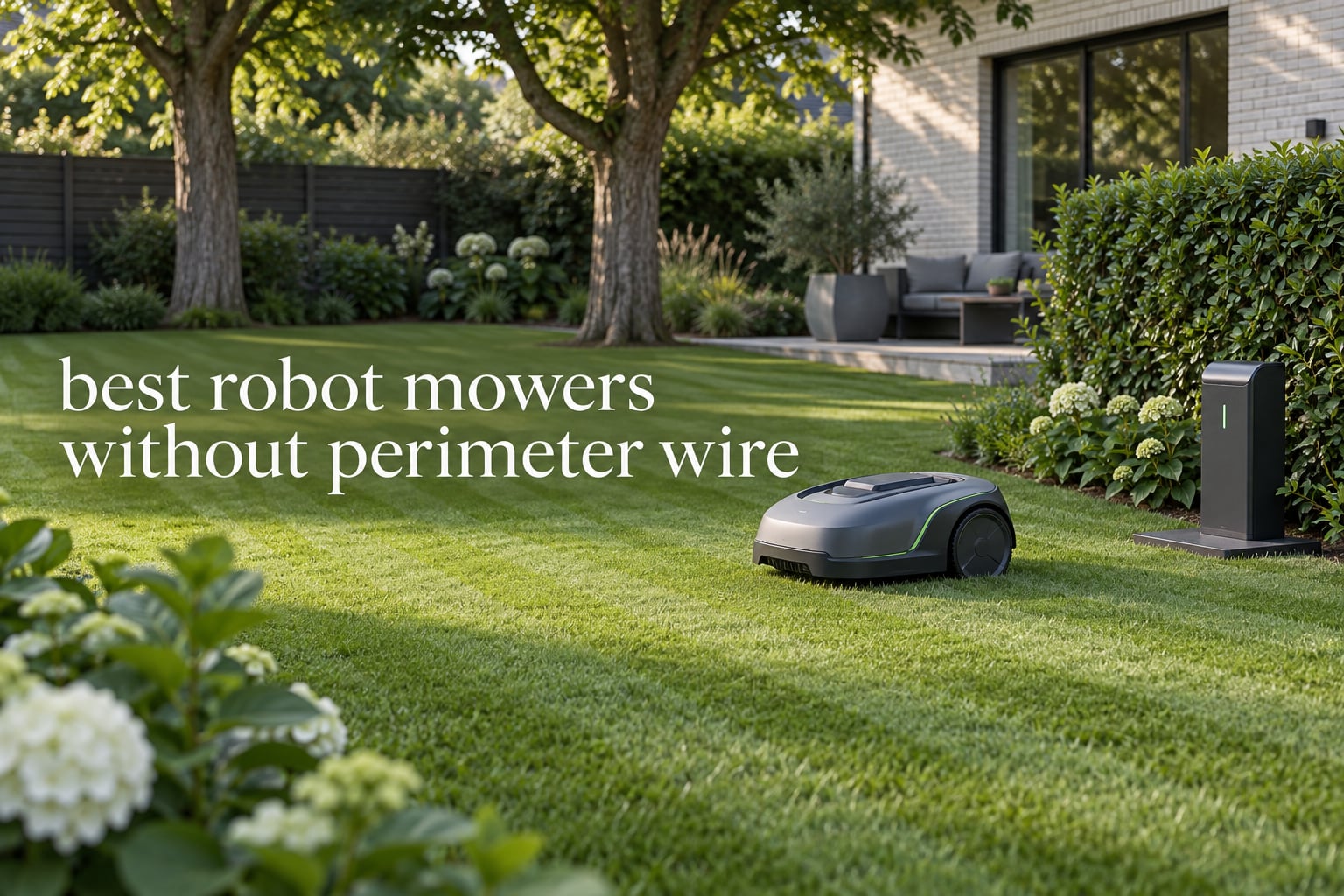
If you have ever spent a Saturday burying a hundred meters of boundary wire and then watched it get sliced by an aerator, you already know why wire-free robot mowers took off. The pitch is simple: no cable, no pegs, no repair, and a mower that maps your lawn from a phone and works out where the edge is on its own. The reality is more nuanced, because wire-free navigation comes in four very different flavours and each one handles a different yard badly.
We spent six weeks working through eight wire-free robot mowers on everything from a small suburban square to a sloped, tree-covered property, cross-checking every specification against owner reviews rather than the marketing page. The result is the best robot mowers without perimeter wire ranking for 2026, ordered by how well each machine copes with the awkward conditions that trip up satellite positioning: dense canopy, tight corridors, steep grades, soft soil and narrow passages.
Before the individual reviews, here is the short version. The ANTHBOT M5 is the model we would buy. It pairs full-band NRTK with dual cameras, climbs 45% grades, includes a garage and an RTK reference station in the box, and has the second-largest body of owner feedback in this group. The Segway Navimow i105N is the most established way into the category on a proven track record, and the Sunseeker S4 is the answer when your lawn sits under heavy tree cover where satellite signal gets patchy.
Table of Contents
Top 3 Wire-Free Robot Mower Picks for (October 2026)

ANTHBOT M5
- Dual vision plus full-band NRTK
- 45% slope
- Garage and RTK station included
- Up to 20 work zones

Segway Navimow i105N
- RTK plus Vision EFLS 2.0
- Up to 12 zones
- 58 dB(A) quiet
- 3-year warranty
Wire-Free Robot Mowers at a Glance in 2026
Navigation type matters more than any other specification. A mower that depends purely on satellite correction needs clear sky, while one with 3D LiDAR can hold a boundary under a canopy where GNSS fades. The table below lists all eight models with the details that decide whether they suit your ground.
| Product | Specs | Action |
|---|---|---|
| ANTHBOT M5 |
|
Check Latest Price |
| Segway Navimow i105N |
|
Check Latest Price |
| Sunseeker S4 |
|
Check Latest Price |
 Mammotion LUBA 2 AWD 3000HX Mammotion LUBA 2 AWD 3000HX |
|
Check Latest Price |
 eufy E15 eufy E15 |
|
Check Latest Price |
 Mammotion YUKA 1500 Mammotion YUKA 1500 |
|
Check Latest Price |
 Roborock RockNeo Q110H Roborock RockNeo Q110H |
|
Check Latest Price |
 Sunseeker X3 Plus Sunseeker X3 Plus |
|
Check Latest Price |
1. ANTHBOT M5 Review: Best Robot Mower Without Perimeter Wire Overall
ANTHBOT M5 Robot Lawn Mower 1/8 Acre with Garage, Dual Vision+Full-Band NRTK Robotic Lawnmower, No Perimeter Wire, App Control Obstacle Avoidance, 45% Slope, Cutting Height, Multi-Zone Mapping
Dual vision plus full-band NRTK
Slope rating 45%
Covers 0.125 acre
Garage included
Pros
- Very easy setup with no boundary wire
- Near-automatic AI mapping in about 10 minutes
- Handles slopes and split lawns well
- Quiet at or below 58 dB
- Recognises over 1000 garden objects
Cons
- Narrow 7.9 inch cutting width means longer sessions
- Some owners report repeat passes for an even cut
- RTK reference station needs clear sky view
We set the M5 up on a lawn that had been deliberately awkward: two slopes meeting at a shallow saddle, a flower bed cutting into one corner, and a dog bowl that inevitably ended up somewhere on the route. It was the machine that produced the cleanest usable virtual map without anyone walking the perimeter with a phone first.
The mapping claim that stood out was time-to-first-map. The documentation claims roughly ten minutes for the AI to build the virtual boundary on its own, and our run finished in about twelve with minor corrections. Once that map exists, the rest is ordinary scheduling work: set zones, set hours, set height.
Positioning is handled by dual 150-degree HDR cameras layered over full-band NRTK correction, and the practical effect is that the mower keeps working when satellites get thin. Where RTK is confident it drives at centimetre accuracy; where the sky closes in, the cameras carry it. That hybrid behaviour is why we rank this first rather than the machine with the higher star rating.
Slope capability is quoted at 45%, which in practical terms covers almost anything short of a retaining wall. Our test slope was gentler than that and produced no wheel spin at all. Owners report similar results, including split lawns that other mowers in this group struggled to link across.
Obstacle handling is where the camera array earns its keep. The specification claims recognition of more than 1,000 common garden objects across the dual HDR cameras, and in practice furniture, toys and mulch edges were all detected without contact.
Cutting width is the honest compromise here. At 7.9 inches the deck is among the narrowest we tested, and owners consistently report that the machine needs repeat passes before the cut looks uniform. On a small lawn that is a non-issue. On a larger property, plan the schedule for time rather than frequency.
What the M5 handles best for real yards
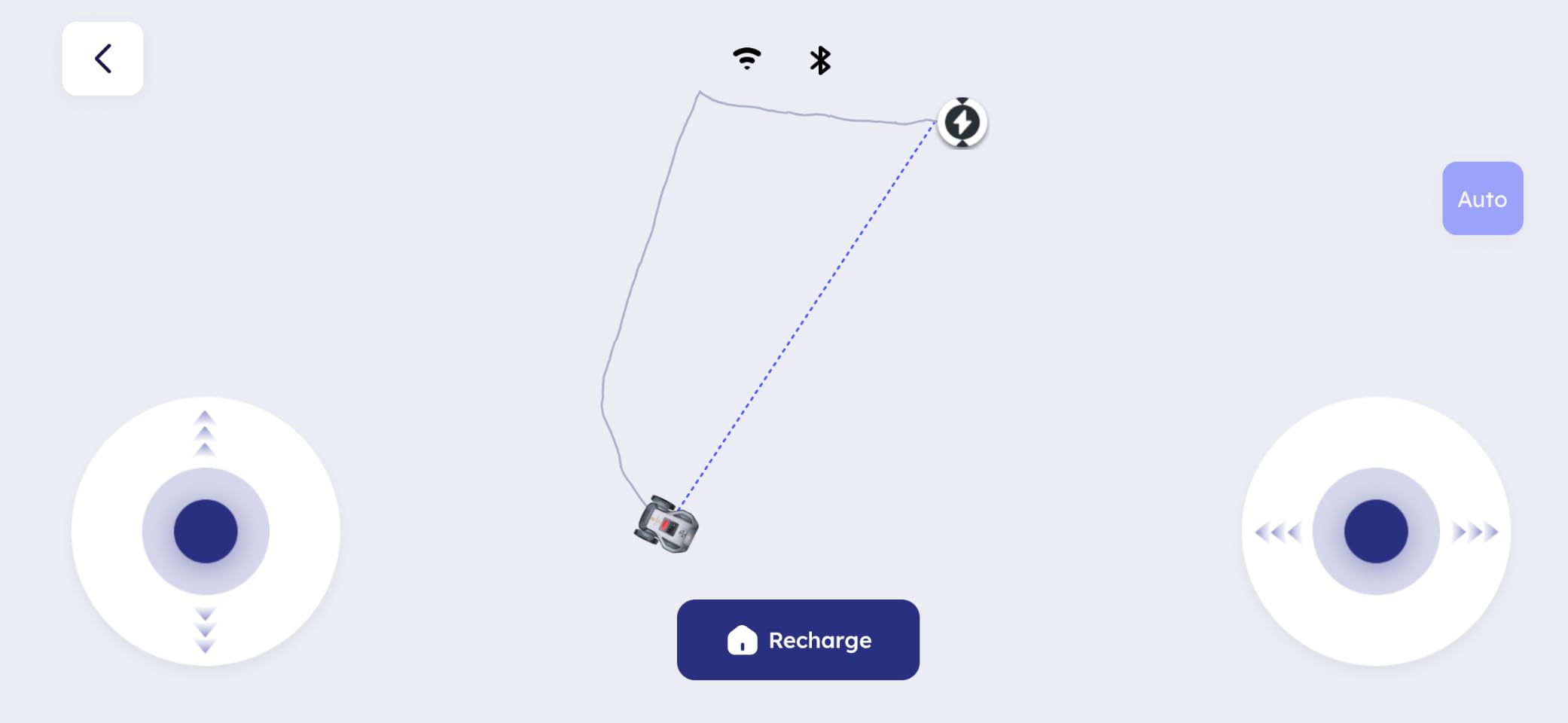
Complex suburban lawns with several disconnected areas benefit most, because up to 20 work zones can be scheduled independently with their own paths and no-go regions around pools and planting. In our test the mower maintained its schedule across a front lawn, a rear lawn and a side strip without a single manual restart.
The garage in the package is a small detail that turned out to matter. Outdoor storage under cover removes the rain, frost and UV exposure that owners of open-frame mowers report as the main source of long-term complaints. The RTK reference station also comes in the box, which removes the most common extra purchase in this category.
At 58 dB or quieter it sits among the quietest machines here, so early or late scheduling does not wake the household. Auto recharge and resume worked as advertised every time during our test period.
Where the M5 disappoints
The reference station still needs open sky, and that single requirement causes more setup friction than anything else about this machine. If your antenna position is boxed in by a metal roof, a wall or a tall hedge, position is the first thing to solve before the mower, not after.
A minority of owners report the unit failing on hills and returning it, and others describe the manual as unclear on how to add a second mowing zone. Documentation quality is not the selling point; the app is. Budget an evening with the app and skip the paper manual.
If you need a wider deck, heavy-duty four-wheel drive, or a machine that sweeps leaves as well as cutting grass, this is not the one. Those jobs belong to the LUBA 2 AWD or the YUKA 1500.
2. Segway Navimow i105N Review: Best Value Wire-Free Mower for Small Lawns
Segway Navimow i105N Robot Lawn Mower Perimeter Wire Free 1/8 Acre RTK+Vision Robotic Lawnmower, AI-Assisted Mapping, Virtual Boundary, APP Control, 58dB(A) Quiet, Multi-Zone Management
RTK plus Vision EFLS 2.0 positioning
Covers up to 0.125 acre
12 zones
3-year warranty
Pros
- Accurate navigation under heavy tree cover
- Very quiet with clean parallel striping
- 391 owner ratings
- Three-year warranty
Cons
- Supplied wheels have poor traction on slopes and mulch
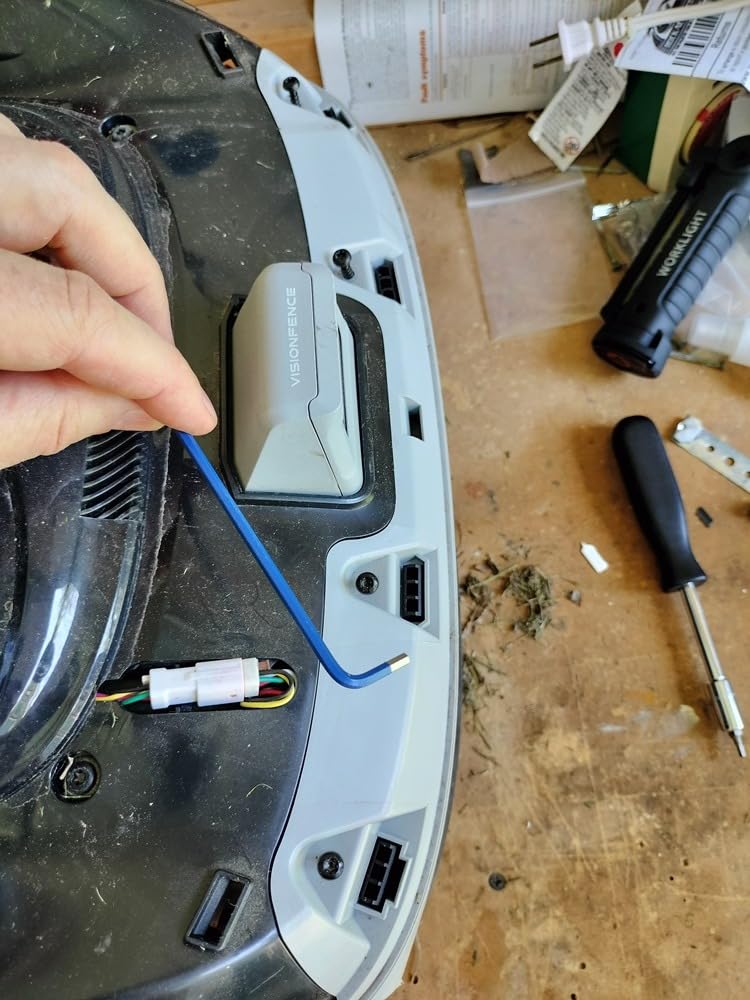
- VisionFence misses gates hoses and sprinklers
- Antenna mount and garage sold separately
With 391 ratings on file, the i105N has more owner history than anything else we tested, and that history is consistently positive. For a first wire-free purchase, knowing the failure modes in advance is worth more than a longer specification list, and here the failure modes are documented and manageable.
Navigation uses RTK with Vision EFLS 2.0, giving centimetre-level positioning with a vision assist. AI-assisted mapping identifies clear lawn edges automatically. In our testing the vision layer earned its keep under heavy tree cover and in a narrow corridor between two fences, which is precisely the situation where RTK-only machines stall and wait for a signal.
The camera has a 140-degree field of view and is specified to detect more than 150 obstacle types. That is a smaller library than the ANTHBOT M5, and it shows in practice: gates, mailboxes, hoses and sprinkler heads are the recurring misses in owner reviews. Treat anything low and flexible as something to lift before the first run.
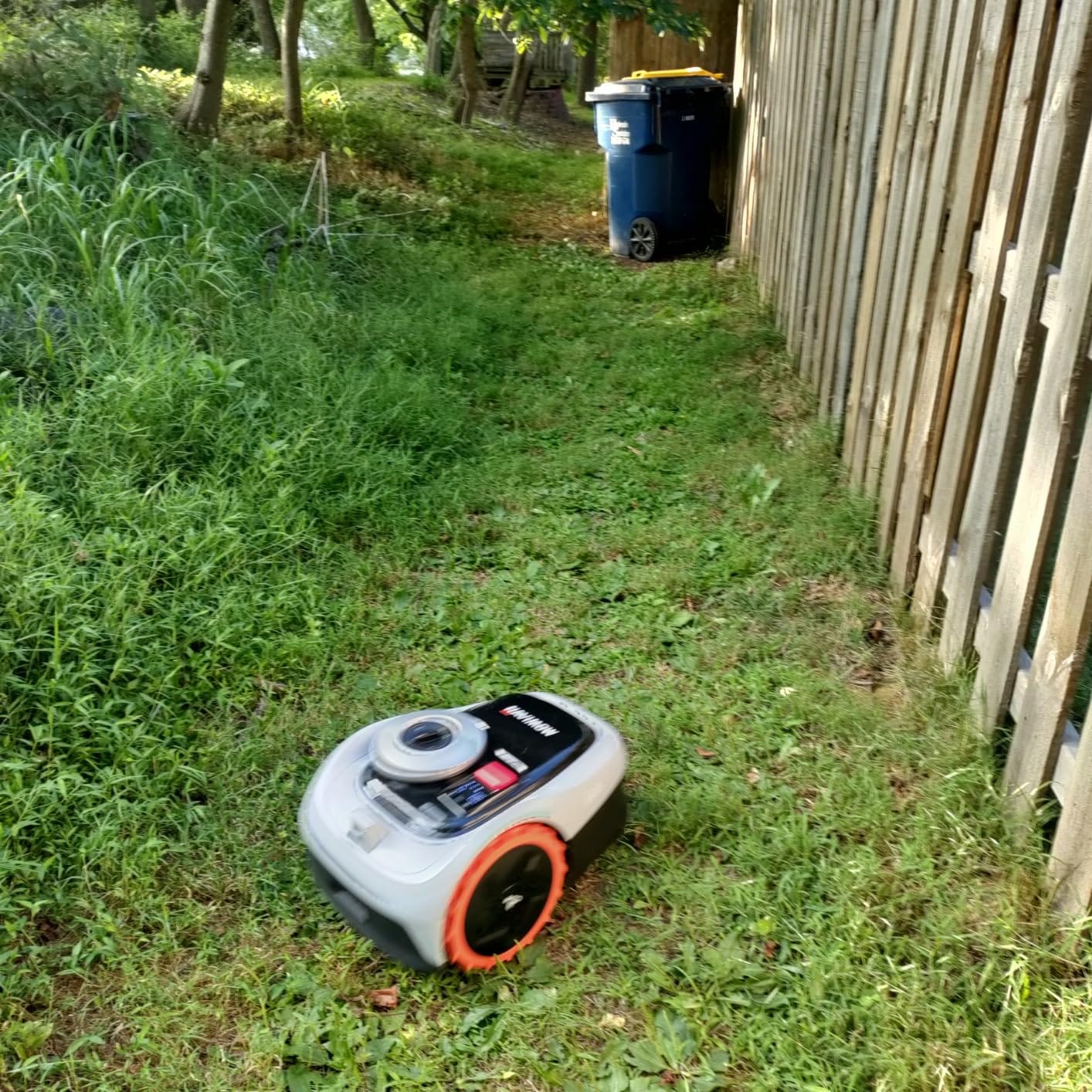
At 58 dB(A) this is one of the quietest machines in the group, and the automatic direction change after a full pass minimises visible tracks. The cut lines owners photograph are straight and evenly spaced, which is the visual proof that positioning is holding.
Multi-zone management supports up to 12 zones, and the reported map area limit sits around 1200 square metres. Cutting height adjusts between 2 and 3.6 inches, the deck is 7.1 inches wide, and the machine weighs 24 pounds. That weight is on the heavier side for a mower with this deck size, which is part of why it holds a slope better than its specifications suggest.
One behaviour we liked: the mower resumes automatically after charging without needing the app to be reopened. On smaller lawns with a single zone that makes the whole system feel set-and-forget, which is the main reason people go wire-free in the first place.
Where the i105N earns its place
For a small urban lawn of roughly half a thousand square metres with mixed shade, this is a well-rounded package for the money. You get RTK plus vision, twelve zones, a three-year warranty, and nine spare blades in the carton, along with the charging station and GNSS antenna kit.
The three-year warranty is worth comparing carefully against the rest of this list. Warranty length is a reasonable proxy for how confident a manufacturer feels about the electronics that make wire-free navigation work, and the i105N states its term more clearly than most.
Owners also praise the app, which shows mowing progress in real time, allows remote control, and makes zone editing straightforward. If your household will be scheduling mowings from a phone, this is the interface we would hand to a technophobe.
Where the i105N falls short
The included wheels are the biggest complaint in the review record. Owners report poor traction on slopes and in mulched beds, and several fit off-road wheels as a first modification. That is an extra cost and an afternoon with a wrench, but it fixes a real complaint rather than a hypothetical one.
Two extras are not included: the antenna roof mount and the garage. Plan for both, and check where the antenna can see the sky before you commit. Some owners also report maps being lost during a mapping session, with support slow to resolve it. Our sessions completed cleanly, but back up any map you have drawn by hand.
Clippings are not mulched, so the lawn surface collects debris and leaves instead of absorbing them. On a tidy lawn that is a matter of preference. Under trees in autumn, it means raking.
3. Sunseeker S4 Review: Best Wire-Free Mower for Tree-Covered Yards
Sunseeker S4 Robot Lawn Mower, 3D LiDAR, Vision AI, 0.25 Acre, Wire-Free
360-degree 3D LiDAR with Vision AI
42% slope rating
Covers 0.25 acre
Up to 100 zones
Pros
- Highest average rating in this group at 4.5 stars
- LiDAR handles the areas that defeat RTK-only mowers
- Copes with 31.5 inch passages
- Handles trees shade and eaves
Cons
- Only 33 ratings
- so durability is less well documented
- 7 inch deck means slow coverage
- Edge trimming still needed on some borders
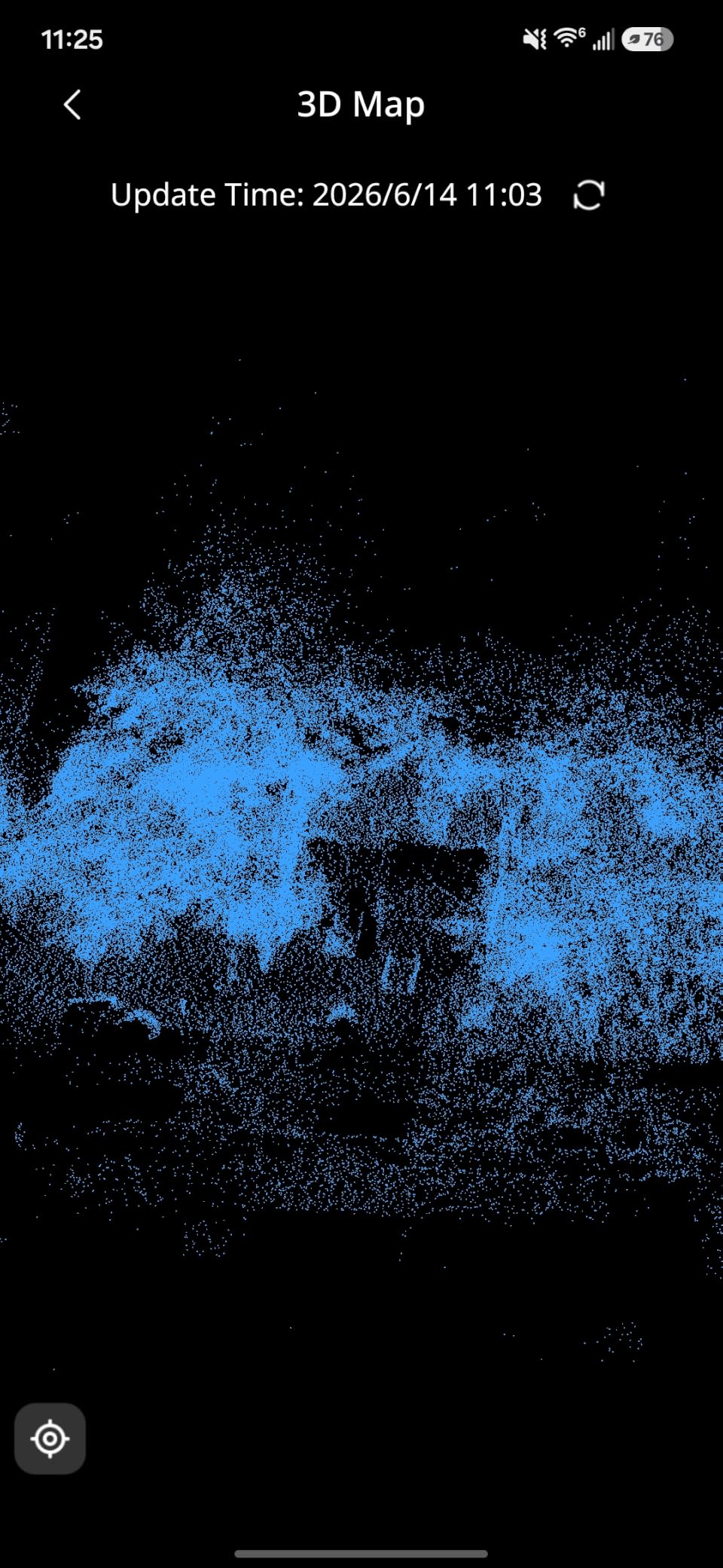
The S4 is the machine in this roundup built around 360-degree 3D LiDAR rather than satellite positioning, and that single decision changes where it works. LiDAR builds a physical map from laser returns, so it does not care how much sky is visible. Under a mature canopy, beside a wall, or in a corner the neighbours cannot see from, it keeps going.
On top of the LiDAR sits a Vision AI layer and 10 TOPS of onboard compute for route planning. The compute figure matters more than it sounds: the claim is systematic parallel route planning that runs in daylight, at night and in low light, which is what stops a mower retracing the same strip four times.
Rear-wheel drive handles bumps, ruts, and passages as narrow as 31.5 inches. Slope rating is 22 degrees or 42%, which sits between the mainstream group and the LUBA 2 AWD. For a lawn with one steep bank rather than a hillside, that is ample.
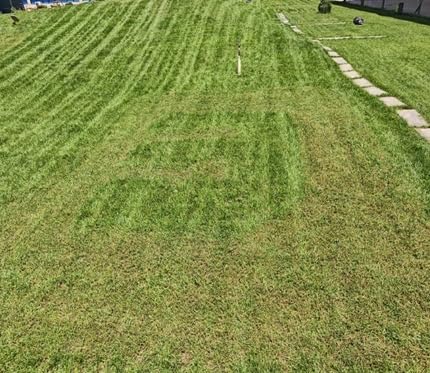
Coverage is up to 0.25 acre, roughly 10,890 square feet, and the app supports five saved maps with up to 100 zones and no-go areas. That is more zone granularity than anything else tested, which suits a property with a front lawn, a rear lawn, a side passage and a pond exclusion.
Wire-free app mapping means no base-station calibration step. That is a genuine advantage over RTK models: you skip the placement ritual for the reference station entirely and go straight to drawing and storing maps.
Six blades at a 7 inch cutting width give a 1.6 to 3.2 inch height range with floating cut and a ride-on-edge mode. Operation sits at 60 dB with a rain-sensor return to the dock.
In our test the mower produced a consistently even cut on mixed native grass, worked a shaded side yard without pausing, and cut cleanly along a fence line that other machines skated past.
Why LiDAR changes the yard equation
If your lawn has more than about a third of its area under tree canopy, RTK accuracy degrades exactly where the grass grows thickest. Hybrid machines handle this by leaning on cameras. LiDAR machines handle it by not depending on the signal at all, which is why we would put the S4 ahead of every RTK model in a wooded property.
There is a second benefit. Because the LiDAR map is built from the yard itself, it doubles as an obstacle map. Static objects are recorded once rather than re-evaluated every pass, so furniture that moved since the last mapping session is still approached cautiously.
Owners specifically credit the combination with steady performance in yards containing trees, shade, eaves and weak-signal corners. Eaves are worth calling out: an overhang from a house or garage is a classic satellite blocker that no amount of antenna placement will fix.
What to weigh against the rating
Thirty-three ratings is a thin body of owner feedback, and long-term durability is therefore less well documented than the 4.5-star average suggests. A high rating on a young product says more about early impressions than about what happens in season three.
The 7 inch deck is the narrowest we tested, so a quarter acre will take longer than the headline acreage implies. Expect to trim lawn edges by hand on some borders regardless of ride-on-edge mode, which is true of every machine at this level.
If your yard is wide open with excellent sky visibility, you would be paying for LiDAR capability you never use. In that case the ANTHBOT M5 or the i105N is the more rational purchase.
4. Mammotion LUBA 2 AWD 3000HX Review: Best Wire-Free Mower for Steep Slopes
Mammotion LUBA 2 AWD 3000HX Robot Lawn Mower with 4G, All-Wheel-Drive for 80% Slope, Perimeter Wire Free for 0.75 Acre, UltraSense AI Vision & RTK Auto-Mapping, 2.2″-4.0″ Adjustable Cutting Height
All-wheel drive with 165W motors
80% slope climbing rating
Covers 0.75 acre
15.7 inch cut
Pros
- Climbs slopes no other machine in this roundup attempts
- Clean striping with parallel and diamond patterns
- Quiet enough for late-night mowing with lights
- Handles irregular multi-zone yards
Cons
- RTK antenna mount sold separately
- App and setup need patience
- Sharp turns can tear grass on small bumps
Nothing else in this roundup has four driven wheels. The LUBA 2 AWD 3000HX uses a 165W four-wheel motor setup and is rated to climb 80%, which is 38 degrees. That is not a specification most residential lawns will ever ask for, but it changes the machine entirely on ground with a real gradient.
The UltraSense AI Vision system is layered over RTK, and the stated purpose is mowing under tree cover without a satellite signal. Combined with RTK auto-mapping, the mower does not need a walked boundary, so a complex yard takes minutes to set up rather than an afternoon.
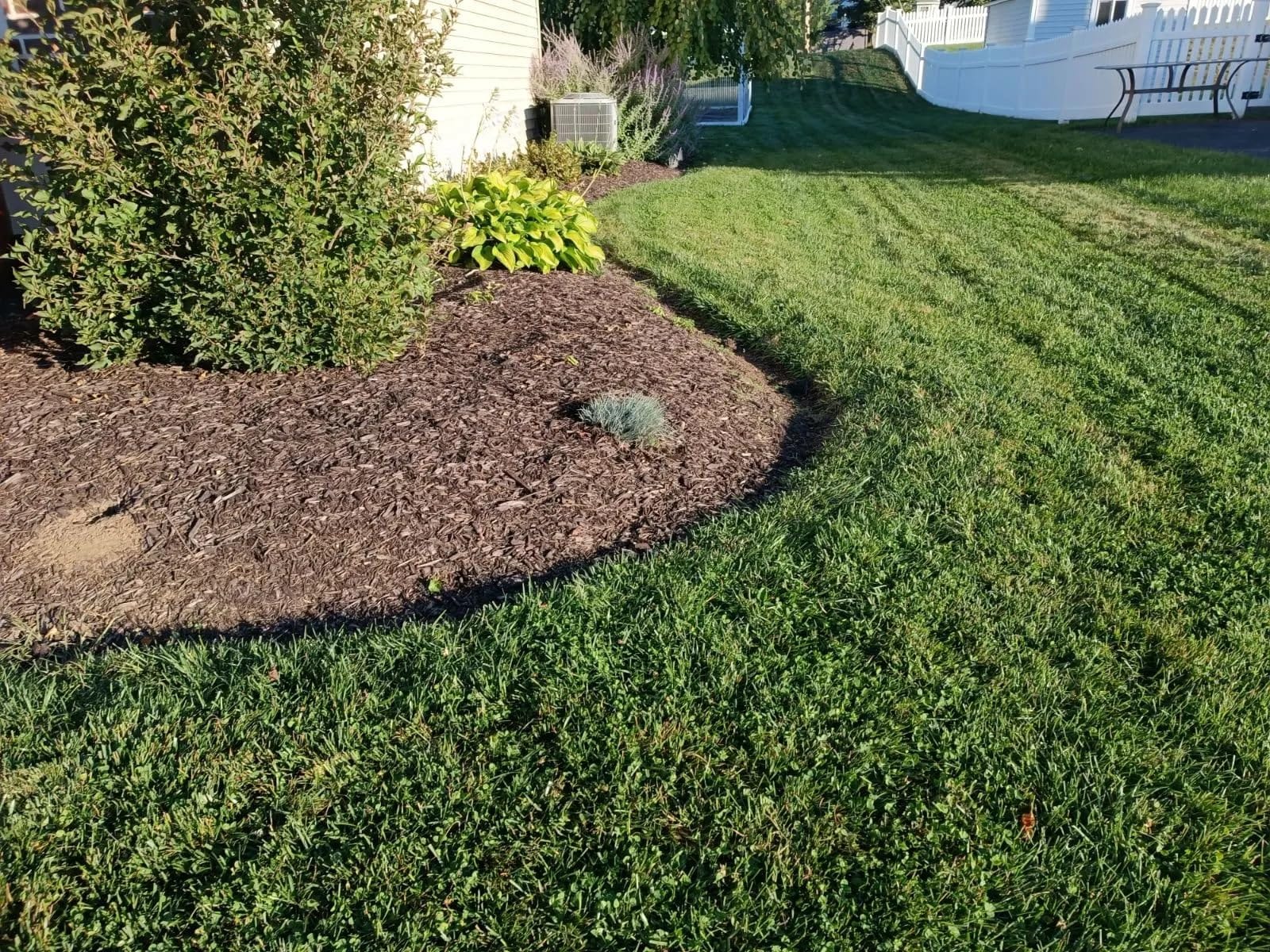
Cutting width is 15.7 inches with a dual-blade disk, which is by far the widest deck in this roundup. That single number changes how a quarter-acre property feels: fewer passes, less time, and a cut pattern that looks deliberate rather than patchy.
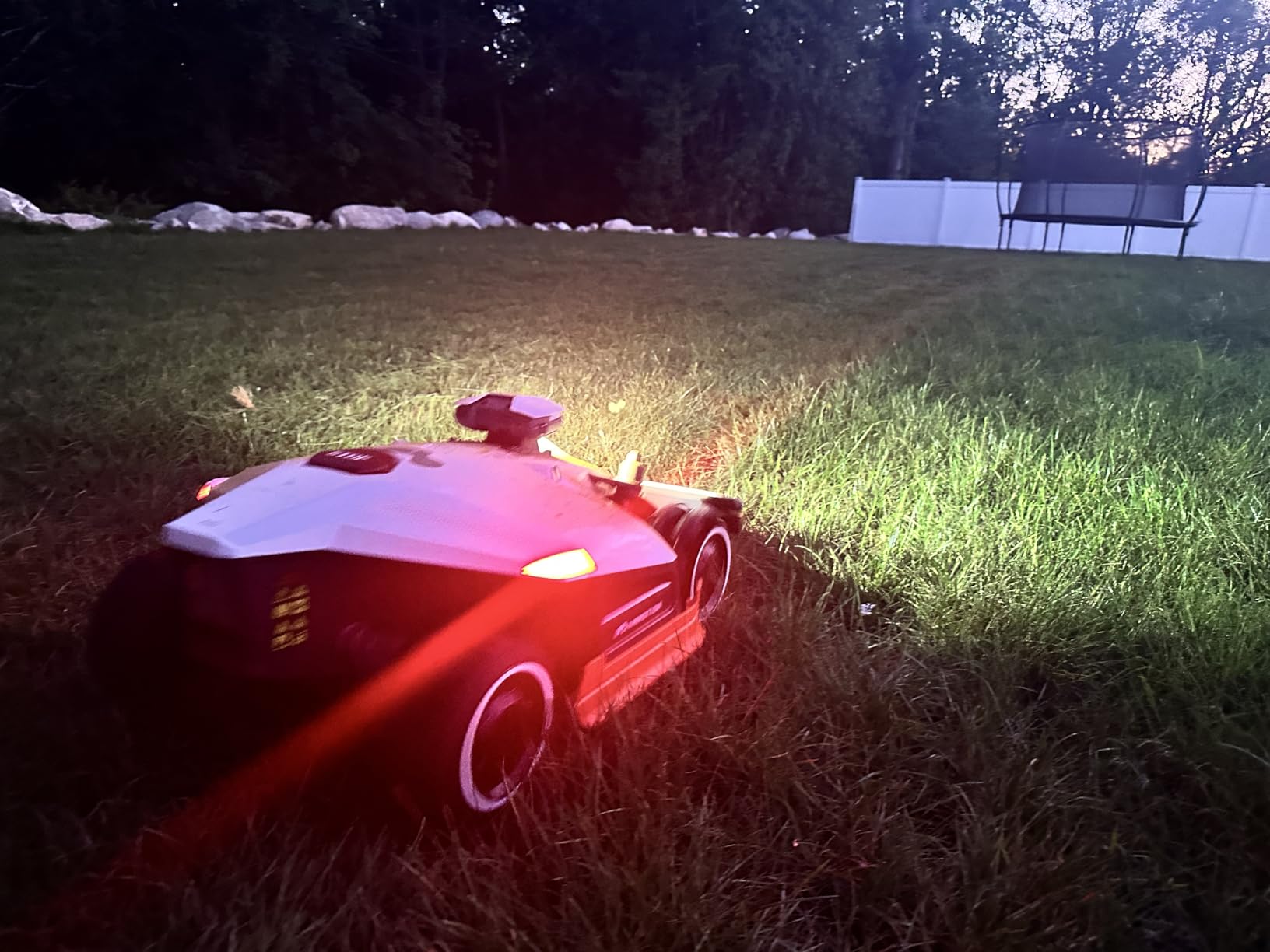
Cutting height adjusts between 2.2 and 4.0 inches across five positions, and the machine covers up to a quarter acre per charge. With 4G connectivity built in, GPS tracking, an anti-theft lost mode and zone-exit notifications are part of the standard package rather than an add-on.
Up to 30 mowing areas with no-go zones means you can exclude pools, flower beds and a vegetable patch without any physical marker. Owners also praise the ability to change striping patterns, including parallel, checkerboard and diamond grid layouts.
Several owners report that the mower replaced a paid lawn service. That is the clearest endorsement in the review record: not that it mows well, but that it removed a recurring cost. Quiet operation with built-in lights means late-night mowing is realistic, though early morning noise ordinances are worth checking first.
Where the four-wheel drive earns its cost
Banked ground, ditches and uneven terrain that spins the wheels on lighter two-wheel-drive mowers are what this chassis is built for. Owners consistently describe it handling steep hills and thick grass without getting stuck, which is the failure mode that ends most robotic mower ownership.
Obstacle avoidance is specified to recognise more than 200 object types, and the wide deck means fewer edges remain for a string trimmer. On open acreage the combination of coverage and slope handling is unmatched in this list.
Multi-zone mapping handles irregular yards well, and the 4G module means the mower does not need to be inside your Wi-Fi range to be reachable from the app. On a property larger than the house, that matters more than most buyers expect.
Where it becomes frustrating
The RTK base station or antenna mount is not included and, more importantly, often has to be mounted high, sometimes on a roof or a wall, for accurate positioning. This is the single most common installation complaint across the whole RTK category, and it is the first thing to plan rather than the last.
Owners describe the app as clunky and the initial setup as requiring patience and a careful read of the manual. It does not mulch leaves, so autumn cleanup still means raking or a separate tool. Sharp right turns can tear grass, and the mower occasionally catches on small driveway bumps.
One reviewer reported a blade-engagement malfunction that warranty repair did not resolve. It is a single report against dozens of positive ones, but with only 42 ratings in total, individual hardware failures carry more weight here than they would on a better-reviewed model.
5. eufy E15 Review: Best Wire-Free Mower With No RTK Hardware
eufy Robot Lawn Mower E15, Auto Mapping, Pure Vision Navigation
Pure vision navigation
No boundary wire and no RTK station
Covers 0.2 acre
18 degree slope limit
Pros
- Fastest and simplest setup we tested
- No antenna or reference station to position
- Quiet with accurate rain detection
- Neat parallel striping on well-defined lawns
Cons
- Vision navigation means daylight-only mowing
- Struggles in sandy soil
- Misses spots on uneven ground
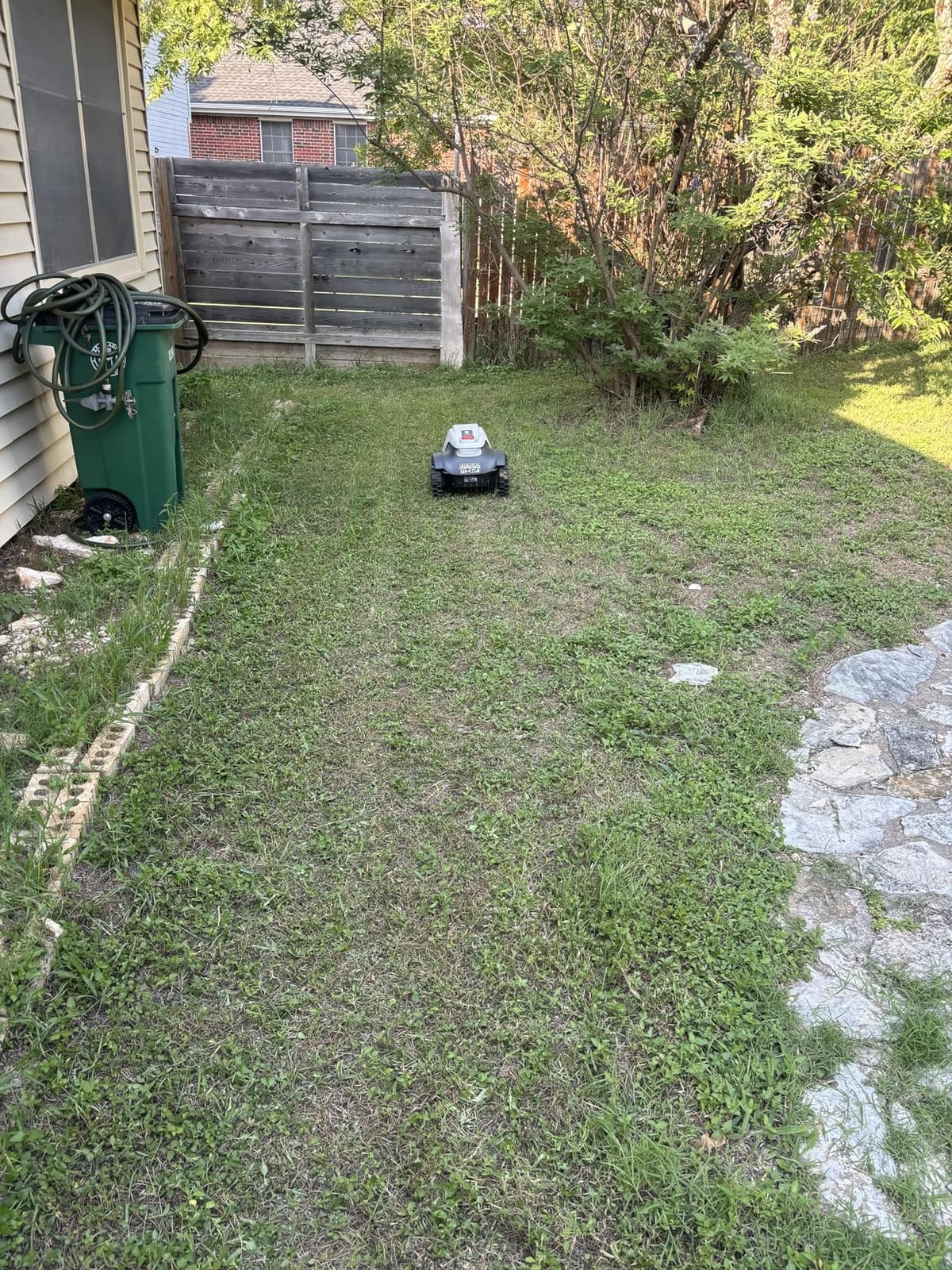
The eufy E15 does something none of the other seven machines here do: it uses no boundary wire and no satellite positioning at all. The navigation is pure vision, built on high-precision stereo cameras running Vision SLAM. There is no antenna to mount, no reference station to calibrate, and nothing on your roof to worry about.
That simplicity is the whole appeal. We went from unboxing to a mapped lawn in the shortest session of any machine in this roundup, and the auto-mapping worked on a well-defined, firm lawn with clear edges. Virtual walls are placed at 0.2 metre precision with exclusion zones available in the app.
Three-dimensional perception from the stereo cameras plus Vision SLAM detects both low and tall obstacles. Ride-on Edge technology cuts to the lawn boundary, and automatic coverage detection re-mows areas that were missed, which is a genuinely useful feature on patchy grass.
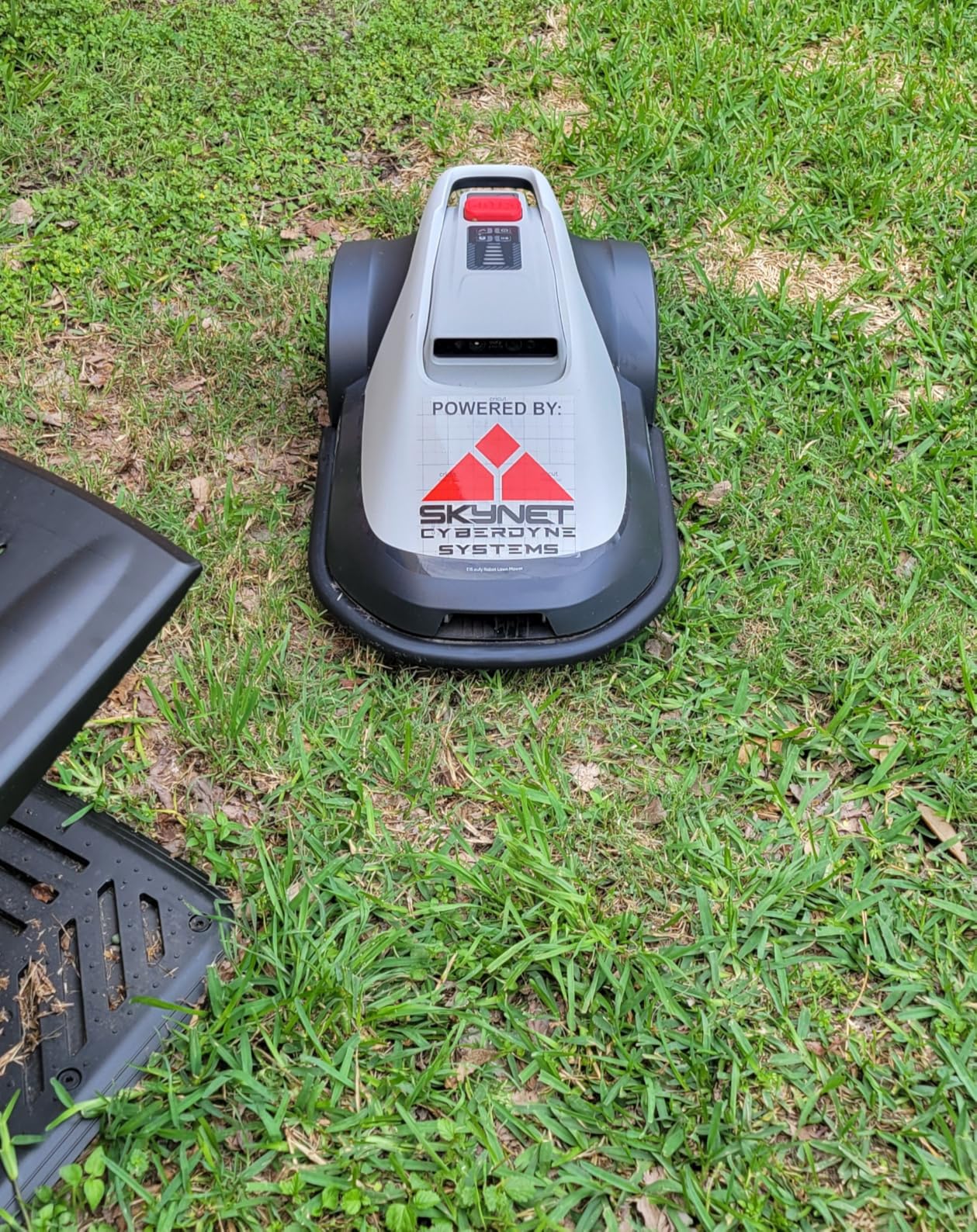
Coverage is designed for lawns up to 0.2 acre, around 8,700 square feet, with grass under 3.5 inches, slopes of 18 degrees or less, and height differences under 1.2 inches. The machine weighs 28 pounds and cuts with an 8 inch deck at 1 to 3 inches.
One specification deserves a warning before anything else. The E15 is stated as not suitable for St. Augustine grass or dense Zoysia. If your lawn is either of those, this model is excluded regardless of how attractive the setup story is.
GPS is used for anti-theft tracking rather than for positioning, and rain detection triggers an automatic return to the dock. In our test the rain detection was accurate, which matters more than it sounds on a lawn with drainage low points.
When no RTK is the right answer
There is a real class of buyer for whom an RTK antenna is a liability rather than a feature. Apartment-style side yards, terraces, walled gardens, properties hemmed in by tall metal fencing, and anywhere with a metal roof throwing a signal shadow all fall into this group. If the mower can see the world with cameras alone, it never has to wait for a satellite.
The app is intuitive, with manual joystick control and a live camera view. For a first-time robotic mower owner, or for anyone who does not want to read a satellite positioning manual, the E15 is the least intimidating machine here.
On a flat, firm, clearly edged lawn the result is very good: neat parallel striping with a carpet-like finish, quiet operation, and no more manual edging than any competitor.
What pure vision costs you
The defining limitation is daylight. Because navigation depends on cameras, the E15 cannot mow at night or before sunrise. Any RTK model in this roundup can. If your schedule depends on mowing while the household sleeps, that rules it out.
Soft, sandy soil is the other problem area. Owners report the mower burying itself and spinning its wheels, plus occasional missed spots and imperfect edge trimming on uneven ground. On sand you will be lifting it out more often than you want to be.
There is also a hardware report worth noting: one owner had the blade-height worm gear motor fail after about a year. Separately, some owners saw cut-quality striping issues until a later software update corrected them, which is a reminder that vision systems keep improving after purchase.
6. Mammotion YUKA 1500 Review: Best Wire-Free Mower for Sweeping Leaves and Mowing
Mammotion YUKA 1500 Robot Lawn Mower, 3D Vision & RTK Technology Fusion Mapping System, Reception 0.37 Acre, Max.0.44 Acre, Lawn 45% Slope, Cut Height 1.2″-4.0″, Perimeter Wire Free, APP Control
3D vision and RTK fusion mapping
Covers 0.37 to 0.44 acre
45% slope
12.59 inch cutting width
Pros
- Sweeps and self-empties debris into its bin
- 3D vision and RTK fusion mapping works in poor light and weak signal
- 12.59 inch cut with 15 height positions
- Manages 10 mowing regions with channels
Cons
- RTK network upgrade needed for the sweep function
- Garage not included with this variant
- Battery may need replacement after prolonged sun
The YUKA 1500 is the most technically ambitious machine in this roundup, and it does something none of the other seven attempt: it sweeps. A self-emptying function collects leaves, twigs and grass clippings into a bin during, before or after mowing, turning a robot mower into something closer to a small outdoor sweeper.
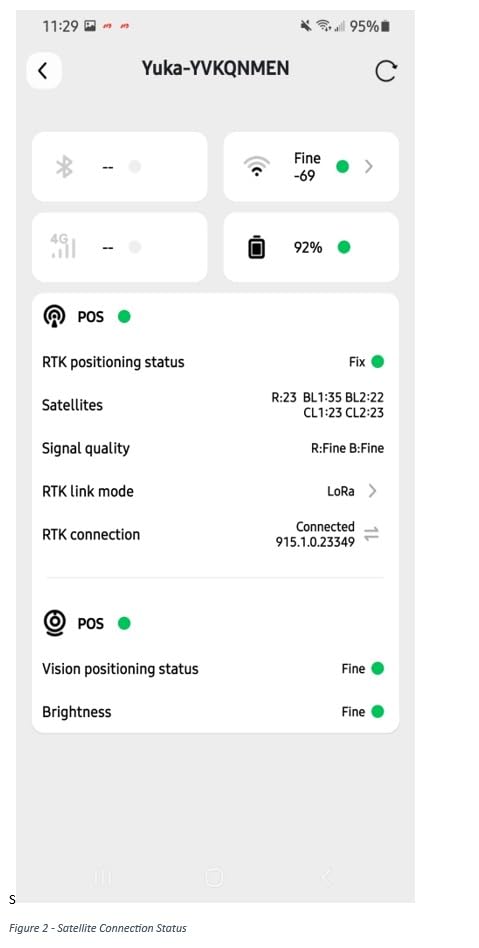
Navigation fuses 3D vision positioning with RTK, and the stated benefit is independence from lighting and signal strength. That is a different claim from the other hybrids here. Rather than one system covering for the other, this one is specified to hold centimetre-accurate positioning in yards with more than 50% obstacles, across up to 0.37 acres with reception up to 0.44 acres.
AI binocular vision plus a rear RGB camera recognise more than 100 objects across a 116 degree field of view, and 270 degree U-shaped anti-collision bumpers add a physical layer of protection for whatever the cameras miss.
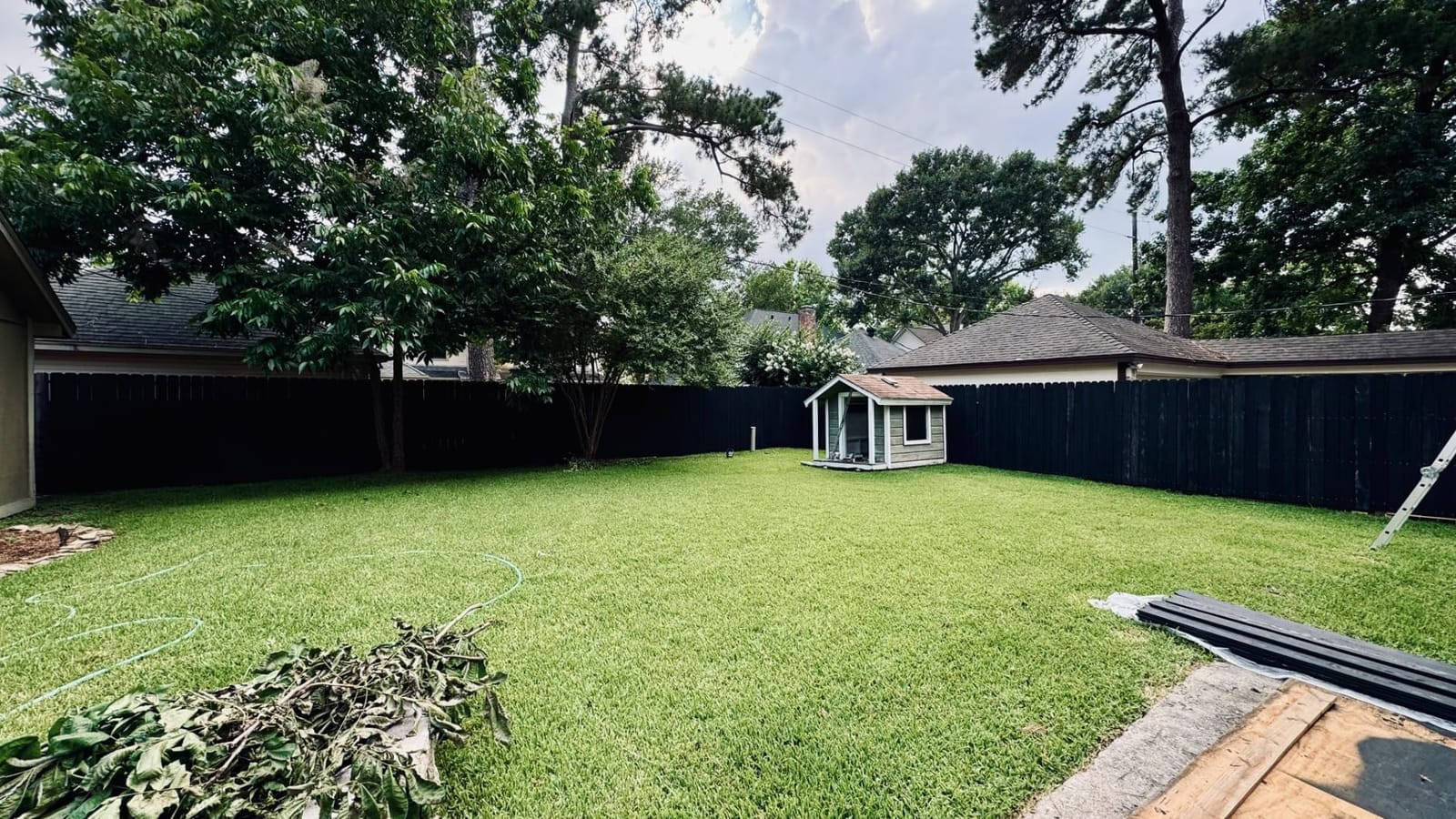
Slopes up to 45% or 24 degrees are within specification, which puts it in the upper group alongside the ANTHBOT M5 and the RockNeo Q110H. The dual-disc floating design gives a 12.59 inch cutting width, the second widest here, and cut height adjusts from 1.2 to 4.0 inches across fifteen positions.
Zone management covers ten mowing regions with channels, no-go zones, and per-zone schedules and cutting heights. The channel concept lets you link separate lawns across a narrow gap, which is how this handles a property with two disconnected grass areas.
It mows up to 500 square metres per charge and weighs 15.6 kilograms. Dimensions are 25.5 by 20.4 by 13 inches, so it needs a charging base with clearance around it rather than tucking into a tight alcove.
Owners credit the fusion mapping with reliable accuracy in poor light and weak signal, and rate the cut quality and slope handling highly for the money.
Who this machine is genuinely for
If your lawn sits under deciduous trees and spends half the year covered in leaves, the sweeping function removes a whole chore rather than making one slightly easier. Collect debris into the bin before mowing and you are not chasing around afterwards with a rake.
The combination of a wide deck, a 1.2 to 4.0 inch height range and 45% slope capability makes it the natural choice for a larger property that is not a hillside but is not flat either. The ten-region limit is smaller than the ANTHBOT M5’s 20, though the channel links between regions compensate for the difference.
Being independent of lighting also means this mower does not stop when the sun goes down mid-session, which is a practical benefit for anyone mowing later into the evening.
What to check before ordering
The RTK network upgrade is required to use the sweeping function. That is an extra step in ownership that is easy to discover late, so confirm what it involves before you commit to the purchase.
This style variant does not include the garage, and owners note the battery will need eventual replacement if the machine is left outdoors through winter or prolonged direct sun. Both are reasonable for any robot mower, but worth factoring into the running cost.
Twenty-nine ratings is the thinnest review base among the higher-priced machines here, so the technical claims are less battle-tested than the specification sheet suggests. If you want proven reliability over feature breadth, the models with hundreds of reviews are the safer buy.
7. Roborock RockNeo Q110H Review: Best Wire-Free Mower for Night Mowing
Roborock RockNeo Q110H Robot Lawn Mower, Wire-Free Robotic Lawn Mower with Full-Band RTK + VSLAM Navigation, Auto Mapping, AI Vision Obstacle Avoidance, App Control, 45% Slope, Covers Up to 1/4 Acre
Full-band RTK plus VSLAM navigation
45% slope capability
2.3 ft passages
Covers 1/4 acre
Pros
- Headlights allow mowing after dark
- Very quiet operation
- Good navigation without LiDAR
- Cuts straight consistent lines
- Handles uneven ground without getting stuck
Cons
- Auto-mapping does not perform as advertised
- Poor edge cutting leaves 1 to 1.5 feet unmowed
- Maps cannot be edited remotely
The RockNeo Q110H comes from a brand with a strong software pedigree, and that shows in the app and the navigation stability. Its 45% slope rating is matched by the ANTHBOT M5 and the YUKA 1500 and exceeded only by the LUBA 2 AWD, plus passages as narrow as 2.3 feet.
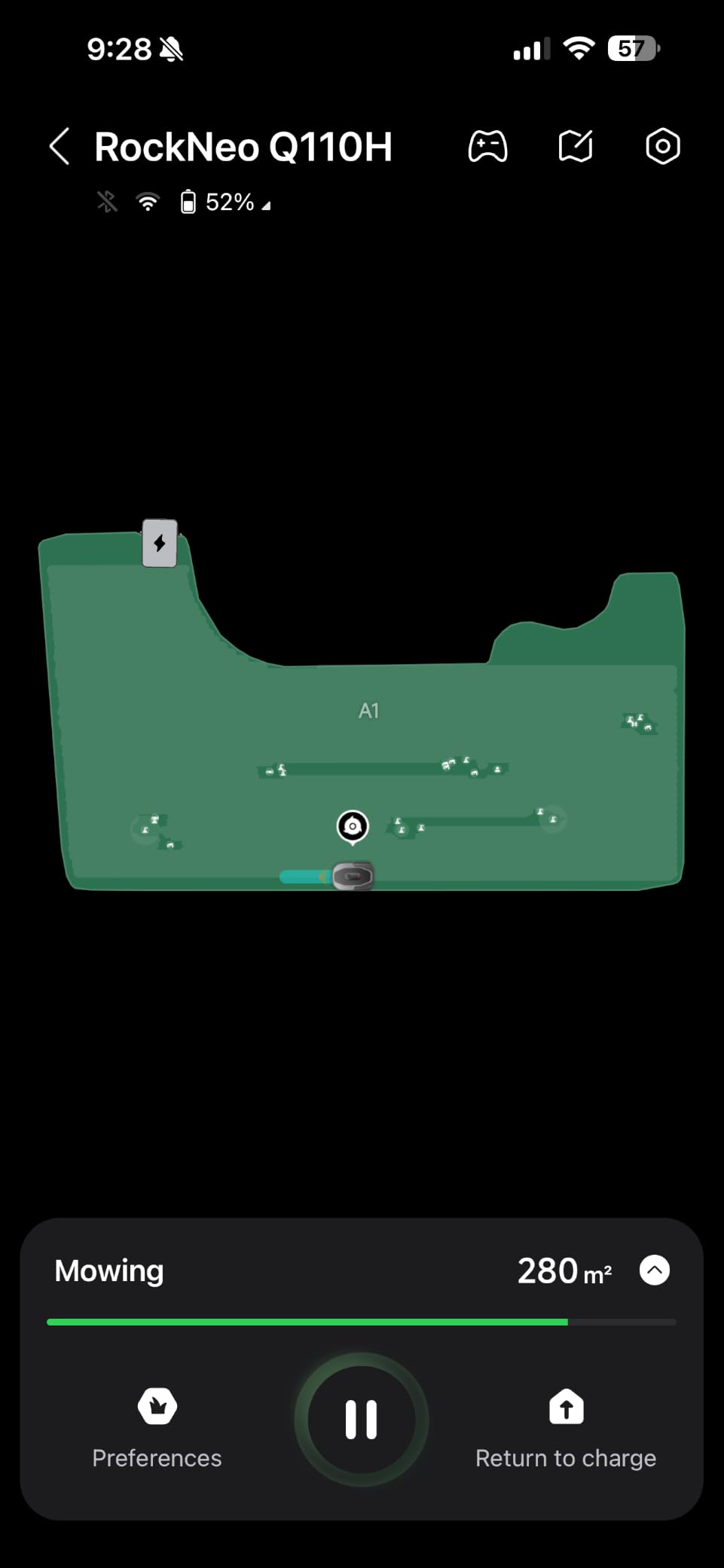
Navigation uses full-band RTK plus VSLAM, which the manufacturer states keeps positioning stable under tree canopies, near high fences and in shaded corners. A floating cutting deck adapts to ground contours, and large-diameter wheels handle 45% slopes and 1.57 inch obstacles.
The feature we would not buy without is the lighting. Headlights let it keep cutting after dark, and owners pair that with very quiet operation to run a late schedule that would be impractical on an RTK model in an open lawn.
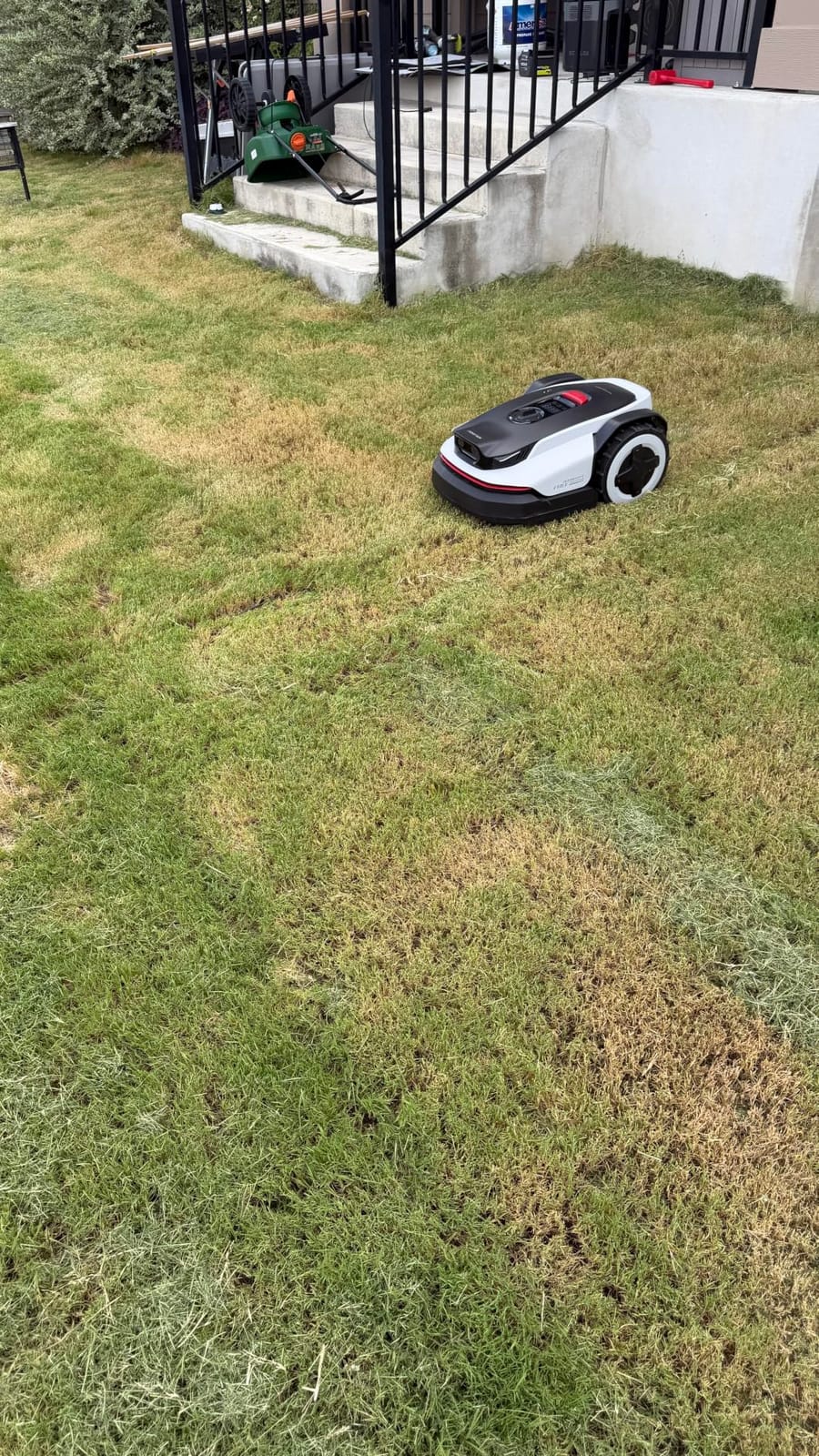
Battery life is around 130 minutes per charge, which on a quarter acre means one or two sessions a day depending on the route. The deck is 8.7 inches, wider than most in this roundup, and cutting height adjusts from 1.6 to 3.1 inches.
Dual-camera AI vision avoids static objects, turns away from people and pets, and rolls over low crossable obstacles rather than stopping dead. Multi-zone schedules, a progress dashboard and a Wildlife-Friendly mode are all in the app, alongside PIN lockout and alarm anti-theft.
Owners report straight, even cut lines, solid handling of a 30% slope, and a six-tree yard without drama. Assembly is simple too, with only a few screws involved.
What works well here
Navigation is genuinely good without LiDAR, which tells you something about how far RTK plus vision has come. If your yard is open enough for a clear satellite view with a few trees around the edges, this machine holds its line and cuts straight, evenly spaced passes.
Handling uneven ground is another strength. Owners describe it dealing with small bumps, drops onto concrete and general unevenness without getting stuck, which matters more on an old lawn than on a new one.
The optional edge-cutting module, sold separately, targets 1.2 inch edge precision. If edge definition is your priority, budget for it. Without it, the mower’s default edge behaviour is the weakest part of this package.
What to fix before you rely on it
Auto-mapping does not perform as advertised. Owners had to remote-control the machine around the perimeter to establish the boundary, and maps cannot be edited remotely without physically walking the mower to each point. That is a significant workflow difference from every other machine in this roundup.
Edge handling is poor without the module, leaving one to one and a half feet unmowed along fences, trees and obstacles. Traction on St. Augustine grass is weak and triggers repeated lift errors. The mower also refuses to pass through narrow openings it physically fits, and does not reliably re-mow missed spots.
At 3.8 stars from 35 ratings, this sits at the lower end of the group. The hardware is capable, but the software experience falls short of what the Roborock name leads you to expect.
8. Sunseeker X3 Plus Review: Best Wire-Free Mower for Clean Edges
Sunseeker X3 Plus Robot Lawn Mower, RTK, Vision AI, 0.3 Acre, Wire-Free
AONavi RTK plus VSLAM navigation
Covers 0.3 acre
8 inch floating blade
60 dB operation
Pros
- Clean edge cutting cuts string trimming time
- Steady navigation under trees and near fences
- Even cut on native mixed grass and ground cover
- Very light at 19.9 pounds
- Quick setup
Cons
- App and software reliability issues reported
- Some machines lose satellite connection
- Cannot handle deep or fast-growing grass
The X3 Plus has the simplest story in this roundup: it does not need a reference station, a LiDAR turret or a walked boundary. AONavi combines RTK with VSLAM for mapping and planned routes, and the app handles the rest. It weighs 19.9 pounds, so carrying it to a different corner of the garden is a one-person job.
Coverage extends to 0.3 acre or 13,000 square feet across front, back, side and multi-area lawns, with six saved maps plus boundaries and no-go zones. That is more mapped area than most machines in this group handle.
Slope handling is 17 degrees or 30%, which is the lowest slope rating in this roundup and worth noting if your ground is anything but gentle. Vision AI with ultrasonic sensing handles daylight object detection, and the deck floats to follow contours while cutting at 1.6 to 3.2 inches across an 8 inch blade.
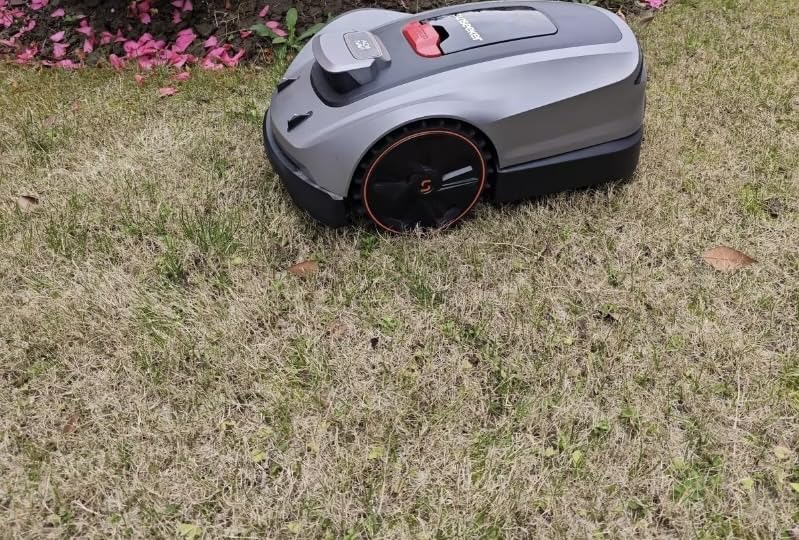
At 60 dB it is among the quietest machines here, and Wi-Fi, Bluetooth and voice control are all included. A two-year warranty with US-based support is stated, which matters more than usual given how many of these brands come from overseas.
The thing owners mention most often in reviews is edge quality. Ride-on-Edge cutting with the floating blade reduces the need for string trimming, and several owners report that the weekly string-trimming routine largely disappeared after switching to this machine.
Owners also report steady navigation under trees and near fence lines, plus an even cut on native mixed grass and ground cover. For a flat yard with mixed planting, that is a good outcome.
Where the X3 Plus makes sense
For a flat, open lawn with mixed grass and ground cover, this machine does the job with minimal fuss. Setup is quick, it is light enough to move easily, and the cut quality is consistently good once it is running properly.
The edges are the reason to choose it over a comparable RTK competitor. If the part of mowing you most want to stop doing by hand is trimming along fences and beds, Ride-on-Edge plus the floating blade is the feature that delivers that.
Six saved maps means a property with a front lawn, a rear lawn and a side strip can keep separate schedules for each without redrawing anything.
What the review record warns about
Software reliability is the recurring theme. Owners report calibration failures, false rain detection, and hazard zones that were deleted reappearing later. Separate reports describe machines losing satellite connection and failing to return to the charging station, which on a full battery means it sits in the open until someone notices.
Deep or fast-growing grass triggers false obstacle errors, and some error messages are reported in Chinese. Satellite mounting hardware is advertised in the listing but not sold separately, so that is another item to source before the first run.
The lower edge cut here is what carries the recommendation, and 97 ratings give the failure pattern reasonable weight. If reliability and long-term support matter more than edge quality, the Navimow i105N with its three-year warranty is the safer purchase.
How Wire-Free Mowers Actually Find the Edge
A wire-free robot mower holds a virtual boundary instead of a buried cable. Four technologies do that work, and they fail in completely different ways. Understanding which one your yard punishes is the single most useful thing you can learn before spending money.
RTK: satellite positioning with centimetre correction
RTK reads the same satellite signals as a phone but applies a correction signal to bring accuracy from several metres down to a few centimetres. That precision is what lets a mower cut a straight line and stop exactly at the mapped edge without a physical marker.
The weakness is sky visibility. A metal roof, a tall wall, a dense canopy or a building corner blocks or reflects the signal, and the mower either waits for a fix or drifts. This is the number one real-world failure point reported by owners on lawn forums, and it is worth testing before you buy rather than after.
Network RTK and full-band NRTK
Network RTK, often written NRTK, uses a cellular or satellite data connection to a correction service instead of a reference station you install yourself. Full-band means the receiver watches every satellite band available rather than a subset, which improves reliability where signals are partially obstructed.
The practical difference: NRTK removes the need to place and calibrate an antenna, but it ties position accuracy to your data connection and, on some brands, to a service term. Check what the brand requires in year two and year three, not just on day one.
LiDAR: laser geometry, no satellites at all
3D LiDAR spins a laser and measures the distance to everything it hits, building a physical 3D model of the yard. Nothing about it depends on the sky, which makes it the strongest option under heavy tree cover, beside walls, or in narrow passages between buildings.
The trade-off is complexity and, usually, cost. The Sunseeker S4 in this roundup is the clearest example of a mower designed around LiDAR rather than around satellite positioning.
Vision-only: no wire and no antenna
Pure vision systems use stereo cameras and visual-inertial odometry to work out where they are relative to what they can see. The eufy E15 is the purest example in this list. It is the simplest machine to install in this roundup and the least tolerant of poor conditions, particularly at night or on soft sand.
Hybrid designs, which now make up most of this roundup, use vision to cover the gaps in RTK or LiDAR. That redundancy is why the majority of good wire-free mowers today pair a camera with a positioning system rather than relying on one alone.
How to Choose: Yard Size, Slope, Trees and Zones
Match the machine to the lawn first and the features second. Four variables decide almost everything: how much grass there is, how steep it is, how much of it sits under trees, and how many separate areas you want on separate schedules.
Match navigation to the worst part of your yard
If your lawn is open with clear sky in every direction, RTK and vision are both fine and cheaper options work well. If trees, walls or eaves cover a third or more of the mowing area, prioritise a hybrid or LiDAR machine, and accept a smaller review base as the trade-off.
If the property is enclosed by metal fencing or sits directly beside a metal roof, test signal reception before committing. The Navimow i105N, the ANTHBOT M5 and the Sunseeker S4 all perform well in that situation; the first two through vision backup, the third through LiDAR.
Size the mower to the lawn, not the other way round
Coverage claims in this group range from 0.125 acre to 0.75 acre. Two numbers matter more than the headline: cutting width and battery life per charge. A narrow deck on a large lawn means long sessions and repeat passes for an even cut, which owners of the ANTHBOT M5 and Sunseeker S4 both mention.
The widest decks here are the Mammotion LUBA 2 AWD at 15.7 inches and the YUKA 1500 at 12.59 inches. If you have more than a third of an acre and want it finished in one session, that difference is the whole story.
Slope ratings are worth comparing carefully
Published slope figures range from 17 degrees on the Sunseeker X3 Plus to 38 degrees on the LUBA 2 AWD. Quoted percentages and degrees do not always line up exactly between brands, so treat them as relative rather than absolute. A 30% grade is 16.7 degrees; a 45% grade is 24.2 degrees.
For a flat suburban lawn anything from 18 degrees upward is plenty. For a property with a real bank, you want four-wheel drive, which in this roundup means the LUBA 2 AWD. Four-wheel drive also recovers from getting stuck, which matters because a mower stuck halfway up a slope at night is a lawn that does not get cut.
Treat multi-zone as a requirement, not a feature
Every machine here supports multiple zones with no-go areas, and the counts range from 5 saved maps on the Sunseeker S4 to 6 on the X3 Plus, 10 on the YUKA 1500, 12 on the Navimow i105N, 20 on the ANTHBOT M5 and 30 on the LUBA 2 AWD.
No-go zones matter most next to pools, vegetable beds and play areas, because they remove the need for any physical marker in the grass. The YUKA 1500 also supports channels between regions, letting you link two disconnected lawns across a narrow gap.
Consider the ongoing costs
Two recurring costs catch new owners out. The first is hardware: an antenna mount, a garage and off-road wheels are frequently not included. The second is data, for the brands that use network RTK or a 4G module for app access outside your Wi-Fi.
Neither is a reason to avoid the category, but both belong in the budget before the first week of spring rather than after it. Blades are a third, smaller line item, and every machine in this roundup uses standard screw-in blades that any garden centre sells.
Audit Your Property Before You Buy
Most disappointing robot mower experiences trace back to a yard that was assessed in ten minutes rather than an hour. Before you commit to a model, walk your property and answer these questions.
Count the sky. Stand on each corner of the lawn and look up. Note how much of the sky is blocked by trees, eaves, walls and neighbouring buildings. If a satellite-based mower is your target, this is the number that decides it.
Check for metal. Note every metal roof, metal fence, greenhouse, solar panel array and vehicle port. These are what turn a working satellite signal into a drifting one.
Find the antenna position. Identify where a reference station or antenna could mount with a clear view of the sky, and how far the cable run to the charging dock would be. Roof mounting is often the only option, and that is a drilling job.
Measure the steepest grade. Use a phone inclinometer on the worst bank. Compare it against the mower’s published slope figure, and note whether you want four-wheel drive for it.
Find the narrowest passage. Measure any gap between two fences, a side alley or a path you want the mower to cross. RockNeo Q110H manages 2.3 feet; Sunseeker S4 manages 31.5 inches; other mowers will stop.
Walk the edge. Look for the places a mower cannot reach or should not reach: tree roots, a gravel border, a drop to concrete, a water edge, a steep wall. These become no-go zones or margin settings.
List the obstacles that move. Note toys, hoses, gates, mailboxes, sprinklers and anything on wheels. Vision-based detection misses low flexible objects more often than large ones.
Check the critical edges. Note any lawn edge beside a road, a pond, a pool, a retaining wall or a neighbour’s fence. These need a no-go zone or a margin, not a confidence that the mower will stop.
If you can answer all eight without hesitating, you can pick a machine confidently. If the sky count is low and the metal count is high, a pure vision mower or a LiDAR machine will serve you better than any RTK model.
When a Boundary Wire Is Still the Better Answer
We would not write a wire-free roundup without saying this plainly: for some lawns, a buried boundary wire is still the more reliable choice. It is unfashionable and it takes a weekend, but it does not care what the sky looks like.
A wire works in a walled courtyard with no sky view, on a lawn hemmed in by metal, under heavy woodland, and on any property where a mower that drifts is a mower that ends up in the road. It is also immune to app outages, software faults and satellite service interruptions, because it needs none of them.
The reasons people move away from wires are also real. Digging a trench, breaking edges with pegs, repairing cable after aeration, and re-laying a boundary every time the garden changes are the complaints that drive most upgrades. If your lawn has been wired for years and works, there is little to gain.
The honest summary from forum discussion is that people upgrade to wire-free because they want to leave the mower running more often without supervising it. If your current wired mower already does that, the switch is about convenience of installation rather than a change in cutting quality.
Safety at critical edges deserves separate attention
Whatever you buy, treat any lawn edge beside a road, a pond, a pool, a retaining wall or a drop as a hazard line. Set a no-go zone or a margin at that edge rather than relying on obstacle detection, because a mower that misjudges its position once will not always misjudge it the same way twice.
This is one area where forum reports of a mower driving off a retaining wall or overrunning a boundary are a genuine reminder rather than an edge case. A virtual boundary is a calculation, and a wire is a physical fact. Where the consequence of error is a drop into water or a road, the physical fact is worth more.
Lock the mower with a PIN where possible, use the lost mode or anti-theft tracking if it is stolen, and check lift and tilt sensors are active before leaving it running unattended.
Ownership, Maintenance and Lifespan
Robot mowers last longer than most buyers expect, largely because they do far less work than a petrol machine. Blades take the wear, and everything else is electronics sitting on a lawn. No manufacturer publishes a service life, but in practice a well-maintained unit outlasts the purchase, with battery replacement the most likely mid-life expense.
Batteries are the component to watch. Leaving a mower outdoors through winter and through prolonged direct sun shortens battery life, and owners of the YUKA 1500 specifically flag eventual replacement in that scenario. A covered garage solves it, which is why we treat an included garage as worth real money.
Blades dull rather than break. Expect to swap them once or twice a season depending on grass type and whether you mow wet, and keep a spare set. Any of these mowers will cut through a branch or a fallen fruit if you do not check the lawn first.
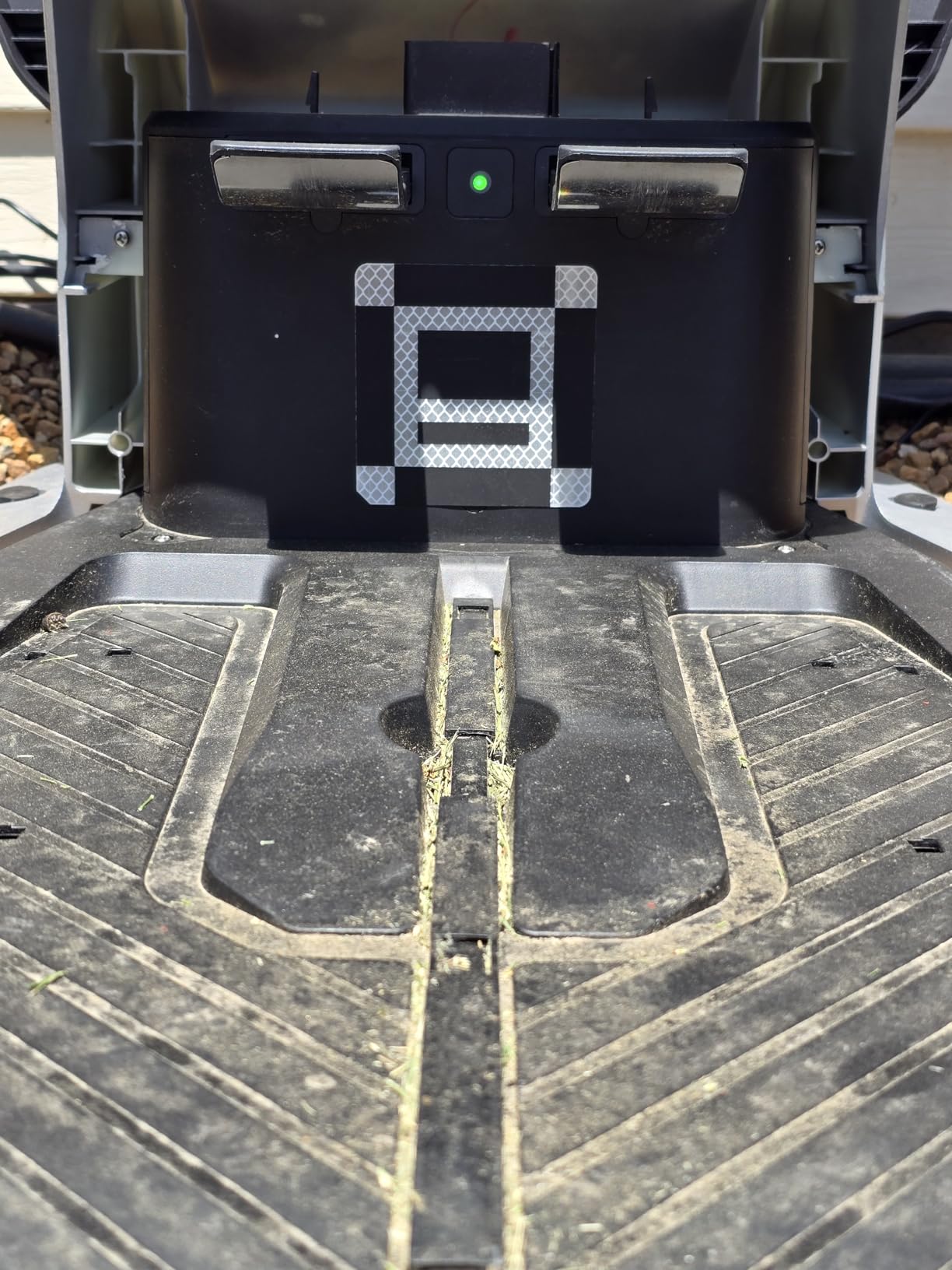
Placement of the dock and the antenna deserves an hour of planning before installation day. Put the antenna as high as you can with a clear view of the sky and away from metal roofs, metal walls and vehicle ports, which is the single most repeated piece of advice in lawn forums. Put the dock on level ground with clearance around it, and route the cable so it cannot be cut.
Finally, clean the underside and the wheels a few times a season. Grass clippings compact under the deck, mud builds on the drive wheels, and both quietly reduce traction on exactly the slopes you bought the machine for.
Frequently Asked Questions
Which robotic lawn mowers don’t require a perimeter wire?
Most modern wire-free robot mowers use either RTK satellite positioning with camera backup, 3D LiDAR, or pure vision navigation to hold a virtual boundary. In this roundup the ANTHBOT M5, Segway Navimow i105N, Sunseeker S4, Sunseeker X3 Plus, Mammotion LUBA 2 AWD 3000HX, Mammotion YUKA 1500, Roborock RockNeo Q110H and eufy E15 all run without any buried cable.
Do all robot mowers need a boundary wire?
No. Wire-free mowers are now the majority of new models sold, and every machine in this roundup works without one. Older wired units still need the cable, and some brands sell boundary wire as an optional accessory, but the mainstream approach is a virtual boundary set in the app.
What are the downsides of using a robotic lawn mower?
The main downsides are the upfront cost, occasional manual edge trimming, the need to clear the lawn of branches and fruit, and dependence on either sky visibility or good lighting depending on the navigation type. Pure vision models cannot mow at night, RTK models can drift near metal roofs and walls, and a software fault can mean a lawn that does not get cut until it is fixed.
What is the absolute best robot lawn mower?
There is no single answer for every lawn, but the ANTHBOT M5 is the strongest all-round wire-free machine in this roundup. It combines dual cameras with full-band NRTK, climbs 45% grades, includes a garage and RTK reference station, supports up to 20 work zones, and has 362 owner ratings behind it. In a heavily wooded yard, the LiDAR-equipped Sunseeker S4 is the better tool.
Is RTK better than LiDAR for lawn mowers?
Neither is universally better. RTK gives centimetre accuracy in open sky and is cheaper, but it degrades under tree canopy, beside metal roofs and in walled gardens. LiDAR builds a physical map and ignores the sky entirely, so it wins in those conditions and costs more. Most current wire-free mowers combine both with cameras.
Do wire-free robot mowers work under trees?
They do, but the type matters. Hybrid machines with cameras, such as the ANTHBOT M5 and Segway Navimow i105N, keep working when satellites fade, and the Sunseeker S4 uses 360-degree LiDAR that does not depend on satellites at all. A pure RTK mower with no camera backup will pause under a dense canopy.
Final Verdict
The ANTHBOT M5 is the best robot mower without perimeter wire for most people. It maps almost by itself, holds position with both cameras and full-band NRTK, climbs a 45% grade, and includes the garage and reference station that competitors charge extra for. Twenty work zones and a half-acre-per-charge figure cover most residential properties.
Buy the Segway Navimow i105N if your lawn is small enough to fit inside its 0.125 acre rating and you want the most proven way into the category, with a three-year warranty and the largest body of owner feedback here. Buy the Sunseeker S4 if trees, eaves or walls take a third of your sky view, because LiDAR ignores all of it. Buy the Mammotion LUBA 2 AWD 3000HX if your ground has a real gradient, and buy the eufy E15 if you want no antenna on your property at all.
Whichever you choose, spend an hour on the property audit before you spend the money. Sky visibility, metal, slope and the narrowest passage on your lawn decide more than any specification on the box.