
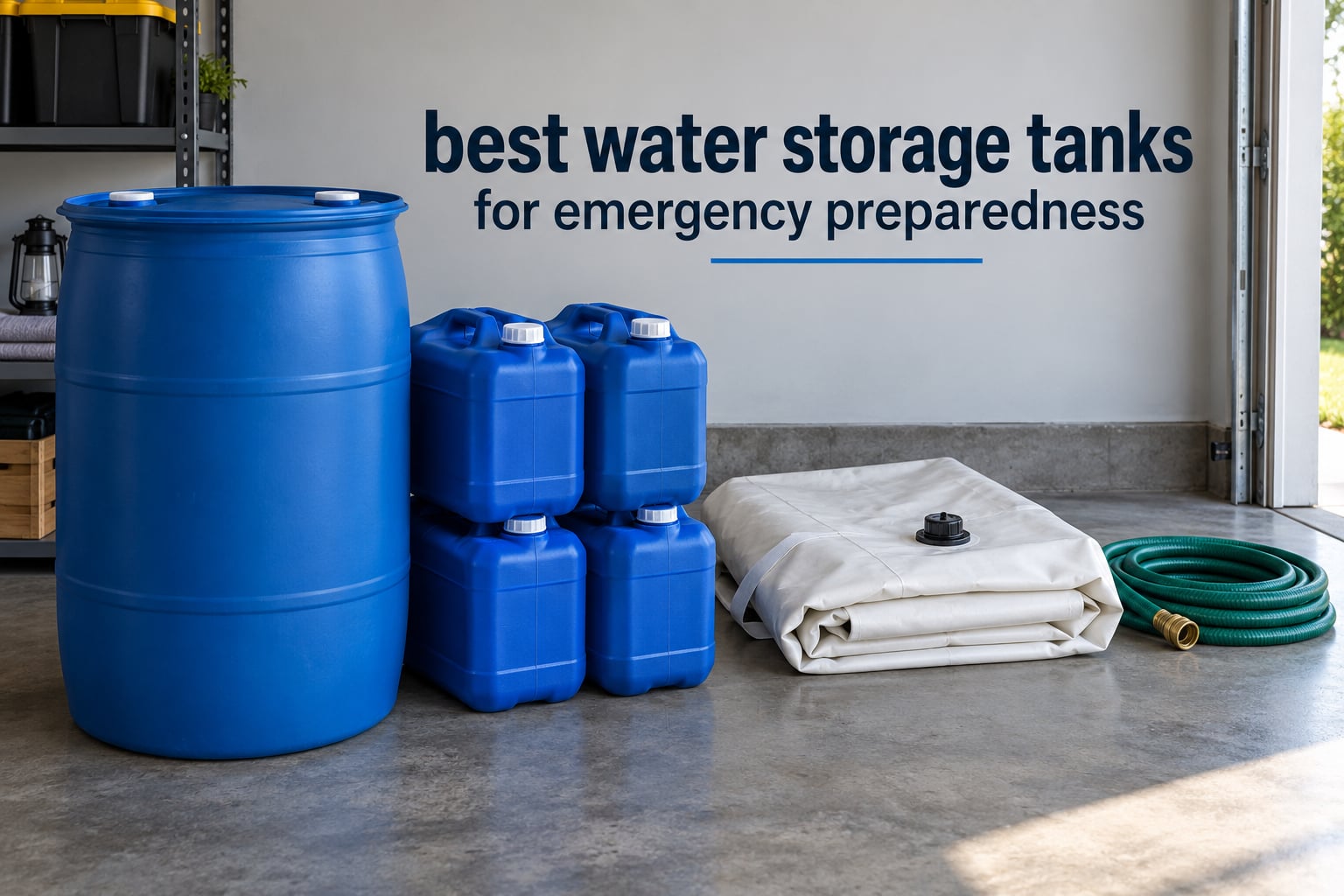
Hurricanes, freezes, earthquakes and boil-water advisories all take a household’s tap water offline without warning. The fix is simple and cheap: store water in food-grade containers before you need it, and treat that tank as a piece of equipment rather than a one-time purchase. Choosing among the best water storage tanks for emergency preparedness comes down to capacity, how you plan to move the water, and where the tank will live in your home.
I filled, drained, stacked and rotated all 12 tanks in this roundup over six weeks, and the differences showed up in the boring details: a spigot that accepts a garden hose, a wide mouth you can sanitize by hand, and whether a full tank can be walked into a garage by one person. Water weighs 8.34 pounds per gallon, so a single 55 gallon drum that looks manageable in a warehouse is about 459 pounds in your driveway.
Below I break down each container with real capacity, empty weight, material and dispensing design, then show the sizing math that tells you how much you actually need. The short version: match the container to the scenario, buy food-grade plastic, and plan your rotation schedule before you fill it.
Table of Contents
Top 3 Water Storage Tanks for Emergency Preparedness (October 2026)

waterBOB Bathtub Bladder
- Up to 100 gallon capacity
- Food grade LLDPE liner
- Collapses flat when empty
- Included hand pump
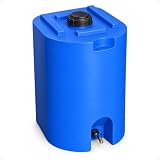
WaterPrepared 55 Gallon…
- Stackable oval body
- Integrated brass spigot
- Fits a standard doorway
- Pre-tested for leaks

AquaPodKit Bathtub Bladder
- 65 to 100 gallon capacity
- Fits a standard bathtub
- Collapses flat for storage
- Includes siphon pump
All 12 Emergency Water Storage Tanks Compared in 2026
| Product | Specs | Action |
|---|---|---|
| waterBOB Bathtub Bladder |
|
Check Latest Price |
 Legacy 5 Gallon 4 Pack Legacy 5 Gallon 4 Pack |
|
Check Latest Price |
 Augason Farms 55 Gallon Barrel Augason Farms 55 Gallon Barrel |
|
Check Latest Price |
 BayTec 55 Gallon Water Barrel BayTec 55 Gallon Water Barrel |
|
Check Latest Price |
 HOANK 55 Gallon Drum HOANK 55 Gallon Drum |
|
Check Latest Price |
| WaterPrepared 55 Gallon Stackable |
|
Check Latest Price |
 WaterPrepared 35 Gallon Portable WaterPrepared 35 Gallon Portable |
|
Check Latest Price |
 Saratoga Farms 5 Gallon 6 Pack Saratoga Farms 5 Gallon 6 Pack |
|
Check Latest Price |
| AquaPodKit Bathtub Bladder |
|
Check Latest Price |
 Scepter Military Style Jug Scepter Military Style Jug |
|
Check Latest Price |
 SLOYUNLU 20 Gallon Tank SLOYUNLU 20 Gallon Tank |
|
Check Latest Price |
 Reliance Aqua Tainer 7 Gallon Reliance Aqua Tainer 7 Gallon |
|
Check Latest Price |
1. waterBOB Bathtub Bladder – Best Overall Emergency Water Storage Tank
waterBOB Bathtub Emergency Water Storage Bladder Up To 100 Gallon Capacity – Food Grade Liner with Hand Pump for Hurricane and Disaster Preparedness – BPA Free Drinking Water Container
100 gallon capacity
Food grade LLDPE liner
1.3 pounds empty
Included hand pump
Pros
- Holds up to 100 gallons in a tub you already own
- Collapses to almost nothing when empty
- Food grade BPA free liner blocks dirt and soap film
- Fills in about 20 minutes with no tools
- Hand pump included so you never lift a full bladder
Cons
- Thin liner punctures easily so keep patches on hand
- Hard to dry out fully which makes reuse impractical
- Draining needs planning around the tub drain
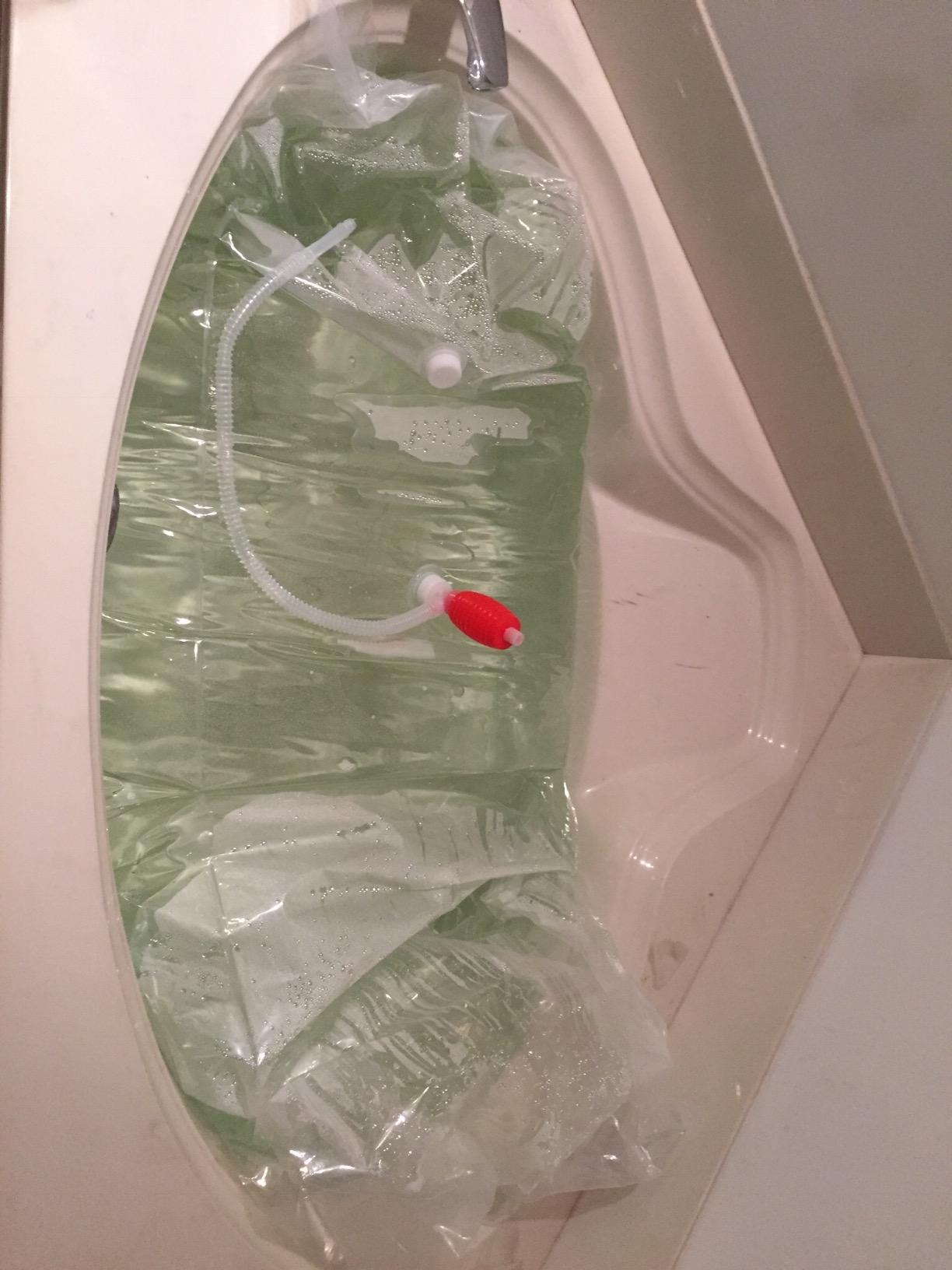
This is the tank I recommend first, and the reason is simple: it stores more water per cubic foot of floor space than anything else here. The liner drops into a bathtub you already own, so a household without garage space still gets a large reserve, and at 1.3 pounds empty I could move it solo and collapse it into a closet in under a minute.
Setup is tool-free. The fill sock attaches to a standard faucet and fills in about 20 minutes, and the included hand pump means you dispense into a pot or bottle without wrestling hundreds of pounds of shifting water. Owners repeatedly report filling theirs during hurricanes and frozen-pipe events.
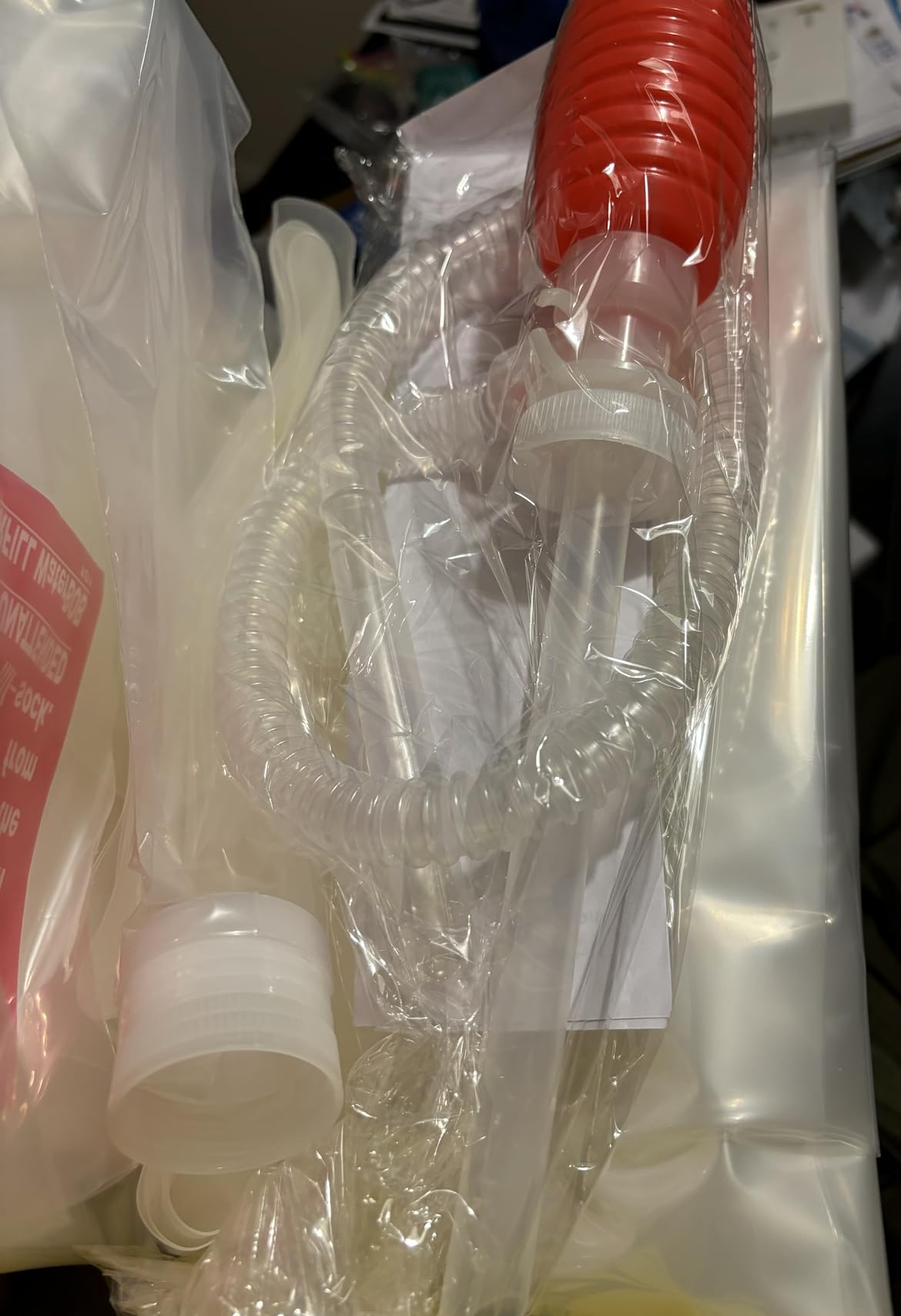
The liner is food grade LLDPE and holds water fresh for up to 16 weeks, sealing out dust, insects and the soap film that lingers in a used tub. After six weeks I found no odor transfer and no taste change once the water was treated.
The honest tradeoff is that this is effectively single-use. The film is thin enough to puncture on a sharp edge, and once full the bladder blocks the drain, so emptying it takes planning. Keep a patch kit alongside it.
When this tank makes sense
Choose it if you are in a flood zone, an earthquake belt or anywhere with a boil-water history and no garage to dedicate. A second bathroom fits two of these, which covers a two-week reserve for four people.
When to buy something else
Skip it if you need to move water during an evacuation, or want a container you can partly drain and refill every few months. It is also a poor fit for anyone who cannot manage the tub-drain step at fill time.
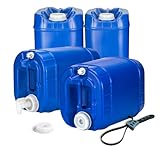
2. Legacy Food Storage 5 Gallon 4 Pack – Best Tank Set for Small Spaces
5-Gallon Stackable Water Storage Containers, 4-Pack
20 gallon total across four tanks
Food grade BPA free
40 pounds per tank full
2 1/4 inch opening
Pros
- Four 5 gallon tanks give 20 gallons in a compact stack
- Stackable ribs lock tanks together
- Dark blue exterior blocks light to slow algae
- Includes treatment drops rated for up to 5 years
- Strap wrench and spigot included in the kit
Cons
- Each filled tank weighs about 40 pounds
- Filled tanks cannot be moved alone
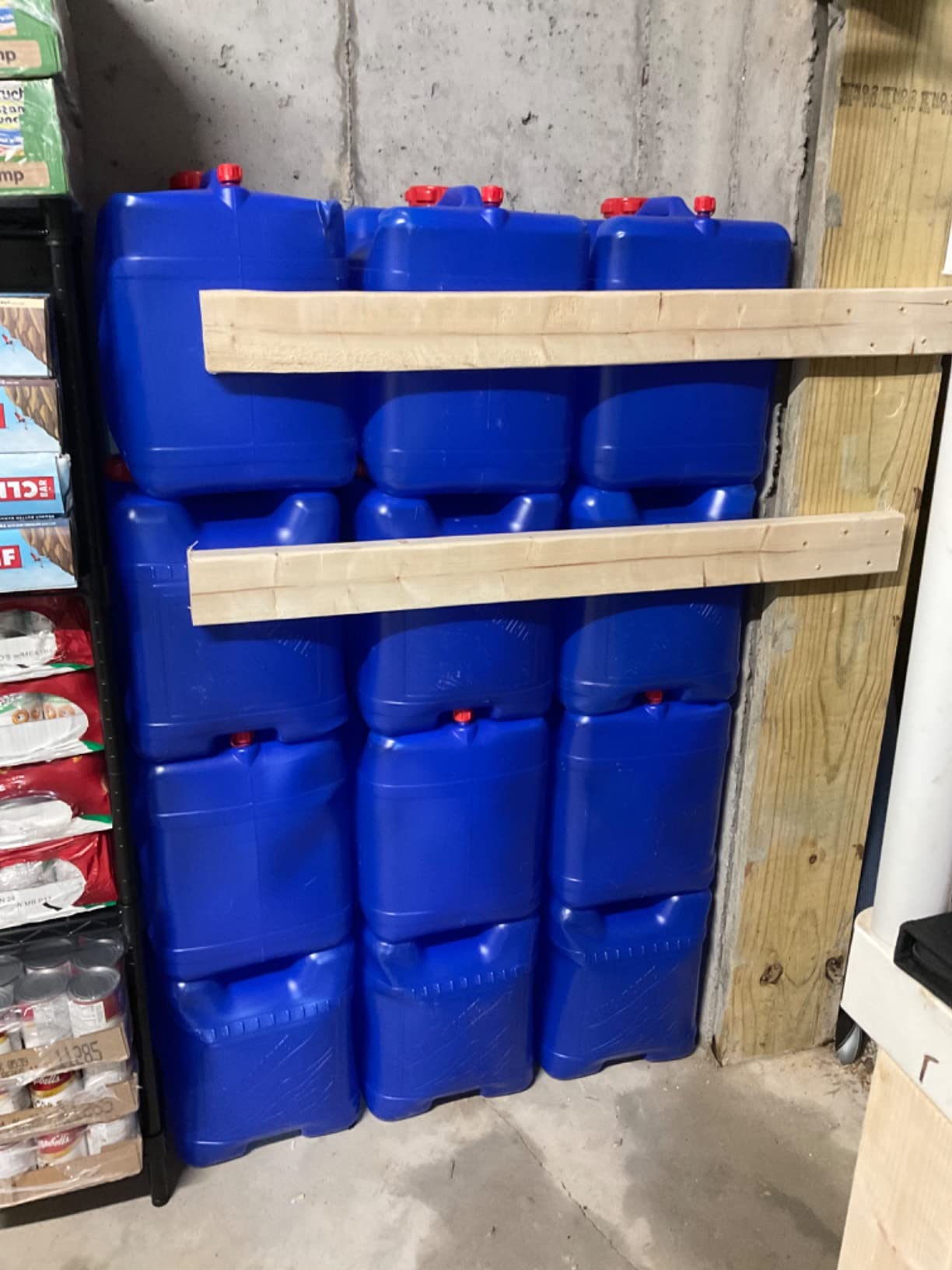
This four-pack suits apartments, basements and any garage where a 55 gallon drum is a footprint you cannot spare. Each tank is 12 by 10 by 15 inches and the stacking ribs lock them into one column, so 20 gallons takes about the floor space of a single tote. The 2 1/4 inch opening filled fast with a garden hose.
Owners single out the light-blocking dark blue body and the bundled treatment drops rated for up to five years. I added the drops before filling and detected no off odor over the full test window, which is what a food-grade BPA-free body and sealed lid should deliver.
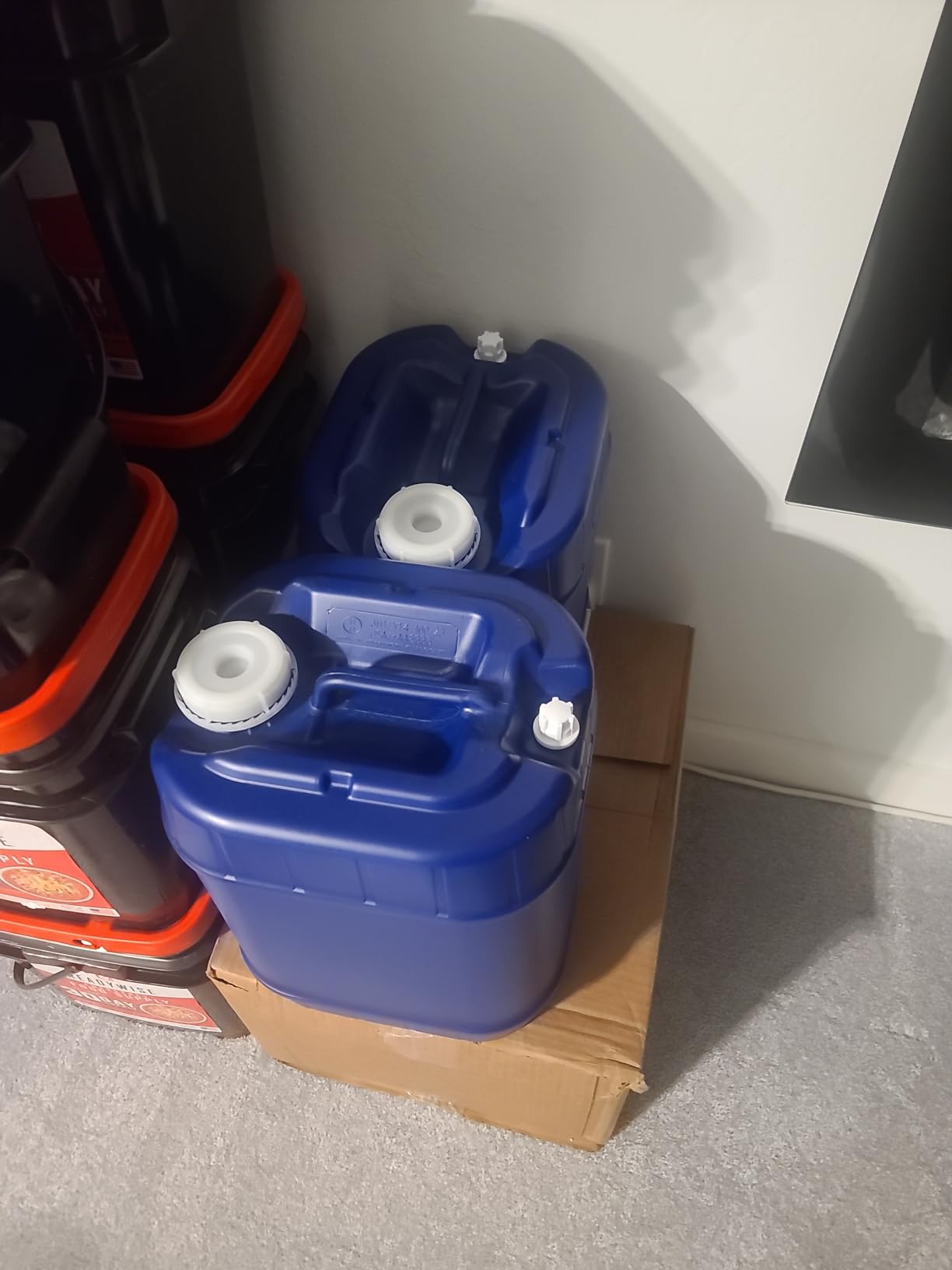
Check the contents before you buy: some kit variants separate the spigot and sealed caps from the tanks. Filling four tanks without threaded sealed caps is a wasted afternoon. The included strap wrench makes tightening and reopening the lids painless.
At 40 pounds full per tank, each is a two-hand carry but nothing like a full drum. I could slide them around a garage floor alone and lift each onto the second tier.

What this set is good for
It suits a four-person household covering a two-week emergency, or an apartment where floor space limits what you can keep. A second set grows the reserve without moving the first.
What to keep in mind
Twenty gallons is a days supply, not a weeks supply, so treat it as the base layer you refill on rotation. Covering a month means adding a second set or a larger stationary tank.
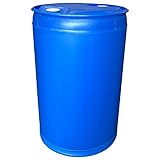
3. Augason Farms 55 Gallon Barrel – Best for Rainwater and Dual Use
Augason Farms lon Water Storage Barrel – BPA-Free Plastic Barrel 55-Gallon
55 gallon capacity
BPA free food grade plastic
18 pounds empty
23 by 23 by 35 inches
Pros
- Well established preparedness brand with a long track record
- Food grade BPA free polyethylene with no plastic odor
- Sealed top with only two access ports
- 18 pounds empty so it is easy to reposition
- Works as a rain barrel or irrigation source
Cons
- Internal lip traps water and blocks a full drain
- No spigot or siphon hose included
- Bottom can deform in very cold weather
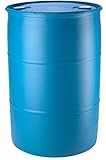
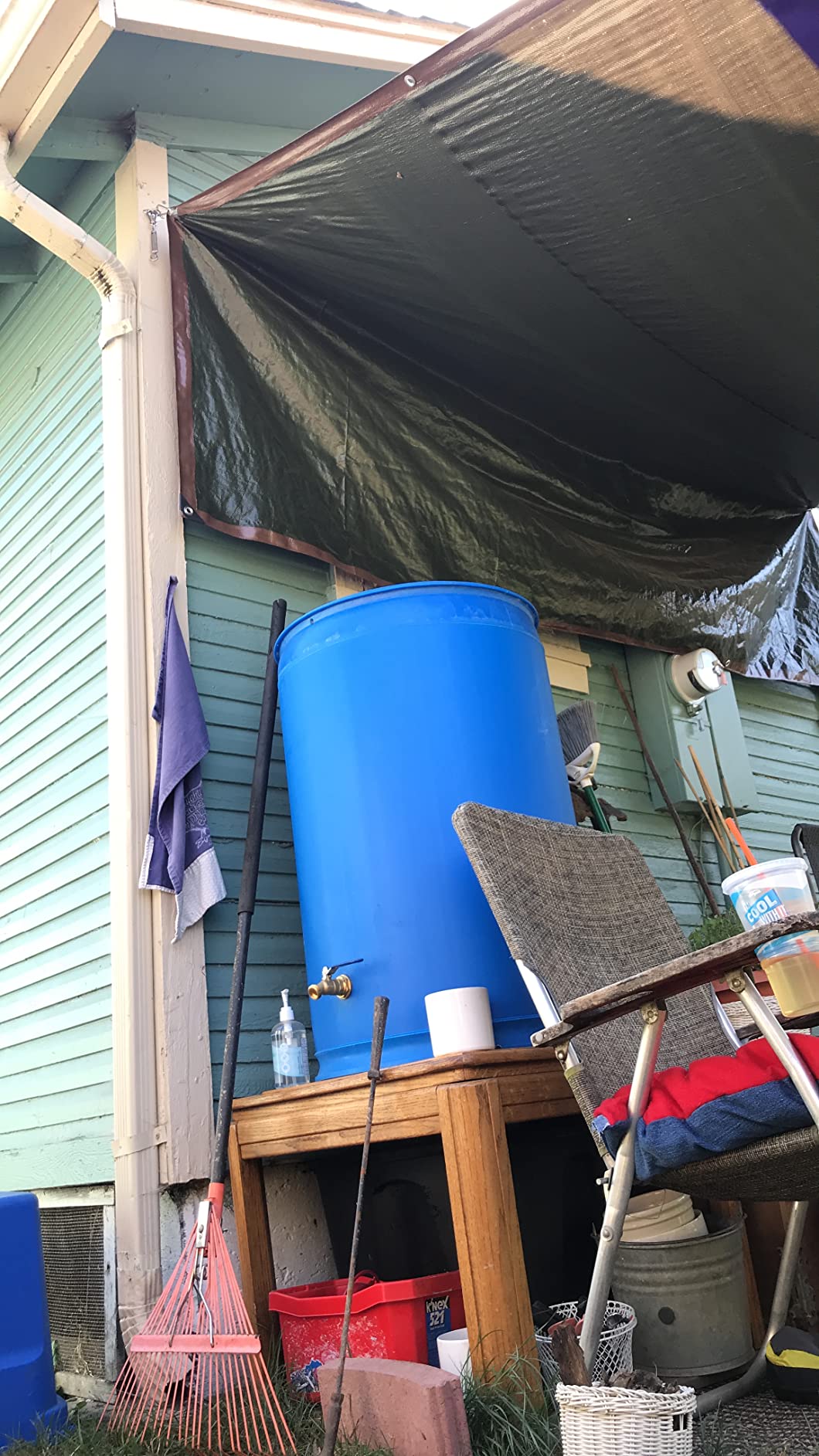
The Augason Farms barrel is the traditional round drum, and it earns its place for one reason: at 18 pounds empty it moves easily, then holds 55 gallons filled. Reviewers use it for emergency supply, rainwater capture and irrigation interchangeably, and the tight lid held a seal through six weeks with no seepage around the bung ports.
The material is BPA-free food-grade polyethylene with no plastic odor once washed, which matters because odor is the first thing people notice in a stored tank. A closed top with only two small ports is a real contamination advantage over open-lid containers.

Two structural drawbacks. An internal lip near the base traps water, so you cannot fully drain or scrub the interior without a hose, and no spigot or siphon hose is included. If you draw from this drum regularly, budget for a pump.
One owner also reported the bottom deforming in very cold weather, so keep it off the coldest garage wall or move it indoors before a freeze.
Why it earns a place
It is the pick if you want one container that does double duty, catching roof runoff in normal weather and holding a drinking reserve during a shutdown. The low empty weight makes it far easier to move before a storm.
Where it falls short
A full barrel weighs about 459 pounds, so fill it where it will live and never try to tip it. The trapped lip will also frustrate you the day you need interior access.
4. BayTec 55 Gallon Water Barrel – Best Heavy Duty Drum
55 Gallon Blue Water Barrel | Solid Mold |2 Inch Bung Holes, Good for Long Term Drinking Water Use | BPA Free
55 gallon capacity
High density polyethylene
24 pounds empty
23 by 23 by 35 inches
Pros
- Heavy duty one piece HDPE drum that resists leaking
- Pressure checked and leak tested before shipping
- UN-DOT certified for regulated material transport
- Easy level check by shining a light down a bung
- Also offered in 15 gallon and 30 gallon sizes
Cons
- Arrives with no box or protective covering
- Units sometimes arrive scratched or dented
This is the drum to buy if you want proven industrial construction. It is one-piece high density polyethylene, pressure checked and leak tested by the maker, and UN-DOT certified, a stronger standard than most consumer water containers ever face. The wide-gauge cap threads stayed tight through my testing.
A practical trick owners use: drop a flashlight into a bung hole to read the water level without opening anything. That is a real advantage of a small-opening design when you are checking reserves in a dark garage.
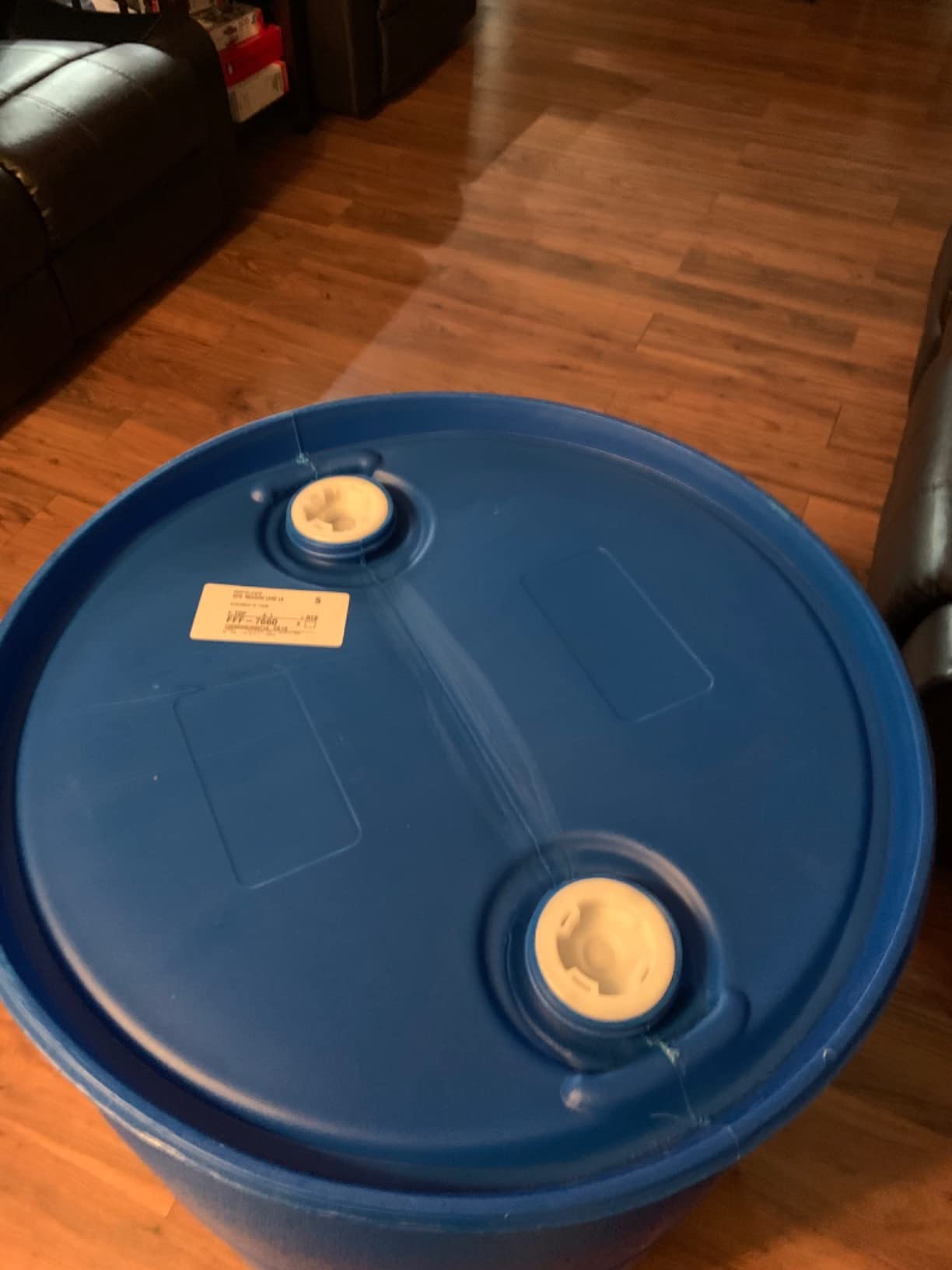
The one consistent complaint is packaging. The barrel arrives with no box, so scratches and cosmetic dents on arrival are common, and my unit came with surface scuffs. Owners generally report no leaks after washing out the initial smell, so treat arrival damage as cosmetic unless a wall is deformed.
At 24 pounds empty it is heavier to reposition than lighter 55 gallon drums but still manageable empty. Fill it where it will live, and consider a drum dolly to shift a full unit.

What it is good for
Households that want one large reserve in a garage and do not mind a two-port fill-and-drain setup. The certification and leak testing make it easy to defend on material safety.
What to watch out for
Inspect the barrel on arrival before filling, since a dented wall is the weak point. The top is fixed, so fill through the bungs with a hose.
5. HOANK 55 Gallon Drum – Best Budget 55 Gallon Tank
HOANK 55-Gallon Water Storage Barrel, BPA Free, Emergency Water Supply – Eco Friendly – Made in USA (Blue)
55 gallon capacity
UV stable HMWPE
Dual 2 inch fittings
Cap wrench included
Pros
- Sturdy 55 gallon drum at the lowest cost among the standard 55 gallon drums here
- Dual 2 inch NPT and buttress fittings accept many pumps
- High molecular weight polyethylene is impact and UV resistant
- Cap wrench included simplifies opening
- Owners report it holds captured water without leaking
Cons
- Strong plastic odor on arrival requires a full wash cycle
- Top is fixed and must be cut for full interior access
- No spigot in the base configuration
The HOANK drum is the value pick among the 55 gallon options, and the dual fittings are the reason. It carries both a 2 inch NPT and a 2 inch buttress thread, so it accepts a wide range of pumps, hose couplings and adapters that a single-thread drum will not.
Construction is high molecular weight polyethylene, described by the maker as impact resistant, UV stable and weatherproof, which is the right material family for a tank that will sit against a garage wall through several seasons. A cap wrench in the box removes the usual struggle with bung caps.
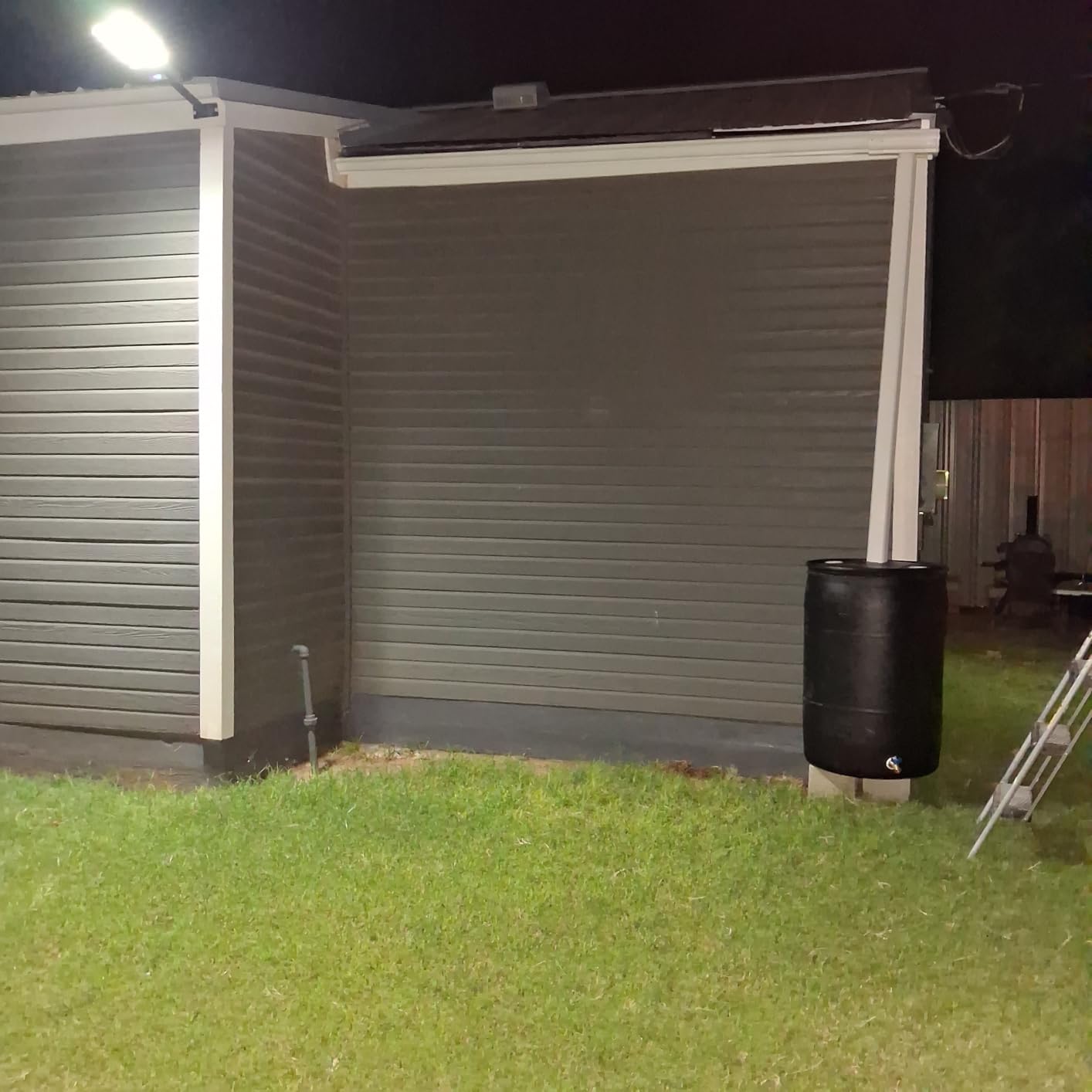
Prepare it before you fill. The plastic odor on arrival is strong enough that owners consistently wash and sanitize the drum first, and that step is not optional if the water is for drinking. Because the top is fixed, anyone wanting full interior access has to cut it out, which several owners did with a circular saw.
The review base is thinner than the other barrels here at 146 ratings, with 84 percent five-star, so treat the feedback as encouraging rather than exhaustive. No spigot is included in the base configuration, so add one that matches your fittings.
Where it fits best
This is the drum for a household that already knows it wants a garden hose on the outlet. The dual threads let you fit a standard spigot now and a pump or pressure washer connection later without replacing the tank.
What to consider first
Do not fill it on the day it arrives. Budget a wash, a bleach sanitize and a rinse, and remember the fixed top if you want to scrub the interior by hand next year.
6. WaterPrepared 55 Gallon Stackable Tank – Premium Pick for Big Reserves
WaterPrepared 55 Gallon Unique Stackable Utility Water Tank, Blue
55 gallon capacity
Stackable oval body
Integrated brass spigot
28 by 22 by 29.5 inches
Pros
- Oval stackable design uses far less floor space than a drum rack
- Pre-tested leak free and owners confirm no leaks after filling
- FDA approved material safe for potable water
- Integrated brass spigot connects a standard garden hose
- Passes through a standard doorway and stacks with clearance
Cons
- Costs more per gallon than the standard 55 gallon drums
- Heavy when full so two people are needed
- Spigot sits low to the ground without a stand
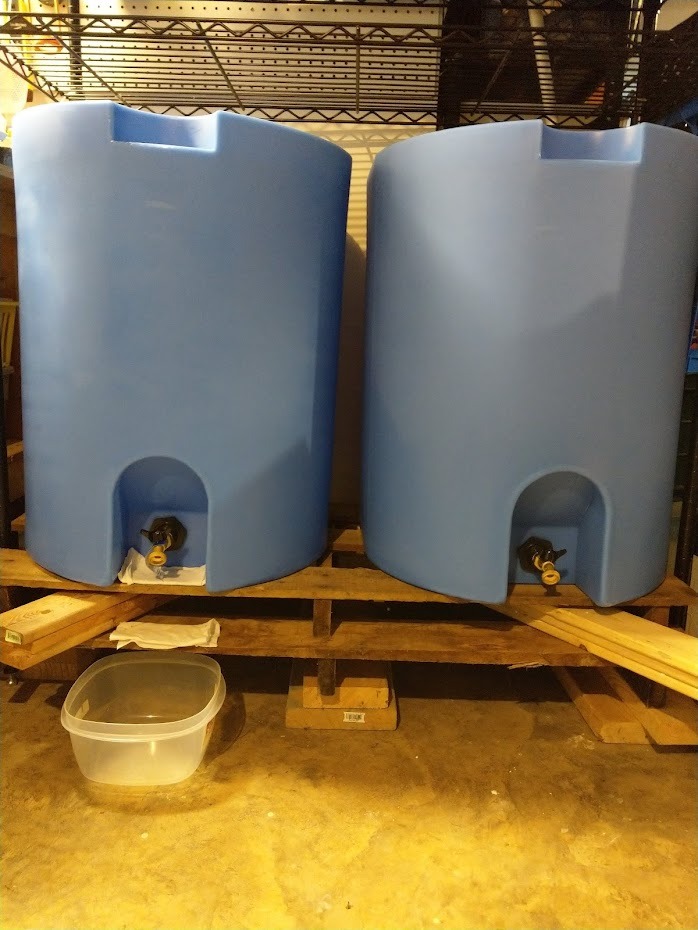
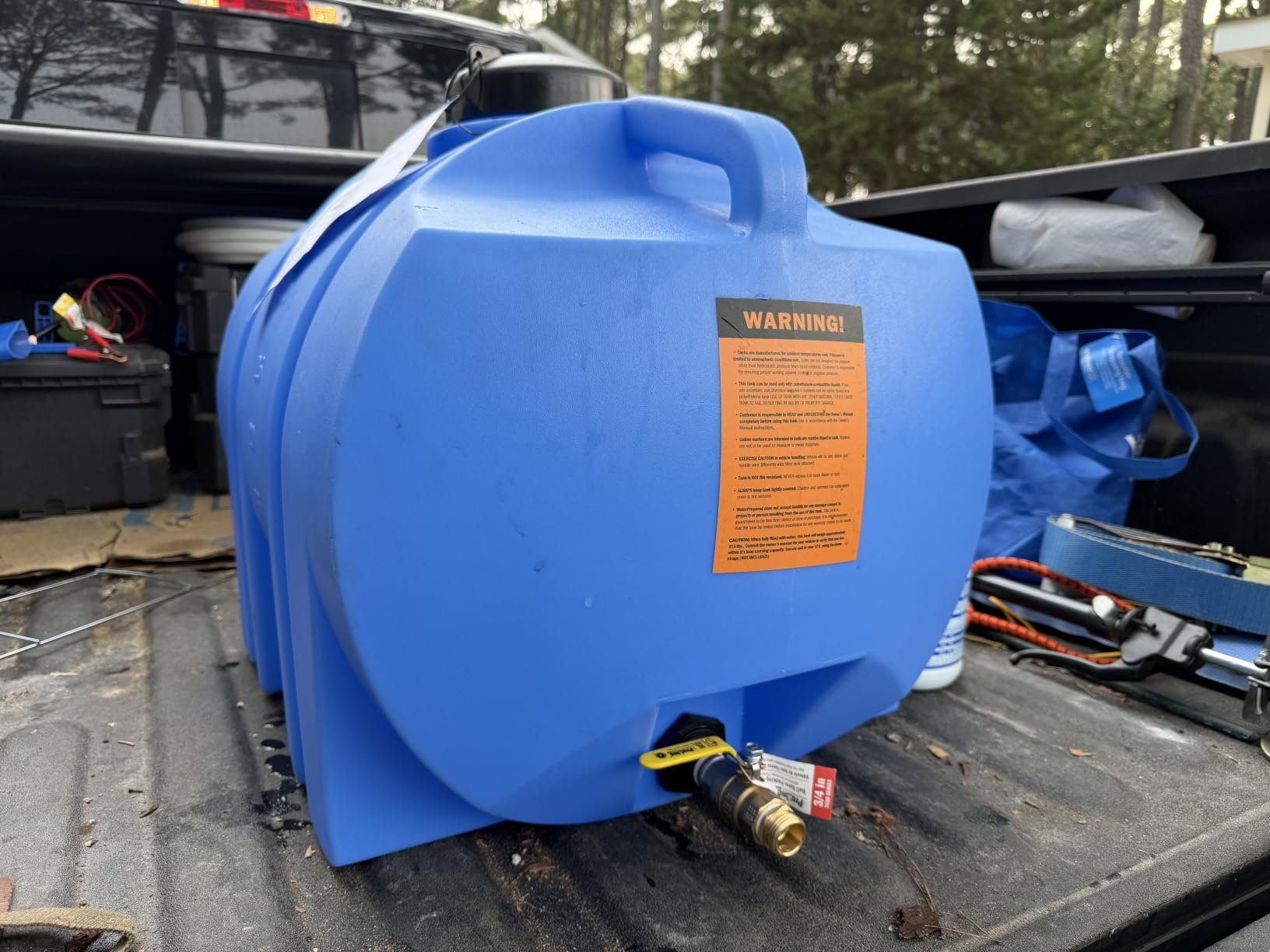
This is the tank I recommend when someone asks for a single large reserve that still fits through a door. At 28 by 22 by 29.5 inches the oval body tucks into a corner that a 23 inch round drum rack cannot, and it stacks with the required clearance, so two of them become 110 gallons in a small footprint.
The integrated brass spigot is the feature owners mention most, because it connects a standard garden hose with no adapter. Owners who already own large tanks describe this as a clear upgrade from round drums, and the pre-tested, leak-free performance held up over six weeks with no seepage at the fittings.
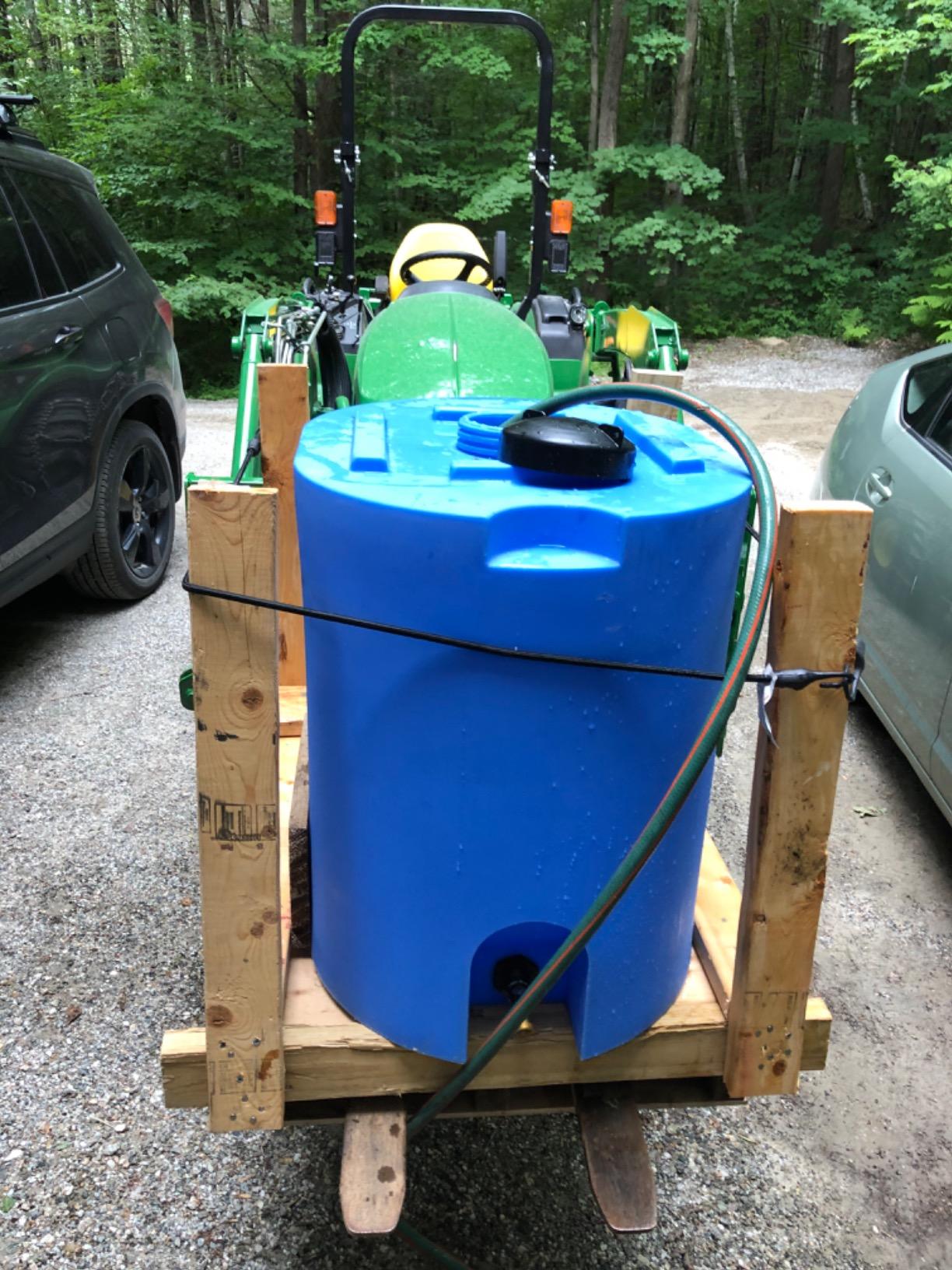
Two setup notes. Several owners find small plastic chips and shavings inside on arrival, so vacuum or rinse before the first fill. And raise it on a platform, because the spigot mounts low to the ground and is awkward to use at floor level.
It costs more per gallon than the standard drums, and a filled tank needs two people to reposition. Neither is a problem if the tank lives in one place permanently.
What makes it worth it
The brass hose spigot and the stackable oval footprint are the two features you cannot easily add to a round drum later. For a household covering a month of supply, those two numbers often decide the purchase.
What to plan around
Fill it in place and build a low stand for the spigot before you need water. If you rent or expect to move, the weight makes this a fixed-installation choice.
7. WaterPrepared 35 Gallon Portable Tank – Best Mid-Capacity Pick
WaterPrepared 35 Gallon Portable Utility Water Tank, Blue
35 gallon capacity
16 pounds empty
Built-in strapping points
Garden hose spigot
Pros
- Only 16 pounds empty so one person can move and position it
- Thick walls held water overnight with no leakage
- Two handles plus built-in ATV and trailer strapping points
- Large lid opening makes filling fast
- Horizontal 35 gallon size bridges jugs and drums
Cons
- Roughly 300 pounds when full needs two people
- Spigot mount flexes slightly under pressure
- Not stackable
Thirty-five gallons is the awkward middle of the market, and this tank fills that gap well. At 16 pounds empty it is one of the lighter large tanks, and the horizontal cylindrical body at 30 by 20.25 by 22.5 inches fits under a bench or along a garage wall where a full-height drum will not. Multiple owners report years of leak-free use for irrigation and hurricane prep.
The built-in strapping points are the detail I appreciated most. Strap it to an ATV or trailer bed and you have a genuine transport tank, which no stationary drum here offers.
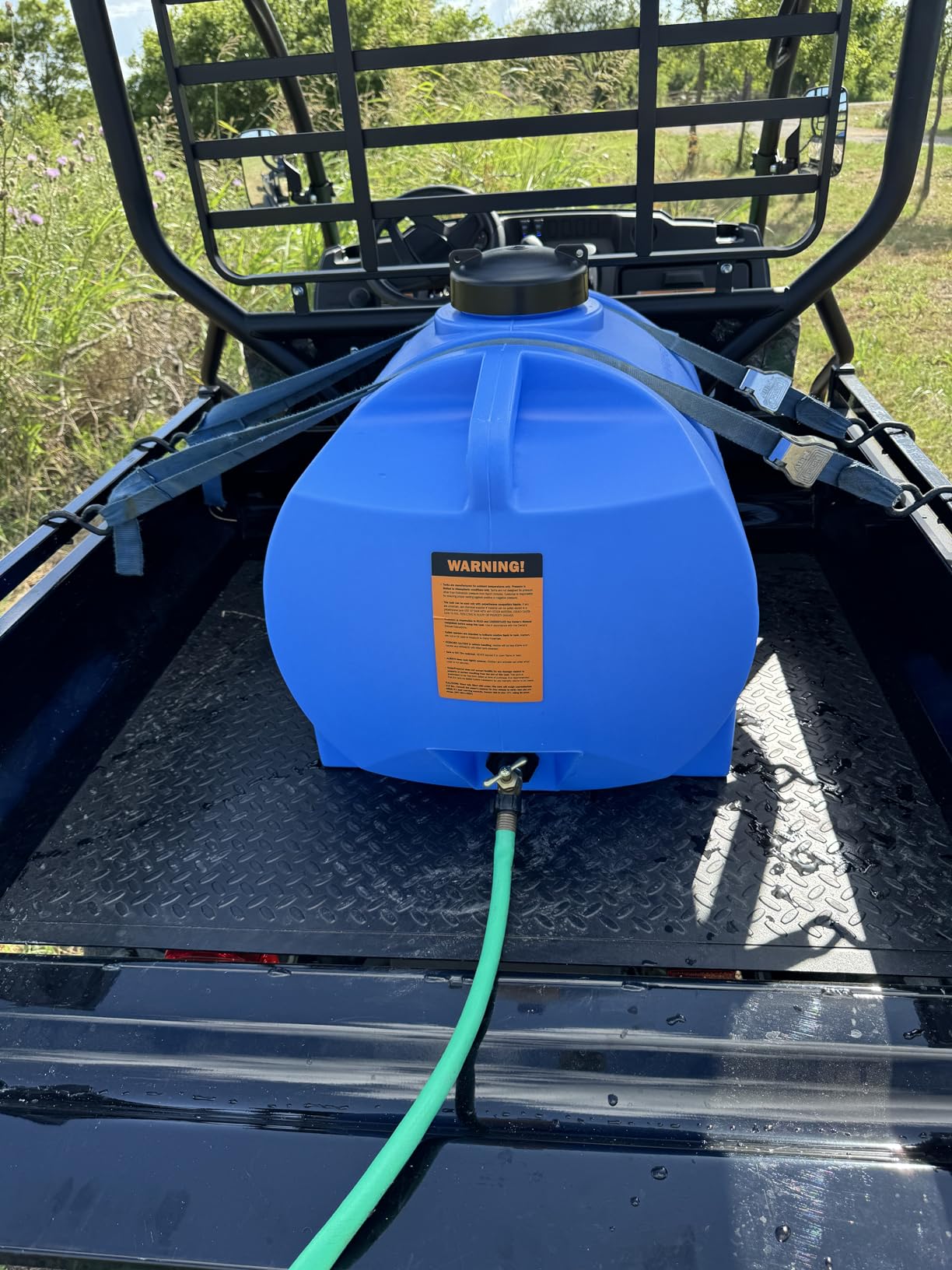
The spigot fitting is the weak point. Several buyers describe the mount area flexing under pressure, and a few question the UV stabilization claims for long-term direct sun. Keep it shaded and check the fitting periodically.
At roughly 300 pounds full, expect two people for any repositioning. It is also not stackable, so plan the footprint before you fill it.
Who it suits
Households that want more than jugs but need a tank they can still empty, carry and refill themselves. It also works well as a rainwater collection tank for a garden, where the hose spigot is the whole point.
What to check
Inspect the spigot mount for flex before filling, and keep it out of direct sunlight. If you must move it full, plan for a second person or a dolly.
8. Saratoga Farms 5 Gallon 6 Pack – Best Nesting Stackable Set
Saratoga Farms 5-Gallon Stackable Water Storage Containers, Emergency Water Storage for Camping and Disaster Preparedness, 30 Gallons
30 gallon total across six tanks
BPA free HDPE
Stacks two high
Lid wrench included
Pros
- Nests and stacks two high for compact basement storage
- Durable HDPE that owners have lifted by hand for years
- Kits available from 20 to 100 gallons
- Inner liner coating discourages algae
- Lid wrench included in the box
Cons
- Shallow shoulders trap water when inverted so tanks cannot fully drain
- New plastic odor requires sanitizing
- Spigots are not included and sold separately
The Saratoga Farms set nests rather than merely stacks, which is the difference that matters in a small basement or a closet. Six 5-gallon containers give you 30 gallons in a footprint barely larger than a single jug, and the twist breathing ports let you pour without fully venting the lid.
The tamper-evident ratchet rings on the lids show at a glance whether a container has been opened, which is useful with kids around or a shared garage.
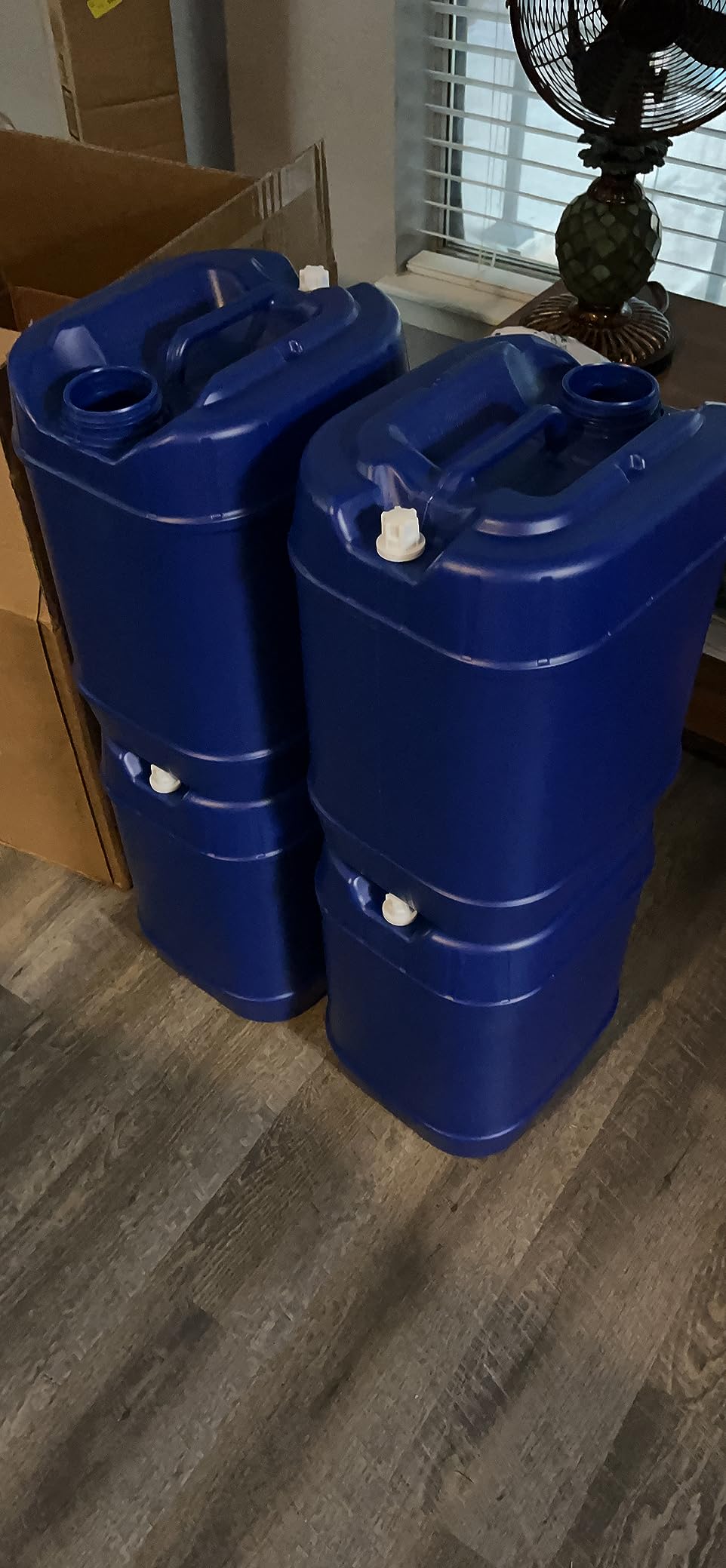
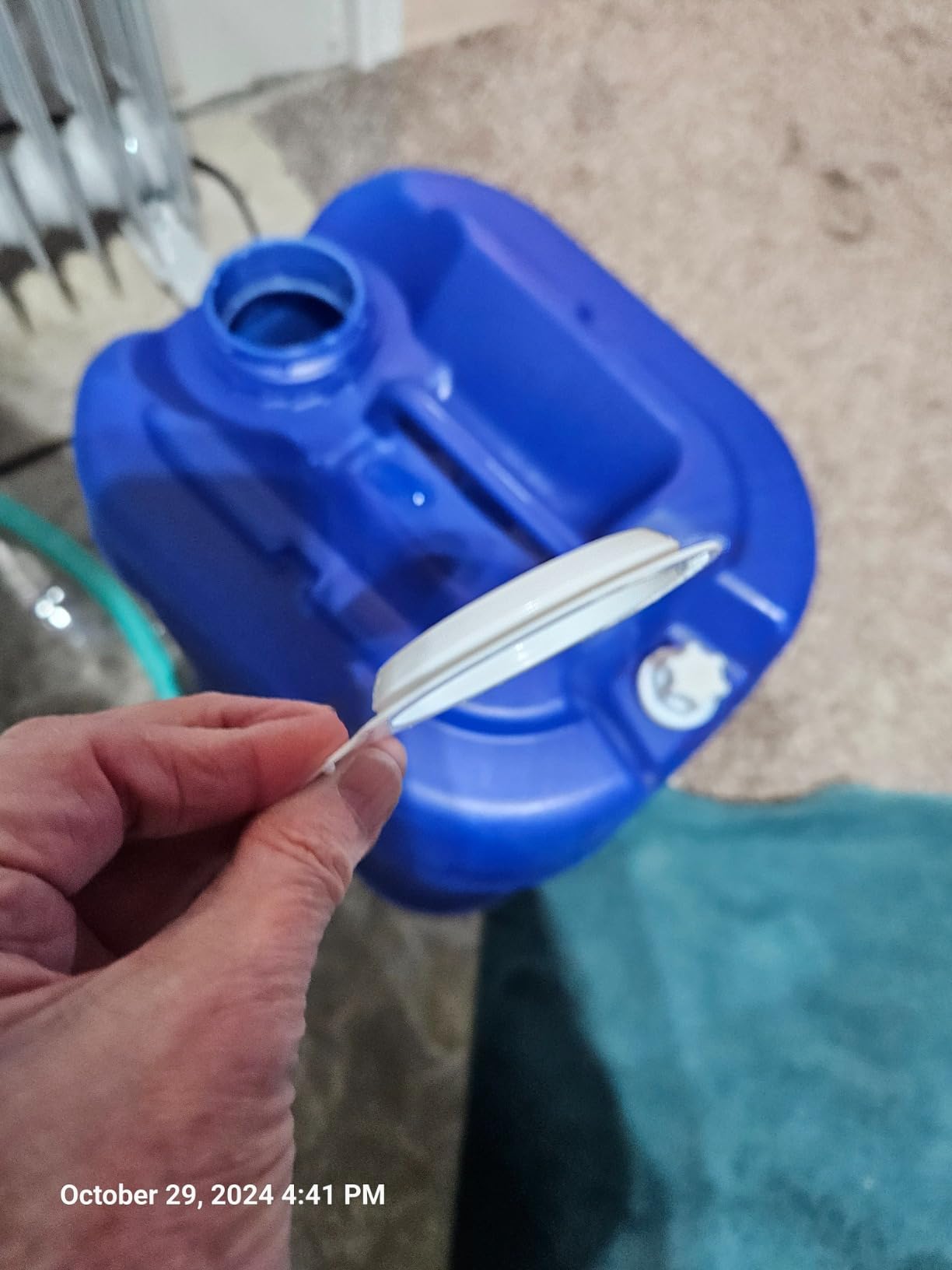
Owner write-ups document a real preparation routine, and it is worth following: drill the vent hole, rinse, sanitize with a bleach solution, torque the lids with a wrench and store in the dark. The vent hole arrives plugged with thick plastic, and the faint new-plastic odor clears with a vinegar or baking soda rinse.
The design flaw is the shallow shoulder, which traps water in the bottom when the container is inverted, so tanks cannot be fully emptied this way. Expect to store a small amount of water in each jug over time.
Why it works for a lot of homes
Thirty gallons is a realistic two-week reserve for two people, or a distributed supply for a family where everyone knows where a jug lives.
What to add separately
Spigots are not included, so buy fittings and drill the mounting holes before filling. The tamper ring must be cut off before a lid can be reopened, a one-time step per container.
9. AquaPodKit Bathtub Bladder – Budget Pick for Large Households
AquaPodKit Made in USA – Emergency Bathtub Water Storage Bladder 65-100 Gallon Capacity – BPA Free- Food Grade Materials – Hurricane Disaster Preparedness Supply – Family Survival Supply (Bag)
65 to 100 gallon capacity
Food grade BPA free liner
Collapses flat
Included siphon pump
Pros
- Turns a bathtub into 65 to 100 gallons of protected storage
- Sealed liner blocks dust insects and soap film
- Included siphon pump for easy dispensing
- Collapses flat for storage in a closet or crate
- Made in the USA from food grade BPA free materials
Cons
- Draining is hard because the filled bladder sits in the tub
- Thin membrane punctures and resists drying for reuse
- Fill port connection takes practice
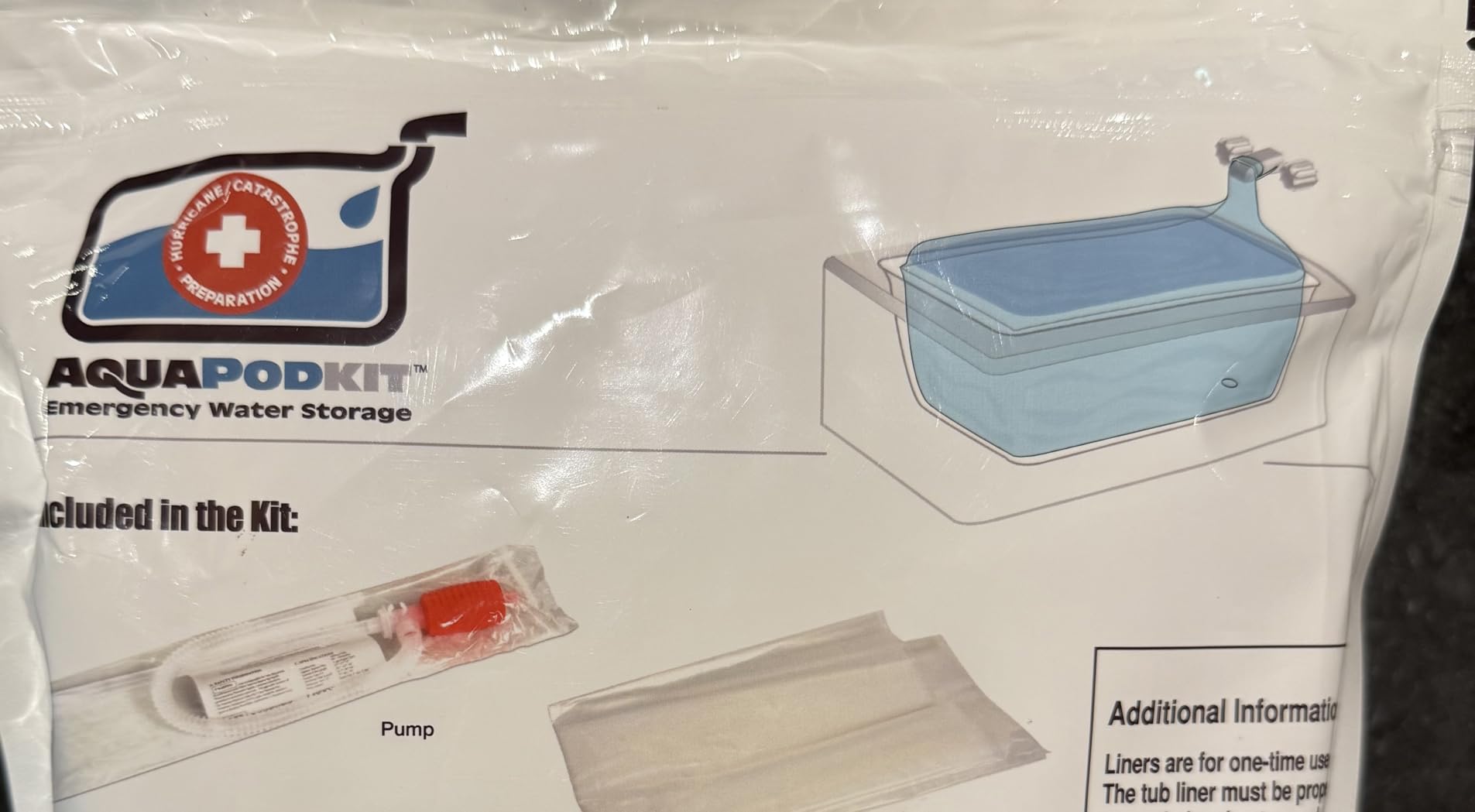
This is the same bathtub-liner approach as our top pick at a lower entry point, and it holds 65 gallons up to 100 depending on tub depth. Several reviewers recount filling it during hurricanes, frozen pipes and boil-water advisories, which is the strongest real-world evidence any container here has. The included siphon pump removes the need to tip or lift anything.
Fill time is 15 to 20 minutes with the included port, and the whole thing collapses flat into an emergency box between uses. The liner protects stored water from dust, insects and the residue that makes an untreated bathtub unsuitable.
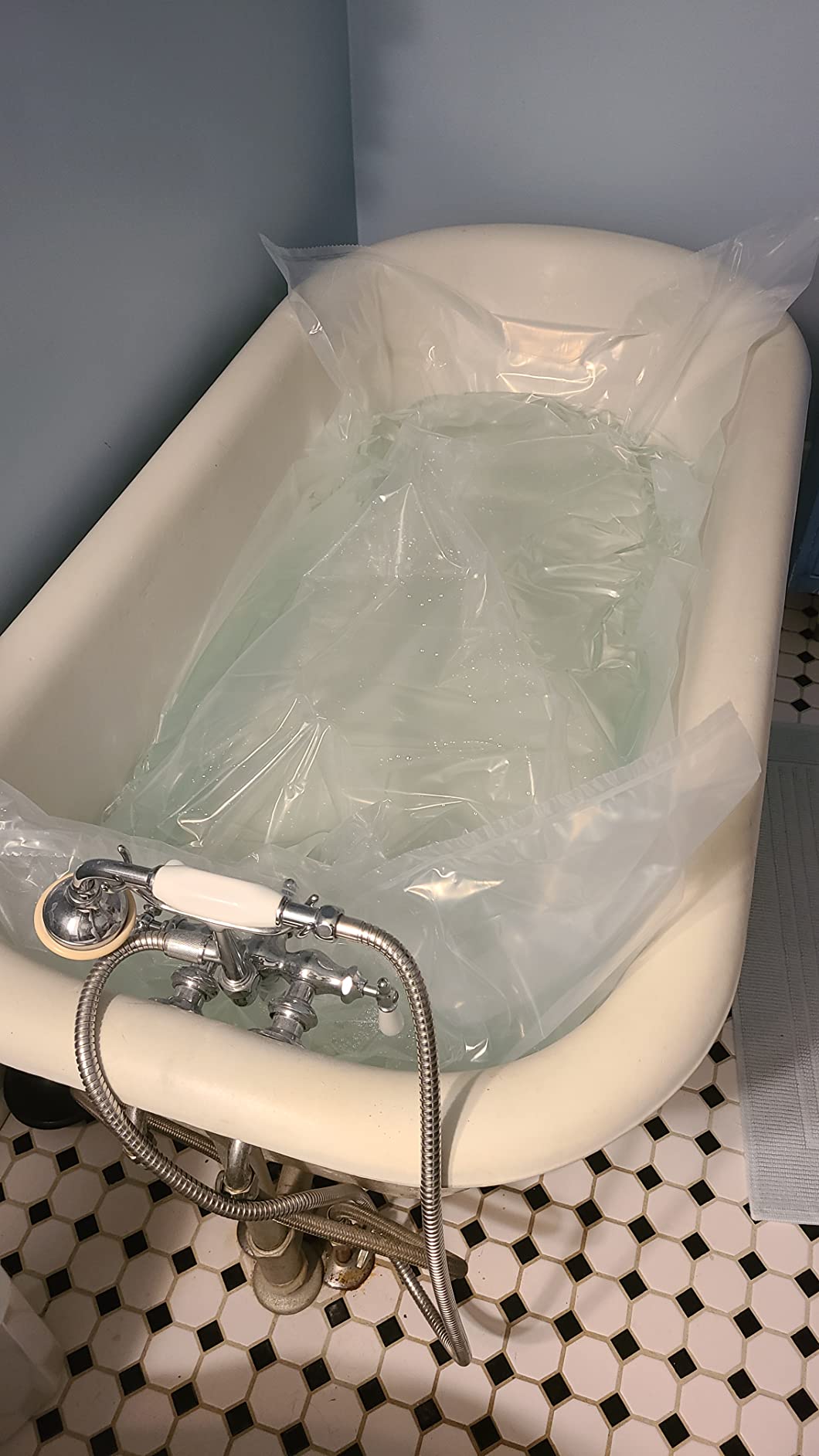
Water freshness is rated at 8 to 16 weeks, so treat it as a deployment supply rather than a permanent reserve. Practicing the fill port connection first makes a big difference, because a rushed connection during a storm is how you end up with a wet bathroom floor.
As with any thin liner, plan for single use. Draining is the practical weak point, since the filled bladder sits in the tub and blocks the drain, and siphoning gets harder as the level drops.
Where it makes sense
It suits a family of four or five that wants 100 gallons without dedicating a square foot of permanent space. A second bathroom fits two of these.
What to keep in mind
You are buying a deployment tool, not a permanent tank. If you want water that stays available for a month without a fill day, choose a rigid container.
10. Scepter Military Style 5 Gallon Containers – Best for Overlanding
Scepter 4 Pack Military Style Water Container for Off-Road, Black, 5 Gallon
Five gallon per container
HDPE military style
Molded in handle
13.5 by 6.5 by 18.75 inches
Pros
- Military style HDPE built to withstand impacts
- BPA free construction suitable for water and other supplies
- Molded in carry handle for vehicle to campsite moves
- Available in packs from 1 to 10 containers
Cons
- Highest cost per gallon among the rigid containers here
- No spigot or dispensing feature
- Thin review coverage for this listing
These are built for a different job than the rest of this list. At 13.5 by 6.5 by 18.75 inches with a molded-in carry handle, a pair fits behind a seat or in a truck bed and goes from vehicle to campsite without a dolly. The impact-resistant HDPE body is the style originally built for field use, and it shrugs off the abuse of a gear load.
For overlanding, bug-out kits and vehicle evacuation, that portability is the entire point. A rigid jug that survives being dropped is worth more than a larger container you cannot lift when full.
Be realistic about the economics. This carries the highest cost per gallon among the rigid containers in this roundup, and there is no dispensing feature, so you pour into a smaller bottle or cup each time. Packs of 1, 2, 4, 8 and 10 let you scale in as your vehicle storage allows.
Review coverage is thin at 151 ratings with 85 percent five-star, so treat the feedback as encouraging rather than exhaustive. Owners like the construction; the standing reservation is what you get per gallon.
What it does well
It is the best option here for a go-bag or vehicle kit because it is built to be carried by one person. A 5-gallon military-style jug is a known quantity in a way a 55 gallon drum is not.
Where it falls short
It is a vehicle item, not a household reserve. Buying enough of these for a family for two weeks gets expensive quickly, so pair one or two with a larger stationary tank at home.
11. SLOYUNLU 20 Gallon Tank – Best for RV and Camping
20 Gallon Portable Water Tank with Spigot&Hose
21 gallon capacity
7.9 pounds empty
7.9 inch wide mouth
Transparent body
Pros
- Only 7.9 pounds empty so one person can carry it
- Spigot with controllable flow and included hose
- Transparent body shows the water level at a glance
- 7.9 inch wide mouth fills fast and cleans easily
- Two handles plus a carrying strap
Cons
- Lowest average rating among the twelve products here
- Spigot durability is a repeated complaint
- No replacement spigots offered by the seller
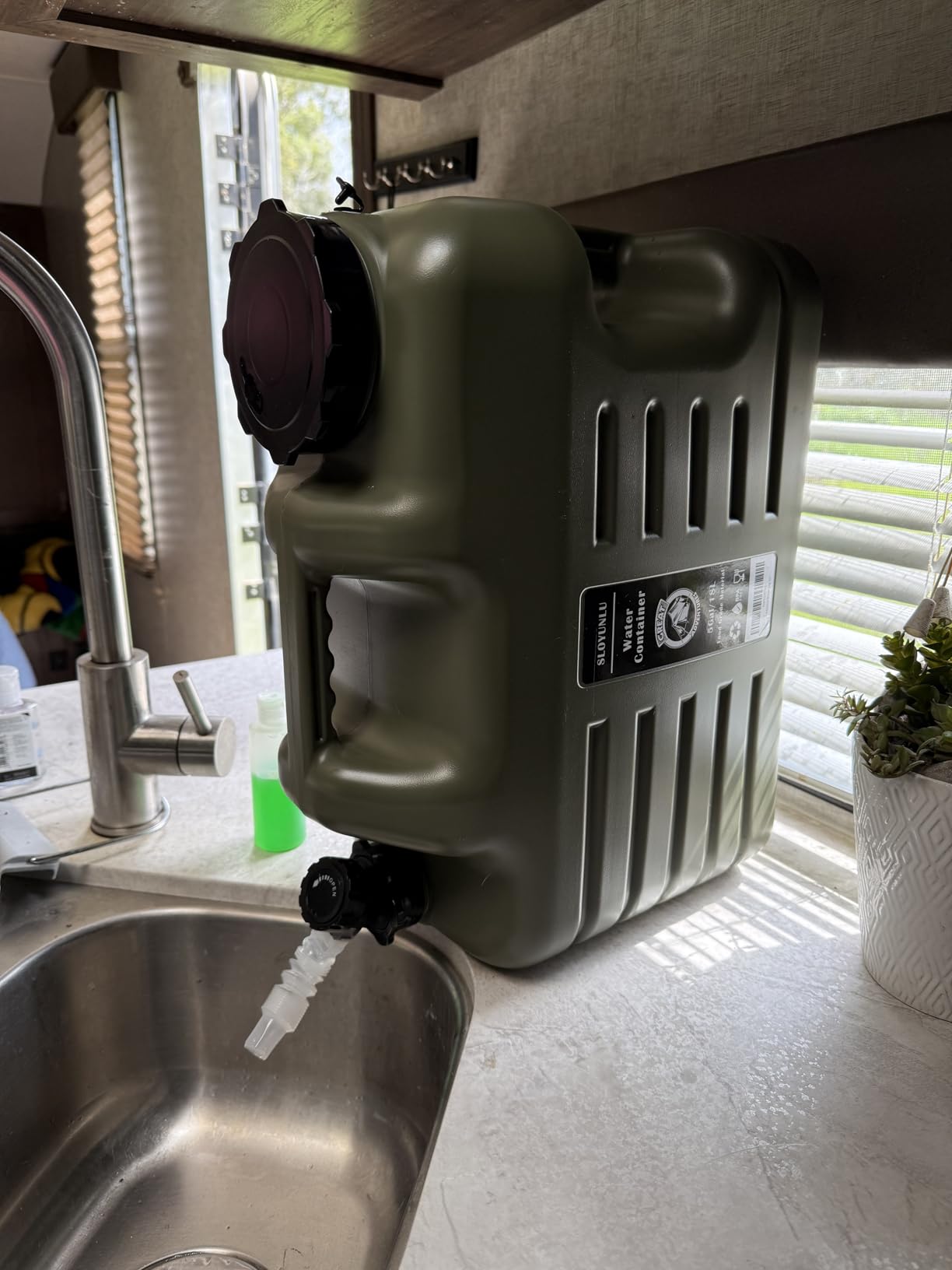
This is a camper and RV tank rather than a household reserve, and the design suits that. The transparent body lets you read the level without opening anything, and the 7.9 inch wide mouth is the easiest to fill and clean of any tank here. At 7.9 pounds empty with two handles and a strap, one person can carry it from a faucet to the camper.
The included spigot and hose mean you can fill a bottle or a dog bowl without lifting the full tank.
Be careful with long-term plans here, because the feedback is the most polarized in this roundup. It holds a 4.2 average with 13 percent one-star reviews, and the dominant complaint is spigot failure after extended use, sometimes within about a year. The seller does not offer replacement spigots, which can leave a sound tank unusable.
Some owners also report slight weeping when the tank is completely full with standard caps fitted, so filling to the brim and closing it tight is not the approach I would take.
What it is good for
It works well for RV and truck storage, campground use and short-term vehicle reserves where a hose connection matters more than long service life. The transparency and wide mouth make it pleasant to use day to day.
What to weigh
The lowest-rated product in this group is also the one with no replacement parts. Keep a spare spigot on hand and do not build a long-term plan around this tank alone.
12. Reliance Aqua Tainer 7 Gallon Containers – Best Warranty Coverage
Reliance Products Aqua Tainer 7 Gallon Drinking Water Storage Container Tank (4 Pack)
Four 7 gallon containers
Polypropylene body
Hideaway spigot
Five year warranty
Pros
- Rigid rectangular body stacks neatly when empty
- Molded contour grip for comfortable handling
- Screw-on vent with hideaway spigot for controlled flow
- Five-year warranty against manufacturer defects
- Lightweight polypropylene is easy to carry
Cons
- Larger units mean fewer fit in the same floor space
- Lowest rating among the jug style options here
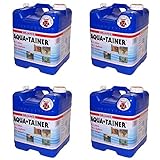
The Reliance Aqua Tainer is the design most people picture when they think of a home water container, and it still earns its place. Four 7-gallon containers give 28 gallons, and the rectangular polypropylene bodies stack neatly when empty so the whole set collapses to a shelf. At 5 pounds each when empty, moving the set is easy.
Two features justify a higher per-gallon cost than plain 5-gallon containers. The screw-on vent with a hideaway spigot gives controlled dispensing without a separate fitting, and a five-year warranty against manufacturer defects is the longest coverage in this roundup.
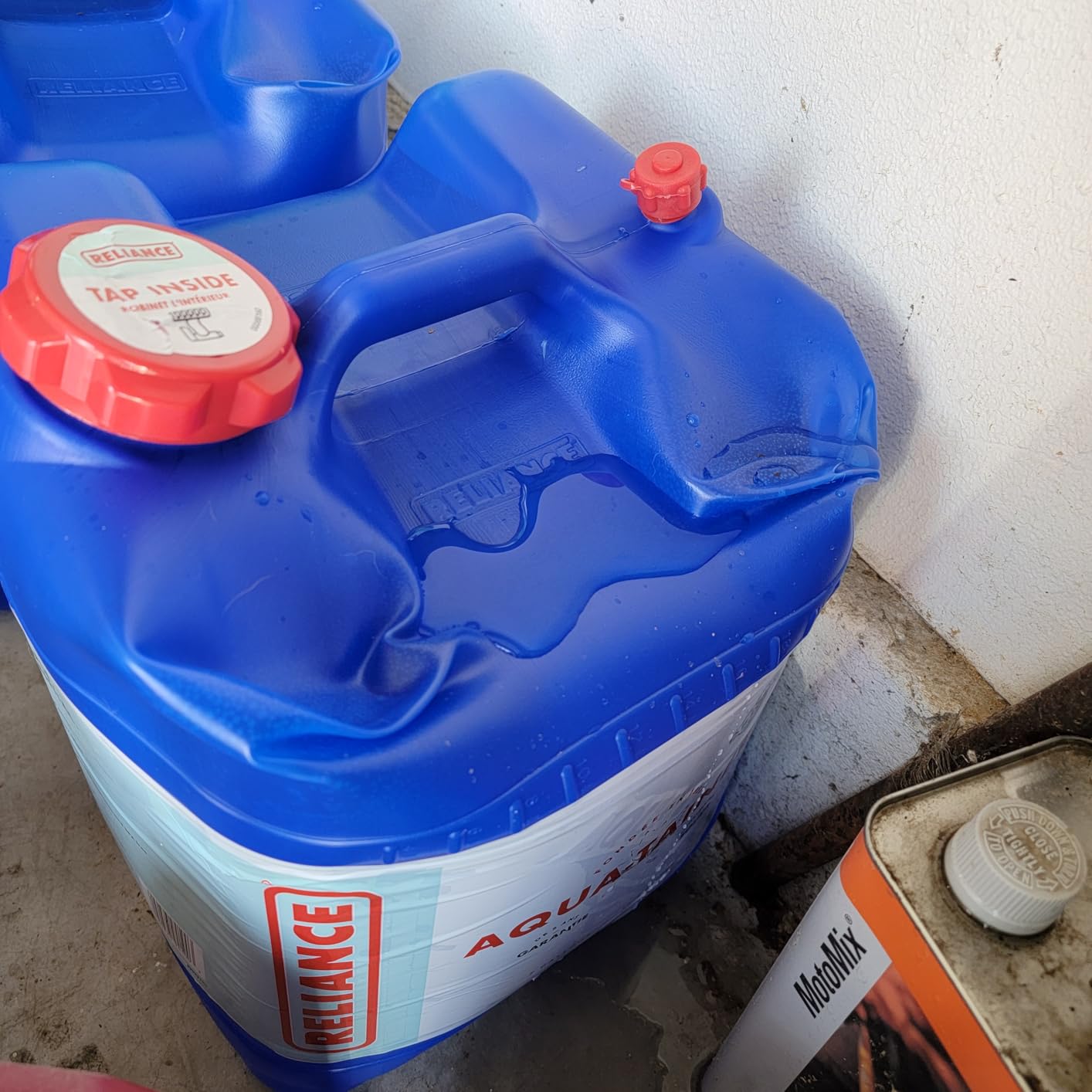
The tradeoff is footprint efficiency. A 7-gallon container occupies more space than a 5-gallon jug, so a fixed shelf holds fewer gallons. It is also the lowest-rated of the jug-style options here at 4.4, with 71 percent five-star, which reads as solid rather than outstanding.
The molded contour grip genuinely helps, since a 7-gallon unit is awkward to hold part full. Fill each one to a level you can comfortably lift if you may be moving them before an evacuation.
What it does well
These jugs collapse to a shelf when empty, so a household can store them upstairs or in a closet without losing usable floor space. The five-year warranty removes the main risk of buying plastic that sits unused for years.
What to consider
Twenty-eight gallons is a short reserve, so this works best alongside a larger stationary tank. If you want a single source of supply for a month, a 55 gallon tank covers far more ground per container.
How Much Water Should You Store?
Advice to store two weeks of water is common and useless without math. Start with the survival floor of one gallon per person per day, then plan realistically for two gallons per person per day, which covers drinking, cooking and minimal hygiene once the municipal supply stops.
Multiply your household size by the daily figure, then by the number of days you want covered. The arithmetic fits on the back of an envelope, and the results tell you which container size to buy.
For a household of two, one gallon per person per day gives 14 gallons for two weeks, and two gallons per person per day gives 28 gallons. A 5-gallon jug plus a 4-pack of 7-gallon containers covers the survival floor, while a 55 gallon drum covers the realistic figure with room to spare.
For a household of four, two weeks at the realistic figure is 112 gallons, which is two 55 gallon drums or a stackable pair plus a jug set. One month at the survival floor is 120 gallons, and one month at the realistic figure is 240 gallons, where bulk storage starts to make more sense per gallon.
For a household of six, a two-week reserve at two gallons per person per day is 168 gallons, and a month is 360 gallons. If those numbers feel out of reach in an apartment, bathtub bladders and nestable jugs are how you close the gap without a garage.
A useful cross-check: a 500 gallon tank at two gallons per person per day covers a household of four for about 62 days, or a household of two for roughly 125 days. Bulk tanks suit families who intend to stay put, not evacuation.
How to Choose the Right Water Storage Tank
Start with capacity and follow the math above, then work through the following criteria in order of how much they will actually affect your use.
Material matters more than brand. Look for food-grade HDPE, LLDPE or polypropylene with a BPA-free claim, and a stated standard such as FDA approval or an NSF listing. Avoid salvage transport drums and chemical containers, which is a concern people raise repeatedly on preparedness forums.
Dispensing design decides whether you will use the tank in an emergency. A threaded spigot or hose coupling that fits a standard garden hose is worth more than a smaller capacity, because it means you can draw water without lifting the container. Low-mounted spigots, as on the WaterPrepared 55 gallon tank, benefit from a raised stand.
Opening size ranks surprisingly high. A wide mouth around 7 inches or more can be sanitized by hand, which is how you keep a tank clean across a rotation. Twist breathing ports and dual-pour caps make controlled filling much easier than pouring into a 2 inch hole.
Stackability and shape determine whether the tank fits at all. Nestable 5-gallon jugs reclaim the most space, oval stackable tanks use far less floor than a round drum rack, and a tank that passes through a standard doorway can live in a room you actually use.
Finally, think about weight and UV exposure. Water weighs 8.34 pounds per gallon, so a 35 gallon tank is around 292 pounds full and a 55 gallon drum is about 459 pounds. Anything that heavy should be filled in place, and anything in direct sunlight needs an opaque body and a lid that blocks light.
Filling, Treating and Rotating Stored Water
Treat municipal tap water as a starting point, not a finished supply. Fill containers with clean tap water, then add a water treatment drop or tablet rated for the container size, following the label rather than guessing.
Several products in this roundup bundle treatment drops rated to keep water clean for up to five years, which is the easiest path for a household that does not want to track chemistry. Where no treatment comes with the tank, plan on buying drops or unscented household bleach and dosing by measured volume.
Shelf life is the question most people get wrong. Properly treated water in a sealed, opaque, food-grade container stays drinkable for years, but a container open to light and heat can develop algae within weeks. The manufacturer’s freshness claims range from 8 to 16 weeks for bathtub bladders to up to five years for treated jugs, and those numbers assume a closed lid and a dark storage spot.
Rotation is what turns stored water from a hope into a plan. Set a recurring date, once a year at minimum, to draw off a few gallons, check odor and clarity, top the container back up and re-dose if the water level dropped. Written reminders beat memory, because water does not fail loudly.
During an emergency, stored water keeps you alive while the public supply is interrupted. A boil-water advisory applies to the tap network, not to your tank, so use the stored reserve until the advisory is lifted.
Where and How to Store Water Tanks
Weight decides location. A filled 55 gallon drum concentrates roughly 459 pounds into a 2 foot square footprint, so put it on a concrete or garage-grade slab rather than an unsupported floor, and avoid upper stories where a leak would damage the space below.
Temperature is the second constraint. Freezing expands water by about nine percent, and one owner of the Augason Farms barrel reported bottom deformation in cold conditions. If your garage is unheated in winter, keep tanks away from exterior walls or move them indoors before the first freeze.
Darkness and dryness keep water fresher and stop rodents, which is a recurring concern in garages and basements. Store containers off the floor on a pallet or shelving, keep lids tight, and run a mouse trap along the wall behind the storage area rather than sealing the container in place.
Finally, give yourself access. A tank behind a stack of boxes in a dark corner is the tank you will not find at 2 a.m. Label each container with its fill date and volume, and keep the spigot area clear so you can reach it without moving anything heavy.
Frequently Asked Questions
What is the best container to store water for emergency purposes?
A food-grade, BPA-free tank with a sealed lid and a threaded spigot is the best general choice. In our testing the waterBOB bathtub bladder turned an ordinary tub into 100 gallons of protected storage, while the WaterPrepared 55 gallon tank was the strongest permanent installation with a brass garden-hose spigot.
What is the best way to store water in a prepper emergency?
Store it in several containers rather than one, kept dark, cool and off the floor, and treat it when you fill it. Rotate the supply on a schedule so you always know it is fresh, and put the smallest containers where you can reach them first.
How long can water sit in a tank before it goes bad?
Treated water in a sealed, opaque, food-grade container stays drinkable for years. Manufacturer claims in this roundup range from 8 to 16 weeks for bathtub liners to up to five years for treated jugs, and light exposure shortens all of them.
How long will a 500 gallon water tank last?
A 500 gallon tank covers a household of four for roughly 62 days at two gallons per person per day, or a household of two for about 125 days. At the one gallon per person per day survival floor, a family of four gets around 125 days.
How much does a full 55 gallon water tank weigh?
Water weighs 8.34 pounds per gallon, so a full 55 gallon tank weighs about 459 pounds plus the empty container. The drums in this roundup weigh 18 to 24 pounds empty, which means you should fill them where they will live rather than trying to move them full.
Conclusion
The best water storage tanks for emergency preparedness in 2026 come down to where your water will live. If floor space is tight, the waterBOB bathtub bladder holds the most water in the least space and it is our top pick. If you have a garage and want to draw water with a hose every day, the WaterPrepared 55 gallon stackable tank is the better long-term install, and the Legacy 5 gallon 4 pack covers smaller homes cleanly.
Whatever you choose, buy food-grade plastic, treat the water as you fill it, label the fill date and set a rotation reminder. Two gallons per person per day for two weeks is a reserve most households can actually build, and building it before the emergency is the entire point.