
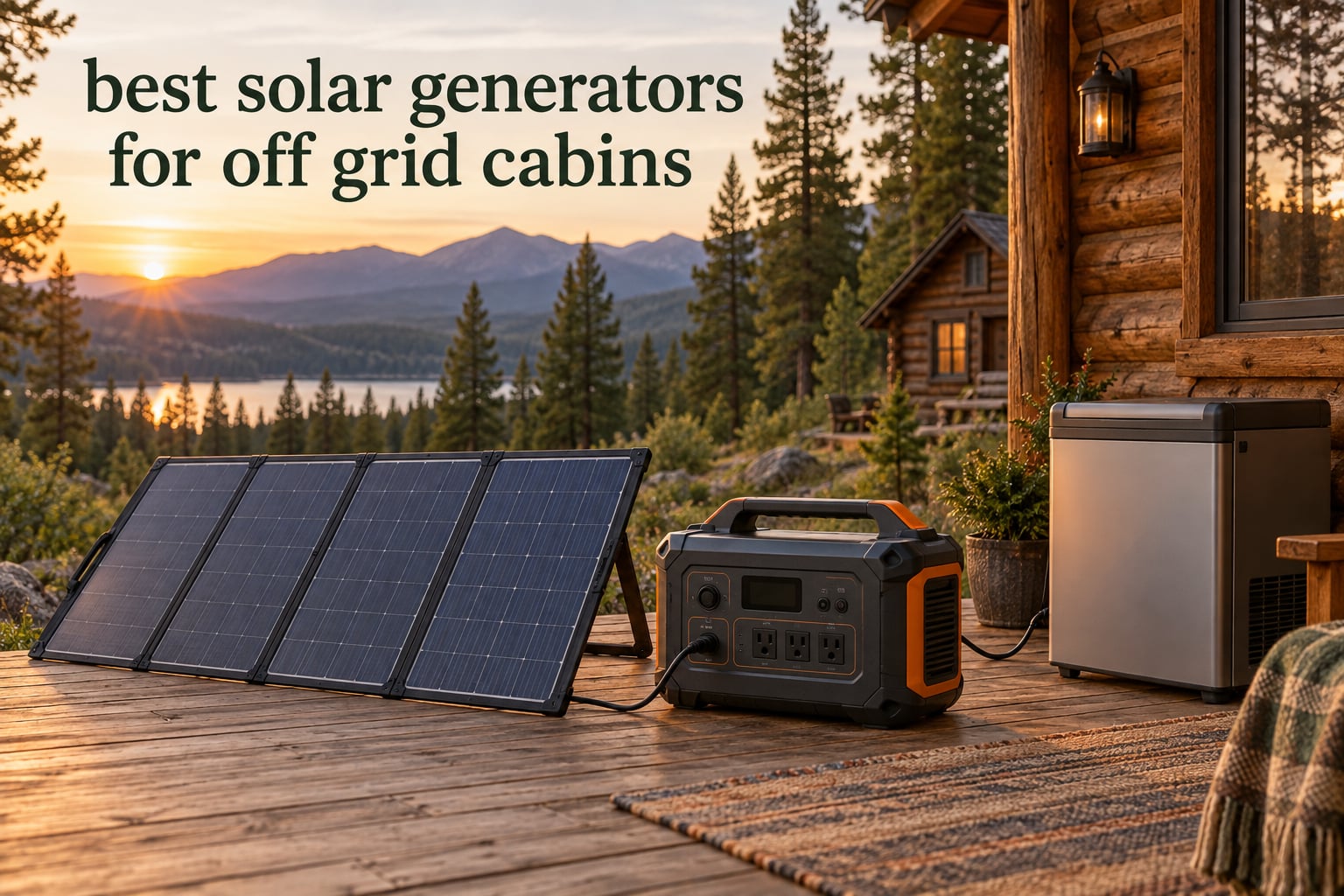
A solar generator is a battery with an inverter and a solar charge controller packed into one case, and for an off-grid cabin it is usually the difference between lights and a working fridge versus sitting in the dark. After comparing the eight leading units on capacity, inverter output, solar input ceiling and cold-weather behaviour, the BLUETTI Elite 200 V2 is the best solar generator for most cabins, the EcoFlow DELTA Pro suits year-round living, and the Anker SOLIX S2000 delivers the most capacity per pound for the money.
Every pick below is a LiFePO4 unit. That chemistry is the single biggest change in this category in the last few years, and it is why units that used to be considered adequate for a weekend are now being replaced. It also brings one winter caveat that no portable power station owner should ignore, covered in full below.
I weighed these against what a cabin actually needs: a 12V fridge or chest freezer, lighting, phone and laptop charging, a ceiling fan, and power tools on weekends. Sustained heavy loads like electric heat and well pumps push you toward a different answer entirely, and I cover that case too.
Table of Contents
Top 3 Solar Generator Picks for Off-Grid Cabins (October 2026)

The Elite 200 V2 takes the top slot because it doubles the capacity of the smaller BLUETTI unit in nearly the same footprint, then adds a 2600W inverter that runs a microwave and a coffee maker at once. The DELTA Pro wins on raw capacity and outlet count for anyone living there year-round. The S2000 is the one to buy if you are moving the box across uneven ground more than you are running heavy loads through it.
Quick Comparison: All 8 Solar Generators in 2026
| Product | Specs | Action |
|---|---|---|
| BLUETTI Elite 200 V2 |
|
Check Latest Price |
 EcoFlow DELTA Pro EcoFlow DELTA Pro |
|
Check Latest Price |
 Anker SOLIX S2000 Anker SOLIX S2000 |
|
Check Latest Price |
 Jackery Explorer 1000 v2 Jackery Explorer 1000 v2 |
|
Check Latest Price |
 BLUETTI AC180 BLUETTI AC180 |
|
Check Latest Price |
 Anker SOLIX F3000 Anker SOLIX F3000 |
|
Check Latest Price |
 AFERIY P310 AFERIY P310 |
|
Check Latest Price |
 EcoFlow DELTA Pro 3 EcoFlow DELTA Pro 3 |
|
Check Latest Price |
1. BLUETTI Elite 200 V2 – Best Solar Generator Overall
BLUETTI Elite 200 V2 Solar Generator & 2x200W Solar Panel Included 2073.6Wh
2073.6Wh LiFePO4
2600W AC, 3900W lifting
53.4 lb
6000+ cycles
Pros
- Roughly double the AC180 capacity in a similar footprint
- 2600W inverter runs two kitchen appliances at once
- 6000-cycle LFP pack with a claimed 17-year lifespan
- 10W standby draw extends usable runtime
- Silent with no fan noise during normal use
Cons
- 53.4 lb is awkward to lift solo
- Solar input capped at 1000W behind a 60V MPPT limit
- No expansion battery support
This is the unit I would put in a mid-size cabin that sees regular weekend use and the occasional longer stay. It stores 2073.6Wh of LiFePO4 capacity and pushes 2600W continuously through four 120V AC outlets, which is more inverter headroom than most cabins will ever pull from a single device.
The number that convinced me was the cycle rating. The pack is built from automotive-grade LFP cells rated at 6000+ cycles, and BLUETTI backs it with a stated 17-year lifespan. For a battery that will sit in an unheated cabin and absorb partial charges for a decade, that cycle margin matters more than peak wattage.
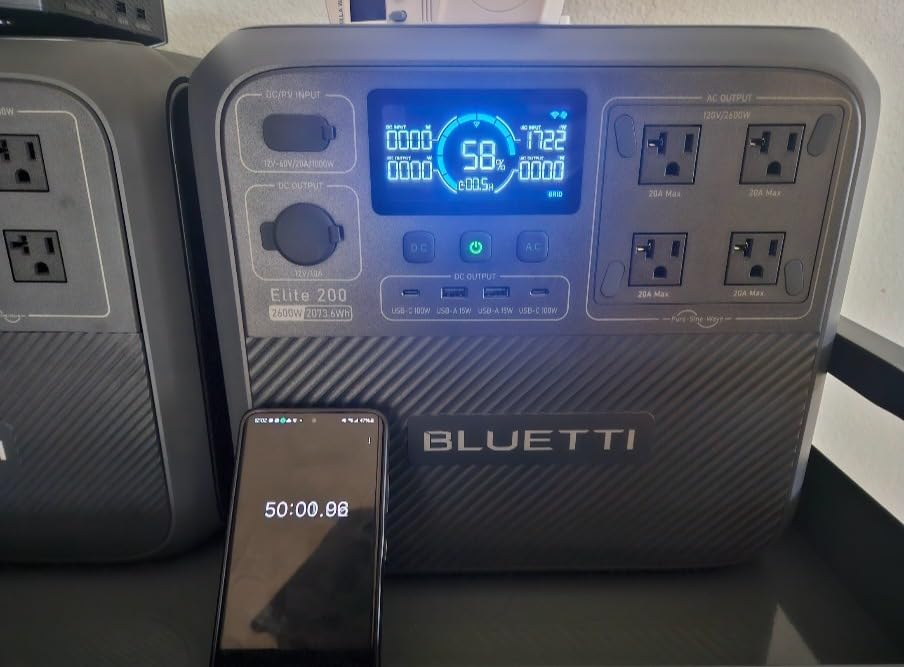
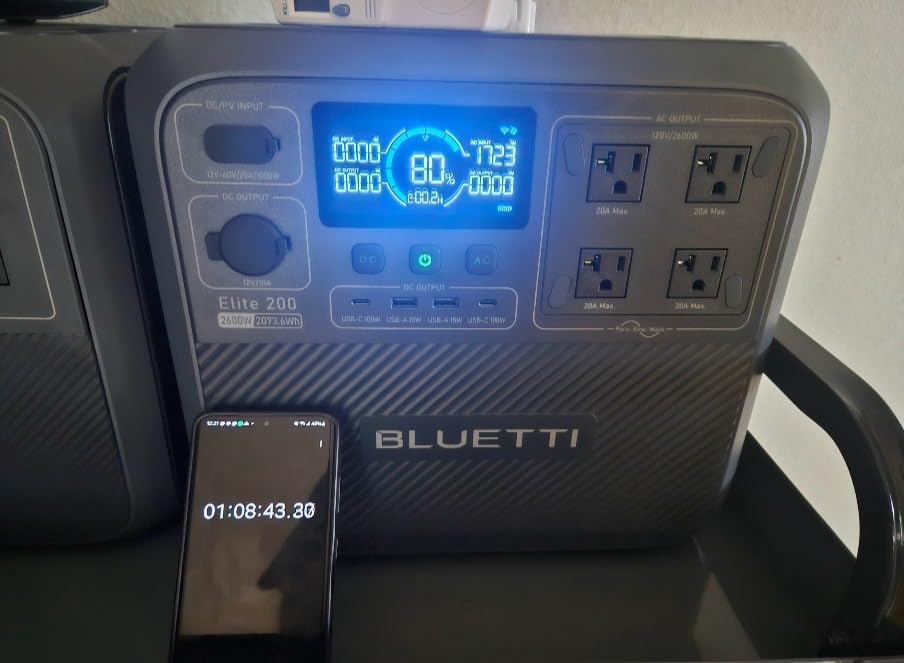
Charging is the other half of the story. It reaches 80% in roughly 50 minutes when AC and DC inputs run together, and solar full charge takes about 5.5 hours from the two included 200W panels. Standby draw sits near 10W, which is one reason owners report noticeably longer runtimes than competing 2kWh units.
Reviewers highlight the inverter most often. Running a microwave, an air fryer and a coffee maker at the same time is not something most 2kWh units handle, and this one does it without complaint. One owner reported running a 29 cubic foot refrigerator-freezer for more than 24 hours on a single charge.
What this unit does well in a cabin
It is the rare battery that doubles capacity without doubling the footprint, which means you can keep it in the same corner as a smaller unit. The 2600W inverter covers the two loads that trip up most cabin setups at once: a microwave plus a fridge compressor, or a power tool plus a laptop.
The low idle draw also makes it a good storm-season unit. At 10W standby, it holds its charge for weeks between visits without needing a top-up.
Where it falls short
At 53.4 lb it is not a one-person carry over rough ground, and unlike several competitors it will not accept BLUETTI add-on battery modules. That closes off the natural upgrade path if your load grows next season.
The 1000W solar ceiling is also awkward to reach in practice because the 60V MPPT limit rules out most long-string portable panels. The app is another soft spot, since owners report it lacks adjustable charge rates and temperature monitoring.
2. EcoFlow DELTA Pro – Best for Year-Round Off-Grid Cabins
EF ECOFLOW Portable Power Station 3600Wh DELTA Pro, 120V 3600W AC Output
3600Wh LFP expandable to 25kWh
3600W AC, 4500W X-Boost
15 outputs
99 lb
Pros
- 3600Wh LFP capacity expandable to 25kWh
- Five 120V AC outlets across 15 total outputs
- Full charge in about 2.7 hours on an 1800W wall outlet
- App scheduling for charge and discharge
- Reported 15 hours running fridge furnace lights and network gear
Cons
- 99 lb needs the extendable handle to move
- Solar input capped at 15 amps
- OVERLOAD and error 121 faults reported by a few buyers
If you live at the cabin rather than visit it, this is the pick. It holds 3600Wh in an LFP pack that expands to 25kWh with extra batteries, and 3600W of continuous AC output covers the sustained loads that weekend units cannot touch.
Owners in areas with frequent multi-day outages report roughly 15 hours of runtime powering refrigerators, furnace blowers, lighting, internet and computers before a recharge is needed. That is the profile of a full-time load, not a weekend one.
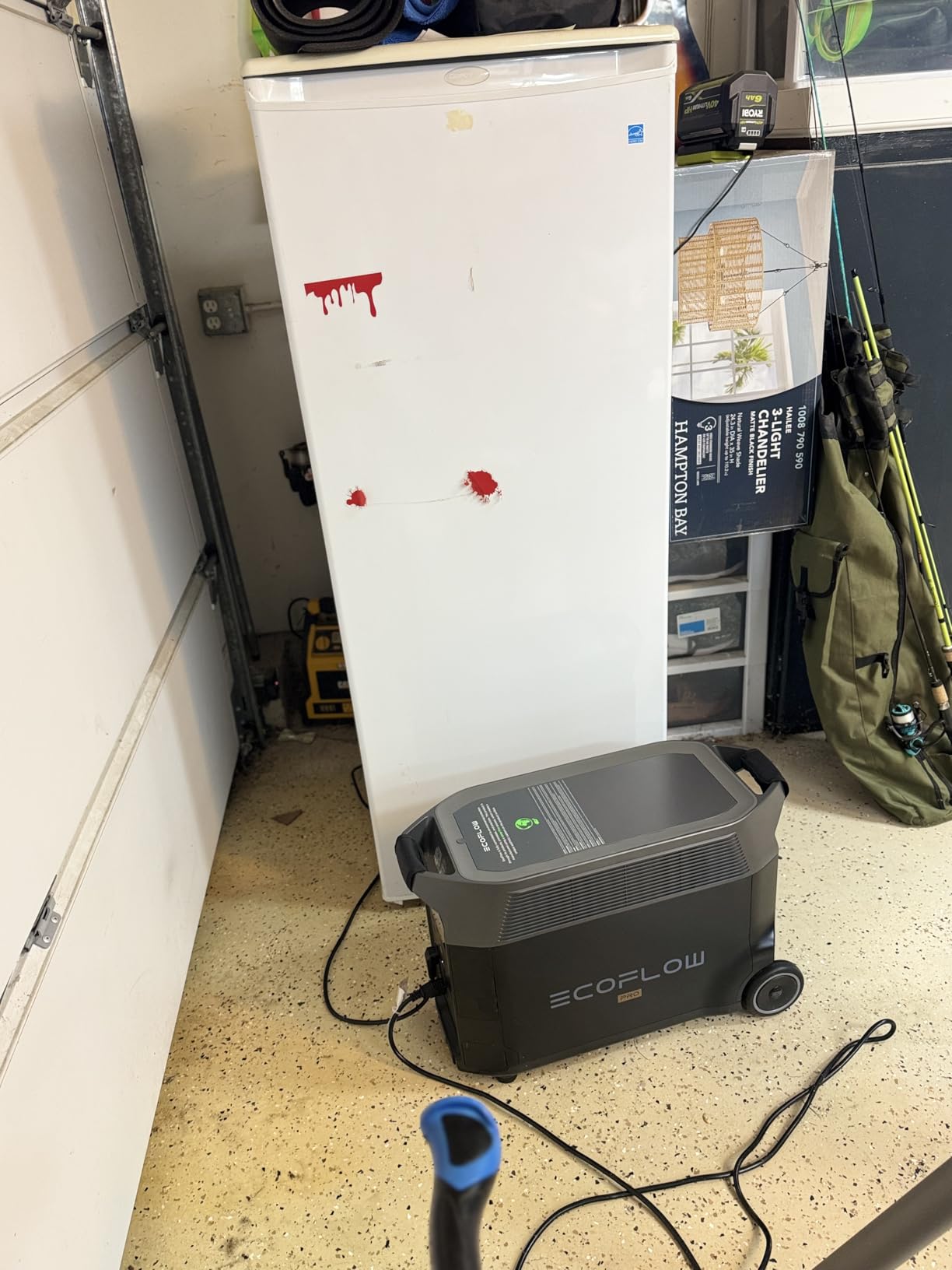
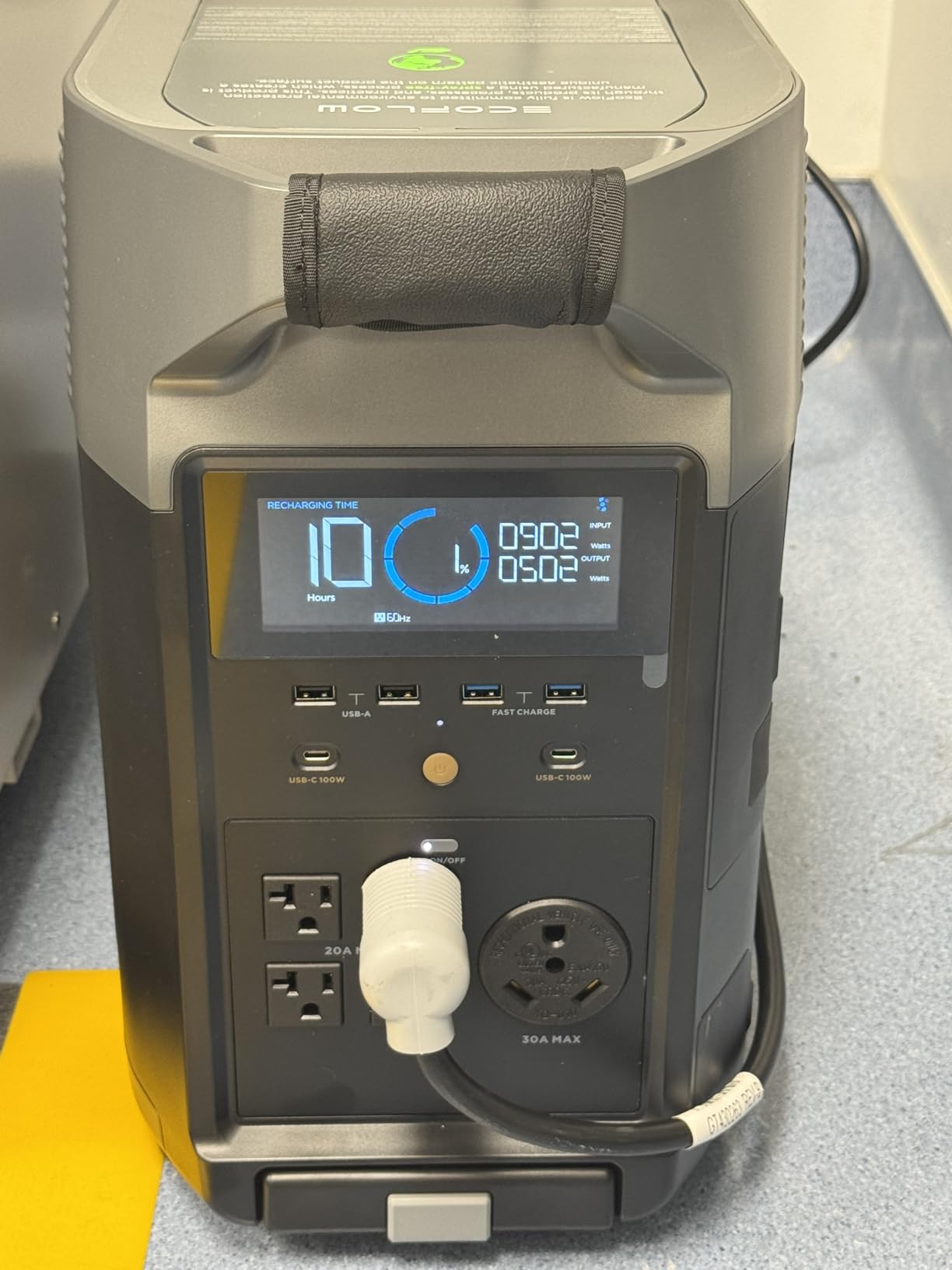
Fifteen total outputs including five 120V AC outlets and two 100W USB-C ports mean you are not juggling extension cords. X-Stream charging fills it in about 1.8 hours from a 240V supply, 2.7 hours from an 1800W wall outlet, or 2.8 hours from four 400W panels.
Five charging paths are supported: wall, solar, car outlet, EV charging station and a smart gas generator. The EV and generator inputs are the ones that matter at a remote cabin, since they let you recharge on a drive into town.
What this unit does well in a cabin
Expandability is the headline. Starting at 3600Wh and reaching 25kWh means a single purchase can grow into a whole-home system as the cabin’s load changes, without buying a second power box.
It starts instantly, runs quietly and needs no installation, which matters when the cabin is three hours of bad road from the nearest electrician. Several owners have used it as commercial power at markets and pop-ups, which speaks to its duty cycle.
Where it falls short
At 99 lb it stays where you put it. The extendable handle helps, but this is a unit you position once rather than carry between the generator shed and the kitchen.
The 15-amp solar input ceiling is the real limitation for off-grid use, because it caps how large an array you can attach for faster recovery. A few buyers also report OVERLOAD and error 121 faults, and some international buyers describe warranty friction after those errors.
3. Anker SOLIX S2000 – Best Value for Off-Grid Cabins
Anker SOLIX S2000 Portable Power Station, 2,010Wh, 1,500W
2010Wh LFP on 314Ah cells
1500W continuous, 3000W peak
400W solar input
35.7 lb
Pros
- 2010Wh LFP pack rated 10000 cycles
- Compact 8.2 x 11.1 x 12.7 in box at 35.7 lb
- Verified 33-hour runtime on a 220L fridge
- Under 10 ms UPS with outlets on front and rear
- App allows charge limits down to 100W
Cons
- Cooling fan drones during 1200W charging
- No 12V DC port
- Recessed edges instead of a carry handle
Reviewers rate this the best value in the group, and the reason is density rather than any single headline spec. You get 2010Wh and a 10,000-cycle LFP battery in a box that measures 8.2 by 11.1 by 12.7 inches and weighs 35.7 lb.
It packs all of that into a box smaller than most 2kWh units of comparable output, which matters when you are moving it from the truck bed to the cabin floor across ground that is not level.
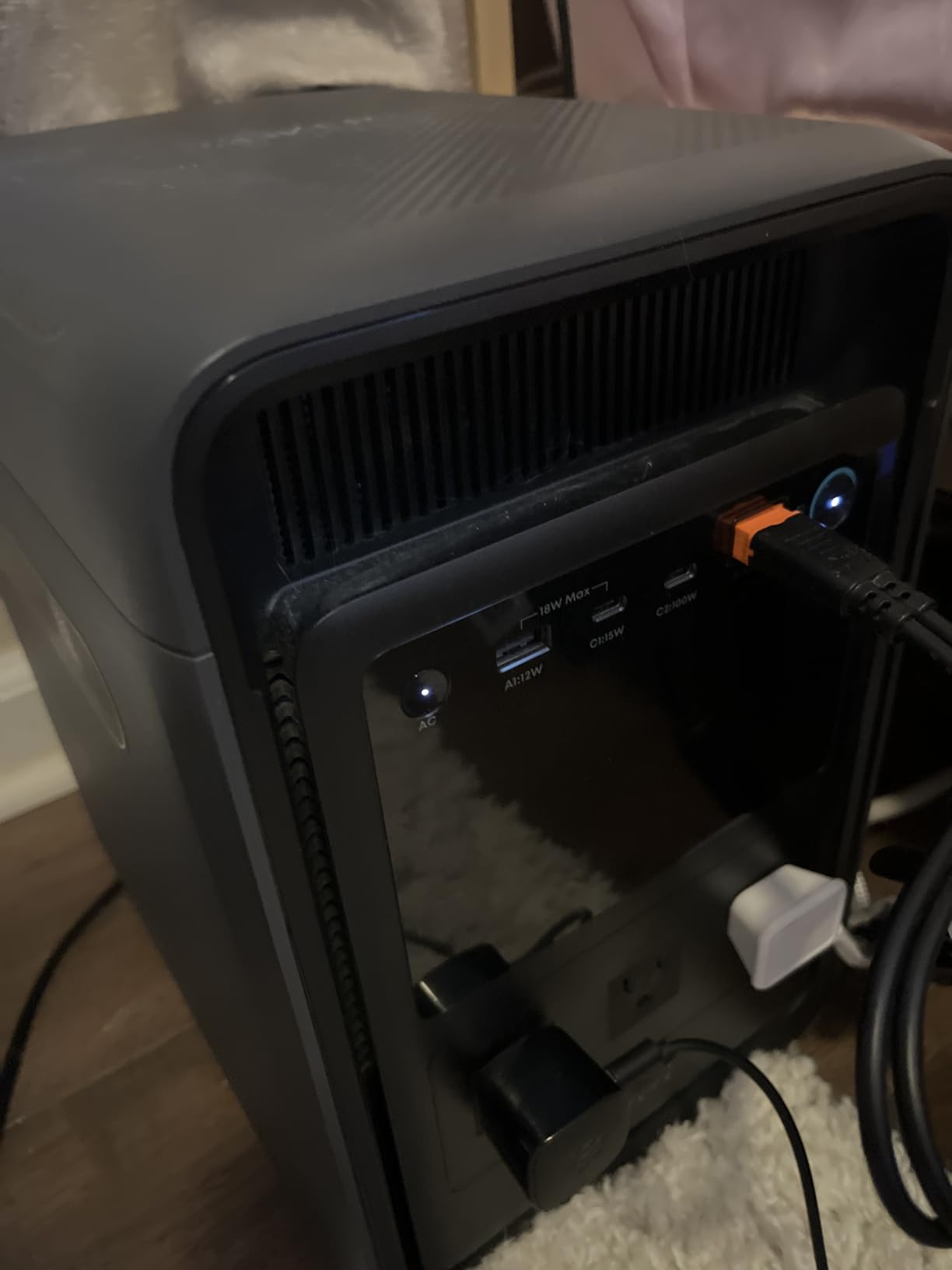
Runtime is where it separates itself. A 33-hour run on a full-size 220L fridge has been verified by owners, and 35 hours is the commonly reported figure on a typical fridge. A 6W idle draw is credited with roughly 20% longer runtime than comparable 2kWh systems.
The UPS mode is genuinely good. Switchover stays under 10 ms and idle draw is around 3W, and outlets sit on both the front and rear panels so you can keep always-on loads separated from temporary ones.
What this unit does well in a cabin
Fridge and freezer runtime is the number that matters most for off-grid living, and 30-plus hours means you can go two or three overcast days without planning around a generator. At 1500W continuous it still handles a microwave, saw or kettle alongside that load.
The app is unusually capable for this class, letting you set charge and discharge limits precisely and dial the charge rate down to 100W when you are on a small array.
Where it falls short
Two drawbacks come up repeatedly. The cooling fan becomes a loud drone during 1200W charging, which is unpleasant in a quiet cabin, and some buyers reported a strong chemical burn-off smell on the very first charge cycle.
There is no 12V DC port, so 12V accessories need an adapter, and the recessed edges mean there is no dedicated carry handle.
4. Jackery Explorer 1000 v2 – Most Versatile for Portable Cabins
Jackery Solar Generator 1000 v2 and 200W Solar Panel,1070Wh,1500W AC
1070Wh LiFePO4
1500W continuous, 3000W surge
23.8 lb
4000+ cycles
Pros
- Lightest battery here at 23.8 lb with a foldable handle
- Runs a full-size side-by-side fridge about 9 hours
- 4000+ cycle LFP with a claimed 10-year lifespan
- Three pure sine wave AC outlets plus 100W USB-C
- Two 24V solar inputs allow panels to be combined
Cons
- 200W panel sags in the middle and blows over in wind
- Short panel cable forces the panel and battery close together
- One-hour charge requires enabling emergency mode in the app
This is the one to buy when the station has to come with you. At 23.8 lb with a foldable handle it is the lightest battery among these eight, and 1070Wh is still enough capacity for lights, a laptop, several phones and roughly nine hours on a full-size side-by-side fridge.
Output is 1500W continuous with 3000W surge across three pure sine wave AC outlets, plus a 100W USB-C PD port. Pure sine wave matters more than most buyers realise, because modified sine wave output makes some motors and sensitive electronics run hot.
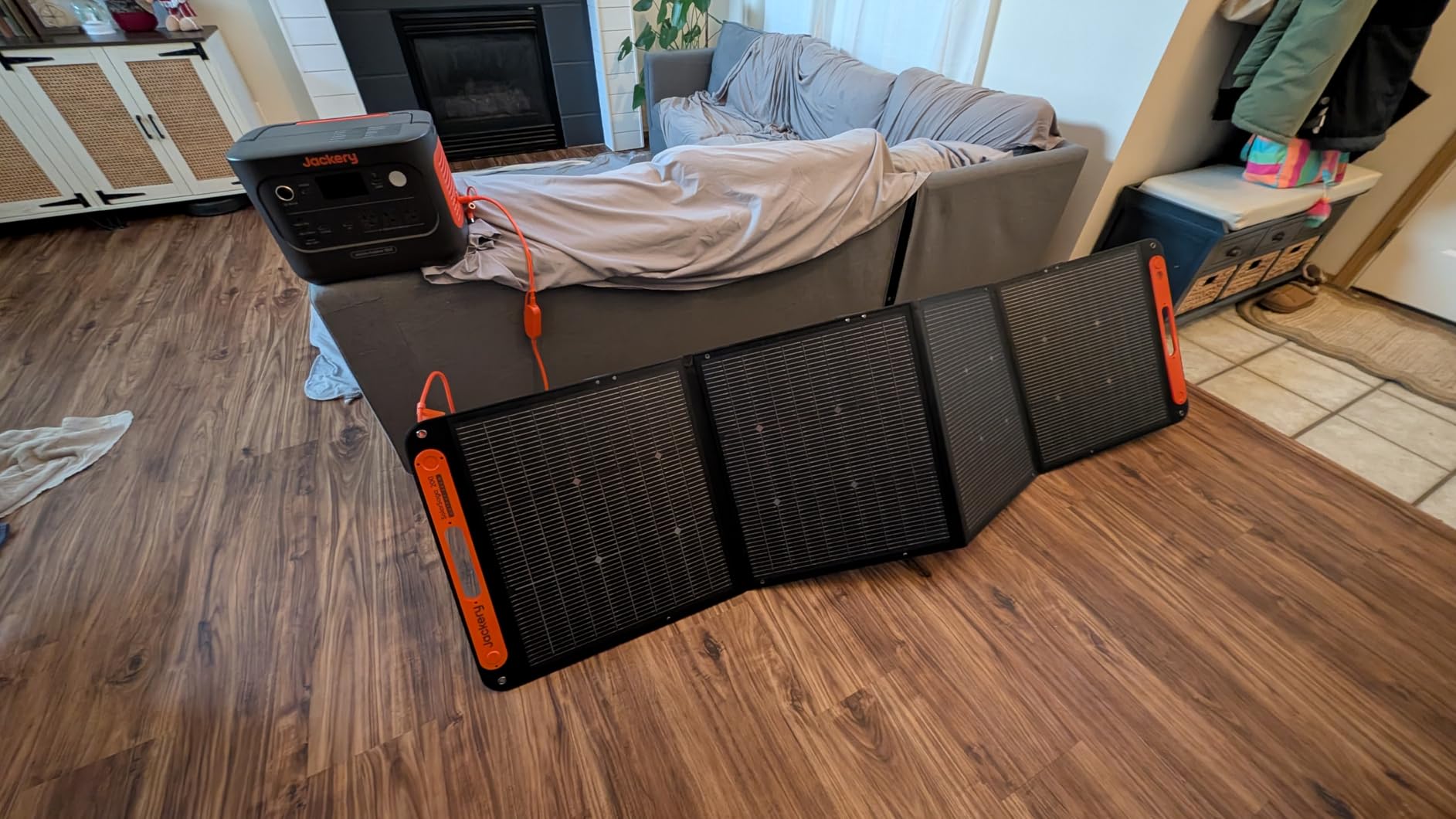
The battery is rated for 4000+ cycles with over 70% capacity retained at that point, and Jackery claims a 10-year lifespan. App control includes a 30 dB quiet charging mode and an energy efficiency mode that trims standby consumption.
Two 24V solar inputs mean you can run two panels together, which is the practical minimum for keeping this unit topped up on a cabin roof or south-facing deck.
What this unit does well in a cabin
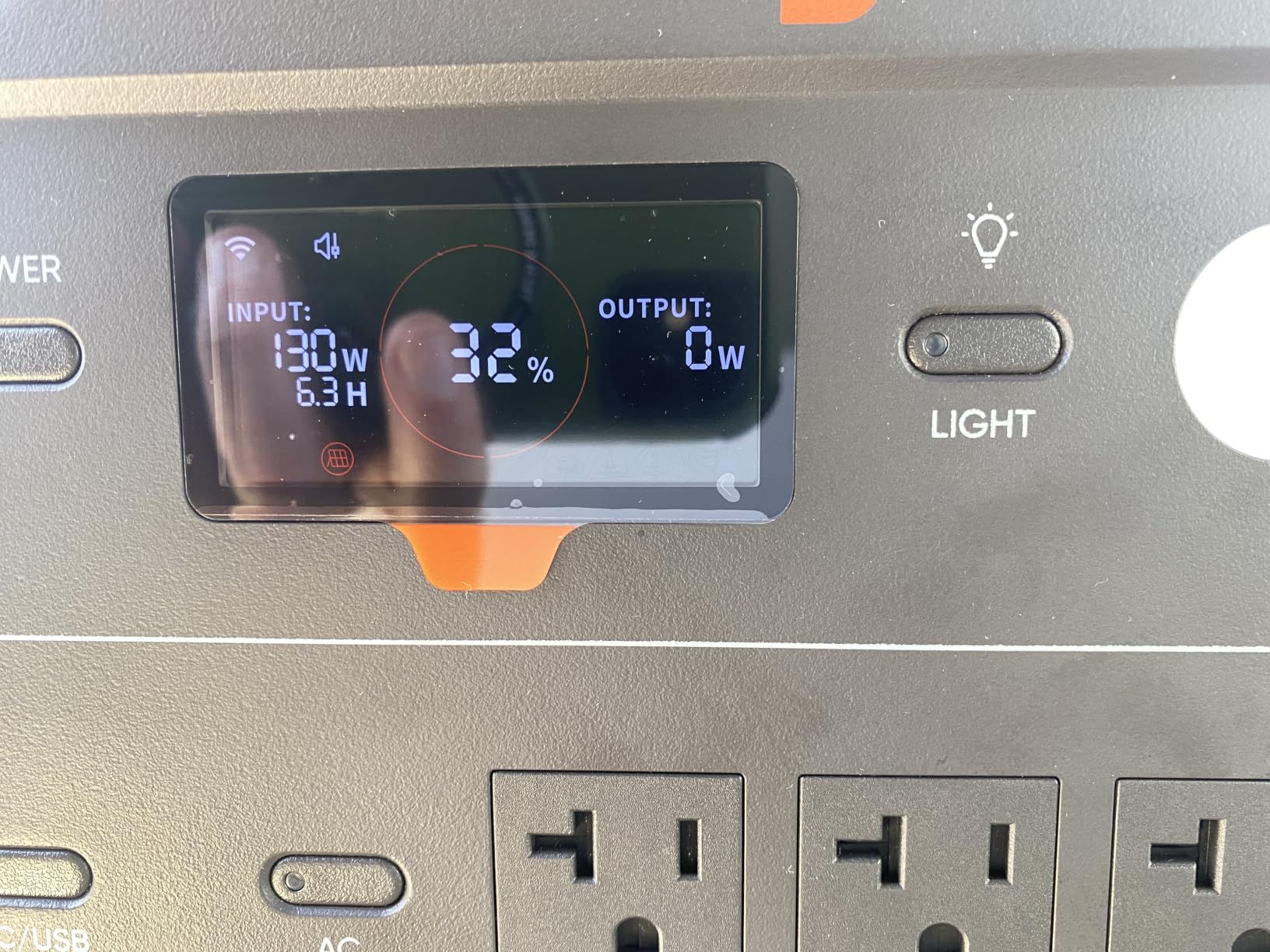
Portability is the whole argument. You can carry it up loft stairs or set it on a workbench by hand, and the colour display shows charge level, load and input power at a glance without opening the app.
For a weekend cabin where the load is a fridge, a lamp and phone charging, 1070Wh is genuinely sufficient, and nine hours of fridge runtime covers most overnight gaps.
Where it falls short
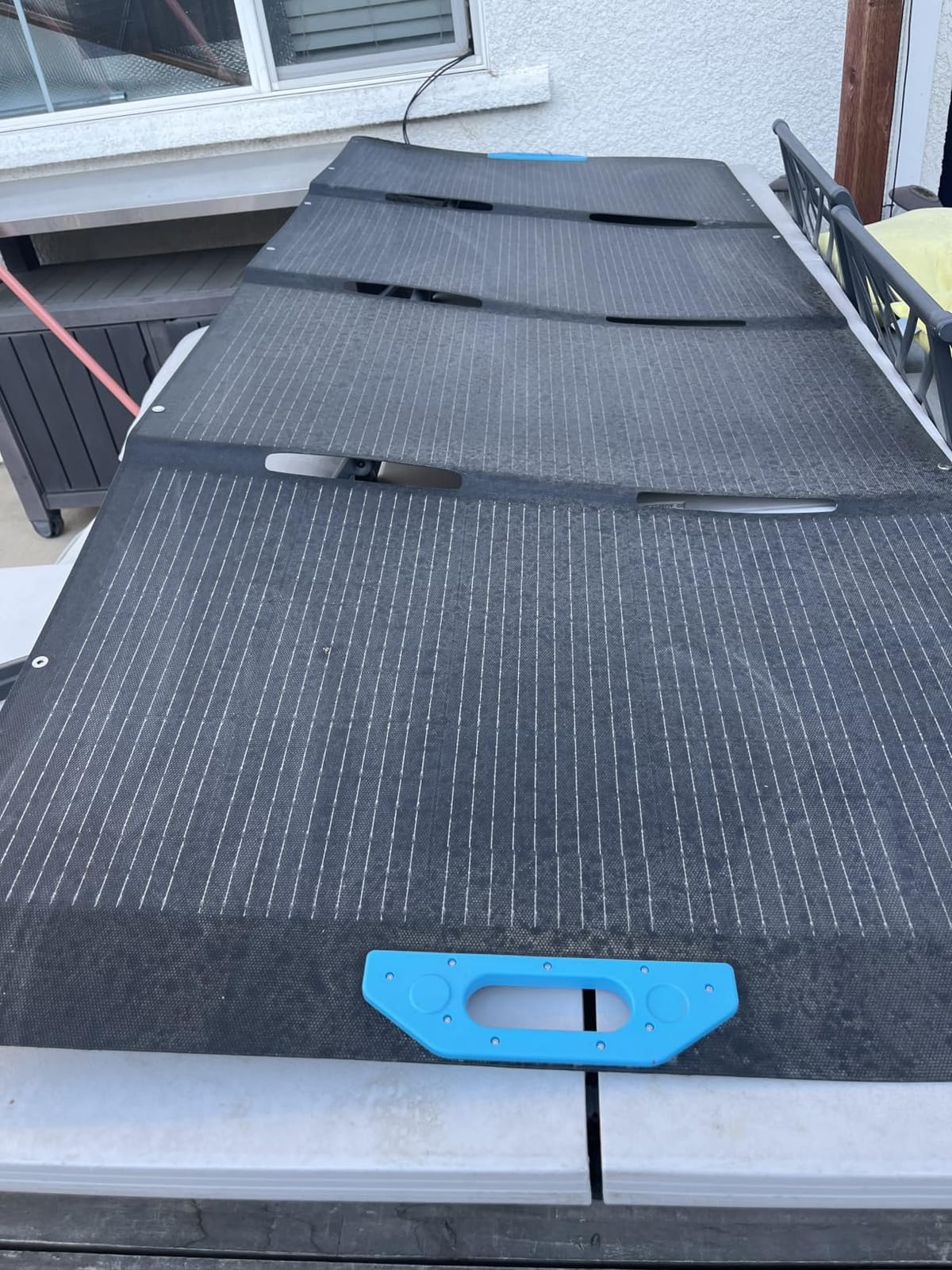
The included 200W panel is the weak point, and it is a recurring complaint. It sags in the middle, catches wind easily, and the cable to the battery is short enough that you cannot separate the panel from the unit.
One more detail worth knowing before you rely on the headline charge time: the advertised one-hour charge requires turning on emergency mode in the app, and the default is 1.7 hours.
5. BLUETTI AC180 – Best for Weekend Cabins
BLUETTI AC180 Solar Generator with 200W Solar Panel Included, 1152Wh 1800W
1152Wh LiFePO4
1800W continuous, 2700W lifting
500W solar input
37.4 lb
Pros
- 0-80% in roughly 45 minutes on AC
- 1800W continuous across 11 outlets
- 3000+ cycle LFP with a 5-year warranty
- Small fridge runs 16-18 hours on a charge
- Bluetooth app control from about 100 feet
Cons
- 37.4 lb is awkward to move without a cart
- Included 200W panel underperforms in cloud or shade
- Fan becomes noticeable under sustained heavy load
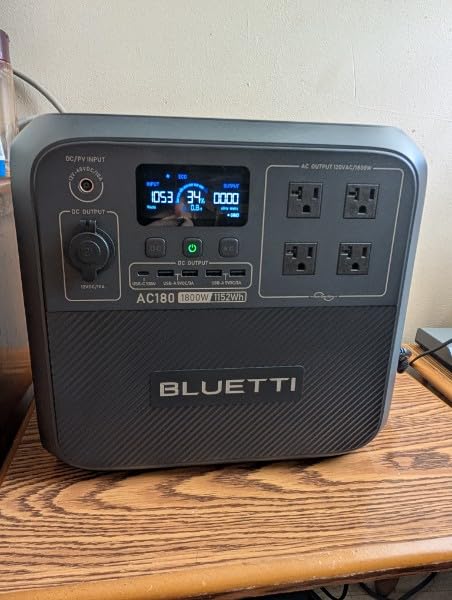
The AC180 stands out among the smaller units largely because of its outlet count. Eleven outlets across 1800W of continuous output means you can run a fridge, a lamp, a router and a laptop without any of them fighting for a socket.
Charging speed is its other strength. It reaches 80% in about 45 minutes on AC and completes a full charge in roughly an hour on the 1440W flash-charge input, which is faster than the units around it in this capacity range.
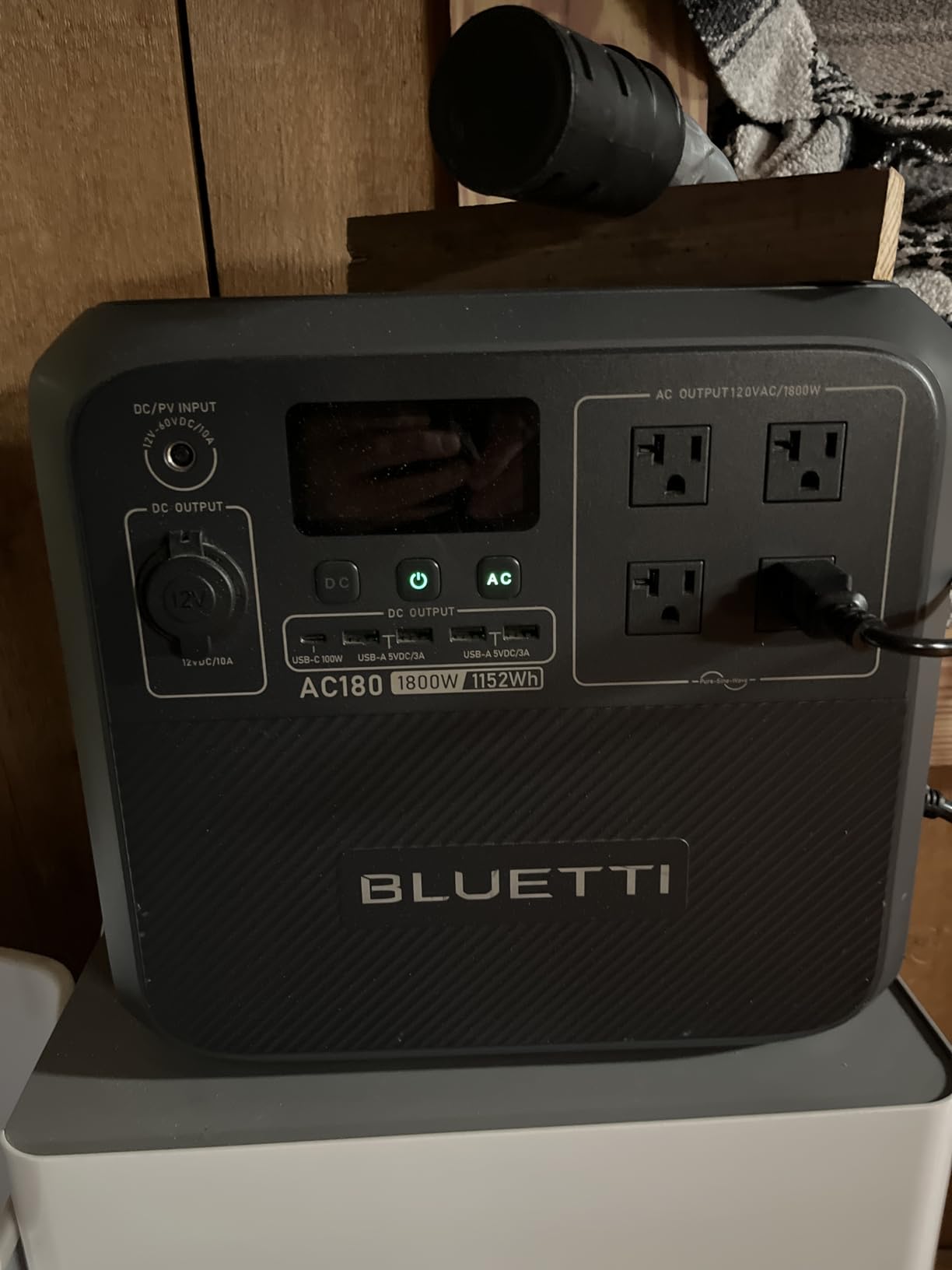
The battery is a 1152Wh LFP pack rated at 3000+ cycles, covered by a 5-year warranty, which matches the coverage carried by several competitors in this capacity range.
Owners report the display showing exact input and output wattage, and Bluetooth app control working from roughly 100 feet, which is handy when the unit sits in a closet or the generator shed.
What this unit does well in a cabin
The outlet mix is the practical win. A small fridge runs 16 to 18 hours on a charge, and a 5000 BTU window air conditioner runs about 7 hours on low, which covers a summer weekend comfortably.
UPS mode switches in 20 ms, fast enough to keep a desktop or router alive through a brief grid-side outage, and automatic power-off preserves standby charge between visits.
Where it falls short
At 37.4 lb it needs a cart if you are moving it any distance, and the handle is not designed for a single long carry. A small-cabin forum owner running an AC180 as primary cabin power reports strong BLUETTI support but describes it as a unit you plan around rather than carry.
The included 200W panel falls well short of its rating in cloudy or shaded conditions, the cable is short, and BLUETTI advises against pairing it in series with other brands’ panels.
6. Anker SOLIX F3000 – Best for Tools and RV Loads
Anker SOLIX F3000 Portable Power Station and 400W Bifacial Panel, 3,072Wh
3072Wh LFP expandable to 24kWh
3600W AC continuous
Dual solar inputs 165V and 60V
91.5 lb with wheels
Pros
- 3072Wh expandable to 24kWh with 3600W output
- Runs a 13000 BTU RV roof AC for 6-8 hours
- Full charge in about 90 minutes on 30A input
- 125 hours AC standby and up to 42 hours on a 190W fridge
- Built-in 6-inch wheels plus 30A TT-30 RV output
Cons
- Still around 91.5 lb even with wheels
- Included 400W panel is bulky enough that owners leave it behind
- Split 165V and 60V PV inputs complicate array matching
The F3000 is built for loads that make noise. At 3600W continuous it runs a 13,000 BTU RV roof air conditioner for six to eight hours on low, and one owner reported covering about 60% of a home’s essential loads in a simulated outage.
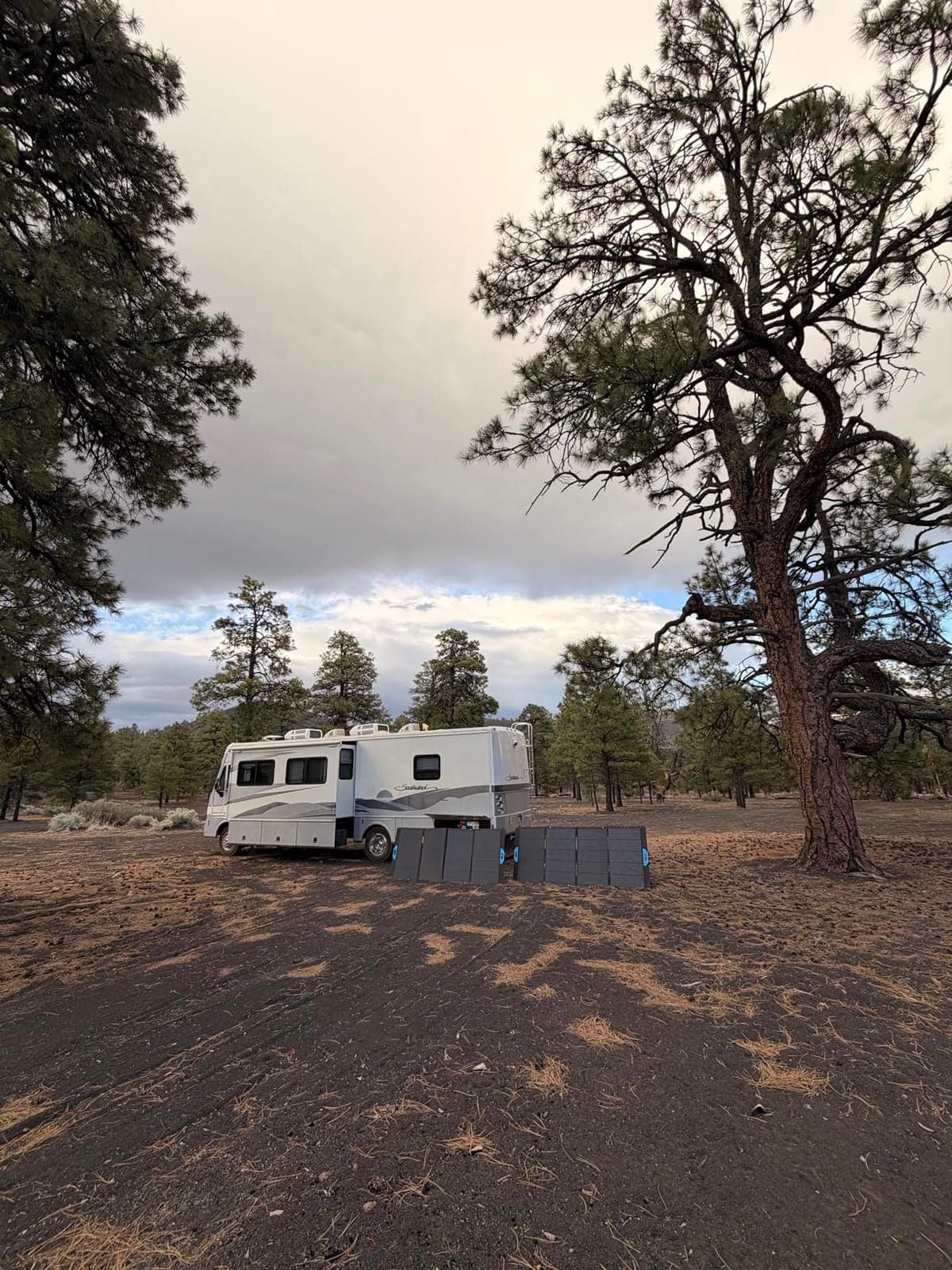
What makes it practical for a cabin rather than a garage is the mobility and charging flexibility. Built-in 6-inch wheels let you roll a 91.5 lb unit over rough ground, and it can recharge from a generator or solar while still powering appliances.
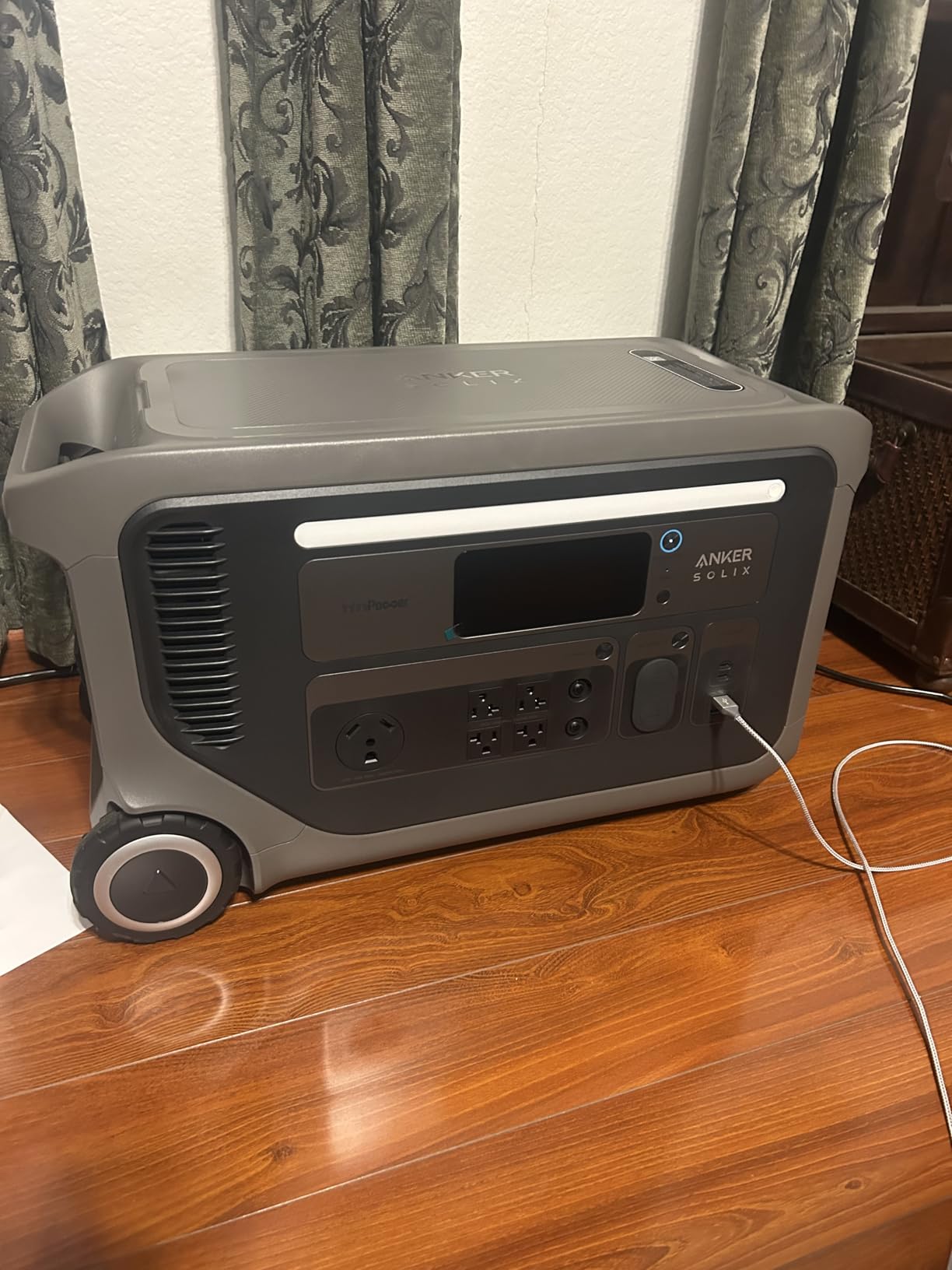
Idle consumption is extremely low for this capacity class: 125 hours of AC standby and up to 42 hours on a 190W fridge. That figure matters for storm-season readiness, because the unit can sit unused and still be ready to go.
Recharge speed is the standout number. A full charge in about 90 minutes on a 30A input is faster than the wall-charging times most units in this group manage, and dual MPPT solar controllers let you use portable and rigid panels together.
What this unit does well in a cabin
Surge headroom and continuous output together mean tools and appliances can share the unit. A saw, a grinder or a welder no longer means turning everything else off first, which is the common complaint with 1500W-class units.
The 30A TT-30 RV output and expandable capacity to 24kWh make it a natural fit if the cabin also has an RV on the property or a camper that needs charging.
Where it falls short
The included PS400 bifacial panel is 400W, 21.9 lb and folds to 3.2 inches thick. Owners regularly note that it is too heavy to bother bringing, and two smaller panels give far more positioning flexibility on a cabin roof.
Split PV input voltages of 165V and 60V complicate array matching, there is no 240V split-phase output, and the USB ports cannot be switched off, which adds about 1W of constant draw.
7. AFERIY P310 – Best for Maximum Base Capacity
AFERIY 3840Wh Portable Power Station,Expandable Solar Generator to 11520Wh
3840Wh LFP expandable to 11,520Wh
3600W continuous, 7200W peak
15 ports
104.7 lb
Pros
- 3840Wh base capacity expandable to 11520Wh
- 3600W continuous with 7200W peak
- Under 10 ms UPS transfer for cameras and network gear
- 15 output ports including 5 AC outlets
- UL Listed with a 7-year support period
Cons
- Nearly 105 lb and physically large
- Thinner review base than the major brands
- Claimed 17-hour runtime varies with load
The AFERIY P310 stores 3840Wh out of the box and expands to 11,520Wh with add-on packs. Output is 3600W continuous with 7200W peak, so it sits alongside the DELTA Pro on power while holding more stored energy from a full charge.
UPS transfer is under 10 ms, which owners single out for keeping computers, security cameras, medical freezers and pet feeders running through short outages. Fifteen output ports, including five 120V AC outlets and an XT60, give room for many devices at once.
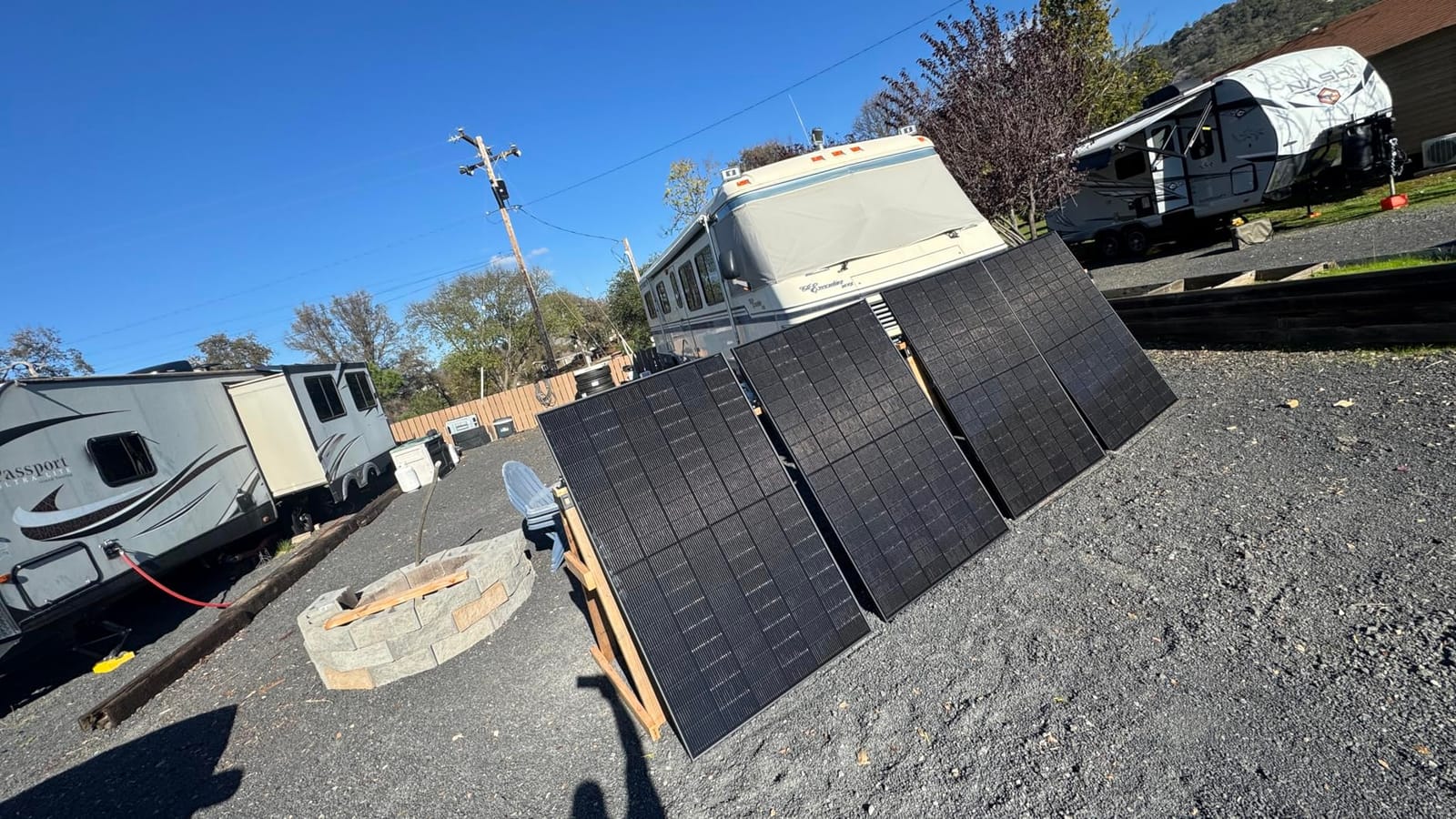
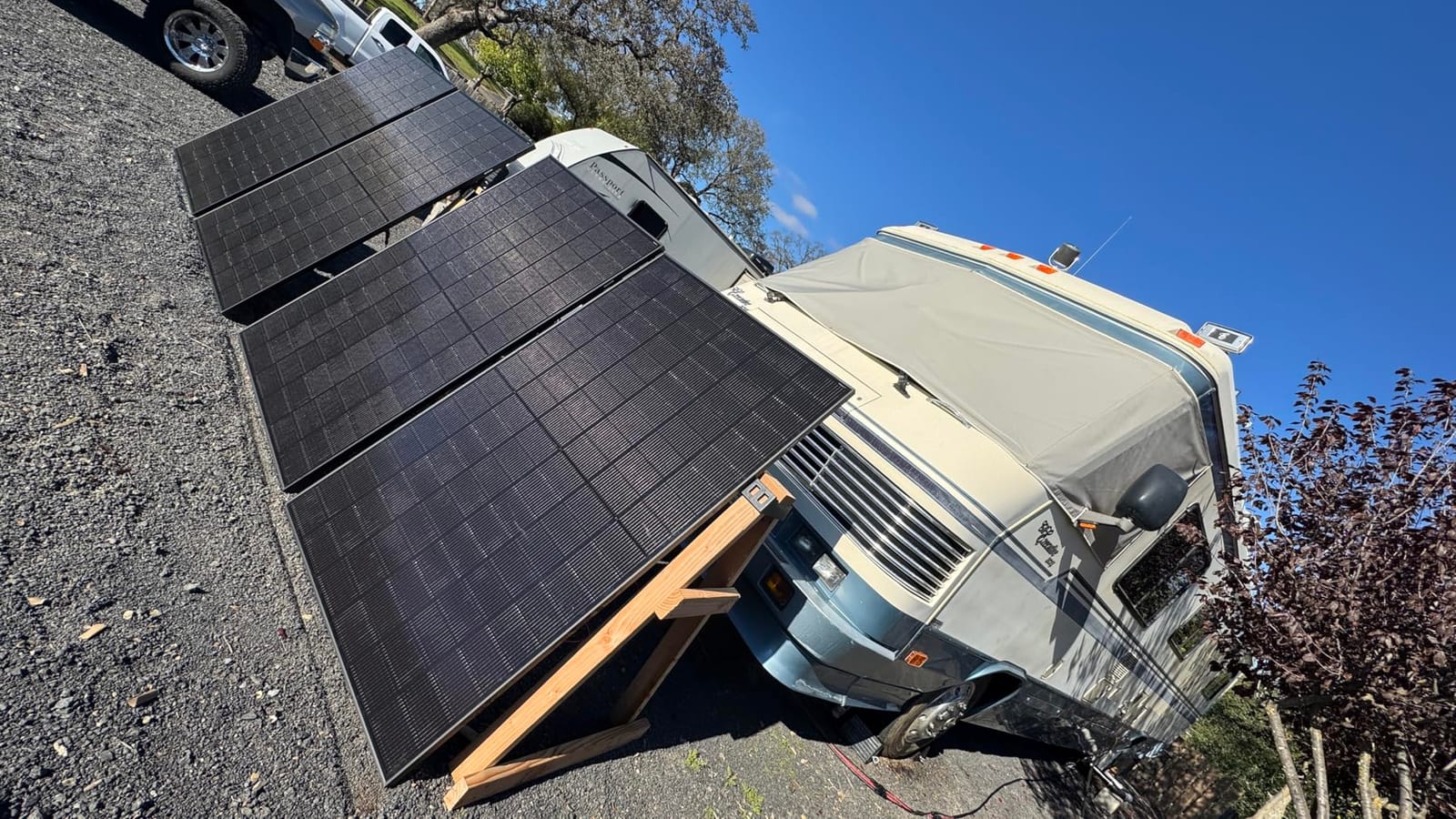
Charging is flexible with four paths and adjustable charge speeds, reaching full in up to 1.5 hours under supported conditions. Combined AC plus solar charging is the useful one at a cabin where you arrive with a partly charged battery.
It is UL Listed with a 7-year support period, and the pull handle makes transport more manageable than the weight alone suggests.
What this unit does well in a cabin
Capacity is the pitch. If your load is a fridge-freezer, a router and lighting and you want days of autonomy rather than hours, starting at 3840Wh reduces how often you need to touch a generator.
The port selection is unusually complete, with USB-C PD 3.0, DC5521, XT60 and a 12V car socket alongside the AC outlets, which reduces the need for adapters.
Where it falls short
At nearly 105 lb and with a footprint over 27 inches long, this is a large unit to bring into a cabin and then position where you need it. Its 206 reviews carry a 4.4-star average, and the brand footprint is much thinner than BLUETTI, EcoFlow, Jackery or Anker, which matters when something fails far from a service centre.
Buyers should also weigh the claimed 17-hour runtime carefully, since owners report it varying considerably with load and conditions rather than holding steady.
8. EcoFlow DELTA Pro 3 – Best for Whole-Home Backup
EF ECOFLOW 8kWh Portable Power Station: DELTA Pro 3 with Extra Battery
4096Wh LFP plus extra battery
120V and 240V output
4000W continuous
10 ms UPS
188 lb
Pros
- 4096Wh plus an extra battery
- expandable to 48kWh
- 120V and 240V output with 4000W continuous
- 10 ms switchover keeps servers and NAS running
- 30 dB X-Quiet operation
Cons
- 188 lb needs wheels to move between rooms
- Extra batteries cannot be charged on their own
- Some owners report 120V output switching off unexpectedly
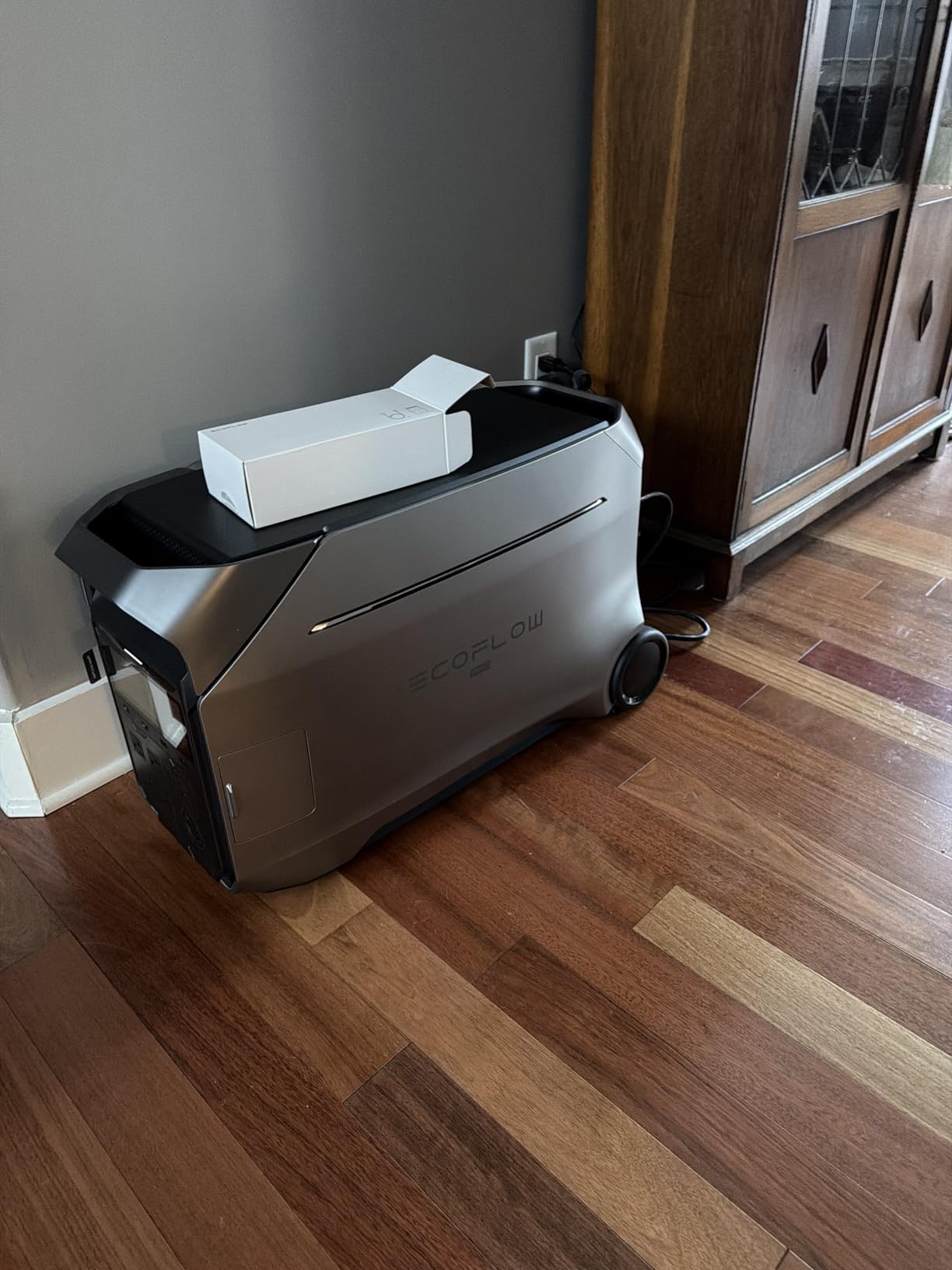
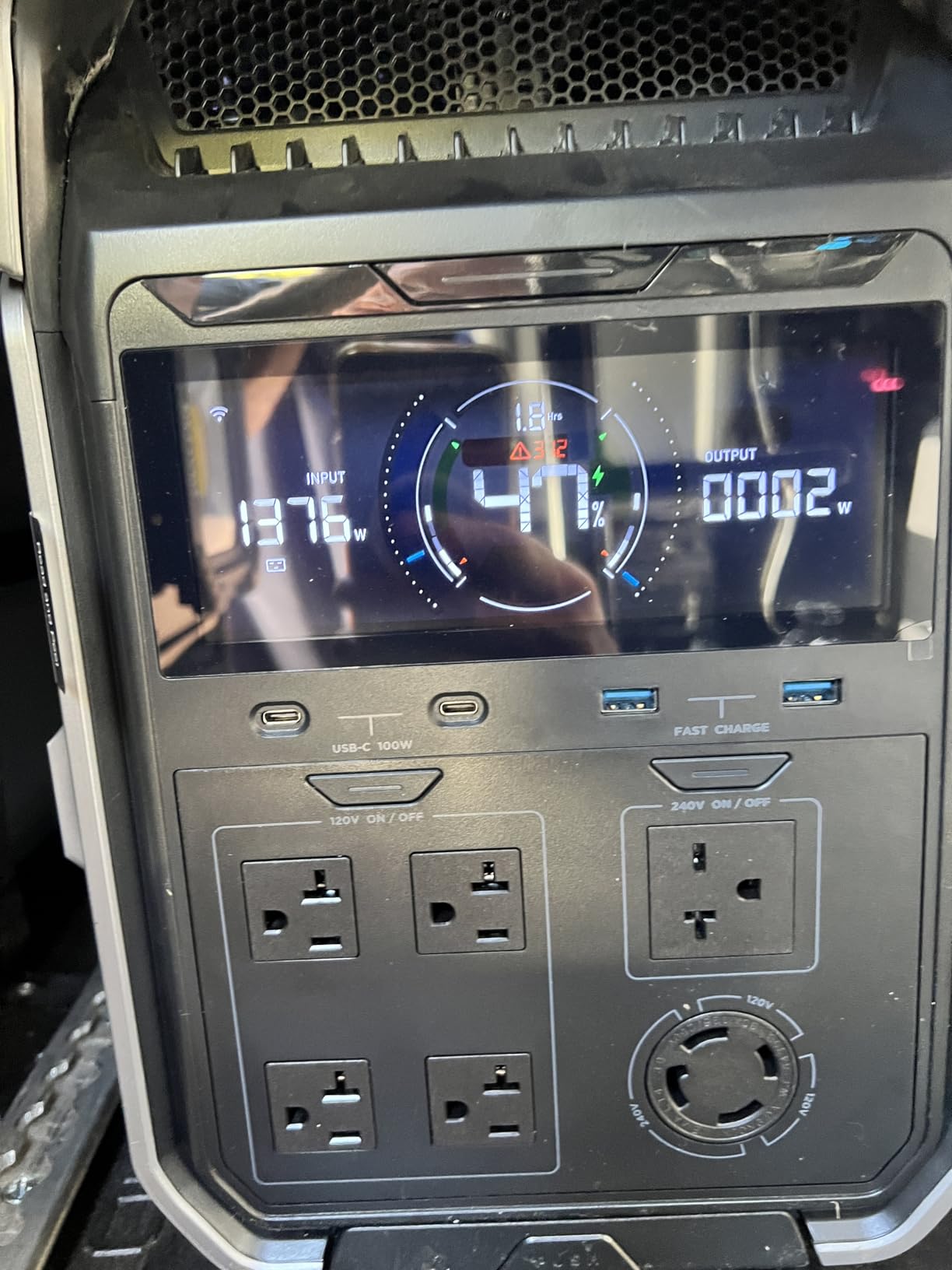
This is the only unit here with true 240V output, and that single fact separates it from the rest. If your cabin has a well pump, a 3-ton air conditioner or 240V tools, only the DELTA Pro 3 among these eight serves them directly.
It arrives as a kit combining the DELTA Pro 3 with a bundled extra battery, so you get more storage than the single-unit figure suggests, and the whole system expands to 48kWh. Output is 4000W continuous, 6000W with X-Boost and scalable to 12000W.
Charging options are the widest available: seven single and 18 combined methods, including wall, solar, gas generator, EV charging pile and the Smart Home Panel 2. For a cabin owner who already drives an electric vehicle, charging from the pile on a trip into town is a meaningful advantage.
Off-grid cabin owners report pairing it with 400W panels and cutting routine gas generator use, falling back only during long cloudy stretches.
What this unit does well in a cabin
It replaces an entire installed system in one box. No electrician, no permits, no maintenance, and owners report that a 3-ton air conditioner and a 1 HP water pump are both within its stated capability alongside the usual household loads.
The 10 ms UPS switchover keeps computers, servers and network storage running without a reboot, and at 30 dB it is quiet enough to sleep beside.
Where it falls short
At 188 lb it needs wheels to move between rooms and is not something you reposition casually. Extra batteries cannot be charged independently of the main unit, which limits how you stage them through winter.
A few owners report the 120V output switching off unexpectedly, and others say discharge limits are ignored and the battery drains below the configured floor. With only 67 reviews on this package, its long-term record is still short.
How Big a Solar Generator Does Your Cabin Need?
Add up the wattage of everything you want to run, multiply each figure by the hours you need it daily, add a 20% safety margin, then divide by 0.8 to account for inverter conversion losses. A 100W light for five hours is 500Wh. A 60W 12V fridge running 24 hours is 1440Wh, which is why refrigeration dominates almost every cabin sizing calculation.
As a rough guide, a weekend cabin with lighting, a small fridge and device charging needs 1 to 2kWh of storage. Full-time living with a fridge-freezer, tools and a router wants 2 to 5kWh. Adding a well pump, water heater or electric heat pushes you to 5 to 10kWh, and at that point you should read the section on fixed arrays below.
The DELTA Pro, the F3000 and the AFERIY P310 sit in that middle-to-upper tier. The Jackery 1000 v2 and the AC180 cover the weekend end comfortably, while the Elite 200 V2 and the S2000 bracket it.
Cold-Weather Charging and the LiFePO4 Temperature Limit
No, you should not charge a LiFePO4 battery in cold weather. The chemistry can be discharged to roughly -10F, but charging below about 30 to 40F risks damaging the cells permanently by plating lithium on the anode. This is the most repeated caution across off-grid forums, and it is the constraint that decides whether a solar generator works for you in a northern climate.
Forum consensus on solar-electric and outdoor forums is consistent: below roughly 30F, charge from a wall outlet or a vehicle instead of from panels. Owners in northern Midwest and Canadian cabins report running a gas generator far more often in winter for exactly this reason, or pulling the battery indoors.
Goal Zero comes up repeatedly as a cold-weather performer in outdoor forums, though none of the eight units in this roundup carry that name. Until a self-heating or low-temperature-charge model becomes the norm, treat winter charging as a wall-and-vehicle activity rather than a solar one.
Mitigations that actually work: keep the unit indoors and take it out to charge on warm days, charge from a vehicle alternator while driving to and from the cabin, use a heated battery blanket on cold mornings, and only connect panels once the panel surface is above freezing. Cold also reduces capacity temporarily, so plan on less runtime in winter than your summer numbers suggest.
How to Recharge a Solar Generator Off-Grid
Roughly 200W of panels is the practical minimum to keep a 1 to 2kWh station topped up, and 400W to 500W is where recovery becomes genuinely useful. The Anker F3000 bundle and the Elite 200 V2 bundle each include 400W of panel capacity between them, which puts them ahead of units shipping a single 200W panel.
Check the solar input ceiling before buying panels. The DELTA Pro caps input at 15 amps, the S2000 accepts up to 400W, the AC180 accepts 500W, and the Elite 200 V2 allows 1000W but behind a 60V MPPT limit that rules out many long-string portable panels. The F3000 offers two PV inputs at 165V and 60V, which is flexible if you can match your array to them.
Winter yield is the hard part. Solar-electric forum guidance is that 200 to 400W of panels plus good sun fully recharges a station in a day, and cabin owners in snowy climates should expect winter output to be a fraction of summer. Vehicle charging and the EcoFlow smart generator input are the two fallbacks that keep a cabin running through a dark month.
Cabin Runtime: What One Charge Actually Runs
Verified figures from owners give a clearer picture than the marketing numbers. A 220L fridge ran 33 hours on a single Anker SOLIX S2000 charge, with owners commonly reporting 35 hours on a typical fridge. A 190W fridge ran up to 42 hours on the F3000, which also holds 125 hours of AC standby.
The Elite 200 V2 ran a 29 cubic foot refrigerator-freezer for more than 24 hours, and the AC180 runs a small fridge for 16 to 18 hours plus a 5000 BTU window air conditioner for about 7 hours on low. The Jackery 1000 v2 covers about 9 hours on a full-size side-by-side fridge.
At the whole-cabin end, DELTA Pro owners report roughly 15 hours powering refrigerators, furnace blowers, lighting, internet and computers together, and the F3000 runs a 13,000 BTU RV roof air conditioner for 6 to 8 hours on low.
When a Portable Power Station Is the Wrong Choice
If your cabin draws power every day for months, a portable power station is the wrong purchase. A fixed solar array with an inverter charger costs less per watt-hour over five years and does not need carrying, recharging or replacing as a sealed unit. Keep a portable station for tools, storms and outages, and run the steady load off a proper system.
This is the most common confusion on off-grid forums, where people repeatedly ask whether a power station can replace an inverter and panel array. It cannot, at a full-time load. One weekend-cabin owner quoted 10,000 dollars to run utility power to a rural property, which tells you how far apart the two categories sit.
The second decision is two small stations against one large one. Owners who prefer two units cite portability and the ability to charge one in the sun while the other runs indoors, and off-grid forum regulars repeat that advice. Single large units win on simplicity, fewer cables and one battery management system instead of two. My rule: if one person will be moving the battery, buy two smaller ones.
Buying Checklist: 9 Features That Decide the Fit
1. Battery chemistry. LiFePO4 only. It delivers 3000 to 10,000 cycles against the few hundred a lead-acid bank manages, and it tolerates daily partial charges without damage.
2. Usable capacity after losses. The sticker watt-hour figure is not what reaches your appliances. Inverter conversion and standby draw typically remove 10 to 15%.
3. Continuous versus surge output. Continuous wattage is what you can run indefinitely. Surge is a short burst for motors, so check both before assuming a well pump or saw will start.
4. Solar input ceiling and voltage. A unit that caps at 15 amps will never benefit from a large array, and a low MPPT voltage limit excludes long-string panels.
5. Expandability. Capacity you can add later is cheaper than capacity you buy too early. Confirm whether the brand supports add-on modules and how far the total can grow.
6. Pure sine wave output. Non-negotiable for sensitive electronics, induction motors and some power tools.
7. UPS switchover time. Under 20 ms keeps computers and network gear running without a reboot through a brief outage.
8. Idle draw. Below 10W is worth a lot for a unit that sits between visits, and it directly extends runtime on every charge.
9. Warranty and support. Five years is common in this category and seven is available. A thinner brand footprint is a real consideration when something goes wrong at a remote location.
Frequently Asked Questions
What is the best solar generator for an off-grid cabin?
The BLUETTI Elite 200 V2 is the best overall for most cabins, pairing 2073.6Wh of storage with a 2600W inverter in a 53.4 lb package. The EcoFlow DELTA Pro fits year-round living with 3600Wh expandable to 25kWh, and the Anker SOLIX S2000 is the best value pick at 35.7 lb.
What size solar generator do you need to run a house?
Sum your device wattage, multiply each by daily hours of use, add a 20 percent safety margin, then divide by 0.8 for inverter losses. A weekend cabin needs roughly 1 to 2kWh, full-time cabin living 2 to 5kWh, and a cabin with a well pump or electric heat needs 5 to 10kWh.
How big of a solar system do I need for off-grid living?
Plan on 200W of panels as a minimum to keep a 1 to 2kWh station topped up, and 400W to 500W for faster recovery. Winter yield at a snowy cabin can be a fraction of summer output, so treat vehicle and generator charging as necessary backup rather than an occasional convenience.
Can I charge a LiFePO4 battery in cold weather?
No. Do not charge a LiFePO4 battery below roughly 30 to 40F, because charging a freezing cell can plate lithium and permanently damage it. Discharge down to about -10F is fine. Keep the station indoors and charge from a wall outlet, a vehicle alternator or a heated battery blanket instead.
What is the lowest temperature a LiFePO4 battery can tolerate?
Discharge is generally safe to about -10F, while the charging floor sits much higher at roughly 30 to 40F. That gap is the reason winter charging on solar panels damages LiFePO4 cells, and it is why off-grid owners charge from AC or a vehicle during cold months.
Will cold weather ruin a lithium battery?
Cold alone does not ruin it. Sustained charging below the charge floor is what causes lasting damage, and cold temporarily reduces usable capacity so winter runtime is always lower than summer. Store the unit indoors between visits and charge it only when the cell temperature is above freezing.
How to keep LiFePO4 battery warm in winter?
Keep the station inside the cabin and carry it out to charge on warm afternoons. A heated battery blanket works on cold mornings, charging from a vehicle alternator during the drive in is the most reliable option, and a small propane heater in a battery box keeps cells above freezing. Only connect panels once the panel surface is above freezing.
Should I buy one large power station or two smaller ones?
Two smaller stations are easier for one person to move, and one can charge in the sun while the other runs appliances indoors. One large station is simpler, needs fewer cables and runs a single battery management system. If a single person will be carrying the battery, buy two smaller units.
Conclusion: Which Solar Generator Fits Your Cabin
The BLUETTI Elite 200 V2 remains the best solar generator for off grid cabins that see regular use, because 2073.6Wh and a 2600W inverter in one package cover almost every weekend and short-stay load. Choose the EcoFlow DELTA Pro for year-round living, the Anker SOLIX S2000 when weight and value decide it, and the Jackery Explorer 1000 v2 when one person has to carry the battery in.
For 240V tools, water pumps or whole-home backup, the EcoFlow DELTA Pro 3 is the only unit here that serves those loads directly. Whatever you pick, plan winter charging from a vehicle or wall outlet rather than from panels, and size for the fridge first. Check the current details for each unit before you buy, then set up your panel array to match its solar input ceiling.