
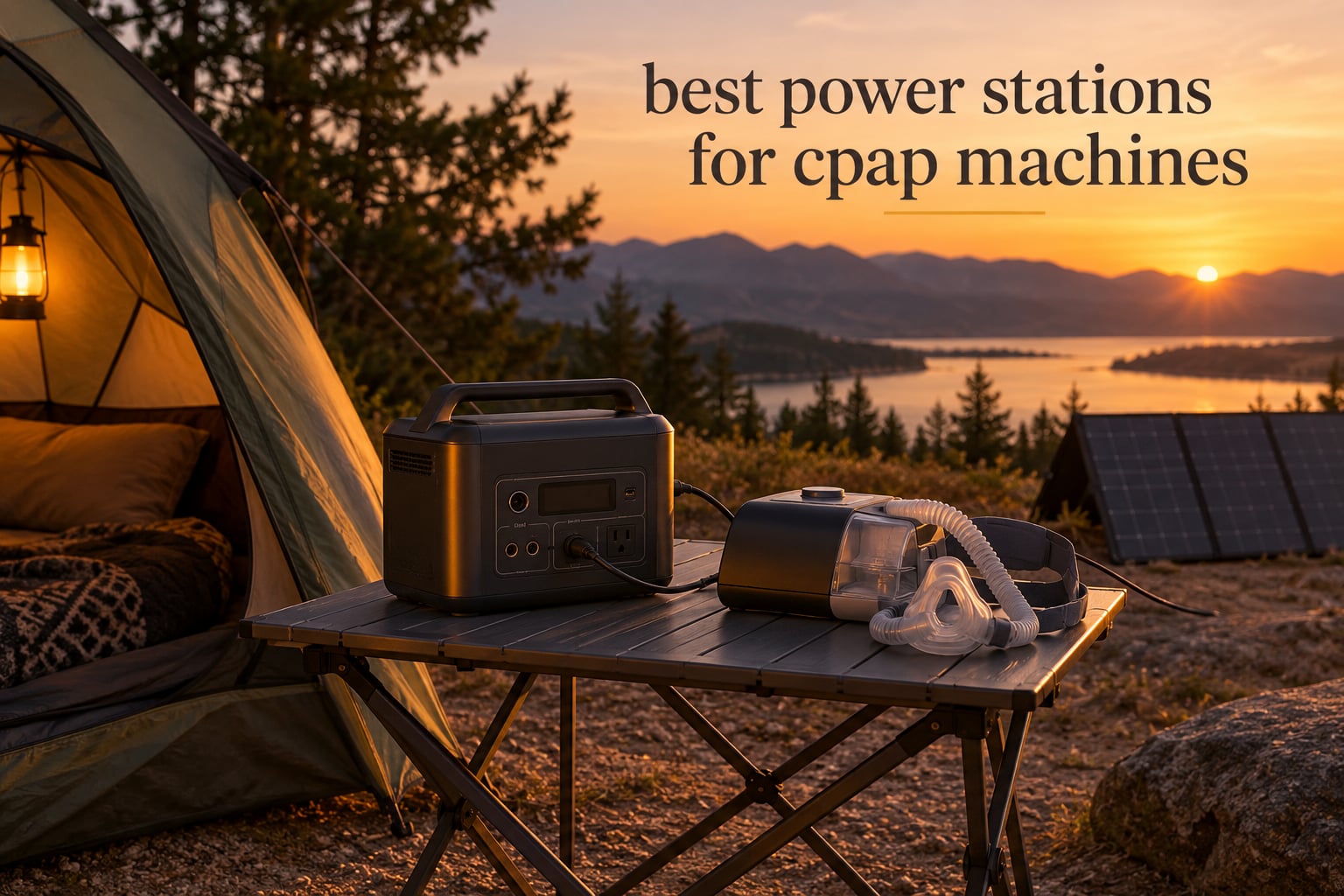
The fear that wakes most CPAP users is not loud. It is the machine that has gone dark at 3am somewhere between a campsite and a mountain road, with no outlet for miles and a therapy session cut in half.
That single scenario is why portable power stations have moved from a camping accessory to essential equipment for anyone who sleeps with a CPAP machine and spends time away from a wall.
This guide covers the best power stations for CPAP machines available in 2026, from a 151Wh unit that covers one emergency night to a 1152Wh model that holds close to three nights of humidified therapy and doubles as home battery backup. We sized every pick against real machine draw, weighed the review data, and kept the noise floor and failure modes in view rather than just the wattage on the box.
A quick note on method: we did not measure these units with a CPAP attached. Runtimes here are calculated from published capacity, a 0.85 inverter efficiency factor and the wattage ranges each machine family is documented at, and we cross-checked those calculations against what owners report on r/CPAP and CPAP-Talk. Where a runtime came from an actual owner report rather than our math, we say so.
Table of Contents
Top 3 Picks for CPAP Power (October 2026)
Three picks cover most readers. The Jackery Explorer 1000 v2 wins overall on capacity, cycle life and output headroom. The EnginStar R300 is the value pick, and it is the only unit here with a 24V DC barrel port, which matters if your machine is a ResMed. The Jackery Explorer 300 has the deepest review base on this page by a wide margin, which matters when you want a decision backed by thousands of owners rather than a spec sheet.
Quick Overview: 8 Power Stations for CPAP Machines in 2026
| Product | Specs | Action |
|---|---|---|
 Jackery Explorer 1000 v2 Jackery Explorer 1000 v2 |
|
Check Latest Price |
 EnginStar 300W Solar Generator EnginStar 300W Solar Generator |
|
Check Latest Price |
 Jackery Explorer 300 Jackery Explorer 300 |
|
Check Latest Price |
 ALLWEI 300W 256Wh ALLWEI 300W 256Wh |
|
Check Latest Price |
 MARBERO 237Wh MARBERO 237Wh |
|
Check Latest Price |
 FF Flashfish 151Wh FF Flashfish 151Wh |
|
Check Latest Price |
 Anker SOLIX C300 Anker SOLIX C300 |
|
Check Latest Price |
 BLUETTI AC180 BLUETTI AC180 |
|
Check Latest Price |
How Much Power Your CPAP Actually Uses
A CPAP typically draws between 30W and 60W depending on pressure setting, machine and whether the heated humidifier is running. Over an eight-hour night that is roughly 240 to 480 watt-hours.
The heated humidifier is the single biggest variable, and it can add another 15W to 30W on its own. That is why most people who size a station for their machine alone end up short at 2am.
Higher pressure settings push draw up. Users on the r/CPAP forum who measure with a kill-a-watt meter commonly report 53W to 58W at pressures in the mid-teens, well above the 30W to 50W quoted in most product copy.
One forum user measured an AirSense 10 at roughly 24V DC pulling about 4A, which works out near 90W. That explains why some stations which look oversized on paper still cut out overnight.
CPAP wattage by machine model
These are documented draw ranges for the most common machines. Treat the top of each range as your planning number, because sizing to the average is how people end up short.
ResMed AirSense 10: roughly 30W to 60W, higher with the heated humidifier and heated tube.
ResMed AirSense 11: roughly 25W to 45W, the lowest draw of the mainstream full-size machines listed here.
ResMed AirCurve 10: roughly 30W to 55W.
ResMed AirMini travel machine: roughly 5W to 15W without the humidifier, up to about 30W with it.
Philips DreamStation 2: roughly 30W to 60W. Philips DreamStation Go travel machine: roughly 15W to 30W. ResTravel and other dedicated travel CPAP units: roughly 15W to 30W. If you use a travel machine the maths changes completely, and even the Jackery Explorer 1000 v2 gives you more than five nights.
The runtime formula, with a worked example
The runtime formula is simple: Battery watt-hours multiplied by 0.85, divided by CPAP wattage, equals hours of runtime. The 0.85 factor accounts for inverter loss when the station converts its stored DC battery power to AC for the machine.
Here is the arithmetic on a 512Wh station. With a CPAP drawing 18W, 512 x 0.85 gives you 435Wh usable, and 435 divided by 18 is 24 hours, or three eight-hour nights. The same station with a humidified machine at 55W gives 435 divided by 55, which is under 8 hours, or one night and change. That gap is the entire humidifier argument in one line of maths.
If you can feed the machine through a DC converter instead of the AC inverter, you skip that 15% loss entirely and add roughly 10% to 15% more runtime in practice. The EnginStar R300 is the unit below that makes this easiest, because its 24V DC barrel port connects straight to a ResMed machine.
How to Size Capacity for Your CPAP Trips
Multiply your nightly watt-hours by the number of nights, then apply a 1.4 safety factor for inverter loss, cold weather derating and the fact that you should never drain a lithium battery to zero. A CPAP at 45W for eight hours is 360Wh per night, so a four-night trip needs 1440Wh before the safety factor, which pushes you toward a 2000Wh class unit or a smaller station you recharge from the vehicle every other day.
That last option is what most experienced users actually do. Forum consensus across r/camping and iRV2 is that carrying full-trip capacity is less practical than carrying a mid-size station and topping it up from a vehicle 12V socket or a solar panel on a drive day. Boondockers in particular report that the large majority of their trips include a driving day, which makes daily recharge a given rather than a problem.
Capacity needed by use case
For a single-night blackout backup, 200Wh to 300Wh is enough. A weekend trip with a humidifier wants 700Wh to 1000Wh, because two nights at 60W plus a safety margin lands there. A week of dry camping needs 1500Wh to 2000Wh, or a mid-size station plus solar.
Full-time van life is different in kind rather than degree. One RV forum recommendation for CPAP users lands at roughly 225Ah to 300Ah of stored battery paired with at least 200W of solar, which is the RV-scale version of the same calculation. Home outage backup needs the largest capacity you can carry, because the machine has to run for as long as the outage lasts and you cannot predict that.
Six ways to get more nights per charge
Turn the humidifier off, or set humidity to zero.
Turn off the heated tube if your machine has one. It is a separate heater and people often forget it is running.
Feed the machine through a DC converter instead of the AC inverter to skip the conversion loss.
Turn off any power-saving or sleep mode on the station, because a few units drop output when the load falls during sleep and silently interrupt therapy.
Carry a small second unit as a backup rather than trusting one battery.
Keep your settings consistent, because a machine that reboots mid-night draws a burst of power while it restarts its blower.
The humidifier change is the one that pays for itself fastest. It is the advice that appears in nearly every CPAP camping thread and it can cut nightly draw by a quarter or more, which is often the difference between two nights and four.
Dedicated CPAP Battery or Portable Power Station?
A dedicated CPAP battery is built for one job: roughly 166Wh to 292Wh of stored energy, a DC output matched to your machine’s voltage, and nothing else. A portable power station is a general-purpose energy source with an AC inverter, USB ports and the ability to run a phone, a laptop and lights alongside your machine. Which one is right depends almost entirely on how long you need to be away from a wall.
If you are flying, the dedicated battery wins outright. Anything above 160Wh is restricted in carry-on luggage, and most dedicated CPAP batteries sit under that ceiling while only the 151Wh FF Flashfish on this page does.
For weekend camping where you recharge from the vehicle, a dedicated battery is lighter and lasts longer per watt because it skips the inverter entirely. For home backup, a van, or a trip where other devices need power too, the portable power station is the only sensible option.
The cable and adapter guide
This is where most purchases go wrong, and the details are specific by brand. ResMed AirSense 10, AirSense 11 and AirCurve 10 machines use a 24V DC barrel connector, so they need a 24V output or a 24V DC adapter cable. Philips DreamStation, DreamStation 2 and DreamStation Go machines run on 12V, so they need a 12V DC adapter.
ResMed and Philips both sell their own DC cables, and third-party versions from brands like KFD are widely used and generally fine, provided the voltage matches exactly. A 12V cable on a 24V machine will not work, and forcing it risks the machine.
If you buy a station without a matching barrel port, buy the DC adapter cable for your specific machine model and check its rated current against the machine’s draw.
Pay attention to connector size too. Barrel plugs look identical and differ by a couple of millimetres. Read the machine’s manual for the DC output specification before you order anything, and confirm the station can supply the current continuously rather than just at peak.
Flying with a power station and the 160Wh rule
Spare lithium batteries are limited to 100Wh in carry-on luggage without approval, and that ceiling can rise to 160Wh with airline approval. Seven of the eight stations on this page exceed 160Wh, which means those seven cannot fly in your hand luggage without prior airline approval, and no lithium power station may go in checked baggage. The 151Wh FF Flashfish sits under the 160Wh ceiling but still needs approval because it is above 100Wh.
This is the argument for a dedicated travel CPAP battery if you fly at all. A sub-160Wh dedicated battery with a matching DC cable is the portable power station for CPAP use that actually travels. Confirm with your airline in writing before you book, and carry your machine’s battery in your personal item regardless.
1. Jackery Explorer 1000 v2 – Our Best Overall Pick for a CPAP
Jackery Explorer 1000 v2 Portable Power Station,1070Wh,1500W
1,070Wh LFP
1,500W AC, 3,000W surge
4,000+ cycles
23.8 lb
2x USB-C 100W
Pros
- 1070Wh capacity runs a humidified CPAP for multiple nights with room for other devices
- LiFePO4 cells rated for 4000+ cycles and a 10+ year service life
- Full recharge in about 1 hour in emergency mode
- Three pure sine wave AC outlets plus 100W USB-C for charging alongside the machine
Cons
- Solar input restricted to Jackery-branded panels
- Emergency fast-charge mode must be re-enabled in the app each session
- At 23.8 lb it is the heaviest of the sub-500Wh units in this group
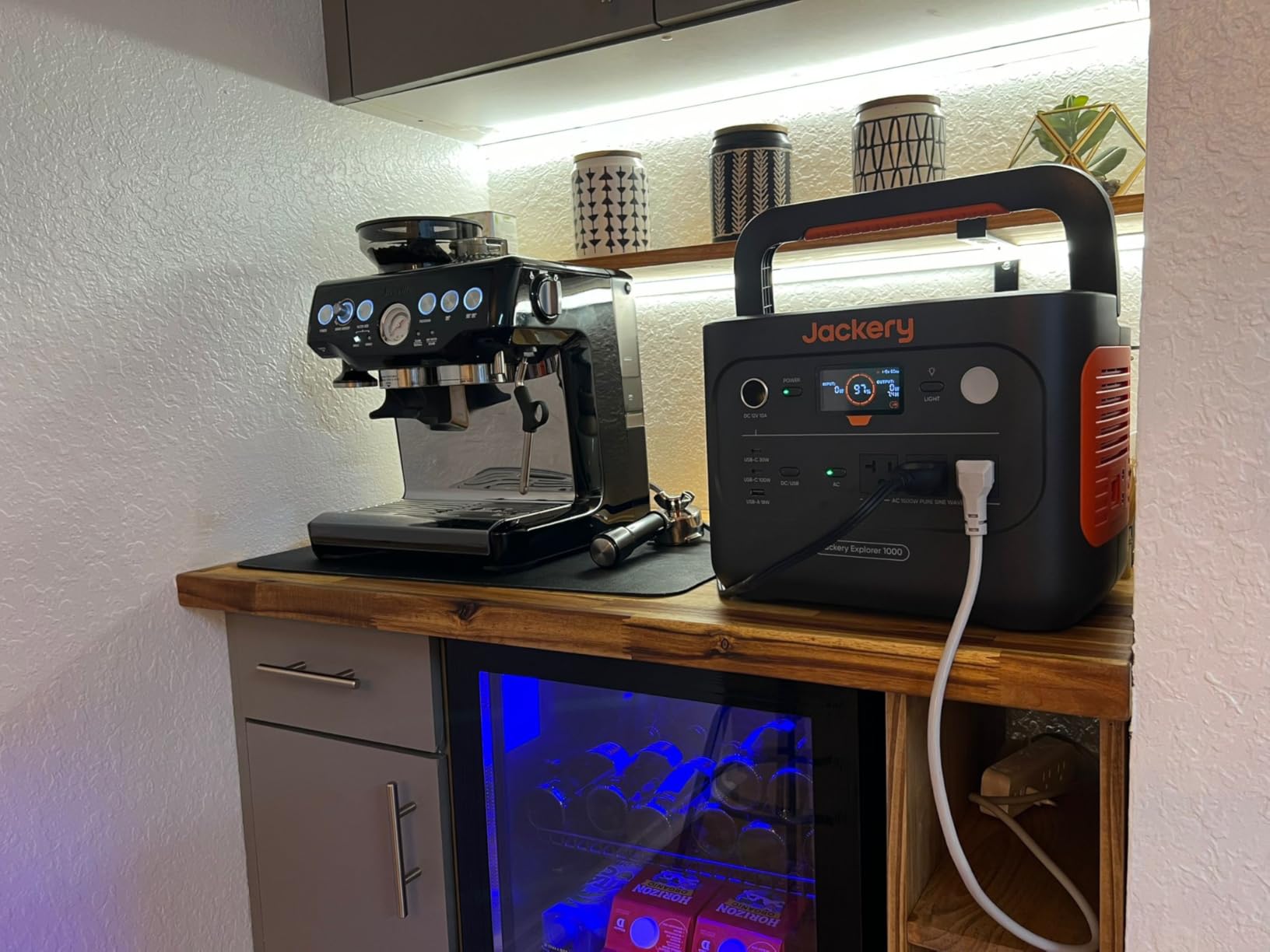
This is the station I keep coming back to for anyone whose CPAP travels with them regularly. A 1,070Wh LFP battery with 1,500W of continuous AC output gives you roughly 900Wh of usable power once inverter loss is accounted for, which at a 45W humidified draw is about 20 hours, or a comfortable two and a half nights with plenty to spare.
What separates it from the rest is cycle life. The LFP cells here are rated at 4,000 cycles to 70% capacity, which works out to over a decade of nightly use before you start losing meaningful runtime. If your CPAP battery is a permanent fixture rather than a travel item, that number matters more than any other spec on the page.
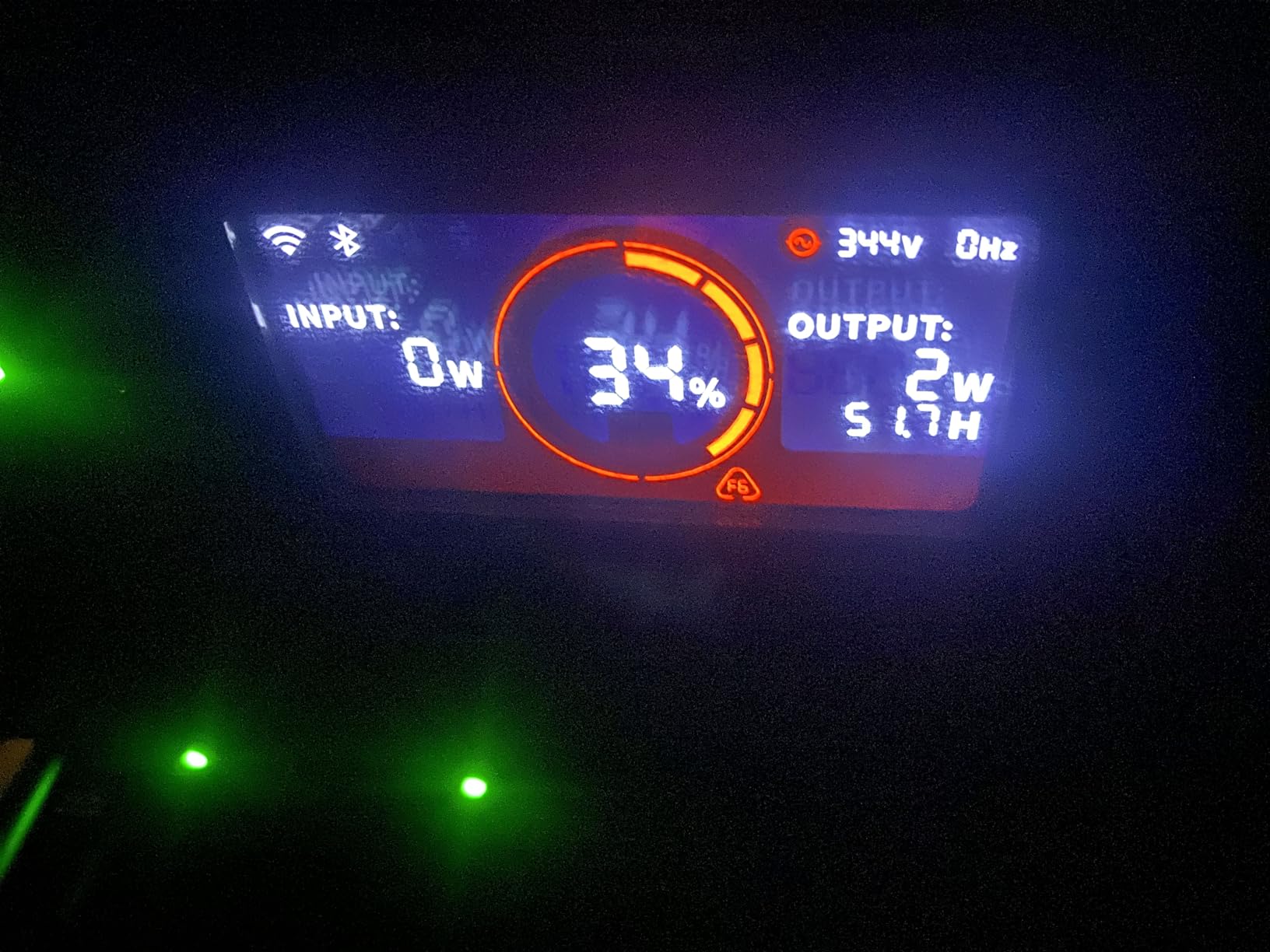
The charging story is the other reason it wins. It goes from empty to full in roughly an hour in emergency mode, and 1.7 hours by default, which means a top-up during a lunch stop is realistic. The 30dB quiet charging mode is also worth noting, since fast charging fan noise is a genuine complaint on several other units.
Owners describe the pure sine wave AC output and the 1,070Wh capacity as comfortably running a CPAP overnight with headroom for a phone or tablet. The two things that come up repeatedly as drawbacks are the Jackery-only solar panel restriction and the fact that the one-hour emergency charge has to be switched on in the app every session rather than remembered.
What 1,070Wh means for your nights
Run the formula on a 40W machine with no humidifier and 1,070 x 0.85 gives you 909Wh, which is 22 hours, or nearly three nights. Push that machine to 60W with the humidifier on level 4 and the same 909Wh is 15 hours, just under two nights. Plan around the humidified number, because that is the night you will actually have.
Where it is the wrong choice
If you are a light packer, 23.8 lb is a lot of weight to carry to a tent. If you fly, it is far over the carry-on ceiling. And if your machine runs from a 12V DC feed, you would recover roughly 10% to 15% more runtime on a smaller station, which is worth weighing before you commit.
2. EnginStar 300W Solar Generator – Best Value CPAP Power
EnginStar Solar Generator, 300W Portable Power Station, 296Wh Lithium Battery Backup w/Two 110V Pure Sine Wave AC Outlet for Camping Road Trip RV, 80000mAh Sufficient Power Supply for Blackout
296Wh (80,000mAh)
300W AC
24V DC barrel output
6.5 lb
8 outputs
Pros
- Only unit here with a 24V DC barrel port
- which matches ResMed machines directly
- Two 110V pure sine wave AC outlets plus USB
- USB-C
- car
- 12V and 24V DC outputs
- Display shows live input and output wattage per port without an app
- 6.5 lb body with a built-in flashlight
Cons
- Not weather sealed
- so ports need covering in rain or dust
- Slow solar recharge compared with wall charging
- Display LED is bright and not dimmable
The EnginStar R300 is what I recommend to anyone whose machine is a ResMed and who does not want to buy a separate adapter cable. It is the only station in this group with a 24V DC barrel output, which means an AirSense 10 or AirCurve 10 can plug straight in and skip the inverter entirely.
That direct DC path matters more than it sounds. Eight outputs in total, including two pure sine wave AC outlets, a 12V DC port and that 24V barrel, and skipping the inverter on a 296Wh pack can add close to a full extra hour over an eight-hour night.
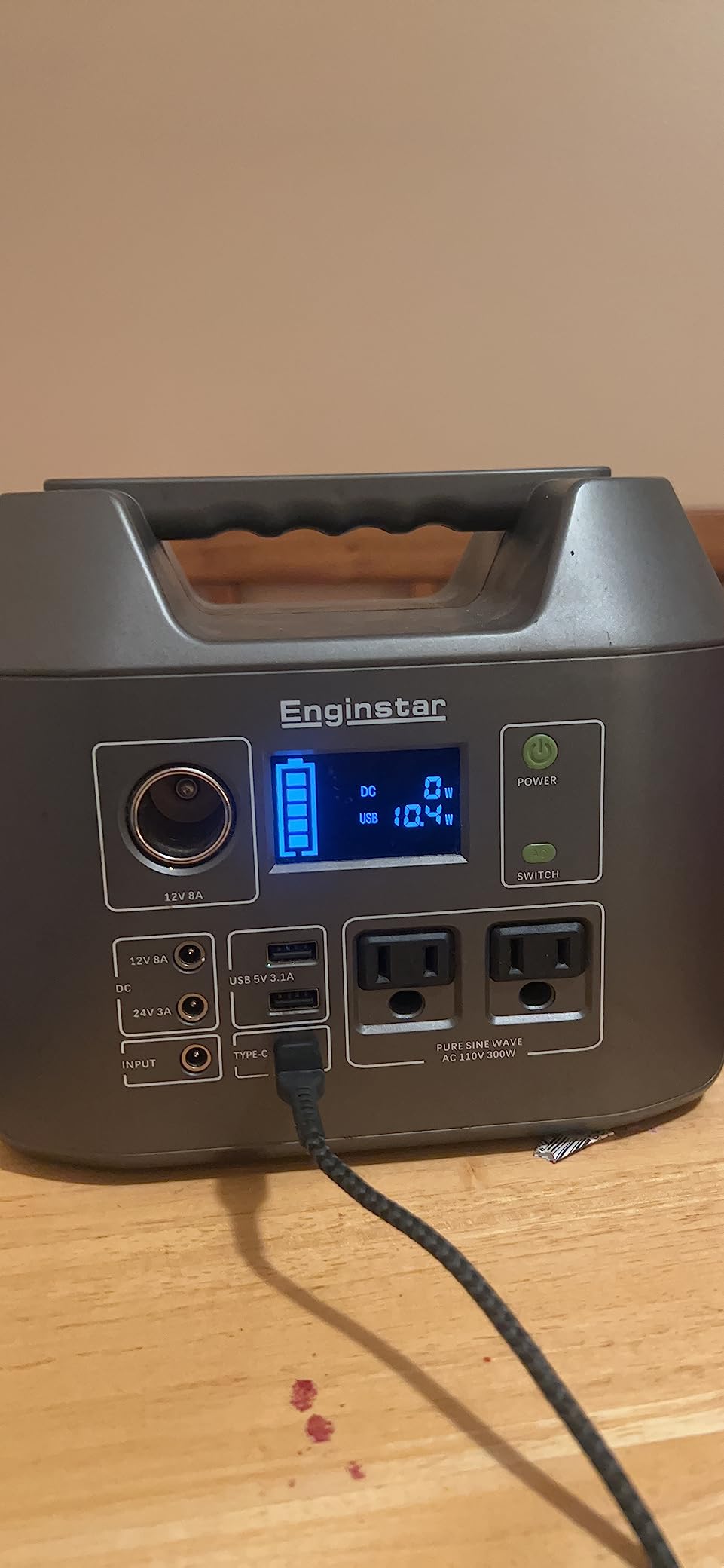
Owners report the most concrete CPAP runtime figures of any unit here. Several describe running a machine with full humidification for about 7.5 hours on a single charge, and roughly three nights with humidity turned off, which is consistent with the 296Wh capacity and a moderate draw.
The display showing real-time wattage per port is genuinely useful when you are trying to learn your machine’s actual consumption. It means you can watch the draw drop the moment you turn the humidifier off, and size the rest of your kit from measured numbers rather than guesses.

Why the 24V port changes the runtime maths
At 296Wh with no inverter loss, a 15W travel machine gets close to 19 hours. A 45W humidified machine gets about 6.5 hours, so you are looking at roughly one full night rather than one and a half. For a 7.5-hour night with the humidifier on, owners do describe getting through it, which suggests their machines were drawing closer to 35W.
Where it falls short
It is not weather sealed, which is a problem in an exposed campsite or a dusty jobsite. Solar recharge is slow, taking considerably longer than the 7-hour wall charge, so it is not the unit for a solar-first setup. And the display LED is bright with no dimming option, which owners who sleep beside it flag as a real annoyance.
3. Jackery Explorer 300 – Best Known CPAP Backup With the Most Reviews
Jackery Explorer 300 Portable Power Station,292Wh
292Wh LiFePO4
300W AC, 600W surge
7.1 lb
4,000+ cycles
100W USB-C
Pros
- Most reviewed unit in this group at over 11000 reviews with a 4.6 average
- 7.1 lb weight makes it one of the easiest to carry to a campsite
- LiFePO4 chemistry rated for 4000+ cycles before 70% capacity
- 100W USB-C PD port charges a phone or laptop while the machine runs
Cons
- Solar charging limited to Jackery panels and slow even at 100W
- 292Wh is the smallest capacity among the LiFePO4 units here
- so humidified runtimes are one night
- About 4 hours for a full wall recharge
With more than 11,000 reviews at a 4.6 average, the Jackery Explorer 300 has more real-world CPAP history behind it than anything else on this page. Eighty-one percent of owners give it five stars, and a great many describe it as their dedicated CPAP battery for camping.
Jackery markets this one explicitly as a dependable CPAP battery for camping, and owners respond to that with specific detail. A 292Wh LFP pack at 7.1 lb is genuinely portable, which is the argument for accepting a smaller capacity: you can carry this to the tent instead of leaving it in the vehicle.
LiFePO4 chemistry rated for 4,000-plus cycles before hitting 70% capacity means the lifespan here is measured in decades of nightly use, not seasons. The two AC outlets, a 100W USB-C PD port, two USB-A ports and a 120W car port let the machine and your phone run off the same unit.
What 292Wh covers in practice
At 292Wh x 0.85 that is 248Wh of usable energy. A 30W machine gets about 8 hours, which is one night, and a 40W machine gets a little over 6 hours, which is not a full night.
The honest framing is one night with margin to spare, plus recharge from a vehicle or panel between nights, rather than multi-night capacity.
Where it is the wrong choice
If you are away for three nights without a way to recharge, this is the wrong size and you need to move up a tier. Solar input is restricted to Jackery panels, and even a 100W panel takes roughly 2.8 hours to reach 80%. A full wall recharge is about 4 hours, so plan your top-ups around that.
4. ALLWEI 300W 256Wh – Most Ways to Recharge
ALLWEI Portable Power Station 300W, 256Wh Solar Generator LiFePO4 Battery
256Wh LiFePO4
300W pure sine wave, 600W surge
6.4 lb
3,000 cycles
USB-C PD 60W
Pros
- Verified owner ran a heated DreamStation 2 for 12 hours and 20 hours on a BMC Luna 2 across three nights
- Display shows both estimated runtime remaining and exact battery percentage
- Four recharge paths including AC plus solar dual input in roughly 2 hours
- 3000-cycle LiFePO4 chemistry with a stated 5-year warranty
Cons
- Some owners report the cooling fan running loudly for hours during overnight use
- A few reports of units losing the ability to hold charge after about a year
- Customer support reportedly needs extensive documentation before engaging
- No 24V output for RV users
The ALLWEI PPS300-4 has the best documented CPAP use of any sub-300Wh unit here. One verified owner documented 20 hours of continuous operation across three nights on a BMC Luna 2 with heat off, and 12 hours on a heated Respironics DreamStation 2, using it as an uninterruptible supply through simulated outages.
Those are real numbers from a real machine rather than a calculation, and they line up with what the 256Wh capacity should do. It also lists CPAP machines among its supported devices, which tells you the manufacturer at least thought about the use case.
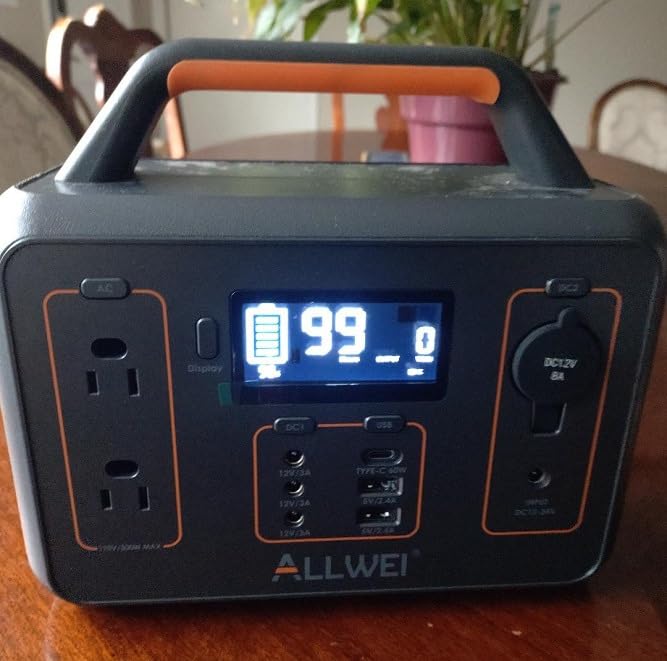
Where it separates from its class is recharge flexibility. Four paths are supported: AC wall in 3.5 to 4 hours, 12V car in the same window, 100W solar in 4 to 5 hours, and AC plus solar together in 2 to 2.5 hours. The built-in MPPT controller is what makes the solar path work efficiently at this size.
There are six outputs including AC, two DC5521 ports, a car port, an 18W USB-A and a 60W USB-C PD port. At 6.4 lb and 9.25 by 5 by 6.8 inches it fits in spaces where larger units will not.
Recharging on a multi-night trip
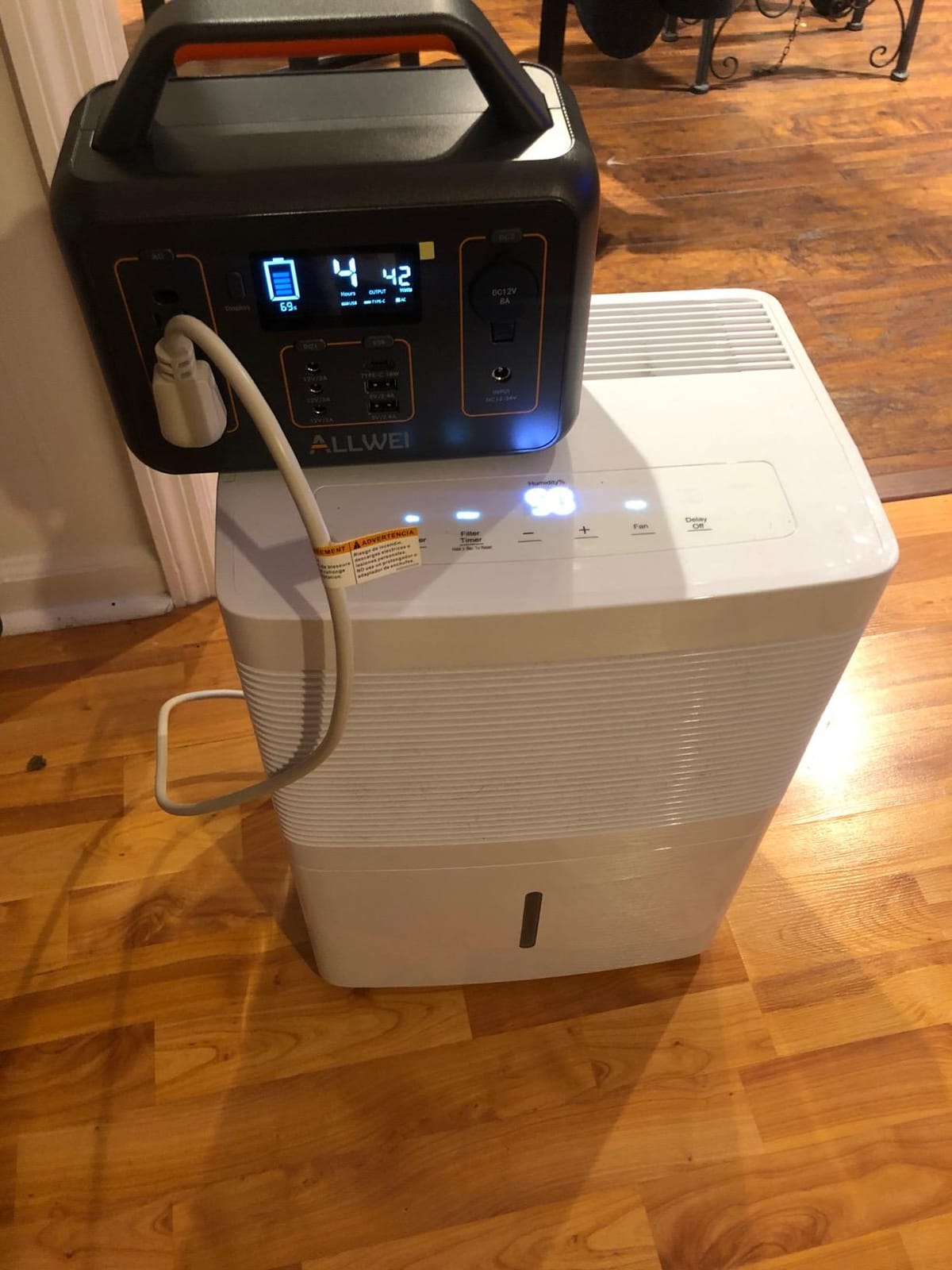
A car socket top-up in 3.5 to 4 hours is the realistic recovery path here, and it means a two-night trip needs only one drive-day recharge. The dual AC plus solar input at 2 to 2.5 hours is unusual in this size class and gives you a fast option at a campground with a wall outlet.
Where it falls short
Fan noise is the complaint that matters most for this use case. Some owners report the cooling fan running loudly for hours, and a station beside your head is a different problem when you are trying to sleep. There is also no 24V output, which rules it out for ResMed machines without an adapter cable.
5. MARBERO 237Wh – Most Versatile Station in the Group
Portable Power Station 300W MARBERO 237Wh Camping Solar Generator Backup Lithium Battery with Pure Sine Wave 110V AC Outlet, USB C, USB A, DC for Outdoors Camping CPAP Home Blackout Emergency
237Wh (64,000mAh)
300W output, 375W peak
4.6 lb
8 outputs
dual LED lanterns
Pros
- Among the smallest units here at 4.6 lb with a compact 8.15 x 3.9 x 5.83 in body
- Eight outputs including both 2-prong and 3-prong AC outlets for grounded CPAP cords
- Dual LED camping lanterns with SOS and twinkling modes
- Consistently praised as good value for phones
- lights and small appliances
Cons
- AC inverter output is low
- so mid-size devices shut down
- Proprietary round charger port rather than USB-C
- Several reports of units failing to hold charge within roughly 1 to 3.5 years
- Construction feels flimsy
At 4.6 lb the MARBERO M823 is one of the smallest things here, and it fits in a daypack without thinking about it. For anyone carrying gear to a campsite on foot, that footprint against the 6.4 lb ALLWEI is the whole argument.
Eight outputs is unusually generous for this capacity, including both a 2-prong and a 3-prong AC outlet. The 3-prong matters if your CPAP cord has a ground pin, which is common on longer cables.
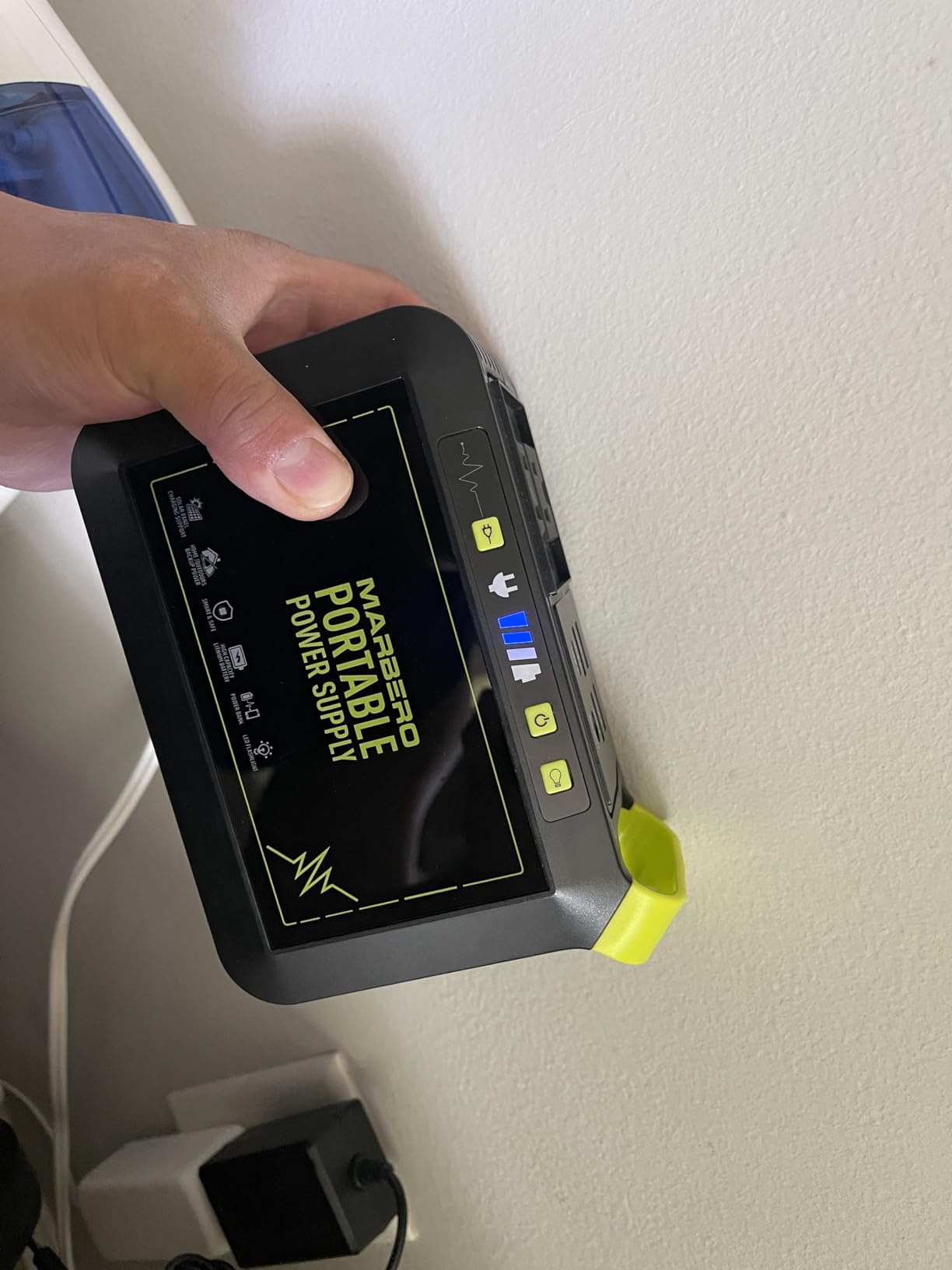
The dual LED lanterns, one on the top and one on the side, with SOS and steady modes, are a small touch that turns out to matter on a campsite where the machine is the only thing plugged in. It is a power station that doubles as a lantern rather than an extra device.
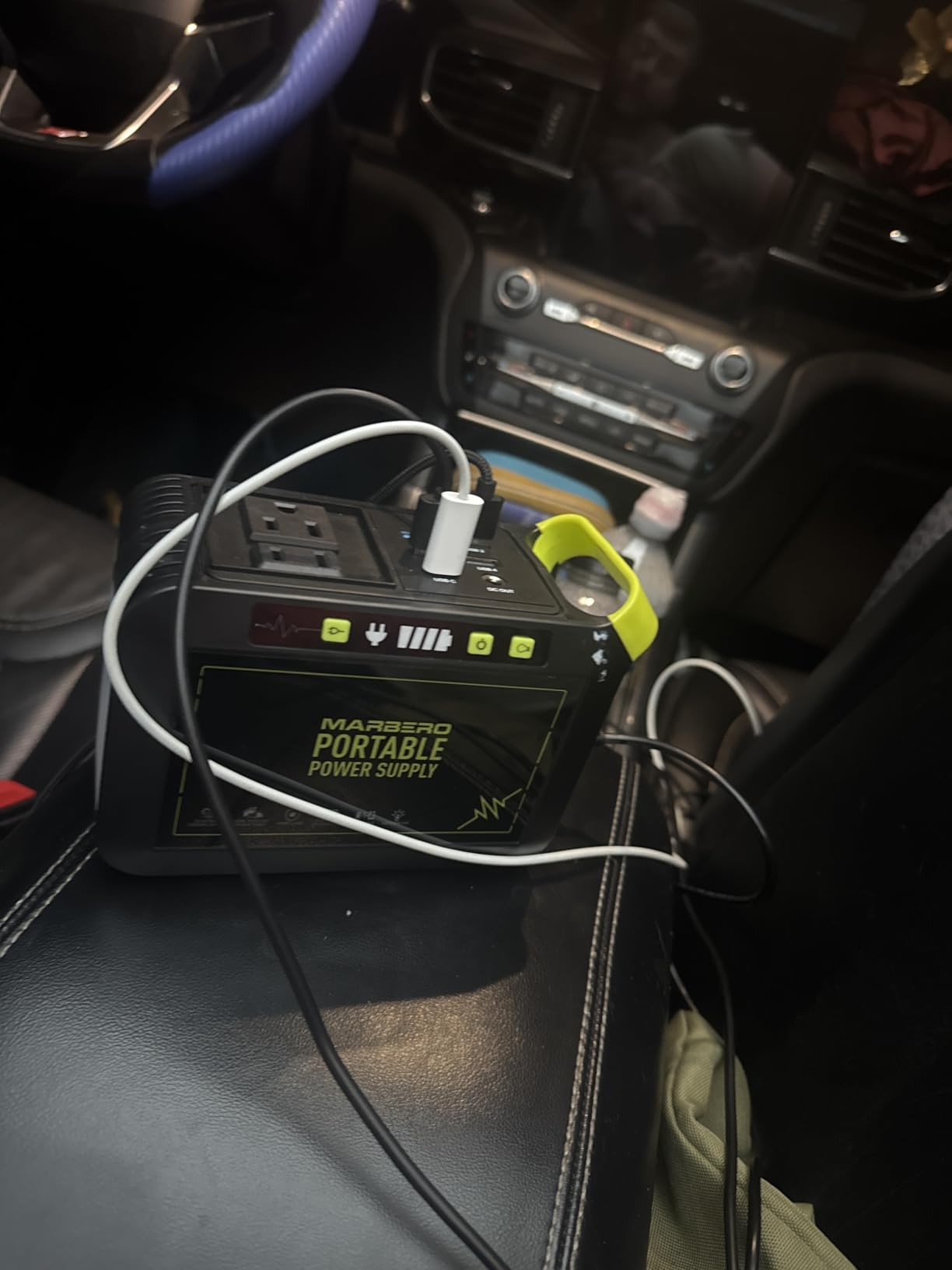
I would set expectations clearly on this one. It is the lowest-rated unit here at 4.1, with twelve percent of owners giving it one star. Owners consistently like it for phones, lights and small appliances, and its capacity suits a CPAP at a light setting more comfortably than one with the humidifier running.
How much CPAP night you get
At 237Wh x 0.85 that is about 201Wh usable. A 25W travel machine gets 8 hours. A 35W machine gets a little under 6. A 50W humidified machine is not going to make it, and you should not plan on it.
Where it is the wrong choice
The AC inverter output is low and many mid-size devices shut down when connected. The proprietary round charging port means a lost adapter is a real problem. And several owners report units that stop holding charge within one to three and a half years, which matters enormously for a device expected to run unattended for eight hours a night.
6. FF Flashfish 151Wh – Smallest Useful Nightly Backup
Portable Power Station 200W, FF Flashfish 40800mAh Backup Power Battery Pack With 110V AC Outlets/2 DC Ports/3 USB Ports, Solar Generator Power Supply For Home Backup, Power Outages, and Camping
151Wh (40,800mAh)
200W AC output
4.1 lb
6 outputs
12-month warranty
Pros
- Lightest capacity band here at 4.1 lb with a soft carry handle
- Six outputs including a dedicated 200W 110V AC outlet for a CPAP
- Separate AC and DC buttons plus an LCD readable in low light
- AC adapter and car charger both included in the box
Cons
- Smallest capacity here at 151Wh
- giving the shortest CPAP runtime in the group
- 200W AC ceiling limits what can run alongside a CPAP
- Only a 12-month warranty
- the shortest coverage listed
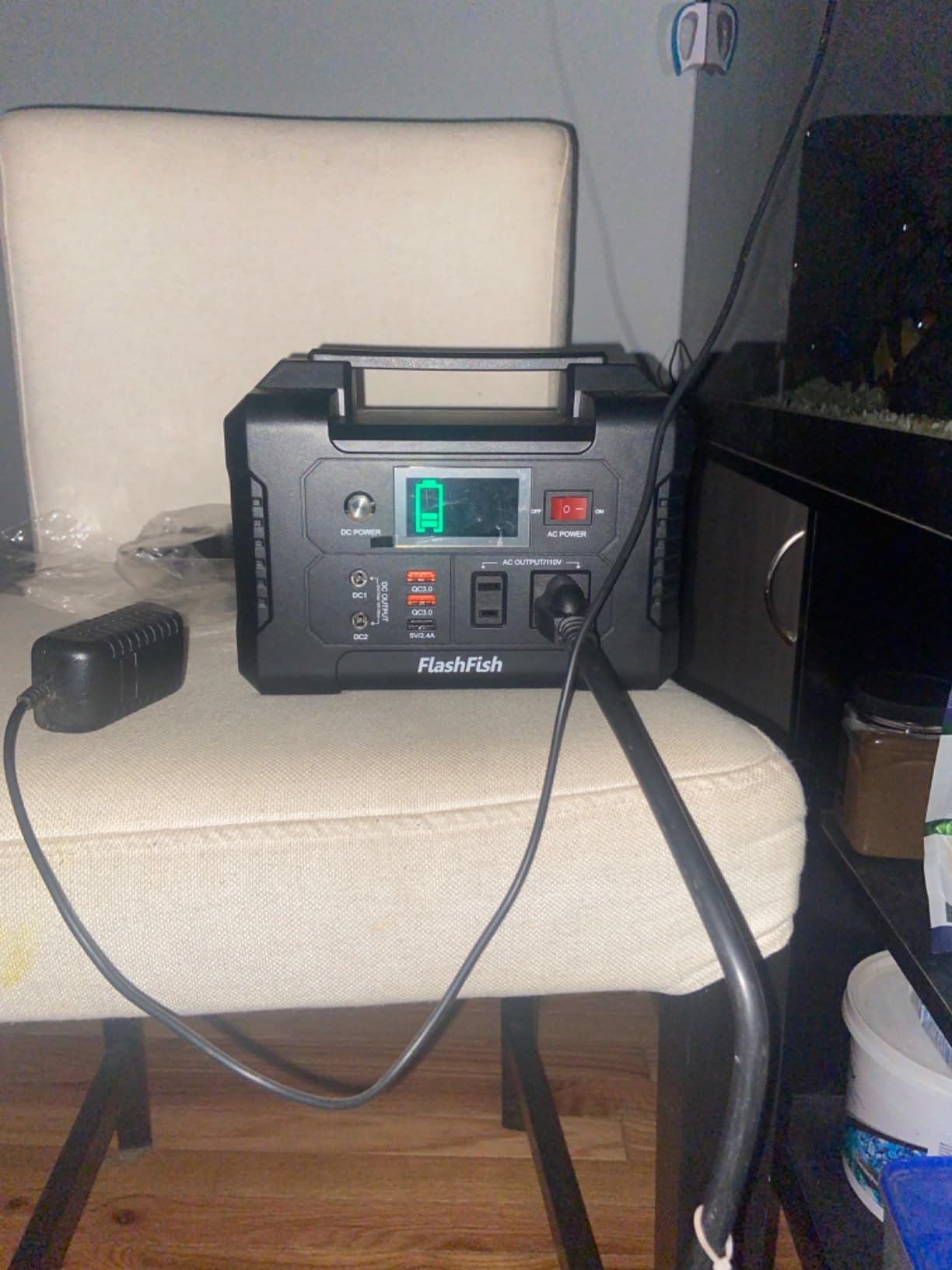
This is what a CPAP power station looks like when it is built purely as emergency backup rather than as camping equipment. At 151Wh the FF Flashfish E200 has the smallest capacity on this page, and that single fact defines everything it can and cannot do.
For a power cut, an unreliable grid, or one night away from home, it does the job. A CPAP drawing 20W gets 128Wh of usable energy, or 6.4 hours. That covers most of an eight-hour night at a light setting, and at 35W you get under four hours.
It lists CPAP machines among its supported devices and includes both an AC adapter and a car charger in the box. Separate AC and DC control buttons mean you are not cycling through a menu at bedtime, and the LCD is readable in low light.
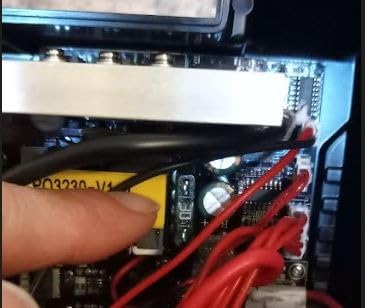
The 200W AC ceiling is not a constraint for a CPAP, which draws well under 100W even with a humidifier. It does mean you cannot also run a kettle or a power tool from the same unit. For the stated use case, that trade is fine.
Weight is a genuine strength here at 4.1 lb. For an older user or anyone with limited mobility, this is the unit you can move from a closet to a bedside table without thinking about it, which is a real consideration during a storm evacuation.
Be realistic about the runtime
This is a single-night device. Multi-night off-grid use requires recharging from a car in about 5 hours or a Flashfish 60W panel in 5 to 6 hours. The 12-month warranty is also the shortest here, so treat it as a backup layer rather than a primary system.
Where it is the wrong choice
If your machine runs above about 25W with the humidifier on, this is too small and you risk waking without therapy. It is also the unit to skip if you want to run anything else at the same time. Anything above 300Wh of capacity serves you better for not much more weight.
7. Anker SOLIX C300 – Quietest Option for Bedside Use
Anker SOLIX C300 Portable Power Station, 288Wh Solar Generator for Camping
288Wh LiFePO4
300W AC, 600W surge
25dB operation
5-year warranty
80% in 50 min
Pros
- Whisper-quiet at 25dB measured from 3.3 ft
- the quietest published figure in this group
- 5-year warranty and LiFePO4 cells rated for 3000 cycles
- Recharges to 80% in 50 minutes from a wall outlet
- Two 140W two-way USB-C ports plus 3 AC outlets run a machine and charge devices at once
Cons
- Shoulder strap sold separately
- 288Wh is modest compared with the 1070Wh and 1152Wh units
- Solar panel compatibility restricted to certain Anker SOLIX models
- Listed weight of 9.1 lb is heavy for its 288Wh class
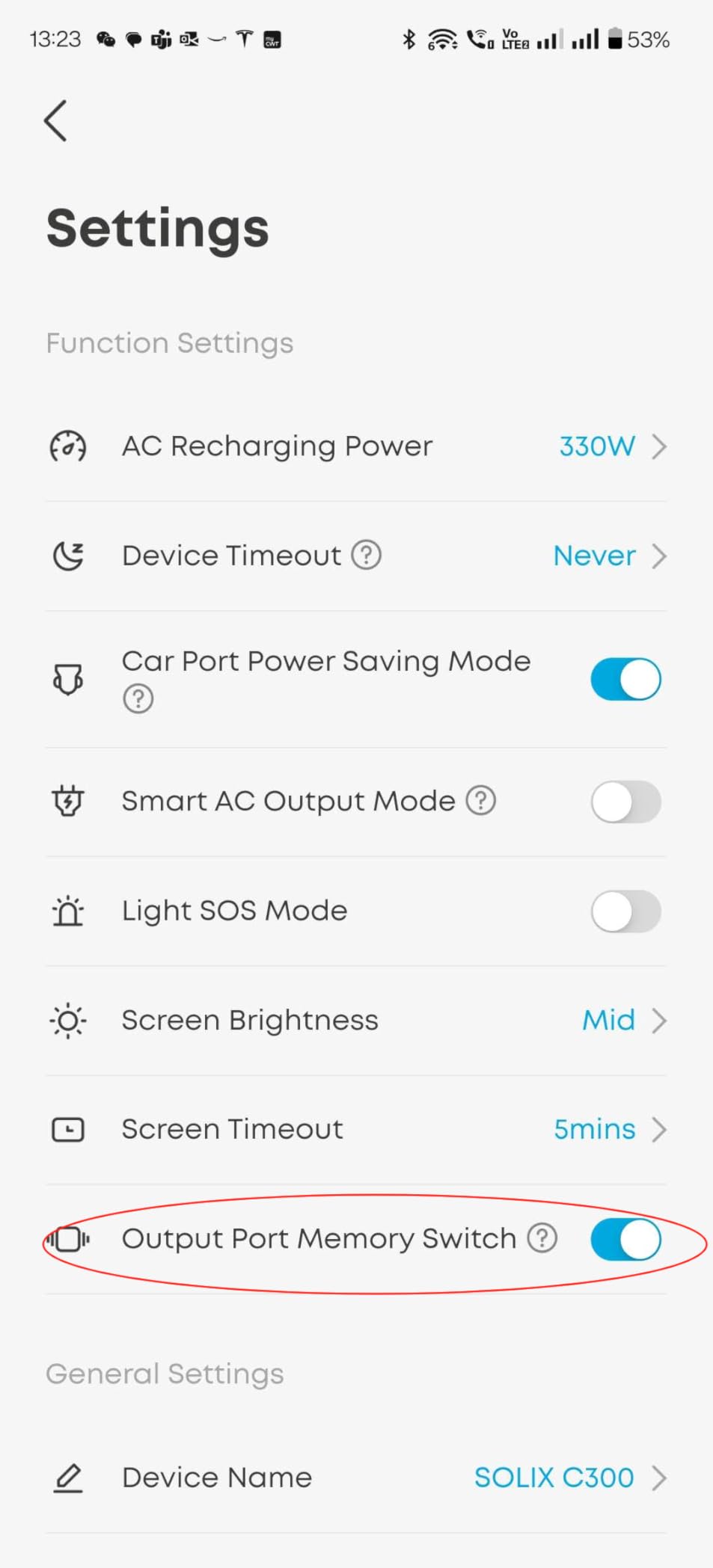
Quietness is the reason to pick the Anker SOLIX C300. A measured 25dB from 3.3 feet is the lowest figure among these units, and for a device that sits next to your bed all night it is more relevant than most spec-sheet features. Forum users running CPAPs in tents report being more aware of their machine than the power station, which is the outcome you want.
It also recharges 80% from a wall outlet in 50 minutes, the quickest figure among the sub-300Wh units here. That single specification changes trip planning more than any amount of extra capacity, because a fast top-up during a lunch stop means you do not have to carry the full trip’s worth of energy.

Three AC outlets share 300W total, alongside a 120W car socket, two 140W USB-C ports, a 15W USB-C and a USB-A. Those two 140W ports are unusually capable for a 288Wh unit and will charge a laptop while the machine runs.
The LiFePO4 cells are rated for 3,000 cycles with a 10-year design life, and the warranty is five years, which is among the longer terms here. Eighty-one percent of owners give it five stars, and only four percent give it one star.
Quiet operation as a real feature
Several of the smaller stations here draw fan complaints that owners specifically raise as a sleep problem. The C300 sidesteps that entirely. If you are a light sleeper or you share a tent with someone who is, that difference decides the purchase more than ten extra watt-hours.
Where it falls short
At 288Wh it is mid-sized capacity with a mid-sized weight, and the listed 9.1 lb feels heavy for what you get. The shoulder strap is sold separately, which matters for the portability argument. Solar compatibility is restricted to certain Anker SOLIX panels, so check your panel before planning around it.
8. BLUETTI AC180 – Best for Home Backup and Boondocking
BLUETTI Portable Power Station AC180, 1152Wh LiFePO4 Battery Backup w/ 2 1800W (2700W peak) AC Outlets, 0-80% in 45Min, Solar Generator for Camping, Off-grid, Power Outage
1,152Wh LiFePO4
1,800W AC, 2,700W peak
UPS 20ms switchover
0-80% in 45 min
37.4 lb
Pros
- Largest capacity here at 1152Wh for multi-night CPAP runtime with headroom
- 1800W continuous output handles a machine alongside fridges and household electronics
- Full charge in 1 hour at 1440W AC
- or 0-80% in 45 minutes
- True UPS with 20 ms switchover verified by one reviewer through a full outage
- 5-year warranty with app monitoring and firmware updates
Cons
- Heaviest unit at 37.4 lb and unsuitable for carrying any distance
- About 15-20W of idle draw with the inverter on plus roughly 10% of capacity reserved for protection
- Firmware updates and a full charge-discharge calibration are needed on arrival
The BLUETTI AC180 is what I would buy if a CPAP is running through a storm, a grid outage or a boondocking trip rather than a weekend of camping. A 1,152Wh LiFePO4 pack with 1,800W of continuous output gives you the largest usable reserve here, and its 500W solar input is the fastest recharge path of any unit on this page.
One owner verified the UPS function by running a smart TV, a router and lights through a simulated outage with no interruption at all. The 20 ms switchover is faster than most network devices take to notice a power failure, which is the point.
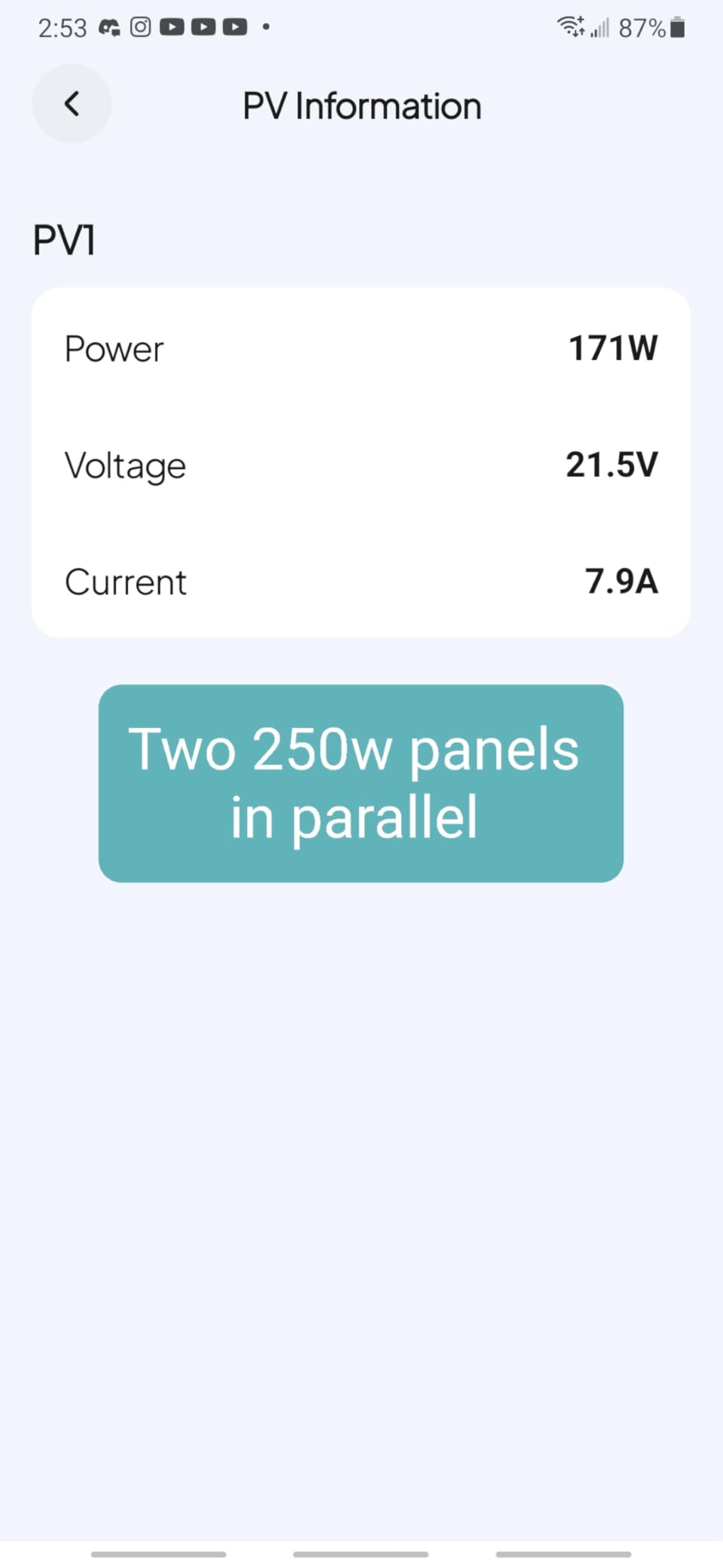
Its 500W solar input fills it from empty in 2.8 to 3.3 hours, and in about an hour when you have wall power and sun together. That figure comes from the manufacturer specification rather than our own measurement, so treat it as a best case.
There is honest maths in the reviews worth taking seriously. Roughly 15W to 20W of self-consumption with the inverter on, plus about 10% of capacity held back for battery protection, means real usable watt-hours are below 1152. One owner found a small 55W load ran far shorter than the display implied until they updated the firmware and ran a full charge-discharge calibration.
Do that calibration on arrival, before you rely on it. It is the single most common reason people conclude a large station performs worse than its label, and it is fixable in an afternoon.
Home outage maths
At 1,152Wh x 0.85, and subtracting the idle draw over a night, you have roughly 930Wh of usable energy. At a 45W humidified draw that is about 20 hours, or two and a half nights of therapy with the machine as the only load. Add a laptop charging alongside and it drops quickly.
Where it falls short
At 37.4 lb it stays where you put it. That is fine for home backup in a garage or a closet and completely wrong for a campsite. The self-consumption and reserve percentage also mean you should size up a little further than the label suggests when you are planning around a multi-day outage.
How to Choose: The Specs That Decide Whether It Works
Pure sine wave output is not an upgrade, it is a requirement. CPAP motors and control boards are sensitive electronics, and modified sine wave output from cheap inverters has been reported on forums to cause motor buzzing, overheating and error states on sensitive equipment. Every unit on this page produces pure sine wave AC, which is one reason they made the list.
LiFePO4 chemistry is the second hard requirement. It holds 4,000-plus cycles at 70% capacity where older NMC chemistry falls apart far sooner, and it tolerates being partially charged without degradation. That is not a negligible difference for a battery you intend to cycle nightly for years.
Pure sine wave, LiFePO4 and cycle life
Look at the cycle rating, not the marketing. Jackery’s Explorer 1000 v2 and Explorer 300 are rated at 4,000-plus cycles, while the BLUETTI AC180, Anker SOLIX C300 and ALLWEI are rated at 3,000. The EnginStar R300 is rated at 1,000 cycles. The Flashfish and MARBERO do not publish equivalent numbers.
Capacity is where most people get it wrong. Decide your night first, then your nights away, then apply the 1.4 safety factor. Under-sizing is the single reported cause of waking up at 3am with a dead machine, and it is entirely avoidable with five minutes of arithmetic.
Pass-through, UPS switchover, noise and weight
Pass-through charging means the station powers your machine while the station itself charges from a wall outlet, a car or solar. The EnginStar R300 and the ALLWEI both support it explicitly. It is what makes the machine survive a rolling outage without you doing anything.
UPS switchover time is the difference between an uninterrupted session and a restart. The AC180’s 20 ms transfer is fast enough that network equipment never notices. If you plan to use one of these as home battery backup, that number matters more than capacity.
Noise is underrated in this category because a power station lives next to your head. Where manufacturers publish measured figures, the Anker SOLIX C300 sits at 25dB and the Jackery Explorer 1000 v2 runs a 30dB quiet charging mode. Owners of the smaller ALLWEI report fan noise running for hours, and one EnginStar owner lists the undimmable display as a dealbreaker for bedside use.
Weight is the last filter and it depends on your trip. Below 7 lb is backpack territory, 7 to 10 lb is a car-camping unit, and anything over 30 lb is a home backup device. Choose the tier that matches how you actually travel rather than the tier you aspire to travel in.
Finally, test the whole setup at home before you depend on it. Run your actual machine from the actual station for one full night with your normal settings, including the humidifier. A runtime estimate that turns out to be short at home is a much better discovery than one made in a tent at midnight.
Frequently Asked Questions
What is the best portable power station for a CPAP machine?
The Jackery Explorer 1000 v2 is our best overall pick, with 1,070Wh of LFP capacity and 1,500W of pure sine wave AC output. It runs a humidified CPAP for roughly two and a half nights and adds 4,000-plus rated cycles. For tighter budgets the EnginStar R300 is the best value pick, and it is the only unit here with a 24V DC barrel port for direct connection to ResMed machines.
How long will a CPAP run on a portable power station?
Multiply battery watt-hours by 0.85 and divide by your machine’s wattage. A 512Wh station with an 18W machine gives about 24 hours, or three nights. The same station with a 55W humidified machine gives under 8 hours, or one night. The heated humidifier is what decides your night count.
What size portable power station do I need to run a CPAP machine?
For one night of blackout backup, 200Wh to 300Wh is enough. A weekend trip with humidification wants 700Wh to 1000Wh. A week of dry camping needs 1500Wh to 2000Wh, or a mid-size station you recharge from your vehicle every other day. Multiply your nightly watt-hours by your nights, then apply a 1.4 safety factor for inverter loss and cold derating.
Do I need pure sine wave output for a CPAP?
Yes. CPAP motors and control boards are sensitive electronics, and modified sine wave output from cheap inverters has been reported on forums to cause motor buzzing, overheating and error states. Every unit recommended here produces pure sine wave AC, and you should treat modified sine wave as a reason to walk away.
Can I bring a portable power station on a plane?
Not easily. Spare lithium batteries are limited to 100Wh in carry-on luggage without approval, rising to 160Wh with airline sign-off. Seven of the eight power stations reviewed here exceed 160Wh, so they cannot fly in hand luggage without prior approval and none may go in checked baggage. If you fly, a dedicated sub-160Wh travel CPAP battery with a matching DC cable is the correct choice instead.
Our Final CPAP Power Recommendation for 2026
The Jackery Explorer 1000 v2 is the best power station for CPAP machines we would put behind almost anyone reading this. It has the capacity for multi-night trips, the 4,000-cycle LFP lifespan for a decade of nightly use, and enough output headroom that it stops being a CPAP accessory and becomes your campsite power source.
Pick smaller only when you have a reason. Under 300Wh works for blackout backup and weekend trips where you recharge from your vehicle. Staying under 100Wh, or getting airline sign-off for up to 160Wh, is the only route to flying with one. And if quietness at the bedside is your priority, the Anker SOLIX C300 at 25dB is the one to buy.
Whichever you choose, test it at home with your machine and your settings for one full night before you depend on it. That one evening removes the only failure mode none of these products can design out.