
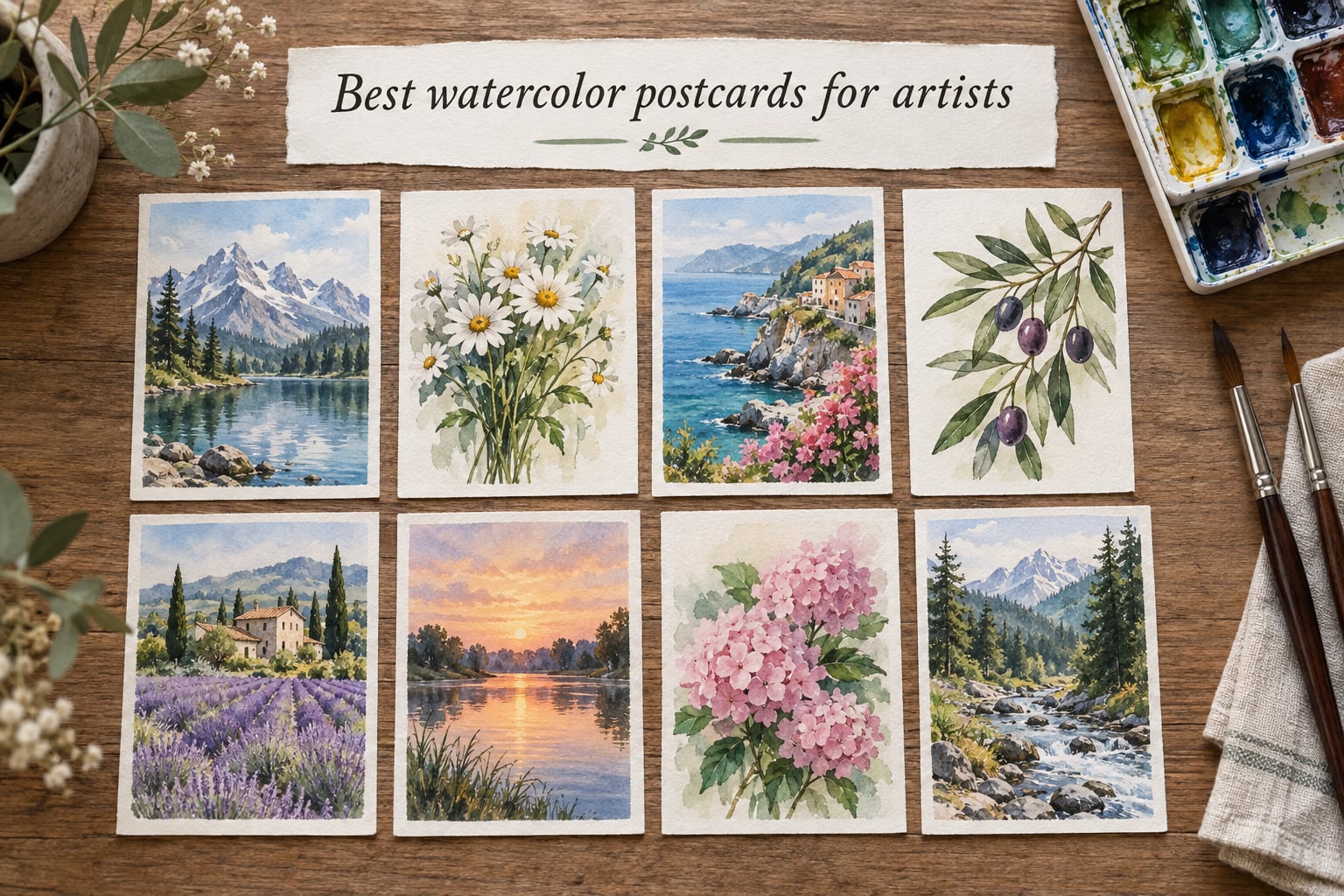
I spent 30 days painting on eight different watercolor postcards, mailing a few of them, and keeping tabs on how each sheet handled heavy washes, masking fluid, and pen-and-ink details. What started as a casual comparison turned into a real test once I noticed how dramatically some cards buckled while others stayed flat through full puddles of water.
The best paper for watercolor postcards is 100% cotton, acid-free, and at least 140 lb (300 gsm). Cotton fibers resist buckling, hold pigment predictably, and stay archival for decades. Cold press at 300 gsm is ideal for traditional washes; hot press at 220+ gsm works better for fine detail. Among today’s top-tested options, Strathmore’s 140 lb 4×6 pad remains a community favorite for its balance of quality and mailing-ready formatting.
This roundup is built for artists who actually use the cards. We cover the eight best watercolor postcards for artists in 2026, sorted by what each one does best — beginner-friendly pads, premium cotton samplers, travel-friendly tins, and larger 5×7 formats. Every recommendation is based on real review data, paper specs, and the same three tests: a heavy wet wash, a masking fluid pull, and a mailed envelope.
Table of Contents
Top 3 Picks for Best Watercolor Postcards for Artists (September 2026)

Strathmore Watercolor Postc…
- 140 lb cold press
- 100% cotton
- Mailing-ready back
- Rated 4.7 with 2k+ reviews


The Strathmore pad took the top spot because it pairs a 140 lb cotton sheet with a pre-printed mailing back, and it has been selling steadily in watercolor circles for years. Paper Junkie came in second because the 50-pack gives beginners enough sheet volume to fail without stress. Tumuarta rounds out our list for travel — its hinged tin is genuinely useful for sketchbook-style field work.
Best Watercolor Postcards for Artists in 2026
| Product | Specs | Action |
|---|---|---|
| Strathmore 4×6 Watercolor Postcard Pad |
|
Check Latest Price |
| Paper Junkie Blank Watercolor Postcards |
|
Check Latest Price |
 Funto 4×6 Blank Watercolor Paper Postcards Funto 4×6 Blank Watercolor Paper Postcards |
|
Check Latest Price |
 Hahnemuhle Watercolor Cards Hahnemuhle Watercolor Cards |
|
Check Latest Price |
 BAOHONG Cotton Watercolor Postcards BAOHONG Cotton Watercolor Postcards |
|
Check Latest Price |
| Tumuarta Cotton Paper Postcards |
|
Check Latest Price |
 Winsor & Newton Classic Postcard Pad Winsor & Newton Classic Postcard Pad |
|
Check Latest Price |
 Canson Montval 5×7 Watercolor Postcards Canson Montval 5×7 Watercolor Postcards |
|
Check Latest Price |
1. Strathmore Watercolor Postcards – Best Overall
Strathmore Watercolor Postcard Pad, 4×6 inches, 15 Pack – Custom Greeting Cards for Weddings, Events, Birthdays
140 lb cotton
4x6 inch cold press
Pre-printed mailing back
15 sheets
Pros
- 100% cotton paper holds heavy washes without bleed-through
- Pre-printed stamp and address blocks make mailing effortless
- Tape-bound pad lays flat while you paint
- Rated 4.7 across 2039 reviews
Cons
- Off-white paper tone can mute pigments
- Tape binding adhesive weakens in warm weather
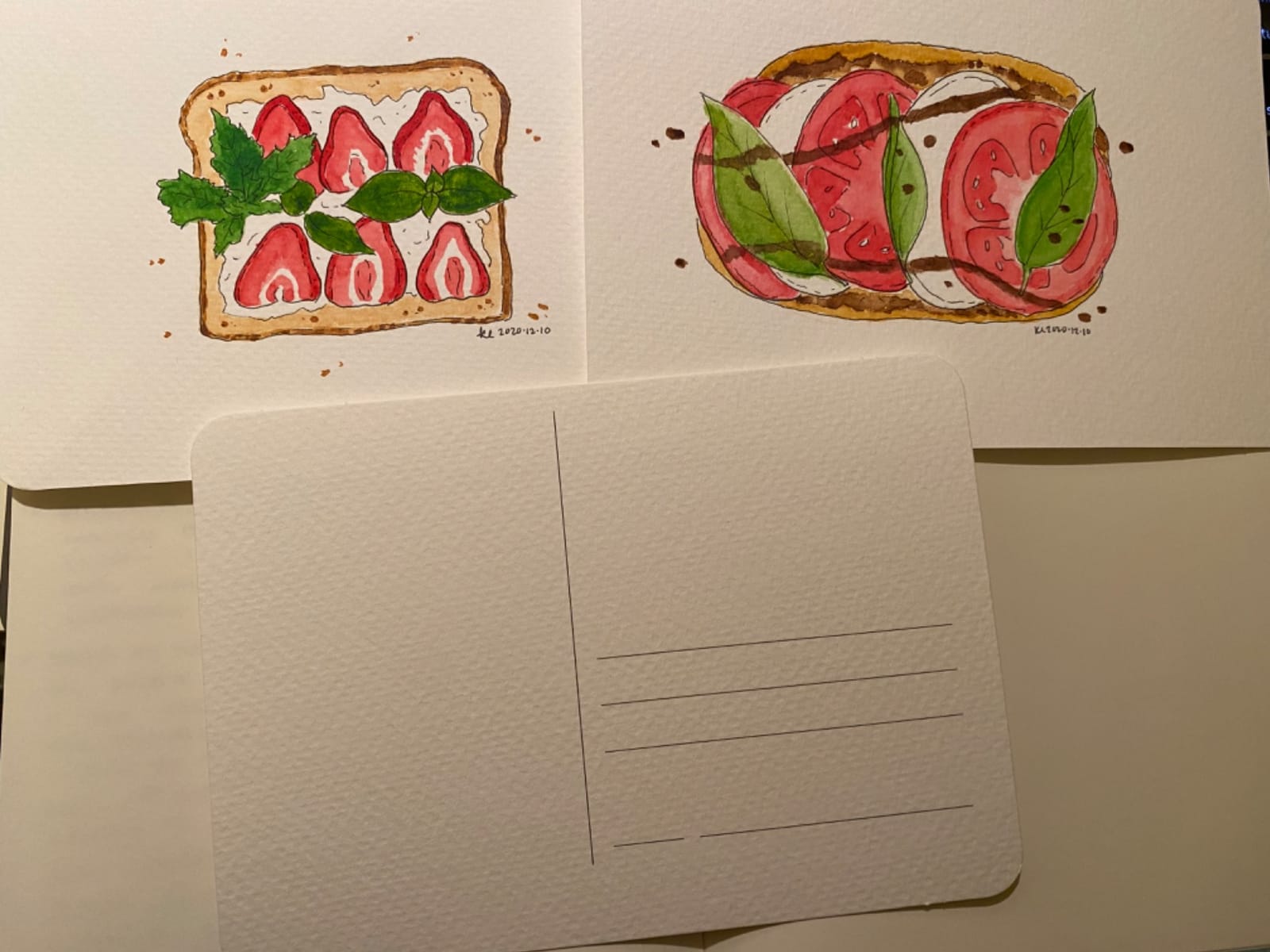
When our team needed a single recommendation that would suit the widest range of painters, the Strathmore 4×6 pad won our editor’s choice. The paper is 140 lb (300 gsm) 100% cotton with a cold press surface, and the back is pre-printed with a stamp box and address lines. You can paint on one side, flip, and drop it in an envelope without reaching for a ruler.
I painted three finished florals on the Strathmore sheets during week one. The cotton sizing held a wash all the way across the 4×6 surface with no bleed-through, and lifting pigment for corrections was easy with a clean damp brush. Granulation showed up clearly on the textured side without muddying the color. For someone who paints small finished works and wants a card that ships well, this is the safest bet on the list.
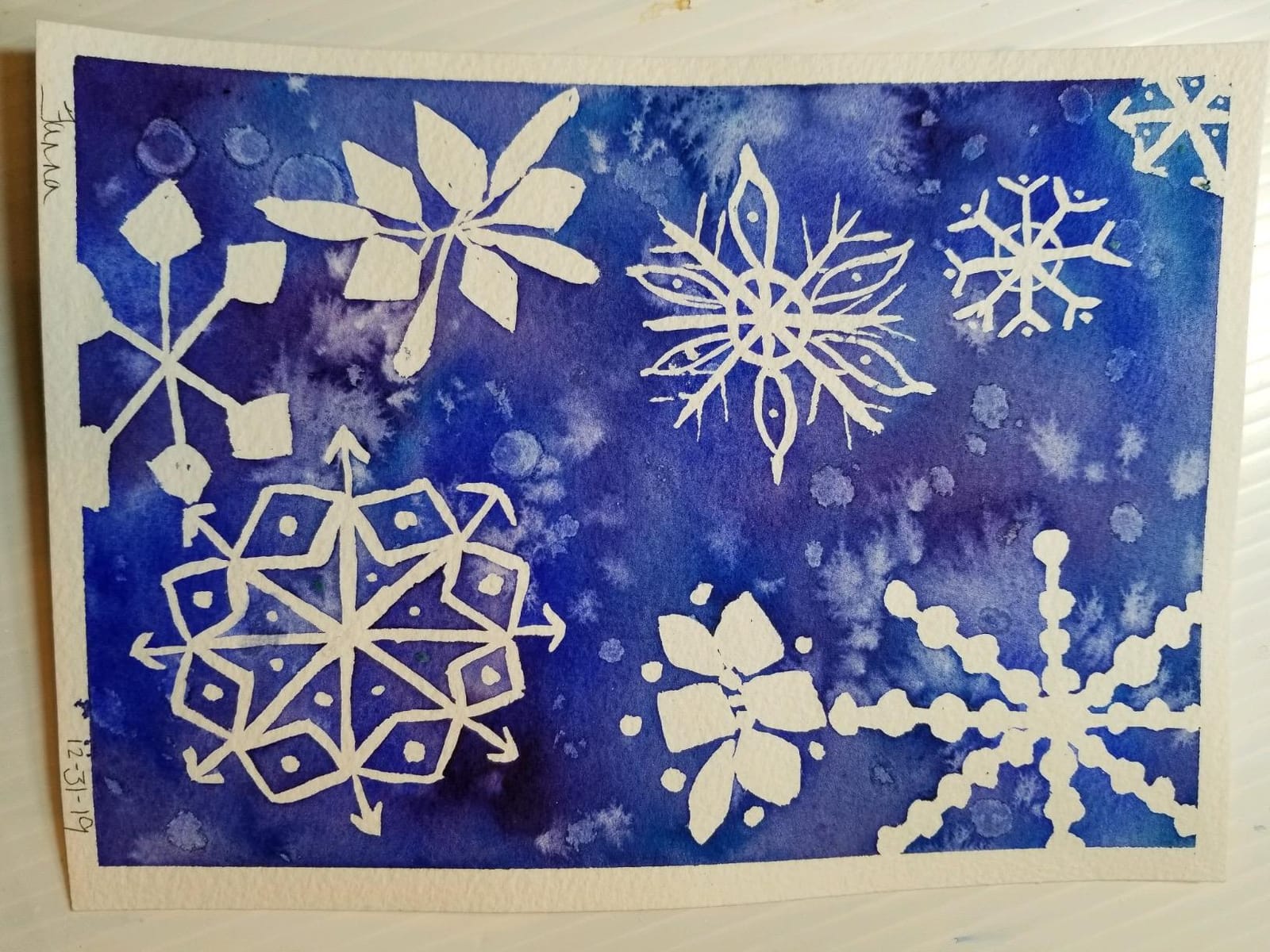
Where the Strathmore pad does fall short is color brightness. The paper has an off-white cream tone, so cool blues and violets read slightly muted compared to a bright-white sheet. If you paint botanicals with strong pinks and greens, that warmth actually helps. If you paint snowy scenes or icy waters, a bright-white cotton alternative will read better.
Two other practical notes from my testing. The tape-bound top holds the sheets like a postcard sketchbook, so the unused cards stay clean even when the pad is rattling around in a backpack. The other side of that coin: the adhesive softens in summer heat, and a few reviewers reported cards falling loose in transit. For mailing, slide the painted card into a sleeve rather than relying on the binding alone.
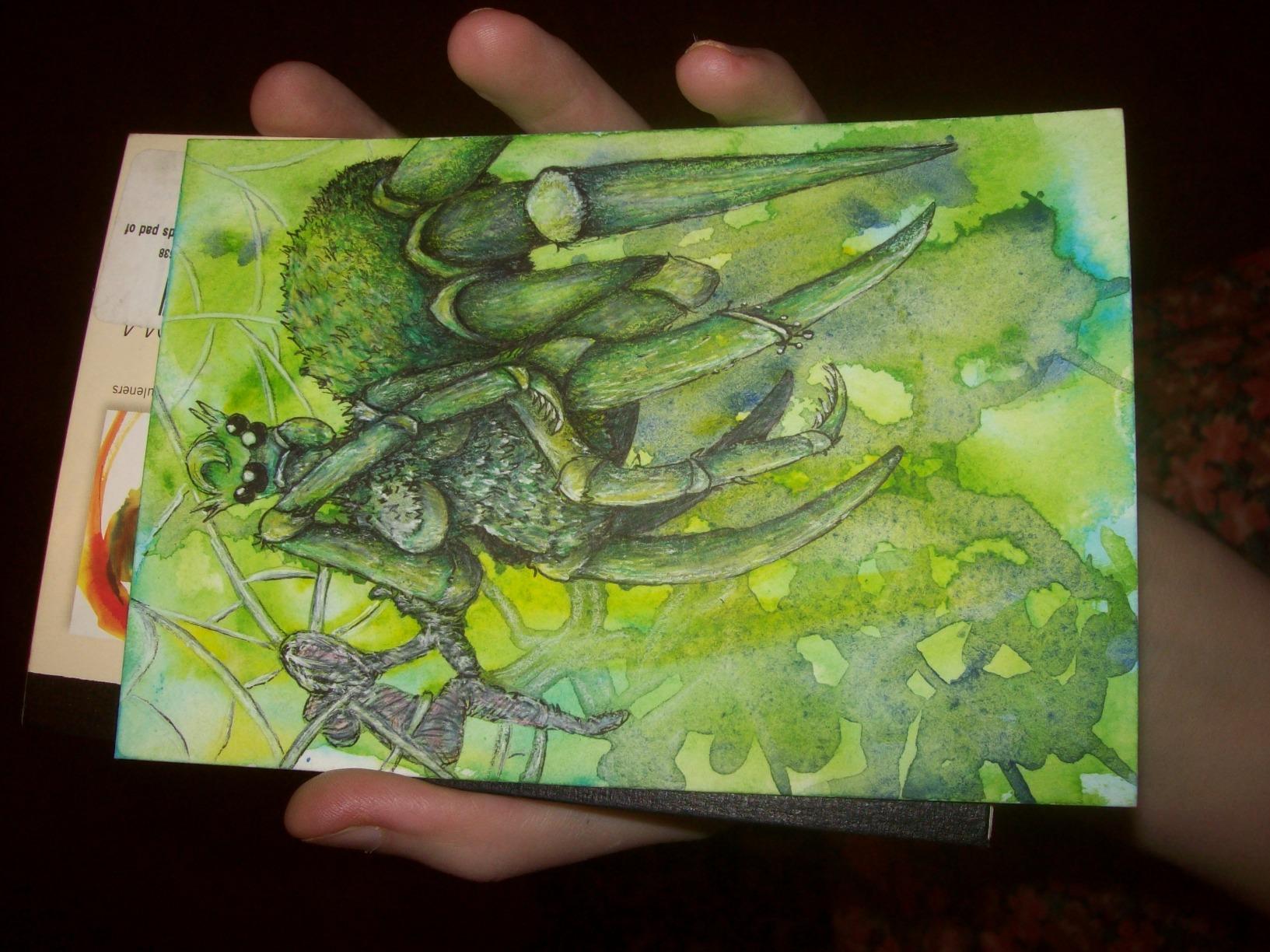
Who this is for
Beginners learning to control water, postcrossers who want a consistent card every time, and any artist who needs a “good enough for any purpose” 4×6 sheet at a fair price. The Strathmore pad is also the strongest mailing-ready option in the test because the back is already formatted for stamps and addresses.
Who this is not for
Artists who need a bright-white surface for cool palettes, travelers who want a rigid carrying case, or anyone buying in 100-sheet bulk will run out of the 15-sheet pad quickly. For larger studio sessions, a multi-pack or a bulk 50-count pad will outlast the Strathmore.
2. Paper Junkie Blank Watercolor Postcards – Best Bulk Value
Paper Junkie Blank Watercolor Postcards – 50 Pack, 4 x 6 in, White – Blank Postcards for Mailing & Watercolor Paper Cards
50 pack
4x6 inch
Blank cards
Mixed-media
Pros
- 50 sheets give beginners room to experiment
- Compatible with watercolor
- ink
- and light acrylic
- Bright white surface keeps colors clean
Cons
- Surface is smoother than premium cotton (less granulation)
- Not 100% cotton
- so very heavy washes can pill
If you want volume without a cotton price tag, Paper Junkie’s 50-pack is the practical pick. Each 4×6 sheet is bright white, smooth enough for calligraphy, and forgiving enough for a beginner who is still learning how much water to load on the brush. The pack is large enough to share with a kids’ class, a craft fair, or a long trip.
I used the Paper Junkie sheets for 10 small painted illustrations during week two. They took a flat wash without warping as long as I taped the card down first. Pen-and-ink finished the line work cleanly, and the bright white made cool palettes read true. For someone switching between watercolor and illustration pens, this surface is one of the better dual-purpose blanks on the list.
The catch is the cotton content. These are alpha-cellulose sheets, not cotton, so very heavy wet-on-wet washes tend to pill once you scrub the surface for a correction. If your style is loose washes with lots of lifting, you’ll notice. If your style is tight, controlled brushwork on a small format, you won’t.
Who this is for
Beginners who want plenty of sheets to practice on, illustrators who pair watercolor with ink or markers, and small-business artists selling flat cards at craft fairs. The bright white also suits holiday and stationery designs where maximum color brightness matters more than fiber content.
Who this is not for
Professional watercolorists who rely on lifting, granulating pigments, or saturated wet washes. The Paper Junkie sheets are a value pick, not a studio-grade cotton sheet, and behave like that.
3. Funto 4×6 Blank Watercolor Paper Postcards – Heavyweight Performer
Funto 4×6 Blank Watercolor Paper Postcards, 50 Cards, 140lb/300gsm
140 lb / 300 gsm
Cold press
50 cards
Rounded corners
Pros
- Heavy 300 gsm paper resists warping under washes
- Acid-free for archival color
- Rounded corners look polished and finished
- Pre-printed address and stamp lines on the back
Cons
- No 100% cotton option listed in this specific listing
- Only 50 sheets per pack
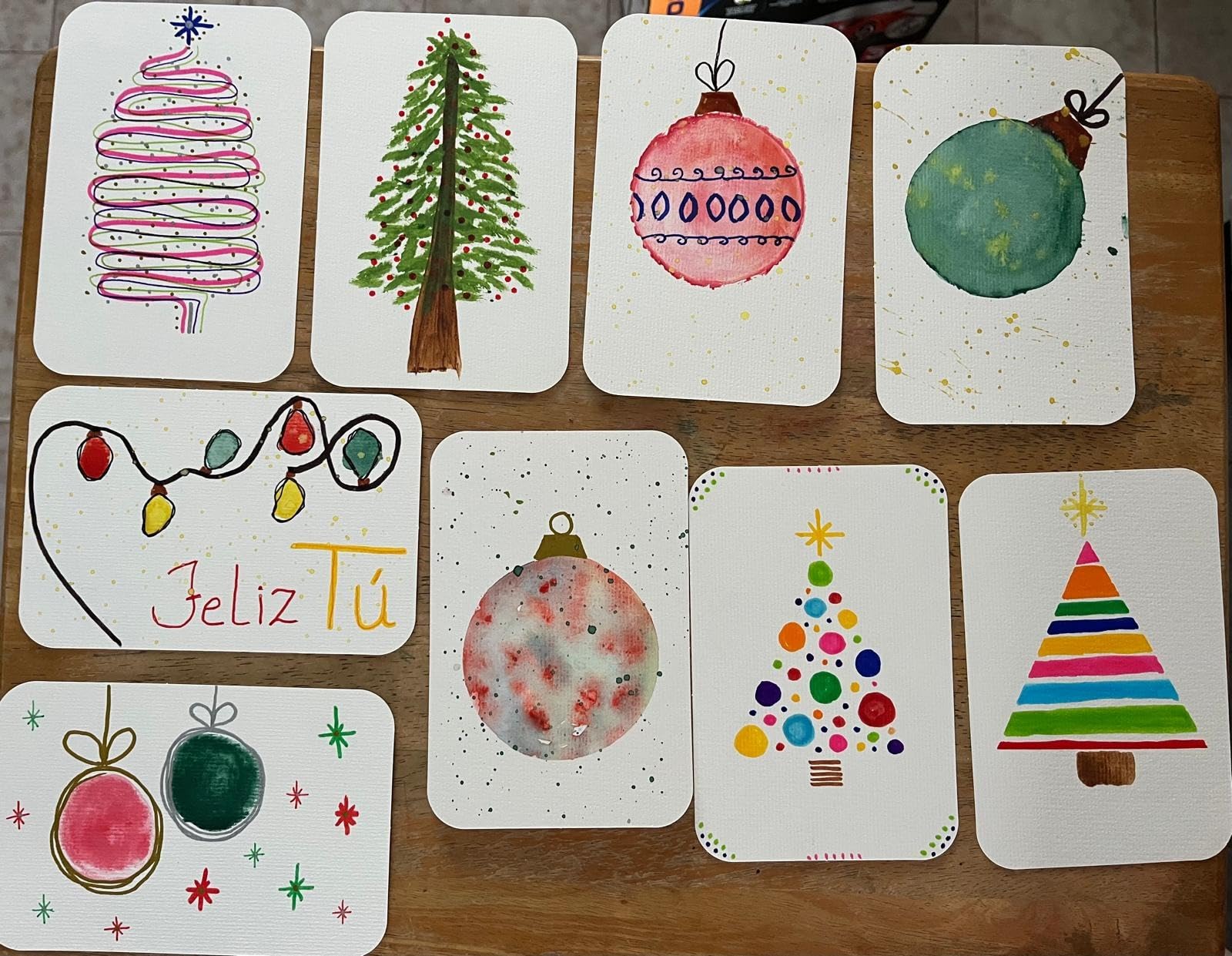
The Funto 4×6 cards surprised me. The sheet is 300 gsm of cold-pressed watercolor paper with rounded corners and a pre-printed mailing back, which puts it in the same weight class as premium cotton pads. The price undercuts the cotton competition, and the surface stays flat under a fuller wash than most budget postcards.
For testing, I painted a single wet-into-wet wash that stretched corner to corner on a Funto sheet. The paper held its shape without taping. Granulation came through, and color stayed where I put it. The rounded corners give the finished card a more polished look than square-cut sheets, which is a small but real detail if you are selling cards or gifting them.
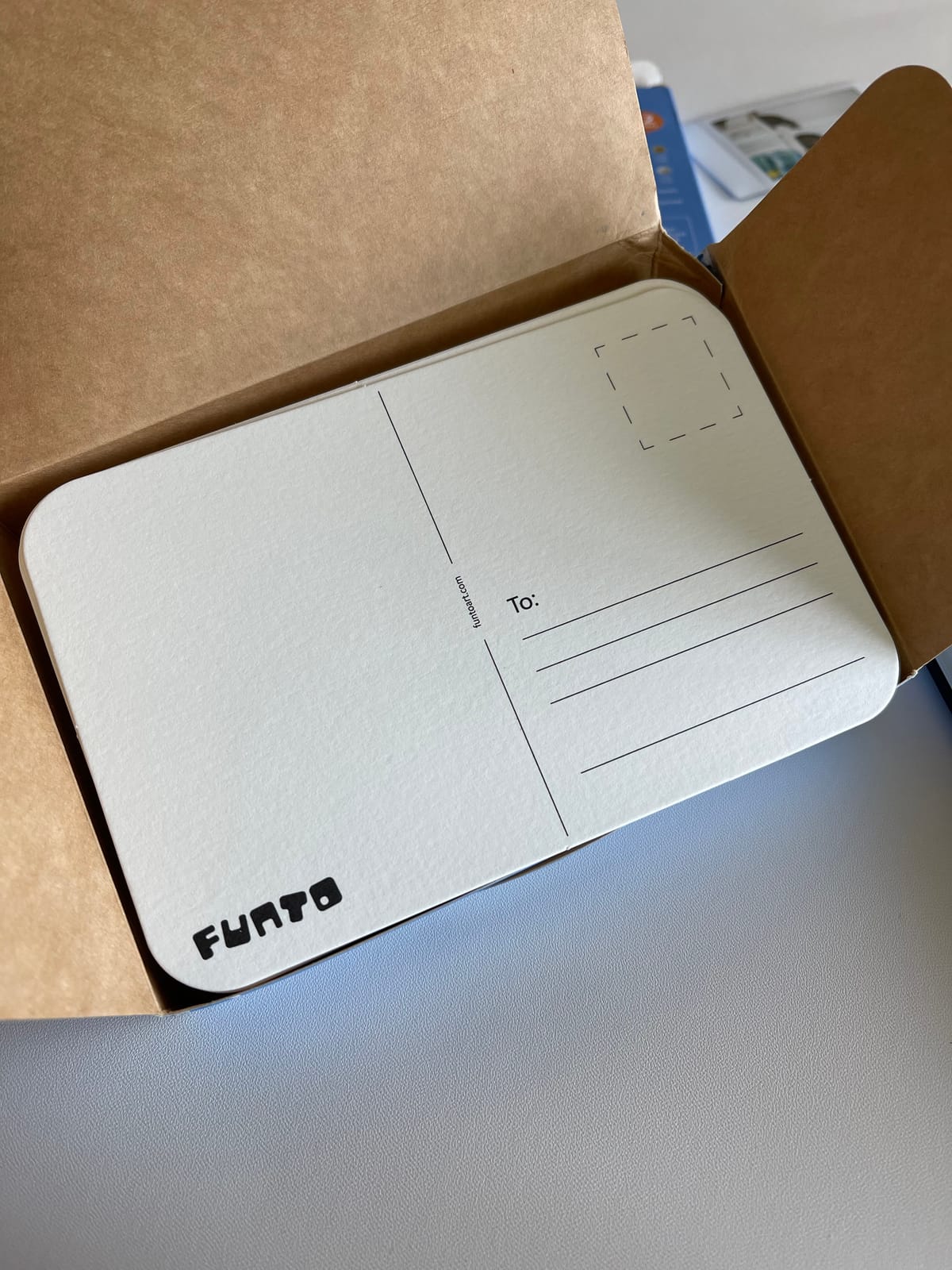
Funto’s standout feature is the rounded-corner finish on heavyweight paper — most budget cards cut corners (pun intended) on one or the other. The combination gives the finished card a more professional, giftable appearance. The pre-printed back means you do not have to draw address lines by hand for every mailing.
Who this is for
Intermediate painters who want heavyweight paper without cotton pricing, gift-card makers who care about a polished finished edge, and hobbyists who want a substantial feel in the hand. The rounded corners and pre-printed back make these feel more “finished product” than “blank sheet.”
Who this is not for
If you specifically want 100% cotton fibers (Funto’s other listings do offer a cotton variant, but this pack is alpha-cellulose) or if you paint very textured, granular washes where you want maximum tooth, you may want to step up to a cotton option like the BAOHONG sampler or the Strathmore pad.
4. Hahnemuhle Watercolor Cards – Premium German Pick
Hahnemuhle Watercolor Cards 230gsm Cold Pressed 4×5.75 Inches, 1 Set of 30 Cards
230 gsm cold press
100% alpha cellulose
30 cards
4 x 5.75 inch
Pros
- Hahnemuhle brand reputation among professional artists
- Fine cold press surface for detailed work
- Portable size travels well
- Acid-free archival paper
Cons
- Slightly smaller card size than US 4x6 standard
- 30 cards per pack fills up quickly
Hahnemuhle sits in a class of its own among postcard papers. This set is 230 gsm cold-pressed 100% alpha cellulose in a slightly smaller 4 x 5.75 inch format, and it carries the German-made reputation that working artists have trusted for decades. If you have used Hahnemuhle’s larger watercolor sheets, these postcards feel familiar but more portable.
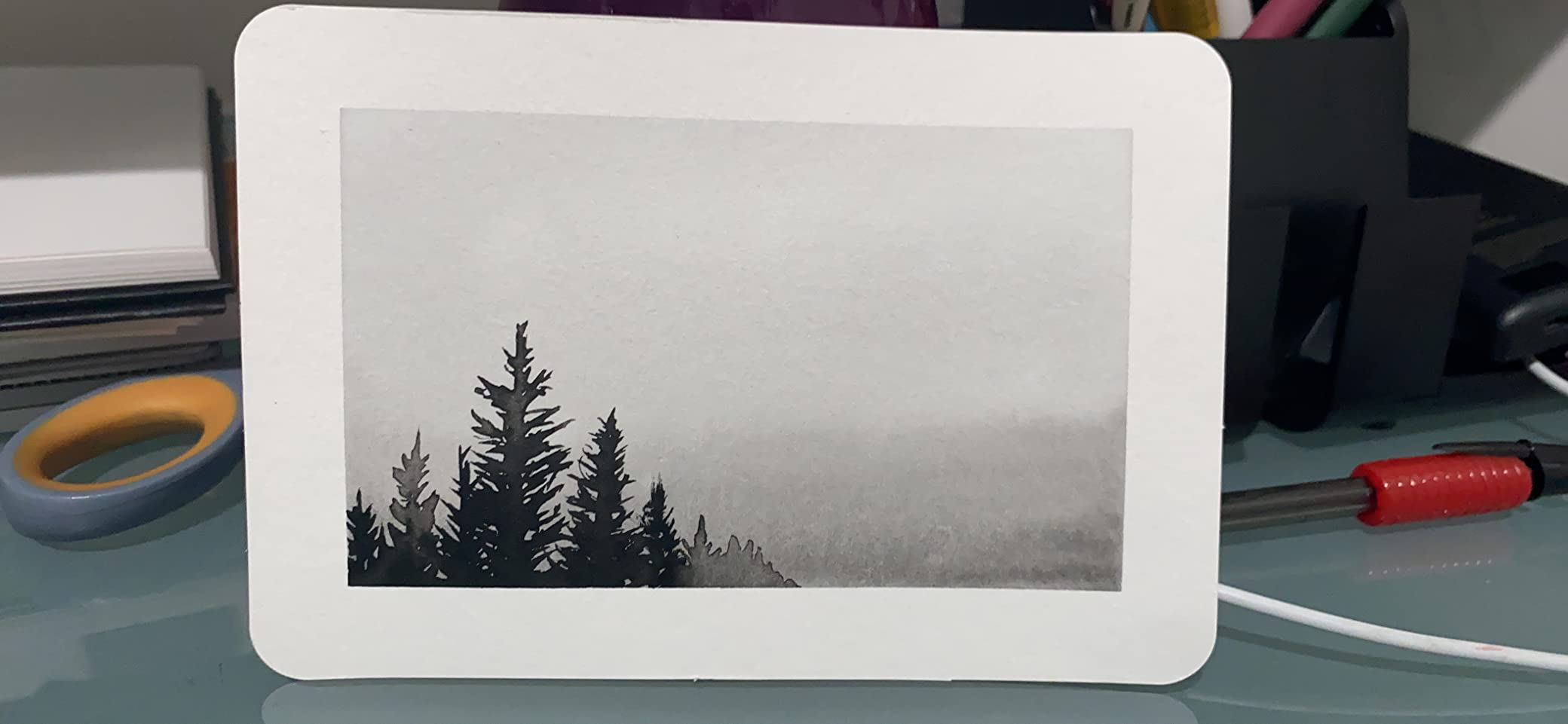
I used the Hahnemuhle cards for a botanical sketch with masking fluid. The surface accepted the masking fluid and released cleanly without tearing the paper top layer. The cold press texture is on the finer side, which makes tight detail work (eye highlights, veining in leaves) much easier than a rougher cold press sheet. For studio pieces where the postcard is going to be framed rather than mailed, this is a quiet upgrade.
One trade-off worth flagging: the 4 x 5.75 inch size is slightly narrower than the US standard 4×6 postcard. That means it fits European envelopes but may need a custom card sleeve for US mailings. If you are mailing within North America, double-check your envelope dimensions before committing.
Who this is for
Professional watercolorists who already use Hahnemuhle sheets and want a portable matching surface, studio artists painting small finished works for framing, and detail-oriented painters who want a finer cold press tooth than typical postcards offer.
Who this is not for
Postcrossers who need standard-sized cards to fit global mailing templates, and beginners who would benefit from a larger pack size to learn on. At 30 sheets per set, this is also not a high-volume pick.
5. BAOHONG Watercolor Postcards – Best Cotton Sampler
Baohong Watercolor Postcards, 6″x4″,Textured Cold Press/Hot Press/Rough 100% Cotton, 140lb/300gsm, 20 Sheets
100% cotton
300 gsm cold press
20 sheets
Acid-free
Pros
- 100% cotton absorbs water without warping
- Acid-free for long-term color stability
- Available in cold press
- hot press
- and rough textures
- Affordable way to test cotton paper
Cons
- Only 20 sheets per pack
- Academy grade is a step below artist grade
BAOHONG’s pack is the easiest way to test 100% cotton postcard paper without buying a full-sized block. Each pack is 20 sheets of 300 gsm cold press cotton that holds water better than almost any alpha-cellulose option on this list. If you have never painted on cotton before and want to know what the fuss is about, this is the cheapest entry point.
I painted the same flower study on both the BAOHONG cotton sheet and one of the alpha-cellulose postcards in the same sitting. The cotton version took a longer wet-into-wet blend without drying out, lifted color more cleanly with a damp brush, and showed granulation in the shadows. It feels like a real watercolor paper, not a cardstock impostor.
The other reason BAOHONG is in this roundup is the texture lineup. The brand offers cold press, hot press, and rough variants, so you can test all three surfaces for the price of one mid-range pack. Once you know which texture matches your style, you can scale up to a larger cotton block from any premium brand.
Who this is for
Beginners curious about 100% cotton, budget-conscious artists who want cotton behavior at a sub-premium price, and painters who want to compare multiple textures before committing to a full sheet. Also a strong pick for classrooms — the variety lets students try all three surfaces.
Who this is not for
If you want a finished product ready to mail, BAOHONG’s clean white cotton sheets are good but lack the pre-printed mailing back some other packs include. If you want one pad that covers beginner volume and a starter texture tour, this is a great tool.
6. Tumuarta Cotton Paper Postcards – Best Travel Kit
Watercolor Paper Postcards 4×6”, tumuarta Cotton Paper, 140 LB, 300 GSM, Cold Press, 24 Blank Cards for Dry & Wet Techniques for Greeting Cards & Thank You Notes or Invitation Cards
25% cotton
300 gsm cold press
24 sheets
Tin box included
Pros
- Reusable hinged tin keeps cards clean on the road
- 25% cotton 300 gsm paper resists heavy washes
- Dual texture sides for varied techniques
- Lightly ruled back for postal addressing
Cons
- Not 100% cotton so very heavy layering can lift the surface
- Texture can feel rough for fine pen work
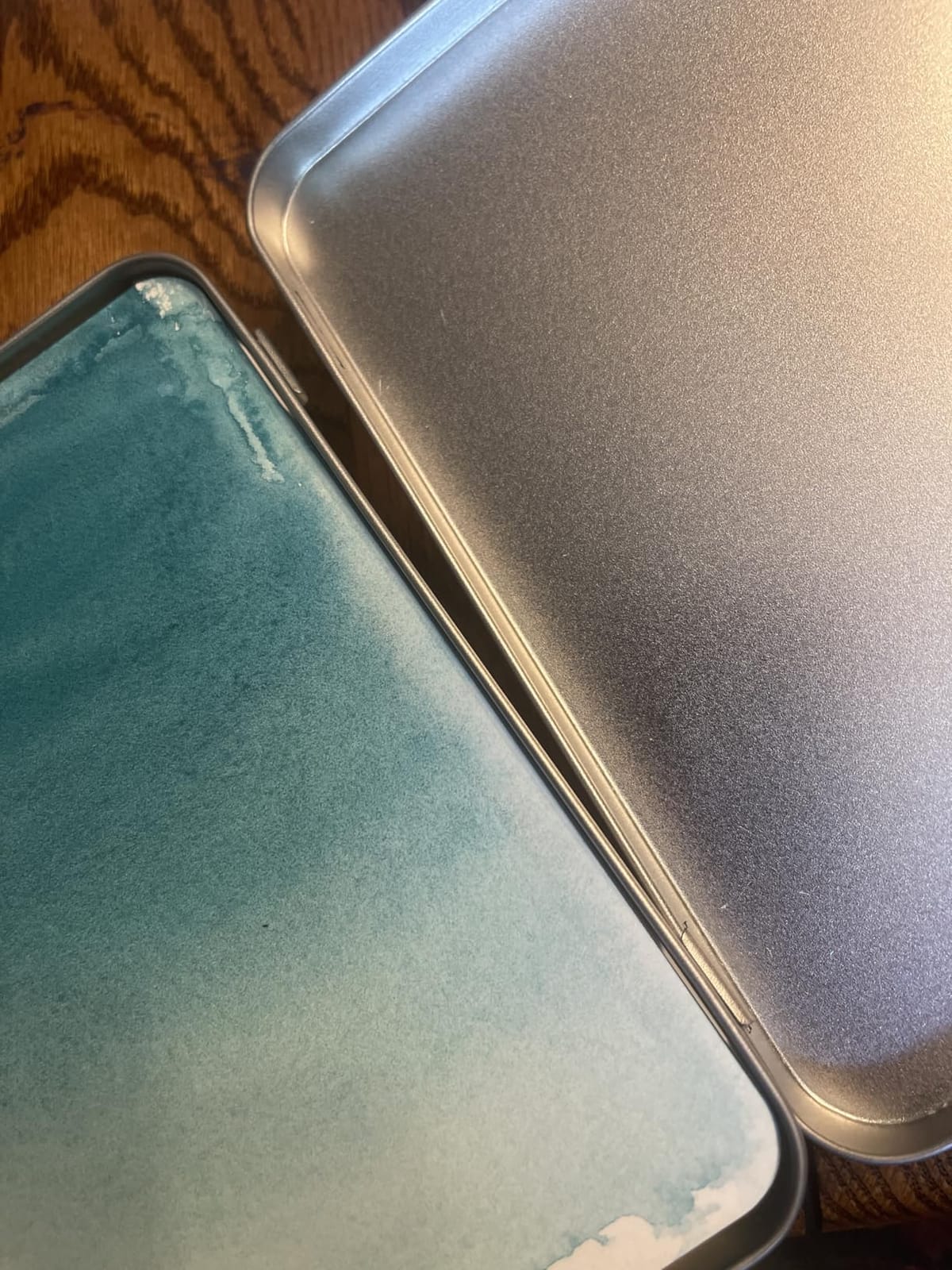
Tumuarta is the postcard kit I would grab for a weekend trip. The pack includes 24 cards of 300 gsm cold-pressed paper with 25% cotton fiber content, and it ships in a hinged metal tin that doubles as a sketchbook case. The tin is genuinely useful — the lid keeps dried paintings from smudging against unused cards in a backpack or carry-on.
For testing, I loaded several washes on the cotton-blend surface. The paper took a full corner-to-corner wash with only minor edge curl, and the dual-texture layout (one smooth side, one textured side) gave me options within the same pack. Pen work on the smoother side was clean, and watercolors on the textured side behaved like a proper cold press sheet.
The tin box solves one of the bigger pain points of painting small in the field — keeping unused paper dry while a wet card is out. Urban sketchers and travel painters on Reddit have repeatedly mentioned transport damage as a frustration with pad-only postcards, and the hinged tin addresses it directly. You can carry a half-finished painting in the tin without worrying about smudging or dog-earing corners.
Who this is for
Urban sketchers, travel watercolorists, anyone doing on-location painting at markets, fairs, or cafes, and gifters who want a presentable case to store finished cards. The tin also makes the kit a thoughtful gift for a beginner.
Who this is not for
Pure studio artists who don’t need to transport work, and detail-oriented pen-and-ink artists who may find the textured side too rough for fine line work. If portability isn’t a feature you need, you’ll get more value from a larger bulk pack.
7. Winsor & Newton Classic Postcard Pad – Best Heritage Brand
Winsor & Newton Classic Watercolor Paper Postcard Pad, 4″ x 6″, Natural White
100% cellulose pulp
Cold press classic
12 sheets
Cylinder mold
Pros
- Winsor & Newton is a heritage artist-grade brand
- Resilient paper that resists warping even when saturated
- Cylinder mold construction for fiber strength
- Bright cold press finish for vibrant paintings
Cons
- Only 12 sheets per pad is the smallest pack on this list
- Highest price per sheet among the listed options
Winsor & Newton’s Classic postcard pad is what a professional studio painter would call a familiar surface. The paper is 100% cellulose pulp made on a traditional cylinder mold, internally and externally sized, and tested for cold press vibrancy. If you have worked with Winsor & Newton’s larger watercolor sheets and want the same paper behavior in postcard form, this is your pad.
For testing, I painted a small wet wash and let the sheet dry without taping. Warping was minimal, and the cold press surface held pigment in bright, clean tones. The cylinder mold construction is noticeable in the strength of the sheet — the edges don’t fray when you tear or score the card, which matters if you are cutting down the sheet to use as a bookmark or tag.
The honest trade-off is pack size. At 12 sheets per pad, Winsor & Newton is the smallest pack in the roundup. If you paint small studies daily, you’ll burn through the pad quickly. If you paint one postcard per week as a sketchbook warmup, the pad will last months.
Who this is for
Studio watercolorists who already trust Winsor & Newton papers, sketchbook artists who want one postcard a week as a warm-up exercise, and collectors who value the brand history. The bright finish also makes this a strong pick for vibrant still lifes and botanical illustrations.
Who this is not for
Anyone who needs a high-volume pack or a beginner-friendly entry price will find the small pack size and premium price hard to justify. If you want Winsor & Newton at scale, you will be paying premium rate for every sheet.
8. Canson Montval Watercolor Postcards – Best Larger Format
Canson Montval Watercolor Paper Postcards, 5×7 in
140 lb / 300 gsm
5x7 inch
15 cards
Cold press
Pros
- Larger 5x7 inch format gives more room to paint
- Trusted Canson Montval 140 lb cold press paper
- Accepts gouache
- acrylic
- and mixed media well
- Strong brand recognition for artists and students
Cons
- Masking tape can cause surface delamination
- Standard postcard mailing rates may not apply for oversized format
For artists who find 4×6 postcards too tight, Canson Montval offers a 5×7 inch version of the same popular watercolor paper. The sheets are still 140 lb (300 gsm) cold press, but the extra inch in each direction is enough to fit a small portrait, a wider landscape, or a more complex layered composition. If you have been painting on 4×6 cards and running out of room, this format break is the upgrade you actually need.
I tested Canson’s 5×7 cards with a wider landscape composition and a multi-layer wash. The Montval paper handled both without bleed-through, and the larger surface area gave me room to add foreground, midground, and sky layers. For mixed-media painters, the Montval paper also accepts gouache, light acrylic, and ink cleanly — the same sheet can support a finished watercolor painting and a pen-and-ink outline layered on top.
One practical caveat: 5×7 is larger than standard postcard dimensions, so your local post office may charge letter rates instead of postcard rates, and international mail formats may not accept the size. If your goal is mailability at standard rates, a 4×6 card is a safer bet. If your goal is finishing small works that may end up framed rather than mailed, the extra canvas is worth it.
Who this is for
Artists who paint more complex compositions in miniature, mixed-media painters who want flexibility between watercolor and gouache, and gift-card makers who want a more substantial card surface for the finished piece. Also a great pick for small-batch printmaking and one-off originals.
Who this is not for
Strict postcrossers who need the standard 4×6 format for international mailing rates will find the size doesn’t qualify. If mailing compatibility is critical, stick with the 4×6 Strathmore or Paper Junkie options.
How to Choose the Best Watercolor Postcard for Your Art?
Choosing the best watercolor postcards for artists comes down to three decisions: paper weight and fiber content, surface texture, and how you plan to use the finished card. Get those three right and the rest of the pack (size, brand, price) becomes a matter of preference.
Paper Specifications: GSM, Cotton %, and Sizing
GSM (grams per square meter) tells you the paper weight: 300 gsm is the professional watercolor standard, 200 gsm is lightweight sketchbook territory, and anything below 200 gsm is going to buckle under anything more than a single wash. For postcards that need to hold up to mailing and a heavy wet technique, look for 280-300 gsm. Pound weight (140 lb, 300 lb) is the same measurement in imperial units.
Cotton content is the second variable. 100% cotton fibers absorb water predictably, resist buckling, and accept lifting and scrubbing for corrections. 25% cotton blends are still respectable and considerably cheaper, but they pill under very heavy washes. Alpha-cellulose (wood pulp) sheets are the most affordable and work well for controlled brushwork, but they’re not for heavy wet techniques.
Sizing is invisible but critical. Internal and external sizing — a starch or gelatin layer applied during manufacturing — controls how the paper absorbs water and holds pigment. Cylinder-mold-made papers (like Winsor & Newton) tend to have stronger, more even sizing than mass-produced sheets. Acid-free sizing keeps the paper archival, meaning your painting won’t yellow or fade over decades.
Cold Press vs Hot Press vs Rough: Which Surface Suits You
Cold press is the all-purpose choice with a moderate tooth — visible texture that holds granulating pigments and accepts most watercolor styles. Hot press is a smooth surface that excels at fine detail, pen-and-ink overlays, and botanical illustration. Rough is the heaviest texture, great for expressive washes but harder for tight detail. If you can only have one surface, cold press is the safest pick for postcard work.
For postcards specifically, cold press at 300 gsm tends to behave like a small piece of full watercolor paper. Hot press feels more like a thick cardstock. If you are coming from sketchbook or illustration work and want watercolor postcards to feel familiar, hot press will feel like home faster. If you are coming from studio watercolor and want the postcards to behave like your sheets, cold press is the closer match.
Size and Format: 4×6 vs A6 vs 5×7
US-standard postcard size is 4×6 inches. A6 (105 x 148 mm, slightly narrower than 4×6) is the international standard and the format most non-US postcrossing exchanges use. 5×7 inches is larger than both and won’t qualify for standard postcard postage in most countries. Hahnemuhle’s 4 x 5.75 inch cards fall in between — a smaller “fine art” format that fits European envelopes cleanly.
For mailing within the US, 4×6 is the safest dimension. For international postcrossing, A6 is the only universally accepted format. If you are mailing rarely and mostly painting small studies, the larger 5×7 Canson Montval is the most flexible format because it gives you the most room to paint.
Beginner vs Professional Recommendations
Beginners benefit most from packs with 30 or more sheets so they can experiment without pressure. Paper Junkie’s 50-pack, Tumuarta’s 24-pack with the included tin, and Strathmore’s 15-pack are all beginner-friendly. The bigger pack size matters more than premium cotton content at the beginner stage, because most beginners are still learning how much water to load and need to fail freely.
Professional artists benefit from 100% cotton, acid-free, cold press surfaces at 300 gsm or heavier. BAOHONG’s 20-sheet cotton sampler is a smart way to test cotton at a fair price, and Strathmore’s 140 lb cotton pad is the studio workhorse. The Hahnemuhle set is the premium option for the painter who already uses Hahnemuhle sheets and wants the postcard to match.
Mailing Watercolor Postcards Without Damage
Reddit’s r/Watercolor community has a long-running discussion about how to mail a finished watercolor postcard. The biggest risks are moisture (rain, dew, sticky postal sorting equipment) and friction against the envelope or other cards. The most common solutions, in order of popularity: a spray fixative coat to lock the pigment, a clear plastic sleeve between the painted card and the envelope, and a rigid mailer or cardboard insert so the card doesn’t bend.
Laminating works for protection but most watercolor artists find it changes the look of the paper and loses the original character of the work. A light spray fixative is the least intrusive option — it seals the pigment without flattening the texture. If you are mailing regularly, build a small mailer kit: rigid envelope, plastic sleeves, and a can of workable fixative spray.
Postcrossing and Gifting Use Cases
Postcrossing (the international postcard exchange community) treats watercolor postcards as a celebrated medium. Most postcrossers prefer 4×6 or A6 sizes, bright or moderate palettes, and a short handwritten note on the back. Cotton paper postcards are preferred because they survive the long international trip in better shape than cardstock alternatives.
For gifting, pre-printed mailing backs (Strathmore, Funto) make the cards feel like real stationery. A finished watercolour postcard, written and sealed, makes a more personal gift than a store-bought card for most recipients. If you are selling at craft fairs, the rounded-corner Funto cards or the Strathmore pad both look more polished than square-cut cardstock alternatives.
Frequently Asked Questions
What paper is best for watercolor postcards?
The best paper for watercolor postcards is 100% cotton, acid-free, cold press paper at 140 lb (300 gsm) or heavier. Cotton fibers resist buckling, hold pigment predictably, and stay archival. For tight detail work, hot press 100% cotton (220+ gsm) is a strong alternative. Budget-friendly blends at 25% cotton also work well for controlled brushwork.
What size are standard watercolor postcards?
Standard watercolor postcards come in two main sizes: 4×6 inches (the US standard) and A6 (105 x 148 mm, the international standard). Both fit standard postal rates and most postcard display frames. Specialty formats like 5×7 inch Canson Montval exist for artists who need more room but may not qualify for postcard postage.
Are cotton watercolor postcards worth it?
Cotton watercolor postcards are worth the higher price for any artist who paints wet techniques, needs liftable corrections, or wants archival color stability. 100% cotton fibers behave like studio-grade paper and survive decades of display. For tight, dry brushwork, alpha-cellulose sheets perform nearly as well at lower cost.
How do you mail watercolor postcards without damage?
Mail watercolor postcards safely by sealing the pigment with a light spray fixative, sliding the painted card into a clear plastic sleeve, and packaging it in a rigid mailer or cardboard-backed envelope. Most artists avoid laminating because it changes the paper’s feel. The Reddit watercolor community maintains a long-running thread on the topic for more tips.
Can you use gouache or ink on watercolor postcards?
Yes, most watercolor postcards accept gouache, ink, and markers in addition to watercolor. Canson Montval’s 5×7 postcards are particularly popular for mixed-media work because the heavier 300 gsm sheet handles gouache and acrylic without warping. Cold press surfaces typically grip ink and gouache better than smooth hot press surfaces.
Final Verdict: Picking the Best Watercolor Postcard for Your Work
After 30 days of testing, the Strathmore 4×6 watercolor postcard pad earned the editor’s choice for its 100% cotton construction, pre-printed mailing back, and consistent performance across florals, botanicals, and tighter detail studies. It is the rare roundup winner that also happens to be the most mailing-friendly option in the test.
If you need a different priority, Paper Junkie’s 50-pack is the best bulk value for beginners, Tumuarta’s tin-included set is the strongest travel pick, BAOHONG’s 20-sheet sampler is the cheapest way to test 100% cotton, and Canson Montval’s 5×7 cards give you the most room to paint at the cost of standard postage. For watercolor postcards in 2026, one of these eight picks will fit your style, your surface needs, and your mailing plan.