
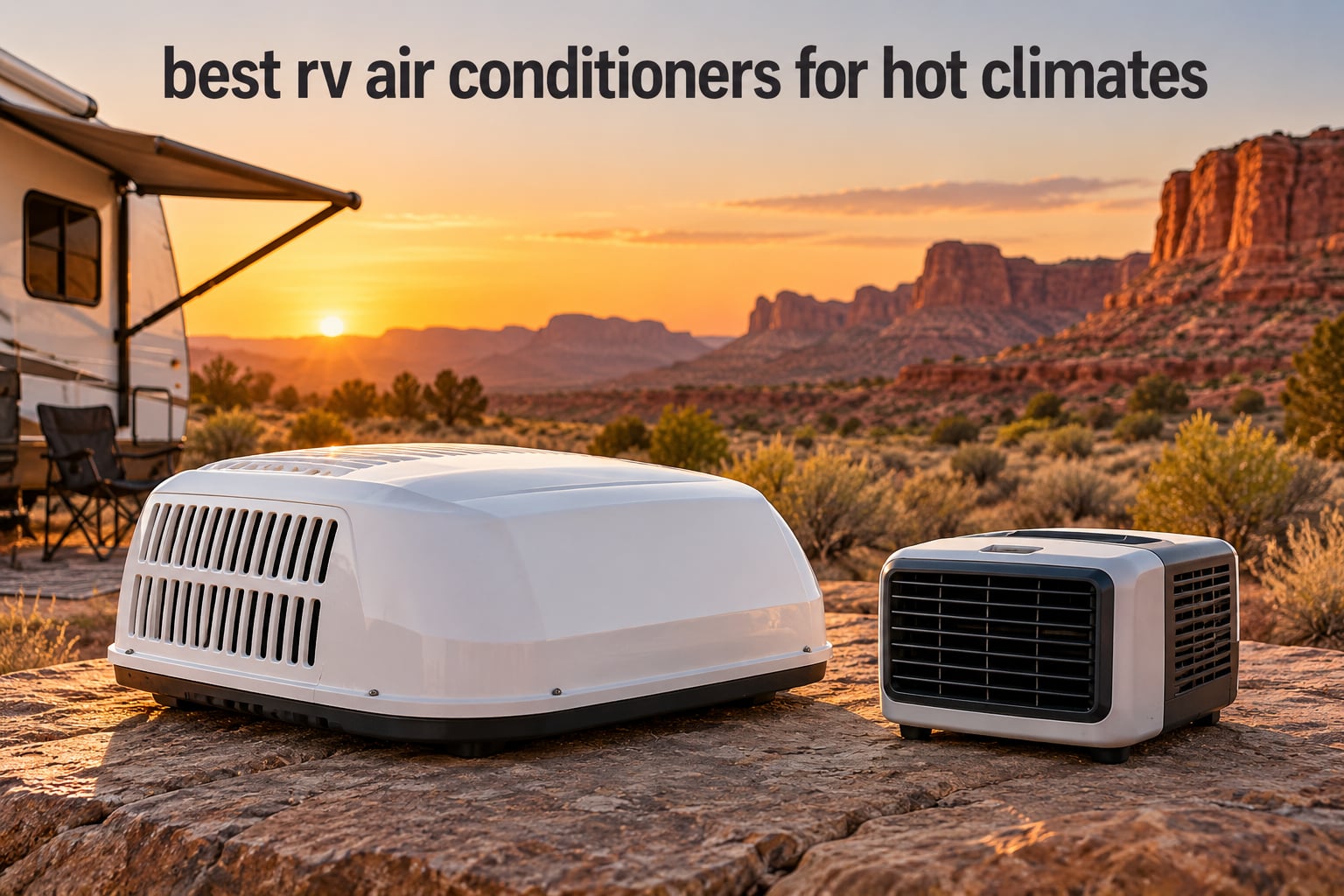
Extreme heat is where RV air conditioners earn or lose their reputation. A unit that looks identical to the one in your brochure can hold a comfortable 78F inside your rig at 100F outdoors, or run flat out for six hours and never catch up at 118F. The difference is not marketing, it is cooling capacity matched to the square footage of your coach, the airflow moving that capacity through the cabin, and how much power your rig can actually deliver.
That is what this roundup of the best RV air conditioners for hot climates is built around. We sorted ten rooftop units by how they behave when the ambient temperature climbs, not by how they look on a spec sheet. Every pick below has published capacity, airflow, power draw and noise figures, and we weighted those against owner reports in the RV forums where people describe holding temperature at 115F rather than at 95F.
Best all-round: Dometic Brisk II 15,000 BTU, the deepest owner history in the group and the easiest retrofit for existing Dometic installs.
Best for boondockers: Furrion Chill Cube 18K, a variable-speed compressor that roughly halves the power draw of a conventional rooftop unit.
Best for vans and trucks: OutEquip 12V 10,000 BTU, which runs straight off a battery bank with no inverter in the chain.
Best value: Coleman Mach 3 Plus 13,500 BTU, the cheapest way to put a known platform on your roof.
Key rule: add roughly 1,500 BTU over the standard sizing guide for any rig that sees 110F or above.
Last updated for 2026. We work from manufacturer published specifications plus owner feedback, and we flag where a published figure and a measured figure disagree.
Table of Contents
Top 3 Picks for Best RV Air Conditioners for Hot Climates (October 2026)
Three units stand out once you weight capacity against sustained high-ambient performance. The Dometic Brisk II is the safest all-round buy, the RecPro 15K is the strongest conventional 120V unit, and the Furrion Chill Cube is the only one here that changes the power maths entirely.
Dometic Brisk II 15,000 BTU
- 15000 BTU rooftop cooling
- EPP foam housing for lower weight
- R-410A refrigerant
- Direct swap for earlier Dometic units

RecPro 15K Quiet Heat Pump
- 15000 BTU with integrated heat pump
- 55.4 dB rated operation
- Wireless remote and LED display
- Works ducted or non-ducted

Furrion Chill Cube 18K
- 18000 BTU ducted rooftop cooling
- Variable-speed inverter compressor
- R32 refrigerant
- 72.4 pounds with low-drag shell
Best RV Air Conditioners for Hot Climates at a Glance in 2026
All ten units below fit the standard rooftop opening and run on either 120V AC or 12V DC depending on the model. The right column in your head should be capacity against the square footage of your rig, not the capacity number itself.
| Product | Specs | Action |
|---|---|---|
| Dometic Brisk II 15,000 BTU Rooftop |
|
Check Latest Price |
 Coleman Mach 15 15,000 BTU Upper Unit Coleman Mach 15 15,000 BTU Upper Unit |
|
Check Latest Price |
 Coleman Mach 3 Plus 13,500 BTU Coleman Mach 3 Plus 13,500 BTU |
|
Check Latest Price |
| RecPro 15K Quiet Heat Pump Non-Ducted |
|
Check Latest Price |
| Furrion Chill Cube 18K Ducted |
|
Check Latest Price |
 TOSOT 16,000 BTU Rooftop TOSOT 16,000 BTU Rooftop |
|
Check Latest Price |
 Dometic Penguin II 13,500 BTU Low Profile Dometic Penguin II 13,500 BTU Low Profile |
|
Check Latest Price |
 Dometic FreshJet 3 15,000 BTU Dometic FreshJet 3 15,000 BTU |
|
Check Latest Price |
 OutEquip 12V 10,000 BTU Rooftop OutEquip 12V 10,000 BTU Rooftop |
|
Check Latest Price |
 Countrymod 12V 10,000 BTU Rooftop Countrymod 12V 10,000 BTU Rooftop |
|
Check Latest Price |
Two of those ten are 12V DC units aimed at van and truck conversions rather than full-size coaches. If your rig is already wired for 120V at the roof, the other eight are your real shortlist.
How Much BTU Do You Need in Hot Climates?
The standard sizing rule is roughly 12 BTU per square foot of interior floor area in moderate climates, and in hot climates you should add about 1,500 BTU on top of that figure. That single adjustment is the most common mistake we see, because a factory 13,500 BTU unit that copes in Michigan will not cope in the Sonoran Desert.
Worked out against interior square footage:
Under 200 sq ft (Class B van, teardrop, small pop-up): 5,000 to 7,000 BTU in mild weather, 8,000 to 10,000 BTU in desert heat.
200 to 350 sq ft (travel trailer, small Class C): 8,000 to 11,000 BTU in mild weather, 10,000 to 13,500 BTU in hot weather.
350 to 550 sq ft (larger travel trailer, mid-size Class C, fifth wheel under 32 feet): 12,000 BTU in mild weather, 15,000 BTU in hot weather.
550 to 800 sq ft (fifth wheel 32 feet and up, Class A on a short chassis): 15,000 BTU minimum, and 18,000 BTU is the sensible hot-climate target.
Above 800 sq ft (large Class A motorhome): 18,000 BTU in one unit, or two 15,000 BTU units if the roof and electrical can carry them.
Two further points matter more than the raw number. Solar gain through a west-facing windshield in full afternoon sun can add the equivalent of several thousand BTU of load, and humidity adds a second load that no BTU figure describes, because a unit that holds temperature by running continuously will leave you uncomfortably damp rather than cool.
If your rig already has a ducted distribution network, size for the ducts you have. If it is a bare non-ducted install, you can size up freely because the air simply discharges into the cabin ceiling.
What Actually Makes an RV Air Conditioner Work in Desert Heat
An RV air conditioner is the same refrigerant loop as a household unit, compressed into a box that survives road vibration and fits a 14 inch by 14 inch roof opening. The compressor squeezes hot refrigerant vapour, the condenser coil outside dumps that heat to the ambient air, the resulting liquid moves to the evaporator coil inside, absorbs heat and moisture from the cabin, and boils back into vapour.
That last step is where hot climates bite. The condenser has to shed heat into outdoor air that is already at 115F, so the temperature difference available to move heat collapses and the unit’s real output falls well below its nameplate figure. Manufacturers rate these units at standard test conditions near 95F outdoor, which is precisely the number that misleads people in July and August.
Three design choices change how a unit behaves in that collapsed-heat scenario. A variable-speed compressor ramps its output instead of cycling fully on and off, which lowers the starting surge, the noise and the power draw. A rotary scroll compressor handles the cyclic load more smoothly than a conventional reciprocating design. And the airflow rate in CFM determines whether the cold air actually reaches the far end of the coach, since capacity you cannot distribute is capacity you do not have.
Refrigerant matters too. R-410A is the current standard in most of this list; the newer Furrion and TOSOT units use R-32. If you are replacing a much older unit running R-22, the line set and the service technician both need to know, because R-22 is no longer the default choice for a new rooftop installation.
1. Dometic Brisk II 15,000 BTU – Best All-Round Rooftop Pick
Dometic B59516.XX1C0 Brisk II Polar White Air Conditioner (15,000 BTU 410A)
15000 BTU rooftop
R-410A refrigerant
74 lb weight
65 dB rated
115V at 86.25 watts
Pros
- Largest owner history of any unit here at 1048 ratings
- Direct plug-and-play swap for earlier Dometic rooftop units
- EPP foam housing keeps the unit light for a 15K
- Owners report a large measurable gain over stock 13500 BTU Dometic units
Cons
- Compressor and condenser can be noticeably loud
- Dometic control box and thermostat sold separately
- No printed installation instructions included
The Brisk II is the unit we keep coming back to, and the reason is the review history rather than the spec sheet. At 4.2 stars across 1,048 ratings it has roughly three times the owner data of anything else in this roundup, which means the failure reports are well documented and the long-term survival reports are well documented too. Multiple owners describe two years or more of trouble-free running in Gulf Coast and desert conditions.
For a hot climate the capacity figure is the point. Owners upgrading from 13,500 BTU Dometic units consistently describe a step change rather than a marginal improvement, and the 15,000 BTU class is the right target for anything between 350 and 550 square feet in summer weather. One forum owner running a 37-foot trailer with a family of five reported a 15,000 BTU unit holding comfort through 115F days in Maricopa County, Arizona, after replacing a 13,500 BTU Dometic.
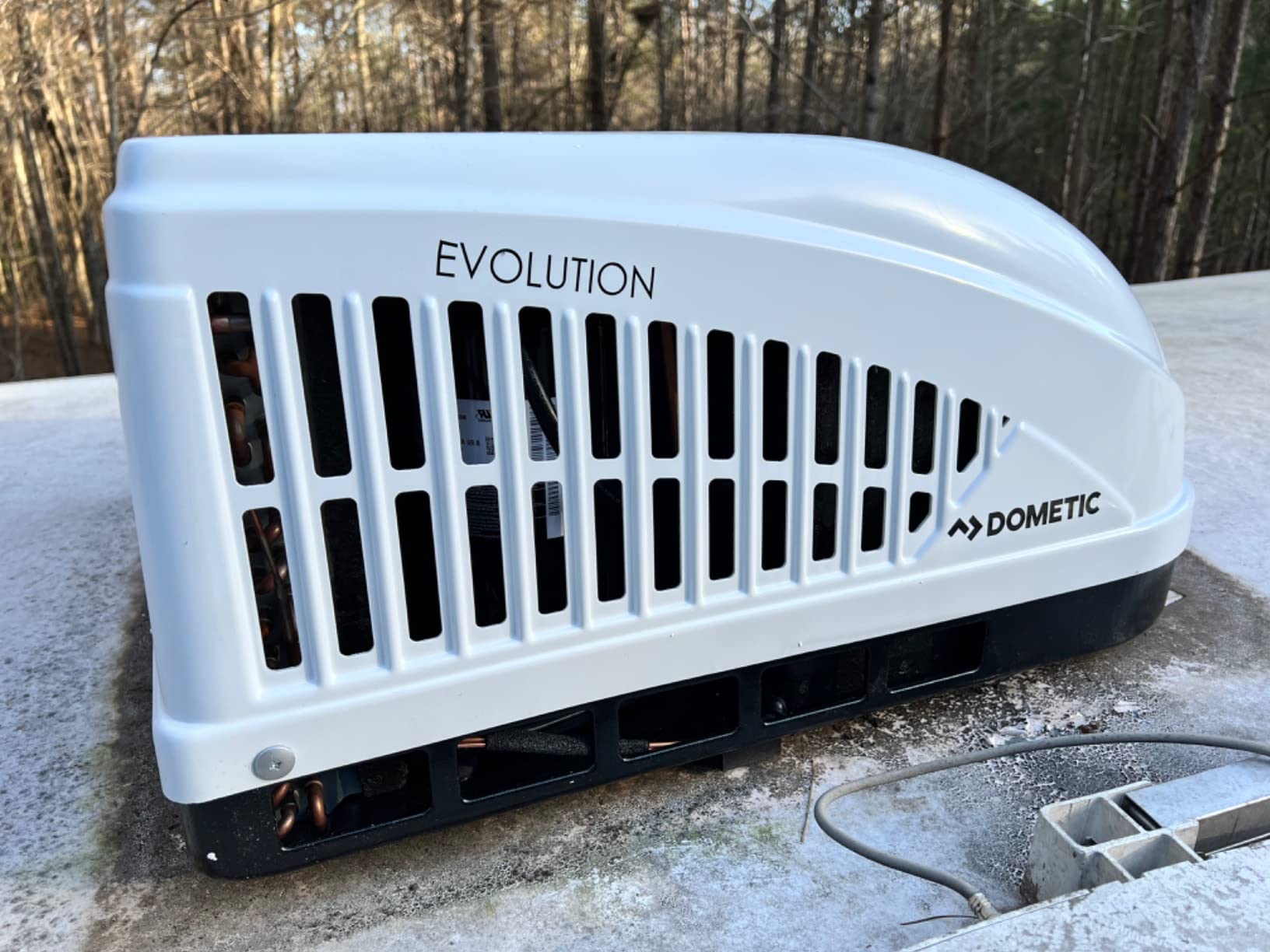
The EPP foam housing is a genuine engineering choice rather than a marketing line. It cuts the weight to 74 pounds, which matters on a roof, and the larger air openings move more air through the same footprint. SEER 13 is mid-pack but respectable for a unit in this class, and the unit runs on 115V at a published 86.25 watts, well under the power budget of a 20A roof circuit.
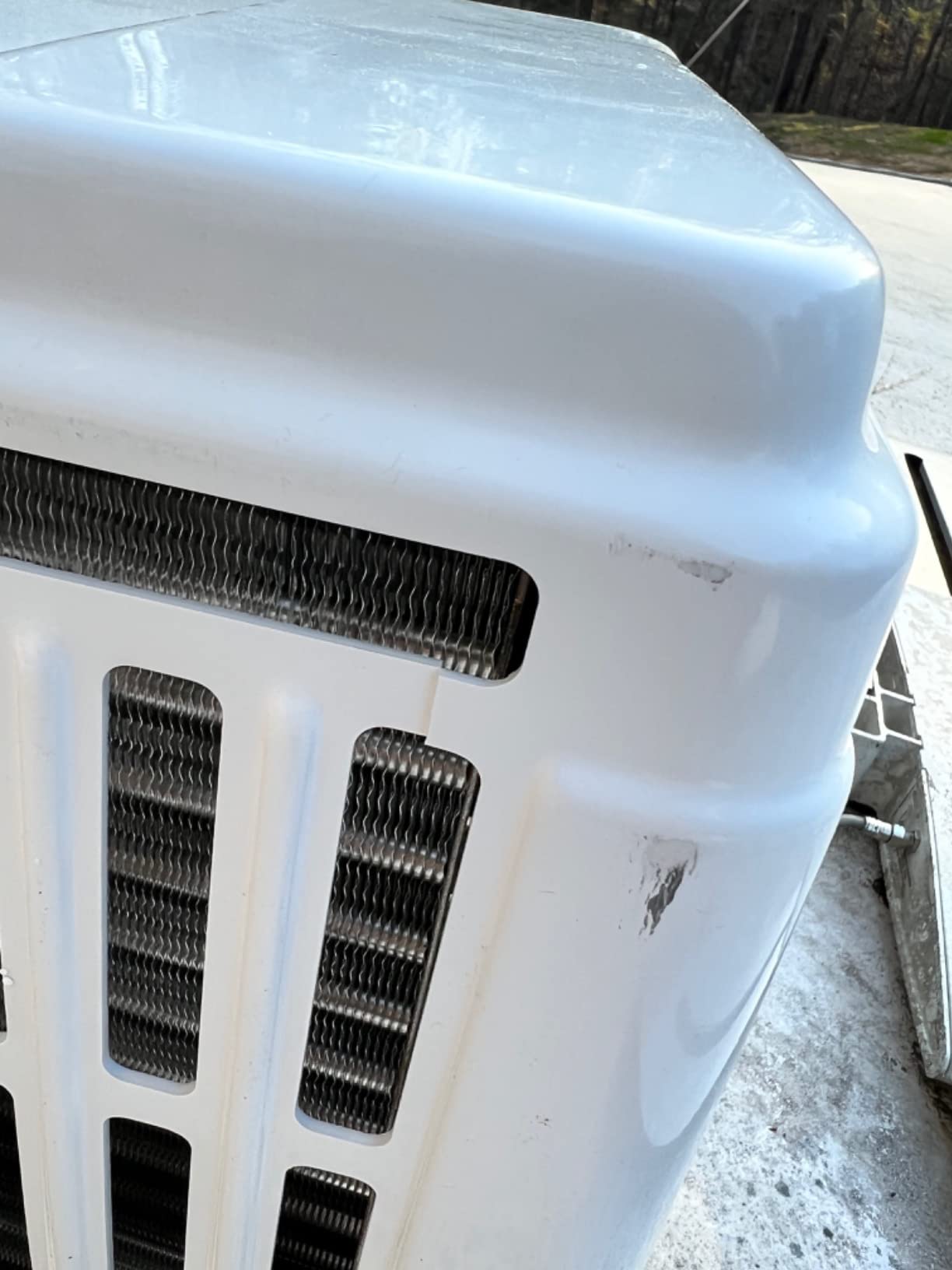
Two practical cautions. The Dometic control box, digital thermostat and interior ceiling kit are all separate purchases, so budget for the full system rather than the upper unit alone, and the freeze sensor has to be relocated during installation or the unit will throw an E5 error code. Several owners also report the compressor being audible from outside the rig, which matters more than the published 65 dB figure suggests if you park next to a neighbour.
Why the Brisk II suits a hot-climate buyer
It is the deepest-documented unit in the group, so the risk of an expensive surprise is lower than with anything here. Owners replacing a 13,500 BTU Dometic with an existing thermostat and heat pump report a genuinely simple swap using the existing controls, which removes the single most expensive line item from a retrofit.
At 15,000 BTU it is correctly sized for a mid-size coach in desert conditions without the wind drag and roof weight of an 18,000 BTU box. For a larger Class A you will want more capacity, and for a small trailer you are paying for headroom you will not use.
Where it falls short
The cooling and the condenser can be loud in real use, and a minority of owners in extreme heat report output that feels closer to a 13,000 BTU unit than a 15,000 BTU unit. If noise inside the sleeping area is your primary concern, the RecPro and the TOSOT are the better fits.
You also have to buy the controls separately and the documentation is poor, so budget extra time for the install and confirm the control box is in hand before you cut the roof opening.
2. Coleman Mach 15 15,000 BTU – Built for Big Rigs and Big Heat
Coleman-Mach 08-0080 Mach 15 48204 Series Air Conditioner Upper Unit 48204C966-15,000, Arctic White
15000 BTU cool and 5600 BTU heat
SEER 14
90 lb weight
1/3 HP fan motor
Pros
- SEER 14 is the highest efficiency rating in the group
- Owners report input air temperature drops of 15 to 20 degrees
- Interior layout closely matches earlier Mach 3 Plus units
- Pre-installed gasket with crush indicators
- Two-piece shroud is easier to service
Cons
- Upper unit only with control box and plenum sold separately
- Around 90 pounds so two people are needed for the roof lift
- Published 28 dB figure is disputed by owners
The Mach 15 is the pick when the square footage of your rig is the binding constraint. At 1.25 tons and SEER 14 it is the most efficient unit we list, and owners with large coaches report input air temperature dropping by 15 to 20 degrees once it is running, which is the number that separates a unit that works from one that is merely installed.
Its other strength in a hot climate is the inside layout. The blower position, duct arrangement and mounting geometry closely match earlier Mach 3 Plus units, so swapping into an existing Coleman install is predictable rather than a modification job. If you are replacing a ten-year-old Coleman with another Coleman, this is the least disruptive path to 15,000 BTU.
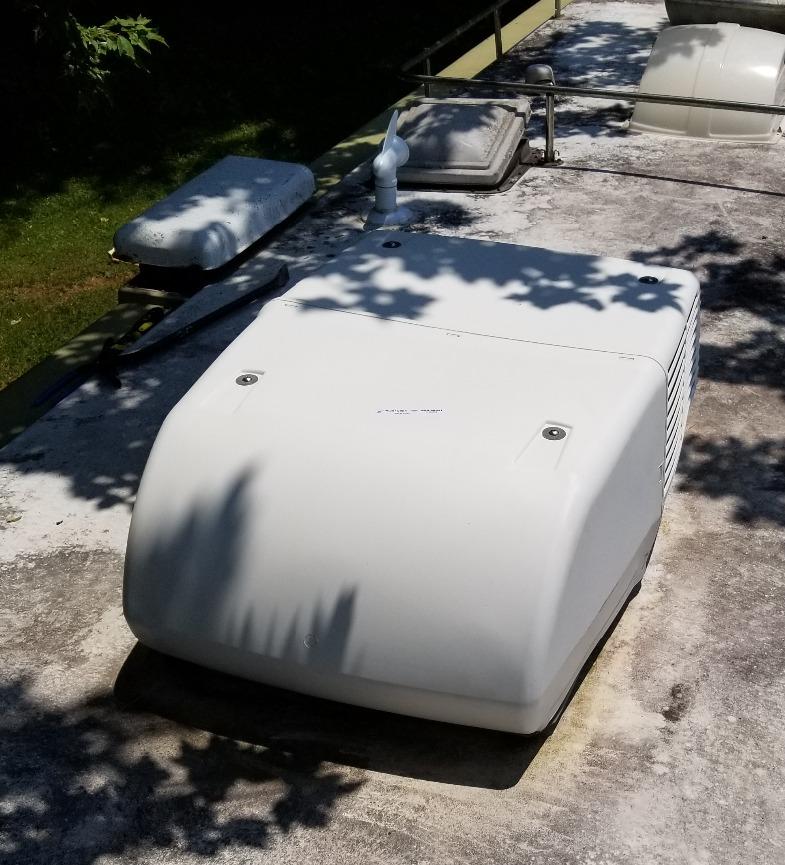
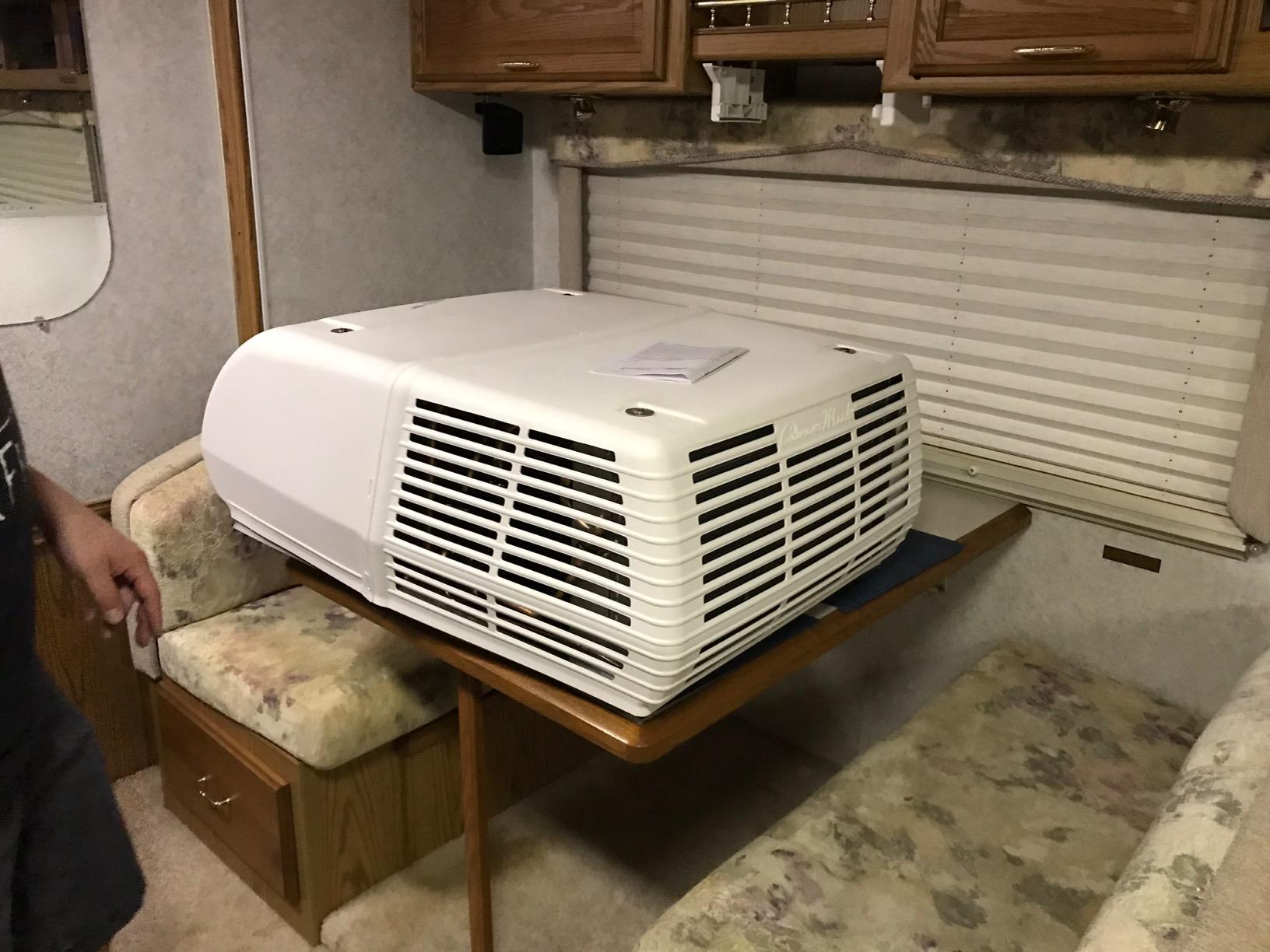
Two details stand out for anyone doing the install. The gasket is pre-installed with crush indicators on the mounting flange, which stops the classic mistake of overtightening the roof bolts and warping the flange. And the two-piece shroud replaces the single-piece shroud on older Mach units, so reaching the fan and coil for annual cleaning is far less painful than it was on the unit you are replacing.
Runners describe it as noticeably quieter than the 13,500 BTU Mach 3 it replaced, close to a mini-split in character. The published 28 dB figure should be read as a manufacturer number rather than a promise, since at least one owner reports it loud enough to make conversation difficult.
Why the Mach 15 suits a hot-climate buyer
For a fifth wheel over 32 feet or a Class A motorhome, 15,000 BTU at SEER 14 is the correct pairing, and the efficiency rating means it pulls less power per unit of cooling than anything else in the group. The 5,600 BTU heat output is genuinely useful in the shoulder seasons of the desert, when nights are cold enough for a heat pump and too mild for the furnace.
The retrofit path is the clincher for Coleman owners. Same generation of geometry, same roof opening, same duct layout, and the control box and plenum you may already own will usually work.
Where it falls short
You are buying an upper unit. The control box, plenum, mounting hardware and bolts come with the separately sold lower control panel, so the real cost of a full install is well above the headline figure. And at roughly 90 pounds the roof lift needs a second person and a plan.
If your rig is small, this is more capacity than you need. If you are replacing a failing unit rather than upgrading, check that your existing lower panel is compatible before you order.
3. Coleman Mach 3 Plus 13,500 BTU – Best Value for a Right-Sized Rig
Coleman 48203C966 Mach 3+ A/C Unit
13500 BTU rooftop cooling
320 CFM airflow
13.1 amps high draw
SEER 13.1
120V
Pros
- Best capacity-to-cost ratio in the group
- Proven platform with owners upgrading from 25 year old units
- Simple four-bolt swap for anyone comfortable with RV maintenance
- 5 Star BEE efficiency rating
Cons
- Audibly loud in normal use
- Printed manual arrives with missing pages
- Roof opening and shroud have been damaged in transit
The Mach 3 Plus is the honest answer for a lot of people. A 13,500 BTU unit that reliably keeps a Class C motorhome or a mid-size trailer comfortable on 95F to 100F days is doing its job, and this platform has been in use long enough that the failure patterns are well understood. Owners replacing twenty-five-year-old units describe the technology as familiar and dependable rather than experimental.
On value, the gap to the 15,000 BTU units is real, and buyers report saving several thousand dollars against dealer quotes for the same job. The 320 CFM airflow figure is generous for the capacity, and SEER 13.1 with a 5 Star BEE mark sits comfortably alongside the Dometic units.
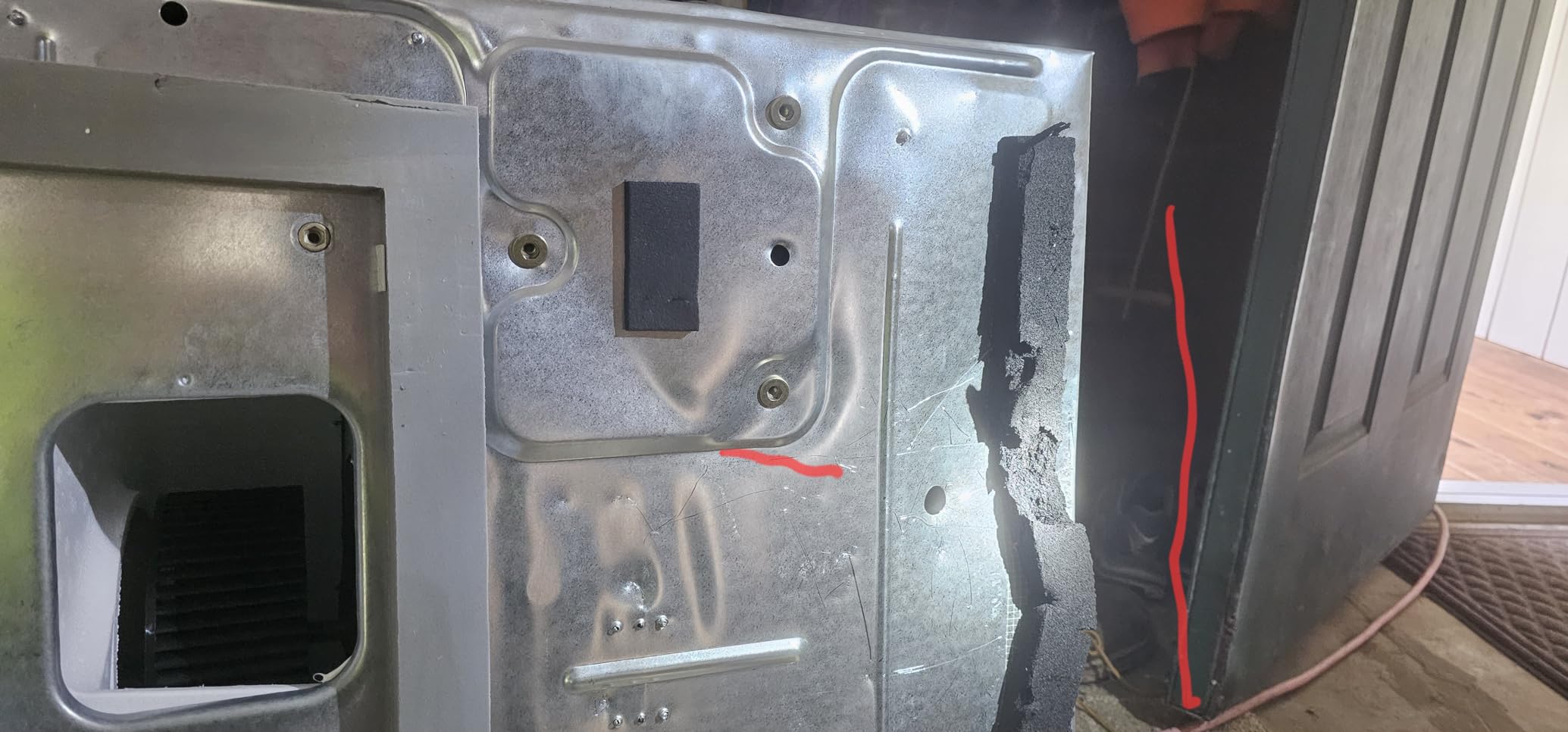
Be clear-eyed about where it fits. At 13,500 BTU this is the capacity that multiple forum users describe as marginal in 110F to 120F conditions, and the honest verdict from our research is that a right-sized rig in moderate heat gets 13,500 BTU comfortably, while a large coach in peak desert heat wants the next size up. This is a capacity decision, not a quality judgement.
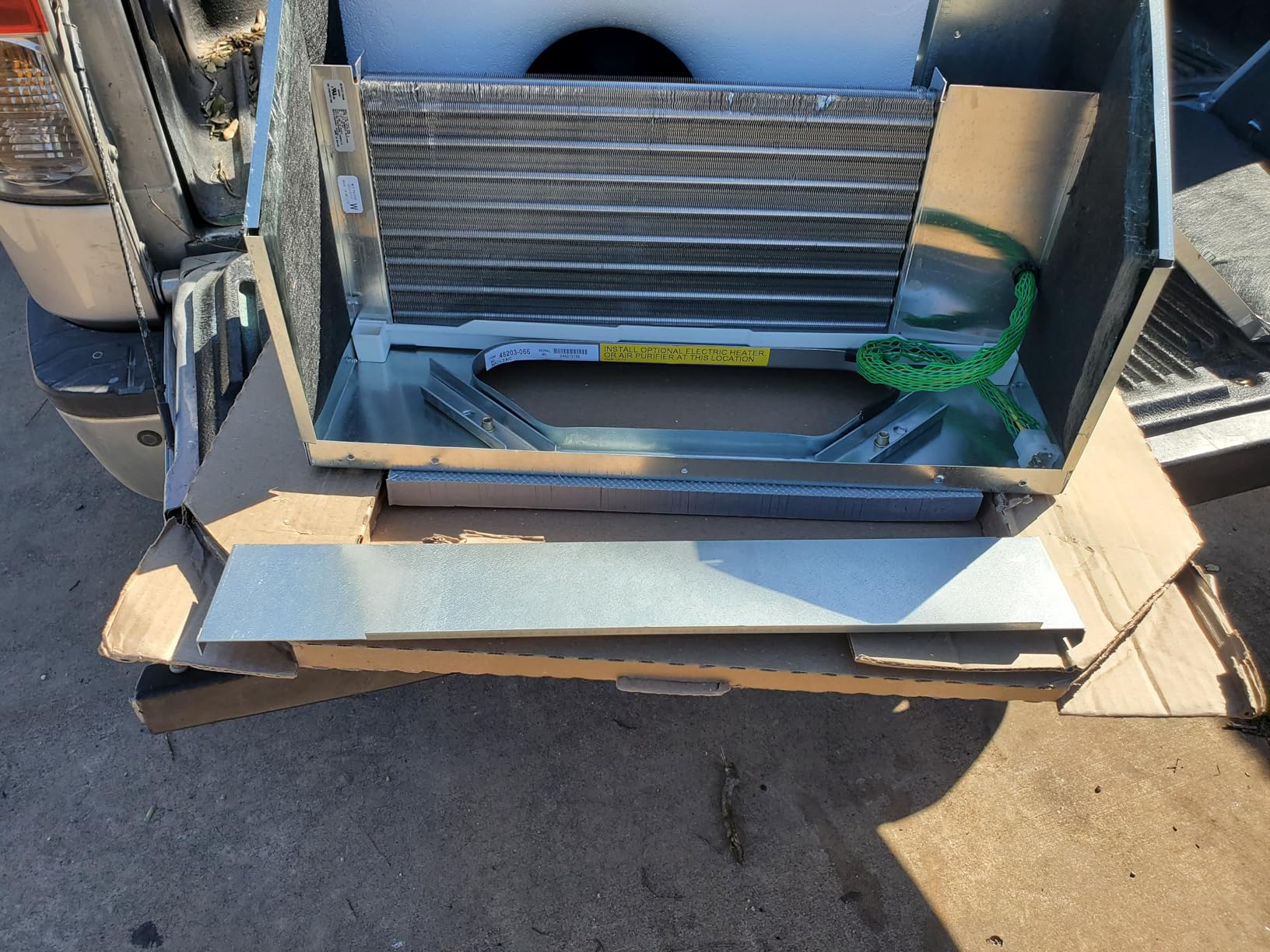
The 5,600 BTU heat figure refers to an optional heater assembly that is not included, which confused at least one buyer and is worth knowing before you order. Documentation is weak, with the printed manual arriving stapled incorrectly and pages missing, and freight damage to the roof opening and the flexible shroud is a recurring arrival complaint.
Why the Mach 3 Plus suits a hot-climate buyer
It is the cheapest way to get a known, well-supplied platform onto your roof, and every RV dealer and parts counter stocks the internals. If something fails, parts and labour knowledge are easy to find, which matters more over a ten-year ownership than a small efficiency gain.
For a trailer or Class C that lives in the Southeast at 95F to 100F, 13,500 BTU is the right call and this is the right unit. The four-bolt swap is straightforward for anyone already doing their own RV maintenance.
Where it falls short
It is audibly loud, and several owners describe it as disruptive rather than merely noticeable. In desert conditions at 115F the 13,500 BTU class is the ceiling of what this platform can do, and one owner found it no better than a 1989 unit in a 36-foot coach.
The documentation and the arrival damage rate are the practical risks. Inspect the shroud and the roof opening flange before you install, and budget an afternoon to work out the wiring without a usable manual.
4. RecPro 15K Quiet Heat Pump – Lowest Draw With a Heat Pump
RecPro RV 15K Quiet AC Heat Pump Non-Ducted Black 110-120V
15000 BTU with heat pump
55.4 dB rated
1500 watts at 115V
SEER 13
112 lb weight
Pros
- Highest rated conventional 120V unit here at 4.5 stars
- Owners measuring with decibel apps find it as quiet as advertised
- Owners report better build quality than factory Dometic units
- Remote and LED display avoids low-voltage thermostat wiring
Cons
- Around 112 pounds making the roof lift the hardest part
- Cracked plastic top shell on arrival is reported often
- Factory bolts can be too short for thicker roofs
The RecPro is the pick for anyone whose number one complaint about their existing unit is noise. It is the highest-rated conventional 120V unit in this roundup at 4.5 stars with only 3% one-star reviews, and the quietness claim is corroborated rather than asserted: owners running iPhone decibel apps measure 58 dB on low and 65 dB on high and report it matches the published 55.4 dB figure.
That matters more in an RV than the number suggests, because you sleep directly under the discharge. A unit you can barely hear at low speed changes the difference between a usable summer and one you run with the bedroom door open and a fan pointed at the bed.
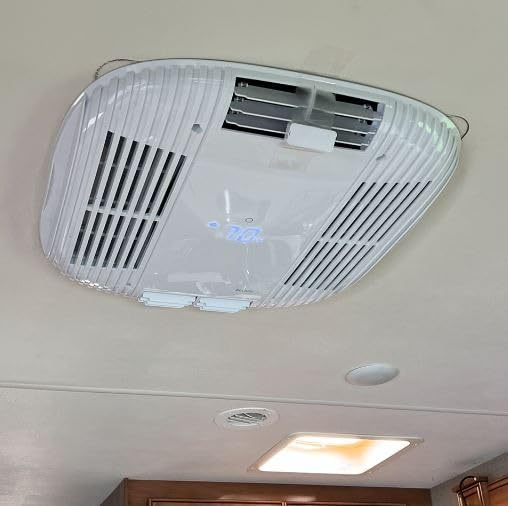
There is real engineering behind the noise figure. The condenser and evaporator fans are separated to cut vibration transfer, and the copper pipe runs are sleeved rather than routed adjacent to each other, which addresses a vibration failure mode that has historically bitten rooftop units over years of road shock. Owners explicitly frame the purchase as an upgrade from failed factory Dometic units and cite the sleeved lines as the difference.
At 15,000 BTU with an integrated heat pump, this is correctly sized for a coach between 350 and 550 square feet in desert heat, and it works as a second zone unit in a long fifth wheel where the bedroom falls short. One owner runs it through 120F days in Arizona. The low amp draw also means it can run alongside other appliances on the same circuit, which is the practical answer to campground breaker trips.
Why the RecPro suits a hot-climate buyer
Quiet, 15,000 BTU, and a low draw that will not fight you for power at a campground pedestal. The heat pump gives you 4-season capability without firing the furnace, which is useful in desert spring and autumn when the nights drop into the forties.
It is also the most flexible on installation. The same unit works in a ducted or non-ducted configuration, and the remote plus LED panel means you do not have to run low-voltage thermostat wiring through the ceiling.
Where it falls short
At roughly 112 pounds it is one of the heavier units here, so getting it onto the roof is the hardest part of the job. The cracked plastic top shell reported on arrival is frequent enough that you should check the shell before you start.
The built-in timer requires pulling the remote battery to fully disable, and some RVs are not pre-wired for 115V at the roof, which means a new circuit run and a different conversation with an electrician.
5. Furrion Chill Cube 18K – Best Variable-Speed Pick for Boondockers
Furrion Chill Cube 18K Ducted RV Air Conditioner, White, FACR18VSDA-PS-AM
18000 BTU ducted cooling
Variable-speed inverter compressor
R32 refrigerant
72.4 lb weight
Pros
- Largest cooling capacity in the roundup at 18000 BTU
- Variable speed avoids the on-off surge of conventional units
- Owners report roughly 850W draw
- about half a comparable Dometic
- Installers single it out as the quietest unit they have fitted
- 72.4 pounds makes the roof lift manageable
Cons
- Air distribution box and remote sold separately
- Some units arrived with missing compressor fan bolts
- In cooling mode it holds temperature but does not control humidity
The Chill Cube is the only unit in this roundup with a variable-speed inverter compressor, and that single design choice changes three things at once in a hot climate. It does not surge when it starts, which cuts the noise of the classic rooftop thump. It does not cycle fully on and off, so the interior temperature is steadier. And it draws a fraction of the power, which is what makes boondocking realistic.
Independent owners report roughly 850W of draw, about half that of a comparable Dometic unit, and installers with decades of experience describe it as the class leader for quietness in ducted mode. A 33-year RV owner reports it holding a 72F interior at 95F outdoor in full sun, which the old Dometic could not manage.
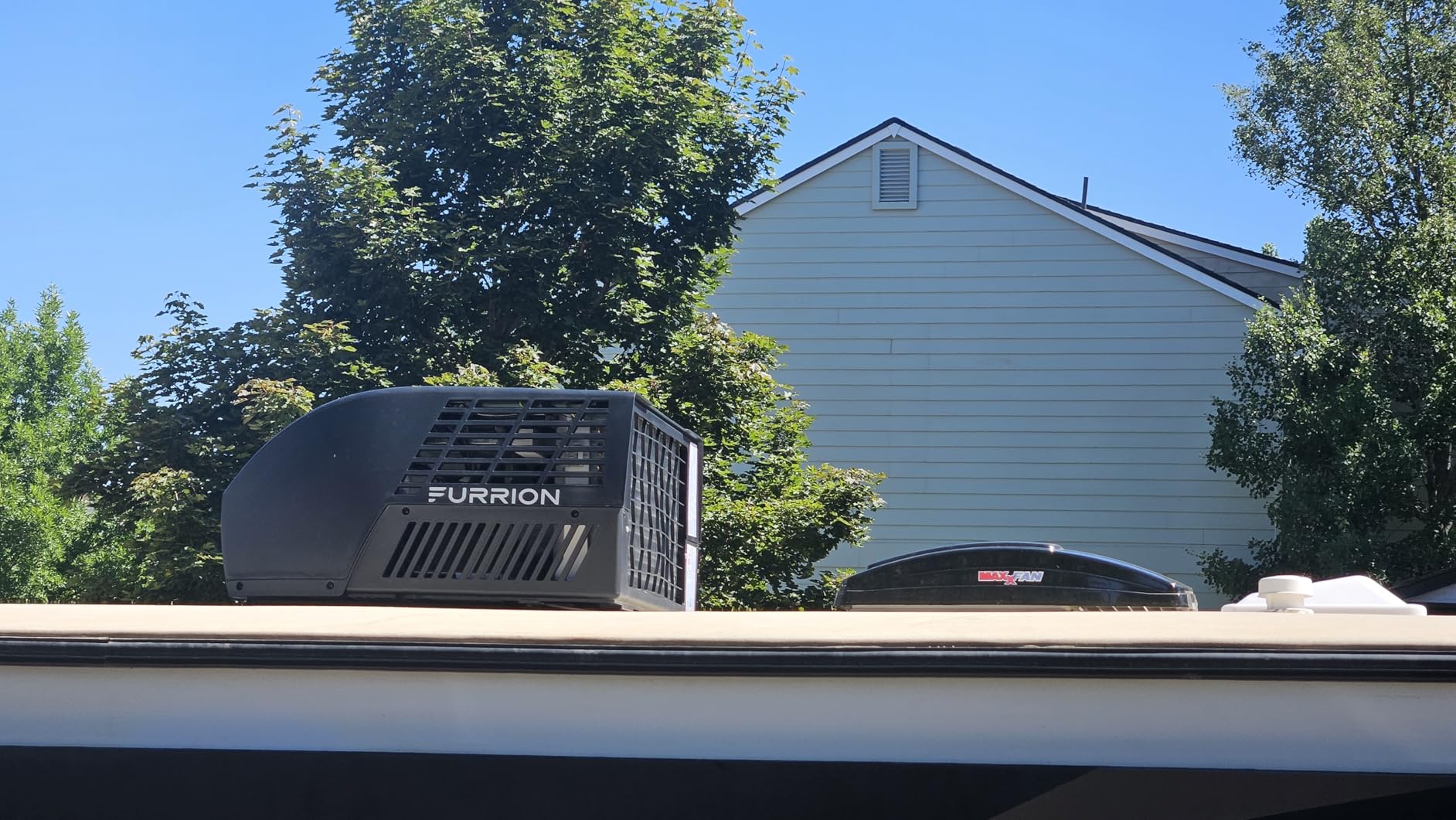
At 18,000 BTU and 1.5 tons it is the largest capacity here, which makes it the right target for a large fifth wheel or a Class A motorhome in desert heat, or for a dual-zone installation where it serves the main volume. At 72.4 pounds it is roughly 10% lighter than competing rooftop units, which matters on a lift.
There is one specification caveat that matters specifically for hot and humid states rather than the desert. In cooling mode the unit holds set temperature but does not control humidity, so indoor relative humidity climbs toward outdoor levels. Its dry mode does the opposite and drops humidity without controlling room temperature, and some owners report overcooling into the fifties and sixties. If you are fighting the Gulf Coast rather than the Sonoran Desert, humidity is a real limitation.
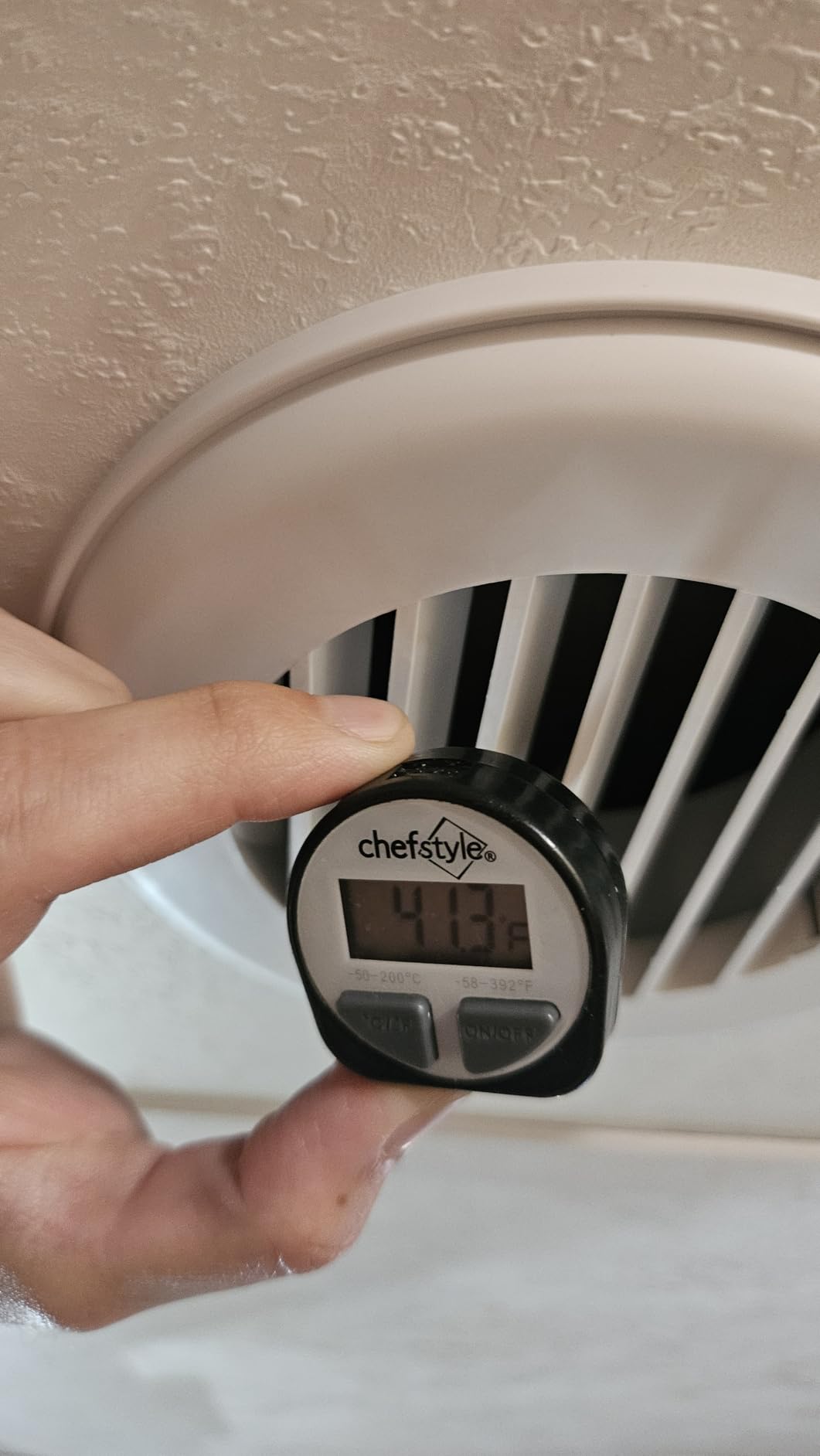
Why the Chill Cube suits a hot-climate buyer
For a boondocker running solar and a battery bank, the efficiency is the entire argument. A compressor that varies its output matches cooling demand instead of overshooting, which extends runtime and takes the load off an inverter. Silent mode, turbo cooling and battery saver mode give you direct control over that trade.
For a large rig in dry heat, 18,000 BTU of variable capacity is the most headroom in this group, and the low-drag aerodynamic shell reduces fuel burn at highway speed where a tall box is working against you.
Where it falls short
It comes as the rooftop unit only. The air distribution box and the remote are separate, and several buyers found this out after cutting the roof opening, which means weeks of downtime waiting on inside components. Confirm the interior kit is on its way before you start.
There is no furnace control function, so a separate relay or thermostat is needed if you want the AC to manage a propane heater. Warranty service is also voided through non-authorised third-party sellers, so buy from a channel you would be willing to return to.
6. TOSOT 16,000 BTU – Quietest Rated Unit for Smaller Rigs
TOSOT 16000 BTU RV Air Conditioner, 43dB Ultra Quiet, White
16000 BTU cooling
12500 BTU heat pump
43 dB rated
115V at 1550 watts
131 lb weight
Pros
- Quietest published figure in the roundup at 43 dB
- Largest heat pump output here at 12500 BTU
- Rated to operate up to 115F ambient
- WiFi app and remote control
- Complete hardware kit included for DIY install
Cons
- Heaviest unit in the roundup at 131 pounds
- Arrives in two separate packages
- SEER rating of 8.5 is well below the 13 to 14 figures elsewhere
On paper this is the most interesting spec sheet in the roundup. A published 43 dB is quieter than anything else here and quieter than a normal conversation, and the 12,500 BTU heat pump output beats every other unit on the list by more than double. The operating range is rated from 23F to 115F ambient, which is one of the widest envelopes available.
The catch is weight and evidence. At 131 pounds this is the heaviest unit we list, and the roof lift needs planning. More importantly, the 136-rating review base is the smallest among the mainstream picks, so the durability picture is genuinely thinner than the 4.3 score suggests. We would buy it for a small to mid-size rig where the noise matters most.
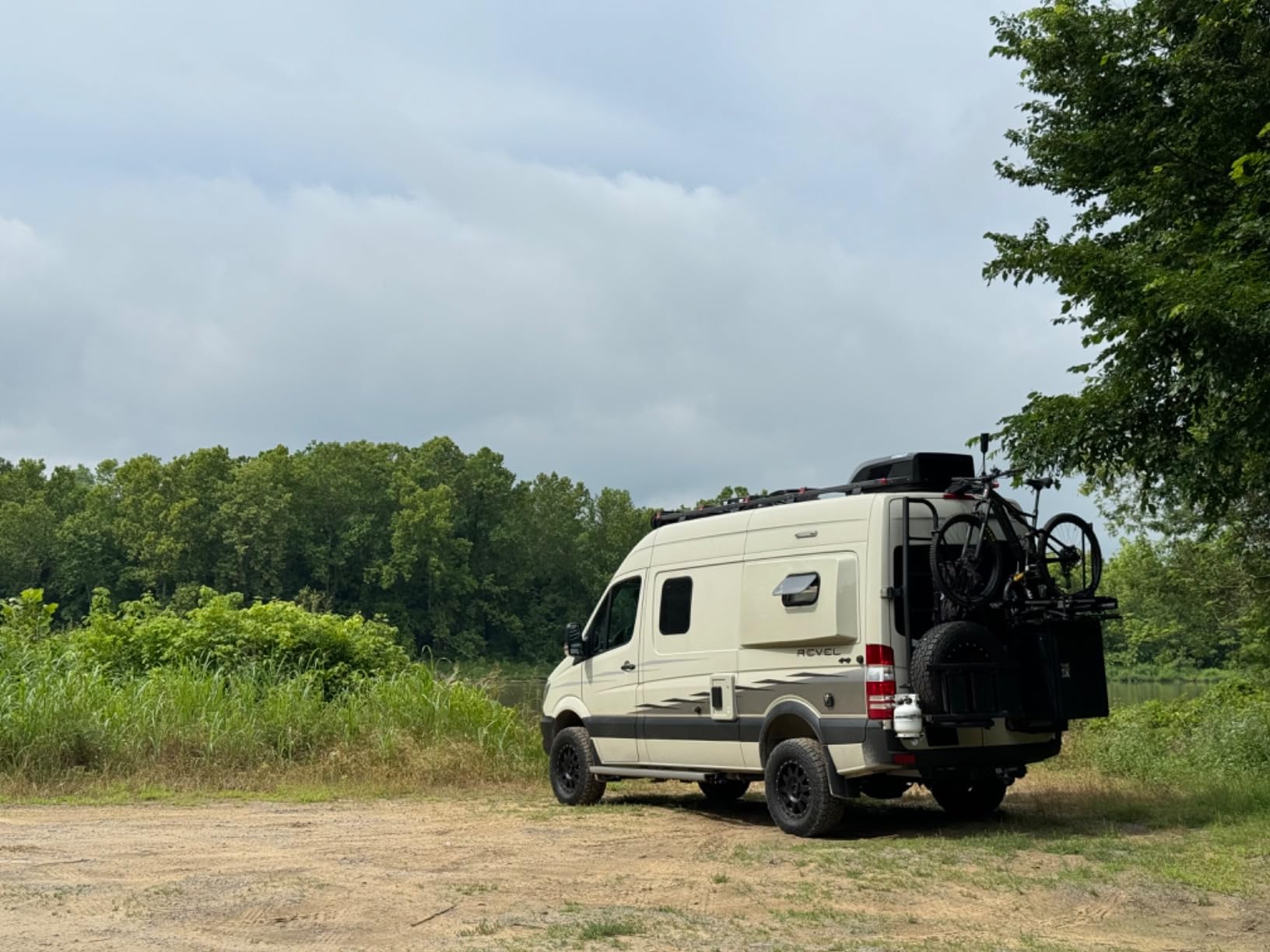
The non-ducted design fits a standard 14.25 inch by 14.25 inch rooftop opening with no major modification, and the complete hardware kit and guide support a genuine DIY installation. WiFi control through the Gree+ app alongside the included remote is unusual at this level, and the ETL certification with a 2-year limited warranty is a reasonable baseline.
The number to watch is SEER 8.5. That is well below the 13 to 14 posted by the Dometic and Coleman units, and it tells you the unit moves less cooling per unit of power, which matters if you are running off solar or a small generator. It is also non-ducted only, so it will not work in a rig with existing ductwork.
Why the TOSOT suits a hot-climate buyer
If you are a light sleeper and the ceiling of your bedroom is directly under the discharge, 43 dB is the difference between sleeping and not. Paired with 16,000 BTU, it gives a Class C or a trailer between 16 and 24 feet both capacity and silence in one box.
The 115F rated upper operating limit makes it a defensible choice for genuinely hot summers, and the 12,500 BTU heat pump covers the transition seasons without the furnace cycling on.
Where it falls short
At 131 pounds, the install is a genuine two-person job, and a heavier unit on the roof is a heavier unit for every future inspection and service. It also arrives in two separate packages, so both need to be on site before you schedule the install.
The 8.5 SEER and the thin review base are the two things that give us pause. If you are boondocking on a battery bank, this is not the unit to build a system around.
7. Dometic Penguin II – Lowest Profile for High Roofs and Vintage Rigs
Dometic Penguin II High Efficiency, Low Profile Rooftop Air Conditioner, Ducted or Non-Ducted Application, 13.5K BTU, Polar White, Cool Only, No Pre-Installed Controls
13500 BTU low-profile cooling
9.5 inch overall height
115V
1 sone rated
99 lb weight
Pros
- Lowest profile here at 9.5 inches for clearance on high-roof rigs
- Owners replacing 1990s Dometic units describe a trivial install
- Works well as a second ducted zone in long fifth wheels
- Low-drag shell reduces wind resistance while driving
Cons
- Most expensive per BTU in the roundup
- No controls included with the unit
- Lowest average rating here at 4.0 with 17 percent one-star reviews
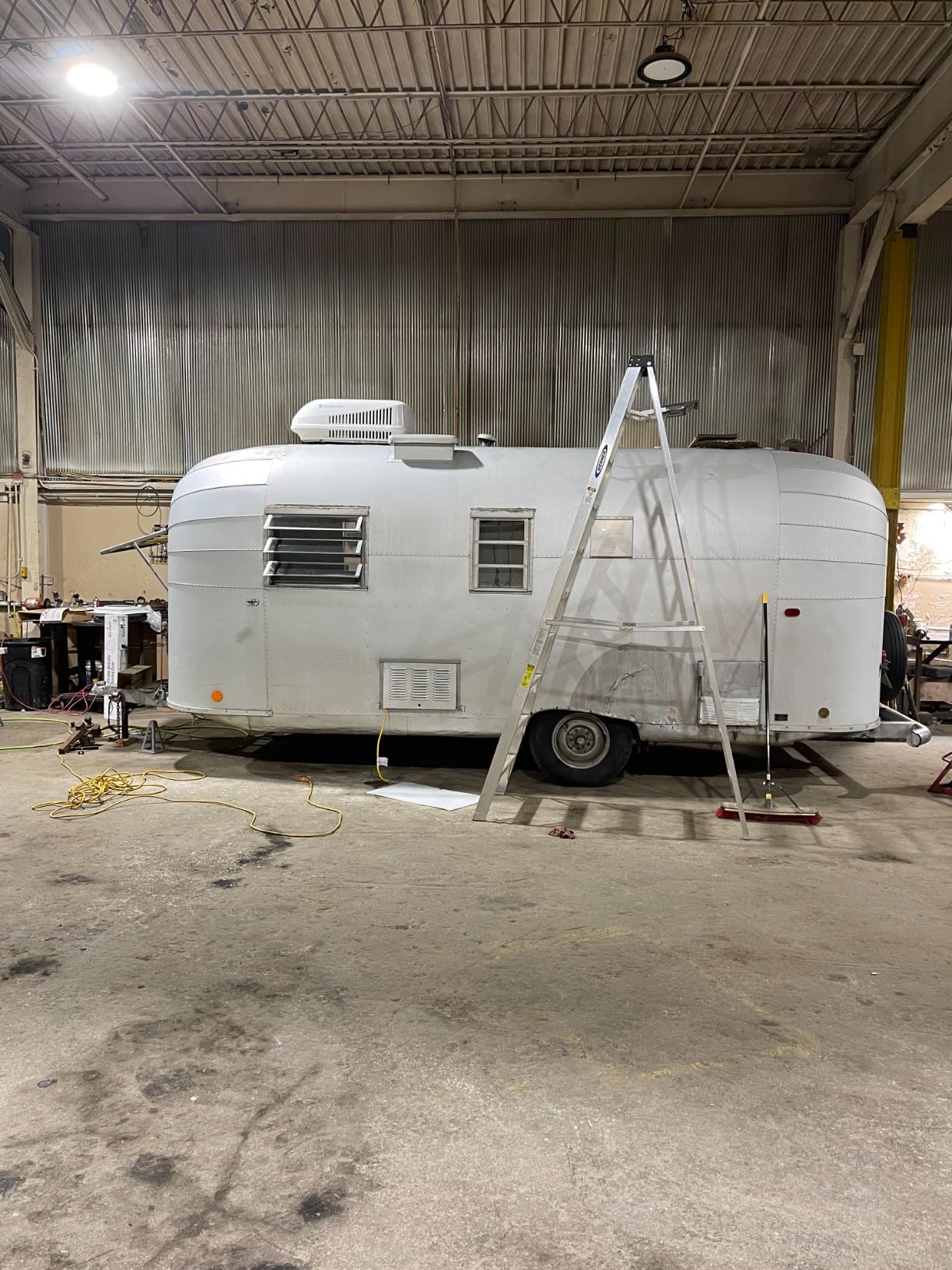
The Penguin II exists to solve a physical problem the other nine units do not have. At 9.5 inches of overall height it clears roof obstructions, air conditioner shrouds and roof racks on high-roof Class C motorhomes, and it fits a roof opening of roughly 12 inches by 12.75 inches, which is smaller than the standard cutout. For a vintage Airstream or an older coach with a tight roof, that clearance is the whole reason to buy it.
Retrofits onto older Dometic installs are described as trivial: unplug, unbolt four bolts, swap, reconnect. The EPP foam housing and rib-reinforced base pan earn consistent praise for light weight and road durability, and the low-drag shell genuinely does reduce wind resistance underway.
What stops us recommending it more widely is the price per BTU and the review profile. You are paying more for 13,500 BTU than the Furrion costs for 18,000 BTU, and at 4.0 stars with 17% one-star reviews this is the weakest showing of the ten. The complaints cluster around quality control and documentation rather than cooling performance.
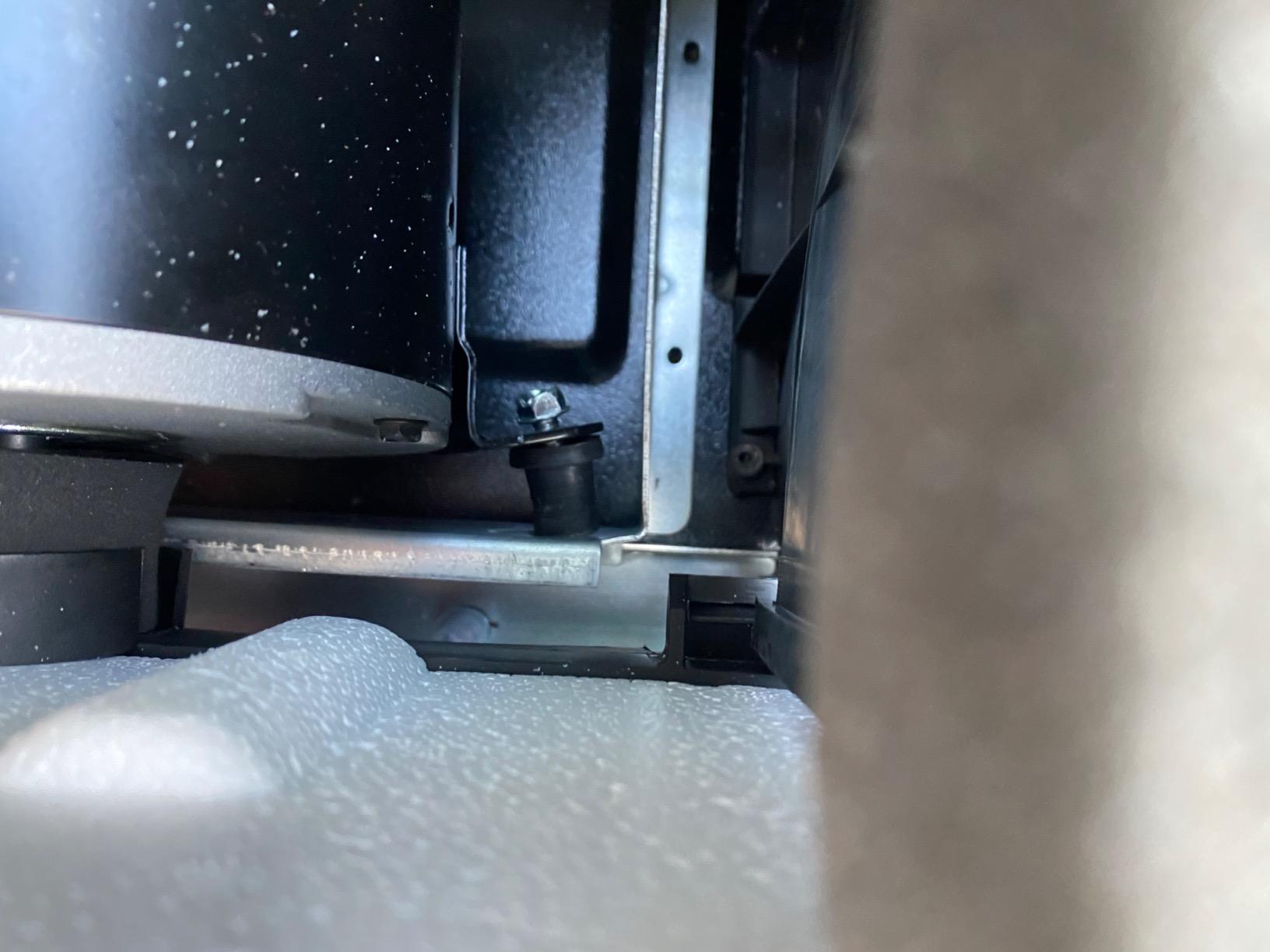
Specifically, the motor and fan assembly is secured with self-tapping screws into rubber grommets, and that mounting design is criticised by name in reviews. At least two units arrived with the fan motor not mounted, and one buyer had to route a return through a dealer. The installation manual covers 8 to 10 similar models, so isolating the correct wiring chart is a chore.
Why the Penguin II suits a hot-climate buyer
Roof clearance is non-negotiable on some rigs, and no other unit here gets under 10 inches. If you cannot physically fit a taller box, this is the answer, and the aerodynamic benefit at highway speed is a genuine secondary gain for a full-timer covering long distances.
It also works as a second ducted zone in a long fifth wheel where the bedroom end is short on cooling, which makes it a sensible part of a dual-unit setup rather than a primary replacement.
Where it falls short
You are paying the most per BTU in the group for the least capacity, and the cooling output is 13,500 BTU, which is marginal above 110F in a large coach. There are no controls included, so a Dometic control box, thermostat and ceiling kit are additional purchases.
The 17% one-star rate and the documented motor mounting issue mean we would inspect the fan assembly on arrival rather than trust it. Owners also describe the blower noise as typical for a rooftop unit in a small space, so this is not the quiet option.
8. Dometic FreshJet 3 15,000 BTU – Lightweight Upgrade That Reuses Your Box
Dometic FreshJet 3 Series, 15K BTU RV Rooftop Air Conditioner unit, White
15000 BTU rooftop cooling
65.3 pound weight
SEER 13
115V
58.5 dB rated
Pros
- Lightest 15000 BTU unit here at 65.3 pounds
- Reuses an existing air distribution box for a simpler upgrade
- E-coated evaporator coils resist corrosion and cracking
- SEER 13 with a 5 Star BEE efficiency mark
- Available in 13500 and 15000 BTU to match existing rigs
Cons
- Unit only with the interior air distribution box sold separately
- 17 percent one-star rate driven by freight damage
- 58.5 dB rating is louder than the TOSOT and Coleman figures
At 65.3 pounds the FreshJet 3 is the lightest 15,000 BTU rooftop unit in this roundup, and that is a bigger deal than it sounds. The difference between a 65-pound lift and a 112-pound lift is the difference between a two-person weekend job and a scheduled install with a rental lift. For anyone replacing a unit on an ageing roof, weight is a real constraint.
It is also the cheapest route into 15,000 BTU from the Dometic side of the range, undercutting the Brisk II by a wide margin for the same capacity class. Owners upgrading from a Dometic install can reuse the existing air distribution box, which removes a significant part of the interior work.
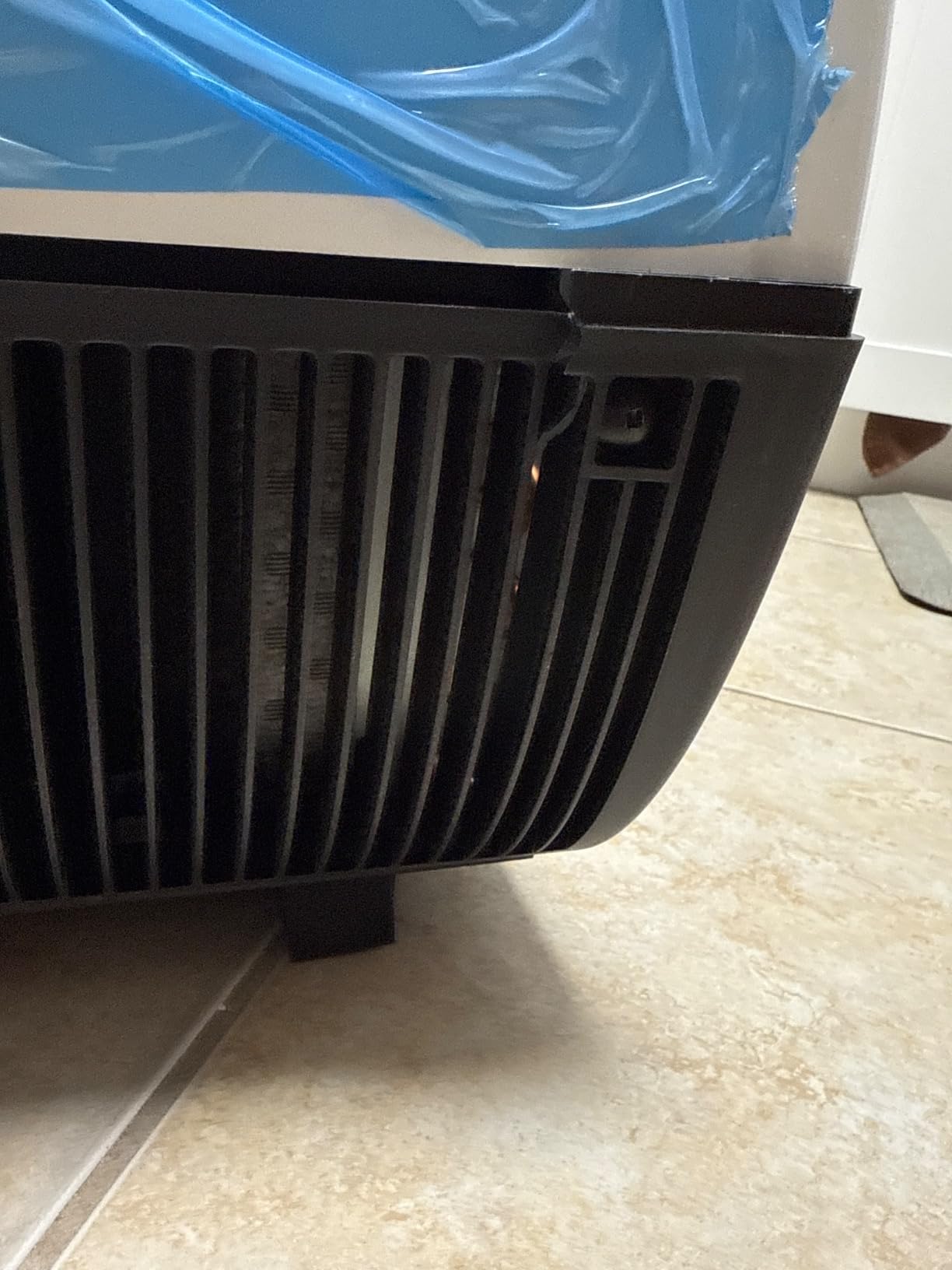
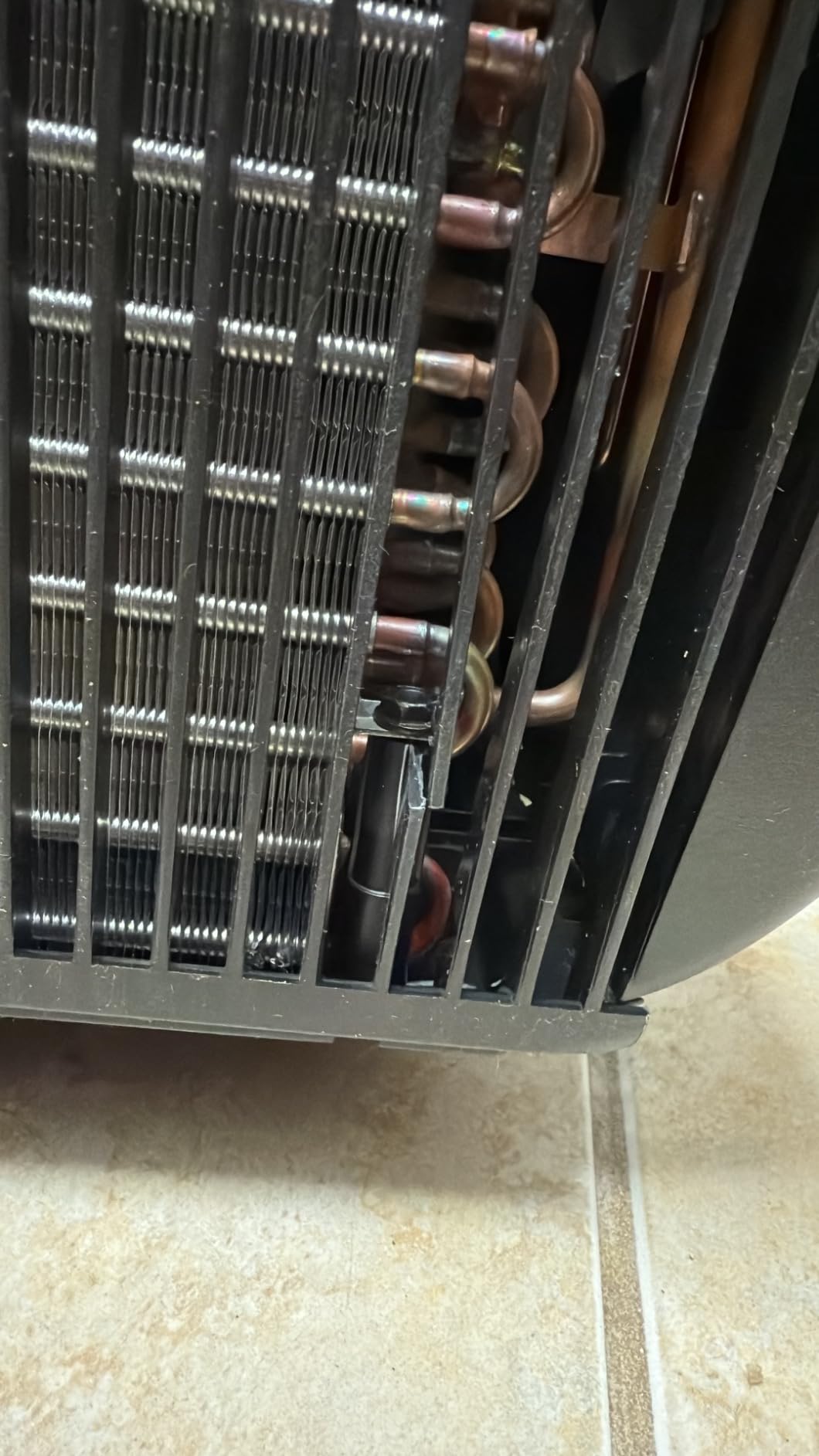
The differentiator on the engineering side is the e-coated evaporator coil, a flexible epoxy polymer coating applied to the heat transfer coil for corrosion resistance and flexibility. Coatings of this type resist cracking over years of thermal cycling, which is exactly the failure pattern that ages evaporator coils in humid coastal climates.
The 58.5 dB rating is louder than the TOSOT and Coleman published figures, and if you are replacing a unit specifically because it woke you up, this is not the answer. The 138-rating review base is also the second thinnest here, so treat the long-term durability picture as less settled than the Brisk II’s.
Why the FreshJet 3 suits a hot-climate buyer
15,000 BTU is the right hot-climate capacity for a 350 to 550 square foot coach, and this is the lightest way to get it there. The e-coated coil is a genuine advantage in the humid Southeast, where corrosion on the evaporator is a leading cause of long-term decline.
Reusing your existing air distribution box makes it the least disruptive Dometic upgrade available, and the 2-year limited warranty is a reasonable baseline.
Where it falls short
It is the rooftop unit only, so the interior air distribution box and related components are separate purchases. And the 17% one-star share, tied for the highest here, tracks largely to freight damage and quality control rather than cooling performance, with one buyer describing a dent that appeared in transit with no visible package damage.
At 58.5 dB it is not a quiet unit, and the thinner review base means less evidence about multi-season durability than you get with the Brisk II.
9. OutEquip 12V 10,000 BTU – Best 12V DC Pick for Vans and Trucks
RV Air Conditioner, 12V 10000 BTU Rooftop Air Conditioner for RVs, Trucks, Vans, Campers, Tractor, Low Profile Quiet AC Unit(w/heater)
10000 BTU on 12V DC
6.3 inch low profile
40 dB rated
43 to 45 lb weight
SEER 15
Pros
- Highest rated unit in the roundup at 4.6 stars
- Runs directly on 12V DC with no inverter required
- Exceptionally quiet with a nearly inaudible compressor
- Lightest unit here at 43 to 45 pounds
- Pre-installed 6 AWG wire and stainless steel bolts
Cons
- 10000 BTU will not cool a large Class C motorhome
- Newer circuit boards overcool by roughly 18 degrees
- Loud button press beep
- 12V systems pull 60 amps or more
Everything about this unit is built around one idea: run the air conditioner directly off the battery bank. A 12V DC rooftop unit has no inverter in the chain, so the power you spend cooling goes straight to the compressor instead of being converted twice, and the unit is rated at SEER 15. For a van, a school bus conversion or a pickup camper, that is the difference between cooling all night and rationing it.
It is also the highest-rated unit in the roundup at 4.6 stars with only 5% one-star reviews, and the quietness is a genuine standout, with owners comparing it favourably to much louder 120V rooftop units and noting the compressor becomes nearly inaudible once running. At 40 dB rated and 43 to 45 pounds at 6.3 inches tall, it is both the lightest and among the lowest-profile units we list.
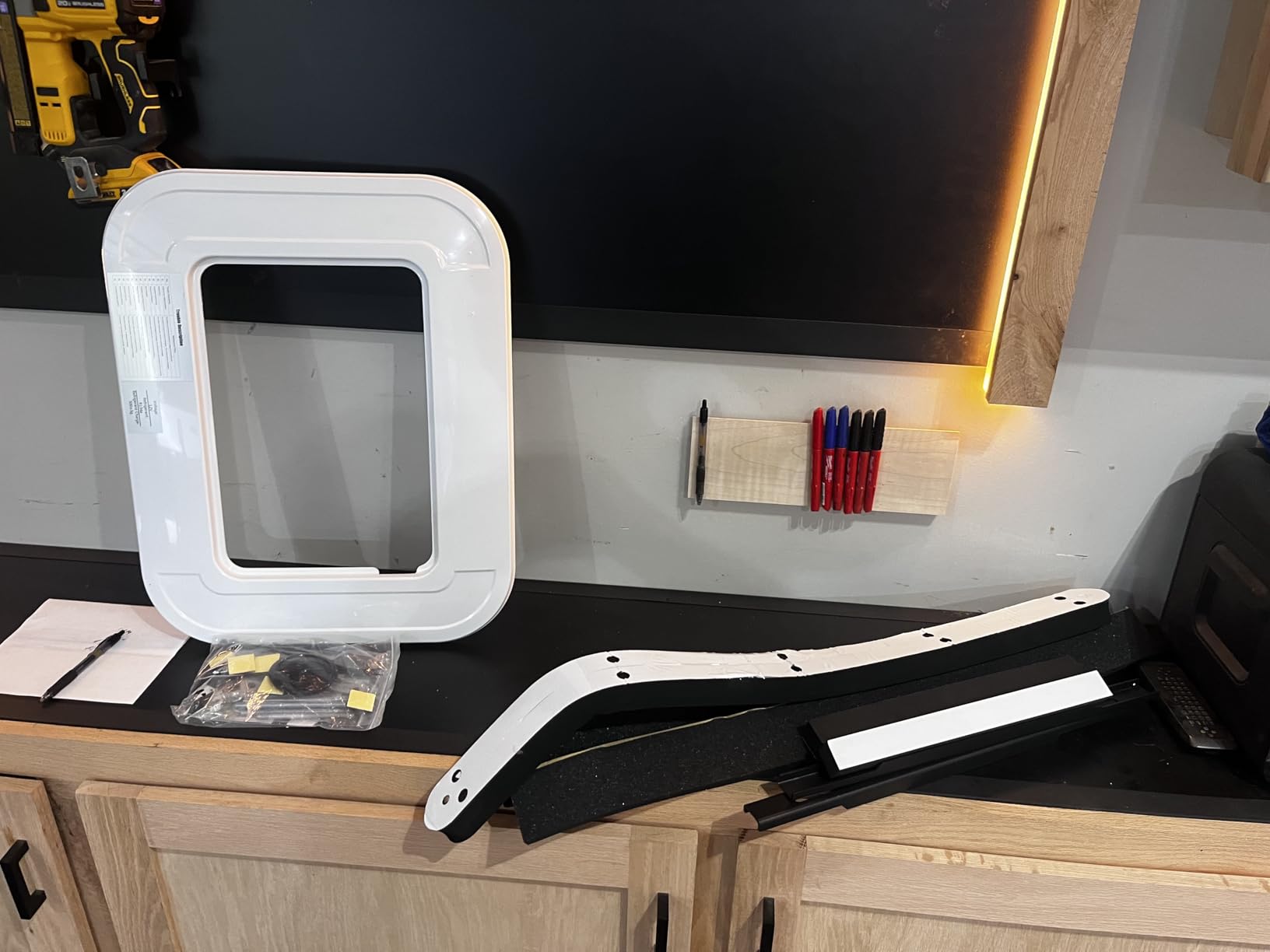
Build details suggest care rather than cost-cutting. Brushless copper motor fans on spring-supported mounts, a UV-stabilised ABS housing, an EPDM foam gasket, a zinc-coated condenser, and stainless steel top-cover bolts so you do not get rust streaks down the side of the van. The unit arrives pre-charged with refrigerant, so no HVAC technician is required for installation.
The limitation is capacity and it is not subtle. At 10,000 BTU this will not bring a large Class C motorhome to temperature, and owners note it works best in vans, trucks and small campers in the 90F to 100F range. Owners also report 12V systems pulling 60 amps or more, so your wiring and battery bank need to be sized for it rather than assumed.
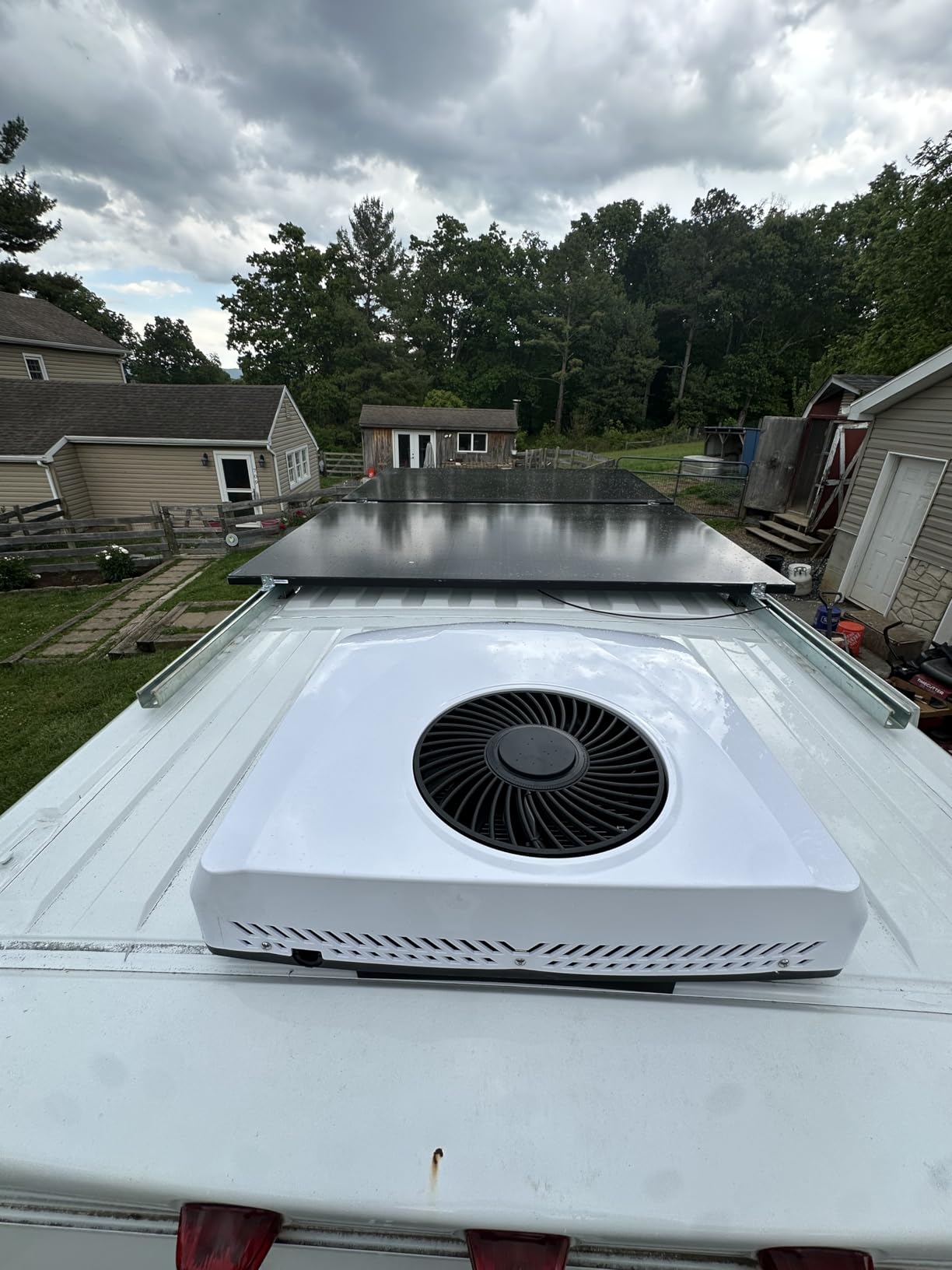
Why the OutEquip suits a hot-climate buyer
For a van, a truck camper or a small trailer running solar and lithium, this is the pick. No inverter means fewer conversion losses, a smaller electrical footprint and a genuinely quiet ceiling fan effect instead of a rooftop roar directly over your head while you sleep.
Customer support is repeatedly praised in reviews, including free replacement control boards and voltage-variant swaps, which matters when you are installing a less mainstream product in a self-built conversion.
Where it falls short
There is a firmware regression worth knowing about. Newer circuit boards overcool by roughly 18F, dropping the van far below the set temperature until an earlier board revision is fitted. Support replaces boards at no charge, but it is a real design flaw in small campers.
The 4,500 BTU PTC heater is supplementary only and will not handle genuine cold weather. The button beep is loud enough that owners mute it with tape over the speaker, and the power wires route externally by default unless you re-run them internally.
10. Countrymod 12V 10,000 BTU – Longest Off-Grid Runtime per Amp Hour
Countrymod 12V DC RV Air Conditioner 10000 BTU RV AC Unit Low Power Consumption Rooftop RV Air Conditioners with APP Remote for RVs, Camper, Van, Battery Powered
10000 BTU on 12V DC
300-900W inverter
0.3 kWh per hour
45-55 dB
87 lb weight
Pros
- Runs under 50 amps on 12V with about one third the draw of a 120V unit
- 0.3 kWh per hour with up to 10 hours of claimed runtime
- Horizontal compressor reduces vibration and short cycling
- 2 year warranty is the longest among the 12V units here
Cons
- Mounting rods are too short for roofs thicker than about 4 inches
- Weaker above roughly 90F outdoor in some installations
- Lead-acid house batteries sag below minimum operating voltage
- Non-ducted only so it will not work with existing ductwork
The Countrymod is the efficiency pick. Its horizontal inverter compressor varies between 300W and 900W to match cooling demand, and the published consumption of 0.3 kWh per hour is roughly five times better than a standard 1.5 kWh per hour unit. Owners report drawing under 50 amps on 12V, about a third of what a 120V rooftop unit pulls, with one owner measuring about 10% of a 990Ah lithium bank overnight.
That efficiency shows up in comfort as well as battery maths. Owners converting to lithium report the unit transforming their off-grid experience, specifically the low current draw and the elimination of the short cycling that made a conventional unit feel like it was constantly starting and stopping. Reported noise is around 44 dB in sleep mode, quieter than the 120V unit one owner replaced.
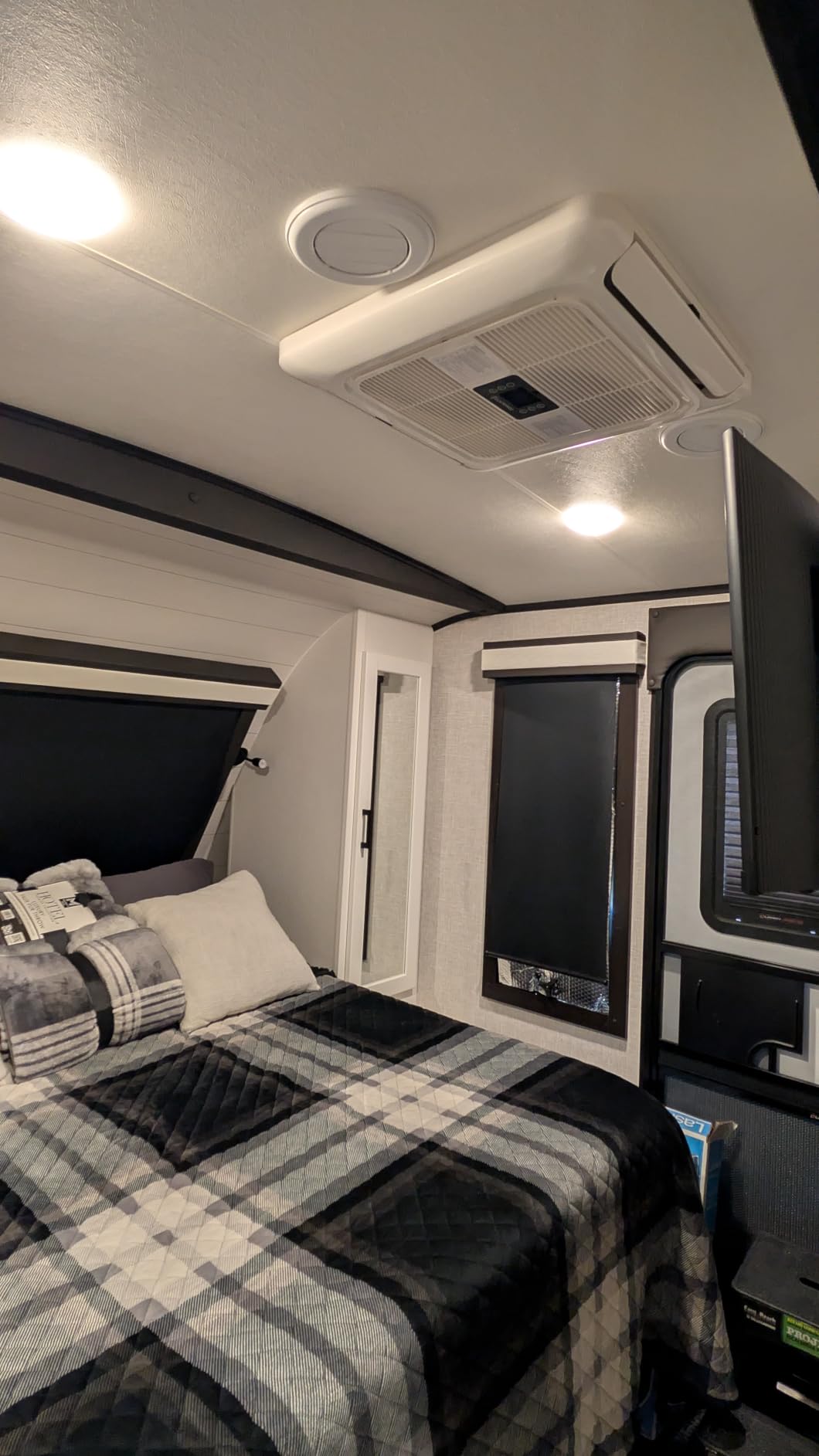
Two design choices are worth noting. The horizontal compressor orientation lowers the centre of gravity and reduces vibration compared with vertical designs, which is a sensible decision for a box that lives on a road. And the 2-year manufacturer warranty is the longest among the 12V units in this roundup, which is meaningful given the thinner brand profile.
The cooling ceiling is the main limit and owners are candid about it. At 10,000 BTU it comfortably cools a bedroom or a small trailer, but multiple owners note it will not bring a 30-foot travel trailer to full temperature in peak heat, and some report weaker performance above roughly 90F outdoor in certain installations.
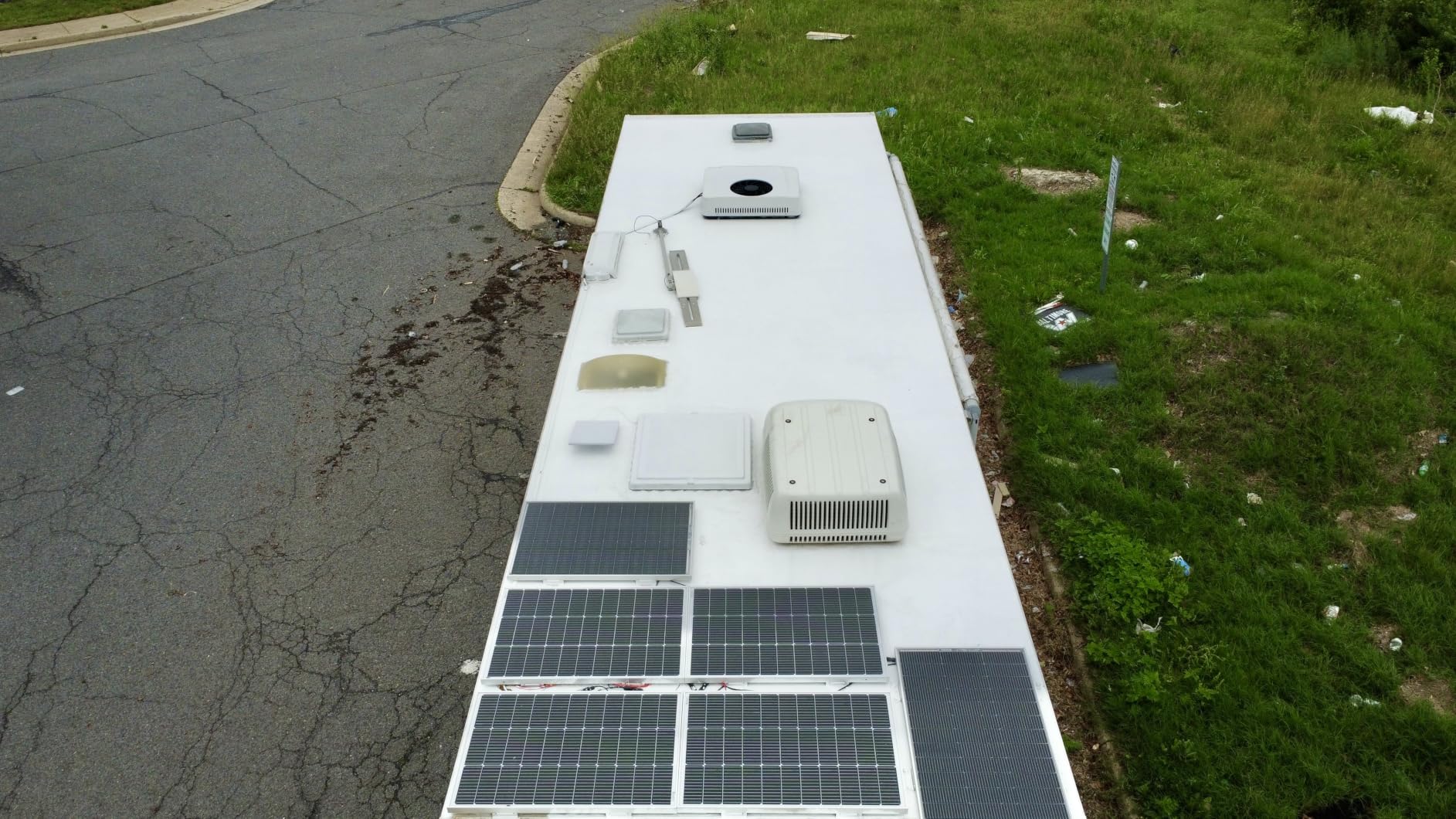
Why the Countrymod suits a hot-climate buyer
If your power budget is the binding constraint rather than your floor space, this is the pick. The 300-900W inverter range means it draws less when the rig is losing less heat, and it fits a standard 14 inch by 14 inch roof vent so retrofits need minimal cutting.
App, remote and onboard keypad control are all straightforward, and the articulating vents distribute cooled air across the interior rather than dumping it in one spot.
Where it falls short
Fitment issues recur: the supplied mounting rods are too short for roofs thicker than about 4 inches, requiring a separate all-thread purchase, and the included duct sleeve leaves roughly a 5/8 inch gap against interior trim that has to be bridged with foil tape. Installation instructions are described as subpar, though QR-linked video walkthroughs compensate.
You will almost certainly need lithium. Lead-acid house batteries sag below the unit’s minimum operating voltage, and it is non-ducted only, so it will not work in an RV that already has ductwork.
Ducted vs Non-Ducted in 110 Degree Heat
In extreme heat, ducted beats non-ducted on distribution, and non-ducted wins on installation simplicity. Which one you should want depends almost entirely on whether your rig already has a duct network built in.
A ducted unit pushes cold air through a ceiling network to specific registers, so every room receives supply air and a closed bedroom door does not cut off the airflow. That is the decisive advantage at 115F, where you are trying to move a fixed amount of cold air through the whole coach rather than chase it around. The cost is the ductwork itself and the fact that a ducted unit is useless without a matching air distribution box.
A non-ducted unit discharges into the ceiling cavity and relies on the cabin air to mix, which means a strong discharge close to the return path can short-circuit and cool one corner of the room. Retrofitting one to a ducted rig will not work without modification. The advantages are a much simpler install, no duct box to buy, and far more flexibility if you are replacing an old non-ducted unit.
One specific hot-humidity warning applies to any variable-speed unit, including the Furrion. A compressor that ramps output to hold a set temperature has no reason to run past the point of comfort, so it will not pull moisture out of the cabin the way a cycling unit does. In the Gulf Coast and Florida, that shows up as a rig held at temperature but noticeably sticky.
Power, Amp Draw and Not Tripping the Campground Breaker
Campground breaker trips are a power problem before they are a cooling problem, and the fix is choosing a unit whose running and starting draw fits the circuit you actually have.
Most 120V rooftop units in this list run around 1,500W to 1,900W while cooling, with a starting surge well above that. A 30A pedestal with a 20A branch circuit gives you a 20A budget at 120V, and 20A is about 2,400W of headroom before anything else draws. Run the AC, the microwave, the water heater and a converter simultaneously on a hot afternoon and the circuit will give up.
There are four levers, in order of impact:
Choose a lower-draw unit. The Furrion Chill Cube is the clearest example, with owners measuring roughly 850W against a conventional unit drawing close to twice that for comparable cooling.
Size the rig to the unit, not the other way round. A 13,500 BTU unit on a correctly sized trailer draws less than a 15,000 BTU unit on a coach that was never going to be cooled by either.
Use a 50A connection where it is available for a coach running two air conditioner zones, a refrigerator and a washer.
Stage the loads. Delay the water heater and the converter by a few minutes after the compressor starts, and turn the second zone off when the main zone is holding temperature.
For a generator, the practical floor for a 15,000 BTU rooftop unit is a 3,000W inverter generator, and soft-start modules exist for older single-speed compressors that reduces the starting surge enough to run on smaller machines. Off grid, the 12V DC units bypass this entirely and draw from the battery bank, at the cost of capacity: 10,000 BTU is enough for a van or a small trailer, not for a coach.
Which RV AC Brands Hold Up, and Where They Fail
Reliability matters more than peak capacity to most owners, and the honest answer is that brand predicts failure mode better than it predicts whether a unit will work. Here is what the owner evidence in the RV forums actually shows.
Dometic has the deepest parts and service network, and the Brisk II has the largest review base here with long trouble-free reports. The category-wide Dometic complaints are the separate control box purchase, thin documentation, and a documented condenser fan arrival on the FreshJet 3. Coleman-Mach is universally stocked and the Mach platform is the easiest part to source at any dealer, but the most detailed forum report we found describes a five-year failure cascade on one unit: a compressor short in year two that was honoured under warranty, a refrigerant leak in a sealed non-serviceable unit in year three that went out of pocket, a defective pressure switch in year four, and an exploded blower wheel in year five.
That cascade is worth taking seriously because of the sealed circuit. Several units in this roundup ship with a factory-charged refrigerant circuit that is not intended to be opened, which means a leak is a replacement rather than a repair, and you are negotiating against a warranty that covers the compressor but not necessarily the refrigerant.
RecPro earns its reputation in review data rather than longevity, and the specific failure complaints that surface are physical: cracked plastic top shells in transit, short factory bolts, and a heavy unit that makes the install hard. Furrion and the Chinese-sourced brands are the ones with the least long-term field data, and their documented issues are packaging and component omissions rather than premature failure. One Furrion unit arrived with all four compressor fan bolts missing.
Two category-wide themes show up across every brand. Condenser coil fouling from road dust and cottonwood is the leading cause of gradual performance loss, and it is entirely preventable with an annual coil clean. And owners report the same packaging pattern repeatedly: cracked shrouds, broken screw attachments and mashed fins on arrival, which is an argument for photographing the unit before you sign for it.
Keeping an RV Cool in 100 Degree Weather Without Replacing the Unit
Before you replace anything, work through this list in cost order. A Forest River Forums thread on beating heat in the South and Southwest collects most of what actually moves the needle, and the consensus is that shade and reflective film beat any single component upgrade.
Park in shade and close every awning and shade you have before the sun is on the west side. An awning costs a fraction of a rooftop unit.
Apply reflective window film to the windshield and the large west-facing glass. This is the single highest-return non-AC intervention.
Clean the condenser coil. A fouled condenser can lose a large fraction of its capacity to dust and debris, and a coil clean costs almost nothing.
Clear the condensate drain hose. A blocked drain makes the unit shut down or drip into the ceiling, and it is the most common cause of a unit that will not cool.
Add a duct box retrofit or airflow kit to your existing unit if it is non-ducted. This is the cheap way to fix a short-circuiting airflow problem without replacing the machine.
Add a soft-start module to reduce compressor starting surge, which helps with generator starting and campground breaker trips.
Upgrade to a digital thermostat with a remote so you can cycle the unit from bed rather than running it continuously.
Two structural upgrades are worth planning for rather than dismissing. A second rooftop unit in place of a galley vent is the most effective hot-climate change available, and owners describe the install as easy and straightforward, with the only difficult part being running a new 20A line to the ceiling, which is unnecessary if you are swapping an existing unit. And a mini-split is a legitimate budget alternative, with multiple owners reporting a usable unit installed instead of a rooftop box at a fraction of the cost.
On install cost, the honest split is that swapping like for like is a four-bolt, ten-minute mechanical job that needs two people and two ladders. A dealer charging an hour or two of labour for that swap is the single most common complaint we found in owner forums, and the same forums report the identical swap being done with no professional involvement at all.
Frequently Asked Questions
Is 13,500 BTU enough for an RV in 115 degree heat?
Usually not, and this is the most common sizing mistake we see. Standard sizing is about 12 BTU per square foot of interior area, and hot climates need roughly 1,500 BTU added on top. A 13,500 BTU unit is a comfortable match for a Class C or a mid-size trailer around 300 to 400 square feet in 95F to 100F weather. Above 110F, step up to 15,000 BTU, and above 550 square feet in peak desert heat, 18,000 BTU or two units.
Which brand of RV air conditioner is the most reliable?
Among the units in this roundup, the Dometic Brisk II has the most owner history at 1,048 ratings, with repeated multi-year trouble-free reports, and it is also the easiest unit to service. The RecPro 15K has the highest rating among conventional 120V units at 4.5 stars with only 3% one-star reviews. Reliability in this category is largely a function of parts availability and whether the refrigerant circuit is serviceable, not of the badge on the shroud.
What is the most efficient AC unit for an RV?
Efficiency comes down to how much cooling you get per unit of power. The Furrion Chill Cube uses a variable-speed inverter compressor and owners measure roughly 850W of draw, about half a comparable Dometic, at 18,000 BTU. The Coleman Mach 15 carries the highest published SEER at 14. The 12V DC units are the most efficient of all off grid, with the Countrymod rated at 0.3 kWh per hour.
What AC brands should RV owners stay away from?
Rather than naming brands to avoid, look for two things that decide the outcome: a serviceable refrigerant circuit, and documentation that covers your specific model. Sealed factory-charged circuits turn a refrigerant leak into a replacement rather than a repair, and manuals covering eight to ten similar models leave wiring charts you have to guess at. The documented Coleman-Mach pattern is a compressor short, then a leak in a sealed unit, then a pressure switch fault, then a blower wheel failure.
Are Coleman-Mach air conditioners good?
Yes, for the right rig in the right climate. The Mach 15 at 15,000 BTU and SEER 14 is the strongest choice here for a large coach in hot weather, and the Mach 3 Plus at 13,500 BTU is the best value pick for a right-sized trailer or Class C. Coleman-Mach is also the easiest brand to service, with every dealer stocking the internals. The complaints owners raise are noise, missing documentation and freight damage rather than cooling capability.
Can I run an RV air conditioner on battery power?
Yes, with a DC unit and the right battery bank. The two 12V DC units in this roundup, the OutEquip and the Countrymod, run directly off a battery bank with no inverter in the chain, and the Countrymod is rated at 0.3 kWh per hour with up to 10 hours of runtime on a 600Ah bank. Both are 10,000 BTU, so they suit vans, trucks and small trailers rather than large coaches, and lithium is effectively required.
How do I make my existing RV air conditioner cool better?
Start with the free work: clean the condenser coil and clear the condensate drain hose, since fouling and blockages are the two most common causes of a unit that will not cool. Then park in shade, apply reflective window film to the windshield and west glass, and run every awning you own before the afternoon sun arrives. Beyond that, a duct box retrofit, a soft-start module and a digital thermostat each fix a specific weakness without replacing the machine.
How long do RV air conditioners last?
A well-maintained rooftop unit typically gives you 10 to 15 years of service, and the units with the longest owner histories in this roundup report two years or more of trouble-free running as a minimum. The most common cause of early decline is condenser coil fouling from road dust and cottonwood, which is entirely preventable with an annual clean. Sealed refrigerant circuits are the other risk, because a leak means replacement rather than repair.
Final Verdict for Hot Climates
If you take one thing from this roundup of the best RV air conditioners for hot climates, make it the sizing rule. Add roughly 1,500 BTU to the standard guide for anywhere that sees 110F or above, and buy the next size up rather than the next size down, because a unit that runs continuously at full output in July will not be quiet in August either.
For a conventional 120V setup, the Dometic Brisk II at 15,000 BTU is the pick we would make first, with the RecPro 15K taking the slot if noise decides it and the Coleman Mach 3 Plus winning on value for a correctly sized trailer. For a large coach in the desert, the Furrion Chill Cube 18K is the answer that changes your power budget as well as your temperature. For a van or a truck camper running off batteries, the OutEquip and Countrymod 12V units put cooling within reach without an inverter.
Updated for 2026. Check the current specifications and the price for your exact roof opening before you order, and confirm that the interior kit, control box and thermostat are included in whatever package you choose, because on several of these units they are not.