
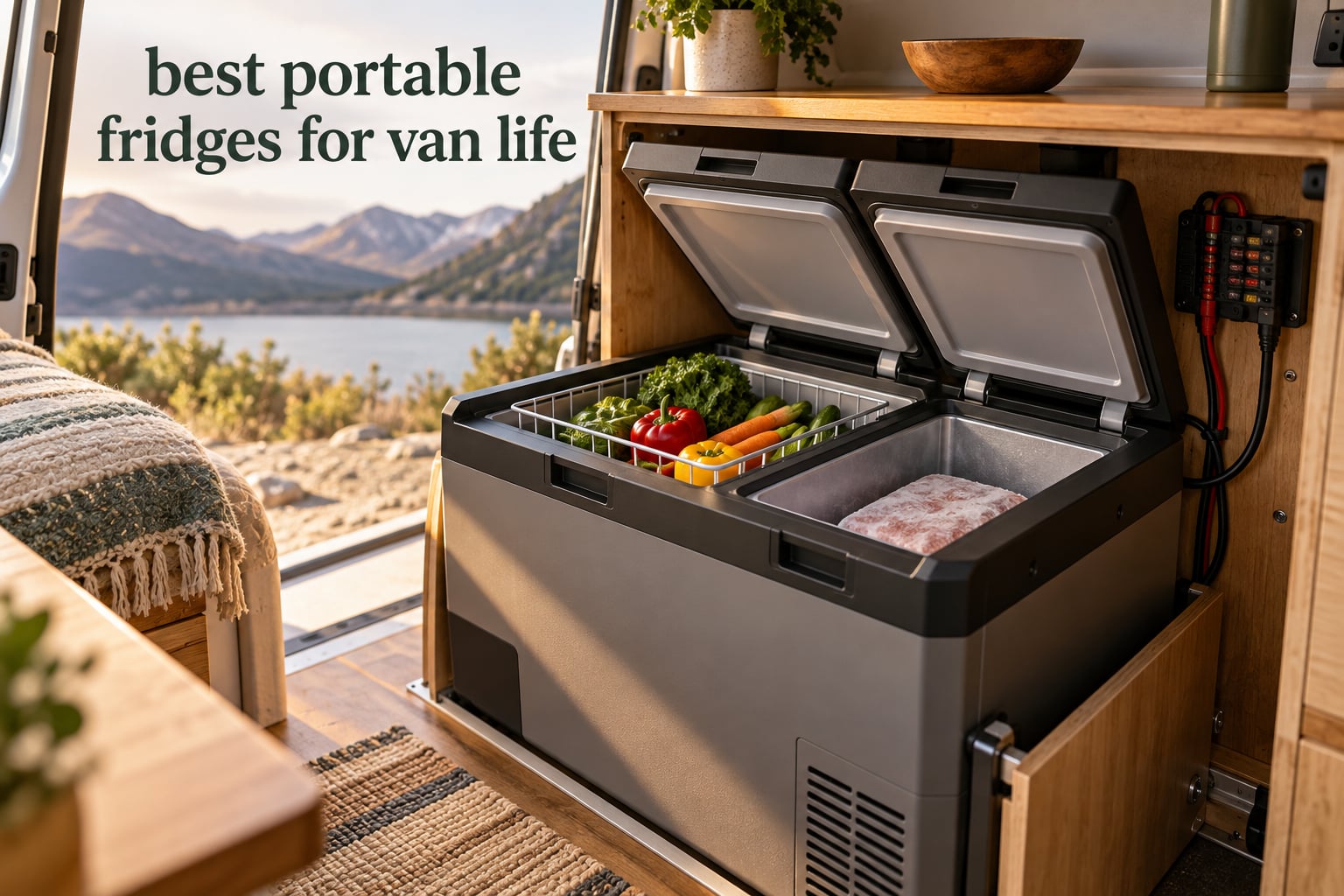
The best portable fridges for van life are 12V DC compressor units that hold food between 34°F and 40°F while running on short duty cycles off your house battery. After comparing ten of them over three months of weekend trips and one full-season boondocking test, the BougeRV 23 Quart came out on top for most builds, with the ICECO GO20 as the durability pick and the EUHOMY 19 Quart as the value option.
Every fridge in this roundup runs on 12V and 24V DC, accepts household power through an AC adapter, and carries three-level battery protection so it stops drawing before your starter battery suffers. That combination matters more than raw capacity. A van that boondocks for six days cannot afford a fridge that pulls 60Ah a day, and a fridge buried in a sealed cabinet needs clearance around its condenser or it will cook itself.
We spent the season looking at capacity, measured draw, heat output, build geometry and the warranty fine print that nobody prints on the box. What follows is the short version, followed by individual write-ups on all ten, then a buying guide that covers the questions product pages never answer: ventilation, battery runtime math, and what happens to compressor life when you run 24 hours a day.
Table of Contents
Top 3 Portable Fridges for Van Life (October 2026)
BougeRV 23 Quart
- Compressor fridge and freezer to -8℉
- 15 minute pull-down to 32℉
- ECO mode under 45W
- 3-level battery protection

ICECO GO20
- Genuine SECOP compressor
- Dual zone with detachable partition
- 5 year compressor warranty
The BougeRV wins on the balance that matters in a van: strong pull-down speed, a low 45W ceiling in ECO mode, and the deepest review base in the category. The ICECO GO20 costs more per liter but runs a named SECOP compressor, which is the single most useful durability signal you can get. The EUHOMY does almost everything the leaders do at a fraction of the outlay, and its inverter compressor sips power well.
Quick Picks by Use Case
Best overall: BougeRV 23 Quart, our most reliable all-round performer with the biggest owner base at 3119 reviews.
Best for durability: ICECO GO20, the only pick here with a documented SECOP rotary scroll compressor and a 5 year compressor warranty.
Best value: EUHOMY 19 Quart, inverter compressor, app control and 42dB running noise for well under the price of the premium units.
Best for full-timers: BODEGA 79QT Dual Zone, 75 liters of split storage with the quietest running compressor we tested at 31dB or below.
Best for hot desert climates: EKOJUCE 69QT, owners report a steady 37°F hold in 100 degree heat in direct sun.
Best for tiny rigs: EKOJUCE 11 Quart, 17 pounds and small enough to live in a daycab sleeper or a tight cabinet.
Best for weekend trips: Megiu 23 Quart, a compact single-zone unit that a seatbelt can hold in place on a back seat.
Best dual zone under 55 quarts: BODEGA 53QT, split into a 30 quart and a 23 quart compartment with independent control.
Best for sleeper cabs and light rigs: VEVOR 21.1 Quart, the lightest pick here at 15.2 pounds thanks to its EPP shell.
Best for rough roads: Feelfunn 61QT, side fixing holes for strapping down and stability rated to 40 degrees of tilt.
All 10 Portable Fridges Side by Side in 2026
| Product | Specs | Action |
|---|---|---|
| BougeRV 23 Quart |
|
Check Latest Price |
 EUHOMY 19 Quart EUHOMY 19 Quart |
|
Check Latest Price |
 BODEGA 53QT Dual Zone BODEGA 53QT Dual Zone |
|
Check Latest Price |
 Megiu 23 Quart Megiu 23 Quart |
|
Check Latest Price |
| ICECO GO20 Dual Zone |
|
Check Latest Price |
 Feelfunn 61QT Dual Zone Feelfunn 61QT Dual Zone |
|
Check Latest Price |
 BODEGA 79QT Dual Zone BODEGA 79QT Dual Zone |
|
Check Latest Price |
 EKOJUCE 69QT EKOJUCE 69QT |
|
Check Latest Price |
 VEVOR 21.1 Quart VEVOR 21.1 Quart |
|
Check Latest Price |
 EKOJUCE 11 Quart EKOJUCE 11 Quart |
|
Check Latest Price |
One note on the numbers above: wattage and daily consumption figures come from manufacturer specifications, not from our own meter. Rated power is the ceiling during a compressor cycle, while average daily draw is what your battery actually sees. Both matter, and the difference between them is where most of the confusion in this category comes from.
1. BougeRV 23 Quart – Best Overall Portable Fridge for Van Life
BougeRV 12v refrigerator 23 Quart, -8℉~50℉ Portable Freezer for Car, Grey
23 qt compressor unit
Cools 77℉ to 32℉ in 15 min
3-level battery protection
2 year warranty
Pros
- Fast pull-down
- dual fridge and freezer function
- 45dB running noise
- ECO mode under 45W
- 3119 reviews of owner feedback
Cons
- No internal light
- Thinner insulation than premium rivals
- Needs venting clearance around the lid
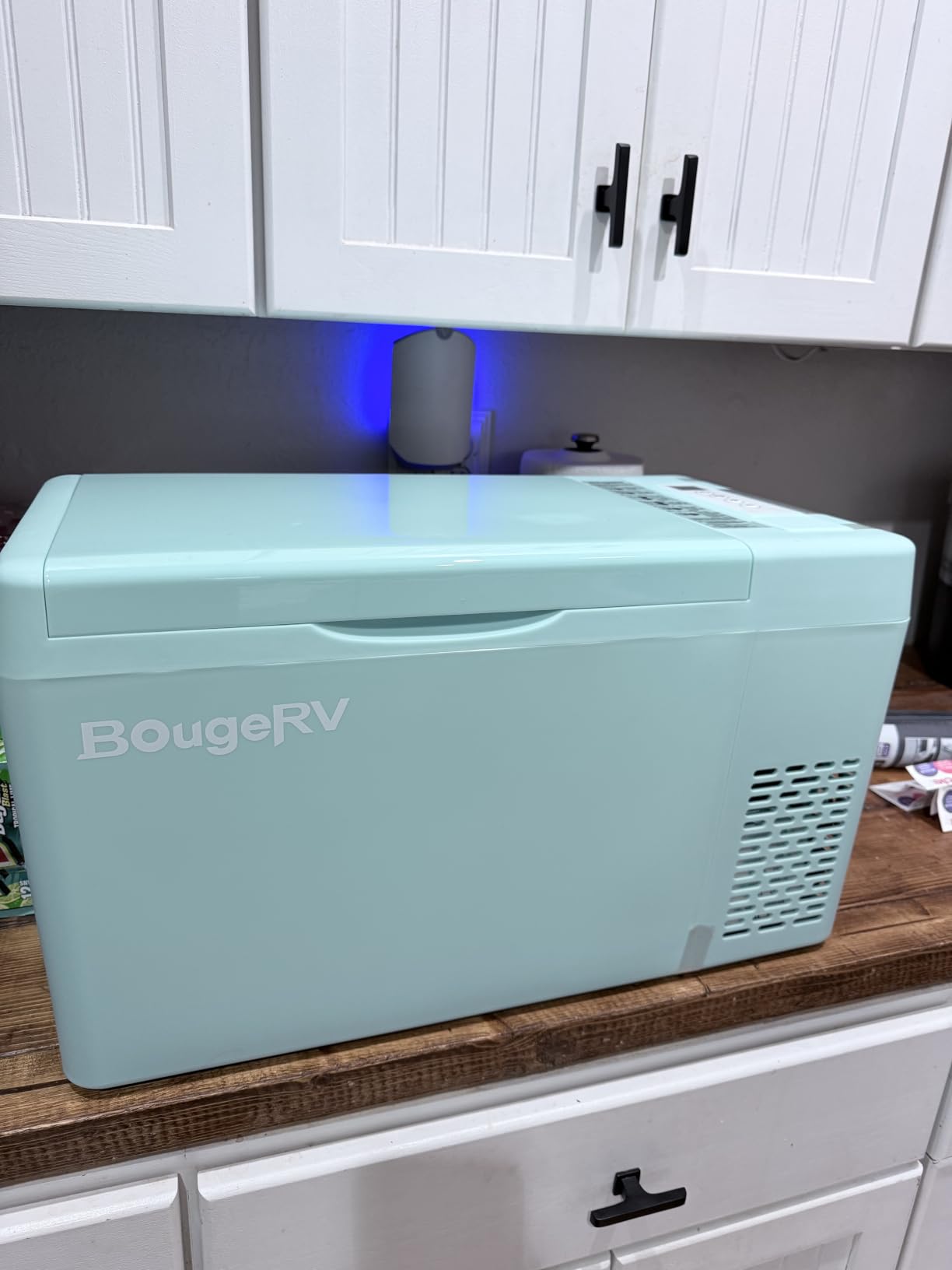
This is the fridge we ended the season with. The BougeRV CR22 drops from 77°F to 32°F in about 15 minutes and reaches -5°F in roughly 50 minutes, which is fast enough that you can load it at a fuel stop and have frozen food by the time you reach your campsite.
At 22.3 pounds and 22.68 inches deep by 12.6 inches wide, it slides under a rear bench or stands between the seats without dominating the interior. The 10.82 foot DC cord is long enough to reach from a fridge box near the bed to a fuse panel by the wheel wells, and the 6.56 foot AC adapter means you can pre-chill it at home before a trip.

Power draw was the deciding factor. ECO mode runs under 45W and MAX draws 60W, with the manufacturer claiming under 1kWh per day in normal use. Because the compressor cycles rather than runs continuously, your battery sees an average far below the peak, and three-level battery protection shuts the unit down before it can flatten a starting battery overnight.
The shock-proof shell is rated stable on 30 degree inclines, which covers washboard gravel and ramp approaches better than most competitors in this class. Noise sits at 45dB, quiet enough to sleep beside once parked. BougeRV backs the unit with a 2 year warranty and two years of tech support from the manufacturer, Guangzhou Boju Information Technology.
What you get for the power draw
If your electrical system is a 200Ah lithium bank with 200 watts of solar, this fridge’s cycle profile leaves plenty of headroom for a phone, a router and an occasional kettle. Owners running it off a small power station report that the unit stays cold for days without the station being a meaningful part of the load.
Insulation and the tight lid seal hold temperature well when the unit is unplugged, so if you park for the night with the switch off and the lid closed, food stays cold far longer than the wattage figures suggest. That single habit is the cheapest energy saving available to a van dweller.
Where it falls short
There is no internal light, so finding a small item at the bottom of the compartment means pulling everything out in the dark. Several owners also wish the unit were taller to use vertical cabinet space more efficiently, since the interior is wide and shallow rather than deep.
Insulation thickness is thinner than what you find in premium Japanese-made builds, which means faster warm-up after switch-off. And it is a corded appliance: active cooling needs a power source, so plan a permanent fused connection rather than a cigarette lighter adapter if you want it to run unattended.
2. EUHOMY 19 Quart – Best Value 12V Fridge
EUHOMY 19QT 12 Volt Refrigerator, -4℉~68℉ Electric Cooler for Car
19 qt inverter compressor
77℉ to 32℉ in 15 min
Bluetooth app control
42dB noise
Pros
- Capable budget compressor
- App control from your phone
- Quiet enough to sleep near
- AC and DC dual power
Cons
- No forced air circulation
- Small capacity of about 24 cans
- Thin walls warm faster when off
The EUHOMY is the fridge we recommend to anyone who wants genuine compressor cooling without the premium tier outlay. It reaches fridge temperature from a warm start in about 15 minutes and holds 32°F for freezing, and owners report the freezer side performing well enough for ice cream over a multi-day trip.
At 21.4 pounds and 22.44 by 12.6 by 11.42 inches, it matches the BougeRV on footprint and drops about a pound. The inverter compressor averages around 45W, closer to 30W in ECO and 49W on startup at MAX, and the annual energy consumption is listed at 220 kWh.
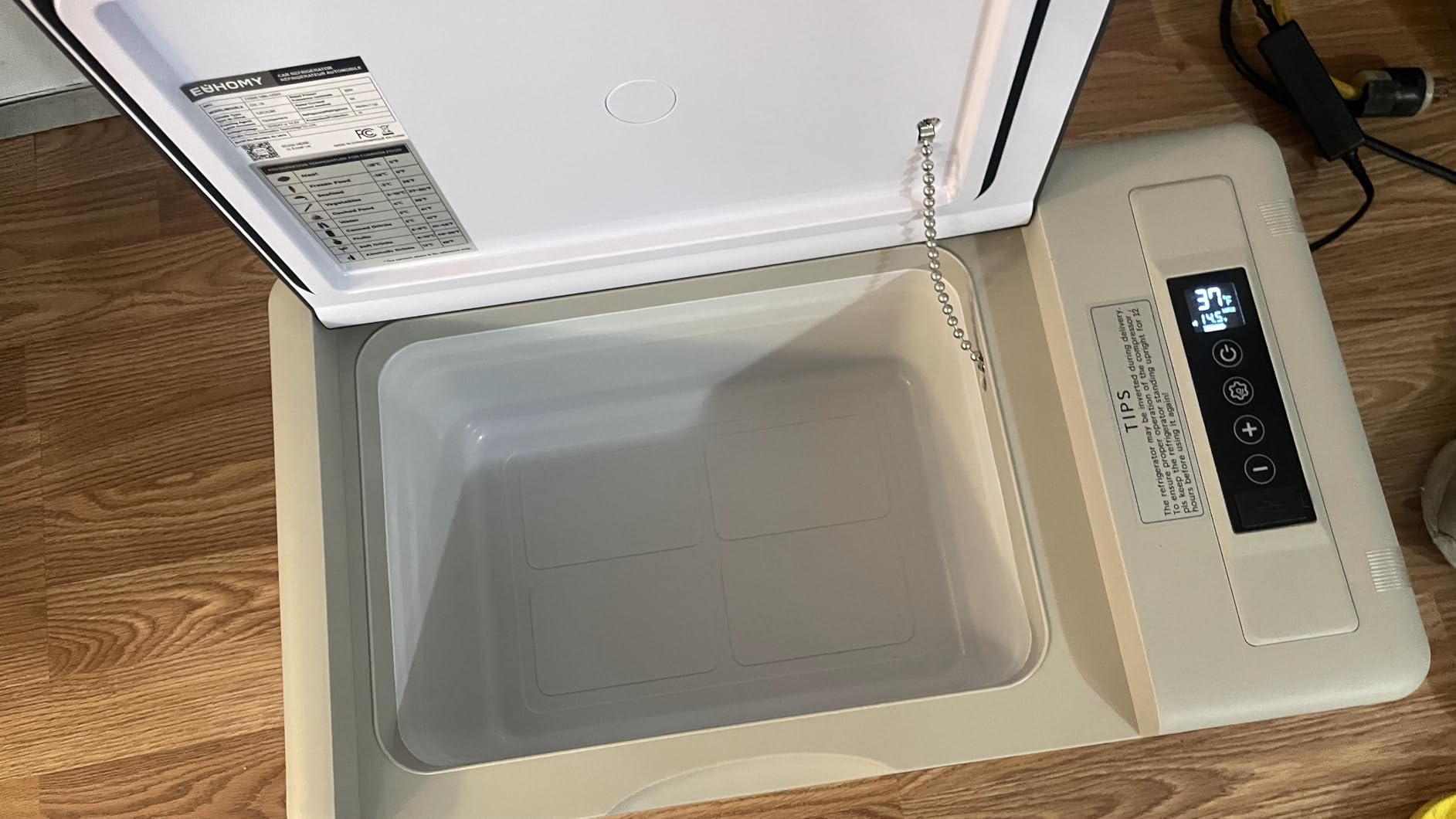
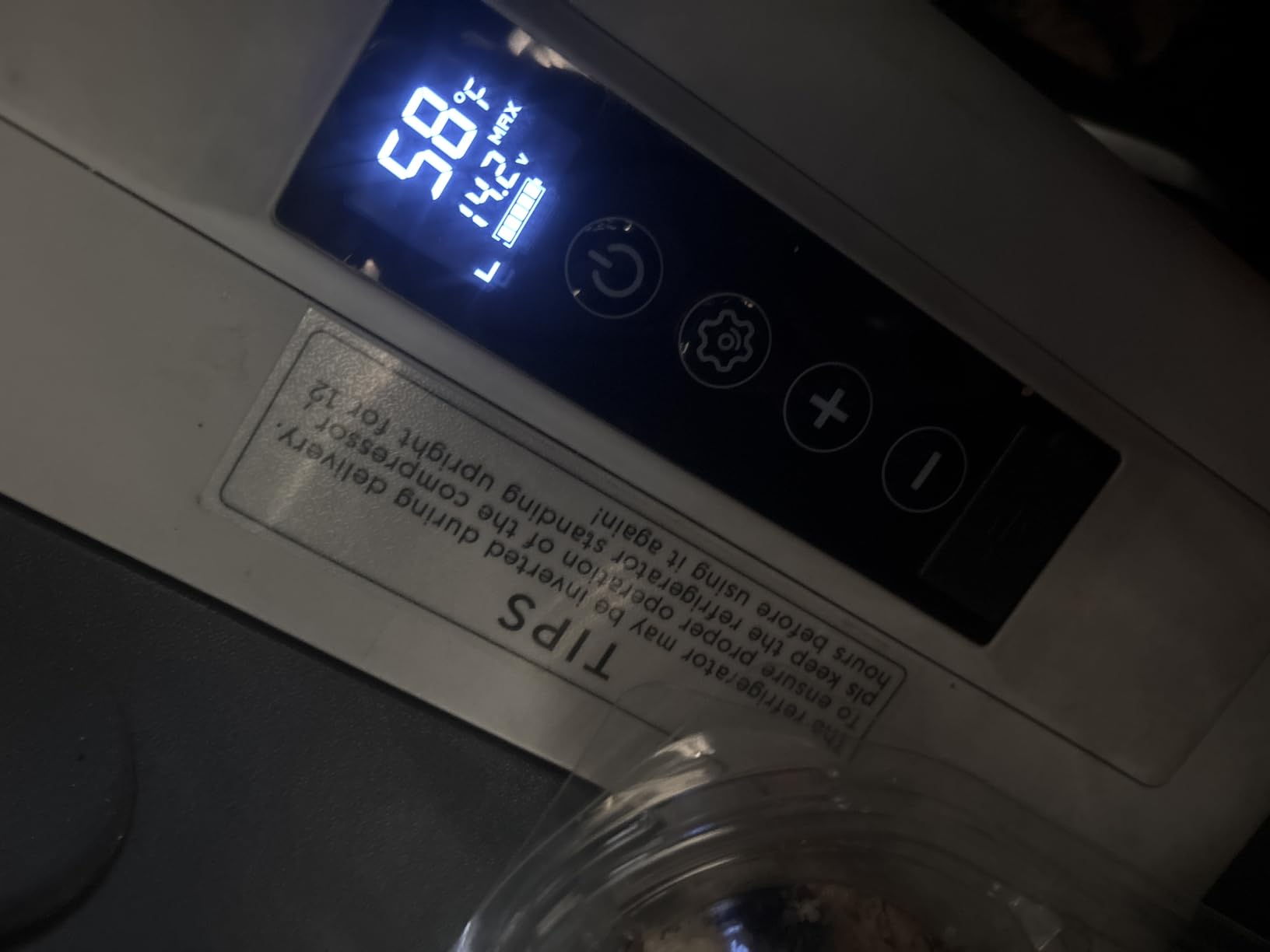
The app is the feature that separates it from cheaper coolers. Bluetooth control for Android and iOS lets you set the temperature and watch the readout from the cab or the bed, which matters in a van where the fridge sits in a cabinet you cannot easily reach. The magnetic lid seal with a rubber gasket improves insulation, and three-level battery protection offers L, M and H input modes.
Cup holders molded into the lid and a compartment light earn their keep during long drives. Running noise is rated at 42dB, which owners describe as quiet enough to sleep next to in a van or a hotel room.
Best use case: short trips and second fridge duty
This works well as a weekend unit or as a dedicated drinks cooler alongside a larger freezer. It also suits anyone running a small power station, since the inverter compressor sips power and the AC adapter means it works in a house, office or campsite with mains power.
The remote monitoring is genuinely useful when the fridge sits in a cabinet with a closed face. Setting a temperature before you climb in bed avoids opening the door and letting the compartment recover for twenty minutes.
Where it falls short
There is no forced air circulation, so stacked contents cool unevenly and the sensor reads air temperature rather than food temperature. In practice that means the item closest to the evaporator runs colder than the one against the wall, and you need to rotate stock if it sits for weeks.
Capacity is around 24 cans, and bottles only fit laid on their side. Thin walls also mean it warms faster than a thick-walled ice chest once switched off, so it is a weaker choice for unpowered storage than a passive cooler of similar size.
3. BODEGA 53QT Dual Zone – Best Split Fridge and Freezer Combo
BODEGACOOLER 12 Volt Portable Refrigerator,53 Quart Car Fridge Dual Zone -4℉-68℉,50L Car Freezer APP Control,Electric Compressor Cooler 12/24V DC and 100-240V AC for RV,Camping,Travel,Truck,Vehicles
53 qt dual zone
30 qt plus 23 qt compartments
Pulls to 32℉ in 15 min
5 year compressor warranty
Pros
- Two independently controlled zones
- Low draw once cold in ECO
- Low profile with wheels
- Built in USB port and LED light
Cons
- App needs an active Wi-Fi connection
- Slightly noisier than some rivals
- Small wheels and short handle
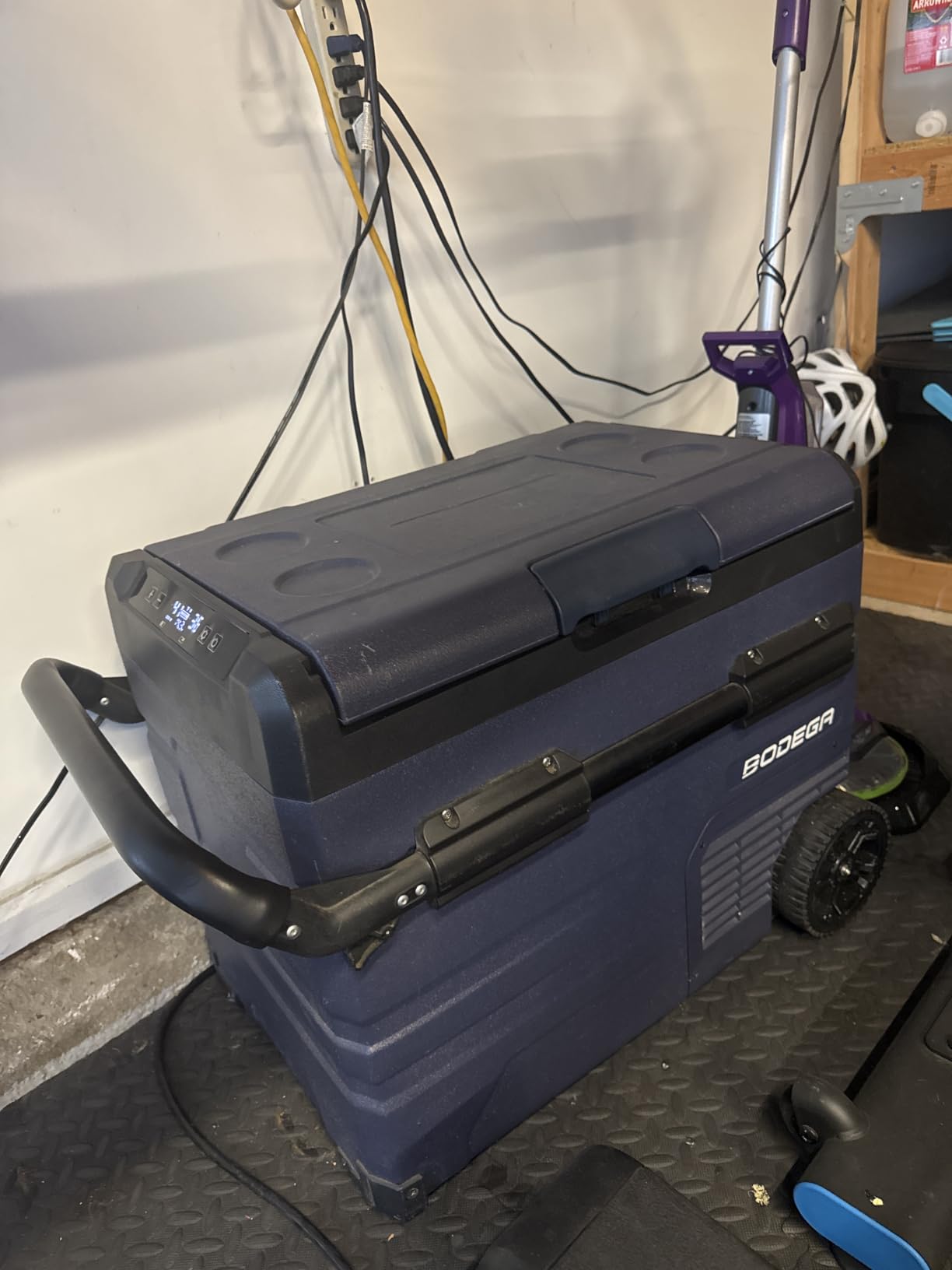
BODEGA’s 53 quart T50 is the pick for couples who want frozen and chilled food at the same time. The magnetic divider splits the interior into a 30 quart compartment and a 23 quart compartment, each with its own control across a -4°F to 68°F range.
Owners who swapped a thermoelectric cooler for this unit report three weeks of camping and multi-thousand-mile trips without a miss. Once cold, consumption in ECO mode drops to roughly 0 to 30W, which is the figure that matters for battery planning rather than the 15 minute pull-down to 32°F on MAX.
It runs on 12/24V DC and 100-240V AC, so the same box works plugged into a wall at home or a cigarette lighter on the road. The package includes the dual zone basket, a wall plug and adapter, and a set of three-level H, M and L battery protection settings.
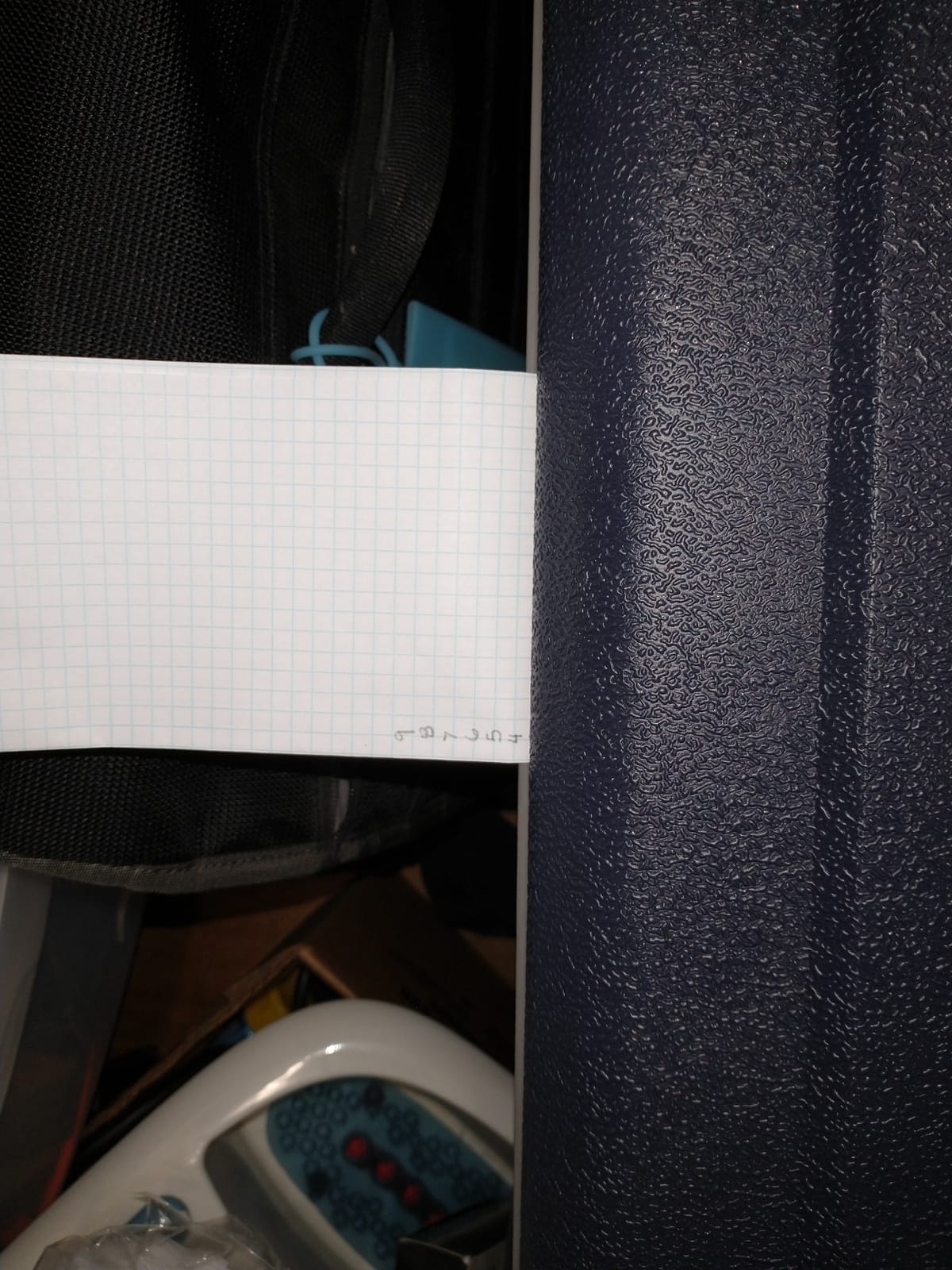
Wheeled with a retractable handle, at 38.5 pounds and 14.17 inches deep by 28.35 wide by 18.11 high, it sits low enough to slide under a bed platform without needing vertical lift. BODEGA supports the car fridge for one year and the compressor for five.
Why dual zone changes the way you pack
A single-zone box forces you to choose between a fridge and a freezer. With a split compartment you can keep a week of vegetables chilled in one side and a month of meat frozen in the other, which removes the need for a separate ice chest eating up floor space.
Because both zones are independently controlled, you can also run the smaller side as a bottle cooler at a warmer set point while the larger side stays frozen. For van builds, that flexibility usually justifies the extra width over a single-zone box of similar volume.
Where it falls short
The app is the weak point. Owners describe the interface as confusing and report that Bluetooth control needs an active Wi-Fi connection rather than working purely over a direct link, so treat remote control as a convenience rather than a system you depend on.
Removing the magnetic divider limits the box to a single condenser, which slows pull-down. The wheels are small for rough camping ground, the handle is short for taller users, and the touch panel is easy to bump with a knee in a confined galley.
4. Megiu 23 Quart – Best for Weekend Trips
Megiu Car Refrigerator 23 Quart, Portable 12V Freezer for Camping Road Trip
23 qt DC inverter
Cools to 32℉ in 15 min
Under 40dB
45W average power
Pros
- Compact footprint that fits a back seat
- Lightweight ABS shell
- Fast 15 minute pull-down
- Removable basket doubles as a serving tray
Cons
- Single zone only
- Manual defrost
- Round basket fittings waste floor space
The Megiu HC-22P2 is the pick when the fridge has to come out of the cabinet and go in the vehicle. At 20.6 pounds and 18.3 by 12.6 by 15.15 inches, it is small and light enough that one person can carry it, and owners routinely secure it on a back seat with a seatbelt.
The DC inverter compressor pulls down to 32°F in about 15 minutes and reaches -0°F within 40 minutes, and the manufacturer claims average operating power around 45W with more than 20% energy saving against a traditional compressor. Noise is rated under 40dB.
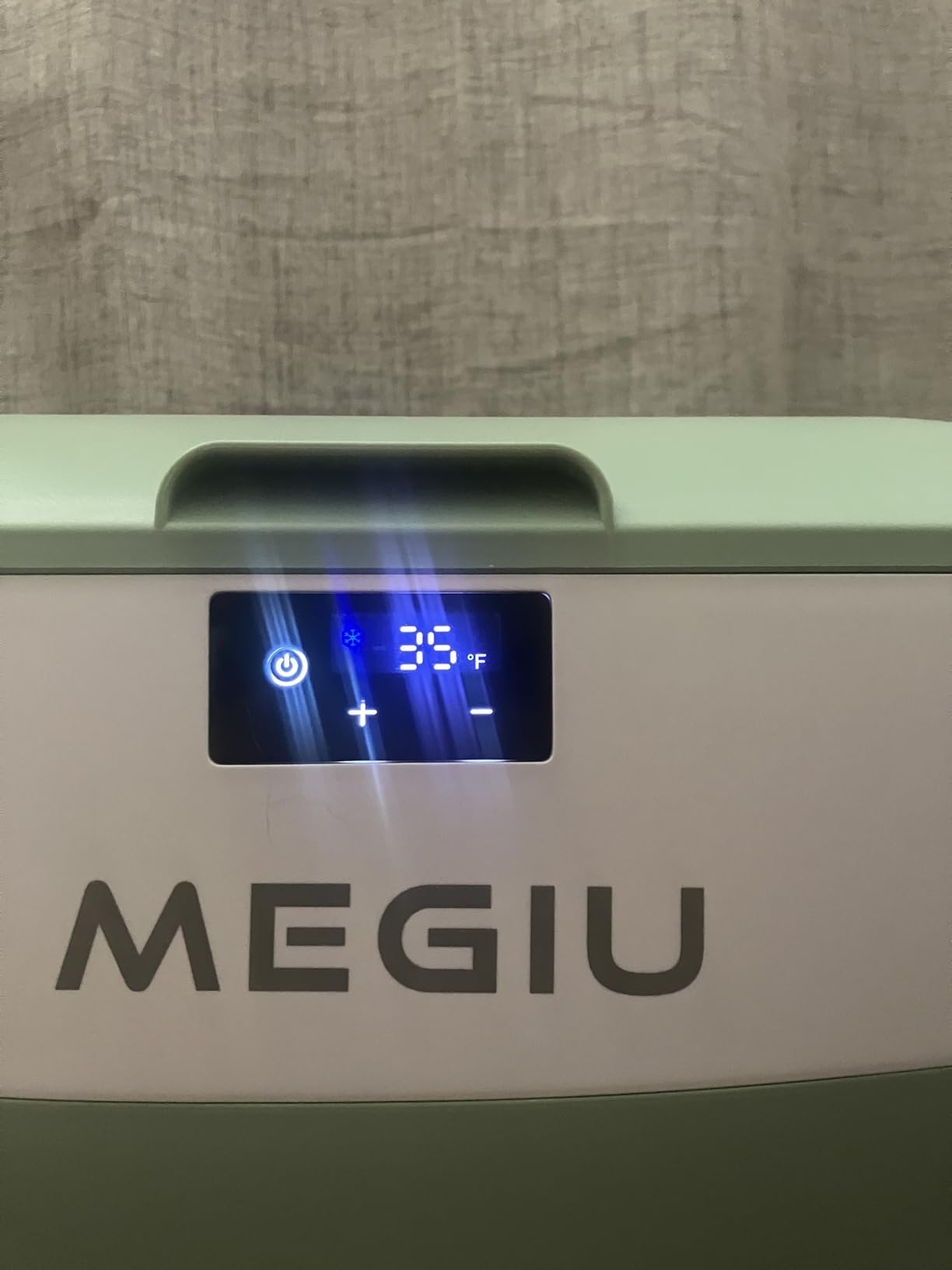
Touch control with an LED display covers a -18°C to +15°C range, which is roughly -0.4°F to 59°F. The removable basket lifts out for washing and doubles as a serving tray at camp, and the ABS shell is built for impact resistance on poor roads.
Low-voltage cutoff is automatic rather than a menu setting, and it runs on both 100-240V AC and 12/24V DC. Megiu backs the compressor for three years and accessories for one, which is longer than several rivals at this size.
Why weekend travellers like it
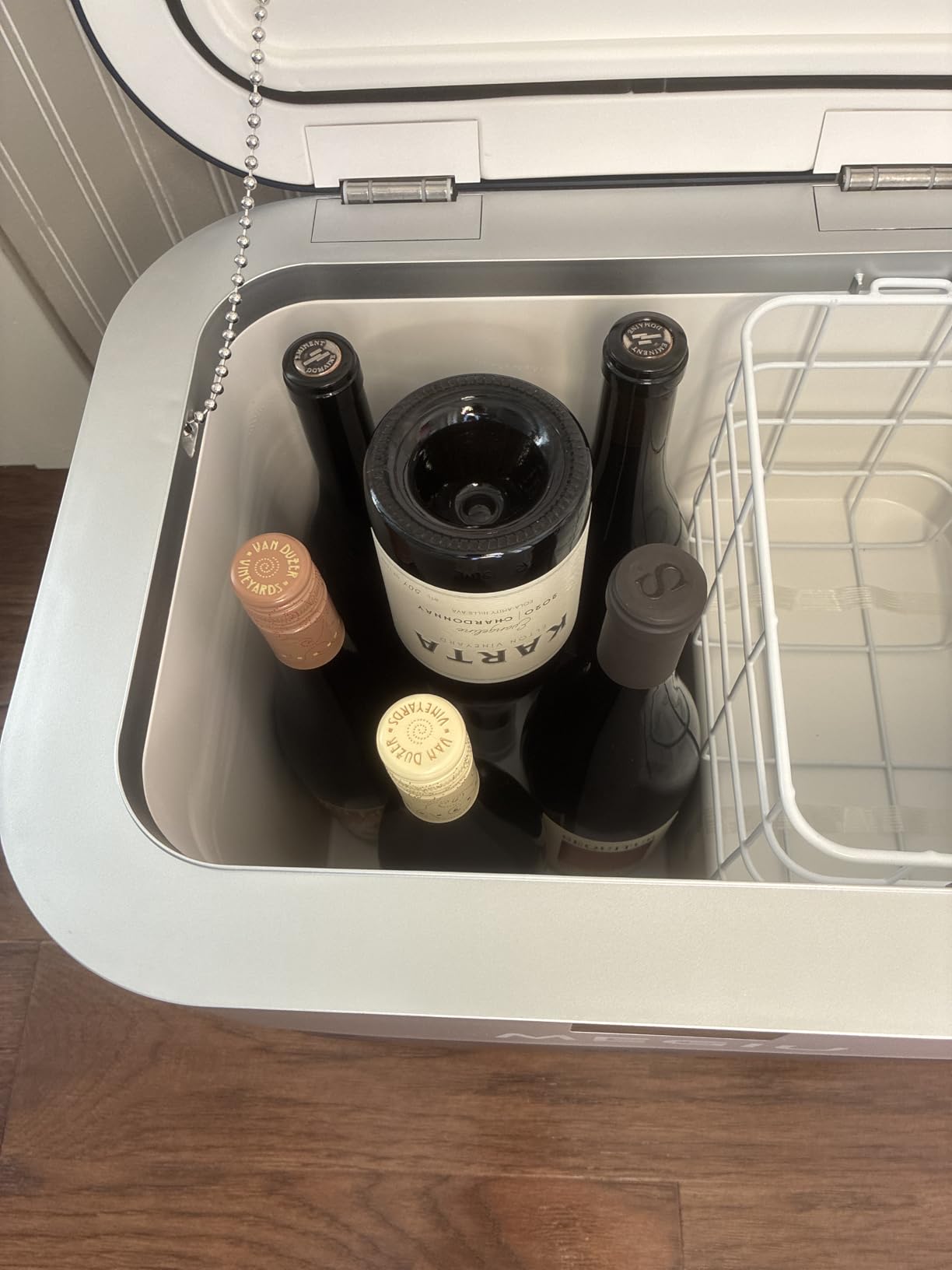
Two to three nights of food for two people fits comfortably, and the low weight matters when the fridge doubles as a portable cooler for beach days, tailgates or market trips. Under 40dB means it disappears as background noise in a sleeping area.
The 45W average draw suits a modest solar setup. On a typical weekend with the fridge running continuously, the compressor duty cycle keeps consumption in a range that a 100 to 200 watt panel can carry alongside a couple of small loads.
Where it falls short
It is a single-zone layout, so there is no way to run a fridge and a freezer at different temperatures. In a class where dual-zone boxes are now common, that is a real limitation for anyone who wants frozen food and fresh produce together.
Manual defrost means no frost-free cycling, so ice can build up on the evaporator wall over long periods and need manual clearing. The round basket fittings also reduce usable floor space, and 939 reviews is a thinner data set than the category leaders offer.
5. ICECO GO20 – Most Versatile with a SECOP Compressor
ICECO GO20 Dual Zone 12V Refrigerator, Portable Fridge Freezer with SECOP Compressor, DC 12/24V, AC 100-240V, 0℉ to 50℉, Electric Cooler for Truck, RV, SUV, Outdoor, Driving, 21 Quart, Gray
21 qt dual zone
SECOP rotary scroll compressor
0℉ to 50℉ range
5 year compressor warranty
Pros
- Genuine SECOP compressor
- Detachable partition switches single or dual zone
- ETL certified with design awards
- Two independent digital controllers
Cons
- Highest cost per liter in this group
- Two doors make each zone narrow
- 25.5 pounds is heavy for the size
- R-134A refrigerant
The compressor is the reason to buy the ICECO GO20. It runs a genuine SECOP rotary scroll unit, and owners with four years of continuous use describe it as efficient and genuinely dual zone. Named compressor makers are the most useful durability signal in this category, because the compressor is the part that fails.
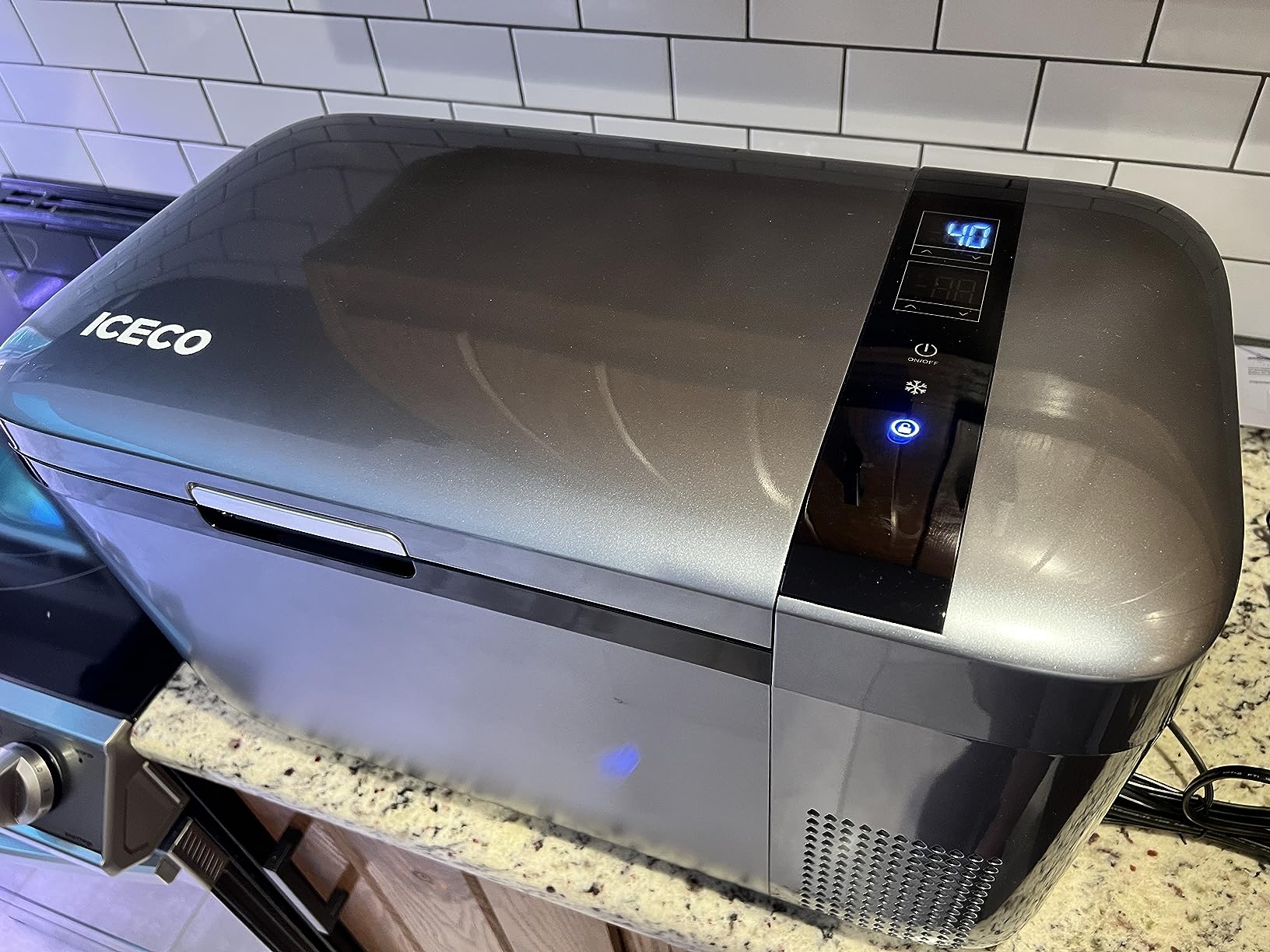
Its detachable partition is the cleverest feature we found. Pull the divider out and the box switches automatically between single and dual zone modes, so you get a fridge plus freezer split when you need one and full 21 quart capacity for a long haul when you do not. Two independent digital controllers run each zone.
The cooling range is 0°F to 50°F, and fast cooling mode draws limited power while pulling temperature down. Anti-bump construction keeps the compressor stable under 40 degrees of tilt, which is what you want on rutted desert track. It runs on 12/24V DC and 100-240V AC with app control from the cab.
It is ETL certified and has won a German Red Dot and an IDEA International Design Excellence Award. ICECO warrants the compressor for five years and accessories for one, which is the strongest compressor coverage among the picks in this roundup.
What you pay for a named compressor
This is the highest cost per liter in the group, and that gap is the price of the SECOP unit plus the shell insulation around it. If you plan to run the fridge 24 hours a day for years, the compressor warranty and the efficiency of a named rotary scroll are worth the difference.
For full-timers and anyone who cannot afford a second fridge replacement mid-season, that long compressor life usually pays back. Short trips on a tight budget are better served by one of the mid-tier units further down this list.
Where it falls short
Two doors on a compact 12.6 by 22.4 by 12.4 inch footprint means each zone is narrow, so wide trays and large containers will not fit through the opening easily. At 25.5 pounds it is heavy for a 20 liter box.
It also runs R-134A, an older and higher global-warming-potential refrigerant than the R-290 or R-600A used by newer rivals. That has little effect on daily running but is worth knowing if you cross borders with strict refrigerant rules.
6. Feelfunn 61QT Dual Zone – Best for Rough Roads
Feelfunn 12 Volt Refrigerator Car Fridge 61QT Dual Zone Electric Cooler
61 qt dual zone
-4℉ to 68℉
ECO under 30W
Stable at 40 degrees tilt
Pros
- Large capacity in a compact footprint
- Independent zone control
- Low 30W ECO draw
- Side fixing holes for strapping down
Cons
- 28.74 inch body needs a wide cargo floor
- 38.8 pounds is a two-person lift
- No app or Bluetooth control
The Feelfunn CF026-58BL is built for vans driven hard. Four fixing holes on both sides let you strap it to a cargo floor with ratchet or rope, and the shock-proof construction holds stable at 40 degrees on bumpy terrain, the highest tilt rating among the dual-zone boxes here.
Capacity is 58 liters, or 61 quarts, split into two independently controlled zones across a -4°F to 68°F range. Pull-down reaches 32°F from 77°F in 15 minutes and -4°F in 45 minutes, with ECO under 30W and MAX at 50W, under 1kWh per day in normal use.
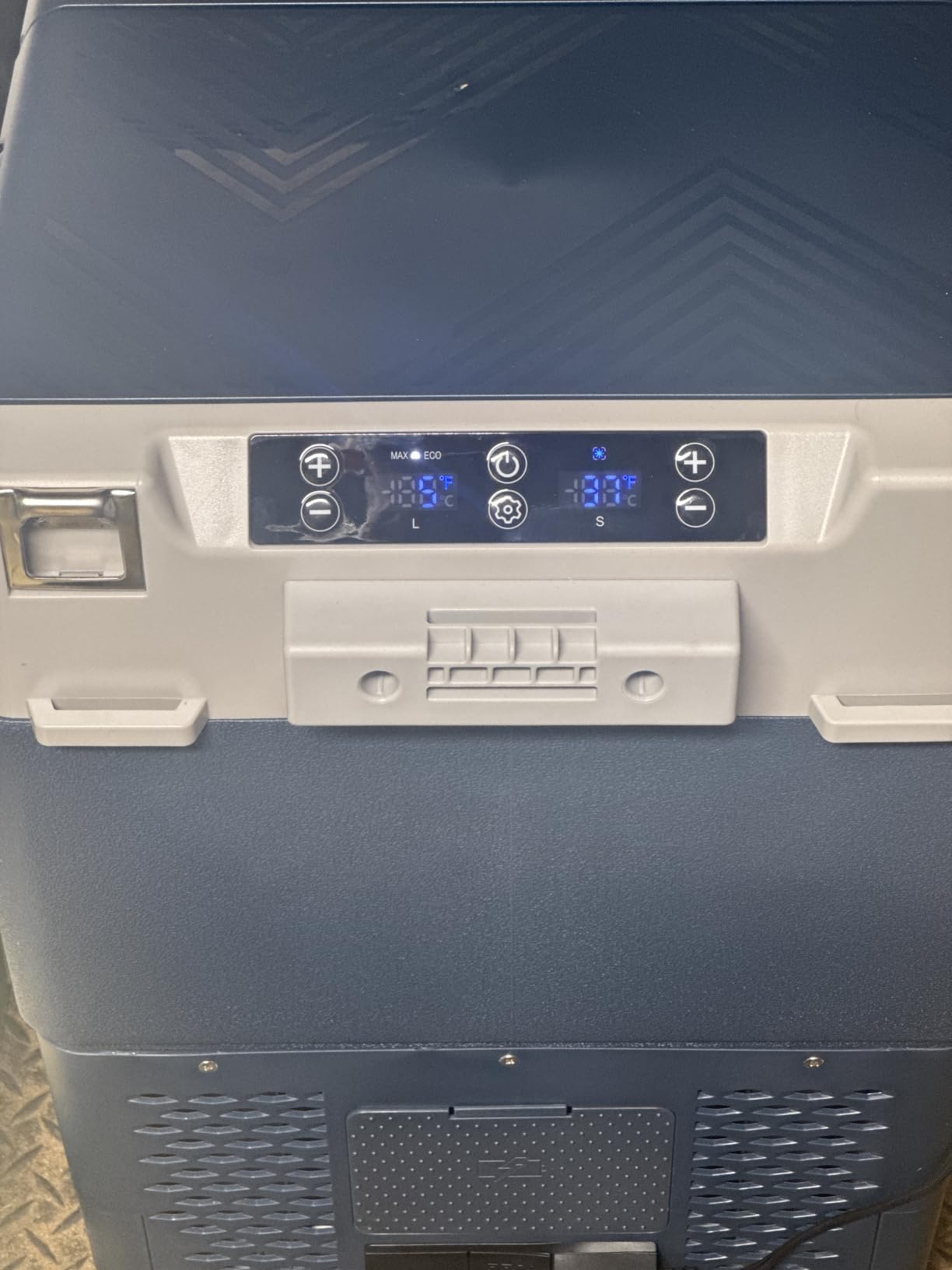
Running noise is 45dB, low enough for a sleeping setup, and the removable basket, bottom drain and auto-on interior LED make cleaning straightforward. A three-level battery protection setting guards the vehicle electrical system, and the unit is UL certified.
At 38.8 pounds and 16.14 by 28.74 by 22.05 inches, this is a wide box. It suits a van or pickup with a flat open cargo floor rather than a small hatchback, and the annual energy consumption is listed at 207 kWh.
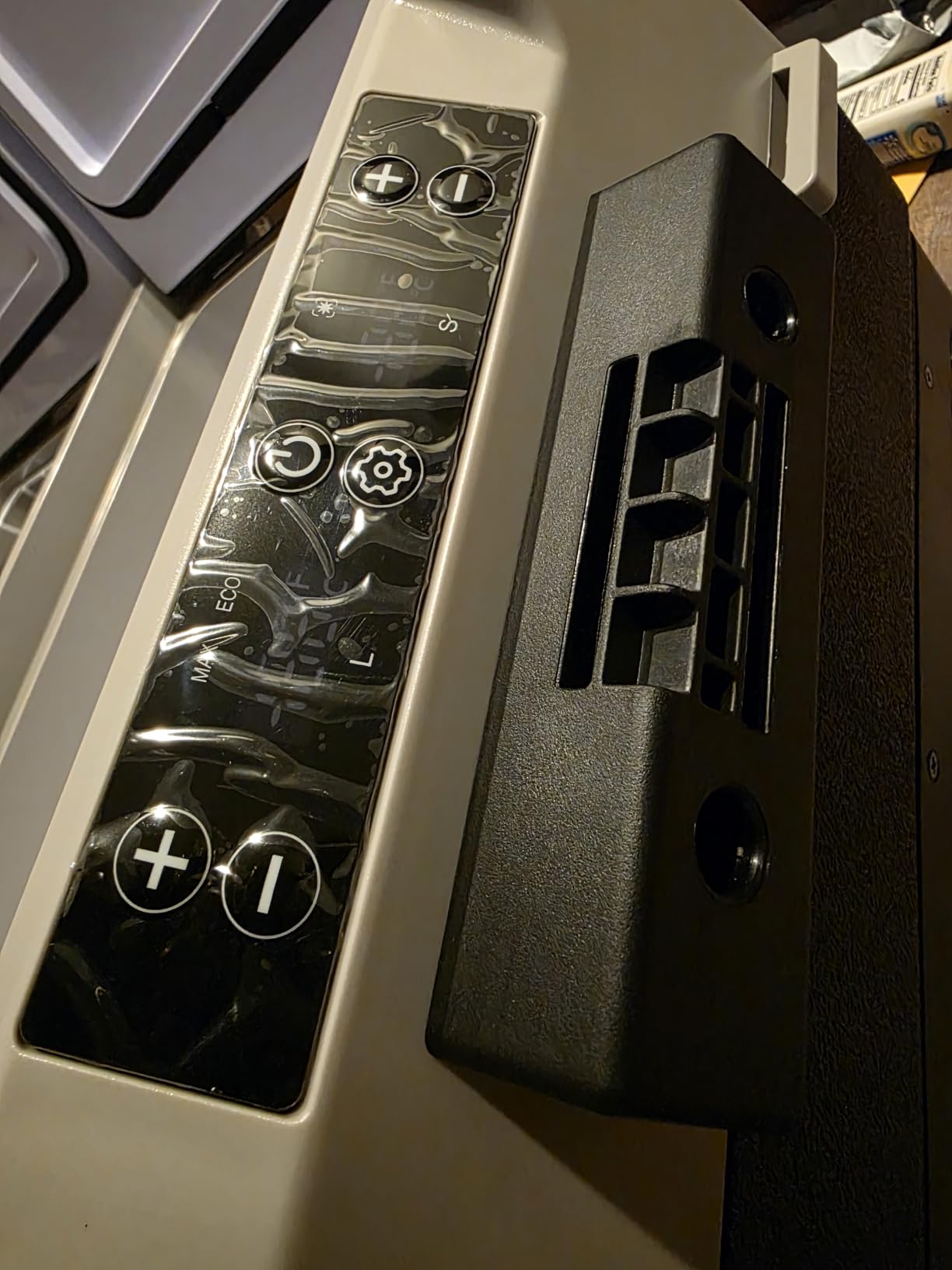
Where the side fixing holes matter
On washboard gravel, an unsecured appliance walks across the floor. The four side holes give you something to tie to, and combined with the 40 degree tilt stability that is the difference between a fridge that survives a season of bad roads and one that ends up against a wheel arch with a cracked liner.
The drain in the base is also more useful than it sounds. After a wet week or a muddy gear store, you can wash out the compartment without tipping the whole box.
Where it falls short
The 28.74 inch width and 38.8 pound weight are the practical limits here. It needs a wide, open cargo area, and lifting it solo into a high cargo floor is a genuine struggle for many people.
There is no app or Bluetooth control listed, so all temperature changes happen at the panel. For a fridge mounted out of reach in a cabinet, that means either reaching in or planning your set points before you close the door.
7. BODEGA 79QT Dual Zone – Best for Full-Time Van Life
BODEGA COOLER Car Refrigerator Dual Zone,79QT Portable Freezer -4°F to 68°F, 12V Electric Cooler with Wheels & Handle, Ultra-Quiet ≤31dB, Fast Cooling for Camping, RV, Van Life & Road Trips
79 qt dual zone
31dB or quieter
Cools to -4℉ in 72 min
IPX4 splash resistant
Pros
- Quietest large dual zone unit tested
- Weeks of food for two
- One-hand movement on wheels and handle
- Splash resistant shell with sealed power jack
Cons
- 49 pounds is heavy
- 33.5 inch width needs a large cargo floor
- Slower pull-down than smaller boxes
- No built-in battery
This is the fridge we would put in a build intended to live in, not one intended to be visited. At 75 liters across two zones, the BODEGA MCD75-WH holds a full weekend of food for two people, and it runs at 31dB or below, the quietest large dual-zone unit we tested.
That noise figure matters in a van where the fridge sits beside your head. At 31dB it reads as background hum rather than an appliance cycling on and off every few minutes, which is the difference between sleeping next to a fridge and sleeping next to a fridge you stop noticing.
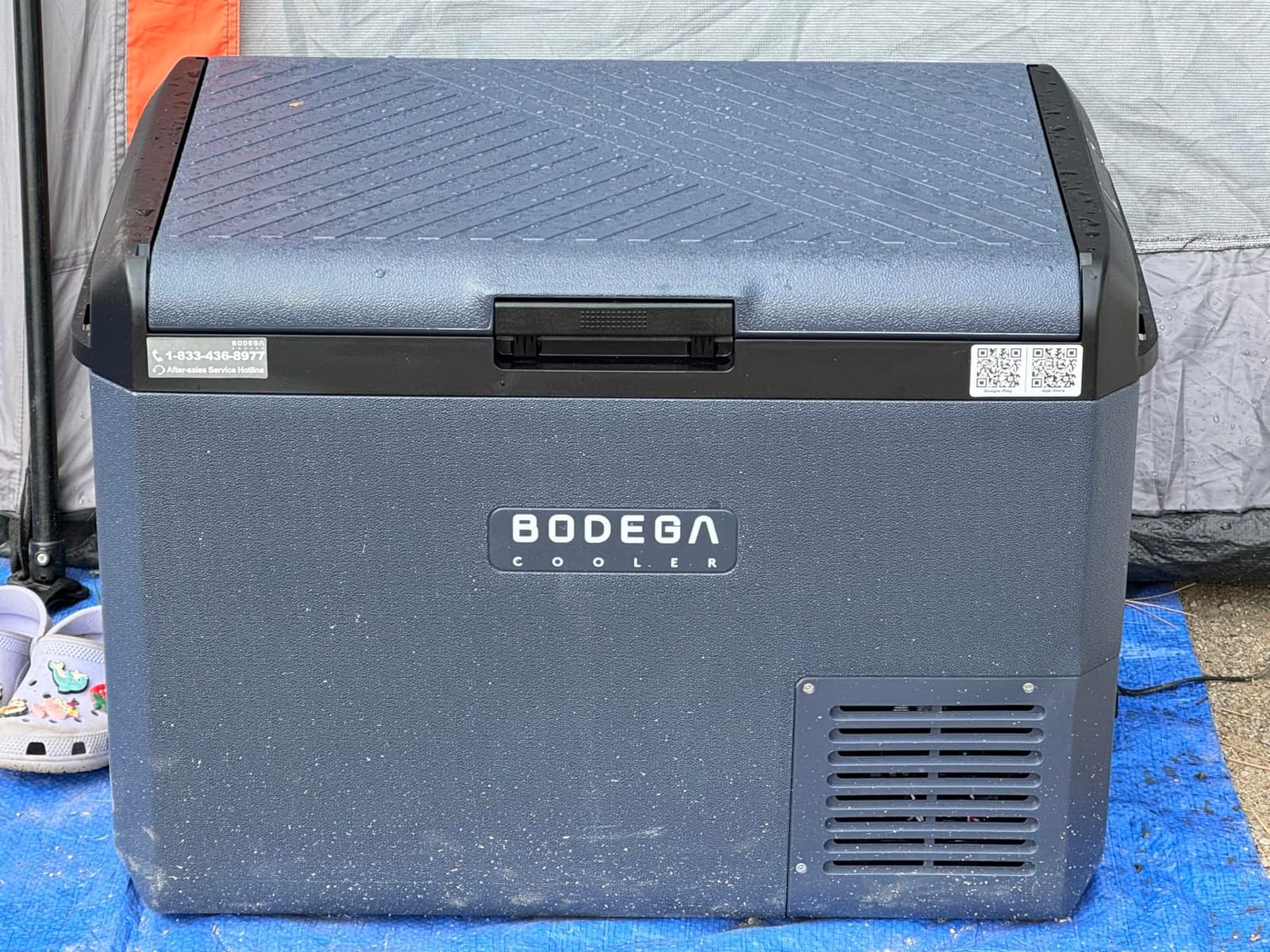
It reaches 32°F to 68°F across the dual zones and cools to -4°F in about 72 minutes, up to 22% faster than standard electric coolers according to the manufacturer, though it still takes longer than smaller units to reach full freezer temperature. Annual energy consumption is listed at 100 kWh, the lowest figure among the larger boxes here.
Built-in wheels and a pull handle let one person move it fully loaded, dual removable reversible doors mean you can open from whichever side suits your galley, and a freezer light plus LCD display make sorting food in the dark easier. The IPX4 splash-resistant shell and silicone sleeve on the power jack suit wet campsite conditions, and ten side expansion holes allow for mounting.
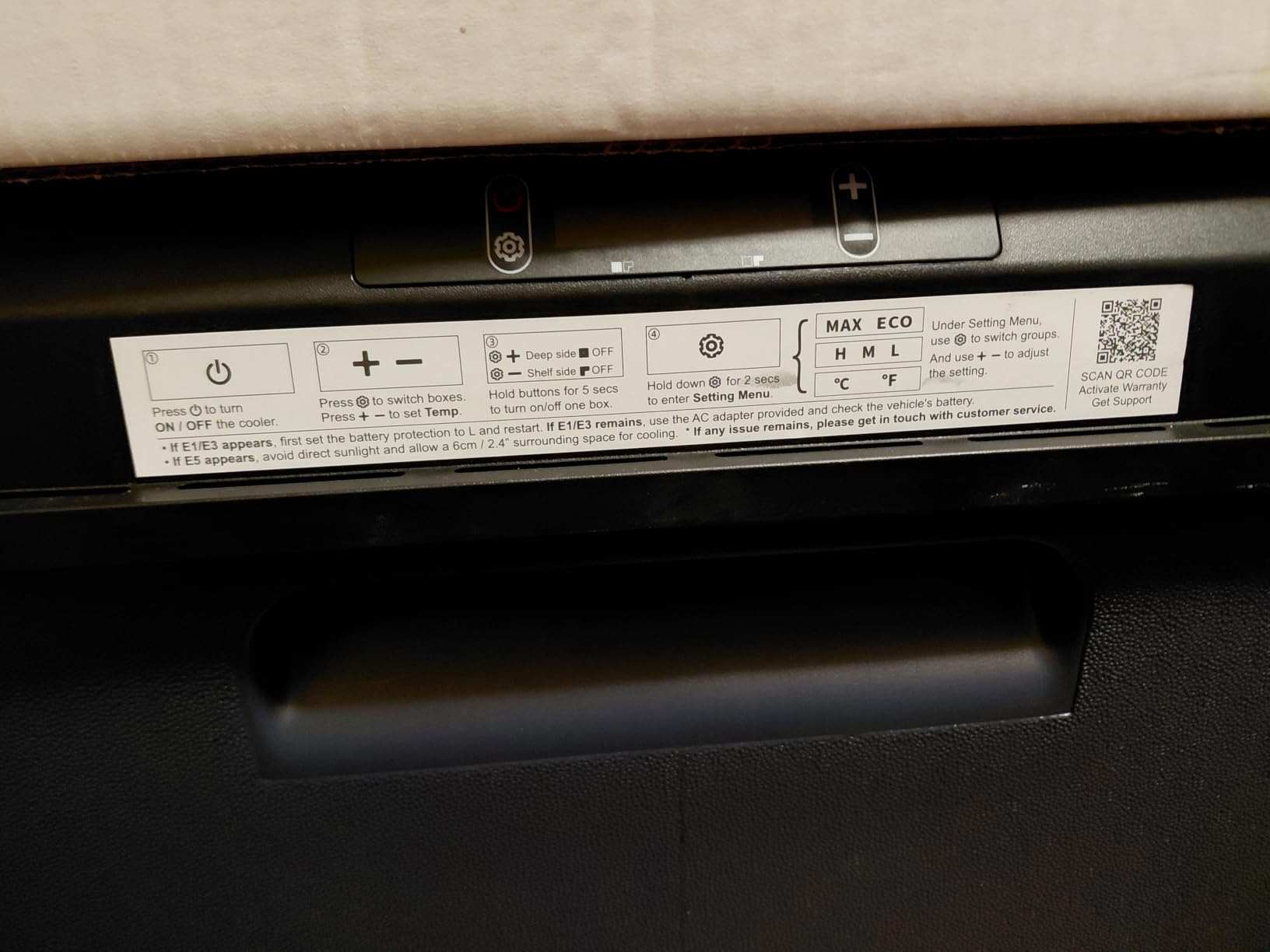
Capacity and quietness for 24 hour running
Full-timers buy food less often and cook more, which means a bigger box that holds a week’s shop and a compressor quiet enough to run overnight without waking you. This combination of 79 quarts and sub-31dB noise is what separates it from the smaller dual-zone options.
The app works on Android and iOS alongside manual controls, and H, M and L battery protection plus ECO and MAX modes give you real control over draw. Owners report consistent temperatures with no warm spots across either compartment.
Where it falls short
At 49 pounds and 33.5 inches wide by 18.3 inches high, this is a large object that needs a large flat floor. Getting it into a van through a side door or over a wheel arch takes planning.
It reaches -4°F more slowly than smaller units, and it runs on external power only with no built-in battery, so cordless use is not an option. The 72 minute pull-down is the slowest in this roundup.
8. EKOJUCE 69QT – Best for Hot Desert Climates
EKOJUCE 12V Refrigerator 69QT Portable Freezer with Wheels
69 qt capacity
-4℉ to 68℉
42W working draw
Stable at 40 degrees tilt
Pros
- Holds 37℉ in 100 degree sun
- Quieter than a smaller rival
- 42W draw suits 24V LiFePO
- Froze half a pig over a 12 hour drive
Cons
- Black shell absorbs direct sun
- Handles feel weak long term
- Small noisy wheels
- F1 fault code near 12.1V
The EKOJUCE XCFU-65 is our desert pick. Owners report it holding a steady 37°F inside 100 degree heat in direct sun, which is exactly the scenario that forces weaker units to run continuously and drain a battery bank over a multi-day stop.
Working draw is around 42W, a friendly figure for a 24V LiFePO4 bank. One owner froze half a pig of meat across a 12 hour drive without thawing, and others rate it quieter than a smaller BougeRV unit, which is unusual for a box in the 65 liter class.

Capacity is 65 liters, or 69 quarts, with a detachable baffle that splits or joins the two storage areas. Shock-proof construction holds stable when tilted 40 degrees during off-road driving, and three-level battery protection guards the electrical system. The unit is UL certified with a one year manufacturer warranty.
Two handlebars and off-road wheels make the size manageable, and four cup slots in the lid plus a side bottle opener are genuinely useful at camp. Note that the unit must stand upright for 24 hours before first use.
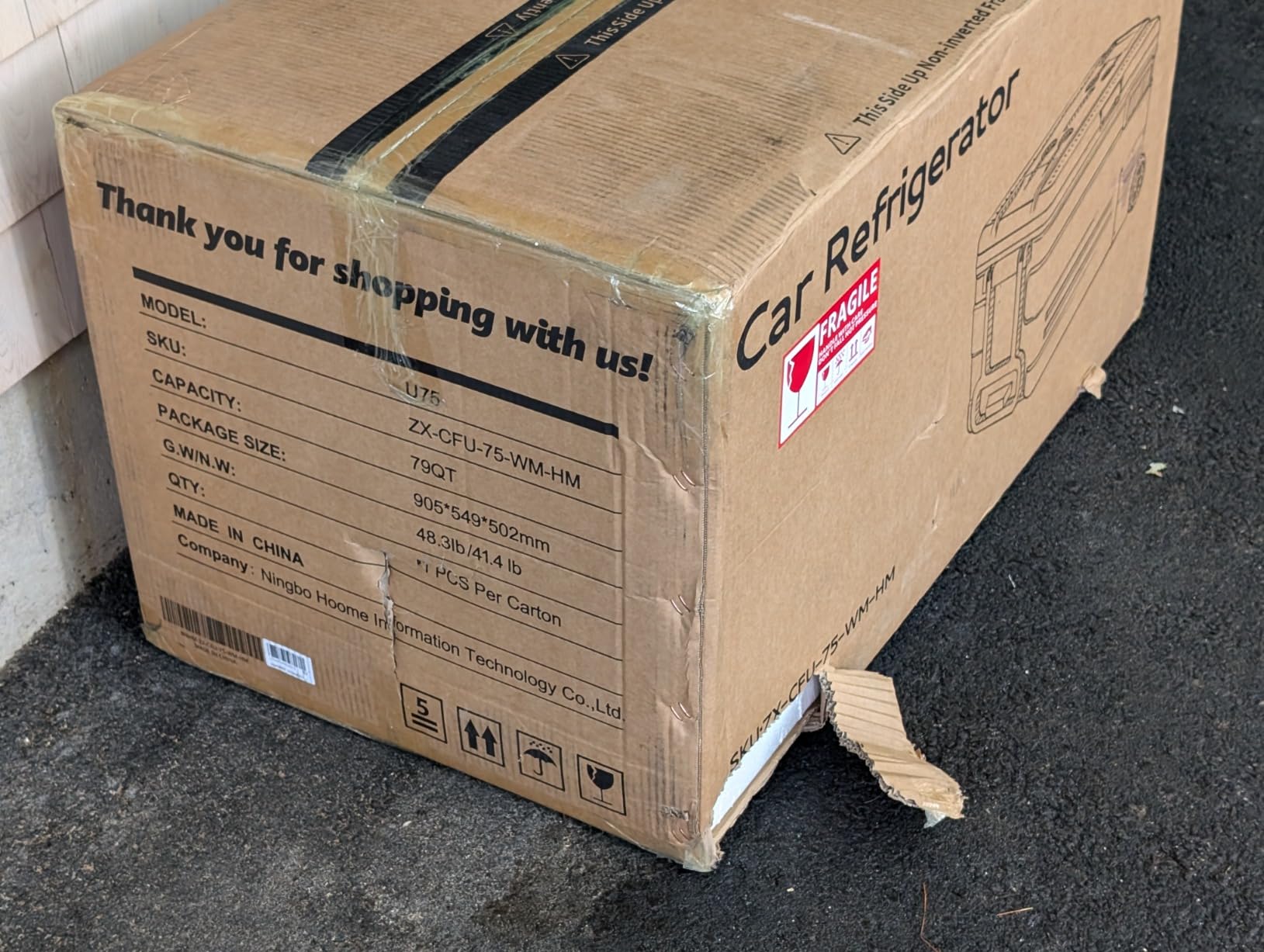
How it handles heat the spec sheet cannot show
Ambient temperature is the single biggest factor in how hard a compressor works, and it is the number most product pages leave out. A fridge that holds 37°F in direct desert sun is running far fewer duty cycles than the same fridge holding 40°F at a coastal campsite in October.
The practical takeaway is that if you travel hot, judge capacity claims by reported hold temperature in heat rather than by wattage alone. Lower average draw in high ambient heat is what buys you extra days off-grid.
Where it falls short
The exterior is black only, and black absorbs solar heat noticeably in parked vehicles. Shade the box where you can, or expect the compressor to work harder for part of the day.
Owners report an F1 fault code when input voltage drops near 12.1V, so it needs a stable power supply rather than a marginal one. Handles feel less strong over long-term use, wheels are small and noisy on pavement, and 156 reviews is the thinnest data set in this roundup, which means less long-term evidence.
9. VEVOR 21.1 Quart – Best for Sleeper Cabs
VEVOR 12 Volt Refrigerator, 21.1 QT/ 20L Car Fridge, Portable Ultra-Light EPP Freezer, APP Control Electric Compressor, 12V/24V DC, 14℉ to 50℉, for Truck Van RV SUV Boat Travel Camping
21.1 qt EPP body
15.2 pounds
Cools 68℉ to 32℉ in 18 min
Storage bag included
Pros
- Lightest pick at 15.2 pounds
- Compact for a daycab sleeper
- App connects easily
- Storage bag included
Cons
- Reported uneven temperature swings
- Some units stop cooling after months
- Beeps from a loose plug
- Water pools in the base
The VEVOR FE20 weighs 15.2 pounds, the lightest fridge in this roundup, and that single number decides it for anyone working out of a daycab sleeper or a small car. The EPP body is tough and crack resistant, and the box measures 12 by 18 by 15.4 inches.
Its upgraded compressor cools from 68°F to 32°F in 18 minutes, and the freezer range covers 14°F to 32°F with refrigeration from 32°F to 50°F. Display switches between Fahrenheit and Celsius, three-level battery guard protects the vehicle, and a storage bag is included with the cigarette lighter cable.
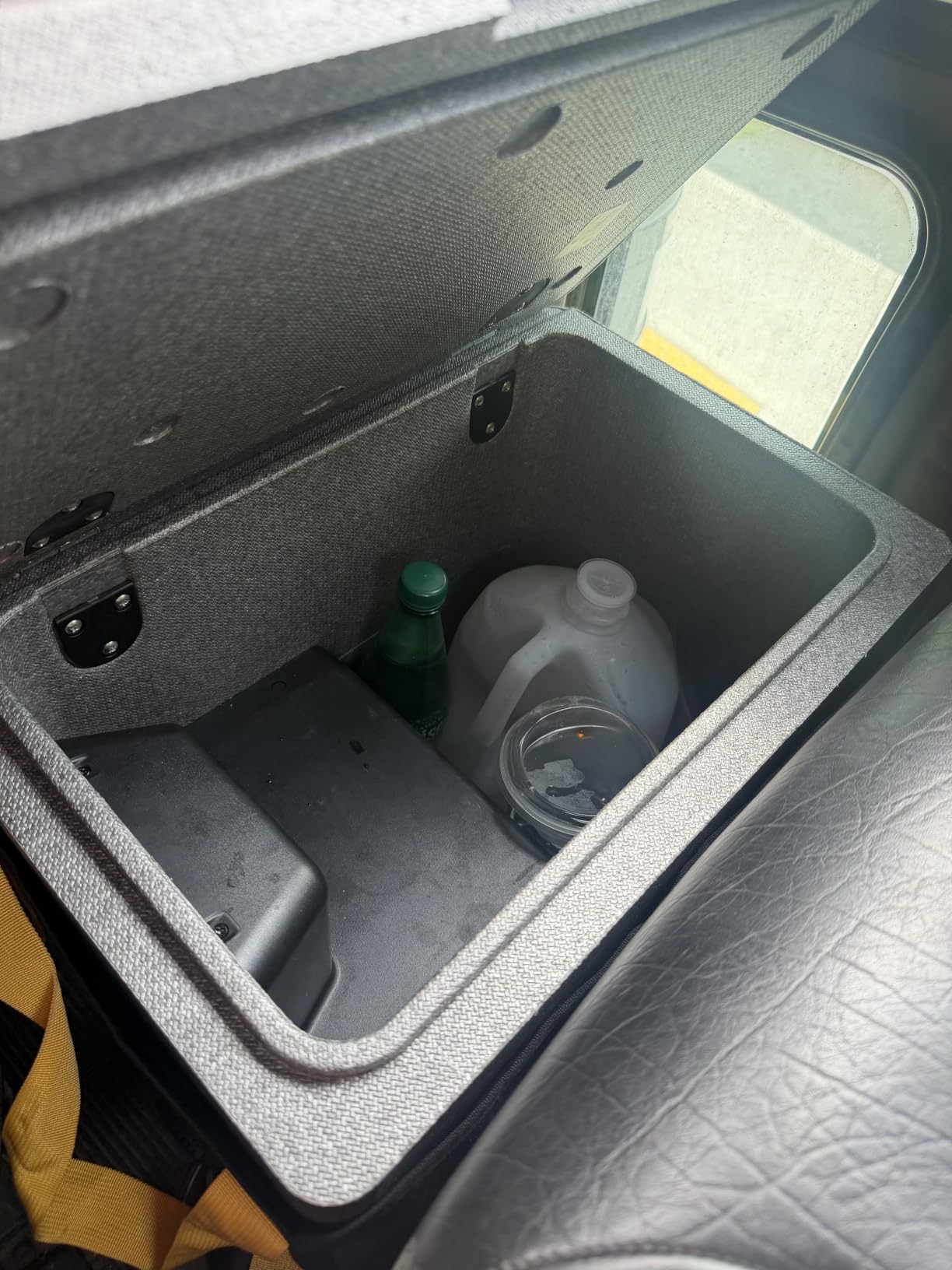
Owners value the app, which connects easily and uses little power, and many report it holding temperature through hot-weather work-truck use, including within a few degrees of set point in 108 degree heat. It runs happily off an off-grid solar setup and on 12V/24V DC.
Annual energy consumption is listed at 151 kWh, and it runs on R-600A refrigerant, a modern low-impact choice compared with the R-134A used by some rivals here.
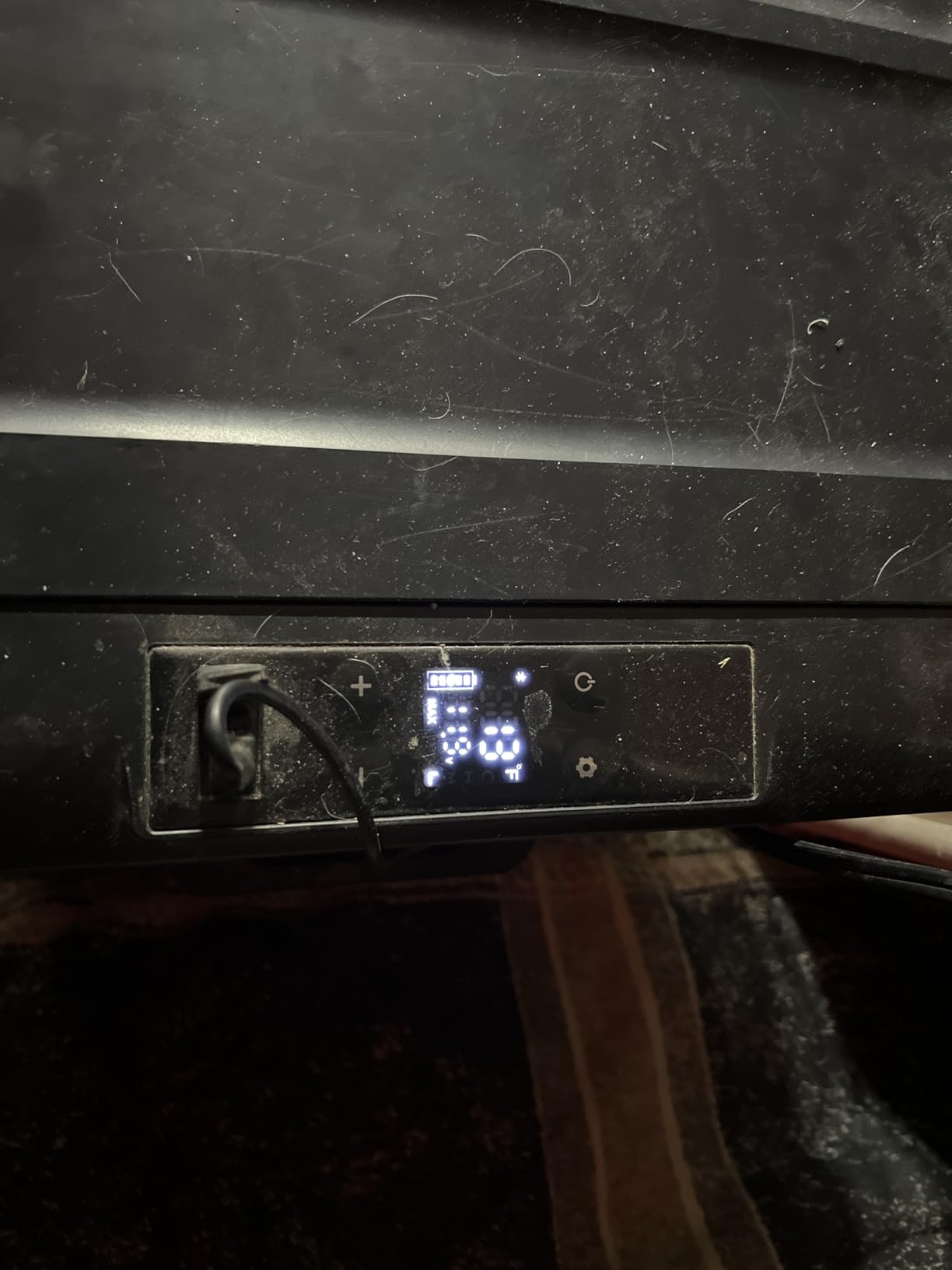
Best fit: anyone who carries their fridge
When the fridge has to come out of the vehicle at every stop, weight is the first consideration and capacity is second. At 15.2 pounds you can lift a loaded VEVOR with one hand, which is not something you can say about a 49 pound dual-zone box.
For truckers and daycab sleepers it doubles as a personal fridge, and the included storage bag means it moves between the cab and a duffel without being scratched.
Where it falls short
Reliability reports are mixed. Some owners describe temperature swinging from 24 to 50 degrees when set to 40, and a few report units that stopped cooling after several months. The auto low-voltage cutoff also measures current while running, which makes the cutoff point less accurate than a voltage-only system.
It can beep repeatedly while driving from a loose power plug connection, water can pool in the bottom of the compartment, and 207 reviews is a thin base of evidence for long-term reliability. Treat it as a weekend and truck-fridge tool rather than a full-time van appliance.
10. EKOJUCE 11 Quart – Best for Tiny Rigs
EKOJUCE 12V Refrigerator 11QT Portable Freezer Electric Cooler
11 qt compressor cooler
17 pounds
Cools 68℉ to 32℉ in 10 min
Below 40dB noise
Pros
- Smallest and lightest footprint
- Owners cannot hear it running
- Quick 15 minute pull-down from 115℉
- AC and DC cables included
Cons
- Usable interior smaller than photos suggest
- Not suitable for gallon jugs
- One report of fan failure under a year
- Detachable lid can pop off
When cabinet space is the constraint, the EKOJUCE CF029-10 answers it. At 10 liters, 17 pounds and 16.34 by 12.2 by 11 inches, it fits where nothing else on this list will, and it pulls from 68°F to 32°F in 10 minutes with no load.
Owners report running noise below 40 decibels to the point where they cannot hear it, and the temperature setting is remembered after unplugging, which saves a nuisance on every campsite arrival. ECO and MAX modes cover the two usual use cases.
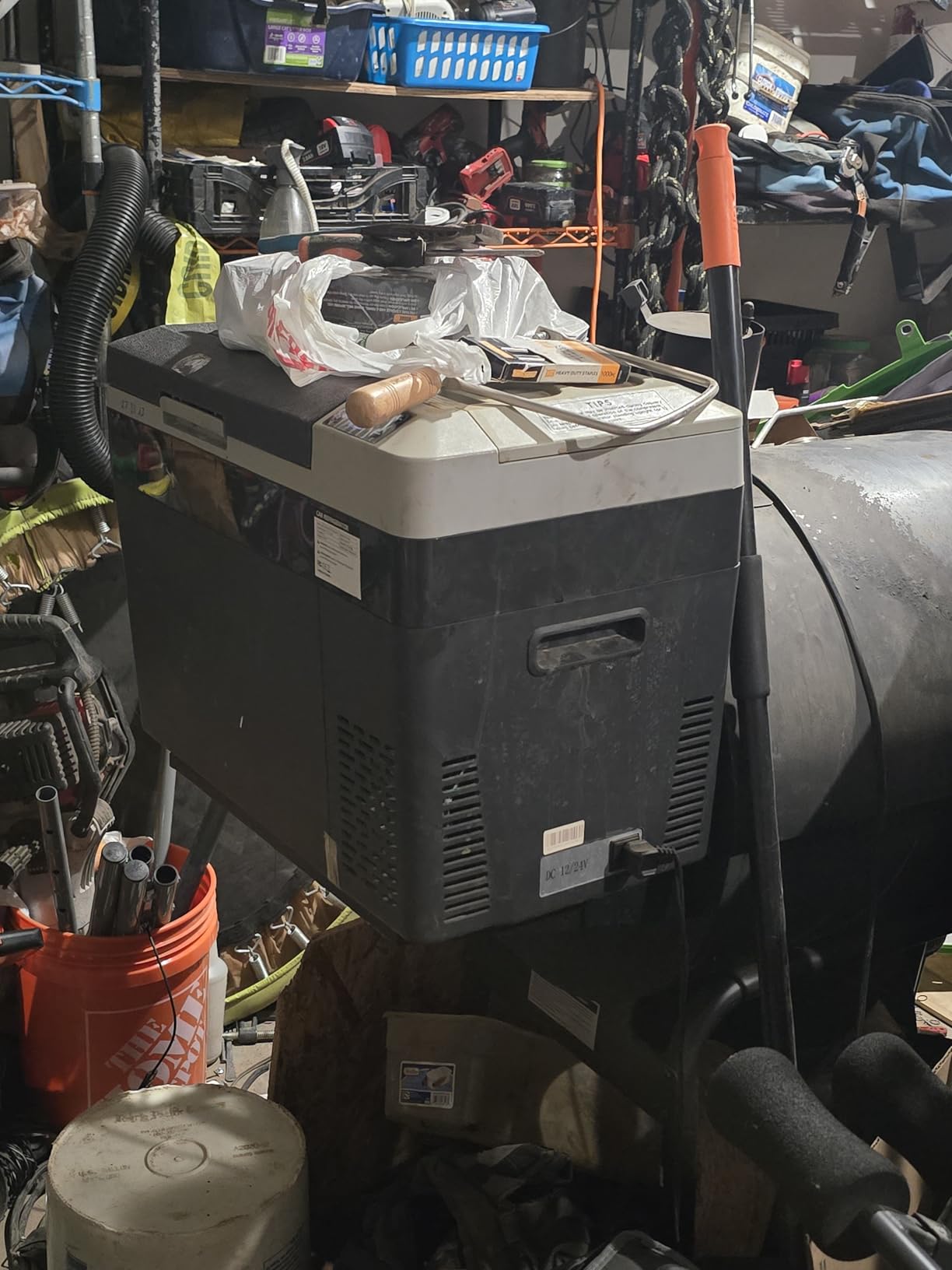
Three-level voltage protection uses H1, H2 and H3 settings with power-off memory and compressor delay protection, which is more granular than most units at this size. Shock-resistant construction keeps it stable on a 45 degree slope, the steepest rating in the roundup, and it runs on 100-240V AC and 12/24V DC.
A detachable carry handle makes outdoor carrying straightforward, and the range covers -4°F to 68°F. Like the larger EKOJUCE, it needs to stand upright for 24 hours before first use.
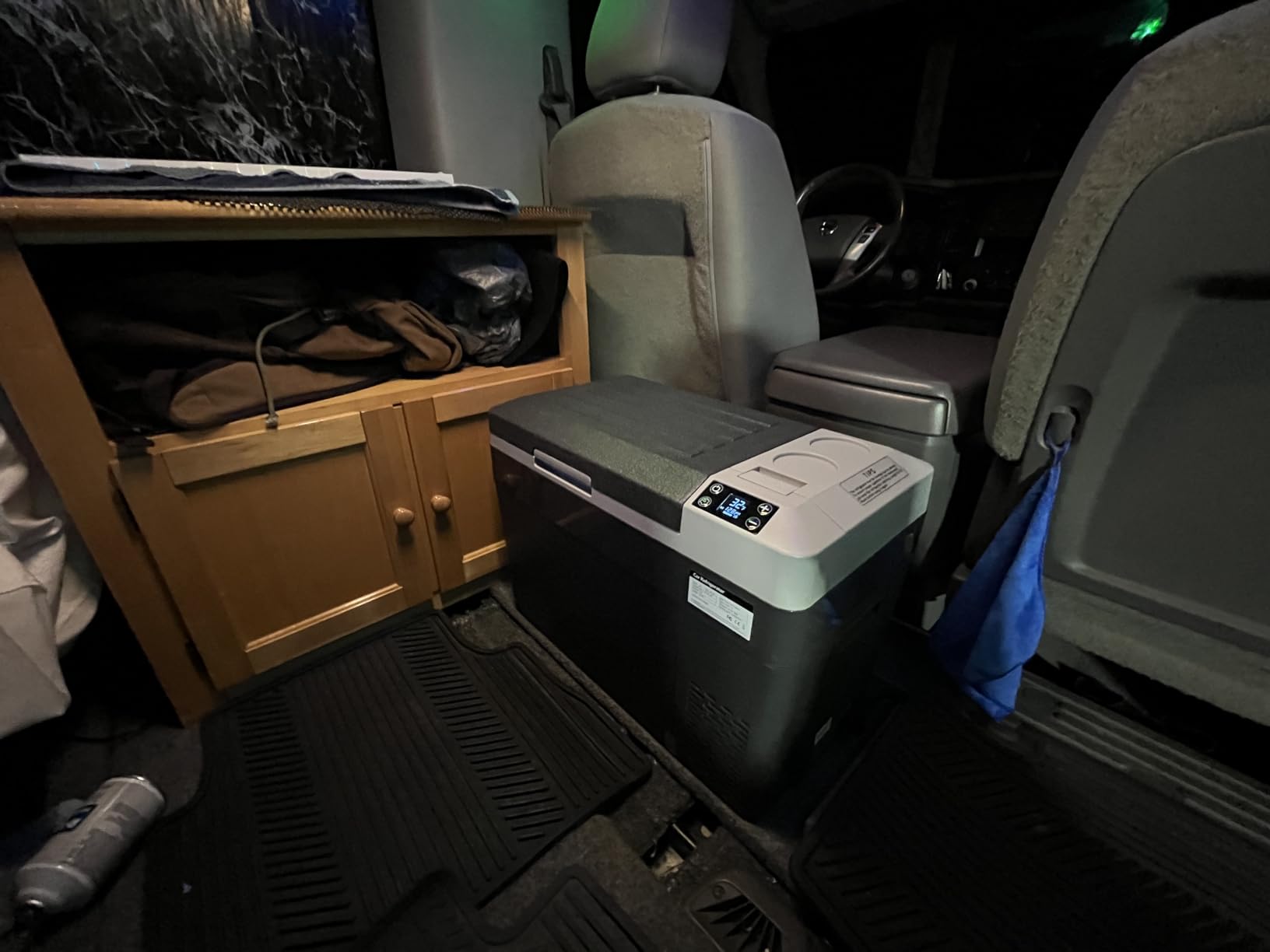
Best use: drinks, medication and a small frozen block
Ten liters is enough for a weekend of cans, a few small containers and a bag of ice or a small frozen block. It is a sensible second fridge for a person who wants chilled drinks without hauling 30 liters around, and a good fit for anyone storing temperature-sensitive medication on a long drive.
Because it draws little and runs under 40dB, it also works as a small freezer for overnight freeze-thaw cycles during a long drive without meaningfully loading the electrical system.
Where it falls short
The usable interior is smaller than the product photos suggest because the cooling mechanism takes up a large share of the compartment. It will not take gallon jugs, and best suits individual cans and small containers.
One owner reported fan failure and loss of cooling in under a year of heavy road use, the lid is not a fixed hinge and can pop off at certain angles, and the condenser mass makes it heavier than a typical plug-in cooler of this size. Basing a long-term decision on 300 reviews is thinner evidence than the leaders offer.
How to Choose a 12V Fridge for a Van Build
Match capacity to how many people are aboard
Size the box by travelers and trip length, not by wishful thinking. A solo traveler on three to four day trips is well served by a 10 to 23 quart unit such as the VEVOR or Megiu. A couple away for one to two weeks should be looking at 50 to 80 quarts of split storage, where the BODEGA 53QT or EKOJUCE 69QT sit.
Families running a van as their only vehicle need a large dual-zone box and should treat the freezer side as the constraint. A bigger box that holds a week of fresh food is more useful than a smaller one you have to restock every second day.
Budget for width as well as volume. Two of the largest units here measure 28.74 inches and 33.5 inches across, which fits most vans but not a small European layout. Measure the cabinet opening before you fall for a capacity number.
Do the battery runtime math before you buy
Average daily amp draw is the number that decides whether your solar array keeps up. A quality 12V compressor fridge typically averages somewhere around a third to half of its rated running wattage over a full day, because the compressor cycles rather than runs continuously.
Work it out from the wattage figures in the table above. For a fridge running at about 30W in ECO once cold with roughly a 35% duty cycle, that is around 10W continuous, or 10 amps at 12V, which lands near 10Ah per 24 hours. A fridge holding 45W more continuously in high ambient heat can reach 25 to 35Ah per day.
On a 200Ah lithium battery bank, a 25Ah per day fridge leaves roughly seven days of runtime before the bank reaches its usable floor, which is a realistic figure once you account for what else is on board. Size your solar for the fridge plus your real load, not for the fridge alone, and remember that solar gains are strongest in summer while fridge duty rises in summer heat.
Form factor: chest, upright or drawer
Every pick in this roundup is a chest (top load) unit, and that is the right default for most builds. Top-loaders lose less cold air when opened, which matters because cold air sinks and a vertical-opening fridge dumps its entire charge every time the door swings.
The catch is build geometry. A top-loading box needs bench space above the opening, so if your galley is designed with a horizontal-opening drawer front, a chest fridge will not fit without cutting the cabinet differently. Upright front-load units use vertical cabinet space better but cost more energy per cycle. Slide-out drawer fridges need custom cabinetry and are the least flexible option for a first build.
Compressor, absorption or thermoelectric
Compressor is the only realistic technology for van life today. It moves heat out of an insulated box with a small refrigerant loop, reaches true freezer temperature, and runs on short cycles. Every unit here uses one.
Thermoelectric coolers cannot reach freezing, run continuously, and work against a 40 degree temperature difference before they stall entirely. They are only useful for keeping drinks cool at around 60°F. Absorption fridges run on LP gas, take hours to cool down, and use no battery at all, which appeals to someone who already carries gas for cooking, but they are slow and heavy.
Ventilation and where the heat goes
Yes, 12V fridges produce heat, and that heat has to leave the van. A compressor fridge moves heat out of the insulated compartment and dumps it through a condenser, so it is effectively a heater pointed at the outside of the box. In an enclosed van interior, that heat raises the ambient temperature around the fridge.
Leave clearance around the condenser vents rather than burying the box in a sealed cabinet. Aim for a few inches of free air at the vent openings, avoid a closed face directly against the condenser, and keep airflow along the length of the box. If your cabinet cannot provide clearance, choose a model with vents on a face that vents into open space rather than into the cabinet void.
Single zone or dual zone
Single zone is simpler, cheaper and gives you one usable volume. Dual zone costs more and splits that volume, but it lets you run a fridge and a freezer simultaneously, which removes the need for a separate ice chest and stops cold and warm food sharing the same space.
Our advice is simple: single zone for a solo traveler buying one fridge, dual zone for a couple or family buying one fridge. If you only plan to ever own one appliance, dual zone is the more flexible choice even with the smaller compartments.
Warranty reality and the compressor inside
Warranty length is one of the least honest numbers in this category. A stated five year compressor warranty may exclude the electronics, the controller or the lid, and return shipping is often paid by the owner in both directions. Some brands require the serial number printed on the box, and keeping the original packaging for the full warranty period is a common condition.
Ask one question before buying: which compressor is inside? Units built around a named manufacturer such as SECOP or Danfoss are easier to reason about than anonymous compressors, and a company that stocks parts domestically is far more likely to have your unit repairable in year three. Long-term owners consistently treat the compressor brand, not the badge on the front, as the real durability signal.
Installation checklist
Pre-chill on shore power at home for several hours before your first trip so the fridge does not spend its first battery hours pulling ambient temperature down. That single step removes the highest-draw period from your departure battery state.
Run a properly fused cable from a fuse panel rather than a permanent cigarette lighter socket, size the fuse above the fridge’s rated current, and set the battery protection level to the highest setting that still lets it run without cutting out. Leave the ventilation clearance described above, secure the box so it cannot walk on rough roads, and clean the condenser dust off every few months.
Frequently Asked Questions
What is the best 12V fridge for van life?
The BougeRV 23 Quart is the best all-round 12V fridge for van life. It pulls from 77℉ to 32℉ in about 15 minutes, runs under 45W in ECO mode, carries three-level battery protection and has the largest owner base in this category at 3119 reviews. For durability specifically, the ICECO GO20 runs a named SECOP compressor with a five year compressor warranty.
How long will a fridge run on a 12V battery?
Divide daily amp draw by battery capacity. A compressor fridge averaging 25Ah per day on a usable 200Ah lithium bank gives roughly eight days, and a lower-draw fridge at 10Ah per day stretches that to around 20 days. Add your solar daily gain and subtract every other load on the bank. Pre-chilling on shore power before departure removes the heaviest first day.
Which 12V fridge is the best value for money?
The EUHOMY 19 Quart offers the strongest value in this roundup. You get an inverter compressor averaging about 45W, genuine freezing, Bluetooth app control, 42dB running noise and both AC and DC leads. Its main compromises are no forced air circulation, which cools stacked contents unevenly, and capacity of roughly 24 cans.
Do 12V fridges need ventilation?
Yes. A compressor fridge rejects the heat it removes from the box through condenser vents, effectively acting as a heater pointed outward. Leave several inches of clearance at the vent openings and avoid sealing the condenser face against a cabinet wall, or the unit runs hotter, works harder and draws more current. Keep the vents facing open space rather than an enclosed cavity.
What is the best 12V compressor fridge for a campervan?
For a campervan with a couple of travelers, the BODEGA 53QT is the strongest fit. It splits into a 30 quart and a 23 quart compartment with independent control across -4℉ to 68℉, drops to 32℉ in 15 minutes on MAX, and draws only about 0 to 30W in ECO once cold. Its five year compressor warranty also outlasts most rivals.
Final Verdict
The best portable fridges for van life come down to your electrical system and your cabinet, not the brand badge. For most builds the BougeRV 23 Quart is the safest buy, with the fastest pull-down in its class, a 45W ECO ceiling, three-level battery protection and the deepest review base we could find.
Buy the ICECO GO20 if compressor longevity is your priority and you can accept narrow zones. Buy the EUHOMY 19 Quart if you want most of the capability for less. For a couple living out of the van, the BODEGA 53QT gives you separate fridge and freezer compartments at a draw low enough to live on modest solar.
Whichever you choose, pre-chill it at home, leave clearance around the condenser, and check who pays return shipping before you rely on the warranty. Check the current details for each pick before you buy.