
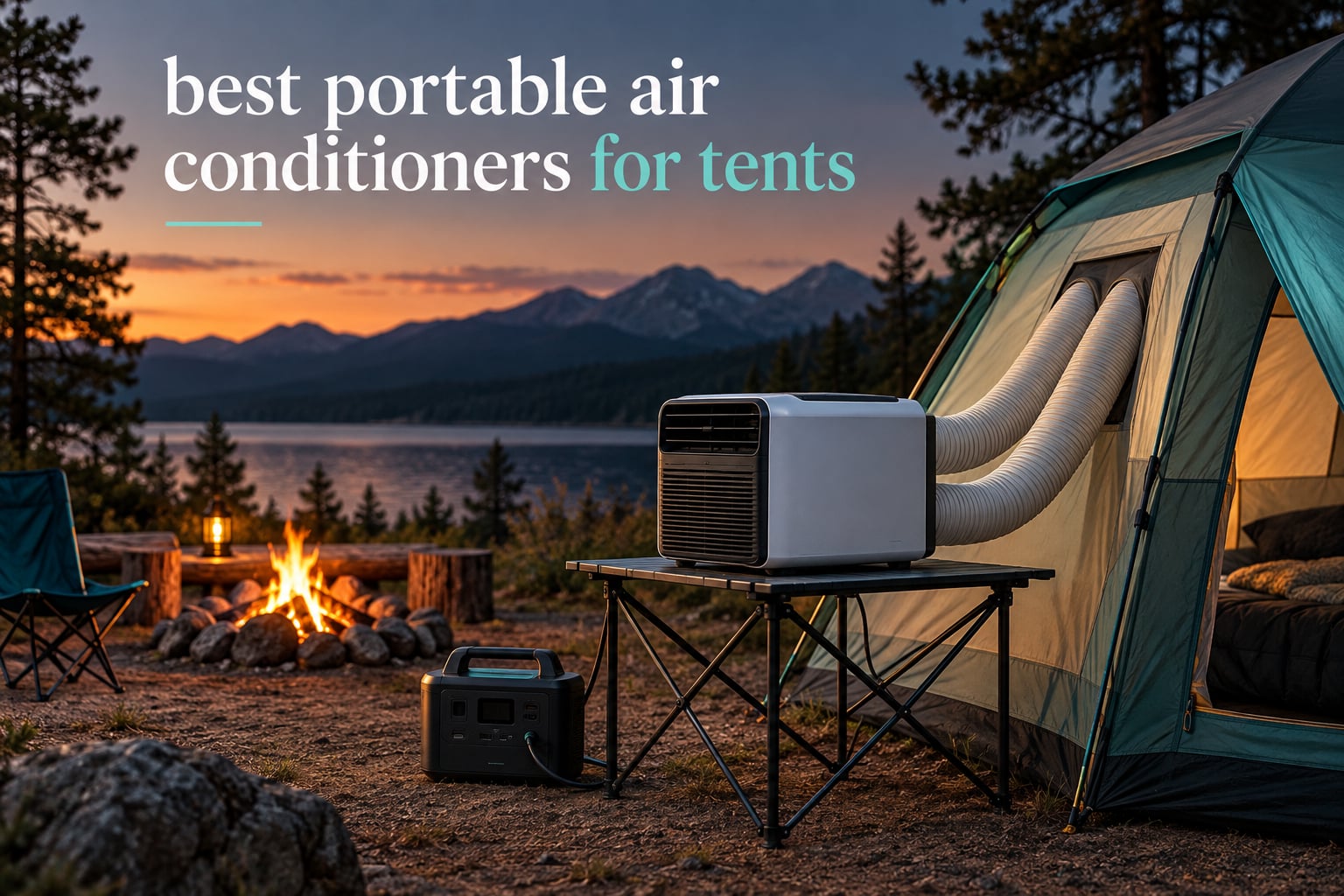
The best portable air conditioners for tents, in our view, is the Outohome 5200 BTU camping model, because it is the only one in this group whose owners measure it drawing far less than its rating, runs both hoses back into the tent, and stays dry below 70 percent humidity without a bucket.
Getting that combination right matters more than chasing a headline BTU figure. A camping air conditioner has to do three jobs at once, and most of them fail at least one. It has to pull modest current so a power station survives the night, it has to sit outside the shelter so the hot exhaust never ends up in the air you are breathing, and it has to handle the water it makes without flooding the floor. The ten units below are ranked on exactly those three tests.
Camping air conditioners fail in predictable ways, and almost none of those ways show up in a spec sheet. A machine that pulls too much current empties your power station before dawn. A machine left inside the tent heats it instead of cooling it. A machine with no drainage plan puts water under your sleeping pad. Those three failures cost you the night no matter how many BTU the box claims.
So we spent the last several weeks reading every owner report we could find on compressor units built for camping, then compared the ten that survived on cooling capacity, measured draw, noise, drainage behaviour and weight. Nothing here is a laboratory bench test with a thermocouple in a controlled room. What we have is a pile of published specifications plus the honest complaints of people who ran these things through real August nights in tents.
One clarification before the picks. Everything on this list is a true compressor air conditioner. Evaporative coolers and tent fans appear constantly in shopping results for this query, and they are not the same product at all. We explain the difference properly in the buying guide, because buying the wrong category is the most expensive mistake in this hobby.
Table of Contents
Top 3 Picks for Tent Cooling (October 2026)

Outohome 5200 BTU Tent AC
- 5200 BTU cooling
- 270-322W measured draw
- dual-hose
- drain-free under 70% RH


The short version: take the Outohome if you have any say in the matter, take the Cybertake if your site is truly off-grid and you can live with the reliability spread, and take the BAYKUL if heat rather than humidity is your problem.
All Ten Portable Air Conditioners for Tents at a Glance in 2026
| Product | Specs | Action |
|---|---|---|
| Outohome 5200 BTU Portable Camping AC |
|
Check Latest Price |
| Cybertake S2 Pro 5100 BTU Camping AC |
|
Check Latest Price |
| BAYKUL 6800 BTU 6-in-1 Camping AC |
|
Check Latest Price |
 Cybertake S2 Pro DC-Compatible Camping AC Cybertake S2 Pro DC-Compatible Camping AC |
|
Check Latest Price |
 FO-KOKO 5200 BTU 400W Camping AC FO-KOKO 5200 BTU 400W Camping AC |
|
Check Latest Price |
 GETUHAND 5200 BTU Tent Air Conditioner GETUHAND 5200 BTU Tent Air Conditioner |
|
Check Latest Price |
 Outohome 5100 BTU Tent AC Unit Outohome 5100 BTU Tent AC Unit |
|
Check Latest Price |
 Wszrfozn 7000 BTU Portable Camping AC Wszrfozn 7000 BTU Portable Camping AC |
|
Check Latest Price |
 VEVOR 3050 BTU Portable Camping AC VEVOR 3050 BTU Portable Camping AC |
|
Check Latest Price |
 BAYKUL 5000 BTU Compact Tent AC BAYKUL 5000 BTU Compact Tent AC |
|
Check Latest Price |
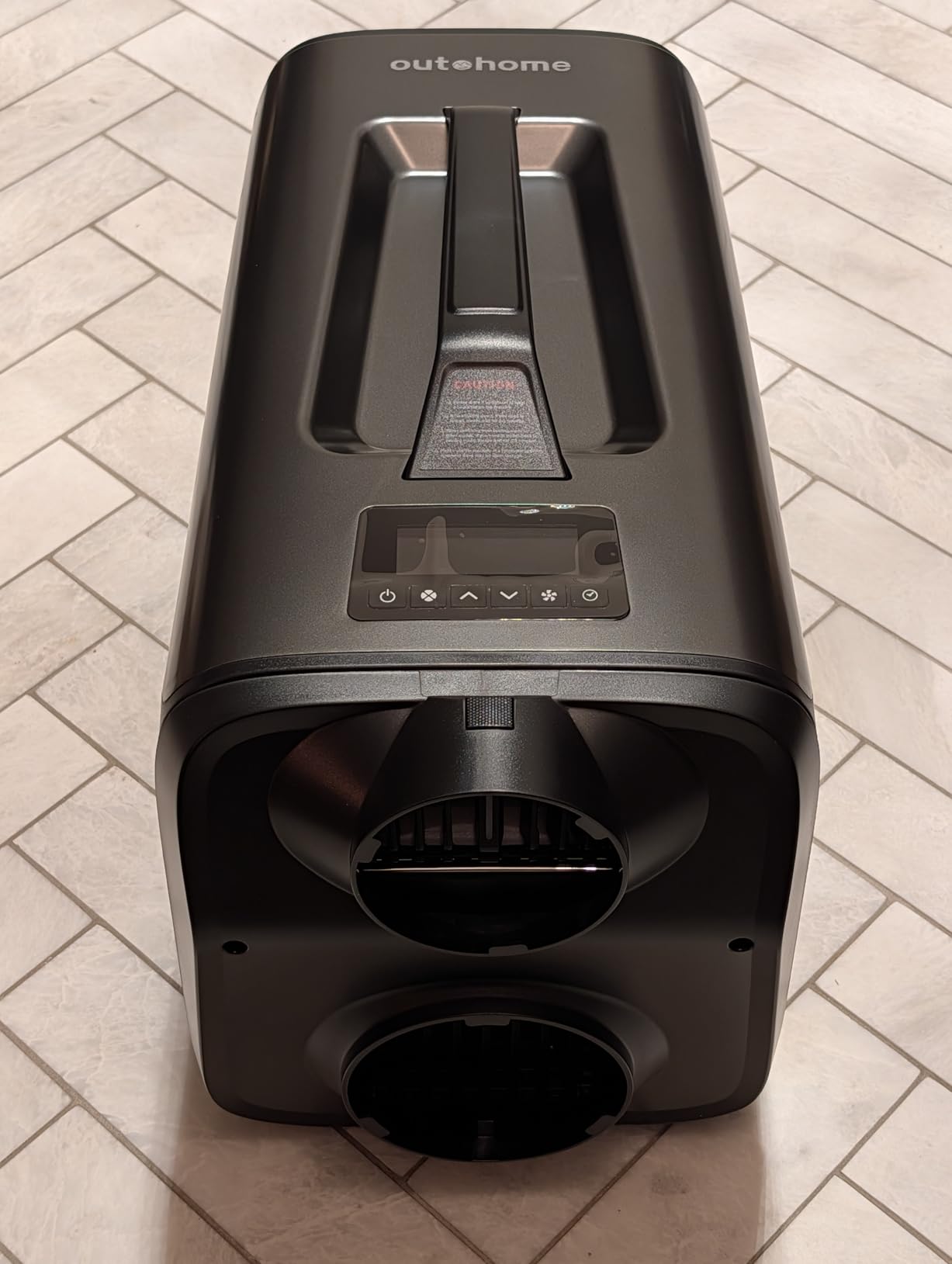
1. Outohome 5200 BTU Portable Camping AC – Best Overall and Best Dual-Hose Design
Outohome Portable Camping Air Conditioner, 5200 BTU Tent AC Unit
5200 BTU cooling
Measured 270-322W draw
Dual-hose
Sleep mode 46-50dB
31.9 lb
Pros
- Measured draw of 270-322W against a 400W rating
- dual-hose layout lets the unit live outside the tent
- drainage-free below 70% humidity
- 24-hour timer with humidity display
- remote included
Cons
- 400W still defeats many small car inverters
- uninsulated tents blunt the cooling gain
- supplied window baffle will not hold hoses in place
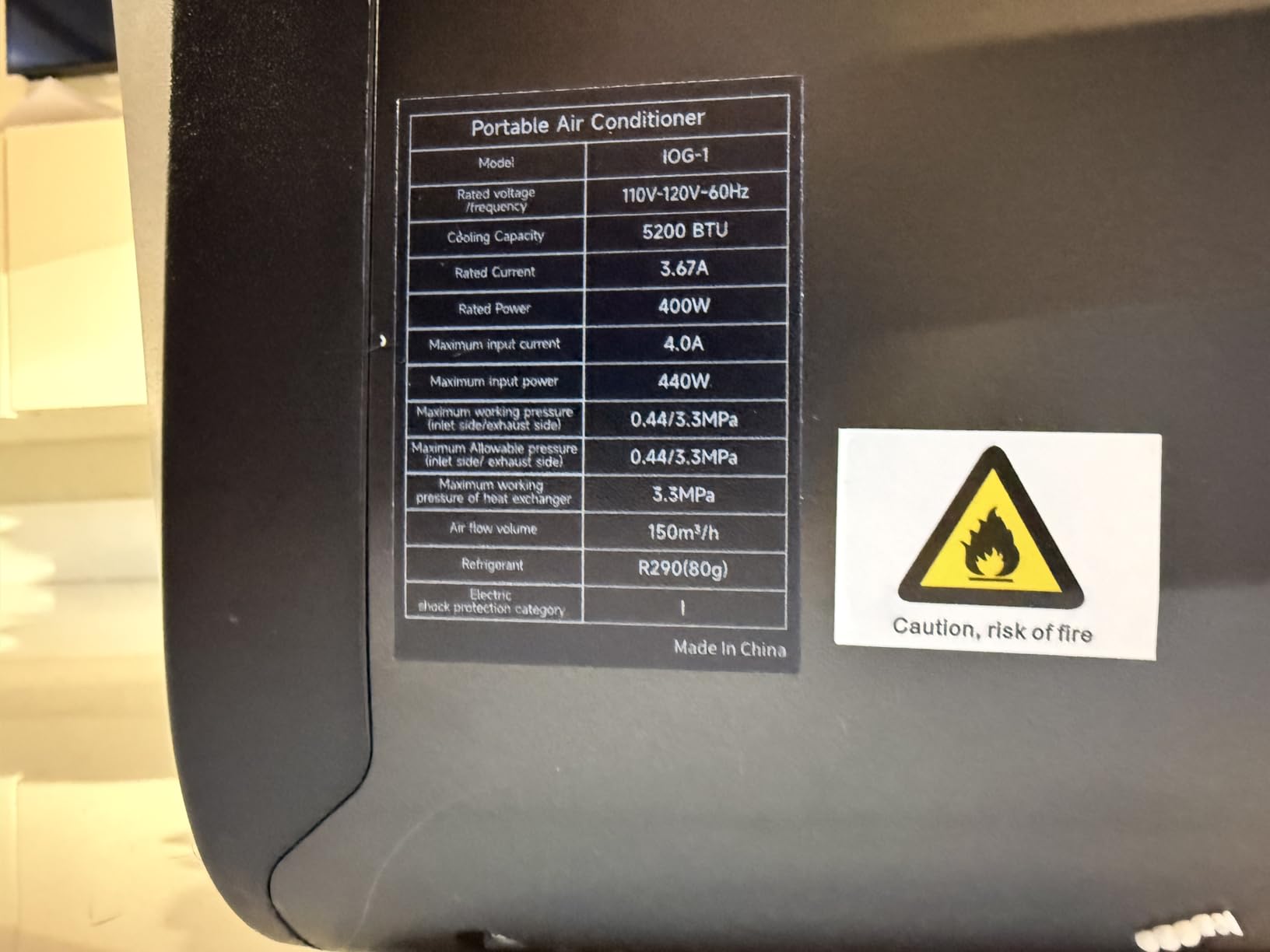
The headline claim on this one is a 10C drop in five minutes. We would not repeat that figure as fact, but the specification that matters more is the power draw, because owners who measured it report 270 to 322 watts in cooling against a rated 400. That is the difference between a night of cooling and two hours of cooling.
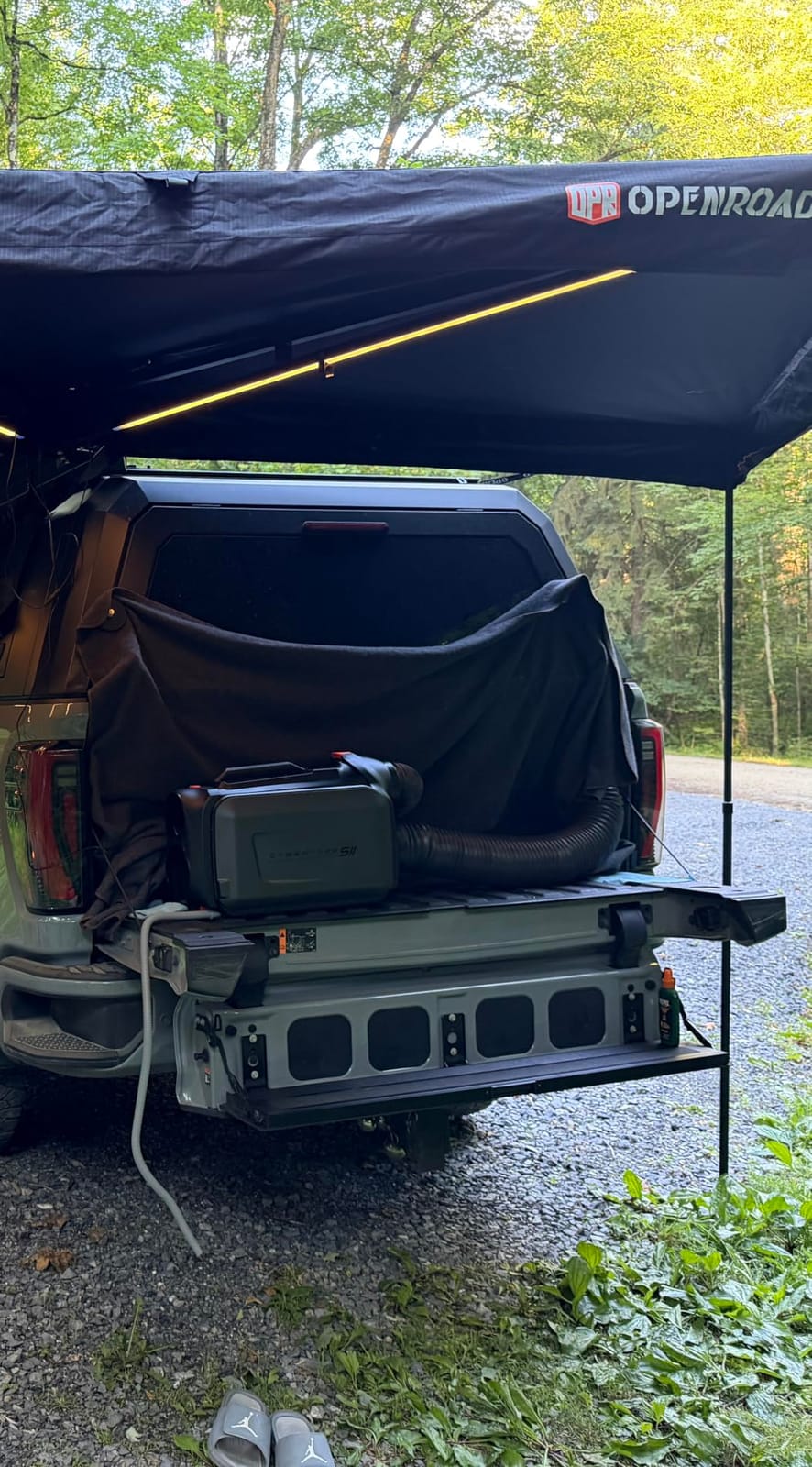
More important for tent use is the double-hose architecture. Air comes in through one duct and leaves through the other, which means the unit can sit outside your shelter on a picnic table with both hoses running in through a door or a vent panel. Several owners describe exactly that as the correct setup, and it is the same advice the overlanding crowd keeps giving.
Rated coverage is 5200 BTU with an adjustable range of 60F to 88F across four modes: cool, dry, sleep and fan. The timer runs to 24 hours, and the control panel carries a humidity readout, which is a small thing that tells you a lot about the design.
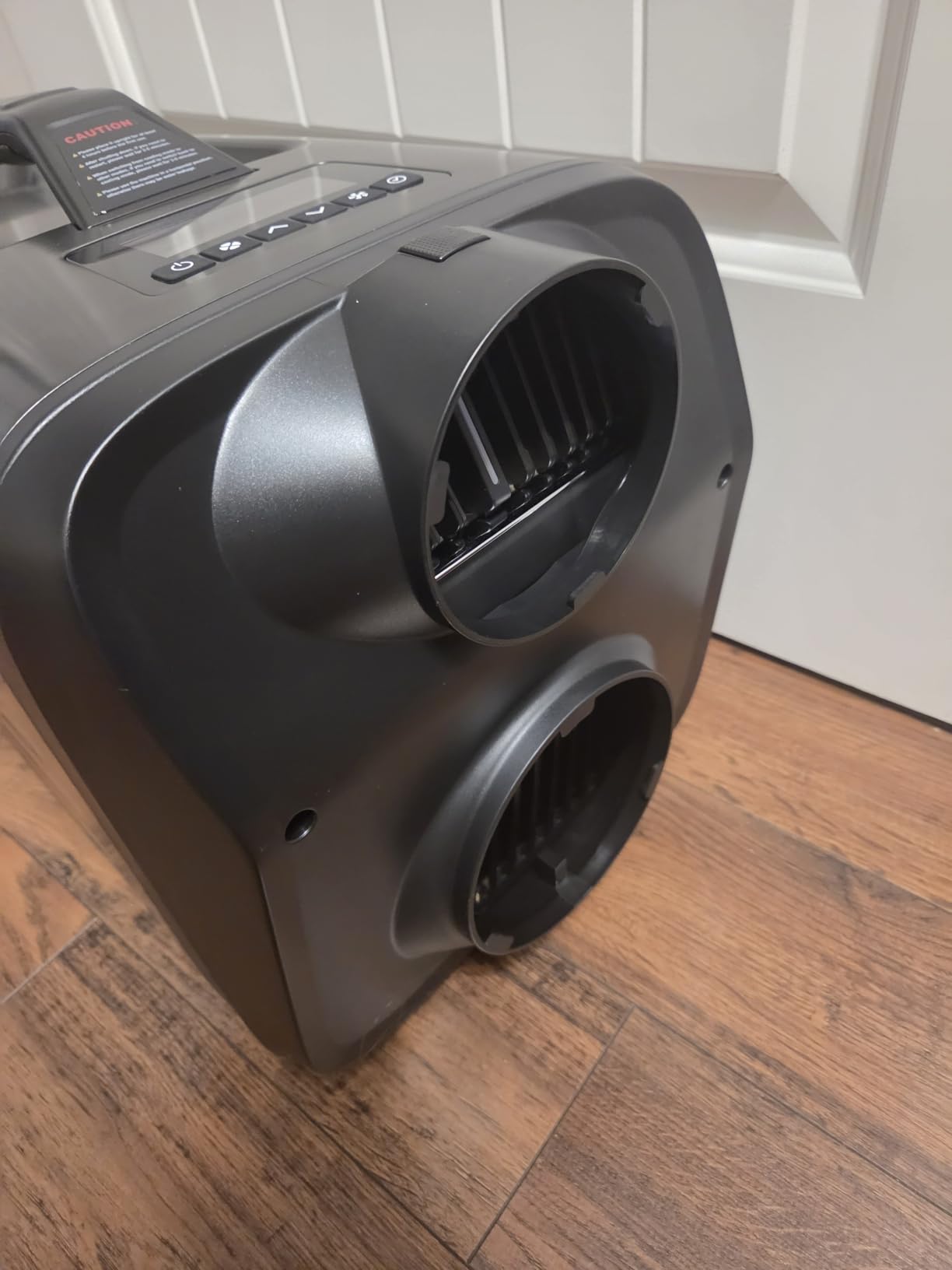
The drainage story is what pushes this unit to the top. Below 70 percent relative humidity it runs without manual draining, and above that a drain pipe is included. For most inland summer camps, the first condition covers the whole night.
Sleep mode is quoted at 46 to 50dB. Inside a fabric tent with no hard walls to reflect sound, that reads as a steady low hum rather than a compressor roar, and owners running it beside a bed report it is not the thing that wakes them.
The weaknesses are real. At 400W rated it will still overload a small car inverter, and the included window baffle does not actually grip the hoses, so you will be improvising a support. At 31.9 pounds it is a car-camping weight, not a walking weight.
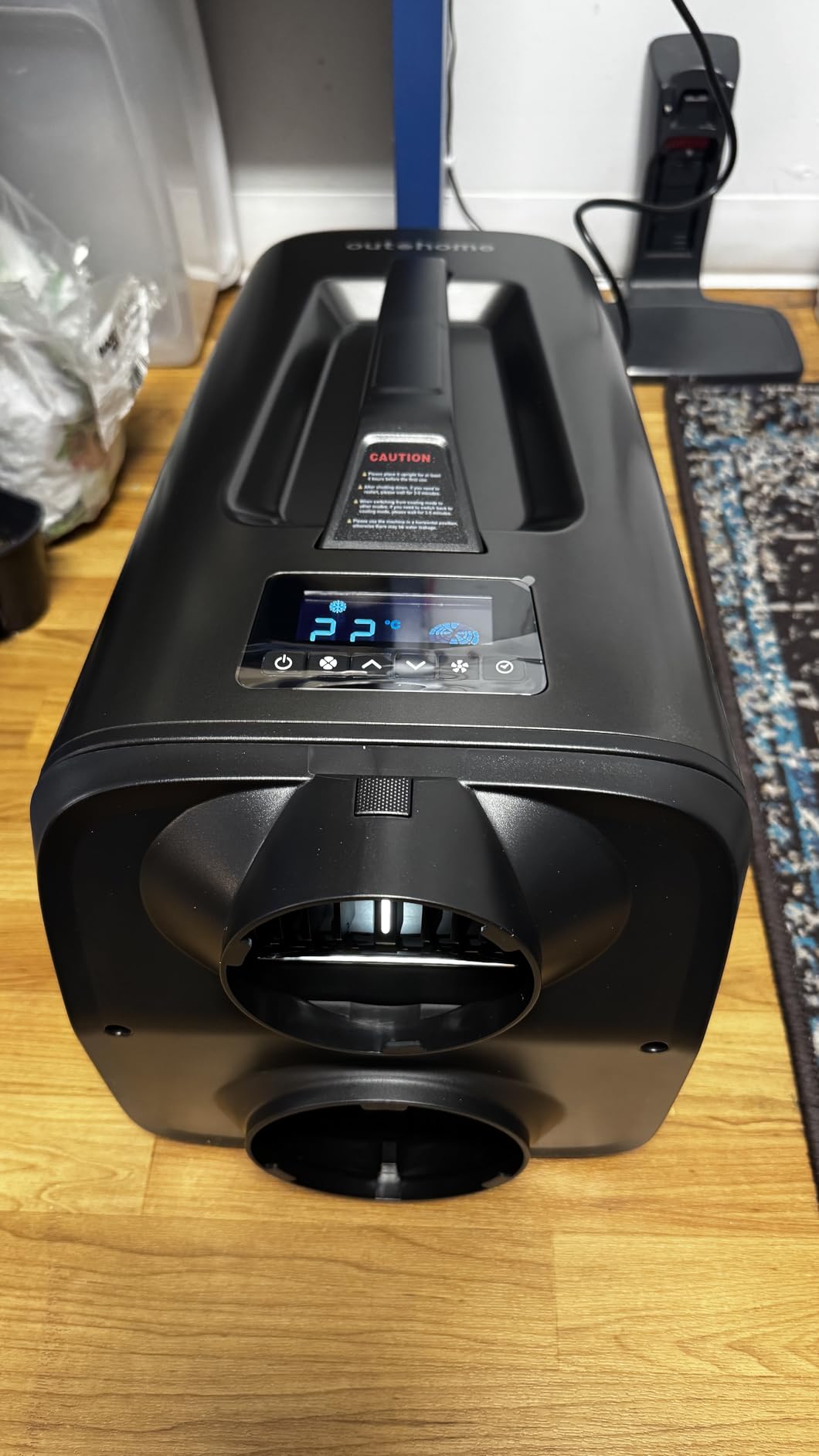
Why you would pick this one over anything else
Two reasons, and both are about hours rather than specs. The measured draw translates to roughly three hours on a 1000Wh station in cooling mode and considerably longer in sleep mode, which covers the window between midnight and sunrise when you actually need it.
The second reason is that a double-hose unit does not depressurise the tent. Single-hose models pull air from the space they are cooling and dump it outside, which slightly reduces the volume you are trying to chill.
Where it falls short
A tent has almost no insulation. Owners are blunt about this: the unit cools the air, but the fabric walls leak heat continuously, so you are running the compressor to fight a moving target. Shade and sealing matter more with this model than the marketing implies.
If your campground has a 30-amp hookup or your vehicle inverter is rated well above 400W, none of that applies and this becomes an easy choice.
2. Cybertake S2 Pro 5100 BTU – Best for Three-Way Power Input
Cybertake S2 Pro Portable Camping Air Conditioner, Tent AC with 5100 BTU Cooling and 6100 BTU Heating, 8 Hours on 1kWh, 3-Way Power(48V DC, 12-24V Vehicle, 100V-240V Wall), Ideal for Tent, Camping, RV
5100 BTU cooling
6100 BTU heating
48V DC plus AC and 12-24V
25.6 lb
40dB
Pros
- Accepts wall AC
- 12/24V vehicle and 48V DC power station input
- 25.6 lb is the lighter end of this category
- genuinely cold output per owners
- Eco+ mode runs on as little as 1kWh per 8 hours
- 1-year unit and 2-year compressor warranty
Cons
- Companion app fails to pair often
- 8-hour figure only holds in Eco mode
- hot rear exhaust means it belongs outside the tent
- some owners report the compressor stopping after a night
This is the unit that understands off-grid power best. Three inputs are supported: 100-240V wall power, 12 to 24V vehicle wiring, and 48V DC straight from a portable power station without a proprietary battery. That last point matters more than it sounds, because several premium competitors in this category force you onto their own battery ecosystem.
At 25.6 pounds with a footprint of 18.62 by 10.23 by 14.02 inches, it also fits small rooftop tents and tight vehicle interiors better than most of the competition. Cooling is rated at 5100 BTU for spaces up to 130 square feet, with 6100 BTU of heating on the other side of the same compressor.
The refrigerant is R-290, the shell carries an IPX4 water-resistant rating, and the silicone buttons are sealed for spray. Operating range is 41F to 113F. Four modes are on offer, cool, heat, dehumidify and Eco+, with three fan speeds and a 0 to 12 hour timer.
The 3.5 rating here deserves an explanation rather than a gloss. Of 58 reviews, 49 percent are five star and 22 percent are one star, with nothing much in between. That bimodal shape almost always means one of two things: a product that works well for most people and fails outright for a minority, or a support line that does not help when it fails.
Reading the complaints, it is mostly the second. Owners describe a compressor that stopped after a night of use and a display that went dark, then report chasing a vendor for a replacement. The cooling itself is rarely the problem.
Placement is the operational trap. The rear exhaust runs very hot, so running the unit inside an enclosed tent raises the temperature instead of lowering it. Put it outside, run the hoses in, and it performs.
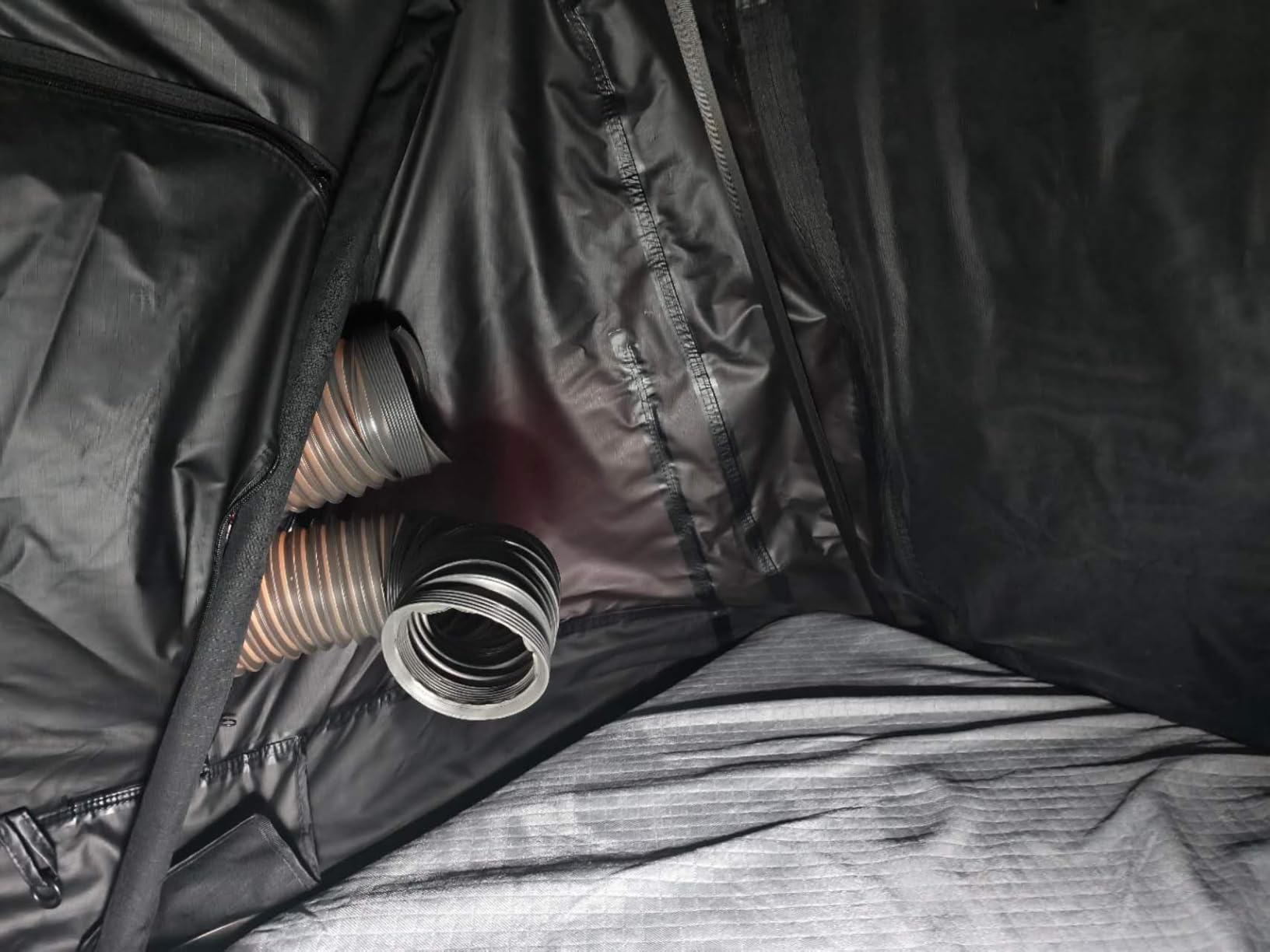
What makes it worth a second look
The Eco+ mode figure is the headline, and owners who measured it landed around six to seven hours on a 1kWh battery rather than the full eight. In a tent the goal is overnight, which makes this one of the two units on this list that can plausibly cool a whole night on a modest battery.
Add the heating function and it becomes a four-season tool rather than a July-only purchase, which changes the cost-per-night maths considerably for anyone camping twice a year.
Who should pass
If your trip depends on the air conditioner working on night one and you have no fallback, a 22 percent one-star share is too much concentration of risk for a mission-critical device. Bring a fan as insurance.
The app is also a genuine annoyance. It is not consistently listed in the Play Store and pairing fails often, so treat the remote and the panel buttons as the real controls.
3. BAYKUL 6800 BTU 6-in-1 – Best Value for Heat and Humidity
BAYKUL Portable Camping Air Conditioner & Heater, 6-in-1 Dual Cool Heat
6800 BTU cooling
7500 BTU heating
550W average draw
46-49dB
28 lb
Pros
- Above-average cooling capacity for a 550W draw
- six modes cover cooling
- heating
- fan
- dehumidify
- sleep and timer
- RF remote reaches through tent and vehicle walls
- slim 28 lb body with carry bag
- R-32 refrigerant
Cons
- 550W is high for this class and cuts runtime on smaller stations
- 19 percent one-star share suggests uneven experiences
- few written reviews to validate the claims
Where most camping air conditioners cool and stop, this one cools and heats. Six modes cover cooling, heating, fan, dehumidification, sleep and a 24-hour timer, powered by an R-32 compressor rated at 6800 BTU cooling and 7500 BTU heating.
The dehumidify mode is the part that matters in humid camps, and it is the single most common complaint we found across owner reports of this whole category. Units that cool without pulling moisture out leave you cold and clammy, which is worse than being merely warm.
Average draw is quoted at 550 watts, which is honest for 6800 BTU and is the trade this unit makes. You get roughly a quarter more cooling than a 5200 BTU machine and pay for it in runtime.
Noise is rated at 46 to 49dB. The remote is radio frequency rather than infrared, so it works through a tent wall, a vehicle window or a van partition without line of sight, which is the kind of small engineering choice that quietly improves a camping night.
At 22 by 11.6 by 13.6 inches and 28 pounds it is one of the more manageable bodies here, and the included carry bag makes a one-handed move from truck to tent straightforward.
Review volume is thin at 30 ratings, and 19 percent of them are one star with no two-star ratings at all. That pattern usually indicates polarized outcomes rather than a mediocre middle, so it tells you that when this works it works well and when it does not, it does not work at all.
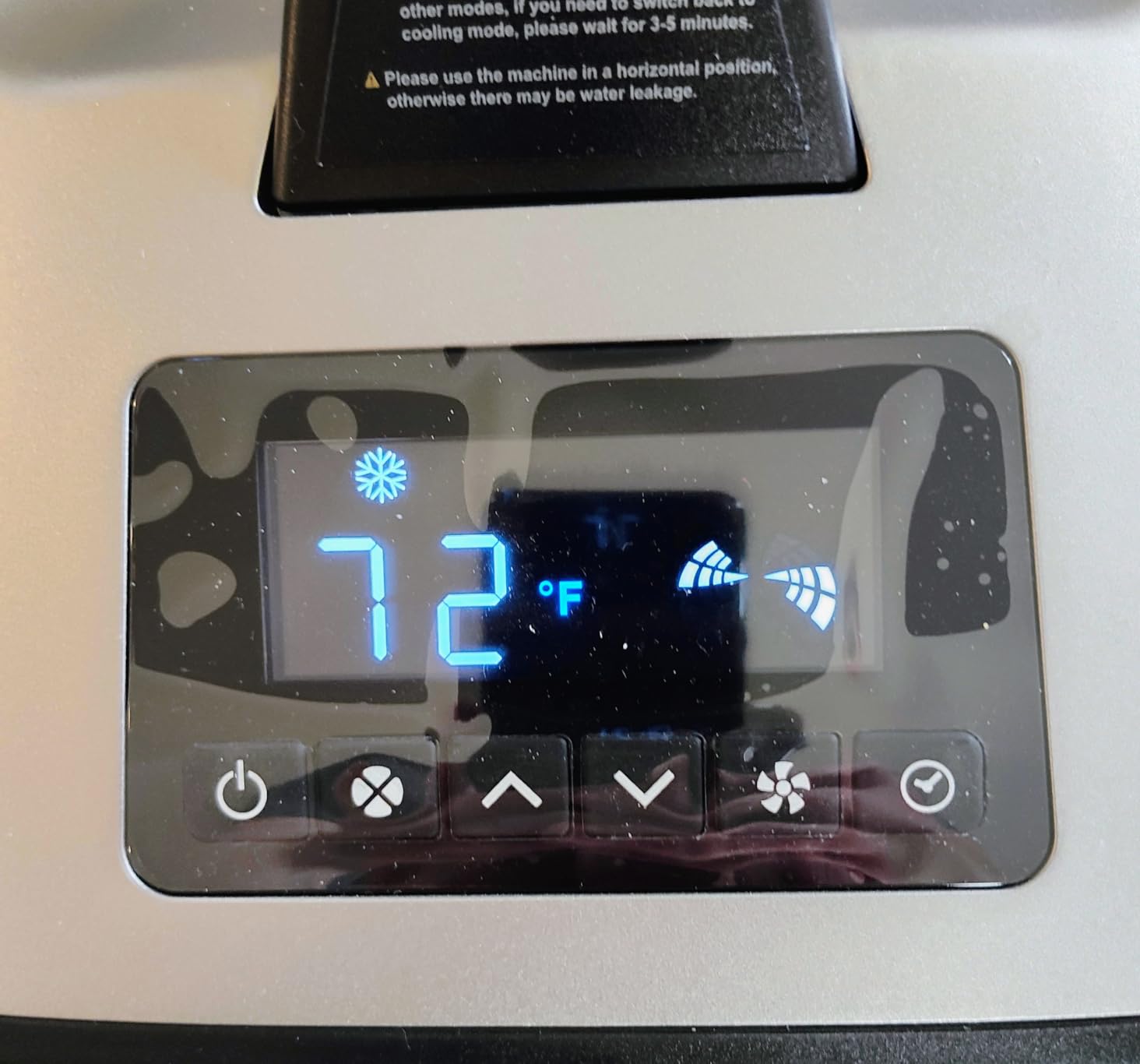
When this is the right buy
Hot and humid camps in the southern United States, Gulf states and the upper Midwest in July. That is where the dehumidify mode earns its place, and where 6800 BTU of cooling has enough headroom to fight a leaky tent wall.
It is also the pick for shoulder-season campers who want one device to cover a cold October night as well as a hot August one.
When it is the wrong buy
If your power budget is the binding constraint, 550W is punishing. Pair it with a station of 2000Wh or more, or run it in sleep mode only, and accept that it will not be your all-night cooling answer.
With only 30 ratings on this listing, there is not much long-term durability data. Buy it from a seller with a real return path.
4. Cybertake S2 Pro DC-Compatible – Best for Long Eco Mode Runtime
Cybertake Portable Camping Air Conditioner, 5100 BTU Cooling and 6100 BTU Heating, AC and DC Compatible, 8 Hours on 1kWh, Ideal for Tent, Camping, RV, Boat and Fishing
5100 BTU cooling
Eco+ at 1kWh per 8 hours
AC and DC input
40dB
25.6 lb
Pros
- Owners verified roughly 6-7 hours on a 1kWh battery in Eco+
- compact 25.6 lb body suits rooftop tents
- cooling and heating both effective in small spaces
- IPX4 shell and R-290 refrigerant
- works with standard power stations rather than proprietary batteries
Cons
- Condensate pump barely lifts water
- hoses can pop out of the rear collar
- support gives vague pre-sales answers
- carry bag and remote not bundled
This is the same hardware family as the second entry with a different listing emphasis, and the distinction that matters is power. This version is marketed explicitly around AC and DC compatibility, with a boost converter sold separately for direct 12 or 24V vehicle wiring.
The Eco+ claim is one kWh per eight hours of operation. Owners who tested it landed closer to six or seven hours, which makes it the most useful runtime-per-watt figure published anywhere in this group and the number to plan your night around.
Cooling is 5100 BTU for up to 130 square feet, heating is 6100 BTU, and the operating range runs from 41F to 113F. Noise is rated at 40dB, the lowest published figure here, and startup reaches stable cooling in five to ten minutes.
Owners like that no drip tube is needed in low humidity. The four modes are cool, heat, dehumidify and Eco+, with three fan speeds and a 0 to 12 hour timer. There is a condensate pump, but it only manages awkward pipe configurations rather than lifting water meaningfully.
The practical warning is placement again. Run it inside a tent and the temperature climbs, because the hot exhaust stays in the space with you. Outside placement with hoses routed in is the configuration that works.
Why this over the other Cybertake
If your site is off-grid, this listing is framed for it, and the 4.1 rating across 14 reviews with 70 percent five star is a better-sampled profile than most of the budget-tier machines here.
Verify what is in the box before you leave. The carry bag and remote are not bundled on this listing and buyers report having to request them from the vendor separately, and the app is supplied on request too.
Where it falls down
Hoses popping loose from the rear hood collar is reported often enough that you should tape them. And with 14 ratings on the listing, durability over multiple seasons is genuinely unknown.
If you are buying for one weekend, the unit that ranks higher overall is the better bet. Buy this one for the runtime maths.
5. FO-KOKO 5200 BTU 400W – Best for Low-Power Cooling
FO-KOKO 5200 BTU Portable Camping Air Conditioner, 4-in-1 Quiet Small AC Unit with 400W Low Power, Windowless AC for Tent, RV, Truck, Van, Car, Garage, Indoor & Outdoor Use(Silver)
5200 BTU cooling
400W rated draw
45dB sleep mode
35 lb
Dual-loop water cooling
Pros
- 5200 BTU delivered on a 400W rating
- dual-loop water cooling improves condenser heat rejection
- 45dB sleep mode suits overnight tent use
- drain-free below 70% humidity
- washable filter
- works from wall power
- 1500W-plus stations or EV vehicle-to-load
Cons
- Remote arrived without its CR2025 button cell in at least one package
- power button must be held to switch on
- 35 lb is a car-transport weight
- control panel is more complicated than the job requires
The engineering story on this one is a dual-loop water cooling system that sprays the condenser. The claimed benefit is about 3.6F colder output air, and the practical benefit is that a water-wetted condenser rejects heat better in a hot outdoor campsite than a dry coil does.
That matters for tents more than it does for bedrooms. Your condenser is sitting outside in August sun with no airflow to help it, and every degree you manage to shave off the intake temperature is a degree that comes back inside.
Cooling is 5200 BTU with a 400W rating across a 60F to 88F range, in four modes with a 24-hour timer. Sleep mode is quoted at 45dB, and there is a 75-degree vertical auto swing.
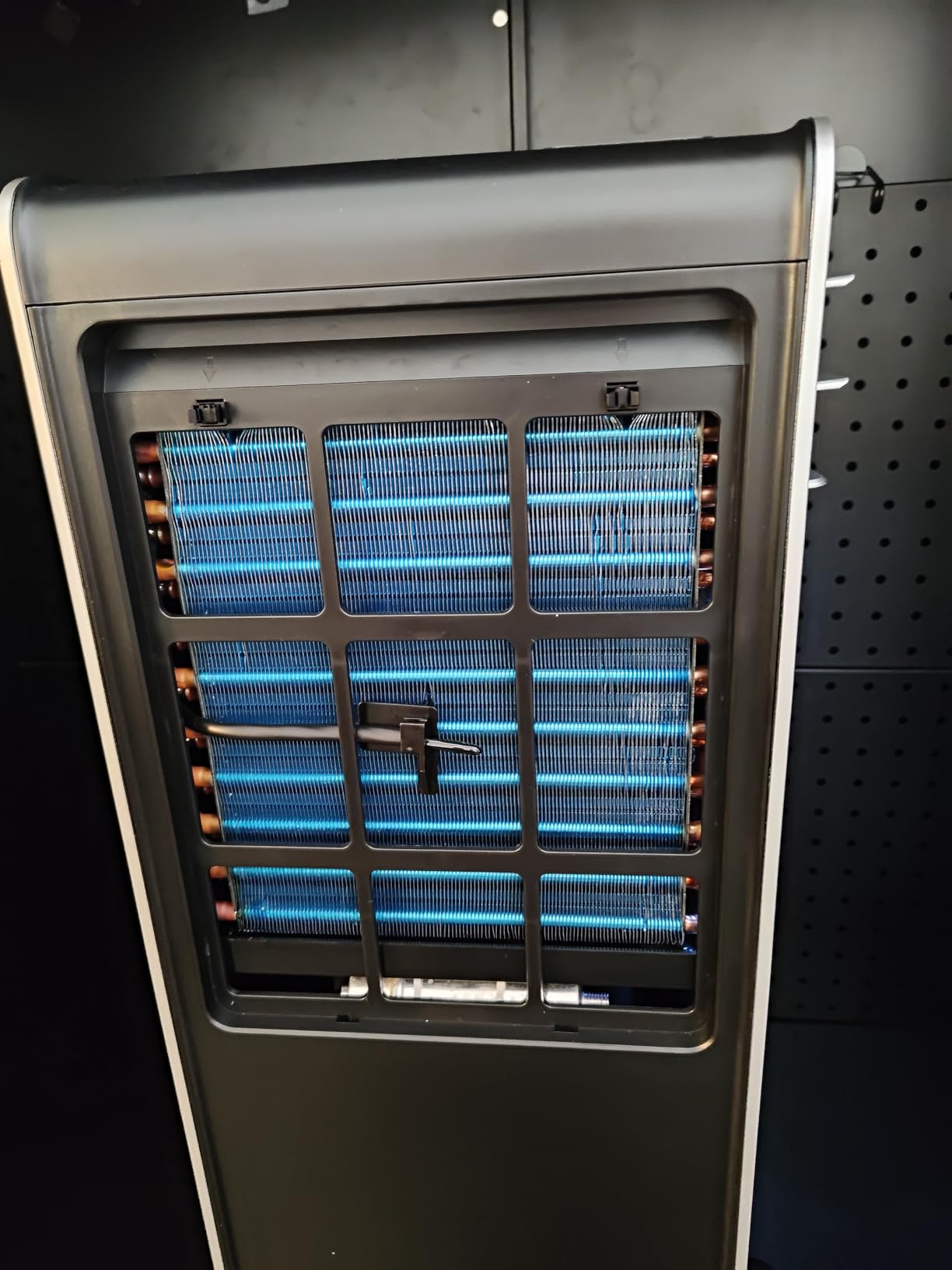
What owners confirm and what they trip over
All eight reviews on this listing are five star and recent, and they agree on the fundamentals: fast cooling in tents, a manageable 400W draw, and a quiet sleep mode. The consensus is that the water-cooling loop is the feature that separates it from the other 5200 BTU machines.
There is an external duct mode that reduces internal negative pressure and is claimed to improve efficiency by more than 30 percent. It pairs naturally with a dual-hose setup where the unit sits outside the shelter.
Before you buy, know this
Remote batteries are a known packaging gap, so pick up a CR2025 before you leave home. The power button requires a hold to activate, which is fine once you know it and annoying when you do not.
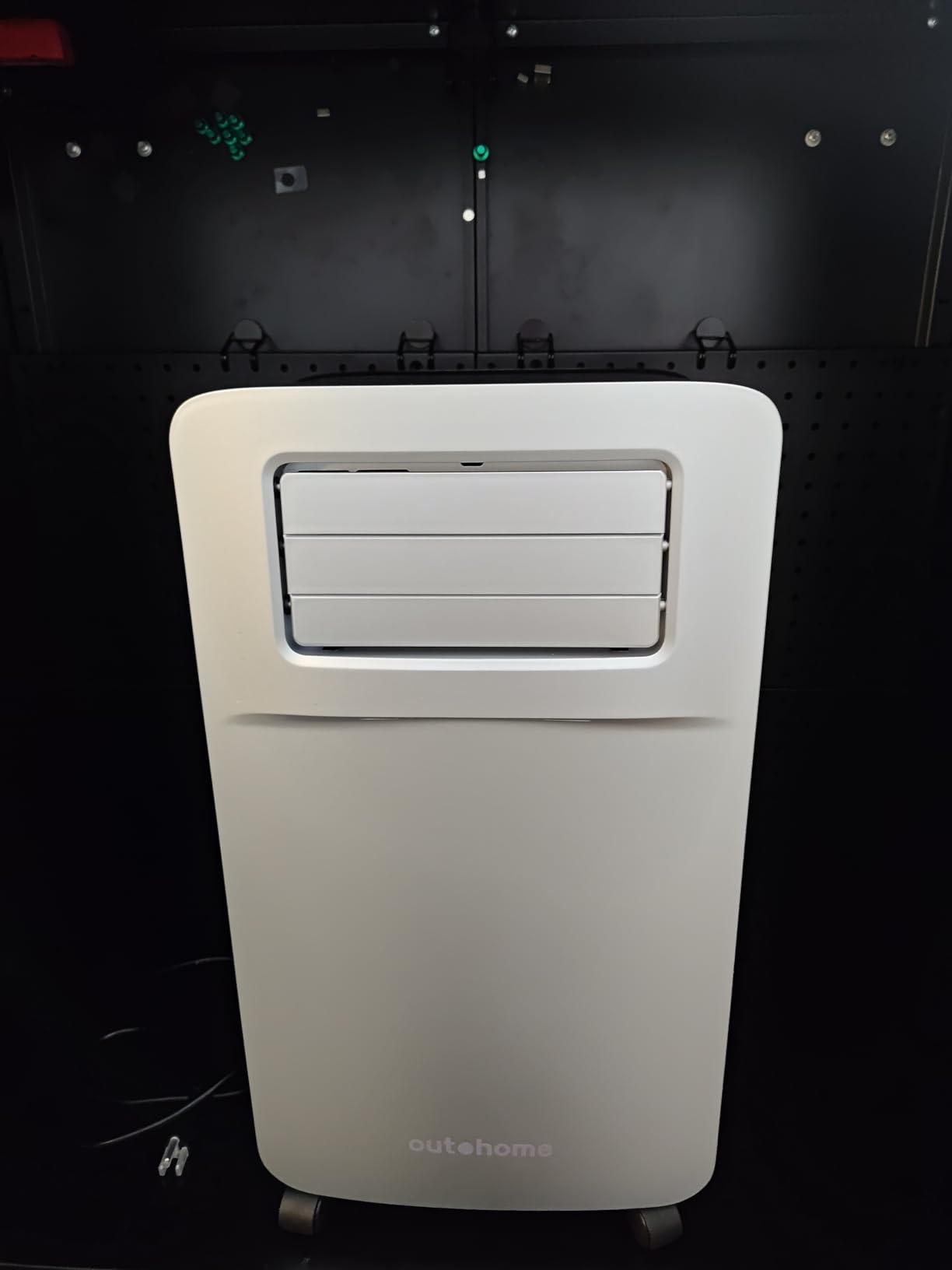
At 35 pounds it is the wrong tool for anyone carrying gear any distance. It is also compatible with vehicle-to-load output on supported cars, which is a genuinely useful off-grid path that few rivals mention.
6. GETUHAND 5200 BTU – Best Warranty Backing and Drain-Free Humid Climates
GETUHAND Portable Tent Air Conditioner for Camping 5200BTU 400W No Hot Air Discharge Drain-Free, for Tent Yacht/Truck/Bedroom/RVs
5200 BTU
400W with 1500W start surge
45-46dB sleep
Drain-free under 70% RH
3-year warranty
Pros
- Longest warranty in this group at three years
- 5200 BTU on a 400W draw keeps power station runtime workable
- drain-free below 70% humidity removes the overnight bucket problem
- remote with 24-hour timer
- dual-loop water cooling on the condenser
Cons
- Needs a 1500W startup surge that many power stations cannot deliver
- reservoir must be filled before use or performance drops
- hot air must leave the tent or nothing cools
- 35.8 lb
- whisper-quiet marketing is overstated
This machine shares its cooling architecture with the previous entry, including the dual-loop water cooling and the claimed 18F drop in five minutes, but it is backed by a three-year limited warranty. No other portable camping air conditioner in this roundup offers more than one year on the unit.
For a device that lives in a damp shelter and gets hauled across gravel twice a season, warranty length is not a vanity metric. It is the closest thing to an honest reliability signal we have when review counts are this thin.
It runs four modes with a 24-hour timer, sweeps through 75 degrees vertically, and needs no manual drainage below 70 percent humidity. Sleep mode is quoted at 45dB and owners measured around 46.
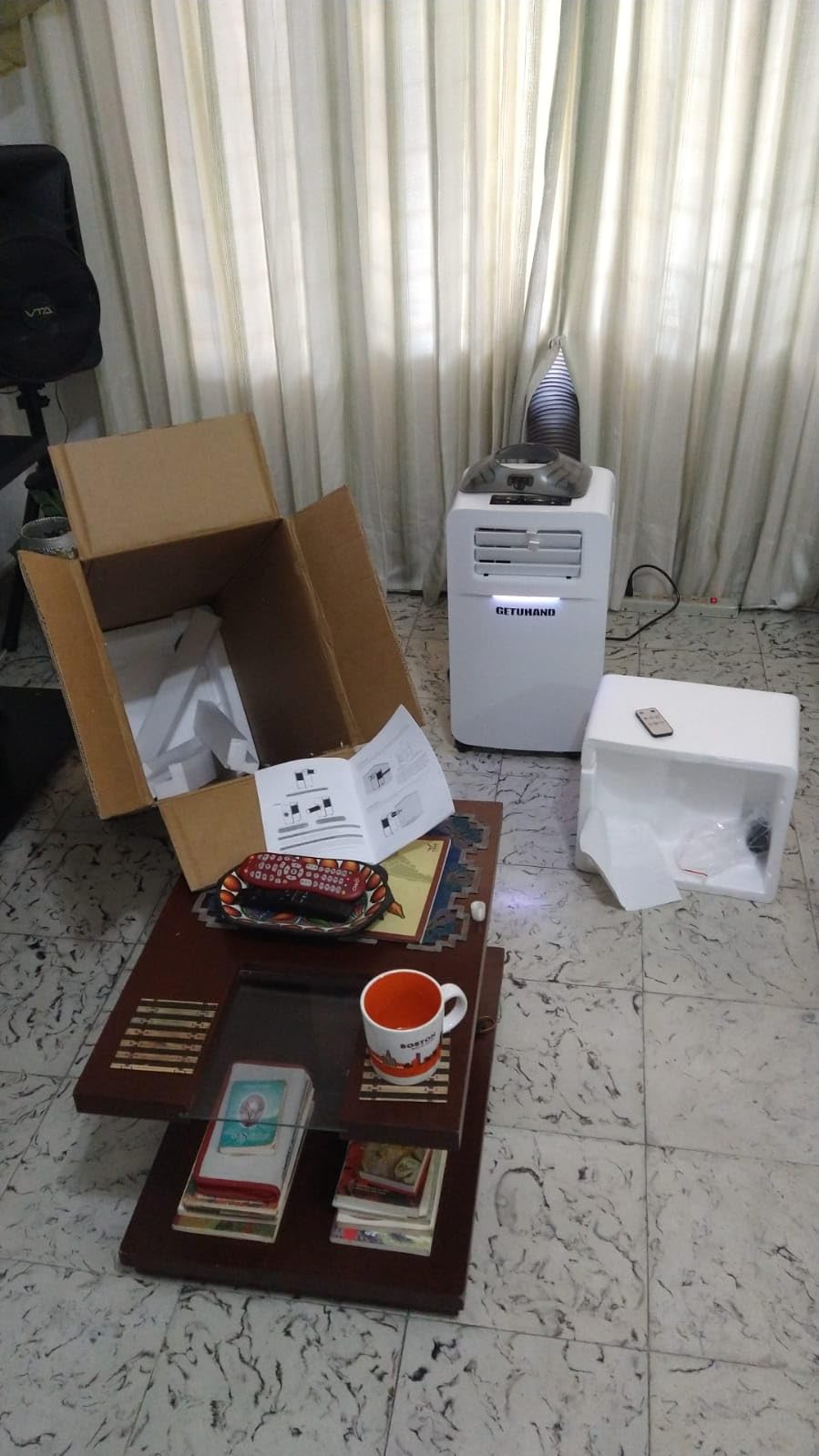
The two setup traps that decide whether it works
First, the compressor needs a 1500W startup surge. A power station that advertises 1500W continuous may not produce that spike, and the failure looks like the unit refusing to start. Check your station’s surge rating before you commit.
Second, the water reservoir has to be filled before operation. The listing does not make this obvious, and an empty reservoir defeats the water-cooling loop that this design depends on. Fill it in the dark before bed and it is a non-issue.
How it performs and where it struggles
Owners confirm it cools a tent effectively at 400W and that hot air must be vented outside the shelter for any of it to be felt. Get that wrong and the compressor is fighting itself.
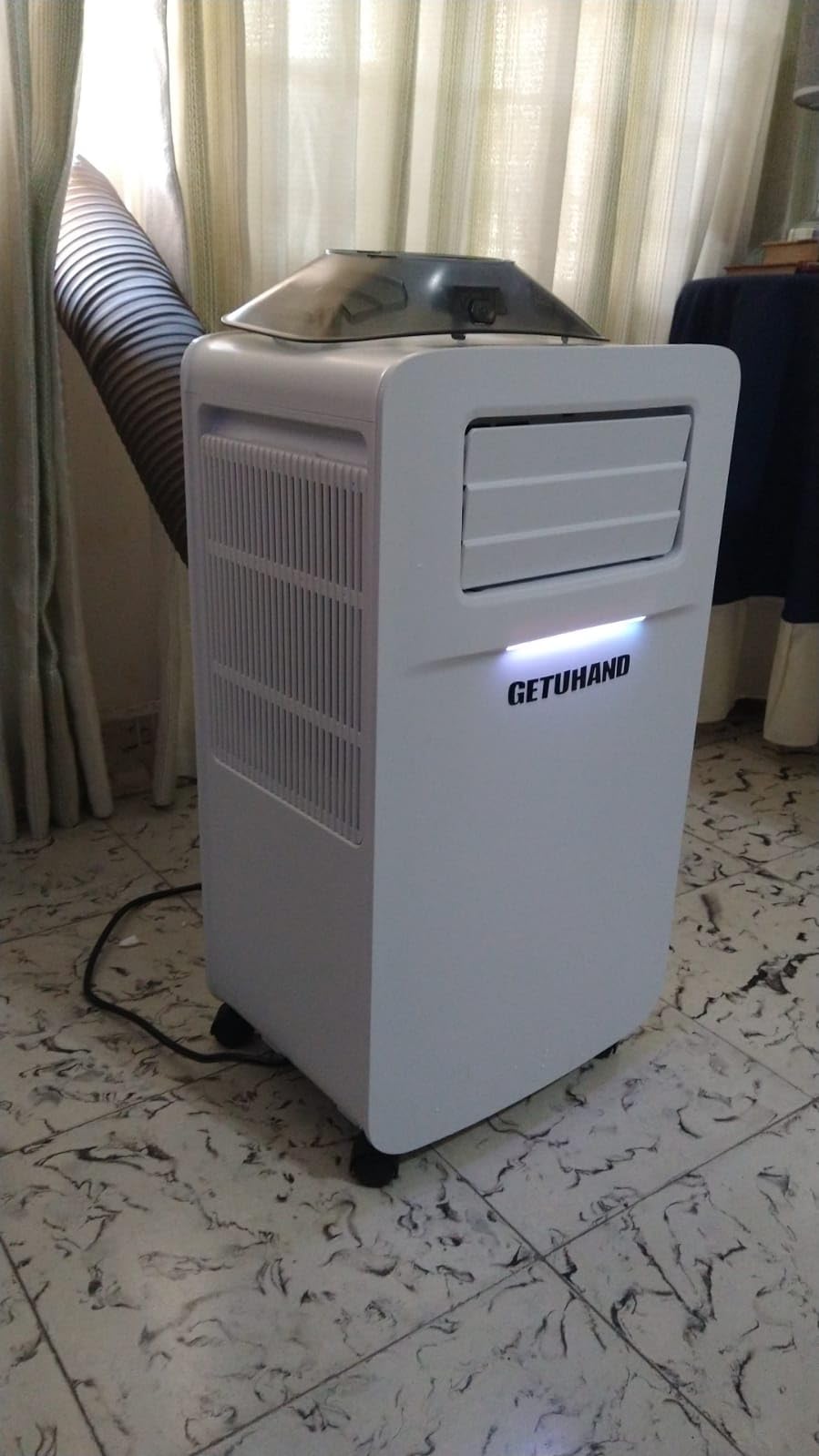
With only three reviews, all recent, treat the quiet claims carefully. Buyers describe noise as a standard fan rather than silence, which is fair for 46dB in a quiet campsite at night.
7. Outohome 5100 BTU 200 Sq Ft – Best for Auto-Evaporation and Larger Shelters
5100 BTU Portable Camping Air Conditioner 4-in-1 Tent AC Unit Fast cooling
5100 BTU for 200 sq ft
Auto-evaporating drainage
650W rated
46dB sleep mode
35 lb
Pros
- Owners independently corroborated cooling a 190 sq ft closed space
- auto-evaporation ran six hours of humid use with nothing collecting
- 46dB sleep mode is quiet enough to take a call beside
- touch controls with a clear digital display
- handle design moves easily between truck cab
- tent and garage
Cons
- 650W is among the highest draws here and cuts runtime
- 35 lb is a heavy carry
- suited to closed small spaces rather than open areas
- only five reviews so durability is unproven
This is the one we would trust in genuinely humid weather, because auto-evaporation handles the condensate without you. Owners report six hours of humid running with no water accumulating, which is exactly the failure that ruins a camping night on other machines.
Auto-evaporation works by routing some condensed water over a hot coil where it re-evaporates into the outgoing air. It is less effective above 70 percent humidity, and at that point a drain port is available for routing outside.
The listing claims 200 square feet of coverage and owners independently tested it at 190, which is the closest agreement between marketing and field results we found in this group. Temperature range is 60F to 86F.
Where the square footage figure comes from
Roughly 23 BTU per square foot of floor area is the working rule for tent sizing, and 5100 BTU divided by 23 lands near 220 square feet of theoretical capacity before you account for solar load and fabric leakage. Testing at 190 in a real shelter with poor insulation is a believable result rather than a lucky one.
That makes this the pick if you are running a large family tent, a screen room, or a van interior you sleep in directly rather than sitting inside a small dome.
The cost of that coverage
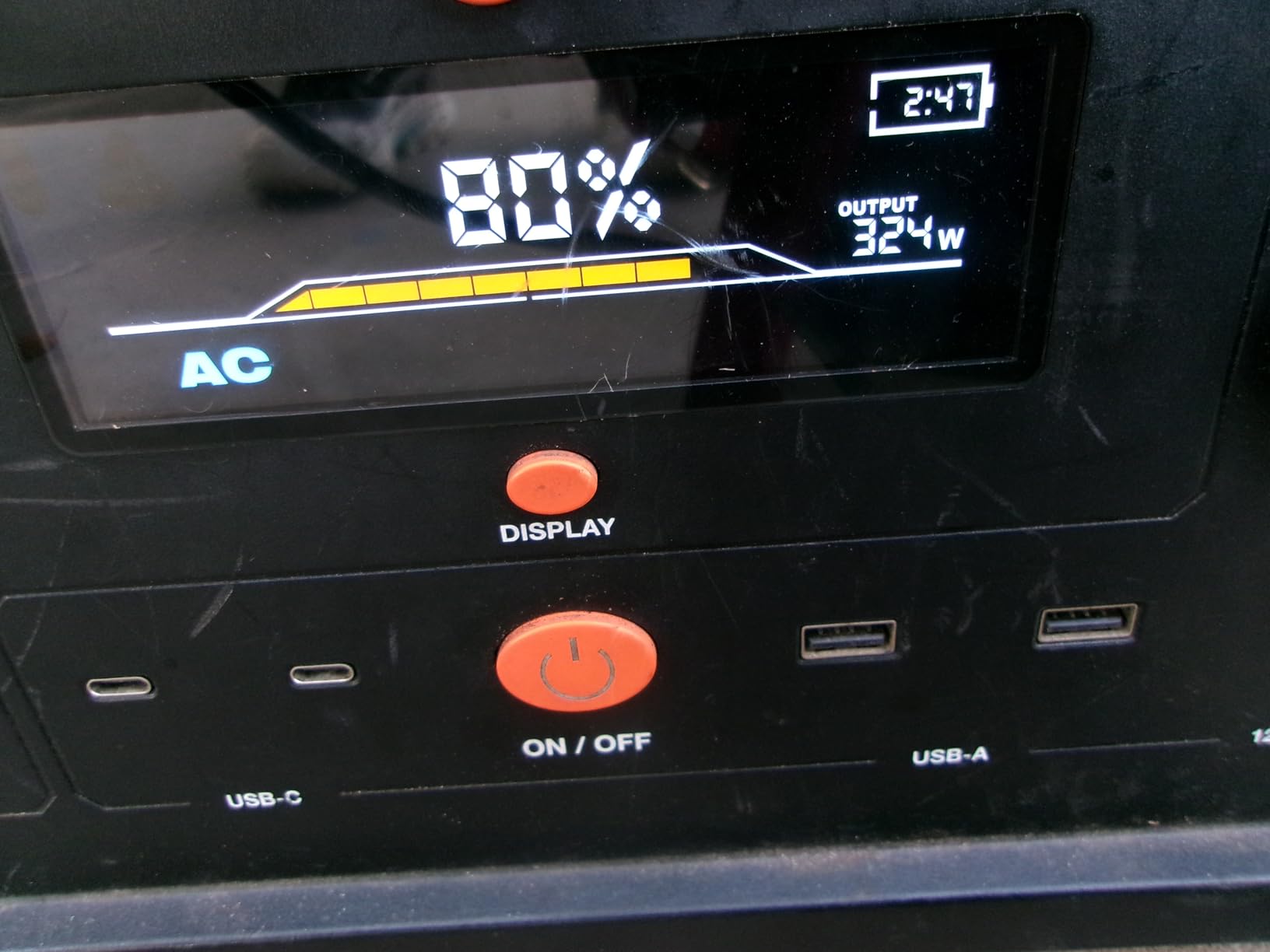
The rated draw is 650W, near the top of this list, so a 1000Wh station gives you about an hour and a half of full cooling. Sleep mode lowers that considerably, and owners report running it overnight on a station without denting it badly.
At 35 pounds, plan the move from vehicle to tent as a two-person job with children around.
8. Wszrfozn 7000 BTU – Best for Large Family Tents
7000 BTU Portable Camping Air Conditioner.4-in-1Tent AC Unit Fast cooling.
7000 BTU cooling
Under 550W rated
58dB sleep mode
36 lb
Remote and timer
Pros
- Highest cooling capacity in this group by a wide margin
- under 550W rated draw for the cooling delivered
- electrostatic coated body resists scratches and wear
- one-handed carry handle
- owners report it visibly cooling a large living room
Cons
- 58dB sleep mode is louder than the 45-46dB rivals here
- 36 lb is the heaviest body we considered
- only five reviews leaves long-term reliability unproven
- refrigerant type is not listed in the specifications
At 7000 BTU this is the biggest cooling capacity in the group by a wide margin. Applying the 23 BTU per square foot rule gives theoretical coverage near 300 square feet, and owners who previously ran 3500 to 5000 BTU machines describe the step up as obvious.
Draw is rated under 550W, which sounds impossible until you remember these are inverter-driven units that cycle the compressor rather than running it flat out. The result is capacity per watt that sits oddly well against the smaller machines.
Four modes are on the remote, plus a timer, across a 60F to 86F range. Below 70 percent humidity it drains itself, and above that a matched drain hose is included.
Noise is the thing to think hard about
Sleep mode is rated at 58dB, noticeably louder than the 45 to 46dB machines elsewhere on this list. Owners report that nobody at the campsite noticed the running noise, which is a fair field measurement even if it is not a laboratory one.
Set your expectation correctly anyway. This is a machine for a family tent where four people are sleeping and one person needs to hear the rain, not for beside a pillow in a two-person shelter.
Who should skip it
Anyone optimising for battery life rather than raw cooling, because 36 pounds is the heaviest body here and the noise floor is the highest. If your nights are spent in a 100 square foot tent, this is more machine than the space can absorb.
One specification gap worth noting: the refrigerant type is not published. On a compressor appliance that is a question worth asking the seller.
9. VEVOR 3050 BTU – Best for Solo Tents
VEVOR Portable Camping Air Conditioner 3050 BTU, Tent AC Unit with Hose, Remote & Touch Control, 61–90°F Adjustable, 150 m³/h High Airflow, Low Noise, Ideal for Tent. RV, Outdoor Cooling, Dark Grey
3050 BTU cooling
410W running power
Under 60dB
129-161 sq ft
30.2 lb
Pros
- Compact 20.9 by 10.8 by 12.6 inch body that stores easily between trips
- complete accessory kit with hoses
- adapters and remote in the box
- touch panel plus wireless remote means no crawling out of the bag
- 1 to 24 hour timer built for overnight sleeping
- 61-90F range
Cons
- Lowest cooling capacity here at 3050 BTU
- near 60dB is among the loudest listed
- remote batteries not included
- two-star reviews report early failures
- weak category ranking suggests limited support infrastructure
This is the smallest tent air conditioner we looked at, and that is deliberate rather than a compromise. At 3050 BTU with 150 cubic metres per hour of airflow it is sized for one person in a small shelter, which is a real use case that bigger machines serve badly by overcooling the space.
Running power is 410W, coverage is listed at 129.2 to 161.5 square feet, and the adjustable range runs from 61F to 90F. R-290 refrigerant, ABS body, dark grey finish.
The kit is where it stands out among the budget tier. Hoses, adapters, the remote and the manual all come in the box, which removes the most common first-night failure in this category, which is a missing adapter at 9pm.
How it handles a single-person tent
Low capacity is an advantage here. A 3050 BTU machine can hold a modest temperature without dropping the air temperature so far that you hit the dew point and wake up to condensation on everything. That is the failure mode campers warn about most often, and it is why a small machine can be the smarter choice for a single sleeper even though a bigger one sounds better on paper.
Reasons to look elsewhere
The 3.9 rating across four reviews is the thinnest profile in this roundup, and 27 percent of those ratings are two star, with early failures described. Noise near 60dB is the loudest figure we saw on any of these machines.
If your review volume matters to you, the small machines from brands with a longer listing history are the safer bet. This one is fine for a weekend; it is not the machine you trust for a multi-week stay.
10. BAYKUL 5000 BTU Compact – Best for Coastal Humid Climates
Portable Camping Air Conditioner 5000 BTU, Compact Tent AC Unit
5000 BTU cooling
400W draw
Sleep mode under 58dB
27.3 lb
Rotary compressor
Pros
- 5000 BTU of real cooling on only 400W so campsite breakers stay happy
- roughly 50dB in practice so only fan noise is audible at night
- 27.3 lb is one of the lighter bodies here with an ergonomic handle
- hoses hold position when routed through tent AC ports
- dehumidification works well in damp coastal air
Cons
- No substitute for a window machine in a large open space
- hoses are stiff and need care when bending
- sleep mode is quoted under 58dB which is louder than the 45-46dB rivals
- only four reviews so durability is unproven
The reason this one earns its place is the combination of moderate capacity and modest draw. 5000 BTU on a 400W rating is close to the efficiency ceiling for this class, and owners using it in Florida heat and coastal garages report it runs without tripping campsite breakers.
It is also one of the lighter bodies at 27.3 pounds, with an ergonomic handle and dimensions of 21.1 by 11.2 by 11.8 inches that suit a truck corner or a van.
Four modes cover cooling, dehumidification, sleep and fan, with a 24-hour timer and automatic power-off. A rotary compressor sits under a glare-free LED light that will not wake you at 2am.
Humidity is where it earns the coastal billing
Owners in damp coastal climates single out the dehumidification mode as the effective feature, which matters because moisture plus heat is the combination that makes hot nights unbearable rather than merely uncomfortable.
Set it to dehumidify rather than cool on humid nights. You will sleep better and the compressor will run less.
Limit worth knowing before purchase
Sleep mode is quoted at under 58dB, but owners report actual running noise nearer 50dB with only fan noise audible at night, which is better than the number suggests.
The hoses are stiff and need care when bending, and the machine is not a solution for large open spaces such as a two-car garage. With four reviews there is no long-term durability data, so treat it as a weekend tool.
How to Choose a Portable AC for a Tent
Start with BTU, sized at roughly 23 BTU per square foot
A tent needs about 23 BTU per square foot of floor area once you add the solar load through an uninsulated roof. That rule gives you a starting point, not a guarantee: a fabric shelter leaks heat continuously, so buying one size up from the calculation is reasonable for daytime use.
Worked example for the common sizes. A 100 square foot two-person dome wants about 2300 BTU, and anything at 3000 BTU or above will hold it. A 120 square foot family tent wants about 2800 BTU, so a 5000 BTU machine gives real headroom. A 200 square foot shelter with a screen room wants 4600 BTU before solar gain, which is where the 5100 BTU and 5200 BTU machines land. Above 300 square feet you need 7000 BTU, and you should be looking at a rooftop tent or a vehicle rather than a tent.
Also check the rated coverage figure against that math. Several listings here quote 129 to 161 square feet for units in the 5000 BTU range, which is optimistic compared with the 23 BTU rule, and one quotes 200 square feet for a 5100 BTU machine that owners tested at 190 in a closed space. Trust the field result over the listing.
A compressor AC and an evaporative cooler are not interchangeable
An evaporative cooler uses a wet pad and a fan to push air through water. It drops the dry-bulb reading by a few degrees and adds moisture, which works in dry desert air and does very little in humid coastal air. A compressor AC moves refrigerant, dumps real heat, and pulls moisture out as condensate.
That single difference explains the most common complaint in this category: a tent that feels cool but damp. If you cannot drain it and you cannot dehumidify it, you do not have air conditioning, you have a fan with a wet pad attached.
For tent use, buy the compressor. Evaporative units are genuinely useful as a low-power air circulator for dry climates, and much cheaper for the job, but they are not the answer to sleeping at 95F.
Single-hose versus dual-hose, and where the machine should sit
A single-hose unit draws in air from the room it is cooling and exhausts it outside through one duct. That works in a bedroom and it drags slightly negative pressure into the space, which draws in unconditioned air through every gap in your tent.
A dual-hose unit runs a separate intake and exhaust, so it can sit outside the shelter entirely with both ducts running in. That is the better architecture for tents by a wide margin, and it is why we put the Outohome 5200 BTU at the top of this list.
Whichever you buy, the rule is simple: the hot exhaust air must leave the tent. Any unit run inside an enclosed fabric shelter with no vent path raises the interior temperature, and you will spend the night paying for cooling you cannot feel.
Power draw is the real budget
Compressor camping air conditioners draw between 270W and 650W in this group, rated. That is the number to budget, not the BTU. Here is the runtime math on a 1000Wh station in full cooling mode, assuming roughly 90 percent usable capacity after conversion losses.
At 322W measured you get about 2.8 hours. At 400W rated, about 2.2 hours. At 550W, about 1.6 hours. At 650W, about 1.4 hours. Now multiply that by three and you have the watt-hour capacity you need for a full night of continuous cooling.
Two ways around the problem. First, run the unit in sleep or eco mode after the initial pre-cool, which cuts draw substantially. Second, size the station up: a 2000Wh station roughly doubles every figure above. A 1500W or greater inverter rating also matters, because several of these compressors need a large startup surge before they settle to their running draw.
Campground hookups sidestep this entirely. A 30-amp circuit gives you 3600W, which is more than any of these machines will pull.
Noise, sleep mode and humidity control
Published sleep-mode noise across these machines runs from 40dB to 58dB, which is a wide band for something you intend to sleep beside. Below 50dB most campers describe it as a low fan hum. Above 55dB you will hear it clearly in a silent campsite.
Sleep mode normally works by cycling the compressor on and off rather than running it continuously, which cuts both noise and draw. It also means the temperature inside your tent drifts up between cycles, so set it a few degrees below where you actually want to sleep rather than at the minimum.
That leads to the mistake the camping community warns about most often. Running a small unit at its lowest setting all night drops the air temperature below the dew point, and everything in the shelter becomes damp. Set 68F to 72F and let it cycle.
Condensate management inside a sealed tent
Every compressor unit makes water. Where that water goes is the question that ruins more camping nights than cooling capacity ever will.
Units rated as drainage-free below 70 percent humidity evaporate condensate back into the outgoing air automatically. Above that threshold, or in a genuinely wet climate, plan for a drain. Route the included hose outside the tent and down to a container, or set the unit on a shallow tray and empty it before breakfast.
Whatever you do, do not run the unit on bare sleeping mat or directly beside bedding. Reviews of units in this group describe exactly that mistake, and saturated gear that does not dry for two days is the real cost.
How to Cool a Tent While Camping
These seven steps matter more than which model you choose. A shaded, sealed, properly vented tent can be five degrees easier to cool than the same tent in the open sun.
First, site the tent in shade. If you cannot get full shade, orient the door away from the sun and accept the afternoon for the night.
Second, seal it. A tent with a closed rainfly and no gaps is dramatically easier to hold a temperature, and the fabric cooling below the lowest rated ambient of 41F is a non-issue for summer camping.
Third, put the unit outside. Set it on a stable surface in shade with the hot exhaust pointing away from any opening, and run the hoses in through a door, a vent panel or an AC port.
Fourth, support the hoses. They are the component most likely to fall out at 3am, and a tape strap or a cheap hose clip costs almost nothing. Owners across this group report popping collars and unsupported runs as the most common overnight failure.
Fifth, fill any water reservoir before switching on, and confirm the drain path if you are above 70 percent humidity.
Sixth, pre-cool for an hour or two before bed if your power budget allows it, then drop to sleep mode for the remainder of the night.
Seventh, set the thermostat to 68F or 72F and leave it there. The lowest setting is the one that makes you wake up damp.
Who Should Skip a Portable Tent AC
This guide is not for everyone, and buying one of these units for the wrong trip is the most common way people waste the money.
Backpackers should skip this category completely. The lightest machine considered here is 25.6 pounds before a power station, and no amount of clever packing fixes that.
Spring and autumn campers should skip it too. These units exist for hot-weather trips, and in moderate conditions a fan and a closed fly do the job for a fraction of the effort.
Anyone without a power source should skip it as well. A compressor air conditioner without a hookup, an inverter or a power station simply does not run, and that is the single most important planning constraint in this entire category.
Finally, dry-climate campers in the desert can often get through with a good evaporative cooler and a ten-dollar USB fan. Check your actual humidity before committing to a compressor unit.
Frequently Asked Questions
What is the best portable air conditioner for a tent?
For most setups, a 5000 to 5200 BTU compressor unit placed outside the tent with both hoses running in. Those units cover roughly 100 to 200 square feet of floor area, draw between 270W and 400W, and drain themselves below 70 percent humidity. Larger family shelters need 7000 BTU, and solo campers are usually better served by a 3050 BTU unit that cannot overcool a small tent.
Do portable air conditioners work in tents?
Yes, with two conditions. The hot exhaust air has to leave the tent through a vent, door or AC port, and the unit needs a continuous power source because compressor models draw 270W to 650W. Running one inside a sealed tent with no vent path raises the interior temperature rather than lowering it, which is the most common setup mistake.
How much power does a portable AC use while camping?
Between 270W measured and 650W rated across the units in this roundup. On a 1000Wh power station that works out to roughly 2.8 hours at 322W, 2.2 hours at 400W, 1.6 hours at 550W and 1.4 hours at 650W, assuming about 90 percent usable capacity. For a full night of cooling you want a 2000Wh station or a 30-amp campground hookup.
How long can a portable AC run on a power station?
It depends on the mode more than the marketing. One 5100 BTU model is rated at one kWh per eight hours in Eco mode, and owners measured six to seven hours. Running the same class of unit in full cooling mode cuts that dramatically, closer to an hour and a half on a 1000Wh station. Pre-cooling for an hour and then switching to sleep mode is the practical approach for an overnight.
Is an evaporative cooler enough for a tent?
In dry climates, often yes. An evaporative cooler drops the temperature a few degrees and adds moisture. In humid coastal air or above 70 percent humidity it barely moves the reading and leaves the tent damp, which is worse than simply being warm. For hot and humid camping you want a compressor unit with a real dehumidify mode and drainage.
How do I stop my tent AC leaking water?
Choose a unit rated drainage-free below 70 percent humidity and it will re-evaporate its own condensate. Above that, run the included drain hose outside the tent into a container, or place the unit on a shallow tray and empty it in the morning. Never set the unit on bare bedding or a sleeping mat, and keep it off fabric where the water can soak through.
Conclusion
The Outohome 5200 BTU takes our pick as the best portable air conditioner for tents because it does the three things that decide a camping night: it draws far less than its rating, it runs a dual-hose layout so the unit can live outside the shelter, and it stays dry below 70 percent humidity without a bucket.
If you are fully off-grid, the Cybertake S2 Pro in its DC-compatible form is the smarter power story, though you should bring a fan as insurance against its reliability spread. For a large family shelter, step up to 7000 BTU and accept the extra weight and noise. For a solo camper in a small tent, a 3050 BTU unit is not a compromise, it is correctly sized.
Whatever you pick, decide your power budget before you shop, place the unit outside, and set the thermostat to 68F rather than the minimum. Those three decisions will matter more to how you sleep than any number on the box. 2026 camping, with the AC running, is when you finally get to enjoy the weekend you drove to reach.