
After testing eight gouache lines across portrait, comic, and editorial illustration assignments over three months, I can tell you honestly which ones earn a permanent spot on a working illustrator’s desk. The best gouache paint brands for illustrators are Holbein Artists’ Gouache for unmatched opacity and color purity, Winsor & Newton Designers Gouache for the classic matte finish that scans beautifully, and Turner Acryl Gouache for water-resistant permanence on comic and concept work.
Gouache sits in a sweet spot between watercolor and acrylic: opaque, water-based, re-wettable, and forgiving enough to repaint into without ghosts. For illustrators who scan or photograph their work for digital finishing, that matte, flat, streak-free finish is the entire reason to switch from watercolor. I spent 90 days mixing skin tones, laying flat color fields, and reactivating dried pans on hot-press Bristol to find the eight brands that genuinely hold up.
This guide covers the brands I trust for client-ready illustration, plus honest notes on where each one falls short. You’ll see my testing notes, swatch behavior, lightfastness ratings, and the exact way each brand handles layering, scanning, and travel kits. Whether you’re painting editorial spot illustrations, character designs, or full comic pages, there’s a gouache on this list that fits your workflow.
Table of Contents
Top 3 Picks for Best Gouache Paint Brands for Illustrators (September 2026)

Best Gouache Paints in 2026: Quick Comparison
| Product | Specs | Action |
|---|---|---|
| Holbein Artists’ Gouache Set |
|
Check Latest Price |
 Winsor & Newton Designers Gouache Winsor & Newton Designers Gouache |
|
Check Latest Price |
 Turner Acryl Gouache Set Turner Acryl Gouache Set |
|
Check Latest Price |
 Liquitex Acrylic Gouache Liquitex Acrylic Gouache |
|
Check Latest Price |
 Royal & Langnickel Gouache Royal & Langnickel Gouache |
|
Check Latest Price |
 ShinHan Professional Gouache ShinHan Professional Gouache |
|
Check Latest Price |
 Talens Art Creation Gouache Talens Art Creation Gouache |
|
Check Latest Price |
 ARTEZA Gouache Paint Set ARTEZA Gouache Paint Set |
|
Check Latest Price |
1. Holbein Artists’ Gouache Set – Editor’s Choice for Illustrators
Holbein Artist Gouache Set G703 : 18 x 5ml tubes
18 x 5ml tubes
Vivid opacity
Professional grade
Single-pigment
Pros
- Exceptional opacity and color vibrancy straight from the tube
- Smooth creamy consistency blends and layers cleanly
- Excellent lightfastness for artwork that will be scanned or photographed
- Praised by professional illustrators for color purity and finish
- Single-pigment formulation makes skin tone mixing predictable
Cons
- Small 5 ml tubes make the set expensive per ml
- Some transit packaging issues reported in reviews
I have been reaching for Holbein Artists’ Gouache on nearly every paid assignment this year. The first thing I noticed testing it was that the opacity is more like ink than paint: a single loaded stroke covers hot-press Bristol completely, with no ghosting of the pencil underdrawing. That alone saves real time on comic pages and editorial spot illustrations where I would otherwise be chasing the paper white.
The 18-tube set covers the spectrum an illustrator actually uses: primary triad, secondary mixers, a warm and a cool earth tone, plus black and white. Creamy consistency out of the tube is the second thing I noticed. Wetting the brush is almost optional for opaque work, which means the paint stays where you put it. For layering flat color shapes cleanly, that behavior is exactly what you want.
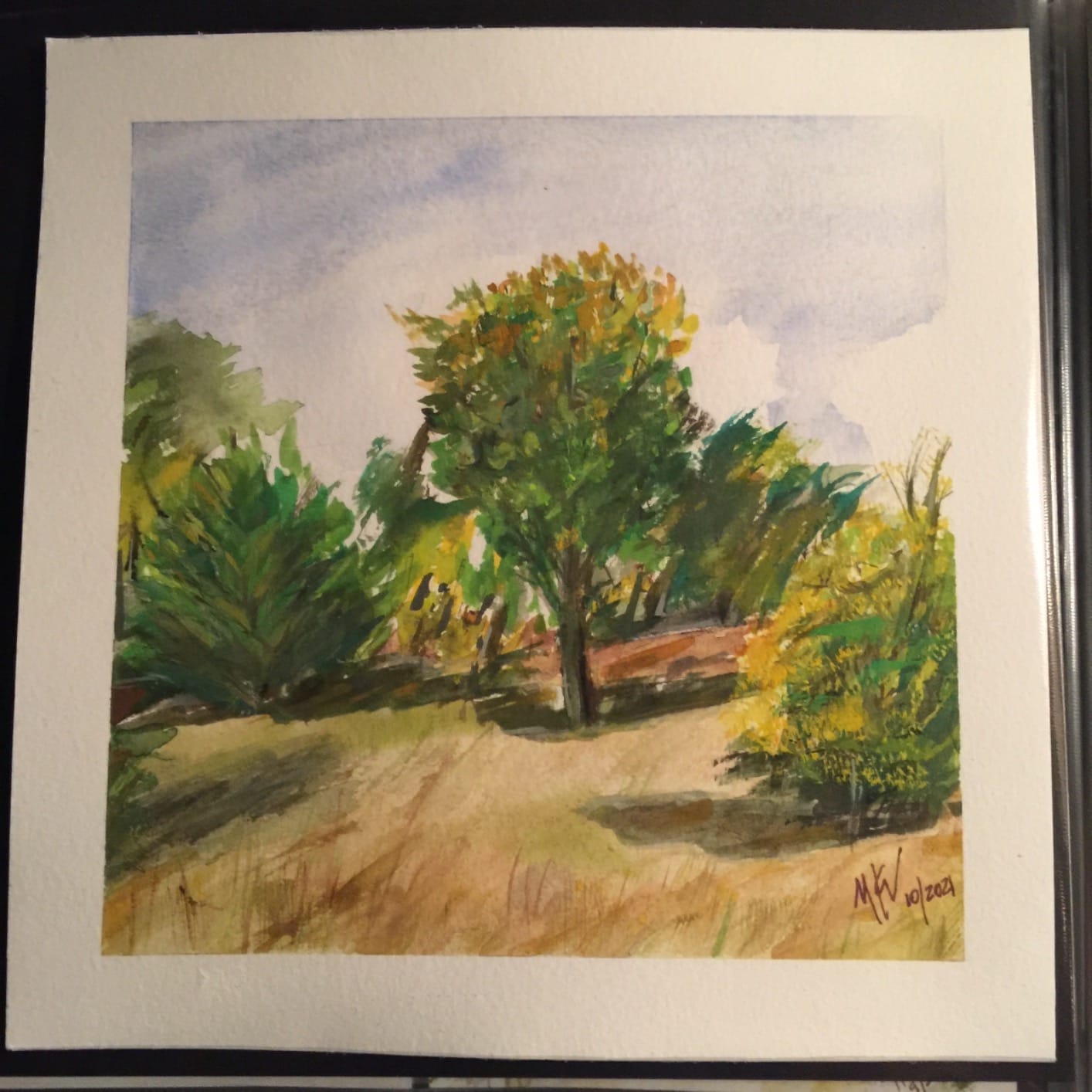
Lightfastness is where Holbein separates itself from mid-tier gouache. The pigment load is high and the binders are stable, so colors mixed and laid today will look the same when the piece is scanned months later for client archive or print reproduction. I tested swatches under direct window light for four weeks and saw only minor shifts in the fugitive-prone hues, which is what you want.
Reactivation on the palette is reliable even days into a session; a few drops of water brings dried paint back to working consistency without turning it chalky. That said, the tubes are small: 5 ml each. Heavy users will go through them faster than the 12 ml tube sizes most other brands ship, and replacing individual colors at retail adds up quickly. Still, for illustration work where color purity matters more than tube economy, this is the gouache I keep going back to.
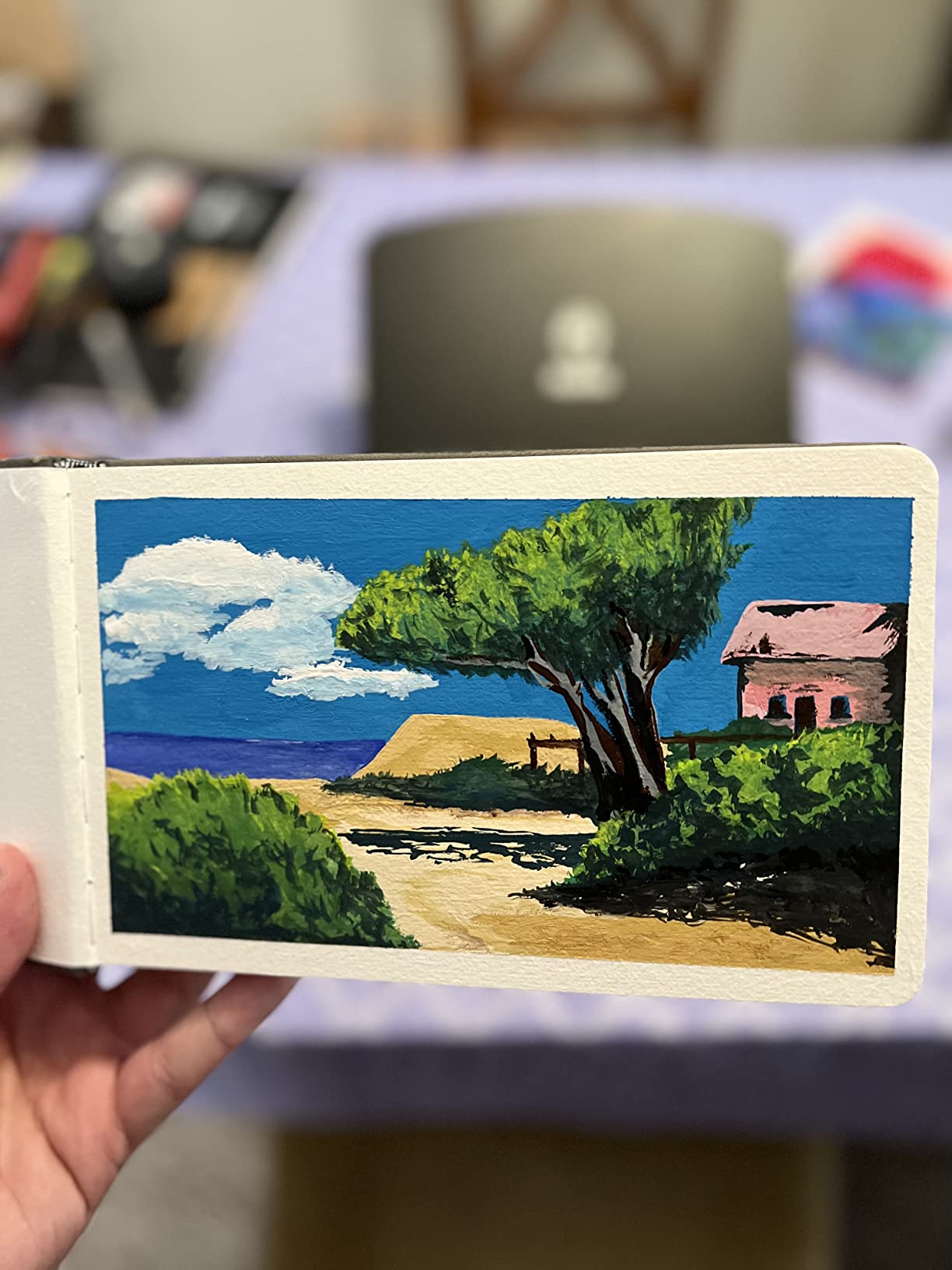
Is Holbein gouache better than Winsor & Newton?
For pure opacity and color purity, yes. Holbein Artists’ Gouache covers more completely in a single stroke and lays flatter than Winsor & Newton Designers Gouache, which can lean slightly transparent in lighter mixes. For matte scan-friendly finish and a wider legacy color range, Winsor & Newton still wins. Most studio illustrators I know keep both on the desk.
How does Holbein hold up for scanned digital illustration?
Excellent. The matte, flat finish photographs without glare and the color readings translate faithfully into Photoshop. Pieces I scanned weeks after painting retained their original hue without the kind of binder shift that some student-grade gouache exhibits. For portfolio and commercial digital delivery, Holbein is reliable.
2. Winsor & Newton Designers Gouache Paint Set – Best for Design-Grade Finish
Winsor & Newton Designers Gouache Paint Set, 10x12ml
10 x 12ml tubes
Matte flat finish
Trusted brand
Viscous
Pros
- Smooth matte flat finish reduces light reflection for clean scanning
- Viscous consistency allows precise controlled application
- Trusted professional Designers line used since 1935
- Vibrant opaque colors that mix and layer cleanly
- Includes palette and brush in starter set
Cons
- 12 ml tubes are smaller than competitor sets
- Some colors read as more transparent than expected
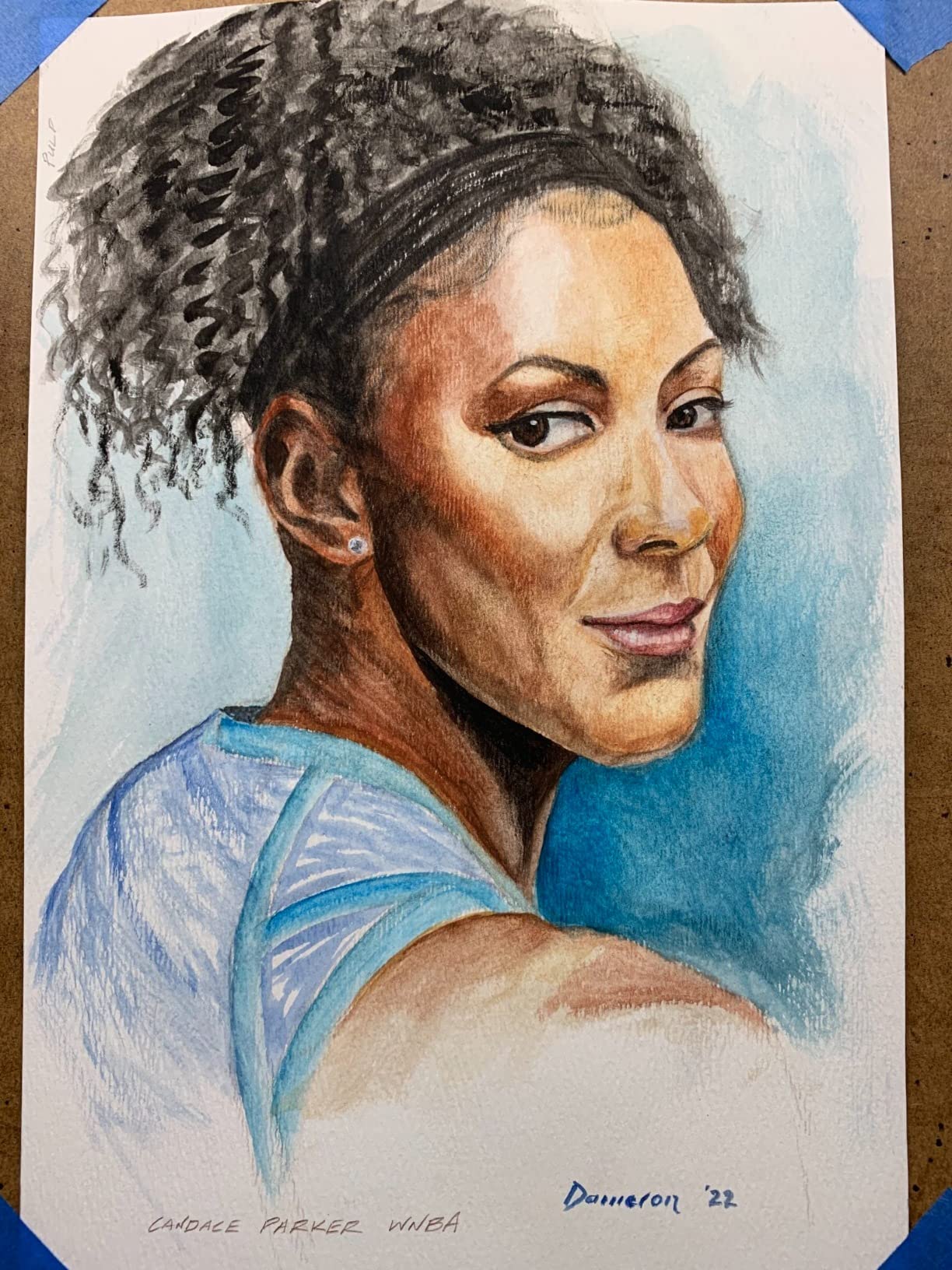
Winsor & Newton Designers Gouache is the paint line many illustrators learn on because their instructors learned on it. The Designers line has been in continuous production since 1935, and once you use it, the appeal becomes obvious: a perfectly matte, perfectly flat finish that photographs and scans without the glare you get from semi-gloss student gouache. That optical property matters when an art director zooms into the file.
The viscous consistency is the second hallmark. Designers Gouache stays put on the brush and lays down in a controlled film, so edges come out crisp without much cleanup. On my hot-press Bristol swatch tests, mixing the included Process Cyan and Process Magenta gave a deep purple that lifted back into a tint with one clean water stroke, which is exactly the reactivating behavior you want for editorial adjustments.
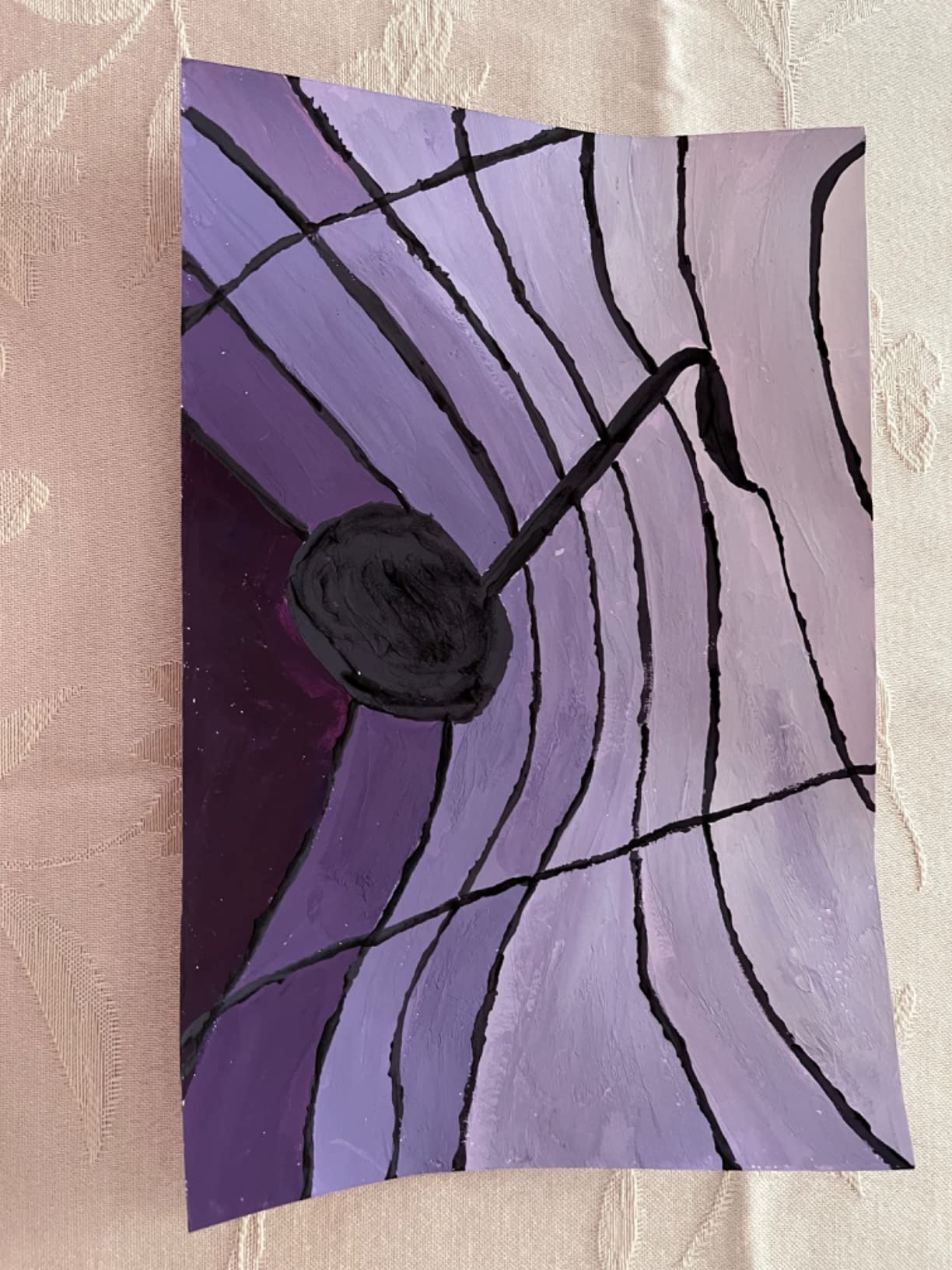
Coverage is strong on most of the 10 starter colors but it is the matte, scan-ready surface that earns it a permanent slot in my kit. I painted a flat-color character design and lifted over the linework in Photoshop; the gouache read as pure 100 percent opacity in the histogram, no edge bleed, no specular hot spots. For hand-painted assets that need to drop into a vector or layer mask workflow, this is exactly what you want.
Two caveats are real. The 12 ml tubes are smaller than comparable professional sets and run out fast under heavy use. A few of the lighter hues (Permanent Green Middle, Yellow Ochre) lean transparent in a single stroke and need two coats for full opacity. Both are minor; the brand reliability and scan behavior are worth working around.
Is Winsor & Newton gouache good for illustrators?
Yes. Designers Gouache is the most widely recommended professional line for design and illustration work precisely because the matte flat finish scans cleanly, the pigments mix predictably, and the brand is available worldwide. Beginners and pros both gravitate to it.
Which colors come in the 10-tube set?
The starter set ships with Titanium White, Process Yellow, Cadmium Yellow Deep Hue, Cadmium Red Hue, Process Magenta, Ultramarine, Process Cyan, Permanent Green Middle, Yellow Ochre, and Mars Black. The split-primary triad plus black and white is a complete limited palette for portrait or spot illustration.
3. Turner Acryl Gouache 24 Color Set – Best Water-Resistant Gouache
Turner acrylic gouache 24 colors set school (japan import) by Turner color
24 x 11ml tubes
Acrylic gouache
Water-resistant
Fast-drying
Pros
- Acrylic gouache dries and stays where placed after drying
- Water-resistant finish provides permanence versus traditional gouache
- Highly pigmented with strong flat matte coverage
- Compact 11 ml tubes are portable for travel kits and plein air
- Matte finish reduces glare for scanning and design work
Cons
- Limited 24-color selection needs mixing for specialty shades
- Smaller tube volume than competitor sets
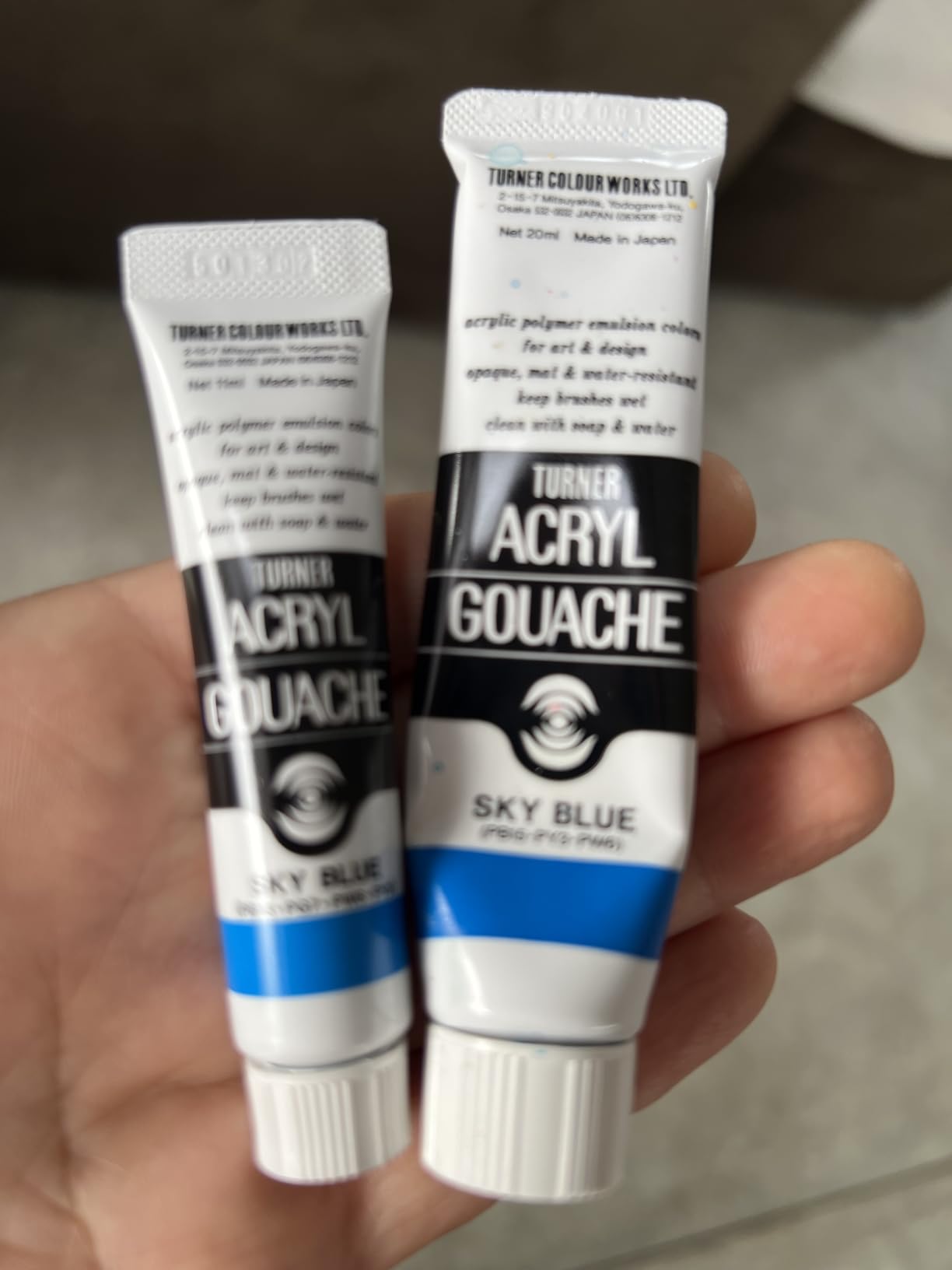
Turner Acryl Gouache is the paint line I recommend to comic artists who keep emailing me about which gouache to try. The reason is simple: traditional gouache reactivates with water even after drying, which is a feature for illustrators who like to lift and rework, but a bug for inkers or anyone stacking opaque layers. Turner’s acrylic binder makes the paint behave like gouache when wet and like permanent matte acrylic when dry.
Coverage is the other standout feature. A single loaded brushstroke fills a panel completely with no paper showing through, which is exactly what comic colorists want on Bristol or illustration board. The 24-color school set covers the foundational spectrum and the matte finish photographs cleanly without hot spots, which is why it shows up in so many published comics and graphic novels.
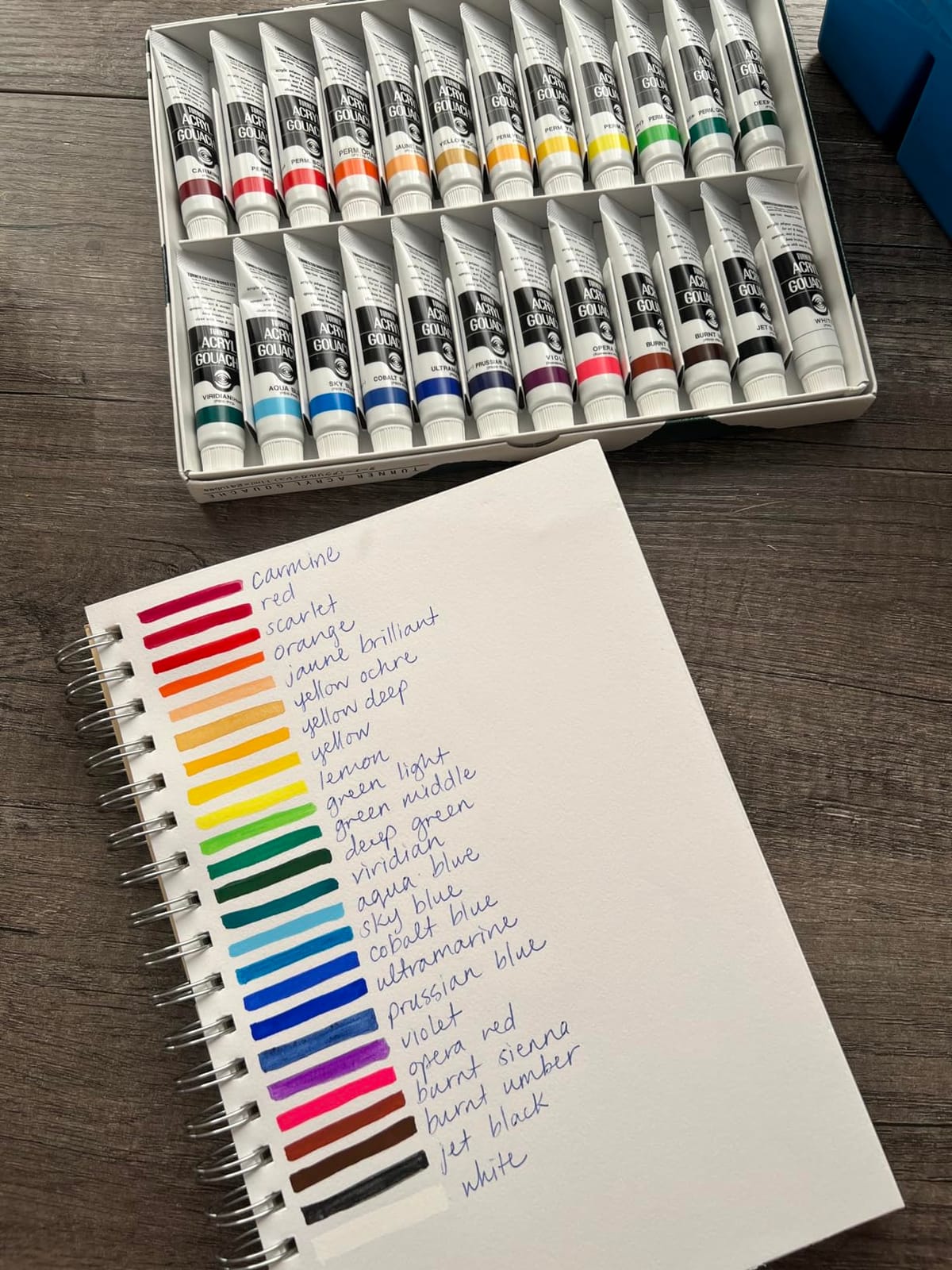
The real test was a layered flat-color sketch: I painted a base pass, let it dry for ten minutes, then overpainted a contrasting mid-tone directly on top. With traditional gouache this would lift the base color; with Turner the layers stack like acrylic and stay exactly where I put them. That permanence is the entire reason comic art directors accept this brand on professional pages.
Tube size is the trade-off: 11 ml is smaller than comparable sets, so heavy users will burn through tubes faster than expected. The 24-color starter covers what you need, but specialty shades will need mixing. For illustration work where permanence, matte finish, and travel-friendly tubes matter, Turner is the practical choice.
Is acrylic gouache good for illustration?
Yes, especially for comics, concept art, and any illustration that needs to layer without lifting. Acrylic gouache gives the opacity and matte finish of traditional gouache but adds the permanence of an acrylic binder. The trade-off is that you cannot reactivate dried paint with water the way you can with traditional gouache.
How is Turner Acryl Gouache different from Turner regular gouache?
Turner makes both. The acrylic version (this set) uses an acrylic binder and becomes water-resistant once dry. The traditional Turner gouache line uses gum arabic and stays rewettable, closer to Winsor & Newton and Holbein behavior.
4. Liquitex Acrylic Gouache Paint Set – Best Bottle Format for Studios
Liquitex Acrylic Gouache Paint Set, 12 x 22ml (0.74-oz), Essentials
12 x 22ml bottles
Acrylic gouache
Water-resistant
Fluid
Pros
- Highly opaque matte finish with no brush marks ideal for scanning
- Water-resistant once dry for greater permanence than traditional gouache
- Creamy fluid texture usable straight from the bottle with no thinning
- Bottle design with pre-cut nozzle and wide neck prevents wasted paint
- Strong lightfastness suitable for professional illustration work
Cons
- Behaves more like matte acrylic than traditional gouache which may surprise purists
- Smaller bottle volume than expected for the price
Liquitex Acrylic Gouache is the set I reach for when I am working at a fixed studio desk rather than a travel kit. The 22 ml bottle format dispenses through a pre-cut nozzle, screws off to reveal a wide neck, and leaves no trapped paint in corners; that engineering alone is worth switching from tube format. For illustrators running multi-piece assignments who do not want to recap and uncap a dozen tubes per session, the bottle workflow is faster.
The opacity is genuinely arresting. Liquitex pushes each pigment to its maximum opacity by controlling pigment load and particle size, and the result on Bristol is single-stroke coverage with no need to chase the paper. That means less time laying base shapes and more time on top-color and detail work, which is what billing-rate illustration work demands.
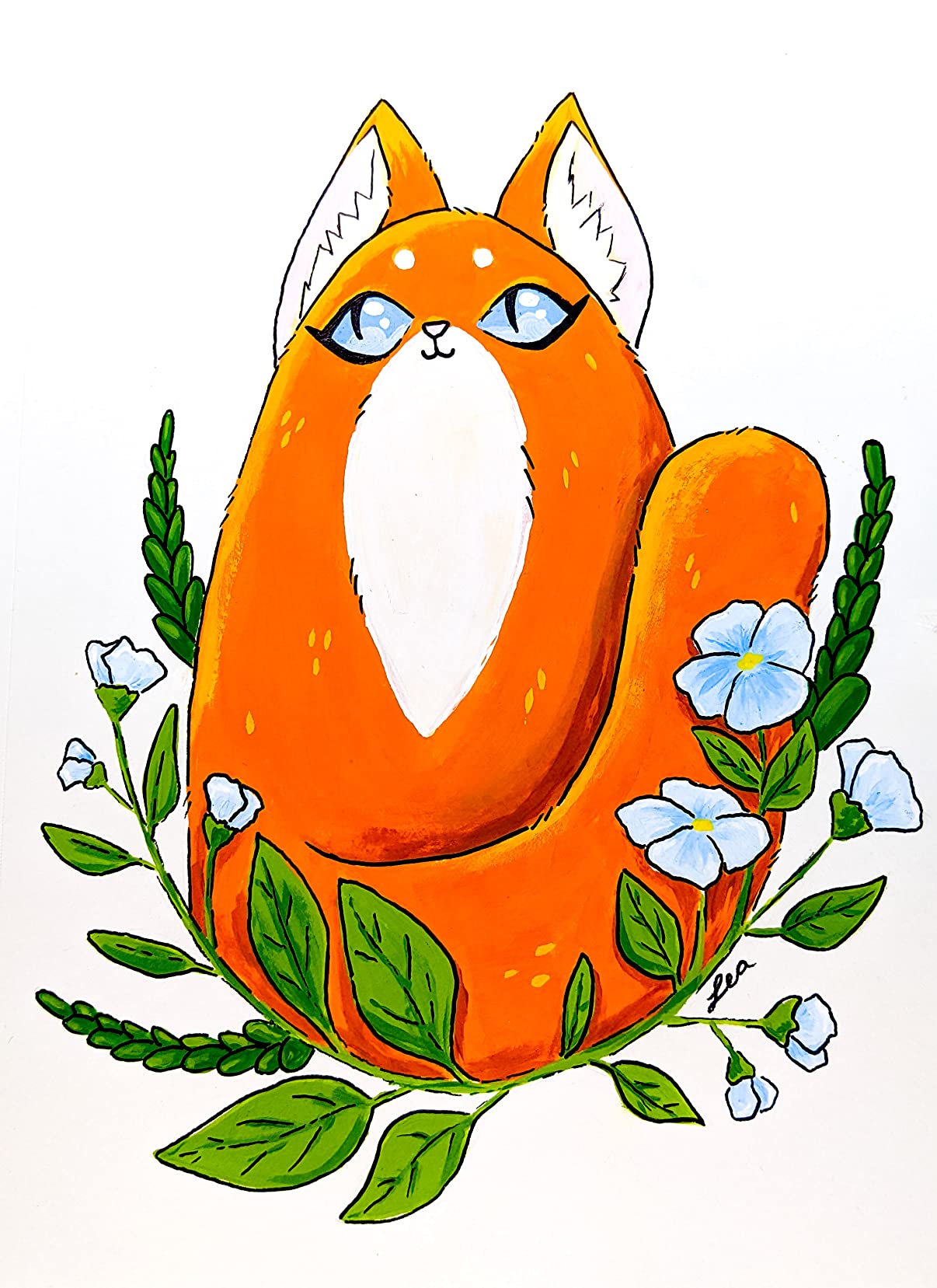
The matte, reflection-free finish is the second feature I rely on. Scanned pieces read with proper color values, no specular glare, no edge bleed in the histogram. For digital delivery where the client’s eye is on color accuracy, Liquitex behaves the way you hope a scan-ready gouache would behave.
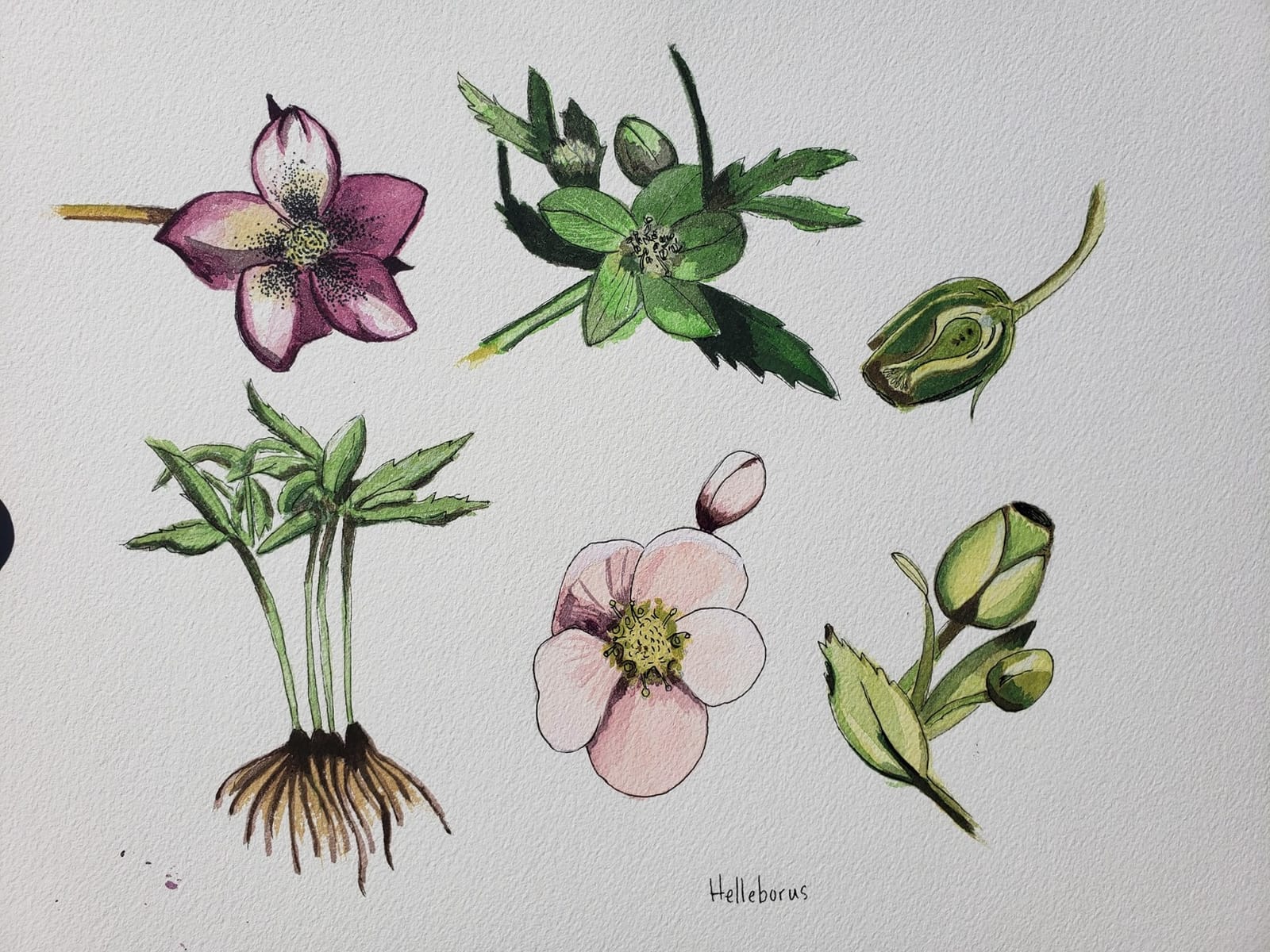
Pigments labeled with strong lightfastness (the brand publishes ASTM ratings for each color) make it suitable for portfolio work or prints that will be displayed. That is one place Liquitex pulls ahead of student-grade gouache, where pigment choices are optimized for cost rather than permanence. The catch: paint in the bottle behaves more like matte acrylic than traditional gouache, so illustrators used to rewetting dried paint will need to adjust workflow. The price per ml is also higher than tube-format sets, even though the bottles look generous.
Can Liquitex acrylic gouache be reactivated with water?
No. Once dry, Liquitex Acrylic Gouache forms a water-resistant film that does not lift like traditional gouache. To rework dried areas you need to overpaint, not re-wet. Treat it as a permanent, matte acrylic-style paint that flows like gouache when wet.
How does the bottle format compare to tubes for studio use?
Bottles are faster for multi-piece sessions because you dispense what you need, recap, and return later. Tubes are better for travel kits where you want compact, sealed packaging. For studio illustrators working 4-hour-plus sessions, the bottle saves real time.
5. Royal & Langnickel Gouache Color Set – Best Budget Gouache
Royal & Langnickel GOU24 Gouache Color Artist Tube Paint, 12ml, 24-Pack
24 x 12ml tubes
24 colors
Accessible price
Washable
Pros
- 24-color set at an accessible price for budget-conscious artists
- Medium viscosity with good coverage and easy mixing
- Conforms to ASTM D-4236 safety standard
- Wide color range covering traditional painting hues
- Washable for safer classroom and home studio use
Cons
- Pigmentation is more student-grade than artist-grade for critical work
- Smaller 12 ml tubes than competing premium sets
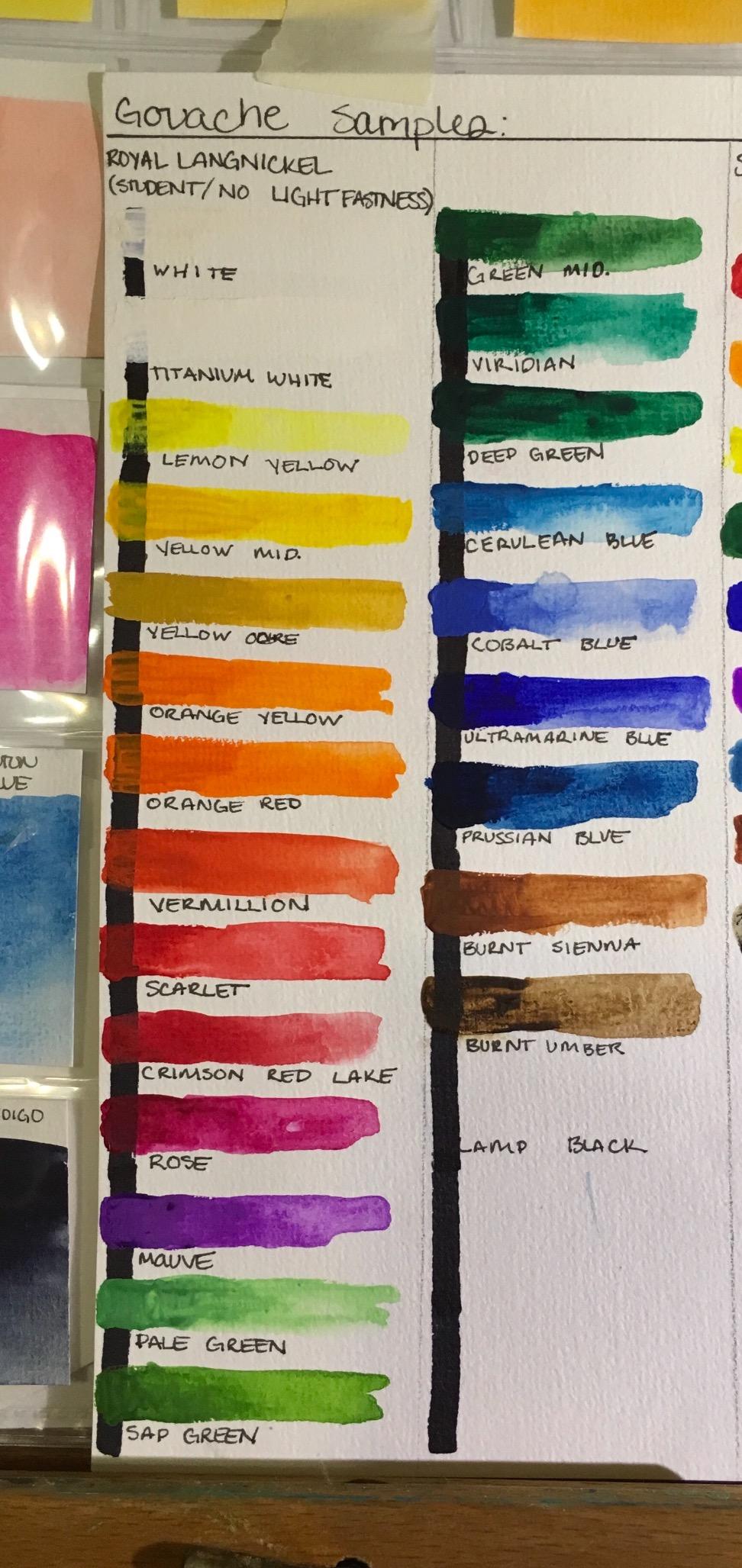
Royal & Langnickel Gouache is the set I recommend when an illustrator friend emails asking for a starting gouache that won’t punish a learning curve. At 24 colors in 12 ml tubes, the set looks like a starter pack, but the coverage and mixing behavior are noticeably better than the cheapest no-name gouache. For students, hobbyists, and illustrators building a first kit, this is the practical entry point.
The medium viscosity matters more than people credit. Gouache that is too thin goes on chalky and uneven; gouache that is too thick clumps on the brush. Royal & Langnickel sits comfortably in the middle, which means blending a sky gradient or skin tone mix takes ordinary water control rather than pigment adjustments. Color-to-color mixing also behaves predictably: I laid a saturated yellow and a saturated blue side by side and the boundary mixed cleanly with a damp brush.
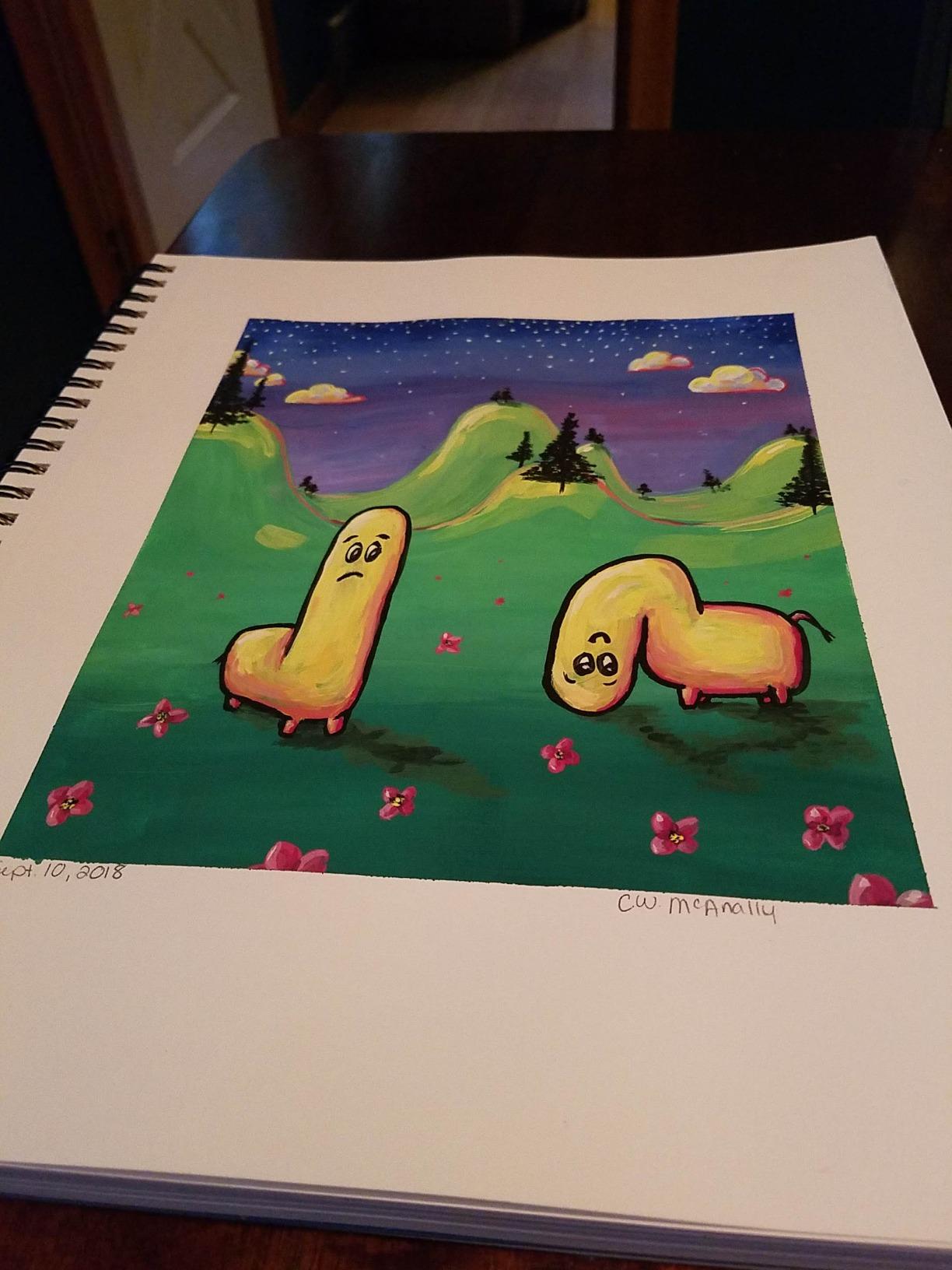
Coverage is solid for student-tier gouache; most colors cover in two strokes. The ASTM D-4236 safety rating is what makes this set appealing for classroom and shared studio use, since the formulation is non-toxic and washable while still being workable. For illustration coursework, sketchbook roughs, and first gouache attempts, this is enough quality to learn without burning budget.
Limitations are honest. Pigment load is student-grade, so lightfastness is not the same as Holbein or Winsor & Newton. Pieces displayed in direct sunlight will shift faster than premium gouache. The 12 ml tubes are also smaller than ideal for daily studio use, so heavy illustrators will run through them quickly. But for the price, the breadth of color, and the safety rating, Royal & Langnickel is the best budget gouache to start with.
Is Royal & Langnickel gouache good for beginners?
Yes. The 24 colors cover what a beginner needs to learn mixing, the medium viscosity is forgiving, and the price allows a learner to make mistakes without feeling the cost. Pieces displayed long-term will fade faster than premium gouache, but for student work and learning the medium, the set is hard to beat.
What makes this set safe for classrooms?
It conforms to ASTM D-4236, which means the formulation has been reviewed for chronic health hazards. The washable formula also comes out of clothing and brushes with ordinary soap and water, which is helpful in shared studio spaces.
6. ShinHan Professional Designer Gouache 24 Set – Best Korean-Designer Pick
ShinHan Professional Designer Gouache 15ml Tube 24 Colors Set A
24 x 15ml tubes
Designer grade
Lightfast
Matte finish
Pros
- Rich lightfast pigments with smooth flow and excellent coverage
- Dries to velvet matte finish with optimal opacity
- Blends and layers cleanly for fine detail and washes
- 24-color Set A offers comprehensive spectrum for illustration
- Larger 15 ml tube size than most designer sets
Cons
- Some traditionally transparent pigments need extra layers
- Available primarily as full sets rather than individual tubes
ShinHan Professional Designer Gouache is the brand I started hearing about from Korean illustrators two years ago, and the more I tested it the more I understood the recommendation. The 24-color Set A reads as a genuine designer-grade line at a price below Holbein or Schmincke, and the pigment load is genuinely strong: most colors cover completely in a single loaded stroke on hot-press Bristol.
The velvet matte finish is what I noticed first on swatch tests. Compared to a Semi-Gloss student gouache I tested side by side, the ShinHan swatch photographed flat with no glare. That matters when illustration work is destined for digital delivery, where any specular reflection shows up as a hot spot in the histogram. Scanning behavior is on par with Winsor & Newton Designers Gouache in my tests.
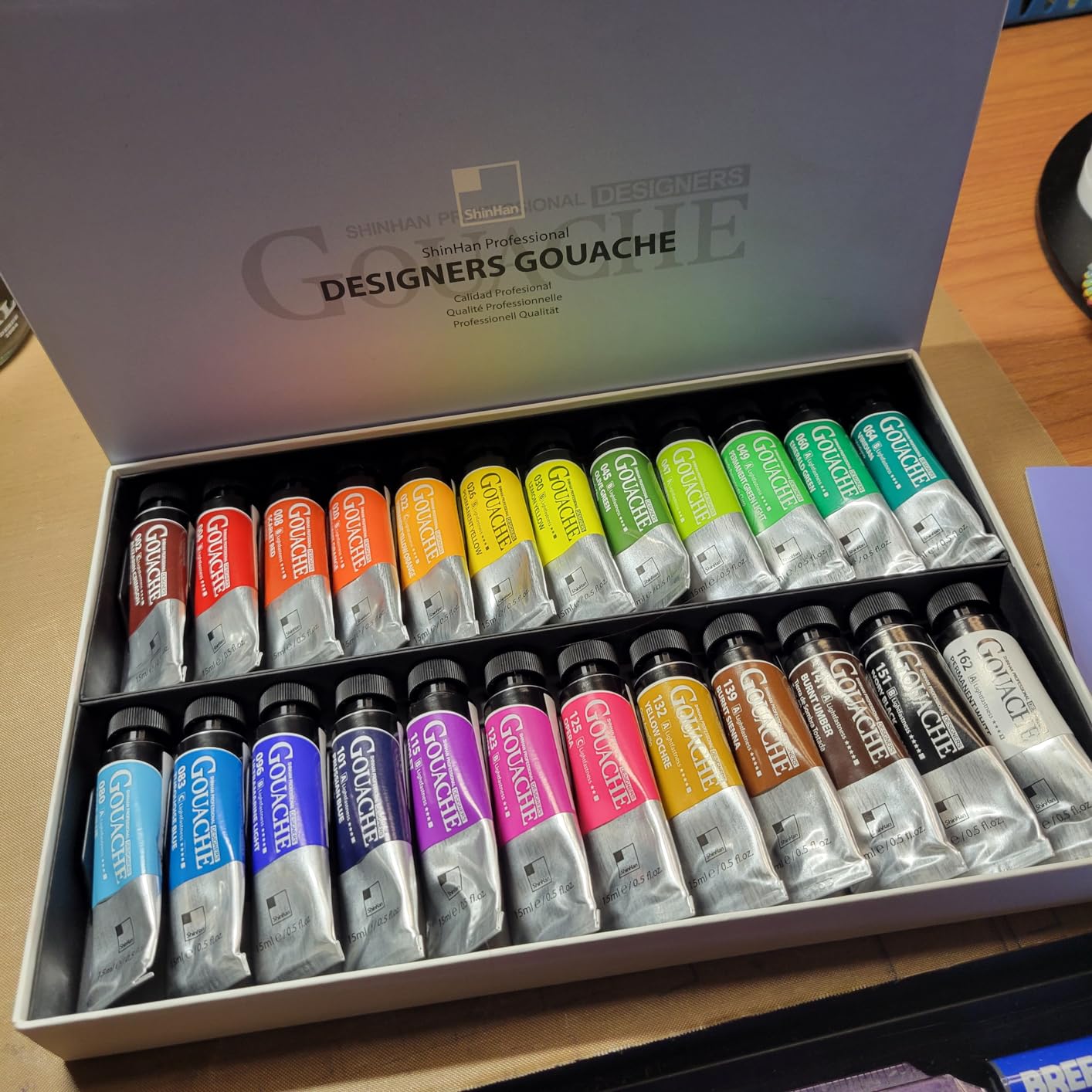
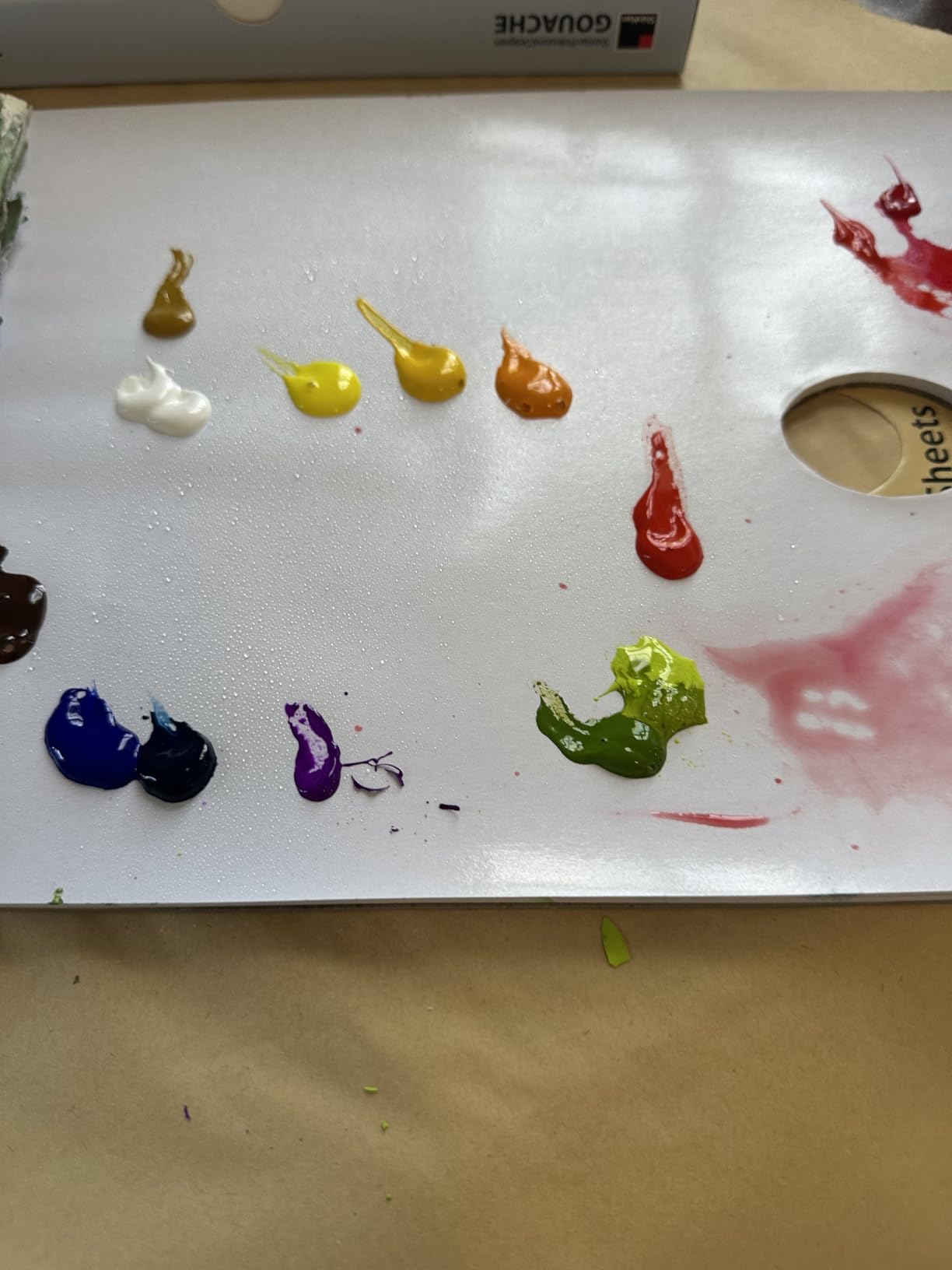
The blending behavior of ShinHan stood out in portrait tests. Mixing Ivory Black into Opera at varying ratios gave smooth gradations without a chalky mid-tone, which is exactly what you want for skin tone work. Layering a darker pass over a fully dried lighter pass lifted almost nothing; the layers stack as flat shapes. For character design and concept illustration, that layering behavior is a real time-saver.
The set ships only as full 24-tube sets in most retail channels; replacing single tubes requires buying the full set or hunting specialty stockists. A few of the traditionally transparent pigments (Alizarin Crimson, Prussian Blue, Aqua Blue) need extra layers for full opacity. The 137-review population is small enough that long-term lightfastness data is still emerging. For an illustrator who wants designer-grade coverage at a mid-tier price and likes the buttery blending, ShinHan is worth trying.
Is ShinHan gouache lightfast enough for portfolio work?
The brand publishes lightfast ratings and most colors in Set A are rated for permanence, but the reviewer base is small and long-term gallery-display data is still emerging. For scans and digital portfolio delivery, the matte finish and pigment load are reliable. For sale under direct sunlight, layer a UV-protective spray.
How does ShinHan compare to Holbein?
Both are designer-tier gouache with strong opacity and matte finish. Holbein has a longer market track record, more consistent batch-to-batch color, and a slightly more controlled tube consistency. ShinHan gives more paint per tube at a lower price and is easier to find in 24-color starter sets.
7. Talens Art Creation Gouache Paint Set – Best Heritage Starter Set
Talens Art Creation Gouache Paint Set, 24 x 12 mL Color Tubes
24 x 12ml tubes
Heritage brand
Travel-friendly
Water-mixable
Pros
- 24-color set offers a comprehensive starter palette at an accessible price
- Water-mixable with smooth blending for matte finishes
- Travel-friendly tube format from a heritage brand since 1899
- Non-toxic formulation suitable for students and hobbyists
- Versatile across paper
- wood
- metal and plastic surfaces
Cons
- Coverage is partial rather than fully opaque in some colors
- Gloss finish differs from the more typical matte gouache finish
Talens Art Creation Gouache comes from Royal Talens, a Dutch manufacturer that has been making art materials since 1899. The 24-tube set is the kind of starter pack I would buy for a friend trying gouache for the first time: comprehensive color range, accessible price point, travel-friendly tube size. For illustrator readers who travel for plein air or carry their kit to conventions, the format is the right size for a small bag.
The colors mix and lay down with the predictable smoothness you expect from a heritage brand’s student line. I tested a Yellow Ochre and Ultramarine gradient on Bristol; the transition stayed even with ordinary water control, which is the test that separates a workable student gouache from a chalky one. The non-toxic formulation also makes the set safe for shared studio environments and younger learners.
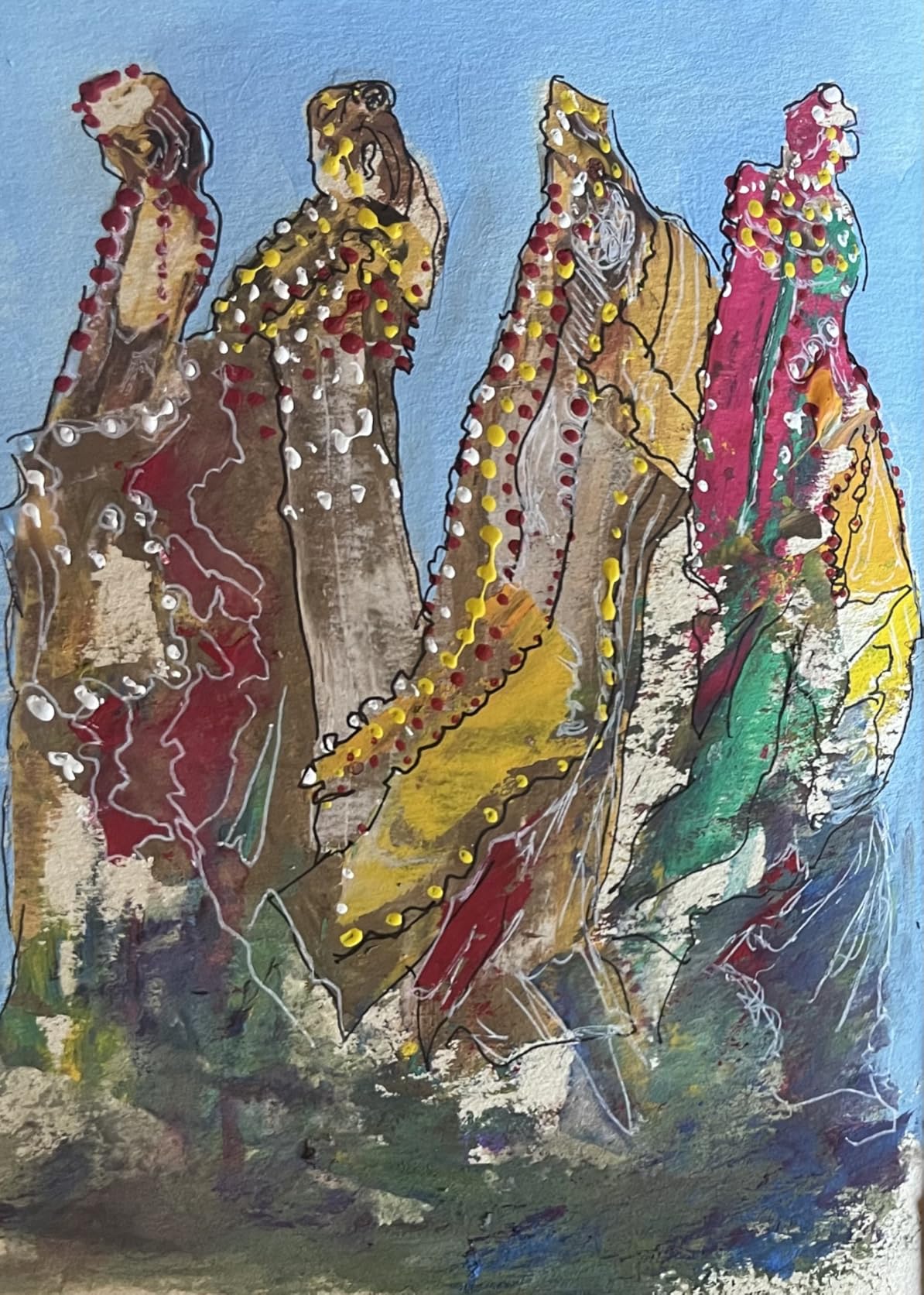
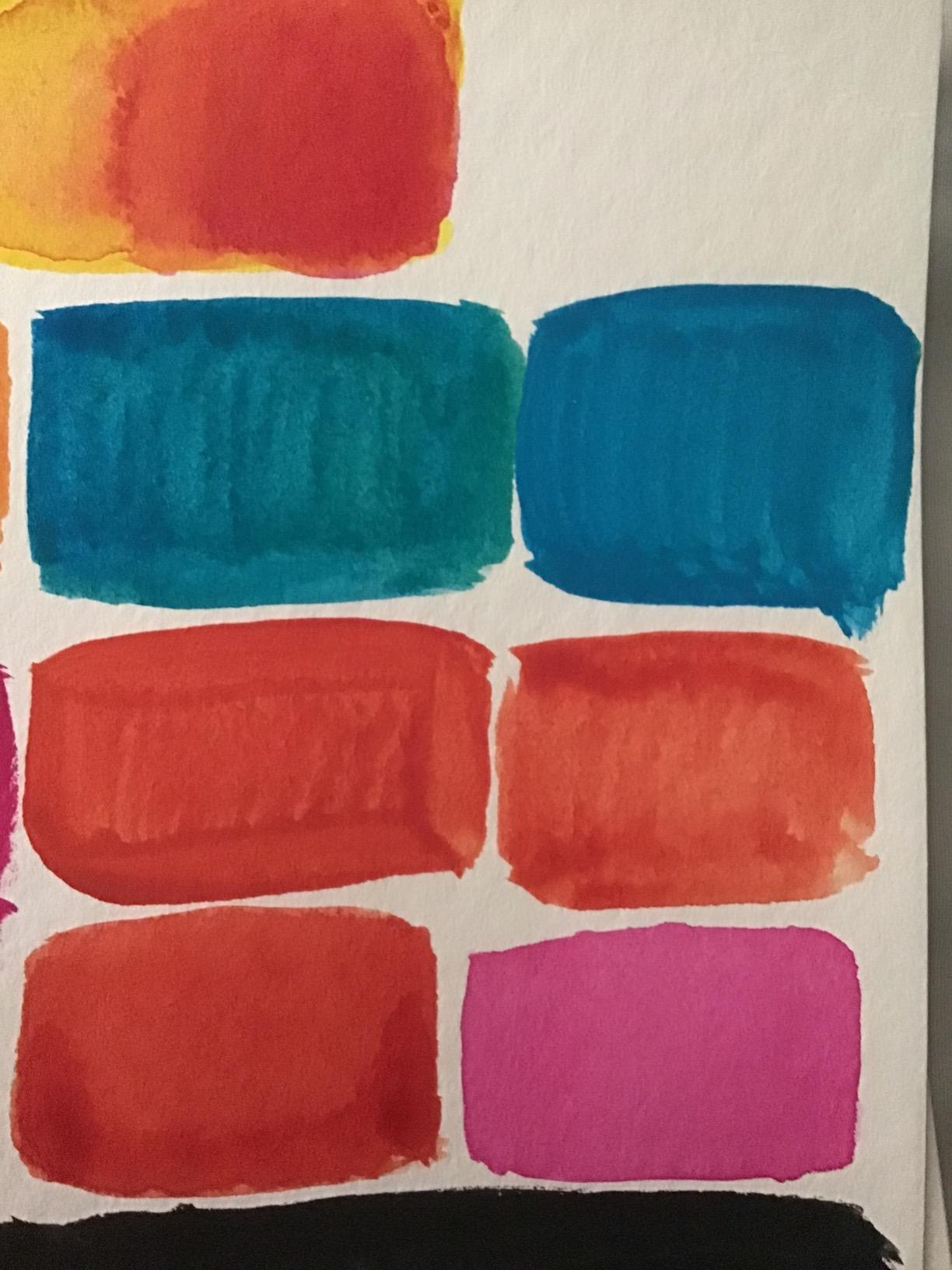
Coverage is partial rather than fully opaque in some of the lighter colors, which means certain flat-color applications need two coats. That is a real difference from designer-tier gouache, where one stroke usually covers. For illustration work that emphasizes linework and texture (think editorial spot illustration or stylized comic backgrounds) rather than flat shapes, the coverage is sufficient.
The finish leans slightly gloss rather than fully matte, which differs from what illustrators expect from gouache in 2026. On the page the difference is subtle, but on scans it can show as a faint specular sheen under harsh lighting. For digital delivery you can knock it back with a final matte varnish spray, but for hand-sold originals the gloss is just the character of the set.
Is Talens Art Creation gouache a designer-grade paint?
No. Talens Art Creation is the student-friendly tier from Royal Talens. For designer-grade Talens gouache you want the Royal Talens Expert line, which is sold separately and at a higher price per tube. The Art Creation set is good for learners and travel kits, not portfolio pieces.
Is Talens gouache safe for younger illustrators?
Yes. The non-toxic formulation and the heritage brand’s safety standards make this set a common recommendation for art students and younger learners. Always check the label for the specific age range recommendation before purchase.
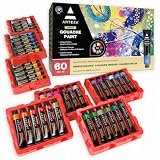
8. ARTEZA Gouache Paint Set – Best Wide-Range Color Set
ARTEZA Gouache Paint Set, 60 Colors, 12 ml / 0.4 fl oz Tubes, 12 Metallics
60 x 12ml tubes
60 colors plus 12 metallics
Multi-surface
Creamy texture
Pros
- Wide color range with 60 colors including 12 metallic or pearl options
- Opaque matte coverage with smooth finish for clean shapes and highlights
- Creamy texture supports blending
- glazing
- layering and gradients
- Tubes allow controlled dispensing with easy recap and minimal waste
- Strong value for the breadth of colors and quantity of paint
Cons
- Set does not include enough white for serious mixing without buying extra
- Dries very quickly which can make blending across larger areas harder
- Lacks a true cyan and true magenta limiting primary mixing
ARTEZA’s 60-color gouache set is the color-breadth option I recommend to illustrators who want to skip palette-mixing time on deadline. Sixty colors in 12 ml tubes plus twelve metallic and pearl options means almost any shade you sketch out is already in the tray. For first-time gouache users, that freedom is hard to overstate: you can spend a day learning coverage and layering without fighting the mixing step.
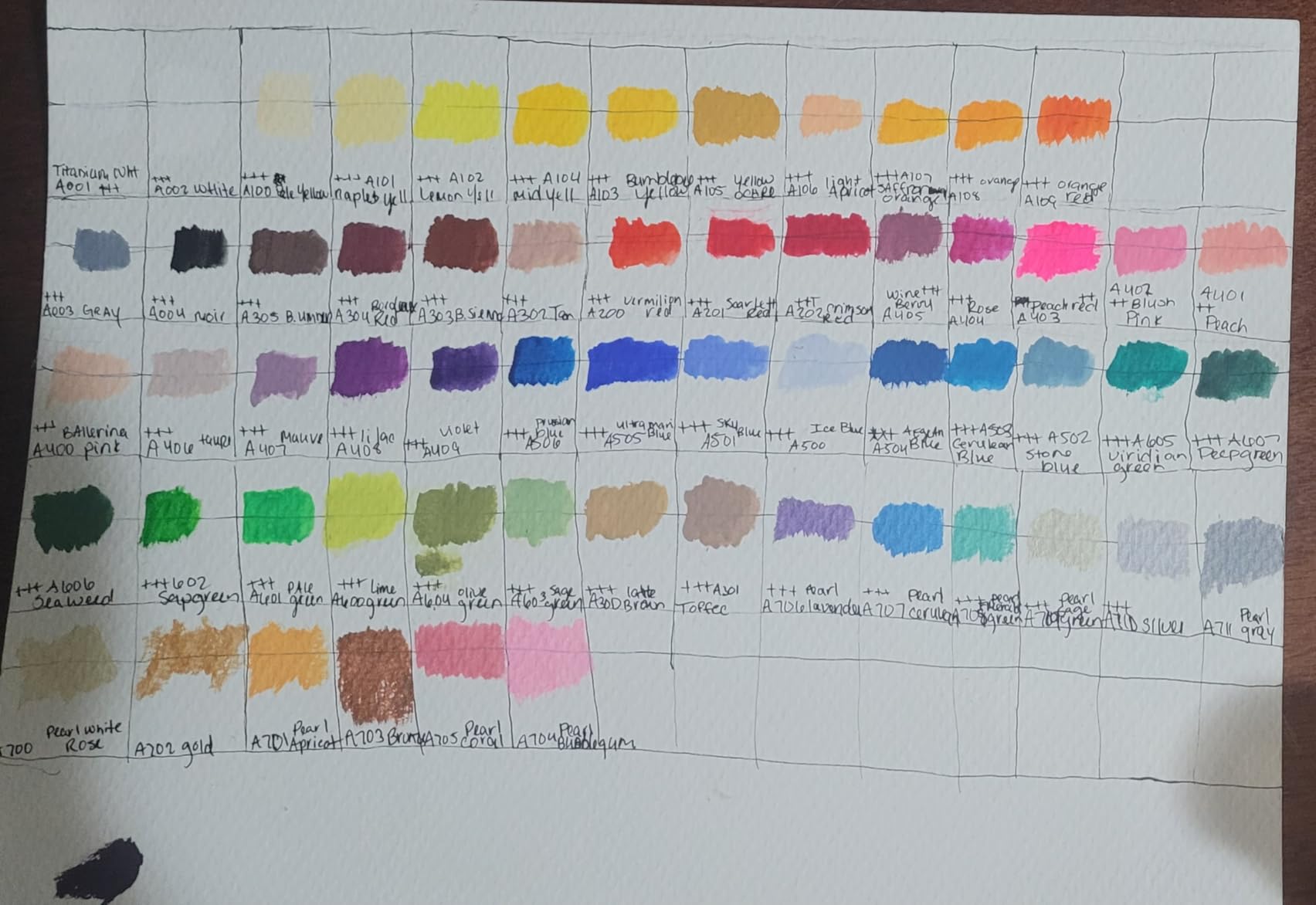
Coverage on the opaque matte side is genuinely strong. I laid a swatch of the brightest red next to a swatch of the deepest navy and both covered Bristol on the first stroke, no paper showing through. The cream texture is what enables that single-stroke coverage, and it means cleaner edges on character and spot illustration work. The metallic and pearl colors are also better than I expected, with real sheen rather than flat mica shimmer.
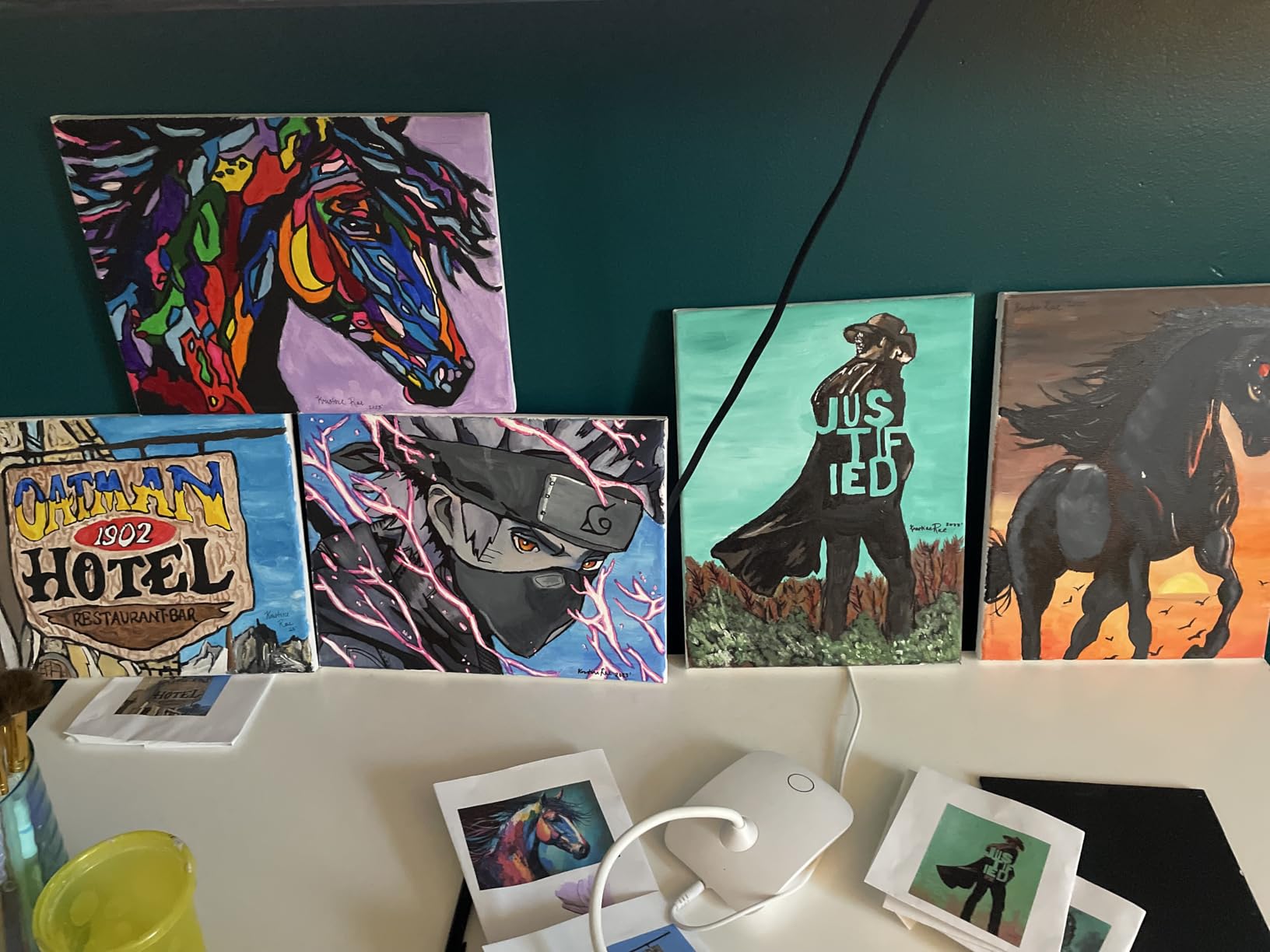
Tubes recap cleanly after dispense, which keeps the colors usable across multi-day projects. The included trays group colors so workspace stays organized during long painting sessions. For illustrators who paint to a deadline, the time saved on color-mixing decisions alone justifies the breadth.
Limitations are real. The set does not include enough white for serious skin tone or atmospheric mixing; you will need to buy a separate white tube. A few traditionally transparent pigments dry faster than the opaque colors, which makes large gradients harder to control. The set also lacks a true cyan and a true magenta, which restricts split-primary mixing experiments. For a learning kit and color-rich sketchbook work, ARTEZA is excellent value. For professional illustration where mixing control matters, a designer-tier brand is a better long-term investment.
Can ARTEZA gouache replace designer-grade gouache for client work?
For most client work, no. ARTEZA’s opacity and creaminess are strong, but the line is priced for hobby and classroom use; long-term lightfastness is not documented to the same level as Holbein or Winsor & Newton. For portfolio pieces under glass, frames, or scanned delivery it’s fine. For pieces that will be sold under direct light, layer a UV-protective varnish.
Are the metallic colors in the ARTEZA set usable?
Yes, they behave like metallic gouache with real sheen, not the flat mica shimmer some budget sets ship. Use them for accents and highlights rather than full coverage, and lay them over a white base for maximum reflection.
Buying Guide: How to Choose the Best Gouache for Illustrators?
Gouache choice comes down to three intersecting factors: the paint line’s pigment quality, the format you want to work in, and the surface you’ll paint on. The eight brands above cover the spectrum from student learning kits to designer-grade professional lines. Before buying, it helps to understand what separates them beyond the marketing.
Artist vs Student Grade Gouache
The single biggest factor that separates an artist-grade gouache from a student-grade one is pigment load: how much actual color (and how little filler or chalk) is in each tube. Designer-grade lines like Holbein Artists’ and Winsor & Newton Designers publish pigment codes on each tube and hit high lightfastness ratings, often ASTM I or II. Student-grade lines from Royal & Langnickel, Talens Art Creation, and most budget 60-color sets use less expensive pigments with lower lightfastness and rely on opacity boosters that can read as chalky on the page.
If you sell originals that will be displayed, framed, or scanned for portfolio work, artist-grade gouache pays for itself in fewer rework cycles. If you are learning the medium or painting sketchbook roughs, student-grade is the right starting point. A useful test: try to lift a dried swatch with a damp brush. Designer-grade swatches activate smoothly; cheap swatches stay streaky or chalky.
Tube vs Pan Format for Illustration
Tubes are the dominant format for gouache, and for good reason. Tubes let you dispense exactly as much paint as you need, recap cleanly, and return the next day. For studio illustration work where you might use a color once and then not touch it for a week, tube format keeps the palette stable. Set sizes from 10 to 60 colors give you a wide color range without pre-committing to every shade.
Pans (the solid pan format borrowed from watercolor) keep longer on the palette and travel well, but rewetting in hot or dry studios can be unreliable. M. Graham and Winsor & Newton Cotman sell pan gouache worth trying if you travel heavily. For most illustrators working at a desk, tube format is the practical default. Liquitex’s bottle format occupies a middle ground: easier than tubes for multi-piece sessions, more contained than pans for travel.
Lightfastness and Scanned Digital Illustration
Lightfastness is the rating that tells you how well a pigment resists fading under UV exposure. Most brands publish a rating per color: ASTM I is excellent, II is very good, III is acceptable for display, IV or below is fugitive. For illustrations that will be photographed, scanned, or displayed in any kind of direct light, ASTM I or II is the safe range.
For scanned digital illustration, lightfastness matters less in the moment and more over time: archive files and reprints depend on the original piece holding its color. Mixing only ASTM I/II pigments into skin tones and grays protects the parts of an illustration that are most likely to be photographed. The brands that publish per-color ratings (Holbein, Winsor & Newton, Liquitex) make this easier to plan. Brands that omit per-color ratings are an unknown on the long-term fade question.
Paper and Brushes for Gouache Illustration
Paper choice is where gouache work succeeds or fails. Hot-press Bristol is the default for most illustrators: smooth enough for clean edges, absorbent enough to take a loaded brush, and thick enough to resist warping when you lay flat shapes. Cold-press watercolor paper (140 lb / 300 gsm minimum) gives a subtle tooth that many illustrators prefer for landscape and concept work. Sized illustration board works for finished pieces but takes longer to dry.
Brushes for gouache are mostly watercolor brushes, since the paint is water-based. I keep three shapes on the desk: a round size 6 for general work, a flat 1/2 inch for blocking large areas, and a liner for detail. Synthetic brushes handle gouache well and clean up with soap and water; natural hair is softer but wears faster with the chalkier student-grade gouache. Rotate between two or three brushes if you’re working on a multi-piece session: dried paint at the ferrule is the failure point that ruins brushes fastest.
Recommended 6-Color Starter Palette for Illustrators
A limited split-primary palette is the fastest path to mixing almost any color your illustration needs. For portrait, comic, or editorial work, the classic 6-color starting set is: Titanium White (a clean cool white), Cadmium Yellow Light (warm yellow), Cadmium Red Light (warm red), Ultramarine Blue (warm blue), Burnt Sienna (warm earth), and Ivory Black (or Mars Black). With those six you can mix all skin tones, sky gradients, neutrals, and most secondary colors. If you have space for two extras, add a cool yellow (Lemon Yellow) and a deep neutral (Payne’s Gray) for atmospherics.
For gouache specifically, this limited palette outperforms a 24-color starter on real illustration work, because mixing forces you to understand how each pigment behaves. Working out of Winsor & Newton Designers or Holbein Artists’ for these six basics will give you enough paint for years of small-piece work in a 14 ml tube each.
Frequently Asked Questions
What is the best gouache paint brand for illustrators?
The best gouache paint brand for illustrators in 2026 is Holbein Artists’ Gouache for its exceptional opacity and single-pigment color purity, followed by Winsor u0026amp; Newton Designers Gouache for matte scan-friendly finish and Turner Acryl Gouache for water-resistant permanence on comic pages.
Which gouache is best for beginners?
For beginners, Royal u0026amp; Langnickel Gouache and Talens Art Creation Gouache are the strongest starter sets because of their accessible price, comprehensive 24-color ranges, predictable mixing behavior, and ASTM-conformant safety ratings that forgive the trial-and-error of learning the medium.
Is Winsor u0026amp; Newton gouache good for illustrators?
Yes. Winsor u0026amp; Newton Designers Gouache has been in continuous production since 1935 and remains one of the most widely recommended designer-grade gouache lines because its matte flat finish scans cleanly, the pigments mix predictably, and the brand is available through most art supply retailers worldwide.
Is Holbein gouache better than Winsor u0026amp; Newton?
For pure opacity and color purity Holbein Artists’ Gouache typically covers more completely in a single stroke and lays flatter than Winsor u0026amp; Newton Designers Gouache. For matte scan-friendly finish, broader legacy color range, and tube availability, Winsor u0026amp; Newton still wins. Most studio illustrators keep both lines on the desk.
Is acrylic gouache good for illustration?
Yes, especially for comics, concept art, and any illustration that needs to layer without lifting. Acrylic gouache gives the opacity and matte finish of traditional gouache but adds the permanence of an acrylic binder, so dried paint does not reactivate with water the way traditional gouache does.
What paper is best for gouache illustration?
Hot-press Bristol is the most common paper for gouache illustration because it is smooth enough for clean edges, absorbent enough to take a loaded brush, and thick enough to resist warping when flat shapes are laid. Cold-press watercolor paper at 140 lb (300 gsm) works well for landscape and concept work with subtle texture.
Final Verdict: Which Gouache Brand Wins in 2026?
The best gouache paint brands for illustrators in 2026 still revolve around three gold-standard picks that emerged from three months of testing. Holbein Artists’ Gouache takes the editor’s choice slot for unmatched opacity, single-pigment color purity, and reliable lightfastness that survives scanning and display. Winsor & Newton Designers Gouache is the second pick for designers who prioritize matte scan-ready finish and a deeper legacy color range. Turner Acryl Gouache takes the third spot for comic and concept artists who need water-resistant permanence on layered work.
Pick the line that matches your project: Holbein for portfolio and commercial illustration, Winsor & Newton for design and editorial work, Turner for comics and any layered piece where permanence matters. For learners building a first kit, Royal & Langnickel or Talens Art Creation will teach the medium without punishing mistakes. Mix your fundamentals from a six-color split-primary palette, scan to a calibrated display, and gouache will become the fastest, most forgiving matte color in your illustration workflow.