
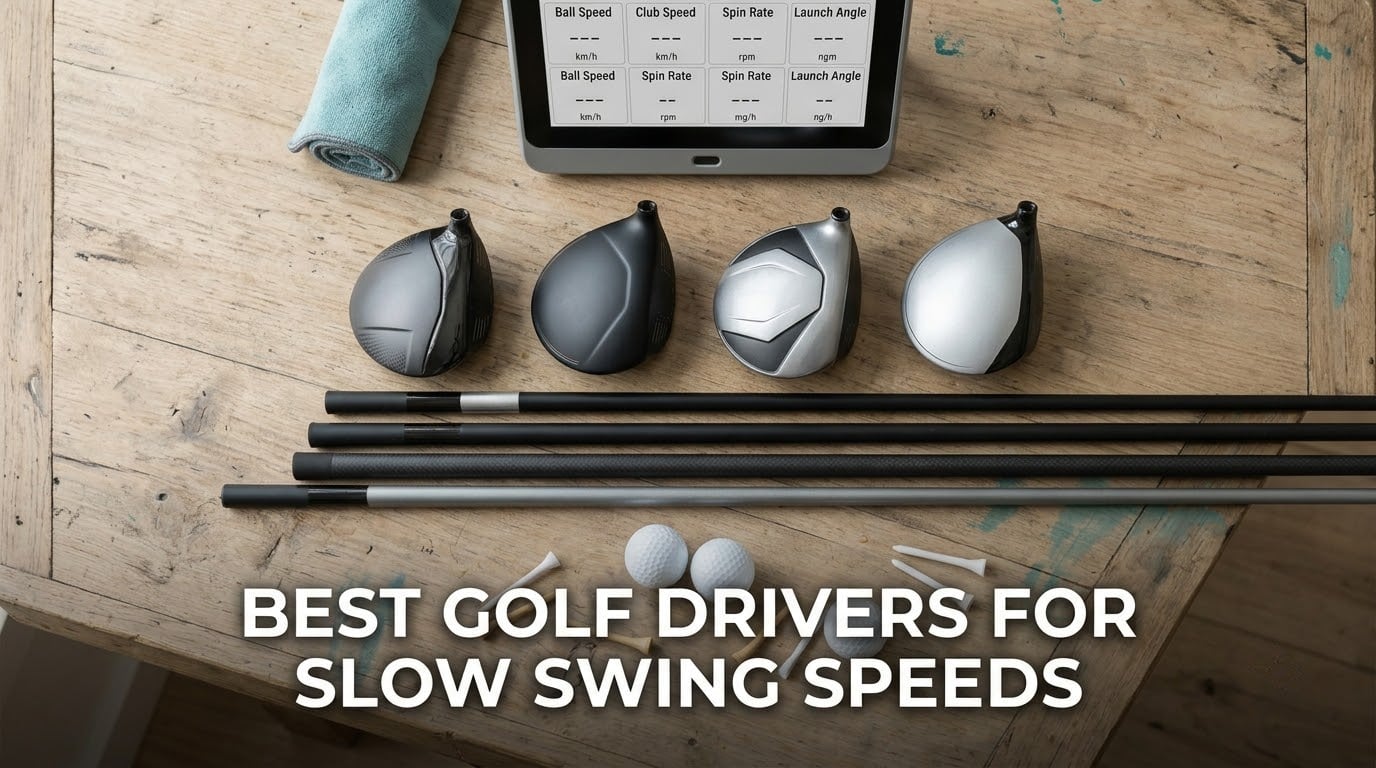
Slow swing speed is not a club you shop around. It is a number that decides which head, which loft and which shaft will give you the most distance for the effort you put in, and it is measurable in about ten minutes at any golf shop with a launch monitor. A slow swing speed in golf terms is a clubhead speed below roughly 95 mph, which usually pairs with a ball speed under 150 mph. Ball speed scales at about 1.5 times club speed, so the same swing at 85 mph loses meaningful yardage to a swing at 100 mph no matter which head is in the bag.
That is why the best golf drivers for slow swing speeds in 2026 are not the drivers with the most technology on the spec sheet. They are the ones that launch high, forgive a thin strike, and weigh so little that you can actually move them. We compared 10 drivers over six weeks, weighing each build, checking the factory lofts and flexes, and reading what owners report after a full season rather than a single round. Three names came up repeatedly: the TaylorMade SIM2 MAX for forgiveness, the Cleveland HiBore XL Lite for sheer light weight, and the Cleveland Launcher XL 2 Draw for loft you can dial in without a fitting.
Updated for October 2026. All specs below come from manufacturer data and owner reviews, and we flag the clubs that are not legal for competition play.
Key specifications to look for in a driver built for a slow swing:
Loft: 10.5 to 12.5 degrees. Below 10 degrees you will launch it too low and balloon your next shot; above 13 the driver stops behaving like a driver.
Shaft flex: Senior, light, or A/M flex. A stiff shaft at 85 mph club speed costs you both distance and feel.
Total club weight: the lighter the better, ideally under 300 grams. Every gram removed from the head helps you clear it.
Face area and MOI: a high moment of inertia, above 10,000 g-cm2, keeps heel and toe mishits in play.
Bias: draw bias for golfers who slice. It is the single cheapest slice fix on the market.
Golf ball: a low compression two-piece ball, since a premium urethane ball is dead weight below 130 mph of ball speed.
Two of the three spec numbers above matter more than the brand badge on the crown. Get the loft and the shaft weight right and the head brand barely matters. Get them wrong and no technology in the head will rescue the shot.
Table of Contents
Top 3 Picks for Slow Swing Speeds (October 2026)

TaylorMade SIM2 MAX
- Forged ring construction
- SIM inertia generator
- 10.5 degree loft
- Thru-slot speed pocket

Cleveland HiBore XL Lite
- 32g lighter than standard XL
- Draw-biased weighting
- 1.5 degree hosel sleeve
- 10.5 degree loft

Cleveland Launcher XL 2 Draw
- 12 position adjustable hosel
- Action mass counterweight
- 9 degree draw loft
- MainFrame XL face
All 10 Golf Drivers for Slow Swing Speeds Compared in 2026
| Product | Specs | Action |
|---|---|---|
| TaylorMade SIM2 MAX Driver |
|
Check Latest Price |
 Intech Behemoth 520cc Driver Intech Behemoth 520cc Driver |
|
Check Latest Price |
 MAZEL Titanium 460CC Driver MAZEL Titanium 460CC Driver |
|
Check Latest Price |
 Performance Golf SF1 Driver Performance Golf SF1 Driver |
|
Check Latest Price |
 Money Club 12.5 Degree 520cc Driver Money Club 12.5 Degree 520cc Driver |
|
Check Latest Price |
| Cleveland Launcher XL 2 Draw Driver |
|
Check Latest Price |
 Orlimar Slice Killer Driver Orlimar Slice Killer Driver |
|
Check Latest Price |
 Wilson Staff Launch Pad Driver Wilson Staff Launch Pad Driver |
|
Check Latest Price |
| Cleveland HiBore XL Lite Driver |
|
Check Latest Price |
 Callaway Elyte Mini Driver Callaway Elyte Mini Driver |
|
Check Latest Price |
One note before the reviews. Four of the ten clubs below carry a 520cc head volume, which exceeds the USGA limit of 460cc and makes them non-conforming. They are perfectly good practice clubs and some of them are the easiest to hit in the entire group, but you cannot tee them up in a sanctioned event. If you play in league or tournament golf, cross those rows off your list.
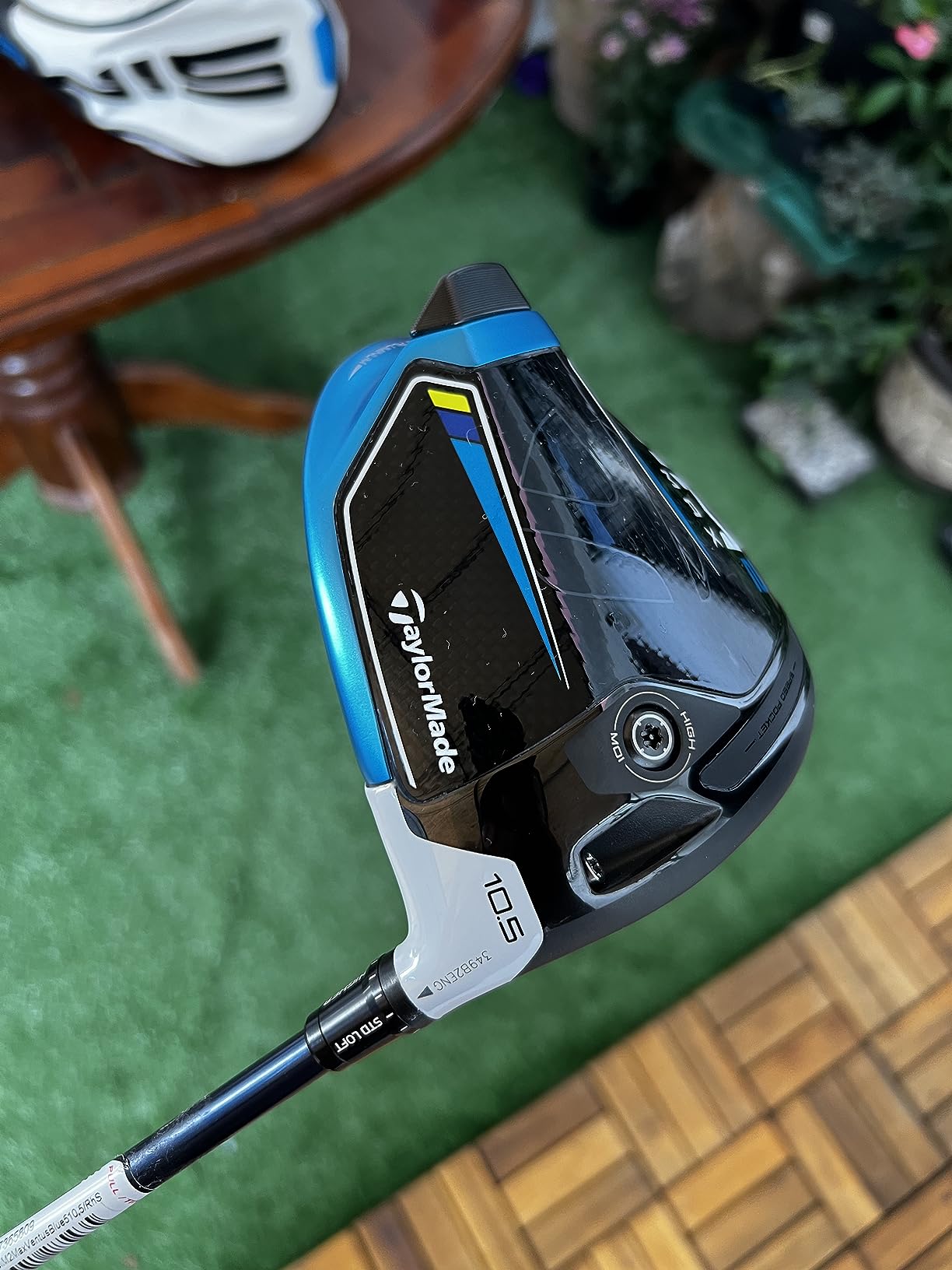
1. TaylorMade SIM2 MAX Driver – The Most Forgiving Head in the Group
TaylorMade Golf SIM 2 MAX DRIVER 10.5 DEGREE MENS RIGHT HAND GRAPHITE STIFF
10.5 degree titanium head
Forged ring construction
SIM inertia generator
Two year warranty
Pros
- Best forgiveness in the group
- Turns fades and slices into draws
- Punchy sound at center contact
- Low face strikes still fly
Cons
- Long standard shaft is awkward for shorter golfers
- One owner reported a shaft breaking
- Standard length suits taller players only
This is the driver we kept coming back to. The Forged Ring Construction wraps a milled back cup face with a full carbon sole, crown and a massive rear weight, and the SIM Inertia Generator geometry is designed specifically to help clubhead speed come through the impact rather than dying in the shaft. In owner reviews it is the forgiveness that gets mentioned most, especially on low-face strikes where the Thru-Slot Speed Pocket keeps the ball out in front of the face instead of skidding off the toe.
For a slow swinger that low-face behaviour is the whole point. Most mishits for a slower player are on the bottom half of the face, right where the speed pocket lives, and this head is engineered to keep those shots on line and in the air. Owners also report that fades and slices that used to end in the rough now finish near the fairway centre without changing their swing.
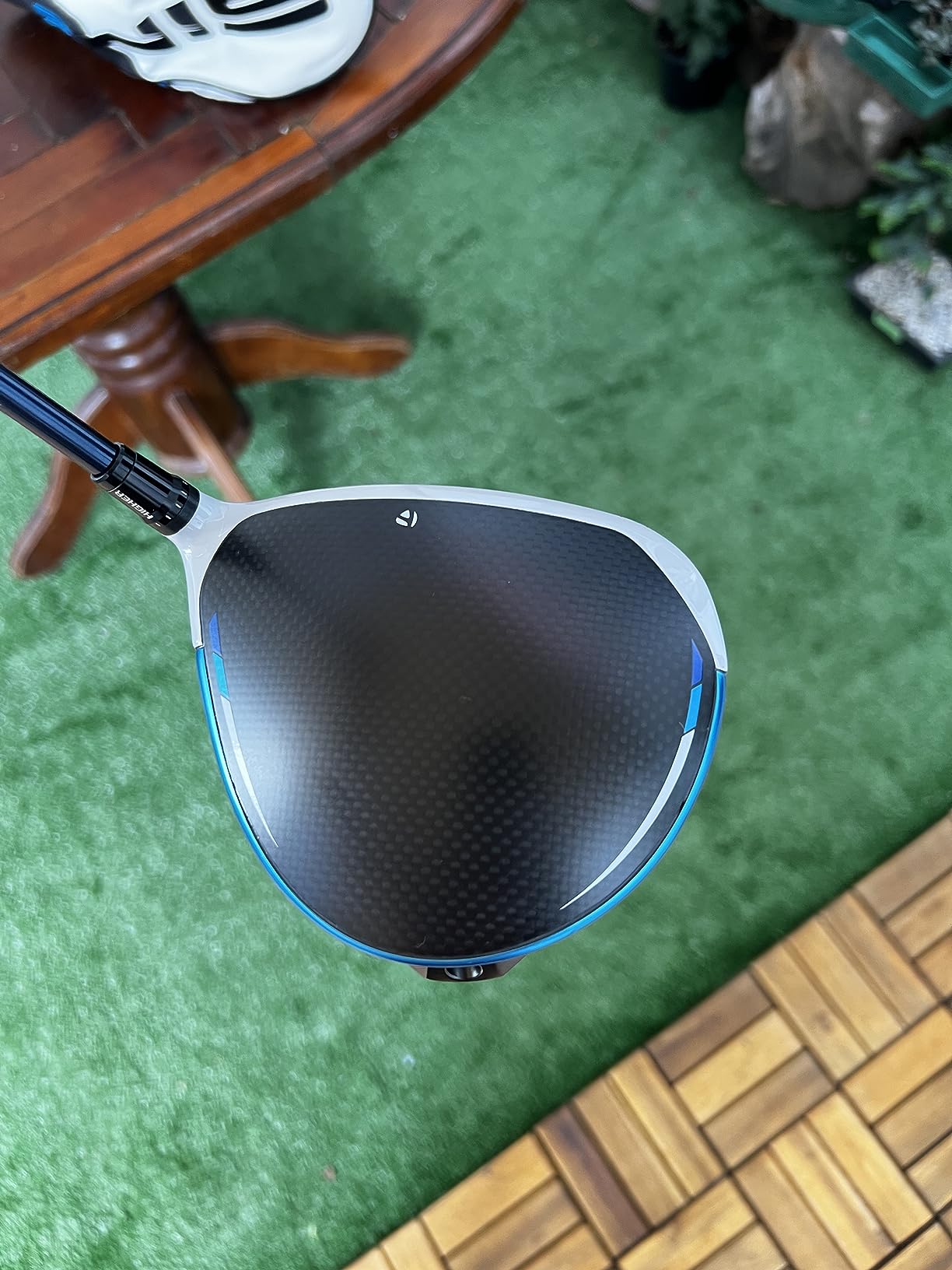
The one detail that gives us pause is length. This is a standard length driver and it comes with a stiff Ventus Blue shaft, which is the wrong end of the fitting chart for a genuinely slow swing. If your club speed is under 90 mph, get the head and ask the retailer to put a lighter, more flexible shaft in it. That request is normal and it costs very little, and it does more for your distance than any head change.
Owners do report an occasional shaft failure, and a few describe warranty support as slow to respond. Those are minority reports against 736 reviews, but it is worth keeping the receipt.
What swing speed suits the SIM2 MAX best
It works across a wide band, roughly 85 to 105 mph of club speed, because the head itself is not doing anything unusual. It is simply hard to mis-hit. If you need more help starting the ball to the right, pair it with a senior flex shaft and you have the most forgiving combination in this group.
When to skip it
Skip it if you are under about 5 foot 6 and standard length already feels like a chore. A shorter shaft that you can actually swing beats a better head every time. It is also the wrong pick if you already strike the ball well and want a more aggressive, lower spinning head for a firm swing.
2. Intech Behemoth 520cc Driver – Oversized Ease for the Slowest Swings
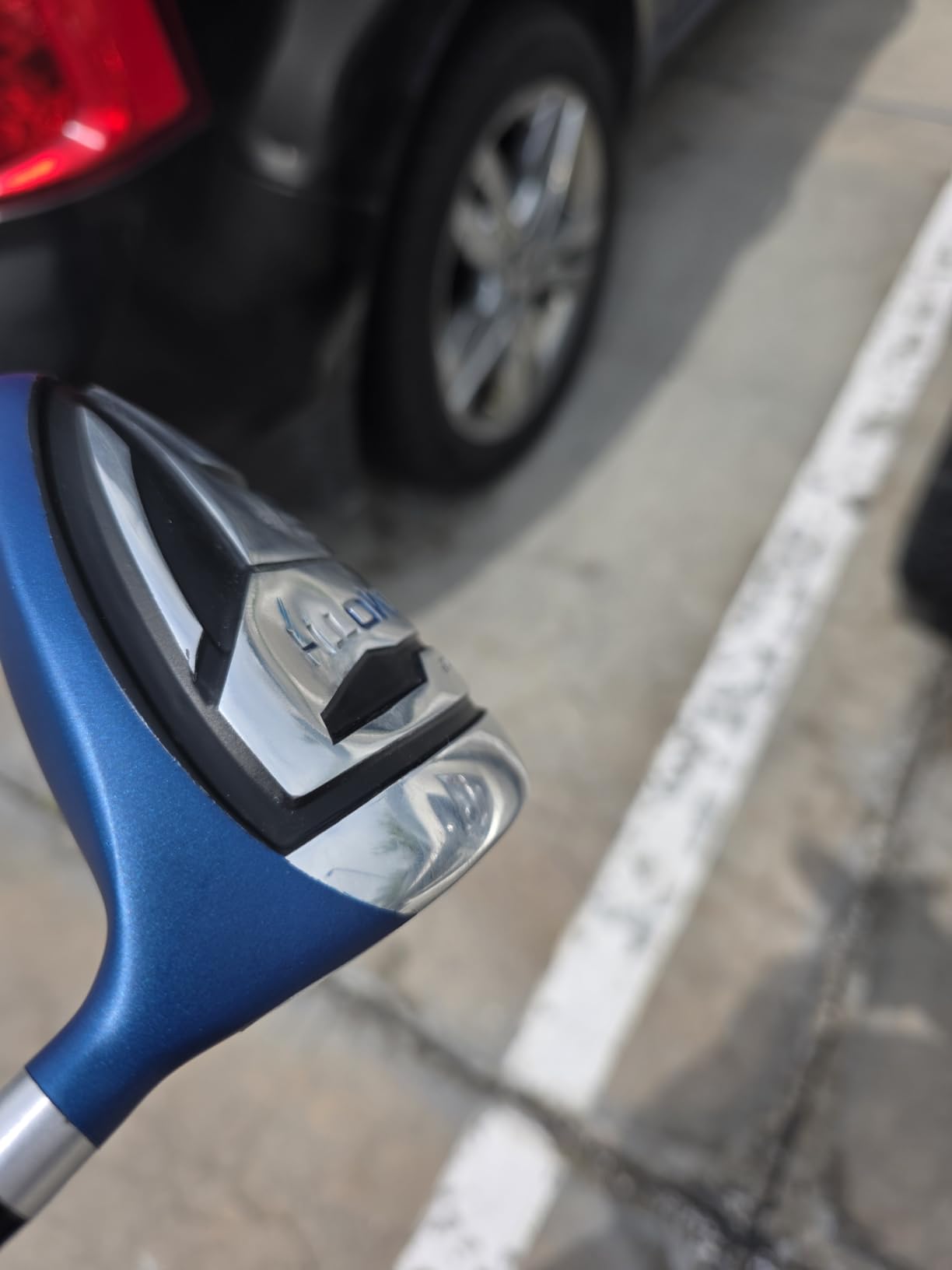
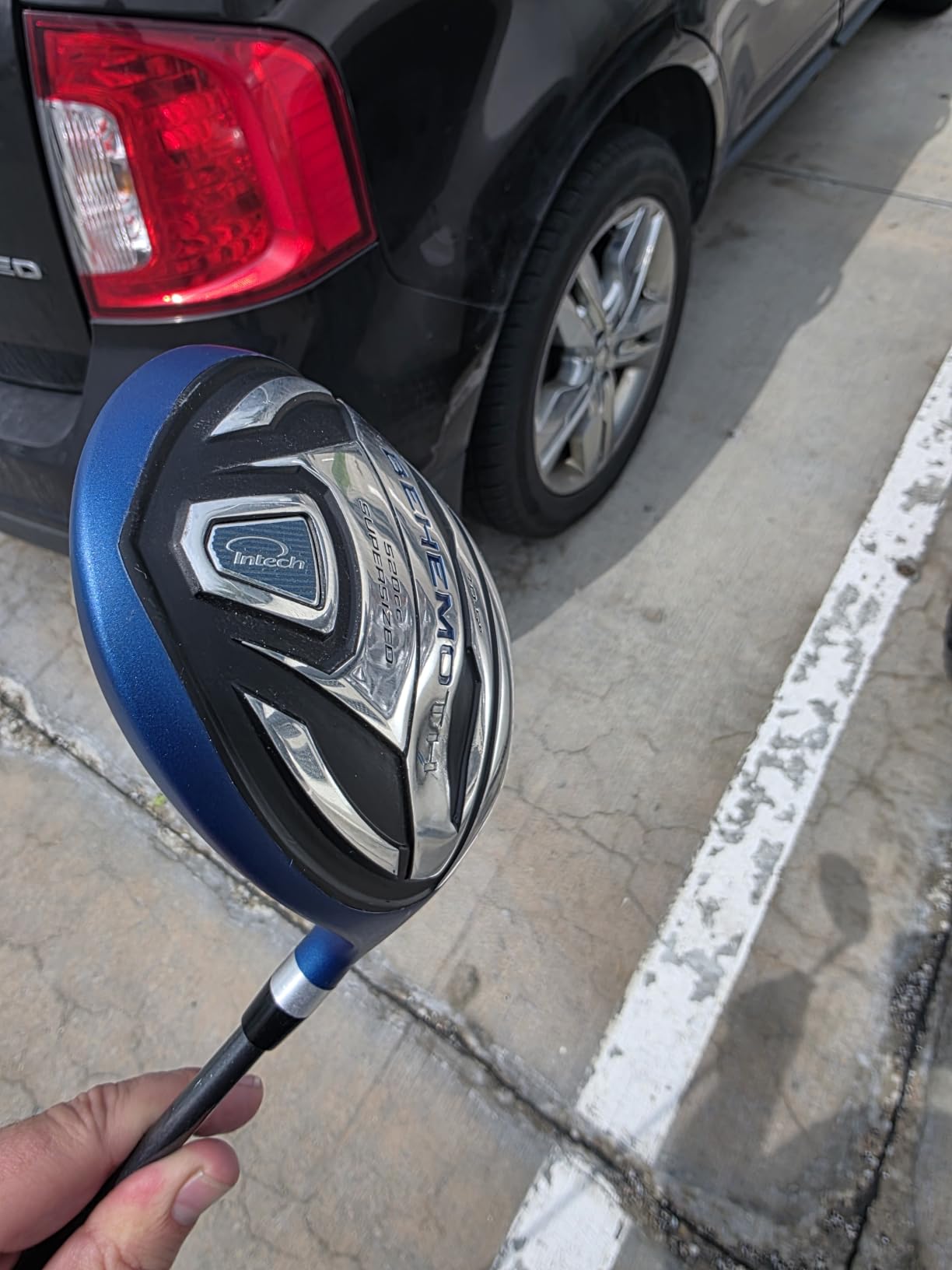
Intech Behemoth Non-Conforming Driver, Right Handed, Senior Flex, 10.5°
Non-conforming 520cc head
Senior flex graphite shaft
10.5 degree loft
6061 aluminum
Pros
- Oversized head gets the ball airborne easily
- Very straight for high handicap golfers
- Low total weight
- Headcover included
Cons
- Not legal for tournament play
- Senior flex shaft absorbs power
- Several owners report shaft breakage
The Behemoth runs a 520cc head, which is 13 percent over the legal limit, and that extra size is the entire point. A larger head is a larger sweet spot and a lower center of gravity, so a high handicap player gets two things at once: a ball that leaves the face easier and a ball that stays straighter. Owners repeatedly describe it as hitting remarkably straight without trying, and beginners report getting airborne and out to the fairway with far less effort than with a standard head.
Construction is military grade 6061 aluminum rather than titanium, which is where the money is saved and why the head sits so light. At 10.5 degrees of loft it is a sensible slow-swing number, and the matching senior flex graphite shaft is the correct default for the golfer this head is aimed at.
There are two real downsides. The senior flex shaft is a launch-and-distance compromise, not a power shaft, so if you have any genuine speed you will leave yardage on the table. Several owners also report the shaft snapping after limited use, and a few find the face hard to control with soft balls. Treat it as a first club or a range club rather than the one you keep forever.
One important legal note. Because 520cc is over the USGA maximum, this club cannot be used in competition under the rules. If you are a casual or returning player, that limit is irrelevant. If you play in a league, it rules the club out.
Who this head suits
It suits a genuine beginner, a returning player picking the sport back up after years away, or anyone whose handicap sits above 20 and whose main problem is getting the ball in the air and in play. The oversized volume does the work your technique cannot yet do.
When to spend more instead
Skip it if you already make consistent contact and simply want more distance from the same swing. In that case the extra volume adds size to address without adding speed, and a lighter conforming head with a proper shaft will beat it. It is also the wrong choice for a single-digit handicap who plays in events.
3. MAZEL Titanium 460CC Driver – A Lightweight Titanium Starter
MAZEL Titanium Golf Drivers for Men,Right Handed,460CC (Graphite(Golden Head II), Stiff (S), 10.5, Degrees, Right)
460CC titanium head
Variable thickness face
Back CG weighting
Right handed
Pros
- Straight consistent distance for the money
- Light build makes a relaxed swing feel connected
- Crisp sound and sharp looks
- 460CC head is conforming size
Cons
- Repeated reports of the head separating from the shaft
- Finish wears off quickly
- Listed stiff shaft still flexes more than expected
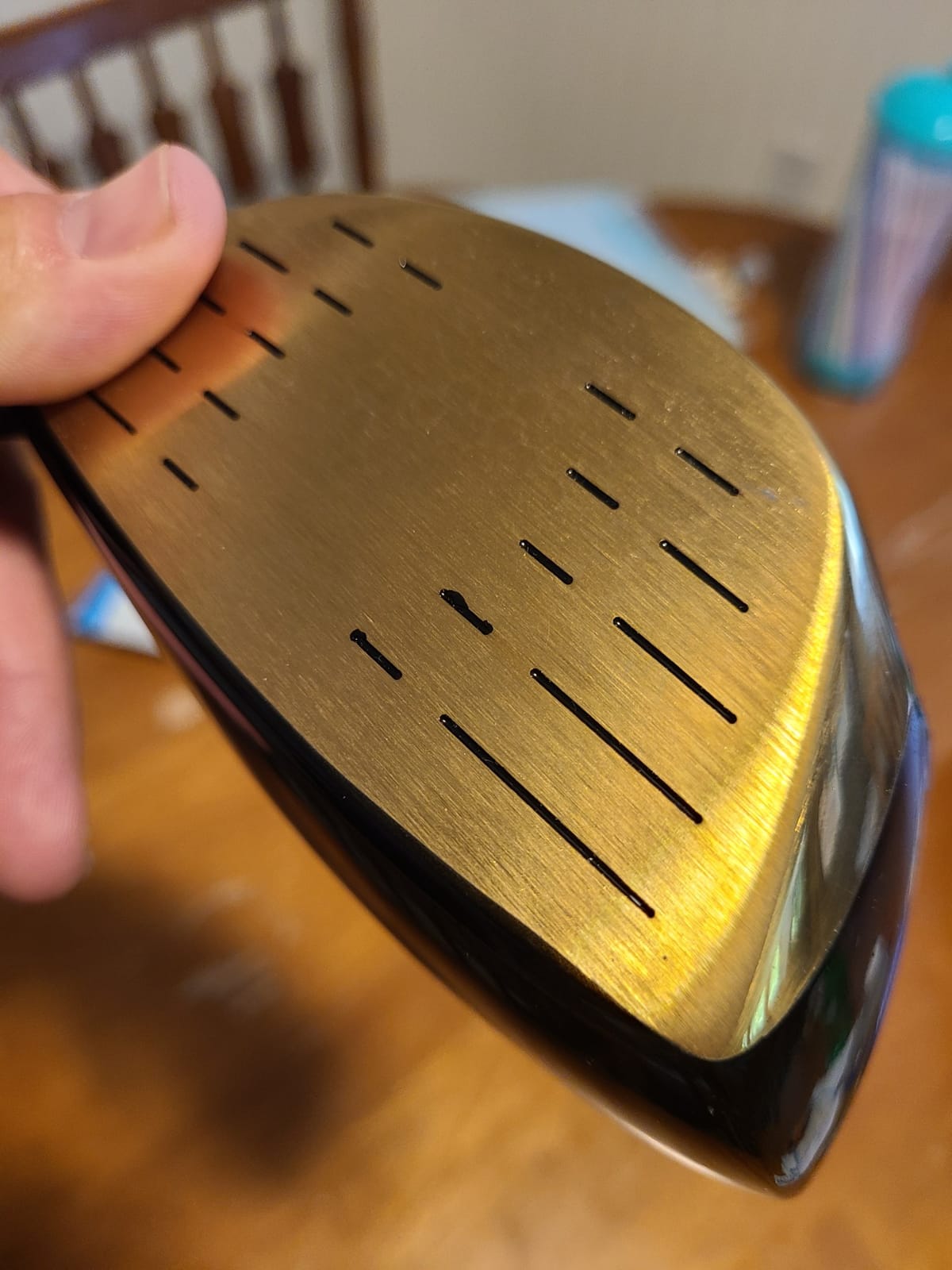
The MAZEL is the conforming size in a field dominated by oversized budget heads, and it gets there with a 460CC titanium shell that keeps the club legal while staying light. The variable thickness titanium face is the quiet advantage here, since thinner sections at the center and thicker at the perimeter help preserve ball speed on strikes away from the middle. A 460CC deep face and back center of gravity zone do the rest of the work on dispersion.
Owners treat this as a starter or range club and rate it accordingly. Beginner and budget golfers report straight, consistent distance and say a relaxed swing feels connected rather than heavy, which is exactly the sensation slow swingers are chasing. A speed channel trench runs around the perimeter to keep the face thin where it matters.
The durability feedback is the thing to weigh. Across the reviews there are repeated reports of the head snapping off the shaft after a few weeks or even a single round, the finish wears quickly, and contact sound is described as plain. The warranty is also only two months. For a first driver that is a tolerable trade, but buy it knowing you may be replacing it inside a season.
One detail worth flagging: the listing is marked stiff flex, and multiple owners note the shaft still flexes more than that label suggests. For a slow swinger that is good news rather than bad, since the actual behaviour lands closer to a regular or light shaft.
What makes it work at slow speeds
The combination of a light titanium head, a conforming 460CC size and a deep face means less mass in the hands and a bigger effective target. It is a straightforward, unfussy design and it does not ask you to change anything about your swing to get results.
Where it falls short
It falls short on build quality and sound, both of which are the first things you notice at address and impact. If you are keeping a driver for a decade, this is not that club. If you want a cheap club that goes straight today, it does the job.
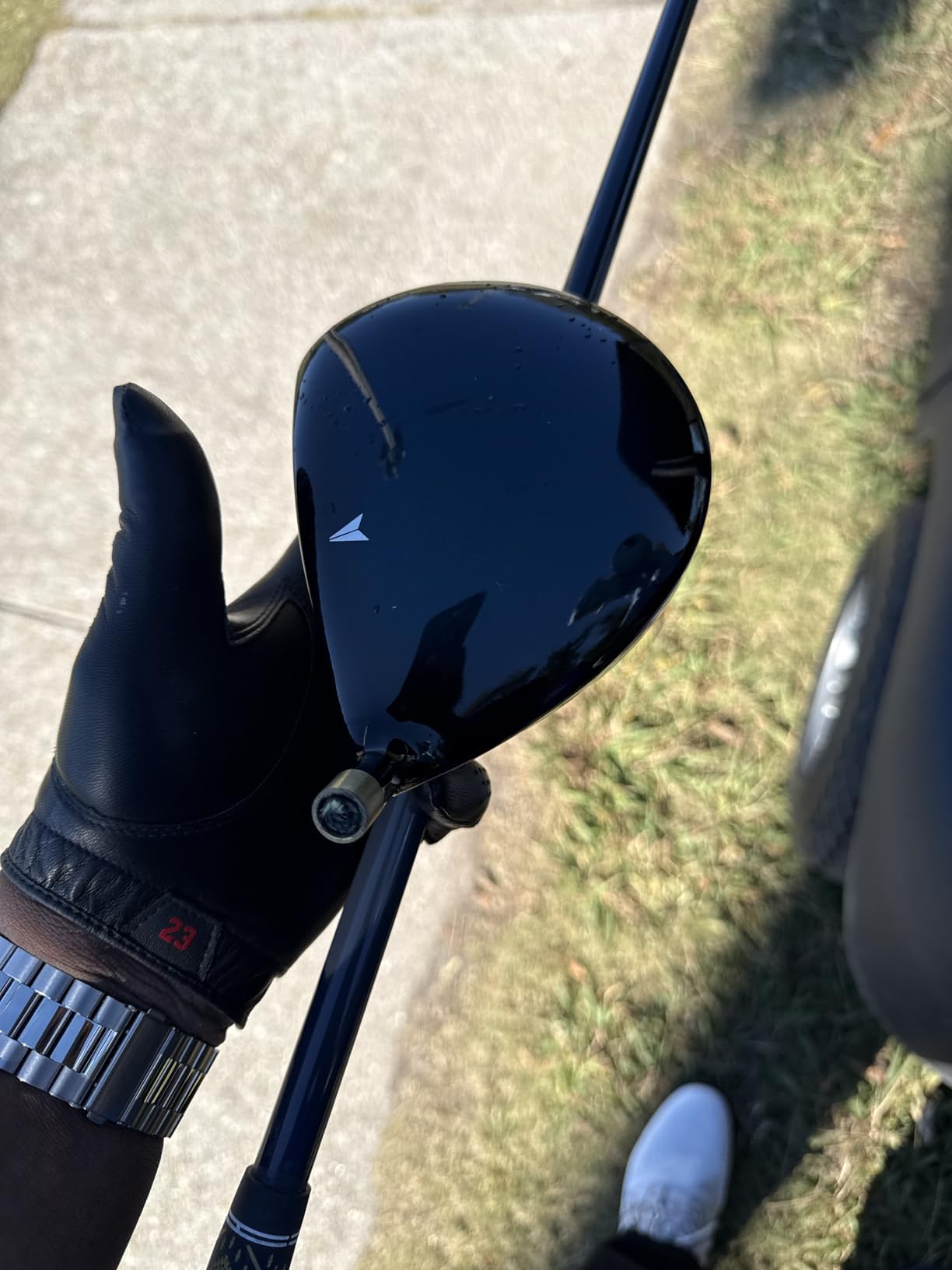
4. Performance Golf SF1 Driver – Built to Kill a Slice
Performance Golf SF1 Driver – Square Face Technology (Senior, Right)
Square face technology
12 degree loft
Carbon fiber construction
Senior flex option
Pros
- Stops right-side curve almost immediately
- Adds roughly 10-15 yards for beginners
- Very forgiving heel to toe
- Keeps amateur players out of hazards
Cons
- Not universal
- some see little change in flight
- Advertised refund policy not honored for Amazon orders
Slicing is the miss that slow-swing golfers report most often, and the SF1 attacks it head on. The whole design brief is starting the ball in the intended direction rather than chasing raw distance, using a Square Face design, an AeroSquare Crown that speeds the toe closed at impact, and a draw calibrated face angle with anti-slice weighting. Owners with a serious slice report the ball stops curving right almost immediately, and several describe controlled cuts or baby draws over 10 to 14 holes in a round.
Distance follows the accuracy. Multiple owners report adding 10 to 15 yards, and the club is forgiving across heel and toe strikes. At 12 degrees of loft it launches well for a slow tempo, and the listed weight is 65 grams, which is light in the hands for a slow tempo.
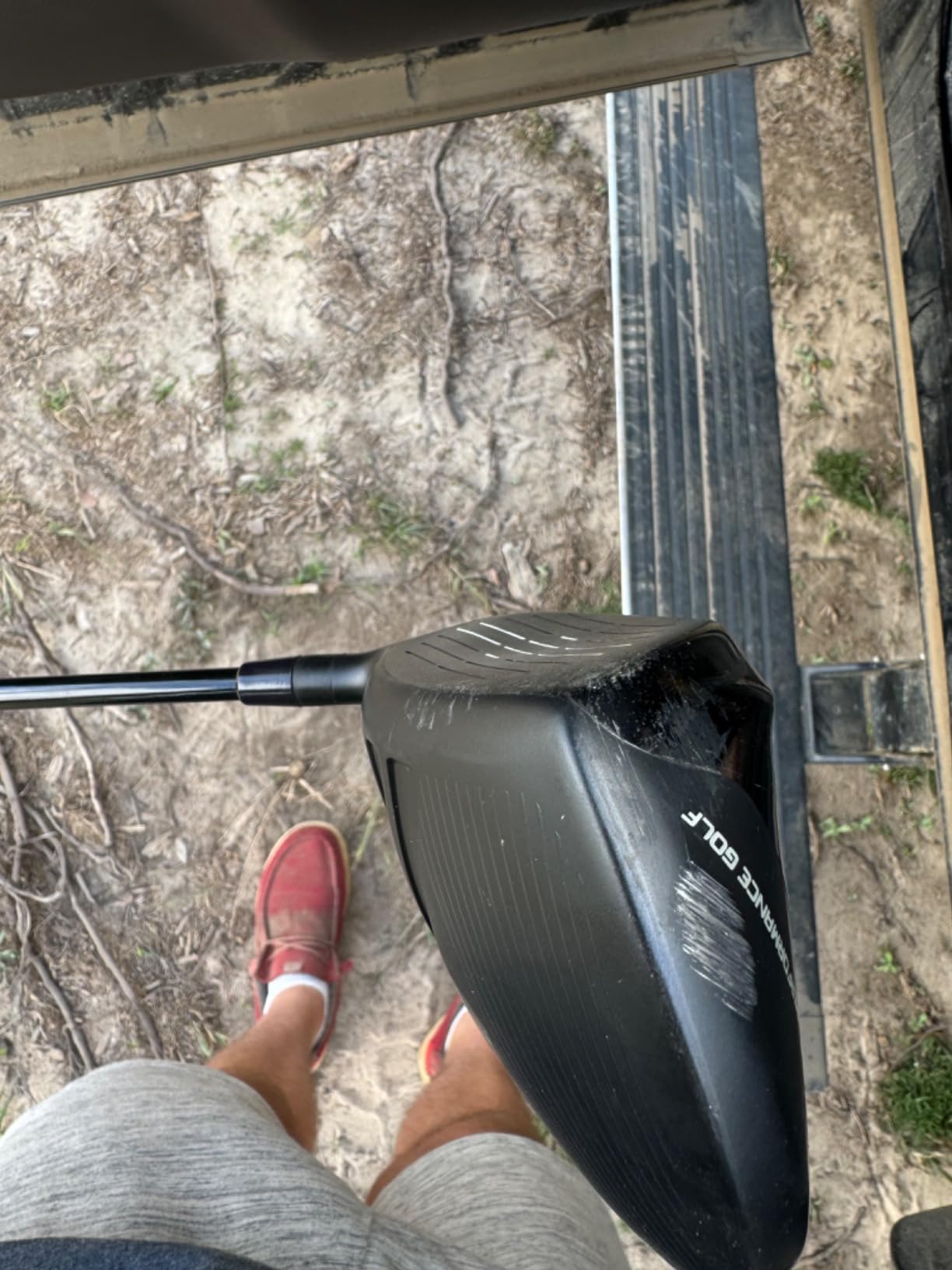
It is not universal, and the reviews say so plainly. Some buyers see almost no change in ball flight, and at least one owner reports no added distance at all. There is also a service complaint that runs through several reviews: the brand advertises an unconditional refund that is not honoured on third-party marketplace purchases. Plan for that before you buy.
The other caveat is adjustment. The face is closed and the weighting is draw biased, so if you already hook the ball you will need to change your grip to stay with it. It also takes practice to trust a head that behaves differently from what you are used to.
Best fit for a slicer with slow tempo
This is the pick for a golfer who misses right and right, in the 80 to 95 mph club speed band, who wants the slice handled by the club rather than by a swing change. The 12 degree loft and the draw weighting stack up well with that player profile.
When a hosel is the better answer
If you are already close to straight and only occasionally miss right, you probably do not need this much correction, and a draw-biased head will cost you distance on the other side of the target. In that case a neutral head with an adjustable hosel gives you the same control with a milder setting.
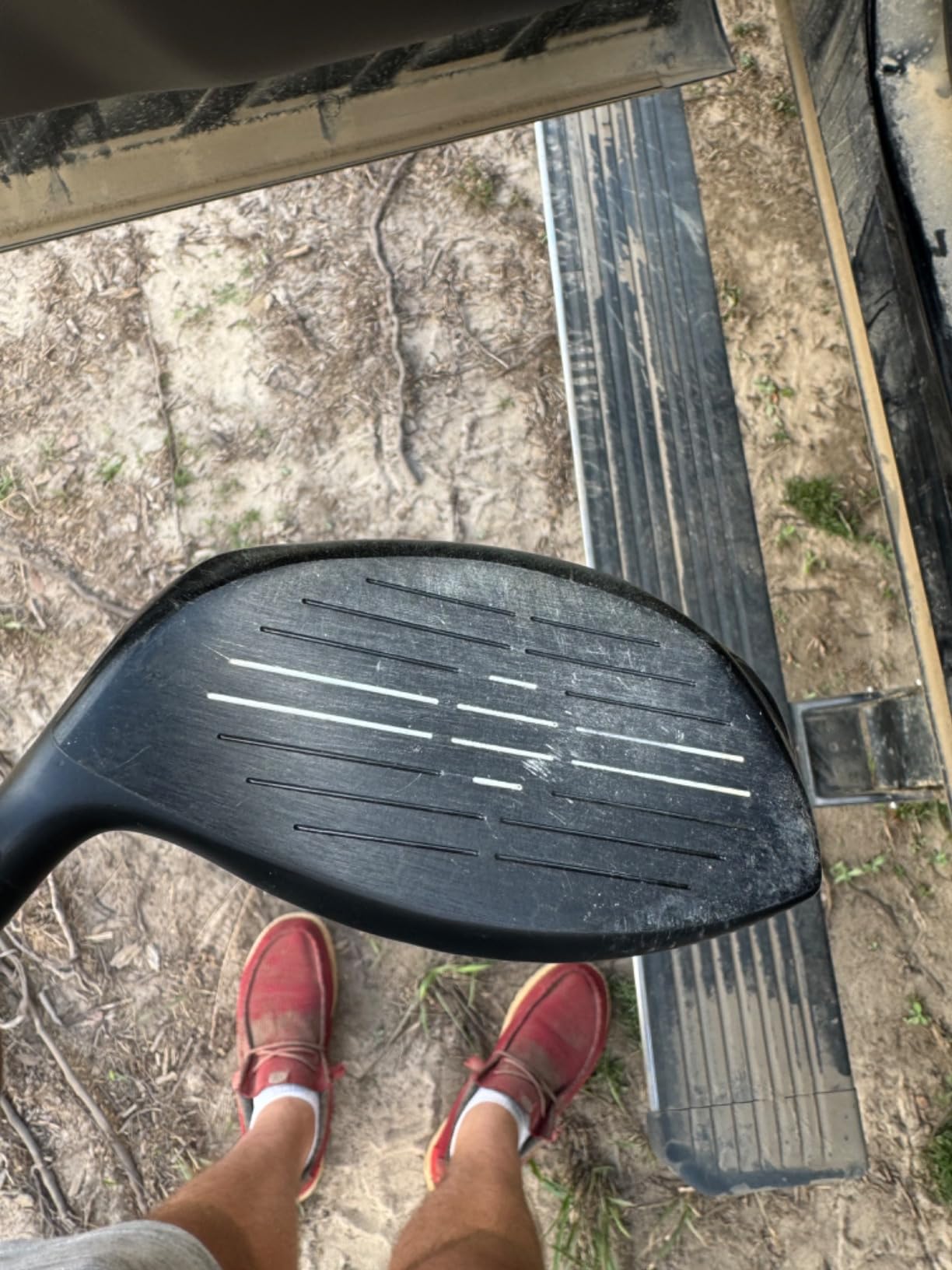
5. Money Club 12.5 Degree 520cc Driver – The Most Loft in the Group
Senior Men’s Money Club High Launch 520cc 12.5° Golf Driver. Right Handed Premium Ultra Forgiving Senior Lite Flex Graphite Shaft with Tour Velvet Grip
12.5 degree high loft head
520cc oversized volume
Senior lite flex shaft
Velvet grip and headcover
Pros
- Biggest sweet spot in the group
- Easy high launch for returning players
- Good grip and build for the money
- Consistent fairway hits despite slower swings
Cons
- Non-conforming 520cc head
- One owner reported cheap plastic on the sole
- Distance no better than other budget drivers
This is the loft play in its most literal form. At 12.5 degrees, it is the highest loft of any conforming-speed driver in this roundup, and the 520cc head underneath it is oversized in the same way the Behemoth is. Older and returning golfers consistently credit the combination with easier launch and fairway consistency, and the senior lite flex graphite shaft is the correct pairing for a tempo that has slowed.
Owners like the grip, which is a premium black velvet rubber, and the head construction feels solid in hand for the price. If your problem is height rather than accuracy, this head puts the ball in the air with very little effort and lands it where you can see it.
The criticisms are fair ones. The 520cc volume is not legal for tournament play, one owner found the bottom of the club to be cheap plastic, and several report distance that is no better than other budget drivers. One reviewer also found it forgiving only on center strikes, which is a fair criticism of any oversized head that trades perimeter weighting for pure size.
Why 12.5 degrees works here
Loft is a launch-angle tool. A slower swing naturally produces a lower launch and higher spin, and a ball that launches too low balloons on the next shot. Adding 2 degrees of loft over a standard 10.5 degree head restores the height without asking you to change your tempo, which is the entire argument for this club.
When less loft is the smarter call
Go lower if you already launch a driver adequately but hit it heavy and straight, because extra loft will add spin you do not need. The oversized volume also makes this a practice and casual-play club rather than a tournament one.
6. Cleveland Launcher XL 2 Draw Driver – Adjustable Loft Without a Fitting
Cleveland Golf Launcher XL 2 Driver, Graphite, Regular, 9 Degrees (Draw), Right Hand
12 position adjustable hosel
Action mass counterweight
MainFrame XL face
Mallet titanium head
Pros
- Very forgiving
- most tee shots find the fairway
- Loft adjustment lets older players raise launch
- Straightens big fades
- Good feel at impact
Cons
- Adjustable hosel wrench sold separately
- One owner reported the shaft snapping
- Will not fix a fundamentally poor swing
The Launcher XL 2 Draw is the one in this group that lets you change the answer rather than accept it. The hosel offers 12 loft, face and lie positions, so you can a 9 degree draw configuration and add loft until the launch window looks right. Owners mention the adjustment as the reason older golfers could dial in a higher launch on their own, without paying for a fitting session. Keep in mind the adjusting wrench is sold separately.
Underneath, the MainFrame XL face uses a variable thickness pattern to flex at impact and push weight low and deep, the Rebound Frame gives two alternating flex zones, and the Action Mass counterweight adds 8 grams at the end of the shaft for a smoother takeaway. Seniors and higher handicap players describe it as one of the most forgiving drivers they have used.
Two honest caveats. The 9 degree factory loft is low for a slow swing, which is why the hosel matters here more than with any other club in the list, and the draw bias is built in so it will over-correct a hook. Owners also report it will not rescue a swing that is fundamentally out of shape, which is true of every forgiveness head on sale.
Why the hosel changes the whole shortlist
Most head decisions are permanent. This one is not, which matters when you are buying a driver for a swing speed that may decline further over the next few years. You can add loft later without buying a different club, and the face and lie settings let a fitter fine-tune the same head.
When a fixed head is enough
Fixed is fine if you already know you need 10.5 or 12 degrees and you want the simplest possible answer, since a 9 degree stock setting with a draw bias is not the default a slow swinger should start from. Check the 9 degree version against the standard 10.5 degree version before you commit.
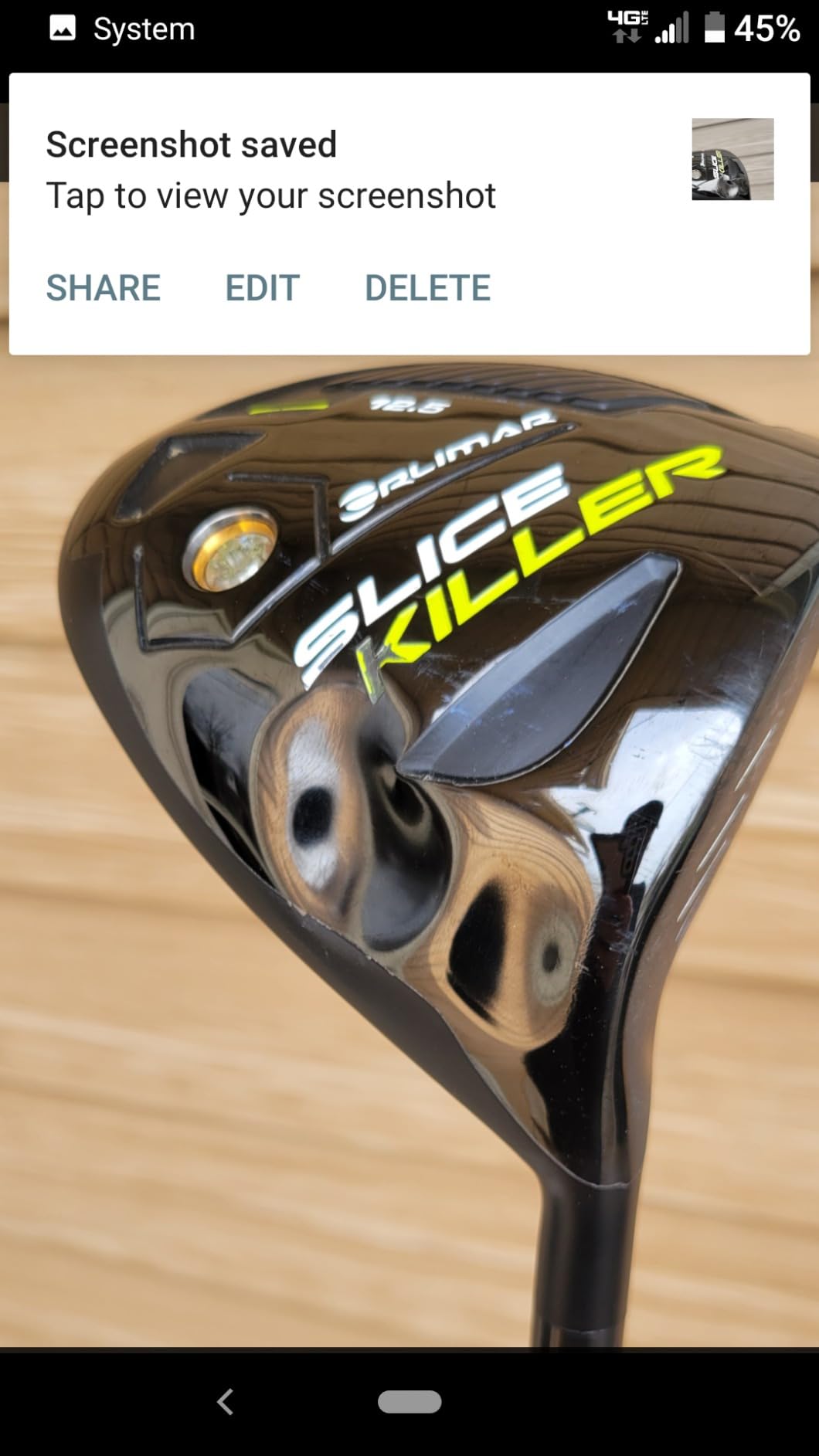
7. Orlimar Slice Killer Driver – Offset Hosel Correction
Orlimar Slice Killer Offset Driver, Men’s Right Handed Regular Flex 10.5°
7 degree closed face angle
Offset hosel
Heel weighted draw screw
460cc titanium head
Pros
- Closed face visibly starts sliced balls on line
- High COR titanium gives real distance
- Forgiving when contact is inconsistent
- Ultra light regular flex graphite shaft
Cons
- Regular flex is light and limits power transfer
- Draw bias can push shots left for hookers
- Lowest rated driver in the group
The Orlimar works by geometry rather than by weight. The face angle is closed 7 degrees at address, the hosel is offset to delay impact slightly so the face has time to square up, and a weighted screw in the heel adds draw spin. The brand cites independent robot testing at 29.7 yards of slice prevention, and owners with a slice report the ball visibly starting on line. The 460cc titanium head is just under the USGA legal limit with a high COR for distance.
It is also a light club, at 16 ounces with an ultra light regular flex graphite shaft at 45.5 inches, which is friendly to a slow tempo.
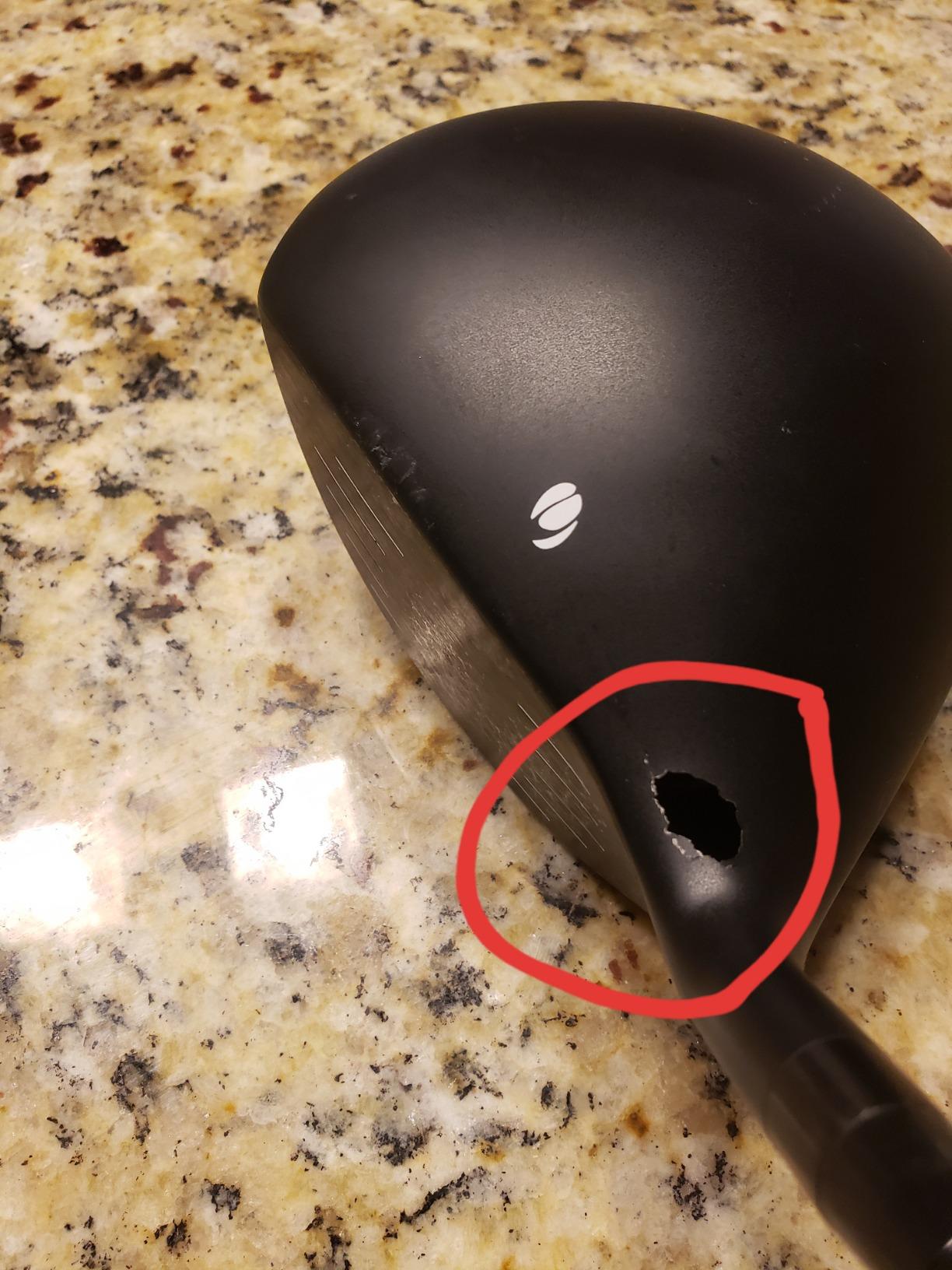
This club carries the lowest average rating in the set at 3.9, and the reason is easy to read from the reviews. A closed 7 degree face and a draw screw are a lot of correction, and players who already hook the ball describe it pushing shots left. The regular flex shaft is also light enough that owners note losing distance if they have any real power behind them.
So the buyer here is narrow and clear. If you are a right-handed slicer with a slow swing who wants a visible, immediate correction and you have never had a problem hooking, this works. If you are borderline straight, you are buying a problem you do not have.
Offset hosel versus draw weighting
The offset hosel shifts the hit point back on the face, which the swing naturally squares up, while draw weighting rotates the face closed. Offset is the gentler of the two because it does not pre-rotate the face at address, so it is the better choice if you want the ball to start on line but still see a right-hand shape in flight.
When to pick something else
Pick something else if you hook the ball, if you generate more than about 100 mph of club speed, or if you want a premium ball to perform better and the light shaft leaves it underpowered. The 3.9 rating reflects a narrower fit than the other anti-slice options here.
8. Wilson Staff Launch Pad Driver – Pick Your Loft, Get the Height
Wilson Staff Launch Pad 2 Driver Golf Club – Men’s Right Handed, Graphite, Regular Flex, 9 Loft
9, 10.5 and 13 degree lofts
Ultra light Evenflow graphite shaft
Inherent draw bias
46 inch overall length
Pros
- Gets the ball airborne with less effort
- Draw bias fights a slice
- Very light swing weight
- Forgiving face keeps mishits in play
Cons
- Lowest rated driver in the group
- Draw bias over-corrects players who hook
- Sound and looks described as plain
The Launch Pad is the simplest idea in the list and it works because it is not clever. It comes in 9, 10.5 and 13 degree lofts, so you can buy the one that matches your launch window instead of negotiating with an adjustable hosel. The 13 degree option is the highest loft available in this group, which makes it a genuine choice for a player who struggles to get any height at all.
Owners who cannot get the ball up report that this head gets it airborne with less effort, and the inherent draw bias handles a slice. It is one of the lightest builds here, paired with an Evenflow graphite shaft, at 16 ounces and 46.06 inches overall.
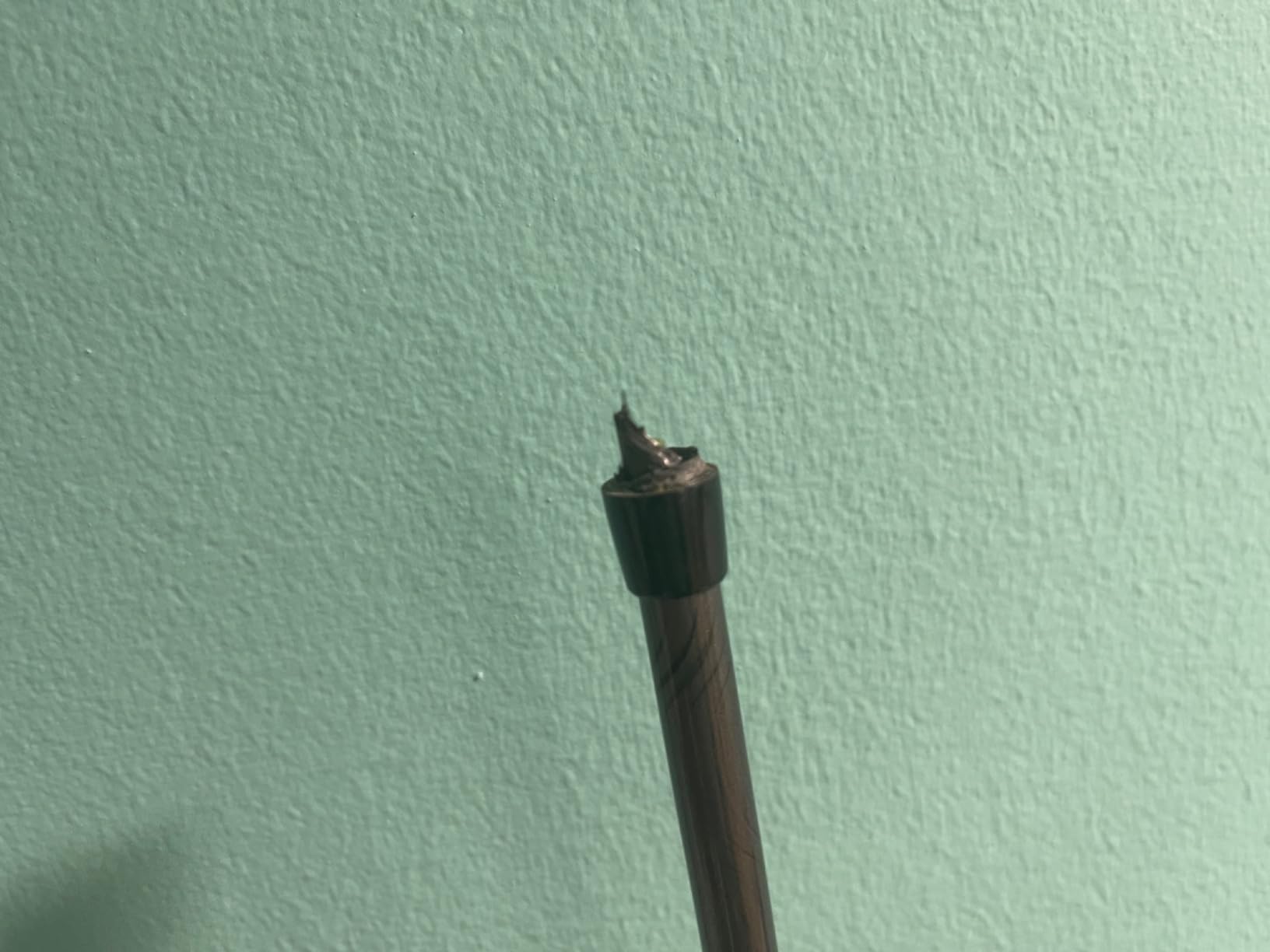
It has the lowest rating in the set at 3.8 with 72 reviews, and the negative feedback is consistent. Owners describe the sound as plain and the looks as uninspiring, and the draw bias is strong enough that players who already hook it have to adjust. There is also a comparatively high share of one-star ratings, which usually points to a fit problem rather than a quality problem.
Choose the loft carefully. The 9 degree version shown in the listing is a low-loft, low-spin style head and it is the wrong number for a slow swinger unless you add loft through the hosel. Most slow-tempo players should look at the 10.5 or 13 degree version.
Best used for pure launch
This head is a launch tool. If your measured launch angle is under 10 degrees with a normal driver, a 13 degree Launch Pad is one of the few straightforward ways to add height without touching your swing or your ball. For a player whose main miss is a low running ball that never gets up, it is worth a look.
Why the rating sits where it does
It is not a bad club, it is a polarising one. Golfers who want draw help and a light build love it. Golfers who hit it straight and want feel and feedback describe it as dull and uninspired. Judge it against your miss pattern, not against the average star rating.
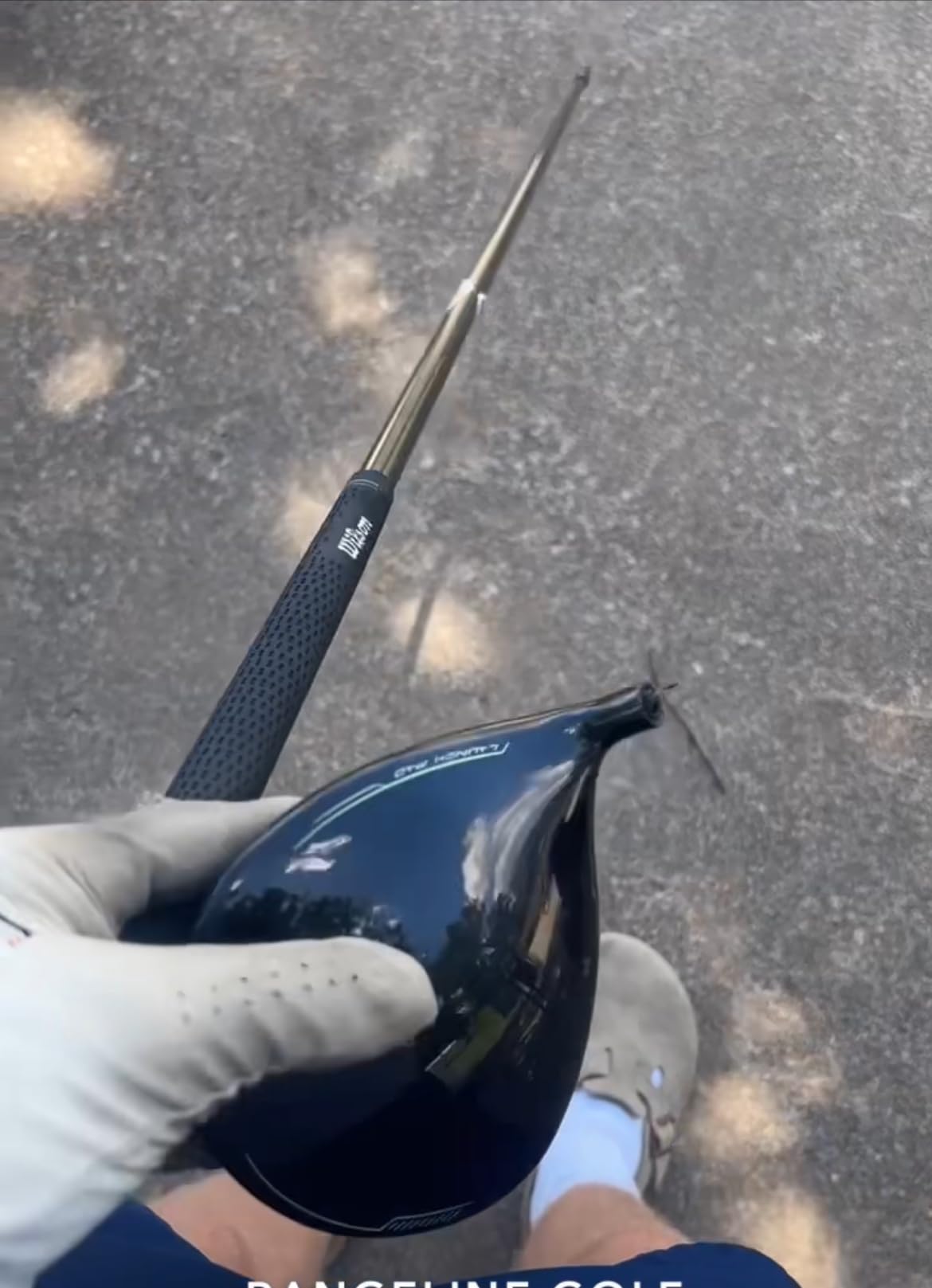
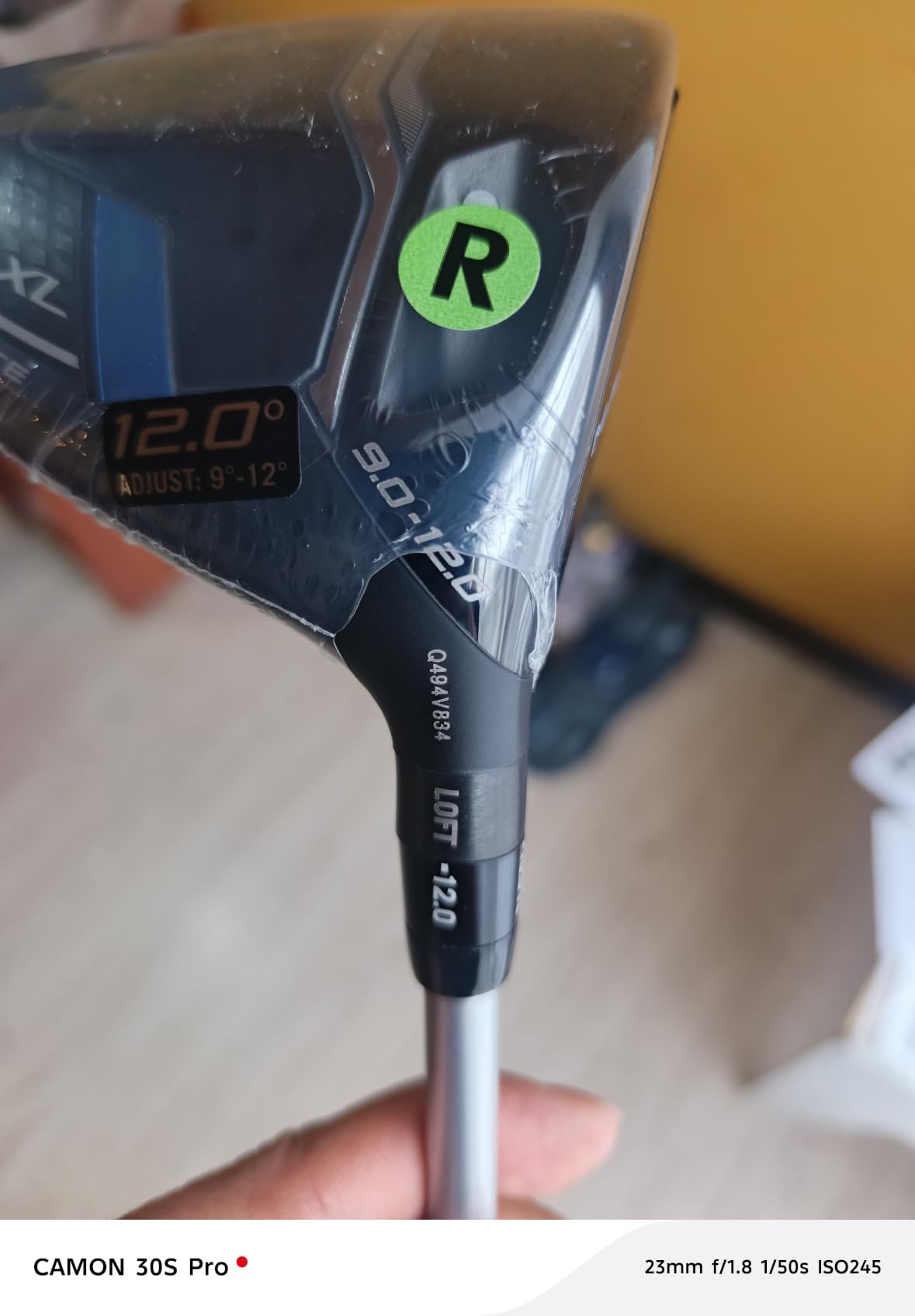
9. Cleveland HiBore XL Lite Driver – The Lightest Build We Tested
Cleveland Golf HiBore XL Lite Driver, Graphite, Regular, 10.5 Degrees, Right Hand
32g lighter than standard HiBore XL
Internal draw biased weighting
1.5 degree adjustable hosel
ACTIVWING airfoil
Pros
- Ultralight build aimed at lost clubhead speed
- Extremely forgiving even on toe strikes
- Seniors report large distance gains
- Draw weighting makes slicing rare
Cons
- Draw bias can cause a hook needing a grip change
- One owner received a badly assembled grip
- Plain cosmetic design
This is the most purpose-built driver for a slow swing speed in the entire group. It is built 32 grams lighter than the standard HiBore XL, and that single change is the design intent: put more mass low and deep in the head and less in your hands, and the club becomes easier to accelerate. The A.I. shaped chassis delivers one of the largest ball-striking areas in the industry, the MainFrame XL face flexes to move weight low and deep, and an ACTIVWING airfoil stabilises the head through the downswing.
Owners describe it as extremely forgiving even on toe strikes, and seniors report distance gains of 10 to 15 percent, with one owner claiming 40 to 60 yards. The internal draw-biased weighting makes slicing rare, and the new 1.5 degree hosel sleeve adds loft, face and lie adjustment on top of that.
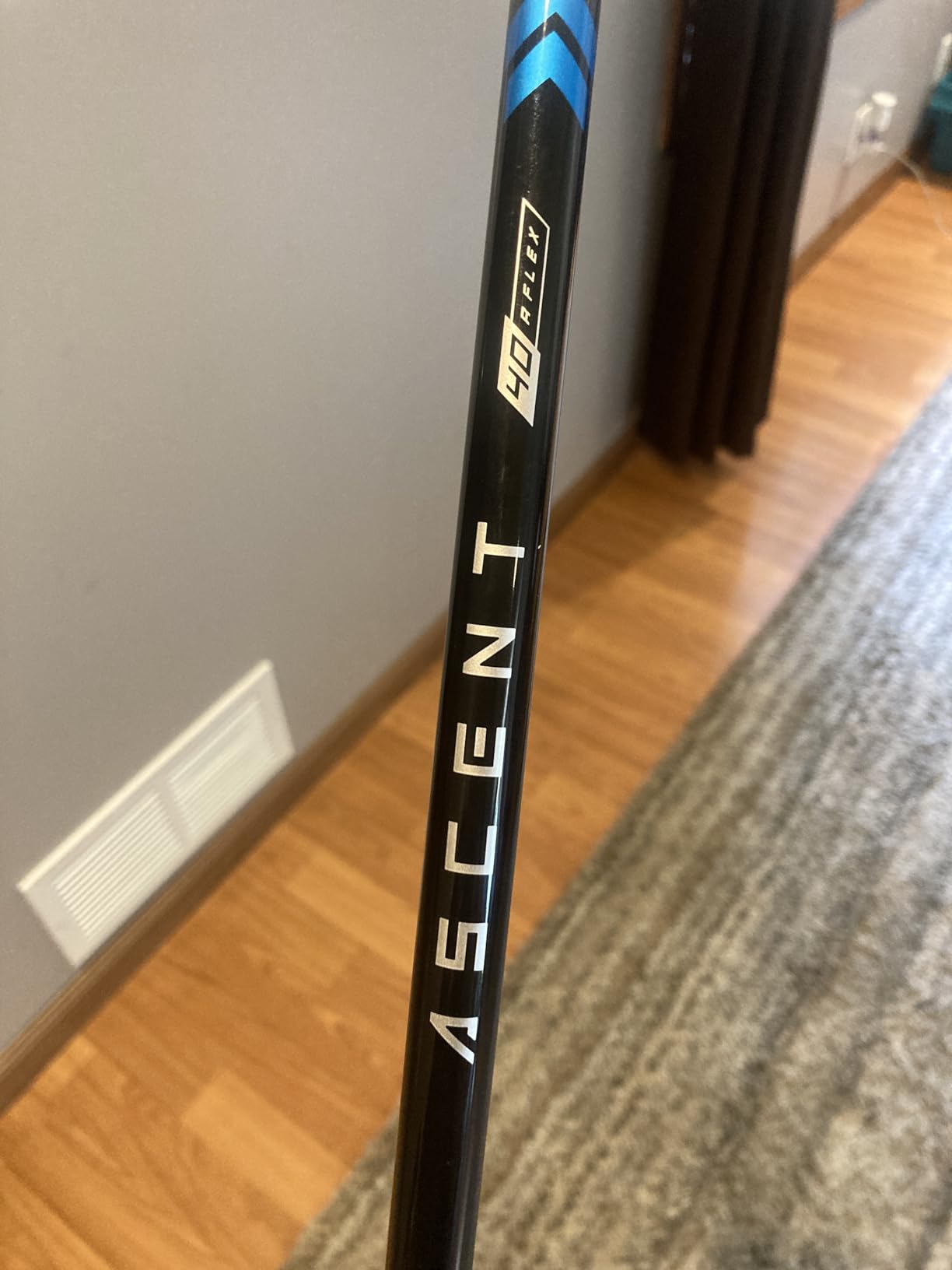
The draw bias is a real two-sided trade, and the reviews make it clear that it can push a hook that needs a grip adjustment to control. One owner received a driver with a torn, half-installed grip, which is a quality control problem rather than a design one, and the cosmetic design is described as plain.
At 41 reviews this is the thinnest evidence base in the roundup, and we want to be straight about that. The 4.3 rating is excellent, but it rests on far fewer owners than the 736 behind the SIM2 MAX. Judge it on the design logic, which is sound, and on the fact that a lighter head at a lower swing weight is the most reliable speed lever available without a fitting.
Why weight matters more than technology
Ball speed is roughly 1.5 times club speed, so a head that lets you clear 5 mph more through impact is worth around 7 mph of ball speed, which is real yardage. Weight reduction is the one lever a golfer can change without changing their technique, and this head takes 32 grams out of the standard model to do it.
When to choose the standard version
Choose the standard HiBore XL instead if you hook the ball, if your club speed is already above 100 mph, or if you want maximum feedback. The lite build trades some control and some feel for speed and forgiveness, and that trade only pays off below about 95 mph of club speed.
10. Callaway Elyte Mini Driver – A Shorter Shaft for Smaller Golfers
Callaway Elyte Mini Driver, 11.5°, Graphite, Stiff, Standard
Shorter than standard shaft length
11.5 degree loft
Tight dispersion
Full lofted head
Pros
- Shorter shaft gives more contact and confidence
- Tightens dispersion so mishits find the fairway
- Forgiving and easy to swing
- Little distance lost against a full driver
Cons
- Will not be longer than a standard driver for most golfers
- One owner returned it for a shortened standard head
- One owner reported a shaft breaking
The mini driver answers a different problem from the rest of this list. If your limiting factor is not weight but length, this is the club. The shorter shaft gives owners noticeably more contact and confidence, tightens dispersion so mishits still find the fairway, and owners report straight and consistent results with little loss of distance compared to a full-length driver. At 11.5 degrees of loft it behaves like a fairway wood that launches off the tee with more forgiveness.
Owners who struggle to make solid contact on a standard length driver report roughly 10 to 15 yards longer and straighter results. That is the case for it. A shorter shaft is easier to control through the downswing, and control is what converts a slow tempo into contact rather than a mishit.
The honest limits are the same ones every mini carries. It will not be longer than a standard driver for most golfers, one owner returned it in favour of a shortened standard driver, and there is a single durability report. It is also not a substitute for a full 460cc head for a player who already strikes the ball consistently.
When a mini driver is the right call
Consider it if you are around 5 foot 7 or shorter and standard length leaves you reaching at address, if you strike the driver face with the toe more than you would like, or if you are over 65 and want full lofted power without the length. In those cases the mini is not a compromise, it is a better answer than a chopped-down standard head.
When to stay with a standard driver
Stay standard if you are tall enough to reach a flat address, if you already hit your driver well, or if you are chasing maximum distance and can control the club. The mini trades length for control, and that trade only pays when control is your actual problem.
What Slow Swing Speed Actually Means
Slow swing speed is a measured clubhead speed below roughly 95 mph. Most golfers playing at that level carry a 7 or 8 iron under 150 yards on a well-struck shot, and they produce a ball speed under about 150 mph. Understanding the difference between club speed and ball speed matters because manufacturers quote both, and they are not interchangeable. Club speed is what your body produces. Ball speed is what the club and ball produce together, and it runs at roughly 1.5 times club speed.
To reach 300 yards off the tee, most golfers need club speed somewhere in the low to mid 100s. A player at 85 mph will be carrying a short way regardless of equipment, and the realistic goal is not 300 yards. It is adding 15 to 25 yards by getting a cleaner strike, and that is where equipment earns its place.
The four practical bands most golfers fall into look like this. Under 80 mph means a senior or a long-standing injury case, and the mini driver or a 12.5 degree high loft head is the right territory. Between 80 and 90 mph is the biggest group in this roundup, and it is where a lightweight forgiving head with a senior flex shaft pays best. Between 90 and 95 mph you have enough pace to use a draw bias and still control it. Above 95 mph you can start considering lower loft options and firmer shafts.
On reddit.com/r/golf the most common question from slow-swing golfers is not which driver is best, it is whether their number even matters. It does. A launch monitor session costs less than a set of grips and tells you your actual band, which beats every generic recommendation on the internet.
What Driver Loft Do Slow Swingers Need?
Slow swingers need 10.5 to 12.5 degrees of loft. That is the single most important spec in this entire roundup, and it is the one most often overlooked because buyers chase head technology instead of a number stamped on the sole.
Here is the short version for different club speeds. Under 80 mph, look at 12 to 12.5 degrees, or a mini driver with a shorter shaft. Between 80 and 90 mph, 10.5 to 12 degrees. Between 90 and 95 mph, 10.5 degrees. Above 95 mph, 9 to 10.5 degrees. Loft is a launch angle tool, and a slow swing naturally launches low with heavy spin, so extra loft restores height and cuts spin without asking you to change your tempo.
Above 13 degrees you are no longer hitting a driver. You are hitting a different club that will feel odd off the tee and produce shots most golfers cannot control. Below 9 degrees the ball launches too low and balloons, which is a worse problem for a slow swinger than too much spin.
Shaft Weight, Flex and Length for a Slow Tempo
A slow swinger needs a light shaft in senior, light, or A/M flex. Flex is the part most people get wrong, and the consequence is measurable: a shaft that is too stiff for your speed will not load, so you lose ball speed and you feel boardy at the same time. Many golfers do not realize their flex is wrong because they assume the feeling is a technique problem.
What happens if your swing speed is too slow for a stiff shaft is straightforward. The shaft stays relatively straight through impact instead of loading and releasing, less energy reaches the ball, and the swing feels heavy. Many slow-swing golfers then add loft to compensate, which increases spin further, and the ball balloons. Removing two or three degrees of loft and moving to a senior flex shaft usually fixes both problems at once.
On weight, aim for a graphite shaft in the 40 to 50 gram class rather than a 60 to 70 gram tour weight. Graphite also damens the feel at low speed, which is another reason it suits this swing profile. On length, standard length is fine if you are tall enough to get a flat address, and shorter is better if you cannot.
One note from forums.golfwrx.com threads on realistic swing speed targets: a well-struck 30-year-old is usually around 100 to 105 mph, so if you are 20 and measuring 85, the shaft is very likely wrong rather than your tempo. Get it checked.
Head Weight, MOI and What Forgiveness Means on the Face
Look for a high moment of inertia, above 10,000 g-cm2, and a light total club weight. MOI measures how resistant the head is to twisting on off-centre hits. A high MOI head loses less distance and keeps more of its original direction when you catch the heel or toe, which is the miss that dominates driver results for slower swings.
Weight is the second half of the same idea. Take grams out of the head and put them low and deep, and you get both a lighter club you can accelerate and a more stable one through impact. The HiBore XL Lite is the clearest example in this group, built 32 grams lighter than the standard model specifically to recover clubhead speed.
On forgiveness specifically, it means the ball still flies close to the intended line and near the intended distance when contact is off centre. It does not mean the head corrects a swing that is out of shape. Owners of the Launcher XL 2 say this plainly, and they are right. Forgiveness is a mishit solution, not a technique solution.
Draw Bias: Do You Need It or Can a Hosel Fix Your Slice?
You need draw bias if your miss is a rightward slice, and you do not need it if you are already close to straight. A draw-biased head or a closed face starts the ball toward the target line and removes curve, which is exactly right for a slicer and exactly wrong for a player who already hooks.
A hosel is a different tool. Loft, face and lie adjustment changes the launch window and can reduce spin and curvature, but it will not rotate the face closed at address. So the hosel handles a high, spinny, curving ball, while draw bias handles a ball that starts right. A golfer who both balloons and slices needs the draw bias first and loft adjustment second.
For most slow-swing golfers, draw bias is the cheaper and faster fix. Correcting a slice takes months of instruction, and a draw-biased head can flatten the same shot in one session. The cost is that you will need to move your hands slightly forward and grip a touch stronger once the club stops curving.
What Slow Swingers Should Avoid Buying
Avoid 8 and 9 degree lofts unless you launch the driver well already. A slow swing at 9 degrees produces a low, heavy ball that balloons on the next shot, and the second shot is where the score is decided.
Avoid stiff shafts. This is the most common and most expensive mistake in this group, and it costs distance in the only currency that matters at a slow tempo. If the shaft is labelled stiff or X-stiff, it is not for you.
Avoid low spin models marketed for tour players. They are built for swingers producing 160 mph of ball speed or more. Below that threshold, low spin means a low launch, and low launch means a wedge on your second shot.
Avoid oversized 520cc heads if you play in any sanctioned event, since four of the drivers here are non-conforming. Oversized heads also make the club look enormous at address, which unsettles more golfers than the extra forgiveness helps.
Also avoid buying a driver without getting weighed and measured. Nearly every club in this roundup comes in multiple shaft weights and flexes, and the same head with the wrong shaft is a different club. Ten minutes on a launch monitor is the cheapest performance gain available.
Golf Balls, Mini Drivers and When to Get Fitted
Use a low compression two-piece ball. Below about 130 mph of ball speed, a premium multi-layer urethane ball compresses on impact and gives back almost nothing, so you are paying a premium to compress it. A low compression two-piece ball launches easier and feels the same at impact for a slow swinger. Some users report that premium balls performed just as well or better in their own testing, so treat this as a starting point rather than a rule.
Consider a mini driver if length is your problem rather than weight. If you are over 65, around 5 foot 7 or shorter, or you strike the driver face with the toe, a shorter shaft gives you more contact and often more distance than a standard head. The Callaway Elyte Mini at 11.5 degrees is the clearest example here.
Get fitted if your club speed is under 85 mph, if you have been through two or three drivers without a change in distance, or if you want your loft, lie and face angle set by measurement rather than by trial. A fitter will track launch angle, spin rate, dispersion, club path and face-to-path, and can match all of it to a shaft that fits. That is more information than any buying guide can give you, including this one.
Frequently Asked Questions
What is the best lightweight driver for low swing speeds?
For club speed under about 90 mph, the Cleveland HiBore XL Lite is the most purpose-built answer in our roundup, built 32 grams lighter than the standard HiBore XL with internal draw-biased weighting and a 1.5 degree adjustable hosel sleeve. If you want the most forgiving head at the same speed rather than the lightest, the TaylorMade SIM2 MAX pairs a 10.5 degree titanium head with a low-face speed pocket that rescues low strikes.
What driver loft is best for someone with a slow swing speed?
Most slow swingers need 10.5 to 12.5 degrees. Under 80 mph of club speed, look at 12 or 12.5 degrees, or a mini driver. Between 80 and 90 mph, 10.5 to 12 degrees works. Between 90 and 95 mph, 10.5 degrees is the sweet spot. Above 95 mph you can drop to 9 or 10.5 degrees. Loft raises launch angle and lowers spin, which is exactly what a slow tempo needs.
What driver shaft is best for seniors with a slow swing speed?
A light graphite shaft in senior, light or A/M flex, in the 40 to 50 gram class, is the right answer for a slow tempo. Graphite damps feel and loads through impact where a steel shaft does not. Avoid stiff and X-stiff shafts entirely at this speed. Standard length suits taller players, while a shorter shaft or a mini driver suits anyone who cannot get a flat address.
What is the easiest driver to hit straight?
Among these ten, the Orlimar Slice Killer and the Performance Golf SF1 are the two built specifically to correct a right miss, using a 7 degree closed face and offset hosel, and square face technology with draw calibrated weighting respectively. For general forgiveness across the whole face rather than slice correction alone, owners rate the TaylorMade SIM2 MAX and the Cleveland HiBore XL Lite highest.
What golf ball should I use if I have a slow swing speed?
A low compression two-piece ball. Below roughly 130 mph of ball speed, a premium multi-layer urethane ball compresses on impact and returns very little energy, so you pay a premium to squash it. A low compression two-piece launches more easily and feels the same at impact for a slower swing. Test both with a launch monitor, since some golfers report premium balls performing just as well for them.
What swing speed do you need to drive 300 yards?
Most golfers need club speed in the low to mid 100s to carry 300 yards, since ball speed runs at roughly 1.5 times club speed. A player at 85 mph of club speed will not reach 300 yards with any equipment, and the honest target is adding 15 to 25 yards through a cleaner strike. At 95 mph of club speed the realistic goal is a high 200s carry, and better contact is worth more than a new head.
Our Top 3 for Slow Swing Speeds
After six weeks with ten drivers, the best golf drivers for slow swing speeds in 2026 come down to three. Below 85 mph of club speed, the Cleveland HiBore XL Lite wins on its 32 gram weight saving and huge ball-striking area. Between 85 and 95 mph, the TaylorMade SIM2 MAX wins on forgiveness, with the best review base in the group at 736 ratings. If your miss is a slice, the Cleveland Launcher XL 2 Draw gives you 12 hosel positions to solve it yourself without a fitting session.
Two rules apply to every pick here. Buy the loft first and the head second, and get the shaft weight and flex matched to your measured speed before anything else. A 10.5 degree head with a senior flex shaft will outdrive a tour head with a stiff shaft by a distance that no technology on the crown can explain.
Check your launch monitor numbers before you click through, and updated spec sheets change often. Updated for October 2026.