
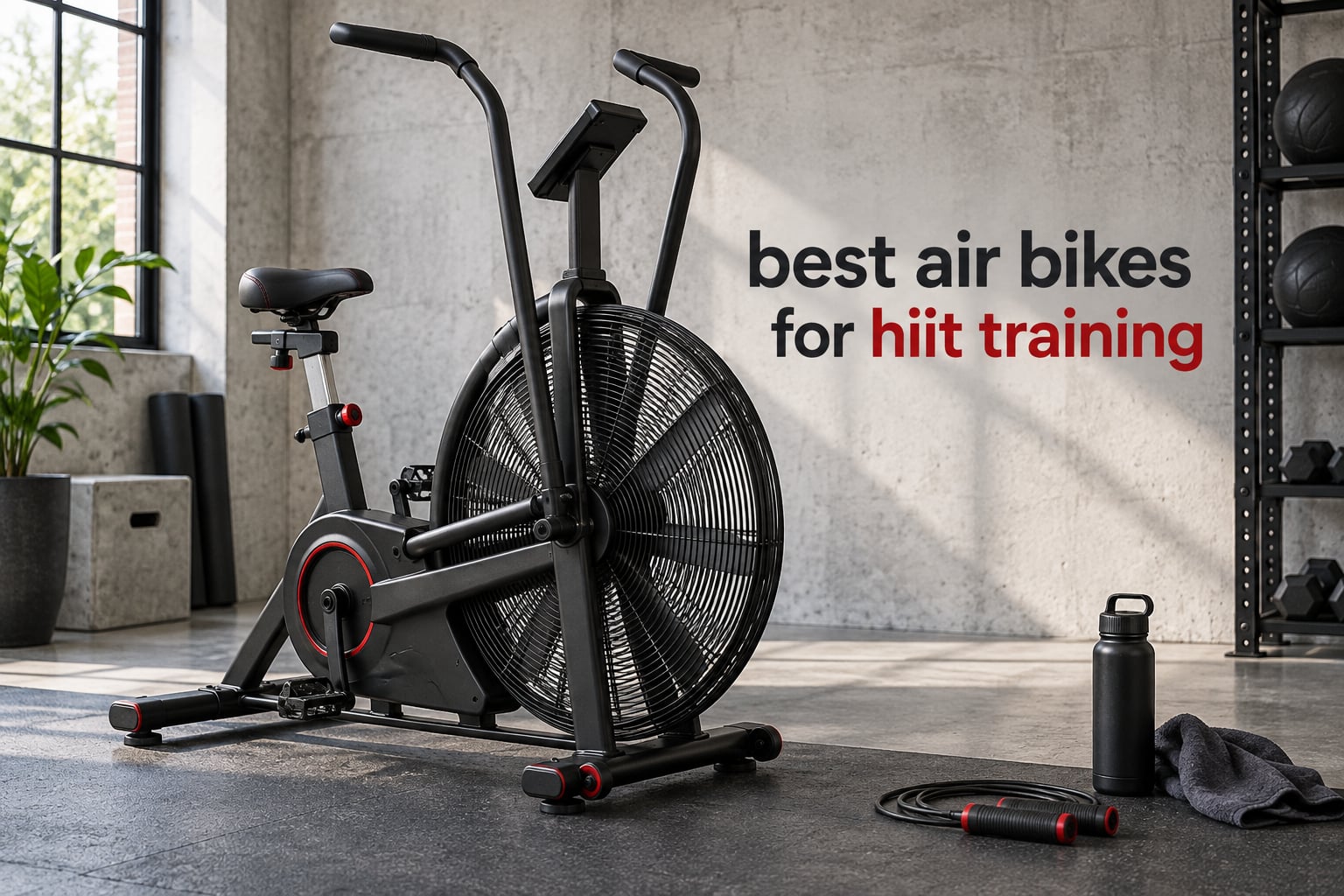
Yes, you can absolutely do HIIT on an air bike, and for most home athletes it is the single best machine for the job. An air bike (also called a fan bike) is a stationary bike that creates resistance with a large spinning fan flywheel instead of magnets or a friction pad, so the harder and faster you pedal, the more it resists. There is no resistance dial, and that is exactly what makes it good for intervals.
That self-scaling behaviour is the reason we built this guide to the best air bikes for HIIT training in 2026 around one question: which fan bikes survive hard, frequent sessions without wobbling, misreading your output, or falling apart. We compared 10 models, weighed the frame specs and drive systems against each other, read the owner review patterns, and ranked them for interval work specifically rather than for general cardio.
What follows covers why air resistance suits sprinting, which of these 10 bikes handle all-out 30-second efforts best, the exact protocols you can run on them, and how they compare to a treadmill, rower, or spin bike if you are deciding between machines rather than between brands. No brand paid for placement here.
Table of Contents
Why Air Bikes Are Built for HIIT
Five things separate a fan bike from a magnetic or friction-resistance bike, and every one of them matters when you are doing intervals rather than a long steady ride.
1. Resistance scales with your own effort. Push harder and the fan spins faster and creates more drag, so the machine can never be pedaled through. On a magnetic bike, interval 6 is often easier than interval 3 because the magnet did not move with you.
2. The moving handlebars recruit your whole body. Dual-action arms push and pull in time with the pedals, so a 20-second all-out effort spikes your heart rate far faster than legs-only pedalling. Owners of the heavier machines in this roundup consistently describe heart rate climbing within minutes of a hard interval block.
3. There is no warm-up resistance to set. Nothing to adjust, nothing to reset between rounds. You sit down, you pedal, and the machine meets you at whatever level you are at.
4. Low impact, high output. Air bikes are joint-friendly compared with a treadmill, which matters if you are running intervals three to five times a week for years.
5. One machine covers every fitness level. The same fan that lets a beginner ride gently will not cap an athlete at maximum output. That is why the same model can be a starter bike in year one and a training partner in year five.
The catch is noise and frame flex. A fan spinning at sprint speed is loud, and a light frame can rock under an all-out effort, so those are the two things we weighted most heavily when ranking.
Top 3 Air Bikes for HIIT Training (October 2026)
If you only read one thing in this roundup, read this line: the Schwinn Airdyne Bike Series is the best air bike for HIIT training for most people, because its quiet single-stage belt drive and 348 lb capacity let you run hard intervals in a shared-wall apartment without the noise complaints that push people off fan bikes.
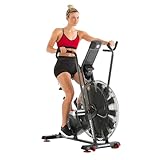
Schwinn Airdyne Bike Series
- Single-stage belt drive
- Multi-display console with watts and heart rate
- 348 lb max user weight
- Perimeter weighted fan
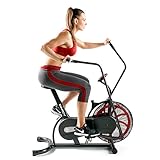
Marcy Air-Resistance Fan Bike
- Largest review base in the group
- Moving dual-action arms
- Compact 45.5 inch footprint
- Adjustable tension knob

pooboo Air-Resistance Fan Bike
- 4.6 average rating
- 350 lb capacity
- Dual-action arms with footrests
- Compact 45 inch footprint
All 10 Air Bikes Compared at a Glance
| Product | Specs | Action |
|---|---|---|
| Schwinn Airdyne Bike Series |
|
Check Latest Price |
 Sunny Smart Heavy-Duty Fan Bike Sunny Smart Heavy-Duty Fan Bike |
|
Check Latest Price |
| pooboo Air-Resistance Fan Bike S319 |
|
Check Latest Price |
 leikefitness Fan Exercise Bike leikefitness Fan Exercise Bike |
|
Check Latest Price |
 GYMAX Fan Bike GYMAX Fan Bike |
|
Check Latest Price |
 pooboo Bluetooth Fan Bike S329 pooboo Bluetooth Fan Bike S329 |
|
Check Latest Price |
 Wenoker Smart APP Air Bike Wenoker Smart APP Air Bike |
|
Check Latest Price |
 Titan Fitness Steel Fan Bike Titan Fitness Steel Fan Bike |
|
Check Latest Price |
 Winfita 350 lb Air Bike Winfita 350 lb Air Bike |
|
Check Latest Price |
| Marcy Air-Resistance Fan Bike |
|
Check Latest Price |
1. Schwinn Airdyne Bike Series – Quiet Belt Drive for Everyday Intervals
Schwinn Fitness AD7 Airdyne Bike
Belt drive
Alloy steel frame
348 lb max user
113 lb bike
Multi-display console
Pros
- Quiet single-stage belt drive
- Multi-display console tracks watts and RPM and heart rate
- Perimeter weighted fan starts smoothly
- Multi-position hand grips
- Comfortable adjustable seat
Cons
- Bulky 53 inch footprint
- Assembly required
- 113 lb frame is awkward to reposition
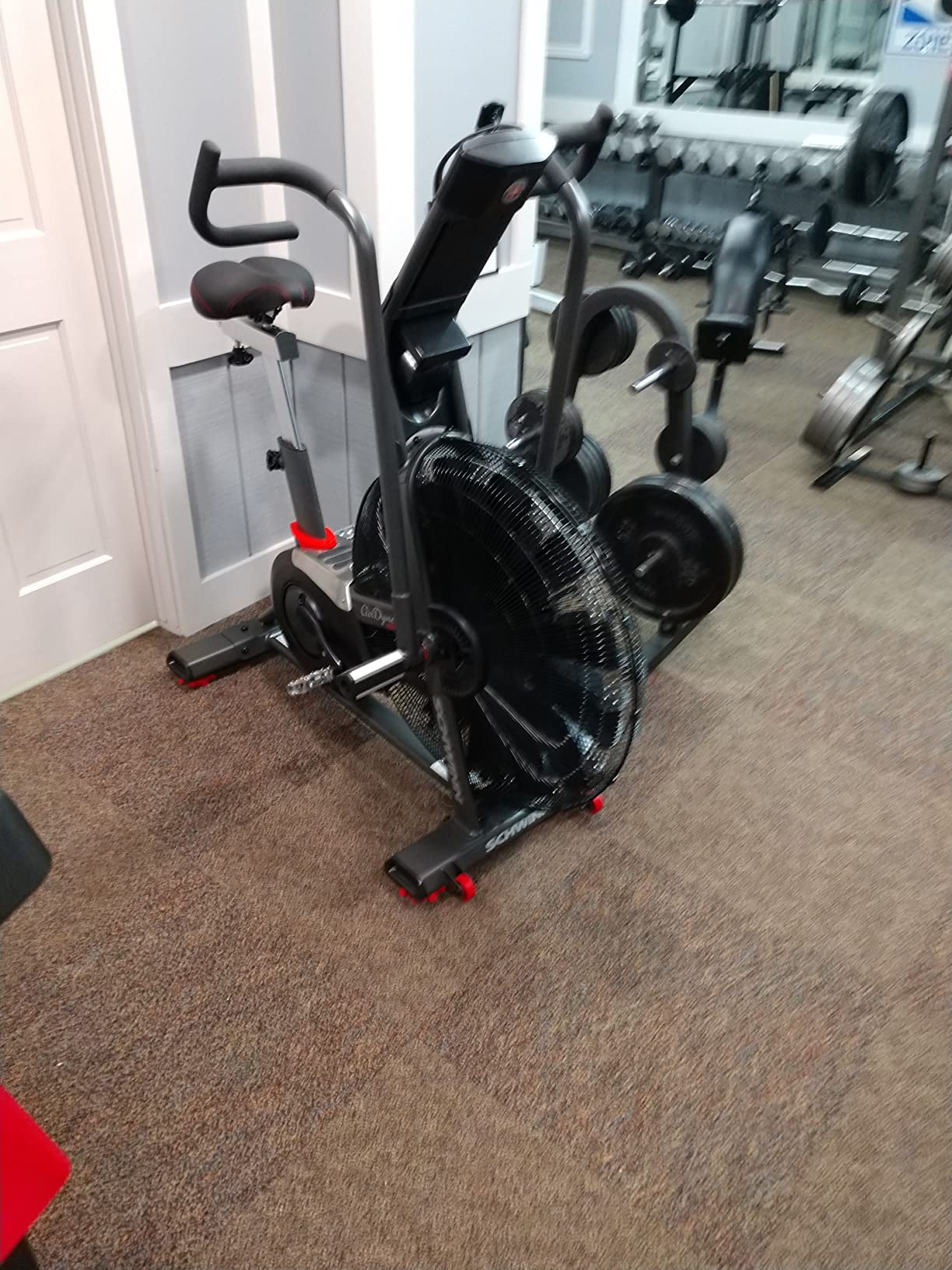
Out of all 10 machines we ranked, this is the one I keep coming back to for daily interval work. The AD7 draws resistance through a perimeter-weighted fan, so it spins up smoothly from a dead stop instead of lurching the first time you push. On a 20-second-on, 10-second-off block that matters more than it sounds, because a rough start wastes the first two seconds of the interval.
The single-stage belt drive is the real headline. Across this group it is the quietest drivetrain we looked at, and the fan is specifically optimized to reduce noise at speed. If you are training in an apartment or a shared-wall building, that is not a minor feature, it is the difference between a machine you keep and a machine you stop using.
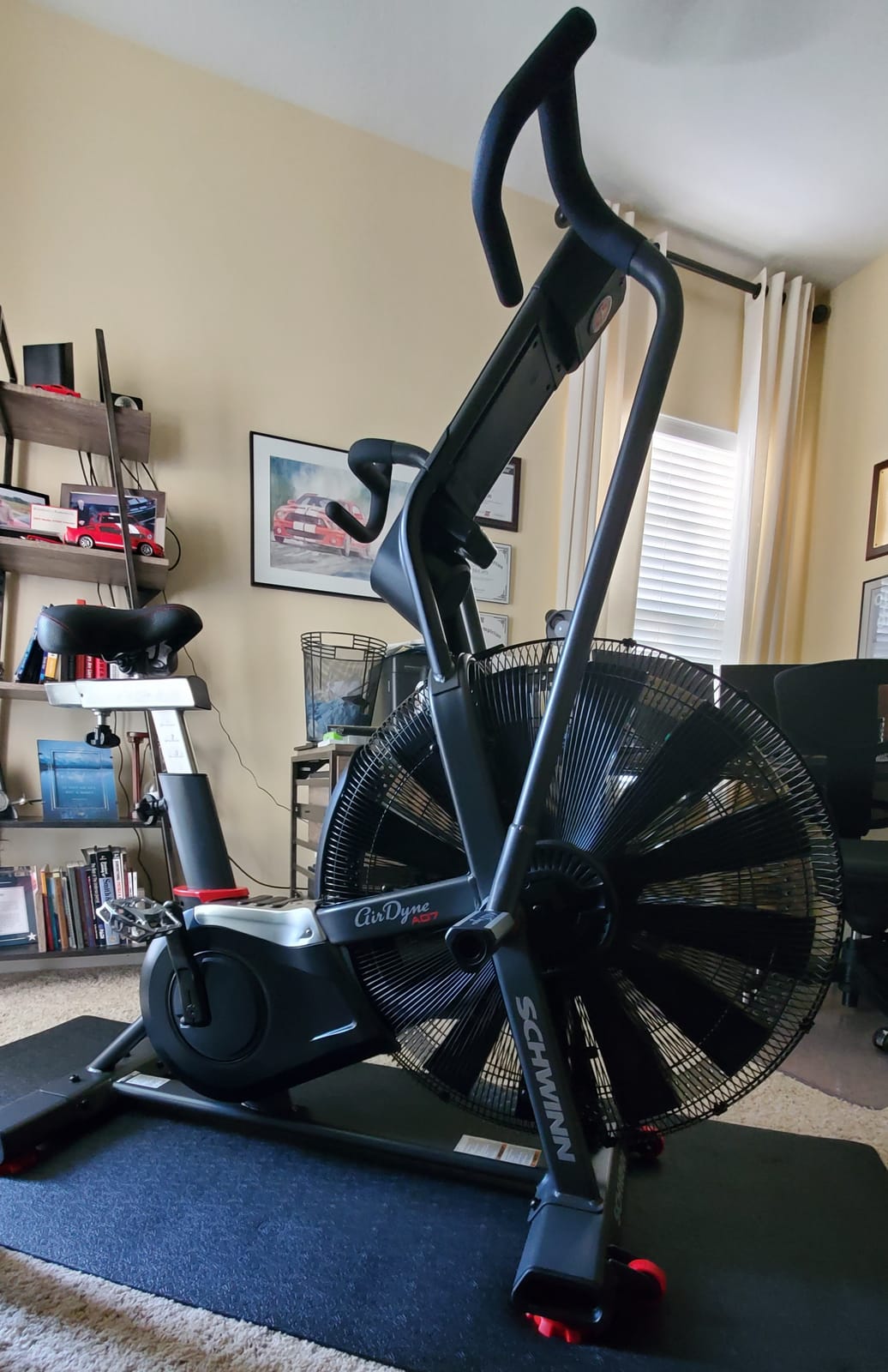
The console is where this bike separates itself from the budget tier. The high-resolution multi-display screen tracks calories, watts, time, distance, speed, RPM and heart rate with telemetry enabled, and the spec sheet lists 100 resistance levels. Air resistance is genuinely unlimited, so those 100 levels are a display convenience rather than a mechanical cap, but they do give you evenly spaced targets when you are running a ladder protocol.
Multi-position hand grips let you change your upper-body position between rounds, which keeps 20 minutes from feeling repetitive. The seat is adjustable and comfortable enough for a full session, and the alloy steel frame and handles hold up under repeated hard efforts. With 1,047 owner ratings averaging 4.5 stars and a 79 percent five-star share, the long-term satisfaction numbers back that up.
Fit is worth planning around. The bike is rated to 348 lb, which covers nearly everyone, and the 53 by 26.5 inch footprint is the largest here alongside the Sunny. If you are over six feet, set the seat before your first interval session and check it again once you are warm, because you will sit noticeably lower when bent over a sprint.
For whom this bike works best
For the person training three to five times a week who does not want a noisy machine in the house. Belt drive plus heart rate telemetry plus watts output means you can run a programmed block without timing by hand, which is the biggest single quality-of-life upgrade in this roundup.
It is also the safe pick for a shared home gym, because a quieter machine means fewer reasons for someone else to ask you to stop. The 348 lb capacity and steel frame mean it will not be the limiting factor when your intervals get harder.
Where it falls short
Space. At 53 inches deep and 113 lb, this is not a bike you shuffle into a closet between sessions, and you will need two hands and a clear path to move it. Assembly is also required, so budget an evening or a second person for the first build.
The console gives you metrics but not built-in interval programming in the way the Titan does, so for pure at-a-glance guidance during Tabata you will still be watching the clock. For most people that is a fair trade for the quieter drivetrain and the telemetry.
2. Sunny Health & Fitness Smart Heavy-Duty Fan Bike – App-Tracked HIIT Console
Sunny Health & Fitness Smart Heavy-Duty Fan Bike for HIIT Cycling Workout
Belt drive
330 lb max user
108.9 lb bike
SunnyFit app over Bluetooth
Pros
- Smart interval monitor with watts and RPM
- Free app connectivity over Bluetooth
- Commercial-grade steel frame
- Transport wheels and device holder
- Quiet belt drive
Cons
- No built-in heart rate sensors
- Calorie readings under-report effort
- Non-standard pedal spindle threading
This is the console pick. The SF-B223018 runs a smart interval monitor that tracks watts, RPM, speed, distance, calories and heart rate, and it pairs over Bluetooth to a free app. For interval training, live watt output is the number that lets you repeat a session honestly, and very few bikes in this price bracket report it.
Dual-direction air resistance responds instantly to effort in both pedalling directions, so an arms-only round genuinely feels different from a legs-only round. The 4-way adjustable padded seat and textured anti-slip handlebars and pedals handle longer sessions, and transport wheels plus a built-in device holder make it practical in a home gym corner.
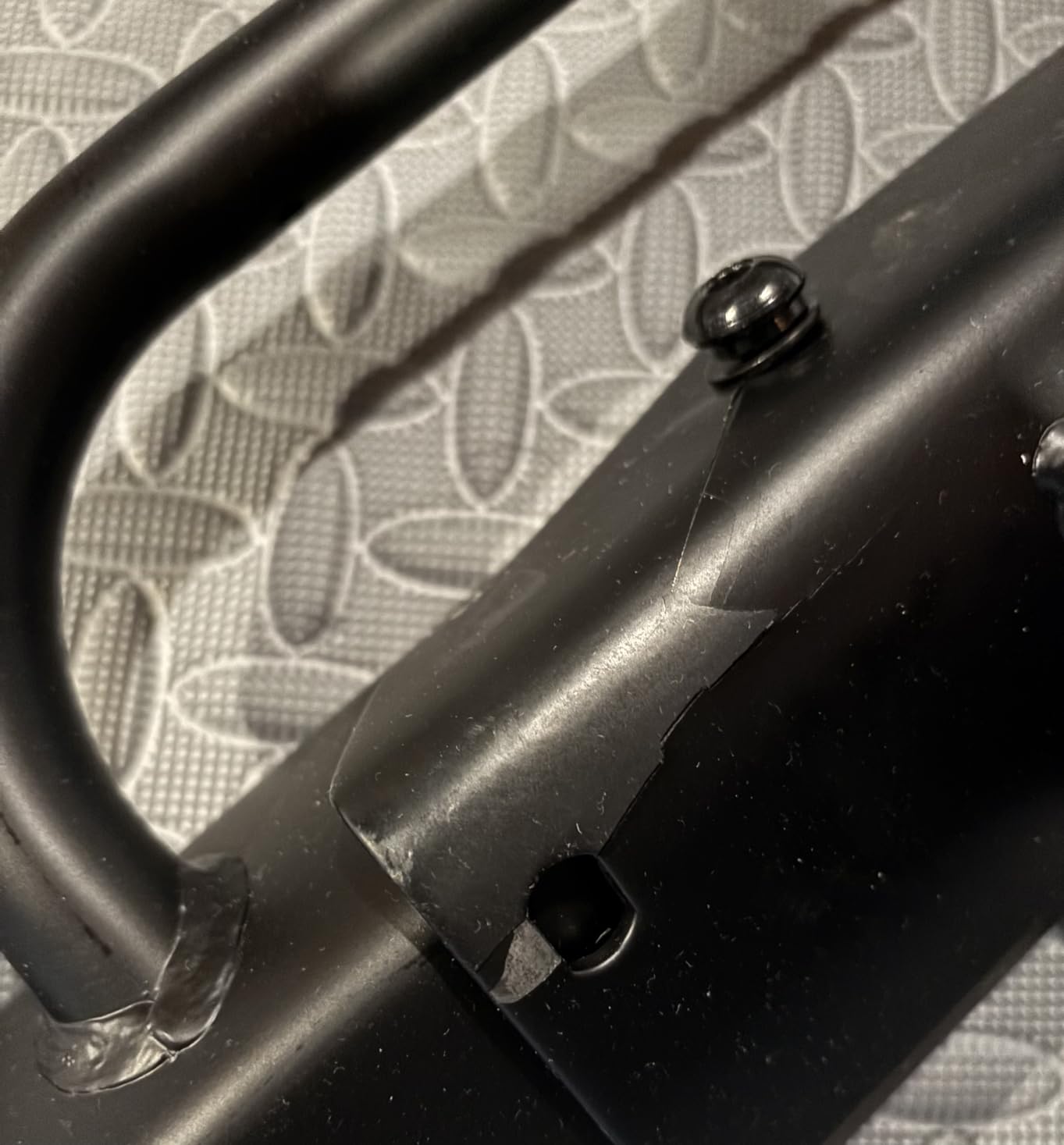
The 330 lb capacity and commercial-grade steel frame are the durability story here. Reviewers describe the air resistance as comparable to far more expensive machines, which tells you the fan and frame are doing real work rather than just moving air. The narrow-gap fan cover adds a safety layer around the one part of these bikes that genuinely deserves caution.
Assembly is straightforward, with tools included and step-by-step instructions backed by video tutorials. That matters on a 55.5 inch deep machine, because the build is the part most likely to put someone off the whole purchase.
For whom this bike works best
For anyone whose interval programming currently lives in a phone app anyway. If your sessions are Tabata timers and heart rate targets, pairing that data to a proper watt-reading console is a real upgrade over eyeballing effort.
It is also a good pick if you are between 250 and 330 lb and want more headroom than a starter bike gives you, without stepping up to a commercial-frame price tier.
Where it falls short
Accuracy and hardware. Despite what the marketing suggests, there are no built-in heart rate sensors, and reviewers repeatedly flag calorie readings as stingy and under-reporting effort. Plan on using watts and RPM for pacing instead of calories, or accept that the calorie number is a rough directional signal.
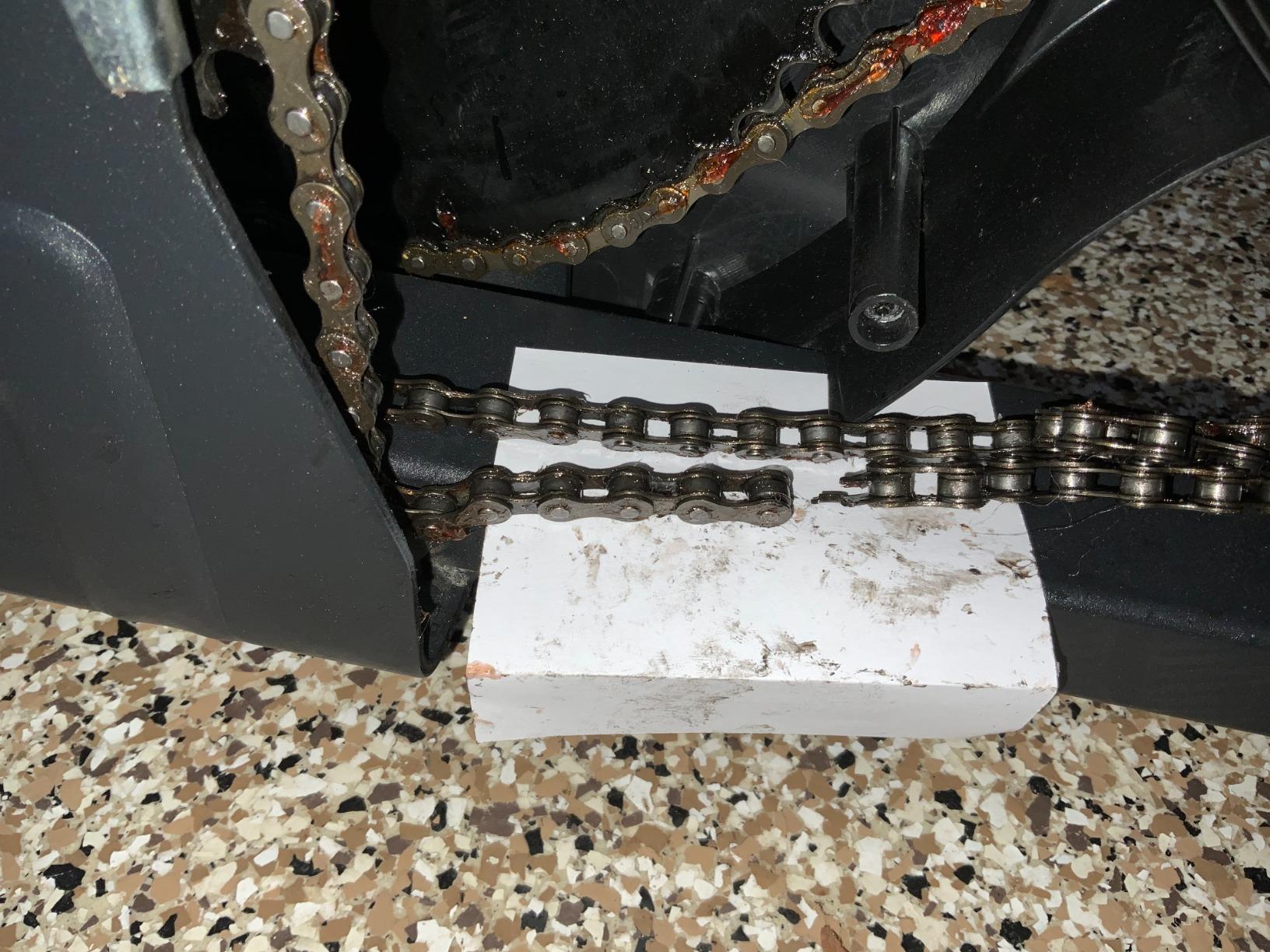
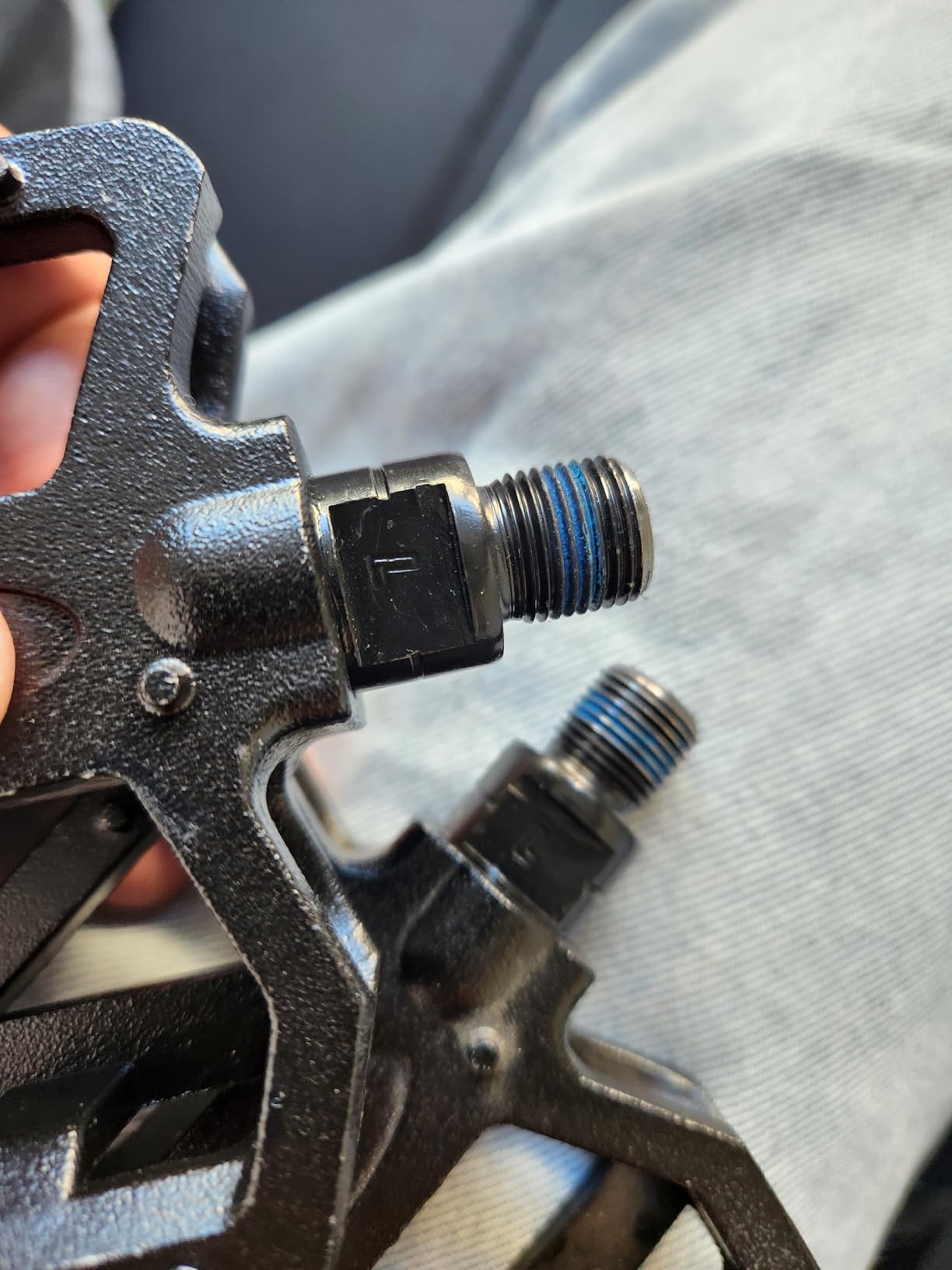
Serviceability is the other concern. The pedal spindle uses non-standard threading, and the drive belt can slip off its gear, with a repair that requires partial disassembly and a crank puller. If you are comfortable with that, fine. If you want a bike you will never open up, look elsewhere.
3. pooboo Air-Resistance Fan Bike S319 – Compact Full-Body Interval Machine
pooboo Air-Resistance Exercise Fan Bike, Air Bike with Dual Acction Handlebars&Dual-Layer Transmission System, Stationary Bike with APP Connection for Home Gym HIIT Cardio Full Body Workout
Carbon steel frame
350 lb max user
90 lb bike
Belt and chain drive
Pros
- 4.6 average owner rating
- Dual-action arms work together or separately
- Compact 45 inch footprint
- Stable for tall heavy riders
- Front transport wheels
Cons
- Foot bar linkage must be assembled in order
- Linkage loosens and needs retightening
- Air blows directly into your face
The highest-rated bike in this roundup, at 4.6 across 118 owner ratings with a 75 percent five-star share. That is a young review base compared to the Marcy, but the consistency of the feedback is notable, and for interval work the combination of a 350 lb carbon steel capacity, progressive fan resistance and a 45 inch footprint is genuinely hard to argue with.
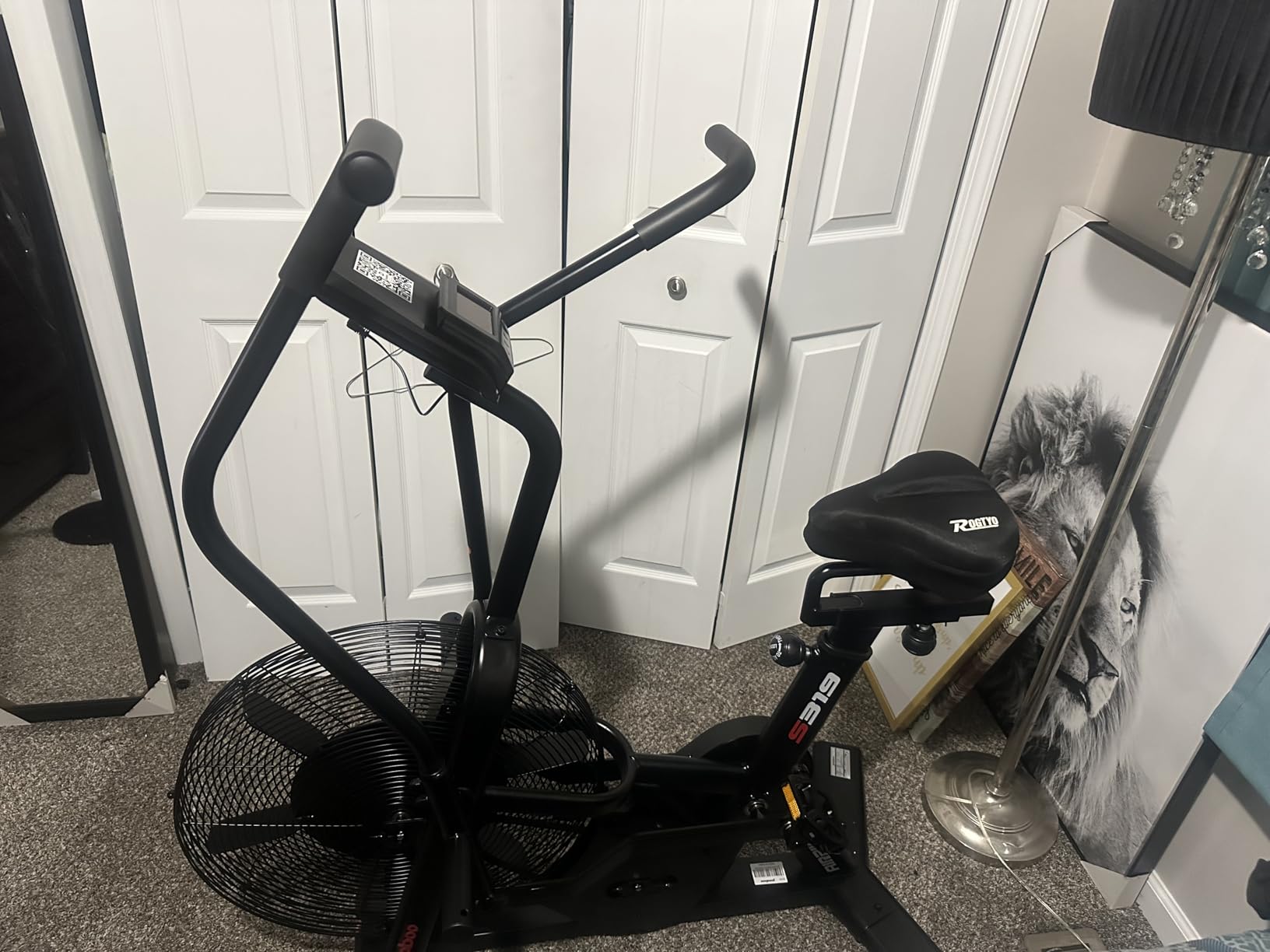
The dual-action handlebars are the reason to pick this one. They can target arms, legs and back together or separately, and the integrated footrests let you change the movement pattern mid-session. When you are running 20 minutes of Tabata, having a genuinely different second movement keeps the last five rounds from falling apart.
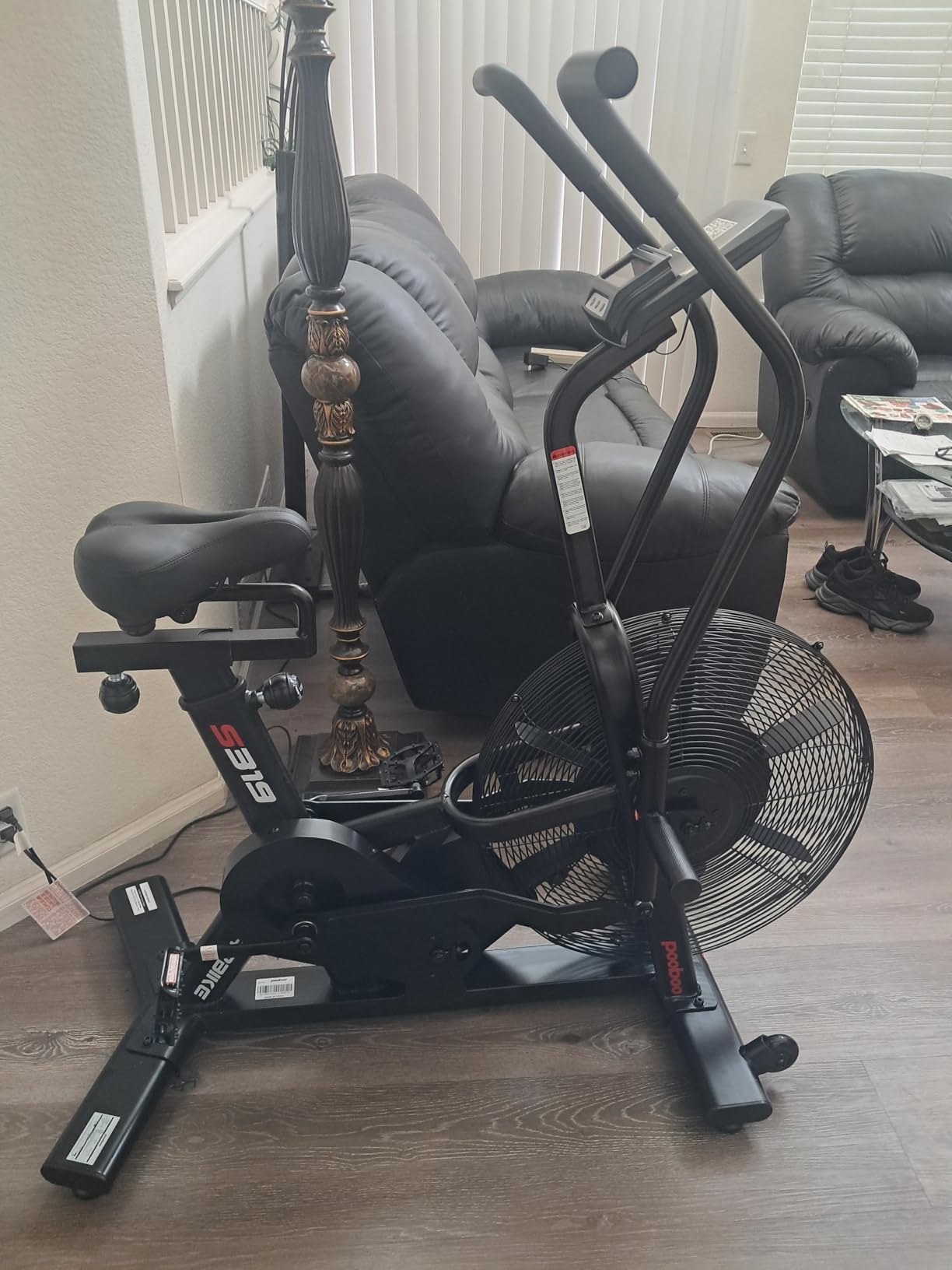
The drive system combines a belt and chain for quieter, low-maintenance pedalling, and a steel cage protects the resistance fan. The Bluetooth monitor tracks time, speed, distance, odometer and calories, and it includes preset and customisable interval programs, which is more than most machines in this group offer out of the box.
Owners specifically call out stability at high interval speeds and for tall, heavy riders, which is the complaint we heard most about lighter budget machines. At 90 lb with a 350 lb rating, the physics back that up. The fan airflow also doubles as cooling during hard efforts.
For whom this bike works best
For riders who want arms in the workout without giving up a compact footprint. A 45 by 25 by 44 inch machine is one of the smaller full-body bikes here, and the 18 resistance levels and preset interval programs mean a beginner can follow a structured session without coaching.
If you are over six feet or above 300 lb, this is one of the few budget-tier machines where reviewers report the frame staying composed during all-out sprints. That is worth more than a better console for hard interval work.
Where it falls short
The foot bar that links the moving arms to the frame must be assembled in the correct order or it clicks, and that same connection loosens with use and needs frequent retightening. Owners who skipped the manual will recognise the sound immediately, and it is an easy fix once you know it is there.
Be aware that the fan directs air straight into your face during a hard effort. That is refreshing in summer and unpleasant in a hot room, so most people end up positioning the bike away from a wall and pointing it at a door. The seat also reads as unstable to some riders.
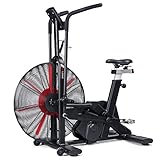
4. leikefitness Fan Exercise Bike – Heaviest Frame in the Group
leikefitness Fan Exercise Bike Upright AirBike Indoor Stationary Bicycle
Belt and chain drive
330 lb max user
119 lb bike
Four-step assembly
Pros
- Heaviest frame here resists wobble and creaking
- Strong value against premium air bikes
- Interval programs built into the monitor
- Adjustable seat and handlebars
- Main frame ships assembled
Cons
- Weak manual and unintuitive console instructions
- No published support contact route
- 119 lb weight is hard to move
- Some early part failures reported
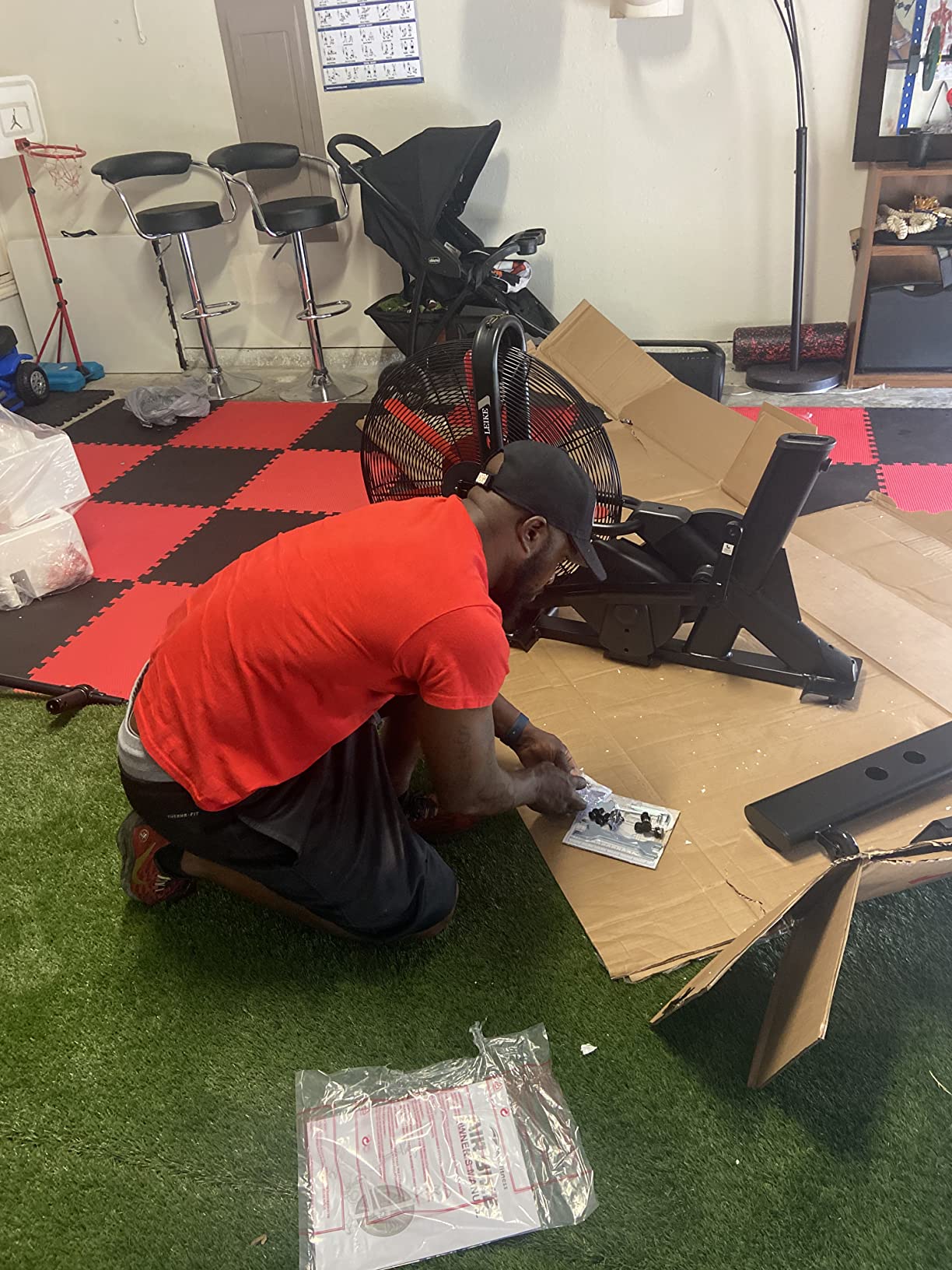
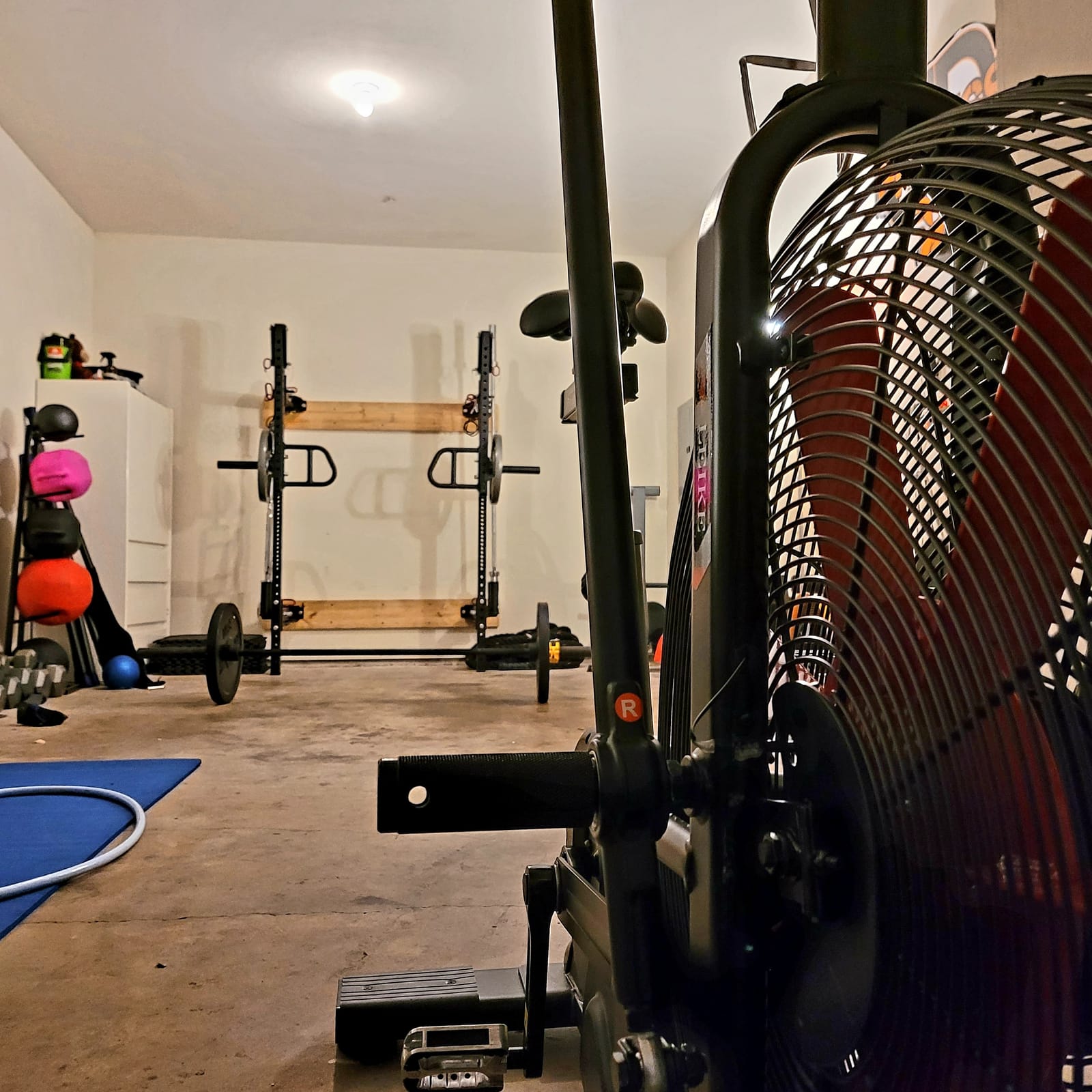
At 119 lb, this is the heaviest bike we ranked, and reviewers single out exactly why that matters for HIIT: it resists wobble and creaking under hard efforts. Frame mass is the cheapest form of stability there is, and when you are standing up in a 20-second sprint, a bike that does not rock under you lets you keep the pedal stroke smooth.
The main frame comes assembled, so the build is four steps rather than an evening. That is a real quality-of-life difference versus the machines that arrive as a box of bolts, and reviewers consistently praise how easy assembly is for a machine of this size.
The digital monitor tracks time, distance, calories, watts, speed and RPM and includes goal-setting modes, plus a phone holder and bottle holder. Watts again is the metric that matters for interval repeatability, and reviewers report it rides quietly for a chain-equipped air bike.
At 4.4 stars across 113 ratings with a 69 percent five-star share, the enthusiasm is mostly about build quality relative to cost. Multiple owners frame it as a sensible alternative to far more expensive air bikes, which is a reasonable read of a 119 lb steel frame rated to 330 lb.
For whom this bike works best
For heavy riders and strong athletes who have been disappointed by flex on lighter machines. A 330 lb capacity on a frame this heavy will stay planted through all-out intervals, and the adjustable seat and handlebars cover a wide height range.
It also suits anyone who plans to keep a bike for years. A one-year warranty is on the short side, but the company offers lifetime free replacement parts, which is the more meaningful promise for a machine you intend to keep.
Where it falls short
Documentation and after-sales support are the weak point. Reviewers call the manual poorly written and the console instructions unintuitive, and there are no published Leikefitness contact details, warranty registration path, or support number. If something goes wrong, you are on your own for the process.
A small minority also report early broken or fragile parts, and seat comfort varies by rider. The weight is a real trade-off too, at 119 lb it is the hardest machine here to move between rooms.
5. GYMAX Fan Bike – Smallest Footprint for Tight Rooms
GYMAX Fan Bike, Air Resistance Upright Bike with LCD Monitor, Phone Holder & Built-in Wheels, Fully Adjustable Stationary Exercise Bike for Home Gym Cardio Training Workout Fitness
Belt and chain drive
242 lb max user
58 lb bike
41 inch footprint
Pros
- Smallest footprint in the roundup
- Built-in transport wheels
- 4-way adjustable padded seat
- Quiet operation with cooling airflow
- Most hardware pre-fitted
Cons
- Assembly takes real time
- Seat post may not fully tighten
- Handlebar weld and axle bearings wear reports
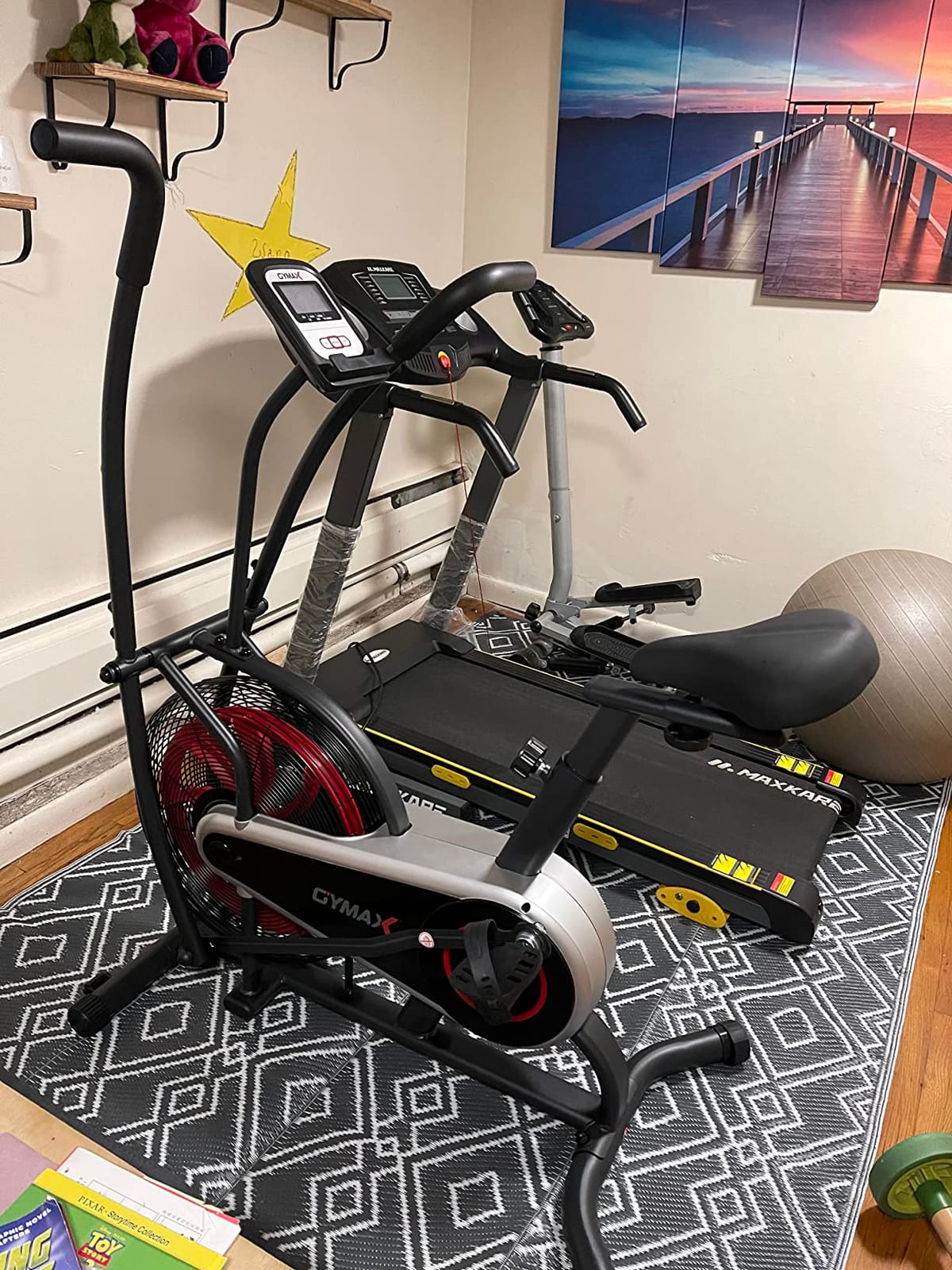
At 41 by 23 by 50 inches and 58 lb, this is the smallest and lightest full-body air bike in the group, and in a small apartment that is the whole pitch. Built-in transport wheels mean you can roll it into a corner rather than carrying it, and two of the three machines in this roundup that are lighter are not full-body trainers at all.
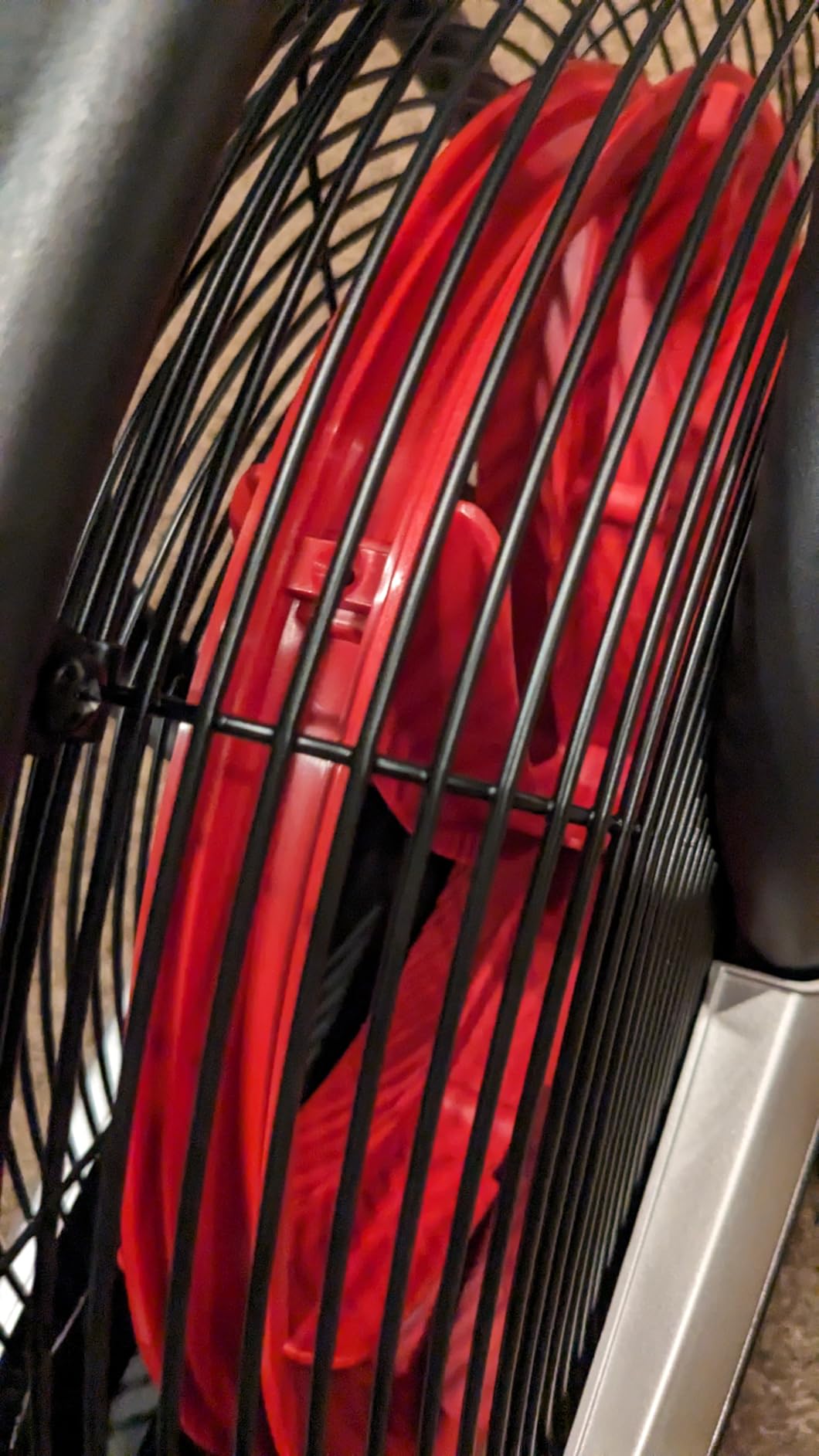
The 8-blade performance fan produces limitless resistance with no tension adjustment needed, and a double-stage belt and chain drive keeps the ride smoother than a basic chain setup. The LCD monitor is simple, tracking time, speed, distance, calories and total distance with switchable metric units.
Fit is better than the size suggests. A 4-way adjustable seat runs through 10 height levels with 17 to 21 inch of fore-aft adjustment, and the waterproof PVC leather padded seat gets comfortable gel cushioning that reviewers mention unprompted. For a compact bike, that is a well thought out adjustment range.
At 4.1 stars from 66 ratings with a 66 percent five-star share, the consensus is a solid budget starter that is compact, quiet and easy to move. Assembly is the one thing people consistently warn about, with lengthy build time and occasionally unclear diagrams.
For whom this bike works best
For a home gym that is really a corner of a room. At 41 inches deep it is the only machine here you can park against a wall without a dedicated zone, and 58 lb is light enough for one person to reposition without tipping.
It also works for anyone who wants to try fan bike training before committing to a heavier frame. A 242 lb max user rating covers most people, and the simple LCD with large readable numbers is genuinely easier to read mid-sprint than a busy multi-metric screen.
Where it falls short
This is where the price tier shows. The 242 lb limit is the second-lowest here, and reviewers report a handlebar weld that can crack after extended use plus axle bearings that wear out within a year. That is a durability ceiling, and it is the reason we would not build a five-days-a-week interval plan around it.
There is also no visible tension adjustment for the flywheel, the seat post may not tighten fully and can spin, and one pedal is reverse-threaded, which confuses setup if the instructions are not in front of you.
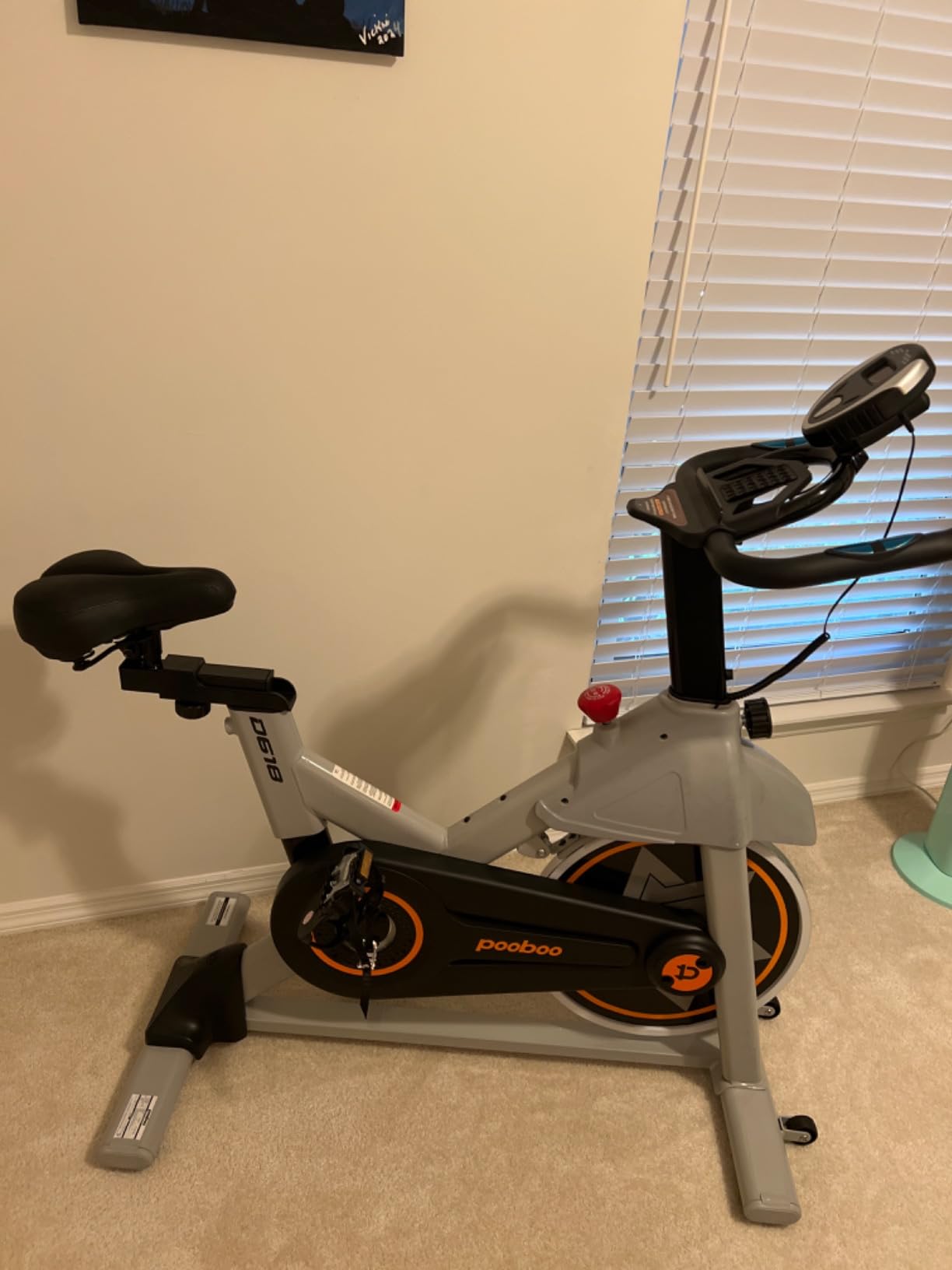
6. pooboo Bluetooth Fan Bike S329 – Widest Seat Adjustment Range
Air Resistance Fan Exercise Bike, Indoor Upright Stationary Bike with Bluetooth Connection, Dual Action Handlebars and Dual‑Layer Transmission for Home Gym Cardio Training
Dual belt and chain drive
350 lb max user
91 lb bike
12:1 gear ratio
Pros
- 4.7 average owner rating
- 6 by 6 inch fan blades with steel guard
- 7-position height and 5-position fore-aft seat
- Fits users from 5 ft 1 in to 6 ft 3 in
- Aluminium non-slip pedals
Cons
- Monitor tracks basic metrics only
- Takes AAA batteries and warns against rechargeables
- Young listing with limited review detail
At 4.7 stars this is the highest-rated machine here, with an 86 percent five-star share. Treat that number with the context it deserves: 47 ratings is a young listing, so you are reading early-owner sentiment rather than a long track record. What that sentiment does say is consistent, and it lines up with the spec sheet.
Fit is the standout. Seven height positions plus five fore-aft positions on a shock-absorbing saddle, rated for riders from 5 foot 1 to 6 foot 3. That is the widest documented range of any bike in this group, and it matters for interval work because a cramped seat turns a 20-second sprint into a 20-second argument with your hip flexors.
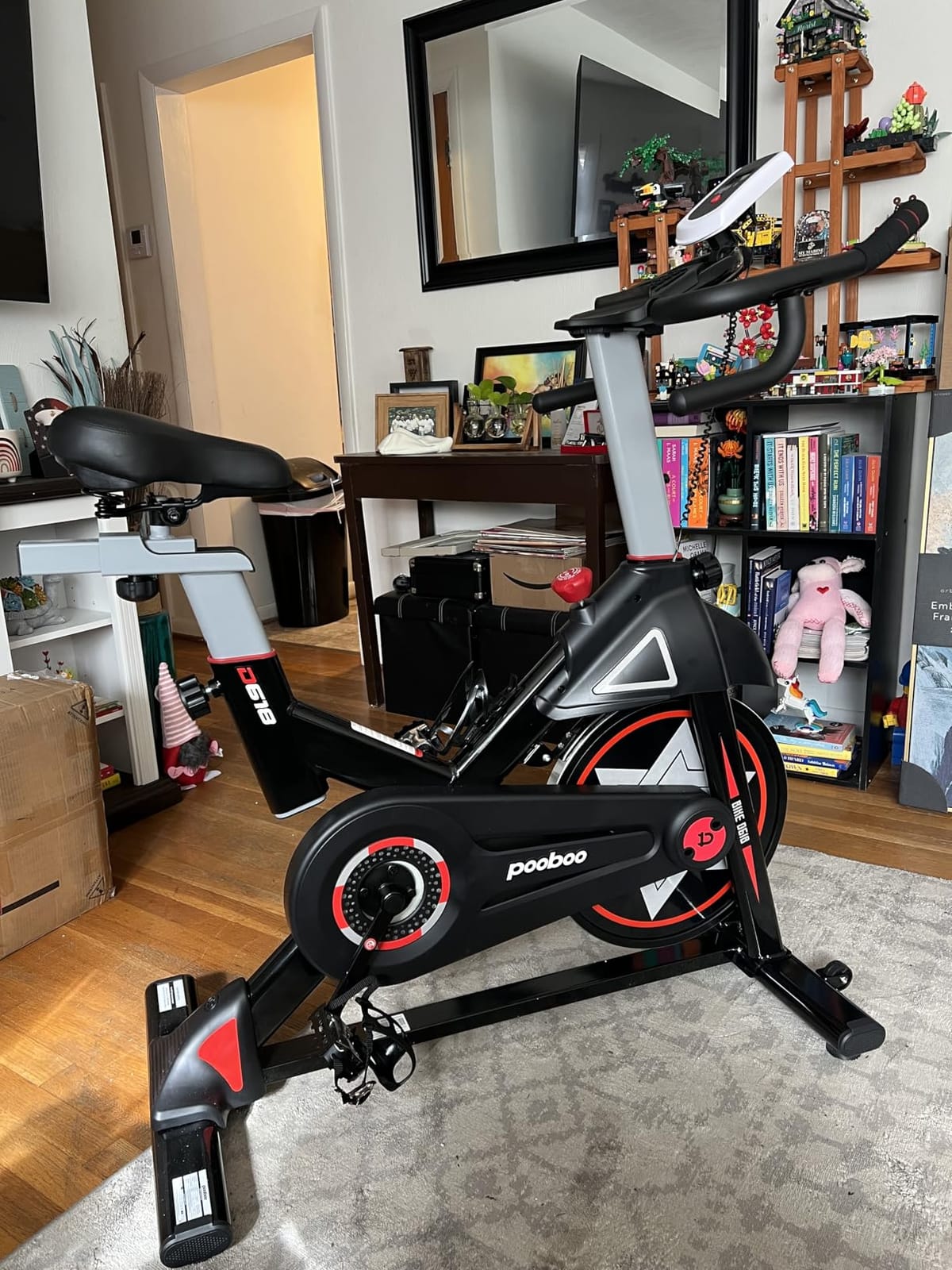
The transmission is worth understanding. A dual belt and chain construction drives a 12:1 gear ratio, so one pedal stroke turns the fan twelve times. Combined with 6 by 6 inch extended fan blades behind a steel protective guard, that produces strong, progressive resistance and a noticeable cooling airflow during hard efforts. The multi-grip handlebar and built-in footrest give you more upper-body options than most machines at this level.
Connectivity is Bluetooth to a free app, and the multifunction monitor covers scan, time, speed, distance, odometer and calories with goal setting. Non-slip full aluminium pedals and transport wheels with a handle round out a well-specified package.
For whom this bike works best
For riders at either end of the height range, particularly anyone over six feet who has struggled to find a compact fan bike with real seat travel. The shock-absorbing saddle and 350 lb capacity also make it a solid pick for heavier riders.
At 91 lb it is heavy enough to stay planted through sprint intervals without taking up the floor space of a 113 lb machine, which is a compromise we like for interval training specifically.
Where it falls short
The monitor tracks basic metrics only. If your interval programming depends on live watt output or heart rate telemetry, this is not the machine, and you would be timing Tabata by eye rather than by data.
It runs on two AAA batteries and the manufacturer explicitly warns against rechargeable cells, which is an easy mistake to make and an annoying one to diagnose when the console dies mid-session. With only 47 ratings, there is also not yet a long-term durability picture here.
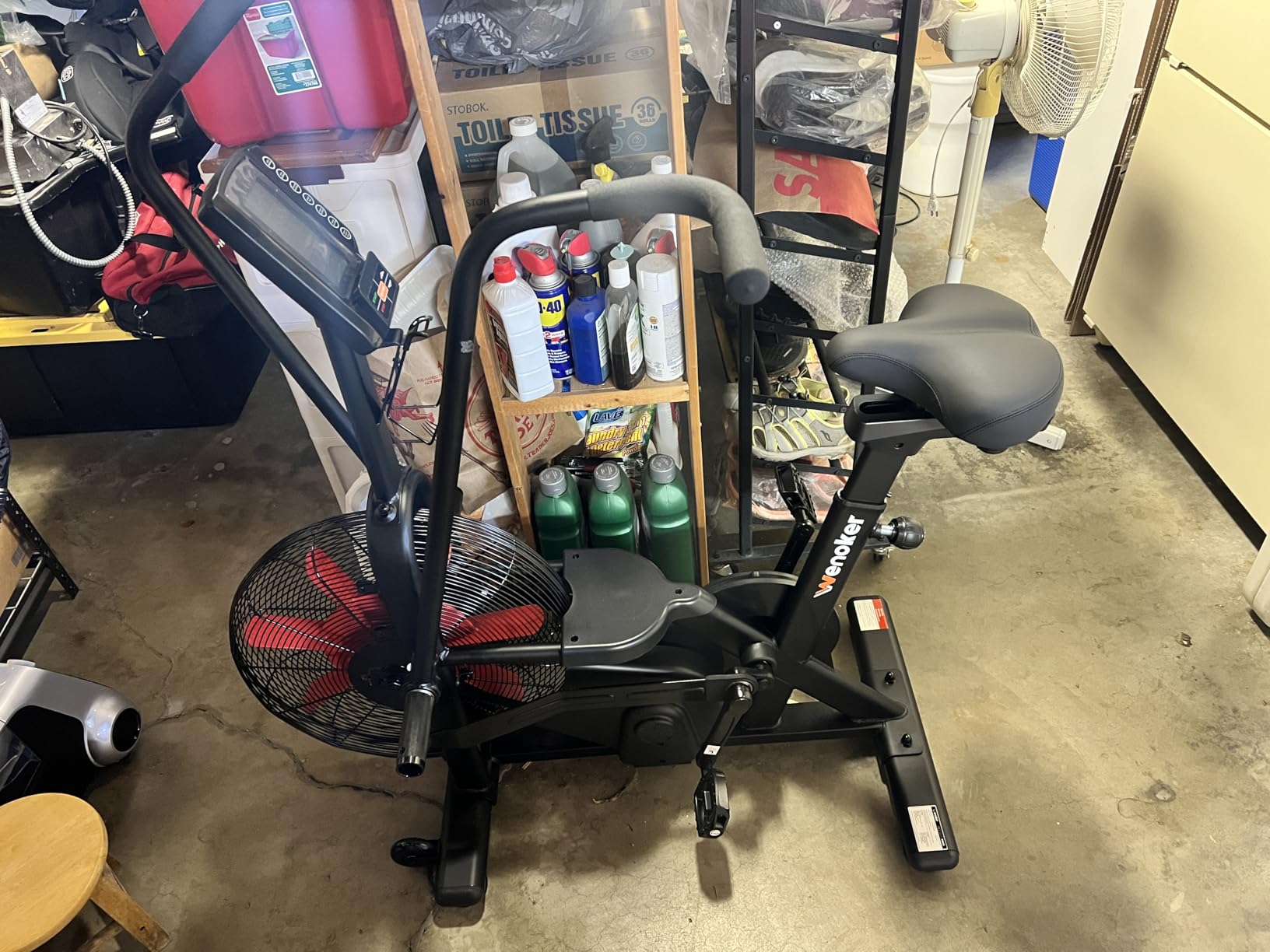
7. Wenoker Smart APP Air Bike – Guided Training and Route Apps
Wenoker Exercise Bike, Air Bike with Smart APP, ISCC PLUS Certified, Dual Action Handlebars Stationary Fan Bike 350LBS Capacity for Home Gym HIIT Full Body Workout
Belt drive
350 lb max user
101 lb bike
App with routes and challenges
Pros
- Stable 101 lb frame under hard efforts
- App tutorials and virtual routes
- Wireless heart rate monitor sync
- Transport wheels and bottle holder
- Fast to raise heart rate
Cons
- Console print is small and hard to read
- Air noise rises at high cadence
- Arm levers must be aligned exactly in assembly
What separates this one is the software layer. The companion app carries tutorials, virtual routes, progress logs and challenges, with goal setting for time, distance, calories and heart rate, and it syncs wirelessly with compatible heart rate monitors. Reviewers describe the app content as a genuine source of workout variety rather than a gimmick.
The built-in monitor includes preset and adjustable interval modes, so you can run a session without leaving the bike, and the 101 lb heavy-duty steel frame stays stable under hard efforts. At 350 lb capacity with bi-directional movement, this is a machine built for people who want structure rather than improvisation.
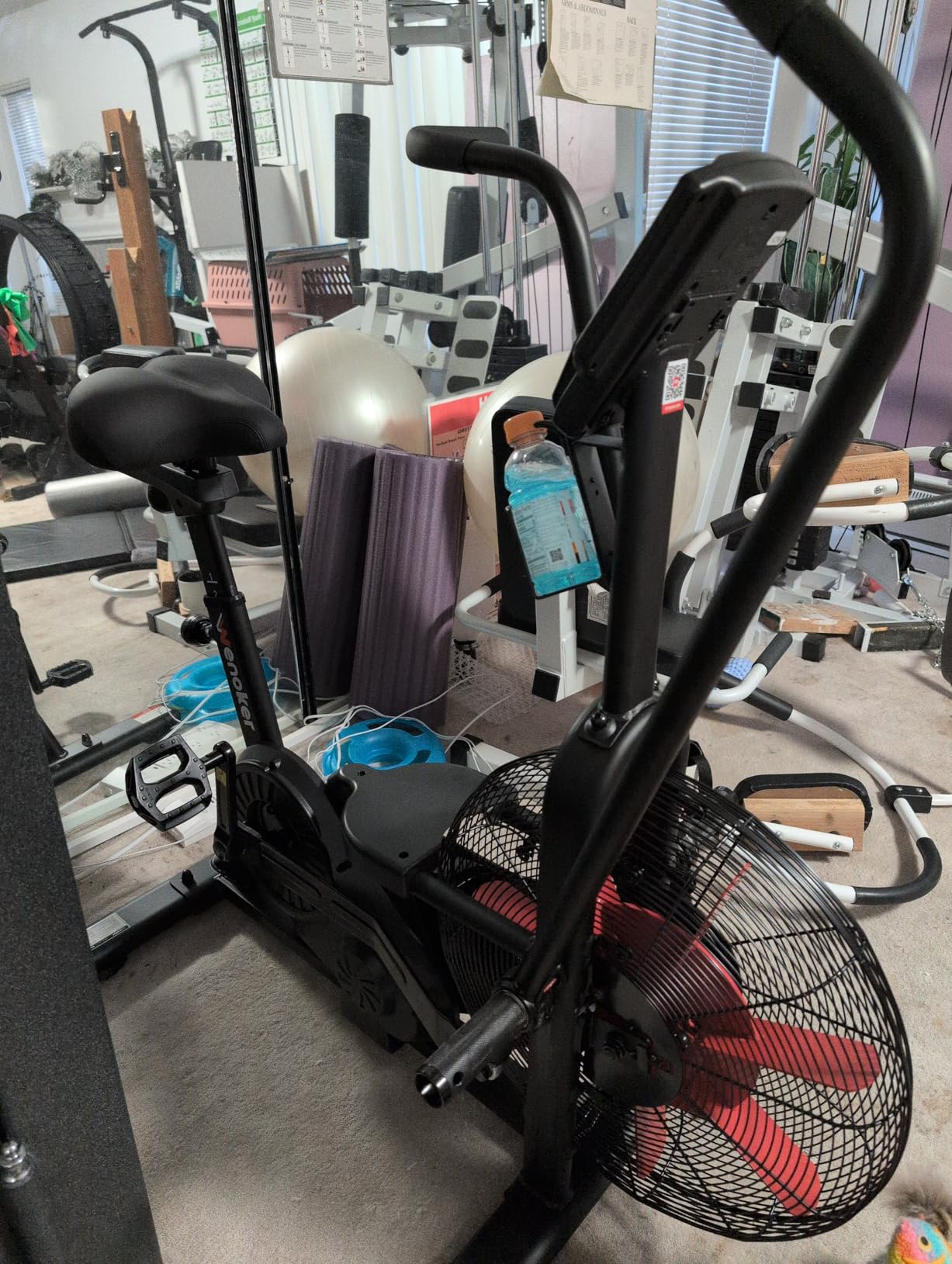
Owners consistently report that it gets your heart rate up within minutes, which is the single most useful testimonial for a HIIT machine. The dual-action handlebars add the full upper-body component, and the fan airflow provides cooling during intense sessions. Transport wheels, a bottle holder and a phone holder cover the practical details.
At 4.7 stars across 43 ratings with an 88 percent five-star share, this is a recent listing with strong early response, and reviewers call the build quality close to gym specification. Support was also described as responsive when owners had setup questions, which is more than most brands in this bracket manage.
For whom this bike works best
For a beginner who needs a plan more than a machine. Preset interval modes plus app tutorials mean you can start on day one with a structured session and build toward longer blocks, without needing a coach or a spreadsheet.
Wireless heart rate sync is the detail that separates it from the basic monitor crowd, and for interval training that is the number you are actually trying to hold. The 101 lb frame and 350 lb rating also suit anyone who wants a serious machine at a mid-range tier.
Where it falls short
Console legibility is the consistent complaint. The print is small and hard to read while riding hard, which is exactly when you need it most, so the practical fix is to run interval modes on the bike rather than staring at live figures.
Fan noise increases noticeably at high cadence, so it is not the choice for a shared-wall apartment. The arm lever positioning also has to be aligned exactly during assembly, and one review unit had a battery compartment cover that would not latch.
8. Titan Fitness Steel Fan Bike – Built-In Tabata and HIIT Modes
Titan Fitness Steel Fan Bike, Exercise and Cardio Workout Equipment, Black
Chain drive
330 lb max user
111 lb bike
Powder-coated steel frame
Pros
- Pre-programmed HIIT and Tabata modes
- Console reports watts and heart rate
- Sealed bearings and enclosed chain drive
- Removable fan guard
- 10 inch turf tires roll anywhere
Cons
- Thinnest review base at 35 ratings
- Some fit and build quibbles in ratings
This is the only bike in the roundup with dedicated pre-programmed HIIT and Tabata goal modes, and for someone who wants the machine to run the intervals rather than the other way around, that is a real advantage. The LCD console reports time, distance, heart rate, RPM, calories, watts and odometer, which is the deepest data set on a mid-tier machine here.
Build details are aimed squarely at interval use. A powder-coat finished alloy steel frame is described as staying steady through hard intervals, sealed bearings resist dirt and moisture, and the chain drive is fully enclosed rather than exposed. Sealed bearings on a machine you will use three to five times a week is the difference between a bike that stays smooth and one that starts clicking.
The 10-inch polyurethane turf tires are an unusual detail. They let you roll the bike over any indoor surface, and combined with the integrated rear handle they make an 111 lb machine easier to reposition than its weight suggests. The removable fan guard cuts air blowback during intense sessions, which is a genuine comfort upgrade for anyone running long blocks.
There is also an anodized aluminium bottle cage and a phone holder, both minor on their own and useful during a 20-minute session. Self-powered air resistance scales to rider output with 16 resistance levels, so there is a numbered ladder if you want one.
For whom this bike works best
For CrossFit-style and HYROX-style training, where the session is programmed and the machine should follow. Tabata and HIIT modes built in mean you are not setting a phone timer on the floor beside the bike, and the watts and heart rate reporting lets you pace a repeating interval.
The turf tires also suit a shared gym space or a garage floor, where moving an 111 lb bike across concrete would otherwise be a two-person job.
Where it falls short
The evidence base is thin. Thirty-five ratings is the smallest review base in the roundup, so you are trusting the spec sheet more than the owner record, and a 14 percent three-star cluster hints at fit or build complaints that have not been widely documented.
It is also a chain drive, which is the loudest configuration in this group, and that makes it a poor fit for an apartment. Rated to 330 lb, it also sits at the lower end of the heavier machines here.
9. Winfita 350 lb Air Bike – Zwift and Kinomap Pairing
Winfita Air Bike, 350 lb Capacity, Dual-Action Handlebars for HIIT & Cardio
Chain and belt drive
350 lb max user
86 lb bike
22 inch fan
Pros
- Pairing with Zwift and Kinomap
- 22 inch six-blade steel fan
- Oversized tubing with 2.0 mm walls
- Pre-assembled frame and fan
- Transport wheels
Cons
- Supplied seat is uncomfortable
- Display shows one stat at a time
- Calorie readings low versus a Rogue Echo
- Bluetooth pairs only as a generic bike
The distinguishing feature here is connectivity. This is one of the few machines in the roundup that pairs with Zwift and Kinomap directly, which means structured interval work can happen in a virtual training environment with leaderboards and saved sessions rather than in a guessing game with a basic LCD.
Construction is stronger than the price tier suggests. Oversized 80 by 40 mm steel tubing with 2.0 mm walls and reinforced welds, rated to 350 lb, plus a 22-inch fan with six steel blades. A two-stage chain and belt drive handles the transmission, and the main frame and fan system arrive pre-assembled, so the remaining build takes about half an hour.
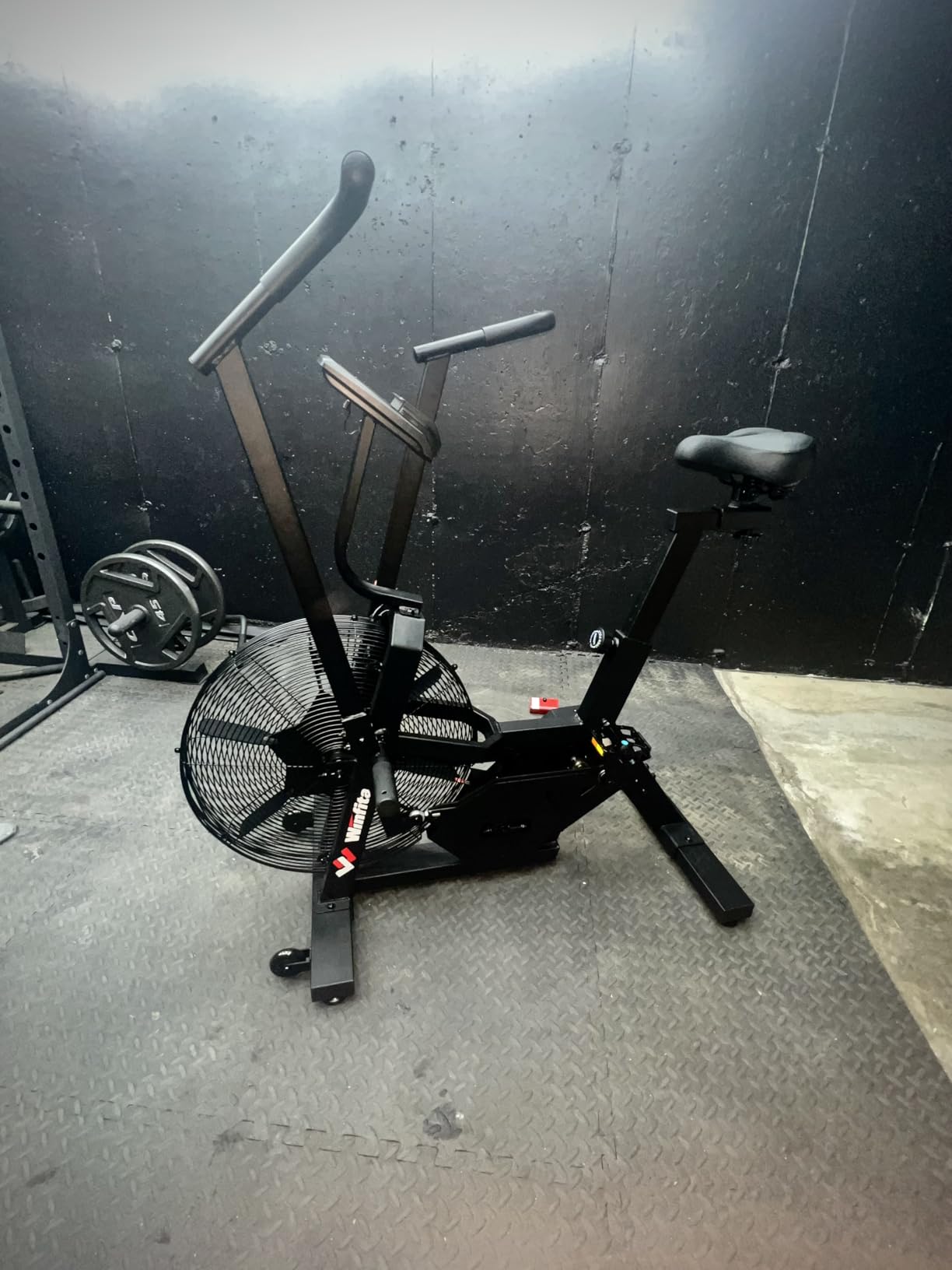
Fit is well specified for a machine this size, with seven height positions plus four inches of fore-aft adjustment covering riders from 5 foot to 6 foot 3. The LCD tracks time, distance, speed, calories and odometer. Reviewers rate the frame quality and resistance curve highly, and several compare it favourably to a Rogue Echo on cost.
At 4.4 stars from 19 ratings, with 70 percent five-star, the sentiment is positive but the sample is small and recent. Treat it as a promising option rather than a proven one.
For whom this bike works best
For anyone whose interval training already happens in Zwift and who wants the accountability of leaderboards and saved workouts. The 47.6 by 22.9 inch footprint is among the smaller full-body machines here, and 86 lb keeps it manageable.
The 350 lb rating and heavy-wall tubing also make it a good choice for big riders who have found lighter frames flexing during sprints. Pre-assembled shipping means a weekend afternoon is enough to be training on it.
Where it falls short
Most owners replace the supplied seat, which tells you the padding is not up to the job for long sessions. The display also shows one statistic at a time and the buttons are described as unresponsive, so reading watts and heart rate together is not possible. For a Zwift machine that is a genuine irritation.
Bluetooth pairs only as a generic bike, which limits the app data you see compared with a dedicated protocol. Calorie readings also come in far lower than a Rogue Echo for identical effort, and some units emit a clicking noise from the wheel. The transport wheels require tipping the bike, and there is no convenient lift point.
10. Marcy Air-Resistance Fan Bike – Most Proven Budget Starter
Marcy Fan Exercise Bike with Air Resistance System – Red and Black – NS-1000
Chain and belt drive
250 lb max user
58 lb bike
45.5 inch footprint
Pros
- Over 2200 owner ratings and counting
- Moving dual-action arms add upper-body work
- Compact and light with transport wheels
- Quick assembly with labelled hardware
- Good low-impact option for beginners
Cons
- 250 lb limit is the lowest here
- Resistance feels light for strong lifters
- Pedal and arm hardware needs periodic retightening
- Proprietary seat post
With 2,223 owner ratings, this is the most proven budget air bike in the roundup by a wide margin, and that record is worth something on its own. Long-term owners frequently report daily use over years, which tells you more about durability than any spec sheet. At 58 lb with a 45.5 by 27.5 by 49.5 inch footprint, it is also the easiest machine here to move around a small home.
The dual-action moving arms add genuine upper-body endurance work, and the air resistance system includes an adjustable tension knob. That knob is unusual in a fan bike, and while real air resistance is self-scaling, it lets a beginner start at a lower ceiling during a first session instead of immediately sprinting.
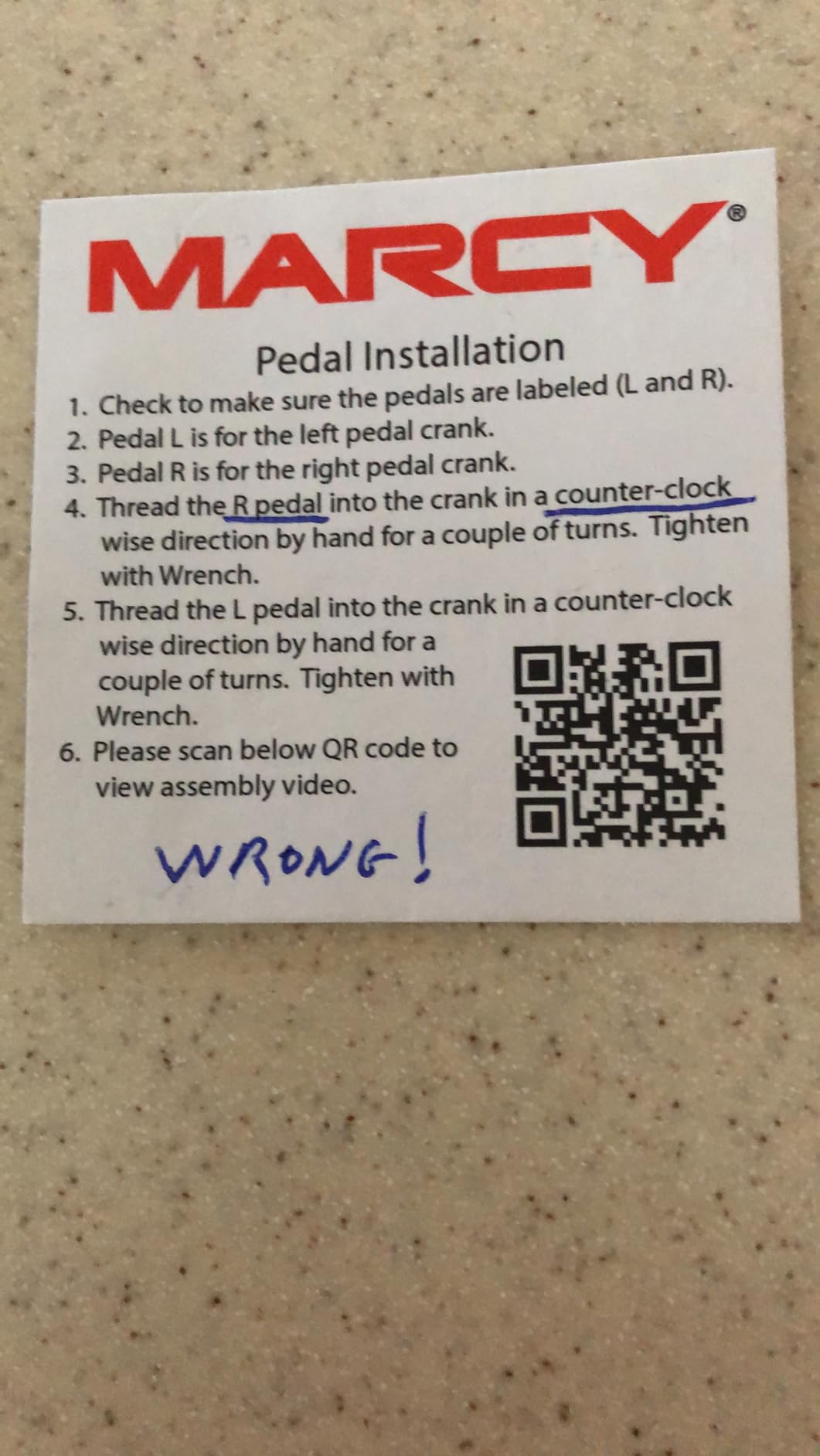
Reviewers describe it as quiet for the money, with cooling airflow off the fan, and consistently praise quick assembly with clearly labelled hardware, often under an hour. The high-density foam seat and handlebars are adjustable, and the LCD tracker scans time, distance, speed and calories. For a low-impact option for seniors and beginners, the evidence is strong.
The 14-gauge powder-coated steel tubing is the reason it has survived years of use in the reviews, and the 58 percent five-star share reflects a bike that does its job without pretending to be more than it is.
For whom this bike works best
For a first fan bike, or for anyone who wants a low-impact full-body machine they can move without help. Under 250 lb and not chasing race splits, the moving arms and adjustable tension knob give you a genuinely useful interval tool in a small footprint.
It is also a strong choice for older riders or anyone returning to exercise, where low joint impact and quiet operation matter more than maximum resistance. Transport wheels mean it lives in a spare room when not in use.
Where it falls short
The 250 lb user limit is the lowest in the group, and that is a hard ceiling rather than a preference. Resistance also feels light for strong lifters, so if your max interval output is high, this bike will not push back at the top end.
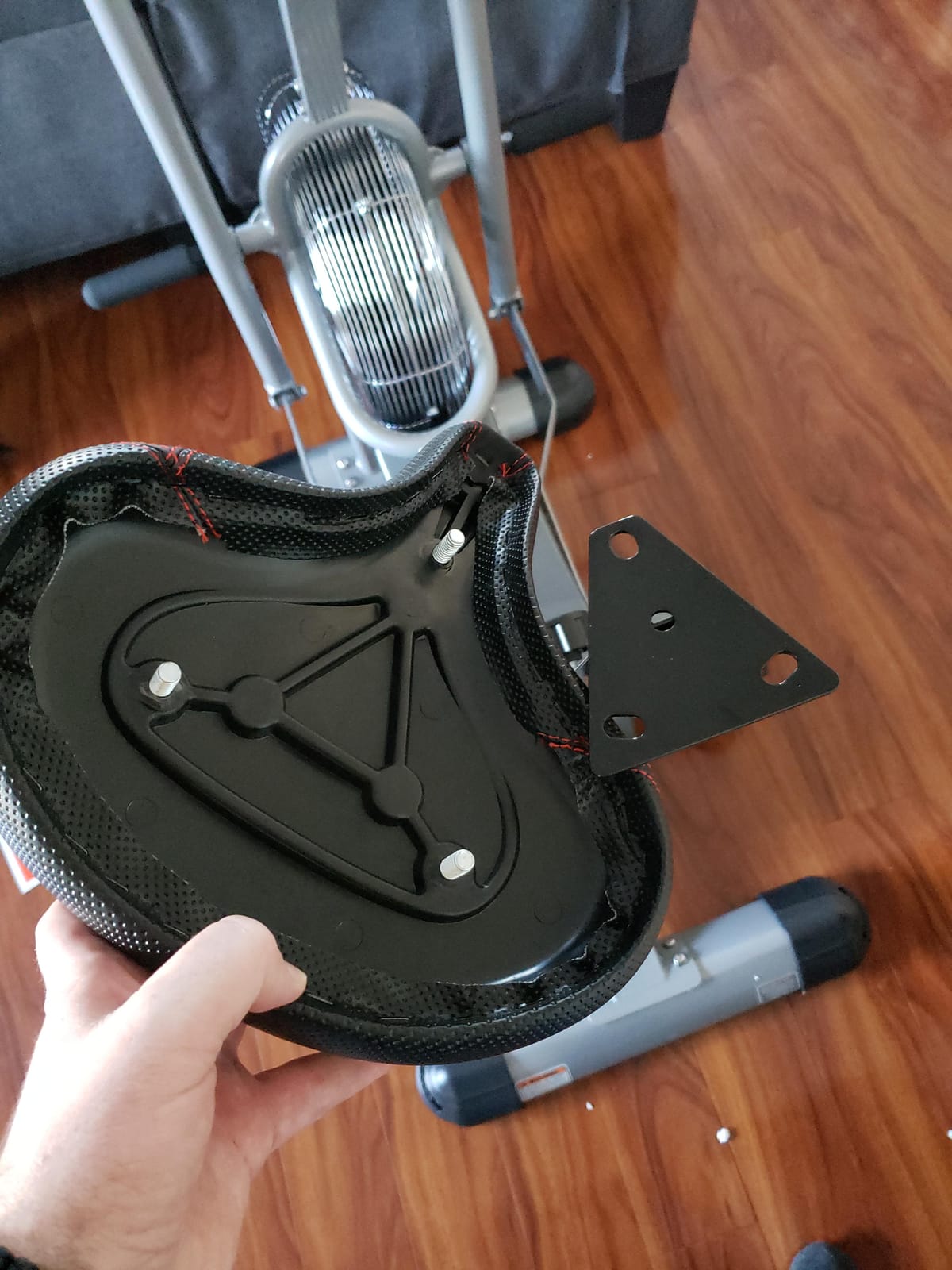
Maintenance is a small but recurring annoyance. Pedal and arm hardware loosens during use and needs periodic retightening, the front rollers can catch on carpet, the instructions are poorly written with diagrams that may not match the parts, and the proprietary seat post means swapping the saddle means buying a post and clamp separately. Customer service on parts can also be slow to respond.
HIIT Protocols You Can Run on Any of These Bikes
Because air resistance is self-scaling, the protocol decides the difficulty, not a knob. That makes these four repeatable on every bike in the list, from the Marcy to the Schwinn, without any setup change between rounds.
1. Tabata, 20 seconds on and 10 seconds off. Eight rounds, four minutes of work, with a two-minute warm-up and a cool-down. This is the classic interval test. On a fan bike it is brutally honest: if you cannot hold 20 seconds of all-out output on round 7, your first round was too fast.
2. EMOM 20, a 20-minute every-minute-on-the-minute. Ten minutes of work followed by ten minutes of rest, repeated twice. This suits beginners best because the recovery window is generous and you can scale effort by feel. If you can finish all four blocks, extend to EMOM 30.
3. The 10-1 descending ladder. Ten calories, then nine, then eight, down to one, and back up. Each rep is capped at 60 seconds, so this becomes a pacing test rather than an all-out effort. It is excellent for learning how much you actually have left, and it works on any console that counts calories down.
4. The 100-calorie sprint. Full output until the console reaches 100 calories, timed. Use it as a benchmark and re-test every six weeks on the same machine. Progress here is usually more honest than progress on a treadmill because there is no pace setting to soften the effort.
For anyone new to intervals on a self-scaling machine, ramp over four weeks rather than starting at maximum. Weeks 1 and 2 are EMOM 20 at about 70 percent effort, which teaches the machine without burying you.
Week 3 moves to a 30 seconds on, 30 seconds off format, 10 rounds. Week 4 introduces the full Tabata block. Most people find the jump from week 3 to week 4 is the hardest, so if round 4 already feels like maximum output, stay there another week.
A few mistakes show up repeatedly on fan bikes. Riders clamp the shoulders and stop pushing the arms, which quietly halves the upper-body load and the heart rate spike that makes these machines worth owning.
Others ride seated through intervals when a standing sprint would suit them, or they ignore seat height. Set the saddle before the session, because a hard interval bends you forward and a saddle that was fine when you were upright will cost you power when it matters.
Air Bike vs Treadmill vs Rowing Machine vs Spin Bike for HIIT
An air bike versus a treadmill comes down to one question: do you want to run or do you want to avoid impact? For interval work the air bike wins on efficiency, because a hard 30-second effort spikes your heart rate quickly and the recovery is fast, with no impact to manage on top.
A treadmill wins on familiarity and on data. Most people can already pace themselves on one, and it is the only machine here where you can walk without producing meaningful output, which makes it useful for a long warm-up before intervals.
A rowing machine is the strongest competitor for pure conditioning, because it is the most efficient cardio machine per calorie and it trains the pull alongside the legs. Its weakness for HIIT is technique: when exhausted, most people lose the stroke sequence and the power drops off faster than on a fan bike.
A spin bike beats an air bike on pure leg work and precision, with better data and less upper-body involvement. If your goal is a single-leg-heavy sport and you care about accurate wattage, a spin bike is the better tool. If your goal is a heart rate spike in a short session with a small footprint, the air bike wins.
For a mixed household where one person runs and another does CrossFit-style work, the fan bike is the more versatile of the two because it serves beginners and athletes on the same machine. That versatility is why a fan bike sits near the top of our best air bikes for HIIT training ranking for most homes.
How We Tested and Ranked These 10 Bikes
We ranked these machines for one job, doing high-intensity interval training, and we weighted durability under frequency above features. A console is worth nothing if the frame flexes at the end of round 8, and a beautiful app does not help if the drive belt needs a crank puller to reseat.
Durability under frequent use came first, which is the exact concern driving the most-engaged air bike discussion on Reddit r/fitness, where owners ask directly which bikes survive being used more than once a week. For an air bike, the useful proxies are frame weight, sealed bearings, and whether the chain drive is enclosed.
Second was noise. Belt drive consistently beat chain drive in what owners reported, and it is the single most common reason people stop using a fan bike in a home. Third was console capability, specifically whether it reports watts and heart rate and whether it can run interval modes without a phone.
Fourth was fit, because seat travel and a shock-absorbing saddle decide whether you can finish an interval series without your lower back complaining. Fifth was the max user rating, treated as a hard filter for anyone above 250 lb. No brand paid for its position.
Buying Guide: Choosing the Right Air Bike for Intervals
Start with the drive system, because it is the upgrade owners most consistently say justifies a higher price. Belt drive is quieter and needs less maintenance. Chain drive is louder but is what you find on commercial machines built for heavy use, and it is usually fully enclosed with sealed bearings on the better models.
Next, look at frame weight and the max user rating together. A heavier frame resists wobble, which is what you feel during a 20-second sprint. Anything rated under 250 lb rules out a large share of buyers, so treat that number as a filter rather than a detail.
Then check the console against your actual training. If your sessions are Tabata and heart rate targets, you want watts, heart rate telemetry, and Bluetooth or ANT+ connectivity. If you run programmed intervals and want the bike to do the timing, look for built-in HIIT and Tabata modes. If you like watching a number change, a simple LCD is enough.
Fit deserves more attention than most roundups give it. Check the documented height range rather than the seat positions, and set the saddle before your first hard session. If you are over six feet, look for at least seven height positions and real fore-aft travel, because a cramped seat will cost you power in exactly the intervals you care about.
Portability and storage are where price tiers diverge most sharply. Below 60 lb you can move the bike alone on built-in wheels. Above 100 lb you will need transport wheels, turf tires, or a lift point on the frame, and you should plan a permanent corner rather than a closet.
Finally, be realistic about frequency. Below 250 lb of body weight, a lighter frame rated to that limit will do everything you need and cost far less. Above 300 lb, or if you plan true all-out sprints several times a week, pay for the heavier frame and the sealed bearings, because that is where the durability ceiling lives.
Frequently Asked Questions
Can I do HIIT workouts on an air bike?
Yes. Air resistance scales automatically with your effort, so the harder you pedal the more the fan resists and the machine can never be pedaled through. Combined with moving dual-action handlebars that recruit your arms and core, a 20-second all-out interval drives heart rate up faster than legs-only pedalling and with far less joint impact than running.
What is the best bike for HIIT?
For home interval training the best air bikes for HIIT training are fan bikes, because self-scaling resistance and full-body handlebars make short, hard efforts far more effective. Among the 10 here, the Schwinn Airdyne Bike Series ranks first for its quiet belt drive and heart rate telemetry, with the Marcy the proven budget option.
Is the air bike a good workout?
Yes. An air bike is one of the most efficient full-body cardio machines available, working arms, legs, core and back in a single motion. The same machine suits a beginner riding gently and an athlete at maximum output, and the low joint impact makes it practical for frequent training.
Is an air bike better than a treadmill?
For intervals, usually yes. A hard air bike effort spikes your heart rate quickly, recovers fast and carries no impact, while a treadmill is better if you want to run specifically or need a long, low-output warm-up. A treadmill also gives more precise pace data for steady-state work.
Are air bikes noisy for apartment living?
Noise depends mostly on the drive system and the fan speed. Belt-drive models such as the Schwinn Airdyne run considerably quieter than chain-drive bikes, and at full sprint cadence any fan bike is loud. If you share walls, choose belt drive and keep the machine away from the shared surface.
Can beginners use an air bike for HIIT?
Yes, and it is arguably easier than a spin bike because there is no resistance dial to set. Start with a 4-week ramp: EMOM 20 at moderate effort for two weeks, then 30 seconds on and 30 seconds off for a week, then full Tabata. Ramp effort before you ramp length.
Do air bikes work the upper body as well as the legs?
Yes. The moving dual-action handlebars push and pull with the pedal stroke, and on several machines in this roundup you can switch to arms-only work. That is what makes an air bike a full-body machine rather than a leg machine, and it is why heart rate climbs so fast in a hard interval.
How long do air bikes last?
It depends on frame weight, bearing quality and how often you train. Machines with heavier steel frames, sealed bearings and enclosed chain drives are built for three to five hard sessions a week, while lighter budget frames tend to show wear in bearings and welds sooner. Budget models here are better suited to lighter, less frequent use.
Should I buy an air bike or a spin bike?
Buy a spin bike if your training is cycling-specific and you want precise watt data with more leg-focused work. Buy an air bike if you want maximum calorie burn and heart rate response per minute, a smaller footprint, full-body engagement and a machine that works for beginners and athletes alike.
Final Verdict
The Schwinn Airdyne Bike Series is our pick for the best air bikes for HIIT training in 2026. Its single-stage belt drive is the quietest drivetrain we ranked, the console reports watts, RPM and heart rate, and the 348 lb capacity and steel frame hold up when you are standing up in a 20-second sprint. For most home athletes that combination is the deciding factor, because a machine you can train on four days a week beats a better bike you only use twice.
Two alternatives are worth naming. If you are under 250 lb and want the most proven budget option with the longest owner history, the Marcy Air-Resistance Fan Bike has been in daily use for years across thousands of ratings. If you are a larger or taller rider who wants arms-only work in a compact footprint, the pooboo S319 pairs a 350 lb rating with a 45 inch footprint and a 4.6 average rating.
Whichever one you pick, the machine matters less than the protocol. Run the four-week ramp, then commit to Tabata twice and a longer ladder once a week, and give it eight weeks before you judge. That is the same rule we apply to every machine here, and it is the one that keeps people training past the first month.