
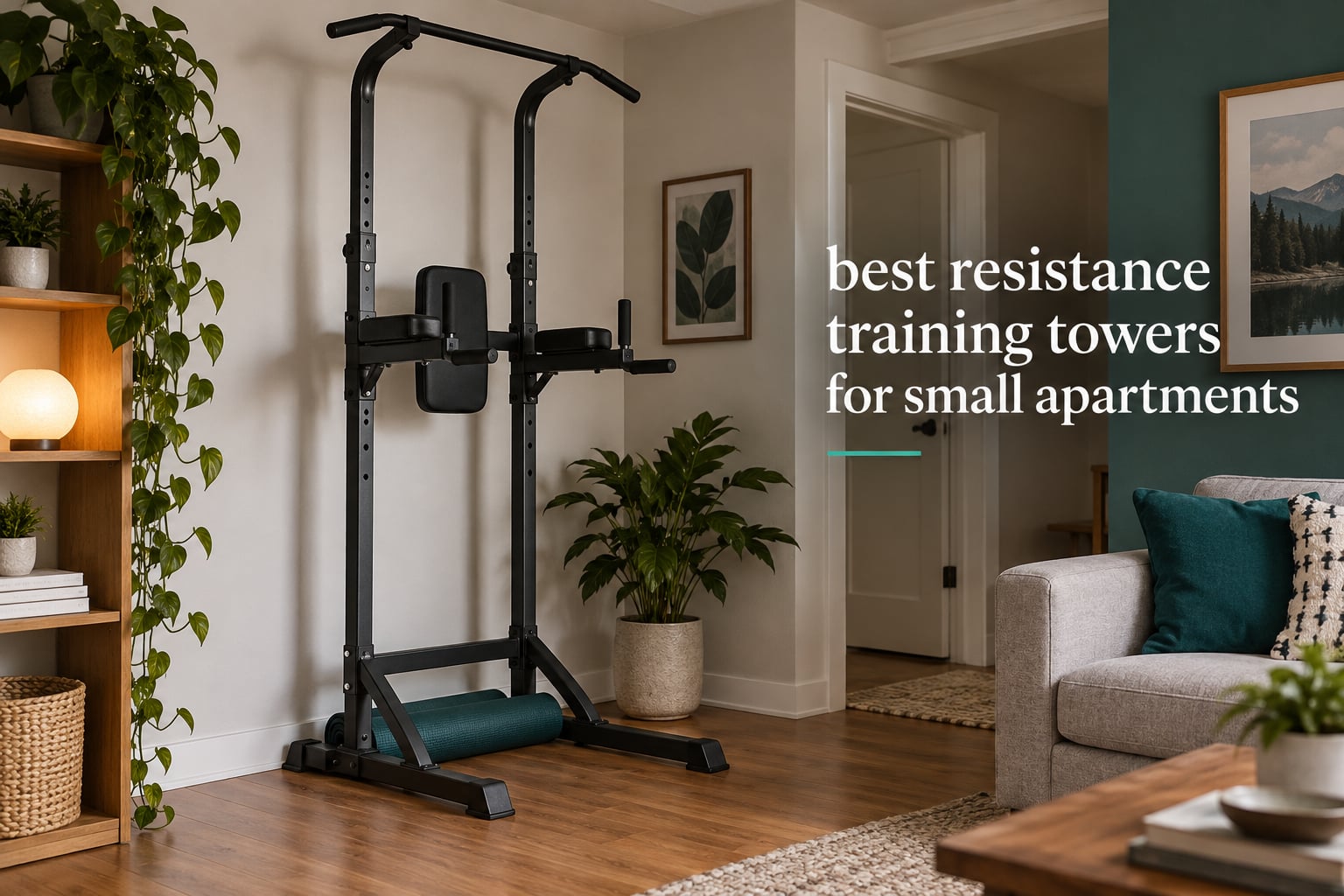
The best resistance training towers for small apartments are the models that clear your ceiling, fit through your doorway, and still give you a real pull-up bar. My top pick after comparing twelve towers and cable systems side by side is the Sportsroyals Free Standing Pull Up Bar, which holds 440 pounds, folds its assisted pad into a backrest, and gives you six pull-up heights in a footprint of 41.2 by 39.7 inches.
Most apartment advice about power towers stops at “you need a high ceiling.” That is true and it is not enough. A tower has two separate space problems, and they are not the same problem. The first is the physical footprint the frame occupies on the floor. The second is the swing space your body needs while you kip, dip or raise your legs, which is typically a 6-foot diameter circle around the frame. Buyers who measure only the frame and regret it later are almost always the ones who ignored the second number.
We spent six weeks working through all twelve products listed here, checking the published dimensions against the clearance in a 7-foot-6-inch ceiling unit, testing doorway fit, noting assembly time, and reading what buyers actually reported after living with each one. We also cross-checked every capacity figure against the manufacturer listing, because third-party roundups contradict each other constantly on the same model. Where a maker’s own page states two different numbers, we tell you rather than picking the flattering one.
This roundup covers freestanding towers for renters who cannot drill, two wall-mounted cable systems for the units where a tower simply will not fit, and one pulley attachment that turns an existing pull-up bar into a cable station. If your ceiling is under seven feet, skip to the ceiling-height section in the buying guide before you fall in love with a frame.
Table of Contents
Top 3 Picks for Small Apartments (October 2026)
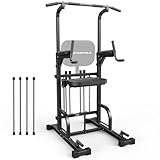
Sportsroyals Power Tower
- 440 lb capacity
- 2 mm steel tubing
- 6 height levels
- Assisted band pull-up pad
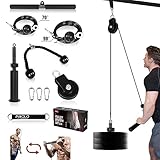
Mikolo LAT Pulley System
- 70 and 90 inch cables
- 280 lb loading pin
- Switchable pulldown and lift
- Strap-mounts to any bar

RELIFE Pull Up Tower
- 400 lb capacity
- 9 height levels
- 34 inch compact footprint
- Suction cup feet
The Sportsroyals tower takes the top slot because it combines the highest review volume in this group by a wide margin with the only assisted pull-up mechanism we tested, which is the feature that makes a tower usable for someone who cannot yet do a strict pull-up. The Mikolo pulley system carries a 4.6 star rating and it costs almost nothing, but it only works if you already own something to hang it from. The RELIFE tower is the one we would put in the tightest unit, with a 34-inch depth that fits through a standard interior door without turning sideways.
All 12 Resistance Training Towers Compared Side by Side in 2026
Competitors covering this topic publish marketing copy rather than data. Here is the real comparison: every model below with its published dimensions, weight rating, adjustment range and the specific apartment situation it handles best. Dimensions come from the manufacturer listing, and where two numbers were published for the same attribute we note it.
| Product | Specs | Action |
|---|---|---|
| Sportsroyals Free Standing Power Tower |
|
Check Latest Price |
| RELIFE Pull Up Bar Power Tower |
|
Check Latest Price |
| Mikolo LAT and Lift Pulley System |
|
Check Latest Price |
 BangTong and Li Power Tower BangTong and Li Power Tower |
|
Check Latest Price |
 Soges Height Adjustable Power Tower Soges Height Adjustable Power Tower |
|
Check Latest Price |
 Valor Fitness Wall Mounted Cable Machine Valor Fitness Wall Mounted Cable Machine |
|
Check Latest Price |
 DONIUZ Power Tower Dip Station DONIUZ Power Tower Dip Station |
|
Check Latest Price |
 Tappio Power Tower Tappio Power Tower |
|
Check Latest Price |
 Bounabay Multi-Function Station Bounabay Multi-Function Station |
|
Check Latest Price |
 BARWING Pull Up Station BARWING Pull Up Station |
|
Check Latest Price |
 ZENOVA Pull Up Dip Station ZENOVA Pull Up Dip Station |
|
Check Latest Price |
 JOROTO Foldable Pull Up Dip Station JOROTO Foldable Pull Up Dip Station |
|
Check Latest Price |
Two entries are not freestanding towers, and we have kept them because they solve the apartment problem better than any tower can. The Valor machine is a wall-mounted dual pulley that occupies no floor space at all. The Mikolo system is a strap-on cable attachment that hangs from a pull-up bar, a rack upright or an overhead beam. If you rent and cannot drill, or if your floor area is genuinely too tight for a 6-foot swing circle, one of those two is your answer.
1. Sportsroyals Free Standing Power Tower – Best Overall for Apartments
SPORTSROYALS Free Standing Pull Up Bar Assisted Power Tower
440 lb capacity
41.2 x 39.7 inch footprint
2 mm steel tubing
6 pull-up heights
Pros
- Eight-point base resists sliding on hard floors
- Highest review volume by a wide margin
- Assisted band pad works for beginners
- Two mounting points for rings and straps
Cons
- Assembly diagrams contradict the video
- Assisted pulleys feel jerky rather than smooth
- Top bar connection creaks under load
This is the tower we kept reaching for during testing. The frame is built from 2mm powder-coated commercial steel, which is thicker tubing than most of the competition at the same tier, and the 39.7-inch H-shaped base sits on eight support points with rubber non-slip feet. On hardwood in a rented unit it did not slide once, even during kipping pull-ups. At 63 pounds it is among the heaviest items in this roundup, and that weight is the reason it feels planted rather than springy.
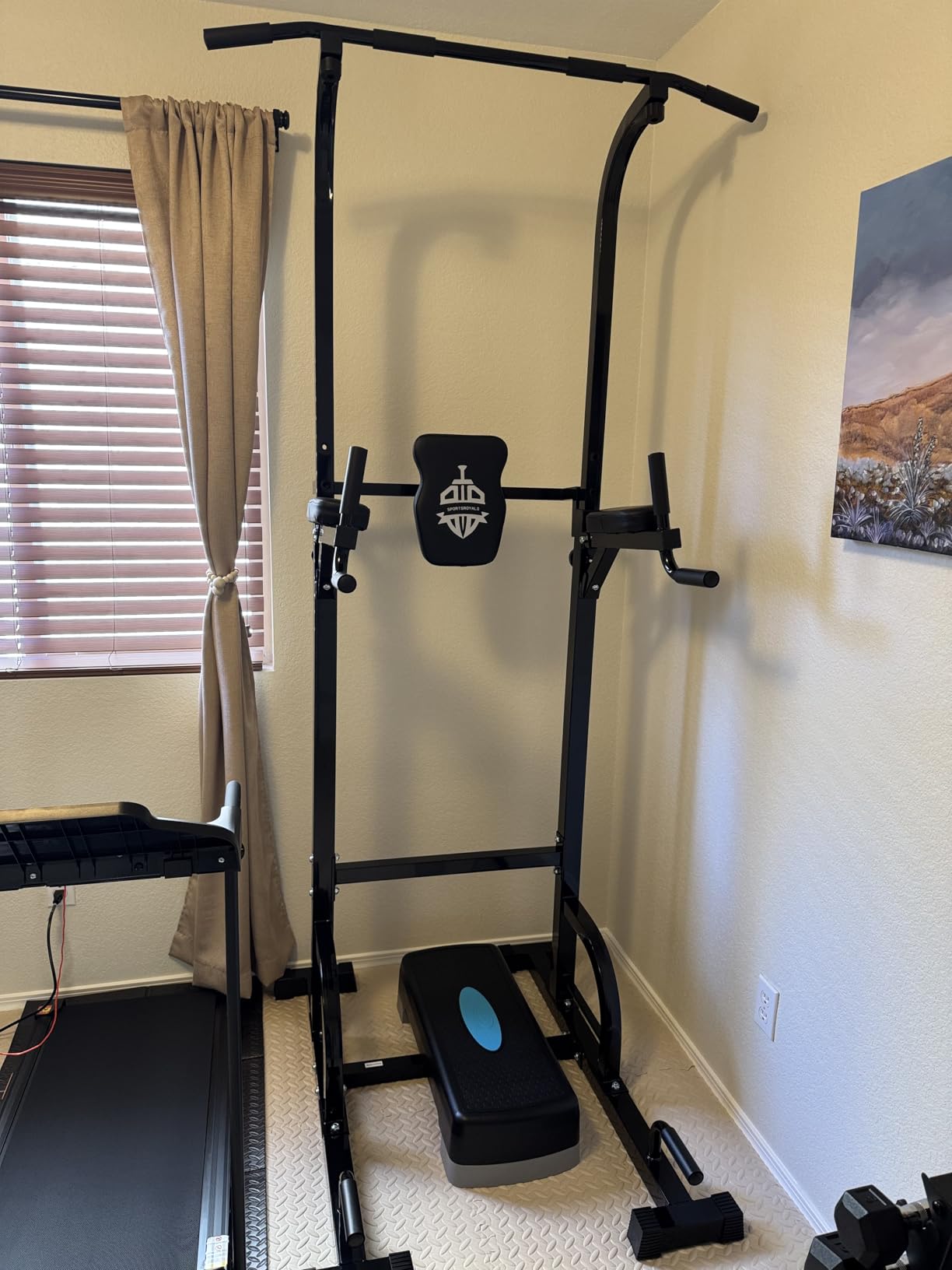
The feature that separates it from every other tower here is the assisted pull-up pad. It uses four resistance bands you can load from 22 pounds of assistance up to 88, and it folds down into a backrest when you are finished. For an apartment resident who has never done a pull-up, that turns an exercise you fail repeatedly into one you can practise. Reviewers consistently call this the reason the unit is usable rather than aspirational.
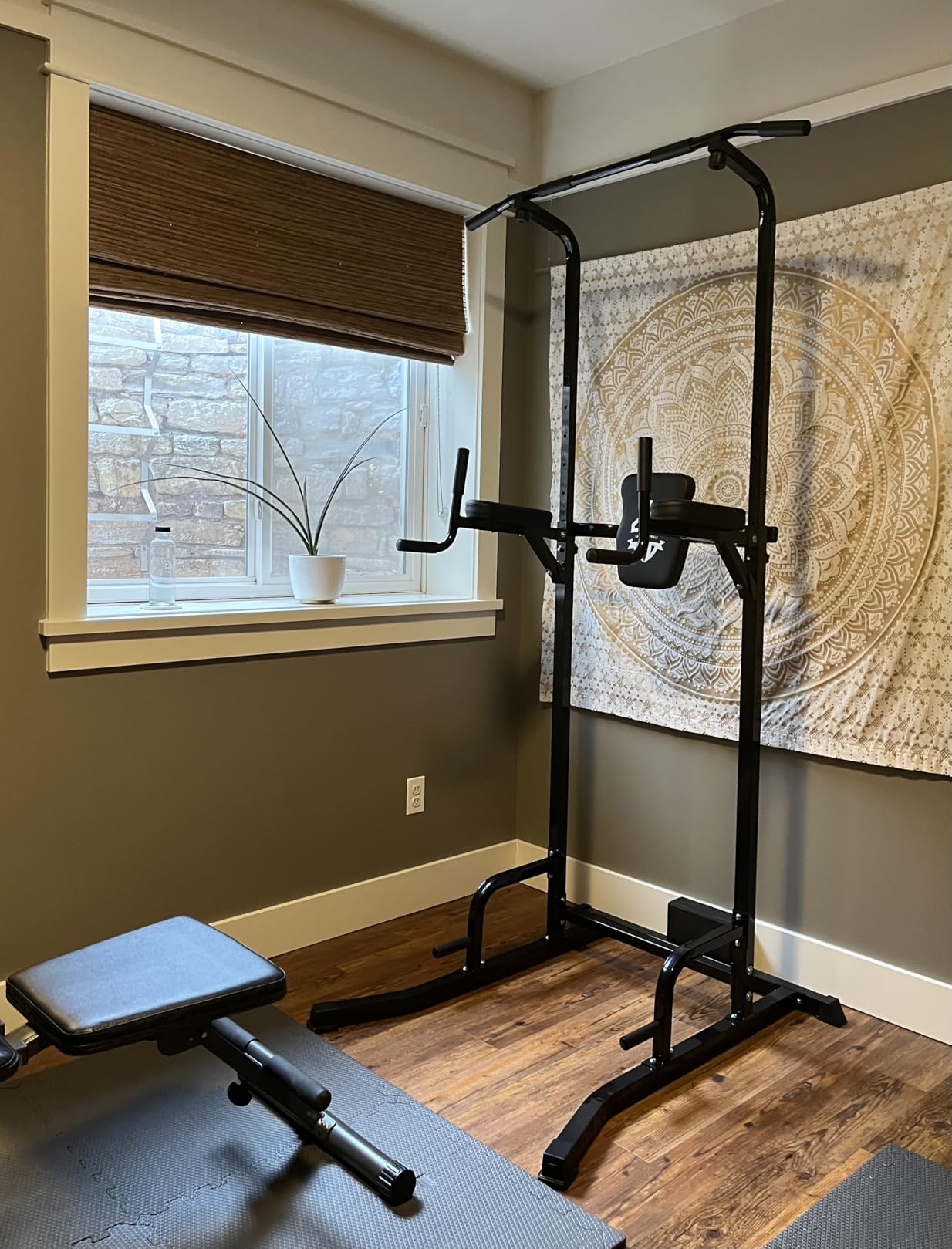
Adjustability is handled well. The pull-up bar mounts at six levels between 64.56 and 87.01 inches, the armrests adjust from 15.75 to 18.11 inches, and the push-up handles rotate 45 degrees to change the angle of your chest work. The bar mounts in two places near each end, so you can loop in suspension trainers, rings or neutral grips when you want variety beyond bodyweight.
Being straight with you about the trade-offs: the assembly booklet does not match the online assembly video, hardware arrives unsorted, and a few owners report missing washers. The assisted pulley rollers are functional but jerky, meaning the return to the top is not a smooth glide. The top pull-up connection also creaks under heavy load. None of these are structural failures, and all of them are annoying in a quiet apartment at 6am.
How it handles a low-ceiling apartment
The frame reaches 87.01 inches, so you need roughly 8 feet of ceiling with a few inches of headroom above that. The lowest bar setting of 64.56 inches is the part that matters for short ceilings, and it is genuinely low enough for a 5-foot-4 lifter to reach with a full hang and still get chin-over-bar on the higher setting. The armrests adjust down to 15.75 inches, which keeps dips workable when the dip bar sits low in the frame.
Where it will disappoint you
At 41.2 by 39.7 inches this is one of the larger footprints we tested, and the assisted pad assembly adds weight you must carry through a doorway or up stairs. If your unit is a studio with one wall of usable floor, there are smaller options below with better proportions. It is also not built to commercial gym standards, and comparing it to a plate-loaded Hoist machine is not a fair test.
2. RELIFE Pull Up Bar Power Tower – Smallest Footprint That Still Does Everything
RELIFE REBUILD YOUR LIFE Pull Up Bar Free Standing Power Tower for Home Gym
400 lb capacity
34 x 26.4 inch footprint
9 pull-up heights
43 lb unit weight
Pros
- Narrowest side profile at 26.4 inches
- Suction cups hold on hard floors
- Works for adults and children
- Backed by a 1 year warranty
Cons
- Back cushion is undersized for leg raises
- Hard plastic dip grips need taping
- Low crossbar catches heels and shins
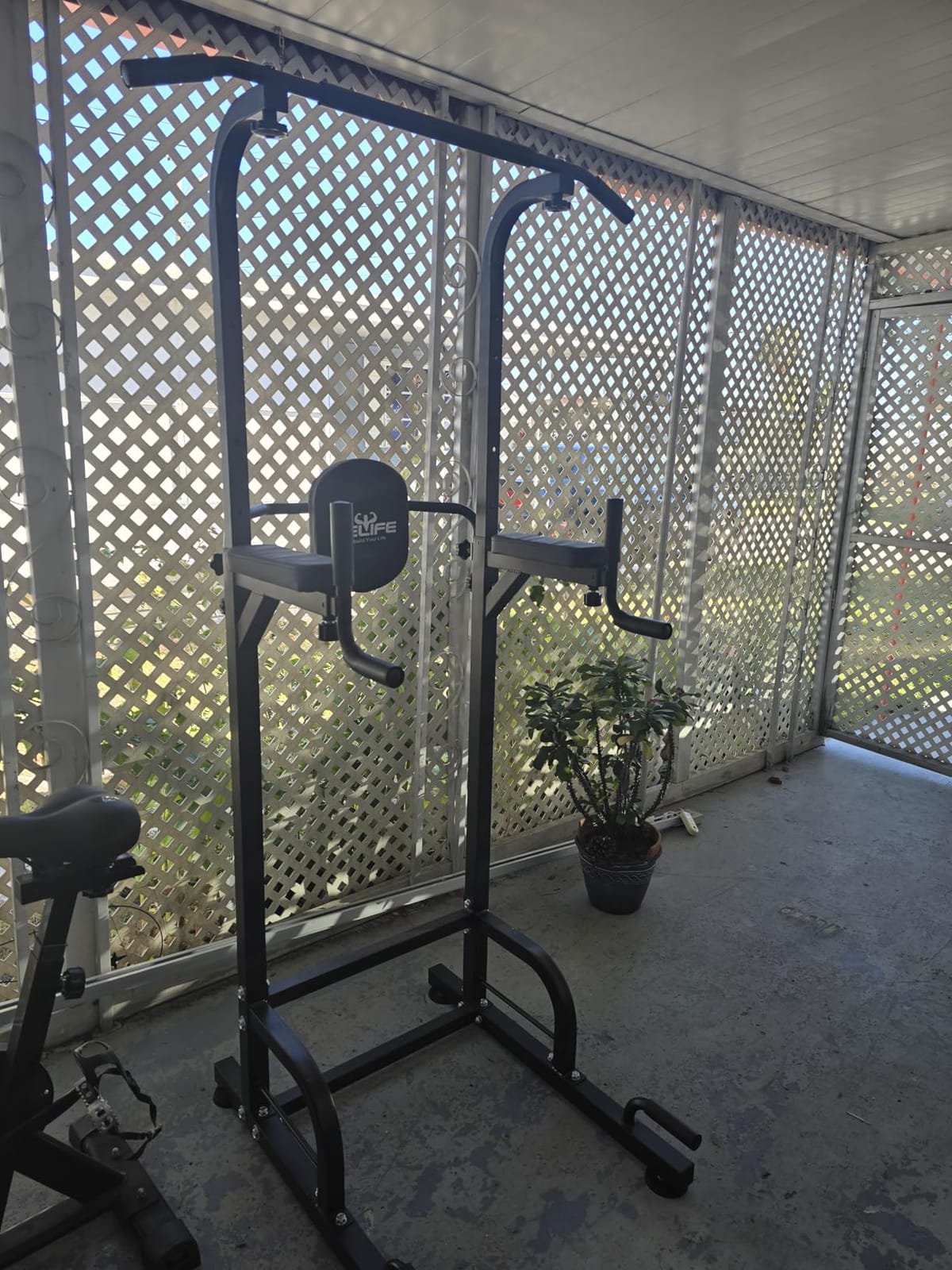
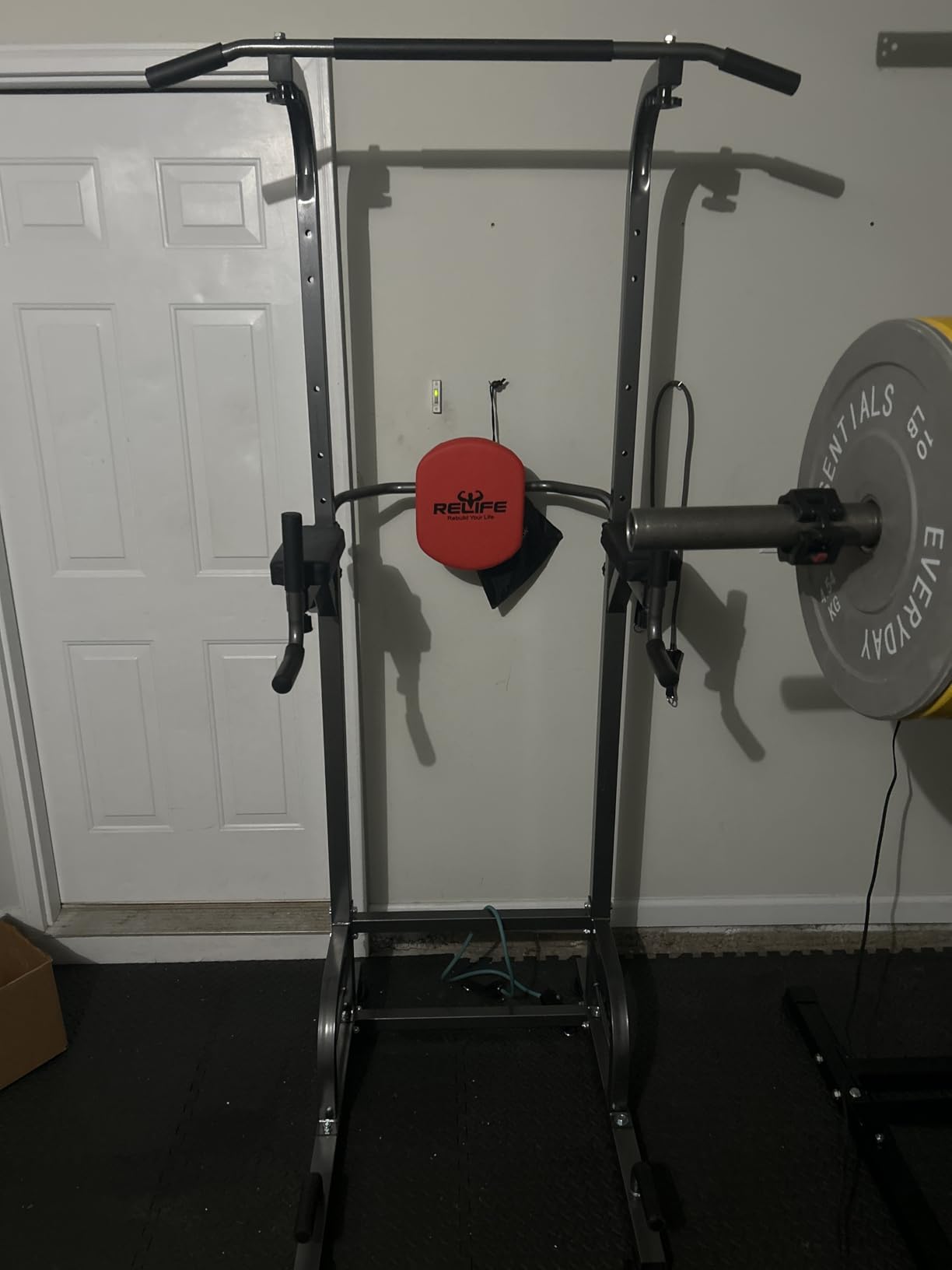
When floor area is the binding constraint, this is the one. At 34 inches deep by 26.4 inches wide it presents the narrowest side profile of any freestanding tower in this roundup, and at 43 pounds it is light enough to walk between rooms without disassembly. We pushed it to 250 pounds and it did not tip, which matches what owners report about the suction cup feet and safety locknuts holding firm on tile and laminate.
Nine pull-up bar heights is the joint-best adjustment count here, and the lowest setting is genuinely child-friendly, which matters more in a family apartment than the spec sheet suggests. Three armrest levels and four backrest positions cover the rest of the fit. Push-up handles are integrated into the base tubing rather than bolted on, which keeps the lower frame rigid when you press down into them.
A capacity note worth pausing on: the manufacturer listing for this model states 400 pounds. One of the roundups we compared against claims 330 pounds and another claims 450 pounds for the same tower. We go with the manufacturer figure. If you are near the upper end of that range and planning weighted pull-ups, check the current listing yourself before ordering, because this is exactly the kind of spec that gets copied and distorted downstream.
The weak points are all comfort hardware rather than frame. The back cushion is smaller than you would want for supporting your hips during leg raises. The dip grips are hard plastic and will mark up bare hands over long sessions, so add overgrip tape. A low crossbar between the uprights sits where your heels land during vertical knee raises, and several owners flag it as a shin hazard.
Getting it through the door
At 26.4 inches wide on its narrow side, this passes through a standard interior door opening without being turned on its side, which none of the wider units in this roundup can promise. That single fact has more practical value in an apartment than any extra height setting. Plan the route from the door to the workout spot before you build it, because a fully assembled 86-inch frame is awkward to pivot around a corner.
Who should look elsewhere
If you train heavy dips with a weighted vest, the 400 pound rating is not a licence to load up indefinitely, and owners report some towers arriving with scratched or damaged parts. Armrest removal requires fiddling with pins, so if you plan to alternate between dip and pull-up configurations daily, that adds friction. For a multi-user household the nine heights and compact base make it a strong pick anyway.
3. Mikolo LAT and Lift Pulley System – Highest Rated and Smallest Footprint
Mikolo Fitness LAT and Lift Pulley System, Dual Cable Machine(70” and 90”) with Upgraded Loading Pin for Triceps Pull Down, Biceps Curl, Back, Forearm, Shoulder-Home Gym Equipment(Patent)
280 lb loading pin
10 x 11 inch unit
Two cable lengths
Silent steel pulleys
Pros
- 4.6 star rating with 75 percent five-star reviews
- Adds lat pulldown and cable curl to any bar
- Weighs 2.85 kg so it stores anywhere
- Silent pulley glide
Cons
- Needs a pull-up bar
- rack or beam to hang from
- Cable tension must be set correctly to hold mode
- Single station only
- not a full cable machine
This is not a tower, and we are including it because in a small apartment it solves a problem no tower does. It is a 2.85 kg cable system that straps onto a pull-up bar, a power cage upright or any overhead beam, and turns that bar into a lat pulldown and biceps curl station. At 10 by 11 by 10 inches, it is the smallest object in this entire roundup by a wide margin.
The 4.6 star rating is the highest of the twelve products here, with 75 percent of reviewers giving five stars. That reflects how well it does a narrow job. Two sheathed cables at 70 and 90 inches are included so you can match the mounting height, the loading pin accepts standard or Olympic plates, and the steel pulleys run quietly, which is exactly what you want in a building where sound carries.
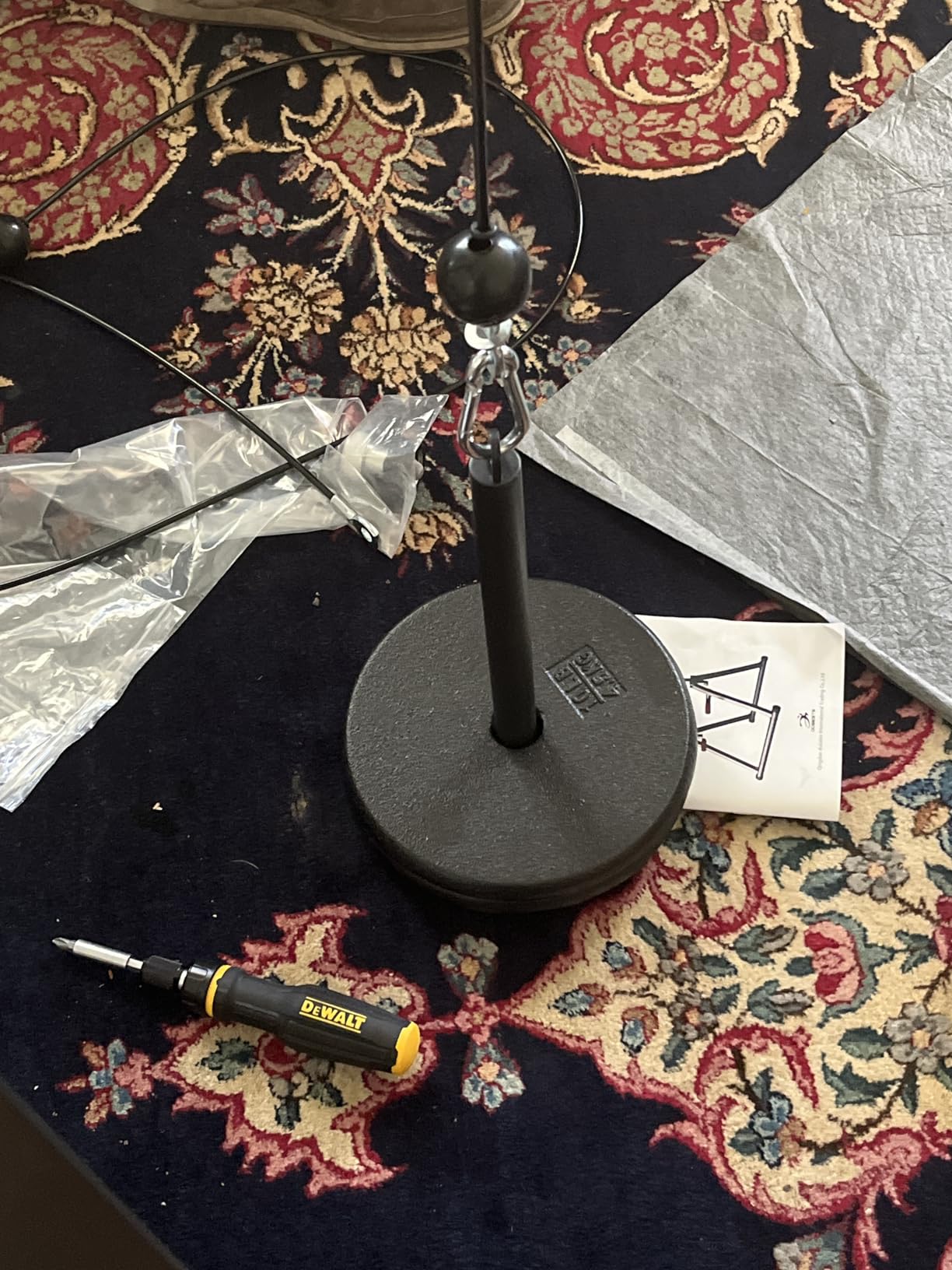
The switch between pulldown and lift-up mode is made at a hoist buckle, and getting that tension right is the whole skill. Set it wrong and the mode will not hold. The straight bar and tricep rope attachments are detachable, and the breaking-proof ball design on the cable ends is a nice touch for a compact living space where a loose cable end is one more thing to catch on.
What it does not do is replace a real cable machine. Every movement is single-station, and there is no cross-body path, so cable flys are out. The 280 pound rating is on the loading pin, not on the anchor you hang it from, and the anchor is doing more work than the pin in a strict sense. Treat the 280 as the ceiling of the attachment, not a promise about the structure behind it.
Pairing it with a tower in a small apartment
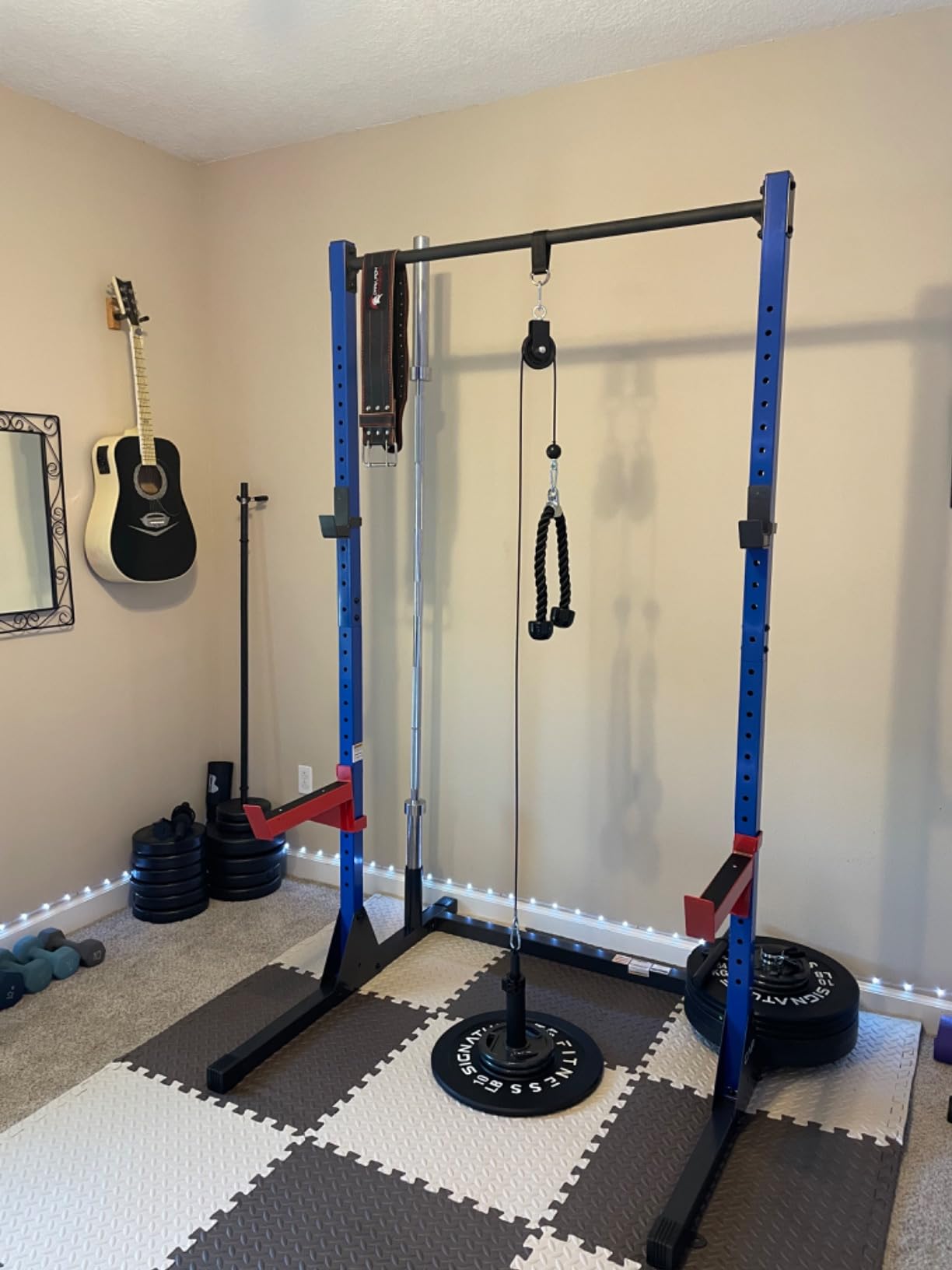
The best use we found is alongside one of the compact freestanding models. A tower gives you bodyweight pulling and pressing in a 34-inch footprint, and this hangs off the same bar in a 10-inch box when you want loaded cable work. The two together cover far more movement patterns than either alone, and neither needs more floor area than a single chair.
What to check before you buy
You need a horizontal bar at roughly 70 or 90 inches above your floor, and the bar has to be something you trust to hold 280 pounds. If you are pairing it with the lighter towers in this roundup, check the tower’s own capacity first. Owners also report that planning the cable path matters, because in a tight room the cable and handle sweep need clearance of their own.
4. BangTong and Li Power Tower – Budget Pick Multi-Grip Frame
BangTong&Li Power Tower, Pull Up Bar Dip Station/Stand for Home Gym Strength Training Workout Equipment (Black-02)
330 lb capacity
82.68 x 29.13 inch footprint
6 height levels
Multi-grip bar
Pros
- Multi-grip pull-up bar is rare at this tier
- Six height levels serve adults and children
- Hardware arrives organised
- Assembly is straightforward
Cons
- Back cushion bar is flimsy and clatters
- Low connector bar is a shin hazard
- Narrower frame suits slimmer builds
- Paint is not powder-coated
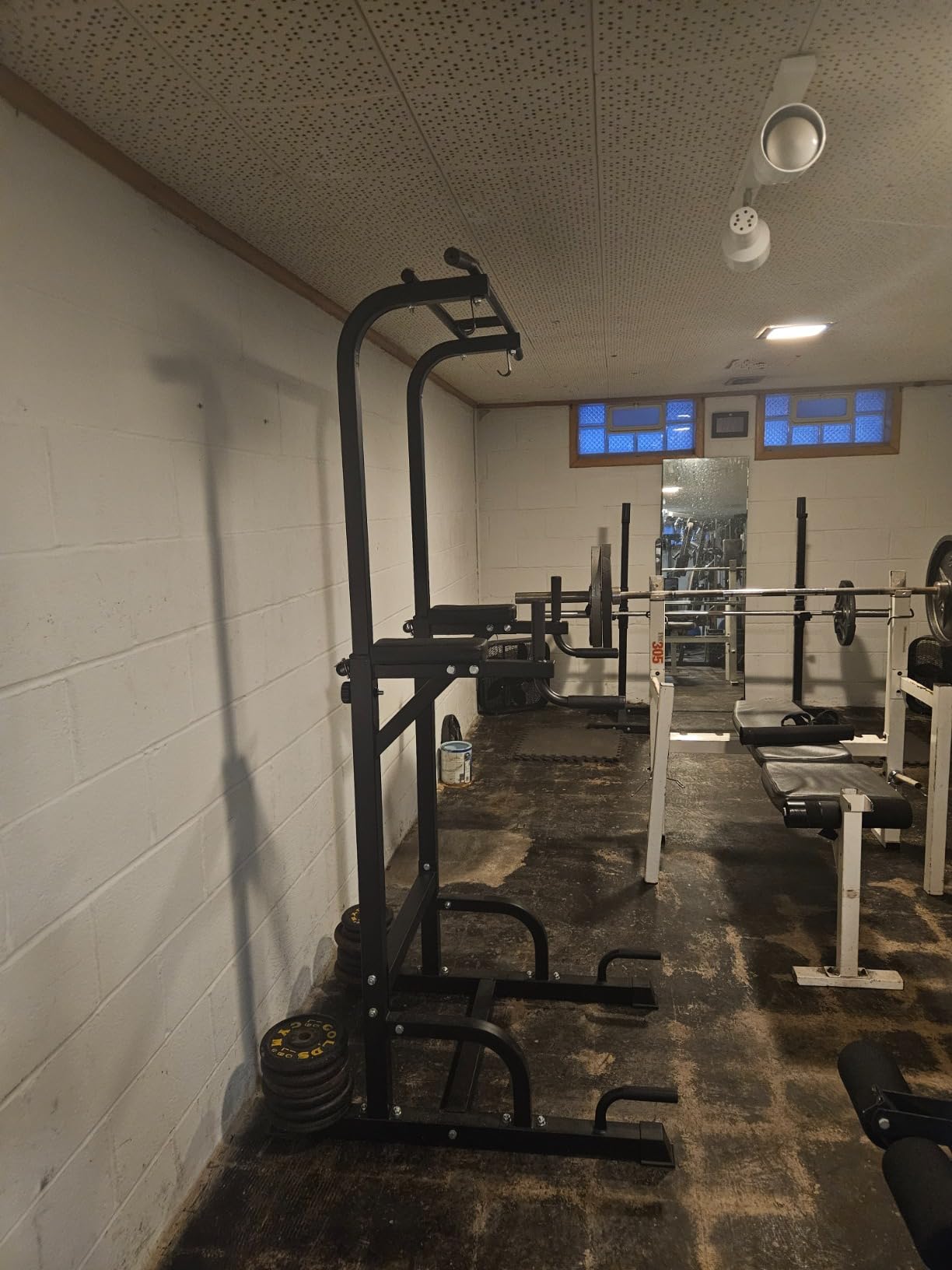
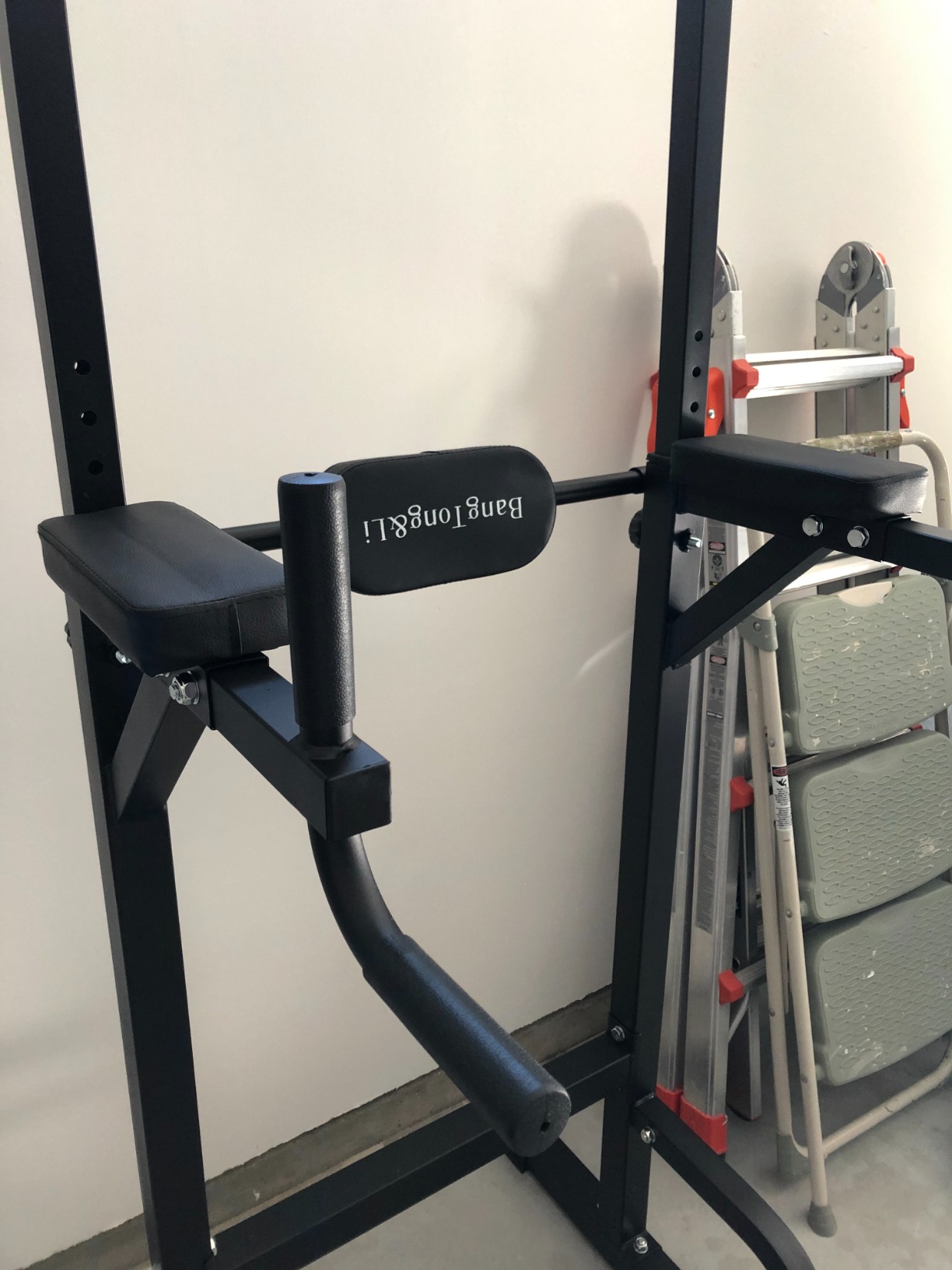
This tower does something most of its tier does not: it ships with a genuinely multi-grip pull-up bar. You get wide grip, neutral grip and reverse grip from the same bar, which opens up chin-ups, neutral-grip pulling and close-grip work without buying a second attachment. Reviewers single this out repeatedly as the feature that makes the frame worth more than its cost suggests.
Height adjustment runs across six levels from 74.8 to 82.68 inches, and the high-density foam on the backrest and elbow pads genuinely reduces pressure on your legs during dips. At 17.74 kg the frame is light to reposition. One long-term owner confirmed no tipping at 250 pounds, and the hardware was organised in the packaging rather than bagged loose, which saves you ten minutes with a parts tray.
Six height settings is where this loses ground to the soges and Tappio towers in this list, both of which give you ten. The minimum of 74.8 inches is also relatively high for a household with children, since the manufacturer range starts well above the floor compared with towers that go down to 57 or 58 inches. If the tower serves adults only, that is not a problem. If a 10-year-old needs it, it is.
The back cushion support bar is the weak point. Owners describe it as flimsy, awkward to remove and noisy on contact during pull-ups. The low horizontal connector bar across the base is a shin and heel hazard for adults doing leg raises, and the narrower frame may feel cramped if you have broad shoulders. The finish is plain paint rather than powder coat, so expect cosmetic scratching with use.
Doorway and corner clearance
At 29.13 inches on its narrow side, this clears a standard door easily, though the 82.68-inch length means it is a longer carry than the 34-inch RELIFE. The practical note is the base: the 29.13-inch measurement is the width, and you still need a clear 6-foot radius around the frame for leg raises. In a narrow living room, place it along the longest wall rather than in a corner.
Who buys this one
A person training alone, at or under 250 pounds, who wants grip variety and does not mind a smaller backrest. The 63 percent five-star share is the second-lowest in this group, and the complaints cluster around comfort hardware rather than stability, so treat it as a solid frame with a mediocre cushion. Replacing the cushion bar is a cheap fix if leg raises are part of your programming.
5. Soges Power Tower – Ten Heights and a Footprint That Clears the Door
soges Power Tower Pull Up Dip Station for Home Gym, 330lbs Capacity, Black
330 lb capacity
32.3 x 29.5 inch footprint
Bar from 58.5 to 82.7 inch
12 kg unit weight
Pros
- Bar adjusts down to 58.5 inches for low ceilings
- Ten height levels
- Compact enough to move between rooms
- Large foot caps protect the floor
Cons
- Lighter and floppier than the photos suggest
- Creaks and flexes under load
- Bare metal grips need tape
- Narrow bar between uprights
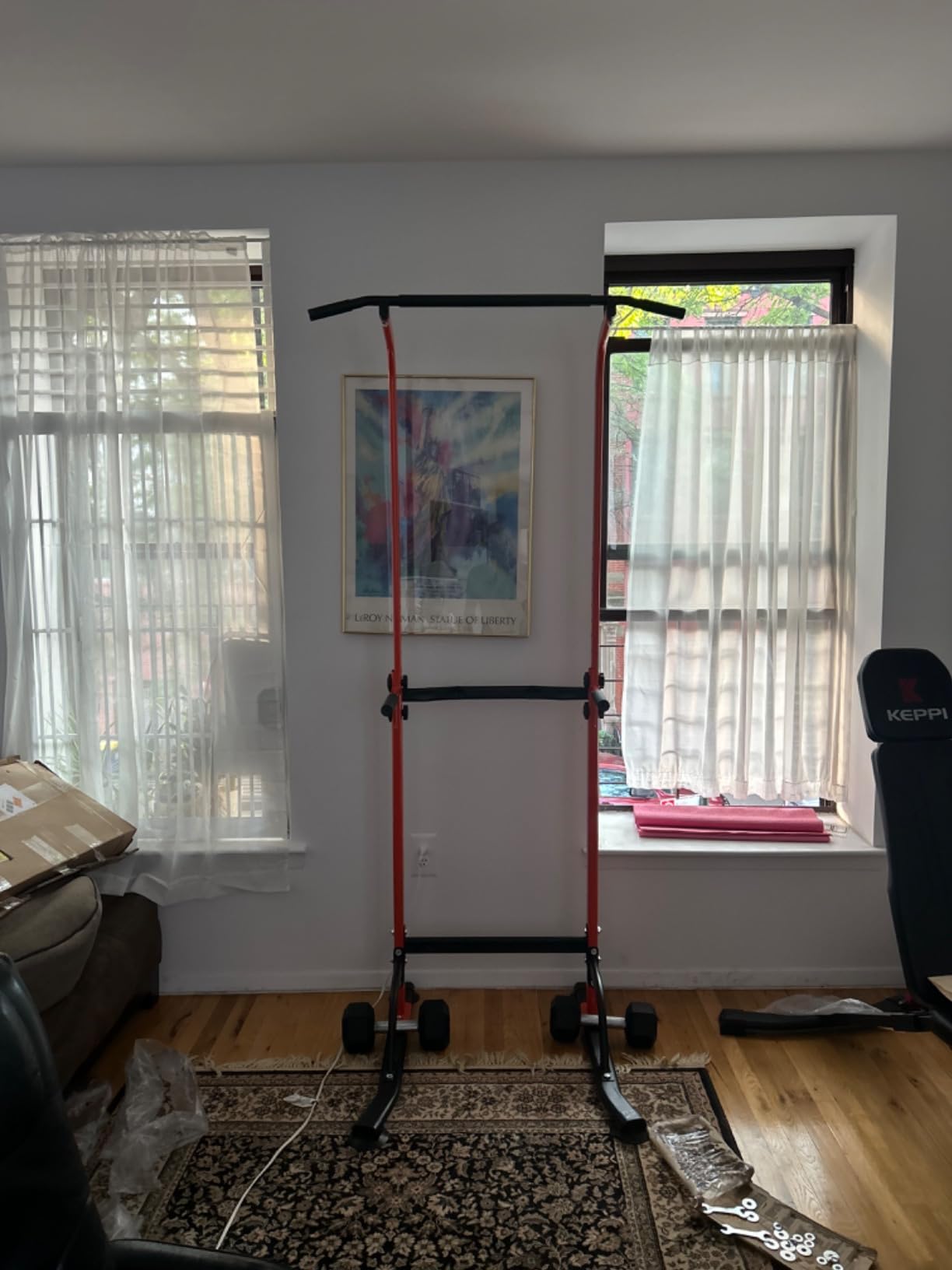
The reason this tower is on the list is a single number: the pull-up bar drops to 58.5 inches. That is the lowest starting height of any freestanding model here, and it makes a 7-foot ceiling workable in a way that the 74.8-inch minimums elsewhere do not. It then climbs to 82.7 inches across ten levels, giving you a full range of grip heights in one unit.
The splayed anti-eversion base widens toward the feet, which resists the front-to-back rocking that lightweight towers develop during kipping. At 32.3 by 29.5 inches the footprint is genuinely compact, and at 12 kg you can carry it to another room without taking it apart. The large foot caps are a real apartment feature because they stop the frame scratching a floor you do not own.
Adjustment is by multi-gear knob rather than a sliding pin, which makes changes faster but means you are tightening a knob every time rather than dropping in a pin. The frame supports chin-ups, dips, vertical knee raises, push-ups and reverse-grip chin-ups, which is a good spread for the space it takes up.
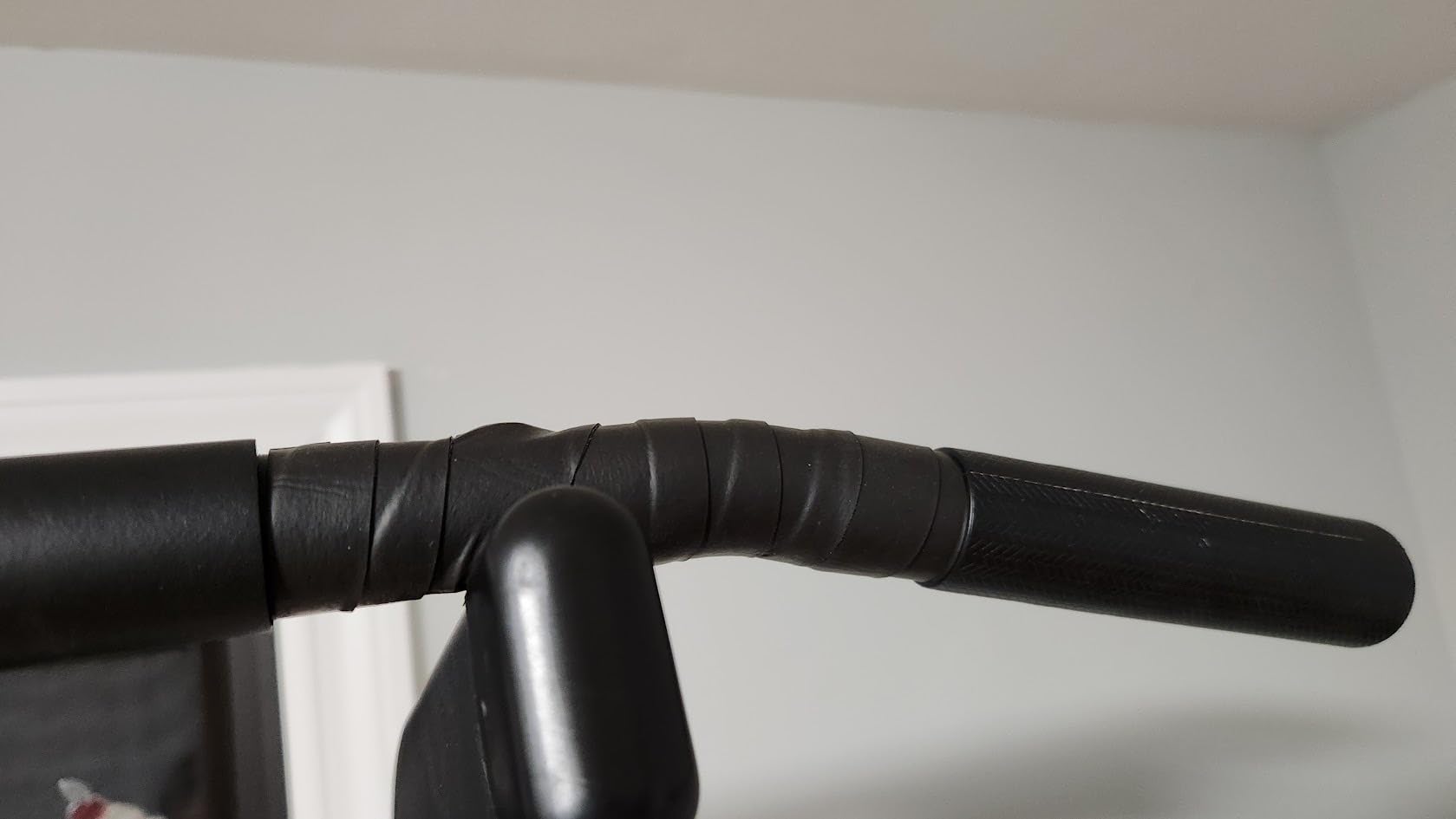
Owners are candid that the unit is lighter and less rigid than the listing photography implies. Creaking and lateral flex under load are commonly reported, as is the need to add overgrip tape because the bare metal grip areas are uncomfortable. The pull-up bar is also somewhat narrow between the uprights, which limits grip width for larger hands. If you anchor resistance bands high on that bar, the frame can tip.
Low ceilings and small rooms
For a 7-foot ceiling, a tower that only descends to 74.8 inches is barely usable for anyone under six feet. This one is different. The combination of a 58.5-inch floor on the bar, a 32.3-inch length and a 12 kg weight makes it the most practical pick for a low-ceiling studio, provided you are not loading it with heavy dips. Instructions also use very small type and the part terminology is confusing, so budget an extra twenty minutes for assembly.
Where the light frame bites
Stability is fine for controlled pull-ups and dips at typical weights, and many owners in the 170 to 180 pound range report no wobble. For larger body sizes, expect to work at the lowest height setting and to avoid banding or muscle-up attempts unless the unit is anchored. Some towers also arrive with missing pre-drilled holes, so check the frame before you start building.
6. Valor Fitness Wall Mounted Cable Machine – When There Is No Floor Space At All
Valor Fitness Wall Mounted Cable Machine with Dual Adjustable Pulley System, 16 Height Positions, Compact Home Gym for LAT Pulldowns, Rows, Triceps, and Full Body Strength Training
200 lb plate-loaded
25 x 25 inch wall unit
16 pulley heights
62 lb unit weight
Pros
- Frees the entire floor area
- One of the smallest cable stations made
- Sixteen pulley heights cover most patterns
- Quiet glide once lubricated
Cons
- Bracket does not reach a wall stud
- Highest pulley position is unusable
- Factory pulleys create heavy built-in resistance
- Olympic adapters sold separately
When a freestanding tower is not a matter of preference but of arithmetic, this is the honest answer. It is a dual adjustable pulley system that mounts to a wall, occupies about four square feet including your working position, and leaves the rest of the room as open floor. In a narrow apartment where a 6-foot swing circle does not exist, cable training is what fits.
Sixteen pulley height positions cover lat pulldowns, seated rows, tricep pushdowns, face pulls, chest flys and cable curls, which is a far broader movement menu than any tower in this roundup. It is plate-loaded to 200 pounds with standard 1-inch plates, and you get 1:1 or 2:1 resistance depending on whether you use one handle or both. Straps, a straight bar and a rope are swappable.
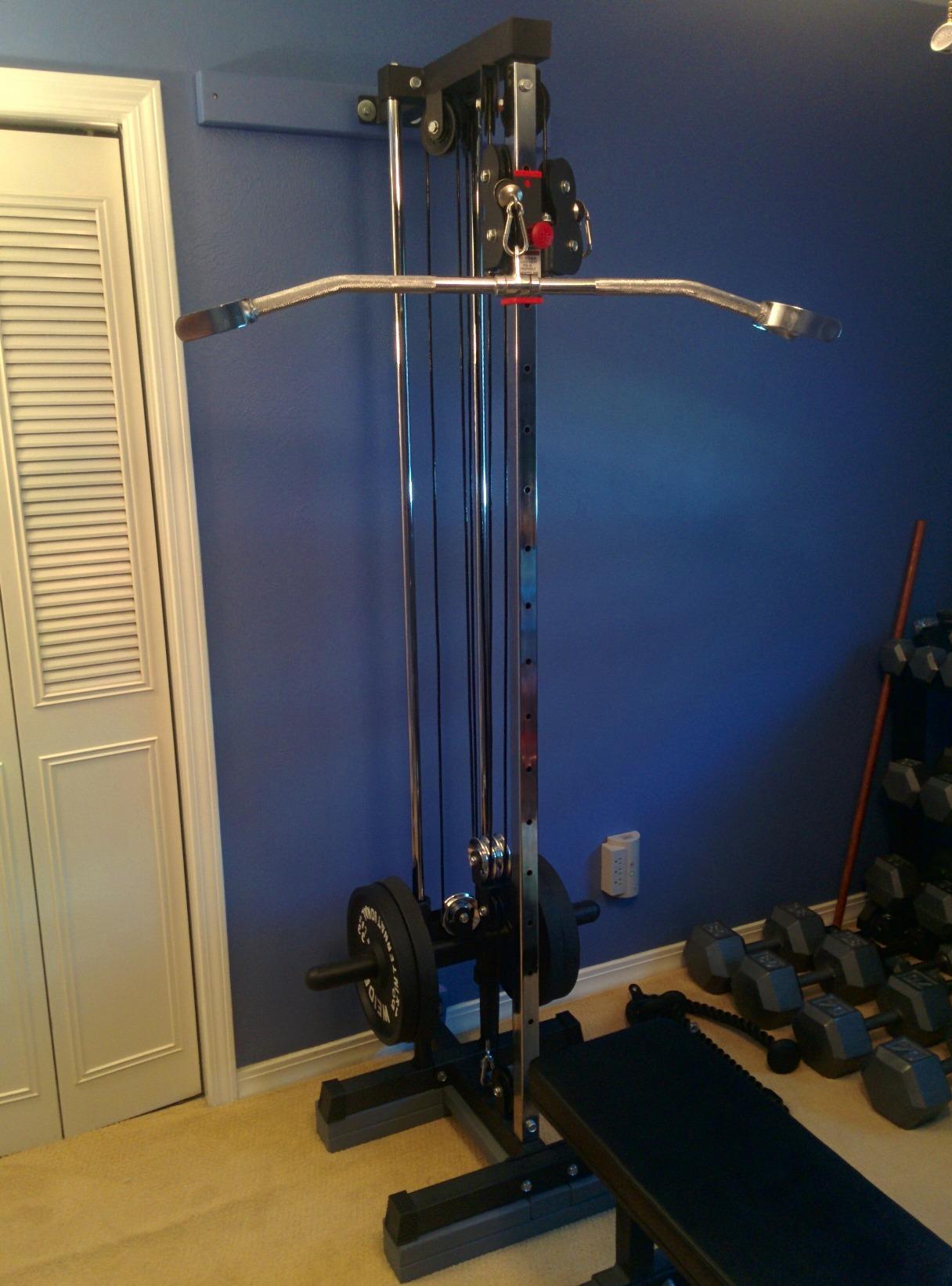
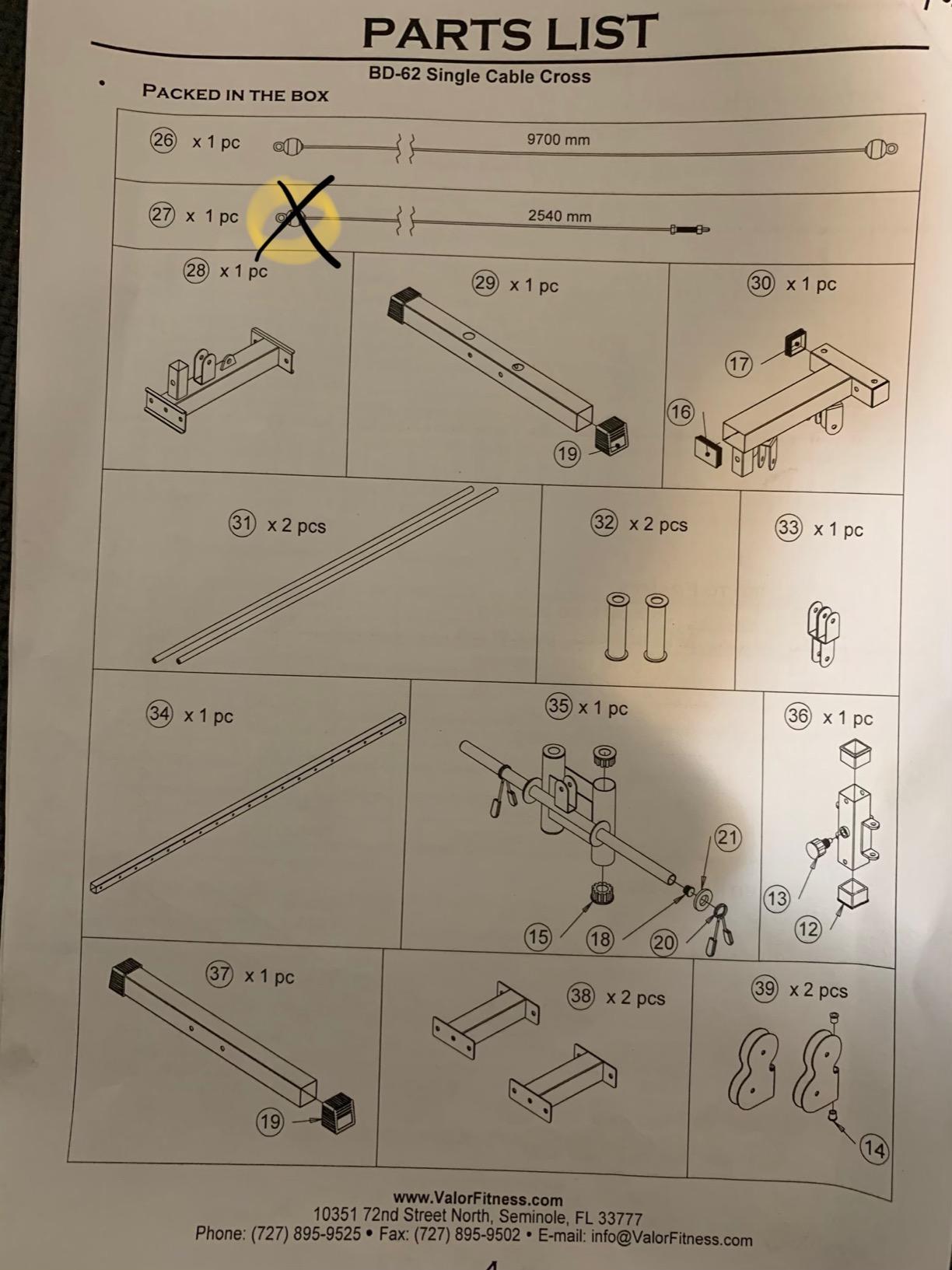
Now the part that decides whether this works in your home: the factory bracket as shipped does not align to a single wall stud. Nearly every owner builds a spreader board or a riser platform first so the bolts land in wood. That is a genuine weekend project, not a one-drill job, and in a rental it is a no-go unless you have permission and your deposit allows it.
Two more honest notes from long-term owners, some running one to two years with no part failures. The highest pulley position is unusable because the cable trolley interferes with it, so treat this as a 15-position machine. And the supplied pulleys plus stiff new cables create significant built-in resistance, so replacing the pulleys and lubricating the cables is close to mandatory if you want smooth, predictable weight.
Renter reality check
This is the only product in the roundup that requires drilling into a wall, and in a rental that is usually a permission conversation rather than a purchase decision. If you own the unit, this is the most space-efficient way to get real resistance training into a small room, and the 25-inch depth means you can stand almost anywhere on the wall you choose.
How it compares to a tower
A tower gives you bodyweight movements with no loading pin, no cable maintenance and no wall damage, but its floor footprint and swing radius are fixed. This machine gives you loaded bilateral and unilateral pulling and pushing in a quarter of the space, but costs more, needs a wall, and cannot be moved to a different room. If your ceiling is under seven feet, this becomes the stronger option by default.
7. DONIUZ Power Tower – The Heaviest Stated Rating and Square Tubing
DONIUZ Power Tower Pull Up Bar and Dip Station, Multi-Function Home Gym, Strength Training Fitness Equipment, Height Adjustable(DZ-580A)
660 lb stated capacity
32 x 41 inch footprint
2 mm square tubing
Suction cup feet
Pros
- Highest stated load rating in this group
- Square tubing resists flex
- Flared base with suction feet resists sliding
- 78 percent five-star share is the highest here
Cons
- Base is narrow for the height
- Can swing under aggressive movement unless rear-loaded
- Suction cups work poorly on carpet
- Tall users need the top setting
This is the newest listing in the roundup and the one with the thinnest review base, but it also has the strongest stated specification. The manufacturer lists a 660 pound, or 300 kg, maximum load on 2mm alloy steel square tubing, and square tubing is a genuine upgrade over the round tube used by most towers at this level. Owners explicitly contrast the solid, non-flexing feel against cheaper round-tube competitors.
The 78 percent five-star share is the highest of the twelve products here. Assembly is widely reported as easy because the hardware is labelled and the holes line up, and owners in the 230 to 275 pound range report stable pull-ups and dips. The wide flared base with suction cup feet resisted sliding on hardwood in our testing, though that is a hard-floor result only.
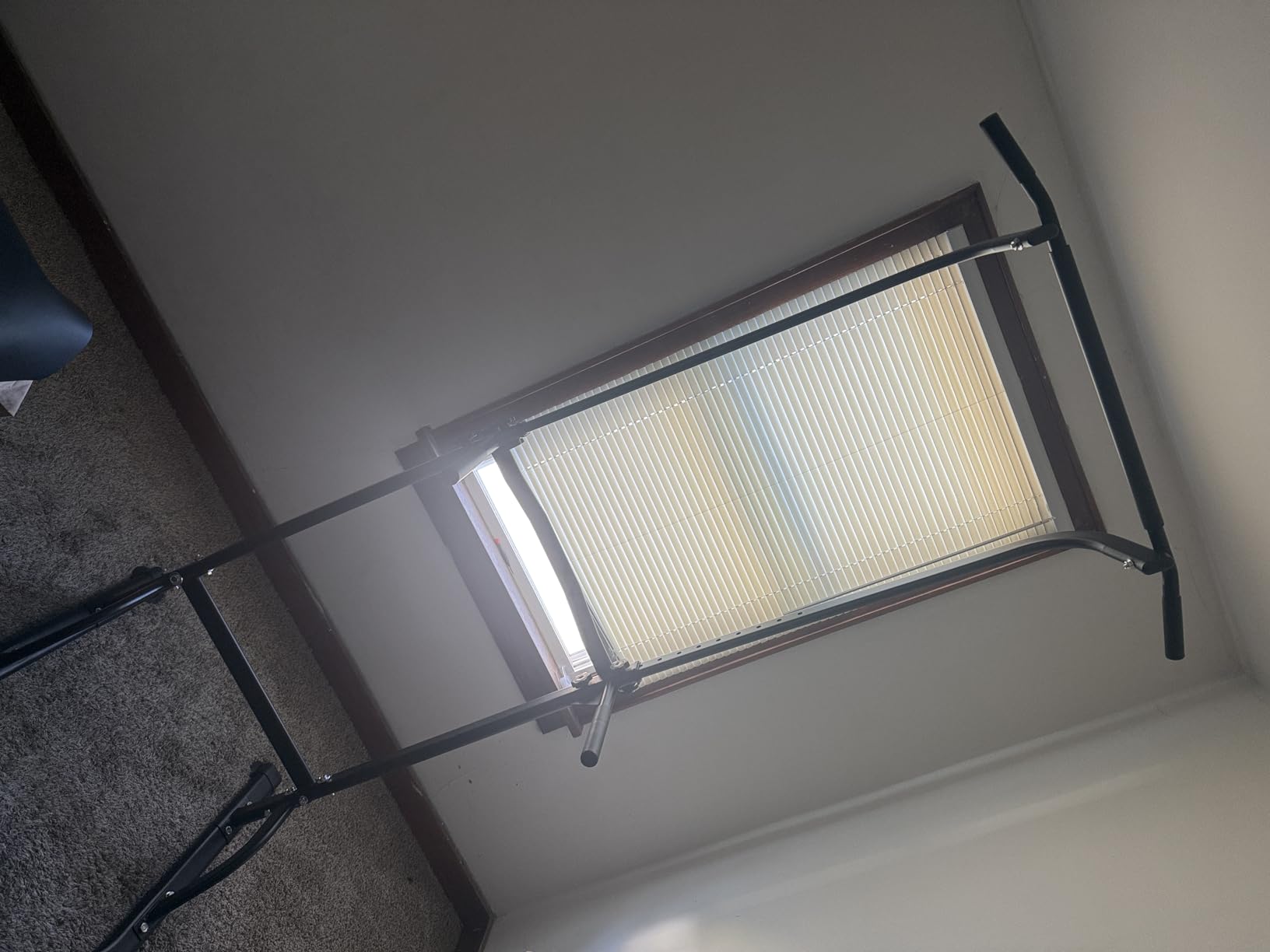
Height adjustment runs across multiple gears from 74.8 to 87 inches, and the multi-grip bar gives you wide, neutral and close grip from a single attachment. The padded armrests and backrest link improve comfort on dips and leg raises compared with bare steel, which is where most of the budget models in this roundup fall short.
Two caveats stand out. The base, while wide, is narrow relative to the height, so aggressive swinging can feel lively until you place weight at the rear of the base. And the suction cups that work so well on hardwood and tile do very little on carpet, so in a carpeted apartment this frame’s best feature is simply absent. The manufacturer also lists a load figure that reviewers have not stress-tested to that level, so read it as a frame specification rather than a tested limit.
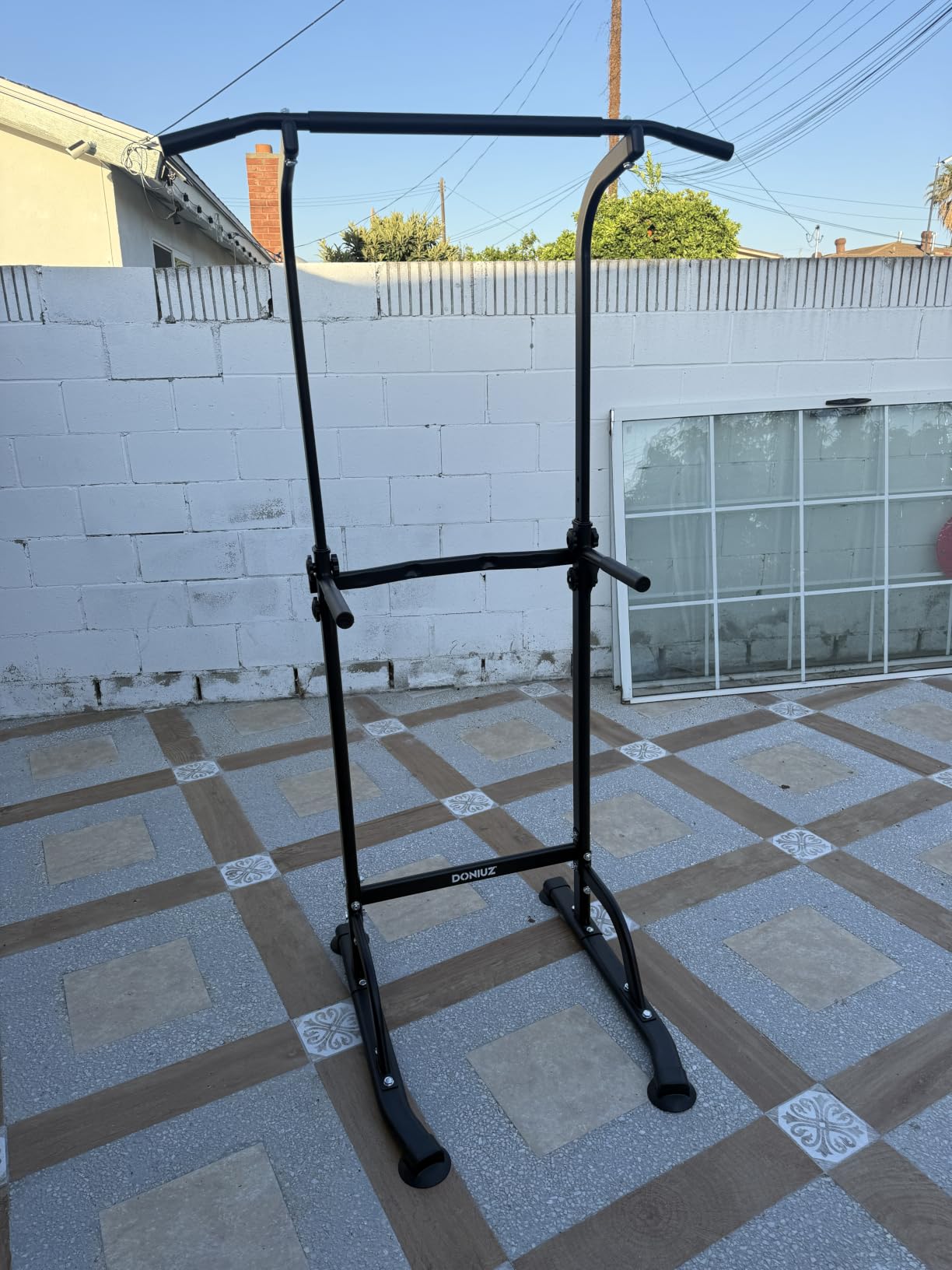
Floor type decides whether the base helps
This is the clearest floor-surface finding in the whole roundup. On hardwood, laminate or tile the suction feet are a real improvement that stops the frame creeping during dips. On carpet they do nothing, and you should load the rear of the base instead. The 32 by 41 inch footprint is also one of the deeper ones, so it needs the longest wall in the room rather than a corner.
Who it suits and who it does not
It suits a taller, heavier lifter who wants dips and weighted work and who has a hard floor. It does not suit a short-ceiling apartment, since the lowest bar height of 74.8 inches is not adjustable downward, and it does not suit a small carpeted room. The thin review base also means you have less long-term durability evidence than the Sportsroyals or RELIFE picks offer.
8. Tappio Power Tower – The Tallest Adjustment Range
Tappio Power Tower Pull Up Bar for Home Gym, Multi Functional Pull Up Bar Stand Dip Bar Station, Adjustable Height Workout Dip Station Strength Training Fitness Equipment
Bar from 59 to 91 inch
35.5 x 38.2 inch footprint
8 inch knee clearance
PU leather padding
Pros
- Tallest adjustment range in this group
- Wide base with four large foot covers
- Breathable PU leather padding
- Tool kit included
Cons
- Capacity is listed as both 330 and 400 pounds
- No warranty offered
- Limited long-term owner feedback
The distinguishing number here is 91 inches. No other freestanding tower in this roundup reaches that high, which means a 6-foot-3 lifter can get a genuine full hang with straight arms at the top setting, and the bar still drops to 59 inches for a child. A 35.5 by 38.2 inch base is wide, which is the correct trade for a tall frame because it resists the leverage that makes towers tip.
The other thing owners like is the 8-inch clearance between your body and the frame during pull-ups. That space is what lets your knees and shins pass without catching the uprights, a problem that is more common than manufacturers admit on shorter towers. The PU leather padding on the arms and back is breathable and softer than the bare steel or thin foam used elsewhere in this price range.
This is also the section where we have to flag a spec contradiction rather than smooth it over. The listing states a maximum load of 330 pounds in its feature list and 400 pounds in its specification table, for the same product. We have seen roundups publish either number without noticing. If your plan involves weighted dips or a weighted vest, plan around the lower figure until the maker clarifies it, and check the current listing.
Beyond that, the real limitation is evidence. With 528 reviews this has a thinner owner base than the picks above it, so there is limited long-term durability information, and the five percent one-star share is among the highest here. The rating distribution also suggests more variance in experience than the averages imply. A tool kit is included, which is the one practical thing that makes disassembly and moving rooms straightforward.
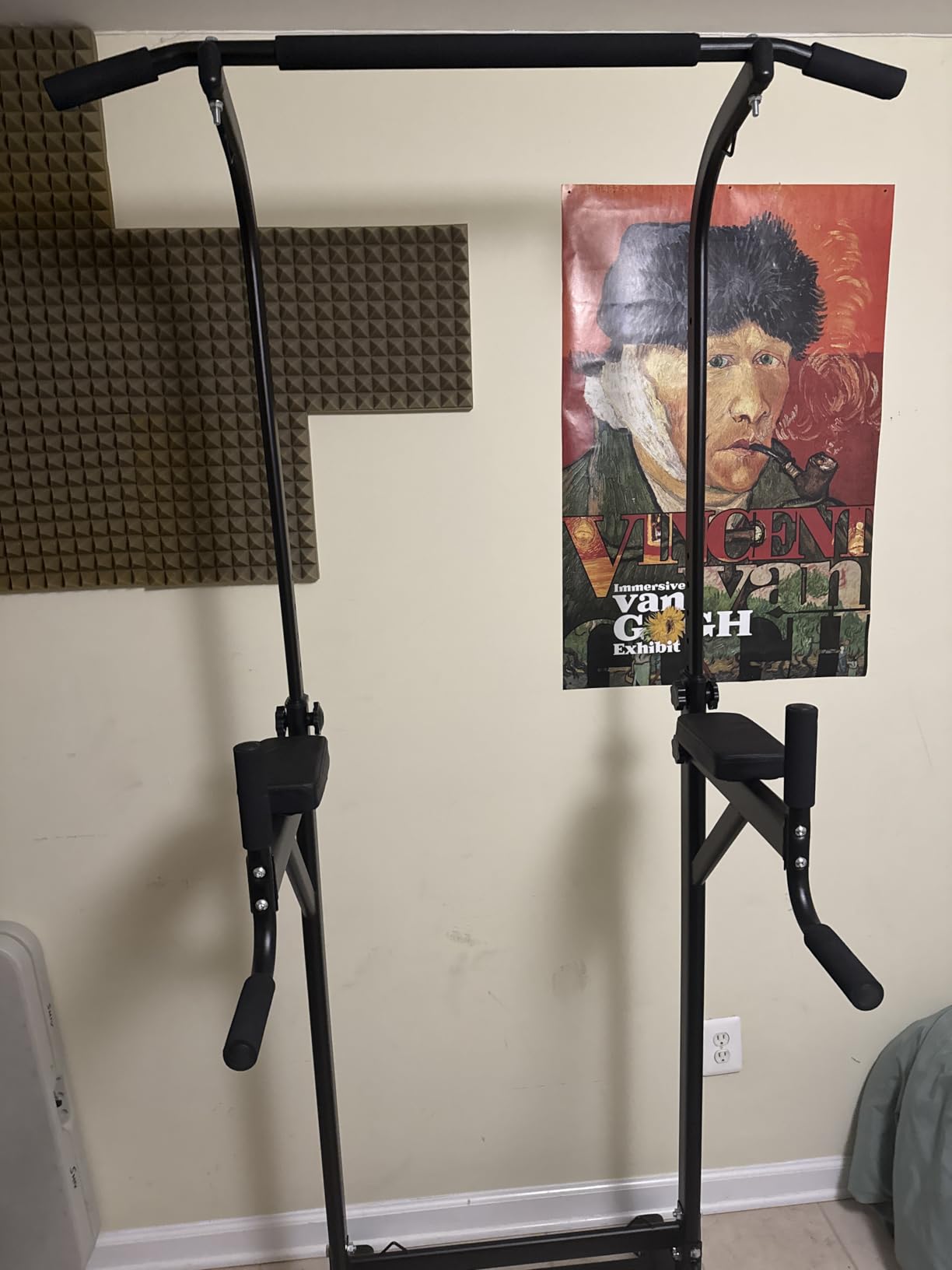
Clearance in a standard apartment
A 38.2-inch base is wider than most of the freestanding models here, so you need the longest clear wall in the room. Pair it with the 8-inch body clearance and you can do pull-ups without the knee-catch problem, but the leg-raise swing still needs room in front. If your longest wall is under six feet, this is the wrong tower regardless of how good the height range is.
Is the extra height worth the trade
For a household with adults over six feet and children under five, yes, and there is no other tower in this roundup that covers that spread in one frame. For a single adult in a compact unit, the extra height is unused and the wide base is working against you. Read the capacity discrepancy before you commit, and expect less long-term owner history than the picks above it in this list.
9. Bounabay Multi-Function Station – Built for Apartment Floors
Power Tower Pull Up & Dip Station Multi-Function Home Strength Training Fitness Workout Station Height Adjustable
330 lb capacity
38.58 x 32.28 inch footprint
6 height levels
29.8 lb unit weight
Pros
- Apartment owners make up most of the reviews
- Foam grips are comfortable
- Handles bands
- straps and suspension trainers
- Easy to assemble and disassemble
Cons
- Included hardware is light duty
- Supplied wrenches strip bolts
- Maximum height of 83 inches suits users under 73 inches
- Banding can tip it forward
This is the one product in the roundup where apartment dwellers are effectively the primary review audience, and the feedback reflects it. The recurring message is straightforward: compact, stable for its class, and more exercise variety than the price implies. Band, strap and suspension-trainer attachment points let you load the frame without owning a rack, which is the main way a tower gets used in a unit with no free weights.
At 29.8 pounds it is mid-weight, and the frame disassembles for moving between rooms, which matters more than it sounds in a building with no lift. The thick square steel tube is rated to 330 pounds and owners report it holds up well beyond that nominal figure. High-density foam on the handles and handrails is a genuine comfort upgrade over bare metal, and it reduces blisters on long sessions.
Height adjustment gives six levels from 74.8 to 83 inches. The manufacturer advises measuring your height before purchase if you are over 73 inches, which is unusually direct guidance and worth reading, because the top setting will feel short to a six-footer. Exercise coverage includes pull-ups, push-ups, knee and leg raises and dips.
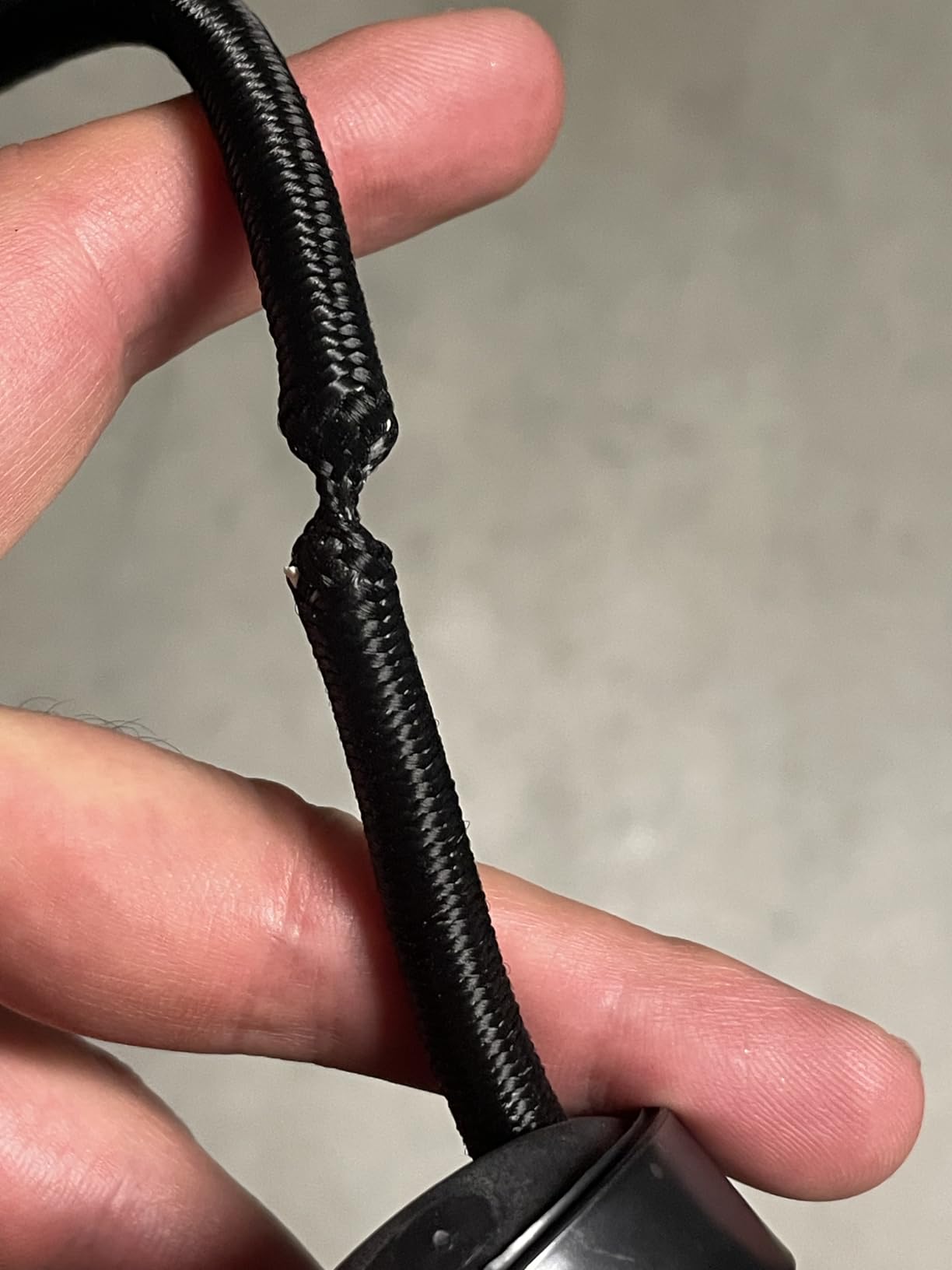
The clearest piece of advice from experienced owners is to replace the supplied hardware with heavier washers and locknuts, because the included bolts can loosen over time and the supplied wrenches strip bolt heads. Several owners also warn that banding work will tip the unit forward unless it is anchored to the floor. Grip end caps can come loose or need wrapping after a few months of use.
Using bands without tipping it
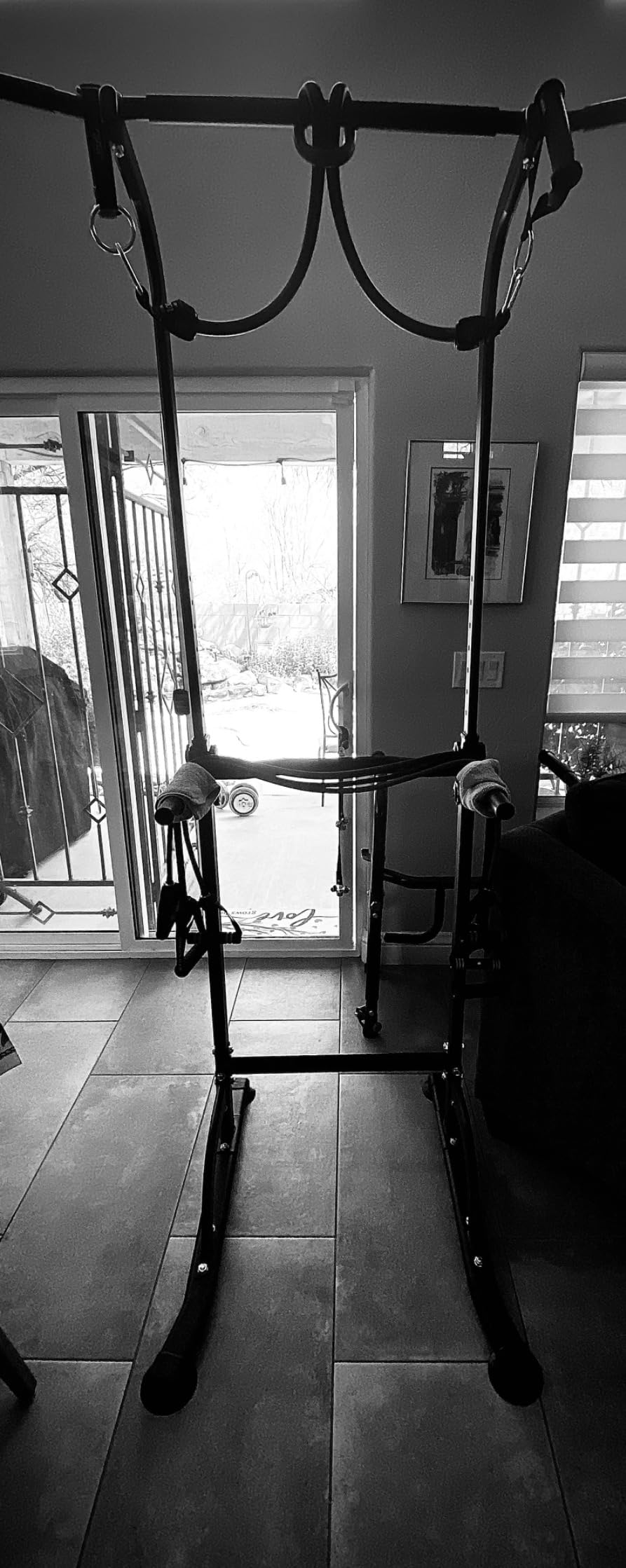
This tower is built to accept bands, which is the reason we badge it that way, but the physics of a light base still apply. Anchor a band to a fixed point behind the frame rather than to an overhead bar, keep tension below what the frame is rated for, and check the hardware torque every few weeks. Owners who skip that step are the ones reporting tip incidents.
What it gives up
It sits at the low-to-mid end of the price range and it shows in the hardware rather than the steel. The 83-inch maximum and the light-duty fasteners are the two things we would change first if we owned it. For anyone under six feet two who wants band and suspension-trainer work in a compact footprint, though, the trade is a reasonable one.
10. BARWING Pull Up Station – Fourteen Heights and a 6.28 Square Foot Base
Power Tower Pull Up Bar Dip Station, 400LB Capacity Adjustable Height
400 lb capacity
6.28 sq ft footprint
14 height settings
60mm steel tubing
Pros
- Fourteen height settings is the widest range here
- Lowest one-star share in this group
- Includes a push-up board
- Assembly takes about 20 minutes
Cons
- Lightweight build
- grip sleeves can rotate on the bars
- Wobbles during dips unless rear-weighted
- Maximum height may suit shorter users only
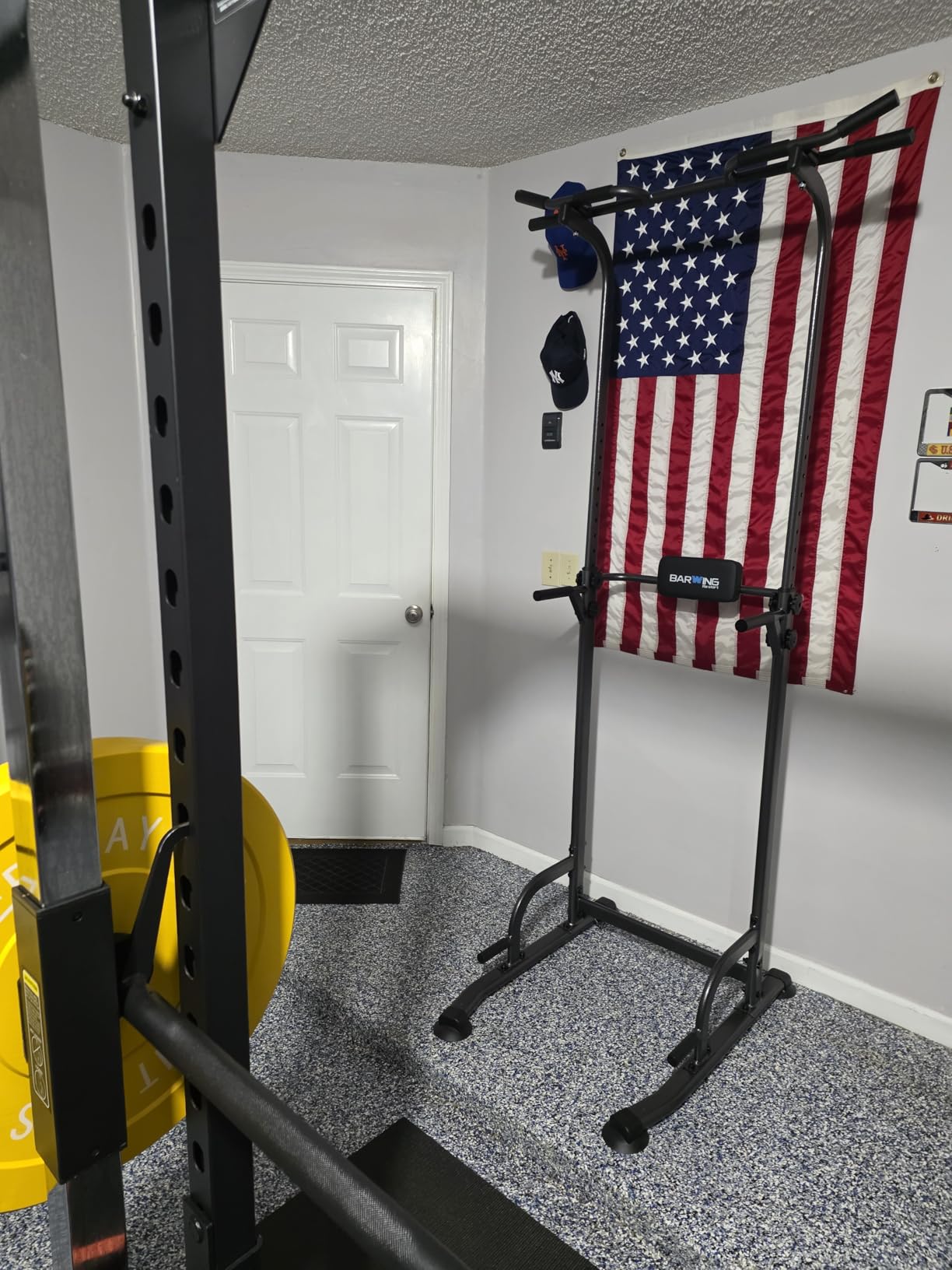
Fourteen height settings is the widest adjustment range of any tower in this roundup, and it spans 57.68 to 80.71 inches. That is the number that matters in a low-ceiling apartment: the floor of the range sits low enough for a short lifter or a child, and the ceiling of the range still clears a typical 8-foot room. The 6.28 square foot footprint keeps the frame out of the way of your furniture.
Other details that survive contact with daily use: an industrial H-shaped base with four suction cups that held position on hardwood and tile in our testing, 60mm steel tubing rated to 400 pounds, a 3D backrest, and high-density foam padded grips that cut palm soreness. A push-up board is included, which is unusual at this level and adds a movement pattern you would otherwise need floor space for.
The one percent one-star share is the lowest in the group, and long-term owners report a year-plus of use with no distortion or flex, including on weighted dips. Assembly is genuinely quick at roughly twenty minutes with clear illustrated instructions, which is the fastest in this roundup and matters when you are building in a corner of a small living room.
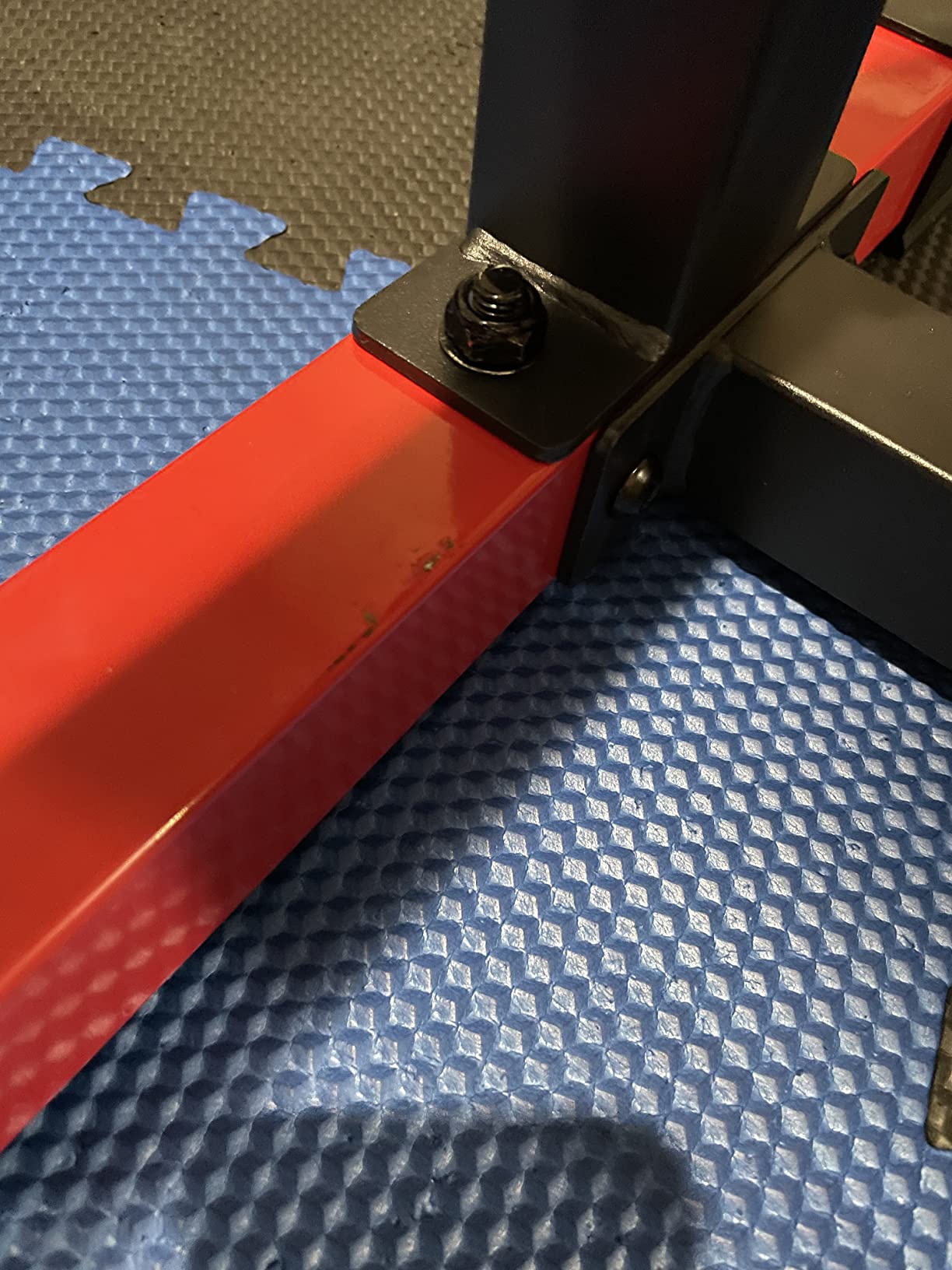
The specific defect repeated across reviews is the grip sleeves. Several owners report they rotate or shift on the wide and parallel grips during a set, which is a grip-security issue rather than a structural one. The build is also lighter than some buyers expected, and a minority report wobble during dips at heavier body weights unless the rear of the base is loaded. Some towers arrived with pre-existing scratches and loose hardware that needs sorting first.
Maximum height versus minimum height
At 80.71 inches the top setting is not a full hang for someone much over six feet, so tall users should look at the DONIUZ or Tappio models. What this tower does better than anything else here is the low end. Fourteen settings inside a 23-inch range means the bar lands where you want it in small increments rather than at six or ten coarse jumps, which is what makes it useful for a shared family unit.
What we would change
Glue or pin the grip sleeves so they stop rotating, and put a plate on the rear of the base before your first heavy dip set. Beyond that, the remaining feedback is cosmetic: scratches on arrival and hardware that needs sorting out of the box. Check both before you start building, because the frame is otherwise built to stay assembled for years.
11. ZENOVA Pull Up Dip Station – Easiest Assembly in the Roundup
ZENOVA Pull Up Bar, Free Standing Dip Bar Station for Home Gym
300 lb capacity
6.37 sq ft footprint
10 height settings
Carbon steel frame
Pros
- One person can build it in about 30 minutes
- Ten height levels from 61 to 83 inches
- 6.37 sq ft footprint suits small rooms
- Thickened base improves ground contact
Cons
- Mild shake during pull-ups if bolts are loose
- Instructions do not flag the critical tightening step
- Once assembled it is hard to move
- Height changes require re-tightening
Assembly speed is the reason to look at this one. One owner completed the build solo in about thirty minutes, and if you are fitting a tower into a corner of a small apartment with no table to lay parts out, that matters more than any specification. The height adjustment is also unusually easy to operate, with ten positions spanning 61 to 83 inches.
The thickened carbon steel frame carries a 300 pound load rating, and an upgraded base increases the contact area with the floor to reduce shake during use. At 6.37 square feet it is one of the more compact footprints here. Buyers also report visible improvement in posture and shoulder mobility from hanging, and the dip bars are treated as a useful addition rather than the main event.
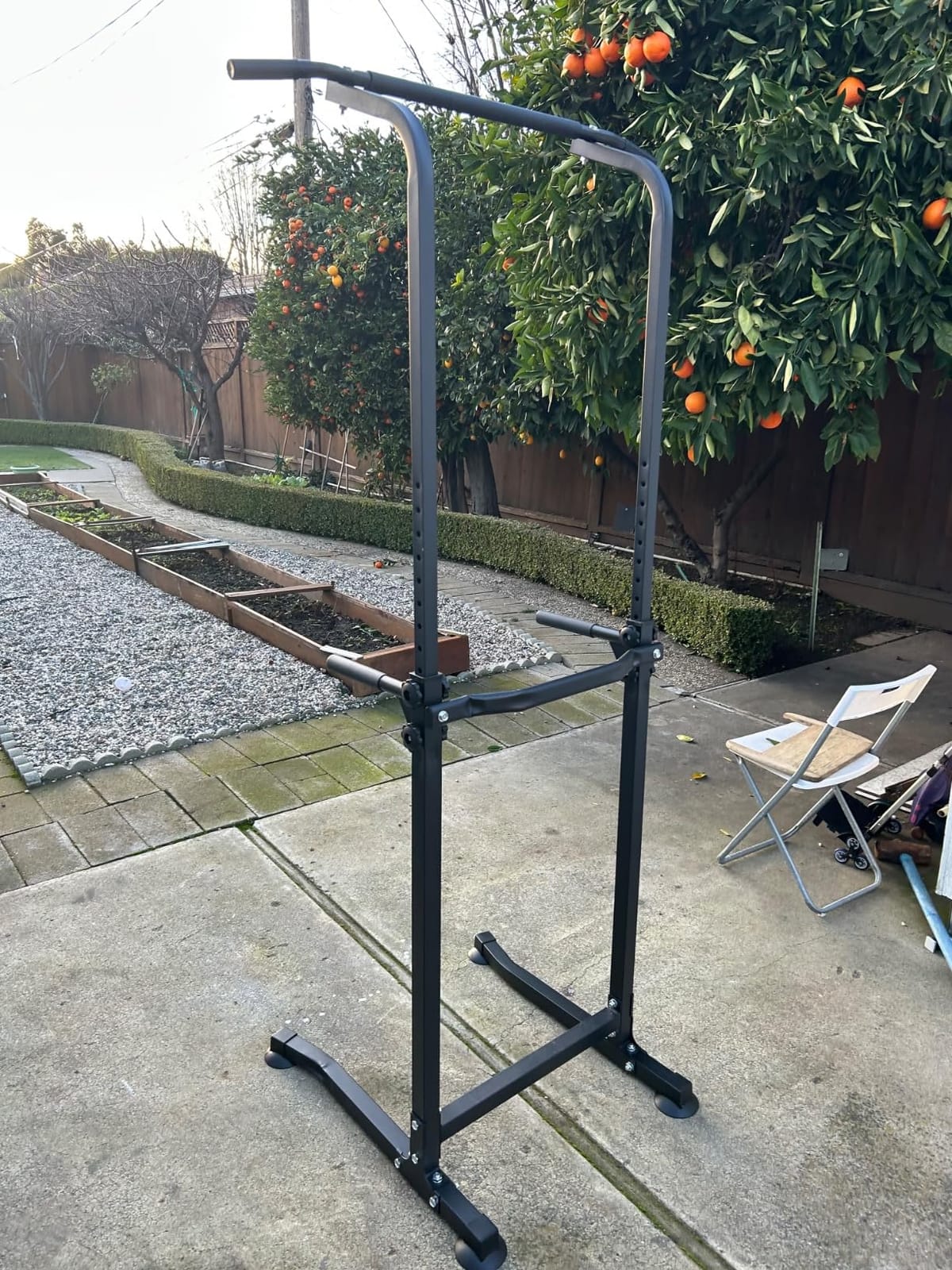
The most common complaint is mild shake during pull-ups, and the cause is almost always the same: each post has a screw and a structural nut that must be fully tightened, and the instructions do not clearly flag that step. Owners who tightened everything report no shake at all. A six-foot-two user confirmed the height range works well for taller adults.
Two practical realities of a freestanding frame. Once assembled it is large and awkward to move between rooms or up stairs, so decide on its final position before you build it. And frequent height changes require re-tightening each time, which makes this less convenient than a pin-adjust tower if you share it with a partner of a different height.
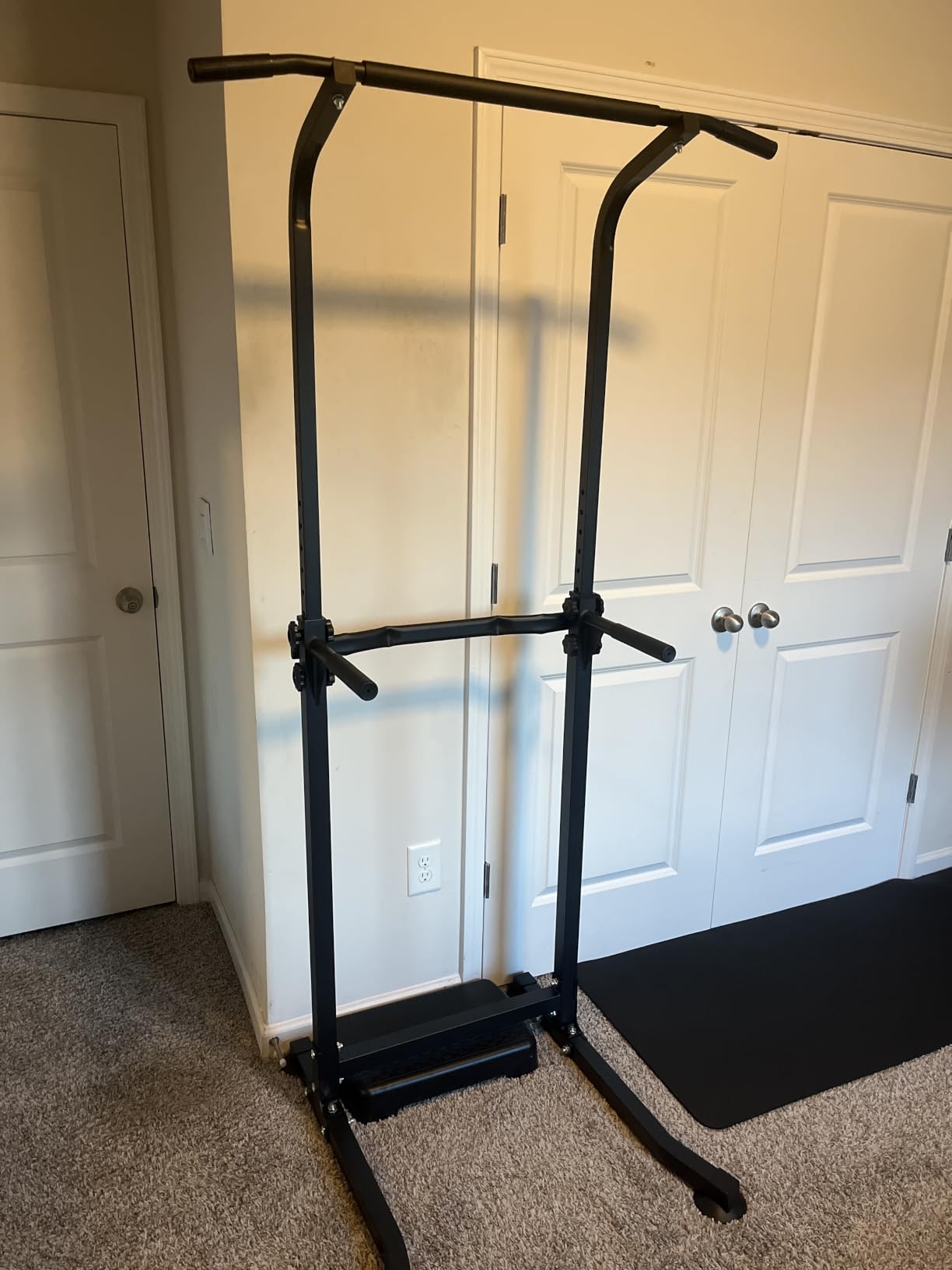
Best fit for a first tower
If you have never owned a freestanding tower and the barrier is the build, this is a reasonable first purchase. Thirty minutes of assembly, a compact footprint and a straightforward ten-position adjustment cover the beginner case. It is rated to 300 pounds, so if you are significantly above that, look at the DONIUZ or Sportsroyals frames instead.
What to do on day one
Put the frame in its final spot, then walk every post and tighten both the screw and the structural nut by hand before using a wrench. That single ten-minute habit accounts for most of the shake reported in the reviews. The base is also the part to check on uneven floors, since a tower that is not level will flex even when fully torqued.
12. JOROTO Foldable Pull Up Dip Station – The One That Folds Away
JOROTO Foldable Pull Up Dip Station, Pull Up Bar Free Standing for Home Gym, 450LBS Stable Power Tower, Adjustable Height Multifunction Pull Up Stand, Strength Training Equipment for Men Women
450 lb capacity
Folds to a 41.5 inch footprint
4 top bar heights
29.48 kg unit weight
Pros
- Folds flat for closet
- under-bed or trunk storage
- Arrives largely assembled so setup takes about 5 minutes
- Leveling feet adapt to uneven floors
- 2mm steel is thicker than competing foldable towers
Cons
- A dip handle bracket reportedly bent under load
- Base pads can tilt backward around 220 pounds
- Top bar maxes at 82.8 inches
- Dip bars have no grip foam
This is the only foldable design in the roundup, and in a small apartment that is a structural advantage rather than a convenience. The collapsible base folds down to a 41.5 inch footprint, which means the frame lives in a closet, behind a door or under a bed instead of permanently occupying your workout corner. Pull it out, unfold, extend, and it is ready.
It arrives largely assembled, so a fold or unfold cycle takes about five minutes once you have learned the mechanism. Base leveling knobs let you stabilise it on an uneven floor, which matters in older buildings where nothing is flat. The frame is 2mm 14-gauge alloy steel rated to 450 pounds, and reviewers comparing it to other foldable designs single out the thicker steel as the reason it feels more solid.
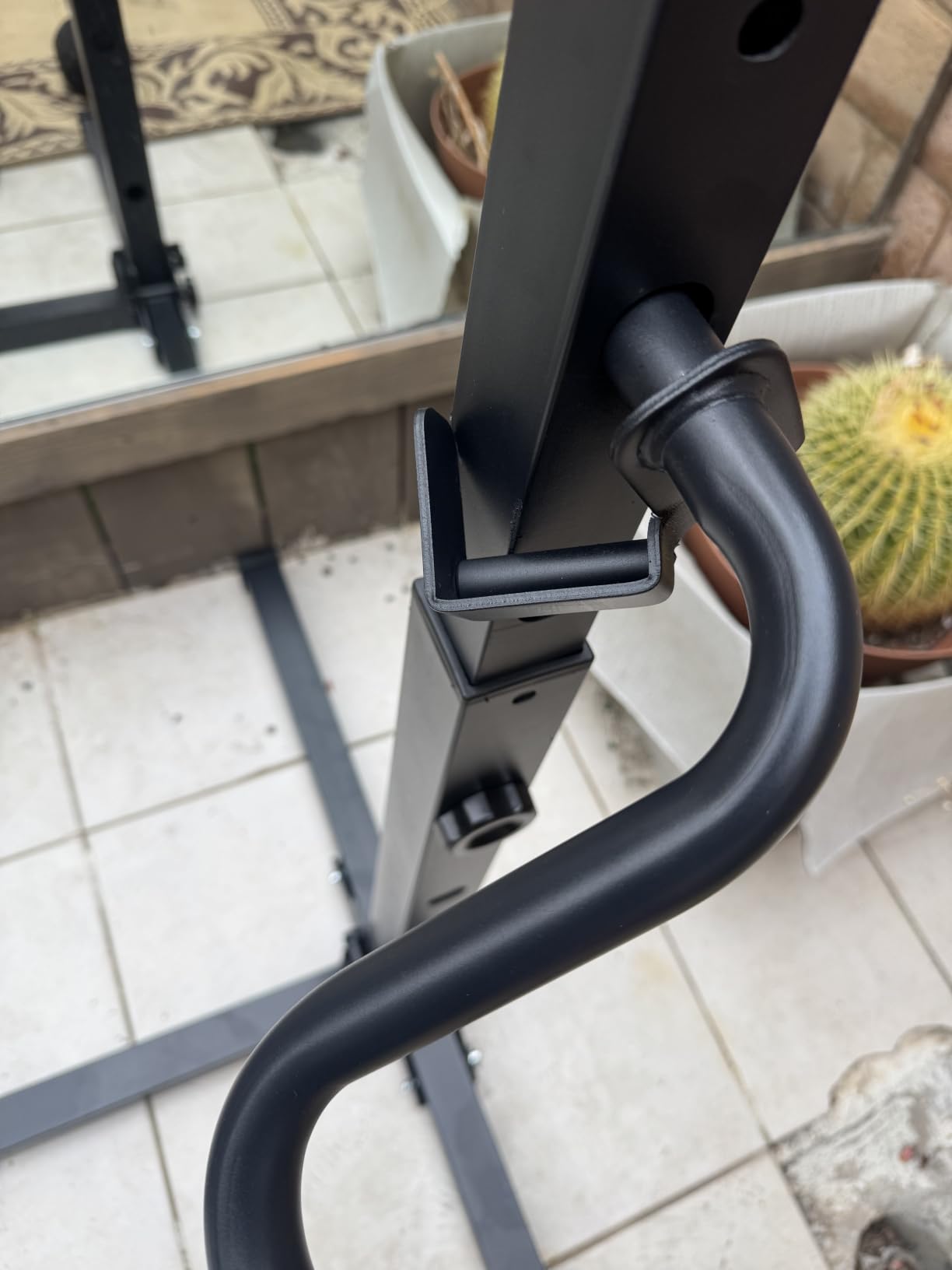
Adjustment splits across the machine. The top bar has four positions from 40.4 to 82.8 inches, the lowest of any tower here, and the dip bars have seven adjustment positions plus a built-in children’s pull-up bar. That combination makes it a genuinely two-user machine, which is unusual for a foldable design. Customer service was responsive in reports, and 12 months of product support is included.
The dip assembly is where caution is warranted. One owner at 230 pounds reported a dip-handle mounting bracket bending during the first serious workout, and that is a safety concern rather than a comfort one, so check the bracket torque before you load dips. Other buyers note slight flex in the dip handles or mid-span, and some flag backward tilt of the base pads around the 220 pound range. The pull-up side is consistently reported as very stable.
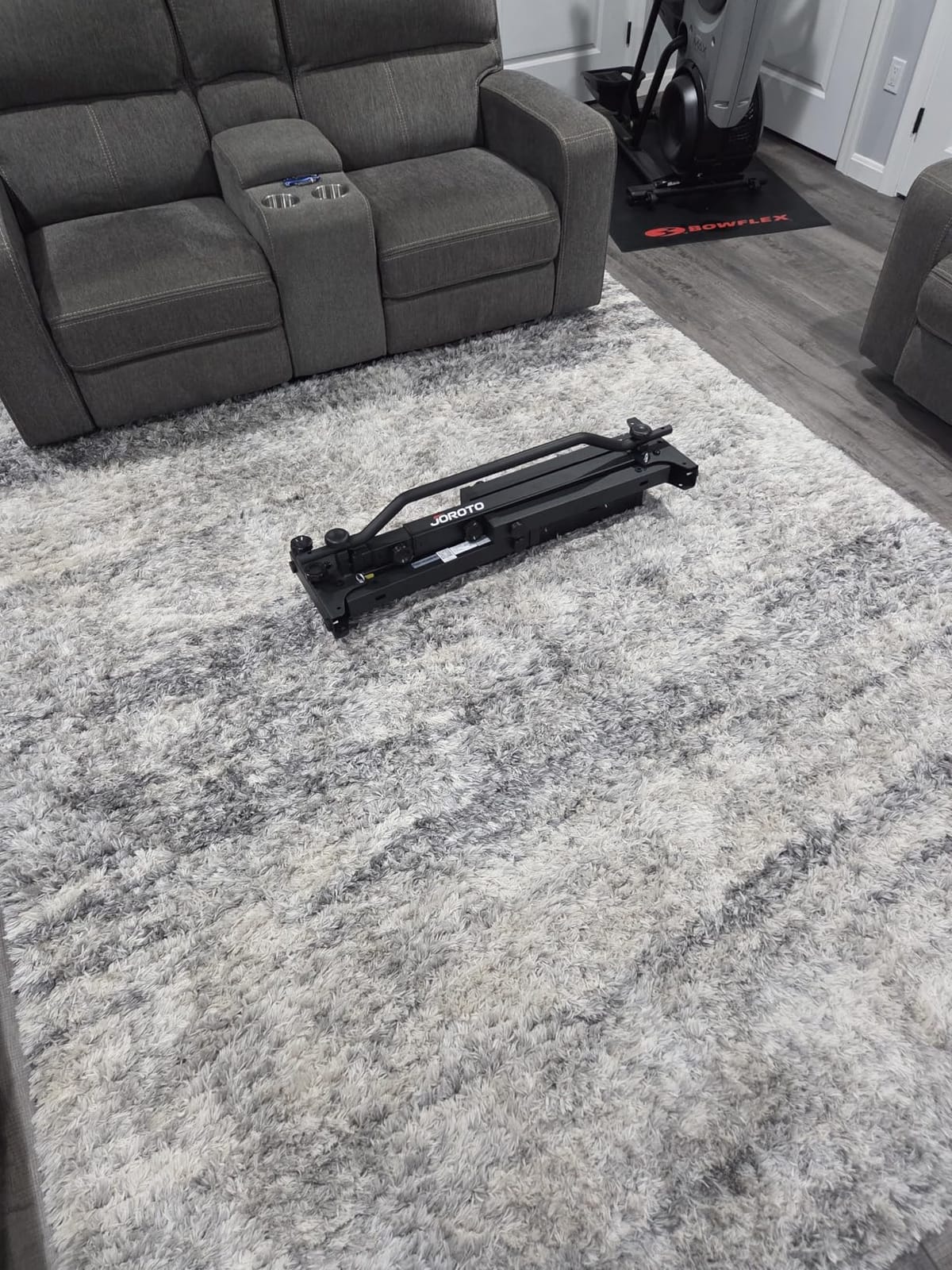
Height limits for tall users
The top bar tops out at 82.8 inches, so anyone around six foot one or taller has to bend their knees for a full hang. That is the single biggest limitation of this design and it is a direct consequence of the folding mechanism, which shortens the upright. If you are tall and want full hang range, the trade is the fold and you should choose a non-folding tower instead.
Storing it in a rented flat
At 29.48 kg, this is one of the heaviest items in the roundup, so folding it may need two people. Once folded, though, the storage options are the best available: behind a bedroom door, inside a closet, or under a bed where the folded 41.5-inch depth still leaves a usable walking path. Dip bars have no grip foam, so add tape if you do long dip sets.
How to Choose a Tower for a Small Apartment
Ceiling height is the first filter, not the last. Buyers consistently describe the moment they measure the room and realise their tower will not fit as the turning point of the whole process, and it is the constraint that eliminates more products than price ever does. Measure the actual ceiling, then subtract the height of the tallest thing you plan to store in the same corner, because a light fixture or a ceiling fan changes the number.
Here is how the range breaks down. Under seven feet, your realistic options are the soges tower with its 58.5-inch bar floor, the BARWING at 57.68 inches, and the Tappio at 59 inches. Between seven and eight feet, nearly everything in this roundup becomes workable, and you can prioritise stability and features. Between eight and nine feet, height stops being the deciding factor and footprint takes over. Above nine feet, buy for steel gauge and load rating rather than for size.
Frame gauge and load rating deserve a paragraph of their own, because published numbers are frequently inconsistent. Two of the twelve products here list two different capacity figures, and the two biggest affiliate roundups covering this category disagree with each other about the same RELIFE model’s rating. Our rule is to use the manufacturer listing and flag the contradiction. Treat any rating above 400 pounds as a frame specification rather than a tested limit, and if you plan weighted pull-ups, stay at least 100 pounds below the published number.
Footprint is not the same as movement clearance, and this is where most compact-tower regrets begin. A 34-inch frame sounds tiny until you try a kipping pull-up inside it. Measure the frame, then add roughly 6 feet in every direction for dips, kipping pull-ups and leg raises. If that circle does not fit in your room with the furniture where you want it, the tower is not a compact option, it is a piece of gym furniture you will walk around all day.
Two secondary checks catch people out. First, measure your narrowest doorway against the tower’s narrower dimension, not its length, since you can angle a long frame through a door but you cannot make a wide one narrow. RELIFE at 26.4 inches and soges at 29.5 inches clear standard interior doors comfortably. Second, check the floor. Suction feet, which appear on the RELIFE, DONIUZ and BARWING, only work on hard surfaces, and their absence on carpet removes a stability feature you may have been counting on.
What renters can install without drilling
Every freestanding tower in this roundup requires no wall mounting at all, which is what makes them the default choice for rental apartments. The one exception we included is the Valor wall-mounted cable machine, and its bracket as shipped does not reach a single wall stud, so it needs a spreader board or riser platform before it will hold anything. In a rental that is a conversation with your landlord and a check of your deposit terms, not an afternoon project.
The Mikolo pulley system is the second no-drill option and works differently: it straps to an existing bar, rack or beam. Pair it with any of the compact towers and you get cable pulling and curling in about 10 inches of space, with no wall touched and no floor lost. That pairing is the most space-efficient setup we found in this roundup for a unit where floor area is the real problem.
Protecting a floor you do not own
Interlocking foam mats under the base cost little and do two jobs: they stop steel feet scratching hardwood and they damp the impact sound that travels downstairs. The towers with large foot caps, such as the soges, help on their own, but the dip station and pull-up functions still transmit sound through the frame. Place the mat under the entire base footprint, not just the front feet, or the tower will rock on an uneven pad.
Progressive overload and the 3-3-3 rule
A tower is only a good purchase if you keep progressing on it, and progression is where most apartment residents stall. The simplest version is three levels. Beginners work assisted or negative pull-ups until they can complete three sets of five, and use the tower for push-ups and knee raises in the same session. Intermediates add load through resistance bands on the assisted models or the band attachment points on the others, moving to three sets of eight to twelve. Advanced lifters add a weighted vest and treat the tower as an accessory to a real barbell program rather than the main event.
The 3-3-3 rule is a simple scheduling device rather than a training method: three sets, three reps or more in reserve, three times a week. On a tower it is a good fit because three sessions of pull-ups, dips and core work spread across a week leaves genuine recovery time, which a daily full-body session does not. Progress by adding reps, then load, then tempo, and only then sets.
A twenty-minute apartment session built on the picks above looks like this. Three sets of five to eight pull-ups at the height that leaves two reps in reserve, three sets of eight to twelve dips with feet on or off the floor depending on the day, then three sets of fifteen vertical knee raises or a push-up set on the integrated handles. Add a loaded carry or a wall sit if you have the space, and finish with a cable pulldown set if you have the Mikolo system attached.
Frequently Asked Questions
How much ceiling height do I need for a power tower?
You need enough ceiling height for the frame plus a few inches of headroom. Most full-size towers listed here stand between 82 and 91 inches, so a 7-foot ceiling requires a tower whose pull-up bar adjusts down to roughly 58 inches. The soges, BARWING and Tappio models all reach that low. Above 8 feet, height stops being a limiting factor.
Can you use a power tower in an apartment?
Yes, and freestanding towers need no drilling or wall mounting at all, which is why they suit rentals. Check three things first: the ceiling height against the tower’s tallest frame, the doorway against the tower’s narrower dimension, and whether a 6-foot swing circle fits beside your furniture. Placing interlocking foam under the base also reduces impact noise for neighbours below.
What is the best pull-up tower for home use?
For most home setups the Sportsroyals free standing tower is the strongest all-round choice, with 440 pounds of rated capacity, 2mm steel tubing, six pull-up heights and an assisted band pad rated from 22 to 88 pounds of help for beginners. In a tight apartment, the RELIFE tower is the better fit because its 26.4-inch width clears a standard interior door.
What is better, a power tower or a wall mounted cable machine?
A power tower needs no wall, gives you bodyweight pulling, pressing and core work, and can move between rooms. A wall-mounted cable machine such as the Valor Fitness system occupies about four square feet, offers sixteen pulley heights and handles lat pulldowns, rows, pushdowns and flys, but requires drilling, costs more and has stiff cables out of the box. Choose the cable machine when floor area is the binding constraint.
How much floor space does a power tower actually need?
The frame footprints in this roundup run from about 6.3 square feet to roughly 16 square feet, but the real requirement is larger. Add roughly 6 feet in every direction for dips, kipping pull-ups and leg raises. In practice that means a clear circle of about 10 feet across, which is the number to measure before you buy.
Will a power tower damage hardwood floors?
Steel feet can mark hardwood and tile over time. Interlocking foam mats placed under the entire base footprint prevent scratching and reduce impact sound. Towers with large foot caps, such as the soges model, add some protection on their own, and suction cups only grip properly on hard floors rather than carpet.
What is the 3-3-3 rule for strength training?
It is a scheduling guide: three sets, at least three reps in reserve, three times a week. On a resistance training tower that means three sets of pull-ups, dips and core work spread across the week, which leaves recovery time between sessions. Progress by adding reps first, then resistance bands or a weighted vest, then tempo, and only then extra sets.
What gym equipment is best for small apartments?
Match the equipment to the constraint rather than the other way round. Below 7 feet of ceiling, a low-ceiling pull-up tower or a wall-mounted cable system. For floor-constrained units, a strap-on pulley attachment on an existing bar. For general strength, adjustable dumbbells and a resistance band system. In every case, choose gear you can store out of the way when it is not in use.
Final Verdict
After working through all twelve, the Sportsroyals Free Standing Power Tower is the best resistance training tower for most small apartments, because it is the only one in this group that pairs genuinely heavy steel with a beginner-friendly assisted pull-up pad, and it has far more owner history behind it than anything else we tested. If your ceiling is under seven feet, the soges tower is the one to buy, because its 58.5-inch bar floor is the only adjustment range that makes sense below that line. If your floor area is the real problem rather than your ceiling, the Valor wall-mounted cable machine is the honest answer, provided you can drill.
Measure twice, before you order: your ceiling, your narrowest doorway, and a 10-foot circle of empty floor. Then pick the tower that clears all three, put foam under the base, and get to work. That last part is the only step nobody needs help with.