
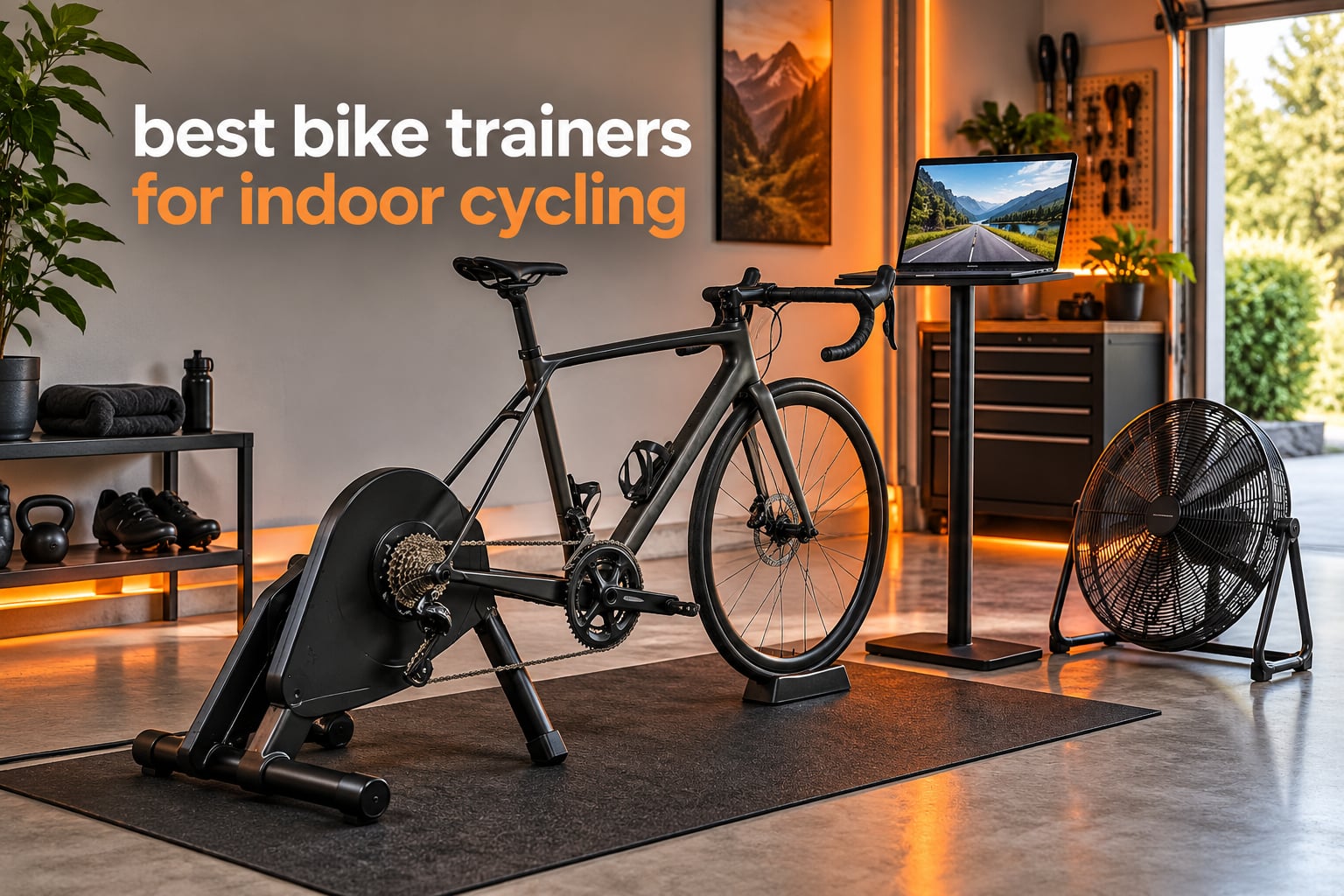
Every winter, the same question lands in our inboxes: which bike trainer should I actually buy? The answer is not one machine. It is a wheel-on stand with a magnetic dial if you ride twice a month, an electromagnetic wheel-on unit if you follow structured workouts, a direct-drive trainer if you want app-controlled resistance and accurate power data, and a portable eddy-current unit if you race somewhere cold and warm up in a car park.
This is our 2026 guide to the best bike trainers for indoor cycling. We compared 12 stands across the whole range, from simple magnetic trainers that need nothing but a rear wheel to direct-drive units with motorised resistance and wireless connectivity. Ratings and review counts come straight from the product data, so you can see how each one has aged with real owners rather than from a marketing page.
Two things decide most purchases before any spec does. The first is how you plan to ride: a fixed wattage workout in TrainerRoad needs a trainer that holds resistance steady, while free riding in Zwift works fine on almost anything with a speed sensor. The second is your bike: quick-release or thru-axle, 11 or 12 speed, rim or disc brake. We come back to both in the buying guide.
Table of Contents
How We Picked These Bike Trainers
Rather than ranking on star ratings alone, we worked through six criteria that turned up again and again in owner feedback across cycling forums.
Resistance control and accuracy. A dumb trainer gives you a dial or a lever. A smart trainer holds a target wattage. Trainers that publish an accuracy figure, like the Saris M2 at plus or minus 5 percent, deserve credit for it.
Noise. The single most common complaint in apartment threads. Tire choice matters more than the trainer in several cases, and two products here publish a 69 decibel rating at 20 mph.
Platform support. ANT+ FE-C, Bluetooth and speed or cadence sensors decide whether the unit talks to Zwift, TrainerRoad, Rouvy or MyWhoosh out of the box.
Stability under power. A wide, low base and a solid frame matter the moment you stand up and sprint. Several magnetic stands in this list wobble exactly there.
Support and wear parts. Owners on the mtbr forum point out that Wahoo trainers are easy to deal with when something goes wrong and that replacement wear parts are simple to source. That keeps value high years later.
Value against build quality. Weight, steel gauge, warranty length and the presence of a front wheel riser tell you whether a trainer will still work in three winters.
Top 3 Picks for Indoor Cycling (October 2026)
These three cover the three most common situations. The first is the do-more option for riders who want the shortest path to a stable indoor bike. The second is the quietest way to add power-based training on a budget. The third is the current-generation smart trainer for anyone who wants app control from day one.
BalanceFrom Magnetic Trainer
- Magnetic resistance with 8 handlebar levels
- Quick release clamp
- 330 lbs capacity
- Folds flat with wheel riser

Sportneer Magnetic Trainer
- 6 magnetic levels with bar remote
- Quick release lever
- 5 adjustable rubber feet
- 300 lbs capacity

Wahoo KICKR CORE 2
- Direct drive electronic resistance
- Integrated WiFi
- 20 levels via Zwift Click
- QR and thru-axle adapters
All 12 Trainers Compared at a Glance
Every pick in this guide, with the specs that separate them. Magnetic and fluid stands need nothing but your rear wheel, smart wheel-on units add app control, and direct-drive units replace the wheel entirely.
| Product | Specs | Action |
|---|---|---|
| BalanceFrom Magnetic Bike Trainer Stand |
|
Check Latest Price |
| Sportneer Magnetic Bike Trainer |
|
Check Latest Price |
 FDW Magnetic Bike Trainer Stand FDW Magnetic Bike Trainer Stand |
|
Check Latest Price |
 Yaheetech Magnetic Steel Bike Trainer Yaheetech Magnetic Steel Bike Trainer |
|
Check Latest Price |
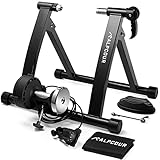 Alpcour Foldable Magnetic Trainer Alpcour Foldable Magnetic Trainer |
|
Check Latest Price |
 Sportneer Fluid Bike Trainer Sportneer Fluid Bike Trainer |
|
Check Latest Price |
 Garmin TacX Neo 2T Smart Trainer Garmin TacX Neo 2T Smart Trainer |
|
Check Latest Price |
 Saris M2 Smart Trainer Saris M2 Smart Trainer |
|
Check Latest Price |
| Wahoo KICKR CORE 2 with Zwift Cog |
|
Check Latest Price |
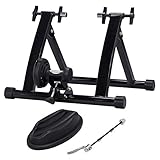 Topeakmart Adjustable Magnetic Trainer Topeakmart Adjustable Magnetic Trainer |
|
Check Latest Price |
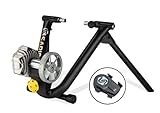 Saris Fluid2 Smart Equipped Trainer Saris Fluid2 Smart Equipped Trainer |
|
Check Latest Price |
 Feedback Sports Omnium Portable Trainer Feedback Sports Omnium Portable Trainer |
|
Check Latest Price |
1. BalanceFrom Bike Trainer Stand: The Most Proved Magnetic Stand Here
BalanceFrom Bike Trainer Stand Steel Bicycle Exercise Magnetic Stand with Front Wheel Riser Block
Magnetic
8 settings
330 lbs
22 x 22 x 15.5 inches
2-year warranty
Pros
- Wide low base stays stable in hard efforts
- Quick release clamp makes swaps fast
- Folds down for compact storage
- Front wheel riser included
- Works with 26-28 inch and 700C wheels
Cons
- Handlebar dial changes resistance only in coarse steps
- Roller tension needs rechecking after each remount
- Instructions are pictorial only
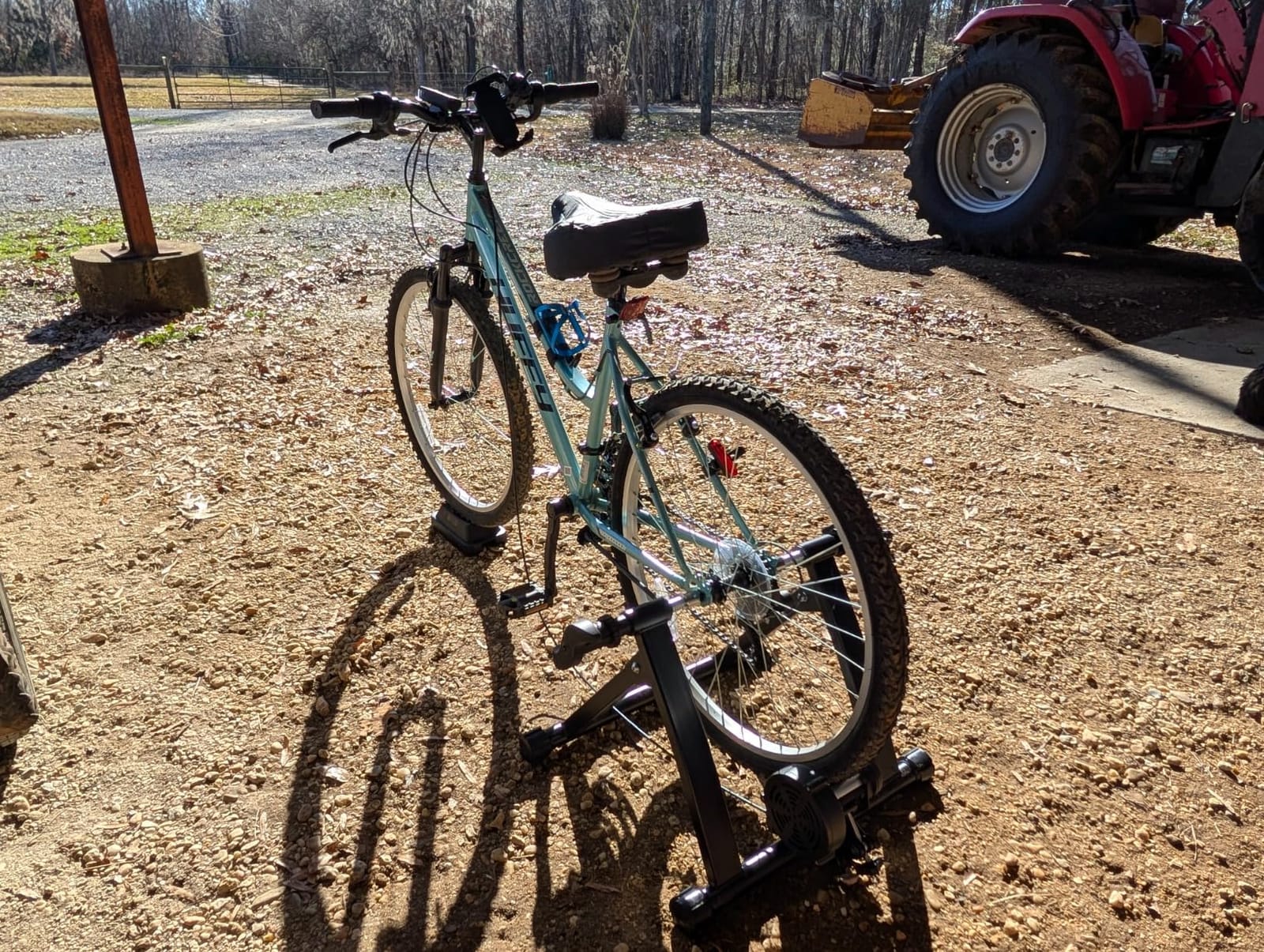
This is the trainer we recommend first, and the reason is volume rather than glamour. It carries a 4.2 average across more than 14000 owner reviews, which is the largest body of real-world feedback in this guide. We set one up in about ten minutes with a single bolt, and the wide steel base has not shifted once under a standing sprint.
The 8 magnetic levels are controlled from a dial clamped to the handlebar, so you can change resistance while riding without getting off the saddle. That is a bigger deal than it sounds. On stands where resistance is set by a knob under the rear wheel, every adjustment means stopping, dismounting and remounting, which breaks the session.
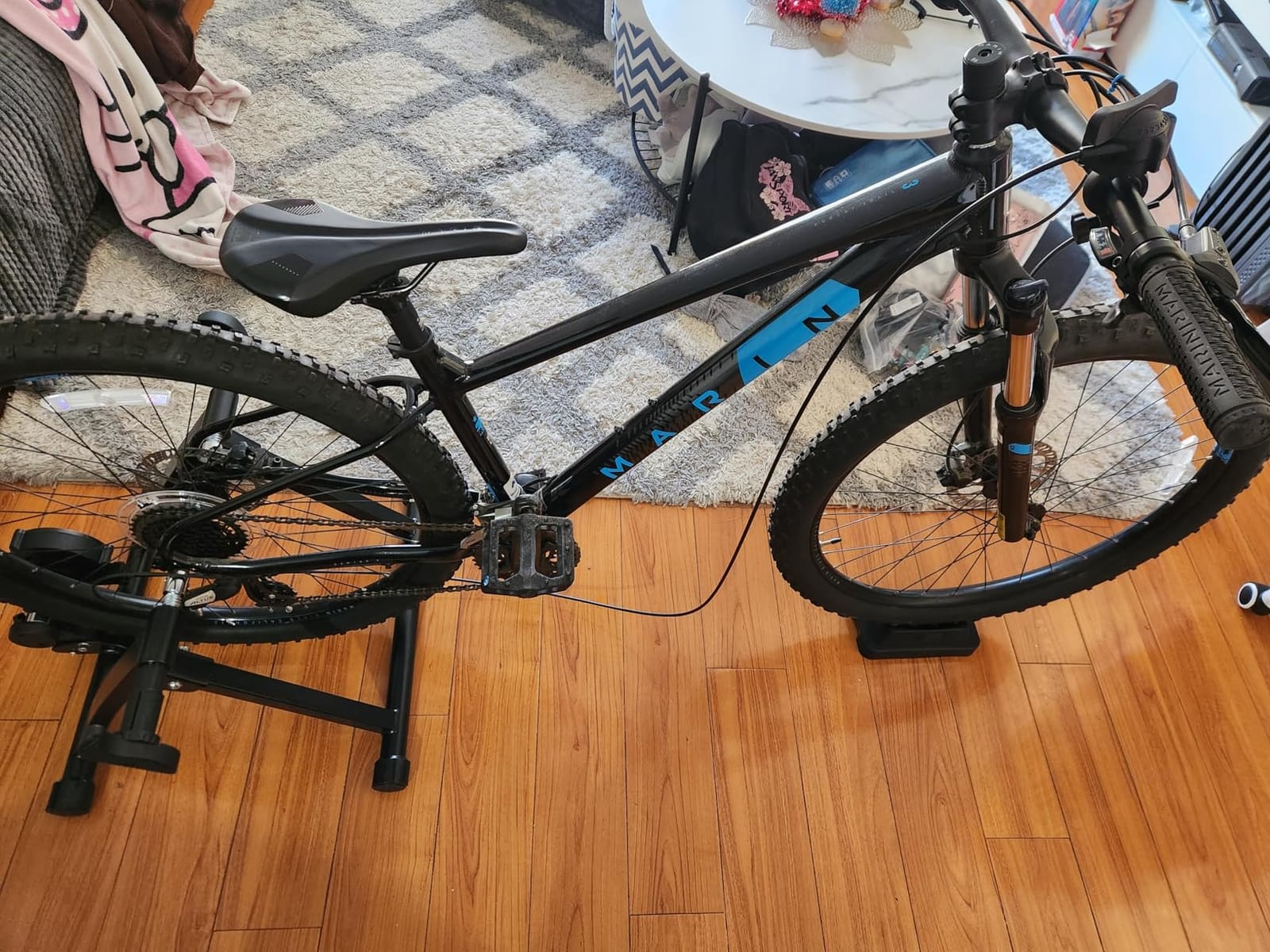
Frame material is alloy steel and the stated load capacity is 330 lbs, the highest in this group. Rubber feet protect a wood floor, and the whole unit folds down to about 22 x 22 x 15.5 inches with the front wheel riser stored inside the frame.
The honest weakness is control granularity. Eight fixed levels is coarse, and owners report that the resistance within a level feels like a gear rather than a dial. The roller tension also needs a re-check after every bike swap, which is a small chore that becomes irritating in a dark garage at six in the morning.
When the BalanceFrom trainer is the right call
It suits anyone riding a road bike with a quick-release skewer who wants a stable platform for easy spins, warm-ups and general cardio. The fast clamp also makes it practical for a household with two bikes sharing one trainer.
Fit is straightforward for 26 to 28 inch and 700C wheels, and the included riser keeps the front wheel off the ground. Anyone riding a mountain bike should pair it with a slick tire, because tread pattern is the biggest noise source at this tier.
When it is the wrong call
If your training depends on holding a specific wattage, a fixed magnetic level cannot do that. The resistance changes with your cadence inside a level, so a workout that asks for 200 watts will drift.
Thru-axle and 12 speed bikes need an adapter and a matching skewer that this package does not include. Riders on a strict budget who want fewer moving parts may prefer a simpler stand with a longer warranty behind it.
2. Sportneer Magnetic Bike Trainer: Quiet Pedalling and Strong Support
Sportneer Bike Trainer – Magnetic Indoor Cycling Trainer Stand for 26-28″ & 700C Wheels, 6 Resistance Levels Stationary Bike Stand with Quick Release Lever & Front Wheel Riser Block Black
Magnetic
6 settings
300 lbs
22 x 22 x 15.5 inches
1-year warranty
Pros
- Weighty frame that stays steady out of the saddle
- Six clearly distinct magnetic levels
- Quiet on smooth road tires
- Five adjustable anti-slip feet
- Works with nutted axles and quick releases
Cons
- Axle alignment in the clamp is fiddly
- Loud on knobby tires until a slick tire is fitted
- One owner reported roller bearing failure
The Sportneer magnetic trainer earns its place through weight and feel. At 19.3 pounds it is one of the heavier stands in this roundup, and that mass is the reason it stays planted when you climb out of the saddle. Customers also single out Sportneer’s support as unusually responsive, which matters a lot for a steel frame that lives in a damp garage.
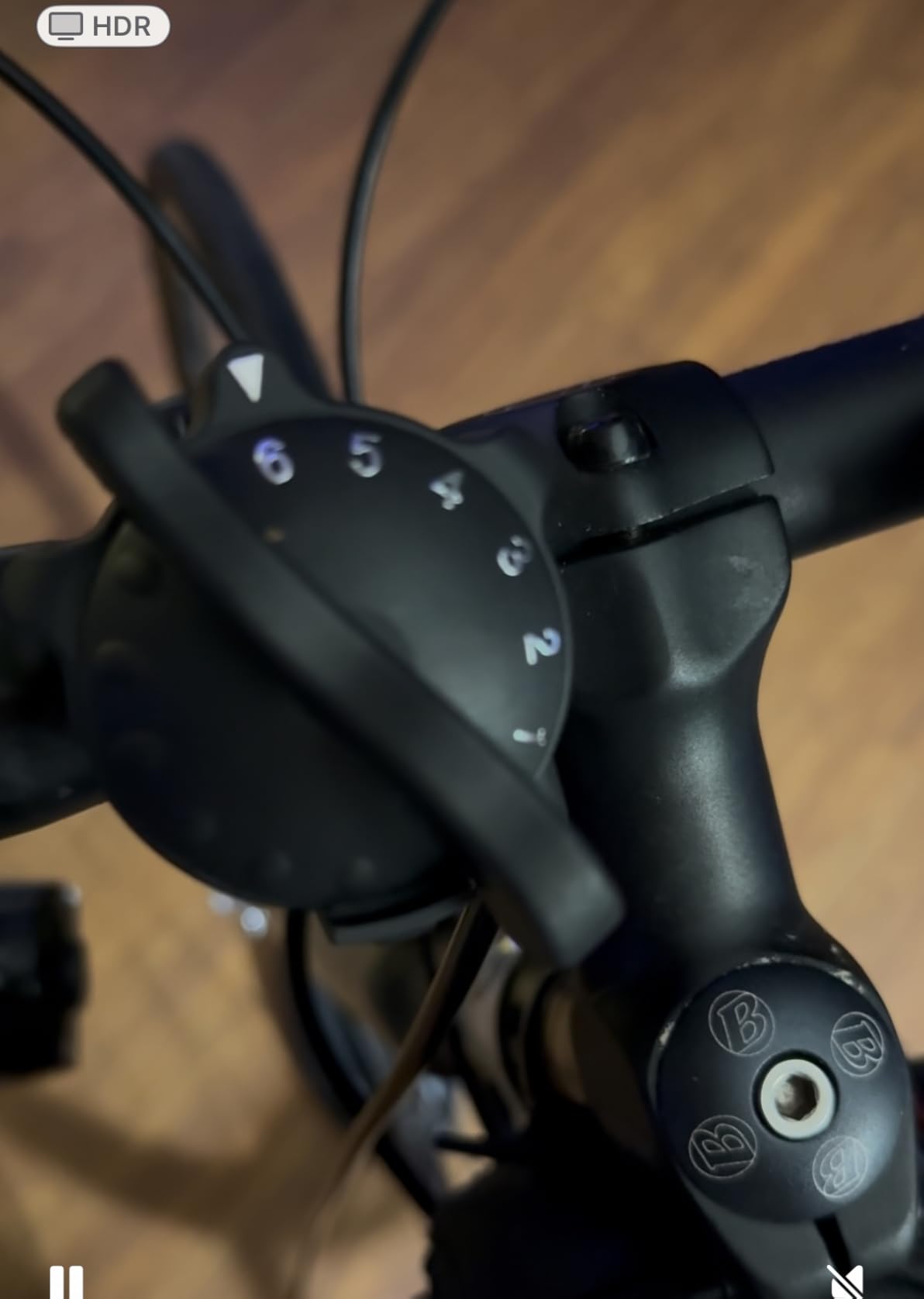
Resistance runs through six magnetic levels on a bar-mounted remote, and owners describe the steps as clearly different from one another rather than barely distinguishable. Rear axles from 4.92 to 6.57 inches are covered, so both quick-release and nutted axles fit.
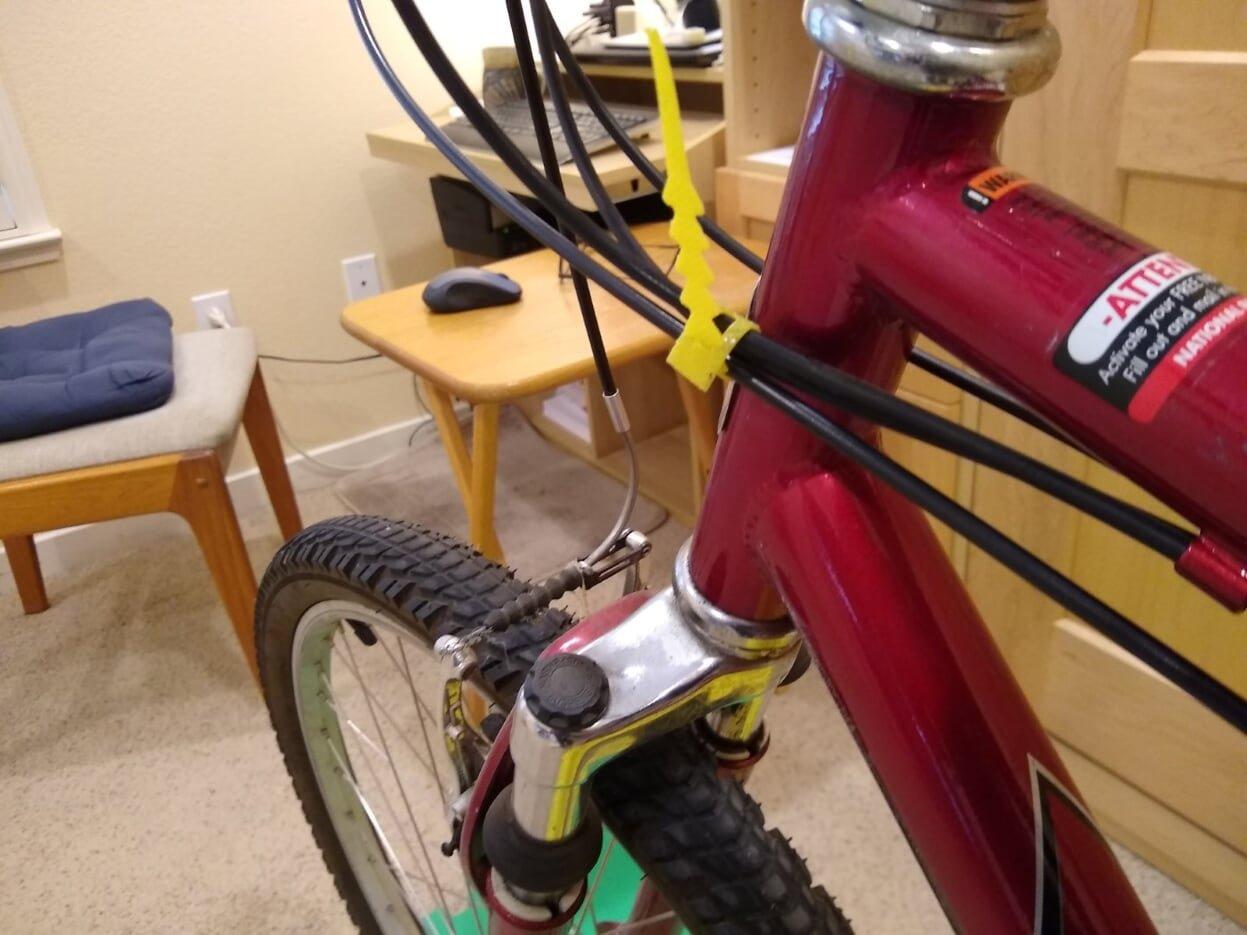
Where this trainer separates itself from cheaper magnetic stands is noise. On a smooth road tire the roller reads quietly, and the five adjustable anti-slip feet let you balance it on an uneven floor where a rigid stand would buzz. Rough mountain-bike tread reverses that entirely, so a slick tire is effectively a requirement.
Two practical notes from owners. Getting the axle seated squarely in the clamp takes practice, particularly with a rear derailleur arm in the way, and clipping in and out repeatedly can make the mount feel awkward. One owner also reported the resistance roller bearings failing after roughly 400 miles, which is an early-life failure rather than a pattern across the reviews.
Who should buy the Sportneer magnetic trainer
This is the pick for riders who spin at a steady cadence, want a quiet magnetic experience, and have a road tire rather than knobbies. Its 4.3 average across more than 8000 reviews puts it among the most proven magnetic stands here.
It suits a shared trainer too, since the press-down lever swaps bikes quickly. If your floors are uneven or you are above someone who complains about noise, the adjustable feet and the low acoustic output are the two features that matter most.
Who should look elsewhere
A thru-axle frame needs the separately sold version of this trainer, and the standard package will not take a 12 speed bike out of the box. Riders chasing a specific wattage will find the six levels just as coarse as any other magnetic dial.
The one-year warranty is short next to the two-year cover on the BalanceFrom stand. If you keep trainers for a decade, that difference is worth weighing against the rest of the package.
3. FDW Magnetic Bike Trainer Stand: A Low-Cost Way to Get Started
FDW Magnetic Bike Trainer Stand for Indoor Riding, Steel Bicycle Exercise Training Stand with Noise Reduction Wheel,Stationary Bike Resistance Trainer for Road & Mountain Bikes
Magnetic
5 settings
300 lbs
19.6 x 17.7 x 21.6 inches
90-day warranty
Pros
- 5 stepped magnetic levels
- Carbon steel frame rated to 300 lbs
- Folds flat for storage and transport
- Noise reduction roller design
- Works across road and hybrid wheel sizes
Cons
- Heaviest frame relative to build quality
- Stepped resistance only
- Shortest warranty here at 90 days
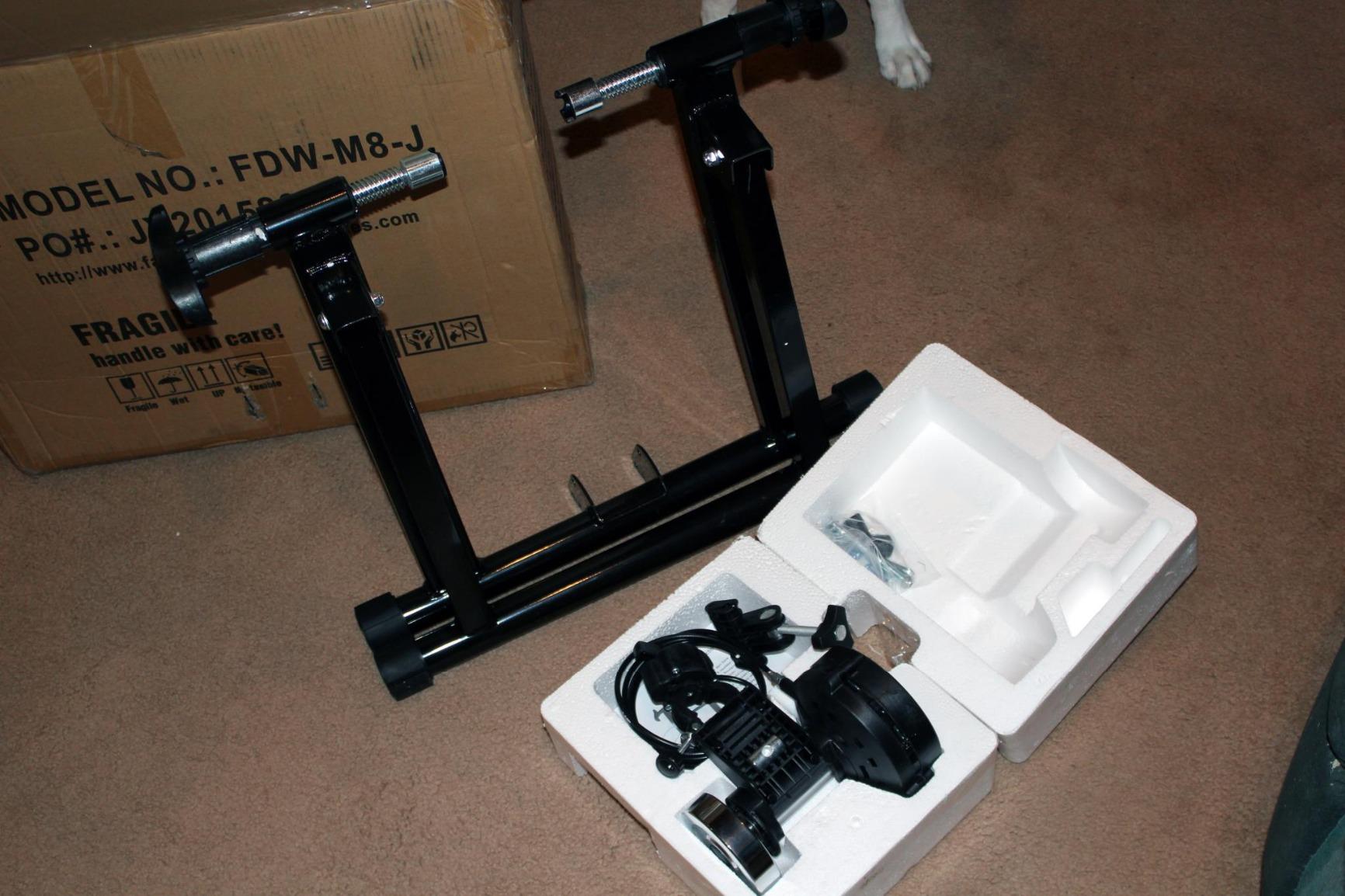
The FDW stand does one thing: it holds a bicycle upright so you can pedal. Owners talk about easy assembly, folding it away in a corner, and enough resistance to make the session feel like work.
Adjustment covers wheels from 66 cm up to 700C, so it covers road and hybrid wheels without drama. The noise reduction roller keeps the low settings quieter than a bare steel roller, which is the point at this level.
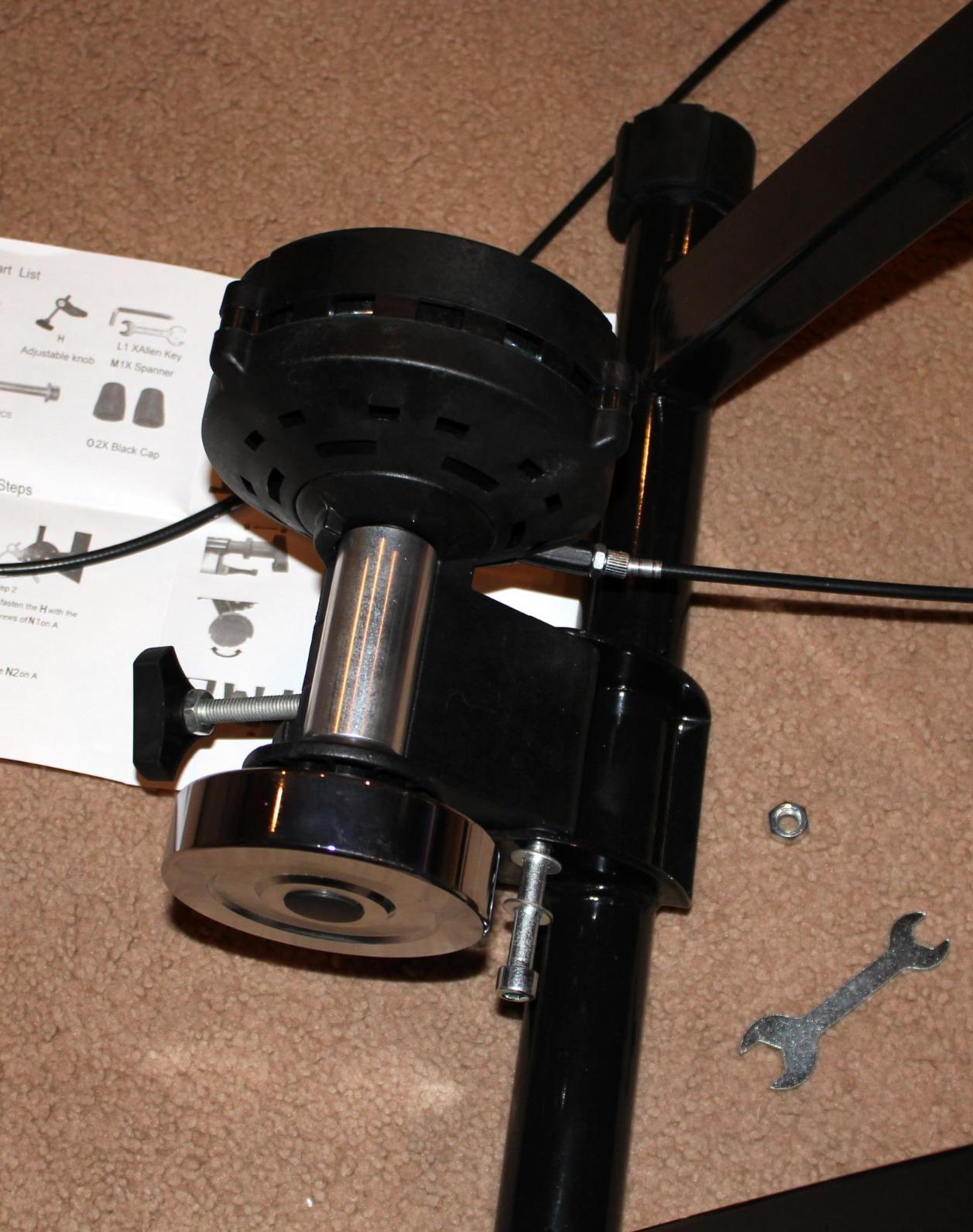
There is no handlebar remote, which means resistance changes happen through your gears. That is workable for casual spinning, where you climb a gear to go harder, and unworkable for interval work that needs a repeatable jump in load.
The frame is the sticking point. At 17.6 pounds it is heavy for what it is, and that weight is not offset by a particularly rigid structure, so out-of-the-saddle work feels wobbly. The 90-day warranty is also the shortest in this lineup by some distance, and it sits in the same review band as the far sturdier BalanceFrom stand.
Is the FDW stand good for beginners
Yes, if your goal is three sessions a month of general cardio in a spare room. The resistance range is enough to make riding out of the saddle feel meaningful, and there is no app, no pairing and no firmware to think about.
It also works for anyone moving between homes, since it folds for a car boot or a closet. Budget riders often start here, test whether indoor riding becomes a habit, and upgrade later without having wasted much.
Where it falls short
If you already know you want to follow workouts in an app, this is the wrong purchase. A speed or cadence sensor would be the minimum requirement, and that puts you in a different category of trainer entirely.
Buyers who ride hard intervals tend to regret the stepped-only resistance and the 90-day warranty. The same money in a stand with a longer warranty and a remote lasts considerably longer.
4. Yaheetech Magnetic Steel Bike Trainer: Built for Uneven Floors
Yaheetech Magnetic Steel Bike Trainer Stand for Indoor Riding, 26-28in/700C
Magnetic
265 lbs
23.8 x 21.5 x 14.8 inches
Quick release skewer included
Pros
- Genuinely low noise on slick tires and carpet
- Four rotatable leveling foot caps
- Shock absorbing mount fittings
- Sturdy steel frame
- Quick release skewer and fittings included
Cons
- Quick release skewer only
- 265 lbs is a lower load rating
- Resistance set by roller position and gears
The Yaheetech stand earns its 4.3 average with two specific features. The four rotatable foot caps have teeth of varying thickness, so you can level the trainer on a carpet, a wooden floorboard or a patio that is not quite flat, and the shock-absorbing plastic fittings in the mount damp the resonance that normally travels up the frame.
That combination makes it one of the quieter magnetic trainers in this guide. Owners who fitted a slick road tire report near-silence at moderate cadence, which is exactly the configuration the design suits.
It takes 26 to 28 inch and 700C wheels, and a quick release skewer plus universal mounting fittings are in the box. The frame is alloy steel rated to 265 lbs, and the whole thing weighs 13.8 pounds.
There is no resistance remote. Load is set by how firmly the roller presses on the tire and by the gear you select, so resistance rises and falls with cadence. That is a fine way to ride by feel and a poor way to follow a prescribed workout.
Why the Yaheetech trainer suits small apartments
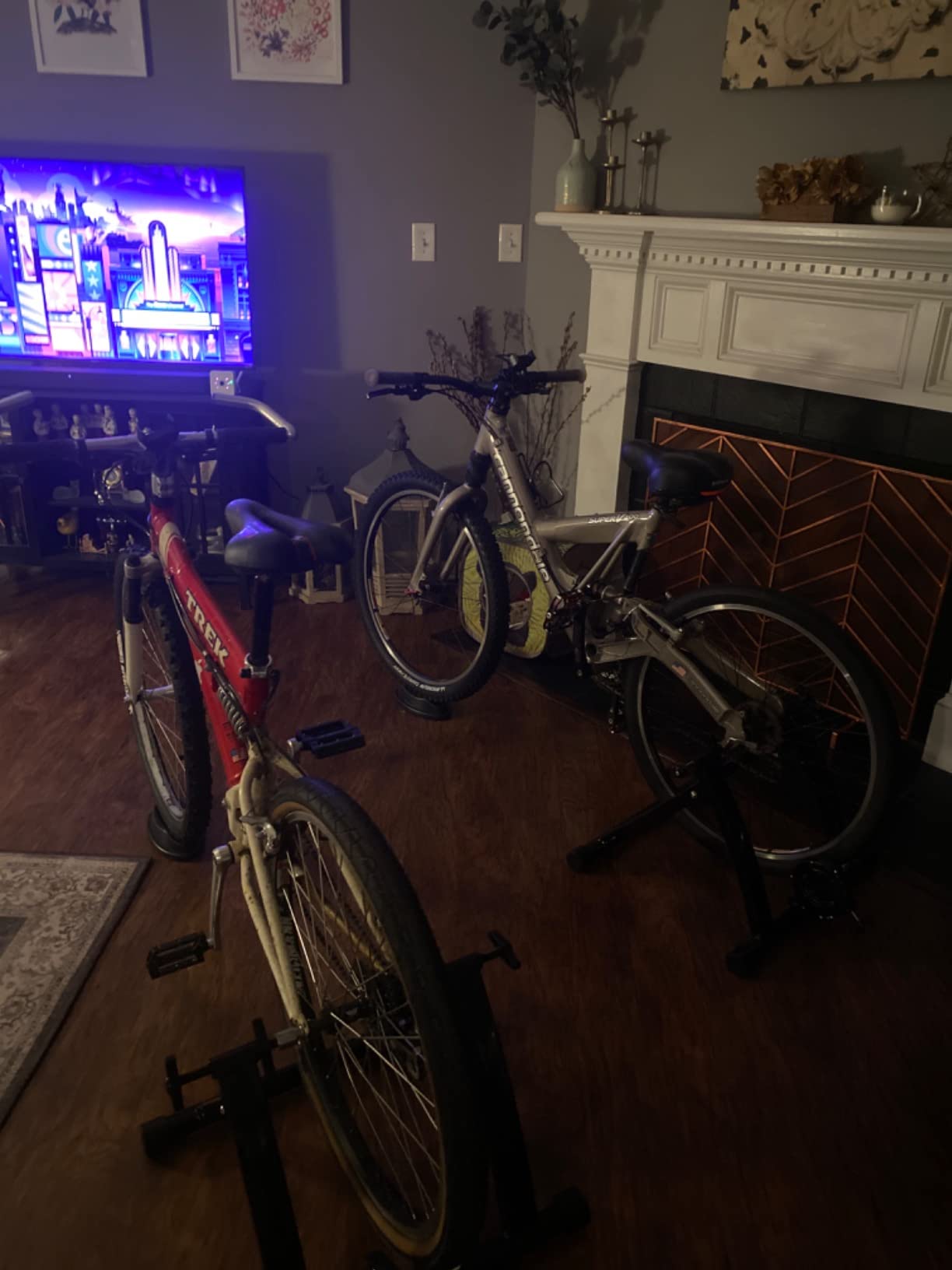
Noise is the deciding factor for anyone above a neighbour, and this stand handles it well once the tire is right. The leveling feet also stop the buzz you get on a hollow wooden floor, which is often more disruptive than the trainer itself.
It suits riders doing steady-state spins rather than structured intervals, and anyone whose bike has a quick-release skewer. The included front riser and simple single-bolt setup mean you can move between rooms without a toolkit.
What to watch out for
Thru-axle bikes need an adapter that is not included, and the 265 lbs rating is lower than several stands of similar size. Riders above that weight, or anyone on a 12 speed thru-axle bike, should skip this one.
The absence of a remote is the real limitation for anyone who wants to change resistance mid-ride. It is a deliberate saving, and it works fine for spinning by feel, but it cannot deliver the consistency a workout demands.
5. Alpcour Foldable Magnetic Trainer: The Portable One With a Steel Frame
Alpcour Bike Trainer Stand for Indoor Riding – Portable Foldable Magnetic Stainless Steel Indoor Trainer, Noise Reduction, 6 Resistance Settings & Bag – Stationary Exercise for Road & Mountain Bikes
Magnetic
6 settings
250 lbs
21.5 x 19 x 16.5 inches
Stainless steel
Pros
- Stainless steel frame built to last
- Folds into the included carry bag
- 6 levels on a bar-mounted cable controller
- Anti-slip pads and wide low base
- Good for non-weight-bearing cardio
Cons
- Handlebar clamp opens too narrowly for some bars
- Can rock out of the saddle on hard climbs
- Wheel-on design wears tires faster
The Alpcour trainer is one of the sturdiest magnetic stands in this roundup, and the 4.4 average reflects that. The frame is stainless steel rather than the lighter alloy used by cheaper stands, and owners consistently describe it as the most solidly built trainer they have owned at this level.
It folds down and goes into the included carry bag, which makes it the pick for anyone who trains in a hotel room, a holiday rental or a shared gym. A front wheel riser block and a tool-free quick lever are both in the box.
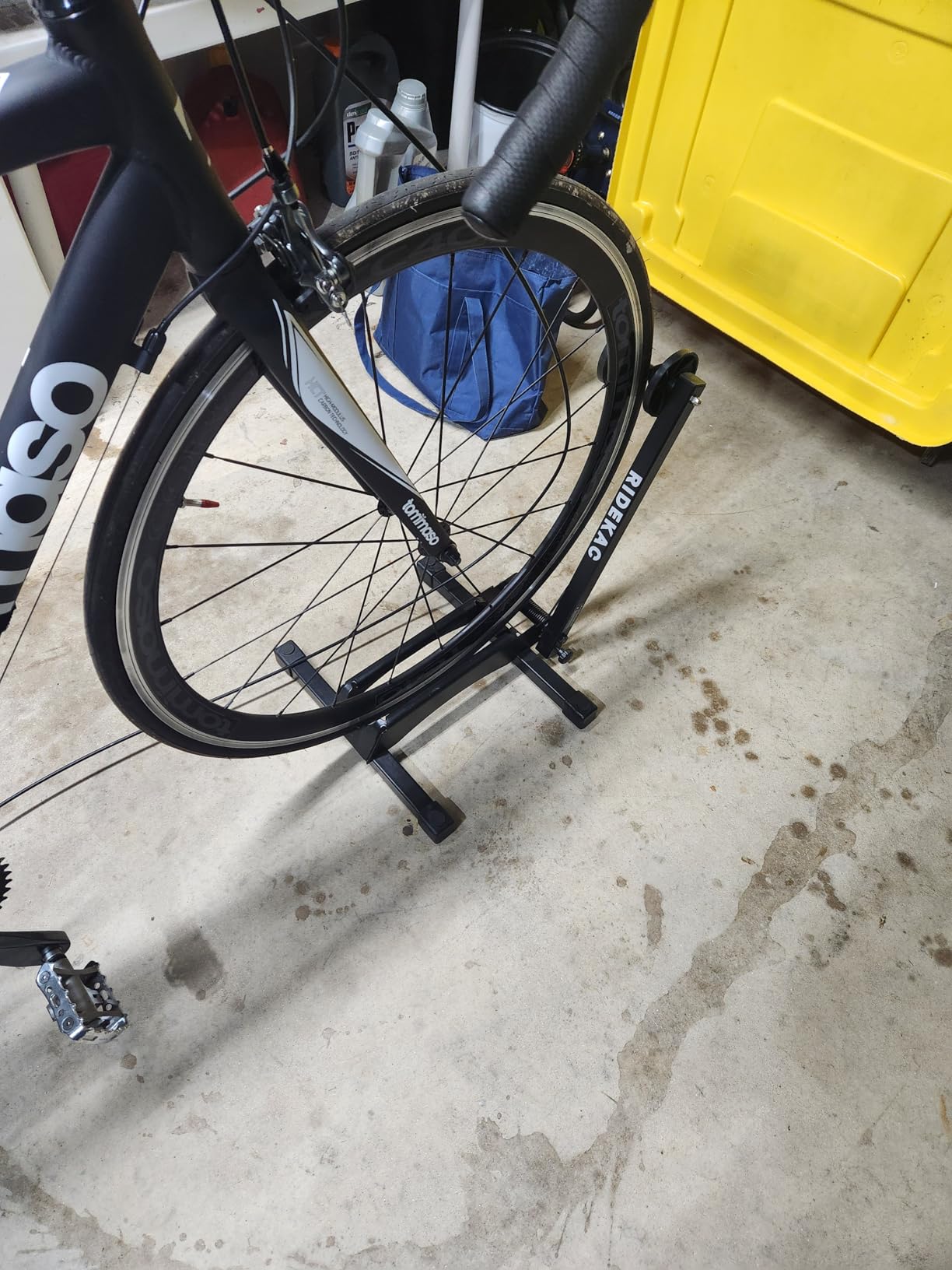
Resistance runs through six fixed magnetic levels on a handlebar cable controller, so you can adjust while riding. Owners who fitted it for post-injury or post-surgery conditioning rate it highly for that reason, since you can control the load without mounting and dismounting.
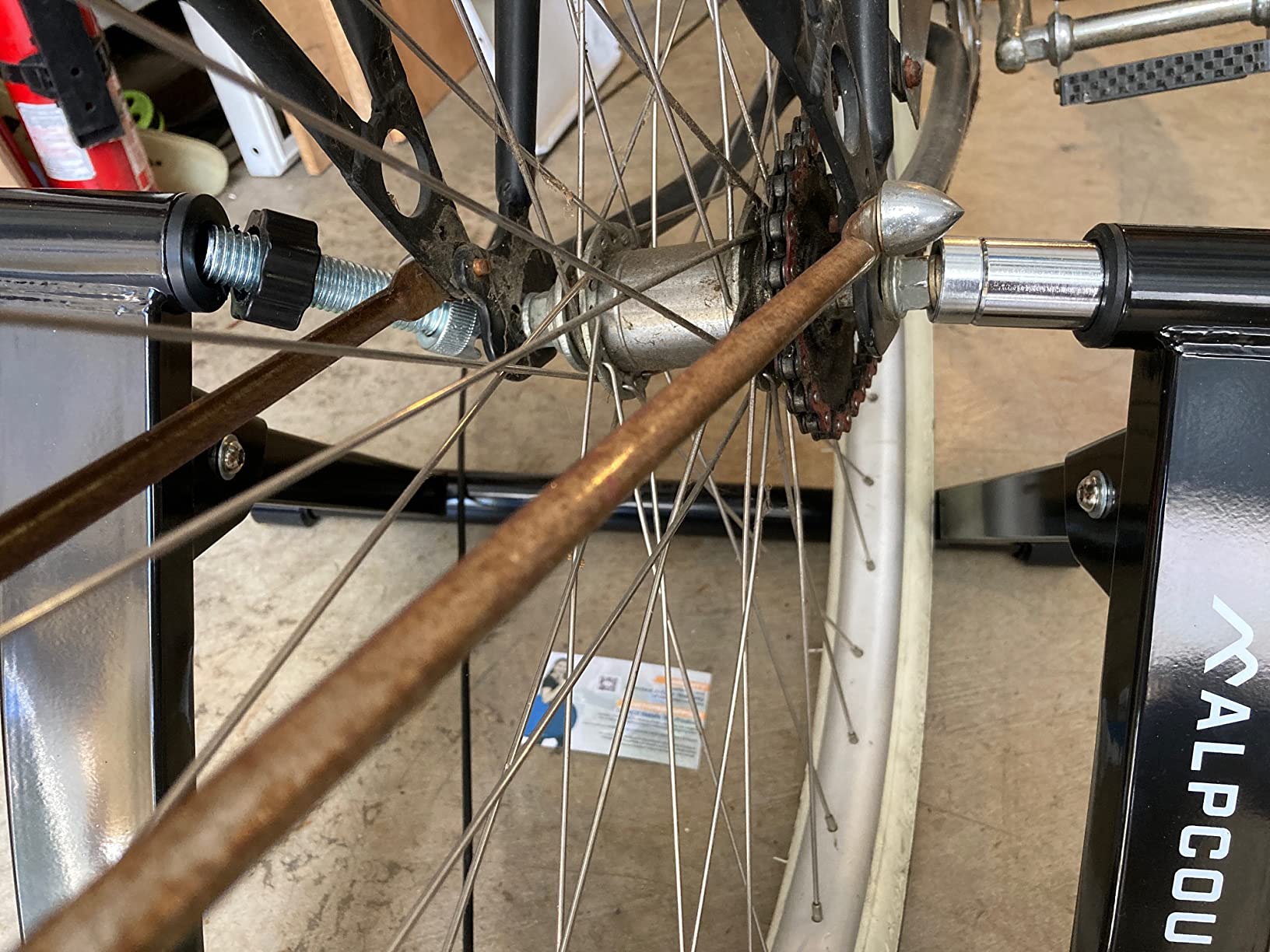
Two negatives recur. The handlebar clamp opens too narrowly, so placement on some bar shapes is awkward, and the stand can rock when you stand and pedal on aggressive climbs. The wheel-on format also wears tire tread faster than a direct-drive unit, which is worth remembering if you ride the same wheel every session.
Who the Alpcour trainer works for
It suits rehab and general fitness sessions where you want control from the bars and a frame that will survive years of daily use. The stainless construction also appeals if your trainer lives somewhere damp or gets moved regularly.
Anyone who travels with their indoor setup will appreciate the carry bag, and the 250 lbs load rating covers most riders without being a restriction for the use cases people buy this for.
Where it does not fit
Out-of-the-saddle climbing exposes the movement in the frame, so it is not the trainer for a rider who spends every session standing. Knobby tires also make it noticeably louder than the noise reduction flywheel spec suggests.
Users with modern integrated bar and stem shapes may find the controller clamp awkward to position. Anyone already replacing tires regularly should weigh a fluid or direct-drive trainer instead.
6. Sportneer Fluid Bike Trainer: The Smoothest Pedalling in This Guide
Sportneer Fluid Indoor Bike Trainer Stand – Indoor Riding Cycling Exercise Stationary Bicycle Stands Trainers with Noise Reduction Wheel for Road Bike Black 21.3 x 7.9 x 25.2″
Fluid
8 settings
300 lbs
Folds to 24 x 7.9 x 25.2 inches
Pros
- Smoothest road-like pedalling in this tier
- Noticeably quieter than magnetic stands
- Heavy stainless frame holds higher watts
- Progressive resistance as you push harder
- Folds compact for storage or travel
Cons
- Front legs need clearance for 29 inch wheels
- Instructions have very small diagrams
- Heaviest unit here at over 24 lbs
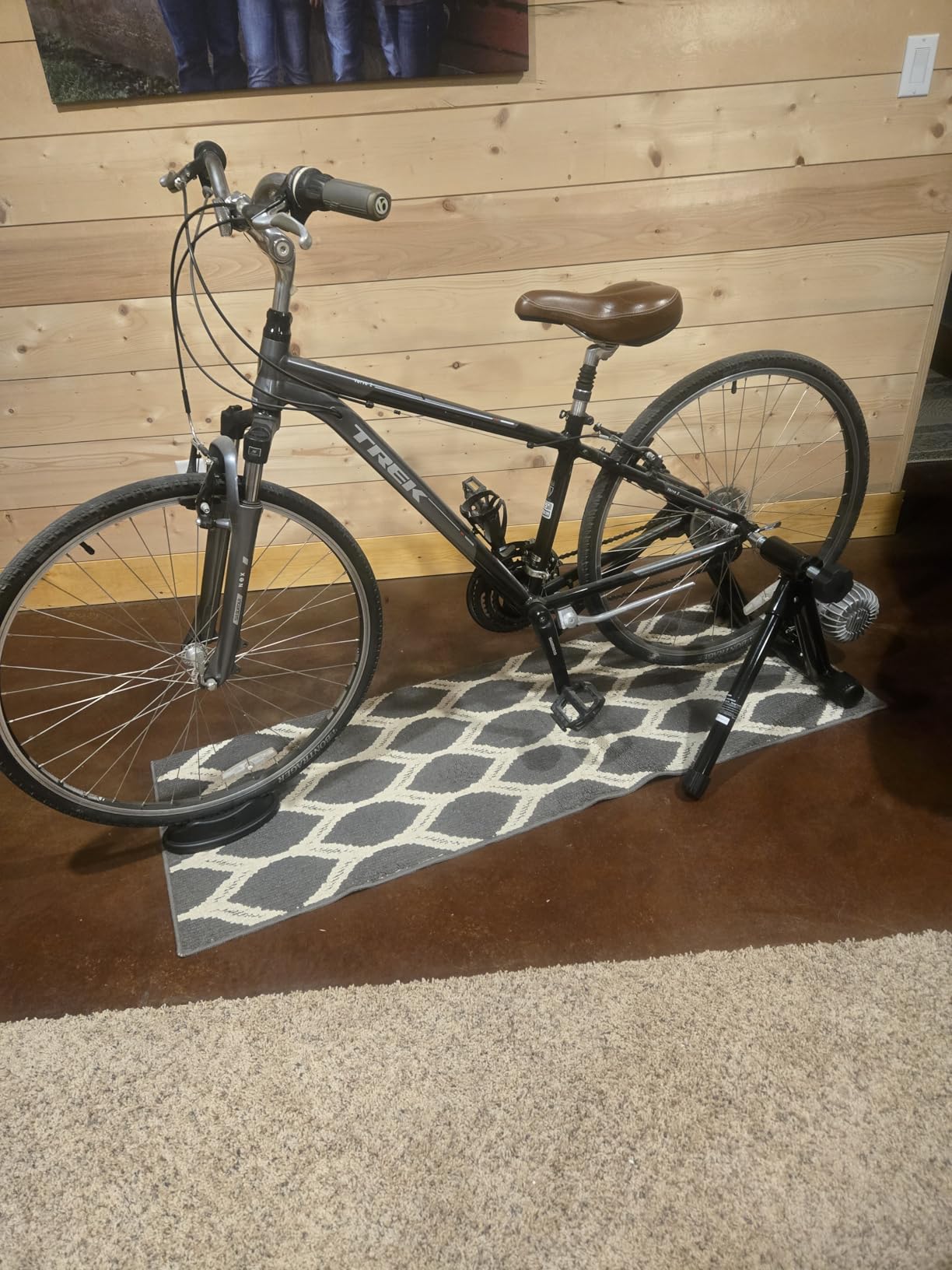
Fluid resistance gives a genuinely road-like feel, and this Sportneer is the clearest example in this roundup. Instead of fixed magnetic steps, the fluid wheel makes resistance rise progressively as you push harder, so the pedalling stroke feels continuous rather than geared.
Owners describe it as noticeably quieter than the magnetic alternatives once a slick tire is fitted, and they like that it never requires a gear change to alter the load. The heavy stainless frame stays solid at higher watts, which magnetic stands of similar size struggle to do.
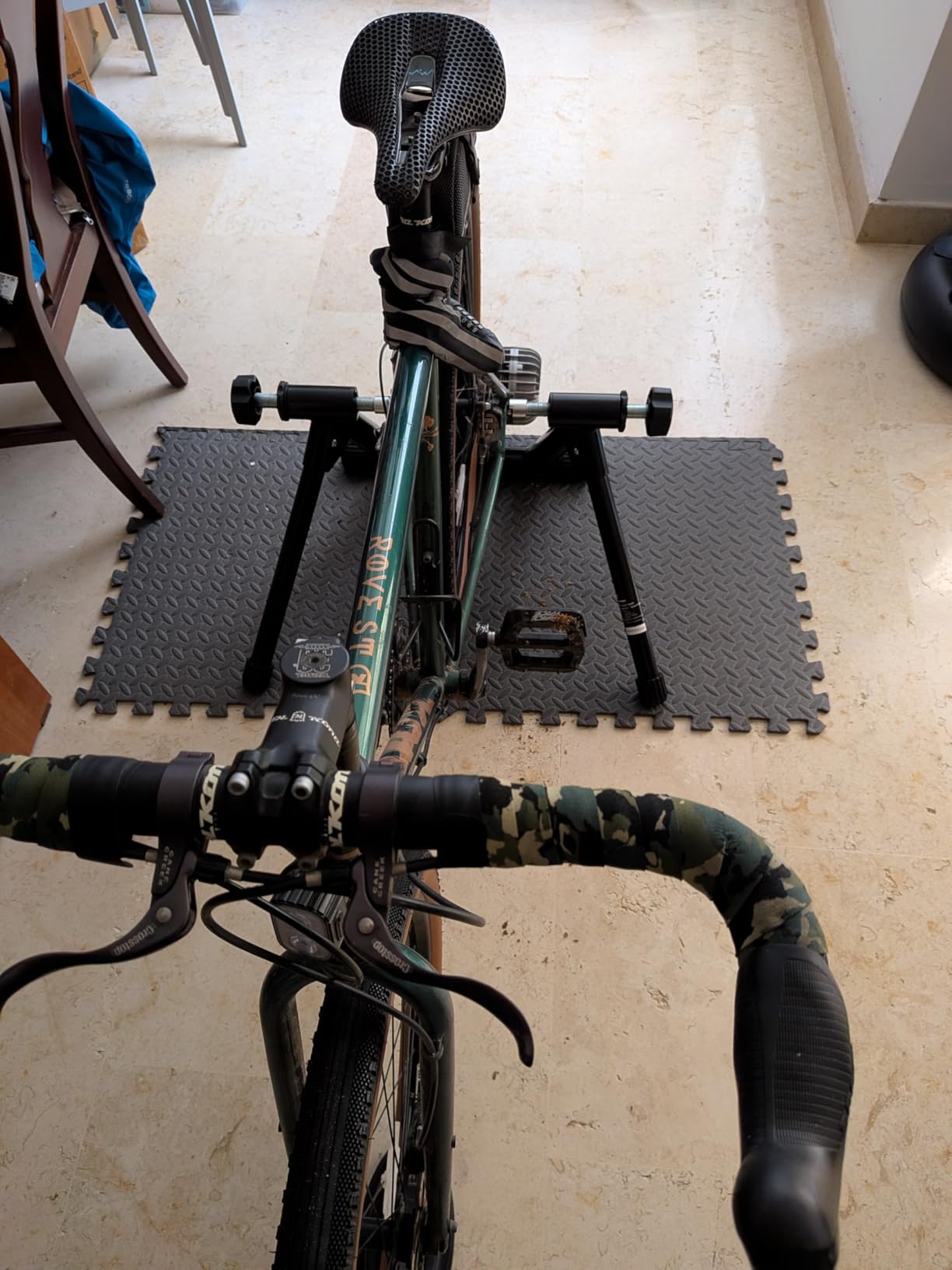
It folds to 24 x 7.9 x 25.2 inches, so it stores against a wall rather than in a cupboard. A dual bike locking system and a front wheel riser are included, and the frame is rated to 300 lbs.
Watch the wheel size. The front legs cannot fully lock out on 29 inch wheels without contacting a soft mat, which is a real problem for mountain bikers. The assembly instructions are also widely criticised for their tiny diagrams, and the resistance wheel has a rough edge that can mark very wide tires.
Why fluid resistance suits road riders
If you ride outdoors on the road, the fluid unit matches your expectations better than a magnetic stand. The resistance curve feels like a climb rather than a step, and the noise reduction is significant enough to use in a flat early in the morning.
It is a good match for steady-state spinning and endurance work where you want to pedal smoothly for an hour. Riders returning from injury who want a low-impact, low-joint option find it comfortable too.
What to consider before buying
At over 24 pounds it is the heaviest wheel-on stand in this guide, and carrying it up stairs regularly is a real consideration. It also has no electronics, so it cannot connect to an app or hold a target wattage.
Mountain bikers on 29 inch wheels should measure their clearance first or choose a different model. Anyone planning to move the trainer between rooms often will find the weight more irritating than the ride quality.
7. Garmin TacX Neo 2T Smart Trainer: The Direct Drive That Handles Anything
Garmin TacX Neo 2T Smart Trainer
Direct drive
2200 watts
47.4 lbs
ANT+ FE-C and Bluetooth
Foldable
Pros
- 32 neodymium magnets give very smooth resistance
- Runs up to 2200 watts
- ANT+ FE-C and Bluetooth connectivity
- Folds flat for wall storage
- Full axle adapter kit in the box
Cons
- Heaviest trainer here at nearly 47 lbs
- Bulkiest to move around
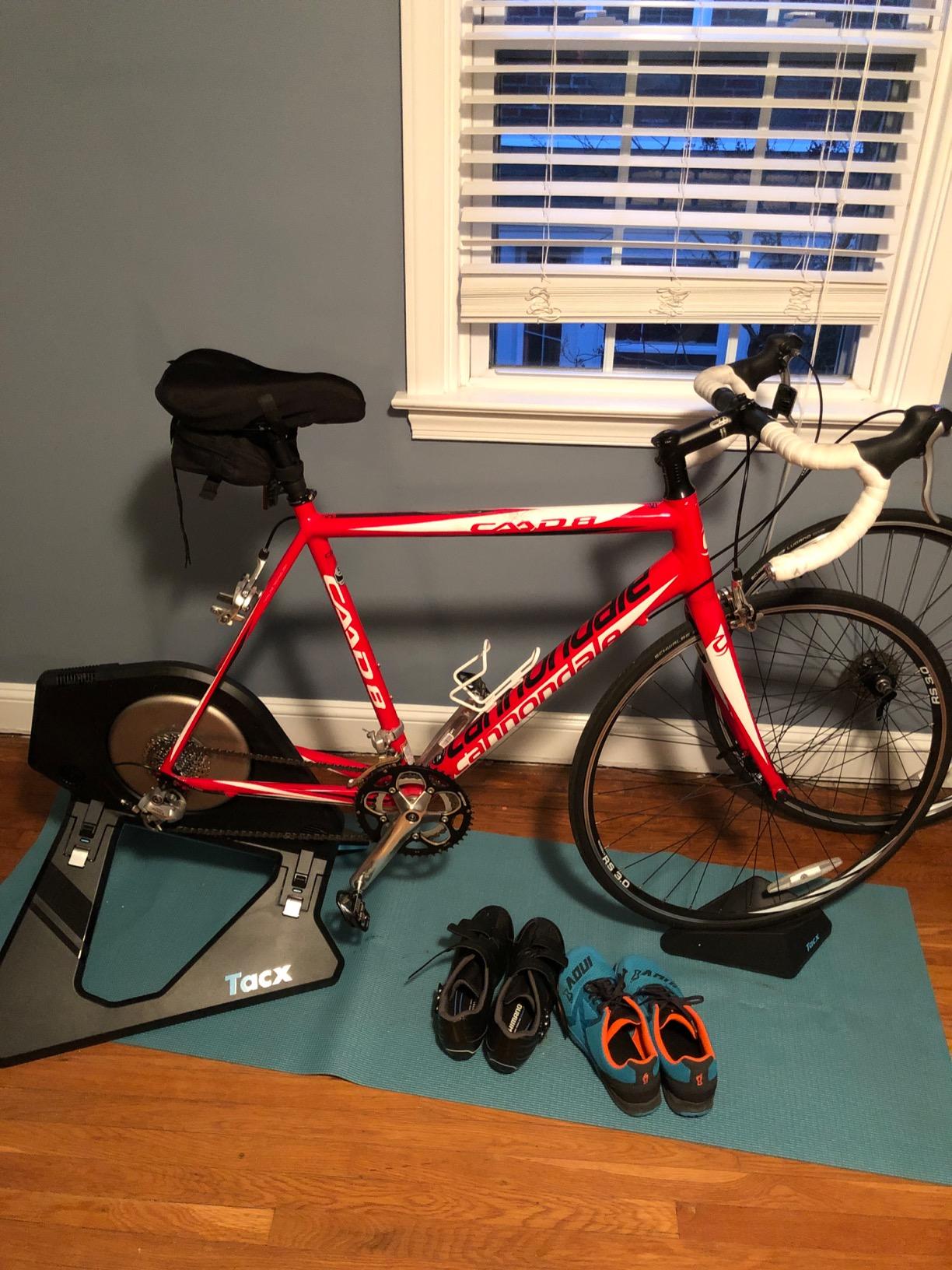
The Tacx Neo 2T carries the highest rating in this guide at 4.7, with owners describing resistance from 32 neodymium magnets as exceptionally smooth and road-accurate. It is a direct-drive unit, so the rear wheel comes off and a cassette takes its place, eliminating the tire wear that frustrates wheel-on owners.
Capacity is the headline: up to 2200 watts of simulated resistance, which is more headroom than almost any rider reaches in a sprint. Connectivity covers both ANT+ FE-C and Bluetooth, and it runs on iOS, Android, macOS and Windows.
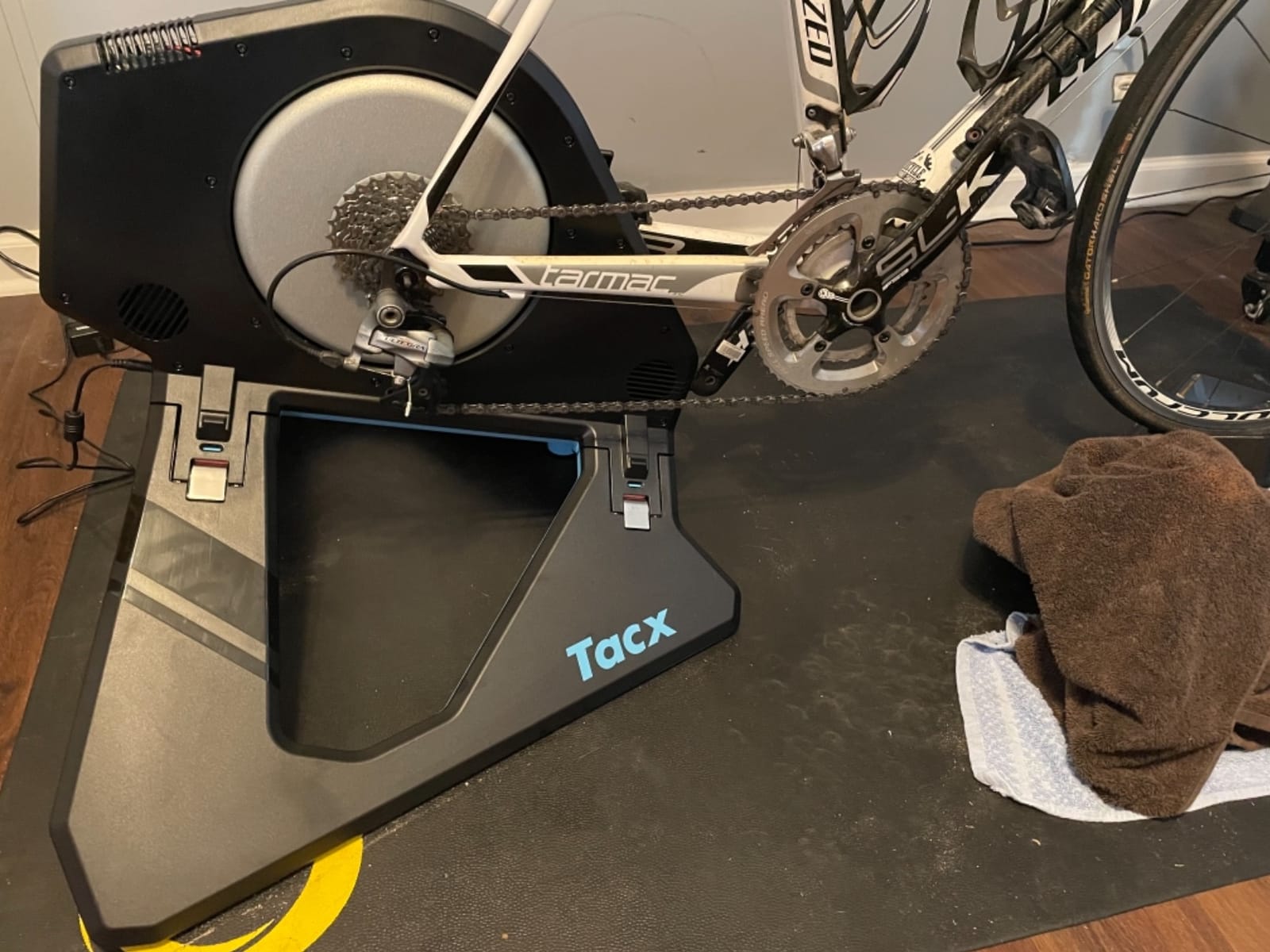
The box is unusually complete. You get a front wheel block, a power cable, a quick release for road and mountain bikes, a Shimano and SRAM freehub body, and direct drive adapters covering 142 x 12 mm and 148 x 12 mm thru-axles. One month of Tacx Premium software is included as well.
The frame folds for storage against a wall, which is sensible for a unit this size. The drawback is weight: at 47.4 pounds it is by far the least portable trainer in the roundup, and moving it between rooms is a two-person job for many riders.
Who the Neo 2T is for
This is the trainer for a rider whose sessions are structured and hard: intervals, race simulation and climbing blocks where the resistance has to be repeatable. If you own a power meter and want to check the trainer against it, the high wattage ceiling gives you room to do that.
Enthusiast riders who already own one Wahoo trainer often name the Neo 2T as their second, and the 4.7 average reflects how little owners find to complain about beyond size. The complete axle kit also removes the compatibility guesswork for almost any bike.
Where it falls short
Weight and footprint are the reasons it does not win outright. In a small flat where the trainer has to live in a cupboard between sessions, the 47.4 pounds is a genuine drawback.
Some owners also note that resistance control depends on accessories and app setup in certain configurations rather than a physical control out of the box. If you want a handlebar remote, this unit does not provide one.
8. Saris M2 Smart Trainer: Accurate Electromagnetic Resistance on a Wheel
Saris M2 Smart Indoor Bike Trainer, Compatible with Zwift App, Black, Made in the USA
Electromagnetic
plus or minus 5 percent
20 lbs
69 dB at 20 mph
Lifetime warranty
Pros
- Electromagnetic resistance at plus or minus 5 percent
- Dual ANT+ FE-C and Bluetooth
- Zwift certified
- No wheel removal needed
- Alloy steel with limited lifetime warranty
Cons
- No built-in resistance unit or handlebar remote
- Highest share of one-star ratings in this group
- Heavier and bulkier than fluid trainers
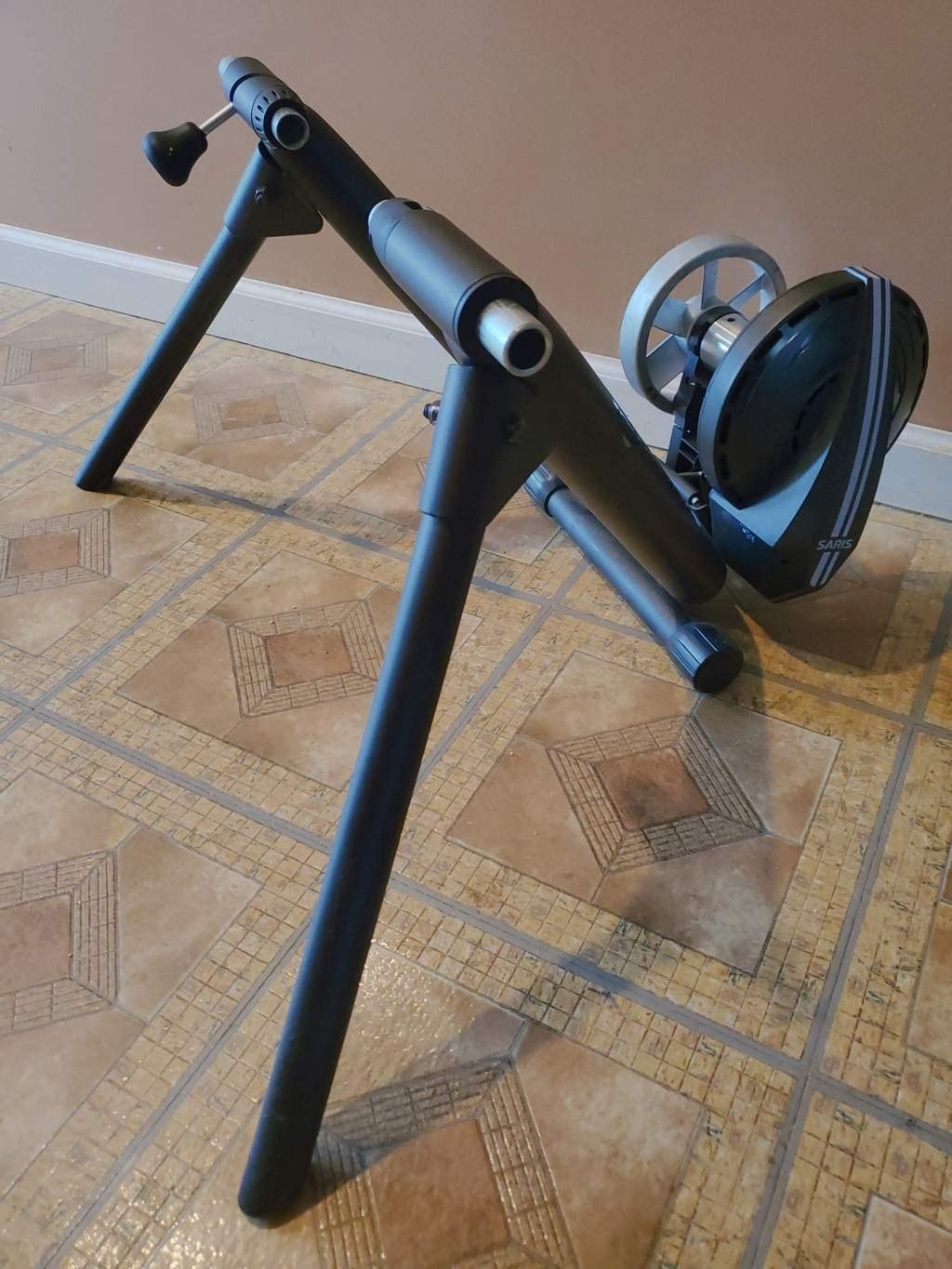
The Saris M2 is the most interesting technical proposition in this roundup. Its electromagnetic resistance is rated at plus or minus 5 percent accuracy, which is the kind of figure most trainers in this guide do not publish at all, and it is certified for Zwift over both ANT+ FE-C and Bluetooth.
It is wheel-on, so there is no wheel removal and no cassette to fit. For riders who switch between an outdoor bike and a trainer every day, that convenience is the whole argument. The alloy steel frame is rated to 300 lbs and carries a limited lifetime warranty.
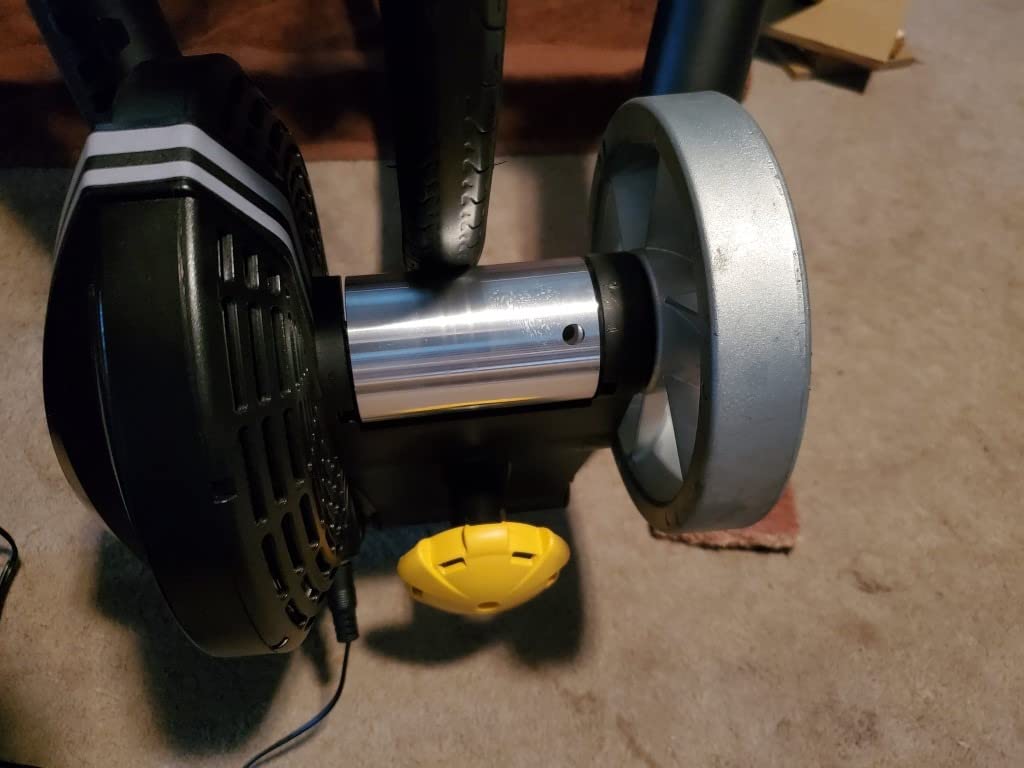
Published noise is 69 decibels at 20 mph, the same figure Saris quotes for the Fluid2. That is useful context: a wheel-on trainer with a road tire is a noticeable sound source in a quiet room, and this is the number to compare against when judging an upstairs setup.
The 4.1 average hides a wide spread. Sixty-three percent of ratings are five stars, but 13 percent are one star, with durability and build quality complaints concentrated in that group. There is also no resistance control unit or handlebar remote, so resistance is set by the app and by your gearing.
Who should choose the M2
Pick it if you ride daily indoors, you want the shortest possible gap between an outdoor ride and a trainer session, and you follow workouts where holding a wattage matters. The electromagnetic accuracy and Zwift certification cover the two things structured riders need.
Owners who get a well-built trainer report long, trouble-free use, and the limited lifetime warranty softens the durability worry. The frame also holds a 29 inch wheel, so mountain bikers are covered.
Where to be cautious
The durability complaints are real enough to research before you commit. A minority of owners report build quality problems, and that group rates the trainer very low, so the average is less reassuring than it looks.
Without a handlebar remote you cannot change resistance mid-ride outside the app, and at 20 pounds the unit is bulkier than the fluid trainers. Riders who want a simple manual backup will not find one here.
9. Wahoo KICKR CORE 2: The Current Smart Trainer to Beat
Wahoo Fitness KICKR CORE 2 ZWIFT COG and Click – Orange Cog 3rd Generation
Direct drive
WiFi, Bluetooth, ANT+
20 levels
2-year warranty
Pros
- Smooth road-like direct drive resistance
- Integrated WiFi for fast pairing
- Quiet enough for apartment use
- Adapters for QR and thru-axle bikes
- Works as a passive roller when powered off
Cons
- Zwift Click setup is fiddly and needs a subscription
- Lighter build moves during out-of-saddle sprints
- Click controllers appear to work with Zwift only
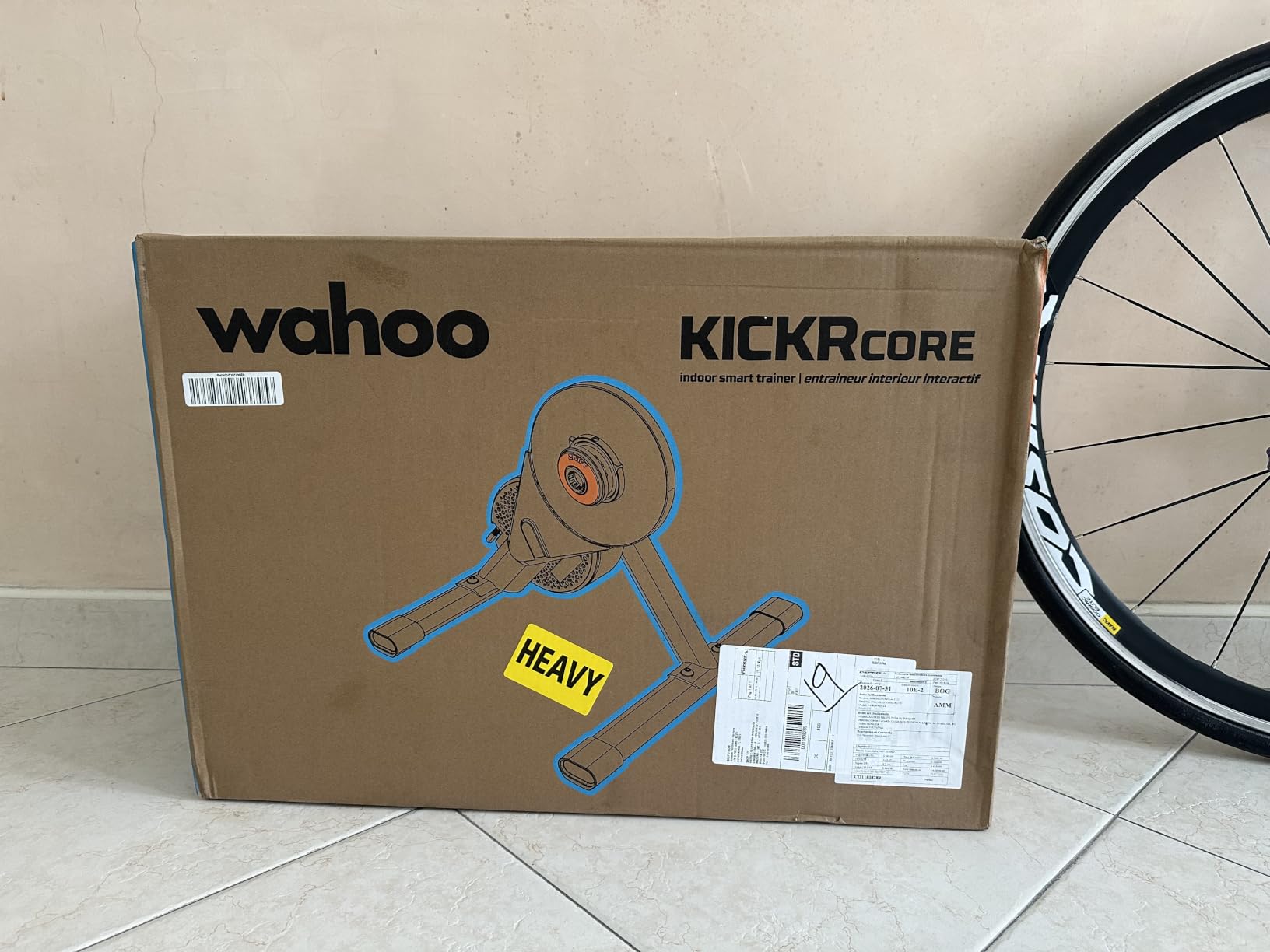
The KICKR CORE 2 is the current-generation direct-drive trainer in this roundup, and the change owners notice first is connectivity. Integrated WiFi pairs far faster than a Bluetooth-only unit and delivers firmware updates automatically, which removes the most common setup complaint on older trainers.
Resistance is electronic and direct-drive, so the rear wheel comes off and the cassette drives the unit. The ride feel is smooth and road-like at a 4.5 average, and the 20 resistance levels are selected from the included Zwift Click controllers rather than a trainer-mounted dial.
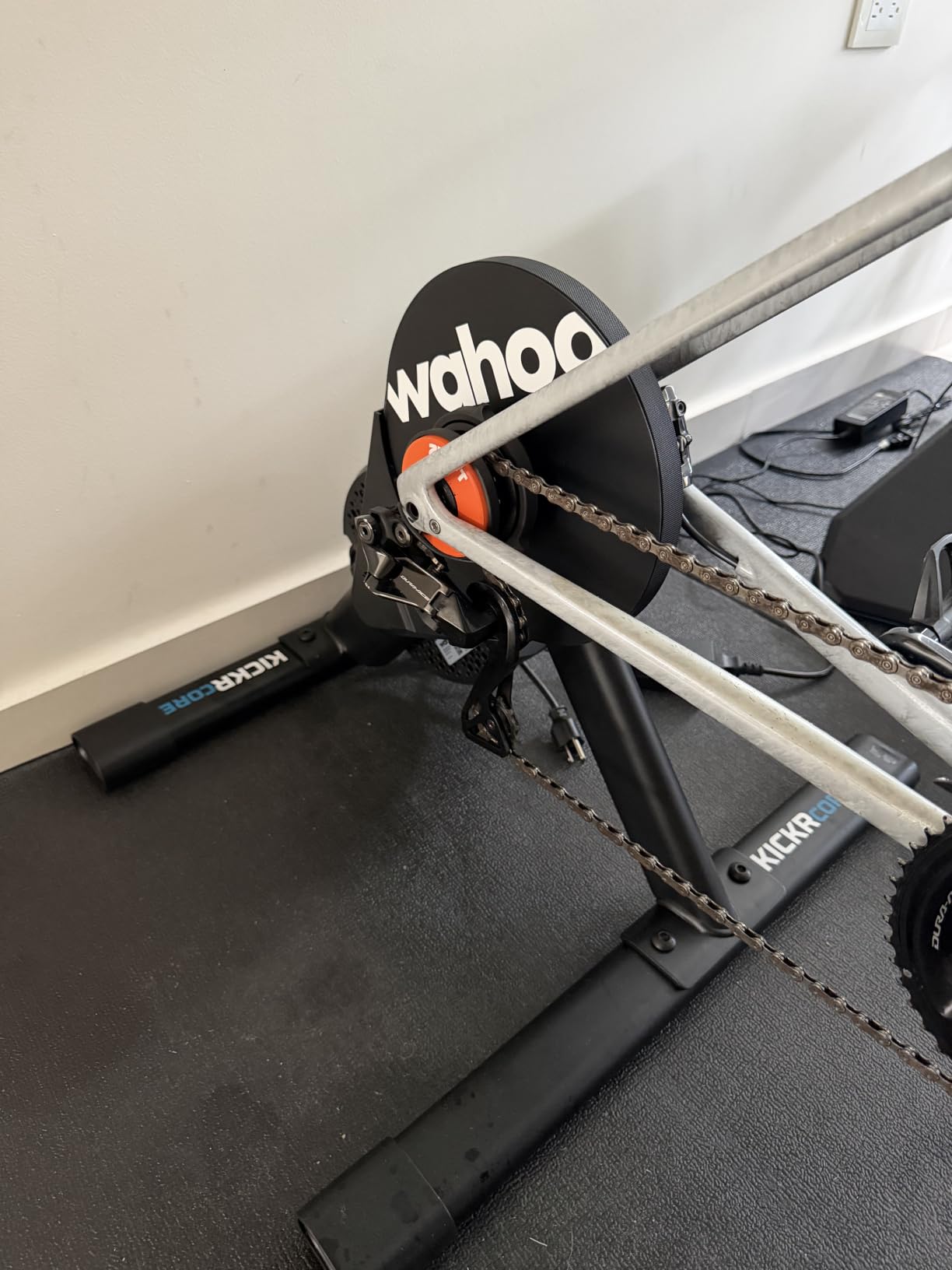
The accessory package is thorough. Adapters cover 130 mm and 135 mm quick releases plus 12×142 and 12×148 thru-axles, both drive side and non-drive side, and a cassette spacer is included. Powered off, it doubles as a passive roller, which is a genuinely useful fallback for warming up.
Two recurring frictions sit around the Zwift Cog and Click bundle. Some riders find the Click setup frustrating and point out that it expects an active Zwift subscription, and the gear controllers appear to be a Zwift-only feature with no confirmed Rouvy or MyWhoosh support. Swapping in a standard cassette is the fix most owners recommend outside that ecosystem.
Is the KICKR CORE 2 the right smart trainer
It is the pick for Zwift riders, particularly those who race, follow structured plans or use the new WiFi and race-oriented features of the current generation. Owners repeatedly cite quiet operation and easy setup, and the 2-year warranty is a reasonable commitment for a direct-drive unit.
It also works well for anyone who wants direct drive without carrying 47 pounds around. The 13.6 kg figure keeps it manageable, and the passive roller mode means it doubles as a warm-up tool before a ride.
Where the bundle holds people back
If you train in Rouvy, TrainerRoad or MyWhoosh, the Click controllers add nothing and the setup steps are extra friction. Riders outside Zwift generally fit a standard cassette instead and ignore the bundled cog.
The lighter build than premium direct-drive trainers is noticeable during out-of-the-saddle sprints, where it moves more than the Tacx. And virtual shifting still takes adjustment for anyone who prefers a real cassette under the fingers.
10. Topeakmart Adjustable Magnetic Trainer: Folds Flat for Small Spaces
Topeakmart Adjustable Magnetic Bike Trainer Stand for Indoor Riding 26-28in
Magnetic
120 kg capacity
Folds to 21.5 x 7 x 17.3 inches
Quick release skewer
Pros
- Folds to about 7 inches thick for a closet
- Rotatable leveling foot caps
- Shock absorbing mount fittings
- Unbranded black finish
- Front wheel stand included
Cons
- Resistance comes from roller pressure rather than magnets
- No handlebar controller of any kind
- Very loud on hybrid or knobby tires
- Quick release skewers only
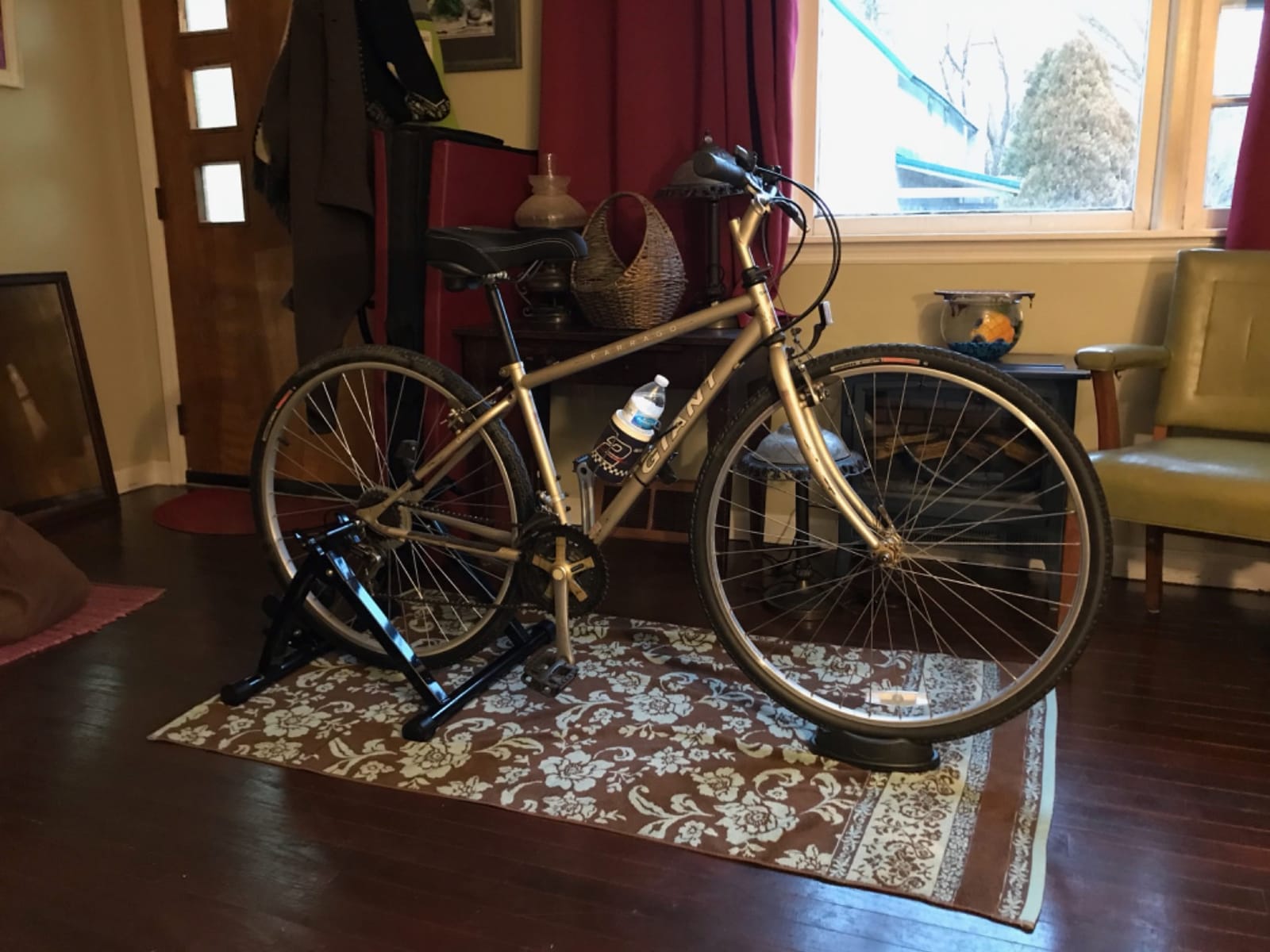
The Topeakmart trainer is built around one problem: nowhere to put it. It folds flat to roughly 21.5 x 7 x 17.3 inches, which is thin enough to slide behind a door or stand in a closet rather than occupy a garage corner year-round.
Beyond storage, it is a conventional magnetic wheel-on stand. The M-shaped powder-coated steel frame supports up to 120 kg, rotatable foot caps handle uneven ground, and shock-absorbing mount fittings reduce transmitted vibration.
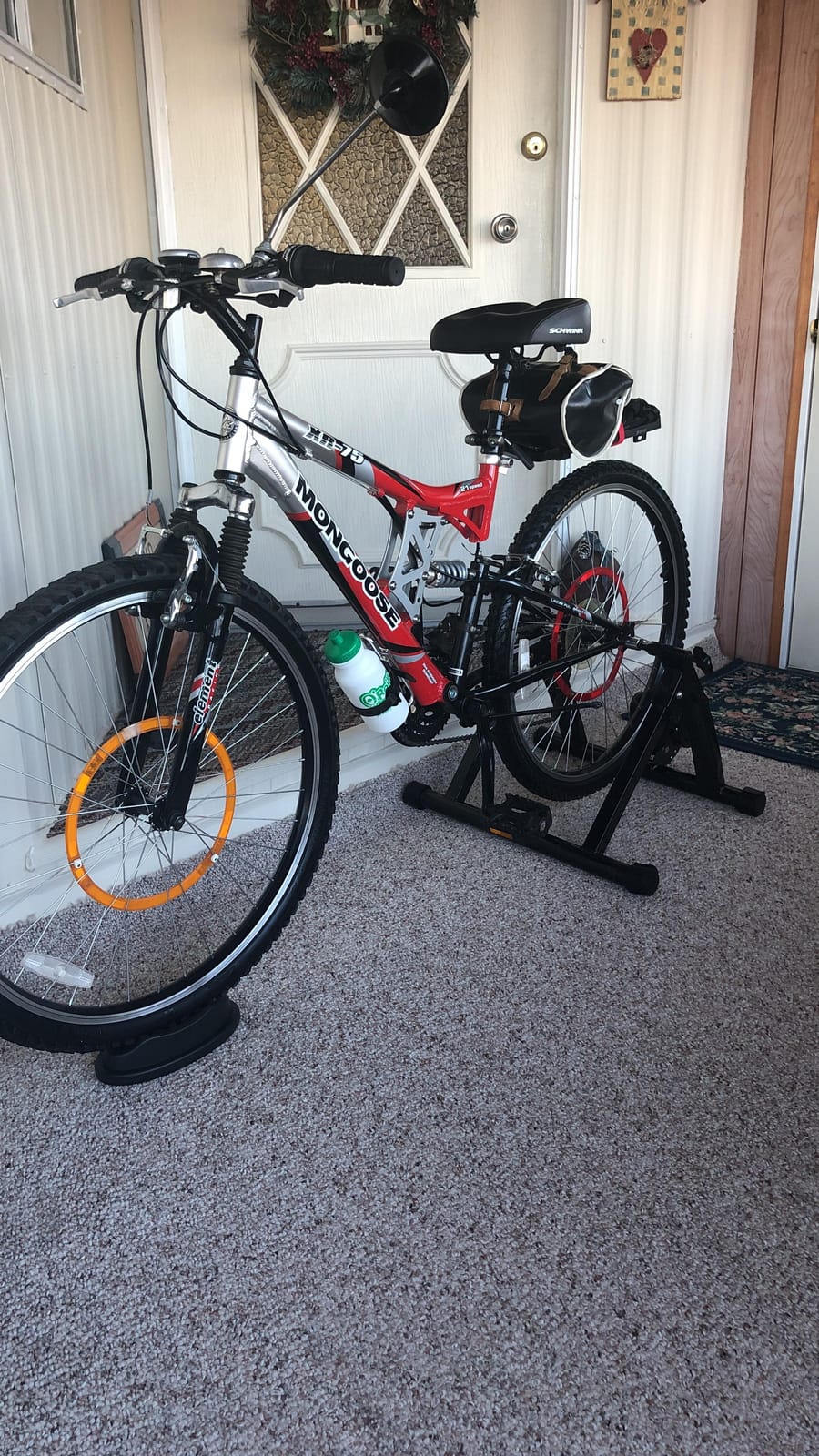
The catch is that the magnets are not doing the work. Resistance comes from how hard the roller presses into the tire, so load is tied to your cadence and gear choice in a way that is much less intuitive than a controlled dial.
There is no handlebar controller of any kind, and with hybrid or knobby tires the unit is very loud until a slick tire goes on. The quick release skewer arrangement also limits it to 26 to 28 inch wheels on quick-release bikes.
When folding flat is the deciding factor
In a flat where the trainer must disappear between sessions, this is among the most compact options in the guide. Owners use it mainly for warm-ups and occasional garage sessions, and the 4.2 average reflects a product that does that job without fuss.
It suits road riders on quick-release bikes who want simple, quiet folding hardware and nothing else. The plain black finish also keeps it visually unobtrusive in a living space.
What you give up for the compact frame
Losing the handlebar controller is the biggest loss. Every resistance change means stopping and shifting, and there is no fine adjustment at all. Riders who want any control over load should look at a stand with a remote.
The axle bolt sizes may not suit every frame without a swap, and thru-axle bikes need an adapter that is not included. At 500 reviews the owner base is also the thinnest of the magnetic stands here.
11. Saris Fluid2 Smart Equipped: Sensor-Based Indoor Riding, Lightly Built
Saris Fluid2 Smart Equipped Indoor Bike Trainer, Includes Speed Sensor, Made in The USA
Fluid
69 dB at 20 mph
7.3 lbs
Speed and cadence sensor
Lifetime warranty
Pros
- Widest progressive range and road-like feel
- Quiet enough for a condominium
- Only 7.3 lbs and folds flat
- Speed and cadence sensor for Zwift and Rouvy
- No leaks reported in long daily use
Cons
- Assembly can be very difficult
- Some examples arrived with misaligned parts
- Sensor can be hard to fit through spoke gaps
- Included front riser is uncomfortable
The Saris Fluid2 is a wheel-on fluid trainer with a speed and cadence sensor in the box, which is its whole argument. It connects to Rouvy, Zwift and other indoor cycling apps without a direct-drive unit, so first-time app users can get a working virtual ride from a lighter, simpler machine.
At 7.3 pounds it is the lightest trainer in this roundup and folds flat, so it is easy to move between a home gym and a garage. Owners who get it running report a genuinely road-like progressive feel and no fluid leaks after long-term daily use.
Published noise is 69 decibels at 20 mph, matching the Saris M2. Owners who live above a living space describe it as usable there, and the included leveling block and airflow cooling system handle uneven floors and heat.
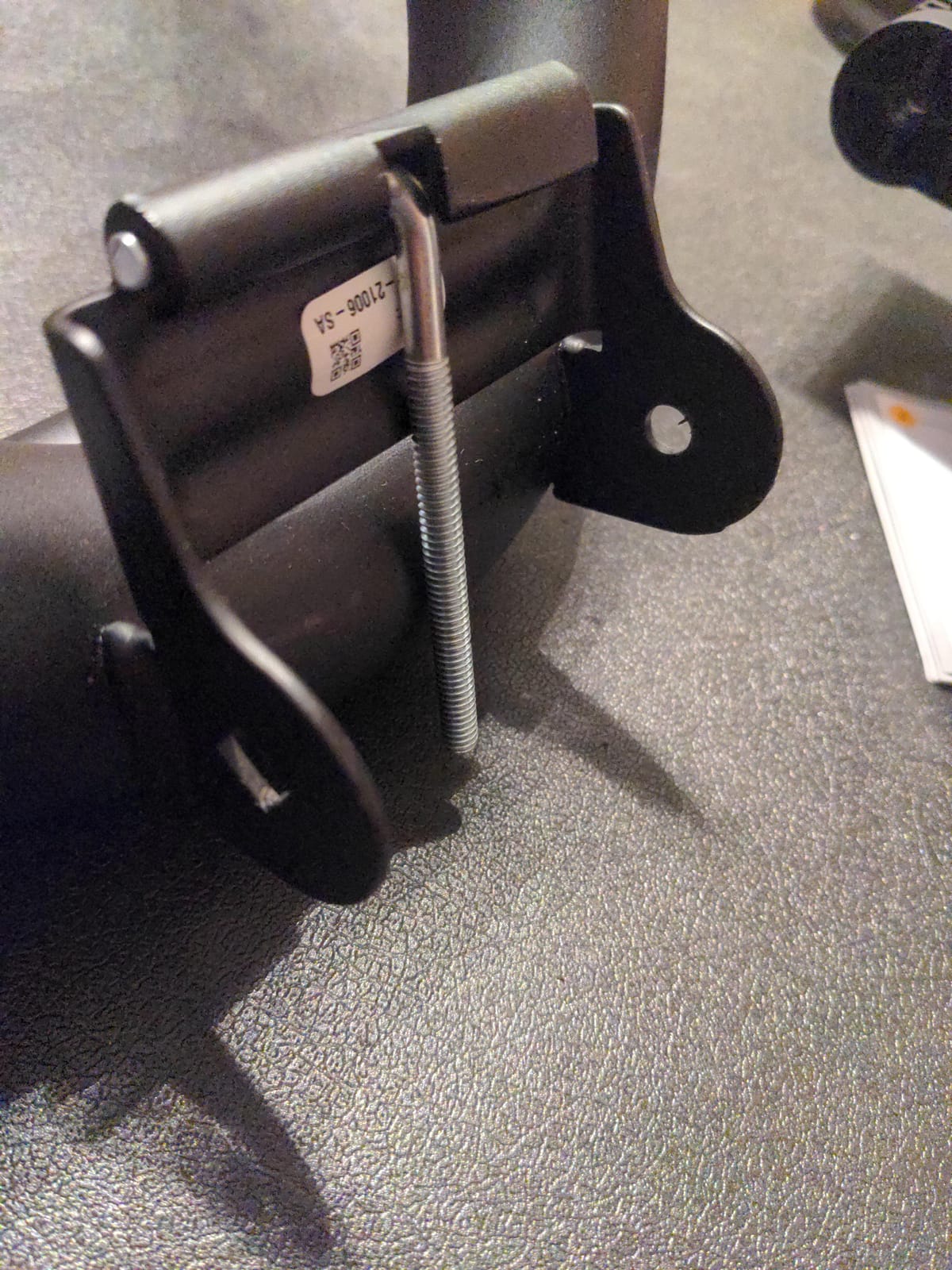
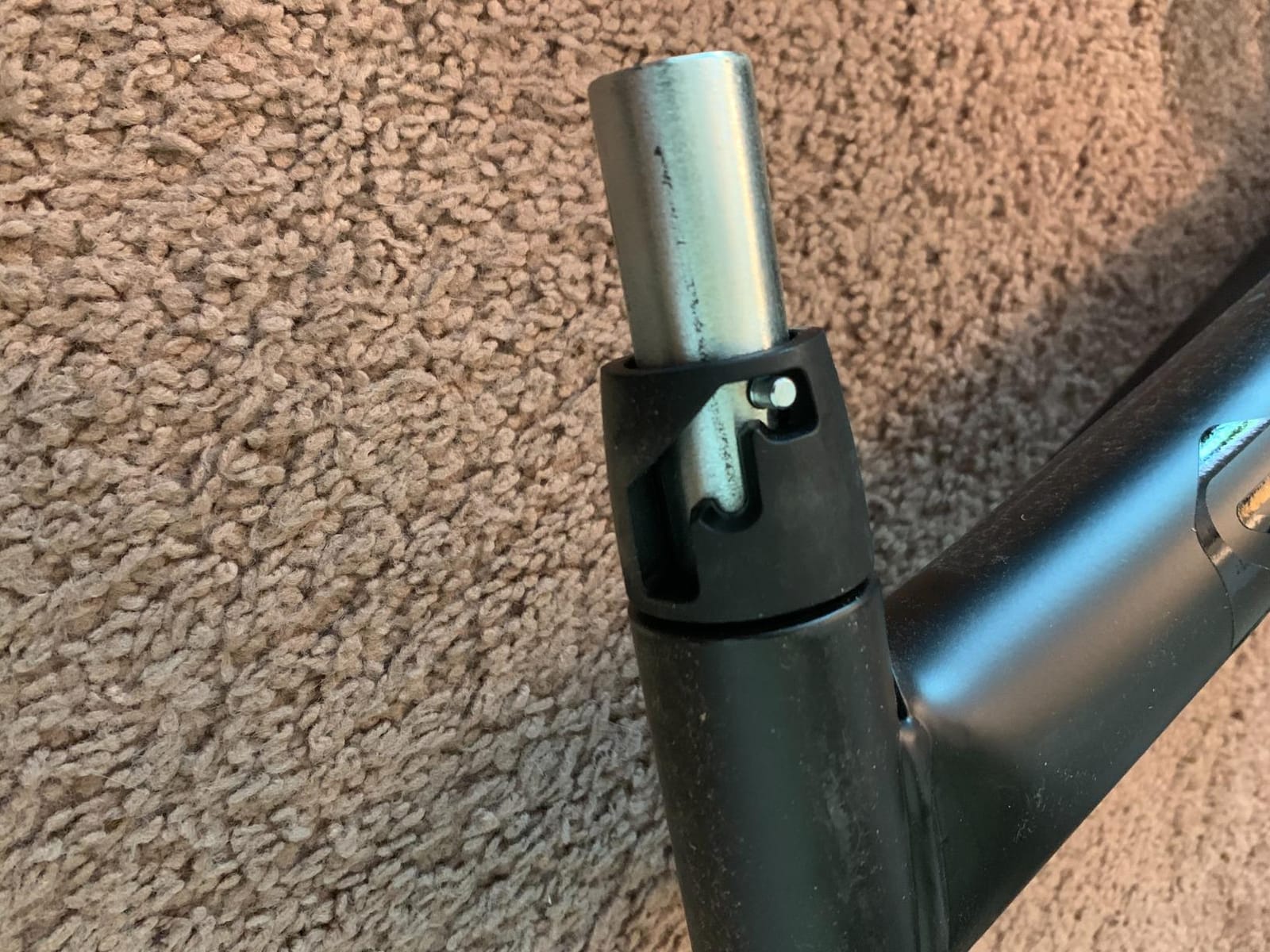
Owners describe parts that need a mallet to fit together, small diagrams, and boxes arriving with messy welds or misaligned components. The sensor can be difficult to thread through tight spoke gaps, and the cheap front wheel riser is a frequent source of wrist and arm discomfort on long sessions.
Who the Fluid2 works for
It suits riders who want app-based indoor riding without the weight, bulk and tire handling of a direct-drive trainer. The limited lifetime warranty is a genuine plus, and the sensor removes the need to buy one separately.
Anyone riding daily and short on space will like the 7.3 pound weight and the fold-flat frame. It also pairs well with a slick road tire, which sharpens both the feel and the noise level considerably.
Where buyers run into trouble
Budget an hour for assembly and have a mallet to hand. The reports of misaligned parts and occasional refurbished examples are consistent enough to inspect the trainer carefully as soon as it arrives.
If assembly difficulty would end your sessions, an electromagnetic trainer with fewer moving assemblies is a safer bet. The included front riser is also worth replacing with a better one for anyone riding long sessions.
12. Feedback Sports Omnium: Quiet, Precise and Genuinely Portable
FEEDBACK SPORTS Omnium Over-Drive Lightweight Bike Trainer with Travel Bag
Eddy current
16 to 29 inch wheels
14 lbs
3-year warranty
Travel bag
Pros
- Internal progressive eddy current resistance
- Only 14 lbs and folds into a travel bag
- Fits 16 to 29 inch wheels
- Handles thru-axles and quick releases
- Postmount and flat-mount disc clearance
Cons
- Fully mechanical with no app connectivity or power data
- Front wheel must be removed
- Quad-heavy pedalling takes practice
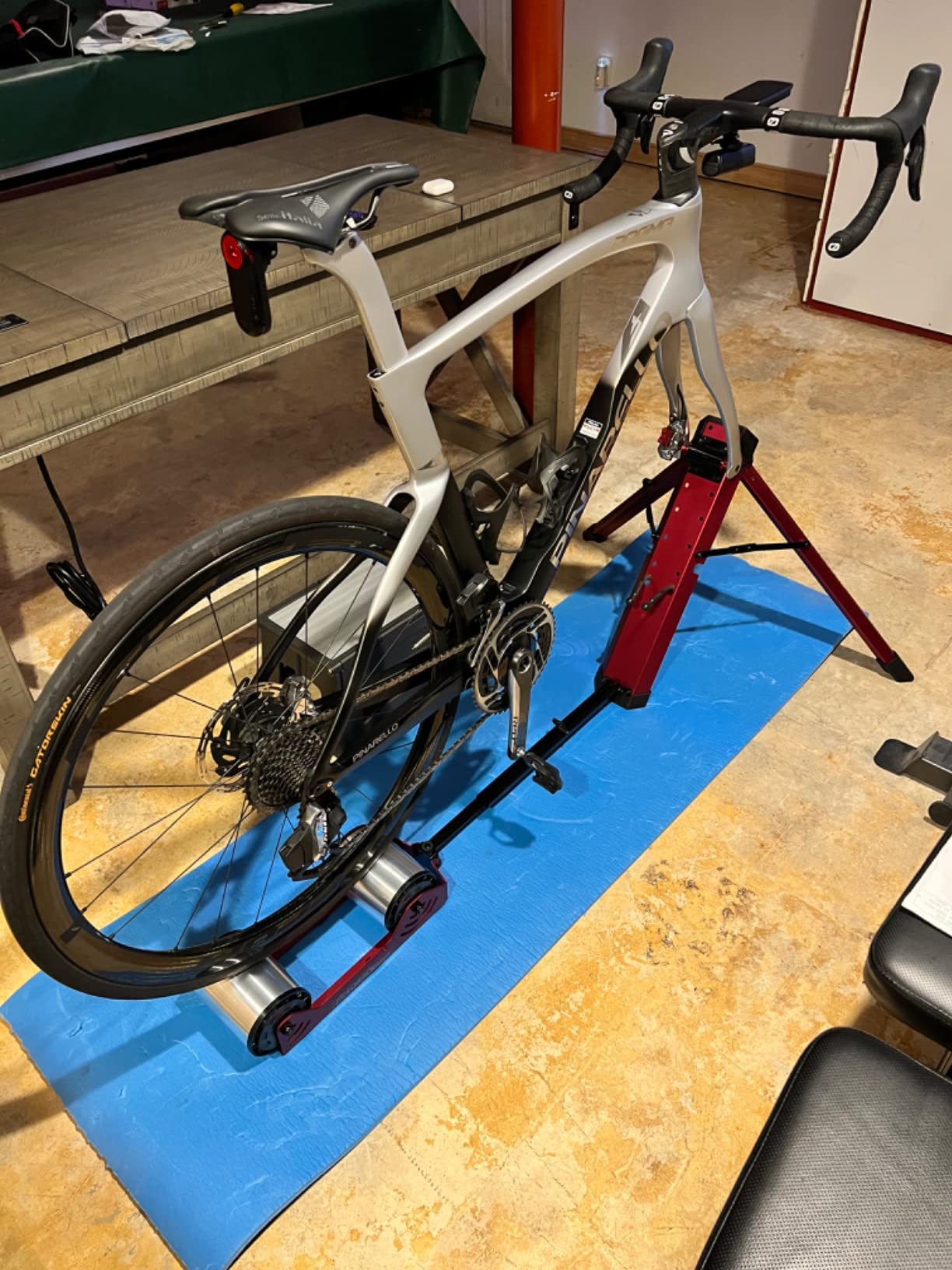
The Feedback Sports Omnium handles portability better than anything else here. At 14 pounds it is a fraction of the weight of a magnetic or fluid stand, and it folds into the included heavy-duty travel bag, which is why owners use it for pre-race warm-ups in a car park or hotel room.
Resistance is entirely internal, using patented progressive eddy current with no external roller pressing on the tire. The 4.25 inch precision-machined aluminum rollers are quiet even at high intensity, and the ride feel imitates real rolling and wind resistance rather than a fixed load.
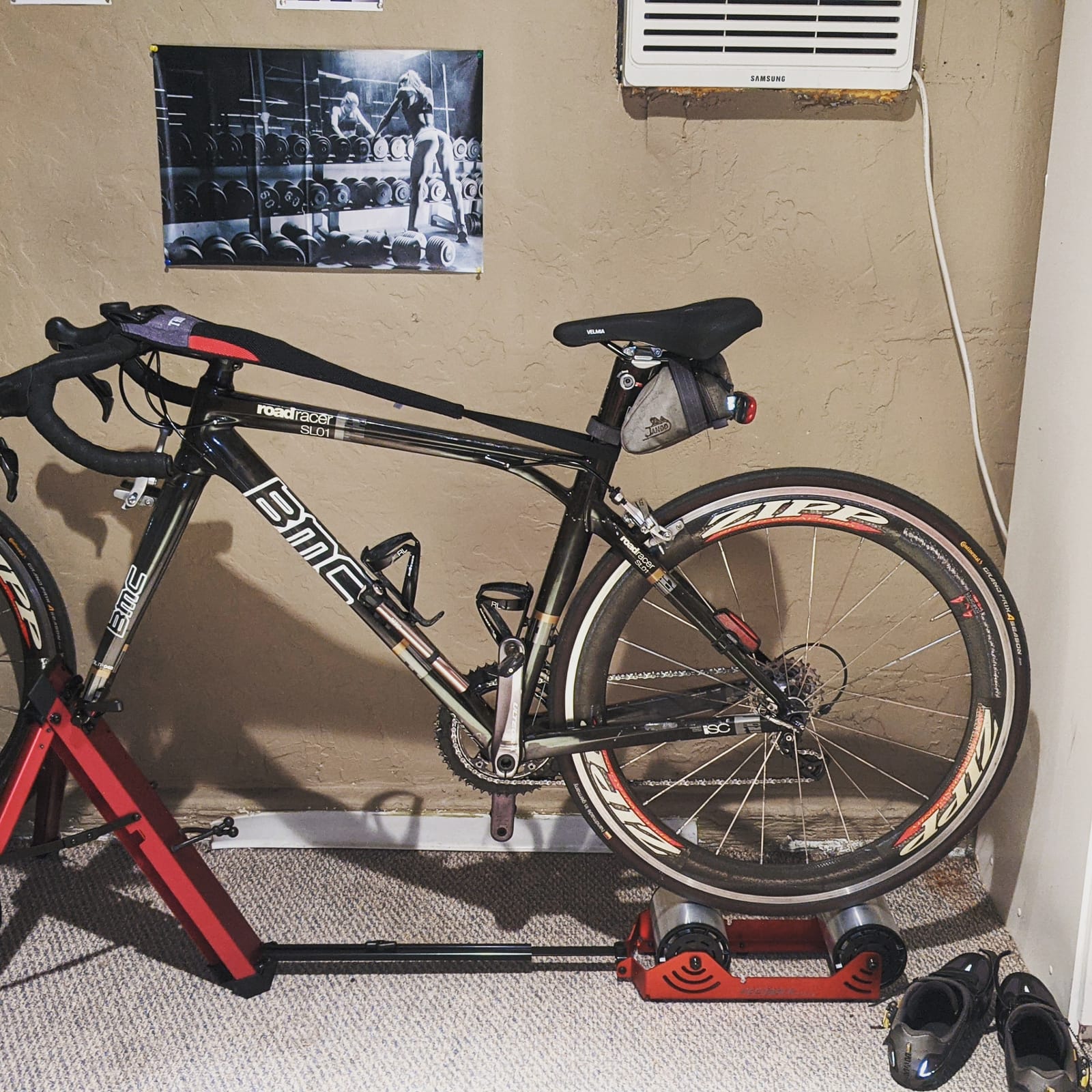
Compatibility is unusually wide for a portable trainer. It fits wheels from 16 to 29 inches, takes 12 mm and 15 mm thru-axles as well as quick releases, and clears both postmount and flat-mount disc brakes. That means road, gravel and mountain bikes all work without a conversion.
The trade-off is that it is purely mechanical. There is no app connectivity, no power data and no target wattage, so this is a ride-feel machine rather than a training tool. The front wheel has to come off, and new riders can find the quad-heavy pedalling demanding at first.
When portability decides the purchase
If you race, travel or train across more than one location, the Omnium is the one to own. Carrying it to a start line takes seconds, and the 3-year warranty plus the build quality behind the 4.6 average suggest it will outlast several winters of use.
It is also a good match for riders who want a quiet trainer for small spaces. The internal eddy current design transmits far less vibration into the frame and the floor than an external roller, which is where most of the noise complaints come from.
What it cannot do
No connectivity means no Zwift, no TrainerRoad, no ERG mode and no recorded power. If structured training is the reason you are buying, this is not the machine, whatever else it does well.
Owners have also reported internal drum noise developing after a short period of use, so it is worth keeping in contact with the manufacturer. The higher cost relative to magnetic stands only makes sense when the portability is genuinely useful to you.
How to Choose a Bike Trainer
Most wrong turns happen because a buyer picks a category before working out what they will actually do on the bike. Answer four questions in order and the model almost picks itself.
Wheel-on, direct drive, rollers or a smart bike
A wheel-on trainer clamps your rear tire and creates resistance with magnets, air or fluid. A direct-drive trainer removes the rear wheel entirely and drives a cassette, changing resistance electronically to follow a programmed workout while broadcasting power, cadence and speed. Rollers are three free-spinning drums that are portable and noisy but do not add real load. A smart bike is a complete stationary bike with its own resistance, no bicycle required.
Choose wheel-on if you want to move one bike on and off a trainer daily and your tires can take it. Choose direct drive if you train hard, follow structured plans, or want to keep your road tires in good condition. Rollers suit riders who only want to spin casually and travel frequently. A smart bike makes sense if you do not own a bike worth clamping, or you want frictionless pedalling with no drivetrain at all.
Will it fit my bike
Check three things before you buy. First the axle: quick-release bikes need the supplied skewer, while 12 mm and 15 mm thru-axle bikes need the correct adapter, and several stands in this guide ship quick-release only. Second the wheel size, since the cheapest magnetic stands often stop at 26 to 28 inches while the fluid and portable trainers reach 29. Third the brake, because portable trainers need clearance for both postmount and flat-mount discs.
Carbon frames add one more consideration. Direct-drive units clamp nothing, so the cassette interface takes the load rather than the rim, which is why owners pick them when riding carbon. Wheel-on units squeeze the tire, not the rim, so the practical risk is the tire rather than the rim wall, though rim tape is still worth adding on shallow sections.
Smart or basic
A basic trainer gives you a dial, a lever or gear-based resistance. A smart trainer holds a target wattage, follows a workout, and sends power and cadence to an app. If you ride outside in summer and want to hold winter fitness, a basic trainer is enough. If you follow TrainerRoad plans, do intervals, or ride Zwift seriously, you need resistance control.
One useful middle ground is a fluid trainer with a speed and cadence sensor. It gives you an app connection and real ride feel without direct drive weight, at the cost of no power accuracy and no virtual shifting.
ERG mode, simulation mode and virtual power
ERG mode holds a fixed wattage regardless of cadence, which is what structured workouts need. Simulation mode lets resistance follow the terrain or gradient in a virtual route, which is what Zwift racing relies on. Virtual power is an estimate some platforms calculate from speed and trainer data when no real power meter is present, and it is less accurate than measured power.
If you own a power meter already, calibration matters. Most smart trainers support a simple two-step calibration against your meter, and doing it once after setup catches a drivetrain or sensor problem before it spoils a training block.
What else you need
Budget for the extras before you order the trainer. You will want a trainer tire and a trainer skewer for any wheel-on unit, a spare cassette for direct drive, a rubber mat to protect the floor and damp noise, a fan because a trainer generates no airflow of its own, and a torque wrench for cassette work. A desk or stand to put the laptop or tablet on is the difference between a session you finish and one you abandon.
Platform Pairing, Noise and Used Trainers
The last three questions buyers ask most often are about software, neighbours and second-hand purchases. Here is how the trainers in this guide map to each.
Which platform will you use
Zwift rewards direct drive or an electromagnetic wheel-on unit with dual ANT+ FE-C and Bluetooth, because it needs controllable resistance for simulation mode. TrainerRoad works with anything that broadcasts stable power, though ERG precision is better on a direct-drive unit. Rouvy is more forgiving and runs happily on a speed and cadence sensor. MyWhoosh works without a smart trainer at all for basic sessions, so a simple stand plus a pedal-based cadence meter is a legitimate pairing. Wahoo SYSTM and the Wahoo apps pair most smoothly with the KICKR CORE 2 because of the integrated WiFi.
My general rule is simple. Zwift racers should go direct drive. TrainerRoad users doing structured work should prioritise accuracy. Everyone else can start with a fluid trainer and a sensor, and add a power meter later if the data matters.
Noise, apartments and upstairs neighbours
Two Saris trainers in this list publish 69 decibels at 20 mph, which is a useful anchor: a wheel-on trainer with a road tire is a genuine sound source, and at that level a downstairs conversation is audible. The changes that help most, in order, are fitting a slick tire, placing a rubber mat under the trainer, choosing a model with internal rather than external resistance, and riding at a steady cadence rather than sprinting.
The Feedback Sports Omnium is among the quietest options here because its eddy current resistance never touches the tire. Among wheel-on units, fluid trainers such as the Sportneer fluid model and the Saris Fluid2 sit quieter than magnetic stands. Avoid knobby tires entirely, because tread is the single biggest noise source in any setup.
Buying a used trainer and finding wear parts
A used direct-drive or wheel-on trainer is a reasonable way in, but check three things. Look for a missing or bent skewer and adapter set, since those are the parts most often lost. Check the resistance rollers or belt for cracking and glazing. And confirm that the legs and pivot points are not bent, because a bent leg usually means a drop.
Brand support matters more here than anywhere else in the guide. Owners on cycling forums repeatedly point out that Wahoo trainers are straightforward to deal with when something fails and that replacement wear parts are easy to source, which is what makes a used unit a lower risk. Check that the seller’s returns are still valid before you commit, and remember that a trainer from a supported, current brand will sell more easily later than one whose maker has left the market.
Frequently Asked Questions
What is the best indoor bike trainer for home use?
For most home riders the Wahoo KICKR CORE 2 is the strongest all-round choice, because integrated WiFi makes pairing fast, resistance is quiet enough for an apartment and the included adapters cover quick-release and 12 mm thru-axle bikes. If you ride casually and do not need app control, the BalanceFrom magnetic stand is steadier and simpler.
Are indoor cycling trainers worth it?
Yes, if the alternative is not riding for four months. A trainer keeps winter fitness, lets you run repeatable power-based workouts and removes wind, traffic and flat-puncture risk from the equation. The trade-offs are tire wear on wheel-on units, floor vibration and the fact that a session indoors is not quite a session outdoors.
Which smart bike trainer is the most reliable?
Reliability is less about the spec sheet and more about support and wear parts availability. Owners on cycling forums consistently single out Wahoo as easy to deal with and quick to supply replacement parts, which is why the KICKR CORE 2 is a common recommendation. The Garmin TacX Neo 2T matches it for build quality and carries a 4.7 rating.
Is a direct drive trainer better than a wheel-on trainer?
Direct drive is better for accuracy, power output and tire life, because it replaces the rear wheel and drives a cassette. Wheel-on trainers are lighter, cheaper to move between rooms and let you swap bikes in seconds, but they wear tires and the resistance varies with cadence. Choose direct drive for structured training and wheel-on for frequent casual use.
Can you use MyWhoosh without a smart trainer?
Yes. MyWhoosh runs basic sessions from a cadence signal alone, so a manual magnetic stand with a pedal-based cadence meter is a workable pairing for casual riding. If you want controllable resistance and accurate power, you still need a smart trainer, since the app cannot change resistance on a dumb unit.
Do bike trainers damage tires?
Wheel-on trainers wear tires because the roller presses against the tread for the whole session. Road tires typically need replacing sooner once they are used on a trainer, which is why many riders fit a cheap trainer tire or move to direct drive. A slick tire also reduces noise dramatically, and knobby tires are the worst case for both wear and volume.
What are the best sneakers for riding a stationary bike?
Flat-soled trainers work best on a stationary bike, because stiff soles and cleats are unnecessary when the bike is not moving and a hard sole can create pressure points on a trainer saddle. Keep the same shoes you use outdoors if they are comfortable, and swap to a clipless pedal only if the program is long enough to justify the adjustment.
Our Final Verdict on Indoor Trainers
If you are starting from nothing, buy the BalanceFrom magnetic trainer. It has the largest owner base in this guide, the highest load rating among the magnetic stands, a handlebar dial, and a two-year warranty, which makes it the safest first indoor trainer for 2026.
Move up to the Wahoo KICKR CORE 2 when structured training or Zwift becomes part of the plan, and choose the Garmin TacX Neo 2T if you want the smoothest resistance and a 2200 watt ceiling. If noise and weight are your constraints rather than power, the Feedback Sports Omnium and the Saris Fluid2 are the two worth looking at closely.
Whichever you pick, check the axle standard before you order, fit a slick tire, and add a mat and a fan on day one. That small checklist is the difference between a trainer you still use in three years and one that ends up in the garage corner.