
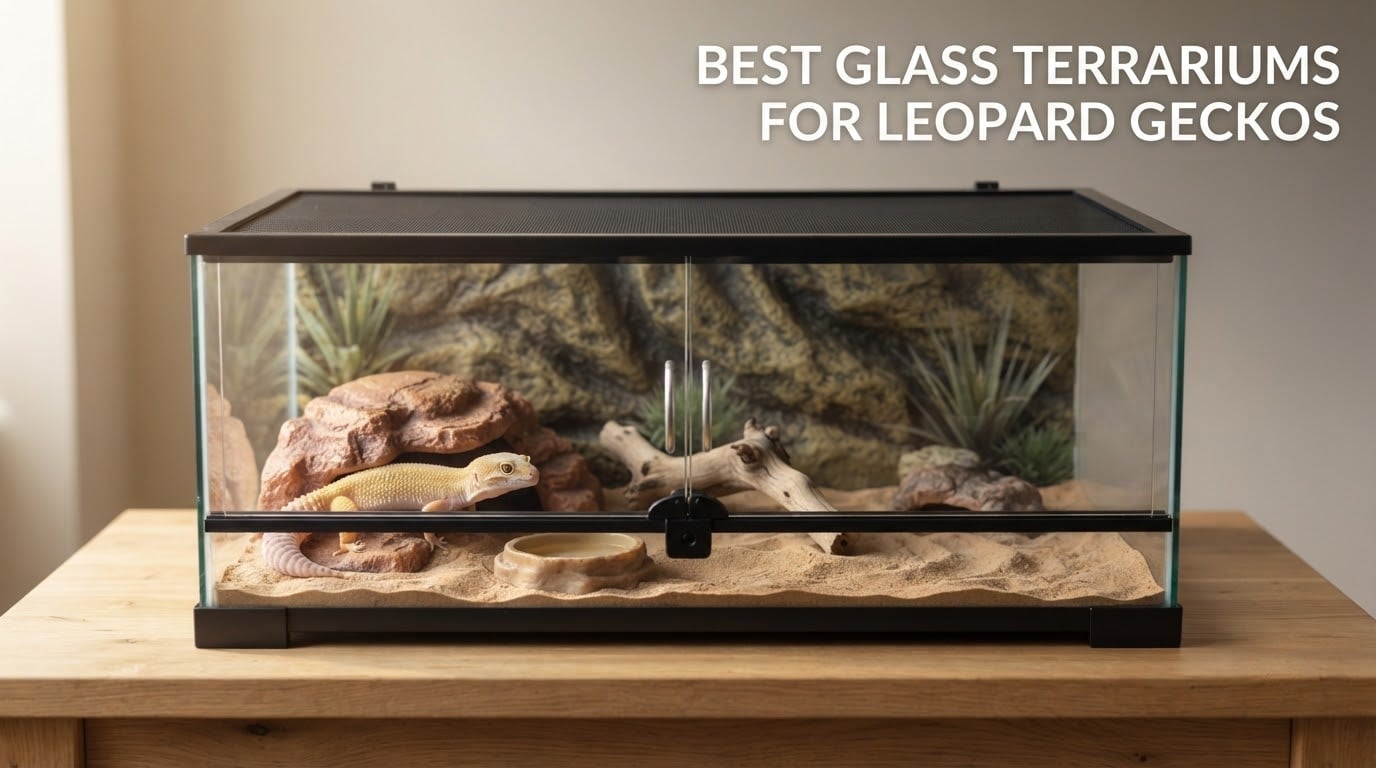
A leopard gecko needs floor space, not volume. The floor number most owners land on is 18 by 18 inches with a height of at least 24 inches for a single adult, which is the size most people call a 20 gallon long. Anything smaller works for a few months with a juvenile and then becomes the tank you replace. The best glass terrariums for leopard geckos in 2026 are the ones that give you that footprint, a screened top for airflow, front access so you are not reaching over a gecko that has just eaten, and a base deep enough to sit a heat source under.
That is the whole shortlist, and the good news is that you do not need much else. Glass is cheap, wipes clean, and does not absorb the smell of a desert setup. What it does not do is insulate, which is why every enclosure below still needs a thermostat and a real heat gradient rather than a single warm corner.
I have spent the last few months working through the enclosures that owners actually recommend on r/leopardgeckos, reptileforums.co.uk and geckosunlimited.com, then cross-checking what survives contact with daily use. The forum consensus is worth repeating early because it decides most of the buying. Keepers overwhelmingly land on Exo Terra, Zoo Med and REPTI ZOO, but the running comment in r/CrestedGecko is that owners running several brands side by side find they “all work pretty much the same” once sizing and ventilation are handled. Size and ventilation are the decision. Brand is a tiebreak.
Below I cover seven glass terrariums that pass that bar, from a compact 15 gallon to a 40 gallon front-opening tank, plus a buying guide covering minimum size, lids, heat loss through glass, and the kit traps that catch first-time owners.
Table of Contents
Top 3 Picks for Leopard Geckos (October 2026)
REPTI ZOO 34 Gallon Front-Opening
- Double front doors with key latch
- 24 x 18 inch floor with 18 inch height
- Screened top and side window vents
- High-density foam rock background
- Raised waterproof base for under-tank heat

REPTI ZOO 15 Gallon Full Glass
- 24 x 12 x 12 tempered glass on four sides
- Full screen top ventilation
- Transparent PVC bottom tray
- Anti-escape buckle and child-safe lock

REPTI ZOO 35 Gallon Wide and Low
- 36 x 18 inch floor area
- Tempered glass on all four sides
- Two front doors with two keys
- Six lid cable inlets plus interior cable pass
Best Glass Terrariums for Leopard Geckos at a Glance
Every tank below is glass, every one takes a heat source under a raised base, and every one screens the top for airflow. The differences that matter day to day are the floor footprint, whether the doors open at the front, and how much the empty tank weighs before you fill it with substrate.
| Product | Specs | Action |
|---|---|---|
| REPTI ZOO 34 Gallon Glass Terrarium with Double Hinge Doors |
|
Check Latest Price |
| REPTI ZOO 15 Gallon Full Glass Reptile Tank 24x12x12 |
|
Check Latest Price |
| REPTI ZOO 35 Gallon Full Glass Tank 36x18x12 |
|
Check Latest Price |
 WACOOL 40 Gallon Tempered Glass Reptile Tank 30x18x18 WACOOL 40 Gallon Tempered Glass Reptile Tank 30x18x18 |
|
Check Latest Price |
 PROLEE 35 Gallon Terrarium 32x16x16 with Sliding Doors PROLEE 35 Gallon Terrarium 32x16x16 with Sliding Doors |
|
Check Latest Price |
 Oiibo 30 Gallon Glass Terrarium 18x18x24 Double Hinge Door Oiibo 30 Gallon Glass Terrarium 18x18x24 Double Hinge Door |
|
Check Latest Price |
 BINANO 18x12x12 Front-Opening Glass Reptile Tank BINANO 18x12x12 Front-Opening Glass Reptile Tank |
|
Check Latest Price |
A note on the table: the 18 x 12 x 12 tank at the end of the list is the only one here that I would call a temporary juvenile home rather than a first adult enclosure. It appears because it is a good, honest small tank, not because it should be your first purchase.
1. REPTI ZOO 34 Gallon Glass Terrarium with Double Front Doors – Our Top Pick
REPTI ZOO 34 Gallon Large Reptile Glass Terrarium Tank with Foam Backgrounds,Double Hinge Door with Screen Ventilation Reptile Terrarium 24″ x 18″ x 18″(Knock-Down)
24 x 18 x 18 inch floor plan
34 gallon volume
Screened top with side window vents
35.2 pounds empty
Pros
- Double front doors open separately for feeding and cleaning
- 24 x 18 inch floor suits multiple hides and a long gradient
- Key latch and screened top make escapes unlikely
- Raised waterproof base accepts an under-tank heater
- Knocks down flat for storage
Cons
- Joints can rattle slightly without added silicone
- Screen panels cannot be replaced with glass
- Heavy to move once decorated
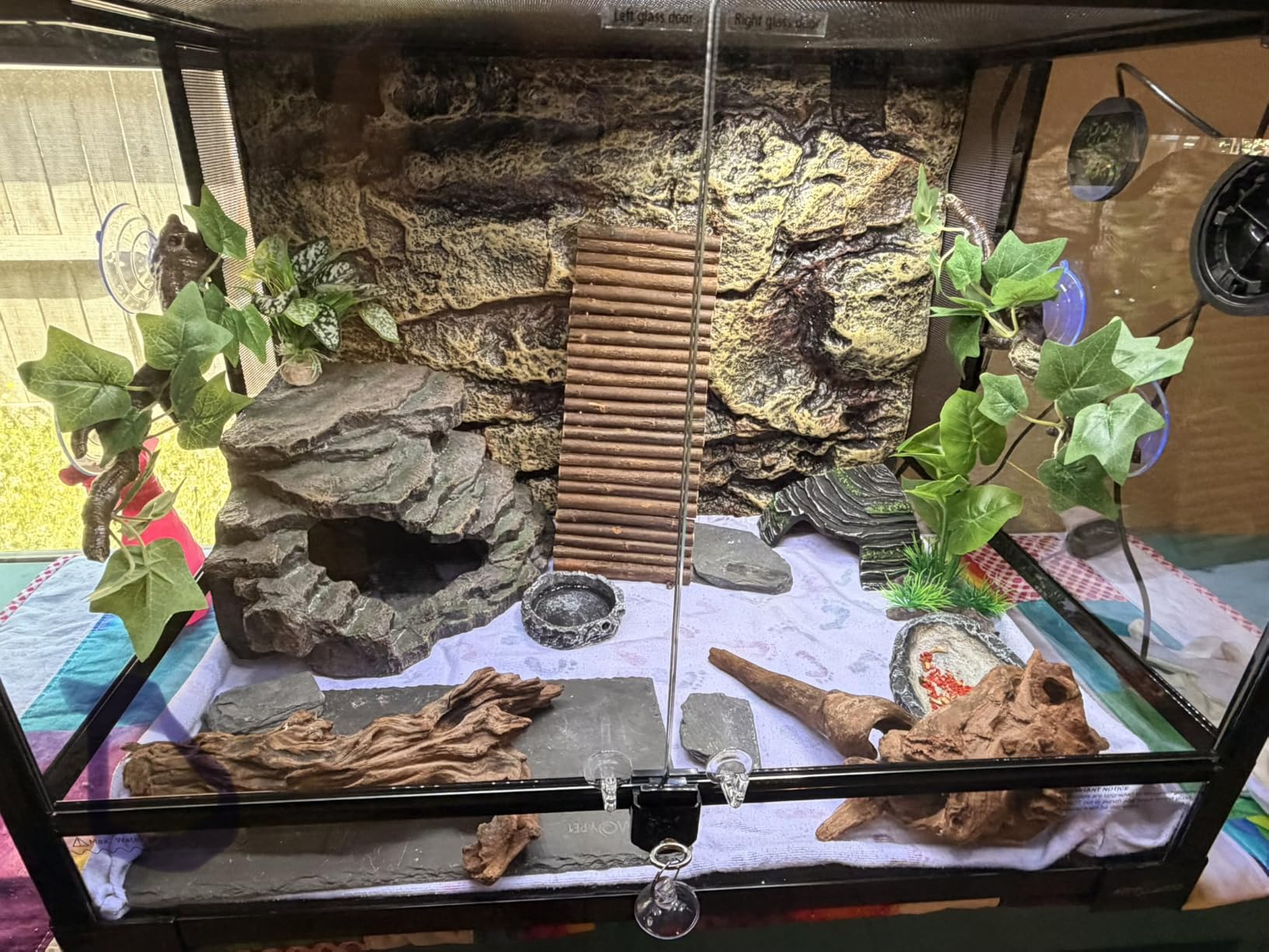
This is the tank I keep coming back to. The 24 x 18 inch floor gives a leopard gecko a genuine walk rather than a lap, and the height adds the headroom you want for a vertical gradient without turning into a full tall vivarium that eats shelf space. At 35.2 pounds empty it is not a tank you slide across a table every time you clean, but it is a two-person job the first time.
What sold me is the pair of front doors. They open independently, so you can drop in a hide on one side while keeping the other side closed, and the key latch means a gecko cannot push its way out during a feed. Community consensus on the leopard gecko forums agrees on the practical point: top-opening tanks are where escape stories come from, and owners who have switched to front doors rarely go back.
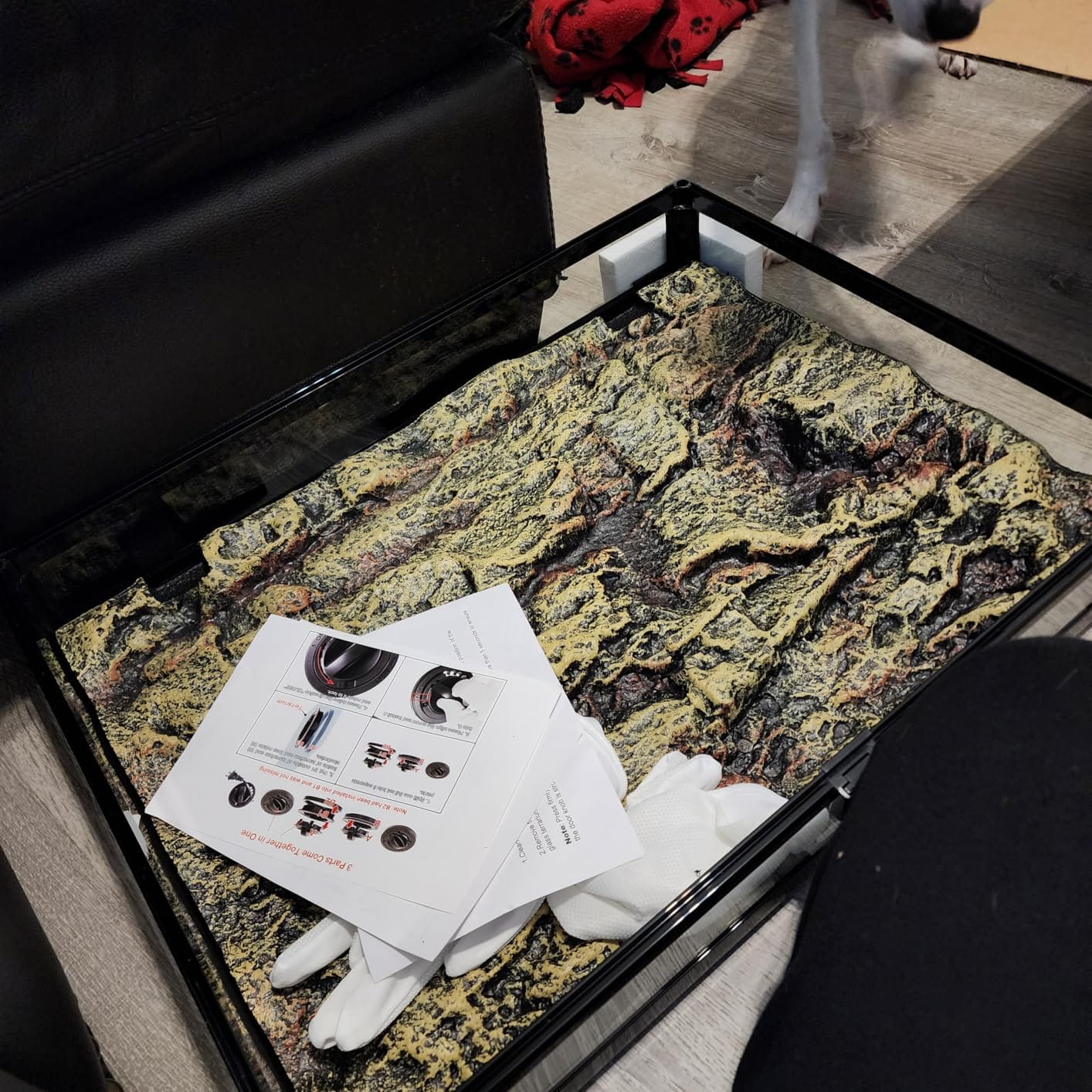
The included foam background is a real bonus rather than filler. It sits tight against the upper screen tabs, it gives the gecko something to climb on, and it means you can use a thinner substrate layer and still get the look of a rock face. Owners report taking it out for a full clean, which is easier than scrubbing the back pane of an empty glass box.
The raised bottom frame is the detail people miss. It lifts the glass floor off the desk and creates the gap you need for a heat mat or an under-tank heater to sit flush rather than pressing against the pane and stressing it. The waterproof base is a bonus if you ever run a humid hide, though for an arid species you rarely will.
What to check before you build
Assemble it flat on the floor first, not on a stand. Reviewers note that the frame can feel loose until every screw is tightened, and a tank assembled on a raised surface is much harder to torque down properly.
Measure your furniture before the tank arrives. Once it is decorated with substrate, a water dish and three hides, the 35.2 pound figure is not the weight you will be lifting. Plan a spot where the tank can sit permanently.
Where it falls short
The screen panels are fixed. If your plan is to convert the enclosure into something sealed, humid or bioactive later, you are drilling and cutting glass, which most owners avoid. Screen is also the reason it works so well for leopard geckos in the first place, so this is a fair trade rather than a flaw.
The five-minute assembly claim is optimistic if it is your first knock-down kit, and the foam background may ship separately from the tank depending on the order. Neither issue affects the finished setup.
2. REPTI ZOO 15 Gallon Full Glass Tank – Best Starter Tank
REPTI ZOO Full Glass 15 Gallon Reptile Tank, Medium Reptile Terrarium 24″ X 12″ X 12″ for Gecko Hermit Crab Hognose Snake etc, Top Screen Ventilation & Feeding
24 x 12 x 12 inch glass tank
15 gallon volume
Top screen ventilation
18.9 pounds empty
Pros
- Full tempered glass on all four sides
- 24 x 12 inch floor works for a juvenile gecko
- Screened top admits light and heat
- Transparent PVC tray for a moist zone
- Security buckle and door lock
Cons
- Top-only access makes feeding awkward
- Knock-down assembly needed before use
- 19 pounds is heavy to reposition when decorated
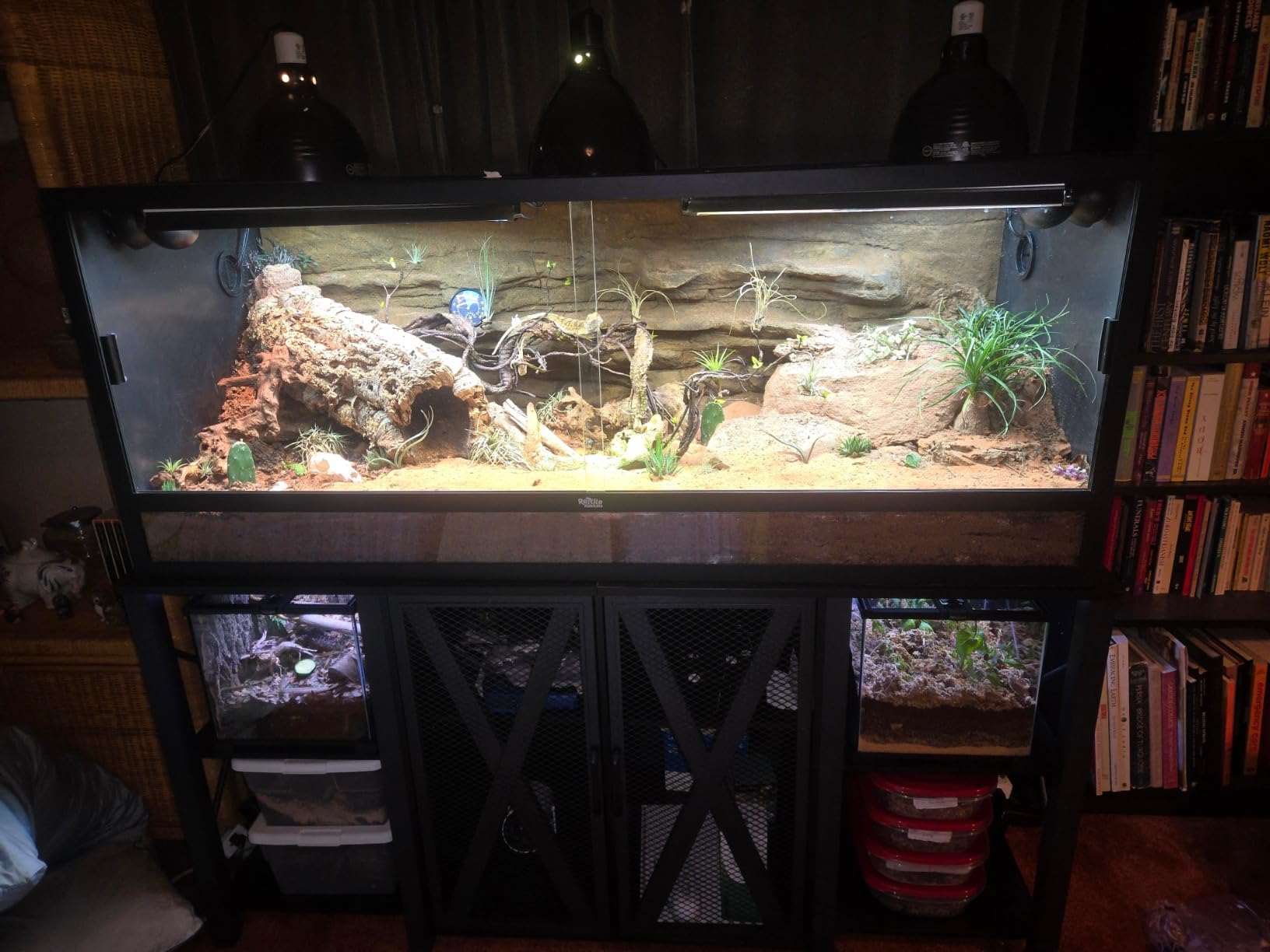
This is the tank most people meet first, and for a hatchling or subadult under about a year it does the job properly. The 24 x 12 inch floor is longer than it is wide, which is the right shape for a ground-dwelling gecko, and the full glass on all four sides means you can watch from any seat in the room while you work.
The screen top is genuinely useful rather than decorative. It is thin mesh, so UVB and infrared pass through it, and it is the piece that keeps humidity from climbing past the roughly 30 percent ceiling an arid species needs. Reviewers consistently call the glass clear, the tank stable, and the packaging solid.
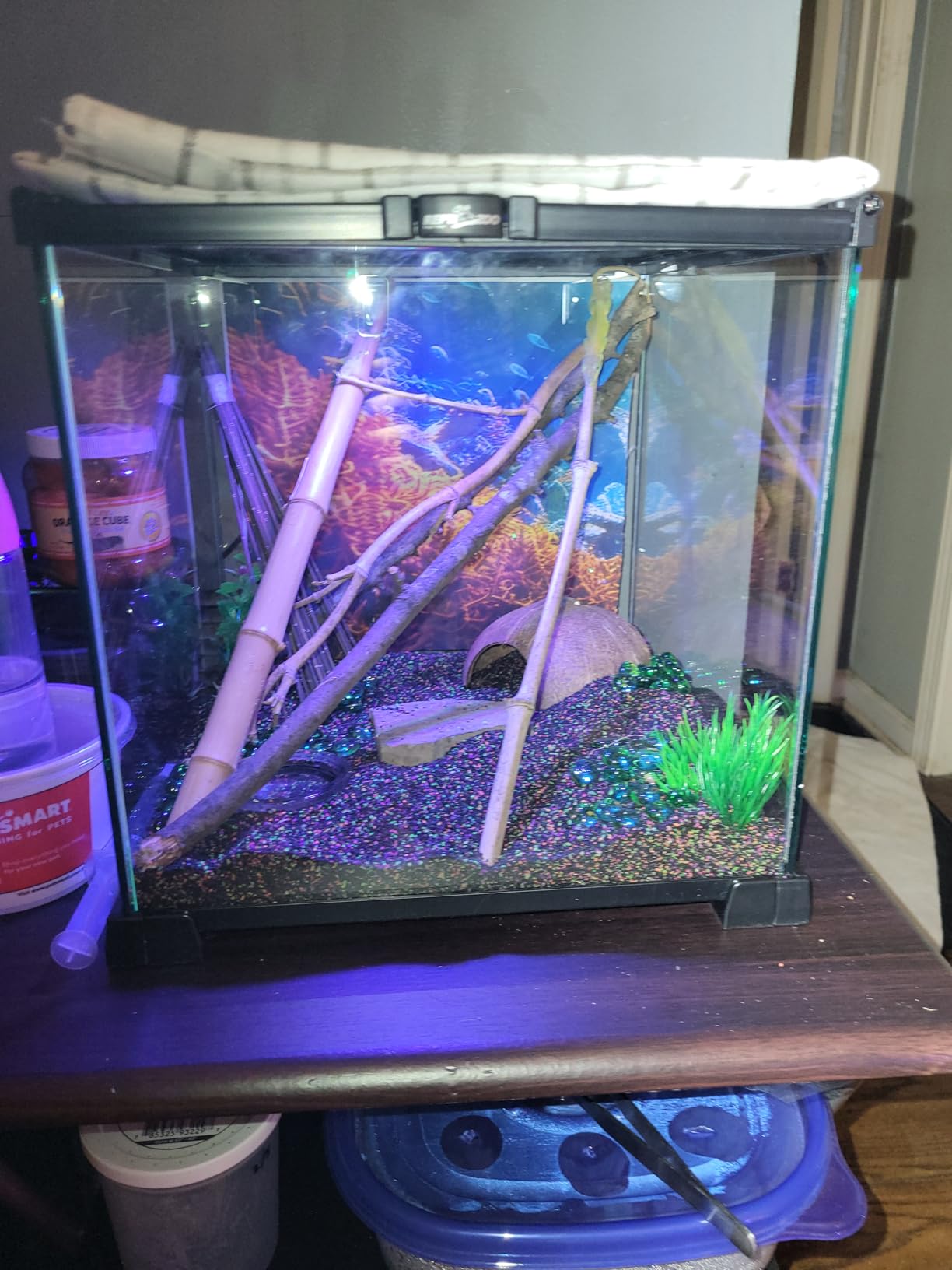
One feature deserves more attention than it gets. The transparent PVC tray in the base lets you keep a damp zone on one side and a dry side on the other without the whole floor being wet. Leopard geckos benefit from a humid hide during shed, and a tray gives you a clean way to do that in a glass tank.
Three size variants are listed under the same model, including a 12 inch cube, so if you are buying for a very young gecko you can size down and step up later. That flexibility is worth something if you are not sure how fast the gecko is growing.
Who this is right for
Buy this one if you are housing a juvenile, if you are splitting a pair temporarily, or if you want a quarantine tank you can disinfect between animals. The glass surfaces make sanitation straightforward, which matters a lot in a hospital or intake setting.
Owners running leopard geckos in this footprint report success, though most add a third hide and a deeper substrate layer than the tank suggests to make the floor area work harder.
Where it falls short
Top-only access is the honest weakness. Every feed means lifting the screen top over a gecko that is actively hunting, which is the moment escapes happen and the moment your fingers get nipped. A front door removes both problems at once.
Second, this is not an adult permanent home in our view. The 24 x 12 floor gives a gradient you can manage, but it does not give the roaming length most keepers want. Plan on this being a stepping stone rather than the tank you keep for a decade.
3. REPTI ZOO 35 Gallon Wide and Low Terrarium – Top Rated
REPTI ZOO Full Glass 35 Gallon Reptile Tank, Front Opening Wide & Low Reptile Terrarium 36″ x 18″x 12″ for Lizard Gecko Tortoise Snake, Top Screen Ventilation & Anti Escape Lid
36 x 18 x 12 inch floor plan
35 gallon volume
Tempered glass on all four sides
30 pounds empty
Pros
- Very wide 36 x 18 inch floor creates a long gradient
- Two front doors open separately with two keys
- Interior cable pass stops probe wires being pinched
- Screws can be retightened for extra rigidity
Cons
- Single large top panel is awkward to remove
- Lock mechanism feels inexpensive
- Background not included
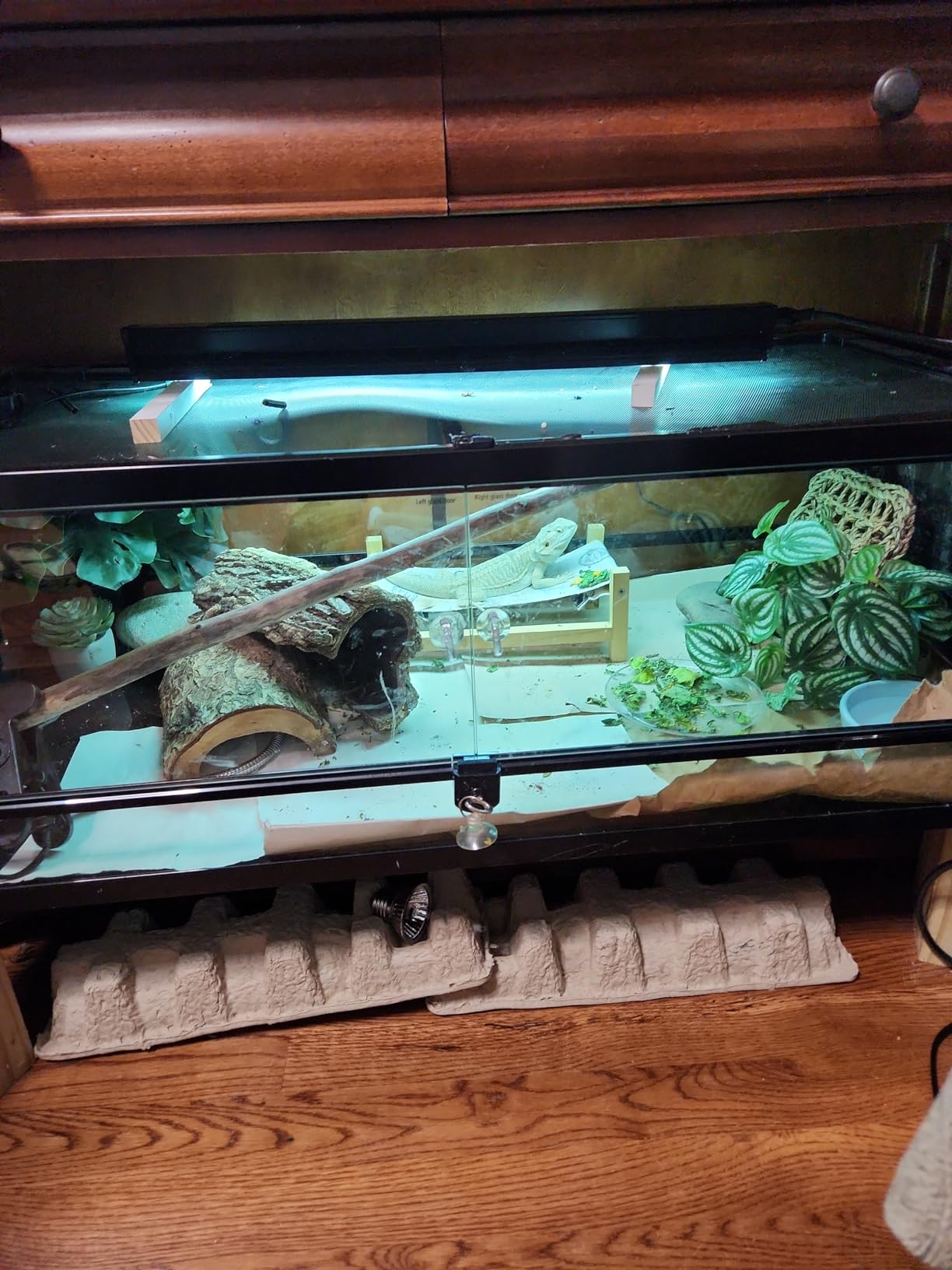
The wide-and-low format is the most underrated shape on this list for leopard geckos. Thirty-six inches of length gives you a genuine hot-to-cold gradient across the floor, which is the single most important physical feature of an arid enclosure. A 12 inch height keeps the tank low and stable on a piece of furniture, and the two front doors give you access across the whole length.
Owners with leopard lizards and small snakes report this working well as a starter enclosure, and the review pattern is consistent: people like the glass thickness, the build quality, and the fact that cables can be routed through the interior pass rather than pinched in a door frame.
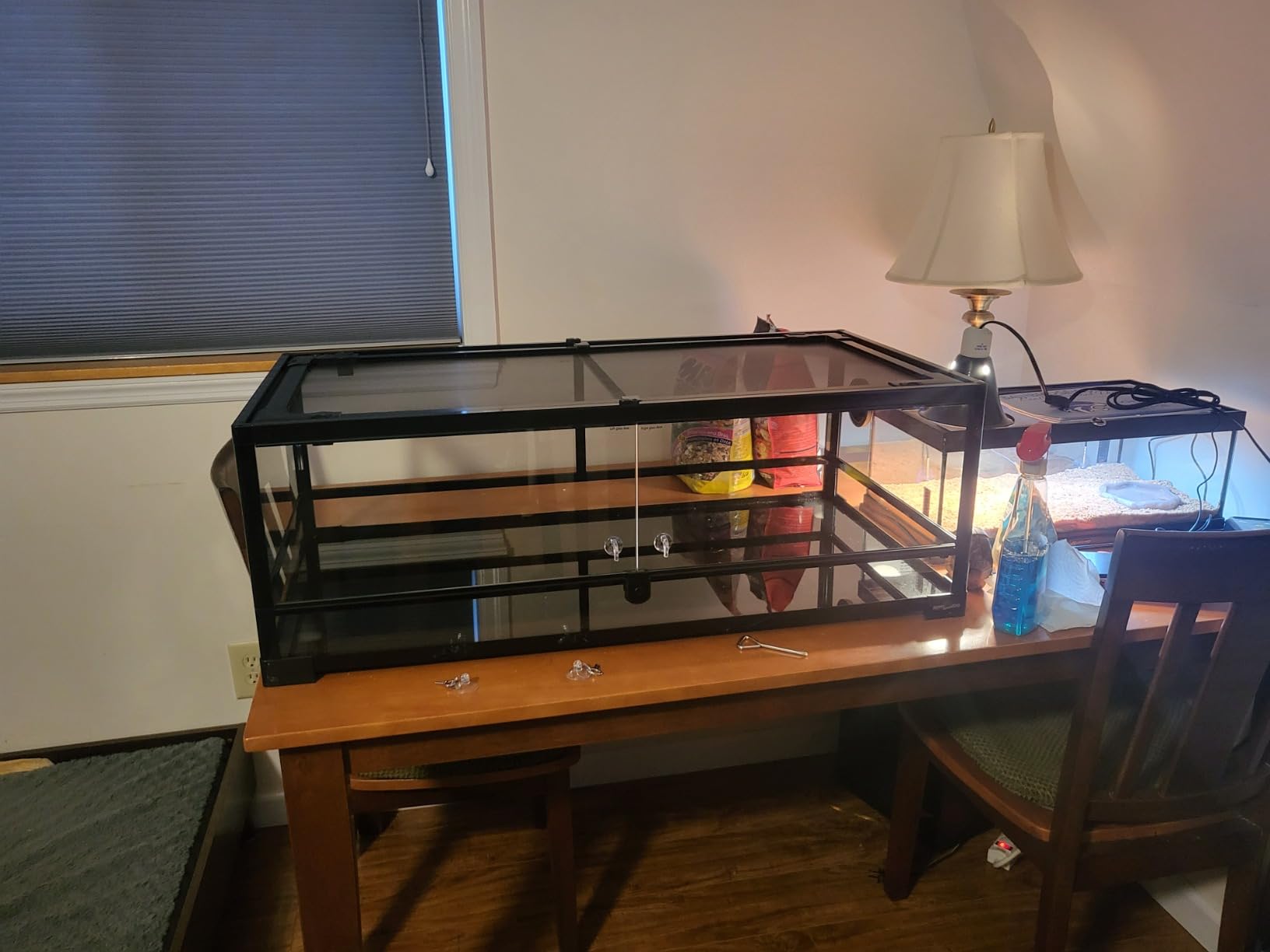
Six inlet holes on the top lid plus a separate cable pass for up to four wires means you can run a thermostat probe, a halogen fixture cable and a low-level heat source without any of them being trapped under a closed panel. On an enclosure this wide, that is not a gimmick. It is the difference between a tidy build and a tangle.
The raised, waterproof bottom frame again solves the under-tank heater clearance problem, and the manufacturer states the base works for a desert or a rainforest layout. Assembly and disassembly take about five minutes by the maker’s own account.
Deciding between this and a taller tank
If your gecko is a ground dweller that you watch in a room where shelf height is limited, the wide-and-low format wins. You get more usable floor per cubic foot of furniture space than any tall rectangular tank.
If you plan to add climbing structure, a deep substrate layer with a false rock ledge, or an overhead halogen fixture that needs clearance, look at a taller 18 x 18 x 24 instead. The height is the only dimension this format gives up.
What owners flag
The most repeated suggestion in the reviews is to split the 36 inch top into two panels. As shipped, top-of-tank maintenance means clearing the enclosure first. That is an inconvenience, not a defect, and it is the same trade every single-piece lid carries.
The lock mechanism is described as feeling inexpensive, and doors can look slightly misaligned until the top frame is fully seated and screwed down. White assembly gloves and clear packing were both called out positively by reviewers.
4. WACOOL 40 Gallon Tempered Glass Terrarium – Premium Pick
WACOOL Tempered Glass 40 Gallon Reptile Tank, Front Opening Reptile Terrarium 30″ x 18″ x 18″ for Bearded Dragon Gecko Lizard, Top Screen Ventilation & Anti Escape Lid
30 x 18 x 18 inch floor plan
40 gallon volume
Tempered glass on all four sides
41.85 pounds empty
Pros
- Front-opening double doors for direct access
- 30 x 18 inch floor supports multiple hides and a gradient
- Tempered glass resists scratching better than acrylic
- Raised waterproof base takes a heat lamp setup
- 48 gallon vertical variant in the same line
Cons
- Background panel not included
- Heaviest enclosure in the group at 41.85 pounds
- Knock-down frame needs assembly
This is the tank for someone who has already decided on a halogen or deep heat projector basking setup and needs the footprint to support it. Thirty by eighteen inches of floor with eighteen inches of height gives you the depth to mount a dome fixture, place a wide basking spot at one end and a cool hide at the other, and still walk the gecko across the middle.
Reviewers describe a setup that works for desert species with heat lamps mounted on the screen top, and the tempered glass on all four sides is a genuine upgrade over acrylic in a tank you will clean often. Acrylic scratches and clouds; tempered glass does not.
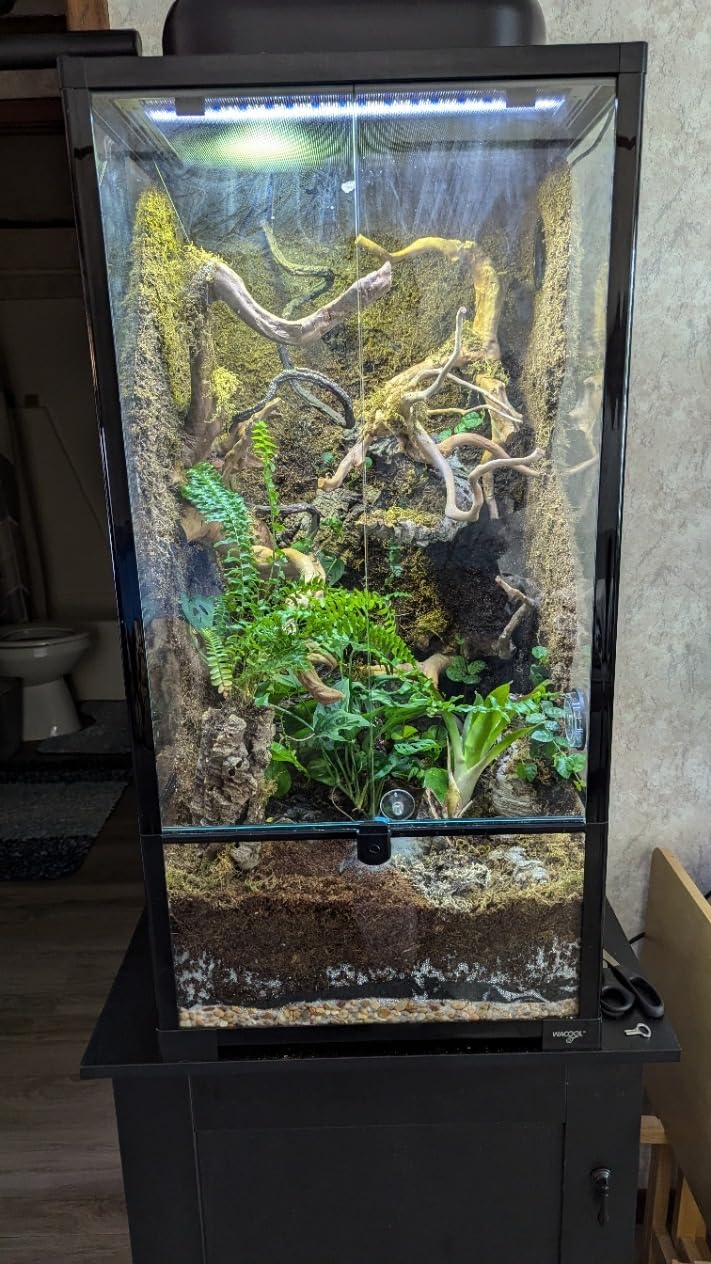
Front-opening double doors mean feeding happens at the front of the tank rather than over the top of it. For a gecko that is alert and food-motivated, that is the difference between a controlled feed and a scramble. The security buckle and child-safe lock on the lid close off the most common escape route once the doors are shut.
Cable management is thorough: six inlet holes on the top lid plus a dedicated pass for up to four wires. Owners running multiple powered devices report a tidy build with nothing pinched.
Is 40 gallons more than a leopard gecko needs?
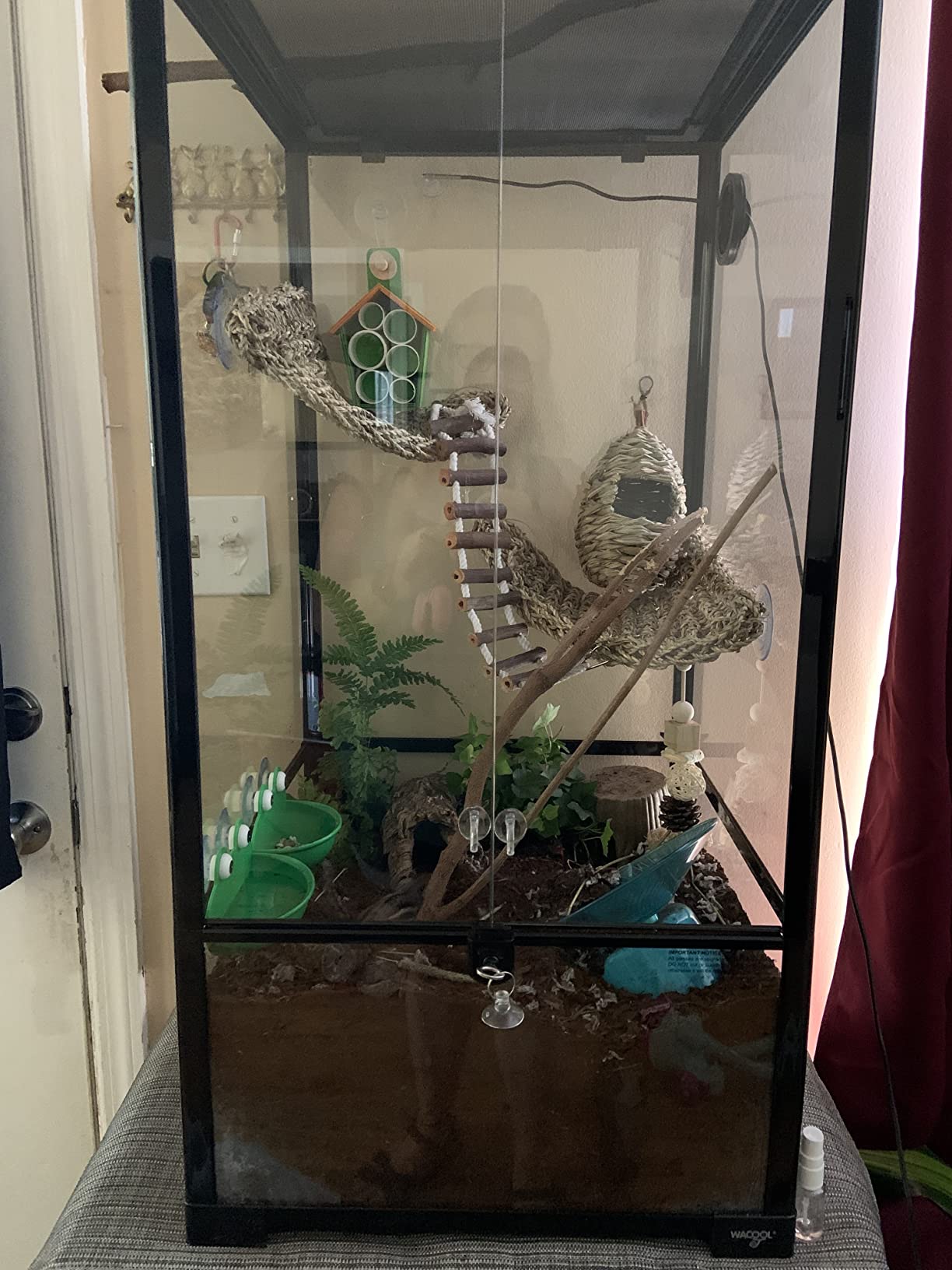
Yes, and that is fine. More floor area means a longer, more even gradient and more room to distribute three or four hides so the animal can choose a spot rather than defend one. Several reviewers note the size is more than most geckos require.
The trade is weight. At 41.85 pounds empty, this is the heaviest enclosure here, and a fully decorated version is a two-person job. Choose furniture rated for it, and pick the spot before the tank arrives.
What to watch for
No background panel is included, so plan to add a substrate depth and either a simple backdrop or nothing at all. Many owners run these bare with a paper towel substrate during quarantine and move to a proper desert mix once the animal is settled.
The screened top and vented lid add parts that can work loose if you do not tighten them during assembly. Give the frame a once-over after the first week.
5. PROLEE 35 Gallon Habitat – Best Lightweight Enclosure
PROLEE 35 Gallon Bearded Dragon Tank, 32 x 16 x 16 Inch Tempered Glass Reptile Enclosure with Metal Mesh Top, Lockable Sliding Front Doors, Large Lizard and Snake Terrarium, Black
32 x 15.5 x 15.5 inch floor plan
35 gallon volume
Weight 17.2 pounds empty
Sliding glass front doors
Pros
- Lightest large tank here at 17.2 pounds despite 32 inch length
- Lockable double sliding front doors
- Metal mesh top takes basking lamps and UVB
- Acrylic bottom liner simplifies cleaning
- Several lengths and two finishes offered
Cons
- Wood frame with coating is not fully sealed
- Sliding doors leave a track gap at the bottom
- Listing copy reads as a wooden habitat
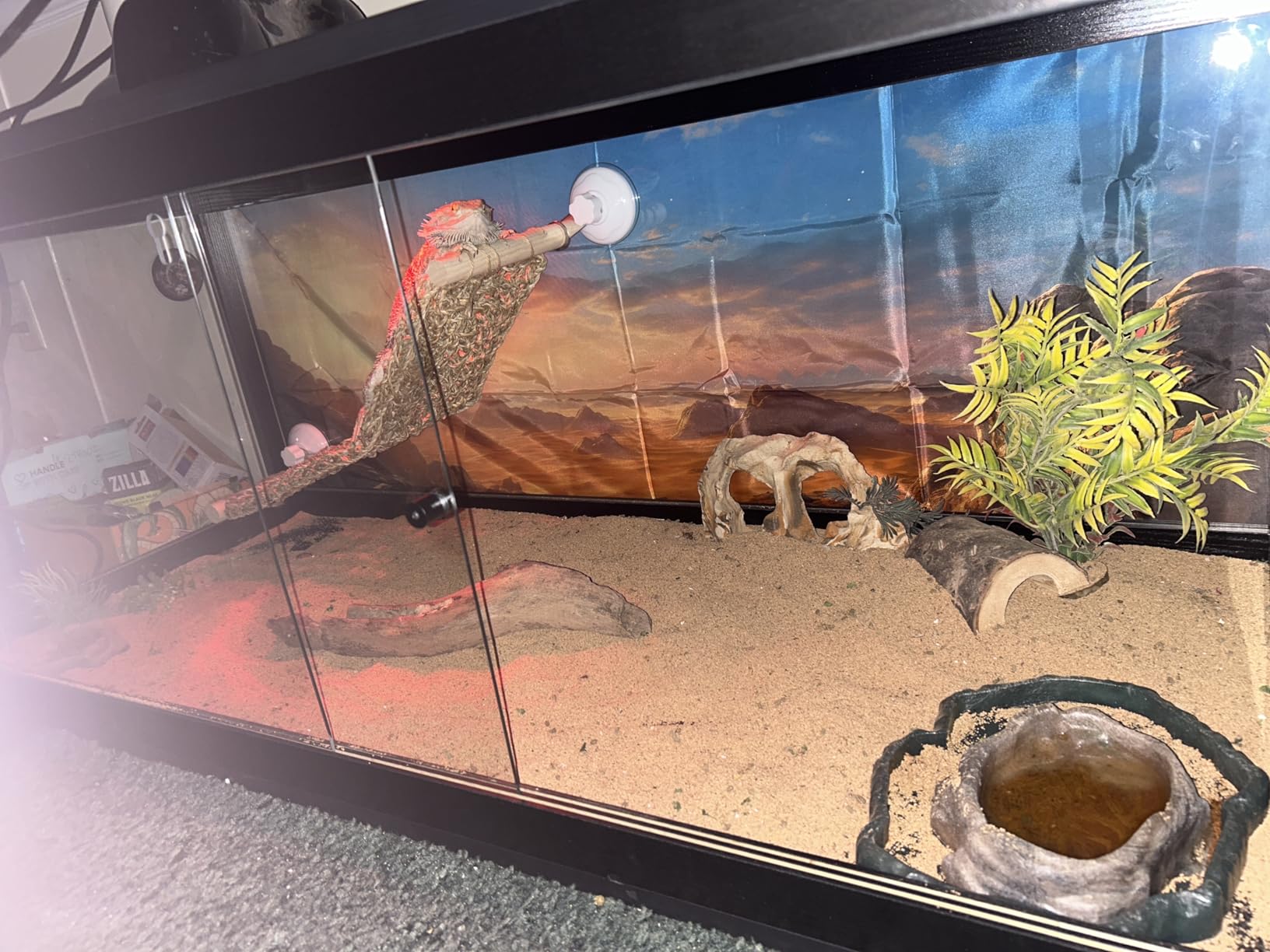
Thirty-two inches of length at 17.2 pounds is the standout number on this card, and it is the reason this enclosure earns its place. Every other tank here that long weighs thirty pounds or more, which changes what kind of furniture you need. This one can be repositioned by one person, which matters in a small apartment or a rental where the tank is going on a high bookcase.
The sliding front doors open wide and lock, so you get front access without swinging panels into the room, and the metal mesh top is rated for a basking lamp and UVB fixture. For a desert gecko who will spend time on a raised basking spot, that is a sensible layout.
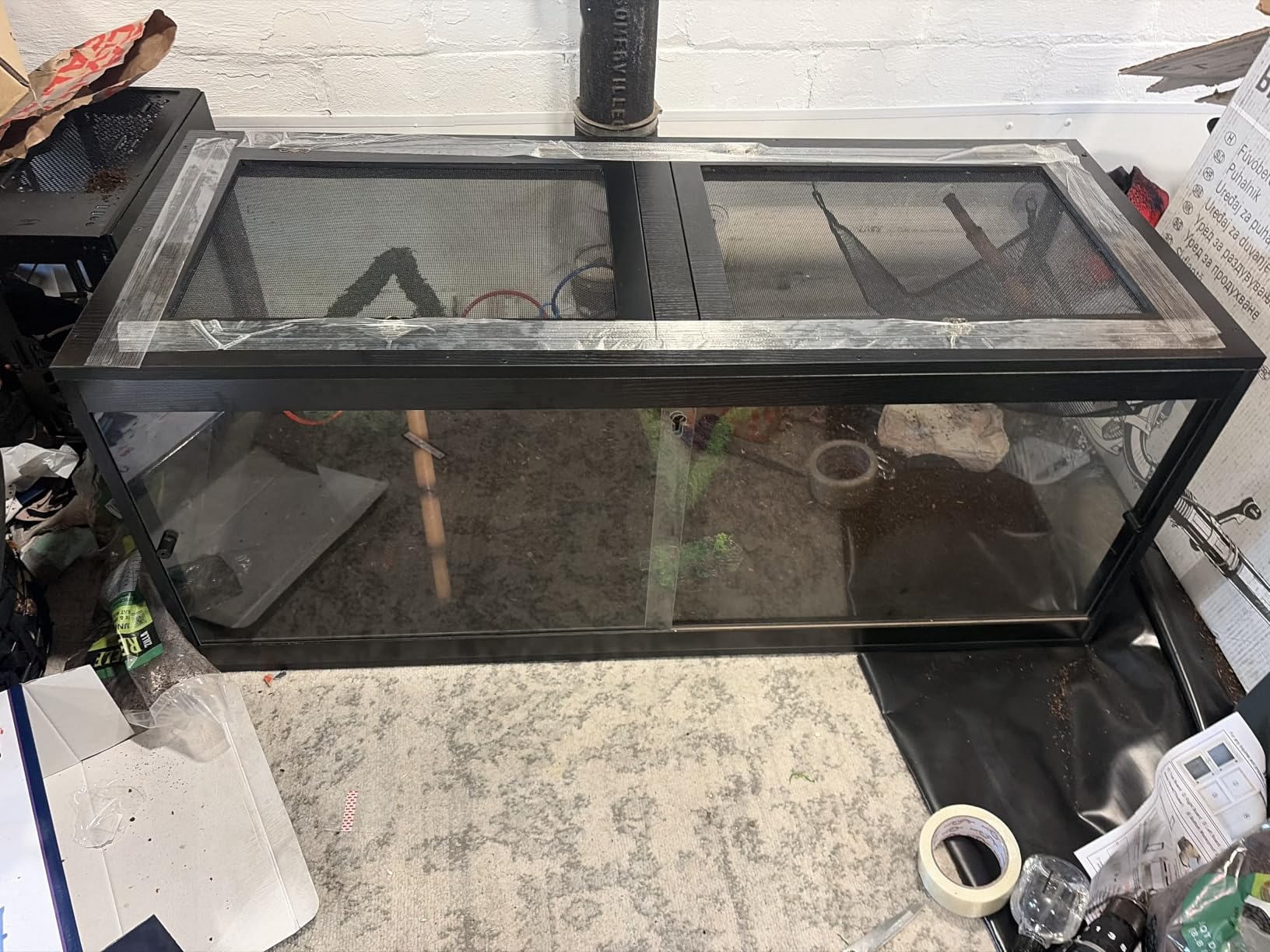
The acrylic liner at the bottom is a small convenience that pays off weekly. You can pull the substrate out, wipe or replace the liner, and put it back, rather than stripping and disinfecting a full glass floor. Multiple lengths and both a black and an oak finish are listed, so you can match a room rather than defaulting to a black box.
Owners highlight the weight, the tempered glass clarity, the secure sliding doors and how straightforward assembly is with the included hardware and instructions.
Why the weight is lower
The enclosure combines a solid wood frame carrying a water-repellent polyester coating with tempered glass panels on all four sides. That mix is what keeps the empty weight down. It is a dry-friendly build, not a wet one.
If you are not going bioactive and are running a desert setup with a screened top, that is a good trade. If you are planning a sealed bioactive enclosure, look elsewhere on this list.
Two things to consider
The sliding doors leave a track gap along the bottom that is harder to seal against small insects. For a dry setup with an arid substrate, most owners accept it. For anyone breeding or using live feeder insects loose, it is a factor.
The listing copy leads with the wooden habitat framing, so if you are shopping by image the glass panels are the thing to actually look at. This is a glass enclosure in a wood frame, and the panels are tempered on all four sides.
6. Oiibo 30 Gallon 18x18x24 Terrarium – Best 20 Gallon Long Footprint
OIIBO 30 Gallon Reptile Tank 18″ x 18″ x 24″ Reptile Terrarium, Full View Glass Terrarium Tank with Double Hinge Door for Reptiles Amphibians, Bearded Dragon Gecko Lizard Snake
18 x 18 x 24 inch tall format
30 gallon volume
36.35 pounds empty
Removable mesh screen top
Pros
- 18 x 18 x 24 matches the most recommended adult size
- Double hinge front doors with an anti-escape lock
- Removable top panel gives a second cleaning route
- Owners with leopard geckos report satisfaction
Cons
- Some buyers report cracked glass or hinge rings on arrival
- Assembly stickers are placed ambiguously
- Frame gaps let insects through
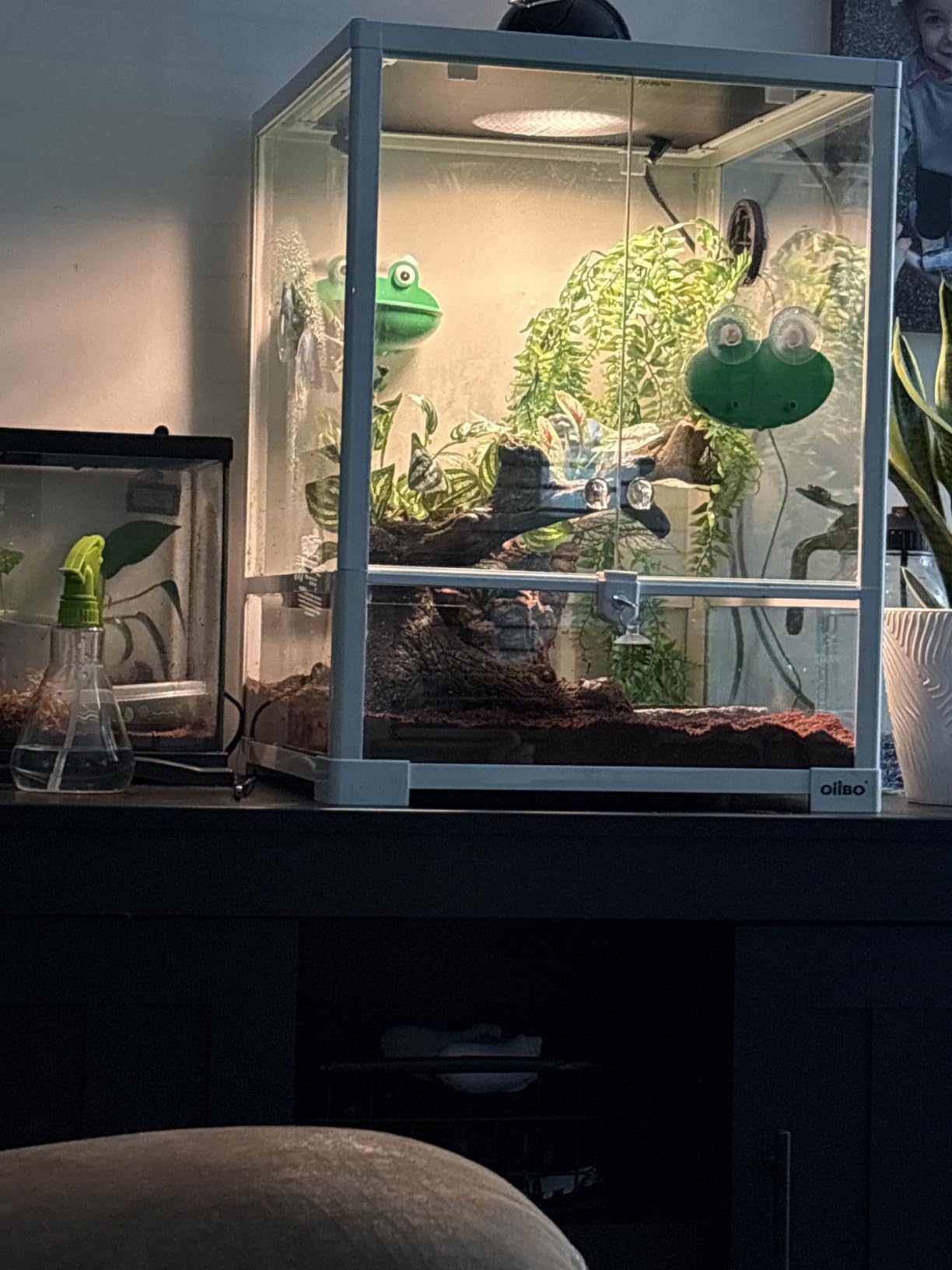
This is the one in the set that matches the 20 gallon long footprint most owners name as the adult minimum, and it is the only genuine vertical option here. Eighteen by eighteen inches of floor with twenty-four inches of height gives you a tall gradient while keeping the footprint square, which suits a gecko that likes to climb and a room where depth is easier to find than length.
Double hinge front doors open separately and carry an anti-escape safety lock, and the removable mesh screen top gives you a second access route for deep cleaning. The screen takes a reptile lamp fixture and passes UVB and IR, which is what you want in a tank this tall.
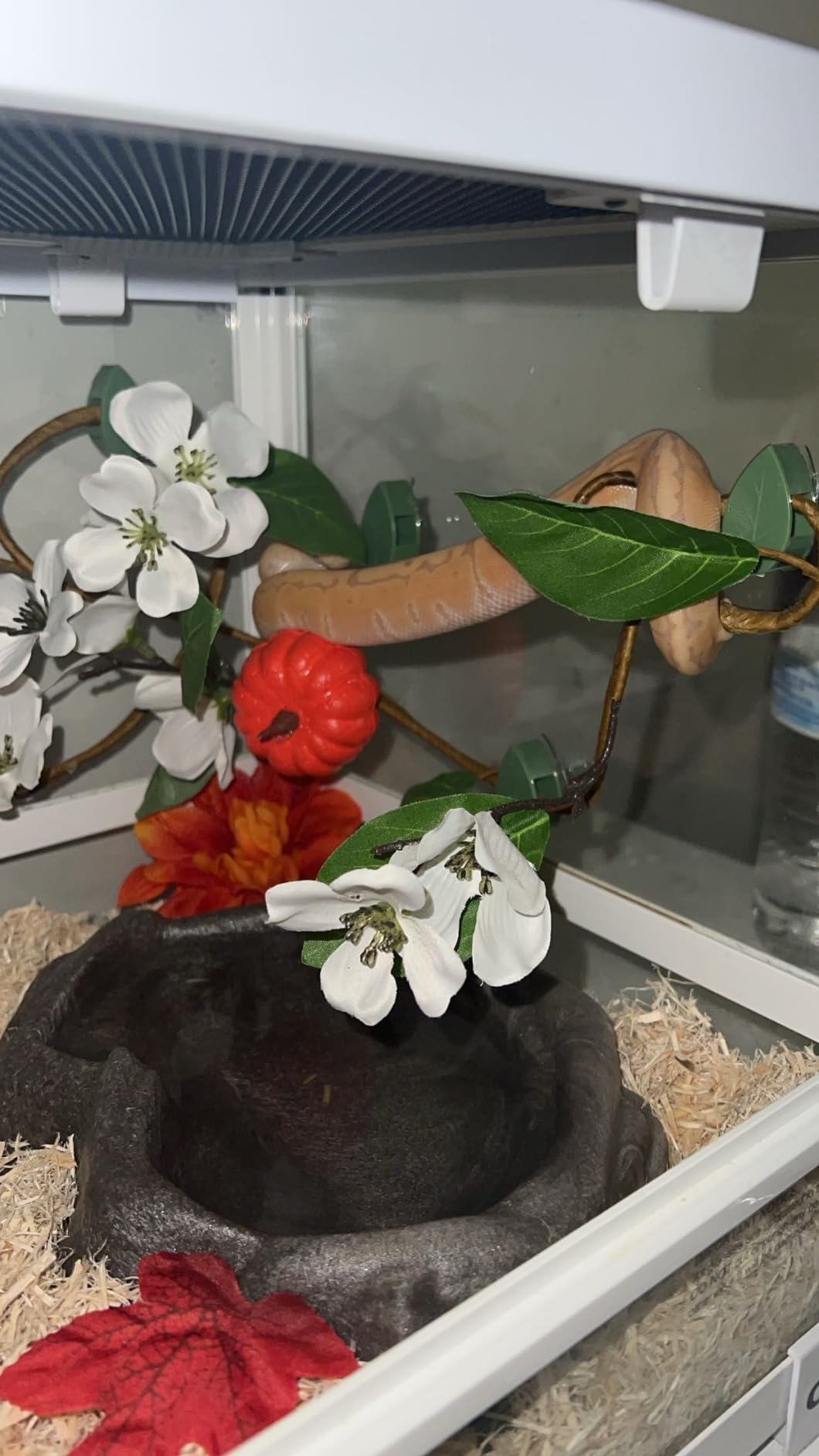
Wire management inlets sit on both the top and the right side, and the raised bottom frame gives an under-tank heating pad the clearance it needs. Knock-down assembly is designed to be quick with step-by-step instructions included.
Owners rate the build quality and value highly for the money, and several specifically mention leopard gecko setups working well. Some also report it being sturdier and better finished than similarly priced name-brand tanks.
What owners like most
The height is the point. A tall tank lets you mount a basking zone with real clearance above the animal, which a 12 inch high tank cannot do without the fixture hanging awkwardly. The removable top is a genuine bonus on a deep enclosure because reaching the bottom of a 24 inch tall tank is otherwise unpleasant.
Front access plus a removable top is a combination you rarely get in one tank, and it is why this enclosure handles cleaning well.
What owners flag
The critical reviews cluster around transit damage and assembly alignment rather than design. Some buyers report glass panels arriving cracked or shattering during assembly, and some report a cracked or misshapen plastic ring on a door hinge that needs reshaping.
Assembly stickers are placed ambiguously, and it matters which way the panels face. Inspect every seam before you build. Frame gaps at the joints also let insects and moisture through, so this is a poor fit for a bioactive setup unless you seal it.
7. BINANO 18x12x12 Front-Opening Tank – Best for Compact Setups
18x12x12” Front-Opening Glass Reptile Tank for Gecko & Snake
18 x 12 x 12 inch floor plan
Gallon class in the 12 range
Front-opening door with latch
21.9 pounds empty
Pros
- Front door with anti-escape latch simplifies daily handling
- Sealed watertight base holds a humid hide or water dish
- Pre-drilled top cable holes simplify heat mat and lamp placement
- Mesh top is heat resistant and takes a lamp
Cons
- 18 x 12 footprint limits gradient length and hide count
- 12 inch height gives little climbing room
- Thinnest review base at 96 reviews
- Plastic suction cup door pull can wear
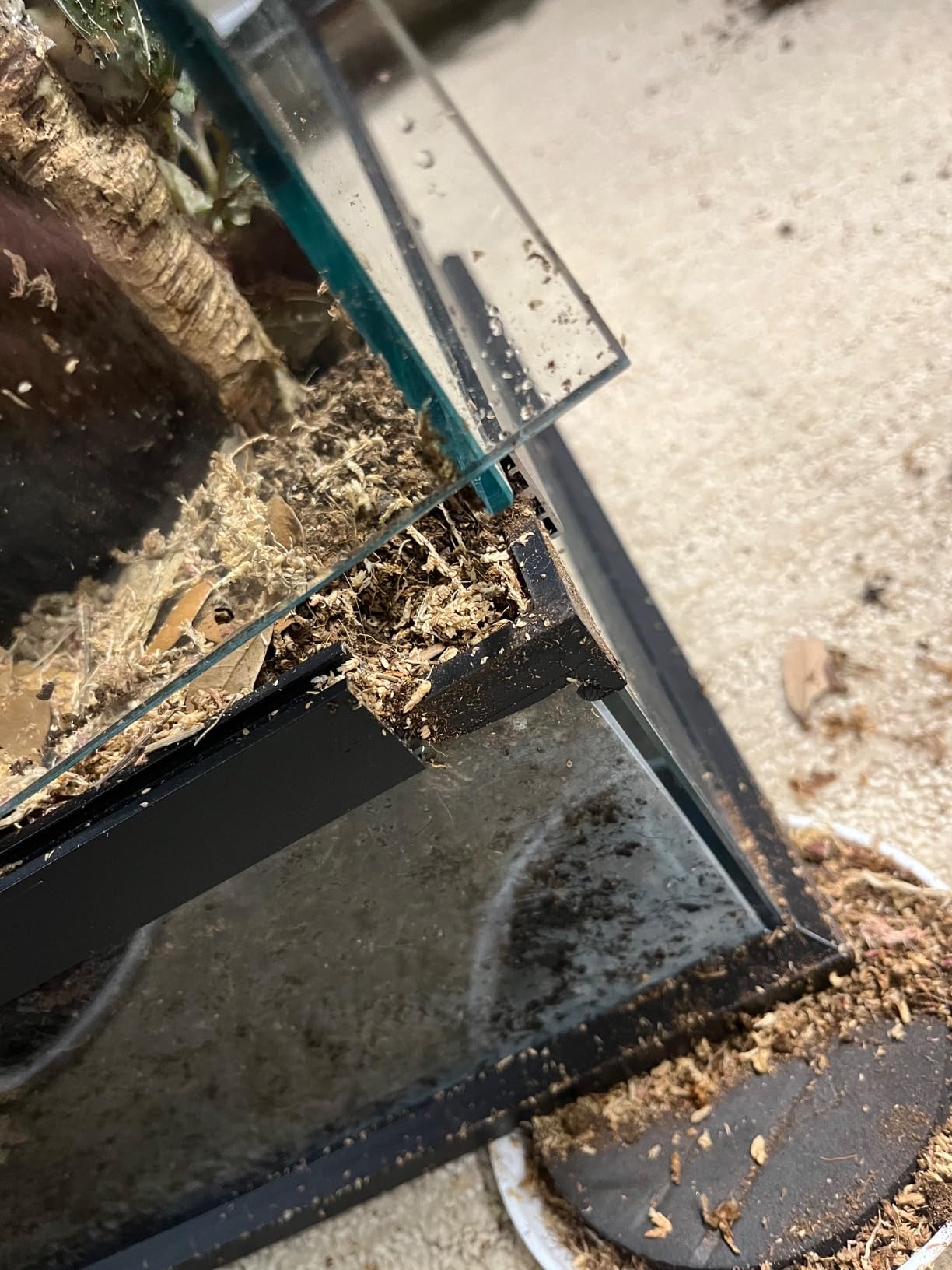
A front-opening door on a tank at this size is unusual, and it is the reason this enclosure earns a place despite the compact footprint. Daily handling, spot cleaning and feeding all happen at the front of the tank rather than over the top, which removes the main handling risk in a small setup where your hands are close to the animal anyway.
The sealed watertight base is the second useful feature. It lets you run a damp hide or a water dish without worrying about it seeping onto furniture, which is genuinely handy during shed. Pre-drilled cable holes in the top take the guesswork out of heat mat and lamp placement.
Owners like the clear glass, the accessible front door and the watertight base for the money. A larger 24 x 18 variant is listed alongside the 18 x 12 version if you outgrow it within the same product line.
Keep the scale in mind. The 18 x 12 floor limits how long you can make a heat gradient, and a 12 inch height limits climbing. Two hides fit comfortably. Three is tight.
Where it works
Quarantine and hospital setups, temporary housing, a single juvenile while you plan a larger tank, or an adult who is calm and does not need much room to exercise. Owners of calm adults report the front access makes routine care noticeably easier.
The mesh top is heat resistant and takes a basking fixture, so you are not locked into a mat-only setup even at this size.
What owners flag
The one-star share is the highest in this group, and the complaints are about build consistency and transit damage rather than about the design itself. Expect to inspect the seams carefully on arrival.
The suction cup door pull is a small plastic part that can wear or tear over time, and the brand is little known, so long-term parts availability is uncertain. Both are reasons to buy it as a secondary tank rather than a permanent one.
What Size Glass Terrarium Do Leopard Geckos Actually Need?
An adult leopard gecko needs at least an 18 by 18 inch floor with a height of 24 inches, which is the size the hobby calls a 20 gallon long. A 10 gallon cube is a temporary juvenile home, not an adult enclosure. The community floor number is simple: no less than 24 to 30 inches of length, and more is better.
The reason footprint beats volume is thermoregulation. A leopard gecko is a ground dweller from arid country, and the whole point of the enclosure is to let it move between a warm basking zone and a cool zone. A tall narrow tank of the same volume gives you less floor to build that gradient across, and a shallow wide tank gives you more. A 10 by 10 by 36 tank holds far more volume than a 20 gallon long and is a much worse habitat.
For horizontal versus vertical, horizontal wins for this species in most homes. Leopard geckos stay low, they walk, and the length of the floor is what they actually use. A taller tank helps if you want a basking spot with overhead clearance or vertical background structure, but do not buy tall to compensate for a short floor.
Mapping it to life stages: a hatchling to around eight months is comfortable in something like the 15 gallon 24 by 12 by 12 tank on this list. From around six months the growth is fast, so many owners skip the small tank entirely and start at 18 by 18 by 24. A single adult is happy with that footprint. If you ever plan to house two animals, plan for a 40 gallon breeder footprint from the start rather than trying to rehome one later.
The dominant regret in forum threads is buying small first. It is the single most common version of “I need to buy another one when the gecko is fully grown,” and it is avoidable. Starting at the adult size costs less money overall than buying two tanks.
Ventilation and Lids: Screen, Mesh or Solid Glass
Use a screened or mesh top, full stop. Leopard geckos need humidity to stay low, and a solid glass lid on a small enclosure can push readings past the roughly 30 percent ceiling an arid species tolerates. A screen top also passes the light and infrared heat you will be running, and it supports a lamp fixture on the larger tanks here.
Where you can get it, side or window ventilation makes a visible difference. Several enclosures in this roundup include window vents on the side panels, which lets air move across the enclosure rather than only up and out of the top. On a tall tank, cross-ventilation matters more because the internal air column is deeper.
Avoid stacking glass enclosures without a spacer. Two sealed glass boxes on top of each other is a humidity problem waiting to happen, and gecko owners who stack use a solid divider between the levels with their own ventilation.
One practical warning: any tank you buy for an adult should have a lid latch that actually holds. A loose screen top plus a fast gecko is the standard escape combination, and every enclosure here has a lock, buckle or rotating latch of some kind for that reason.
Glass, Acrylic and PVC: Does the Tank Material Matter?
Glass conducts and loses heat quickly, and it insulates nothing. That is the single most important thing to understand before you buy: the tank is a container, not a heat source. It is where you build a gradient, but the gradient comes from your heat source and your thermostat, and no enclosure on this list changes that.
Because heat moves readily through glass, a thermostat is not optional in any of these tanks. The heat mat bundled in beginner kits is a fixed-output mat with no proportional control, and owners on r/leopardgeckos consistently describe kit heaters as inadequate without a thermostat to regulate them. Pair a thermostat with a probe placed where the animal actually sits, and measure the cool end too.
Glass is non-porous, wipes clean, and resists urine staining and odour better than PVC. Acrylic is lighter and cheaper but scratches, clouds and flexes, and it is harder to fully disinfect long term. PVC is light, thermally quiet and easy to work with, but it is porous, needs a sealant, and costs more. For a leopard gecko specifically, glass and PVC are both good choices, and acrylic is the one to skip.
How cold is too cold at night is a common question and the answer is a range rather than a number. Leopard geckos benefit from a drop at night, and a night-time reading in the mid 70s Fahrenheit is generally fine, while a tank that drops into the 60s for extended periods is where problems start. Check the cool corner, not just the warm one.
Substrate, Hides and Finishing the Build
Three hides minimum, distributed across the gradient. One humid hide for shed, one dry hide in the warm zone, one in the cool zone. This matters more than any tank feature, because a gecko that cannot hide will not thermoregulate properly no matter how good the enclosure is.
Leopard geckos are arid, and moisture-retaining substrates are contested in the hobby for that reason. Keepers who favour dry slate, sand-clay mixes or paper towels generally do so to keep humidity in check, while others run bioactive setups with drainage layers and caution. The consensus on the forums is that bioactive works for an arid species only if the setup is genuinely dry and monitored.
On substrate depth, a shallow layer is easier to keep dry and easier to change. Deep substrate is better if you want a diggable layer or a false rock ledge, and the raised base on the larger tanks here gives you room for both. Drainage is only a feature in a wet setup, so a lined or sealed base is optional rather than necessary.
For the best flooring, a simple test: if your substrate holds moisture for days, it is too wet for this species. Move to a dry mix or an easy-clean paper towel base. You want a surface the gecko can walk on and dig into without it compacting.
Finally, the kit question. Kits that bundle a tank with a small heat mat, hides and a dish look like a saving, and the tank in a kit is usually fine. The heat mat is the part that needs replacing. Buy the kit if the enclosure is a size you want long term, then add a thermostat and a proper heat source and expect to swap out most of the substrate and decor anyway. If the kit tank is a 10 gallon, you have bought the problem, not the solution.
For plants, stay with arid-safe options. Succulents, echeveria, sansevieria and similar low-moisture choices survive a dry enclosure; anything that needs frequent watering will lift humidity past where a leopard gecko should be. Plastic and dried botanical decor work well for the same reason.
Frequently Asked Questions
What type of terrarium is best for a leopard gecko?
A glass terrarium with an 18 by 18 inch floor and at least 24 inches of height is the best choice for an adult leopard gecko, which is commonly called a 20 gallon long. Look for tempered glass on all four sides, a screened top for ventilation, a raised waterproof base that clears an under-tank heat source, and front-opening doors so feeding and cleaning happen at the front of the tank rather than over the top.
Can a leopard gecko live in a 10 gallon terrarium?
A 10 gallon tank is fine for a hatchling and a poor adult enclosure. Leopard geckos need floor space to move between a warm zone and a cool one, and a 10 gallon cube offers too little length to build that gradient. Many owners buy a 10 gallon first and then replace it within a year, so starting at 18 by 18 by 24 usually costs less over time.
Do leopard geckos prefer vertical or horizontal enclosures?
Horizontal floor space suits leopard geckos better. They are ground dwellers from arid regions and use length to walk and to thermoregulate, so a wide floor beats a tall tank of the same volume. Height still helps if you want overhead clearance for a basking lamp or vertical background structure, but it should not come at the expense of floor length.
Do leopard geckos need a screen lid?
Yes, a screened or mesh top is the standard choice. Leopard geckos need humidity kept low, ideally under roughly 30 percent, and a solid glass lid on a small enclosure can push readings above that. A screen top also lets UVB and infrared heat pass through and can support a lamp fixture on most larger enclosures.
What is the best flooring for a leopard gecko?
For an arid species, a dry substrate that does not hold moisture works best, such as a sand-clay mix, slate, or plain paper towels for easy cleaning. Avoid deep moisture-retaining substrate because it lifts humidity in a sealed glass tank. Whatever you choose, provide at least three hides and a humid hide for shedding.
The Bottom Line on Glass Terrariums for Leopard Geckos in 2026
Our top pick is the REPTI ZOO 34 gallon front-opening terrarium, because a 24 by 18 inch floor, independently opening doors and a raised waterproof base solve the three problems that matter most. If you want more length for a longer gradient at a lower cost, the REPTI ZOO 35 gallon wide and low tank does the same job with a 36 inch floor. Budget owners should start with the 15 gallon full glass tank for a juvenile, and anyone with a deep basking setup should go straight to the 40 gallon.
Whatever you choose, size to the adult animal, use a screened top, run a thermostat, and give it three hides. The best glass terrariums for leopard geckos in 2026 are the ones that make a full setup easy to build, not the ones with the most features on the box.