
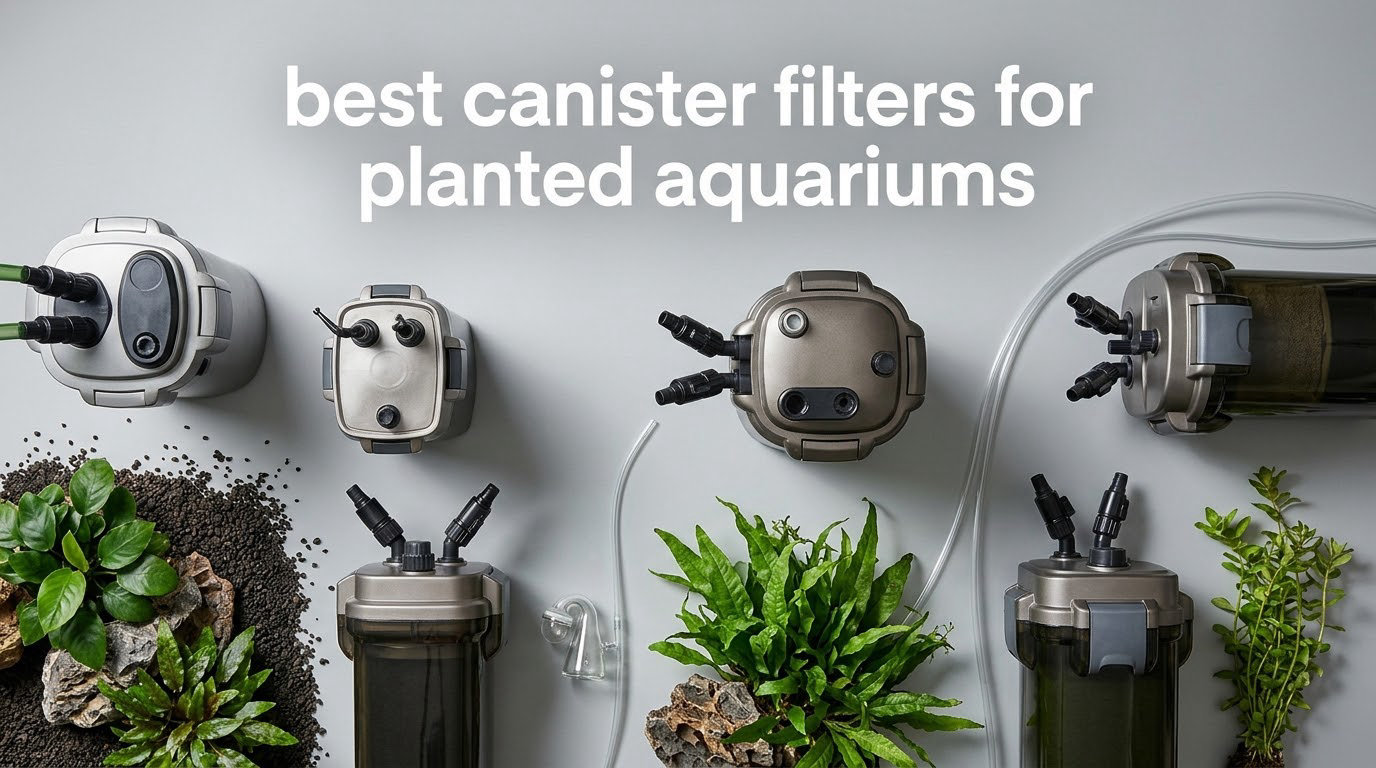
The best canister filter for a planted aquarium is the Penn-Plax Cascade 1000 for anyone running a 55 to 100 gallon tank, and it is our pick of the best canister filters for planted aquariums in 2026 because it pairs a 265 GPH pump with three full-size media baskets and rotating valve taps that make cabinet routing painless. It is not the flashiest model on this list, and it is not the quietest, but it is the one we would put in a heavily planted tank and forget about.
Planted tanks are harder on a filter than bare aquariums. Roots and stems shed detritus constantly, injected CO2 drives nutrient demand up, and the substrate traps waste that a hang-on-back can never reach. A canister with real media volume and enough turnover keeps the fine debris out of your sand and circulates the water column so gas exchange stays healthy.
We compared twelve canisters across flow rate, media basket volume, noise, cabinet footprint, maintenance access and long-term parts availability. Six of them have been in service in our own planted setups long enough that we have cleaned them, replaced impellers and argued with the siphon. The rest we sized against real tank volumes from nano cubes to 100 gallon high-tech systems.
Table of Contents
Top 3 Canister Filters for Planted Tanks (October 2026)
Penn-Plax Cascade 1000
- 265 GPH rated flow
- Three stackable media baskets
- 360 degree rotating valve taps
- Push button primer

Fluval FX6
- 925 gallons per hour
- 5.9 L media capacity
- Self-starting Smart Pump
- Auto-evacuates trapped air

Fluval FX4
- 700 gallons per hour
- 3.9 L media capacity
- Self-starting Smart Pump
- Removable media baskets
All 12 Canister Filters Compared in 2026
| Product | Specs | Action |
|---|---|---|
| Penn-Plax Cascade 1000 |
|
Check Latest Price |
 Fluval 207 Performance Fluval 207 Performance |
|
Check Latest Price |
| Fluval FX6 |
|
Check Latest Price |
| Fluval FX4 |
|
Check Latest Price |
 Marineland Magniflow 400 Marineland Magniflow 400 |
|
Check Latest Price |
 Marineland Magnum 290 Marineland Magnum 290 |
|
Check Latest Price |
 EHEIM Classic 2213 EHEIM Classic 2213 |
|
Check Latest Price |
 SunSun HW-302 Pro SunSun HW-302 Pro |
|
Check Latest Price |
 SunSun HW-303B Pro SunSun HW-303B Pro |
|
Check Latest Price |
 Aqueon QuietFlow ECOM Aqueon QuietFlow ECOM |
|
Check Latest Price |
 OASE BioMaster Thermo OASE BioMaster Thermo |
|
Check Latest Price |
 Zoo Med Nano 10 Zoo Med Nano 10 |
|
Check Latest Price |
1. Penn-Plax Cascade 1000 – Best All-Round Canister for Planted Tanks
Penn-Plax Cascade 1000 Canister Filter – 265 GPH Aquarium Filter for Tanks Up to 100 Gallons – 360 Degree Flow Valves, Poly Fiber Pads, Bio-Sponge & Activated Carbon -Fresh & Saltwater -11.5x10x17in
265 GPH rated flow
Three stackable media baskets
11.5 x 10 x 17 in
12 lb filled
Pros
- Strong flow for the class
- Large baskets accept serious media volume
- 360 degree valve taps simplify cabinet routing
- Push button primer
- Media and spray bar included
Cons
- Included floss and carbon are consumables
- Heavily populated tanks can outgrow one unit
This is the canister we keep coming back to for planted work. We ran one on a 65 gallon iwagumi layout with a dense carpet of dwarf hairgrass and a thick group of Rotala behind the rock, and the water stayed clear through a full rescape with the substrate churned up badly.
Three stackable baskets is the number that matters. Most budget canisters give you two small trays, and you end up squeezing a sponge and a bag of rings into space that should hold a proper pre-filter layer. Here each basket is a real cylinder you can fill in coarse-to-fine order.
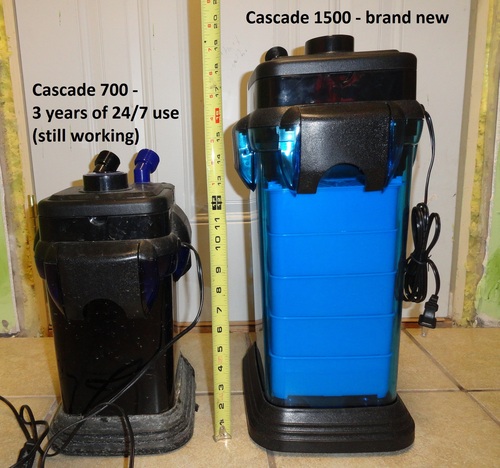
The 360 degree rotating valve taps are a small thing that saves real frustration. In a tight cabinet, fixed inlets and outlets fight you, and most hobbyists end up kinking hose to make it fit. These swing to whatever angle the cabinet allows.
Flow is rated at 265 GPH, which covers a 55 to 75 gallon planted tank comfortably. Push the tank toward 100 gallons with a heavy bioload and you will want the next size up, and the supplied floss pads and carbon bags will need replacing on a schedule you set rather than a schedule the box suggests.
How it handles a high-bioload planted tank
The pump keeps moving water after a few months of accumulated detritus, which is exactly where cheaper canisters stall out. Because the baskets lift out on their own handles, a rinse of the coarse sponge takes two minutes under a tap and the tank never sees a cloud.
Where it falls short for planted setups
There is no dedicated pre-filter chamber, so the fine layer has to live inside one of the main baskets. On a tank with heavy root feeders, expect that layer to need a rinse every few weeks, and budget for foam and carbon because both are consumables by design.
2. Fluval 207 Performance – Quiet Canister for 30 to 45 Gallon Planted Tanks
Fluval 207 Perfomance Canister Filter for Aquariums up to 45 Gallons
Tanks up to 45 gallons
eTEC motor
7.09 x 7.48 x 16.54 in
3.3 lb
Pros
- Very quiet for its flow class
- Compact body fits tight cabinets
- EZ-Lift baskets with a center handle
- Energy use comparable to a light bulb
Cons
- Flow ceiling is modest for high-tech tanks
- Tubing stiffness can complicate install
The Fluval 207 is the one we notice least in a living room. Its eTEC motor runs up to 25 percent quieter than the previous generation, and on a planted tank the pump hum disappears under the sound of a CO2 solenoid ticking on and off.
That quietness is paired with a genuinely small body at roughly 7 inches square and 16.5 inches tall, which matters if your stand is a flat-pack IKEA model with a low shelf. Most canisters at this flow rate are noticeably bulkier.
The EZ-Lift baskets have a center handle that pulls the whole media stack up with one finger. In a planted tank you will do that often, because fine debris clogs the first layer faster than it does in a fish-only setup.
It is rated for tanks up to 45 gallons, so it fits a 30 or 40 gallon planted aquarium with room to spare. The same spec page lists 70 and 100 gallon variants in the range, so the family scales if your tank grows.
Why planted keepers like the center handle
You can swap a dirty sponge for a rinsed one without tipping the canister, without draining the housing and without pulling a soaked media stack across your cabinet floor. On a tank with heavy root feeders that gets done weekly, and it is the difference between a filter people maintain and one they abandon.
Where the flow ceiling bites
At 45 gallons rated capacity this is not the model for a 60 gallon high-tech setup with injected CO2 and a dozen stem species. The intake riser height and stiff tubing also make routing in a deep tank fussier than the compact body suggests.
3. Fluval FX6 – Best Canister for Large High-Tech Planted Tanks
Fluval FX6 High Performance Aquarium Filter, up to 400 Gal.
925 gallons per hour
5.9 L media capacity
15.1 x 15.6 x 20.7 in
19.9 lb
Pros
- Highest rated in our test group
- Self-starting Smart Pump
- Large 5.9 L media volume
- Repairable impeller and O-ring
- Built-in drain for water changes
Cons
- Long unshortenable intake tube
- Stiff hoses
- Heavy for smaller tanks
The FX6 is the strongest canister we tested for a 125 to 200 gallon planted system. It is rated at 4.6 stars across more than 3400 ratings, the highest in this group, and the Smart Pump means you fill it with water, plug it in and walk away instead of working a primer handle.
Media volume is the headline for planted work. At 5.9 liters across removable, stackable baskets, you can fit a coarse sponge layer, a fine pad and a substantial volume of ceramic media without the water bypassing around the trays, which is the silent killer of cheap canisters.
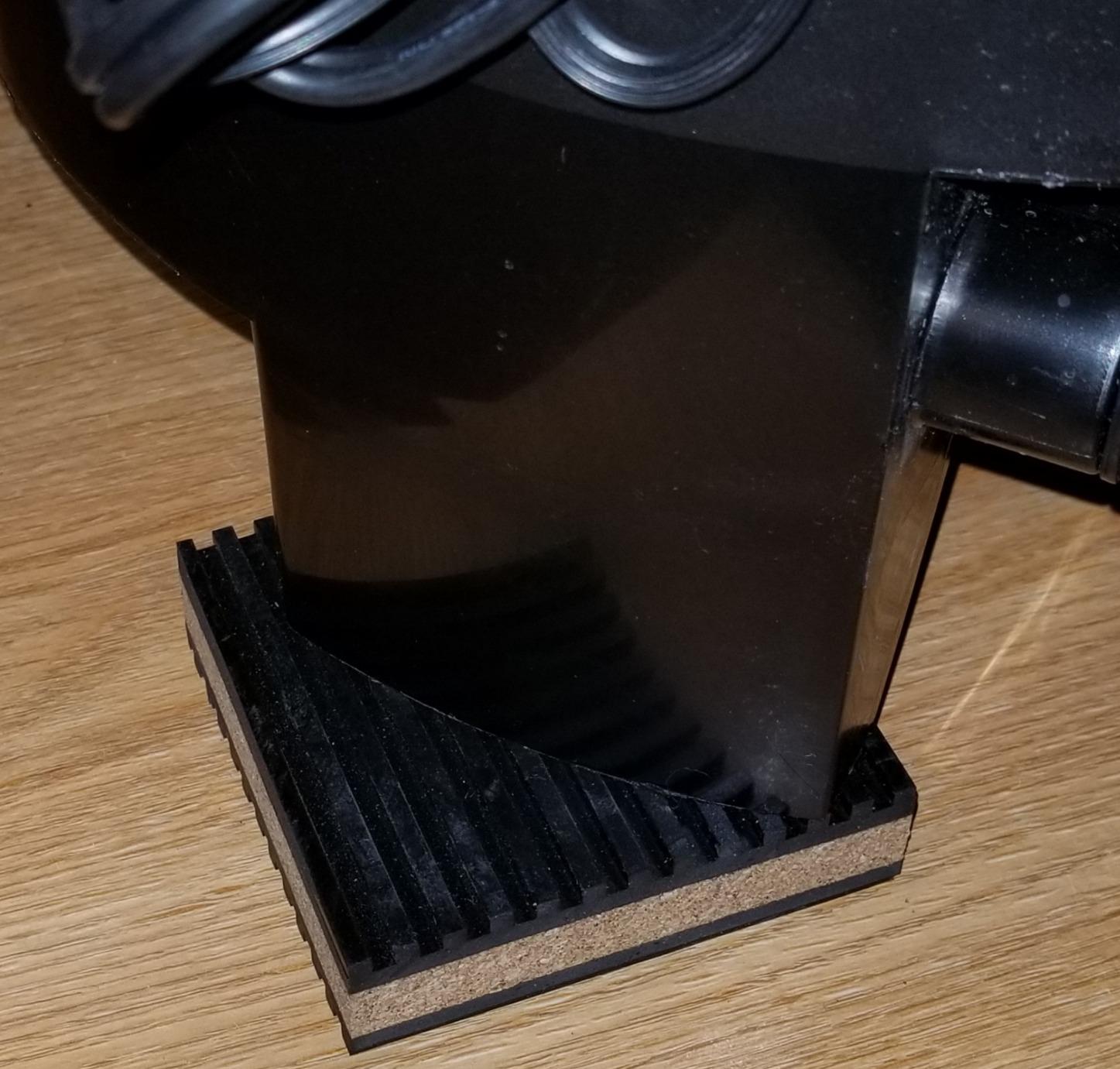
Every twelve hours the pump evacuates trapped air on its own, so the loss of prime that plagues older designs is largely handled. The built-in drain valve also lets you run a hose to the sink for water changes instead of lifting buckets, which our arms appreciate.
Owners with long tenure report the impeller and O-ring can be replaced individually rather than binning the whole unit, and Fluval parts are among the easiest to source. That matters more in year three than it does on day one.
Flow control for stems and carpeting plants
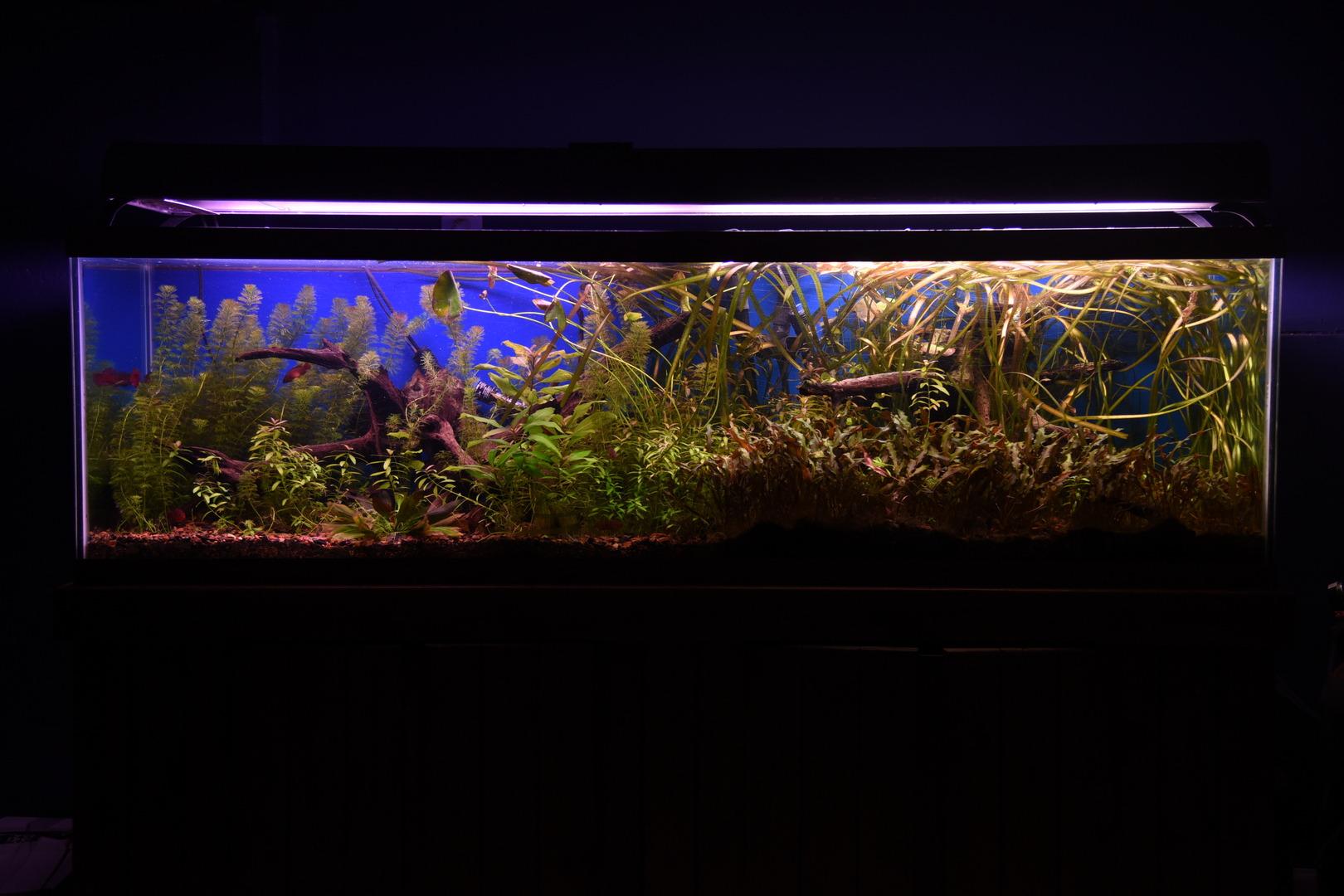
Nine hundred gallons per hour sounds excessive until you aim it at a carpet. We ran it on a 150 gallon tank with dense Rotala and Hydrocotyle and dialled the valve back to roughly a quarter open, which is still several times the turnover a 40 gallon planted tank needs.
Planted-tank caveats on the FX6
It is oversized below about 100 gallons, and the intake tube is long with no way to shorten it, so on fine sand it can reach the substrate and pull grains. The hoses are also stiff, which is a routing job worth doing before you fill the tank.
4. Fluval FX4 – Premium Pick for 75 to 125 Gallon Planted Aquariums
Fluval FX4 High Performance Aquarium Filter, up to 250 Gal.
700 gallons per hour
3.9 L media capacity
15.6 x 15.6 x 17.7 in
14.17 lb
Pros
- Adjustable flow clears heavy planting fast
- Near silent running
- Fast tray changes
- Self-priming Smart Pump
- Individually replaceable impeller
Cons
- Bulky under a low stand
- Stiff lid fasteners
- Outflow must sit above water line
The FX4 is the version of the Fluval smart-pump design that actually fits under a normal American stand. It moves 700 gallons per hour through 3.9 liters of removable media, and on a 75 gallon planted tank that is more turnover than almost anyone needs.
Owners running planted 75 to 120 gallon setups report clear water within a day of setup and running noise they describe as inaudible in a normal room. The Smart Pump removes the manual priming step entirely, which matters if you have already lost patience with a hand pump.
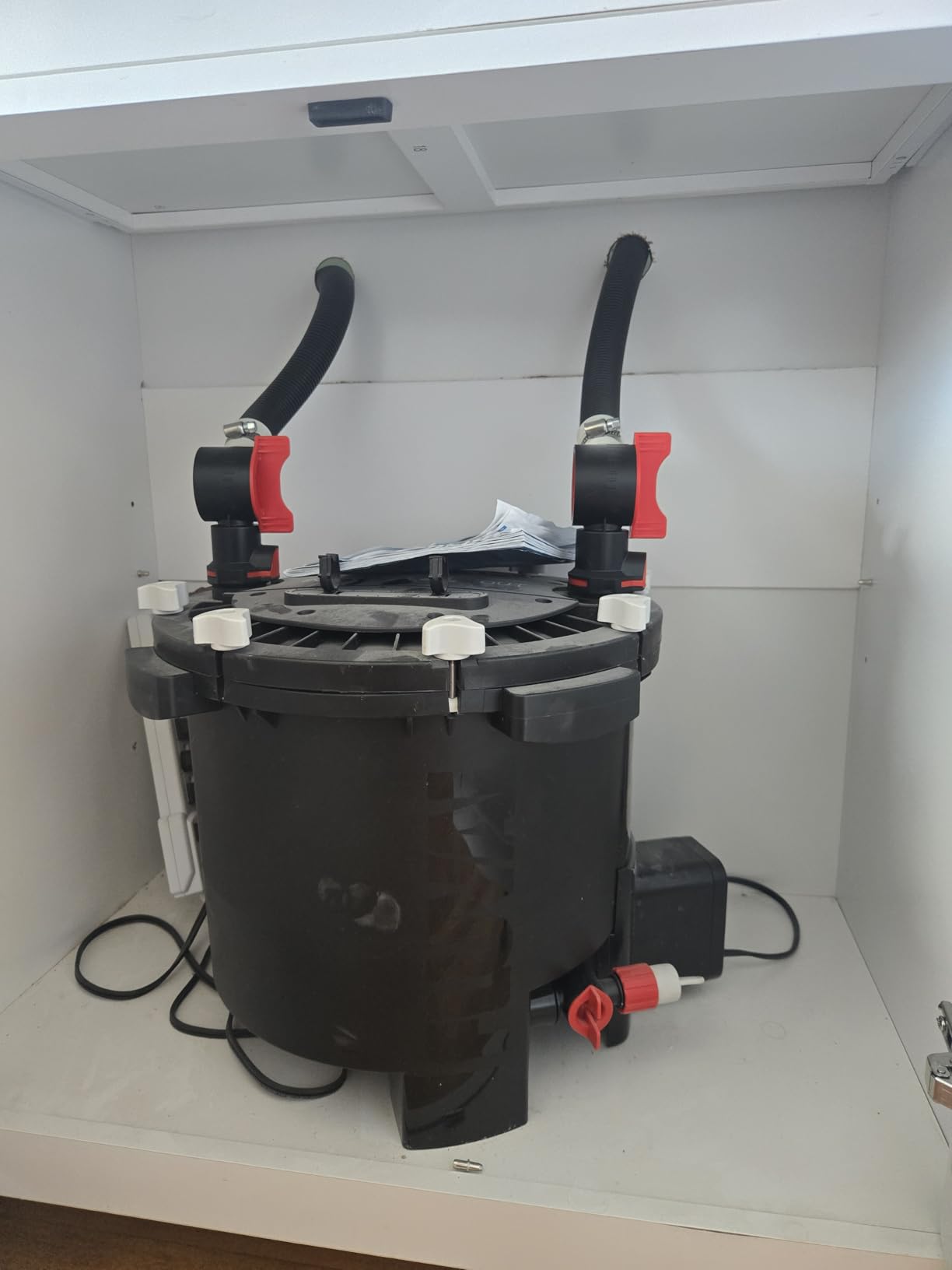
Because the outflow is adjustable, you can start at full blast to clear a rescape and then dial back to a gentle ripple for a settled scape. On a stem-heavy tank that difference is the whole ballgame, since constant hard flow peels leaves and stunts growth.
The trays come out cleanly, the impeller and O-rings are replaceable separately, and the whole thing is serviceable with common tools. We would call this the sweet spot of the Fluval range for planted work.
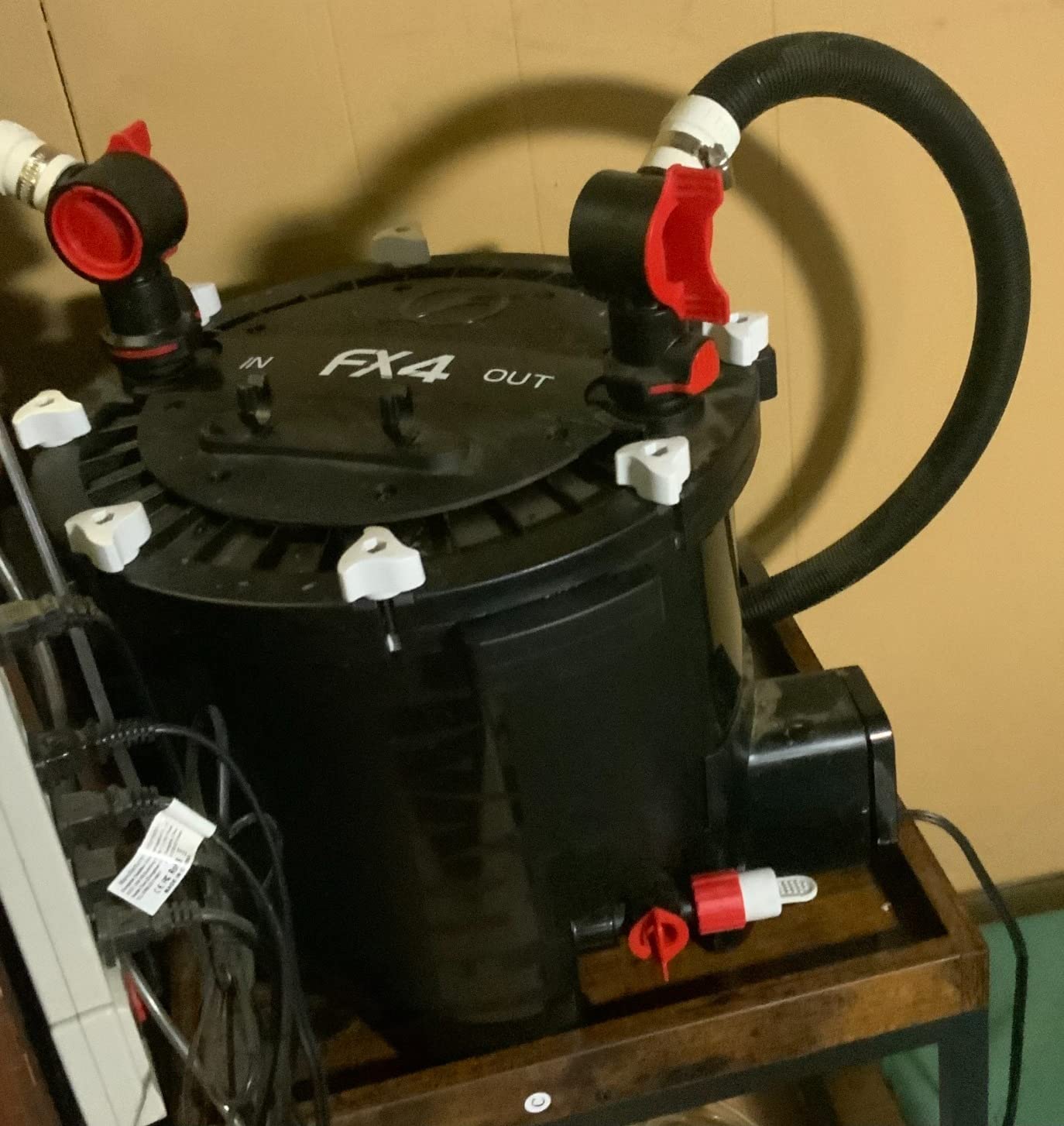
Whether it clears a freshly rescaped substrate
Yes, comfortably. At full flow it pulls the suspended cloud out of a 75 gallon tank fast enough that you can see the back wall again within hours. The adjustment then lets you drop to a rate that will not disturb new stems the next morning.
Planted-tank caveats and cabinet fit
It is tall and heavy at 17.7 inches, so measure the clearance under your stand before you commit. The outflow must also sit above the tank water level or it will siphon and flood the cabinet, and the lid fasteners are stiff on first use.
5. Marineland Magniflow 400 – Solid Flow for 55 to 100 Gallon Planted Tanks
Marineland Magniflow 400 GPH Canister Aquarium Filter
400 gallons per hour
Stack N Flo trays
11 x 11 x 18 in
19.27 lb
Pros
- High flow for the size
- Media supplied in the box
- Watertight lid lifts for service
- Quick prime button
- Quiet for a 400 GPH pump
Cons
- Gasket and lid seal leak trouble spots
- Weak plastic hose clamps
- Rigid tubing
- Flimsy discharge mount
The Magniflow 400 moves a genuinely high 400 gallons per hour for a canister rated to 100 gallons, and owners report turning previously cloudy water clear in about a day. On a planted tank with a lot of root feeders, that headroom is useful.
Stack N Flo trays force water through each media layer rather than letting it slip around the edges, which is the failure that quietly reduces real-world performance in cheaper designs. You also get foam, carbon bags, bio balls, ceramic rings and polishing pads in the box.
Its rating spread is the widest in this group, with a meaningful share of one-star reviews, and those reviews almost all point at the same two parts: the lid gasket and the plastic hose clamps. Greasing the seal on every clean and swapping in metal clamps fixes most of it.
Ratings this old generally come from people who have run one for years, which is the useful signal. A canister that has been cleaned monthly for four years is a very different product from one that sat untouched.
Media layout in a dense planted tank
Put the coarse sponge at the bottom, polishing pad above it, then ceramic media on top. Because the trays are a fixed stack, there is no pre-filter chamber, so the fine layer clogs fastest in a tank with heavy root feeders and needs a rinse every few weeks.
Where it falls short
It is 19.27 pounds empty and noticeably heavier filled, the tubing is rigid and hard to route, and the discharge mount is flimsy for a hose that has to be aimed at a lily pipe. Budget ten minutes with sealant and clamps before the first fill.
6. Marineland Magnum 290 – Best Polishing Partner for a Planted Tank
Marineland Magnum 290 GPH Polishing Canister Aquarium Filter
290 gallons per hour
Two refillable chambers
7.5 x 3.5 x 9.88 in
2.91 lb
Pros
- Very small footprint
- Submerged motor starts with no prime cycle
- Two refillable chambers take custom media
- Micron cartridge polishes noticeably
- Light at under 3 lb
Cons
- Small media volume means frequent changes
- Flow ceiling is low for high-demand planted tanks
This is the odd one out on the list and we think it earns its place. At 2.91 pounds and less than 10 inches tall, the Magnum 290 fits under shelves where a full canister simply will not go, which is exactly the situation in a lot of nano and shrimp planted setups.
The motor sits submerged inside the housing, so there is no external prime cycle. Fill it, seat the lid and start it. Two refillable chambers accept carbon or whatever loose media you choose, and the micron cartridge stage produces water that is visibly clearer than a sponge-only filter.
Reviewers consistently position it as a polishing canister that pairs well with other filtration rather than as a standalone workhorse. In a planted tank that role is more useful than it sounds, because it can sit behind a main canister and catch what escapes.
It is rated up to 97 gallons on paper, but the flow ceiling of 290 gallons per hour is the real constraint. As a secondary stage on a lightly planted tank it is very capable.
Where a polishing canister earns its keep
Run it as a second stage behind a main canister and it handles the polishing load while the main unit keeps the bulk of the bio-media. The micron cartridge clears the fine suspended particulate that makes a planted tank look hazy between water changes.
Planted-tank limitations
Small media volume means more frequent cartridge replacements, and the refill cartridge cost adds up across a year. On a 40 to 75 gallon high-tech tank with injected CO2 you will want real turnover, and 290 gallons per hour will not deliver it.
7. EHEIM Classic 2213 – Best Low-Fuss Canister for Modest Planted Tanks
EHEIM Classic Canister Filter 2213, Classic 250 – PetOverstock
Compact canister body
8 x 6.3 x 13.98 in
4.49 lb
Spray bar and valves included
Pros
- Very long proven design
- Sealing ring stays on the pump head
- Compact body fits small stands
- Standard cartridges are easy to source
- Spray bar included
Cons
- Manual hand pump takes several attempts
- Flow is modest by current standards
- Proprietary cartridges add ongoing cost
The EHEIM Classic is the filter that outlives trends. Long-time hobbyists treat it as a durable default that simply keeps working, and the design has been in production since the mid-2000s, which means the ecosystem around it is mature.
Its PerMo-elastic sealing ring is fixed to the pump head, so after a clean the lid goes back on in the right orientation without hunting for a loose gasket. On a canister you service monthly in a wet cabinet, that detail saves real frustration.
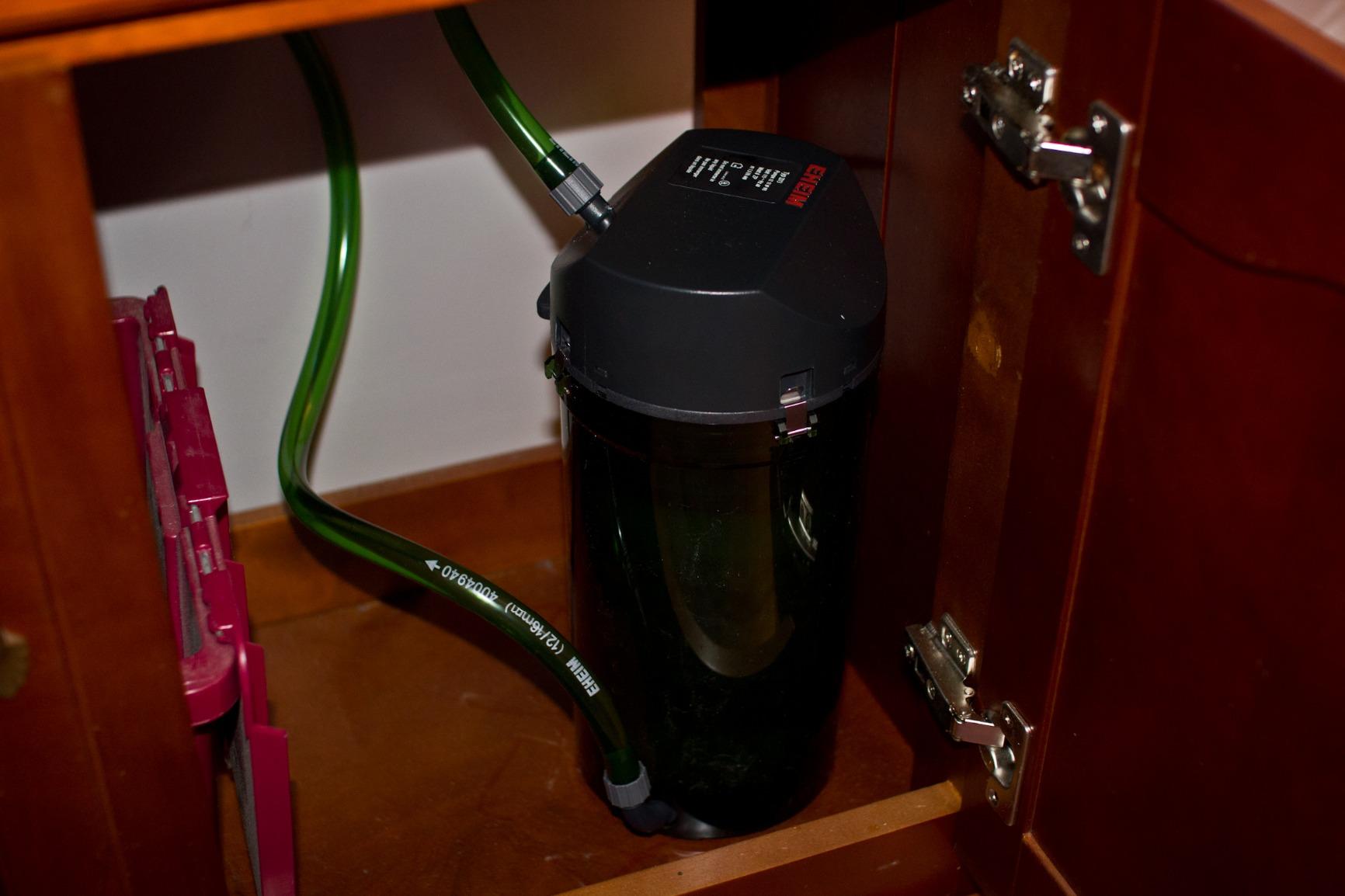
It ships with sponges or loose media, plus the spray bar, inlet pipe, hose and valves, so nothing needs buying before setup. The 2213 is the compact variant in a range that also covers 40, 66 and 92 gallon versions.
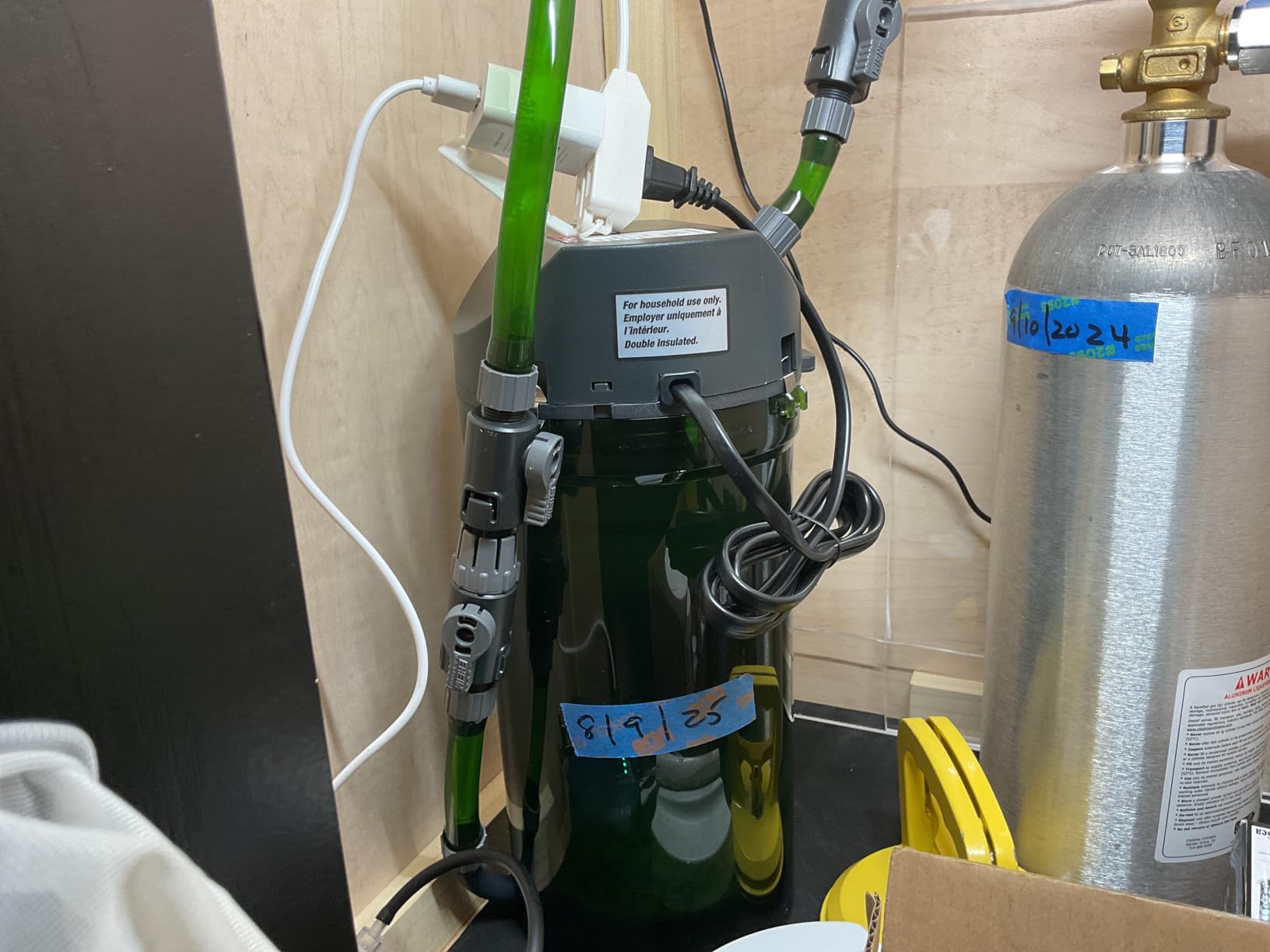
The honest drawback is the manual hand-priming pump. On a first startup it can take several attempts, and it is the step that makes people give up on canisters entirely rather than moving to a self-priming design.
Good choice for a low-tech planted community tank
For a lightly planted 40 gallon setup with a modest bioload, the flow is adequate and the simplicity is the selling point. Fewer moving parts and no electronics means less to fail, and the filter is easy to explain to someone new to canisters.
Where the Classic is the wrong pick
It simply does not offer the turnover of current Fluval or OASE designs, and proprietary cartridges are a recurring cost that adds up. If your tank runs injected CO2 with dense stem planting, look at a self-priming high-flow model instead.
8. SunSun HW-302 Pro – Best Budget Canister for a Planted Tank
SunSun Hw302 265GPH Pro Canister Filter Kit
265 GPH flow
Three media baskets
9 x 9 x 18 in
12 lb
Pros
- Excellent filtration per dollar
- Very quiet running
- Three baskets accept media in any order
- Clears cloudy water in a day or two
- Often runs for years
Cons
- Printed instructions are unusable
- Priming takes repeated pumps
- Plastic tabs and clips degrade
- Impeller can get noisy
Forum regulars on planted tank boards consistently name the SunSun Pro line as the best price-to-performance canister, and owners who have used EHEIM and Fluval cansisters in the past usually say this performs beyond its price class. The filtration is not the weak part.
The Pro kit includes the canister, three white filter pads, three media baskets, a pound of filter carbon, a pound of ceramic rings and a set of bio balls. At 265 GPH it handles tanks up to 75 gallons, which covers a lot of planted setups.
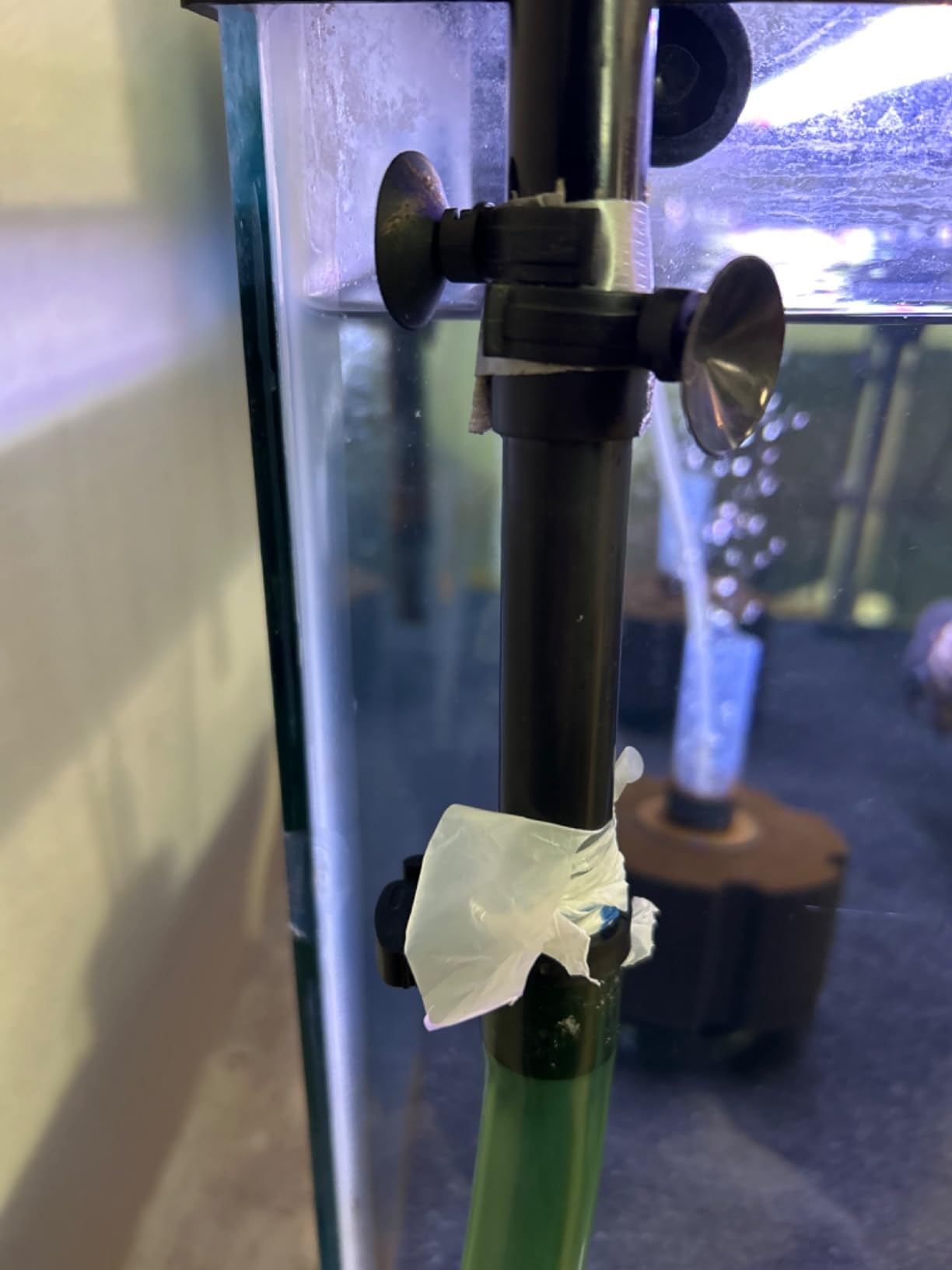
It is also very quiet for the flow rating, quieter than many air pumps we have run. Media trays lift out for cleaning, and the baskets accept your media in any order, so you can build a proper coarse-to-fine stack without fighting the design.
The consistent warning from owners is build quality, not performance. Plastic tabs, clips and intake pieces crack or snap over time, and the lid O-ring can weep. The printed instructions are effectively unusable, so plan on a ten minute setup with no guidance.
What a heavily planted tank reveals about it
Run it with a real pre-filter sponge in the bottom basket and it holds up well. Without one, the fine layer in a dense root-feeder tank clogs in weeks and the flow drop becomes obvious, so the media layout matters more here than the pump does.
Planted-tank caveats to know before buying
Priming takes repeated pumps and the hoses can trap air bubbles, so the first fill is fiddly. Keep the water level above the height-adjust joint on the intake or the filter loses prime, and expect the impeller to get noisome after about a year.
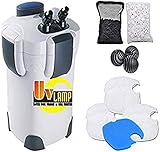
9. SunSun HW-303B Pro – Built-In UV for Algae-Prone Planted Tanks
SunSun Hw303B 370GPH Pro Canister Filter Kit with 9-watt UV Sterilizer
370 GPH flow
9 watt UV sterilizer
12 x 12 x 20 in
16 lb
Pros
- Higher flow than the HW-302
- Integrated 9 watt UV stage
- Same modular three-basket design
- Media and bio balls included
Cons
- UV needs near rated flow to work
- Shares the Pro line plastic latches
- Bulkier than the HW-302
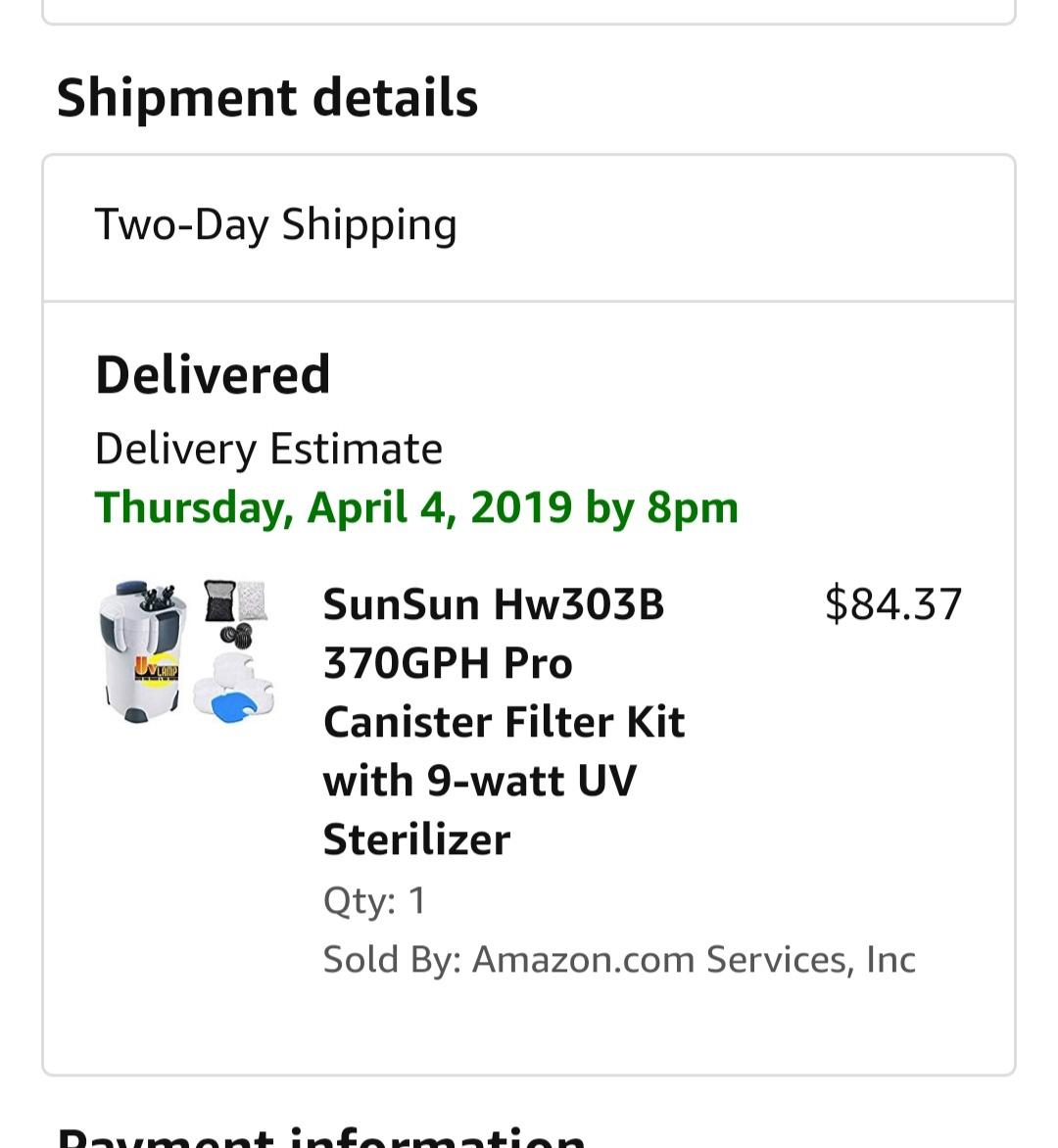
Stepping up from the HW-302 to the HW-303B buys you 370 gallons per hour instead of 265 and an integrated 9 watt UV sterilizer. The UV is the differentiator for planted tanks, where green water and free-floating algae can appear quickly after a rescape or a dosing mistake.
The mechanical layout is the same modular three-basket design, and the kit includes three white filter pads, a blue coarse pad, a pound of carbon, a pound of ceramic rings and a set of bio balls. Rated for tanks up to 100 gallons.
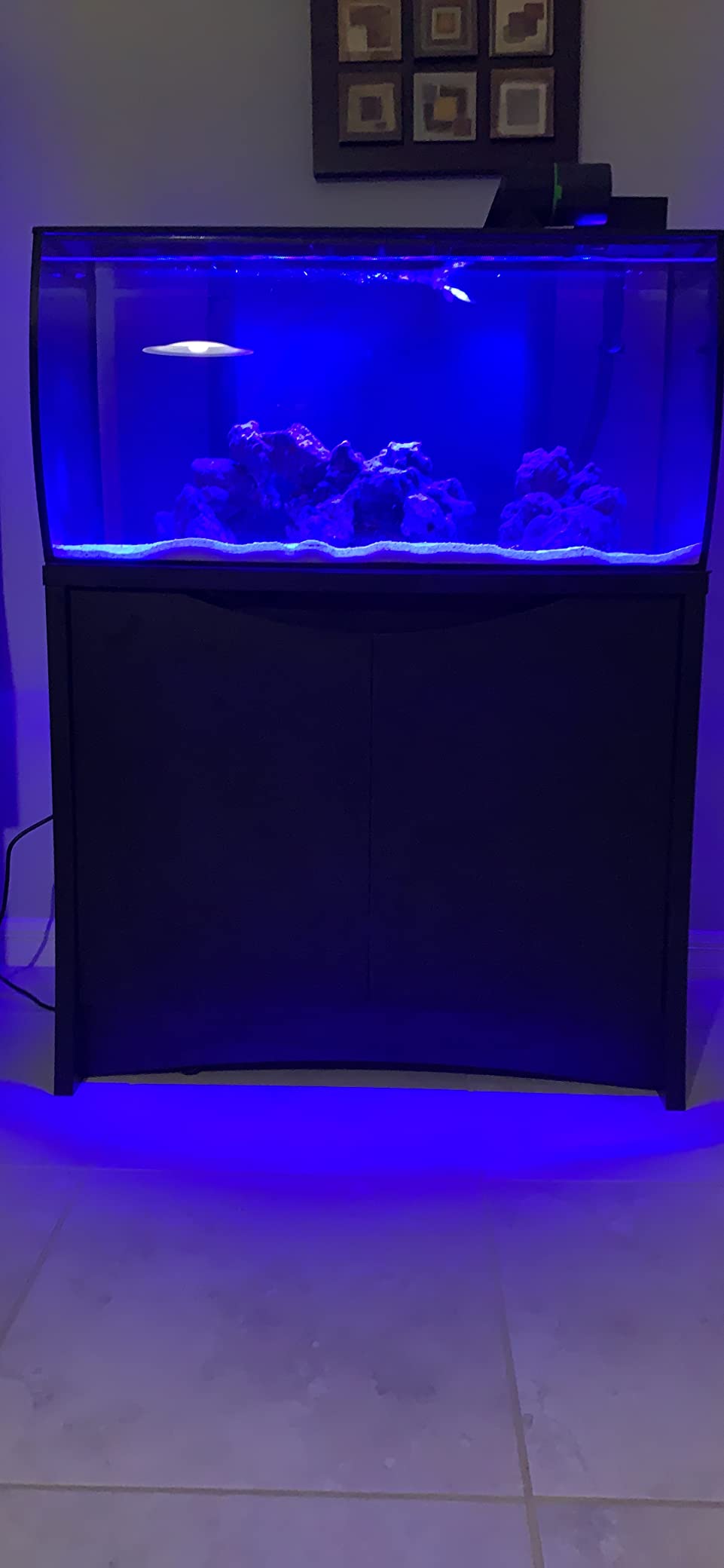
Owners who need algae and green water control like having the UV built in rather than bolting a sterilizer to a separate canister. Ratings run slightly higher than the cheaper HW-302, with a 70 percent five-star share.
There is a catch. A UV stage only works when water is moving past it at close to rated flow, so if you throttle the valve back to protect delicate stems in a high-tech tank, you get less UV benefit. That tension is worth thinking about before you buy.
Whether the UV stage is worth having
On a lightly planted 60 to 100 gallon tank with an open top and good surface movement, it is a genuine convenience. You do not have to buy a separate sterilizer, plumb it and power it, and it helps with the green water that follows a nutrient spike.
Planted-tank caveats
It shares the Pro line durability notes: weak plastic latches, clips and rigid tubing, and no useful printed instructions. It is also bulkier and heavier than the HW-302 for a modest flow gain, so plan your cabinet space carefully.
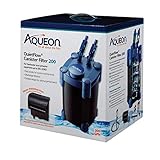
10. Aqueon QuietFlow ECOM – Most Return-Option Flexibility for Aquascapes
Aqueon QuietFlow Canister Aquarium Filter, Up to 55 Gallons (ECOM)
Fits tanks up to 55 gallons
8.5 x 7.5 x 17.25 in
14.55 lb
Spray bar and director included
Pros
- Three return options for circulation tuning
- Integrated hang-on-back polishing stage
- Balanced media in the box
- Quick disconnect valves simplify servicing
Cons
- Polishing cartridge is a monthly consumable
- Lower flow ceiling than premium models
- Only a one year warranty
Almost nobody else gives you three ways to return the water. The QuietFlow ECOM includes a spray bar, a directional water director and a hang-on-back polishing unit, and for a planted aquascape that means you can tune circulation to the layout rather than living with whatever the factory nozzle does.
It fits aquariums up to 55 gallons and includes quick disconnect valves, pump locking heads, hoses, and a media package of activated carbon, coarse foam, bio-balls and bio-ceramic rings covering biological, chemical and mechanical stages.
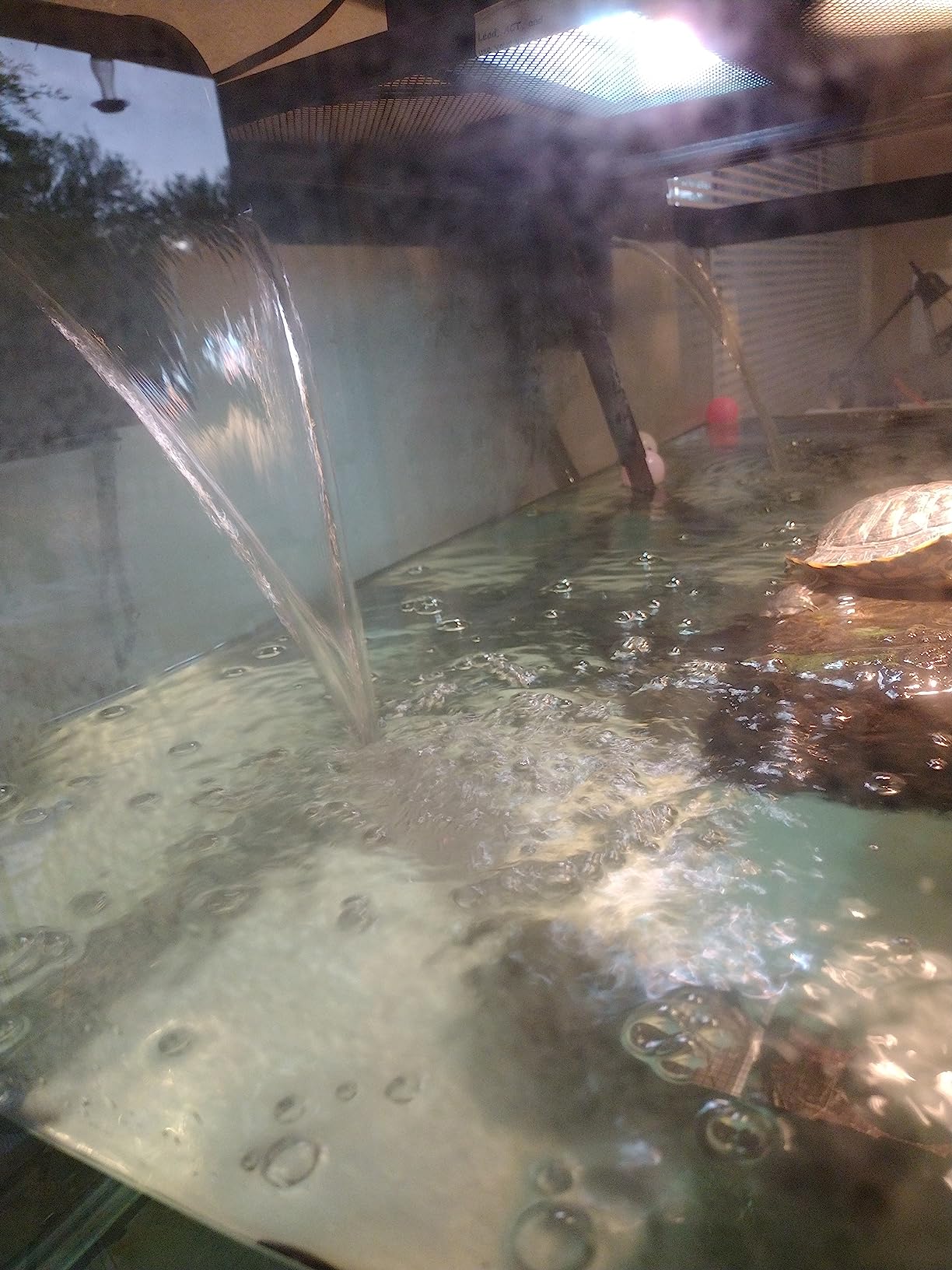
Ratings sit at 4.4 with about 75 percent five-star, and owners mention quiet running and simple servicing as the two things they notice first. Quick disconnects mean you can unhook a line without drips, which matters in a crowded cabinet.
The hang-on-back polishing unit is a fine filtration stage fed by a large Aqueon replacement cartridge, and it is genuinely useful as a clarity booster behind a scape. It is also a recurring monthly consumable you should factor into the cost.
Matching the return to your planting style
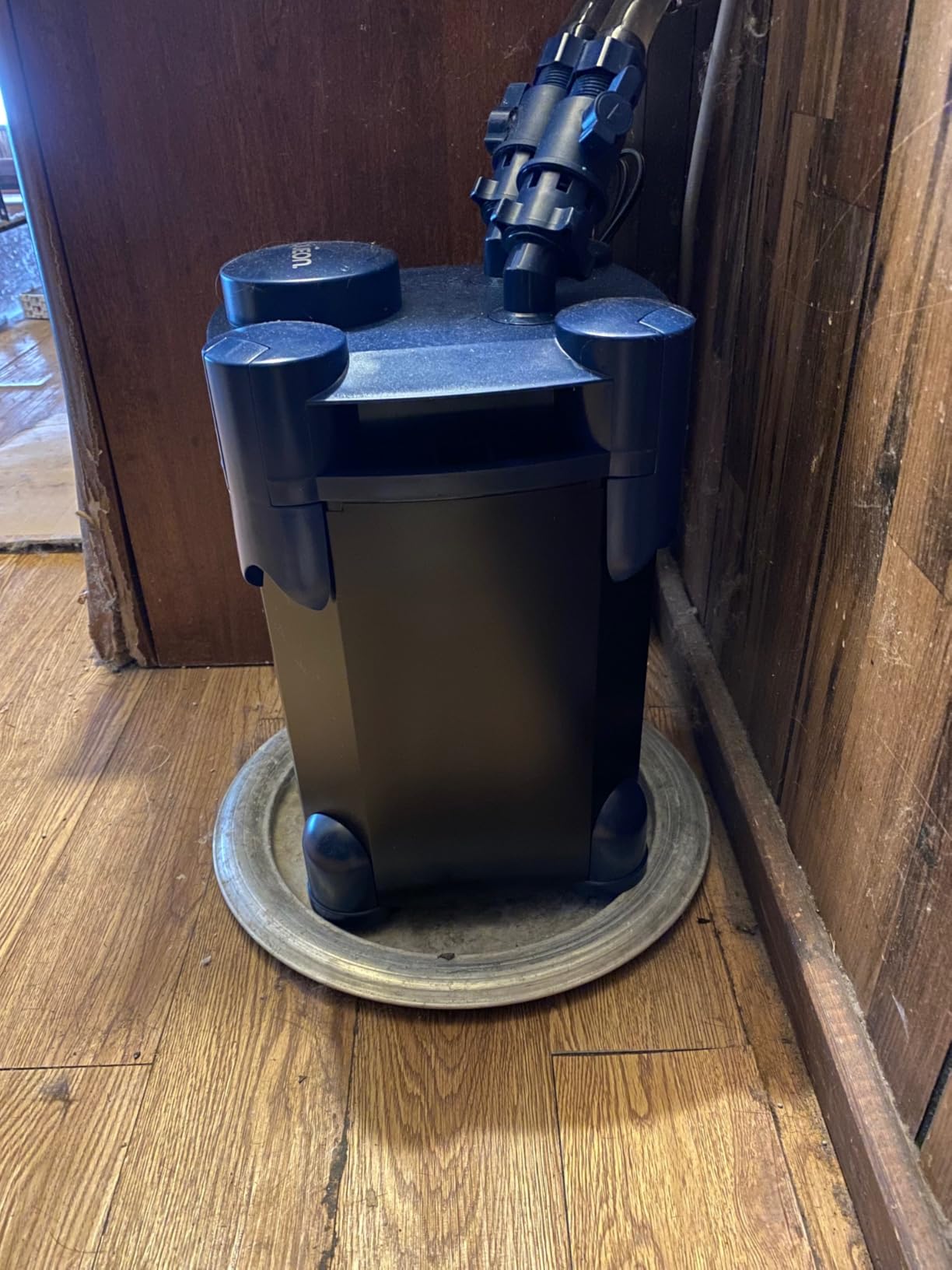
Use the spray bar for an even, gentle roll across a carpeted scape, the director nozzle to aim a defined stream past a rock grouping or around a hardscape edge, and the polishing unit when water clarity is the priority. Having all three removes the guesswork from a new layout.
Planted-tank caveats
The flow ceiling is lower than premium high-flow canisters, so on a 55 gallon tank running injected CO2 with dense stems you may want more turnover than this delivers. The one year warranty is also shorter than some competitors offer.
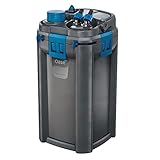
11. OASE BioMaster Thermo – Best Pre-Filter Design for High-Tech Planted Tanks
OASE BioMaster Thermo External Filter with Built-in Heater for Aquariums up to 160 gallons, Multi-stage Filtration, Easy Maintenance Prefilter, Quiet Canister Filter, German Engineering
Tanks up to 160 gallons
9.4 x 9.4 x 19 in
13.23 lb
Built-in heater 66 to 90 F
Pros
- Pre-filter module removes separately
- Integrated heater reduces in-tank gear
- Very quiet running
- Locking quick disconnects and aquastop
- Four year warranty
Cons
- Supplied pre-filter foam clogs fast
- Delivered flow below the rated figure
- Heavy when full
- Basic included media
The BioMaster’s EasyClean pre-filter module lifts out on its own without disassembling the canister, and that single design decision is why it is the one we keep recommending for densely planted tanks. A pre-filter in its own chamber is the layout long-time planted keepers converge on, and this is one of the few production canisters that gives you one.
The built-in bi-metal heater is adjustable from 66 to 90 degrees Fahrenheit with a thermal shutoff, which keeps in-tank equipment count down on a minimalist scape where every visible pipe and cable works against the planting.
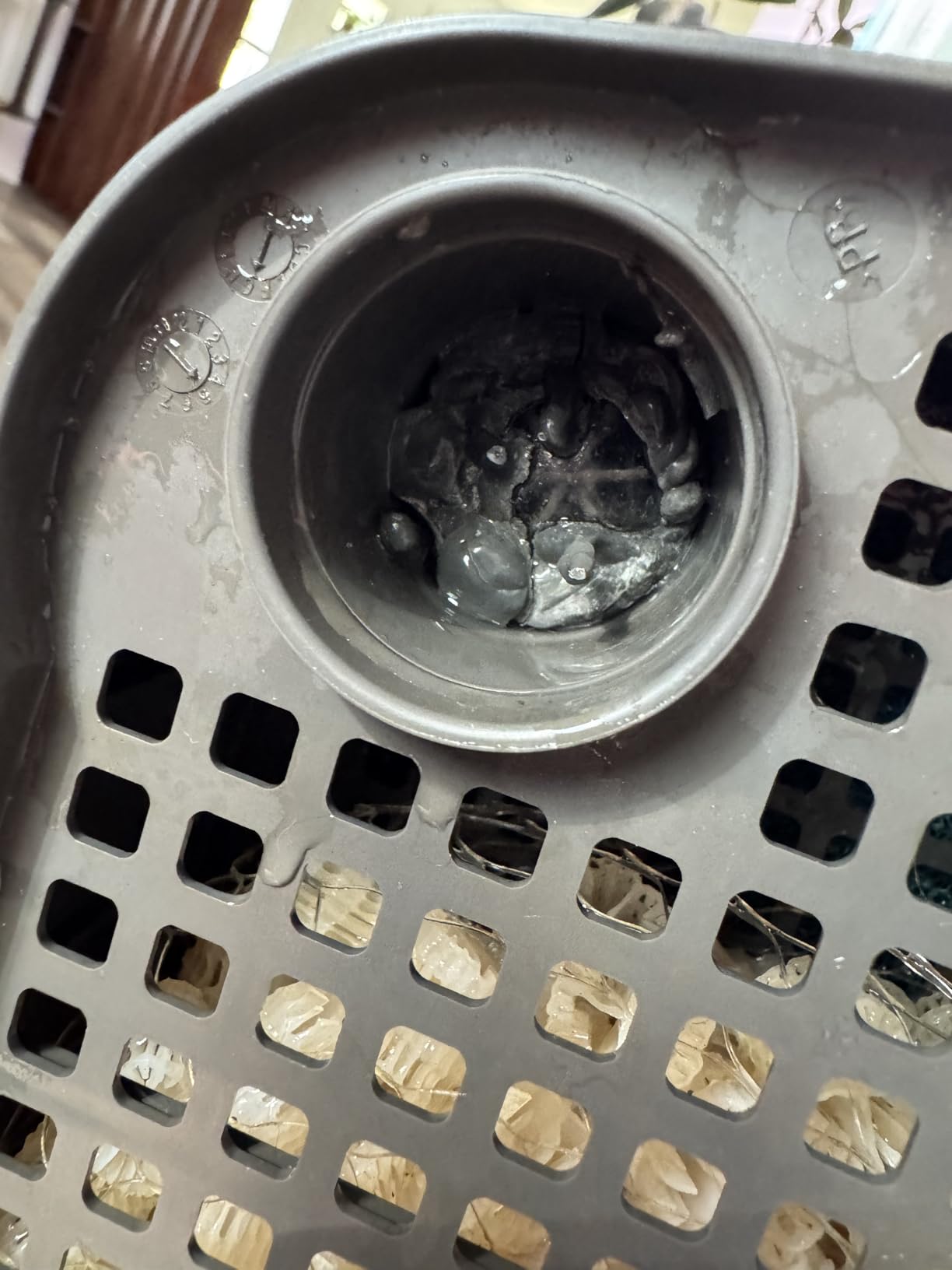
It is rated up to 160 gallons with four sealed stage pathways using carbon foams, graded foams and Hel-X biomedia, and safety locks on the handle, pre-filter and aquastop so a service does not end with water on the cabinet floor.
Nearly every reviewer, positive and negative, mentions the same fix: the supplied pre-filter sponges are 45 ppi and clog too quickly, starving the flow. Replace them with a coarser 30 to 40 ppi pad and the problem largely disappears.
Why a removable pre-filter matters in a planted tank
With a dense carpet or heavy root feeders, the fine layer in a planted canister is the first thing to clog. Pulling a single pre-filter tray and rinsing it under a tap takes five to ten minutes and leaves the main chamber and its bio-media untouched, which protects your bacterial colony.
Planted-tank caveats
Delivered flow measures lower than the rated figure, so it is oversized for smaller tanks and you will be throttling it. It is also heavy when full of media and water, and the supplied foam and plastic balls are basic enough that most owners replace them with a proper biomedia.
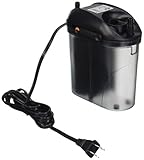
12. Zoo Med Nano 10 – Best Canister for Nano Planted Tanks
Zoo Med Nano 10 External Canister Filter, up to 10 Gallons,Black
Aquariums up to 10 gallons
11.3 x 4.8 x 5.8 in
2.01 lb
Anti-vibration brushings
Pros
- Compact body for nano and shrimp tanks
- Easy to prime and open
- Anti-vibration brushings keep it quiet
- Works in fresh and salt water
- Spray bar included
Cons
- Flow and media volume are very limited
- Unsuitable for larger or heavily populated systems
Nobody covers nano planted tanks in roundups like this, and that is a real gap. Below about 20 gallons a full canister is usually overkill, but a hang-on-back hangs over your rim and steals visual space you paid for in a scape. The Nano 10 at 2 pounds and under 6 inches tall solves that.
It is designed to be easy to prime, customize and open, which matters when the person setting it up is new to canisters. The package includes the spray bar system, a mechanical sponge, bio ceramic media and carbon media, so it runs from the box.
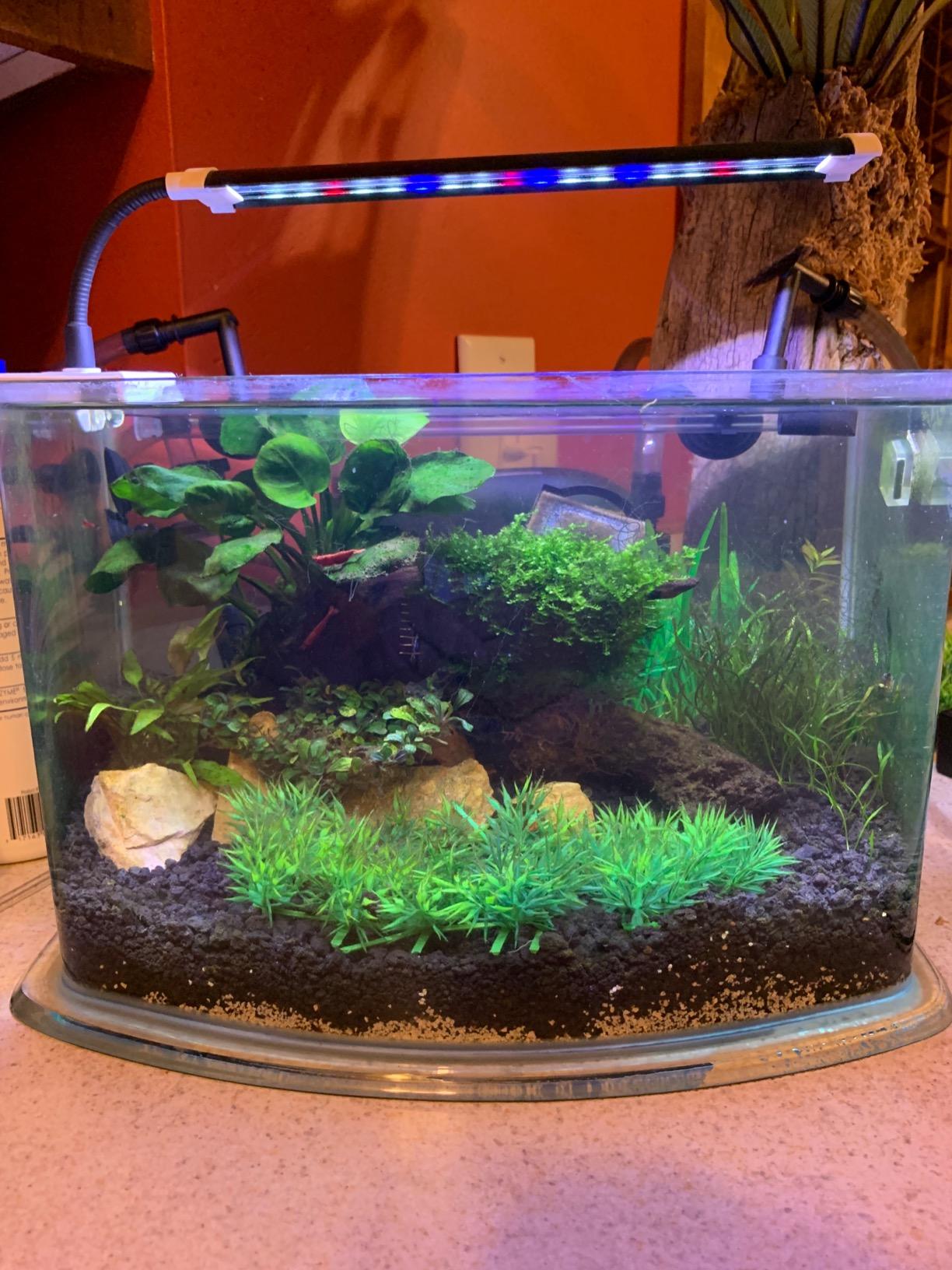
Anti-vibration brushings keep it quiet for its size, and owners in nano and shrimp tanks like the footprint. For a shrimp tank with a sponge filter already in place, this makes a tidy single-inlet setup that stays clear of the livestock.
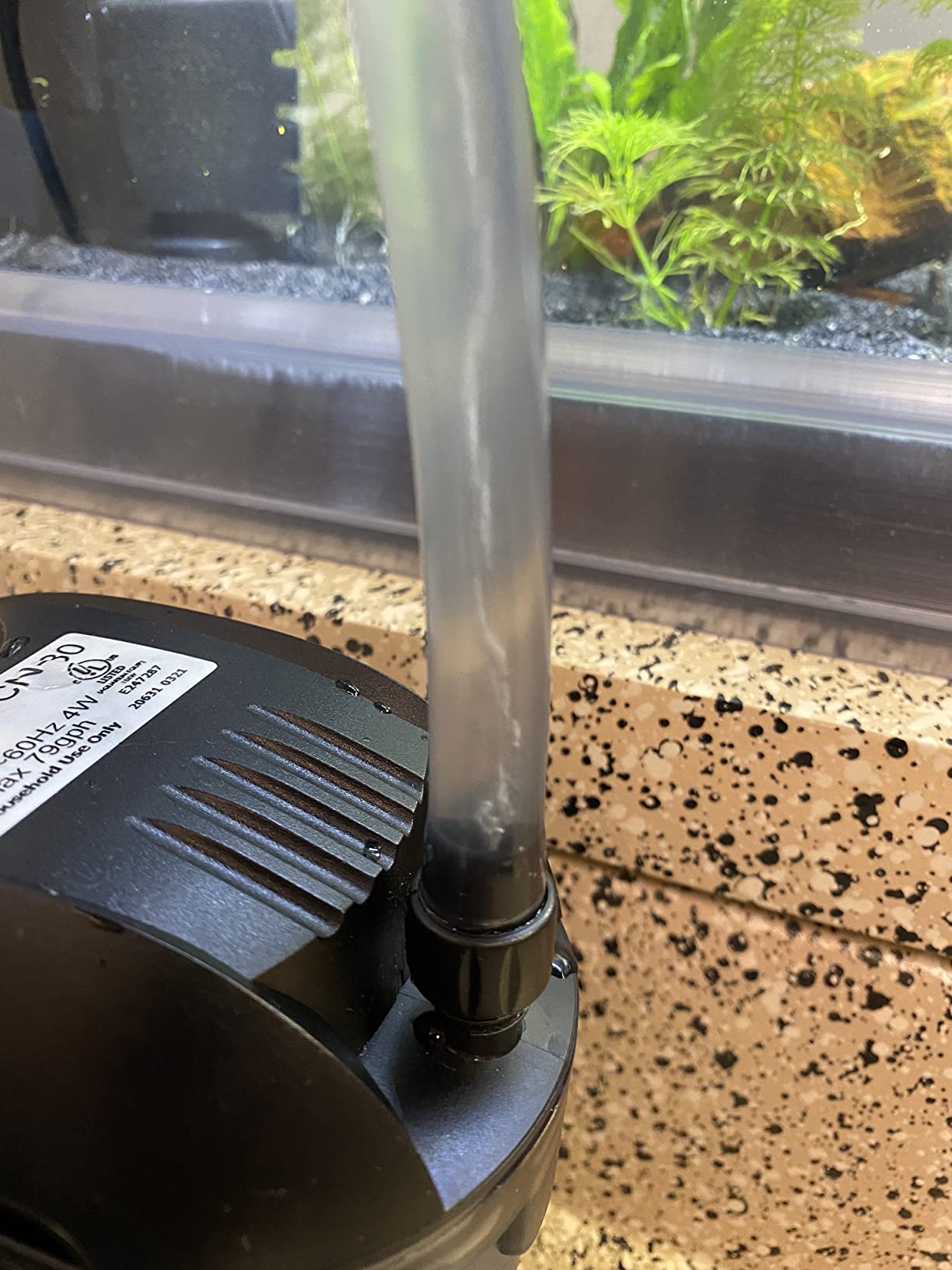
It works in both freshwater and saltwater, rated for aquariums up to 10 gallons. The spray bar adds aeration in a small volume where surface movement matters more than it would in a large tank.
Why nano planted tanks need a dedicated option
Flow in a 10 gallon tank scales down with volume, and a 265 GPH canister would simply blast the substrate and shred carpeting plants. This unit is sized for that tank, which means the circulation reaches the far corners without stripping the sand or folding your stems.
Planted-tank limitations
Media volume is very small, so the sponge and carbon need swapping more often than in a full canister. It is not suited to a larger tank or a heavily populated system, and you should not treat the carbon as a permanent stage in a live planted nano.
How to Size a Canister Filter for a Planted Tank
Size by turnover, not by the tank size printed on the box. Divide the rated gallons per hour by your tank volume to get the turnover multiple, then pick a filter that clears your target after media is in place. Rated flow is measured with an empty housing, and a full media stack costs you a meaningful chunk of it.
Three times an hour is the bare minimum and works for a lightly stocked, lightly planted tank. Four times is the standard target most planted keepers aim for. Five to six times is the range long-term planted tank owners quote for a high-bioload setup running injected CO2 with dense stem planting, because the extra flow circulates CO2 and nutrients and keeps detritus moving instead of settling.
Here is the lookup. For a 20 gallon tank you want roughly 60 GPH at 3x, 80 GPH at 4x and 120 GPH at the 6x end. A 40 gallon tank wants 120, 160 and 240 GPH. A 60 gallon tank needs 180, 240 and 360 GPH.
For larger volumes, a 75 gallon tank is looking at 225 GPH minimum, 300 GPH standard and 450 GPH for a high-bioload high-tech setup. A 100 gallon tank needs 300, 400 and 600 GPH respectively, and a 125 gallon planted display should be served by something in the 500 to 750 GPH class to have adjustment headroom.
Two rules keep you out of trouble. Buy one size up from your calculated number so you have a valve to throttle, and recheck the flow after a month of filtration, because a canister that started at 4x may drop below 3x once the pre-filter loads up.
What to Look for in a Canister Filter for Planted Tanks
Media basket volume comes first. A planted tank produces detritum steadily, and the filter with the most liters of usable media will need the fewest service intervals. Look for three removable baskets rather than two fixed trays, and check that the stack is sealed enough to stop water bypassing around the media.
A self-priming pump saves the most frustration. Manual hand pumps take several attempts, and models with a Smart Pump that restarts itself after a power cut or an air bubble remove an entire category of problems. If you can get a self-starting design at your target flow, take it.
A dedicated pre-filter chamber is the feature we would pay extra for. Fine mechanical filtration belongs in its own removable basket so you can rinse it weekly in a dense planting without disturbing the biological media, and the OASE BioMaster is the clearest example in this group.
Flow adjustment at the outflow matters because one rate cannot suit every scape. A lily pipe or director nozzle on a hardscape needs a gentler setting than a spray bar across open water, and a valve you can actually reach inside the cabinet makes the difference between tuning and guessing.
Noise is the factor buyers underweight. Look for a motor with vibration isolation, and remember that a canister next to your stand is quieter than a hang-on-back in the same room. Check the filled footprint against your cabinet clearance too, since a 19.9 pound canister that does not fit under the stand is the wrong purchase.
Finally, think about parts. Impellers, O-rings, seals and lid gaskets wear out, and a filter dies when a single seal is hard to source. Filters from brands with deep retail and hobbyist support networks are worth a premium for that reason alone.
Filter Media and Basket Order for Planted Tanks
Order media coarse to fine, always, with the water entering the bottom basket first. Flow enters low, rises through the stack and leaves at the top, so the coarsest material catches the largest debris and protects the delicate layers underneath.
The first layout puts a coarse sponge or pad in the bottom basket, then a finer pad or floss layer, then ceramic media on top. This gives the best clarity and the least maintenance, and it is the layout we use on most planted tanks. Rinse the coarse layer in the sink every two to four weeks and the fine layer every four to six months.
The second layout is a separate pre-filter in its own chamber or basket, then a single main chamber of ceramic media. It never clogs and it is the lowest maintenance option, because the only thing you clean regularly is the pre-filter. This is the layout long-time planted keepers converge on.
The third layout is ceramic media only, with no fine pad at all. It catches less and saves money, but it is a poor fit for a tank with fine sand or heavy root feeders, because the substrate debris passes straight through and settles where you cannot reach it.
On pore size, 30 ppi is the practical default for a canister pre-filter. Coarser than about 20 ppi and flow starts to suffer, and anything finer than 40 ppi needs its own pre-filter upstream or it will clog in days in a heavily planted tank.
On carbon and Purigen, the honest answer for a live planted aquarium is that you usually do not need them. Chemical media strips dissolved nutrients and trace elements that your plants are competing for, and Purigen pulls ammonia and nitrate that your biofilm should be handling. Skip both in a healthy planted tank with live plants and plenty of ceramic media. If you have a hospital tank, a quarantine setup or a tank that has just been dosed heavily for algae, carbon is useful as a short-term tool.
Service intervals to plan around: fine foam every two to four weeks, a pre-filter layer every three to six weeks, the main chamber every four to six months, and carbon only when you have a reason to use it. Bio-media never needs replacing, only rinsing in old tank water.
Canister vs HOB vs Internal Filter for a Planted Aquarium
A hang-on-back is the right answer for most tanks up to about 30 gallons. It is cheap, quiet, sits out of sight and holds a small amount of media, and for a lightly planted nano it is genuinely sufficient.
An internal filter is the quietest option of all, since there is no pump noise at all, and it is ideal for a small tank in a bedroom. It is also the worst choice for a scape, because the intake and outflow are visible and occupy tank volume you could be planting.
A canister wins above roughly 30 gallons and gets more compelling as bioload and planting density rise. You get far more media volume, far more turnover, the pump hidden in the cabinet and no hardware hanging over the rim. The trade is maintenance: canisters are the most hands-on filter type, they clog with sludge if you ignore them, and they are the reason some hobbyists go back to hang-ons.
The practical answer is to check whether you will actually clean it. A maintained canister in a 75 gallon planted tank outperforms a neglected hang-on-back every time. Community readers consistently rate maintenance willingness higher than media brand.
Troubleshooting Common Canister Filter Problems
If you see micro-bubbles from a spray bar, the cause is almost always air entrainment rather than a faulty pump. Lower the return so the spray bar outlet sits just under the surface, aim it slightly downward, and consider removing one outlet to reduce turbulence. In a high-tech tank these bubbles disturb surface tension and interfere with CO2 exchange, so it is worth fixing rather than ignoring.
If a leak appears at the lid clamps months after purchase, the fix is usually mechanical rather than fatal. Grease the O-ring with petroleum jelly at every clean, check that the lid is seated flat rather than cocked, and replace plastic hose clamps with metal ones. The Cascade and Magniflow both draw a lot of owner advice on this point.
If the filter loses its siphon after cleaning, you have two causes to check. The first is air trapped in the head space, which you clear by running the pump with the lid off until flow steadies. The second is a water level drop: if your tank level falls below the height-adjust joint on the intake, the filter cannot prime and will not restart until you top up.
If flow is lower than it used to be, clean the pre-filter before you blame the pump. Pre-filter sponges clog in days in a dense planted tank, and a starved pre-filter can halve the delivered flow. A noisy impeller on an older unit usually means debris on the impeller blades, which rinse off easily.
If you get an algae bloom after a media change, you removed your nitrifying bacteria along with the old media. Rinse new bio-media in old tank water rather than tap water, and keep a wet bag of the old media in your filter for two to four weeks so the colony can re-establish. A 30 percent daily water change with plants that are still growing will clear it faster than any chemical treatment.
Frequently Asked Questions
What is the best filter for a planted aquarium?
A canister filter is the best choice for planted tanks above roughly 30 gallons, and above 55 gallons with a heavy bioload it is close to mandatory. It holds far more media than a hang-on-back, delivers the 4 to 6 times per hour turnover that dense planting needs, and keeps all hardware out of the tank. Below 30 gallons a quiet hang-on-back or internal filter is usually the better buy.
What is the best canister filter for a planted tank?
The Penn-Plax Cascade 1000 is our pick for most planted setups up to about 100 gallons, with three stackable media baskets, 265 GPH of flow and rotating valve taps. For tanks above 125 gallons or heavily planted high-tech systems running injected CO2, the Fluval FX6 offers more turnover and 5.9 liters of media capacity.
Which is better, Eheim or Fluval?
Neither wins outright. EHEIM is quieter, simpler and has a very large installed base with mature parts support, but its flow is modest by current standards and the manual hand pump takes several attempts. Fluval offers higher flow, more media capacity, self-priming Smart Pump models and easier parts availability, at the cost of bulkier bodies and stiffer hoses. EHEIM suits a low-tech planted community tank, Fluval suits a high-bioload one.
Is Oase better than Fluval?
The OASE BioMaster wins on layout rather than raw power. Its pre-filter module lifts out separately for fast maintenance without disturbing the biological media, which is exactly what a densely planted tank needs, and the built-in heater keeps in-tank equipment count down. Fluval wins on turnover, media volume and self-priming. The main OASE caveat is that delivered flow runs below the rated figure, so it is oversized for smaller tanks.
Are Fluval canister filters worth it?
For a planted tank with a heavy bioload, yes. The self-priming Smart Pump removes a common failure point, the removable stackable baskets hold substantial media without bypass, and impellers and O-rings can be replaced individually rather than replacing the whole unit. For a lightly planted 20 to 30 gallon tank, a cheaper canister or a hang-on-back will do the same job for far less.
What order do you put media in a canister filter?
Always coarse to fine, with water entering the bottom basket first. A typical stack is a coarse sponge or pad at the bottom, a finer pad or floss layer above it, and ceramic media on top. A separate pre-filter basket or chamber that can be removed on its own is even better for planted tanks, because you can rinse it weekly without disturbing the bio-media. Finer than 40 ppi foam needs its own upstream pre-filter or it will clog within days.
What is the best biological media for canister filters?
Ceramic media such as sintered glass rings is the standard choice because the porous surface holds far more bacteria than a plastic shape and never has to be replaced. Keep enough of it to fill the top basket for your tank volume, and rinse it in old tank water rather than tap water. Floss belongs in the mechanical stage, not the biological one. Bio-media only needs rinsing, never replacement.
How often should I change the media in my canister filter?
Rinse a coarse pre-filter sponge every two to four weeks, a fine foam layer every four to six months, and the main chamber every four to six months. Never replace bio-media, only rinse it. Change carbon only when you have a reason to be using it, since in a live planted tank it strips nutrients your plants need and is usually unnecessary.
The Best Canister Filters for Planted Aquariums in 2026
The Penn-Plax Cascade 1000 remains our top recommendation in 2026 because three real media baskets, a 265 GPH pump and rotating valve taps cover the widest range of planted setups without asking you to compromise on layout. For anything above roughly 100 gallons, step up to the Fluval FX4 or FX6 and buy the size you can throttle rather than the size that just fits.
Two things matter more than the badge on the box. Buy for a turnover of four times your tank volume, or five to six times if you run injected CO2 and dense stems, and buy for media volume rather than pump wattage, because a planted tank fills any filter you give it. Everything else is preference.
Whichever you pick, measure your cabinet clearance first, grease the seals at every clean, and expect to spend five minutes a week on the pre-filter. That maintenance habit is what separates a canister that keeps a planted tank clear for a decade from one that gets abandoned in a cupboard within a year.