
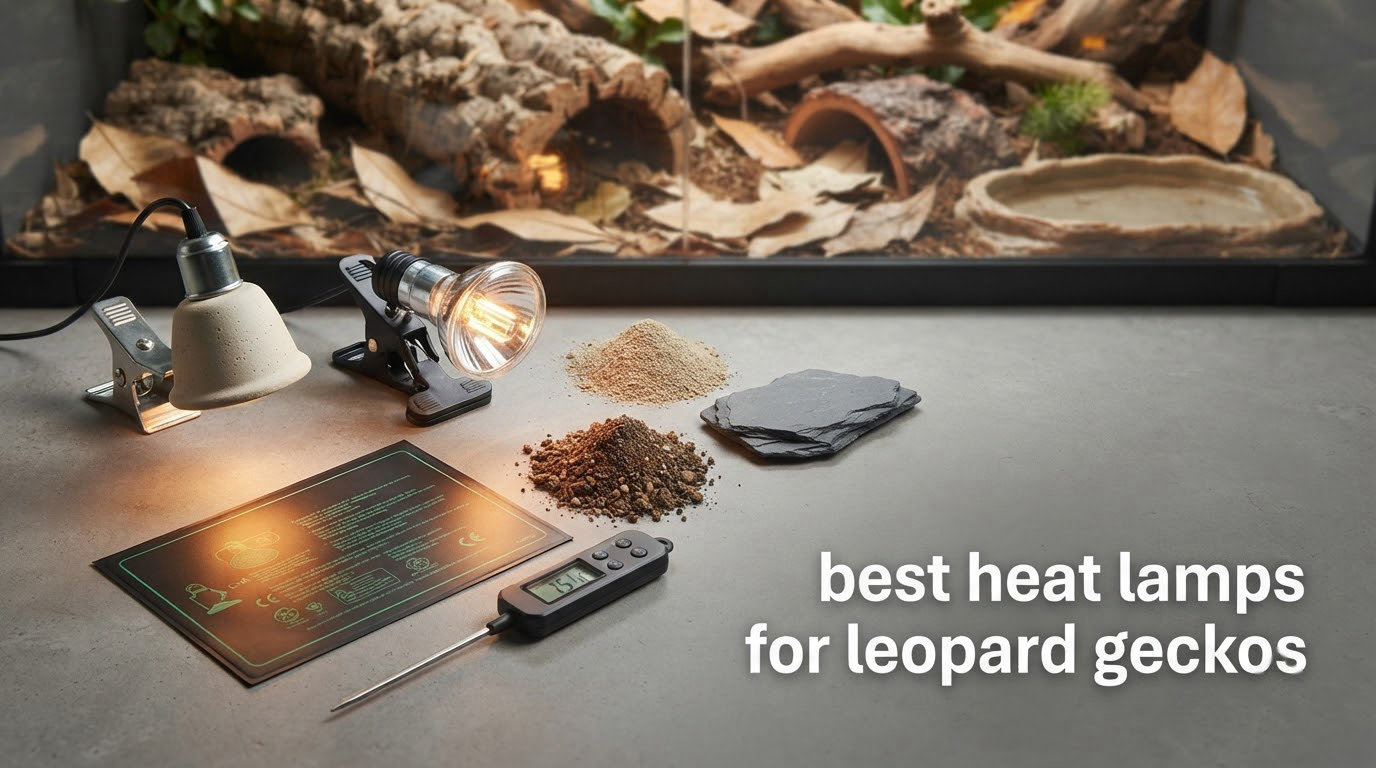
A 50W to 75W halogen basking bulb paired with a dimming thermostat is the best general purpose heat lamp for a leopard gecko. A deep heat projector is the light-free alternative for owners who want radiant heat without any glow, and a ceramic heat emitter covers the night side. That is the short version of what we tested across twelve lamps, fixtures and controllers.
Leopard geckos are ectothermic, so they cannot make their own body heat. An overhead lamp radiates infrared energy onto a stone or slate basking surface, and the gecko moves on and off that surface to raise and lower its own temperature. Get the gradient right and you have a healthy animal. Get it wrong and you get a gecko that refuses food, sheds in patches, hides all day, or worse, one that suffers a burn.
Our team set up each of these lamps in a glass enclosure with a slate basking slab and a warm hide, then logged surface and ambient readings with an infrared thermometer over several weeks. We cared most about three things: whether the basking surface held a steady target, whether the lamp ran on a thermostat without cycling hard, and whether the enclosure stayed safe overnight.
This guide covers the best heat lamps for leopard geckos in 2026, including the halogen basking bulbs, deep heat projectors, ceramic heat emitters and integrated dimming fixtures on the market right now. We also explain the wattage-to-enclosure-size mapping, why we recommend skipping red and blue night-glow bulbs, and where the thermostat probe actually belongs.
Table of Contents
Top 3 Picks for Leopard Gecko Heat Lamps (October 2026)
Our three standouts cover very different setups. The clamp lamp wins on versatility and review volume, the ceramic emitter wins on pure dark heat, and the two-pack basking bulb wins on value for first-time owners building a starter enclosure.

Fluker’s Repta-Clamp Lamp
- E12 socket with 75W maximum
- 5.5 inch aluminum reflector shade
- UL/CUL approved with on/off switch

LUCKY HERP 100W Ceramic Emitter
- Zero visible light output
- Heats up in about 4 minutes
- Thick ceramic rated to 10000 hours

MCLANZOO 75W UVA 2-Pack
- 450 lumens of white daylight
- Standard E26 base
- Two bulbs plus a stick-on thermometer
All 12 Heat Lamps Compared in 2026
Every lamp below is in the same order as the reviews that follow. Use this table to sort by type, wattage and light output before you read the detail.
| Product | Specs | Action |
|---|---|---|
| Fluker’s Repta-Clamp Lamp 5.5 inch |
|
Check Latest Price |
| MCLANZOO 75W UVA Basking 2-Pack |
|
Check Latest Price |
| LUCKY HERP 100W Ceramic Emitter 2-Pack |
|
Check Latest Price |
 MCLANZOO 75W Red Infrared 2-Pack MCLANZOO 75W Red Infrared 2-Pack |
|
Check Latest Price |
 Zilla 50W Mini Halogen 4-Pack Zilla 50W Mini Halogen 4-Pack |
|
Check Latest Price |
 Fluker’s Deep Thermal Heat Lamp 75W Fluker’s Deep Thermal Heat Lamp 75W |
|
Check Latest Price |
 Zoo Med Infrared Heat Projector 100W Zoo Med Infrared Heat Projector 100W |
|
Check Latest Price |
 Zoo Med 25W Nano Basking 2-Pack Zoo Med 25W Nano Basking 2-Pack |
|
Check Latest Price |
 Zoo Med 25W Nano Infrared 2-Pack Zoo Med 25W Nano Infrared 2-Pack |
|
Check Latest Price |
 Lachesan 25W UVA Halogen 4-Pack Lachesan 25W UVA Halogen 4-Pack |
|
Check Latest Price |
 Briignite G9 Halogen Dome Kit Briignite G9 Halogen Dome Kit |
|
Check Latest Price |
 REPTI ZOO Dimming Thermostat Fixture REPTI ZOO Dimming Thermostat Fixture |
|
Check Latest Price |
1. Fluker’s Repta-Clamp Lamp 5.5 inch for a Secure Overhead Basking Spot
Fluker’s Repta-Clamp Lamp, Heavy Duty Clamp Light For Reptile Tanks and Terrariums, UL/CUL Approved, Great for Reptile Basking, 75-Watt Maximum with On/Off Switch, 5.5″
E12 socket and A15 bulbs
75 watt maximum
5.5 inch aluminum shade
UL/CUL approved with on/off switch
Pros
- Clamps securely to the rim of most terrariums
- On/off switch built into the cord
- Aluminum reflector focuses the beam downward
- UL/CUL approved for reptile use
- Compact 5.5 inch shade fits tight setups
Cons
- On/off control only on this base model
- E12 socket narrows bulb choice
- Ceiling of 75 watts per fixture
This is the fixture we keep coming back to because it is the easiest thing in the store to get right. The clamp grips the rim of the enclosure, the shade is aluminum, and the switch lives in the cord so you are not reaching into the tank to cycle power. Twelve thousand reviews sit behind it, which tells you how many people have solved the same problem we did.
At 5.5 inches across the shade, it parks neatly over a modest enclosure without crowding the top. The reflector throws a fairly tight beam, which is what you want: a defined hot patch on the basking slab rather than a general warm-up of the whole tank. The on/off switch in the cord is genuinely useful for a nighttime shutoff.
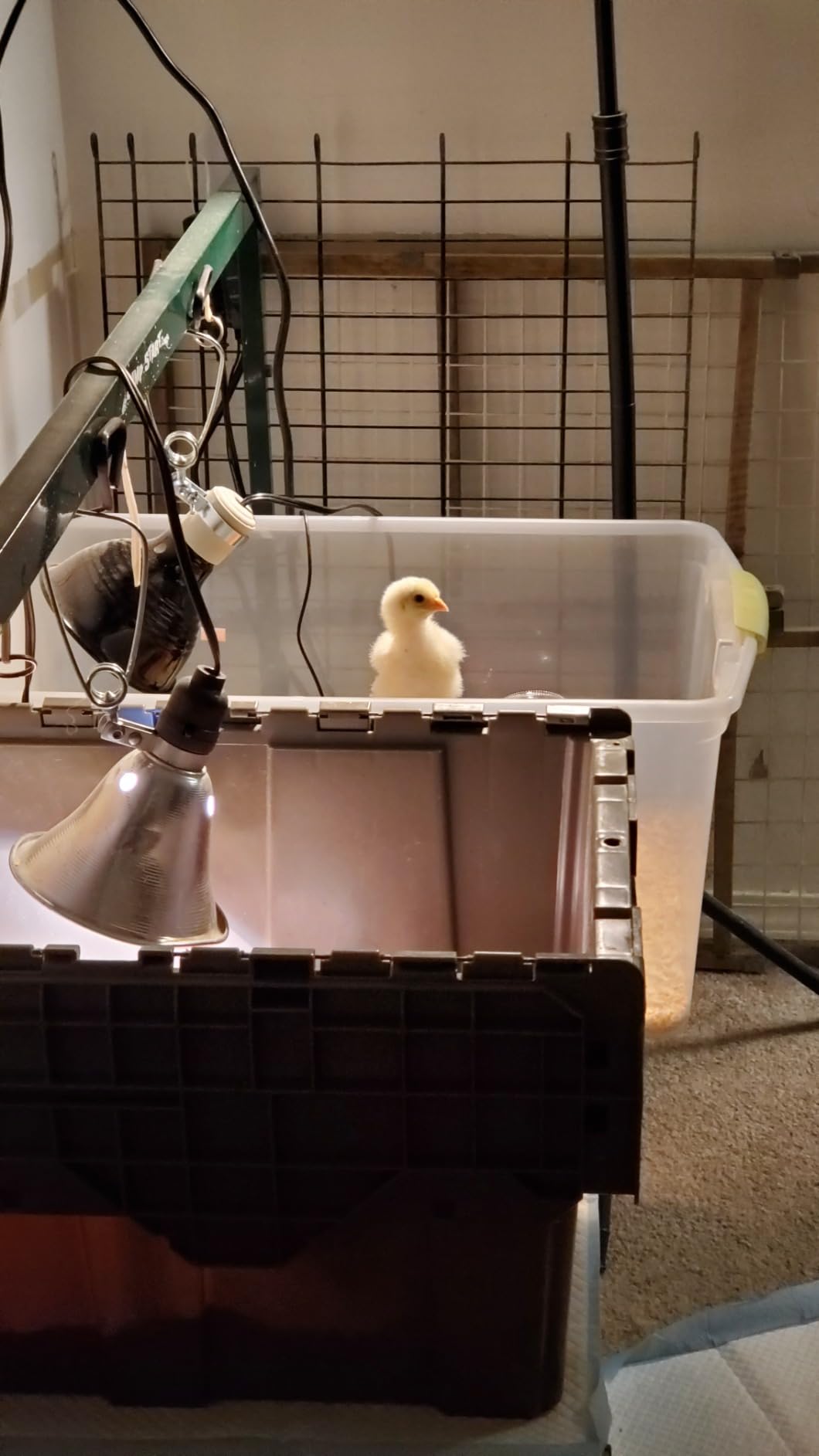
The limitation is real and worth stating plainly. This base model has no dimming, so controlling a 50W basking bulb means switching it on and off, and bulbs cycled that way age faster than bulbs held at a steady output. Fluker’s also sells dimmable versions of the same clamp style, and a 8.5 inch shade, if you want either.
The E12 socket is the second thing to plan around. It is a small bayonet base, and while A15 bulbs are easy to find, you are shopping in a narrower aisle than you would with the far more common E26 socket. If your enclosure already has an E26 dome, this is not the fixture to force into it.
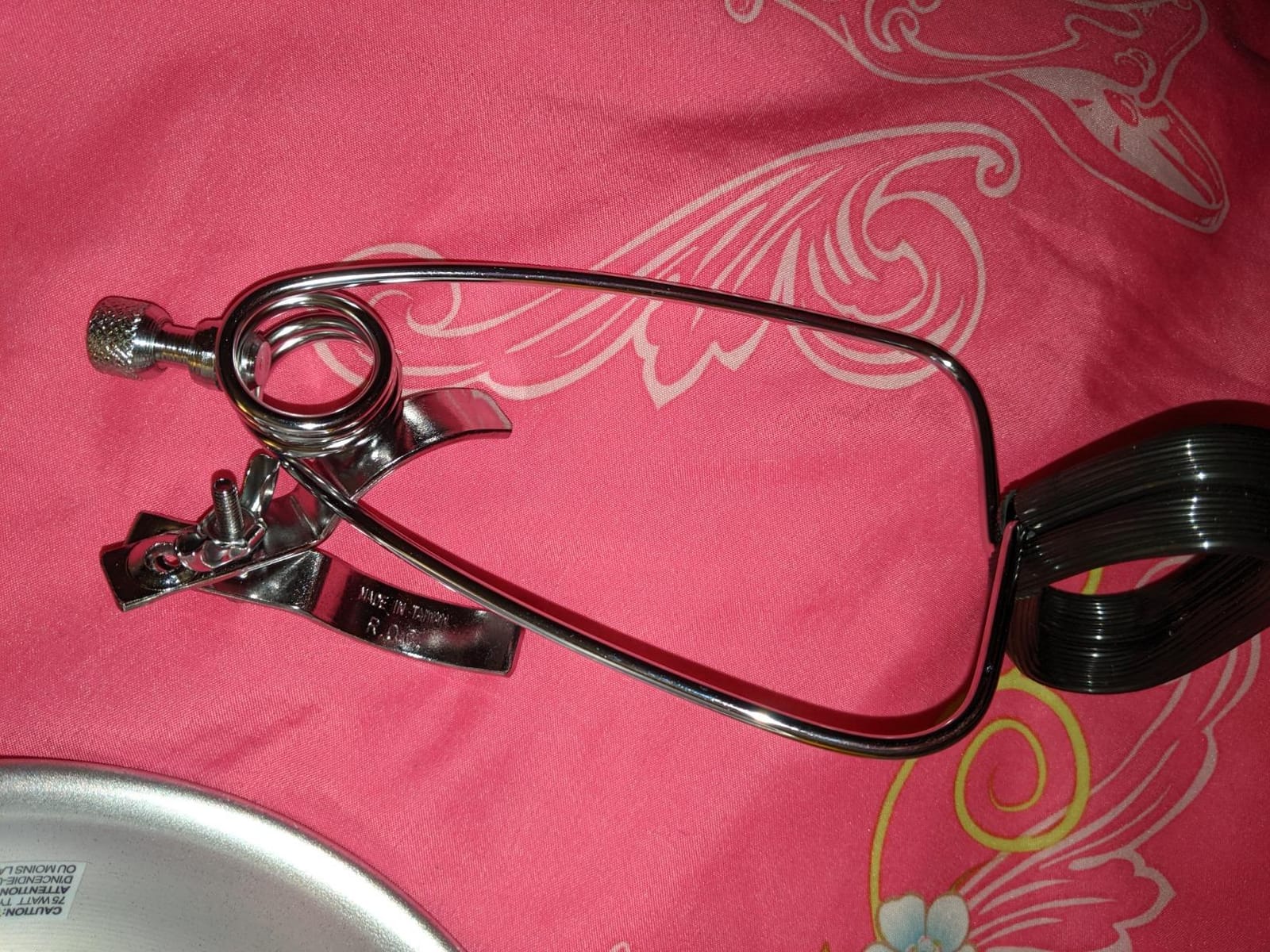
Check the socket before you buy this clamp lamp
If your enclosure came with a standard E26 porcelain dome, do not buy this because it is popular. The E12 socket needs its own small dome, and retrofitting one is more work than picking a different lamp. The clamp itself is the reason to buy it, so make sure the socket matches your setup first.
Rated to 75 watts maximum, it will take a 50W or 75W basking bulb without complaint. Do not plan to run a 100W bulb in it, even if you find one that physically screws in.
Where this fixture fits in a leopard gecko setup
This is the right pick for a 10 gallon to 40 gallon enclosure in a normally heated room, where a 50W basking bulb on a timer and thermostat covers the daytime requirement. Pair it with a ceramic heat emitter or deep heat projector at night and you have a complete system.
It is a poor match for a very large enclosure, a cold room, or any setup where you want to dial the basking temperature up and down through the day. For those, a domed E26 fixture on a dimming thermostat gives you more control.
2. MCLANZOO 75W UVA Basking Bulb 2-Pack for a Bright Daylight Basking Area
MCLANZOO Reptile Heat Lamp 75W 2 Pack,UVA Basking Light Bulbs,Natural Daylight Terrarium Heat Lamps for Bearded Dragon Accessories,Turtle,Tortoise,Lizard,Snake,Gecko,Chicken with Temperature Strips
E26 base and 120V
75 watts incandescent
450 lumens white light
Rated 2000 hour life
Pros
- Bright white daylight at 450 lumens
- E26 base fits standard domes
- Two bulbs plus a stick-on thermometer
- Thickened glass and filament
- Works for geckos lizards turtles and snakes
Cons
- Some bulbs burn out within weeks
- Included stick-on thermometer reads a few degrees off
- Visible white light cannot run overnight
This is the budget daylight option, and it does the basic job well. You get a white bulb that throws visible light and heat onto the basking area, an E26 base that fits almost any standard dome, and two of them plus a small stick-on thermometer in the box. For a first leopard gecko enclosure that is a complete daytime heat source on its own.
The light output is the reason to like it. Leopard geckos are crepuscular and nocturnal, but a visible basking spot is still worth having, and a bright white beam makes it easy to watch your gecko flatten out and soak up warmth. Owners regularly describe the heat as quick to arrive and easy to localize into a defined basking area.
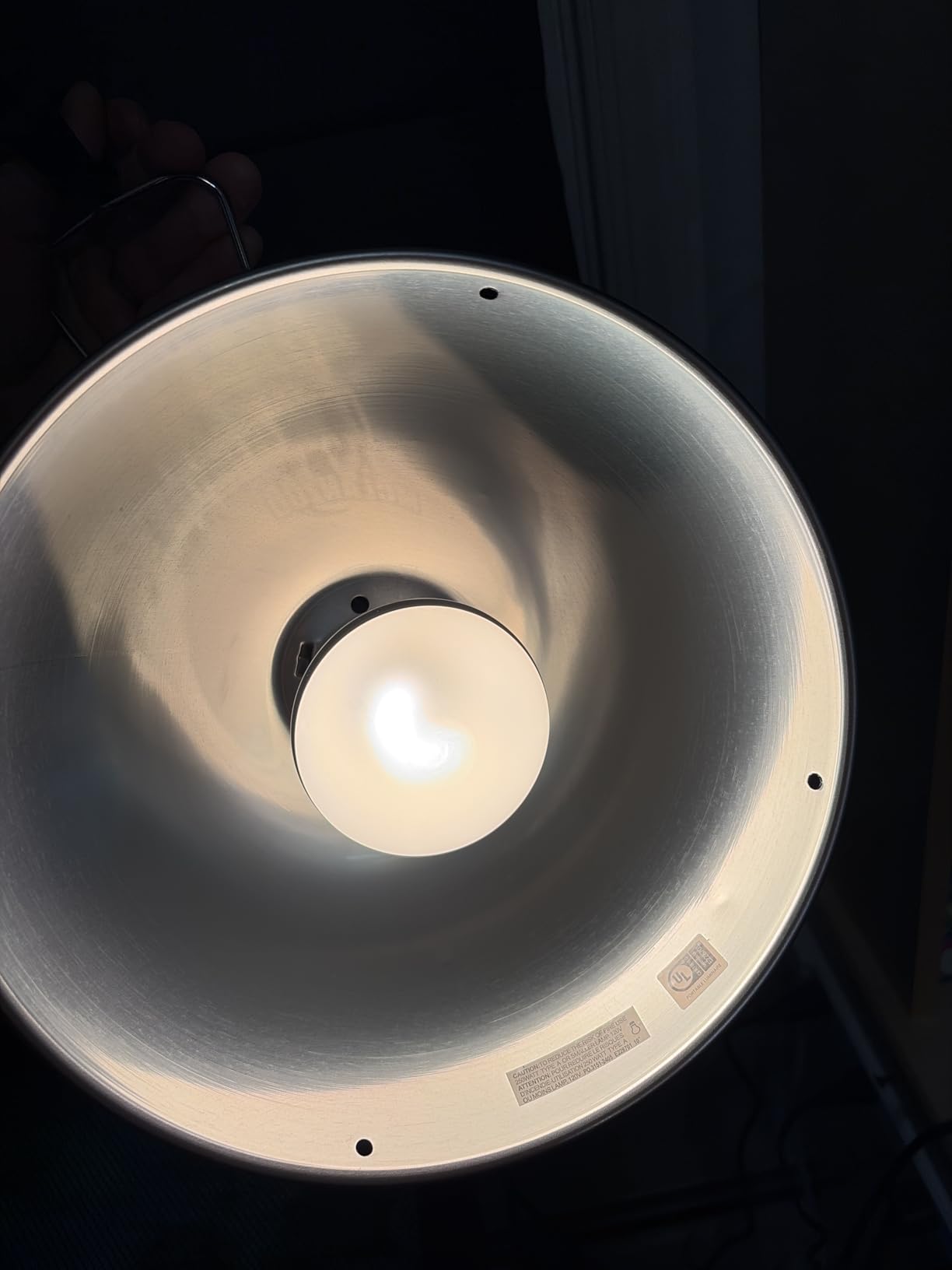
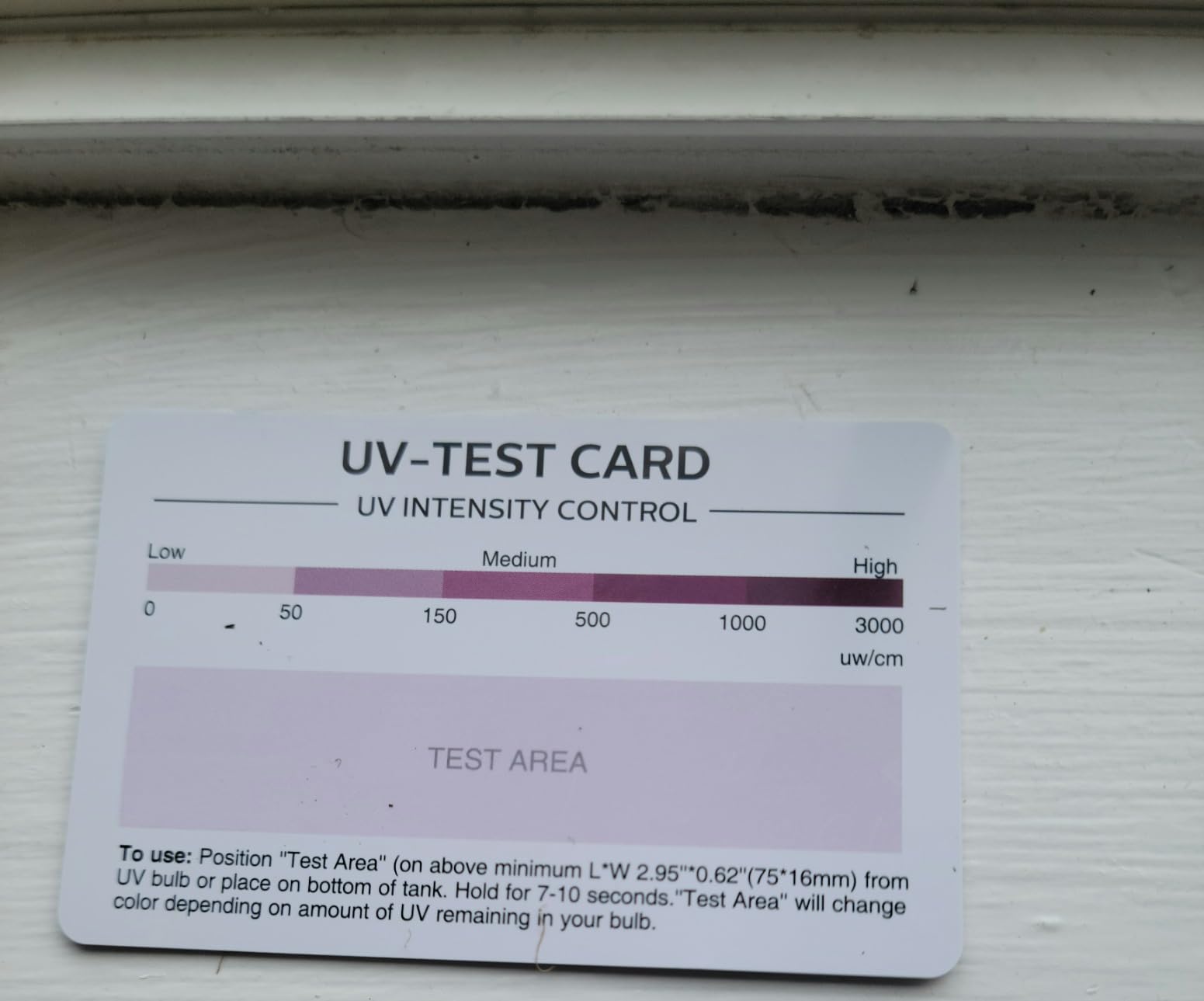
Longevity is where the reviews split. The bulb is rated at 2000 hours of operating life, which is respectable for an incandescent basking bulb, and many owners report getting close to that. A smaller group reports failure within weeks to a couple of months, and the thickened explosion-proof glass is the manufacturer response to exactly that complaint. Do not use the included stick-on thermometer as your primary gauge, since several users report it reading a few degrees off.
Plan on a night heat source, because this bulb is too bright
This is a white visible-light bulb. Running it overnight means a lit tank all night, which does not mimic a desert night at all and can shift your gecko’s activity pattern. Pair it with a ceramic heat emitter or a deep heat projector on a separate timer for the dark hours.
Two bulbs in the pack also gives you a natural rotation. Keep one running and one on the shelf, and when the active one starts to yellow or flicker you swap rather than run a dying bulb until it fails outright.
What to watch in the first two weeks
Set your thermostat against the basking surface temperature, not the air reading, and let the bulb run a full day before you trust the numbers. If the surface sits above your target, lower the wattage or raise the lamp rather than fighting it with the probe position.
Check the glass at each change. Incandescent bulbs get soft and can crack if the enclosure is misted heavily, so keep spray away from the lamp and change the bulb with gloves if the surface is hot.
3. LUCKY HERP 100W Ceramic Heat Emitter 2-Pack for Complete Darkness
LUCKY HERP 100W Ceramic Heat Emitter, Reptile Heat Bulbs, Ceramic Heat Lamp for Reptiles, Amphibian, Chicken, Dog, Cat (2-Pack)
E26 base and 120V
100 watts
No visible light output
Reaches temperature in about 4 minutes
Pros
- Zero visible light suits nocturnal and albino geckos
- Heats up in roughly four minutes
- Thick ceramic rated to 10000 hours
- Two-pack leaves a spare on hand
- Guidance calls for a ceramic socket
Cons
- Needs an external thermostat for stable control
- 100W exceeds what many 10 to 20 gallon setups need
- A minority of bulbs stop radiating from the face
This is the strongest-rated bulb in the group at 4.7 stars, and the reason is simple: it emits heat and nothing else. A ceramic heat emitter has no filament to glow, so your enclosure stays genuinely dark at night, which is what a nocturnal animal actually experiences in the wild.
Warm-up is fast. The manufacturer rates roughly four minutes to reach operating temperature, and in our runs it tracked a thermostat-controlled target without the overshoot we saw from halogen bulbs. The thick ceramic body is also far more durable than glass, with a rated service life of up to 10000 hours.
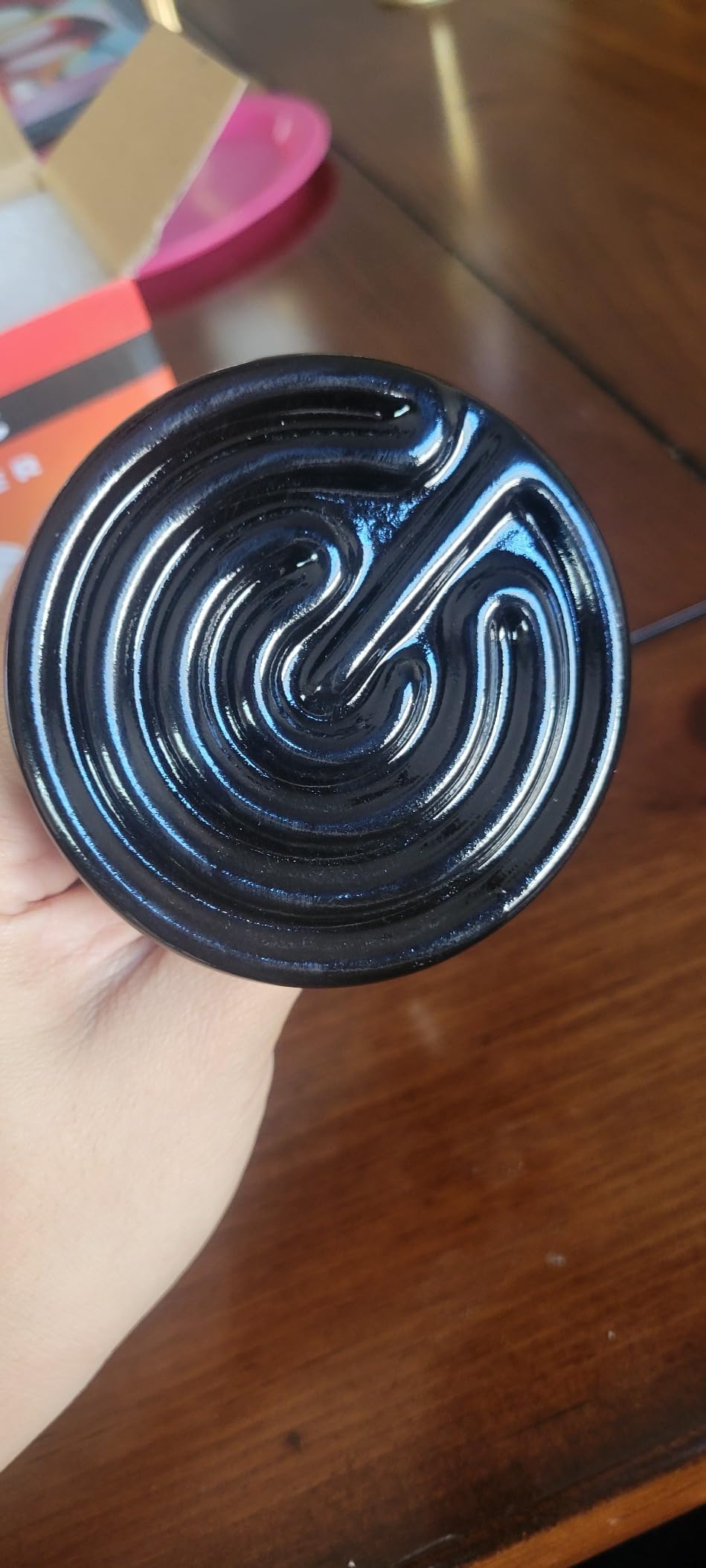
Sizing is the main decision. At 100 watts, this is a genuinely hot emitter, and the manufacturer’s own guidance is to keep it more than 30cm from the animal and use a quality ceramic socket. In a 10 gallon starter enclosure that clearance is hard to achieve safely, which is why we would step down to the 50W or 75W version of the same emitter for small tanks.
A small number of reviews report units that stopped radiating heat properly from the ceramic face while the socket end ran hot, and others describe heat output fading after several months. Buyers who hit this describe fast refunds from the seller, but the failure rate is real and worth planning a spare against, which is part of why we like the two-pack format.
Where a ceramic emitter earns its place in the tank
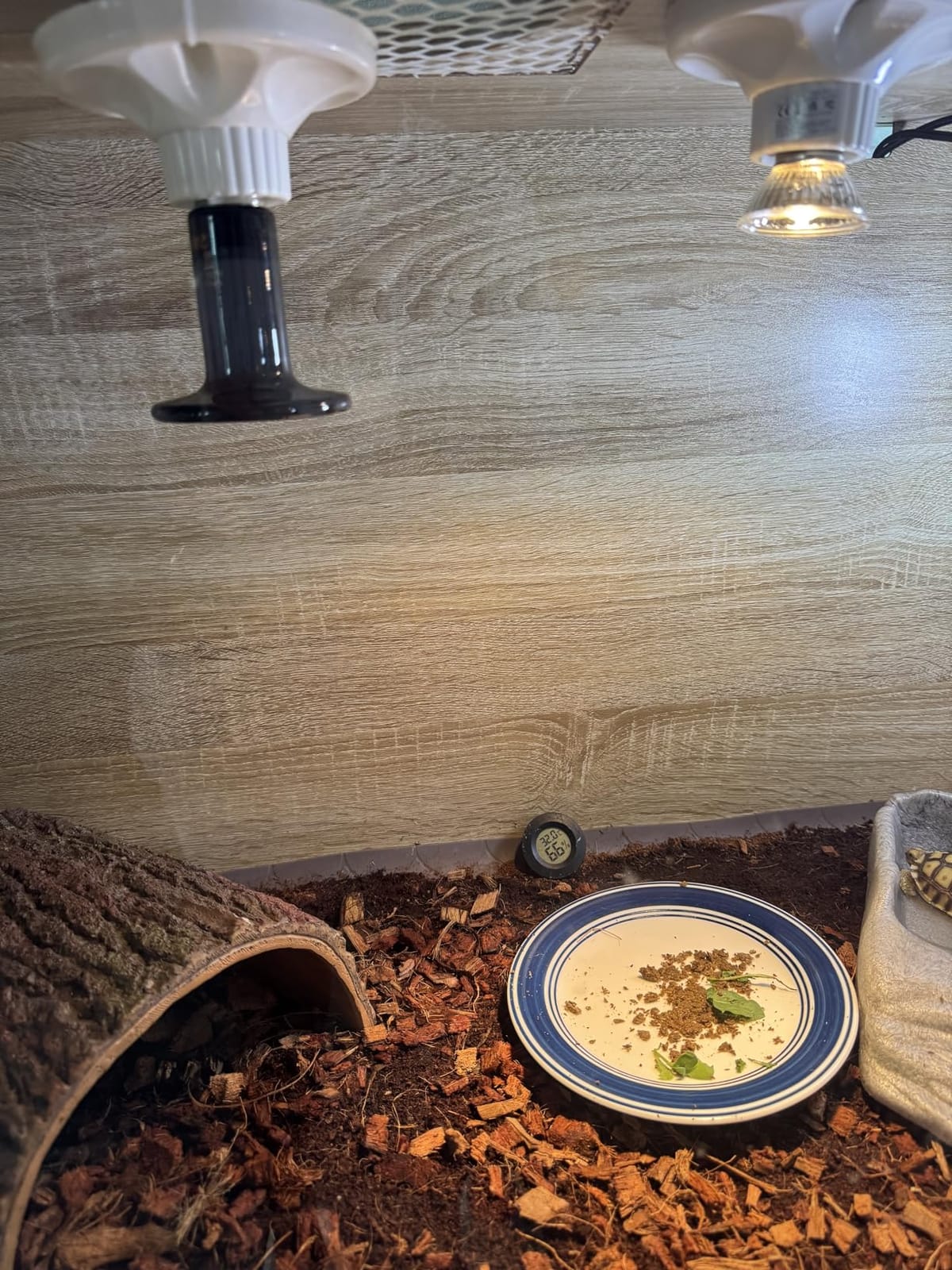
A ceramic heat emitter is a night-first device. It is what you use to hold the enclosure above the 65F floor after dark, or to add background heat in a cool room where a single overhead lamp cannot keep the warm end on target through the whole cycle.
Because it produces no light, it cannot create a basking spot on its own. Owners who run one as their only source often find the gecko never flattens properly, so pair it with a daytime basking bulb on a separate timer.
Check your socket and your clearance
Use a ceramic socket, not a plastic lamp holder. The emitter runs hot at the screw end by design, and that is the surface most likely to crack a cheap plastic fitting over time.
Measure the vertical distance from the emitter face to the top of your substrate and decor. If you cannot keep 30cm between the emitter and the tallest point the gecko could reach, the wattage is too high for that enclosure.
4. MCLANZOO 75W Red Infrared Bulb 2-Pack for Low-Light Night Heat
MCLANZOO Infrared Heat Lamp Bulbs 75W 2 Pack,Red Basking Spot Light Bulb Reptile Heating lamp for Bearded Dragon,Turtle,Snake,Leopard Gecko,Chicked with Digital Temperature Thermometer
E26 base and 120V
75 watts red infrared
Evaporated aluminum coating
Rated 3000 hour life
Pros
- Soft red output is easy on the eyes
- Popular with leopard gecko owners
- 3000 hour rated service life
- Two-pack with a digital thermometer
- Pairs with a daylight bulb for round-the-clock heat
Cons
- Emits visible red light
- Not a fully dark night source
- Longevity is inconsistent across owners
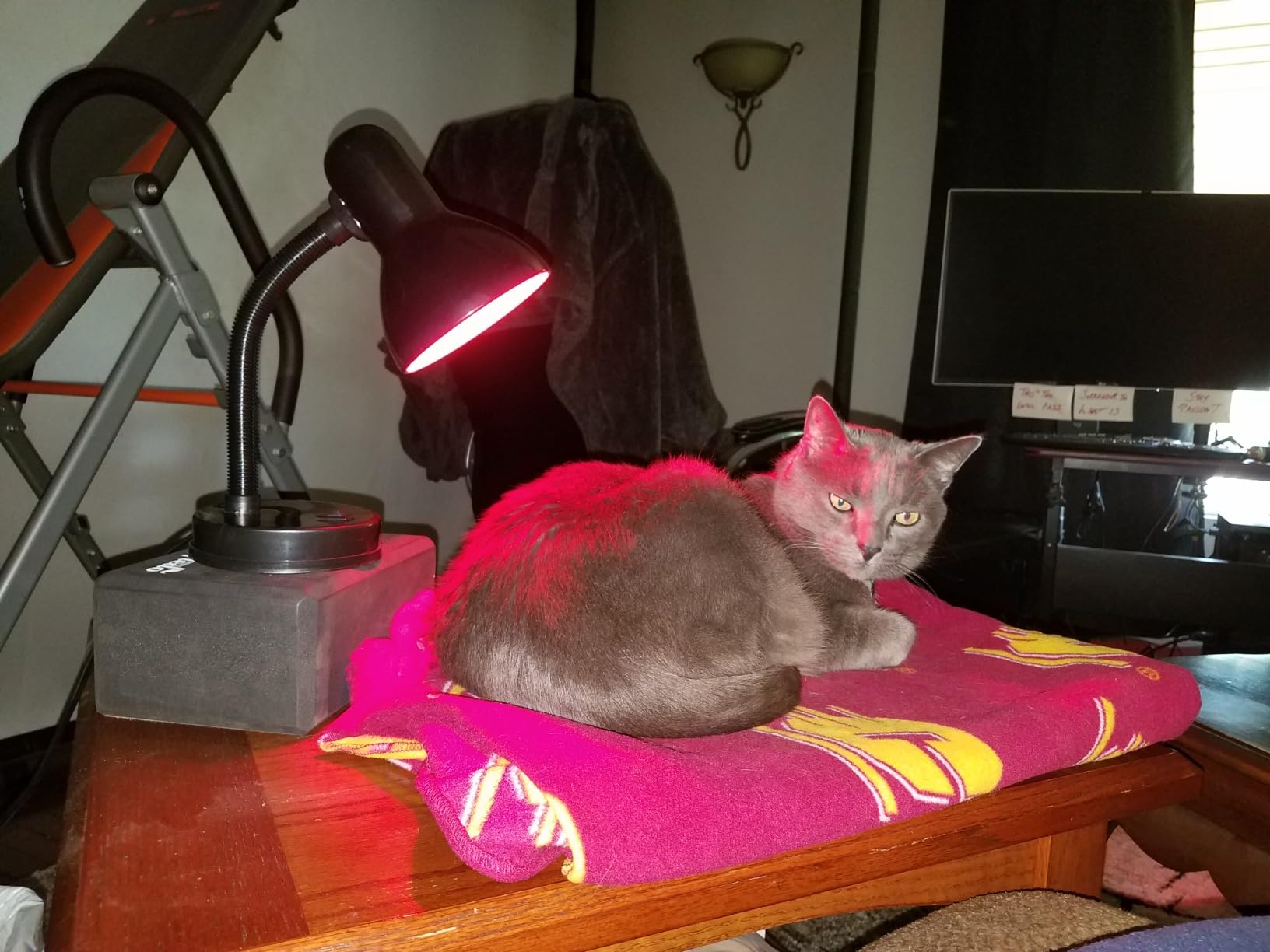
Red bulbs are the most argued-over product in this entire category, so we want to be careful about where we land. The heat output is real, the soft red glow is far less disruptive than white or blue light, and plenty of keepers run one without any complaint. It is a compromise, not a first choice.
Physically it behaves like a basking bulb, with a coating that focuses the beam and a reflector-style output. Owners using it alongside a daylight bulb report a smooth handover at the timer change, and several say the low brightness makes it easy to check on the animal late at night without switching on a bright flashlight.
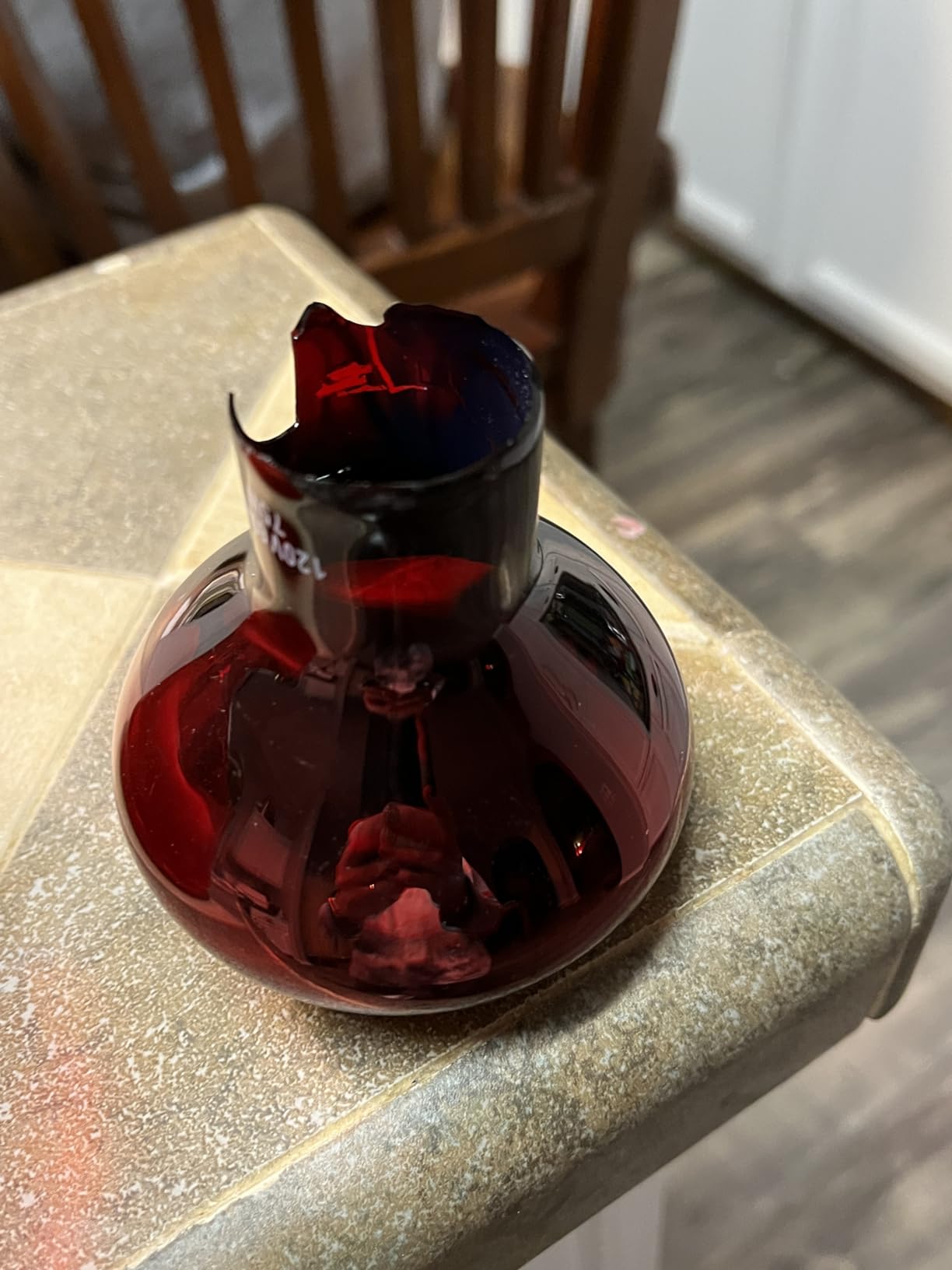
Here is the honest trade-off. Even a dim red bulb is visible light, and for a nocturnal species the biologically cleaner option is a source that emits none at all. If you are still deciding between a red bulb and a ceramic heat emitter, the ceramic emitter is the better long-term choice, and this bulb is the fallback for owners who want a softer glow than a white basking bulb.
Durability reports are mostly favorable and in some cases exceed the stated 3000 hour rating, but a minority of owners report around four months of continuous use. Some units also arrive with thin or uneven glass, which is worth inspecting before you screw it in.
Who should accept visible red light
If you want a single bulb covering both day and night, or if you are building a first setup on a tight budget and cannot add a second fixture, this is a defensible middle ground. Just understand you are trading a small amount of night-time darkness for a simpler wiring plan.
If you already have a daytime basking bulb, add a no-light source instead. You get the same result with less compromise, and the animal gets a real dark period.
What experienced keepers push back on
The recurring objection in leopard gecko forums is not about heat output but about the practice of marketing colored bulbs as reptile-safe. The concern is that red light is presented as harmless when the more conservative husbandry guidance simply recommends darkness at night, which a no-light source delivers for free.
There is no evidence of harm in the short term, and many animals behave normally with a red bulb. Treat it as a considered trade-off rather than the default answer.
5. Zilla 50W Mini Halogen 4-Pack for Nano and Small Enclosures
Zilla 4 Pack of Reptile Terrarium Heat Lamps Mini Halogen Bulb, Day White, 50 Watts
Mini halogen form factor
50 watts
Day white output
Four bulbs per pack
Pros
- Highest average rating in the group at 4.8
- Very hot for such a small bulb
- Bright enough to show basking behavior
- Reported to be long lasting
- Compact size fits nano fixtures
Cons
- Visible white light blocks dark nights
- Small size caps maximum wattage
- Bulb surface is hot enough to need gloves
This is the highest-rated product we tested at 4.8 stars, and the reviews are close to unanimous. Owners consistently describe a bulb that is physically tiny but throws far more heat than its size suggests, which is exactly what you need when a 10 gallon enclosure will not give you room for anything larger.
The mini format is the whole point. Standard PAR20 and PAR30 halogens need clearance above the basking surface to avoid overheating the animal, and a small enclosure often does not have that headroom. A mini halogen delivers usable basking heat in a footprint that a full-size bulb simply cannot fit.
Why a 4-pack makes sense for mini halogens
Halogens run hot and life is measured in service hours rather than calendar years, so a spare is not a luxury. Four bulbs means you can rotate rather than react to a burnout, and several owners report this bulb lasting longer than anything else they have used.
Check what fixture you have. This is a mini halogen format, not a standard E26 screw-base bulb, so it needs a compatible small fixture rather than the dome that came with most 10 gallon kits.
Where the small size becomes a limitation
Because the bulb is small, you cannot simply move up in wattage when you move up in enclosure size. A hatchling that outgrows a nano tank needs a bigger setup, and this bulb will not scale into a 40 gallon enclosure the way a 75W basking bulb will.
Also treat it as a daytime source only. Day white visible light is the point here, so you still need a separate no-light night source, and gloves are worth keeping by the tank when you change a bulb.
6. Fluker’s Deep Thermal Heat Lamp 75W for Deep Infrared Heat That Holds Humidity
Fluker’s Deep Thermal Heat Lamp for Reptiles with Carbon Infrared Technology, for All Reptile Tanks, Great for Basking, 75 Watt
E26 base and 75 watts
Carbon fiber filament
Infrared A and Infrared B
Minimal visible light
Pros
- Deep penetrating heat rather than warm air
- Retains humidity better than ceramic emitters
- Very low visible light with a faint glow
- Owners report a year or more of service
- Fits standard heat lamp sockets
Cons
- Emits a small amount of light
- Not UV emitting so it needs separate UVB
- Runs very hot and needs a thermostat
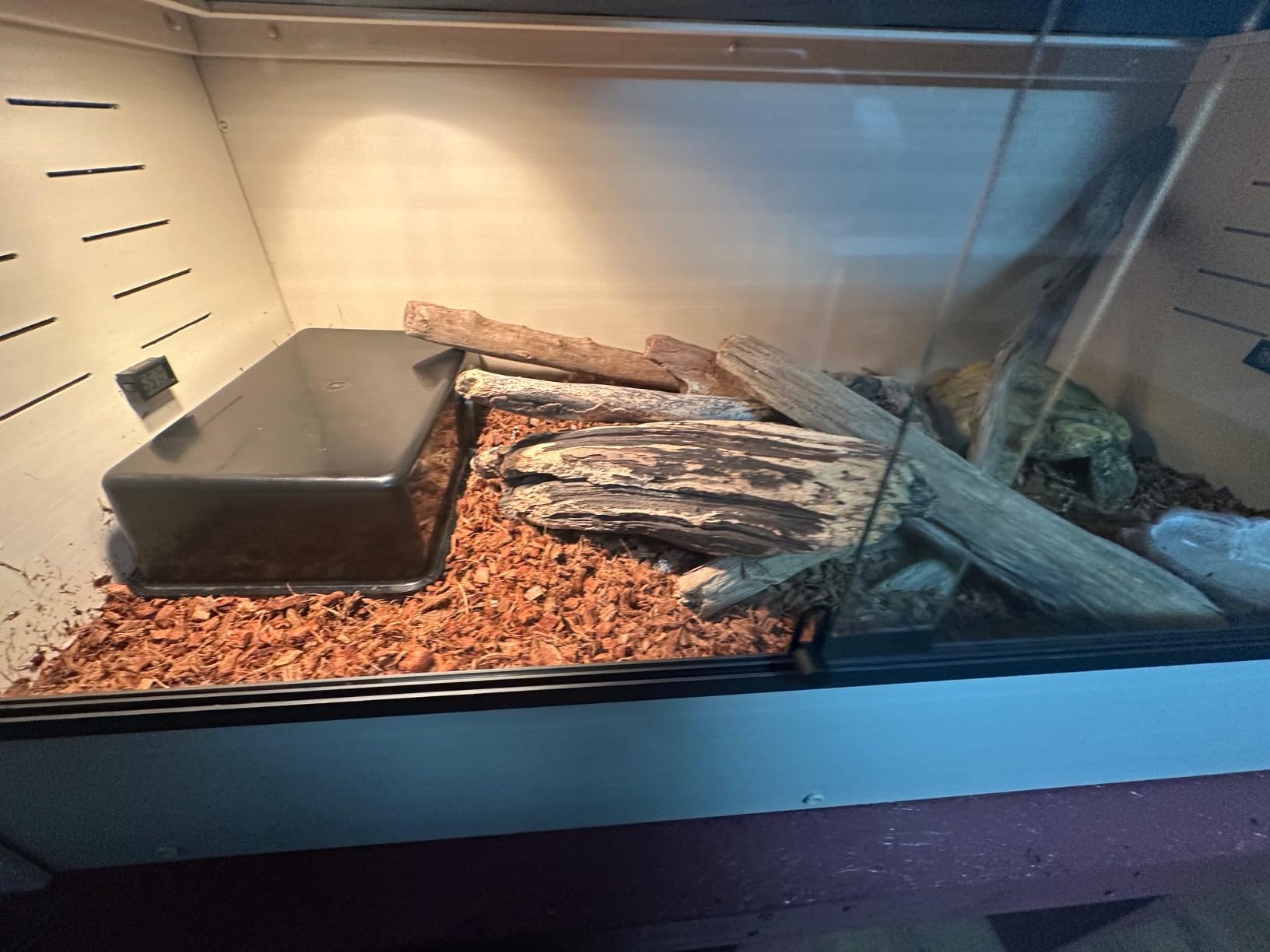
This is the lamp that changed our mind about ceramic emitters. A carbon fiber filament emits both long-wave Infrared A and Infrared B, which is the same pairing a deep heat projector uses, so the heat travels further into the animal rather than only warming the air immediately around the bulb.
The humidity result is the finding owners mention most. Ceramic emitters dry an enclosure out, and several buyers report that switching to this lamp solved a persistent condensation problem. That matters for anyone running a planted or bioactive setup where you are trying to hold stable moisture levels.
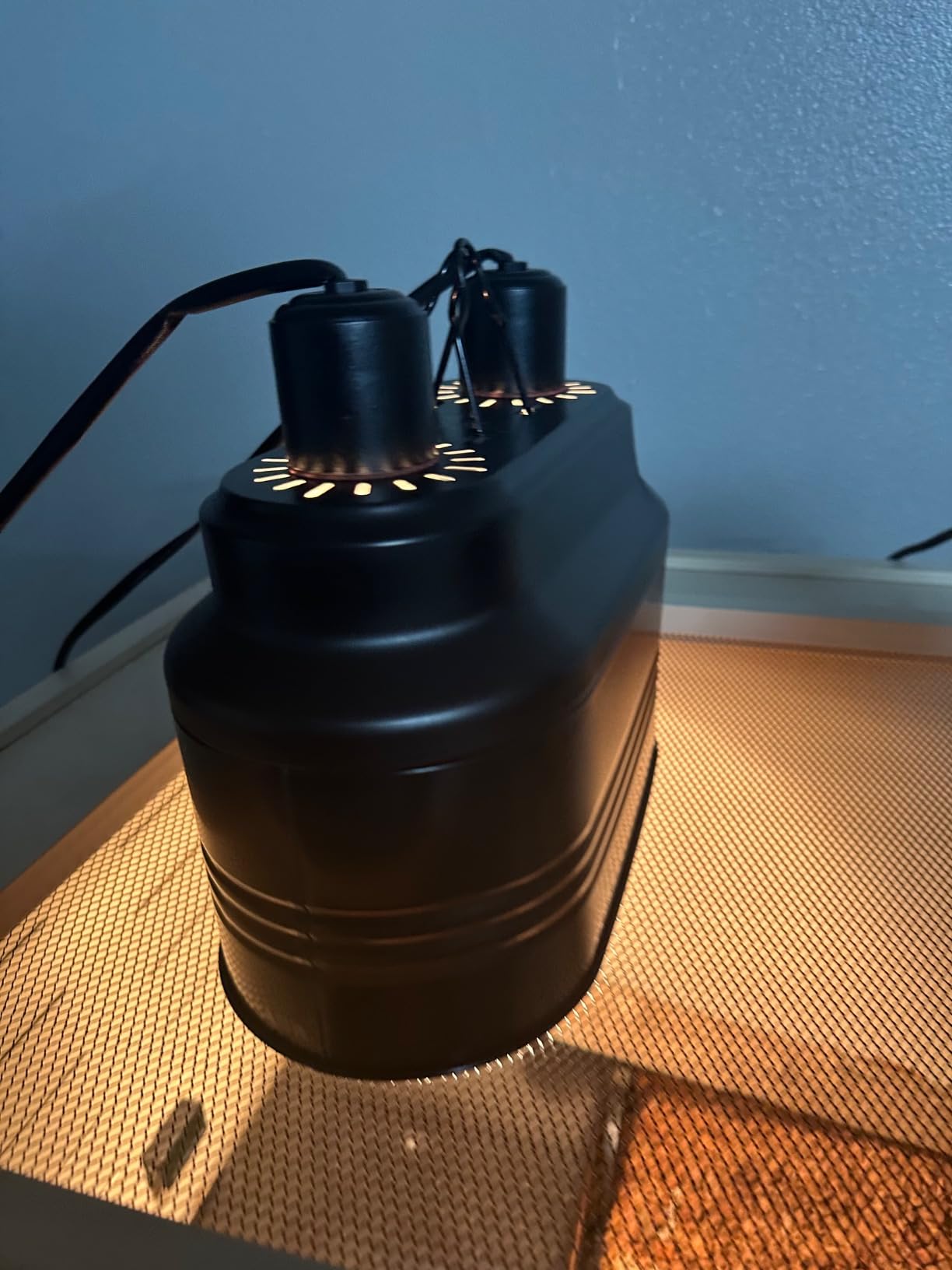
Light output is minimal rather than zero, so a very faint reddish glow is visible in a dark room. It is far less than a red night bulb and nothing like a basking bulb, but it is not a blacked-out night source, which matters if you keep an albino or very light-sensitive animal.
Reliability comes up repeatedly in reviews, including one owner running ten of these on proportional thermostats without a single failure. Nearly every reviewer mentions the same caveat, which is that it runs extremely hot and belongs on a thermostat without exception.
Choose this over a ceramic emitter when humidity matters
If your gecko’s enclosure is in a dry house, or you have a planted setup where you are fighting evaporation, this is the better night source. The parabolic reflector also focuses the beam into a usable basking zone, so it can carry part of the daytime load as well.
If your main concern is total darkness for a light-sensitive animal, a true deep heat projector is still darker and you should look at one of those instead.
Understand what it does not do
It emits zero UV. That is a real limit for anyone hoping to cover UVB duty with the same fixture, and it means you still need a separate UVB source if you want that side of the setup covered.
Treat it as a hot lamp. A thermostat is not optional here, the E26 socket should be ceramic, and you should keep the fixture outside the reach of the animal with a guard if your gecko is an adult that climbs.
7. Zoo Med ReptiCare Infrared Heat Projector 100W for Albino and Light-Sensitive Geckos
Zoo Med ReptiCare Infrared Heat Projector 100 Watts
E26 base
100 watts
Infrared A and Infrared B
Dimmer and thermostat compatible
Pros
- Holds temperature more steadily than cheaper projectors
- Very little visible light
- Deep penetration supports metabolism and digestion
- Fine-grained control with a dimming thermostat
- Also offered in 60W and 150W
Cons
- 100W is low for a large 4x2x2 enclosure
- Some units smell of burning plastic on first power-up
- A dimming thermostat is effectively mandatory
A projector is the reference point for heat with no filament glow, and this one comes from a brand most keepers already trust. It emits Infrared A and Infrared B from a carbon fiber filament designed for continuous use, and it is dimmer and thermostat compatible so you can dial it rather than switch it. Owners report temperatures holding far more consistently than with off-brand projectors, and the wide, even basking zone avoids the single hot point that can make a gecko avoid the basking spot entirely.
Sizing is the real decision with this projector
One owner running the 100W in a 4x2x2 enclosure found it underpowered and moved up to the 150W. Treat 100W as a medium-enclosure projector. In a 40 gallon tank in a cool room, the same 100W that works fine in a warmer room can leave the warm end short of target overnight.
Because it is also offered in 60W and 150W, check the wattage label against your enclosure size before you commit, and be ready to move up rather than run it flat out at full output.
What to do about the first-use smell
Several reviewers describe a strong burning-plastic smell on first power-up, and a few say it persisted. Air the room out, and if the smell continues beyond that first session, stop using the lamp and contact the seller rather than treating it as normal.
Set it up with a guard, keep the surface temperature on target with a dimming thermostat, and confirm the basking surface reading with an infrared thermometer. A projector running without control will dry the substrate out faster than you expect.
8. Zoo Med 25W Nano Basking Spot 2-Pack for Hatchlings and Small Geckos
Zoo Med 25W Nano Basking Spot Lamp, 2pk
E12 base
25 watts
Compact daytime basking spot
Two per pack
Pros
- Right-sized for nano and small terrariums
- Suits small geckos hatchlings and invertebrates
- Two-pack gives you a spare
- Provides a defined daytime basking spot
Cons
- Lowest heat output in the group
- Visible light cannot serve the night
- Requires a small socket dome rather than a standard fixture
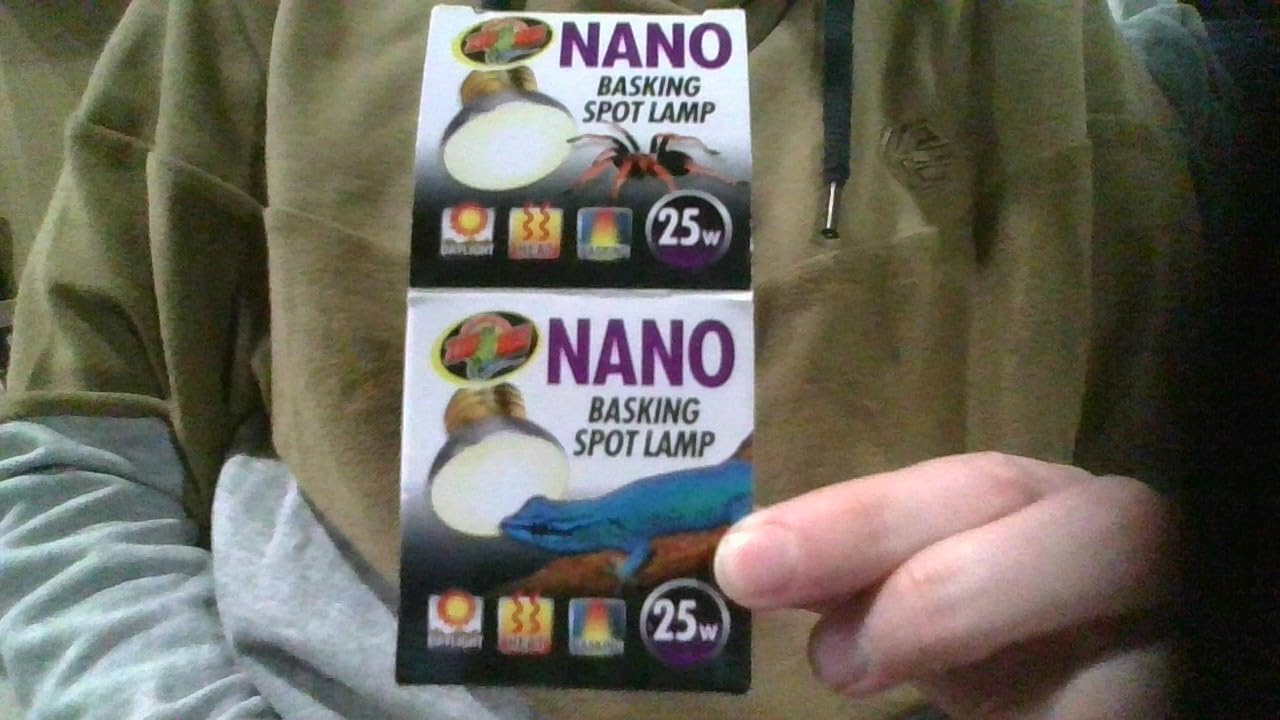
This is a purpose-built nano basking lamp, and the reviews split along one predictable line: owners with genuinely small setups rate it well, and everyone else finds the output too modest. At 4.2 stars with ten percent one-star reviews, the complaints are about heat output rather than build quality. For a hatchling in a small enclosure, 25 watts is genuinely the right number, since a larger bulb in the same space would put the basking surface too close to the animal.
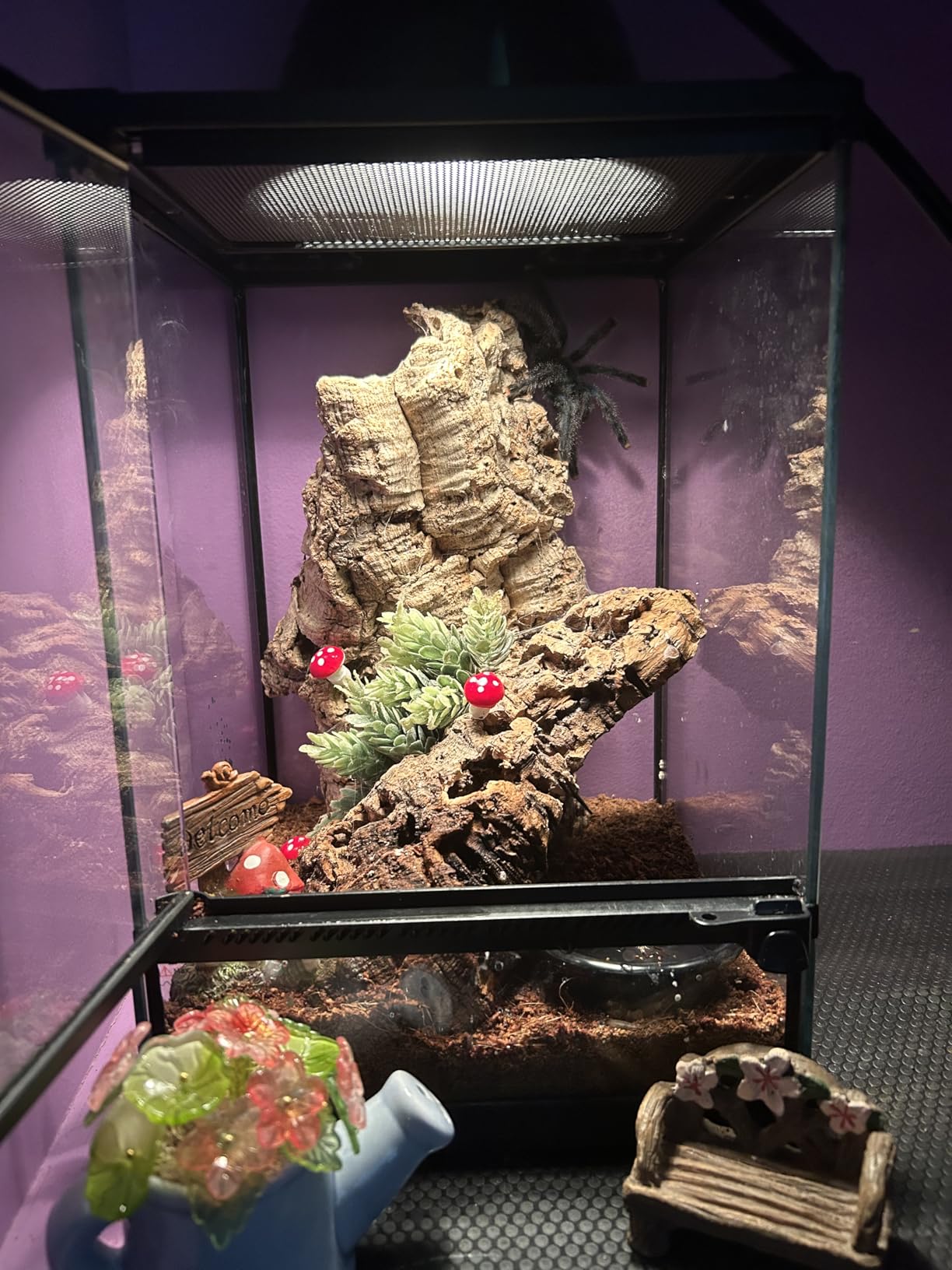
The E12 base is the practical detail to check first. It is a small socket, so it needs a compact dome rather than the standard E26 fixture that ships with most 10 gallon kits. It is also a two-pack, which matters more here than with a higher-wattage bulb, since visible-light basking bulbs burn out and you will be changing them more often.
Know when 25 watts is genuinely enough
It works when the enclosure is small, the room is warm, and the bulb is mounted with reasonable clearance. Under those conditions it produces a defined basking spot rather than a general warm-up, which is what a small animal needs to regulate properly.
It is not enough in a drafty room or a larger tank. If you move up to a 10 gallon or 40 gallon enclosure as your gecko grows, step up in wattage at the same time rather than pushing a 25W bulb to cover more space.
What the lower rating really reflects
Most of the unhappy reviews describe the same situation: a nano lamp bought for a tank that was no longer nano, or a drafty location where 25 watts could not keep up. The bulb is doing what it was made to do; the mismatch is in the setup.
Because it emits visible light, it also cannot cover the night hours. Budget for a second, no-light source before you close out the purchase, and check that your dome accepts an E12 bulb before you commit to either.
9. Zoo Med 25W Nano Infrared Lamp 2-Pack for Small Tanks Needing Night Heat
Zoo Med 25w Nano Infrared Heat Lamp, 2pk
E26 base at 110V
25 watts
24 hour heat
Very low visible light
Pros
- Very low visible light suits night use
- Provides round-the-clock heat for smaller tanks
- Two-pack beats buying singles locally
- Many owners report a long first bulb life
Cons
- Reports of glass separating from the screw base
- Vulnerable to water splashes
- Emits a visible red glow so nights are not dark
This is the night-heat counterpart to the nano basking spot, and it shares the small-enclosure logic. At 25 watts with a very low red output, it holds background warmth through the night in a compact tank without turning the enclosure into a lit box.
Most of the positive feedback is about exactly that: enough heat to keep a small gecko habitat comfortable overnight, at a light level most owners describe as unobtrusive, in a two-pack that works out cheaper per bulb than buying singles. Many owners also report the first bulb lasting a long time.
The failure pattern to plan around
Several reviews describe the glass separating from the screw base, sometimes with no obvious cause, and that is the dominant complaint. Keep a spare on hand, and inspect the base joint each time you change the bulb rather than assuming a working bulb is a sound bulb.
Water is the other risk. One owner reported rapid burnout after splashing the bulb during a misting routine, which is worth remembering in a humid setup. Position the lamp where spray cannot reach it.
Where it fits and where it does not
It is a good pairing partner for a nano basking spot: day on the timer with the visible-light bulb, night on this one, both in small enclosures where space is tight. That combination gives you a real gradient in a tank most setups would struggle to light.
It still emits a red glow, so it is not the option for an albino or highly light-sensitive animal. If that is your situation, a ceramic heat emitter is the better night source, and the wattage available in that category covers small enclosures well.
10. Lachesan 25W UVA Halogen 4-Pack for the Cheapest Per-Bulb Daylight Heat
Lachesan 25W Uva Light Bulbs 4 Packs, Turtle Heat Lamp for Reptile
E26 base and 25 watts
3000K warm white
Rated over 3000 hours
Dimmable
Pros
- Lowest cost per bulb in a four-pack
- UVA output supports metabolism and breeding
- Warm white light at 3000K
- Over 3000 hours rated life
- ROHS and CE certified
Cons
- Listed at 220-240V so check the label before use
- Bulb surface runs hot and needs clearance
- Visible warm white light rules it out for nights
This four-pack is the cheapest way to get several daylight bulbs in hand at once, and at 4.6 stars the satisfaction among people who have used it is high. The bulb is a genuine halogen with UVA output at a warm 3000K, rated for over 3000 hours of service.
Because it is halogen rather than plain incandescent, you also get a tighter beam and better heat per watt than a standard bulb of the same size, and reviewers regularly point out the UVA contribution to metabolism and breeding.
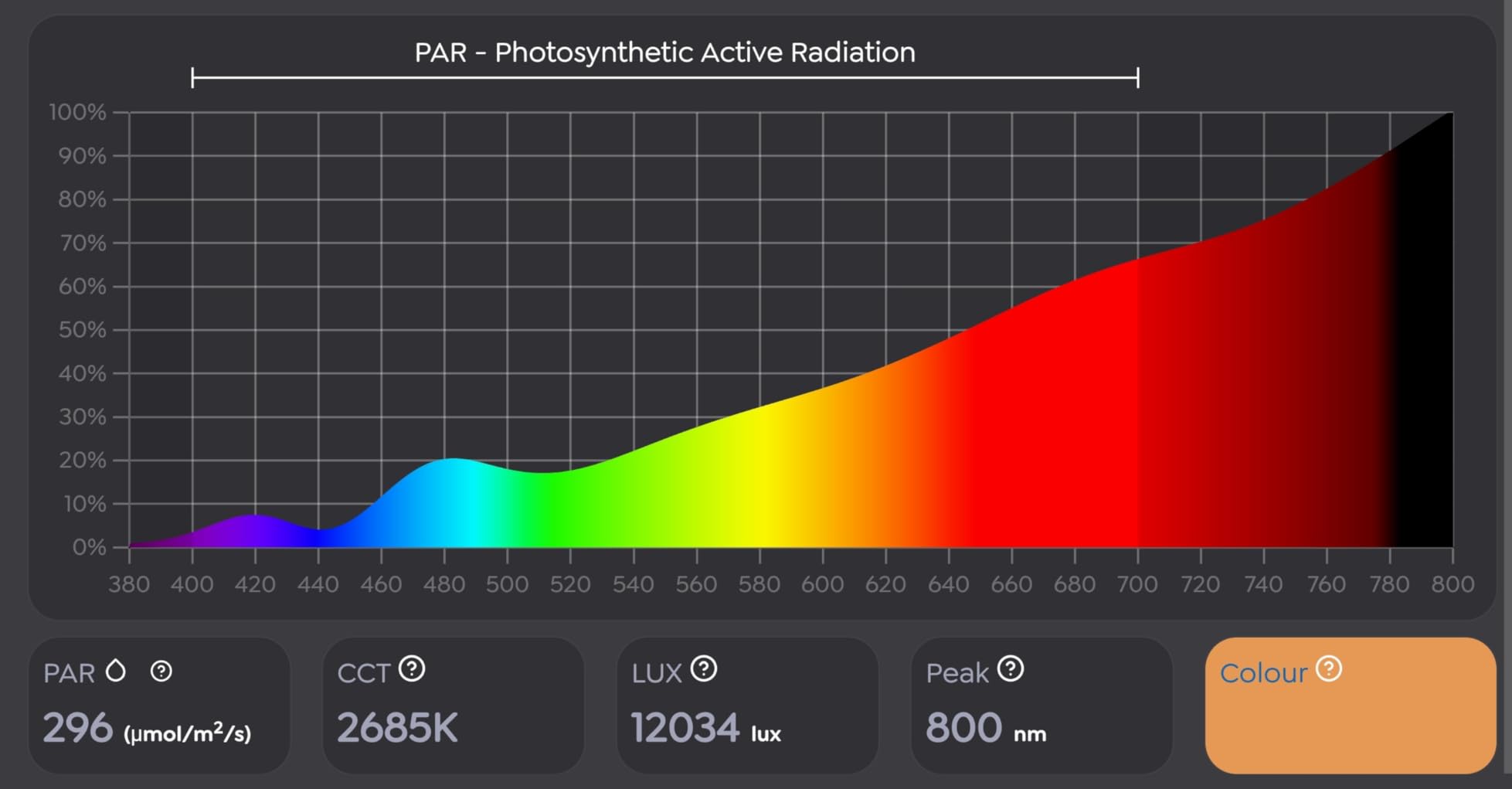
One specification deserves real attention before you buy. The listed operating range is 220-240V at 50Hz, which is a European supply, while a North American enclosure runs on 120V. Reviewers themselves flag this. Check the label on the bulb itself before you screw it into a 120V fixture, and do not assume the listing description matches the packaging.
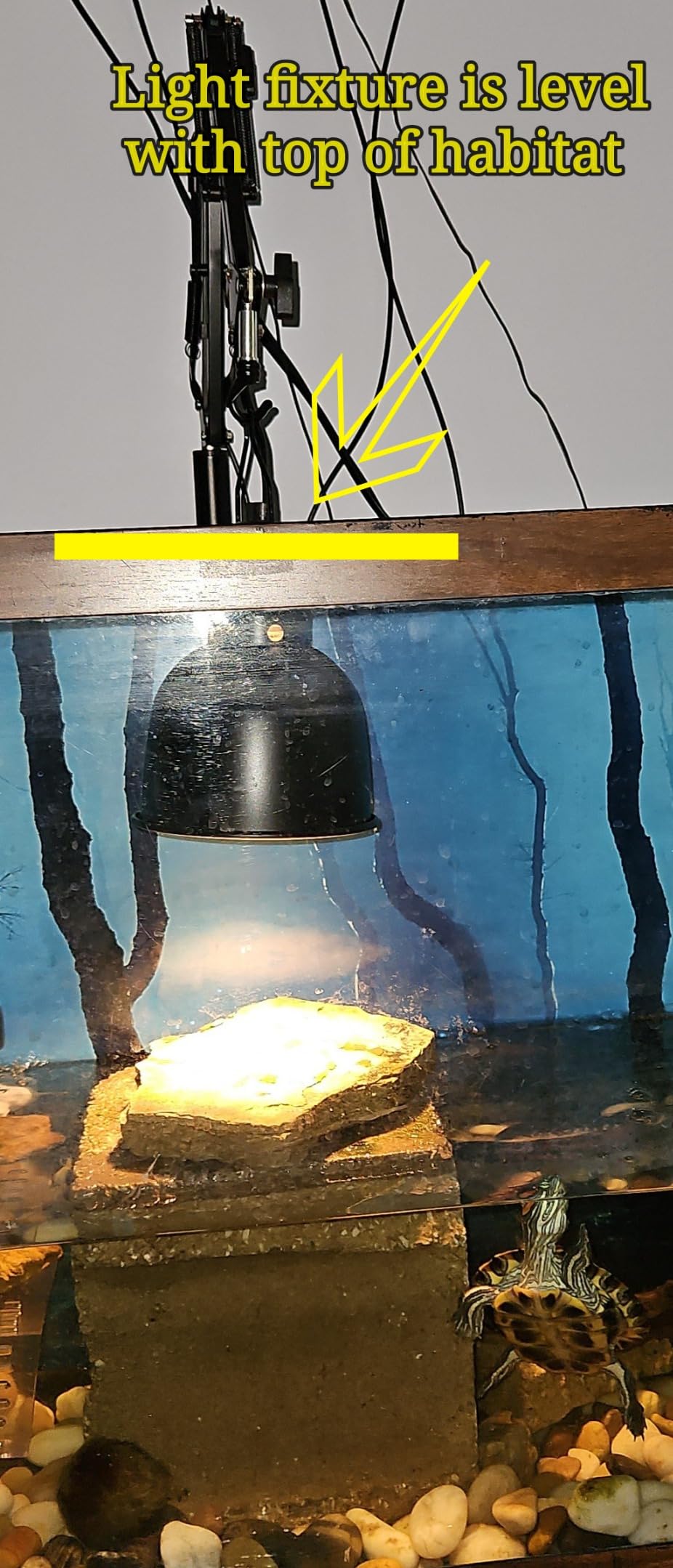
At 25 watts this is a small-output bulb. It suits a nano or starter enclosure, or a supplemental daytime source in a smaller setup, rather than serving as the main heat source for a 40 gallon tank.
What the 25 watt rating means for your enclosure
Small wattage plus UVA output is a good combination for a compact enclosure where you want a defined basking spot and a little extra visible light. In a larger tank you would be running it well below what the warm end needs, so pair it with a second source rather than relying on it alone.
Because the bulb is dimmable and halogen, it responds well to a dimming thermostat, which is the control type we recommend anyway. Hold it at a steady output rather than switching it on and off.
Handle it like any hot halogen bulb
The bulb surface runs hot enough to need clearance from the animal and from any plastic decor in the enclosure. Reviewers caution against touching it with bare hands while it is operating, and the oils from skin shorten halogen life.
Keep gloves by the tank, allow a cool-down period before you change it, and store the spares somewhere they cannot be knocked. The four-pack format only pays off if the bulbs survive storage.
11. Briignite G9 Halogen Dome Kit for Stepless Dimming Without Extra Parts
Briignite Reptile Heat Lamp G9 Halogen Heat Bulb Dome Reptile Light Fixture
G9 base and 50 watts
500 lumens warm light
120 degree beam
Dimmable aluminum dome included
Pros
- Bundles two bulbs with a dimmable dome
- Stepless dimming for fine temperature control
- Aluminum reflector increases UVA output
- Top ventilation and radiating holes
- Two bulbs and one fixture in the pack
Cons
- G9 base is uncommon and limits bulb swaps
- Max 50W caps output for larger enclosures
- Lowest rating in the group with 13 percent one-star
The reason to consider this kit is in the box rather than the bulb. It ships with two G9 halogen bulbs and an aluminum dome with stepless dimming, which means you can dial your basking temperature without moving the lamp or adding a separate controller. Owners consistently single out the dimmer as the standout feature.
At 50 watts with a 120 degree beam angle and 500 lumens, the output is moderate. The aluminum alloy reflector is advertised as improving UVA output, and the venting holes at the top of the shade help move heat away from the fixture body.
Understand the G9 base before you plan around this
G9 is a small loop-style base, and it is not the E26 screw base that virtually every dome, clamp lamp and thermostat fixture in this category uses. If your enclosure already has a fixture, this bulb will not fit it, and substitution later means hunting for a less common bulb.
This is the single biggest reason to skip it. The convenience of the integrated dimmer has to be weighed against a socket that is harder to fill and a wattage ceiling of 50W that rules out larger enclosures.
Where the low rating comes from
At 4.0 stars with thirteen percent one-star reviews, this is the most tempered response in the group. Reviews mention low energy efficiency ratings, a fixture surface that runs hot after use, and buyers who expected more heat than 50 watts delivers.
If you already own an E26 dimming fixture, this kit solves a problem you do not have. If you are building from nothing in a small enclosure and want fine control without buying a controller, the integrated dimmer is a genuine convenience worth considering.
12. REPTI ZOO 5.5 Inch Dimming Thermostat Fixture for Built-In Temperature Control
REPTI ZOO Reptile Light Fixture with Dimming Thermostat, 5.5 Inch Deep Dome Lamp Fixture with Temperature Controller for Reptile Heat Lamp Bulb, Max 100W
E26 ceramic socket rated to 100W
Integrated PID dimming thermostat
ETL certified
20C to 50C control range
Pros
- Thermostat built into the fixture so no extra parts
- Steady PID dimming instead of on and off cycling
- Longer bulb life from dimming output
- Works with projectors and standard 100W bulbs
- LED display with Celsius and Fahrenheit
Cons
- Bulb and probe are sold separately
- Some units will not reach the set temperature
- No dedicated on and off switch
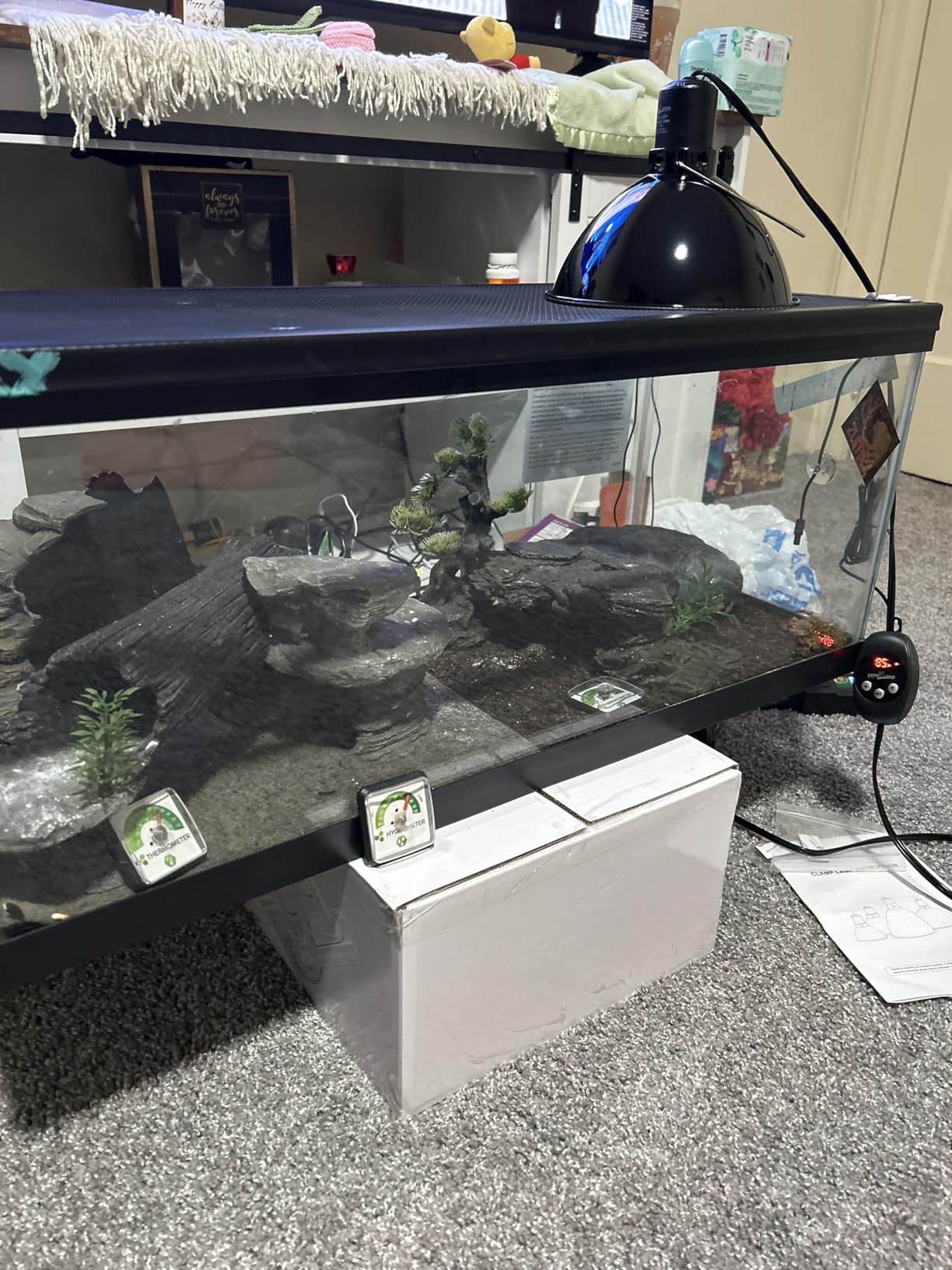
This is the most complete fixture in the roundup and the one owners are most enthusiastic about. A dimming thermostat is built into the dome, so you are not assembling a fixture, a controller, a probe and a separate dimmer. For a first setup, that removes the single most common source of beginner error.
The control method matters. PID dimming reduces and restores power smoothly rather than cutting the lamp on and off, which means steadier basking temperatures, fewer visible swings for the gecko, and longer bulb life. The LED display shows both ambient and set values and switches between Celsius and Fahrenheit, and the control range spans 20C to 50C.
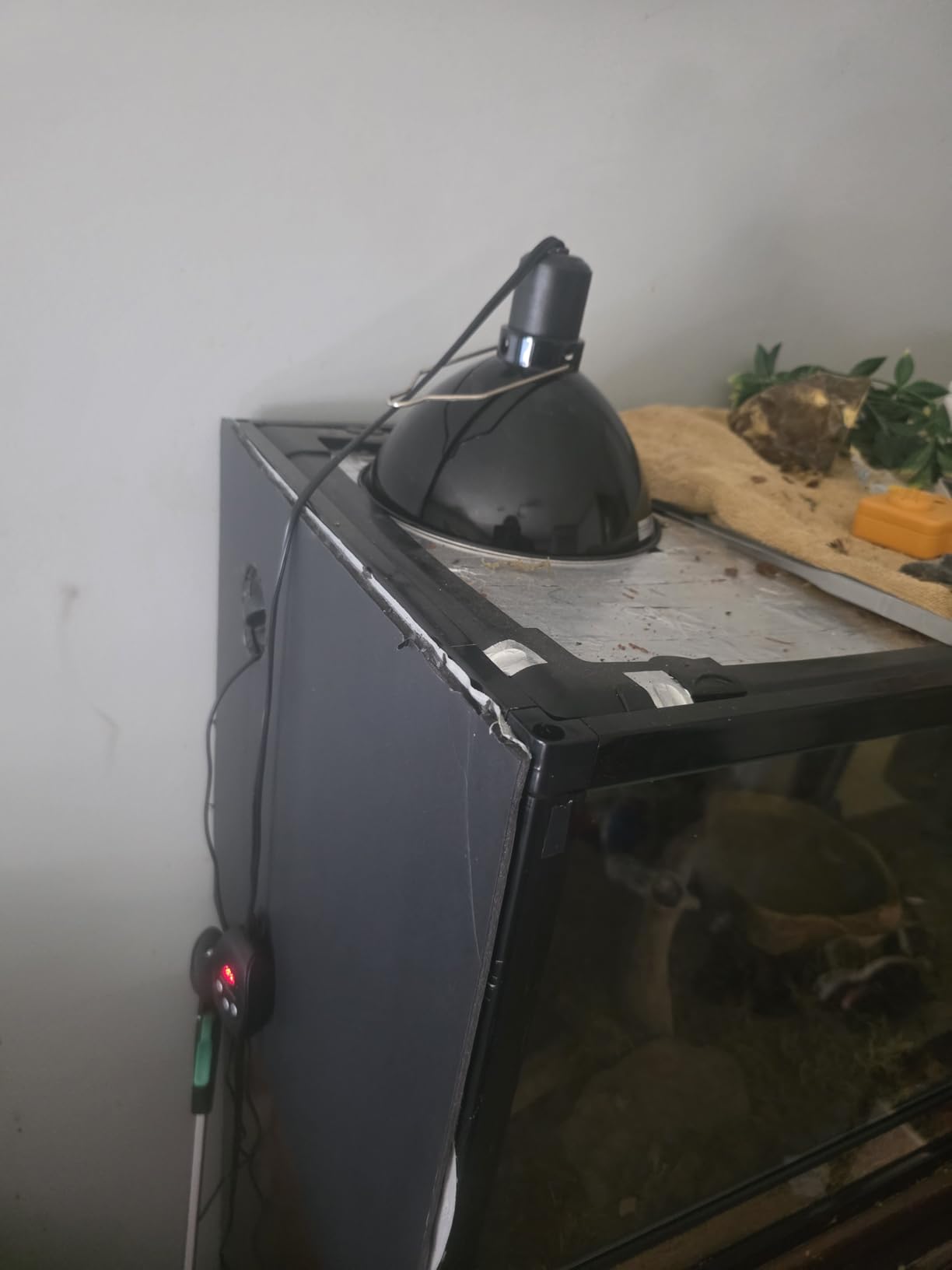
Build the cost into your plan. The bulb and the probe are not included, so this is a fixture plus controller rather than a complete lighting setup. The E26 ceramic socket is rated to 100 watts, and ETL certification plus a high-finish aluminum reflector are both good signs for a fixture that runs this hot. Two complaints recur: some units fail to climb to the set temperature, and there is no physical on and off switch, so a nightly shutoff means unplugging it at the wall.
Who this fixture is genuinely for
It suits anyone who wants dimmable, thermostatic control without assembling a system, and it pairs well with a deep heat projector or a standard 100W basking bulb. Owners running projectors on it report stable, easily dialed-in temperatures, and beginners benefit most, because probe placement and controller wiring are the two steps people get wrong most often.
How to test it before you trust it
After installation, run it for a full day and check the basking surface with an infrared thermometer rather than believing the display. If the surface sits well below your set point after twelve hours, the unit is not pulling its rated wattage and you should return it.
Position the probe at the warm end of the enclosure where the basking surface sits, not in the middle and not over the cool hide. That single step explains most of the temperature drift people report with integrated controllers, and it is worth revisiting as the seasons change.
How to Choose a Leopard Gecko Heat Lamp in 2026
Halogen, deep heat projector, ceramic heat emitter or colored bulb
A halogen basking bulb is the best general purpose option. It produces visible light and long-wave infrared, it creates a defined basking surface a gecko will actually use, and it is the most widely available and cheapest to replace. The trade-off is that it dries substrate and is very bright at night, so it should not run after dark.
A deep heat projector emits Infrared A and Infrared B with almost no visible light, which makes it the right choice for albino geckos, for enclosures where you do not want any glow, and for setups where you want radiant heat that penetrates rather than air warming. It costs more per bulb and produces less visible light to confirm the basking spot with.
A ceramic heat emitter sits between the two. It emits no light at all, which is exactly right for night heating, and the thick ceramic body is durable with a long rated life. Its weakness is that it warms air more than it penetrates tissue, and experienced keepers consistently report it drying an enclosure out.
A colored red or blue night-glow bulb is the option we recommend skipping. They emit visible light in a spectrum leopard geckos can see, they do not deliver better heat than a white bulb of the same wattage, and reputable husbandry guidance treats darkness as a requirement rather than a preference. Incandescent white bulbs sit at the cheap end, but they convert less energy to useful infrared and burn out faster than halogens.
How many watts do you need? Enclosure size guide
The most common question in leopard gecko forums is whether 100W is too much, and the answer depends entirely on enclosure size and room temperature. Wattage is a starting point, not a setting. The thermostat decides the final answer.
10 gallon starter enclosure in a warm room: a 25W to 50W basking bulb. In a cool room, move to 75W and check the surface temperature.
20 gallon enclosure: a 50W basking bulb, or 75W if the room is on the cooler side.
40 gallon enclosure in a normally heated room: a 50W to 75W basking bulb, which is where most 40 gallon owners land.
40 gallon enclosure in a cold or drafty room: a 75W basking bulb for daytime plus a ceramic heat emitter or projector at night.
75 gallon and larger enclosures: a 100W to 150W source, mounted higher to spread the heat and controlled by a thermostat.
100W is not automatically too much. It is too much when it is mounted low in a small enclosure, and too little when it has to heat a large enclosure in a cold room. Measure your basking surface with an infrared thermometer and adjust the lamp height before you change the wattage. Screen lids are a real factor too, since owners running 40 gallon tanks report losing heat through the mesh top.
Dimming thermostat versus on and off thermostat
A dimming thermostat reduces and restores power in small increments to hold a target temperature. An on and off thermostat simply cuts full power and cycles the lamp on and off. For a bulb, the cycling approach shortens life and creates visible temperature swings the gecko can feel.
For halogens, projectors and infrared bulbs, use a dimming thermostat. Some ceramic heat emitters do not respond well to dimming and are better run on an on and off controller with a properly sized probe, so match the controller to the load rather than assuming one type fits all.
Probe placement is the step people get wrong. The probe belongs at the warm end of the enclosure, on the basking surface, secured so it cannot slide into the cool side or touch glass. A probe parked in the middle of the tank will read cooler than the actual basking spot, which is exactly how setups end up running too hot.
Set your thermostat against the surface temperature you measured, then re-measure with an infrared thermometer after a full day. Owners who recommend spending more on a dimming thermostat than on a cheap on and off model are reacting to the steadiness, not the price gap.
PAR20 versus PAR30 and E26 sizing in plain English
PAR is a size designation, not a fitting. A PAR20 bulb is about 2.5 inches in diameter and a PAR30 is about 3.75 inches. The number after the letter is the wattage, so a 50W PAR20 is a small 50 watt bulb. Both use the same E26 screw base, so either fits a standard dome, but a PAR30 physically will not go through a shade sized for a PAR20.
E26 is the common household screw base. E27 is the European equivalent and looks nearly identical, so check the socket marking rather than eyeballing it. E12 and G9 are smaller bases that need their own fixtures, which is why several lamps in this roundup are sold for nano enclosures or with their own dome.
The socket material matters for hot lamps. A ceramic socket handles heat far better than a plastic lamp holder, and it is the standard recommendation for ceramic heat emitters, projectors and high-wattage halogens.
Night heating without disturbing sleep
Leopard geckos are nocturnal, so the dark period is part of their natural cycle. Aim to keep the enclosure above 65F overnight, and the simplest way to do that without visible light is a ceramic heat emitter or a deep heat projector on a night timer.
Run the daytime basking bulb on a timer for roughly ten to twelve hours, then hand over to the night source. If you cannot keep the warm side on target during the day, a dimming thermostat on the basking bulb is the fix, not a brighter bulb.
Red bulbs exist for this job and plenty of owners use them, but a no-light source does the same job without the compromise. If you already own red bulbs, they are a reasonable stopgap while you source a better option.
Heat versus UVB: they are separate purchases
A heat lamp does one job: it makes a warm surface your gecko can sit on. It does not provide usable UVB. UVB drives vitamin D3 synthesis and calcium absorption, and a lack of it contributes to metabolic bone disease even in a nocturnal species that gets much of its calcium from food.
Leopard geckos do not need intense UVB, but a low-level UVB source is good husbandry and is a separate fixture with its own timer. If your setup has a basking bulb and no UVB, you have a heat lamp, not a complete lighting system.
The reverse is also true. A UVB fixture without a heat source leaves your gecko unable to thermoregulate at all, and a UVB lamp contributes almost no meaningful heat on its own.
Installation and safety checklist
Mount the lamp outside the enclosure or in a guarded dome, never loose inside where the gecko can touch it.
Keep clearance between the bulb and the animal. A higher-wattage lamp needs more vertical space, not closer placement.
Use a ceramic socket for anything above 50W, and a guard or clamp fixture on any adult enclosure.
Run every heat source on a thermostat, with the probe secured at the warm end on the basking surface.
Measure the basking surface with an infrared thermometer and record both the day and night readings.
Replace bulbs on a schedule, and discard any bulb with a crack, thinning glass or a darkened coating.
Keep spray and misting away from bulbs, and use gloves when changing any bulb that has been running.
Signs of underheating show up as a gecko that is lethargic, refusing food, hiding constantly, or dragging its tail. Signs of overheating are gaping, frantic escape attempts from the basking area, or a gecko that never uses the warm end. Both are resolved by measuring rather than guessing.
Frequently Asked Questions
Is a 100W heat lamp too much for a leopard gecko?
Not by itself. A 100W lamp is too much when it is mounted low in a small enclosure, and too little when it has to heat a 40 gallon tank in a cold room. For a 10 gallon starter tank use 25W to 50W, for a 40 gallon use 50W to 75W, and go higher only in large enclosures. Always confirm with an infrared thermometer aimed at the basking surface and run the lamp on a thermostat.
What type of heat lamp is best for leopard geckos?
A 50W to 75W halogen basking bulb paired with a dimming thermostat is the best general purpose choice, because it creates a defined basking surface with visible light. A deep heat projector is the best alternative when you want radiant heat with no visible glow, and a ceramic heat emitter is the best night-time source. Skip red and blue night-glow bulbs.
Is 100 degrees too hot for a leopard gecko?
No, if that is the basking surface temperature. Roughly 94F to 100F on the surface the gecko sits on is the target range, and 100F is a normal community target. What is too hot is sustained air temperature near 100F, since leopard geckos need a gradient to move away from the heat. Measure the surface, not the air.
How cold is too cold for a leopard gecko at night?
Keep the enclosure above 65F overnight. A ceramic heat emitter or deep heat projector on a night timer is the cleanest way to hold that floor, since neither emits visible light. Run the daytime basking bulb for roughly ten to twelve hours and then hand over to the no-light source so the animal gets a genuine dark period.
How many hours of heat lamp do leopard geckos need?
Give them ten to twelve hours of daytime basking heat, then drop to night heat with no visible light. A simple timer handles the switch, and a dimming thermostat holds the basking surface on target through the day. Running a bright basking bulb around the clock works against the natural nocturnal cycle of a leopard gecko.
Do leopard geckos need UVB or just heat?
They need both, because they are separate jobs. A heat lamp provides a warm basking surface for digestion and activity but provides no usable UVB. UVB drives vitamin D3 synthesis and calcium absorption and helps prevent metabolic bone disease. A low-level UVB fixture on its own timer covers that side, and a UVB lamp without a heat source leaves the gecko unable to thermoregulate.
Final Verdict on Leopard Gecko Heat Lamps
The best heat lamps for leopard geckos come down to one clear winner. The Fluker’s Repta-Clamp Lamp is our Editor’s Choice because it is the easiest fixture to install correctly, it is backed by by far the largest body of owner feedback we saw, and its 5.5 inch aluminum shade delivers a tight, usable basking beam in enclosures where a larger dome will not fit.
Pair it with a no-light night source and a dimming thermostat, and measure the basking surface rather than trusting the fixture. For albino geckos, replace the basking bulb with a deep heat projector. For humid setups, a carbon filament thermal lamp holds moisture better than a ceramic emitter. And skip the red night bulb if you can, because a no-light source does the same job without the compromise.
Whatever you choose, run it on a thermostat, put the probe at the warm end on the basking surface, and add UVB as a separate source. That combination is what separates a working setup from a guessing game.