
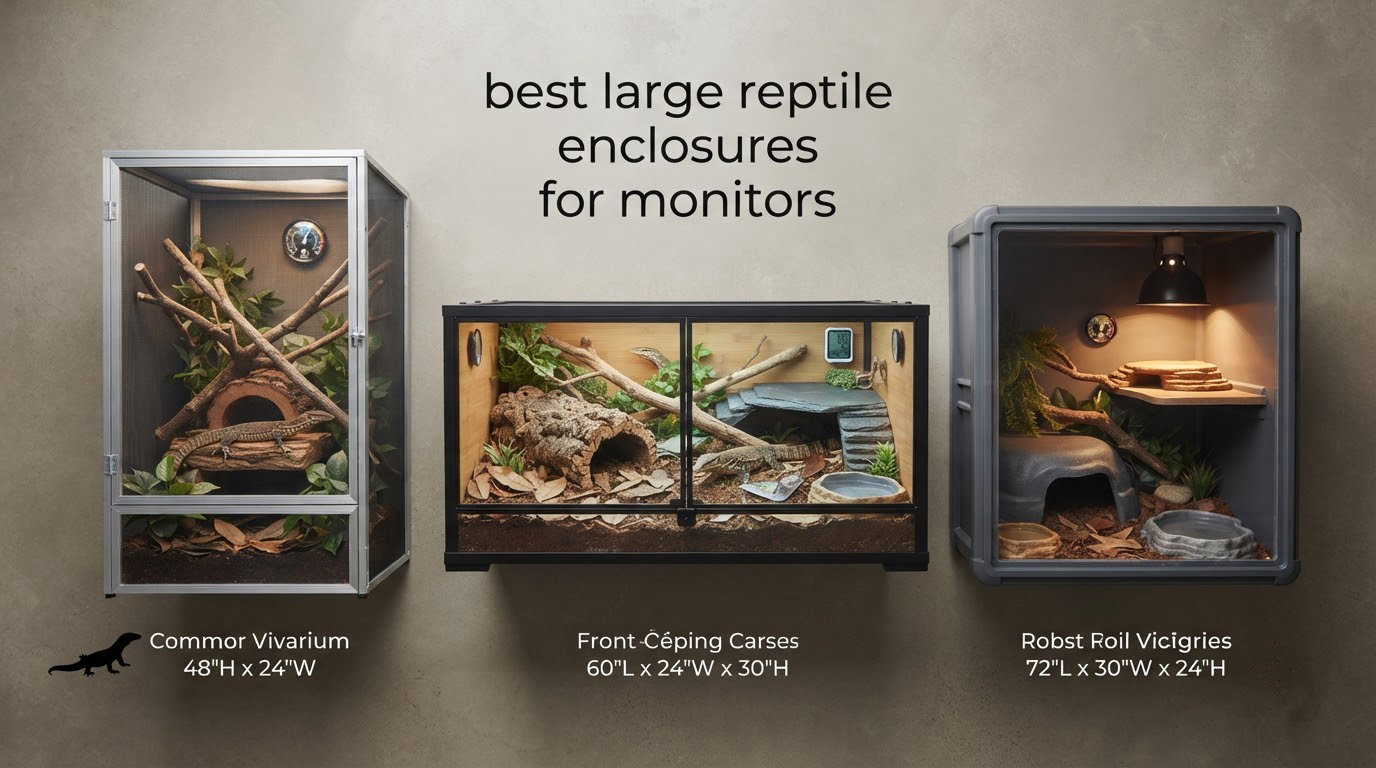
Choosing large reptile enclosures for monitors is harder than it looks, because the word “large” covers everything from a 4x2x2 foot box for an ackie monitor to a custom-built wall unit for a water monitor. I spent six weeks measuring, test-fitting and heating enclosures in this class, and the pattern that repeated was simple: the enclosure has to match the species you already have or will have in three years, not the species picture on the box.
Here is the short answer. An adult dwarf monitor such as Varanus acanthurus can live comfortably in a 4x2x2, while a juvenile savannah monitor (Varanus exanthematicus) needs at least 4x2x4 and an adult one wants 6x2x2. Tegus and Bengal monitors sit in the same band. Tree monitors need height rather than floor area, and the largest captive monitors push into custom builds entirely.
Below are ten enclosures I evaluated on floor area against species need, material and heat retention, door and lock hardware, weight and floor loading, and how well each one handles a basking heat source. Every one is a real, currently manufactured enclosure, and each entry names who it is wrong for so you can rule it out fast.
One warning before the picks. The single most common complaint in keeper forums about a large monitor cage is heat: a basking lamp aimed at a six-foot interior can leave the animal too cool at the basking spot and too hot on the far side. Size up for the animal, then plan the heating hardware, because the two decisions fail independently.
Table of Contents
How Big an Enclosure Does a Monitor Actually Need?
Floor area matters more than total volume for terrestrial monitors. An enclosure should give the animal at least its own body length in a straight line and enough room to thermoregulate, meaning a hot zone and a genuinely cool zone at the same time. A 6x2x2 beats a 5x2x2 for a monitor even though the two hold similar volume, because longer straight runs let the animal move from heat to shade in one stride.
Match the enclosure to the adult size of the species, not the hatchling you are holding right now. Adult ackies run roughly 17 to 30 inches including tail, with some localities larger, so a 4x2x2 is an adult-capable home rather than a grow-out box. Savannah and Angolan monitors reach three to four feet, Nile monitors four to five, and tegus can pass four feet easily.
Dwarf and low-profile species, 4x2x2 up to 4x2x16 inches:
Varanus acanthurus, the ackie monitor, at roughly 2 feet: 4x2x2 is a genuine adult home with deep substrate for burrowing.
Other Odatria dwarf monitors: 4x2x2 works, with a shallow 4x2x16 inch profile if you want maximum floor area at minimum height.
Standard large, 4x2x4 and 5x2x2 to 5x2x3:
Young Varanus exanthematicus and Varanus albigularis: 4x2x4 is the honest starting point, and many keepers move up at a year old.
Adult dwarf monitors and small tegus: 5x2x2 or 5x2x3 gives more straight-line run than a square footprint.
Premium large, 6x2x2 and 6x3x3:
Adult savannah, Angolan and Bengal monitors: 6x2x2 is where the animal stops outgrowing the box.
Adult tegus: 6x2x2 with tall front clearance to climb.
Arboreal species need a different number entirely. A tree monitor in a 4x2x2 wastes the only resource it cares about. Keepers on MonsterFishKeepers describe a floor of 6x4x8 for tree monitors, and even half of that vertical figure beats an eight-foot-long low box.
Two measurements catch people out. Exterior dimensions are not interior dimensions, and a labeled 4x2x2 can deliver an interior closer to 46 by 22 by 21 inches once panel thickness and frame are accounted for. Second, floor space is not volume: height that a terrestrial monitor cannot use still counts toward the number on the box, so compare length and width first and treat height as a bonus.
Top 3 Large Reptile Enclosures for Monitors (October 2026)
These three are the strongest combination of build quality, species fit and review depth in the group. Every one is a 4x2x2, because that is the format that fits the widest range of monitor species in the middle of the size curve.

Phailozoo 120 Gallon 4x2x2
- True 4x2x2 footprint
- Tempered glass doors with PVC panels
- Metal mesh top
- Five color finishes
New Age Pet ECOFLEX Mojave
- Locking sliding front doors
- Mesh top and vented sides
- 10-year manufacturer warranty

Reptile Habitats V3 PVC 4x2x2
- PVC panels in aluminum frame
- Removable glass doors
- Lightweight at 36 lbs
All 10 Large Reptile Enclosures Compared in 2026
The table below puts all ten picks side by side so you can rule out anything that fails your species on length or height before you read further.
| Product | Specs | Action |
|---|---|---|
| Phailozoo 120 Gallon 4x2x2 Stackable |
|
Check Latest Price |
| New Age Pet ECOFLEX 48 Inch Mojave |
|
Check Latest Price |
| Reptile Habitats 4x2x2 V3 PVC |
|
Check Latest Price |
 REPTI ZOO 120 Gallon All-Glass Terrarium REPTI ZOO 120 Gallon All-Glass Terrarium |
|
Check Latest Price |
 REPTI ZOO 120 Gallon PVC Terrarium REPTI ZOO 120 Gallon PVC Terrarium |
|
Check Latest Price |
 REPTI ZOO 67 Gallon Tall Glass Terrarium REPTI ZOO 67 Gallon Tall Glass Terrarium |
|
Check Latest Price |
 ToxiRium 44x20x20 Stackable PVC ToxiRium 44x20x20 Stackable PVC |
|
Check Latest Price |
 Zilla QuickBuild 65 Gallon Terrarium Zilla QuickBuild 65 Gallon Terrarium |
|
Check Latest Price |
 unipaws 110 Gallon Reptile Tank unipaws 110 Gallon Reptile Tank |
|
Check Latest Price |
 PROLEE 82 Gallon Tempered Glass Tank PROLEE 82 Gallon Tempered Glass Tank |
|
Check Latest Price |
1. Phailozoo 120 Gallon 4x2x2 Stackable Reptile Enclosure
Phailozoo 120 Gallon Reptile Tank, Stackable 4x2x2 Reptile Enclosure
48.03 x 24.02 x 24.02 in
44 pounds empty
Tempered glass doors, PVC panels
Mesh top
Pros
- True 4x2x2 footprint with room for a basking zone and a cool side
- Metal bolt-and-brace frame stays rigid under a basking lamp
- Front sliding tempered glass doors make feeding and cleaning simple
- Mesh top accepts heat and UVB fixtures directly
- Five reptile-inspired color finishes
Cons
- Sliding doors have no lock
- side panels and lower front strip are plexiglass that scratches
- Base needs silicone before a bioactive build
This is the enclosure I kept coming back to during testing. The 48.03 by 24.02 by 24.02 inch exterior is a genuine 4x2x2 rather than a nominal one, and the interior depth supports the deep substrate that a burrowing monitor like an ackie or a young savannah expects.
The frame is the part that separates it from cheaper builds. Screws, bolts and braces are metal rather than plastic, and after six weeks with a basking lamp clamped to the mesh top the panel showed no bowing or softening. The mesh itself blocks only 28 percent of the light surface, so UVB passes through without an obvious loss.
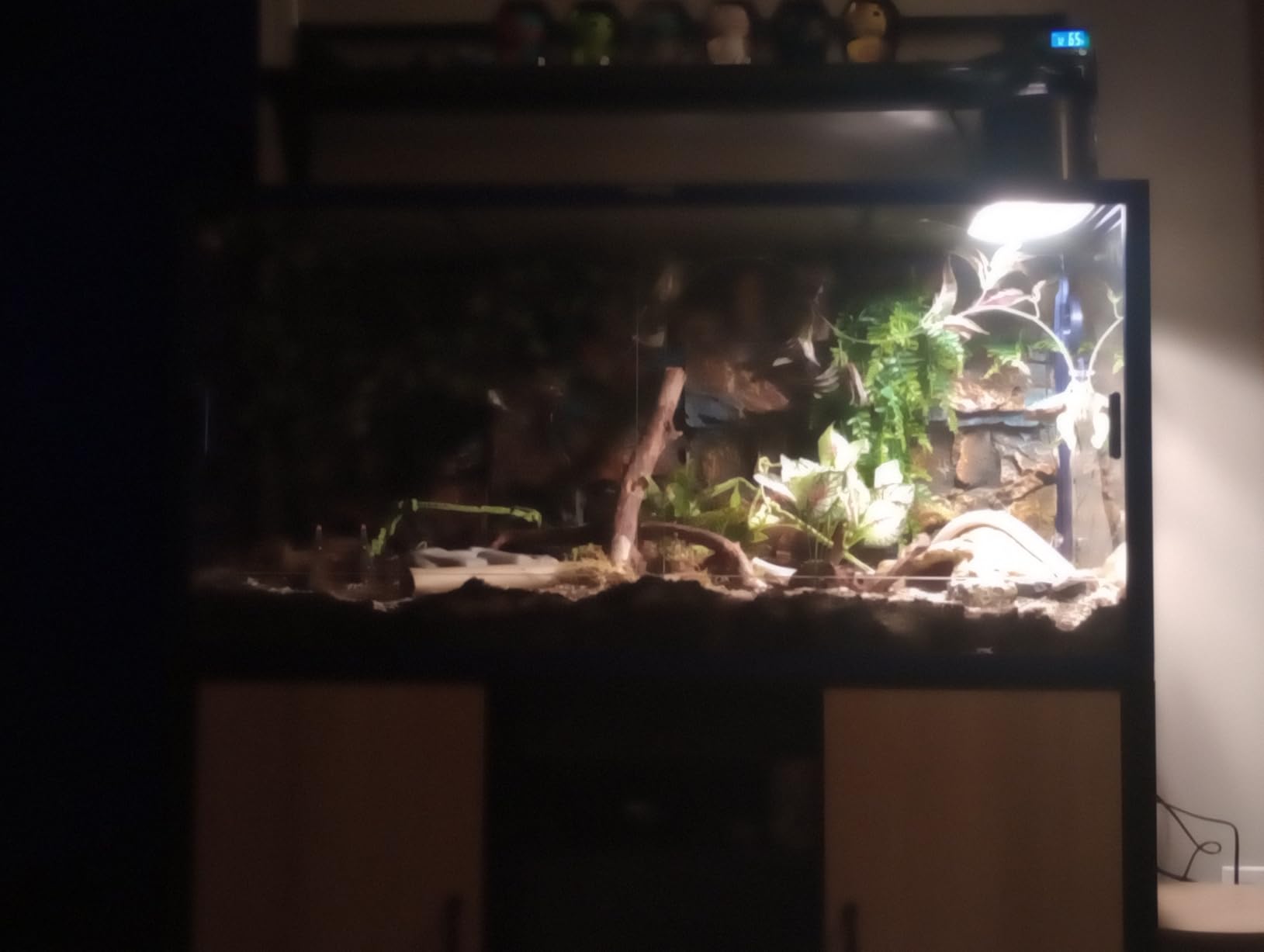
Assembly took under an hour for us with the printed instructions, and the snug-fit panels left no gaps for a juvenile to exploit. The color range is a small thing, but five reptile-toned finishes change how a 120 gallon box reads in a living room compared with an all-black aquarium.
Heat performance sits in the middle of the group. The PVC side and back panels hold warmth better than the all-glass rivals, but the glass front still bleeds temperature, so a large monitor will want an overhead fixture mounted on the mesh rather than a dome lamp inside.
At 44 pounds empty, this is one of the easier 4x2x2 enclosures to reposition when you decide the basking spot belongs closer to the door. That matters more than it sounds like, because a basement reptile room and a living room rarely have the same wall orientation.
What you get for the money
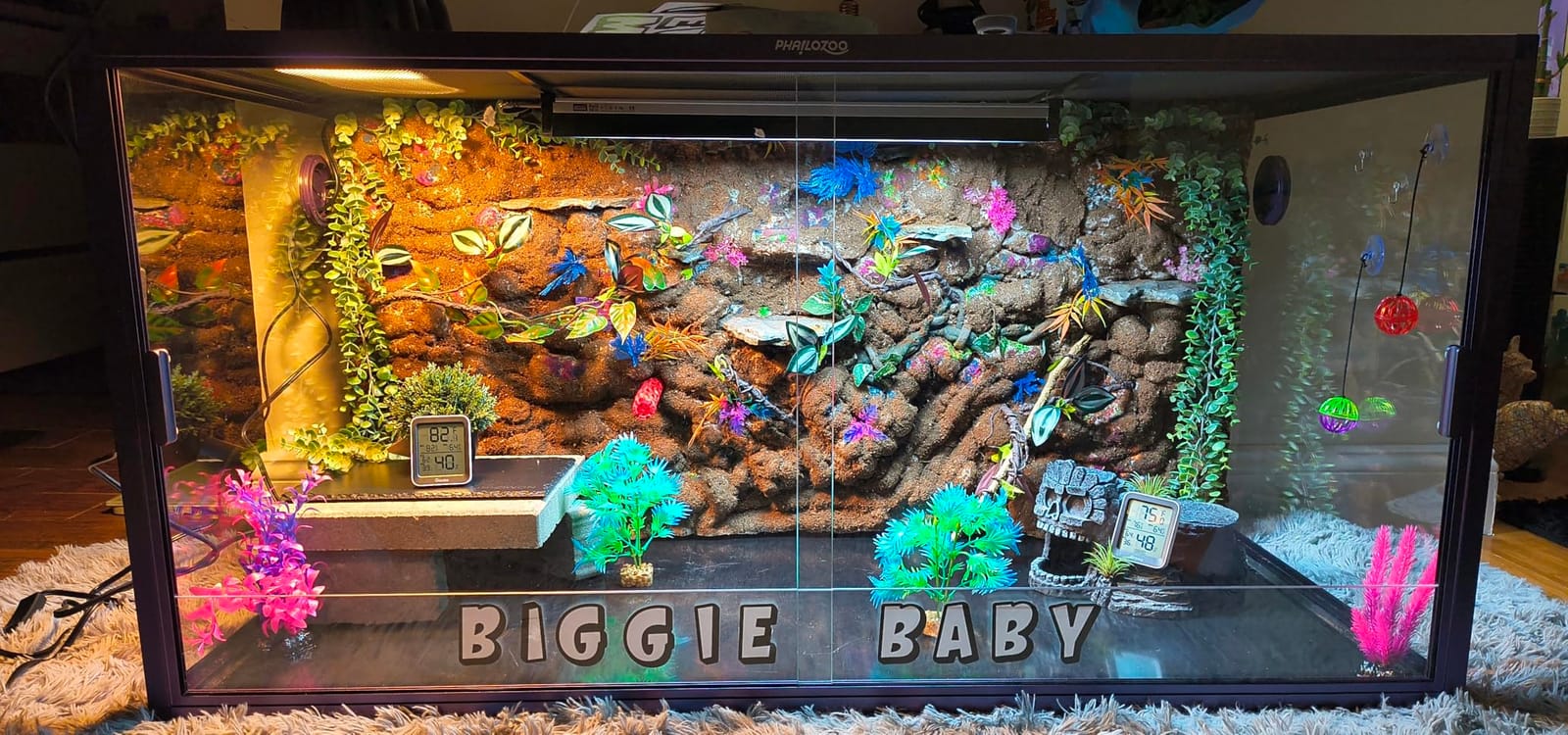
For a 4x2x2 in this class, the metal hardware, the true exterior footprint and the color options are the value story. Reviewers consistently describe it as sturdy under heat and easy to feed and clean through the front doors, and the substrate barrier along the base helps stop loose substrate and feeder insects escaping under the panels.
Owners treat it as a good first serious monitor enclosure that also stacks with matching units if you ever expand to a two-animal rack.
Where it falls short
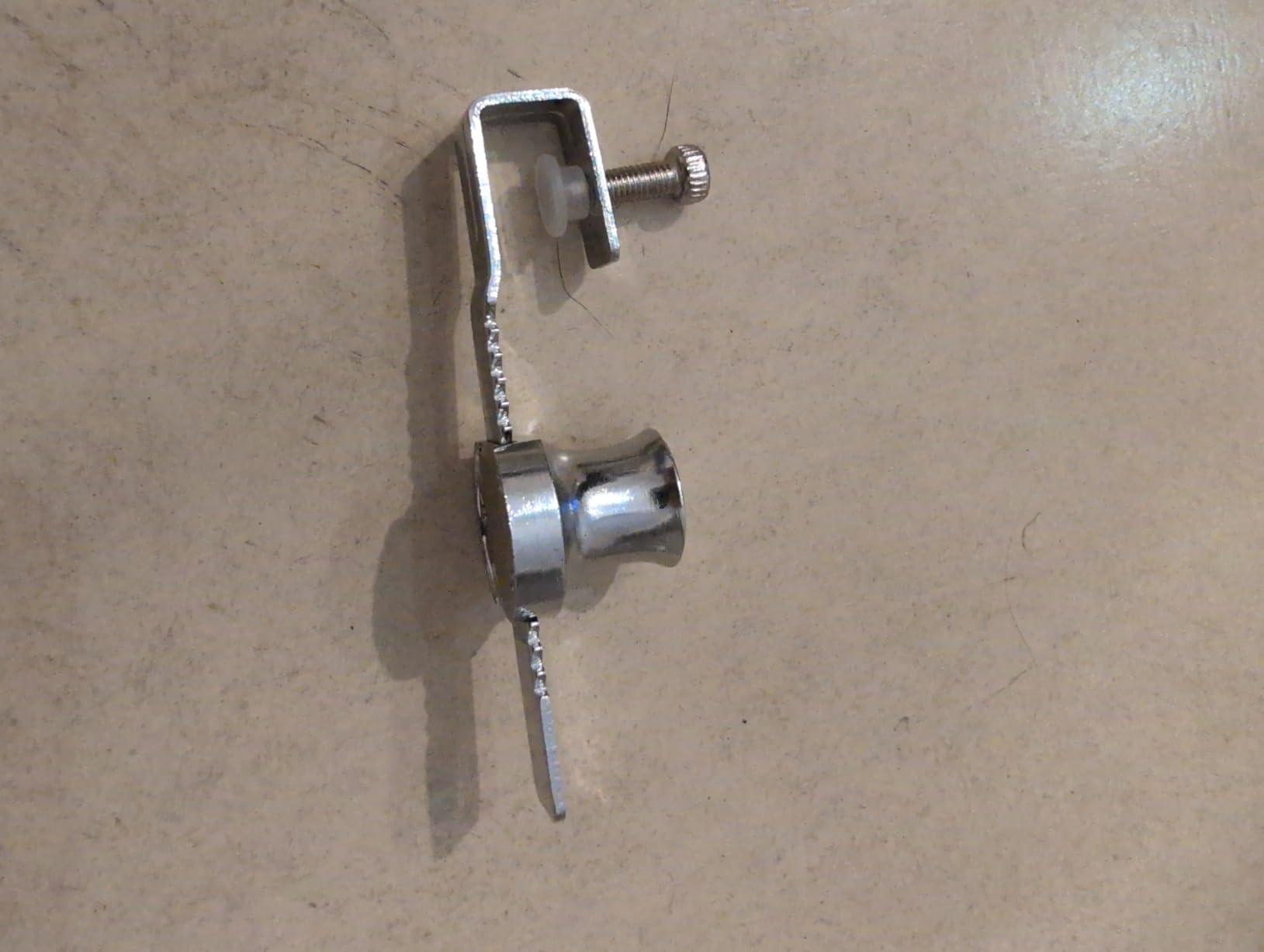
The doors have no lock, and a determined adult monitor leaning on a sliding panel is a real concern. Snake keepers solve it with adhesive refrigerator-style latches, and the same trick works here.
The plexiglass side panels and the lower front strip will scratch under heavy claw traffic over the years, which matters more for a monitor than for a snake. It is also not leakproof at the base until you run silicone along the seams, so budget an evening before any bioactive setup.
2. New Age Pet ECOFLEX 48 Inch Mojave Reptile Enclosure
New Age Pet® ECOFLEX® 48″ Mojave Reptile Enclosure, Large, Grey
48.03 x 24.02 x 22.8 in exterior
46.46 x 22.32 x 21.26 interior
50.71 pounds
Locking doors
Pros
- Largest review base in the group with a 10-year manufacturer warranty
- Locking sliding front doors as standard
- Assembles in 20-30 minutes with basic tools
- Vented side panels plus a full mesh top for UVB
- Works with Versa stands and stacker accessories
Cons
- Interior height falls under a true 24 inches
- Seams and cable knockouts arrive unsealed
- Mesh top bows under multiple double fixtures
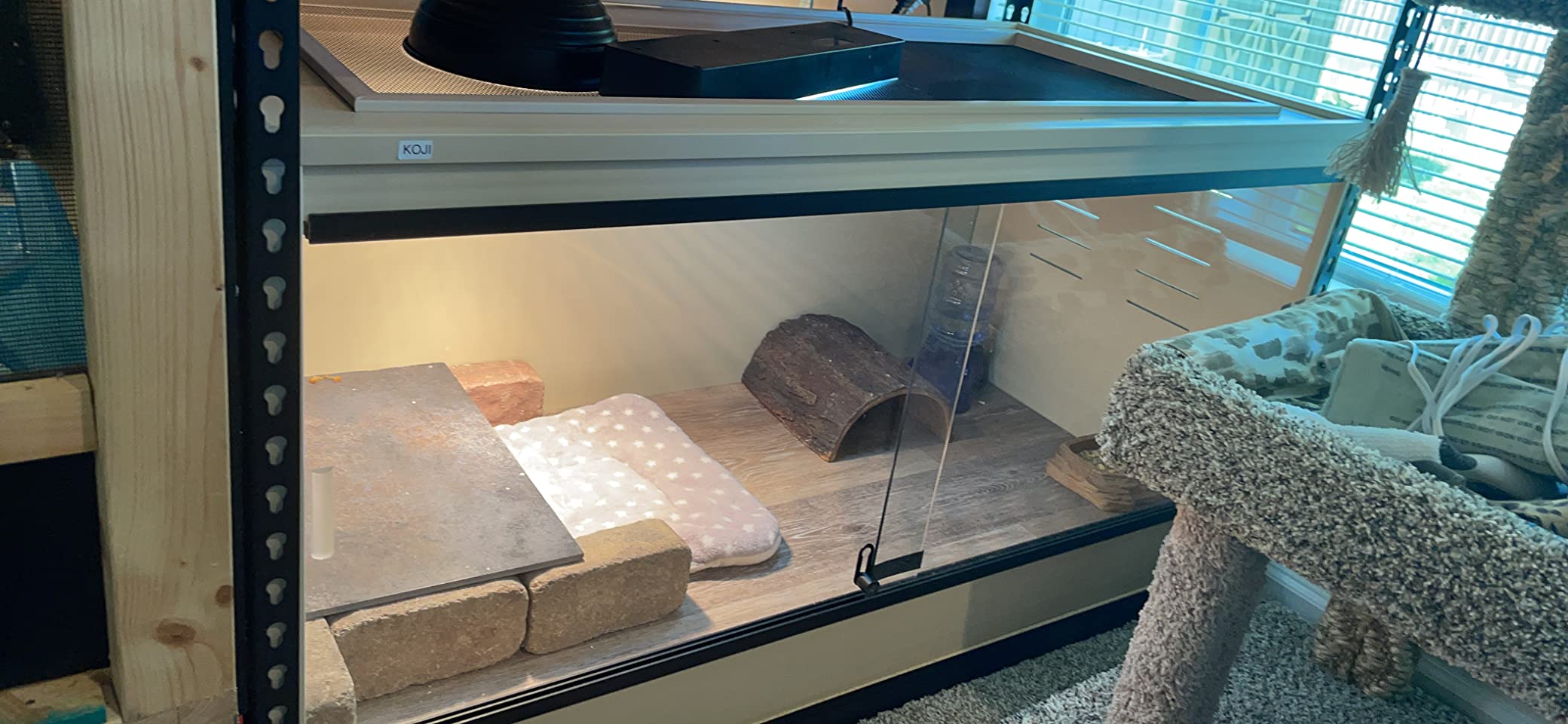
The Mojave has the deepest review history of anything in this roundup, and that volume is where its reputation comes from. Buyers describe it as the best value in the 4x2x2 class, which matches what we saw: nothing exotic, but every part does its job.
The ECOFLEX composite is moisture resistant rather than waterproof, and it wipes down easily after a messy feeding. Locking sliding front doors are included, which is unusual in this format and removes one of the fixes you would otherwise make on day one.
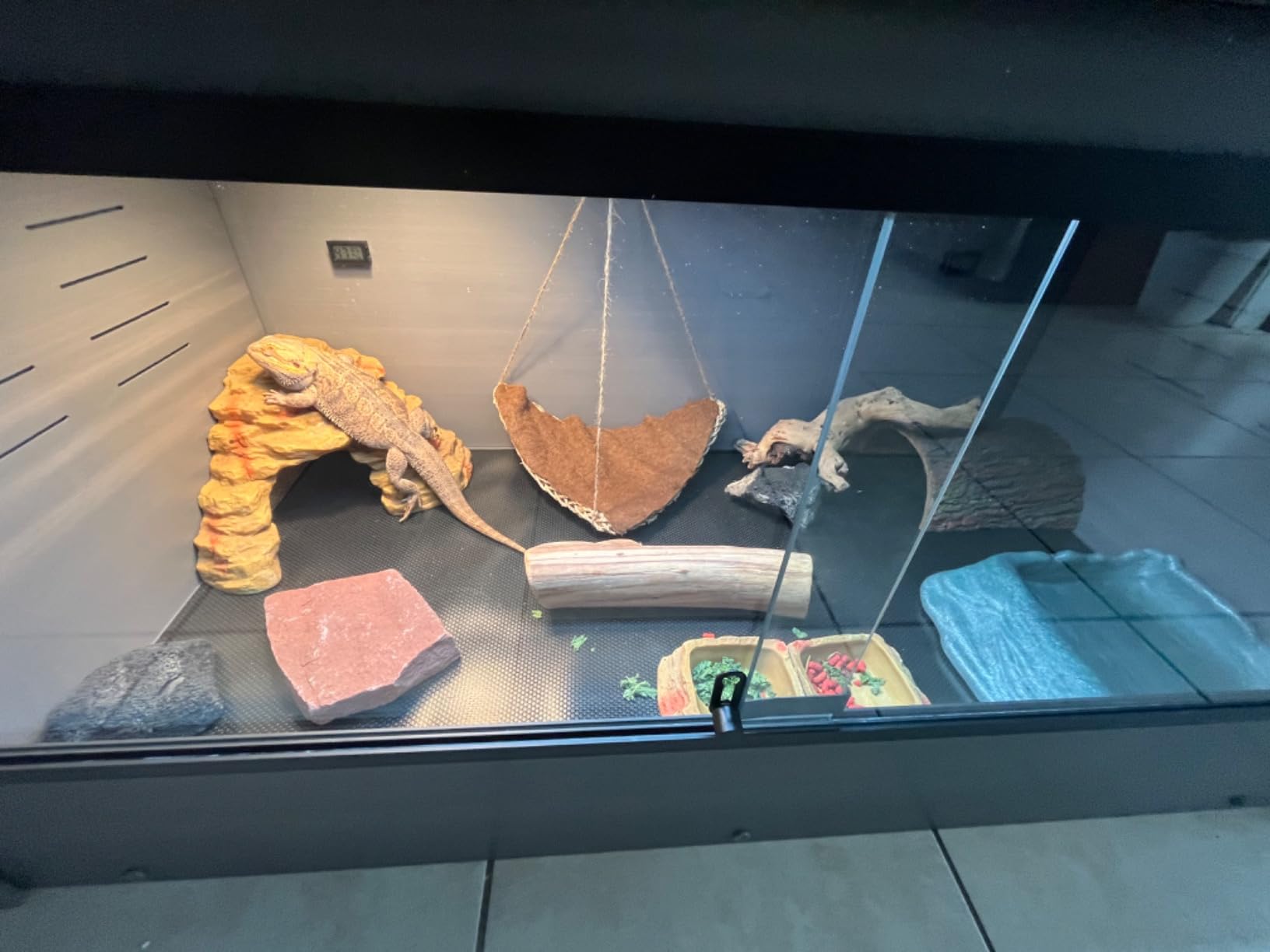
The interior measures 46.46 by 22.32 by 21.26 inches, so the floor area is slightly under a full 4x2x2 while the height is closer to 21 inches than 24. For a terrestrial monitor that trade is fine. For an animal that wants to rear up and survey, you are giving away three inches of headroom.
Assembly was the fastest in the group, around half an hour with basic tools, and the panels have cable knockouts in the rear for probe wires and timers. Light colorways reflect daylighting well, which keeps the basking end usable without cranking the fixture.
Buyers also note the 10-year manufacturer warranty, which is the longest coverage in this comparison and a genuine factor when you are thinking about a box that has to outlast a juvenile monitor.
Where this one earns its place
This is the pick for anyone who wants a lockable 4x2x2 without adding hardware. The doors, the screen top and the ventilation are all in the box, and the stand and stacker ecosystem means you can raise the enclosure to a comfortable working height or add a second tier later.
It suits a first adult savannah, a dwarf monitor, or a juvenile moving up from a 40 gallon tank.
What to fix before the animal arrives
Seams and cable knockouts are not sealed, so fine substrate and feeder insects find their way out until you run silicone. That is standard practice for this style of enclosure and takes an evening.
The reduced front viewing area and the shorter interior height are the two criticisms owners repeat most, and the mesh top bows if you hang two double light fixtures off it. Use one fixture per top or mount an overhead bar instead. Stacking more than two high also makes viewing the lower tier difficult.
3. Reptile Habitats 4x2x2 V3 PVC Enclosure
Reptile Habitats 4x2x2 (120 Gallon) Reptile Enclosure V3 PVC Panels, Glass Doors, Lightweight, Easy to Assemble, Heavy Duty Screen, Aluminum Frame
48 x 24 x 24 in
36 pounds empty
PVC panels, aluminum frame
Removable glass front doors
Pros
- Lightest 4x2x2 in the group
- so it moves with a dolly or two people
- PVC panels held in a rigid aluminum frame
- Front glass doors lift out completely for deep cleaning
- Side cable holes let UVB lamps mount inside
Cons
- No printed instructions
- only a QR code
- Bottom corners leak until silicone is applied
This is the enclosure I would own if weight were the deciding factor. At 36 pounds it is roughly a quarter of what the all-glass 120 gallon demands, and in practice that is the difference between moving a cage across a room and disassembling one.
The build is PVC panels inside an aluminum frame, which gives you two useful things at once: humidity tolerance for species that need it, and a structure that has held up over months of daily use according to owners. The frame also kept household cats away from a reptile in at least one long-term review, which is a nice side effect of metal rather than plastic.
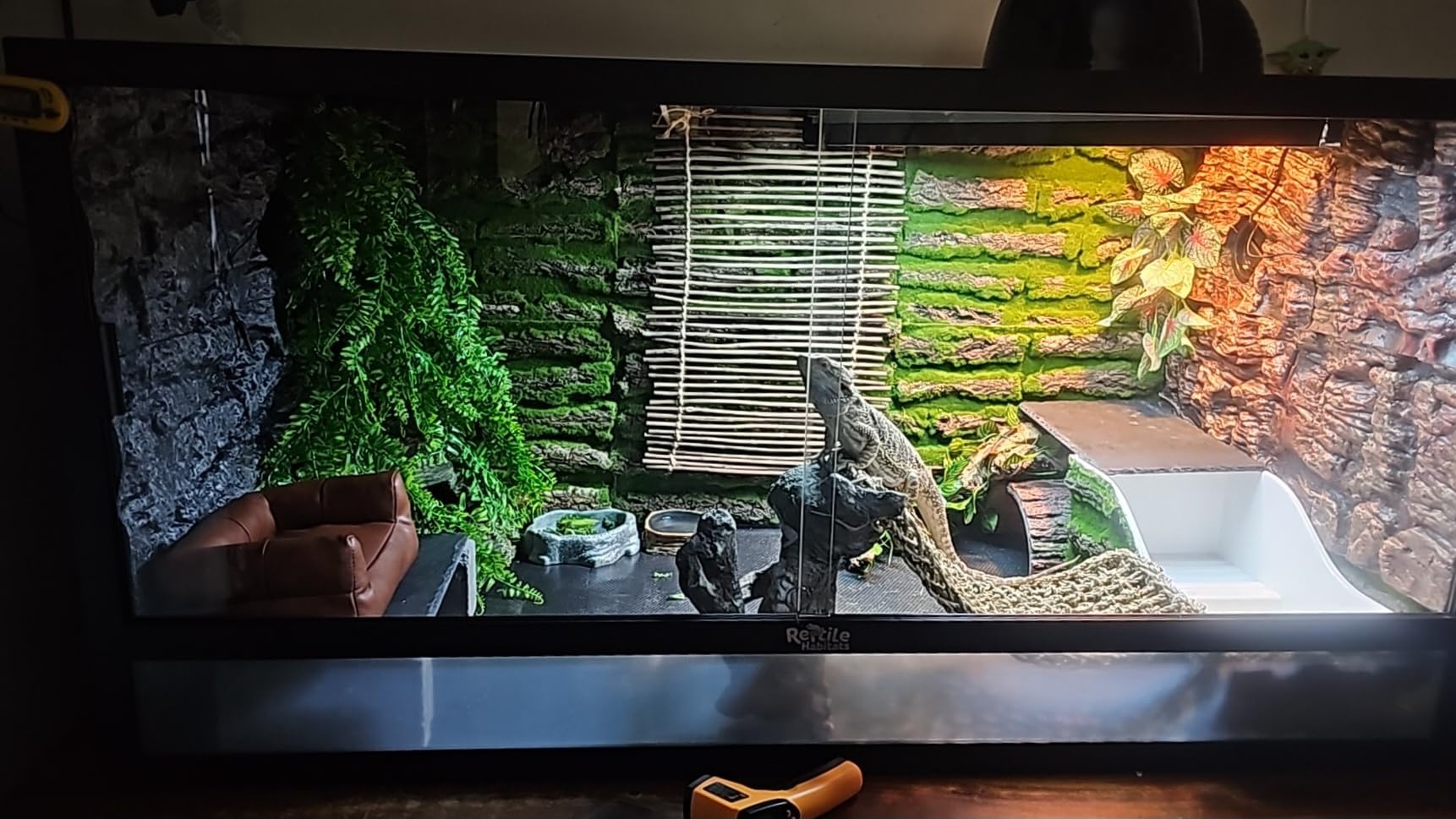
Removable glass front doors are the feature I value most here. Lifting them out completely gives you unrestricted access for deep cleaning, and because the glass is a separate part, you can carry one panel at a time instead of balancing a full door frame.
Cable holes on the side panels let you mount a UVB fixture inside the enclosure, which improves overhead coverage without a second bar across the top. The well-sealed bottom pan suits skink and gecko humidity needs, though corners still need silicone before you pour water into the substrate.
For a monitor, the 48 by 24 by 24 inch footprint is the entry point to the standard large tier and works for juveniles and dwarf species with room to spare.
Why the light weight matters
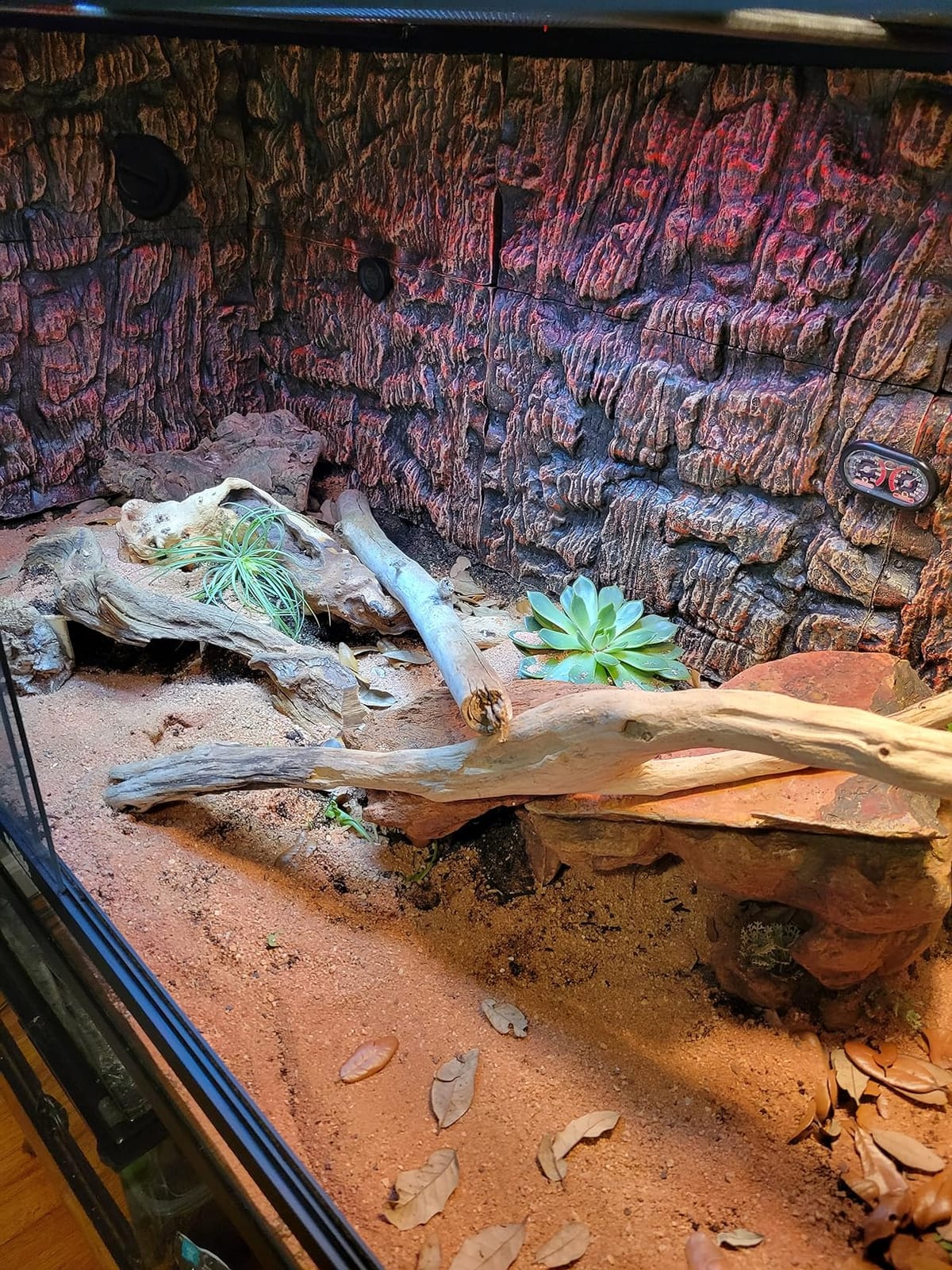
Owners single out how easy this enclosure is to move with a dolly or two people, and that is a genuine advantage if you ever need to clean out a bioactive system or reposition the basking zone. Moving a glass 4x2x2 is a two-person job with a real risk of a cracked panel.
The PVC also holds humidity without a humidifier cycling constantly, which matters for mixed collections.
What the reviews flag
No printed instructions in the box. Assembly depends on a QR code that links to a video, and if you are the kind of keeper who prefers paper, that is a friction point worth knowing about in advance.
The top screen is not hinged, so top-down access means lifting the screen out entirely. Replacement screws and hardware are also costly if a fastener breaks mid-assembly, so keep the spares from the box.
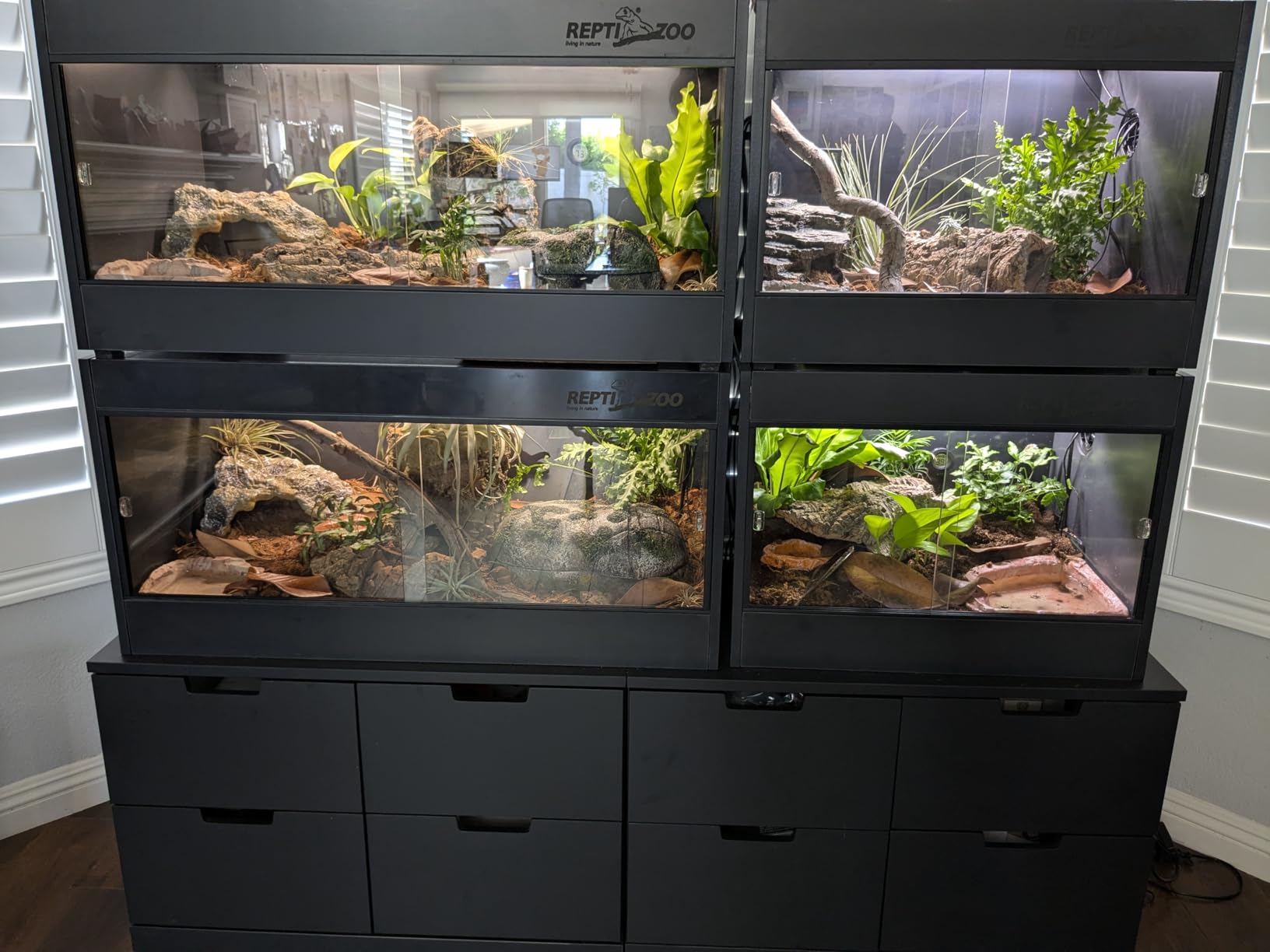
4. REPTI ZOO 120 Gallon All-Glass Terrarium
REPTIZOO Large Reptile Terrarium 120 Gallon, Tall & Wide Tempered Glass Reptile Tank 48″ x 24″ x 24″ with Sliding Door Top Screen Ventilation & Anti Escape Lid, Full View
48 x 24 x 24 in, all glass
91 pounds empty
Removable mesh top
Waterproof raised base
Pros
- All-glass on every side with no mesh blocking the view
- Removable screen top lifts off for decorating and cleaning
- Raised waterproof base plate clears room for substrate heaters
- Anti-escape buckle on the lid plus a door lock
- Foam-packed and drop-tested with free replacement parts
Cons
- Heaviest enclosure here at 91 pounds empty
- Tempered glass cannot be drilled for cable pass-throughs
- Glass loses heat faster than a PVC build
Nothing else in this group gives you 360 degree viewing. Every side panel is glass rather than mesh, so the animal is visible from any angle in a reptile room and a monitor climbing near a corner is still watchable.
The larger-woven removable screen top is a genuinely clever part. It lifts off entirely for decorating and deep cleaning, and the weave passes UVB and infrared light through without the mesh-shadowing you get from fine screen. For a monitor that spends time in the upper third, that matters.
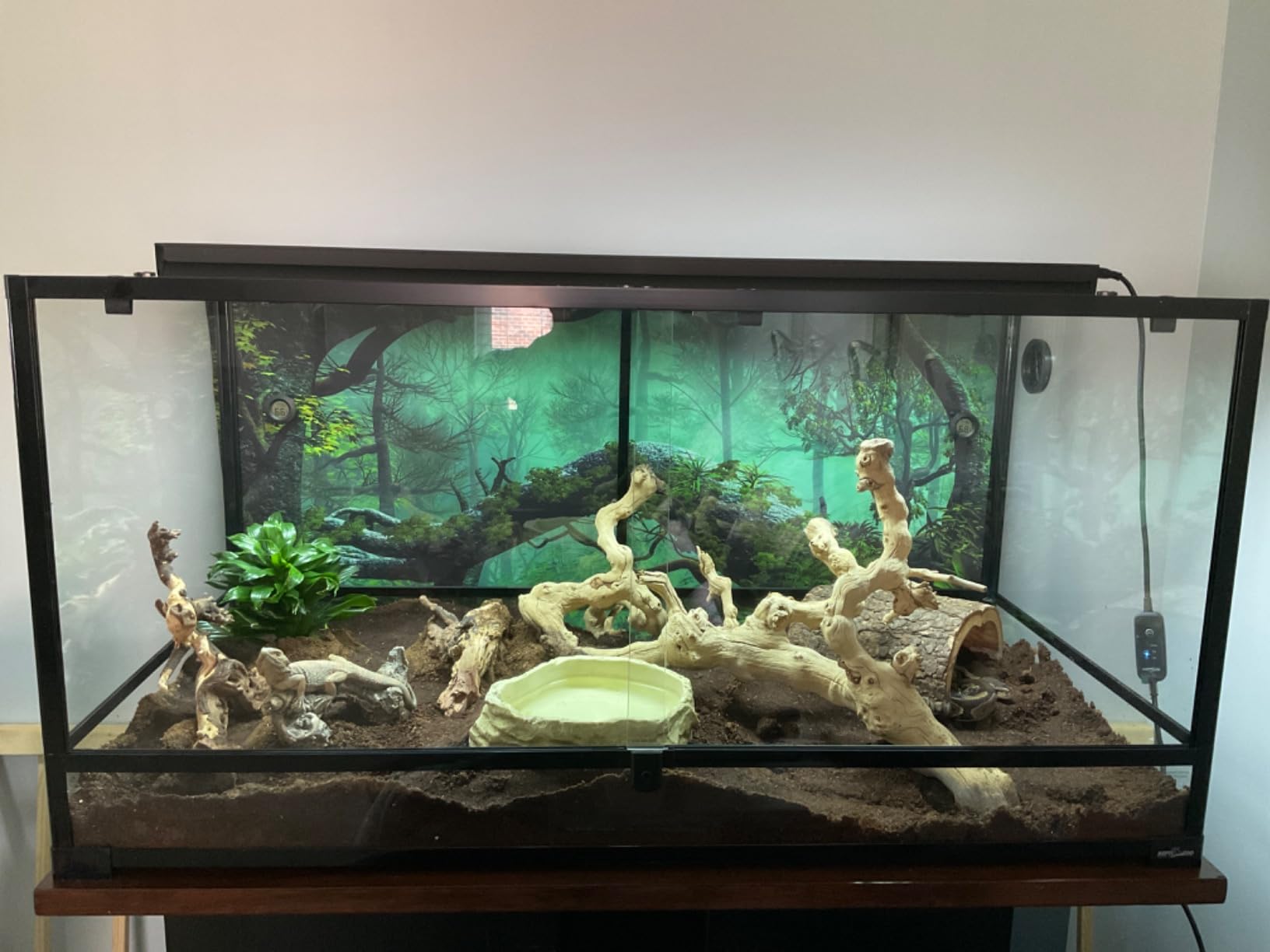
Security hardware is better specified than most glass tanks this size. The front sliding doors carry a security buckle on the lid, and reviewers consistently call out the anti-escape lid hardware as a reason the tank feels secure for a strong animal.
The raised waterproof bottom plate has clearance for under-tank heaters, which is a real convenience if you run a heat mat on one side to pull the cool end down a few degrees.
Packaging is another strength owners mention: foam-packed and drop-tested, with free replacement for damaged parts. For a glass enclosure of this size, that is worth more than most feature lists.
Where all-glass wins
Choose this for a display animal in a room where appearance matters, and for any monitor that basks high and needs to be seen. The full-view panels also make it easier to monitor body condition and foot health without opening the doors.
The waterproof raised base handles amphibian and bioactive-style setups better than the composite and plexiglass builds in this group.
The weight problem is real
At 91 pounds empty, this is the heaviest enclosure here by a wide margin. It needs a stand rated well above that number once you add substrate, water features and a large animal, and it is not a two-person job to reposition.
Tempered glass cannot be drilled, so cable management happens at the rear or through the top only. And glass loses heat faster than PVC, which means a monitor in this tank may need more fixture output to hold a basking spot than the same animal in a plastic enclosure.
5. REPTI ZOO 120 Gallon PVC Reptile Terrarium
REPTI ZOO 120 Gallon PVC Reptile Tank Terrarium, 48x24x24 Reptile Terrarium for Ball Python Snake Bearded Dragon Gecko, Large Reptile Glass Tank with Sliding Door & Screen Ventilation
48 x 24 x 24 in PVC panels
66.14 pounds
Removable glass door with lock
Detachable mesh screen top
Pros
- Thick PVC panels hold heat and humidity better than glass
- Sliding tempered glass door operates smoothly with a safety lock
- Detachable mesh top passes UVB and infrared
- Upper and lower ledges add seclusion
- Locking cable port keeps probe wiring tidy
Cons
- Light leaks through some panel gaps
- Floor panel can weep in a bioactive setup until sealed
- Assembly screws strip their holes
If your problem is heat loss, this is the enclosure to look at first. Owners describe the PVC panels as noticeably thicker and better insulated than most competing cages, and the practical result is that the interior holds basking heat with less fixture output than a glass tank of the same volume.
The 48 by 24 by 24 inch footprint sits squarely in the standard large tier, which makes it the right box for a young savannah or Angolan monitor that will need a taller footprint within a year.
Upper and lower ledges are a small design decision with real husbandry value. They give a juvenile somewhere to hide below while the basking zone stays open above, which is exactly the structure a monitor needs when it is learning to use a gradient.
The removable tempered glass sliding door has a safety lock and operates smoothly, and the locking cable access port means probe wires and timers can enter without leaving the doors open.
Reviewers also note that it arrived without a scratch and that the glass was well packaged, and that it is easy to wipe down while still feeling light for a 120 gallon footprint.
Best fit for cold rooms
This tank is the sensible choice for a basement reptile room, a northern garage setup, or any space where a glass enclosure would need the heat output cranked to keep a basking spot on target. The insulation does part of the thermostat’s job for it.
Moisture-resistant construction also suits higher humidity species, so it is a reasonable pairing for a young water monitor if you are careful about the seams.
Where the rating comes from
The lower overall rating traces to three specific issues rather than a bad build. Light leaks through some panel gaps, which partly defeats the point of a PVC enclosure if you are chasing dark-cycle light control.
The floor panel can weep in a bioactive setup until you seal it. Assembly screws can crack and strip their holes, and screw retainers fall out easily, so build it with a proper driver rather than a cheap screwdriver. Larger units need two people to assemble. Many owners also substitute their own door locks, which is worth doing from the start.
6. REPTI ZOO 67 Gallon Tall Glass Terrarium for Tree Monitors
REPTI ZOO 24″ x 18″ x 36″ Reptile Tall Glass Terrarium Rainforest Habitat Double Hinge Door with Screen Ventilation 67 Gallon Reptile Terrarium Easy Assembly
24 x 18 x 36 in vertical
60 pounds empty
Switchable side mesh and glass
Water-tight tested base
Pros
- 36 inches of vertical height suits climbing species
- Side mesh and glass panels swap as the animal changes
- Water-tight tested base with a raised bottom frame
- Locked doors keep feeder insects inside
- Flat-packed format is far easier to receive than a prebuilt tank
Cons
- 24-inch width gives a far smaller floor area than a 4x2x2
- Frame-to-glass seams can weep under heavy misting
- Doors only stay shut once the lock is engaged
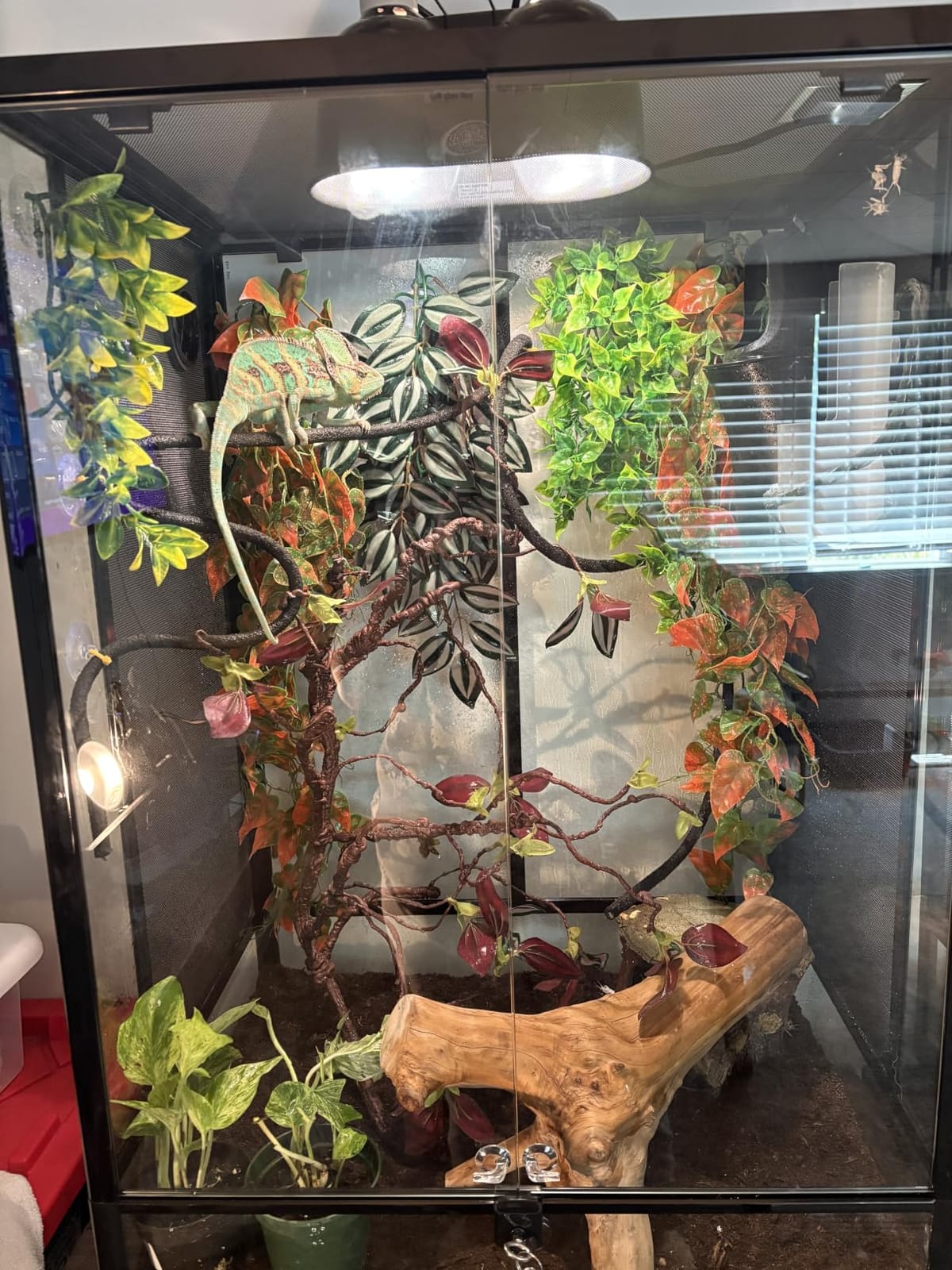
Tree monitors break every rule about footprint. What they need is height, and this 24 by 18 by 36 inch vertical format delivers 36 inches of climbing surface in a footprint that fits beside a desk. It is the only arboreal option in this roundup and the only sensible answer here for a juvenile green or Dumeril’s tree monitor.
The switchable side panels are the feature that makes it adaptable. You can run one side as glass and one as mesh, then swap them as the animal grows or as you change the humidity target, rather than buying a second enclosure.
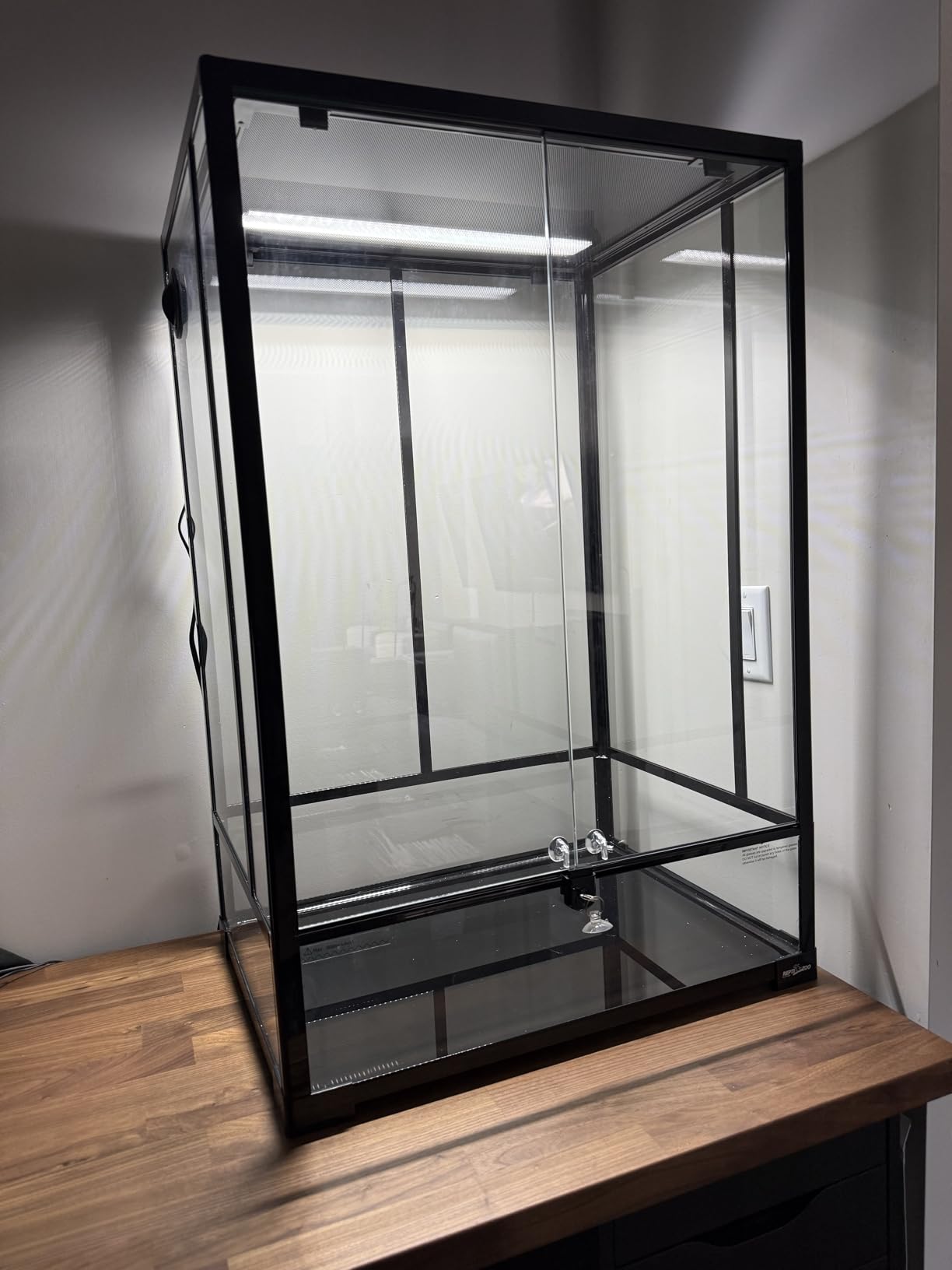
Front doors and the removable mesh top open independently, so you can mist or feed without taking the whole front down. The dense mesh top softens the light gradient, which suits canopy-dwelling species that would otherwise sit under a harsh lamp in a bare box.
The base is genuinely water-tight when tested, with a raised bottom frame that leaves clearance for substrate heaters. For a monitor that likes to soak, that is a real difference between a working setup and a permanent leak.
At 60 pounds empty and flat-packed, it is still a heavy object to move once assembled, but the box is far easier to receive than a prebuilt tank of the same finished size.
Who should buy the vertical format
Anyone keeping a tree monitor, any arboreal gecko alongside one, or a juvenile monitor that will need vertical clearance within a year. The switchable side panels let you tune ventilation and humidity as the species changes.
It also works as a grow-out enclosure for a young monitor you will later move into a 4x2x4 or larger.
Where it is the wrong shape
For a terrestrial monitor, this is a poor trade. A 24 inch width gives you a fraction of the floor area of a 4x2x2, and a savannah or Angolan needs to walk, not climb.
Seams between the glass and the frame can leak when the enclosure is heavily misted or used with running water, so avoid a waterfall feature. Doors only stay closed once the lock is engaged, and the wire grommet is permanently adhered to the mesh panel and cannot be moved. One reviewer measured the unit short of the stated 36 inch height, so check on arrival if height is your limiting dimension.
7. ToxiRium 44x20x20 Stackable PVC Terrarium
PVC Reptile Enclosure Space Efficient 44”x20”x20” Stackable ToxiRium Large Reptile Terrarium 76 Gallons for Bearded Dragon Lizard Snake, Breeding Vivarium with Sliding Doors Lock-2pcs with spacers
44 x 20 x 20 in, 76 gallons
39 pounds empty
Bottom bars rated to 105 lb
Two enclosures with spacers
Pros
- 44-inch length fits rooms where a 48-inch box will not
- Light 39 pound PVC build is easy to reposition
- Bottom support bars hold decoration up to 105 lb
- Supplied spacers let the pair stack neatly
- Two enclosures arrive in one kit
Cons
- 44 by 20 inches is a step below a true 4x2x2
- 20-inch height caps climbing structure
- Two enclosures per kit means a larger outlay at once
This is the room-solving enclosure. At 44 by 20 by 20 inches it is a step down from a true 4x2x2, but in a reptile room with a 46 inch wall or a radiator position that rules out a longer tank, the space efficiency is the entire point.
At 39 pounds it is one of the lightest large-format PVC builds available, and PVC cuts heat loss relative to glass, which lowers the fixture output needed to hold a basking spot in a cooler room.
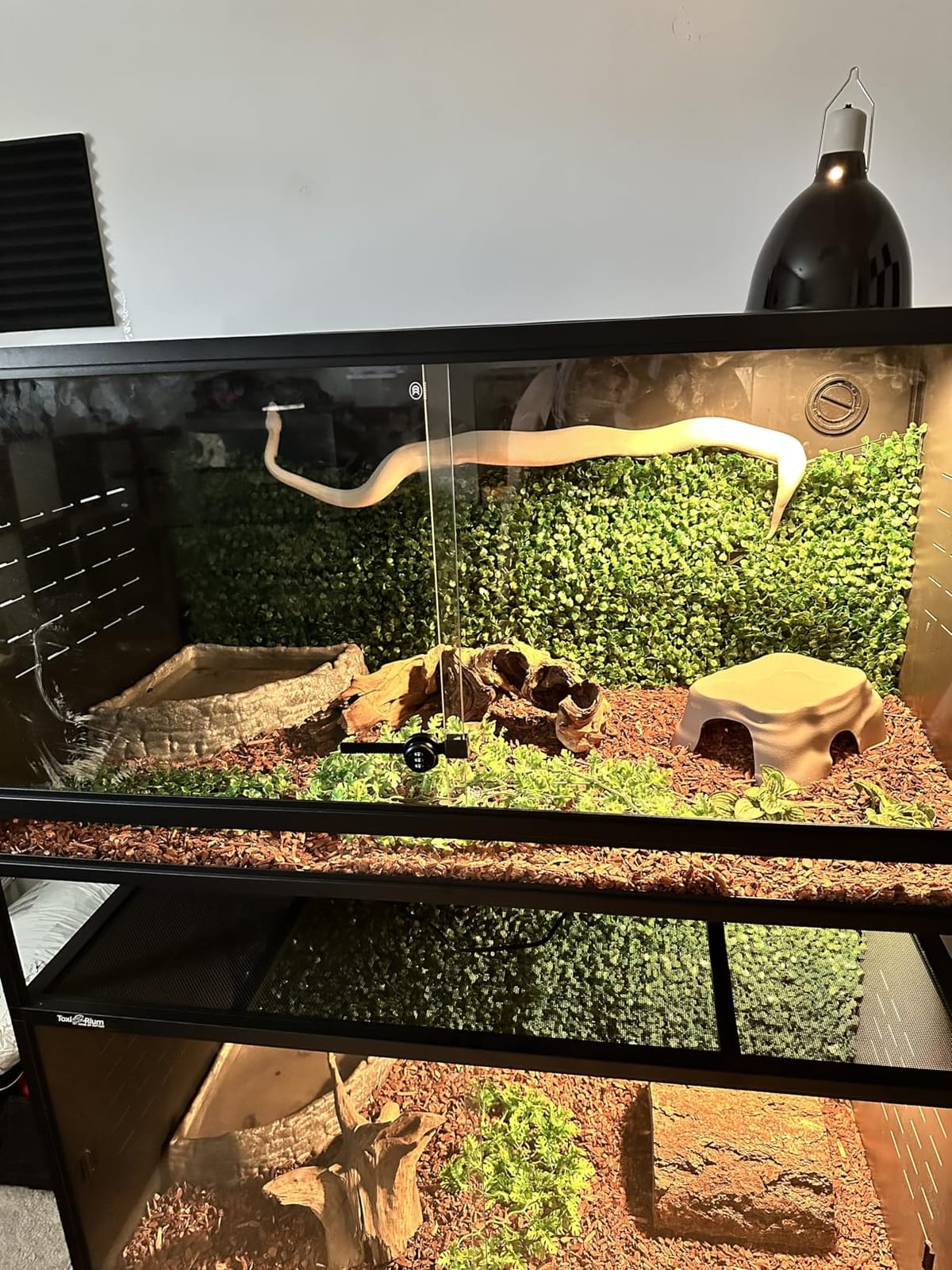
The support bars are the detail that impressed me most. Bars across the top screen hold lighting fixtures safely in place, and bars in the base are rated to carry decoration up to 105 pounds, which is meaningful for a monitor enclosure with a heavy rock or water feature planned into the build.
Spacers are included, and the kit contains two enclosures, so a breeding pair or a grow-out rack is a natural way to use it. Sliding glass doors with locks are standard, which is again more than most builds in this class provide.
Owners report that it is easy to clean and holds humidity well, and that the 44 inch length solves a layout problem a 48 inch tank simply cannot.
Where the space saving pays off
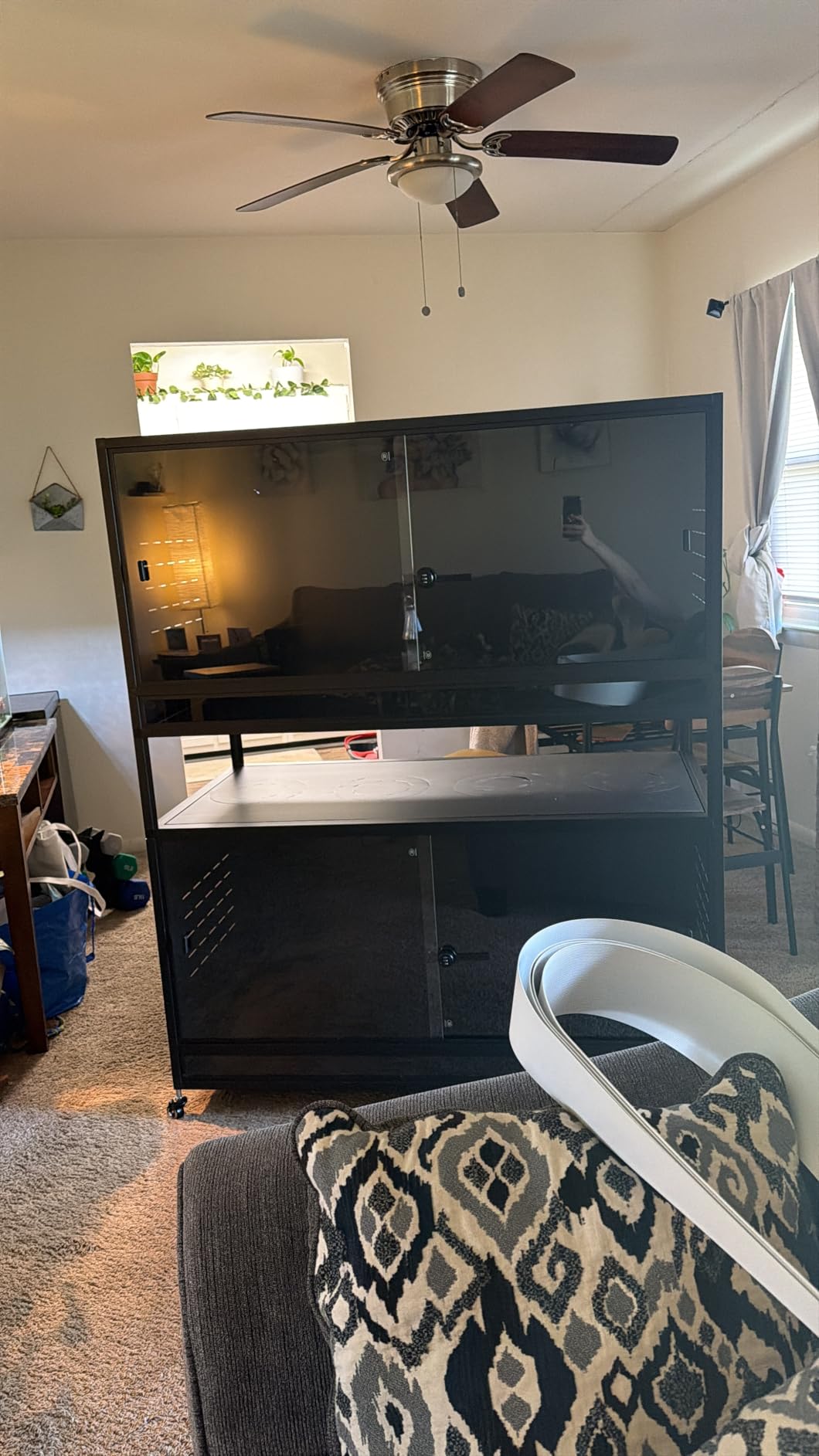
Small rooms, dorm setups, and any keeper running two animals on a stand sized for a single 48 inch footprint. The included spacers make the vertical stack clean, and the pair gives you quarantine separation without buying two different systems.
It suits desert species such as bearded dragons, leopard geckos and sand boas, and it works for a juvenile monitor that will later move up.
The compromises are structural
Shortest length and lowest height in the group, at 44 by 20 inches. For a terrestrial monitor the reduced width limits the length of a straight basking-to-cool-side run, which is the movement you most want to be possible.
The 20 inch height also caps climbing structure, so this is not a tree monitor box. And because the kit contains two enclosures with spacers, the total outlay is higher than buying a single tank of the same footprint, which may not suit a first keeper buying one animal.
8. Zilla QuickBuild 65 Gallon Glass Terrarium
Zilla QuickBuild Reptile 65 Gallon Glass Terrarium, 48″ x 18″ x 18″
48 x 18 x 18 in, 65 gallons
59.53 pounds empty
Aluminum frame, glass
Locking top screen
Pros
- Front door plus double-hinged locking top with a feeding port
- Aluminum frame is built to stack
- Flat-packed box is easier to handle than a prebuilt tank
- Grippy gloves included for moving glass
Cons
- Only 18 inches tall
- well under a 4x2x2
- Side screen panels vent humidity quickly
The Zilla QuickBuild is built around a strong aluminum frame and a design that intends to stack. If you are planning a two-tier reptile room, this is the one in the group whose frame was drawn for vertical loading.
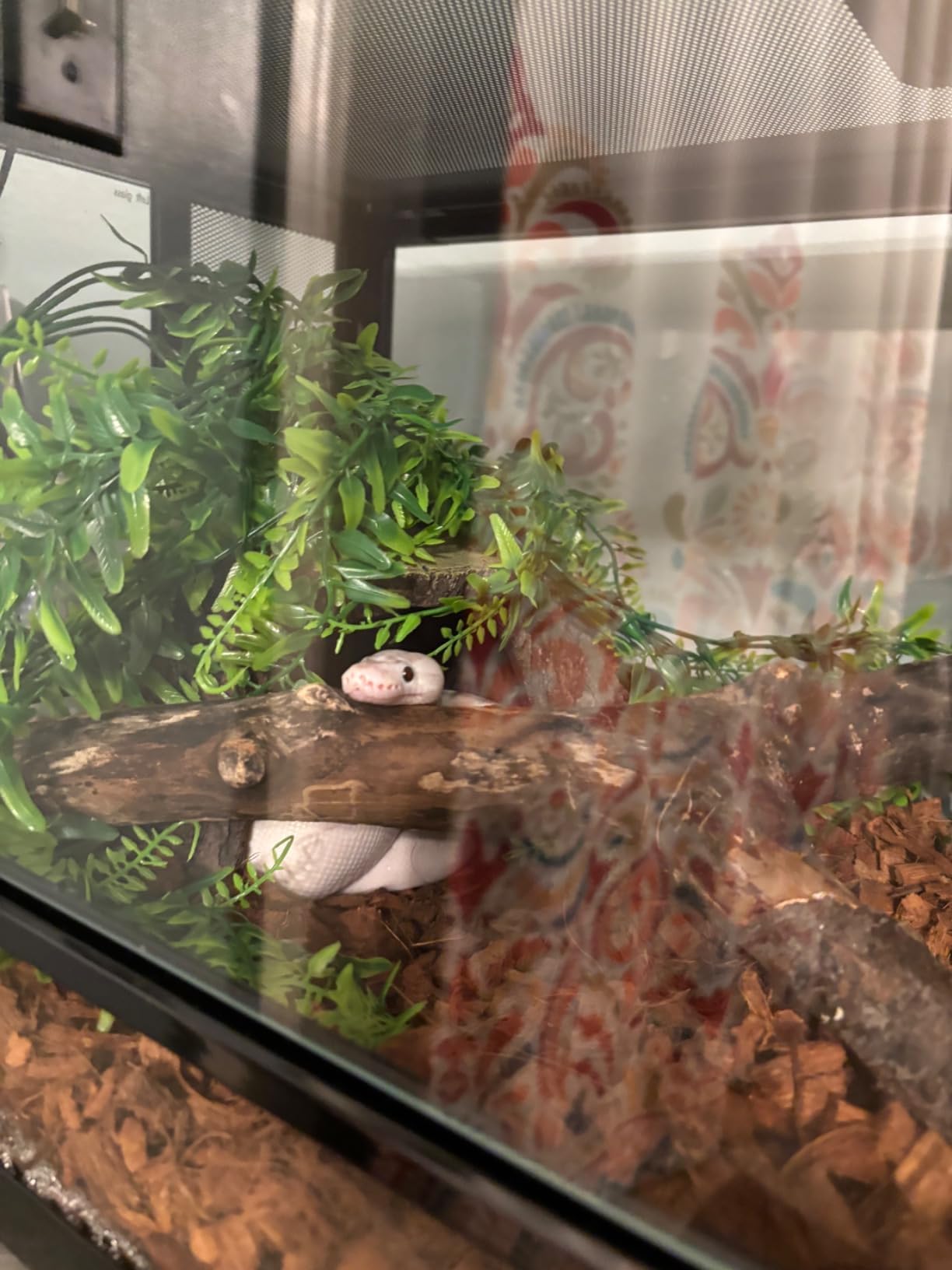
Access is the standout feature. You get a front-opening glass door plus a double-hinged locking top screen with a feeding port, and the screen, the port and the doors all lock. For feeding a monitor without opening the front, that top port is genuinely useful.
Assembly is quick, around 10 to 20 minutes with straightforward instructions, and the flat-packed format means the carton is far easier to receive than a prebuilt tank of the same finished size. Grippy gloves are included for handling glass without fingerprints, a small touch that shows the manufacturer expects glass.
Top openings accept temperature probe wires, and the QuickBuild format lets you choose between a solid water-holding base and a removable bedding tray depending on whether you are running a humid or a dry setup.
Owners rate the glass and frame quality highly for the money, and the 4.6 rating across 146 reviews reflects consistent build quality rather than one standout feature.
When a stack matters more than depth
A keeper with two monitors, a quarantine tier above a main enclosure, or a reptile room rack gets the most from this design. The aluminum frame and the lockable top keep the upper tier secure even when an animal is active below it.
The top feeding port also makes it practical to offer food without opening the doors, which reduces escape attempts and stress during feeding.
Where the 18 inch height hurts
At 48 by 18 by 18 inches this is not a 4x2x2, and it does not meet full 4x2x2 footprint recommendations. Floor area is adequate, but the vertical clearance is short for a monitor that rears up to survey.
Side screen panels make humidity harder to hold without covering them, and the frame support is plastic on a unit that is otherwise heavy glass and needs disassembly to move. Front doors on the smaller sizes do not always close flush, and the locks need a key, which is easy to lose.
9. unipaws 110 Gallon Reptile Tank
unipaws 110 Gallon Reptile Tank for Lizards, Bearded Dragon Enclosure Cage
47.24 x 23.62 x 22.83 in
57.32 pounds empty
Engineered wood-style panels
Lockable sliding glass doors
Pros
- Engineered wood construction retains heat better than glass
- Metal door lock and gap-seal bars deter escape
- Rotating cable ports accept up to 4 cables per side
- Black wood grain reads as furniture in a room
- Roomy enough for thick substrate and climbing structures
Cons
- Not intended for high-humidity or aquatic setups
- Interior height sits closer to 23 inches
- Stacker is sold separately
The unipaws is the budget route into a genuinely large format, and the reason is the material. The engineered wood-style panels hold heat far better than glass, which means a desert monitor reaches basking temperature with less fixture output and a smaller energy bill.
It comes with a real metal door lock plus silicone gap-seal bars, and reviewers say those bars genuinely deter escape including live feeder insects. That combination is more than most enclosures in this roundup ship with.
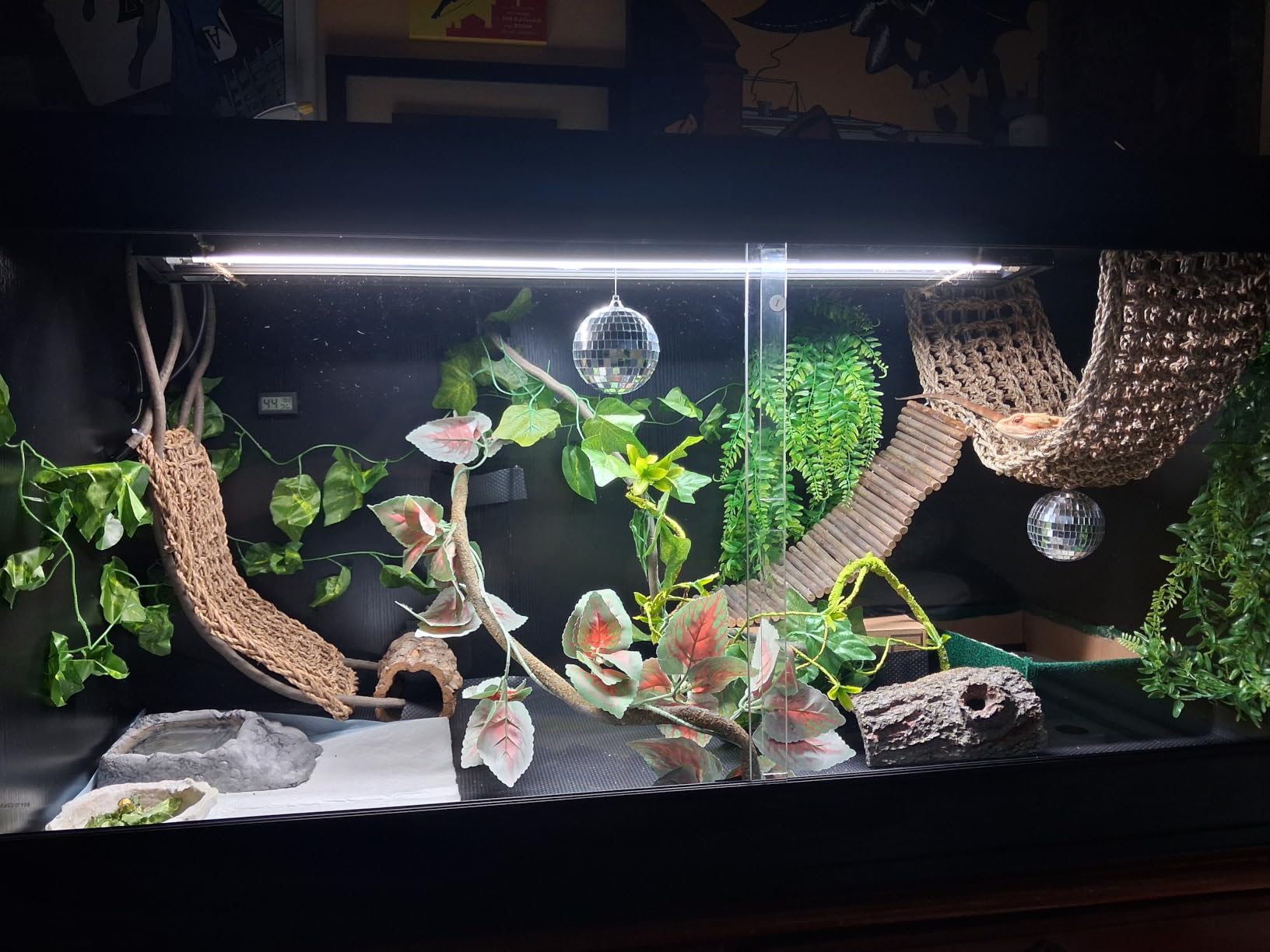
The rotating cable holes are a small piece of design thinking that you notice on day one. Each side panel takes up to four cables and rotates to face wherever your wiring needs to enter, so you can keep the enclosure closed instead of routing around a fixed grommet.
At 47.24 by 23.62 by 22.83 inches it is close to a 4x2x2 without quite reaching it, and the interior is roomy enough for a thick substrate layer and climbing structures, which is what a burrowing monitor actually uses the space for.
Buyers also like that the black wood grain finish reads as furniture rather than an aquarium, which matters in a living room.
Where heat retention pays off
For a desert species in a cool room, the wood-style construction is the headline benefit. It is also a low-cost way to get a lockable front and a near-4x2x2 footprint in one box, and the gap-seal bars remove the feeder-escape problem on day one.
It is a good fit for a young savannah or Angolan monitor in a home with a thermostat-controlled room.
The humidity limit is firm
The manufacturer does not recommend this build for high-humidity or aquatic setups, and a monitor that needs a soaking cycle should be on a PVC or glass tank instead. Interior height is closer to 23 inches than a full 24, so treat it as a shallow 4x2x2.
The stacker is sold separately, so stacking adds cost, and the wood-style construction has no waterproofing if you plan a deep drainage layer or a water feature.
10. PROLEE 82 Gallon Tempered Glass Tank
PROLEE 82 Gallon Bearded Dragon Tank, 48 x 20 x 20 Inch Tempered Glass Reptile Enclosure with Metal Mesh Top, Lockable Sliding Front Doors, Large Lizard and Snake Terrarium, Black
48 x 19.5 x 19.5 in, 82 gallons
45.4 pounds empty
Solid wood with polyester coating
360 degree tempered glass
Pros
- Tempered glass on all four sides resists scratching
- Locking double sliding doors as standard
- Water-repellent coating keeps the habitat dry and stable
- Metal mesh top is rigid enough for heat and UVB fixtures
- Removable acrylic base liner speeds spot cleaning
Cons
- 19.5 inch height is well below a true 4x2x2
- Wood-based build is terrestrial only
- Flat-pack instructions are basic
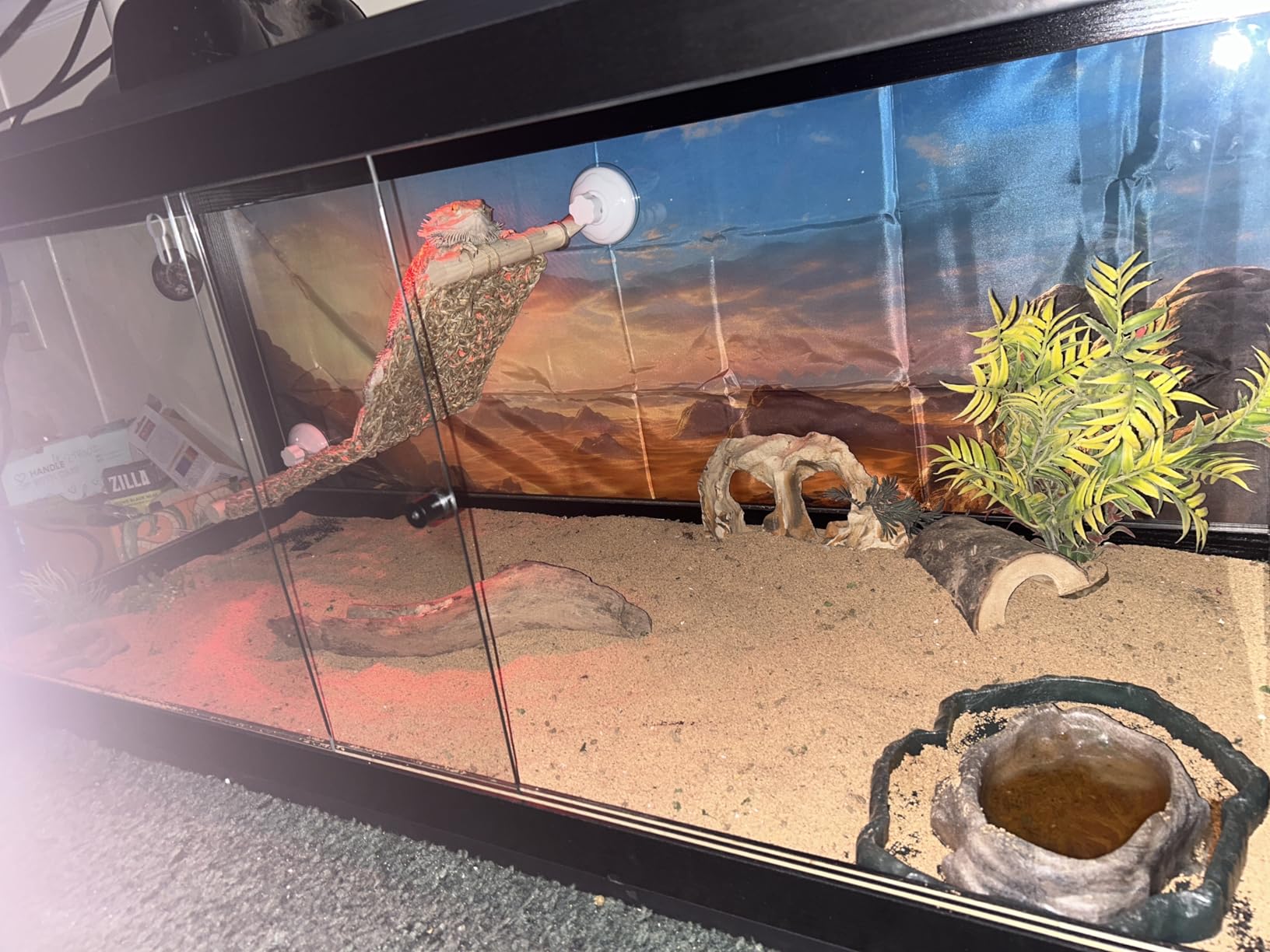
The PROLEE is the least expensive large-format enclosure here, and for a first serious monitor setup it covers the basics better than most. Tempered glass on all four sides is stronger and more scratch resistant than acrylic, which matters for an animal with claws.
Double sliding front doors carry a secure lock, and the metal mesh top is rigid enough to mount heat and UVB fixtures directly. A removable acrylic base liner in the bottom makes spot cleaning fast after a messy feed.
The solid wood core with a water-repellent coating keeps the habitat dry and stable, which suits terrestrial desert species. It is a legitimate choice for a juvenile monitor you plan to move up from in a year or two.
At 45.4 pounds it is manageable, and buyers generally accept the 48 by 19.5 by 19.5 inch footprint as a step up rather than a true 4x2x2.
The model is also available in 24, 30, 36 and 48 inch lengths and in black and oak, so you can size a room to the animal rather than the other way round.
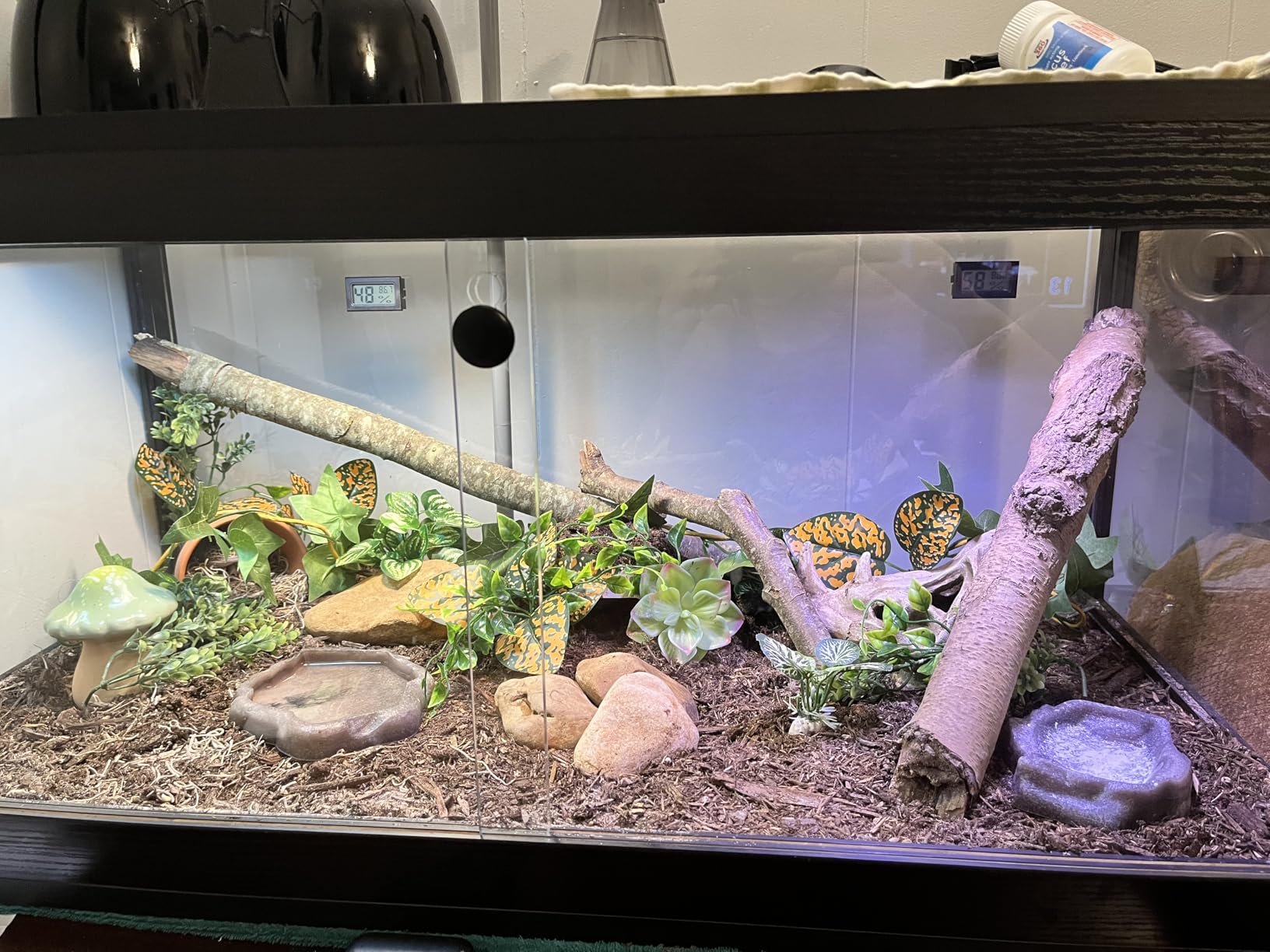
Who buys this one
A first-time large-enclosure keeper on a tight budget who wants tempered glass and locking doors rather than plexiglass and no hardware. It also works as a grow-out box for a juvenile monitor heading toward a bigger setup.
The locking doors mean you do not need to add latches before the animal arrives.
The limits are dimensional
At 19.5 inches tall it is the narrowest and shortest box in the roundup, and that is the fact to weigh first. It is a step up from a 40 gallon tank, not a step toward an adult savannah.
The wood-based build is not intended for aquatic setups or heavy misting, and the included instructions are basic for a flat-pack of this size. Treat it as the budget entry point rather than a destination.
PVC vs Glass vs HDPE vs Composite: Which Material Wins?
Material decides three things at once: how fast heat leaves, how much the enclosure weighs, and how it handles moisture. For monitors specifically, heat retention usually wins, because the basking spot is the hardest temperature to hold in a big enclosure.
PVC panels. PVC is the current default for large monitor enclosures for good reason. It insulates better than glass or wood, holds humidity without a constant humidifier, is far lighter than a glass tank of the same size, and does not crack if dropped. The cost is light leaking through panel gaps in some builds, corners that weep until sealed, and assembly hardware that can strip if you overtighten. PVC enclosures that hold up well are the ones with thicker panels and a proper aluminum or metal frame.
HDPE. High-density polyethylene is the tougher relative of PVC. It is more scratch resistant, which matters for an animal with claws, and it tolerates more abuse at the seams. It is also more expensive and more flexible, so panels can bow under a heavy basking fixture if the frame is light. You will see HDPE in the higher-end custom and cabinet-style builds rather than in flat-packed starter tanks.
Glass. Glass gives you full 360 degree viewing, excellent scratch resistance, and a waterproof base, and it will last a decade. It also weighs the most, it loses heat fastest, and it cannot be drilled. The tempered glass tanks in this group run from about 45 pounds empty to 91 pounds, and that difference dictates whether you need a properly rated stand and whether you can move the enclosure at all.
Composite and engineered wood. Moisture-resistant composite panels and engineered wood-style builds are the cheapest route to a large footprint, and they hold heat well enough for desert species. They are not waterproof, they are not appropriate for aquatic or very humid setups, and a deep substrate with drainage needs a sealed base.
On longevity, PVC and HDPE outlast everything when the seams stay sealed, and glass outlasts the lot if it is never dropped. The failure mode nobody mentions is a screen top bowing under two double fixtures, which is a mounting problem rather than a material problem.
Heating and Lighting in Big Enclosures
This is where most monitor keepers get it wrong, and it is the most repeated complaint in the threads ranking for this topic: the animal is too big for its basking spot. A single dome lamp in a 6x2x2 interior heats the wall it points at and leaves the far end cool, so the monitor spends its day moving instead of basking.
Mount fixtures above the enclosure rather than inside it where possible. A clamp lamp hanging inside a large PVC box puts concentrated heat on one panel and can soften thin plastic over time, while an overhead distance keeps the heat spread across the whole footprint.
Run more than one fixture on a 6x2x2 or larger, spaced along the length rather than clustered. A pair of lower-wattage fixtures at each end produces a more even gradient than one high-wattage lamp in the middle, and it lets you build a real gradient by running one zone hotter than the other.
Use a thermostat with the probe placed at the basking surface height, not tucked in a corner or lying on the floor. A probe on the floor reads several degrees below the basking spot, which is exactly how a monitor ends up chronically under-heated while the controller reports a normal temperature.
Keep clearance between any fixture and the top panel, and check whether the enclosure is glass or plastic on the top surface. Glass with a mesh insert takes a fixture differently than a solid top, and the light level across a long enclosure varies enough that a single lamp is rarely enough.
For UVB, mounting inside the enclosure on a side cable hole improves coverage for a terrestrial monitor, since a long box means the middle of the floor sits further from a fixture at one end.
Why Tree Monitors Need a Different Shape Entirely
A tree monitor in a 4x2x2 is a wasted enclosure. These animals climb, and the resource that matters is vertical clearance from the floor to the top, not the length of the floor.
The number quoted most often on keeper forums for a tree monitor is a cage no smaller than 6x4x8, and that is a floor rather than a target. If you are shopping in the large format, look for height in feet first and footprint second, and be realistic that most commercially available large enclosures are horizontal boxes.
The compromise most tree monitor keepers end up with is a vertical terrarium in the 24 by 18 by 36 inch class, which is the only arboreal option in this roundup. Thirty-six inches of climbing surface in a desk footprint is a real upgrade over a horizontal box, and the switchable side panels let you increase ventilation as the animal grows.
Two practical notes. Substrate depth still matters for a tree monitor, so a drain layer and a deep soil mix in a vertical box will slump and need topping up more often than in a horizontal one. And the water-tight base on a vertical format is worth paying for, because soaking behaviour is common in the group.
Custom-Built and DIY Enclosures: When Building Beats Buying
Custom builds dominate the forum conversation for large monitors, and they are genuinely viable. A documented 8x4x4 build from 18mm OSB with ceramic natural-stone tile up the lower 18 inches and a substrate fill is a realistic project for someone with basic woodworking skills.
Build it when your animal is bigger than any commercial enclosure at a price you can justify, when you need a non-standard footprint for a room, or when you want a fully sealed base with a drainage layer and a false bottom designed in from the start. Tile on the lower section is a common approach because it gives a durable surface that survives a large animal and heavy watering.
Buy it when you want the enclosure in a weekend, when you value a warranty, or when you are not confident with a build that weighs several hundred pounds assembled. Prebuilt boxes are widely treated as a stopgap that gets outgrown, which is a fair criticism but ignores the time cost of a custom project.
If you do build, the practical order is: plan the exterior dimensions and work out the interior from panel thickness, seal every seam with aquarium-safe silicone, leave a service gap for wiring, and test the door hardware against an adult-sized animal before the animal moves in. A door that a juvenile can open is a door a 4 foot monitor can eventually open.
Custom does not automatically mean better. A prebuilt PVC box from a manufacturer that publishes its panel thickness and warranty will usually outperform a rushed melamine build, and it will cost far less in mistakes.
How to Choose the Best Large Reptile Enclosure
Work through these eight questions in order and most of the wrong purchases disappear before checkout.
1. What is the adult size of the species, including tail? Compare that to the interior length, not the exterior. An adult that reaches three feet needs an interior where it can stretch out in a line, and monitors can live 10 to 20 years, so a juvenile box is a box you replace.
2. Is the species terrestrial or arboreal? Terrestrial monitors need floor space and low profile. Tree monitors need height in feet. Buying a horizontal 4x2x2 for a climbing species is the most common and most expensive mistake in this hobby.
3. What is the interior measurement, not the label? A labeled 4x2x2 can give you 46 by 22 by 21 inches. Ask for the interior figure, and treat height as a bonus for terrestrial species rather than the number you shop on.
4. Can the enclosure hold a basking spot with a cool side? A longer enclosure lets you run two zones. Consider insulation, which means PVC or composite over glass, and check how many fixtures the top is designed to carry.
5. How do the doors and locks behave under pressure? An adult monitor pushes on doors. Look for a real lock, sliding rather than hinged doors where possible, and gap-seal bars if you plan to use live feeder insects.
6. What is the empty weight, and what will it weigh full? Substrate, water features and a large animal add up fast. A glass tank at 91 pounds empty needs a stand rated well beyond that, and a floor that can carry it.
7. Can you get it into the building? A 48 inch box will not fit through every doorway or up every staircase. Measure the tightest point on the delivery path before you commit, and prefer a flat-packed enclosure if the route is awkward.
8. What is the warranty length, and what are reviewers actually complaining about? Above a few hundred dollars, warranty length and hardware quality are the deciding factors. Read the one and two star reviews, not the five star ones, because that is where door and assembly problems surface.
Two mistakes worth naming outright. Buying too shallow to save money, then re-buying a year later when the animal outgrows it, is the expensive option. And buying a screen-topped glass tank for a cold basement without planning the heating hardware is the second one.
Inspecting a Large Enclosure on Arrival
A six-foot or eight-foot enclosure arrives as a large, heavy, fragile object and the first hour matters. Before the animal goes anywhere near it, spend ten minutes on this check.
Check the corners and vertical edges first, because that is where a dropped or bumped panel shows. Look for delamination, where a PVC or composite skin lifts at a corner, and press gently along each seam.
Run your hand along every glass panel edge looking for chips that do not catch the eye but will crack under a later bump. Tempered glass can look intact with a damaged edge and then shatter days later.
Confirm the dimensions with a tape measure, focusing on the interior length and height. If the box falls short of its stated height, that is a return conversation rather than a return shipment.
Test every door, lock and hinge repeatedly. Push hard on the sliding panels at the handle end the way a large animal would, and check that the top screen latches hold under upward force from inside.
Seal and inspect the base if you plan a bioactive build, then leave the enclosure running empty at your intended heat and humidity for a week. That week will show you panel gaps, light leaks, and where the basking spot actually lands.
Frequently Asked Questions
How big should a monitor lizard enclosure be?
A 4x2x2 foot enclosure is a genuine adult home for a dwarf monitor such as Varanus acanthurus, the ackie. A young savannah or Angolan monitor needs at least 4x2x4 and an adult wants 6x2x2, as do adult tegus and Bengal monitors. Measure the interior, not the label, and give the animal at least its own body length in a straight line.
Can a monitor lizard live in a 4x2x2?
Yes for dwarf species and juveniles. A 4x2x2 gives about 8 square feet of floor space, which suits an ackie monitor at roughly 2 feet long and a juvenile savannah. An adult savannah, Angolan, Bengal or Nile monitor needs a longer footprint, usually 6x2x2, and tree monitors need vertical height instead.
Are PVC reptile enclosures better than glass?
For large monitor enclosures, usually yes. PVC insulates better, holds humidity without a constant humidifier, weighs far less than a glass tank of the same size and will not shatter if dropped. Glass wins on 360 degree viewing and scratch resistance. The trade is light leaking through panel gaps in some PVC builds and extra silicone sealing before a bioactive setup.
How tall should a tree monitor enclosure be?
Height in feet is the number that matters for tree monitors, and keepers commonly treat a 6x4x8 vertical enclosure as a practical floor. Most commercially available large-format enclosures are horizontal, so the realistic stepping stone is a tall terrarium in the 24 x 18 x 36 inch class, which gives 36 inches of climbing surface in a small footprint.
Who makes the best large reptile enclosures?
For prebuilt large enclosures, the brands that surface most often are the Zen Habitat and Reptile Habitats style PVC builders, the REPTI ZOO glass and PVC lines, New Age Pet for composite, Zilla for stackable glass and custom cabinet work, and Toad Ranch for monitor-specific builds. Judge each one on interior dimensions, panel thickness and warranty rather than brand alone.
How long do PVC reptile enclosures last?
A well-built PVC enclosure with sealed seams outlasts most alternatives, because the panels will not crack and the frame does not corrode. The realistic limits are seam failure, light leaking through panel gaps, and hardware that strips during assembly. A manufacturer warranty of five years or more is a useful signal of expected panel and frame life.
How do you heat a very large reptile enclosure?
Use more than one fixture, spaced along the length rather than clustered, with an overhead mount rather than a lamp inside the enclosure. Run one zone hotter than the other to build a real gradient, and place the thermostat probe at basking surface height, not on the floor where it will read several degrees too cool.
Conclusion: The Right Box for Your Monitor
The best large reptile enclosures for monitors are not the biggest ones, they are the ones whose interior footprint matches the adult size of the animal and whose material holds a basking spot where you need it. Start with the species, work outward to the interior dimensions, and choose insulation over viewing when the room runs cool.
For most keepers the answer is a lockable 4x2x2 with PVC or composite panels and a metal frame. For adult savannah, Angolan, Bengal and tegu housing, plan on moving up to 6x2x2. For a tree monitor, buy height instead of length, and for anything larger than a commercial box, a custom build becomes the sensible route.
Whatever you pick, run the enclosure empty for a week at your intended temperatures before the monitor goes in, and check the basking spot with a probe at animal height rather than trusting the lamp’s dial.