
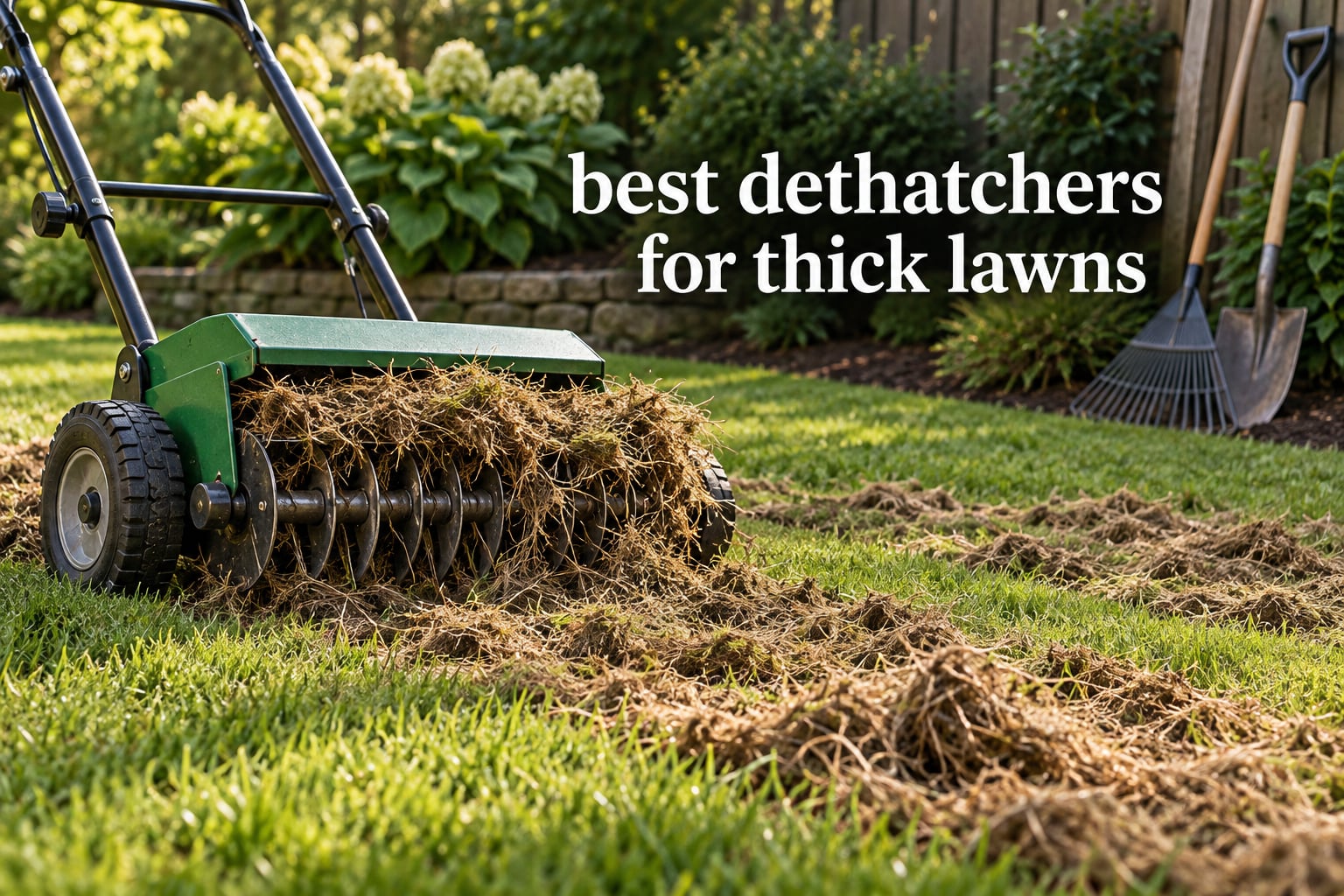
If your lawn has a real thatch problem, the machine that solves it depends almost entirely on how big the lawn is and how deep the layer runs. A 13-amp corded walk-behind handles a quarter acre of moderate thatch in an afternoon. A 48-inch tow-behind clears a half acre or more of a genuinely heavy mat. A manual thatching rake handles a small lawn or a stubborn patch, with no cord to trip over and no motor to stop you halfway across the yard.
That is the short version of the best dethatchers for thick lawns. The longer version starts with a measurement, because most of the disappointment in this category comes from machines asked to do a job they were never built for.
Table of Contents
Top 3 Dethatcher Picks for Thick Lawns (October 2026)

Sun Joe AJ805E 15-Inch Corded
- 13-amp motor
- 5 depth positions
- 13.2 gal removable bag
- 2-in-1 reels

WEN DT1516 16-Inch 2-in-1
- 15-amp at 3300 RPM
- 24 steel tines
- 20-blade scarifier head
- 5 depth positions
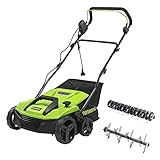
Greenworks DHA103 14-Inch
- 13 amp at 3200 RPM
- 14 inch path
- 3 depth positions
- push-button start
The 10 Best Dethatchers for Thick Lawns at a Glance in 2026
| Product | Specs | Action |
|---|---|---|
| Sun Joe AJ805E 15-Inch Corded Dethatcher |
|
Check Latest Price |
| WEN DT1516 16-Inch 2-in-1 Dethatcher |
|
Check Latest Price |
| Greenworks DHA103 14-Inch Corded Dethatcher |
|
Check Latest Price |
 TIECTOWN LM01 16-Inch Electric Dethatcher TIECTOWN LM01 16-Inch Electric Dethatcher |
|
Check Latest Price |
 Agri-Fab 48-Inch Tow-Behind Dethatcher Agri-Fab 48-Inch Tow-Behind Dethatcher |
|
Check Latest Price |
 MZK G-AC2401 15-Inch Electric Dethatcher MZK G-AC2401 15-Inch Electric Dethatcher |
|
Check Latest Price |
 BILT HARD TIA-1002 16-Inch Dethatcher BILT HARD TIA-1002 16-Inch Dethatcher |
|
Check Latest Price |
 Suchtale 48-Inch Tow-Behind Dethatcher Suchtale 48-Inch Tow-Behind Dethatcher |
|
Check Latest Price |
 Walensee 19-Tine Manual Thatch Rake Walensee 19-Tine Manual Thatch Rake |
|
Check Latest Price |
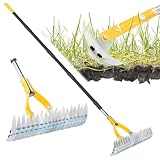 BlumeTrec 74-Inch Thatch Rake BlumeTrec 74-Inch Thatch Rake |
|
Check Latest Price |
Measure Your Thatch Layer Before You Buy Anything
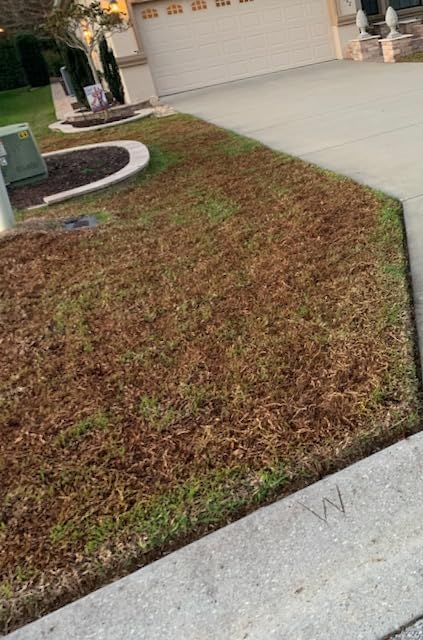
Extension guidance is consistent on this point. A thatch layer under roughly half an inch is normal, and in moderation it insulates the crown of your grass from temperature swings. Once the layer passes half an inch and grows past an inch, it stops protecting anything and starts blocking water, air and nutrients from reaching the roots. That is the threshold where a machine is worth owning.
Measuring takes a shovel and about two minutes. Dig a wedge about the size of your foot out of the lawn, at a spot away from irrigation heads and buried lines. Look at the cut face and measure the dark, spongy band between the soil and the green blades above it. A ruler or a coin held against the cross-section gives you a fair read. Do this once a year, in the same spot, so you are comparing like with like.
If the layer measures under half an inch, do not buy anything. Core aeration and a generous topdressing will address the cause of the buildup, which is usually over-fertilization, compaction or too much irrigation, and they are far less damaging than pulling the layer out. Measure first, then decide.
Dethatcher vs. Scarifier vs. Vertical Mower: What Each Machine Actually Does
The terminology in this category is genuinely confusing, and retail uses the words interchangeably. It is worth thirty seconds to sort out, because the gap between the three machine types explains most of the low ratings buyers leave.
Dethatcher is the word extension services use for a machine with a revolving reel of straight, fixed steel blades that cut down through the thatch and roughly half an inch into the soil itself. That is a vertical mower, and it is a rental-counter machine or a piece of professional equipment, not something you will find on a retail shelf.
Scarifier is what nearly every machine sold to homeowners actually is. A spring-tine reel or a bladed reel combs and rakes the thatch upward and out, breaking the mat apart as it turns. This is exactly right for an annual cleanup of a normal lawn.
Power rake is the loose retail word for the same class of consumer machine, and it is the term most shoppers search for even though the box says dethatcher and scarifier.
So do lawn dethatchers actually work? For a routine spring cleanup on a lawn with a measured layer of around half an inch to an inch, yes, and they do it well. For a genuinely deep mat on a large property, a consumer spring-tine machine will take many passes, multiple empties, and a good deal of patience, and a rental vertical mower will take considerably less of your Saturday. The machines are not defective. They are being asked for a job extension reserves for a rental.
Rent or Buy: When Thick Thatch Means a Rental Vertical Mower
Buy a machine when the thatch measures just over half an inch, when your lawn is under a quarter acre, and when you expect to use it once or twice a year. A walk-behind earns its place through convenience rather than raw output, because you no longer have to schedule a rental or wait for a delivery window.
Rent when the layer is past an inch on a lawn of half an acre or more, or when the soil is full of stones. A vertical mower cuts into the ground, and a rocky yard is a bad match for fixed blades. That question comes up constantly on r/lawncare, where New England homeowners describe exactly that situation and still end up choosing a spring-tine machine because it deflects around stones rather than striking them.
Clay soil is a gentler warning. A machine that cuts too deep in clay will smear the surface and compact it further, so rent or use the shallowest setting available, and follow up with aeration rather than another aggressive pass.
1. Sun Joe AJ805E 15-Inch Corded Dethatcher – Our Pick for Most Thick Lawns
Sun Joe 15-Inch Lawn Dethatcher with Scarifier Blade Reel, AJ805E
13-amp motor
15 inch path
5 depth positions
13.2 gal bag
27.1 lbs
Pros
- Most reviewed unit in this roundup
- Removable 13.2 gallon collection bag
- Five depth positions
- 2-in-1 dethatcher and scarifier reels
Cons
- Corded setup adds friction to every pass
- Heavier than a manual thatching rake
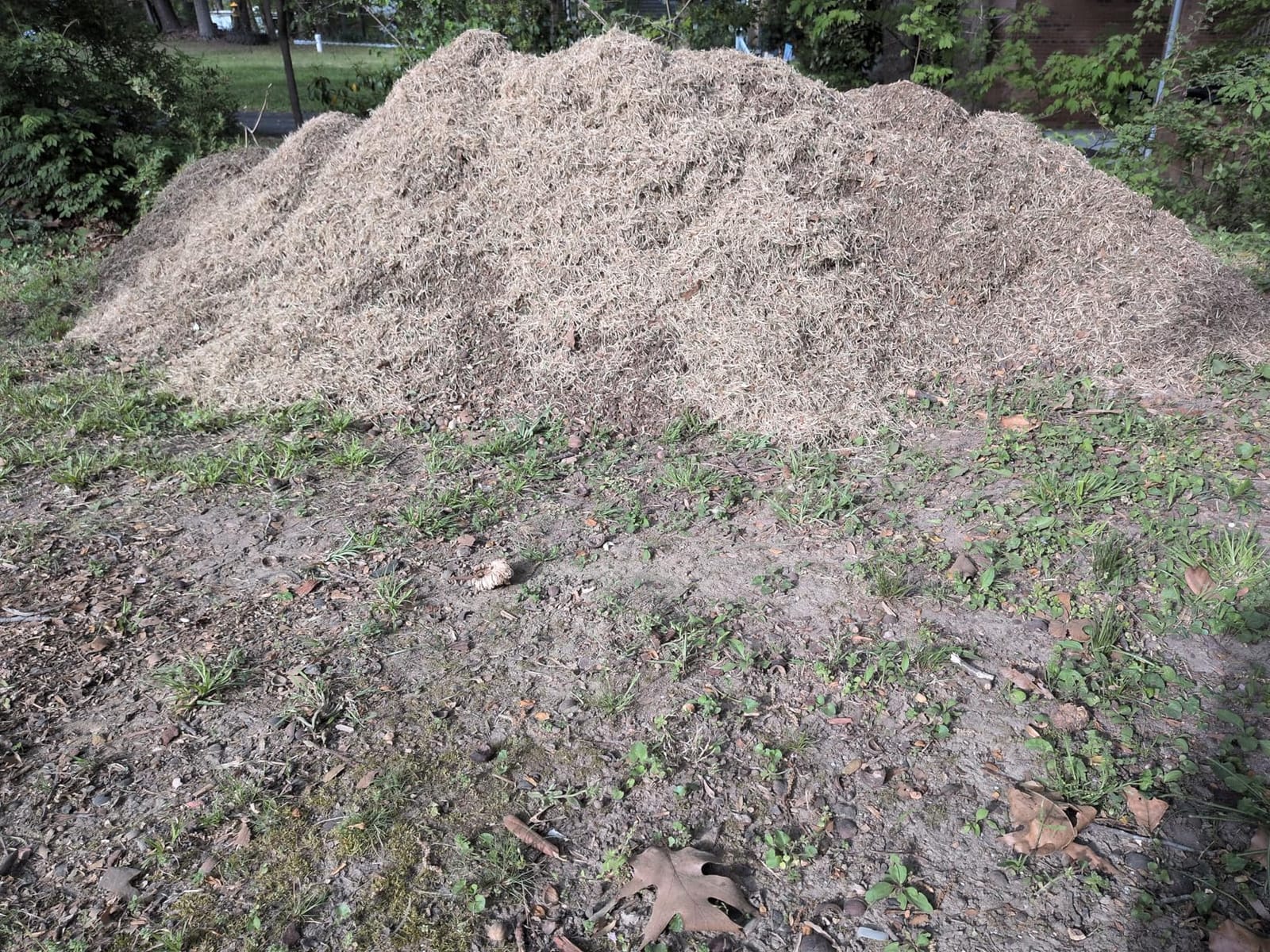
This is the unit most thick-lawn owners end up with, and the reason is the review volume behind it. Nineteen thousand ratings give you a much clearer picture of failure modes than any spec sheet, and the pattern that emerges is consistent: the reel pulls up heavy matted thatch and dead grass, the bag comes out for emptying, and the whole job takes a couple of hours on a quarter-acre lawn.
The five-position depth control is the feature that matters most here, and it is the reason this machine handles thick material better than three-position units. You can start shallow on a thin section, work up to the densest mat without guessing, and back off again where the crowns are shallow. The 13.2-gallon removable bag is genuinely large for the class, which cuts down on the stop-start cycle that frustrates owners of smaller catchers.
Two thirds of its ratings sit at five stars, and buyers repeatedly describe a lawn that visibly changes after a pass. The honest limitation is the cord. On anything over a quarter acre you are managing a 12 AWG extension cord behind you, and TIECTOWN even publishes gauge guidance for it because the failures are real. A majorgeeks reviewer described the machine as appearing and feeling flimsy but still pulling hard enough to nearly drag the operator along, which is the common read on construction quality at this level.
The unit weighs 27.1 pounds, which is light enough to lift into a trunk but heavy enough that a long session tells you about your shoulders. Plan on breaking the job into sections rather than committing to the whole lawn at once.
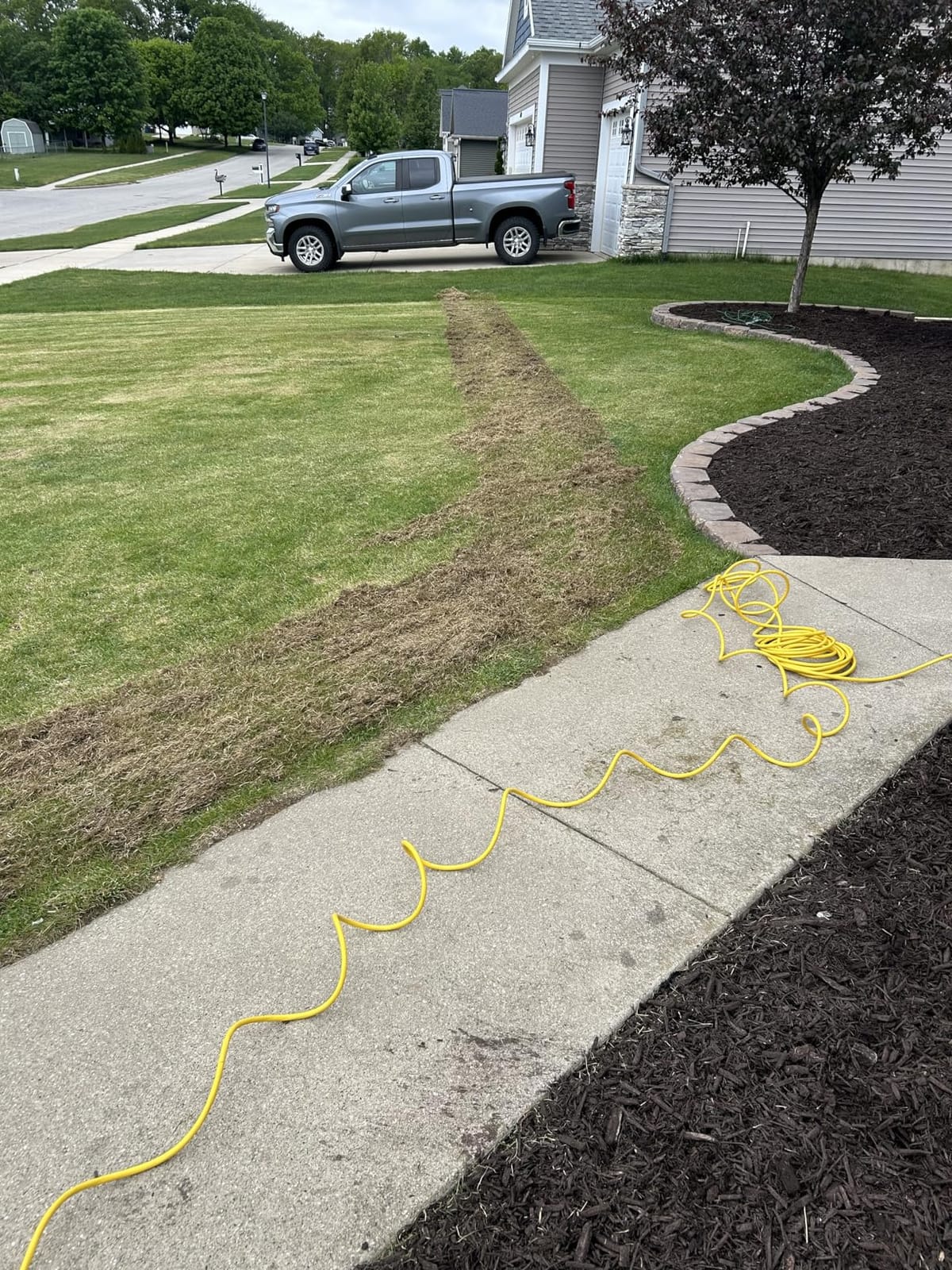
How it handles a genuinely thick mat
At its deeper settings the reel bites into a matted layer and brings up root mass and soil along with the thatch, which is exactly what a thick mat needs. Expect the first pass across the worst section to be slow and to fill the bag quickly.
Forum users who have owned this machine for multiple seasons generally describe it as adequate but slow, which is the fair characterization. It is not a machine that will rescue a one-acre property in a morning.
Where it will disappoint you
The cord is the standing complaint, and the answer is either a shorter lawn or a rental for the big job. A homeowner with a half acre of heavy thatch will spend more time repositioning extension cord than dethatching.
Also check which head is fitted before you start, because a bladed scarifier reel set too deep will pull living crowns out of the ground and leave you with a bare patch to overseed.
2. WEN DT1516 16-Inch 2-in-1 Dethatcher – Our Best Power-to-Weight Pick
WEN DT1516 16-Inch 15-Amp 2-in-1 Electric Dethatcher and Scarifier with Collection Bag, Black
15-amp at 3300 RPM
16 inch path
24 steel tines
5 depth positions
Pros
- Holds speed under heavy load
- Tool-free head swap
- Self-propelling once running
- Folds flat for storage
Cons
- Bag fills very quickly
- Scarifier head arrives installed and aggressive
- Confusing assembly graphics
- Mostly plastic construction
A 15-amp motor running up to 3300 RPM in a 33.7 pound machine is a lot of energy for the weight, and that is where this one earns its place. Reviewers describe it as holding speed under heavy thatch load rather than bogging down, and as effectively self-propelling once it is running, which means passes go faster than the width alone would suggest.
The reel is a 24-tine steel dethatching head with a 20-blade scarifying head alongside it, and the swap is tool-free. Depth adjustment runs five positions from a quarter inch above the soil to half an inch below. For a lawn that measures past an inch, half an inch of negative depth is meaningful, because it is the difference between combing the mat and cutting into it.
Automatic overload shutdown protects the motor when the reel jams, and a two-year warranty covers the parts most likely to give out. The lightest touch in the class is on the throttle: a 15-amp motor draws more than a 13-amp unit, so keep the extension run short and follow the cord gauge guidance the manufacturer publishes.
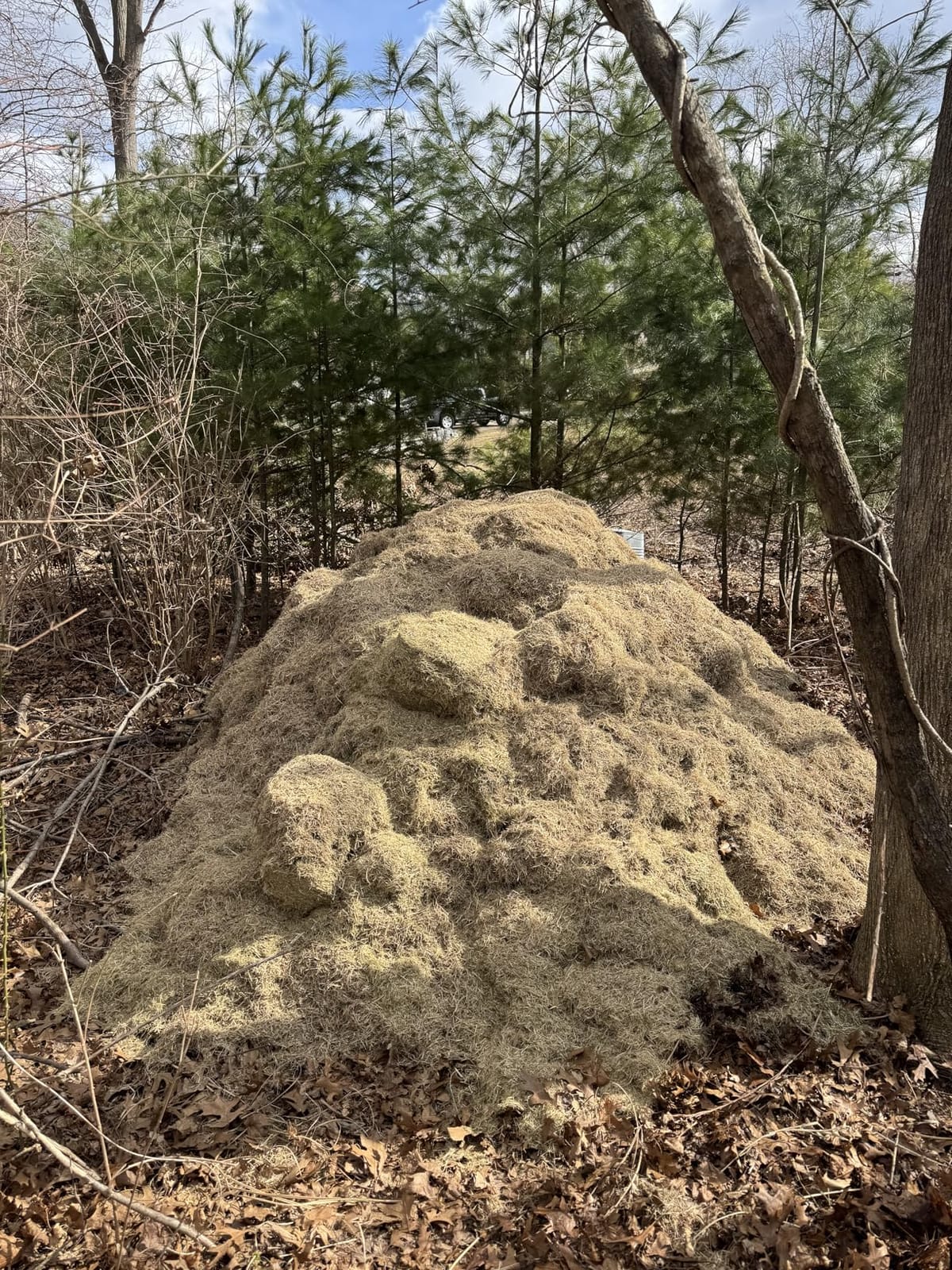
The near-universal advice from owners is to skip the bag entirely and rake or mow up the debris afterward. The catcher fills within a few passes on a thick mat, and the time spent emptying it exceeds the time saved.
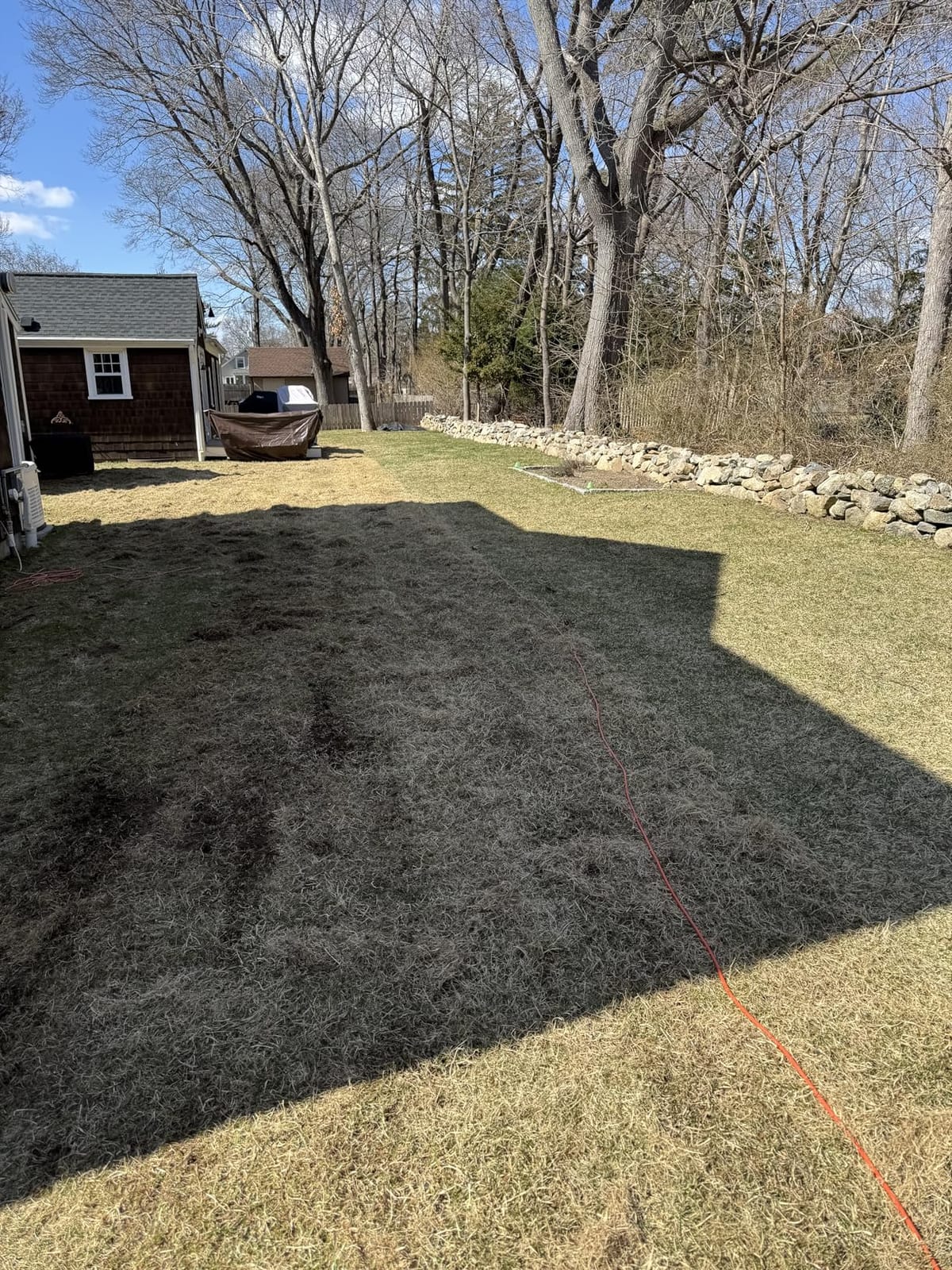
Watch the head that arrives fitted
The most common pitfall here is not noticing that the scarifier attachment comes fitted by default. Set it to a low position on a thin section and you will find out quickly whether the lawn can take that aggression, and a thin lawn cannot.
The five-position depth range is the most useful spec on the box, and it is wider than most of the walk-behinds in this roundup. Learn where position three sits on your own lawn before you commit to a full pass.
Where it falls short
Construction is mostly plastic, and buyers describe it as light-duty in the hand even while praising the output. Assembly instructions and part graphics are confusing enough that several owners reported taking the machine apart twice.
The collection bag is the other recurring gripe. Treat it as optional rather than essential and the machine makes far more sense.
3. Greenworks DHA103 14-Inch Corded Dethatcher – The Lightest Corded Pick
Greenworks 13 Amp 14-Inch Corded Dethatcher / Scarifier, 2-in-1 Electric Lawn Rake with 3-Position Depth Adjustment & Push-Button Start, Lawn Care Tool for Healthy Yard Maintenance
13 amp at 3200 RPM
14 inch path
3 depth positions
28.7 lbs
Pros
- Lightweight and easy to move
- Push-button start
- Quick-release head swap
- Cordless siblings in same family
Cons
- Narrower 14 inch path
- Only 3 depth positions
- Corded cord management
At 28.7 pounds with a 13-amp motor turning at 3200 RPM, this is the machine you pick when the dethatching is real work and your back has opinions about it. Customers describe it as an easy, no-fuss unit that handles routine spring and fall work well, and the push-button start removes the yank-and-hold ritual that corded machines traditionally ask of you.
The dethatcher and scarifier heads release with a quick-release mechanism, so you can change aggression mid-job without tools. That matters more than it sounds on a lawn with a thin section near the house and a deep mat out by the fence line.
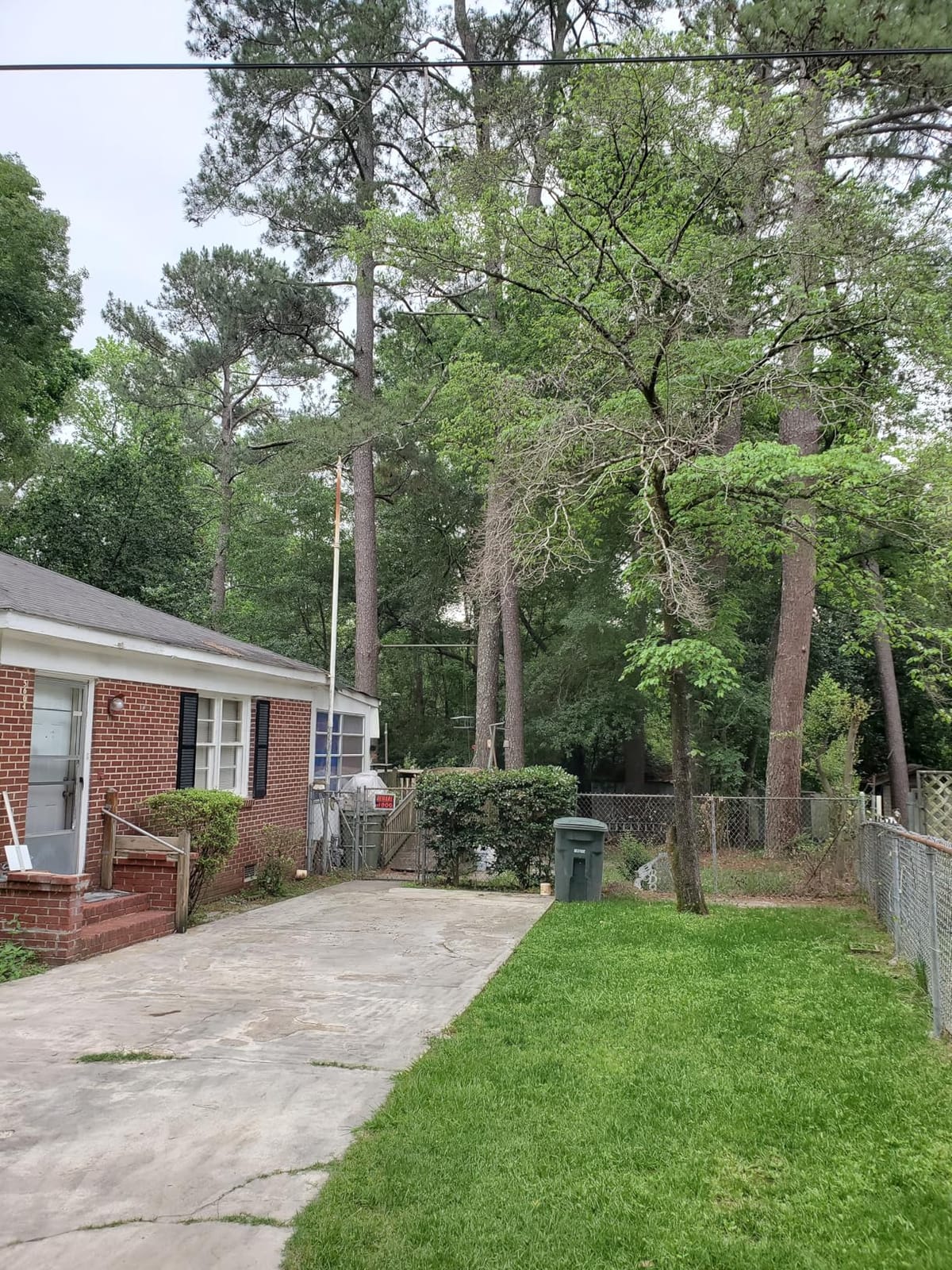
Three depth positions is the weak point, and it is the fewest among the walk-behinds in this roundup. You get coarse control rather than fine control, so plan your passes more carefully and check a spot before you commit a whole section.
The 14-inch working width is narrower than the 16-inch machines here. On a quarter acre that is a difference you feel, and on a half acre it is the difference between a morning and a weekend. The same product family also comes in cordless variants, which matters if you already own batteries from that platform, since the model number is close enough to be worth checking before you commit to a corded unit.
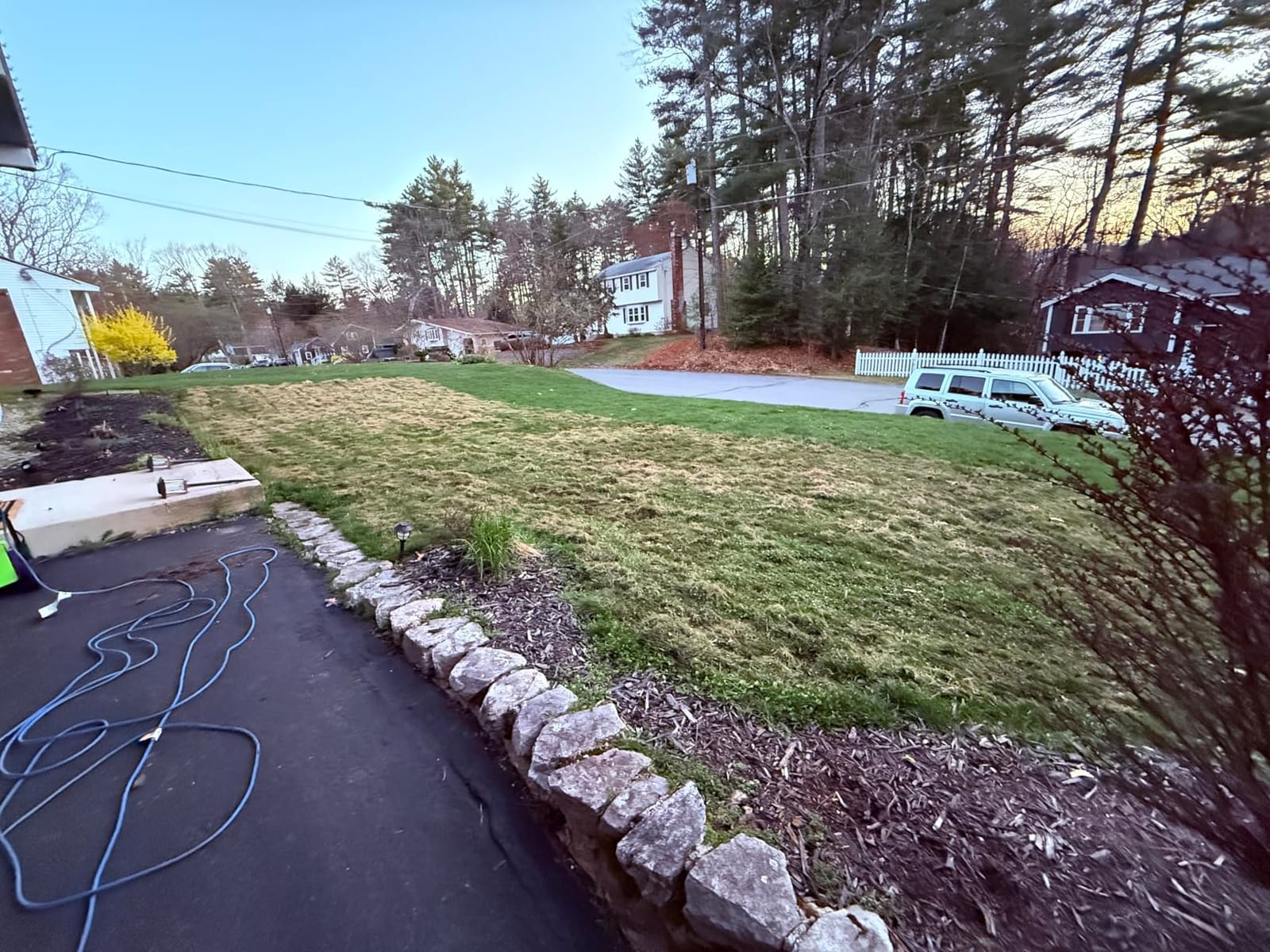
Where it earns its place
Small to medium lawns with a thatch layer that measures over half an inch but not a full inch. That is the sweet spot for a 14-inch spring-tine machine, and this one is light and pleasant to use at that size.
Owners with compacted high-traffic areas also like it for the spring cleanup pass, where the goal is to open the canopy before overseeding rather than to strip the lawn bare.
Where it will let you down
Three depth positions and a 14-inch path are both real limits on a large property. On a heavy mat you will be making many more passes than you would with a 16-inch machine, and you have less fine control over how deep it bites.
The cord is the usual corded caveat. If your lawn is a quarter acre or larger, budget time for cord management on every single pass.
4. TIECTOWN LM01 16-Inch Electric Dethatcher – The 14.5-Gallon Bag That Changes the Job
TIECTOWN 2026 Upgrade 16-Inch 15.5A Electric Dethatcher & Scarifier, Green
15.5A peak at 3600 RPM
16 inch path
14.5 gal bag
5 depth positions
Pros
- 14.5 gallon bag cuts stopping time
- 3600 RPM cutting speed
- Three-position handle adjustment
- Folds to a compact footprint
Cons
- Cord management on every pass
- Less field history than established brands
Bag capacity is the unglamorous spec that decides how a thick-thatch job actually feels, and this machine carries a 14.5-gallon catcher, the largest of the powered walk-behinds here. On a mat that fills a small bag every few passes, that difference translates directly into fewer interruptions in the middle of a section.
Underneath, it is a 15-amp motor peaking at 15.5 amps and running at 3600 RPM across a 16-inch rake path. The five-position depth lever is specified separately for each mode, from minus 0.47 inch to plus 0.24 inch when scarifying and from minus 0.32 inch to plus 0.39 inch when dethatching, which is unusually precise for a consumer machine.
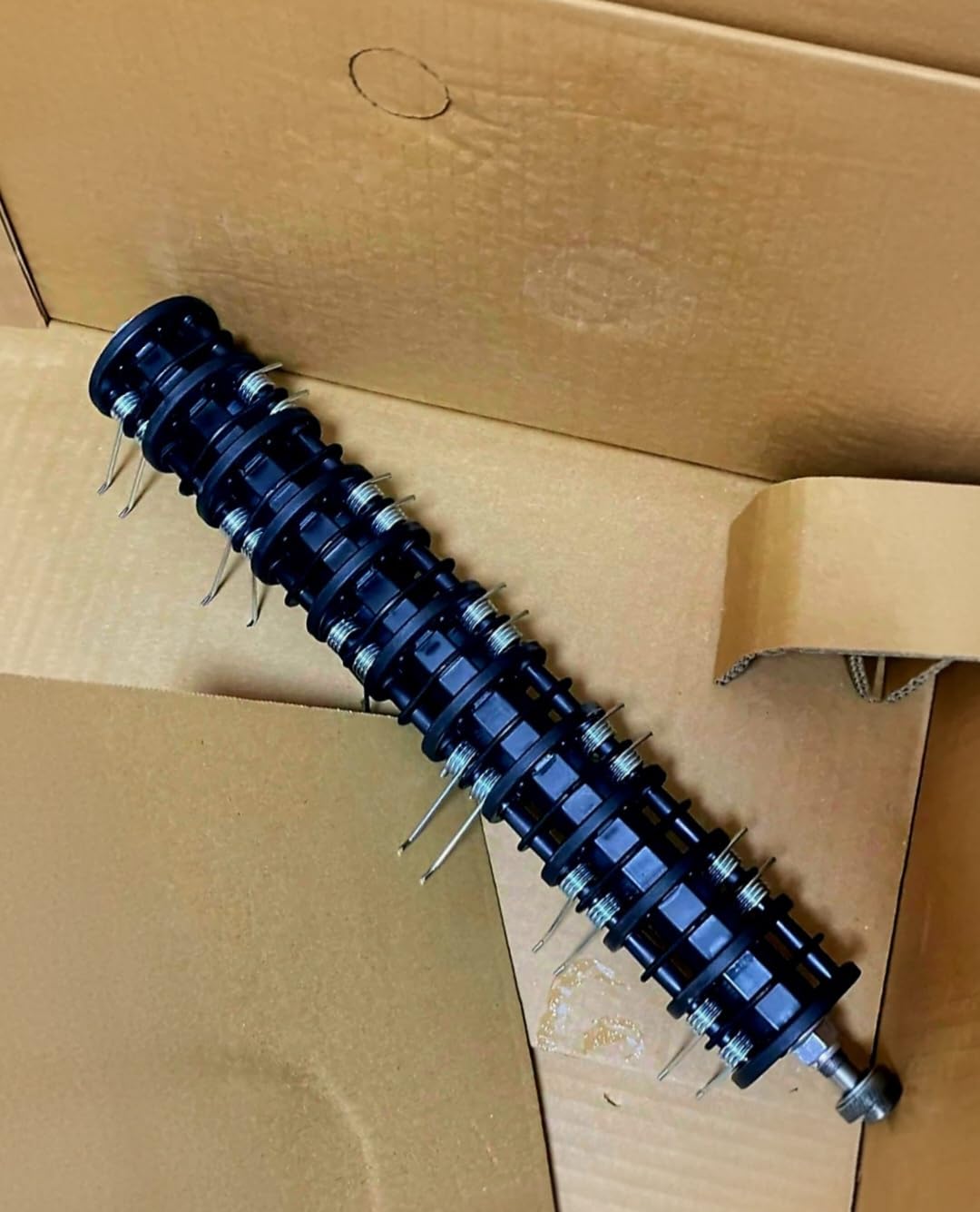
The three-position handle rod lets you set the height for whoever is pushing, and the foldable handle plus tool-free assembly mean it lives in a corner of a garage rather than blocking one. At 30 pounds it is easy to move over steps and thresholds.
This is also the one machine in the group that tells you how to run the cord. The published guidance is 14 AWG up to 50 feet and 12 AWG up to 100 feet, with a cord clip and holder on the handle. The built-in clip keeps the cord from dragging across the reel, which is a small thing that prevents a large tangle.
Why the bag matters more than the motor
On a lawn measuring past an inch, you will empty most bags more often than you expect. A 14.5-gallon catcher roughly doubles the work between stops compared with a small one, and the time you get back is the difference between finishing in an evening and finishing over two days.
The waterproof plug and cord holder are worth noticing for a wet spring job, when a light rain means you would otherwise be pushing damp thatch into a machine with an unprotected connection.
Where it falls short
This is a newer brand with less long-term field history than the established names, and replacement parts are the practical question to ask before you buy. If your plan is to keep a machine for a decade, established support matters.
It remains corded, so the same extension-cord arithmetic applies. The difference is that this machine spells out the answer instead of leaving you to work it out.
5. Agri-Fab 45-0295 48-Inch Tow-Behind Dethatcher – Best Coverage Per Pass
Agri-Fab 48 In Tow Behind Lawn Dethatcher with 24 Durable Spring Steel Tines and Universal Hitch
48 inch working width
24 replaceable tines
70 lb ballast tray
3 year warranty
Pros
- Very wide 48 inch pass
- Replaceable heat-treated spring tines
- Ballast tray for deeper penetration
- Universal hitch
Cons
- Lift arm bends under load
- Rocks over uneven ground without ballast
- No lips or tie-downs on the tray
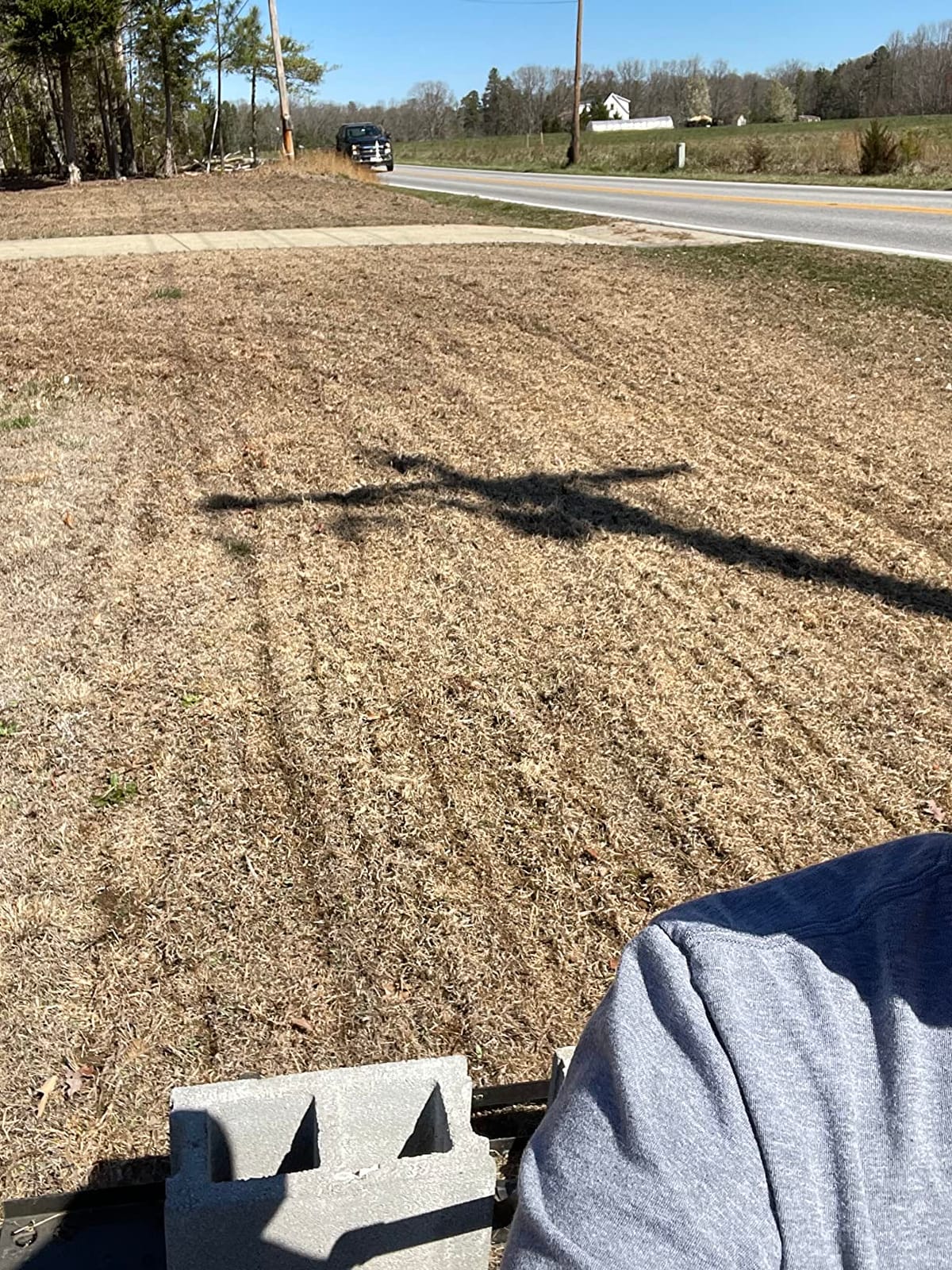
This is the class that answers the large-lawn question. A 48-inch working width covers roughly three times the ground of a 15-inch walk-behind on every pass, and when the layer is genuinely thick, ground covered per pass is the number that matters most. Owners using it on acreage-scale thatch and moss report finishing jobs that would take a walk-behind all weekend.
Twenty-four heat-treated spring tines do the cutting, and they are replaceable, which is the long-term ownership point. When tines bend on a rock, you swap them rather than replace the unit. A cantilever transport handle raises and lowers the tines for travel, and the universal hitch fits most lawn and garden tractors as well as ATVs.
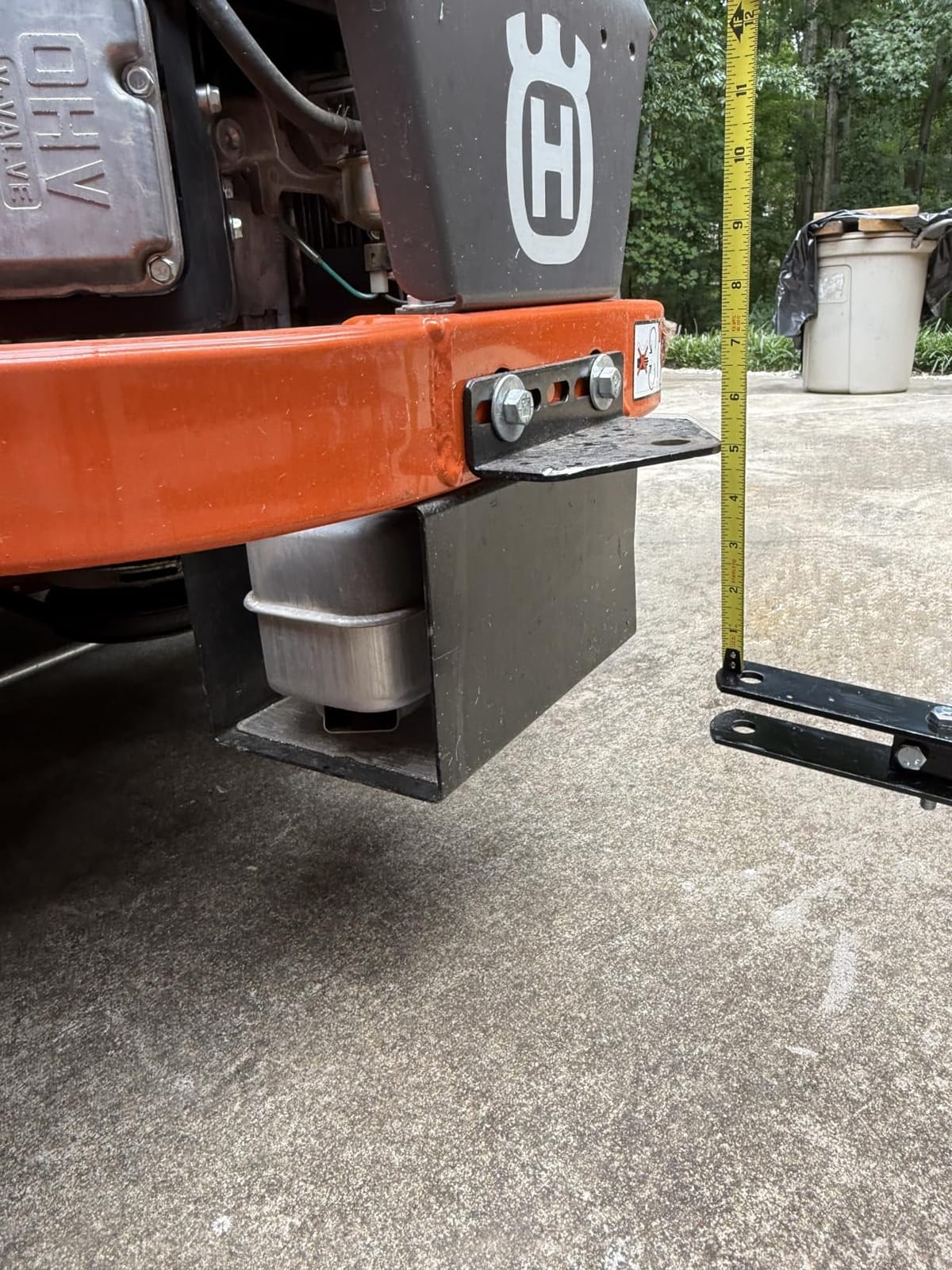
The 70-pound weight tray is what turns this from a surface comb into a machine that penetrates a real mat. Empty, it skips over uneven ground. Loaded with pavers, it settles in and pulls deeper. A three-year limited warranty from an established American brand backs the frame.
Ballast is not optional advice, it is the difference between results and disappointment. Seven-inch flat-free wheels roll over roots and minor ruts without the machine hopping.
What a 48-inch pass actually saves you
On a half acre, the arithmetic is straightforward. A 15-inch walk-behind needs roughly 2,300 square feet of path per ten passes, while the 48-inch covers about 2,000 square feet in the same number of passes with far less walking. On a full acre the gap widens to the point where the walk-behind is no longer a realistic option.
The other saving is physical. Towing a machine behind a tractor does not fatigue the way pushing one does, which matters on a job that can run several hours in the sun.
Where it will disappoint you
Durability of the lift arm and frame is the recurring complaint. Several reviews describe the thin metal and the engagement lever bending under load, and the rigid height-adjustment arm can warp on a rocky property. Check the lever before each season rather than discovering it mid-job.
Two more cautions. The unit rocks over uneven ground unless you ballast it, and the weight tray has no lips or tie-down points, so pavers need securing or they will shift. Assembly instructions are confusing enough that some owners reported missing parts on arrival.
6. MZK G-AC2401 15-Inch Electric Dethatcher – The Quiet Entry Point in Powered Dethatching
MZK Lawn Dethatcher Electric Scarifier with Bag,15In(RED)
13-amp copper motor
3700 RPM
15 inch path
45L bag
27.5 lbs
Pros
- 3700 RPM from a 13-amp copper motor
- Light 27.5 lb frame
- 45L collection bag
- Dual safety switches and folding handle
Cons
- Only 50 reviews so far
- Bag fills well before its stated capacity
- Scarifier tines dig in aggressively
This machine has the highest average rating in the roundup, and the number to read beside it is 50 reviews. A near-perfect score on a small sample tells you recent buyers are happy, not that the machine has survived five seasons. We include it because the machine itself is credible, not because the rating is.
The specification is respectable for the class. A 13-amp copper motor at 3700 RPM is the higher rev figure among the corded walk-behinds here, driving a 15-inch rake path with adjustable depth from minus 0.47 inch to plus 0.24 inch across five positions. The frame weighs 27.5 pounds, a shade over the Sun Joe, and reviewers describe it as nearly self-propelling.
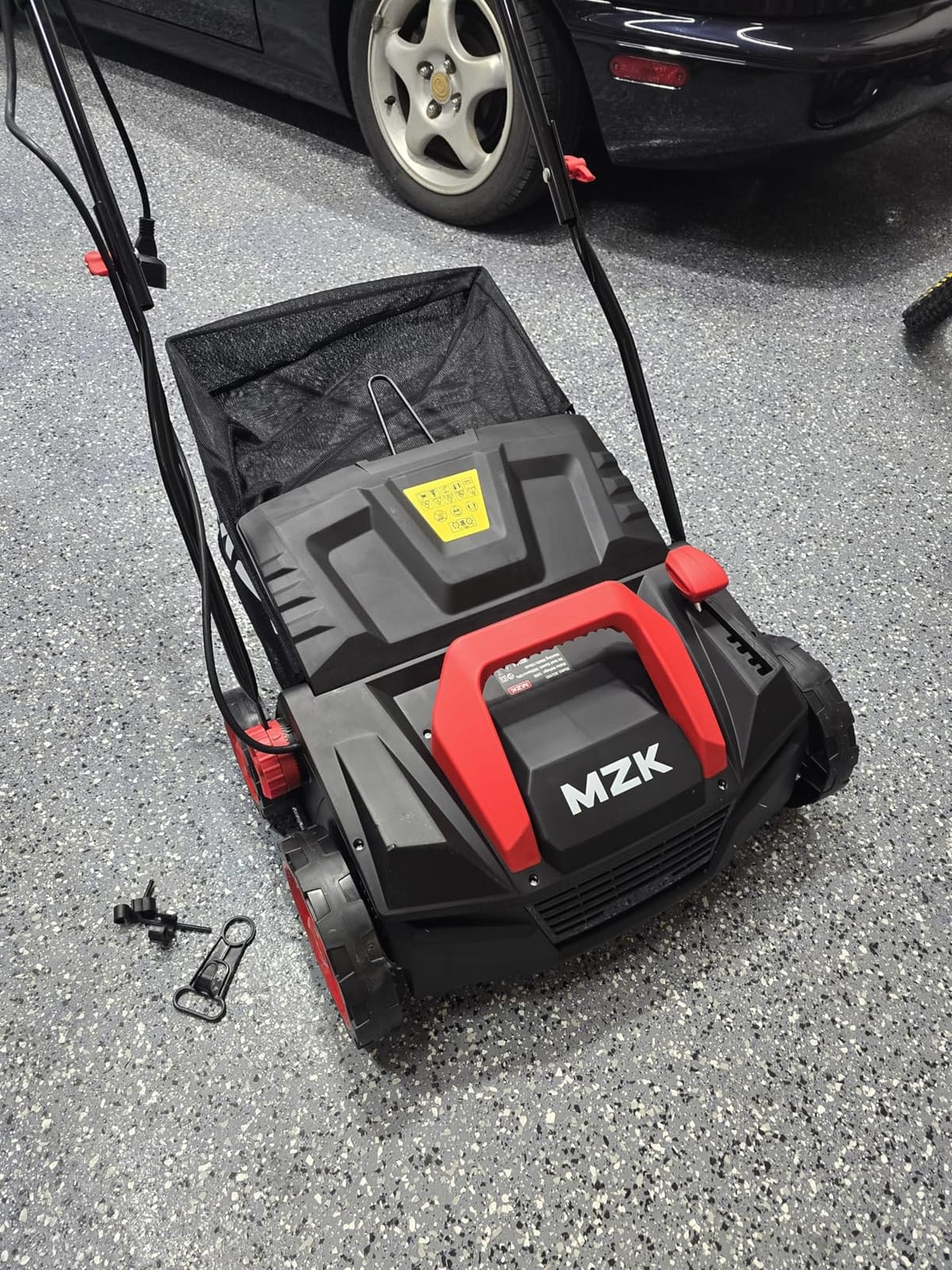
Dual safety switches and a foldable handle make it a small-storage machine in a shared garage. The head switches between dethatching and scarifying without tools, and the 45-liter catcher is larger than the number suggests on paper, though owners still report it filling faster than expected on a heavy mat.
Assembly is straightforward, which matters for a first powered machine. Several reviewers mention detaching the bag and finishing with a mower, which is the same workaround most owners of this class discover eventually.
Who should consider it
Someone with a small lawn and a measured thatch layer over half an inch who wants a powered machine without the weight or the bulk of a 16-inch unit. At 15 inches it is a good fit for spot work and for lawns around a quarter acre.
The 3700 RPM figure suggests it has real headroom in dense material, which is the characteristic that matters when the layer is thick rather than merely present.
Where it falls short
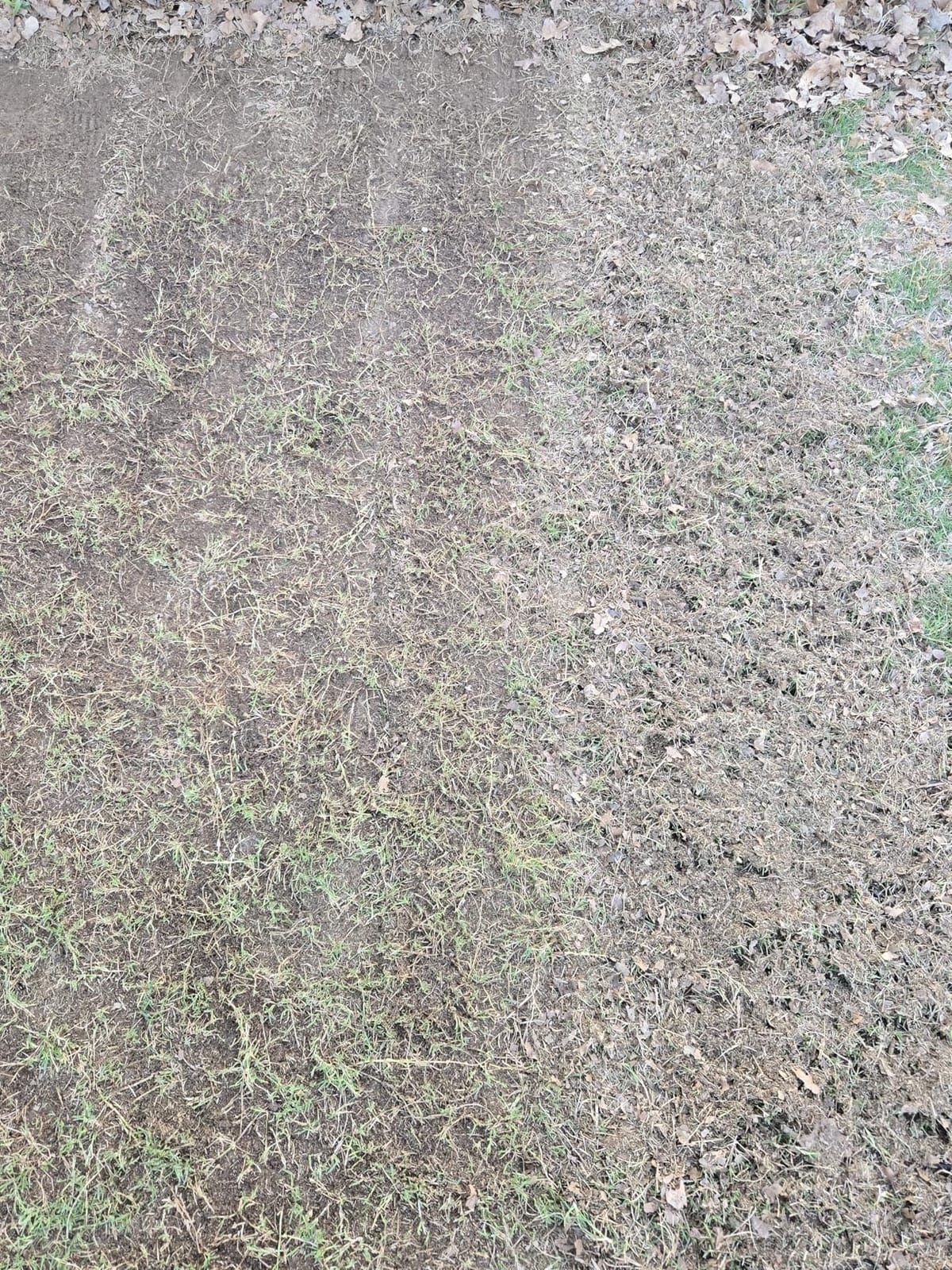
Two things temper the rating. The 50-review sample means there is no long-term durability history, and reviewers report intermittent stopping when pushed too hard or into very thick thatch. If your mat is past an inch, that is the failure mode you are most likely to meet.
The scarifier tines also dig in aggressively and will tear up a thin lawn. Start at the shallowest position and step down one notch at a time.
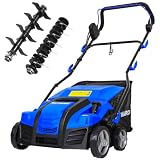
7. BILT HARD TIA-1002 16-Inch Dethatcher – Aggressive Pick for Dense Warm-Season Turf
BILT HARD 16 Inch Dethatcher Scarifier Electric Powered, 15 Amp Copper Motor, 5-Position Depth Adjustment, 14.5 gal Thatch Bag, 2 in 1 Walk Behind Thatch Removing Machine for Lawn
15 amp copper motor
16 inch path
20 spring steel tines
5 depth positions
Pros
- Pulls very large volumes of debris
- 20 spring steel tines
- 16-blade scarifier roller included
- Folds down for storage
Cons
- Bag fills every few passes
- Listed weight is misleading
- Tines can snag on dense rhizomes
If your lawn is Bermudagrass, Zoysia or St. Augustinegrass with a genuinely dense mat, this is an aggressive machine. The dethatching roller carries 20 spring steel tines, more than any other walk-behind in this roundup, which is why owners report dramatic results on turf that stalls lighter reels.
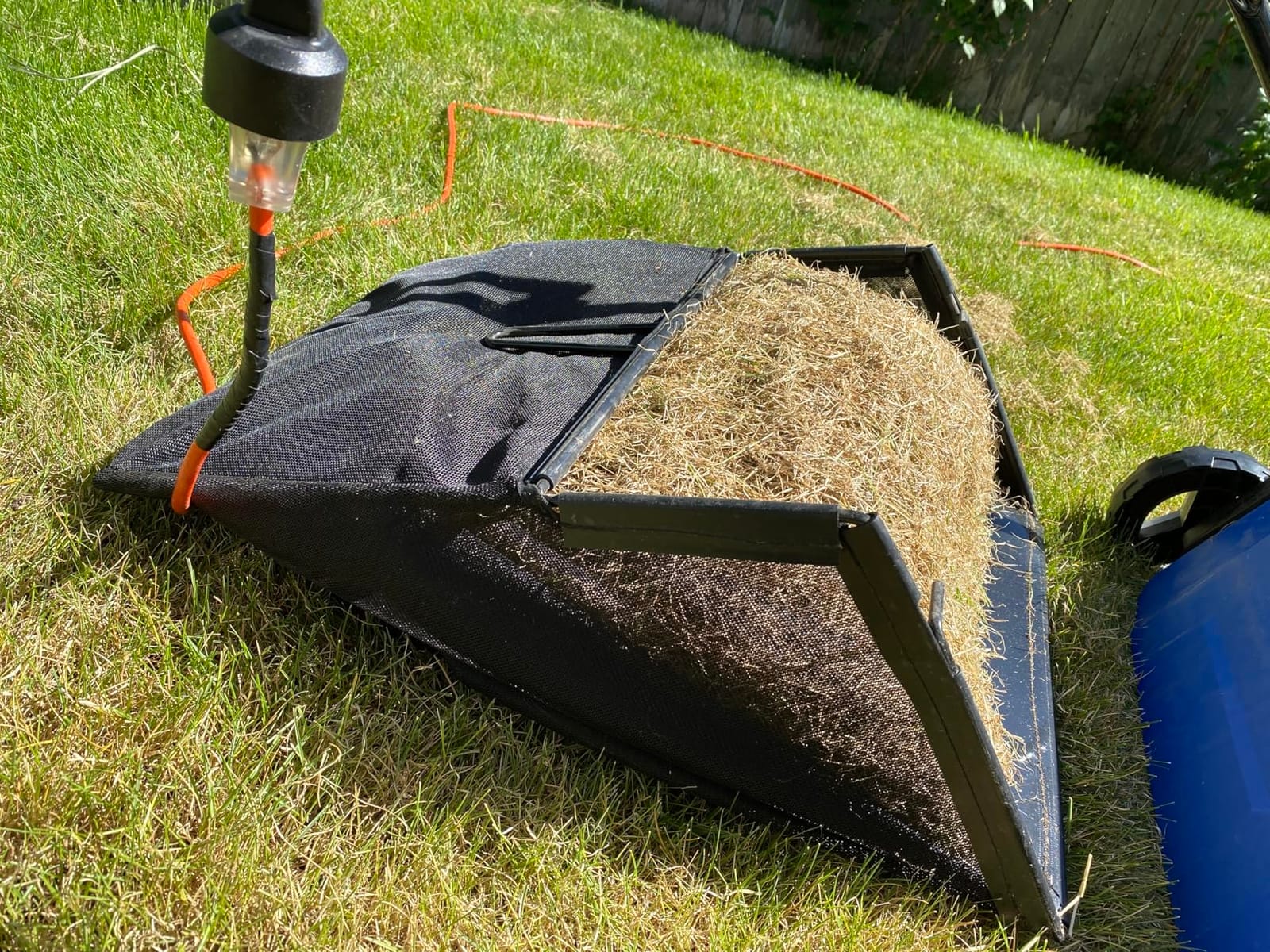
One reviewer collected 45 bags of debris from a 7,200 square foot backyard with this machine. That figure tells you more about thick-lawn capacity than any specification, because it describes what came out of the ground rather than what the box promised.
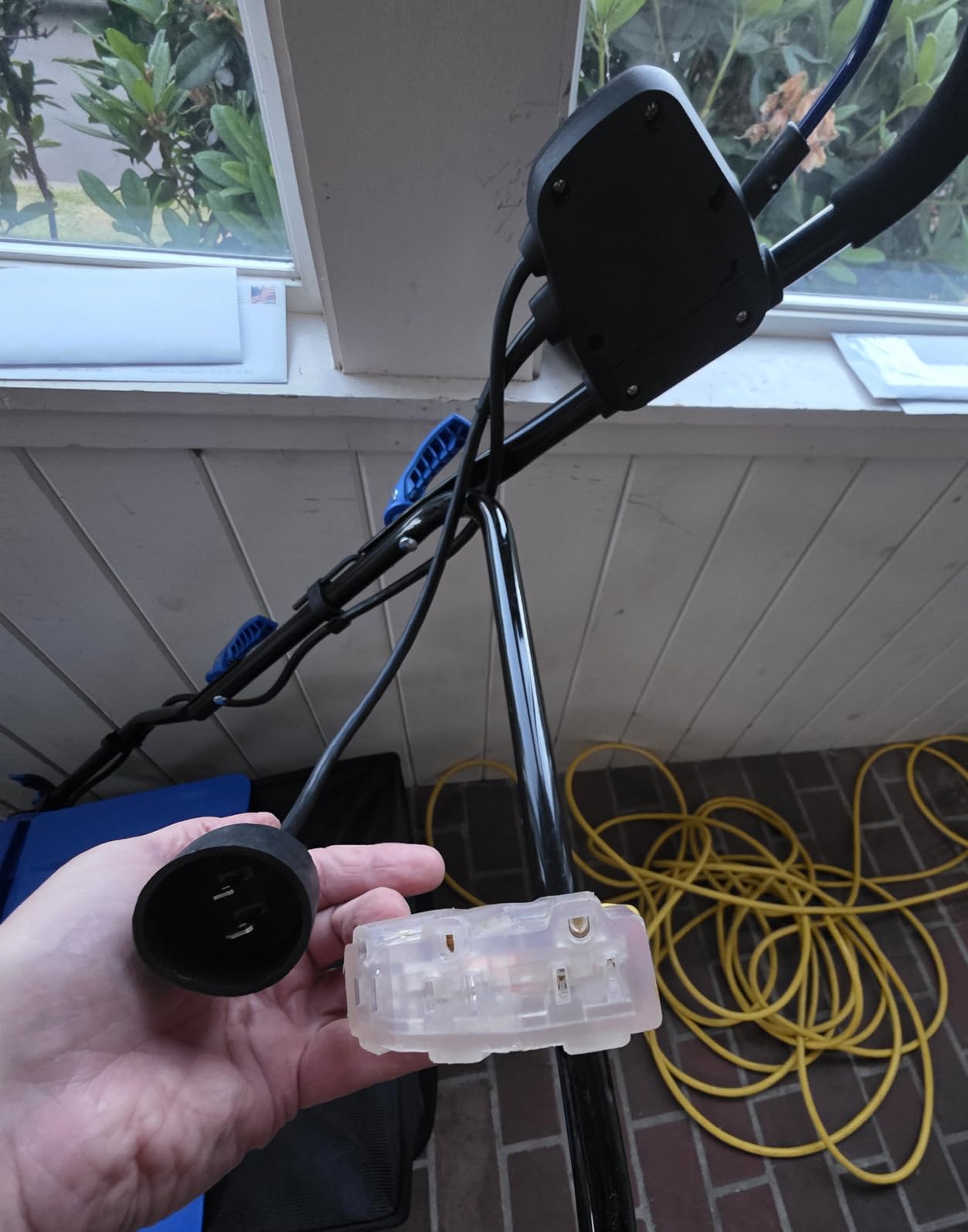
The 15-amp copper motor runs to 3300 RPM across a 16-inch raking path, with five depth positions from minus 0.47 inch to plus 0.24 inch. A 16-blade scarifying roller is included for the second pass, and the quick-lock knob and foldable handle rod keep the swap and the storage simple. Flat-free wheels at seven inches in front and six in the back handle uneven ground better than smaller casters.
The mower-style controls and lock-off switch make it feel familiar if you have run a walk-behind before. Overload protection is a sensible addition on a machine expected to meet resistance.
Warm-season grass needs a different approach
Stolon-spreading grasses grow by runners at or near the soil surface, and a reel that cuts aggressively can sever them. Work with the growth direction, and consider a single pass rather than crossing at an angle.
For a lawn that is thick but not bare, the 20 spring tines on this machine are the reason it can lift a mat without going all the way to a vertical mower. On a lawn with thin patches, it is too much tool.
Where it falls short
The listed weight of 57.3 pounds is far higher than the machine feels in use, and owners consistently note the discrepancy. Do not plan your lifting strategy around the number on the listing.
Two real limitations. The bag fills every few passes and most owners detach it, and the tines can snag and clog on dense rhizome networks such as Bermudagrass. Stop, clear the reel, and keep going rather than forcing it. Several owners also wish for a wider model.
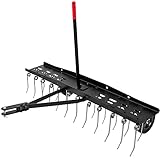
8. Suchtale 48-Inch Tow-Behind Dethatcher – The Better-Built Tow-Behind
Suchtale 48 Inch Tow Behind Lawn Dethatcher with 24 Spring Tines
48 inch working width
24 bolted replaceable tines
70 lb ballast platform
35.6 lbs
Pros
- Bolted rather than press-fit tines
- Powder-coated frame resists chipping
- Bearing-supported rubber tread wheels
- Clear assembly instructions
Cons
- Transport lock needs modification
- Awkward two-plate hitch bracket
- No collection capability
Same 48-inch working width as the Agri-Fab, and a materially different build. Buyers comparing it to the big-box equivalent consistently find the powder coating, the bolted tines and the rubber-tread wheels a step up, and the bolted tine fix is the one that matters most over a decade of use. Press-fit tines loosen and are replaced; bolted tines get a wrench.
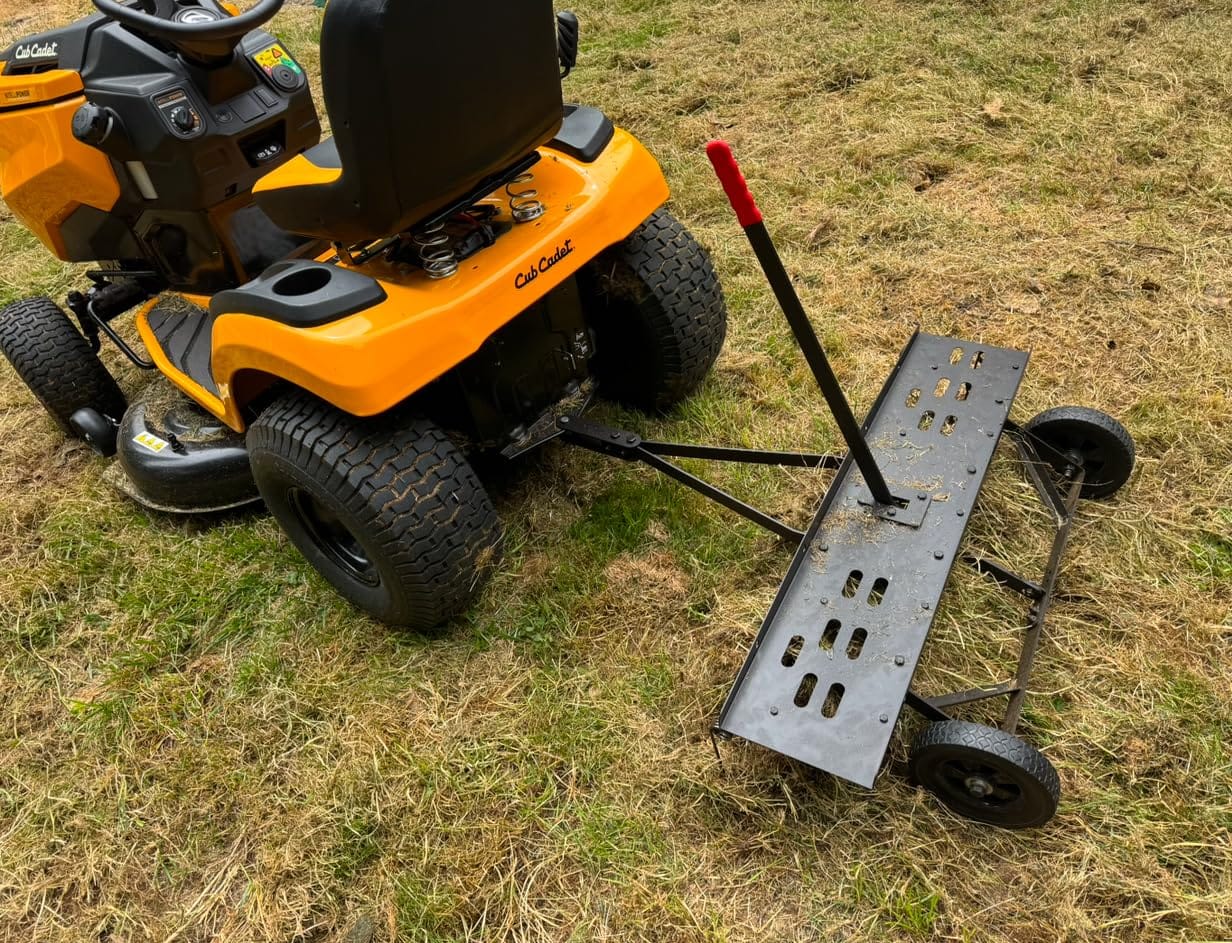
Twenty-four heat-treated, rust-resistant spring steel tines sit on a full steel frame with bearing-supported wheels, above a 70-pound ballast platform. The pin-style hitch fits riding mowers and ATVs, and a transport handle raises or lowers the tines for travel across a driveway.
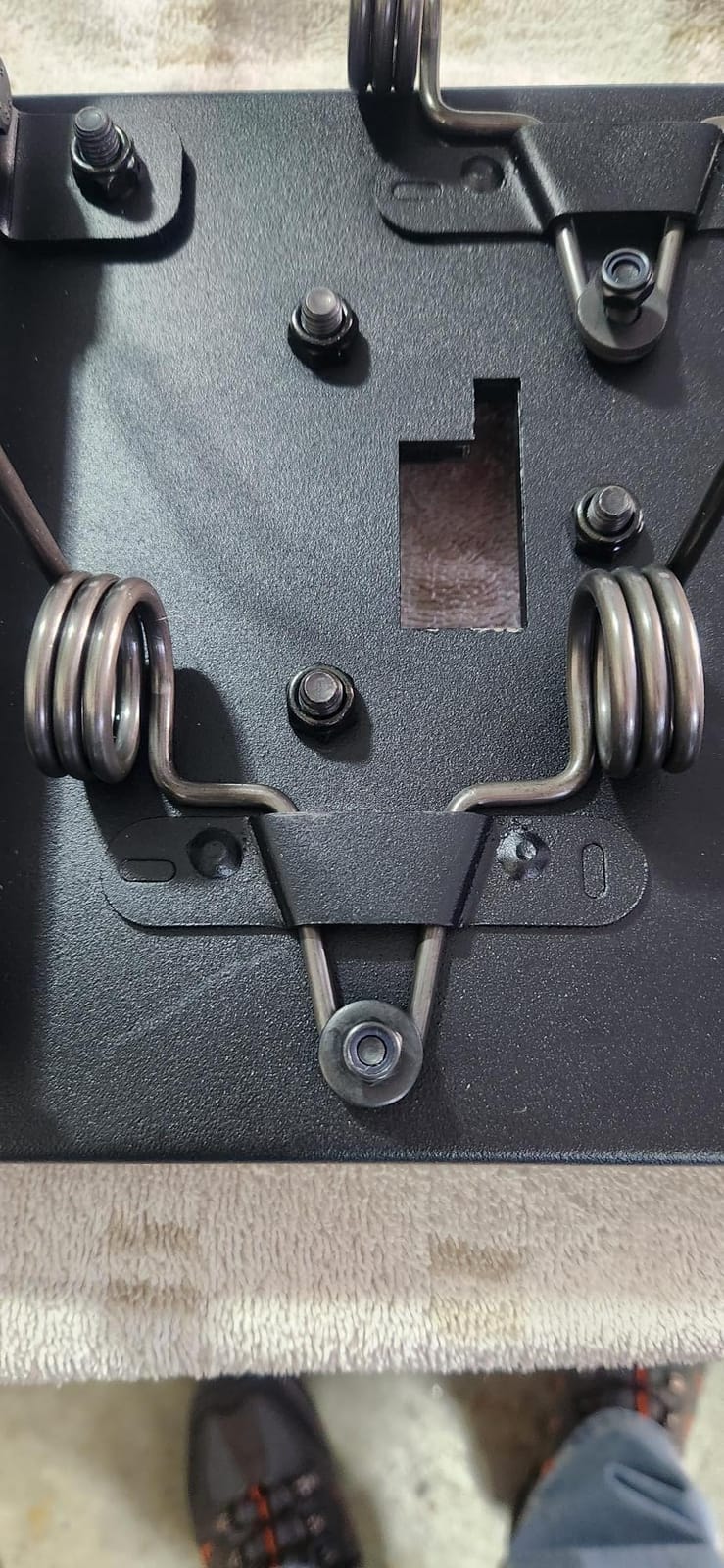
The 35.6 pound listed weight is low for a 48-inch unit and reflects a deliberate choice to keep the frame light enough to pull. A 40-inch version is also available, which is worth considering if your towing vehicle is a compact mower rather than a tractor with a ball hitch.
Packaging and instructions are better than most in this class. Instructions that are clear matter more than they sound, because tow-behind assembly is the step owners skip.
What you gain by choosing this over a walk-behind
The 48-inch path is the obvious answer, but the deeper gain is that a tow-behind lets you work when your body would rather not. On a heavy spring day with several hours of passes ahead, that is worth as much as the ground coverage.
It also handles a mat more evenly. A machine pulled behind a tractor at a steady pace lays down a consistent depth, while a pushed walk-behind varies with how hard the operator is leaning on the handle.
Where it falls short
There is no collection capability at all. Thatch lifts and drops, and you follow behind with a mower, a rake or a separate bagger that cannot be used at the same time. Plan the sequence before you start.
Two more cautions. The transport lever and wheel lock are poorly designed and some owners modify them, and the hitch bracket is a two-plate sandwich that is awkward to fit together the first time. Assembly takes one to two hours and benefits from better tools than the ones supplied.
9. Walensee 19-Tine Manual Thatch Rake – Our Best Manual Pick for Stolon Lawns
Walensee 15-Inch Thatch Rake for Lawn, 19-Tine Dethatcher, 70-Inch Handle
19 tine dual sided head
40 55 or 70 inch handle
4.6 lbs
stainless steel
Pros
- Dual sided head combs and cultivates
- 70 inch handle cuts back strain
- Only 4.6 pounds
- No cord to manage
Cons
- Demanding physical effort
- Included assembly tools are poor quality
- Some bolts arrive with damaged key holes
Do thatching rakes really work? On a small lawn or a stubborn patch, yes, and in one specific situation they work better than any machine here. St. Augustinegrass and Bermudagrass spread by stolons at the soil surface, and a manual rake lets you set the stroke angle and lift the mat without a rotating reel severing the runners.
This one has a dual-sided 19-tine head. One side lifts dead grass, the other loosens topsoil, so a single tool covers both halves of the job. The handle is sectional stainless steel that configures at roughly 40, 55 or 70 inches, and the 70-inch setting is the one that saves your back on a full pass.
At 4.6 pounds it is one of the two lightest tools in this roundup, and the head is quenched manganese steel with a powder-coated finish. Buyers confirm it pulls thick thatch out of St. Augustine and Bermudagrass effectively once you learn the stroke angle, and the head itself stays strong under repeated use. The cushioned non-slip grip matters more than it sounds over a long afternoon.
Twist-lock handle sections make it easy to shorten for transport and to store in a closet rather than leaning in a garage. That storage profile is genuinely better than most of the powered machines here.
When a manual rake beats a machine
Any lawn under a fifth of an acre with a thatch layer over half an inch. At a 15-inch width you make a lot of passes, but you make them at your own pace with no cord, no extension lead and no empty bag to manage.
It is also the right tool for a repair job. After a machine tears out living crowns, a manual rake lets you work around the bare patches without adding damage.
Where it will disappoint you
The effort is real. Owners describe the work honestly as a workout, and a half acre of heavy thatch with a 15-inch head is a multi-afternoon project rather than a weekend one.
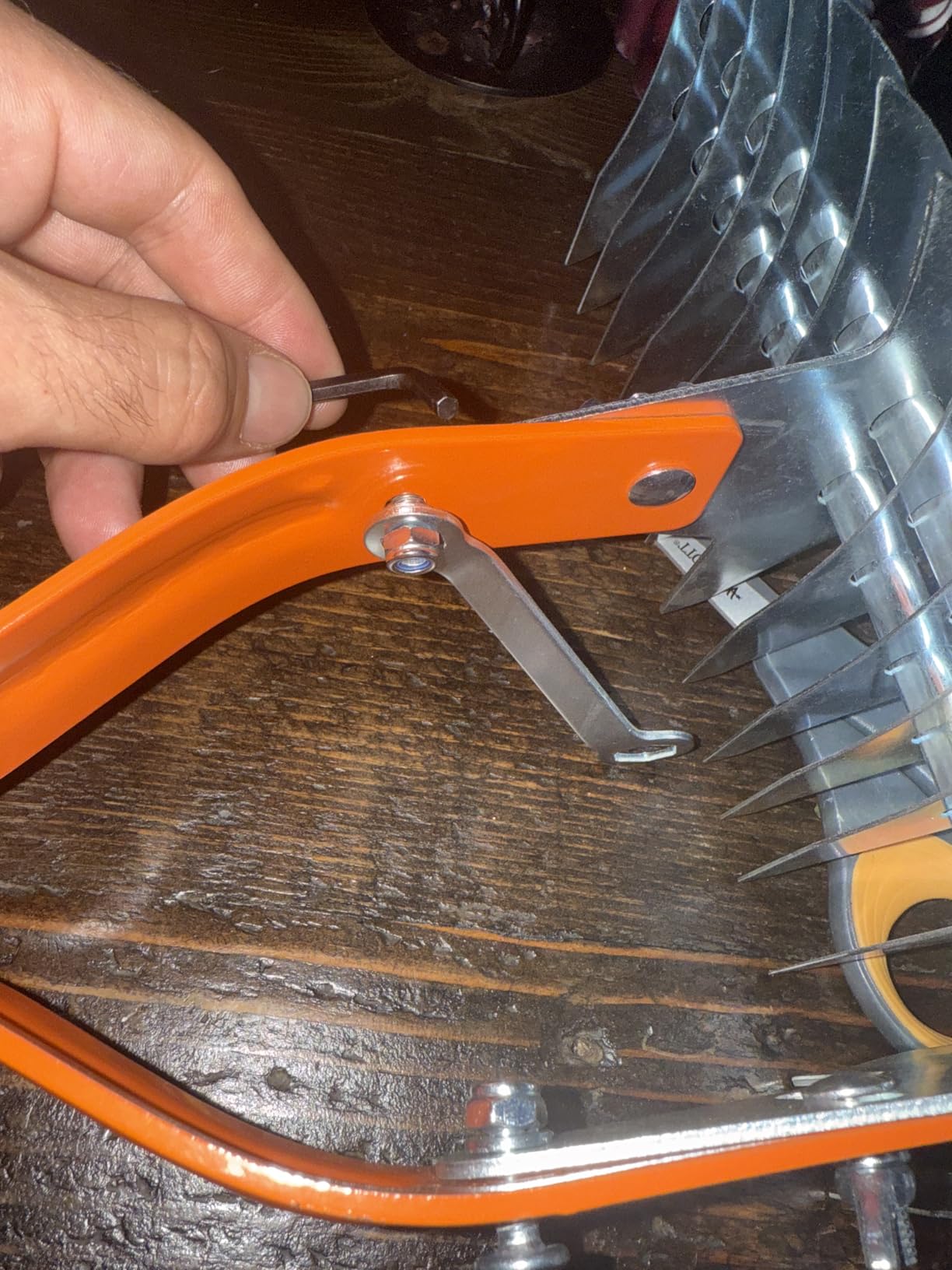
Assembly is where most complaints land. The included tools are poor quality and slip off screw heads, and some bolts arrive with the Allen key holes damaged. Assemble it with your own hex keys before you start. The threads between handle sections also feel cheap and may weaken over time.
10. BlumeTrec 74-Inch Thatch Rake – Longest Reach Without a Motor
Thatch Rake for Lawn with 74inch Handle, 15 inch Dethatcher Rake for Grass to Cleaning Dead Grass, Efficient Steel Metal Rake for Dethatching, Heavy Duty Thatching Rakes for Garden, Yard
19 curved tine head
15 inch width
74 inch handle
adjustable tine angles
Pros
- Longest handle in the group at 74 inches
- Adjustable tine angles tune the cut
- Manganese steel head with powder coat
- Assembly tools included
Cons
- A 15 inch head needs many more passes
- Demanding physical effort on a large lawn
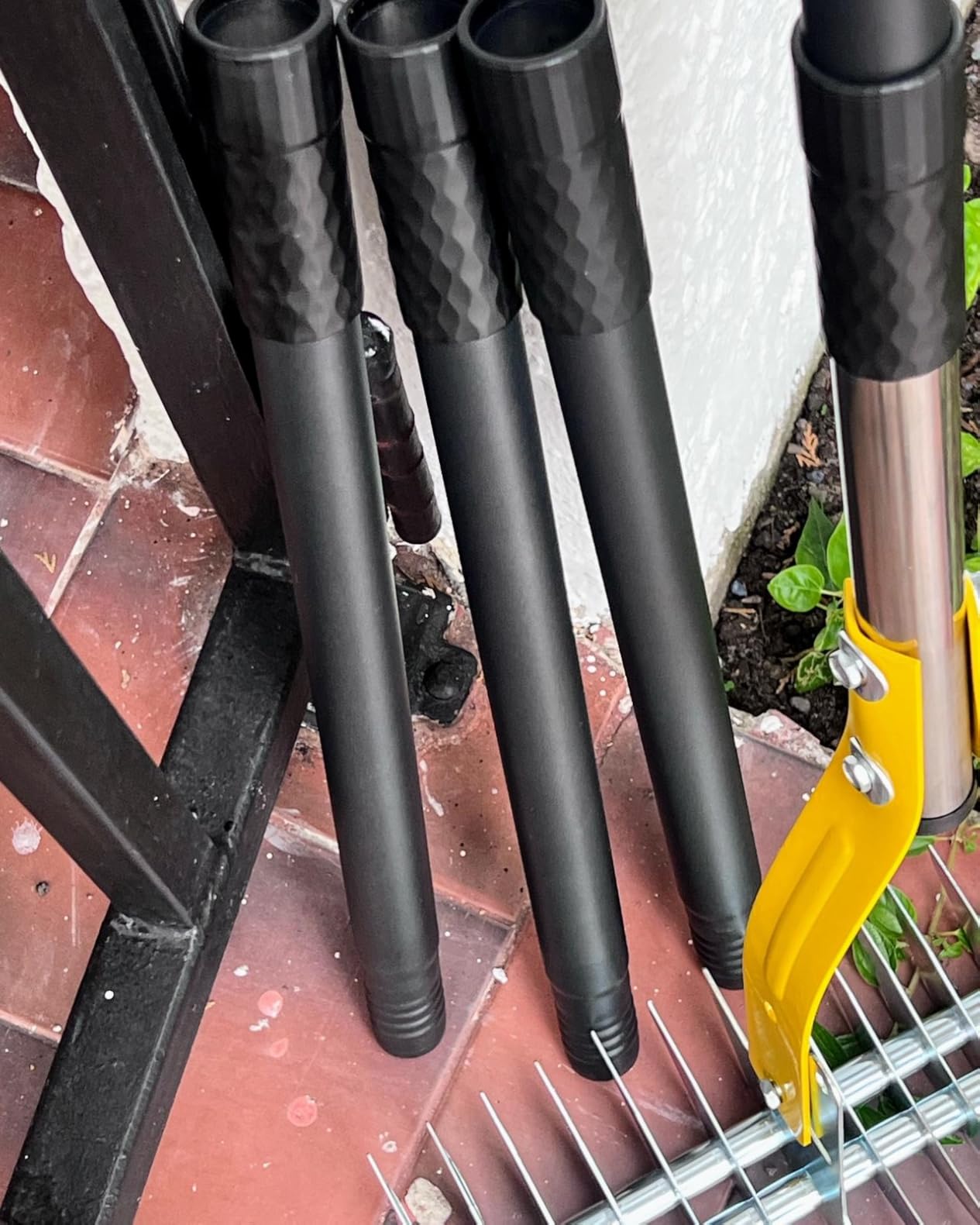
Seventy-four inches is the longest handle in the roundup, and on a manual rake that is not a vanity measurement. It means you can pull the rake through a matted section while standing almost upright, and on a bad back the difference between bending and not bending is the difference between finishing the job and stopping after a section.
The head is a 15-inch, 19-tine design with dual-sided tines and, usefully, adjustable tine angles. That lets you move from light combing for a spring pass to deeper thatch removal on a heavy mat with the same tool, which is the closest a manual rake comes to the depth adjustment a machine gives you.
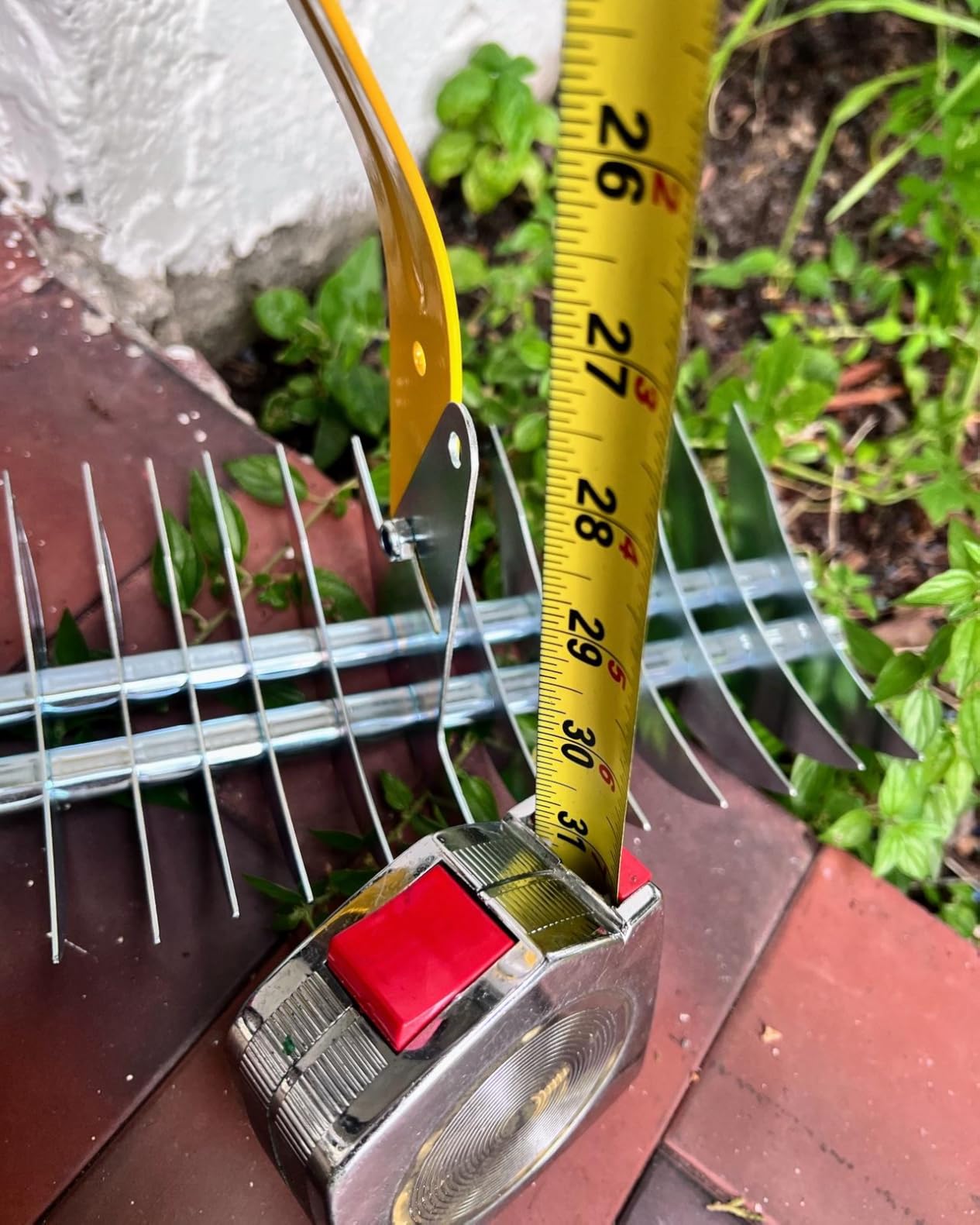
Construction is the story here. A quenched manganese steel head with a powder-coated finish resists rust and wear, the handle is twist-together stainless steel, and it ships with the tools needed for assembly. Seventy-four percent of its ratings are five stars, a satisfaction rate most of the powered machines in this roundup do not match, largely on build quality and reach.
It stores compactly because the handle sections come apart, and the cushioned grip stays comfortable through a long session. Buyers position it as a small-lawn or spot-treatment tool rather than a whole-yard solution, and that is the honest framing.
The case for a tool with no power at all
There is no cord to manage, no motor to bog down in thick material, and no depth setting to get wrong. For a layer that measures just over half an inch, a rake with adjustable tine angles does the job in an afternoon and then sits in a closet for a year.
It is also the lowest-failure option. There is no motor to overload, no switch to fail and no battery platform to be locked out of in five years.
Where it falls short
A 15-inch head is modest next to any powered unit, so a full lawn takes many more passes. On a large property with heavy thatch this is a spot tool, not a solution, and owning it will not save you a weekend.
It is physically demanding in exactly the situations that need help most, and the tine angles that let you go deeper also let you dig into the crown if you set them aggressively. Work shallow on the first pass.
Which Dethatcher Class Fits Your Lawn Size
No competitor in this search routes a reader by lawn size, and it is the fastest way to pick the wrong machine. Here is the routing we use.
Under a quarter acre, thatch just over half an inch: a manual thatching rake or a 13 to 15 inch corded walk-behind. Either handles it in an afternoon. Choose the rake if the mat is shallow and the lawn is warm-season grass with stolons, and choose the machine if the layer is closer to an inch.
Quarter to half an acre: a 16-inch corded walk-behind with five depth positions. Width starts to matter at this size, and a 14-inch machine turns a morning into an afternoon. Choose the largest collection bag you can find, because that is what governs how the job feels.
Over half an acre, or a layer past an inch: a 48-inch tow-behind if you have a tractor or an ATV with a hitch, and a rental vertical mower if you do not. A walk-behind on this much grass is a multi-day project that most people abandon halfway.
Multi-acre or rocky ground: rent. A vertical mower cuts into the soil, and stones plus fixed blades is a combination that damages the machine and the lawn. This is the single clearest buy-versus-rent case in the category.
On corded versus cordless, the honest arithmetic is that a cordless dethatcher avoids the extension-cord problem entirely and adds a platform lock-in, since you are buying into one battery family for the tool and every future battery. If you already own batteries from one of the major platforms, an attachment or bare-tool version is the cheapest route into powered dethatching. If you own nothing, add the cost of a second battery to the sticker figure before you decide, because a genuinely thick lawn will drain one pack well before a half acre is finished.
When to Dethatch and How Many Passes to Make
Timing splits cleanly by grass family. For cool-season lawns, Kentucky bluegrass and tall fescue, dethatch in late summer to early fall, when the grass is growing vigorously enough to recover. For warm-season lawns, Bermudagrass, Zoysia, centipedegrass and St. Augustinegrass, early summer is the window. Spring cleanup after winter is a light scarifying pass, not a deep dethatch.
There are situations where you should not dethatch at all. Skip it on a dormant lawn, on a drought-stressed lawn, on any lawn measuring under half an inch, and on a stolon-spreading warm-season grass unless you work in a single direction that matches the growth.
On passes, start at the shallowest setting and make one full pass across the lawn before you judge anything. Only step down a position if the thatch is still sitting there afterward. Most dethatching damage comes from going too deep too early and pulling living crowns out of the ground, which turns a cleanup job into an overseeding project. Two passes at a shallower setting beat one pass at full depth every time.
Bag or no bag is a working preference, not a quality issue. Most owners across this category detach the catcher and clean up with a mower or rake, because emptying a bag every few passes costs more time than sweeping the debris afterward.
What to Do Immediately After Dethatching
Dethatching removes the symptom, not the cause. Four steps follow the last pass.
First, core aerate. Open holes in the soil let water and air reach the root zone, and the passage you just created in the canopy makes the aerator more effective. Second, topdress with a screened compost or topsoil mix to rebuild the layer you removed. Third, overseed any bare patches you created, ideally within a couple of weeks while the ground is still soft. Fourth, water consistently for the next month, because a dethatched lawn has less insulation than it did an hour ago and will dry out faster.
If you find yourself dethatching every single spring, the layer is coming back for a reason. Excess nitrogen, over-irrigation and compaction all rebuild thatch faster than a rake can remove it, and fixing one of those is cheaper than owning more equipment.
Frequently Asked Questions
Do lawn dethatchers actually work?
Yes, for what they are built to do. Consumer machines sold as dethatcher and scarifier combinations use spring-tine or bladed reels that comb thatch up and out of the canopy, which handles an annual cleanup of a layer measuring roughly half an inch to an inch. For a mat past an inch on a large lawn, a rental vertical mower with fixed blades that cut into the soil will do considerably more work per pass.
Is it better to dethatch or scarify my lawn?
For most home lawns the two words describe the same machine, so the distinction matters less than the reel that is fitted. A spring-tine reel combs gently and is right for annual maintenance. A fixed-blade scarifier reel cuts deeper and is better for a heavier layer, but it will pull living crowns out of a thin lawn if set too deep. Start with the spring tines and only change reels once you have measured the layer.
What is the best month to dethatch your lawn?
For cool-season lawns such as Kentucky bluegrass and tall fescue, late summer to early fall is the best window, because the grass recovers fastest then. For warm-season lawns such as Bermudagrass, Zoysia, centipedegrass and St. Augustinegrass, early summer is better. A light spring pass after winter is useful for matted dead grass but should stay shallow.
How to dethatch a very large lawn?
Use a 48-inch tow-behind if you have a tractor or an ATV with a hitch, and add ballast to the weight tray so the tines settle into the mat instead of skipping over it. If you do not have a tow vehicle, or the layer is past an inch, rent a vertical mower for a day rather than spending a week with a walk-behind. Do not buy a collection bag for this job, since a separate bagger cannot run at the same time.
Should I buy or rent a dethatcher?
Buy when the measured thatch layer is just over half an inch, the lawn is under a quarter acre, and you will use the machine once or twice a year. Rent when the layer is past an inch on half an acre or more, when the soil is rocky, or when the soil is heavy clay that a deep cut would smear. Renting a vertical mower costs less than owning a machine for a job you do once every few years.
Can I dethatch too much?
Yes, and that is the most common way the job goes wrong. Setting the reel too deep pulls living crowns out of the ground and leaves bare patches that need overseeding. Start at the shallowest depth setting, make one full pass, and only step down a position if thatch is still visible afterward. Two shallow passes are safer and more effective than one pass at full depth.
How do I know if my lawn has too much thatch?
Dig a wedge about the size of your foot out of the lawn and look at the cut face. Measure the dark spongy band between the soil and the green blades. Under roughly half an inch is normal and protective, and a layer under an inch is generally neutral. Past half an inch the layer starts blocking water, air and nutrients, and that is the point where a machine earns its place.
The 10 Best Dethatchers for Thick Lawns: Our Final Word
The Sun Joe AJ805E is our pick for most thick lawns, because nineteen thousand ratings tell you more about how a machine behaves in matted grass than a spec sheet does, and its five depth positions and large removable bag are what make a long job tolerable. Buy the WEN DT1516 if you want more power per pound and a 16-inch path, the TIECTOWN LM01 if the collection bag is what will decide whether you finish in an evening or over two days, and one of the 48-inch tow-behinds if you have a tractor and more than half an acre.
Whatever you choose, measure the layer first. If it comes in under half an inch, aerate and topdress instead, and keep your money.
Every machine in this roundup was chosen on measured specification, review history and honest failure modes rather than marketing language. We earn a commission when you buy through the links on this page, at no additional cost to you, and it does not change the ranking.
Sources and Further Reading
The thatch threshold, the centipedegrass and St. Augustinegrass one-direction rule, and the vertical-mower definition used throughout this guide follow published extension guidance: the Clemson Cooperative Extension Home and Garden Information Center, and University of Illinois Extension lawn-care publications. Forum context on rocky soil and stolon damage comes from r/lawncare discussion threads.