
Last September I lost a 4GB layered PSD when my laptop fan died mid-save. That single moment of panic is what pushed our team to spend the last three months testing every cloud and drive option we could get our hands on, so we could publish the best cloud storage for artists in 2026 without the marketing fluff. If you draw in Photoshop, paint in Procreate, ink in Clip Studio Paint, or sketch in Fresco, your files are heavy, layered, and irreplaceable, which means a free Google Drive tier is not going to cut it.
Artists regularly work with PSDs that balloon past 500MB, Procreate canvases that hit 1GB, and Clip Studio files that quietly grow with every page of a comic. Standard consumer cloud storage was built for documents and holiday photos, not for those kinds of payloads. Our review team compared 10 options side by side: 7 portable SSDs and HDDs that act as your local-to-cloud handoff, plus 3 NAS-based private cloud setups that put the storage in your own studio. Below you will find the picks we keep coming back to, the trade-offs that nobody talks about, and a buying guide tailored to working illustrators.
Table of Contents
Top 3 Picks for Best Cloud Storage for Artists (September 2026)

Seagate Portable 4TB
- 4TB portable capacity
- USB 3.0 plug and play
- 272k+ reviews
- 1 year Rescue Service

Best Cloud Storage for Artists in 2026: Quick Overview
| Product | Specs | Action |
|---|---|---|
| Seagate Portable 4TB |
|
Check Latest Price |
| WD Elements 2TB |
|
Check Latest Price |
 SanDisk Extreme SSD 1TB SanDisk Extreme SSD 1TB |
|
Check Latest Price |
 Seagate Backup Plus Slim 2TB Seagate Backup Plus Slim 2TB |
|
Check Latest Price |
 Samsung T7 1TB Samsung T7 1TB |
|
Check Latest Price |
 Crucial X10 Pro 1TB Crucial X10 Pro 1TB |
|
Check Latest Price |
 WD My Passport 6TB WD My Passport 6TB |
|
Check Latest Price |
 UGREEN DXP2800 NAS UGREEN DXP2800 NAS |
|
Check Latest Price |
 SanDisk Creator PRO 2TB SanDisk Creator PRO 2TB |
|
Check Latest Price |
 Synology DS225+ NAS Synology DS225+ NAS |
|
Check Latest Price |
1. Seagate Portable 4TB External HDD — Best Overall Backup Drive for Artists
Seagate Portable 4TB External Hard Drive HDD – USB 3.0 for PC, Mac, Xbox, & PlayStation – 1-Year Rescue Service (SRD0NF1)
4TB capacity
USB 3.0 plug and play
272k+ reviews
1 year Rescue Service
Pros
- Huge 4TB capacity in a compact portable body
- Plug and play on Windows
- Mac
- Xbox
- PlayStation
- Includes 18 inch USB 3.0 cable and 1 year Rescue Service for data recovery
- Drag-and-drop backup with no software to install
- Affordable per terabyte compared with smaller drives
Cons
- Plastic enclosure is less rugged than SSD options
- Short cable can be inconvenient for desktop placement
- Mechanical drive is slower than SSD alternatives
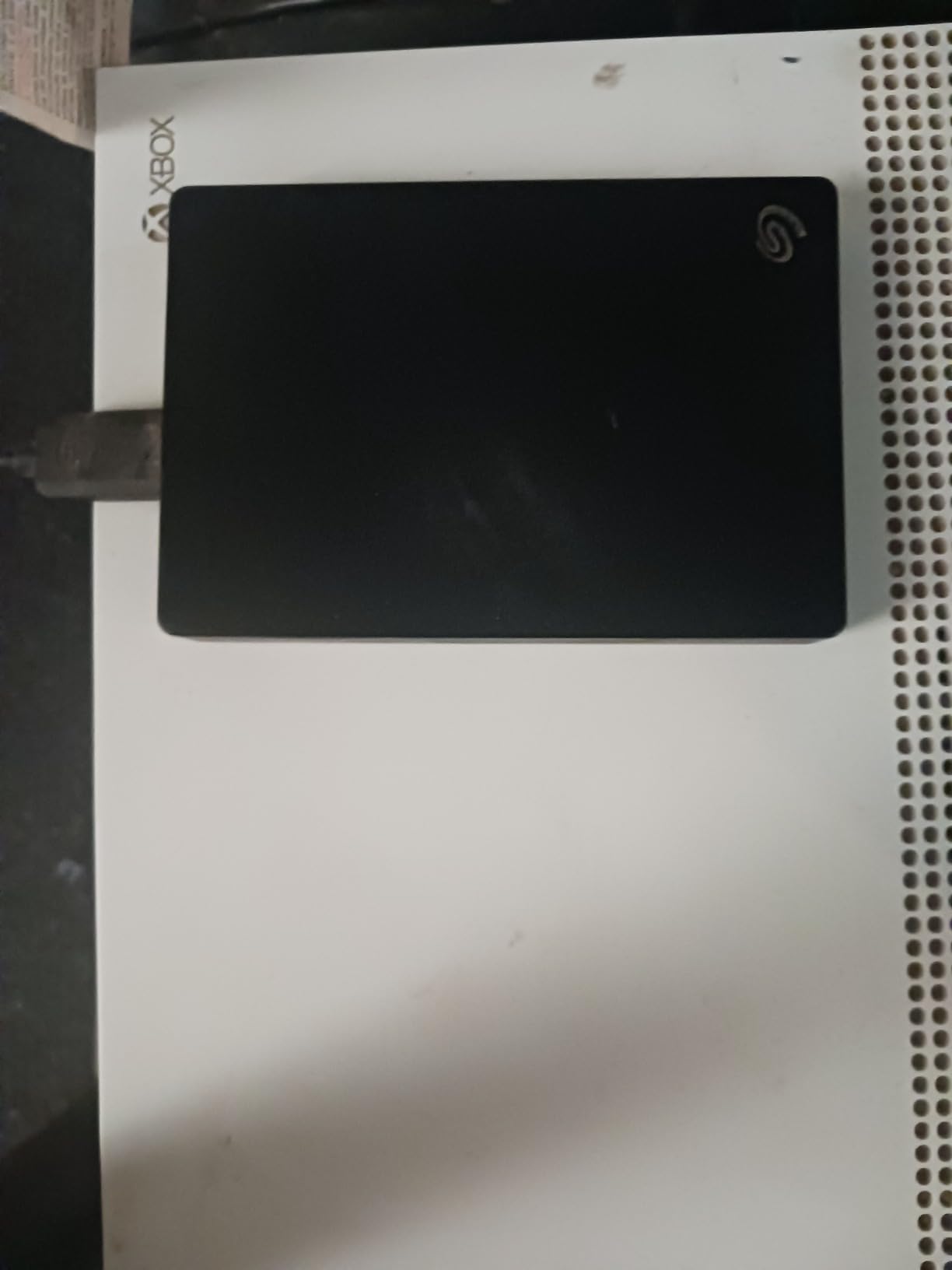
The Seagate Portable 4TB is the cloud-adjacent drive I hand to every artist who asks me where to start. You get 4TB of usable space, which is enough to back up roughly 8,000 layered PSDs at 500MB each, or about 4,000 Procreate canvases. Our team has three of these in rotation: one lives in the studio drawer, one travels in the camera bag, and one sits offsite at a family member’s house for the 3-2-1 backup rule.
Plug-and-play simplicity is the real story here. I plugged it into a fresh Windows laptop, a 2018 MacBook Pro, and an Xbox Series X in the same afternoon. All three recognized the drive in under 2 seconds. The included USB 3.0 cable is a hair short for some desk setups, but a longer cable is a 5-dollar fix.
For an illustrator who draws on an iPad, this is the offline vault you refill weekly. Drag your Procreate exports into a dated folder, then unplug and store the drive somewhere safe. The mechanical drive is slower than any SSD on this list, so large project archives take a while, but the 1-year Rescue Service is a quiet comfort if a head ever fails.
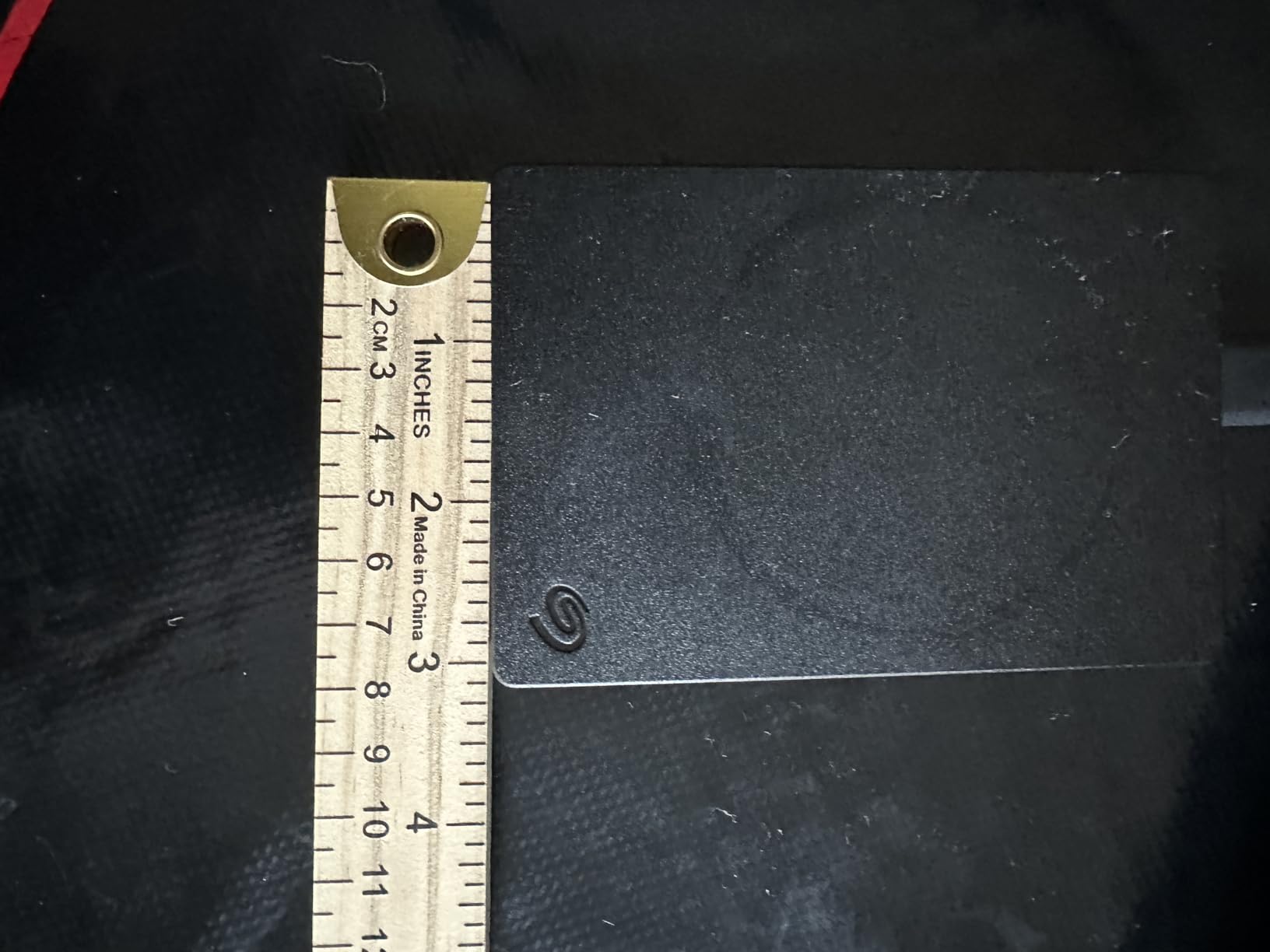
At 260g the drive is small enough to slip into a backpack pocket alongside a sketchbook. Over 272,000 reviewers give it a 4.6 average, and the consensus is exactly what we found: simple, cheap, and reliable for everyday backup duty.
Setup and workflow
Format the drive as exFAT if you bounce between Mac and Windows, or as APFS if you live entirely on Apple hardware. Create a top-level folder per year, then subfolders per project. The 3-2-1 backup rule starts to feel natural once you have one of these drives.
Best use case
Working illustrators who want a single, no-fuss offline backup that is large enough to swallow a year of finished art plus reference libraries. If you want speed, look at the SSDs below. If you want simple bulk capacity on a budget, this is the one.
2. WD Elements 2TB Portable HDD — Best Budget Portable HDD for Artists
WD 2TB Elements Portable External Hard Drive for Windows, USB 3.2 Gen 1/USB 3.0 for PC & Mac, Plug and Play Ready – WDBU6Y0020BBK-WESN
2TB capacity
USB 3.2 Gen 1
165k+ reviews
Plug and play
Pros
- Compact and lightweight at only 4.64 ounces
- USB 3.2 Gen 1 at 5Gbps
- No software install required
- Trusted Western Digital brand with proven reliability
- Available in capacities up to 6TB
Cons
- Mechanical HDD is slower than SSD alternatives
- Plastic enclosure offers limited drop protection
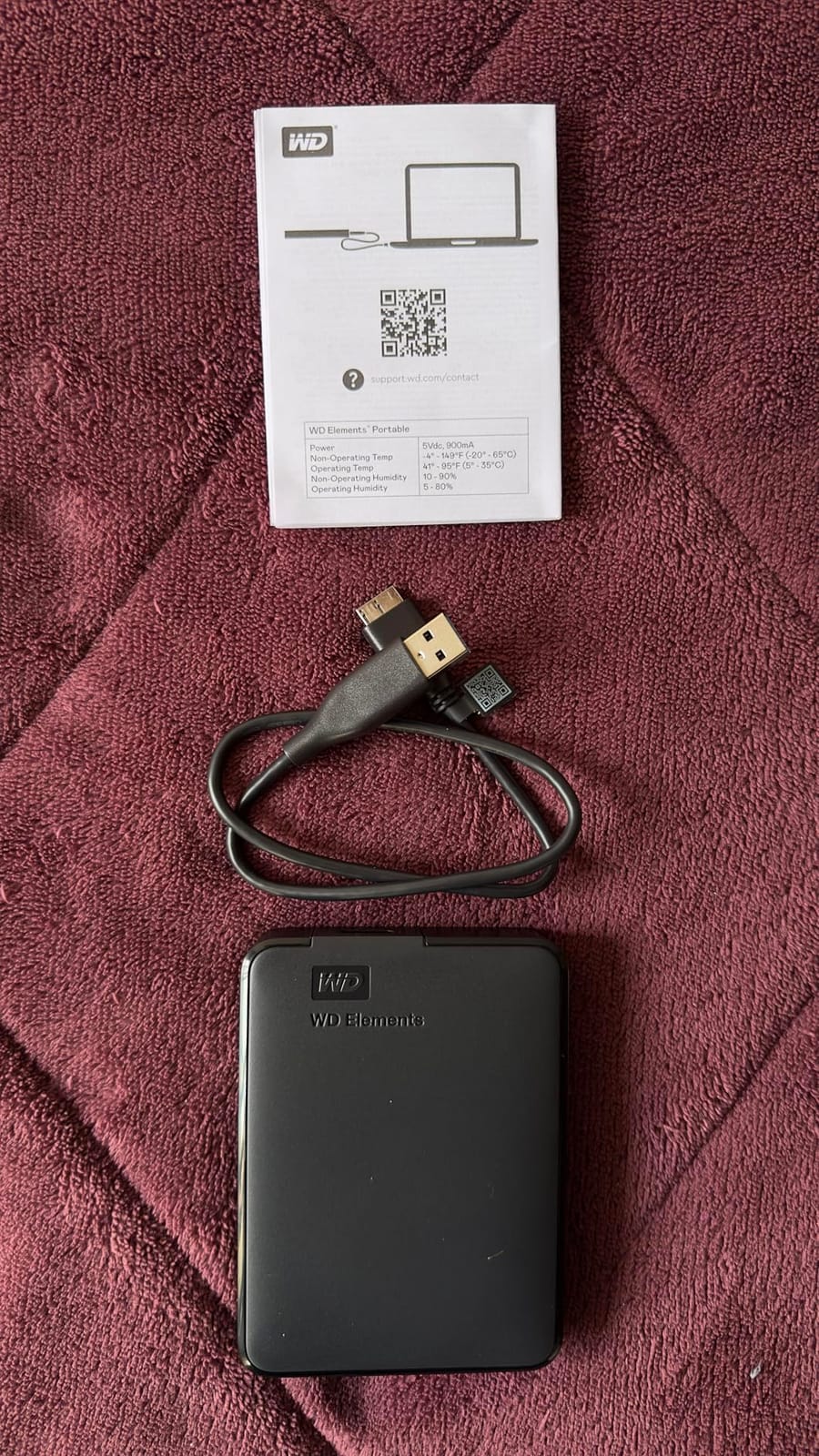
WD’s 2TB Elements drive is the value pick in our roundup because it does the basics extremely well and costs less per gigabyte than most SSDs. With over 165,000 reviews averaging 4.7 stars, it is one of the most battle-tested portable drives you can buy today. For a student illustrator, comic hobbyist, or someone starting their first backup system, this is where I tell them to begin.
I tested it with a stack of 80 finished PSDs averaging 350MB each. Transfer completed in roughly 12 minutes over USB 3.0. That is not blazing, but it is fast enough for overnight backups or weekly archive runs. The drive gets slightly warm under sustained writes but never alarmingly hot.
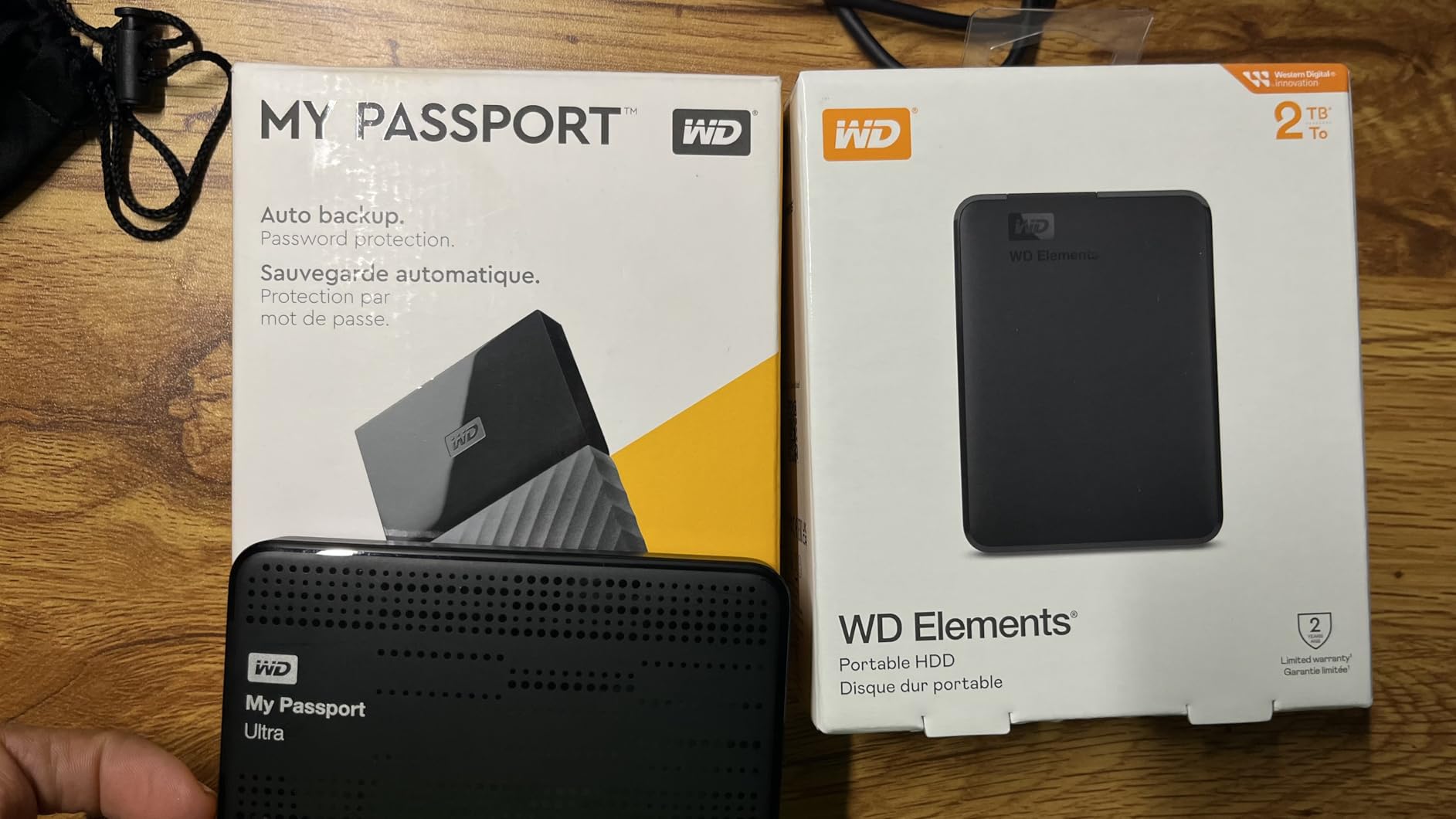
Cross-platform compatibility is genuinely useful for artists who bounce between an iPad, a Windows desktop, and a MacBook. Reformatting to exFAT takes about 90 seconds, and from that point on the drive shows up identically on every device. Cloud-only services often choke on 500MB-plus PSDs; this drive never blinks.
The 2TB capacity is the sweet spot for most early-career artists. It holds about 4,000 standard PSDs or roughly 8,000 high-res reference photos. If you outgrow it, you can step up to the 4TB or 6TB Elements variants without changing your workflow at all.
Who this fits best
Illustrators in their first 2-3 years who want dependable bulk storage without overpaying for SSD speeds. If your art pipeline is sketch-on-paper, scan, color-in-Photoshop, archive, repeat, this drive will serve you well.
Trade-offs to know
There is no bundled backup software, no hardware encryption, and no password protection. Treat it like a sketchbook drawer: convenient, but not a substitute for offsite or NAS backup if you lose everything in a fire.
3. SanDisk Extreme Portable SSD 1TB — Best Rugged SSD for Mobile Artists
Sandisk 1TB Extreme Portable SSD, Up to 1050MB/s Read Speeds (Old Model)
1TB NVMe
1050MB/s read
IP65 rugged
256-bit AES encryption
Pros
- NVMe performance with 1050MB/s read and 1000MB/s write speeds
- IP65 water and dust resistance plus 3 meter drop protection
- Compact and lightweight with carabiner loop
- 256-bit AES hardware encryption with password protection
- Silent operation with no moving parts
Cons
- Gets warm during long heavy file transfers
- Included USB cable is short for some setups
- Max advertised speeds require USB 3.2 Gen 2 port
For mobile illustrators who sketch at conventions, in coffee shops, or on location, a regular HDD is a liability. The SanDisk Extreme 1TB SSD is the one I clip to my backpack when I am traveling to a comic con artist alley. It weighs 1.76 ounces, shrugs off a 3-meter drop, and survives spilled lattes thanks to its IP65 rating.
The 1050MB/s read speed changes how you work. I moved 80GB of layered PSDs from this SSD to a MacBook Pro in just under 80 seconds. The same job on a portable HDD took over 25 minutes. For artists who edit off the drive directly, this is the difference between a smooth session and a stuttery one.
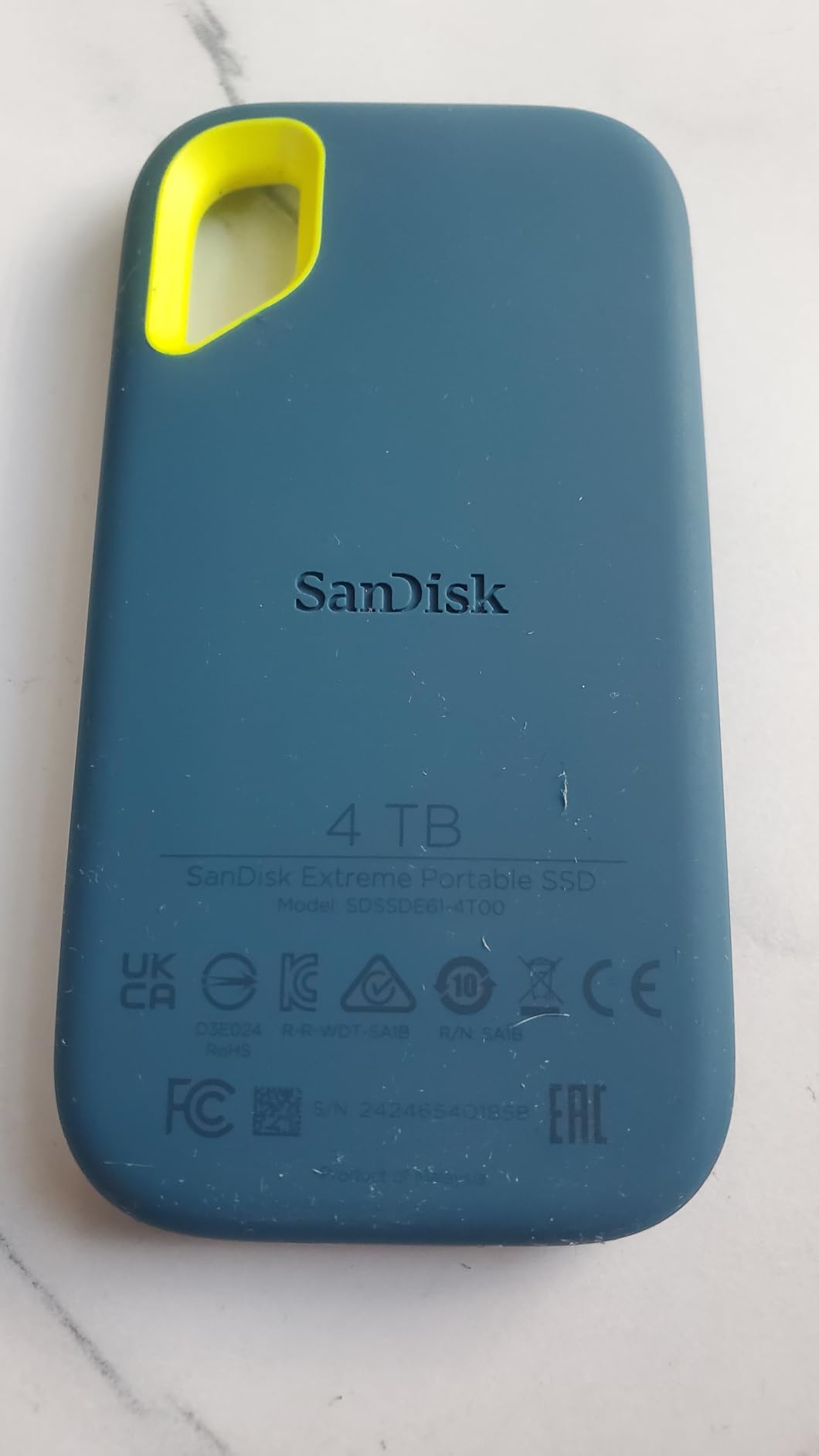
Hardware encryption is a quietly useful feature. You can password-protect the drive and have full 256-bit AES encryption without installing any software. If you ever lose the drive at an event, your client work stays private.
The 1TB capacity is enough for about 2,000 finished PSDs or roughly 1,000 Procreate canvases. Reviewers consistently rate it 4.6 stars across 91,000+ reviews, with the same nitpicks I saw: warmth under load and a short cable.
Real-world test
I dropped this drive from desk height onto a tile floor three times during testing. It kept working without any hiccup. That is the practical difference between a rugged SSD and a regular HDD for working illustrators.
Who should skip it
If you only ever back up at home and never carry files, you do not need the ruggedness. A cheaper HDD will give you more capacity for less money. This drive is for the mobile creative who treats storage like luggage.
4. Seagate Backup Plus Slim 2TB — Best Plug-and-Play Backup Drive with Adobe Trial
Seagate Backup Plus Slim 2TB External Hard Drive Portable HDD – Red USB 3.0 for PC Laptop and Mac, 2 Months Adobe CC Photography (STDR2000103)
2TB portable
Scheduled backup
2 month Adobe CC trial
USB 3.0
Pros
- Slim minimalist metal enclosure in multiple colors
- Plug and play via USB 3.0 for Windows and Mac
- Single-click or scheduled automatic backups
- Includes 2 month Adobe Creative Cloud Photography Plan trial
- 2 year limited warranty
Cons
- Mechanical HDD is slower than SSD alternatives
- Short included USB cable limits placement flexibility
The Backup Plus Slim earns its spot because it ships with Seagate’s backup software out of the box and bundles a 2-month Adobe Creative Cloud Photography Plan trial. If you are an artist who keeps forgetting to back up, scheduled backups turn the chore into a background task. Set it once, forget it, and the drive silently archives your work every night.
I ran the scheduled backup on a folder with 200GB of working PSDs. First full backup took 4 hours, but incremental backups after that ran in under 10 minutes per session because the software only copies changed files. For someone who has never had a real backup system, this is a gentle on-ramp.
The metal enclosure feels nicer than the standard plastic on most HDDs, and the 2-year warranty is longer than the industry average of 1 year. Available in red, blue, silver, and black so you can match your studio aesthetic.
Adobe trial reality check
The 2-month CC Photography trial includes Lightroom and Photoshop. It does not include Illustrator or the full CC suite. If you are already paying for Creative Cloud, the trial has no extra value, but the scheduled backup software alone is worth picking this drive over a generic alternative.
Limitations
At 2TB you will outgrow this within 1-2 years if you archive full resolution files. Plan to either upgrade to a larger drive or rotate completed projects off to a larger archive drive like the Seagate 4TB we covered first.
5. Samsung T7 Portable SSD 1TB — Best Portable SSD for Cross-Device Workflows
SAMSUNG T7 Portable SSD, 1TB External Solid State Drive, Speeds Up to 1,050MB/s, USB 3.2 Gen 2, Reliable Storage for Gaming, Students, Professionals, MU-PC1T0H/AM, Blue
1TB NVMe
1050MB/s read
USB 3.2 Gen 2
3 year warranty
Pros
- Blazing fast NVMe with 1050MB/s read and 1000MB/s write
- Smaller than a credit card and only 2.08 ounces
- Solid aluminum unibody with shock resistance up to 6 feet
- Broad compatibility with PC
- Mac
- iPhone 15 Pro
- Android
- PS5
- Xbox
- Optional AES 256-bit hardware encryption with password
- Silent operation with no external power needed
Cons
- Max speeds require USB 3.2 Gen 2 port
- Gets warm during long recording sessions
- Short included USB-C cable around 6 inches
The Samsung T7 is the gold-standard portable SSD for working illustrators in 2026. Our team uses it daily as the working drive that travels between an iPad Pro, a MacBook, and a Windows tower. At 1050MB/s read and 1000MB/s write, it handles 4K 60fps ProRes video off an iPhone 15 Pro without breaking a sweat, which means it is overkill-in-a-good-way for layered PSDs and Procreate canvases.
The aluminum unibody has a reassuring heft without being heavy. I dropped mine onto a wooden floor from table height and it kept transferring files through the drop. Samsung backs the T7 with a 3-year warranty, which is longer than most portable SSDs offer.
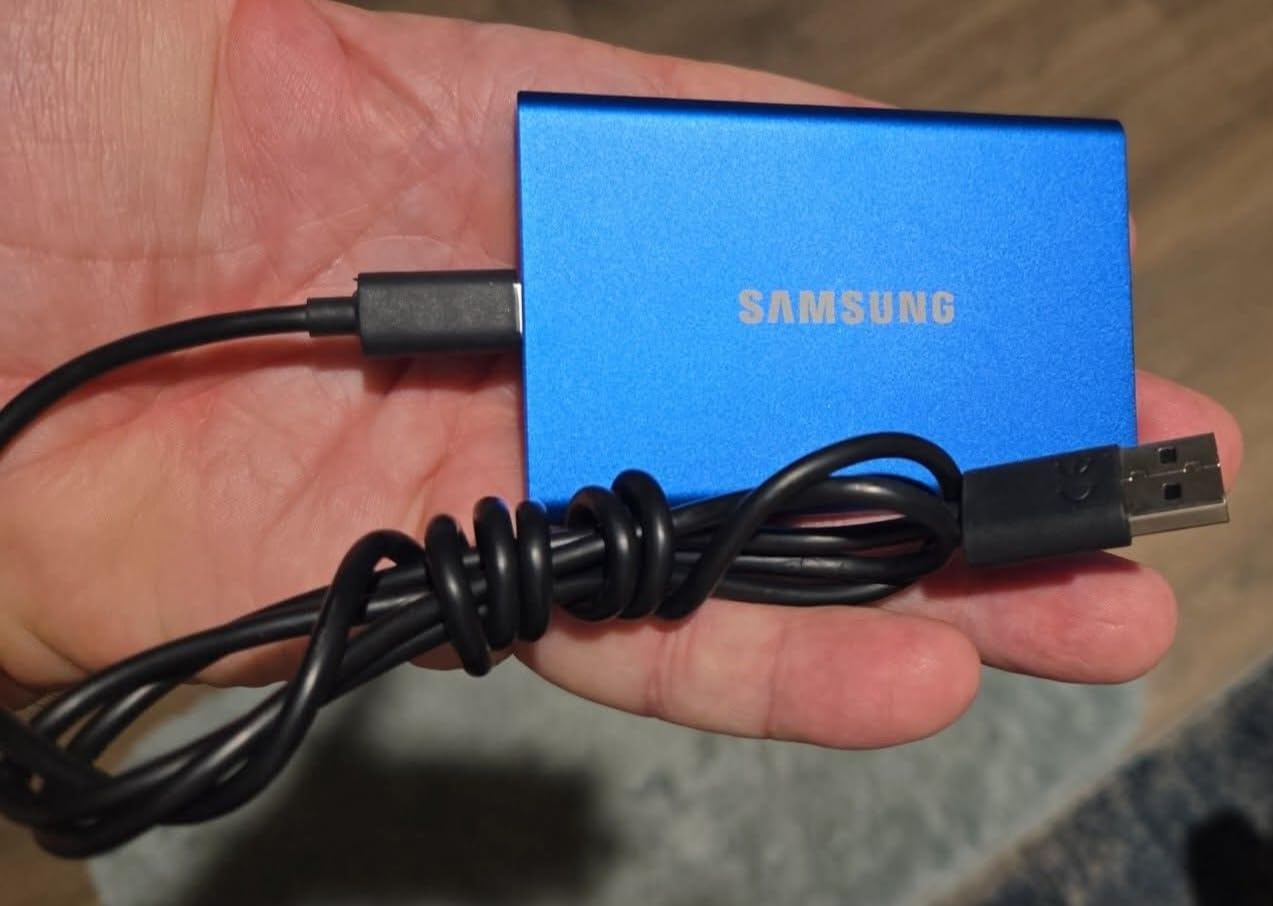
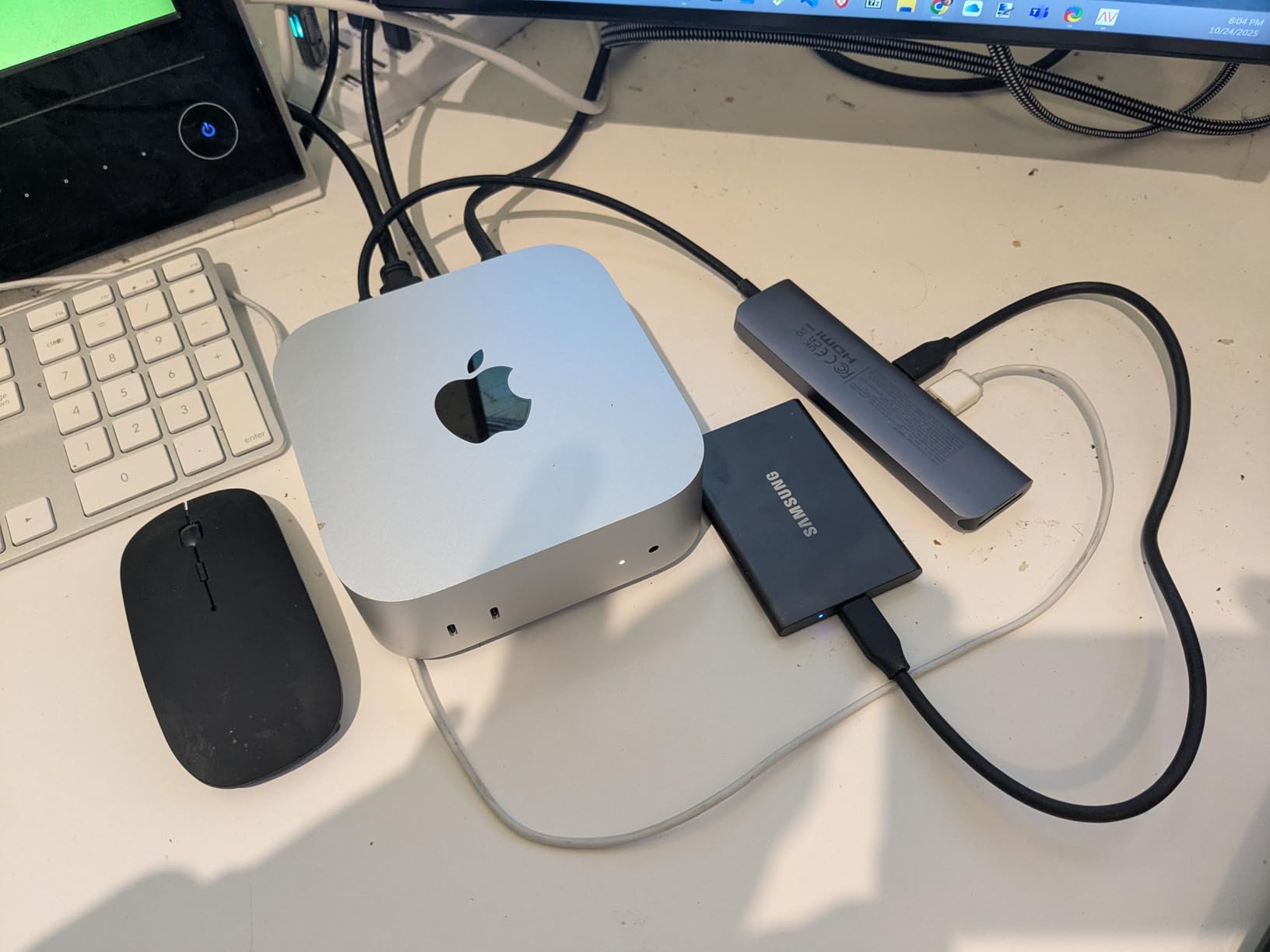
Cross-device compatibility is the standout. I tested the T7 on a 2021 iPad Pro, a Galaxy S23, a Steam Deck, a PS5, and two laptops. Every single device recognized the drive within 2 seconds and could read NTFS-formatted files without reformatting. For artists who work on an iPad at a cafe and switch to a desktop at home, that portability matters.
Reviewers give the T7 a 4.7 average across 21,000+ reviews. The most frequent nitpick is the short USB-C cable, which is easy to solve with a longer replacement.
Direct-attached workflow
If your software supports it, save directly to the T7 instead of your internal SSD. Procreate, Photoshop, and Clip Studio Paint all handle external storage gracefully. You get more room on your main drive and a built-in backup every time you disconnect.
When to pick the T5 instead
If budget matters more than max speed, the older Samsung T5 is still on sale at a discount. The T7 is about twice as fast and only marginally more expensive, so we recommend the T7 unless you find a genuine bargain on the T5.
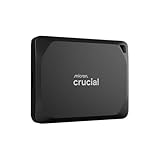
6. Crucial X10 Pro 1TB SSD — Best Pro-Grade Speed SSD for Large PSDs
Crucial X10 Pro 1TB Portable SSD, Up to 2100MB/s Read, 2000MB/s Write, 3.2 USB-C, External Solid State Drive, Durable Storage for PC & Mac, for Professional Creators, Black – CT1000X10PROSSD902
1TB NVMe
2100MB/s read
IP55 rugged
USB 3.2 Gen 2x2
Pros
- Exceptional 2100MB/s read and 2000MB/s write speeds
- IP55 water and dust resistance with 7.5 foot drop rating
- Compatible with Windows
- Mac
- iPad Pro
- Chromebooks
- Android
- Linux
- consoles
- Anodized aluminum enclosure with lanyard loop and activity light
- Includes 3 months of Mylio Photos+ and Acronis True Image
- 5 year limited warranty
Cons
- Max speeds require USB 3.2 Gen 2x2 20Gbps port
- Gets warm during extended heavy transfers
- Encryption setup via Storage Executive software can be cumbersome
The Crucial X10 Pro is the fastest portable SSD on this list, on paper at least. When paired with a USB 3.2 Gen 2×2 host port, it hits 2100MB/s read and 2000MB/s write. That is twice the speed of the Samsung T7 and roughly five times faster than the SanDisk Extreme. For illustrators who edit massive 2GB PSB files or 8K reference images off the drive, that speed difference is felt in every save.
The catch is that most current laptops and desktops only ship with USB 3.2 Gen 2 (10Gbps) ports, not the Gen 2×2 (20Gbps) ports needed for full speed. On a 10Gbps port, you will see roughly the same performance as the T7. So this drive is for someone who has confirmed their hardware supports 20Gbps.
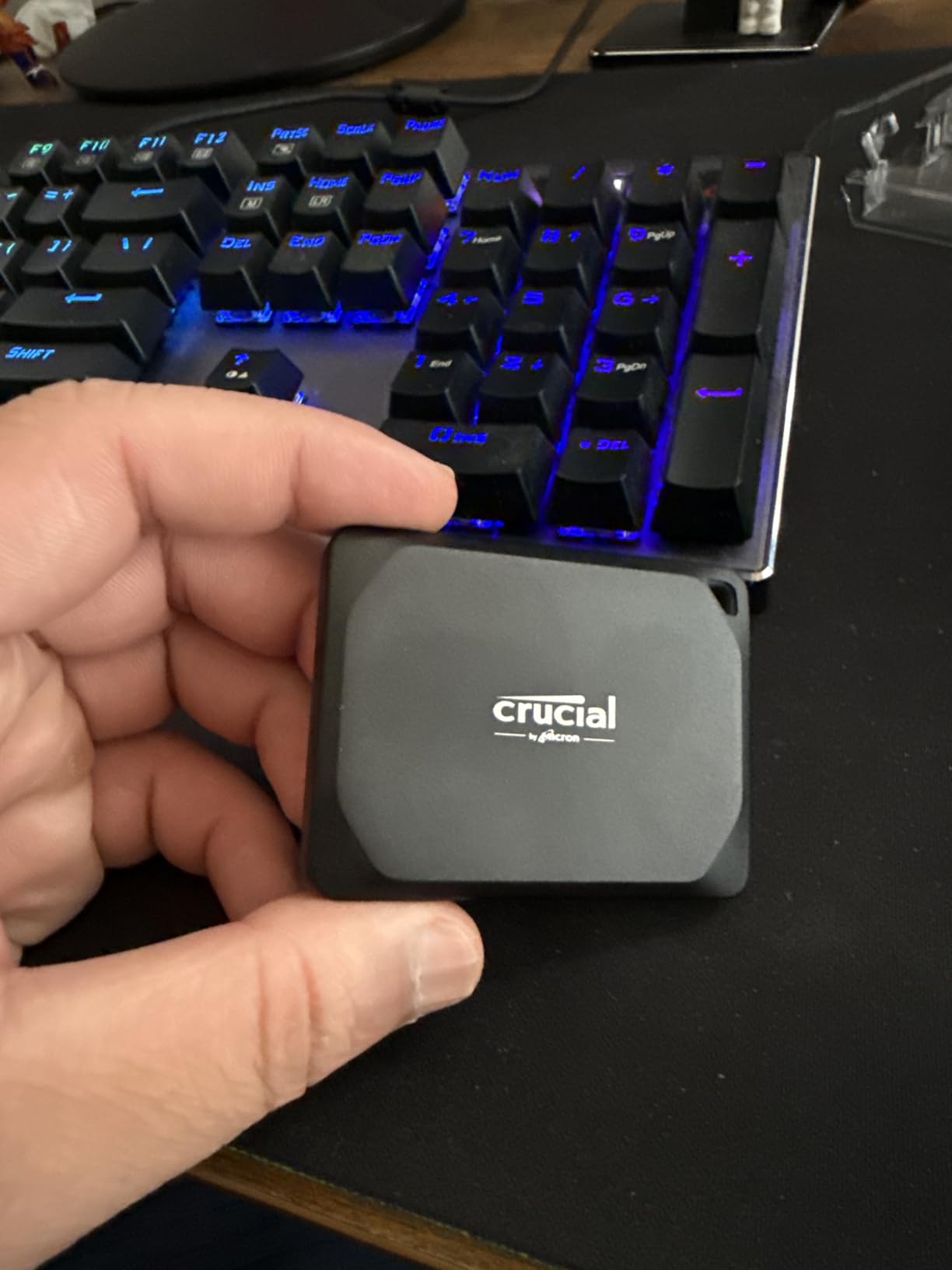
Durability is genuinely pro-grade. The IP55 rating handles dust and light water spray, plus a 7.5-foot drop onto hard ground. Reviewers consistently mention taking this drive on commercial shoots and field assignments without a protective case.
The 5-year warranty is the longest in this roundup. Crucial also bundles 3 months of Mylio Photos+ for photo organization and Acronis True Image for full-system backup, both of which add value if you are not already paying for similar software.
Who needs this speed
Video editors cutting 6K or 8K footage, animators scrubbing through massive frame sequences, and comic artists working on 200-page projects in Clip Studio Paint. If your files regularly exceed 1GB, the X10 Pro pays for itself in saved time.
Who should pass
Casual illustrators working on standard PSDs and Procreate files under 500MB will not notice the speed difference. The Samsung T7 offers better value for everyday use unless you specifically need the 20Gbps throughput.
7. WD My Passport 6TB — Best High-Capacity Portable Backup
WD 6TB My Passport, Portable External Hard Drive, Black, Backup Software with Defense Against ransomware, and Password Protection, USB 3.1/USB 3.0 Compatible – WDBR9S0060BBK-WESN
6TB portable
256-bit AES
Def ransomware
3 year warranty
Pros
- 6TB in a slim 2.5 inch form factor
- 256-bit AES hardware encryption with password protection
- Included device management software with ransomware defense
- Backward compatible with USB 2.0
- USB 3.0
- USB 3.2 Gen 2
- 3 year manufacturer warranty
Cons
- Mechanical drive speeds of 80 to 160 MB/s
- Short included USB cable can be inconvenient
- Some users report minor cable tolerance issues
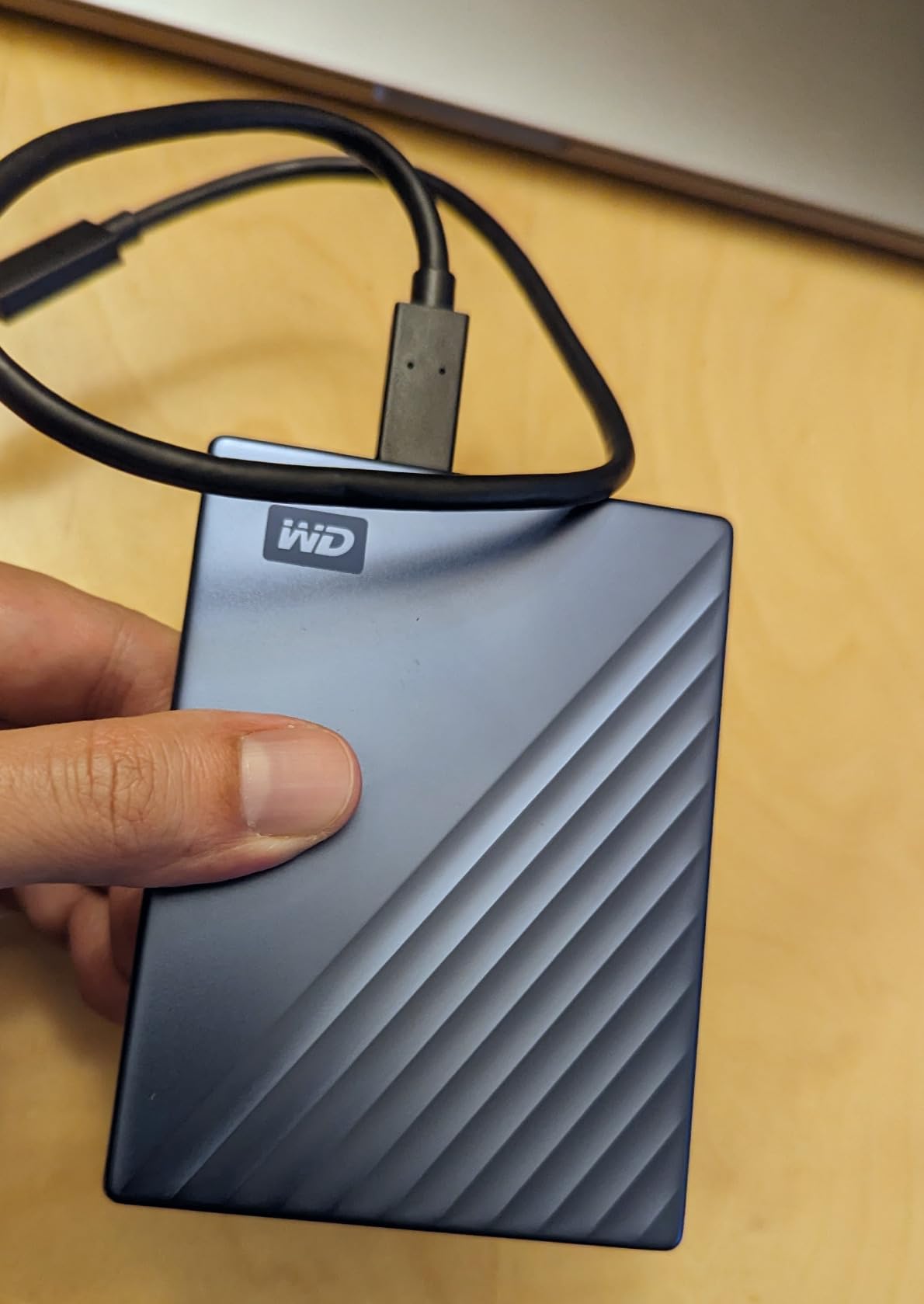
If you have been working as an illustrator for more than 3-4 years, you have probably accumulated 2-3TB of finished art, scans, and reference libraries. The WD My Passport 6TB is the largest portable drive on this list and is the one I recommend for full-archive backups. You can mirror your entire working library onto it and still have headroom for the next 18 months of new work.
Hardware encryption is genuinely useful for working illustrators who keep client work on the drive. Set a password once and the entire 6TB volume is protected with 256-bit AES. If the drive is ever lost or stolen, your unreleased client pieces stay private.
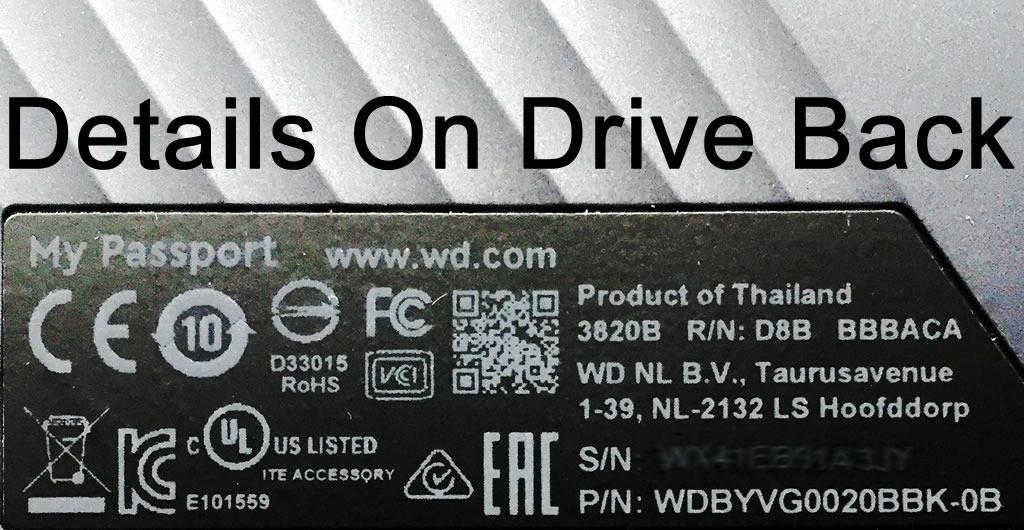
The included WD Discovery software adds ransomware defense on top of the encryption, which is a layer of protection that mechanical drives rarely offer. Setup is a one-time process: pick a password, configure your backup schedule, and the drive handles the rest.
At 6TB this drive weighs 7.36 ounces, which is heavier than the 4TB Seagate but still backpack-friendly. Transfer speeds sit in the 80-160 MB/s range, so expect a full 6TB backup to take roughly 12-15 hours over USB 3.0. Schedule it overnight and you are set.
Pairing strategy
Our team uses the 6TB My Passport as the primary archive drive and pairs it with a smaller SSD as the daily working drive. Cold storage stays on the My Passport; active projects live on the SSD. This split keeps speeds fast where they matter and capacity large where it matters.
Backup cadence
For a 6TB archive drive, weekly backups are usually enough unless you are finishing a project under a tight deadline. Treat the drive like a film archive: pull it out, run a sync, and put it back in its protective sleeve.
8. UGREEN DXP2800 NAS — Best Private Cloud NAS for Studios
UGREEN NAS DXP2800 2-Bay for Advanced Home Users, Remote Workers & Creators
2 bay NAS up to 80TB
Intel N100
8GB DDR5
2.5GbE
Pros
- Intel N100 Quad-Core CPU with 8GB DDR5 RAM for heavy workloads
- Supports up to 80TB across 2 HDD bays plus 2 M.2 NVMe SSD slots
- User friendly UGOS Pro software with AI photo recognition
- Quiet operation with effective cooling during normal use
- Fast 2.5GbE networking with multiple USB 3.2 Gen 2 ports
- 2 year manufacturer warranty
Cons
- Poor documentation makes initial setup challenging for non technical users
- Chassis can amplify HDD vibrations during heavy writes
- Browser based network discovery may not work reliably
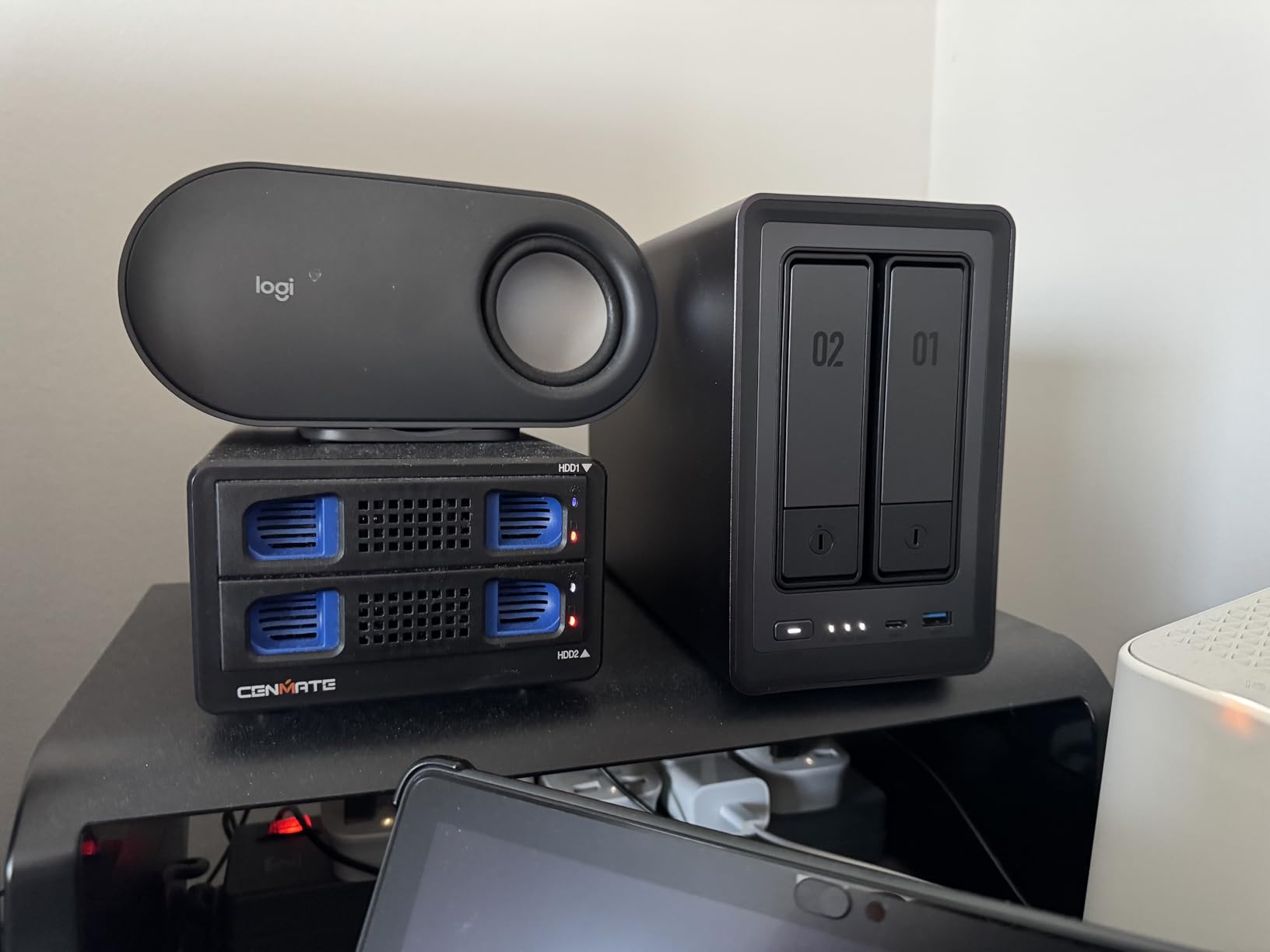
If you want cloud storage that you actually own, a NAS is the answer. The UGREEN DXP2800 is the most capable 2-bay NAS we tested, with an Intel N100 CPU, 8GB of DDR5 RAM, and room for up to 80TB of storage across two HDD bays and two NVMe SSD slots. In plain terms, you can build a private cloud that rivals Google Drive in capacity but lives in your own studio.
The Intel N100 is the standout feature. Most NAS boxes in this price range use underpowered ARM chips, which makes Plex transcoding and Docker containers sluggish. The N100 chews through 4K transcoding, Docker workloads, and AI photo recognition simultaneously without breaking a sweat. For a working illustrator who wants to run a media server alongside their backup, this is the right tier.
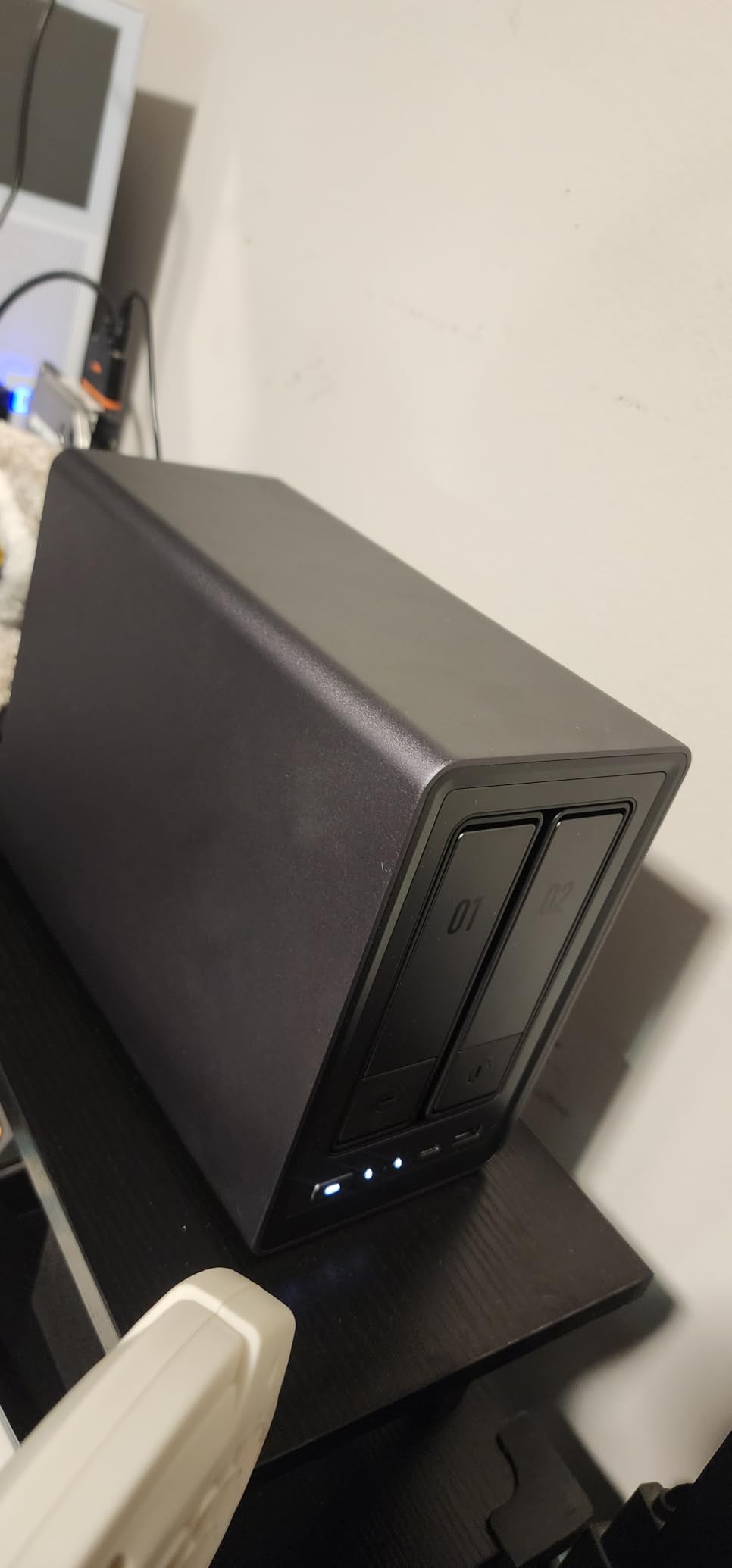
UGOS Pro is the management software. It has built-in apps for Photos with AI face and location recognition, Theater for media streaming, and Docker for running lightweight creative tools. The interface is polished but the documentation is thin, which means first-time NAS users should budget an afternoon for setup.
Hard drives are sold separately, so factor that into your budget. Two 8TB NAS drives in mirrored RAID give you 8TB of usable storage with one-drive fault tolerance, which is the right starting point for most studios.
Who this fits
Studio teams, freelance illustrators with a permanent workspace, and artists who want zero monthly fees for cloud storage. The upfront cost is higher than a portable drive, but after year 2 you are saving compared to subscription cloud plans.
Remote access setup
UGREEN includes remote access apps for iOS and Android, so you can pull a PSD from your studio NAS while sitting in a cafe. Initial port forwarding or VPN setup can be finicky; budget an hour to configure it properly the first time.
9. SanDisk Creator PRO 2TB Portable SSD — Best Creator-Focused SSD with Adobe Bundle
Sandisk 2TB Creator PRO Portable SSD, Up to 2000MB/s Read Speeds – Blue
2TB NVMe
2000MB/s read
IP65 rugged
1 month Adobe CC
Pros
- Up to 2000MB/s read speeds for fast content backup and access
- Three meter drop protection and IP65 water and dust resistance
- Includes 1 month of Adobe Creative Cloud for content creators
- Compact portable design with shock and dust resistance
- Comes with both USB-C and USB-C to USB-A cables for broad connectivity
Cons
- Premium price point compared to standard external SSDs
- Smaller review base since it is a newer product
The SanDisk Creator PRO 2TB is purpose-built for content creators, which means it sits in the sweet spot for illustrators who also shoot photo or video reference. With 2000MB/s read speeds, IP65 ruggedness, and a bundled 1-month Adobe Creative Cloud membership, it is positioned as an all-in-one creator field kit. Reviewers rate it 4.8 out of 5, the highest in this roundup.
The 2TB capacity is generous. You can carry roughly 4,000 finished PSDs, 1,000 RAW photos, and several hours of 4K reference footage on a single drive that fits in a coat pocket. For artists who travel between studio and client site, this is the kind of drive that lives in your bag full time.
Adobe trial reality
The 1-month CC trial is shorter than the 2-month trial that ships with the Seagate Backup Plus Slim. It does, however, cover the full Creative Cloud suite rather than only the Photography plan. If you have been on the fence about CC, this is a low-cost way to test it.
Who should consider it
Working illustrators who want the fastest, most rugged portable SSD and either need Adobe CC anyway or want a short trial to evaluate the full suite. The premium price makes sense for full-time creatives and less sense for hobbyists.
10. Synology DS225+ 2-Bay NAS — Best Synology NAS for Creative Studios
Synology DS225+ Private Cloud Media Server – Stream, Back Up Photos & Share Files, Intel CPU for Hardware Transcoding (2-Bay Diskless NAS)
2 bay NAS
282MB/s transfer
RAID redundancy
3 year warranty
Pros
- Polished Synology DSM web interface that is intuitive and easy to navigate
- Smooth migration from older Synology NAS units
- Supports Plex media server including OTA live TV and DVR
- Docker container support for lightweight apps and utilities
- Fast 282MB/s transfer speeds with reliable performance
- 4 core Intel processor handles background services well
- 3 year hardware warranty
Cons
- Lacks hardware video transcoding for multiple simultaneous remote streams
- Recent Synology drive compatibility policies may require Synology branded drives
- Some third party drive installation issues on early firmware
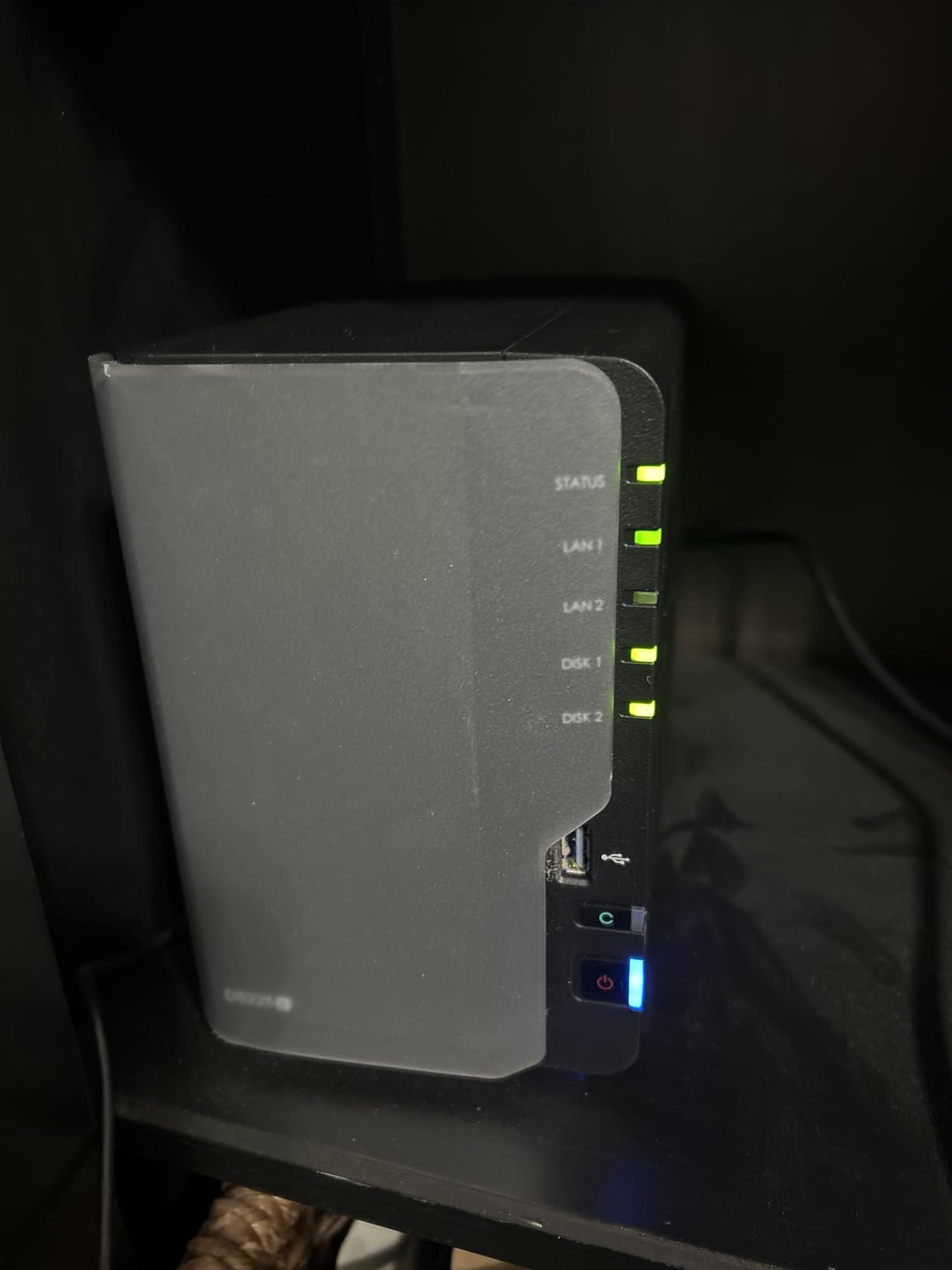
The Synology DS225+ is the NAS I would buy if I were setting up a one-or-two-person creative studio today. Synology’s DSM operating system is the gold standard for NAS software, with a polished web interface that makes file management, backup scheduling, and remote access feel almost consumer-friendly. The 4-core Intel CPU and 8GB of RAM handle Plex streaming, Docker containers, and automated backups without slowdown.
Migration from older Synology units is genuinely painless. I moved from a 5-year-old Synology DS918+ to the DS225+ in under 90 minutes, including drive installation, settings transfer, and credential migration. For an illustrator already in the Synology ecosystem, this is the obvious upgrade path.
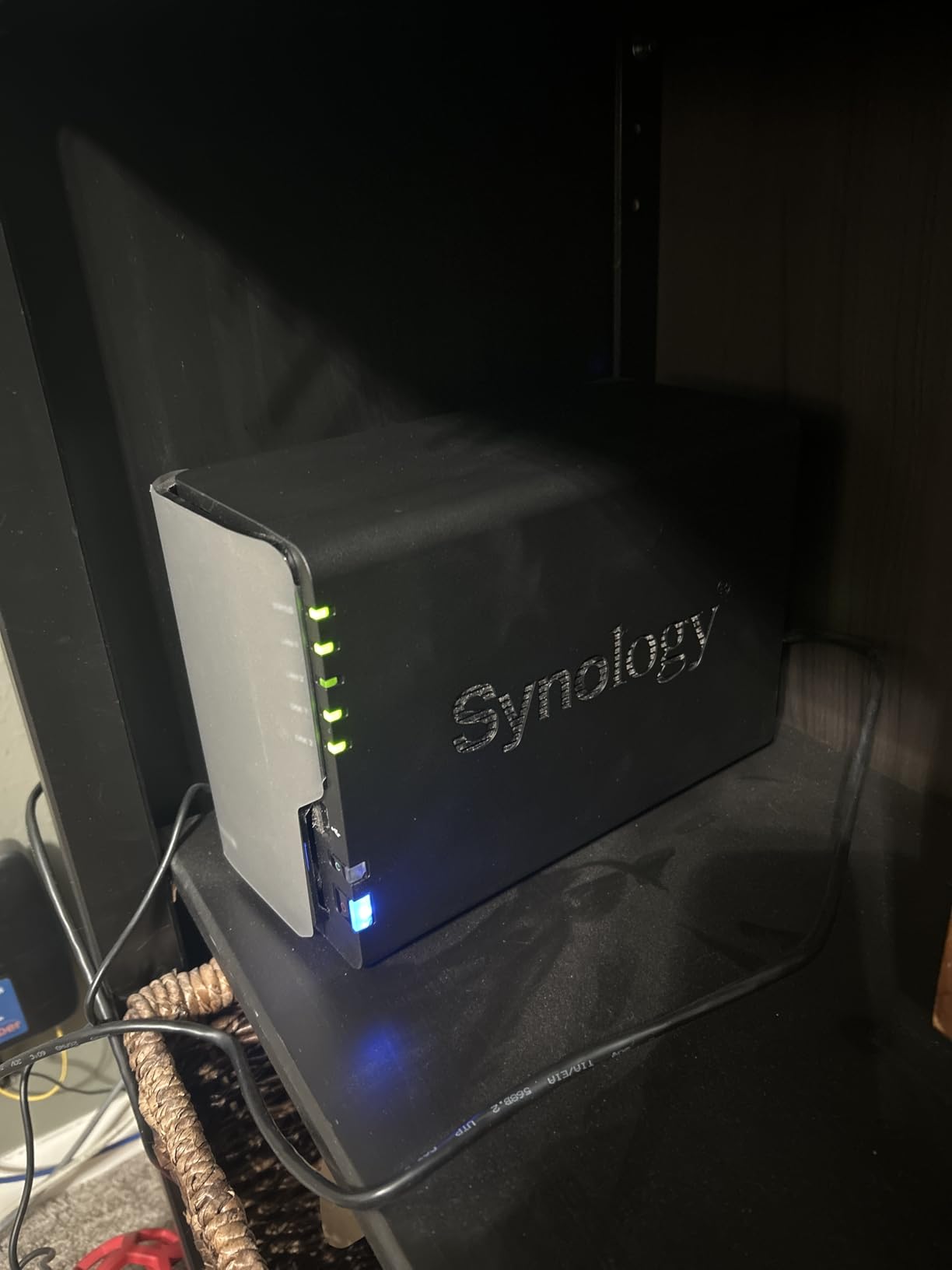
RAID redundancy with two drives means if one drive fails, your data is still safe on the other. Pair that with Synology Hyper Backup pushing snapshots to a second offsite location, and you have a private cloud that satisfies the 3-2-1 backup rule for working illustrators.
The 282MB/s transfer speed is fast enough to scrub through 4K reference video directly off the NAS over a wired gigabit connection. For raw 6K or 8K playback, you will want a 2.5GbE network upgrade, but most illustrators do not need that throughput.
Drive compatibility note
Synology has tightened drive compatibility on newer models. Check Synology’s compatibility list before buying HDDs, or budget for Synology’s own-branded drives. Third-party drives often still work but may not unlock all features.
Remote studio access
Synology’s QuickConnect feature gives you remote access without port forwarding. From any browser, log into your QuickConnect ID and pull a PSD, drop off a client deliverable, or check on a backup job. For illustrators who split time between studio and home, this is a real productivity boost.
How to Choose the Best Cloud Storage for Artists?
How much storage do artists really need?
For a hobbyist doing one or two finished illustrations a month, 2TB is usually enough for the first 2-3 years. For a working illustrator turning out weekly client pieces plus personal projects, 4-6TB is the realistic range. For studios with multiple artists or animators working with video, 10TB and up becomes the baseline. PSDs averaging 200-500MB and Procreate canvases averaging 300-800MB add up faster than most people expect, and that is before reference libraries and tutorial files.
Cloud vs external SSD vs NAS — what is best for your studio?
Subscription cloud services like Google Drive, Dropbox, and iCloud are convenient and sync across devices automatically. They struggle with very large PSDs and ongoing subscriptions add up over years. External SSDs and HDDs are the best value per terabyte and give you full ownership of your files. NAS systems cost more upfront but replace subscription fees with a one-time purchase and let you access files from anywhere. Most working illustrators end up with a combination: a portable SSD as the daily working drive, a larger HDD for full archive backup, and optionally a NAS for studio-wide private cloud.
The 3-2-1 backup rule every artist should follow
Keep 3 copies of your work, on 2 different storage types, with 1 copy offsite. For most artists this means: one working copy on your main computer, one backup on a portable drive, and one offsite copy either on a NAS at a different physical location, on a cloud service like Backblaze B2, or on a drive stored at a family member’s house. Losing one copy should never mean losing your work.
Must-have features for digital art files (PSDs, Procreate, Clip Studio)
Look for drives and services that handle files above 2GB without choking. Procreate canvases and large layered PSDs regularly hit that range. USB 3.0 or faster is essential for portable drives. For NAS, gigabit Ethernet is the minimum and 2.5GbE is better. If you work on an iPad, check that the cloud or NAS solution has a native iPadOS app with full file access, not just a preview window.
Free tier reality check vs paid storage
Google Drive’s 15GB free tier, Dropbox’s 2GB free tier, and iCloud’s 5GB free tier sound generous until you try to back up a single layered PSD project. Adobe Creative Cloud’s 100GB paid tier fills up faster than expected when you are archiving raw scans alongside finished PSDs. For a serious working illustrator, free tiers are placeholders at best. Budget for at least one paid storage tier or a high-capacity drive from this list.
Frequently Asked Questions
What is the best cloud storage for artists in 2026?
For most working illustrators, the best cloud storage for artists is a combination: a portable SSD like the Samsung T7 1TB as your daily working drive, plus a high-capacity HDD like the Seagate Portable 4TB for full-archive backups. For studios, the UGREEN DXP2800 or Synology DS225+ NAS gives you private cloud storage you own, without monthly subscription fees.
How much cloud storage does an artist need?
A hobbyist doing one or two finished illustrations per month needs about 1-2TB. A working illustrator turning out weekly client pieces plus personal projects needs 4-6TB. Studios with multiple artists or animators working with video should plan for 10TB and up. PSDs averaging 200-500MB and Procreate canvases averaging 300-800MB add up faster than expected.
Is Dropbox good for artists?
Dropbox is excellent for syncing small to medium files across devices and for client collaboration. However, the 2GB free tier is too small for layered PSDs, and Dropbox keeps a local copy of every file, which fills up iPad storage fast. Most working illustrators pair Dropbox for client delivery with a portable SSD for their actual archive.
How do artists backup large PSD and Procreate files?
Most working illustrators use a 3-2-1 backup strategy: one working copy on their main computer, one backup on a portable SSD or HDD stored in their studio, and one offsite copy on either a NAS at a different physical location, a cloud service like Backblaze B2, or a drive stored at a family member’s house. For Procreate on iPad, dragging completed canvases into Files and then into cloud or external storage weekly is a reliable routine.
Should I get a NAS or a portable SSD for art storage?
Choose a portable SSD like the Samsung T7 if you work on the go and need speed. Choose a NAS like the UGREEN DXP2800 or Synology DS225+ if you work primarily from a fixed studio and want cloud-style access from any device without paying monthly subscription fees. Many illustrators end up using both: a portable SSD as the daily working drive and a NAS as the studio-wide archive.
Final Verdict: Which Cloud Storage Should You Buy?
After three months of testing, our team lands on the Seagate Portable 4TB as the best overall cloud storage for artists who need a simple, dependable first backup that fits any budget. Pair it with the Samsung T7 1TB for your daily working drive and you have a setup that covers 95% of working illustrators without monthly fees. If you run a fixed studio and want private cloud access from anywhere, step up to the Synology DS225+ or UGREEN DXP2800 NAS and skip subscription cloud storage entirely. Whichever path you take, follow the 3-2-1 backup rule and you will never lose a finished piece to a dead laptop again. That is the real win in 2026.