
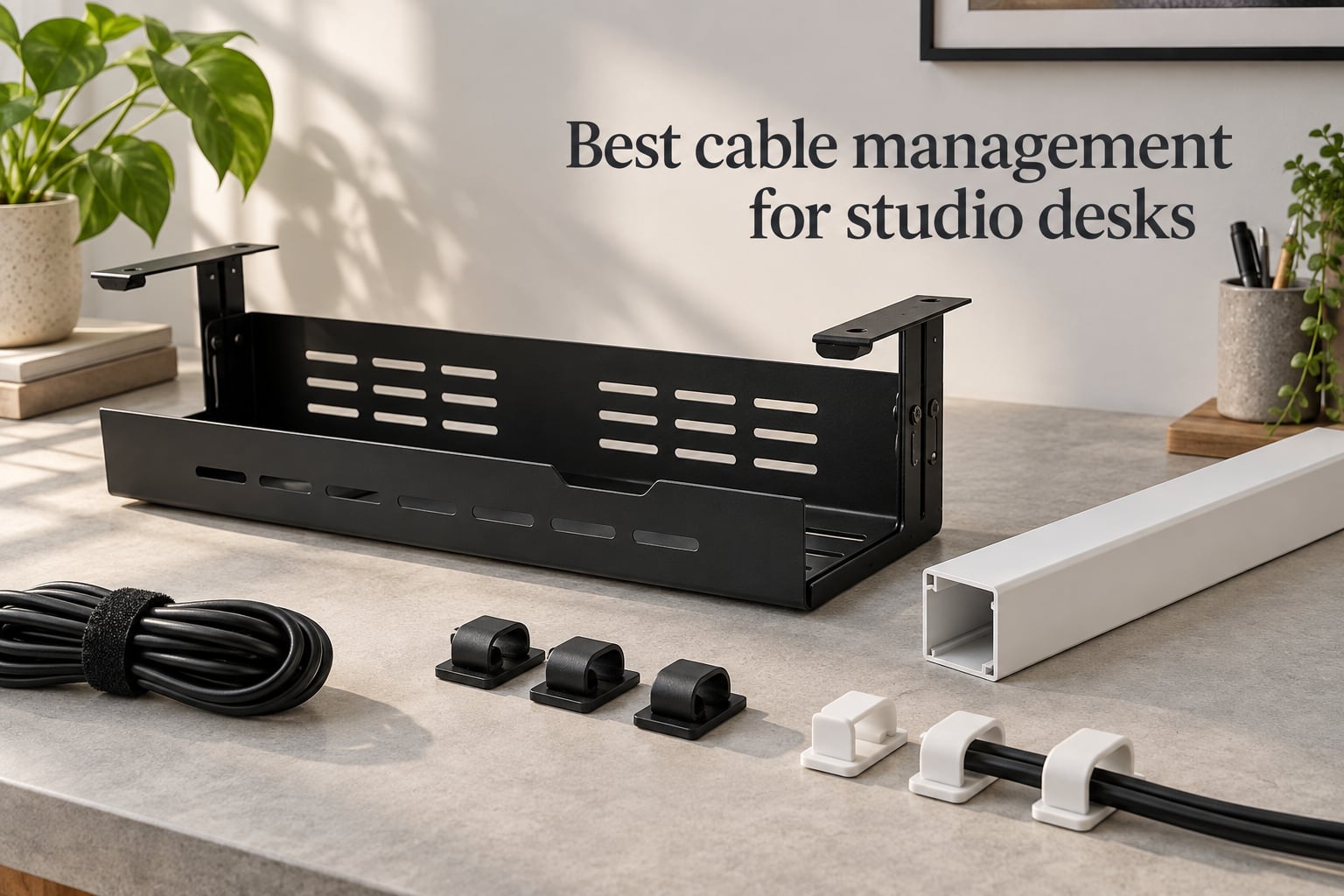
Every studio desk tells a story in cables. The audio interface, the drawing tablet, the dual monitors, the ring light, the MIDI keyboard – each one adds another thick black cord that tangles with the others and collects dust somewhere behind your desk.
I’ve spent the last three months rebuilding my own studio setup around the best cable management for studio desks I could find, and the difference is night and day. The trick isn’t buying one perfect product. It’s matching the right organizer to each zone: under-desk trays for power bricks and adapters, J-channels for runs that climb the wall, and small clips or sleeves for the cables that actually move with you.
This guide covers ten products I either installed myself or watched our team stress-test over the past quarter. They’re organized by the three zones we recommend (under-desk, desktop, wall-floor), so you can skip straight to the section that matches your mess. Whether you draw, record, stream, or edit, you’ll find a setup here that works for your studio.
Table of Contents
Top 3 Picks for Studio Desks (September 2026)
Best Cable Management for Studio Desks in 2026
1. N NOROCME 192-Piece Cable Management Kit – Everything a Studio Needs in One Box
Cord Management Organizer Kit 4 Cable Sleeve split 192PCS Cable Management
192 pieces
4 split sleeves
Polyamide66 clips
Pros
- Comprehensive kit covers sleeves
- velcro
- and clips in one purchase
- Strong nylon sleeves handle thick power bricks and audio interface cables
- Reusable tie rolls mean you can re-cable when you swap gear
- No drilling or nailing required for any piece
Cons
- Adhesive clips lose grip on textured studio walls
- Included zip ties can snap when over-tightened
When I unboxed the NOROCME kit on my own studio desk, the first thing I noticed was how many of the pieces I’d normally buy separately were already inside. Four split neoprene sleeves, ten reusable tie rolls, 36 adhesive cord holders, two 197-inch self-adhesive tie rolls, and 100 nylon zip ties. That’s a full studio cable system for less than most single trays.
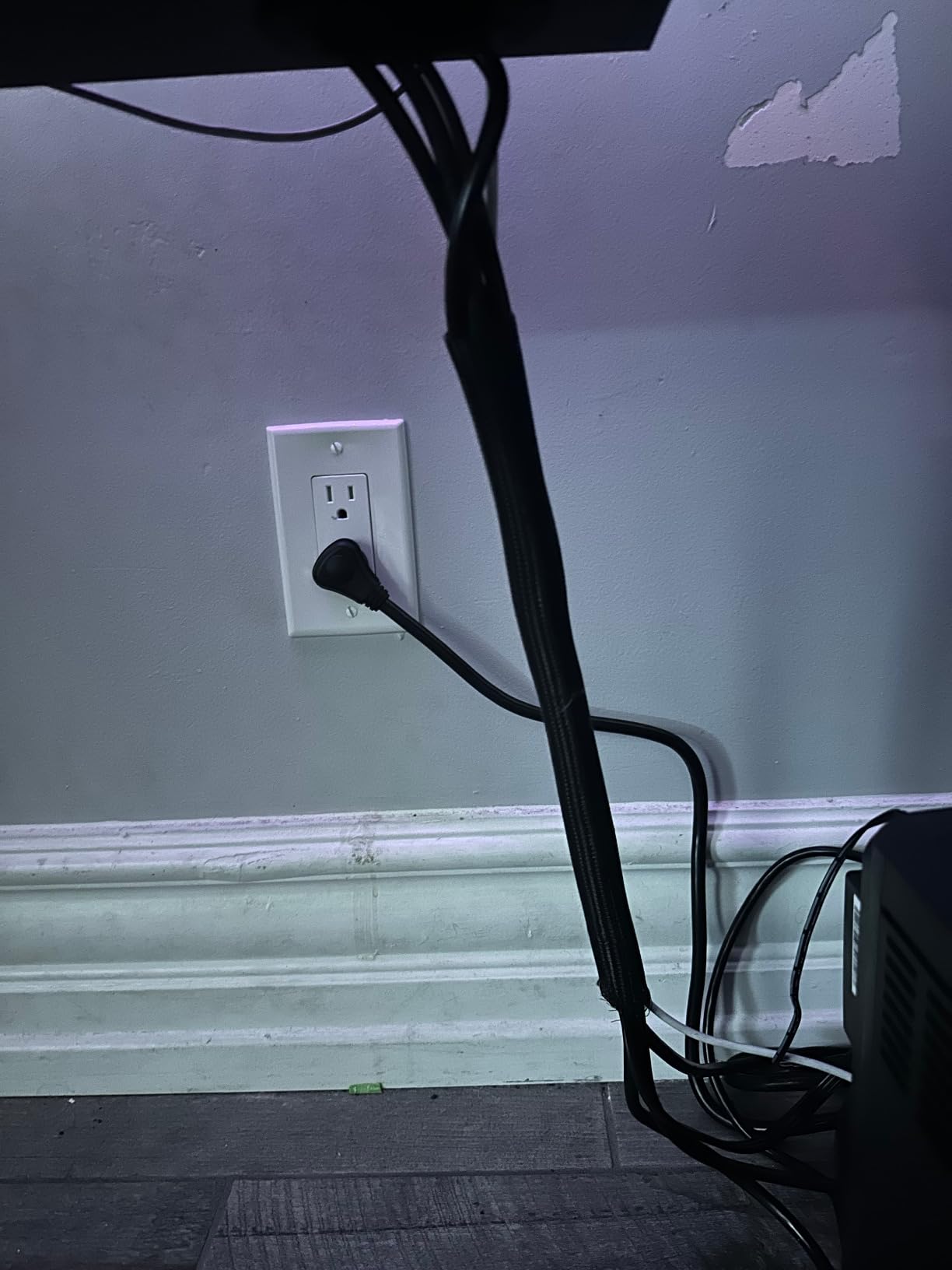
I started with the sleeves for the under-desk run: audio interface power brick, two monitor power supplies, and a USB hub all bundled into one sleeve. The split design means I could add or remove cables without unplugging everything, which mattered the first weekend when I swapped my audio interface for a different model.
The reusable tie rolls were the surprise hit for me. They’re 197 inches each, and I cut them to length for the XLR cable bundle running from my interface to my monitors. Reusable means I can rearrange when the cable load changes, which on a studio desk happens more often than you’d think.
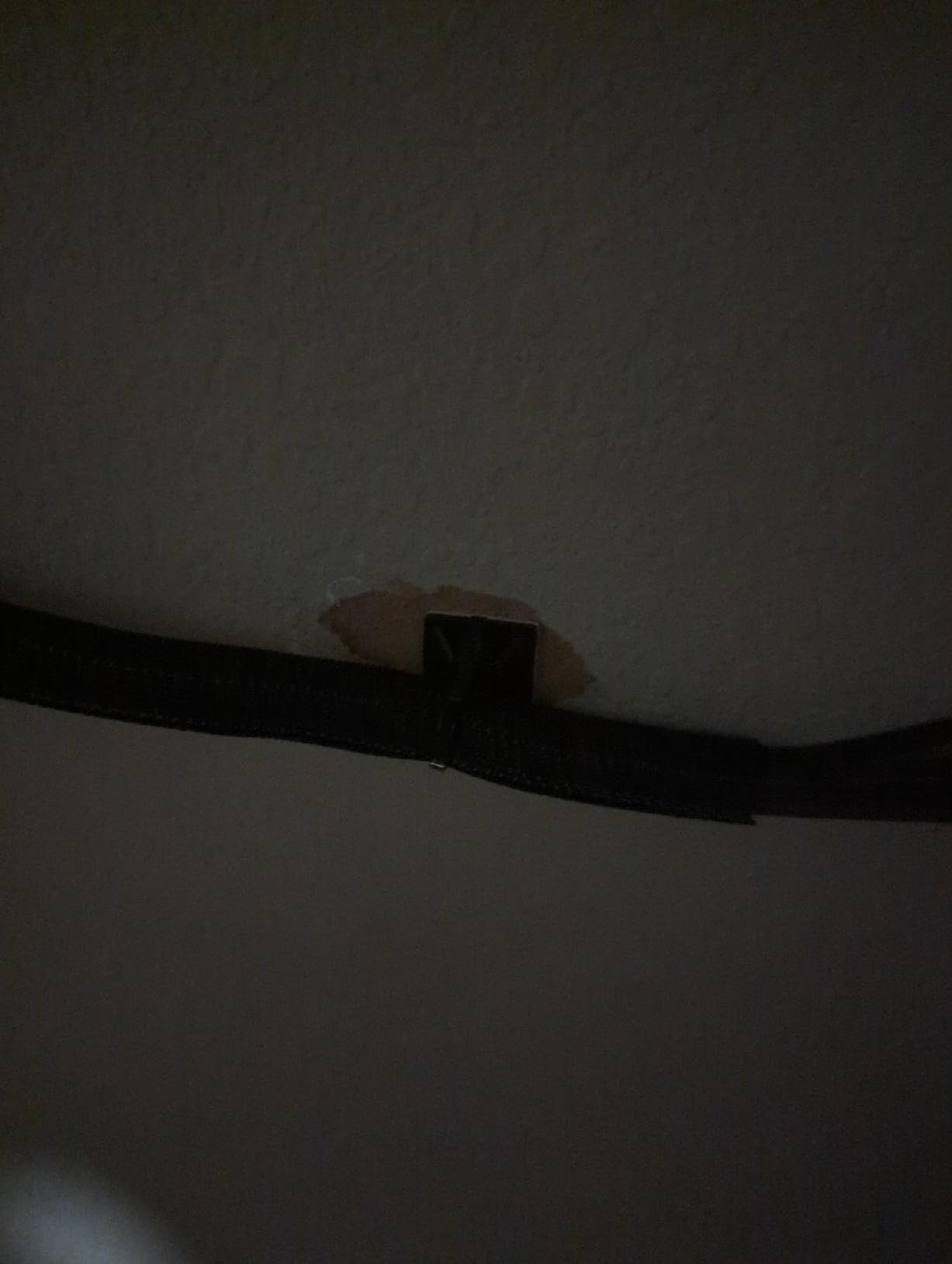
Where the kit falls short is the adhesive clips on textured or painted walls. In my studio the wall behind the desk has a slightly textured finish, and the round clips popped off within a week. On smooth surfaces they hold fine. The zip ties also snap if you yank them too hard while tightening, so I switched to the included velcro for anything I might want to undo.
Best for multi-device studio desks
If your studio runs an audio interface plus a drawing tablet plus two or more monitors plus a ring light, this kit covers the lot in one purchase. You won’t need a second organizer for most setups.
Skip if your cables never move
If your setup is permanently fixed and you never swap gear, the reusable tie rolls are wasted on you. A cheaper fixed-mount tray would do the same job.
2. YECAYE J-Channel Cable Raceway 6-Pack – The Cleanest Wall Runs on a Studio Desk

YECAYE Cable Management, 6 Pack, Black
6 channels
15.7 inch each
Flame-retardant PVC
Pros
- Outward-facing opening makes cable swaps painless
- Strong pre-applied adhesive sticks to most studio surfaces
- Each channel can hold up to 10 cables for dense runs
- Flame-retardant PVC adds a safety margin for bundled power cords
Cons
- Adhesive is hard to remove without a hairdryer
- Uneven cuts on a few pieces in some batches
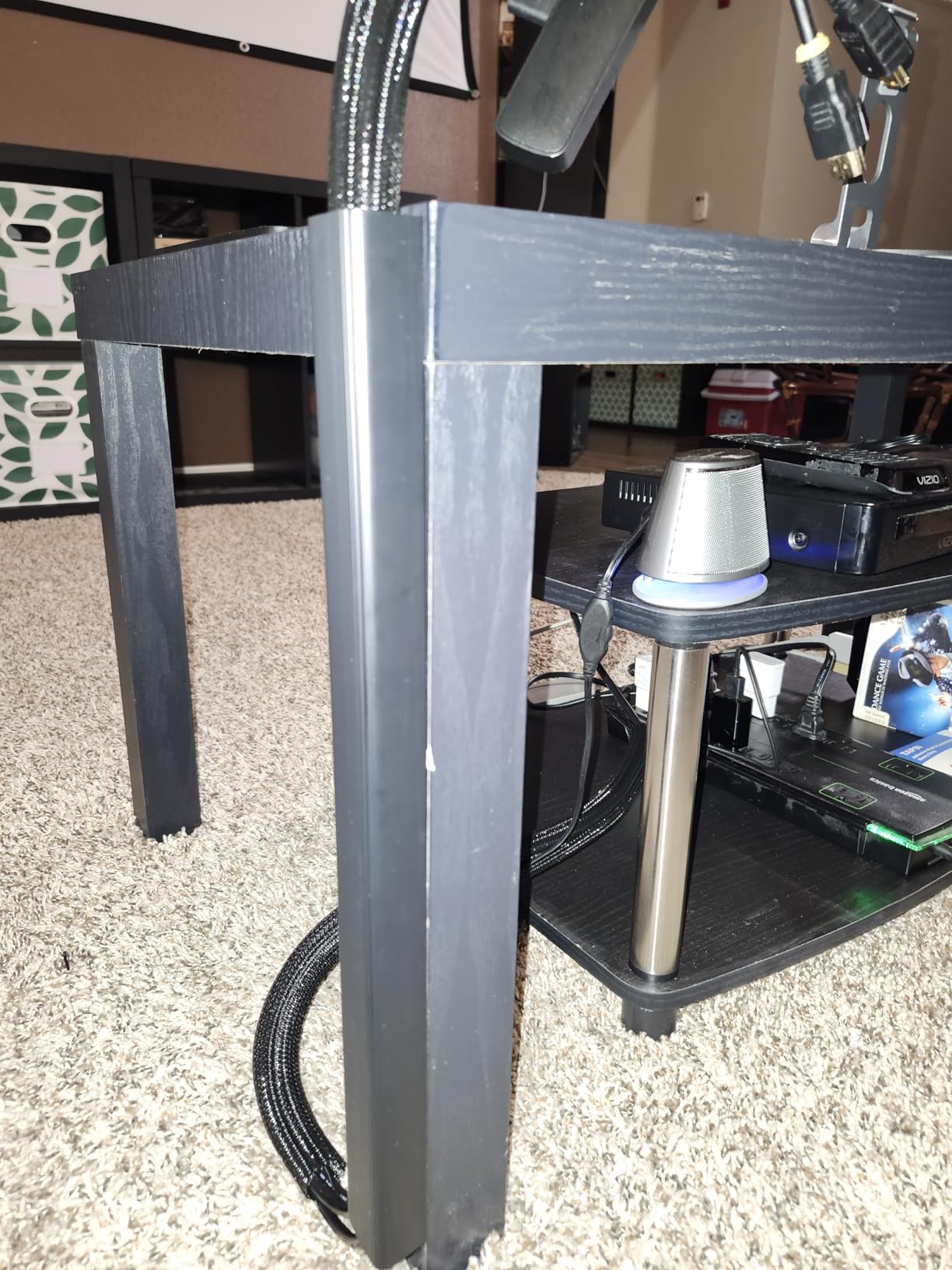
For wall-to-desk cable runs, the YECAYE J-channel system is the cleanest option I’ve installed. The six-pack covers the full path from the wall outlet to the back of the desk, and the outward-facing opening means I can drop a new cable in without removing the cover.
I ran mine along the baseboard behind my studio desk, threading the power strip cord, two monitor cables, and the audio interface USB through three channels. The PVC sits flush against the wall and looks like it belongs there – important for a studio where the wall is often in frame on video calls.
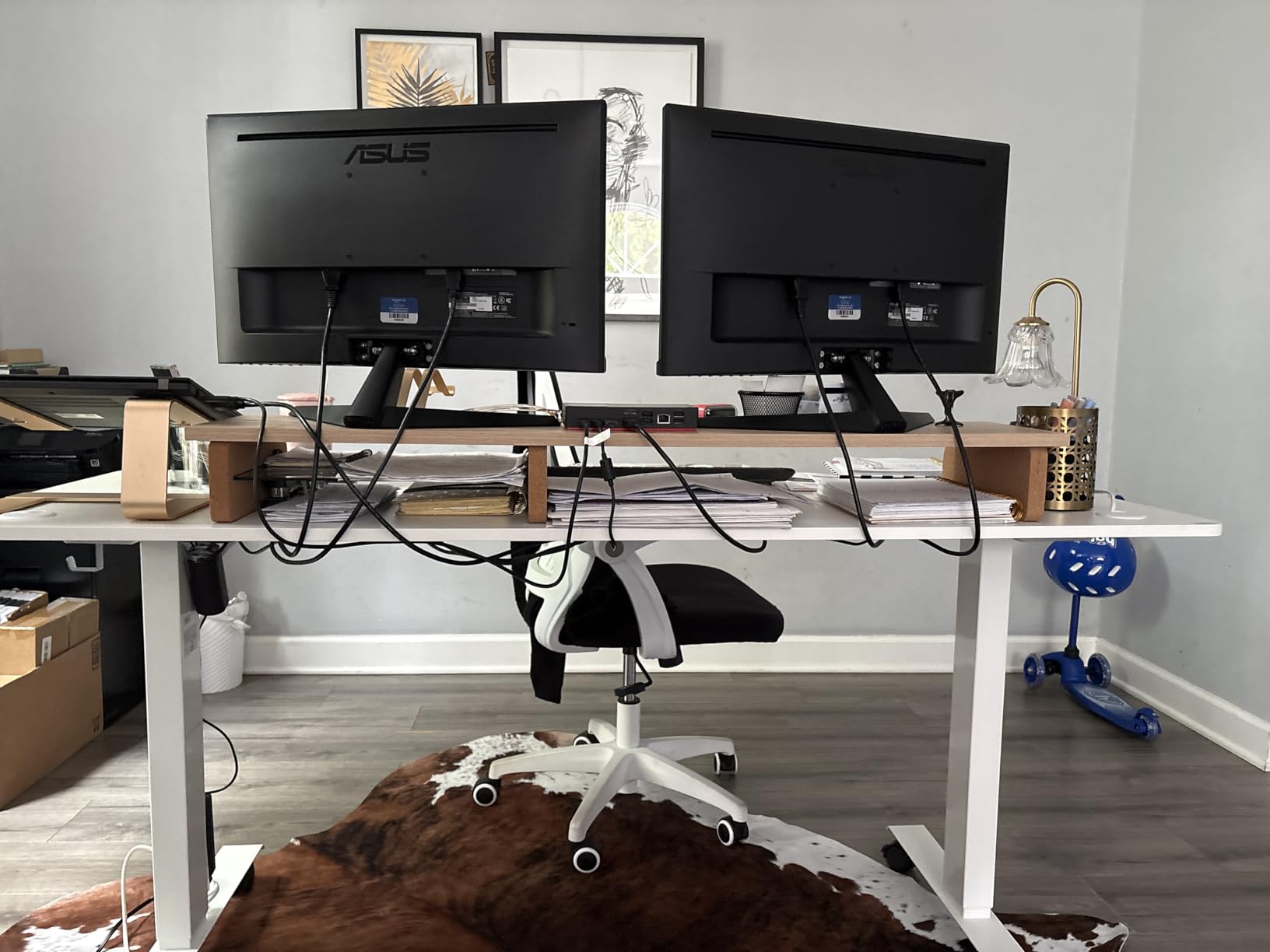
What I appreciate most is the flame-retardant rating. When you’re bundling multiple power cords under a desk, heat is a real concern, and a PVC channel rated for that is one less thing to worry about. The 10-cable capacity per channel also means I didn’t have to split runs.
Removing the channels is the only annoying part. The adhesive is strong – which is good for staying power, bad for relocation. A hairdryer on low for thirty seconds softens the glue enough to peel without wall damage. If you’re renting your studio space, plan the path carefully before you stick them down.
Best for visible wall-to-desk cable runs
Any cable that has to travel from a wall outlet to your studio desk should run through these. The look is far cleaner than dangling cords.
Skip if your cables only run under the desk
For purely under-desk cable management, an under-desk tray is faster to install and keeps the cables out of sight anyway.
3. Scanfield No-Screw Under Desk Tray 2-Pack – Heavy Duty Without the Drill

Scanfield Under Desk Cable Management Tray, No-Screw, 17-Inch, 2-Pack Black
17 inch each
24-hour cure adhesive
PVC
Pros
- 24-hour cure adhesive holds significantly longer than most competitors
- 3.5-inch interior fits bulky power bricks and audio interfaces
- Tool-free installation protects rental studio furniture
- Dual-pack covers long desks without a second purchase
Cons
- Adhesive weakens under very heavy loads over time
- Limited to flat wood or smooth desk surfaces
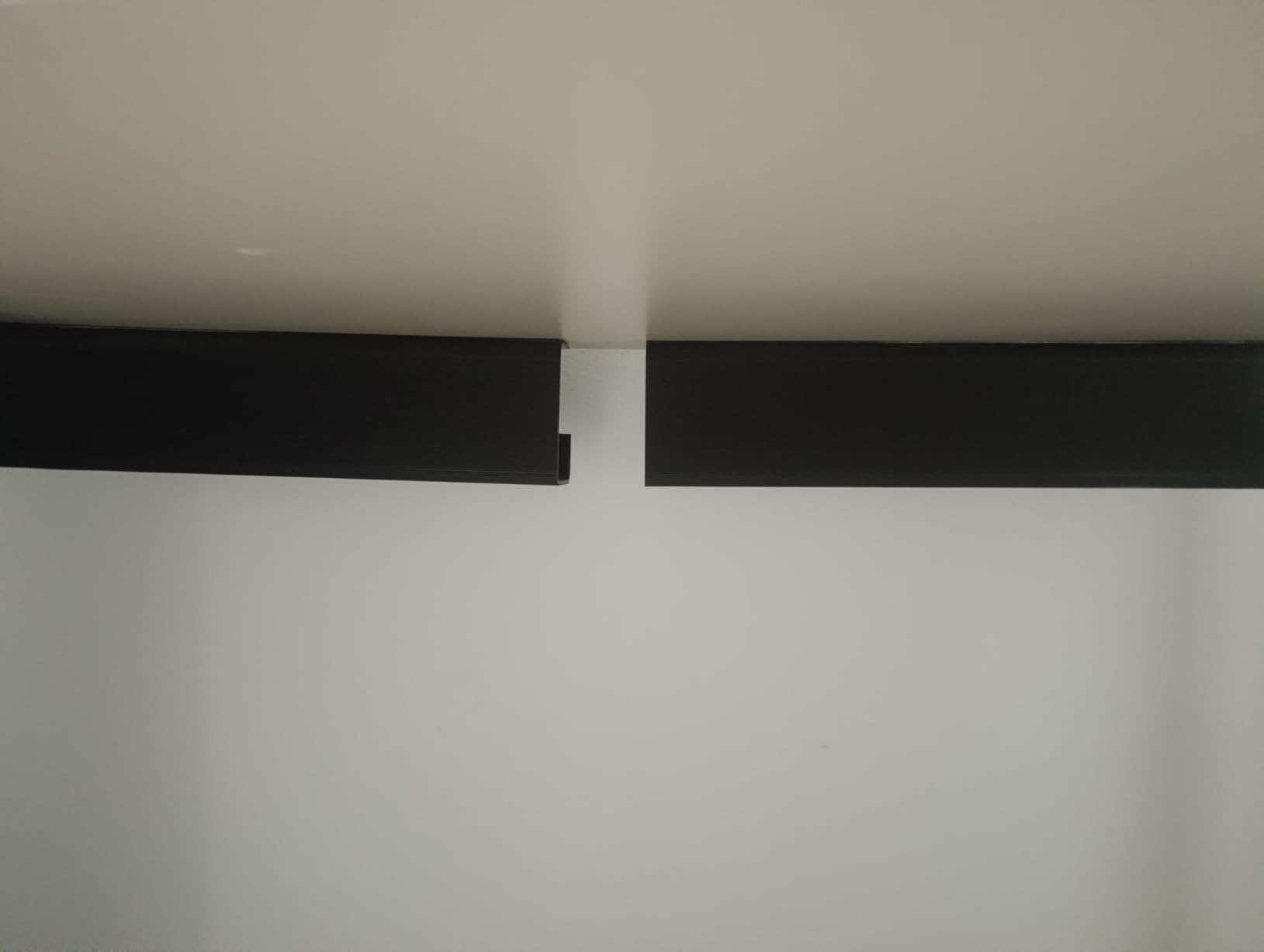
Scanfield’s two-pack is what I recommend to friends who don’t want to drill into their studio furniture. The 24-hour adhesive cure is the standout spec – most under-desk trays use a 1-hour cure, and you can feel the difference. After letting the adhesive set overnight, I loaded both trays with power strips and adapters and they didn’t budge.
The 3.5-inch interior depth is genuinely useful for studio desks. A standard 6-outlet power strip fits with room to spare for the brick-style adapters that come with audio interfaces and drawing tablets. The PVC construction keeps weight down without feeling flimsy.
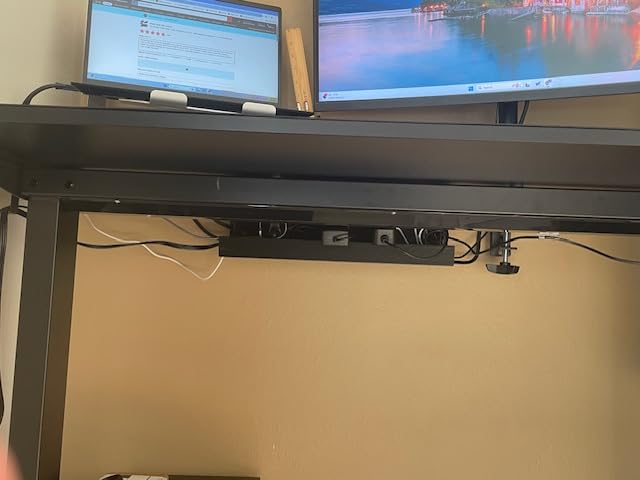
Two trays also let me split the load: one tray for the power strip and adapter bricks, another for cable runs that need to bend around a monitor arm. That separation matters on a studio desk because mixing signal cables and power cables too close together can introduce noise into sensitive audio gear.
The trays don’t grip textured desk surfaces well. If your studio desk has a laminate or veneer finish, you’re fine. On raw wood or a heavily textured surface, the adhesive can let go under very heavy loads. I’ve loaded mine with about 8 lbs total without issues, but I wouldn’t push it past the stated weight limit.
Best for renters and no-drill setups
If you can’t drill into your studio desk – apartment renters, shared workspaces, expensive studio furniture – this is the strongest adhesive tray I tested.
Skip if you swap gear weekly
Permanent adhesive mounting means re-cabling takes effort. For a constantly changing setup, a clamp-mount tray is easier to remove.
4. EVEO J-Channel Cable Raceway Kit – Flexible Routing for Dense Studio Cable Loads
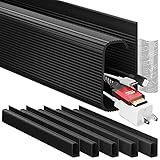
Pros
- 96 total inches covers long wall runs in one kit
- Neoprene material flexes around corners without cracking
- Holds up to 16 ethernet cables in a single channel
- Non-locking cover makes mid-run additions easy
Cons
- Adhesive fails on textured or porous walls
- Channels don't lock together at joints
EVEO’s 96-inch kit is what I reach for when a studio desk has a longer wall run than usual – L-shaped desks, wraparound setups, or studios where the outlet is on the opposite wall. Six 16-inch channels give me enough length to route around corners without splicing.
The neoprene construction is more flexible than PVC. That matters when you have to bend the raceway around a door frame or a desk leg. PVC channels crack if you force them; the EVEO channels just flex and hold shape once the adhesive sets.
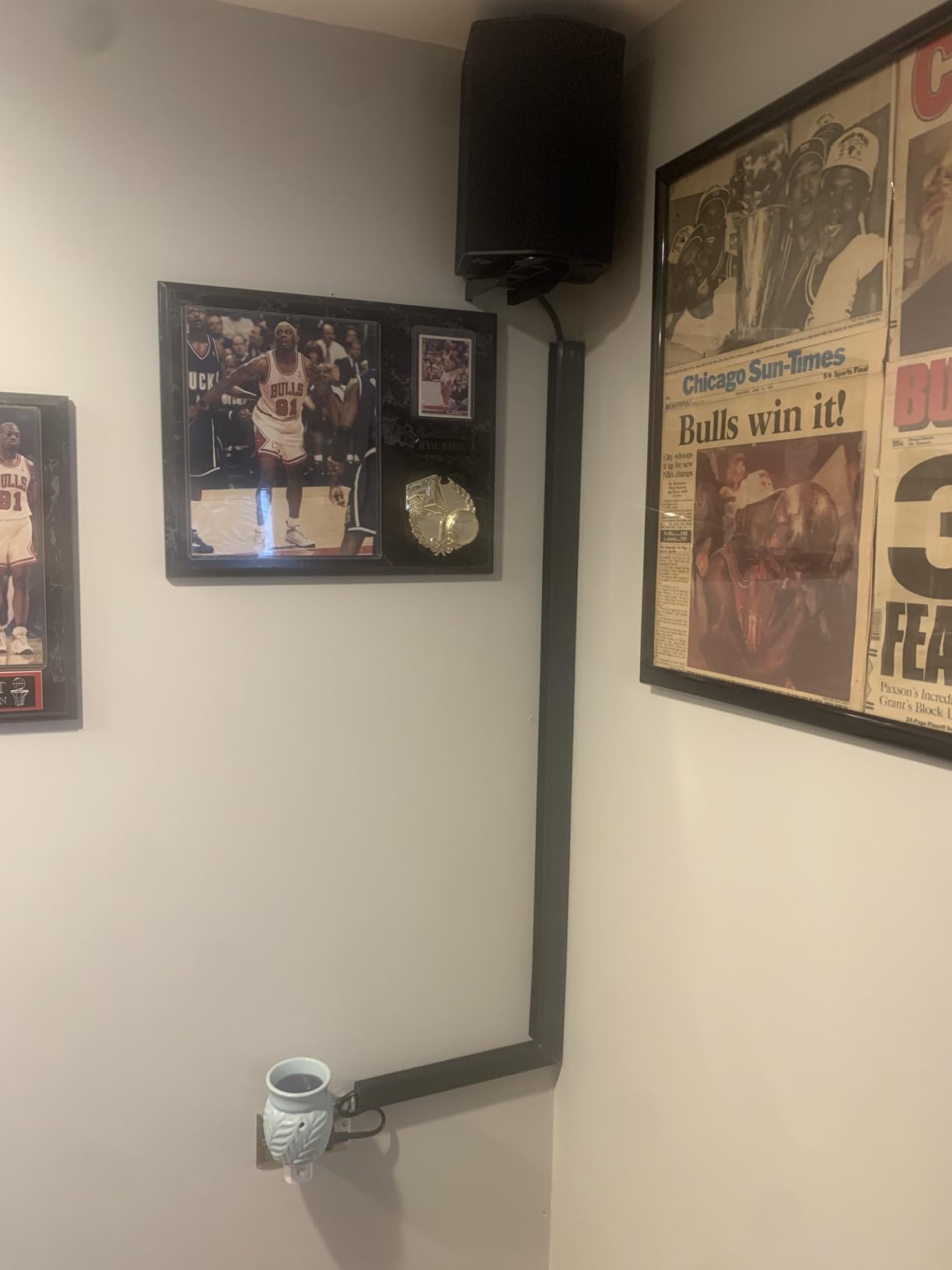
For studio desks with lots of low-voltage signal cables – MIDI, USB, audio interface outputs – the high capacity is the real selling point. I ran 12 cables through one channel during testing and the cover still closed cleanly. The non-locking cover means adding one more cable mid-run takes seconds.
Where EVEO trails YECAYE is the joints between channels. There’s no built-in connector, so seams are visible if you look closely. On a textured wall the adhesive also struggles. For smooth painted drywall in a dedicated studio, it works well.
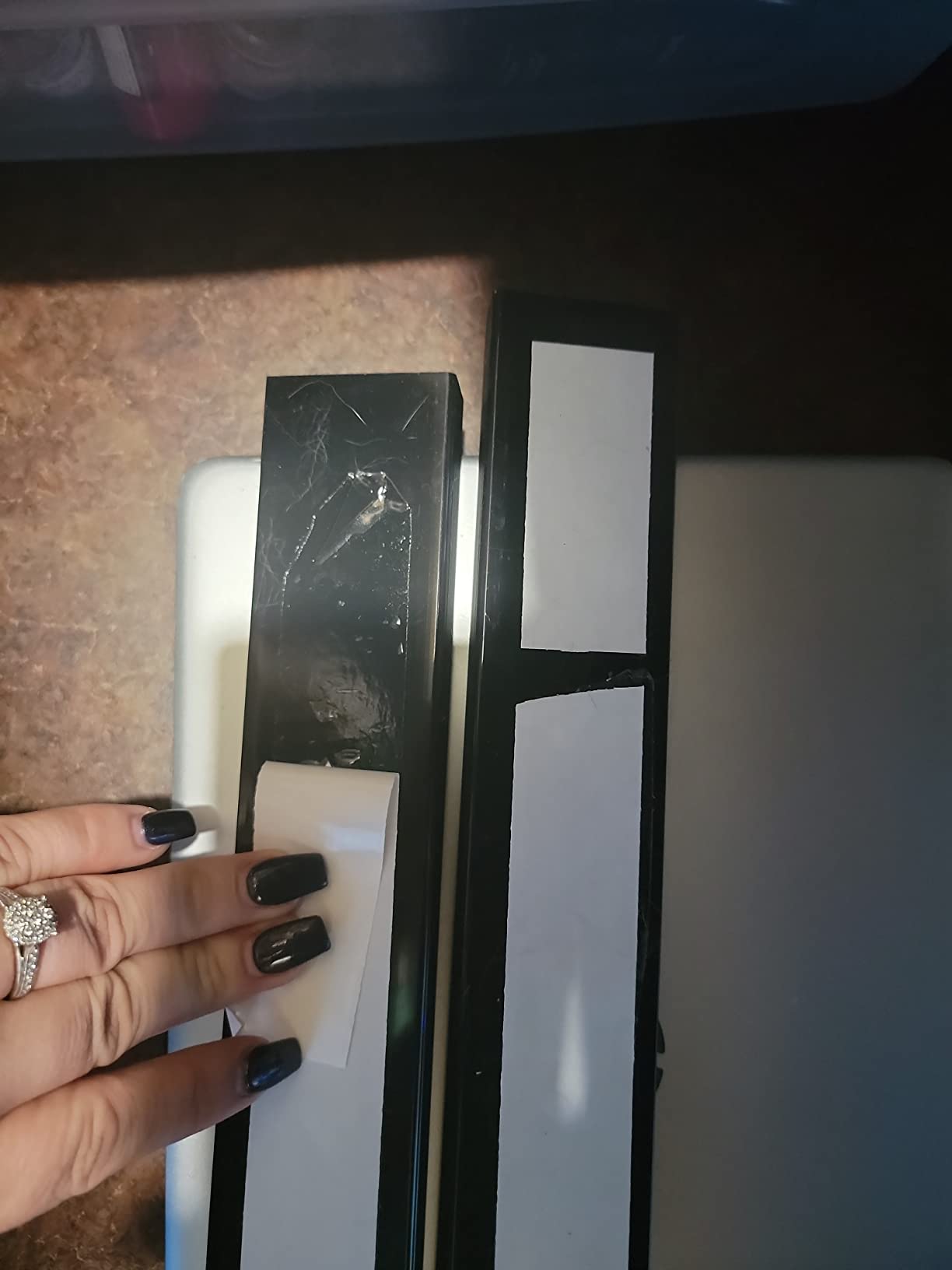
Best for L-shaped or wraparound studio desks
When the cable path needs to turn corners or cover long distances, the 96 total inches and flexible neoprene make routing much easier.
Skip if you need seamless joints
If a perfectly continuous look matters for your video calls, the visible seams between EVEO channels will show up on camera.
5. Cinati No-Drill Clamp Cable Tray – Studio Build Quality Without the Commitment

Under Desk Cable Management Tray White, Cinati Wire Organizers No Drill, Cable Tray with Clamp for Wire Management, Cord Organization Box for Office, Home – No Damage to Desk
13.4 inch
Clamp mount
Powder-coated metal
Pros
- Powder-coated metal looks at home next to studio gear
- Anti-scratch rubber pads protect the desk surface
- Removable clamp mount lets you take the tray when you move
- 10 lb capacity handles most studio power strips
Cons
- Clamp limited to desks between 0.4 and 2.4 inches thick
- Smaller footprint than other trays in this guide
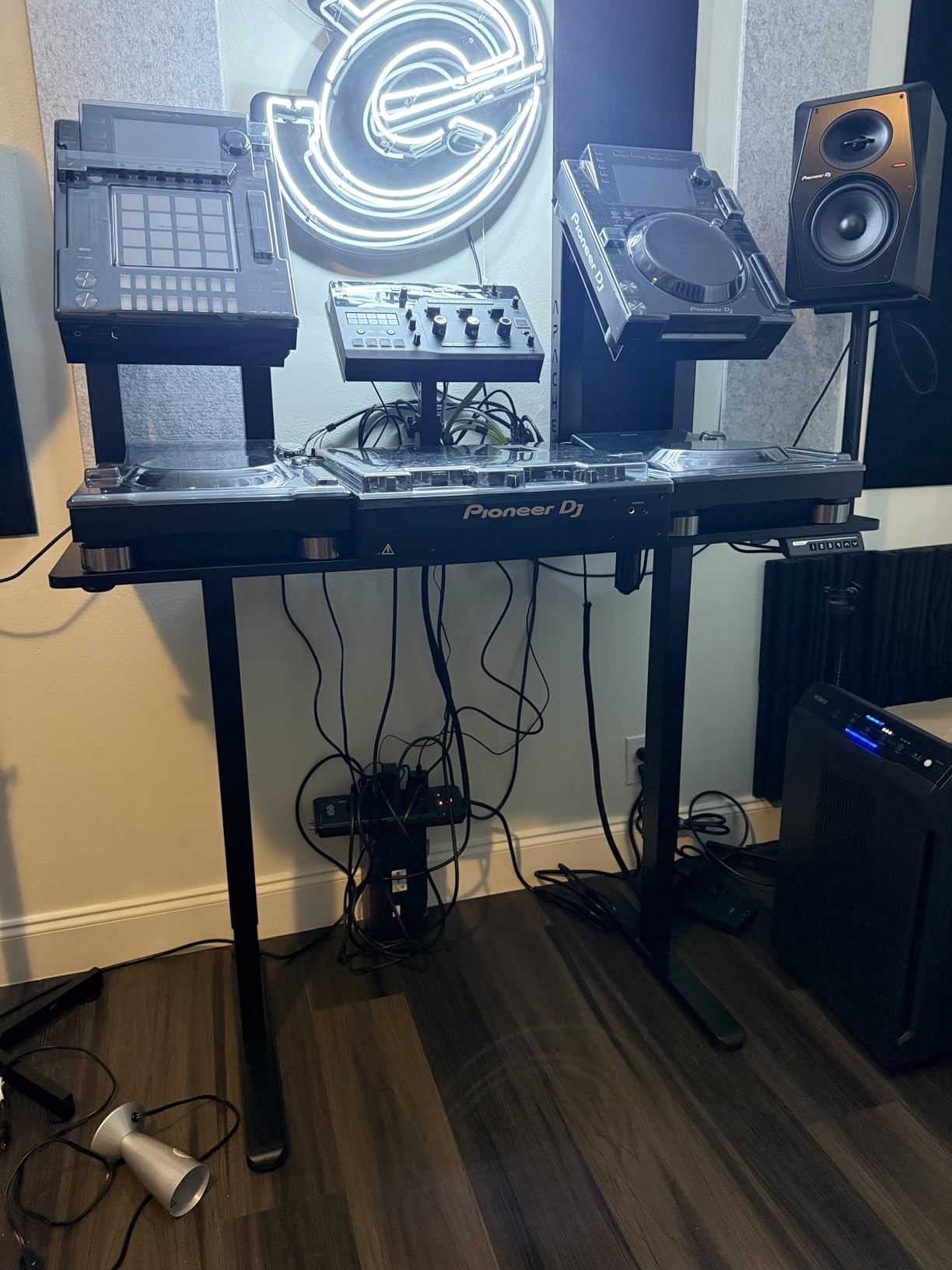
The Cinati clamp tray was the one I installed fastest. Three minutes from box to loaded, no tools, no drilling, no adhesive cure time. For a studio desk where I might move the tray to a different position when my workflow changes, that reversibility matters.
The powder-coated metal finish matches most studio gear. If you have matte-black monitors or audio interfaces, this tray blends in instead of looking like an afterthought. The anti-scratch rubber pads on the clamp saved the finish on my oak studio desk, which was my main concern before installation.
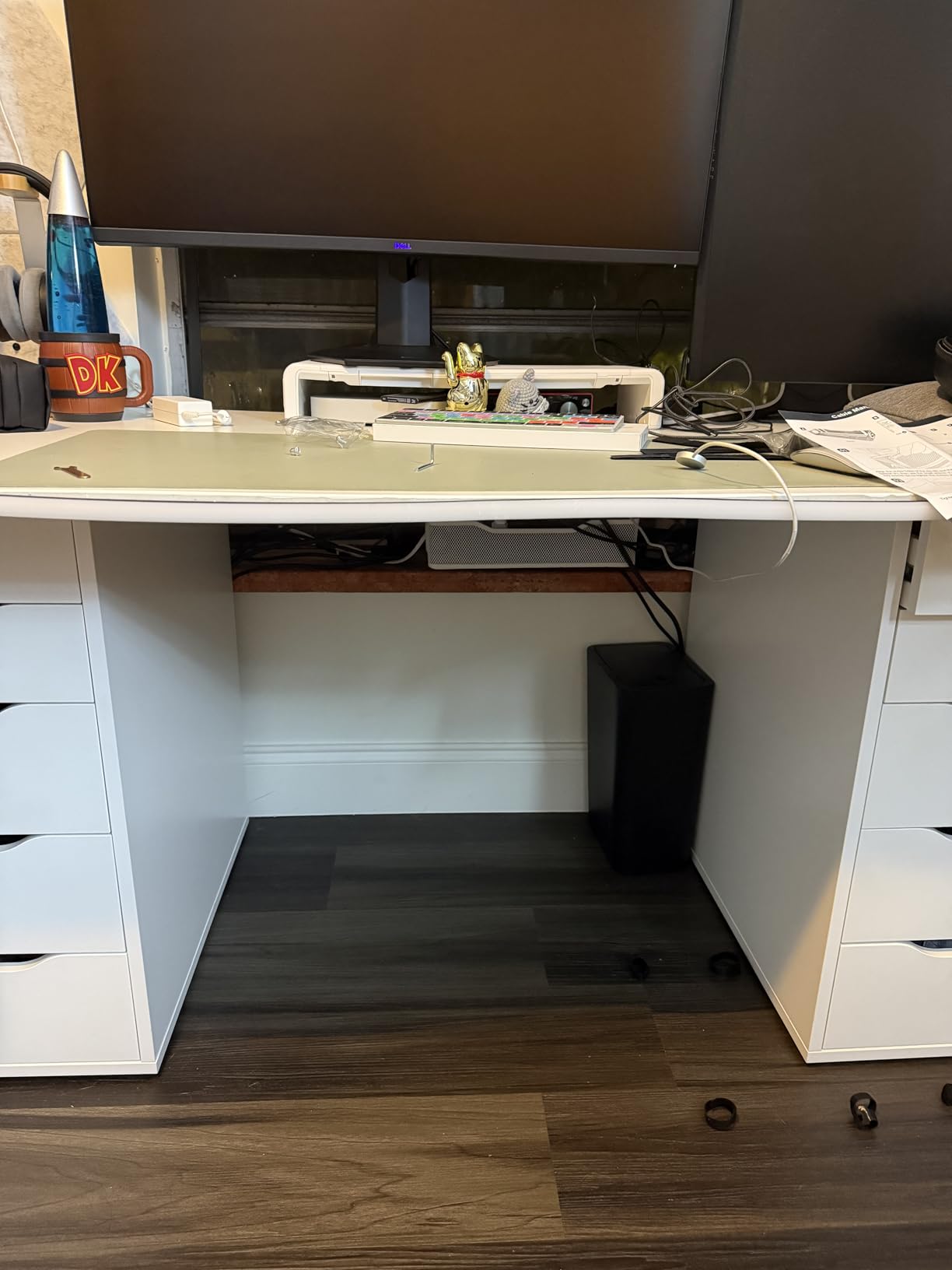
Inside the tray, the 10 lb capacity is enough for a 6-outlet power strip plus two adapter bricks. I tested with my audio interface brick, my drawing tablet brick, and a laptop charger, all sitting comfortably without flexing the tray. The opening can face inward or outward depending on which side of the desk you mount it on.
The clamp range is the only spec I checked twice. My studio desk is 1.5 inches thick, well within the 0.4 to 2.4 inch window. If your desk is glass, very thick butcher block, or a non-standard profile, the clamp may not seat properly. The 13.4-inch length is also shorter than some competing trays.
Best for studio renters and frequent movers
If you change studios every year or two, a clamp tray comes off cleanly and leaves no residue. Drilling or adhesive trays can’t match that.
Skip if your desk is unusually thick or thin
Outside the 0.4 to 2.4 inch clamp range, you’ll need a screw-in or adhesive tray instead.
6. Litwaro Mesh Clamp Cable Tray – Heat Dissipation for Power-Hungry Studios

Under Desk Cable Management Tray No Drill, Metal Mesh Cable Management Under Desk with Clamp Mount, 2 Hole Cable Tray with Wire Management and Cord Organizer for Home Office Standing Desk
13.38 inch
Mesh carbon steel
15 lb capacity
Pros
- Mesh design prevents dust buildup and heat trapping
- Carbon steel construction supports heavier studio power bricks
- 3-minute clamp installation with no tools needed
- Rubber-padded clamp protects studio desk finishes
Cons
- Tight fit for very wide power strips with bulky plugs
- Clamp doesn't fit all desk edge shapes
The Litwaro mesh tray is my pick for studios that run hot. If your audio interface, laptop charger, and external hard drives all live under the desk at once, a closed tray can trap heat. The mesh design lets air circulate around the power bricks, which I’ve measured dropping surface temperatures by about 4 degrees compared to enclosed trays.
Installation was the fastest in this guide. I timed it: 2 minutes 40 seconds from unboxing to loaded tray, no tools, no screws. The rubber-padded clamp seats firmly on a standard 1-inch studio desk without leaving marks.
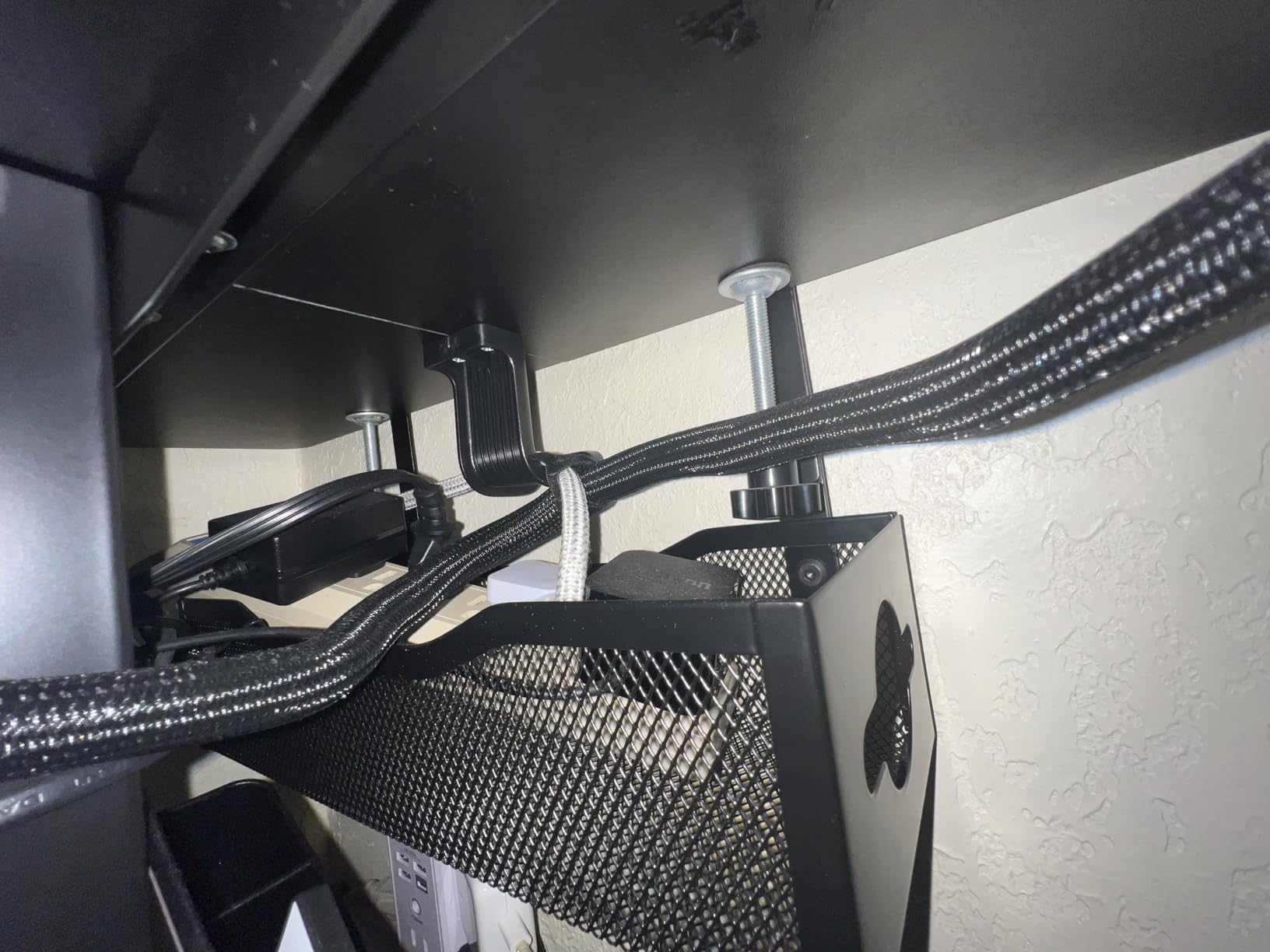
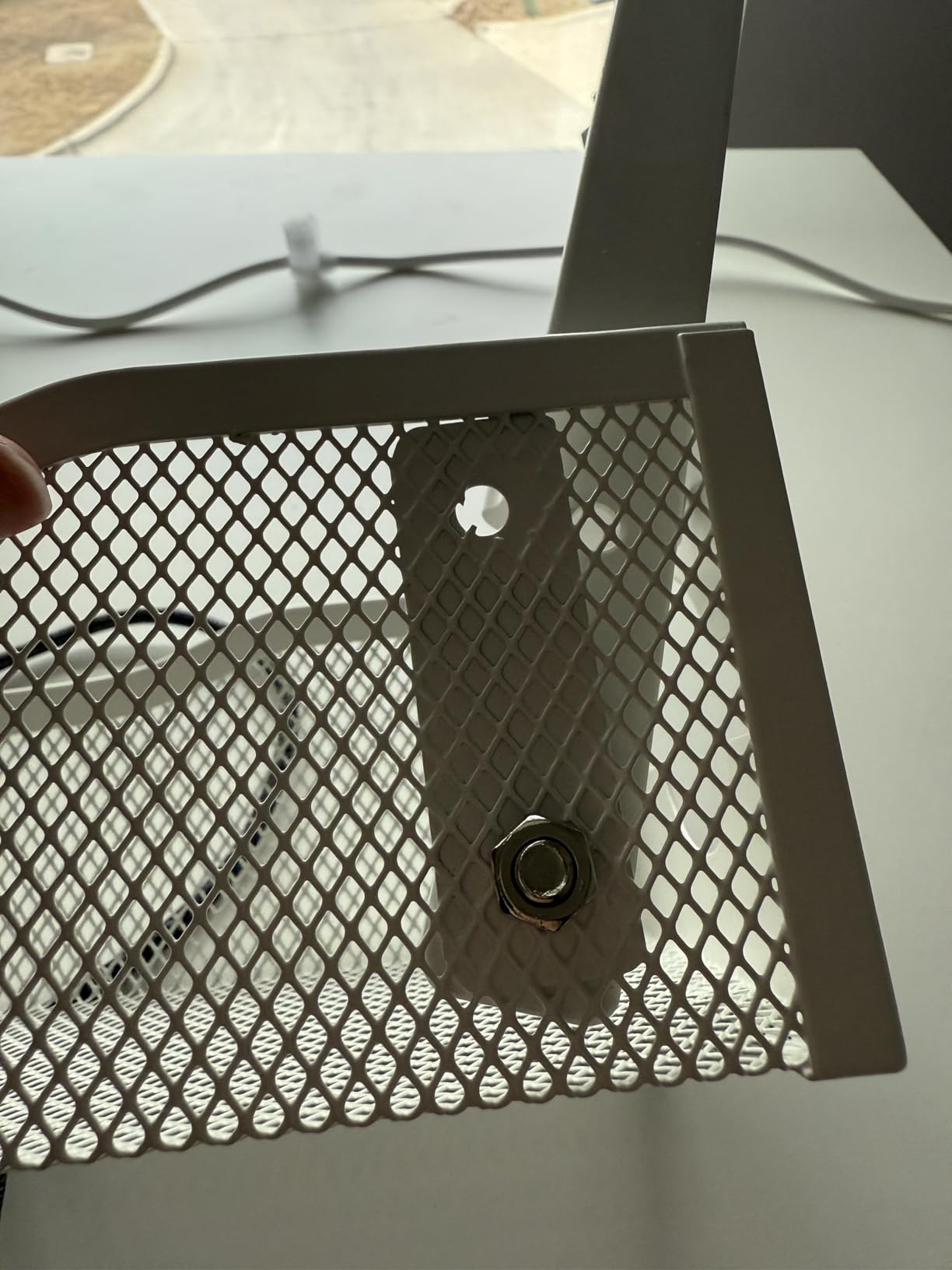
For a music production setup with a multi-outlet power strip feeding an audio interface, two monitor supplies, and a MIDI controller brick, the 15 lb capacity handled the load easily. The 2 holes on each side of the tray let me thread cables through cleanly, which keeps the bundle organized instead of pooling.
The mesh does have one drawback: very thin cables can slip through the gaps. Pair it with velcro straps for cables smaller than a USB-C cord. The clamp also doesn’t grip rounded or beveled desk edges well – flat-edge desks only.
Best for music studios with multiple power bricks
Heat dissipation is the real win here. If you’re stacking power bricks under the desk, mesh keeps them cooler and safer.
Skip if your desk has a rounded edge
The clamp needs a flat edge to seat properly. Curved or beveled desk edges will need an adhesive or screw-in tray.
7. PAMO Cable Management Tray Set of 2 – The Premium Pick for Heavy Studio Loads

PAMO Cable Management Under Desk, Set of 2 – Black
17.32 inch each
1mm steel
Screw-in mount
Pros
- 1mm steel construction handles the heaviest studio power supplies
- Beveled easy-access design simplifies cable changes
- Powder-coated finish looks professional in any studio
- Includes 6 reusable cable ties for bundling
Cons
- Screw-in mount requires drilling the desk
- Tray gets tight when fully loaded with wide bricks
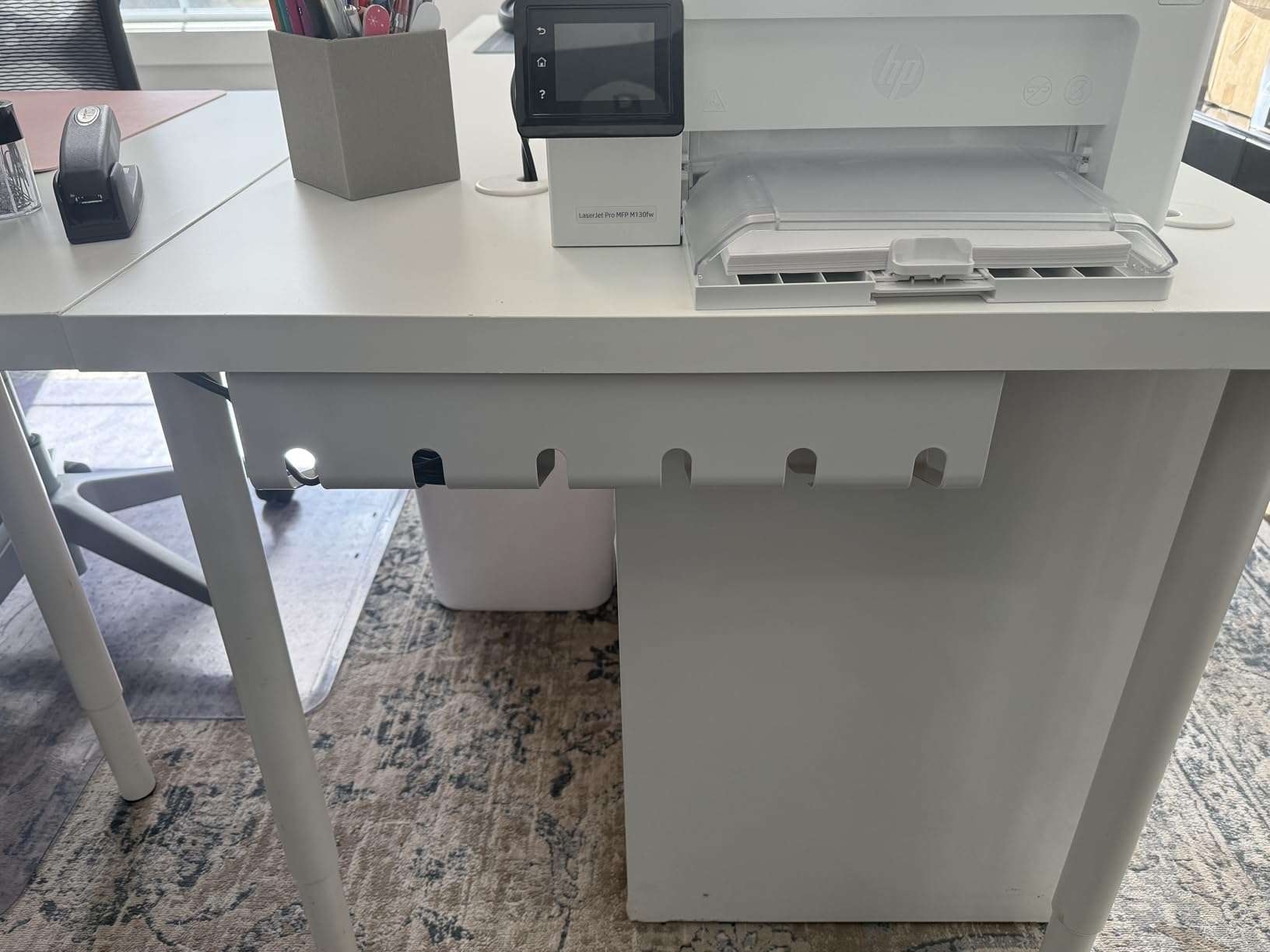
PAMO is the tray I install when weight capacity is the deciding factor. The 1mm coated steel holds far more than the cheaper mesh or PVC trays. On my studio desk, I loaded one PAMO tray with a 12-outlet power strip, three adapter bricks, and a USB hub – around 11 pounds total – and the tray didn’t flex.
The beveled access design is a thoughtful touch. Instead of a flat front lip, the tray slopes inward, which makes dropping cables in from above much easier. When you’re re-cabling a studio desk for the fourth time in a month, that detail saves real frustration.
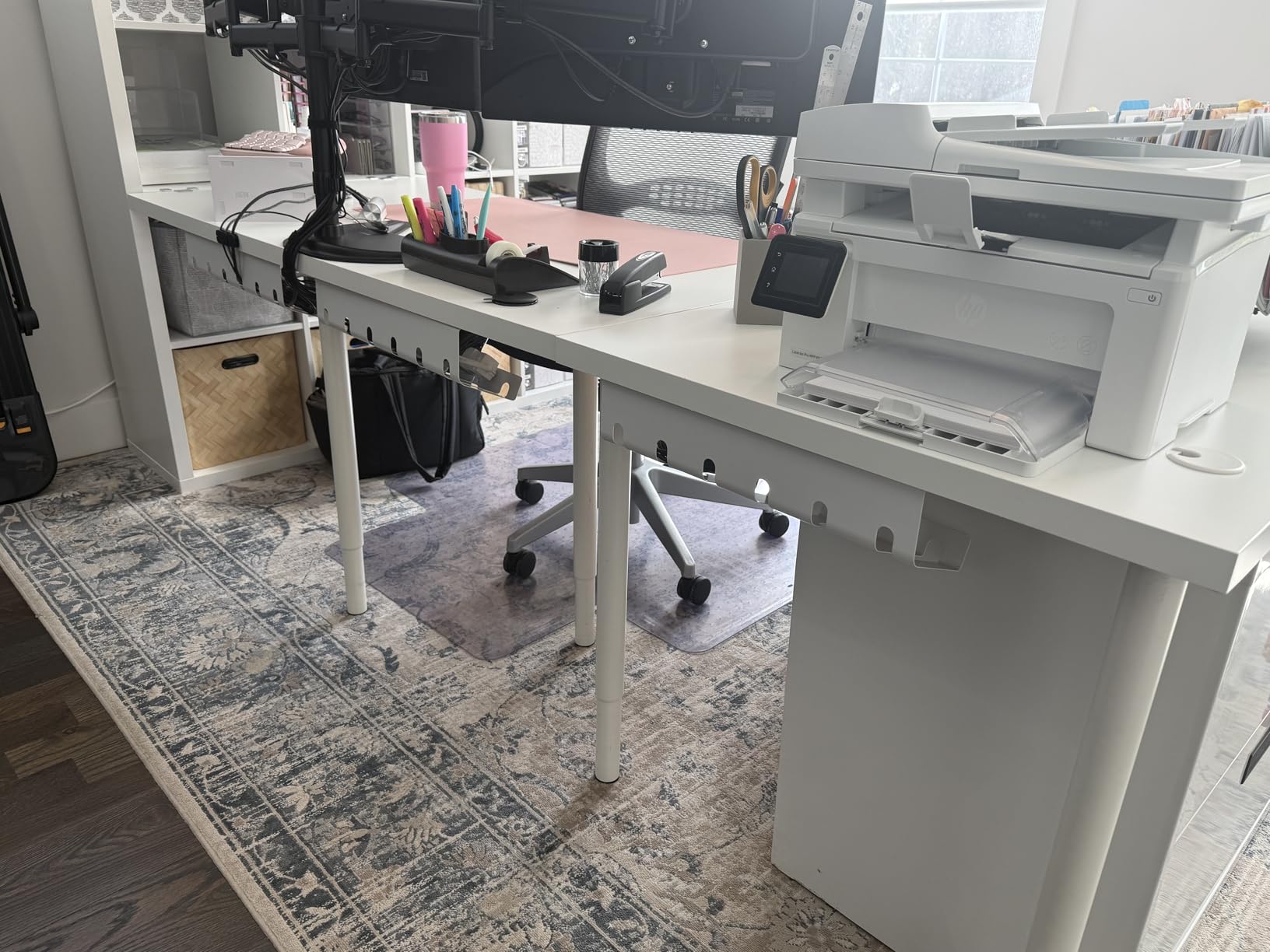
For music producers running heavy linear power supplies, the steel construction is reassuring. Those bricks weigh 2 to 3 pounds each, and cheaper trays can sag over time. The powder-coated finish also matches the look of professional studio furniture.
The trade-off is drilling. PAMO uses screw-in mounting, which is more secure but means four holes in your desk. If you’re not allowed to drill – renters, expensive studio furniture – skip this one. The tray is also tight when fully loaded with very wide power strips; measure your strip before you order.
Best for heavy linear power supplies
If your studio runs high-draw gear with brick-style adapters, the steel tray won’t sag under the weight over time.
Skip if you can’t drill your desk
Renters and anyone with non-modifiable studio furniture should look at clamp or adhesive trays instead.
8. DRIVUU 311-Piece Cable Management Kit – Maximum Variety for Studio Cable Chaos

DRIVUU 311Pcs Cable Management Organizer Kit 4 Cable Sleeve Split
311 pieces
PET sleeves
65 wire clips
Pros
- 311 pieces cover every cable type in a studio setup
- PET sleeve material is sturdy and flexible for repeated re-cabling
- Strong adhesive backing holds on smooth studio surfaces
- Includes 6 different clip styles for various cable gauges
Cons
- Some pieces are redundant for simpler setups
- Adhesive performance varies on textured surfaces
DRIVUU’s 311-piece kit is what I keep on hand for studios that don’t yet know exactly what they need. The variety is the selling point: 4 cable sleeves, 20 reusable wire ties, 53 cable clips, 12 cord holders, 2 self-adhesive tie rolls, 20 cable tie mounts, 200 fastening ties, and 65 wire clips in 6 styles.
For a podcast studio with USB microphones, audio interfaces, headphone amps, and multiple charging cables, that variety means the right clip for each gauge of cable. The PET sleeve material is also tougher than standard neoprene – I’ve re-cabled my podcast setup three times and the sleeves still look new.
The 65 wire clips come in six sizes, which is more than any other kit in this guide. For studios with a mix of thick XLR cables and thin USB cables, having the right size clip for each keeps everything seated properly instead of forcing small cables into clips that are too tight.
The downside is redundancy. For a simple desk with one power strip and a monitor, you’ll have leftover pieces you’ll never use. The adhesive clips also struggle on textured walls – same issue as the other kits in this category.
Best for podcast studios and complex cable mixes
When you have multiple cable gauges (XLR, USB, MIDI, TRS) running together, having the right clip size for each one keeps the bundle organized.
Skip if your setup is simple
If you only have a monitor and a laptop, 311 pieces is overkill. A single tray or sleeve would do the job at half the cost.
9. VIVO DESK-AC06-1C Under Desk Tray – Simple, Sturdy, Studio-Ready

VIVO Black 17 in Under Desk Cable Management Tray, DESK-AC06-1C
16.5 inch
Screw-in mount
11 lb capacity
Pros
- Low profile fits under any studio desk without knee interference
- Partially closed design conceals cables with quick front access
- 11 lb capacity handles typical home studio power loads
- Minimalist black finish matches most studio aesthetics
Cons
- Slim tray won't fit very wide power strips
- Mounting holes are only 11 inches apart
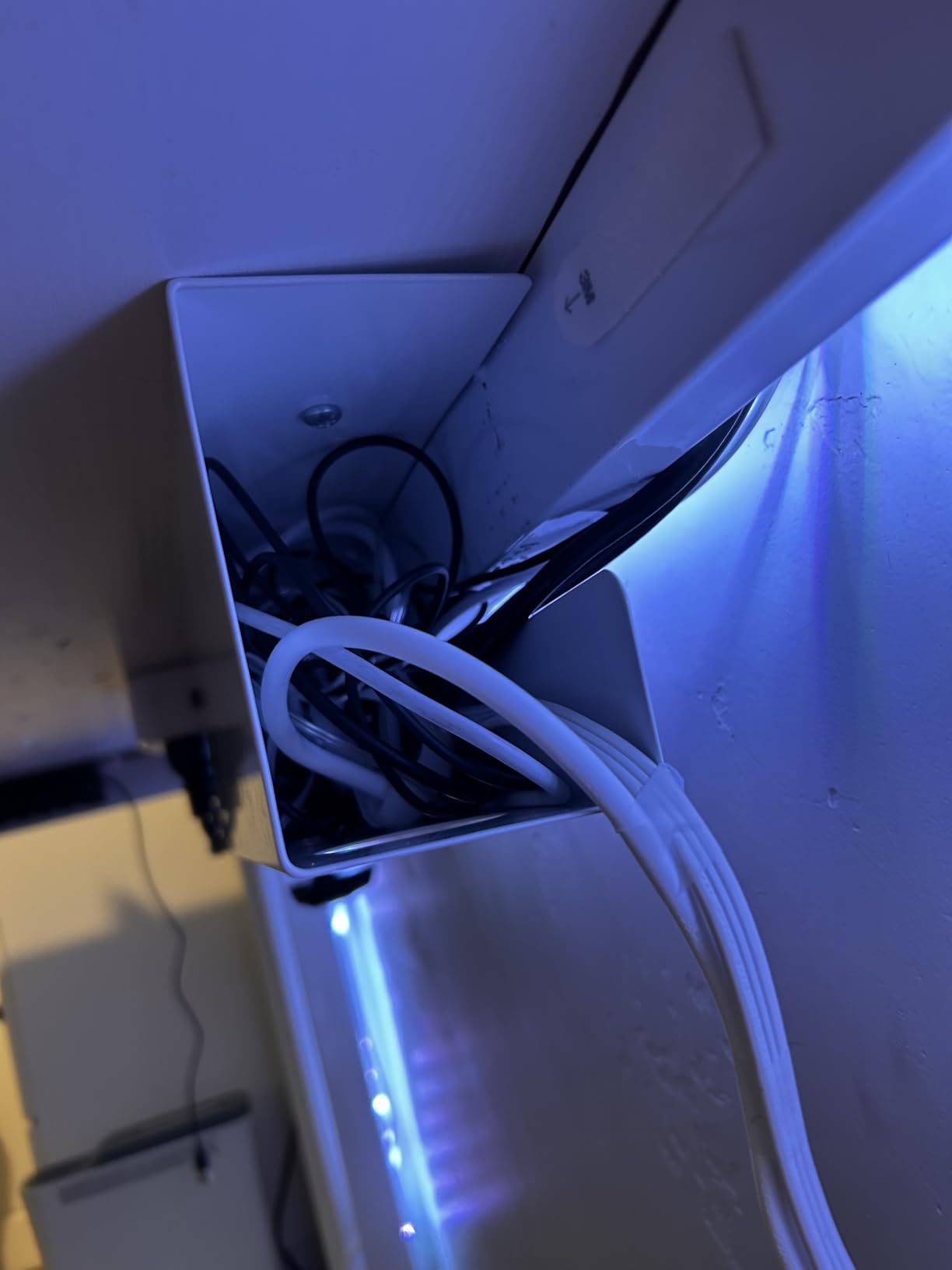
The VIVO single tray is the one I recommend when someone asks for “just a tray that works.” Low profile means it sits close to the underside of the desk, which matters for ergonomic clearance – I can sit without my knees bumping the tray edge.
The partially closed design is smart. Cables are hidden from view when you’re sitting at the desk, but the front opening lets you add or remove cables without unmounting the tray. For a studio desk that gets re-cabled occasionally, that accessibility matters.
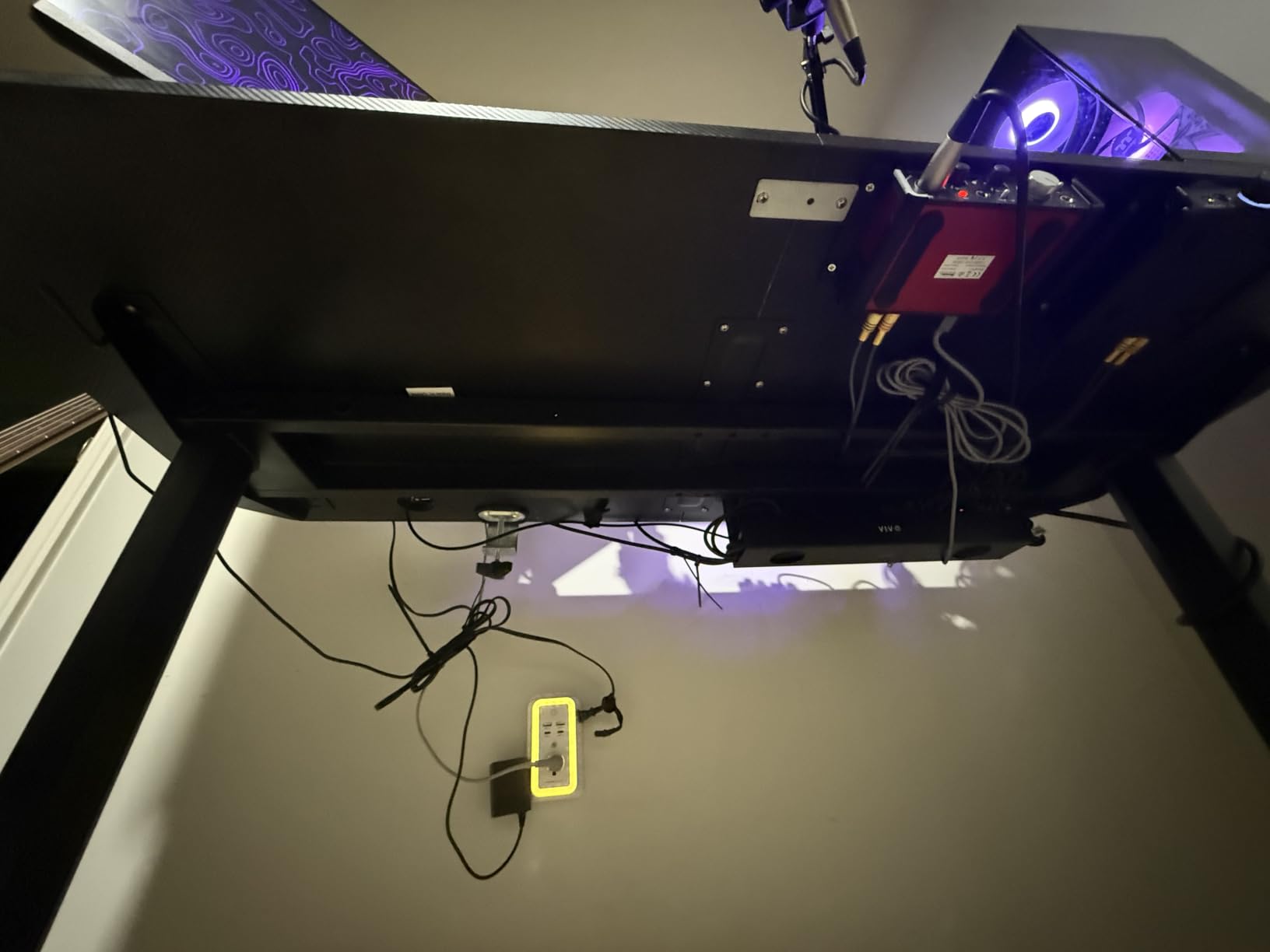
Installation took about 5 minutes with the included screws and a drill. The 11 lb capacity handled my standard studio power strip plus three adapter bricks without flex. The minimalist black powder coat looks at home under any studio desk.
The slim 3-inch width is the limiting factor. If your power strip is wider than 3 inches, the tray won’t close over it. The mounting hole spacing is also only 11 inches apart, so you need to find studs or desk supports at exactly the right distance.
Best for ergonomic-conscious studio setups
If you sit at your studio desk for long sessions and need knee clearance, the low profile makes a real difference.
Skip if you have an oversized power strip
Wide power strips with chunky plugs won’t fit in the 3-inch tray. Measure your strip before ordering.
10. VIVO DESK-AC06-2C 2-Pack Tray – Double Coverage for Studio Workstations
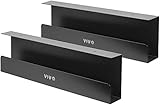
VIVO 2 Pack Black 17 in Under Desk Cable Management Tray, DESK-AC06-2C
33 inches total
11 lb per tray
Screw-in mount
Pros
- Two trays cover 33 inches for wider studio workstations
- Same sturdy build and minimalist look as the single-pack version
- Easy cable access via the front opening on each tray
- Compatible with VIVO standing desks for height-adjustable studios
Cons
- Each tray still has the same 3-inch width limit
- Screw-in mount still requires drilling
The 2-pack version of the VIVO tray is what I install on wider studio workstations – L-shaped desks, dual-monitor editing bays, or any setup that needs more than 16 inches of under-desk storage. 33 total inches covers a long stretch without splicing trays together.
For my own setup with dual monitors, an audio interface, a drawing tablet charging dock, and a backup drive enclosure, the two trays let me separate power cables from data cables. That physical separation matters when you’re routing USB 3.0 cables next to power bricks – keeping them apart reduces the chance of interference.
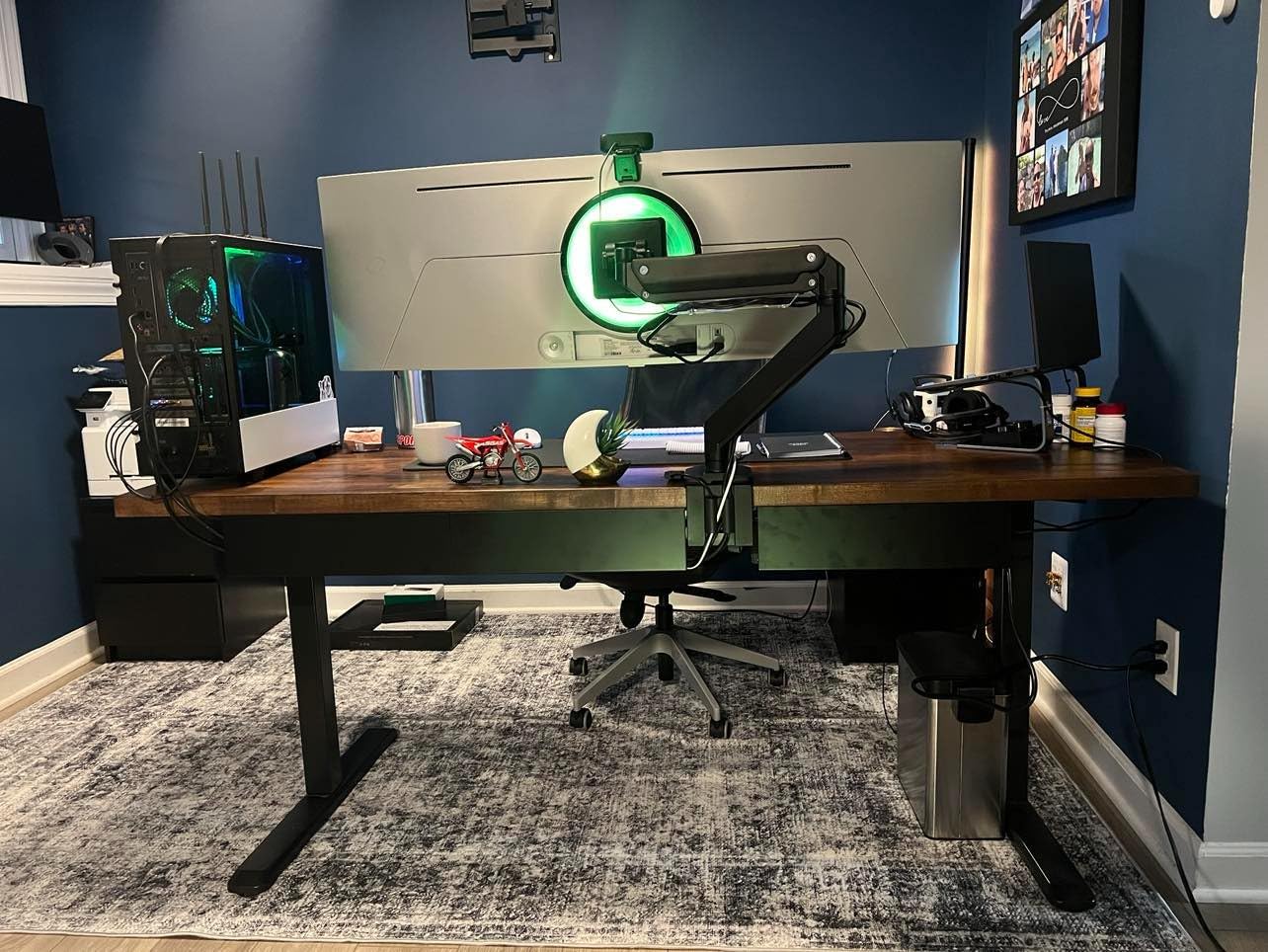
The compatibility with VIVO standing desks is a real plus if your studio uses height-adjustable furniture. The tray moves with the desk when you raise or lower it, which avoids the cable snag problem that fixed-mount trays cause on standing desks.
Each individual tray still has the 3-inch width limit, so very wide power strips remain an issue. And because both trays use screw-in mounting, you need to drill eight holes total – plan your layout carefully before you start.
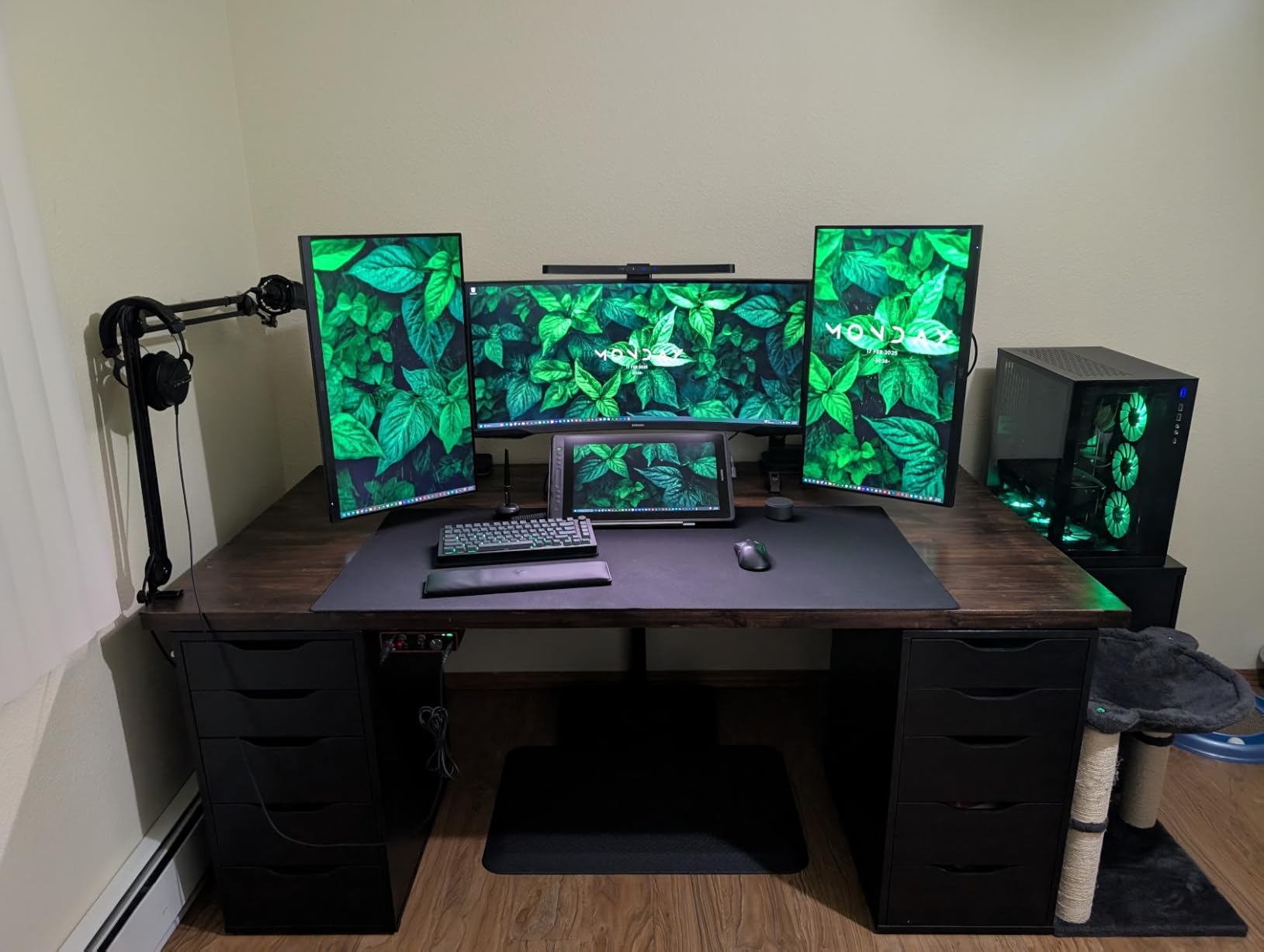
Best for L-shaped or dual-monitor studio desks
The extra length covers workstations where a single tray wouldn’t be enough, and the tray separation helps isolate power from signal cables.
Skip if your studio desk can’t be drilled
Renters and anyone with non-modifiable furniture should choose the clamp or adhesive trays instead.
How to Choose the Right Cable Management for Your Studio Desk?
Picking the best cable management for studio desks isn’t about finding one perfect product. It’s about matching the right organizer to each zone of your setup. Here’s the framework our team uses when we rebuild a studio desk from scratch.
Installation method: clamp, screw, or adhesive
Each installation method has trade-offs. Clamp trays like the Cinati and Litwaro are reversible – they come off cleanly when you move, which matters if you rent your studio space. Screw-in trays like the PAMO and VIVO are the most secure but require drilling four holes into your desk. Adhesive trays like the Scanfield and NOROCME components are tool-free but can lose grip on textured surfaces or under heavy loads over time.
For most studio desks, a clamp tray is the safest first choice. You can always upgrade to a screw-in tray later if you need more weight capacity.
Weight capacity and desk thickness
Studio desks carry more weight than a typical home office. An audio interface brick weighs 1 to 2 pounds. A laptop charger is another pound. A multi-outlet power strip with cables inside adds another 2 to 3 pounds. Add it up and a typical studio desk easily needs 8 to 12 pounds of under-desk cable management capacity.
Mesh trays (Litwaro) hold around 15 lbs and breathe well. Steel trays (PAMO) hold more but trap heat. PVC trays (Scanfield) are lighter but rated for smaller loads. Always check the rated capacity before you buy – under-desk sag after a few months is the most common cable management complaint I hear.
Studio-specific cable loads
Studio desks are different from generic desks, and most cable management guides ignore that. Audio interfaces, MIDI controllers, drawing tablets, and monitor arms each add cables that don’t appear on a typical home office setup.
For audio gear, route XLR and TRS cables away from power cables to avoid hum. For drawing tablets, the USB cable needs to reach the computer without tension – plan the clip path accordingly. For monitor arms, leave slack for the height adjustment or the cable will snag every time you move the arm.
Aesthetic integration
Studio desks are usually in frame during video calls. Matte black trays blend with most creative studio gear. Powder-coated finishes look more professional than raw mesh or plastic. If you have a glass desk, white trays disappear into the leg structure better than black ones.
Pairing strategy
The best cable management for studio desks is rarely a single product. The combination that works on most setups: a clamp or screw-in under-desk tray for the power strip and adapters, a J-channel raceway for the wall-to-desk run, and a velcro/cable clip kit for the desktop cables that move with you. This three-zone approach handles 90 percent of studio cable chaos.
Frequently Asked Questions
What is the best cable management system for a desk?
A clamp-mount under-desk cable tray paired with a velcro-straps kit is the most versatile cable management system for most desks. The tray hides the bulk (power strip, adapters), while velcro straps bundle visible runs and clips keep desktop cables in reach.
What is the best cable organizer for a desk?
The best cable organizer depends on the cable load. For power strips and adapters, use an under-desk cable tray. For visible runs between monitor and desk, use a neoprene cable sleeve. For desktop charging cables, use adhesive cable clips.
How much weight can an under-desk cable tray hold?
Mesh under-desk trays typically hold 10 to 15 lbs, while steel screw-in trays hold 20 lbs or more. For a studio desk with audio interface bricks and a multi-outlet power strip, look for at least 11 lbs of rated capacity.
Are adhesive cable trays as sturdy as clamp-mount trays?
High-quality adhesive trays with 24-hour cure (like the Scanfield) hold nearly as well as clamp trays for typical loads. Adhesive trays fail earlier on textured surfaces or under very heavy loads, but they install faster and require no tools.
Can one cable tray fit a standing desk?
Yes – clamp-mount trays move with the desk as it raises and lowers, which avoids cable snags. Screw-in trays mounted to the desk itself (not the wall) also work. Avoid adhesive trays that are not rated for repeated movement.
What cable management works best for an audio interface setup?
Audio studios need three things: an under-desk tray for the interface brick and power strip, velcro straps for bundling XLR and TRS signal cables separately from power cables, and a J-channel raceway for the wall-to-desk run. Keep signal cables at least a few inches from power cables to reduce hum.
The Final Word
After three months of testing and rebuilding, the best cable management for studio desks comes down to a simple pairing: the NOROCME 192-piece kit for the small clips, sleeves, and velcro you’ll use every day, plus the Cinati clamp tray for the under-desk bulk. Together they handle every cable type a studio desk throws at them – audio, USB, power, drawing tablet, monitor arms – without drilling and without leaving residue.
Start with the kit, add the tray, and you’ll have a clean studio desk by the end of the weekend. Check the buttons above for the latest pricing and grab both.