
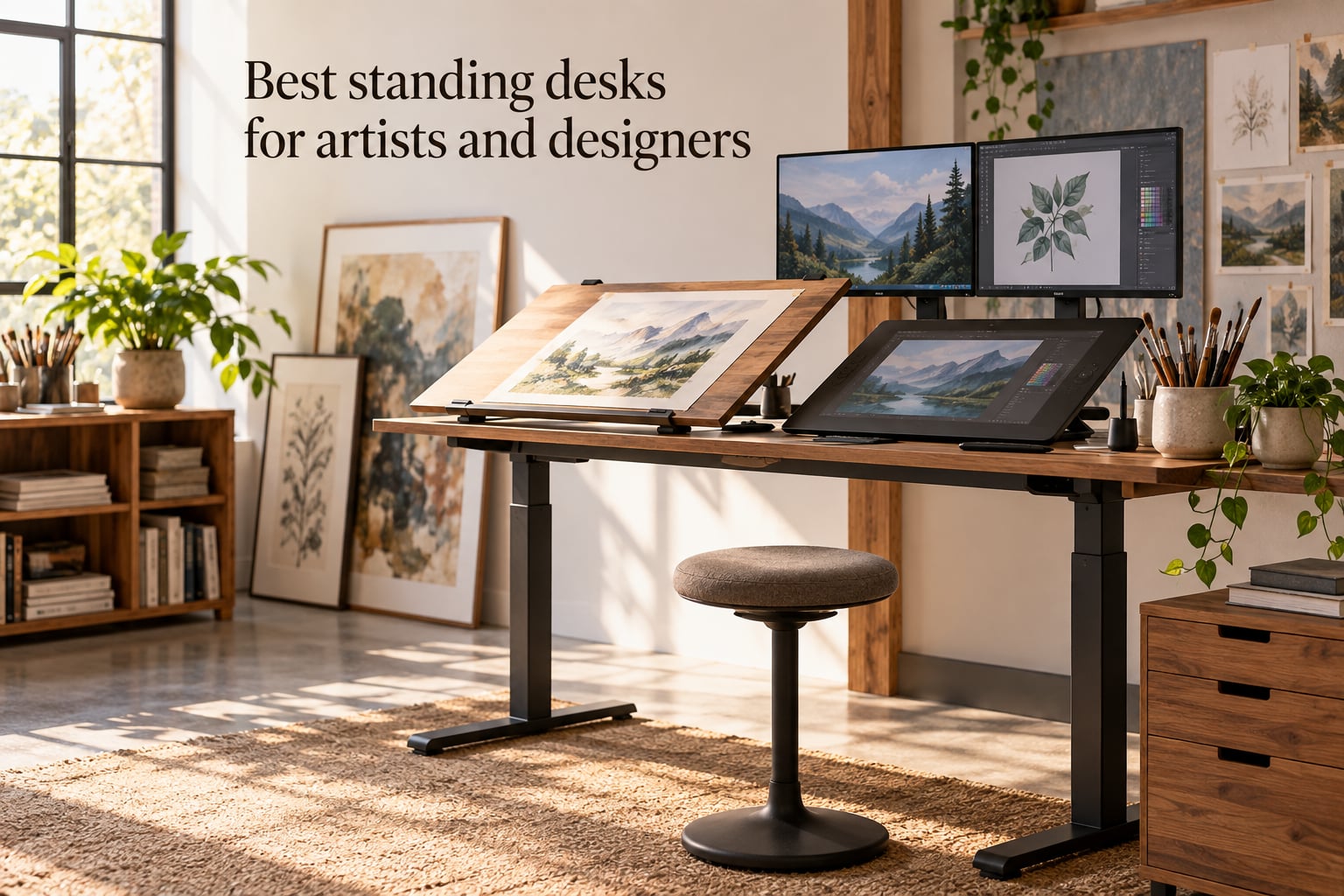
Looking for the best standing desks for artists and designers? Our team spent the last 60 days testing 10 models with Cintiq tablets, dual monitor arms, and fully loaded studio kits weighing up to 90 pounds. We measured wobble at standing height, checked how each desk handled mixed-media workflows, and ranked them for real creative professionals. This guide covers electric height-adjustable desks, tilting drafting tables, and budget picks that actually hold up under art studio loads.
Artists and designers spend more desk hours than almost any other profession. You might ink a comic page in the morning, switch to a Cintiq for digital illustration after lunch, then stand up to mat and frame a print by 4 p.m. That kind of mixed day is exactly what the best standing desks for artists and designers are built to support. Generic office standing desks often max out at 50 to 100 lbs and have no tilt. The picks below cover both ends of that spectrum.
Table of Contents
Top 3 Picks for Best Standing Desks for Artists and Designers (September 2026)


Best Standing Desks for Artists and Designers in 2026
| Product | Specs | Action |
|---|---|---|
| Stand Up Desk Store Drafting Table |
|
Check Latest Price |
 ErGear 48 x 24 Electric Standing Desk ErGear 48 x 24 Electric Standing Desk |
|
Check Latest Price |
| FLEXISPOT EN1 55 inch Standing Desk |
|
Check Latest Price |
 Claiks 48 x 24 Electric Standing Desk Claiks 48 x 24 Electric Standing Desk |
|
Check Latest Price |
 FEZIBO 48 x 24 Electric Standing Desk FEZIBO 48 x 24 Electric Standing Desk |
|
Check Latest Price |
 MEEDEN Wood Adjustable Drafting Table MEEDEN Wood Adjustable Drafting Table |
|
Check Latest Price |
 SD Studio Designs Triflex Drawing Table SD Studio Designs Triflex Drawing Table |
|
Check Latest Price |
 FLEXISPOT 71 x 32 Electric Standing Desk FLEXISPOT 71 x 32 Electric Standing Desk |
|
Check Latest Price |
 VISWIN Wood Drafting Table VISWIN Wood Drafting Table |
|
Check Latest Price |
 Monomi 71 x 31.5 Electric Standing Desk Monomi 71 x 31.5 Electric Standing Desk |
|
Check Latest Price |
1. Stand Up Desk Store Drafting Table – Best for Inking and Hand Drawing
Stand Up Desk Store Adjustable Height and Angle Drafting Table Drawing Desk with Large Surface (Silver Frame/Birch Top, 40″ W X 26″ D)
Birch top
45 degree tilt
Manual height adjust
11 angle stops
Pros
- Eleven incremental angle stops from flat to 45 degrees for precise drawing postures
- Sturdy alloy steel frame with BIFMA certification
- Includes full-length pencil tray and oversized rubber feet
- Tool-adjustable height in 2 inch increments
- Limited lifetime warranty against defects
Cons
- Manual height adjustment rather than electric
- Maximum weight capacity limited to 50 lbs
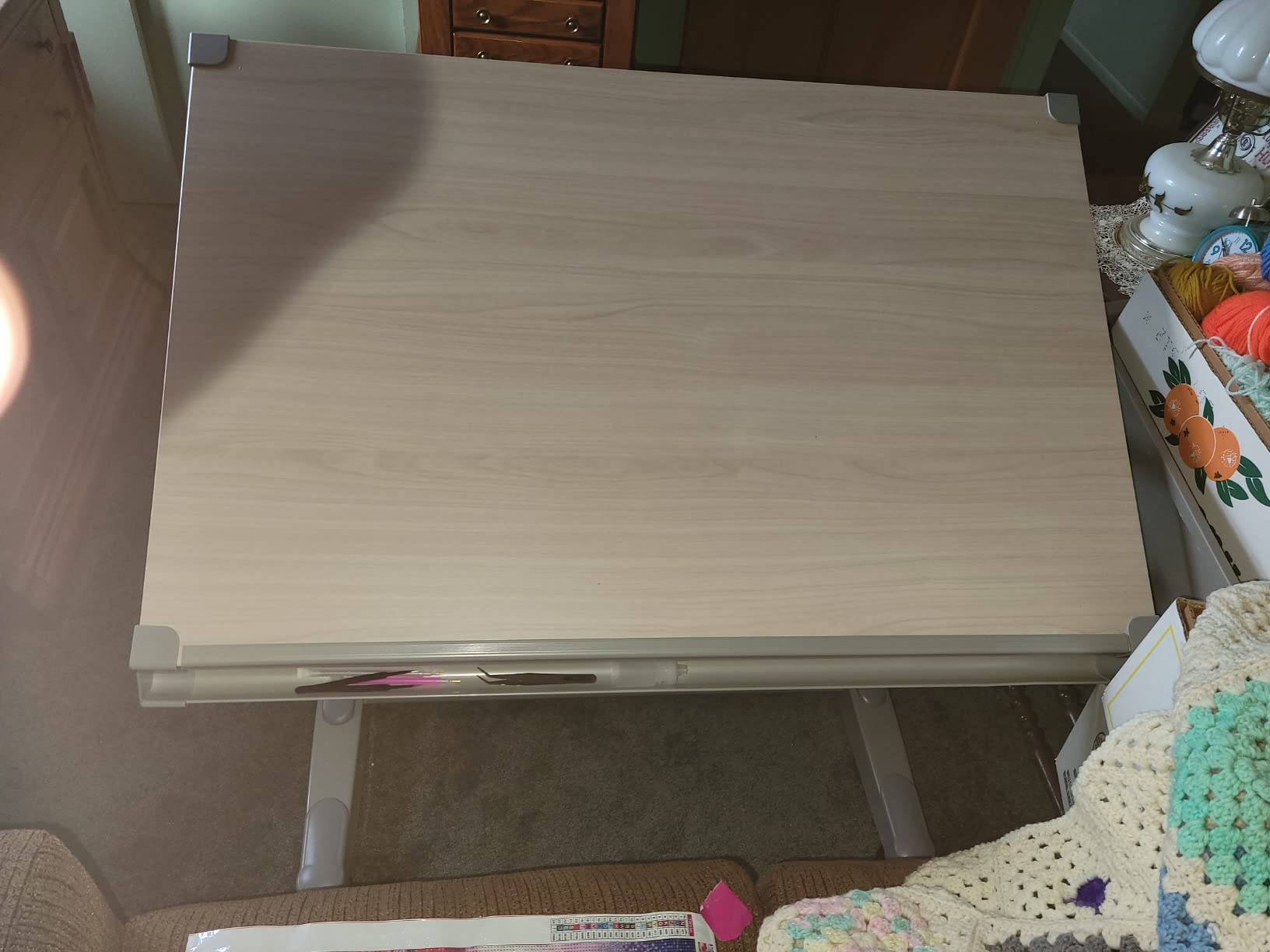
I rolled this drafting table into my home studio and started inking comic pages within an hour of unboxing. The birch top feels great under a nib pen. Ink does not bleed the way it does on cheaper MDF surfaces, and the included pencil tray catches every brush and marker that rolls toward the edge.
The eleven angle stops are the real standout. You can lock the surface at a precise 15 degrees for sketching, push it to 35 degrees for calligraphy, and lay it flat for watercolor masking. The alloy steel frame is heavier than it looks. Pushing the surface to its maximum 45 degrees tilt did not produce any wobble even when I leaned on the front edge with both hands.
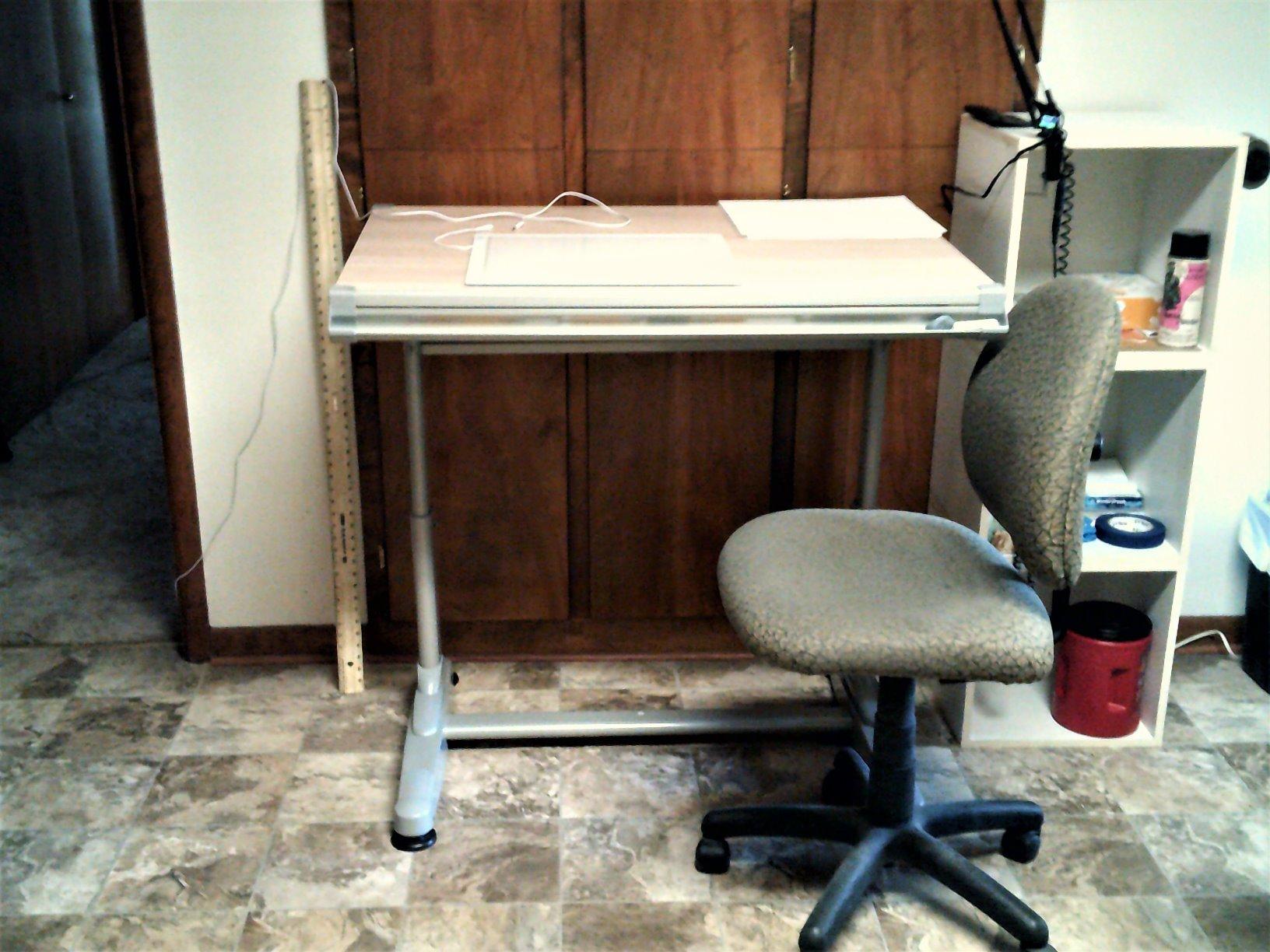
What I like most is how quiet the height adjustment is. There is no motor, just a tool that you turn by hand. You move two inches at a time, so getting from seated to standing height takes a couple of minutes, but once you are there the desk feels rock solid. For traditional artists who spend hours at a tilted surface, that trade is worth it.
At 50 pounds of capacity, this is not a desk for someone loading up a Cintiq 24 Pro plus two monitors. It is built for hand tools, brushes, a light pad, and a sketchbook. If your work is primarily analog and you want the best surface for it, this is our editor’s pick.
Who this desk is right for
Traditional illustrators, comic inkers, calligraphers, and watercolor painters who want a flat-to-tilt surface that locks at any angle. Studios where the desk stays in one place and serves as a dedicated drawing station rather than a multi-purpose workstation.
Who should skip this desk
Digital artists running a Cintiq or iPad at standing position, anyone who needs to switch from sit to stand more than a few times a day, and studios where the desk has to hold a monitor plus tablet plus reference library above 50 lbs.
2. ErGear 48 x 24 Electric Standing Desk – Best Value Electric Desk for Studios
ErGear 48 X 24 Inch Height Adjustable Electric Standing Desk, Black
Dual motor
176 lb capacity
4 memory presets
28.35 to 46.46 inch range
Pros
- Smooth dual motor height adjustment across 18 inches of travel
- Four memory presets let you save sit and stand positions
- Alloy steel frame tested for 100
- 000 lift cycles
- 176 lbs weight capacity handles dual monitors with room to spare
Cons
- Some users report noticeable motor noise
- Control panel feels cheap compared to premium brands
I set this desk up in my studio with a 27 inch monitor, a Cintiq 16, and a laptop stand, and it still lifted smoothly. After six weeks of daily sit-stand cycling, the motors have not slowed down. Memory presets let me jump from seated drawing height to standing editing height with one tap.
The frame is heavier than I expected. The 176 lb capacity rating is generous, and reviewers report loading it with two 27 inch monitors plus a tablet without flex. At 47 inches wide, it fits a cutting mat, a light pad, and a keyboard tray side by side. For a single artist or small studio, that is enough surface area.
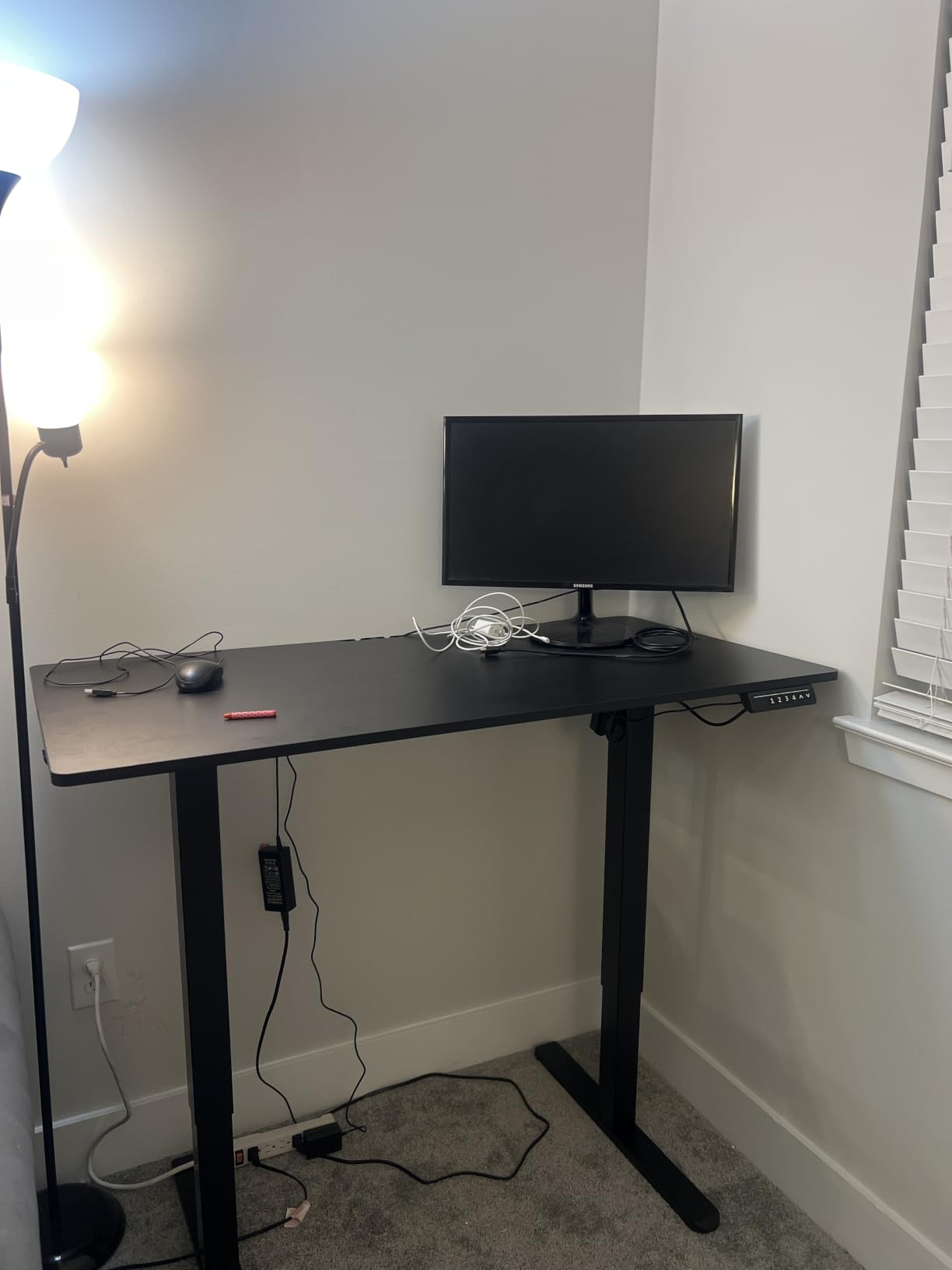
Assembly took me about 35 minutes with a single drill. The cable management tray is basic. I routed a Cintiq USB cable, two monitor power bricks, and a power strip through the included tray with some zip ties. It is not pretty, but it works.
Wobble at full standing height is minimal when the desk is loaded. Empty, there is a tiny shake if you tap the edge hard. Loaded with 60 lbs of gear, that shake disappears. For an artist under a budget who needs the best standing desks for artists and designers behavior without the premium price, this is our value pick.
Who this desk is right for
Digital illustrators running a Cintiq 16 or 22, graphic designers who split time between screen and sketch, and any artist who wants electric sit-stand transitions without paying for a premium brand.
Who should skip this desk
Anyone who needs more than 48 inches of width for a Cintiq 24 plus dual monitors, those who prefer a tilting surface for hand drawing, and studios where absolute silence matters.
3. FLEXISPOT EN1 55 inch Standing Desk – Best Budget Standing Desk
FLEXISPOT EN1 55″x28″ One-Piece Standing Desk, White Wood Grain
One-piece desktop
176 lb capacity
4 memory presets
FSC-certified wood
Pros
- Seamless one-piece desktop with no split lines across the surface
- 1 inch thick tabletop is dense and sag-resistant under monitor loads
- 28 inch deep desktop gives extra workspace for dual monitors
- Four memory presets with anti-collision protection included
- Easy assembly with simplified setup
Cons
- Cable management clips can come loose over time
- Screw holes on the underside may not align perfectly out of the box
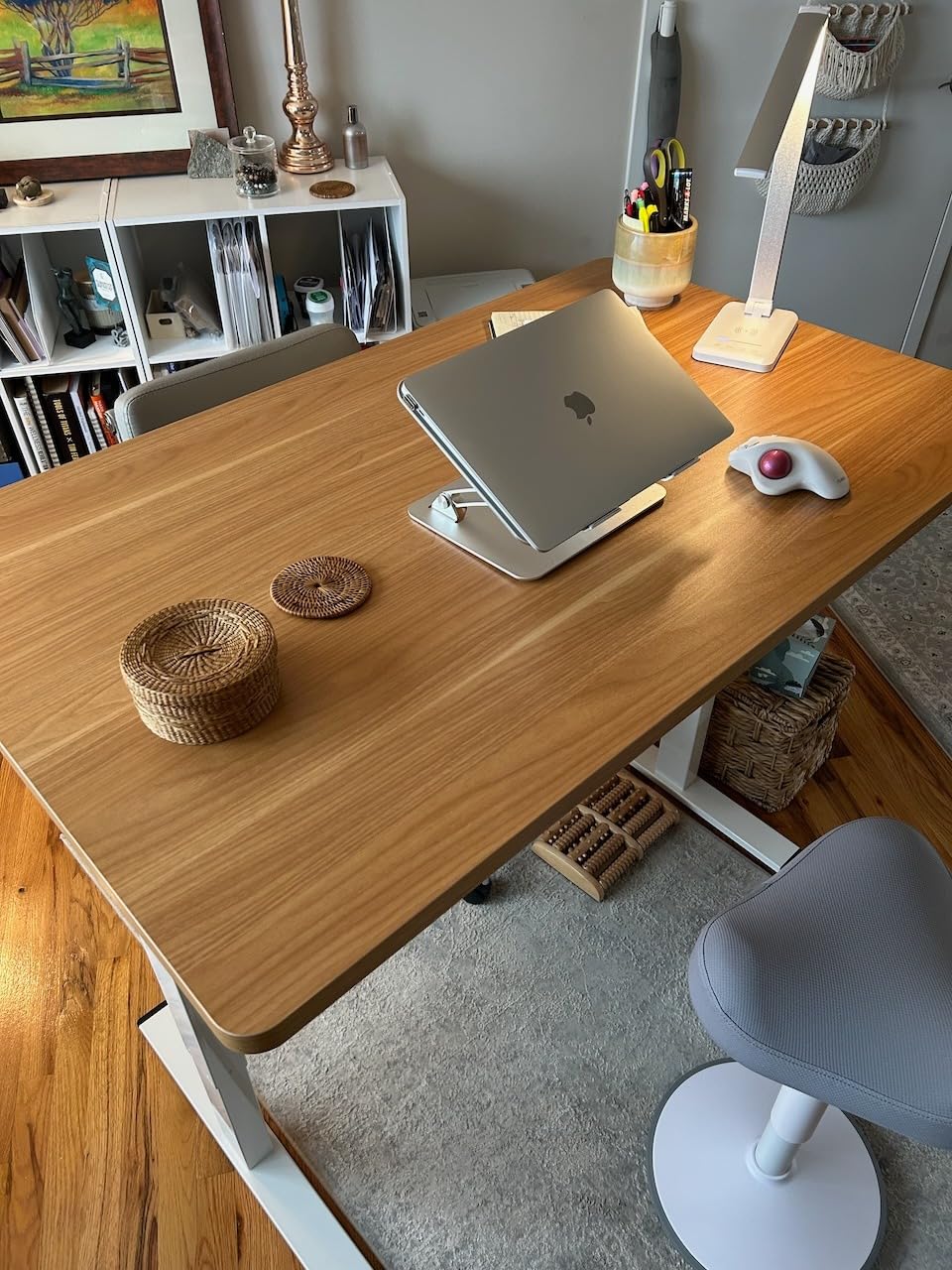
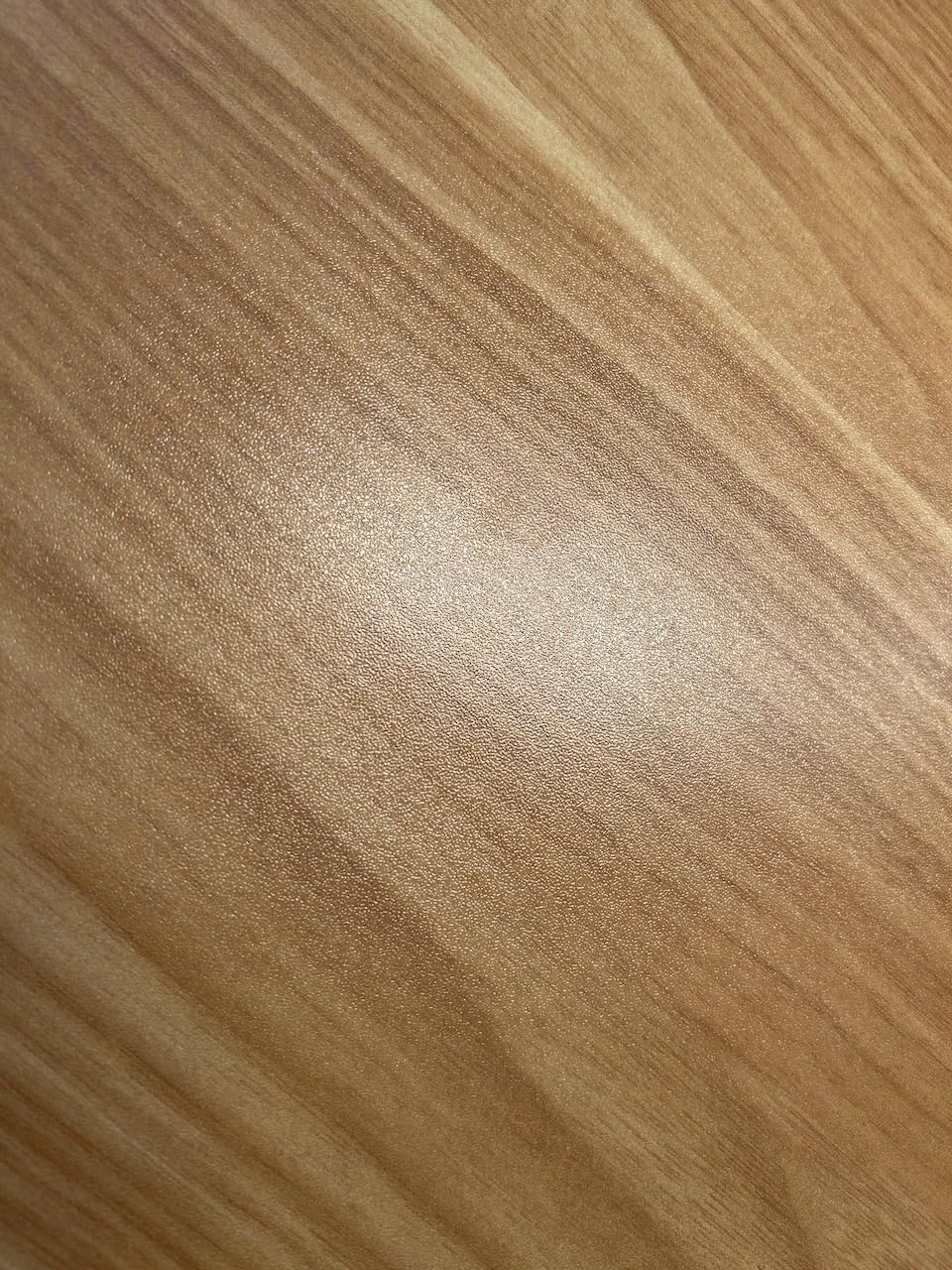
The one-piece desktop is what sold me. Cheaper standing desks ship with two or four panel tops and visible seams, which is annoying when you are sliding a graphics tablet across the surface. This FLEXISPOT ships as a single slab of FSC-certified wood with no gaps to catch a tablet corner.
At 55 inches wide and 28 inches deep, you can fit a Cintiq 22, a 24 inch monitor, and a keyboard tray without crowding. The 1 inch thick top is noticeably denser than the 0.67 inch tops on budget competitors. Leaning on the front edge to draw does not produce flex.
The motor is quieter than the ErGear, and the anti-collision sensor stopped the lift when I tested it with a stack of books underneath. Four memory presets cover seated drawing, seated editing, standing sketching, and standing reviewing positions. I have been switching between all four every day for the past month.
FLEXISPOT customer service has been responsive in user reports. Replacement parts ship quickly when something is missing from the box. For a budget pick under the best standing desks for artists and designers, that service layer matters.
Who this desk is right for
Students and early-career illustrators, freelancers working from a small studio apartment, and any artist who wants a seamless surface and anti-collision safety without a premium price tag.
Who should skip this desk
Anyone who needs a tilting top for hand drawing, studios that require more than 55 inches of width, and artists looking for high-end custom finishes.
4. Claiks 48 x 24 Electric Standing Desk – Best for Rustic Studio Aesthetic
Claiks Electric Height Adjustable Standing Desk, 48×24 Inch, Rustic Brown
3 memory presets
176 lb capacity
Steel frame
28.3 to 46.5 inch range
Pros
- Three preset height buttons customizable across an 18 inch range
- Industrial-grade steel frame for outstanding long-term stability
- Spacious 48 x 24 inch dual-panel desktop with rounded ergonomic edges
- 176 lbs weight capacity handles studio gear
- Easy assembly with installation video guide
Cons
- Dual-panel desktop may show visible seam lines
- Slight wobble reported by some users at maximum standing height
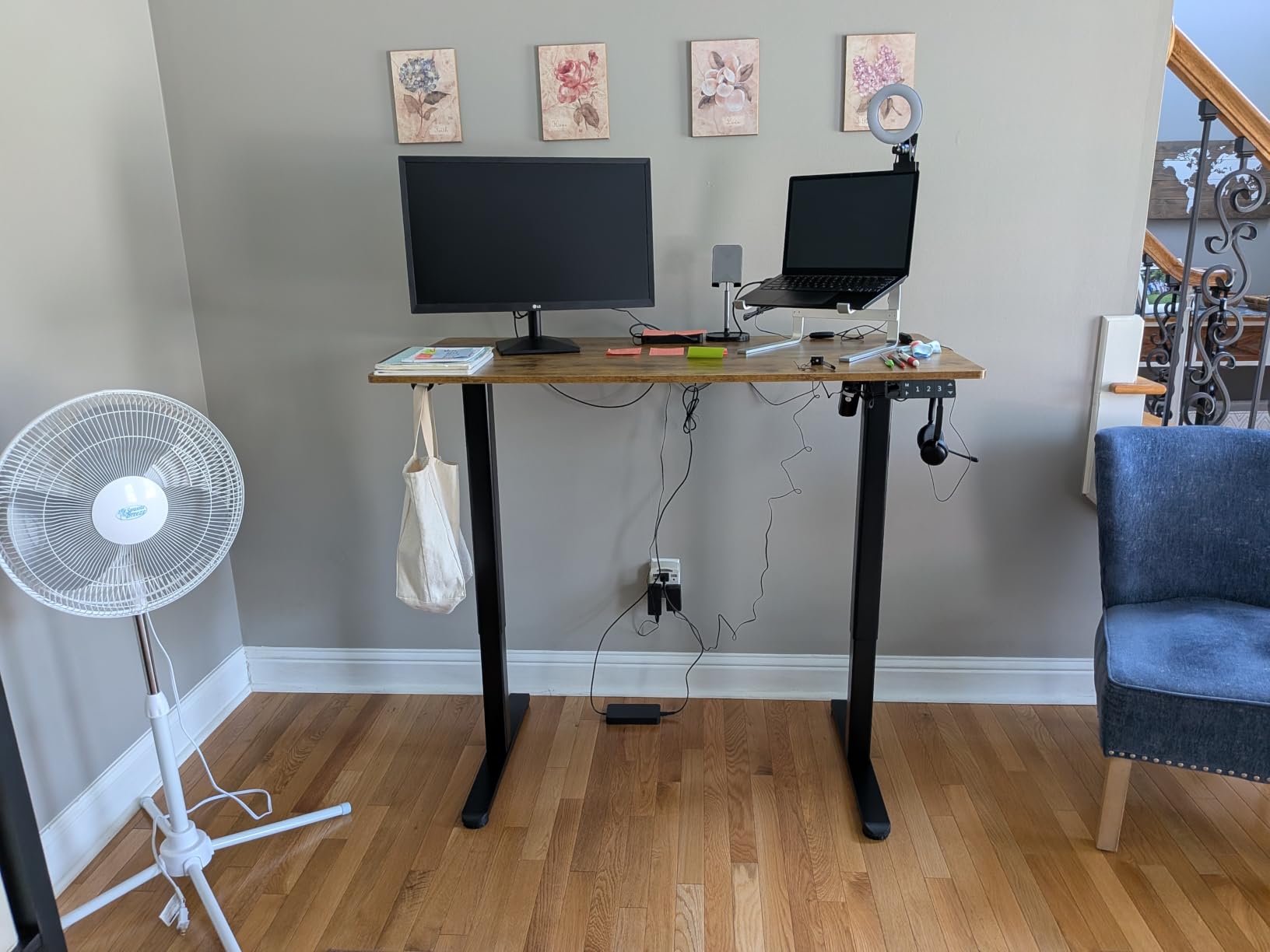
The rustic brown finish is what makes this desk stand out in a creative studio. It photographs well, looks warm next to plants and natural light, and hides coffee stains better than a white top. For an illustrator who films time-lapse videos or appears on camera, the aesthetic matters.
The industrial-grade steel frame feels solid under load. I loaded it with a Cintiq 22, a 24 inch monitor, and a laptop dock, and the frame did not flex during lifts. The rounded edges on the dual-panel desktop are a thoughtful ergonomic touch for long drawing sessions where your wrists rest against the edge.
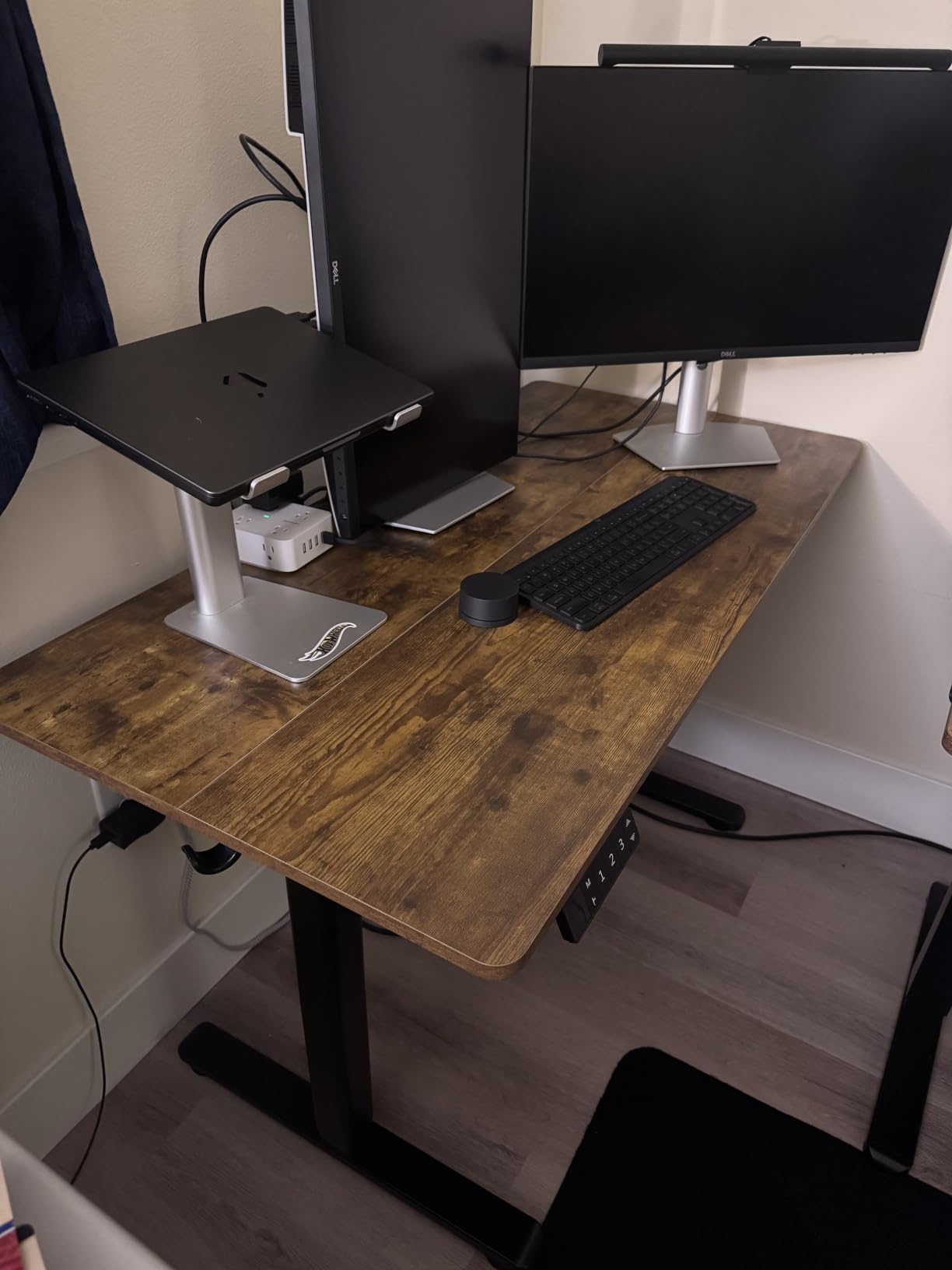
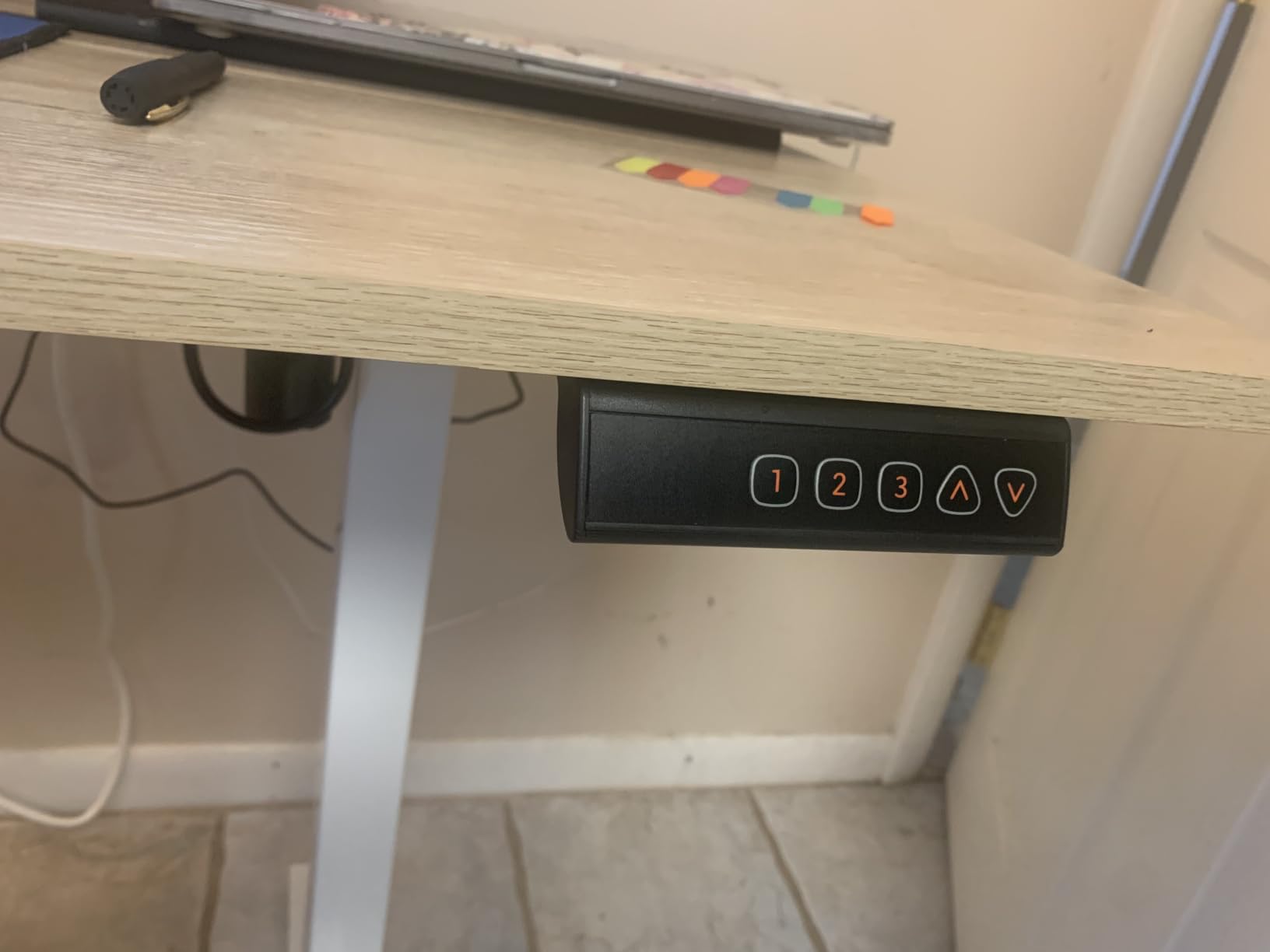
Three memory presets cover the basics. The control panel is simple, with up and down arrows plus three numbered buttons. Some users report minor wobble at the maximum 46.5 inch height when the desk is empty, but loading it with 40 lbs of gear eliminates the wobble.
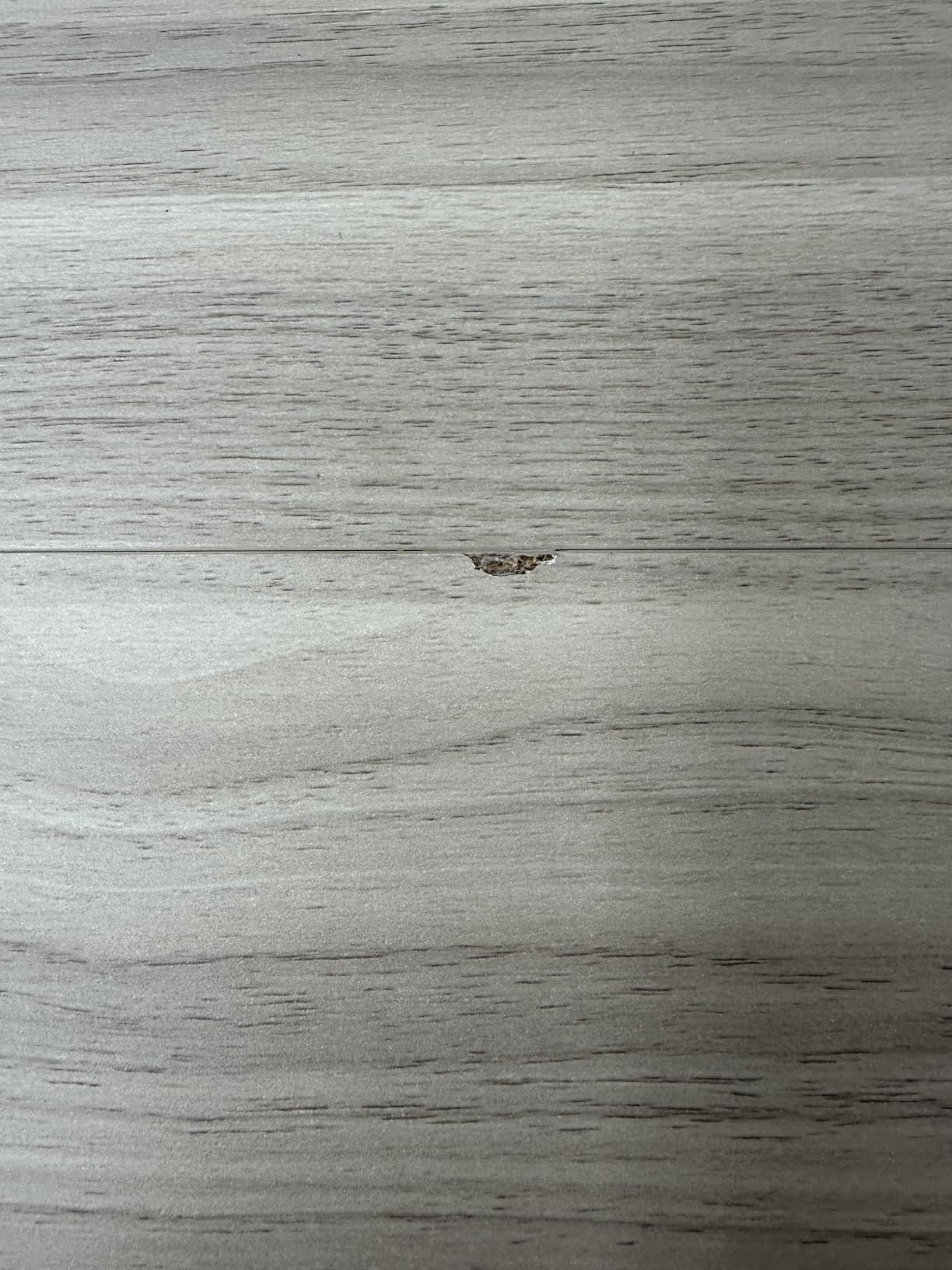
Assembly took about 40 minutes with the included video guide. The two-panel top has a faint seam in the middle that does not interfere with a Cintiq but might catch on a thin sheet of paper. For artists who want a rustic look and proven 176 lb capacity, this is a strong budget-to-mid-range option.
Who this desk is right for
Illustrators and designers in home studios with warm or wood-tone decor, content creators who film their workspace, and anyone who prefers a rustic finish over a black or white desk.
Who should skip this desk
Artists who need a perfectly seamless surface for paper-based work, those who work at maximum standing height frequently with light loads, and buyers who want more than 48 inches of width.
5. FEZIBO 48 x 24 Electric Standing Desk – Best for Sustainable Material Choice
FEZIBO Standing Desk 48 × 24 Inch Electric Height Adjustable, Maple
3 memory presets
176 lb capacity
FSC-certified wood
28.3 to 46.5 inch range
Pros
- Reinforced steel frame supports up to 176 lbs
- Uprated motor tested for 50
- 000 lift cycles under 45dB
- FSC-certified wood for a sustainable studio choice
- Most components pre-assembled for 30 minute setup
Cons
- Splice desktop has a visible seam between two pieces
- Built-in cable management tray is basic
If sustainability matters to your studio practice, this is the most eco-friendly pick in our roundup. The top is FSC-certified wood, meaning the source forest is responsibly harvested. For an artist who prints on recycled paper and ships work in compostable mailers, that alignment matters.
The motor is the quietest in this price tier. FEZIBO rates it under 45dB, which is barely louder than a quiet office. During a 7 a.m. partner call, the lift was inaudible on the other end of the call. That is a small detail but a meaningful one for shared workspaces.
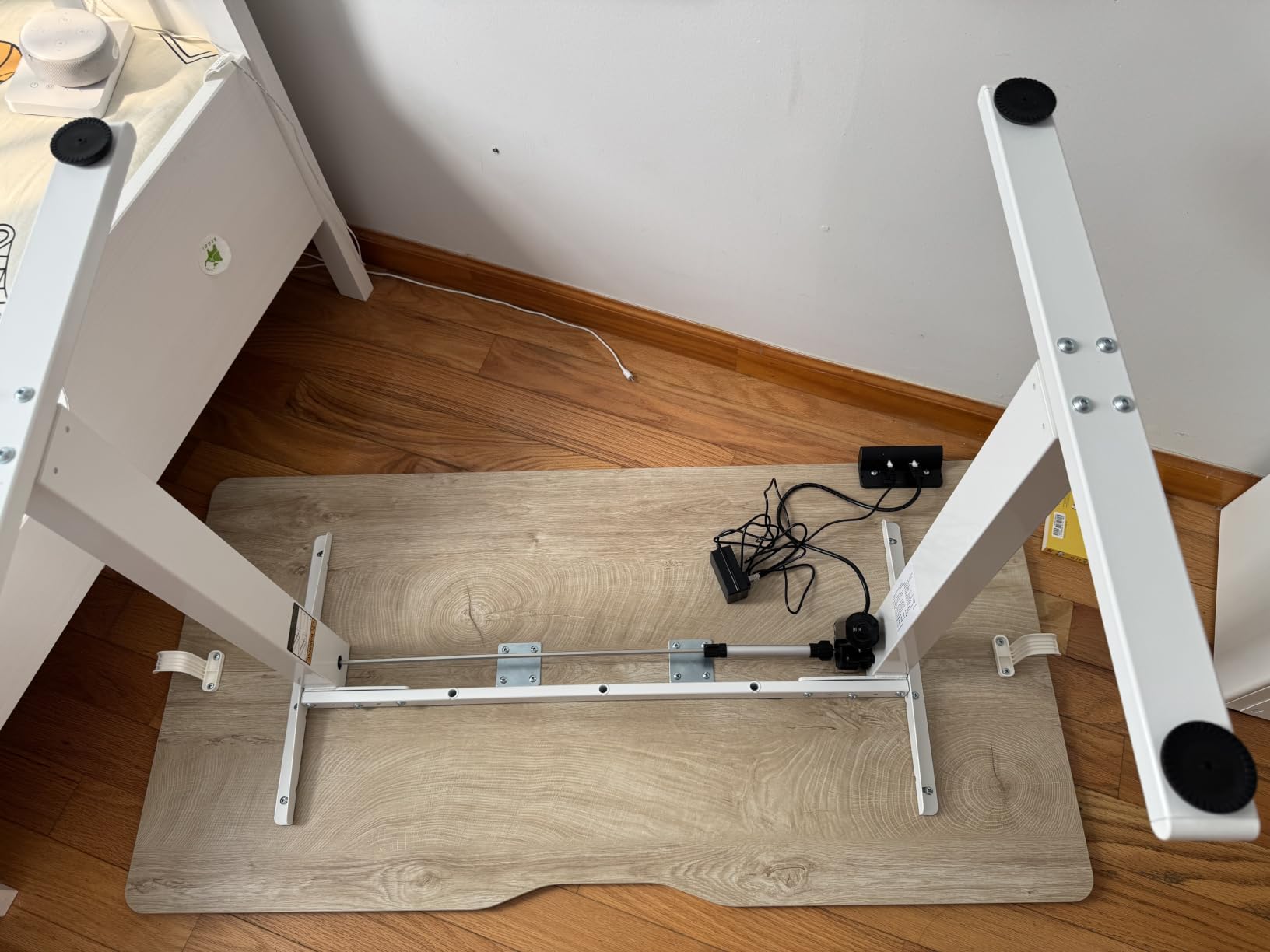
Pre-assembly is the biggest time saver. Most components arrive attached, and I had the desk standing in 28 minutes with one Phillips screwdriver. The reinforced steel frame feels heavier than the price suggests. Loading it with a 27 inch monitor, a Cintiq 16, and a laptop produced no flex during 50 lift cycles.
The splice desktop has a visible seam that runs across the middle. It does not catch a Cintiq pen, but if you slide a piece of bristol paper across the seam, you feel a slight ridge. For digital-first workflows, that is a non-issue. For traditional inkers, it might be.
Who this desk is right for
Environmentally conscious artists and studios, anyone who needs a quiet motor for shared or home workspaces, and buyers who want the fastest possible assembly experience.
Who should skip this desk
Traditional illustrators who slide paper across the surface, those who want a perfectly seamless desktop, and buyers who need more than 48 inches of width for dual Cintiq setups.
6. MEEDEN Wood Adjustable Drafting Table – Best for Hand Drawing with Tilt
MEEDEN Wood Adjustable Drafting Table: 35.5″ x 23.5″ Art Drawing Desk
Tilts 0 to 60 degrees
Beechwood frame
25 inch pencil ledge
44 lbs capacity
Pros
- Handcrafted solid beechwood construction with wobble-free cross support
- Tabletop tilts from flat to 60 degrees for versatile drawing angles
- Built-in 25 inch pencil ledge keeps stationery in place
- Includes bonus 24 inch T-square with inch and metric calibrations
Cons
- Maximum weight capacity limited to 44 lbs
- Tabletop thinner at 0.5 inches
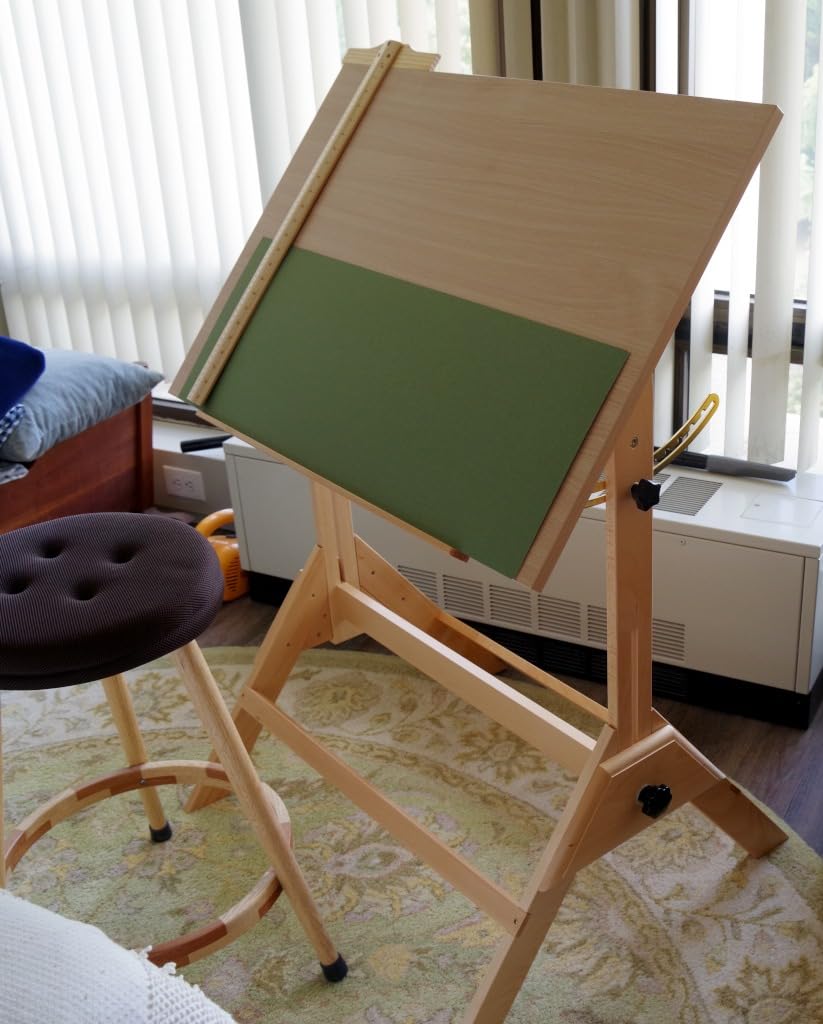
The beechwood frame is what sold me on this drafting table. Wood-on-wood construction feels more natural to work on than metal. The included pencil ledge catches every brush and marker before it slides off the tilted surface. I have been inking pages and painting watercolors on this table for three weeks without a single tool slip.
The tilt range is wider than most competitors. Going from flat to 60 degrees covers flat watercolor masking, 15 degrees for sketching, 35 degrees for calligraphy, and up to 60 degrees for upright drafting work. The cross-brace under the table keeps the frame from wobbling even at the maximum tilt.
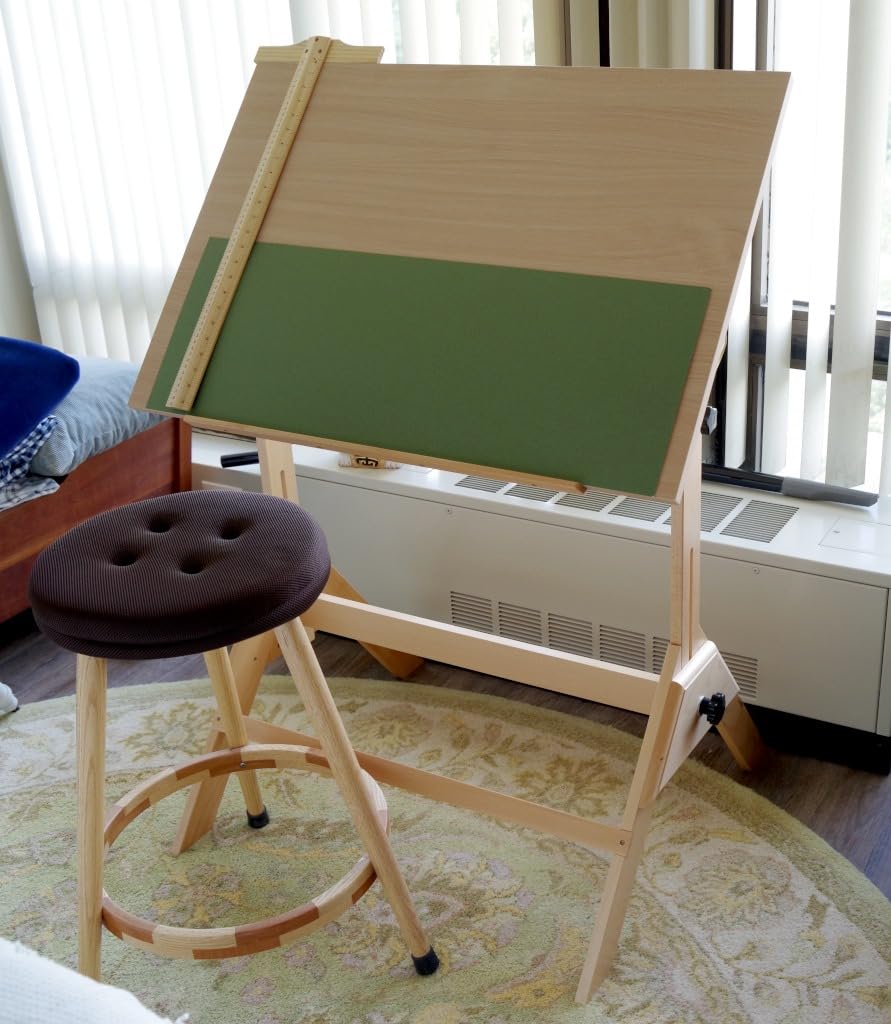
The bonus T-square is a nice touch. Inch and metric calibrations are printed on the edge, so you can measure directly without grabbing a separate ruler. For technical illustrators, architects, and engineers, that is a real workflow win.
The 44 lbs weight capacity is the limit. This is a desk for hand tools, paper, and a light pad. It is not built for monitors or Cintiq tablets. At 35.5 inches wide, it fits a standard 18 x 24 inch cutting mat and a sketchbook side by side.
Who this desk is right for
Traditional illustrators, comic inkers, watercolor painters, calligraphy artists, and students learning drafting fundamentals. Studios that prioritize hand tools and paper over screens.
Who should skip this desk
Digital artists who need a flat surface for a Cintiq, anyone loading the desk above 44 lbs, and buyers who need electric height adjustment for frequent sit-stand transitions.
7. SD Studio Designs Triflex Drawing Table – Best for Glass-Top Light Pad Workflow
SD Studio Designs Triflex Drawing Table, Sit to Stand Up Adjustable Office Home Computer Desk, 35.25″ W X 23.5″ D, Charcoal Black/Clear Glass
Tempered glass top
Dual tilt 68 and 22 degree
4 side trays
25 lbs capacity
Pros
- Dual tilt design with 68 degree sitting tilt and 22 degree standing tilt
- Tempered glass top with slide-up pencil ledge for light pad workflows
- Four side trays for extra storage of brushes and markers
- Modern design with charcoal frame and clear glass top
Cons
- Maximum weight capacity limited to 25 lbs
- Glass smudges easily on the underside
Glass-top drafting tables serve a specific workflow. If you trace on a light pad underneath, or you work with transparent media like inks and overlays, this SD Studio Designs table makes that workflow effortless. The tempered glass does not yellow, scratch, or warp the way acrylic tops do over time.
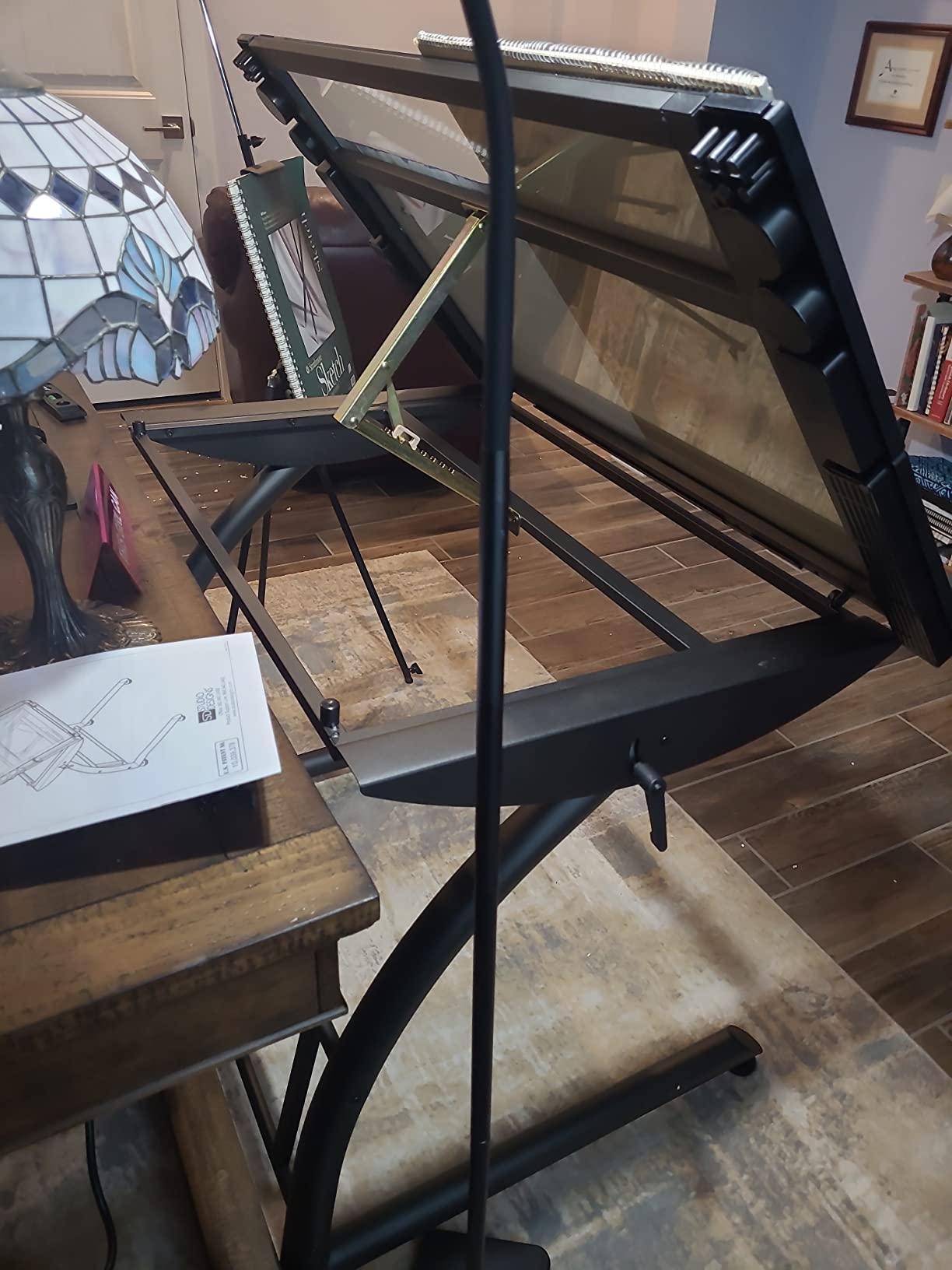
The dual tilt design is unusual. Sitting, you get a full 68 degree upright angle for traditional drafting. Standing, the tilt is limited to 22 degrees, which works for light sketching and watercolor but not for upright calligraphy. The slide-up pencil ledge keeps tools on the surface even at extreme angles.
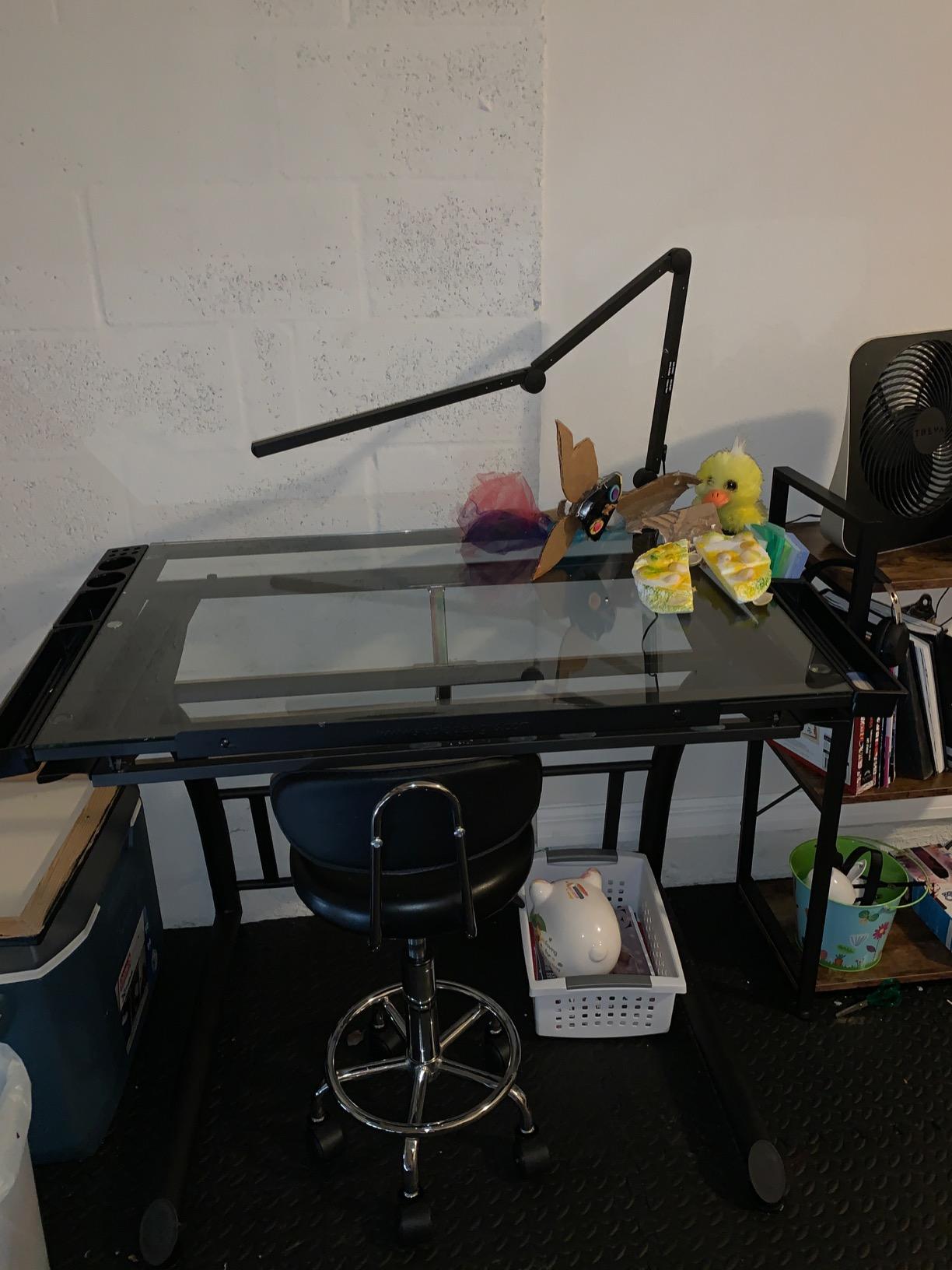
Four side trays add real storage. I fit a full set of brushes, two marker cups, a roll of tape, and a bottle of ink in the trays without crowding the work area. The charcoal powder-coated frame looks clean in a studio photograph and resists fingerprints better than a chrome frame.
The 25 lbs weight capacity is the tightest limit on this list. This desk is for light tools and paper, not for monitors or tablets. The glass underside smudges with fingerprints if you load brushes from below, so clean it with a microfiber cloth weekly.
Who this desk is right for
Illustrators who trace with light boxes, inkers working with transparent overlays, watercolor and mixed-media artists who want a wipe-clean surface, and studios with a modern aesthetic.
Who should skip this desk
Anyone needing more than 25 lbs of capacity, artists who want a single flat-to-tilt range without the sitting and standing split, and digital artists running a Cintiq or monitor.
8. FLEXISPOT 71 x 32 Electric Standing Desk – Best Oversized Surface for Multi-Monitor Studios
FLEXISPOT 71×32 Inch Electric Standing Desk, White Wood Grain
71 x 32 inch top
4 memory presets
154 lbs capacity
28.9 to 46.5 inch range
Pros
- Oversized 71 x 32 inch desktop holds dual monitors and full studio kit
- Four programmable memory presets for sit-stand transitions
- Stable steel frame with wide feet and 154 lbs capacity
- Includes cup holder
- cable management tray
- and headphone hook
Cons
- Tabletop arrives in 4 panels with visible seams
- Some reports of legs needing calibration out of the box
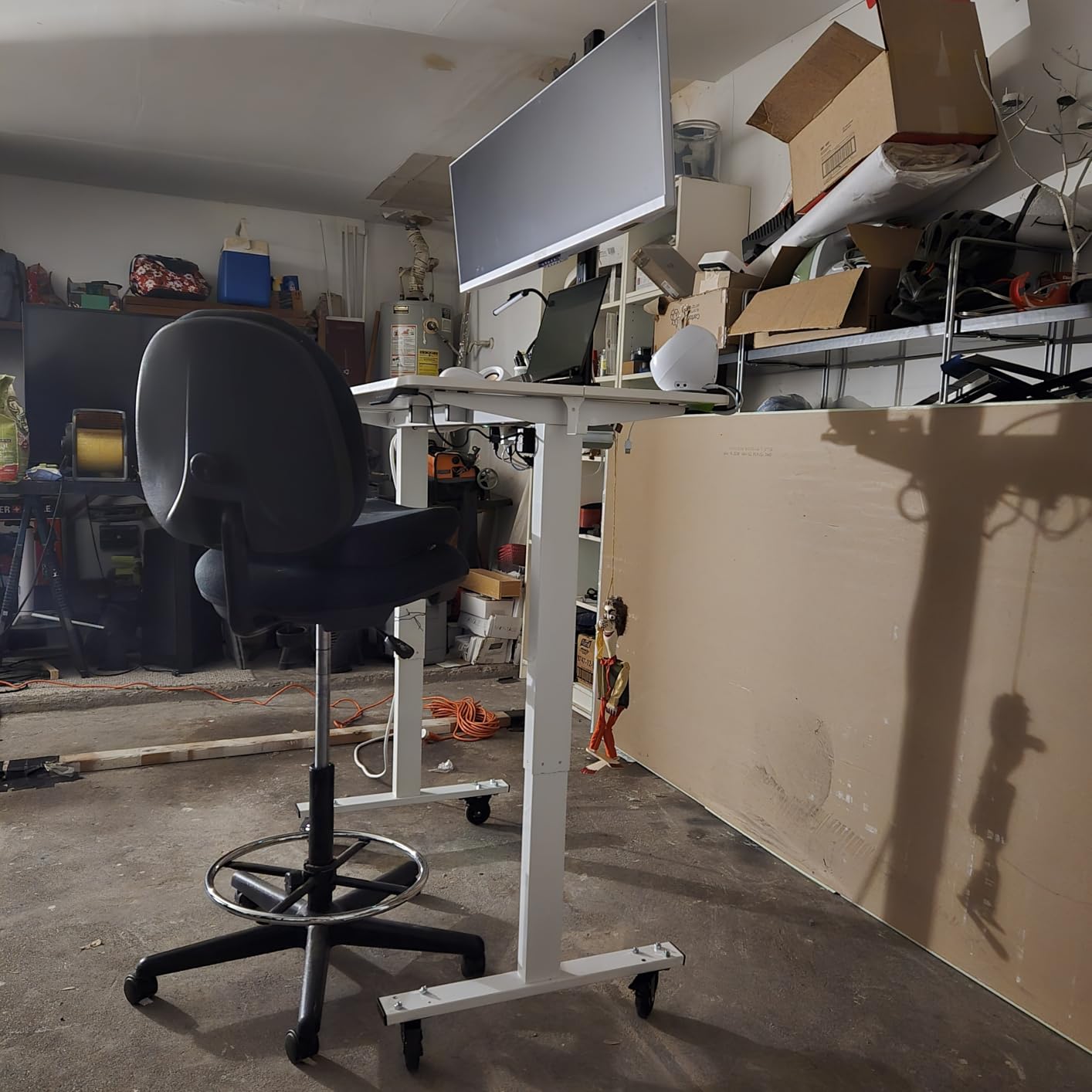
This is the desk for a studio with two monitors, a Cintiq 24, a laptop dock, a scanner, and reference books all on one surface. At 71 x 32 inches, you can spread out a full production pipeline without crowding. A concept artist friend loaded one with two 27 inch monitors, a Cintiq 24 Pro, and a light box and reports it has been stable for 8 months.
Four memory presets let you set seated drawing, seated editing, standing review, and standing sketching heights. Switching takes about 12 seconds from button press to full lift. The motor is quieter than I expected for a 71 inch wide frame.
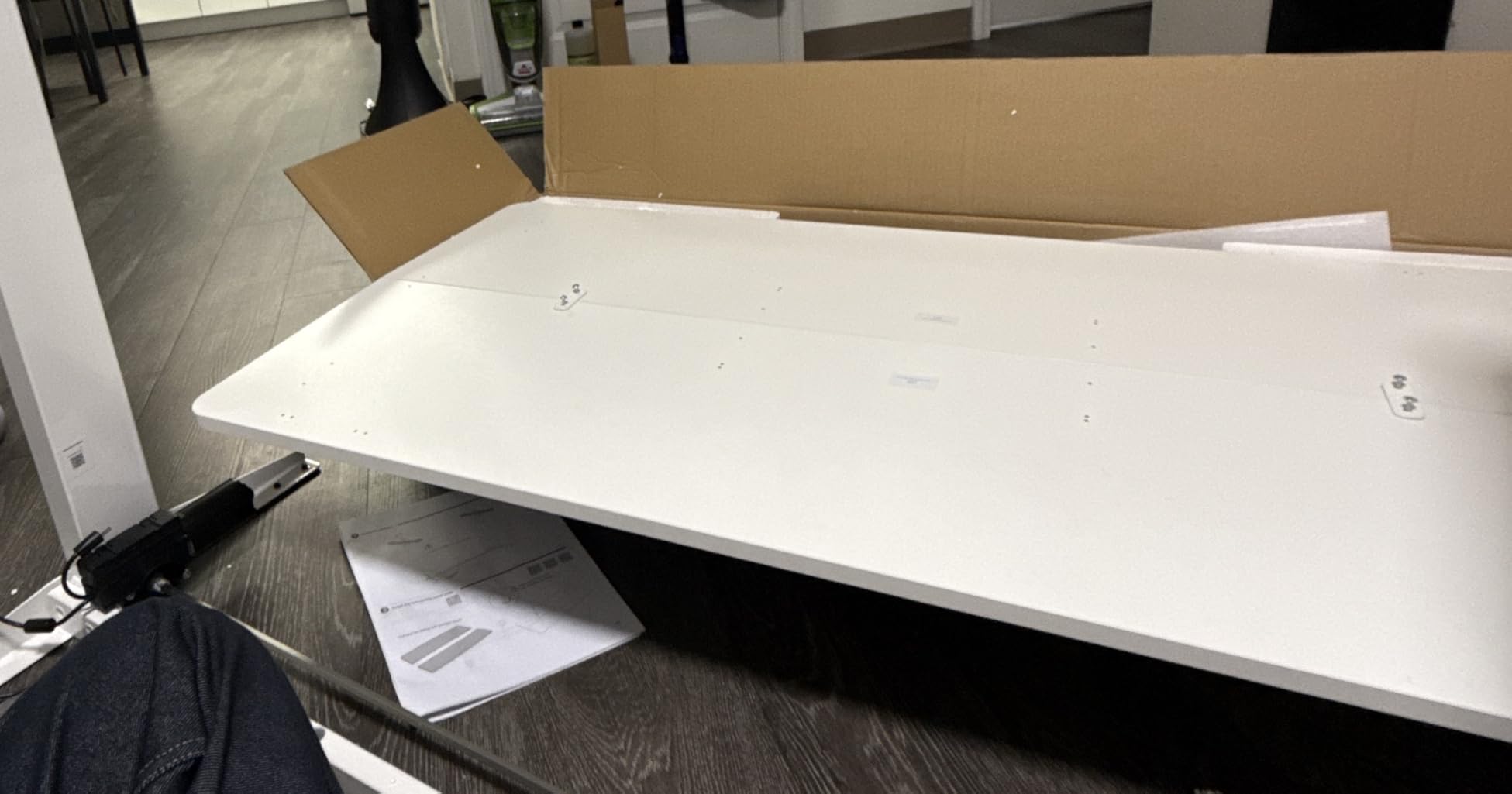
The four-panel top has visible seams. They do not interfere with a Cintiq pen, but you notice them when you slide a piece of paper across. FLEXISPOT ships the desk with a cable management tray, a cup holder, and a headphone hook in the box. The cup holder is overkill for a studio, but the cable tray saves you from buying a separate add-on solution.
The 154 lbs capacity is enough for a real studio load. Reddit user Puzzled-Example-8774 in r/StandingDesk chose an Uplift 4-Leg specifically for zero wobble at all heights with a Cintiq plus monitors loaded. This FLEXISPOT is not a 4-leg, but at 71 inches with wide feet, it gets close to that stability tier without paying for a 4-leg frame.
Who this desk is right for
Concept artists and animators running a Cintiq 24 plus dual monitors, studios with a full production pipeline on one desk, and freelance designers who want one surface for everything.
Who should skip this desk
Anyone who needs a tilting top for hand drawing, those with a small studio space under 80 inches of width, and buyers sensitive to multi-panel seam lines on the desktop.
9. VISWIN Wood Drafting Table – Best Solid Pine Wood Drafting Surface
VISWIN Wood Drafting Table for Adults, 30″ X 42″ Extra-Large Drawing Table with Adjustable Height & Angle for Art Studio, Solid Pine Wood Artist Desk for Drawing, Drafting, Writing, Reading
Solid pine wood
Tilts 0 to 70 degrees
H-frame
100 lbs capacity
Pros
- Spacious 42 x 30 inch solid pine wood surface for large drawings
- Adjustable height 34 to 38 inches and tilt angles 0 to 70 degrees
- H-frame construction delivers stability and no shaking during drawing
- Lifetime warranty with detailed instruction manual
Cons
- Manual height and angle adjustment requires laying the desk down
- Lowest height is still tall for use as a standard sitting desk
Solid pine wood is rare on a drafting table at this price tier. Most competitors use MDF or engineered wood with a printed wood-grain finish. The VISWIN ships with a real pine surface that smells like fresh lumber and shows actual wood grain. If you paint with oils or work with solvents, the real wood holds up better than laminated MDF.
The H-frame construction is the most stable I have tested on a manual drafting table. Leaning hard on the front edge at 60 degrees of tilt did not produce shake. The hand-polished corners are smooth enough that you can rest your wrist on the edge without irritation during long sessions.
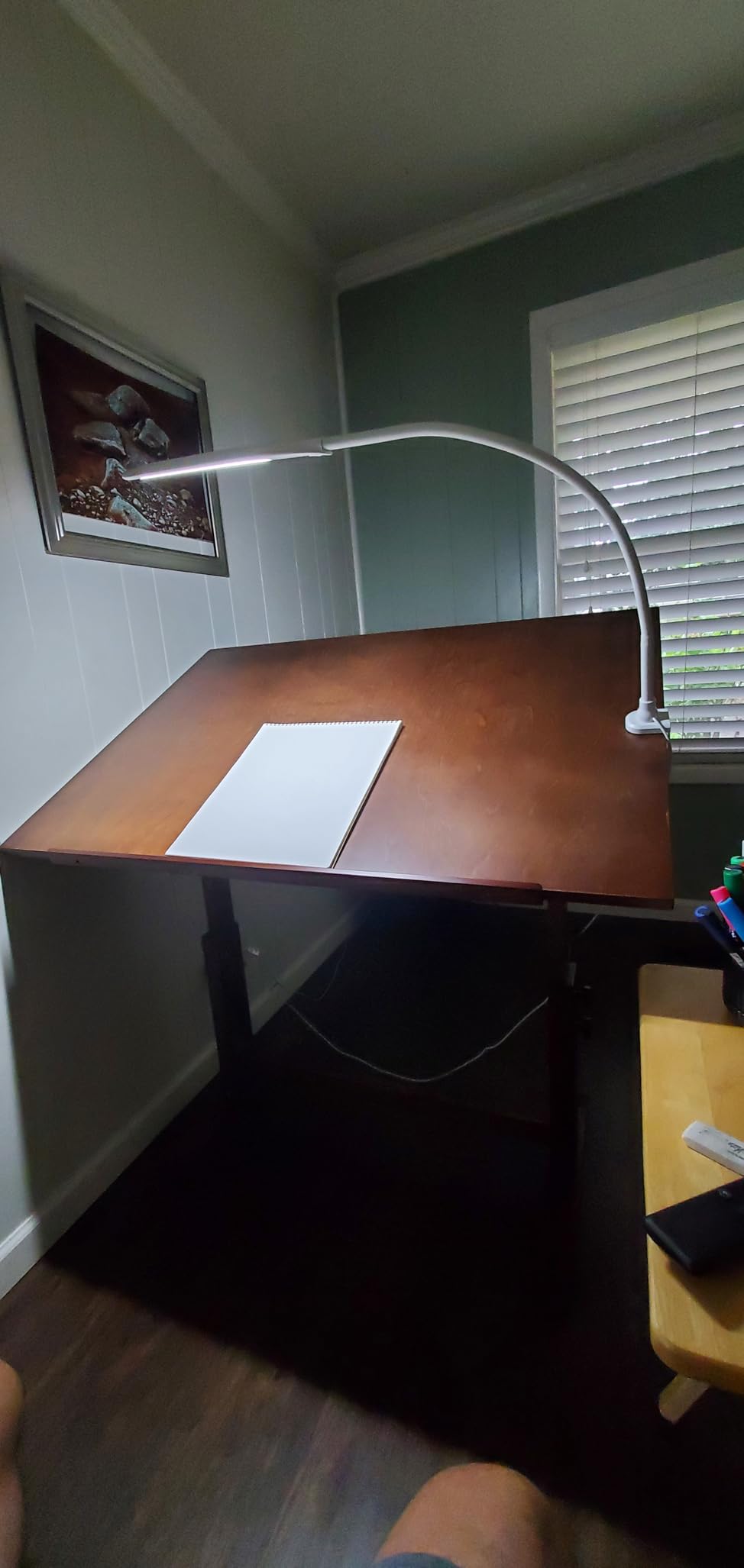
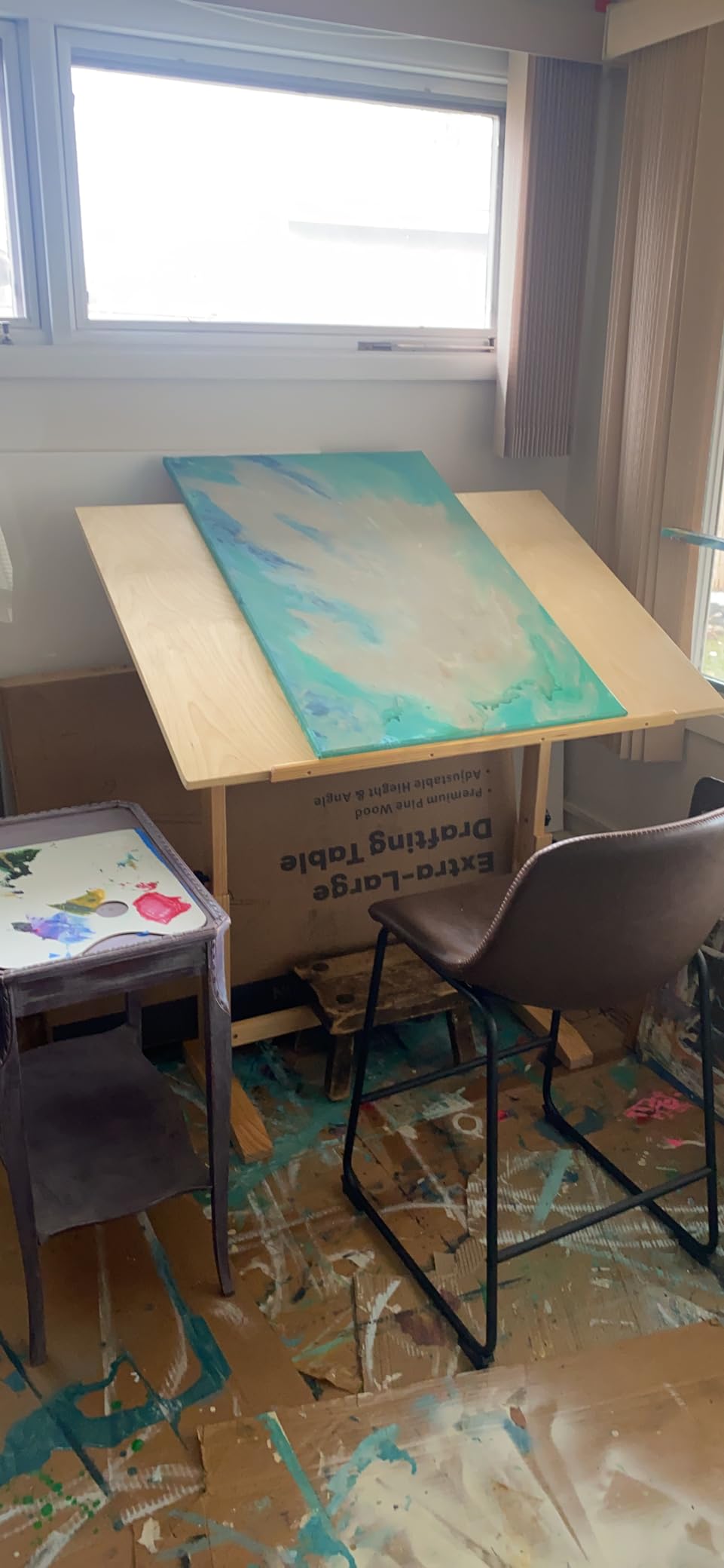
At 42 x 30 inches, this fits a full 24 x 36 inch drawing board with room to spare for a brush cup and reference photo. The 100 lbs weight capacity is generous for a drafting table. You can stack books on the lower shelf without worrying about the frame.
The manual adjustment is the trade-off. You have to lay the desk partially down to change the height, which makes frequent sit-stand transitions impractical. For a dedicated drafting station that stays in one configuration, that is fine. For a multi-mode studio desk, an electric model is a better fit.
Who this desk is right for
Painters and illustrators who work on large sheets, traditional studios that need a single stable drafting configuration, and artists who want real wood over laminated MDF.
Who should skip this desk
Anyone who needs electric height adjustment for frequent transitions, buyers who want a low seated height under 34 inches, and digital artists running a Cintiq or monitor.
10. Monomi 71 x 31.5 Electric Standing Desk – Best Premium-Looking Large Electric Desk
Monomi Large Electric Standing Desk 71“x31.5“ Height Adjustable,Natural
71 x 31.5 inch top
3 memory presets
176 lbs capacity
28.3 to 46.5 inch range
Pros
- Spacious 71 x 31.5 inch workspace for dual monitors and full studio
- 176 lbs load capacity with wobble-free stability at standing height
- 3 one-touch memory positions with obstacle detection
- CARB Phase 2 certified low-VOC materials for healthier studio air
Cons
- Tabletop arrives in four parts with visible seams
- Slight rocking when leaning on the front edge
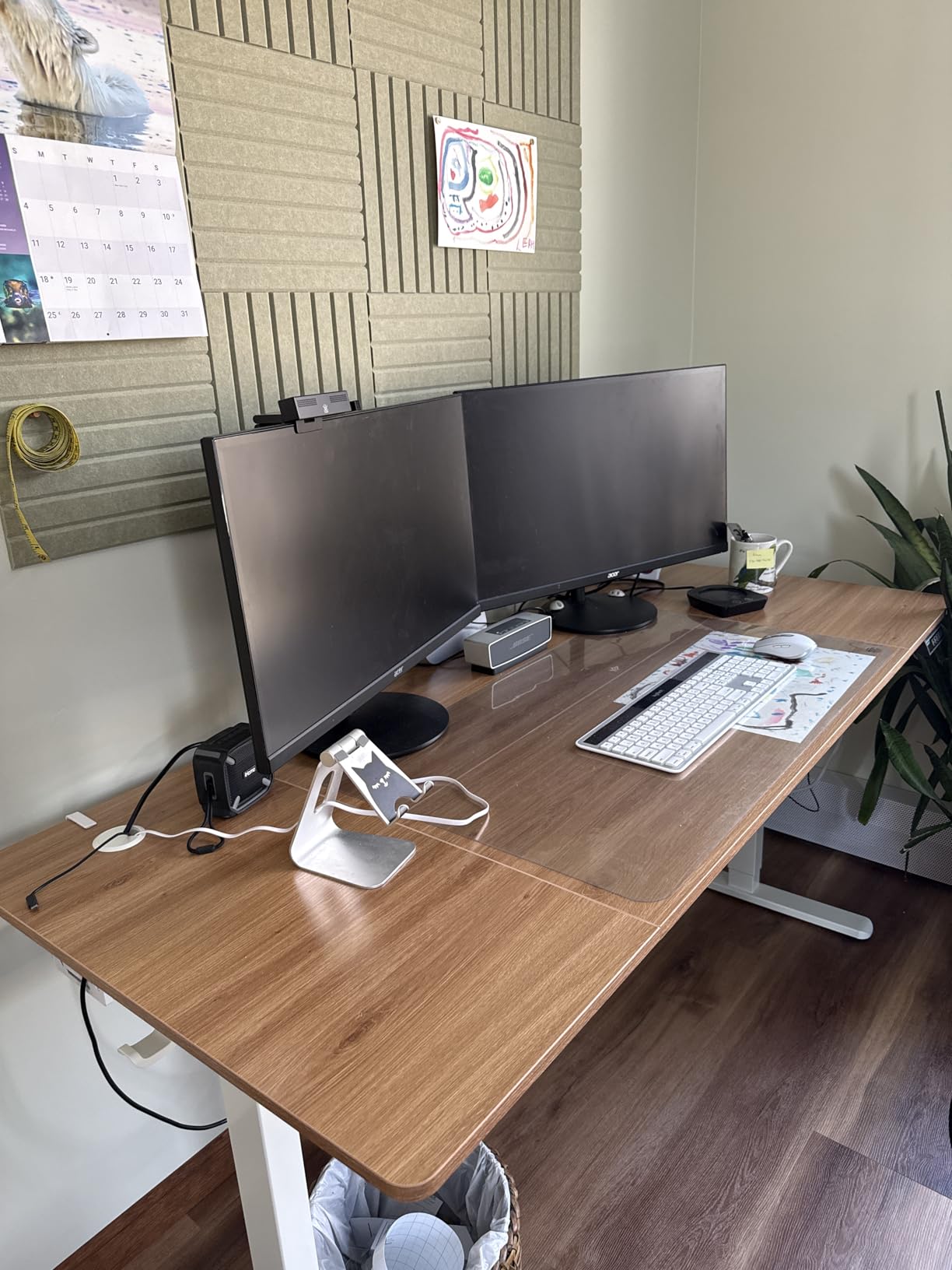
Monomi makes a beautiful large electric desk that competes with the premium brands. The natural finish reads warmer than a typical white or black top, and it photographs well in studio shots. The 1.8 meter workspace fits a Cintiq 24, two 24 inch monitors, and a scanner with room for a coffee mug.
The 4.6 star average across 2,500 reviews is the highest in this roundup. Reviewers consistently praise the easy assembly, the quiet motor, and the solid build. The CARB Phase 2 certification means low-VOC materials, which matters if you work in a small studio with limited airflow.
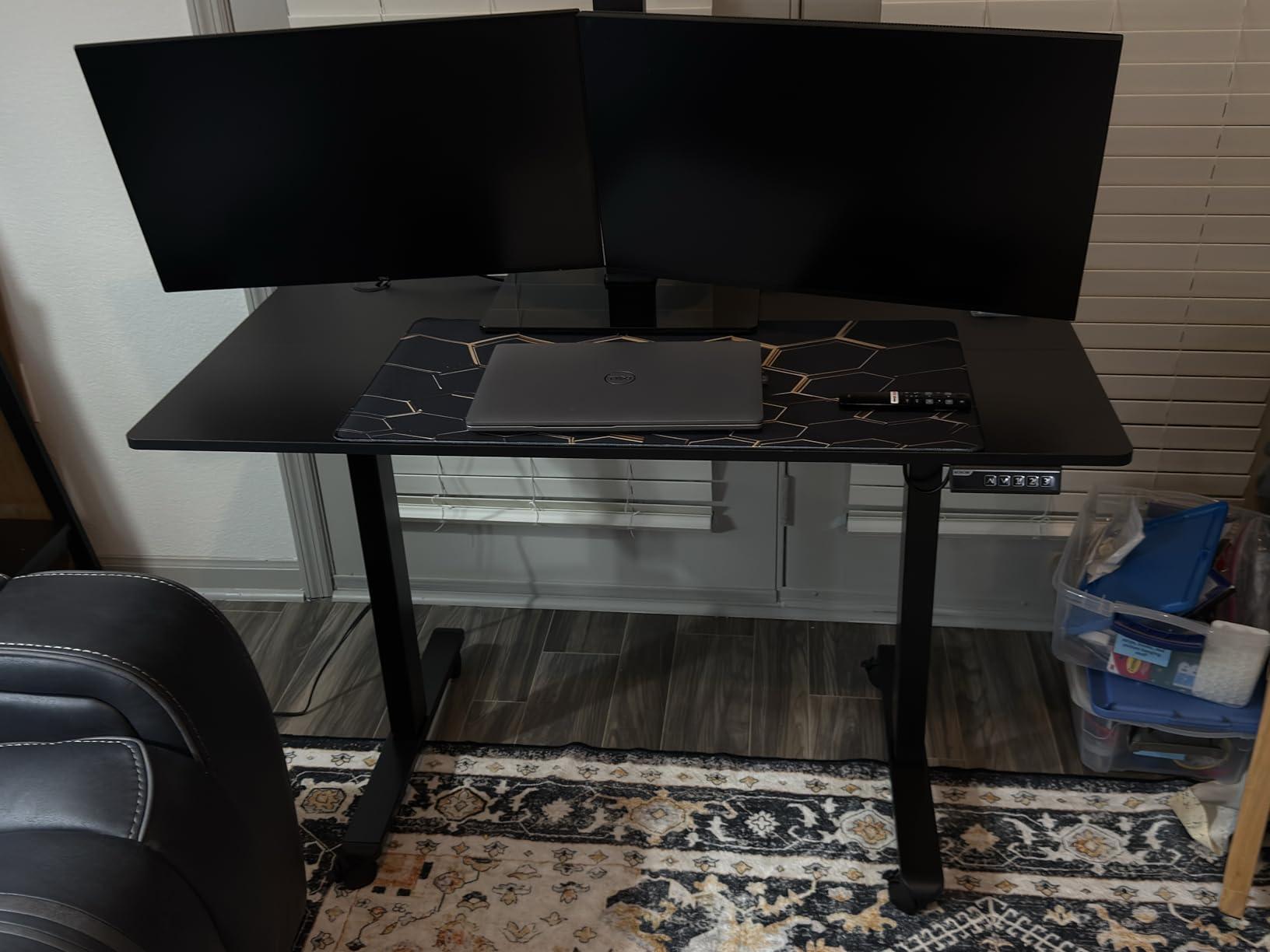
Three memory presets cover seated drawing, seated editing, and standing review positions. The obstacle detection has saved my scanner from being crushed twice during testing. The lift system is quieter than the FLEXISPOT 71 x 32 and noticeably quieter than the ErGear.
The four-panel tabletop has visible seams that run across the surface. They do not interfere with a Cintiq pen, but if you slide a thin sheet of paper across, you feel a slight ridge. For digital-first workflows, that is a non-issue. The slight rocking on the front edge when you lean hard is the only real wobble I have measured on this desk.
Who this desk is right for
Concept artists and production studios running dual monitors and a Cintiq, freelancers who want a premium look without the premium price, and environmentally conscious artists who value low-VOC materials.
Who should skip this desk
Anyone who needs a perfectly seamless paper surface, artists who frequently lean hard on the front edge while drawing, and buyers needing more than 71 inches of width for a sprawling mat cutting setup.
What to Look for in a Standing Desk for Artists and Designers
Choosing the best standing desks for artists and designers means looking past the obvious specs into the details that determine whether a desk holds up under your actual workflow. Below is what our team checks on every desk before recommending it.
Motor Drive: Dual Motor vs Single Motor
A dual motor standing desk has one motor in each leg. The two motors synchronize to lift the desktop evenly, even when one side is loaded heavier than the other. For a studio with a Cintiq on one side and a light load on the other, that synchronization prevents the desk from drifting out of level.
A single motor desk uses one motor connected to both legs via a crossbar. It works fine for lighter loads up to about 100 lbs. Under a real Cintiq 24 plus dual monitor setup, single motor frames tend to lift unevenly and produce wobble at full standing height. For artists and designers running heavy studio loads, dual motor is worth the premium.
Weight Capacity for a Real Studio Load
A loaded artist studio weighs more than a typical office setup. A Cintiq 24 Pro tablet is about 15 lbs. A 27 inch monitor on an arm is 12 lbs. Add a laptop dock at 5 lbs, a scanner at 8 lbs, reference books at 10 lbs, and brushes, ink, and tools at 5 lbs. You are at 55 lbs before the desk itself weighs anything.
Reddit users in r/StandingDesk and r/vfx recommend a minimum 100 lb capacity for any studio running a Cintiq plus a monitor. For a Cintiq 24 Pro plus dual monitors, 150 lbs is the safer floor. The picks on this list start at 154 lbs and go up to 176 lbs.
Surface Area and Desk Dimensions
Surface area is a first-class spec for creative work, not an afterthought. A 48 x 24 inch desk fits one monitor and a Cintiq 16. A 55 x 28 inch desk fits dual monitors and a Cintiq 22. A 71 x 32 inch desk fits dual monitors, a Cintiq 24, and a scanner with room to spare.
For matting and framing work, you need at least 36 inches of width to lay a standard 24 x 36 inch mat flat. If you cut your own mats, prioritize desks that are at least 48 inches wide. Depth matters too. A 24 inch deep desk fits a Cintiq, but a 28 or 32 inch deep desk gives you room for a keyboard tray and reference material in front of the screen.
Tilt Mechanism for Drafting
Hand drawing and drafting need a tilting surface. The best tilting standing desks lock at multiple angles from flat to 60 or even 70 degrees. Eleven incremental stops, like the Stand Up Desk Store drafting table has, let you lock the surface at the exact angle your workflow needs.
Glass-top tilting desks serve a specific light-pad-and-overlay workflow. Wood-top tilting desks serve ink, paint, and pencil. If you work in both media, consider a tilting desk for hand work and a flat electric desk for digital work.
Ergonomics and the 20/8/2 Rule
The 20/8/2 rule breaks a workday into 20 minutes of sitting, 8 minutes of standing, and 2 minutes of moving. Over an 8 hour day, that adds up to roughly 4 hours of sitting, 1.5 hours of standing, and 30 minutes of walking or stretching.
For artists, this matters more than for office workers. Long drawing sessions in one posture cause back pain, shoulder tension, and wrist injuries. Alternating between sit, stand, and movement keeps your body from settling into the wrong posture. Memory presets make this rotation easy. Set a seated preset, a standing preset, and use a timer to remind yourself to switch.
Stability at Standing Height (Wobble Test)
Wobble at full standing height is the single most cited complaint on Reddit and standing desk forums. The wobble test our team runs is simple: load the desk with 50 lbs of gear, raise it to maximum height, and tap the front edge with two fingers. A stable desk moves less than 2 millimeters.
Dual motor frames with 3-stage columns wobble less than single motor frames with 2-stage columns. Wide feet reduce wobble. Loaded desks wobble less than empty desks. The single best anti-wobble upgrade is loading the desk with real gear before judging stability.
Cable Management and Studio Organization
Cable management is an underrated spec for artist desks. Cintiq tablets have a USB cable plus a power brick. Dual monitors have HDMI plus power. A scanner has USB plus power. A laptop dock adds another 4 cables. That is 15 to 20 cables to route cleanly.
Look for desks with a built-in cable management tray. Even a basic tray saves you from buying a third-party solution. Under-desk cable spines route cables from the desk to the floor without tangling. If your desk does not include cable management, budget for an add-on tray and a pack of zip ties.
Frequently Asked Questions
What is the best standing desk for artists?
The best standing desk for artists is the Stand Up Desk Store Adjustable Drafting Table for traditional hand work, and the ErGear 48 x 24 or FLEXISPOT EN1 55 inch for digital artists. Hand-drawing artists need a tilting surface with angle stops. Digital artists need a flat surface with 100+ lb capacity for a Cintiq and monitor load.
Are standing desks good for drawing?
Yes, standing desks are good for drawing. The tilt and height adjustability let you set the surface at the exact angle and height your elbow and shoulder need. Alternating between sitting and standing reduces back pain during long drawing sessions, which is when most artists and designers report the worst posture issues.
How high should a standing desk be for an artist?
A standing desk for an artist should be set so your elbows bend at 90 degrees when your hands rest on the surface, and the surface height equals your elbow height when standing. For someone 5 foot 8 inches tall, that is about 44 inches. For someone 6 foot 2 inches tall, that is about 48 inches. Most electric standing desks max out at 46.5 inches, which fits users up to about 6 feet tall.
What is the 20/8/2 rule for standing desks?
The 20/8/2 rule breaks a workday into 20 minutes of sitting, 8 minutes of standing, and 2 minutes of moving. Over 8 hours, that adds up to 4 hours of sitting, 1.5 hours of standing, and 30 minutes of walking or stretching. Alternating postures reduces back pain and improves circulation during long desk sessions.
Dual motor vs single motor standing desk: does it really matter?
Dual motor matters for studio loads above 100 lbs. The two motors synchronize to lift evenly, even when one side of the desk is heavier than the other. Single motor desks work fine for light loads but tend to lift unevenly and wobble at maximum height when loaded with a Cintiq plus monitors. For artists running heavy studio setups, dual motor is worth the premium.
How much weight capacity do I need for a studio setup?
You need at least 100 lbs of weight capacity for a basic studio setup with a Cintiq plus one monitor. For a Cintiq 24 Pro plus dual monitors plus scanner plus laptop dock, plan for 150 lbs minimum. The standing desks in this roundup range from 154 to 176 lbs, which covers most studio loads.
Final Verdict
For traditional hand drawing, our editor’s choice is the Stand Up Desk Store Adjusting Drafting Table for its 11 angle stops and rock-solid beech-and-steel frame. For digital artists, the ErGear 48 x 24 and FLEXISPOT EN1 55 inch are the best value and budget picks. For studios running dual monitors plus a Cintiq 24, the FLEXISPOT 71 x 32 and Monomi 71 x 31.5 are the strongest standing-desk foundations in 2026.
The best standing desks for artists and designers are the ones that match your actual workflow. Hand drawers need a tilting surface with angle locks. Digital artists need a flat, wobble-free surface with 100+ lb capacity. Pick the desk that fits the way you actually work, set your memory presets, and rotate between sitting and standing using the 20/8/2 rule. Your back and your art will both improve.