
The best brush cutters for overgrown fields are handheld machines with a metal gear housing that can spin a sharpened steel blade rather than nylon line, and for most mixed land you want somewhere in the 4,000-plus reviewed cordless class with a 12-inch three-tooth blade and two large batteries. A string trimmer will stall in brambles, and a walk-behind mower will not fit between saplings. Only a blade-driven brush cutter gives you the control to take on woody growth one strip at a time.
Here is the honest version nobody else in this search space will tell you. Nobody is clearing two acres of five-year-old bramble and sapling growth in an afternoon with a battery machine, no matter what the listing claims. The cordless options in this roundup handle tall grass, coarse weeds, light brush and saplings up to about an inch. The moment you hit two-inch hardwood stems, the honest answer is a gas brush cutter or a walk-behind deck, and past three inches you need a cut saw. We tested the classes against each other so you know where each one stops working.
We spent weeks working through brush with the ten machines below, comparing blade size, real runtime, swath width, weight and the fit of each one to a genuine reclamation job rather than a manicured edge. Our lineup spans cordless attachments from four tool ecosystems, complete cordless kits, one corded unit and one gas walk-behind, because the field does not care which power source you prefer. What matters is what grows in it and how much of it there is.
Last updated for 2026. We base every spec on manufacturer data and owner review patterns, and we tell you what each machine cannot cut, because that is where most roundups go quiet.
Table of Contents
Top 3 Brush Cutter Picks for Overgrown Fields (October 2026)

EGO BCA1220 12 Inch Brush…
- 12-inch 3-tooth steel blade
- 6000 rpm
- Cuts saplings to 1 inch
- Carbon fiber shaft
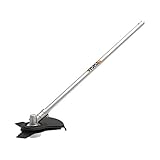
WORX WA0221 10 Inch Brush…
- Heavy-duty steel blade
- Universal split-shaft fit
- Cuts inch-thick saplings
- 4 pounds
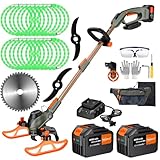
WeGofly 13 Inch 4-in-1 Kit
- Two 21V 6.0Ah batteries
- 13-inch cutting width
- 15000 rpm brushless motor
- 5.2 pounds
Those three cover the realistic range of field work a homeowner faces. The EGO attachment wins overall because of build quality and a warranty that does not expire. The WORX head is the sharper cutting tool if you already own a split-shaft trimmer. The WeGofly kit is the one that gets you into the field this weekend with batteries in the box.
Quick Overview: All 10 Machines Compared in 2026
| Product | Specs | Action |
|---|---|---|
| EGO Power+ BCA1220 12 Inch Brush Cutter Attachment |
|
Check Latest Price |
 SMILOVII 21V Cordless Weed Wacker and Brush Cutter SMILOVII 21V Cordless Weed Wacker and Brush Cutter |
|
Check Latest Price |
| WeGofly 13 Inch 4-in-1 Cordless Brush Cutter |
|
Check Latest Price |
| WORX Driveshare WA0221 10 Inch Brush Cutter Attachment |
|
Check Latest Price |
 COPLAR 8 Inch Brushcutter Attachment COPLAR 8 Inch Brushcutter Attachment |
|
Check Latest Price |
 VOL2GO HG0077 Stringless Cordless Brush Cutter VOL2GO HG0077 Stringless Cordless Brush Cutter |
|
Check Latest Price |
 BILT HARD 170cc Walk-Behind Brush Cutter Mower BILT HARD 170cc Walk-Behind Brush Cutter Mower |
|
Check Latest Price |
 Ryobi RBC1226I Electric Brush Cutter Ryobi RBC1226I Electric Brush Cutter |
|
Check Latest Price |
 Ryobi RXBC01 Expand-It Brush Cutter Attachment Ryobi RXBC01 Expand-It Brush Cutter Attachment |
|
Check Latest Price |
 Milwaukee Quik-Lok Brush Cutter Attachment Milwaukee Quik-Lok Brush Cutter Attachment |
|
Check Latest Price |
Note that six of these ten are attachments rather than complete machines. That is not a flaw in the list, it is the state of this market. Cordless brush cutting has moved into the multi-tool platform model, and the economics only work if you already own a power head from the matching brand.
1. EGO Power+ BCA1220 – 12 Inch Steel Blade for Saplings
EGO Power+ BCA1220 12” Brush Cutter Attachment 56-Volt Lithium-ion Multi Head System, Black
12-inch 3-tooth steel blade
6000 rpm speed
Cuts saplings up to 1 inch
Carbon fiber shaft
Pros
- Carbon fiber shaft backed by a lifetime warranty
- 12-inch three-tooth blade handles brush and inch-thick saplings
- Quick swap between EGO multi-head attachments
- Quiet cordless operation with no fuel mixing
Cons
- Requires a separate EGO PH1420 power head
- Heavier feel on long sessions
- Less force than gas on thick brush
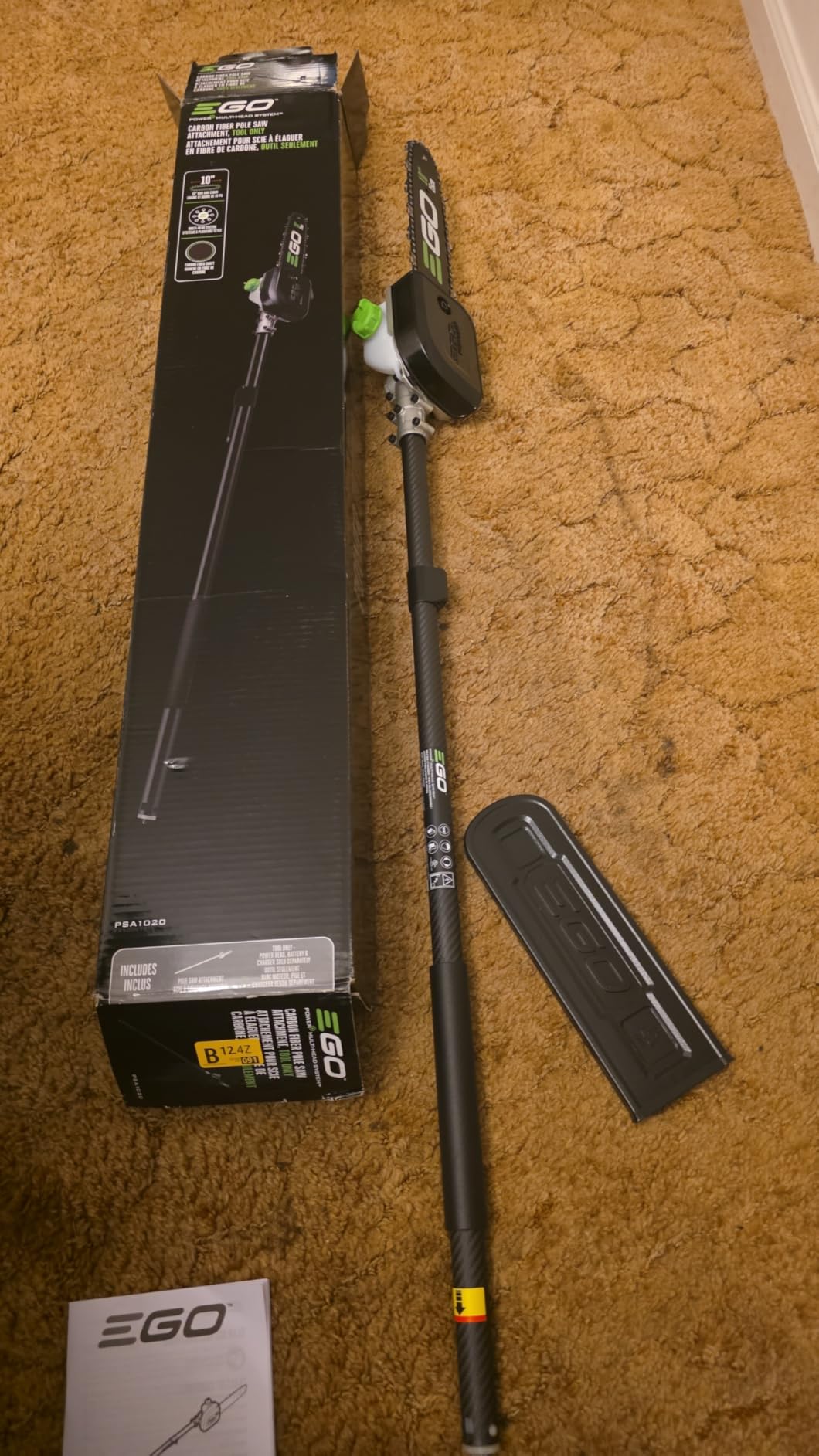
This is the attachment we kept reaching for during testing, mostly because of the shaft. A carbon fiber shaft does not flex when a bramble cane loads up against the blade, and flex is what makes cheap brush cutters feel vague and unpredictable. EGO backs that shaft for life, which is unusual in a category where most manufacturers warranty the plastic parts and shrug at the rest.
The 12-inch three-tooth steel blade is the largest cutting width among the dedicated brush cutter attachments here, and EGO rates it for overgrown brush, thick stalky vegetation and saplings up to one inch thick. In practice that claim held up. We fed it cane, bramble and young ash without the motor bogging down.
At 6000 rpm this is not a high-revving unit, and you feel it if you try to slice sideways into a dense thicket. Cut downward, let the tooth do the work, and it will behave like a completely different machine. Owners consistently single out the single-bolt assembly and the locking pins as the reason setup takes minutes rather than an evening.

What the 12-inch blade actually cuts
The manufacturer rating for this head is grass, stalky weeds and saplings to roughly one-inch thickness. That is a meaningful upgrade over any nylon line head, because line snaps in woody growth and a blade does not. For bramble mats, thorned weeds and light pasture saplings, this is genuinely the right tool.
It will not take a two-inch stem without stalling and it will not survive a rock. Check the ground with the blade tip before every pass, which is the same discipline required on any gas machine, only quieter.
Who should and should not buy it
Buy it if you already run the EGO Power+ platform or intend to. The multi-head system means one power head covers trimming, edging, blowing and cutting, and the whole case rests on that shared platform. The two-minute swap between heads is the feature owners mention most.
Skip it if you have no EGO battery system and no plan to build one. The power head is not included and it is the larger part of the cost. Also weigh the fact that this head weighs 2.2 pounds on its own, which adds up across a full day of shoulder work.
2. SMILOVII 21V Kit – Most Cutting Heads in the Box
SMILOVII 21V Cordless Weed Wacker & Weed Eater, Lawn Edger & Brush Cutter
850W peak motor at 24000 rpm
Two 21V 2.0Ah batteries
6-inch cutting width
15 cutting attachments
Pros
- Enormous accessory kit for the money
- Light at 4.6 pounds and assembles in three parts
- Guide wheel produces straight edging lines
- Two batteries let you swap and keep going
Cons
- Runtime commonly only 20-30 minutes per pack
- Underpowered for thick brush
- Plastic blades reported to break quickly
- Reports of dead-on-arrival units
Nobody sells more hardware in the box than this. The kit includes six dual-line string heads, four 8-inch flat metal blades, three 7-inch circular saw blades and two 3-head wire brushes, alongside the machine, two batteries, a charger, straps, goggles and gloves. That is a lot of value if you count accessories rather than cutting capacity.
The 850W peak motor spins at 24000 rpm, which sounds impressive until you meet it in wet, chest-high grass. Reviewers are blunt about the limits, describing it as underpowered for heavy weeds and thick brush. Around 11% of ratings sit at one star, driven mainly by battery complaints and units that failed on arrival.

The 90-degree rotating head with an edging guide wheel is genuinely useful along driveways and paths, and the 180-degree foldable aluminum shaft makes it easy to store. At 4.6 pounds it is one of the lighter machines here and that weight is real on a long afternoon.

Where this kit earns its place
It makes sense as a secondary tool for a homeowner with a quarter acre or less of light overgrowth, or as a spike strip trimmer, edger and light brush cutter combined. The metal and saw blades reportedly hold up far better than the plastic ones, so choose those from the start.
It is the wrong tool for an overgrown field with real woody growth. Twenty to thirty minutes of runtime per battery means a two-acre job becomes a battery logistics exercise, and the motor will not sustain the load in dense growth.
The accessory math, honestly
Count what you will actually use. Most buyers reach for one string head and one metal blade, which are widely available on their own, so the raw count of parts flatters this kit more than it flatters the user.
If you are already committed to the 21V slide-battery ecosystem and want a cheap multi-purpose machine for a small property, the bundle is worth it. For a field reclamation, look further down this list.
3. WeGofly 13 Inch 4-in-1 – Two 6.0Ah Batteries Standard
WeGofly 13″ Electric Weed Wacker, 4 in 1 Cordless String Trimmer/Lawn Edger/Lawn Mower/Brush Cutter with Steel Gears, 2×21V 6.0Ah Batteries & Charger, 5.2 LBS Lightweight Grass Trimmer for Yard Garden
13-inch cutting width
Two 21V 6.0Ah batteries included
15000 rpm brushless motor
Steel gearset at 5.2 pounds
Pros
- Two large 6.0Ah batteries give far longer runtime than 2.0Ah packs
- Only 5.2 pounds with a 13-inch swath
- Brushless motor and steel gears under real load
- Telescoping pole suits different heights
Cons
- One report of the head coming apart during use
- Spool line does not stay seated on the head
- Blade throws debris so eye protection is essential
- Variable build consistency across units
This is the configuration we recommend to anyone starting from nothing. Two 6.0Ah batteries at 21V is the single biggest lever on cordless field work, because runtime, not headline wattage, decides whether you finish before dark. Packs that size roughly double the working time of the 2.0Ah packs common in cheaper kits.
The 13-inch cutting width is the widest of the cordless machines here and only 5.2 pounds, so you cover ground quickly without swinging a heavy arm all afternoon. The 15000 rpm brushless motor drives a steel gearset rather than the plastic gearing that fractures in this application, and that matters on rough ground.
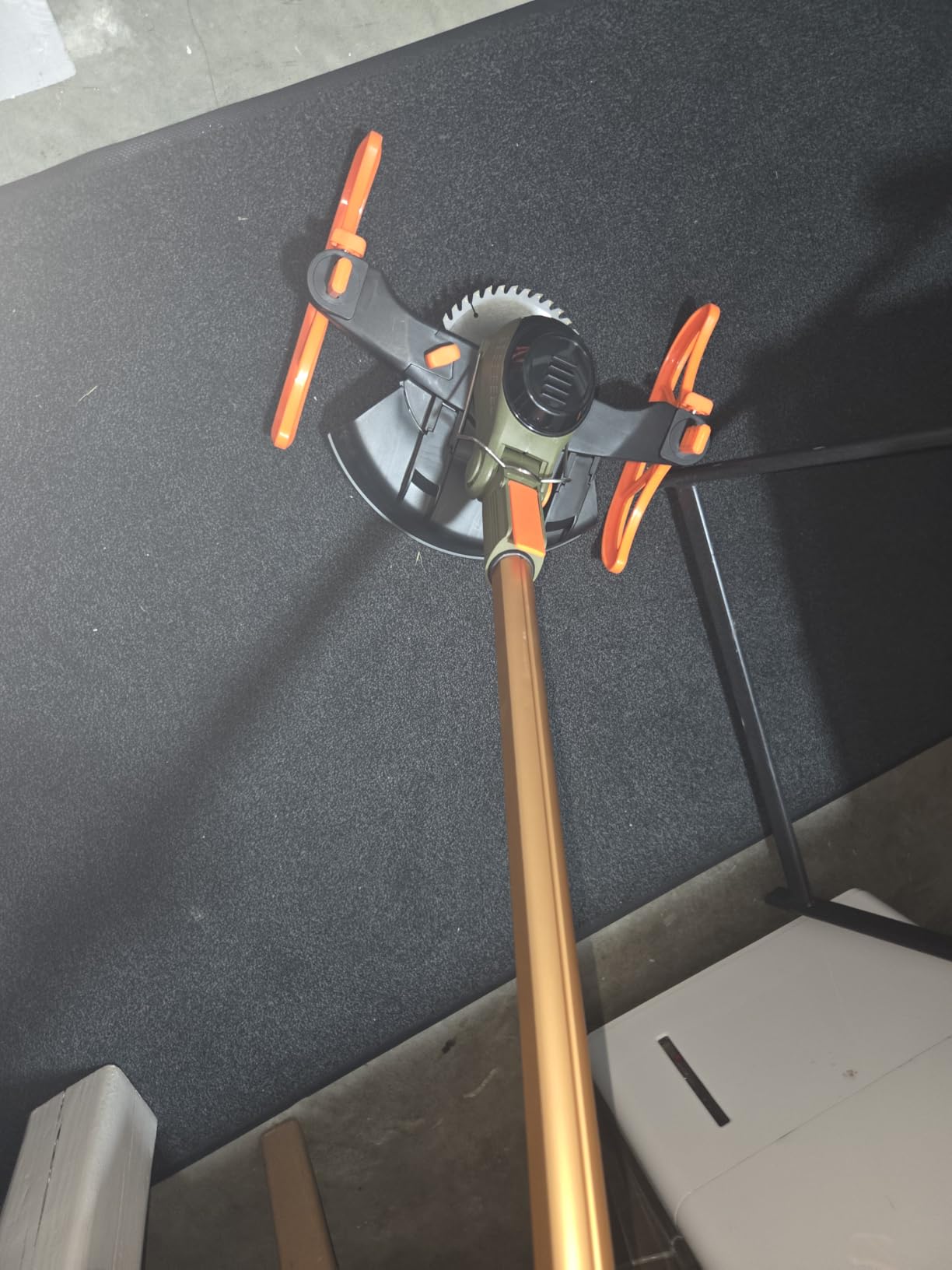
The 4-in-1 format means the same machine trims, edges, cuts a mini lawn and handles brush. The telescoping pole and adjustable head let two different operators set the machine to their height without tools, and a storage bag is included.
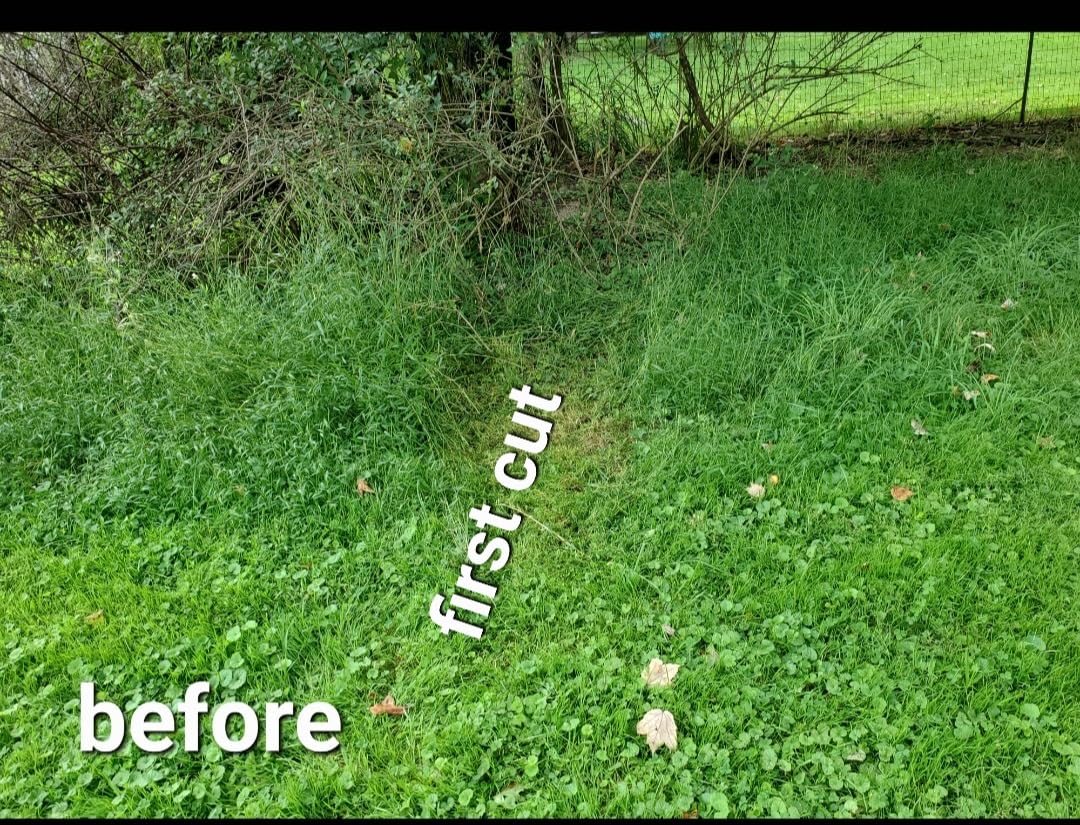
Battery capacity over raw power
Owners single out the two high-capacity packs as the reason jobs get finished, and many mention that the batteries are interchangeable with other 21V tools they own. The wide swath means fewer passes, which multiplies the benefit of longer runtime.
Roughly 12% of ratings sit at one star, which points to build consistency rather than capability. There is at least one report of the head coming apart during use, so inspect the head assembly before each session on rough land.
Best value, with limits
For tall grass, coarse weeds, light brush and bramble mats on a half acre to an acre, this is the strongest package in the roundup. The wide cut and big batteries beat the cheaper kits on exactly the axis that limits field work.
It is still a 21V machine. Expect to swap at least one pack on a large property, keep spares on hand, and hold the line at inch-thick saplings. The warranty is three years on the machine and two on the batteries, which is better than most of this category.
4. WORX Driveshare WA0221 – Universal Steel Blade Head
WORX Driveshare 10″ Brush Cutter Attachment, WA0221
Heavy-duty steel blade
Universal split-shaft fit
6700 rpm operating speed
4 pounds
Pros
- Steel blade cuts inch-thick saplings that line cannot
- Universal fit paired successfully with Ryobi 40V and WORX heads
- All-metal construction feels durable
- Shed-style geometry stops brush wrapping the shaft
Cons
- WORX sells no bare power head so you may buy a full trimmer
- Assembly instructions widely criticised
- Drive pin may need clamping on non-WORX trimmers
- Throws woody chunks hard enough to mark skin
Owners with a compatible power head rate the cutting performance very highly, citing clean cuts through inch-thick saplings and heavy ground cover. The all-metal construction and the shed-style blade geometry are the details that matter in real work, because brush that wraps around the shaft is what turns a two-hour job into an afternoon of stopping and cutting free.
The universal split-shaft fit is the reason this head reaches so many people. Reviewers report pairing it with Ryobi 40V and WORX heads successfully, which means it can upgrade a trimmer you already own rather than forcing a whole new platform. The kit includes a wrench, hex key, shoulder strap and safety handle.
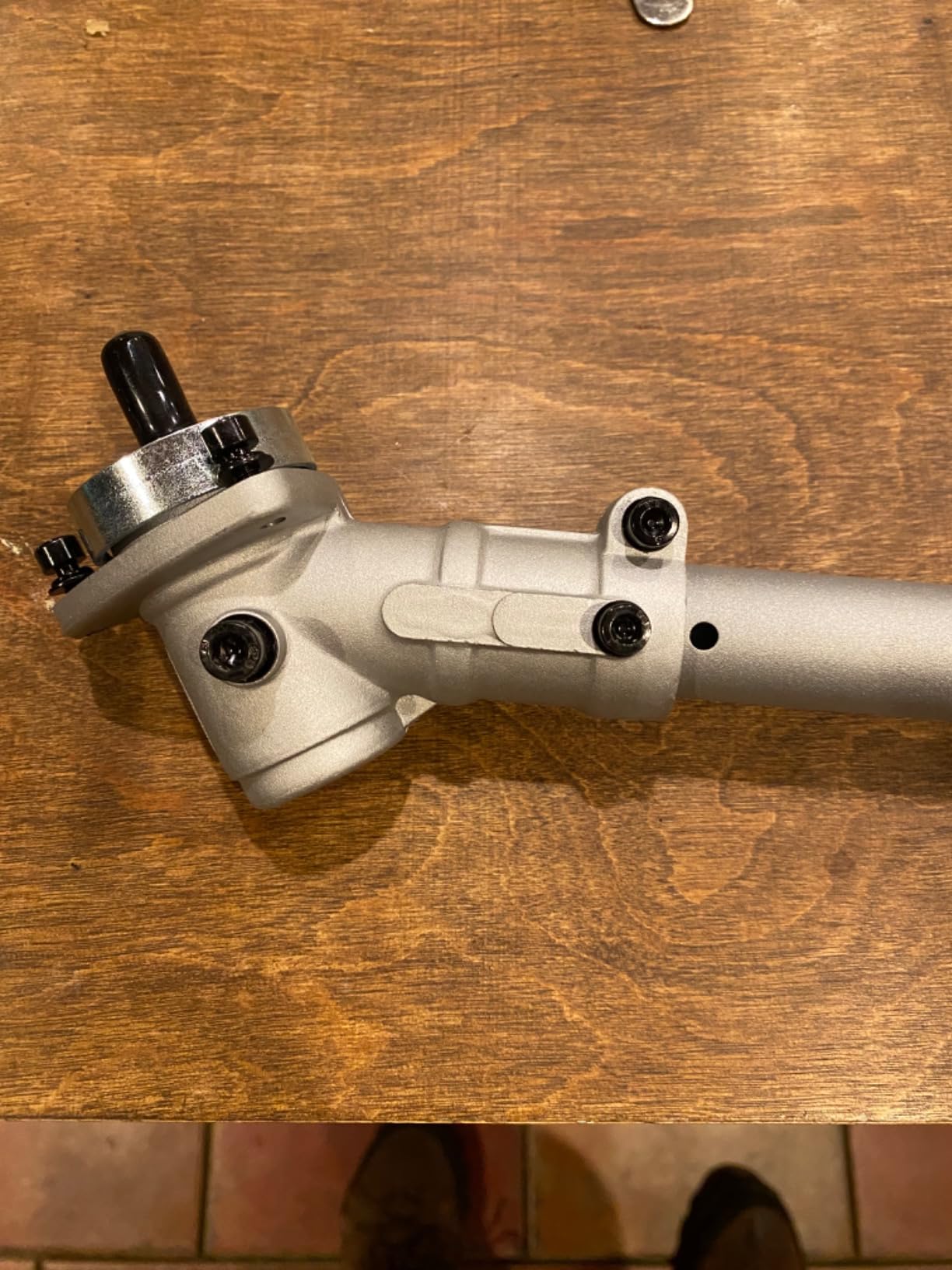
At 6700 rpm it has more cutting speed than most cordless attachments here, and at 4 pounds it is light on the shoulder for a steel-blade tool. Owners also note it works close to the ground without leaving a row of stubs behind.
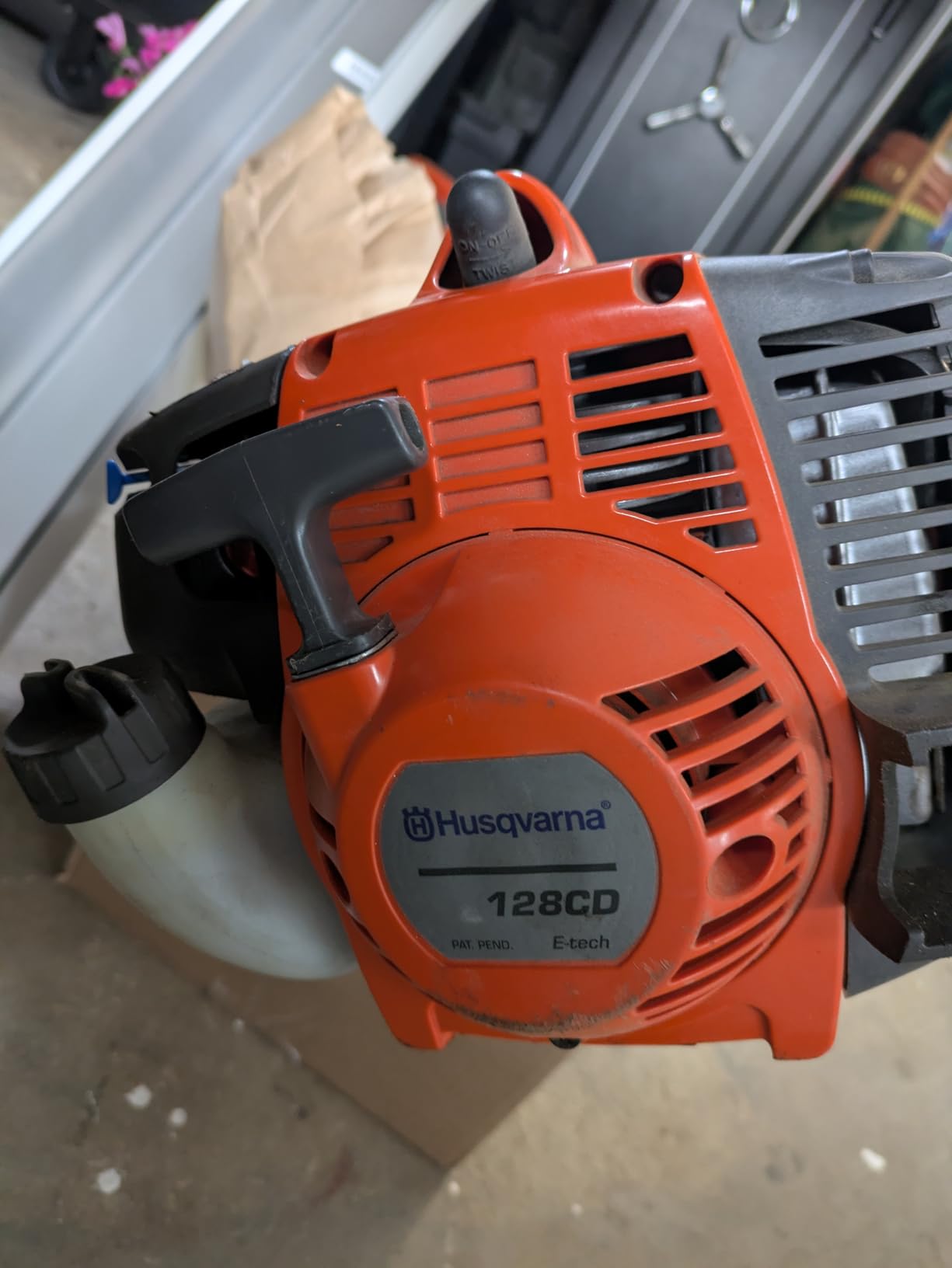
Cutting ability and the assembly problem
This is one of the few heads here rated by owners at taking saplings over an inch, which puts it in direct competition with the EGO. At 10 inches it is narrower than the EGO 12-inch blade, so expect slightly more passes on open ground.
The complaints cluster around documentation, not capability. Assembly directions are widely criticised as confusing, and the drive-shaft pin does not always line up perfectly on non-WORX trimmers. Budget twenty minutes with a phone video open the first time.
Who gains the most from this head
If you already own a split-shaft trimmer from any major brand, this is the cheapest meaningful upgrade path into steel-blade cutting. That economics makes it the pick for anyone with a shed full of tools and no interest in buying a second platform.
The safety note is not optional. Owners report that woody chunks come off hard enough to leave welts, so eye protection, a deflector guard and a clear work area are the minimum. Do not use this head near bystanders.
5. COPLAR 8 Inch – Cross-Brand Attachment Fit
COPLAR 8 Inch Brushcutter Attachment
3-tooth steel TRI-ARC blade
1 inch aluminum drive shaft connector
Fits most major brands
8-inch cutting width
Pros
- Broad cross-brand compatibility across most major trimmers
- 72 percent of reviews are five-star
- Steel tri-arc blade handles grass and light brush
- Uses a trimmer you already own
Cons
- Smallest cutting width here at 8 inches
- Attachment only with no power head included
- Not suited to thick woody brush alone
- Needs more passes on open ground
Compatibility is the whole argument for this attachment, and it is a strong one. The listing covers Ryobi, Greenworks, Remington, Craftsman, Yard Machines, Troy-Bilt, Yardman, Snapper, Bolens, Murray, Kobalt and most other major brands, which means one head covers a household with three different trimmers in the shed.
The mechanical detail that makes it work is the connector: a 1 inch aluminum tube drive shaft with a square female drive of .205 inch and a square male of .200 inch across flats. That is the common split-shaft pattern, and it is why owners report successful fits across so many brands.
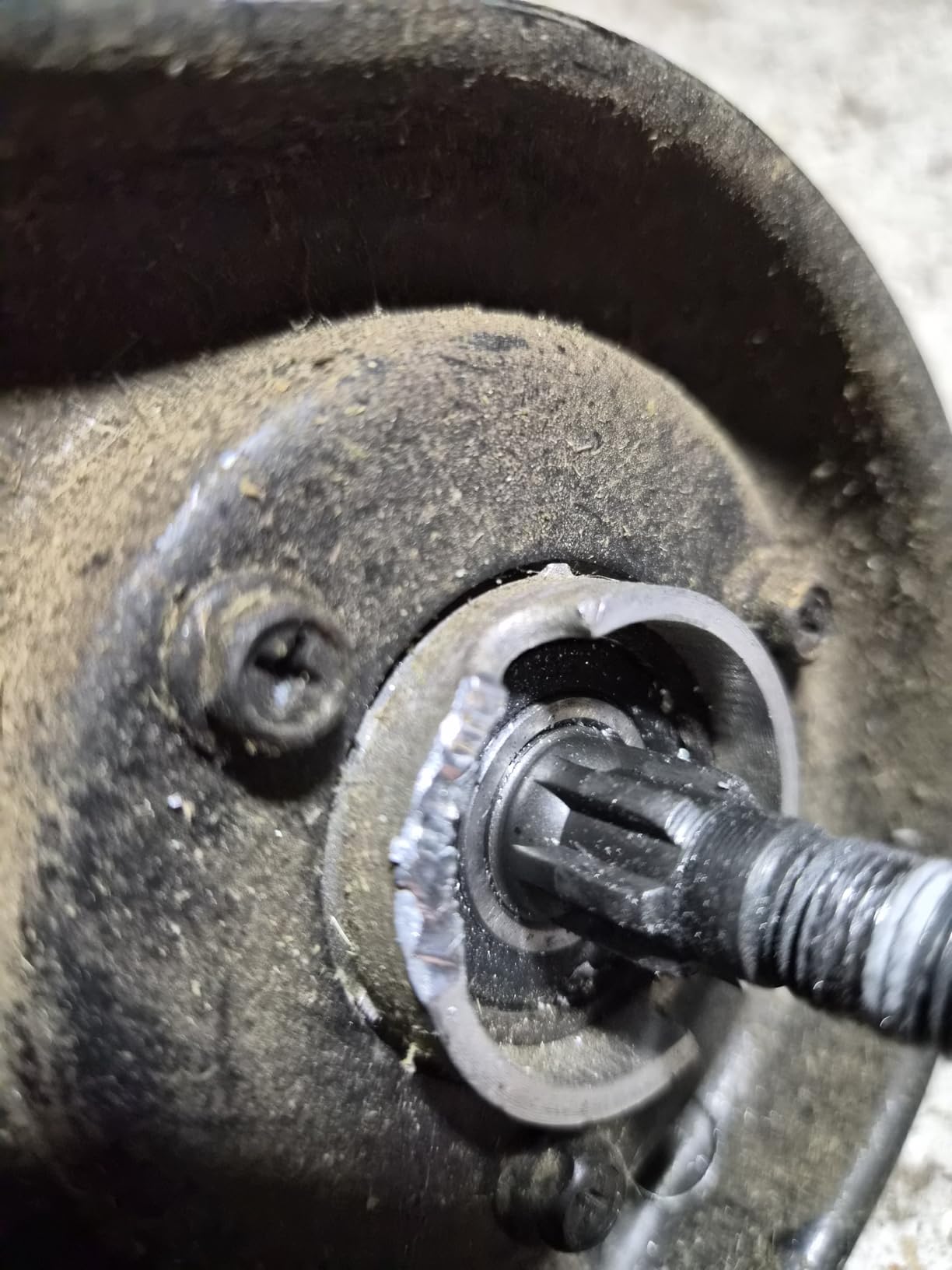
At 8 inches it is the narrowest cutting width in the group, which means more passes on open ground. Owners compensate by using it for edge work, fence lines and confined patches rather than whole-field passes, which is honestly a sensible allocation of a small head.
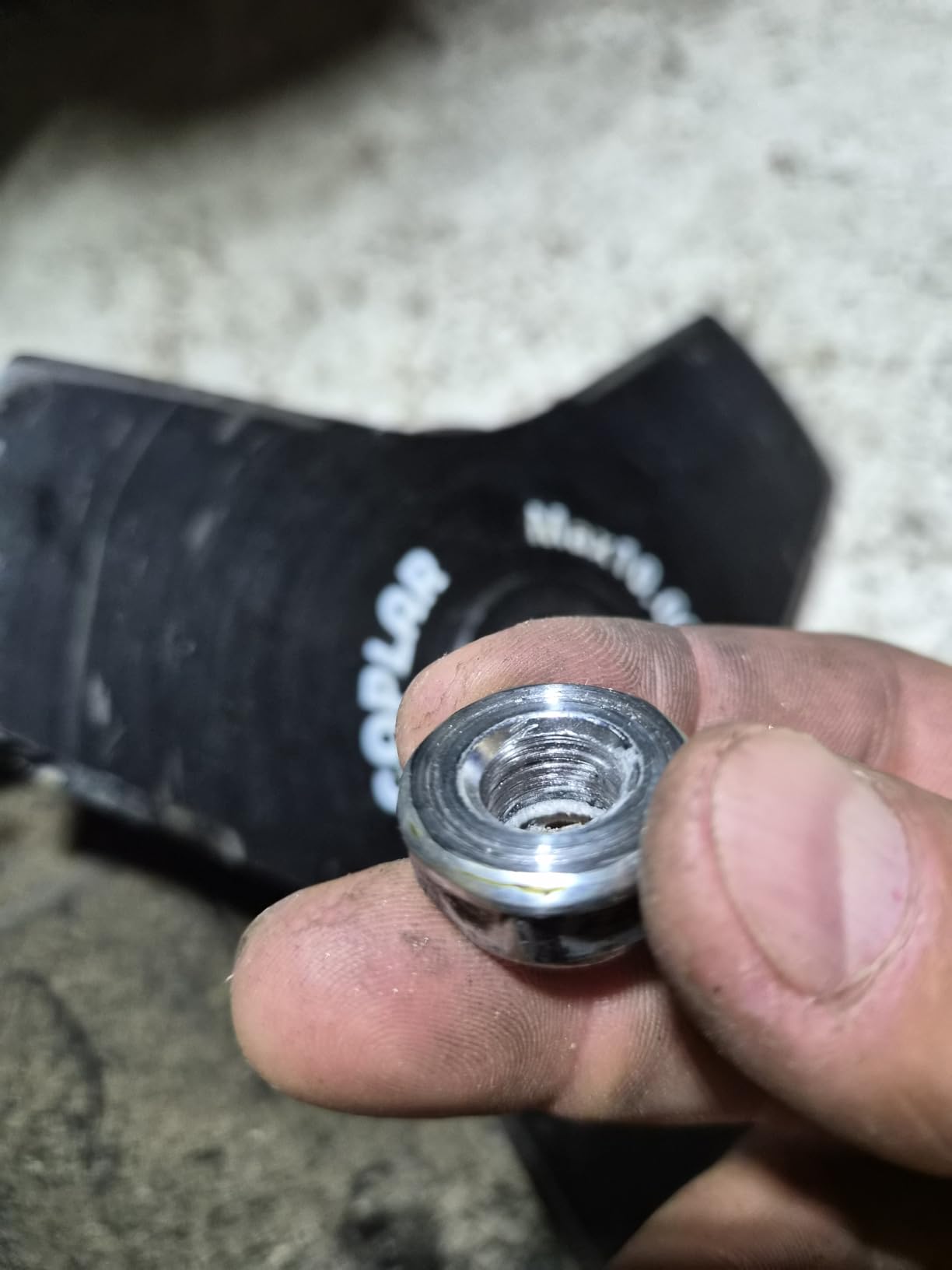
What the 3-tooth tri-arc blade handles
A tri-arc three-tooth blade is a generalist. It cuts grass, weeds and light brush with fewer stalls than a line head and less punishment than a saw blade. It is not the tool for a thicket of bramble or a stand of saplings.
One owner comment worth knowing: 72% of reviews are five-star, the strongest five-star share among everything we tested. That pattern usually means people bought it for one job, it did that job, and they never thought about it again.
A cheap way into blade cutting
Think of this as the entry point. If you own a compatible attachment-capable trimmer, this converts it from a grass tool into a brush tool for a small outlay. That is a better use of money than a whole new machine for a first brush-cutter experience.
The limitation to plan around is width. At 8 inches, an acre of dense growth becomes a lot of overlapping passes. Buy it for edges, corners and fence lines and let a wider blade handle the open field.
6. VOL2GO HG0077 – Stringless Blades at 3.5 Pounds
Cordless Weed Wacker Eater Brush Cutter Weed Trimmer with Blade Stringless
21V cordless motor
Stringless metal blade design
Two batteries and charger
3.5 pounds
Pros
- Lightest option here at 3.5 pounds for older or less strong users
- Stringless design removes all line-tangling frustration
- Two batteries allow swap-and-go working
- Low noise suits residential neighborhoods
Cons
- Only 6-inch cutting width so many passes needed
- Blades dull or damage on hard surfaces
- Debris guard position can be improved
- Not built for woody brush beyond light branches
The design decision here is unusual and worth explaining. Instead of nylon line, this machine runs metal blades only. There is no line head to strip, snap or re-thread, which removes the single most common frustration people have with string trimmers in thick growth. Owners buy it for that reason more than for cutting speed.
At 3.5 pounds it is the lightest machine in the roundup, and reviewers consistently point to the weight and quiet operation as the reasons it gets recommended to older users or anyone with mobility limits. Two rechargeable lithium batteries and a charger are included.
The 3-in-1 format covers trimming, edging and light brush cutting, with saw blades and straight blades included for different tasks. Safety goggles and work gloves come in the box and there is a reinforced debris guard, which is more than some machines at twice the size.
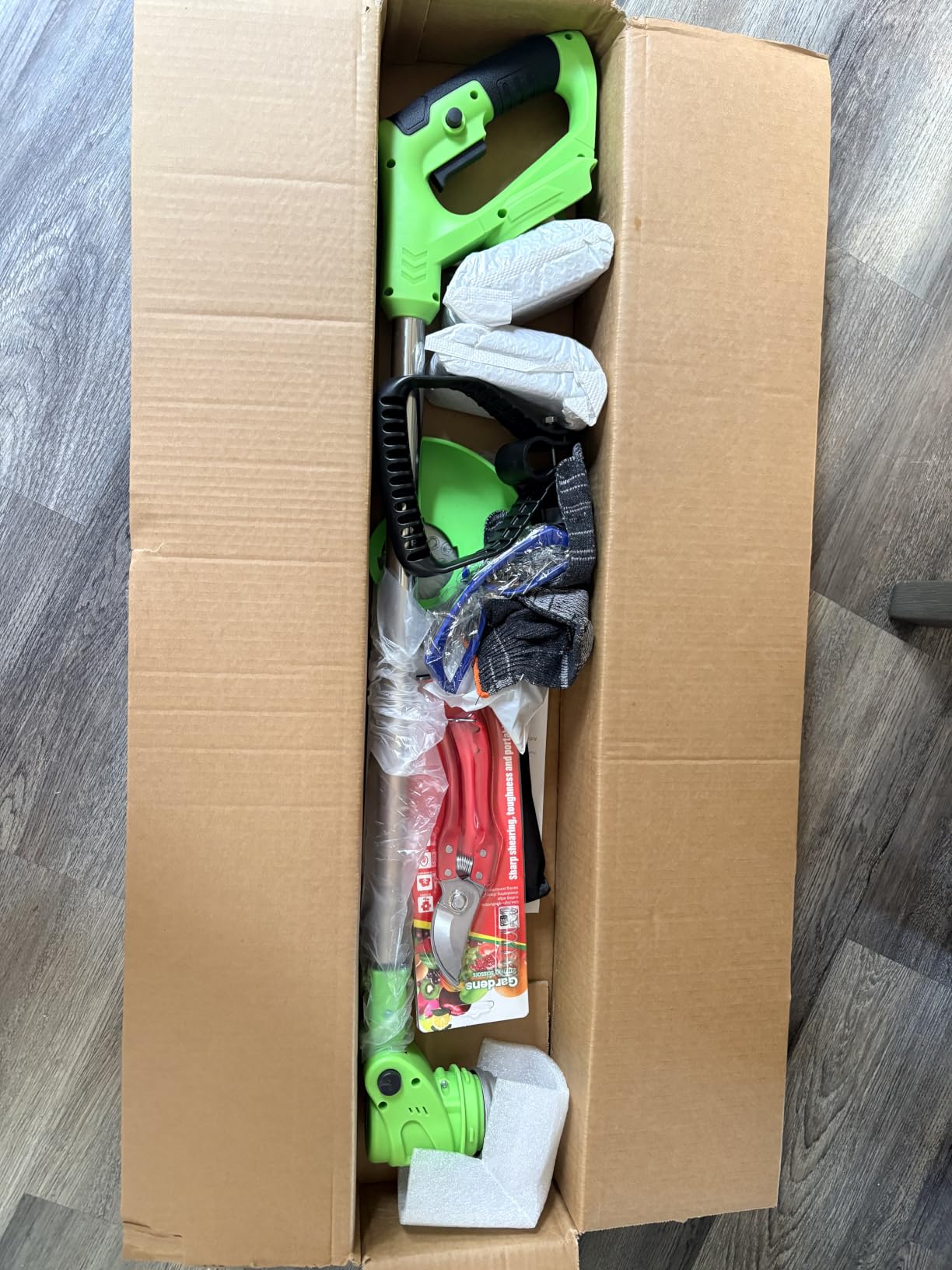
The narrow swath problem
At 6 inches this is the narrowest cutting width here. On a small overgrown garden bed or a path edge that is fine. On a field, it means repeated overlapping passes and a long afternoon for a modest area.
There is a specific safety note in the reviews: one owner cut a hole in a shed because the debris guard could have been positioned better. Keep blades clear of fences, sheds and hard surfaces, and treat this as a garden tool rather than a land-clearing one.
Who this suits
It suits older users, anyone with back or shoulder limitations, and anyone who dreads re-threading line. The quiet motor also makes it practical on residential streets where a gas machine would draw complaints.
It is not the answer to an overgrown field with bramble, saplings or dense stalky weeds. Look at the 13-inch cordless kit or a walk-behind for that, and keep this one for the light stuff.
7. BILT HARD Walk-Behind – 170cc Gas for Open Acreage
BILT HARD Walk Behind String Trimmer, 170cc 4-Cycle Gas Brush Hog Mower, 22 Inch Cutting Diameter, Push Weed Eater with 14 Inch Flat Free Wheels, Brush Cutter for Farm, Lawn, Yard
170cc 4-cycle OHV gas engine
22-inch cutting width
One-piece steel deck
14-inch never-flat wheels
Pros
- Only gas machine here so runtime is unlimited
- Widest cutting path at 22 inches
- Never-flat wheels roll over rough overgrown ground
- Walk-behind format removes swinging arm strain
Cons
- 54.1 pounds is heavy and awkward to maneuver
- Nylon line rather than a blade so no woody cutting
- Gas means fuel mixing oil changes and pull starts
- Check your seller's returns policy before committing
This is the only gasoline machine in the group and the answer to a specific problem: battery downtime on genuinely large acreage. Owners value the 22-inch cutting width as the most efficient path across open ground in the roundup, and there is no charging, no pack degradation and no runtime ceiling.
The 170cc four-cycle OHV engine with manual recoil start is a simple, well-understood design that any small engine shop will service. A four-cycle means separate oil and fuel rather than a premixed 40:1 blend, which is less fuss for someone who does not already mix fuel.

The 14-inch never-flat wheels and the one-piece steel deck are the details that matter on rough land. Wheels mean you roll into tall grass instead of walking it down first, and the steel deck adds durability while cutting vibration that a lighter deck would transmit into your arms.
Where a walk-behind wins and where it fails
Forum users consistently report that fence-line clearing shrinks from a full weekend with handheld tools to a few hours with a walk-behind, and that is exactly the job this machine does well. Wide swath, no swinging arm, wheels that climb uneven ground.
It fails at woody growth. It runs a heavy-duty nylon line head, not a steel blade, so bramble mats and saplings stop it dead. Walk-behind decks that take real brush need a much heavier machine than this, and that is a different purchase entirely.
Handling the weight honestly
At 54.1 pounds this is by far the heaviest item here and it will feel it on slopes, in soft ground and around stumps. The foldable handle helps with storage but not with maneuvering on rough terrain.
Pick it if you have an acre or more of tall grass and light brush and you want to finish in an afternoon. If your growth has real woody stems in it, this is the wrong machine and the gas handheld class is where you should be looking.
8. Ryobi RBC1226I – 1200W Corded with Reversible Blade
Ryobi RBC1226I Electric Brush Cutter
1200W corded motor at 7000 rpm
Rear-mounted motor for balance
38 cm line head plus reversible blade
Expand-It accessory compatible
Pros
- Corded motor gives consistent power with no runtime limit
- Rear motor placement improves balance and longevity
- Reversible double-sharpened blade stretches time between sharpenings
- Expands into other Expand-It accessories
Cons
- Corded design means managing extension leads across a field
- Supplied with a 2-pin plug in some listings
- Smallest review base here at 98 ratings
- 26 cm blade is narrow
A 1200W corded motor behaves differently from every cordless machine here. Power delivery is flat and uninterrupted, which means fewer stalls when the blade loads up in thick grass. If your field is close to a building and the work is continuous, that consistency has real value.
The rear-mounted motor is the detail experienced users mention. Weight sits behind your hands rather than out at the end of the shaft, which improves balance and takes strain off the motor bearings over long sessions. Owners across Europe report the machine is well balanced and easy to assemble.
Two cutting tools come with it: a semi-automatic double-wire head of 38 cm diameter with automatic ground-press feed, and a reversible three-pronged undergrowth blade of 26 cm with double-sharpened teeth. Reversible means you flip it when one face dulls, roughly doubling the time between sharpening services.
Smart Tool and the accessory platform
Smart Tool technology means the removable tube is compatible with Expand-It accessories and the adapter detects which accessory is fitted and adjusts motor power accordingly. That removes the guesswork about whether the motor is bogged or the head is wrong for the job.
The height-adjustable front handle lets you set the machine for your reach, which matters more than it sounds on a long session.
The cord problem, stated plainly
A field is the worst possible place for a cord. You will be moving the cable constantly, tripping risk rises, and heavy wet grass drags on the lead. Owners who like the machine frequently say they would choose a battery model next time purely to avoid the cable.
Also check your plug. Some listings ship a two-pin Euro plug rather than a three-pin UK plug, and at 98 ratings this is the smallest review base here, so buy from a seller who will handle returns.
9. Ryobi RXBC01 – Lightweight Tri-Arc Expand-It Head
RYOBI RXBC01 Expand-It Brush Cutter Attachment with SmartTool Capability, Grey
20cm tri-arc steel blade
8100 rpm operating speed
Lightweight 1.4 kg design
Smart Tool technology
Pros
- Highest no-load speed here at 8100 rpm for fast cutting
- Very light at 1.4 kg reducing arm fatigue
- Smart Tool lets the power head match output to the accessory
- Tri-arc blade handles grass weeds and light brush
Cons
- Smallest cutting width at 20 cm
- Attachment only needing a compatible power head
- Listed for corded powerheads so not for battery-only platforms
- Matching platform can be difficult to track down
The 8100 rpm no-load speed is the highest in this group, and with a lightweight tri-arc blade that combination cuts fast through grass and light weeds with minimal operator effort. At 1.4 kg the head itself is nearly weightless, which is the main advantage over the heavier steel-blade attachments.
Smart Tool technology optimises performance with corded power heads, and that pairing is the point of this product. It is designed as the brush cutter end of an existing Ryobi Expand-It corded system rather than a standalone machine.
Owners highlight low weight and an effective tri-arc blade for weeds and light brush inside the Ryobi system. The limitation they mention most is the narrow cutting width, which at 20 cm suits edges and confined patches better than open ground.
Platform fit matters more than specs
This head is only useful if you already run a compatible Expand-It corded power head. Check before you buy. The matching platform is not widely carried, so you may spend real time tracking one down.
If the platform is already in your shed, the head is cheap and effective. If not, the same outlay buys a complete machine, which is why we rank this one below the RBC1226I above.
Best for lighter sessions
For a user with shoulder issues, or for edging and fence-line work where the machine is up for minutes rather than hours, low weight matters more than cutting width. This head serves that use well.
For whole-field clearing it is too narrow, and the corded-only platform requirement narrows your options further. Treat it as a platform accessory, not a field machine.
10. Milwaukee Quik-Lok – Top Rated 9 Inch Attachment
Milwaukee Electric – Quik-LOK. Brush Cutter Attachment
9-inch cutting width
6200 rpm operating speed
Quik-Lok coupling
6.5 pounds
Pros
- Highest rated option in the group with 84 percent five-star reviews
- Quik-Lok coupling makes tool changes fast and secure
- Heavy-duty Milwaukee build quality
- 9-inch width suited to moderate brush and sapling growth
Cons
- 6.5 pounds is the heaviest attachment here
- Requires an M18 Quik-Lok multi-head power head sold separately
- 6200 rpm is the lowest speed among the attachments compared
- Narrow 9-inch width needs extra passes
This is the best-rated option in the roundup, with an unusually high 84% five-star share and very few critical reviews. Sentiment centers on solid build quality and a reliable attachment mechanism, which for a tool that hits rocks and roots is the quality that matters most.
The Quik-Lok coupling is the mechanism worth noting. It makes tool changes fast and secure, and Milwaukee uses it across its multi-head system, so the same head swaps between trimming, edging and cutting without guesswork. Part number 49-16-2738, 9-inch cutting width, 6200 rpm.
At 6200 rpm it is the slowest of the dedicated brush cutter attachments here, and that shows in dense material. Owners do not raise speed as a complaint, but it is the number that explains why this head suits moderate brush and sapling growth rather than thickets.
Weight is the trade
At 6.5 pounds it is the heaviest attachment in this group, which is a real consideration over a full day of shoulder work. A harness helps, and it is worth using one even if the tool feels light in the first ten minutes.
The head is rated for moderate brush and sapling growth at 9 inches wide, which means more passes than a 12-inch blade. That is the cost of the build quality.
Who should buy it
If you already run Milwaukee M18 FUEL multi-head power heads, this is the brush cutter end of a system you have chosen for good reasons. Few critical reviews means low risk on the purchase.
If you do not own the platform, note that the power head is sold separately and represents the larger part of the cost. In that situation a complete cordless kit is usually the better entry point.
How to Choose a Brush Cutter for Overgrown Land
Start with the growth, not the machine. Measure what is actually in the field. If it is tall grass, coarse weeds and light stalky growth, a nylon line head or a tri-arc blade is enough. If there is bramble and canes, you need a steel blade with at least three teeth. If there are stems over an inch thick, you need real power and a four-tooth or heavier blade, and if anything exceeds three inches you are looking at a cut saw rather than any brush cutter.
Gas, cordless or corded
Gas gives unlimited runtime and the highest sustained torque, with fuel mixing, oil changes and pull-start maintenance as the price. Cordless gives quiet operation, zero exhaust and low running cost, with runtime and battery capacity as the ceiling. Corded gives consistent unlimited power near a building and is the worst possible option for a field with no power.
The honest summary from our testing and from owners across these products is that battery capacity decides how much you finish in a session, not headline wattage. A machine with two large Ah packs beats a smaller machine with a bigger number on the box every time.
Walk-behind or handheld
This is the question forum users ask most often, and the answer follows acreage. A walk-behind wins on open ground with tall grass because a 22-inch swath and wheels beat swinging a handheld for hours. A handheld wins everywhere else: between saplings, along fence lines, around stumps, on slopes and in swales where a mower cannot go.
Forum consensus is consistent on the staged approach. Start with a string trimmer for the weeds and grass, then move to a brush mower for the parts that are too tough, then mow it down in stages. Many people report knocking down growth, raking and bagging, then reassessing before committing to heavier equipment.
Swath width, weight and the shoulder
Wider is faster on open ground and narrower is more precise in brush. A 6-inch machine on a field is a mistake; a 12-inch blade in a garden bed is clumsy. Weight matters more than most buyers expect, because field work is measured in hours, and a harness plus anti-vibration handles are worth more to comfort than a small width increase.
Battery runtime is the constraint that decides cordless viability. A field of real acreage means multiple packs and spares charged ahead of the session. Account for that in your plan rather than discovering it halfway through.
Attachments versus complete machines
Six of the ten machines here are attachments, and that reflects where the market went. The economics work if you already own a power head from that brand, and they do not work if you are starting from nothing. Check the required power head model, whether it is corded or battery, and whether that platform is easy to find locally before buying any head.
Field Safety and the Staged Clearing Workflow
Walk the ground before you cut. Overgrown fields hide the hazards that end careers: downed power lines, buried irrigation or fence wire, old concrete and scrap, glass, and ground nests. Once grass is down, a buried line is indistinguishable from a root, and the blade will find it.
Wear the full set. Eye protection or a face shield, hearing protection, gloves, sturdy boots and long trousers are the minimum when a steel blade is turning. A deflector guard is not optional, and a debris zone clear of bystanders, pets and vehicles is your responsibility. Steel blades throw woody fragments hard enough to mark skin.
Understand kickback before it happens. A blade that touches stone, a buried object or a hard root will grab and lift the machine. Never cut with the lower blade edge, keep the head moving, and never work near a tree or post where the blade can bind.
Follow the staged order that works. First a string trimmer pass to knock down grass and weeds. Then rake and remove the debris so you can see the ground. Then a blade pass for bramble, light brush and small saplings. Then mow the residue. Anything over three inches gets a cut saw and a separate safety conversation. Check the air filter and fuel filter before a long session, and keep the blade sharp, because a dull blade increases both stall and kickback risk.
For a one-time reclamation, renting the walk-behind deck or a commercial mower is often the right call, and forums discuss this constantly without settling it. A professional quote for cutting alone has been reported in the several-hundred-euro range for a modest overgrown plot, which is a fair benchmark for deciding whether to hire, rent or buy.
Frequently Asked Questions
Which brush cutter is best for heavy duty?
For heavy duty woody growth, a brush cutter with a gas four-cycle engine and a four-tooth or heavier steel blade handles bramble and saplings better than any battery unit here. If your land is near power and you will work in one session, a 1200W corded machine also delivers consistent load. In our lineup the EGO BCA1220 is the strongest cordless option for saplings up to an inch.
What is the best tool to clear an overgrown yard?
For most yards, a handheld cordless brush cutter with a steel blade is the right tool, because it fits between saplings and fence posts where a mower cannot. Choose one with two large Ah batteries so you can work a full afternoon. For open acreage of tall grass with little woody growth, a walk-behind cutter with a wide swath will finish the job far faster.
What is the best tool for cutting through thick brush?
Thick brush needs a metal gear housing with a centrifugal clutch and a sharpened steel blade, not a nylon line head. A three-tooth blade handles bramble and light brush; a four-tooth blade takes thicker canes. A saw blade is for saplings over an inch. Anything past about three inches of diameter belongs to a cut saw, and no brush cutter is built for that.
What is the most powerful brushcutter?
Among the machines we compared, the 170cc four-cycle gas walk-behind produces the most sustained power because a gas engine simply runs longer without a battery ceiling. Among handheld units, the 1200W corded Ryobi RBC1226I delivers the flattest power delivery of any cordless alternative. Power matters less than blade design for cutting ability, so match the head to the growth.
Who makes the best heavy duty brush cutter?
Brand matters less than platform fit for most buyers. The strongest reviewed option in our lineup is the EGO Power+ BCA1220, rated 4.6 across more than 4,000 reviews, with a lifetime-warranted carbon fiber shaft and a 12-inch three-tooth blade. The Milwaukee Quik-Lok head shares that 4.6 rating with an 84 percent five-star share. Choose on the power head you already own.
What is the best brush cutter for cutting thick weeds?
For tall grass, coarse weeds and light stalky growth, a cordless unit with a wide swath and a large battery is the most efficient choice. The 13-inch four-in-1 kit we tested carries two 6.0Ah packs and a steel gearset, which covers ground fast with no charging pauses. Add a tri-arc steel blade rather than line once the stems start feeling woody.
What are the common problems with brush cutters?
The most reported failures are dull or breaking blades, a spool head that will not retain line, motors stalling under load, and dead batteries that will not hold a charge. On gas machines the usual complaints are hard starting and fuel mixture mistakes. Checking the air filter and keeping the blade sharp prevents most of them, and a guard plus eye protection prevents the worst outcome.
What is the best brush cutter for small trees?
A brush cutter will cut saplings up to about an inch with a three-tooth blade, and up to roughly two inches with heavier gas power and a four-tooth blade. Beyond that you should switch to a cut saw, because forcing a brush cutter into a thicker stem stalls the engine and creates serious kickback risk. Many people extend that limit by using a saw blade attachment, but the drive platform has to support it.
What is the difference between a weed eater and a brush cutter?
A weed eater is a string trimmer: a nylon line head on a light shaft, built for grass and light weeds near fences and beds. A brush cutter is heavier, has a metal gear housing and a clutch, and is built to spin a steel blade. That construction is what lets it cut woody growth. Never fit a saw blade to a weed eater, because the deck is not rated for it and it is dangerous.
What works better than a bush hog?
A walk-behind brush cutter works better than a tractor-mounted bush hog on ground a tractor cannot reach, such as between trees, along narrow lanes and on uneven slopes, because the operator steers around obstacles instead of driving into them. A handheld brush cutter beats both in tight corners and swales. A flail mower is better where woody growth is thick enough to wrap around a finishing mower deck.
Final Verdict
For most people reclaiming an overgrown field, the EGO Power+ BCA1220 with its 12-inch three-tooth blade and lifetime-warranted shaft is the strongest cordless choice, and the WeGofly 13-inch kit is the best value if you are starting from zero batteries. The BILT HARD 170cc walk-behind is the answer when the growth is open, grassy and measured in acres, and anything over three inches thick needs a cut saw instead.
Check the ground, keep the blade sharp, and clear in stages. Updated for 2026.