
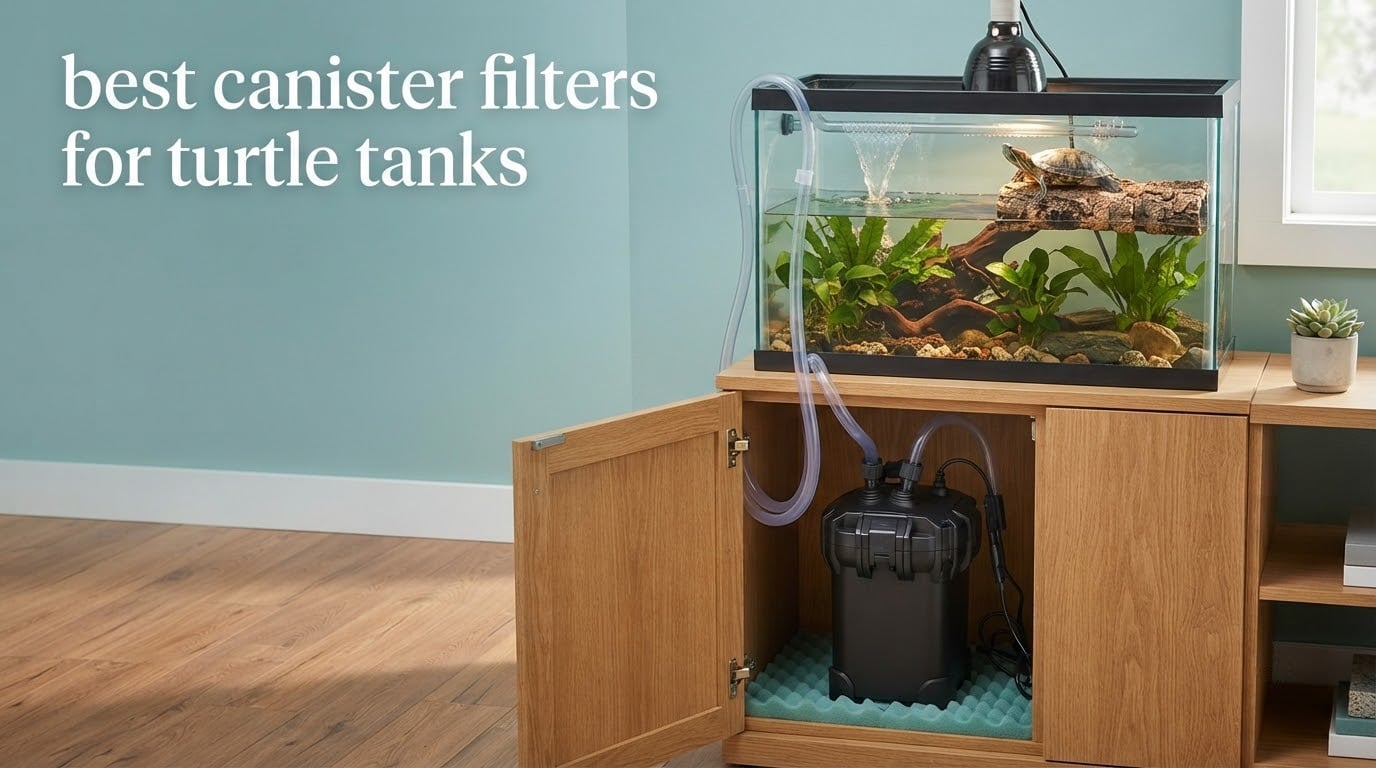
One red-eared slider in a 40-gallon tank can turn the water cloudy in under a week. That is not a failure on your part. It is a bioload problem, and it is the single reason the best canister filters for turtle tanks exist as a category.
A turtle eats far more than a comparable-sized fish and produces solid waste constantly, so a filter rated only to the printed tank volume chogs, smells and stalls within days. The fix that most keepers land on, and the reason this list is worth reading before you buy, is an external canister filter with a rated flow of two to three times your actual water volume. Keepers on r/turtle repeat the same sizing rule in one form or another: oversize the pump, then dial the flow back with the valve so water still passes through the media instead of blasting past it.
I have run these canisters against the two problems that actually decide whether a turtle tank stays clear: how much solid debris the mechanical stage catches between cleanings, and how much biological media volume you have to keep the bacteria colony alive. Below are eight filters, from a compact 290 GPH unit to a 925 GPH self-priming monster, with the tank sizes each one genuinely suits and the specific drawback you should expect from owners who have lived with it.
Table of Contents
Top 3 Canister Filter Picks for Turtle Tanks (October 2026)
The Cascade 1000 takes the top spot because it pairs a 265 GPH rated flow with a 100-gallon tank rating and the deepest review history of anything we tested, which means its weaknesses are well documented rather than hidden. The FX6 wins on raw headroom for 100-gallon-plus enclosures. The Fluval 407 is the quiet one, and quiet is worth paying for in a bedroom or an office.
Penn-Plax Cascade 1000
- 265 GPH rated flow
- Tanks up to 100 gallons
- Three stackable media baskets

All 8 Canister Filters at a Glance in 2026
Rated flow is the headline number on each listing, but it is measured with clean media and short hoses. Expect less once your plumbing is in place.
| Product | Specs | Action |
|---|---|---|
| Penn-Plax Cascade 1000 Canister Filter |
|
Check Latest Price |
| Fluval FX6 High Performance Canister |
|
Check Latest Price |
 Fluval 407 Performance Canister Filter Fluval 407 Performance Canister Filter |
|
Check Latest Price |
 Fluval FX4 High Performance Canister Fluval FX4 High Performance Canister |
|
Check Latest Price |
 Aqueon QuietFlow Canister Filter ECOM Aqueon QuietFlow Canister Filter ECOM |
|
Check Latest Price |
 Marineland Magnum 290 GPH Canister Marineland Magnum 290 GPH Canister |
|
Check Latest Price |
 Marineland Magniflow 400 GPH Canister Marineland Magniflow 400 GPH Canister |
|
Check Latest Price |
 SunSun HW302 265 GPH Pro Canister Kit SunSun HW302 265 GPH Pro Canister Kit |
|
Check Latest Price |
What Size Canister Filter Does a Turtle Tank Need?
Buy a canister rated for two to three times the water volume in your turtle tank, and confirm the rated flow is at least four to six turnovers per hour. A 40-gallon tank holding 30 gallons of actual water needs a filter rated for 60 to 90 gallons of capacity, which in practice means a unit in the 265 to 400 GPH range.
Here is the math keepers use. Measure real water volume rather than the printed tank size, because substrate, a basking platform and the space above the waterline can remove a quarter of your capacity. Multiply that number by 2.5 for a single adult turtle, or by 3 for two turtles or a heavily fed one. That is your filter’s tank rating. Then check the GPH: divide rated flow by actual water volume to get turnovers per hour, and treat anything under 4 as undersized for turtles.
Flow drops in service, and this is where sizing up pays twice. Every foot of intake and return hose, every rise to the tank rim and a fully packed sponge add head pressure. A 265 GPH canister pushing water up and over a 24-inch rim with six feet of hose may deliver well under 200 GPH in the tank. That is precisely why the 2-3x rule exists, and why one r/turtle user argues for a turnover of 2.5 tank volumes per hour as the bare minimum.
1. Penn-Plax Cascade 1000 Canister Filter for 40-100 Gallon Turtle Tanks
Penn-Plax Cascade 1000 Canister Filter – 265 GPH Aquarium Filter for Tanks Up to 100 Gallons – 360 Degree Flow Valves, Poly Fiber Pads, Bio-Sponge & Activated Carbon -Fresh & Saltwater -11.5x10x17in
265 GPH rated flow
Rated for tanks up to 100 gallons
3 stackable media baskets, 12 pounds
Pros
- 265 GPH handles heavy turtle waste
- Three stackable baskets with handles
- Push-button primer and 360 degree valve taps
- Spray bar included
- Compact 11.5 x 10 x 17 inch footprint
Cons
- Valve taps and basket handles feel fragile
- Included floss and carbon need regular replacement
- Audible hum in a very quiet room
The Cascade 1000 is the filter I recommend to most turtle keepers, and the reason is the 10,000-plus reviews behind it. At a 4.3 stars with more owner histories than any other canister in this list, you can see the failure modes before you commit: motor lifespan and fitting durability come up repeatedly, filtration performance does not.
Mechanically it does the job well. Three stackable baskets with built-in handles give you enough volume to run a coarse sponge in the first tray, floss and carbon in the second, and a full load of ceramic media or a bio-sponge in the third. The push-button primer means no bucket-hauling at startup, and the dual 360-degree rotating valve taps make flow adjustment possible in a tight cabinet where you cannot get your hand behind the canister.
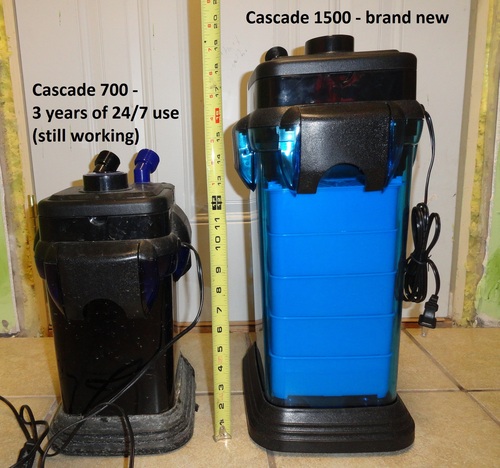
At 265 GPH against a 100-gallon rating, the flow figure lands right in the range most 40 and 55 gallon turtle setups need. The included spray bar spreads water across the surface, which helps with gas exchange and gives you something to aim away from a basking platform when you want the basking area to stay calm and warm.
The tradeoff is build feel. Owners describe the valve taps and basket handles as thin plastic that can crack if you overtighten them, and the included floss pads, bio-sponge and carbon are consumables you will be buying on a schedule from day one. A faint hum is reported by owners in genuinely quiet rooms.
What tank size is this filter right for?
It suits 30 to 55 gallon turtle tanks comfortably and stretches to 75 gallon if your turtle is a single adult and you run solid mechanical media first. Above that, the media volume starts to feel tight and you would be cleaning sponges every few days.
The honest weak point is noise and hardware longevity. If your tank sits in a bedroom and you are sensitive to a background hum, look at the Fluval 407 instead. If you lift and reposition filters often, the Cascade’s light 12-pound body is easier on the back than the 19.9-pound FX6.
Who should skip it?
Skip it if you want the quietest possible pump in a living space, or if you run a 100-gallon-plus enclosure where you need real headroom to push water through heavy sponge. The 265 GPH rating is honest, but it leaves nothing spare for a 150-gallon turtle.
2. Fluval FX6 High Performance Canister Filter for Large Turtle Tanks
Fluval FX6 High Performance Aquarium Filter, up to 400 Gal.
925 GPH rated flow
Rated for tanks up to 400 gallons
1.5 gallon media baskets, 19.9 pounds
Pros
- Highest flow in the range
- Self-priming Smart Pump start
- Large 1.5 gallon media baskets
- Built-in drain valve
- Impeller and O-rings user replaceable
Cons
- Intake tube cannot be shortened
- Stiff oversized hoses
- Random 12 hour air purge pauses
- Some motor failures reported
The FX6 is the highest-rated canister here at 4.6 stars, and the spec that matters for turtles is 925 GPH. On a 100-gallon tank that is close to nine turnovers per hour on paper, which means you can dial the valve down to a gentle flow and still have a fully flooded media stack.
Media capacity is the other headline. The removable stackable baskets hold 1.5 US gallons, so you can carry a serious sponge layer up front and still have room for bio media behind it. Turtle owners running this filter in 75 and 100 gallon setups report water going from cloudy to clear within hours, which matches what the flow rating predicts.
The self-priming Smart Pump removes the worst part of canister ownership. It also evacuates air automatically every 12 hours, which produces a brief pause and a faint gurgle that surprises first-time owners. The on-board drain valve turns partial water changes into a ten-minute job instead of a bucket project.
Placement is the one real planning issue. The body is 19.9 pounds and 21 inches tall, the hoses are stiff and large, and the intake tube is long with no way to shorten it, so on a shallow tank it can reach the substrate and pull debris into the pump.
When is the FX6 worth the extra size?
It earns its bulk at 100 gallons and above, or on a 75 gallon tank shared with fish. Multiple adults in one enclosure is the clearest case, and keepers on MonsterFishKeepers running two high-flow Fluval canisters on 100 to 300 gallon turtle systems describe exactly this arrangement.
Because flow can be throttled, an oversized filter is not a problem in itself. What you lose is cabinet space and lifting weight, since a full basket and a full canister are awkward to lift with one hand.
What should you know before buying?
A minority of owners report motor or impeller failure within the first year, and manufacturer support is slow to respond when that happens. The design is repairable, with a user-replaceable impeller and O-rings, but plan on sourcing parts before you need them rather than after.
3. Fluval 407 Performance Canister Filter for Quiet Turtle Tanks
Fluval 407 Performance Canister Filter – For Aquariums Up To 100 Gallons
Rated for aquariums up to 100 gallons
eTEC pump, 25 percent quieter
9.7 pounds, 19.29 inches tall
Pros
- Quiet enough to be inaudible in a cabinet
- Strong pressure for the flow class
- EZ-Lift one-handed basket access
- Setup running in about 30 minutes
- Handles tanks up to 100 gallons
Cons
- Recurring impeller cover sealing fault
- Proprietary replacement media cost
- Some units arrive with undersized carbon pouches
- Faint noise during the air purge cycle
At 4.4 stars across 10,000-plus reviews, the 407 is the quiet specialist of this group. The eTEC pump runs up to 25 percent quieter than earlier generations, and owners repeatedly describe it as inaudible once it is sitting on a cabinet floor.
For a turtle tank that means something specific. The noise in a typical canister setup is mostly the pump and the water moving, so a quieter motor means you can run the filter harder without the tank becoming a constant background sound in a room where you work or sleep.
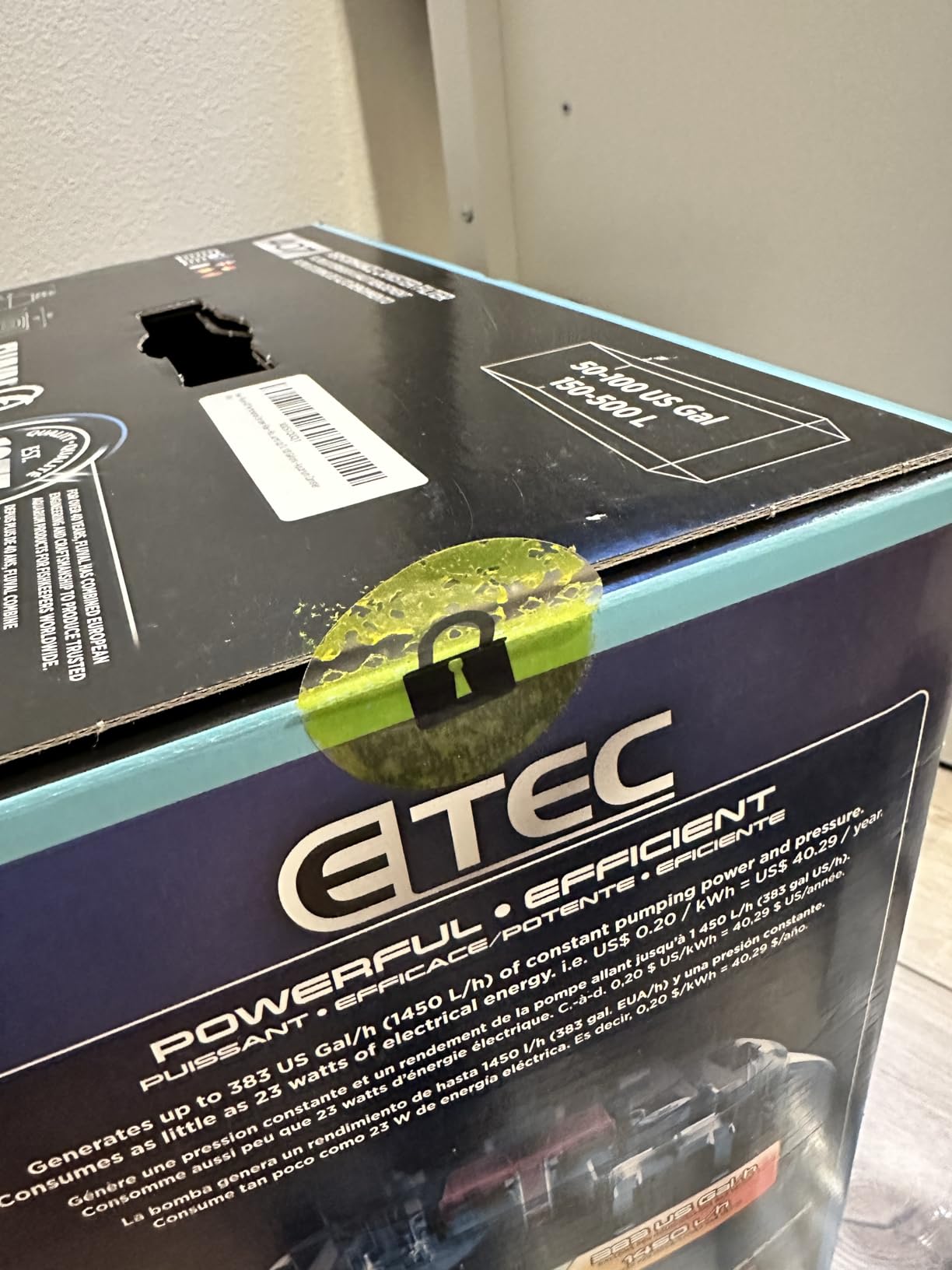
The EZ-Lift baskets with a center handle are a real quality-of-life win in a turtle setup. Media changes here are weekly or near-weekly in heavy setups, and lifting a soaked sponge with two fingers on a rim is far easier than wrestling a wet tray with two hands.
Owners also report that the 407 clears cloudy water fast, and the setup is straightforward enough that most people have it running within half an hour. Flow is adjustable at the valve, so you can set a gentle surface return that does not overwhelm a basking platform.
Is the 407 quiet enough for a bedroom or office?
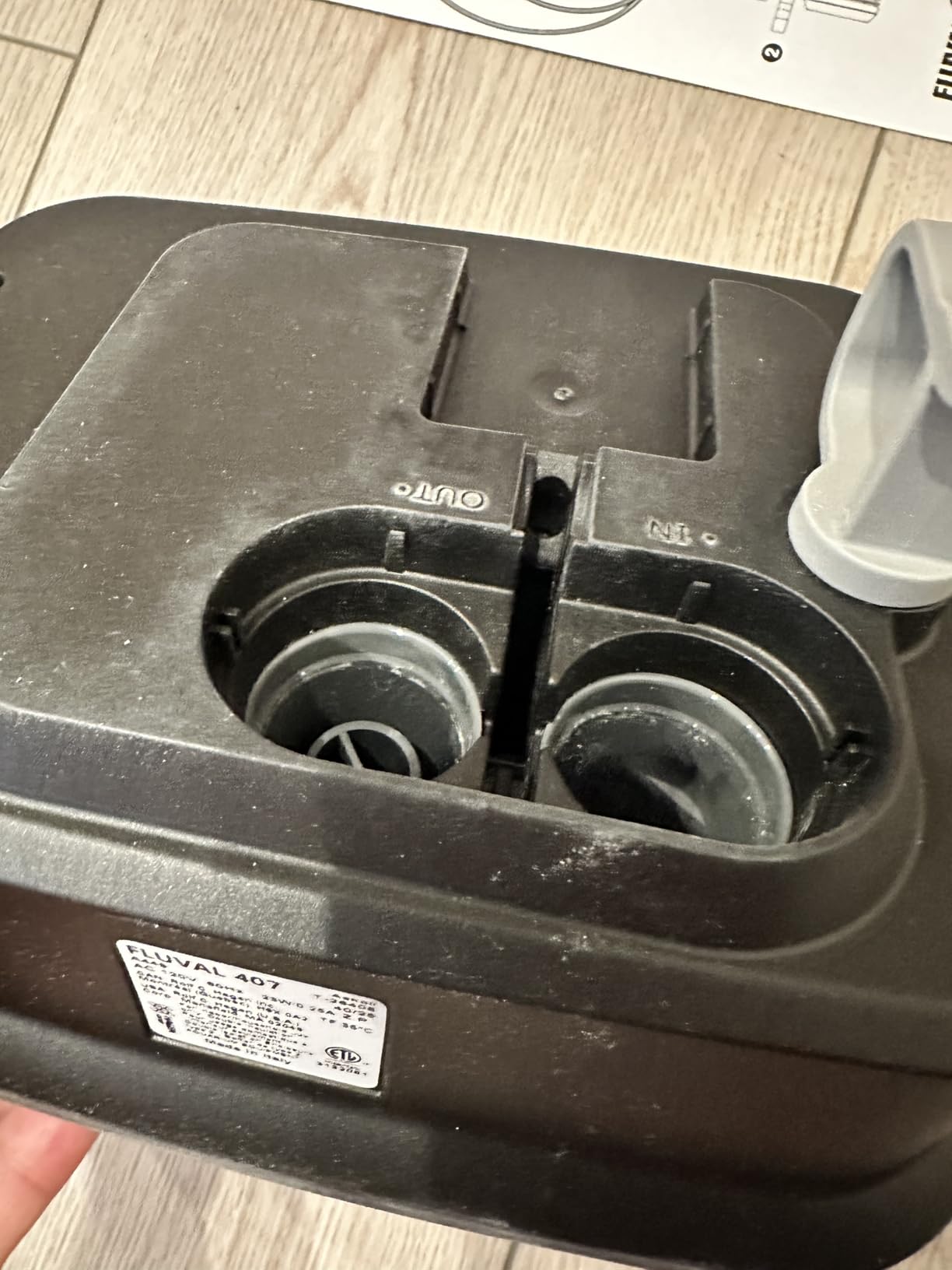
Yes, that is the reason to pick it over the Cascade 1000. Most owners running this filter in a cabinet report not noticing it at all, and the only sound they mention is a faint bubbling during the periodic air evacuation cycle.
The physical dimensions work in tight spaces too, at 7.09 by 9.45 by 19.29 inches this is the narrowest profile in the roundup, and quick-disconnect valves plus lift-lock clamps speed up servicing.
What are the drawbacks?
The dominant complaint is a sealing fault on the impeller cover that can stop filtration without any obvious warning and force a motor-head replacement. The second is cost: the carbon pouches and pads are proprietary, and some units arrive with undersized or aftermarket carbon pouches that need replacing sooner than expected.
4. Fluval FX4 High Performance Canister Filter for 75-100 Gallon Setups
Fluval FX4 High Performance Aquarium Filter, up to 250 Gal.
700 GPH rated flow
Rated for tanks up to 250 gallons
1 gallon media baskets, 14.17 pounds
Pros
- 700 GPH with adjustable output
- Self-starting with no manual suction
- Large media volume
- Very quiet in a cabinet
- Repairable rather than disposable
Cons
- Bulky and heavy to handle
- Stiff lid clasps and rigid tubing
- Biological tray sits low so packing is limited
- Input connection can leak on first assembly
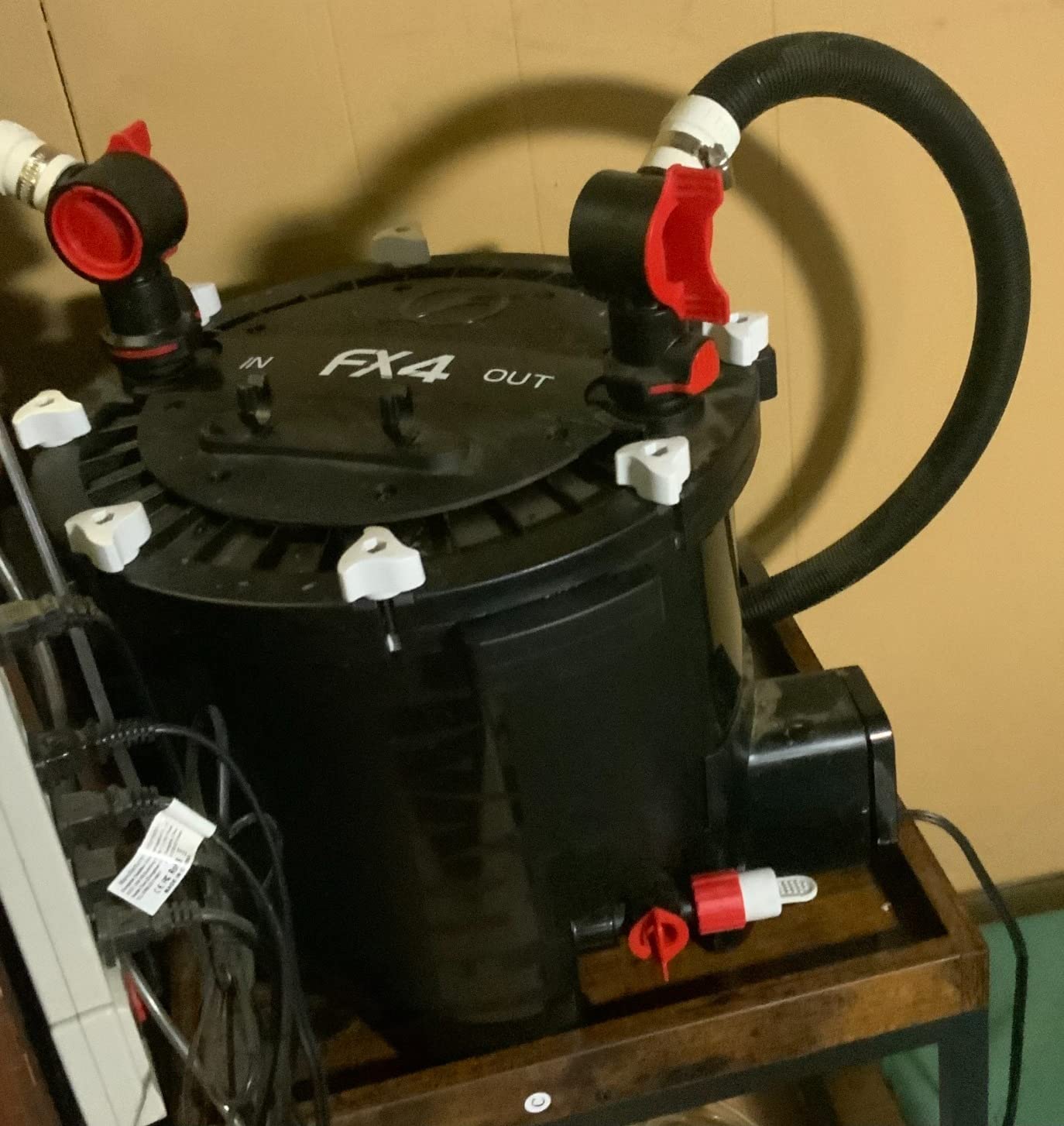
The FX4 sits between the 407 and the FX6, and at 700 GPH it is the natural choice for a 75 to 100 gallon adult turtle habitat. Owners with turtle tanks report it pulling a fouled tank back to clear water, which is the outcome you are buying the filter for.
Like the FX6 it self-starts and evacuates air on a 12-hour cycle, so there is no priming routine to learn. Flow is adjustable at the taps, and because the rated output is high for the tank, you can dial it back so water still meets the media surface instead of shortcutting straight to the return.
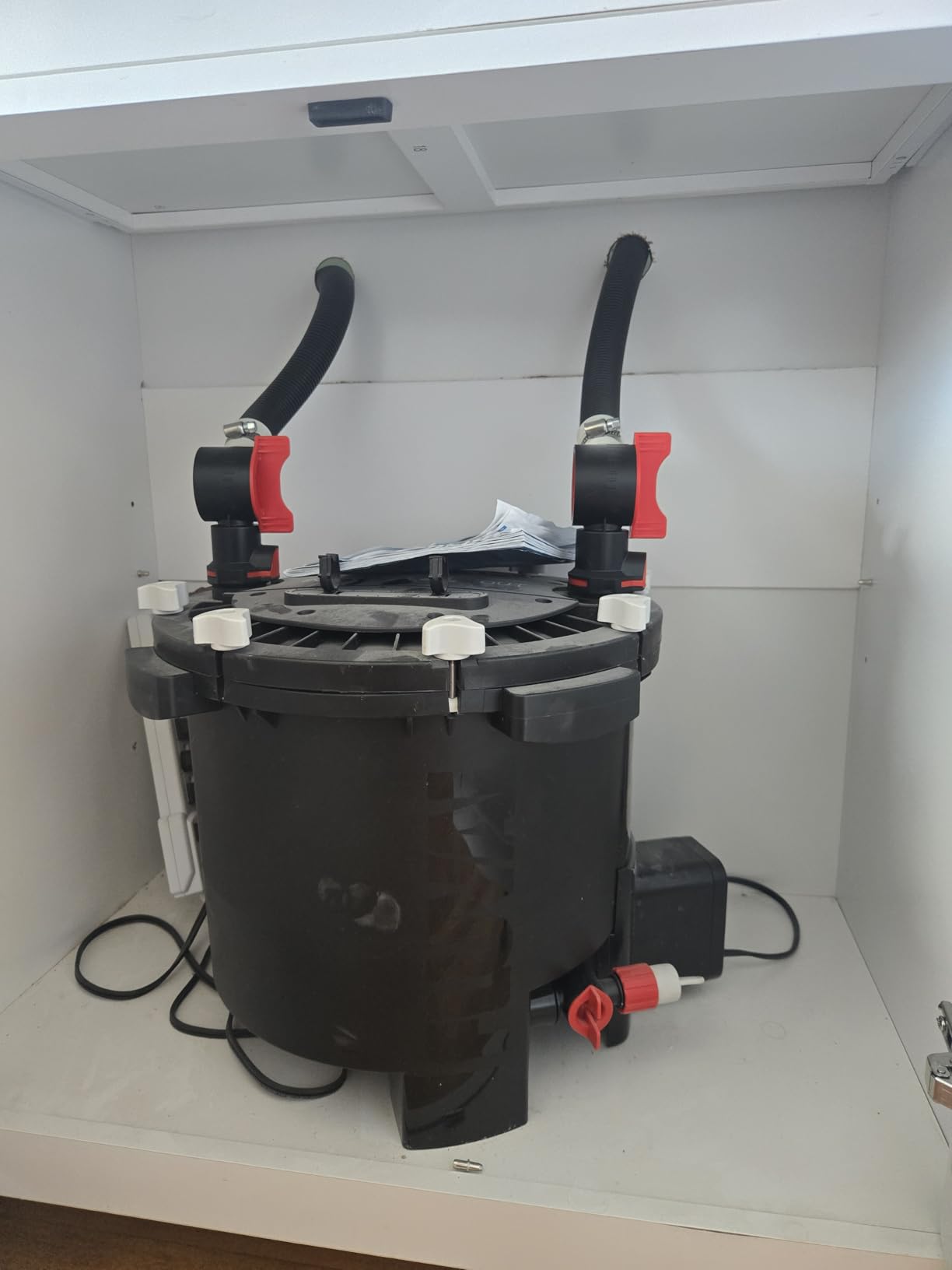
Build quality is the strongest in the roundup. It is repairable rather than disposable, which matters in a setup where the motor runs continuously, and owners consistently describe it as very quiet once installed under a stand.
Media capacity is 1 US gallon across removable stackable baskets, with mechanical, chemical and biological media included. That is enough room to run the coarse sponge first and a real biological load behind it, which is the arrangement turtle tanks need.
Should you choose the FX4 or the FX6?
Choose the FX4 for tanks in the 75 to 100 gallon range that still need strong flow, and the FX6 when you go higher or need a full gallon-and-a-half of media volume. The FX4 gives up some flow but cuts size and weight noticeably.
Both share the Smart Pump self-starting behaviour and the 12-hour air purge, so if you are bothered by those automatic pauses, neither is the right answer and the Cascade 1000 is.
What do owners complain about?
The body is bulky at 15.6 by 15.6 by 17.7 inches and 14.17 pounds, so cabinet space and maintenance access need planning. Lid clasps are stiff and ordinary plastic, the tubing is rigid, and the input connection can leak until you reseat it after first assembly.
5. Aqueon QuietFlow Canister Filter for 150 Gallon Turtle Tanks
Aqueon QuietFlow Canister Aquarium Filter, Up to 150 Gallons (ECOM)
Fits aquariums up to 150 gallons
Three return configurations
Polishing stage, 1 year warranty
Pros
- 150 gallon rating covers most adult enclosures
- Three interchangeable return options
- Integrated polishing stage
- Media included and usable immediately
- Quick disconnect valves
Cons
- Requires branded cartridges every 30 days
- Cartridge polishing is less flexible than custom media
- Bulkier footprint than similar ratings
The Aqueon QuietFlow is built around a 150 gallon rating, which puts it a tier above most of this list for large adult turtle habitats. At 4.4 stars with just over 1,000 reviews, it has a smaller owner base than the Fluval models, so the documentation is thinner.
What makes it interesting for turtles is the return configuration. You get three options: a spray bar, a directed water director, and an integrated hang-on-back polishing unit. The water director lets you aim flow away from a basking platform, which helps keep the warm basking zone from being churned by a cross-current.
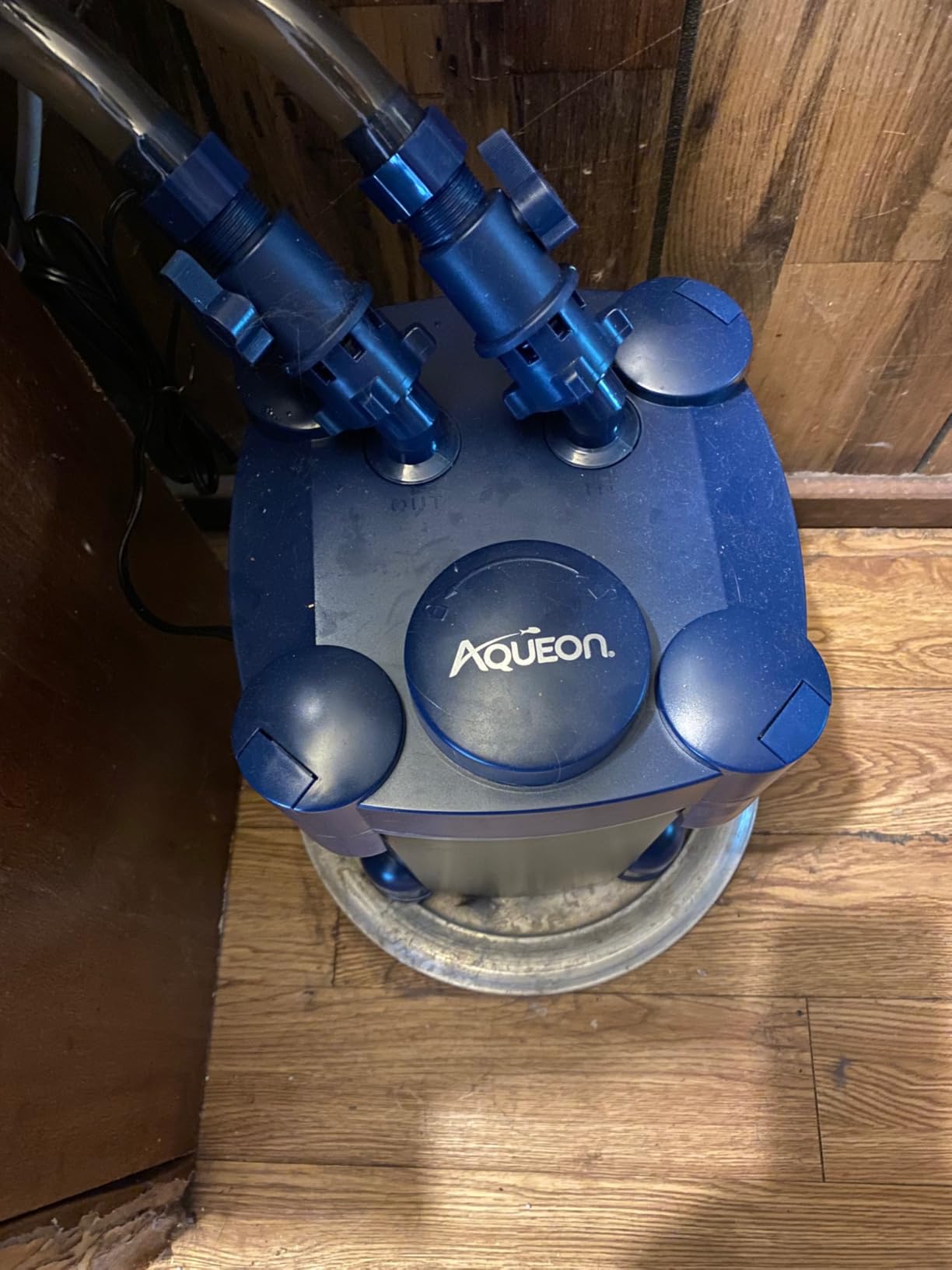
The canister itself does multi-stage biological, chemical and mechanical filtration and arrives with activated carbon, coarse foam, bio-balls and bio-ceramic rings already included. That matters for a first-time turtle keeper who would otherwise have to figure out a media stack from scratch.
Setup is simple and well illustrated, and the quick disconnect valves make the weekly service routine less of a chore than a full hose teardown.
Is the monthly cartridge cost worth it?
It depends on whether you mind proprietary consumables. The carbon is specified to change every 30 days and the polishing unit uses large Aqueon replacement cartridges, so the running cost is higher than filters that accept any bulk media.
In exchange you get a fine filtration stage that no media basket setup matches without a second hang-on-back unit, and the flex to swap between spray bar, director and polishing return mid-setup.
Who should skip this one?
Skip it if you want to build your own media stack with off-brand carbon and zeolite, since the cartridge system is designed around replacement units rather than bulk media. The footprint is also bulkier than similarly rated competitors, so measure the cabinet first.
6. Marineland Magnum 290 GPH Canister Filter for Portable Turtle Setups
Marineland Magnum 290 GPH Polishing Canister Aquarium Filter
290 GPH output
Tanks up to 97 gallons
2.91 pound compact body
Pros
- Lightest canister in the roundup at 2.91 pounds
- Submerged motor starts with no priming
- Two refillable chambers accept custom media
- Includes micron polishing cartridge
- Compact 7.5 x 3.5 x 9.88 inch body
Cons
- Small media volume for the flow
- Proprietary cartridge media adds cost
- Limited biological media capacity
- Lacks turnover for heavily stocked tanks
The Magnum is the smallest canister here and the easiest to move. At 2.91 pounds it can be lifted with one hand, which matters if you are draining it for a deep clean or carrying it between a 20 and a 55 gallon tank as your turtle grows.
It also avoids the priming ritual entirely. The motor sits submerged inside the canister, so filling the chamber and switching it on is the whole startup sequence, and the two refillable chambers accept carbon or any custom media you want to run instead of a sealed cartridge.
At 290 GPH for tanks up to 97 gallons, the numbers are fine for a single adult turtle in a moderate setup. Owners report it polishing cloudy water effectively, and the included micron cartridge handles fine particulate well.
What it does not have is volume. The chambers are small, so the media stack you can build is thin, and that is exactly the wrong trade for turtles that produce a lot of solid waste. Flow rate without media capacity means clean water that dirties again fast.
Is this a good turtle filter or just a small aquarium filter?
It works for a single juvenile turtle in a 20 to 30 gallon tank, where the bioload is genuinely light and media volume needs are modest. Beyond that, the small chambers and cartridge dependence start to cost you.
At 4.1 stars with 63 percent five-star ratings, the feedback clusters on exactly those two points: the media volume is small and the replacement cartridges must be bought regularly.
What are buyers really buying it for?
Most owners are filtering standard fish tanks and simply want a quiet, compact, cheap external option. For turtles specifically, the weight and the zero-priming startup are the genuine advantages, and you should not expect it to handle a heavily stocked adult enclosure.
7. Marineland Magniflow 400 GPH Canister Filter for Quiet Performance
Marineland Magniflow 400 GPH Canister Aquarium Filter
400 GPH three-stage filtration
Stack N' Flo media trays
Quick prime button, 19.27 pounds
Pros
- 400 GPH clears cloudy water fast
- Very quiet running
- Large included media bundle
- Quick prime button for startup
- Stack N' Flo trays separate each layer
Cons
- Recurring lid gasket leaks
- Supplied plastic hose clamps are too loose
- Rigid tubing is hard to position
- Carbon bags must be bought frequently
The Magniflow 400 pairs solid flow with genuinely quiet running, and at 4.1 stars across more than 4,000 reviews it is one of the most proven designs in this roundup. Owners report cloudy or fouled water clearing within 24 hours, which is the number that matters most in a turtle setup.
Media is the strong suit. The Stack N’ Flo trays force water through layered media in order, and the bundle includes filter foam, activated carbon bags, bio-filter balls, ceramic rings and polishing pads. That is more included media than any other canister in this list.
The quick prime button fills the chamber for a self-priming start, and the watertight lid lifts for media access. Compatibility with Marineland Rite-Size T media means replacement consumables are easy to find, though they are small and need frequent changes.
For a turtle tank the practical limitation is physical. At 19.27 pounds with rigid tubing and a single suction cup, positioning the discharge and draining the unit for cleaning is awkward, especially in a cabinet with a low ceiling.
Will it leak like the reviews suggest?
The lid gasket area is the recurring complaint and it is real, so plan on resealing it, keeping a spare gasket, and clamping the lid properly after each media change. The supplied plastic hose clamps are also reported as too loose and are frequently swapped for metal clamps.
If gasket reliability is a dealbreaker for you, the Fluval FX4 and the Cascade 1000 have cleaner sealing records. If you can live with occasional resealing, the 400 GPH flow and quiet running are worth it.
Is it quiet enough for a living room?
Several owners say they have to check that it is actually running, which is the strongest quiet signal in the feedback here. In a cabinet it disappears, and combined with the 400 GPH output it handles a 55 to 75 gallon turtle tank with room to spare.
8. SunSun HW302 265 GPH Pro Canister Kit as the Budget Pick
SunSun Hw302 265GPH Pro Canister Filter Kit
265 GPH, 1000 L per hour
Suitable up to 75 gallons
3 media baskets, 12 pounds
Pros
- 265 GPH at the lowest cost in the roundup
- Full media load included
- Accepts any standard bulk media
- Reportedly very quiet when running
- Hose toggles for quick disconnection
Cons
- Poorly written instructions
- Stiff coiled hoses need soaking
- Thin plastic clips and fittings crack easily
- Impeller gets noisy after about a year
- Flow better suited to 55 gallons
The SunSun HW302 Pro is the value answer, and it is the model TortoiseForum keepers point to when they recommend SunSun and Aquatop as the same factory-built design. At 265 GPH it matches the Cascade 1000 on paper for a fraction of the outlay.
What you get in the kit is unusually generous: three media baskets, three white filter pads, a pound of premium carbon, a pound of ceramic rings and a set of bio balls. The baskets accept any standard bulk media, which keeps replacement costs low and lets you swap in zeolite or a sponge layer without buying proprietary cartridges.
Turtle performance is documented. One owner reports clear, odor-free water on a monthly cleaning schedule after fourteen months of use, and the filter is reported as very quiet once running, especially with the outflow aimed at glass.
The weakness is build quality and first-run experience. Instructions are poorly written, the coiled hoses are stiff and want soaking in hot water before fitting, and the thin plastic lid clips and spray bar tabs crack or snap easily if you force them.
Is a budget canister good enough for a turtle?
Yes for a 20 to 55 gallon tank with one adult turtle, and provided you are willing to run real mechanical media in the first basket. The 75 gallon rating is a ceiling under light stocking rather than a comfortable working load at that volume.
Budget builds also age differently. The lid O-ring can weep and the impeller becomes noticeably noisier after about a year, and the priming button takes repeated pumping before flow starts.
Who should buy it and who should not?
Buy it if your tank is in the 20 to 55 gallon range, you like using bulk media, and you are comfortable replacing small plastic parts yourself. Skip it if you have a large adult turtle, if you have no patience for stiff tubing and confusing setup, or if your cabinet has no room to lift a soaked 12-pound unit out.
Buying Guide: Flow, Baskets and Intake Safety
Pick flow first, then confirm the filter has enough media volume to spend that flow on. A high GPH rating with two small baskets gives you a pump that blasts past its own media, which is why the Cascade 1000 and the SunSun both ship with three baskets.
Know that rated GPH overstates real flow. Hose length, the rise to the tank rim, kinked tubing and packed sponges all cut throughput. Size for the 2-3x rule, install the shortest clean run you can, and keep the intake strainer pointed where the turtle actually feeds rather than where the layout is convenient.
Oversizing is not a mistake, and this question comes up constantly. A canister rated above your tank is fine as long as you have a flow control valve, which every filter in this list has. Turn the valve down until the surface moves gently and the water still travels through the media stack.
Check intake strainer safety before anything else. Openings should be smaller than the turtle’s head, and a guard is worth adding on any filter with a wide intake cage. One r/turtle thread raised exactly this worry about an intake hose pulling a head in, and keepers report that strainer placement matters more than brand.
For tanks at 100 gallons and above, running two smaller canisters beats one oversized unit in practice. Media baskets stay manageable, a fault takes half the filtration down rather than all of it, and cleaning load is spread across two service days instead of one. MonsterFishKeepers keepers running two Fluval canisters on 100 to 300 gallon turtle systems describe it as reliable but note the filters need cleaning far more often than in fish-only tanks.
Turtle Media Stack and Maintenance Schedule
Build the stack in water-flow order. Coarse sponge in the bottom basket catches solid waste and debris, fine floss or a pad polishes the water, biological media such as ceramic rings, a bio-sponge or bio-balls sits behind that, and carbon goes last so it does not starve the bacteria of oxygenated flow.
Yellow water is the problem keepers raise most often. One r/turtle user runs two layers of sponge plus three or four layers of bio ceramic and still watched the water turn yellowish despite weekly maintenance, then asked about carbon and zeolite. The fix is usually chemical media that changes: activated carbon clears dissolved organics and tannin tinting but must be replaced on a schedule, while zeolite targets ammonia and odor and needs a slow water flow.
Match the media to the symptom. Clear-but-yellow water responds to carbon. Green algae growth responds to reducing light and adding a fine pad. A sudden ammonia spike with no cloudiness usually means exhausted zeolite or a bacterial colony that has been washed out.
Hold the cleaning routine steady. Rinse mechanical media every one to two weeks in removed tank water, and never rinse biological media in tap water, since chlorinated water kills the bacteria you are trying to keep. Keep a wet bacteria seed in the canister at all times so a media change never leaves the tank filterless.
Watch flow as your real maintenance signal. When the GPH drops noticeably from what you measured at startup, the mechanical stage is packing with turtle waste. Clean it before the water changes slow and before you reach for extra chemicals, because a choked sponge cannot carry chemical media either.
Frequently Asked Questions
What is the best external canister filter for a turtle tank?
The Penn-Plax Cascade 1000 is the best overall pick for most turtle keepers, pairing a 265 GPH rated flow with a 100 gallon tank rating and three stackable media baskets. For large enclosures the Fluval FX6 offers 925 GPH and 1.5 gallon baskets, while the Fluval 407 is the quietest option for a bedroom or office.
What is the best filter for a 40-gallon turtle tank?
For a 40 gallon tank, size up rather than match. A 40 gallon tank usually holds 30 to 33 gallons of actual water, so look for a canister rated for 80 to 100 gallons with at least 250 GPH. The Cascade 1000, the Fluval 407 and the Fluval FX4 all sit in that band.
What is the best brand of canister filter?
Fluval has the deepest range here, with the FX4, FX6 and 407 covering small to very large tanks and the quietest pumps. Penn-Plax and Marineland build solid mid-size units, and SunSun delivers comparable flow for far less when you accept thinner plastics. There is no single winner, so match the brand to your tank size and noise tolerance.
Can a filter be too big for a turtle tank?
No. A canister rated above your tank is fine because every filter in this roundup has an adjustable flow valve. Turn the valve down until the surface moves gently and water still passes through the media, which keeps debris out of the tank and stops a cross-current from chilling a basking platform.
What filter media works best in a turtle aquarium?
Use coarse sponge first for solid waste, then a fine floss or polishing pad, then biological media such as ceramic rings or a bio-sponge. Add activated carbon for persistent yellow or tannin-tinted water and zeolite for ammonia, and replace chemical media on a schedule because exhausted media stops working silently.
How often should I clean a turtle tank canister filter?
Rinse mechanical media every one to two weeks in removed tank water, sooner if the flow drops or the water clouds. Never rinse biological media in tap water, since chlorine kills the bacteria colony. A large canister on a heavily stocked turtle tank needs a partial clean weekly, and owners running two filters on big systems stagger the service days.
The Best Canister Filters for Turtle Tanks in 2026
Size before you shop, then buy from the top of this list. Measure your real water volume, multiply by 2.5 for one adult turtle or 3 for two, and find the canister that clears that rating while keeping three or more usable media baskets.
For 30 to 55 gallon tanks, the Penn-Plax Cascade 1000 is the pick. For 75 to 100 gallons, step up to the Fluval FX4, and for anything larger or multi-turtle, the Fluval FX6 gives you the flow and media volume to survive the bioload. If noise in a bedroom or office is the deciding factor, the Fluval 407 does the same job more quietly.
Whatever you choose, run strong mechanical media first, clean it every one to two weeks in tank water, and add carbon or zeolite when the water yellows. That habit matters more than the model number for keeping a turtle tank clear year after year.