
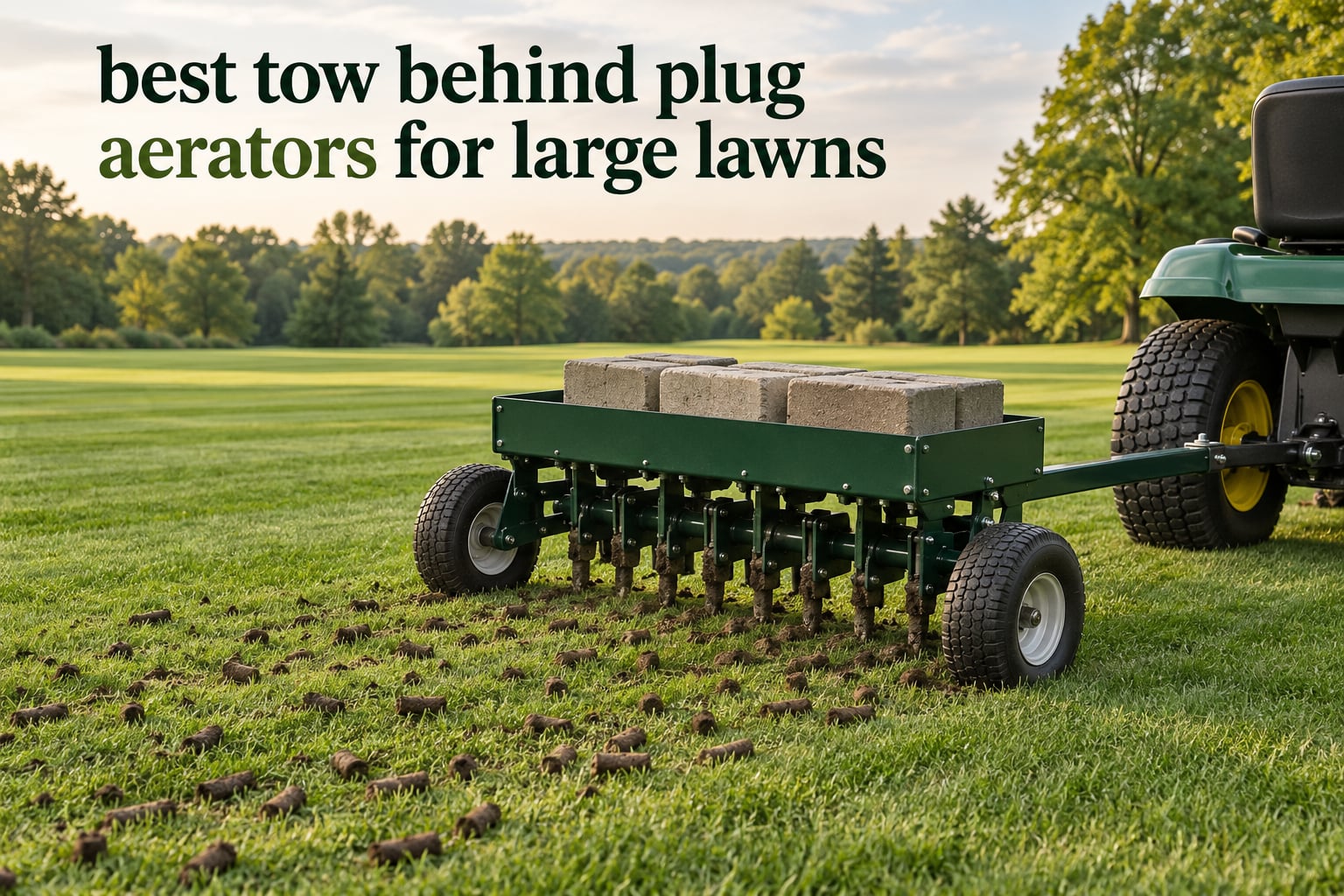
If you have a large lawn, the best tow behind plug aerator is the one that matches your acreage, your tow vehicle and the amount of storage you actually have. On a lawn of half an acre or more, a 40 to 48 inch swath with a real weight tray beats any hand tool by a wide margin, because you cover ground at mowing speed instead of walking it.
Our team pulled the specs, warranty terms and review histories for nine tow-behind core aerators that clear a 40 inch working width, then compared them side by side. The Agri-Fab 45-0299 48 inch unit is the one we would buy first. It has the deepest review pool in the group, a 175 lb weight tray and a 48 inch swath that finishes an acre far faster than a 40 inch machine.
What separates the good units from the cheap ones is rarely width. It is whether the coring spoons actually pull soil out of the ground instead of punching holes, whether the weight tray holds enough ballast to reach the root zone in hard soil, and whether the frame survives a decade of being dragged over roots and rocks. We get into all three below.
We also flag the honest trade-offs. Several of the lowest-priced 48 inch units advertise impressive numbers on paper and fall well short in the review data, and one of the most popular machines carries a 94 lb frame that is a genuine load to get into a truck bed. Our comparisons below come from published specifications and aggregated customer reviews rather than from our own instrumented testing.
Table of Contents
Top 3 Tow Behind Plug Aerators for Large Lawns (October 2026)
Agri-Fab 48 in Tow Behind Plug Aerator
- 48 in working width
- 32 galvanized knives
- 3 in plug depth
- 175 lb weight tray

Brinly 40 in Plug Aerator
- 40 in width
- 24 heat-treated spoons
- 3 rotating tine sections
- 150 lb enclosed tray

Agri-Fab 40 in Coring Aerator
- 40 in width
- 24 coring knives
- 10 in pneumatic tires
- folding transport handle
The Best Tow Behind Plug Aerators at a Glance
All nine machines below are built for core aeration on a 40 inch working width or wider, and every one hauls behind a lawn tractor, riding mower or ATV. Read this table as the fast filter, then use the individual reviews to decide.
| Product | Specs | Action |
|---|---|---|
| Agri-Fab 48 in Tow Behind Plug Aerator |
|
Check Latest Price |
| Brinly 40 in Plug Aerator |
|
Check Latest Price |
| Agri-Fab 40 in Tow Behind Coring Aerator |
|
Check Latest Price |
 Brinly 48 in Plug Aerator Brinly 48 in Plug Aerator |
|
Check Latest Price |
 Craftsman 40 in Plug Aerator Craftsman 40 in Plug Aerator |
|
Check Latest Price |
 Brinly 40 in Aerator Spreader Combo Brinly 40 in Aerator Spreader Combo |
|
Check Latest Price |
 Vlaeng 40 in Tow Behind Aerator Vlaeng 40 in Tow Behind Aerator |
|
Check Latest Price |
 Garvee 48 in Tow Behind Plug Aerator Garvee 48 in Tow Behind Plug Aerator |
|
Check Latest Price |
 VEVOR 40 in Tow Behind Core Aerator VEVOR 40 in Tow Behind Core Aerator |
|
Check Latest Price |
What a Tow Behind Plug Aerator Actually Does
A tow behind plug aerator is a core aerator you hitch to a lawn tractor, riding mower or ATV. Rows of hollow steel spoons on a rotating drum punch into the lawn as you drive, and each one ejects a short cylinder of earth that drops onto the grass behind you.
Those open holes are the whole point. Compacted soil blocks air, water and fertilizer from reaching the root zone, and physically removing a plug reopens that path. A spike aerator just makes a hole in a solid mass, which is why plug aeration wins on any lawn that is actually compacted.
Two mechanisms control how deep those cores go. The first is the spoon itself, since a narrow, sharpened, hollow spoon enters hard ground more easily than a wide blunt spike. The second is the weight tray above the spoons, which turns the machine from a light implement into a press that drives the coring knives deeper.
Coverage math is where large lawns separate from small ones. A rough formula is width in feet multiplied by ground speed in miles per hour, divided by 8.25, which gives you acres per hour. At a 40 inch width and 4 mph, that works out to about 1.6 acres per hour. At 48 inches and 4 mph, it is about 1.9 acres per hour. At 3 mph those same machines drop to roughly 1.2 and 1.5 acres per hour, which is why driving slowly on a heavy machine is the single biggest coverage mistake owners make.
1. Agri-Fab 45-0299 48 Inch Tow Behind Plug Aerator
Agri-Fab 48 In Tow Behind Lawn Plug Aerator with 32 Galvanized Knives and Universal Hitch
48 in working width
32 galvanized self-sharpening knives
3 in core depth
175 lb weight tray
94 lb unit weight
Pros
- Full 48 inch swath covers large lawns in fewer passes
- 32 self-sharpening galvanized knives rated to 3 inch plugs
- 175 lb weight tray handles genuinely hard ground
- Flat-free tires roll smoothly over turf
Cons
- 94 lb frame is a two-person load into a truck bed
- Cantilever transport handle is awkward to reach from the seat
- Knives need debris cleared after use on rocky soil
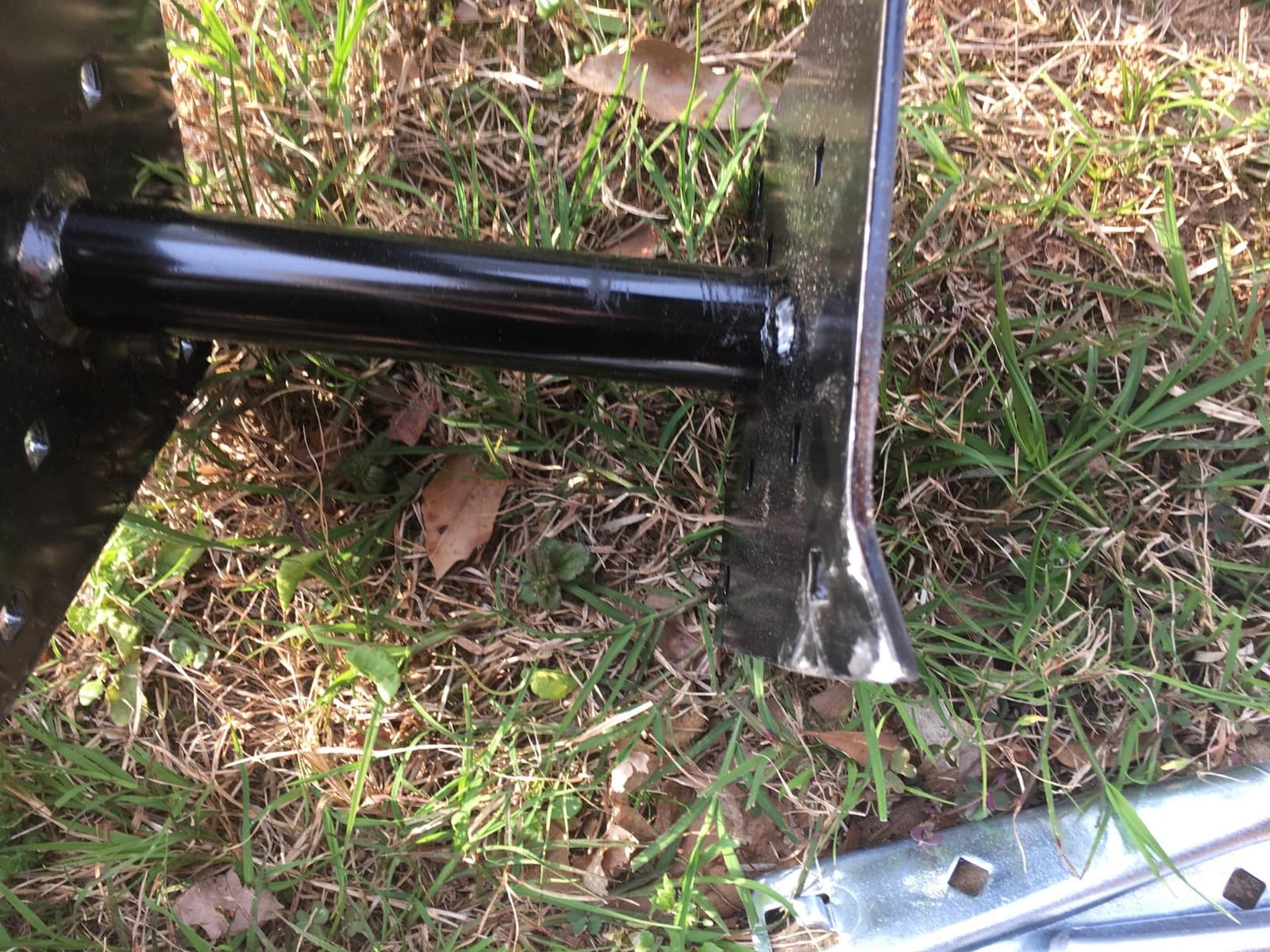
The Agri-Fab 45-0299 is the category benchmark and it earns that label on evidence rather than reputation. It pulls 32 self-sharpening galvanized knives across a 48 inch swath and takes up to 175 lbs of ballast, which is the combination that makes real cores come out of compacted ground. It is also the heaviest frame here at 94 lb, so plan for two hands on loading day.
What stands out in the review data is consistency. Out of more than 2,470 ratings, 59 percent are five star and 21 percent are four star, and owners repeatedly describe pulling genuine soil plugs rather than making holes. The complaints center on assembly effort and the weight of the frame, not on how the machine performs in the soil once it is running.
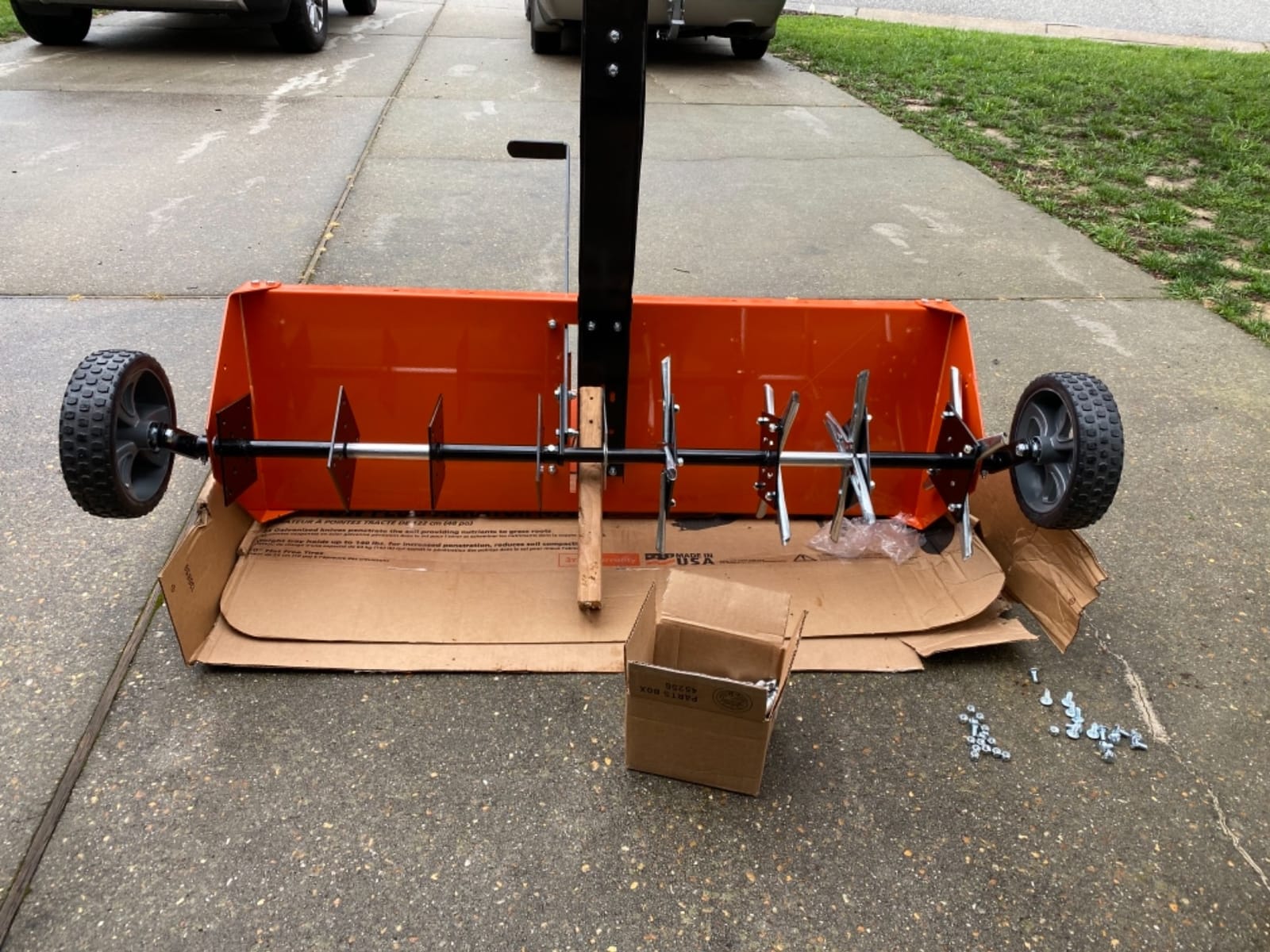
Buyers who cross driveways and root zones with the transport handle raised report that the feature works as advertised, and that the flat-free tires mean no tire pressure maintenance across a whole season of use. The 94 lb weight is the honest catch here, and it is a real one for anyone without a ramp or a second pair of hands.
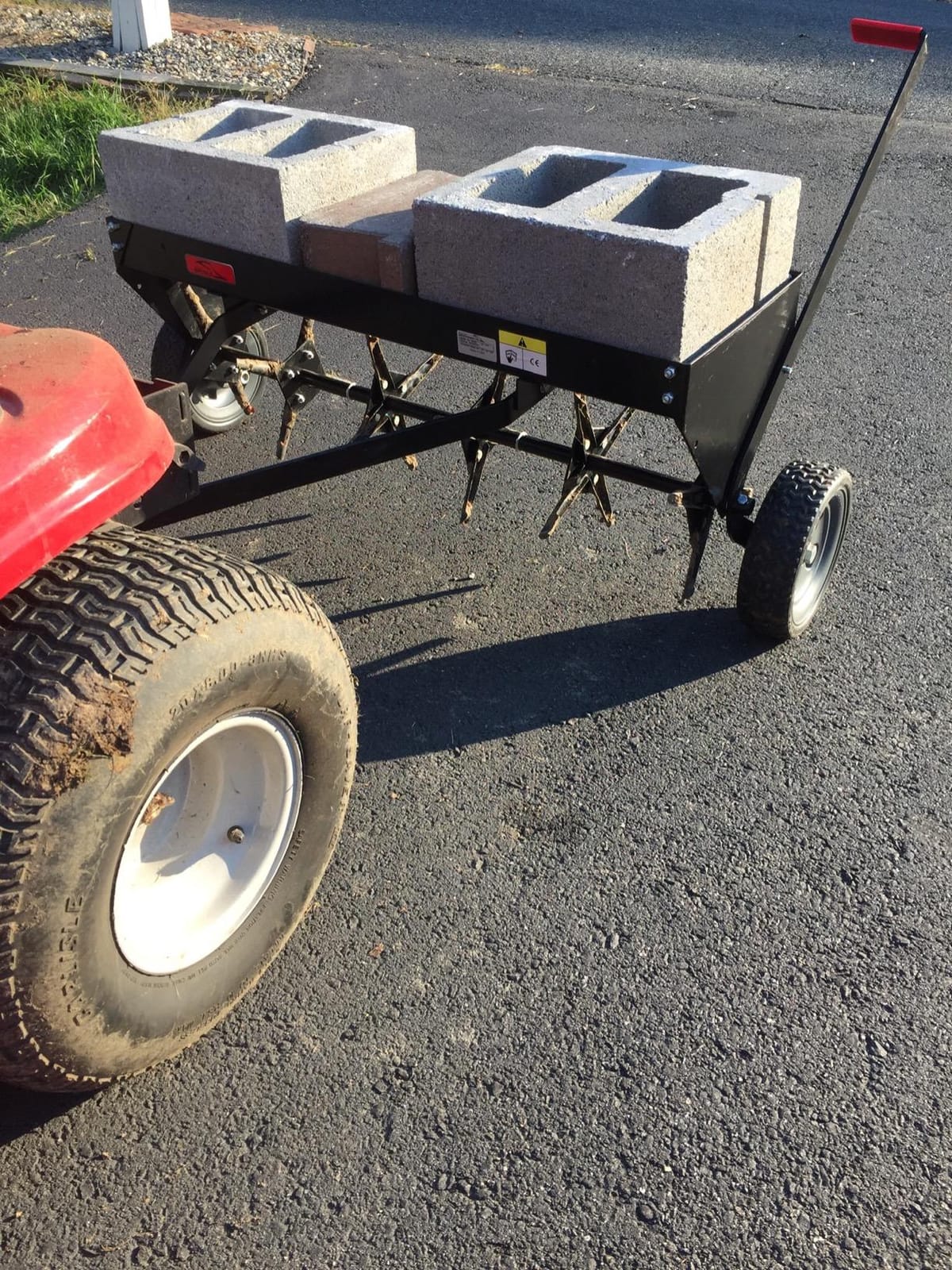
There is one more honest consideration. A 94 lb frame still needs ballast on genuinely hard ground, because the machine’s own weight alone rarely drives the spoons to their full rated 3 inch depth. Several owners add concrete blocks before the first pass and report a visible difference in core length, so budget for a morning of ballast loading before the real work starts.
Who this aerator suits
This is the pick for anyone with a half acre or more of open lawn who already owns a lawn tractor or riding mower and has a hitch point rated for a loaded 94 lb implement. If you aerate twice a year, the 48 inch width pays for itself in saved time rather than in purchase cost.
It also suits owners who want the flexibility of ballast. At 175 lb of tray capacity you can load enough to open up a neglected, traffic-heavy lawn without worrying about hitting the tray rating partway through.
Where it falls short
The cantilever transport handle is the most repeated annoyance. When the tray is fully loaded, reaching the lever from the tractor seat is a stretch, and on a large property you will be using transport mode more often than you expect.
It is also the heaviest listed unit weight here, which matters for anyone storing it in a small shed or loading it alone. If storage and lifting matter more to you than width, the Craftsman later in this list stores vertically and weighs less.
2. Brinly PA-403BH-A3 40 Inch Tow Behind Plug Aerator
Brinly Tow Behind Plug Aerator with Universal Hitch, 40″ – Flat Black
40 in working width
24 heat-treated 16 gauge spoons
3 in core depth
150 lb fully enclosed tray
63.9 lb unit weight
Pros
- 4.4 star average with 89 percent of reviews at four or five stars
- All-steel construction with heat-treated 16 gauge spoons
- Three independently rotating tine sections reduce turf tearing
- Enclosed weight tray holds any type of ballast
- Sharpened narrow spoon design needs less weight
Cons
- The cost is a real limit on a one-a-year schedule
- Semi-pneumatic tires need sealant or tube top-ups
- Aerates only so seeding is a separate pass
The Brinly PA-403BH-A3 is the build-quality pick in this comparison, holding a 4.4 star average across 977 reviews. It uses 24 heat-treated 16 gauge steel spoons that pull plugs up to 3 inches, mounted on three independently rotating welded tine sections.
Those rotating sections matter more than most spec sheets admit. Independent rotation means each section keeps turning through a turn instead of grinding, which is exactly what reduces turf tearing when you are pivoting at the end of every pass across an open lawn.
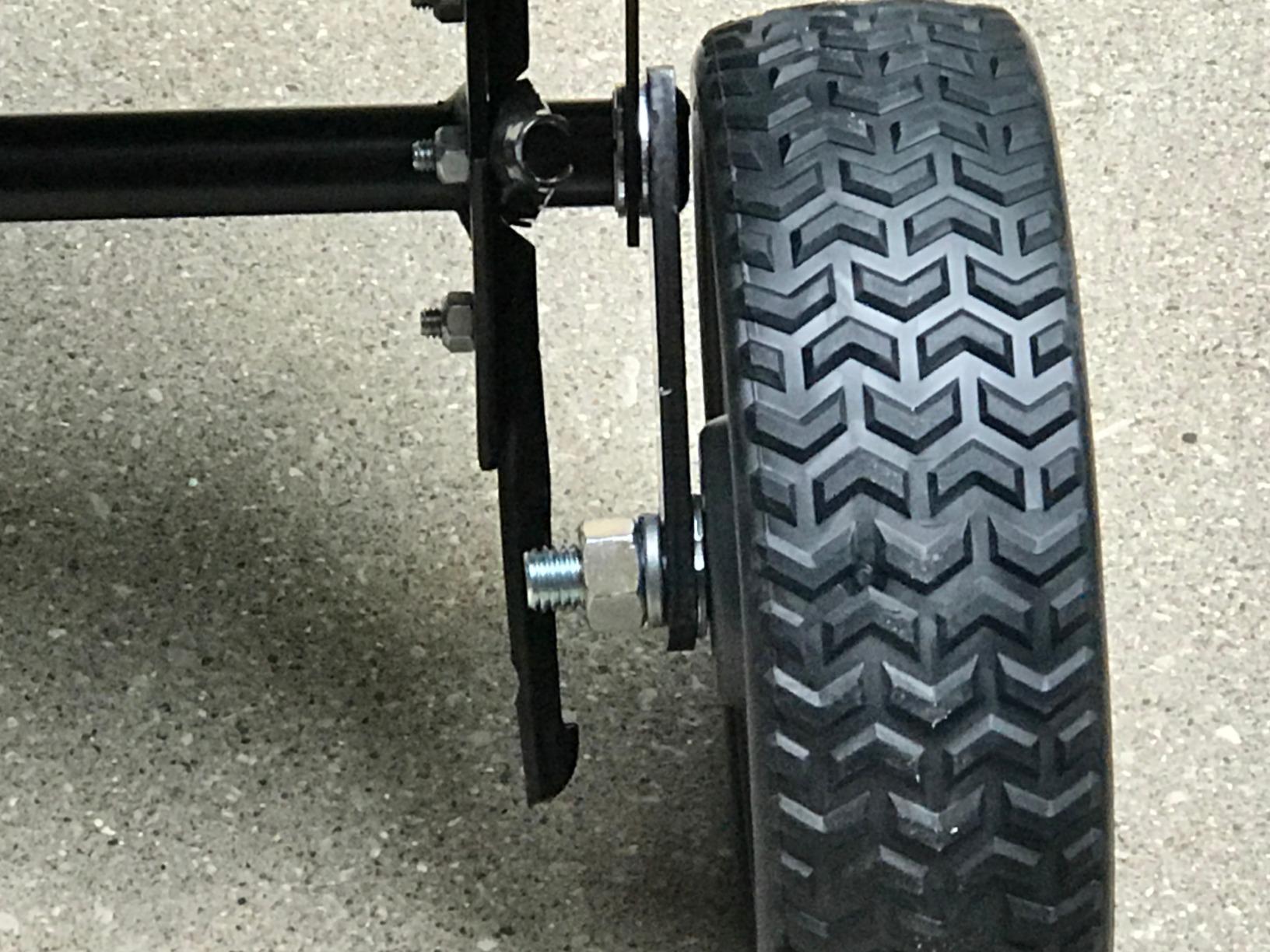
The Brinly spoon design is worth understanding before you compare this to any other 40 inch machine. Brinly uses a narrower spoon with sharpened ends, so it enters compacted soil with less downward force. Owners report clean three inch plugs and note that the machine needs noticeably less ballast than a heavier frame to reach depth.
The fully enclosed weight tray rated for 150 lb of any type of ballast is a practical detail. Enclosed means the tray has walls rather than a shallow lip, so sandbags, blocks and bricks stay on it instead of shifting off on a slope.
Who this aerator suits
This is the pick for an owner who wants a machine that stays in service for years, has storage for a full-size implement, and can load a quality tool. Heat-treated 16 gauge steel and individually replaceable spoons are the difference between a durable implement and a consumable.
It also suits large lawns with uneven ground. The 10 inch semi-pneumatic rubber tread tires absorb bumps that would bounce a flat-free wheel, and owners praise the ability to cross driveways and rooted areas in transport mode using that lever.
Where it falls short
Cost is the plain constraint here, and it is the most expensive of the nine machines compared. Owners who only need to aerate once a year should weigh that against renting before buying.
It also does one job. If your plan involves overseeding the same week, you will still need a separate spreading pass, and the combo unit further down handles both in one trip.
3. Agri-Fab 45-0518 40 Inch Tow Behind Coring Aerator
Agri-Fab 40 In Tow Behind Lawn Plug Aerator with 24 Galvanized Coring Knives and Universal Hitch
40 in working width
24 galvanized coring knives
10 in by 3 in pneumatic tires
folds for storage
73.8 lb unit weight
Pros
- Pneumatic 10 inch tires smooth out uneven and rutted ground
- Folding single-lever handle stores compactly in a garage
- Over 1400 ratings at 4.2 stars with a low one-star share
- Straightforward machine that handles typical compaction well
Cons
- Only 24 knives across 40 inches so each pass is relatively slow
- No weight tray listed among the features
- Pneumatic tires can lose pressure over a season
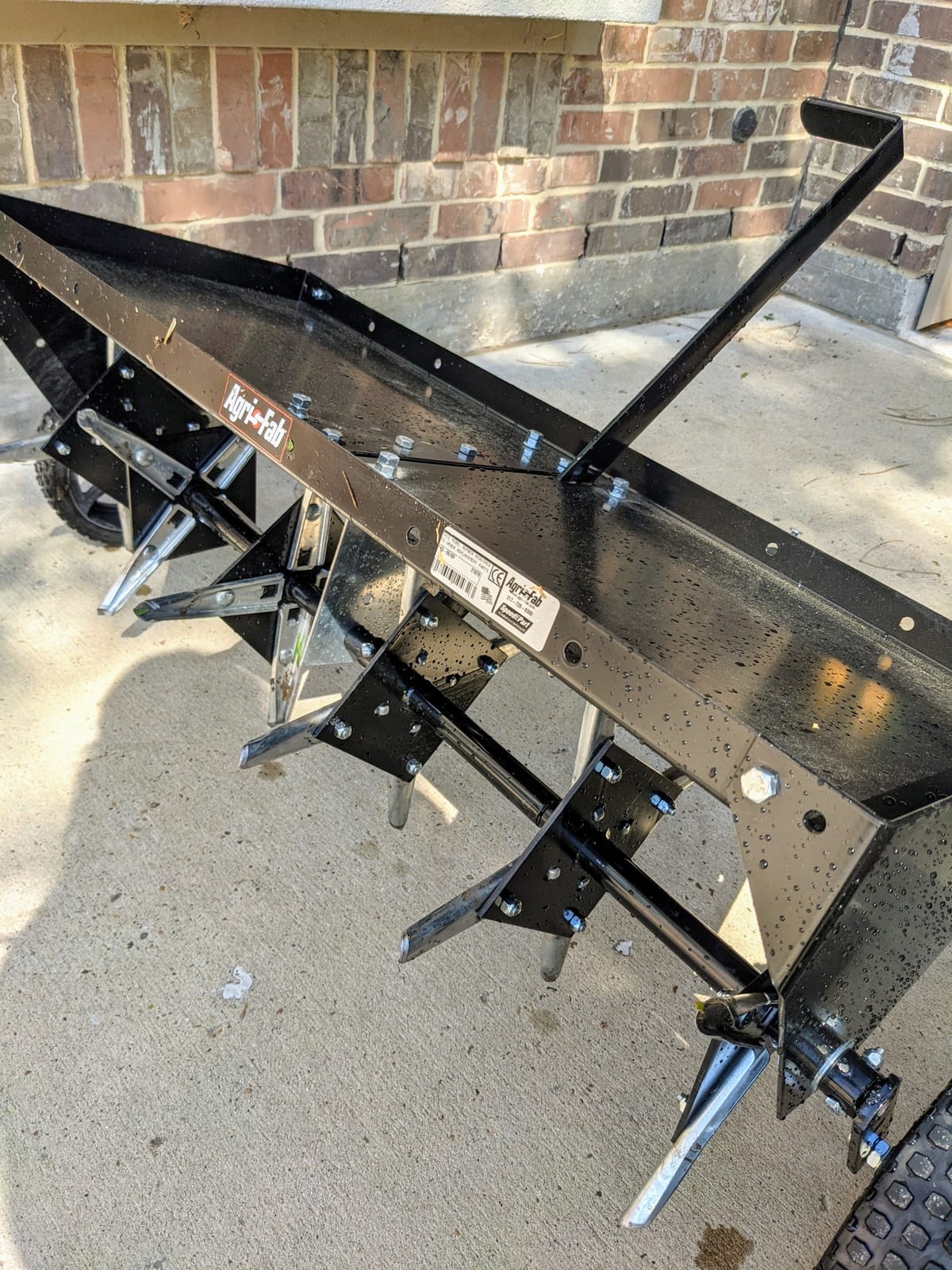
The Agri-Fab 45-0518 is the pragmatic 40 inch choice, and it is the one we point owners toward when the lawn is bumpy. Its 10 inch by 3 inch pneumatic tires are the largest on either Agri-Fab model here, and they glide over ruts, root balls and hard spots that make a flat-free wheel chatter.
Review sentiment is steady rather than glowing. With roughly 1,450 ratings at 4.2 stars and a 6 percent one-star share, this machine is described as a straightforward, easy-to-store aerator that handles average compacted soil without drama.
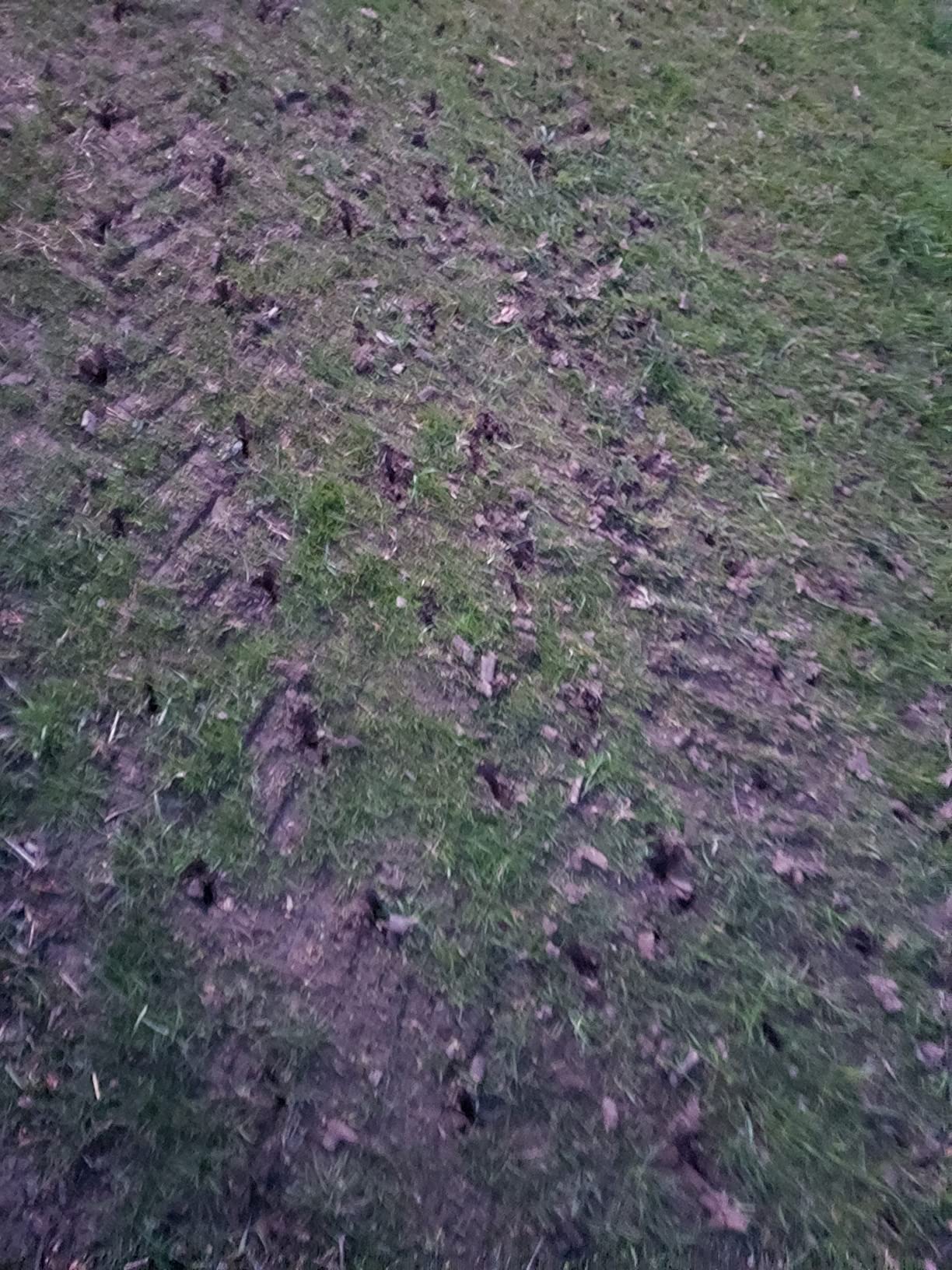
Two limits show up repeatedly. The first is throughput. Twenty-four coring knives spread across a 40 inch width means fewer holes per pass than the 32-knife machines here, so coverage on a big property takes longer than the width alone would suggest.
The second is ballast. No weight tray appears in the listed features for this model, which is why owners report it struggling on very hard or dry ground, and why the same buyers often add weight themselves or simply accept shallower cores instead of full plugs.
Who this aerator suits
Pick this one if your large lawn is uneven, has old tree roots near the open areas, or has a gravel driveway you cross regularly. The pneumatic tires and folding transport handle were clearly designed for that use, and owners specifically praise crossing driveways and rooted areas with the lever pulled.
It also suits owners with modest garage space, since the single-lever handle folds the whole unit down rather than leaving a full-width frame sticking out into the bay.
Where it falls short
If your soil is genuinely hard-packed clay, the lack of a listed weight tray is a real problem. You will be adding your own ballast or accepting shallow marks instead of plugs.
On an acre or more, the 24-knife count costs you time. If speed is the priority and the ground is reasonably flat, a 32-knife machine covers more per pass for the same drive time.
4. Brinly PA-482BH-A2 48 Inch Tow Behind Plug Aerator
Brinly PA-482BH-A2 Tow Behind Plug Aerator with Universal Hitch, 48″, Matte Black
48 in working width
32 heat-treated spoons
3 in core depth
200 lb enclosed tray
82.8 lb unit weight
Pros
- 32 heat-treated spoons across 48 inches give fast coverage
- 200 lb tray gives more ballast headroom than any other 48 inch unit with a meaningful review history
- Four rotating tine sections reduce turf damage on turns
- Owners report roughly an acre per hour with the tray loaded
Cons
- Assembly reported anywhere from one to five hours
- Some machines arrived needing redrilling before first use
- Lever plate can bend under a fully loaded tray
The Brinly PA-482BH-A2 pairs a 48 inch swath with a 200 lb weight tray, giving more ballast headroom than any other 48 inch machine here with a meaningful review history. Four independently rotating welded tine sections and 32 heat-treated 16 gauge spoons do the coring.
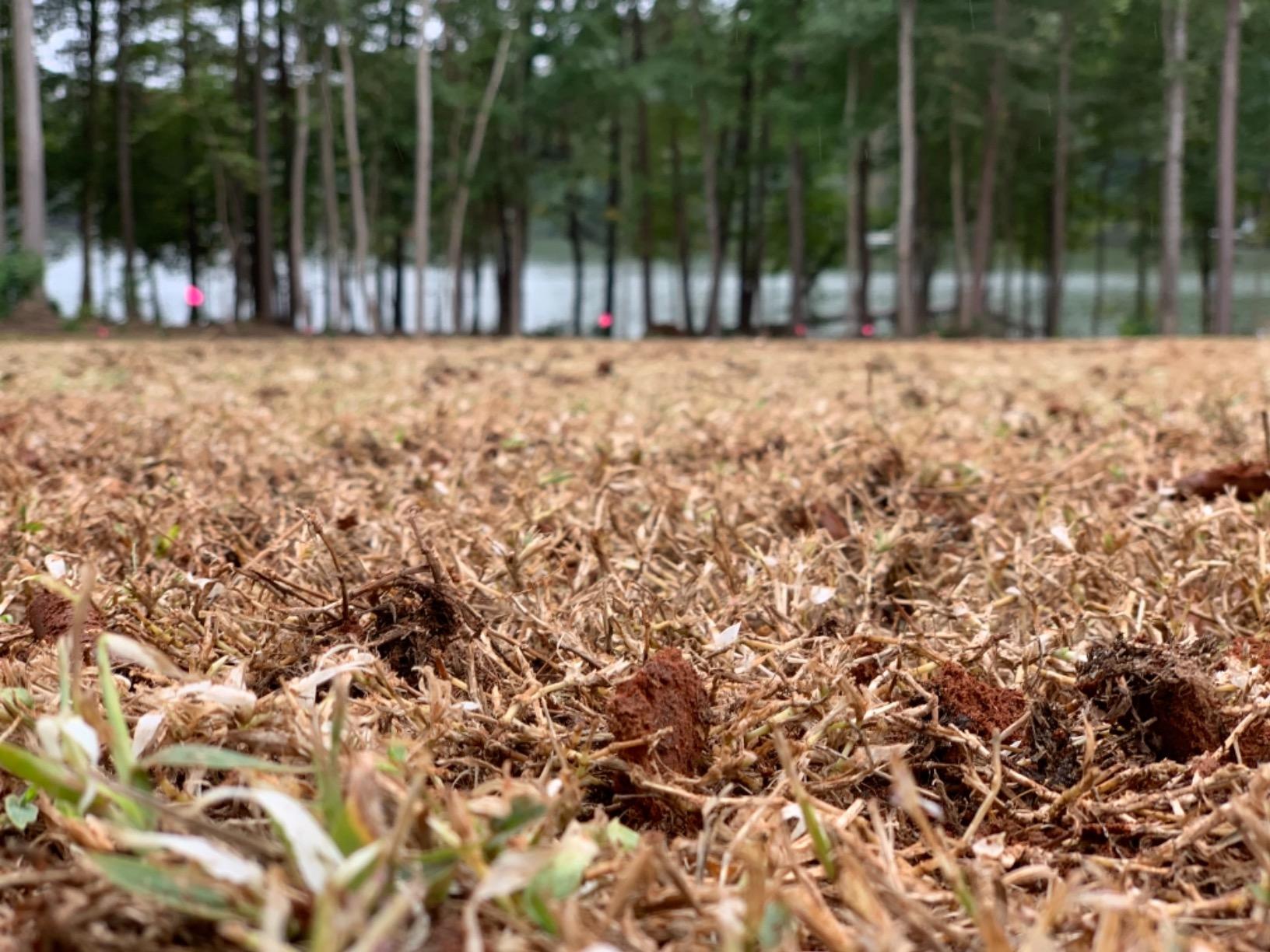
The review pool is small at 166 ratings, but the sentiment is unusually consistent for a small sample. Only 3 percent are one star, and owners who load it with concrete blocks or brick report clean 3 inch plugs and fast coverage across roughly an acre an hour.
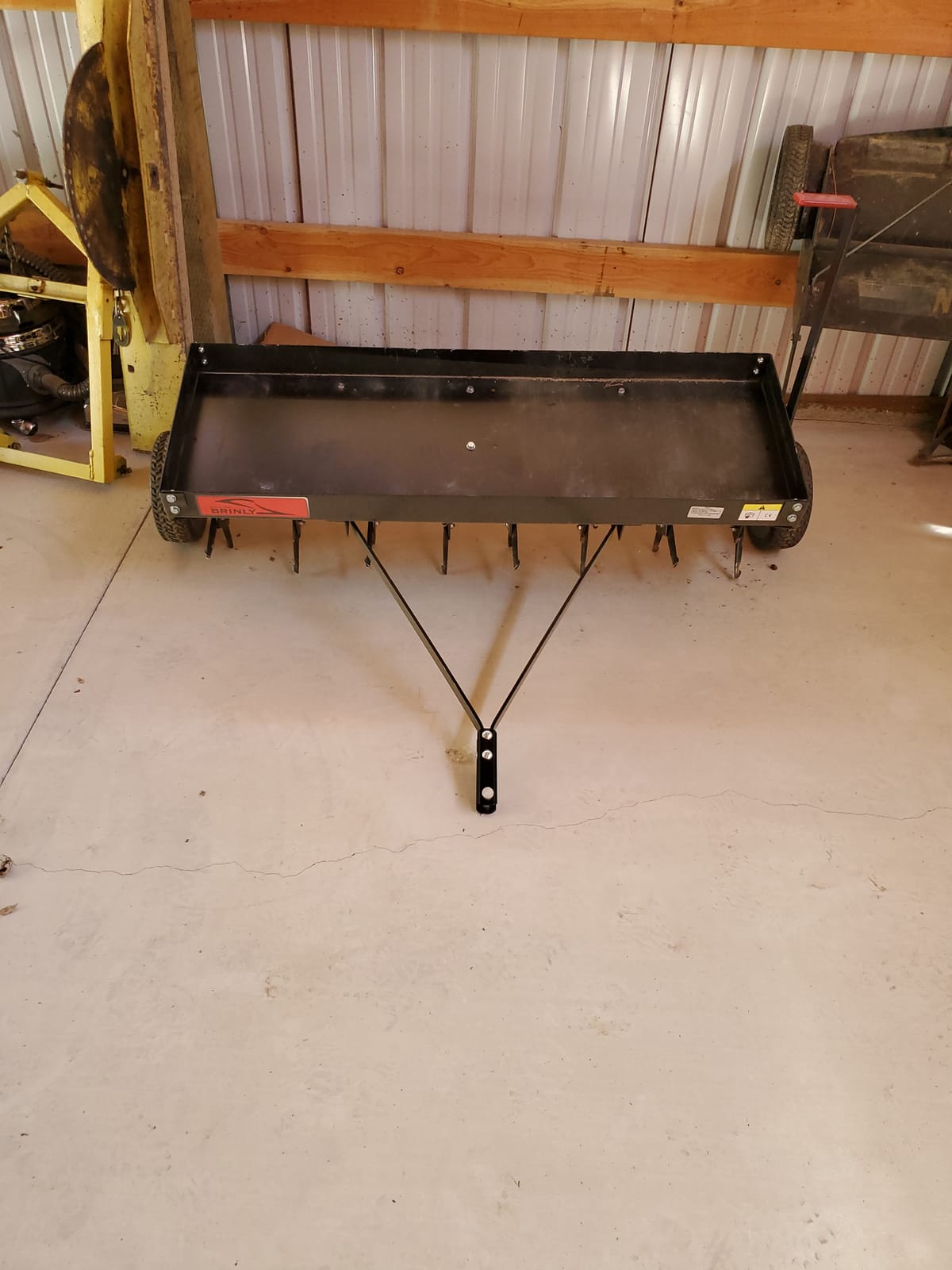
What separates this from the entry-level 48 inch machines is the spoon engineering. These are narrow, sharpened, hollow spoons rather than short spikes, so they part the soil and release a plug instead of punching a hole and dragging dirt around.
Ballast capacity is where the 48 inch category really diverges. A 200 lb enclosed tray lets you press deep in hard soil without worrying about the rating, and several owners report the machine paying for itself within a year against the cost of repeated rentals.
Who this aerator suits
This suits owners with a large open lawn and hard ground who want maximum ballast headroom without moving up to a commercial machine. It is the pick when tray capacity, not width, is your limiting factor.
Four rotating tine sections also make it a good choice for a lawn full of islands, trees and beds, because the tines keep turning through tight pivots instead of tearing turf.
Where it falls short
Assembly is the clear weak point. Owners report anywhere from one to five hours to put it together, and a few needed extra drilling before first use. Budget an afternoon and check every hole against the manual.
There is also a documented hardware concern: the wheel and lever plate can bend under a fully loaded tray, which makes the unit sway-prone. If you intend to run near the 200 lb rating constantly, inspect that plate periodically.
5. Craftsman CMXGZBF7124213 40 Inch Plug Aerator
Craftsman 40 Inch Tow Behind Lawn Plug Aerator with 24 Galvanized Steel Coring Points and 140 lb Weight Tray
40 in working width
24 galvanized coring points
3 in core depth
140 lb weight tray
3-year limited warranty
Pros
- 4.4 star average with only 2 percent one-star feedback
- Carries a 3-year limited warranty
- 140 lb tray is generous for its class
- Lift handle release lets the unit store vertically against a wall
Cons
- Only 24 coring points spread across 40 inches
- Review pool of roughly 124 ratings limits long-term data
- Flat-free tires can catch on uneven ground
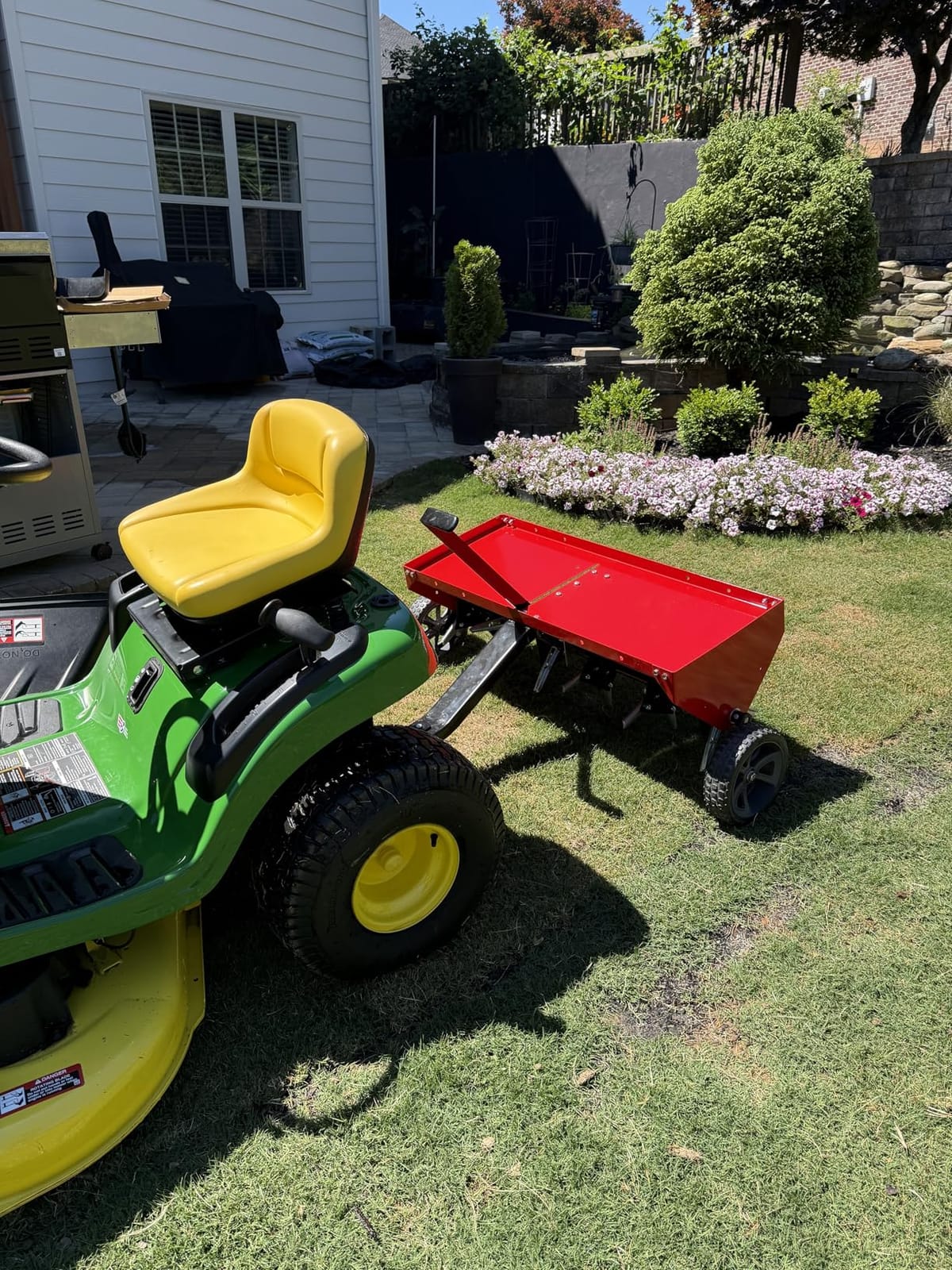
The Craftsman CMXGZBF7124213 is the storage-friendly pick, and its 4.4 star average comes with only 2 percent one-star feedback across roughly 124 ratings. What makes it different is the lift handle release system that lets the aerator stand vertically against a wall.
On a 40 inch machine built by Agri-Fab in Sullivan, Illinois, that vertical storage design is a genuine advantage in a one-car garage. Most tow-behind aerators occupy a full footprint of floor space for nine months of the year.
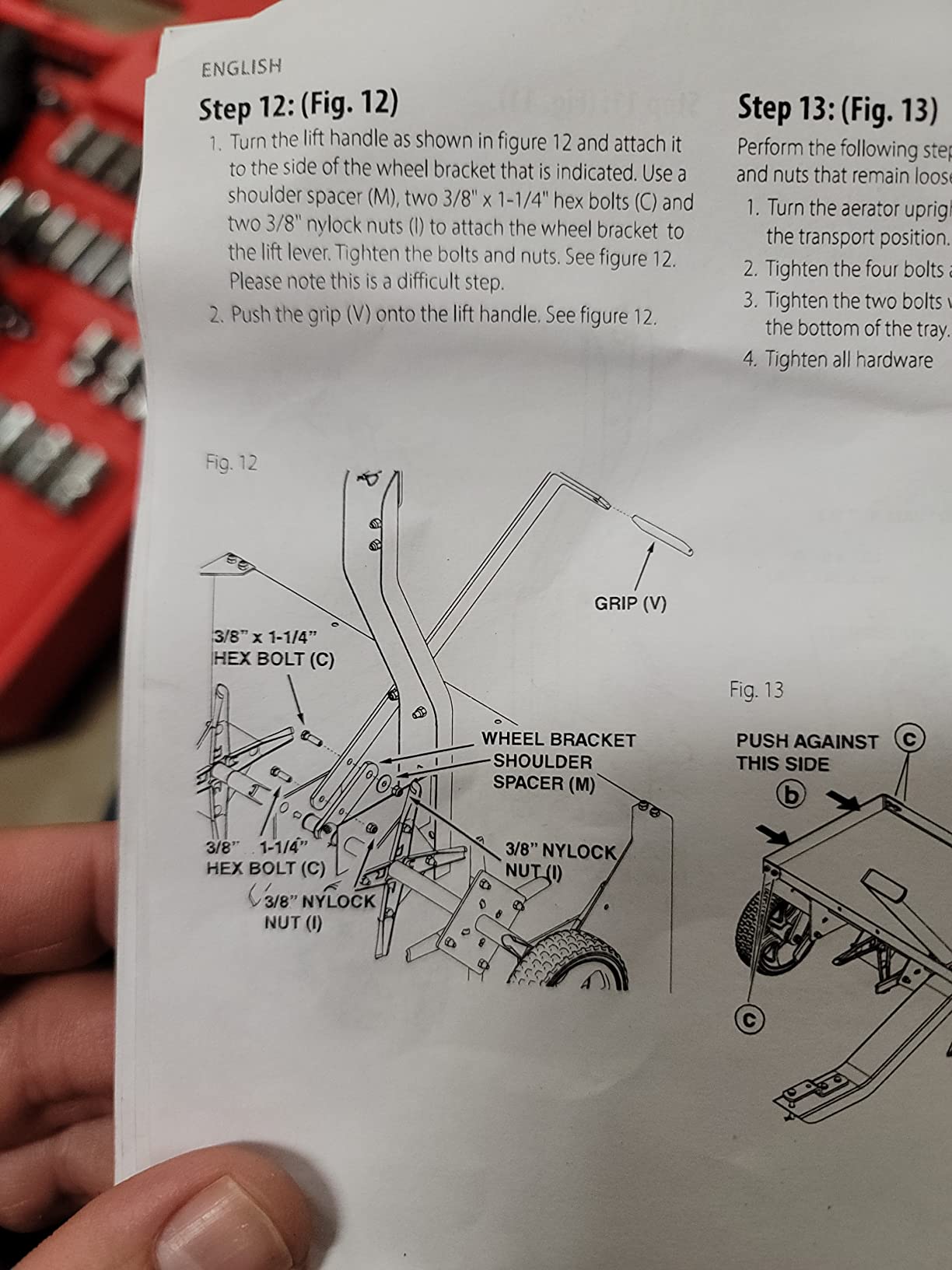
Specs are sensible rather than headline-grabbing. Twenty-four galvanized steel coring points pull plugs up to 3 inches across a 40 inch working width, and the wide weight tray is rated for 140 lbs, which is generous relative to the rest of this class.
The warranty is worth noting on its own. A 3-year limited warranty is longer than most competing machines carry, and for an implement that lives outdoors and takes abuse from roots and stones, that coverage matters more than most buyers credit.
Who this aerator suits
This is the choice for a large suburban lawn where the tractor lives in a shared garage and floor space is the binding constraint. Owners who store implements vertically will save real room with this one.
It also suits anyone who values warranty length over peak spec. Three years of limited coverage on a machine with a 140 lb tray is a more conservative bet than buying the highest number available.
Where it falls short
Twenty-four coring points across a 40 inch width is a sparse pattern, so each pass produces fewer holes and an acre takes longer than the drive time suggests.
The review pool is also the second smallest here at roughly 124 ratings. That is not a red flag on its own, but it does mean you have less long-term reliability history to lean on than you would with a unit in the thousands of reviews.
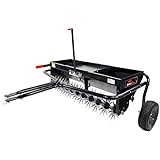
6. Brinly AS2-40BH-P 40 Inch Aerator Spreader Combo
Brinly Tow Behind Combination Aerator Spreader with Weight Tray, 40-Inch, Flat Black
40 in working width
132 tine tips perforate up to 2 in
100 lb steel hopper
75 lb weight tray
77.8 lb unit weight
Pros
- The only machine here that aerates and spreads seed or lime in one pass
- 100 lb all-steel hopper resists twisting and flexing
- Patented galvanized 3-D tines are built to resist rust and bending
- 75 lb weight tray plus a lever-activated transport mode
Cons
- Star-style tines perforate about 2 inches and pull few true plugs
- Drive chain inside the hopper is a documented failure point
- Flow control lever can dislodge while towing
- One in six reviews is a one-star rating
The Brinly AS2-40BH-P is the workflow pick for a big lawn that needs overseeding. It drops seed, fertilizer or lime into the holes as you aerate, which turns two full passes over a large property into one.
It is also the most polarizing machine here. With 571 reviews at 4.0 stars, 63 percent are five star but 17 percent are one star, the widest spread between the top and bottom rating of the nine compared. Owners who commit to the combo function love the convenience, and detractors are usually focused on the spreading hardware.
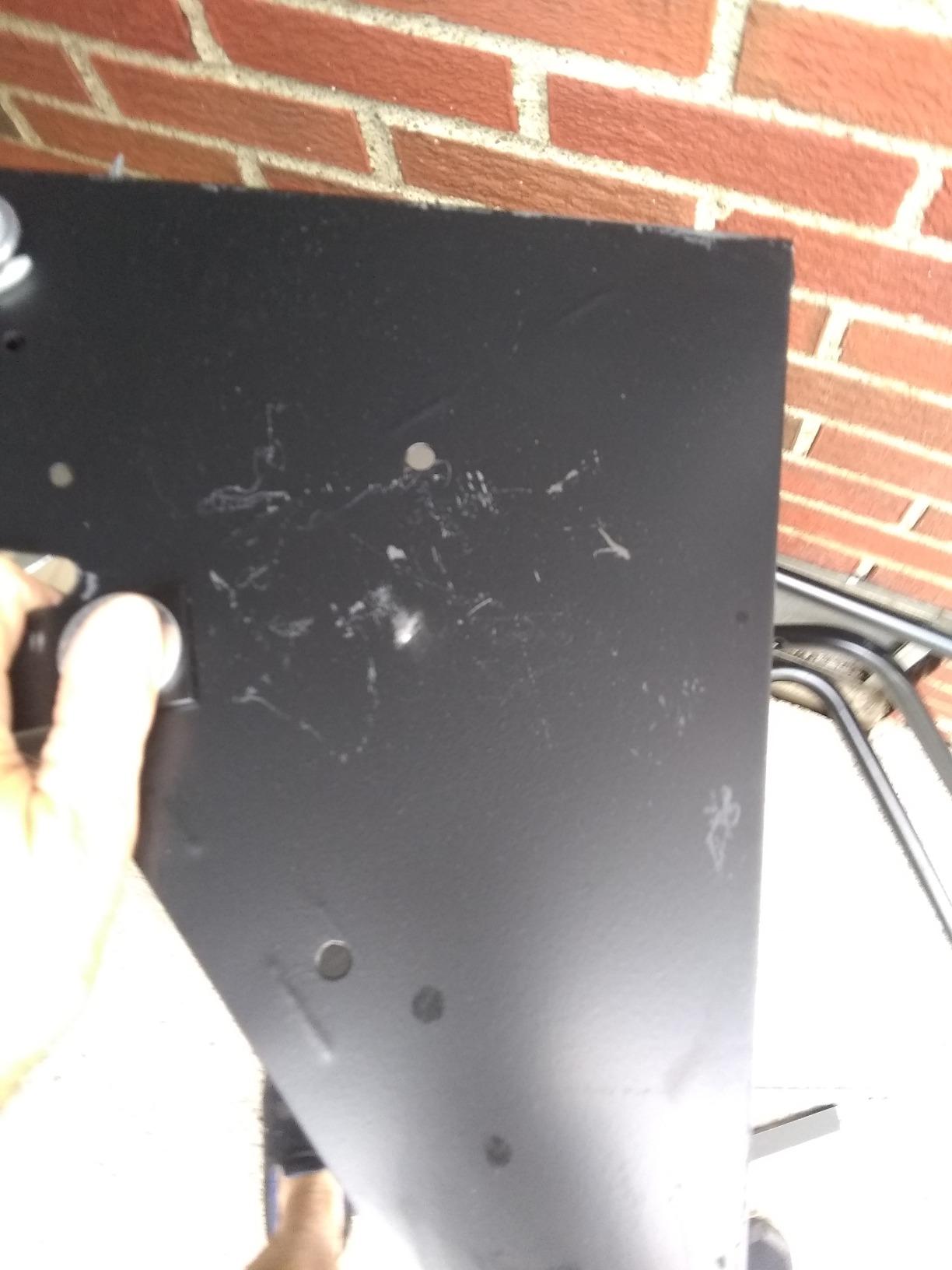
Be clear about what it does to soil. The 132 tine tips on 8 inch steel stars perforate the ground up to about 2 inches, which is shallower than the 3 inch coring depth of the dedicated plug aerators. It perforates more than it cores, so you get good seed contact without true core removal.
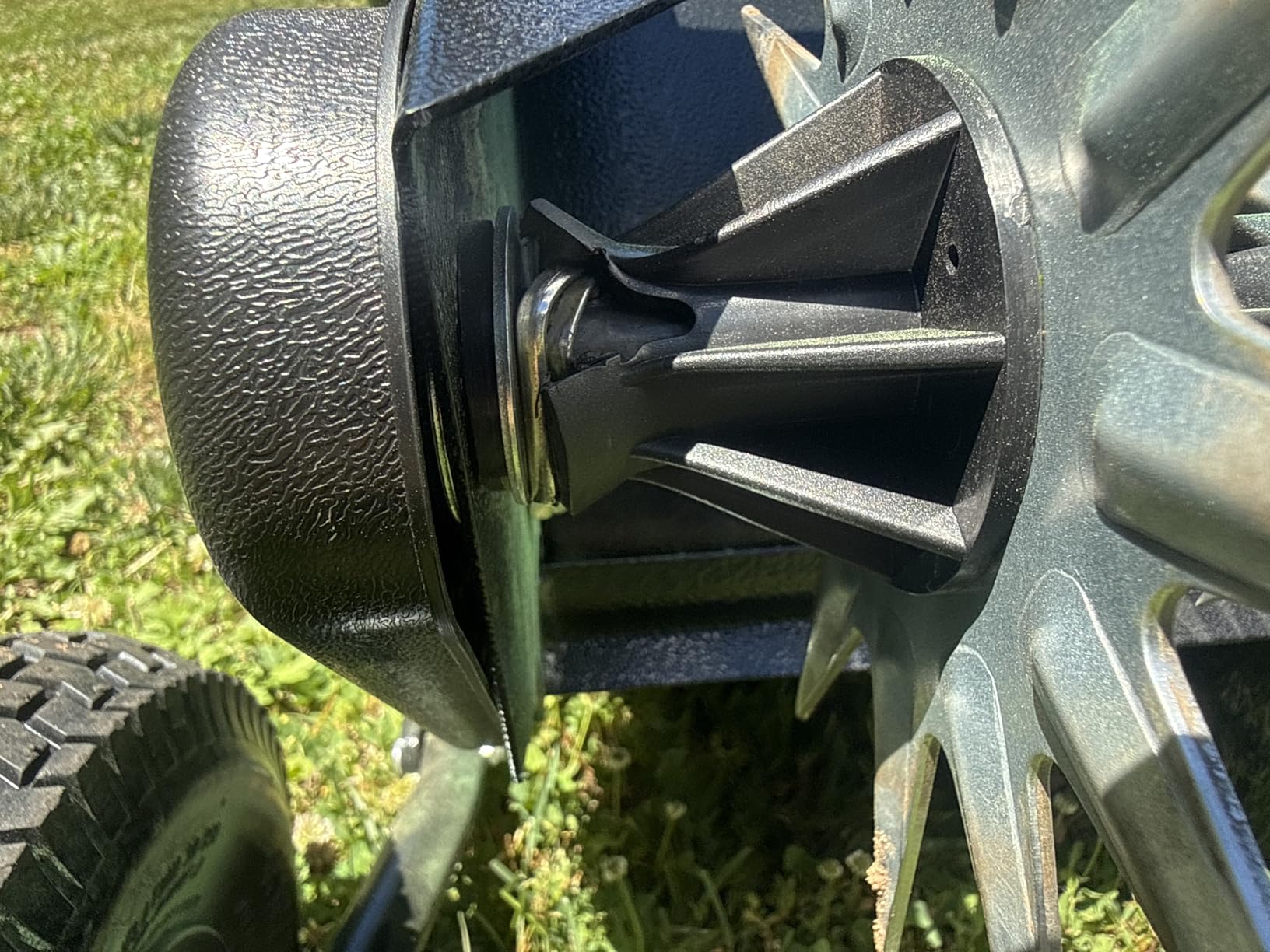
The build quality on the frame and hopper is above what the rating suggests. A 100 lb all-steel hopper resists twisting, the galvanized 3-D tines are patented against rust and bending, and assembly is reported at under 30 minutes for most owners.
Who this aerator suits
This suits owners who overseed every autumn and want to cut their spring work in half. If you are reseeding two-thirds of an acre, a single combo pass is genuinely more efficient than dragging a separate broadcast spreader behind the same tractor.
The 75 lb weight tray is enough for moderate compaction, and the 10 inch pneumatic transport wheels make driveway crossings painless with the lever pulled.
Where it falls short
The drive chain inside the hopper is the most reported failure point, and some machines arrive without it. Check the parts bag before you leave the box and know how to source a replacement before spring.
If your problem is severe compaction rather than seed contact, this is the wrong tool. Two inch perforation will not relieve hard-packed clay the way 3 inch hollow spoons do.
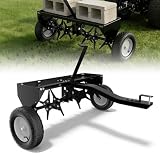
7. Vlaeng 40 Inch Tow Behind Aerator
40″ Tow Behind Aerator, Pull Behind Lawn Aerator Tool with Universal Hich, 24 Rust-Proof Knives & Heavy-Duty Tires, Plug Aerator for Yard & Garden Compacted Soil, Fits Lawn Tractors, ATV, UTV, Black
40 in working width
24 rust-resistant knives
3 in claimed core depth
230 lb weight platform
alloy steel frame
Pros
- 230 lb weight platform is unusually generous in this class
- Alloy steel frame with rust-resistant knives
- Some owners report strong results once loaded with sandbags
- Offered in both 40 inch and 48 inch widths
Cons
- 3.8 star average with 15 percent one-star feedback
- Blades bent and loosened during first use for one buyer
- Supplied wrenches could not secure the coring blades
- Some reviewers doubt it produces true core plugs
The Vlaeng 40 inch unit exists for one reason, which is tray capacity. Its 230 lb weight platform is far beyond what the price point suggests, and that headroom is the whole argument for a machine whose coring hardware is less proven.
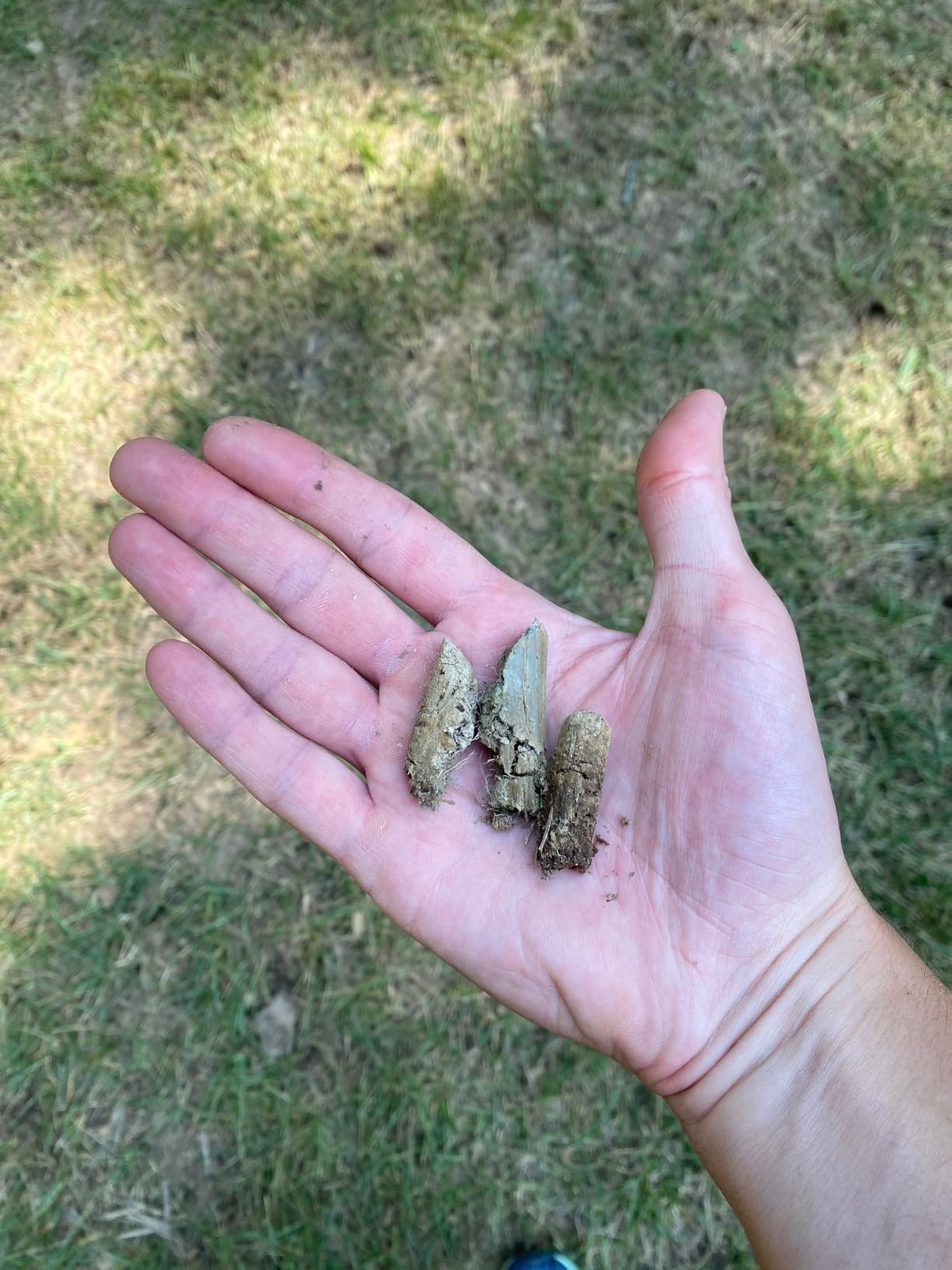
Sentiment splits sharply in the 33 reviews. Some owners load it with 150 to 180 lbs of weights and report that it outperforms what they expected, while others found blade hardware and factory assembly lacking, and several reviewers explicitly question whether it cores plugs or just makes holes.
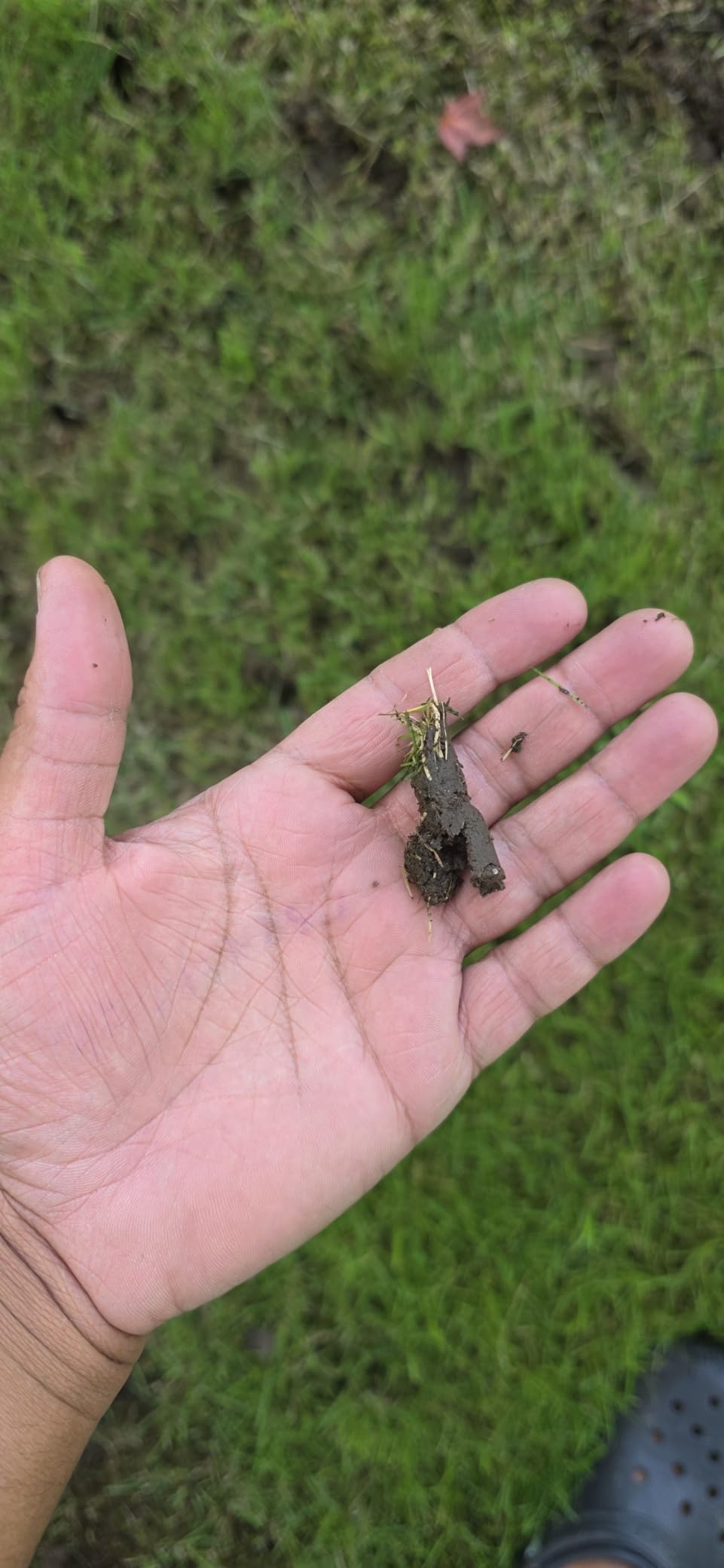
Specific assembly complaints are worth heeding. Reported issues include individually mounted coring blades that bent and loosened during first use, supplied wrenches that could not tighten them without a socket, and factory-deformed plastic bushings alongside missing metal bushings.
The tine handle is a genuine positive when used correctly. Raising the spoons with the hitch pin secured protects hard surfaces and lets you roll on the two heavy-duty wheels, which is the behavior you want crossing a driveway.
Who this aerator suits
This suits an owner on a tight budget with severely compacted ground who has ballast available and is willing to inspect and tighten the blade hardware after the first pass. Very few 40 inch machines carry a tray rating near that level.
It is also worth a look if you need both a 40 inch and 48 inch version, since the model is offered in both widths.
Where it falls short
There is no warranty information in the published specs and only 33 ratings at 3.8 stars, with 15 percent one star. That is a thin evidence base for a machine that will sit outdoors and take root and stone impacts every season.
Plan on a socket wrench and a hardware check before the first pass. If the blades are not torqued properly, you are spending the first afternoon rebuilding them instead of aerating.
8. Garvee 48 Inch Tow Behind Plug Aerator
Garvee 48-Inch Tow Behind Plug Aerator,Pull Behind Aerator with Durable Steel Tines Lawn & Tray and Pneumatic Tires Tow Behind Spike Aerator for Lawn, Farm,Planting,Green
48 in working width
32 galvanized plug tines
330 lb claimed tray capacity
two 12 in pneumatic tires
65 lb unit weight
Pros
- 48 inch swath on a frame light enough to load without help
- Two 12 inch pneumatic tires roll well under load
- 65 lb unit weight is light for its width
- Some owners aerated multiple acres with tines still straight afterward
Cons
- Instructions widely described as nearly unusable
- Reported penetration around 1 inch against a 3 inch claim
- Bent hitch bar tips the tray on an ATV
- Weight must be strapped down or it bounces off
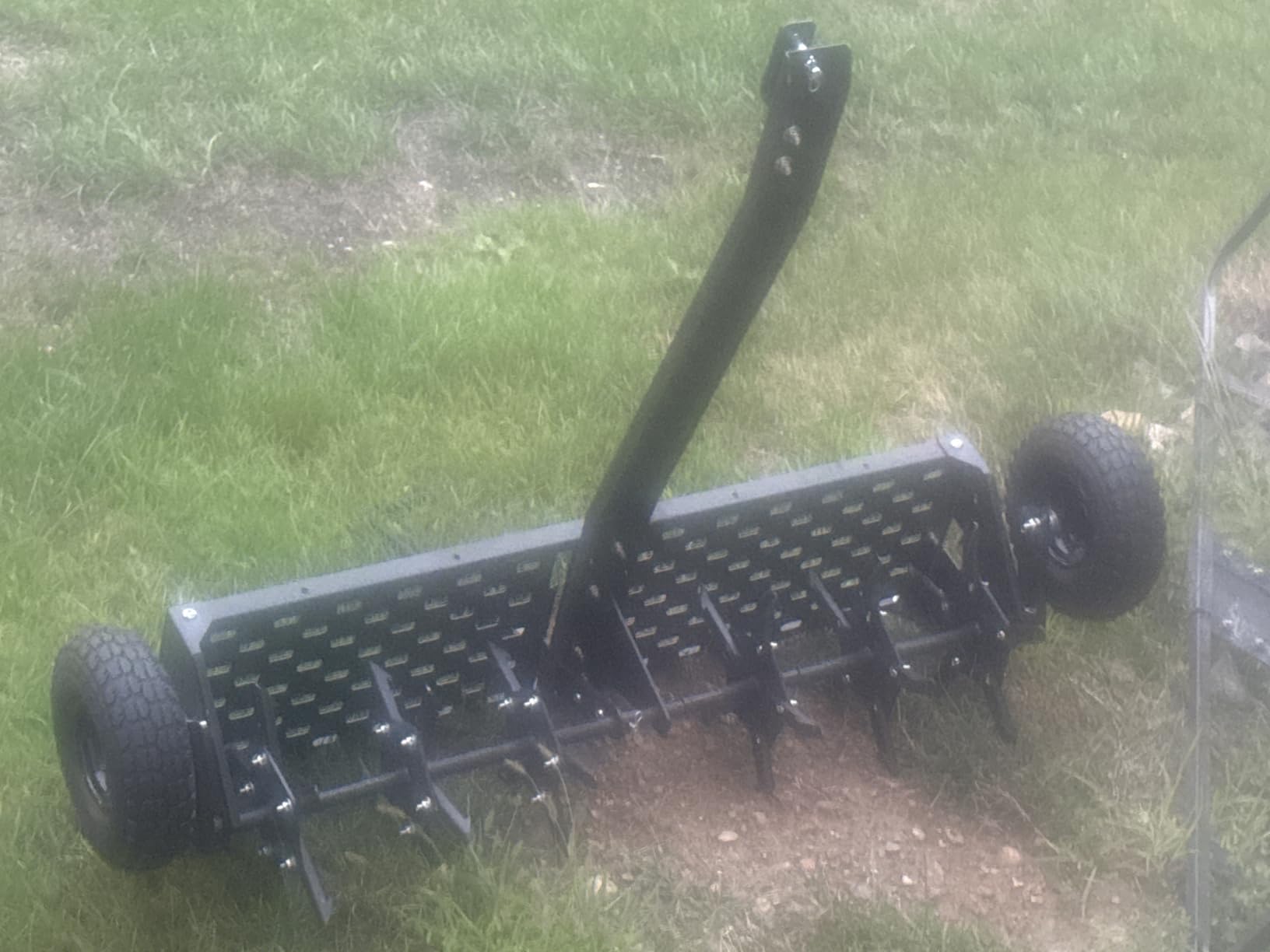
The Garvee 48 inch unit is the most affordable way to put a 48 inch swath behind a tractor, and that is genuinely its appeal. On paper the spec sheet is impressive, with 32 galvanized plug tines and a claimed 330 lb tray capacity.
Then the reviews arrive. At 3.3 stars from 19 ratings, this is the weakest machine of the nine compared, with 19 percent one-star feedback. Opinion splits hard: owners who assembled it and loaded 150 to 160 lbs of weights report good results, while others report bent axles, crooked frames and depth far short of the claim.
The gap between advertised and achieved penetration is the most important thing to understand here. Actual penetration is reported by owners at around 1 inch against an advertised 3 inches, which is the difference between perforating turf and relieving compaction.
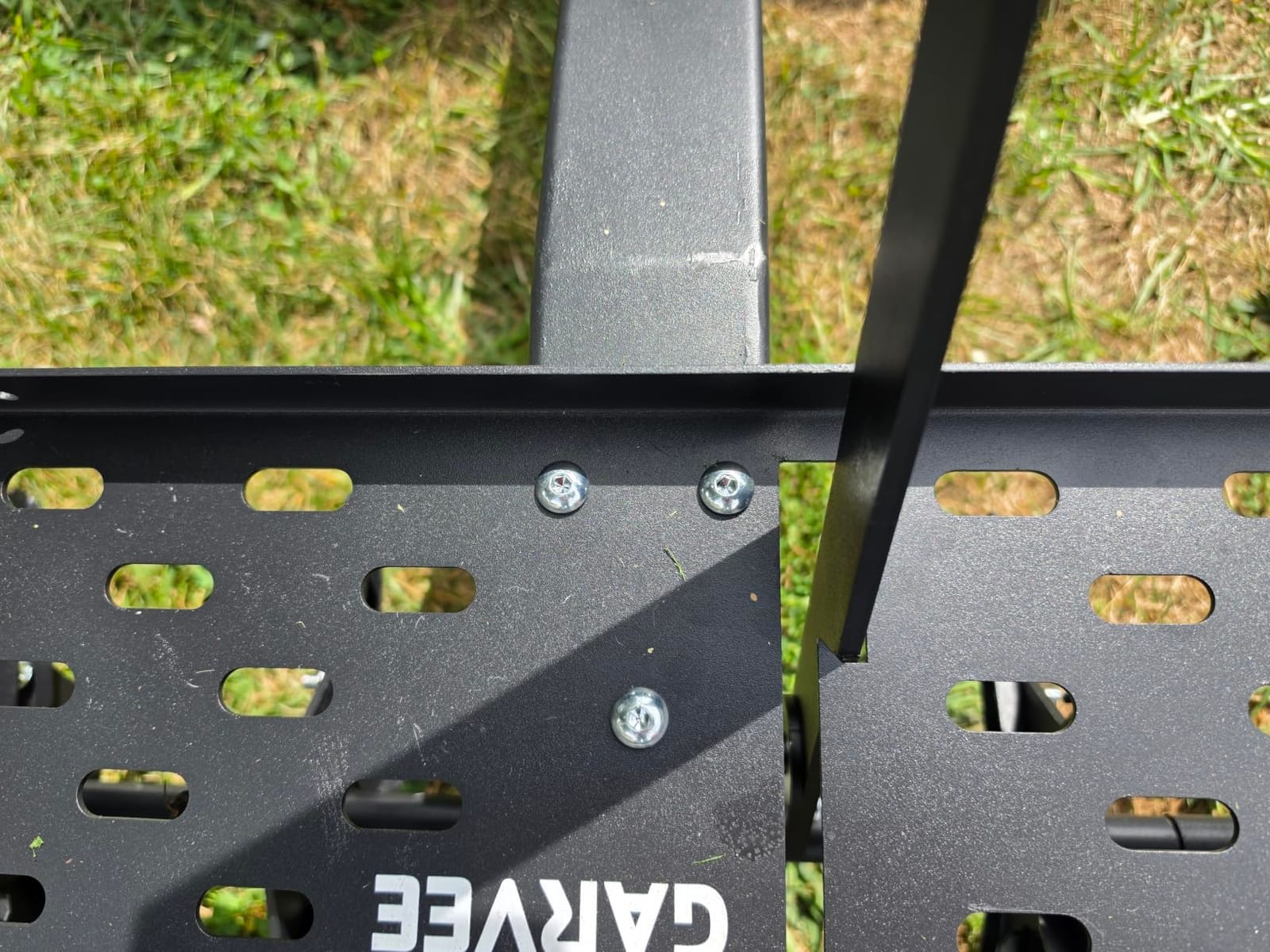
Assembly is the complaint that comes up most often in the reviews. Instructions are described as nearly unusable, requiring hours of work and rebuilds, and several owners report a unit that sits crooked with one wheel higher than the other and misdrilled pin holes.
Who this aerator suits
This suits a first-time owner with a modest budget, a soft lawn that does not need full depth core removal, and a willingness to spend a full day on assembly. Used gently, owners report it works.
The 12 inch pneumatic tires and a 65 lb frame are practical positives that are unusual on a 48 inch machine, and that low weight makes it far easier to load into a vehicle than the heavier 48 inch alternatives.
Where it falls short
Do not buy it for hard, clay-rich soil. A claimed tray rating means nothing if the tines cannot enter the ground, and reported penetration around 1 inch means the machine perforates rather than cores.
There are also build issues to plan around: a bent hitch bar that tips the tray backwards on an ATV, a handle retaining hook that will not hold position, and a weight tray that needs strapping or the ballast bounces off mid-pass.
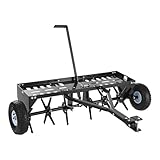
9. VEVOR TI-039 40 Inch Tow Behind Core Aerator
VEVOR Tow Behind Plug Aerator, 40 in Lawn Core Aerator Tool Universal Hitch, 120lbs Weight Capacity, Heavy Duty & Rust-Resistant, Pull Behind Spike Aerators with Tray for Farmland & Garden Tractors
40 in working width
3 in coring depth
120 lb weight tray with strap slots
fully welded steel frame
58.2 lb unit weight
Pros
- Lightest listed unit weight at 58.2 lb so it loads into a truck easily
- Tines arrive pre-assembled cutting setup to about an hour
- Fully welded steel frame with reinforced hardware
- Strap slots keep sandbags and bricks from shifting
Cons
- 3.5 star average with 20 percent one-star feedback
- Assembly widely described as frustrating
- One package arrived used and missing the hardware bag
The VEVOR TI-039 has the lightest listed unit weight of the nine compared at 58.2 lb, and that is not a marketing detail. It is the difference between loading an aerator into a truck bed alone and needing a ramp or a second person.
Setup is the other selling point. The tines arrive pre-assembled and the package includes a socket tool and wrench, so most owners report roughly an hour to first use rather than an afternoon. The fully welded steel frame and reinforced hardware are better than the unit’s weight would suggest.
Several owners say it works well and improved both their lawn and seed germination once weighted with concrete blocks. The 120 lb tray is the smallest of the dedicated core aerators here, and the strap slots keep sandbags and bricks from shifting while you tow, a detail most budget-class machines omit.
Who this aerator suits
This suits a single owner without help at the truck, a limited storage space, and a lawn with moderate rather than severe compaction. The strap slots and welded frame make it more thoughtful than the average budget unit.
If you want to experiment with aeration before committing to a premium machine, this is a low-risk way to learn the workflow.
Where it falls short
The lifting handle is the weak point. One owner broke the handle bolt three times because the arm bends and the retaining slot is too narrow, and others report the arm does not raise the tines high enough to cross a driveway without damage.
At 3.5 stars from 17 ratings with 20 percent one-star feedback, this has the smallest evidence base of the nine compared. Assembly is widely described as frustrating, and one package arrived used and missing the hardware bag, so inspect everything before you begin.
Plug vs Spike Aerator: What Your Lawn Actually Needs
A plug aerator removes soil. A spike aerator pushes a hole into soil that stays in place, and that distinction decides which one you should be towing.
A hollow spoon enters the ground, captures a core and ejects it onto the surface, leaving a cavity with walls. A spike makes a narrow hole with no cavity walls, so the surrounding soil stays packed. On an already compacted lawn, repeated spike passes can further compress the soil around the hole.
Spike aerators have one genuine advantage, which is turf disruption. They make almost no visible mess, which is why they are the right tool for spring cleanup on thin, dormant turf or for a light thatch knock-down. For compaction relief on a large, trafficked lawn, core aeration is the correct answer.
One practical note. If an aerator leaves marks and not plugs, the usual causes are dry ground, no ballast, and blunt tines. Water the lawn the day before, load the tray, and run a short test strip to inspect the cores before you commit to a full pass.
How to Choose the Right Working Width for a Large Lawn
Working width is the only spec that directly determines how long your spring and fall jobs take. A 48 inch machine covers about 20 percent more lawn per pass than a 40 inch one, and on an acre that difference is measured in hours, not minutes.
Use the coverage figures to plan. At 4 mph, a 40 inch machine works around 1.6 acres per hour and a 48 inch machine around 1.9. At 3 mph those drop to about 1.2 and 1.5, which is the speed you should be running in clay soil anyway. At 5 mph the same machines cover roughly 2.0 and 2.4 acres per hour, but fast ground speed is what turns cores into smears and ruts.
Match width to acreage rather than aspiration. Under half an acre, a 40 inch machine is already more implement than most lawns need. Around one acre, the extra width pays off quickly. Past two acres, an acre-plus farm tractor or a commercial pull-behind starts making more sense than any residential unit in this guide.
Count spoons, not just inches. A 40 inch machine with 24 coring points leaves more space between holes than a 48 inch machine with 32, so the wider unit leaves the lawn more evenly perforated. Sparse coverage takes longer to recover than a denser, wider pass.
Weight Trays, Ballast and How Deep the Cores Go
Most tow-behind aerators arrive with an empty tray, and a tray rating is a ceiling rather than a target. The useful rule is to add weight in stages and pull a test strip after each addition, watching the length and shape of the cores you leave behind.
Start with two to four concrete blocks on a lightly compacted lawn and add more only if the cores stay short. Move faster on a lawn that has been walked on or driven over, and slow down on soft ground where a fully loaded tray will bog down your tractor and rut the turf.
Ballast must be secured, not just piled on. A tray with a shallow lip and no strap slots lets cinder blocks shift or fall off mid-pass, which is a real hazard on a slope. Enclosed trays, or trays with built-in strap slots, are the safer designs.
Do not treat the tray rating as a target. Owners routinely load to the rating and then report sway, bent lever plates and steering that feels heavier than expected. Extra weight directly affects braking, steering and stability on a tow vehicle, so scale up to the point where the cores are deep enough and then stop.
Check your tow vehicle’s rated drawbar pull before you load anything. A fully ballasted 40 inch aerator can weigh well over 200 lb, and no implement is worth compromising the handling of the machine pulling it. Drive slowly, especially on slopes, and never exceed the tray rating.
Towing Compatibility, Gate Width and Storage
Check four things before you buy, because each one has ended a purchase that looked right on paper. The hitch type, the drawbar rating, the narrowest gate on your property, and where the thing will live from November to March.
Most of these units use a single-pin universal hitch that fits lawn tractors, many zero-turn mowers and most ATVs. The word universal describes the pin, not your tow vehicle’s tow rating, so confirm the tow vehicle is rated for the loaded weight before you hitch up.
Working width is not overall width. A 48 inch swath commonly adds several inches of frame on each side, so measure the narrowest point on your route, including gate posts, and add clearance for the handle.
Storage is where most owners are surprised. Folding transport handles, like the one on the Agri-Fab 45-0518, and lift handle release systems that store vertically, like the Craftsman, save real floor space. A fully ballasted 48 inch frame standing in a garage corner takes up that footprint all year.
Finally, plan the aeration sequence before you start. Mow, water the lawn the day before so the soil is damp but not saturated, mark obstacles and low spots, load ballast in stages, run a short test strip, then work the property at a steady slow pace and leave every core on the lawn to break down.
When to Aerate and What to Do Afterwards
Spring and fall are the right windows. Fall is generally better because cool soil and early rains let seed germinate before winter, and spring aeration pairs naturally with overseeding.
Soil moisture matters more than the calendar. Water the day before so the ground is damp, because dry hard ground makes tines skip and wet ground smears cores into mud. A squeezed handful that holds shape but breaks apart easily is the target.
Leave the cores where they fall. Raking them off defeats the purpose, because those cores are the loose soil you just brought to the surface, and it will break down and settle back into the holes over a few weeks.
Overseed within a couple of weeks while the holes are still open, and skip the first mow until the new grass is tall enough to handle. A heavy thatch layer is a separate problem that core aeration will not fix on its own.
Buy, Rent or Hire a Lawn Service
Renting makes sense for a single aeration a year on a lawn under half an acre. If you already own a tow vehicle, the cash outlay for a rental is small, and you avoid storing an implement for eleven months.
Buying wins when you have a large lawn and aerate twice a year, which is exactly the situation this guide is written for. On a one-acre property, the time saved by a 48 inch machine and the convenience of not scheduling a rental add up fast.
Hiring a service makes sense if you do not own a compatible tow vehicle, if your property has slopes and gates that rule out the implement, or if you simply will not use it. The clearest mistake is buying a heavy implement with nowhere to store it and no plan to load it.
Frequently Asked Questions
What is the best tow-behind aerator for large yards?
For most large yards the Agri-Fab 45-0299 48 inch model is the strongest all-round choice. It has the widest review pool of any unit compared, a 48 inch swath, 32 self-sharpening galvanized knives rated to pull 3 inch plugs and a 175 lb weight tray for hard compacted soil. A 40 inch model such as the Brinly PA-403BH-A3 is the better choice if you want heat-treated steel, semi-pneumatic tires and easier handling.
Do tow behind plug aerators work well?
Yes, on correctly ballasted machines in damp soil. A plug aerator driven by a lawn tractor or riding mower pulls cores at mowing speed across a 40 to 48 inch swath, which is the only practical way to treat an acre. Machines that skip over hard ground or leave marks instead of plugs are usually under-ballasted, running on soil that is too dry, or fitted with blunt tines. Water the lawn the day before and run a short test strip to check.
What is better, a plug or spike aerator?
A plug aerator, on any lawn with compaction. A hollow coring spoon removes a core of soil and leaves a cavity with walls, so air, water and fertilizer reach the root zone. A spike aerator just pushes a narrow hole into soil that stays packed around it, so it perforates without relieving compaction. Spikes only make sense for light thatch work on thin, dormant turf where you do not want visible core debris.
How much weight should I put on an Agri-Fab aerator?
The Agri-Fab 45-0299 tray is rated for 175 lbs, but that is a ceiling rather than a target. Start with two to four concrete blocks, run a short test strip and inspect the cores you pull. Add weight only if the cores stay short, and stop as soon as the plugs reach full depth. More weight slows the tow vehicle, can rut soft ground and affects steering and braking, so never exceed the rating and secure the ballast so it cannot shift.
How long does it take to aerate an acre with a tow behind aerator?
Plan on roughly 1.6 acres per hour with a 40 inch unit at 4 mph and about 1.9 acres per hour with a 48 inch unit at the same speed. Slowing to 3 mph for heavy soil drops those figures to around 1.2 and 1.5 acres per hour, and running faster than 5 mph turns cores into smears. Add turning time, refilling the weight tray and any driveway crossings, and treat an acre as a half-day job.
Conclusion
For most people with a large lawn, the Agri-Fab 45-0299 48 inch is the best tow behind plug aerator because it pairs a full 48 inch swath with the deepest well-documented review history and a 175 lb tray that handles hard ground. If you want better steel and easier handling over raw width, the Brinly PA-403BH-A3 is the build-quality answer, and the Brinly PA-482BH-A2 gives you 48 inches with 200 lbs of tray headroom.
Match the width to your acreage, ballast in stages until the cores are deep, water the lawn the day before, and leave every core on the grass. Get those four things right and the best tow behind plug aerators for large lawns will do more for your turf in one afternoon than a season of topdressing ever will.