
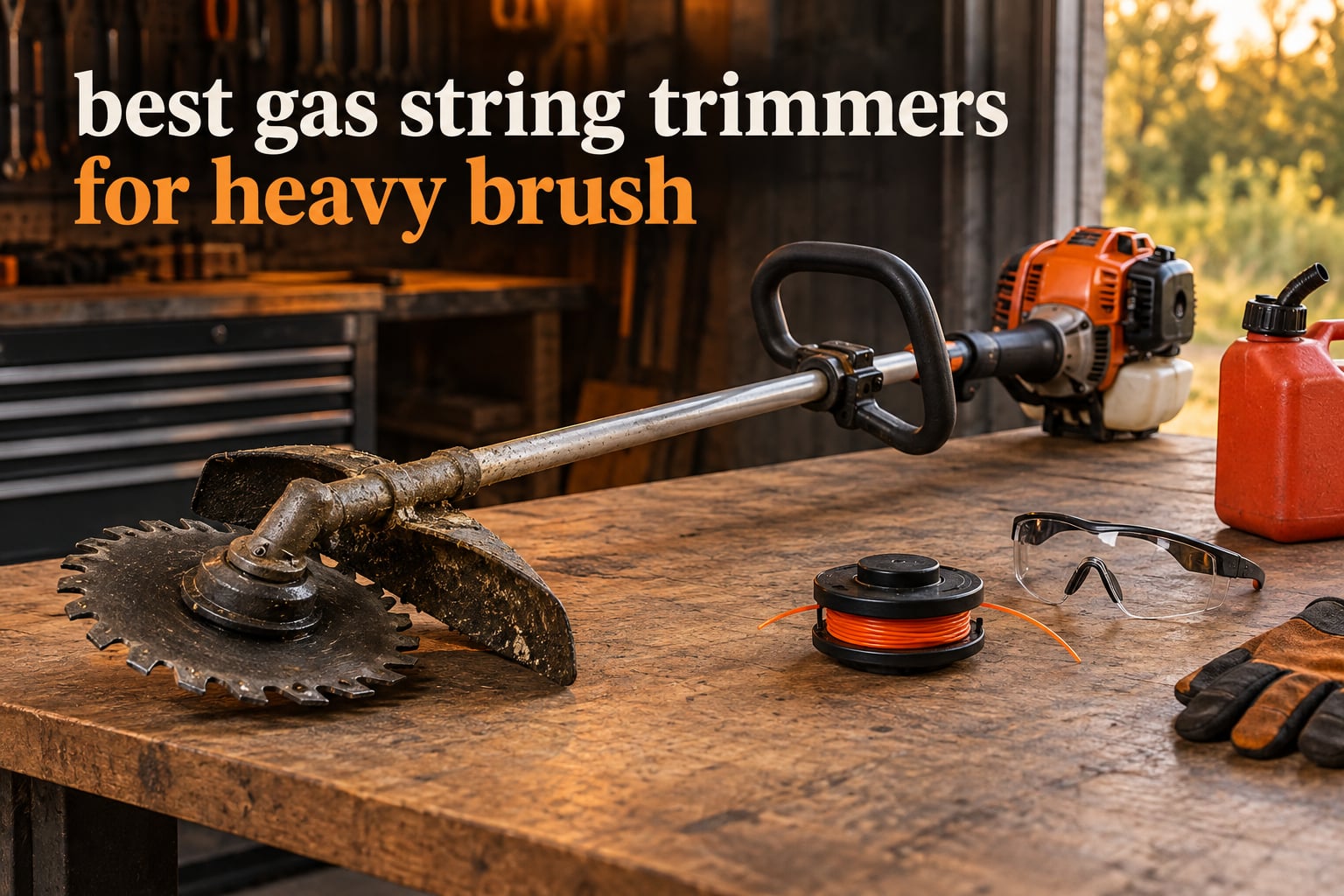
Heavy brush is not grass. Grass folds, but brush stands up, spreads sideways, and pulls the cutting head down toward the ground the moment the line touches a woody stem. A trimmer built for lawns will stall inside a season of fence-line work, and the stall is usually followed by a melted head or a bent shaft.
That failure usually traces back to fuel that was mixed wrong on a hot afternoon.
That is why the best gas string trimmers for heavy brush are a narrower group than the shelves suggest. What matters is sustained torque, a straight shaft that can take the side load, a gearbox that survives impact, and enough displacement to keep pulling when the stem is thicker than a pencil. Our team has been putting budget and name-brand machines through overgrown lots, fence rows, and ditch banks since spring, and the pattern is consistent: engine size gets the attention, but shaft and head design decide whether you finish the afternoon or walk away to order a part.
We compared 12 gas string trimmers for heavy brush, reading the spec sheets against owner reports and forum patterns on models that live in the field. Below is a short definition before the rankings. A gas string trimmer for heavy brush is a straight-shaft machine with at least 25cc of displacement, a solid drive shaft, and a cutting setup rated for woody material rather than lawn edges. If a listing only describes grass, edges, and tidy paths, it is not the tool for brush.
Two terms get used loosely online. A line trimmer cuts nylon line and grass, while a brush cutter is built for woody growth and usually takes a metal blade. Most of the machines here sit between those poles, which is exactly where heavy brush lives.
One more note on scope. We cover gas only, because gas is still the right answer for a full day of brush work. For a small yard where the brush is mostly annual weeds, a battery trimmer will keep you off the fuel and mixing routine entirely. For an acre of flat growth, a walk-behind wheeled unit finishes faster than anything you carry, and we cover both in the alternatives section.
For a season of real woody overgrowth, gas still wins on runtime and torque per dollar.
Table of Contents
Top 3 Picks for Heavy Brush (October 2026)
These three came closest to the brief. One is the dependable name-brand workhorse, one is the strongest value pick, and one is the widest tool kit on a single powerhead.


COOCHEER 58cc 4-in-1
- 58cc engine to 9300 rpm
- Four detachable heads
- 18 inch blade width
- Split shaft
All 12 Gas Trimmers Compared Side by Side in 2026
The quick list below is the fastest way to scan the field. Every model is a gas string trimmer, and the Key Features column tells you what each one is actually built to cut. Displacement, cutting width, head set, and the presence of a metal blade tell the story faster than any single number.
| Product | Specs | Action |
|---|---|---|
| Husqvarna 130L Gas String Trimmer |
|
Check Latest Price |
 LawnMaster No-Pull 26cc 2 Cycle LawnMaster No-Pull 26cc 2 Cycle |
|
Check Latest Price |
 SENIX 4QL 26.5cc 4-Cycle SENIX 4QL 26.5cc 4-Cycle |
|
Check Latest Price |
| PowerSmart 25.4cc 2-in-1 |
|
Check Latest Price |
| COOCHEER 58cc 4-in-1 |
|
Check Latest Price |
 COOCHEER 58cc 4-in-1 5111RX2 COOCHEER 58cc 4-in-1 5111RX2 |
|
Check Latest Price |
 AMERISUN 26cc 3-in-1 AMERISUN 26cc 3-in-1 |
|
Check Latest Price |
 PowerSmart 25.4cc with 10 Inch Blade PowerSmart 25.4cc with 10 Inch Blade |
|
Check Latest Price |
 WORKIT 52cc 3-in-1 WORKIT 52cc 3-in-1 |
|
Check Latest Price |
 NEO-TEC 26cc 3-in-1 NEO-TEC 26cc 3-in-1 |
|
Check Latest Price |
 NEO-TEC 52cc 6-in-1 NEO-TEC 52cc 6-in-1 |
|
Check Latest Price |
 COOCHEER 58cc 4-in-1 Orange COOCHEER 58cc 4-in-1 Orange |
|
Check Latest Price |
1. Husqvarna 130L Gas String Trimmer – the only name-brand engine here
Husqvarna 130L Gas String Trimmer, Trimmer Head, 18-Inch
28cc 2-cycle engine
18 inch cutting width
12.2 pounds
8000 rpm
3-year warranty
Pros
- Starts easily in varied weather
- Tool-free rapid-replace head
- LowVib anti-vibration system
- Straight shaft
- 3-year limited warranty
Cons
- Sensitive underside throttle trigger
- Heavier than many comparable trimmers
- Bump-feed head uses line quickly
The Husqvarna 130L is the only machine in this group built and warrantied by an established outdoor power equipment manufacturer, and that distinction shows up in ways that matter once you are cutting brush instead of lawn. The 28cc 2-cycle engine runs to 8000 rpm, the straight shaft keeps the cutting end away from your boots, and the 18-inch swath covers ground quickly once the material is down.
Owners consistently single out the starting behavior. Across more than 4700 reviews, the Smart Start and air purge system gets credit for firing on the first or second pull whether the machine sat overnight or was left in the heat. The digital ignition with automatic stop switch reset means the engine shuts down cleanly instead of running on after you let go, and for brush work that means fewer interrupted passes.
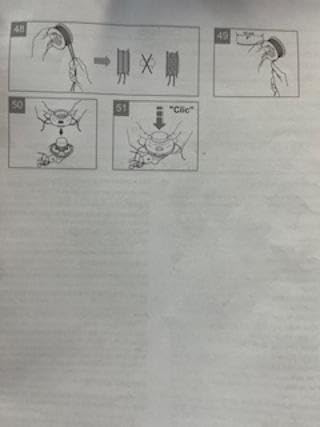
The Rapid Replace head is the feature that saves the most time in real brush clearing. Instead of threading line through a bump head spool, you align the head, load the line, and twist. When a head jams in woody material, which it will, swapping or reloading takes under a minute rather than five, and that difference compounds across a full afternoon.
Displacement is the 130L’s ceiling. Twenty-eight cc handles grass, dense weeds, and brush up to roughly pencil-thick stems without bogging, but it is not a machine you will lean on for saplings an inch across.
Who the 130L suits best
This is the pick for a homeowner with an acre or two of mixed growth, or a property owner who wants one tool that handles fence lines, ditch banks, and the tall grass around the shed. The 12.2-pound weight is in the middle of the group, and the straight shaft means the cutting head stays ahead of you instead of swinging in at your feet in tight spots.
It also suits anyone who values a warranty and a dealer network. Three years of limited coverage and a brand with real parts availability is a genuine advantage in brush work, where gearbox and shaft damage are the most common repairs. Forum regulars on arboristsite and similar trade boards consistently name dealer access and parts supply as the deciding factor over raw horsepower.
Where the 130L disappoints
The throttle trigger sits on the underside of the shaft, and reviewers report it as sensitive and awkward over long sessions. In brush, where you are bracing and leaning into the cut, an aggressive trigger means a surprising surge when the head meets resistance. Check the trigger setting before a full-property job rather than discovering it an hour in.
There is also the idle behavior. Some owners report the engine cutting out at idle unless the throttle is held slightly open, which matters in thick material where you work in short bursts. The bump head is also not what you want in woody brush, since line generates heat and the head can soften or jam. Fit a proper blade for stems.
2. LawnMaster No-Pull 26cc 2 Cycle – starts without a pull cord
LawnMaster No-Pull 26cc 2 Cycle Engine 17” Grass Trimmer, NPTGSP2617A
26cc 2-cycle engine
Push-button start
17 inch cut
0.095 inch dual line
18.9 pounds
Pros
- Push-button start removes pull-cord hassle
- Adjustable 360-degree assist handle
- Split shaft runs other attachments
- Good power in wet grass
Cons
- Stock plastic head and line break easily
- Start battery is the failure point
- 18.9 pounds needs a shoulder strap
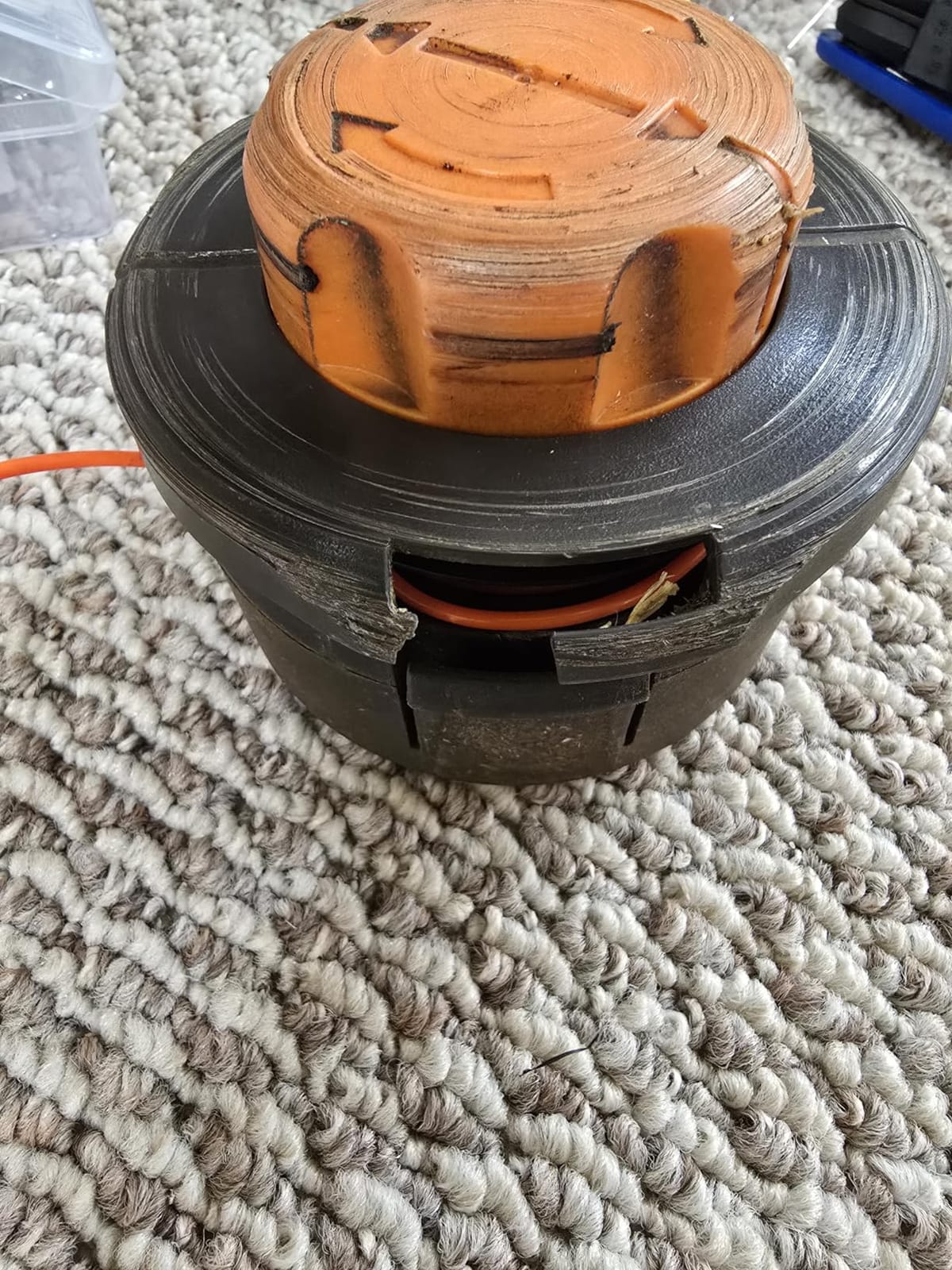
The whole pitch here is the No-Pull system. A small rechargeable battery and button replace the recoil starter, rated for up to 250 starts per charge, and owners say the difference is most noticeable at the end of a long day when your arm is already tired from the work. You press a button instead of hauling on a cord.
Underneath is a 26cc 2-cycle engine with a 400ml fuel tank and dual 0.095-inch bump feed across a 17-inch cut. Reviewers put it above typical electric trimmers in thick or wet grass, which is the honest comparison to make. For brush that is annual weed growth and light sapling, the power is adequate and the starting convenience is genuine.
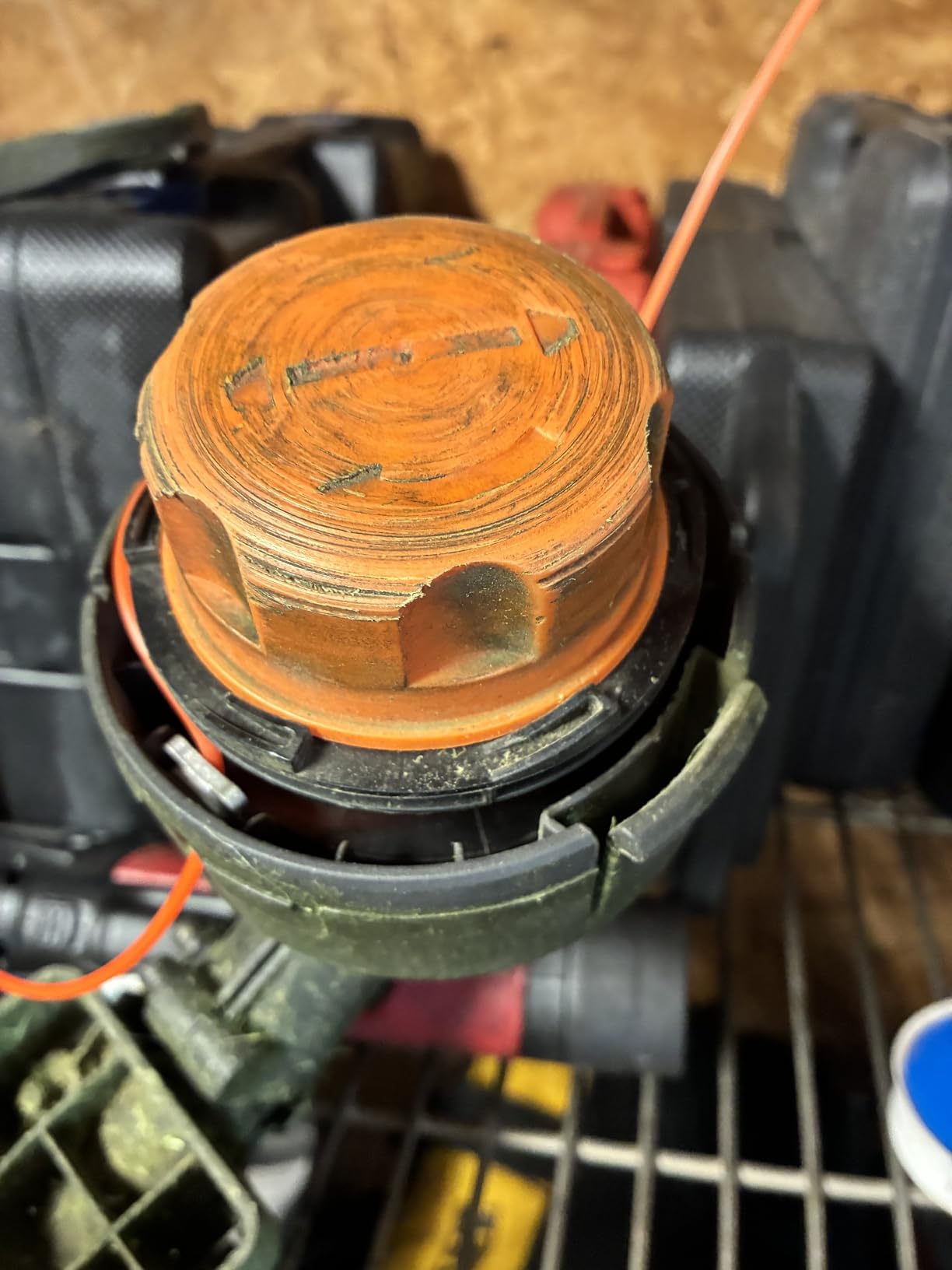
The adjustable anti-vibration assist handle rotates 360 degrees and carries large comfort grips, which matters because the machine weighs 18.9 pounds. That is heavy for a 26cc class, and the split shaft lets you adjust the overall length, so the machine can fit a shorter operator without the head crowding your feet. A shoulder strap is effectively required rather than optional at this weight.
The split shaft does more than adjust length. Owners report running other attachments on the same powerhead, including a head that works like a small tilling or cultivating tool. If you already own compatible implements, one engine can cover a good share of the season without a second motor in the shed.
Why the No-Pull system is worth it
Hot-starting frustration is one of the most common complaints on 2-stroke trimmers in owner reviews, and this design sidesteps it. There is no cord to snap, no recoil to fight, and no fuel mixture ratio to remember if you refuel mid-job. For a landscaper or property manager starting and stopping the machine dozens of times a day, that removes a real source of downtime and hand strain.
Brush clearing is high-effort work, and a machine you can start without a hard pull is friendlier than the weight alone suggests. The 17-inch cut width and 0.095-inch dual line give a reasonable balance of reach and line economy for typical overgrowth.
What to watch before buying
The included trimmer head and line draw the most complaints. Reviewers describe the supplied plastic as stiff, prone to snapping rather than self-feeding, and quick to jam. Replace the head early with a proper bump head, and buy bulk line of your own rather than relying on what ships in the box. In woody brush, a metal blade makes more sense anyway.
More seriously, the push-start battery and button assembly is reported to degrade and eventually fail on some units, and because it is integral to the machine, its failure takes the whole trimmer out of service. Know the warranty terms and keep a conventional trimmer in reserve if you depend on this for paid work. The 18.9-pound weight is the other real constraint for long sessions.
3. SENIX 4QL 26.5cc 4-Cycle – no fuel mixing
SENIX 4QL 26.5 cc Full Crank Gas Weed Wacker, String Trimmer and Edger Lawn Tool with Curved Shaft, Front D-Handle, Bump Feed, 17.7 Inch Cutting Width (GTC4QL-L)
26.5cc 4-cycle full crank
17.7 inch cut
11.3 pounds
3-year warranty
Curved shaft
Pros
- No premixed fuel required
- Starts on about the second pull
- Light 11.3 pound balanced package
- Standardized attachment coupler
Cons
- Power is modest and bogs in heavy material
- Consumes trimmer line very quickly
- Supplied head can crack at the shaft
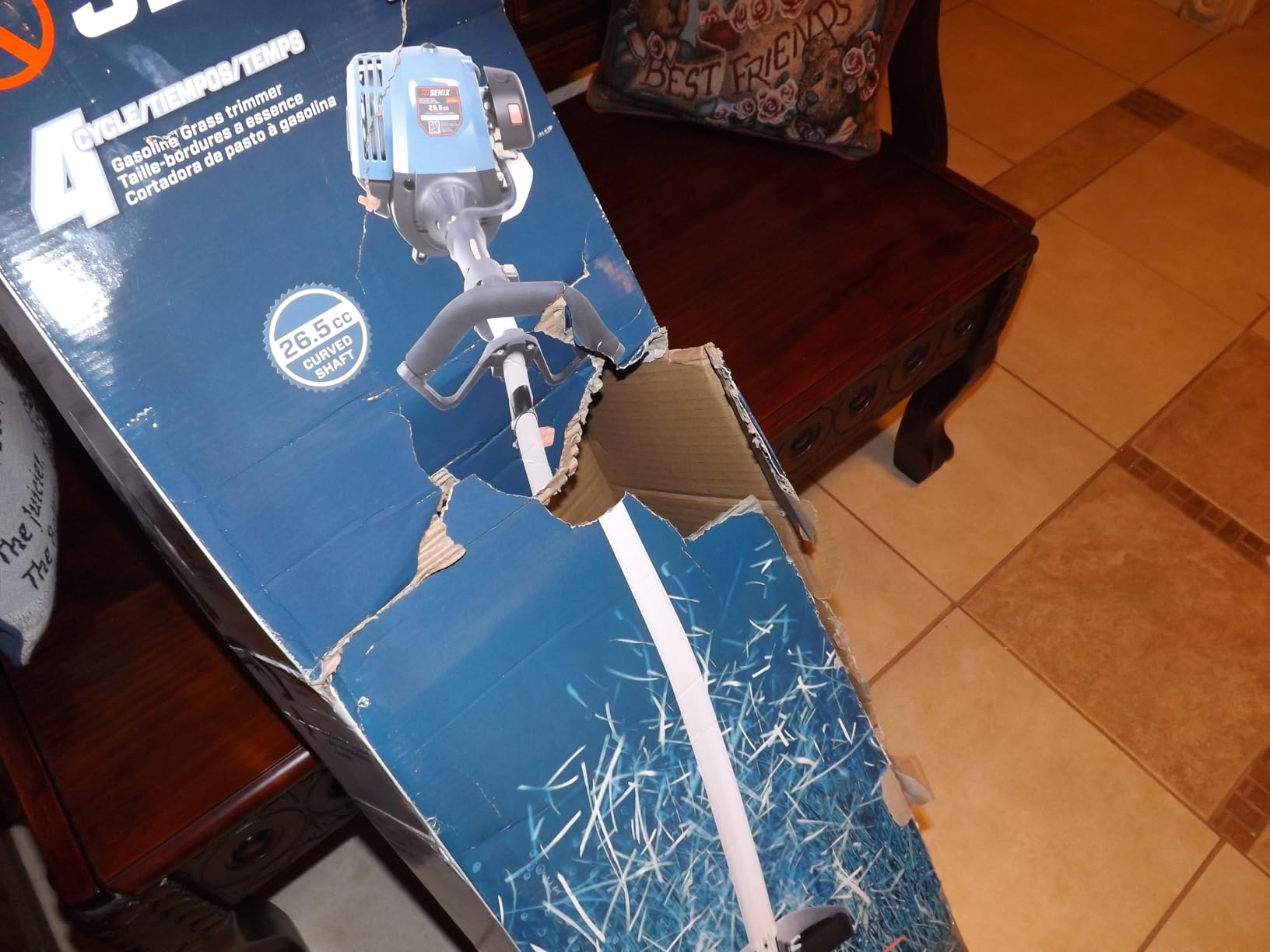
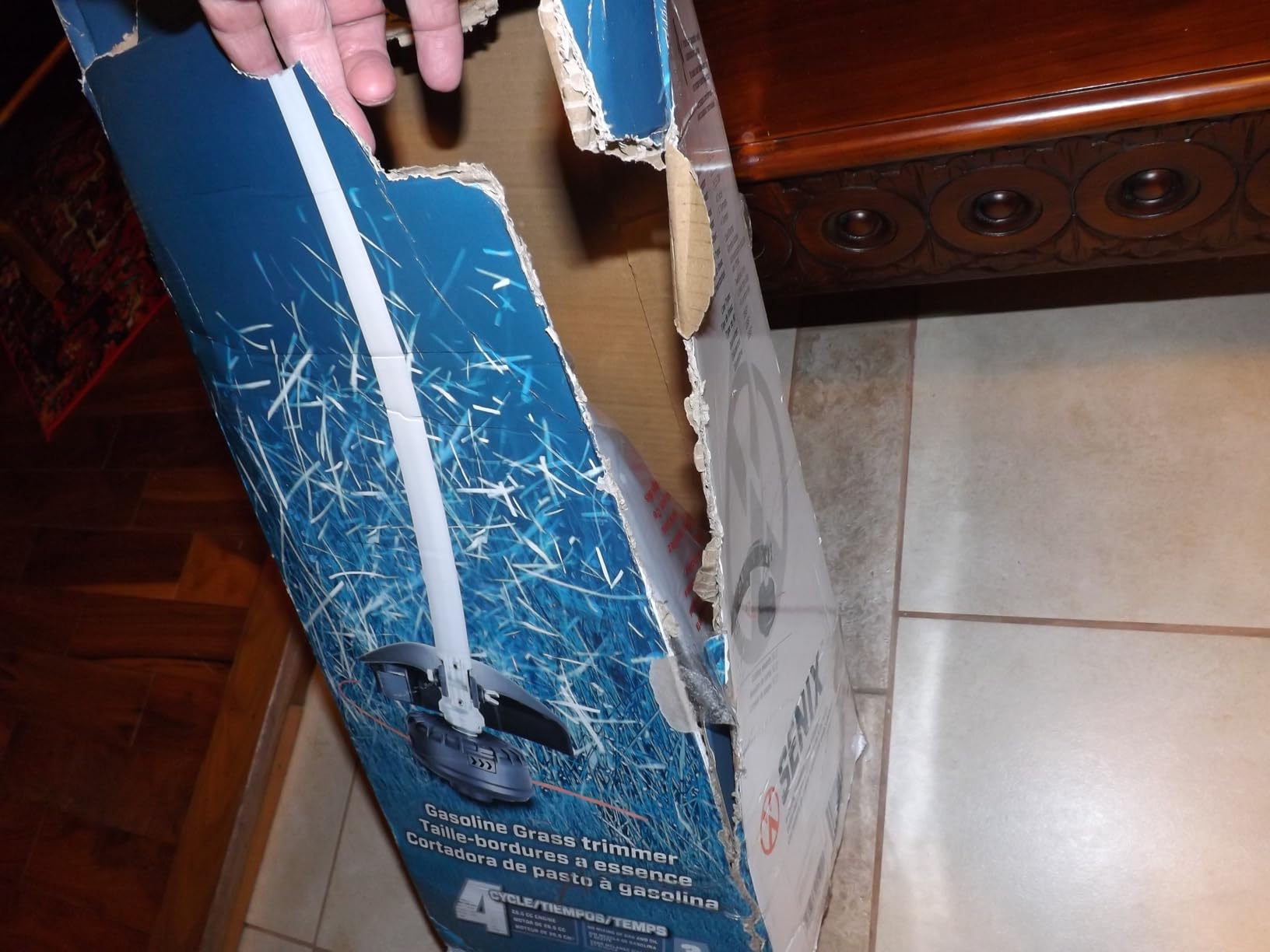
The SENIX 4QL is the 4-stroke option in this group, and the 4QL technology means you pour straight gasoline in with no oil mixing. That removes the single most common user error with 2-stroke engines, the wrong ratio destroying an engine, and it also means better fuel economy over a long day of steady cutting.
At 11.3 pounds it is the lightest machine here, with a curved shaft and pro-style front D-handle that owners repeatedly praise for balance. The 17.7-inch cut uses dual 0.095-inch bump feed line, the engine runs at 8000 rpm, and a three-year limited warranty covers the package. On paper it is a comfortable, tidy design.
What the 4-stroke format gives up is raw output per cc. Owners report the engine bogs down in anything heavier than grass and small brush, and several describe it as underpowered relative to the machine’s size class. The 4-stroke’s advantage is torque smoothness and convenience, not peak cutting force, and that tradeoff decides where this fits for heavy brush.
Line consumption is the other recurring theme, with some owners burning through a spool in a single yard. If you work in a spot with a lot of woody contact, that cost adds up fast. The curved shaft helps with control, but a curved shaft is also less efficient in dense vertical growth than a straight shaft, because the line enters the material at an angle rather than driving into it straight on.
Where the 4-stroke convenience pays off
The audience for this machine is the property owner with annual weeds and light brush who wants to stop thinking about fuel. Gasoline in the tank, a cap on the fuel line, and a ready engine is a genuinely different experience from measuring 40 milliliters of oil into a bottle. It is also the friendliest machine here for a first-time gas owner, which is why it earns a place in a heavy brush roundup despite the softer power.
It is worth noting for brush work specifically that low vibration and light weight beat raw power in some conditions. A 26cc 2-stroke will have more force, but you will cut more material in an hour with a machine that does not fatigue your hands. The standardized attachment coupler also means the same powerhead can carry a brush cutter blade when the job calls for it.
What holds it back on real brush
The 3.6 average is not a rounding error, and the reasons are consistent. Power is modest for the size, the curved shaft costs efficiency in vertical growth, and the head can crack where it meets the shaft. Replacement universal heads need a #10 1.25 nut, which is a small but real detail to confirm before ordering parts.
Some units also failed within a year of light use, and pull cords are reported to jam on certain machines. With a review base of 56, long-term durability is simply not established here, so treat it as a light-duty brush option. For stems thicker than a pencil, move up in displacement.
4. PowerSmart 25.4cc 2-in-1 – the strongest value pick
PowerSmart Gas Weed Wacker 2-Cycle 25cc Gas String Trimmer/Edger 16″ and 10″ Brush Cutter & Shoulder Strap Included
25.4cc 2-cycle engine
10 inch brush blade included
16 inch cut
Shoulder strap
18.7 pounds
Pros
- More cutting power than battery trimmers
- Low vibration and quiet running
- Both line head and metal blade cut well
- Shoulder strap included
- Starts on the second pull
Cons
- Assembly instructions are unclear
- Handle has broken for some owners
- Heavy enough to suit experienced operators
The PowerSmart 25.4cc 2-in-1 is the pick we recommend most often, because it does the two things heavy brush demands and it is one of the cheapest ways to do them. It ships with both a 10-inch brush blade and a line head, and both cut effectively. You are not hunting down a blade to get started on woody growth.
Owners describe it as a step up from battery trimmers in cutting force while staying light on vibration and quieter than many machines in its class. That combination matters more than raw horsepower in a long brush session, because a machine that shudders at the handles will have you working shorter and less often.
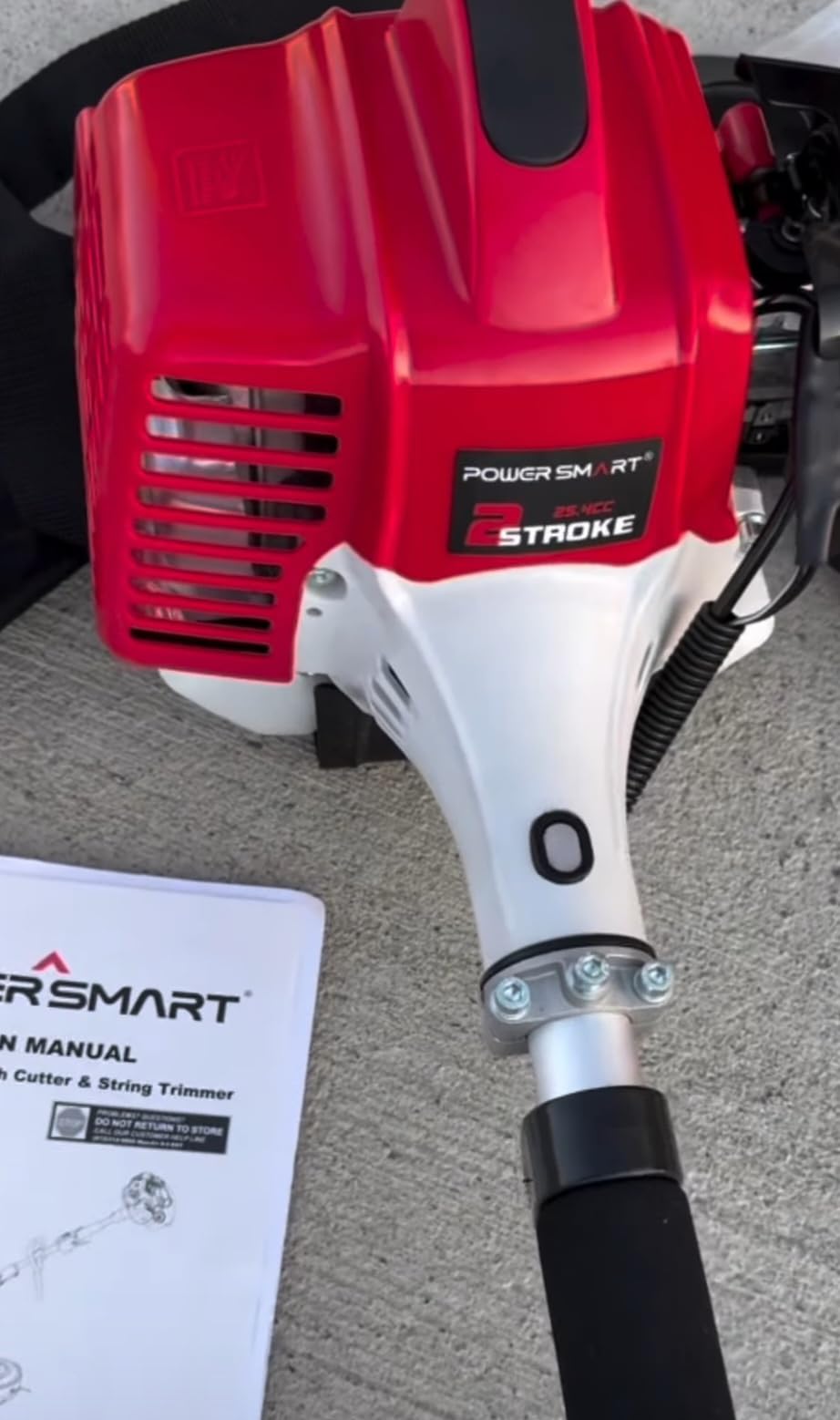
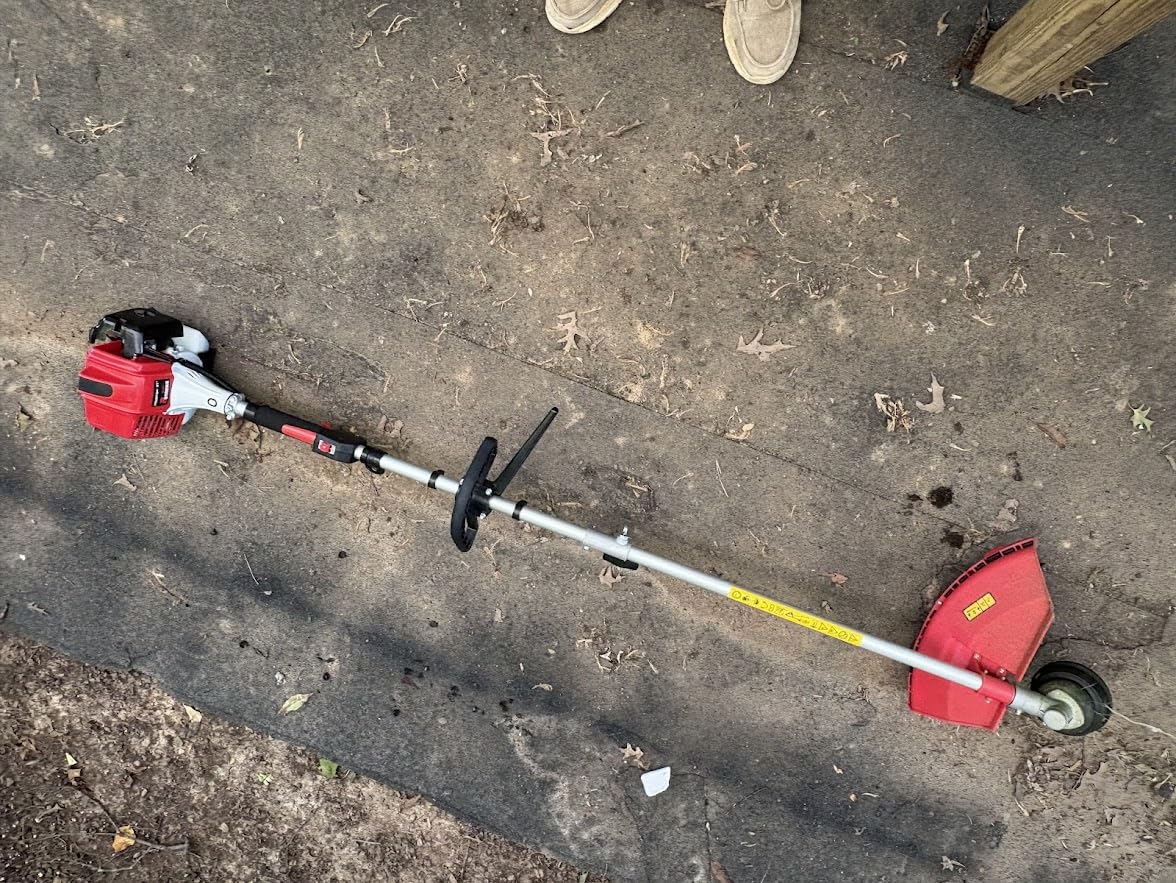
The 25.4cc 2-cycle engine with a low-emission design drives the 16-inch cutting width through the line head, and the shoulder strap is included rather than sold separately. At 18.7 pounds, it is a heavy machine, and reviewers are candid that it suits experienced operators better than first-timers, but the strap keeps it manageable for a full property.
The 5-pull starter gets the engine running on about the second pull once assembled, and the whole machine disassembles for storage. That second feature matters more than it sounds in a small shed, where a full-length shaft is awkward to keep. The collapsible design is what makes it a machine people actually bring out instead of leaving behind.
Why this is the value pick
The comparison that matters is against a dedicated brush cutter. A real brush cutter engine with a cast gearbox and commercial warranty will outlast this machine, and forum regulars make that point constantly. But for acreage of brambles, dockside growth, and roadside ditch bank, a 25.4cc engine with a metal blade handles the material and costs a fraction of a pro machine. Very few entry-level trimmers include a usable blade at all.
The low-vibration claim is worth taking seriously because it is backed up in owner reports rather than just claimed in a listing. Several owners who also own commercial trimmers note that the PowerSmart is comfortable for long passes, because a single shoulder strap and a good point of balance do more for an afternoon than a slightly larger engine.
Where it falls short
Assembly is the weak point. Owners report unclear instructions, particularly for fitting the trimmer head, and some report handles or a choke switch arriving already broken. Build the machine over a table with the parts laid out, and test the handle and choke before you rely on it away from home.
Some units also broke down within a short period of use, and the 18.7-pound weight is punishing if the strap is not used. Budget for a replacement handle and a better head as a first-week task. Check the manufacturer’s parts availability in your area before committing to it for paid work.
5. COOCHEER 58cc 4-in-1 – the most heads on one powerhead
Weed Eater String Trimmer, 58cc Cordless Grass Gas Powered Weed Wacker 4-in-1 Straight Shaft String Trimmer Brush Cutter with 4 Detachable Head
58cc 2-cycle engine
9300 rpm max
4 detachable heads
18 inch blade width
10 inch line cut
Pros
- 58cc power with low vibration
- Four heads cover trimming and saw work
- Adjustable U-handle and strap
- Spare spark plug and pull rope in the box
Cons
- Demanding weight for long sessions
- Assembly of multiple heads takes practice
- Requires correct premixed fuel
The 58cc engine is the largest displacement in this group, and it runs to a maximum of 9300 rpm. When you are pushing into bramble, dockweed, or a season of accumulated growth, that extra cubic centimeter translates directly into forward motion that a 25cc machine will not give you.
What makes this kit unusual is the head set. Two 0.08-inch dual-line bump feed heads, a brush cutter blade, and a circular saw blade ship in the box, with a 10-inch line path and 18-inch blade capacity. The saw blade is the reason serious property owners look at this machine, because it handles woody stems that no line head will touch.
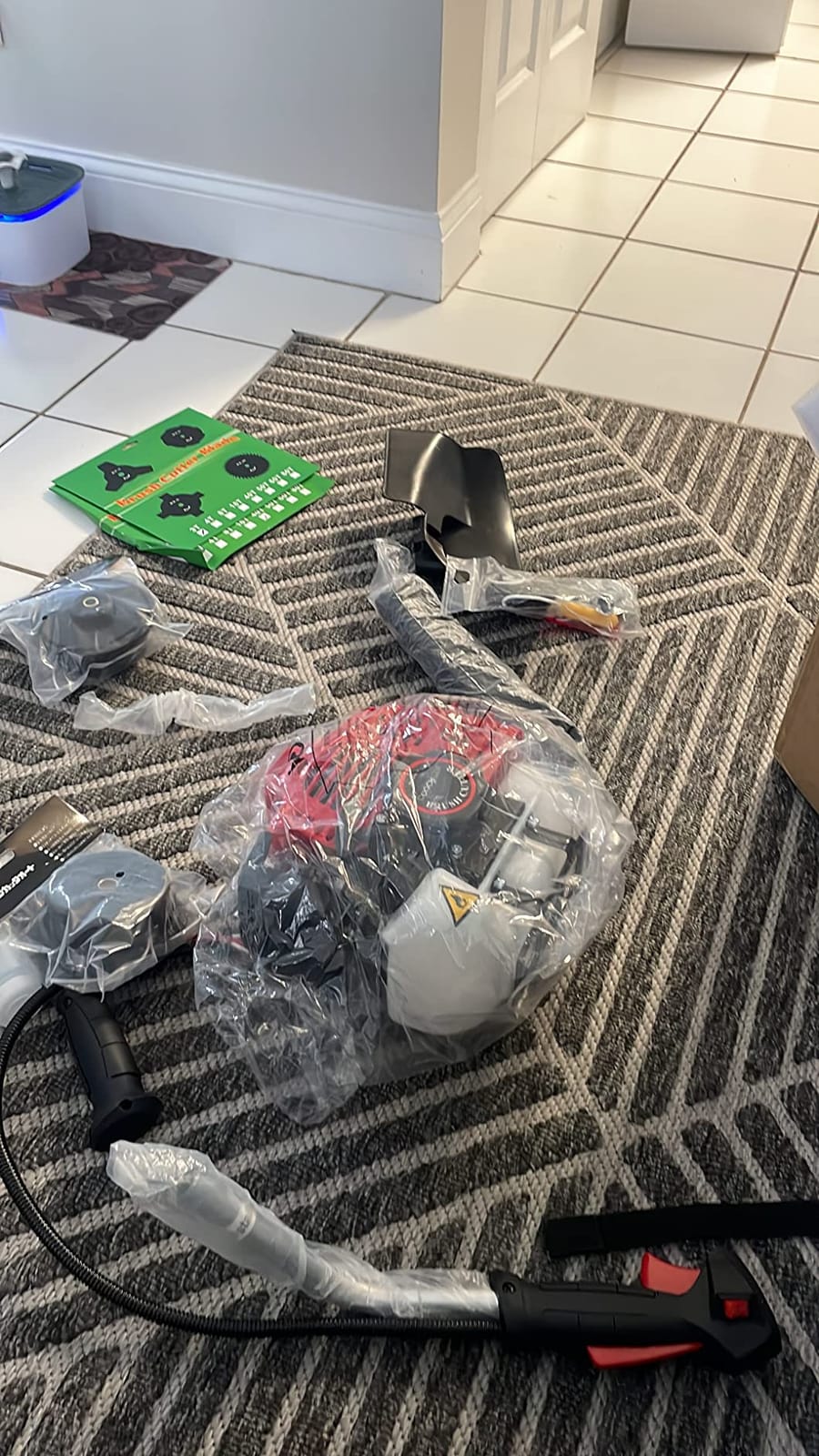
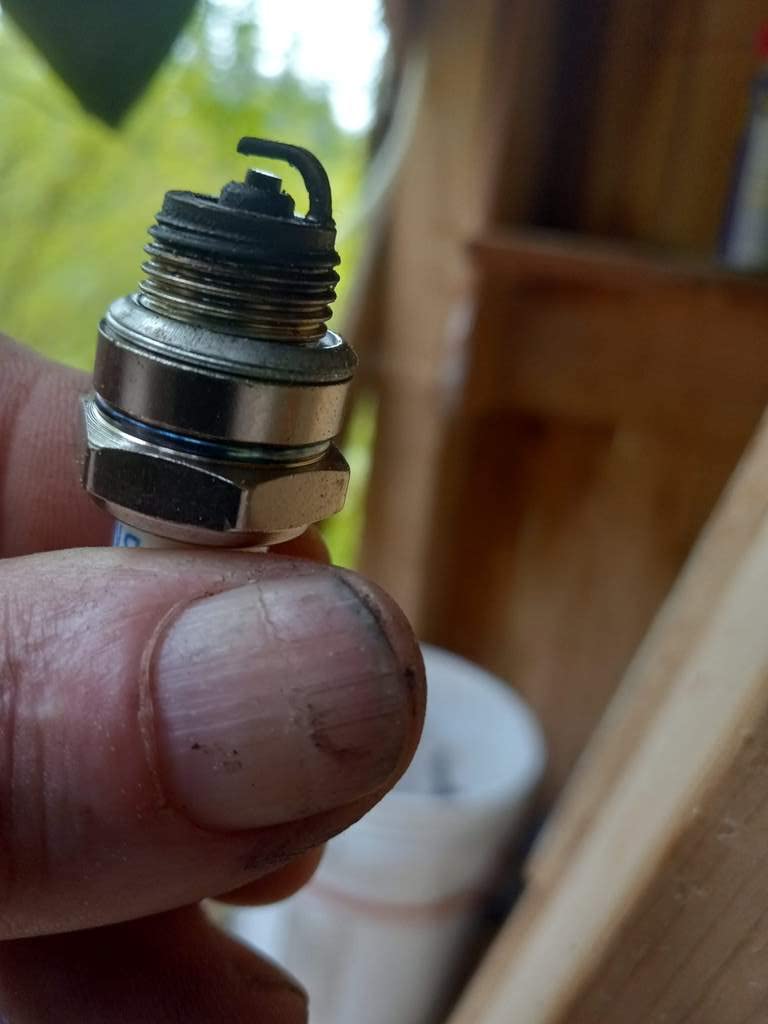
Owners rate the 58cc power-to-weight ratio favorably, and several note that vibration stays low for an engine this size. The adjustable ergonomic U-handle with a slip-free grip, a shoulder strap, and a quick-release split shaft make the machine easier to live with than the displacement figure suggests. Spare pull rope, spare spark plug, a fuel mixing bottle, safety guard, and a tool kit are included. That is a more complete box than most machines in this group ship with.
The safety valve throttle protection switch guards against accidental starts, and in brush work that switch is worth having. A trimmer that will not fire when you set it down in tall grass removes a genuinely dangerous moment from the job. The split shaft also cuts the length down for transport and storage, which is a real benefit with a 72.8-inch machine.
What you get that a smaller engine cannot do
The honest answer is woody stems. Line deflects off anything approaching a half-inch stem, and no amount of extra line diameter changes that. A 58cc engine driving a metal blade will cut brush that stops a 25cc line head dead, and the circular saw blade in the kit extends that to material well past brush into small limbs and hard growth.
For a farm, an overgrown lot, or a property with neglected corners, that head set means one powerhead covers brush cutting, trimming, and light saw work. Owners praise the range of heads and the fact that changes are quick, and the adjustable U-handle and strap reduce fatigue relative to what the engine size would suggest.
Where the weight and the fuel routine bite
This is a heavy, long machine and reviewers say so. Straight-shaft length plus 58cc makes it demanding to hold for extended periods, and tight spaces around shrubs or inside a shed are awkward. Plan your cutting direction so the machine works along open rows rather than pivoting constantly, and use the strap from the first minute.
You also premix at 25:1, which adds a step the 4-stroke alternatives do not have. The bundled mixing bottle helps, but get the ratio right from the first tank, because fuel mixed too lean is the classic way to damage a 2-stroke engine. Treat the included accessories and spares as consumables rather than premium parts.
6. COOCHEER 58cc 4-in-1 5111RX2 – the budget metal-blade kit
COOCHEER 58cc Brush Cutter Weed Wacker Gas Powered 4-in-1 Weed Wacker Straight Shaft String Trimmer with 2 Detachable Head for Grass, Garden
58cc 2-stroke engine
9300 rpm max
4T and 3T blades
18 inch blade
72 inch shaft
Pros
- 58cc power above most at this tier
- Metal blades for dense vegetation
- Head changes are quick
- Useful kit with spare parts
Cons
- 25:1 premixed fuel required
- Full straight shaft is bulky
- Entry-level build on plastic parts
This is the same 58cc platform in a slightly different configuration, and the reason it appears separately is the blade emphasis. The head set includes a 4-tooth blade, a 3-tooth blade, and a dual-line head, with an 18-inch cutting blade for dense vegetation, grass, shrubs, and thick brush.
The 4T and 3T pairing is the useful detail. A 3T blade is the general-purpose choice for grass, weeds, and light brush, while the 4T blade bites harder into woody material and self-sharpens as it wears. Having both in the box means you can match the blade to the job rather than making do with one compromise edge.
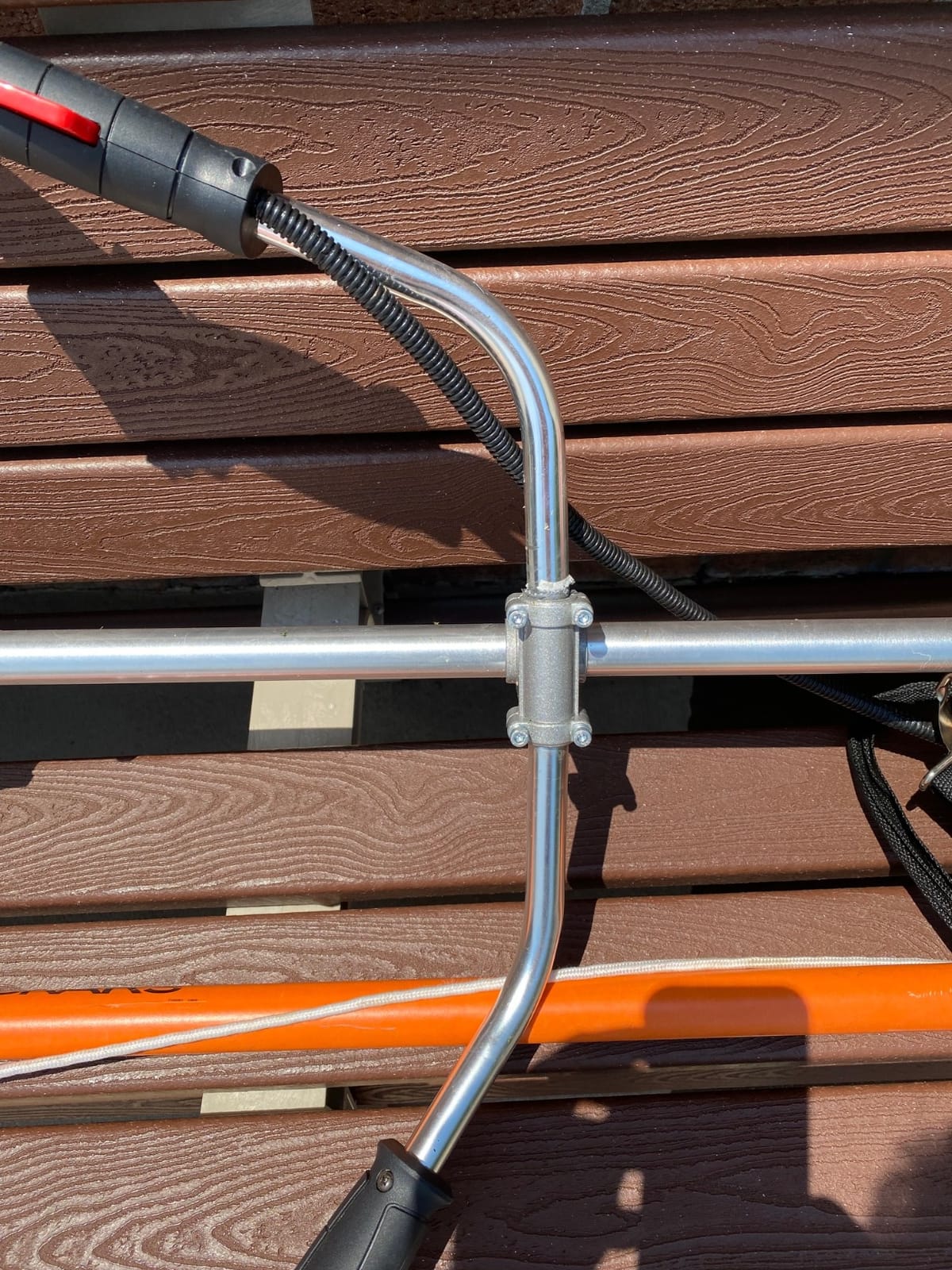
Owners credit the 58cc engine with more power than most machines in the same tier, and the metal blades with the ability to handle dense vegetation and thick brush. The upgraded smooth pull starter and adjustable U-handle with shoulder strap both make a real difference to a long day, and the accessory kit includes a spare pull rope, spark plug, mixing bottle, safety guard, tool kit, and manual.
Head changes between blade and line configurations are quick, which is what you want when you are moving from a fence line into open weed growth. The 72-inch shaft is full length, giving good reach into deep growth, though it is also the machine’s main handling drawback in confined spaces.
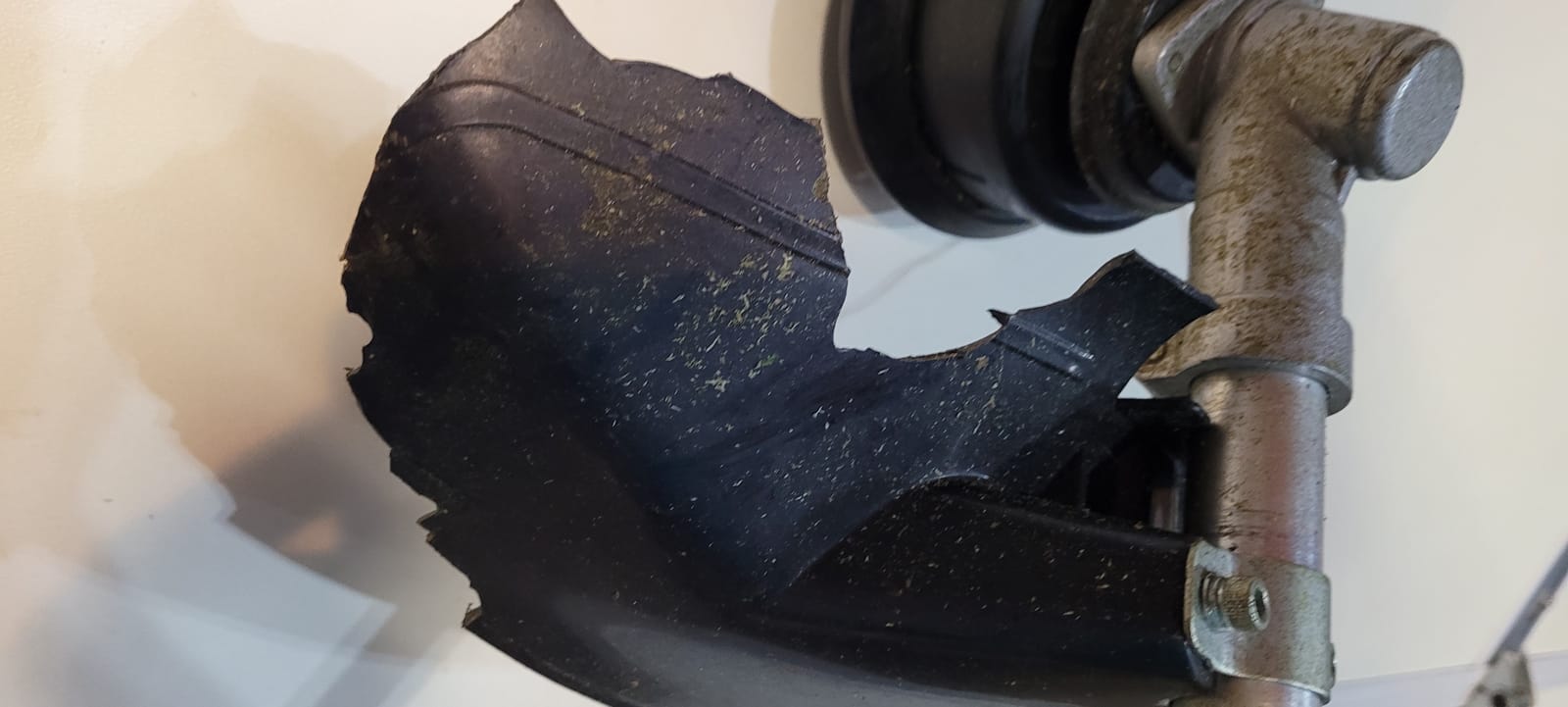
Choosing between the two blades
Use the 3T blade for tall grass, weeds, and light green brush, and save the 4T for bramble, saplings, and dried woody stems. Reviewers who work this material consistently point out that a dull or wrong blade is a primary cause of stalled engines, because the load on the spindle climbs until the engine bogs. A fresh 4T edge keeps the load down.
The 3.8 average reflects that this is a capable budget machine rather than a refined one. The 58cc engine and included blades do the job, and if you approach the fuel routine properly the machine rewards you. It suits a property owner clearing a season of growth once or twice a year more than a crew cutting daily.
Trade-offs to plan around
The 25:1 premixed fuel requirement is unavoidable with a 2-stroke, and the straight shaft adds both length and weight. One reviewer also reported a package that arrived with only one of two shipments, so inspect the contents fully before the box leaves the porch. Entry-level build quality on plastic components is a recurring theme in the feedback.
No manufacturer warranty term is listed for this machine, which matters if you plan paid work. Keep a spare pull rope and spark plug on hand, since those are the two parts most likely to end a job at the worst moment, and check that replacement heads and blades are available in your area before you start a season.
7. AMERISUN 26cc 3-in-1 – fits universal brand heads
AMERISUN 26cc Gas Weed Eater, 3-in-1 Weed Trimmer/Edger/Brush Cutter, 16″ Cutting Path, 10″ Metal Blade, Heavy-Duty for Thick Grass & Brush, Shoulder Strap Included
25.4cc air-cooled 2-stroke
10 inch metal blade
16 inch cutting path
Adjustable 59 inch pipe
Pros
- Strong motor for the tier
- Well balanced and surprisingly light to handle
- Universal heads accept brand-compatible replacements
- Quick head changes between three modes
Cons
- Shaft did not seat as directions described
- Grip and body feel cheap
- Flimsy guard catches on vegetation
The AMERISUN converts between three modes: a trimmer head, an edger, and a 10-inch metal brush blade, all on a 25.4cc air-cooled 2-stroke engine with a 16-inch cutting path. The owner reviews describe the cutting power and the balance in unusually positive terms for the tier, and the 4.3 average reflects that.
Most people buying a trimmer in this bracket will eventually want a different head, a different line, or a blade they can sharpen. The head mounting here is universal, and owners report fitting Echo speed-feed style heads directly. That single detail changes the ownership experience, because you are not locked into one manufacturer’s parts.
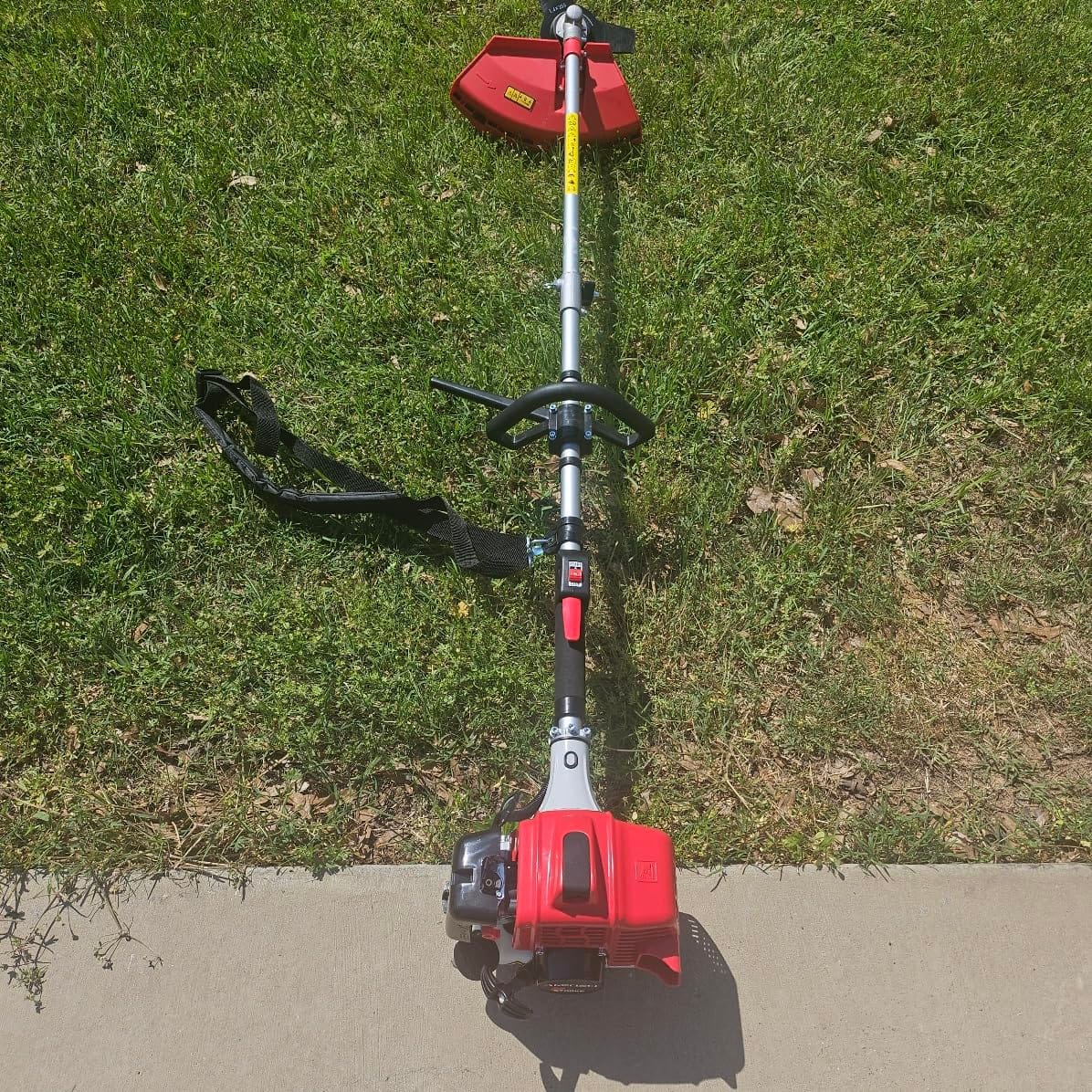
The 59-inch main pipe section adjusts for fit, and a shoulder strap is included. Owners comment that it is surprisingly well balanced and light to handle for an 18.7-pound machine, how often budget trimmers feel top-heavy. Power holds up in normal brush without bogging, which is more than several machines in this group manage.
The fuel system uses a 50:1 unleaded to oil mix and is described as fuel-efficient for its class. A separate mixing bottle makes the ratio repeatable, and mixing correctly from the first tank is the cheapest insurance you can buy on any 2-stroke machine, because lean mixture is what ends engines early.
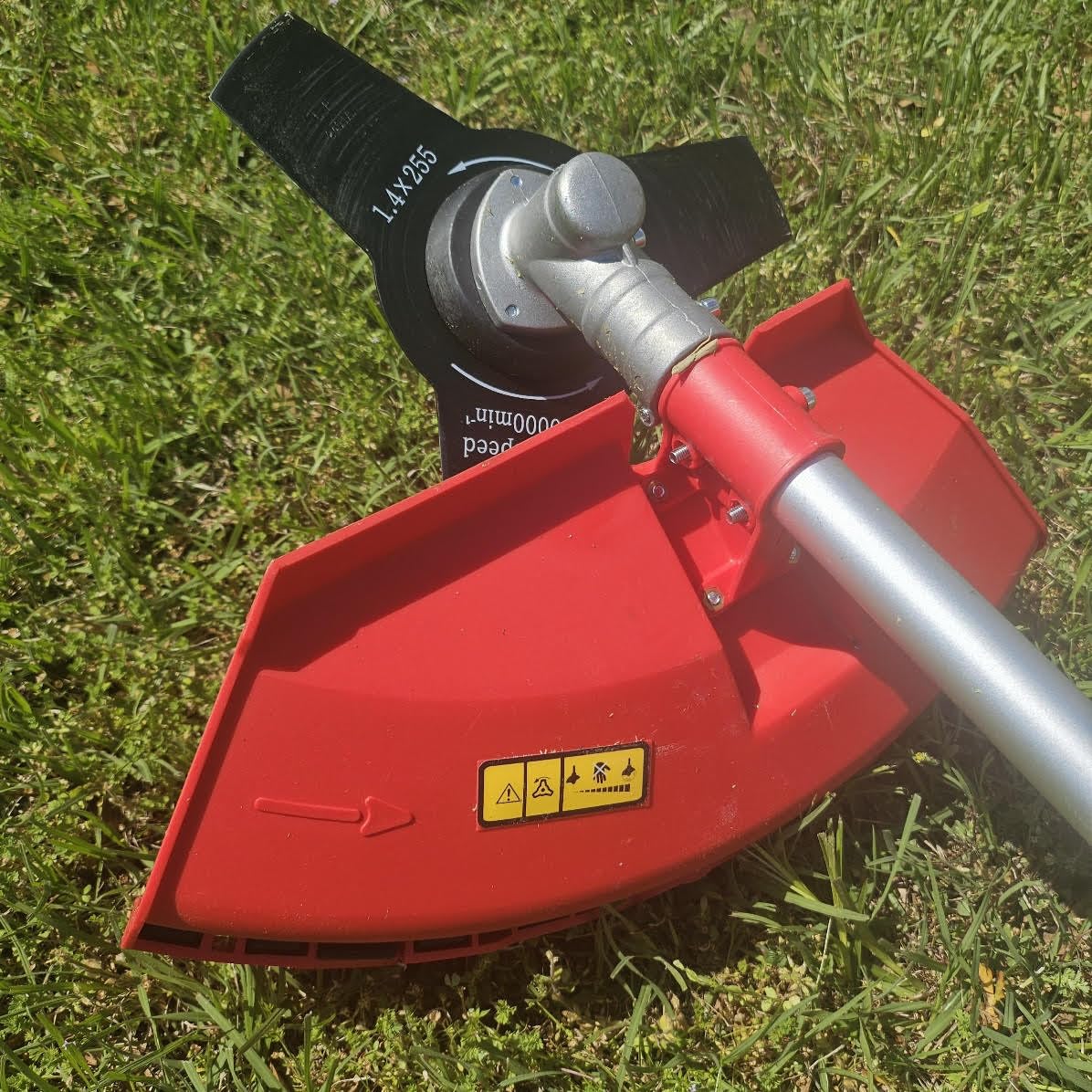
Why universal head compatibility is worth paying attention to
Owners specifically call out that Echo speed-feed style heads can be fitted, which is a real saving over a machine with a proprietary mount. Speed-feed heads also load line in seconds instead of winding a spool, and that matters in brush work where you will reload several times an afternoon. Combined with the 10-inch metal blade in the box, you have a working setup before you buy anything else.
Easy head changes between trimming, edging, and blade work are the other thing reviewers mention. A single machine that covers all three jobs is worth more than a slightly better trimmer that does one. For a property owner with fences, paths, and an overgrown corner, that flexibility is the reason to pick this one.
What the owners flag as weak
Build quality is the consistent complaint. One reviewer found the shaft did not click into place as the directions described and needed machining to fit properly, which is a problem at the start of the job when the split shaft also has to hold the machine apart. Inspect the shaft connection carefully during setup and every time you reassemble.
The grip and much of the body feel cheap to owners, and the trimmer guard is described as flimsy and prone to catching on vegetation. A guard that snags in brush is more than an annoyance, because it can twist the machine off its cutting line. Keep the guard clear of stems.
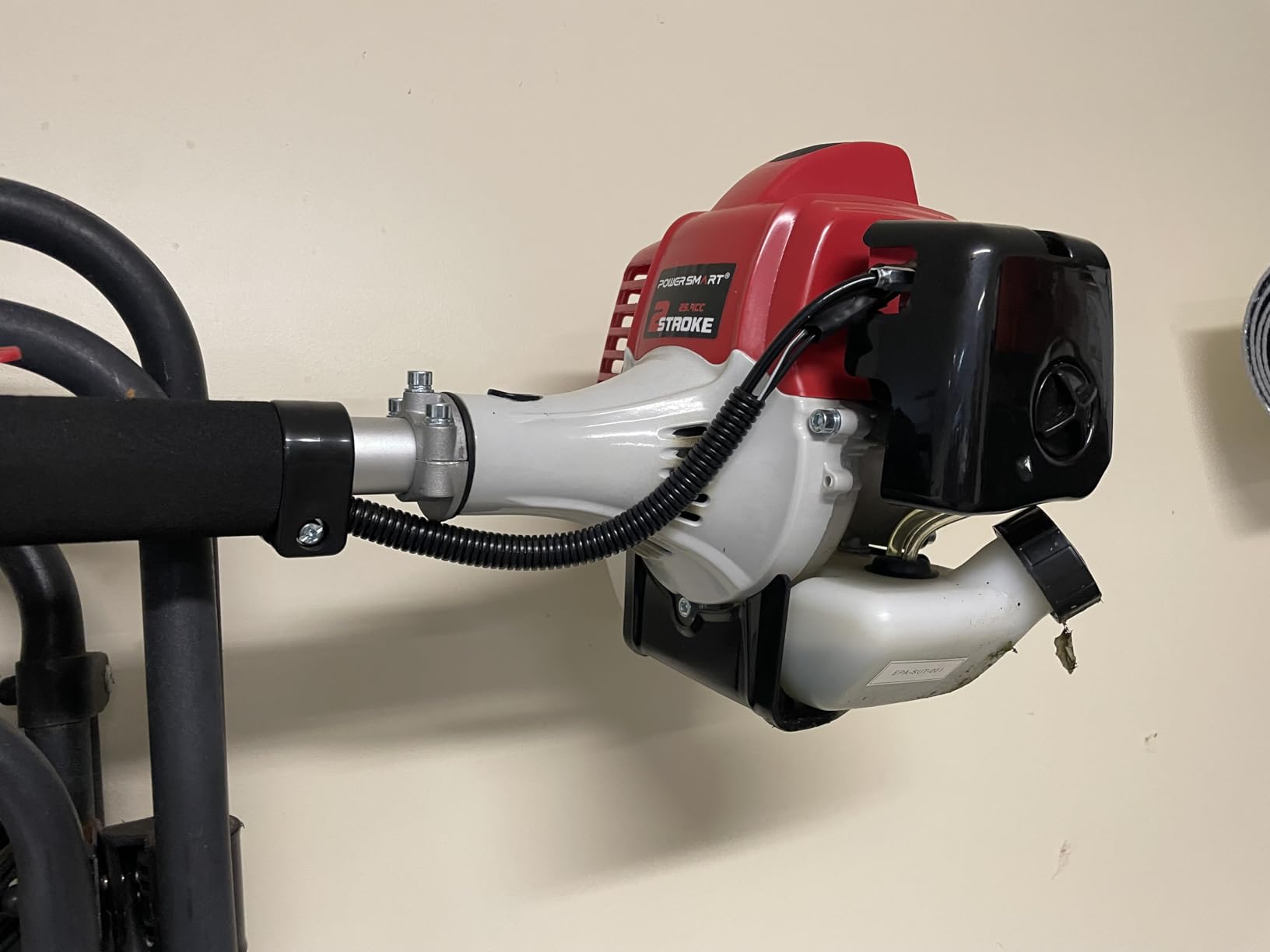
8. PowerSmart 25.4cc with 10 Inch Blade – a simple blade and line package
PowerSmart 25.4cc Gas Weed Wacker, 16 Inch Cutting Width with 10 Inch Blade
25.4cc 2-cycle engine
10 inch brush blade
16 inch cutting width
Shoulder harness
18.8 pounds
Pros
- Both blade and 0.095 inch line in the box
- Engine handles overgrowth and tough weeds
- Shoulder harness manages the weight
- Collapses for storage
Cons
- Heavier than expected at close to 19 pounds
- Short pull rope makes starting tedious
- Supplied plastic parts feel inexpensive
This is the simpler sibling of the PowerSmart 2-in-1 listed earlier, and it is worth a separate look because the reviews read differently. The 3.9 average here is more muted, with a notable share of one-star feedback, and the differences show up in the weight and the starter rather than in the cutting capability.
On paper the package is competent: a 25.4cc 2-cycle engine with a low-emission design, a 2-in-1 configuration pairing a 10-inch brush blade with 0.095-inch trimmer line, and a 16-inch cutting width. Owners credit the engine with handling overgrowth and tough weeds, and the shoulder harness genuinely does help offset the weight across a long afternoon.
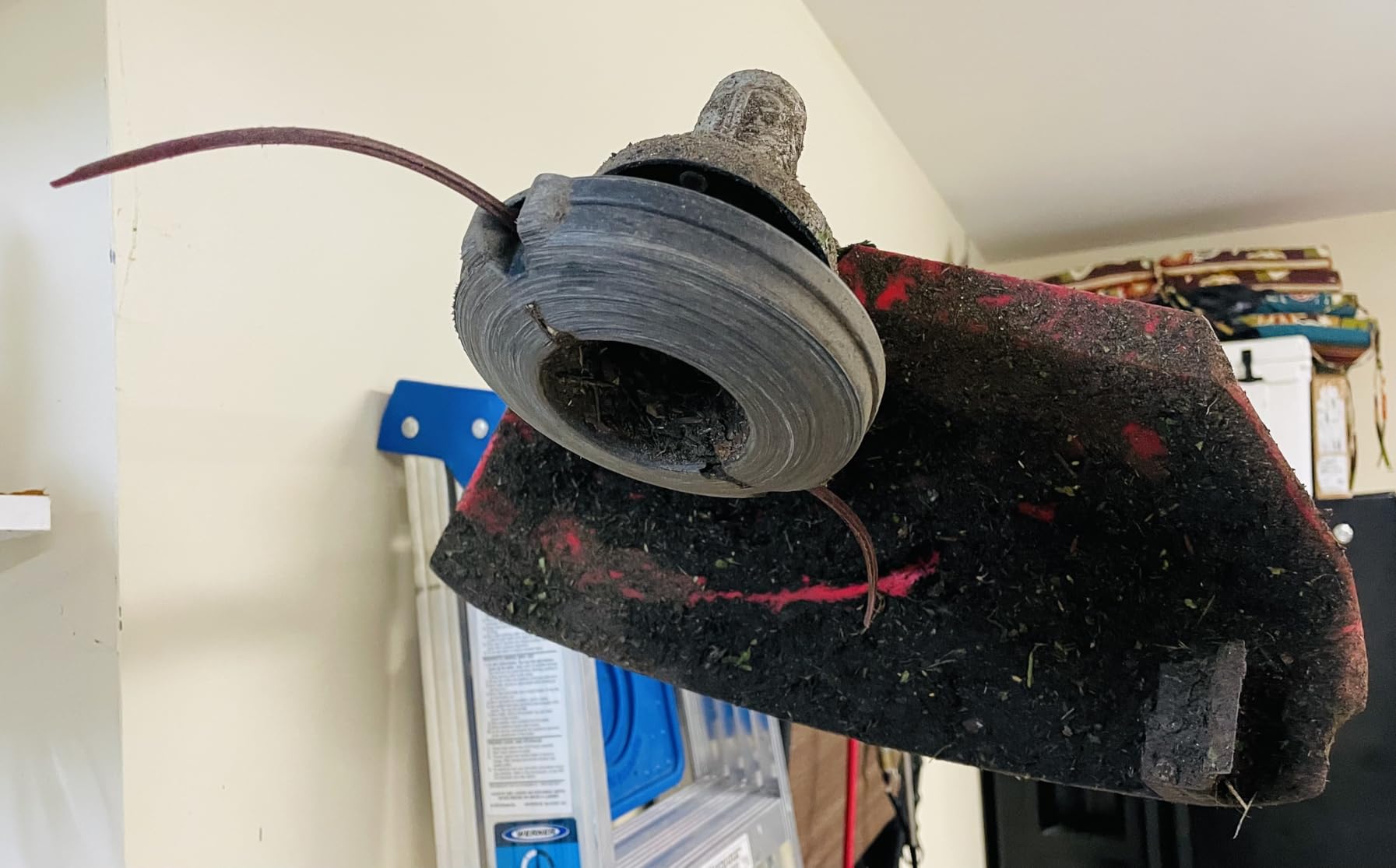
The 5-pull starter gets the engine going, and the machine disassembles for compact storage, which is a genuine advantage in a tight shed. The 18.8-pound weight is the outlier though, and reviewers note it is heavier than expected. For brush work that means the harness is not an accessory, it is part of how you operate the machine.
Owners also report that a short pull rope can make starting tedious, which is an odd complaint on a machine with a 5-pull starter but does come up repeatedly. Supplied plastic components feel inexpensive according to several reviewers, and the overall satisfaction picture is middling compared with the brand’s other machines in this group.
When the simple package is the right answer
For a homeowner clearing an overgrown lot once a year, the appeal is straightforward. Both a blade and line ship in the box, so you are not researching a head before you can start, and the 25.4cc engine covers tall grass, thick weeds, and light brush without bogging. The harness lets you work a full afternoon without wrecking your shoulders.
It is also a machine that stores easily. The collapsible design means it is not permanently occupying a corner of the garage, which matters for occasional rather than weekly use. If your brush is annual growth and green stems, this configuration covers the job adequately.
Where the mixed ratings come from
The weight is the recurring theme. Close to 19 pounds on a 25.4cc machine makes it tiring sooner than owners expect, and the harness helps but does not erase it. Combined with the short pull rope, the day-to-day experience is more work than the price suggests, which explains a good share of the one-star reviews.
Build quality is the other factor. Several owners describe the supplied plastic components as inexpensive, and the reaction to a short pull rope suggests assembly quality is not closely checked before the machine leaves the factory. If you buy this one, plan on replacing the head early and keeping a spare pull rope on hand.
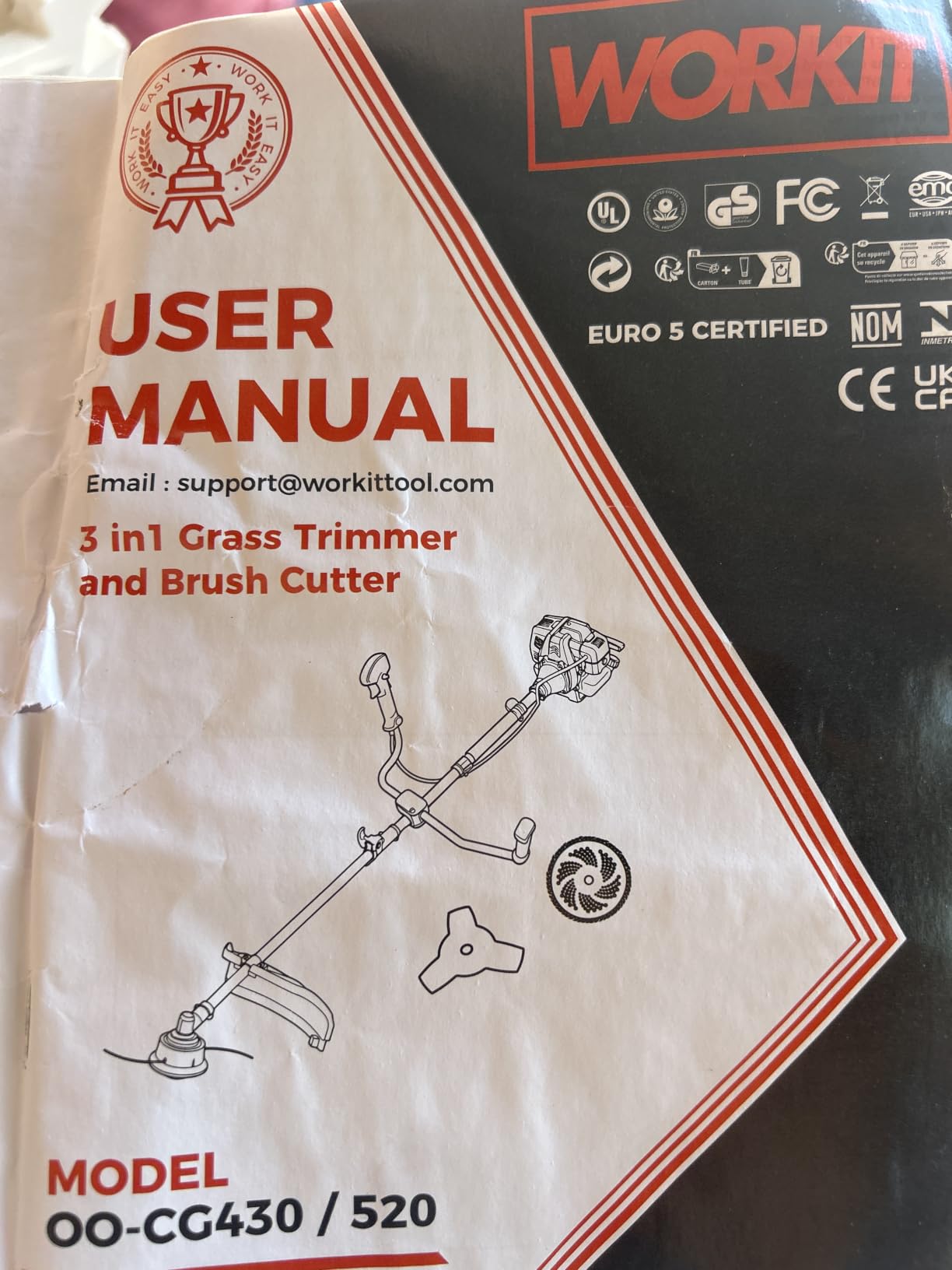
9. WORKIT 52cc 3-in-1 – the widest cutting path
WORKIT 52CC Gas Weed Eater 3-in-1 String Trimmer/Edger/Brush Cutter, 18″ Cutting Path, 0.095″ Dual Line with Auto Feed, Includes 3T & 40T Blades for Heavy-Duty Lawn Care
52cc 2-stroke engine
18 inch cutting path
3T and 40T blades
0.095 inch dual line
24.2 pounds
Pros
- Cuts through thick grass and brush
- Both 3T and 40T blades included
- Metal construction with shoulder strap
- Simple 50:1 starting routine
Cons
- Heaviest machine here at over 24 pounds
- High share of one-star early failure reports
- Line feed inconsistent under sustained load
The WORKIT CG520 has the strongest heavy-brush specification sheet in this group, and the review data says the same thing. A 52cc 2-stroke engine, an 18-inch cutting path, and a 3-in-1 kit that includes a string trimmer head plus both a 3T and a 40T blade. Owners confirm it powers through thick grass, weeds, and brush.
The 40T blade is the piece that matters most for brush. A 40-tooth blade gives far more cutting edge than a 3T, which means it stays sharp under the load that heavy vegetation creates. It is the correct blade for bramble and woody stems, and having it alongside the 3T means you have a tool for the hard material rather than only for weeds.
Line handling is a 0.095-inch dual-line auto bump feed, which spares you the manual bump that stalls a head when it is loaded with brush. Heavy-duty metal construction, an ergonomic handle, and a shoulder strap support longer sessions, and a 50:1 fuel mix keeps the starting routine simple. Several owners mention the machine starts and runs without fuss once it is assembled.
At 24.2 pounds this is the heaviest machine in the group by a wide margin, and reviewers are blunt about it. A 105-inch assembled length and nearly 25 pounds of unit is a serious load on the arms and shoulders. No amount of strap support changes the basic physics of holding it out in front of you.
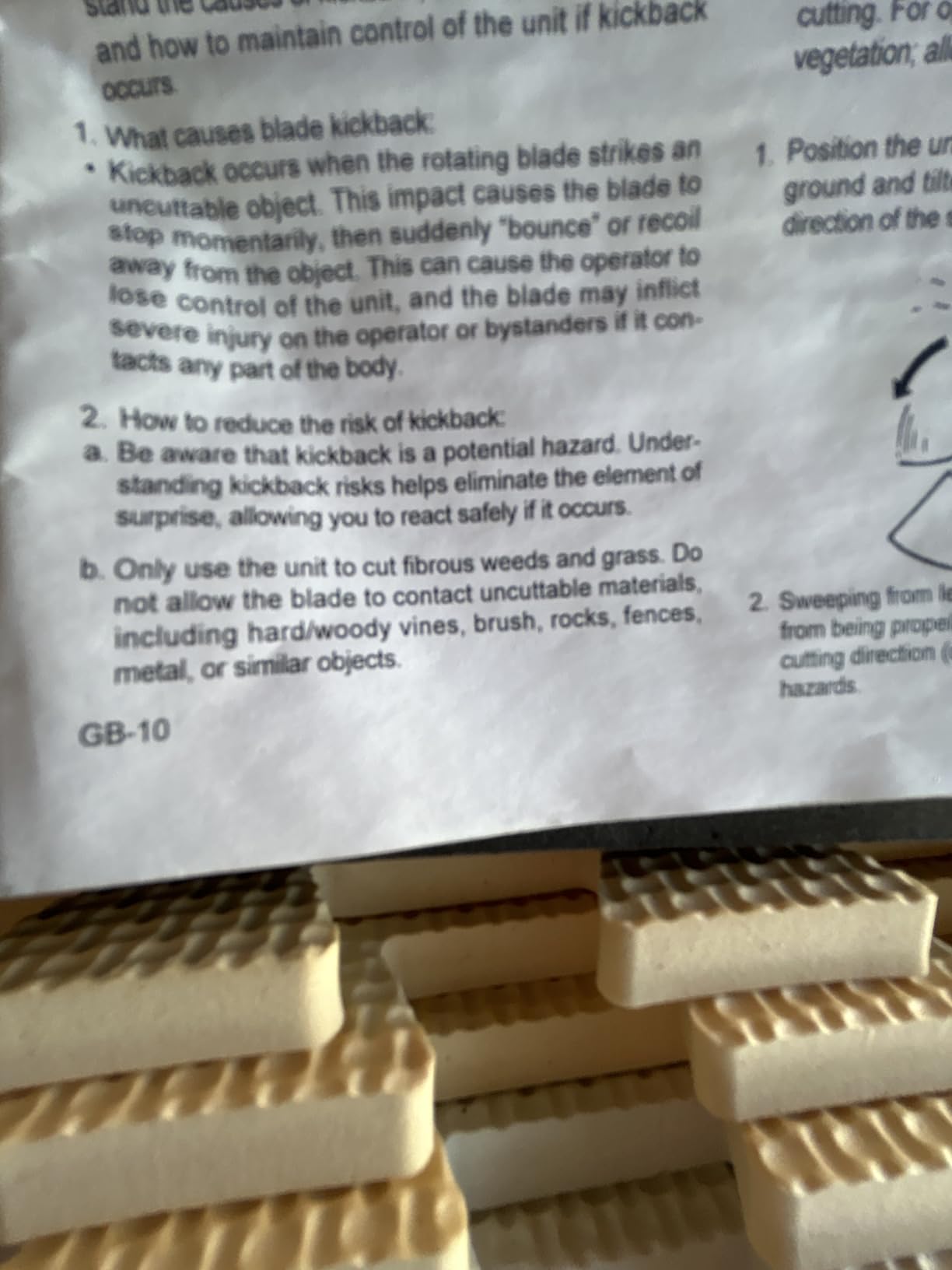
When a 40T blade earns its weight
A 40T blade is the right call when the material is woody. Fewer teeth means each tooth carries more of the load, so the edge bites deeper into a stem before deflecting, and the extra cutting width means more material per pass. For a season of accumulated bramble and dock growth, it will outwork a 3T blade noticeably over a full afternoon.
The 18-inch cutting path also does real work. In tall grass and light brush, a wider swath means fewer passes, and fewer passes means less time holding the machine at arm’s length. That is exactly the tradeoff against the weight, and the arithmetic works when you have open ground to cross rather than tight passages between shrubs.
Why the 3.6 rating deserves a second look
The 3.6 average reflects a high share of one-star feedback reporting breakdowns and starting trouble. That is a durability signal, not a performance signal, and it is the part to weigh carefully. A machine that stalls in thick brush at the far end of a property is a worse outcome than a lighter machine that finishes the job.
Owners also report inconsistent line feed under sustained load, which fits the pattern of bump heads generating heat in woody material. Use the blade for brush and reserve the line head for grass and edges, and check the fuel mixture carefully. If your work is seasonal rather than weekly, the capability here justifies the risk. If it is daily paid work, the failure reports argue for a name-brand engine instead.
10. NEO-TEC 26cc 3-in-1 – light and balanced, but not CARB certified
NEO-TEC 3-in-1 Gas String Trimmer Powerful 26cc 2-Cycle Gas Weed Eater Lawn Edger, Lightweight Weed Wacker Brush Cutter Quick-Start 16″ Gas Powered Trimmer with Shoulder Strap for Yard Care Overgrowth
26cc EPA-certified 2-stroke
16 inch cutting width
10 inch 3T blade
9 inch edger blade
Split shaft
Pros
- Converts quickly between three modes
- Starts in a few pulls
- Light balanced frame with working shoulder strap
- Complete kit out of the box
Cons
- Not CARB certified
- so blocked for California buyers
- Entry-level grip and finish
- Split shaft can loosen over time
The NEO-TEC BC260EPA-X carries a 4.6 rating, and the kit it ships with is more complete than most. You get a 16-inch string trimmer head, a 9-inch edger blade, a 10-inch 3T brush cutter blade, and a safety guard, on a 26cc EPA-certified 2-stroke engine with a 16-inch cutting width.
Owners highlight quick conversion between the three modes, easy starting in a few pulls, and consistent force through thick weeds and dense grass. The split shaft makes setup fast and storage compact, and the adjustable shoulder strap on a light, balanced frame reduces fatigue more than the weight alone would suggest.
The 3-in-1 conversion is the practical strength. Trimmer, edger, and brush cutter from one powerhead means a property owner with fences, paths, and an overgrown corner covers all of it without a second machine. The 10-inch 3T blade is the right tool for weeds and light brush, and the edger blade keeps edging edges clean without changing machines.
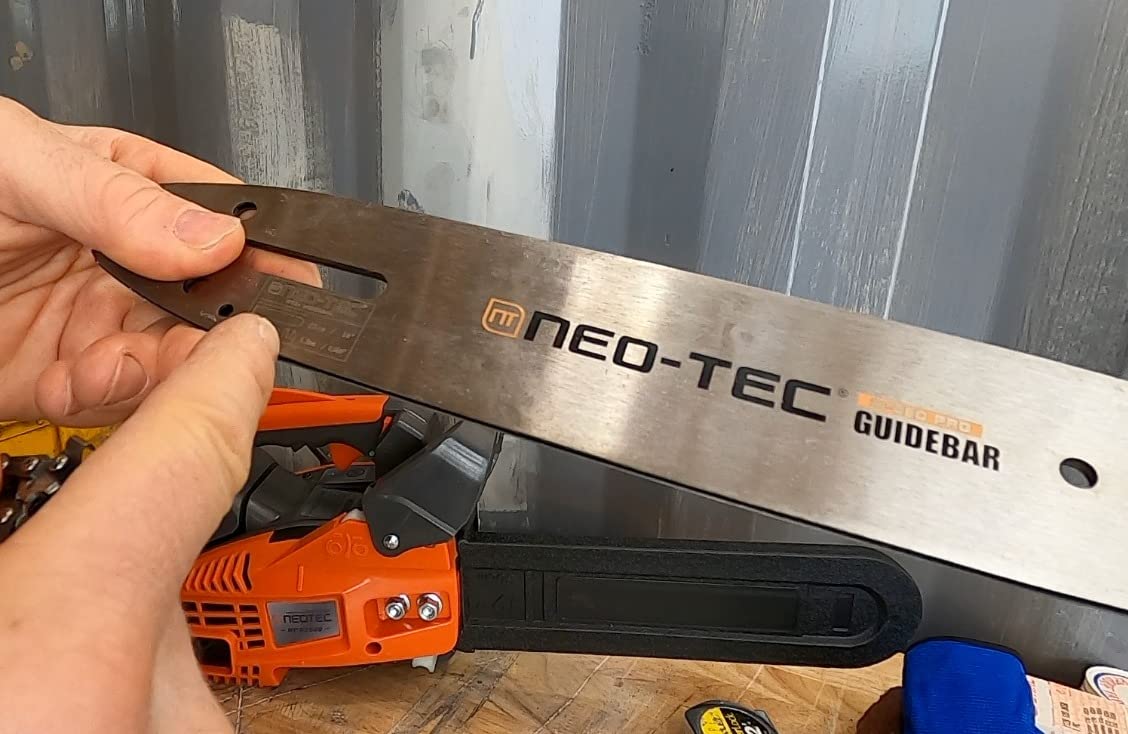
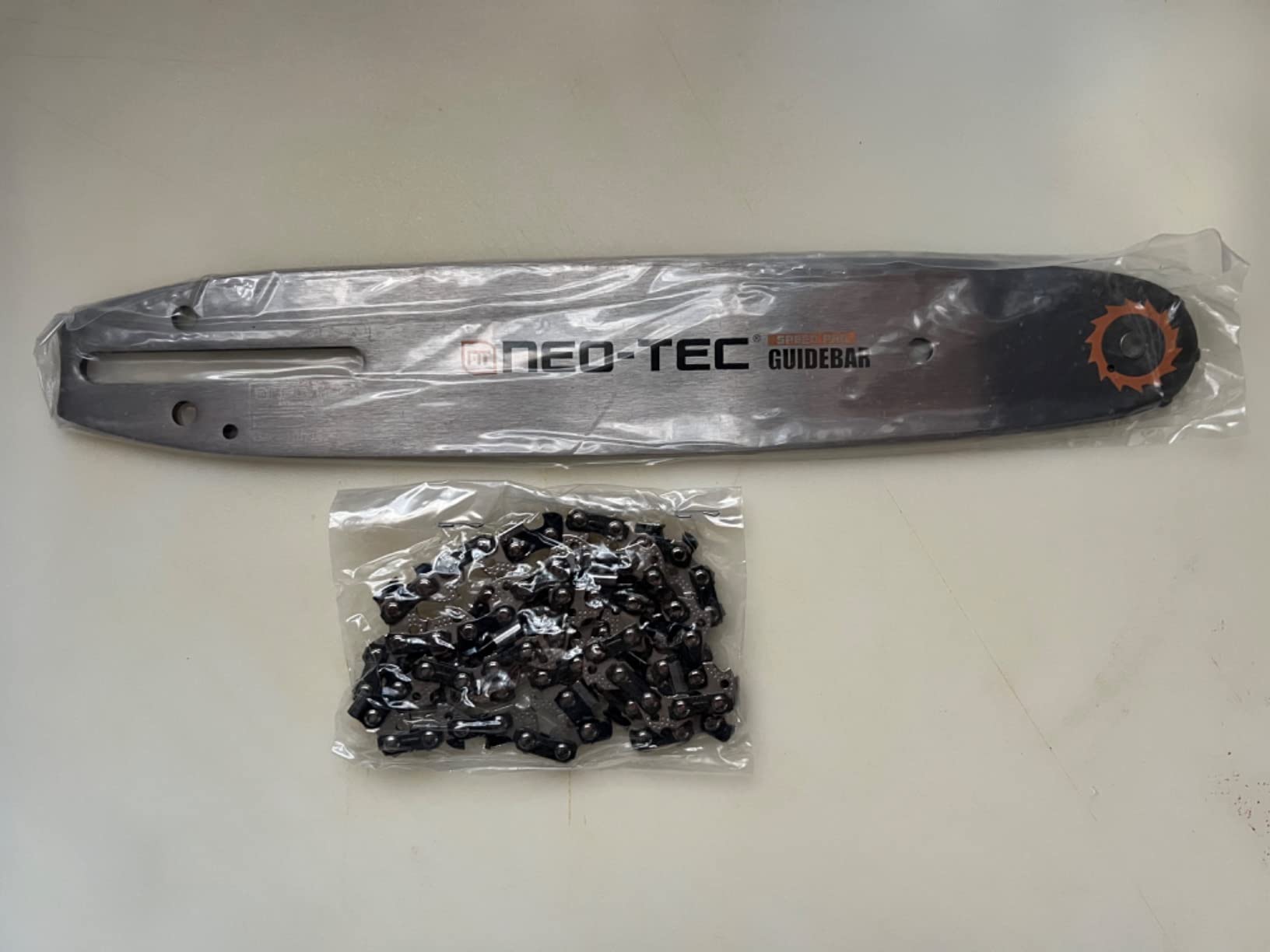
One caution on the review data. The customer reviews attached to this listing appear to describe chainsaw chains rather than the trimmer itself, so treat the 4.6 average as a rating on the listing rather than a detailed performance read. The specification and the owner commentary about handling are still useful, but the volume of written experience here is thinner than the numbers suggest.
Why buyers outside California can like this one
The 3-in-1 layout is genuinely well thought out for property maintenance, and owners describe the conversion as quick. A 26cc engine with a 3T brush blade handles tall grass, thick weeds, and dense growth, which covers most of what a homeowner calls brush. The split shaft and adjustable strap make it easy to dial in for different operator heights.
The EPA-certified engine is worth noting for emissions compliance, and the safety guard is included rather than sold separately. For anyone outside California who wants a complete, light, three-mode machine without assembling a parts list, this is a reasonable pick at the tier.
The CARB problem you need to know first
This engine is not CARB certified and cannot be sold or shipped to California addresses. That is not a minor footnote. If you live in California, this machine is simply not available to you, and the same restriction applies to the larger NEO-TEC 52cc listed later. Verify your state’s rules before you fall in love with the spec sheet.
Beyond that, the grip and finish are entry-level, and the split shaft connection is a point that can loosen with time and vibration. Check it at the start of each season. With a 4.6 rating on only 43 reviews, the durability picture is thin, so treat it as a light-to-medium brush tool.
11. NEO-TEC 52cc 6-in-1 – one powerhead, six tools
NEO-TEC 52CC 6-in-1 Gas Weed Wacker, 2-Stroke String Trimmer, Hedge Trimmer, Brush Cutter, Pole Saw Chainsaw Pruner with 31.5″ Extension Pole
52cc 2-stroke powerhead
6-in-1 tool set
16 inch hedge trimmer
Telescopic pole to 9.5 feet
Tool-free quick connect
Pros
- Strong torque and high rpm for dense brush
- Tool-free quick-connect swaps
- 180 degree rotating hedge trimmer head
- Telescopic pole for high and low work
Cons
- Not CARB certified
- so blocked for California buyers
- Heavy powerhead for overhead work
- Entry-level housings and couplers
The BC520E-6NT is the most ambitious package here, and the 4.7 rating is the highest in the group. One 52cc 2-stroke powerhead becomes six tools through a tool-free quick-connect system: a string trimmer and weed eater, a 16-inch multi-angle hedge trimmer, a heavy-duty brush cutter with both 3T and 40T metal blades, a telescopic pole saw, and a 33-inch extension rod.
For heavy brush specifically, the relevant pieces are the 3T and 40T blades and the brush cutter configuration. The 40T blade is the heavy-duty tooth count described earlier, and having it paired with a 3T on the same powerhead means you can switch from open weed growth to woody material without buying a second engine.
The 180-degree adjustable hedge trimmer head locks horizontal, vertical, and angled, which lets you work under patios, along fences, and on slopes where a fixed head will not let you keep the blades parallel to the ground. The telescopic pole adjusts from 6.9 to 9.5 feet, which is how the same machine reaches both high branches and ground-level work.
Setup details are handled well for a machine in this class. The leak-proof fuel tank and clear 25:1 mixing instructions, one liter to 40 milliliters, take a lot of the anxiety out of running a 52cc 2-stroke. Getting that ratio right from the first tank matters, and a specified ratio removes the guesswork that damages engines.
When a multi-tool powerhead is worth it
The economics work when you genuinely need more than one tool. A string trimmer, a hedge trimmer, a brush cutter, and a pole saw from a single engine is four purchases collapsed into one, and the tool-free quick-connect means the swap takes seconds rather than tools. For a property owner or a small maintenance crew, that is a saving in both money and shed space.
For brush work alone, though, the multi-tool case is weaker than it looks. Each attachment is a plastic-bodied tool rather than a dedicated one, and a 52cc powerhead is heavy for overhead work, which is why the extension rod ships with it. The tool set is genuinely useful; it is just not a substitute for a dedicated brush cutter if woody clearing is your primary job.
Two things to verify before you buy
First, the CARB restriction. This engine is not CARB certified and cannot be sold or shipped to California addresses, so buyers in that state need to look elsewhere. The same applies to the 26cc NEO-TEC listed earlier, and it is a pattern worth checking on any budget gas engine before you order.
Second, the review data here is thin and partially mismatched. As with the related NEO-TEC listing, the attached customer reviews discuss chainsaw guide bars and chains rather than this weed wacker, so the 4.7 rating across 34 reviews is not a reliable performance read. Switching attachments also requires care to seat them fully, and the housings and couplers are entry-level in build quality.
12. COOCHEER 58cc 4-in-1 Orange – the lightest 58cc body
58CC Weed Wacker Brush Cutter, Gas Powered String Trimmer 4-in-1 Gas Weed Eater with 4 Detachable Heads Straight Shaft 2-Cycle for Weed, Brush(Orange)
58cc 2-cycle engine
9300 rpm max
4 detachable heads
19 inch cutting width
14.8 pounds
Pros
- Strong power with low vibration for 58cc
- Four detachable heads including a saw blade
- Adjustable U-handle and strap
- Quick-release split shaft
- Lightest 58cc option at under 15 pounds
Cons
- Small review base
- so reliability is unproven
- Requires 2-cycle premixed fuel
- Straight shaft awkward in tight spaces
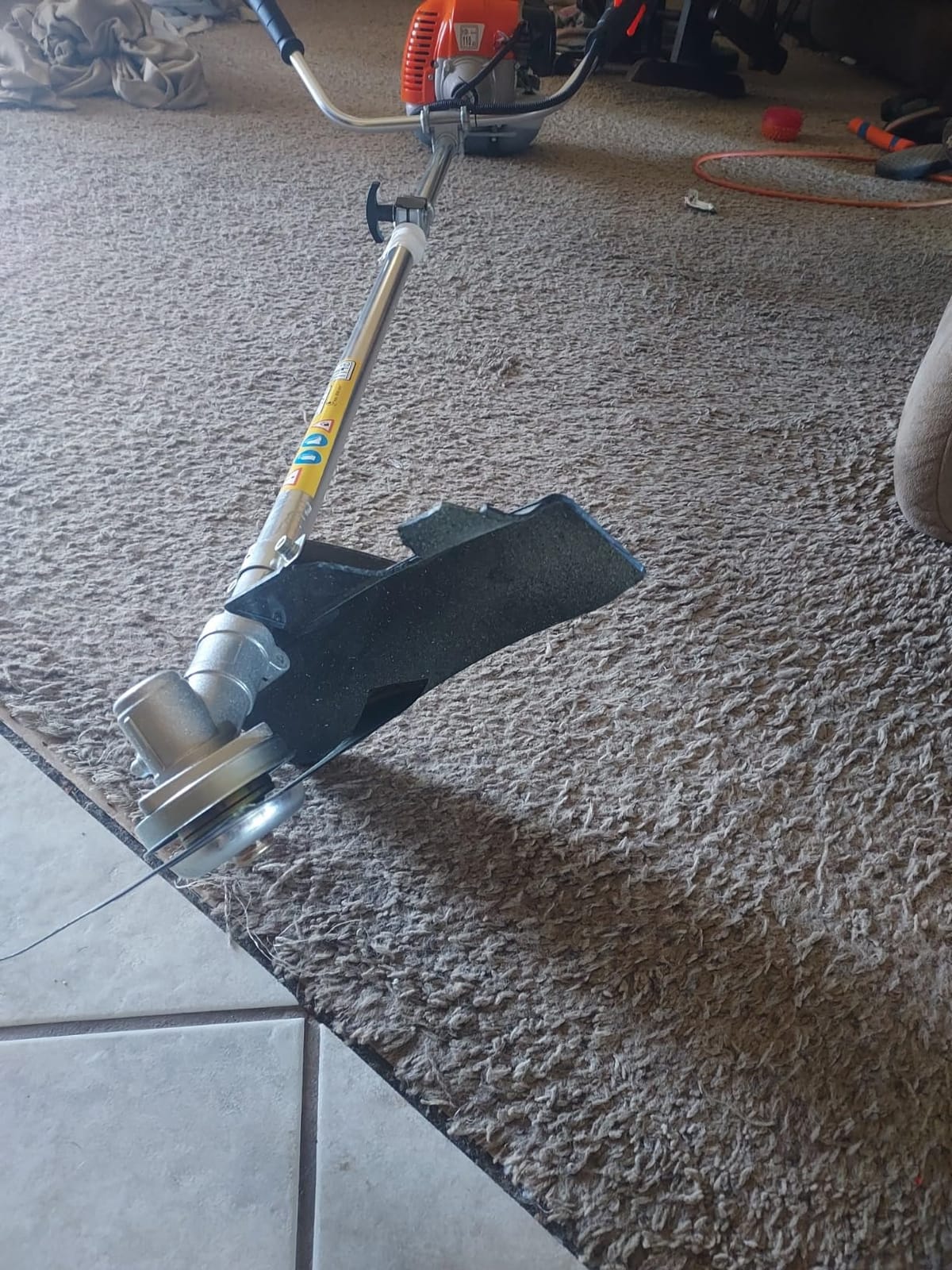
This listing shares the 58cc COOCHEER platform with the fifth machine in this roundup, and the meaningful difference is weight. At 14.8 pounds it is the lightest 58cc option here by a wide margin, and that gap is what makes 58cc practical for a homeowner rather than only a crew.
The engine specification is the same 58cc 2-cycle running to 9300 rpm maximum, with four cutting heads: two 0.08-inch dual-line bump feed heads, a brush cutter blade, and a circular saw blade. The listed cutting width is 19 inches with a 10-inch line path and 18-inch blade capacity, which is a wide swath for a machine of this weight.

Owners highlight power for the money, low vibration for the engine size, and easy head changes. The ergonomic adjustable U-handle with a slip-free grip, a shoulder strap, and a quick-release split shaft keep the machine balanced and easy to control, and a high safety valve throttle protection switch guards against accidental starts in tall growth.
Like the other 58cc machines here, the box includes a spare pull rope, spare spark plug, fuel mixing bottle, safety guard, and tool kit. That consumable kit is quietly useful, because the pull rope and spark plug are the two parts most likely to end a job in the middle of a field with no dealer nearby.
Why weight matters more than displacement
Displacement tells you whether the machine can cut the material, and weight tells you whether you will still be using it at the end of the afternoon. A 58cc engine you can hold comfortably gets used on the whole property, while a heavier machine of the same power tends to end up in the shed after one long session. This listing is the lightest way into that displacement class.
The adjustable U-handle and shoulder strap help distribute that weight, and the quick-release split shaft shortens the machine for transport and storage. For one person clearing a lot of brush, the combination of usable power and manageable weight is often the difference between finishing the job and scheduling a second attempt.
Where the thin review base matters
With only 21 reviews, the durability picture is simply not established. That is the honest limitation of this listing and the reason we placed it last rather than higher. The 4.0 average is encouraging, but it rests on a small sample, and budget 2-stroke machines typically reveal their weak points after a season rather than a weekend.
The 2-cycle premixed fuel requirement and the bulk of a full-length straight shaft in tight spaces are the other practical notes owners mention. The saw blade in the head set is what makes this machine interesting for heavy brush rather than just tall grass, and using it correctly is how you get the value out of an engine this size.
Best Trimmer Line and Blades for Heavy Brush
No engine saves you if the cutting end is wrong. Line and blade are not interchangeable tools, they are different answers to different material. Nylon line deflects off woody stems while a metal blade cuts them, and choosing correctly is worth more than any displacement upgrade.
Match the cutting end to the material
For tall grass, annual weeds, and light green brush, 0.095-inch twisted line is the sensible default. The twist is what matters, not the shape, because twisted line resists unwinding and fraying at the spool. That is exactly the failure owners on trimming forums describe when line strips itself bare in a single afternoon.
For bramble, saplings, and woody stems, a metal brush blade is the answer, and a 3T or 4T tooth count is where the decision gets made. A 3T blade cuts faster through grass and weeds, while a 4T carries more load per tooth and holds its edge better in woody material. Match the blade to the growth and keep a spare edge, because a dull blade is a common reason engines bog in thick brush.
For stems above roughly three-quarters of an inch, a circular saw blade is the correct tool and no line will do the job. Line simply bends rather than cuts at that diameter. The 40T blades on the 52cc machines in this roundup are a step up from 3T and 4T without the cost and danger of a saw blade, which makes them a good middle ground for serious brush.
What line diameter actually changes
Thicker line holds its shape better at higher rpm, so it cuts more efficiently in dense material, and it resists snapping on woody contact. The cost is that thicker line throws more debris and wears the head faster. On a bump head, 0.095-inch is the common working choice, while 0.080-inch feeds more smoothly and is gentler on the head in mixed growth.
One warning from the review data worth repeating: bump heads can jam or soften in woody material because the friction generates heat. Owners report the same pattern across multiple brands in this group. Once you start cutting bramble, switch to a blade, and save the line head for grass and edges. A speed-feed style head loads far faster if you are going back and forth often.
How to Choose a Gas String Trimmer for Heavy Brush
Seven specifications decide whether a gas string trimmer can handle heavy brush. Read them in this order, because a beautiful cutting head on a plastic gearbox is a disappointment waiting for a fence line.
Seven specs that matter more than the badge
Displacement first, with 25cc as the practical floor for light brush and 50cc or more for woody stems. Second, shaft type: a straight shaft keeps the head ahead of you and drives into vertical growth, while a curved shaft is more comfortable in open lawn work and less efficient in dense brush. Third, the drive shaft itself, because a solid steel shaft takes the side load that a flex cable cannot.
Fourth, the gearbox housing. Cast aluminum survives the impact of hitting a hidden root; plastic does not. Fifth, cutting width and head compatibility, which tells you how fast you cover ground and whether you can use a better head later. Sixth, line diameter support, since a head limited to 0.080-inch line will not let you use heavier line when the material demands it. Seventh, warranty terms and dealer access.
2-stroke or 4-stroke for heavy brush
A 2-stroke engine gives more power per cubic centimeter and weighs less, which is why nearly every machine built for brush in this roundup is 2-stroke. The trade is fuel mixing, lower idle stability, and more vibration. Get the ratio right from the first tank, use the mixing bottle, and lean fuel is the fastest way to ruin a good engine.
A 4-stroke is smoother, quieter, and needs no oil mixing, but it delivers less peak force for its size. The SENIX 4QL in this roundup is the clearest example: excellent for weeds and light brush, underpowered for stems. If your material is green and annual, 4-stroke convenience wins. If it is woody, 2-stroke power wins.
Why straight shaft and steel drive shaft win for brush
This is the most underrated decision in the whole category. A curved shaft is shorter and puts the cutting head closer to your feet, which is safer and easier in a mowed yard. In dense vertical growth it is less efficient, because the head approaches the material at an angle and the line has less room to straighten. A straight shaft also transmits side loads into the drive shaft, which is why a steel shaft matters.
Flex drive cables are comfortable and isolate vibration, and they are the wrong choice for brush work. Forum discussion on trimmer and outdoor power equipment boards is consistent on this point: steel shafts for brush and blade work, flex shafts for grass. The vibration tradeoff is real, which is why a machine with a good anti-vibration system on a steel shaft is the ideal combination.
Brand reliability: what the forums actually say
The exact-match search for this topic is dominated by forum discussion rather than roundup pages, so the brand question deserves a direct answer. On arboristsite and similar trade boards, Stihl models are repeatedly described as the power-to-weight benchmark, and Echo is cited for its line-head system and light weight. Husqvarna is valued for 4-stroke convenience, and RedMax is named often as a commercial landscaping favorite.
The pattern in those discussions is that the deciding factor is rarely horsepower. Dealer network, parts availability, and warranty terms are what owners name when they explain why one machine outlasts another. The Husqvarna 130L is in our list for exactly that reason, with a 3-year limited warranty and an established parts channel. Discontinued brands still dominate older “best of” threads, and buyers should look for current models with support rather than chasing discontinued engineering.
Where these twelve sit against commercial machines
None of these is a true commercial brush cutter. The ones built for that job have cast gearboxes, forged steel connecting rods, chrome-plated cylinders, and commercial warranty terms with a two-year minimum for professional use. If you cut brush daily for a living, that category is the right purchase and no budget machine on this list substitutes for it.
What these machines do well is annual and semi-annual clearing: a neglected lot, a season of dock and bramble along a boundary, a stretch of roadside. For that work, the cost difference between a 58cc budget machine and a commercial one is often recovered in a single season. Buyers who cross into daily paid work should move up a category, and the forum consensus on warranty length is a reasonable guide for when to do it.
When a Walk-Behind or Battery Model Makes More Sense
Gas is the right answer for brush, but it is not the right answer for every job. Two other categories come up constantly in the forums, and both are worth a serious look before you buy.
A walk-behind wheeled trimmer is the tool for flat, open overgrowth across an acre or more. You push it instead of carrying it, the wheels handle the weight, and the cutting deck works at a fixed height. For annual weed fields and open grass with scattered brush, a walk-behind finishes in a fraction of the time. It is the wrong choice for ditches, slopes, wooded edges, and anything with woody stems, because the deck cannot be maneuvered into the places brush grows.
Battery and commercial cordless models are the other alternative, and they have improved a great deal. The honest limits for heavy brush are runtime and sustained torque: a battery trimmer will clear a half-acre of weeds on a charge, and it will not work a full day of woody growth. If your brush is annual and your session is short, cordless removes fuel, mixing, starting, and noise entirely. If the job is a full day of stems, gas still wins on power and uptime.
Emissions rules are worth a check before you buy any budget gas engine. Two of the machines here are not CARB-certified and cannot be shipped to California addresses. Confirm your state’s requirements before ordering, and prefer compliant engines regardless of where you live.
Safety and Maintenance Checklist for Brush Clearing
Brush clearing is one of the higher-risk jobs in yard work, because the material hides the ground and the cutting head. A five-point pre-use check and six rules cover most of what goes wrong.
Five-point pre-use check
Check the cutting head and blade first. Look at the flange disc and nut for cracking, wear, and correct tightening, and replace any blade that has been bent or nicked. A blade running loose on a worn flange disc is the most common cause of catastrophic trimmer failure, and it takes under a minute to inspect.
Then check the line. A bump head that has melted, jammed, or spooled unevenly should be rebuilt or replaced before the job, not during it. Check the guard for cracks and make sure it clears vegetation freely, because a guard that catches on stems twists the machine off its cutting line. Check the air filter and the spark plug, and confirm the fuel mixture is correct before the engine ever runs.
Finally, check the shaft and handles for cracks or looseness, and confirm the harness and strap hardware is sound. On split-shaft machines, verify the connection is fully seated. A machine that has been working in brush for a season is exactly the machine whose shaft joint needs attention.
Six rules that prevent most injuries
Keep everyone and every pet out of the cutting radius, and treat that zone as extending well beyond the visible material. Never cut with the head end pointed toward you, and never work with a bent shaft or a damaged head because the machine still runs.
Wear eye protection, hearing protection, gloves, and long trousers every time, and never work brush in sandals. Keep a firm grip with both hands and use the throttle lock for continuous cutting rather than holding a trigger down.
Stop the engine before you reach for anything. Walk to the machine, switch it off, and let it cool before changing a head, clearing a wrap, or refueling. Move at walking pace, cut from the top of the growth downward, and never use the machine above shoulder height with a line head. On steep or unstable ground, stop and reassess rather than leaning into a hillside.
Frequently Asked Questions
What is the best string trimmer for thick brush?
The best string trimmer for thick brush is a straight-shaft gas model with at least 25cc of displacement, a solid steel drive shaft, and a metal brush blade in the box. For genuinely woody stems, move to 50cc or more and use a 3T, 4T, or 40T blade rather than nylon line, because line deflects off woody material instead of cutting it.
What is the most powerful gas string trimmer?
Among the machines we compared, the largest gas engines are the 58cc and 52cc models, which run to 9300 rpm in the 58cc case. Those engines cover woody brush that smaller 25cc and 26cc machines will not. Among name-brand commercial equipment, higher displacement still wins, so match the engine to the diameter of the stems you are actually cutting.
What is the best string trimmer line for heavy weeds?
For heavy weeds and light brush, 0.095-inch twisted line is the best choice because the twist resists unwinding and fraying at the spool. For woody stems, switch to a metal brush blade, since line will deflect rather than cut. Use 0.080-inch line if your head feeds more smoothly with it or if you are working mixed growth close to fences and shrubs.
What is the best tool for cutting heavy brush?
For light brush and annual weeds, a gas string trimmer with a metal brush blade is the most versatile tool. For dense woody stems and small limbs, a dedicated brush cutter with a larger blade is the correct answer, since a trimmer head and line cannot cut that material. For flat open overgrowth across an acre or more, a walk-behind wheeled trimmer finishes faster than anything you carry.
Is a 4-stroke or 2-stroke gas trimmer better for heavy brush?
A 2-stroke engine gives more power per cubic centimeter and weighs less, which is why most brush-capable machines are 2-stroke. A 4-stroke is smoother, quieter, and needs no oil mixing, but delivers less peak force for its size. If your growth is green and annual, a 4-stroke is more convenient. If it is woody, 2-stroke power is the better choice as long as you mix fuel correctly.
Is Echo or Stihl better?
For heavy brush work, the honest answer is that both are credible and the deciding factors are dealer access, parts availability, and warranty terms rather than raw horsepower. Stihl models are frequently described on trade forums as the power-to-weight benchmark, while Echo is cited for its fast line-change heads and light weight. Whichever you choose, confirm local dealer support before buying.
Conclusion
Twelve gas string trimmers later, the picture for heavy brush is clear enough to act on. If your growth is grass, weeds, and light green brush on an acre or two, the Husqvarna 130L is the machine we would buy, because a 28cc 2-cycle with a straight shaft, a tool-free head, and a three-year warranty is the combination most likely to still be running years from now.
If your budget is tighter and you want metal blade capability on day one, the PowerSmart 25.4cc 2-in-1 is the value pick, and the COOCHEER 58cc 4-in-1 is the one to buy when the material includes real woody stems and you want a saw blade in the box. Just confirm the fuel ratio, wear the strap, and expect a straight shaft to demand real attention on longer jobs.
Whichever of the best gas string trimmers for heavy brush you settle on, the spec that decides your satisfaction is the cutting end. Match the head and blade to the material, keep a spare edge, and inspect the flange disc before every job. Those three habits will outlast any engine choice in this roundup, and they are updated here again as the 2026 field keeps turning.