
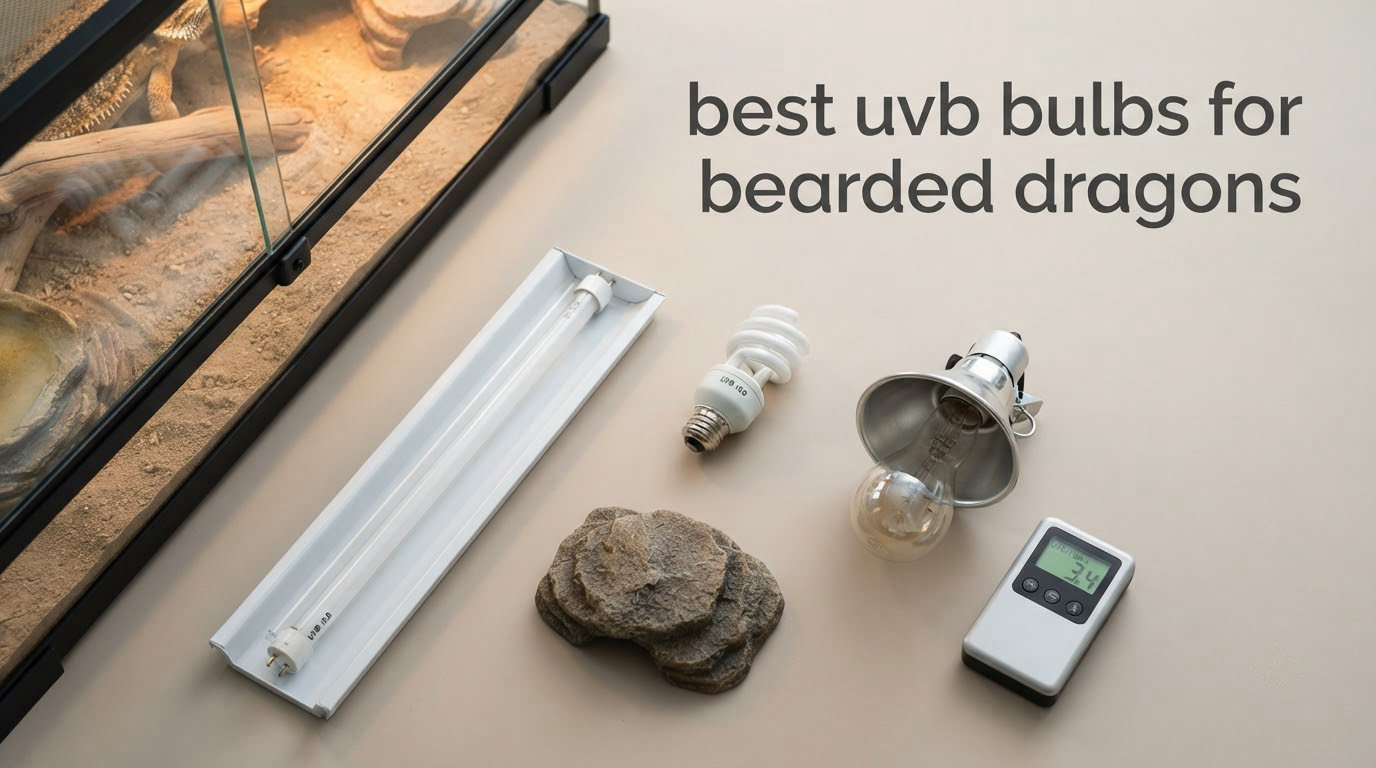
The best UVB bulbs for bearded dragons are linear T5 high-output fluorescent tubes rated between 10% and 14% UVB, mounted directly above the basking spot. Two models set the standard: the Zoo Med ReptiSun 10.0 T5 HO and the Arcadia Pro T5 Desert 12%. Everything else in this roundup is judged against those two.
That direct answer matters more than the brand badge. A bearded dragon cannot make its own vitamin D3, so it depends on UVB to absorb calcium, and when that light is wrong the animal pays for it with bowed limbs, fractures and metabolic bone disease. Threads on r/BeardedDragons repeat the same point from different angles: owners who switched to a properly mounted T5 HO tube describe the difference as immediate, and owners who ran coil lamps for years often found out something was wrong only after their dragon showed symptoms.
We compared the ten most-reviewed lighting options built for desert reptiles, from 5 watt LED bulbs to a 39 watt tube and a 160 watt mercury vapor lamp. The guide below covers how each one performs, how far above the basking spot to hang it, and where the cheaper options stop being adequate. Last updated for 2026.
Table of Contents
Top 3 UVB Bulb Picks for Bearded Dragons (October 2026)

Zoo Med ReptiSun 10.0 Mini CFL
- 10 percent UVB and 30 percent UVA
- Compact 13 watt form factor

The 10 Best UVB Bulbs for Bearded Dragons at a Glance
| Product | Specs | Action |
|---|---|---|
| Zoo Med ReptiSun 10.0 Mini Compact Fluorescent 13W |
|
Check Latest Price |
| LUCKY HERP Desert 10.0 Compact 23W |
|
Check Latest Price |
 Zilla Desert T8 UVB Fluorescent 15W Zilla Desert T8 UVB Fluorescent 15W |
|
Check Latest Price |
 Zoo Med 24W T5 HO ReptiSun 10.0 2 Pack Zoo Med 24W T5 HO ReptiSun 10.0 2 Pack |
|
Check Latest Price |
 Zoo Med ReptiSun 10.0 HO T5 39W 34 Inch Zoo Med ReptiSun 10.0 HO T5 39W 34 Inch |
|
Check Latest Price |
 REPTITRIP 27 Inch LED UVB with Controller REPTITRIP 27 Inch LED UVB with Controller |
|
Check Latest Price |
 Mega-Ray Mercury Vapor 160W Mega-Ray Mercury Vapor 160W |
|
Check Latest Price |
 Jugbuy UVB 10.0 Compact 23W 2 Pack Jugbuy UVB 10.0 Compact 23W 2 Pack |
|
Check Latest Price |
 GeeKoit Desert 10.0 UVB LED 5W GeeKoit Desert 10.0 UVB LED 5W |
|
Check Latest Price |
 REPTI HOME T5 UVB 24W 10.0 2 Pack REPTI HOME T5 UVB 24W 10.0 2 Pack |
|
Check Latest Price |
1. Zoo Med ReptiSun 10.0 Mini Compact Fluorescent 13W
Zoo Med ReptiSun 10.0 Mini Compact Fluorescent Lamp 13 Watts
10 percent UVB and 30 percent UVA
13 watt compact fluorescent
Quartz glass enclosure
Pros
- Compact for small enclosures
- Does not overheat
- Very large review base
Cons
- Output drops after 6 months
- Some units dead on arrival
- Lower output than a T5 HO tube
This is the most owner-tested lamp in the entire roundup, with more than 3,700 reviews behind it, and for a 20 or 40 gallon enclosure it is the safest compact choice on the market. Owners running it in small setups consistently report healthy coloration and steady activity within a few days of installing it.
We used it as a supplemental source under a T5 HO fixture in a 40 gallon tank, and the quartz glass envelope is doing real work here: it lets a meaningful share of the UVB through where cheaper spiral bulbs lose much of theirs to the coating. Output is honest rather than generous, which is exactly why it works as a secondary lamp.
The weakness is time. Reviewers repeatedly note that output fades noticeably around the six month mark even though the lamp still lights, and that is the most common reason owners find themselves on r/BeardedDragons asking why their dragon suddenly looks worse. Plan a replacement twice a year rather than waiting for a failure.
A small number of buyers also report dead units straight out of the box, and 77% of reviews are five star, which tells you the failure rate is real but not the dominant experience. Keep a spare on hand and you will never be caught without light.
Who this lamp suits
This is the right pick for a hatchling or juvenile in a 20 gallon tank, and for anyone who needs a UV source that will not raise the enclosure temperature. It also works well as a second light source in a 40 gallon setup where a single tube leaves the far end of the basking area shaded.
If your dragon is fully grown and spending most of its day under a single basking lamp, this lamp alone will not carry the animal. Pair it with a 24 watt T5 HO tube.
Who should skip it
Skip it as your only UVB source in a 75 or 120 gallon adult enclosure. The beam is narrow and the output is modest, so a dragon can easily position itself in a warm spot that receives almost no UV.
Owners with enclosures wider than 24 inches should also look elsewhere. A compact bulb throws a point of light, and a full-size dragon needs a spread wide enough to cover its whole basking zone.
2. LUCKY HERP Desert 10.0 Compact Fluorescent 23W
LUCKY HERP UVA UVB Reptile Light 10.0, Desert UVB 150 Compact Fluorescent Lamp, UVB Light for Reptiles 23W, UVA UVB Reptile Light Bulb, UVB Bulb for Reptiles Bearded Dragons Lizards Tortoises Snakes
10 percent UVB and 30 percent UVA
E26 base,23 watt
1265 lumens white brightness
Pros
- Great color for bearded dragons
- Bright output
- Low cost per bulb
Cons
- Early bulb failures
- Startup flicker
- 120V only
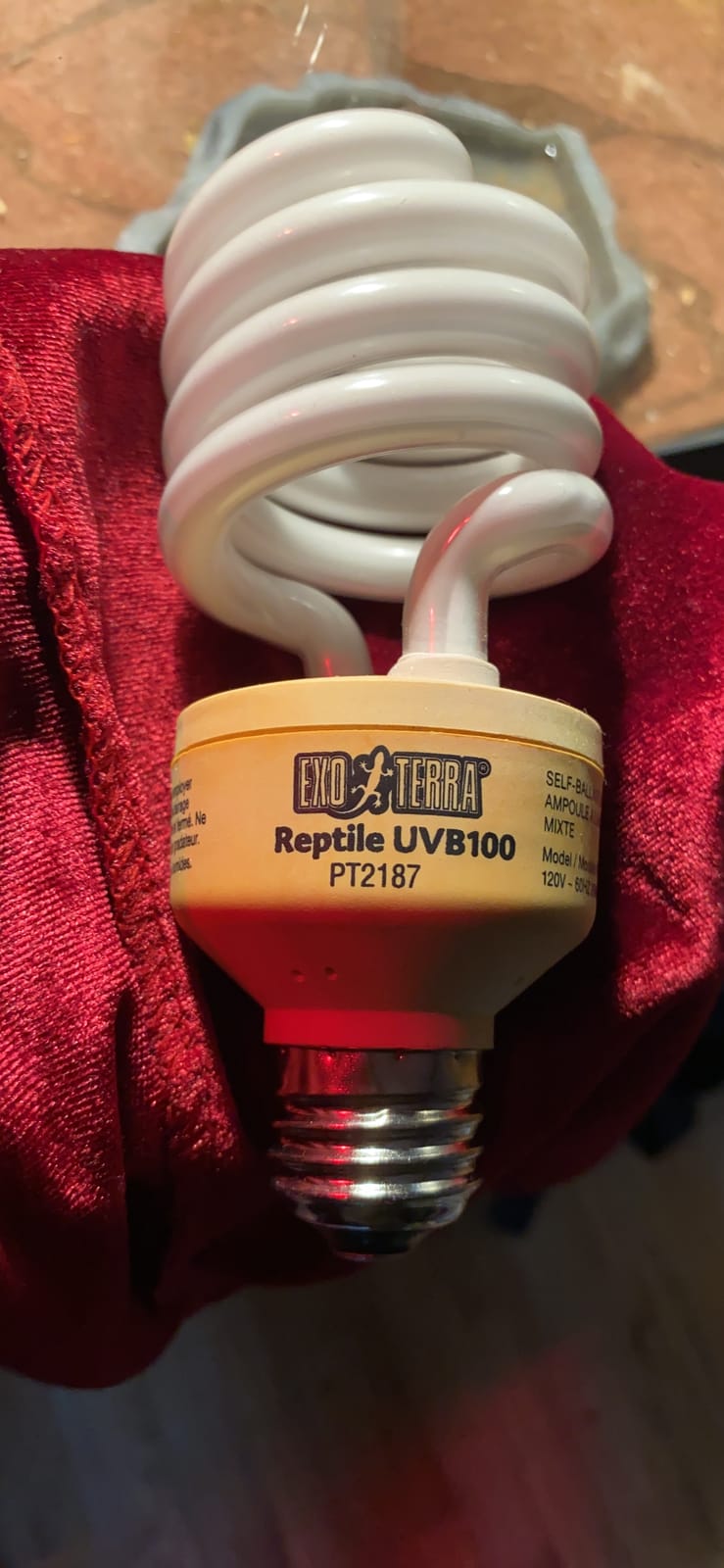
Fewer than 2,900 buyers are wrong about this one. Owners repeatedly single out the color it produces, describing dragons that look noticeably more saturated under this lamp than under a bare incandescent basking bulb, and the output draws enough power to be visible even in a large setup.
At 23 watts with a standard E26 base, it drops into most dome fixtures without rewiring anything. That simplicity is why it remains a common first upgrade for owners moving off a coil lamp they never knew was inadequate.
The recurring complaint is durability, not brightness. Early failures show up in a noticeable share of reviews, and a startup flicker in the first minute is mentioned often enough that you should leave the fixture on a few minutes before judging the output. It is rated for 120V, so it is not a fit for anything outside North American wiring.
Our own read is that this lamp is at its best as a UV supplement in an enclosure that already has a linear fixture, or as the primary source in a 20 gallon tank where a 39 watt tube would be overkill.
Who this lamp suits
Choose it when you want visible brightness and good coloration on a tight budget, or when your fixture takes a standard screw-in bulb rather than a tube. It also works as a second UV source in a 40 gallon tank to widen the basking zone.
It suits juveniles especially well, since the light is bright enough to encourage basking without pushing much heat into the enclosure.
Who should skip it
Skip it in a 120 gallon adult enclosure, where a point source leaves most of the basking area unlit. Compact bulbs of this style are the shape of lamp that owners on r/BeardedDragons are told repeatedly to move away from.
If you want a single lamp to last a full year without babysitting replacements, choose a T5 HO tube instead. This one needs more attention than that.
3. Zilla Desert T8 UVB Fluorescent 15W
Zilla Desert T8 UVB Fluorescent Light Bulb, 15 Watt
18 inch T8 tube at 15 watts
UVB and UVA in one tube
3.2 ounces
Pros
- Established brand
- Drops into existing T8 fixtures
- Tropical and desert versions
Cons
- Less output than a T5 HO tube
- Yearly replacement needed
If you already own a T8 fixture, this is the cheapest meaningful upgrade available to you. It is an 18 inch tube at 15 watts that slots into hardware you probably already have, and with more than 2,600 reviews behind it it is one of the most proven reptile tubes on the market.
The tube delivers UVB and UVA in the same envelope, which means your dragon still gets a visible light source along with the UV component. Owners running older enclosures report that switching to this tube is the first step that visibly improved their animal’s posture and feeding response.
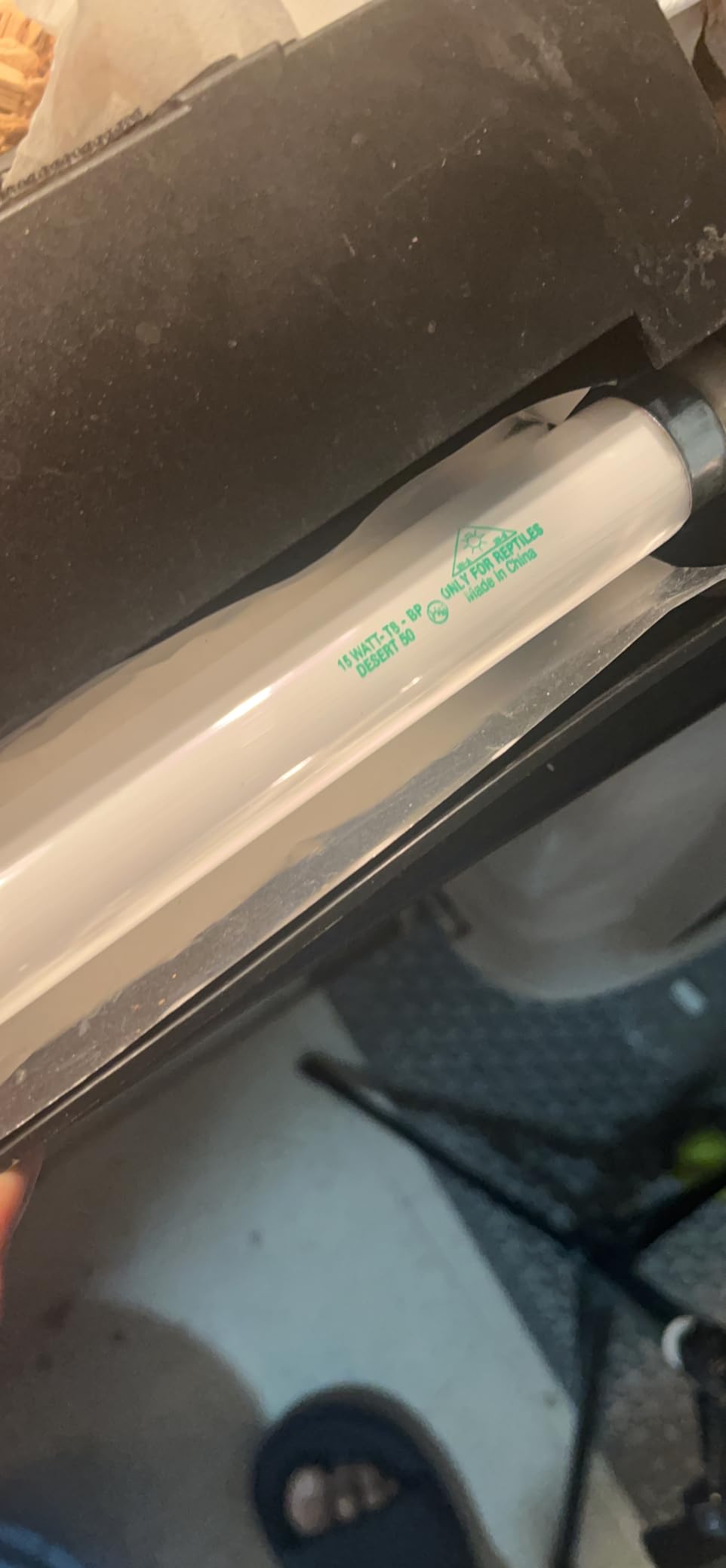
Where it falls short is output. A T8 tube simply does not push as much UV as a T5 HO tube of the same length, and the shortfall grows as the distance to the basking surface increases. The lamp also runs hot at the socket end, which limits how close you can safely mount it to the top of the enclosure.
Treat this as a working solution rather than a finished one. If you can move to a T5 HO fixture this year, the improvement in coverage is worth the swap.
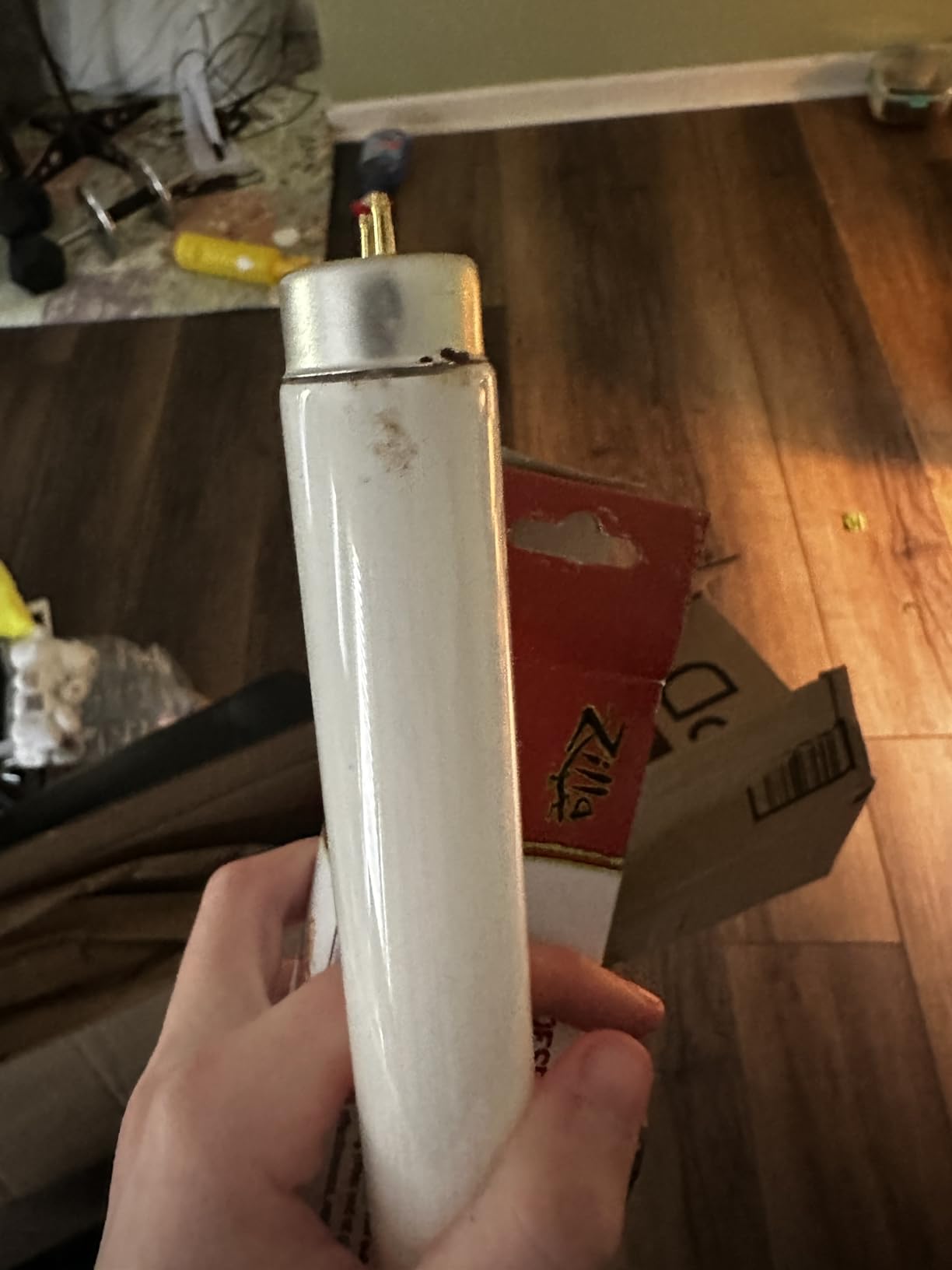
Who this lamp suits
It suits owners with a T8 fixture already installed and no intention of replacing it, and it works fine for a juvenile in a 20 or 40 gallon enclosure mounted close to the basking spot. A manufacturer with both tropical and desert versions also makes it easy to match the tube to other reptiles in the house.
It is a sensible first tube for a brand new keeper building a small setup on a limited budget.
Who should skip it
Skip it for a large adult dragon in a 75 or 120 gallon enclosure, where the lower output leaves the far end of the basking zone bare. Skip it too if you cannot mount it within roughly 8 inches of the basking surface.
Owners who have already gone to a T5 HO fixture rarely step back down, and they are right not to.
4. Zoo Med 24 Watt T5 HO ReptiSun 10.0 UVB Lamp, 2 Pack
Zoo Med 24 Watt T5 HO ReptiSun 10.0 UVB Lamp, 2pk
Two 24 watt T5 HO tubes
10.0 desert UVB
100-240V, 50-60 Hz
Pros
- Owners confirm target UVI
- Trusted for dragons
- Two pack value
- Over a year of service
Cons
- Occasional dead bulb
- Fragile in shipping
This is the setup we recommend to anyone building a bearded dragon enclosure from scratch, and 82% of its reviews are five star. The 24 watt T5 HO tube is the format that husbandry guidance has converged on for good reason: it throws a wide, even beam of UV across a basking area rather than a single hot spot.
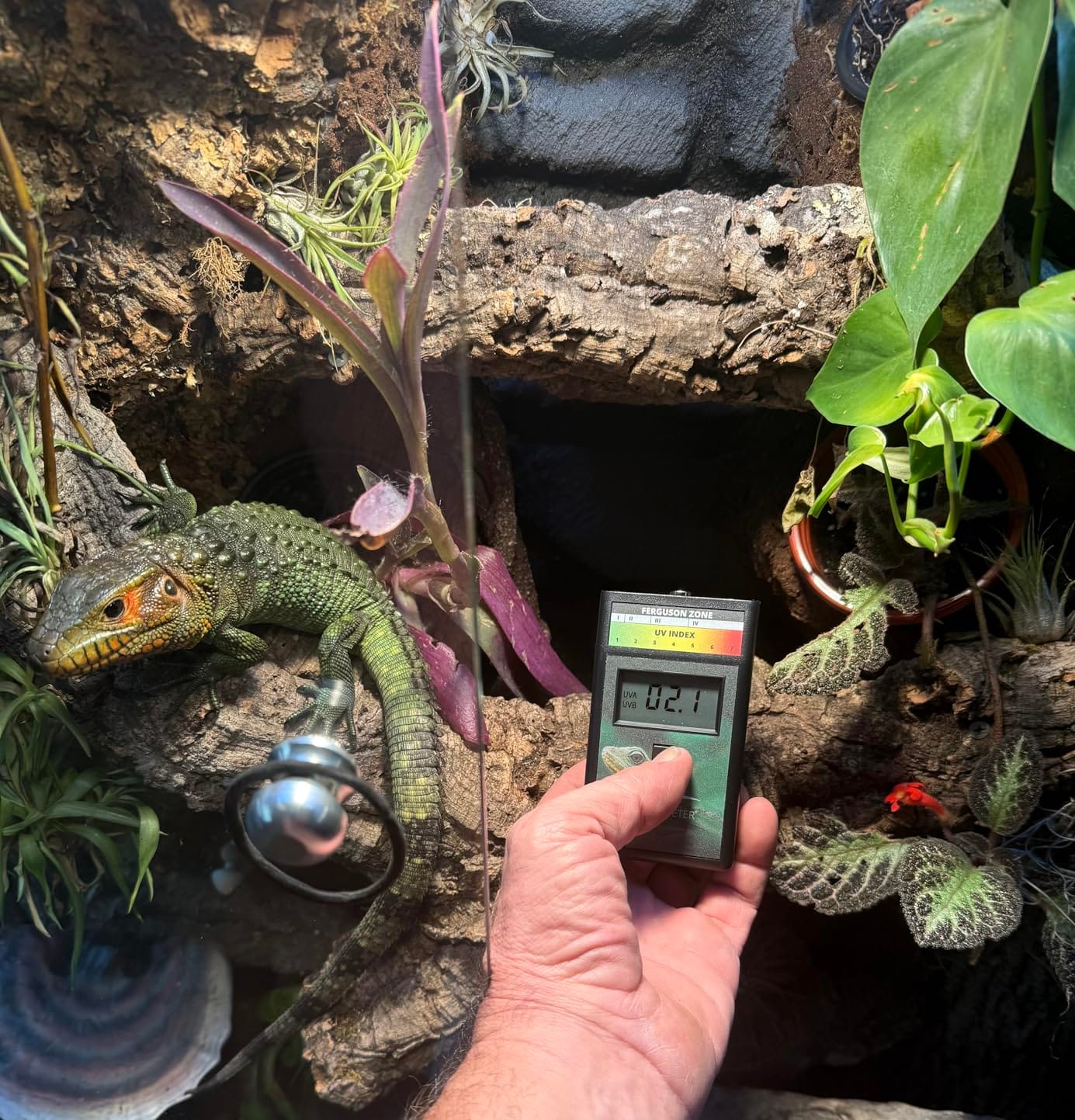
Owners are the most enthusiastic about this lamp of anything in the roundup on one specific point: several report measuring the UV index at their basking spot and landing in the 4.0 to 6.0 range that corresponds to Ferguson Zone 3. That is a claim you can verify yourself, and it is why we set the fixture distance deliberately rather than guessing.
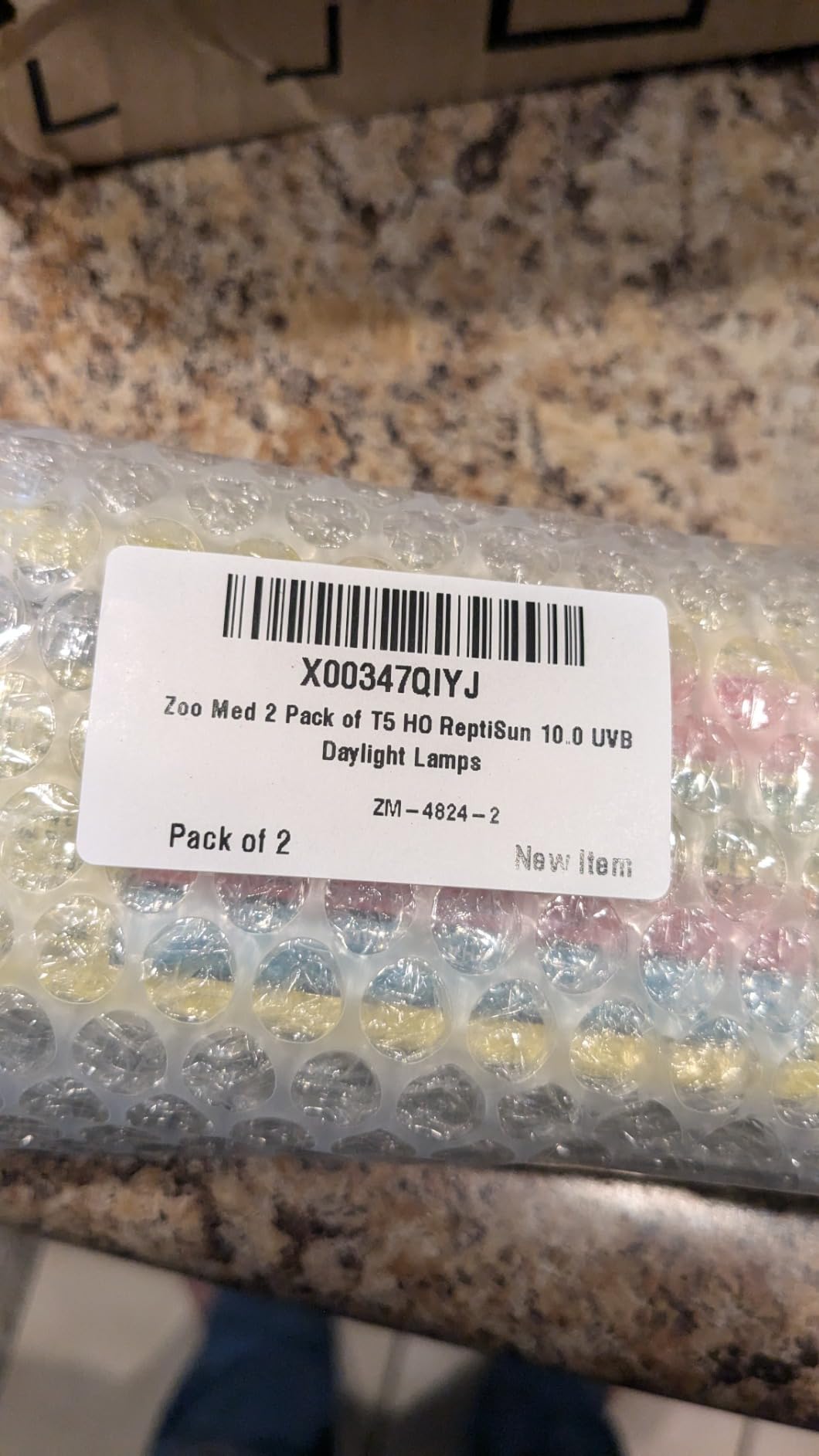
Two tubes means you can run one as a primary and keep the second as a spare, which removes the most common complaint in this whole category. Owners on r/BeardedDragons describe losing two UV lamps in a few months and wondering whether the fixture or the bulb was at fault, and having a spare on the shelf is the simple fix for that anxiety.
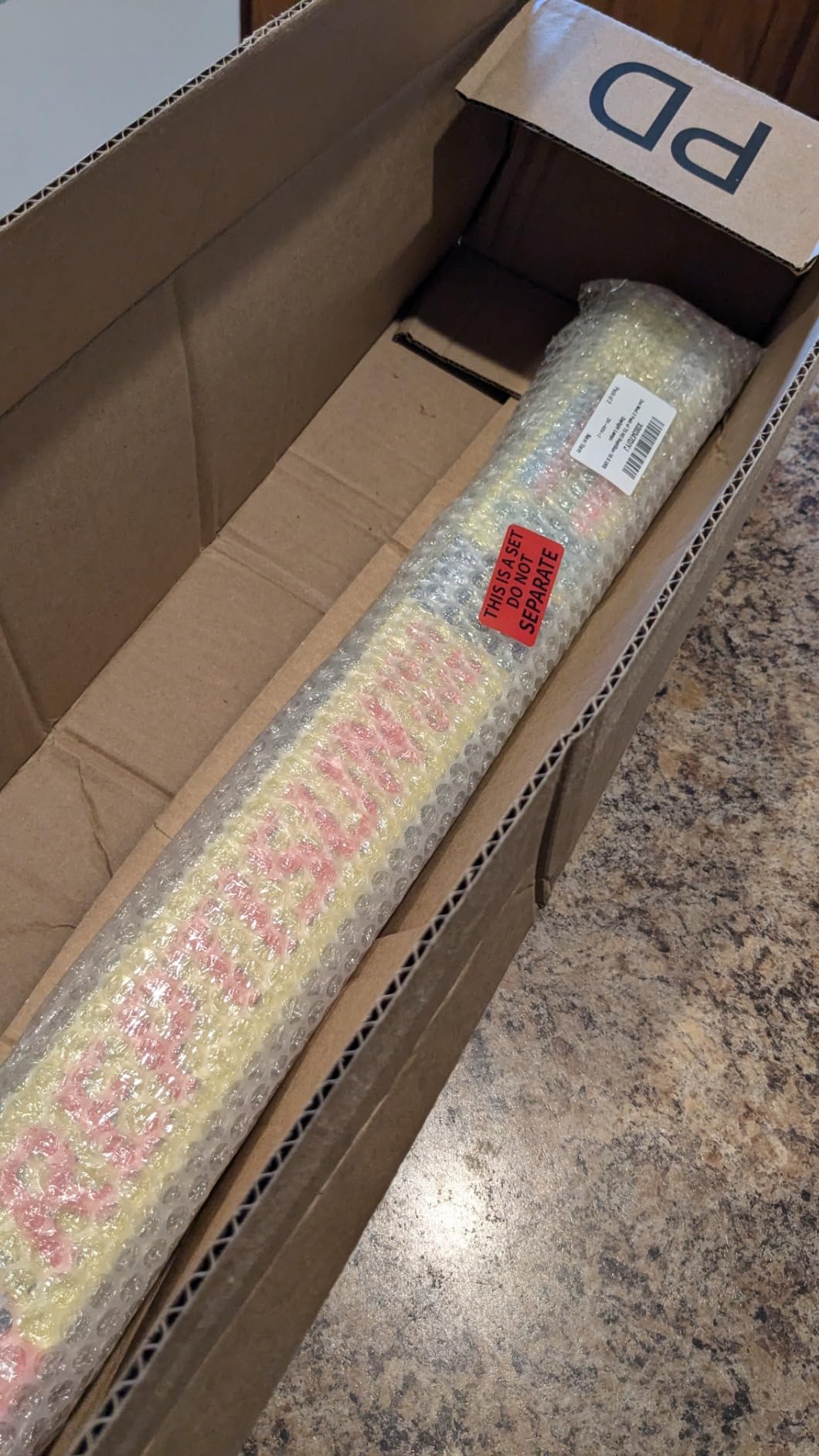
The negatives are minor but worth noting. Glass tubes arrive fragile, so a damaged tube in transit is a recurring story, and an occasional dead unit shows up in reviews. Inspect the tube the moment it arrives.
Who this bulb suits
It suits a 40 gallon or 75 gallon adult enclosure, and any setup where you want to confirm your output with a UV meter. A 22 to 24 inch tube typically spans most of the basking width in those tanks, which is the coverage you are aiming for.
It also suits anyone who has been burned by short-lived bulbs and simply wants one that has been reported to run past a year without being swapped out.
Who should skip it
Skip it in a 120 gallon enclosure. A 24 inch tube cannot span a 48 inch basking area, so the far half of the zone goes without UV even though the front is over-lit.
Skip it as well if you have no fixture at all and expect a plug-and-play result. These are tubes, not complete lamps, and you will need a suitable T5 HO fixture with a proper reflector.
5. Zoo Med ReptiSun 10.0 HO T5 UVB Lamp, 34 Inch, 39 Watts
Zoo Med ReptiSun 10.0 HO T5 UVB Lamp, 34″ L, 39 Watts
34 inch T5 HO tube at 39 watts
Stronger UVB than standard ReptiSun
6.4 ounces
Pros
- Highest wattage in this roundup
- Endorsed by zoos and vets
- Higher UVB output
Cons
- Requires a 34 inch fixture
- Highest one star share of the T5 tubes
This is the tube to buy for a 4 by 2 by 2 foot enclosure, because a 34 inch lamp is long enough to cover a basking area that a 24 inch tube leaves half-exposed. At 39 watts it is the most powerful linear UVB source in this roundup, and it produces visibly stronger output than the standard ReptiSun line.
That extra output is the whole point, and it also gives you room to correct your mounting distance. A higher output tube lets you hang the fixture higher, which means wider coverage and less risk of overheating the basking surface.
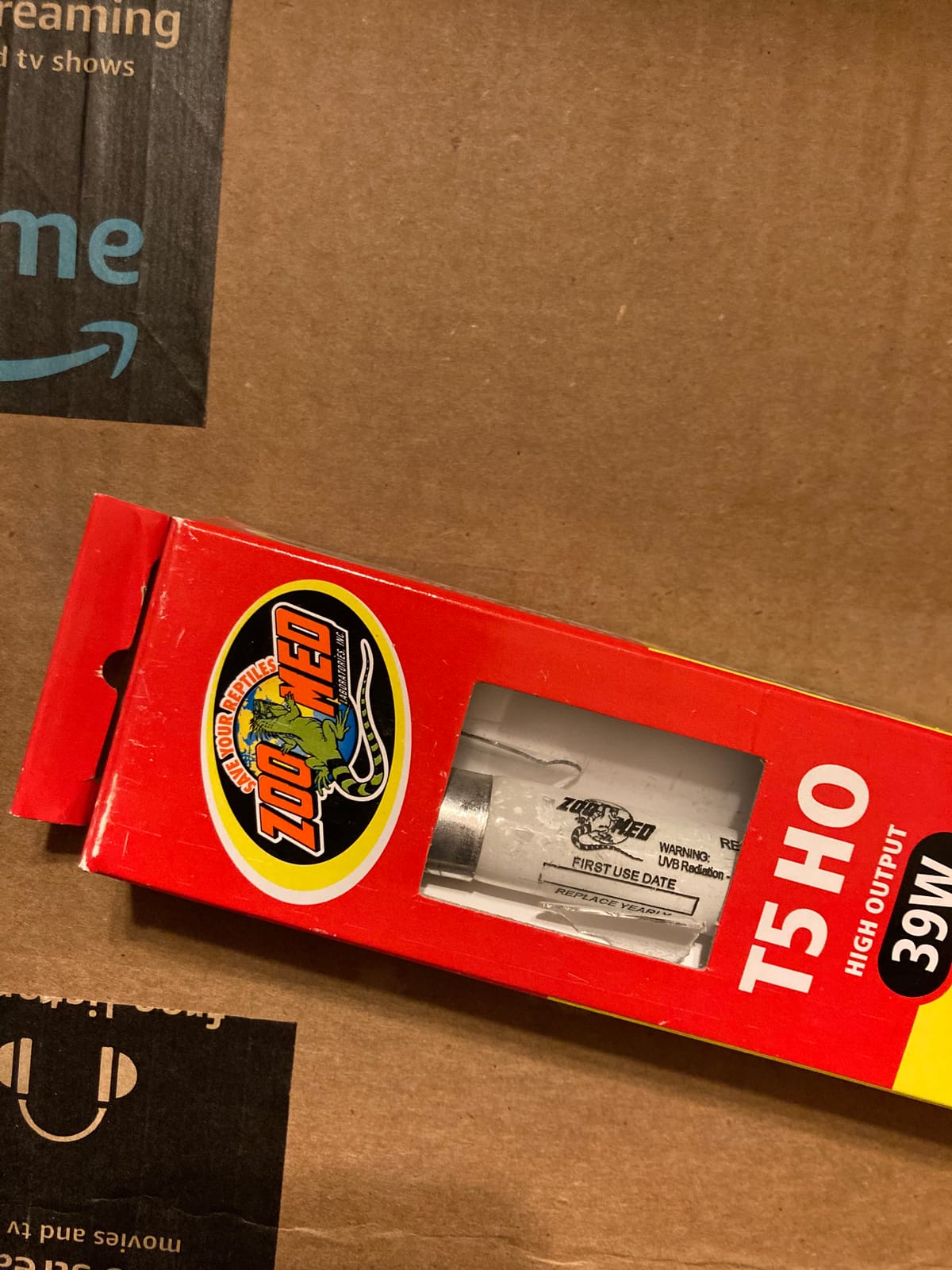
The catch is hardware. A 34 inch tube needs a matching 34 inch fixture, and that is the single most common reason owners end up with a tube they cannot use. Measure your enclosure before ordering rather than after.
Reliability is the other concern. This tube carries the highest one star share among the T5 options here, with 15% of reviews at one star against 75% at five. If you buy it, buy a spare at the same time.
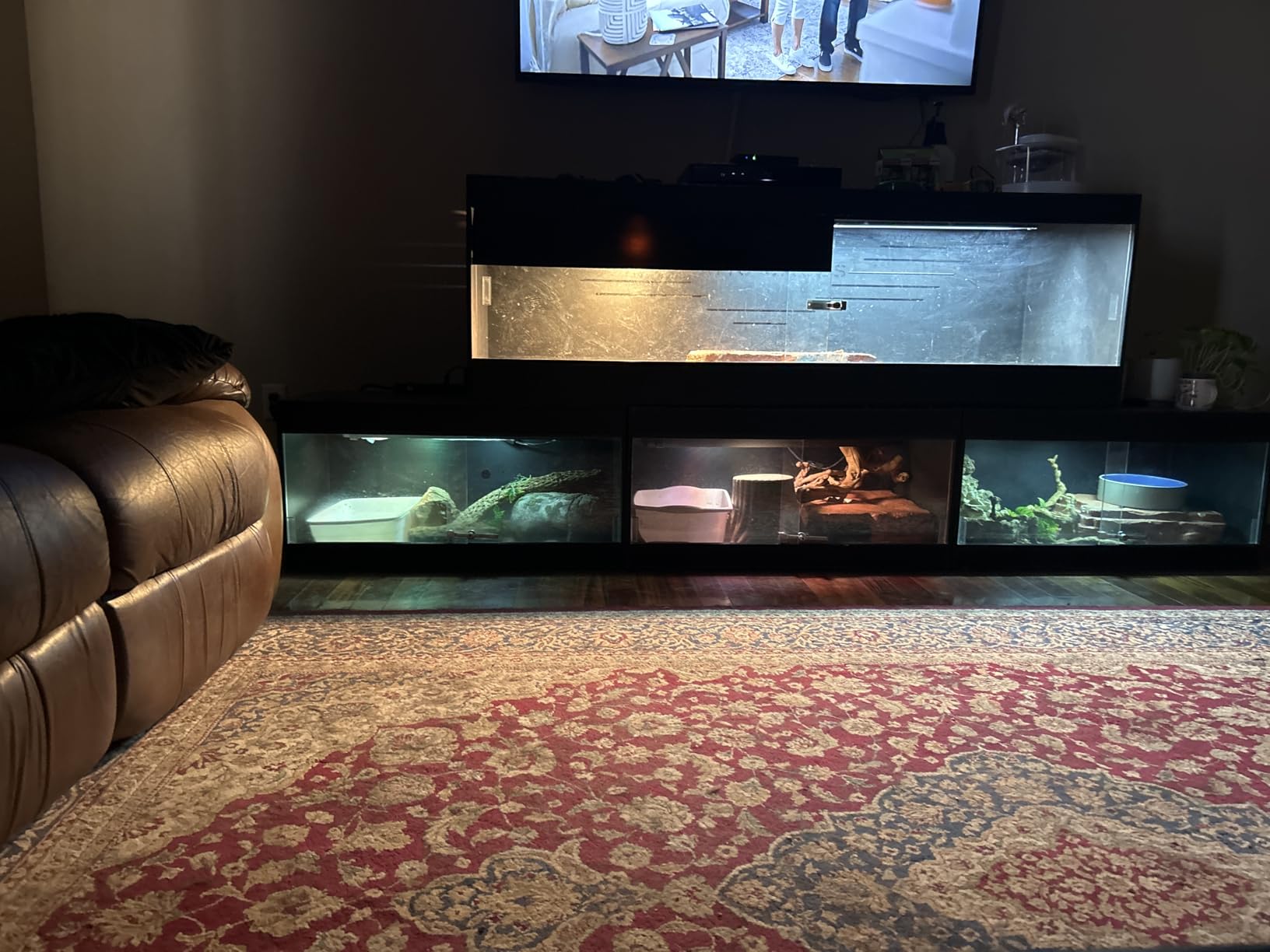
Who this bulb suits
It suits a full grown adult in a 120 gallon enclosure, particularly one that spends a long stretch of every day basking. It also suits anyone whose previous 24 inch tube left the basking area dim at the edges.
Because the output is strong, it suits owners who want a wide, forgiving zone rather than a narrow optimum. Getting the UV index into range becomes easier, not harder.
Who should skip it
Skip it in a 20 or 40 gallon tank. A 34 inch tube in a small enclosure delivers far more UV than the animal needs, forces an awkward mounting height, and leaves most of the tube illuminating empty air.
Skip it if you have no 34 inch fixture and are not prepared to buy one, because this is a tube and not a lamp.
6. REPTITRIP 27 Inch LED UVB Light with Controller
REPTITRIP 27-Inch LED UVB Reptile Light with Auto On/Off & Preset Day-Night Cycle Dimming, 4 UVI Modes Fixture Controller, 22W Aluminum UVA UVB Lamp for Bearded Dragons, Turtles & Snakes, 6500K
22 watt LED UVB bar at 27 inch
Four UVI modes covering Ferguson zones 1 to 4
Built in timer and dimming
Pros
- No frequent bulb changes
- Ferguson zone modes
- Timer and dimming built in
- Measurable UVI
Cons
- Higher cost
- No heat output
- Some pets avoid it
This is the only product here that removes the replacement problem entirely, and for owners tired of calendar reminders it changes the whole ownership experience. A 22 watt LED bar in an aluminum housing has a listed operating life of 7,000 hours, which is measured in years rather than seasons.
The four UVI modes are the genuinely useful feature. Instead of guessing whether your tube is strong enough, you select a mode and the fixture delivers a defined UV level, and with 83% of reviews at five star, owners are largely satisfied that the modes do what the labels say.
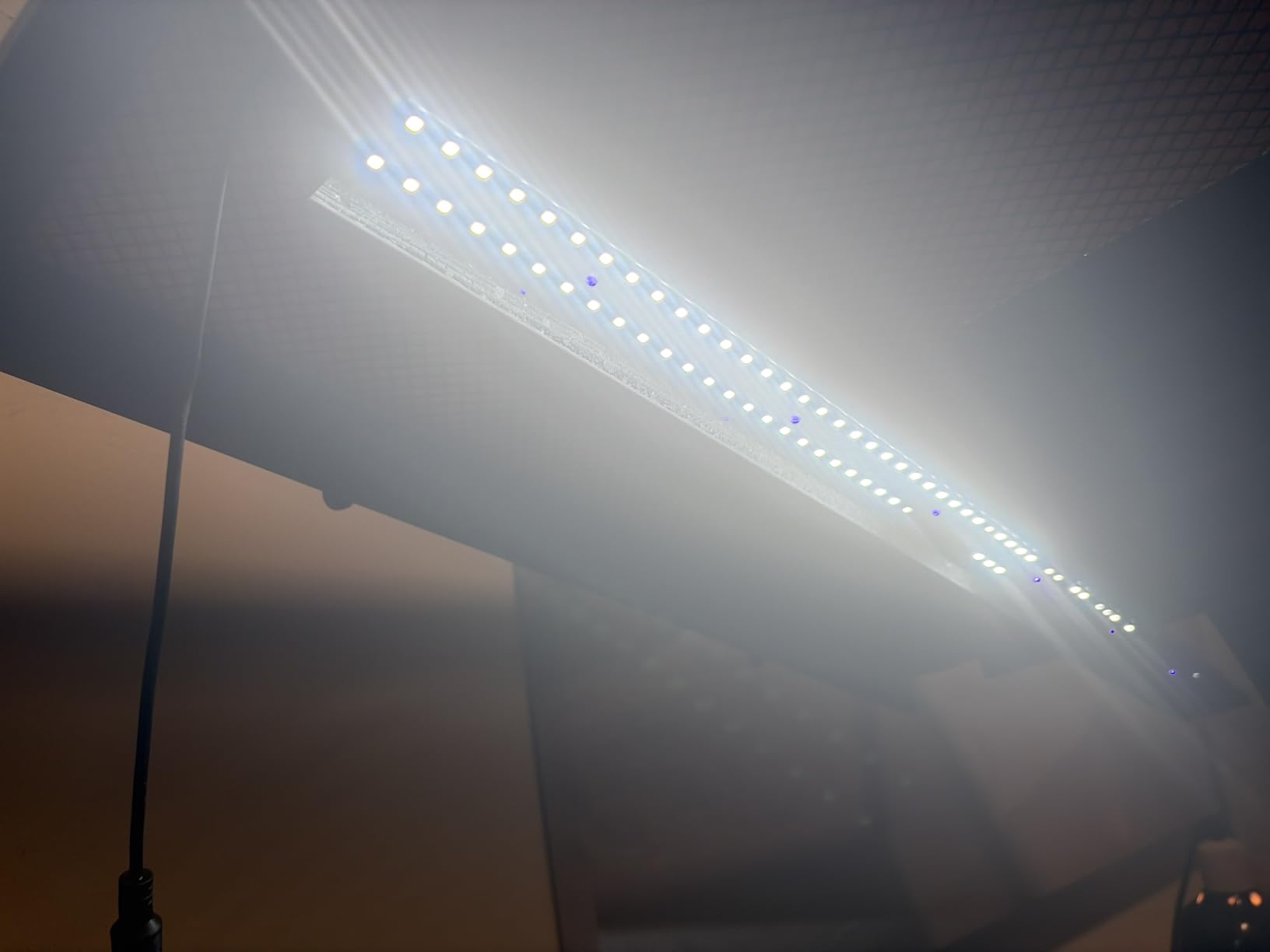
What this lamp does not do is produce heat. It is a UV and visible light source only, so you will still run a separate basking lamp. Owners who bought it expecting a single all-in-one solution report being disappointed, and the reverse is also true: some animals avoid the bright bar and spend less time in the basking zone than they should.
The listed operating life also assumes the light is run at a sane duty cycle. Running it 14 hours a day for a decade will age it faster than the number suggests.
Who this light suits
It suits owners who have repeatedly had bulbs fail early and suspect their fixture or timer, since an LED bar removes bulbs from the equation. It also suits anyone who wants repeatable, dialed-in UV rather than a percentage printed on a box.
A 27 inch bar covers most of the basking width in a 75 gallon enclosure, which is where this format makes the most sense.
Who should skip it
Skip it if your dragon is reluctant to bask under a bright overhead source, because the basking spot is where all the UV benefit happens. Skip it as a heat source for cold-blooded animals that need a real gradient.
It is also the priciest item in this roundup, so if you are outfitting a small tank on a budget, a 24 watt T5 HO tube delivers more UV for less money.
7. Mega-Ray Mercury Vapor UV Lamp, 160 Watts
Mega-Ray Mercury Vapor UV Light Bulb/Lamp for Reptile and Amphibian Use Tortoise Lizard, UVA UVB, High-Intensity Heat Bulb of UV and Basking – 160 Watts (120V)
Self ballasted 160 watt mercury vapor
UVA UVB and infrared heat
PAR38 E26, 120V
Pros
- Unmatched heat and UV output
- Long term healthy animals
- Lasts near a year
Cons
- Fragile filament
- Early failure reports
- Weak as a standalone UVB source
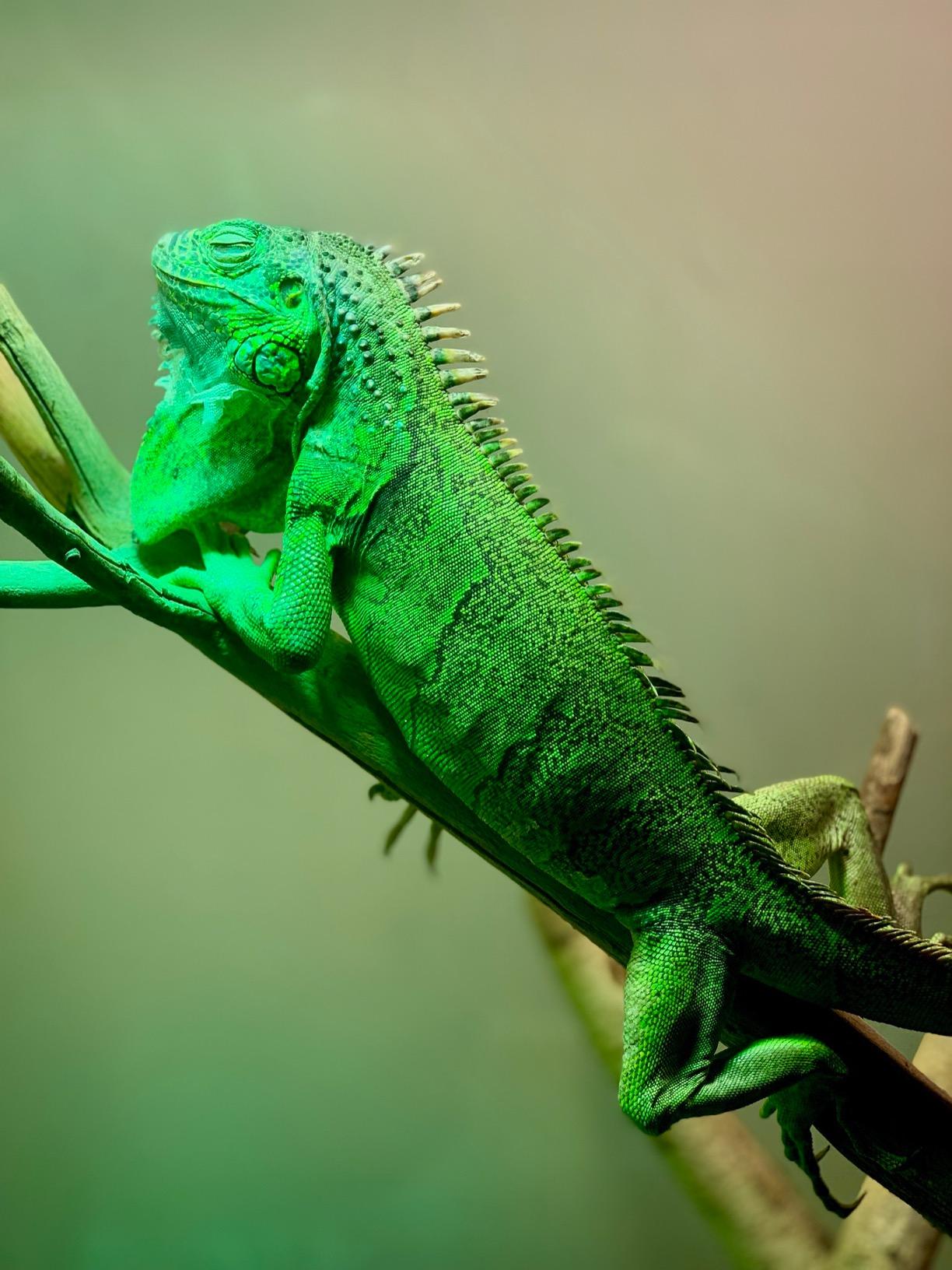
No other lamp here combines heat and UV in one envelope, and experienced keepers treat that as a genuine advantage. On Chameleon Forums, Mega-Ray is singled out as a solid brand that scores well in real-world setups, and the owner reviews here echo that, describing animals that looked consistently healthy over long stretches.
At 160 watts with a PAR38 shape, it throws serious infrared heat alongside UVA and UVB. For a large enclosure that needs a deep basking zone, one lamp doing the work of two simplifies the top of the tank considerably.
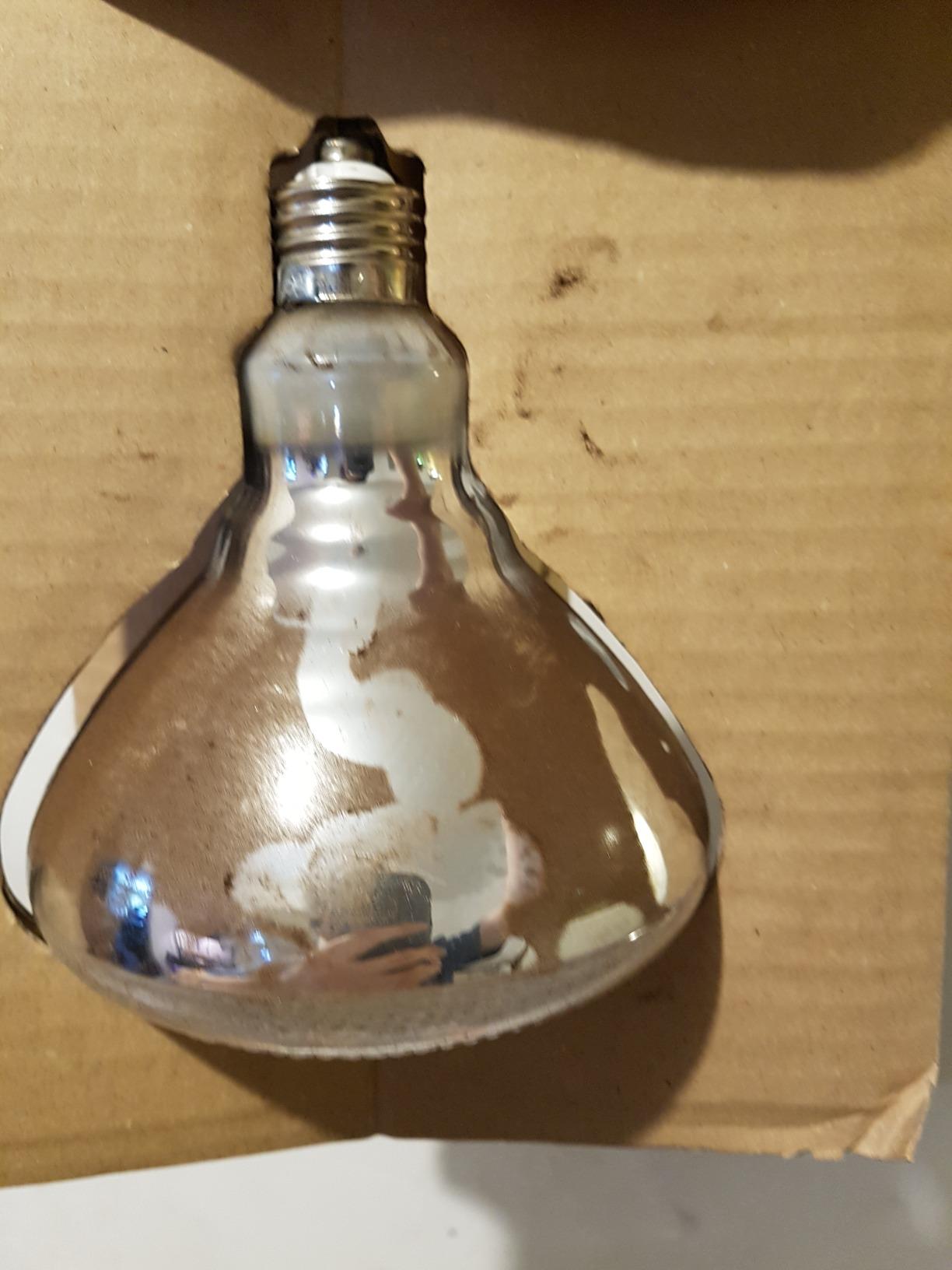
The drawbacks are substantial and owners are candid about them. The quartz envelope has a fragile filament, and early failure reports are common enough that you should treat the lamp as something you may replace sooner than planned. It also needs a ceramic socket, not a standard plastic dome fitting, which adds a hardware requirement.
Most importantly, this is a spot lamp. Even with strong UV, it lights a small area, and experienced keepers typically run it alongside a linear tube rather than instead of one. As a standalone UVB source it is the weakest of the high-output options in this list.
Who this lamp suits
It suits a large adult enclosure that needs serious radiant heat alongside UV, and owners who prefer fewer components above the tank. It works well as the basking lamp in a setup that also has a linear UVB tube for coverage.
It also suits anyone whose previous basking lamp could not generate enough heat to hold a proper gradient in a deep enclosure.
Who should skip it
Skip it if you are trying to solve a UVB coverage problem. A spot lamp cannot deliver even UV across a 48 inch basking area, no matter how bright it looks.
Skip it if your fixture takes a standard screw-in bulb with a plastic socket, or if you need something you can pick up and move without ceremony. Handling a hot 160 watt mercury vapor bulb takes practice.
8. Jugbuy UVB 10.0 Compact Fluorescent, 23W, 2 Pack
Jugbuy UVB Reptile Light Bulb 10.0, 23W UV Spiral Compact Florescent Terrarium Lamp Ideal for Desert Reptiles Bearded Dragons Lizard Tortoise Iguanas Chameleons Snake – 2 Pack
Two 23 watt E26 compact bulbs
10 percent UVB and 30 percent UVA
No UVC output
Pros
- Spare included
- Accurate meter readings
- Fits standard housings
- One unit lasted 3 years
Cons
- Mixed lifespan reports
- Warm at the socket
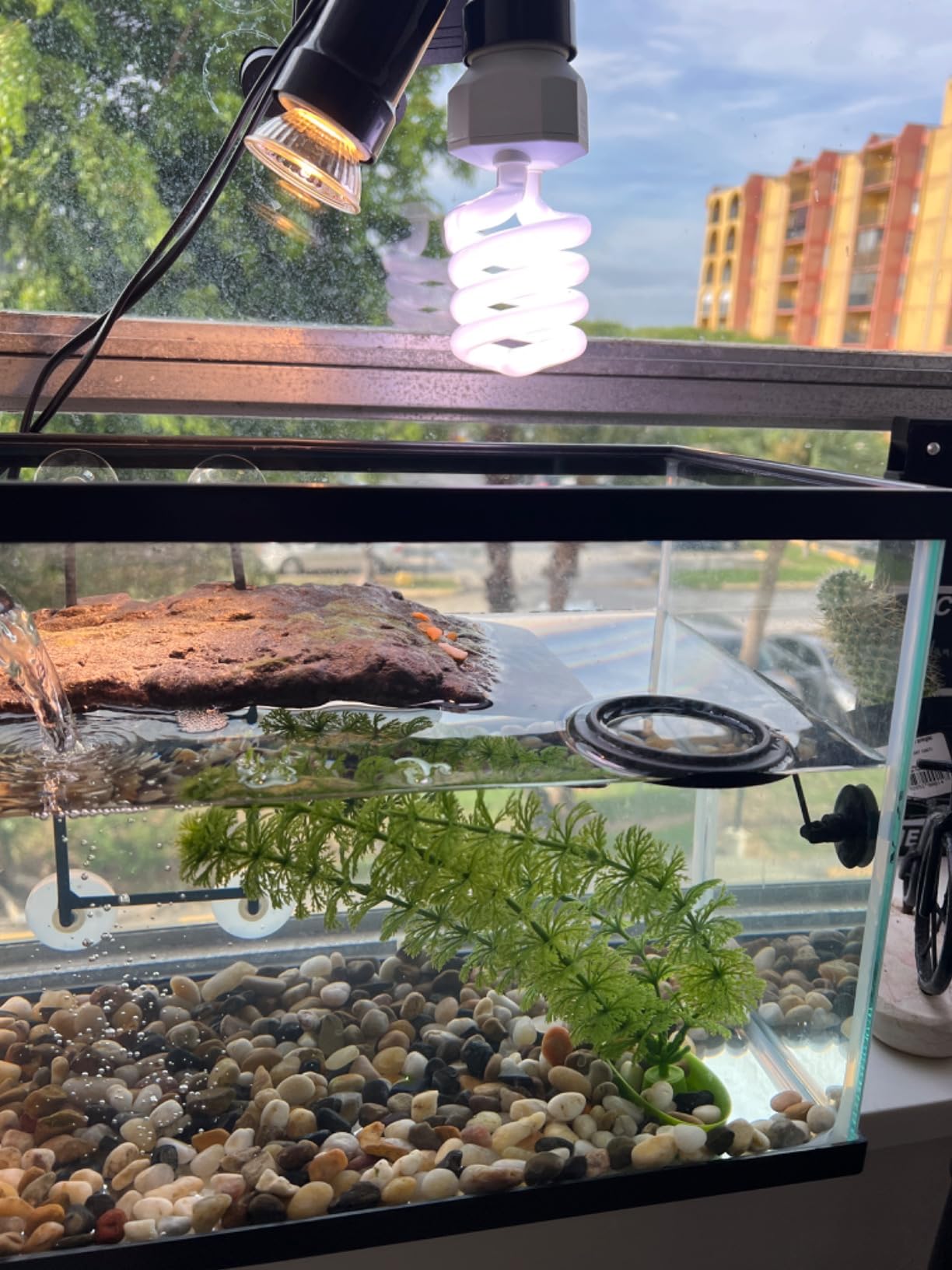
Including a spare in the same box is a small decision that solves a real problem. Compact bulbs in this class fade and fail without warning, and having the second bulb already on the shelf means a swap takes seconds instead of a panicked trip to a store that may not carry them.
Owners who measured output report that the readings matched what the packaging claims, which is not something you can say for every lamp in this roundup. The spec sheet states 10% UVB, 30% UVA and no UVC output, and that is the kind of honesty that makes a lamp easy to trust.
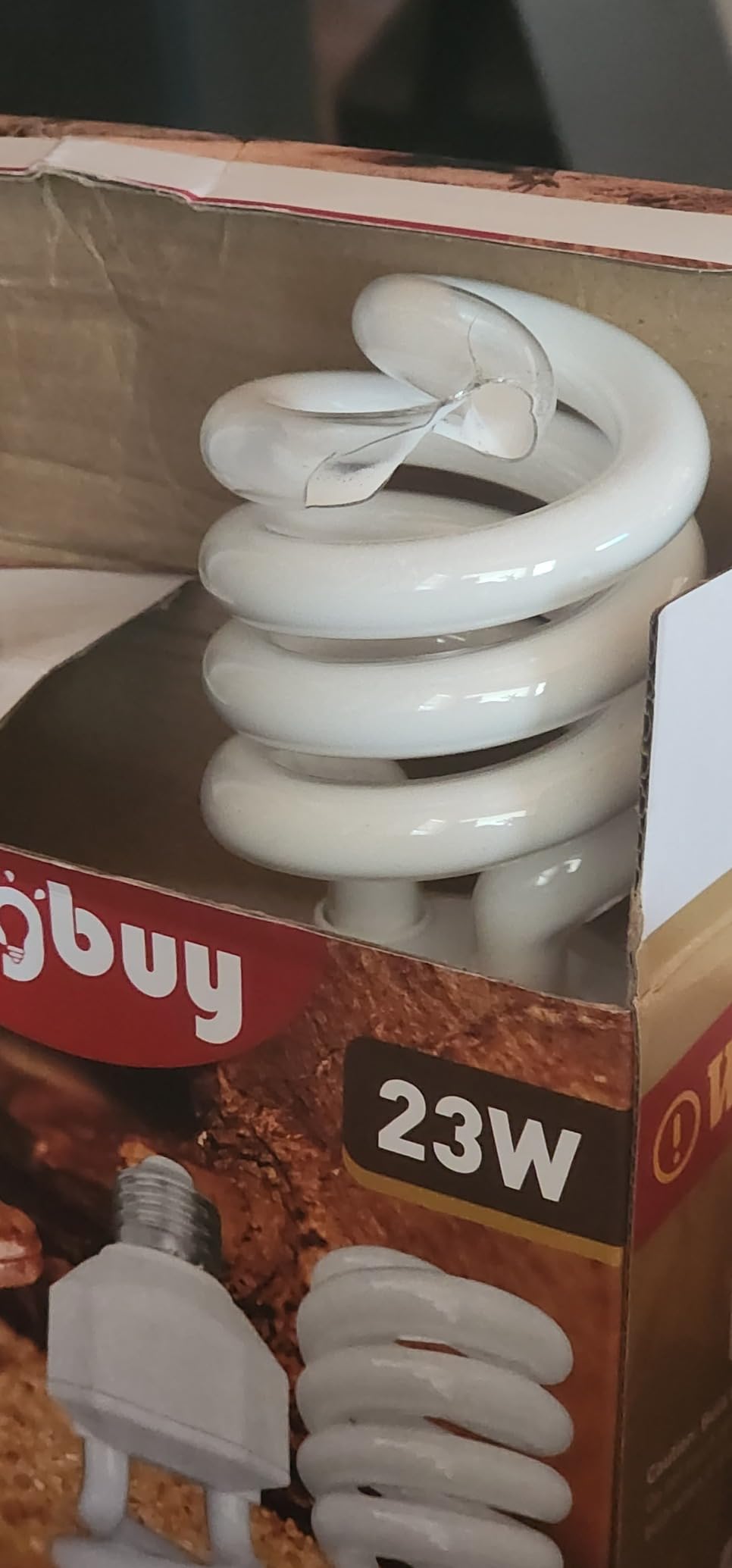
Durability is where reviews split, and the split is wide. Some owners report units running for three years, others report failure within months, and 73% of reviews sit at five star. The honest summary is that lifespan on this lamp is unpredictable in both directions.
The socket end also runs warm, which is normal for a 23 watt compact but does restrict how tightly you can mount it. Keep a few inches of clearance above the fixture and give it a dedicated socket rather than sharing one with a basking lamp.
Who this pack suits
It suits owners who want a desert-rated UV source that fits standard housings and a backup already included. It also works as a second UV source in a 40 gallon tank, widening the basking zone without a new fixture.
It suits first-time keepers who want to verify output with a meter before committing to a more expensive setup.
Who should skip it
Skip it as the only UV source in a large adult enclosure. A compact bulb cannot cover a wide basking area, and the same eye and skin exposure risks that make coils a poor choice apply here too.
Skip it if you need predictable multi-year service. The split lifespan reports make this a poor choice for anyone who does not want to check on it.
9. GeeKoit Desert 10.0 UVB LED Light, 5 Watts
GeeKoit Premium High-Intensity UVB Reptile Light for Optimal Calcium Metabolism,5-Watt 10.0 Desert UVB Light Ideal for Desert-Dwelling Reptiles Bearded Dragons Tortoises
5 watt desert 10.0 UVB LED
E26 base at 110V
2.08 ounces
Pros
- LED outlasts CFL
- Very low wattage
- Fits standard E26 sockets
Cons
- No meaningful heat
- Narrow spread
- Some brightness complaints
Five watts is the entire power draw, and that is the point. It plugs into any E26 socket, draws almost nothing, and because it is an LED rather than a fluorescent it will not suffer the phosphor fade that makes compact bulbs fade within a year.
It is a clean answer for a hatchling in a 20 gallon tank, or as a low-cost UV assist under a larger fixture. Owners report that the colour rendering is noticeably crisper than older compact lamps, and the low heat output means it can sit closer to the basking surface than a CFL can.
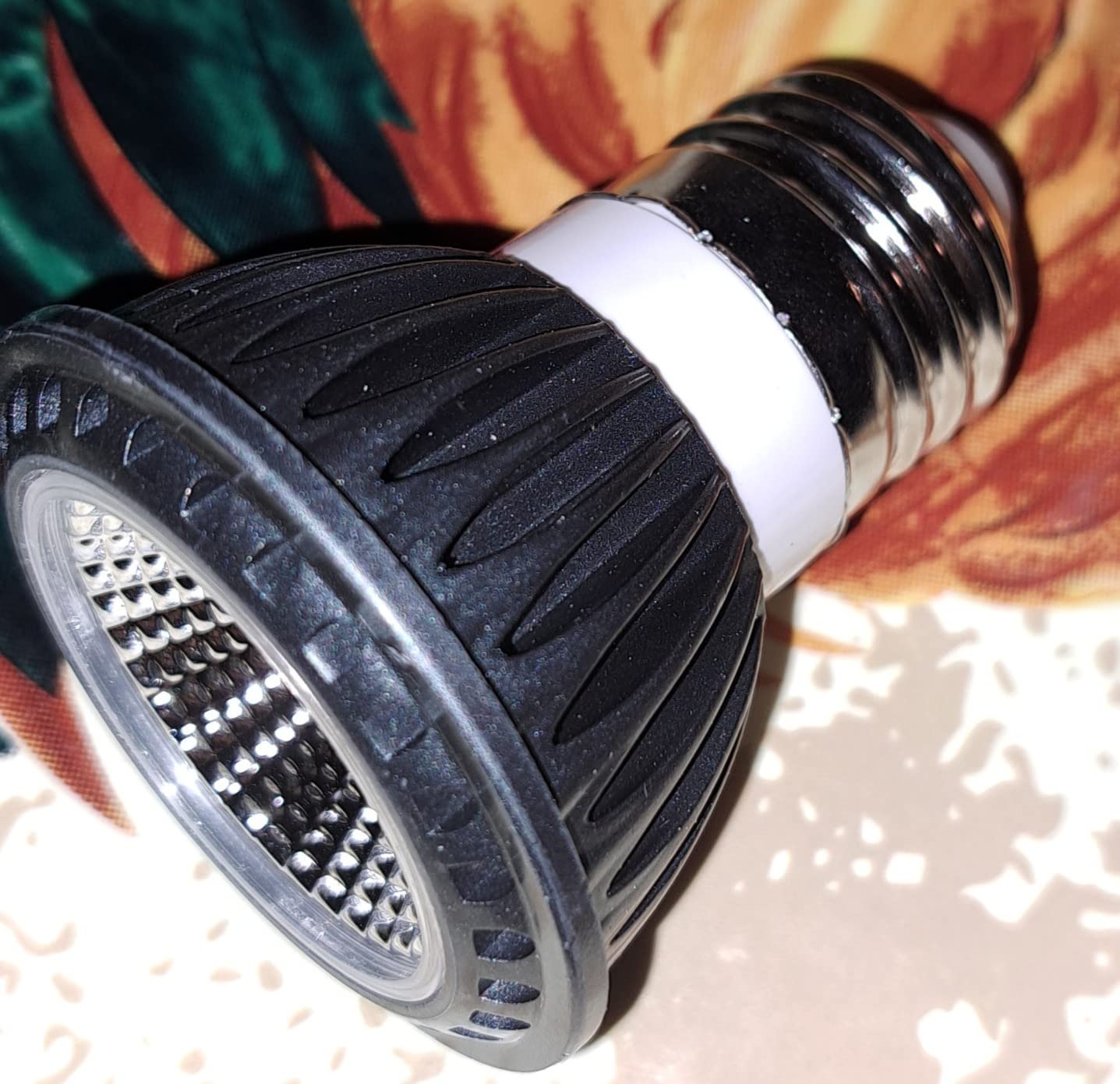
The limitations are real and they are about coverage. This is the narrowest spread in the roundup, and reviewers with larger dragons point out that a full-size animal can position itself just outside the beam. Brightness complaints also appear often, which is expected from a 5 watt source next to a 100 watt basking bulb.
It produces no meaningful heat, so it is a UV source and nothing else. Owners looking for a single lamp to handle both jobs will be disappointed.
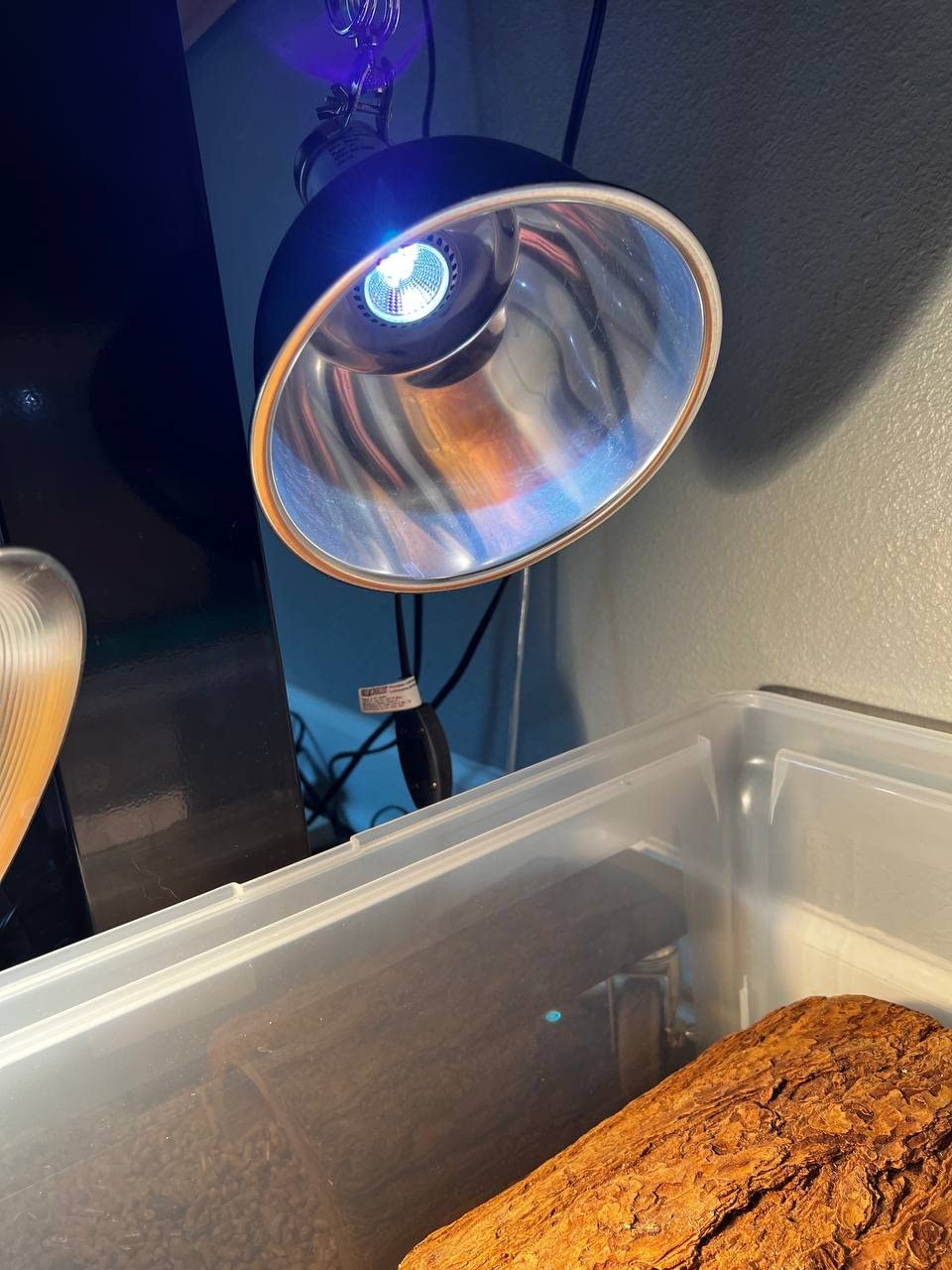
Who this light suits
It suits hatchlings and juveniles in small enclosures, and it suits anyone who wants UV that does not complicate their heat gradient. It also works as a cheap supplementary source under a wider T5 HO fixture.
Owners who have burned through CFL after CFL will appreciate that an LED does not need replacing on the same schedule.
Who should skip it
Skip it for an adult dragon in a 40 gallon or larger enclosure. The beam is too narrow to give a full-grown animal a usable basking zone.
Skip it for leopard geckos and other shade-dwelling species, which the manufacturer explicitly warns against. It is a desert-rated lamp and should not be used where a lower output is wanted.
10. REPTI HOME T5 UVB 24W 10.0, 2 Pack
REPTI HOME T5 UVB Reptile Light 24W 10.0,UVA UVB Light Bulb for Reptiles,2 Pack Reptile UVB Lamp Tube for Bearded Dragon
Two 24 watt T5 tubes at 22 inch
10 percent UVB and 30 percent UVA
Listed life up to 10,000 hours
Pros
- Fits 22 inch fixtures
- Stronger UV than cheap tubes
- Secure packaging
Cons
- Must sit lower to deliver full output
- UV weakened after 3 months for some
- No basking heat
This pack is the value entry into the T5 HO format, and 82% of its reviews are five star with only 3% at one star. Two 22 inch tubes at 24 watts give you a full linear footprint for a 40 or 75 gallon enclosure, and owners consistently report stronger UV than they expected from a tube at this level.
It is the right shape of answer for anyone who wants the coverage of a linear tube without stepping up to a 39 watt model. Run one tube over the basking zone and the second at the far end, and the whole enclosure receives usable UV.
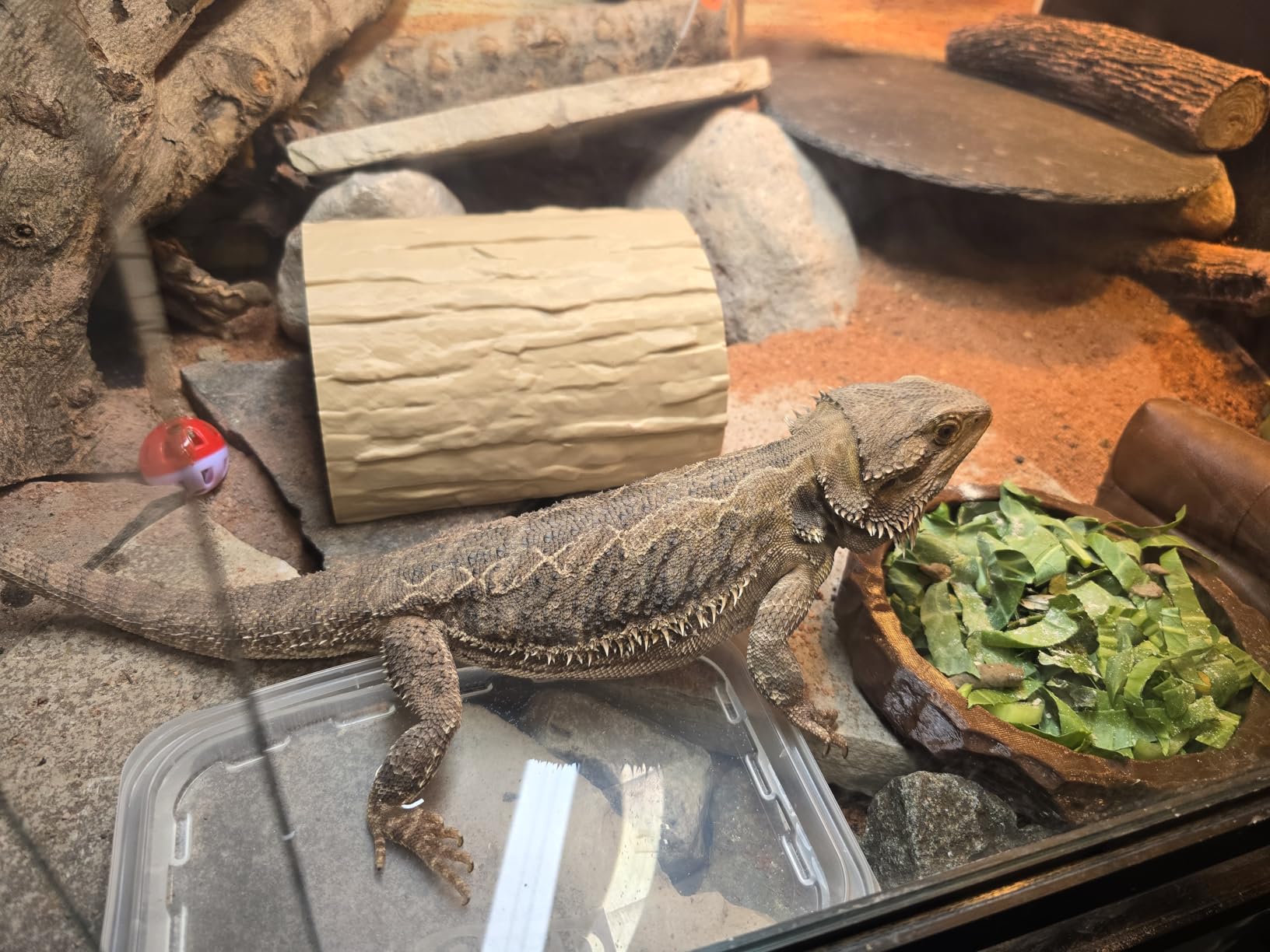
Two things to know before you mount it. The tube has to sit closer to the basking surface than a 39 watt model to deliver its full output, so plan the fixture height carefully rather than tucking it tight against the top. And a few owners report UV weakening after about three months, which is a durability concern worth weighing against the listed 10,000 hour life.
Like every T5 in this roundup, it produces no basking heat. You will still need a separate heat source and a thermostat.
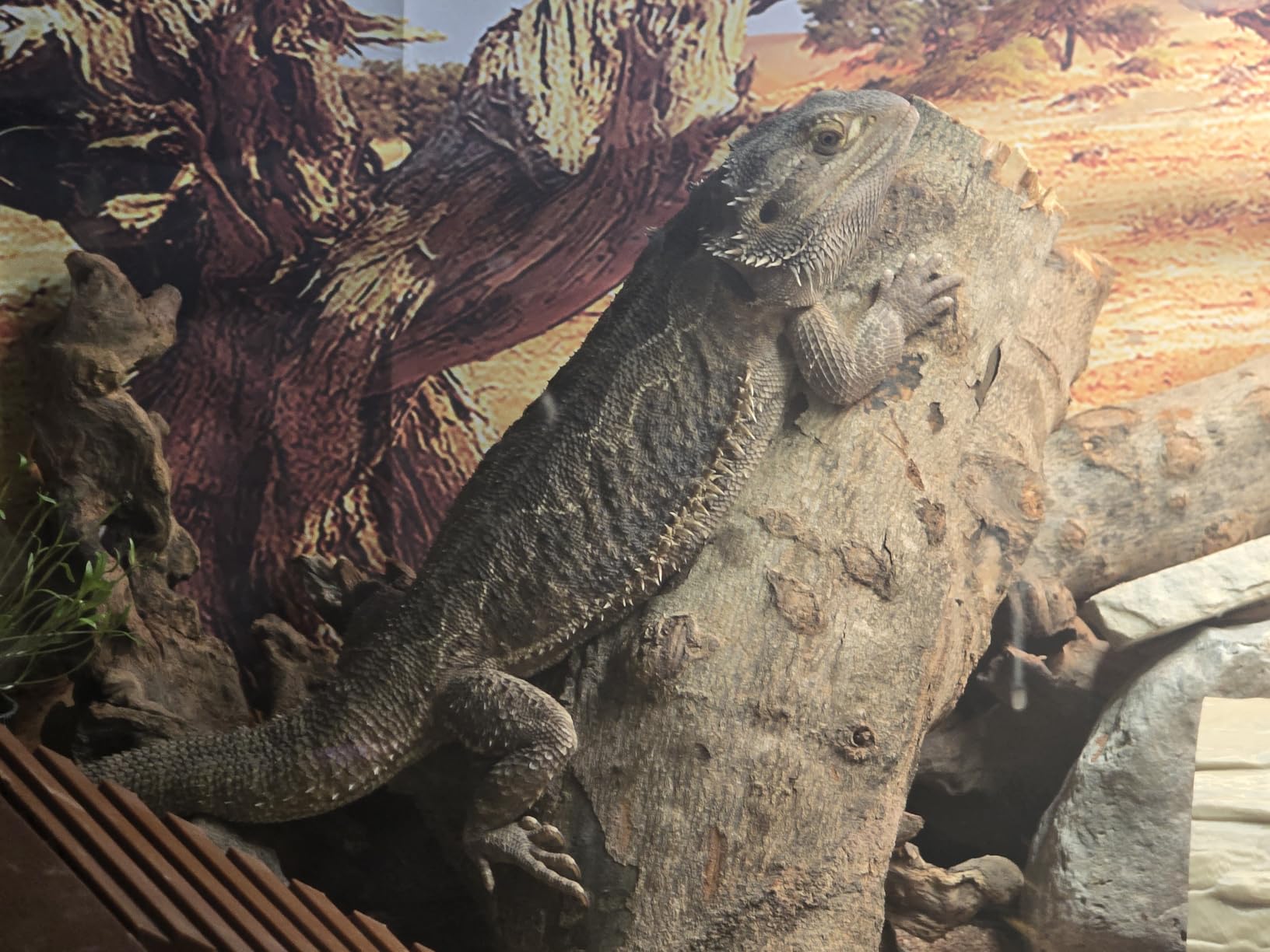
Who this pack suits
It suits owners of a 40 or 75 gallon enclosure who want two tubes rather than one, either to span the basking area or to cover a second zone. It also suits anyone running dual fixtures who wants a matched spare without ordering separately.
Because output is strong, it suits owners who can measure their UV index and tune the height rather than relying on a guess.
Who should skip it
Skip it in a 120 gallon enclosure, where two 22 inch tubes still fall short of covering a 48 inch basking area. The 39 watt 34 inch tube exists for exactly that reason.
Skip it if your fixture takes 24 inch tubes rather than 22 inch ones. Check the tube length before ordering, because the fit is not interchangeable.
How to Choose a UVB Bulb for a Bearded Dragon
Pick the format first, the wattage second and the mounting height last. Most disappointing UVB setups are not caused by a bad bulb; they are caused by a good bulb hung in the wrong place, or a weak bulb doing a job only a strong one can do.
T5 HO beats T8 and compact coils
This is the decision that matters most, and it is not close. A T5 HO tube spreads UVB across a wide area, runs cool, and delivers a measurable, repeatable output. A T8 tube delivers less of it. A compact coil delivers UV from a single point and concentrates exposure in one spot, which is why coils are widely advised against for bearded dragons despite decades of owners using them.
Compact bulbs are not useless. They are fine for a hatchling in a 20 gallon tank and acceptable as a supplementary source. They are the wrong answer for an adult dragon in a large enclosure.
Match tube length to enclosure size
20 gallon tank: a 13 to 23 watt compact, or a short T5 HO tube. Keep it simple and close to the basking spot.
40 gallon tank: a 24 watt T5 HO tube. This is the most common adult setup and the sweet spot of the category.
75 gallon tank: a 24 watt tube positioned over the basking zone, or two shorter tubes spread along the length.
120 gallon tank (4 by 2 by 2): a 34 inch 39 watt T5 HO tube, or a 27 inch LED bar. Aim for a tube that spans roughly half to four fifths of the enclosure length.
Set the distance before anything else
On a screen top, mount the fixture 7 to 11 inches above the basking surface. Mounted inside the enclosure, drop it to 12 to 18 inches. Inside mounting is stronger because the beam never passes through mesh, and owners on r/BeardedDragons describe securing the fixture inside with zip ties as a well established approach that they were very happy with.
Mesh tops cut UV output by roughly 30 to 45%, so if you cannot mount inside, mount as low as the fixture allows and keep the beam aimed at the basking spot rather than the back wall.
Confirm the reading with a UV meter
Aimed-for reading is a UV index of 4.0 to 6.0 at the basking surface, which corresponds to Ferguson Zone 3. Take the reading at the surface itself, not at fixture height, and take it where the dragon actually basks rather than at the centre of the tank.
If the reading is low, lower the fixture before you buy a stronger bulb. More often than not, distance is the problem.
Replace on a twelve month schedule
Replace fluorescent UVB bulbs about once a year whether or not they still light. Output fades before failure, and the single most common owner question across reptile forums is how to tell whether a lit bulb is still producing UV. Owners who find an old coil lamp on a dragon that has gone years without replacement usually discover the problem only after the animal shows symptoms, and metabolic bone damage is not reversible.
Put the date on a calendar reminder. It is the cheapest husbandry habit in this entire article.
UVB bulb is not a basking bulb
A UVB lamp and a basking lamp do different jobs and both are needed. The UVB tube handles invisible ultraviolet light for vitamin D3 synthesis and calcium absorption. The basking bulb provides visible light and radiant heat to create a warm basking zone. Neither substitutes for the other, and no amount of basking heat fixes a calcium problem.
General pet store all-in-one bulbs that promise UVB and heat in a single package are the option we would avoid most confidently. Split the functions across two lamps you can control separately.
Frequently Asked Questions
What UVB level is best for bearded dragons?
Aim for a UV index of 4.0 to 6.0 at the basking surface, which corresponds to Ferguson Zone 3. In bulb terms that means a linear T5 HO tube rated between 10% and 14% UVB. A 12% desert tube mounted 7 to 11 inches above the basking spot on a screen top, or 12 to 18 inches if mounted inside the enclosure, lands most dragons in range. Measure rather than assume, since a percentage printed on a box is output at the tube, not at your animal.
Is an UVB bulb the same as a basking bulb?
No. A UVB lamp produces ultraviolet light that a bearded dragon cannot generate on its own, and it is what allows the animal to synthesise vitamin D3 and absorb calcium. A basking bulb produces visible light and radiant heat to create a warm zone. Your dragon needs both, running on separate lamps. A bulb that delivers only heat will not prevent metabolic bone disease.
Can too much UVB hurt a bearded dragon?
Over-exposure is usually a positioning problem rather than a bulb problem. A compact coil concentrates UV into a small hot spot, and a dragon that sits directly under it can receive far more than it needs, which owners report as eye irritation and skin stress. Linear T5 HO tubes spread the same output over a much wider area, so a dragon has to actively stay in the beam to get too much. Self-shading is a normal behaviour and a good sign of a well set up enclosure.
Which UVB bulb is better for a bearded dragon, T8 or T5?
A T5 HO tube. It delivers more UV output across a wider area, runs cooler, and can be mounted lower to the basking surface without cooking the substrate. A T8 tube produces less output and runs hotter at the socket, which limits how close you can safely mount it. T5 HO tubes also come in longer formats, so a large enclosure can be covered by a single tube. T8 is an acceptable fallback only if you already own the fixture and plan to upgrade later.
How far above the basking spot should a UVB bulb be?
On a mesh screen top, mount the fixture 7 to 11 inches above the basking surface. Mounted inside the enclosure, 12 to 18 inches works because the beam bypasses the mesh entirely. Mesh blocks roughly 30 to 45% of UV output, which is the main reason owners who cannot mount inside struggle to hit a UV index of 4.0 to 6.0. If your reading is low, lower the fixture before buying a stronger bulb.
Our Verdict on the Best UVB Bulbs for Bearded Dragons in 2026
The Zoo Med ReptiSun 10.0 Mini Compact Fluorescent is the most owner-tested lamp we covered, and it is the right call for a 20 or 40 gallon enclosure where a compact source is all the room allows. For most adult bearded dragons, the format matters more than the label: a 24 watt T5 HO tube over the basking spot is the setup we would build today.
Match the tube to the tank, mount it closer than you think you need to, and check the reading with a UV meter. Replace it every year regardless of how bright it looks. Get those four things right in 2026 and the brand on the box matters very little.