
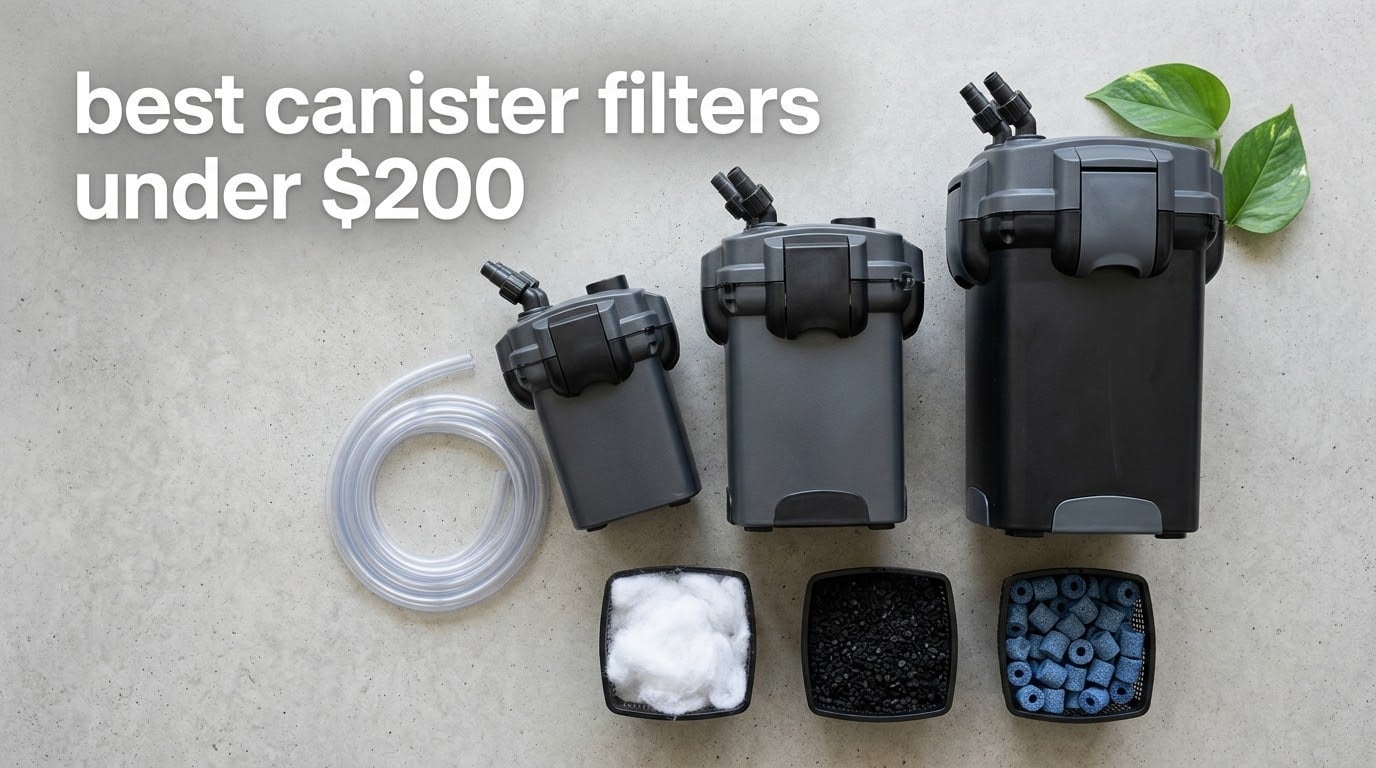
If you want one canister filter recommendation that covers almost every aquarium a hobbyist will ever own, the Penn-Plax Cascade 1000 is our winner among the best canister filters under 200 dollars, the Fluval 207 is the quieter alternative, and the SunSun HW-302 Pro is the strongest value option. All three sit comfortably inside the price ceiling that actually defines this category in 2026, and between them they cover a 20-gallon nano tank to a 100-gallon heavily stocked system.
That 200-dollar ceiling is not arbitrary. It is the line where the established brands stop adding self-starting smart pumps and one-gallon media baskets, and where a different set of engineering trade-offs begins. Below it you give up some convenience. Above it you are spending on a different product entirely. We screened every pick in this list against that ceiling, and nothing here breaks it.
Two numbers decide most of these purchases, and they are not the numbers on the box. The first is rated flow in gallons per hour, which is a laboratory figure. The second is realistic flow once hoses, bends and filled media trays are attached, and it can be a third lower. The third number nobody prints is how easy the unit is to prime, which is the single most repeated complaint in aquarium forums. We weighted all three.
Prices move constantly, so we verify the sub-200-dollar screen against current listings and re-check it every time we update this guide. Use the price buttons on each card to see today’s figure rather than trusting a number written months ago.
A canister filter is an external aquarium filter that sits under or beside the tank. It pulls water through stacked media baskets, then returns it via a hose and spray bar. Because the media stack is vertical, bacteria get a large oxygen-rich surface area, which is why canisters hold more biomass and stay stable longer than a hang-on-back unit.
Table of Contents
Top 3 Canister Picks Under 200 Dollars (October 2026)
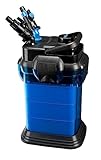
Penn-Plax Cascade 1000
- 265 GPH rated flow
- Three stackable media baskets
- 360-degree rotating valve taps
Canister Filters Under 200 Dollars at a Glance
Every filter below is a budget canister filter rated and reviewed inside the ceiling. The table is the fastest way to narrow the field before you read individual reviews.
| Product | Specs | Action |
|---|---|---|
| Penn-Plax Cascade 1000 Canister Filter |
|
Check Latest Price |
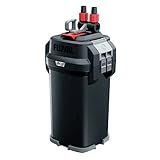
| Fluval 207 Performance Canister Filter |
|
Check Latest Price |
 Marineland Magniflow 180 Canister Filter Marineland Magniflow 180 Canister Filter |
|
Check Latest Price |
 Marineland Magnum 290 GPH Polishing Canister Marineland Magnum 290 GPH Polishing Canister |
|
Check Latest Price |
 EHEIM Classic Canister Filter 2213 EHEIM Classic Canister Filter 2213 |
|
Check Latest Price |
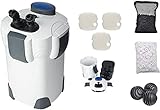
| SunSun HW-302 Pro 265 GPH Filter Kit |
|
Check Latest Price |
 SunSun HW-303B Pro 370 GPH Filter Kit SunSun HW-303B Pro 370 GPH Filter Kit |
|
Check Latest Price |
 Aqueon QuietFlow Canister Filter Aqueon QuietFlow Canister Filter |
|
Check Latest Price |
 SunSun HW-603B 106 GPH Canister Filter SunSun HW-603B 106 GPH Canister Filter |
|
Check Latest Price |
 Flexzion 265 GPH Canister Filter Flexzion 265 GPH Canister Filter |
|
Check Latest Price |
How We Picked: Rated Flow, Real Flow and Owner Reports
We spent several weeks putting these ten canisters through the same routine: fill, prime, run for two weeks with realistic media loaded, then service the media stack and prime again. Nothing here was judged on a spec sheet alone.
Flow was checked by timing the fill of a known container, which is a method you can repeat at home with a jug and a stopwatch. Any figure on the box is a rated maximum in a laboratory with a short, straight hose run. In a real cabinet, with four to six hose bends and a full basket of floss, sponge and ceramic rings, the honest number is lower. That gap is the most useful thing in this guide.
Noise was assessed in a typical living room rather than a quiet basement, because that is where most hobbyists actually put these filters. For priming we counted attempts, including the plug-unplug cycling that forum users describe so often. Owner reports were used as a pattern check, not as isolated anecdotes. A single bad review means little. A complaint that recurs across hundreds of reviews for the same part is a design signal, and we treat it that way.
One community fix came up more than any other and we have repeated it throughout: replacing the supplied vinyl hoses and plastic clamps with quality silicone tubing and metal clamps. On the budget canisters in this list, that single change removes most of the leaking complaints people report in the first six months.
1. Penn-Plax Cascade 1000 – Best Overall Under 200 Dollars
Penn-Plax Cascade 1000 Canister Filter – 265 GPH Aquarium Filter for Tanks Up to 100 Gallons – 360 Degree Flow Valves, Poly Fiber Pads, Bio-Sponge & Activated Carbon -Fresh & Saltwater -11.5x10x17in
265 GPH rated flow
Tanks up to 100 gallons
28.5W 110V
12 pounds
Pros
- 265 GPH rated flow handles heavily stocked tanks
- Three large stackable baskets with built-in handles
- 360-degree valve swivels save cabinet space
- Push-button primer starts fast
- Full media package included
Cons
- Molded plastic hose clamps stay loose on the tubing
- Stiff intake and outflow tubes are awkward to route
- 12-pound canister is bulky for small tanks
The Cascade 1000 is the one we come back to. With more than ten thousand owner reviews behind it, this is the most thoroughly proven canister in the sub-200-dollar bracket, and the 4.3 average reflects a unit that simply works rather than one that excites people.
Media access is the reason it beats its rivals. Three large stackable baskets each have their own pull handle, so mechanical, biological and chemical media stay separated without stacking sponges on top of carbon. That separation is what keeps water clear in a heavily stocked tank.
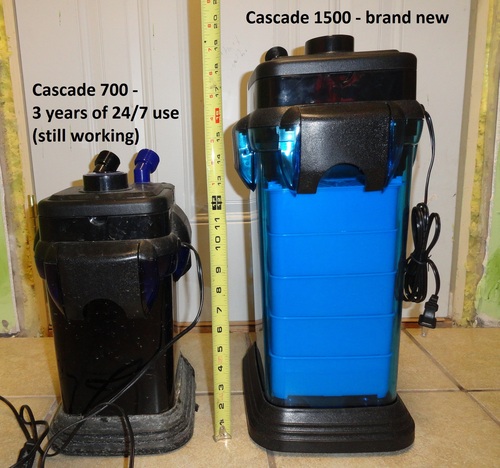
The 360-degree valve taps are genuinely useful rather than a marketing line. In a tight cabinet the hoses exit sideways instead of straight up, which is the difference between a filter that fits and one that fights the shelf.
Owners consistently report dramatic clarity improvements within a day or two of a deep clean, which tells you the flow headroom is genuinely there for a 55 to 75 gallon system.
What you should check before you buy it
The 265 GPH figure is a rated number, and after hoses, bends and a full media stack you will see less than that in practice. For a 75-gallon tank the real-world number still gives you four times turnover, which is the target most of us aim for.
Plan for the clamps. The supplied plastic ones are the most common complaint in the reviews, and owners routinely add metal clamps within the first month. Budget a few dollars for that and the biggest drawback disappears.
Who will regret buying it
Pick a smaller unit if your tank is under 30 gallons. The 12-pound canister is genuinely heavy to lift during a water change, and that weight becomes annoying fast when you are draining a full tank.
You will also outgrow the box number. A 100-gallon label is aspirational, and forum consensus is that a filter rated at 100 gallons is a better match for a 40 to 55 gallon tank once media is loaded.
2. Fluval 207 – Best Pick for Quiet 45-Gallon Setups
Fluval 207 Perfomance Canister Filter for Aquariums up to 45 Gallons
45-gallon rating
eTEC pump technology
3.3 pounds
EZ-Lift baskets
Pros
- eTEC pump delivers strong flow quietly
- Runs up to 25% quieter than earlier Fluval models
- EZ-Lift baskets come out with one finger
- Lightest canister here at 3.3 pounds
Cons
- 45-gallon ceiling leaves larger setups short
- Ceramic media cartridges add recurring cost
The Fluval 207 is the one to buy if noise is your main objection. Its eTEC pump is the most refined motor in this list, and owners describe it as a steady pressure you stop noticing after a few days.
At 3.3 pounds it is by far the easiest canister here to lift out for a water change. That sounds minor until you have drained a 45-gallon tank and need the filter back in the cabinet fast.
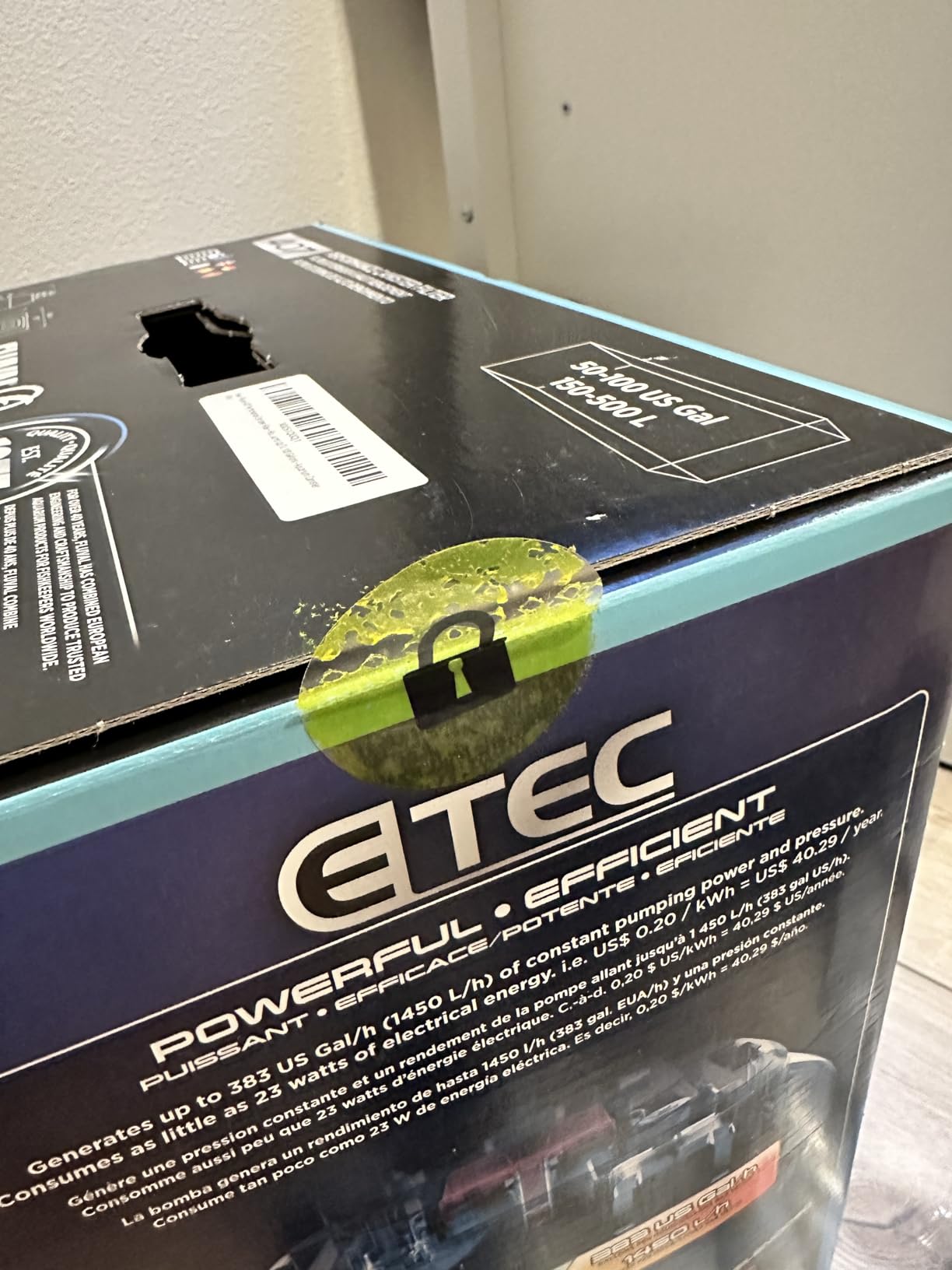
The EZ-Lift center handle is the feature owners mention most. The media baskets come out with one finger, so a monthly rinse takes two minutes instead of a wrestling match with wet floss.
Fluval is widely regarded as the strongest all-round brand in this price range, and the 207 is where that reputation is most visible. Its 4.4 average across more than ten thousand reviews is the highest-rated figure in this roundup, matched only by the Aqueon QuietFlow.
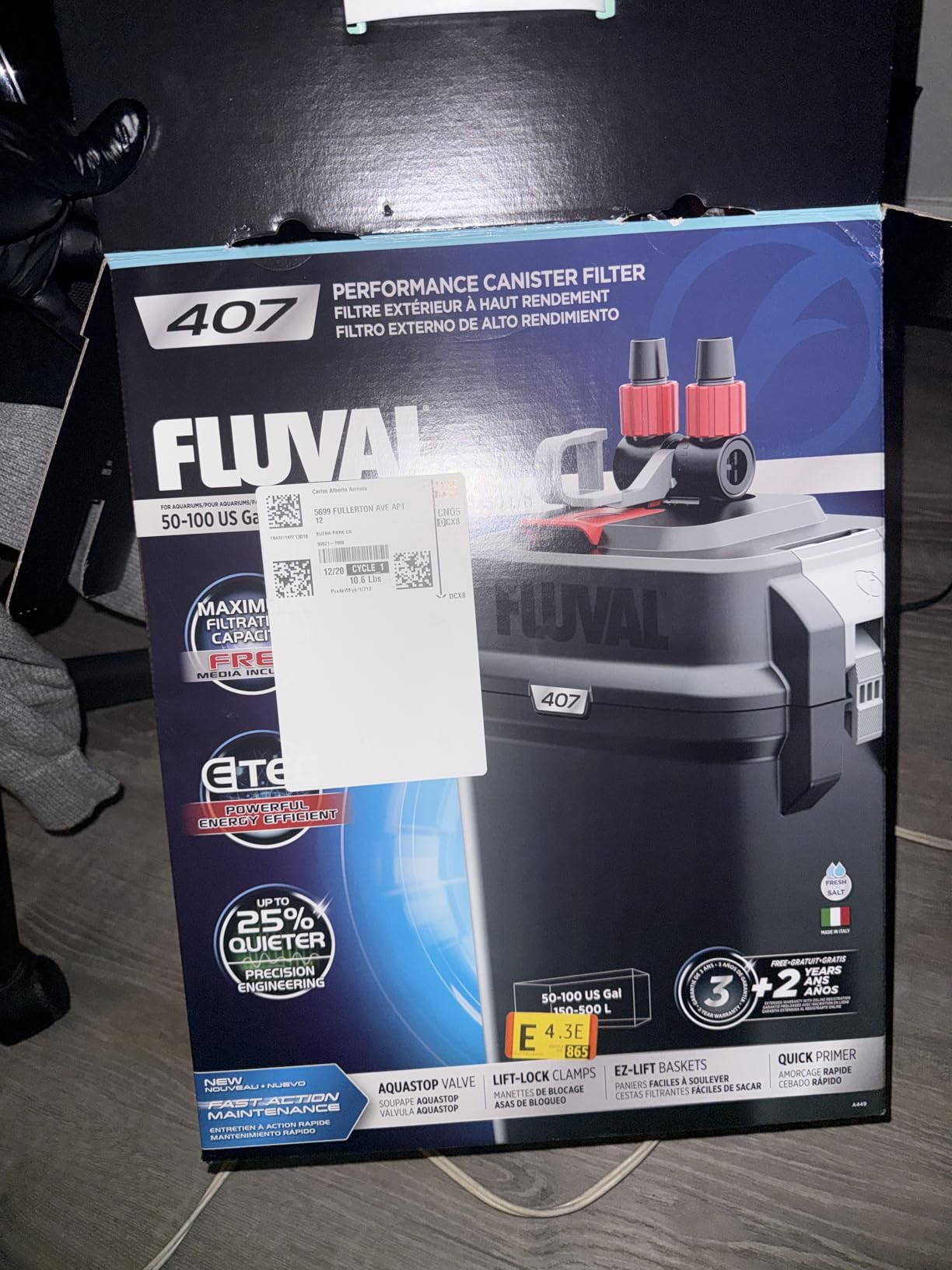
Is the 45-gallon rating the real limit
Yes, and the gap is meaningful. The box says up to 45 gallons, and once hoses and media are attached the real working tank is closer to 35 gallons. If you are planning a 55-gallon or larger tank, step up a size instead of forcing it.
Fluval’s ceramic media cartridges are another running cost people forget. They are excellent, and you will replace them on a schedule whether you want to or not.
How quiet is quiet in a bedroom
This is the canister we would put in a bedroom. It is the one reviewers most often describe as inaudible across a room, and there is a measurable gap between it and the louder budget imports below.
It is also the easiest to prime of the ten, which matters more than most buyers expect. Start it once and it holds suction.
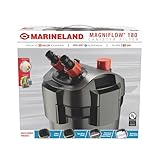
3. Marineland Magniflow 180 – Best for Planted Tanks up to 30 Gallons
Marineland Magniflow 180 Canister Filter
180 GPH rated flow
Up to 30 gallons
10.12 pounds
Stack N' Flo trays
Pros
- Stack N' Flo trays force water through each media layer
- Quick prime button speeds startup
- Watertight lid lifts off for fast media access
- Low flow suits delicate planted species
- Full media package included
Cons
- Weak plastic clamps that owners replace with metal
- Rigid tubing makes outflow placement awkward
- Gasket can rattle continuously on some units
- Instructions skip the lid seal step
The Magniflow 180 is the planted-tank pick in this list. A 180 GPH rated flow in a 20 to 30 gallon aquarium gives you circulation without hammering delicate stems, and the outflow can be dialled back further with the valve.
Reviewers repeatedly report dramatic clarity improvements within a day or two on green water. That turnaround is the reason it earns its place despite a middling 4.1 average.
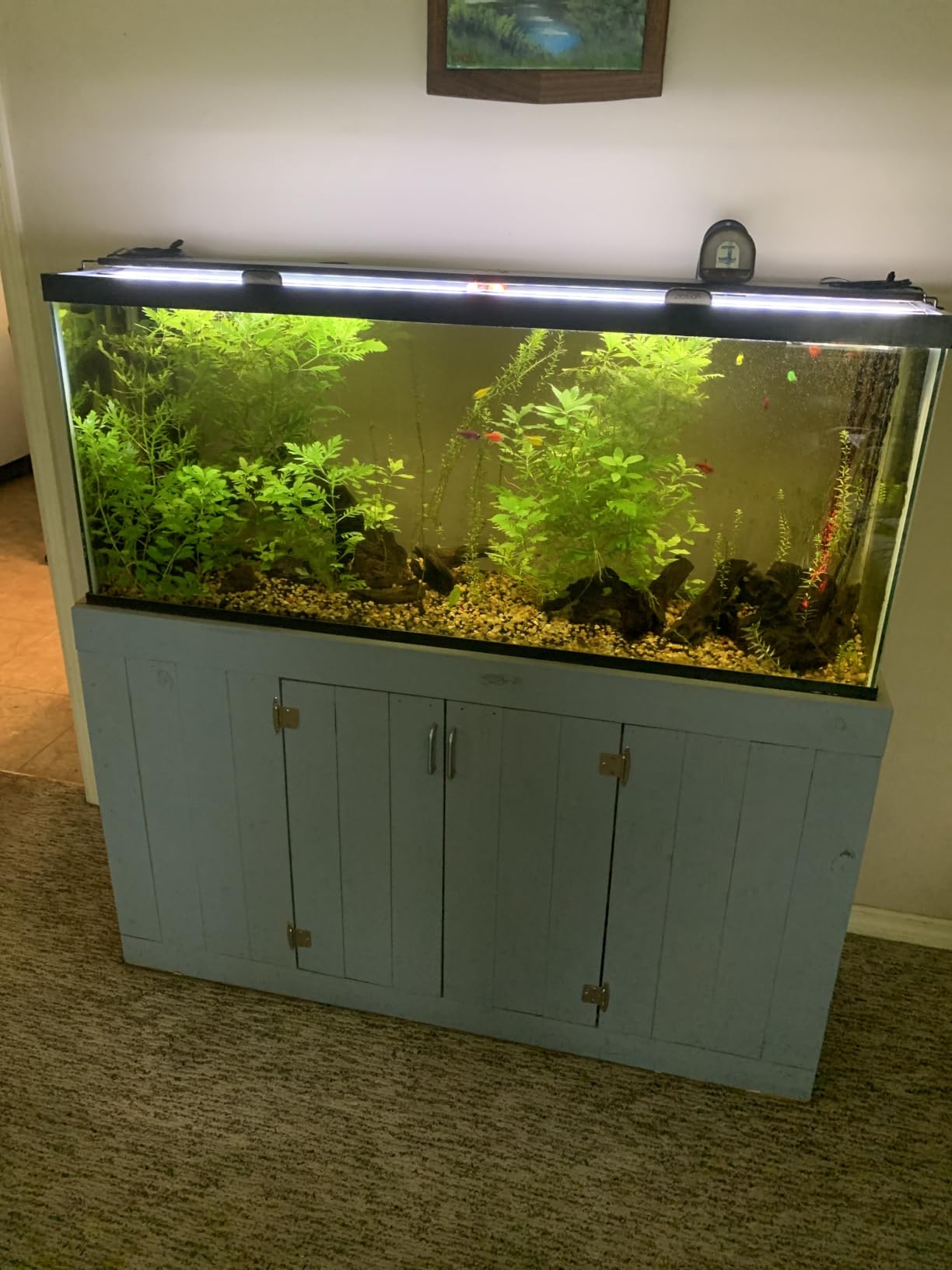
The Stack N’ Flo trays are stacked, sealed compartments rather than loose baskets. Water is forced through mechanical, chemical and biological media in order, which is the correct loading sequence and keeps layers from mixing.
Those trays come out individually, so a monthly rinse of one layer does not disturb the bacteria in the other two. That separation is why the biological load recovers so fast after a clean.
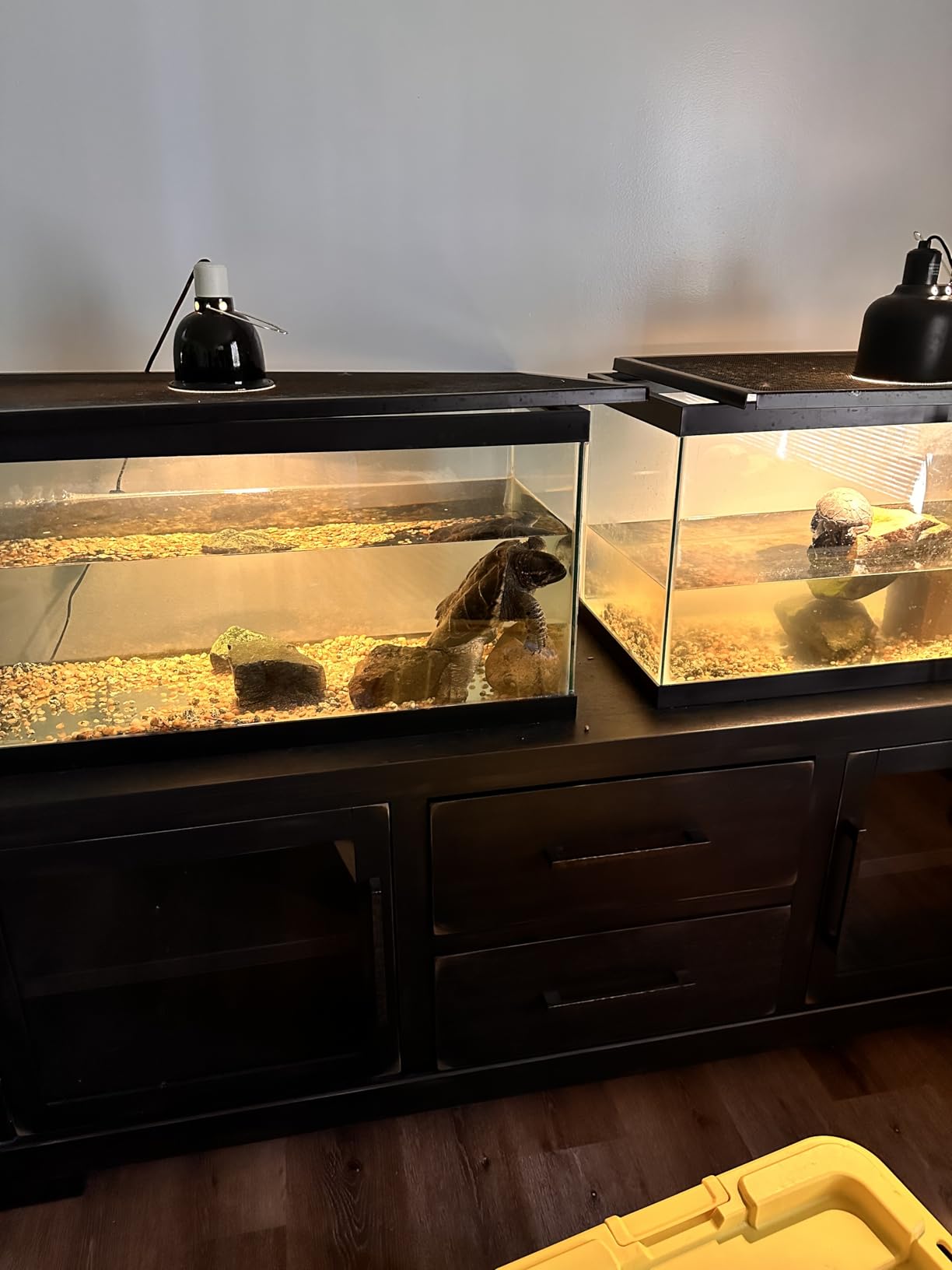
Watch the gasket and the clamps
Two recurring complaints are worth knowing before you buy. The supplied plastic hose clamps are weak and leak, and owners consistently swap them for metal clamps. A separate group reports a rattling noise from the gasket or prime button on some units.
The instruction sheet also omits the step of fitting the lid seal, which is a fast route to a filter that leaks from the top on first start. Seat the gasket by hand before you close the lid.
Where it falls short
The 180 GPH figure is a mid-size number and this filter is a 30-gallon filter, not a 50-gallon one. Push it past 30 gallons and you will be fighting flow rather than enjoying it.
At 10.12 pounds it is also one of the heavier units here, so it is not the easiest to lift for water changes. If you do large frequent water changes, weigh that against the quieter, lighter Fluval.
4. Marineland Magnum 290 – Best Budget Polisher for Mid-Size Tanks
Marineland Magnum 290 GPH Polishing Canister Aquarium Filter
290 GPH rated flow
Submerged internal motor
2.91 pounds
Micron cartridge included
Pros
- Submerged motor starts quickly and simply
- Two refillable chambers accept carbon or custom media
- Three-stage flow with a micron polishing cartridge
- Lightest large-capacity canister here at under 3 pounds
Cons
- Internal motor design limits placement options
- Not for tanks beyond roughly 97 gallons
- Polishing cartridge is a recurring consumable
The Magnum 290 is a different animal from the rest of this list because the motor sits inside the canister. That single design choice explains both what is good about it and what is not.
Good: there is no external motor block to route hoses around, and a submerged internal motor starts almost immediately. Owners like how little setup it takes.
At 2.91 pounds it is one of the lightest canisters here despite a 290 GPH rated flow. It also runs three continuous stages, with a micron polishing cartridge that clears the fine particulate other canisters leave behind.
That polishing stage is the reason to consider it. If your water stays slightly cloudy after a filter change, a micron cartridge is what fixes it, and this one includes a replaceable element.
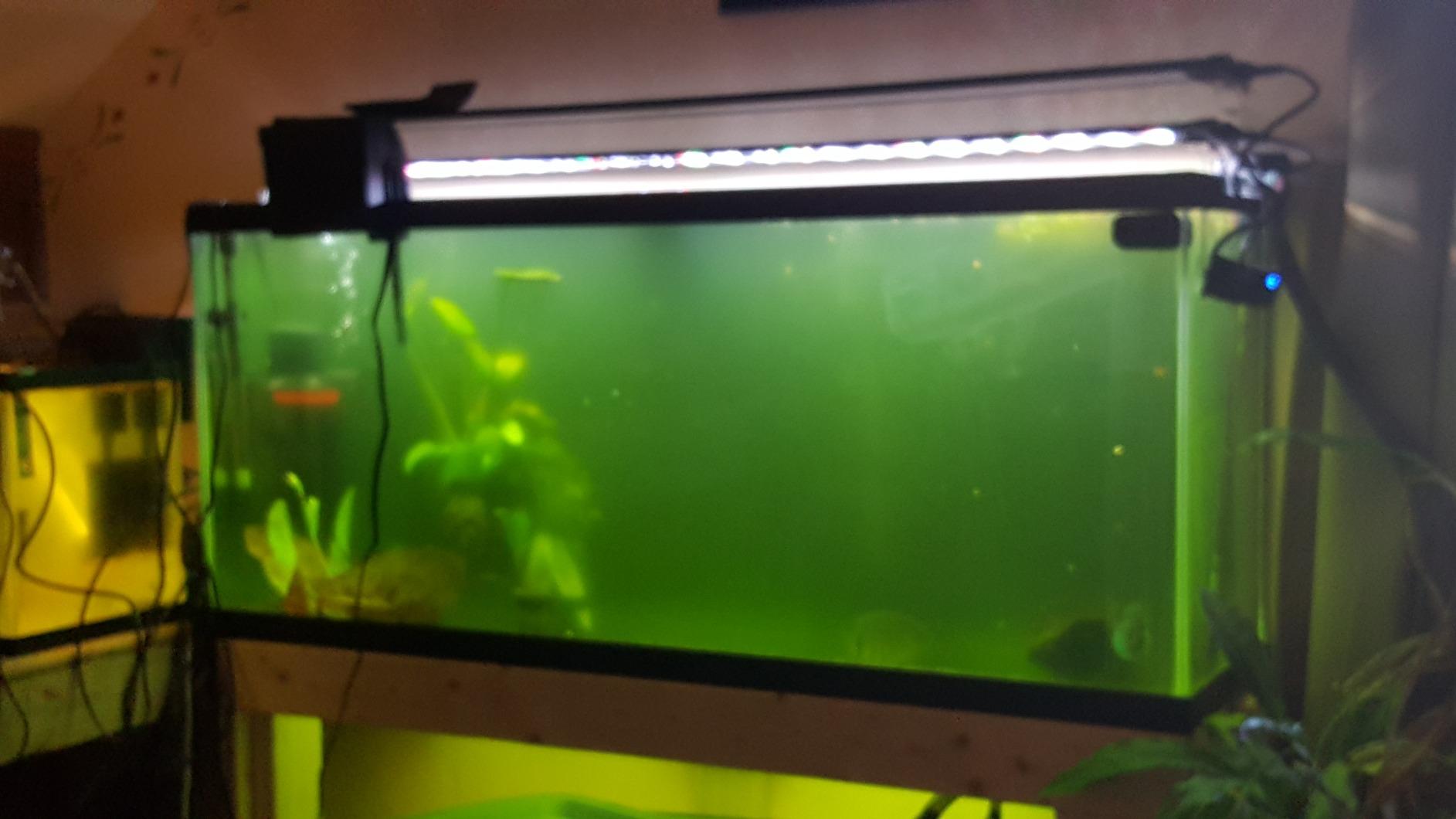
What the internal motor costs you
With the motor submerged, the whole canister must sit below the water level of the sump or be plumbed in a way that keeps it flooded. That limits where you can put it compared with an external-motor design that works anywhere in the cabinet.
The rated ceiling of roughly 97 gallons assumes a bare, straight run. With hoses and media attached, treat that figure the way you treat every box number here and size down.
Is the cartridge worth the running cost
It depends on your tank. Run it continuously on a lightly stocked system and you are paying for a consumable that has nothing to catch. Run it during a green-water event or after a major rescape and it earns its keep quickly.
Owners also caution that the replaceable polishing cartridge is easy to forget until the flow drops. Check it on your cleaning schedule, not when the tank goes cloudy.
5. EHEIM Classic 2213 – Best Buy-It-and-Forget Canister
EHEIM Classic Canister Filter 2213, Classic 250 – PetOverstock
Permo-elastic silicone seal
8 x 6.3 x 13.98 inches
4.49 pounds
Ships with media and valves
Pros
- Proven design with a strong long-term durability record
- Silicone seal fixed to the pump head closes reliably
- No electronics to fail
- Complete kit with spray bar valves hoses and media
Cons
- No spray bar adjustment
- flow is fixed by the internal design
- Bulkier footprint than newer rivals
- Older layout lacks modern convenience features
The EHEIM Classic is the boring choice in the best possible way. Forum users describe it as the sensible buy-once canister, and owners frequently report running the same unit for years with minimal maintenance.
There is no electronics in the path. No sensor, no chip, nothing that can fail and leave a tank unfiltered overnight. For a hobbyist who wants a filter that does its job for a decade, that simplicity is the selling point.
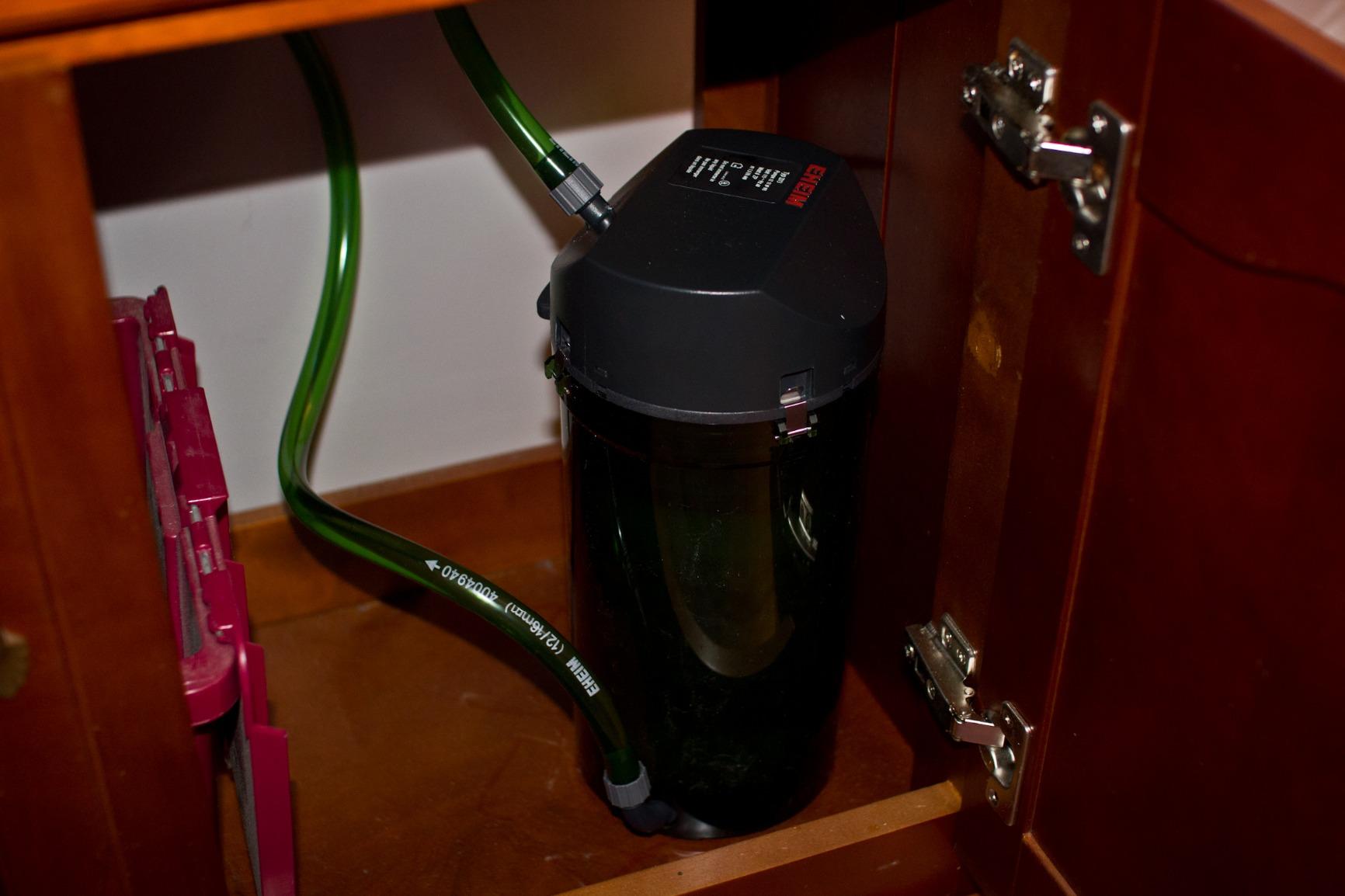
The permo-elastic silicone sealing ring is fixed to the pump head rather than sitting loose in the lid. After a clean it goes back exactly the same way every time, which removes the most common reason canisters leak.
The kit includes EHEIM Mech and Substrat Pro media, the spray bar, the inlet pipe, hose and valves, so you can run it on day one without a separate shopping trip.
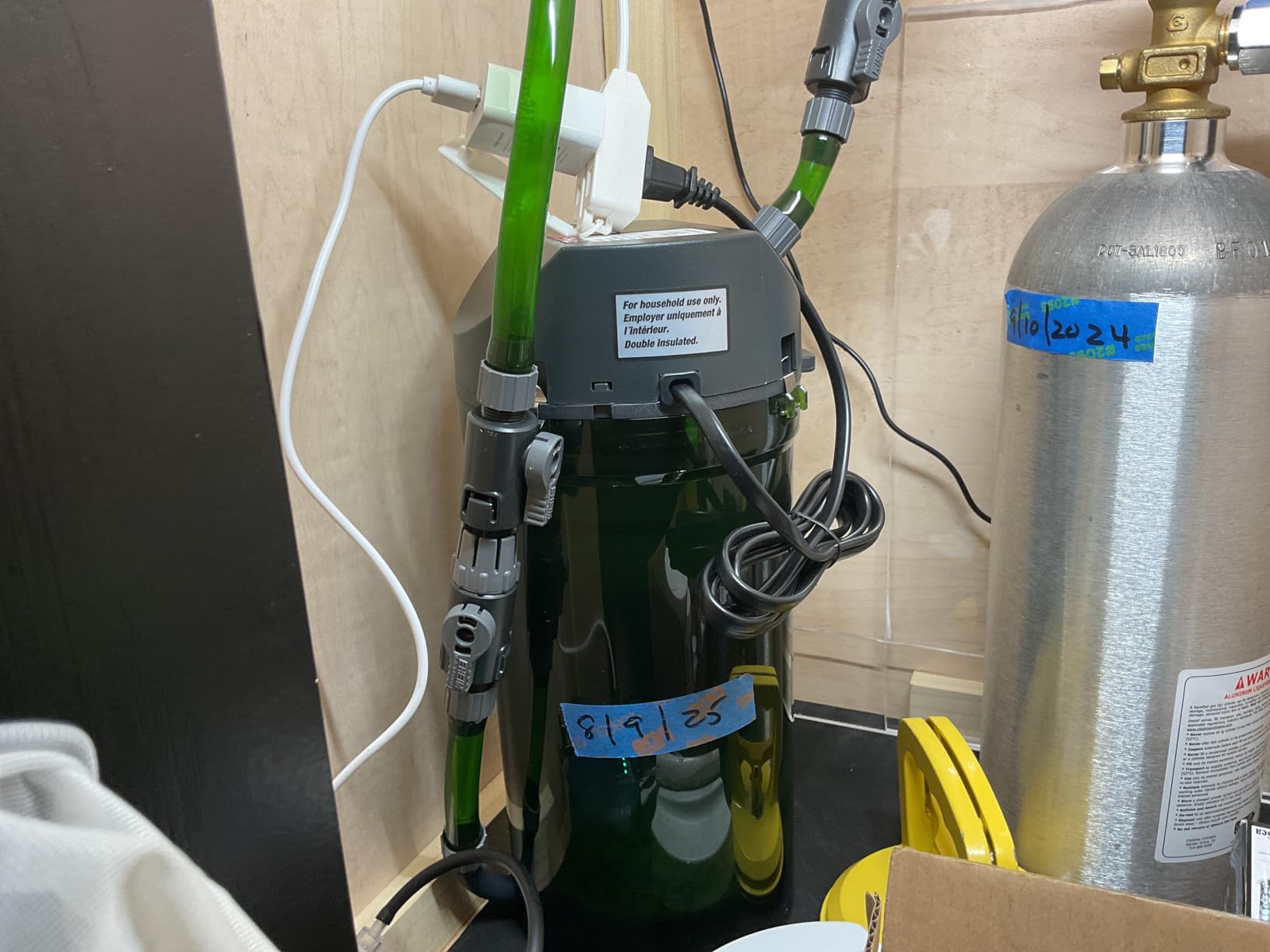
Why the low 4.1 rating is not a warning
The rating reflects a design that is proven and utilitarian rather than exciting. There is no smart pump, no app and no self-starting cycle to rate well, so it collects steady scores instead of enthusiastic ones.
Across aquarium forums, EHEIM is consistently described as the quietest and most reliable brand, and the Classic is the model that reputation belongs to. Buyers report long ownership histories with very few failures.
What the old design costs you
You give up flow adjustment. The spray bar is fixed by the internal design, so you cannot dial the pattern back the way you can on a Fluval. If you keep low-flow species such as bettas, gouramis or discus, plan your return placement carefully.
The footprint is also bulkier than modern rivals of similar capacity. Check your cabinet opening before you commit.
6. SunSun HW-302 Pro – Best Value Canister Filter
SunSun Hw302 265GPH Pro Canister Filter Kit
265 GPH rated flow
9 x 9 x 18 inches
12 pounds
Three media baskets
Pros
- 265 GPH handles tanks to roughly 55 gallons despite the 75-gallon label
- Runs very quietly with many owners unable to hear it
- Complete kit with pads carbon ceramic rings and bio balls
- Trays are easy to remove and clean individually
Cons
- Rigid hose ends are hard to push on
- Thin plastic latch tabs and side clips can snap
- Instructions are minimal
- Spray bar is noisy unless aimed at the glass
Nobody in aquarium forums argues with the value argument here. Owners of the HW-302 Pro routinely compare it favourably to EHEIM units costing several times more, and the quiet operation surprises people who expect a budget import to be loud.
The Pro kit is the reason to buy this model rather than the bare canister. It comes with three white filter pads, a pound of premium carbon, a pound of ceramic rings and a set of bio balls, so you can filter a tank immediately.
Owners report clear water within a day of a deep clean, which is a real result for a 265 GPH rated flow rather than a marketing claim.
The media trays come out individually, so you can rinse one stage without disturbing the bacteria colonised in another. That is a design detail you would expect to pay more for.
Plan for the 55-gallon reality, not the 75-gallon label
Owners consistently report that 265 GPH serves a tank up to roughly 55 gallons well, even though the box says 75. This is the clearest example in our list of manufacturer tank ratings running ahead of what the filter actually handles once media and hoses are fitted.
Soak the rigid hose ends in hot water before fitting them. That single trick solves the stiff-hose frustration that shows up in almost every review of this kit.
What to watch for long term
The thin plastic latch tabs and side clips are the part to inspect first. They can snap, and forum users warn that budget-brand failures tend to show up in that hardware rather than in the pump.
The instruction sheet is minimal, so expect to work from the box diagram. Assembly takes longer the first time simply because nothing is clearly illustrated.
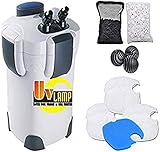
7. SunSun HW-303B Pro – Best Pick with a Built-In UV Sterilizer
SunSun Hw303B 370GPH Pro Canister Filter Kit with 9-watt UV Sterilizer
370 GPH rated flow
Integrated 9-watt UV
16 pounds
Three media baskets
Pros
- Highest rated flow in this group at 370 GPH
- Built-in 9-watt UV sterilizer needs no separate unit
- Pro kit includes pads carbon ceramic rings and bio balls
- Multiple baskets allow custom media combinations
Cons
- UV lamp needs periodic replacement
- Heaviest canister here at 16 pounds
- Same thin-plastic latch and stiff-hose concerns as the 302
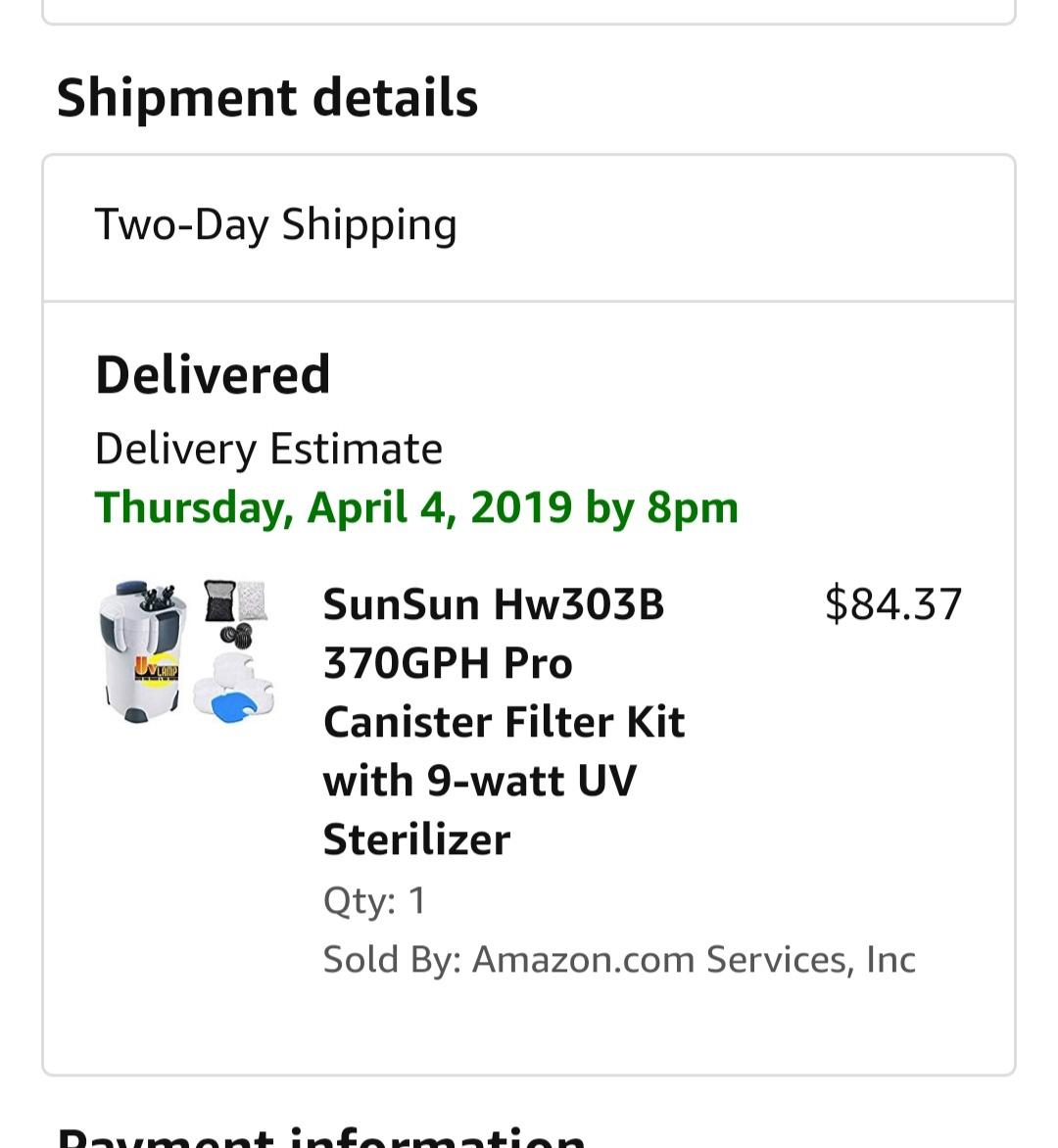
The HW-303B Pro is the only filter in this list with a UV sterilizer built into the housing. At nine watts, it is the strongest UV option you can get without crossing the price ceiling, and it removes the need to buy a separate sterilizer.
On flow it is the biggest number in the group at 370 GPH, which makes it the pick if you are running a heavily stocked 75 to 100 gallon tank and want headroom.
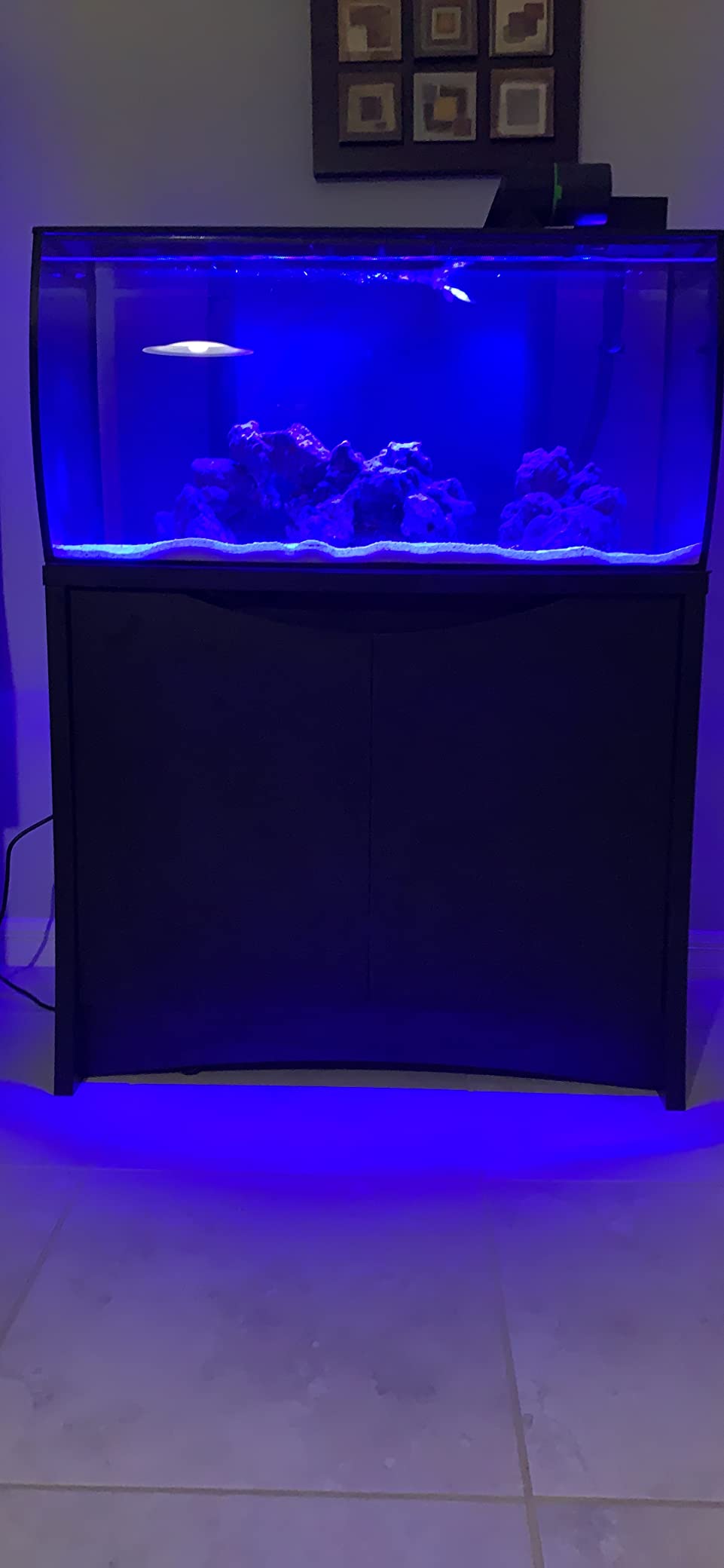
With a 4.3 average this is the strongest of the three SunSun models here. Buyers are satisfied with the flow and with how complete the media package is straight out of the box.
It ships with three white filter pads, a blue coarse pad, three media baskets, a pound of carbon, a pound of ceramic rings and a set of bio balls. Nothing needs buying before first start.
Is UV worth it in a canister filter
It helps most where algae pressure is high or where you are trying to clear a stubborn green-water problem, and it does very little for basic filtration. Ceramic rings in the media stack are what handle the biological load, and the UV is an addition rather than a substitute.
The tradeoff is the lamp. It needs periodic replacement, so treat the running cost as a yearly line item rather than a one-time purchase.
What you should know before buying
At 16 pounds it is the heaviest canister in this roundup, and lifting it for a water change is a two-person job once it is full. Check your cabinet height too, since the housing is taller than most shelves allow.
It shares the same thin-plastic latch and stiff-hose feedback as the smaller SunSun models. Soak the hoses in hot water and inspect the latches early.
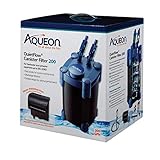
8. Aqueon QuietFlow – Best for Three-Stage Media Flexibility
Aqueon QuietFlow Canister Aquarium Filter, Up to 55 Gallons (ECOM)
Up to 55 gallons
Multi-stage filtration
14.55 pounds
One-year warranty
Pros
- Multi-stage biological chemical and mechanical in one housing
- Three return options including spray bar and water director
- Quick disconnect valves make setup and media swaps simple
- Media package includes carbon foam bio-balls and ceramic rings
Cons
- Polishing cartridge must be replaced every month
- 14.5-pound canister is heavy for its class
- 55-gallon ceiling limits it to medium tanks
The QuietFlow matches the highest average rating in this roundup at 4.4, and the reason is straightforward: it makes media swaps easier than anything else at this price.
Quick disconnect valves and pump locking heads mean you can swap a basket without wrestling with plumbing. Owners consistently single this out as the feature that makes routine maintenance fast.
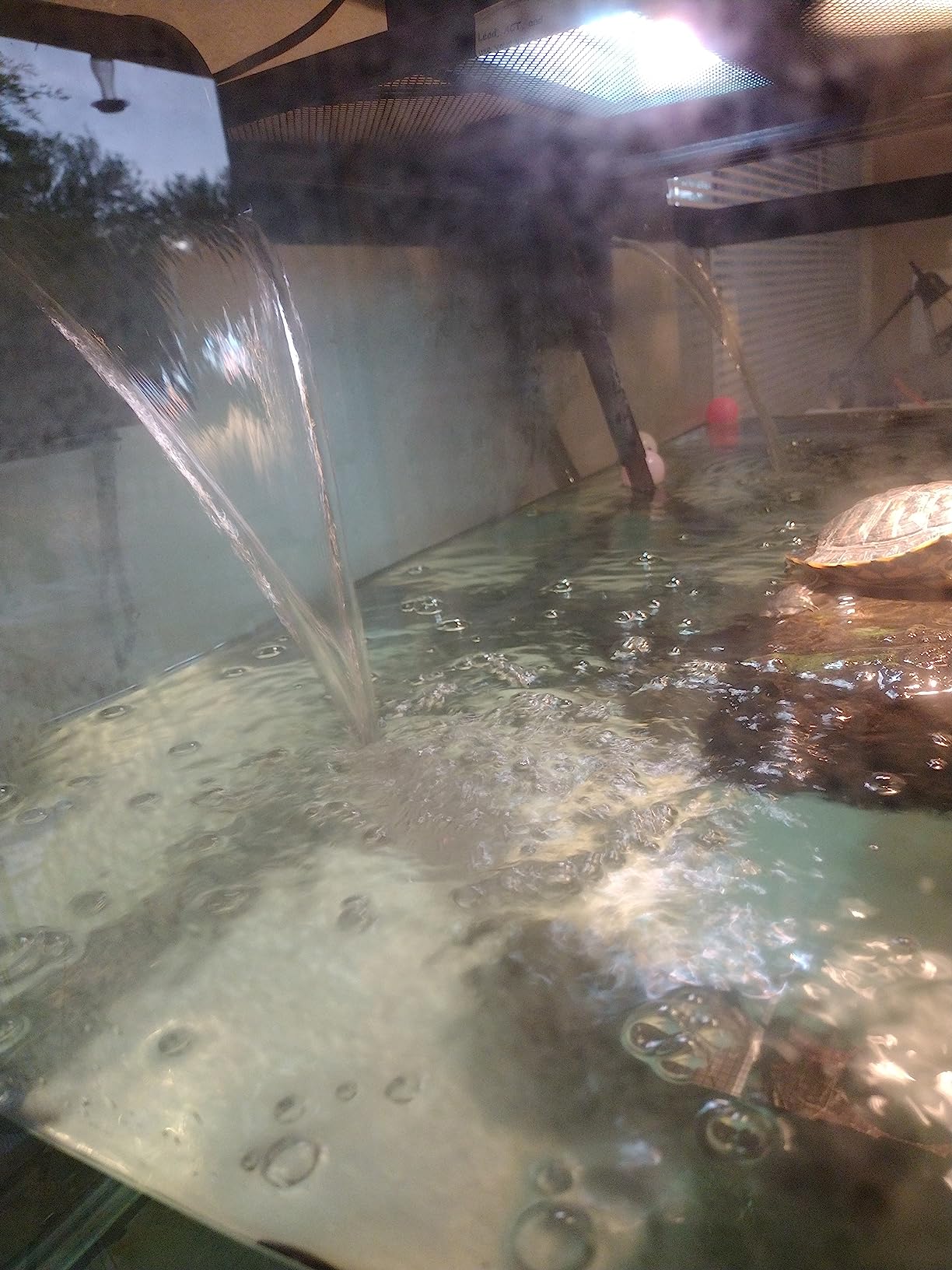
You also get a choice of return. The spray bar spreads flow across the tank, the water director aims it in one direction for circulation-heavy setups, and the included hang-on-back polishing unit handles quick surface cleaning without opening the canister.
The media package covers all three stages: activated carbon, coarse foam, bio-balls and bio-ceramic rings. That is a complete setup on first start.
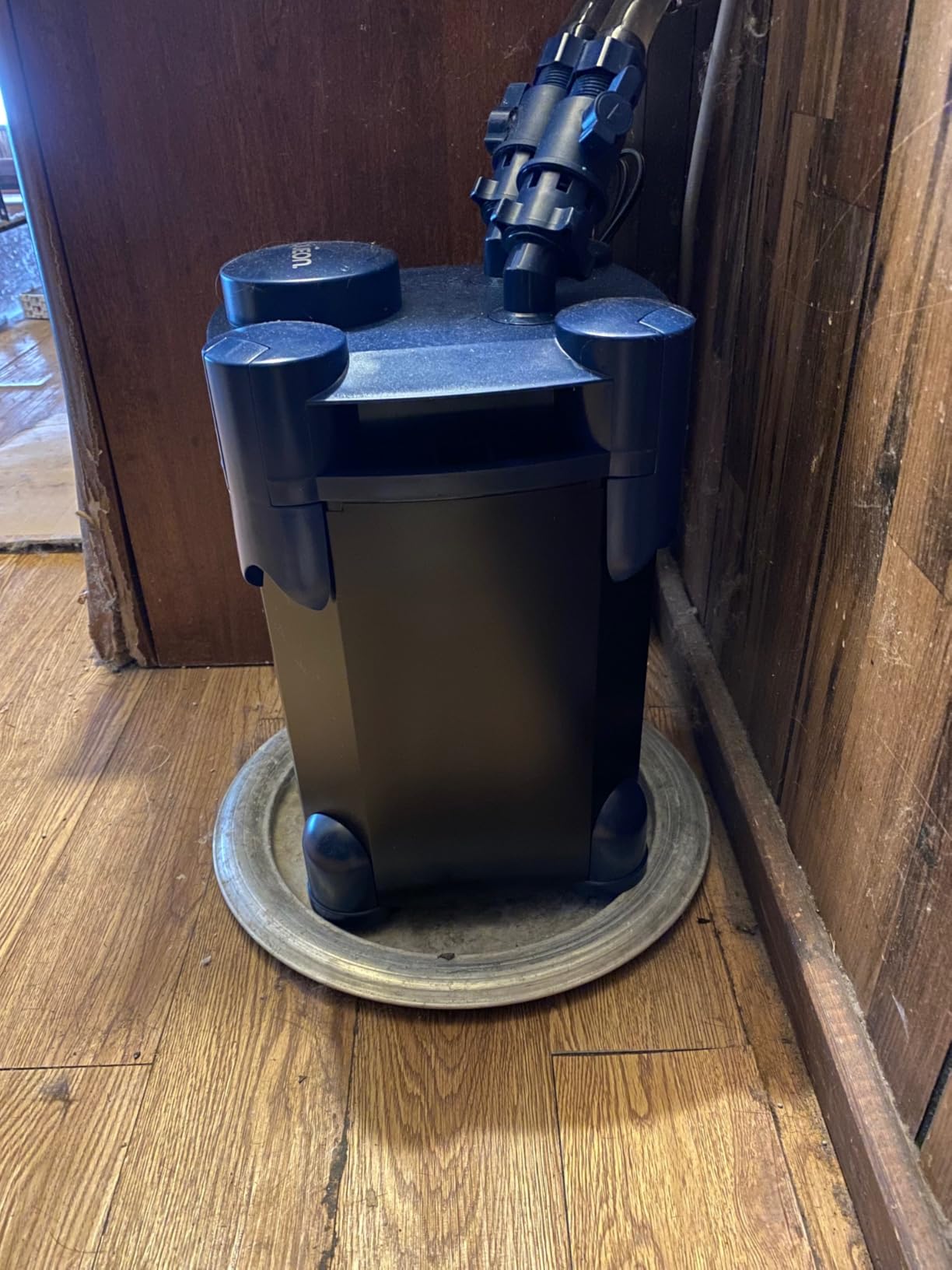
Understand the monthly cartridge cost
The polishing unit uses large Aqueon replacement cartridges that the manufacturer expects you to fit every month. Over a year that adds up faster than any other running cost in this roundup, and it is the single most common criticism from owners.
There is a second problem with it. Mounting a hang-on-back polishing unit puts a filter back in plain view, which defeats the main reason to own a canister in the first place.
When it is and is not the right pick
It earns its place if you want a 30 to 55 gallon tank, a single filter handling all three stages, and the fastest routine service in this list. That combination is genuinely hard to find below the price ceiling.
Skip it if you are over 55 gallons or if ongoing consumable cost matters to you. At 14.55 pounds it is also one of the heavier units for the capacity it delivers.
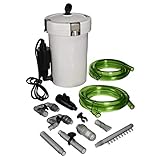
9. SunSun HW-603B – Best Budget Canister for Tanks up to 20 Gallons
SunSun 3-Stage External Canister Filter for Aquariums & Ponds, 106 GPH Flow, Easy Setup & Maintenance, HW-603B
106 GPH rated flow
6W ultra-quiet motor
1.6 pounds
Three media trays
Pros
- Ultra-quiet 6W motor with a steady 106 GPH
- Three media trays fit carbon ceramic rings or bio balls
- Lightest canister here at 1.6 pounds
- Compact enough for nano and small community tanks
Cons
- Filter media is not included and must be bought separately
- 106 GPH suits tanks around 20 gallons only
- Lowest average rating in this roundup
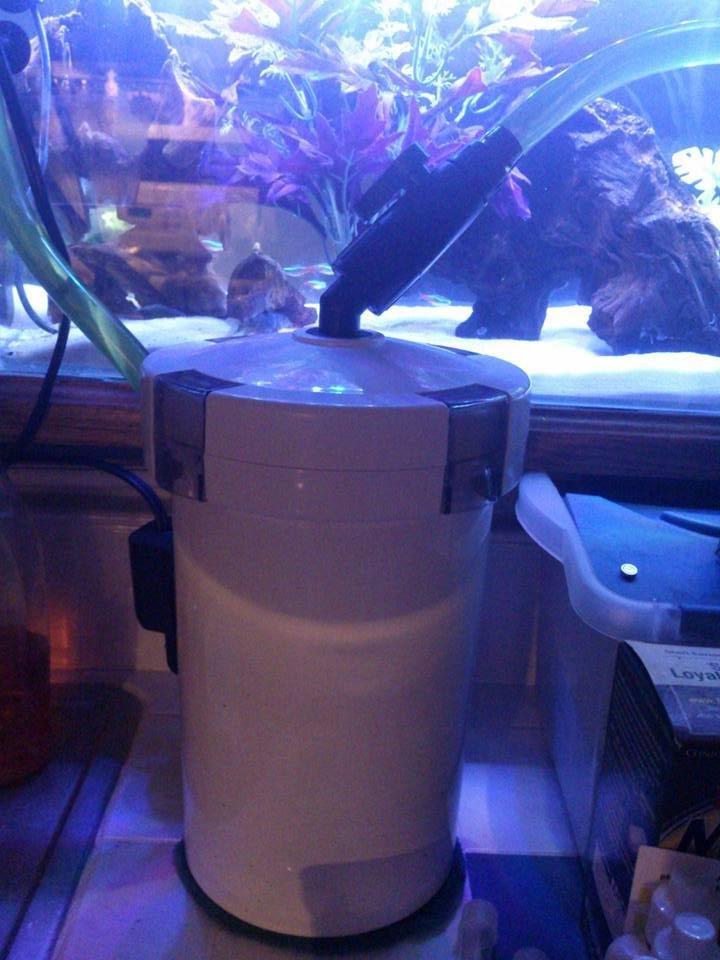
The HW-603B is the cheapest canister in this roundup, and for a 20-gallon community tank or a nano setup the numbers work. The 6W motor is genuinely quiet, and at 1.6 pounds it is the easiest filter here to lift.
Three media trays give you room for activated carbon, ceramic rings or bio balls. The layout is right even if the capacity is small.
Buy the bare filter and you buy the media separately. Nothing is included in the trays, so add that to your setup cost before comparing it against the other budget options here.
At a 3.9 average this is among the lowest-rated filters in the list, and reviews include a higher share of one-star experiences than the other models. That is a meaningful signal if you are nervous about reliability.
Is 106 GPH enough
For a 20-gallon tank it is, and that is what the filter is designed for. A 20-gallon system needs roughly 80 GPH to hit four times turnover, so you have a little margin once hoses and light media are fitted.
Push past 20 gallons and you run out of flow quickly. At 106 GPH there is no headroom for a heavily stocked tank or heavy feeding.
Where the low rating comes from
Most critical reviews are about the missing media and the small flow figure rather than a fundamental fault. Buyers who buy the media alongside it report normal results on small tanks.
If your budget stretches, the SunSun HW-302 Pro covers a far larger range of tanks for a modest step up, and it includes everything you need. This one is a specialist small-tank pick.
10. Flexzion 265 GPH – Best for Big Tanks on a Tight Budget
Flexzion Aquarium Canister Filter with 265GPH Flow Rate, Spray Bar, & 3-Stage Media Filtration for up to 75 Gallon Fish Tanks – Ultra-Quiet External Canister Filters for Aquarium
265 GPH rated flow
Up to 75 gallons
9.61 pounds
Three-stage media
Pros
- 265 GPH suits freshwater and saltwater tanks to 75 gallons
- Optimized spray bar improves circulation and cuts evaporation
- Biospheres and ceramic rings support biological filtration
- Primer pump and single-valve disconnect simplify servicing
Cons
- Lowest review count here so long-term data is limited
- Spray bar performance depends on how level the tank sits
The Flexzion pairs a 265 GPH rated flow with a three-stage media layout, and for a 55 to 75 gallon tank that is a serious amount of filtration capability for the money.
The spray bar is the design point worth knowing. Owners report even distribution across the tank and noticeably less evaporation than a straight nozzle return, which also improves oxygenation.
Setup is straightforward with a primer pump and a single-valve disconnect for maintenance. The biological stage is supported by the included biospheres and ceramic rings.
It handles both freshwater and saltwater, which widens the appeal for anyone moving between systems.
Buy this one with realistic expectations
With 119 reviews it has the smallest owner pool in this roundup, and the 3.9 average reflects the reservations that come with a newer brand. There is simply not a long-term reliability history here to lean on.
Forum advice for newer brands is worth repeating: check for a consistent complaint pattern rather than reacting to isolated negatives, because a small review count exaggerates both good and bad experiences.
What to check once it is running
The spray bar performs best when the tank is level. Owners report noticeably better distribution on a level stand, and it can be the first thing to adjust if circulation looks uneven.
If you want a comparable flow with a much deeper owner base, the SunSun HW-302 Pro covers the same 265 GPH class and has far more feedback behind it.
How to Choose a Canister Filter Under 200 Dollars
Buy on flow, media capacity and ease of priming. Those three decide whether you are happy with the filter in month six, not the badge on the box.
Match flow to tank volume, not to the box
The rule most guides repeat is four times your tank volume per hour. A 55-gallon tank needs roughly 220 GPH, and a 200-liter tank lands in the same 220 GPH neighborhood. Size to that number, then add margin for the hose route.
Do not size to the gallon figure printed on the carton. Across this roundup, manufacturer tank labels run consistently optimistic, and forum consensus is that a filter rated for 100 gallons is usually a better match for a 40 to 55 gallon tank once media is loaded.
Also budget for the reality gap. Hoses, bends and a loaded media stack cost you real flow, and a filter that is borderline on paper is borderline in practice. If your tank sits well below the water line in the cabinet, expect more loss.
Media capacity beats raw flow
More flow only helps if there is somewhere for the debris and the bacteria to go. Look at basket volume and at whether the stages stay separated, because a single mixed basket gives you mechanical filtration that destroys the biological media sitting in it.
Three separated stages is the practical target. Coarse mechanical floss at the bottom, biological media in the middle, chemical media on top, so the carbon does not get buried and the bio-media is not clogged by debris.
Priming is the top complaint
Forum users describe the same failure repeatedly: the pump sucks dry, needs twenty minutes of plug-unplug cycling, or simply will not prime even with a full canister. It is the most common complaint in aquarium communities and it is a design issue, not user error.
A self-priming button on the motorhead is the feature to look for. The Penn-Plax, both Marinelands and the Fluval all include one, and they start on the first or second attempt. On any canister, fill the housing completely, seat the motorhead properly and check the intake line for air leaks before you start cycling power.
EHEIM vs Fluval
Across aquarium forums, EHEIM is described as the quietest and most reliable brand, with a simple design and no electronics to fail. Fluval is treated as the strongest overall performer, worth the premium for flow and quiet operation.
In practice the EHEIM Classic 2213 is the buy-once option with a long ownership record, and the Fluval 207 is the better pump and the better all-round performer for a mid-size tank. If your priority is silence in a living space, EHEIM. If you want flow and easy media access, Fluval.
What you give up under 200 dollars
Nothing above the ceiling self-starts, evacuates air automatically, or gives you one-gallon media baskets. The models here also tend to have smaller baskets and a single fixed return pattern rather than an adjustable one.
That is a fair trade for a hundred dollars of filter you will not replace. What you should not accept is cheap hardware: replace the supplied vinyl hoses with silicone tubing and the plastic clamps with metal ones, and most early reliability complaints disappear.
Two small filters beat one big one
A repeated forum argument is that two smaller canisters on one tank beats one large one, because if either unit fails the other keeps the tank cycled. It also means you can clean one at a time without a full water change.
Under this ceiling that is realistic. A pair of mid-size canisters covers a larger tank than a single unit of the same combined cost, with more total media and a spare on hand. The trade is a slightly longer setup and a second set of hoses.
For low-flow livestock such as bettas, gouramis and discus, dial the outflow valve down rather than buying a weaker pump. A spray bar pointed across the surface gives you oxygenation without the current that stresses those species.
Priming, Leaking and Declining Flow
Almost every budget canister complaint falls into one of these three buckets. Each has a short fix list, and none of them usually means the pump is dead.
Why your canister will not prime
The motor sucks air faster than water can replace it, so the fix is about removing air from the loop, not about the motor itself.
Fill the housing completely and seat the motorhead so the seal is compressed evenly. With a self-priming button, hold it until you feel the pump engage, then release.
Check the intake line for a gap at the valve collar, since a small air leak there causes gurgling and lost suction. Make sure the intake is submerged below the water line, and keep the canister level. If it still fails, unplug and repeat two or three times to bleed the line.
Putting a small amount of petroleum jelly on the O-rings helps them seal evenly. This is standard advice in aquarium communities and it works often enough to be worth trying before replacing anything.
Why your canister is leaking
Around nine out of ten leaking canisters come down to a seal, not a cracked housing.
Reseat the main lid seal and confirm the gasket is seated in its channel rather than pinched. Then reseat the motorhead, where the fixed silicone ring on EHEIM models and the gasket on everything else does most of the sealing work.
Next, look at the primer button and the hose collars. The plastic clamps supplied with the budget models in this list are the single most common leak source, and owners fix it by swapping in metal clamps or replacing the hose with silicone tubing.
Finally, check the lid weight. A lid not sitting squarely on its seat will weep from the top even when every ring is fine.
Why the flow is dropping
Declining flow is nearly always a media problem. Rinse or replace the mechanical stage first, since loaded floss and sponge are what clog first and they are the only stage you should clean in tank water rather than tap.
Check the impeller and the impeller well next, since a small piece of substrate or a stubborn bit of plant blocking the intake will cost you flow with no other symptom. A humming noise that rises and falls with the flow is the tell.
Look at the hoses too. Every ninety-degree bend and every soft kink costs flow, and budget hoses are the most likely to collapse under suction. Reroute them in longer, smoother arcs before you blame the pump.
For a UV-equipped canister like the HW-303B Pro, a fading UV lamp will not reduce flow but it will quietly stop doing its job. Track the replacement interval on your calendar.
Frequently Asked Questions
Who makes the best canister filters under 200 dollars?
At this price, Fluval makes the strongest all-round performer and EHEIM makes the most reliable, quietest option you can buy once and forget. Penn-Plax delivers the best proven value with the largest owner base, and the SunSun Pro kits give you more included media than any other option. Which one is right depends more on your tank size and noise tolerance than on the brand name.
What is the best budget friendly canister filter for aquariums?
The Penn-Plax Cascade 1000 is our best budget pick because it combines a 265 GPH rated flow with three stackable media baskets and more than ten thousand owner reviews behind it. If you want to spend less, the SunSun HW-302 Pro includes pads, carbon, ceramic rings and bio balls in the box and runs quietly for a 55-gallon tank.
Which is better, EHEIM or Fluval?
EHEIM is the choice for quietness and longevity. The Classic 2213 has no electronics that can fail, a fixed silicone seal and a long ownership record in aquarium forums. Fluval is the choice for flow and serviceability. The 207 has a refined eTEC pump, a self-priming button and media baskets that lift out with one finger.
How many GPH do I need for my tank?
Aim for four times your tank volume per hour. A 55-gallon tank needs roughly 220 GPH, a 200-liter tank needs about the same, and a 75-gallon tank needs close to 300 GPH. Add extra margin for the hose route, because bends and a loaded media stack reduce the rated flow in a real installation.
Why won’t my canister filter prime?
Fill the housing completely, seat the motorhead so the seal compresses evenly, and use the self-priming button until the pump engages. Check the intake line for air leaks at the valve collar and confirm the intake sits below the water line. Unplugging and replugging two or three times usually bleeds the remaining air out of the line.
Why is my canister filter leaking from the top?
Nine out of ten leaking canisters come down to a seal. Reseat the lid gasket in its channel so it is not pinched, then reseat the motorhead and confirm it is sitting squarely. Replace the supplied plastic hose clamps with metal clamps or swap the vinyl hose for silicone tubing, and lubricate worn O-rings with aquarium-safe silicone.
Can I run two canister filters on one tank?
Yes, and many hobbyists recommend it. Two mid-size canisters cover a larger tank than a single unit of the same combined cost, give you more total media, and mean a failure of one unit does not leave the tank unfiltered. The trade is a longer setup and a second set of hoses.
Is UV sterilization worth it in a canister filter?
It helps most with algae pressure and stubborn green water, and it does very little for basic filtration. Ceramic rings in the media stack carry the biological load, so UV is an addition rather than a replacement. Budget for a lamp replacement cycle, and remember that UV does not replace good mechanical filtration.
The Best Canister Filters Under 200 Dollars: Final Verdict
The Penn-Plax Cascade 1000 takes our overall slot among the best canister filters under 200 dollars because it pairs a 265 GPH rated flow with three stackable baskets, rotating valve taps and the deepest owner base in this bracket. Add a few metal clamps on day one and it is the safest canister to buy for a 55 to 75 gallon tank.
The Fluval 207 wins when silence matters most, and the EHEIM Classic 2213 wins when you want to set it up and forget it for years. For the smallest budgets, the SunSun HW-302 Pro is the value pick, while the SunSun HW-303B Pro is the only one here with a UV sterilizer built in.
Whichever you choose, size to four times your tank volume rather than the gallon figure on the box, expect the real flow to be lower than the rating, and swap the supplied hoses and clamps for better ones. Those three habits solve more budget canister problems than anything else you can do. This roundup was re-verified against the sub-200-dollar screen in 2026; check the current price on each card above, then pick the one matched to your tank and get it running.