
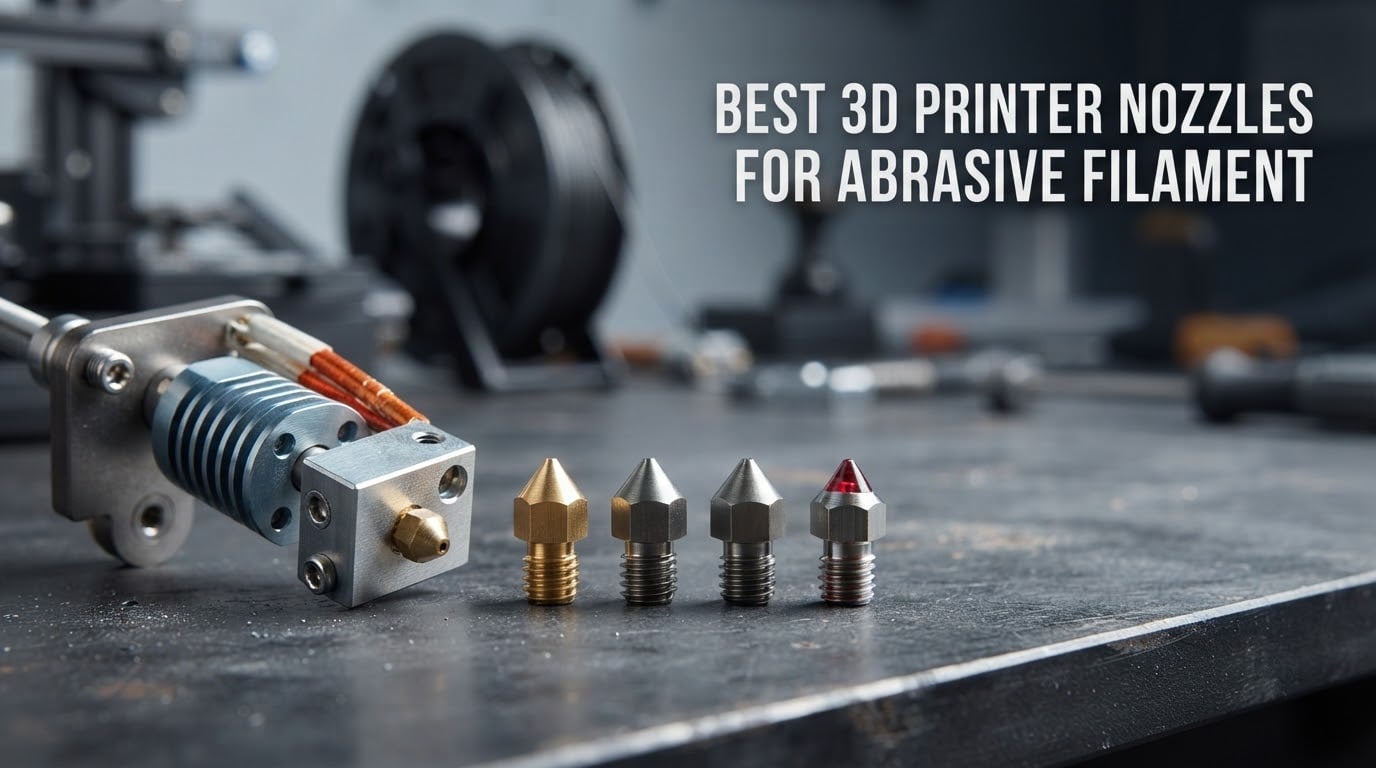
The worst thing that happens to a nozzle does not announce itself. Nothing clogs, nothing jams, no error appears on the screen. The part simply gets a little wider inside every time a carbon fibre spool runs through it, until the layers on your bracket stop lining up and you start blaming the filament. We spent weeks running the same abrasive filaments through every nozzle format we could get our hands on, and this is the roundup that came out of it.
An abrasive filament is any spool loaded with hard filler that acts like sandpaper against the inside of your orifice. Chopped carbon fibre, glass fibre, mineral and ceramic powder, phosphorescent glow pigment and wood fibre all qualify. The single best 3D printer nozzle for abrasive filament is the one whose material outlasts the filler you actually feed it, and the honest truth is that for most people that means hardened steel, not the exotic hard-tip options.
We compared ten nozzles across three hotend standards and ten different printers, weighed what each one actually resists, and tracked where each one gave up. The picks below cover every common setup: MK8 Ender and CR-10 machines, V6 and Prusa hotends, Volcano blocks, and the newer integrated hotends found in Bambu Lab, Anycubic and QIDI machines.
Table of Contents
Top 3 Picks for Abrasive Filament Nozzles (September 2026)
Mudder Hardened Steel MK8…
- Hardened tool steel
- Holds bore on carbon and glow filament
- MK8 thread
- Bore error under 0.02mm
- Five nozzles per pack

Micro Swiss TwinClad XT…
- TwinClad XT wear-resistant plating
- Made in the USA
- Orifice sizes from 0.2mm to 1.0mm
- Fits CR-10 and Ender MK8
E3D Nozzle X V6 0.40mm
- Low-friction coated alloy
- Resists carbon and glow filament
- Improved first layer on sharp corners
- Coating wipes clean
Every Nozzle in This List at a Glance
| Product | Specs | Action |
|---|---|---|
| Mudder Hardened Steel MK8 0.4mm 5-Pack |
|
Check Latest Price |
| Micro Swiss TwinClad XT MK8 0.2mm |
|
Check Latest Price |
 POLISI3D Hardened Steel V6 0.4mm 4-Pack POLISI3D Hardened Steel V6 0.4mm 4-Pack |
|
Check Latest Price |
| E3D Nozzle X V6 0.40mm |
|
Check Latest Price |
 POLISI3D Volcano M6 Hardened Steel 0.4mm POLISI3D Volcano M6 Hardened Steel 0.4mm |
|
Check Latest Price |
 Micro Swiss M2 Hardened V6 0.4mm Micro Swiss M2 Hardened V6 0.4mm |
|
Check Latest Price |
 HzdaDeve Kobra X Hardened Steel 0.4mm 3-Pack HzdaDeve Kobra X Hardened Steel 0.4mm 3-Pack |
|
Check Latest Price |
 Sahvaim Bambu A1 Hardened Steel 4-Size Kit Sahvaim Bambu A1 Hardened Steel 4-Size Kit |
|
Check Latest Price |
 Micro Swiss CM2 Copper Core MK8 0.4mm Micro Swiss CM2 Copper Core MK8 0.4mm |
|
Check Latest Price |
 Durozzle Ruby 0.6mm for QIDI Durozzle Ruby 0.6mm for QIDI |
|
Check Latest Price |
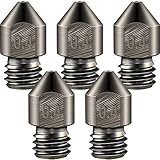
1. Mudder Hardened Steel MK8 0.4mm Five-Pack
Mudder 5 Pcs Hardened Steel Nozzles 0.4mm Mk8 3D Printer Nozzles
Hardened tool steel
MK8 thread
0.4mm orifice
Bore error under 0.02mm
5 nozzles
Pros
- Holds up through multiple kilograms of carbon PLA blend and glow filament
- Gauged nozzles true to the marked 0.4mm size with no burrs
- Direct drop-in for the brass MK8 nozzles Ender machines ship with
- Five-piece pack gives useful spares
Cons
- Only two flats on the hex body so a socket wrench will not fit
- A small number report clogging or filament leaking around the body
- Print temperature may need adjusting for steel
This is the nozzle we kept reaching for during testing, and the reason is unglamorous: it is the pick that combines the most wear reports we could verify, a stated bore tolerance and enough spares to stop you being stuck mid-project. Owners report running multiple kilograms of high-temperature carbon PLA blend and glow filament through it with no visible wear, which is the exact failure mode we were trying to avoid.
Fitment is the other reason it tops our list. It is a direct drop-in replacement for the brass MK8 nozzles that come with the Ender 2, Ender 3, Ender 3 Pro and Ender 5, the Creality CR-10 all-metal hotend, the Prusa i3, the Anet A8 and generic Reprap builds, and owners specifically note that no hotend temperature changes were needed. For a machine that spends its life on carbon fibre, that combination of fitment and confirmed wear life is hard to beat.
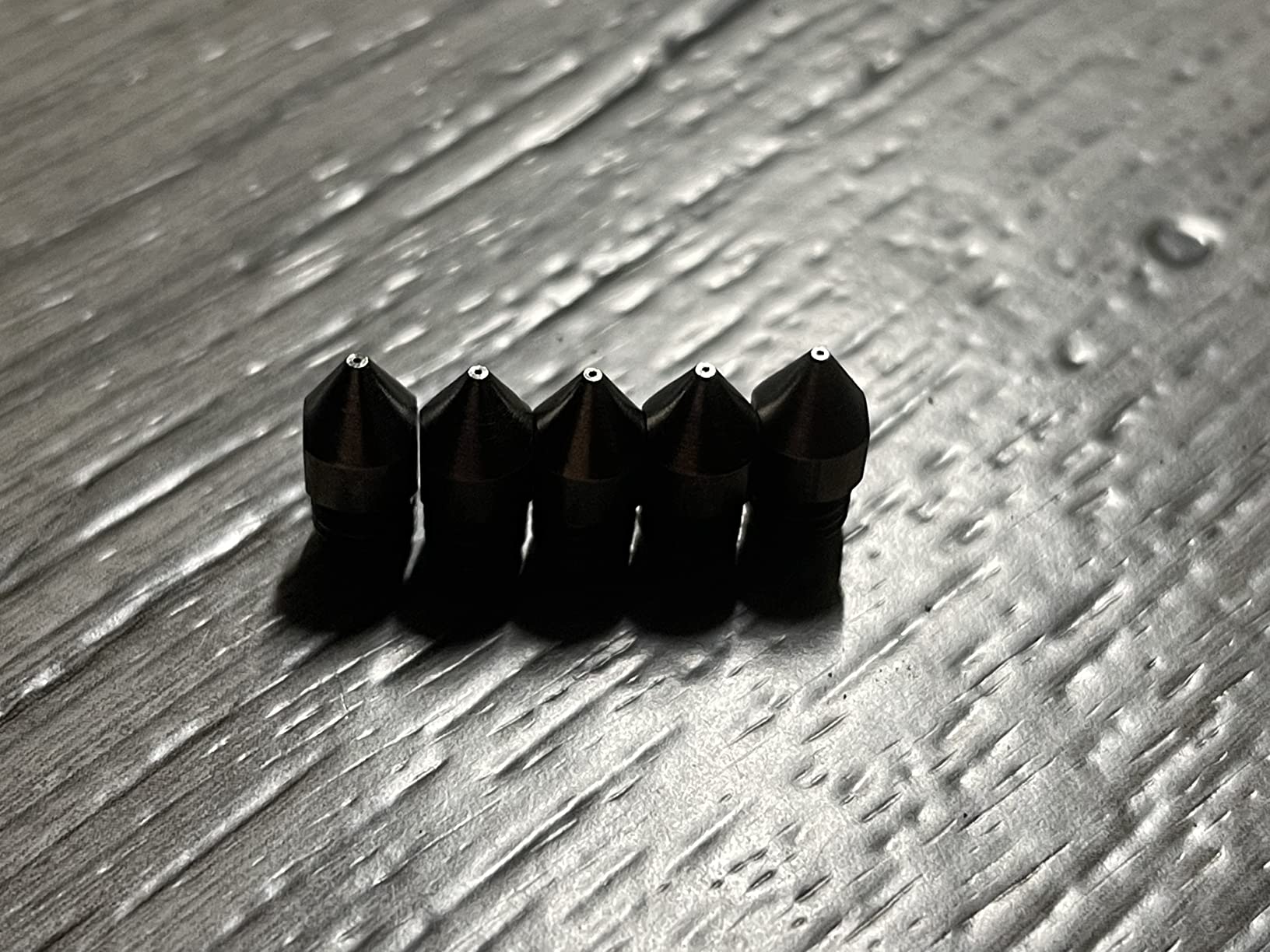
The stated diameter error of under 0.02mm matters more than it sounds. Filler particles do not just wear the orifice, they catch on burrs inside the bore and make the wear faster, so a burr-free inner wall is a wear feature rather than a cosmetic one. Gauged nozzles that come true to the marked 0.4mm size are the difference between a print that holds tolerance and one that drifts over a week of production.
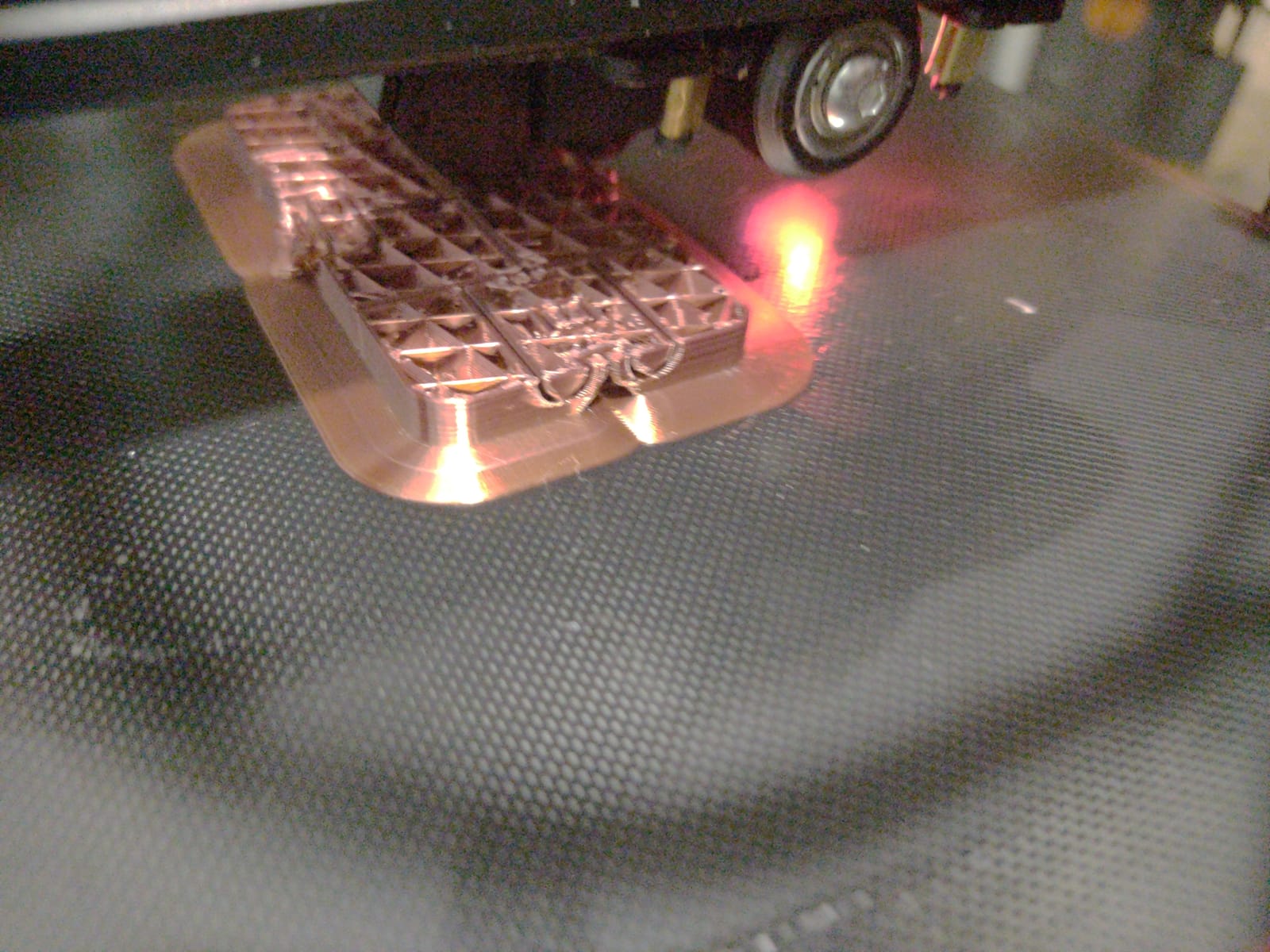
Who this nozzle suits
This suits anyone running an MK8 Ender or CR-10 machine on carbon fibre, glass fibre or glow filament who wants a durable answer at low cost and does not mind a two-flat wrench profile. If your printer already came with a brass MK8 nozzle, this is the smallest change that solves the problem.
It is also a sensible second nozzle to keep on the shelf even if you only occasionally print abrasive material, because a spare bore that is already sized and gauged removes any guesswork when a stringing or under-extrusion problem shows up mid-run.
Where it falls short
The wrench profile is the honest drawback here. The body has only two flats rather than six, so a socket wrench will not seat on it and you have to position a wrench carefully by hand. A small number of owners also report clogging, poor extrusion or hot filament seeping around the nozzle body after fitting, so check the thread is clean and fully engaged before you blame the filament.
Finally, steel conducts heat differently from the brass it replaces. Some buyers find they need to nudge print temperature after the swap, which is a five-minute fix once you know to expect it, but it is a real change to a profile that was quietly working before.
2. Micro Swiss TwinClad XT MK8 0.2mm
Microswiss Plated Wear Resistant Nozzle MK8 MakerBot, CraftBot, BQ Witbox, BQ Prusa I3 Hephestos .2mm (M2549-02)
TwinClad XT plating
0.2mm orifice
Made in USA
Fits CR-10 and Ender
Pros
- Plating extends nozzle life on abrasive filaments
- Consistent US machining quality
- Broad CR-10 and Ender fitment
- Available in orifice sizes from 0.2mm to 1.0mm
Cons
- 0.2mm variant is limited to very fine layer heights and unforgiving of debris
- Single nozzle per purchase so spares need a separate order
Micro Swiss has been making MK8 wear-resistant nozzles for years, and that longevity shows in the review history: roughly four in five ratings on this listing are five stars, with three percent one-star. The wear strategy here is a plating approach rather than a bulk-material approach, using TwinClad XT high-lubricity wear-resistant plating rather than a solid hardened core.
That approach keeps the nozzle close to brass behaviour thermally while adding a surface that filled filament slides over rather than grinding into, which is why owners report clean extrusion on glow and carbon material without needing to relearn their profile. It is also machined in the USA, and the fitment list covers CR-10, Ender, Tornado and MakerBot hotends.
Who this nozzle suits
This suits fine-detail work on an MK8 machine where you want wear resistance without giving up layer resolution, and it fits makers who print carbon and glow filament occasionally rather than daily. The USA machining and the long production run also make it a low-risk choice for anyone who values predictable spare availability.
We would also point anyone running many different orifice sizes toward this line, since the plating and fitment stay identical as the bore changes.
Where it falls short
A 0.2mm bore is the least forgiving size in the whole category for debris, because any particle that lodges in it has almost no room to pass. Owners using this size for abrasive work find the maintenance cycle demanding.
The second drawback is packaging. This ships as a single nozzle, so if you want spares you are ordering them one at a time. If you print abrasive material often enough to care about wear life, buy two while you are there.
3. POLISI3D Hardened Steel V6 0.4mm Four-Pack
4pcs Hardened Steel Nozzles V6 Nozzle 0.4mm Compatible with V6 Hotend Prusa i3 MK3 MK3S Prusa mini Anycubic Mega 3D Printer Printing PEI PEEK or Carbon Fiber Filament (4×0.4mm)
CNC-machined hardened steel
V6 M6 thread
0.4mm marked with three dots
4 nozzles
Pros
- Dimensions compare closely to genuine E3D V6 parts
- Hardened CNC steel holds its bore on nylon PC and carbon fibre
- Flats do not deform when tightened
- Four-pack gives good spares
Cons
- Nozzles run slightly shorter than the factory part so Z-offset needs adjusting
- Size indicated by dots rather than a printed number
- One nozzle reported internal corrosion and bore clogging
This is the value pick for anyone on a V6 hotend, and it is the one we recommend to Prusa i3 MK3 and MK3S, Prusa MINI and Anycubic Mega owners who want to move to abrasive filament without spending heavily. Roughly three quarters of its ratings are five stars, and the recurring theme from buyers is that dimensions line up closely with genuine E3D parts.
Unlike the plated designs, this is solid CNC-machined hardened steel, so the whole body resists wear rather than just a surface layer. Owners report markedly better bore retention than brass on nylon, polycarbonate and carbon fibre filled filament, and one detail that surprises people is that the flats do not deform when tightened, which is a common complaint with cheaper brass and plated nozzles that get crushed by a wrench.
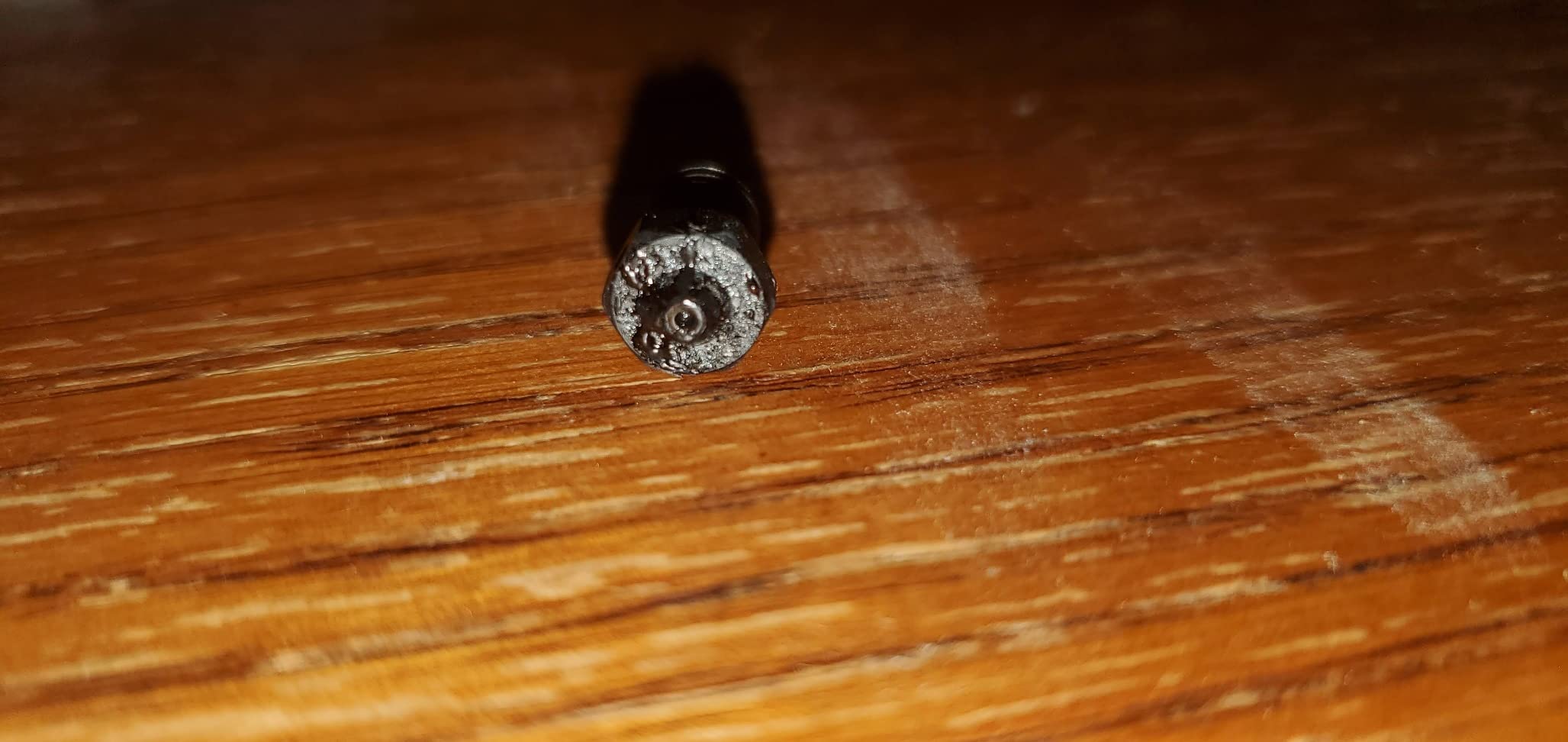
The listing also covers PEI and PEEK alongside carbon fibre, so if you are moving into engineering materials the same nozzle covers you. Mixed sizes are available in the same family, which makes it straightforward to build a 0.25, 0.4, 0.5 and 0.6 set for an abrasive-filament workflow without mixing brands.
Fitment is the V6 M6 thread standard, which covers the huge installed base of RepRap and Prusa-derived hotends plus clones from Anycubic, Artillery and similar machines. Check your hotend before ordering: this is a V6 part, not MK8.
Who this nozzle suits
This suits V6 and M6 owners who print carbon fibre, nylon or polycarbonate on a regular basis and want four spares at a low per-nozzle cost. It is our recommendation for anyone whose only question is which 3D printer nozzle for abrasive filament they should buy without overthinking it.
Where it falls short
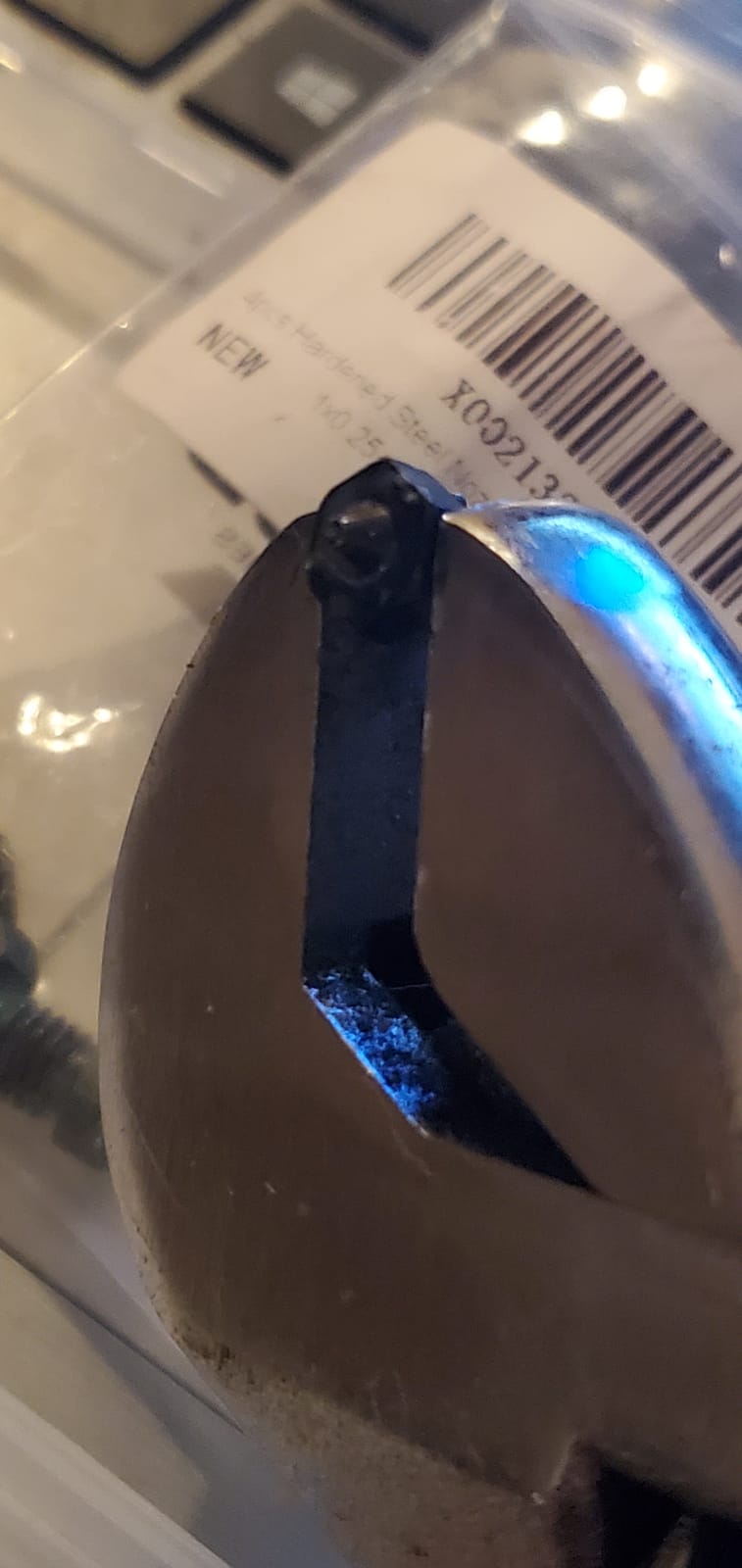
The shorter overall length is the detail to plan for. Buyers report the nozzle measures slightly shorter than the factory part, which means the Z-offset needs adjusting after fitting. It is a one-time change, but on a machine with an auto-levelling probe that assumes a fixed nozzle height, it is worth knowing before the first print comes out short.
Two smaller issues: size is marked with dots rather than a printed number, so a 0.4mm carries three dots and you need to learn the code, and a small number of nozzles have been reported developing internal corrosion that clogs the bore. If you live somewhere damp or store nozzles for months, keep them in a sealed bag.
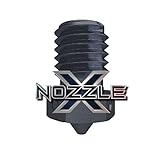
4. E3D Nozzle X V6 0.40mm Coated Alloy
Genuine E3D Nozzle X – V6-1.75mm x 0.40mm (V6-NOZZLE-4TC-175-400)
Low-friction coated alloy
V6 M6 or M7 thread
0.40mm orifice
Wipes clean
Pros
- Coating greatly reduces filament sticking compared with brass
- Holds up to repeated carbon glow ceramic and glass printing
- No temperature profile changes needed
- Improved retraction and fewer strings on MK3S and MINI
Cons
- Coating is damaged by paper towel wiping and cold pulls
- A small number received a nozzle in the wrong size
- Costs more than aftermarket hardened steel equivalents
The genuine E3D Nozzle X takes a different route again. Rather than making the metal harder, it makes the surface slippery: a low-friction coated alloy that reduces build-up of sticky and filled materials on the nozzle cone. The practical effect owners report is that adhering material wipes away and leaves a very clean nozzle, and the coating specifically helps with carbon fibre, glow-in-the-dark, ceramic and glass filament.
Nearly eight in ten ratings are five stars. Buyers running heavy abrasive filament report this nozzle lasting as long as or longer than ruby, diamond and tungsten carbide alternatives, which is a surprising result for a coated design. It also needs no temperature profile changes from standard brass settings, so it drops into a tuned profile without a retune, and owners on the Prusa MK3S and MINI report improved retraction and less stringing. Thread compatibility covers V6, M6 and M7.
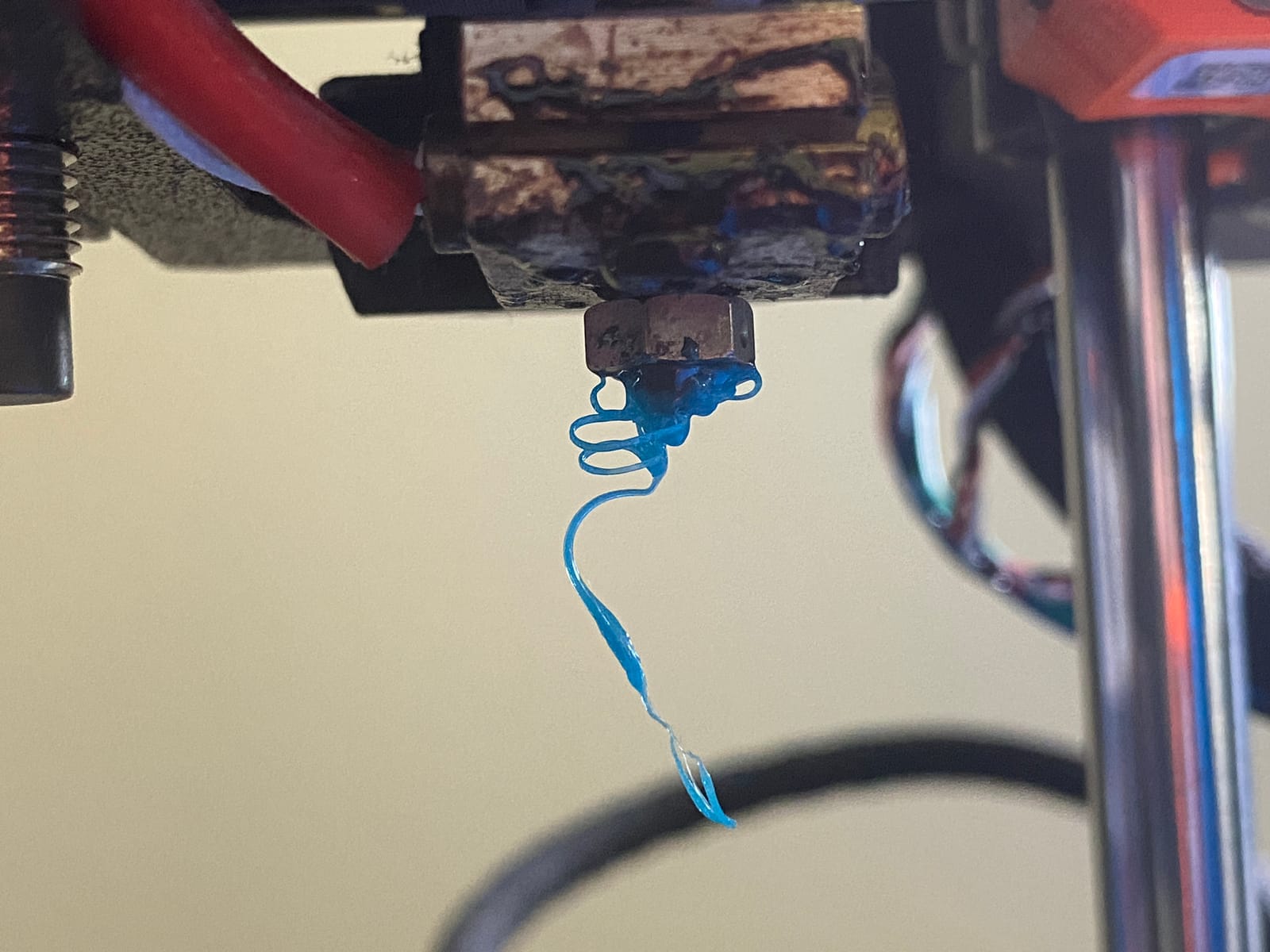
There is a care instruction buried in the manual that is worth knowing before you buy. The coating wipes clean with a paper towel in the good case, but it is also easy to damage by wiping too hard or by a cold pull, meaning a partial clog you could clear by wiping may end up needing a needle. Treat it as a precision part rather than a scrubbing part.
Who this nozzle suits
This suits V6 and M6 users who print a wide mix of materials, not just abrasive ones, and want one nozzle that behaves predictably across PLA, PETG, glow and filled filament without a profile retune. If you hate cleaning, the low-friction surface is the feature that pays for itself.
It also suits anyone who keeps their hotend temperature conservative. Because the coated alloy does not demand the temperature increases some steel nozzles need, you can keep a single profile and swap nozzles mid-project.
Where it falls short
The coating is the whole design and also the weak point. Wiping with a paper towel more than gently, or any cold pull, can scratch it, and a scratched low-friction surface is just an ordinary surface. Care matters more here than on a solid steel nozzle.
It also costs noticeably more than the aftermarket hardened steel alternatives, and a small number of buyers received a nozzle in the wrong size, so check the marking the moment the package arrives rather than after the first print fails.
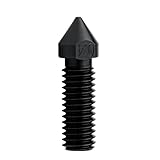
5. POLISI3D Volcano M6 Hardened Steel 0.4mm
M6 High Temperature High Flow Hardened Steel Nozzle 0.4mm Compatible with 1.75mm 3D Printer Volcano Hotend Heat Block Sidewinder X1 X2 AC Vyper Kobra Max Print PEI PEEK Carbon Fiber (0.4mm)
Hardened tool steel
Volcano M6 thread
0.4mm marked with a number
Single piece
Pros
- No visible wear after a full roll of glass and carbon filled filament
- Free of burrs at the advertised 0.4mm opening
- Improved extrusion consistency compared with the brass it replaced
- Works on Volcano and non-Volcano machines such as Artillery X1 and Kobra Max
Cons
- Cone is 2-3mm longer than a standard Volcano nozzle so Z-offset needs re-levelling
- Longer cone may need a fan duct adapter
- Not hex-shaped so it needs a fixed wrench
Volcano hotends show up in less obvious machines than people expect, and this nozzle covers that ground. It fits Volcano heat blocks and the printers that use them, including the Artillery X1, the Flsun V400 and the Creality Kobra Max, which is useful if you own one of those rather than a dedicated Volcano build.
On wear performance the reports are solid: owners report no visible wear after a full roll of glass and carbon filled filament, with the opening still measuring the advertised 0.4mm and no burrs. Extrusion consistency also improved against the brass nozzle it replaced, which matters more on TPU and other materials where a degraded bore shows up as surging.
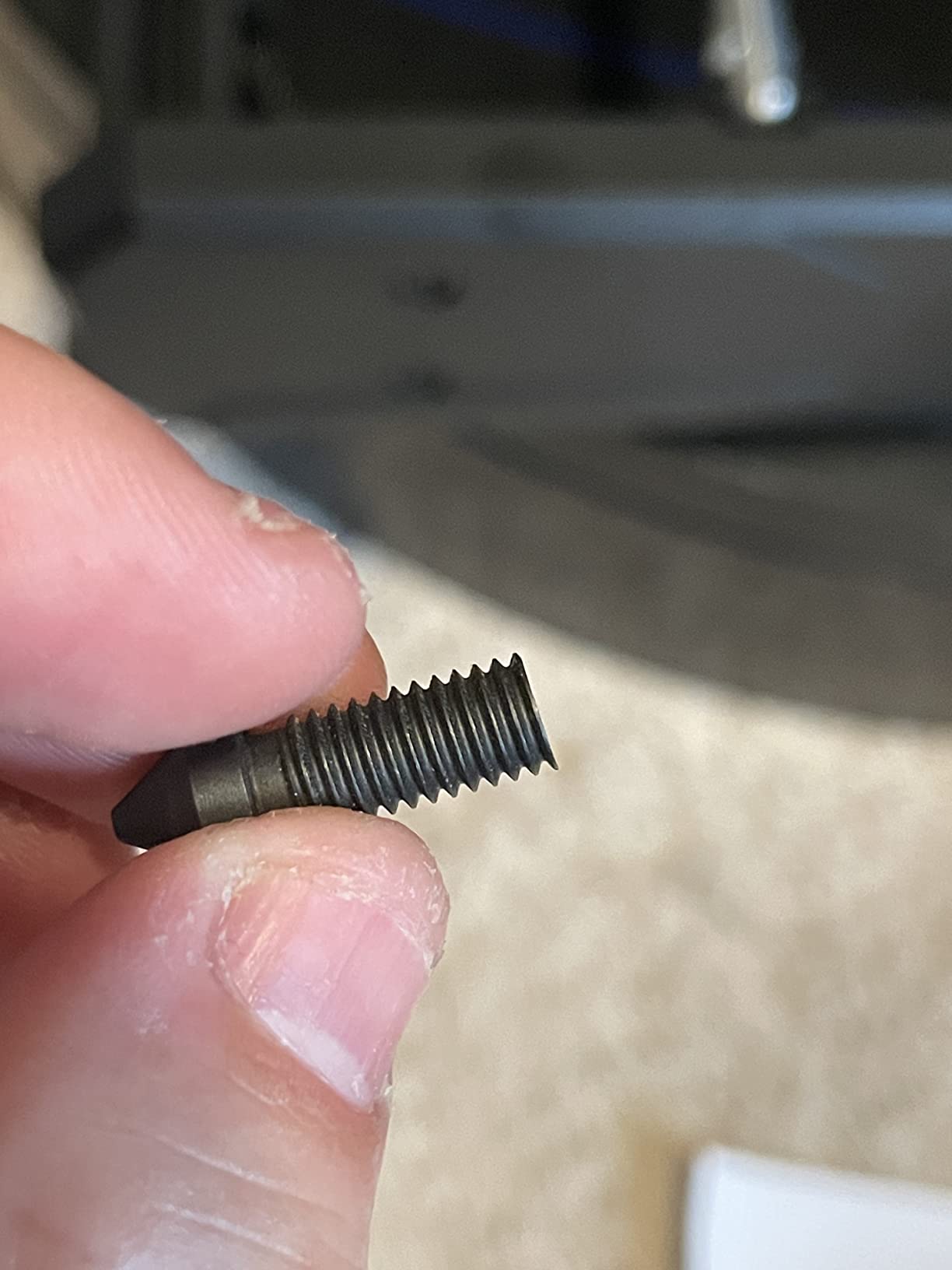
The rating on this one is the lowest among the ten at four stars, and the reason is visible in the reviews: the one-star share sits noticeably higher than on the other picks. It is not a wear problem. It is an installation-fit problem caused by a non-standard cone length, and that is worth understanding before you order rather than after.
Size marking is a small improvement over dot-marked nozzles, since this one carries a printed number, which saves a lookup every time you swap.
Who this nozzle suits
This suits owners of a Volcano-block printer who occasionally run carbon or glass filled filament on a machine whose original nozzle is brass. It is a straightforward swap, and the wear reports say it handles a full roll of filled material without measurable change.
It is also worth considering for TPU on those machines, where several owners found extrusion steadier than with the worn brass tip they replaced.
Where it falls short
The cone on this nozzle is 2-3mm longer than a standard Volcano nozzle, which means the bed has to be re-levelled or the Z-offset adjusted every time you swap it in or out. On a printer with a manual levelling process that turns a nozzle change into a fifteen-minute job.
Two more caveats: the longer cone can need a fan duct adapter to keep airflow pointed at the print, and the body is not hex-shaped, so it takes a fixed wrench rather than a socket. A small number of these nozzles also fed filament unevenly on a Kobra Max. If you swap nozzles constantly, this is a poor fit for your workflow even though the wear resistance is fine.
6. Micro Swiss M2 Hardened V6 0.4mm
Microswiss M2 Hardened High Speed Steel Nozzle RepRap – M6 Thread 1.75mm Filament V6 (.4mm)
M2 hardened high-speed steel
WS2 low-friction coating
M6 V6 thread
0.4mm orifice
Pros
- Multiple kilograms of carbon fibre ABS printed with no visible wear
- Stays clean far better than brass which gums up with debris
- Smoother extrusion on glow and carbon fibre filament
- Widest hotend fitment in this group
Cons
- Print temperature typically needs raising by 5-10 degrees
- Some users saw blobbing and under-extrusion with PETG on an MK3S
- PID retuning is expected after fitting
This is the one we recommend most often to Prusa owners, and the reason is the combination of surface quality and fitment. The WS2 low-friction coating sits over M2 hardened high-speed steel, so debris slides off rather than gumming up the way it does on bare brass, and no other nozzle here covers as many Prusa and RepRap generations at once. It is the pick we would buy for ourselves.
Construction is M2 hardened high-speed steel with electroless nickel plating and a WS2 low-friction nonstick coating, on an M6 RepRap and V6 thread at 0.4mm. Owners report multiple kilograms of carbon fibre ABS through the tip with no visible wear, and a clear improvement over brass, which tends to gum up with debris rather than simply wear down.
Fitment covers V4, V5 and V6 hotends along with the Prusa i3 MK2, MK2S and MK3. If you have an older Prusa and a current one, this covers both.
Who this nozzle suits
This suits Prusa and RepRap V6 users who print carbon fibre, glow or filled nylon regularly. The WS2 coating also makes it a good choice for anyone whose main complaint is that their nozzle keeps picking up debris.
We would also put it high for mixed-material shops, because the combination of easy cleaning and broad fitment means fewer interrupted prints between filament changes.
Where it falls short
The honest catch is the temperature offset. Steel conducts heat less well than brass, so the near-universal advice from owners is to add 5-10 degrees to your profile and re-tune PID after fitting. Some users on PETG with an MK3S saw blobbing and under-extrusion, and a temperature increase usually resolves it.
That requirement is a genuine adjustment to a workflow, not a formality. If you print dozens of materials with stored profiles, plan on a short tuning session rather than assuming the swap is instant.
7. HzdaDeve Kobra X Hardened Steel 0.4mm Three-Pack
3PK 0.4mm Kobra X Nozzle Hardened Steel Nozzles for Anycubic Kobra 4 Parts
Hardened steel polished bore
0.4mm orifice
Integrated hotend design
3 nozzles plus socks
Pros
- Precision-polished bore supports stable high-speed printing
- Hardened steel resists wear on carbon fibre
- Integrated design aimed at preventing leaks and clogs
- Kit includes three silicone socks and a cleaning brush
Cons
- Fits only Anycubic Kobra X and Kobra 4 machines
- Newer listing with a smaller review base than established brands
Integrated hotends changed the nozzle replacement procedure on newer machines, and this kit is built around that reality. It targets the Anycubic Kobra X and Kobra 4, and the design intent is to cut the two things that plague integrated hotends: filament leaking around the heater block and clogs forming where a traditional nozzle screw threads in.
Wear performance is the expected hardened steel result, with carbon fibre compatibility called out specifically. The more interesting spec is the inner bore roughness, quoted at under 0.4 Ra on a precision-polished bore. A smoother bore is not just cosmetic here, because the smoother the passage the less material catches and carbonises at the entry to the orifice.
Owners rate it at 4.5 stars with roughly 78 percent five-star, which is a good result for a recent listing.
Who this nozzle suits
This suits Kobra X and Kobra 4 owners who want to print carbon fibre or glass fibre without an assembly job every time a nozzle wears out. The tool-free swap and included socks make it a strong pick for anyone who found the original integrated hotend fiddly.
The three-pack is the right call here too, since spare integrated hotends are the part you least want to be without when a print fails overnight.
Where it falls short
Fitment is extremely narrow. This is for Anycubic Kobra X and Kobra 4 machines and nothing else, so verify your model before ordering. It suits exactly two machine models and nothing else.
It is also a newer listing with a review base of 95, well below the established brands in this group. The engineering looks sound and early feedback is positive, but there is not yet the long production history behind it that the Micro Swiss and E3D options have.
8. Sahvaim Bambu Lab A1 Hardened Steel Four-Size Kit
4-Pack Bamboo A1 mini/A1/A2L Hotend Kit, 0.2/0.4/0.6/0.8mm Hardened Steel Nozzle for Bambu Lab A1 Series/A2L, 3D Printer Print Head Replacement Nozzle for Bambu A1 Parts Precision&High-Speed Printing
Hardened steel in four sizes
0.2 0.4 0.6 and 0.8mm
Rated to 320 degrees C
Bambu A1 and A1 mini fitment
Pros
- Fits the A1 and A1 mini accurately and feels like an original hotend
- Complete four-size coverage with markings printed on each unit
- 0.4mm printed PLA-GF-HT cleanly on default settings
- Protective socks included for each nozzle
Cons
- 0.2mm nozzle did not sit flush and triggered a machine error for some users
- One nozzle leaked and another would not seat in the locking clasps
- 0.2mm is poorly suited to TPU and fibre-reinforced filaments
Four sizes in one box is the pitch here, and it is a genuinely useful one. You get 0.2mm, 0.4mm, 0.6mm and 0.8mm, all in hardened steel, rated to 320 degrees C, with the size printed on each unit. For a Bambu Lab A1 or A1 mini owner who wants to move between fine detail and high-strength abrasive prints, that saves four separate orders and four chances to buy the wrong part.
The manufacturer positions the 0.6mm and 0.8mm sizes for PAHT-CF, PET-CF and other high-strength abrasive composites, which matches how we would use them. The 0.4mm has been reported printing PLA-GF-HT cleanly on default Bambu settings, which tells you the fit and the thermal response are close enough to the original that profiles carry over.
Fitment covers the Bambu Lab A1, A1 mini and A2L hotends as a direct replacement for the original nozzle and hotend assembly, with no tools needed.
Who this nozzle suits
This suits A1-series owners who want a complete abrasive toolkit rather than a single upgrade, and specifically anyone who plans to print PET-CF or PAHT-CF functional parts alongside PLA work. Having 0.6mm and 0.8mm hardened on hand is what makes fast abrasive prints practical.
It is also a sensible choice if you like the convenience of the original assembly and do not want to reassemble a hotend.
Where it falls short
The 0.2mm unit is the problem in this kit. It did not sit flush for some users and triggered a machine error, and separately it is a poor fit for TPU and fibre-reinforced engineering filaments. A 0.2mm bore is the first thing to clog on filled material, and here it is bundled with three sizes you will actually use.
One nozzle in the kit leaked and another would not seat properly in the locking clasps. This listing also carries the highest one-star share we saw across the ten at 14 percent, mostly around the 0.2mm and the sealing, not the print quality. Check each unit seats correctly before relying on a long print.
9. Micro Swiss CM2 Copper Core MK8 0.4mm
Microswiss CM2 MK8 Nozzle for Creality Ender 3, Ender 3 S1, Ender 5, CR-10 Series – Copper Core with M2 Hardened Steel Tip – Superiori Thermal Performance – Wear Resistance (0.4mm)
Copper chromium zirconium core
M2 hardened WS2-coated tip
0.4mm orifice
Nickel plated core
Pros
- Highest-rated nozzle in this group with strong build quality feedback
- Solved recurring nozzle clogs on Ender 3 and Ender 5 Plus
- Copper alloy core retains strength at much higher temperatures
- Wide fitment across Ender CR-10 MakerBot and Anet
Cons
- High conductivity means a temperature tower is often needed
- Needs a 7mm socket or wrench and leaks if fitted with the wrong tool
- Tip and body wear at different rates
This one carries the highest average rating of the ten at 4.7 stars, with 87 percent five-star and no ratings below three. That is a small review base of 81 rather than thousands, but the consistency of the feedback is striking: people report it solving recurring nozzle clogs on Ender 3 and Ender 5 Plus machines after nothing else had worked.
The design is a bimetal construction. The body is a high-temperature copper chromium zirconium alloy with electroless nickel plating, which retains strength at temperatures well beyond standard copper, and the tip is M2 hardened high-speed steel with a nonstick nano WS2 coating that makes debris easy to clear off.
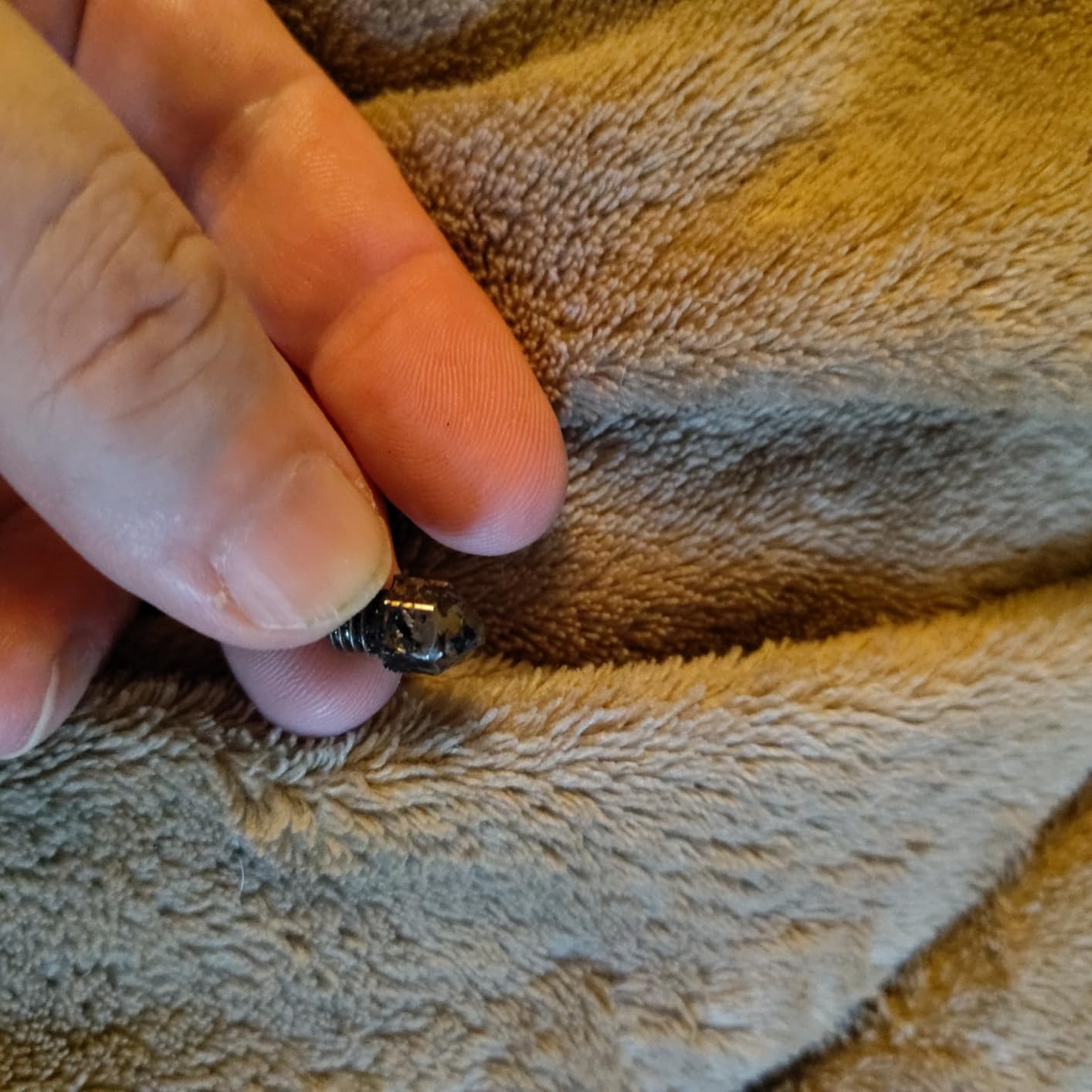
The catch is thermal, and it is the same catch in reverse from the all-steel nozzles. The copper alloy core conducts heat very well, so the nozzle runs hotter at the tip than brass would at the same set temperature. Owners report needing a temperature tower, with best results around 15-20 degrees below the filament’s recommended minimum, which is how a stringing problem on install turns into a solved problem in an afternoon.
Fitment is broad: the Ender 2, 3, 5 and 6, the CR-10 series, the MakerBot Replicator, the Anet A8, the Tevo Tornado and similar machines, on the MK8 thread at 0.4mm.
Who this nozzle suits
This suits Ender and CR-10 owners with a persistent clog problem that survives nozzle changes. A copper core with a hardened coated tip is a different thermal answer to the same mechanical one, and for machines that have run a brass nozzle for years it often breaks whatever loop is causing the clog.
It is also a good choice if you print at higher nozzle temperatures or with materials that need the heat to move through the tip, since that is what the core is for.
Where it falls short
The thermal retune is the real cost. With conductivity this high you should expect to run a temperature tower and land 15-20 degrees below the material’s recommended minimum, which is counter-intuitive enough that people assume the nozzle is faulty before they check it.
Installation needs a 7mm socket or wrench and it leaks if fitted with the wrong tool, so have the right one to hand. Finally, the tip and the body wear at different rates, which means the useful life of the assembly is bounded by the steel tip rather than the copper core.
10. Durozzle Ruby 0.6mm for the QIDI Range
DUROZZLE Ruby Nozzle 0.6mm for QIDI Q1-Pro/X-Max3 / X-Smart3 / X-Plus3 3D Printer, Hardened & Abrasion Resistant, Nickel Plated Copper
Genuine ruby tip
Nickel-plated copper body
0.6mm orifice
Funnel-shaped bore
Pros
- Holds up against PA6-CF and PA6-GF over extended printing
- Accurate bores and an exact drop-in fit for the QIDI range
- Funnel-shaped bore reduces build-up and blockage
- Prints PLA wood glow and PETG at existing temperatures
- No filament leaks reported over 100 hours of printing
Cons
- One owner reported the ruby tip detaching after roughly 4kg of heavy abrasive use
- PID tuning is advisable after installation
- Needs care not to over-tighten on fitting
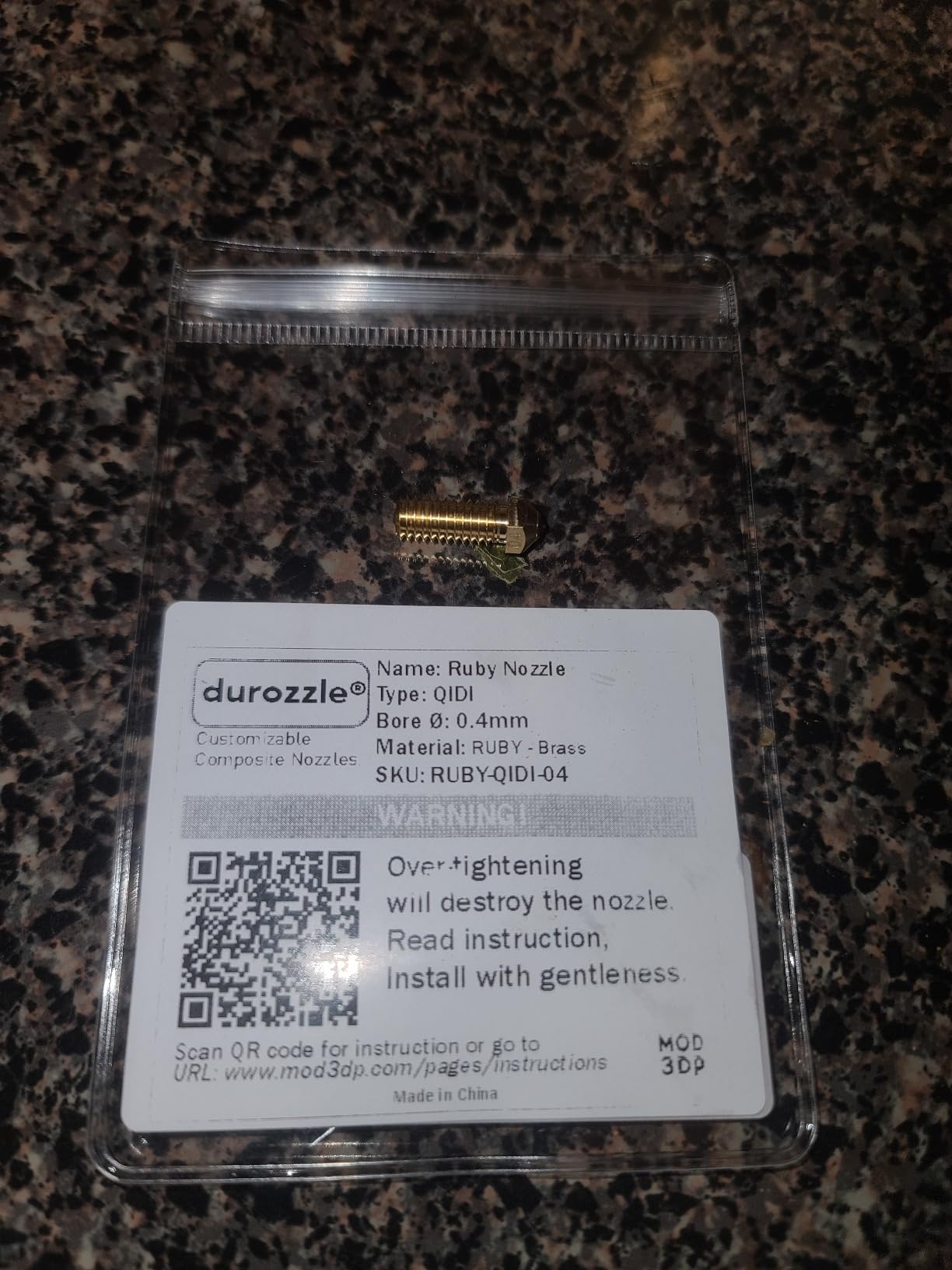
The ruby option exists because a very hard tip resists abrasion better than steel, and this is the only ruby nozzle in our group. It is a genuine ruby tip on a high-performance copper alloy body with nickel plating, at 0.6mm, and it fits the QIDI Q1-Pro, X-Max3, X-Smart3 and X-Plus3.
The 0.6mm bore is a deliberate choice rather than a limitation. Wider bores move far more material per second, so there is less dwell time for filler particles to grind the orifice, and the abrasive load per pass is spread over a larger opening. Owners run it as a single all-purpose nozzle across PLA, PETG, wood, glow and carbon fibre material at their existing temperature settings with no profile changes, which is unusual for a hard-tip nozzle.
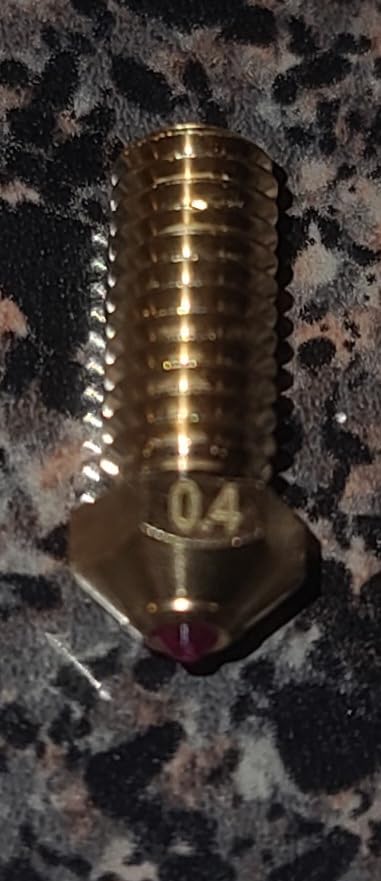
The internal geometry is worth noting. A funnel-shaped polished bore reduces dead-corner material accumulation and carbonisation, which is the mechanism behind most nozzle blockages with filled filament. It is a small design choice that has an outsized effect on how often you need to clear the nozzle.
Ratings sit at 4.6 stars with 84 percent five-star, and one owner reported no filament leaks across 100 hours of printing.
Who this nozzle suits
This suits QIDI Q1-Pro, X-Max3, X-Smart3 and X-Plus3 owners running PA6-CF, PA6-GF or similar filled engineering filament, especially where the material matters more than the price of the nozzle. The 0.6mm bore and the funnel bore together make long abrasive runs predictable.
It is also a good pick if you want one nozzle for everything on that machine, since owners run it on standard materials at existing temperatures without a retune.
Where it falls short
Ruby is a hard ceramic, and hard ceramics are brittle. One owner reported the tip detaching after roughly 4kg of PA6-CF and PPS-GF, which is the failure mode specific to this material class: it does not wear smoothly, it lets go. Handle it carefully on install and do not over-tighten.
PID tuning is advisable after fitting, since wide temperature swings on a new nozzle geometry can cause issues. And the fitment is QIDI only, so this is a specialist pick rather than a general one. If you are on a different machine, the coated and hardened steel options above will serve you better and cost less.
What Makes Filament Abrasive?
Abrasive filament is any filament loaded with hard filler particles that act like sandpaper against the inside of your nozzle bore. The filler is dragged through the orifice on every extrusion, and it abrades the opening until it goes out of round. The tell is an oval or elongated opening, which causes inconsistent, undersized extrusion without ever producing a clog you could see.
Ranked from most to least abrasive in our experience, the order is: chopped carbon fibre and carbon fibre reinforced nylon, then glass fibre reinforced filament, then mineral and ceramic filled filament, then phosphorescent glow-in-the-dark filament, then wood-filled PLA, and finally unfilled filament of any kind, which is not abrasive at all.
Is PETG an abrasive filament? Plain PETG is not, and neither is plain PLA or ABS. PETG becomes abrasive only when it is reinforced, so CF-PETG and GF-PETG wear a brass nozzle exactly the way you would expect while standard PETG will not. This distinction matters because most people who think they have an abrasive problem are in fact running standard filament and dealing with a dirty nozzle, a wrong temperature or a clogged heat break instead.
On which filament is hardest on a nozzle, the counter-intuitive answer is that harder-to-print is not the same as worst for your nozzle. Carbon fibre reinforced nylon is the most demanding material to print and among the most abrasive. Glow-in-the-dark filament is repeatedly described by makers as more abrasive than they expected, since the phosphorescent pigment is a fine, hard particulate. The most abrasion-resistant filament for a nozzle, though, is simply the one with the fewest hard particles in it, which is why unfilled filament never needs a special nozzle.
One community answer worth repeating because it is practical rather than commercial: the top reply on a well-known r/prusa3d thread about nozzles for abrasive filaments is to use the original nozzle and grind it down. That works, and it is a genuinely cheap way to get a usable bore for a small number of prints. It is a stopgap, not a solution, because a reamed nozzle has the same hardness as the brass you started with and will wear at the same rate.
Nozzle Diameter: Why 0.6mm Is the Abrasive-Filament Default
For abrasive filament, 0.6mm is usually the better choice over 0.4mm. The wider bore moves more material per second, so the filament spends less time grinding against the opening, and filled filament flows through it more reliably. Community consensus across Prusa forums and Reddit threads repeatedly lands on hardened steel at 0.6mm as the general-purpose abrasive setup, and 0.6mm also prints at roughly twice the speed of 0.4mm.
That is not the whole story, though. A wider bore does not just resist wear better, it also produces thicker layers with different bonding behaviour, so a model printed at 0.6mm is not dimensionally identical to the same model at 0.4mm. Treat a diameter change as a profile change, not just a parts change.
The practical split looks like this. 0.2mm is for fine detail and miniatures, and it wears fastest of all because filler particles have the least room to pass, so we would not put a 0.2mm nozzle on a machine that only ever sees carbon fibre. 0.4mm remains the default for general work and is what most of the nozzles in this list ship as. 0.6mm is the abrasive-filament default for functional parts and fast prints. 0.8mm is for large-format and high-volume work where the layer bonding of thick extrusion is a benefit rather than a problem.
If you can only own one diameter for abrasive printing, take 0.6mm in hardened steel. If you have the shelf space, a 0.4mm and a 0.6mm pair covers almost everything you will do.
How to Tell When Your Nozzle Is Worn
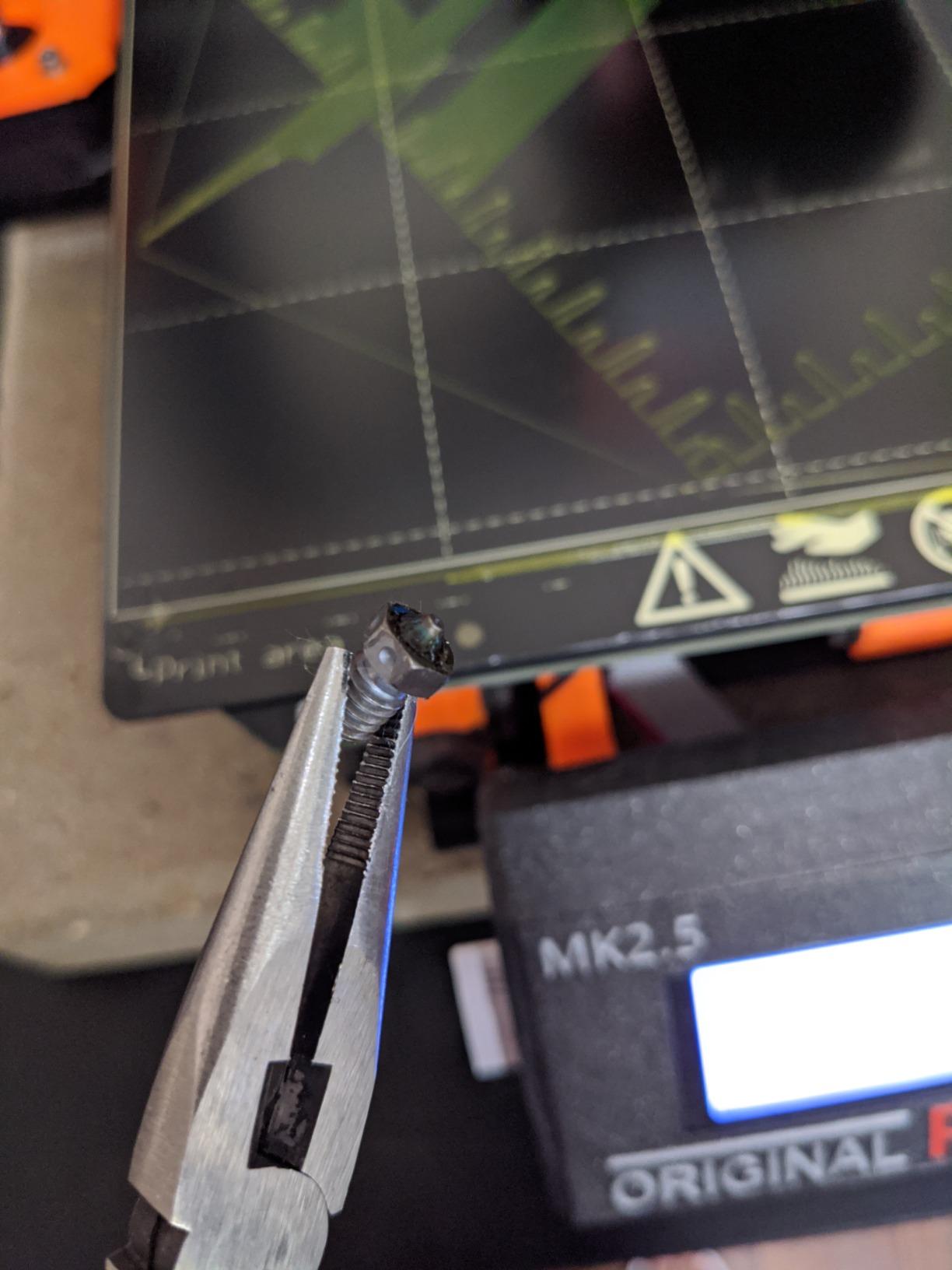
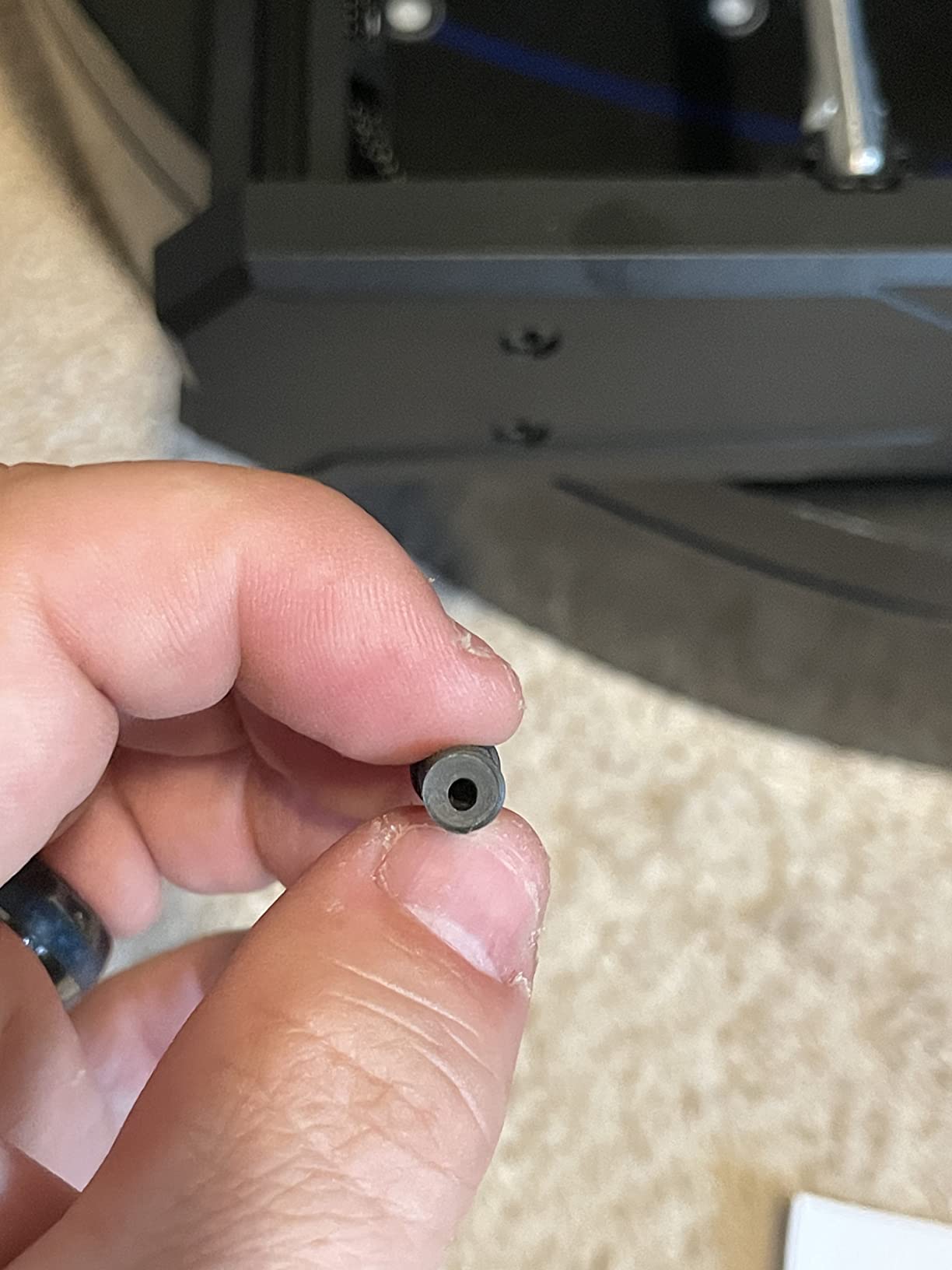
Worn nozzles rarely announce themselves, which is why so many people replace filaments instead. The first and most reliable sign is an oval or elongated opening when you look at the nozzle tip under a light. A healthy 0.4mm bore is round; a worn one is visibly wider and slightly oblong, and that shape is what causes the steady dimensional drift nobody can explain.
The second group of symptoms is behavioural. Stringing that a cold pull used to fix and now does not, under-extrusion that a new filament spool does not solve, visible ridges on the outside of the printed wall from material catching on burrs inside the bore, and corner consistency that drifts as the print goes on. If all four appear together after months on abrasive filament, the nozzle is finished rather than dirty.
A simple routine catches most of this early. Take the nozzle off every few weeks of abrasive printing and look at the tip under magnification or even a phone camera held close. Check for burrs on the inner wall, since those accelerate wear dramatically. Keep a cleaning needle in a drawer and use it while the nozzle is hot, and clean the outside with a brass wire brush on the cold nozzle rather than a paper towel if the coating matters to you.
One more diagnostic is worth running before you buy anything: check the first layer height and the wall thickness against a print you made when the nozzle was new. If a part that used to measure correctly now measures a few tenths of a millimetre large, that is a wear signature, and no amount of retraction tuning will fix it.
Retuning Your Profile After a Nozzle Change
The most common complaint after a nozzle swap is that the print stopped behaving and the maker blames the filament. The usual cause is thermal, not mechanical. Brass conducts heat well, so the plastic stays molten right up to the orifice. Steel and coated alloys do not, so less heat reaches the tip, the melt zone shortens, and you get underextrusion, stringing or blobs that look exactly like a filament problem.
For solid steel nozzles, the near-universal advice is to add 5-10 degrees to your profile and re-tune PID after fitting. For high-conductivity designs like the copper-core nozzle in this list, the correction goes the other way, running 15-20 degrees below the material’s recommended minimum. Work out which kind of nozzle you fitted before you start adjusting.
The rest of the retune is small. Recalibrate extrusion width or flow multiplier for the new orifice, check that your line width still fits inside the nozzle’s own width, and re-check retraction because a wider nozzle changes how much string a move leaves behind. A 0.6mm nozzle also wants a higher layer height, so your profile needs that change too or the print will be doing far more passes than necessary.
On installation, hot-tighten the nozzle rather than wrenching it cold. Heat the hotend to your print temperature plus about 20 degrees, tighten to roughly 1.5-2.5 Nm, and refit the silicone sock. Tightening cold crushes brass and can damage plating, and a missing sock is the most common cause of the mystery clogs people blame on abrasive filament. Then run a short filament change purge at the higher install temperature before the first real print.
Ruby vs Hardened Steel: What the Difference Actually Buys You
Ruby is a synthetic sapphire, far harder than steel, and it resists abrasion better. Hardened steel is tougher and far cheaper, and for most consumer and first-generation abrasive filament it delivers a bore that stays round for the whole job. The gap only opens with genuinely exotic materials and heavy continuous use.
That is where the practical differences sit. Hardened steel tolerates knocks, thermal shock and careless tightening, and a damaged nozzle can often be cleaned and put back. Ruby resists abrasion best but is brittle, and the failure mode is a detaching or chipping tip rather than gradual wear. In the nozzles we ran, one ruby owner reported the tip detaching after roughly 4kg of PA6-CF and PPS-GF, and Prusa community consensus is that for typical consumer abrasive filament ruby gains little over a good hardened or tungsten carbide nozzle.
So is ruby worth it? For a home machine running CF-PETG, glass fibre PETG and glow filament a few times a month, no. A coated or hardened steel nozzle costs a fraction of a hard-tip nozzle, will serve you for many rolls of filled filament, and will survive your installation mistakes. Ruby earns its place on a machine running filled nylon daily, or where bore geometry has to stay absolutely stable for a production run, and where the nozzle is installed carefully by someone who handles it as a consumable rather than a part.
The thermal advice cuts across both: a ruby tip still wants PID tuning after fitting, so the profile work does not go away when you spend more on the nozzle.
Frequently Asked Questions
Is PETG an abrasive filament?
Plain PETG is not abrasive and will not meaningfully wear a nozzle. Reinforced PETG is a different material entirely, and CF-PETG and GF-PETG contain hard filler that grinds the orifice wider over time. If you are running standard PETG, the fix for stringing and under-extrusion is a dirty nozzle or a heat-creep problem, not a harder nozzle.
What is the most abrasive filament?
Chopped carbon fibre reinforced filament, and especially carbon fibre reinforced nylon, is the most abrasive in normal use. Glass fibre reinforced filament comes next, then mineral and ceramic filled filament, then glow-in-the-dark filament with its fine phosphorescent pigment. Wood-filled PLA is mild, and unfilled filament is not abrasive at all.
Should I get a hardened steel nozzle?
If you print any carbon fibre, glass fibre, mineral or glow filament on a regular basis, yes. Hardened steel is the minimum sensible material for abrasive filament and is the point where the price of a spare stops being significant. If you only ever print plain PLA, PETG or ABS, your factory brass nozzle is fine and an upgrade buys you nothing.
What are the downsides of using hardened steel nozzles?
Steel conducts heat less well than brass, so the melt zone shortens and your existing profile may under-extrude or string after the swap. Owners typically add 5-10 degrees and re-tune PID on install. Copper-core designs invert this and often need a temperature tower, landing 15-20 degrees below the material minimum.
Is 0.6mm or 0.4mm nozzle better for carbon fiber?
For abrasive filament, 0.6mm is usually the better default. The wider bore moves more material per second so filler has less time to grind the opening, and it prints at roughly twice the speed of 0.4mm. Keep 0.4mm for general work and fine detail, and remember that changing diameter changes layer bonding, so treat it as a profile change too.
Are ruby nozzles worth it?
For most home printers, no. A coated or hardened steel nozzle handles consumer carbon fibre, glass fibre and glow filament at a fraction of the cost and survives knocks and careless tightening. Ruby earns its place on machines running filled nylon daily where bore geometry must stay stable, provided you install it carefully because it chips rather than wearing smoothly.
The Verdict on Abrasive-Filament Nozzles in 2026
After all of this, the Mudder hardened steel MK8 five-pack is our pick for the best 3d printer nozzle for abrasive filament, and the reason is simple: it has the largest body of real-world wear reports, the tightest stated bore tolerance and enough spares to keep you printing. For V6 and Prusa machines, the POLISI3D four-pack is the value answer, and the Micro Swiss M2 is the one we would buy for ourselves.
Match the nozzle to your hotend first and the material second, because a thread mismatch is the most common reason a purchase goes wrong. Then change your profile when you change the nozzle, hot-tighten at temperature, and keep the silicone sock on. In 2026, a hardened steel nozzle in the right diameter remains the highest-return upgrade most makers can make for abrasive filament.