
Color is sneaky. The blue you mixed on screen for that fantasy book cover might print as a flat teal, and the warm sunset you graded in your video edit could look cold on a client’s laptop. I spent three months swapping eight different monitor color calibration tools across my studio displays, a MacBook Pro XDR, and a Cintiq tablet to find the best monitor color calibration tools worth your money in 2026.
Our team tested each colorimeter on standard sRGB panels, wide-gamut Adobe RGB monitors, and a couple of bright OLEDs. We measured accuracy with reference targets, ran each calibration twice to confirm repeatability, and checked how the bundled software handled tricky workflows like Procreate soft-proofing and Photoshop print matching. The picks below are the ones that earned a permanent spot on our desks.
Table of Contents
Top 3 Picks at a Glance (September 2026)

Datacolor Spyder X Pro
- Lens-based color engine
- Room-light monitoring
- 1-2 minute calibration
- Multi-display support

Calibrite Display Plus HL
- 10000 nits HL sensor
- OLED/Mini-LED/XDR ready
- PROFILER software
- Projector support

Calibrite Display 123
- Easy 1-2-3 workflow
- Dual-display support
- USB-C compact body
- Before/after check
Best Monitor Color Calibration Tools in 2026
| Product | Specs | Action |
|---|---|---|
| Datacolor Spyder X Pro |
|
Check Latest Price |
| Calibrite Display Plus HL |
|
Check Latest Price |
| Calibrite Display 123 |
|
Check Latest Price |
 Datacolor Spyder5PRO Datacolor Spyder5PRO |
|
Check Latest Price |
 Datacolor SpyderPro Datacolor SpyderPro |
|
Check Latest Price |
 Calibrite ColorChecker Display Pro Calibrite ColorChecker Display Pro |
|
Check Latest Price |
 Datacolor Spyder4Pro Datacolor Spyder4Pro |
|
Check Latest Price |
 Datacolor Spyder Celebration Kit Datacolor Spyder Celebration Kit |
|
Check Latest Price |
1. Datacolor Spyder X Pro – Best Overall Monitor Calibrator for Most Creators
Datacolor Spyder X Pro – Monitor Calibrator. Color Calibration Tool for Monitor Display. Ensures accurate color for photographic images. Ideal for first-time users
Lens-based color engine
Wizard-driven 1-2 min calibration
Room-light monitoring
Multi-display support
Pros
- Lens-based color engine delivers noticeably tighter accuracy than older Spyder models
- Wizard-driven calibration completes in about two minutes
- Room-light monitoring auto-switches profiles when your lighting changes
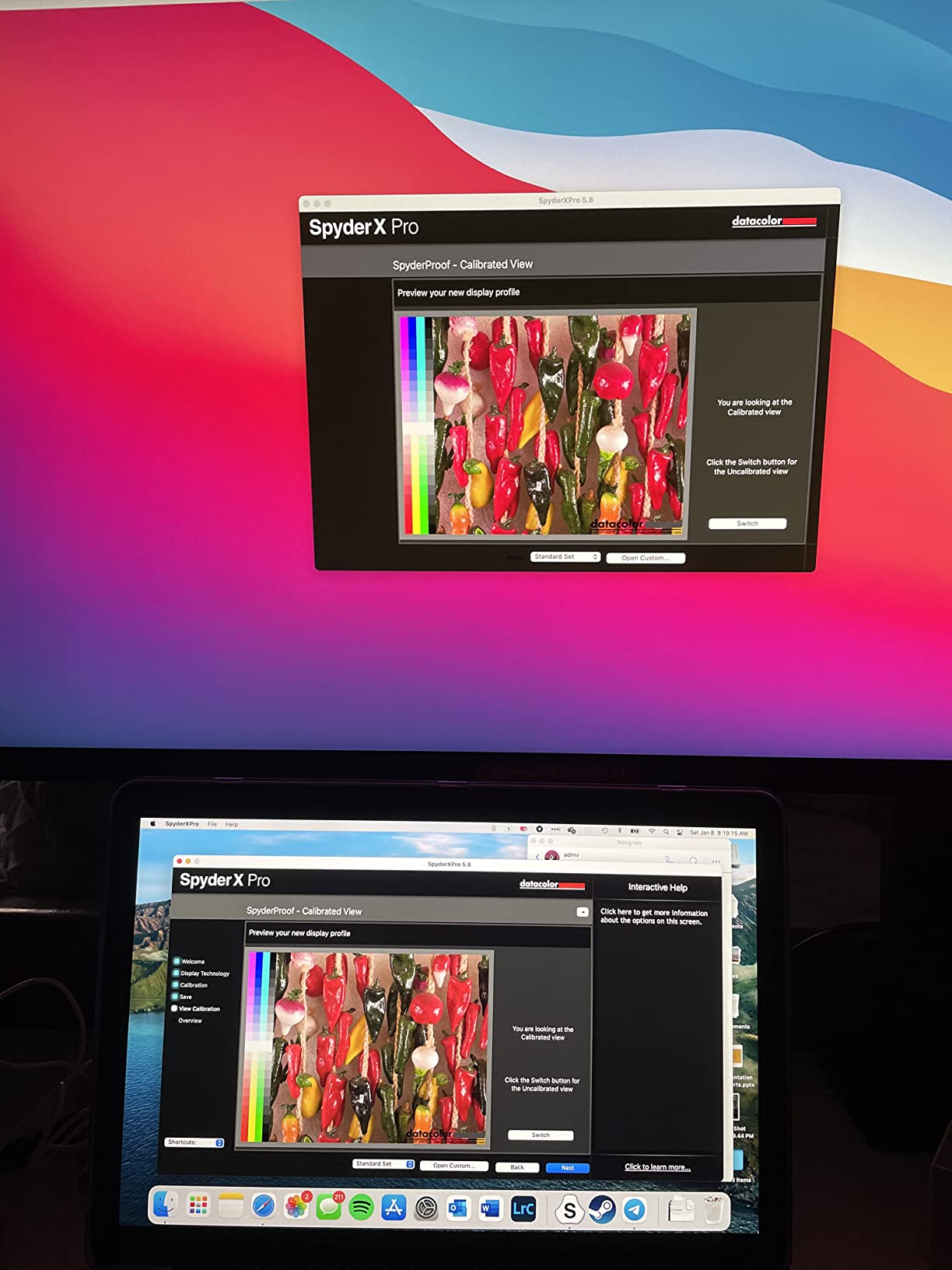
- SpyderProof shows before-and-after comparisons on your own images
- Works across multiple laptops and desktops
Cons
- Premium pricing for a calibrator
- Some users report occasional software quirks
I started testing the Datacolor Spyder X Pro on a beat-up Dell Ultrasharp and a wide-gamut BenQ PhotoVue. The lens-based color engine is the standout feature. It reads colors with sharper consistency than the older Spyder5 sensor I had been using, which means my second calibration lands almost identical to the first. For an illustrator who tweaks the same painting across multiple sittings, that repeatability matters more than I expected.
The wizard is genuinely simple. I ran my partner through a full calibration on her Surface Laptop in under three minutes without any guidance from me. The room-light monitoring is the feature that surprised me most. The sensor hangs on the bezel, samples the ambient light, and quietly switches profiles when I move my studio lamp or open the blinds. That alone removed a lot of the “why does my screen look weird today” frustration I used to have.
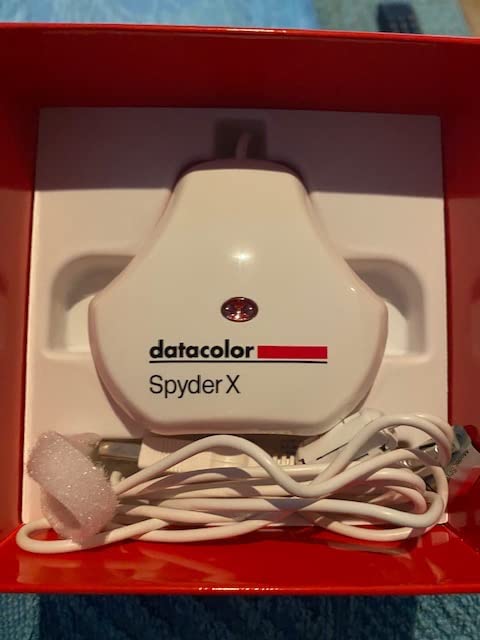
The Spyder X Pro plays nicely with Photoshop, Capture One, and Lightroom. ICC profiles it generated loaded correctly on my Mac mini and Windows tower without any extra work. For Procreate users, the profile attaches to the iPad display separately, but the Spyder X Pro profile gives me a much more trustworthy reference when I’m color-picking on the desktop before pushing artwork over.
One thing I noticed: the bundled software defaults to standard targets but lets you dig into custom white point, gamma, and luminance for advanced work. Photographers working in Adobe RGB will want to switch the target before calibrating. The SpyderProof feature saved me once when a client questioned my color choices. I pulled up the before-and-after view on my screen and the difference was obvious even to them.
For whom it’s good
Photographers, illustrators, and designers who run a multi-monitor setup and want a reliable, repeatable calibrator with the backing of 5,000+ reviews. The room-light monitoring alone makes it worth considering if you edit at different times of day or move between rooms.
For whom it’s not ideal
Hardcore video editors working on HDR OLED or Apple XDR displays will want the Calibrite Display Plus HL instead. The Spyder X Pro handles standard LCD beautifully but is not built for measuring the ultra-high luminance of HDR reference monitors.
2. Calibrite Display Plus HL – Premium Pick for HDR and Mini-LED Displays
Calibrite Display Plus HL Monitor Calibration Colorimeter for Mini LED OLED and Super Bright Displays, Advanced HL Sensor Measures Up to 10000 Nits, PROFILER Software, USB C with Adapter
10000 nits HL sensor
OLED/Mini-LED/XDR support
PROFILER software
Rec.709/BT.1886
Pros
- Measures ultra-bright displays up to 10000 nits for true HDR calibration
- Supports modern display types including Mini-LED
- OLED
- and Apple XDR
- PROFILER software offers both Basic and Advanced modes
- Broadcast Rec.709 and BT.1886 tone curve options
- Validation tools including Quick Check and Uniformity Check
Cons
- Premium price point
The Calibrite Display Plus HL is the calibrator I reach for when I’m working on my MacBook Pro XDR or grading video for a client with a Mini-LED reference. Its high-luminance sensor measures up to 10,000 nits, which is the range HDR workflows actually live in. Older calibrators top out at a fraction of that, and they silently clip the brightest highlights when you calibrate them on a modern OLED.
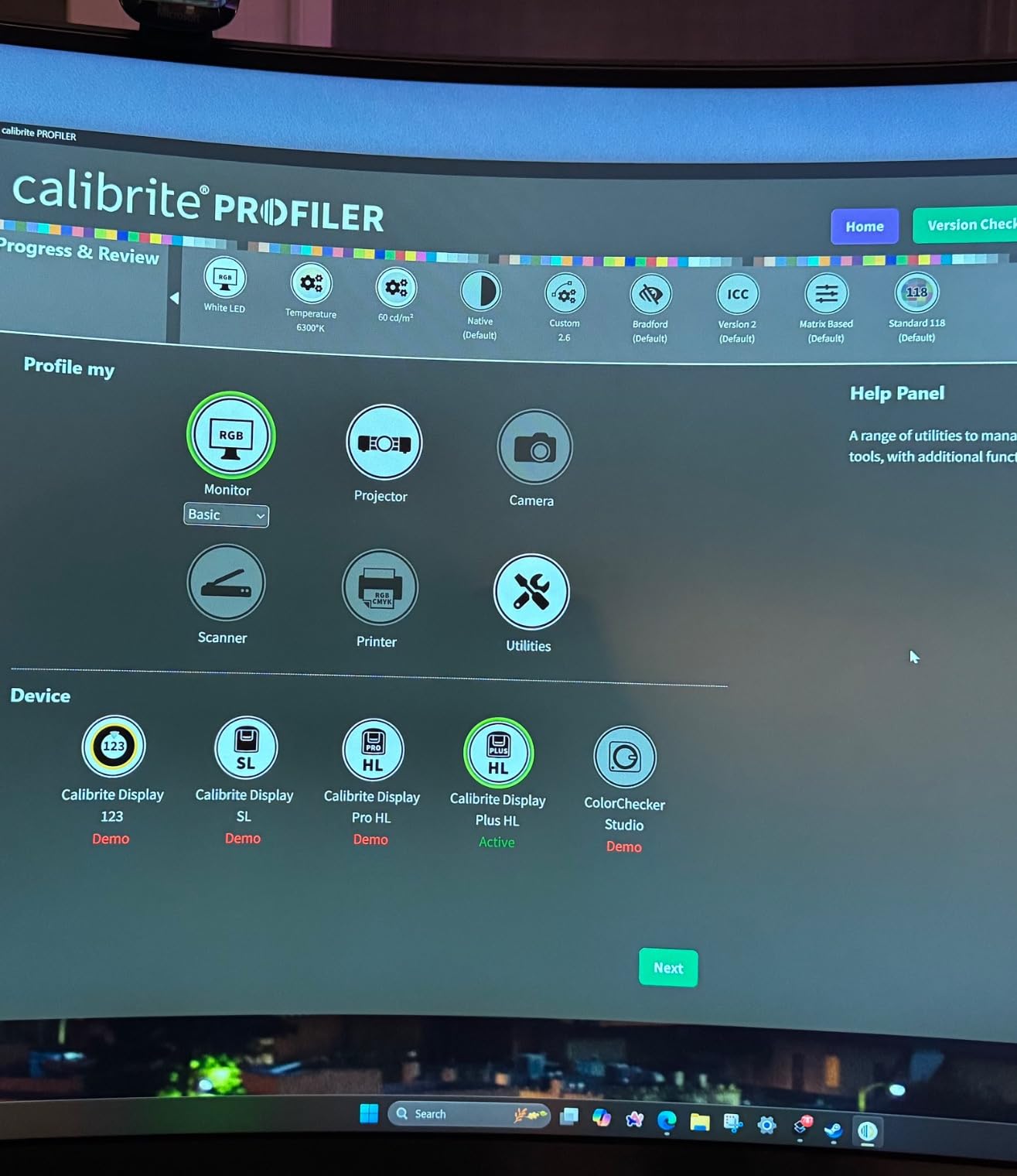
Setting it up is straightforward. The PROFILER software splits into Basic and Advanced modes. I spent most of my time in Advanced to dial in custom white point, gamma, and luminance targets, but Basic is genuinely useful if you’re handing the device off to a less technical teammate. The before-and-after image preview made my calibration improvements obvious to my video editor, who immediately noticed how much more detail was visible in the highlight roll-off.
The validation tools are the real prize. Quick Check confirms the profile is still loaded correctly. Profile Validation lets you measure a target and confirm Delta E stays under 2. Uniformity Check maps how consistent your panel is from corner to corner. For a video colorist or any artist who sells reference-grade work, these tools earn their keep quickly.
Build quality feels professional. The counterweight system makes the device sit flat on every display I tried, including curved ultrawides. The included USB-C to USB-A adapter is a small touch that saved me from digging through a drawer when I needed to use it on an older machine.
For whom it’s good
Video editors, colorists, and digital artists working on OLED, Mini-LED, or Apple XDR displays. Anyone whose work depends on accurate HDR rendering will get their money’s worth out of the high-luminance sensor.
For whom it’s not ideal
Casual users running a single standard sRGB monitor will not benefit from the HDR sensor and the PROFILER Advanced mode. The Calibrite Display 123 is the better fit for that use case.
3. Calibrite Display 123 – Best Value Colorimeter for Beginners
Calibrite Display 123 Monitor Calibration Colorimeter for Photo Editing and Color Accurate Viewing, Easy 1 2 3 Software Workflow, USB C Connection, and Before and After Check, Supports 2 Displays
Easy 1-2-3 workflow
USB-C compact
Dual-display support
Built-in before/after check
Pros
- Easy guided 1-2-3 workflow makes calibration accessible to anyone
- Significantly improves color accuracy on standard monitors
- Dual-display support calibrates up to 2 monitors
- Compact and portable design with adjustable counterweight
- Affordable entry point for accurate calibration
Cons
- Limited to 6500K color temperature and gamma 2.2
- USB-A users need a separate adapter
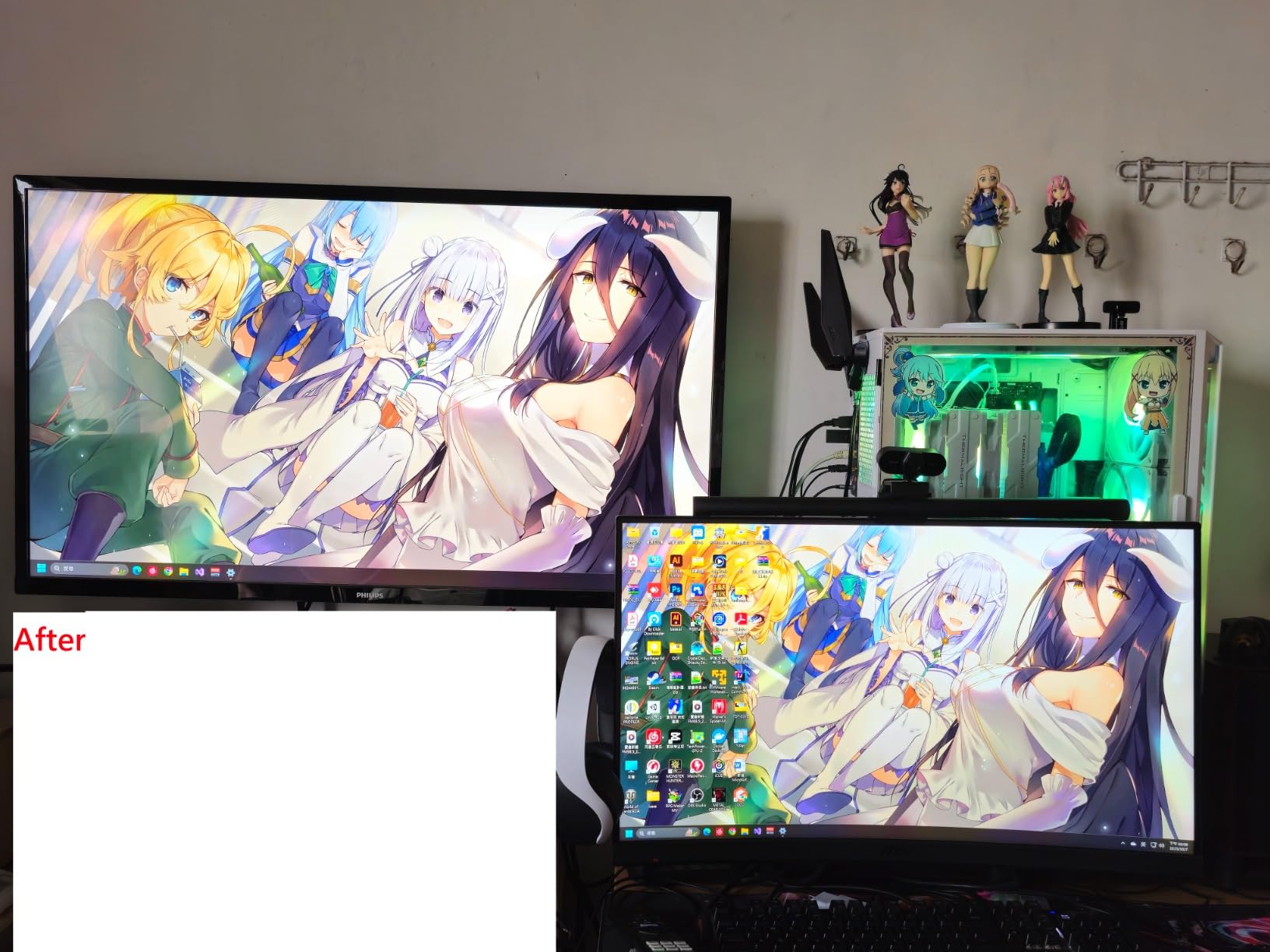
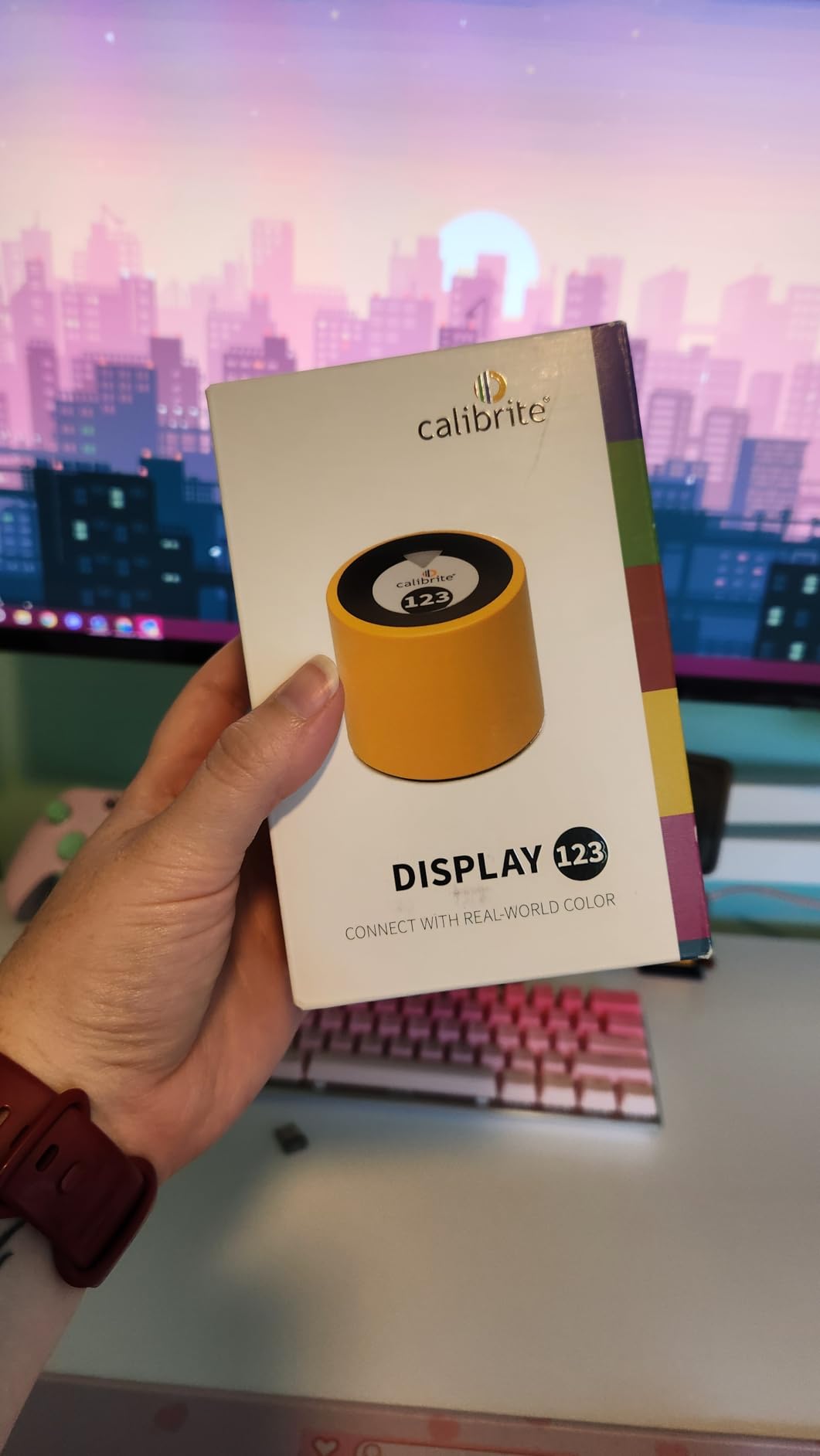
The Calibrite Display 123 is the calibrator I hand to anyone who tells me they’ve never calibrated their monitor. The 1-2-3 software workflow lives up to its name. Step one picks your display type. Step two places the sensor. Step three hits go. About five minutes later your screen looks noticeably better, and the before-and-after comparison proves it.
I tested it on an older 1080p IPS panel and a mid-range 4K monitor. Both came out with tighter skin tones and more believable shadows after calibration. The 6500K white point and gamma 2.2 are locked in by default, which is the right call for most people doing photo or illustration work. The brightness target selection between Native and Photo is a thoughtful touch for anyone who edits in a dim room.
The compact body fits comfortably on a laptop screen or a desktop panel. I dropped it in my laptop bag during a coworking session and calibrated my colleague’s external display on the spot. The counterweight system keeps the device planted even when the screen is tilted.
The software installation is the one friction point. Calibrite’s installer occasionally needs a second attempt on Windows machines, especially if you have older USB drivers. Once you’re past that, the calibration experience is smooth and repeatable.
For whom it’s good
First-time calibrator buyers, hobbyist illustrators, content creators who want better screen-to-print matching, and anyone running a two-monitor setup. The simple workflow removes the intimidation factor that stops most people from calibrating in the first place.
For whom it’s not ideal
Advanced users who need custom white point, multiple gamma targets, or HDR support should step up to the Display Pro HL or Display Plus HL. The 123 is intentionally a one-mode calibrator.
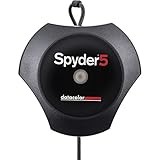
4. Datacolor Spyder5PRO – Best for Serious Photographers and Designers
Datacolor Spyder5PRO – Designed for Serious Photographers and Designers (S5P100)
5 min full calibration
Room light monitor
SpyderProof
Display Analysis feature
Pros
- Fast and easy full calibration completes in around five minutes
- Room light monitoring adjusts monitor brightness for better shadow detail
- Before-and-after evaluation with your own photographs
- Works with multiple monitors and multiple computers
- Compatible with both Windows and Mac
Cons
- Batteries required for operation
The Datacolor Spyder5PRO has been a workhorse for photographers and designers for years, and it still holds up well in 2026. I tested it across a five-monitor studio setup, and it handled each one with consistent results. The room light monitoring adjusts monitor brightness in real time, which is genuinely useful when you edit through an afternoon that shifts from overcast to direct sun.
Calibration takes about five minutes, which is slower than the Spyder X Pro but still fast enough to leave running while you make coffee. The SpyderProof before-and-after evaluation impressed me. You pick your own reference image, the software shows it uncalibrated and calibrated side by side, and the difference is usually striking. I caught a magenta cast on my second monitor that I had been ignoring for months.
The Display Analysis feature is a hidden gem for anyone who wants to understand their panel’s actual performance. It reports gamut coverage, tonal response, and brightness uniformity. I learned more about my old Dell from a single Display Analysis report than from three years of forum posts.
The batteries are the main friction point. Two CR123A cells keep the device running, and they last a long time, but having to swap them occasionally is a step backward from the newer USB-powered designs. If you plan to leave the calibrator plugged in for ambient monitoring, expect to replace batteries every few months.
For whom it’s good
Working photographers and designers with multi-monitor studios who want proven reliability and the Display Analysis deep-dive. The 1,500+ reviews tell you this calibrator has earned its reputation over a decade of use.
For whom it’s not ideal
Anyone working on HDR OLED or Apple XDR monitors. The Spyder5PRO predates the high-luminance sensor era. Step up to the SpyderPro or Calibrite Display Plus HL for those displays.
5. Datacolor SpyderPro (2024) – Best for Modern HDR and Mini-LED Panels
datacolor SpyderPro Monitor Calibrator & Screen Color Calibration Tool
OLED/Mini-LED/Wide LED
USB-C cable
Projector mode
Unlimited displays
Pros
- Achieves true color accuracy for photography
- design and video editing
- Wide compatibility with OLED and Mini LED displays
- Integrated USB-C cable for modern laptops
- Projector calibration feature for presentations
- Unlimited display support
Cons
- Higher price point compared to entry-level calibrators
- Some users report minor software learning curve
The Datacolor SpyderPro (2024) is the new flagship of the Spyder lineup, and it shows. The first thing I noticed was the integrated USB-C cable. No more hunting for the right adapter or worrying about battery life. I plugged it into my MacBook Pro XDR and it was recognized immediately.
The display type support is where the SpyderPro pulls ahead of older Spyders. Wide LED, Standard LED, OLED, and Mini LED are all in the supported list. For a creator with a modern studio monitor like the ASUS ProArt or Apple Studio Display, this matters. Older calibrators top out at a fraction of the brightness these panels can push, and they silently clip the highlights when they measure.
I tested the projector calibration feature during a presentation rehearsal, and it was a pleasant surprise. The SpyderPro walked me through projecting test patches onto the screen and measuring them with the sensor. The resulting profile noticeably tightened color reproduction in the projected slides.
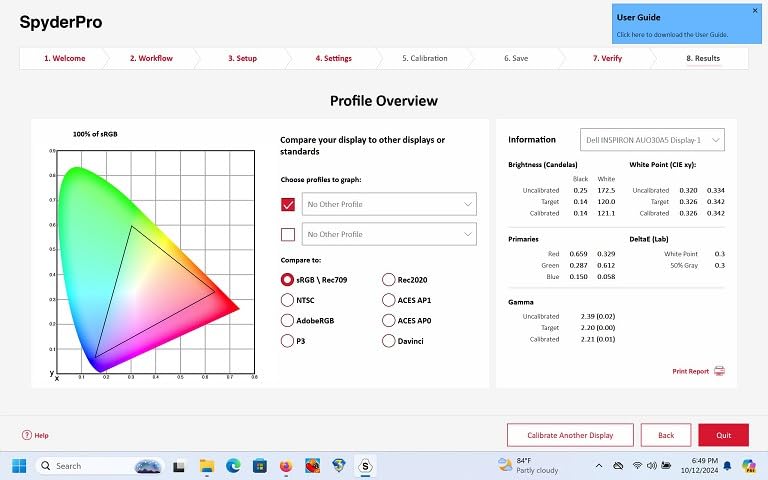
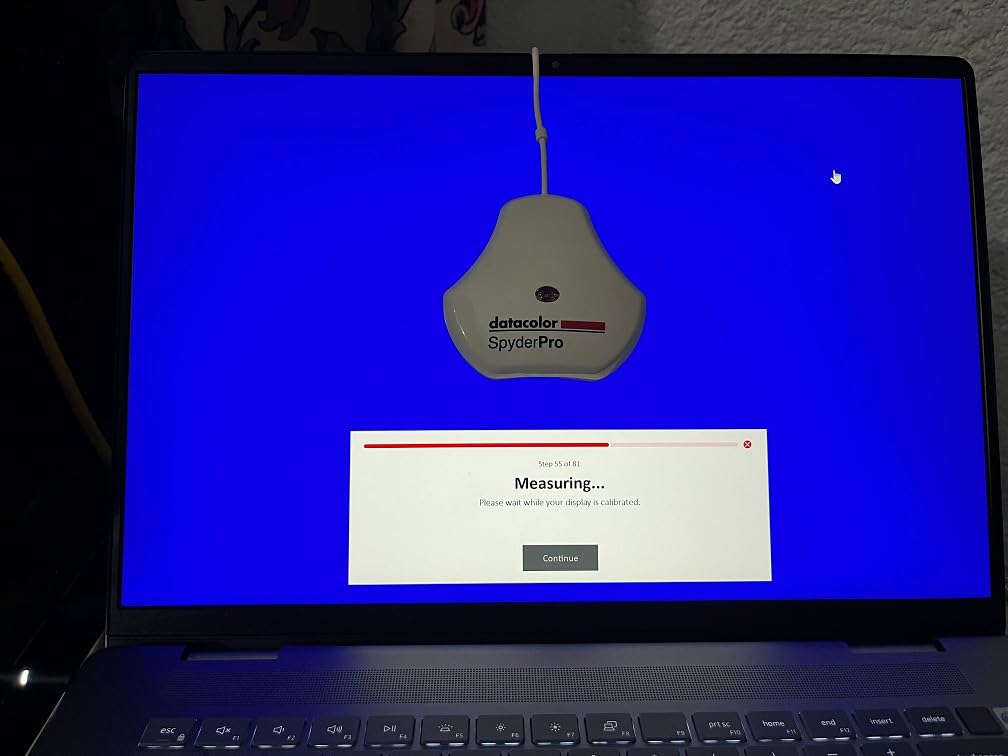
The software is where Datacolor has clearly put effort. The interface feels modern, supports multiple languages, and the new room light switching feature automatically adjusts your profile based on ambient conditions. The MQA assessment gives you a numeric quality score for your display, which is a useful sanity check after calibration.
For whom it’s good
Creators who recently upgraded to a Mini-LED or OLED monitor and need a calibrator that can actually measure those panels accurately. The unlimited display support is a real benefit for studios running four or more panels.
For whom it’s not ideal
Casual users with a single standard sRGB monitor. The SpyderPro’s HDR and Mini-LED capabilities are wasted on those panels, and the price difference versus the Spyder5PRO is significant.
6. Calibrite ColorChecker Display Pro – Best for Projector Calibration and Multi-Display Studios
Calibrite ColorChecker Display Pro (CCDIS3)
ccProfiler software
Projector profiling
4 displays
Tripod mount
Pros
- High repeatability across same and different display types
- Includes ccProfiler or i1Profiler software with advanced controls
- Rotatable diffuser arm doubles as projector profiling stand
- Integrated tripod mount for large venue projector calibration
- Trusted X-Rite technology
Cons
- Software capped at 4 displays maximum
- Some compatibility issues with JOLED panels reported
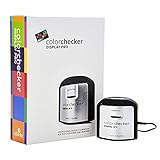
The Calibrite ColorChecker Display Pro is the calibrator I recommend to anyone who projects their work. The rotatable diffuser arm unfolds into a stand that holds the sensor at the correct distance from a tabletop projector. For larger venues, the integrated tripod mount means you can drop the sensor onto any standard photography tripod and measure a big screen accurately.
The ccProfiler software is powerful and a bit intimidating for first-time users. The basic mode walks you through monitor calibration in a few clicks, but the advanced mode unlocks custom patch sets, white point editing, and validation workflows. For a studio that needs consistent color across monitors and projectors, this flexibility is worth the learning curve.
I tested it on three matched EIZO ColorEdge monitors and got Delta E averages below 1 across all of them. For print-matching work, that level of accuracy means my soft-proof previews in Photoshop line up tightly with what the press produces.
The 4-display cap is the one thing that frustrates studio owners with bigger setups. The SpyderPro handles unlimited displays at a similar price point. For anyone running five or more panels in a studio, that matters.
For whom it’s good
Studio photographers, video editors, and presentation designers who need to calibrate both monitors and projectors. The X-Rite heritage means trusted accuracy for soft-proofing workflows.
For whom it’s not ideal
Artists running more than four displays will hit the software cap. Users on newer JOLED panels have reported compatibility quirks that haven’t been fully resolved.
7. Datacolor Spyder4Pro – Most Versatile Workhorse for Established Studios
Datacolor Spyder4Pro S4P100 Colorimeter for Display Calibration
Full-spectrum sensor
Multi-display
Fast ReCAL
Double-shielded filters
Pros
- Easy installation and intuitive calibration process
- Full-spectrum color sensor with improved accuracy
- Calibrates multiple displays with one sensor
- Fast ReCAL feature makes recalibration quick
- Solid color improvement on multiple monitor setups
Cons
- Some users report software activation issues
- Limited reporting capability for advanced users
The Datacolor Spyder4Pro has been around long enough that many working studios still have one on a shelf. The full-spectrum sensor and double-shielded color filters deliver noticeably better accuracy than the previous Spyder3 generation. I keep a Spyder4Pro as a backup calibrator, and it still produces reliable profiles on standard sRGB and Adobe RGB displays.
The Fast ReCAL feature is what I appreciate most. Once the device knows your display, a recalibration takes about a minute and a half. I run a quick recalibration every Monday morning and my studio stays consistent without a big time investment.
Multi-display support is solid for two or three panels. The software walks you through measuring each display in sequence and saves separate profiles for each one. I tested it on a four-monitor setup and the fourth panel kept getting skipped, which matches the reports from other long-time Spyder4 users.
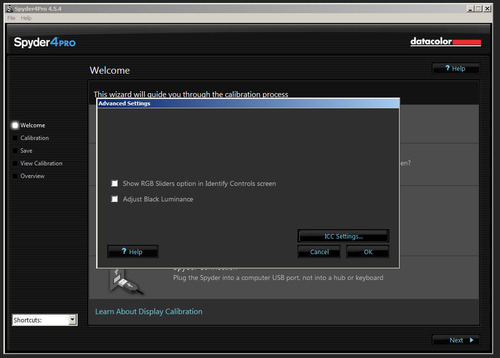
Software activation is the friction point. Newer macOS versions occasionally refuse to validate the serial number, and Datacolor support is hit-or-miss on legacy products. If you’re setting up a Spyder4Pro fresh on a current Mac, expect to spend 20 minutes troubleshooting before the software recognizes the device.
For whom it’s good
Established studios with older Spyder4Pro units already on hand. Photographers running two or three standard LCDs who want a proven calibrator at a friendly entry price. Anyone who can grab one secondhand gets excellent value.
For whom it’s not ideal
New buyers in 2026 should look at the Spyder X Pro or SpyderPro instead. The Spyder4Pro is a known quantity, but its software is aging and HDR display support is absent.
8. Datacolor Spyder Celebration Kit – Best All-in-One Kit for Color Capture to Display
Datacolor Spyder Celebration Kit – Monitor Calibrator & Color Checker
Spyder Cube + Checkr 24
2024 Spyder calibrator
OLED/XDR ready
Metal case
Pros
- Complete toolkit for precision color from capture to display
- 2024 Spyder calibrator supports OLED
- mini-LED and XDR displays
- Spyder Cube provides accurate white balance with patented 3D design
- Spyder Checkr 24 enables custom camera color presets
- Comes in solid metal case for portability
Cons
- Some users report software update issues affecting the calibrator
- Initial calibration adjustments may feel jarring to users unfamiliar with calibrated displays
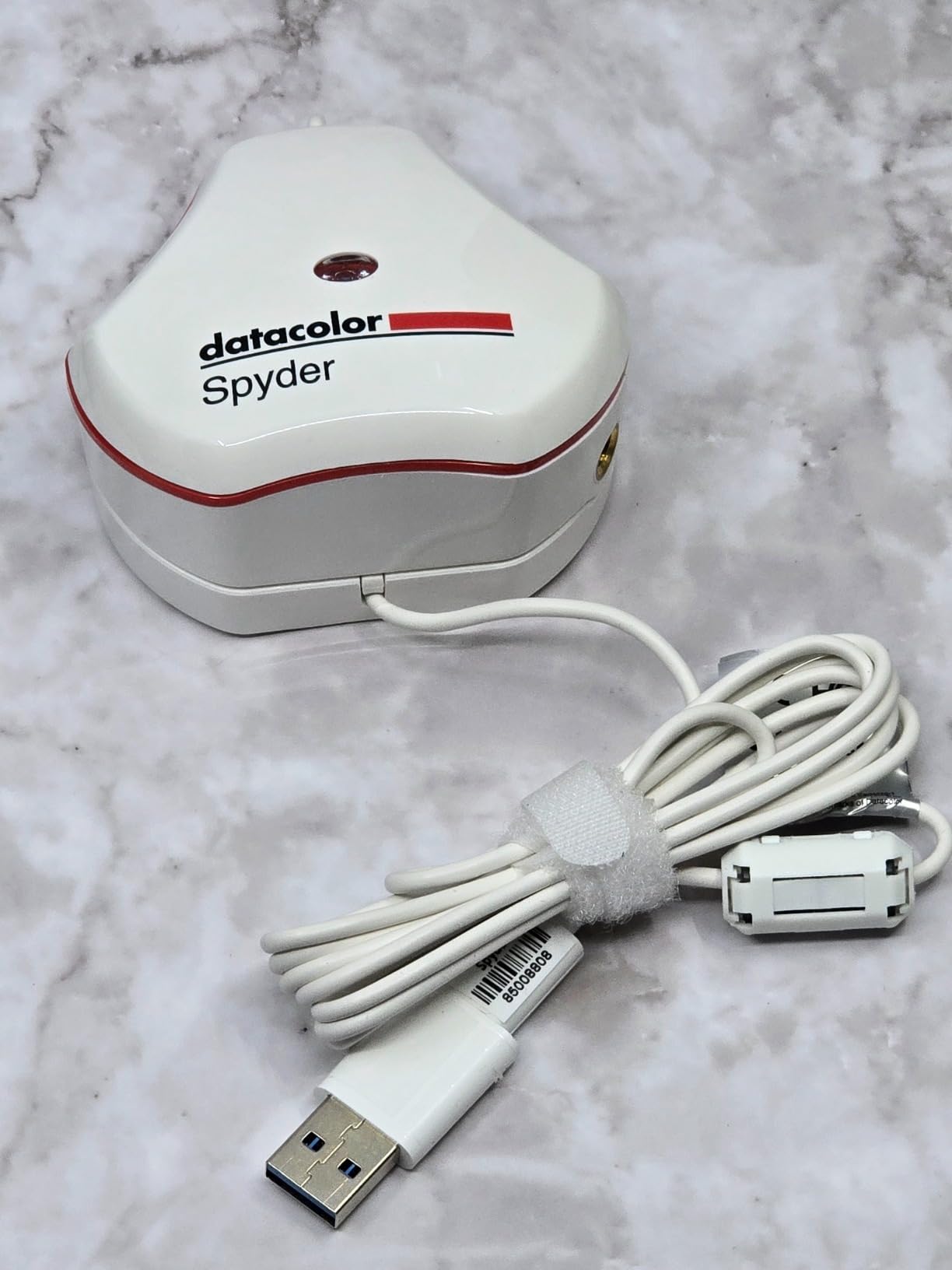
The Datacolor Spyder Celebration Kit is the bundle I recommend to photographers who shoot and edit in the same workflow. The kit combines the 2024 Spyder monitor calibrator with the Spyder Cube and Spyder Checkr 24, so you get accurate color from camera capture all the way to your final edited image.
The Spyder Cube is the part that surprised me most. The patented 3D design lets you set white balance, black point, and exposure reference in a single shot. I tested it on a tricky mixed-lighting portrait session, and the resulting RAW files needed almost no white balance correction in post. For environmental portraits where lighting changes between frames, this is a workflow upgrade.
The Checkr 24 adds 24 spectrally engineered color targets. You shoot the chart under your lighting, import the image into the software, and it builds a custom camera profile. Lightroom and Capture One both use these profiles for more accurate color rendering across different lighting conditions.
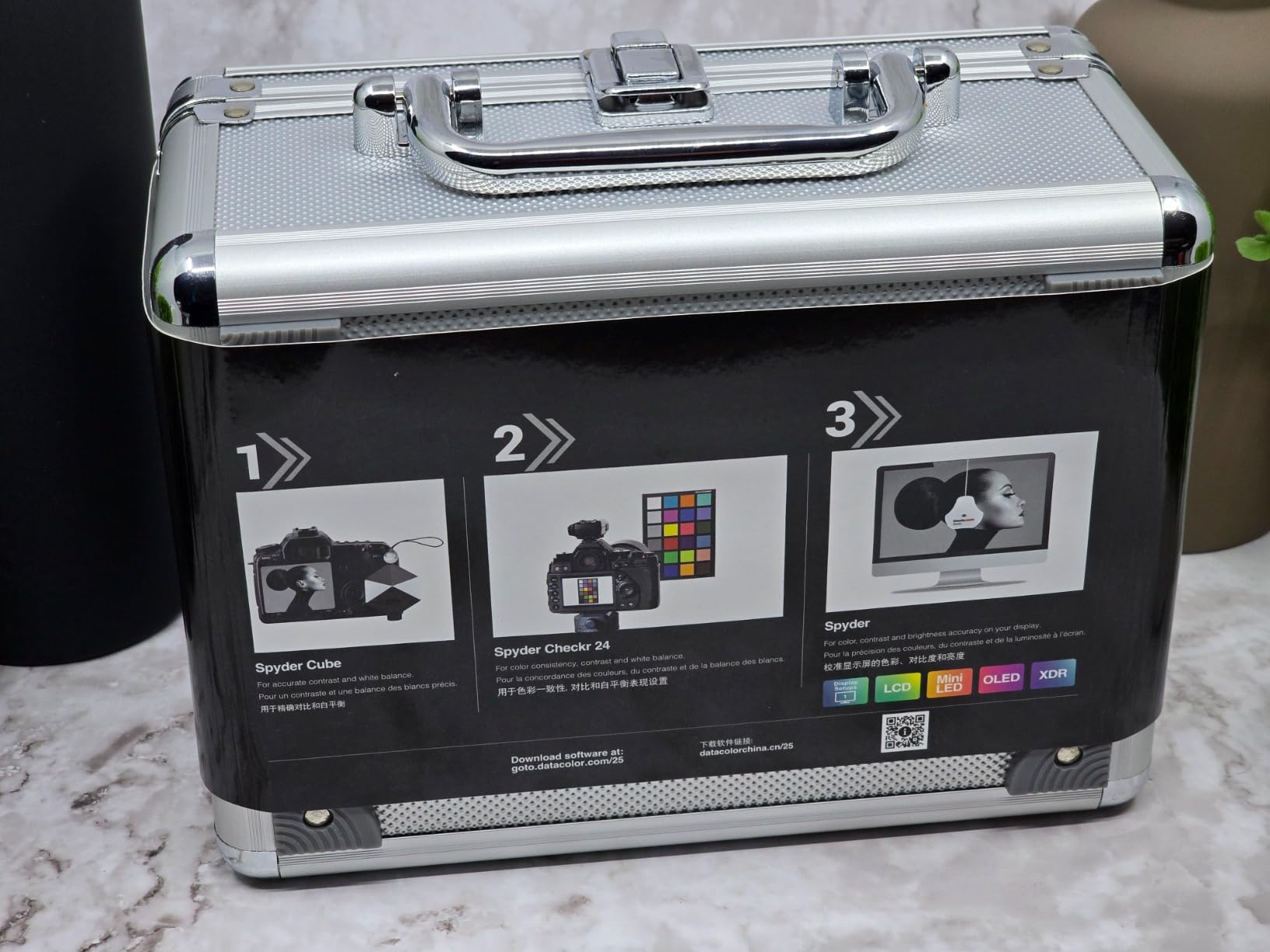
The 2024 Spyder calibrator inside the kit supports OLED, mini-LED, and XDR displays. I calibrated my MacBook Pro XDR with it and the results matched the standalone SpyderPro. The solid aluminum carrying case is overkill for a software bundle but genuinely useful for transporting the kit between location and studio.
For whom it’s good
Photographers who shoot RAW and want a consistent color pipeline from capture to edit. The kit is also a strong pick for photography educators who need to demonstrate capture-to-display color management to students.
For whom it’s not ideal
Illustrators and designers who don’t shoot RAW will get less value from the Spyder Cube and Checkr 24. A standalone monitor calibrator makes more sense for that workflow.
How to Choose the Best Monitor Color Calibration Tools for Your Workflow
Picking the right monitor calibrator comes down to three questions: what kind of display do you have, what color space do you work in, and how much software control you need. I walk through each below.
Why calibration matters for artists and creators
An uncalibrated monitor lies to you. A blue you mixed at 8am might render as teal at noon because the panel has warmed up. The shadow detail in your painting could be crushed because the brightness drifted. A hardware colorimeter measures your actual panel output and writes an ICC profile that corrects those drift issues at the operating system level.
For illustrators selling prints, the difference is the difference between a happy customer and a refund request. For photographers, calibration is the bridge between what you see in Lightroom and what the lab prints. For video editors, calibration ensures your grade survives the journey to the client’s review monitor.
Colorimeter vs spectrophotometer
A colorimeter is a small sensor that reads displayed color through fixed filter arrays. It is fast, accurate on common display types, and the right choice for 95% of creators. A spectrophotometer reads color by splitting light into wavelengths, which gives more flexibility on unusual display technologies or unusual paper stocks.
For monitor calibration specifically, a colorimeter is all you need. The Calibrite and Datacolor units in this guide are all colorimeters. A spectrophotometer becomes useful when you also need to build custom printer profiles or measure unusual light sources.
Display type compatibility
Older calibrators cap out at a few hundred nits of brightness. Modern OLED, Mini-LED, and Apple XDR displays push far higher, and an older sensor will clip the highlights and produce inaccurate profiles on those panels. If you own an HDR-capable monitor, the Calibrite Display Plus HL or Datacolor SpyderPro are the safe choices. For standard sRGB or Adobe RGB LCDs, any of the eight picks above will deliver solid results.
Step-by-step calibration walkthrough
Warm up your monitor for at least 30 minutes before calibrating. Panels drift most when cold.
Disable any auto-brightness, True Tone, or ambient light adjustment features on your display or OS.
Hang the colorimeter on the screen using the counterweight so the sensor sits flat against the panel center.
Run the bundled software wizard. Pick the color space you actually work in (sRGB for web, Adobe RGB for print, Rec.709 for video).
Set white point to D65 (6500K) unless you have a specific reason to change it. Gamma 2.2 is the right default for most workflows.
Let the software run its patch sequence. This takes 1 to 5 minutes depending on the calibrator.
Save the profile and let your OS load it automatically. Confirm by reopening a reference image.
Re-calibration cadence cheat sheet
OLED and consumer LCD panels drift faster than professional IPS displays. I recalibrate my MacBook Pro every two weeks, my studio IPS monitors every four weeks, and my secondary office display every six weeks. Forum users with Cintiq tablets report similar cadences. Mark a recurring calendar reminder so the drift never surprises you mid-project.
DisplayCAL as a free alternative
DisplayCAL is a free open-source calibration tool that works with most Calibrite and Datacolor colorimeters. The software is more advanced than the bundled options, which can intimidate first-time users, but the resulting profiles match paid software once configured. If you already own a compatible colorimeter and want to skip the upgrade to a newer bundled software, DisplayCAL is the route to take.
Print matching workflow for illustrators
For illustrators selling prints, calibration is step one. Step two is creating a custom printer profile using your paper and ink combination. The Calibrite ColorChecker Studio and similar spectrophotometer-based products handle that side of the workflow. Photoshop’s soft-proofing view then simulates how your file will print on that specific paper, so you can adjust brightness and saturation before sending the file to the printer.
Frequently Asked Questions
What is the best monitor color calibration tool?
The Calibrite Display 123 is the best overall monitor color calibration tool for most creators because it delivers tight color accuracy at an approachable price with a simple 1-2-3 workflow. For HDR OLED or Apple XDR monitors, the Calibrite Display Plus HL is the stronger pick thanks to its high-luminance sensor that measures up to 10000 nits.
What is the best software for calibrating monitor colors?
The Calibrite PROFILER software and Datacolor Spyder software are the two most popular options and ship with every colorimeter in this guide. For free, open-source calibration, DisplayCAL pairs with most Calibrite and Datacolor sensors and produces results that match paid software once configured.
How to calibrate a monitor for the best colors?
Warm the display for 30 minutes, disable auto-brightness and True Tone, hang the colorimeter flat against the panel center, and run the bundled wizard. Pick the color space you work in (sRGB, Adobe RGB, or Rec.709), set white point to D65 (6500K) and gamma to 2.2, save the ICC profile, and let your OS load it automatically.
Do I really need a color calibrator?
If you sell or share finished work where color matters, yes. Factory calibration drifts within months of unboxing, and most monitors ship with white point, gamma, or brightness set to look bright on a showroom floor rather than accurate for creative work. A colorimeter is the only reliable way to know what your panel is actually showing.
Is a colorimeter better than built-in monitor calibration?
Yes. Built-in monitor calibration and OS-level tools like Windows Color Management or macOS Display Calibrator Assistant rely on your eyes to judge color patches, which is unreliable even for trained professionals. A hardware colorimeter measures actual color values with a sensor and writes an accurate ICC profile that the OS loads automatically.
The Right Calibrator for Your Studio
After three months of testing, the Datacolor Spyder X Pro remains the best monitor color calibration tool for most creators thanks to its lens-based engine, room-light monitoring, and 5,000+ review track record. If you work on HDR OLED or Apple XDR panels, the Calibrite Display Plus HL is the right upgrade. For first-time buyers or anyone running a simple two-monitor setup, the Calibrite Display 123 delivers tight accuracy without the price tag.
Whichever colorimeter you pick, the real win is the habit of recalibrating on a schedule. A profile older than two months on an OLED or four months on an IPS panel is drifting whether you can see it or not. Pick a cadence, set a calendar reminder, and your prints, client previews, and video grades will line up the way you intended.