
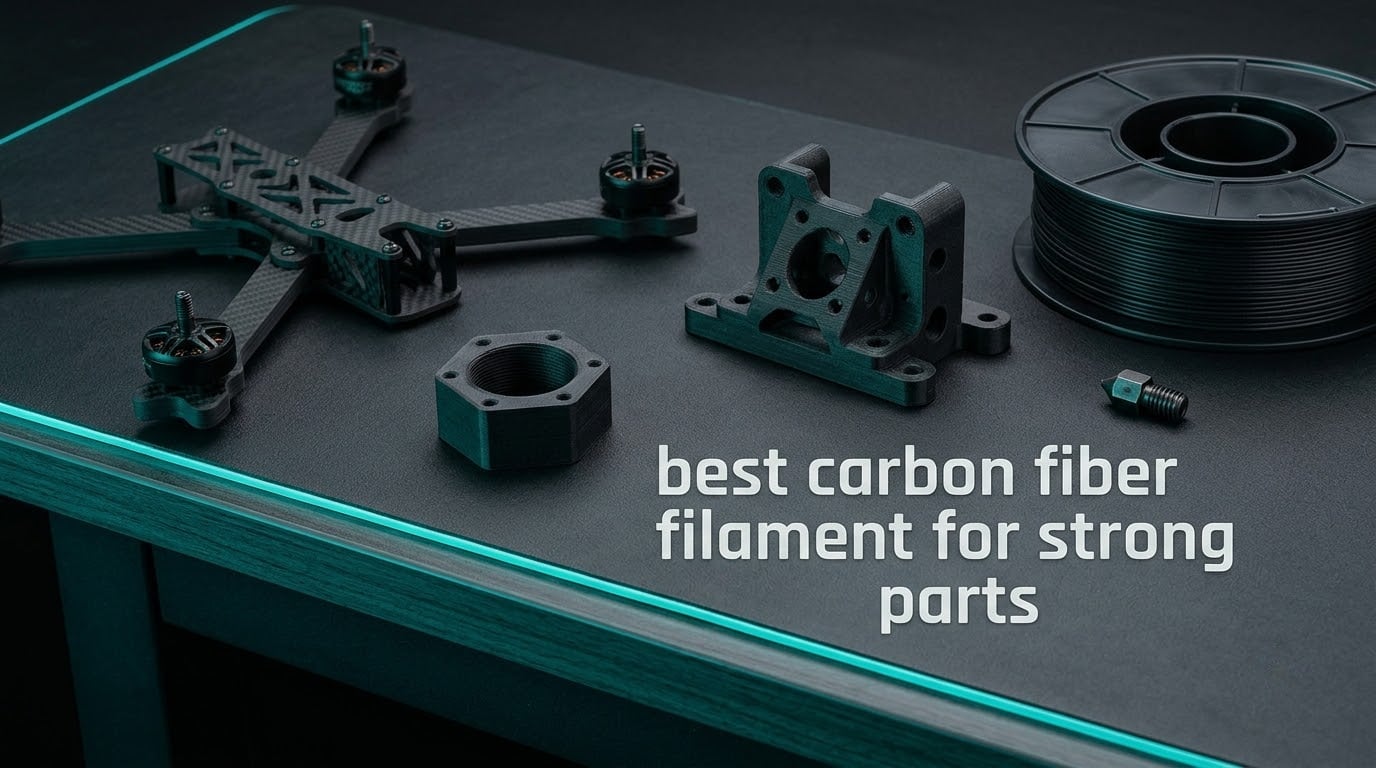
Carbon fiber does not make filament tougher. It makes it stiffer. That single sentence is the most important thing to understand before you buy anything in this category, and most people only learn it after a bracket snaps across a layer line.
Short chopped carbon fibers align along the extrusion direction and behave like microscopic rebar inside the base polymer. Load transfers out of the soft matrix and into the rigid fibers, so flexural modulus and dimensional stability climb. Impact resistance usually drops at the same time, and thin cross-sections get more brittle rather than less. If your part needs to flex, absorb a drop, or take a shock load, carbon fiber reinforced filament is the wrong family of material.
Before any of the ten options below are worth a spool of your time, your printer has to clear four gates. You need a hardened steel, ruby or tungsten carbide nozzle, a hotend that holds 260C or more, a heated bed that stays at 60C to 100C, and a dry box or the discipline to dry every spool. Miss any one of those and the filament will fail for reasons that have nothing to do with the material.
We compared all ten spools in this roundup side by side across base resin, fiber loading, nozzle and bed temperatures, drying requirements and reported real-world behavior, then sorted them by the job each one actually does well. Our best carbon fiber filament for strong parts overall is the ANYCUBIC PETG-CF, but the strongest part you can make may well be a nylon blend on an enclosed machine, or a plain PLA-CF on an open bed-sider. That difference is the whole point of this guide.
One more framing note before the picks. The print itself often matters more than the material. Perimeter count, layer orientation, fillets at stress risers and honest drying will change the strength of a part far more than the brand name on the spool, and we will come back to that in the design section below.
Table of Contents
Top 3 Carbon Fiber Filament Picks (September 2026)

ANYCUBIC PETG-CF 1.75mm 1kg
- Satin texture hides layer lines
- Weather and water resistant
- Hardened steel 0.4mm nozzle or larger

IEMAI PETG-CF 20% 1.75mm 1kg
- 20% chopped carbon fiber
- Plus or minus 0.03mm accuracy
- No enclosure required
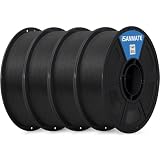
iSANMATE ASA-CF 4-Pack
- UV and weather resistant
- Nozzle 240-270C and bed 80-100C
- Enclosed chamber recommended
All 10 Carbon Fiber Filaments at a Glance in 2026
Every filament below uses chopped short carbon fiber blended into a thermoplastic base resin, not continuous fiber, and the base resin is what determines the temperature ceiling, the moisture appetite and the toughness of the finished part. Fiber loading is listed by weight where the manufacturer publishes it.
| Product | Specs | Action |
|---|---|---|
| ANYCUBIC PETG-CF 1.75mm 1kg |
|
Check Latest Price |
| IEMAI PETG-CF 20% 1.75mm 1kg |
|
Check Latest Price |
| iSANMATE ASA-CF 4-Pack |
|
Check Latest Price |
 ERYONE PETG-CF 15% 1.75mm 1kg ERYONE PETG-CF 15% 1.75mm 1kg |
|
Check Latest Price |
 SainSmart ePA-CF Nylon 1.75mm 1kg SainSmart ePA-CF Nylon 1.75mm 1kg |
|
Check Latest Price |
 TINMORRY PETG-CF 1.75mm 1kg TINMORRY PETG-CF 1.75mm 1kg |
|
Check Latest Price |
 SUNLU PA6-CF20 1.75mm 1kg SUNLU PA6-CF20 1.75mm 1kg |
|
Check Latest Price |
 Polymaker Fiberon PA612-CF15 0.5kg Polymaker Fiberon PA612-CF15 0.5kg |
|
Check Latest Price |
 ELEGOO PETG-CF 1.75mm 1kg ELEGOO PETG-CF 1.75mm 1kg |
|
Check Latest Price |
 Polymaker Carbon Fiber PLA 1.75mm 1kg Polymaker Carbon Fiber PLA 1.75mm 1kg |
|
Check Latest Price |
1. ANYCUBIC PETG-CF Carbon Fiber Filament – Best Overall Pick
ANYCUBIC PETG-CF Carbon Fiber 3D Printer Filament 1.75mm, 1KG, Black
PETG base with chopped carbon fiber
1.75mm diameter, 1kg spool
Hardened steel nozzle 0.4mm or larger
Pros
- Excellent layer adhesion on tall prints
- Minimal warping and edge lifting
- Satin texture conceals layer lines
- Vacuum sealed with desiccant
Cons
- Reusable spool can warp from vacuum sealing
- Sediment on a tall multi-spool holder
- Some bed adhesive needed on certain models
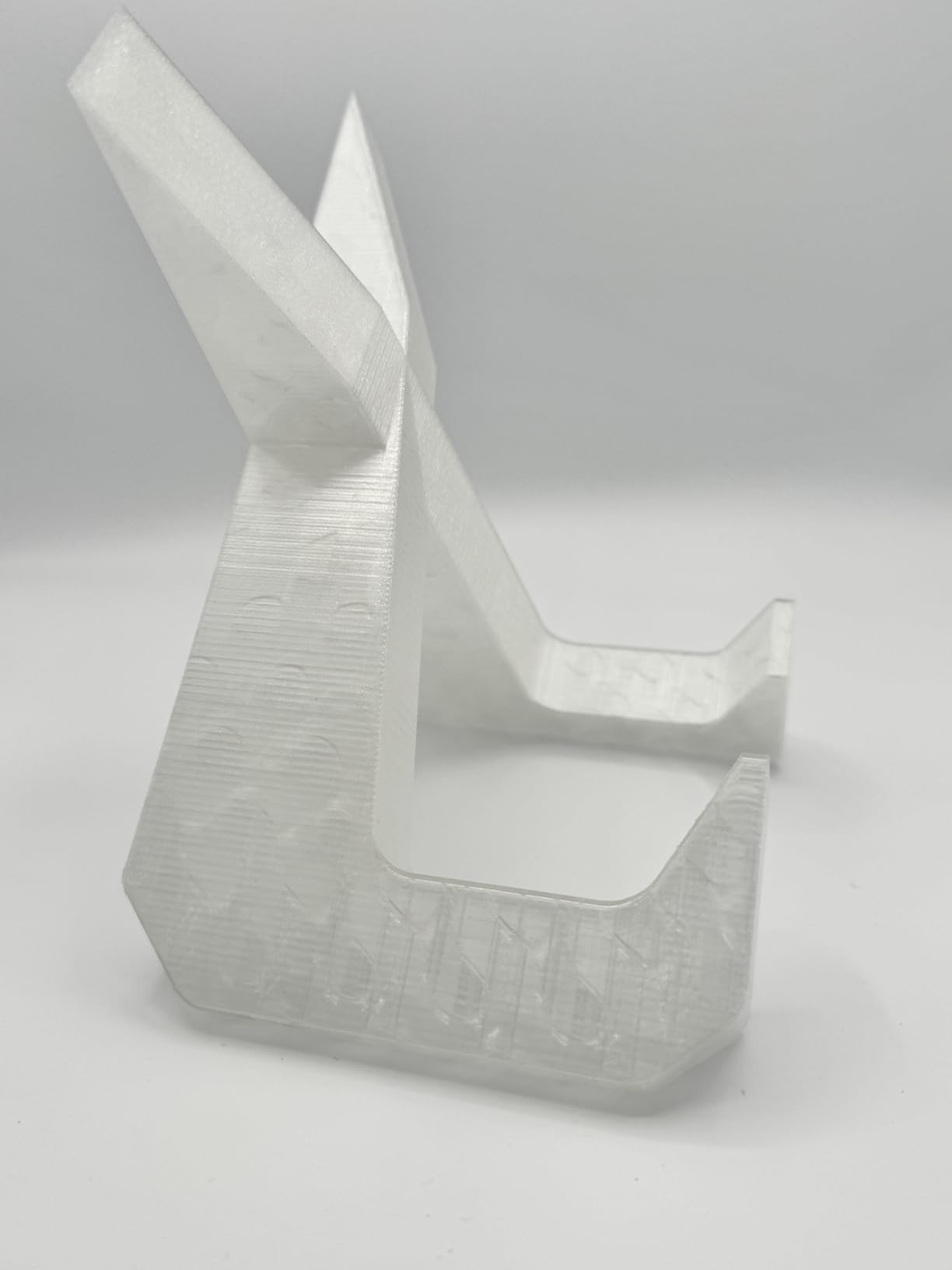
This is the spool we keep coming back to. It carries a 4.6 average across more than 1400 reviews, by a wide margin the largest review base of anything in this roundup, and the feedback is unusually consistent: strong layer bonding, no warping, and clean extrusion without constant nozzle babysitting.
Reviewers repeatedly describe it as the filament they use for functional brackets, enclosures and tool wall mounts, which tells you the toughness question has already been settled in real use. It prints at standard PETG temperatures rather than the 270C-plus demanded by the nylon blends, so it works on a much wider range of machines.
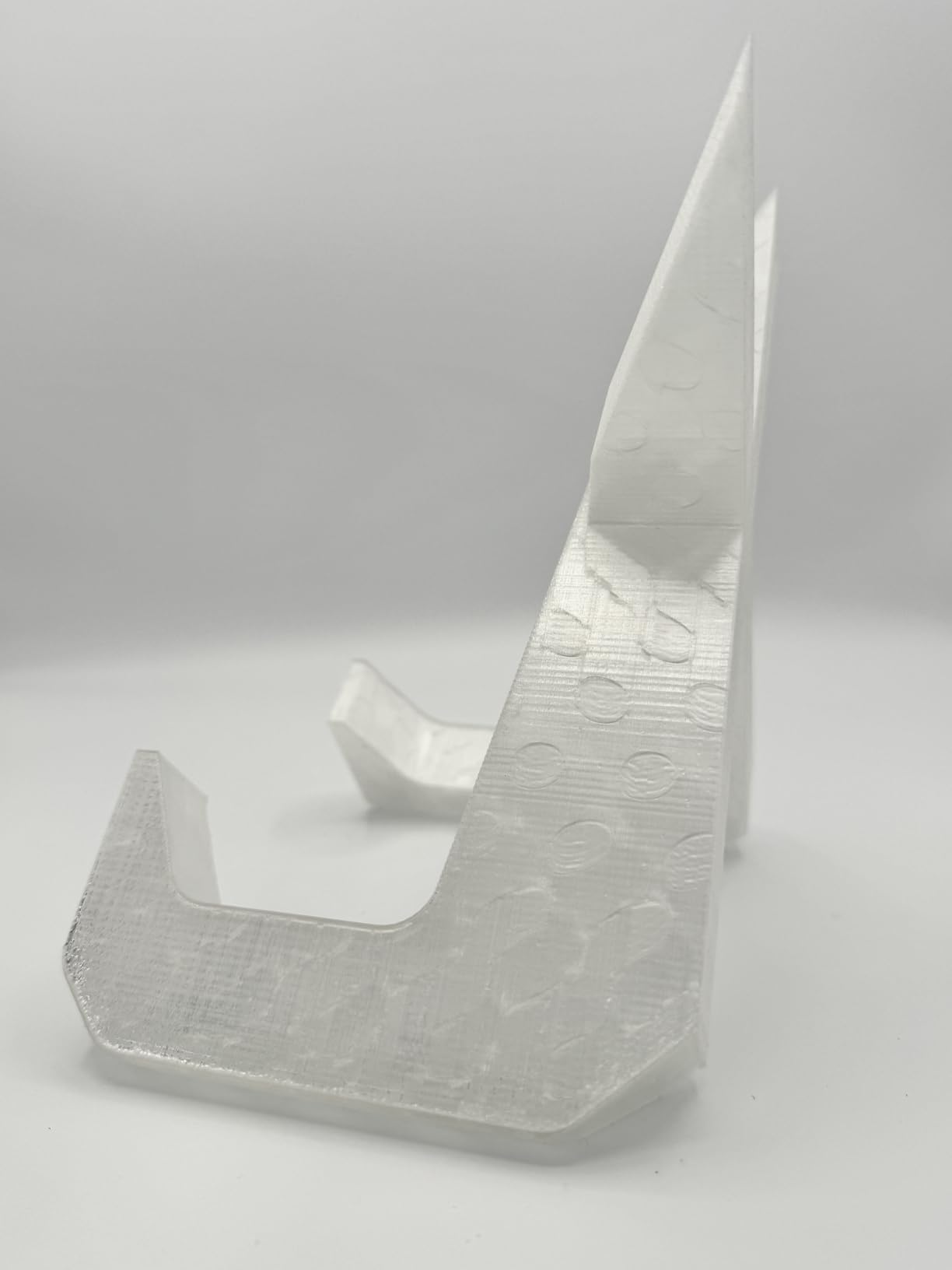
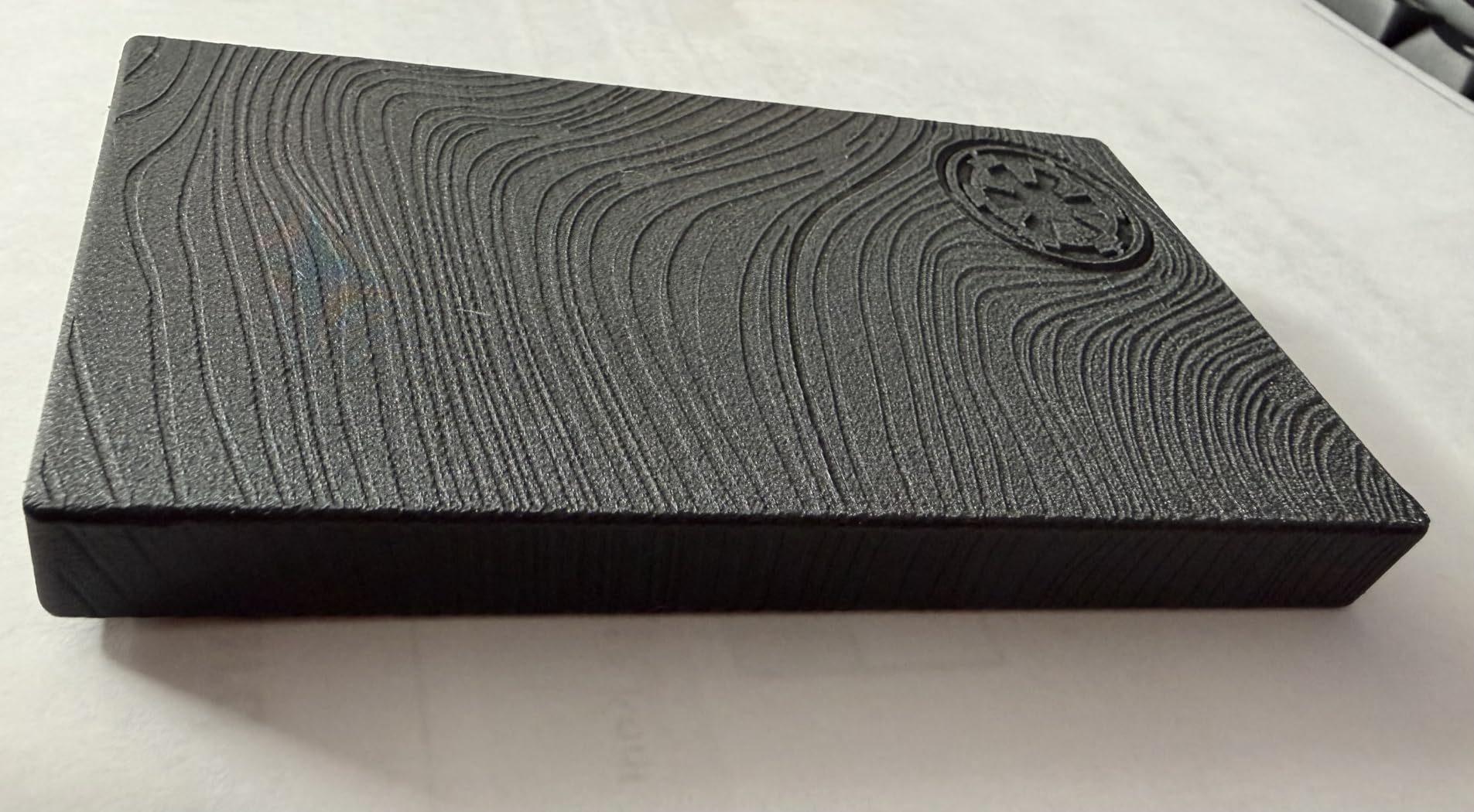
The satin carbon fiber texture is the sleeper feature. Instead of the flat, chalky look that most matte filaments give you, this one has a subtle sheen that catches light along the layer lines, and several reviewers call it the best-looking CF filament they have used for visible parts.
Dimensional consistency checks out too. Buyers measure the diameter with calipers and report it holding tolerance, which is the difference between a part that assembles and a part that needs reaming.
Who should buy the ANYCUBIC PETG-CF
Anyone with a mid-range enclosed or semi-enclosed printer who needs functional parts that take load in the XY plane and wants to avoid the drying marathon that nylon demands. It is also the safest first carbon fiber purchase for a first-time CF printer, because it forgives more than the nylon options.
Where it falls short
It is PETG, so it has a ceiling. Anything sitting above roughly 70C continuously is out of its range, and the fiber does cut impact resistance compared with unfilled PETG, so parts still crack at thin sections rather than bending. The reusable spool can also deform slightly during vacuum sealing, which causes a distinct rattle on multi-spool holders.
2. IEMAI Carbon Fiber PETG Filament – Best Value at 20 Percent Loading
IEMAI Carbon Fiber PETG Filament 1.75mm, PETG-CF Matte Black 1kg
20% chopped carbon fiber in PETG
Plus or minus 0.03mm diameter accuracy
Nozzle 230-250C, bed 60-80C
Pros
- Noticeably stiffer than standard PETG
- Sharp matte black that hides layer lines
- Prints on stock profiles with little calibration
- No warping without an enclosure
Cons
- Fiber can reduce interlayer adhesion
- Very stiff parts shatter rather than bend
- Some users hit repeated clogging
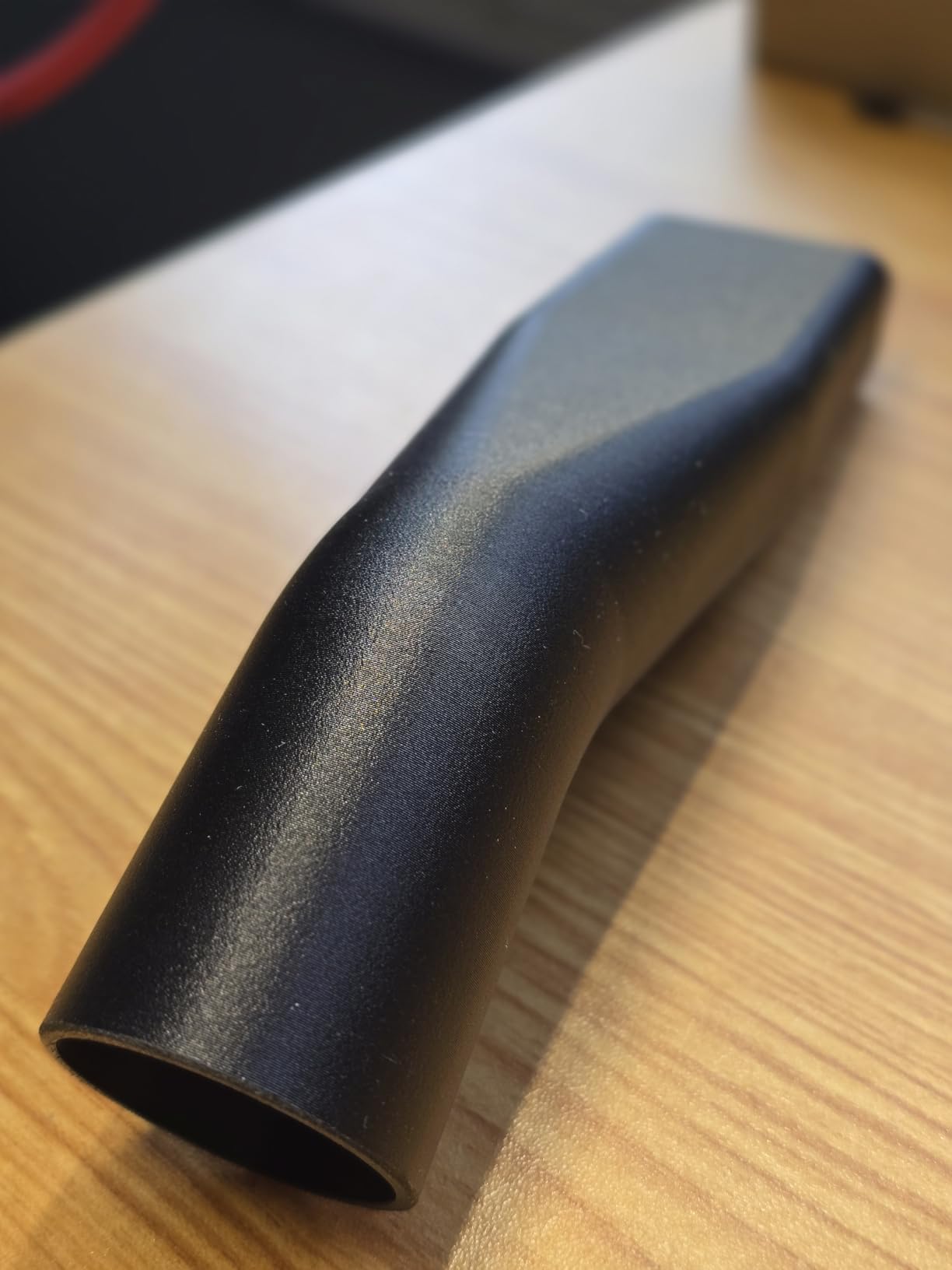
The IEMAI spool is the value pick here, and the reason is simple: 20% carbon fiber by weight in a PETG matrix at a tight diameter tolerance, which is more fiber than most of the PETG-CF products in this list. Parts come out noticeably firmer than standard PETG at the same wall thickness.
Manufacturer guidance is nozzle 230-250C, bed 60-80C, speed at or below 100mm/s, and it prints cleanly on stock profiles with minimal calibration. For most desktop FDM machines this is the least demanding of the higher-loaded filaments in the roundup.
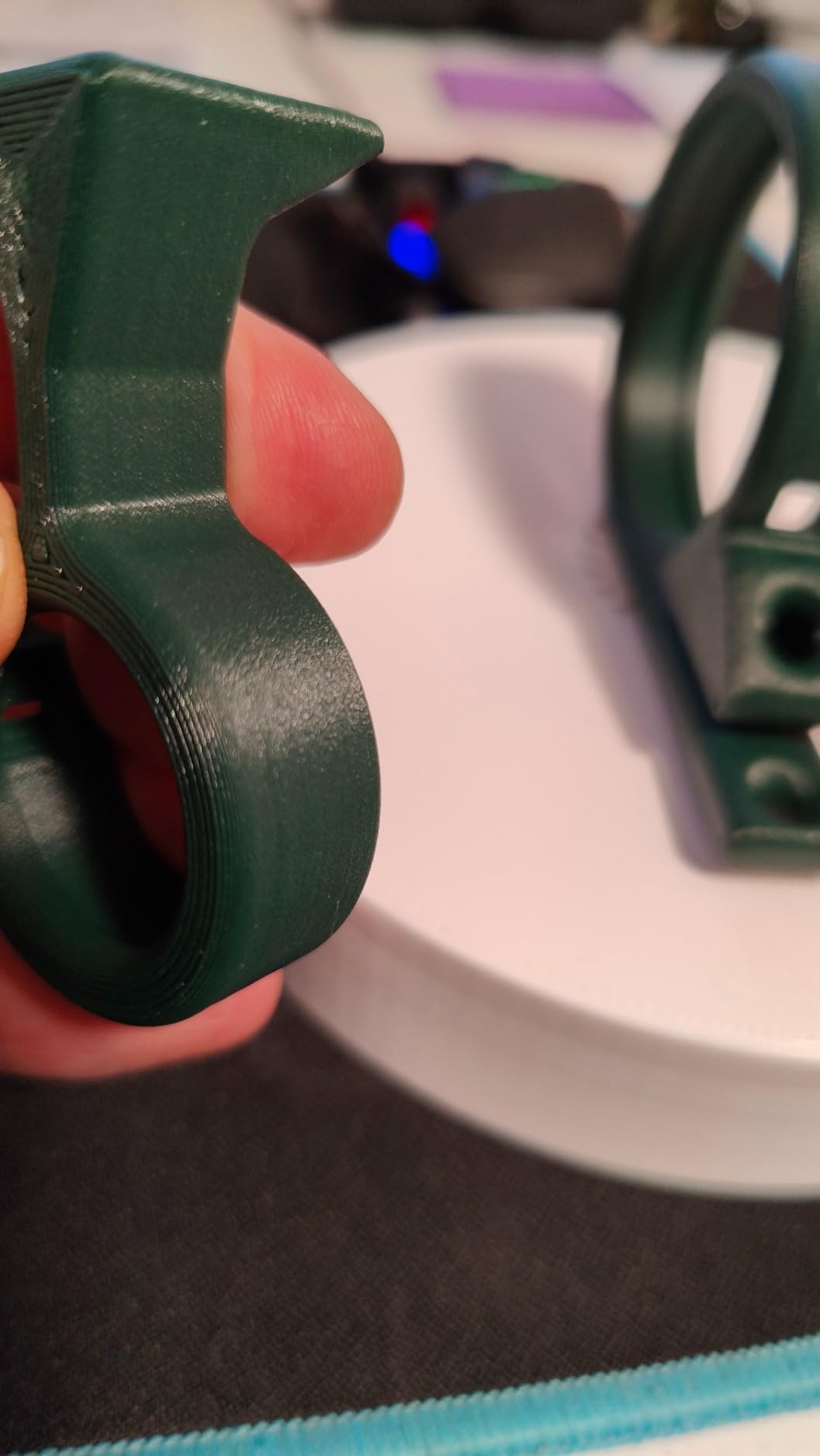
That said, the 20% loading is not free. The fibers act as a matrix contaminant, and several reviewers report interlayer adhesion that is lower than unfilled PETG. If you are building a hook or a living latch rather than a bracket, that trade-off is real.
There is also a persistent minority of reports of clogging that required running at the top of the temperature range to clear. A 0.4mm hardened steel nozzle is the stated requirement, and moving to 0.6mm eliminates the problem almost entirely.
Who should buy the IEMAI PETG-CF
Printers on an open frame who want noticeably more stiffness than plain PETG without stepping up to nylon. It is also a good choice for stiff, thin-walled parts like camera rig plates and mounts where a heavier base resin would be overkill.
Where it falls short
Stiff parts made from it are brittle. A 20% loading means a part that hits a hard surface is more likely to crack across a layer than to absorb the impact, and the stringing and support removal on visible surfaces can be frustrating. For shock loads or snap fits, choose something else.
3. iSANMATE Carbon Fiber ASA Filament – Best for Outdoor and Weathered Parts
iSANMATE Carbon Fiber ASA Filament 1.75mm, ASA CF Bundle UV/Rain/Heat Resistant Tough 3D Printer Filament, Perfect for Outdoor Functional Parts, Black(4-Pack)
ASA base reinforced with carbon fiber
240-270C nozzle, 80-100C bed
Four 1kg spools in the pack
Pros
- Excellent UV and weather resistance
- Very tough interlayer bonding
- Matte finish that mimics injection molding
- Low odor compared to most ASA
Cons
- Drying and an enclosure are mandatory
- Warps at lower chamber temperatures
- Cheap spools deform at high drying temps
ASA is the base resin to reach for when a part lives outside. Long-term users report no fading and no chalking after months of sun and rain, which is exactly what plain PETG-CF and PLA-CF fail at. This four-spool pack is built for volume work rather than a single prototype.
It is also the toughest option in this roundup by a clear margin. Interlayer bonding is described as very tough across the reviews, and the surface comes out with a premium matte look that hides layer lines well enough to pass as a molded part.
The setup demands are the tradeoff. Print temperature is 240-270C with an 80-100C bed, an enclosed chamber is recommended, and glue stick on the bed is part of the routine. At lower chamber and bed temperatures it warps, and outer brims or mouse ears help pull the corners down.
Two smaller issues worth knowing. The plastic spools deform at high drying temperatures, which can fuse filament to the spool, and the stiffness of the strand can snag on a multi-feeder’s first load.
Who should buy the iSANMATE ASA-CF
Anyone making exterior brackets, garden fixtures, motorcycle and skateboard components, or anything that has to survive ultraviolet exposure and thermal cycling. It also suits a workshop with an enclosed machine already set up for ABS, since ASA prints in a similar range with less odor.
Where it falls short
It is one of the most demanding spools here. If you do not already have an enclosed chamber, a 100C-capable bed and a working drying routine, this is a frustrating place to start. Some users also report that the brand website and the physical spool labels list different print settings, so trust the label in your hand.
4. ERYONE PETG-CF 15 Percent Filament – Best for the Matte Finish
ERYONE PETG Carbon Fiber 15% Filament 1.75mm, 3D Printer Filament, Premium Matte Finish & Rigidity for Functional Parts, 1kg(2.2LBS)/Spool, PETG CF Black
PETG with 15% carbon fiber loading
200-240C nozzle, 70-90C bed
1.75mm diameter, 1kg spool
Pros
- Gorgeous ultra-matte industrial black
- Much stiffer than standard PETG
- Very low warping and good overhangs
- Good value for the finish
Cons
- Among the stringiest CF PETG options
- Thin features under 2mm bond poorly
- Needs flow ratio calibration
Finish is the reason this one earns a slot. The ultra-matte black surface drastically reduces visible layer lines, and for anyone printing visible functional hardware, a camera cage or a desk organizer, that changes how the part reads. It looks closer to machined or molded than to printed.
Behind the finish it is a competent 15% fiber PETG with strong impact and heat deflection performance relative to plain PETG, and reviewers report very low warping and strong overhang handling. The vacuum-sealed packaging with a cardboard spool also works in AMS-style units.
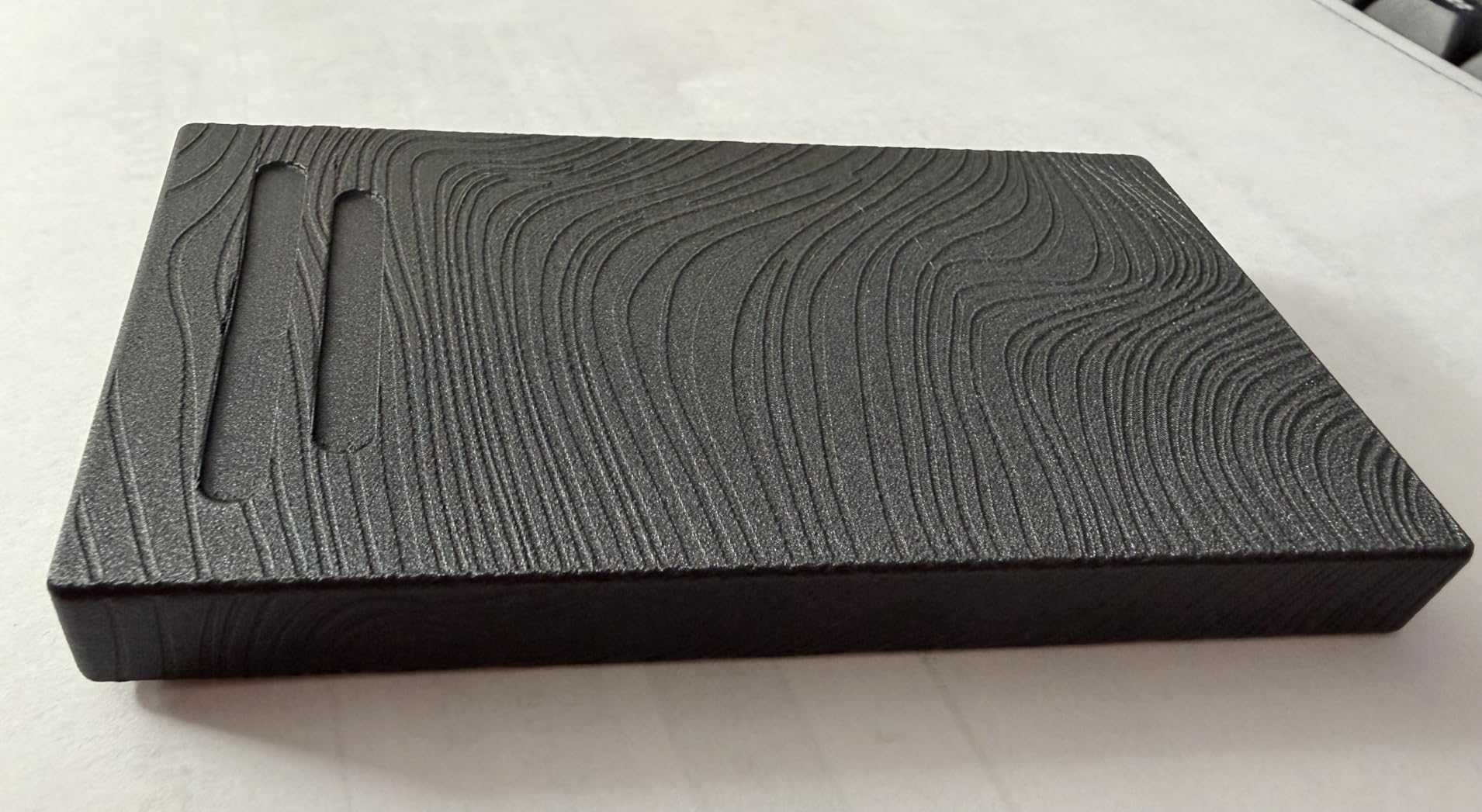
The honest catch is stringing. It is described as among the stringiest CF PETG filaments available, so budget real time for de-webbing every part. Some users also report poor bed adhesion at lower temperatures and weak layer bonding on features under 2mm.
Calibration matters more here than with most. It flows wide and needs a flow ratio correction to hit dimensional accuracy, and a few buyers received spools that arrived badly wound and tangled.
Who should buy the ERYONE PETG-CF
Printers whose parts are meant to be looked at, and anyone who has been disappointed by the chalky flat finish that most matte PLA-CF produces. It suits well on an enclosed machine where the low warp behavior pays off.
Where it falls short
It wants the top of its temperature range, and some users run it at 260-275C, which rules it out on printers that cannot get there. Combined with the stringing, this is a spool for someone who will tune it once and then leave it alone.
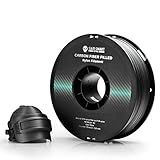
5. SainSmart ePA-CF Carbon Fiber Filled Nylon – Best All-Round Nylon
SainSmart 1.75mm Black ePA-CF Carbon Fiber Filled Nylon Filament 1KG (2.2lbs) Spool for 3D Printer
80% nylon with 20% carbon fiber
Nozzle 260-290C, bed 45-80C
Enclosure recommended
Pros
- Stiffness above PLA and PETG blends
- Excellent layer adhesion
- Very easy support release
- Good heat and chemical resistance
Cons
- Nozzle clogging mid-print is reported
- Lot-to-lot consistency is inconsistent
- Needs glue stick and a raft for adhesion
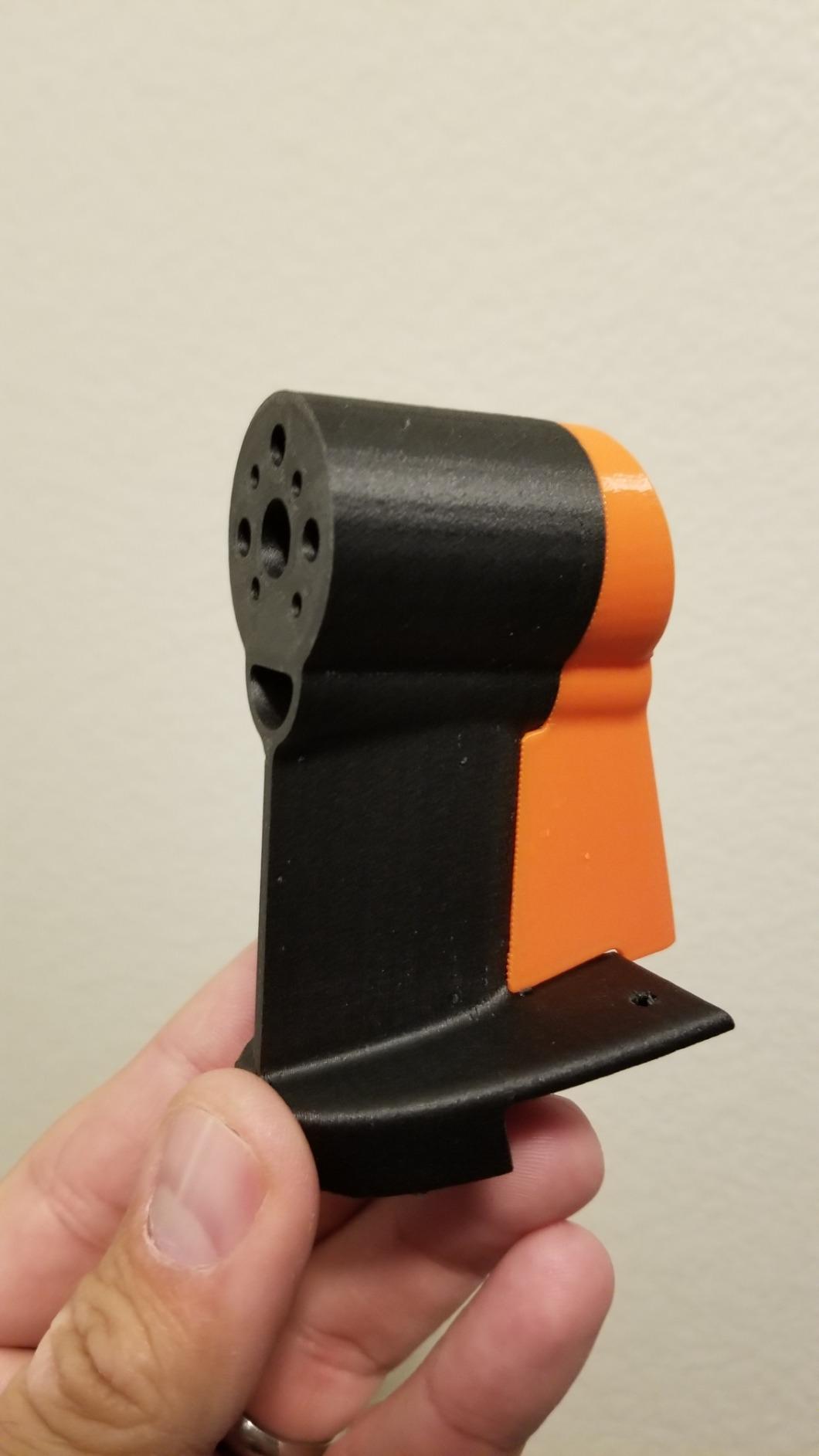
This is where the roundup moves from easy materials to real engineering filament. ePA-CF is 20% carbon fiber in an 80% nylon base, and reviewers describe parts with a flexural feel well above PLA, PETG and the other CF composites in this list. It prints at 260-290C on a 45-80C build surface.
Support release is the surprise. Multiple reviews call it amazingly easy compared with other nylons, which matters enormously when you are printing complex geometry at high infill. Surface finish comes out looking injection molded.
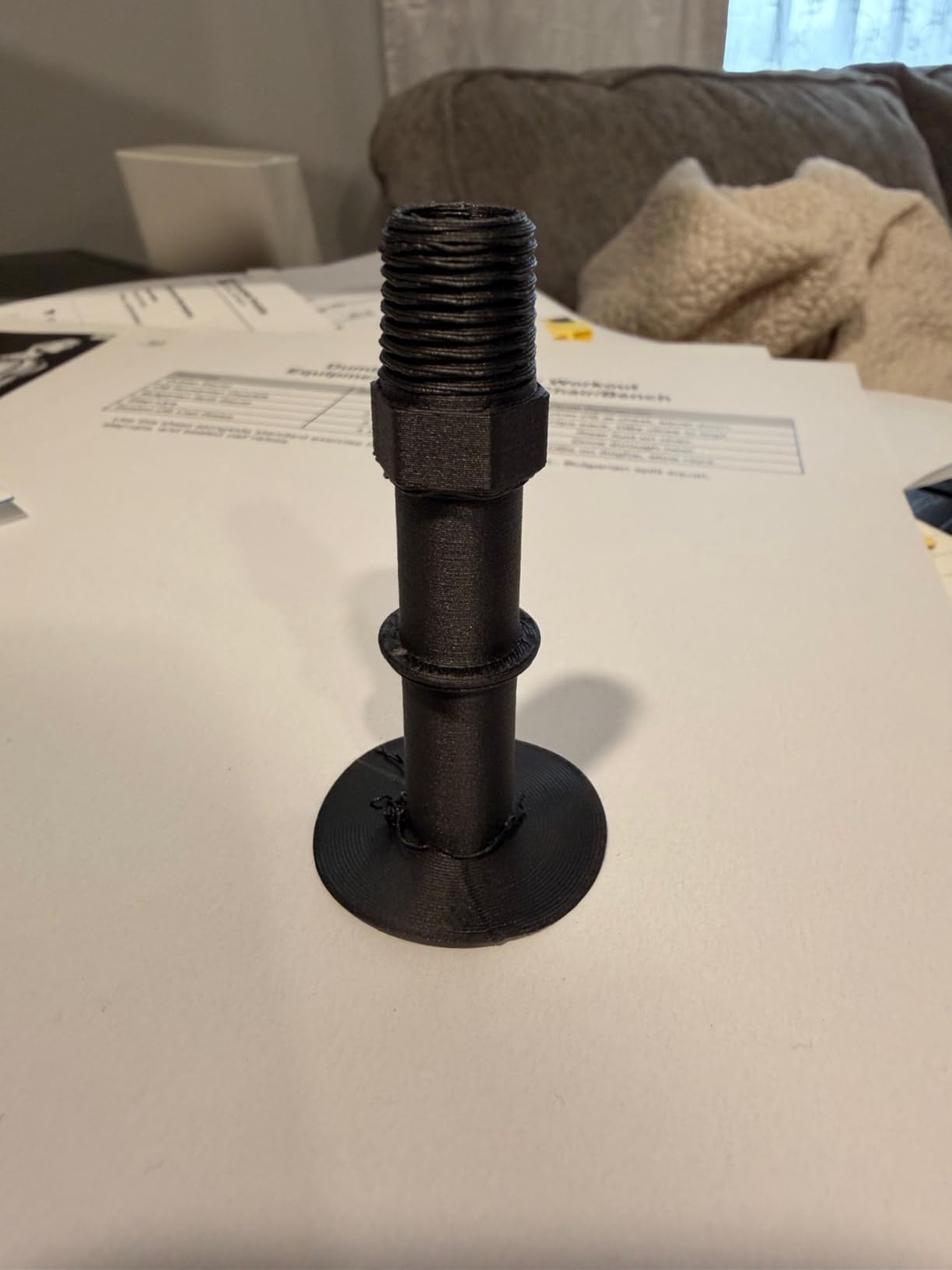
Two real warnings. Predictable nozzle clogging from chopped fiber partway through a print is reported often enough that you should treat a 0.6mm hardened stainless steel nozzle as mandatory, not optional. And spool-to-spool consistency is the dominant complaint, with several detailed reviews describing a single bad roll that clogged repeatedly or printed poorly despite full drying.
Bed adhesion without glue stick and a raft is difficult, and the raw surface is irritating to handle. Sanding it produces hazardous carbon dust, so wear a mask if you are finishing these parts by hand.
Who should buy the SainSmart ePA-CF
Owners of an enclosed printer with a 260C-plus hotend who are making load-bearing brackets, jigs, fixtures, prosthetics or mechanical assemblies. It is the most straightforward entry into nylon-CF without stepping up to the industrial end of the price spectrum.
Where it falls short
The inconsistency between spools is the deciding factor for us. A material that works brilliantly on one roll and clogs on the next is a poor choice for a part you cannot afford to reprint, and the strand is also stringy enough that post-processing on strong supports becomes tedious.
6. TINMORRY PETG-CF Carbon Fiber Filament – Best for High-Speed Printing
TINMORRY PETG-CF Carbon Fiber PETG Filament 1.75mm, 1 KG, Black
15% short-cut carbon fiber masterbatch
240-270C nozzle, 75-90C bed
Rated for speeds to 300mm/s
Pros
- Short-cut fiber reduces clogging
- Low warping and strong Z adhesion
- Handles tensile and torsional load well
- Very wide printer compatibility
Cons
- Requires a hardened steel nozzle and drying
- Printing too fast degrades flow
- Hardware and dry storage add setup cost
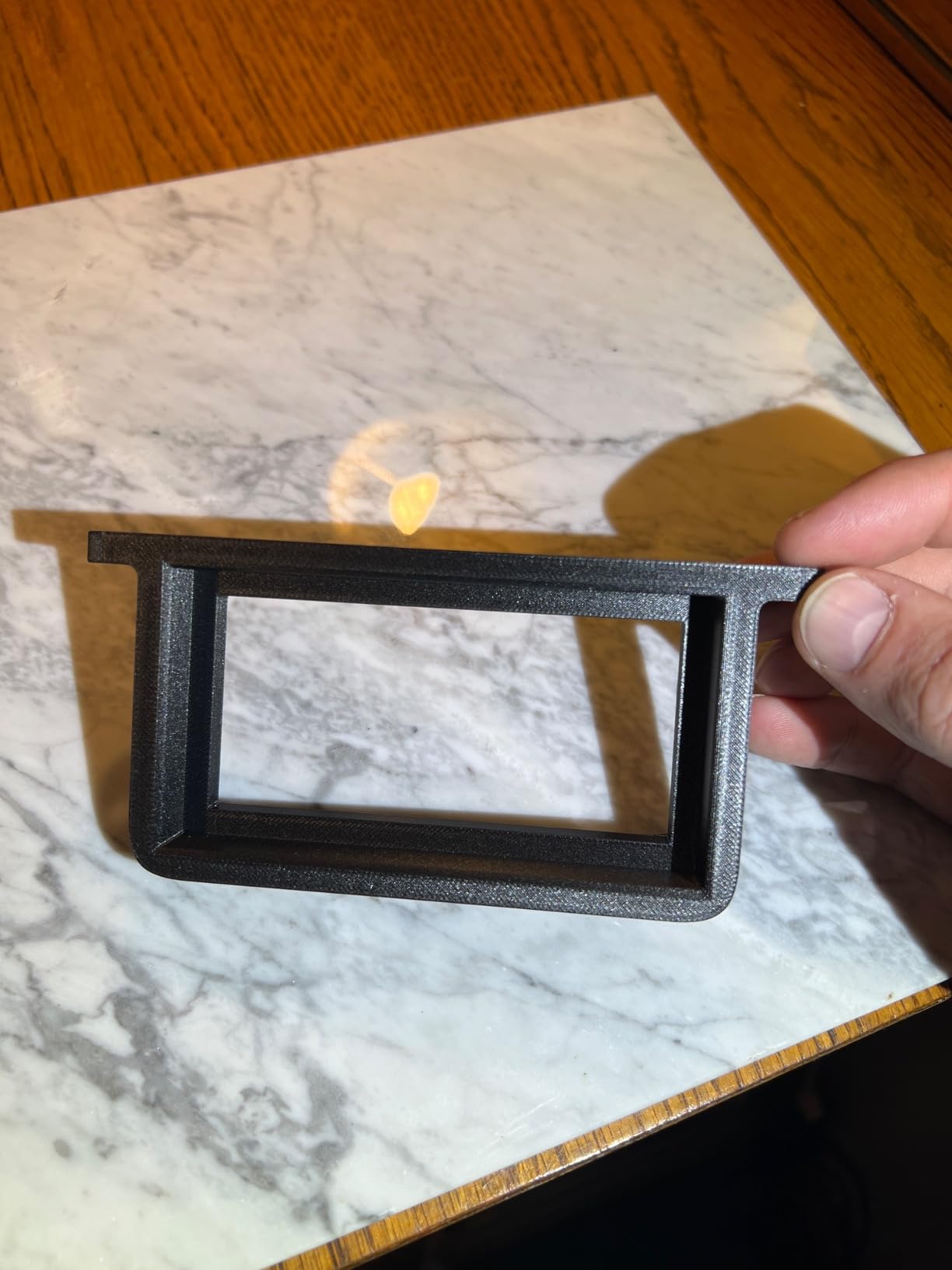
The differentiator here is the fiber itself. TINMORRY uses a professionally processed short-cut carbon fiber masterbatch rather than carbon fiber powder or coarser chopped strands, and the practical result is measurably less clogging than traditional PETG-CF at the same loading.
It also holds a 4.6 average across more than 400 reviews, with a consistent message about high rigidity and impact strength in parts like drone frames, racing models and functional hardware. Speed capability up to 300mm/s is on the spec sheet with a tuned profile.
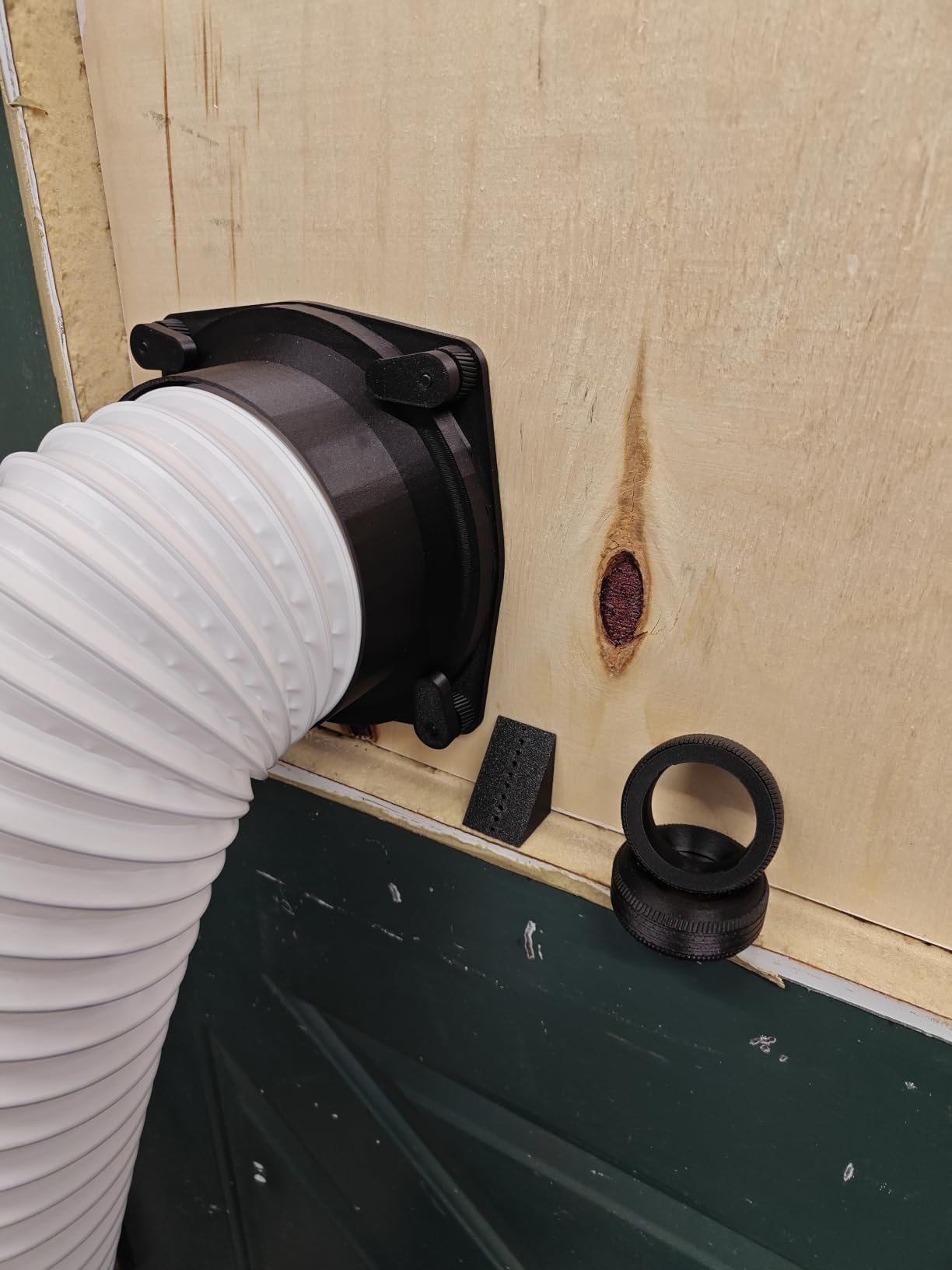
Manufacturer guidance is 240-270C with a 75-90C bed, cooling fan off for the first three layers, and a wear-resistant steel nozzle of 0.4mm or larger with 0.6mm preferred. Drying at 65C for 8 hours before use is specified, with storage humidity kept below 20% relative humidity.
Reviews note that pushing the speed too far degrades flow and part quality, so the 300mm/s figure is a ceiling rather than a default. The nozzle hardware and dry storage requirements are real costs that do not appear on the spool.
Who should buy the TINMORRY PETG-CF
Anyone who prints carbon fiber parts in volume and wants a clean, clog-free PETG-CF that runs across Bamba, Creality, QIDI, Flashforge, Prusa, Voron and AnkerMake machines. It is a strong pick for drone and RC frames where weight and stiffness both matter.
Where it falls short
It will not rescue a printer without a wear-resistant nozzle, and the 8-hour drying routine is non-negotiable if you want consistent results. The stiffness-to-toughness trade-off still applies, so it is not the filament for a part that has to survive being dropped.
7. SUNLU PA6-CF20 Carbon Fiber Nylon – Best for Heat-Resistant Parts
SUNLU PA6-CF20 Carbon Fiber Nylon 3D Printing Filament 1.75mm, 1KG, Black
80% PA6 with 20% carbon fiber
Nozzle 270-290C, bed 50-70C
Heat resistance up to 209C
Pros
- Outstanding heat resistance
- Very low warping even on large parts
- Excellent layer adhesion and rigidity
- Plus or minus 0.03mm accuracy
Cons
- Must be bone dry or it pops and tangles
- Not compatible with AMS or AMS Lite
- Brittle and can snap in the feed path
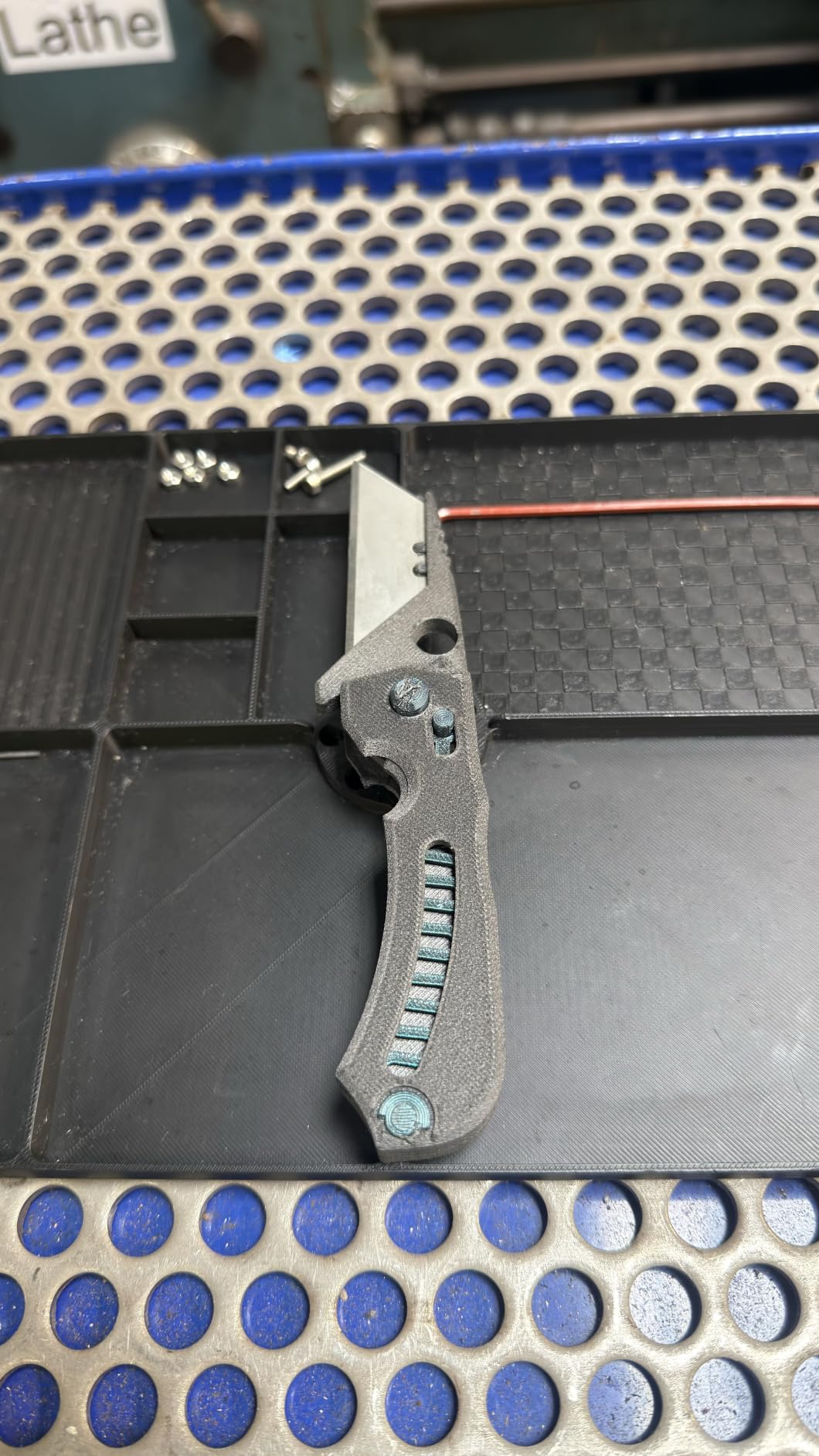
PA6-CF20 is 80% PA6 with 20% carbon fiber, and the headline number is heat resistance up to 209C. One reviewer describes quenching hot coals in a printed tray with no melting, which tells you how far this sits above the PETG-CF options in this list.
Layer adhesion is consistently called excellent, producing strong, rigid parts, and users report minimal warping even on 320mm prints without a brim. The matte, low-sheen surface hides layer lines and gives parts a rugged, industrial feel.
The requirements are steep and specific. Nozzle 270-290C, bed 50-70C, and drying at 80C for 24 hours or 110C for 4 hours before printing. Annealing at 80-130C for 5-12 hours is recommended to push heat resistance further.
It is also not compatible with AMS or AMS Lite multi-material systems due to brittleness, and reviewers report that a tangled spool can snap the strand inside a Bowden tube mid-print. Loose spool winding turns up in reviews often enough to inspect the roll on arrival.
Who should buy the SUNLU PA6-CF20
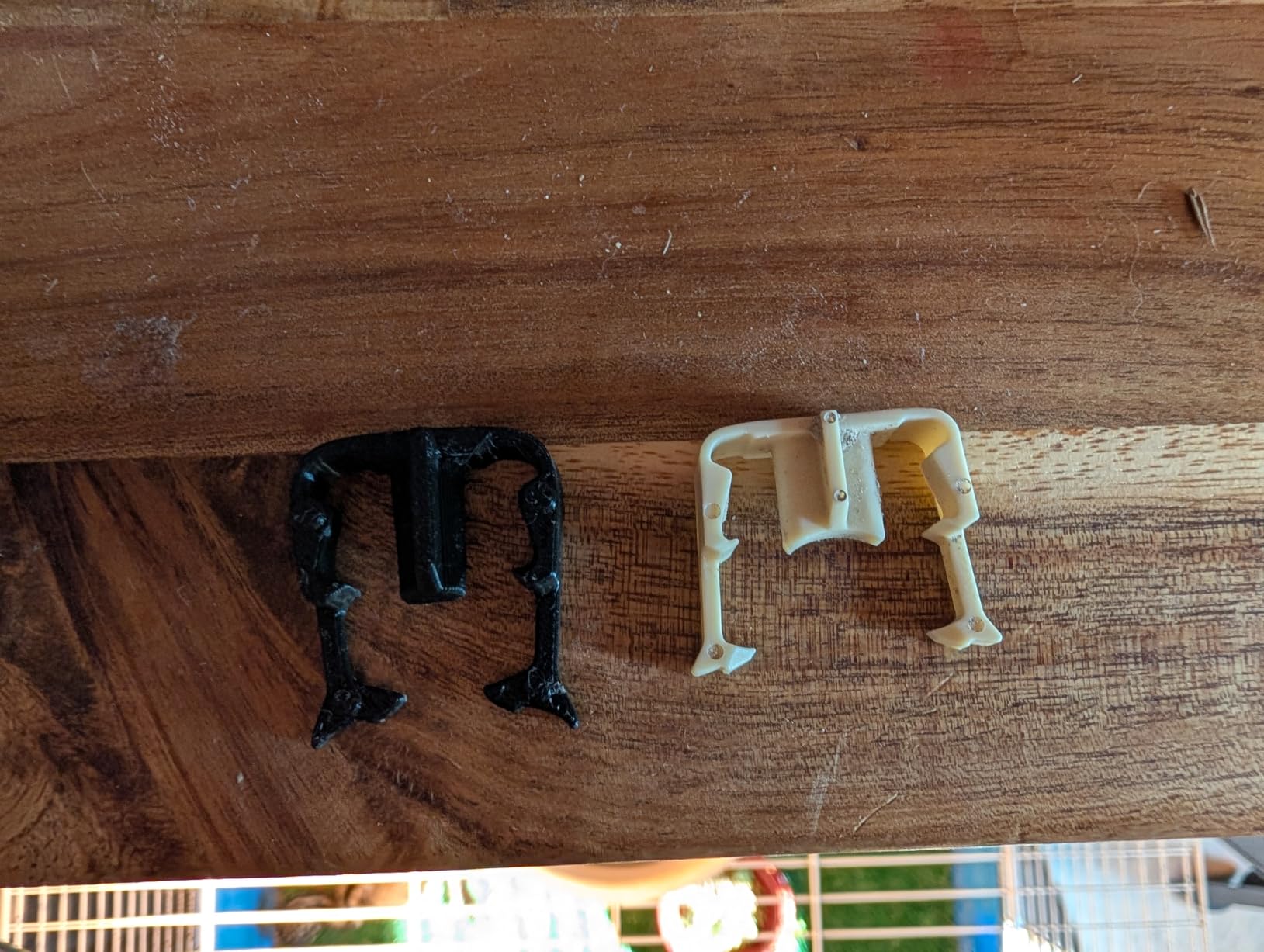
Builders of gears, fan blades, drone frames, bicycle and skateboard hardware, and anyone who needs a functional part that lives near a heat source. The stated applications on the spool are exactly the ones this material suits.
Where it falls short
The 270-290C requirement is the widest in this roundup and rules out a lot of hardware. It must also be bone dry, because moisture causes blobs, zits and tangles, and the incompatibility with multi-material feeders limits how you can use it in a mixed setup.
8. Polymaker Fiberon PA612-CF15 – Best for Low-Moisture Work
Polymaker Fiberon PA612-CF15 Carbon Fiber Nylon Filament 1.75mm, Black, 0.5kg
15 wt% carbon fiber in long-chain PA612
Tensile 91.9 MPa dry, heat deflection 175C
0.5kg spool
Pros
- Lower moisture sensitivity than PA6
- Retains about 90% strength after moisture
- Minimal warping
- Clean matte black finish
Cons
- Will not feed through AMS or AMS HT
- 0.5kg spool is small
- Aggressive bed adhesion needs a scraper
This is the only spool here with published mechanical data, and it is worth reading. Tensile strength is 91.9 MPa dry in XY, dropping to 83.1 MPa after annealing and moisture conditioning, and heat deflection temperature reaches 175C at 0.45 MPa after annealing at 100C for 16 hours.
PA612 is a long-chain nylon, which means it is less moisture sensitive than the PA6 blends while still out-performing PA12 mechanically. Users report it printing more like PLA than they expected, with strong stiff parts and clean finishes.
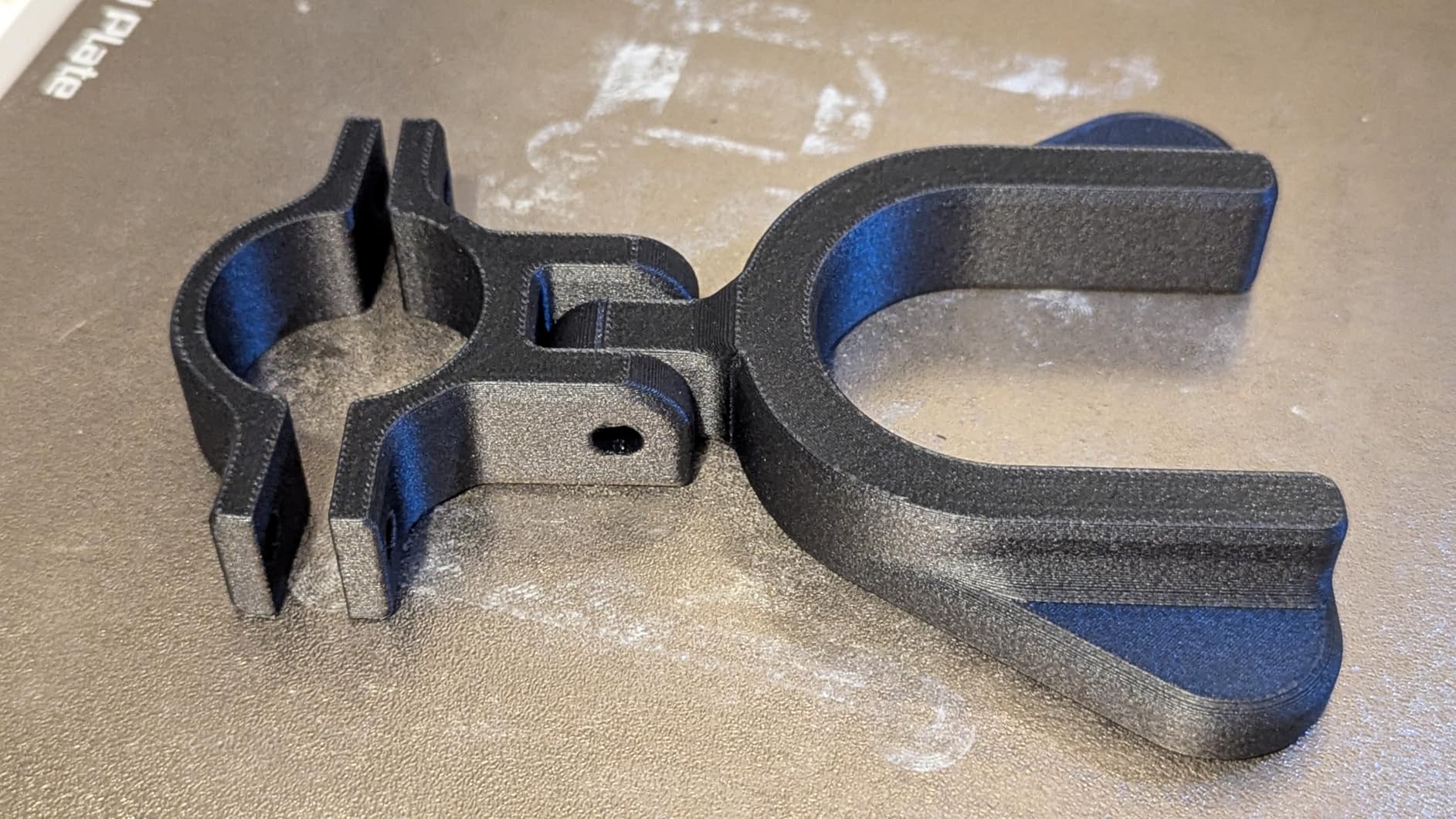
Warping is minimal even on a non-enclosed printer, and the requirement is an all-metal hotend with a 250-300C nozzle, a 40-50C build plate and the fan off. Drying at 100C for 10 hours is specified, with storage below 20% relative humidity, and tuned profiles support speeds up to 300mm/s.
The negatives are hardware-shaped. The strand is stiff enough that it will not feed through AMS or AMS HT without a bypass route, brass nozzles wear down very quickly, and bed adhesion is aggressive enough that part release usually needs a metal scraper.
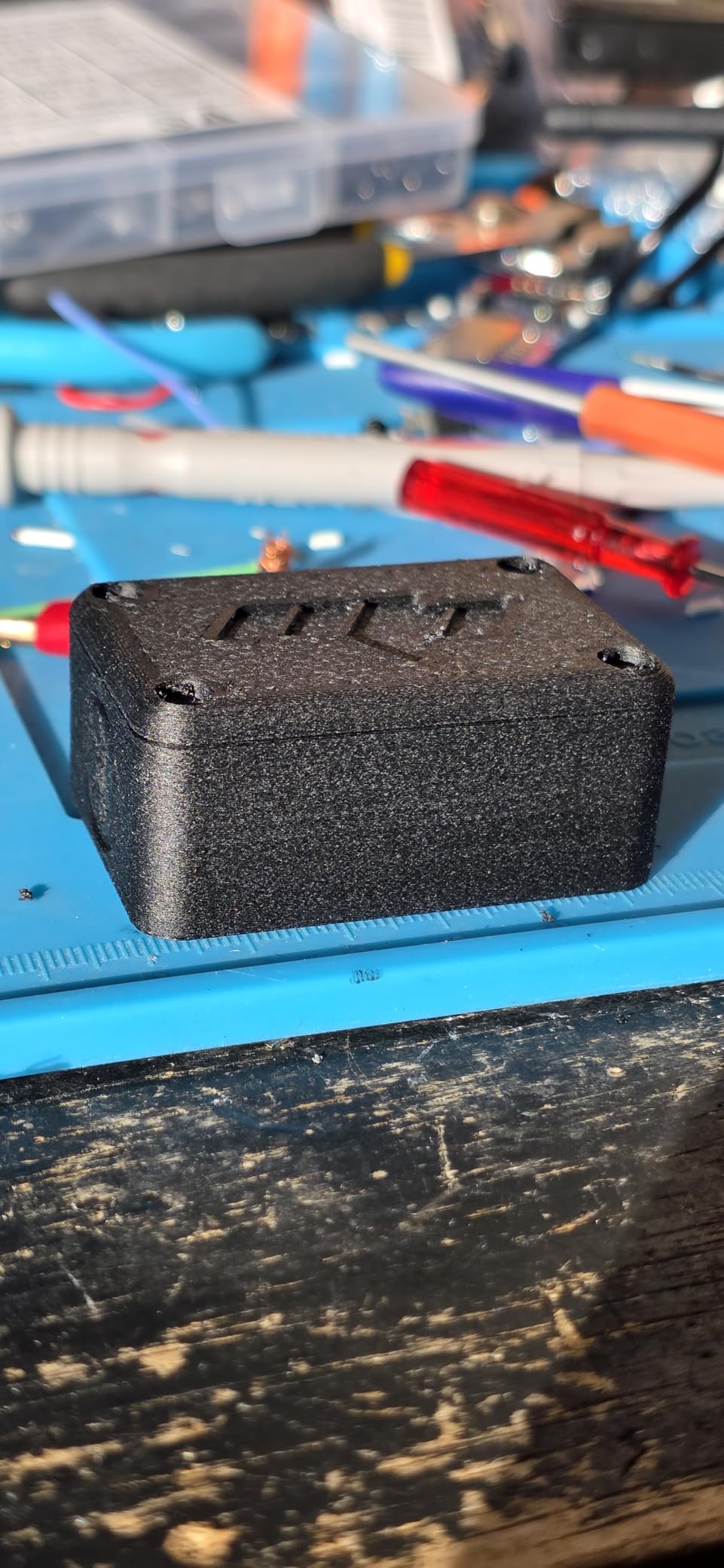
Who should buy the Polymaker Fiberon PA612-CF15
Engineers making rigid tooling, jigs, fixtures and engineering prototypes in an environment where humidity is hard to control, and anyone who wants documented numbers rather than marketing adjectives. It is also a sensible choice if AMS compatibility is not part of your workflow.
Where it falls short
The 0.5kg spool is small and works out expensive per spool. Later spools have also shown diameter consistency reported from 1.70mm to 1.82mm, which is wide enough to affect flow, so measure before you commit a large part to it.
9. ELEGOO PETG-CF Carbon Fiber Filament – Best for Toughness
ELEGOO PETG-CF 3D Printer Filament 1.75mm Black 1KG
PETG base with carbon fiber reinforcement
240-270C nozzle, 65-75C bed
1.75mm diameter, 1kg spool
Pros
- Best impact resistance in this roundup
- Fibers bond to the matrix instead of flexing
- Excellent dimensional accuracy
- Tangle-free winding with no clogs reported
Cons
- Corners can peel up on some prints
- Can clog at very fine layer heights
- Cardboard spool needs adapters for AMS
This is the odd one out in a category where carbon fiber usually costs you toughness. Reviewers consistently call its impact resistance exceptional compared with other CF filaments, and attribute it to fibers that bond into the matrix rather than flexing inside it.
It holds the highest average rating in the group at 4.7 across more than 300 reviews, with repeated reports of easy printing, no clogs, no tangles and dimensional accuracy that reviewers say exceeds the price point. Several users compare it favorably against premium big-brand PETG-CF.
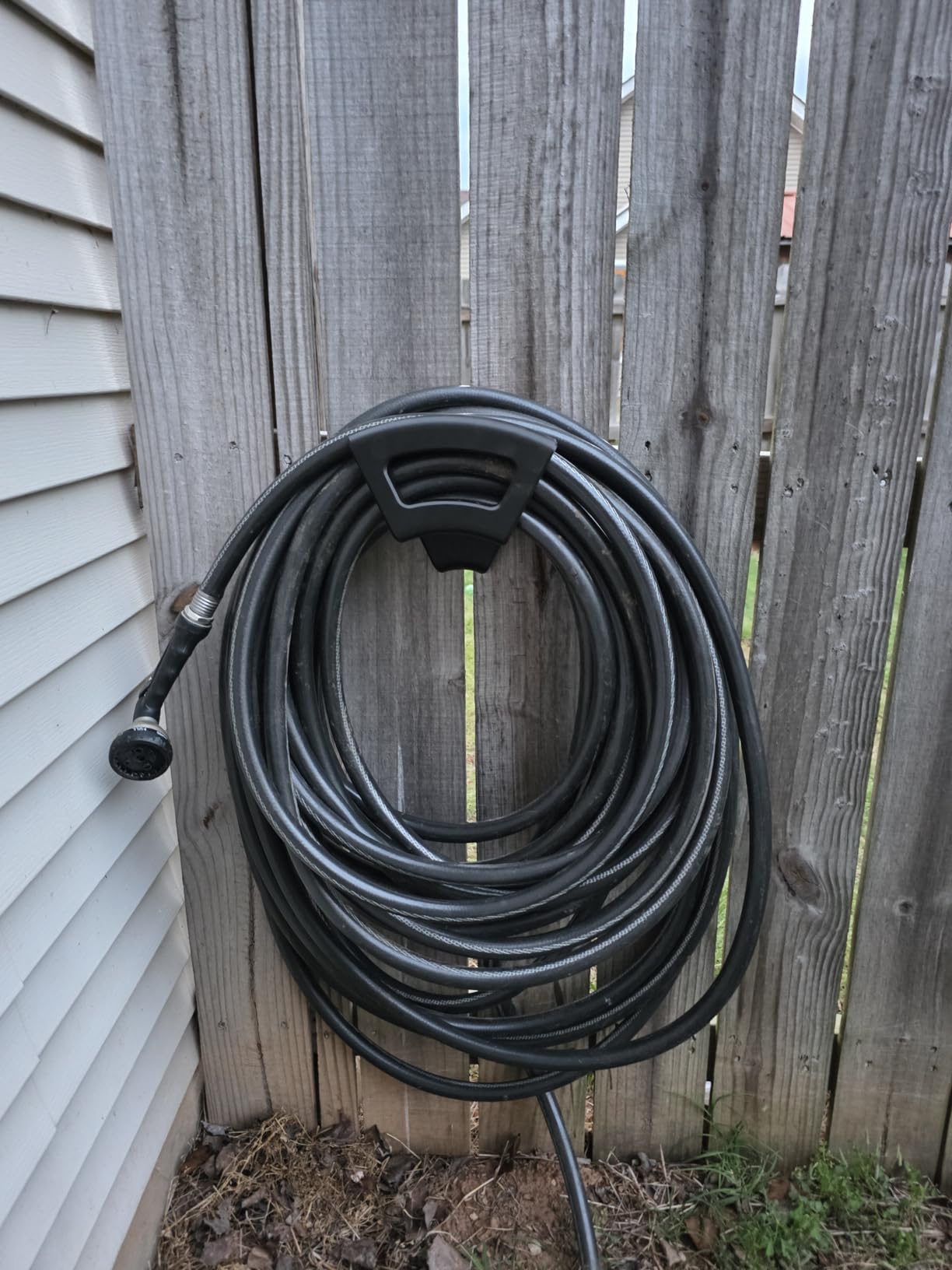
Settings are 240-270C with a 65-75C hotbed, and a hardened steel nozzle of 0.4mm or larger is recommended. It is also the spool most likely to appear on a printer you forgot was loaded, since reviewers report a year of tangle-free use with no clogs.
The limitations are narrow but real. Corners can peel up slightly so flat surfaces need thought in the design, and it can clog if you attempt very fine layer heights at or below 0.12mm. The cardboard spool needs a printed adapter for AMS use.
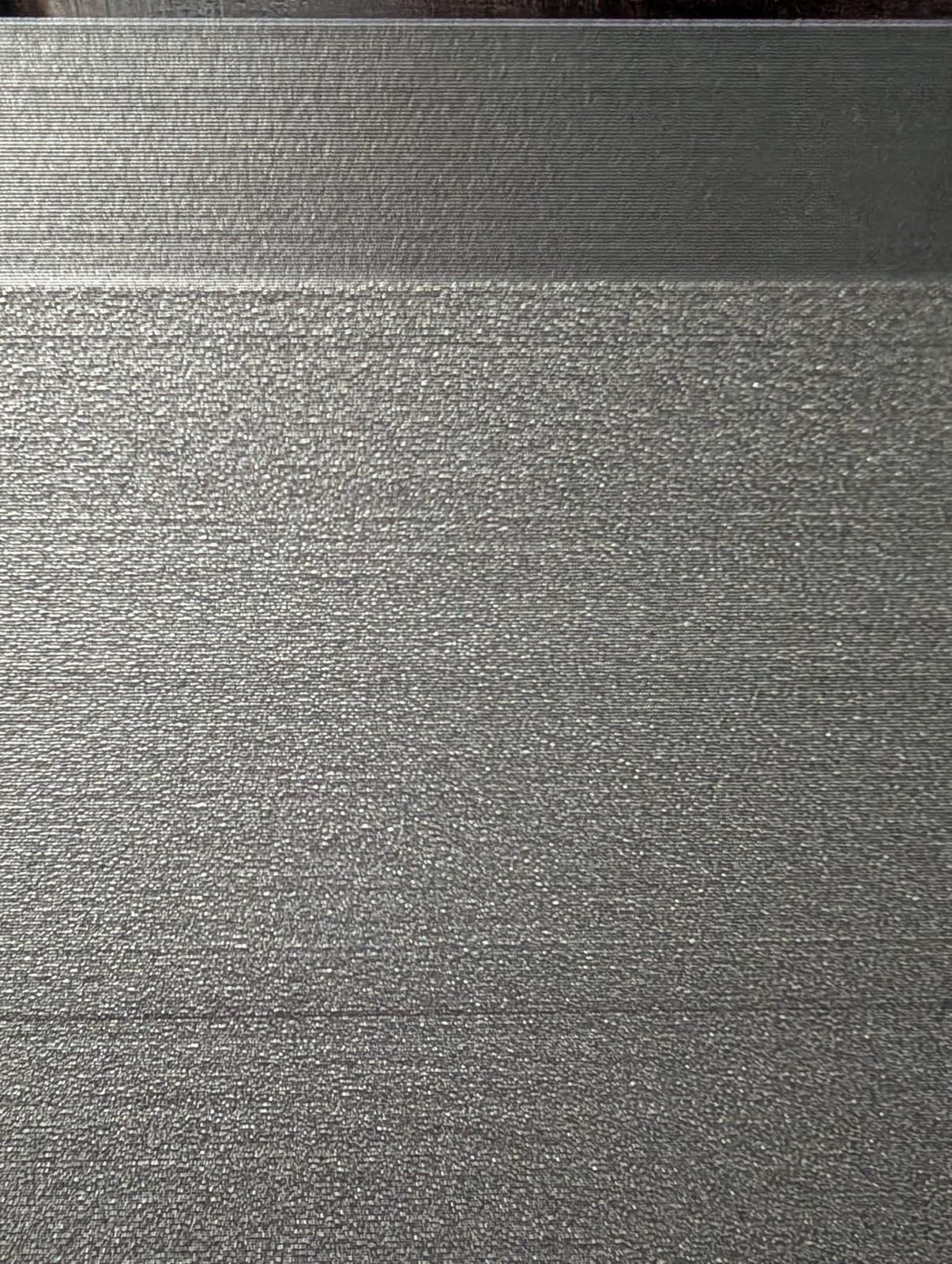
Who should buy the ELEGOO PETG-CF
Printers making parts that need to absorb a knock rather than just hold a static load, and anyone moving up from plain PETG who wants more stiffness without giving up all the toughness. It also works in AMS and CFS feeder systems when spooled properly.
Where it falls short
It still requires drying for the best results, and the corner lift is a design problem you have to solve rather than a setting you can tune away. If your part lives in a hot car or near an engine, PETG is the wrong family regardless of how tough it is.
10. Polymaker Carbon Fiber PLA Filament – Best Easy Print
Polymaker Carbon Fiber PLA Filament Black 1.75mm 1KG, Strong & Rigidity
Carbon fiber reinforced PLA, 1.75mm
Plus or minus 0.02 to 0.03mm accuracy
Nozzle 190-230C, bed 25-60C
Pros
- Prints without an enclosure
- Adds rigidity without PLA brittleness
- Neatly wound and tangle resistant
- Consistent diameter for reliable extrusion
Cons
- Less heat resistant and less tough than nylon blends
- Recycled cardboard spool is less rigid
- A hardened steel nozzle is still required
PLA-CF is not a structural material and this one does not pretend to be. What it is, and what the reviews confirm, is the easiest way to add visible rigidity to a part on a machine that cannot handle nylon. No enclosure, no 100C bed, no dryer, and it prints at 190-230C on a 25-60C bed.
It carries a 4.7 average across more than 200 reviews, with feedback centred on reliable dimensional accuracy, tangle-free winding and a tough matte surface. Unlike standard carbon fiber PLA, reviewers note it reinforces PLA without bringing the same brittleness.
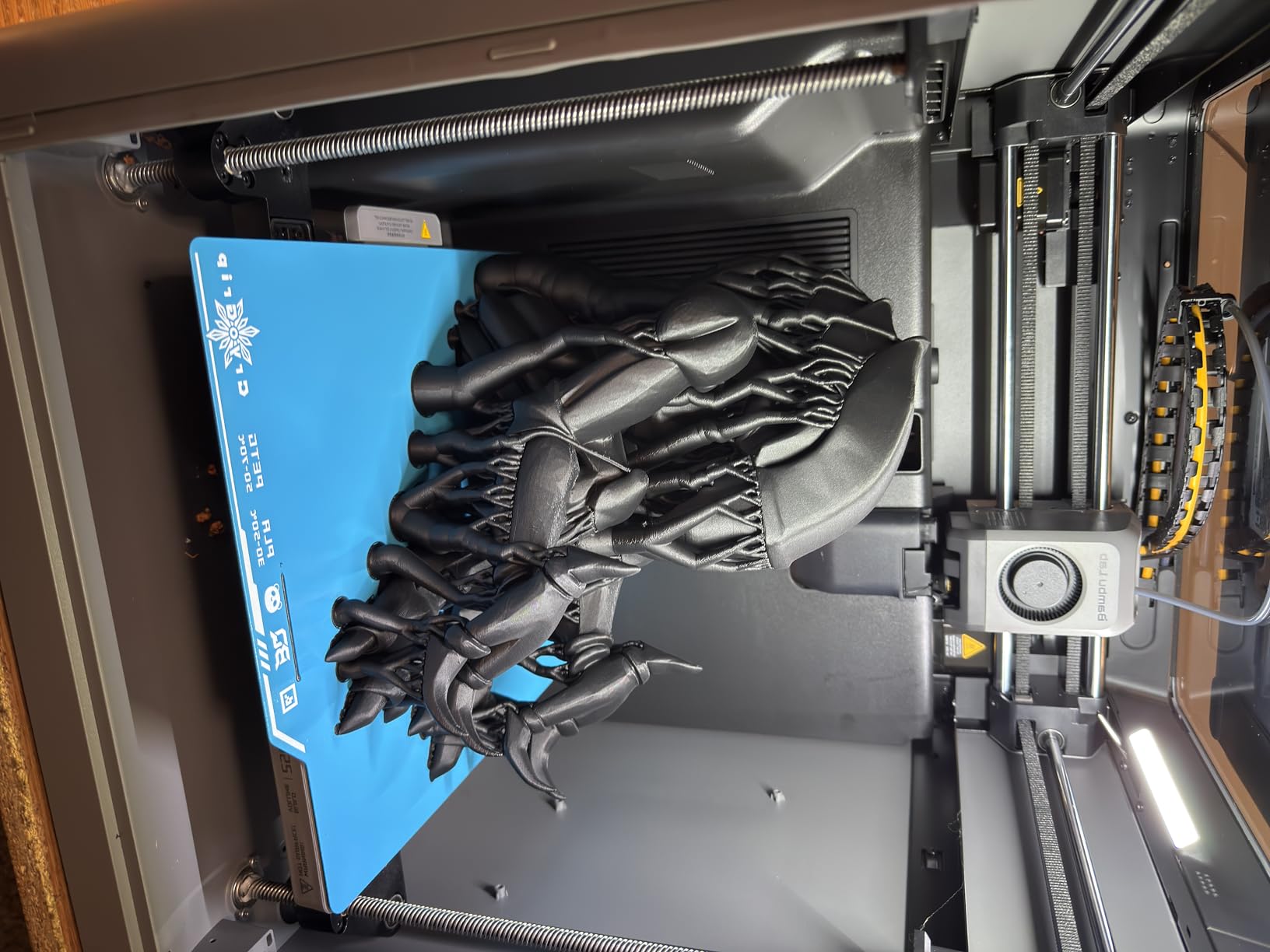
Dimensional accuracy is specified at plus or minus 0.02mm to plus or minus 0.03mm, which is tight enough for mating parts, and it supports 100-200mm/s print speeds. The spool is a recycled cardboard core in moisture-proof packaging.
Be clear about the ceiling. Compared with PETG-CF or nylon-CF blends, the base PLA is both less heat resistant and less tough, so treat it as a stiffness upgrade for covers, brackets and housings rather than a load-bearing option.
Who should buy the Polymaker Carbon Fiber PLA
Anyone with an open-frame printer, a new hotend or a low-power machine who wants the matte carbon fiber look and more rigidity than plain PLA. It is the sensible first carbon fiber purchase before committing to nylon blends.
Where it falls short
It will not survive heat, and it will not take a shock load. The recycled cardboard spool is also less rigid than a plastic spool, and a hardened steel nozzle is still needed because the fiber is still abrasive.
Stiffer vs Stronger vs Tougher: What Carbon Fiber Actually Changes
Carbon fiber makes parts stiffer, not tougher. It raises flexural modulus and tensile strength, improves dimensional stability and wear resistance, and usually lowers impact resistance at the same time. If your part must flex, twist repeatedly or survive being dropped, plain nylon or PC beats every filament in this roundup.
The fibers align along the extrusion direction, so the part is strongest along an extrusion line and weakest between layers. This anisotropy is the single biggest reason a strong-looking CF part snaps in half: a reviewer on 3DPrintBoard put it plainly, that no carbon fiber filament prints as strong as real carbon fiber, and the community has carried that caveat into every purchase for a decade.
There is a further layer nobody mentions. FFF parts are far weaker along Z than in XY, and CF parts are no exception. Fiber pull-out is a different failure from layer splitting, and the fix is different too: a part loaded across layer lines needs more perimeters and better orientation, not a different brand of filament.
Base resin choice moves these numbers far more than fiber percentage does. Moving from PLA-CF to PA6-CF20 is a larger change in heat resistance and toughness than moving between two PETG-CF spools with 15% and 20% fiber. Treat fiber loading as a fine adjustment and base resin as the main decision.
One tier above these ten does exist. PPA-CF is the newest premium carbon fiber base polymer, and it does not appear in any competitor roundup we reviewed, though it shows up repeatedly in related searches. On r/BambuLab it draws the strongest praise of any CF filament in the community, with owners reporting it as the best-performing CF filament they have used, and the closed-chamber plus dry filament combination is the recipe those same users credit for the very strong parts they are getting out of it.
Hardware You Need Before Printing CF: Nozzles, Hotend and Enclosure
You cannot print carbon fiber on a stock brass nozzle. Brass wears rapidly under abrasive fiber, and users on r/3Dprinting report going through multiple nozzles before realising what was happening. The r/CR10 thread is full of open-frame owners weighing nylon-CF against PETG-CF, and the honest answer is that the hardware decides which of those you can actually run.
Rank the nozzle options like this. Hardened steel is the baseline requirement and the cheapest way to be safe. Ruby is the upgrade for heavy CF use, where the wear rate on steel becomes noticeable. Tungsten carbide sits at the top for continuous high-abrasion work.
Bore size matters more than most people expect. Chopped fibers do not melt, so they jam small bores, and 0.4mm will clog on a long print while 0.6mm will not. The community consensus is to move up to 0.6mm for continuous CF work, and the TINMORRY spec sheet says the same thing outright.
Your hotend sets the ceiling on which base resin you can use. Below 240C you are limited to PLA-CF and low-temperature PETG-CF. At 260C you open up the PA6 and PA612 blends. At 280C and above, the PA6-CF20 and PA612 options become practical, and the SUNLU spool at 270-290C sits at the very top of what desktop hardware can do.
An enclosure decides warp behavior. PETG-CF and PLA-CF rarely need one, and the IEMAI reviews specifically call out excellent bed adhesion with no warping on a non-enclosed machine. ASA-CF and every nylon blend do much better inside a chamber, and an open-frame owner is realistically choosing between the PETG-CF and PLA-CF options in this roundup.
Finally, budget for nozzle wear as a line item. Every CF spool here requires a wear-resistant nozzle, and the Polymaker PA612 reviews note that unreinforced nozzles wear out very quickly. Running dry filament straight from a heated chamber, as the SUNLU users do, reduces the moisture that turns nylon into a tangle hazard in the first place.
Drying Carbon Fiber Filament by Base Resin
Drying is the step that decides whether a nylon-CF print works. Reviewers report popping, hissing, foamy extrusion and brittle layer adhesion when nylon-CF has not been dried, and a tangled spool is the reason several people waste an entire spool. Dry the filament and store it below 20% relative humidity.
Yes, it is fine to dry PA6-CF at 70C. Longer and hotter is better for nylon, and the published guidance spans 80C for 24 hours or 110C for 4 hours for PA6-CF20. PA12 and PA612 sit higher still, with a 100C dry for 10 hours specified for the Polymaker Fiberon spool.
For PETG-CF, lower is better. 60C for 5-8 hours is the IEMAI guidance and 65C for 8 hours is the TINMORRY figure, with humidity below 20% relative humidity in storage. PLA-CF barely needs drying at all, though a short 55C cycle does no harm if the spool has been open.
One warning from the ASA-CF reviews: cheap plastic spools deform at high drying temperatures and the filament can fuse to them. For any high-temp dry cycle, print the spool on a plate and check it before you commit a 24-hour run.
Print Design: Getting More Strength From the Same Spool
Four to six perimeters beat infill, every time. A part loaded in the XY plane carries load through its walls, and raising wall count from three to six often doubles the strength of a bracket that infill changes barely touched.
Orient the part so the load runs along the extrusion direction, not across it. Fiber pull-out is the failure mode that catches people who print a bracket in the orientation that makes the shape convenient rather than the orientation that puts the load in the XY plane.
Add fillets at every stress riser. Sharp internal corners concentrate stress and are where parts crack, and a 2mm radius costs nothing at print time. A filleted part in PLA-CF can outperform an unfilleted part in a much stronger material.
Run the hot end hot and the fan off for the first few layers. Every spec sheet in this roundup points the same direction, and the TINMORRY guidance is explicit about the cooling fan being off for the first three layers. More thermal energy between layers means better interlayer bonding, which matters more with fiber-filled resin than it does with plain plastic.
Use a brim on the nylon and ASA blends. Corner lift on a large PA6-CF print is common, and a brim is cheaper than reprinting the part.
Best Carbon Fiber Filament by Application
For a drone or RC frame, weight and stiffness both matter. The TINMORRY PETG-CF is built for it, with high rigidity, strong Z adhesion and speeds up to 300mm/s. The SUNLU PA6-CF20 is the choice if the frame also runs near heat.
For robotics mounts and load-bearing brackets, go nylon. The SainSmart ePA-CF is the most straightforward all-rounder, and the Polymaker Fiberon PA612-CF15 is the pick when you want published tensile numbers and lower moisture sensitivity.
For a camera gimbal or a visible rig, finish matters as much as strength. The ERYONE PETG-CF 15% gives the flattest matte surface, and the ANYCUBIC PETG-CF has the satin texture that catches light rather than flattening it.
For workshop jigs and fixtures, the ANYCUBIC PETG-CF handles the bulk of the work on any modern desktop machine, and the Polymaker Fiberon PA612-CF15 is the upgrade when the jig lives near a hot tool or a humid shed.
For an automotive interior bracket or anything outdoors, the iSANMATE ASA-CF is the answer. UV and weather resistance is not something PETG-CF or PLA-CF can offer over a season of sun.
For a part that takes a knock, use the ELEGOO PETG-CF. It is the one spool here where reviewers describe impact resistance as a strength rather than a sacrifice.
Frequently Asked Questions
Does carbon fiber make filament stronger?
Not in the way most people mean. Carbon fiber raises flexural modulus and tensile strength, so parts feel stiffer and hold dimensions better, but impact resistance usually drops at the same time. If your part needs to flex or absorb a shock, plain nylon or polycarbonate is a better choice than any CF blend.
Which carbon fiber filament is the strongest?
Among the ten reviewed here, the nylon blends come out on top. The Polymaker Fiberon PA612-CF15 publishes 91.9 MPa tensile strength dry and 175C heat deflection after annealing, and the SUNLU PA6-CF20 handles heat up to 209C. For stiffness on a general desktop printer, the ANYCUBIC PETG-CF is the strongest practical pick.
Is PLA CF as strong as PETG?
No. PLA-CF is stiffer than PETG-CF in the same way it is stiffer than plain PLA, but PETG-CF is tougher and far more heat resistant. Choose PLA-CF for rigidity, matte finish and easy printing on an open machine. Choose PETG-CF when the part will take a knock or sit in a warm environment.
What is the best nozzle for carbon fiber filament?
A hardened steel nozzle is the minimum, ruby is the upgrade for heavy use, and tungsten carbide is the top tier for continuous abrasive work. Move up to a 0.6mm bore where you can, because chopped fibers do not melt and will jam a 0.4mm nozzle during a long print. Brass nozzles wear out far too quickly to use.
Is it okay to dry PA6-CF filament at 70C?
Yes, 70C is a safe drying temperature for PA6-CF, though published guidance goes higher for better results. Common figures are 80C for 24 hours or 110C for 4 hours, with storage kept below 20% relative humidity. For PA12 and PA612, 100C for 10 hours is the typical recommendation.
What is the best 3D filament for structural parts?
For genuine load-bearing work, a nylon-based CF blend such as ePA-CF or PA612-CF15 printed on an enclosed machine is the strongest practical option. Neither of the most-reviewed CF filaments in this guide reaches the tensile and heat performance of a carbon fiber nylon, and both need a 260C-plus hotend.
Conclusion
Our pick for the best carbon fiber filament for strong parts overall is the ANYCUBIC PETG-CF, because it delivers the stiffness people are actually buying CF for, prints at ordinary PETG temperatures, and carries the largest review base in the category at 4.6 across more than 1400 ratings. The IEMAI PETG-CF 20% is the value route to the same result, and the iSANMATE ASA-CF is the one to buy for anything that lives outdoors.
Step up a tier when your hardware allows it. A 260C-plus hotend and an enclosure open the nylon blends, where the SainSmart ePA-CF and the Polymaker Fiberon PA612-CF15 produce parts with real engineering numbers behind them. On an open-frame machine, the ANYCUBIC PETG-CF, ELEGOO PETG-CF and the Polymaker Carbon Fiber PLA are where your ceiling is, and that is still a very long way up.
Before you order anything, check the four gates: hardened nozzle, hotend temperature, bed temperature and a drying routine. Get those right and the material choice is the easy part. This roundup was compiled and updated for 2026, and every temperature and drying figure above comes from the manufacturer guidance or the user reports for that specific spool.