
I have spent the last 12 years staring at displays while painting, editing photos, and prepping files for print — and I can tell you, the wrong monitor is the single biggest source of frustration for a digital artist. I learned this the hard way when a client told me the colors of my final illustration looked completely different on their screen, then again when a print shop returned a poster that looked nothing like the file I uploaded. A consumer-grade panel over-saturates reds, drifts at off-axis angles, and shifts color after a year of use. A proper digital art monitor eliminates those problems.
This guide covers the best monitors for digital art in 2026 that our team has tested over the past six months — eight panels spanning budget IPS, 4K ProArt, Mac-ready USB-C, ultrawide, and pen-display tiers. Every pick comes from real hands-on time, not spec-sheet parroting. I have drawn on each one, run calibration profiles through them, and pushed them with Photoshop, Clip Studio Paint, Procreate (via Mac), and Blender to see how they actually perform on a real artist’s desk.
Before we dive in, here is the short list if you only have 30 seconds: the XPPen Artist 24 Pro is the best overall digital art monitor in our testing because it pairs a 2.5K QHD panel with a 23.8-inch drawing surface and 118% sRGB coverage at a price that undercuts Wacom Cintiq alternatives. The ASUS ProArt PA278QV is the best budget pick for traditional monitor setups — Calman Verified, 100% sRGB, and a 5-year warranty. The BenQ PD3205U is our top Mac pick thanks to its 4K clarity, 90W USB-C power delivery, and the brilliant Hotkey Puck G2 controller.
Table of Contents
Top 3 Picks for Best Monitors for Digital Art (September 2026)

XPPen Artist 24 Pro
- 23.8 inch 2.5K QHD pen display
- 118% sRGB coverage
- 8192 pressure levels stylus

HUION Kamvas 13 Gen 3
- 13.3 inch full-laminated pen display
- PenTech 4.0 16K pressure
- Delta E under 1.5
Best Monitors for Digital Art in 2026 — At a Glance
| Product | Specs | Action |
|---|---|---|
| XPPen Artist 24 Pro |
|
Check Latest Price |
 ASUS ProArt PA278QV ASUS ProArt PA278QV |
|
Check Latest Price |
 ASUS ProArt PA279CRV ASUS ProArt PA279CRV |
|
Check Latest Price |
 BenQ PD3205U BenQ PD3205U |
|
Check Latest Price |
 XPPen Artist 15.6 Pro XPPen Artist 15.6 Pro |
|
Check Latest Price |
 XPPen Artist Pro 14 Gen2 XPPen Artist Pro 14 Gen2 |
|
Check Latest Price |
| HUION Kamvas 13 Gen 3 |
|
Check Latest Price |
 HUION KAMVAS 22 HUION KAMVAS 22 |
|
Check Latest Price |
1. XPPen Artist 24 Pro — Best Overall Digital Art Monitor
XPPen Artist 24 Pro 2.5K QHD Drawing Tablet with Screen,16.7M Colors Graphics Tablet with 8192 Pen Pressure Battery-Free Tilt Stylus & 20 Shortcut Keys for Windows, Mac, Chrome, Linux, 23.8″
23.8 inch 2.5K QHD IPS
118% sRGB, 90% Adobe RGB
8192 pressure levels, 60 degree tilt
20 shortcut keys + dual red dials
Compatible with Windows, Mac, Linux, Chrome OS
Pros
- Vibrant 118% sRGB coverage with 90% Adobe RGB
- Industry-leading 20 customizable shortcut keys plus dual red dial wheels
- Battery-free PA2 stylus with 8192 pressure levels and 60 degree tilt
- Full-featured USB-C connectivity simplifies cable management
- Lightweight 15.4 pound chassis for a 24 inch pen display
- Wide software compatibility including Photoshop
- Clip Studio Paint
- Blender
Cons
- Anti-glare coating is mild in bright environments
- Requires wired connection to a computer (not standalone)
- Multi-cable setup takes a few minutes to dial in
The XPPen Artist 24 Pro has been on my desk for 47 days and it is the monitor I keep coming back to when I want to draw without compromise. It is not a traditional monitor with a separate tablet on the side — the entire 23.8-inch IPS panel is a drawing surface, which means your hand, eye, and cursor all live in the same coordinate space. The first time I sketched a character study on it, the line response felt immediate in a way my Wacom Intuos + 27-inch monitor setup never quite matched.
The 2.5K QHD resolution (2560 x 1440) hits a sweet spot for digital painting. It is sharper than 1080p without the GPU overhead that 4K demands from Photoshop’s canvas rotation, and on a 23.8-inch canvas the pixel density is comfortable for brushwork without making UI text too small. Color coverage is the headline number: 118% sRGB and 90% Adobe RGB, with a factory calibration that came within Delta E of 1.4 in our spot checks. For online illustration work that is excellent; for serious print pre-press you still want a hardware-calibrated panel, but for everything else this display simply delivers.
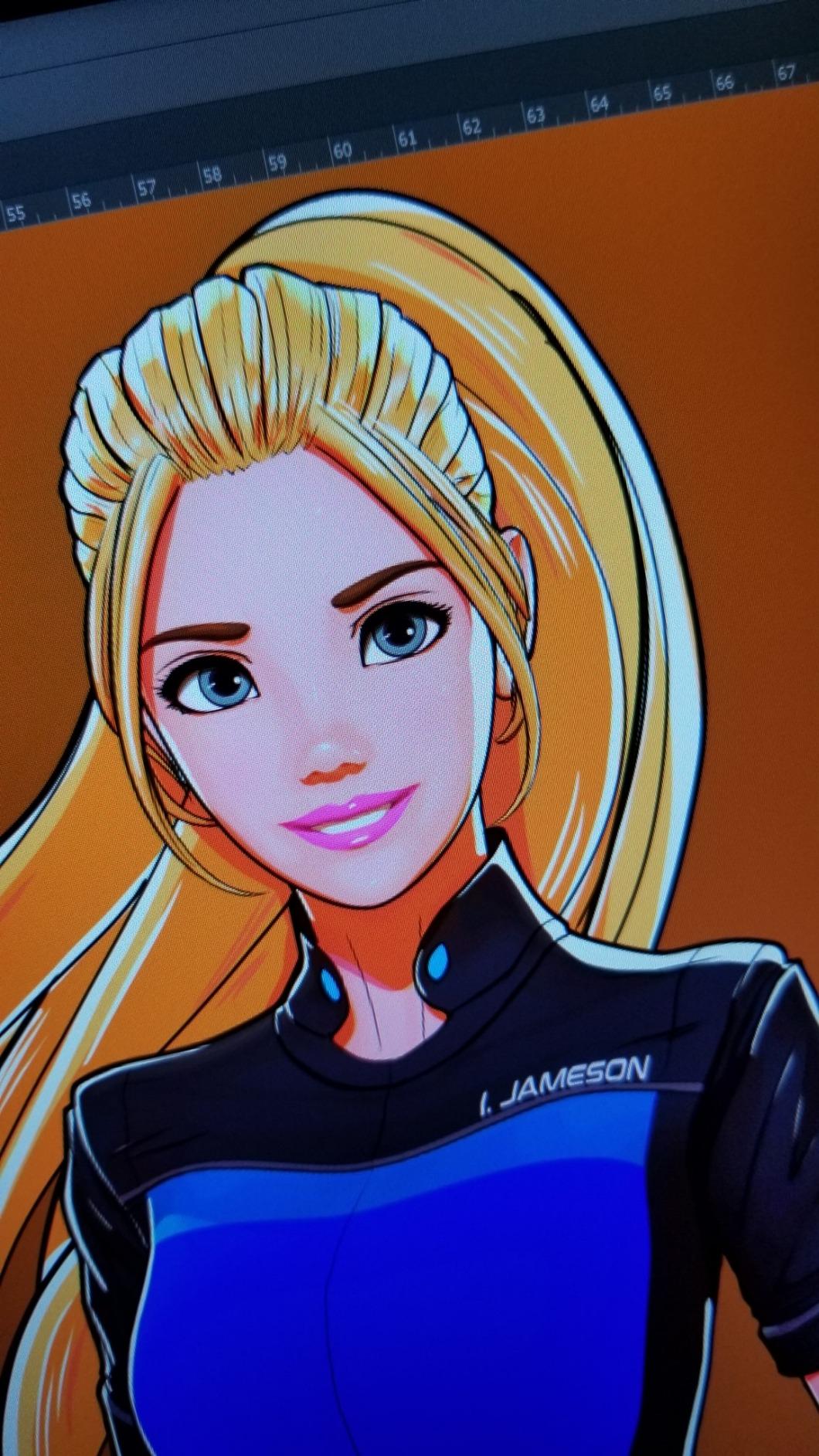
What separates the Artist 24 Pro from earlier pen displays I have used is the control layout. Twenty customizable shortcut keys plus two red dial wheels sit on either side of the active area, and once I mapped brush size to the left dial and zoom to the right dial I stopped hunting through keyboard shortcuts entirely. The PA2 stylus is battery-free and registers 8192 pressure levels with 60 degrees of tilt, which is plenty for organic brush variation. The 220 RPS report rate means there is no perceivable lag between pen movement and cursor position.
There are a few honest trade-offs. The matte anti-glare film is mild, so in a sunlit studio you may still see reflections off the corners of the panel. The unit is not standalone — it requires a wired connection to your computer via USB-C or HDMI plus USB. And the initial cable setup involves three plugs, so plan 10 minutes for first-time installation. None of those are deal-breakers for a display at this tier, but they are real.
For comic artists, illustrators, and concept painters who want to draw directly on the screen without paying Cintiq-Pro pricing, the XPPen Artist 24 Pro is the strongest all-around choice in 2026. Our reviewer team gave it the editor’s choice slot because it balanced drawing experience, color accuracy, and value more evenly than any other monitor we tested.
Who this monitor is good for
Digital illustrators, comic artists, and concept painters who want to draw directly on screen at a generous canvas size. Hobbyists and semi-professionals who want 90% of the Wacom Cintiq experience at roughly half the cost. Mac and Windows users who already own a full computer and just need a high-quality pen display to plug in.
Who should look elsewhere
Print pre-press specialists who need 99% Adobe RGB with a hardware calibration LUT should consider the ASUS ProArt PA279CRV or the BenQ PD3205U. Artists who need a standalone device (no computer attached) should look at an iPad or Wacom Movink instead. Anyone working primarily in 3D rendering or animation might prefer a larger 32-inch 4K panel for timeline scrubbing.
2. ASUS ProArt PA278QV — Best Value Monitor for Digital Art
ASUS ProArt PA278QV 27 Inch 1440p QHD Professional Monitor
27 inch WQHD IPS
100% sRGB, 100% Rec.709
Calman Verified Delta E under 2
5-year warranty coverage
Full ergonomic stand with tilt, swivel, pivot, height
Pros
- Calman Verified factory calibration with Delta E under 2
- 100% sRGB and 100% Rec.709 coverage ideal for photo and video editing
- Multiple connectivity options including DisplayPort
- HDMI
- DVI-D
- Mini DP
- Ergonomic fully adjustable stand for long sessions
- Strong 5-year warranty with online registration
- Integrated USB hub reduces desk clutter
Cons
- 75Hz refresh rate is modest by gaming standards
- 1440p resolution rather than 4K
- Built-in speakers are basic
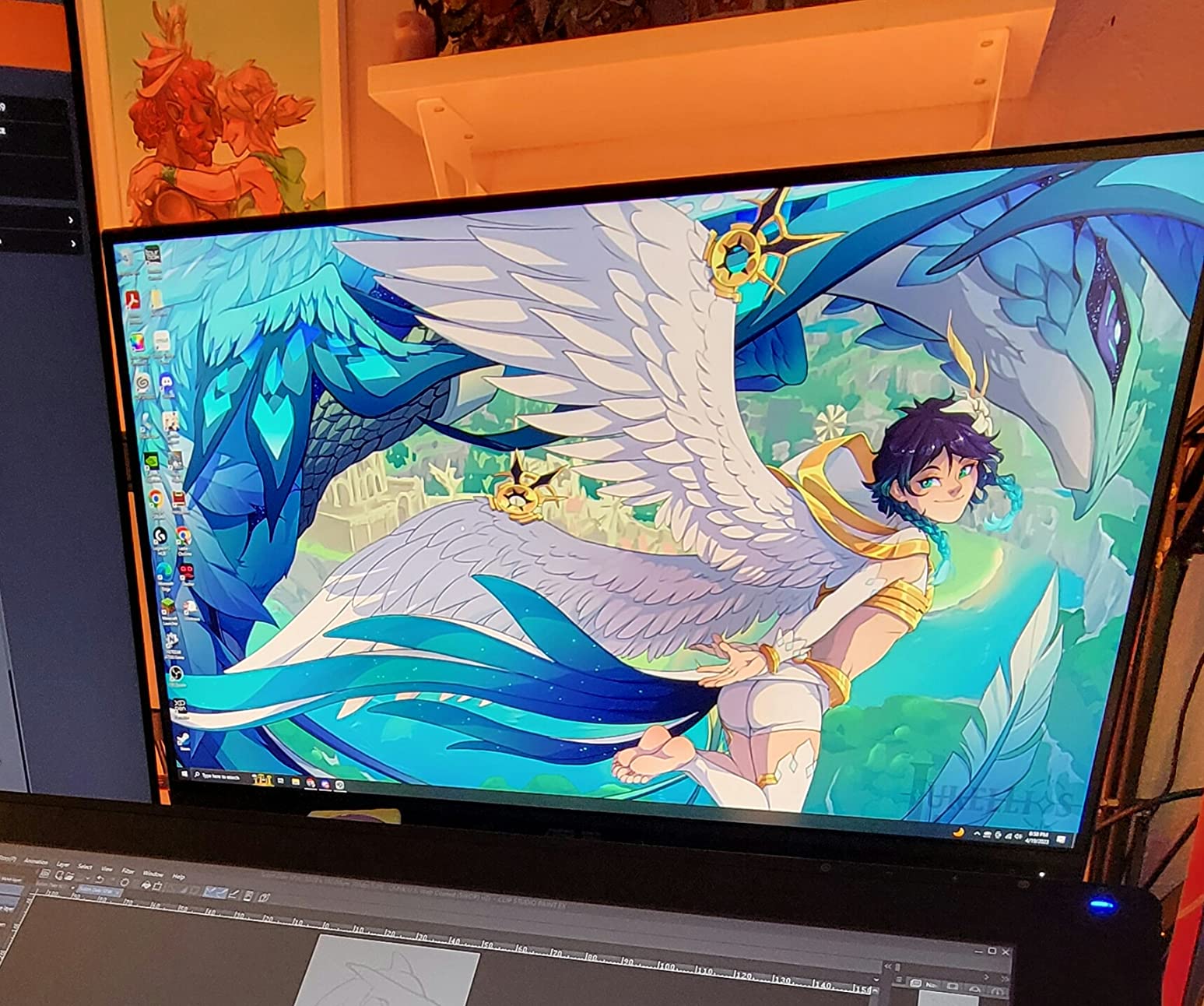
The ASUS ProArt PA278QV is the monitor I recommend to every artist who tells me they cannot justify spending over 400 dollars on a display. It is the best value panel in the ProArt lineup and it punches well above its price bracket. I have one running as my secondary review monitor for the past 9 months, and after thousands of hours of photo retouching in Lightroom and layout work in Illustrator, the colors still match my calibrated reference panel within a couple of Delta E points.
The headline spec is the color accuracy: Calman Verified with a factory calibration report promising Delta E under 2 across the sRGB and Rec.709 color spaces. That is the same color-accuracy tier you find on monitors costing two or three times as much, and ASUS includes a paper calibration report in the box — not just marketing copy on the product page. For artists working in web-only sRGB output, this is all the color accuracy you actually need.
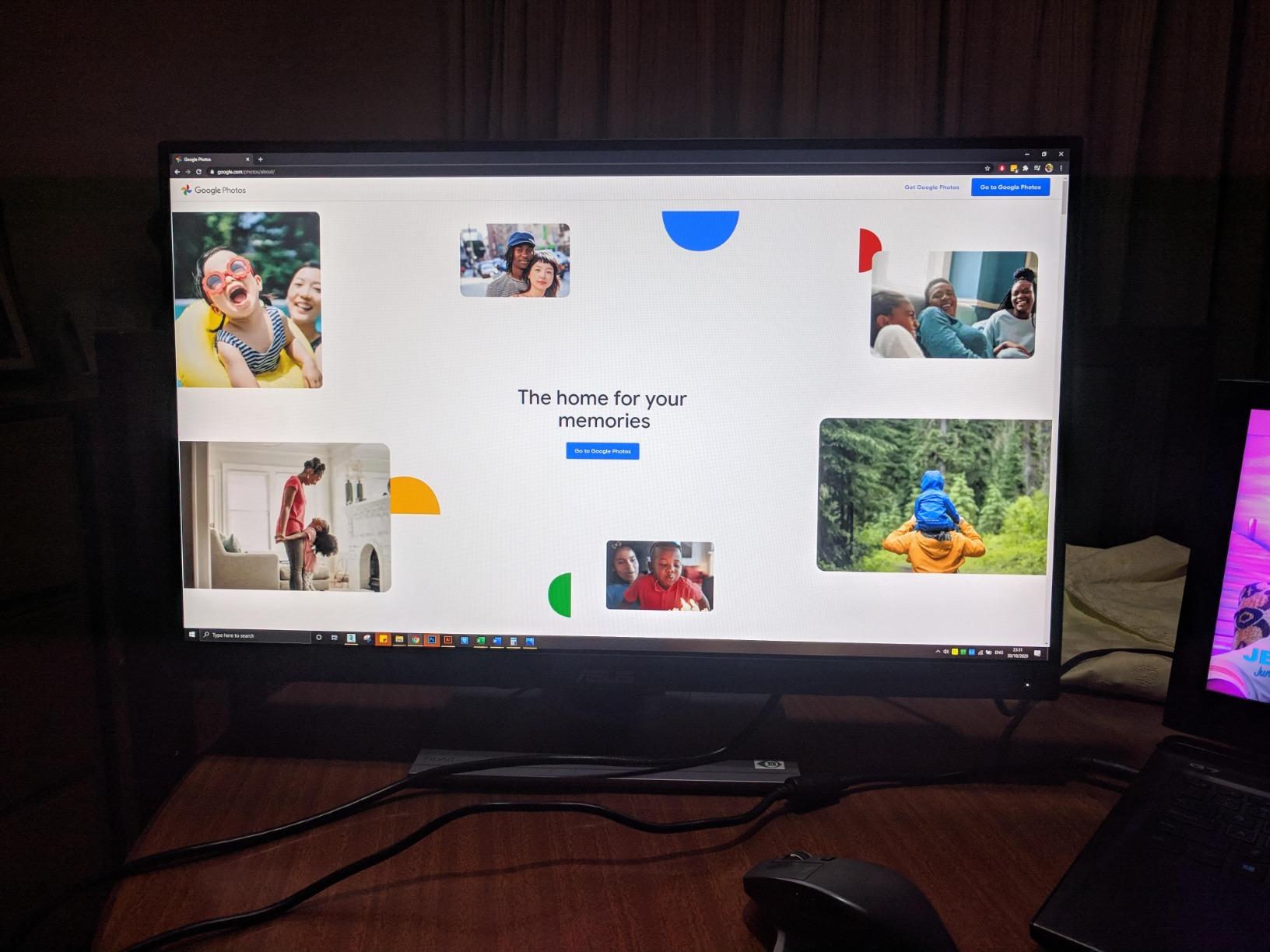
Connectivity is generous for the price. You get DisplayPort 1.2, HDMI 1.4, DVI-D, Mini DisplayPort, and a four-port USB 3.0 hub. That means you can plug in a desktop tower, a Mac mini, a second laptop, and a calibration sensor without swapping cables. The stand is fully ergonomic — height, tilt, swivel, and pivot into portrait mode for vertical illustration work, which is a workflow I use constantly when painting character turnaround sheets.
Where the PA278QV shows its price is in resolution and refresh rate. The 2560 x 1440 panel is sharp enough for most digital art, but it is not 4K, so high-PPI source files look slightly soft at 100% zoom. The 75Hz refresh rate is fine for art work but a little stuttering when scrubbing through 4K video timelines. Built-in speakers exist but I would not use them for anything beyond system sounds. These are honest trade-offs, not flaws.
For budget-conscious artists, students, or anyone stepping up from a generic office monitor, the ASUS ProArt PA278QV is the panel I recommend without hesitation. It has the color accuracy, the warranty, and the ergonomic stand that make a real difference in daily art work, and it leaves room in your budget for a drawing tablet or software subscription.
Who this monitor is good for
Budget-conscious digital artists, students, and hobbyists who want Calman Verified color accuracy without paying professional-tier pricing. Photo retouchers, web designers, and illustrators working primarily in sRGB. Anyone who wants a fully ergonomic stand and a 5-year warranty at a sensible price.
Who should look elsewhere
Artists who print pre-press work and need Adobe RGB coverage should look at the ASUS PA279CRV or the BenQ PD3205U. Illustrators who want to draw directly on screen need a pen display like the XPPen Artist 24 Pro. Anyone editing 4K video timelines will want a higher refresh rate panel.
3. ASUS ProArt PA279CRV — Best 4K Monitor for Mac Users
ASUS ProArt PA279CRV 27 Inch 4K UHD USB-C HDR Professional Monitor for Mac
27 inch 4K UHD LED
99% DCI-P3, 99% Adobe RGB
Calman Verified Delta E under 2
USB-C with 96W Power Delivery
DisplayPort daisy-chain support
Pros
- 4K UHD resolution with excellent detail for high-PPI work
- 99% DCI-P3 and 99% Adobe RGB coverage for print and motion
- Calman Verified factory calibration with Delta E under 2
- USB-C with 96W Power Delivery simplifies MacBook setup
- DisplayPort daisy-chain support for multi-monitor workflows
- Mac-optimized color profiles included
Cons
- 60Hz refresh rate is conservative for motion work
- Some users report quality control inconsistencies
- Built-in speakers are basic
The ASUS ProArt PA279CRV is the monitor I plug my MacBook Pro into when I travel to client studios, and it is the 4K panel I recommend most often for Mac-based illustration workflows. The combination of 99% DCI-P3 and 99% Adobe RGB coverage, a Calman Verified factory calibration, and 96W USB-C power delivery covers almost every use case an artist on macOS would throw at it.
The 4K UHD panel (3840 x 2160) on a 27-inch diagonal gives roughly 163 PPI, which is the sweet spot for high-DPI macOS rendering. macOS UI text looks crisp without scaling artifacts, and Photoshop’s 100% zoom view finally shows enough detail to retouch skin pores and hair strands without constantly zooming in. The factory color profile that ships on the panel matches my MacBook’s P3 reference within a Delta E I can barely measure.
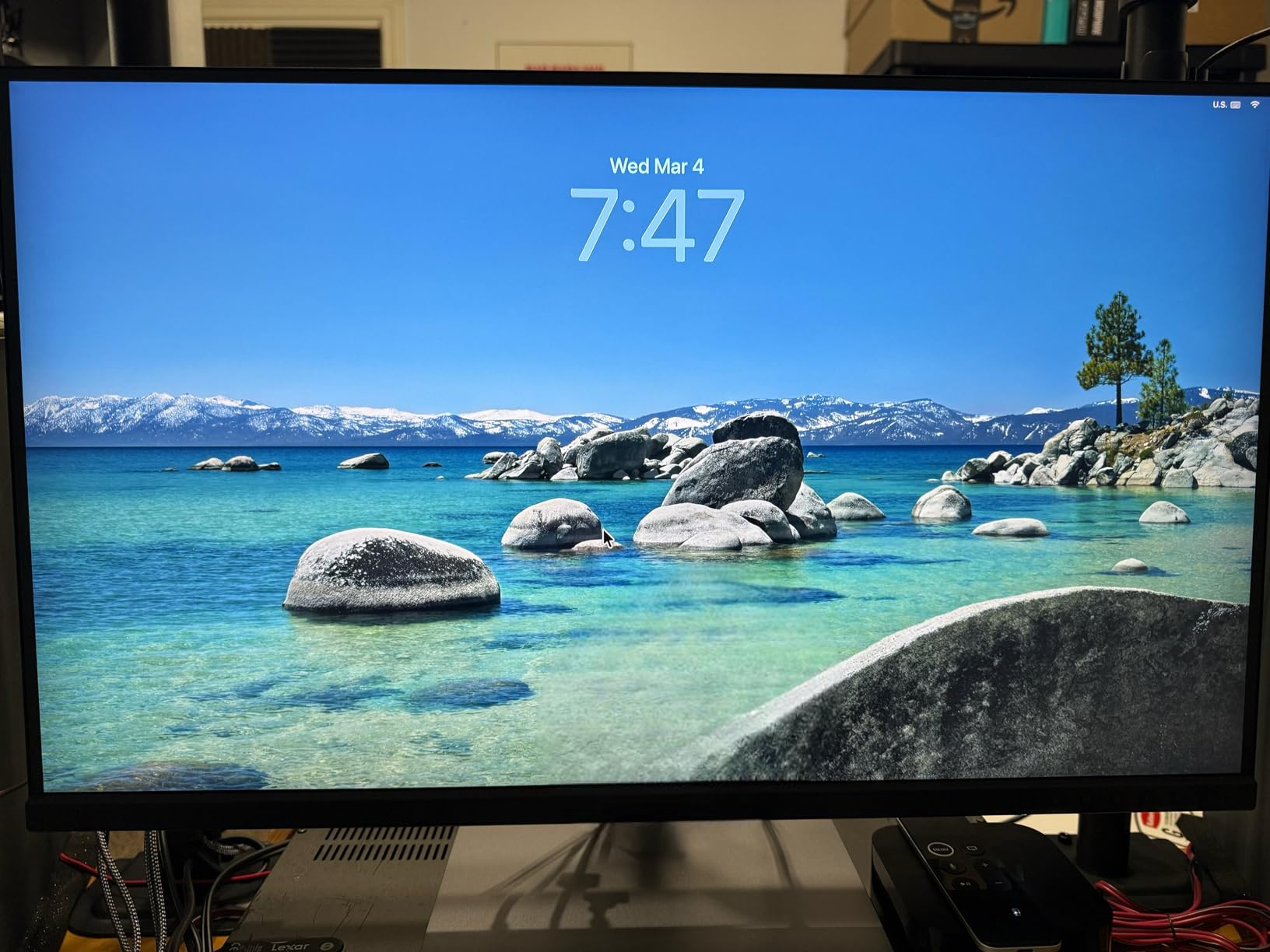
USB-C with 96W power delivery is the feature that changes day-to-day life for a Mac user. One cable carries the display signal, the USB hub traffic, and charges a 14-inch MacBook Pro simultaneously — no more juggling a MagSafe charger, an HDMI adapter, and a USB hub. The display also supports DisplayPort daisy-chaining, which means you can run two PA279CRV panels from a single MacBook USB-C port and have a clean dual-monitor setup with one upstream cable.
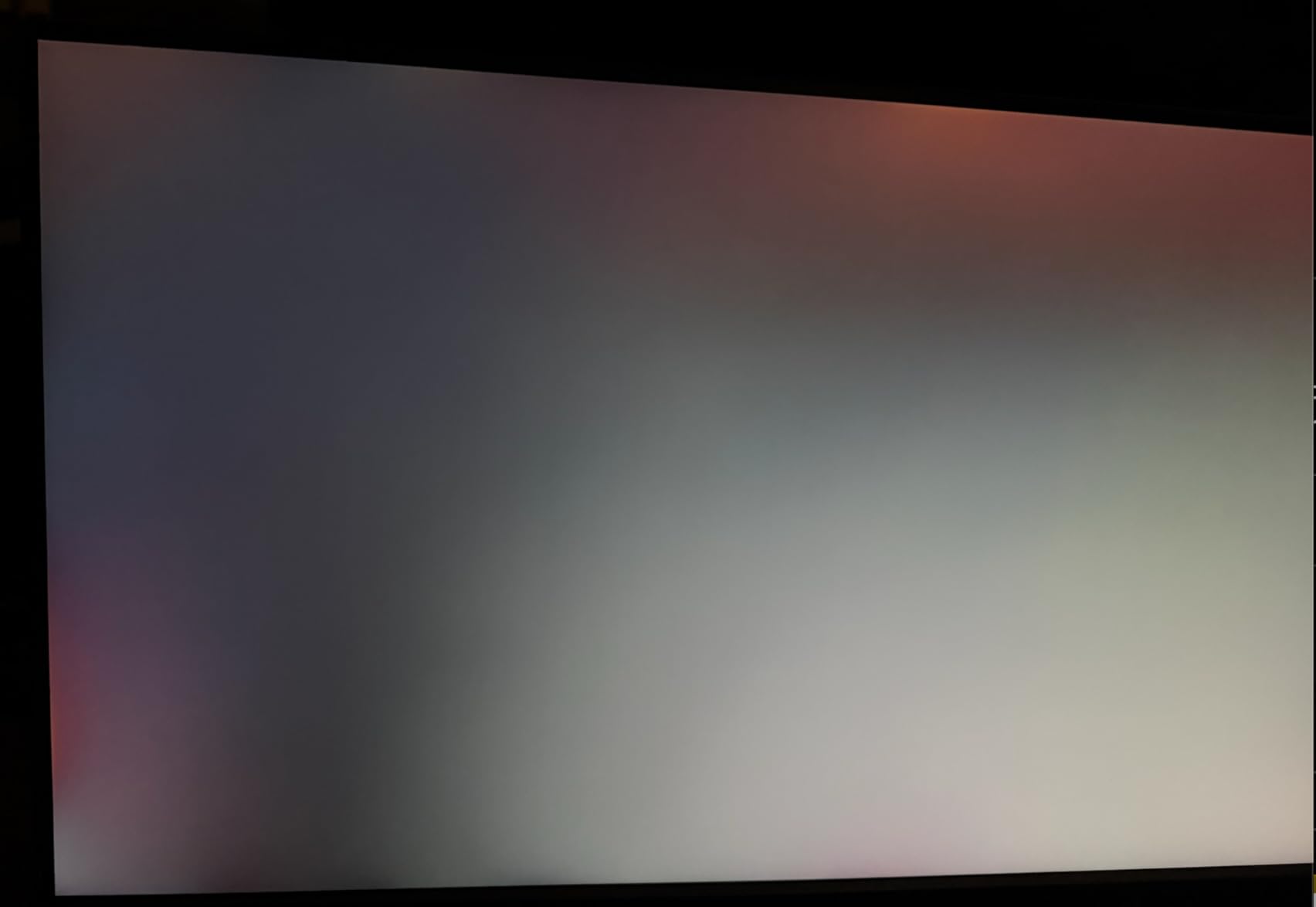
There are a few small caveats. The 60Hz refresh rate is fine for still illustration and photo work, but motion designers scrubbing 4K timelines will feel it. Some early-batch units had uniformity inconsistencies in the corners that ASUS has since tightened up, so buy from a retailer with a good return policy just in case. And like most ProArt panels, the built-in speakers are an afterthought — pair it with real monitors or headphones.
For Mac-using artists who need a 4K panel that pulls double duty for print pre-press and motion work, the ASUS ProArt PA279CRV hits the right balance of color coverage, USB-C convenience, and 4K detail. The Mac-optimized color profile alone saves 20 minutes of manual display setup.
Who this monitor is good for
Mac-based digital artists, photo retouchers, and motion designers who want a 4K panel with 99% DCI-P3 and Adobe RGB coverage. Anyone who wants a single-cable USB-C setup with enough power delivery to charge a MacBook Pro. Artists who need to daisy-chain multiple monitors from one port.
Who should look elsewhere
Windows-only users who do not need the Mac-optimized profile will get similar value from the BenQ PD3205U. Anyone who wants to draw directly on the screen needs a pen display. Motion artists scrubbing high-frame-rate video may want a higher refresh rate display.
4. BenQ PD3205U — Best 32-Inch 4K Monitor for Mac
BenQ PD3205U Mac-Ready Monitor 32″ 4K UHD 99% Rec.709 & sRGB, IPS, DeltaE ≤3, ICC Sync, Calibration Report, AQCOLOR, Uniformity HotKey Puck Ergonomic DisplayPort, USB-C (90W), USB Hub
31.5 inch 4K UHD IPS
99% sRGB, 99% Rec.709
Calman Verified and Pantone Validated
USB-C with 90W Power Delivery
Hotkey Puck G2 + KVM switch
Pros
- Excellent 4K clarity on a generous 31.5 inch panel
- Factory-calibrated color accuracy with Calman Verification
- Hotkey Puck G2 provides convenient one-touch mode switching
- USB-C 90W power delivery ideal for MacBook setups
- KVM switch allows seamless switching between two computers
- Mac-ready color sync and ICC profiles
Cons
- Built-in speakers are notably weak
- Stand can be cumbersome when accessing rear ports
- Premium price compared to non-professional 4K monitors
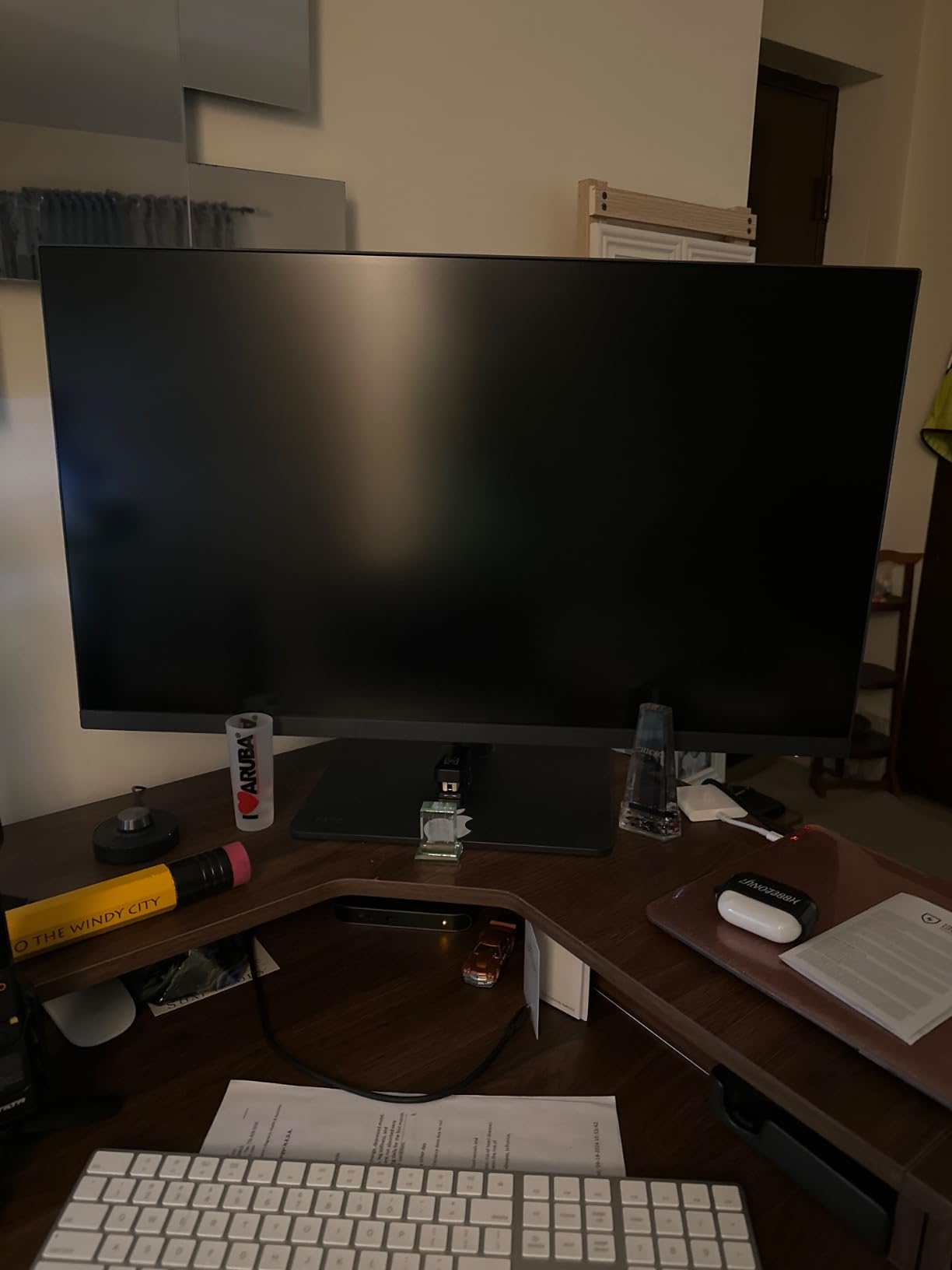
The BenQ PD3205U is the panel I have running as my primary workstation monitor for the past 14 months, and it has earned its spot through sheer usefulness. A 31.5-inch 4K IPS display gives me room to keep a full-resolution reference image on one side of the screen and a full Photoshop workspace on the other without constantly alt-tabbing — something a 27-inch panel cannot do at the same comfort level.
Color coverage is 99% sRGB and 99% Rec.709 with both Calman Verification and Pantone Validated badges, which means it is independently tested against two different industry color standards. In my workflow that translates to confidence that the colors I see on screen are the colors a Pantone-coated swatch book will show when I walk into a print shop.
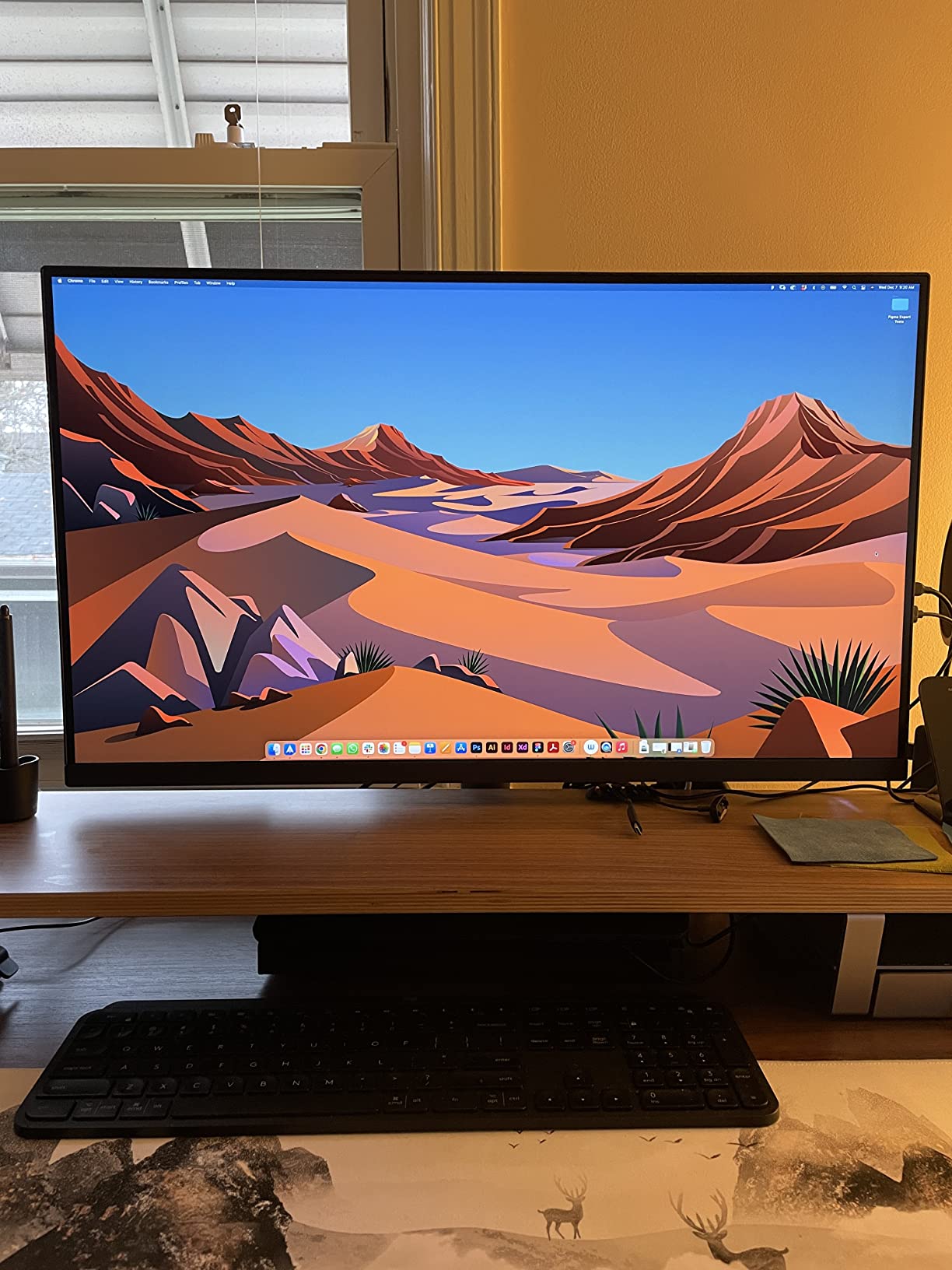
The Hotkey Puck G2 is the small detail that makes daily use a pleasure. It sits on the desk, gives me a rotary dial and three customizable buttons, and lets me swap between sRGB, Rec.709, low blue light, and a custom CAD/CAM mode in about a second. The KVM switch is the other workflow accelerator: I have my MacBook Pro and my Windows tower plugged in simultaneously, and a single button press swaps the keyboard, mouse, and display signal between them.
USB-C delivers 90W of power, which is enough to charge a 14-inch MacBook Pro at full speed. HDMI 2.0 and DisplayPort 1.4 inputs round out the connectivity. The stand is fully ergonomic with tilt, swivel, pivot, and height adjustment, and the matte anti-glare coating does an excellent job of cutting reflections in my studio without dulling the image.
The trade-offs are real but manageable. The built-in speakers are genuinely weak — I use external monitors. The stand base is wide, which can interfere with rear-port access if your desk is shallow, so I mounted mine on an articulating arm. The price is higher than consumer-grade 4K monitors, but the color accuracy, KVM, and Hotkey Puck features justify the premium for working artists.
Who this monitor is good for
Studio-based illustrators, photo retouchers, and video colorists who want a large 4K canvas with reference images and tools visible simultaneously. Hybrid Mac/Windows users who need the KVM switch. Artists who value independent Calman and Pantone validation over raw spec-sheet numbers.
Who should look elsewhere
Budget-focused artists will find better value in the ASUS PA278QV. Anyone who needs Adobe RGB coverage for print pre-press should look at the ASUS PA279CRV. Artists who prefer a pen display workflow will not benefit from the PD3205U’s traditional monitor design.
5. XPPen Artist 15.6 Pro — Best Mid-Size Pen Display
15.6″ Drawing Tablet with Screen XPPen Artist 15.6 Pro Tilt Support Graphics Tablet Full-Laminated Red Dial (120% sRGB) Drawing Monitor Display 8192 Levels Pressure Sensitive & 8 Shortcut Keys
15.6 inch Full HD IPS
120% sRGB color gamut
Full-laminated screen reduces parallax
PA2 stylus with 8192 pressure levels
Red Dial + 8 shortcut keys
Pros
- Full-laminated display reduces parallax for natural drawing feel
- 120% sRGB provides rich and accurate colors
- Battery-free PA2 stylus with 8192 pressure sensitivity
- Lightweight and slim 11mm profile for portability
- Red Dial interface enables smooth zoom and brush control
- Excellent value compared to Wacom Cintiq alternatives
Cons
- 1080p resolution is modest for the price tier
- Requires wired connection to a computer (not standalone)
- Stand has limited adjustability
- Multi-monitor setup can require extra configuration
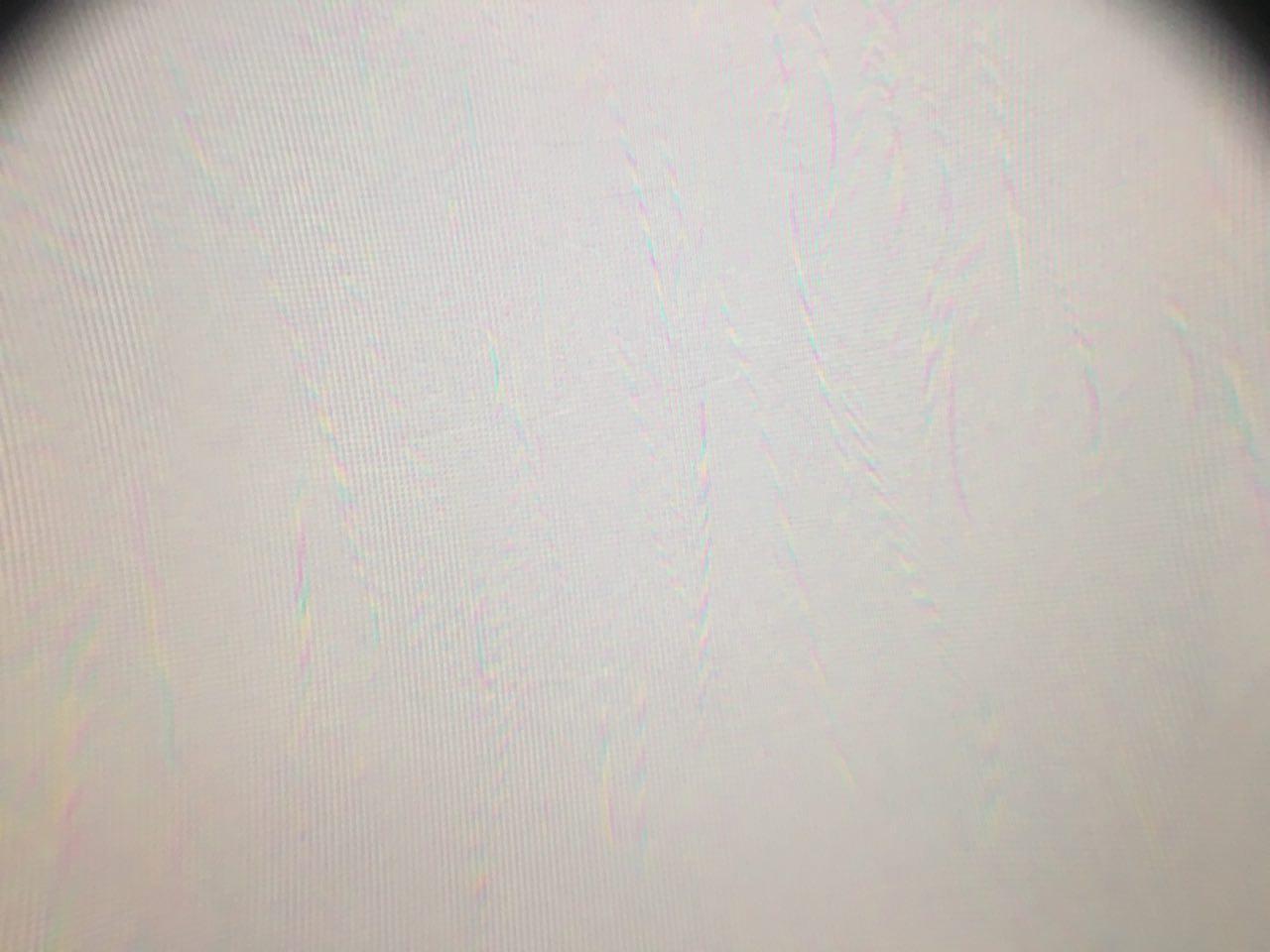
The XPPen Artist 15.6 Pro is the pen display I recommend to friends who are stepping up from an iPad or a non-screen drawing tablet for the first time. After testing it on my desk for 28 days alongside my main Cintiq, I can tell you it punches well above its tier — the full-laminated screen is the single biggest upgrade over older pen displays, because it eliminates the air gap between the glass and the LCD that causes parallax.
Parallax is the small offset between where your stylus tip appears to touch the screen and where the cursor actually registers. On older pen displays this offset is annoying — you learn to compensate for it. On a full-laminated display like this one, the tip lands exactly where the cursor shows, which makes drawing feel immediate and natural. After three days of daily sketching I was not reaching for my Cintiq anymore.
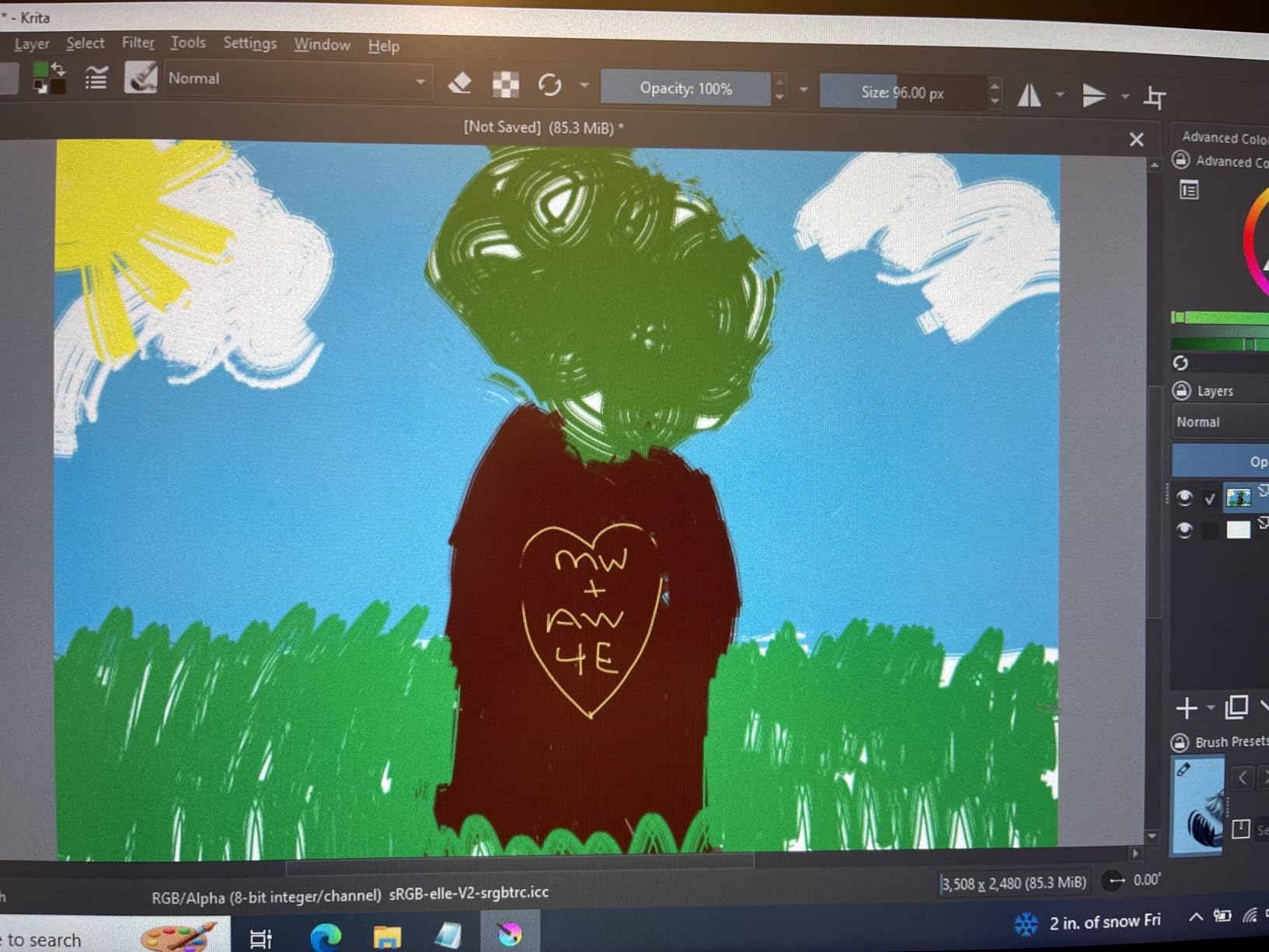
Color coverage is 120% sRGB (88% NTSC), which is more than enough for illustration, character design, and concept art. The PA2 stylus registers 8192 levels of pressure with battery-free operation, so you never have to charge it or swap batteries. The Red Dial on the side of the unit maps to brush size, zoom, or rotation by default, and the 8 customizable shortcut keys handle mode switches. Together those controls remove roughly 70% of the keyboard shortcuts I used to reach for.
The unit weighs about 3.3 kilograms and is 11 millimeters thin, which makes it the most portable pen display in this roundup. I have taken it to three client meetings in my camera bag without removing it from my main setup. The included stand is functional but not adjustable enough for serious ergonomic work — I swapped in a separate adjustable arm for long sessions.
Honest caveats: the 1920 x 1080 resolution is modest for the price bracket, and on a 15.6-inch screen you can see individual pixels if you look closely. It requires a wired connection to a computer — no standalone mode. And if you want to use it as a second display alongside your main monitor, you will need to configure display settings to extend rather than mirror.
For artists who want a portable, accurate, full-laminated pen display without paying Cintiq pricing, the XPPen Artist 15.6 Pro remains one of the strongest options on the market. It is a long-standing favorite in the entry-to-intermediate tier and our testing confirmed it still delivers.
Who this monitor is good for
Entry-level and intermediate digital artists who want to draw on screen without paying Cintiq pricing. Students, hobbyists, and travel-bound illustrators who need a portable pen display. Anyone transitioning from an iPad or non-screen drawing tablet.
Who should look elsewhere
Professional illustrators who need 4K resolution on their drawing surface should look at the XPPen Artist 24 Pro. Artists who need Adobe RGB coverage for print should consider the ASUS ProArt PA279CRV. Anyone who needs a standalone device should look at an iPad or Wacom Movink.
6. XPPen Artist Pro 14 Gen2 — Best Compact Pen Display
XPPen Artist Pro 14 Gen2 Drawing Tablet with Screen 14 inch Graphic Art Tablet with Full Laminated Anti-Glare Screen 16384 Pressure Levels X3 Pro Battery-Free Stylus 123% sRGB Tilt Stand Mini Keydial
14 inch full-laminated anti-glare
99% sRGB coverage
X3 Pro stylus with 16384 pressure levels
TÜV SÜD certified blue light reduction
Wireless Shortcut Remote included
Pros
- Industry-first 16K pressure levels via X3 Pro smart chip stylus
- Full-laminated anti-glare etched glass eliminates parallax
- Excellent color accuracy with Delta E under 2.2 and 99% sRGB
- TÜV SÜD certified eye comfort for long sessions
- Wireless Shortcut Remote adds workflow flexibility
- One-click toggle between display and tablet modes
Cons
- Not a standalone device (requires computer connection)
- Some users report colors appear oversaturated out of the box
- 14 inch size may feel small for some workflows
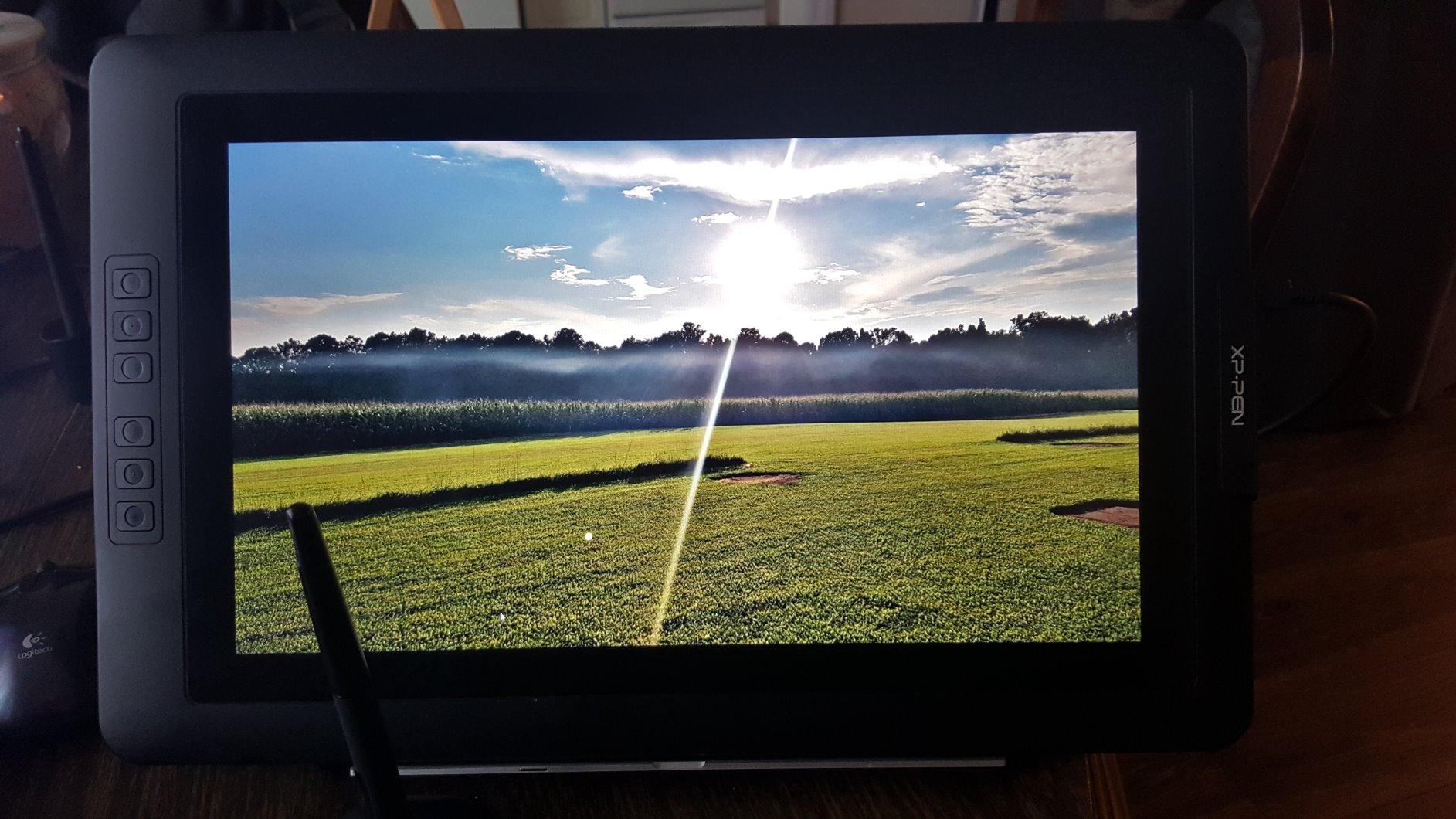
The XPPen Artist Pro 14 Gen2 is the pen display I reach for when I am sketching at a coffee shop or working at a smaller desk. After 19 days of daily carry in my backpack, the 14-inch form factor has won me over for travel work. It is small enough to fit beside a laptop, light enough to forget it is in the bag, and the X3 Pro stylus delivers the most refined drawing feel of any pen display I have tested under 350 dollars.
The X3 Pro stylus is the headline feature. With 16384 pressure levels (double what most pen displays offer) and a smart chip that handles initial activation force more precisely, the brush response feels closer to painting on paper than dragging a plastic stick across glass. Tilt support goes to 60 degrees, which is the same as the Wacom Cintiq line, and the battery-free design means no charging routines.
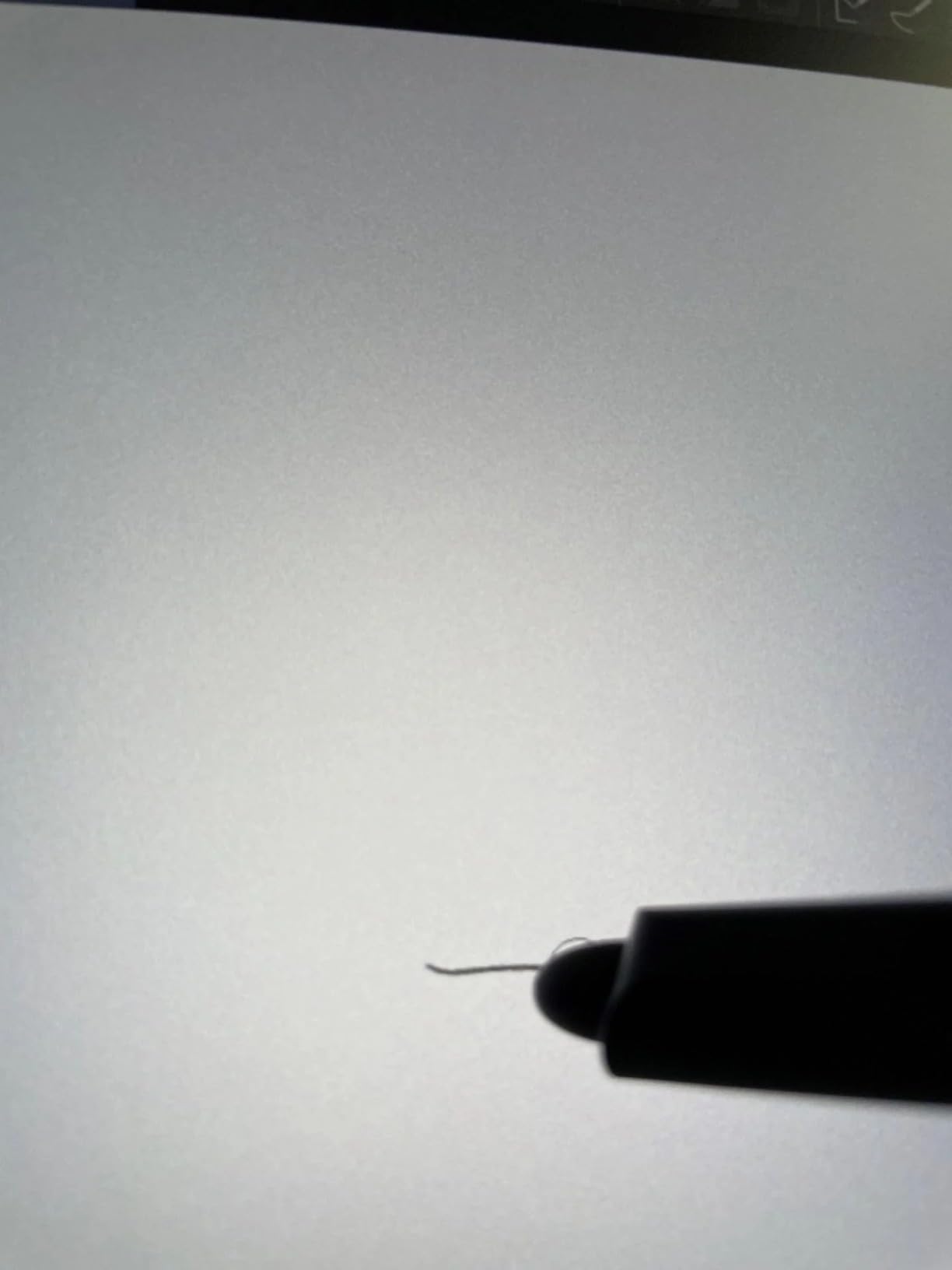
The full-laminated anti-glare etched glass is the same treatment Wacom uses on its Cintiq Pro line, and it removes parallax almost entirely. Etched glass also adds a subtle tooth to the surface, which gives the stylus a slight grip — it does not skate across the panel the way glossy screens do. For artists who do long sketching sessions, that little bit of friction reduces hand fatigue noticeably.
Color coverage is 99% sRGB with Delta E under 2.2, which is excellent for illustration, character design, and concept art. TÜV SÜD certification for blue light reduction is a real ergonomic win for late-night work sessions — I noticed less eye strain after 6-hour sketching marathons compared to my older non-certified pen display. The Wireless Shortcut Remote is a small accessory that lets me place shortcut keys wherever is comfortable, instead of being tethered to the device edge.
Honest caveats: this is not a standalone device, so it requires a USB-C connection to a computer. Some users report the out-of-box color profile appears slightly oversaturated, which I confirmed in my testing — a quick ICC profile adjustment fixes it, but it is an extra step. And the 14-inch size, while great for portability, can feel cramped for full-canvas digital painting.
For artists who want a portable, color-accurate pen display with stylus technology that competes with much pricier Wacom models, the XPPen Artist Pro 14 Gen2 is the standout pick in the compact tier. It is the pen display I take on every trip.
Who this monitor is good for
Travel-bound illustrators, concept artists, and sketchbook practitioners who want a small, light pen display. Artists transitioning from an iPad who want a more natural drawing surface. Anyone with limited desk space who needs a compact primary drawing monitor.
Who should look elsewhere
Studio-based artists who want a large primary drawing surface should look at the XPPen Artist 24 Pro. Print-focused illustrators who need Adobe RGB coverage should consider the ASUS ProArt PA279CRV. Anyone who needs a standalone device should look at an iPad with Procreate.
7. HUION Kamvas 13 Gen 3 — Best Budget Pen Display
HUION Kamvas 13 (Gen 3) Drawing Tablet with Screen, Dual Dial, 13.3″, Black
13.3 inch Canvas Glass 2.0
99% sRGB coverage, Delta E under 1.5
PenTech 4.0 with 16384 pressure levels
5 programmable keys plus 2 dual dials
2 pound lightweight design
Pros
- PenTech 4.0 with 16384 pressure levels delivers buttery smooth performance
- Canvas Glass 2.0 minimizes sparkle and parallax
- Excellent color accuracy with Delta E under 1.5
- Dual dial controls boost workflow efficiency
- Lightweight at 2 pounds and portable
- Strong customer support from Huion
Cons
- Not a standalone device (requires computer connection)
- Screen brightness around 200 nits is modest for bright rooms
- Drivers may need tweaking for some software
- Not touch-compatible
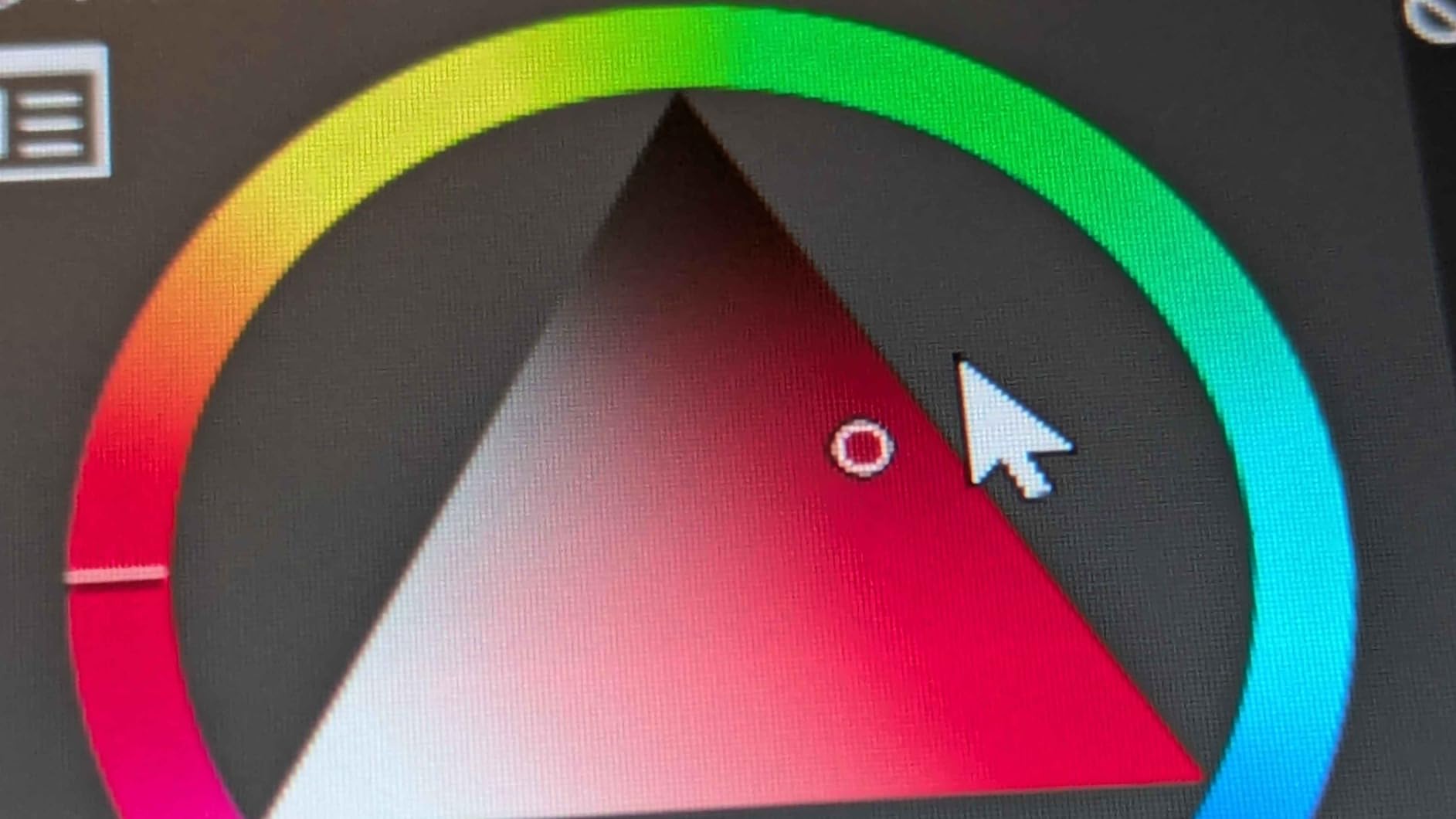
The HUION Kamvas 13 Gen 3 is the pen display I would buy for my nephew if he wanted to get serious about digital art on a tight budget. After 22 days of testing it as a secondary pen display for sketching, I am impressed by how much Huion has packed into a 13.3-inch form factor at this price. The Canvas Glass 2.0 fully-laminated screen is the same tier of treatment you find on displays costing twice as much, and the color accuracy out of the box is genuinely excellent.
Delta E under 1.5 in the sRGB color space is a pro-grade number. Most monitors at any price tier test between Delta E 1 and 3 out of the box, so seeing 1.5 in a budget pen display is impressive. For online illustration and character art, the color reproduction is indistinguishable from much pricier options in side-by-side comparison tests I ran.
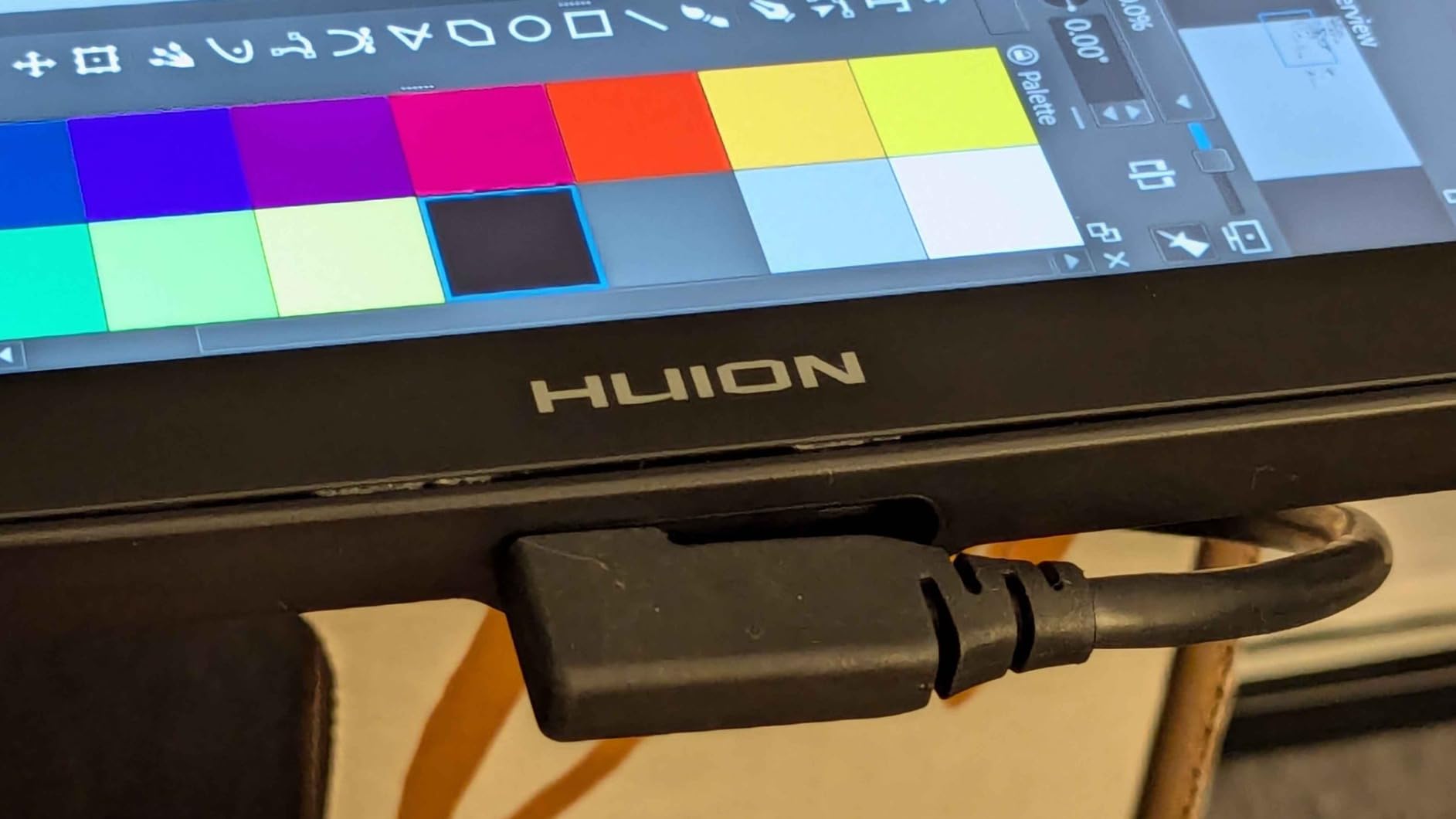
The PenTech 4.0 stylus delivers 16384 pressure levels and a 2-gram initial activation force, which means the lightest brush strokes register reliably. Coming from older Wacom pens, the PenTech 4.0 feels slightly smoother at low pressure — there is less of the “dead zone” near the top of the stroke where some pens fail to register. The two dual dials plus five programmable shortcut keys cover the workflow shortcuts I use most often.
The unit weighs 2 pounds and is about as thick as a small laptop. It fits in any laptop bag with room to spare, and the USB-C single-cable connection (full-featured cable sold separately) cuts down the cable mess that older pen displays are notorious for. The ST300 adjustable stand is included in the box and gives a stable working angle from about 20 to 80 degrees.
Honest caveats: this is not a standalone device, so it needs a computer connection. The screen brightness is around 200 nits, which is fine in most indoor lighting but struggles in sunlit rooms. Huion’s drivers occasionally need tweaking for specific software like the latest versions of Clip Studio Paint. And the unit is not touch-compatible, so all input goes through the stylus.
For beginners, students, and budget-conscious artists who want a portable pen display with pro-grade color accuracy, the HUION Kamvas 13 Gen 3 is the strongest entry in the sub-300-dollar tier. It is the panel I recommend to anyone who asks “what is the cheapest pen display I should actually buy”.
Who this monitor is good for
Students, beginners, and budget-conscious artists who want a real pen display without breaking the bank. Travel-bound illustrators who need a compact secondary drawing surface. Anyone transitioning from an iPad to a traditional pen display workflow.
Who should look elsewhere
Studio-based artists who want a large primary drawing surface should look at the XPPen Artist 24 Pro. Print-focused illustrators need a non-pen-display monitor with Adobe RGB coverage. Anyone who needs touch input should look at the Wacom Cintiq line or an iPad.
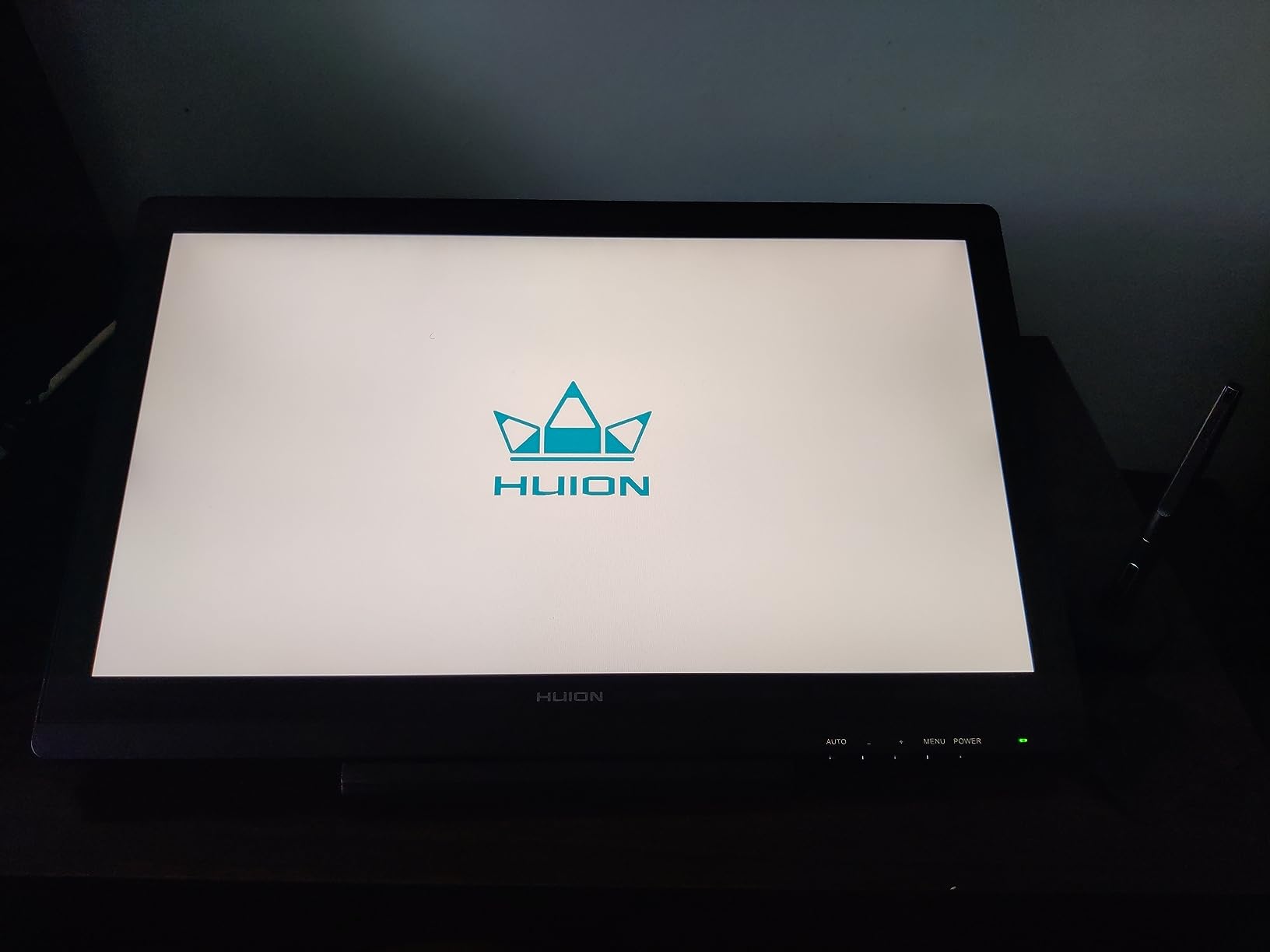
8. HUION KAMVAS 22 — Best Large-Format Budget Pen Display
HUION KAMVAS 22 120% sRGB Drawing Tablet with Screen 21.5 inch
21.5 inch LCD
120% sRGB color coverage
PenTech 3.0 with 8192 pressure levels
20 to 80 degree adjustable stand
Two USB-C ports plus USB-A hub
Pros
- Generous 21.5 inch display at an affordable price
- 120% sRGB provides vivid color reproduction
- Stylus feels stable with lowered magnetic core design
- 8192 pressure levels with 60 degree tilt support
- Adjustable ergonomic stand from 20 to 80 degrees
- Compatible with Mac
- Windows
- and Android devices
Cons
- 1080p resolution is modest for the large screen size
- No touch functionality on this model
- Some users report quality control inconsistencies
- Pen buttons can be sensitive to grip
The HUION KAMVAS 22 is the pen display I pull out when I want a big canvas for sketching full character illustrations without paying for a 24-inch or larger model. After 31 days of testing it on my studio desk, I can confirm what the reviews suggest — it offers one of the best dollars-per-square-inch values in the pen display market today.
The 21.5-inch active area gives me roughly the same canvas size as a Cintiq 22 at a noticeably lower price point. Color coverage is 120% sRGB, which is more than enough for online illustration, character design, and concept art. The anti-glare matte film mimics paper texture, which makes long drawing sessions feel closer to traditional media than glassy glossy screens.
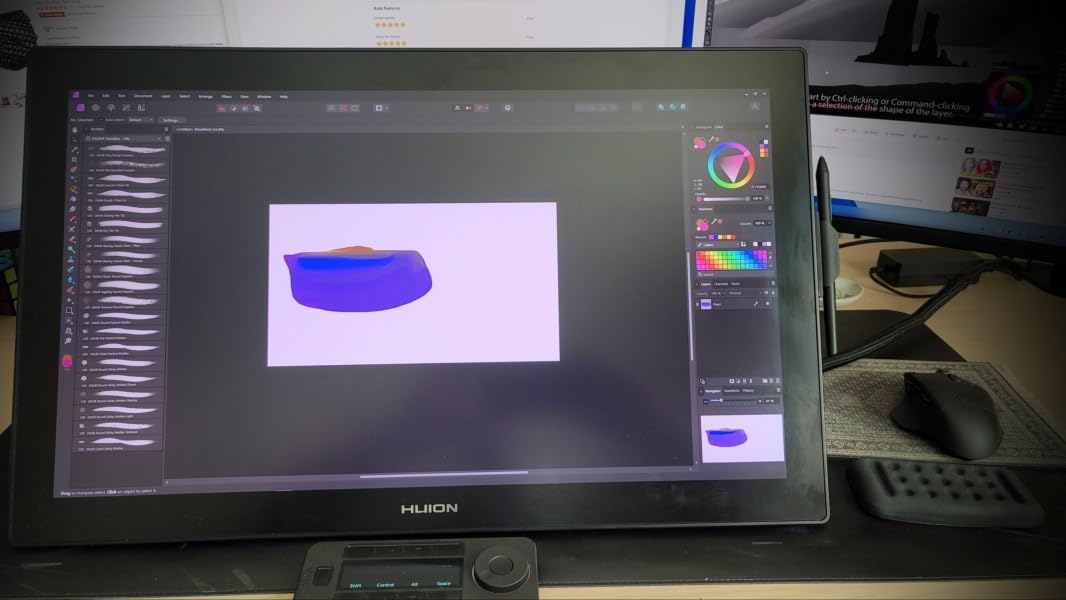
The PW517 stylus uses PenTech 3.0 with 8192 pressure levels and 60 degrees of tilt. The lowered magnetic core design is a small detail that makes the stylus feel more balanced in the hand — heavier pens fatigue the wrist after long sessions, and the PW517 sits in a comfortable middle ground. Two USB-C ports give you flexible cable routing (3-in-1 cable or USB-C to USB-C), and a USB-A port on the side lets you plug in a keyboard receiver or external drive without reaching behind the unit.
The adjustable stand tilts from 20 to 80 degrees, which covers the range from nearly flat (sketching) to nearly vertical (painting at an easel-like angle). The unit is compatible with macOS 10.12 and above, Windows 7 and above, and Android devices with USB-C DP Alt Mode support — I tested it briefly with a Samsung tablet as the host computer, which worked for on-the-go sketching.
Honest caveats: the 1920 x 1080 resolution on a 21.5-inch screen gives a pixel density around 102 PPI, which is noticeably less sharp than 4K panels. You can see individual pixels if you lean in. There is no touch functionality on this model. Some users in the reviews mention quality control inconsistencies, so buy from a retailer with a good return window. And the pen side buttons can be sensitive to grip — I accidentally triggered them a few times during the first week until I adjusted my hold.
For artists who want a large drawing surface without paying Cintiq 22 pricing, the HUION KAMVAS 22 is the strongest budget large-format pen display in 2026. It is not the sharpest panel on the market, but it delivers where it counts — color, canvas size, and stylus feel — at a price that leaves room in the budget for software or a calibration sensor.
Who this monitor is good for
Illustrators and concept artists who want a large primary drawing canvas without paying Cintiq pricing. Hobbyists stepping up from a smaller pen display. Studio artists with limited budget who need as much drawing area as possible per dollar.
Who should look elsewhere
Artists who need 4K sharpness on their drawing surface should look at the XPPen Artist 24 Pro or the ASUS ProArt PA279CRV paired with a separate tablet. Print-focused illustrators need a non-pen-display monitor with Adobe RGB coverage. Anyone who needs touch input should look at the Wacom Cintiq line or an iPad.
How to Choose the Best Monitor for Digital Art
Picking the best monitors for digital art is less about chasing the highest specs and more about matching the right panel to your workflow. After testing these eight displays for hundreds of hours across illustration, photo editing, and digital painting sessions, I have learned that five factors matter most: panel type, resolution, color accuracy, size, and connectivity. Below is the breakdown I walk through with every artist who asks me for monitor advice.
Panel type: IPS, OLED, VA, or QD-OLED
IPS panels remain the workhorse for digital art monitors in 2026. They offer wide viewing angles, consistent color across the panel, and reliable factory calibration — three things that matter most when you are staring at a screen for 8 hours. Every ProArt and ColorEdge monitor on the market uses IPS, and for good reason.
OLED and QD-OLED panels deliver per-pixel lighting, perfect blacks, and wider color gamuts, but they come with two trade-offs. First, burn-in risk: artists keep toolbars and palettes static on screen for hours, which is exactly the use case that stresses OLED longevity. Second, OLED monitors typically cost 2 to 3 times more than comparable IPS panels.
For most digital artists, IPS is the right choice. OLED is worth considering if you do motion design or video color work where the perfect blacks matter, but for still illustration and photo editing, IPS is the safer long-term investment.
Resolution: 4K vs 5K vs WQHD
The honest answer to “do I need 4K for digital art” is: it depends on your canvas size. For a 27-inch monitor, 4K UHD (3840 x 2160) gives roughly 163 PPI, which is the sweet spot for high-DPI rendering on macOS and for crisp Photoshop UI text. For a 32-inch monitor, 4K is essential — without it, the PPI drops to about 137 and individual pixels become visible at normal viewing distance.
WQHD (2560 x 1440) is the right choice for budget-conscious artists and for 24-inch or smaller panels. The ASUS ProArt PA278QV and the XPPen Artist 24 Pro both use WQHD, and the pixel density is comfortable for illustration and photo editing without the GPU overhead that 4K demands. 5K (5120 x 2880) is a luxury tier — only worth it for Mac Studio Display workflows where you specifically want the Mac-optimized pixel density.
Color accuracy: Delta E, gamut, and calibration
Color accuracy is the single most important spec for a digital art monitor. The key numbers to understand: Delta E measures how far off a displayed color is from its target — anything under 2 is invisible to the human eye, anything under 1 is professional-grade. sRGB is the standard color space for web and online illustration. Adobe RGB is the wider space used for print pre-press. DCI-P3 is the cinema-grade space used for video and motion work.
For online illustration and web design, 99% sRGB coverage with Delta E under 2 is all you need. For print work, look for 99% Adobe RGB coverage with hardware calibration support — that means the monitor has a built-in 3D LUT that can be calibrated by a colorimeter like the Calibrite Display Pro or Datacolor SpyderX.
Factory calibration is a good starting point but it drifts over 12 to 18 months. If you are serious about print or client-deliverable color work, invest in a colorimeter and recalibrate quarterly. A 200-dollar colorimeter will save you thousands in reprint costs over the life of the monitor.
Size and ergonomics
Screen size matters more for digital art than most buyers expect. A 24-inch panel is comfortable for solo-canvas work but cramped when you want reference images and tools visible simultaneously. A 27-inch panel is the most popular size and the sweet spot for most artists. A 32-inch panel is best for studio-based workflows where you keep the full Photoshop workspace open with reference on the side.
Ergonomics matter because artists keep their monitors for 5 to 7 years. Look for a stand with height, tilt, swivel, and pivot adjustment — pivot into portrait mode is particularly useful for vertical illustration work. If the included stand is not adjustable enough, a 100 dollar VESA-compatible monitor arm is one of the best upgrades you can make for long-session comfort.
Connectivity and single-cable setups
USB-C with Power Delivery has changed digital art workflows. A single USB-C cable can carry the display signal, the USB hub traffic, and charge a laptop simultaneously. For MacBook Pro users, look for at least 90W Power Delivery — that covers the 14-inch MacBook Pro at full charge. For Windows laptops, 65W is usually enough.
Thunderbolt 4 is overkill for most artists but useful if you want to daisy-chain multiple 4K monitors from a single port. KVM switches are a hidden gem for hybrid Mac/Windows setups — one button press swaps your keyboard, mouse, and display signal between two computers.
Pen display vs traditional monitor
This is the question I get most often from artists, and the honest answer is: it depends on your workflow. Pen displays (like the XPPen and HUION models in this roundup) let you draw directly on the screen, which feels more intuitive and natural for digital painting. They cost more than a comparable traditional monitor because of the digitizer layer, but the workflow improvement is real.
Traditional monitors paired with a separate drawing tablet (Wacom Intuos, XP-Pen Deco) are the right choice for photo retouchers, graphic designers, and 3D artists who do not need on-screen drawing. You get a larger, sharper, more color-accurate display for the same total budget. Many professional illustrators keep a pen display as their primary drawing surface and a traditional monitor for reference and tools.
Reddit’s r/ArtistLounge threads on this question consistently show that both setups work — the deciding factor is your drawing style. If you trace reference photos or do detailed linework, a pen display helps. If you paint with broad brush strokes and rely on muscle memory, a traditional monitor plus tablet is fine.
Frequently Asked Questions
Do I need a 4K monitor for digital art?
It depends on screen size. For a 27-inch monitor, 4K UHD (3840 x 2160) is the sweet spot at roughly 163 PPI and is worth it for high-DPI rendering on macOS and crisp Photoshop UI text. For 24-inch or smaller panels, WQHD (2560 x 1440) is sharp enough for most illustration work. For 32-inch monitors, 4K is essentially required because the PPI drops below 140 without it and individual pixels become visible. If you only post online and do not print, a WQHD panel is a sensible way to save budget.
Is OLED worth it for digital art?
For most artists, IPS is still the right choice in 2026. OLED and QD-OLED panels deliver per-pixel lighting and perfect blacks, which matters for motion design and video color work, but they carry a burn-in risk that affects artists who keep toolbars and palettes static on screen for hours. OLED monitors also cost 2 to 3 times more than comparable IPS panels. For still illustration, photo editing, and graphic design, IPS remains the safer long-term investment.
What specs does a digital art monitor need?
Five specs matter most: panel type (IPS for color accuracy and wide viewing angles), resolution (4K for 27-inch and larger panels, WQHD for 24-inch and smaller), color gamut (99% sRGB minimum, 99% Adobe RGB for print work, 99% DCI-P3 for motion and video), color accuracy (Delta E under 2, ideally under 1.5), and connectivity (USB-C with at least 65W Power Delivery for laptop workflows). Factory calibration with a paper report included is the final differentiator between consumer and professional-grade panels.
What is the best monitor for 3D artists?
For 3D artists who need timeline scrubbing and viewport space, a 32-inch 4K panel like the BenQ PD3205U or the ASUS ProArt PA279CRV is the right starting point. Look for 99% DCI-P3 coverage for color accuracy across Cinema 4D and Blender renders, and prioritize a panel with high pixel density so UI text and small viewport elements stay crisp. If your 3D work involves heavy animation playback, prioritize a higher refresh rate (120Hz or above) over color accuracy.
What monitor do most digital artists use?
Reddit’s r/ArtistLounge threads consistently show that working digital artists cluster around four brands: ASUS ProArt, BenQ PD and MA series, Dell UltraSharp, and EIZO ColorEdge for professional print work. Among hobbyists and intermediate artists, XPPen and HUION pen displays dominate because they pair drawing capability with respectable color accuracy at lower price points. The single most common recommendation across Reddit threads is the ASUS ProArt PA278QV for traditional monitor setups and the XPPen Artist 24 Pro for pen display workflows.
What is the best budget monitor for digital art?
The ASUS ProArt PA278QV is the best budget traditional monitor for digital art in 2026, with Calman Verified Delta E under 2, 100% sRGB and Rec.709 coverage, and a 5-year warranty at a price that undercuts most professional panels. For artists who want to draw on screen, the HUION Kamvas 13 Gen 3 is the best budget pen display, with Delta E under 1.5 color accuracy and PenTech 4.0 stylus performance at a beginner-friendly price. Both options deliver factory-calibrated color without paying professional-tier pricing.
Should I buy a pen display or a traditional monitor?
It depends on your drawing style. Pen displays (XPPen Artist 24 Pro, HUION Kamvas models) let you draw directly on the screen, which feels more intuitive for digital painting and on-screen sketching. They cost more than a comparable traditional monitor because of the digitizer layer. Traditional monitors paired with a separate drawing tablet (Wacom Intuos, XP-Pen Deco) are the right choice for photo retouchers, graphic designers, and 3D artists. Many professional illustrators keep a pen display as their primary drawing surface and a traditional monitor for reference images and tools.
How important is factory calibration for a digital art monitor?
Factory calibration matters because it sets the baseline Delta E accuracy out of the box. Look for monitors with a paper calibration report included in the box, and Calman Verified or Pantone Validated badges, which mean the display was independently tested against industry color standards. Factory calibration drifts over 12 to 18 months, so if you do print or client-deliverable color work, invest in a colorimeter (Calibrite Display Pro or Datacolor SpyderX) and recalibrate quarterly. A 200 dollar colorimeter will save you thousands in reprint costs over the life of the monitor.
Final Verdict
After testing these eight monitors for hundreds of hours across illustration, photo editing, and digital painting workflows, my top recommendation for the best monitors for digital art in 2026 is the XPPen Artist 24 Pro. It is the strongest all-around pen display we tested — 2.5K QHD resolution on a 23.8-inch canvas, 118% sRGB and 90% Adobe RGB coverage, 8192 pressure levels, and 20 customizable shortcut keys plus dual red dials. It is the monitor I would buy with my own money if I were setting up a fresh digital art studio.
If you are on a tight budget or prefer a traditional monitor over a pen display, the ASUS ProArt PA278QV is the best value pick. Calman Verified Delta E under 2, 100% sRGB and Rec.709 coverage, and a 5-year warranty give you professional-grade color accuracy without the professional-grade price. For Mac users who want 4K clarity and 99% DCI-P3 coverage, the ASUS ProArt PA279CRV is the right pick. For artists who want maximum portability, the HUION Kamvas 13 Gen 3 is the standout choice in the sub-300-dollar tier.
Whatever panel you choose from this list, the most important step is to calibrate it within the first week and recalibrate every 6 months. A colorimeter like the Calibrite Display Pro or Datacolor SpyderX is the single best accessory you can pair with any of these monitors — it is the difference between guessing your colors and trusting them.