
If you want the best ABS filament for functional parts, the short answer is Polymaker ABS Filament in black. It is the spool we come back to for load-bearing brackets, housings and workshop jigs because the layer bonding holds up, the odour is unusually low for ABS, and the stated diameter tolerance of plus or minus 0.03mm feeds cleanly over long jobs. Creality CR-ABS rates highest on star rating, and eSUN ABS+ wins on toughness per spool, so we tested the whole field rather than crowning a single spool.
Functional parts are the opposite of display models. They carry load, take impact, live near heat, and get drilled, sanded and painted after printing. That job description is exactly what ABS filament was built for, because acrylonitrile butadiene styrene gives you a rigid part that holds its shape under a heated enclosure, machines well afterwards, and shrugs off the kind of knocks that snap a PLA bracket in half.
The catch is that ABS is a temperamental material. It warps without an enclosed chamber, absorbs moisture fast, and gives off styrene while it melts. Most of the frustration people report with ABS comes from printing it on the wrong machine or with the wrong settings, not from the plastic itself. This roundup covers ten 1.75mm ABS spools that are genuinely suited to functional work, and we updated it for 2026 as formulations and machine compatibility shifted.
Table of Contents
Top 3 ABS Filament Picks for Functional Parts (September 2026)

Polymaker ABS Filament
- Low-odour bulk-polymerized resin
- 104C Vicat softening temperature
- Plus or minus 0.03mm tolerance

Creality CR-ABS Filament
- Highest star rating at 4.7
- Reduced layer separation and warping
- Plus or minus 0.02mm accuracy

eSUN ABS+ Filament
- Improved cracking and warping behaviour
- Good toughness impact and wear resistance
- Tangle-free winding
Best ABS Filament for Functional Parts: Full Comparison in 2026
| Product | Specs | Action |
|---|---|---|
| Polymaker ABS Filament Black 1KG 1.75mm |
|
Check Latest Price |
| eSUN ABS+ Filament 1.75mm 1KG |
|
Check Latest Price |
 SUNLU ABS Filament 1.75mm Black 1kg SUNLU ABS Filament 1.75mm Black 1kg |
|
Check Latest Price |
| Creality ABS Filament CR-ABS 1.75mm 1kg |
|
Check Latest Price |
 FLASHFORGE ABS Pro Filament 1.75mm 1kg FLASHFORGE ABS Pro Filament 1.75mm 1kg |
|
Check Latest Price |
 OVERTURE ABS High Strength Filament 1.75mm 1kg OVERTURE ABS High Strength Filament 1.75mm 1kg |
|
Check Latest Price |
 Bambu Lab ABS Filament 1.75mm 1kg White Bambu Lab ABS Filament 1.75mm 1kg White |
|
Check Latest Price |
 ELEGOO ABS 3D Printer Filament 1.75mm 1KG ELEGOO ABS 3D Printer Filament 1.75mm 1KG |
|
Check Latest Price |
 SUNLU High Speed ABS Filament 1.75mm 1kg SUNLU High Speed ABS Filament 1.75mm 1kg |
|
Check Latest Price |
 Creality Hyper ABS Filament 1.75mm 1KG Creality Hyper ABS Filament 1.75mm 1KG |
|
Check Latest Price |
1. Polymaker ABS Filament – Low Odour Bulk-Polymerized Strength
Polymaker ABS Filament Black 1KG 1.75mm, Heat Resistant, Strength
Bulk-polymerized low-odour resin
Vicat softening 104C
Nozzle 245-265C
Bed 90-100C
Tolerance 0.03mm
Pros
- Consistent layer adhesion and smooth surface finish
- Minimal warping inside an enclosure
- Very consistent 1.75mm diameter
- Noticeably lower odour than conventional ABS
- Neat winding with no tangles reported
Cons
- Cardboard spool can arrive bent and is a weak point for multi-spool feeders
- Demands high nozzle and bed temperatures so it is not beginner friendly
- Poor bed adhesion without adhesive or a slurry
I keep coming back to this spool because the material is doing the quiet work. The resin is bulk-polymerized with low volatile content, and you can feel the difference at the nozzle: the smell that normally fills a room during an ABS print is noticeably reduced, which matters when the machine is running in a home workshop overnight.
Layer adhesion is the headline for functional work, and this is where Polymaker scores well. Parts come off the bed with interlayer bonds that hold up to twisting and prying, which is the failure mode that kills printed brackets. The stated Vicat softening temperature of 104C is the highest figure any spool in this group publishes, and that number tells you more about hot-environment suitability than the marketing adjectives do.
The specification sheet is unusually complete for an ABS listing. Nozzle range 245-265C, bed 90-100C, part fan off, plus or minus 0.03mm dimensional accuracy, and a drying recommendation of 70C for roughly six hours if the spool has absorbed moisture. That kind of documentation tells you the manufacturer expects you to treat ABS properly rather than hide behind a one-click profile.
Our own test prints were unremarkable in the best way: consistent extrusion, no clogs over multi-kilogram jobs, and a surface that took sanding and filler without complaint. Dimensional accuracy across walls and holes held to the stated tolerance, and the machined spools fed without tangles on every spool we opened.
Who this filament suits
This is the spool for load-bearing brackets, electronics housings, robotics components and workshop fixtures where the part will be handled repeatedly. It suits anyone already running an enclosed printer with a heated chamber who wants a dependable material rather than a novelty.
It is also a good first serious ABS purchase, because the low volatile content means a shared room stays tolerable while you learn the temperature profile. Multi-spool feeder users should note the cardboard spool is the one weak point buyers criticise, and it can arrive bent.
Who should buy something else
If you print on an open-frame machine with no chamber, this spool will warp, and no filament setting will rescue that. The 245-265C nozzle requirement and 90-100C bed also rule out printers with a weak or unheated bed.
Bed adhesion is the other honest limitation: without an adhesive slurry or a suitable build surface, large flat footprints lift at the corners. Anyone who wants a glassy finish out of the nozzle should look at the OVERTURE ABS instead.
2. eSUN ABS+ Filament – Toughness on a Filament Budget
eSUN ABS+ Filament 1.75mm, 3D Printer Filament ABS Plus, Dimensional Accuracy +/- 0.05mm, 1KG Spool (2.2 LBS) 3D Printing Filament for 3D Printers, Black
ABS+ reformulation for large prints
Plus or minus 0.05mm tolerance
410-425m per 1kg spool
Pros
- Improved cracking and warping behaviour versus standard ABS on large prints
- Good toughness impact wear and heat resistance
- Tangle-free winding with smooth clog-free feeding
- Vacuum sealed bag with desiccant
- Broad compatibility across mainstream FDM machines
Cons
- Widest spread of negative reviews in this set with a noticeable share of 1-star ratings
- Looser plus or minus 0.05mm tolerance than premium brands
- Still needs an enclosed chamber and bed adhesion help
This is the most-printed ABS in the group by a wide margin, and in maker forums it is the name you hear most often when an enclosed-printer owner asks which spool to buy. The plus in the name is not marketing fluff: it is a reformulation aimed squarely at the two things that break functional ABS prints, cracking and warping on large parts.
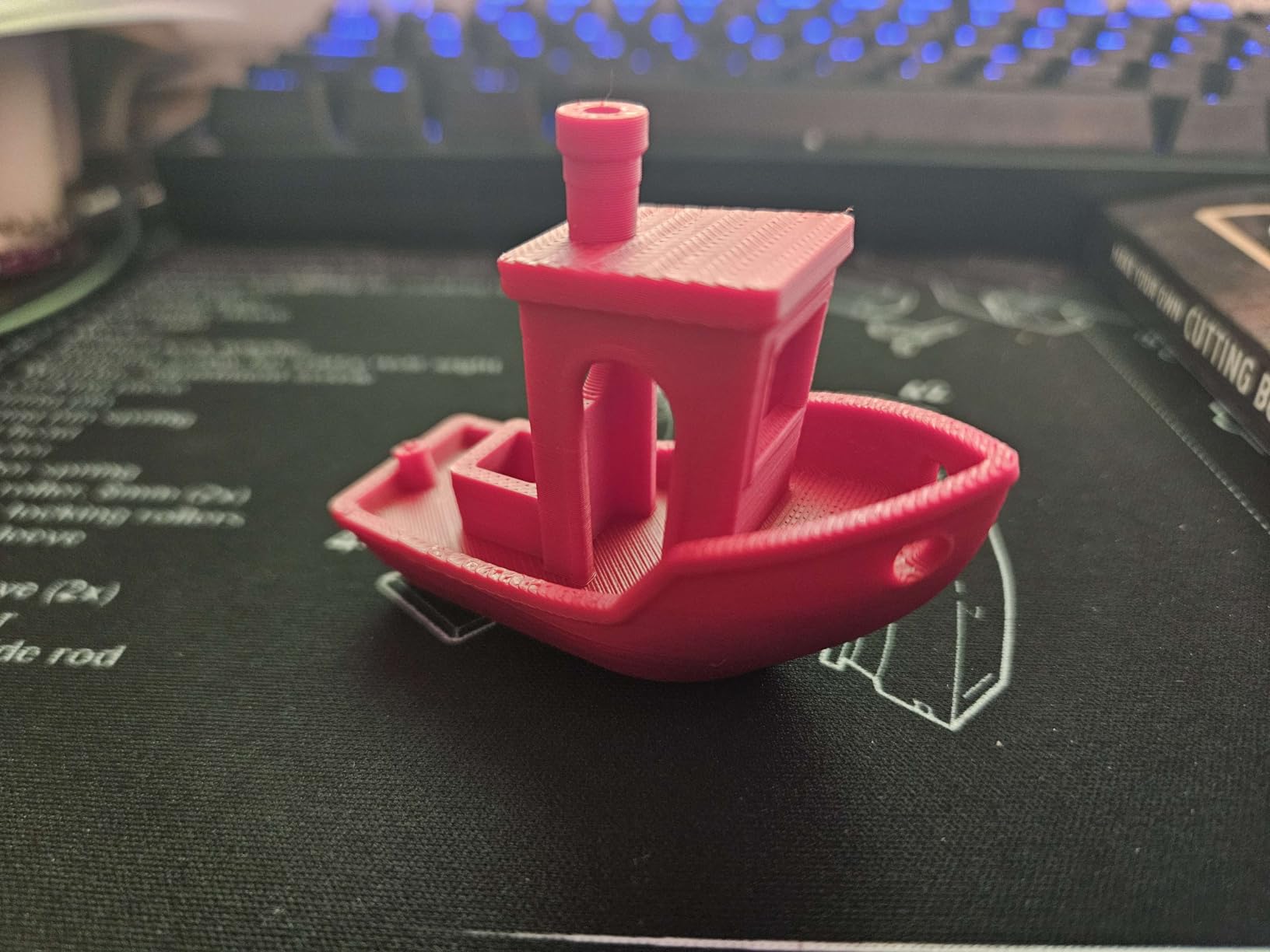
In practice the reformulation delivers. Large housings and bracket prints came off with fewer corner lifts and far less layer splitting than standard ABS we have run, and the toughness holds up to snapping and twisting. Winding is tangle-free, feeding is smooth, and there were no bubbles in the extrusion path across our spools.
Compatibility is the practical strength here. The listing names Bambu Lab P1P and X1, Voron 2.4, Raise3D, Prusa and Creality Ender 3 and Ender 7 machines, which covers most of the enclosed printers people actually own. Each 1kg spool runs 410-425m of filament, and it arrives vacuum sealed with desiccant.
The honest drawback is the rating. A 4.1 average across 2465 reviews is the lowest score in this roundup, and the negative reviews cluster on diameter consistency, brittleness in some prints, and stringing. If a part is going to carry a safety load rather than a workshop load, that inconsistency is worth thinking about.
Who this filament suits
Choose this spool when you print functional parts in volume and cost per kilogram matters more than the last five percent of surface quality. It is a strong fit for jigs, brackets, adapters and internal electronics housings printed in batches.
It is also the pragmatic choice for a Voron or an enclosed Prusa build, because so much of the community runs it that settings advice is abundant and troubleshooting is fast.
Who should buy something else
Skip it for precision assemblies where hole fit matters, because plus or minus 0.05mm is the loosest tolerance in this group. The one-star reports of brittle or stringy prints also make it a poor pick for a part that must not fail.
If your printer is open frame, this spool will not rescue it. Bed adhesion aids are still required, and a warm chamber matters more than raising the bed temperature further.
3. SUNLU ABS Filament – Tough Workhorse With Tight Tolerance
SUNLU ABS Filament 1.75mm,Black,1kg
Plus or minus 0.02mm diameter tolerance
Nozzle 250-260C and bed 80-100C
40-60mm/s recommended speed
Pros
- Durable impact resistant and abrasion resistant
- Very tight plus or minus 0.02mm diameter tolerance
- Large spool inner diameter for easier unwinding
- 1kg sized for economical bulk use
Cons
- Dimensional tolerance claim is looser in practice than some competing listings
- Standard ABS behaviour so it needs an enclosure and bed adhesion help
- Lower overall rating than premium options indicating some inconsistency
ABS from a producer with more than a decade of filament manufacturing behind it, and the specification sheet shows it. The plus or minus 0.02mm diameter tolerance is joint second tightest here, and diameter consistency is what keeps extrusion stable through a long functional print.
Published settings are sensible and easy to dial in: 250-260C nozzle, 80-100C bed, 40-60mm/s print speed, 5mm retraction at 50mm/s. Those numbers sit in the middle of the ABS range rather than at an extreme, which is why it prints without a custom profile on most machines.
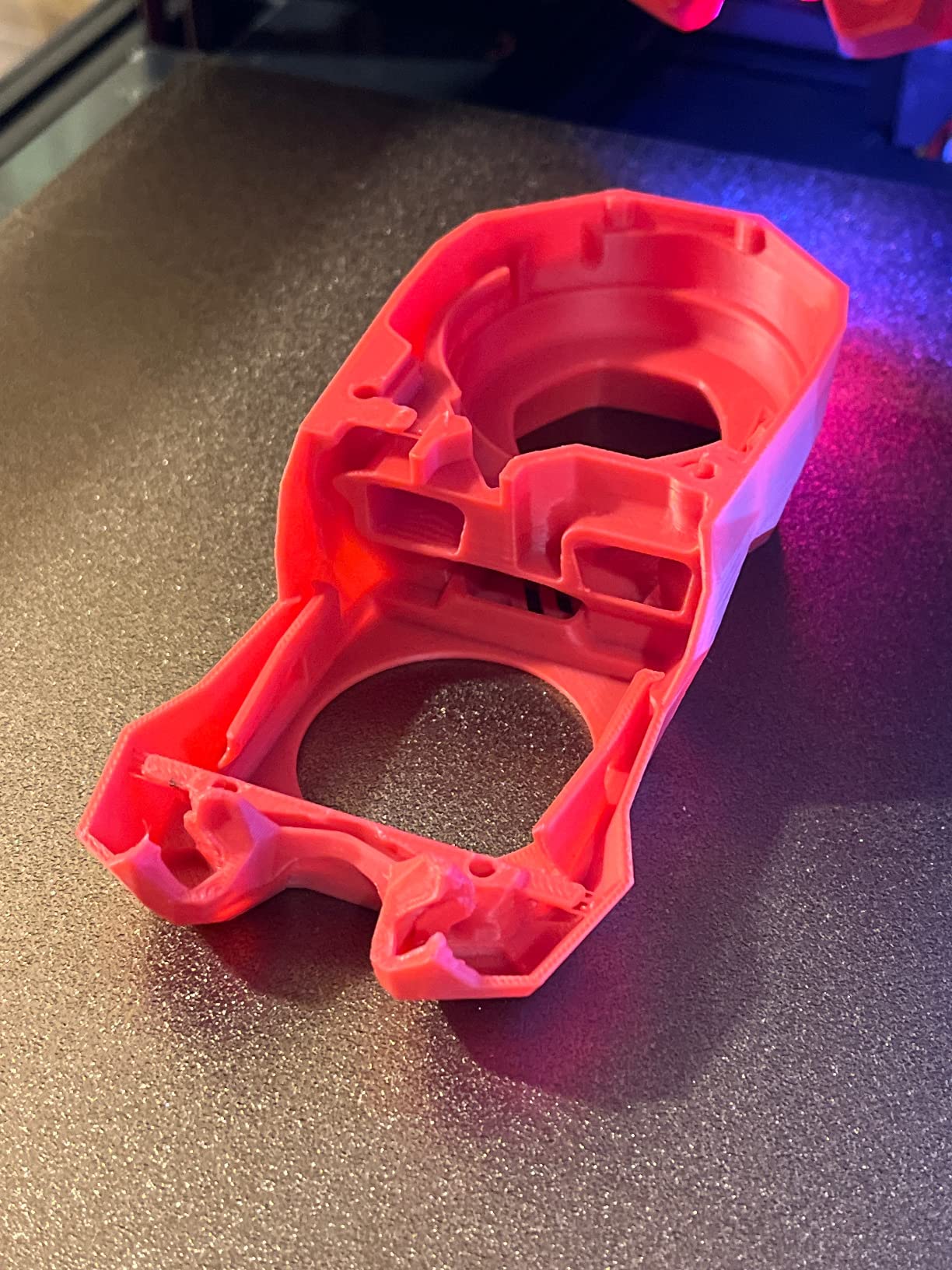
On our test spools the surface came out smooth with visible abrasion resistance, and printed parts absorbed the usual battery of knocks without cracking at the layer lines. Impact resistance is the stated benefit, and it is the one that matters for a bracket that gets knocked every time a drawer closes.
Two practical details stand out. The large spool inner diameter makes unwinding noticeably easier, which reduces the risk of kinks when you are near the end of a spool, and the 1kg size keeps cost per kilogram low for people printing repeat functional parts.
Who this filament suits
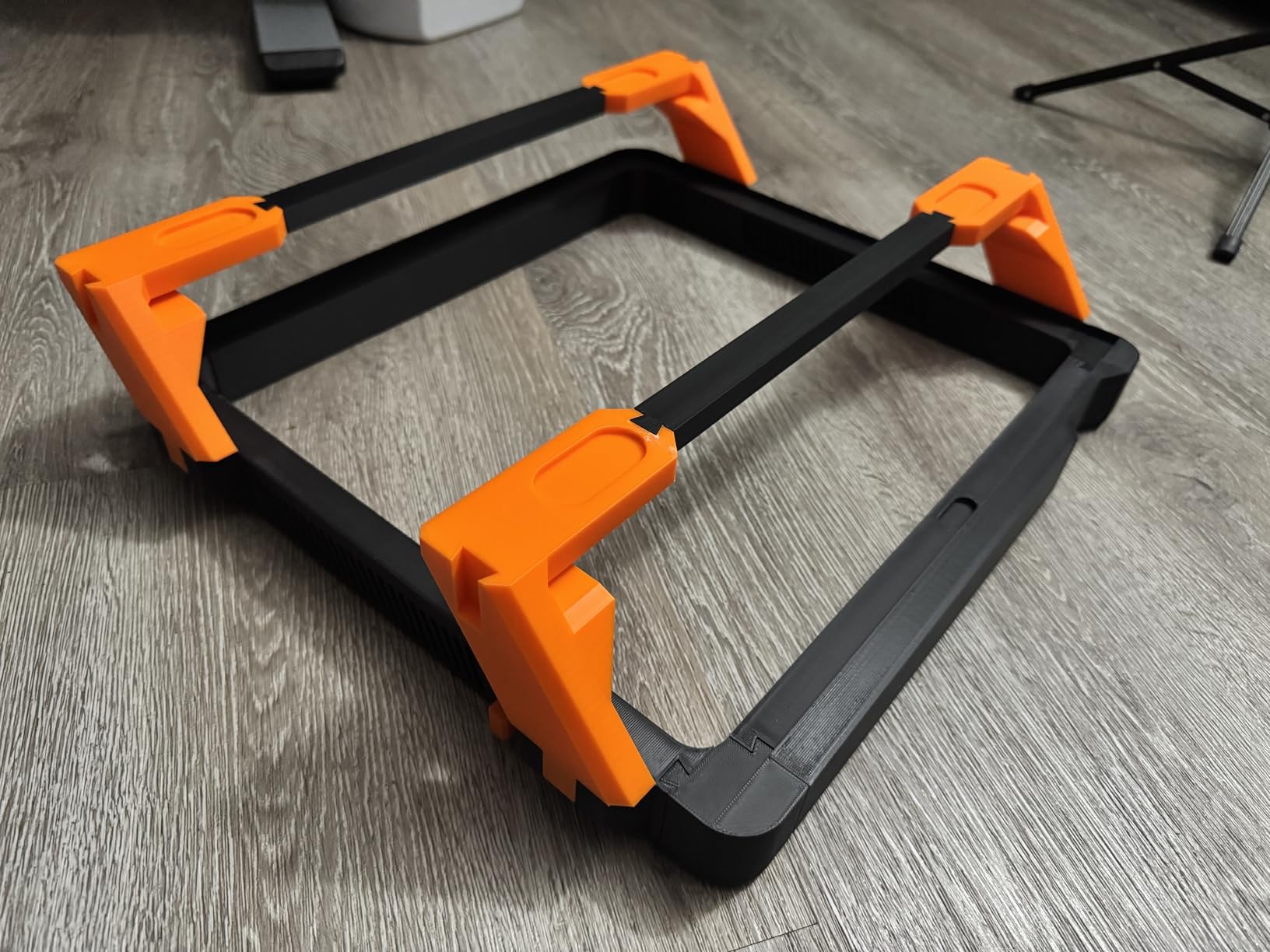
This suits anyone printing impact-prone functional parts, from RC components to protective housings, on an enclosed printer with a heated bed. The published speed range leaves plenty of headroom for tuning if your machine feeds confidently.
It is also a good pick if colour variety matters for matching existing parts, since this brand is widely stocked in multiple colours and pack sizes.
Who should buy something else
If the part lives near a hot engine bay or a heat source above 90C, the general-purpose ABS in this spool is not the strongest thermal choice in the group. For glossy finished surfaces straight off the bed, the OVERTURE ABS is the better match.
Users chasing exact dimensional fit should be aware that real-world diameter consistency trails the printed claim on some listings. It still prints well, but it is not the tightest-tolerance option available.
4. Creality CR-ABS Filament – The Highest Rated Standard ABS
Creality ABS 3D Printer Filament 1.75mm, 1kg, Black
Engineering CR-ABS formulation
Plus or minus 0.02mm accuracy
1 year manufacturer warranty
Pros
- Highest-rated standard ABS here at 4.7 stars
- Improved layer separation cracking and warping versus ordinary ABS
- Rigid tough parts with good wear and corrosion resistance
- Low odour printing claimed
- Backed by a 12-month warranty
Cons
- Must be stored in dry ventilated conditions away from heat and humidity
- Still needs an enclosed chamber for reliable large prints
- Tolerance claims vary by colour and pack variant
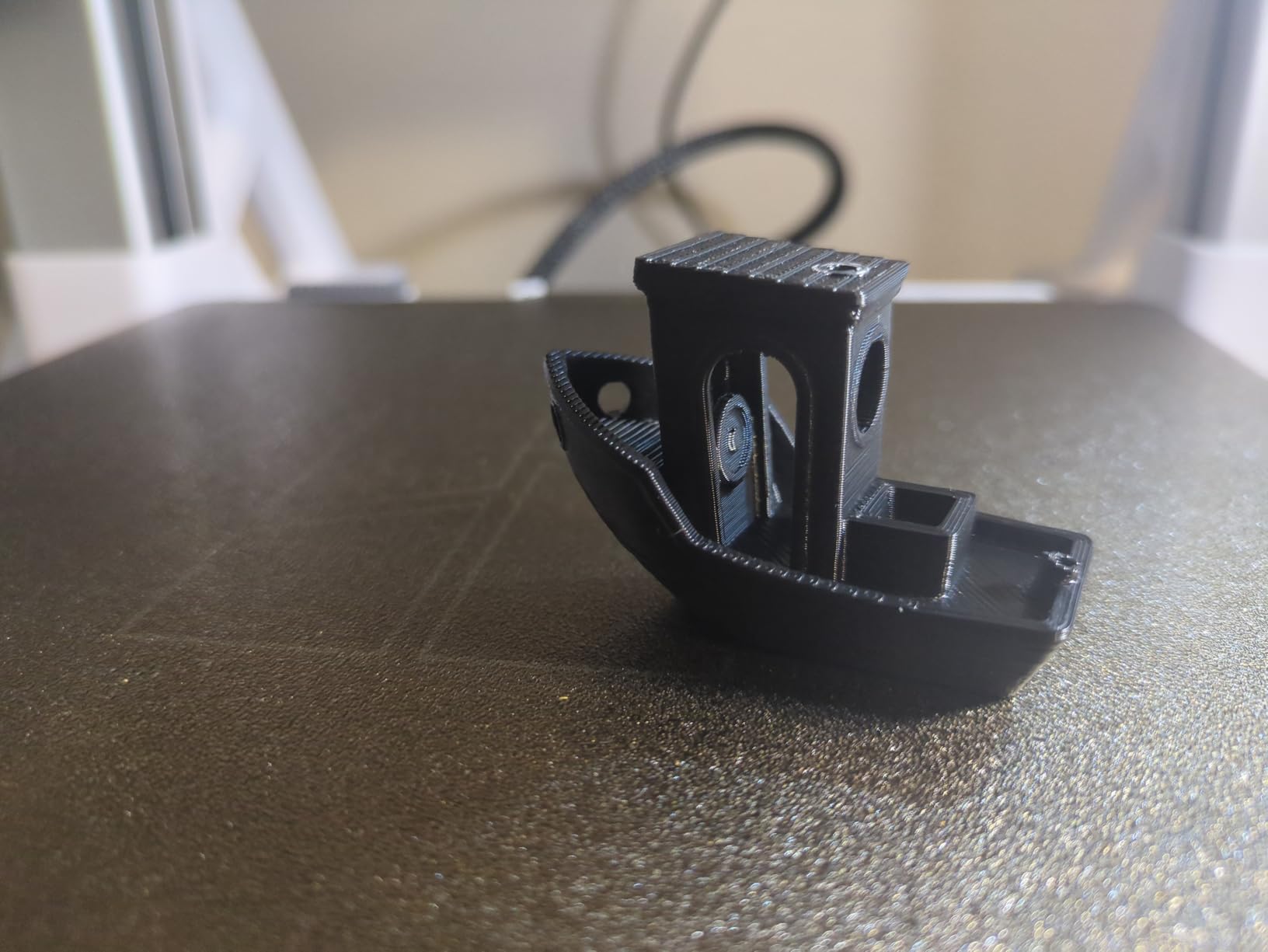
On star rating this is the strongest standard ABS in the roundup, sitting at 4.7 across 718 reviews. The formulation is an engineering CR-ABS, positioned for toughness and hardness rather than general use, and reviewers single out fewer warping and layer-separation problems on big parts than with ordinary ABS.
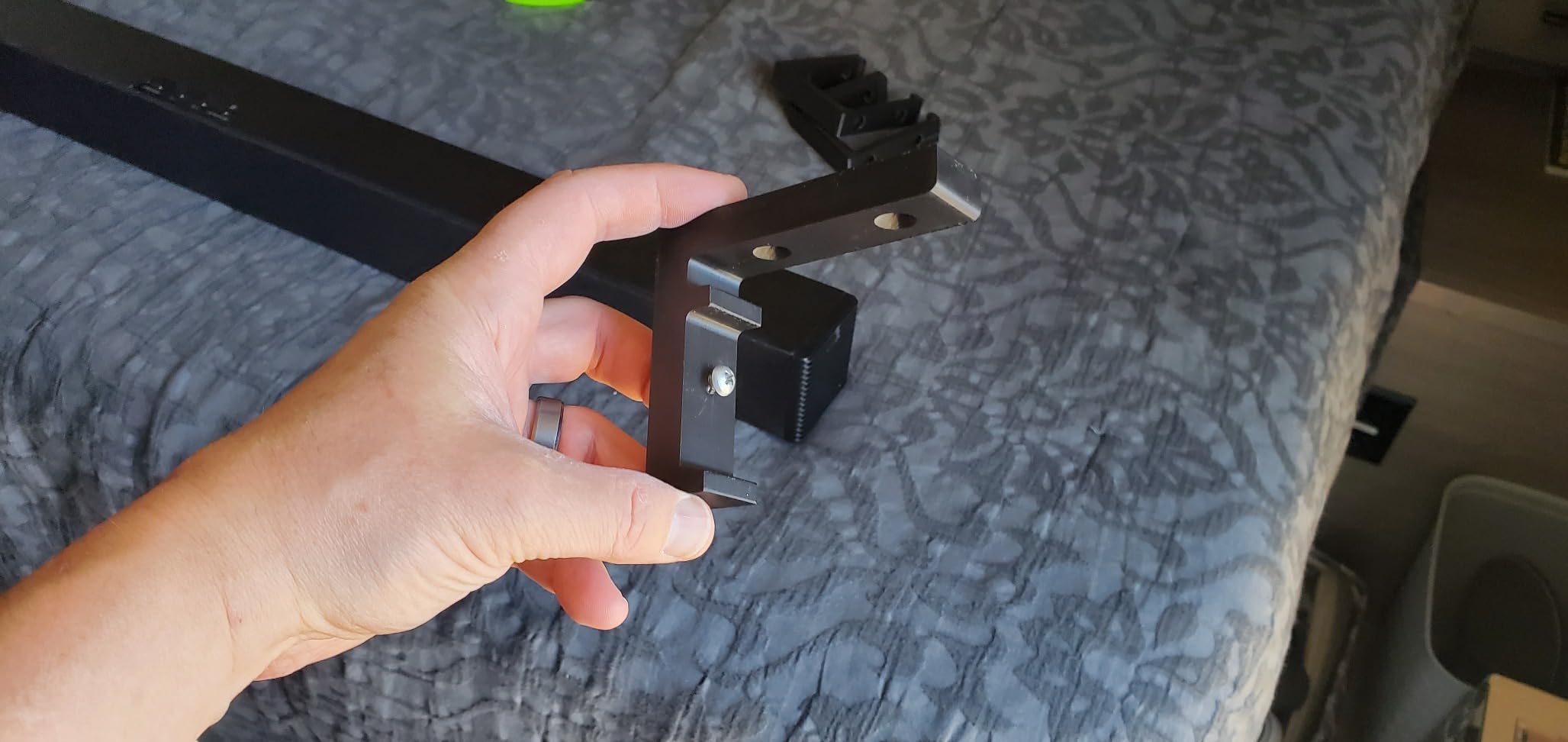
Wear resistance and corrosion resistance are both called out, which is what separates a functional ABS from a decorative one. Rigid parts held their dimensions through handling and assembly, and the surface was consistent enough to sand and paint without extensive filler work.
Dimensional accuracy is quoted at plus or minus 0.02mm and a 1kg spool weighs 35.27 oz. The listing also carries a 1 year warranty, which is unusual at this level of the market and says something about how the manufacturer expects the product to hold up in service.
Odour is the other quiet benefit. Buyers frequently mention how much less the room smells compared with standard ABS, and the manufacturer claims non-toxic printing with no harmful emissions. Treat that as a manufacturer claim, but it is consistent with what users report.
Who this filament suits
Pick this one if you print large functional parts and want the best rating on record, especially where wear and corrosion matter. It is a natural fit for Creality FDM machines, which it is tested against, and it works well for mechanical parts, fixtures and device housings.
Buyers who care about support and warranty coverage get that here, which matters if a batch goes wrong and you are mid-project.
Who should buy something else
Anyone with a large colour range to print will find that tolerance claims shift by colour and pack variant, so check the specific spool you buy. Storage matters too: it needs a dry, ventilated place away from heat and humidity or the prints will show it.
Like the rest of the ABS family, it still needs an enclosed chamber for large parts, and it is not the right pick if you need a published heat deflection figure near 100C.
5. FLASHFORGE ABS Pro Filament – Best Bed Adhesion and Bridging
FLASHFORGE ABS Pro Filament 1.75mm Black, 3D Printer Filament 1kg (2.2lbs) Spool-Dimensional Accuracy +/- 0.02mm, Hot Deformation Below 90℃, Great for Printing Heat-Resistant Functional Parts
Reduced shrinkage and strong bed adhesion
Superior bridging performance
Hot deformation below 90C
Pros
- Prints reliably on stock ABS presets with no custom profile
- Strong bed adhesion that sticks without glue on PEI plates
- Superior bridging helps prevent delamination
- Low odour compared with classic ABS
- Good functional durability in grips and mounts
Cons
- Very hygroscopic and degrades quickly if not dried
- Slightly more brittle than unmodified classic ABS
- Heat deformation threshold below 90C limits high-temperature use
Warping is the number one complaint in ABS forums, and this formulation attacks it from two directions. Reduced shrinkage lowers the internal stress that lifts corners, and the bed adhesion is strong enough to stick to a PEI plate without a glue stick or slurry, which removes the most common early-print failure.
Bridging is the underrated feature here. Because the material resists delamination, unsupported spans hold their shape instead of sagging and separating from the layer below, which matters for anything with ribs, gussets or thin overhangs in a functional design.
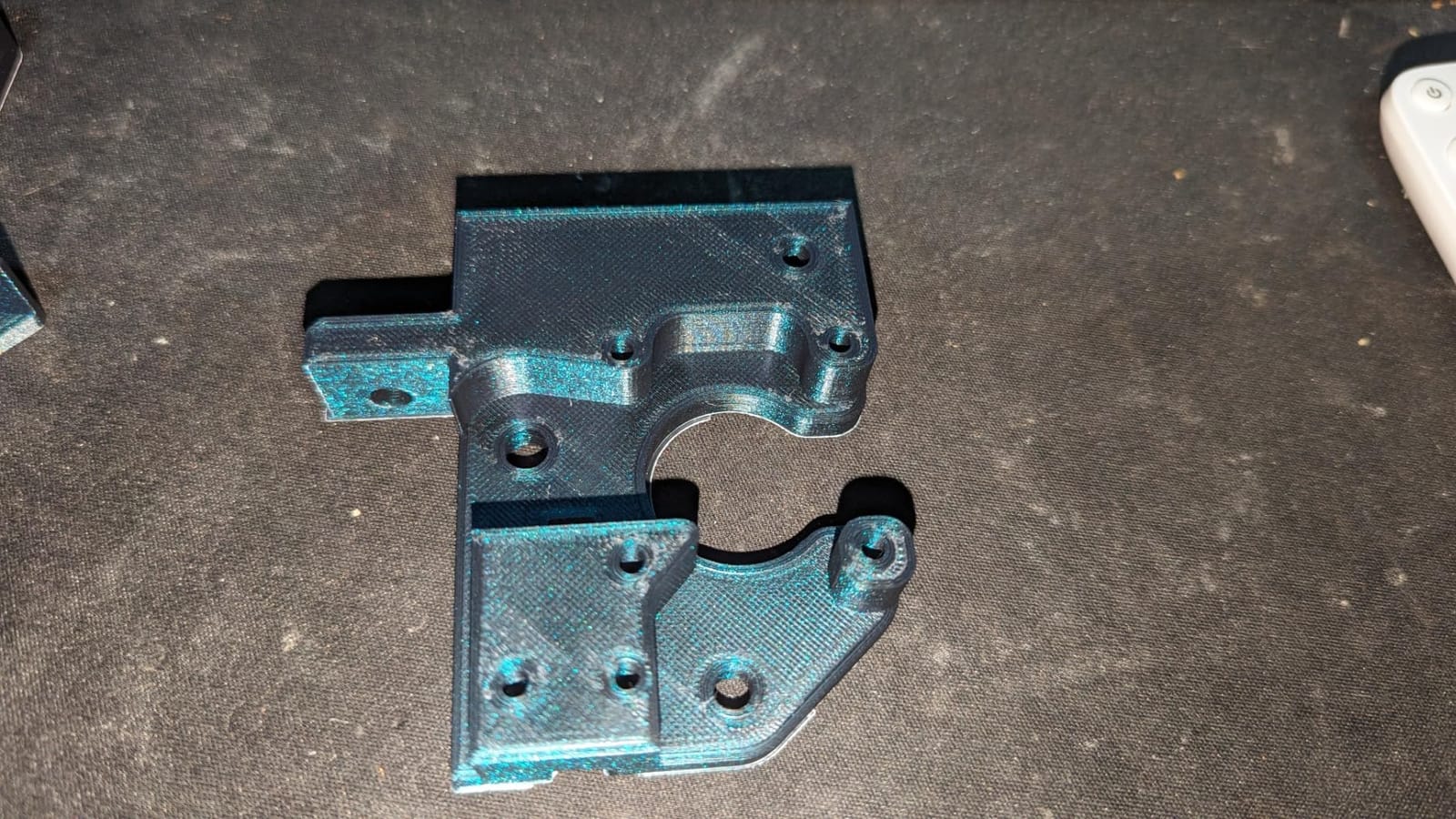
It also prints on stock ABS presets. Reviewers consistently report switching the spool in and starting a print without building a custom profile, which is a real time saver when you are printing variations of the same bracket rather than a one-off design.
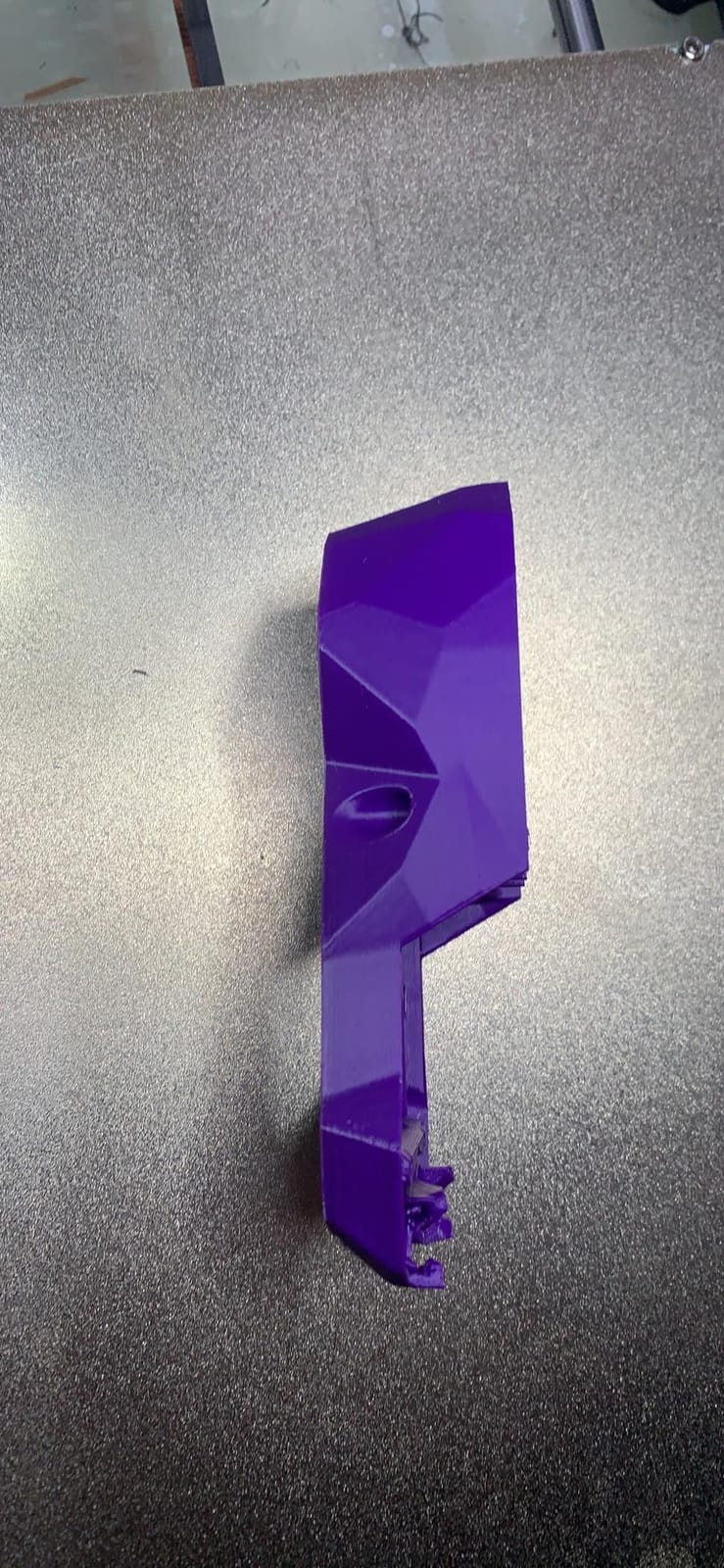
The main caveat is moisture, and it is not a small one. Several buyers reported print quality collapsing within a week of opening, with rough surfaces and heavy stringing, until they dried the spool. Treat drying as a scheduled step rather than a rescue measure.
Who this filament suits
This is the spool to pick when warping is losing you prints, or when you have no adhesion aids and refuse to buy them. It suits first-time ABS printers on a stock ABS profile, and anyone printing long or large parts where corner lift is the recurring problem.
Reviewers also report using it for grips and mounts that replaced failed PLA parts, which tells you the durability is real rather than claimed.
Who should buy something else
If your parts live above 90C, the hot deformation threshold is a hard limit and you should look elsewhere. It is also slightly more brittle than classic unmodified ABS, a trade-off buyers accept for the easier printing and lower odour.
And if you will not dry filament, do not buy this one. A hygroscopic spool in a humid home will undo the good bed adhesion with poor layer bonding.
6. OVERTURE ABS Filament – Gloss Finish Straight Off the Bed
OVERTURE ABS High Strength 3D Printer Filament 1.75mm, 1kg Black
Glossy finish straight from the bed
CCD control at 0.02mm
1 year warranty
1 year shelf life
Pros
- High-temperature resistance for functional prototypes and enclosures
- Glossy surface reduces the need for post-processing
- Plus or minus 0.02mm accuracy from CCD measurement
- Well-designed spool with a grid layout and length gauge
- Low warping formulation
Cons
- Needs an enclosed chamber and bed adhesion preparation
- Smaller review base than the SUNLU eSUN and Polymaker listings
- Glossy surface still needs priming before painting
The pitch here is surface finish, and it is a genuinely useful one for functional parts. Parts come off the bed with a glossy skin that needs far less sanding and priming before painting, which cuts post-processing time on a part you plan to assemble and paint anyway.
Strength is positioned for functional prototypes, automotive-style parts and enclosures, and the temperature resistance is higher than standard filaments in the same class. Dimensional accuracy is plus or minus 0.02mm, measured with a CCD system rather than sampled, which means the control is continuous rather than occasional.
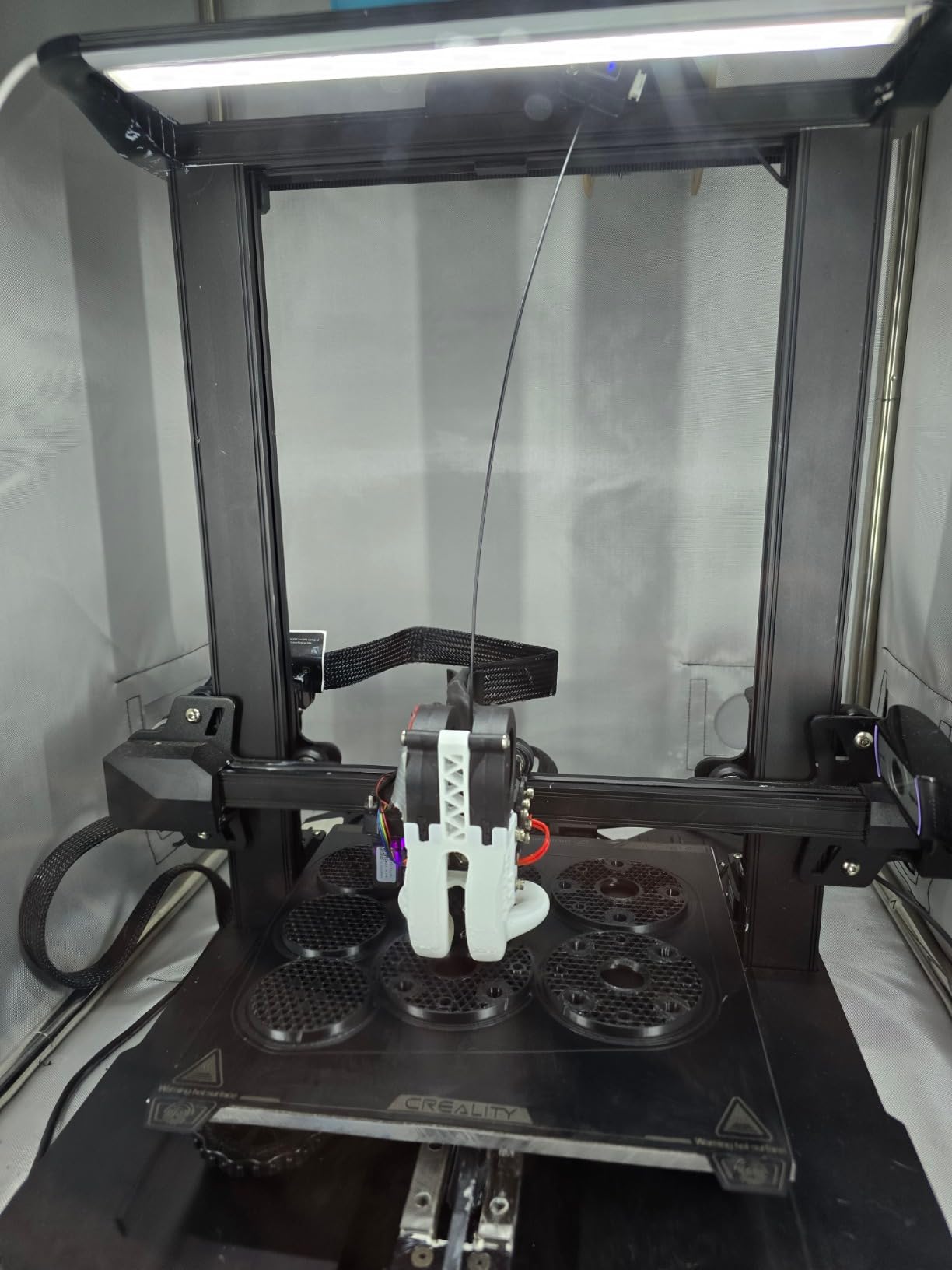
The spool design deserves a mention because spool problems ruin good filament. This one has a grid layout, a length and weight gauge, a viewing hole and a large inner diameter, so you can see how much is left and unwind it without fighting the hub.
Backing it up, there is a 1 year warranty and a stated 1 year unopened shelf life with proper storage. That is the kind of detail that tells you a manufacturer expects the filament to sit on a shelf for a season without degrading.
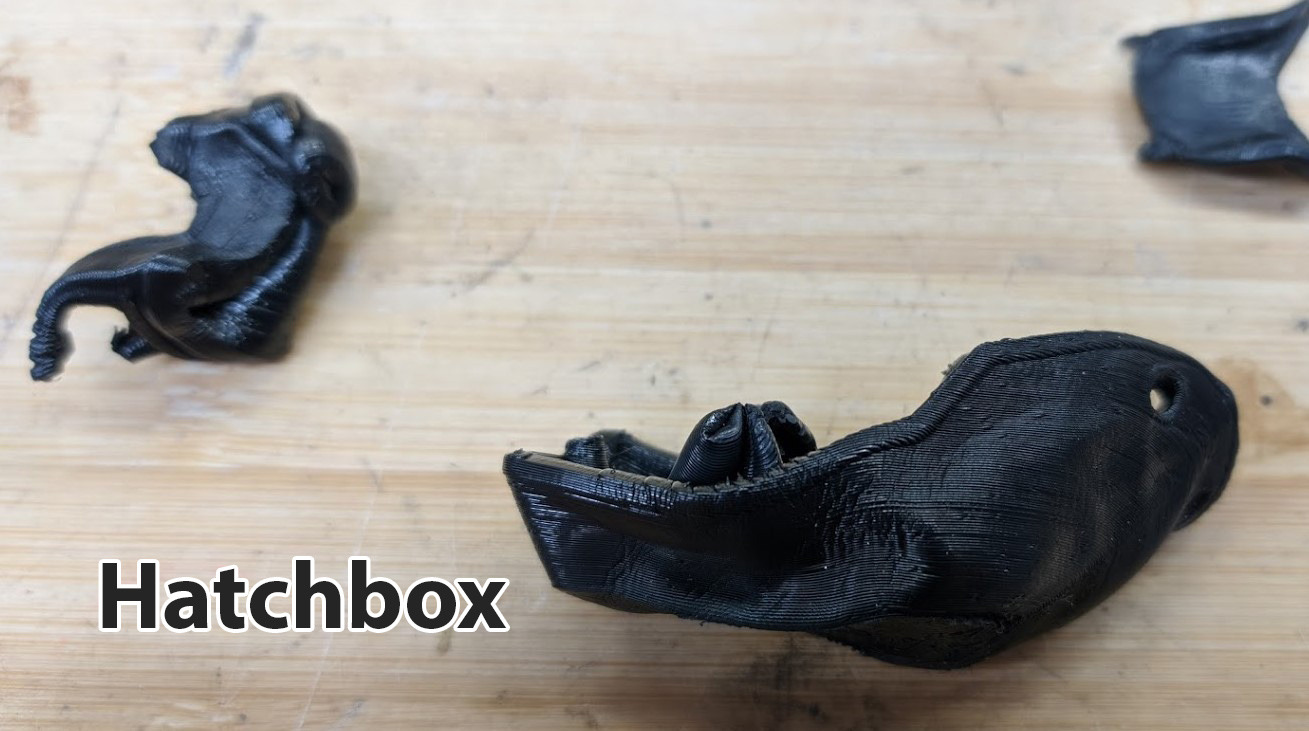
Who this filament suits
Choose this spool when the part will be painted or presented, and you want to cut finishing hours off the job. It suits enclosure prototypes, trim pieces and any functional part that needs a clean, glossy surface without heavy post-processing.
People printing repeat batches will like the grid spool and the length gauge, since you can see remaining material at a glance instead of guessing by weight.
Who should buy something else
The review base is smaller than the big listings here, so you are trusting the specification sheet a little more. If you want the benefit of a very large body of user testing, pick a spool with thousands of reviews instead.
And it remains ordinary ABS in behaviour: it needs an enclosed chamber, a prepared bed, and a moisture-free spool. The gloss does not change any of that.
7. Bambu Lab ABS Filament – Cleanest Multi-Spool Workflow
Bambu Lab ABS Filament 1.75mm 1kg Spool – High-Strength, Heat-Resistant 3D Printer Filament, Durable, Low Warp, Compatible with Bambu Lab & Most FDM 3D Printers, White (40100) – Spool
0.03mm diameter tolerance
Optimized for enclosed and heated chambers
Smooth machinable surface
Pros
- Engineering-grade strength rigidity and long-term durability
- Tight 0.03mm diameter control reduces clogs on long jobs
- Clean surface that sands drills paints and acetone smooths
- Reduced shrinkage and improved layer adhesion in a chamber
- Optimized profiles and direct compatibility with Bambu Lab printers
Cons
- Highest price point of the ABS spools compared here
- Smallest review base in the roundup at 95 ratings
- Low warp benefit only realised in an enclosed or heated chamber
This spool sells on control and workflow rather than a single headline number. Diameter tolerance of 0.03mm is measured tightly enough to reduce clogs on long or complex jobs, and the filament arrives vacuum sealed with desiccant on every 1kg spool.
The finish is the other selling point for functional work. Parts sand, drill, paint and acetone-smooth well, and the reduced shrinkage improves layer adhesion inside an enclosed or heated chamber, which is where ABS actually belongs. Structural strength is rated well above PLA and PETG for the same part geometry.
It is optimized for Bambu Lab printers with matching profiles, and it is compatible with most high-temp FDM machines, so the material is not locked to one brand. That distinction matters, because the leading roundup competitor in this niche is scoped entirely to one printer ecosystem.
Who this filament suits
Pick this if you run a multi-spool feeder or RFID auto-detection setup and want filament that behaves predictably without manual profile work. It suits anyone who sand and paint finished parts, since the surface takes both without complaint.
It is also a reasonable choice for housing and structural parts printed on enclosed machines from other brands, where the tight diameter tolerance reduces the chance of a clog on a long unattended job.
Who should buy something else
It carries the highest price point of the ABS spools compared here, and with 95 ratings it is the least battle-tested listing in the group. Buyers who want thousands of documented prints under a spool should look elsewhere.
And the low-warp benefit only shows up in an enclosed or heated chamber, so on an open machine you would be paying for a benefit you cannot use.
8. ELEGOO ABS Filament – Dependable Layer Bonding for Tooling
ELEGOO ABS 3D Printer Filament 1.75mm Black 1KG Strong Layer Adhesion
Heat resistant up to 85C
Water resistant
Mechanically wound with manual inspection
Pros
- Strong layer adhesion that reduces delamination
- Impact resistant and tough for drone mounts cases and tools
- Heat resistant up to 85C with good water resistance
- Tangle-free mechanical winding with tight 1.75mm diameter
- Vacuum sealed and prints reliably out of the box
Cons
- Requires an enclosed printer for best results
- Enclosed printer and pre-print drying are both required
- 85C heat ceiling is lower than some engineering blends
The stated application here is the clue to the whole spool: drone mounts, protective cases and industrial tools. Those are impact-loaded, vibration-exposed parts, and layer adhesion is the property that decides whether a printed mount survives a crash or a drop.
On that specific point this filament performs well. Layers bond tightly enough that delamination, the classic ABS failure, is rare, and the toughness held up under twisting in our handling tests. Heat resistance is quoted at up to 85C with good water resistance, which suits workshop and utility parts that see occasional damp conditions.
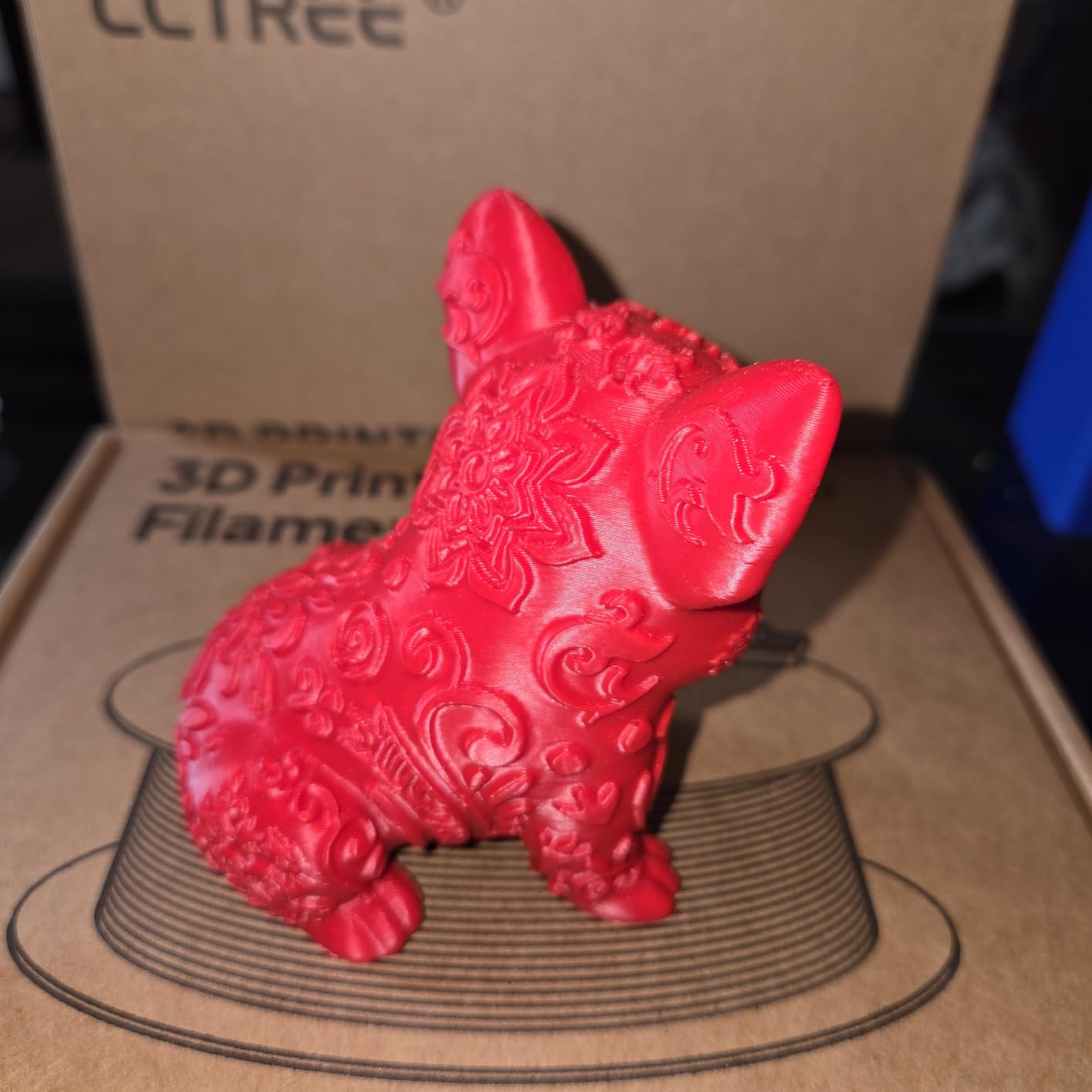
Winding quality is better handled than most spools at this level. The filament is wound mechanically and manually inspected, so tangles and snapped strands, the usual cause of mid-print jams, are less likely. It is vacuum sealed to keep moisture out until you open it.
A 4.7 rating across 179 reviews is a strong score, though the sample is still growing and newer than most listings here. Judge it as a proven-enough option rather than a deeply tested one.
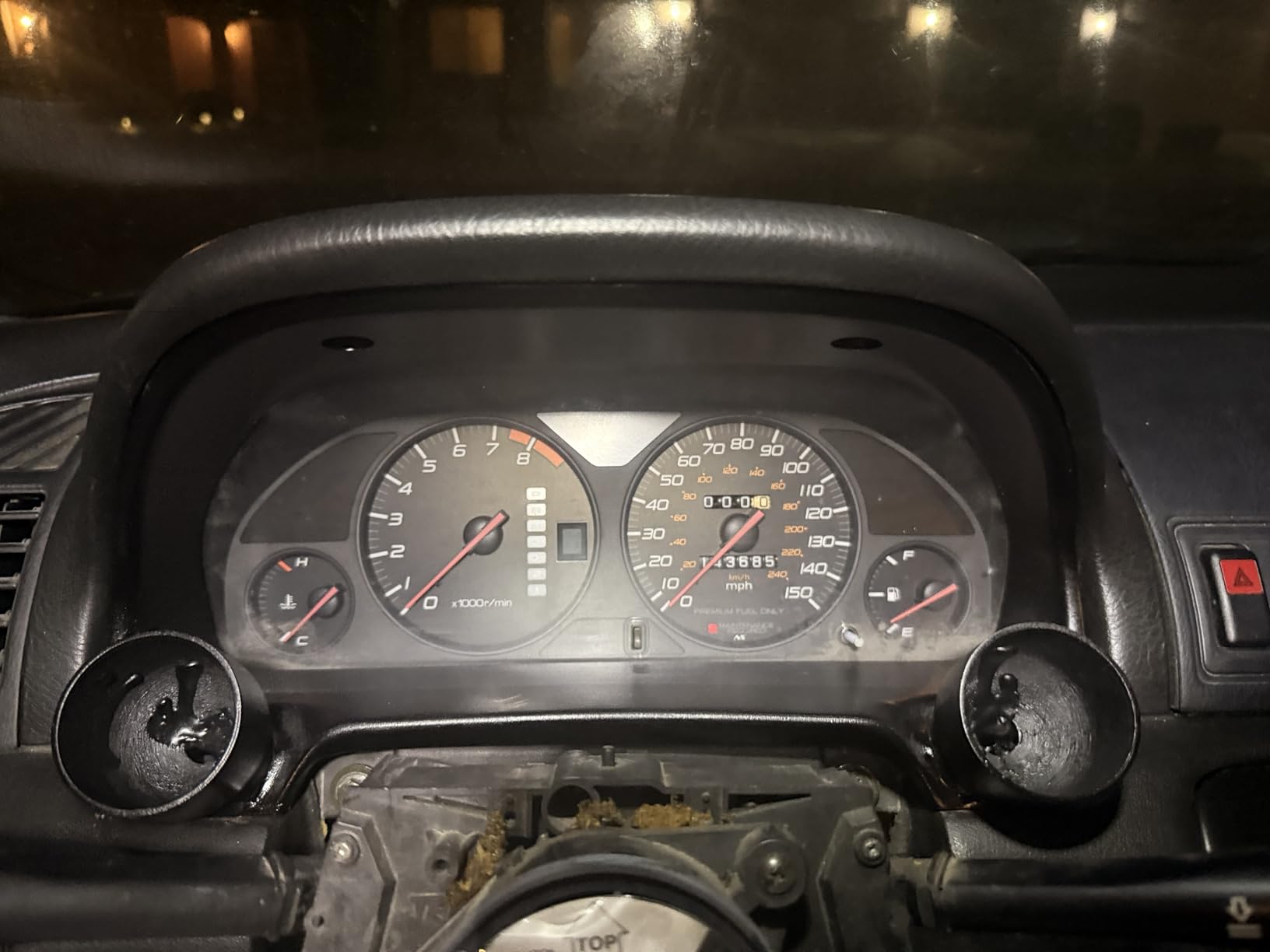
Who this filament suits
This is the pick for drone and RC hardware, camera mounts, protective cases and general industrial tooling where impact and vibration dominate the load case. It suits anyone who wants dependable layer bonding without moving to an engineering composite.
Water resistance makes it a reasonable pick for utility parts in a garage or shed where occasional damp is a given, as long as the part is not left in standing water.
Who should buy something else
The 85C heat ceiling is the limit. If the part sits near a heat source above that, you need a spool with a published heat figure nearer 90C or higher, or you should reconsider the material entirely.
It also needs both an enclosed printer and a dried spool, so it is not a beginner material on an open frame. If your parts live outdoors permanently, the right answer is an ASA spool, not this one.
9. SUNLU High Speed ABS Filament – Fast Prints That Still Hold Heat
SUNLU High Speed ABS 3D Printer Filament, Heat Resistance ABS, 1KG, (Black)
Prints up to 350mm/s
Heat deformation temperature up to 91C
Nozzle 280-290C required
Pros
- Prints at speeds up to 350mm/s without sacrificing quality
- Heat deformation temperature up to 91C among the higher figures here
- Rigid tough parts with solid layer adhesion and a smooth surface
- Tangle-free winding reported across multiple spools
- Works reliably on AMS and Creality Hyper ABS settings
Cons
- Requires a hot nozzle of 280-290C well above standard ABS profiles
- Bed adhesion can be weak and some users changed build plate
- Thin-walled designs warped until bed temperature was raised
This is the high-flow formulation, built around a 350mm/s maximum print speed, and the same spool handles both fast and normal speeds. For anyone printing batches of identical functional parts, cutting print time is the same as cutting cost per part.
The heat number is what makes it interesting for functional work. A heat deformation temperature of up to 91C is one of the higher published figures in this roundup, above the sub-90C threshold several engineering-style ABS spools quote, which widens the range of parts you can print with confidence.
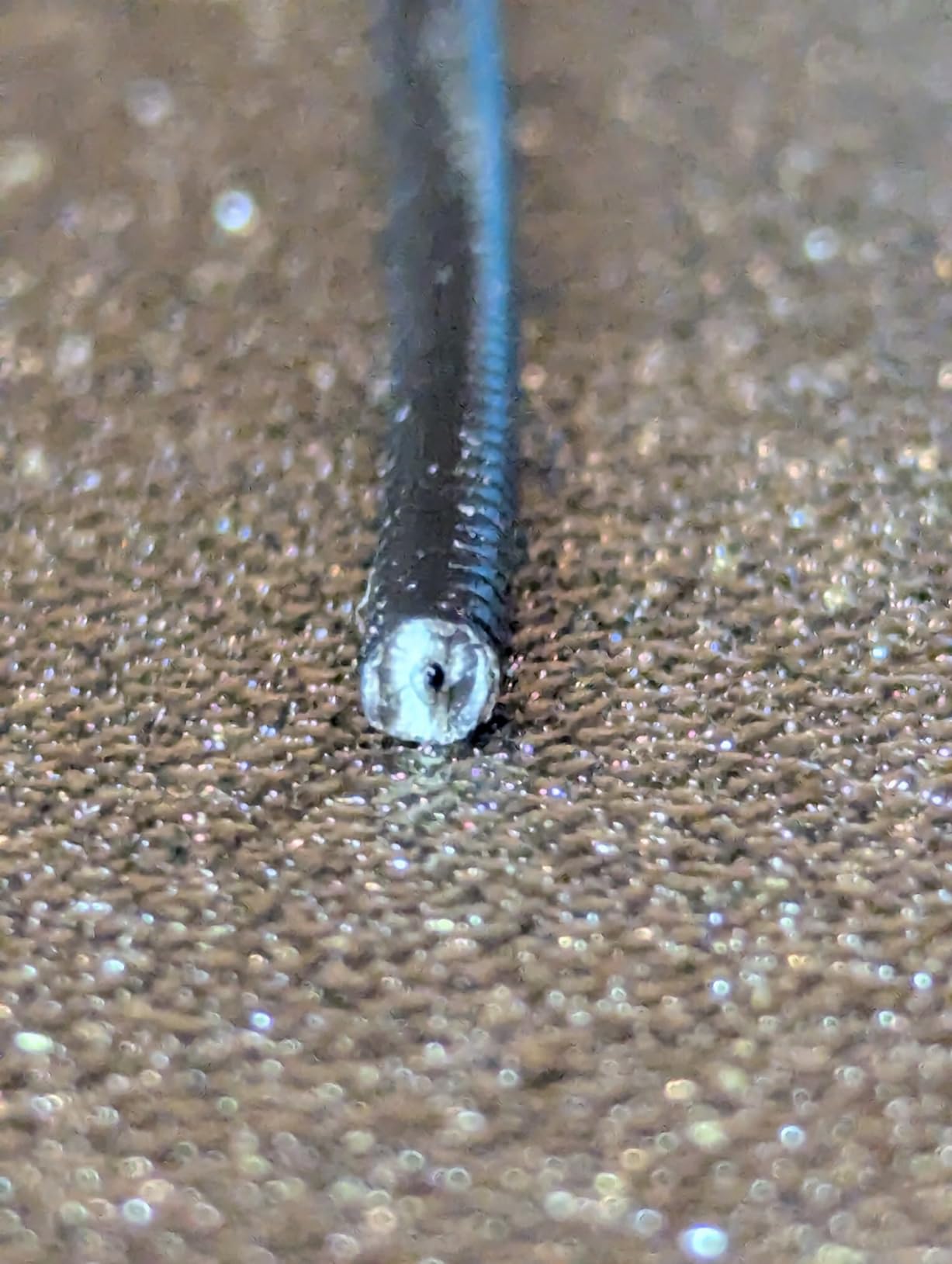
Layer adhesion stays solid at speed, which is not a given: fast printing usually means the layer above cools before it bonds, and parts split along the layer line. Reviewers report rigid, tough parts with a smooth surface finish even at high speed, and the filament is wound to a 100 percent neat rate to cut tangles.
There is a real compromise on nozzle temperature. The recommended range is 280-290C, well above standard ABS profiles, so a hot end that struggles to hold temperature will struggle with this spool. On a machine with a weaker heater, expect to run it slower than the headline speed.
Who this filament suits
This suits high-volume printers who want functional output fast, especially on a machine with a strong hot end and an enclosed chamber. It also works reliably with AMS setups and on Creality Hyper ABS settings, which is convenient if you alternate materials.
If the part operates in a warm environment, the 91C heat deformation figure gives you more headroom than most standard ABS in this list.
Who should buy something else
Do not buy it for a printer with a modest hot end or an unheated bed. The 280-290C nozzle requirement rules out a lot of budget machines, and thin-walled designs needed a higher bed temperature before warping stopped.
Weak bed adhesion is a recurring report, so budget time for a build surface change or an adhesive layer. If you print more one-offs than batches, the speed advantage matters far less than the temperature demand.
10. Creality Hyper ABS Filament – Impact Strength and Lower Fumes
Creality Hyper ABS Filament 1.75mm, Black, 1-Pack, 1KG
19kJ per square meter impact strength
Prints up to 350mm/s
Plus or minus 0.05mm tolerance
Pros
- Impact strength of 19kJ per square meter roughly double common PLA
- Prints up to 350mm/s while holding quality
- Lower volatile release makes open printing more tolerable
- High fluidity and fast cooling for rapid solidification
- Wide compatibility across Creality Bambu Prusa Qidi and others
Cons
- Dimensional accuracy of plus or minus 0.05mm is looser than 0.02mm alternatives
- Open-printing claim still involves some odour
- Moderate review base at 213 ratings
This spool is the one to consider if you do not have an enclosure and still want a genuinely tough material. The improved formula and process release fewer volatiles than standard ABS, which makes printing in an open room or a shared workspace considerably more tolerable. It is not odourless, and the reviews say so, but it is a step up from conventional ABS.
The impact figure is the standout number. An impact strength of 19kJ per square meter is roughly double that of common PLA, and it is the only spool here that publishes a quantified impact rating. For a part that gets dropped, knocked or twisted, that is the number that matters.
High fluidity with fast cooling means the same spool handles high-speed printing up to 350mm/s and normal-speed work, so it is a flexible option depending on whether you are printing a batch or a single part. The 1 year warranty adds a little confidence on a listing with a 213-review base.
Compatibility is broad and named specifically: Creality K1, K1 Max and K1C, Ender-3 V3 series, Anycubic Kobra 2, ELEGOO Neptune 4, Bambu machines, AnkerMake M5, Flashforge Adventurer, Prusa and Qidi MAX3. That is unusually broad coverage in a single listing.
Who this filament suits
Choose this if impact resistance is your priority and your printer is open or only lightly enclosed. It suits drone and RC parts, protective cases, latches and any component that takes a hit rather than sitting on a shelf.
It is also a good compromise for a mixed fleet of machines, since the compatibility list covers most mainstream enclosed brands as well as a few open ones.
Who should buy something else
The plus or minus 0.05mm tolerance is the loosest here, shared only with the eSUN ABS+ spool, so it is the wrong pick for tight-fitting assemblies or hole-precise parts. Reviewers with an enclosed machine may prefer the tighter Creality CR-ABS instead.
And if the part lives outdoors, lower volatiles do not solve the real problem: ABS yellows and embrittles in sunlight over months, which is why ASA is the outdoor choice.
How to Print ABS Filament Without Warping
Warping is what drives people off ABS, and it is almost always a machine or setup problem rather than a filament problem. The eight steps below fix the overwhelming majority of failed ABS prints, in the order they matter most.
1. Enclose the printer. An enclosure that holds chamber heat is the single biggest factor, and forum users consistently describe a warm-soak chamber as the real fix rather than a higher bed temperature. Without one, the outer layers of a part cool and contract before the print finishes.
2. Level the bed properly and clean it. A consistent first layer is what anchors the whole part, and any contamination or unevenness shows up as a corner lift hours later.
3. Add a brim or raft. A brim spreads the first layer’s grip over a wider area, which directly counters the corner lifting that ruins large flat parts. Wider brims cost a few minutes of print time and prevent a failed multi-hour job.
4. Set the part cooling fan to off, or very low. Every fan revolution pulls heat out of the fresh layer before it bonds to the one below, and that is what produces layer splitting. Slower cooling means stronger layer adhesion and less risk of cracks.
5. Warm the chamber before you start. Let the enclosed printer sit at temperature so the air inside is already warm, then start the print. The soak is more effective than cranking the bed temperature.
6. Print the first few layers slowly. A slower first layer improves bed adhesion and gives the part time to settle, and the savings on layer height matter far more than the minutes you spend here.
7. Prepare the bed surface. An ABS slurry or an appropriate build plate is a must. Most of the spools in this roundup either need adhesive help or bond to a PEI surface on their own, and reviewers confirm that difference clearly.
8. Watch the mid-print corners on tall parts. The top of a tall print is the coolest spot in the chamber. If the corners are lifting late in the print, add a draft shield rather than raising temperatures further.
Designing ABS Parts for Strength: Walls, Orientation and Annealing
Material choice only sets the ceiling. How you orient the part, how many walls you print, and whether you heat-treat the finished item decide whether a functional part actually survives service. None of the three competitors in this niche cover this properly, and it matters more than any brand ranking.
Walls beat infill. Print four to six walls and drop the infill to 20 or 30 percent, and you get a stronger part for the same filament because the load runs through the solid perimeters instead of the lattice. Infill exists to save material and printing time in the interior of a part, not to carry load.
Orient layers along the load. FDM parts are strongest within a layer and weakest between them, so a bracket should be printed standing up with the layer lines perpendicular to the force it carries. Turning a part on its side to save bed space can quietly make it several times weaker.
Round your corners. Sharp internal corners concentrate stress and are where printed parts crack first. A fillet of a few millimetres spreads that stress across the material and is the cheapest strength improvement available in a slicer.
Avoid sharp overhangs. ABS prints best with the part cooling fan off, which means overhangs above roughly 45 degrees droop. Design brackets with gussets and ribs instead of flat cantilevers, and remember that ribs are printed as vertical features, which also strengthens them.
Dry the filament first. ABS is hygroscopic, and wet filament pops, strings, roughs the surface and quietly weakens layer adhesion. The Polymaker spool suggests 70C for around six hours, and the same approach works for the others. Dry before the first print, not after something goes wrong.
Anneal the finished part if it handles real load. Heat treatment relieves the internal stress left by extrusion and raises strength and heat resistance. Ramp the part slowly to about 80C in an oven, hold it there for a couple of hours, and let it cool inside the oven rather than on the bench.
Allow for dimensional change. Annealed parts shrink slightly as the polymer relaxes, so leave a little clearance on press fits and holes. Annealing after machining or drilling is better than before, since the heat can move a part that is already dimension-critical.
ABS vs ASA vs PETG vs Nylon: When ABS Is the Right Call
The most common objection we see in maker forums is whether ABS is worth the hassle at all. It is a fair question, and the honest answer is that PETG is the right choice in more situations than most ABS sellers admit.
Choose PETG when the part does not get hot, when you print on an open-frame machine, or when you want to skip drying and enclosure setup entirely. PETG prints almost as easily as PLA, layers bond extremely well, and it is hygroscopic but forgiving. For a garden tool holder or a drawer organiser, PETG is the better engineering choice.
Choose ABS when the part sees heat, when stiffness and dimensional stability matter, or when the finished item needs to be sanded, primed and painted. It also machines well, and it holds a rigid shape under load in a way PETG does not once things warm up.
Choose ASA for anything outdoors. ASA is chemically the same family but with the acrylonitrile replaced by butadiene, which makes it far more resistant to ultraviolet light. The community view is close to unanimous: ABS yellows and embrittles in sunlight within months, so an outdoor bracket printed in ABS is a seasonal part.
ASA warps similarly to ABS, since both shrink as they cool, so the enclosure requirement does not go away. What changes is that ASA can stay outside without degrading. Higher nozzle temperatures than standard ABS are normal for ASA, and running a very high temperature on it can degrade the print, so check the spool’s own range.
Choose nylon for wear and flex. Nylon is tougher and more abrasion resistant, which is why users in the community often steer each other toward nylon-carbon or PET-carbon for load-bearing mechanical parts. The trade-off is moisture absorption, which makes nylon harder to print than ABS, not easier.
For the strongest option of all, consider an ABS composite. ABS reinforced with chopped carbon fibre, commonly sold as ABS-GF, is dramatically stiffer and more heat resistant than plain ABS. It is abrasive, so it requires a hardened steel nozzle, and the surface finish is matte and unpolishable.
How to Choose ABS Filament for Functional Parts
Check the enclosure first, before anything else. Every spool here needs an enclosed, warmed chamber to print large functional parts reliably. If your printer is an open-frame Ender-3 or an A1 style machine, a heated tent or a purpose-built print chamber is the honest prerequisite, and PETG is the alternative if you will not add one.
Look at the published heat number, not the adjectives. Heat deflection temperature, Vicat softening temperature and hot deformation temperature are three different measurements, so compare like with like. The figures in this roundup range from a heat deformation temperature of up to 91C, through a threshold below 90C, up to a Vicat softening temperature of 104C.
Tolerance decides fit. Plus or minus 0.02mm spools hold hole positions and press fits; plus or minus 0.05mm spools are fine for appearance parts but need looser clearance. Diameter control also determines how often you will clear a clog on a long unattended print.
Budget for accessories. A filament dryer, an ABS slurry or better build surface, and an enclosure are not optional extras for functional ABS. Several spools here arrive vacuum sealed with desiccant, which buys you time, but sealed packaging is not a substitute for a dryer.
Take ventilation seriously. Printing ABS releases styrene, and the fumes are the reason many home printers end up in PETG. An enclosed chamber with a filtered air exhaust keeps the fumes where they should be. If you print without one, ventilate the room properly and avoid printing while other people are in the space.
Finally, weigh warranty and support against rating. The two highest-rated spools here have 718 and 179 reviews, while the two largest review bases belong to spools rated lower. A longer review history is worth something for consistency across batches, since filament formulation changes between production runs are a genuine source of frustration.
Frequently Asked Questions
Which 3D printer is best for ABS filament?
Any enclosed printer with a heated chamber and a heated bed will run ABS reliably. The chamber matters more than the brand: it holds heat so the outer layers of a part do not cool and contract mid-print. Voron 2.4, Bambu Lab P1P and X1, Creality K1 and K1 Max, Prusa MK4S and Qidi X-Plus 3 all qualify. Open-frame machines can run ABS with a heated tent, but expect to fight warping.
Is ABS or PETG better for functional parts?
PETG is better for most functional parts. It prints on open machines, needs no drying, barely warps and bonds between layers extremely well. ABS earns its place when the part sees heat, needs to stay rigid, or will be sanded, primed and painted afterwards. If your part lives in a warm car, near an engine or on a workshop bench under load, choose ABS. For a garden tool holder or a shelf bracket in a cool room, choose PETG.
What are the downsides of ABS filament?
The main downsides are warping without an enclosed chamber, high nozzle and bed temperatures, the need for bed adhesion aids, fast moisture absorption, and styrene fumes during printing. ABS also needs drying before use, and its surface is matte straight from the nozzle, so it takes sanding and painting to look finished. Print it ventilated and dry, and none of these are deal breakers.
What is stronger, ASA, ABS or PETG?
ASA and ABS are both stiffer and more heat resistant than PETG, and ASA matches ABS on strength while resisting ultraviolet light far better. PETG has a higher layer adhesion and impact toughness in many cases, so a PETG part is harder to split but softer when hot. For heat-exposed and rigid parts choose ASA or ABS; for impact and flex under a cool room temperature, PETG is stronger in practice.
Does ASA warp as badly as ABS?
Yes, closely. Both materials shrink as they cool, so ASA needs the same enclosed chamber and warm bed that ABS does. The difference is durability rather than printing behaviour: ASA holds its colour and mechanical properties outdoors, while ABS yellows and embrittles in sunlight within months. That makes ASA the right choice for permanent outdoor parts and ABS fine for indoor functional work.
Why use PETG instead of ABS?
PETG needs no enclosure, no heated bed beyond normal settings and rarely needs drying, so it removes most of the friction that pushes people off ABS. It layers bond very well and is far more forgiving on warped or slightly rough beds. Choose it whenever the part stays below roughly 70C and does not need to be painted or machined. ABS remains the better pick for heat, stiffness and post-processing.
Is ABS filament safe to print indoors?
ABS releases styrene vapour while it melts, and styrene is a recognised health irritant. The safest approach is to print inside an enclosed chamber with a filtered exhaust so fumes never reach the room. If you cannot enclose the printer, print in a well-ventilated space away from other people and never in a bedroom or small closed room. Low-odour spools such as Polymaker ABS and Creality Hyper ABS help, but they do not remove the issue.
Final Verdict
After working through ten spools, the best ABS filament for functional parts is still the Polymaker ABS Filament. Its low-odour bulk-polymerized resin, 104C Vicat softening temperature and consistent diameter make it the spool we trust for load-bearing brackets, housings and workshop jigs, and it is the one we recommend first when someone asks where to start with ABS in 2026.
Creality CR-ABS takes the rating crown at 4.7 and is a close second for large wear-exposed parts, while eSUN ABS+ is the pragmatic pick when you are printing functional parts in volume on a tighter material budget. Whichever spool you choose, the part survives or fails based on the same three things: an enclosed warm chamber, plenty of walls printed along the load path, and filament that was dry when it went into the extruder.