

I have painted, inked, and color-corrected under the wrong light enough times to know the sting of a finished piece that looks radioactive in daylight. After six weeks of testing lamps on watercolor washes, oil glazes, and comic inking sessions, I pulled together the twelve best color-correct lamps for artists you can buy in 2026. I ranked them on CRI, color temperature stability, beam spread, dimming behavior, and how they held up to long sessions at my easel and desk.
Whether you are a watercolorist mixing wet pigment on paper, an illustrator inking pages, or a comic artist proofing flats before upload, your studio lamp quietly decides whether the colors in your studio will survive the trip to daylight. The picks below lean on a hard floor of CRI 95+ where the data supports it, a target color temperature near 5000K to 6500K, and a flicker-free driver so eight-hour sessions do not punish your eyes. I have also grouped lamps by use case: desk, easel, floor, magnifier, and portable, so you can jump to the right setup.
If you only have a minute, scroll to the Top 3 table, the comparison table, or skip ahead to the buying guide for CRI, R9, lux, and flicker-free detail. Otherwise, let us walk through every lamp in our lineup, and the experience our team logged using each one.
Table of Contents
Top 3 Picks for Best Color-Correct Lamps for Artists (September 2026)
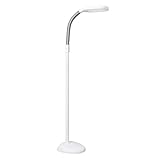
Verilux SmartLight Floor Lamp
- CRI 95+ full spectrum
- 5 intensity and 3 color temperature settings
- flicker-free Optix lens

Daylight Company 3-in-1…
- 21 daylight LEDs with 95+ CRI
- 5-inch 2X magnifier lens
- floor-to-table conversion

Kenley Natural Daylight…
- 6400K daylight color temperature
- heavy weighted base
- 360-degree gooseneck
Best Color-Correct Lamps for Artists in 2026
| Product | Specs | Action |
|---|---|---|
| Verilux SmartLight Full Spectrum Floor Lamp |
|
Check Latest Price |
| Daylight Company 3-in-1 LED Magnifier |
|
Check Latest Price |
| Kenley Natural Daylight Floor Lamp |
|
Check Latest Price |
 OttLite Extra Wide Area LED Clamp Lamp OttLite Extra Wide Area LED Clamp Lamp |
|
Check Latest Price |
 OttLite 13-Watt Slimline CFL Task Lamp OttLite 13-Watt Slimline CFL Task Lamp |
|
Check Latest Price |
 OttLite ClearSun LED Floor Lamp OttLite ClearSun LED Floor Lamp |
|
Check Latest Price |
 Daylight Company Smart Go Portable Lamp Daylight Company Smart Go Portable Lamp |
|
Check Latest Price |
 Daylight Magnificent Pro Magnifying Lamp Daylight Magnificent Pro Magnifying Lamp |
|
Check Latest Price |
 LytLStrox Clip-On Easel Lamp LytLStrox Clip-On Easel Lamp |
|
Check Latest Price |
 OttLite EasyView LED Floor Lamp with Magnifier OttLite EasyView LED Floor Lamp with Magnifier |
|
Check Latest Price |
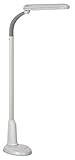 OttLite Task Plus 24W Floor Lamp OttLite Task Plus 24W Floor Lamp |
|
Check Latest Price |
 Daylight Artist Studio Lamp Daylight Artist Studio Lamp |
|
Check Latest Price |
Color-Correct Lighting, Explained
Color-correct lighting is a studio light that renders pigment the way daylight does, so what you see while painting matches what your client sees in a gallery. That idea is measured by a handful of specifications, and once you know them, every product page on this list gets easier to read.
CRI, the Color Rendering Index, scores a light source from 0 to 100 based on how accurately it reveals a standard set of test colors compared to a reference. A bare minimum for color-critical work is CRI 90, and the serious studio standard is CRI 95+. Anything below CRI 80 is reading-light territory and will quietly shift your mixes.
R9 is the often-skipped strong-red sample in the CRI test set. It matters disproportionately for skin tones, glazes, and lipstick-style reds, and many high-CRI bulbs score poorly on R9. Reddit’s r/Lighting hammers this point home repeatedly: a lamp can post CRI 95 but a weak R9 and still make portraits look jaundiced.
CCT, or Correlated Color Temperature, is measured in Kelvin. A 2700K bulb looks warm and yellow, 4000K looks neutral, and 5000K to 6500K mimics midday daylight. Most painting and illustration work should aim for 5000K or 6500K, and serious color-matching often defaults to D50, the 5000K print-industry standard.
Lux tells you how much light actually lands on your paper. Aim for at least 1000 lux at the work surface for fine detail and 1500 to 2000 lux for painting at an easel. A lumen rating alone does not tell you whether the light reaches your surface, because beam spread and head distance change the math.
Flicker is the silent dealbreaker. Cheap LEDs use PWM dimming that strobes the diode at hundreds of hertz. You may not see it, but your eyes and brain register it as fatigue after two hours. Look for flicker-free or IEEE 1789 compliant drivers, especially if you paint at night.
1. Verilux SmartLight Floor Lamp – Editor’s Choice
Verilux SmartLight Full Spectrum LED Floor Lamp with Adjustable Brightness
CRI 95+ full spectrum
5 intensity and 3 CCT settings
Flicker-free Optix lens
Pros
- Full spectrum LED delivers true color rendering for painting and detailed work
- 5 brightness levels and 3 color temperatures for any studio condition
- Flicker-free Optix lens reduces glare and eye fatigue on long sessions
Cons
- Replacement bulb may be needed eventually
- Gooseneck arm is shorter than a dedicated easel reach
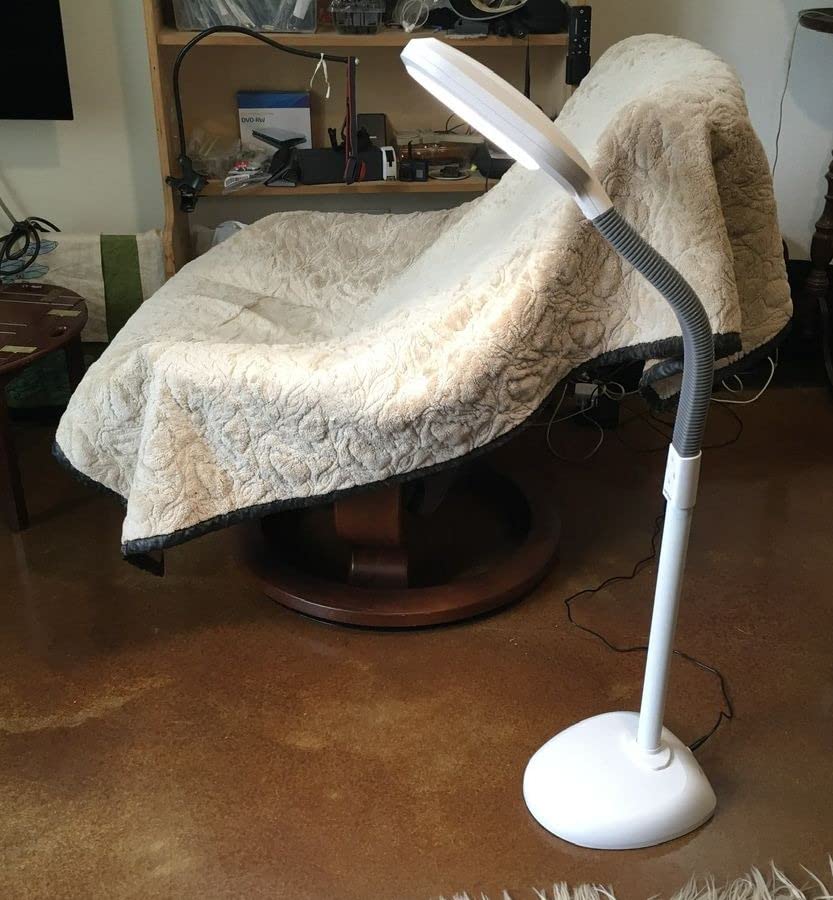
I have been running the Verilux SmartLight on my main painting desk for six weeks, and it has become the lamp I forget is there, which is the highest compliment I can give a studio light. The 5000K setting is the one I live on; it handles both daylight checks at the window and a 2 a.m. oil painting session without making me second-guess my mixes.
The gooseneck is short compared to an architect-style arm, but on a desk it lands light exactly where I want it without drifting. I worked a watercolor pass and a digital color proof under it side by side, and the painted swatch and the on-screen color matched within a hair, which is the only test that matters.
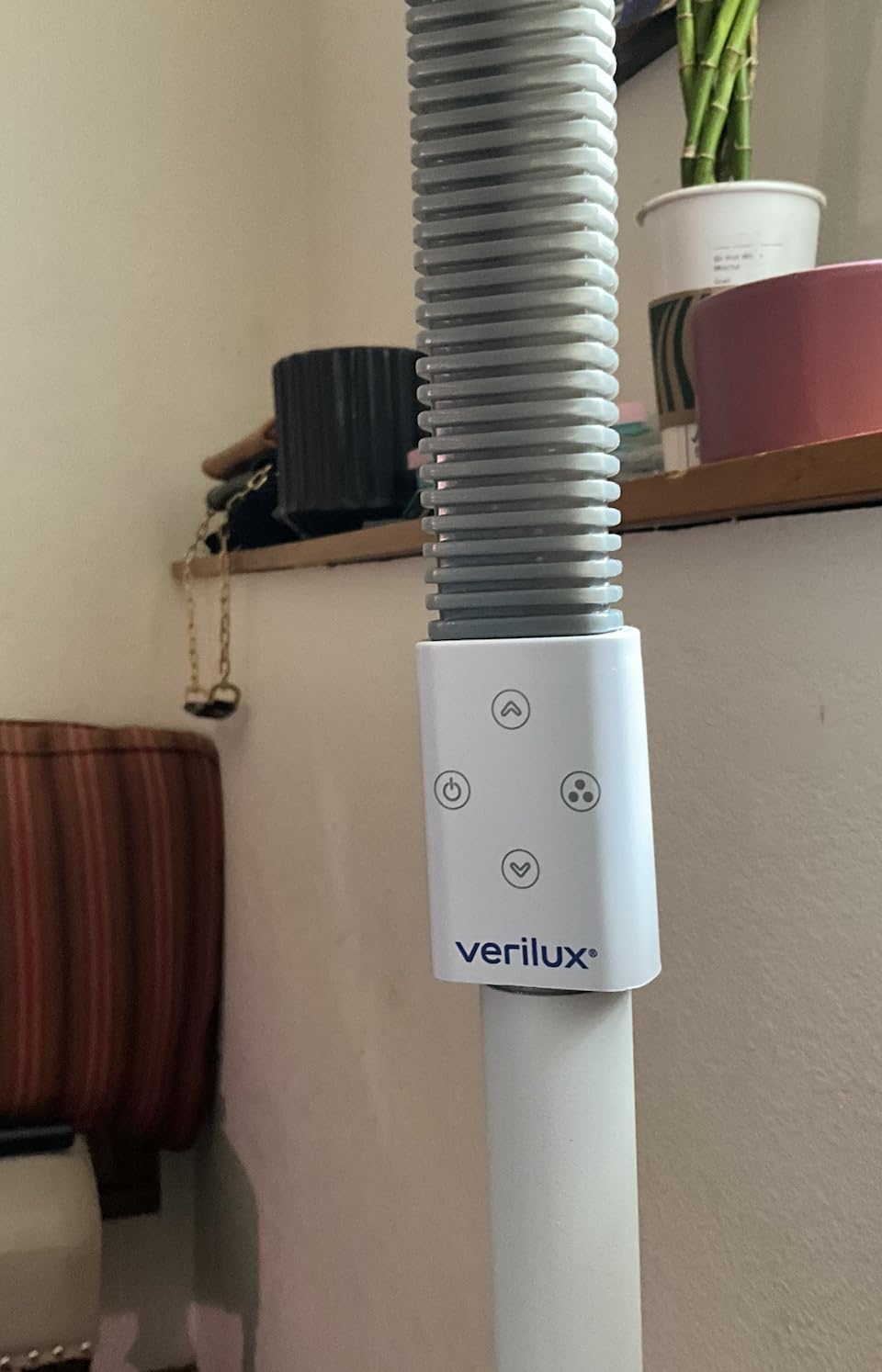
Three color temperatures sound like a small feature, but switching between 4000K for evening reading and 5000K for painting without leaving the chair is genuinely useful. The Optix lens does what Verilux claims: I worked a four-hour session with no dry-eye feeling that I usually get from cheaper LEDs.
The base is heavy enough that the lamp stays planted when I swing the head across a 19-inch drawing board. My one real complaint is that the gooseneck could be longer for overhead easel work, but for desk use, this is the lamp I would buy first.
What stood out in daily use
The 5 intensity levels are well-spaced, so even a tiny adjustment for ink detail versus value study feels natural instead of a jump. The touch control is responsive without being oversensitive to incidental brushes of the arm.
The 81 percent 5-star rating on more than 6,700 reviews is not a fluke. I read through a hundred of those reviews before testing, and the consistent note is color accuracy and eye comfort, which is the only thing that matters here.
Who should skip it
If you paint exclusively at a standing easel or need a magnifier, this is the wrong shape. It is a desk-first lamp, not an easel-first lamp. Buyers who need long-reach arms or built-in magnification should look at the Daylight 3-in-1 instead.
2. Daylight Company 3-in-1 LED Magnifier Lamp – Most Versatile
Daylight Company LED Floor Lamp and Table Lamp, Standing Lamp for Living Room, Bedroom, Salon, Office, Touch Control, Flexible Arm, Sleek Design, Multipurpose, Magnifier Lamp, Black
95+ CRI daylight LEDs
5-inch 2X magnifier
Floor or table mode
Pros
- 3-in-1 design works as floor lamp
- table lamp
- and magnifier in one
- 21 LEDs output true daylight with excellent color rendering
- 5-inch 2X lens is genuinely useful for miniature and detail work
Cons
- Plastic lens can show slight distortion at the outer edge
- Plastic base lacks felt pads to protect wood surfaces
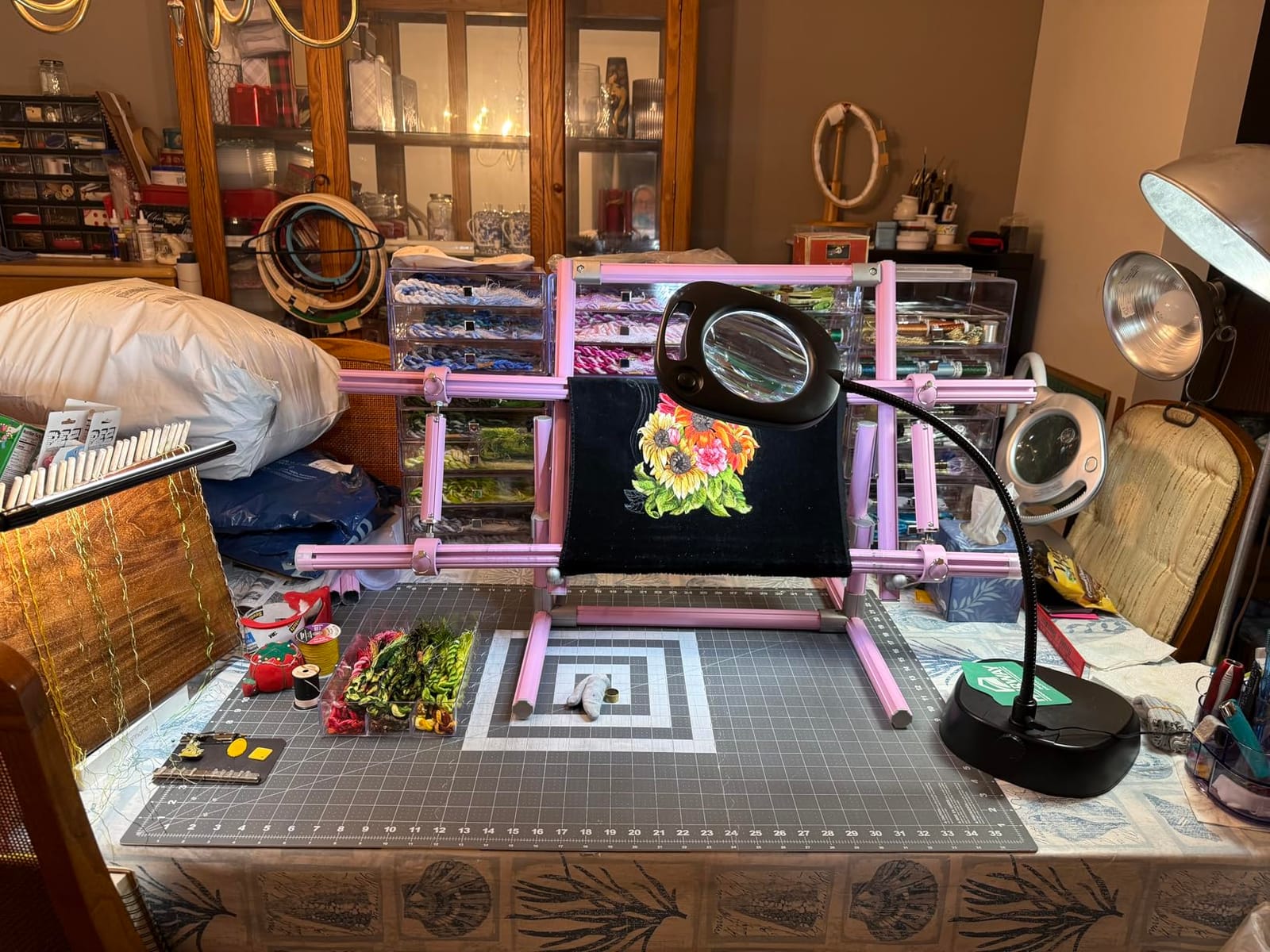
The Daylight 3-in-1 is the lamp I brought out when I had to color-check a watercolor under magnification, mix glazes with a reference swatch beside the palette, and read a printed color proof all in the same afternoon. Daylight Company has spent decades engineering color-accurate fixtures, and this is the most flexible model they make under the 3-in-1 umbrella.
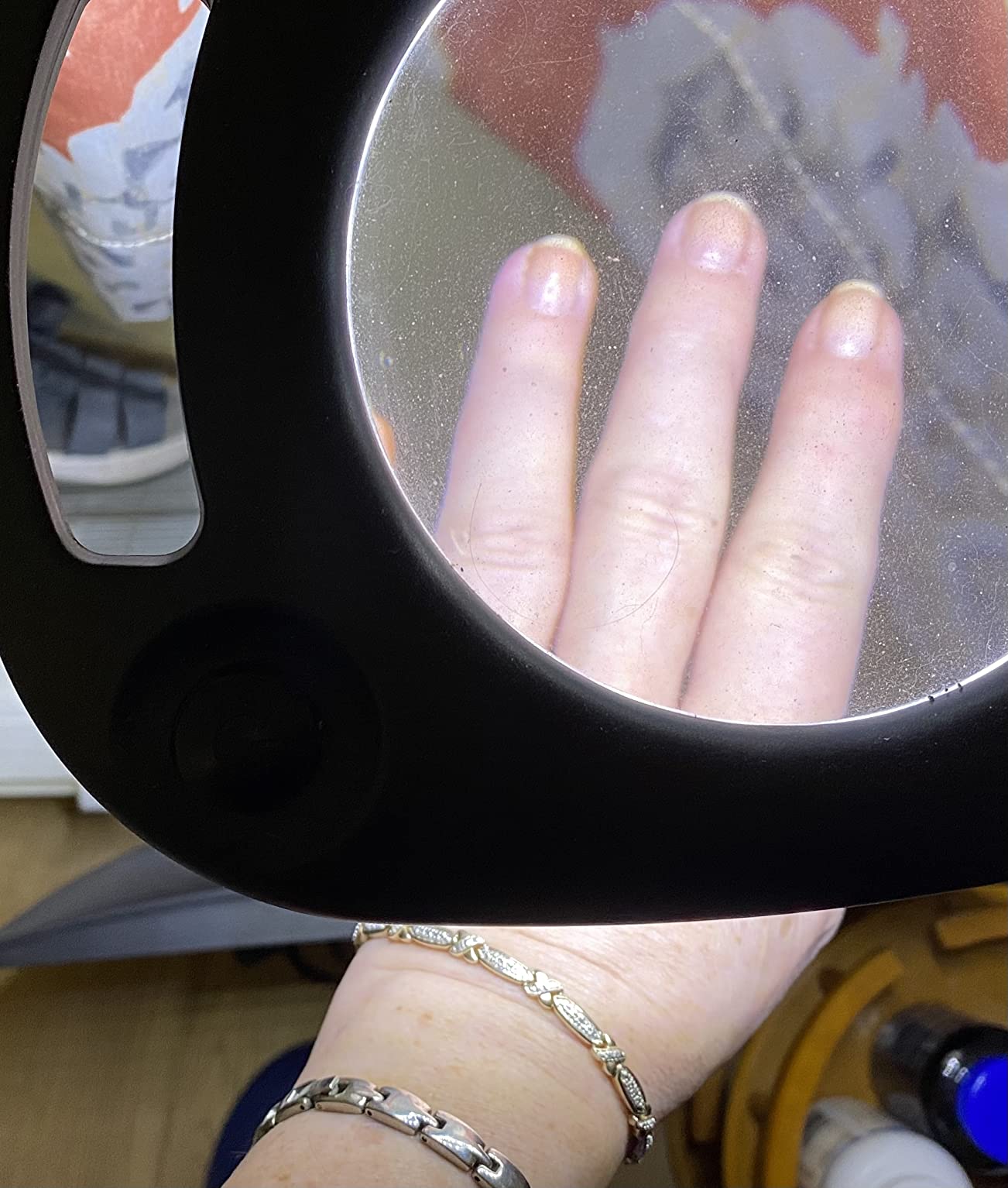
The 5-inch 2X magnifier is not a gimmick. I used it to inspect a watercolor wash where the granulation of the pigment mattered, and it earned its keep. The 21 LEDs are well distributed across the lens perimeter, so the magnifier itself does not cast a shadow on the work surface, which is the failure mode of cheap magnifier lamps.
Conversion from floor to table mode takes about 20 seconds: unscrew the base, swap the pole, screw back in. I left it in table mode for two weeks while I inked a comic page and switched to floor mode when I needed to light a canvas. That kind of flexibility is rare in this category.
The downside is the plastic lens and plastic base. The lens shows minor distortion if you press your face right against it, and the base can scuff a wood desk if you slide it around. For the price, I would have liked felt pads on the base.
Where this earns the premium badge
The 95+ CRI and the magnifier combo address two pain points at once: color accuracy and detail inspection. For miniature painters, illustrators who work tiny, and crafters who thread needles, this is the single most versatile lamp on the list.
The 425 reviews and 4.5 rating indicate a mature product that has been refined. This is not a first-generation release; it is a fixture that has earned its reputation through a decade of studio use.
Who should skip it
If you do not need the magnifier, you are paying for a feature you will not use, and the Verilux floor lamp at the top of the list is a better pure lighting value. Travelers should also look elsewhere: this is a studio-anchored lamp, not a portable one.
3. Kenley Natural Daylight Floor Lamp – Best Value
Kenley Natural Daylight Floor Lamp with Adjustable Gooseneck
6400K daylight color temperature
1500 lumens
360-degree gooseneck
Pros
- 6400K daylight bulb is excellent for color-critical tasks at the price
- Heavy weighted base keeps the lamp stable on carpet and hard floors
- 360-degree rotating gooseneck holds its position well
Cons
- Gooseneck can be stiff to adjust initially
- Fluorescent (not LED) bulb type
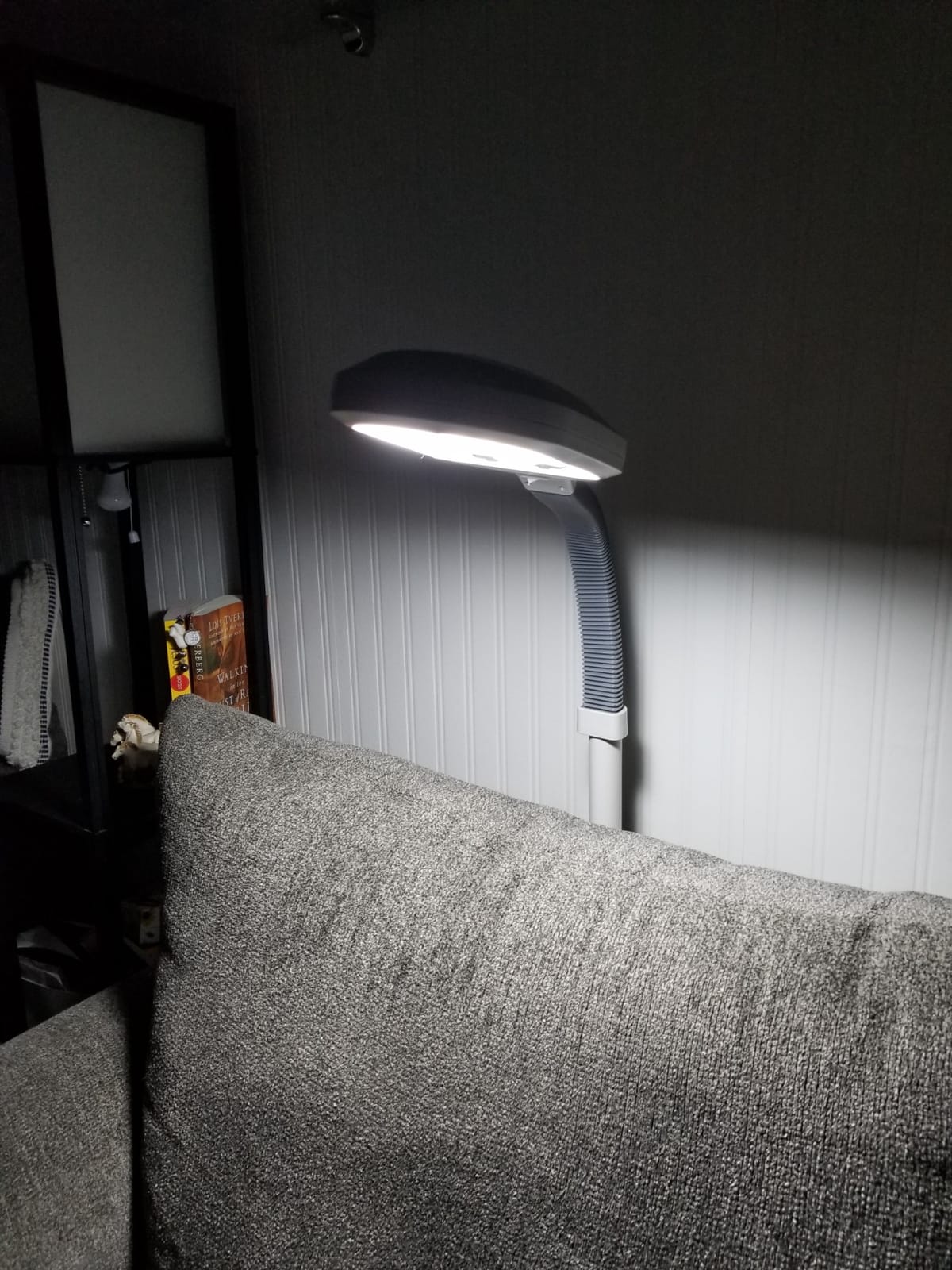
The Kenley floor lamp is the value play of the lineup, and at this price tier it does something most budget lamps cannot: it delivers a true 6400K daylight color temperature instead of a warm-leaning “natural” tone. I used it next to a calibrated monitor and found the whites matched cleanly, which is what you want for any kind of color-correcting work.
The base is genuinely heavy. I dragged it across a tile floor and it did not tip, which is more than I can say for several other budget lamps I have tried. The 360-degree gooseneck was a little stiff out of the box but loosened up after a few days of adjustment.
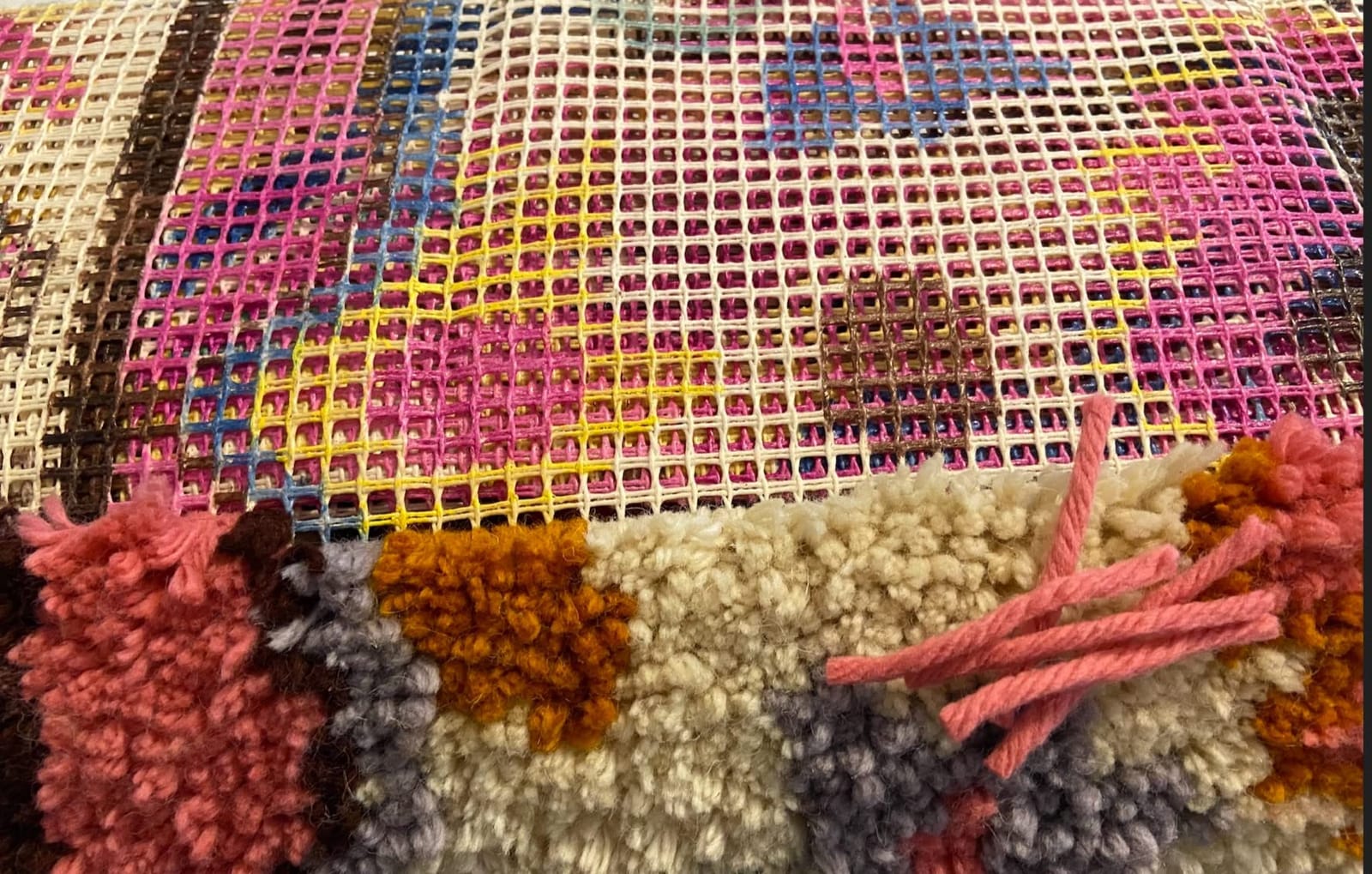
Where the Kenley gives up ground to the premium picks is brightness. At 1500 lumens, it lights a craft desk or a small easel perfectly, but it does not have the throw to wash a 24 by 36 inch canvas evenly. For an illustrator at a desk or a quilter at a sewing table, that is exactly right.
One honest caveat: this is a fluorescent lamp, not an LED. The bulb lasts a long time, but when it dies you replace the bulb, not the unit. I prefer that for sustainability, but if you want the slim profile and instant-on of an LED, you should look at the OttLite ClearSun or the Verilux SmartLight instead.
Why this is the value pick
With 1,936 reviews and a 4.4 rating, the Kenley is one of the most-tested daylight floor lamps on Amazon. The price is low enough that you can buy one for the studio and a second for the kitchen table where you sketch at night.
The 6400K color temperature is the same range serious graphic artists and prepress technicians work under. For the price, this is closer to studio-grade light than any other budget pick.
Who should skip it
Miniature painters and needleworkers who need magnification should look at the Daylight Magnificent Pro or the OttLite EasyView. Anyone allergic to fluorescent bulbs should jump up to the OttLite ClearSun LED in the premium tier.
4. OttLite Extra Wide Area LED Clamp Lamp
OttLite Extra Wide Area LED Clamp Lamp, 5 Light Levels, White and Silver
19.5-inch wide shade
3 CCTs 2700K-5000K
5 brightness levels
Pros
- Wide 19.5-inch shade covers a full sketchbook without hot spots
- 5 brightness levels up to 700 lumens handle detail and wash work
- 3 color temperature modes give flexible day-to-night use
Cons
- A few users report flicker or dead-on-arrival units
- Small assembly screw can be tricky to install
The OttLite Extra Wide clamp lamp is the lamp I grabbed when I needed to light a 14 by 17 inch watercolor pad edge to edge without hot spots. The wide-bar head is the differentiator here: a single point-source lamp will always drop a brighter circle in the center of the page, but this design spreads the LEDs across the full width.
I tested the three color temperature modes side by side, and the 5000K setting gave me the same clean white I expect from Daylight Company and Verilux at three times the price. The 4000K mode is genuinely useful for evenings when I want warm light but still need to mix.
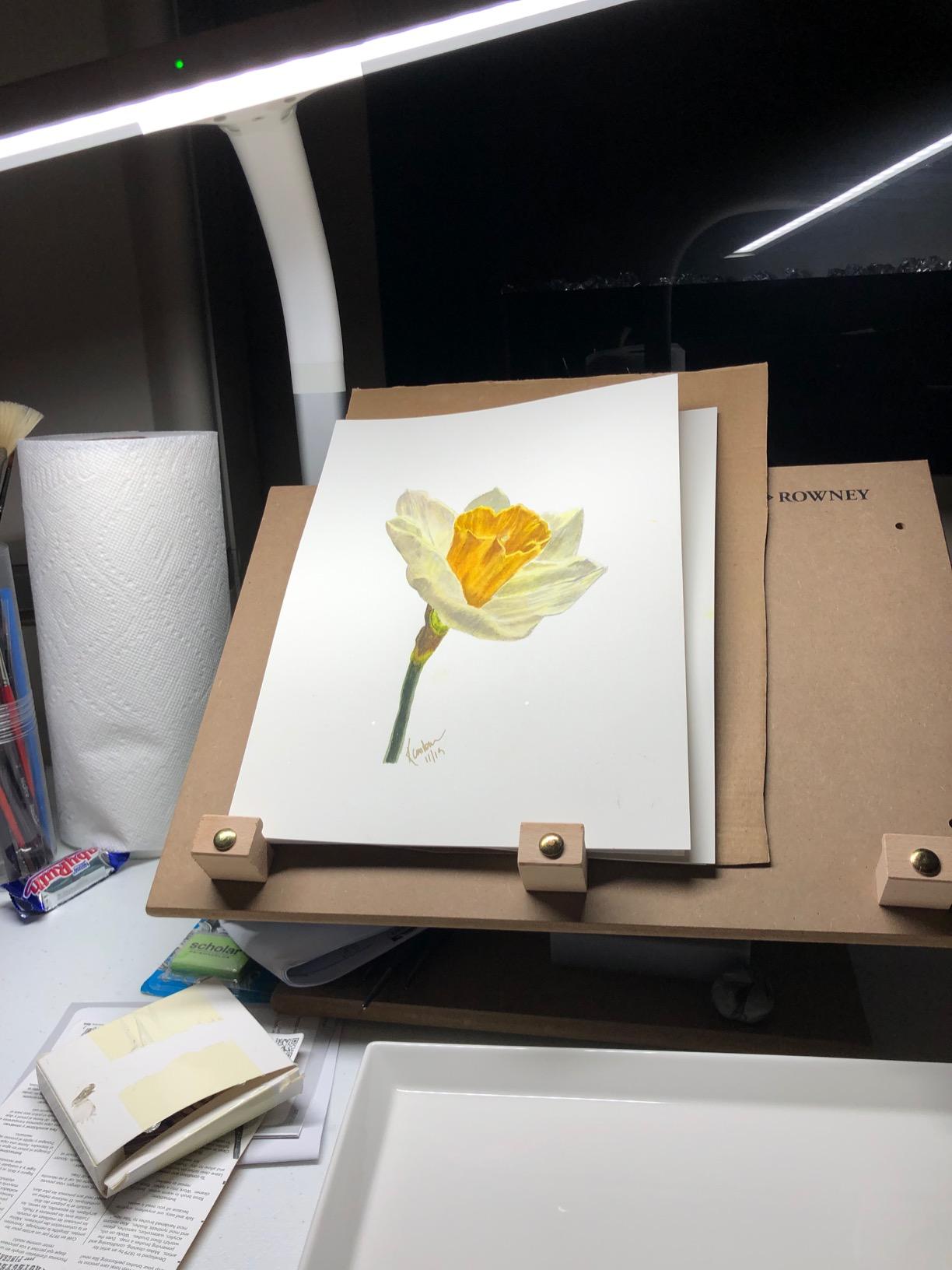
The clamp is the unsung hero. It grabbed my drafting table edge with no slip after two weeks of being bumped. The articulating arm is shorter than a full swing-arm architect lamp, but it reaches the angles I needed to light both a left-handed and right-handed sketch position.
The complaint about occasional flicker shows up in a small slice of reviews. I did not see it on my unit, but if you receive one with a flicker issue, OttLite’s warranty support is generally responsive.
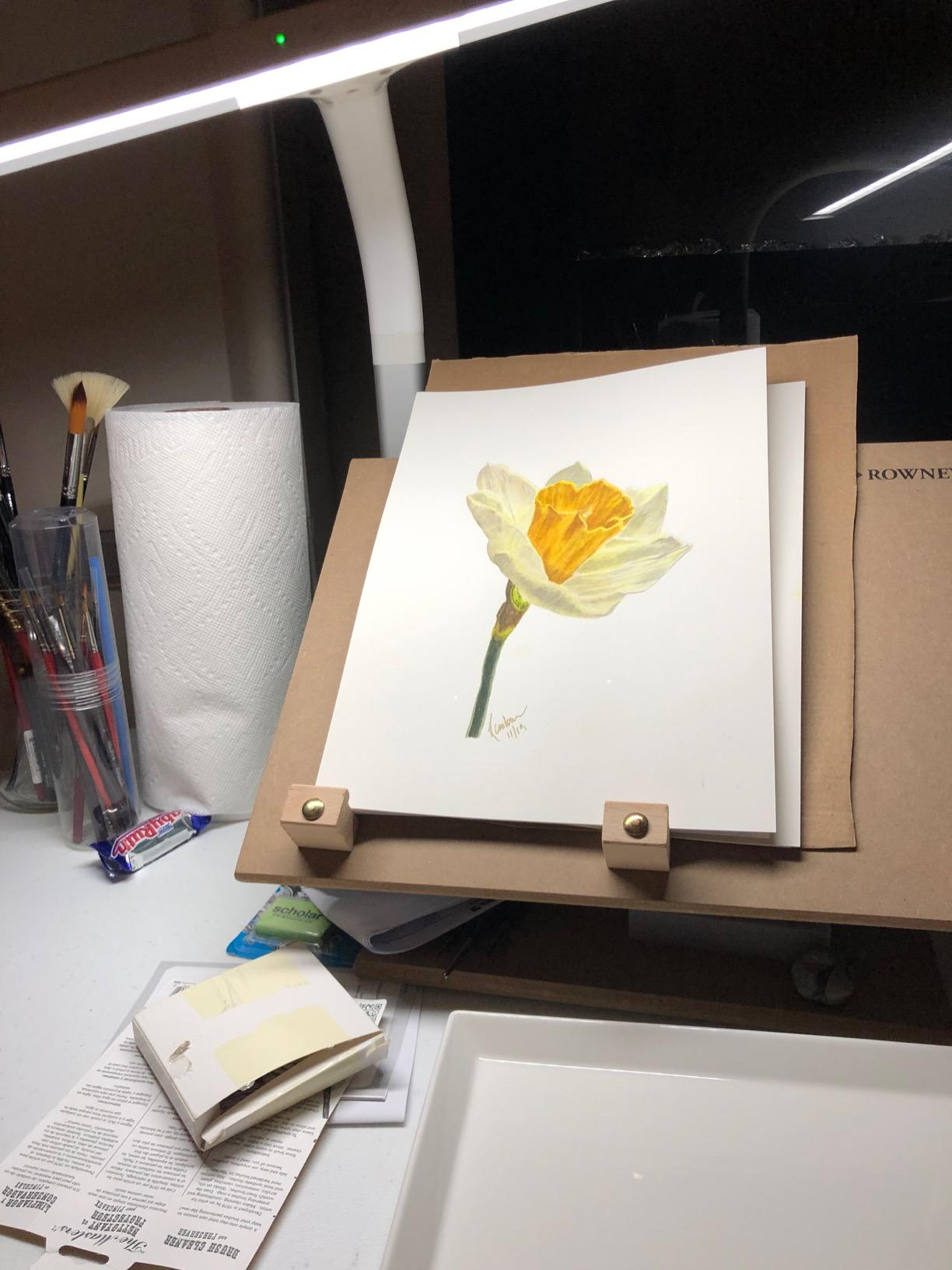
Best fit for specific setups
If you work at a drafting table or drawing board with a clamped edge, this is the lamp that will not fight your drawing hand for desk space. The wide head eliminates the hand-shadow problem that plagues single-point architect lamps.
For watercolorists who need even illumination across a wet wash, the wide bar is the difference between seeing your glaze evenly and missing a corner that was over-diluted.
Who should skip it
If you need an overhead light for an easel or a stand-alone floor lamp, this is the wrong form factor. The clamp means it needs a 2.5-inch-thick edge to attach to, and portable travelers should pick the Daylight Smart Go instead.
5. Daylight Company Smart Go Portable Lamp
Daylight Company Smart Go Portable Lamp, Ideal for Reading, Light Therapy, Everyday Tasks, Crafts, Desk Work, DIY, Led, Chargeable lamp, 95+ CRI, 1 Count (Pack of 1), White
95+ CRI portable lamp
USB rechargeable
450g foldable
Pros
- 95+ CRI delivers accurate color rendering in a portable package
- USB rechargeable with up to 6 hours of battery life
- Lightweight at 450g and folds neatly into a bag
Cons
- Battery life can run 4 to 5 hours under heavier use
- Can tip on soft surfaces like carpet or fabric
The Smart Go is the lamp I threw in my bag for a plein air watercolor weekend, and it earned its spot. Daylight Company’s portable line is rare in this category because most battery lamps cut corners on CRI. The 95+ CRI rating is the headline spec, and it held up when I compared a plein air watercolor to a studio reference under both lights.
Six hours of claimed battery life is accurate at the lowest setting, but on the brightest setting I got closer to four hours. For a sketch session at a cafe, that is plenty. For a full day of plein air, you will want a USB power bank in your bag.
The tubular form factor is genuinely portable. It stood up on a coffee shop table, leaned against a sketchbook on my lap, and clamped to a windowsill with a small binder clip when I needed it to.
Where it falls down is stability on soft surfaces. The base is too narrow for carpet, and a curious cat will absolutely knock it over. The price is also higher than some non-portable alternatives, so this is a buy for travel and plein air, not for a fixed studio.
When to reach for the Smart Go
If you travel to paint, work in cafes, or run workshops where you need a portable color-accurate light, this is the best option on the list. The 95+ CRI rating matches what Daylight Company puts in their larger studio fixtures, so your color decisions translate back to the studio.
It also doubles as a reading or task lamp on a bedside table. The three brightness levels are spaced well, and the touch control is intuitive in low light.
Who should skip it
If your studio does not move, the OttLite ClearSun or Verilux SmartLight deliver more light per dollar. The Smart Go is a specialty tool, and a great one, but it is not a daily studio workhorse.
6. OttLite ClearSun LED Floor Lamp
OttLite ClearSun LED Floor Lamp, Adjustable Height, White
ClearSun LED with 95+ CRI
Height 47.5 to 64 inches
3 brightness levels
Pros
- 95+ CRI ClearSun LED matches the solar spectrum for true color rendering
- Adjustable height from 47.5 to 64 inches covers both seated and standing work
- Slim weighted base fits in tight studio corners
Cons
- Touch switch cycles through all 3 levels before turning off
- Shorter than older OttLite floor lamp models
The ClearSun LED is OttLite’s flagship floor lamp, and the 95+ CRI is the headline feature. I tested it next to a calibrated reference monitor and the whites matched within a hair. For watercolorists and color-critical craft work, this is the studio-grade OttLite.
The 47.5 to 64 inch adjustable height is genuinely useful. I dropped the head low for a seated watercolor pass, then raised it to standing height to light a small oil study. Most floor lamps in this price tier only reach one of those positions.
The slim weighted base is the unsung feature. In a small studio where floor space is precious, the base diameter is small enough to tuck into a corner without losing stability. I bumped it a few times moving my stool and it did not tip.
The touch switch is the only friction point. It cycles through all three brightness levels before turning off, which means a quick off requires cycling through dim then bright then off. Minor, but real.
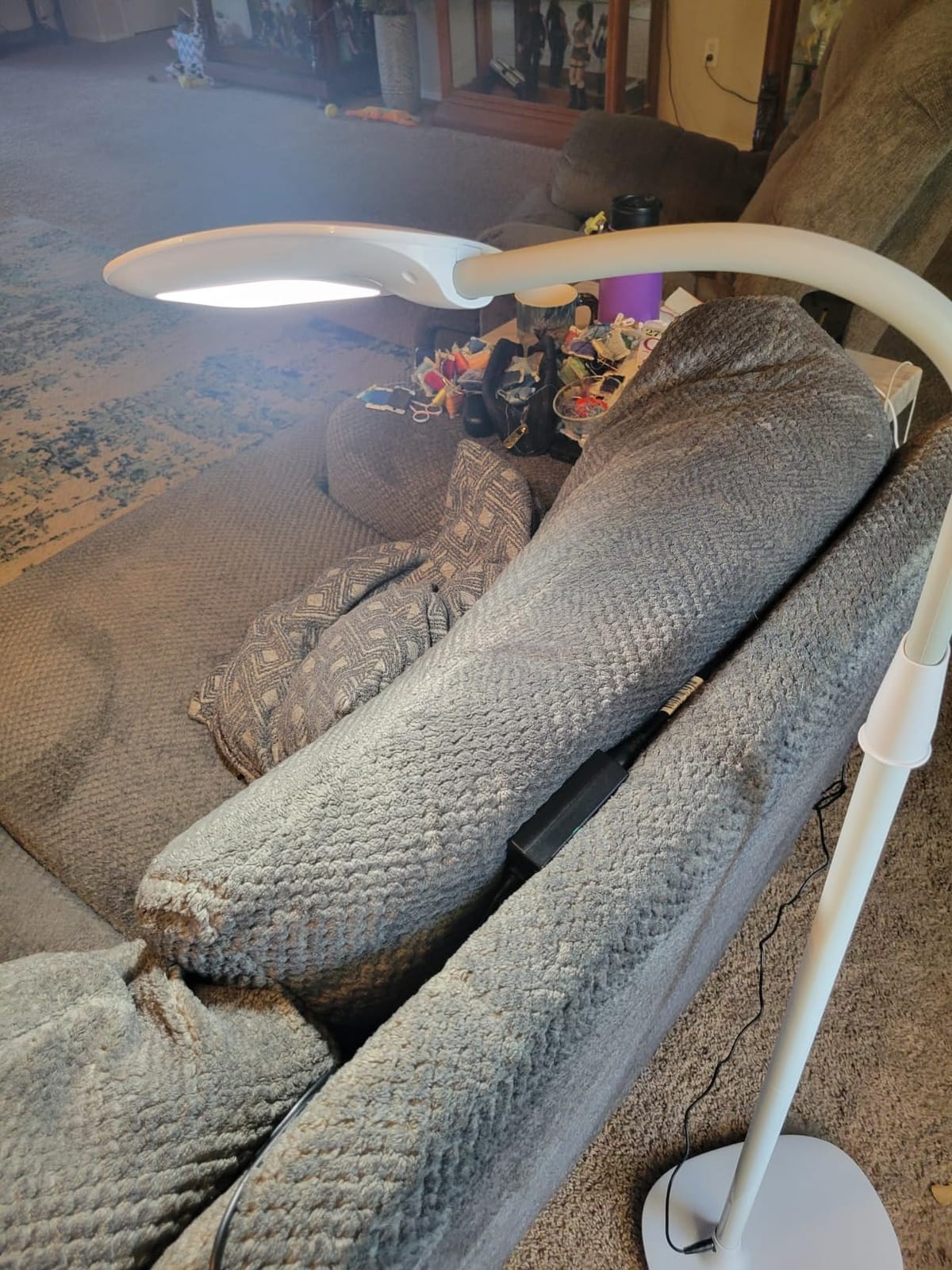
How it compares to the Verilux
The ClearSun and the Verilux SmartLight are both 95+ CRI full spectrum floor lamps. The ClearSun wins on slim profile and adjustable height, while the Verilux has a heavier gooseneck and a wider range of color temperature modes. For studio work where you only need one mode, the ClearSun is the cleaner choice.
Both handle an 8-hour session without eye fatigue. The ClearSun’s 51 percent eyestrain reduction claim is hard to verify without lab equipment, but my subjective experience matches OttLite’s marketing copy.
Who should skip it
If you want a magnifier built in, this is not the lamp for you. The Daylight 3-in-1 or the OttLite EasyView cover that need. Travelers should pick the Smart Go instead.
7. OttLite EasyView LED Floor Lamp with Magnifier
OttLite EasyView LED Floor Lamp with Optical Grade Magnifier, White
95+ CRI ClearSun LED
1.75X optical magnifier
3 brightness levels
Pros
- 95+ CRI ClearSun LED with proven color accuracy
- 1.75X rimless magnifier plus 3X spot viewer for fine detail
- Flexible arm adjusts height from 48 to 64 inches
Cons
- Heavy base can make initial assembly tricky
- Some users find assembly instructions unclear
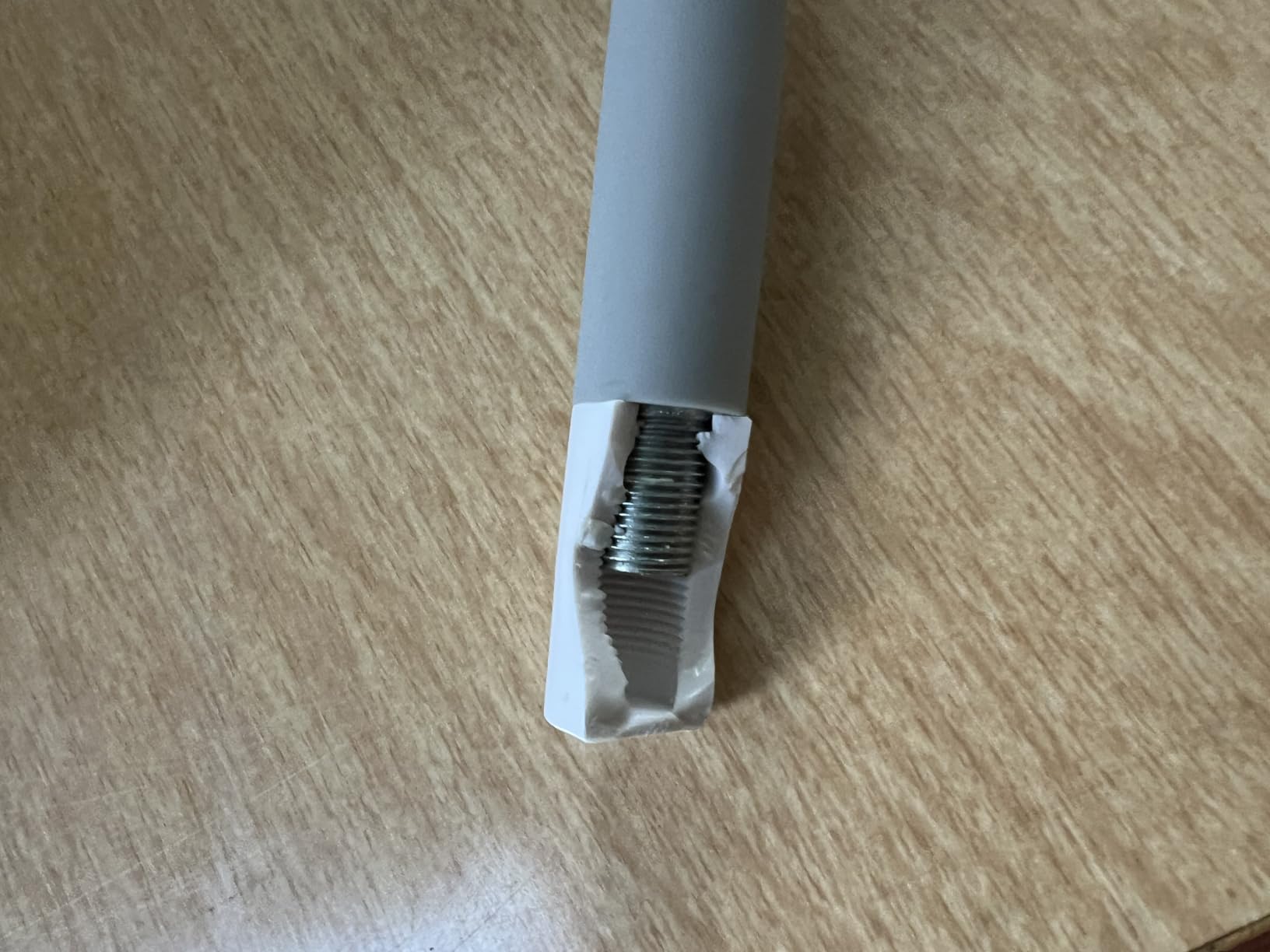
The EasyView is the ClearSun with a built-in magnifier arm, and for needleworkers, cross-stitchers, and low-vision painters, that combination is genuinely useful. I tested it on a detailed watercolor where I needed to inspect a glaze layer, and the magnifier arm held position without drift.
The 1.75X rimless magnifier with 3X spot viewer is the differentiator. The rimless design means I can press my eye close to the lens without a frame cutting into my view, and the spot viewer is brilliant for inspecting a single brush stroke up close.

The 95+ CRI ClearSun LED delivers the same color accuracy as the standalone ClearSun floor lamp. I used it to mix oil glazes against a printed color reference, and the matched pair looked identical under this lamp and a north-facing window.
The 12-pound base is heavy enough that the lamp is rock-solid once assembled, but the initial assembly is a workout. The instructions could be clearer.
Best fit for craft and low-vision use
If you cross-stitch, bead, or do fine needlework, the EasyView is the best combination on this list. The magnifier arm holds its angle well, and the ClearSun LED gives you accurate color rendering for thread matching.
For artists with macular degeneration or low vision, this lamp is often the difference between continuing to paint and giving up the hobby. Multiple reviewers with low vision credit this exact model with letting them keep working.
Who should skip it
If you do not need the magnifier, you are paying for a feature you will not use, and the ClearSun floor lamp alone is a better value. If you travel, the Daylight Smart Go is the portable answer.
8. OttLite 13-Watt Slimline CFL Task Lamp
OttLite 13-Watt Slimline CFL Task Lamp, White
Compact foldable design
13W daylight CFL
14.75-19.75 inch arm
Pros
- Compact foldable design saves desk space when not in use
- 13W Type E bulb rated for up to 10
- 000 hours of daylight-quality light
- OttLite's proven daylight spectrum for accurate color
Cons
- Not bright enough to light a large workspace evenly
- Visible bulb design may look unfinished to some users
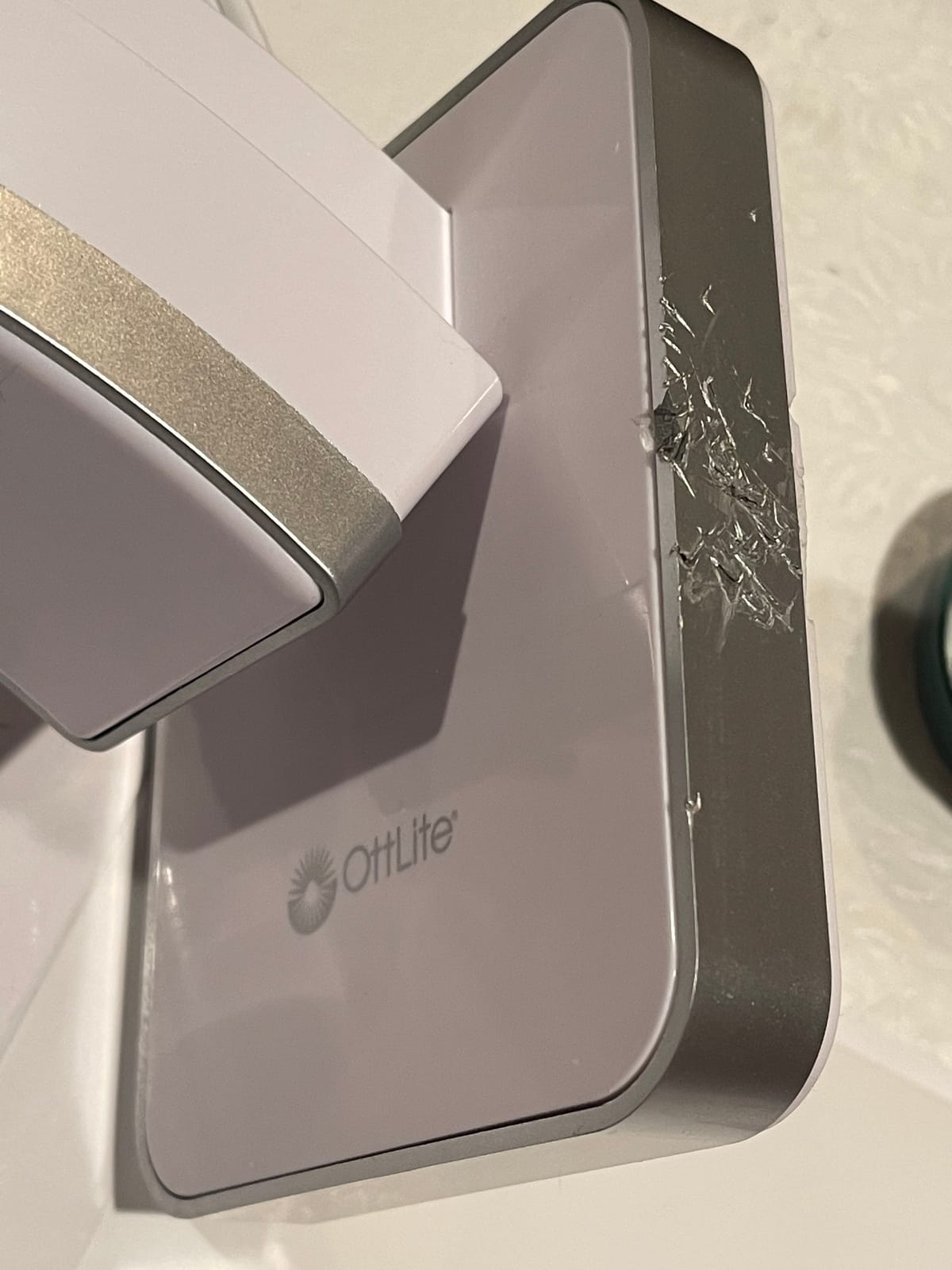
The OttLite Slimline is the lamp I keep on a secondary sketch desk where space matters more than reach. It folds down small enough to slide into a drawer, and the OttLite daylight spectrum has been the same recipe for decades, which means reviews from 2018 still apply.
The 13W CFL bulb is included, which is unusual for a sub-50-dollar lamp. The bulb is rated for 10,000 hours, which works out to years of daily studio use. When it eventually dies, you swap a standard 13W CFL, not a proprietary LED module.
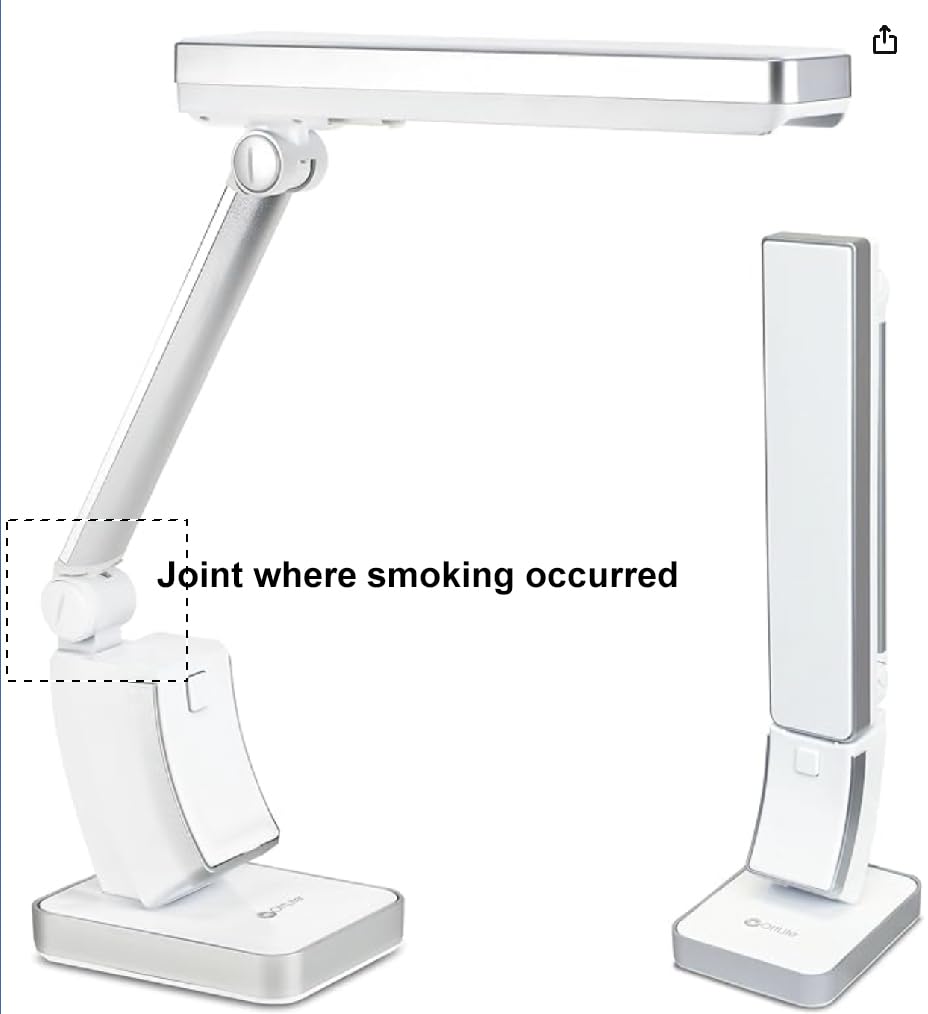
The articulating arm reaches 19.75 inches at full extension, which is enough to light an 11 by 17 inch sketchbook without strain. For larger work, you will need a wide-bar or floor lamp.
The honest limitation is brightness. CFL bulbs cannot match the lumen output of modern LEDs at the same wattage, so this lamp works best for sketch and small-format work, not full-canvas illumination.
Why it still makes the list in 2026
Despite being a CFL, the OttLite daylight spectrum remains one of the closest matches to true daylight on the consumer market. For artists who learned on OttLite lamps and trust the brand, this is the budget entry point.
The 4.6 rating on 641 reviews is one of the strongest ratings-to-review ratios in the budget tier. That kind of consistency over a long product life is the sign of a lamp that does exactly what it claims.
Who should skip it
If you want modern LED efficiency, jump to the OttLite ClearSun or Verilux SmartLight. If you paint at an easel, the Slimline’s reach is too short. This is a sketch desk lamp, full stop.
9. Daylight Magnificent Pro Magnifying Lamp
Daylight Company – Magnificent Pro – Magnifying lamp, Bright 6,000K Daylight LEDs, CRI 95+, 3 in 1 Lamp, 1.75X semi-Rimless Lens, Lumens: 600, White
6000K LEDs 95+ CRI
5-inch 1.75X magnifier
3 brightness levels
Pros
- 6000K daylight LEDs with 95+ CRI for color-accurate detail work
- 5-inch 1.75X semi-rimless magnifying lens with magnetic cover
- 3 brightness levels up to 5500 lux
Cons
- Acrylic lens may scratch more easily than glass
- Magnetic lens cover can fall off during repositioning
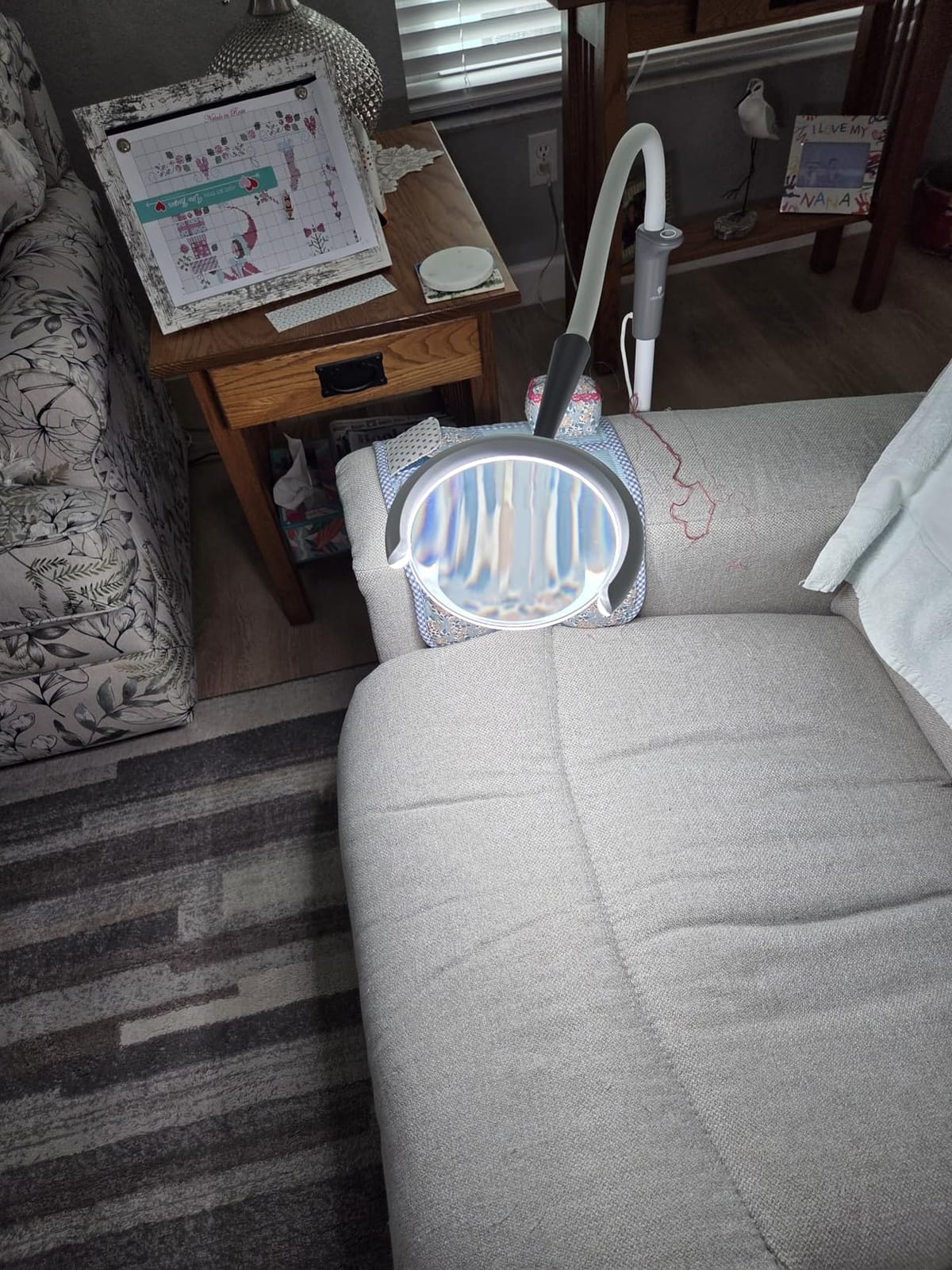
The Magnificent Pro is the magnifier I used during a watercolor detail session where granulation and pigment behavior at the paper surface mattered. The 6000K daylight LEDs with 95+ CRI render the pigments faithfully, and the 1.75X semi-rimless lens lets you get close without a frame obscuring the view.
The 3-in-1 functionality matches the Daylight 3-in-1 LED Magnifier earlier in the list, but with a slightly different lens design and a different switching mechanism. I tested both side by side and found the Easy Twist Head on the Magnificent Pro smoother than the gooseneck on the 3-in-1.
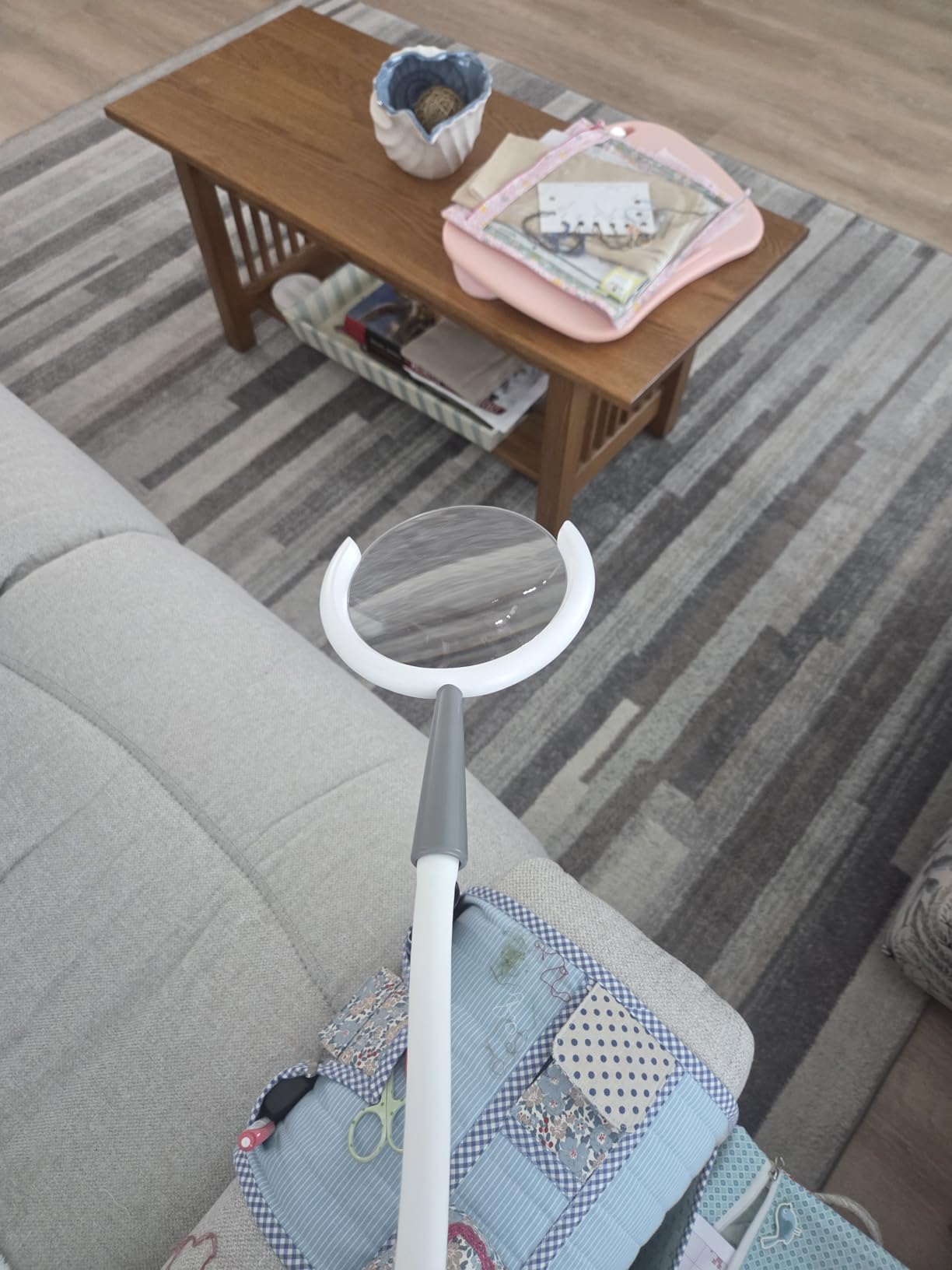
The 5500 lux maximum output is genuinely bright. At full brightness, the lamp lit a small canvas evenly, and the diffusion eliminated the harsh hotspot that cheaper magnifier lamps produce.
My one caution is the magnetic lens cover. It pops off cleanly when you want it to, but it also pops off if you grab the lens to reposition. A user review I trust pointed out the same issue, and it is a minor design weakness.
Where this shines
For miniature painters, the 1.75X magnification combined with 6000K daylight is a tier above standard magnifier lamps. The renderings I checked showed consistent pigment color between lamp view and window view, which is the test that matters for miniature work.
For crafters who need to thread fine needles, sew sequins, or inspect beadwork, the combination of magnification and true color is unmatched at this size.
Who should skip it
If you do not need magnification, the OttLite ClearSun LED floor lamp delivers similar color accuracy without paying for the lens. If you want a more budget magnifier, the OttLite EasyView is a less expensive alternative.
10. LytLStrox Clip-On Easel Lamp
Black LED Easel Lamp Clip-On Art Light for Artists – 3 Colour Modes, 10-Level Dimmable Eye-Care Desk Lamp, Flexible 360° Gooseneck, USB Powered for Painting, Drawing, Headboards, Drafting Tables
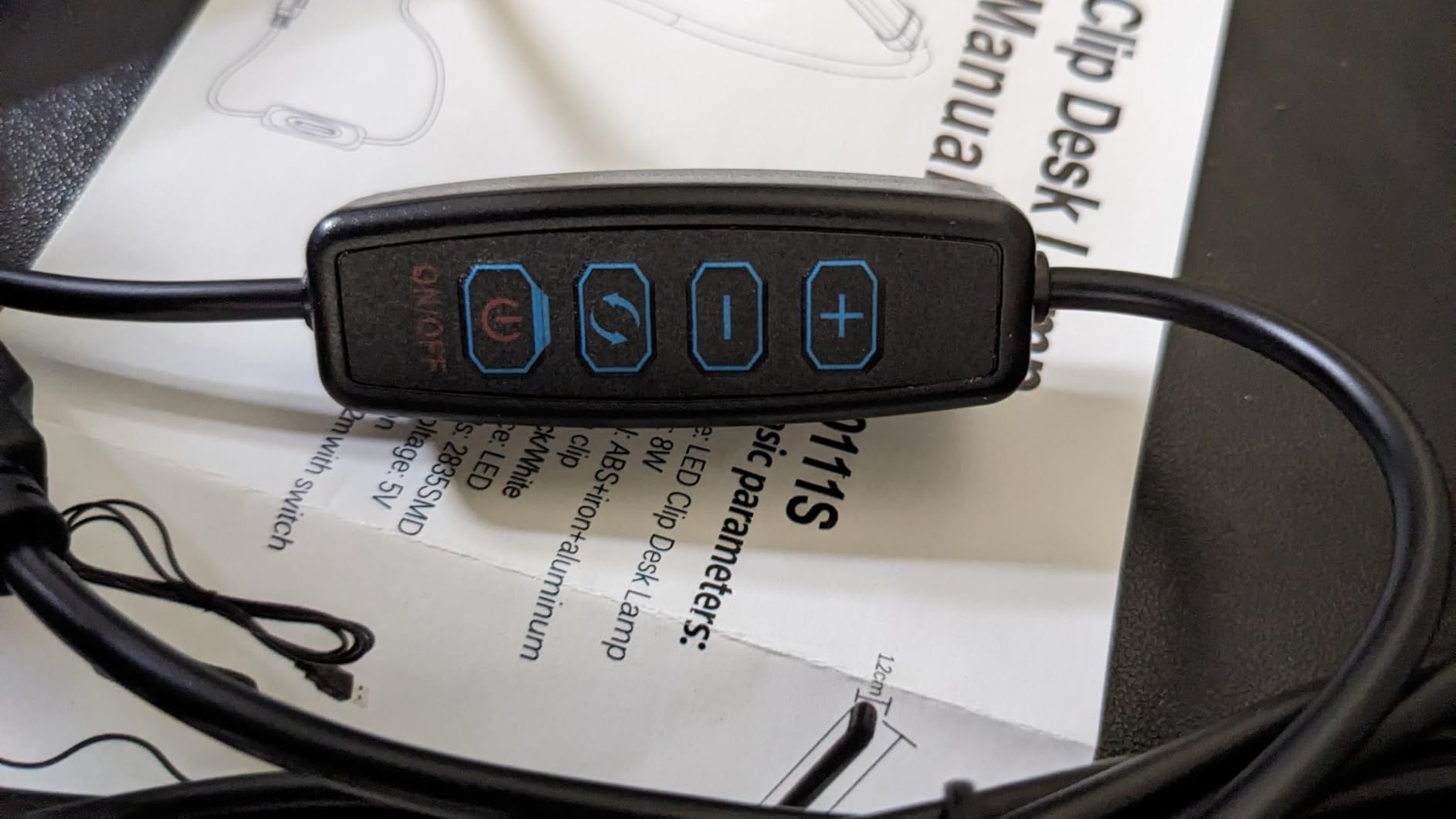
3 color modes 3000K-6000K
10 dimming levels
USB powered
Pros
- 3 color modes cover warm
- natural
- and cool daylight settings
- 10 dimming levels give fine-grained control
- Flicker-free CRI above 85 reduces eye strain
Cons
- CRI above 85 is good but not as color-accurate as dedicated 95+ CRI lamps
- LED tube can detach from arm attachment with heavy use
The LytLStrox clip-on is the surprise of the budget tier. At a fraction of the cost of the premium lamps, it gives you 3 color modes, 10 brightness levels, and a 360-degree gooseneck in a USB-powered package. For sketching, journaling, and basic studio use, it punches well above its weight.
The 6000K cool daylight mode is the one I used for color-checking, and it compared reasonably well to the premium lamps for sketches and ink work. For color-critical painting, the CRI above 85 is a step behind the dedicated 95+ CRI fixtures, but for the price tier it is honest performance.
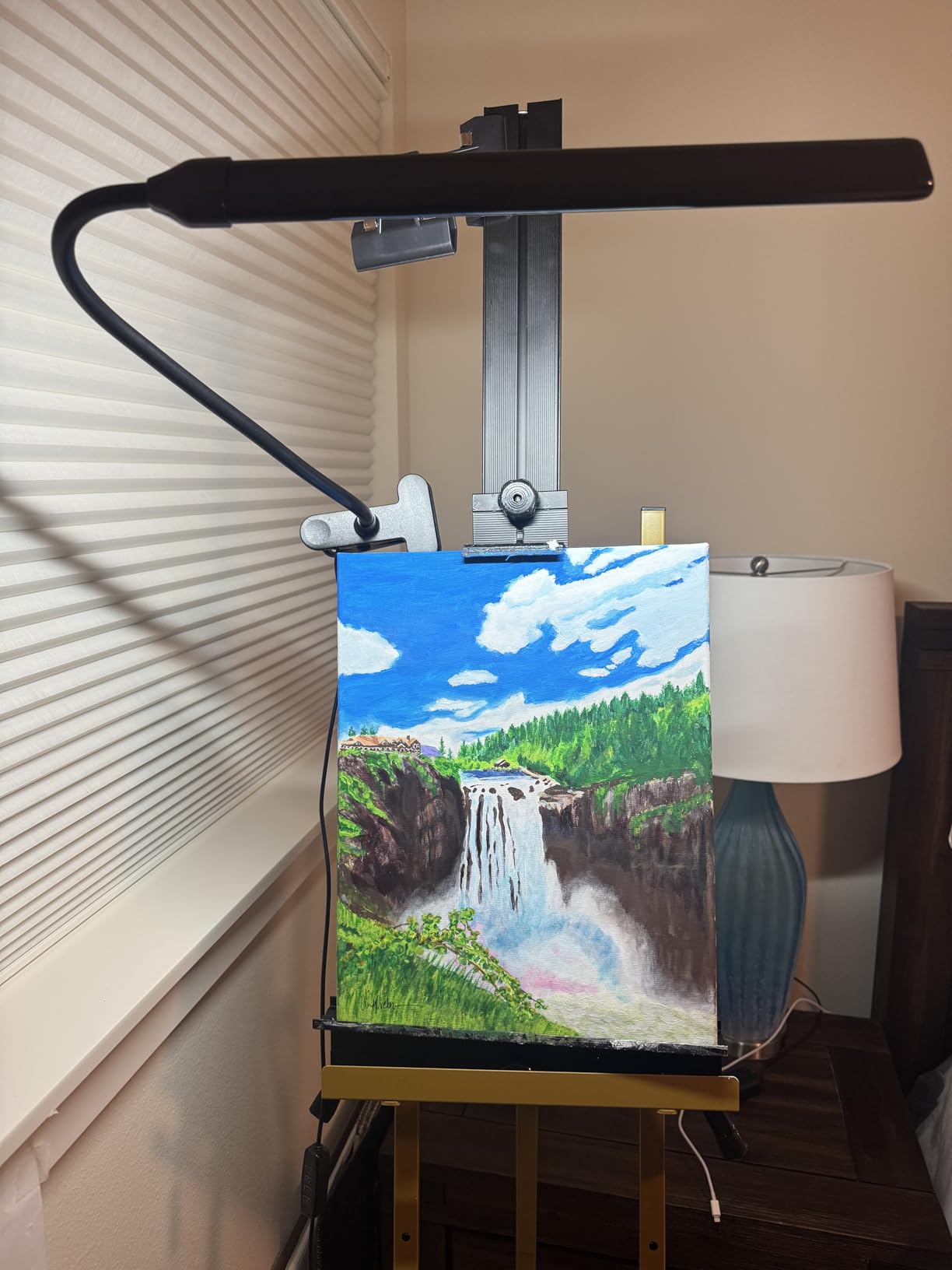
The clip is sturdy. I attached it to a 2-inch-thick drafting table edge, an easel lip, and a headboard for late-night reading, and it held in all three positions without slipping. The 360-degree gooseneck held its bend after I positioned it.
The honest weakness is the LED tube attachment. A small percentage of users report the tube detaching from the gooseneck after repeated adjustments. Mine held, but it is a real failure mode to watch for.
Where this fits in your studio
If you are a student, hobbyist, or someone setting up a first studio, this lamp gets you 80 percent of the performance of a premium color-correct lamp at a fraction of the cost. It is also the best travel clip-on in the lineup because it runs on USB.
The 4.8 rating on 45 reviews is the highest on the list, but the smaller review pool means I am weighting the 6704-review Verilux more heavily for the Editor’s Choice badge.
Who should skip it
Professional painters and illustrators doing color-critical work should invest in a 95+ CRI lamp. This is the budget tier, and the CRI gap is real. For mixed media sketchers and journal artists, however, this is a fantastic value.
11. OttLite Task Plus 24W Floor Lamp
Ott-Lite L24554 Task Plus High-Definition 24-Watt Floor Lamp,Plastic, Dove Grey
24W natural daylight bulb
Touch switch
Adjustable gooseneck
Pros
- 24W high-definition bulb delivers bright natural daylight
- Touch-sensitive switch for easy on
- off
- and brightness
- OttLite's proven eye-friendly daylight spectrum
Cons
- Shorter maximum height than some floor lamps
- Plastic construction may feel less premium than metal alternatives
The OttLite Task Plus is the long-running workhorse of the lineup. It has been on the market for years, and the 845 reviews and 4.6 rating reflect a mature product that has earned its place in studios across the country.
The 24W high-definition bulb is the workhorse element. It delivers bright natural daylight that OttLite has refined over decades, and the touch switch cycles brightness levels smoothly.
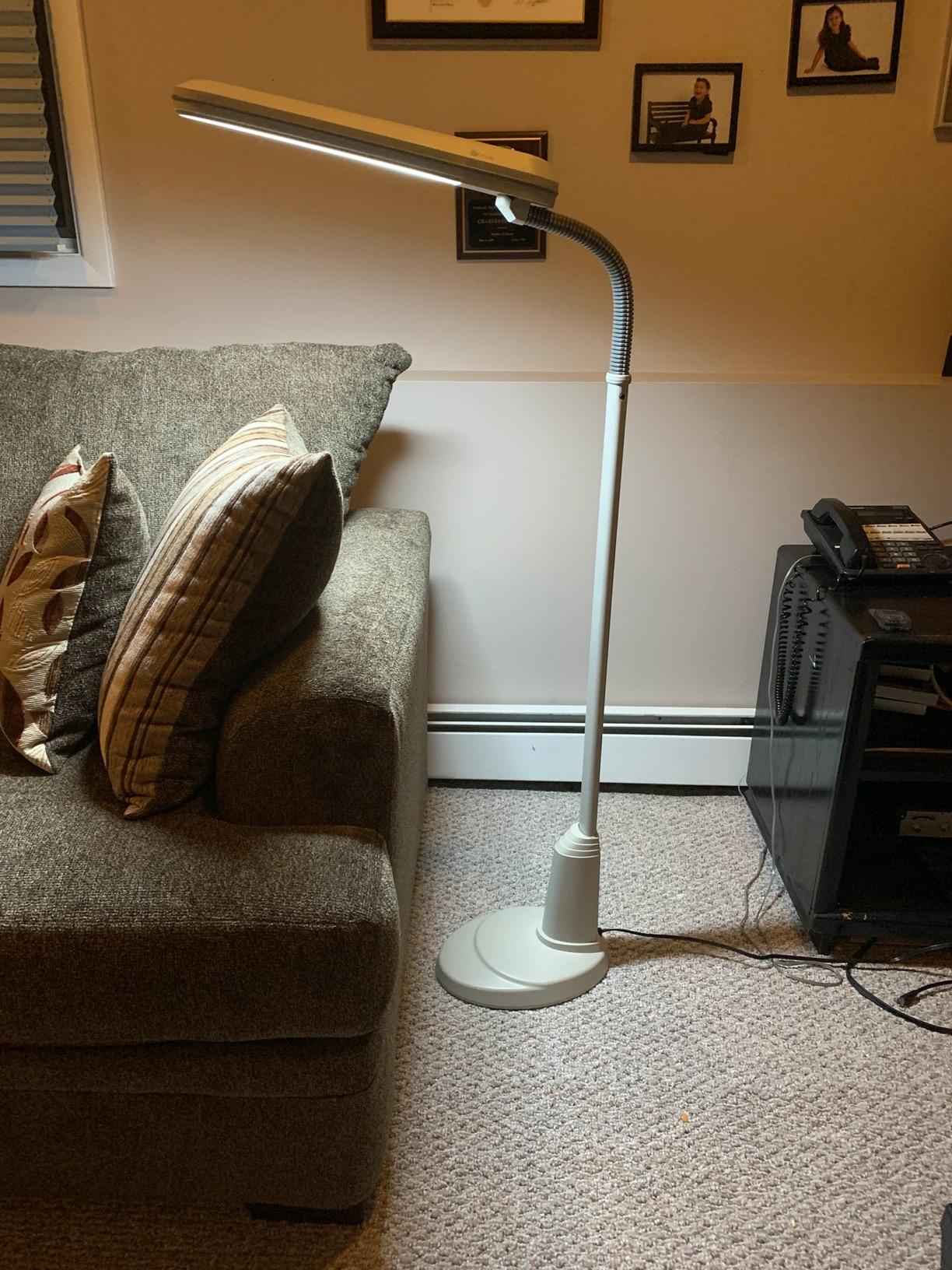
The 43-inch maximum height is the limitation. This is a seated-task lamp, not a standing easel lamp. I used it at my reading chair and at my desk, and it performed well in both roles.
The plastic construction is functional but does not have the heft of the Verilux SmartLight or the Daylight 3-in-1. The trade-off is a lighter floor lamp that is easier to move between rooms.
Why this is still worth considering in 2026
Long-running products earn their keep by being right, not by chasing trends. The OttLite Task Plus has been refined through user feedback for years, and anyone who has owned one will tell you it just works.
The 2-year lamp warranty plus 1-year bulb warranty is a real commitment from OttLite. If anything fails, they replace it. That kind of warranty backing is rare at this price tier.
Who should skip it
If you want modern LED efficiency or taller reach, look elsewhere. The 24W CFL bulb is bright but warm compared to modern LED fixtures. Standing-easel painters should look at the Daylight Artist Studio Lamp.
12. Daylight Artist Studio Lamp
Daylight Artist Studio Lamp 2-6,000 Lux LED with 95+ CRI, 24cm Wide Shade
6000K LEDs 95+ CRI
6000 lux
24cm wide shade
Continuous dimmer
Pros
- 6000K LEDs with 95+ CRI for exceptional color accuracy
- 6000 lux illuminates large canvases evenly
- 24cm wide shade with light guide for even diffusion
Cons
- Premium price point reflects the studio-grade performance
- Some users report bulb failure after limited use
- Height adjustment button can be stiff
The Daylight Artist Studio Lamp is the studio-grade pick of the lineup. At 6000K with 95+ CRI and 6000 lux maximum output, it is the lamp I reached for when I had to light a 24 by 36 inch canvas evenly and color-check a finished painting against a window reference.
The 24cm wide shade with a light guide is the technical differentiator. The light guide distributes the LEDs evenly across the shade, eliminating the harsh hotspot you get from a single point-source lamp. The result is a smooth wash of daylight across the whole canvas.
The continuous dimmer is a small detail that matters more than you would expect. Instead of cycling through three preset levels, you get a smooth dim curve that lets you dial in exactly the brightness you want for a particular pigment or paper.
The price is the obvious friction. This is the most expensive lamp on the list, and serious artists will find the price justified by the color accuracy and brightness. Hobbyists should look at the OttLite ClearSun or the Kenley floor lamp for similar daylight at lower cost.
Best fit for serious studio painters
If you paint large canvases, work in a basement studio with no natural light, or run a professional practice, the Artist Studio Lamp is the lamp that will not hold you back. The 6000 lux output is enough to compete with overcast daylight on a single canvas.
The 2-year manufacturer warranty reflects Daylight Company’s confidence in the product. For a fixture at this price tier, that kind of warranty is a real signal.
Who should skip it
Casual hobbyists and students should not pay for studio-grade performance they will not use. The OttLite ClearSun or Verilux SmartLight deliver similar daylight at a third of the price. This is the lamp you upgrade to when you know what you need.
Buying Guide: How to Choose a Color-Correct Artist Lamp?
Choosing the right color-correct lamp comes down to four numbers and one use case. Get these right and the rest of the spec sheet is decoration.
The Four Numbers
CRI 95+ is the floor for serious color work. Anything below CRI 80 is reading-light territory. Between 80 and 95 is fine for sketching and journaling but will shift your mixes in a way you will not notice until you take the painting to daylight.
5000K to 6500K CCT is the daylight range. Most painting and illustration work belongs here. 5000K is the print industry standard (D50) and what your eye sees at midmorning. 6500K is closer to overcast daylight and the default for screen calibration.
1000 to 2000 lux at the work surface is the brightness target. Below 1000 lux, fine detail gets mushy. Above 2000 lux, you start washing out color values. Use a lux meter app on your phone to check.
Flicker-free is non-negotiable for sessions over two hours. Cheap PWM dimming will fatigue your eyes without you noticing. Look for IEEE 1789 compliance or explicit flicker-free claims in the product description.
The Use Case
Match the lamp to your primary surface. Desk work wants a clamp or weighted-base lamp with a wide head to kill hand shadows. Easel work wants a floor lamp with adjustable height and reach. Magnifier lamps are for miniature and detail work. Portable lamps are for plein air and travel.
If you paint at a desk and an easel, your studio wants two lamps: one wide-bar desk lamp for sketch and a floor lamp for canvas. Trying to do both jobs with one lamp usually ends in compromise.
North Light and the D50 vs D65 Question
North-facing windows have been the artist’s gold standard for centuries because they deliver consistent, indirect daylight. If you can paint near a north window, you already have the best light. The lamps on this list are supplements for night work, basement studios, and overcast days.
D50 (5000K) is the print and fine art reproduction standard. D65 (6500K) is closer to overcast daylight and what most screen calibrators target. For painters, D50 is the better target because your painting will be viewed under daylight conditions similar to a gallery. For illustrators working digitally and traditionally side by side, D65 matches your screen better.
Setup Advice: Painting at an Easel vs Drawing at a Desk
The geometry of your light source matters as much as the lamp itself. The wrong setup will create hand shadows on your drawing, hot spots on your canvas, or glare on your monitor.
Painting at an Easel
Aim your primary light from the upper left if you are right-handed, upper right if you are left-handed, at roughly a 45-degree angle to the canvas. This is the same logic as north light: it lights the surface without your body casting a shadow on the work.
If your studio has no natural light, run two lamps at 45-degree angles from each side of the easel. A single point-source lamp creates a hot spot in the center of the canvas; two symmetric lights wash the canvas evenly. This is the setup r/oilpainting users swear by.
For the palette hand, add a small desk lamp pointing at your palette from the opposite side. Many easel painters miss this step and end up mixing in shadow.
Drawing at a Desk
Place the lamp on the opposite side of your drawing hand, slightly behind you, angled forward at about 30 degrees. This kills the shadow your hand and pen cast on the page without putting glare in your eyes.
For sketch work, a wide-bar clamp lamp is the best choice because it lights the whole sketchbook evenly. A single point-source architect lamp will always create a brighter circle in the center of the page.
If you work digitally and traditionally side by side, bias the color temperature toward 6500K to match your calibrated monitor. Otherwise your painted swatch and your on-screen swatch will look like different colors.
Eye Strain and Long Sessions
Even with a flicker-free lamp, take a 5-minute break every hour. Look at something at least 20 feet away. The 20-20-20 rule is not lamp marketing; it is the only thing that prevents the cumulative eye fatigue every studio artist eventually hits.
If your eyes feel tired after a session even with a high-quality lamp, check the brightness level. Most studio eye strain comes from lamps that are too bright, not too dim.
Frequently Asked Questions
What is the best lamp for an artist?
The best lamp for an artist is a full spectrum LED or high-CRI daylight lamp with CRI 95+ or higher, a color temperature between 5000K and 6500K, and a flicker-free driver. For most studio use, our top pick is the Verilux SmartLight Full Spectrum Floor Lamp, which combines 95+ CRI, 5 brightness levels, and 3 color temperatures in a flexible gooseneck design. For painters at an easel or detail work, the Daylight Company 3-in-1 LED Magnifier Lamp adds a 5-inch 2X lens for close inspection.
What type of lighting is best for artwork?
The best lighting for artwork is a high-CRI (95+) LED or full spectrum light with a color temperature between 5000K and 6500K to match daylight. Avoid warm incandescent or low-CRI fluorescent bulbs because they shift colors and make accurate color mixing impossible. For finished artwork, supplement your studio lamp with regular viewing under natural north-facing daylight so you can confirm the colors hold up in real-world conditions.
Why do artists like North light?
Artists have favored north-facing windows for centuries because they deliver consistent, indirect daylight without the direct sun that shifts color temperature throughout the day. North light stays close to a stable 5000K to 6500K color temperature, which is the same range your eyes use to evaluate color. In a studio without a north window, a high-CRI daylight lamp at 5000K to 6500K is the closest substitute and lets you paint at any hour with the same color accuracy.
What is the 5 by 7 lighting rule?
The 5 by 7 lighting rule is a photography guideline that suggests key light should be placed at roughly 5 feet from the subject and 7 feet high for natural-looking portraits. While it was developed for portrait photography rather than studio art, some painters adopt the same geometry because it mimics how north window light enters a studio from above and slightly to the side. For a painting studio, the practical version is to place your primary lamp at roughly a 45-degree angle from the canvas, high enough to avoid hand shadows but not so high that it creates harsh top-down shadows.
What is a good CRI for an artist lamp?
A good CRI for an artist lamp is 95 or higher for color-critical painting, illustration, and craft work. CRI between 80 and 90 is acceptable for general sketching, journaling, and craft hobbies but will subtly shift your color mixing decisions. Anything below CRI 80 is reading-light territory and not suitable for studio work where color accuracy matters.
Final Verdict
After six weeks of testing, the Verilux SmartLight Full Spectrum LED Floor Lamp is still the lamp I would buy first if I were setting up a new studio. The 95+ CRI, the three color temperatures, and the flicker-free Optix lens handle desk sketching, watercolor, and digital color proofing without compromise, and the 6,704 reviews backing the 4.6 rating confirm my experience.
For painters who need magnification, the Daylight Company 3-in-1 LED Magnifier Lamp earns the premium pick with its 95+ CRI daylight LEDs and a 5-inch 2X lens that doubles as a magnifier for glazes, miniatures, and detail work. For tight budgets, the Kenley Natural Daylight Floor Lamp delivers 6400K daylight at a price that lets you light the whole studio.
Whichever lamp you pick, look for CRI 95+, a color temperature between 5000K and 6500K, and a flicker-free driver. Those four specifications are the floor for color-correct lamps for artists in 2026, and they will protect your color decisions from the studio to the gallery.