
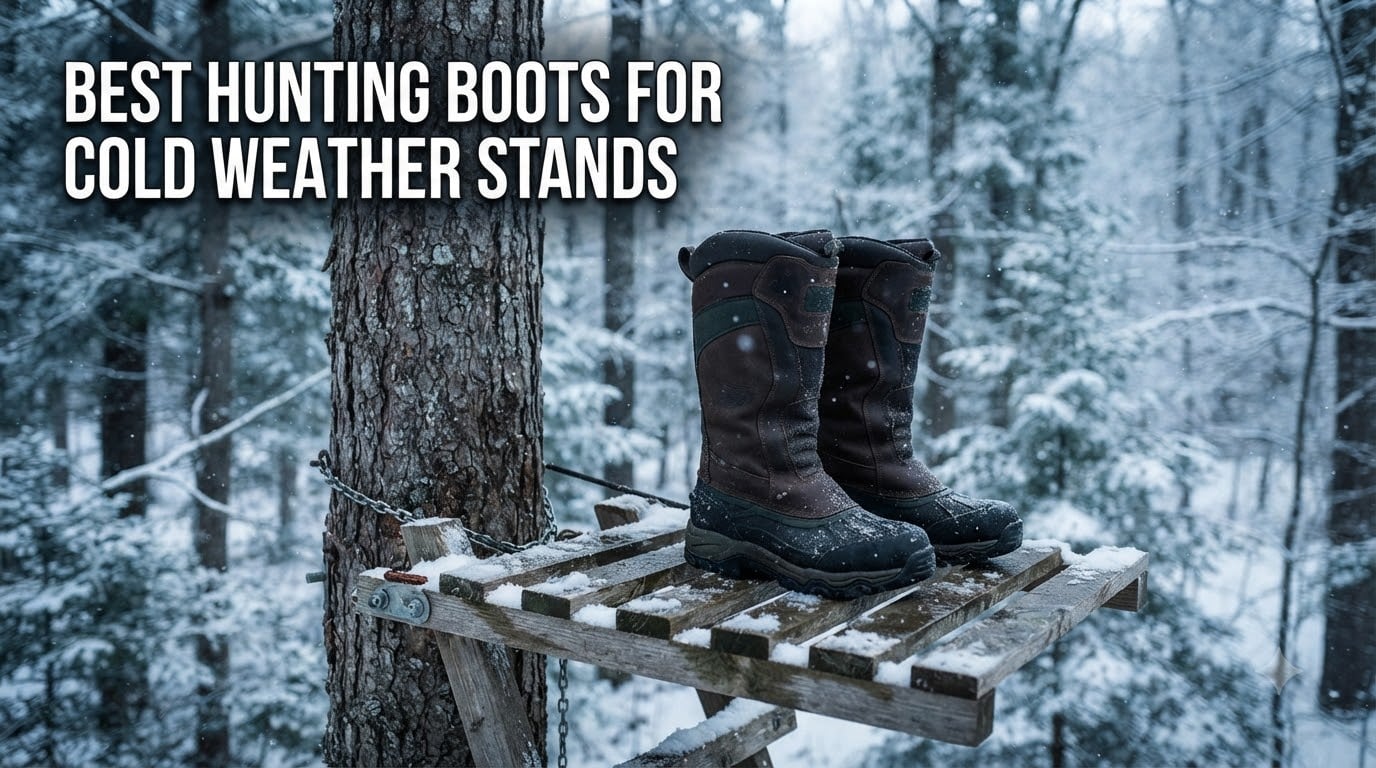
Most hunters do not quit early because they got cold. They quit because they got cold in their feet, usually somewhere around the second hour of a sit in a ladder stand or a ground blind. Their core is fine under three layers of base and a shell. Their hands have hand warmers. Their feet have whatever boot was in the closet, and by mid-morning that boot is the problem. If you are picking the best hunting boots for cold weather stands, the whole decision starts with one question most buyers never ask: are you walking or are you sitting still?
That single question decides your insulation target. Walking generates heat. When you stop, that heat stops, and the insulation you wore to stay comfortable on the approach is suddenly the only thing between you and the cold steel rung under your boot. Hunters on r/coloradohikers describe the same split from the other direction, saying their hunting boots carry them comfortably down to about 30 degrees while they are moving. Sit in the same boots at 30 degrees and most people feel it within the hour.
So the picks below are ordered around static use first, with walking weight as the tiebreaker. The MUCK Arctic Pro is the one I come back to, because owners repeatedly report sitting through multi-hour sits in deep cold with no cold feet. The MUCK Woody Max is the highest rated boot in the group and has the tightest calf seal. The LaCrosse Alphaburly Pro at 1600g is the deep cold specialist if your season runs into the negative teens. Everything else fills in a specific gap: wet flooded timber, women-specific fits, wide calves, and a genuine budget option. We also include one boot that is deliberately not insulated, because a two-boot rotation beats any single pair in the cold.
Table of Contents
Top 3 Cold Weather Stand Boot Picks (October 2026)

MUCK Arctic Pro Insulated
- 8mm neoprene bootie
- 100% waterproof shell
- Multi-terrain Bob-Tracker outsole
Quick Overview: Best Hunting Boots for Cold Weather Stands in 2026
Ten boots, sorted by what they are actually good at rather than by insulation number alone. The insulation column matters, but the use-case column matters more, because a 1600g boot on a two-mile walk is a problem you create for yourself.
| Product | Specs | Action |
|---|---|---|
| MUCK Arctic Pro Insulated Boot |
|
Check Latest Price |
 MUCK Woody Max Boot MUCK Woody Max Boot |
|
Check Latest Price |
 LaCrosse Alphaburly Pro 18 inch 1600g LaCrosse Alphaburly Pro 18 inch 1600g |
|
Check Latest Price |
 TIDEWE Insulated Rubber Hunting Boots TIDEWE Insulated Rubber Hunting Boots |
|
Check Latest Price |
 LaCrosse Burly Classic 18 inch LaCrosse Burly Classic 18 inch |
|
Check Latest Price |
 ROCKY Sport Utility 1000G ROCKY Sport Utility 1000G |
|
Check Latest Price |
 LaCrosse Grange 18 inch LaCrosse Grange 18 inch |
|
Check Latest Price |
 ROCKY Retraction 800G ROCKY Retraction 800G |
|
Check Latest Price |
 HISEA Insulated Rubber Hunting Boots HISEA Insulated Rubber Hunting Boots |
|
Check Latest Price |
 MUCK Womens Arctic Sport II Tall Boot MUCK Womens Arctic Sport II Tall Boot |
|
Check Latest Price |
How Much Insulation You Need When You Sit Still in 2026
For a stand or blind sit, target 800g to 1600g of insulation; for a boot you will also hike in all morning, target 800g and add warmth with socks and toe warmers instead. That is the whole framework. Everything else in this article is detail hanging off those two numbers.
A gram rating is a relative measure of loft, not a temperature guarantee. 800g means the insulation contains a given weight of fiber per square meter. More fiber traps more air, air is a poor conductor, and less heat leaves your foot. But the rating says nothing about the quality of the loft, the seal around your calf, the thickness of the insole, or whether cold is being conducted up through the sole from frozen ground. A manufacturer claiming a boot is good to minus 4 degrees is making a laboratory claim, and forum hunters treat those numbers with open skepticism. One poster described a manufacturer rating as giving the boot a little too much credit, and that is a fair summary of how experienced buyers read the label.
Here is the temperature-to-insulation mapping we use:
40 to 50F, mostly standing and walking — an uninsulated waterproof boot works. This is the LaCrosse Grange category. You are generating heat.
30 to 40F, walking with occasional sits — 800g is the floor. This covers most of October and much of November. The ROCKY Retraction 800G and the TIDEWE sit here.
20 to 30F, sitting for two to three hours — 1000g to 1200g. You stop moving, and 800g starts to feel thin. The ROCKY Sport Utility 1000G is built for this band.
0 to 20F, standing multi-hour sits — 1600g or a thick neoprene plus fleece build. The LaCrosse Alphaburly Pro is the pick in this range, and the MUCK Arctic Pro handles most of it too.
Below 0F for extended sits — 1600g and above, or a neoprene pac boot you accept will be heavy. Add a chemical toe warmer in every case. Foot warmth in a stand is a system, not a single product.
Two more variables change the target. The first is whether you sit still. A stand sit burns far less energy than a walk, and heat loss per hour is the number that matters. The second is the ground under you. Cold conducted up from a frozen ladder rung or a steel ladder strap will defeat a boot that is only warmed from above, which is why a thick EVA or rubber midsole matters as much as the insulation loft above it.
1. MUCK Arctic Pro Insulated Boot — Best All-Round Stand Boot
Muck Arctic Pro Tall Rubber Insulated Extreme Conditions Men’s Hunting Boots
8mm neoprene bootie
2mm thermal foam underfoot
EVA midsole
Bob-Tracker outsole
Pros
- Warm through deep cold in owner sit reports
- 100% waterproof MUCKPROOF shell
- Roomy last for thick socks
- Fast slip-on stretch fit
Cons
- Bulky through the leg before break-in
- No heel wedge makes them hard to pull off
- Rubber can surface-crack after three to four years of hard use
This is the boot I end up recommending to people who want one pair that works for a stand sit and a walk in. It has been on the market since 2011 and has accumulated the deepest owner base in this roundup, which means the failure modes are well documented rather than hypothetical.
The warmth comes from an 8mm neoprene bootie with 2mm of thermal foam under the footbed. Neoprene is the key material here: it insulates, it stretches, and it is completely waterproof, so the same layer does three jobs. Reviewers report comfort at minus 20C, and one owner sat through four hours on ice in a cooler without feeling cold. That is exactly the static use case we are solving for.
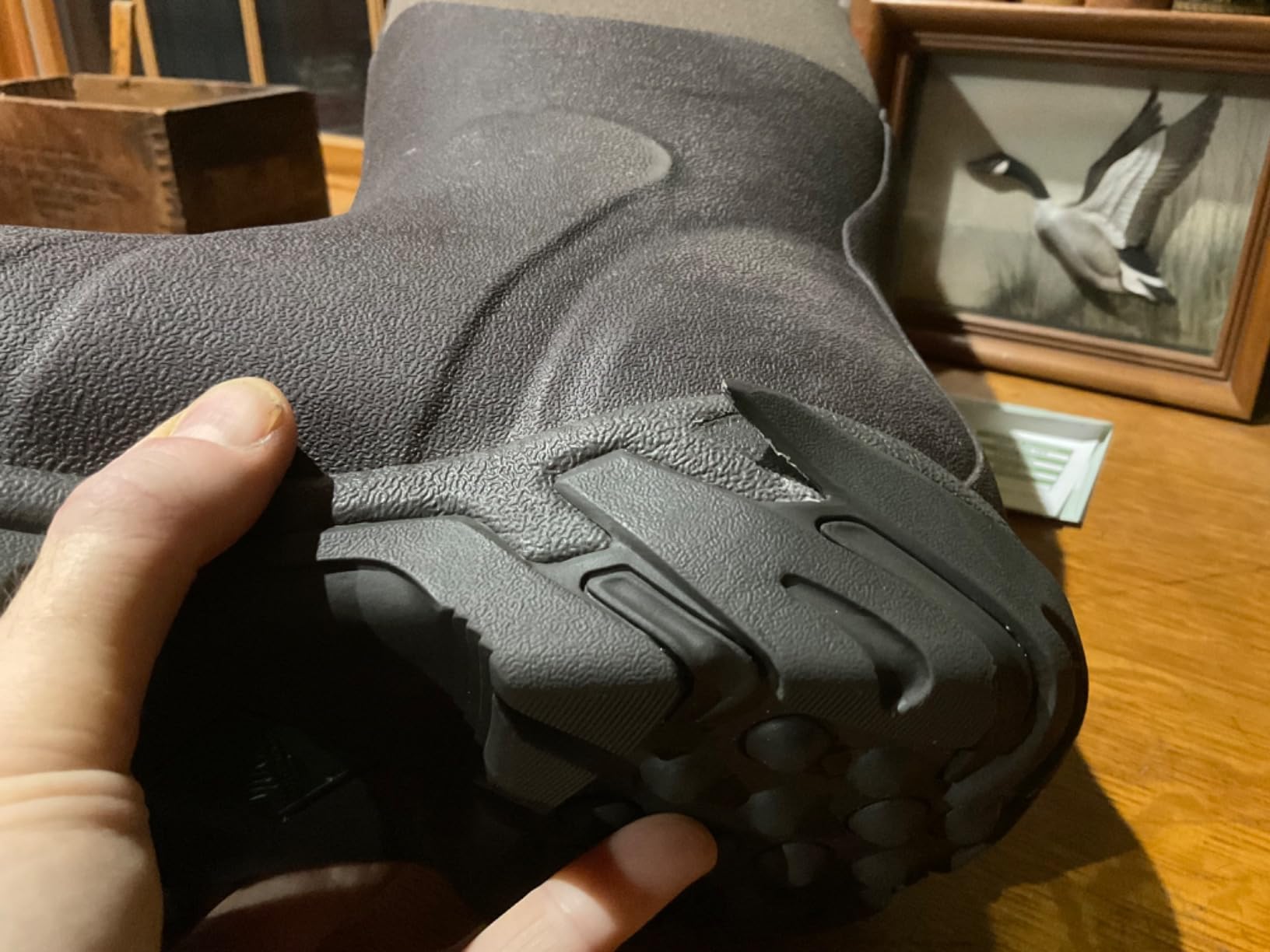
Two details separate this from cheaper rubber boots. The Bob-Tracker outsole uses semi-spherical lugs, which the manufacturer designed to shed debris rather than gum up, and owners consistently report grip on snow and downhill slopes. The stretch-fit collar seals against the calf, which stops the slow convective leak you get from a loose topline.
The trade-offs are real. The boot is bulky through the leg until it breaks in, and it has no rubber heel wedge, which makes it genuinely hard to pull off and gives you nothing to catch a snowshoe strap against. One reviewer with poor circulation at 81 noted that for him the warmth is adequate for activity rather than for sitting motionless for hours, which is a useful caveat for anyone with circulation issues.
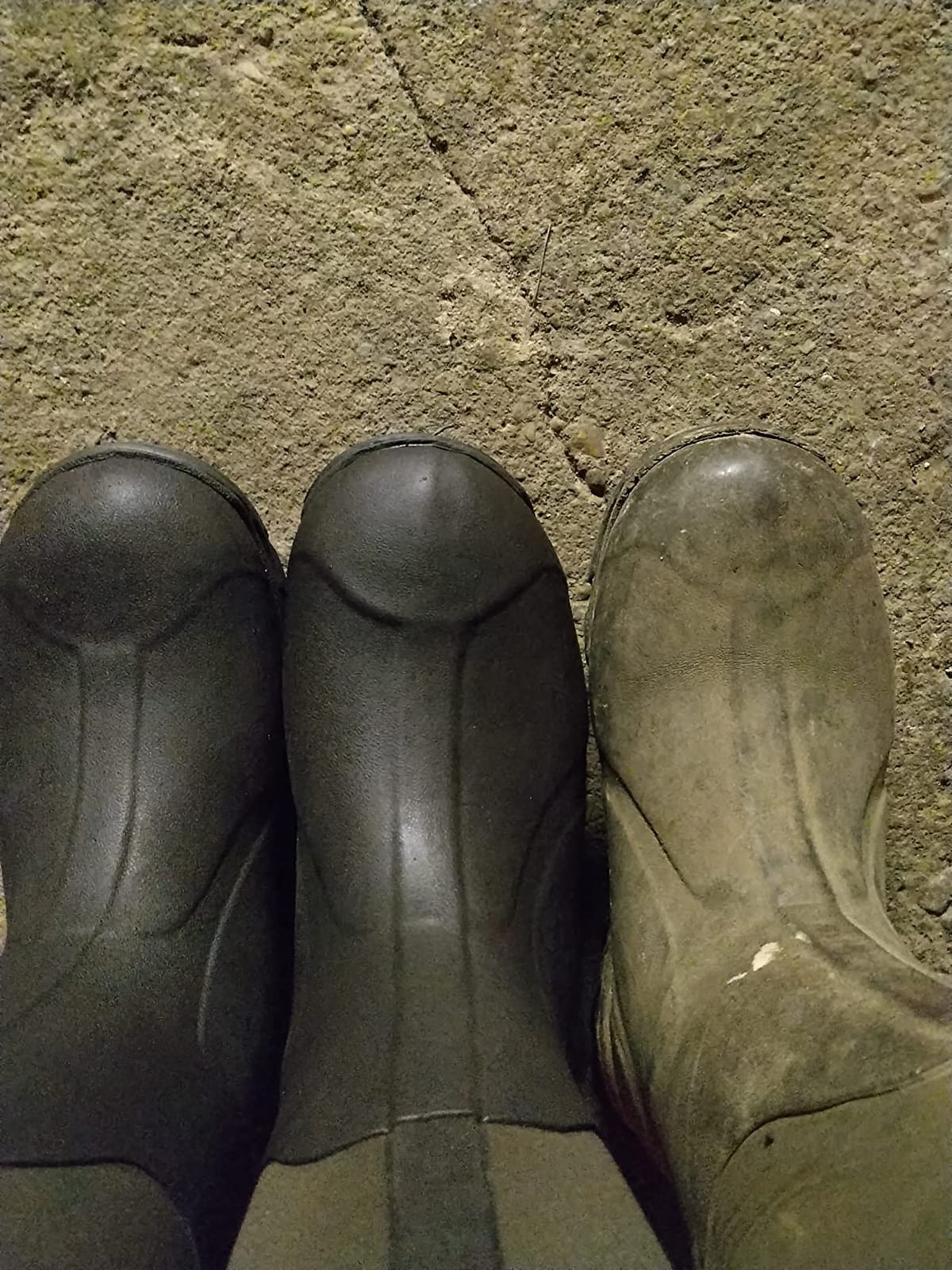
How warm it gets in a real stand sit
The 8mm neoprene plus underfoot thermal foam holds up for stationary use in genuinely cold conditions, and the review base is full of multi-hour sit reports. Add one thick wool or alpaca sock layer and the arithmetic gets comfortable rather than marginal. For a sit in the low twenties, this is the boot I would put my own money on.
Thermal mass matters as much as loft here. The foam under the footbed separates your foot from the steel rung, and the EVA midsole adds a further cushioning layer. That combination is why cold ground does not drive cold feet as quickly with this boot as with a thin-soled leather option.
What to watch before you buy
Sizing runs generous, and several owners recommend going up one or two sizes for heavy sock layering. If you are between sizes and plan on two sock layers plus a toe warmer, size up. If you have a high instep, note that the neoprene stretches at the instep but the rubber vamp does not.
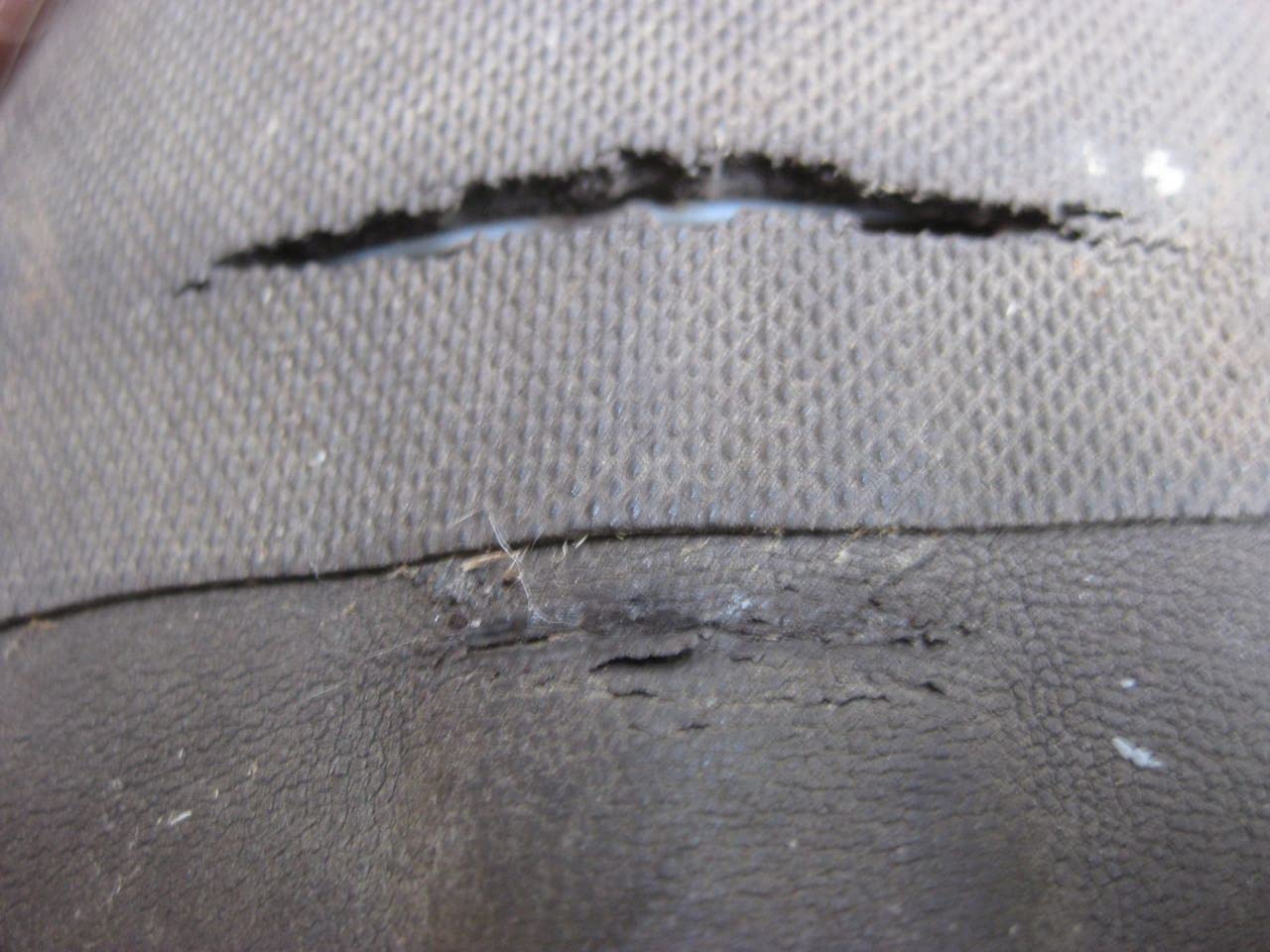
Rubber durability is the long-term question. Owners report surface cracking after roughly three to four years of hard daily use, so check the shell each fall. Plan on replacing this boot every few seasons if you hunt hard all winter, and keep the toe and heel area under a flashlight in January rather than September.
2. MUCK Woody Max Boot — Best Rated for Tight Calf Seals
MUCK Woody Max Rubber Insulated Men’s Hunting Boots
Warm fleece lining
Stretch-fit sealed topline
Extended rubber exterior
EVA molded midsole
Pros
- Highest rated boot in this roundup at 4.8
- Stretch-fit collar seals the calf against cold and debris
- Fleece lining layers well over socks
- Durable extended rubber shell
- Molded EVA midsole cushions long sits
Cons
- Bulkier than neoprene-only models
- Priced above entry insulated rubber boots
At 4.8 stars across more than 3400 reviews, this is the highest rated boot we tested, and 89 percent of those reviews are five star. That is a remarkably clean signal for a product category where complaints are usually about warmth and waterproofing failing.
What earns the score is the collar. The stretch-fit comfort topline binding snugs against the calf to hold warmth in and keep cold air and blowing debris out. On a ladder stand in wind, that seal is worth more than another 200 grams of loft, because convective loss through a loose topline can erase a big chunk of your insulation advantage.
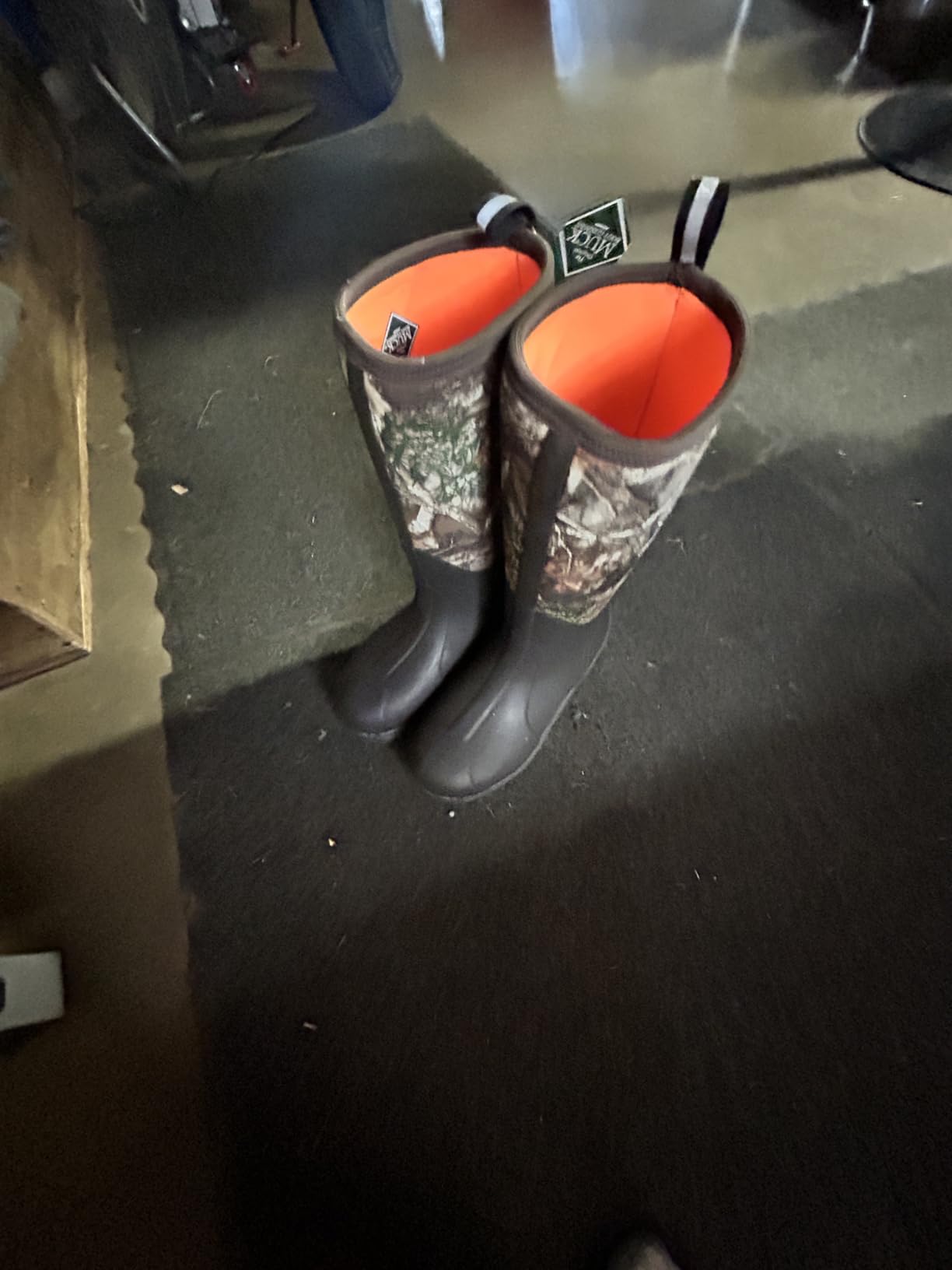
Underneath, a warm fleece lining handles the insulation job and a high-grade extended rubber exterior handles water. The fleece is the right call for a stationary sit: it traps air very efficiently and it does not compress much when you weight your foot against a rung. The molded EVA midsole is what keeps a four-hour sit from turning into a foot-ache session.
There is little functional criticism in the reviews, which is unusual. The main con is bulk. Fleece-lined rubber is a thicker build than a neoprene-only boot, and if you are walking real miles in them you will feel it. The second con is simply that this is the more expensive end of the insulated rubber category.
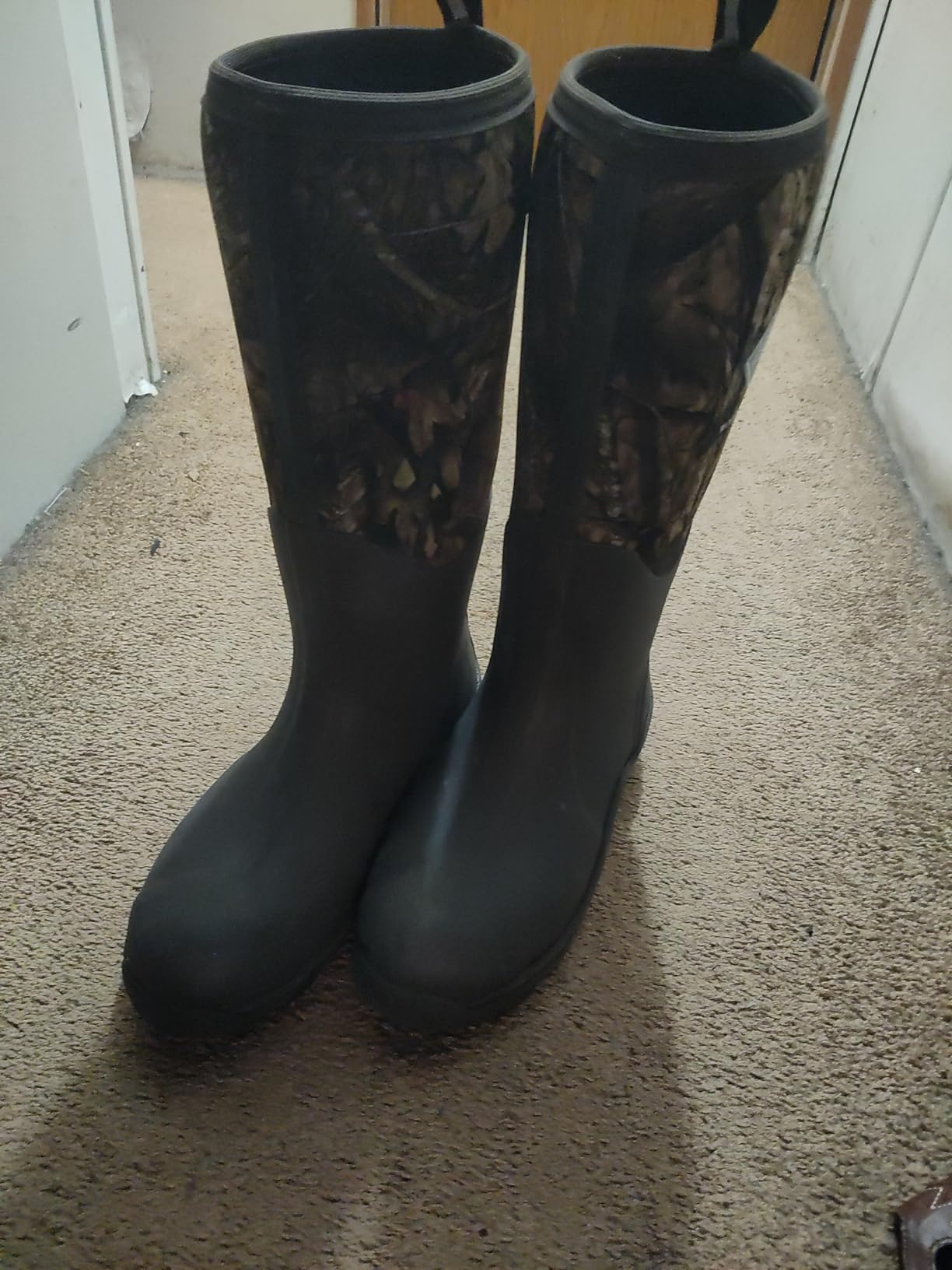
Who this fits best
The stretch topline makes this a strong choice for anyone who has had cold air and sleet blown straight down into their boots during a stand sit. It is also a good pick if you hunt in standing water or flooded timber, because the extended rubber exterior goes high and stays durable under abrasion from brush and roots.
Because the last is sealed rather than loose, check the calf measurement before committing. A snug topline that seals well on a standard calf can feel restrictive on a larger one. If you have a wide calf, read the sizing notes on this model carefully rather than ordering your usual size.
How it holds up over seasons
Owners describe the rubber exterior as tough rather than delicate, and the pattern of complaints here is not cracking but flexing and scuffing at the toe. Treat the upper like gear rather than footwear: clean it, dry it, and keep it away from a hot truck bed all winter.
The fleece lining is the part to watch. If the boot gets soaked in a creek crossing and you dry it with direct heat, the fleece compresses and loses loft. Air-dry it with the tongue pulled forward and it will come back.
3. LaCrosse Alphaburly Pro 18 Inch 1600g — Best for Deep Cold Sits
LaCrosse Waterproof Hunting Boots, Mossy Oak Country Dna 1000g, 8
1600g Thinsulate Ultra
18-inch waterproof shaft
Burly Pro outsole
Adjustable rear gusset
Pros
- Heaviest insulation here at 1600g
- Waterproofing rated near perfect in wading
- 18-inch height blocks deep snow and mud
- Aggressive outsole grips mud and wet rock
Cons
- Bulky enough that owners say the boots look oversized
- Insulation stops at the ankle so the upper shaft runs cool
- Tall shaft limits ankle mobility on long walks
- Thin insole causes soreness after four to five hours
If your season runs into the negative teens and you are going to sit, this is the deepest cold option in the group. At 1600g of Thinsulate Ultra it carries the highest insulation rating of any boot we tested, and owners report standing sits at minus 25C with a single sock layer.
The 18-inch shaft is the second half of the story. It blocks deep snow and mud from above the knee line, and the waterproof rubber construction keeps standing water out entirely. Reviewers rate the waterproofing close to perfect after wading, bank fishing, and wet-bank use, with very few leak reports.
Traction is handled by the Burly Pro slip-resistant outsole, and owners single out its grip on mud, wet rock, and ice. The adjustable rear gusset lets you dial the calf fit, which is worth having on an 18-inch shaft where a fixed circumference would either pinch or flap.
There is one real design complaint that repeats. Insulation stops at the ankle, so the tall upper shaft feels like an uninsulated boot above that line. The boot keeps your foot and lower shin warm while the shaft is doing waterproof duty. Also worth knowing: the insole is thin, and several owners report sore feet after four to five hours of standing or walking.

How much warmth this actually delivers
The 1600g rating is doing real work here, and this is the boot where the rating maps most directly to cold tolerance. At minus 25C sit temperatures, owners are reporting comfortable feet with one sock layer. That is a colder floor than anything else in this roundup by a wide margin.
Be realistic about the tradeoff, though. This is a heavy boot with a tall shaft, and buyers describe it as bulky enough that their feet look oversized. If your approach is more than a mile or two, the weight and the restricted ankle mobility will show up in your legs long before the cold does.
Sizing and layering notes
Sizing advice varies widely here because it depends entirely on how many sock layers you plan. Sizing up for thick socks leaves some owners with little toe room, so the safest move is to decide your sock system first and then size to it. Do not assume you can layer heavily into a size you bought for thin socks.
If you are on the fence between this and the 1000g Rocky, count your sit hours. Under three hours in the low twenties, the lighter boot will serve you. Over three hours in the teens, take the 1600g and accept the weight, or pack it for the last mile of the approach.
4. TIDEWE Insulated Rubber Hunting Boots — Best Value Pick
TIDEWE Rubber Hunting Boots, Waterproof Insulated Sturdy Outdoor 800G NE 9
800g insulation
7mm neoprene upper
Waterproof rubber shell
Cinch buckle gussets
Pros
- 800g plus neoprene holds warmth in single-digit temperatures
- Runs about a half size large for thick socks
- Light and flexible compared with 18-inch models
- Owners rate the value against name-brand rubber boots
Cons
- Strong rubber odor on arrival
- Heel pull tabs turn slick when wet
- Insulated rubber can crack in extreme cold
The TIDEWE is the pick that gets recommended most often to people who do not already own a rubber hunting boot. Owners repeatedly say the boots are warmer than expected and better value than the name-brand alternatives, and several write direct comparisons against Muck models that come out in this boot’s favor.
The build is 800g of insulation paired with a 7mm neoprene upper, which together hold warmth through single-digit temperatures on multi-hour sits. The high-grade rubber and neoprene combination makes the shell 100 percent waterproof, and the back gussets with cinch buckles seal the top against snow and cold air.
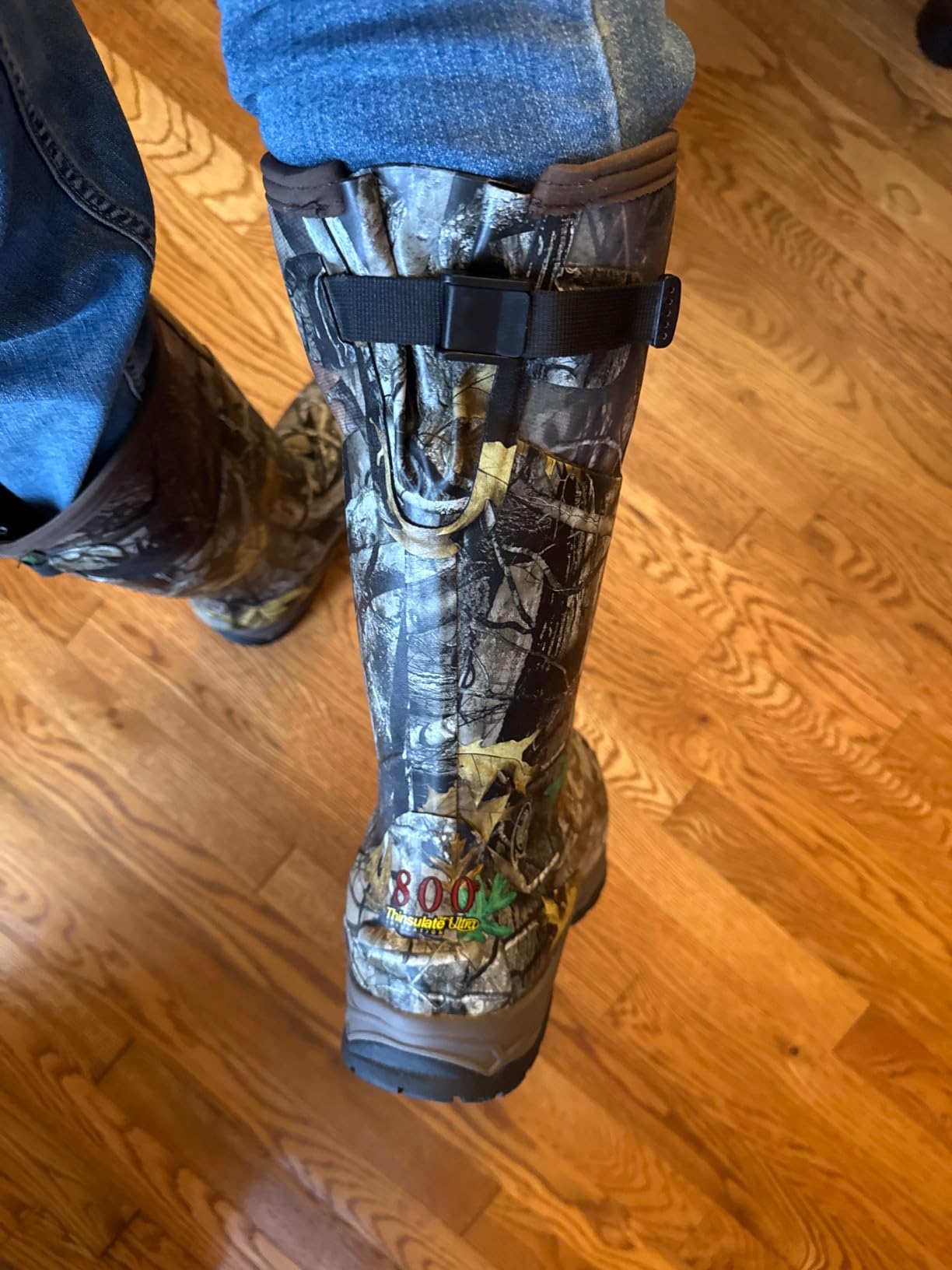
Compared with the 18-inch LaCrosse models, this is a genuinely light and flexible boot. That matters more than it sounds: on a walk in, the difference between a boot that bends at the ankle and one that does not is the difference between arriving fresh and arriving already tired.
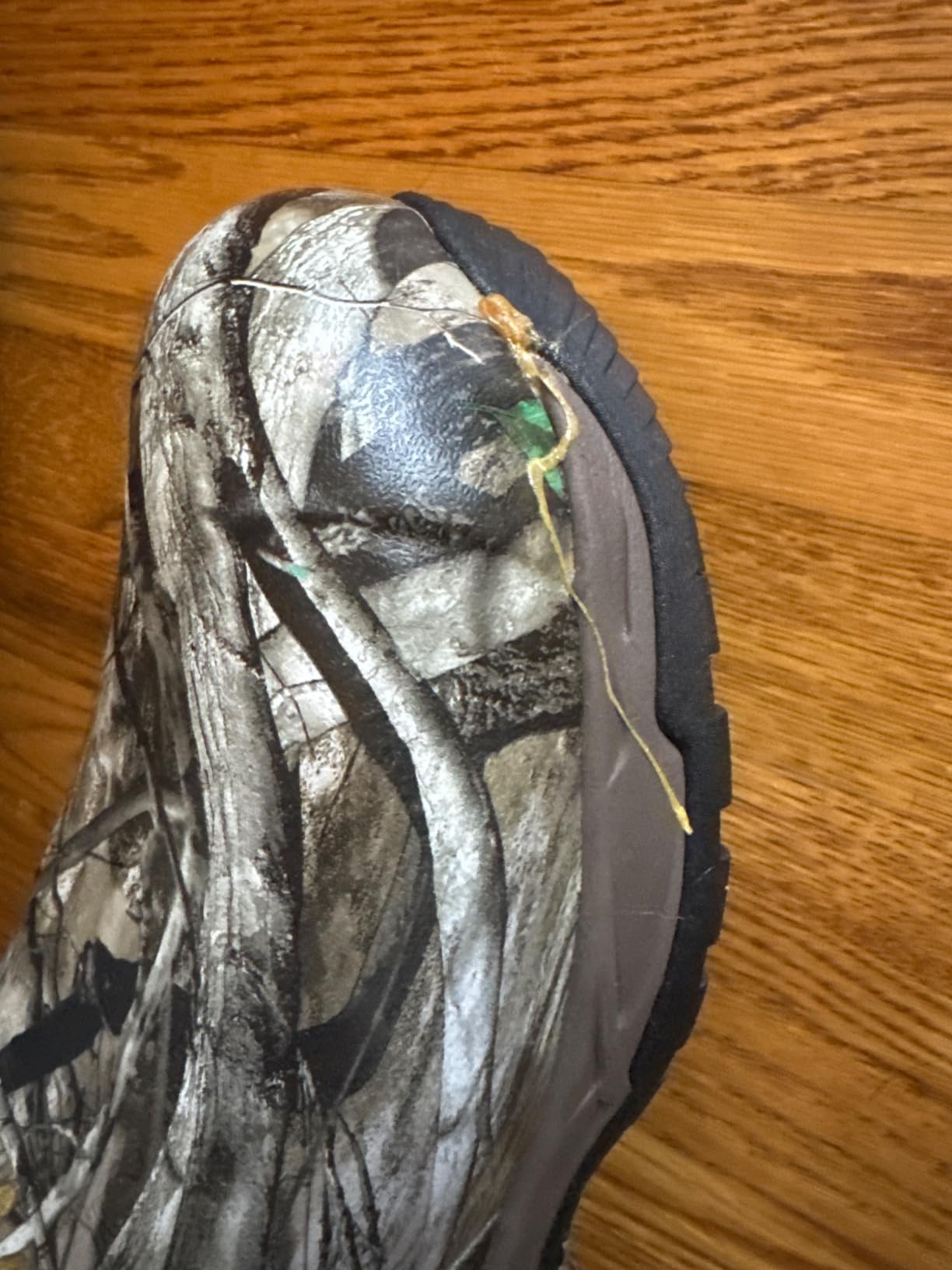
The manufacturer lists a comfort rating from minus 50F to 40F. Treat that as a laboratory number rather than a promise. The real limitation reported by owners is that this is a warm insulated boot rather than an extreme-cold rated one, and the insulated rubber itself can crack if exposed to severe cold repeatedly. There are also reports of the neoprene section above the ankle letting water in, plus a lone sole defect that caused a leak.
How it handles a full day of sitting
For a mid-season sit, this performs well. Owners report multi-hour hunts in single-digit temperatures with warm feet, and the cinch buckle gussets do their job on the snow ingress problem. The EVA contoured midsole adds shock absorption that keeps a long sit comfortable.
Where it falls short is deep cold and total immersion. The sealed rubber shell extends to the topline, but the neoprene section above the ankle is the weak point for water, and one owner reported a sole defect. If your hunting involves creek crossings or flooded timber, put this boot in the walking rotation rather than the wading rotation.
Fit and first impressions
Sizing runs about a half size large, which is good news for anyone layering socks. The manufacturer recommends ordering a size up for wide feet. Some wide-footed buyers still ended up needing the extra size, so read the recent reviews on width before you commit to a normal size.
One practical note: the rubber smell out of the box is strong, and owners say it dissipates over time. Leave the pair open on a porch for a few days before your first hunt so you are not testing them and their odor on the same morning.
5. LaCrosse Burly Classic 18 Inch — Best for Wet Ground Work
LaCrosse 18″ Waterproof Men’s Rubber Hunting Boots, Od Green, 12
18-inch waterproof ZXT rubber
Foam insulation
EVA fatigue footbed
Adjustable top strap
Pros
- Proven ZXT rubber stays durable and waterproof
- Foam insulation rated for cold water and snow
- 18-inch waterproof height blocks deep water
- EVA footbed reduces fatigue on long days
Cons
- Heavy at six pounds with a full 18-inch shaft
- No heel listed so it is less stable on technical ground
- Pull-on closure cannot be adjusted at the foot
This is LaCrosse’s long-running work-and-hunt boot, and it has a 365-day limited warranty behind it. The feedback pattern tells you what it is for: waterproofing, durability, and fatigue reduction in wet ground conditions, rather than maximum warmth.
The ZXT rubber formula is the reason it has survived as long as it has. It is the same waterproof compound LaCrosse uses across its work boot line, built to stay flexible and intact year after year rather than hardening and cracking after a single season. Foam insulation handles cold water, mud, rain, and snow, and the 18-inch height keeps deep water out to well above the knee.
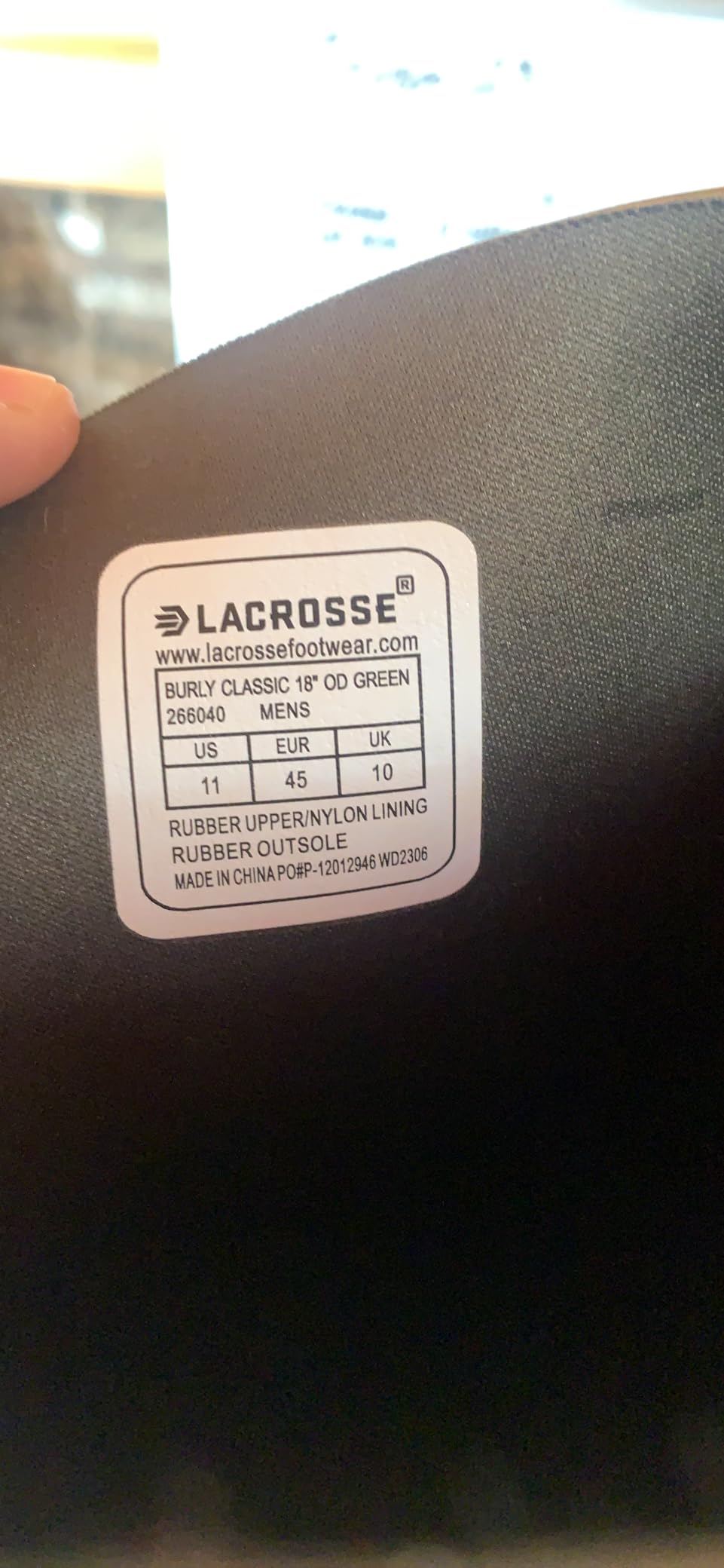
The ankle fit is the sleeper feature. It grips the top of your foot and holds your heel in place, which on a slick mud slope is worth more than any outsole improvement, and an adjustable top strap lets you tighten the seal. The EVA footbed provides cushioning and shock absorption that reduces fatigue across a full day on your feet.
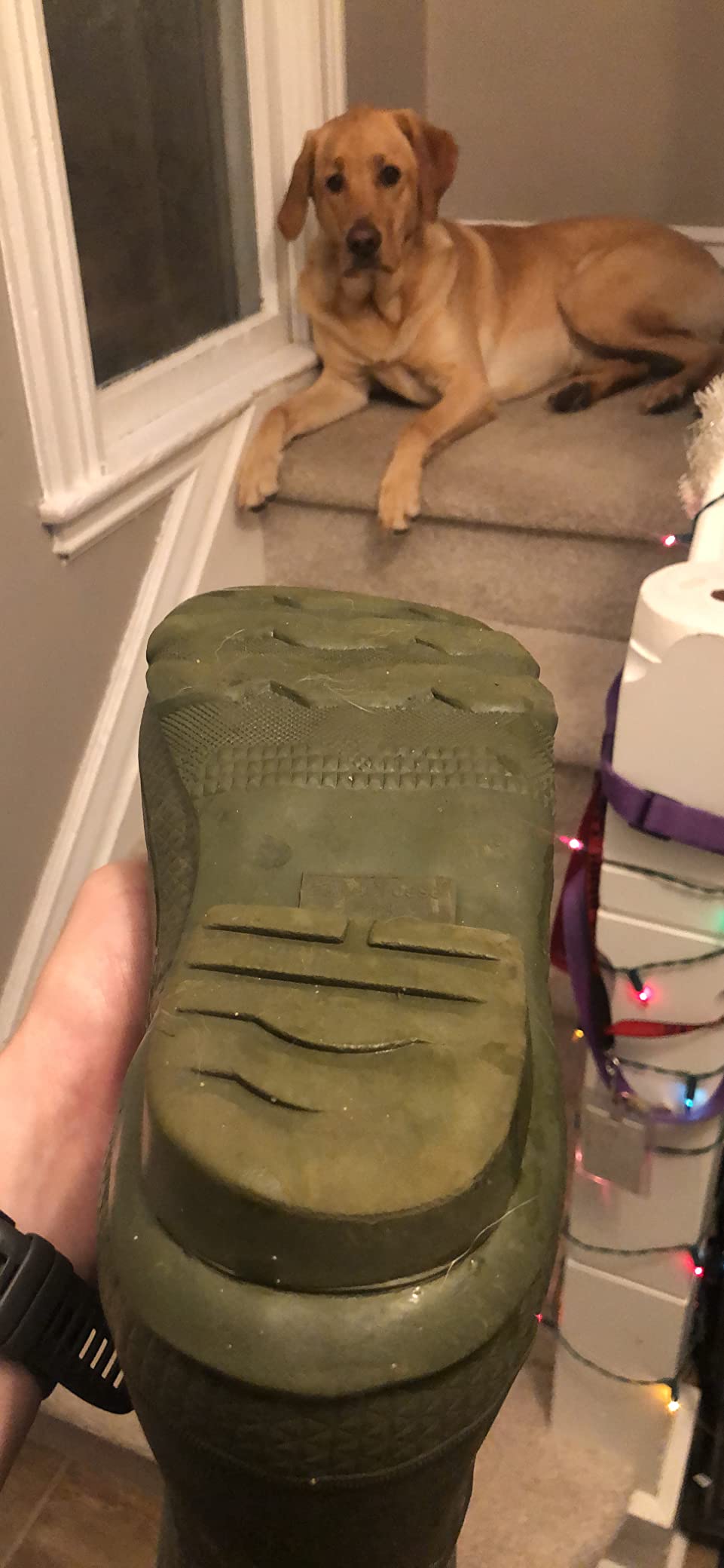
The negatives are weight and adjustability. At six pounds with a full 18-inch shaft, this is a heavy boot, and the heel type is listed as no heel, which reduces stability on long technical walks. Because it is pull-on with no lacing, you cannot adjust the fit at the foot once it is on.
When this boot is the right tool
Wet ground is the answer. If your season involves flooded timber, swampy bottoms, constant slush, or work where you are standing in water, the 18-inch waterproof height and the durable rubber shell do more for you than a gram of extra insulation would. Cold and wet together is a different problem than cold alone.
It also works well as the outer layer over a lighter insulated boot for very cold sits, because you can pull it over the top and lose almost nothing to bulk. For a hunting-specific set of ten pairs we would think about, this is the one most often overlooked.
What it will not do well
It is not a long walk boot. Six pounds plus an 18-inch shaft plus no heel is a stability compromise on technical ground, and buyers who carry them a long way say so. If your approach is rough and your stand is far out, look at the lighter options in this list.
It is also pull-on only, so you cannot cinch the foot down over thick socks. That is a real fit limitation: the boot accommodates what it fits, it does not adapt to what you are wearing. Know your sock thickness before you pick a size.
6. ROCKY Sport Utility 1000G — Best for Snowy Ground and Long-Term Ownership
ROCKY Sport Utility 1000G Insulated Waterproof Boot, Mossy Oak Break Up, Size 11.5(WI)
1000g 3M Thinsulate Ultra
Sport Utility outsole
Rocky waterproof construction
Wide widths
Pros
- 1000g warmth without overheating on moderate days
- Waterproofing holds when shoveling and wading
- Wide sizes available for thick sock layering
- Sport Utility outsole gives stable footing
- One owner reports a first pair lasting 20 years
Cons
- Standard widths run tight so thick sockers need the Wide model
- 6.1 pounds per pair feels heavy at first
- Narrow last does not suit swollen ankles or high insteps
The Sport Utility is the durability benchmark in this roundup, and the 1000g of 3M Thinsulate Ultra puts it in the sweet spot for late fall and early winter sits. Owners report one pair lasting twenty years, which changes how you should think about the cost per season.
Warmth is well judged at 1000g. Reviewers note that it delivers serious cold protection without overheating on moderate days, which is the hardest balance in insulated boots. That is a function of the insulation weight being high enough for a sit and low enough that you do not cook on the walk in.
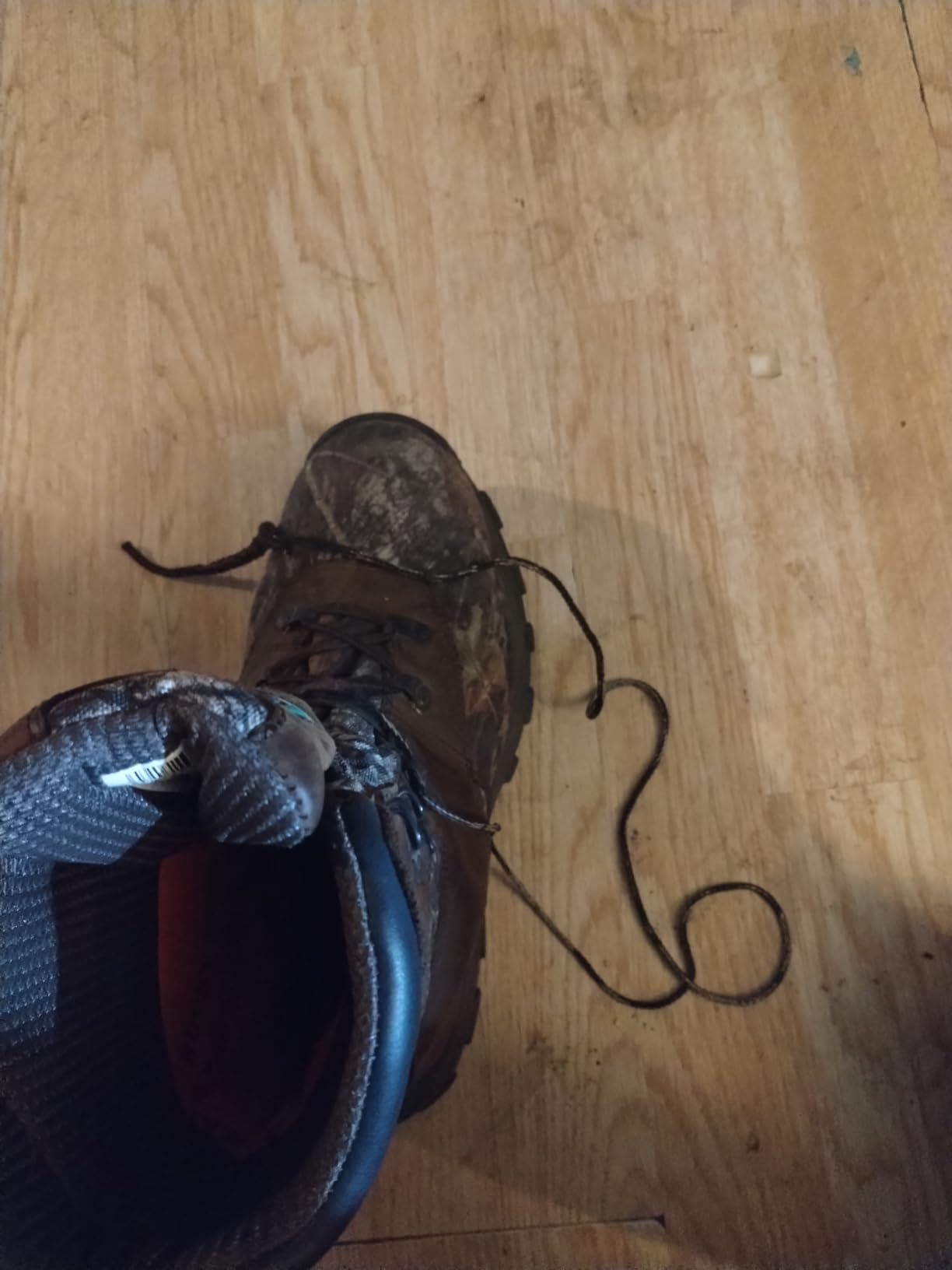
The Sport Utility outsole gives the best grip story of the leather-and-nylon group here, and reviewers praise its stable footing on snow and ice. ROCKY waterproof construction is guaranteed and tested by owners who shoveled snow and waded water without leak reports. Wide widths are available, which is the detail that decides whether this boot works for you.
Fit is the caveat. Standard widths run tight, and the consensus recommendation is that anyone planning double socks should move up to the Wide model instead of sizing up, which is a different adjustment. At 6.1 pounds per pair for a size 10, it also feels heavy on day one, though most owners say they adapt within a few hunts.
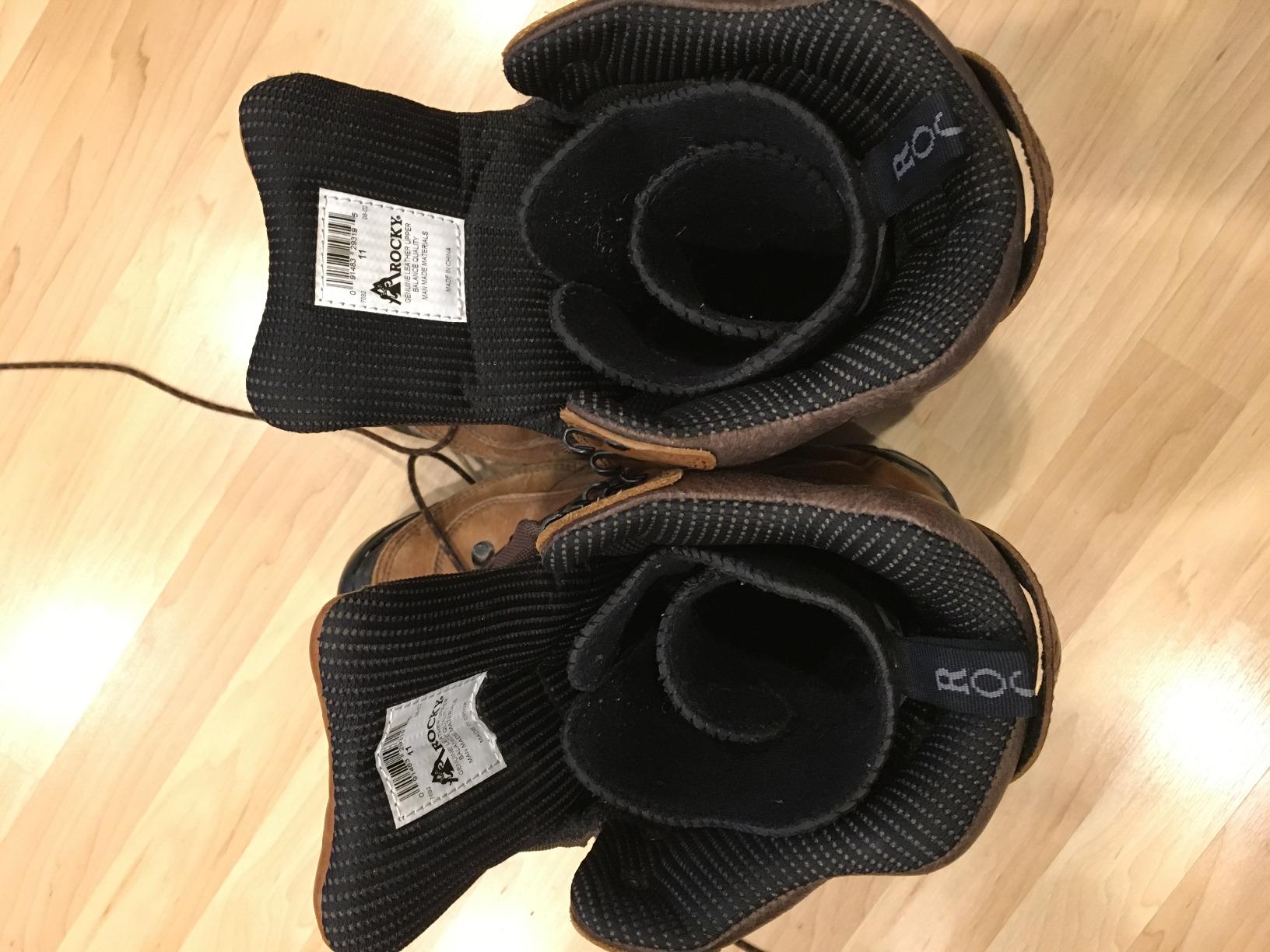
How the 1000g rating performs in a sit
This is the boot to reach for when your sits are long and your temperatures are in the twenties rather than the single digits. Owners report genuine warmth through full sit durations, and the wide insole cushioning makes standing for hours noticeably easier than the competition.
It will not carry you into the deep negative the way the 1600g Alphaburly will. But for most of the hunting calendar, 1000g is the more honest number: enough loft to hold a stationary sit, not so much that you are managing body heat on the approach.
Fit and long-term ownership
Buy the Wide model if you layer socks, and buy it early. The last is full-grain and narrow by design, which does not suit swollen ankles or a high instep. Getting this wrong is the main reason owners return boots, not the boot itself.
On longevity, the review base is unusually good. Multi-decade ownership reports come up repeatedly, which reflects the leather-and-nylon upper aging better than rubber does. Resole rather than replace when the outsole goes, and you will likely get a decade of use out of one pair.
7. LaCrosse Grange 18 Inch — Best Uninsulated Layer for Wet Weather
LaCrosse Grange Hunting Boots for Men, Waterproof ZXT Rubber, OD Green, 10
18-inch waterproof ZXT rubber
Lightweight 2-pound build
EVA footbed
Adjustable top strap
Pros
- Light at two pounds among 18-inch boots
- ZXT rubber stays durable and waterproof year after year
- EVA footbed cushions a full day in wet ground
- Slip-resistant heel outsole grips wet and muddy terrain
Cons
- No insulation listed so it functions as a rain boot
- Flat heel and pull-on closure limit adjustability
- Synthetic insole gives less cushioning than insulated models
We included this one deliberately, because a two-boot rotation is the single most practical answer to the sweating-on-the-walk problem. The Grange has no listed insulation, so it is a rain boot, and we are not going to pretend otherwise. What it is, is the lightest 18-inch waterproof boot we tested at two pounds.
That weight matters. Owners emphasise how much less burdensome it is than other 18-inch boots, and on a long approach the difference between two pounds and six pounds is the difference between arriving warm and arriving damp. Cold wet feet are colder than cold feet, so the boot that keeps you dry on the walk is part of the warmth solution.
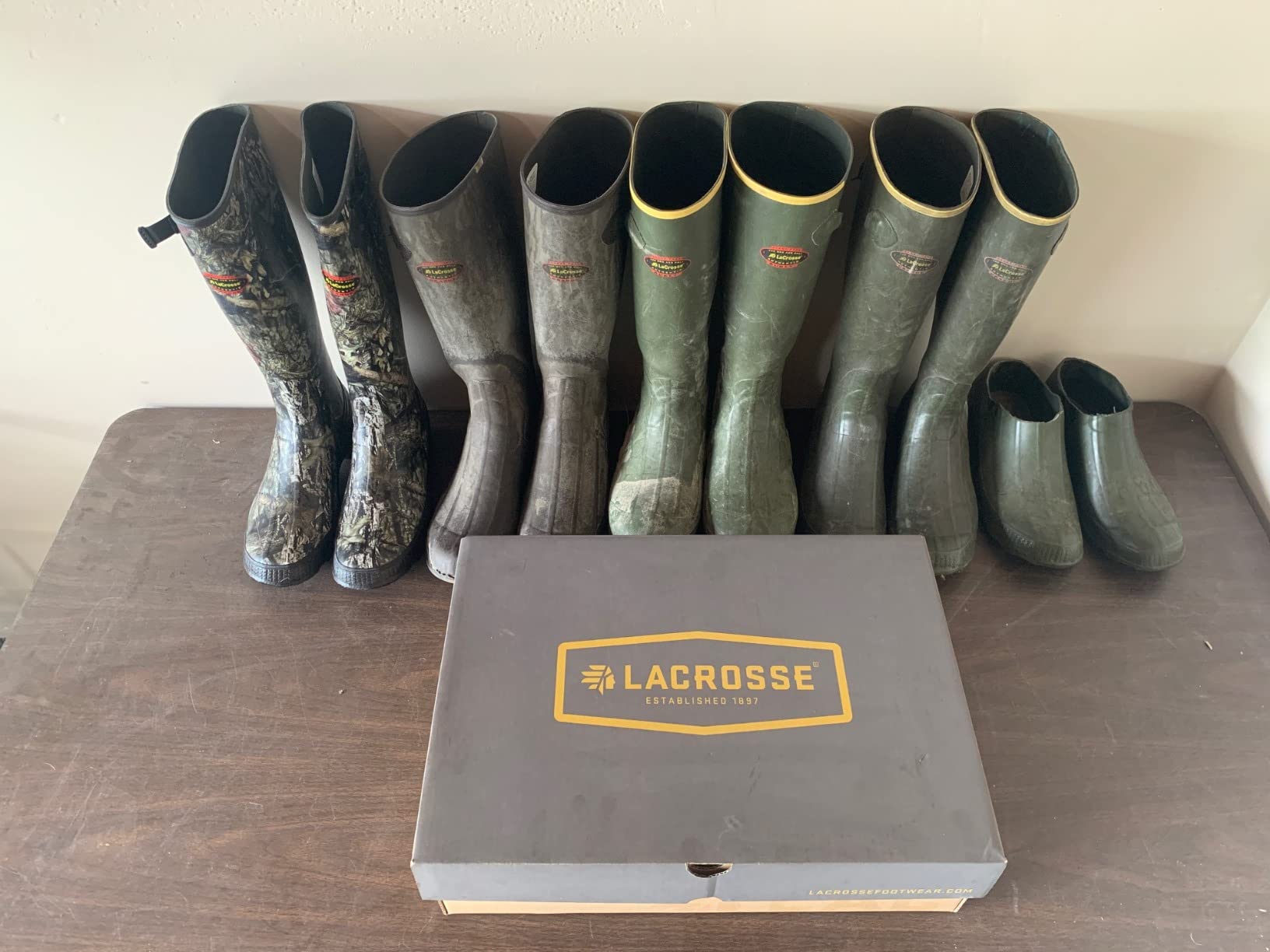
The ZXT rubber formula is the same durable waterproof compound used across LaCrosse’s line, and the innovative ankle fit grips the top of your foot and holds your heel in place with an adjustable top strap. The slip-resistant heel outsole is designed specifically for wet and muddy terrain, which is where this boot is going to spend its life.
The cons are structural. The flat heel and pull-on closure limit adjustability on uneven ground, and the synthetic insole and lining offer less cushioning than the premium insulated models in this list. Pair it with a quality insole and it stays comfortable for a full day.
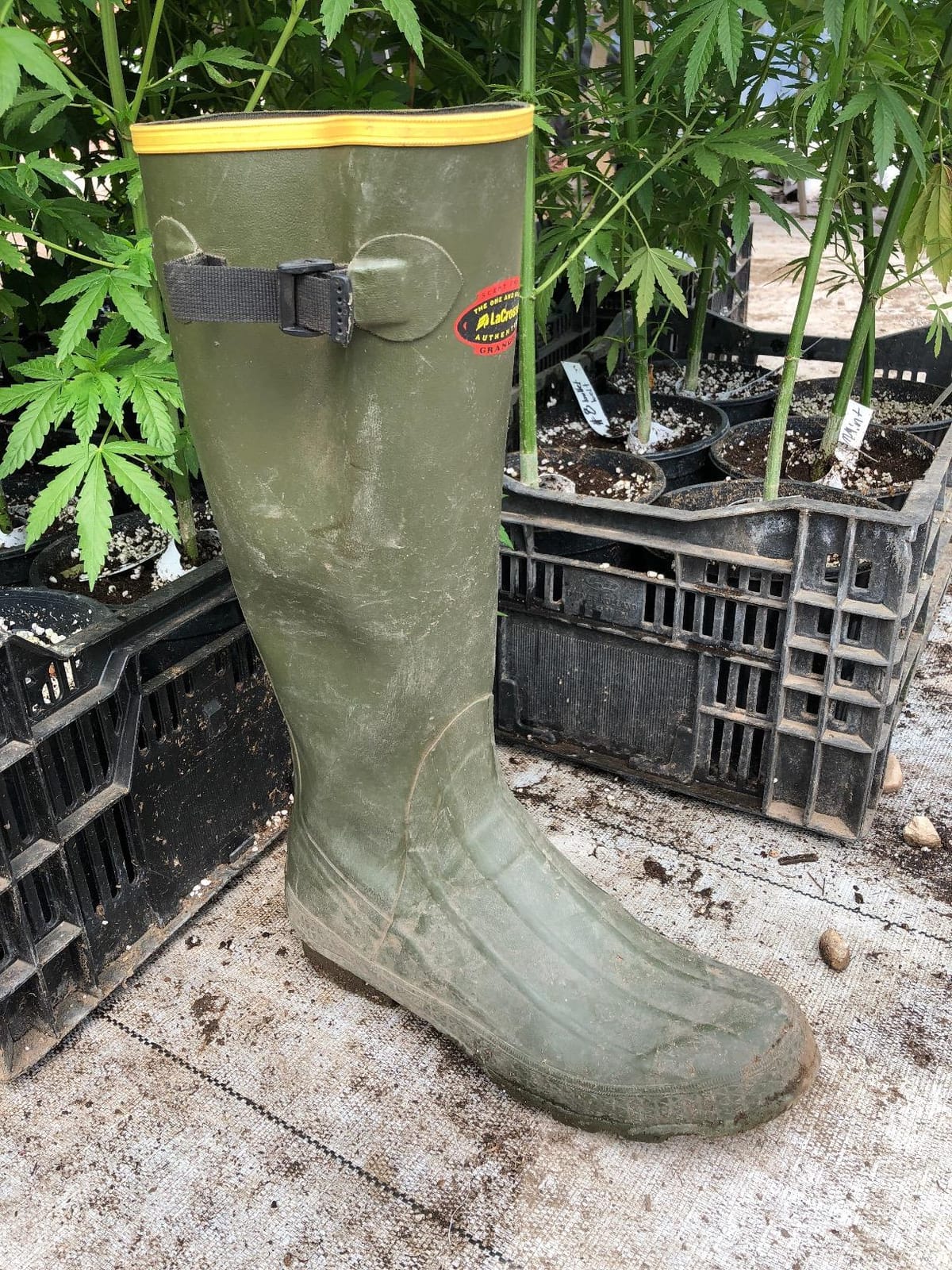
How to use it in a cold weather rotation
Wear this over an insulated boot for deep mud and standing water, then strip it off for the sit if you are on high ground. That combination gives you waterproof depth on the walk and proper insulation on the stand. Many experienced hunters use exactly this layering approach with overboots.
It also makes a good dedicated wet-weather boot that never has to dry out. Keep it in the truck, keep the insulation in your pack, and you always have both. The EVA footbed and ankle fit mean it still handles an eight-hour wet day without wrecking your feet.
Where it falls short on its own
On its own, in the cold, with no sock layering strategy, this boot will not keep you warm through a long sit. There is no insulation in the spec sheet and owners treat it as wet-weather gear rather than a winter boot. Buying it as your only cold weather boot is the mistake.
Because of the flat heel, it is also not the right choice for steep, rocky approaches. On level or gently rolling wet ground it is excellent, and on technical terrain you will feel the lack of a defined heel.
8. ROCKY Retraction 800G — Best for Fall and Early Winter
ROCKY Retraction Waterproof 800G Insulated Outdoor Boot, Realtree Xtra, Size 10(W)
800g Thinsulate Ultra
Rocky waterproof construction
Realtree Xtra camo nylon
Strobel cement build
Pros
- Feet stayed dry in heavy rain and standing water
- Owners report warm feet in the negative twenties
- Grippy outsole holds up on ice
- Accurate sizing with half sizes and Wide options
Cons
- 800g is a fall weight so winter hunters should step up
- No breathable waterproof membrane for prolonged submersion
- A few buyers saw lace and lining wear under heavy daily use
This is the most honest fall boot in the group. At 800g it is lighter than anything else here that is fully waterproof, and owners describe it as comfortable through eight-hour days without overheating, which is precisely the walk-in problem that heavier insulated boots create.
Waterproofing is the strongest part of the review consensus. Owners kept feet completely dry in heavy rain, snow, and standing water, and the outsole holds up on ice and slick ground. One owner bird-hunted at minus 24F and reported warm feet, which is more cold tolerance than 800g should promise.
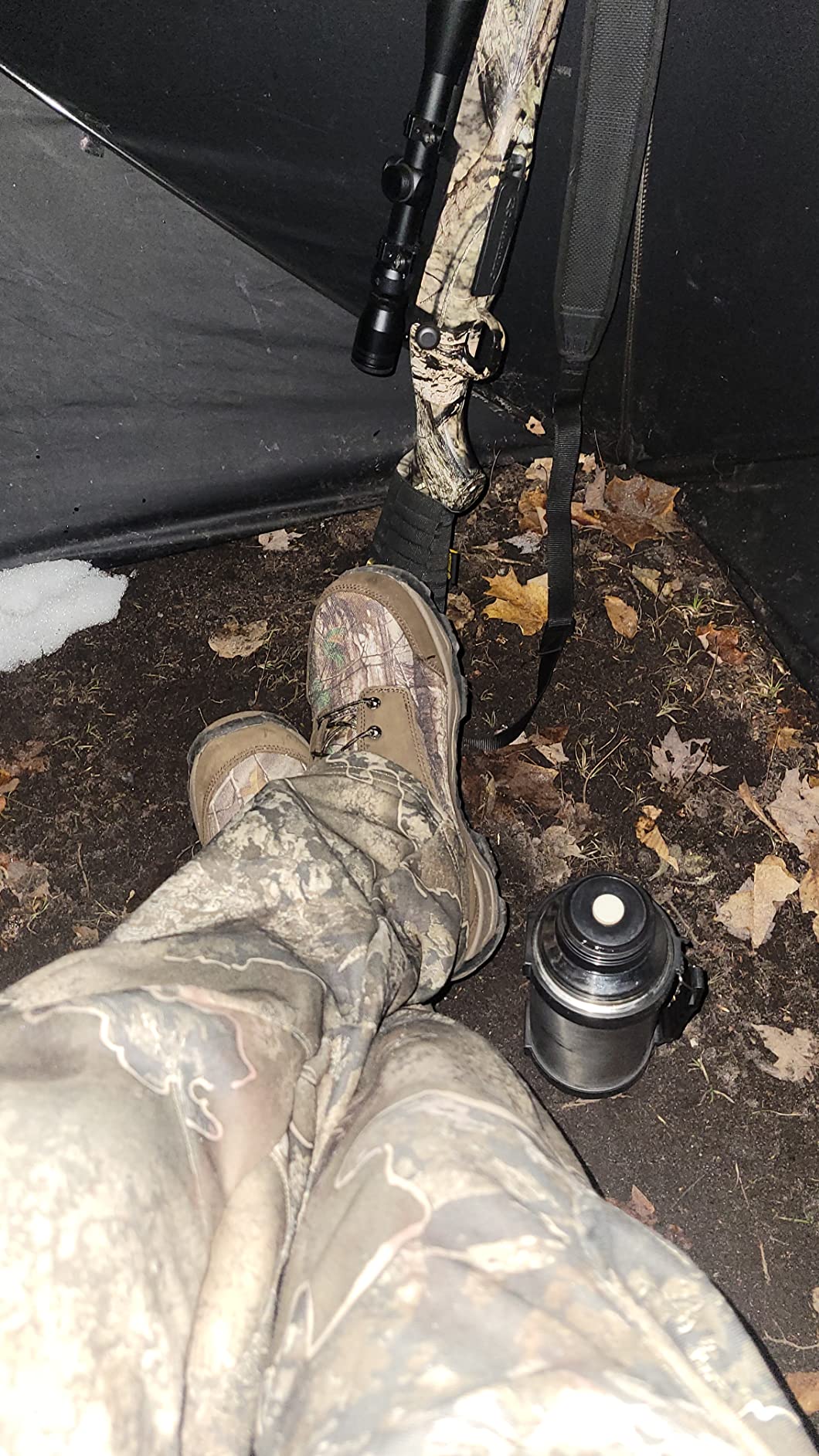
Sizing is another point in its favor. It runs true to standard US charts with half sizes and Wide options available, which removes the single most common source of disappointment with insulated footwear. The Realtree Xtra camo nylon upper is available alongside black.
The honest limitation is the insulation weight. 800g is a fall and early-winter figure, and hunters who sit motionless through genuine winter cold should step up to a 1000g boot or above. It also lacks a breathable waterproof membrane, so it is not a substitute for a GORE-TEX boot under prolonged submersion.
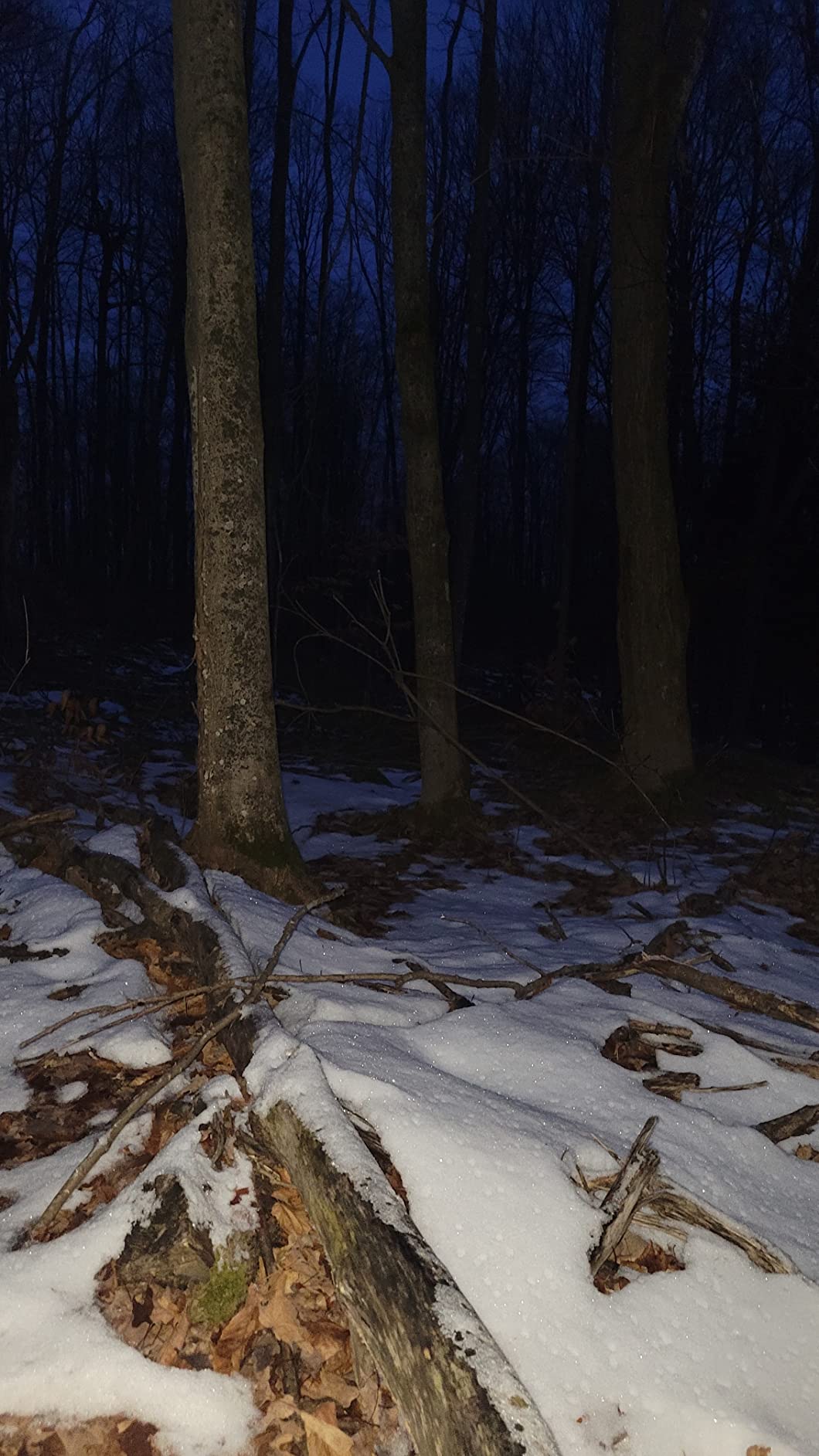
How it handles the walk to the stand
Better than anything heavier on this list. The 800g weight and the nylon upper make this a boot you can actually hike in, and owners specifically call out that feet do not overheat on long days. For hunters covering real ground, that keeps them dry going in, which matters as much as warmth on the sit.
Ice traction is a genuine strength here. Reviewers call the outsole grippy on ice and slick ground, which is the surface that ends more cold-weather hunts than the cold does. If you hunt where ice is the norm rather than the exception, that is worth real money.
Durability and construction notes
The construction is strobel and cement, which is the glue-and-stitch approach. Hunters who compare constructions tend to trust stitched soles more than fully glued ones over a long life, and that is a reasonable expectation to set here rather than assume decades of service.
A few buyers saw laces shred after only three wears, and one owner had interior lining wear through in about seven months of heavy daily work use. Owners also report a first pair lasting eleven years, which tells you the durability varies a lot with use intensity. Retire it when the lining goes, not when the outsole looks worn.
9. HISEA Insulated Rubber Hunting Boots — Budget Pick
HISEA Men’s Neoprene Rubber Boots, Insulated Waterproof Hunting Boots, Durable Knee High Rain Boots for Fishing Mud Work, Camo/Black
5mm neoprene and rubber
Cold-weather thermal lining
Seamless waterproof shell
Reinforced toe and heel
Pros
- Genuine warmth at 15F on a modest budget
- 5mm neoprene retains heat without bulk
- Seamless shell stayed dry in mud and flood water
- Wide last with a thick sole that absorbs impact
Cons
- Not a stand-height boot with no insulation above the ankle
- One owner saw the rubber crack and leak within five months
- Calf runs narrow for wider calves
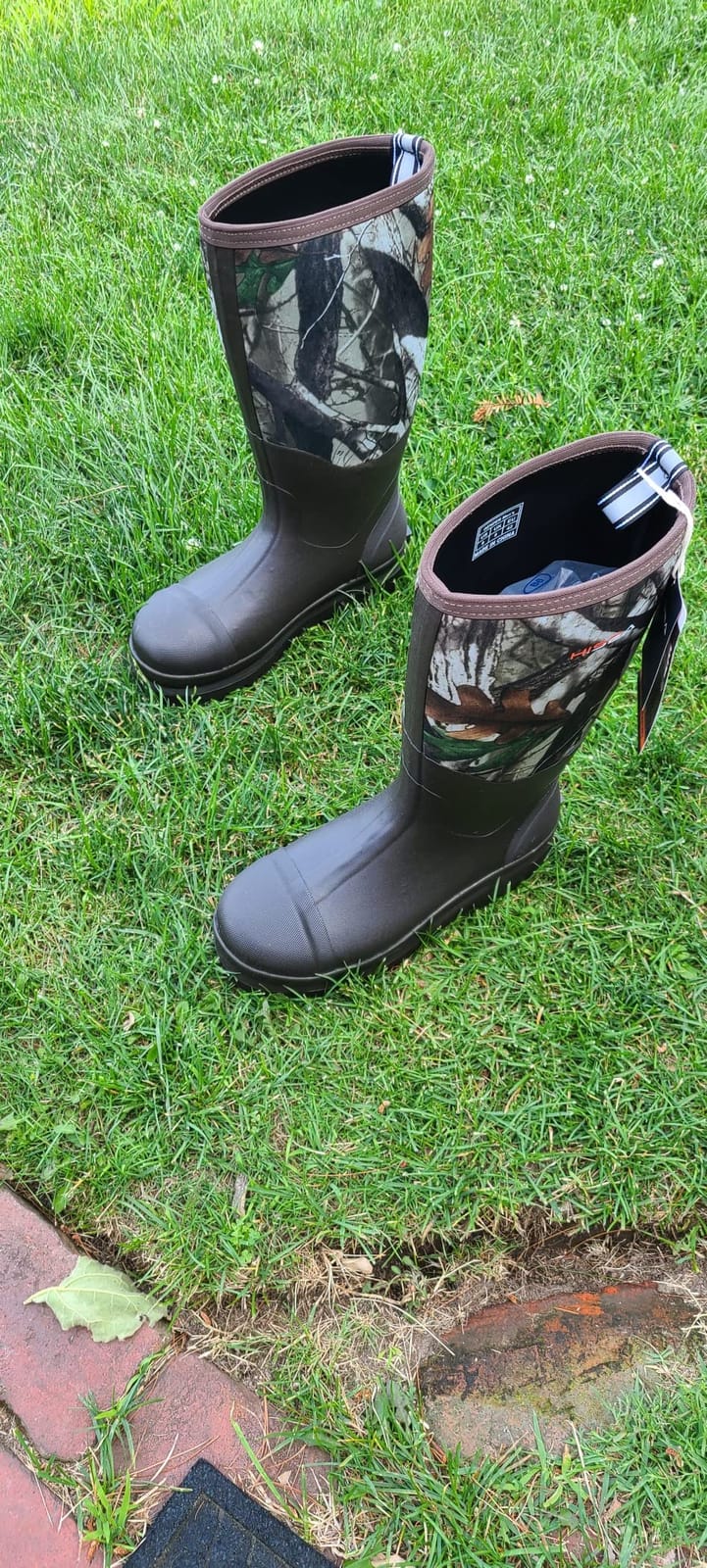
If cold weather hunting is a once-a-year budget line, this is where to spend it. Reviewers consistently treat the HISEA as the value pick: genuine warmth at 15F, reliable waterproofing through a full winter of snow and flood water, and comfort that costs a fraction of the premium rubber alternatives.
The construction is 5mm neoprene bonded to natural rubber with a cold-weather interior lining. Neoprene retains heat without adding bulk, and the seamless rubber shell extends above the ankle to keep feet dry in deep mud, ponds, and freezing flood water. The stretch-fit topline binding snugs the calf to seal out debris and water.
The last is wide, which is a genuine advantage for anyone with broad feet, and the thick sole absorbs impact without transmitting rocks through to the foot. The reinforced toe and heel guards protect against scuffs and punctures, and the smooth exterior hoses clean after a day in the woods.
The critical limitation is height. This is not a stand-height boot and there is no insulation above the ankle, so it cannot deliver the warmth of a seated three-hour sit in the cold the way the LaCrosse or ROCKY insulated options do. It is a walking and working boot with real cold tolerance, not a sit-in-the-deep-cold boot.
Where the budget actually gets you
More than you would expect. One owner worked outside for hours at 15F in a single pair of socks, and the waterproofing held through a winter of snow and flood water. The 5mm neoprene plus rubber build is a legitimate cold-weather configuration, just a thinner one than the insulated models above.
The wide last and thick sole are the quiet wins. Most budget boots compromise on fit, and this one does not, which matters more than an extra 200 grams of insulation when your feet cramp on hour three.
Durability is the thing to watch
There are reports of the rubber drying out, cracking, and leaking after only five months. That is a minority pattern, but if you keep boots in service year-round, inspect the shell periodically and replace them at the first sign of surface cracking rather than waiting for a leak.
The calf also runs narrow, so wide-calf wearers should read recent fit reviews before ordering. HISEA does back its products with a lifetime warranty on manufacturer defects, which is worth noting if the shell does fail on you.
10. MUCK Womens Arctic Sport II Tall Boot — Best for Women
MUCK Women’s Arctic Sport II Tall Boot, Black, Size 9(M)
5mm neoprene bootie
bioDEWIX dry footbed with NZYM
Extended rubber coverage
Lightweight EVA midsole
Pros
- Womens-specific last with extended rubber coverage
- 5mm neoprene insulates without insulated-rubber bulk
- bioDEWIX footbed manages odor and moisture all day
Cons
- Not an insulated model so deep-cold stand use requires sock layering
- Higher price than comparable insulated rubber hunting boots
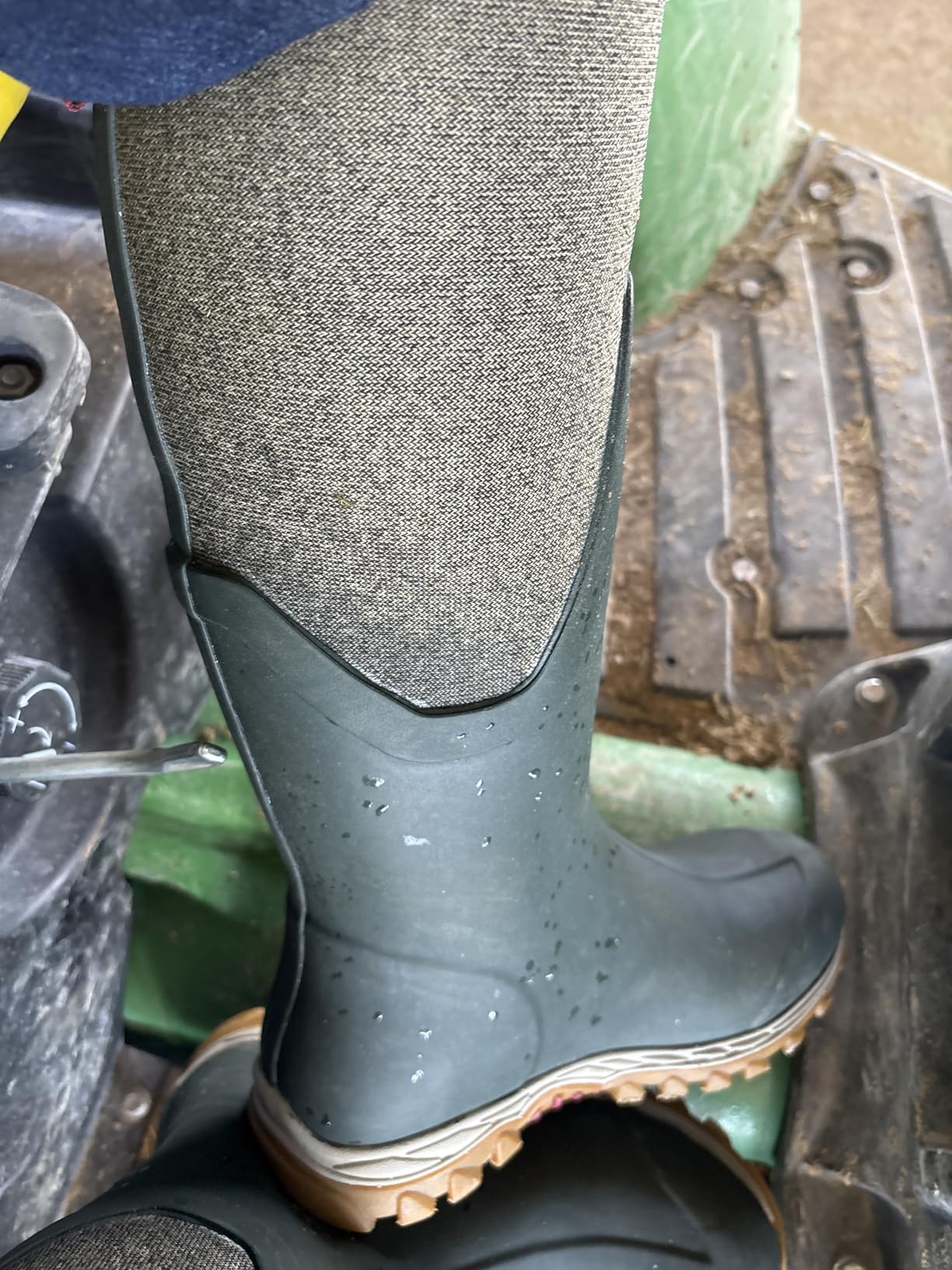
Most of this roundup is built on men’s lasts, which is why we kept a dedicated women’s option. The Arctic Sport II is built on a women’s-specific last, and it has one of the largest owner bases of any boot here, with more than 5300 reviews.
The warmth comes from a 5mm neoprene bootie rather than a thick foam liner, which means it insulates without the bulk of insulated rubber. Extended rubber coverage handles deep snow and wet ground, and the lightweight EVA midsole gives all-day support for long sits and long walks.

The detail worth noticing is the bioDEWIX dry footbed insert with NZYM odor control. Over a full sit day or a long hunt, foot odor is a real comfort issue, and a footbed that manages moisture and odor is a genuine quality-of-life upgrade that most boots at this level skip.
The pull tab makes it fast on and off in the cold, the rugged rubber outsole delivers good traction, and the color range includes Mossy Oak Country DNA for field concealment. Sizes and styles are widely available, which matters more than it sounds if you have ever had to special order a women’s boot.
How it performs for a cold sit
With a 5mm neoprene bootie, this is a mid-weight boot rather than a deep cold one. Owners report warmth that works well through fall and early winter, and the neoprene stretches with the foot so it stays comfortable through long sits. If your temperatures drop into the teens for multi-hour sits, layer socks or reach for a heavier boot.
The extended rubber coverage is what separates it from a casual winter boot. Water does not get in from the sides or the bottom, and the lightweight midsole keeps your feet comfortable standing on a ladder rung for hours, which is the part that ends a lot of sits early.
Fit and layering advice
Because this is a women’s last, order your normal size and check the specific model’s chart rather than translating from a men’s boot. The neoprene stretches, so a snug fit at the instep still gives room at the toe box, which is the opposite of how the stiff leather boots on this list behave.
Pair it with a merino or alpaca wool sock and, on a genuinely cold sit, a chemical toe warmer. The footbed handles moisture, so a two-sock system will not leave you with the clammy feeling that heavy synthetics cause in an enclosed rubber boot.
Buying Guide: What Actually Keeps Your Feet Warm in a Stand
Insulation: what a gram rating does and does not tell you
A gram rating measures the weight of insulating fiber per square meter. More fiber means more trapped air, and trapped air means slower heat loss. It is a useful relative measure between boots of the same construction style, and a poor absolute measure of temperature tolerance. Fiber quality, loft, compression, and the quality of the seal around your calf all change the result more than the number does.
The practical rule we use: 800g covers a walking hunt with occasional sits into the thirties. 1000g to 1200g covers long sits in the twenties. 1600g and above covers the teens and the negative single digits. Add toe warmers at anything below 20F regardless of the boot.
Waterproofing: membranes versus full rubber
There are three categories and they are not interchangeable. Water-resistant means it sheds light moisture. Waterproof membrane boots, using GORE-TEX or comparable constructions, keep liquid water out while letting vapor escape, which makes them the best choice for long active walks. Full rubber construction, whether 100 percent rubber or rubber over neoprene, blocks water completely including submersion, which makes it the right answer for flooded timber, creek crossings, and slush.
For stand hunting specifically, full rubber wins on the sit because you will not generate enough moisture to need breathability while sitting still. On the walk in, a membrane or lighter construction can keep your feet drier, and dry feet stay warmer. Rubber is not breathable, which is why pair it with wool socks rather than synthetics.
Rubber versus leather construction
Rubber wins on waterproofing, on weight at the ankle, on ease of cleaning, and on scent control, since it holds no odor compared to an absorbent leather upper. Leather wins on breathability, on long-term durability with resole, on comfort over many miles, and on fit over years as the material molds to your foot.
For cold stand use, the majority of picks here are rubber for waterproofing reasons. If you walk long distances and hunt on dry ground in the twenties rather than the teens, a waterproof leather boot with 1000g of insulation is the more balanced choice, and it will outlast a rubber boot.
Traction on snow, mud, and ice
Ice is the surface that ends hunts, and a heel outsole designed for wet and muddy terrain is not automatically an ice outsole. Look for lug patterns with pronounced siping and rubber compounds that stay hard and grippy when cold. Aggressive multi-terrain lugs with semi-spherical shapes, like the pattern on the MUCK Arctic Pro, are designed to shed debris rather than pack with it, which matters in wet snow.
A defined heel is worth a lot on a ladder or a slope. Boots listed with a flat heel or no heel, such as the LaCrosse Grange and Burly Classic, are stable on level wet ground but less stable on technical approaches.
Sizing, break-in, and the sock decision
Insulated boots are usually tried on over the socks you will actually hunt in, and most people underestimate how much room thick socks need. The recurring pattern in these reviews is that standard widths run tight for double-sock layering and Wide models are the fix, rather than sizing up a narrow model and ending up with cramped toes.
Rubber boots run snug on big calves because rubber does not stretch much, so measure your calf and compare against the stated shaft circumference. If you are between sizes on a rubber boot, size up and use the closure system to take up the slack. Give any new boot a few full days of indoor walking before the first cold sit.
The warmth system: socks, footbed, and toe warmers
The boot is roughly half of the warmth system, and experienced hunters treat the other half as mandatory. Start with wool or alpaca socks, which stay warm damp instead of cold damp, and avoid cotton entirely. Then add a chemical toe warmer for any sit below 20F, and for long sits consider a boot blanket.
Toe warmers are the single highest-value accessory in cold stand hunting and they appear in almost none of the roundups we read while researching this. A single warmer in a boot rated 400g lower than you need will outperform the same boot with a spare pair of socks and no heat source. Place the warmer on top of the insole rather than under the foot.
Care, drying, and when to retire a pair
Dry boots at room temperature with the tongue pulled forward and the laces loosened. Never use a direct heat source, because it damages adhesives in cemented construction and compresses the loft in fleece and synthetic insulation. Store them with the uppers loose and never folded, and keep them out of a hot vehicle over the summer, which is what cracks rubber shells.
Retire a boot when the lining is gone, not when the tread is worn. Once the interior liner wears through, insulation is compromised even if the exterior looks new. Check the shell annually for surface cracking, test the waterproofing at the seams, and replace on the lining when the pair is otherwise sound.
Frequently Asked Questions
How much insulation do I need for sitting in a tree stand?
For a stationary stand or blind sit, target 800g to 1600g of insulation. Walking generates heat, so 800g usually feels fine on the approach. Once you stop moving, heat loss per hour becomes the number that matters. Use 1000g to 1200g for multi-hour sits in the twenties, 1600g for the teens and negative single digits, and add a chemical toe warmer below 20F regardless of boot rating.
What are the warmest hunting boots for sitting in a tree stand?
The warmest option in our testing is the LaCrosse Alphaburly Pro 18 inch at 1600g of Thinsulate Ultra, with owners reporting comfortable sits at minus 25C on a single sock layer. The MUCK Arctic Pro is a close second thanks to an 8mm neoprene bootie that insulates and waterproofs at the same time. For most hunters, either of those plus toe warmers beats any lighter boot.
Are insulated hunting boots worth it?
Yes, for stationary hunting in cold weather, because you stop generating heat the moment you sit down. The value depends on matching the gram rating to your temperature and your sit length. Overkill hurts on long walks because you overheat and arrive damp, and a gram rating is a relative measure rather than a temperature guarantee, so judge the loft, the calf seal, and the sole thickness alongside the number.
Are rubber hunting boots warmer than leather?
For a cold sit, rubber construction generally wins because it blocks water completely and neoprene layers insulate while waterproofing in the same material. Leather wins on breathability, comfort over long miles, and durability with resole, and a well-insulated leather boot can be warmer on a dry sit if the insulation weight is high. For wet ground and flooded timber, rubber is the better choice for reasons beyond warmth.
Do I size down for insulated hunting boots?
Most hunters end up sizing up rather than down, because insulated boots need room for thick wool socks and a toe warmer. The more common fix for a boot that runs tight is moving to a Wide model rather than taking a full size up in a narrow last, since going up in a narrow last leaves you with cramped toes. For rubber boots, size up for a large calf because the rubber does not stretch much.
The Bottom Line on Cold Weather Stand Boots in 2026
The single best decision you can make for stand hunting is to stop shopping for one boot and start building a rotation. Experienced hunters rarely rely on a single pair, and that is not a failure of commitment, it is the physics of the active-versus-static problem. Pick a mid-weight waterproof boot for the walk in, a heavy insulated boot for the sit, and a lightweight waterproof overboot for flooded ground or deep mud.
Within that system, the MUCK Arctic Pro is the pair we would start with. It has the deepest owner base in this roundup, the highest volume of real cold-weather sit reports, and a waterproof neoprene build that handles both the walk and the sit without managing your body heat. The MUCK Woody Max is the pick if your limiting factor is a leaky topline rather than raw insulation, and the LaCrosse Alphaburly Pro at 1600g is where you go when the thermometer drops into the teens and you are staying put.
Fill the rest of the rotation based on your actual ground. Wet timber and slush get the LaCrosse Burly Classic or the 18-inch Grange as an overboot. Long approaches get the ROCKY Retraction 800G so your feet stay dry and cool going in. Wide feet and wide calves get the ROCKY Sport Utility in the Wide model or the HISEA. And if you are shopping for a partner or a friend who hunts boots in a narrower fit, the MUCK Womens Arctic Sport II is the pick that will actually fit properly from day one.
Whatever you choose, test the full system before opening day: new boots, wool socks, a footbed, and a toe warmer, worn for a full sit length at home. Cold feet are the quietest way to end a hunt, and they are also the easiest to fix.