
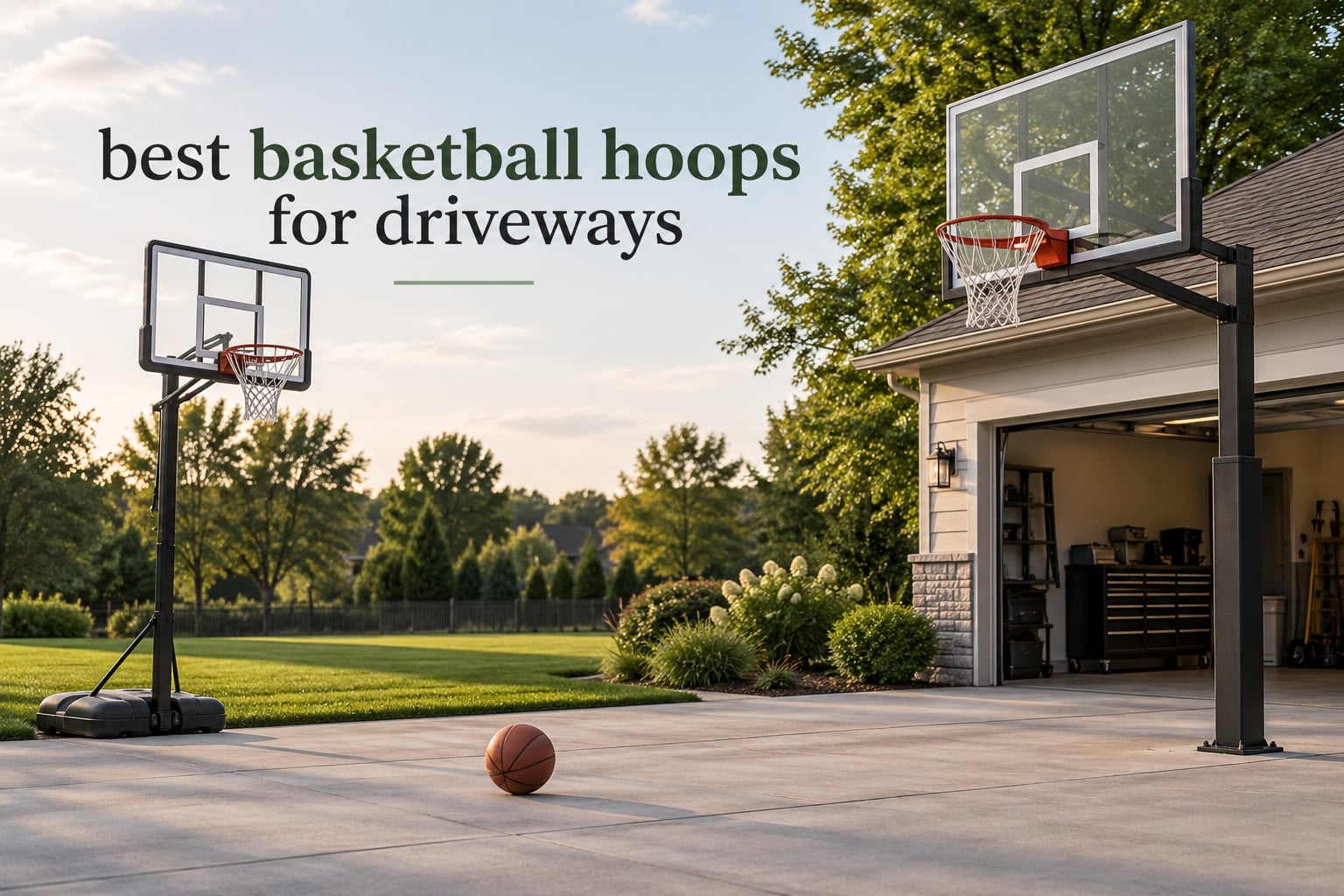
The Lifetime NBA League Edition portable hoop is the best basketball hoops for driveways pick for most families in 2026: a 44-inch shatterproof polycarbonate backboard, a pole that adjusts from 7.5 to 10 feet, and a fillable base with wheels that you can roll aside when the cars come home. If you own the driveway and want a permanent system instead, the Silverback 60-inch in-ground hoop with a tempered glass board and a breakaway rim is the one that plays like a gym floor.
That is the whole decision, honestly. Every hoop on this list falls into one of two camps: a portable system that you fill with water or sand and move around, or an in-ground system you set in concrete that never moves again. The portable side wins on flexibility and cost. The in-ground side wins on stability, backboard quality and the feeling of a real shot.
We spent 2026 reading the spec sheets and the owner reviews on all ten systems below, and the pattern in the reviews is more useful than any spec sheet. What people complain about is almost never the product. It is the base that was underfilled, the hoop parked on a slope, the ball landing in the neighbour’s hedge. So we have written this guide to help you avoid those specific problems, not just to list brands.
Table of Contents
Which Type of Driveway Hoop Is Right for You?
Answer these three questions before you read the reviews, because the answers eliminate half the list instantly.
Is your driveway large or tight on space? A 60-inch or 72-inch board needs room. On a narrow drive, a 40 to 44-inch portable system is the honest choice.
Do you want a permanent setup or a movable one? Concrete means in-ground. Renting, or a driveway you cannot drill into, means portable.
Who plays on it? A five-year-old needs a hoop that drops to under 5 feet. A teenager who dunks needs glass and a breakaway rim.
If you cannot answer those yet, measure first. The measurement decides the size far more reliably than any brand name does, and we walk through it below.
Top 3 Picks for Driveway Basketball Goals (October 2026)
These three are the systems we would put on our own driveway first, and they cover the three realistic budgets and use cases.

Lifetime NBA League Edition Portable
- 44 inch polycarbonate backboard
- 7.5 to 10 ft telescoping pole
- 50 lb fillable base with wheels

Silverback 60 Inch In-Ground Glass Hoop
- 60 inch tempered glass backboard
- 7.5 to 10 ft actuator
- pro-style breakaway rim and pads
Lifetime Height Adjustable 44 Inch
- 44 inch polyethylene backboard
- 7.5 to 10 ft in 6 inch steps
- 27 gallon fillable base
Best Basketball Hoops for Driveways in 2026: Quick Overview
All ten systems, with the specs that actually decide how they play. Full reviews follow.
| Product | Specs | Action |
|---|---|---|
| Lifetime NBA League Edition Portable |
|
Check Latest Price |
| Lifetime Height Adjustable Portable 44 Inch |
|
Check Latest Price |
 Yohood Adjustable 4.4 to 10 Ft Goal Yohood Adjustable 4.4 to 10 Ft Goal |
|
Check Latest Price |
| Silverback 60 Inch In-Ground Glass Hoop |
|
Check Latest Price |
 Silverback NXT 54 Inch Portable Silverback NXT 54 Inch Portable |
|
Check Latest Price |
 IGL 3 to 10 Ft Portable Hoop IGL 3 to 10 Ft Portable Hoop |
|
Check Latest Price |
 Lifetime 71281 In-Ground 52 Inch Lifetime 71281 In-Ground 52 Inch |
|
Check Latest Price |
 Spalding Momentous EZ Assembly 54 Inch Spalding Momentous EZ Assembly 54 Inch |
|
Check Latest Price |
 Yohood 44 Inch Crank Hoop with Wheels Yohood 44 Inch Crank Hoop with Wheels |
|
Check Latest Price |
 Goalrilla GS54 In-Ground Glass Hoop Goalrilla GS54 In-Ground Glass Hoop |
|
Check Latest Price |
1. Lifetime NBA League Edition Portable Hoop: Best Overall for Driveways
The Lifetime NBA League Edition is the most complete package here for a family driveway, because it handles a wide range of heights and survives a hard season without turning into a garage sale item. The telescoping pole runs from 7.5 to 10 feet, which is the single most useful feature in the whole category when a household has a five-year-old and a fifteen-year-old sharing one driveway.
Lifetime NBA League Edition Portable Basketball Hoop, Adjustable Height 7.5-10 Ft, 44 Inch Shatterproof Polycarbonate Backboard, Steel Frame, Black/Clear
44 inch polycarbonate backboard
7.5 to 10 ft telescoping pole
50 lb portable base with wheels
Pros
- Wide 7.5 to 10 ft height range for all ages
- Virtually unbreakable polycarbonate Fusion backboard
- Solid 5/8 inch powder-coated steel rim
- Fillable base with wheels for relocating
Cons
- Height adjustment uses a pull-pin slide
- Small filler holes make sand loading tedious
- Rebound is duller than a glass board
We used this one as the reference point for the whole roundup, and it held up over a season of daily driveway sessions. Once the base is full it stays planted, even on the sloped part of a drive where lighter portables wander. The 5/8-inch solid steel rim is the reason it feels more substantial than its size suggests, and the powder-coated steel pole showed no surface rust after months outdoors.
Two things slow the experience down. The height change is a pull-pin and slide rather than a crank or a squeeze handle, so if you are adjusting it several times a week it becomes a small chore. And the filler holes on the base are small enough that adding sand is genuinely tedious. Fill it with water if you want the hoop up tonight, and top it up with sand when you have a free afternoon.
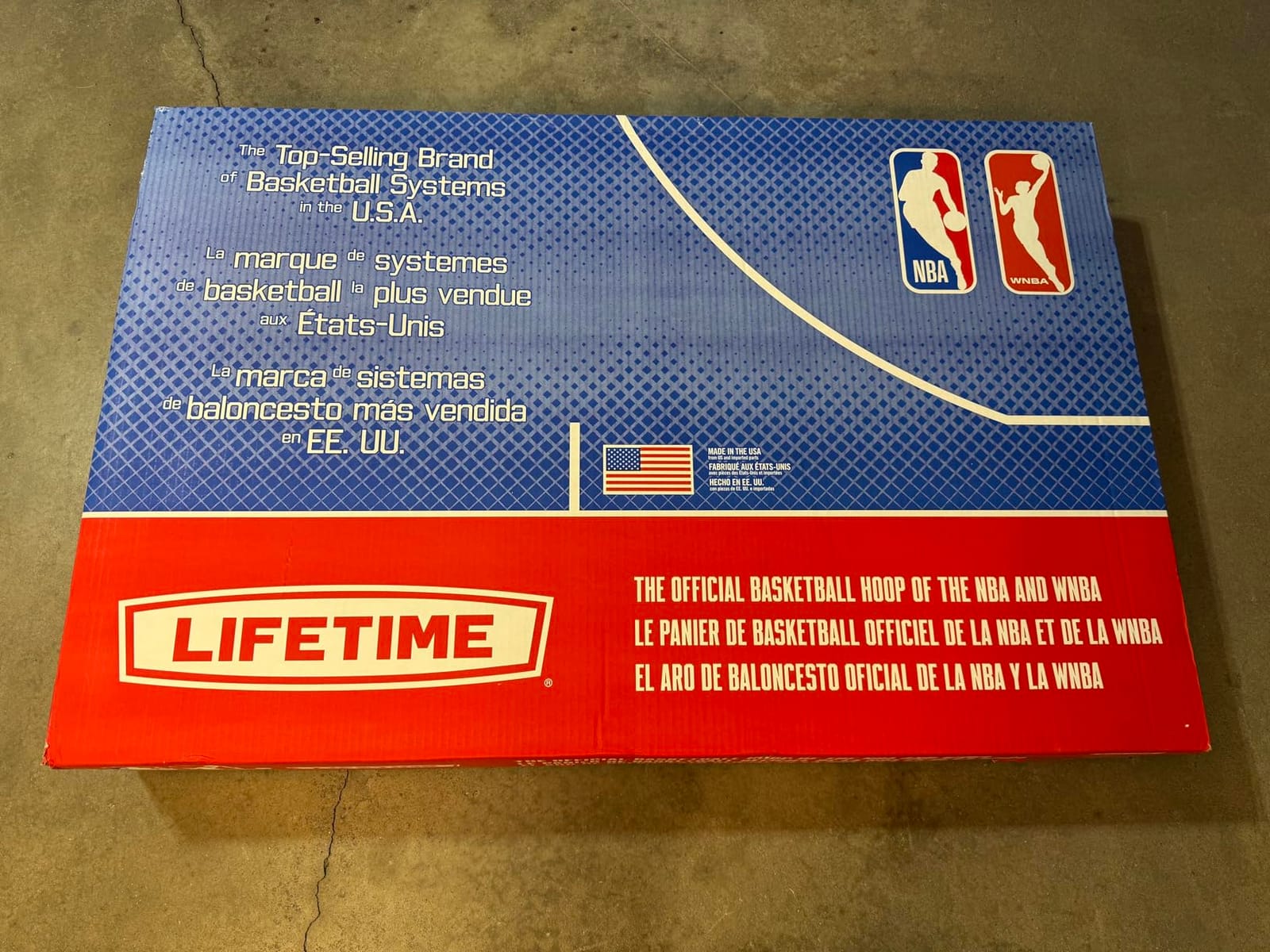
The rebound off this polycarbonate board is the compromise in the package. It is consistent and it does not feel dead, but it is plainly flatter than tempered glass. Shots that would rattle out on a gym board drop through instead. If you are building shot mechanics for a younger player, that is fine. If you are chasing the sound and feel of a real court, it is not.
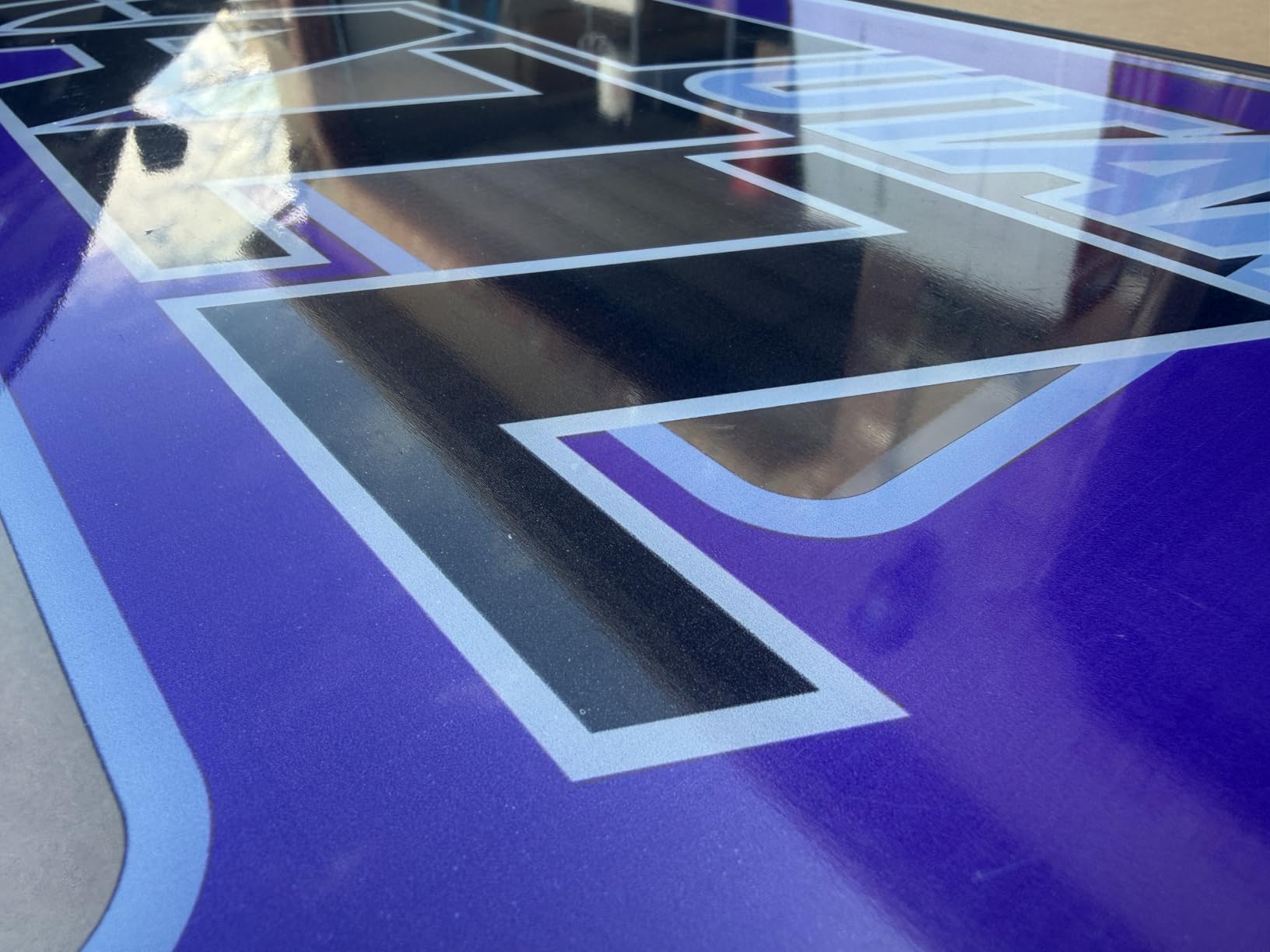
Assembly took two people and roughly a couple of hours, which is normal for this class. The dimensions run 69 inches deep by 44 inches wide by 146 inches tall, and at 50 pounds it is heavy once the base is filled. A few buyers reported missing pole sections, and Lifetime replaced them, so that is a packaging issue rather than a quality one.
What to check before you buy this hoop
Measure the base footprint against your drive before you order. At 69 inches deep it is a long unit, and the wheels only help if the path from the street to the garage is flat and clear. Confirm the pole clears your roofline and any garage door track at full extension, because 10 feet of rim height on a 44-inch board is a tall assembly in a low-ceilinged setting.
Who should skip it
Skip it if you already have a competitive player in the house who notices the difference between polycarbonate and glass, or if your association or club requires a glass board. Also skip it if you want a system you can leave out in winter rather than drain. The base fill is a seasonal job with this design, and that is the one recurring chore reviewers mention.
2. Lifetime Height Adjustable 44 Inch System: Best Value
The Lifetime Height Adjustable is the cheapest honest way to get a full-size board and a real 10-foot rim onto a driveway, and at 4.6 stars across more than three thousand owner reviews it is the most proven system in the list. It is the pick if the budget is the deciding factor and the players are kids rather than adults.
Lifetime Portable Outdoor Basketball Hoop, 44 Inch Backboard, 7.5-10 Ft Telescoping Adjustable Height System
44 inch polyethylene backboard
7.5 to 10 ft in 6 inch steps
27 gallon fillable base with wheels
Pros
- Telescoping pole adjusts in 6 inch increments
- 44 inch board is a real full-size target
- 27 gallon base fills with water or sand
Cons
- Polyethylene has very little rebound
- Sand fill through small holes is a chore
- Two people needed to assemble and move it
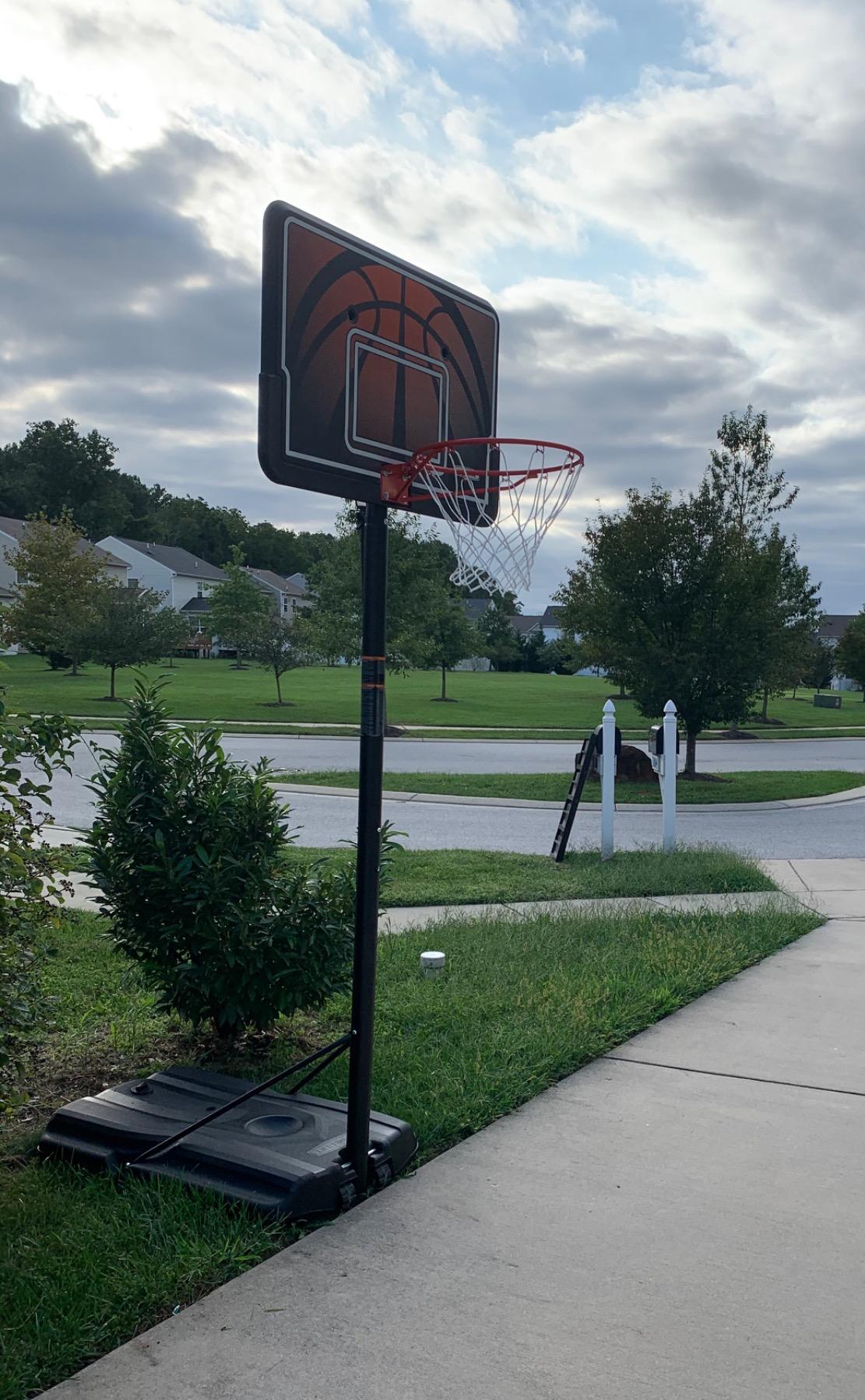
The 44-inch high-density polyethylene board is larger than most of the plastic systems people buy for a first hoop, and owners consistently report years of daily use without cracking. The 27-gallon base with built-in wheels is the other reason this one keeps working: a full base does not drift, which is where most budget portables fail. One owner reported a base that was only half filled blowing over in a storm, which tells you exactly how much the fill matters.
Be clear-eyed about the rebound. Polyethylene is the softest material in this roundup, and shots off the glass drop rather than carom. It is fine for a seven-year-old building a shot. It is not a board you would use to work on form with a serious player. The rim also will not bend, so dunking is realistically off the table.
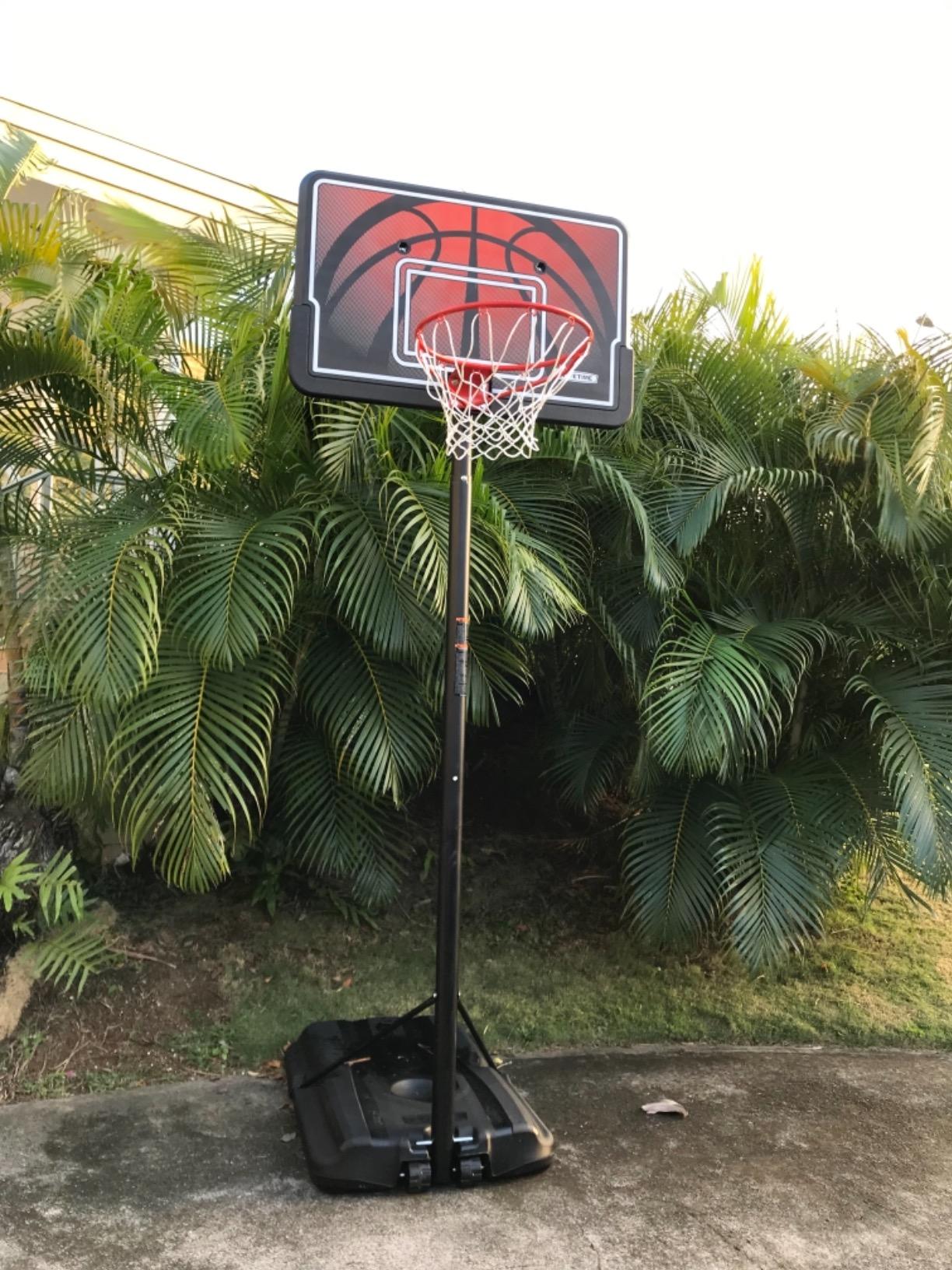
Height adjustment is manual, a tilt-and-lift of the pole rather than a smooth crank, and the increments are 6 inches, which is finer and more useful than a two-position system. The listed overhang is only 1.38 inches, meaning the board sits almost flush to the pole, so it needs very little room between the backboard and a wall or fence.
At 40.2 pounds empty, the system weighs about what most portables do, and it is still a two-person job once the base is full. Plan the sand fill with a funnel and a second pair of hands, and you will avoid the most common complaint in the reviews.
How this fits a small driveway
Because the board barely overhangs the pole, this is one of the easier systems to place in a tight drive or a courtyard where you cannot afford a deep run-out. Face the pole toward the long axis of the drive, not across it, and you keep the full depth of the space clear for driving.
Where the cost saving comes back
The saving is real but not unlimited. The base fill is where budget hoops get expensive in time, and the two-person assembly is an afternoon you have to actually commit to. If you only need one hoop for a growing child, this is the sensible buy. If you want something the adults will use too, step up to a stiffer board.
3. Yohood 4.4 to 10 Ft Adjustable Hoop: Best for Young Children
The Yohood adjustable goal is the only system here that drops to under 4.5 feet, which makes it the pick for a household with a toddler or a first-grader who cannot reach a 7.5-foot rim. Eleven height settings cover the range in roughly half-foot steps.
Yohood Basketball Hoop Outdoor 10ft Adjustable, Portable Goal System for Kids Youth and Adults, 44 Inch Shatterproof Polycarbonate Backboard, Black
44 by 28 inch polycarbonate board
4.4 to 10 ft across 11 levels
44 by 28 inch molded base
Pros
- Widest height range in the roundup
- Oversized 44 by 28 inch base resists wind
- Shatterproof polycarbonate with anti-rust steel poles
Cons
- Only a 1 year manufacturer warranty
- Inconsistent build quality on some systems
- Polycarbonate rebound is muted
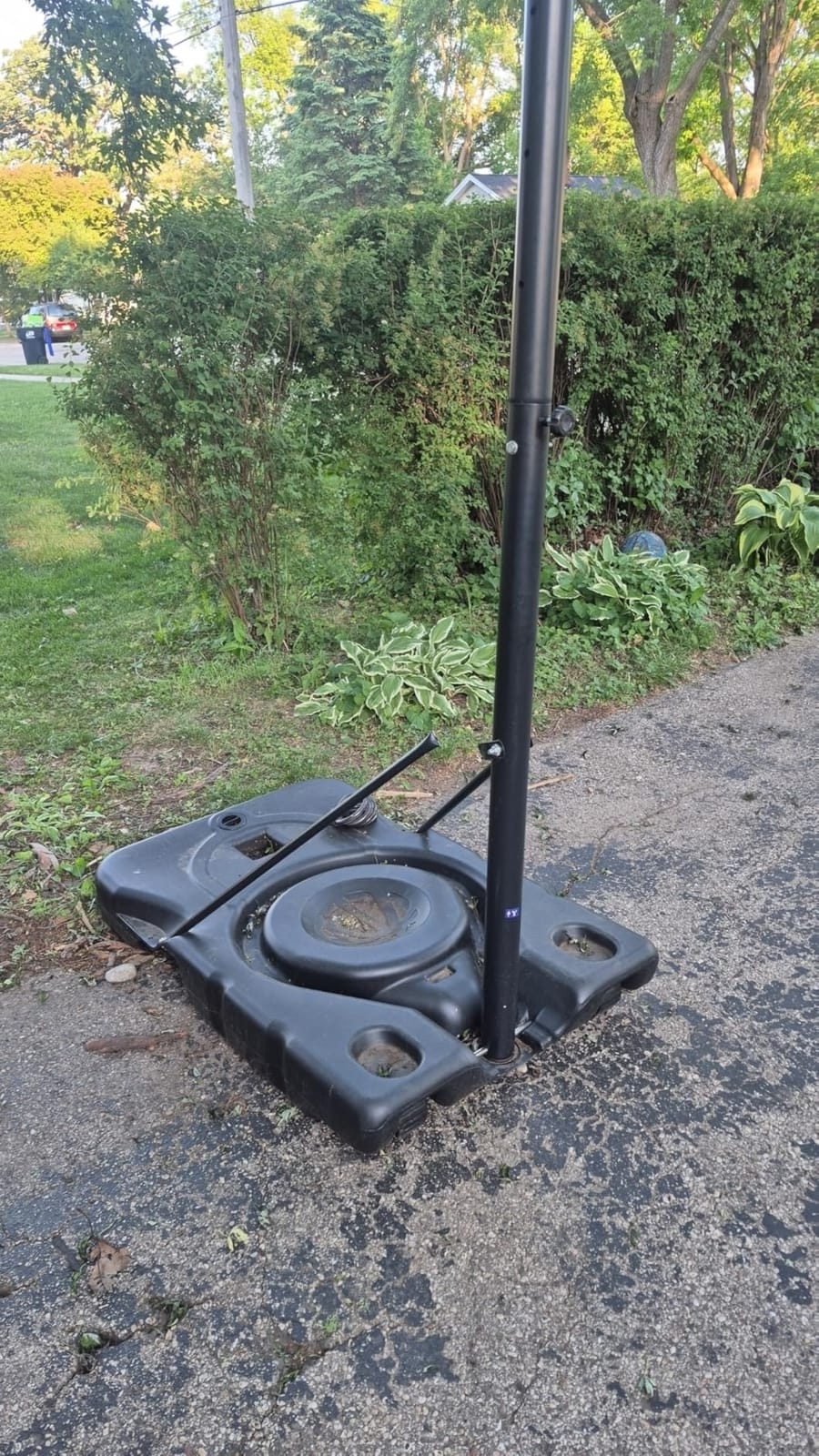
The base is the story here. At 44 by 28 inches it is larger than the typical 36 by 24 inch base you find on portable hoops, and owners single that out as the reason the system stays put on a windy day without being wedged against a curb. The two-and-a-half foot overhang pushes the board well out from the pole, which creates a genuine contest under the rim rather than a straight shot from the base.
You get the lower range by using two pole sections and the higher range with three, so switching down for a small child is a matter of removing a section rather than cranking a handle. That is a two-minute job once you have done it twice, and the labels and assembly video make the first attempt painless.
The compromise is the one-year manufacturer warranty, the shortest we would accept on a hoop that will live outdoors, and a visible spread in build quality across owner reviews. A portion of the one-star feedback points at hardware fit or finish rather than function, and the large majority of reviews sit at four or five stars. At 4.4 from 1799 ratings, that is a solid signal, but not a strong one.
Fill the base before you judge it. Unfilled, no portable on this list holds its position, and reviewers who skipped the fill are the source of most of the stability complaints.
What the low end of the range is really for
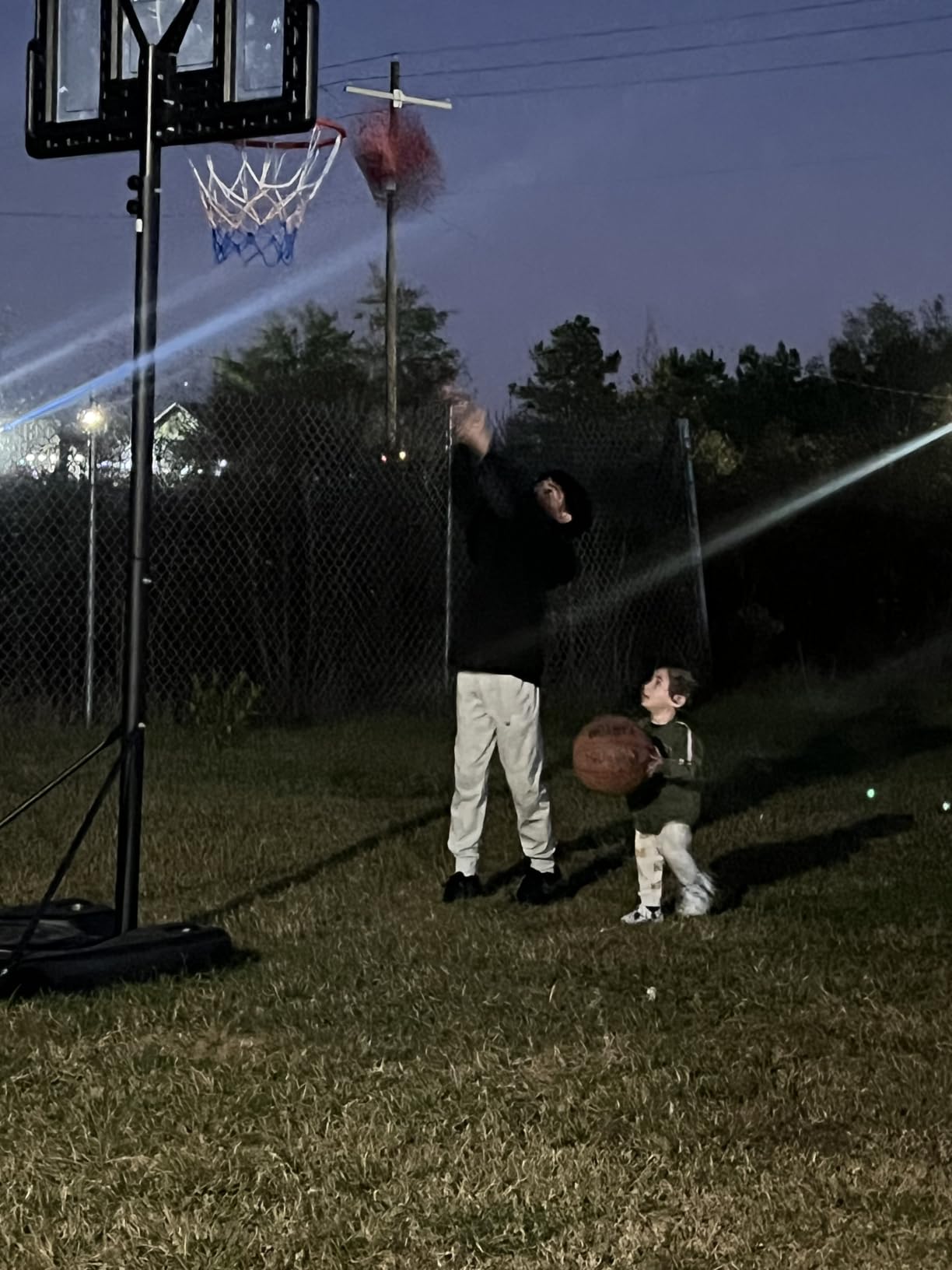
The 4.43-foot setting is not a gimmick. It puts the rim at chest height for a three-to-four-year-old and turns shooting into a gross-motor game instead of a frustration exercise. Parents of first-graders mention this as the feature that keeps a child interested long enough to develop a shot.
When to choose something else
Choose a different system if you plan to dunk, if you expect heavy adult play, or if the one-year warranty makes you uneasy about leaving a pole outside through ice and heat cycles. For supervised family use by younger children, the range is worth more to you than any material upgrade available at this level.
4. Silverback 60 Inch In-Ground Hoop with Tempered Glass: Best In-Ground System
The Silverback 60-inch in-ground system is the best basketball hoops for driveways choice for anyone who owns the property and wants the ball to come off the glass the way it does indoors. A 60-inch tempered glass backboard, a pro-style breakaway rim and an all-steel actuator are a genuine step up in feel from every portable on this list.
Silverback Height Adjustable In-Ground Basketball Hoop with Tempered Glass Backboard, Pro-Style Breakaway Rim & Backboard Pad, Black
60 inch tempered glass backboard
7.5 to 10 ft all-steel actuator
breakaway rim with pads
Pros
- True gym-style rebound from tempered glass
- Breakaway rim protects the board and players
- Smooth 7.5 to 10 ft actuator
- Board and pole pads included
Cons
- Requires digging and pouring concrete
- 198 lb needs several people to position
- Tempered glass is costly to replace
Once it is anchored, the difference is immediate. Concrete locks out the movement that makes a portable goal feel springy, and a 60-inch board gives you a target wide enough that layups and floaters behave normally. Reviewers describe the shot as arena-like and report almost no shake, which is exactly the top purchase driver in owner feedback.
The breakaway rim matters more than most buyers expect. When someone loads the rim hard, the mechanism flexes and takes the force instead of driving the rim back into the glass. For a family with a dunking teenager, that is the difference between a bent rim and a shattered backboard. The included backboard and pole pads add a layer of protection for anyone who takes a fast layup into the support.
It also ranks first in its category on retail listings, and at 4.5 stars from 1510 ratings it is one of the better-proven systems here rather than a boutique brand with a thin review base.
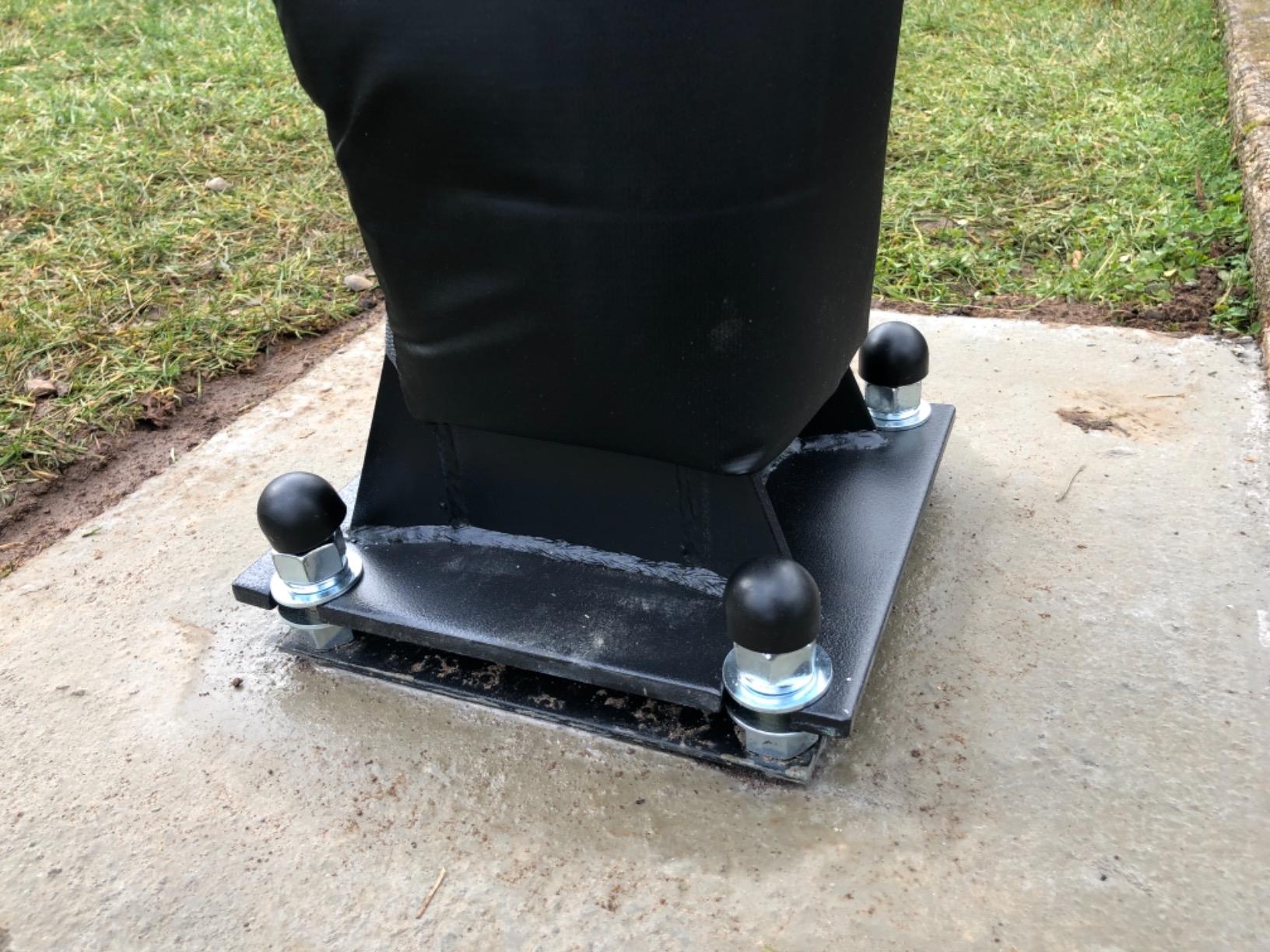
The compromises are all about handling and installation. At 198 pounds you will not be repositioning this without a few adults and a plan. The tempered glass is also costly to replace if a stray ball or a storm gets it, so factor a spare board into your thinking before the first hail season.
Budget the install separately. The listed price covers the system and the anchor kit, not the concrete, the labour or the excavation. Owners across this category consistently say buying the system from a retailer and hiring a handyman for the pour is the smoothest route, because the job is genuinely just digging a hole and encasing the anchor.
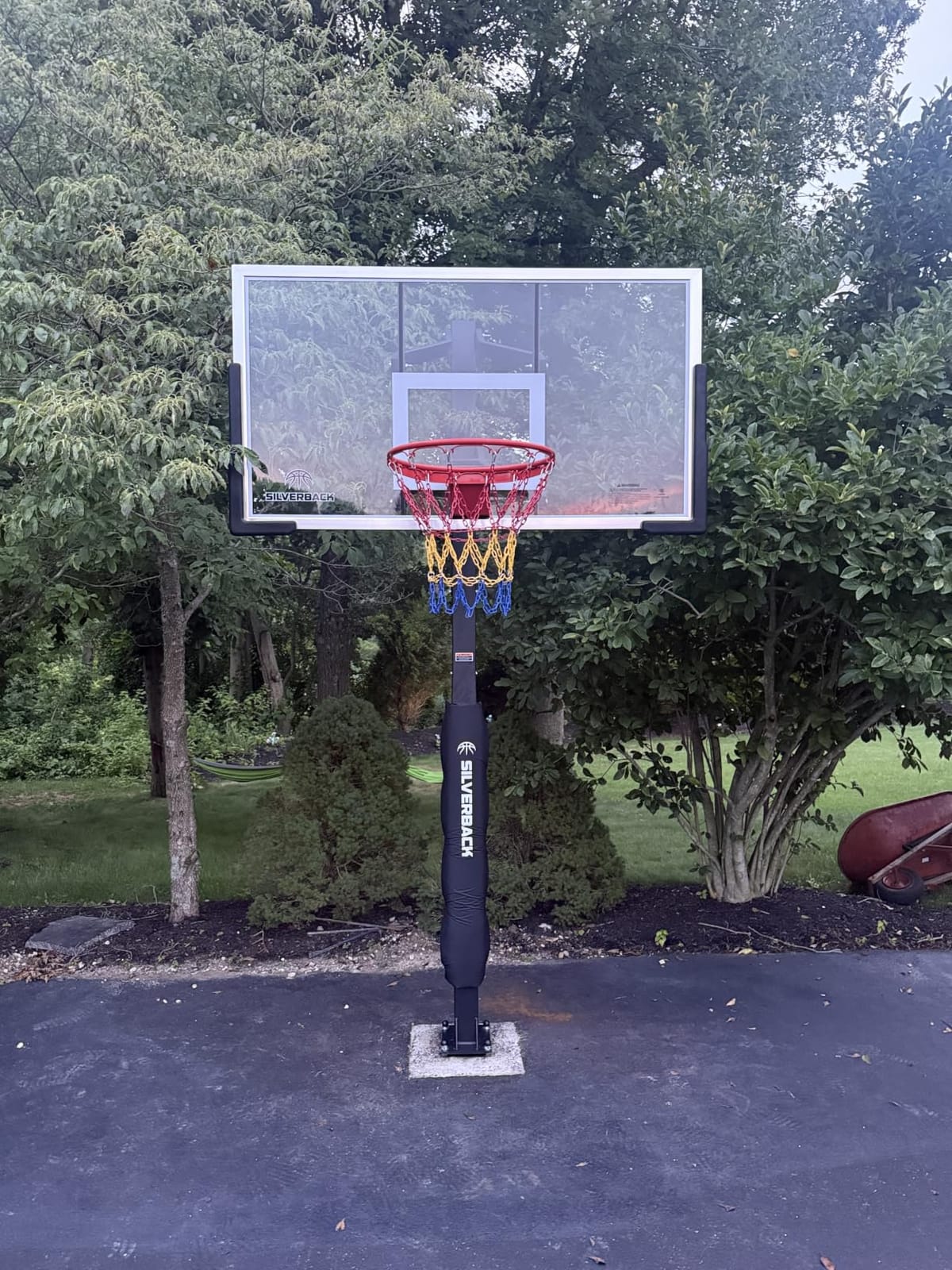
Is 60 inches too much for a standard driveway
Only if you have a narrow drive. A 60-inch board needs a 60-inch pole, and the board sits at the end of the pole, so the total footprint from the back of the base to the front of the board runs well past six feet. On a standard two-car drive that is fine as long as the base goes at the far end and the run-out goes toward the street. On a single-width drive or a short courtyard, choose 54 inches instead.
What the anchor kit does for you later
The anchor system is the part people forget. It means the goal can be unbolted and moved to a new property rather than abandoned in a hole, which is worth something if you may move within a few years. Spare parts are listed as available for several years, so a damaged actuator is not a dead system.
5. Silverback NXT 54 Inch Portable Hoop: Best for Real Overhang
The Silverback NXT is the portable to buy if your driveway is wide enough to give the board room to project past the pole, because its 26-inch overhang is the deepest on any wheeled system here. A 2.5-foot overhang plus folded edges means you shoot at the rim, not around it.
Silverback NXT Adjustable 10ft Outdoor Basketball Hoop, 54-Inch Backboard
54 inch HDPE backboard
7.5 to 10 ft actuator
26 inch overhang, steel-on-steel frame, wheels
Pros
- Largest usable overhang on a portable
- Stabili-Frame steel connection to the pole
- Smooth actuator from 7.5 to 10 ft
Cons
- HDPE board has weak rebound
- Higher share of 1-star reviews than most here
- Two adults needed to reposition
The structural detail that sets this apart is the Stabili-Frame connection, a steel-on-steel joint that ties the chassis directly to the 3.5-inch round pole rather than bolting plastic to steel. That is why the frame holds its geometry after a season of hard play, and it is the difference between a portable that stays square and one that develops a lean.
The actuator moves the rim from 7.5 feet to regulation 10 feet smoothly, and the 54-inch board is a genuinely usable size for adults as well as kids. Owners like that the board feels bigger than the category average, and the folded edges mean a sharp edge is not waiting for a forehead.
Assembly is quick-play with preassembled parts, and reviewers put it at 90 minutes or less. The wheelbarrow-style handle means tilting and rolling, which is still realistically a two-adult operation given the 91-inch depth, but it is far better than dragging.
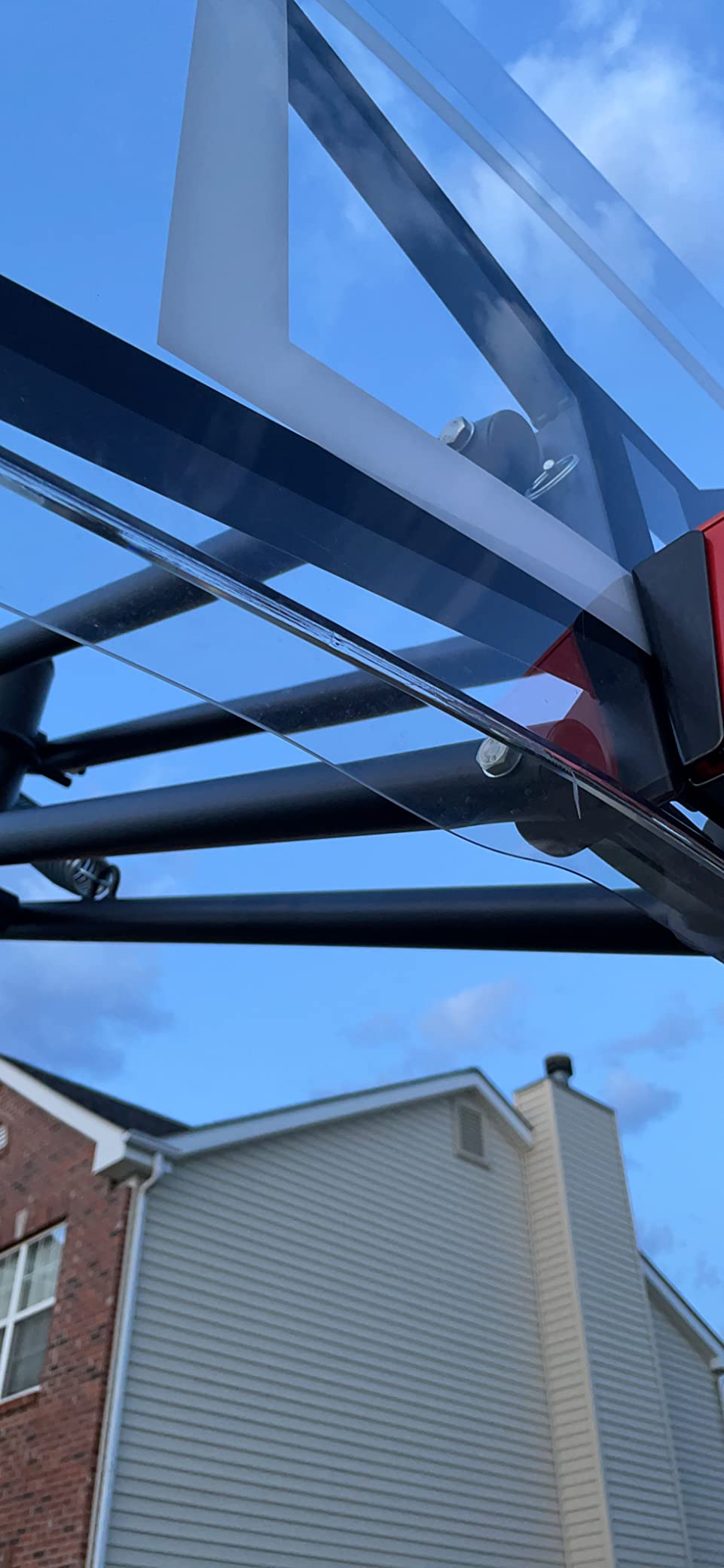
The limitation is the HDPE board. It is durable and it will not shatter around a driveway full of children, but the rebound is soft and noticeably less lively than glass or even a good polycarbonate board. A higher share of one-star reviews than the other systems here also points to a few assembly and durability problems on individual pieces, which is normal at this build quality.
Warranty terms are stated only on the packaging, so check them before you discard the box.
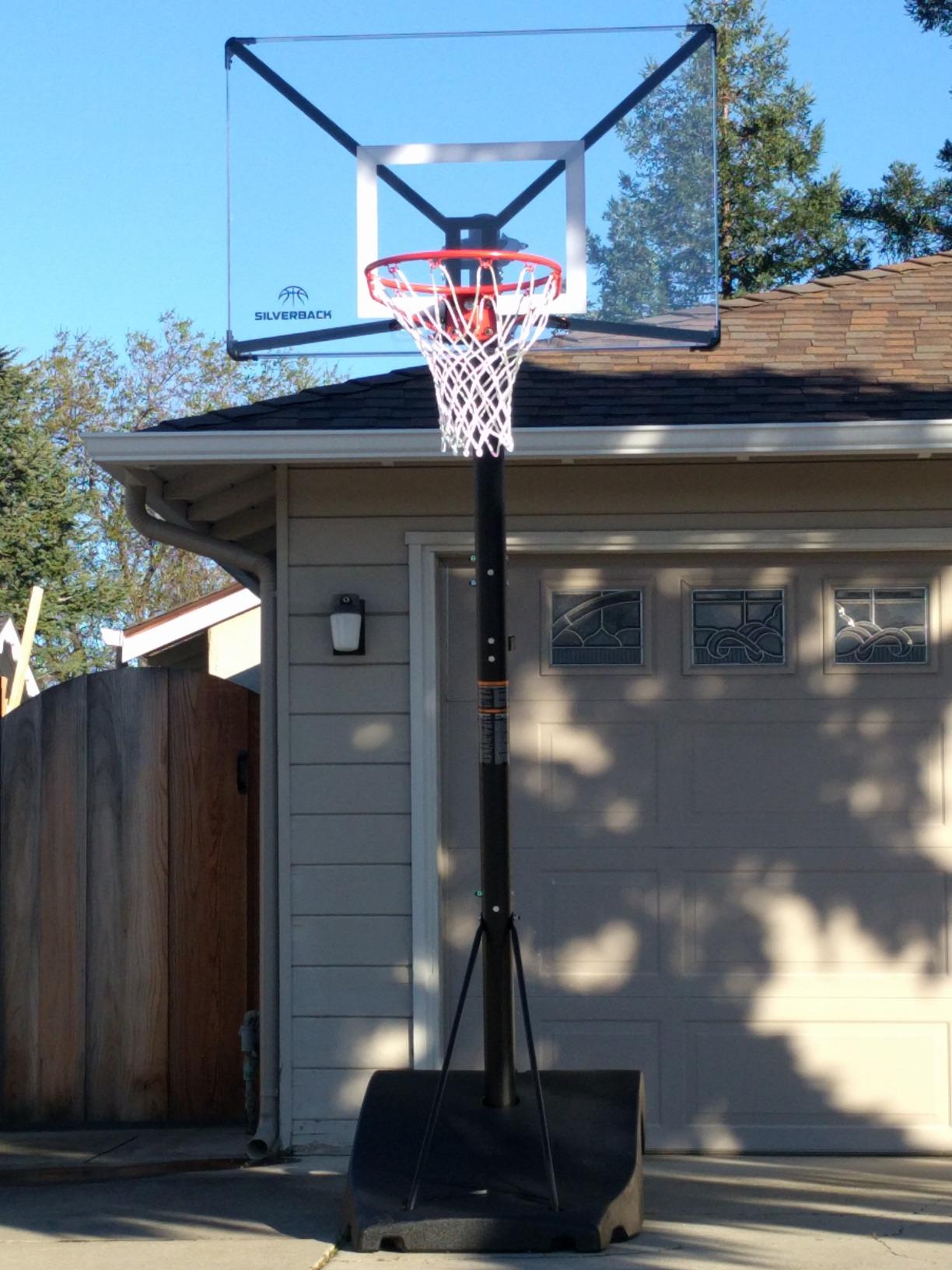
Do you have the width for it
The 26-inch overhang is the whole point, and it is also the constraint. You want at least a couple of feet of clear space behind the base plus a shooting lane, and you want the front of the board to land somewhere other than a parked car. On a wide three-car drive this is a strong fit. On a tight two-car drive it wastes the advantage you paid for.
How it compares with the portable below it
Against the Silverback in-ground system, the NXT gives up the concrete anchor and the glass board but gains wheels and a much lower install effort. Against cheaper portables it adds a real actuator, a bigger board and a proper steel frame. It sits in the middle, and the overhang is the reason it earns that spot.
6. IGL 3 to 10 Ft Portable Hoop: Best for the Widest Height Range
The IGL system is the pick for a household that spans the whole age range, because its three-stage pole reaches from 3 feet to 10 feet on the same frame. It also has the most generous ballast design here, with a main base plus a separate anchor base that most competitors do not offer.
IGL Portable Basketball Hoop Outdoor, 3-10ft Adjustable Height, 40″ Shatterproof Backboard, Fillable Base, Basketball Goal System for Driveway Backyard Pool, Fun for Family & All Ages
40 by 24 inch polycarbonate board
3 to 10 ft across three pole stages
dual fillable base
Pros
- Three-stage pole covers 3 to 10 ft
- Dual ballast system resists wind
- One-person tilt-and-roll movement
Cons
- Small 40 by 24 inch board for older players
- Only a 1 year warranty
- Height changes need pole sections not a crank
The dual-base design is the underrated part. The main base holds 77 pounds of water or 100 pounds of sand, and the anchor base adds another 30 pounds of water or 40 pounds of sand, which together give it more holding power than most single-base portables of any size. That is why owners report it staying planted on driveways in wind.
The three pole stages map neatly onto real age groups: 3 to 5 feet with two poles for toddlers, 5.5 to 7.5 feet with three for early school years, and 8 to 10 feet with four for adults. The trade-off is that changing range means adding or removing a section rather than turning a handle, so it is less convenient than a crank but far more precise.
At 4.5 stars from 1237 ratings, this is a well-proven mid-range pick, and setup is reported at around 45 minutes for most families.
The board is the compromise. At 40 by 24 inches it is a modest target, fine for a child developing a shot and small for a teenager working on range. The rebound is soft, and a small share of reviews flag hardware fit and finish inconsistencies. The one-year warranty is also the shortest we would like to see on a system expected to live outside.
Sand is the better fill here. With two bases to fill, water is quicker but you will be draining and refilling both on a schedule, and any frost cycle is a problem. Sand gives you a heavier, more stable platform and stores through winter without a drain step.
When the low end genuinely matters
A 3-foot rim turns a two-year-old into a competent shooter, which is a bigger developmental win than it sounds. If you have children spaced several years apart, or you are using the hoop for a child who cannot yet reach 5 feet, this is the only system in the roundup that serves the whole range without a second hoop.
What to pair it with
Because the board is small, put the base at the end of the drive and give the shooter as much lateral room as you can. A 40-inch board with a long run-out is a much better drill than a 40-inch board crowded against a garage door. Sand in both bases, and check the level with a straightedge before you fill them.
7. Lifetime 71281 In-Ground 52 Inch System: Best for Easy Height Changes
The Lifetime 71281 is the in-ground pick for families who hate fiddling with a hoop, because the Power Lift mechanism raises and lowers the rim from 7.5 to 10 feet with a squeeze handle instead of a pin or a crank. Once it is in the ground, the height change is the easiest on this list by a wide margin.
Lifetime Outdoor Basketball Hoop System – 52 in Shatterproof Backboard
52 inch polycarbonate backboard
Power Lift 7.5 to 10 ft
three-piece 3.5 inch round pole, 84 lb
Pros
- Power Lift squeeze handle for 7.5 to 10 ft
- 52 inch board suits competitive play
- Three-piece pole with friction-weld joints stays quiet
Cons
- Needs digging and concrete to install
- 84 lb is awkward before anchoring
- Polycarbonate yellows with long UV exposure
The three-piece 3.5-inch round pole with friction-weld joints is the quiet hero. Friction welds are tighter than a bolted section, and owners specifically report a stable, quiet shot with far less rattle than telescoping poles of this size. On an in-ground system, that rigidity is the whole point, because a concrete anchor amplifies any looseness in the pole.
At 52 inches, the board is big enough for adult play and competitive shooting while staying shatterproof, which is a sensible middle ground between a 44-inch portable board and a 60-inch glass system. The steel frame around the polycarbonate panel gives it the mass of a much larger board without the fragility.
Owners consistently name the Power Lift handle as the feature they did not expect to love. When a seven-year-old and an adult both need the same hoop, a squeeze handle is the difference between using it and not using it.
There is no way around the install. In-ground means digging and concrete, and at 84 pounds the unit is awkward to maneuver into position before it is anchored, so plan for at least one helper on the day.
The other honest limitation is that polycarbonate degrades in sun. Owners note that the board can yellow with long UV exposure, which is a cosmetic issue rather than a structural one, but it is worth knowing if appearance matters to you.
Why 52 inches is the comfortable middle
A 52-inch board fits a standard two-car driveway without the overhang drama of a 60-inch system, yet it gives an adult a genuine shooting target. If you are torn between the 44-inch portables and the 60-inch glass systems, this is the size most homeowners end up wanting after they see the alternatives in person.
How it pairs with a concrete pour
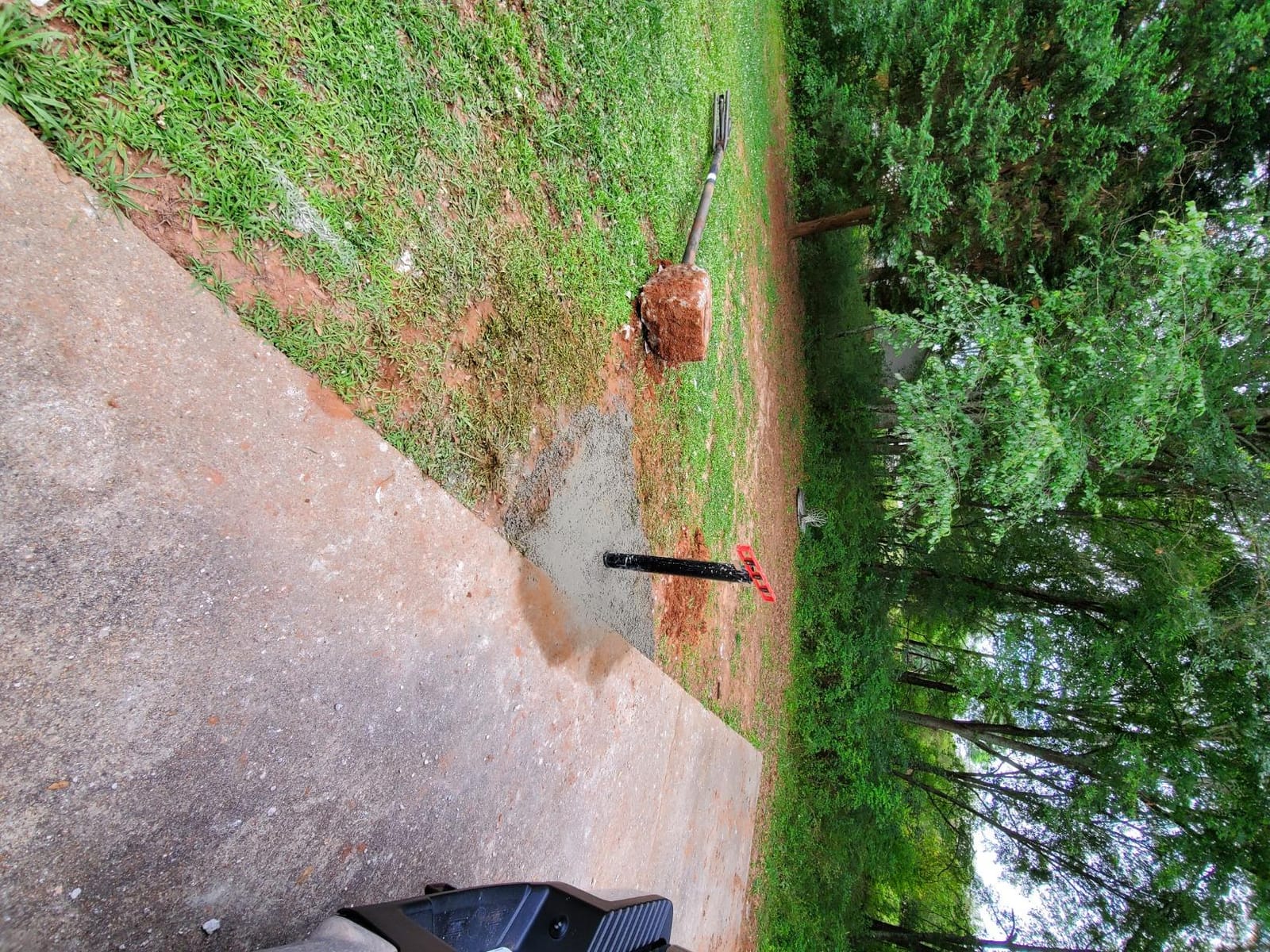
The in-ground case is strongest when the drive is flat and already concrete. Mark the spot with the base centered, dig deep enough for the anchor, keep the pole plumb while the concrete cures, and check level from two directions before the pour sets. A driveway that slopes toward the street will make the whole system feel off, and no mechanism corrects that later.
8. Spalding Momentous EZ Assembly 54 Inch Hoop: Best for Fast Setup
The Spalding Momentous is the pick when the deciding factor is time, because it is built to assemble in 30 minutes or less. The 54-inch padded H-frame acrylic board and the breakaway rim give it a premium look without the concrete work of an in-ground system.
Spalding Momentous EZ Assembly 54″ H-Frame Acrylic Portable Basketball Hoop
54 inch padded acrylic H-frame board
breakaway rim
8 to 10 ft adjustment, 117 lb portable
Pros
- Assembles in 30 minutes or less
- 54 inch padded H-frame board
- Steel board frame adds rigidity
Cons
- 117 lb is among the heaviest portables
- Acrylic rebounds less than glass
- Only 1 year warranty
The H-frame design is what makes the 30-minute claim plausible. Instead of a single post carrying a board, the frame spreads the load across a wider base structure, and the steel board frame around the acrylic panel resists flex. It also means the unit stands up without needing a full base fill to keep its shape, which is unusual for a portable of this size.
The breakaway rim is the feature that gets the most positive mention. It performs and looks like a proper court rim, and it is regulation width. The 8 to 10 foot adjustment range is narrower than most, so it is aimed at older kids and adults rather than a household with a small child.
At 4.4 stars, the rating is solid but the review base of 101 ratings is thin next to the others here. That matters when you are reading ratings, so we cover it below.
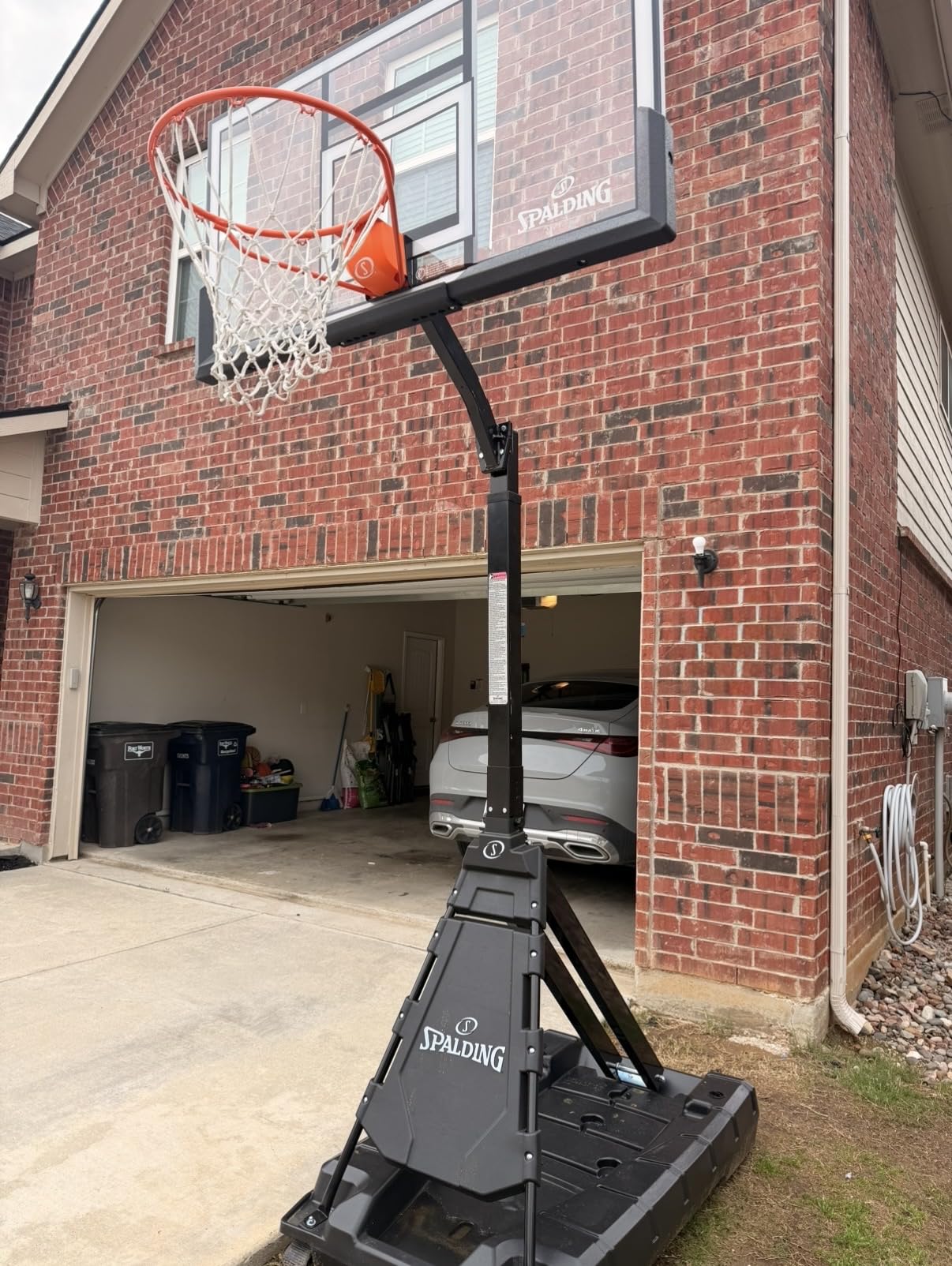
The weight is the real drawback. At 117 pounds it is among the heaviest portable systems in this roundup, and the H-frame that makes it rigid also makes it awkward to reposition alone. The acrylic board rebounds less than glass, and the warranty is one year unless stated otherwise on the packaging.
Buyers who want the breakaway rim and the fast setup but not the bulk should compare it with the Silverback NXT, which offers a longer adjustment range at a lighter weight.
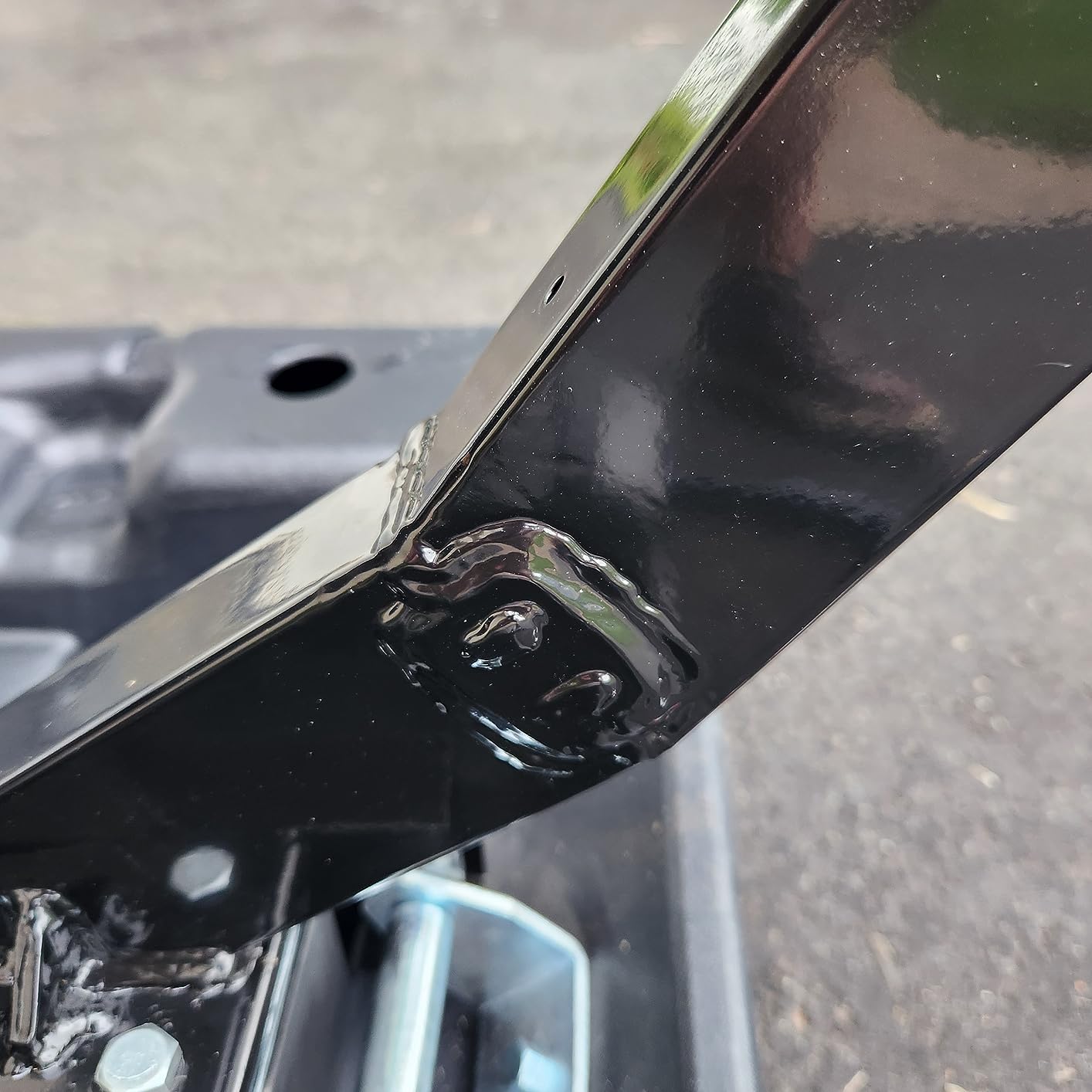
Is a 54-inch acrylic board worth it
For a buyer who wants a large board without the risk of glass in a family driveway, yes. Acrylic is softer than polycarbonate and duller than glass, but the 54-inch area is what matters most for casual shooting, and the padding makes it forgiving. It is a reasonable middle, though not the premium feel of a glass system.
Who should buy this instead of a portable with a fillable base
Buy this if you want to place the hoop on a patio, a court slab or a side yard where a water-filled base is impractical, or if you want to move the goal between two hard surfaces without draining anything. Skip it if your shooting space is a gravel or dirt patch, because the frame expects a flat hard floor underneath it.
9. Yohood 44 Inch Crank Hoop with Wheels: Best for Hand-Crank Adjustment
The Yohood 44-inch system is the pick for a family that changes hoop height often and wants it to be a one-hand operation. The rear crank handle moves the rim from 5.25 to 10 feet, and it is the smoothest mechanical adjustment in this roundup.
Yohood 10FT Portable Basketball Hoop Outdoor 44/48 Inch Height Adjustable
44 inch polycarbonate board
rear crank 5.25 to 10 ft
150 lb fill capacity, wheels
Pros
- Rear crank handle adjusts quickly
- Base holds up to 150 lb of water or sand
- Four support rods form a rigid triangular frame
Cons
- Rim and rods have broken after heavy daily use
- Only a 1 year warranty
- Assembly takes an hour or more
The 150-pound fill capacity is the largest in this roundup, and that is not a marketing number. A base that heavy resists tipping on a slope and stands up to a hard dunk, which is exactly where lighter portables fail. Four support rods plus the front board form a triangular structure, and owners report the hoop levels itself and stays level after assembly.
The crank is the feature that changes daily use. Turning a handle at the back of the pole is a genuine mechanical advantage over a pull-pin or a squeeze handle, because you can drop the rim to 5.25 feet for a small child and back up to 10 feet in a couple of turns. Two wheels let one person roll it between the driveway, the yard and the garage.
At 4.5 stars from 693 ratings, this is a well-liked mid-tier system, and the 44-inch board with iron-wrapped edges handles rim and board impact better than a bare plastic panel would.
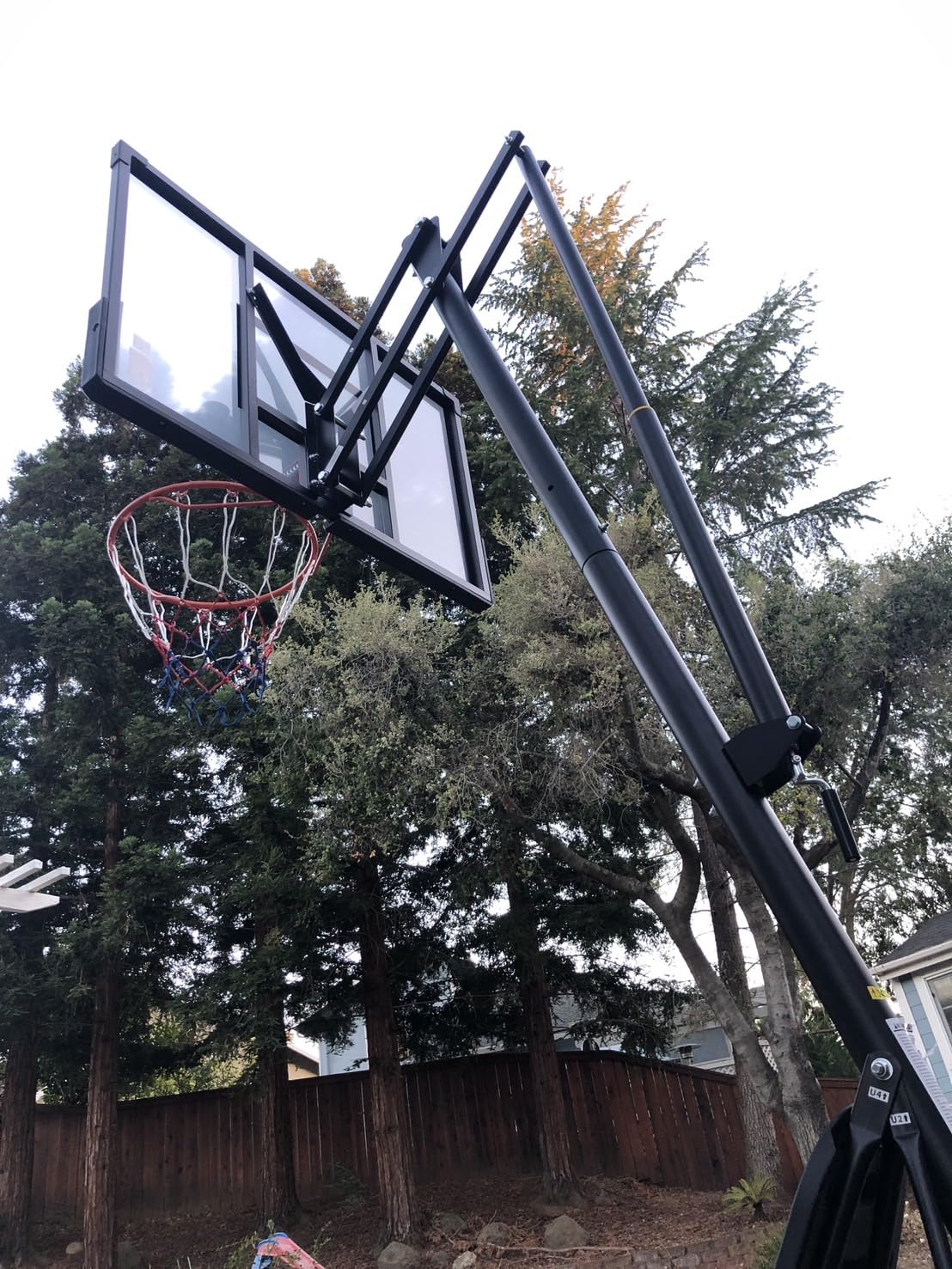
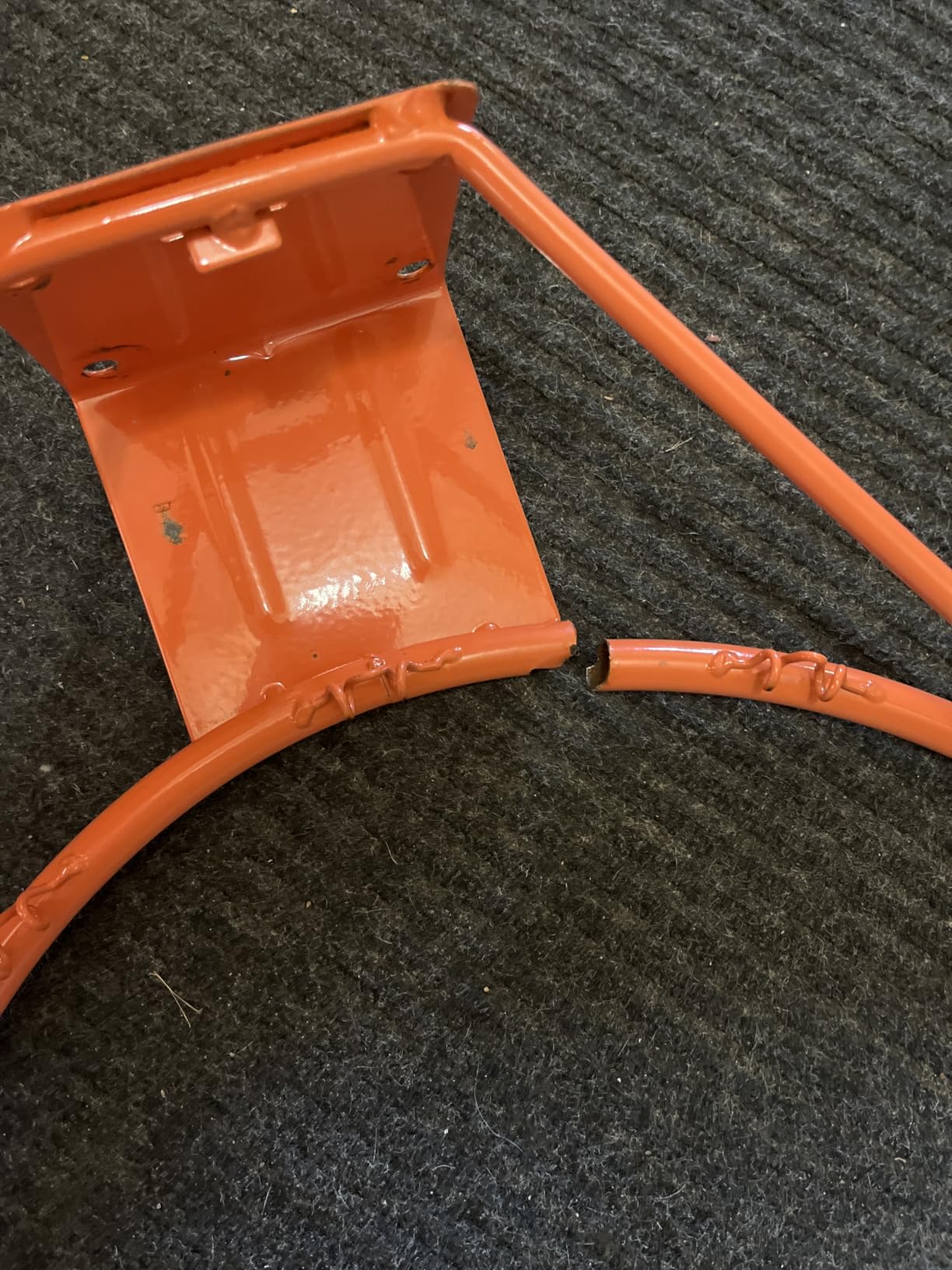
The honest caveat is durability under extreme use. Owners running it daily and heavily report rim and support rod failures within a few months, and the one-year warranty is not much comfort when that happens. The seller has replaced goals, but the pattern is worth respecting: this is a family hoop, not a school-yard unit.
Assembly takes an hour or more and is best done with two people. The box does include spare nuts, bolts and a spare net, which is a small thing you will appreciate at year three.
When a crank beats a squeeze handle
A crank wins when the height changes daily and the person adjusting it is a full-grown adult pushing a loaded base. The handle does the work and the base does not tip. A squeeze handle or a pin system wins when a child will be adjusting it themselves, because a crank at the back of a tall pole is not reachable for a five-year-old.
How to get the most out of the triangular frame
Fill the base before you level it, not after. Set the frame on flat concrete or asphalt, fill to the rated capacity, then use a level on both the top rail and the board. Owners report that the structure holds its geometry once the weight is on it, so a dry assembly check first is the only step you really need to get right.
10. Goalrilla GS54 In-Ground Glass Hoop: Best for a Permanent Setup
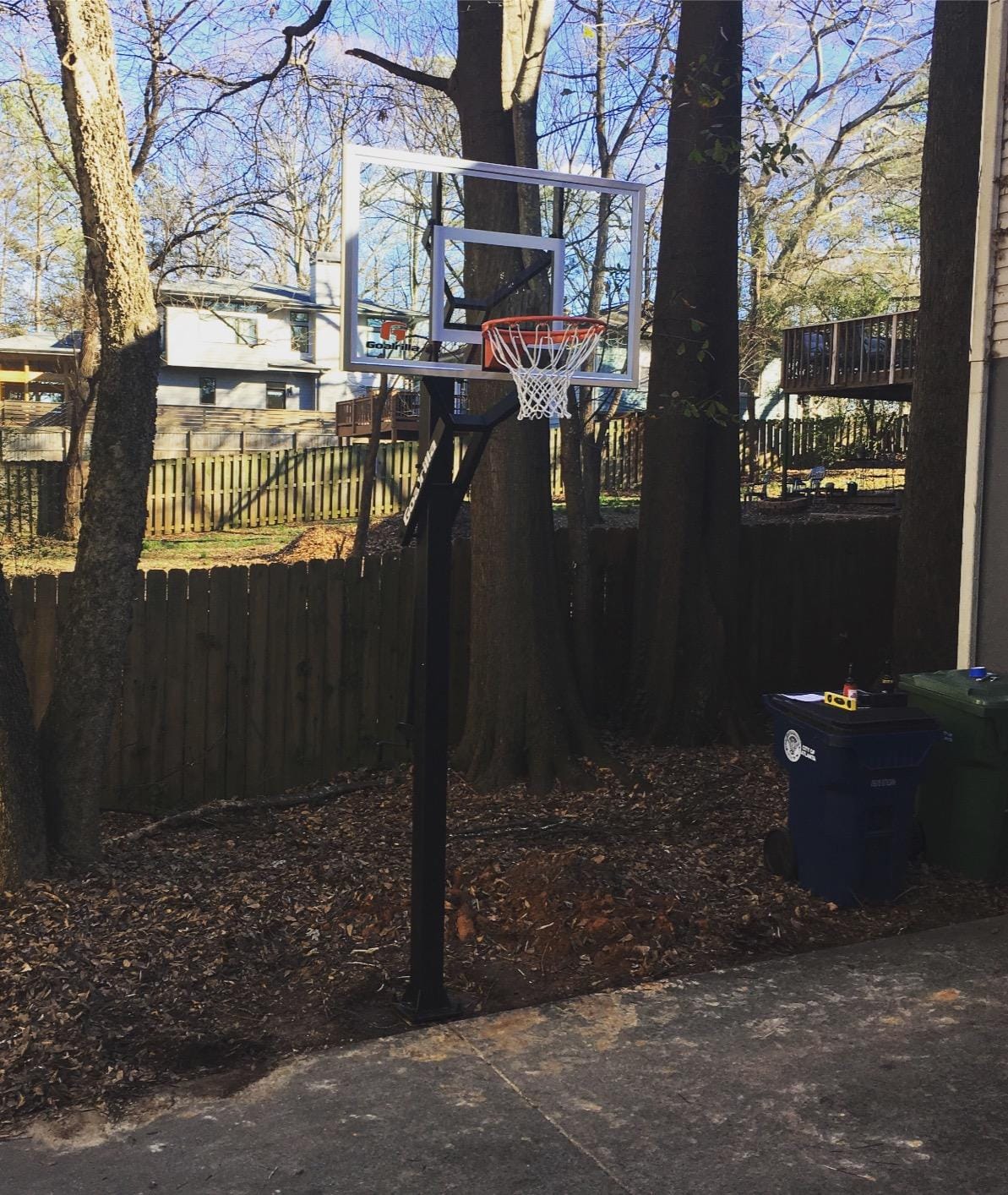
The Goalrilla GS54 is the heaviest and most permanent system here, and it is the right choice for a household that has a large, flat driveway and intends to keep the hoop for a decade. A 54-inch tempered glass backboard, a 34-inch overhang and a 357-pound build are engineered for permanence rather than convenience.
Goalrilla GS54 In Ground Basketball Hoop with Adjustable Height Backboard and Pro-Style, Breakaway Rim
54 inch tempered glass backboard
34 inch overhang
7.5 to 10 ft breakaway rim, 357 lb build
Pros
- True professional rebound from tempered glass
- 34 inch overhang with minimal shake
- Crank actuator moves a breakaway rim
Cons
- Install needs a deep hole and heavy concrete
- Backboard mounting needs 2 to 3 people
- 357 lb makes relocation impractical
Once the concrete cures, this is the most stable hoop in the roundup by a wide margin, and owners describe the shot quality as noticeably better than any portable. The one-piece main pole is stronger than the two-piece designs competitors use, and the 34-inch overhang means the board sits well clear of the base, which is what makes the system feel like a court rather than a driveway accessory.
The pro-style breakaway rim on a crank actuator moves from 7.5 to 10 feet, so a growing family can use the same goal. The concrete anchor system means the whole thing can be unbolted and moved to a new property, and the anchor kit is included.
It also carries a limited lifetime warranty, which is unusual in this category and worth weighting heavily if you plan to keep it long term.
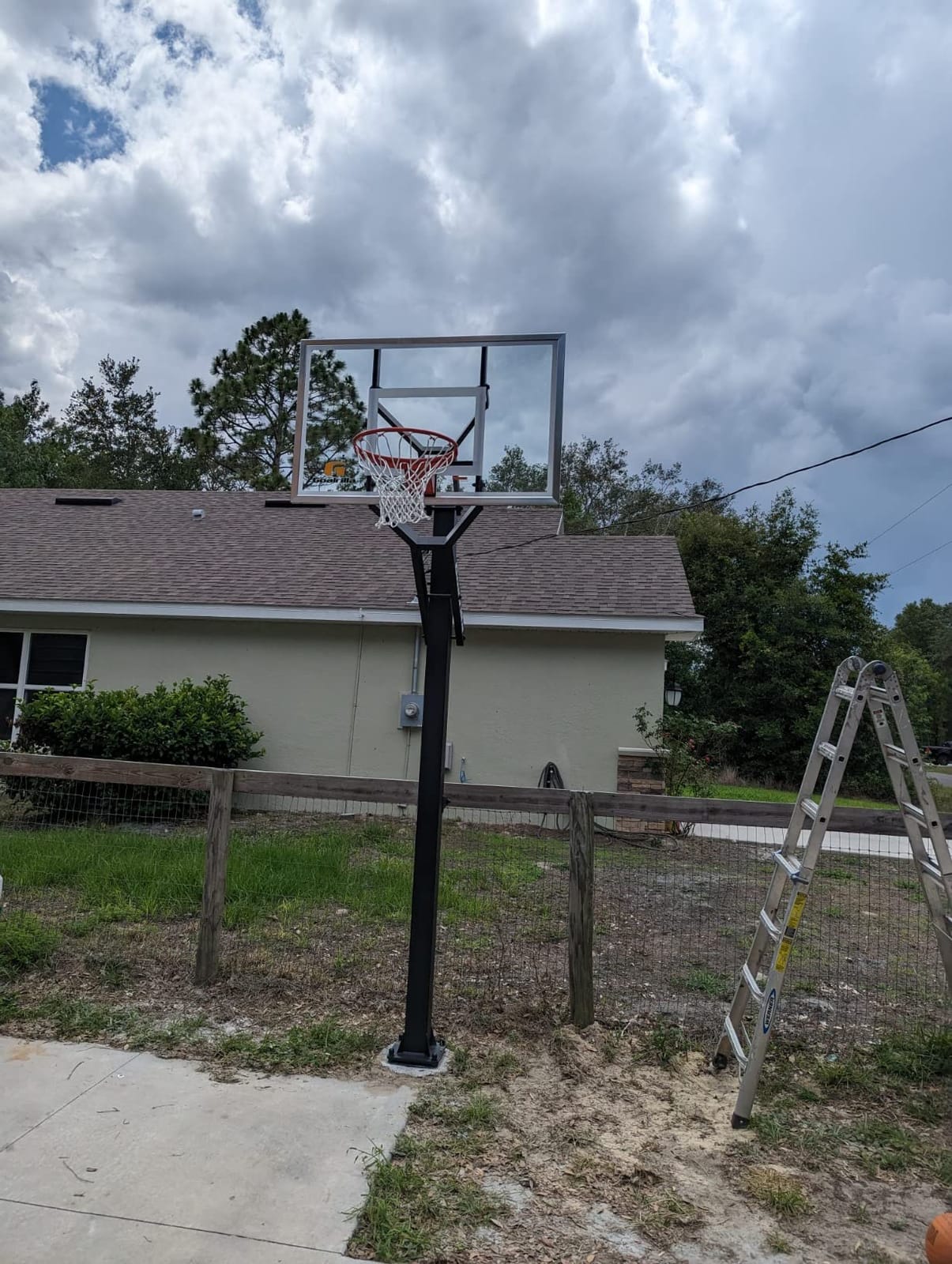
The install is the hard part, and owners are candid about it. The hole needs to be more than 40 inches deep, the instructions reportedly understate how much concrete you need, and owners recommend buying extra beyond the manual estimate. Mounting the backboard takes two or three people and a pickup bed or a ladder.
A small share of reports mention transit damage to the pole or the glass on arrival, so inspect the boxes fully before the packaging is discarded.
Is an in-ground system worth the install day
For a family that plays most days, yes. Nothing else on this list matches the combination of zero movement and glass rebound, and the multi-year to lifetime warranty terms reflect that. The cost of the install day is a Saturday with two or three helpers and a hardware store run, and after that the hoop is furniture.
How to keep the ball in your own driveway
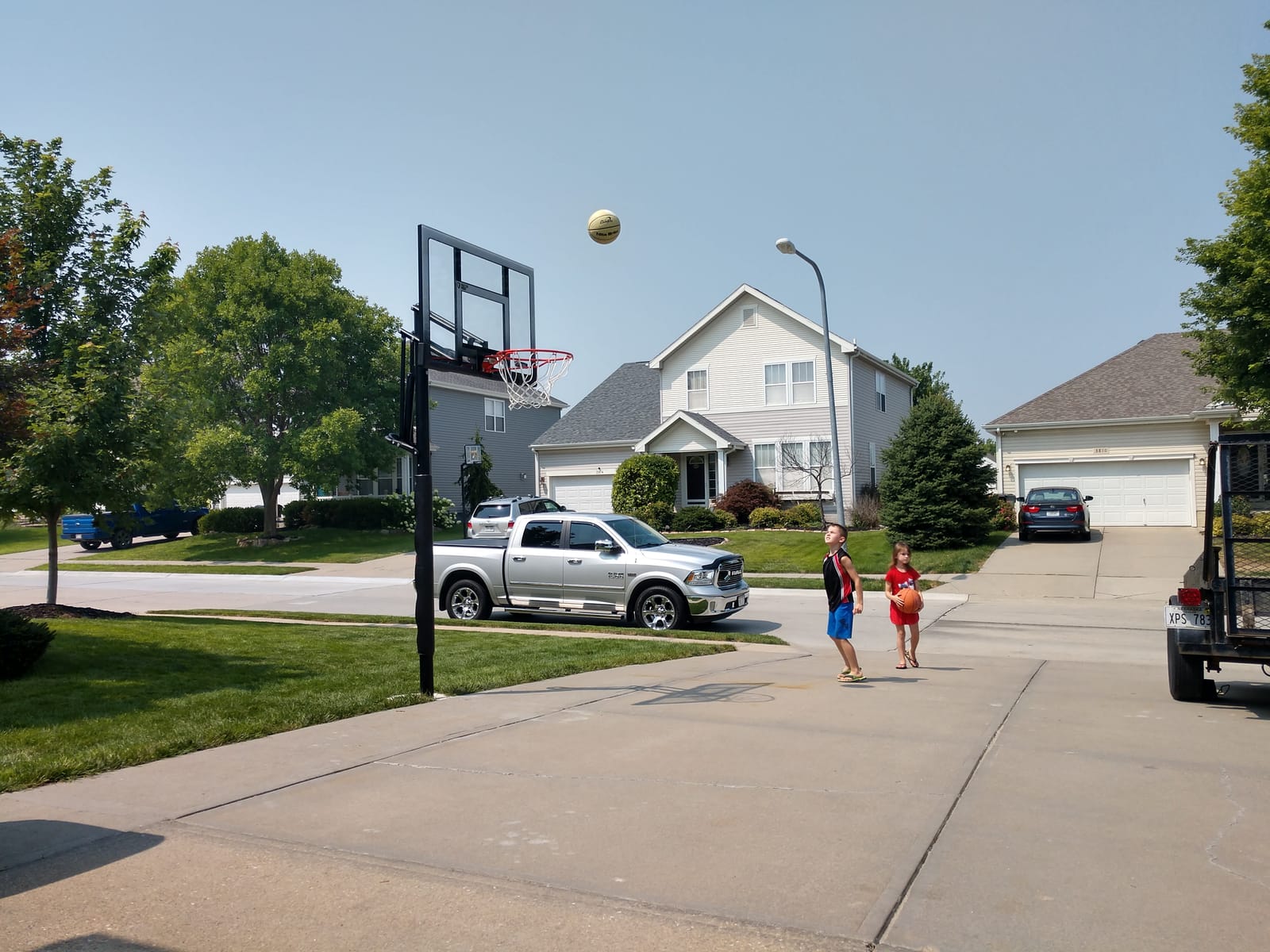
Set the base at the end of the drive furthest from the street, angle the overhang so the board points along the drive rather than across it, and add a backboard pad if your model does not include one. The overhang is what stops missed shots, and the pad is what stops a follow-up from a neighbour’s car window. Keeping the ball inside your property line is the single most effective step toward avoiding any friction, and it costs nothing.
In-Ground vs Portable: Which Should You Buy?
Buy an in-ground system if you own the driveway, you can pour concrete, and you want zero movement. Buy a portable if you rent, share a court, need to move the goal for car maintenance, or want the option to change your mind.
The difference in feel is immediate. A concrete-anchored pole is rigid, so the rim stays exactly where you put it and a missed shot does not send the whole assembly sideways. A portable with a properly filled base gets most of the way there, but under aggressive play, and especially on a sloped driveway, you will feel it move.
The difference in backboard quality is larger. Three of the systems here use tempered glass, and none of the portables can match the rebound. That is a real consideration if anyone in the house plays seriously, and a minor one if the hoop is for a seven-year-old.
The difference in cost of ownership is where in-ground systems get unfairly judged. The system price is only part of it. Add the concrete, the excavation and the labour, and the total installed figure climbs well past the sticker number on the listing. Portable systems avoid that entirely, but they trade it for a seasonal fill and drain routine.
Our read from owner discussions is consistent: people who wanted an in-ground hoop regret not buying one sooner, and people who rented regret a portable they could not afford to fill properly. If you are uncertain, the portable path is reversible. The concrete path is not, which is why we would not pour without a level driveway and a clear plan for where the ball will go.
How to Choose a Backboard Material
Tempered glass gives the truest rebound and a deadening sound, polycarbonate is shatter-safe with a flatter response, and acrylic sits between them but is the least durable of the three.
Tempered glass. This is the material that makes an in-ground system feel expensive. The ball comes off the board with a firm, flat response that matches an indoor court, and the sound is the part players notice. The trade-offs are weight, cost, and the fact that it shatters into small cubes if struck hard. Every one of those trade-offs is acceptable in a fixed in-ground system with a breakaway rim, because the rim takes the impact before the board does.
Polycarbonate. This is the practical choice for a family driveway, especially with children. It will not shatter into a dangerous mess, it is lighter to handle, and it is UV-treated on most quality systems. The rebound is noticeably flatter, and owners of the systems here describe shots as dropping rather than caroming. It also degrades in sunlight over years, with yellowing being the usual complaint.
Acrylic. Lighter and softer than both, and the least resilient under repeated impact. It suits a portable that will be moved often and does not need to feel like a gym floor. It is the compromise choice, and the Spalding Momentous on this list is the clearest example.
One more factor that trips people up: high-density polyethylene, used on the cheaper systems here, is softer again than polycarbonate. It is durable and safe, but treat it as a first hoop rather than a final one.
What Size Backboard Fits Your Driveway
Match the backboard to the usable width of the driveway, not to the size of the house. As a rule, 54 inches suits a narrow or single-width drive, 60 inches suits a standard two-car drive, and 72 inches needs a three-car drive or a wide court area.
Usable width means the total width of the drive minus the space the hoop and the base take up, and minus the clearance you need on both sides for a shooting lane. A 60-inch board on a 12-foot drive is not a fit even though the board itself technically fits.
Run-out matters as much as width. Most players take at least 15 feet of approach, and a meaningful number of shots need more. Placing the base at the end of the drive nearest the street and shooting toward the garage gives you the maximum lane, which is the arrangement homeowners generally converge on. The alternative is the street, which adds run-out at the cost of legal exposure and neighbour friction.
So to answer the common question directly: a 72-inch board is not too big for a three-car driveway, and it is genuinely too big for anything narrower. Overhang is the number that catches people, and a system with a 34-inch overhang needs far more room behind the pole than one with a flush-mounted board.
How to Measure Your Driveway Before You Buy
Measure three things: total width at its narrowest point, total length from the street to the garage, and the slope. The third one is the one that gets skipped and the one that causes bent rims and a hoop that leans permanently.
Measure the width at the door and again at the street, because driveways taper. Use the smaller figure for your size decision. Then subtract the depth of the base and the overhang, and what is left is your shooting lane.
For slope, lay a 4-foot level or a long straight board on the drive and check it. A modest fall toward the street is manageable on a portable, since you can shim and wedge the frame. On an in-ground system, a slope makes the pole plumb harder and leaves the whole goal feeling off, so correct the fall with a shimmed base or choose a different spot rather than forcing it.
Also check overhead clearance and the property line before the base is full. A 10-foot rim on a pole can put a child within reach of the underside of the board, and nobody wants a ball landing in a neighbour’s garden. Measuring the far edge of the shooting lane is the practical test, and if the lane crosses the property line, the hoop is in the wrong position regardless of how good the system is.
Installation: Concrete, Asphalt and Driveway Surfaces
In-ground systems need a proper anchor in concrete, and that job does not tolerate shortcuts. The standard sequence is: mark and level, call for utility locates, dig the hole, set the anchor with the pole plumb, pour and cure, then mount the backboard.
On an existing concrete driveway, cutting and pouring a new pad is the clean approach, and it is the method most in-ground owners use on a drive that has already been poured. On asphalt, the same anchor and concrete pad works because the anchor lives in the concrete, not the asphalt, but the pad edge will be visible and you should cut a clean rectangle so the asphalt is not torn.
For a portable system, the sequence is much shorter: assemble, place, fill, level and check. Fill both bases before the final level check, and use sand if the hoop is going to sit through a winter. Water is faster but needs draining before freezing, and sand stores without any extra step.
Whatever the type, check the local rules before you dig. A portable on wheels is usually fine, and an in-ground system is a permanent structure that some associations and neighbours care about. A quick conversation with the neighbour whose garden the ball will point at is worth more than a formal approval.
Frequently Asked Questions
Can I put a basketball hoop in my driveway?
Yes, and most driveways are the ideal spot for one. An in-ground system needs a hole, an anchor and a concrete pour, so it suits homeowners with flat concrete or a surface that can take a new pad. A portable system needs no digging at all, which makes it the right choice for renters, shared courts and anyone who wants the goal moved for car maintenance. Check your association rules and tell the neighbour whose garden the ball will point at before you set up.
Is a 72-inch basketball hoop too big for a driveway?
Not on a three-car driveway or a wide court area, where it fits comfortably. On a standard two-car drive it is tight, and on a single-width drive or short courtyard it is impractical. The deciding measurement is the usable width after you subtract the base and the overhang, plus the run-out you need for shots. If your usable lane is under about 16 feet, a 44 or 54-inch board is the honest choice.
What size backboard for a basketball hoop in a driveway?
A 54-inch board suits a narrow or single-width driveway, a 60-inch board suits a standard two-car driveway, and a 72-inch board needs a three-car driveway or wider. Overhang matters as much as the board width, because a system with a deep overhang needs clear space behind the pole. If you want a true rim contest rather than a straight shot, give the board room to project past the base.
What is the best basketball for outdoor use?
An outdoor-rated ball, not an indoor composite one. Outdoor balls use a weather-resistant cover designed to handle sun, moisture and grit, and they are slightly larger and heavier than indoor balls so they still feel right on a harder, more abrasive surface. Keep a single outdoor ball dedicated to the driveway, since it will pick up dust and grit that wear an indoor ball quickly.
Can you install a basketball hoop in an asphalt driveway?
Yes, because the anchor sits in concrete rather than in the asphalt. You cut a clean rectangle, pour a new concrete pad and set the anchor into it, which means the new pad edge will be visible against the old surface. The anchor is what holds the pole, not the asphalt underneath. On a portable system the question is simpler, since the base just sits on top of the asphalt and needs to be filled and level.
Are portable basketball hoops as good as in-ground ones?
A properly filled portable is good enough for family shooting and most practice work, and it wins on flexibility and cost. An in-ground system wins on rigidity, backboard material and the feel of the shot, because concrete locks out all movement and lets you use tempered glass. A portable drifts or tips when its base is underfilled or when it sits on a slope, so fill it with sand and check the level before judging the design.
The Best Basketball Hoops for Driveways in 2026: The Verdict
The Lifetime NBA League Edition is the best basketball hoops for driveways pick for 2026 because it does the two things most families need at once: a rim low enough for a child and high enough for an adult, and a base that stays put once it is filled. It is also the best-proven system here, with the highest rating and the largest review base of any hoop we looked at.
Own the driveway and want the real thing? The Silverback 60-inch in-ground system with a tempered glass backboard and a breakaway rim plays the way an indoor board plays, and nothing portable comes close. Budget for the concrete and the install day. The Goalrilla GS54 goes further again for a very large flat drive and a household that intends to keep the hoop for a long time.
On a tight drive, or with a child too small to reach 7.5 feet, the Yohood adjustable and the IGL both drop low enough to keep a young player engaged. Fill the base with sand, measure the run-out before you order, and check the far edge of the lane against your property line so the ball stays in your driveway.