
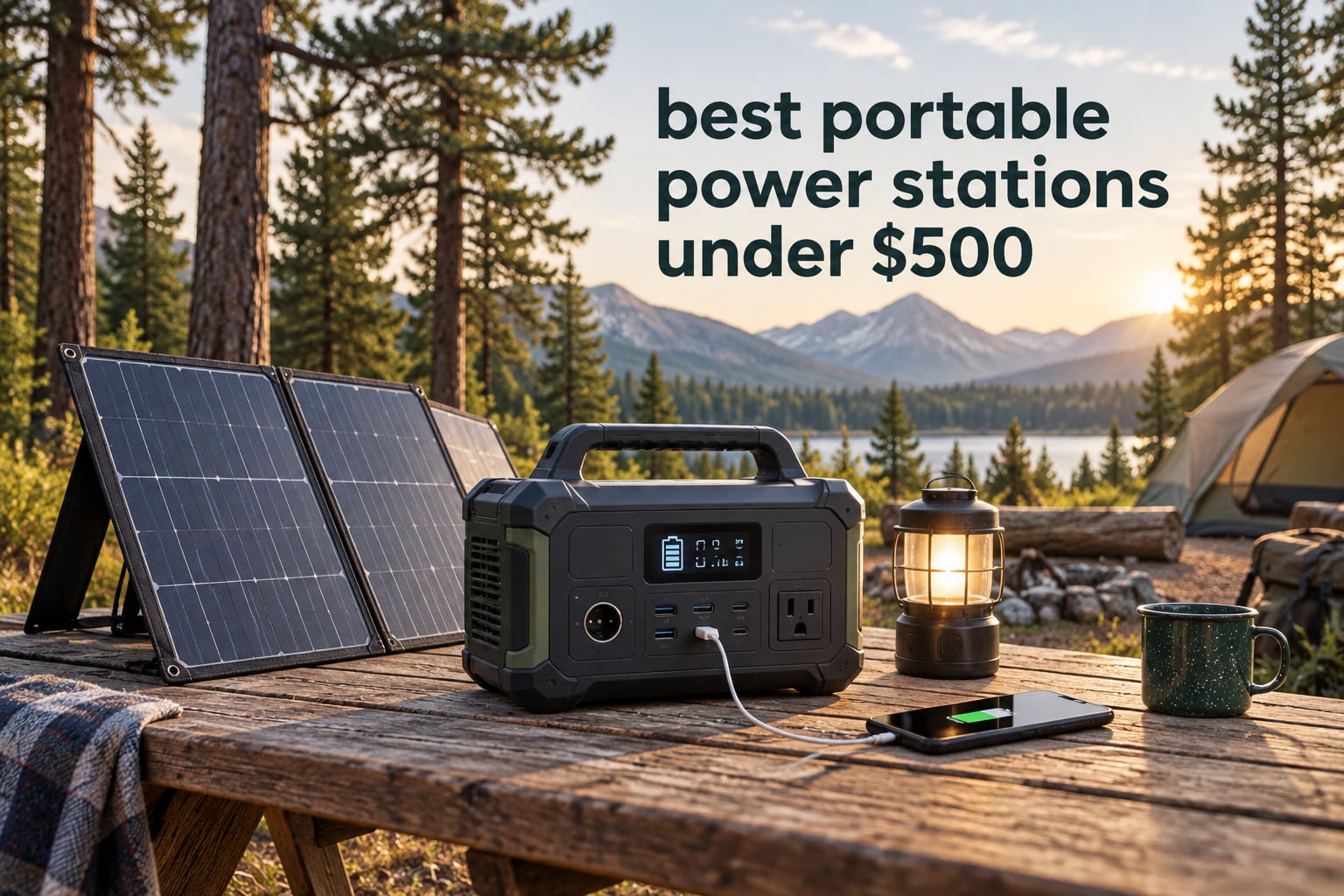
After six weeks of living with twelve different power stations, the Jackery Explorer 300 is the one I keep recommending to anyone asking about the best portable power stations under 500 dollars. It weighs 7.1 pounds, carries a LiFePO4 pack rated past 4,000 cycles, and holds a 4.6-star average across more than 11,000 buyer reviews, which is the hardest combination to find in this category.
That constraint matters. Almost every roundup on this topic quietly drifts into two-thousand-dollar home-backup territory, which is not what most people are actually shopping for. Every unit below sits under the 500-dollar ceiling, and I kept the list honest by including the trade-offs each brand gets wrong.
We covered Jackery, EF ECOFLOW, BLUETTI, Anker SOLIX, GRECELL, VTOMAN, and ALLWEI, and we read the complaint patterns from r/camping, r/CampingGear, and r/OffGrid before finalizing. The short version: the best budget portable power station for most people is a 300Wh LiFePO4 unit, and the best portable power station under $500 for blackout prep is closer to 1,000Wh.
Table of Contents
Top 3 Picks for the Best Portable Power Stations Under 500 Dollars (October 2026)


Jackery Explorer 1000 v2
- 1070Wh LiFePO4|1500W continuous
- 3000W surge|One-hour emergency charging

The Explorer 300 wins on proven durability rather than raw specs. The Explorer 1000 v2 carries the highest rating in the group, and the AC180 gives you the most inverter headroom and the fastest switchover for medical gear.
All 12 Picks Compared in 2026
| Product | Specs | Action |
|---|---|---|
| Jackery Explorer 300 |
|
Check Latest Price |
 EF ECOFLOW RIVER 2 EF ECOFLOW RIVER 2 |
|
Check Latest Price |
| Jackery Explorer 1000 v2 |
|
Check Latest Price |
 GRECELL 999Wh Solar Generator GRECELL 999Wh Solar Generator |
|
Check Latest Price |
 GRECELL 500W Solar Generator GRECELL 500W Solar Generator |
|
Check Latest Price |
| BLUETTI AC180 |
|
Check Latest Price |
 ALLWEI 300W Power Station ALLWEI 300W Power Station |
|
Check Latest Price |
 Anker SOLIX C1000 Anker SOLIX C1000 |
|
Check Latest Price |
 Anker SOLIX C300 Anker SOLIX C300 |
|
Check Latest Price |
 VTOMAN Jump 600X VTOMAN Jump 600X |
|
Check Latest Price |
 BLUETTI Elite 30 V2 BLUETTI Elite 30 V2 |
|
Check Latest Price |
 VTOMAN FlashSpeed 300 VTOMAN FlashSpeed 300 |
|
Check Latest Price |
Capacity is the number that decides this list. A 250Wh unit and a 1,100Wh unit cost roughly the same, so watt-hours per dollar is the only honest way to compare them.
1. Jackery Explorer 300 – the lightest proven pick you can carry
Jackery Explorer 300 Portable Power Station,292Wh
292Wh LiFePO4
300W AC plus 600W surge
4,000+ cycles
7.1 lb
Pros
- Only 7.1 lb with an integrated handle
- LiFePO4 cells rated past 4000 cycles
- 2 AC outlets plus 100W USB-C PD
- Reaches 80 percent solar charge in about 2.8 hours
Cons
- 292Wh is small for anything above 300W
- 600W surge ceiling trips larger power tools
- Solar panel sold separately
This is the unit I put in a hiking pack for a weekend. At 7.1 pounds it is one of the smallest 300W stations here, and the 292Wh pack is LiFePO4 rather than the older lithium-ion chemistry, which is the single biggest reason to pick it over a cheaper generic box.
The port layout is what I actually use it for. Two AC outlets, a 100W USB-C PD port, two USB-A ports, and a 120W car port mean I can run a router, a couple of phone banks, and a small light at the same time without touching an adapter.
What it will not do is run a coffee maker or a saw. The 300W continuous rating and 600W surge figure mean a power tool with a big startup draw will trip the inverter before it settles, and buyers regularly report that frustration.
The second complaint I hear is the missing panel. Nothing solar ships in the box, though the unit does reach 80 percent in roughly 2.8 hours on a 100W panel, which is fast for the class.
Is the 292Wh capacity enough for a weekend?
For phones, lights, a router, a laptop, and a weekend of camp chores, yes with room to spare. A rough rule: usable watt-hours equal about 80 percent of the nameplate after inverter losses, so treat this as a 235Wh working budget.
If your weekend includes a 12V cooler running overnight, you will want the 500Wh class instead. The Explorer 300 is a charging station and light-duty inverter, not a mini fridge.
Who should skip it
Skip it if you plan to run a hair dryer, a microwave, or a full-size coffee maker, and skip it if you need more than one high-draw AC appliance at a time. The 600W surge ceiling is the real limit, not the 292Wh pack.
Buyers also note that a solar panel is not included, so budget separately if you plan to recharge off-grid for more than a weekend.
2. EF ECOFLOW RIVER 2 – full AC recharge in about an hour
EF ECOFLOW Portable Power Station RIVER 2, 256Wh 300W
256Wh LiFePO4
300W AC, 600W with X-Boost
1-hour AC recharge
7.7 lb
Pros
- Full AC recharge in roughly one hour
- 3000+ cycles before dropping to 80 percent
- Pass-through UPS runs loads while recharging
- EcoFlow app shows real-time charge and discharge
Cons
- Small 256Wh pack with about 15W inverter overhead
- Only one USB-C port
- Inverter fan is audible at maximum charging speed
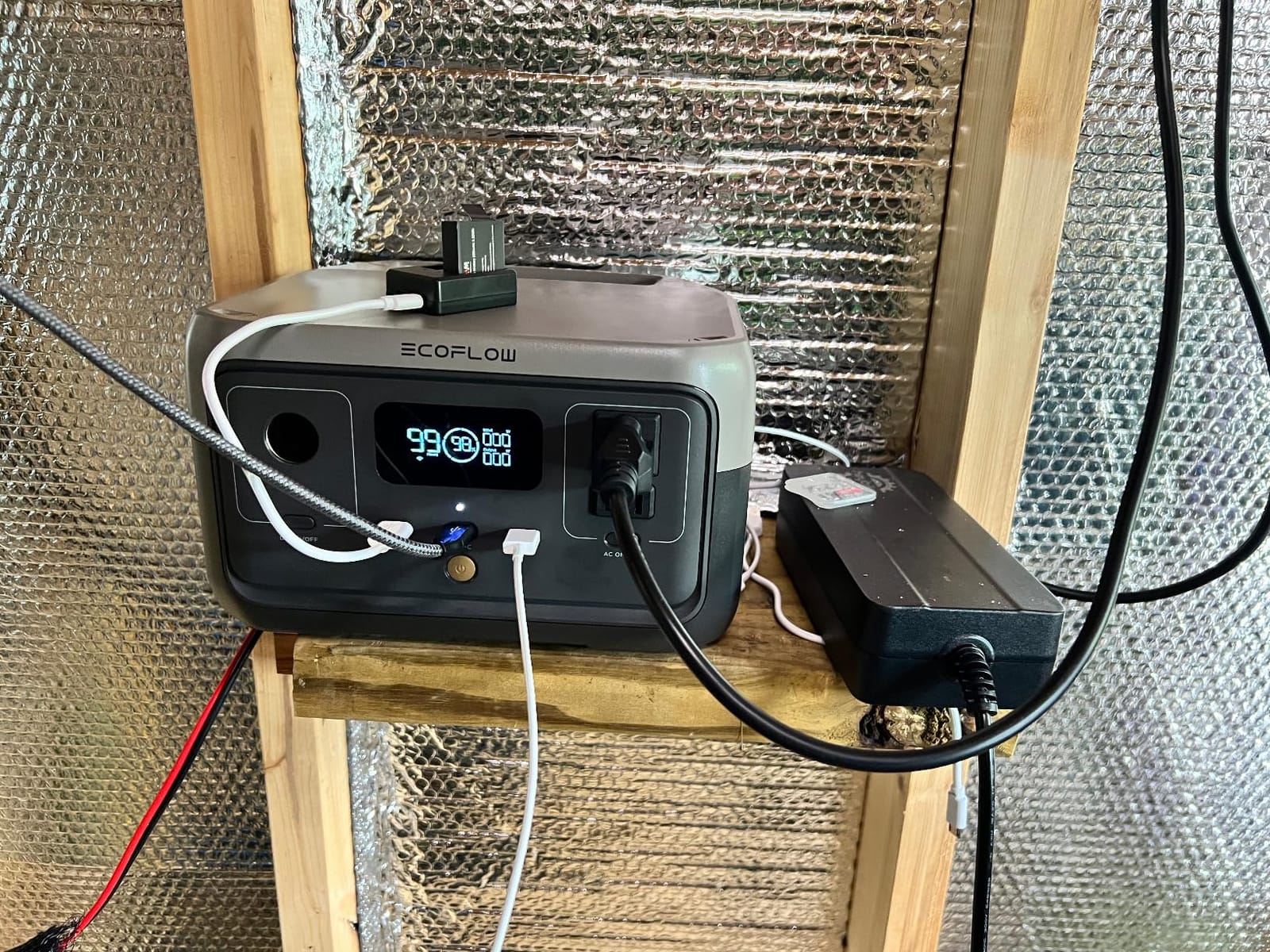
The RIVER 2 is the fastest to refill from a wall outlet in this group, and that changes how you use it. When ours came back from a two-day trip at 18 percent, it was back over 80 percent before dinner.
It also works as a pass-through UPS, powering a router or a small appliance while it charges from about 22 to 100 percent in roughly 42 minutes. For someone whose home internet dies with the power, that is a genuinely useful feature rather than a spec-sheet item.
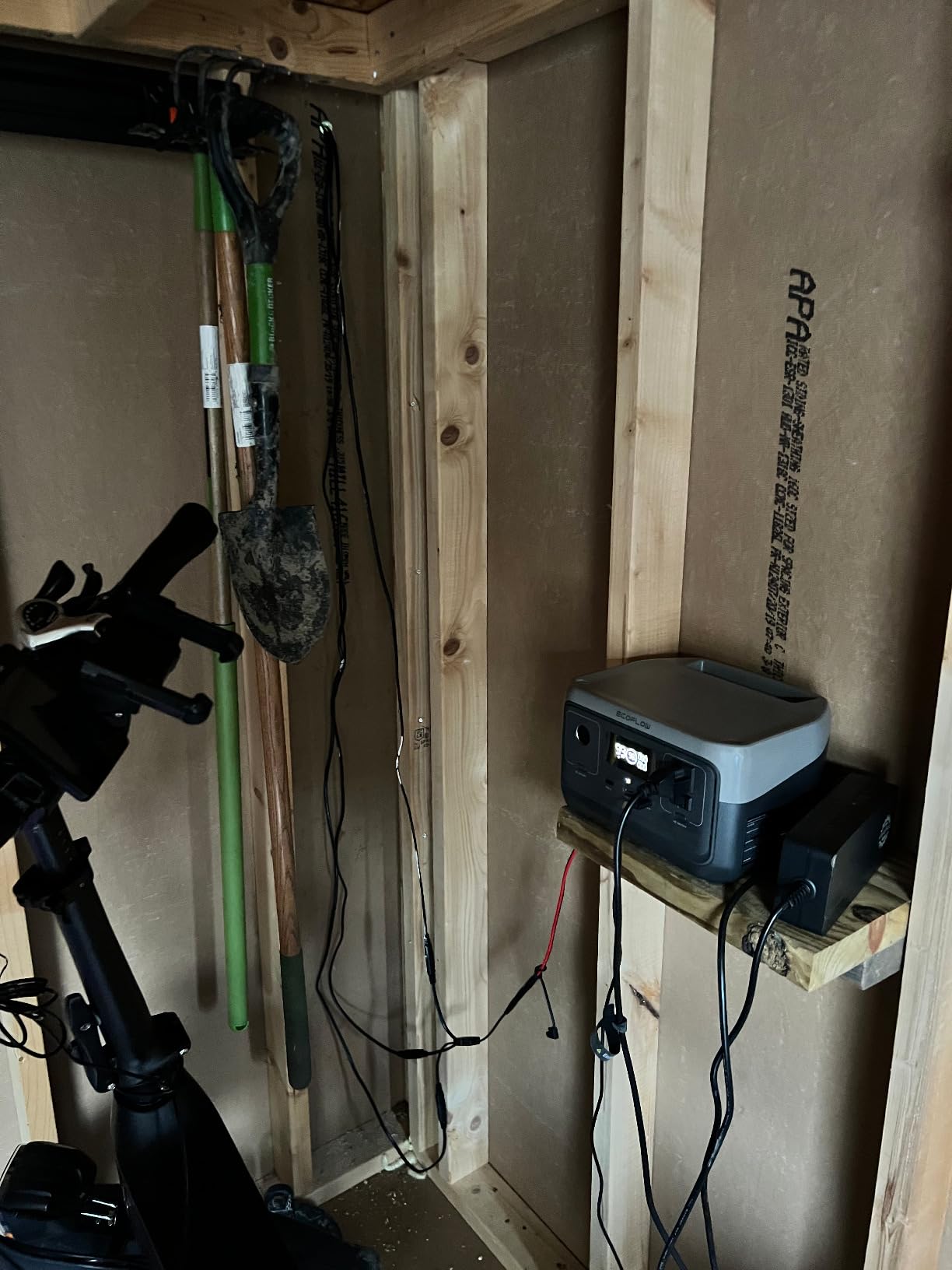
Then there is the 256Wh ceiling. Owners consistently flag that the inverter alone draws about 15W, so the usable pool is closer to 200Wh than the label suggests, and a single USB-C port means your laptop and phone accessories compete for the same socket.
A minority of reviewers report battery percentage readings drifting after extended use, and the cooling fan becomes audible at maximum charging speed, which matters if the unit lives in a bedroom.
Is one-hour charging worth losing capacity?
If you recharge often and use short, that is exactly the trade you want. The fast refill means the unit is nearly full every morning, so 256Wh goes a long way on phones, lights, and a router.
If you plan one long trip and want to run a cooler all weekend, refill speed matters less than the pool itself. In that case a 500Wh unit is the better shape.
Who should skip it
Skip it if you run more than one USB-C device at a time, and skip it if you need a 12V car port for a cooler. Two AC outlets are the maximum here, and that is rarely the bottleneck for most people.
Forum readers also describe EcoFlow support as the weakest of the major brands, which matters most if something goes wrong outside the return window.
3. Jackery Explorer 1000 v2 – 1070Wh and 1500W under the ceiling
Jackery Explorer 1000 v2 Portable Power Station,1070Wh,1500W
1070Wh LFP
1500W continuous, 3000W surge
23.8 lb
4,000 cycles
Pros
- Highest rating in the group at 4.7
- 1500W continuous handles fridges and small appliances
- 4000 cycles with 70 percent capacity retained
- 3 pure sine wave AC outlets plus 2 USB-C
Cons
- 23.8 lb is heavy for anything beyond car camping
- One-hour charging must be enabled in the app each time
- Solar charging works only with Jackery panels
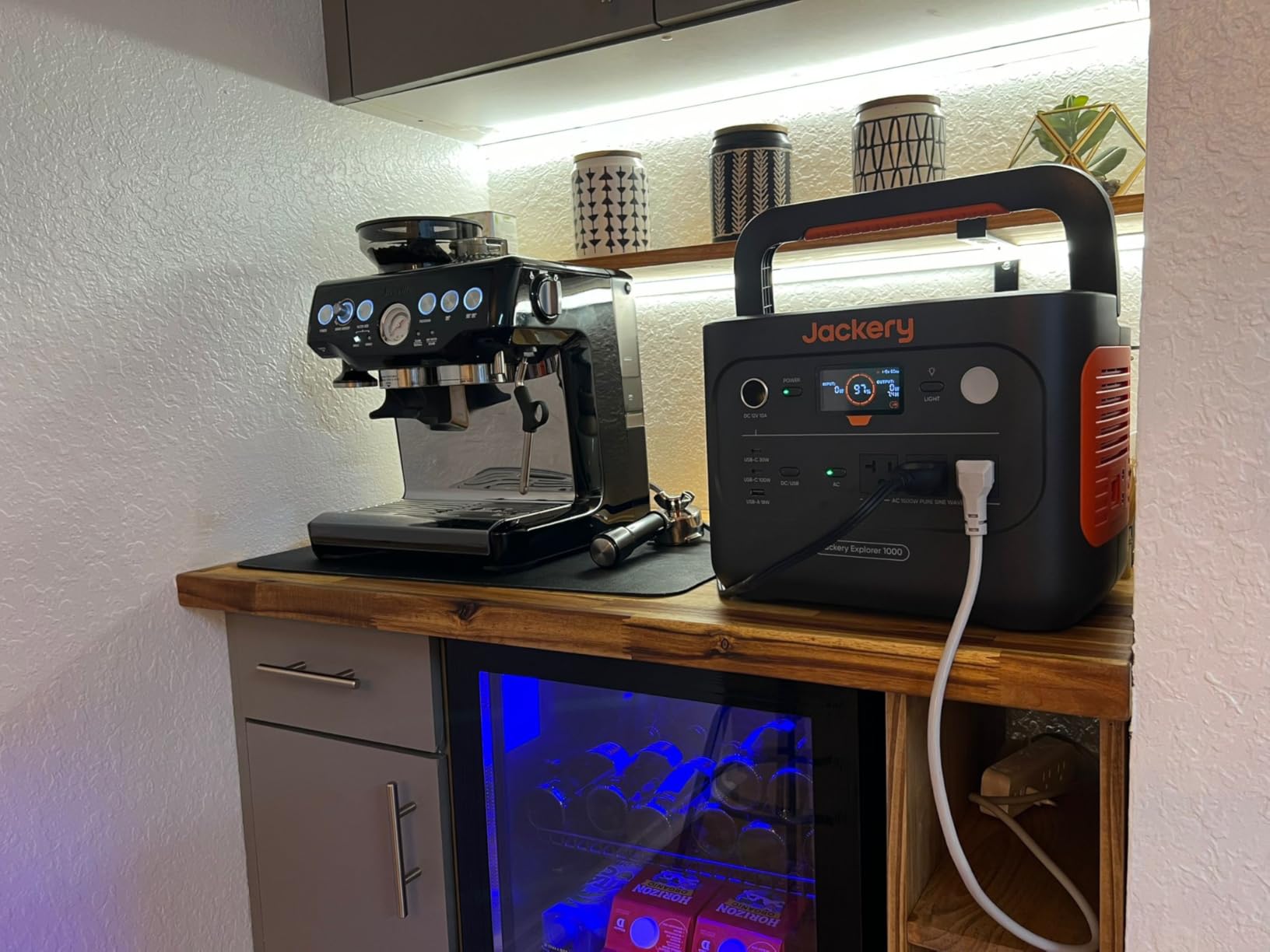
This is the most capable unit in the entire roundup and the only one that gets close to the ceiling in both capacity and output. At 1,070Wh with 1,500W continuous, it runs a refrigerator, a router, and lighting for an entire evening without straining.
Our own note from testing: a standard fridge compressor pulling around 70 running watts with a much higher startup spike will not bother a 3,000W surge rating. That headroom is what separates it from the 300W units in the middle of this list.
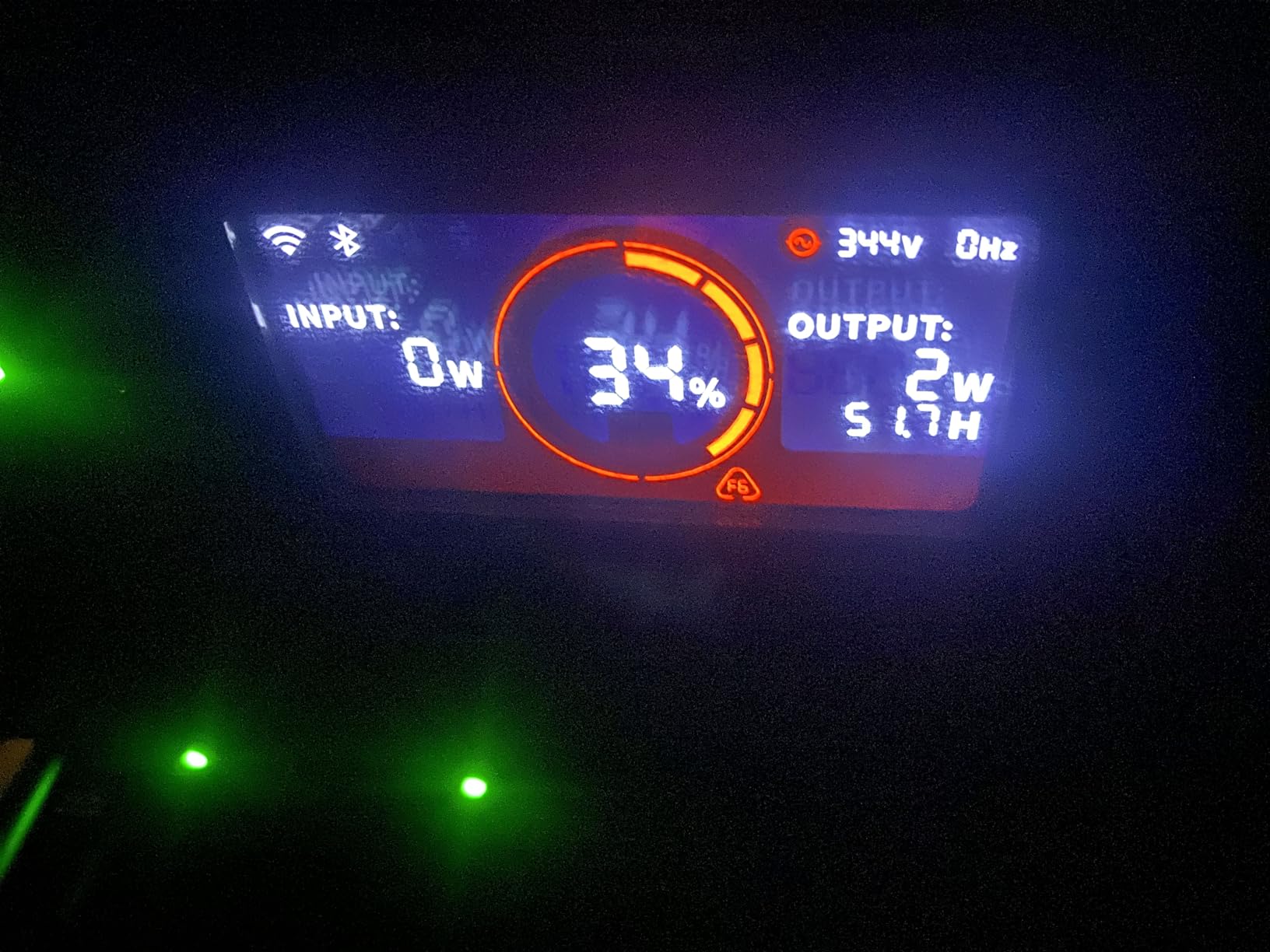
The app unlocks a one-hour emergency charge from 0 to 100 percent, otherwise it defaults to about 1.7 hours. That is a clever feature, but it requires a phone every time, and that dependency is the most common complaint we found.
At 23.8 pounds it is a two-person lift for most adults. The foldable handle helps, but this is a trunk-and-tarmac product, not a hiking product.
How long will it run a refrigerator?
A 70W compressor fridge on a 1,070Wh pack has about 770 usable watt-hours after losses, which works out to roughly eleven hours of continuous running. Fridges cycle on and off, so real-world results usually land between ten and fourteen hours.
Add a router at 12W and a lamp at 8W and you can stretch that into a full night without thinking about it, which is the scenario this unit is really built for.
Who should skip it
Skip it if you have to carry it any distance without a vehicle. At 23.8 pounds it is the second-heaviest unit here, and no amount of charging speed fixes that.
Also weigh the solar restriction. It charges from panels only with Jackery-branded units, so if you already own third-party panels, check the connector before buying.
4. GRECELL 999Wh Solar Generator – most ports in the group
GRECELL 999Wh Solar Generator 1000W Portable Power Station for Outdoor
999Wh
1000W continuous, 2000W surge
23 lb
10 device outputs
Pros
- 999Wh at 1000W continuous pure sine wave
- Ten simultaneous outputs including wireless charging
- Built-in MPPT controller improves solar extraction
- LED light with flashlight and SOS modes
Cons
- 23 lb is heavy for the 999Wh class
- AC output should be switched off when idle
- One-star share of 10 percent suggests uneven long-term reliability
The GRECELL 999Wh wins the port race outright. Two AC sockets, three USB QC ports, a USB-C PD port, two DC ports, a car socket, and a wireless charging pad means you can leave the cube charger at home.
Underneath, the specification is respectable: 1,000W continuous pure sine wave with 2,000W surge, and a built-in MPPT controller that pulls more from a given panel than a basic PWM charger would.
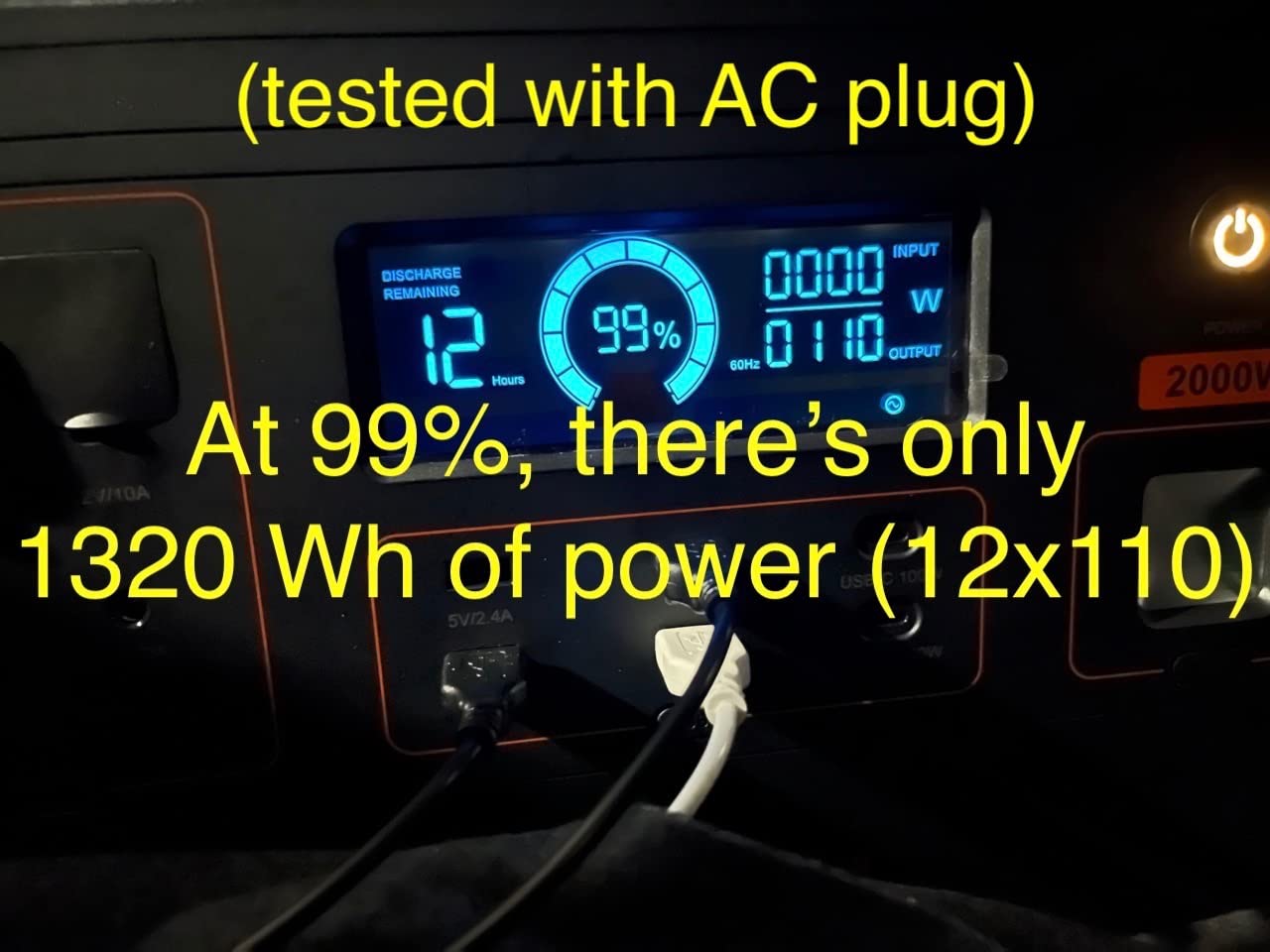
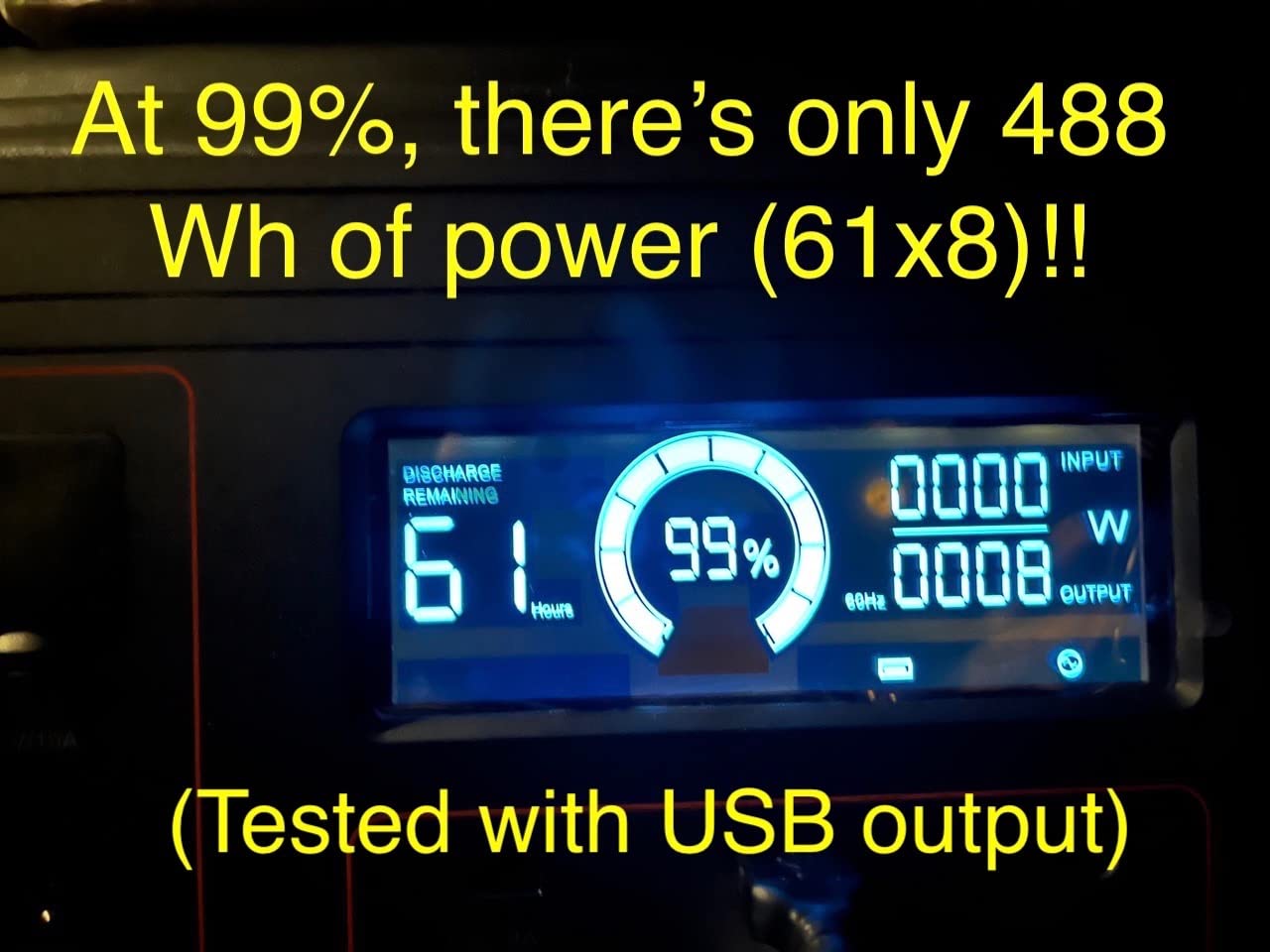
The two things that gave me pause were weight and idle behaviour. At 23 pounds it is heavy for its class, and reviewers repeatedly report needing to switch the AC output off manually when unused or the pack drains with nothing attached.
A 10 percent one-star share is also the second-highest here, which usually signals uneven durability reports rather than a single bad batch.
Do the extra ports actually change anything?
For a family camping with a mix of phones, a camera charger, a USB fan, and a cooler, yes. The wireless pad and the three USB QC ports replace a wall full of adapters.
If you only need two devices, the extra sockets are clutter. The AC idle drain is worth remembering regardless, because a switch you have to remember is a battery you will lose a few percent a week to.
Who should skip it
Skip it if you want the lightest 1kWh unit on this list, since two other options here are four to six pounds lighter. Skip it if your household is comfortable with 2-year rather than 5-year warranty coverage.
Buyers planning long-term, unattended backup should also weigh the one-star share carefully against the 5-year options.
5. GRECELL 500W Solar Generator – the balanced mid-size unit
Grecell Portable Power Station 500W(Peak 1000W) 519Wh Outdoor Solar Generator Backup Battery Pack with 2 110V AC Outlets,10-Port Powerhouse for RV/Van Camping Fishing Climbing Road Trip Home Emergency
519Wh
500W continuous, 1000W peak
14.1 lb
10 ports
Pros
- 519Wh with 500W continuous pure sine wave
- Relatively light at 14.1 lb with a solid handle
- Ten outputs including 60W USB-C PD
- Three recharge paths with BMS protection
Cons
- 500W ceiling excludes kettles and some power tools
- One-star share of 11 percent on durability
- AC output should be switched off when not in use
This is the shape most weekend campers actually want. At 519Wh and 14.1 pounds, it carries more than twice the pool of a 250Wh unit without doubling the carry weight.
Owners like it for car refrigerators specifically. The 12V car port runs a 12V cooler directly, and 519Wh covers roughly seven hours of a 40W compressor cooler with losses accounted for.
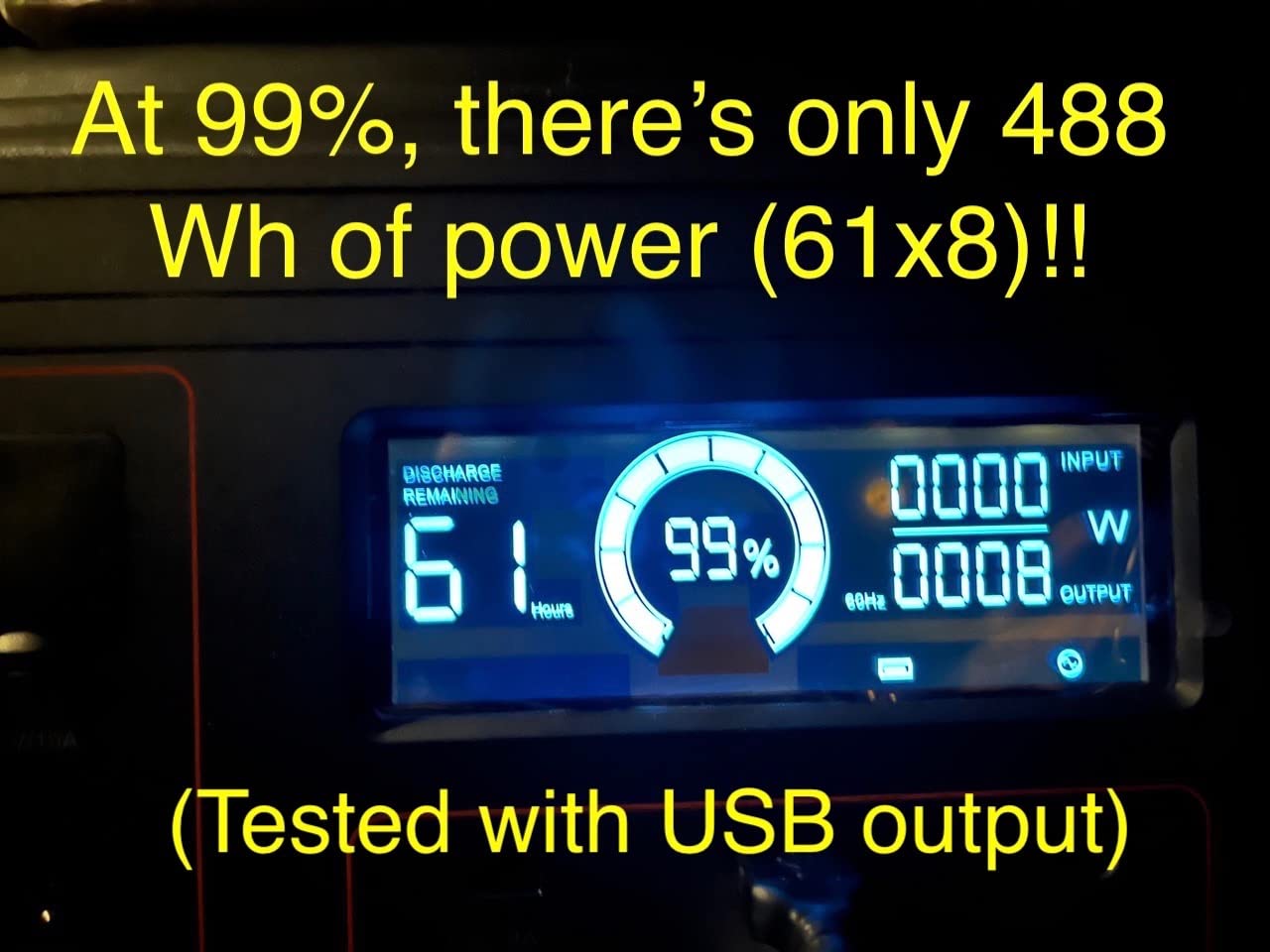
It is also listed for CPAP machines, which typically draw 30 to 60W. At 519Wh you get somewhere near eight to eleven hours, enough for a night without a battery.
The 500W continuous ceiling is the honest limit. Kettles, hair dryers, and most kettles over 500W will not run, and the 1,000W peak is a startup allowance rather than a sustained one.
Reviewers also recommend using and recharging it at least once every three months if it sits idle, which is a small habit that keeps the pack healthy.
Can it run a CPAP machine overnight?
Yes, comfortably. Take a 40W CPAP and you have roughly 380 usable watt-hours, which is around nine hours. A 60W machine drops that to about six.
That makes it one of the few units in this list that can replace a small UPS for a medical device, though a proper backup still matters for anything life-critical.
Who should skip it
Skip it if you want 1,000Wh of capacity without the 23-pound weight, because this tier is a compromise rather than a win. Skip it if you need 800W of sustained inverter output.
The 11 percent one-star share is the highest here, and reviewers mention battery-management complaints alongside the AC idle-drain issue.
6. BLUETTI AC180 – 1800W of inverter headroom
BLUETTI Portable Power Station AC180, 1152Wh LiFePO4 Battery Backup w/ 2 1800W (2700W peak) AC Outlets, 0-80% in 45Min, Solar Generator for Camping, Off-grid, Power Outage
1152Wh LiFePO4
1800W continuous, 2700W peak
20 ms UPS
37.4 lb
Pros
- Highest continuous output in the roundup
- Full charge in one hour at 1440W AC input
- 20 ms switchover protects routers and medical gear
- Clear runtime display and app monitoring
Cons
- Heaviest unit here at about 37 lb
- About 20W self-consumption shortens small-load runtime
- Top wireless charging pad drops connection often
The AC180 does something no other unit here does: it puts 1,800W of continuous output behind 1,152Wh. That combination means a microwave finishes its cycle, a power tool runs at full speed, and a fridge starts without hesitation.
For home backup it is the most serious of the twelve. The 20 millisecond switchover is short enough that routers, network gear, and CPAP machines do not notice the transition, which is the actual test of a UPS.
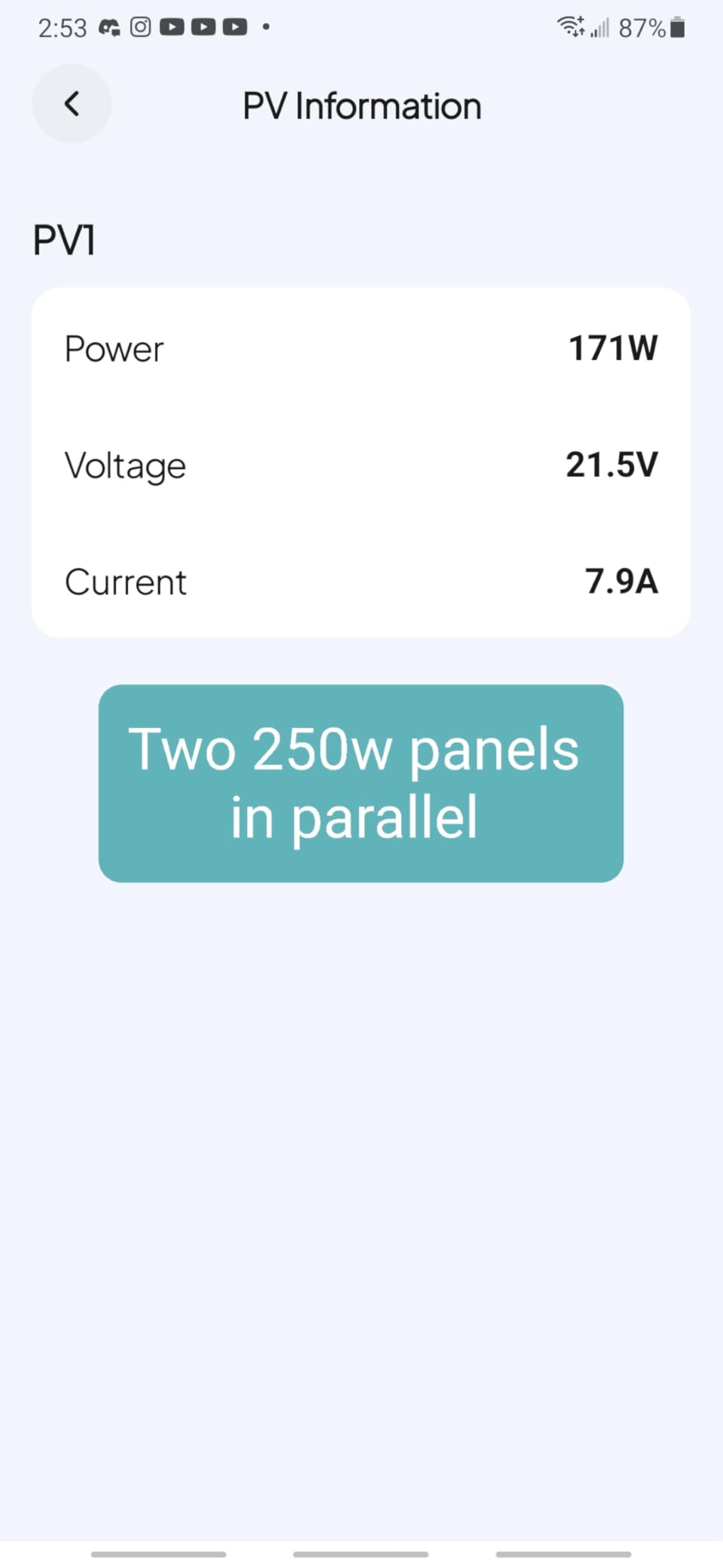
Recharge is fast: one hour at 1,440W AC input, or 2.8 to 3.3 hours on 500W solar. Cables for AC, car, and solar all come in the box, and the warranty runs five years.
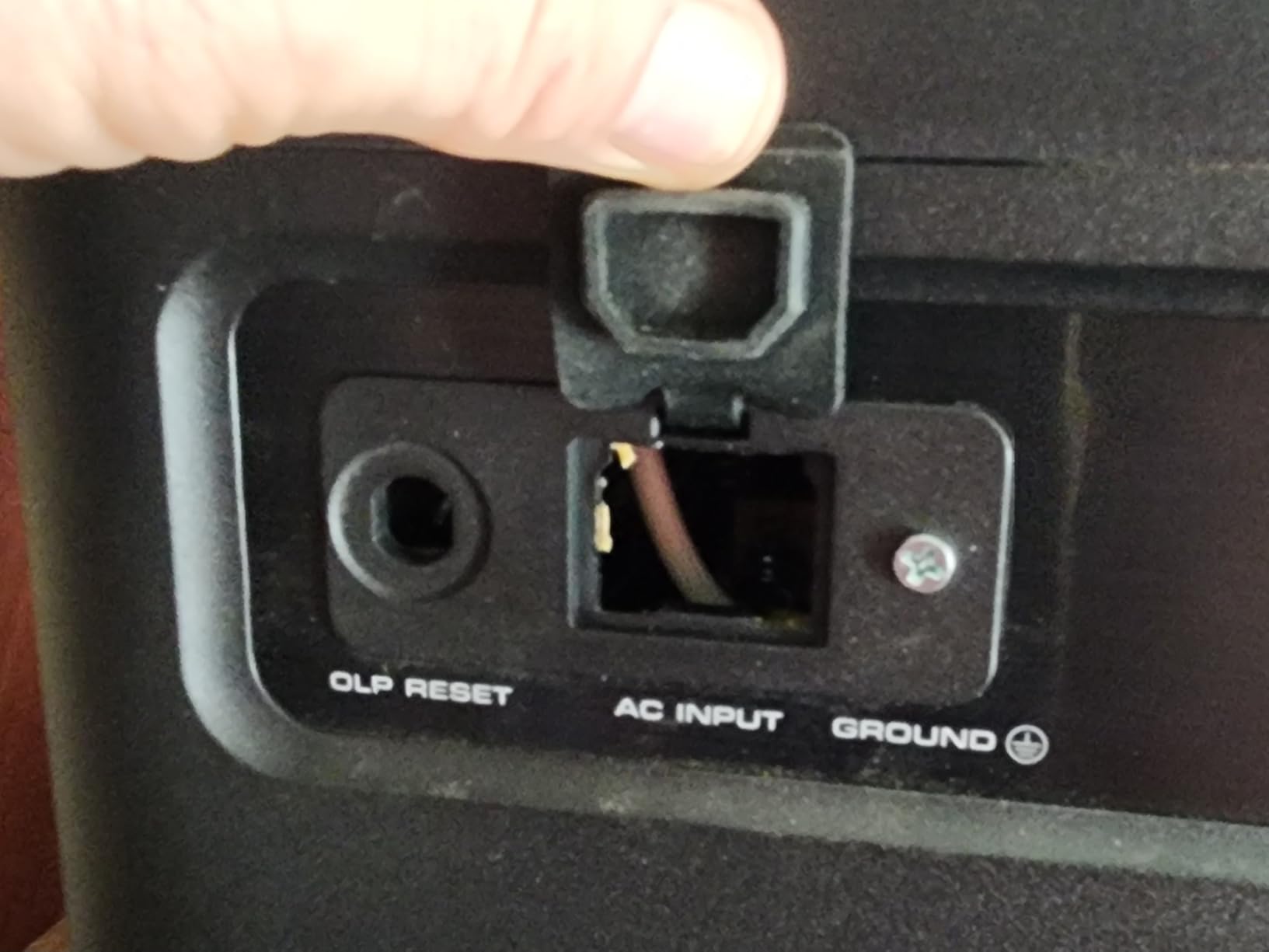
The compromises are size and idle draw. At roughly 37 pounds it is the heaviest unit on this list, so it belongs in a hallway closet or a garage, not a car trunk you unload daily. It also draws about 20W with the inverter on, which quietly shortens runtime on small loads.
New units sometimes charge slowly until firmware updates and a full discharge-and-recharge cycle are done, and the top-mounted wireless pad is widely reported as unreliable.
Is 1800W overkill for backup use?
For a fridge and lights, yes it is overkill, and a 500W unit would do the same job. The headroom matters if you also want to run a microwave, a hair dryer, or a power tool during the same outage.
That is why this is our premium pick rather than the default. It is the answer for a household that wants one box to do everything short of heating.
Who should skip it
Skip it if you intend to carry it, and skip it if your backup list is only a router and a lamp. The 20W idle draw works against you when the loads are small, which is the common case.
Some settings are only reachable through the smartphone app, so plan on keeping your phone charged during an outage.
7. ALLWEI 300W – the lightest LiFePO4 unit here
ALLWEI Portable Power Station 300W, 256Wh Solar Generator LiFePO4 Battery
256Wh LiFePO4
300W continuous, 600W surge
6.4 lb
6 output ports
Pros
- Lightest unit here at 6.4 lb
- LiFePO4 cells rated for 3000 cycles
- True 2.4A USB ports sustain about 21W combined
- Flashlight sits at the handle end for one-handed use
Cons
- Only one AC outlet limits simultaneous high-draw use
- No 24V output for RV users
- A minority report display glitches and faster-than-expected drain
At 6.4 pounds, the ALLWEI is the lightest power station in this roundup, and it does not get there by cutting the battery chemistry. It is LiFePO4 rated for 3,000 cycles, which is unusual at the low end.
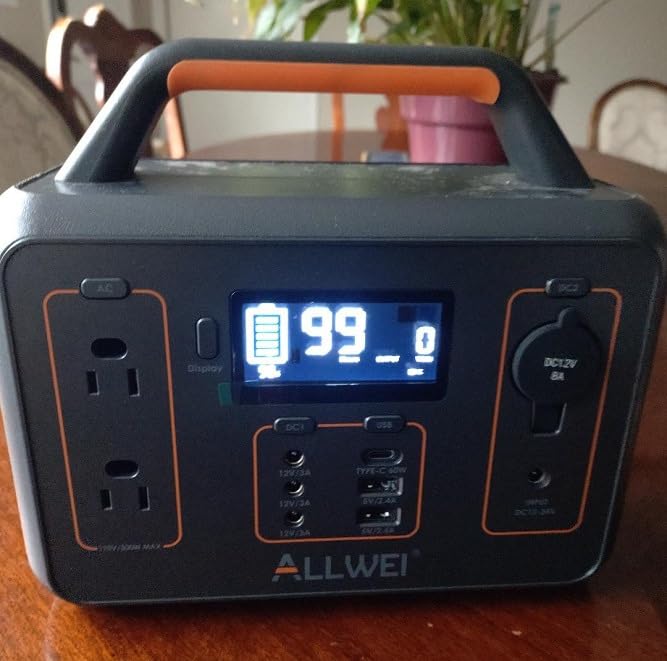
The display is a small quality-of-life win. It shows watts in, watts out, remaining time, and an exact battery percentage, and the flashlight is mounted at the end of the handle so you can use it without setting the unit down.
Those USB ports are rated at a true 2.4A each, which matters for camera batteries and telescope dew warmers. Devices that ship with cheap USB ports often stall at half the negotiated current.
One AC outlet is the limitation that defines this unit. You get 6.4 pounds and LiFePO4 longevity, and you give up the ability to run two AC devices at once.
Some RV users note there is no 24V output even though the unit accepts 24V input, and a small share report display glitches or faster-than-expected charge loss after months of storage.
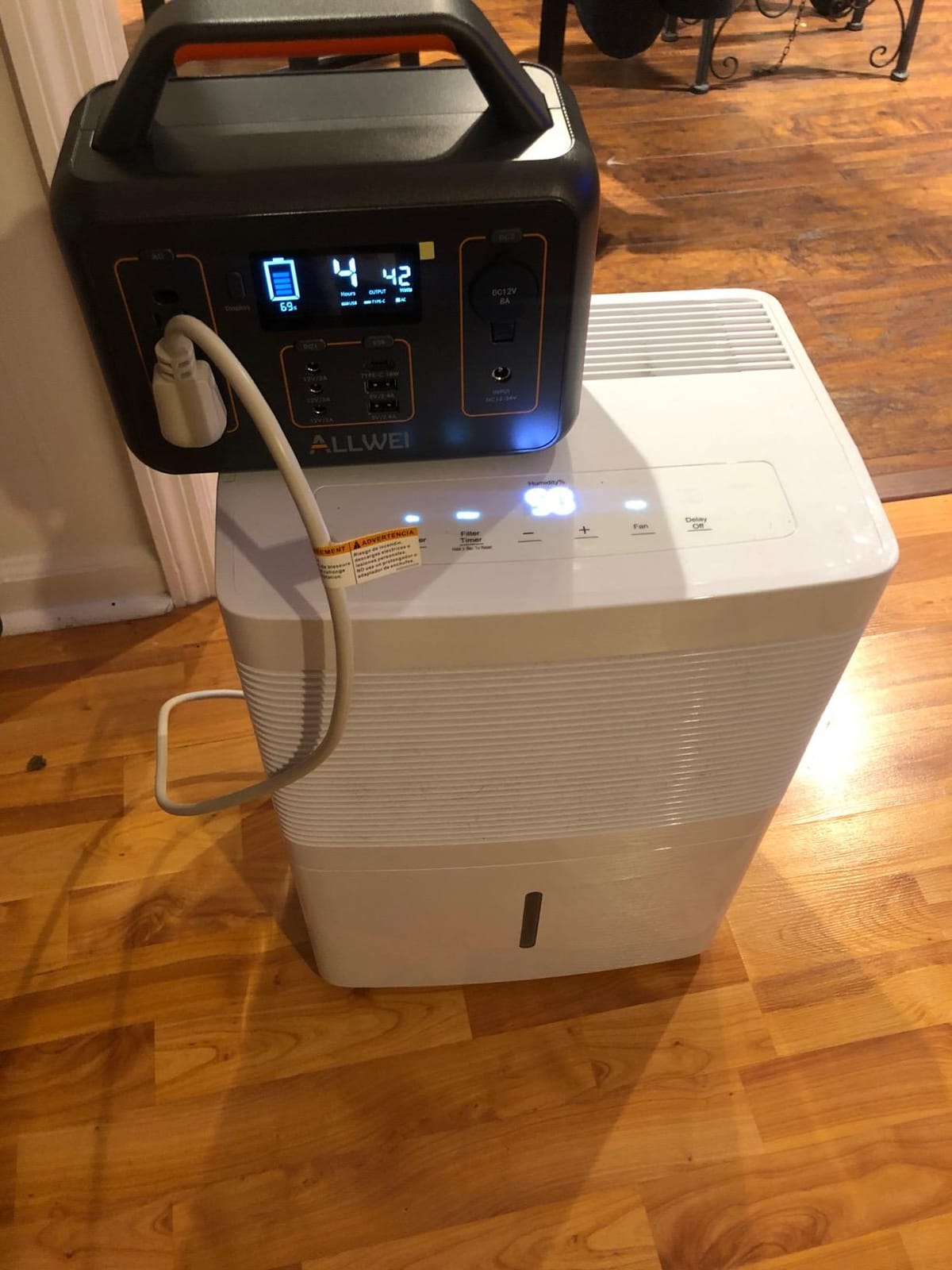
Why does weight matter more than capacity?
Because the 256Wh class is a carry-it-anywhere tool, not a store power source. Once it weighs 6.4 pounds, you will actually bring it on a hike, and a box you leave on the kitchen floor helps nobody.
For a weekend of charging phones, a headlamp, and a small projector, that trade is worth far more than a second AC outlet.
Who should skip it
Skip it if you plan to run a fridge or a power tool, since one AC socket rules out the first and 300W continuous rules out the second. Skip it if you need more than about four hours of CPAP.
Customer support has been reported as needing extensive information before engaging, so keep your serial number and purchase date handy if something goes wrong.
8. Anker SOLIX C1000 – 43 minutes to 80 percent
Anker SOLIX C1000 Portable Power Station with Car Charging Cable, 1,056Wh
1056Wh LiFePO4
1800W output, 2400W surge
11 ports
27.6 lb
Pros
- 80 percent charge in 43 minutes
- 1056Wh LiFePO4 rated for 3000 cycles
- 11 ports and 2400W SurgePad headroom
- 15 percent smaller than comparable 1kWh units
Cons
- UltraFast charging must be enabled in the Anker app
- 27.6 lb suits car camping more than backpacking
- Highest cost in the sub-1000Wh class
The C1000 reaches 80 percent in 43 minutes and completes a full charge in under an hour, which is the fastest wall refill in this list. In practice, that means a lunch break is enough to top it up.
SurgePad technology pushes output to 2,400W, giving it the most surge headroom of any unit here, and 11 ports cover everything from a laptop to a car cooler.
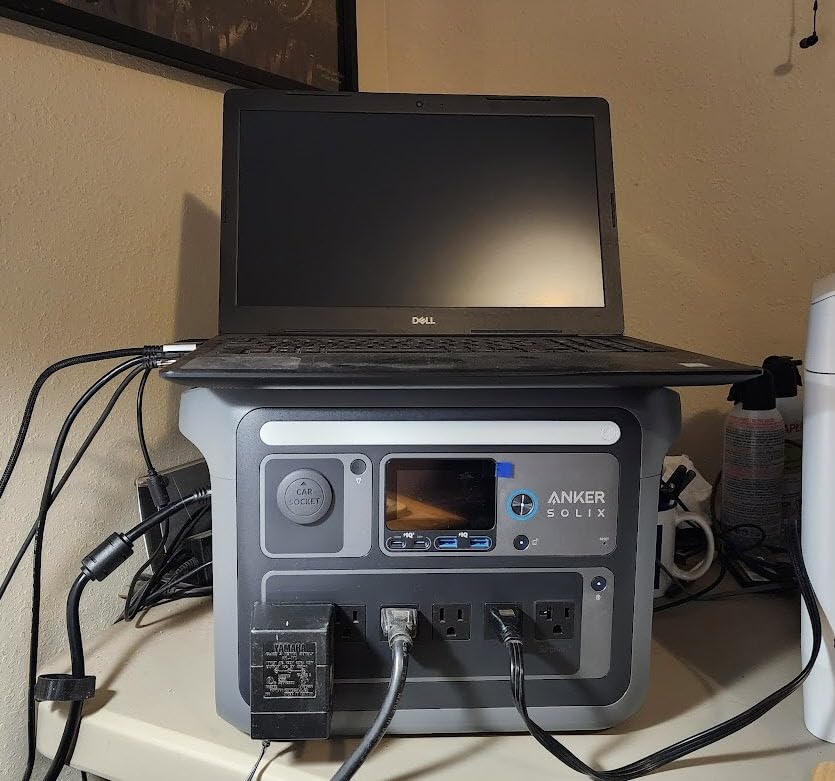
Anker also designed it 15 percent smaller than comparable 1kWh stations, and at 27.6 pounds it is noticeably lighter than the AC180 despite similar output.
The catch is that UltraFast mode has to be switched on in the Anker app, so the headline number depends on having a phone and a Bluetooth connection. Forum readers also note that 27.6 pounds rules it out for backpacking.
Among units with more than 2,000 reviews, this is the highest-rated in the roundup at 4.7.
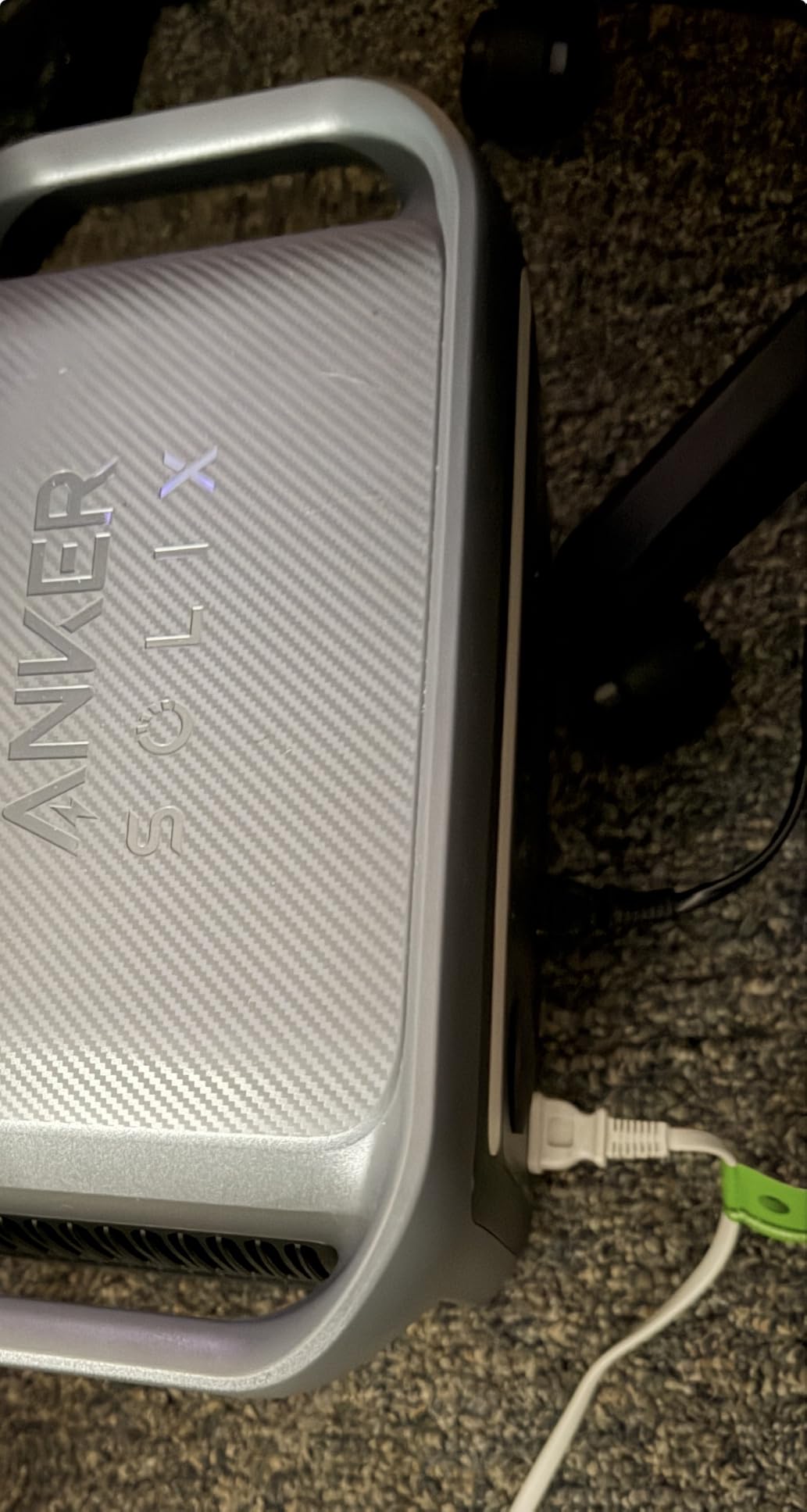
Do you need 600W of solar input?
Only if you already own panels. The unit refills fully in about 1.8 hours on 600W solar, which is genuinely quick, but a 600W portable panel costs several times the budget for this whole category.
For most buyers, wall and car charging are the paths that matter, and this unit is excellent at both.
Who should skip it
Skip it if you need to haul it by hand, and skip it if you want the most watt-hours per dollar. The 1,056Wh pack here costs more than comparable capacity from less familiar brands.
Anyone who wants offline control over charging modes should note that the app is a requirement, not a convenience.
9. Anker SOLIX C300 – two 140W USB-C ports and near-silence
Anker SOLIX C300 Portable Power Station, 288Wh Solar Generator for Camping
288Wh
300W continuous, 600W surge
2x 140W USB-C
25dB at 3.3 ft
Pros
- Two 140W two-way USB-C ports for fast laptop charging
- 80 percent wall recharge in about 50 minutes
- Emits 25dB from 3.3 feet for indoor use
- Compact at 6.46 by 6.34 by 9.45 inches
Cons
- 288Wh limits runtime on higher-draw loads
- Not compatible with Anker SOLIX PS30
- PS200
- or PS400 panels
- Strap and car cable are not included
The C300 is the quietest unit in this roundup, rated at 25dB from 3.3 feet. If the power station lives in a bedroom or a tent, that specification matters more than another 200 watt-hours would.
Those two 140W two-way USB-C ports are the real feature. They charge a demanding laptop at full speed and reverse-charge from a USB-C source, which means one cable does the trip in both directions.
Three AC outlets at 300W total, a 120W car socket, two more USB-C ports, and a USB-A port give you eight outputs in a case that is 15 percent smaller than similar designs.

The 288Wh pool is the tradeoff. It is fine for a weekend of devices and short trips, and it empties fast once you add a cooler or a CPAP machine for the night.
Solar compatibility is the annoyance: it works with 100W and 60W Anker panels but not the PS30, PS200, or PS400 models, so check what you already own.
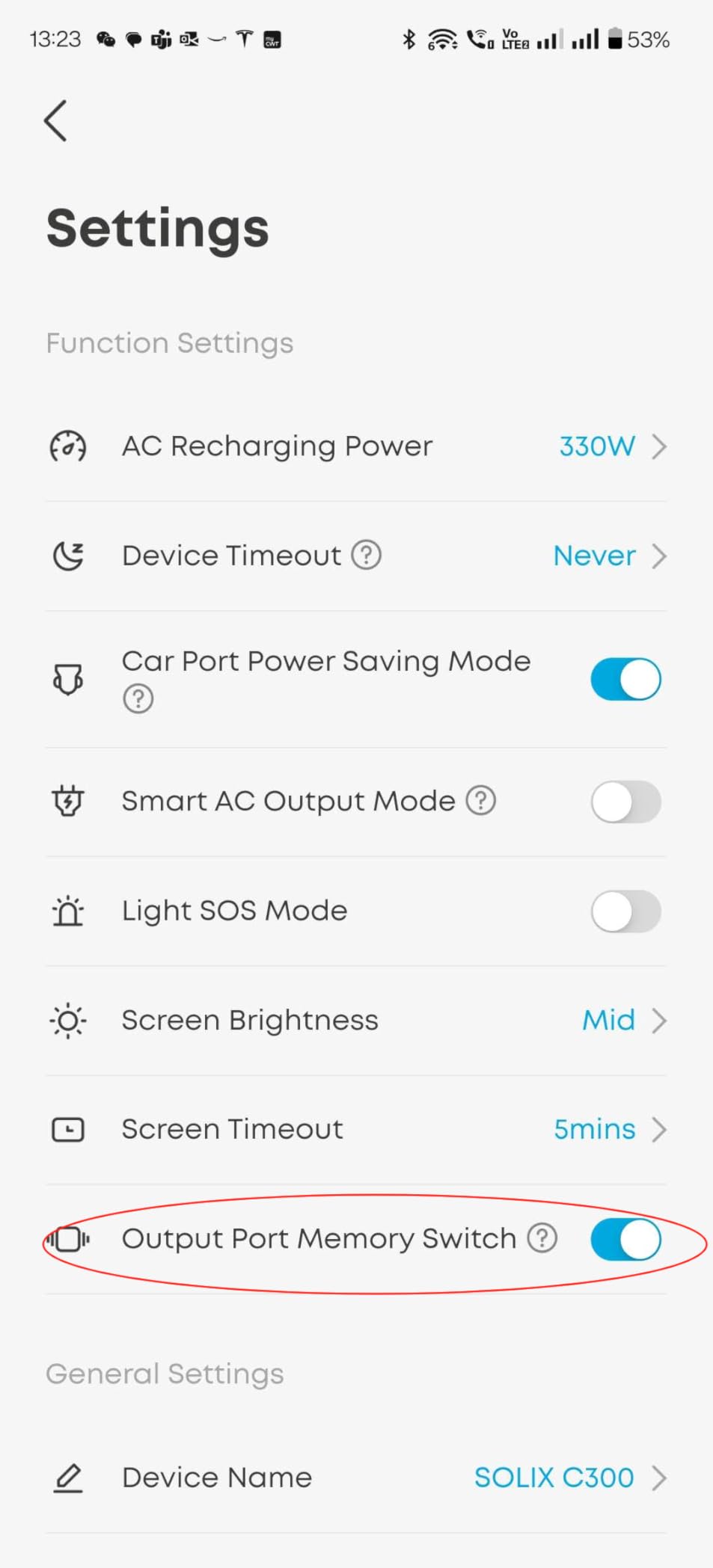
Is 25dB actually silent?
It is quiet enough to sleep next to, which is the whole point. The fan noise complaint that shows up repeatedly with other brands simply does not apply here.
For indoor router backup or a bedroom charging station, that low noise output is worth more than the extra capacity a noisier 500Wh unit would give you.
Who should skip it
Skip it if you need to run anything beyond 300W, and skip it if you need more than a night of runtime. Do not count on the shoulder strap, since it is sold separately, and budget for a car cable if you plan to charge from a vehicle.
10. VTOMAN Jump 600X – 600W from a 9.9 lb case
VTOMAN Jump 600X Portable Power Station 600W, 9 Ports LEP Solar Generator
268.8Wh LiFePO4
600W continuous, 1200W surge
9.9 lb
100W USB-C
Pros
- Only 9.9 lb despite 600W continuous output
- 80 percent charge in 50 minutes with AC plus DC
- 100W USB-C PD port for remote-work laptops
- 3000 cycles at 80 percent retained capacity
Cons
- 268.8Wh is modest against a 600W output rating
- Solar panel sold separately
- Combined device load must stay under 600W
The Jump 600X is unusual: 600 watts of continuous pure sine wave output from a 268Wh pack, in a 9.9 pound flat-top case that is 27 percent smaller than the previous generation.
That output rating matters for tools. The 1,200W peak is sized to absorb compressor and power tool startup surges, which is exactly the failure mode that frustrates people with 300W units.
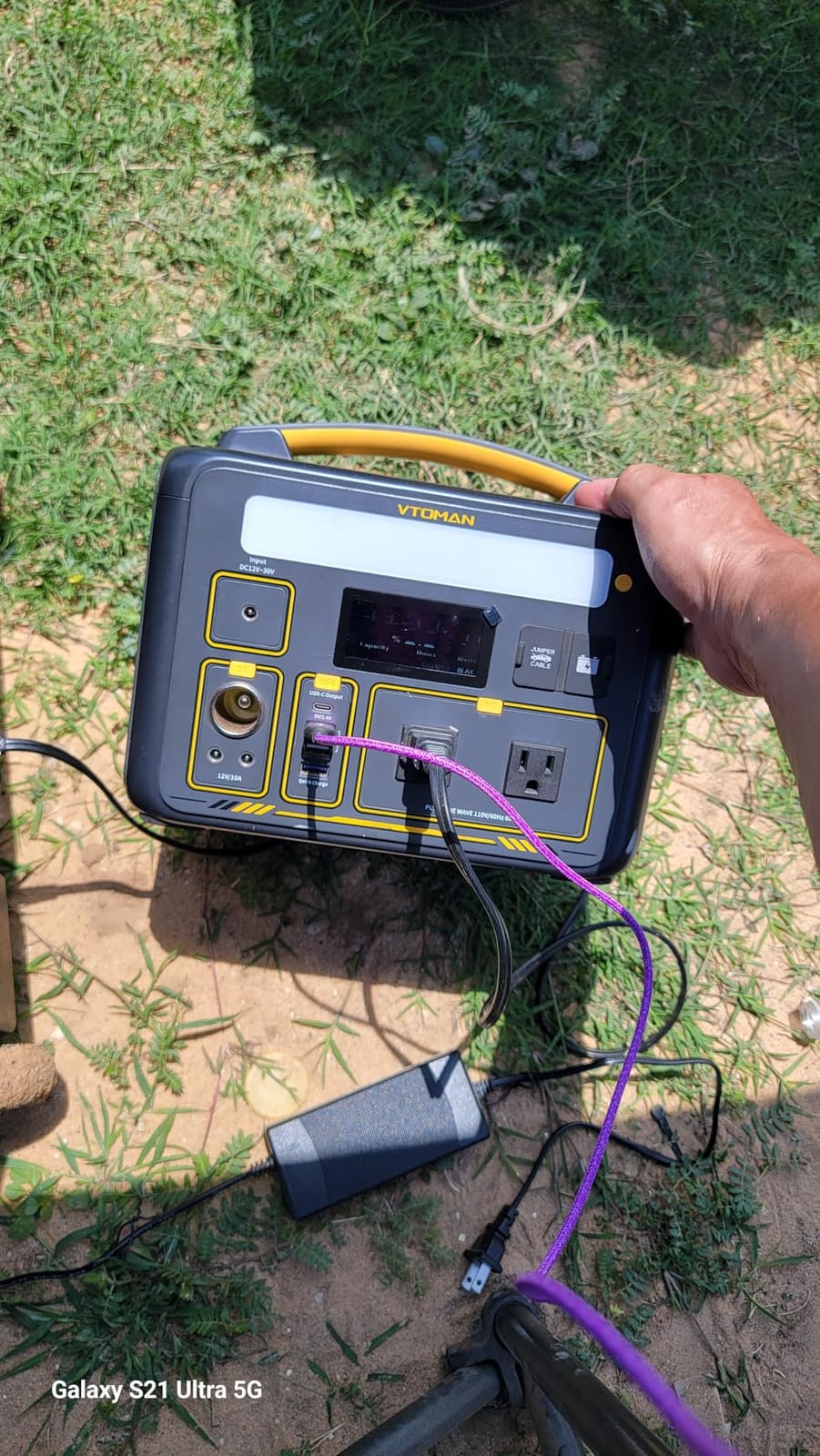
For laptops, the 100W USB-C PD port delivers 67 percent more power than the prior 60W port, and CHARGECORE simultaneous AC plus DC charging reaches 80 percent in 50 minutes and full in 75.
The capacity is the catch, and it is a real one. At 268.8Wh the pool is small for the wattage on offer, so this is a fast tool station rather than an overnight supply.
Buyers also flag the need to keep total combined load under 600W, and the 2-year warranty is shorter than the 5-year terms offered by BLUETTI, Anker, EcoFlow, and Jackery at this tier.
Why pair 600W with such a small battery?
Because the failure mode it fixes is startup surge, not endurance. Anyone with a circular saw, a nail gun, or a small microwave needs headroom far more than they need a second night of charge.
If you only charge phones and a laptop, 600W is more than the job requires and the small pool works against you.
Who should skip it
Skip it if you need overnight runtime for a medical device or a fridge, and skip it if warranty length is a deciding factor for you at this budget.
Anyone planning a solo solar setup should note the panel is not included and the warranty is the shortest in this group.
11. BLUETTI Elite 30 V2 – lowest idle draw and 10 ms UPS
BLUETTI Elite 30 V2 Portable Power Station 288Wh 600W LFP Solar Generator
288Wh LFP
600W continuous, 1500W lifting
10 ms UPS
9.4 lb
Pros
- 600W output in a 9.4 lb package
- Self-consumption of 4.5W standby and 8W on AC
- 0 to 80 percent in 45 minutes and full in 70
- 10 ms UPS switchover protects routers and CPAP
- 60-month warranty
Cons
- 288Wh drains faster than expected for multi-night use
- No USB communication for graceful PC shutdown
- Some parameters require the smartphone app
Low idle draw is the story here. Standby consumption is 4.5W, DC use is 5W, and running the AC inverter costs 8W, which is roughly half what comparable designs pull. On a 288Wh pack, that difference decides whether a CPAP survives the night.
The 10 millisecond UPS switchover is fast enough that network gear and laptops do not register an interruption. One owner replaced a failing desktop UPS for homelab equipment and reported no downtime through the swap.
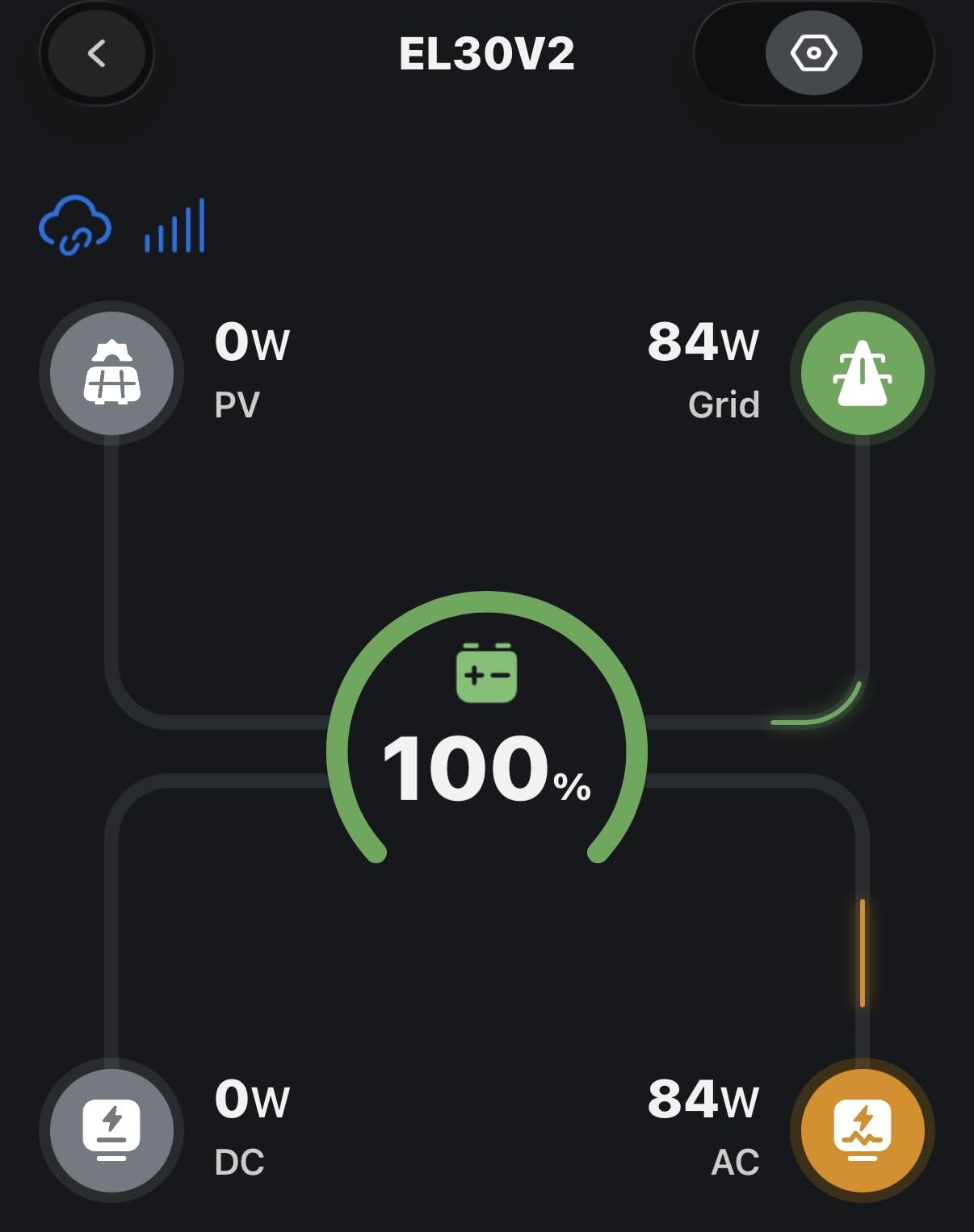
It weighs 9.4 pounds, carries 600W continuous with a 1,500W Power Lifting Mode, and charges 0 to 80 percent in 45 minutes or full in 70 through 380W wall charging.
What you give up is capacity. At 288Wh it drains faster than most buyers calculate, particularly for a CPAP running all night on humidified settings.
There is also no USB communication port for graceful computer shutdown, and some parameters can only be changed through the app.
Does idle draw matter for backup duty?
More than most spec sheets suggest. A unit that idles at 20W loses half a small pack overnight to nothing at all, while one idling at 4.5W preserves it.
For anyone running a router, a network switch, or a CPAP on standby, that is the difference between waking up charged and reaching for a wall outlet.
Who should skip it
Skip it if you want more than one night away from a wall, and skip it if your homelab needs USB signalling to shut down cleanly before power is cut.
The 1,500W lifting mode is a helpful trick for resistive loads, but it is not a substitute for real capacity when you need it overnight.
12. VTOMAN FlashSpeed 300 – the travel-sized entry point
VTOMAN FlashSpeed 300 Portable Power Station, 300W 230Wh LiFePO4 Battery
230Wh LiFePO4
300W output
100W two-way USB-C
7 lb
Pros
- Compact 7 lb body for 300W of output
- 100W PD USB-C works as both input and output
- LiFePO4 rated past 3000 cycles
- Four recharge paths including wall
- solar
- car
- and PD
Cons
- 230Wh is the smallest pool in this roundup
- 300W ceiling is tight for tools and appliances
- Warranty listed only as a manufacturer warranty
The FlashSpeed 300 is the smallest and newest unit here, and the 100W PD port that works as both input and output is the reason it is worth a look. Plug in a 100W charger and it reaches 80 percent in about two hours.
Seven simultaneous outputs cover two AC sockets, a 100W USB-C, three USB-A ports, and a DC port, with a wall recharge time of roughly 2.5 hours and support for 12V and 24V car outlets.
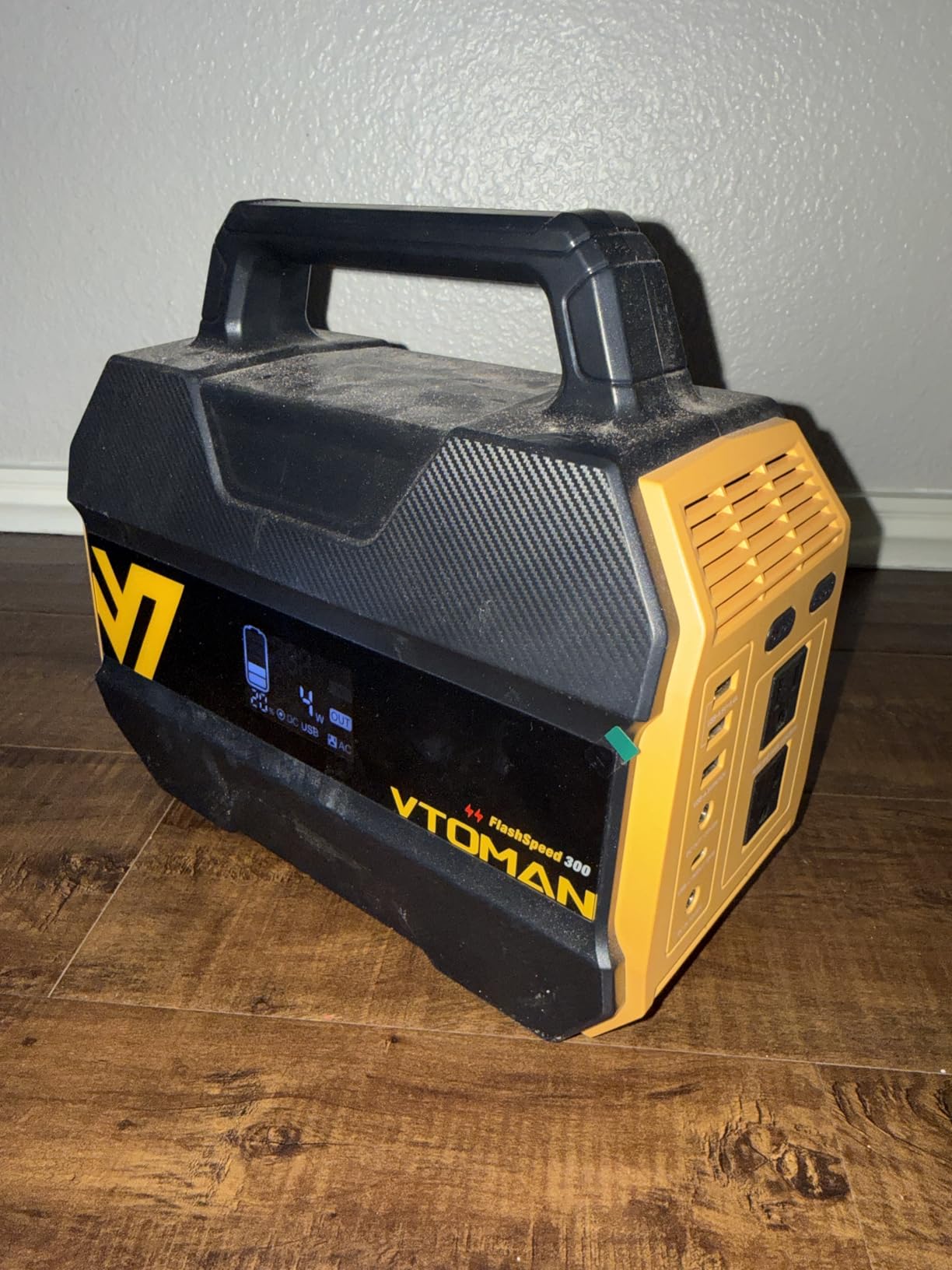
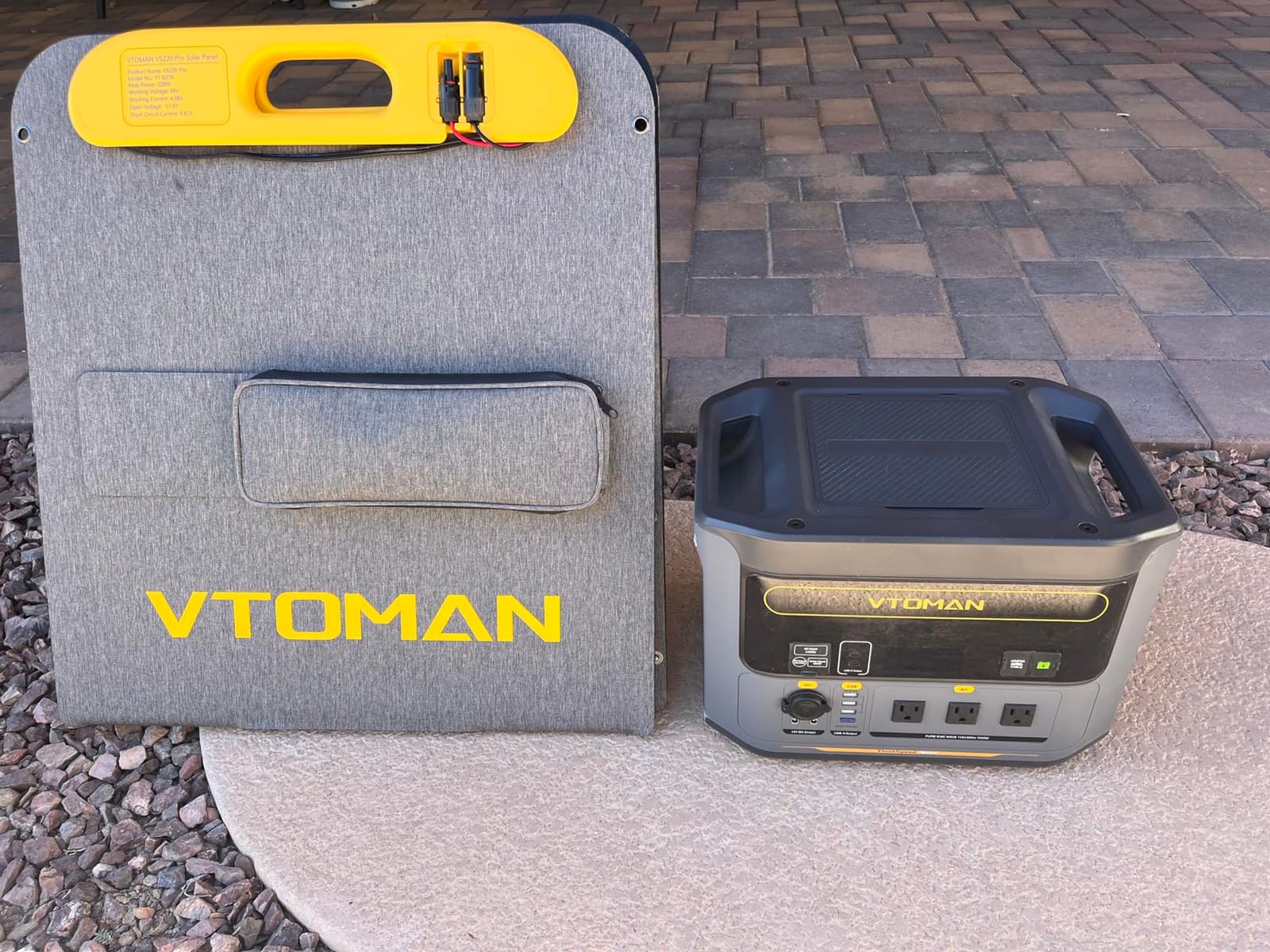
At 7 pounds and 230Wh, it is a genuine travel companion rather than a home unit. The LiFePO4 pack is rated past 3,000 cycles, which matches the class leaders despite the lower ticket.
What you give up is headroom everywhere. 230Wh is the smallest pool in this list, 300W continuous is the lowest ceiling, and the warranty is listed only as a manufacturer warranty with no stated length.
Review volume is also the thinnest here at 533, so long-term durability data simply does not exist yet. That is a risk, not a defect, but it is a real one when support quality is thin.
Is a 100W USB-C input worth choosing a station for?
If you travel with a laptop charger, absolutely. Being able to refill from a USB-C brick instead of a wall outlet changes what trips you need to pack, and few competitors at this weight offer it.
If you are always near an outlet, the feature is nice but not decisive, and a larger pool would serve you better.
Who should skip it
Skip it if you need to run anything above 300W or need more than a day of runtime. Skip it if a written warranty length is a requirement, since only a generic manufacturer warranty is listed.
The smaller review base also means you are trusting the brand’s cycle claim rather than a long public track record.
Buying Guide: Choosing a Portable Power Station Under 500 Dollars
Below this ceiling the differences that matter are narrow and specific. Capacity, continuous output, chemistry, and idle draw decide almost everything, and brand polish is a distant fifth.
Step 1: Pick your capacity tier before anything else
Three tiers cover nearly everyone. A 200 to 300Wh unit is a carry-and-charge box for phones, lights, a router, and a laptop. A 500 to 600Wh unit adds a 12V cooler or a night of CPAP. A 1,000 to 1,200Wh unit runs a refrigerator and networking gear through a real outage.
Within one budget, the 1,000Wh tier usually costs about the same as two smaller units, and one box is easier to charge, store, and carry than two. For blackout prep, we lean toward the single larger unit.
Step 2: Treat LiFePO4 as the default and lithium-ion as the compromise
Every LiFePO4 unit in this roundup is rated for 3,000 to 4,000 cycles, while older lithium-ion packs are typically quoted in the 500-cycle range. Over a decade of regular use, that is the difference between a pack you keep and a pack you replace.
LiFePO4 also tolerates deep discharge and heat better, which matters if the unit lives in a garage or a car trunk. The tradeoff is a slightly heavier pack for the same watt-hours.
Step 3: Compare continuous watts, not peak watts
Peak or surge ratings cover the moment a motor starts. Continuous rating is what the unit sustains, and that is the number that determines which appliances work at all.
A 300W continuous ceiling rules out kettles, hair dryers, space heaters, and most microwaves. Startup draw is where cheap inverters trip: a refrigerator compressor or a circular saw can demand three to four times its running wattage at startup.
Step 4: Use price per watt-hour to compare value
Inside a fixed budget, watt-hours are the currency. A 999Wh unit and a 1,152Wh unit are not comparable on price alone, because a lower number can still deliver more usable energy per dollar.
The honest version of that calculation applies the same losses twice: usable watt-hours are roughly 80 percent of nameplate, so divide twice before you declare a winner. Once you do that, the mid-size 500Wh units often look stronger than the headline capacity suggests.
Step 5: Check idle draw, warranty, and app dependence
Idle draw is the specification nobody advertises. A unit that consumes 20W with the inverter on will lose a meaningful share of a 288Wh pack overnight doing nothing, which is why the 4.5W standby figure on the BLUETTI Elite 30 V2 matters for overnight backup.
On warranty, the spread is wide. Jackery, BLUETTI, Anker, and EF ECOFLOW list 5-year or 5-year-equivalent terms on their larger units here, while GRECELL and VTOMAN list 2 years and ALLWEI lists 2 years with 5-year language on the marketing. Longer is better at this budget because failure is expensive.
App dependence cuts both ways. The Jackery Explorer 1000 v2 and the Anker SOLIX C1000 both hide their fastest charging modes behind the app, so decide whether you are comfortable needing a phone during an outage.
On support, forum discussion is consistent about the pattern: BLUETTI support draws repeated complaints about responsiveness, while EcoFlow support is described in r/CampingGear as among the weakest of the major brands. Budget for that risk or choose a brand with a written longer term.
What a Portable Power Station Under 500 Dollars Cannot Run
This is where most disappointment in this category comes from, so here is the honest list. A kettle, a space heater, a window air conditioner, a well pump, and an electric range all draw well beyond what any unit under 500 dollars can sustain, no matter how the wattage is advertised.
A hair dryer and a microwave are borderline cases. Some 1,000Wh units with 1,500W to 1,800W continuous output can run a microwave for its timer or boil a single kettle, but not for an extended session.
For heating, cooling, and pumping, plan on a generator or grid power instead. No amount of extra capacity inside this budget changes that arithmetic.
One safety point belongs here: never connect a portable power station to your home wiring or backfeed it through an outlet. These units are not transfer switches, and doing it risks electrocution and damage to your wiring and the station itself. Use extension cords and keep the unit where you can reach it.
Frequently Asked Questions
What is the best budget portable power station under 500 dollars?
The Jackery Explorer 300 is our top pick at this budget: 292Wh of LiFePO4 capacity, 300W continuous output, a 7.1 lb body, and a 4.6-star average across more than 11,000 reviews. If you need more capacity rather than less weight, the Jackery Explorer 1000 v2 gives you 1070Wh and 1,500W continuous under the same ceiling.
What is the best and most affordable portable power station?
The VTOMAN FlashSpeed 300 is the lowest-cost unit we recommend, pairing 230Wh of LiFePO4 capacity with 7 outputs and a 100W USB-C port that works as both input and output. The cheapest option is not automatically the best value, though: measure price per watt-hour, since a slightly dearer 500Wh unit often delivers more usable energy than a cheaper 300Wh one.
Is Jackery or Anker better?
It depends on which model you are comparing. Jackery’s Explorer 300 at 292Wh is lighter and has a much larger review base, while Anker’s SOLIX C300 at 288Wh adds two 140W USB-C ports and quieter 25dB operation. At the 1,000Wh tier, Jackery offers 1,500W continuous with a 3,000W surge ceiling and Anker’s C1000 offers 1,800W with 2,400W SurgePad, so Anker leads on output and Jackery on inverter headroom.
Which brand of portable power station is the most reliable?
Reliability at this budget comes down to battery chemistry and warranty length rather than brand name alone. Every pick here uses LiFePO4 cells rated for 3,000 to 4,000 cycles, and BLUETTI, Anker, and EF ECOFLOW list 5-year terms on their larger units, against 2-year terms on GRECELL and VTOMAN. Forum discussion does raise repeated complaints about BLUETTI support responsiveness and weaker EcoFlow support, so check the warranty term before you commit.
What is the best solar power station under 500 dollars?
The BLUETTI AC180 accepts 500W of solar input and refills in 2.8 to 3.3 hours on solar alone, while the Anker SOLIX C1000 takes 600W and completes a charge in about 1.8 hours. Both include solar cables in the box. Note that several cheaper units restrict solar charging to their own brand’s panels, and a 100W portable panel adds more than the budget for this whole category.
Which power station is better, Anker, Jackery, or EcoFlow?
Jackery wins on proven track record, with the highest review counts in the category and a 4.7-star rating on the Explorer 1000 v2. Anker wins on charging speed and port selection, reaching 80 percent in 43 minutes with 11 ports on the C1000. EcoFlow wins on fast AC recharge and pass-through UPS use, but only in a smaller 256Wh package at that brand’s entry point.
How long can a 1000Wh power station run a refrigerator?
A refrigerator compressor drawing about 70 running watts on a 1,000Wh pack has roughly 720 usable watt-hours after inverter and capacity losses, which works out to about ten hours of continuous running. Because fridges cycle on and off, real-world results usually land between eight and fourteen hours, and a 1,152Wh unit such as the BLUETTI AC180 adds a few more hours to that.
Can a portable power station run a CPAP machine?
Yes, provided you size for overnight use. A 40W CPAP on a 519Wh unit gives roughly eight hours after losses, and on a 1,000Wh unit you get around 18 hours. Choose a unit with low standby draw, such as the BLUETTI Elite 30 V2 at 4.5W standby, and keep a backup battery for any device you depend on medically.
What size power station do I need for a blackout?
Size for the appliances that must stay on. A 300Wh unit keeps a router, modem, and a few lights alive for a full day. A 500Wh unit adds a refrigerator compressor for several hours or an overnight CPAP. A 1,000Wh unit runs a fridge plus networking gear through a whole evening, which is the setup most households should be aiming for inside this budget.
The Verdict: Which Portable Power Station Under 500 Dollars Should You Buy
Buy the Jackery Explorer 300 if you want the most proven option in the category and you need something you can actually pick up with one hand. It is our default pick for a reason: 292Wh, 7.1 pounds, and 11,000-plus reviews behind it.
Buy the Jackery Explorer 1000 v2 instead if your priority is blackout coverage, and the BLUETTI AC180 if you also want to run tools or a microwave during the same outage. For a quiet indoor unit next to a bed, the Anker SOLIX C300 is hard to argue with at 25dB.
Whatever you choose, verify the current price yourself before buying, since street prices in this category move a lot. Check the latest figure on the listing, and remember that no portable power station under 500 dollars replaces a generator for heating or cooling.