
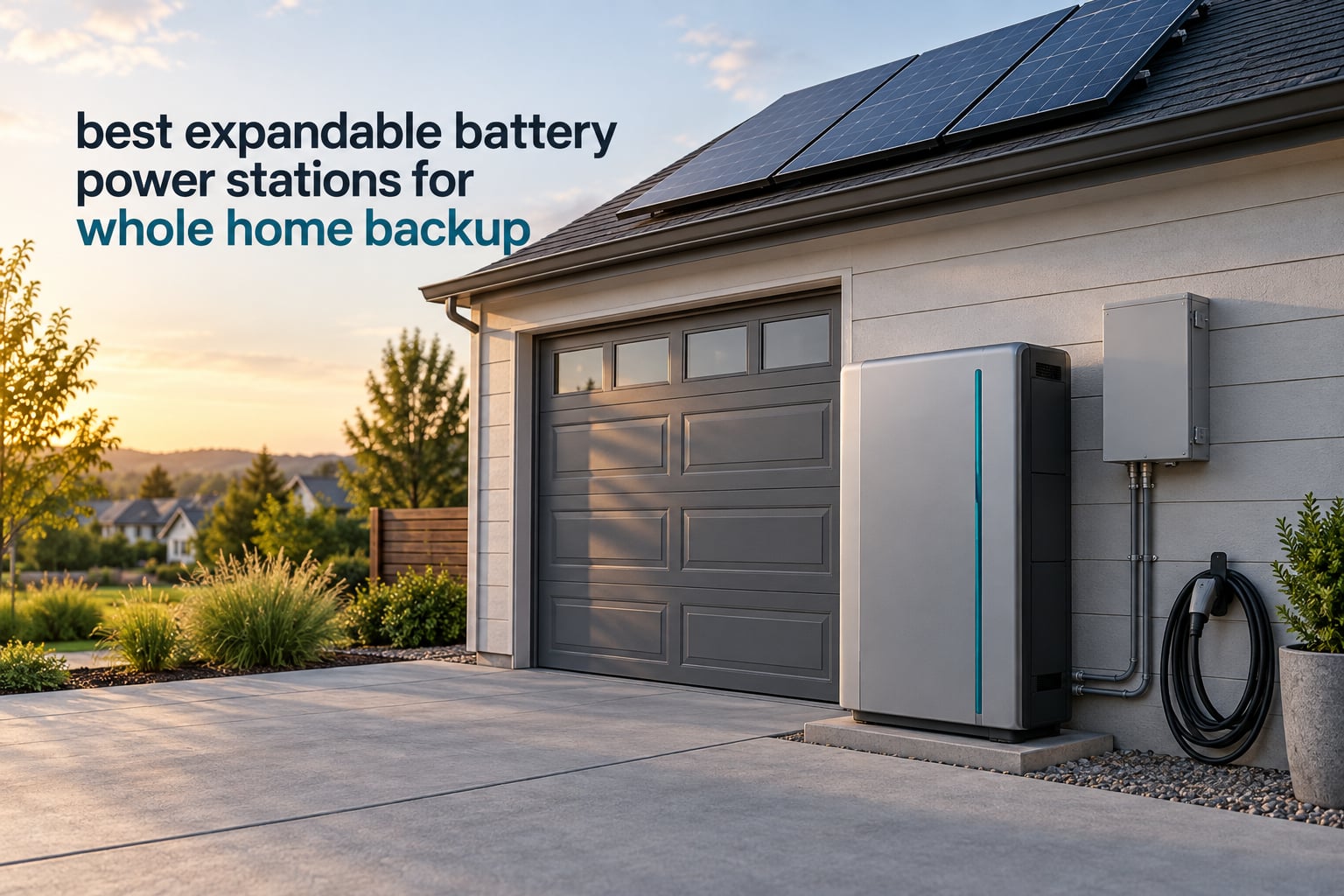
The best expandable battery power station for home backup is the one whose continuous output covers the loads you actually lose power on, and whose expansion ports you can fill over the next five years instead of day one. Most buyers get this backwards: they chase watt-hours and end up with a large battery that trips the moment a refrigerator compressor kicks in.
We spent weeks comparing 10 expandable battery power stations across EcoFlow, Anker SOLIX, Jackery and BLUETTI, reading verified continuous wattage rather than the boosted marketing numbers, and checking how many expansion batteries each unit accepts. What matters most for whole-home backup is the inverter, not the battery. A 4kWh unit with 2400W of honest continuous output beats a 5kWh unit with a weak inverter every single time.
Everything below is sized, spec’d and cross-compared for 2026, including the two decisions that trip people up most: how big the expansion ceiling is, and whether the unit can do 240V or is stuck at 120V.
Table of Contents
Top 3 Expandable Battery Power Stations for Whole Home Backup (October 2026)

Anker SOLIX C2000 Gen2
- 4096Wh LiFePO4
- 2400W continuous and 4000W peak
- BP2000 expansion battery included
- 9W standby draw

EcoFlow DELTA Pro 3600Wh
- 3600Wh expandable to 25kWh
- 3600W continuous
- 15 output ports
- 1.8 hour X-Stream recharge

BLUETTI Elite 200 V2
- 2073.6Wh LiFePO4
- 2600W continuous
- 10W standby draw
- 0 to 80 percent in 50 minutes
All 10 Expandable Battery Power Stations Compared in 2026
| Product | Specs | Action |
|---|---|---|
| Anker SOLIX C2000 Gen2 with BP2000 Expansion Battery |
|
Check Latest Price |
| EcoFlow DELTA Pro 3600Wh |
|
Check Latest Price |
 EcoFlow DELTA Pro Ultra 12kWh EcoFlow DELTA Pro Ultra 12kWh |
|
Check Latest Price |
 BLUETTI Elite 300 BLUETTI Elite 300 |
|
Check Latest Price |
 Jackery HomePower 3000 Jackery HomePower 3000 |
|
Check Latest Price |
 Jackery HomePower 3600 Plus Jackery HomePower 3600 Plus |
|
Check Latest Price |
 Anker SOLIX F3800 Anker SOLIX F3800 |
|
Check Latest Price |
 BLUETTI Apex 300 with B500K Expansion Battery BLUETTI Apex 300 with B500K Expansion Battery |
|
Check Latest Price |
| BLUETTI Elite 200 V2 |
|
Check Latest Price |
 EcoFlow DELTA Pro 3 EcoFlow DELTA Pro 3 |
|
Check Latest Price |
What Is an Expandable Battery Power Station?
An expandable battery power station is a portable LiFePO4 battery paired with an inverter that stores electricity from the grid, solar panels or a generator, then scales up later by adding compatible expansion batteries until it can carry whole-home loads.
Five terms decide whether a unit works for backup, and most spec sheets blur them together:
Expandable means the unit has physical expansion ports that accept extra battery modules, adding watt-hours without replacing the inverter you already own.
Usable capacity is lower than the rated watt-hours on the label. Inverter losses and the battery management system mean you should plan on roughly 85 percent of the nameplate figure.
Continuous output is what the inverter sustains indefinitely. Surge is a short burst, typically 10 to 30 seconds, meant for compressor startup.
Split-phase 240V means one inverter can feed both legs of a home panel, which is what well pumps, electric ranges and heat-pump dryers need. A 120V-only unit cannot do this without a step-down transformer.
UPS switchover time is how fast the unit transfers from mains to battery. Anything at or under 20ms keeps computers, routers and NAS devices running without a reset.
1. Anker SOLIX C2000 Gen2 with BP2000 Expansion Battery: Best Overall Expandable Power Station
Anker SOLIX C2000 Gen2 Portable Power Station, Expansion Battery, 4096Wh
4096Wh LiFePO4
2400W continuous, 4000W peak
BP2000 expansion battery included
75.4 lbs, 5 year warranty
Pros
- 9W standby draw runs a dual-door fridge up to 32 hours
- 80% charge in 45 minutes and full in 58 minutes
- IP67 solar panels with four mounting angles
- 5 year warranty
Cons
- Station and expansion battery arrive as separate cartons
- Fastest AC charging needs a 120V household circuit
This is the unit we keep coming back to, because it makes no compromises a backup buyer will feel. The 2,400W continuous inverter is genuinely strong, and the 4,000W peak comfortably covers a refrigerator compressor or a small window air conditioner starting up.
What sets it apart is the 9W standby draw. That figure is unusually low, and it translates directly into how long the battery lasts when you are only keeping a fridge, a router and a few medical devices alive. Reviewers report a dual-door refrigerator running up to 32 hours on one charge, and up to 64 hours once the BP2000 Expansion Battery is added.
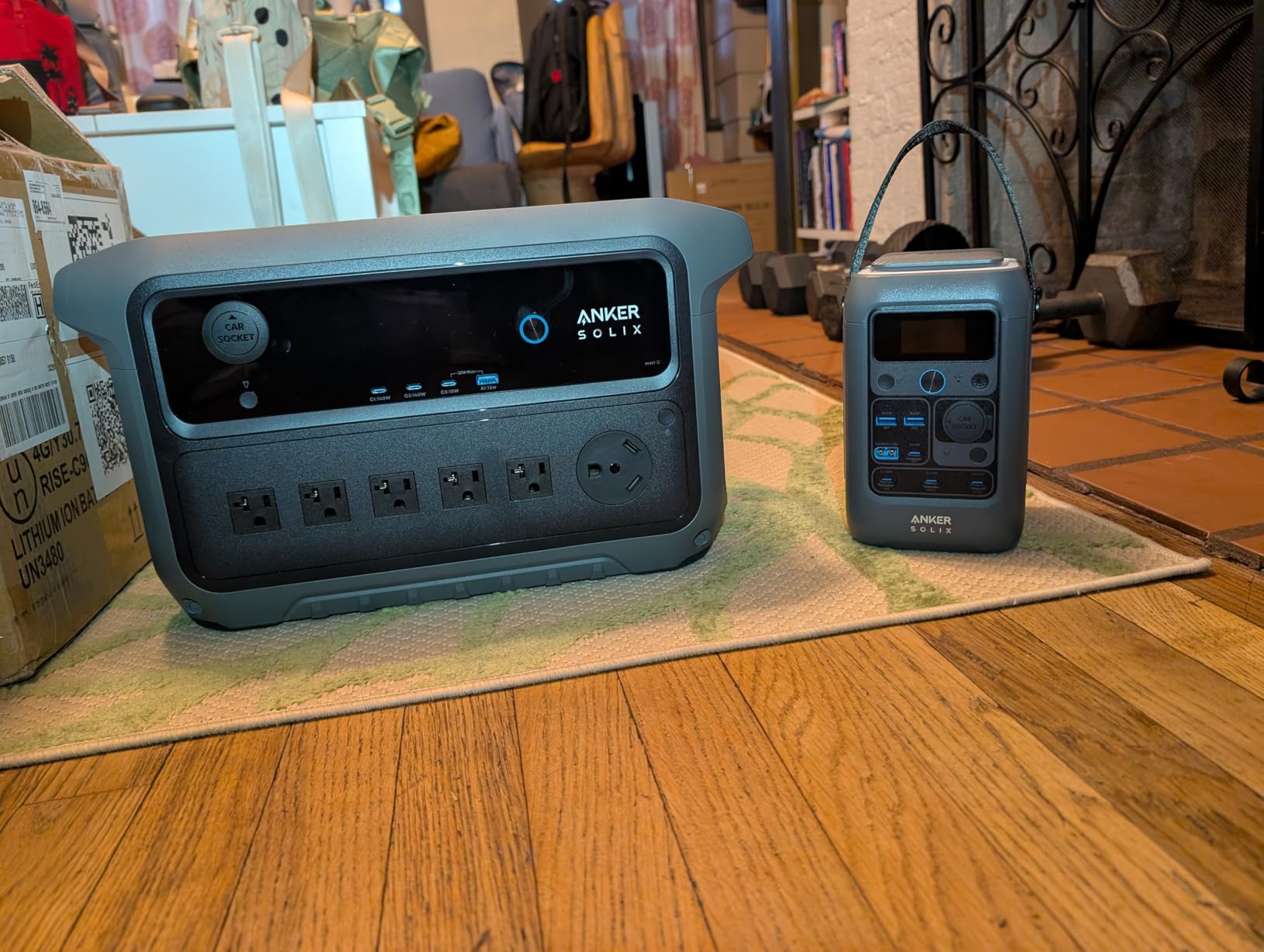
The charging numbers are the other headline. Reviewers consistently describe 80 percent in 45 minutes and a full charge in 58 minutes using AC and solar together, which means you can refill it during a daylight break rather than overnight.
Battery longevity is rated at 4,096Wh of LiFePO4 chemistry, and the pack carries a 5 year warranty. The solar hardware is IP67 waterproof and mounts at four angles, so panel placement stops being a chore.
Who the C2000 Gen2 suits
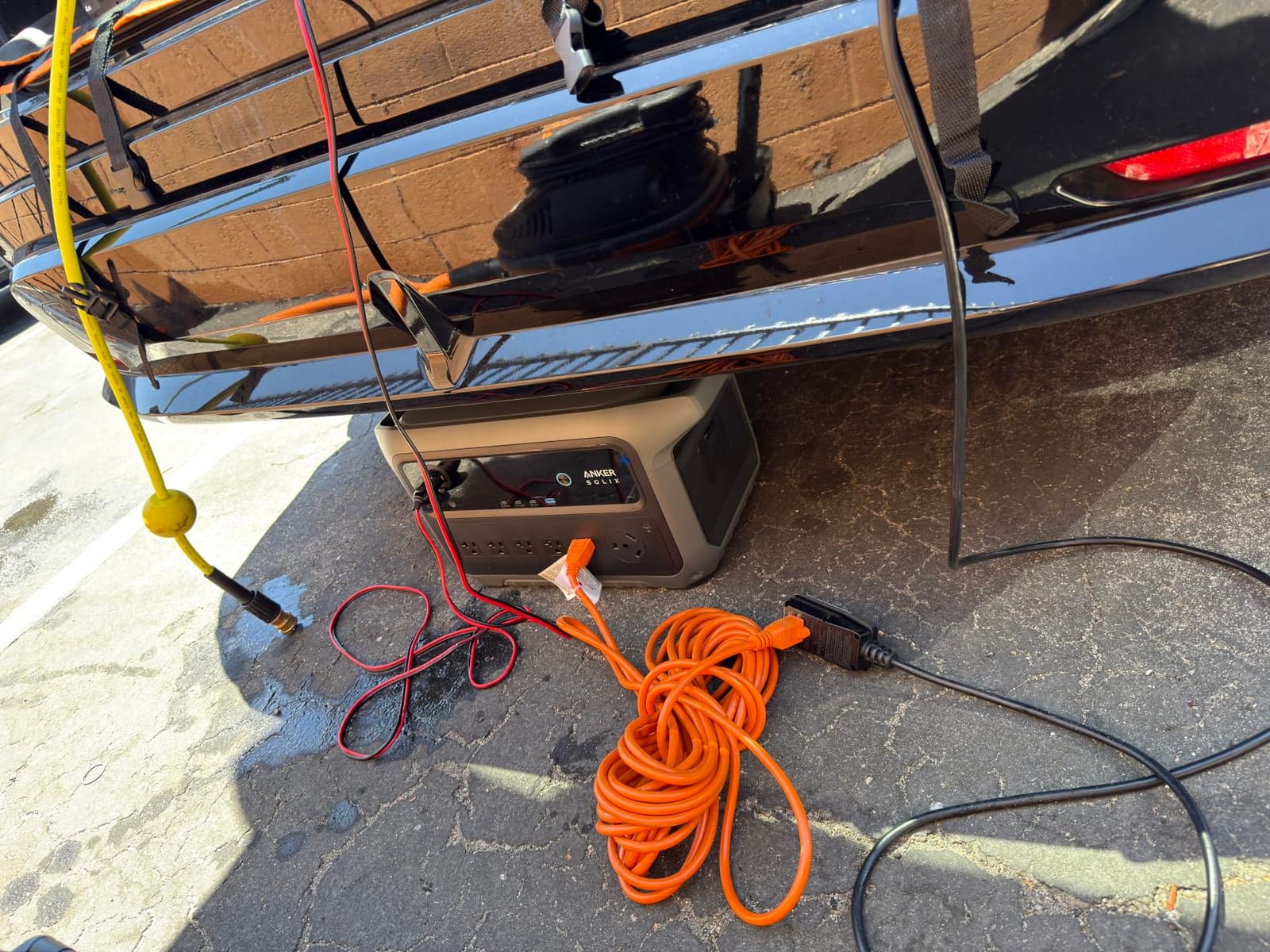
This is the pick for a household that wants serious inverter headroom without a four-figure-plus installation. 2,400W continuous covers a fridge, a router, a CPAP machine, lighting circuits and a window air conditioner at the same time, which is most people’s mental image of whole-home backup.
It is also the easiest unit here to move. At 75.4 pounds it is not a one-person lift, but the expansion ceiling means you can start with the included battery and add capacity in a year or two when the budget allows.
Who should skip it
Skip it if you have a central air conditioner, a 1 HP well pump or an electric range. None of those fit inside 2,400W continuously, and the peak rating will not carry them for long enough to matter.
Also expect two separate cartons to arrive. That is a logistics detail rather than a flaw, but plan for it before a storm week when you want everything in one place.
2. EcoFlow DELTA Pro 3600Wh: Best Value Expandable Power Station
EF ECOFLOW Portable Power Station 3600Wh DELTA Pro, 120V 3600W AC Output
3600Wh LFP
3600W continuous, 4500W with X-Boost
Expandable to 25kWh
99 lbs, 15 output ports
Pros
- Expandable from 3.6kWh to 25kWh
- Full recharge in 1.8 hours on a 240V outlet
- 15 output ports including 5 AC outlets
- Wi-Fi and Bluetooth app control
Cons
- Solar input capped around 15 amps
- 99 pounds is awkward without the extendable handle
- Warranty support varies outside the US
For most households, this is the answer. The DELTA Pro pairs 3,600Wh of LFP capacity with a full 3,600W inverter, and it expands to 25kWh using Extra Batteries or Smart Generators, which covers roughly a week of essential loads without a fuel dependency.
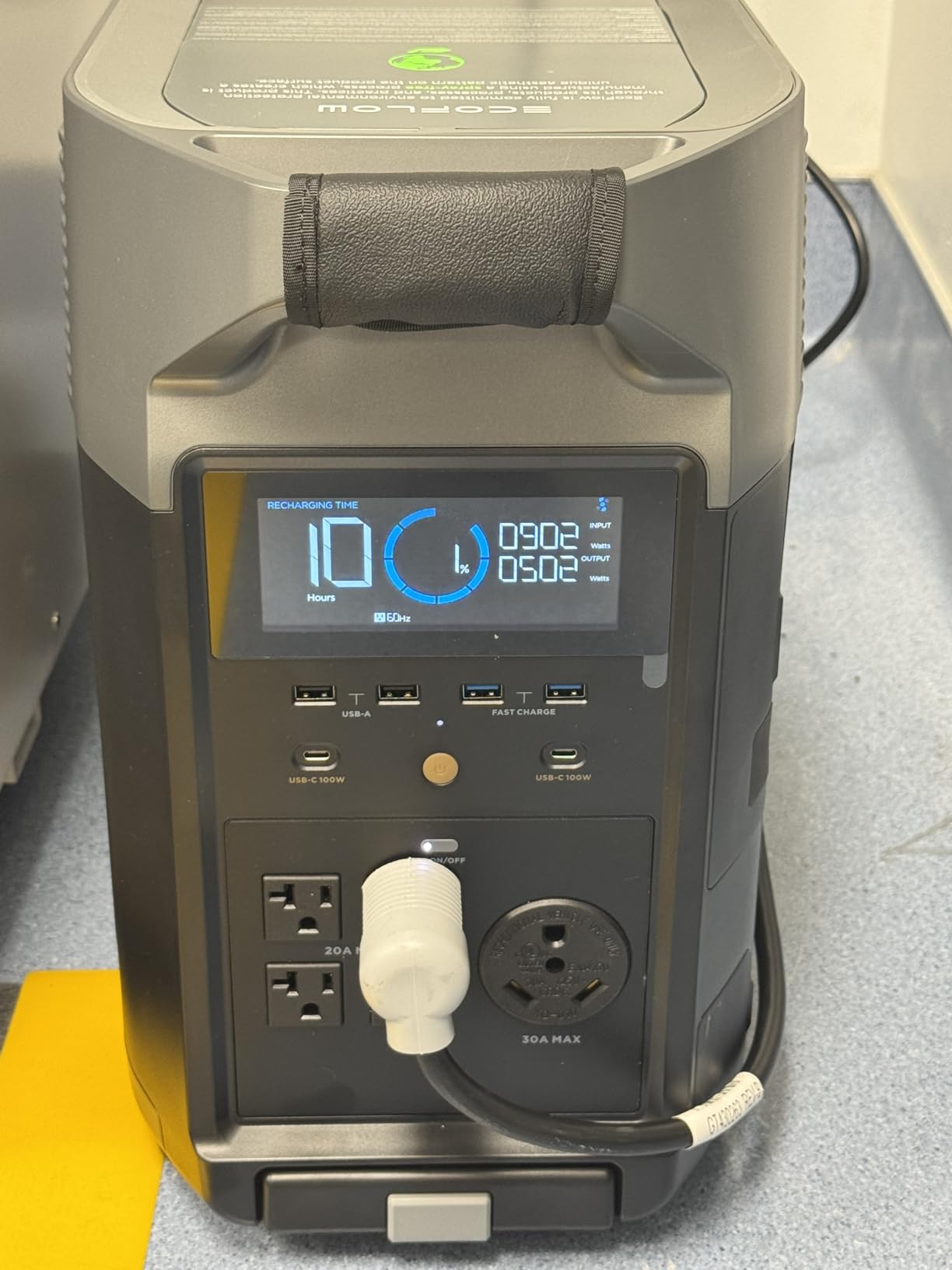
The 15 output ports are genuinely useful in an outage. Five AC outlets plus two 100W USB-C, four USB-A, two DC, a car port and an Anderson connector mean you rarely need an extension cord, which is the single most common failure point during a storm.
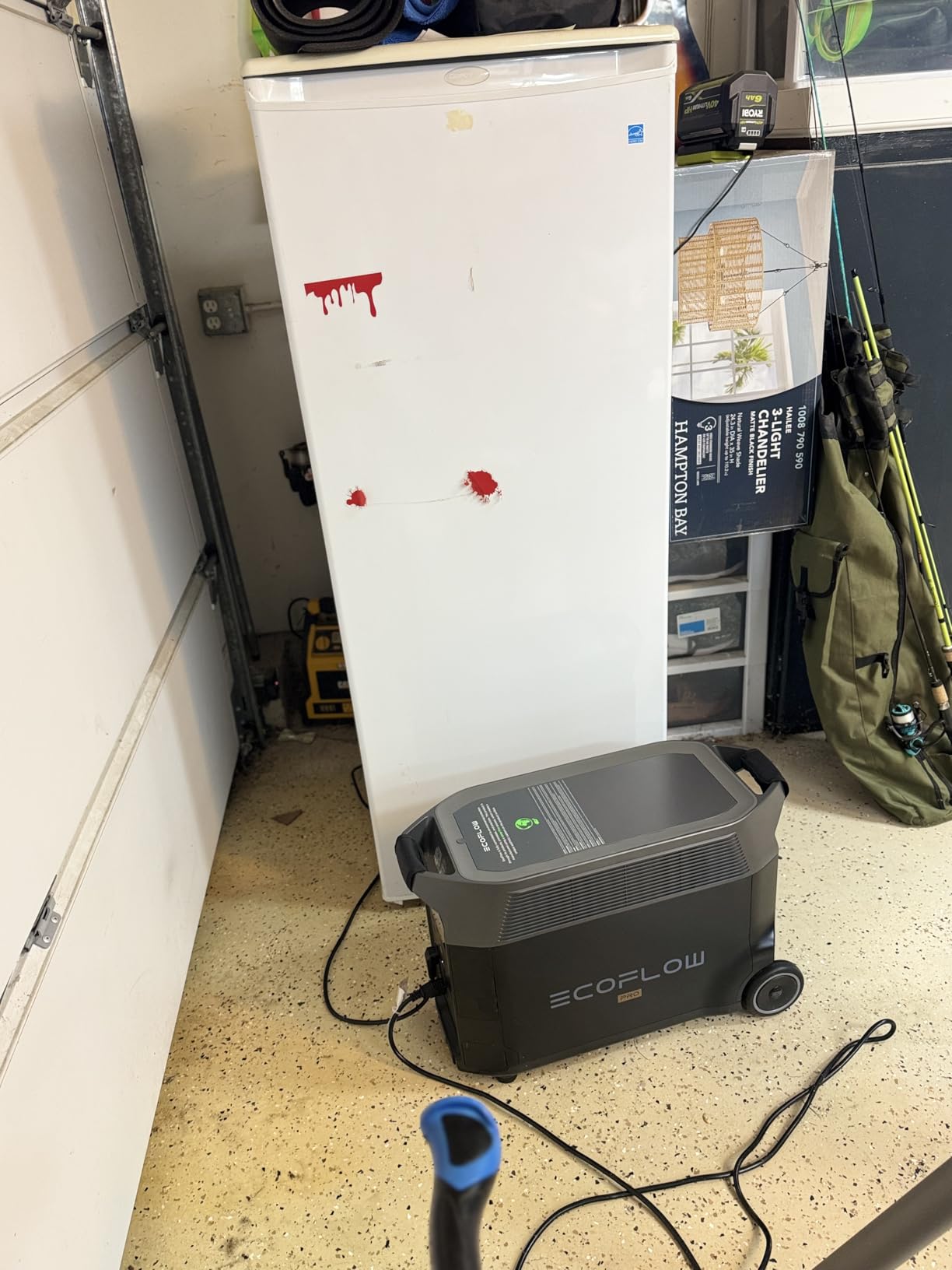
Recharge speed is where EcoFlow leads. X-Stream charging brings it from empty to full in 1.8 hours on a 240V 3000W outlet, 2.7 hours on a 1800W wall and 2.8 hours with four 400W panels.
Owners in outage-prone areas report topping it up from a gas generator in a couple of hours, which turns the battery into the overnight reserve and lets the generator handle daytime bulk charging. That hybrid pattern is the most practical whole-home strategy most people ever settle on.
Who the DELTA Pro suits
It suits buyers who want a lot of inverter for the money. 3,600W continuous covers a furnace blower, a refrigerator, a freezer and lighting simultaneously, and pairing a second unit takes the pair to 7,200W.
It also suits anyone who wants the widest expansion ceiling in the portable class at 25kWh without moving up to a stationary system. Expansion happens one battery at a time, so the cost spreads out.
Who should skip it
Skip it if you plan to run the unit from rooftop solar. The solar input is limited to roughly 15 amps, which caps charging speed well below what the 3,600W inverter can accept.
At 99 pounds it is the heaviest unit in this roundup that still counts as portable. If you plan to move it between rooms often, the wheel-equipped Jackery HomePower 3600 Plus is easier to handle.
3. EcoFlow DELTA Pro Ultra 12kWh: Best for True Whole-Home Capacity
EF ECOFLOW 12kWh Power Station: DELTA Pro Ultra with Extra Battery
2 x 6144Wh batteries
7200W continuous, 21.6kW with triple inverters
120V and 240V from one inverter
Scalable to 90kWh
Pros
- 120V and 240V from a single inverter at 7200W
- Online UPS with 0ms transfer time
- Scales to 90kWh across 15 batteries
- One battery recharges in about 2 hours
Cons
- At roughly 294 pounds it is a stationary install
- Fans and batteries arrive in separate packages
- Lowest average rating in this roundup
This is the only unit here that behaves like an installed home battery you can move. Two 6,144Wh batteries give you 12kWh out of the box, and one inverter delivers 7,200W at both 120V and 240V, which means a single box can feed both legs of a panel.
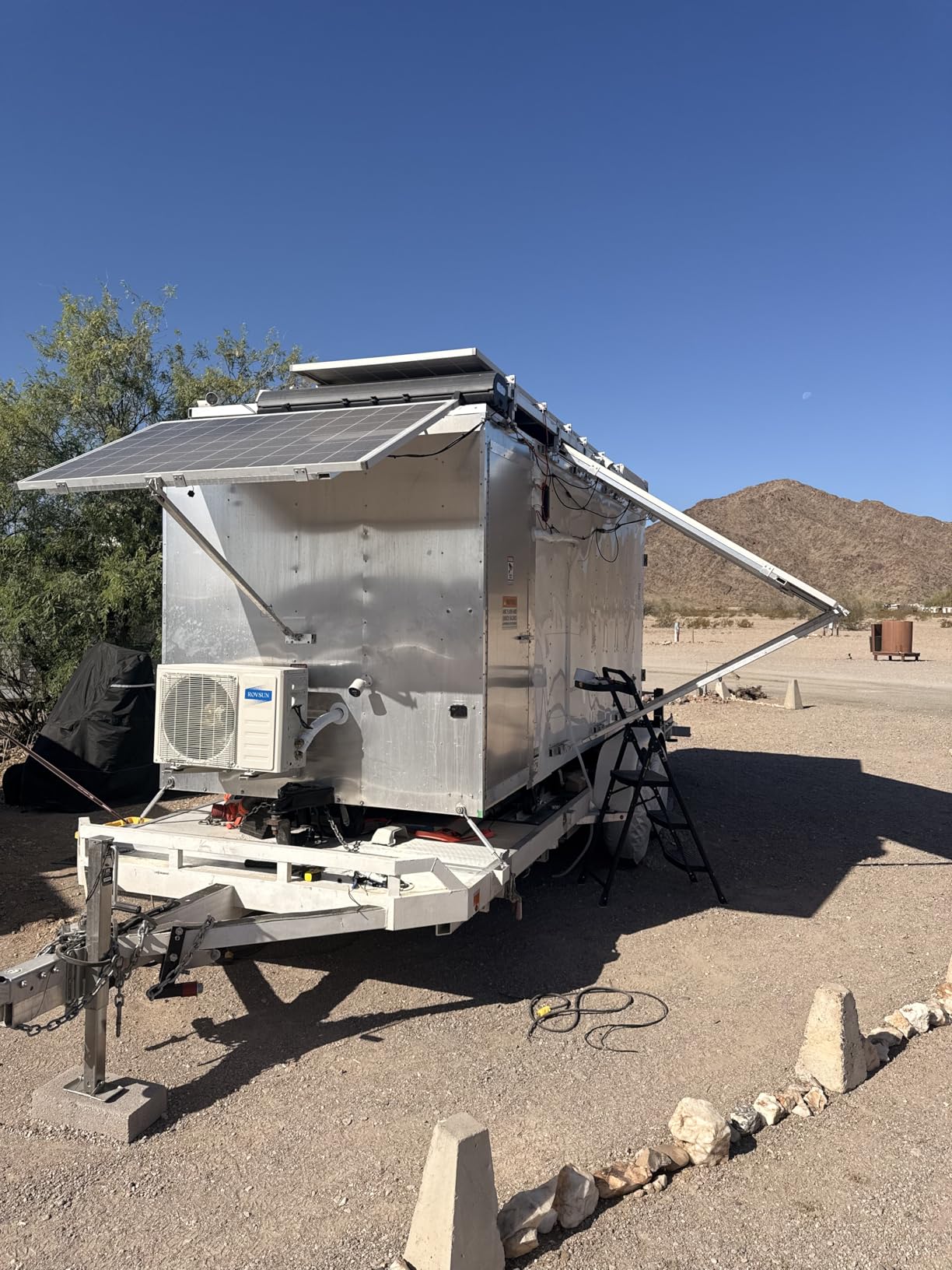
That 240V capability is the reason to choose it. A 3-ton central air conditioner, a 1 HP water pump or a heat-pump dryer are all reachable from one unit, and EcoFlow rates a 90kWh build at more than 30 days of essential power for a typical North American home.
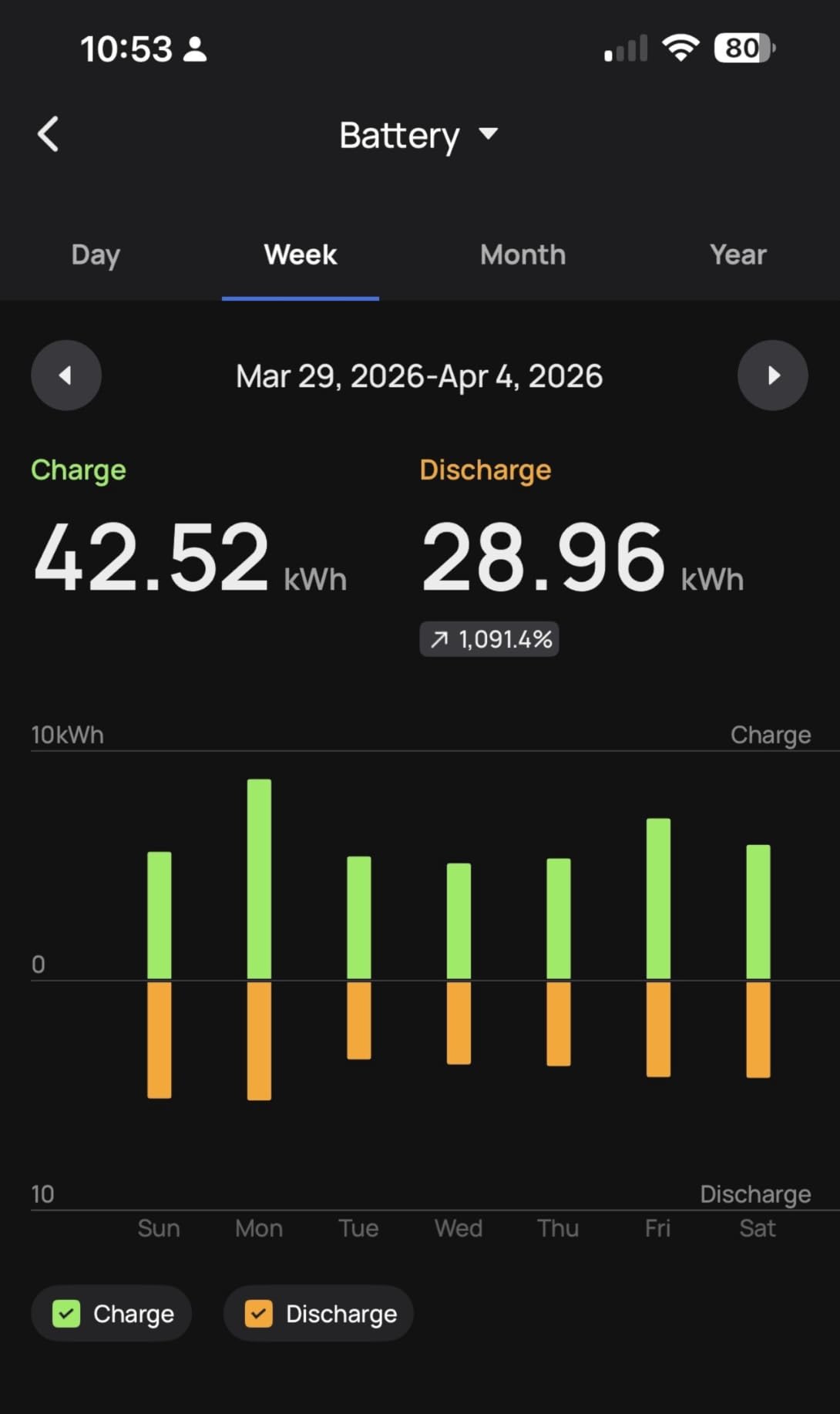
The 0ms online UPS transfer is the sleeper feature. Sensitive electronics do not blink when mains power drops, which matters if you run a NAS, a medical refrigerator or network equipment that has to stay up without a reboot.
Charging is fast for the size involved: a single 6,144Wh battery refills in about two hours. The app can also prioritise specific home circuits to stretch runtime when capacity gets tight.
Who the DELTA Pro Ultra suits
It suits households with a central air conditioner or a well pump who have run out of headroom everywhere else. Nothing else in this roundup delivers genuine 240V at this wattage from a single unit.
It also suits buyers who want to grow into a three-week or one-month outage rather than buying that capacity twice. The 15-battery, 90kWh ceiling is the largest here.
Who should skip it
Skip it if you need to move the system. At roughly 294 pounds it is a garage fixture, not a portable unit, and you will want it on a proper floor location from day one.
Its 4.2 average is the lowest in this set, and the spread explains why: buyers who need 120V and 240V capacity rate it very highly, while a smaller group reports firmware, app and integration friction. Expect some setup work.
4. BLUETTI Elite 300: Best Compact 3kWh Unit (Not Expandable)
BLUETTI Elite 300 with Elite 10 Portable Power Station 3014.4Wh 2400W LFP
3014.4Wh LiFePO4
2400W continuous, 4800W surge
10ms UPS transfer
Solar input capped at 1200W, 60V max
Pros
- 59 percent smaller body than conventional 3kWh units
- 10ms UPS verified by owners on computers and routers
- 78 minute charge to 80 percent
- Includes a 128Wh Elite 10 unit
Cons
- No battery expansion option
- 60V solar voltage ceiling blocks rigid 600W arrays
- Heavier than the compact size suggests
We are including this one as a sizing reference rather than a scaling option, and the reason is important: the Elite 300 has no expansion port. If your plan involves adding capacity later, cross it off the list.
What it does exceptionally well is fit. Frost and Sullivan certified it as the world’s smallest 3kWh portable power station, 59 percent smaller than conventional units at 58 pounds, and that footprint matters in a garage or a hallway closet where a full-size case will not go.
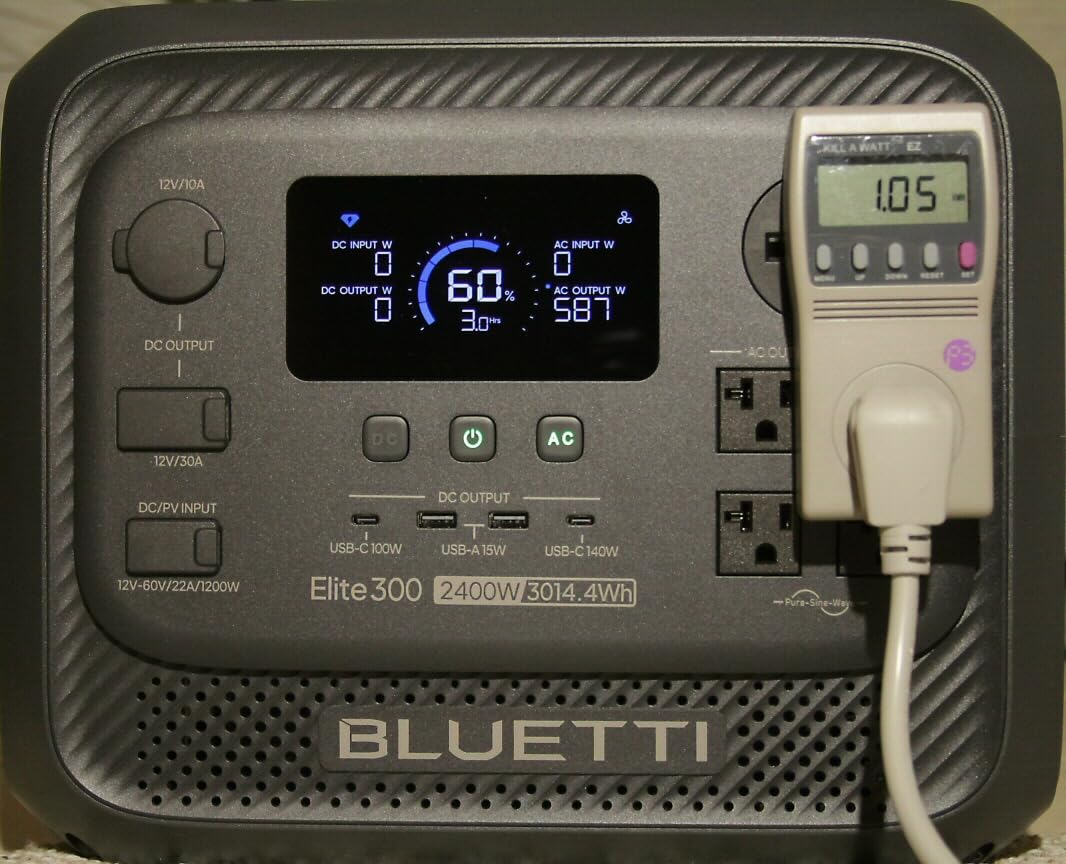
The 2,400W continuous and 4,800W surge ratings are class-appropriate, and the 10ms UPS transfer is fast enough that owners run computers and routers through outages with no interruption at all.
The battery is rated at 6,000+ cycles and reaches 80 percent from empty in 78 minutes from wall, solar or car. A TT-30 RV socket and a 30A 12V DC output on an XT60-F connector round out a well-equipped port layout.
Who the Elite 300 suits
It suits buyers with a fixed, modest load and no space to spare. Refrigerator, freezer, router, medical devices and lighting for a day or two is exactly what 3,000Wh delivers.
It also suits anyone who wants a second small station rather than one large one, since a compact unit is easier to place near the loads it serves.
Who should skip it
Skip it for whole-home scaling, because there is nowhere to go after 3,014Wh. That single limitation overrides everything else on the spec sheet.
Owners with rooftop solar should also note the 60V and 22A solar ceiling, which excludes many rigid 600W arrays and can affect warranty coverage if exceeded.
5. Jackery HomePower 3000: Best for Recharging Fastest
Jackery HomePower 3000 Portable Power Station, 3072Wh, 3600W AC Output
3072Wh LFP
3600W continuous, 7200W surge
UL-certified 20ms UPS
59.5 lbs, 4,000 cycles
Pros
- Full recharge in 1.7 hours hybrid or 2.2 hours on AC
- 3600W output covers household loads for up to 15 hours
- UL-certified 20ms UPS for sensitive gear
- 47 percent smaller than comparable 3kWh models
Cons
- Expansion batteries and transfer switches are separate variants
- 59.5 pounds needs two people
- Highest one-star share of any product here
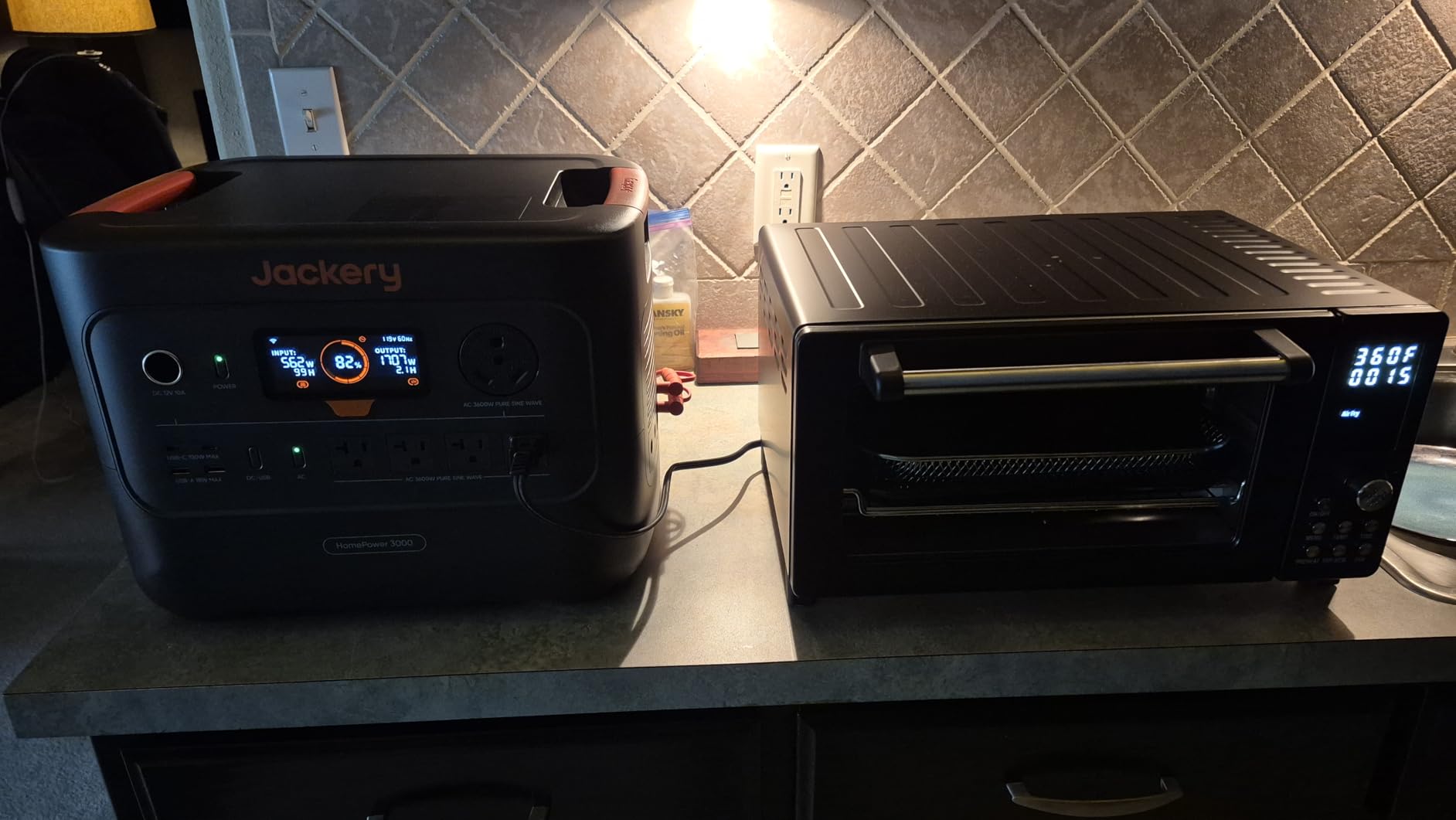
The HomePower 3000 wins on one measurable thing: how fast it comes back. A full recharge in 1.7 hours on hybrid AC and DC, or 2.2 hours from a wall outlet, is the quickest recovery in this roundup, and during a multi-day outage recovery speed matters more than raw capacity.
The inverter is genuinely capable too. 3,600W continuous with 7,200W surge handles refrigerators, fans, routers and lighting for up to 15 hours of typical household use, and the CTB construction keeps it 47 percent smaller and 43 percent lighter than comparable 3kWh models.
The UL-certified 20ms UPS is the detail owners appreciate most. Security cameras, medical refrigerators, network gear and video calls all ride through a mains drop without a reboot, which is exactly the use case people picture when they buy one of these.
Ten ports including dual 100W PD USB-C and a TT-30 RV port cover most device mixes without adapters, and ChargeShield 2.0 charging is rated alongside 4,000 cycles to 70 percent capacity.
Who the HomePower 3000 suits
It suits households that recharge from a wall or a generator often, since a fast turnaround means the unit is useful again the same evening rather than the next morning.
It also suits buyers who need UPS-grade switchover for electronics but do not need 240V, which keeps the system simpler to install than a split-phase model.
Who should skip it
Skip it if your plan is 240V loads. This listing is 120V only, and reaching a heat-pump dryer or well pump means adding hardware.
Buyers wanting to scale up should note that the expansion battery and transfer switch are separate variants on this listing. Its 4.4 average and highest one-star share in this set also suggest a tail of early-unit reliability reports worth factoring into your decision.
6. Jackery HomePower 3600 Plus: Best for Rolling the System Between Rooms
Jackery HomePower 3600 Plus Power Station, 3584Wh, 3600W AC Output
3584Wh LFP
3600W continuous, 7200W in parallel
Dual 120V and 240V
Expandable to 21kWh per unit
Pros
- Dual 120V and 240V output in parallel for pumps and dryers
- Expandable to 21kWh per unit or 43kWh combined
- Built-in wheels and telescopic handle
- Cells tested at 302F with 6000 cycles and 10 year lifespan
Cons
- 77.2 pounds is heavy for moving between rooms
- 240V output needs a transfer switch for whole-home use
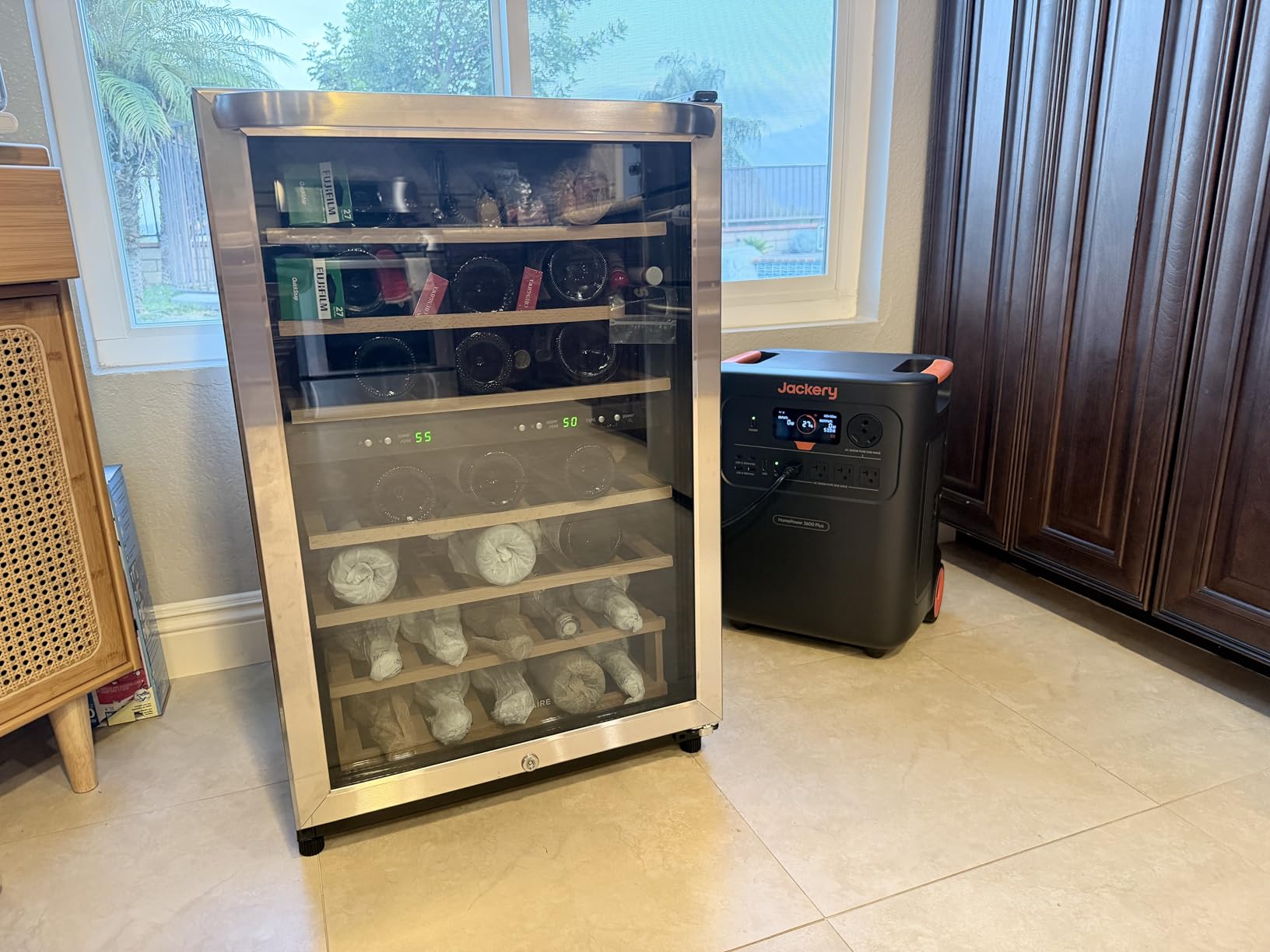
Of the units that can genuinely grow, this one has the most thoughtful physical design. The built-in wheels and telescopic handle mean 77.2 pounds rolls from the kitchen to the garage like a piece of luggage, which is the difference between a system you actually use and one that gathers dust.
Jackery’s key technical win is dual voltage. The HomePower 3600 Plus delivers 120V and 240V in parallel, so it can run a heat-pump dryer, a heater or a well pump, not just standard household outlets.
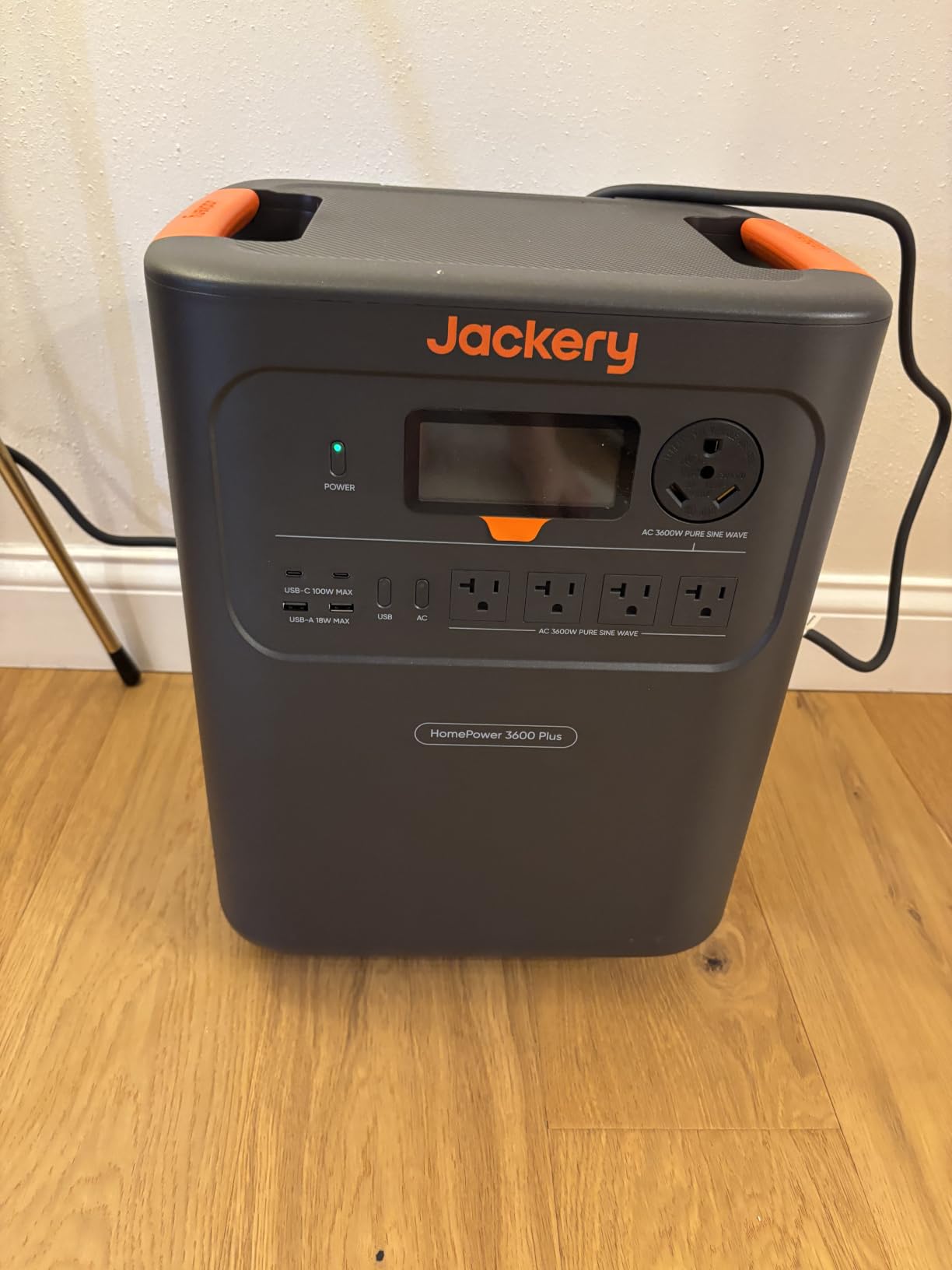
Expansion runs to 21kWh per unit and 43kWh across multiple units, and 3,600W continuous doubles to 7,200W in parallel. Owners with real outages describe running refrigerators, freezers, Starlink, induction cooktops and medical equipment through multi-day events on this setup.
The battery story is unusually strong: ceramic membrane cells tested at 302F to resist thermal runaway, 6,000 cycles, a 10 year lifespan and operation down to -4F. Recharge options cover 2 hours hybrid, 2.5 hours on AC, 4 hours on solar and 2.5 hours from a gas generator.
Who the HomePower 3600 Plus suits
It suits households with a 240V load and a stubbornness about moving the unit. The rolling design and the 21kWh per-unit ceiling make it the easiest system to grow one expansion battery at a time.
It also suits cold-climate households, since the cells are rated to operate down to -4F, an area where many competitors quietly stop performing.
Who should skip it
Skip it if you want a plug-and-play system with no wiring work. The 240V output requires pairing with the Jackery manual transfer switch, and some installers are easier than others.
At 77.2 pounds it is still a two-person lift for anyone without the wheels deployed, so measure your route from the delivery point to its home base before ordering.
7. Anker SOLIX F3800: Best for 6000W Output on a Single Unit
Anker SOLIX F3800 Portable Power Station, 3,840Wh
3.84kWh
6000W continuous, 12000W with a second unit
120V and 240V dual voltage
Expandable to 26.9kWh
Pros
- 6000W at 120V and 240V from one unit
- Scales to 53.8kWh across two units and 12 packs
- NEMA 14-50 port charges an EV at 6000W
- EV-class LFP cells with a 10 year warranty
Cons
- At 132.3 pounds and 34 inches cubed it is near-stationary
- Lowest relative demand ranking in this set
When one unit needs to replace a small standby generator, the F3800 is the answer. 6,000W of continuous 120V and 240V output from a single box covers a dryer, a furnace, a well pump or a window air conditioner without pairing anything.
The expansion math is the strongest in the portable class. The base 3.84kWh grows to 26.9kWh with six battery packs, and two units with 12 packs reach 53.8kWh, which Anker rates at roughly two weeks of home use.
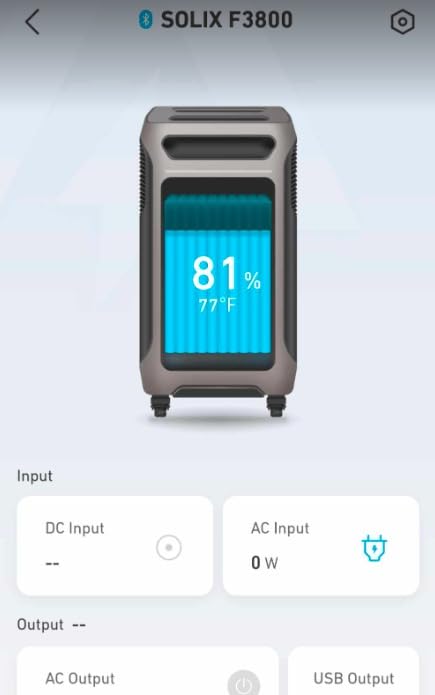
The NEMA 14-50 port is a differentiator nobody else in this list matches. It charges an EV at 6,000W with a standard EV charging cable and plugs straight into an RV inlet through NEMA 14-50 or L14-30 ports, so the same box covers backup and mobile power.
Solar input is rated at 2,400W, and the EV-class LFP cells carry a 10 year warranty. It also pairs with the Smart Generator 5500 for automatic start-stop runtime extension.
Who the F3800 suits
It suits households with a genuinely heavy load and no interest in running two units. 6,000W continuous means a dryer or a 3-ton central air compressor without a second purchase.
It also suits buyers with rooftop solar at scale, since the 2,400W solar ceiling is among the higher limits here and can feed a 2,400W input directly.
Who should skip it
Skip it if you need to carry it up stairs or move it between rooms. At 132.3 pounds in a 34-inch cube, it is effectively a fixed installation.
Its 4.4 average reflects consistent high marks on output and expansion paired with repeated criticism of bulk, so buy it for a garage position rather than an emergency-only shelf.
8. BLUETTI Apex 300 with B500K Expansion Battery: Best for Simultaneous 120V and 240V
BLUETTI Apex 300 Portable Power Station & B500K Expansion Battery 7884.8Wh
7884.8Wh with B500K
3840W continuous, 7680W surge
Simultaneous 120V and 240V
83.8 lbs, 22dB silent mode
Pros
- 120V AC pass-through charging while 240V output runs
- Dual-voltage output powers both legs of a home panel through an interlock
- Dual MPPT solar inputs measured pulling about 757W
- 22dB silent operation and 10ms UPS
Cons
- Roughly 84 pounds with no carrying accessories included
- Inverter is rated for resistive loads so compressor surge can exceed it
- 60 Voc PV ceiling excludes most 110 Voc rooftop arrays
This bundle is the most unusual configuration here: 7,884.8Wh shipped with a B500K expansion battery attached. You get close to 8kWh on day one and 3,840W of continuous output, with 7,680W of surge headroom.
The technical headline is pass-through charging with dual voltage. Because the 120V AC input keeps charging while the inverter feeds 240V output, the unit can run a heat-pump dryer or an EV charger while still recovering from the wall, and owners pairing it with an interlock report powering both legs of a home panel.
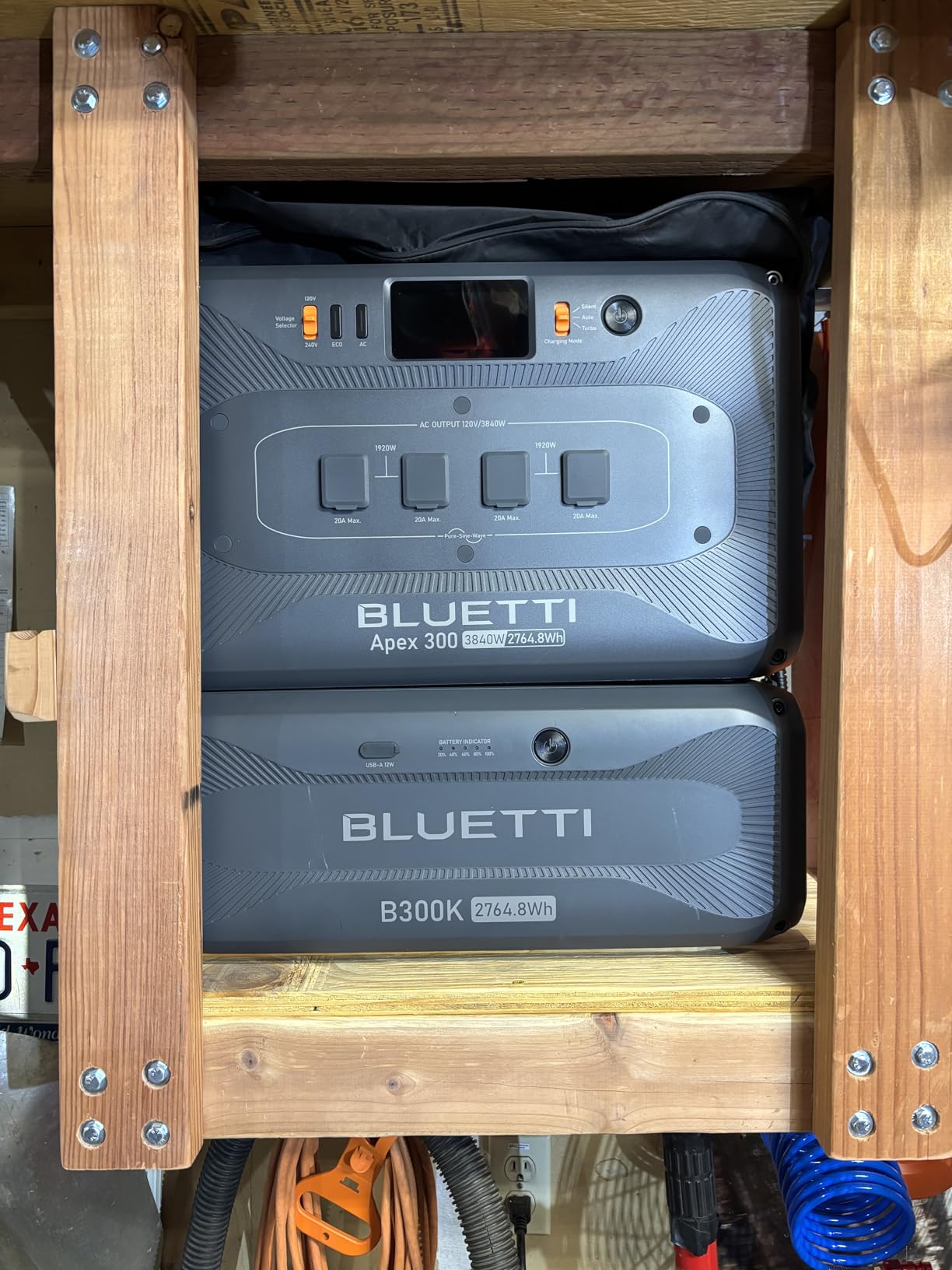
Two MPPT solar inputs measured around 757W in real conditions, and built-in solar input is rated at 2,400W, expanding to 6,400W with additional hardware. The app adds weather alerts and the ability to remotely wake the unit after a deep discharge.
Battery specs are first class: second generation LiFePO4 rated at 6,000+ cycles at 80 percent capacity with a 17 year lifespan, certified against 33 test standards.
Who the Apex 300 bundle suits
It suits households that want meaningful capacity immediately rather than assembling it over two years, and that have a 240V load such as a heat-pump dryer in the mix.
It also suits buyers who care about noise. Silent operation at 22dB makes it usable in a bedroom-adjacent room during an extended outage, something owners of louder units cannot manage.
Who should skip it
Skip it if you own rooftop solar with a 110 Voc string, because the 60 Voc PV ceiling excludes most residential arrays without an external controller. That is the most common technical complaint in the reviews.
Motorised loads deserve caution too: the inverter output is rated for resistive loads, and a 13A air compressor surge exceeded it in testing. Pumps and compressors need careful checking before you rely on them.
9. BLUETTI Elite 200 V2: Top Rated for Essential Loads (Not Expandable)
BLUETTI Elite 200 V2 Portable Power Station 2073.6Wh 2600W Solar Generator
2073.6Wh LiFePO4
2600W continuous, 3900W power lifting
10W standby draw
Solar input capped at 1000W, 60V MPPT
Pros
- Largest review pool in this roundup at 684 reviews
- 10W standby draw runs a fridge 36 hours
- 0 to 80 percent in 50 minutes on dual AC and DC
- Silent mode at 16 to 30dB
Cons
- Not expandable
- No 30A RV port without a separate dongle
- Solar input capped at 1000W with a 60V MPPT
With 684 reviews behind it, the Elite 200 V2 has the widest real-world sample of anything in this guide, and the 4.6 average holds up. It is also not expandable, so treat it as an essential-loads station rather than a whole-home foundation.
Its inverter efficiency is among the best BLUETTI ships, and the 2,600W continuous rating with a 3,900W power lifting mode handles hair dryers, coffee makers and air fryers that stall lesser units.
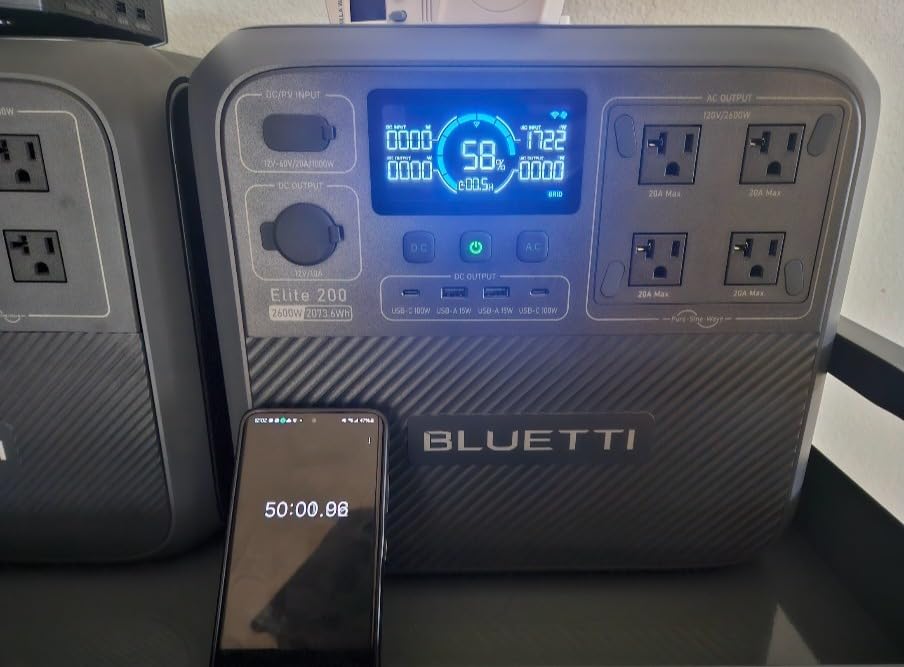
The 10W standby draw is the number to notice. Owners report running a refrigerator for 36 hours on a single charge, and silent mode drops the unit to 16 to 30dB, noticeably quieter than the 30 to 50dB typical of this class.
Charging is the fastest claim in the guide: 0 to 80 percent in 50 minutes on dual AC and DC, full in about 85 minutes on AC alone, and a full solar cycle in 2.4 hours with 1,000W of panels. The CNAS-certified LiFePO4 cells are rated for 6,000 cycles and a 17 year lifespan.
Who the Elite 200 V2 suits
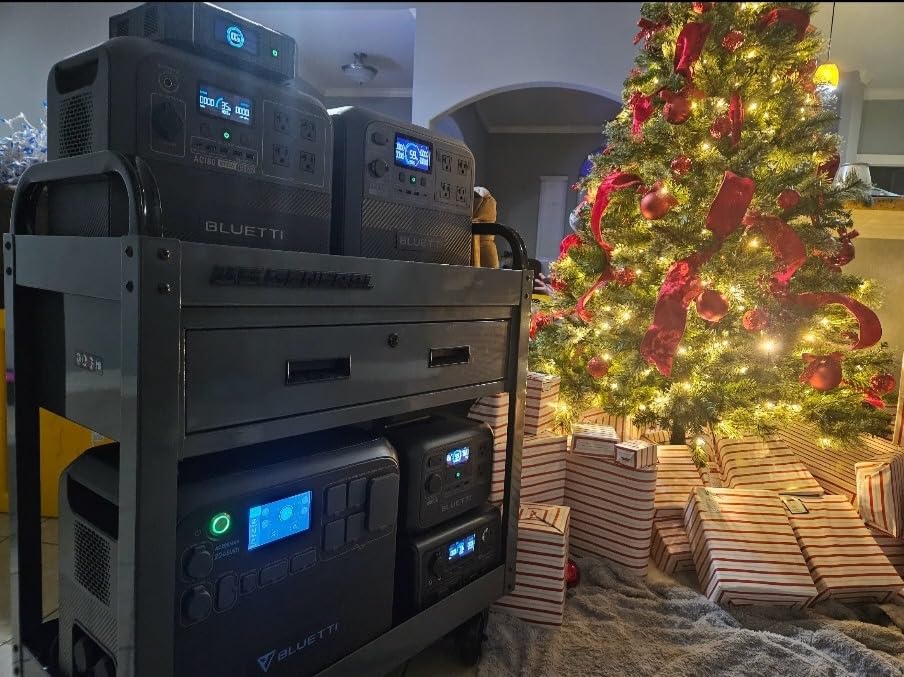
It suits buyers whose real target is essentials: a refrigerator, a router, medical devices and lighting for a couple of days. For that job, 2,073.6Wh and 2,600W is genuinely sufficient and the unit stays quiet enough to sleep near.
It also suits anyone who wants to run two smaller stations in different parts of the house instead of one large one, since splitting loads across separate units is a legitimate strategy when expansion is off the table.
Who should skip it
Skip it if you intend to grow the system. There is no expansion port, so 2,073.6Wh is all you will ever have, and that is a hard ceiling rather than a starting point.
RV owners should note the missing 30A port and the 60V MPPT limit, and a few reviews report app disconnections and state-of-charge calibration quirks after firmware updates.
10. EcoFlow DELTA Pro 3: Best for Solar Recharge and 48kWh Expansion
EF ECOFLOW DELTA Pro 3 Portable Power Station, 4096Wh, 4000W AC Output
4096Wh LFP
4000W continuous at 120V and 240V
Expandable to 48kWh
Dual solar input totalling 2600W
Pros
- Single unit 240V split-phase output
- Built-in neutral-ground bonding toggleable in the app
- Dual solar inputs totalling 2600W
- Extra Batteries now stack directly on top
Cons
- 115 pounds and the largest footprint in the set
- No built-in 12V car output port
- Some units have reported BMS lockout errors
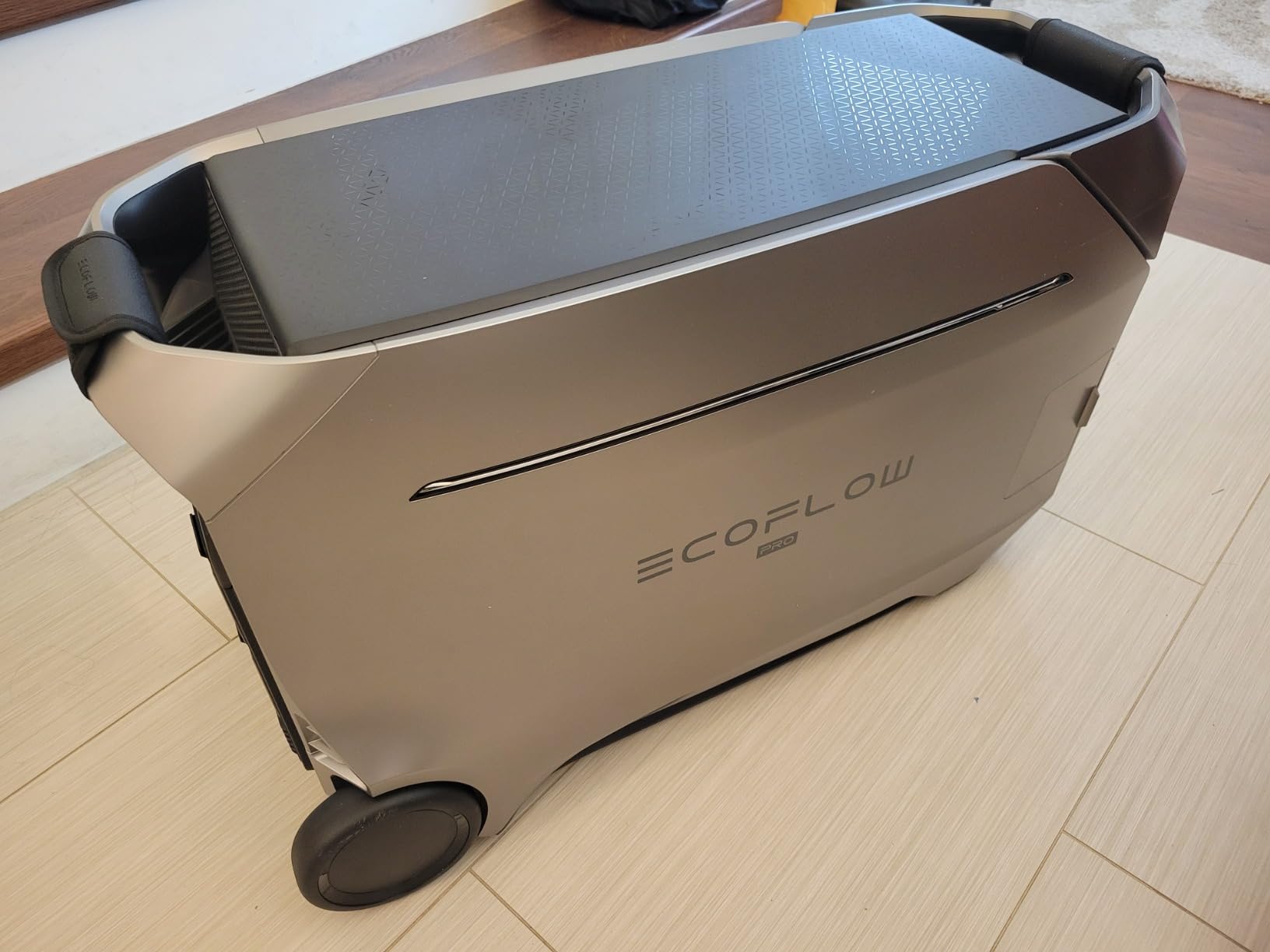
The DELTA Pro 3 fixed two of the original DELTA Pro’s biggest weaknesses. 240V split-phase output now comes from a single unit instead of two plus a hub, and neutral-ground bonding is built in and toggleable in the app, so the separate grounding adapter is gone.
For solar owners it is the strongest option here. Dual solar inputs total 2,600W, up from a single 1,600W port on the original, and the 4,096Wh LFP pack expands all the way to 48kWh, which EcoFlow rates at two to four days of whole-home backup.
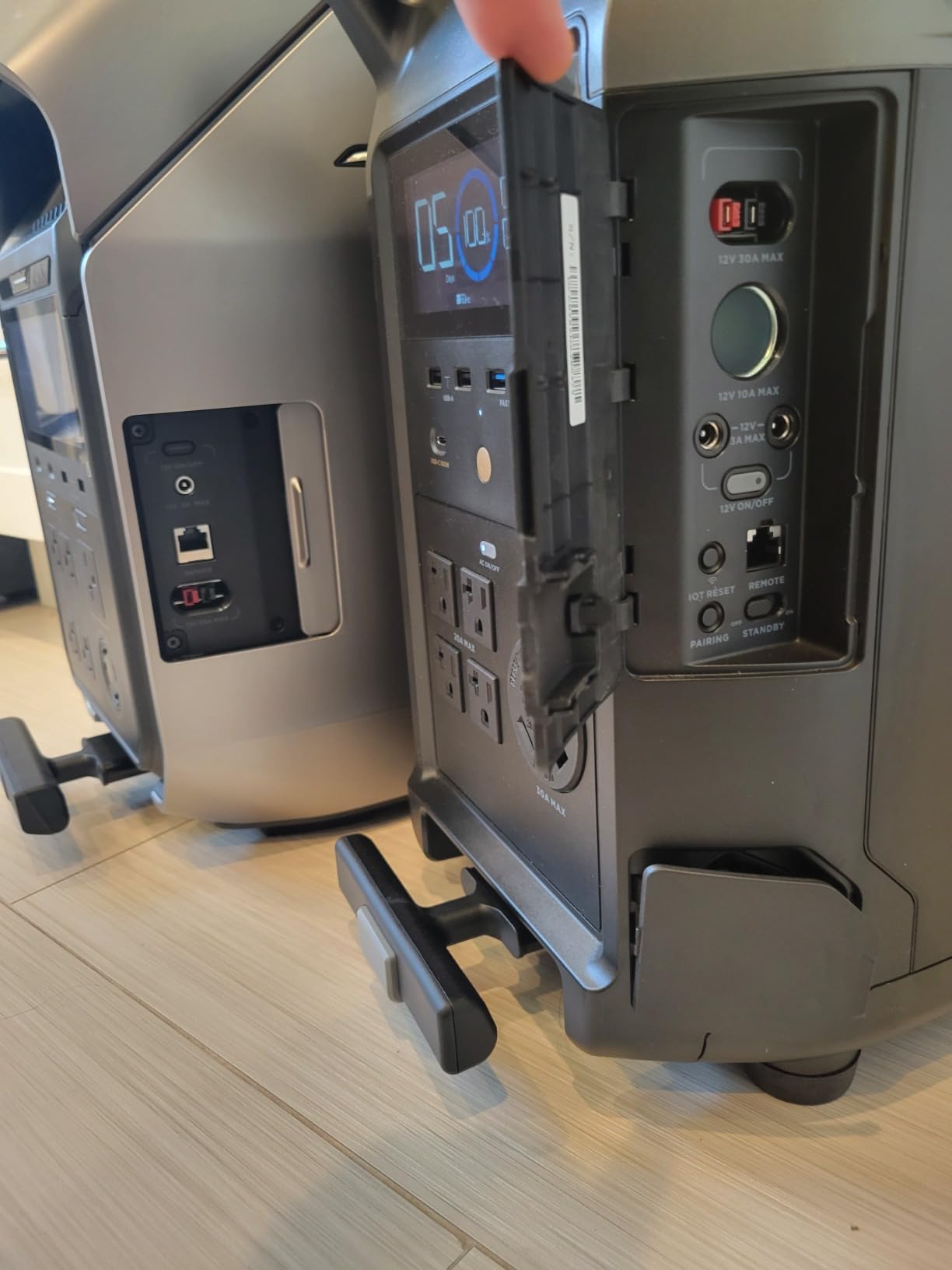
Charging flexibility is unusually broad: seven unique and eighteen combination methods including wall outlets, solar, gas generators, EV charging piles and the EcoFlow Smart Home Panel 2. Reviewers also report verified 4,000W EV charging at 240V for 30 minutes with no thermal issues.
The 10ms switch-over suits NAS systems and servers, and X-Quiet cooling runs as low as 30 dB. Long-form reviewers report running furnaces and heat-pump dryers off this unit for full days.
Who the DELTA Pro 3 suits
It suits homes with solar already installed, or planning it, because 2,600W of solar input and a 48kWh ceiling is the combination that turns a backup battery into a partial off-grid system.
It also suits buyers moving up from an older DELTA Pro, since the improvements in bonding, solar ports and single-unit 240V remove the accessories the earlier design required.
Who should skip it
Skip it if you need mobility. At 115 pounds with the largest footprint here, it belongs in a garage, and stacking Extra Batteries on top immobilises the main unit for transport.
The 4.2 average and a 14 percent one-star share are the weakest in this roundup, driven by reports of BMS lockout failures and warranty logistics. Its 120V-only car port omission is a smaller annoyance that needs a dongle.
How to Size a Battery Backup for Your Home
Start with the loads you cannot lose, not the loads you want to keep. A refrigerator, a freezer, a Wi-Fi router, a CPAP machine and a few lights typically total 1,000 to 2,000Wh per day, and that is the number your battery has to cover for a three-day storm.
A typical refrigerator runs near 150W with a startup surge around 700W, and an Energy Star model burns roughly 1 to 1.5kWh per day including auto-defrost cycles. A well pump or sump pump is the harder case, because startup surge on a 1 HP motor can reach three to four times its running wattage for several seconds.
Central air is where most plans fail. A 3,000 to 5,000W compressor will not run on a battery bank for long, and a window air conditioner of 500 to 800W is the realistic substitute. Plan for that trade instead of discovering it mid-heatwave.
A quick sizing rule: take your essential daily watt-hours, multiply by three days, then divide by 0.85 for inverter losses. A household needing 1,500Wh per day for three days needs about 5,300Wh of rated capacity, which is why a 3.5 to 4kWh unit plus one expansion battery is the common starting shape.
What to Look for in an Expandable Power Station
Continuous versus surge output is the first filter. Ignore the boosted wattage in marketing; only the continuous rating matters for anything that runs longer than 30 seconds. If your load list includes compressors, motors or pumps, check that surge is at least twice the running wattage.
Rated versus usable capacity is the second. Nameplate watt-hours overstate what you get by roughly 15 percent once inverter losses and the battery management system are counted, and that gap is exactly what makes a runtime estimate look optimistic.
LiFePO4 chemistry is now the default worth insisting on. Cycle ratings in this roundup run from 4,000 to 6,000+ cycles with lifespans quoted from 10 to 17 years, which is what makes the capital cost defensible over a decade rather than a few seasons.
Solar input ceiling decides whether solar is a genuine recovery path. Inputs range from 1,000W on the BLUETTI Elite 200 V2 to 2,600W on the DELTA Pro 3, and voltage ceilings of 60V will block rigid arrays and 110 Voc rooftop strings without an external controller.
Finally, check UPS switchover time, expansion port count and 240V support together. Under 20ms keeps electronics alive, two expansion ports beat one, and split-phase output is the difference between running a well pump and hiring an electrician for a workaround.
Jackery or EcoFlow: Which Brand Scales Better?
EcoFlow scales capacity further and charges faster from a wall; Jackery handles physical movement and cold better. That is the honest short version, and the detail matters more than the brand loyalty either side will insist on.
EcoFlow’s DELTA Pro reaches 25kWh with Extra Batteries and Smart Generators, and the DELTA Pro Ultra scales to 90kWh across 15 batteries. The DELTA Pro 3 reaches 48kWh with batteries that now stack directly on top of the unit. Jackery’s HomePower 3600 Plus reaches 21kWh per unit and 43kWh across multiple units, which is impressive but a smaller ceiling.
On recharge, EcoFlow wins on wall charging. The DELTA Pro refills in 1.8 hours on a 240V outlet and the DELTA Pro 3 in 2 hours per battery, while the Jackery HomePower 3000 manages 1.7 hours hybrid on a smaller pack. Jackery compensates with a 20ms UL-certified UPS and cells rated to -4F.
On 240V, EcoFlow offers it from a single unit on both the DELTA Pro Ultra and the DELTA Pro 3, while Jackery reaches 240V through parallel pairing on the HomePower 3600 Plus. Jackery’s practical advantage is the rolling chassis, and EcoFlow’s is everything else.
Owners on the Hearth forums raise a fair practical point about this class generally: verified continuous wattage matters far more than stored capacity when you can recharge from another source, because a strong inverter with a modest battery often outperforms the reverse.
Connecting a Portable Power Station to Your Home Panel
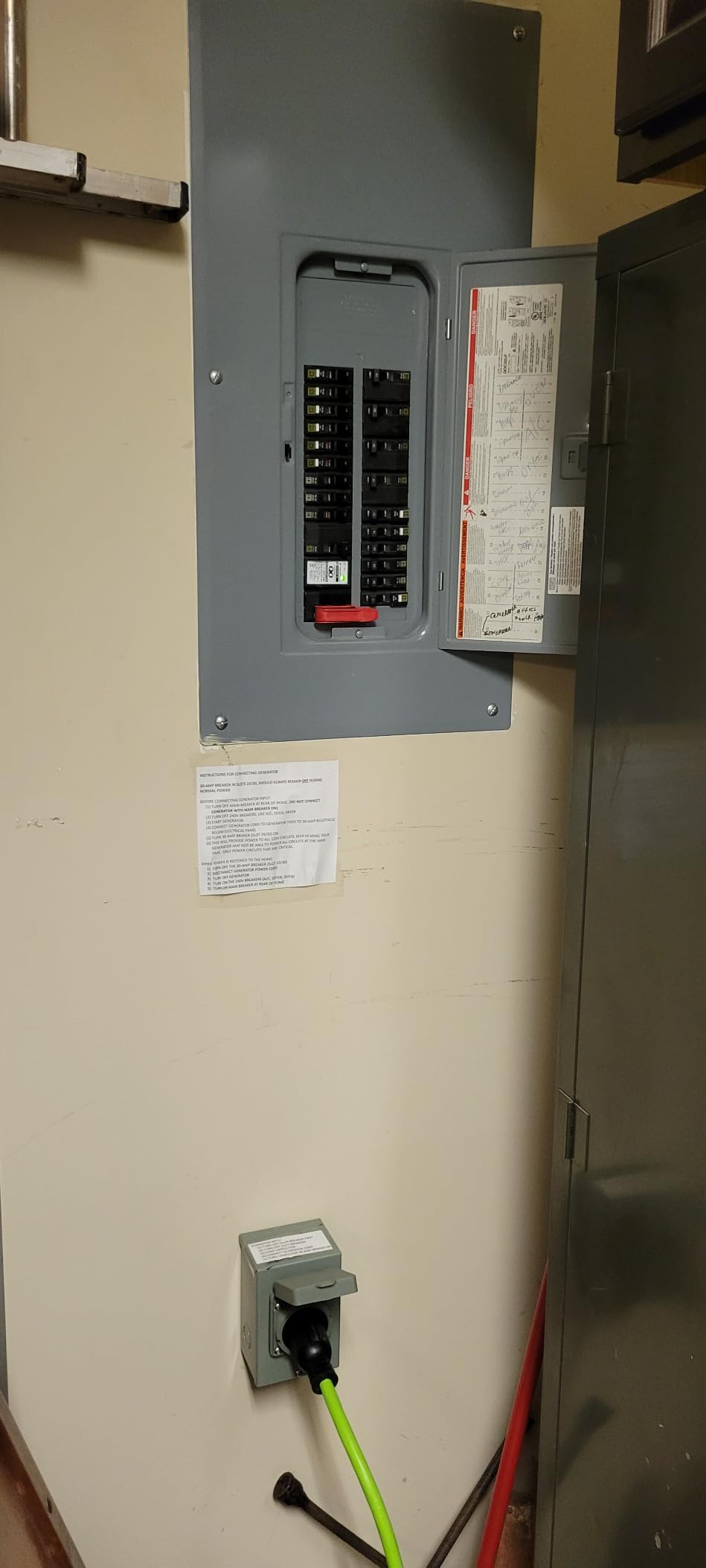
A portable power station does not feed your main panel on its own. Connecting one requires a transfer switch or a panel-specific device, and the job belongs with a licensed electrician in nearly every jurisdiction.
The sequence matters. The unit installs as a backed-up sub-panel with selected critical circuits, the transfer switch isolates those circuits from grid power, and the station supplies them when mains power drops. An interlock is the standard mechanism for 120V and 240V equipment, which is how the BLUETTI Apex 300 powers both legs of a panel.
If you cannot run an electrician, the alternative is running extension leads from indoors to a handful of loads, which works for a refrigerator and router but not for a heat-pump dryer or a 240V well pump. Homeowners on the Hearth forums have also reported solving a 240V well pump with a 120V step-down transformer instead of buying split-phase hardware, which is cheaper but slower under load.
Either way, test the system before you need it. Run a full discharge-and-recharge cycle, confirm the UPS transfer on a computer and router, and check that the transfer switch fails safe when the battery is empty.
Frequently Asked Questions
What is the best battery backup system for a whole house?
The Anker SOLIX C2000 Gen2 is the best overall expandable battery power station for whole home backup, pairing a 2,400W continuous inverter with 4,096Wh of LiFePO4 capacity, a 9W standby draw and an included BP2000 expansion battery. If your home runs a central air conditioner, a 1 HP well pump or an electric dryer, the EcoFlow DELTA Pro Ultra is the only unit here that delivers 7,200W at both 120V and 240V from a single inverter.
Can a portable power station run an entire house?
Not as a rule. A portable station can run a subset of your home through a transfer switch or a panel-specific device, typically covering a refrigerator, freezer, router, medical devices, lighting and a window air conditioner. Feeding an entire house including central air and 240V appliances requires a unit with genuine 240V output and a licensed electrician to install the connection.
Is 5kWh enough for home backup?
Yes, for essentials over a typical three-day outage. A household needing 1,000 to 2,000Wh per day for essential loads should target about 3,000Wh of rated capacity and expand to 5,000Wh or more. Remember that usable capacity runs roughly 15 percent below the nameplate figure because of inverter losses.
What size power station runs a refrigerator for 3 days?
A refrigerator drawing about 150W with startup surge near 700W typically consumes 1 to 1.5kWh per day including auto-defrost. For three days you need roughly 4,000 to 4,500Wh of rated capacity, which means a 4,000Wh unit on its own or a 2,000Wh station with one expansion battery attached.
How long does a home battery backup last?
It depends entirely on load and expansion. The BLUETTI Elite 200 V2 runs a refrigerator about 36 hours on 2,073.6Wh, while the Anker SOLIX C2000 Gen2 reaches up to 32 hours and up to 64 hours with its expansion battery. Larger systems like the Anker SOLIX F3800 scale to 53.8kWh across two units, which Anker rates at roughly two weeks.
Do I need a transfer switch for a portable power station?
You need one if you intend to power circuits through your home wiring, which is the only safe way to feed a refrigerator, a well pump or a network rack from a battery. Running extension leads from indoors is the alternative for a few low-draw loads. Either approach should be reviewed by a licensed electrician, and split-phase 240V units typically require an interlock.
Which Expandable Power Station Should You Buy?
The Anker SOLIX C2000 Gen2 is the best expandable battery power station for home backup in 2026, and the reason is not the capacity figure. It is 2,400W of honest continuous output, a 9W standby draw that keeps essentials alive far longer than the label suggests, and an expansion battery already in the box so the first scaling step is done for you.
Pick the EcoFlow DELTA Pro instead if you want a bigger inverter for the money and the widest expansion ceiling in the portable class at 25kWh. Pick the EcoFlow DELTA Pro Ultra if you have central air or a well pump and need true 240V. Pick the Anker SOLIX F3800 if 6,000W from a single unit matters more than moving it, and the BLUETTI Apex 300 if you want 240V and 8kWh on day one.
Whatever you choose, run a full test cycle before storm season. Charge it, unplug it, watch what your essential circuits actually draw, and only then trust the runtime numbers above.