
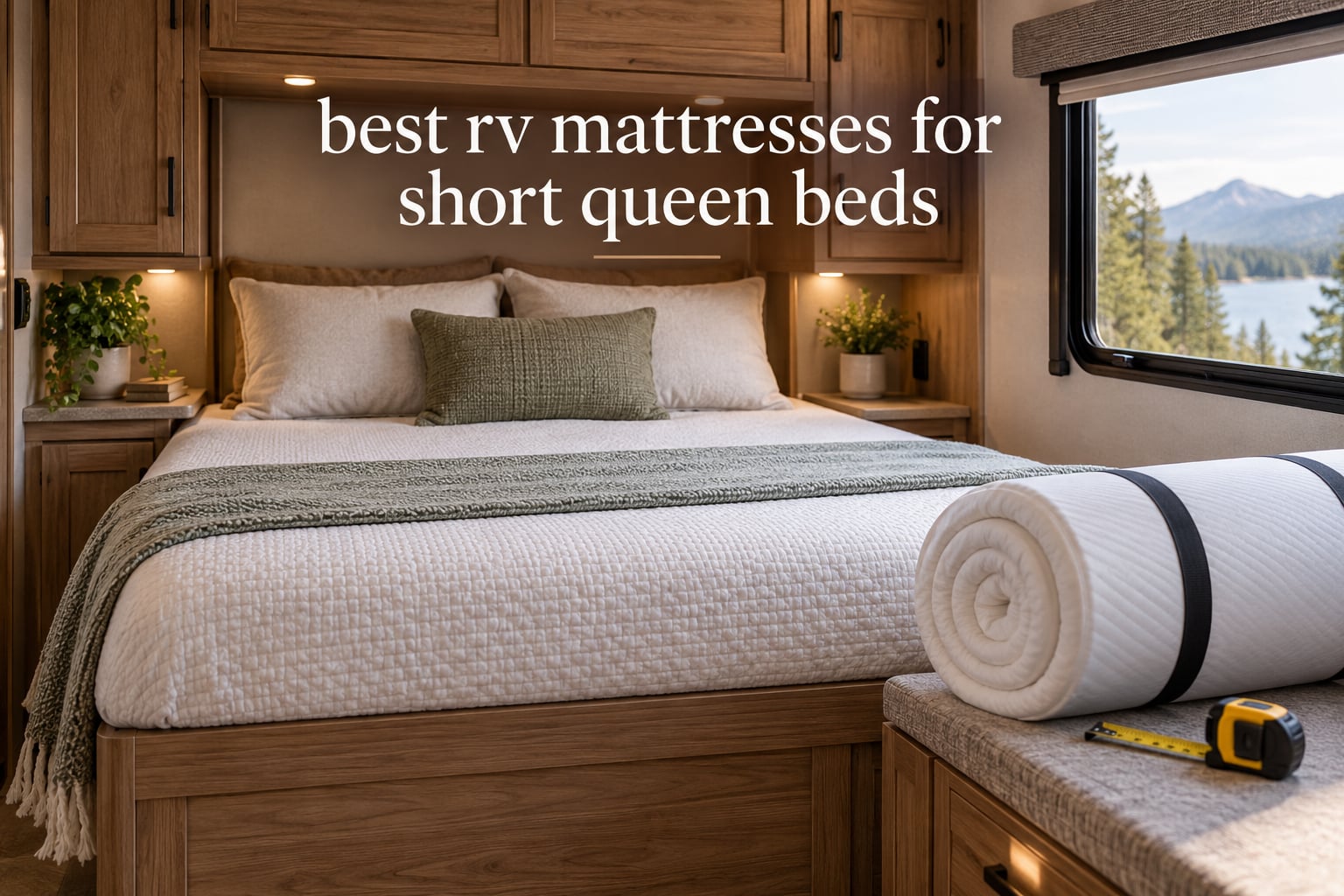
A short queen RV mattress measures 60 inches wide by 75 inches long. It keeps the full 60-inch width of a standard queen but trims 5 inches off the length so it fits the compact sleeping platforms used in most travel trailers, Class C rigs, and camper vans. That makes it the single most important comfort upgrade an RV owner can make, because the thin, sag-prone mattress that ships with a new camper is usually the first thing to fail.
We spent weeks comparing ten short queen mattresses that are actually built for rigs, not residential bedrooms. We weighed thickness against real slide-out clearance, checked foam density and base layers for the sagging that plagues cheap builds, and read owner reports on owner forums about heat, odor, and getting a mattress through a narrow RV door. The results changed how we think about this category. Two details mattered more than any other: a mattress that is 60 by 75 is not automatically the right fit, and a 12-inch profile can block your window.
Below is our ranked list of the best RV mattresses for short queen beds, followed by a buying guide that walks through measuring your platform, choosing construction, and setting firmness by body weight. If you are still deciding, start with the measurement section before you fall in love with a specific model.
Table of Contents
Top 3 Short Queen RV Mattresses (October 2026)

Zinus 8 Inch Ultima Short…
- 8-inch 60 x 74 profile
- 7-zone comfort system
- Green tea and charcoal infused foam
- CertiPUR-US and OEKO-TEX

MLILY 8 Inch Short Queen
- Light 34-pound build
- Green tea gel memory foam
- Medium 5/10 feel
- Fiberglass-free inner cover

Emerspring 10 Inch Short Queen
- 10-inch medium-firm profile
- Green tea cooling gel foam
- Graphene-infused cover
- Expands in about 2 hours
All 10 Short Queen RV Mattresses Side by Side in 2026
| Product | Specs | Action |
|---|---|---|
| Zinus 8 Inch Ultima Short Queen |
|
Check Latest Price |
| MLILY 8 Inch Short Queen |
|
Check Latest Price |
| Emerspring 10 Inch Short Queen |
|
Check Latest Price |
 SynthoSpace 8 Inch Short Queen SynthoSpace 8 Inch Short Queen |
|
Check Latest Price |
 Celestial Sleep 10 Inch Short Queen Celestial Sleep 10 Inch Short Queen |
|
Check Latest Price |
 WanderRest Cool Hybrid 10 Inch WanderRest Cool Hybrid 10 Inch |
|
Check Latest Price |
 Neohavn 12 Inch Short Queen Hybrid Neohavn 12 Inch Short Queen Hybrid |
|
Check Latest Price |
 Dyonery 10 Inch Short Queen Dyonery 10 Inch Short Queen |
|
Check Latest Price |
 Zinus 8 Inch Foam and Spring Zinus 8 Inch Foam and Spring |
|
Check Latest Price |
 Grbsy 12 Inch Firm Short Queen Grbsy 12 Inch Firm Short Queen |
|
Check Latest Price |
What a Short Queen Mattress Actually Is
Short queen is 60 by 75 inches, though manufacturers frequently list it as 60 by 74 or 60 by 74.5. That single inch of slack is the reason most short queen mattresses fit RV platforms that a standard queen physically cannot occupy. Here is how the sizes compare.
Short Queen: 60 x 75 inches. The most common sleeping surface in RVs, campers, and travel trailers.
RV Queen: 60 x 80 inches. Identical in width to a residential queen but marketed separately, and frequently mislabeled by off-brand sellers.
Standard or residential Queen: 60 x 80 inches. Rarely fits an RV platform without trimming.
RV King: 72 x 80 inches. Only found in larger rigs with slide-outs.
Three-quarter: 48 x 75 inches. Common in dinette conversions and Class B vans.
The width does not change between short queen and standard queen. Only the length does, which is why couples who like a wide bed can keep full shoulder room while gaining back five inches of floor space in a slide-out.
1. Zinus 8 Inch Ultima Short Queen – Best Overall Short Queen RV Mattress
Zinus 8 Inch Short Queen Ultima RV Memory Foam Mattress, Medium Firm Feel
60 x 74 x 8 inches
Medium feel
44.4 pounds
2 layers
CertiPUR-US foam
Pros
- 7-zone pressure relief at hips
- shoulders and neck
- Green tea and charcoal infusions resist odor
- Compact reduced-footprint box is easy to move into a trailer
- Medium-firm feel suits most sleepers
- 10-year limited warranty
Cons
- All-foam build gives less edge support than a coil hybrid
- Needs 24-72 hours to fully expand
- Spot clean only
This is the mattress we recommend most often, and it earned that place because 2,712 owner reviews at a 4.6 average give it the deepest evidence base in the group. The 7-zone comfort system shapes around the hips, shoulders, and neck, which is exactly where a hard RV platform pushes back after a day of walking.
Two design choices make it work well in a camper. The compressed box is smaller than most competitors ship, so getting it through a narrow RV door is easier than with a full-size foam bed, and the green tea plus purified charcoal infusions noticeably slow down the smell that plagues cheap foam in warm, humid conditions.
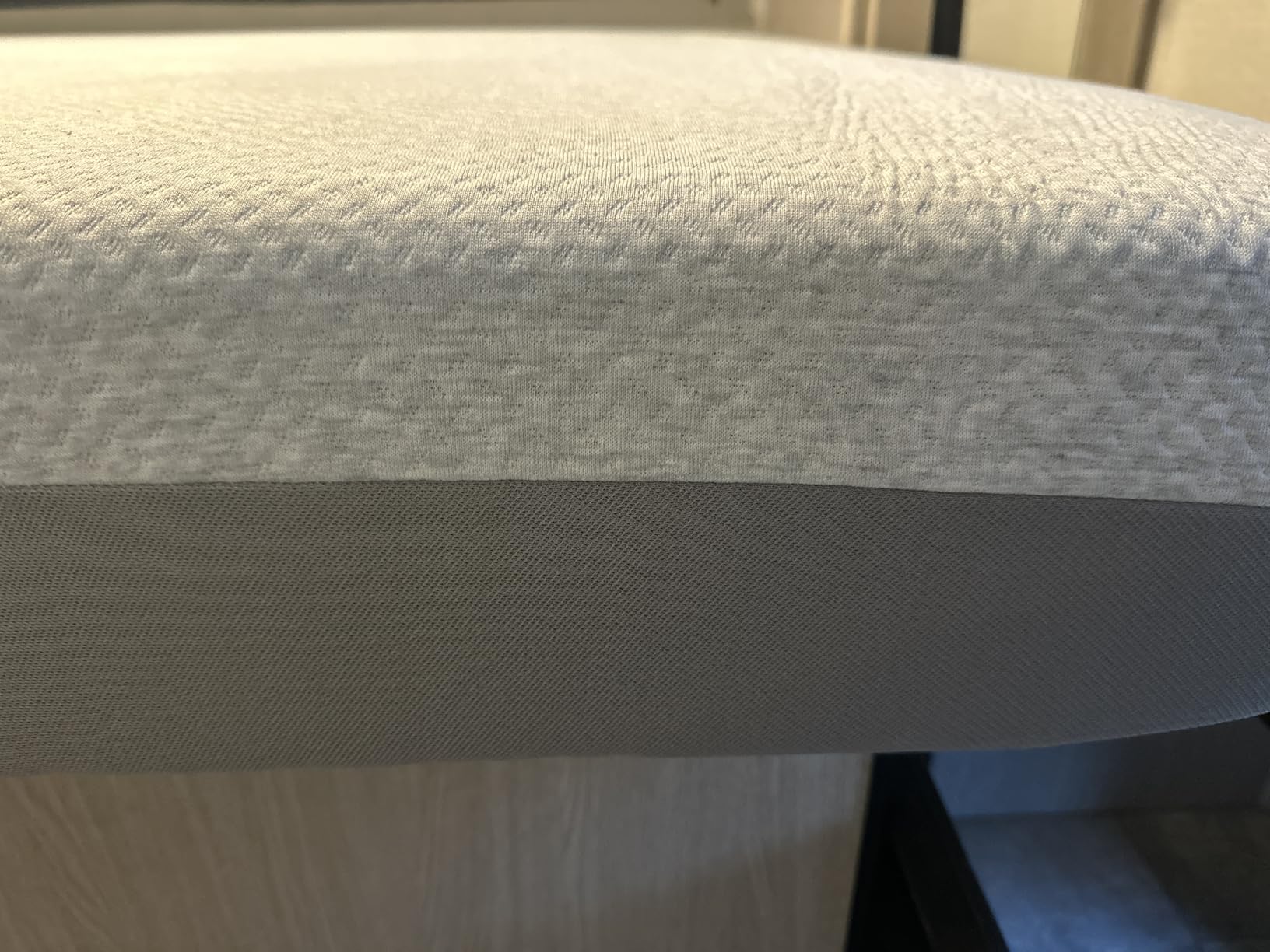
The tradeoff is edge support. With no coils in the build, sitting on the edge to pull on a boot compresses the comfort layer more than a hybrid would, and the 44.4-pound weight is manageable for one person but noticeably heavier than the 34-pound options further down this list.
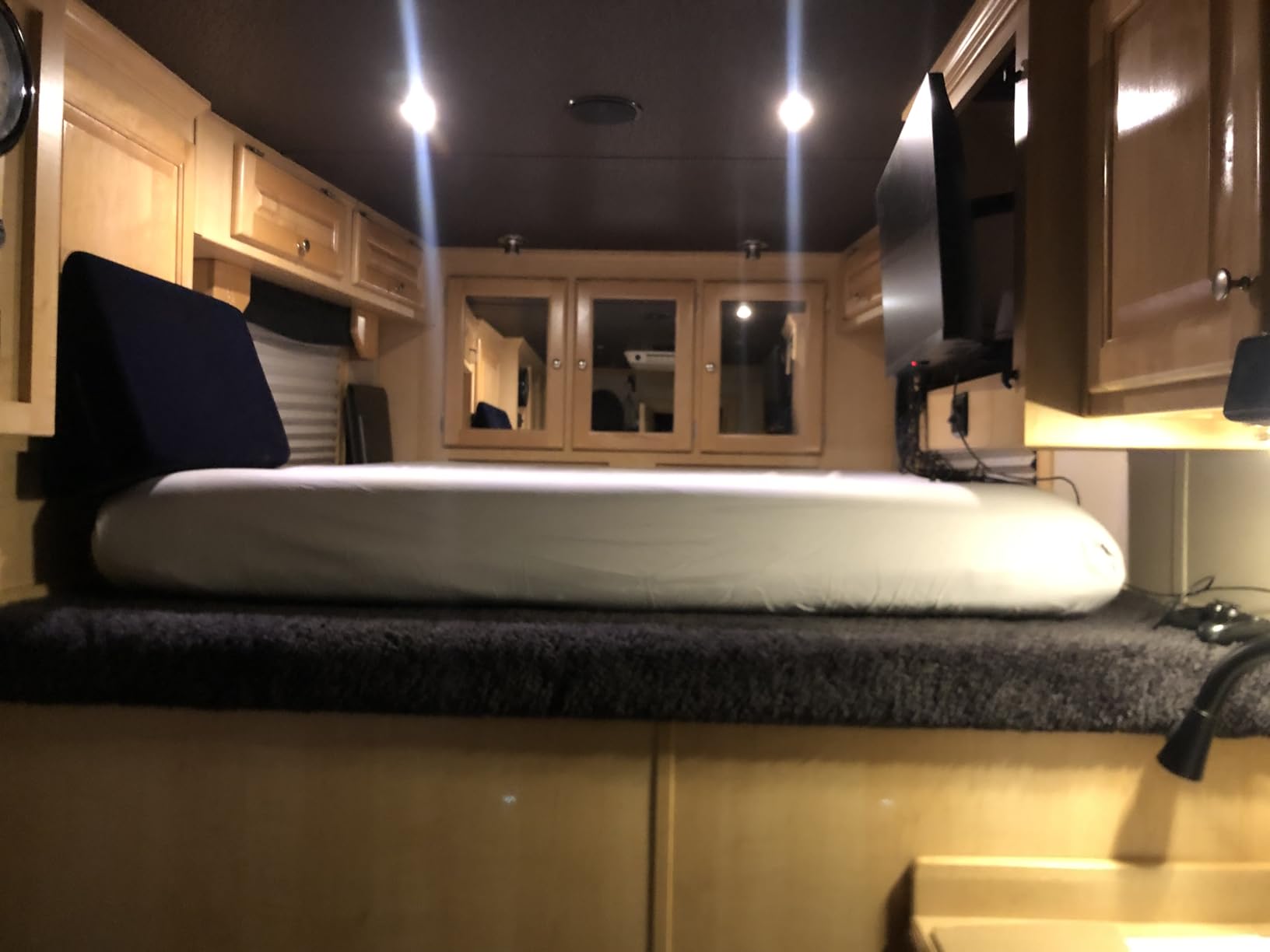
How it holds up after months of nightly use
Owners on RV forums describe the Ultima as one of the few replacement mattresses that keeps its shape past the first year, which is more than can be said for most factory RV mattresses. The two-layer build is simple, and simplicity is what keeps it from sagging into the plywood base.
Be patient with it for the first few days. The maker asks you to allow 24 to 72 hours for full expansion, and reviewers who judged it in the first twelve hours often describe a surface flatter than it becomes later.
Who should skip it
If you sleep on the edge constantly, share the bed with someone who moves a lot, or need a mattress you can move alone into a tight trailer, look at a coil hybrid instead. The lighter 8-inch memory foam picks below carry a similar feel for less mass.
Also note that 60 by 74 is one inch shorter than many platforms. Measure before ordering, because the return window on an opened foam mattress is closed by nearly every seller in this category.
2. MLILY 8 Inch Short Queen – Best Value Short Queen RV Mattress
MLILY Short Queen RV Mattress in a Box, 8 inch Mattresses for RVs, Campers & Trailers, Green Tea Memory Foam Mattress for Cool Sleep & Pressure Relief, Medium, 60″ x 75″
60 x 75 x 8 inches
Medium 5/10 feel
34 pounds
4 layers
Gel memory foam
Pros
- Light 34-pound build is easy to move into an RV
- Cooling gel helps in warm climates
- 750-pound weight capacity
- Fiberglass-free cotton-poly inner cover
- Medium feel balances cushioning and support
Cons
- 8-inch profile is thin for heavier side sleepers
- Hand wash only care
- Some off-gassing on first use
The MLILY is the pick if your rig has a lift bed, a slide-out with a weight limit, or a hallway you have to turn sideways to navigate. At 34 pounds, one person can carry it from the door to the platform, and the maker states the foam is filled by US factories for the large majority of orders.
Firmness sits around 5 out of 10, which lands in the middle in a way that works for combination sleepers and couples who disagree about feel. The gel infusion helps move heat away from the body, and the fiberglass-free inner cover is ribbed cotton and polyester rather than a chemical flame barrier, which matters for sensitive sleepers.
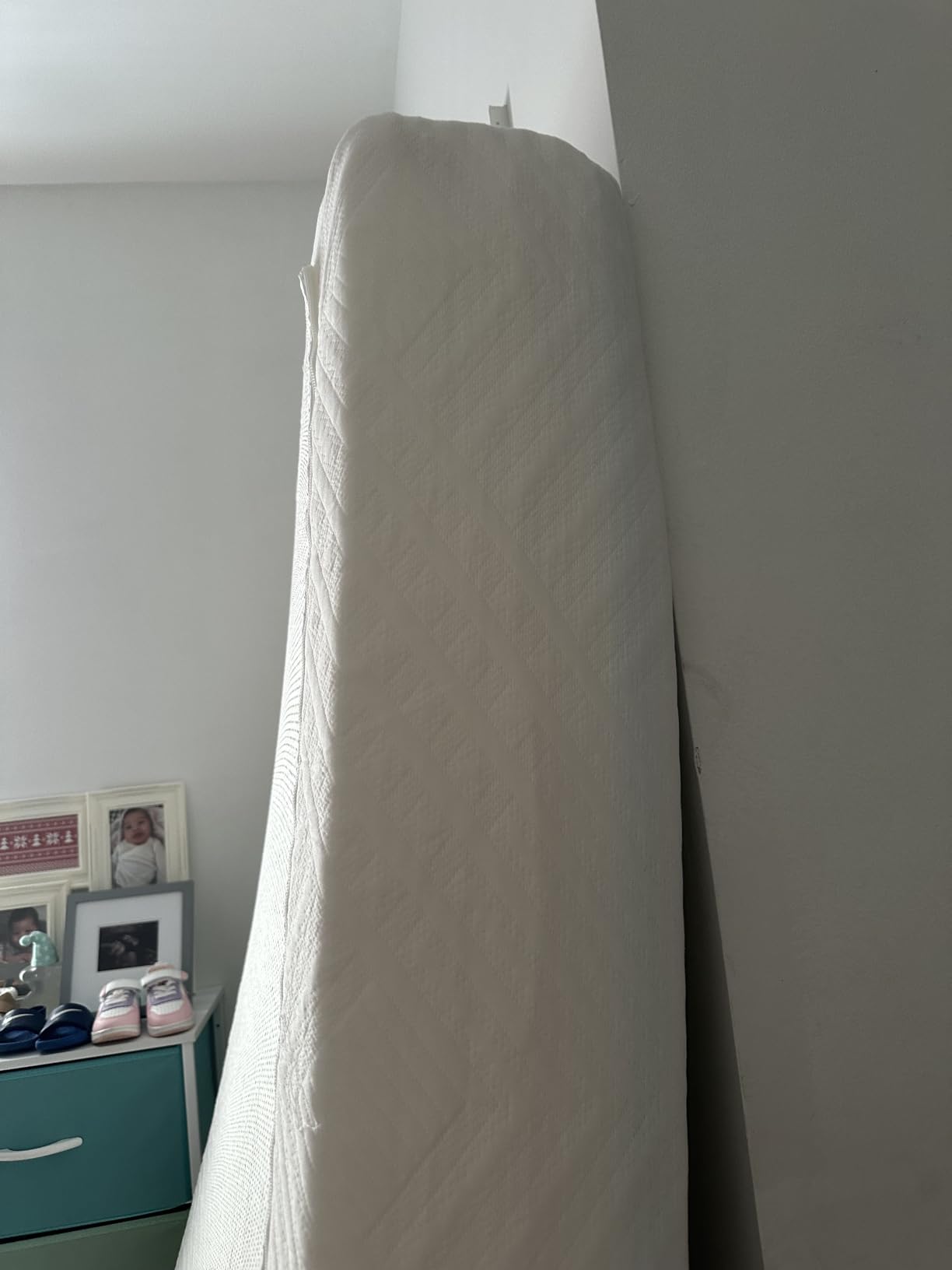
At 8 inches this is a thin profile. Heavy side sleepers pressing into the comfort layer will feel the base sooner than they would on a 10 or 12-inch model, and a few buyers report a faint odor in the first several nights despite the CertiPUR-US certification.
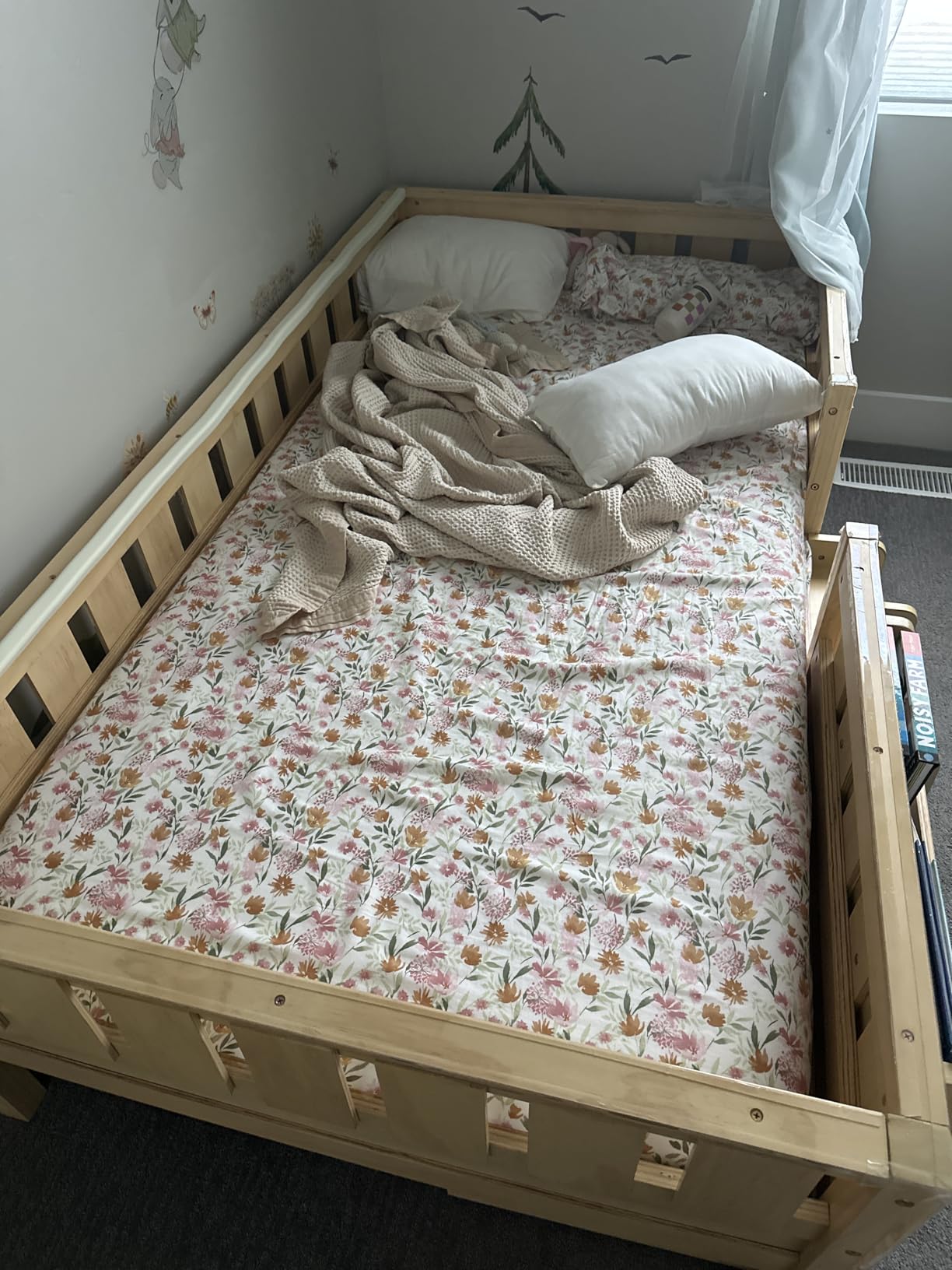
Why the weight figure matters more than usual
Mattress weight is a real constraint in an RV. A foam bed adds its full weight above the slide floor or lift mechanism, and owners replacing a sagging factory mattress often discover the load is tighter than they expected. At 34 pounds, this is the lightest pick here.
If your platform is a plain plywood slab with no ventilation gap, put a slatted or bunk board under it rather than laying foam directly on the wood. That keeps the underside from sealing against the base and improves both airflow and support.
Who should skip it
Side sleepers over 200 pounds who want a plush surface should step up to a 10-inch profile instead. Couples who are very sensitive to partner movement should know that a shared all-foam surface at 8 inches still transmits more motion than a coil hybrid.
3. Emerspring 10 Inch Short Queen – Best Short Queen RV Mattress for Hot Sleepers
Emerspring 10 Inch Short Queen Mattress for RV Camper,Green Tea Memory Foam
60 x 75 x 10 inches
Medium-firm
39 pounds
Gel foam
Graphene cover
Pros
- Green tea and cooling gel foam resists heat and odor
- Graphene far-infrared cover aids temperature control
- Fits short queen RV platforms precisely
- Expands in about 2 hours
- CertiPUR-US and OEKO-TEX Standard 100
Cons
- Firmer than many sleepers prefer
- 10-inch height can exceed low-clearance bunks
- One owner found it overhung a trailer platform
Memory foam has one consistent weakness in an RV: it holds heat, and a camper without air conditioning amplifies that. This model attacks the problem on three fronts, with a green tea and cooling gel comfort layer, a graphene far-infrared fiber cover woven into a nylon-feel fabric, and a high-density support base that does not trap as much warmth as a plush quilted layer.
It is also the practical middle of this list. At 10 inches it has enough depth for most sleepers to avoid bottoming out, while staying short enough to fit under a window line in many trailer beds where a 12-inch mattress would not clear.
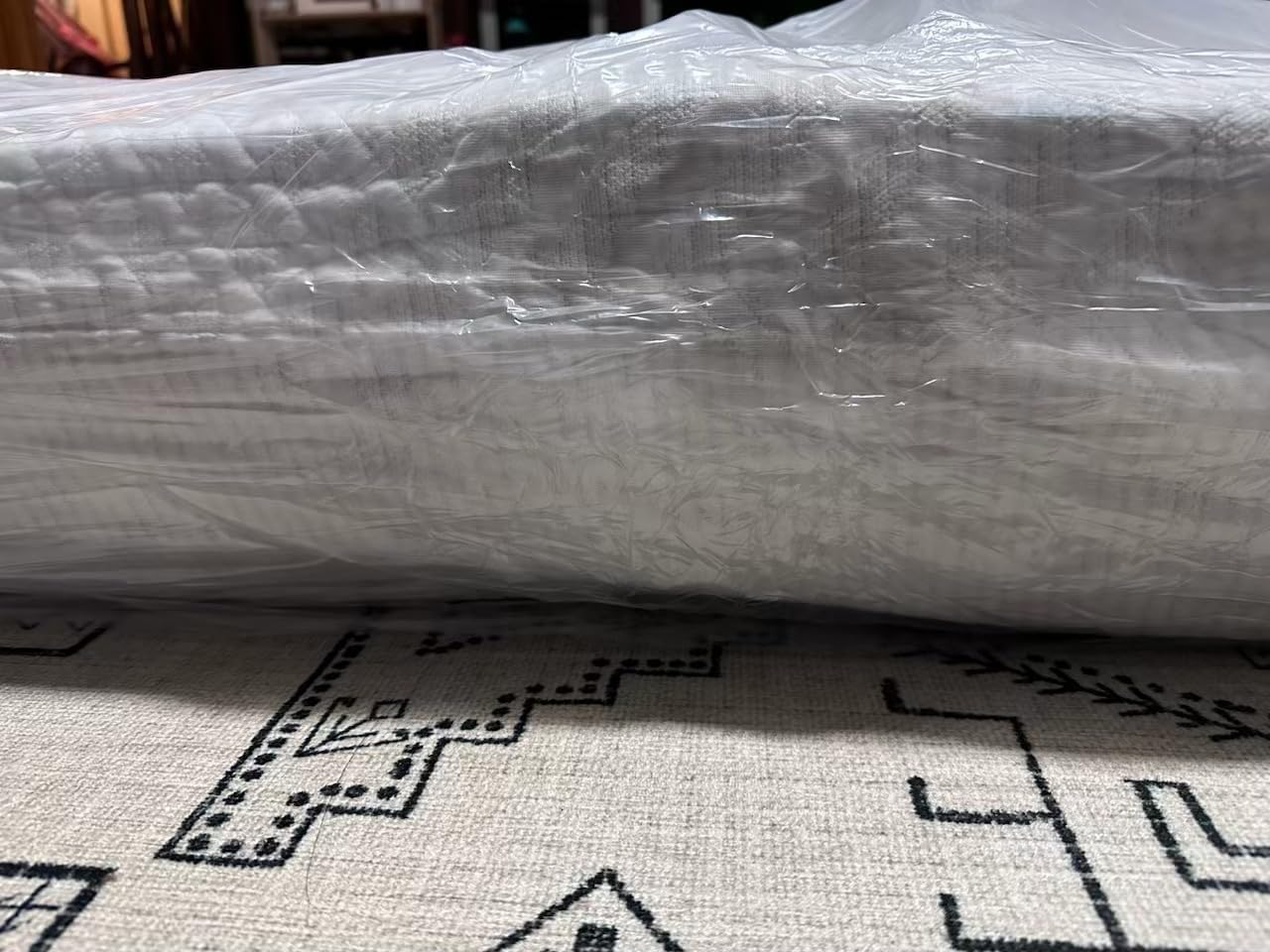
Verified RV owners report the biggest real-world problem here is length, not height. The 60 by 75 footprint is still a few inches longer than some trailer platforms, and one reviewer found the mattress overhanging the bed base. Measure the platform length at the head, middle, and foot before you order.
Feel is medium-firm and lands on the firm side of that label. Sleepers wanting a cushy, plusher surface tend to find it unsatisfying, and adding a 2 or 3-inch topper is the usual fix.
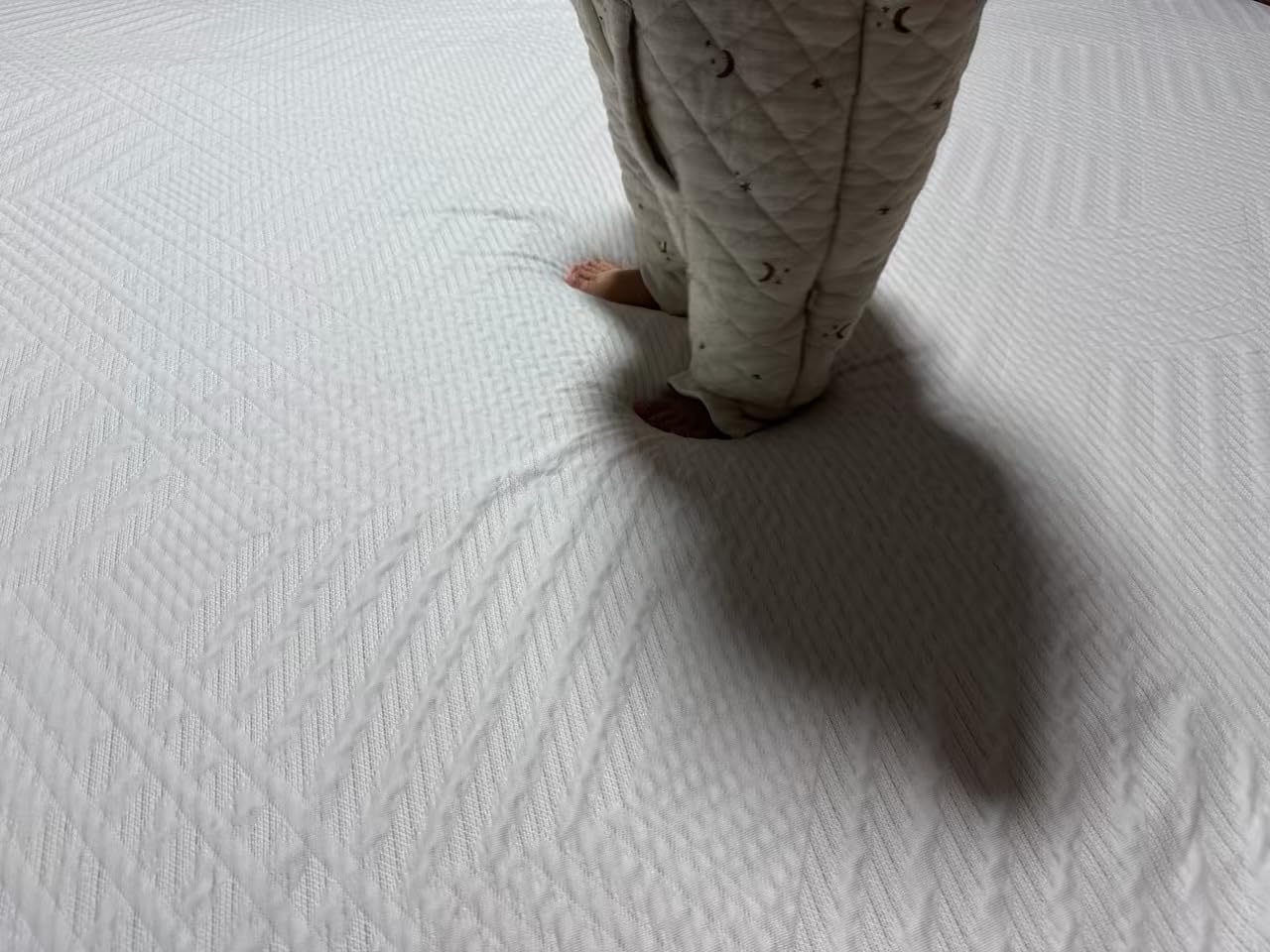
What the 10-inch profile actually buys you
Foam mattresses need depth to separate the comfort layer from the base. Under about 8 inches, a heavier sleeper compresses the top layer until they are lying on the support foam, which is the single most common cause of hip and lower back pain on a plywood slab.
Ten inches gives the comfort layer somewhere to work without pushing the bed height into the window or cabinet zone. It also expands in roughly two hours rather than two days, which matters when the only flat surface in the trailer is still covered in boxes.
Who should skip it
Skip it if your platform sits under a low window or a bunk rail with under 10 inches of vertical room. Sleepers who genuinely need a plush surface should choose the softer pick in this group rather than layering a topper onto an already firm base.
4. SynthoSpace 8 Inch Short Queen – Best Short Queen Mattress With a Washable Cover
SynthoSpace Short Queen RV Mattress – 8 Inch Green Tea Memory Foam
60 x 75 x 8 inches
Medium firm
34 pounds
4 layers
Zip-off cover
Pros
- Removable washable cover is rare in this category
- Light 34-pound build
- Low motion transfer suits couples
- CertiPUR-US and Oeko-Tex Standard 100
- 10-year limited warranty
Cons
- 8-inch profile is thin for heavier side sleepers
- No returns once the box is opened
- Hand wash only cover care
In a camper, the cover takes more abuse than in a house. Dogs, road dust, spilled coffee, and sweat all end up in the fabric, and most foam mattresses here are spot clean only. This one zips off, which makes it the easiest to keep sanitary on a long trip.
Underneath, the build is a straightforward four-layer memory foam with green tea infusion for temperature regulation and a construction tuned for low motion transfer. That second detail matters more in a 60-inch-wide bed than most buyers expect, since two people have less room to move away from each other.
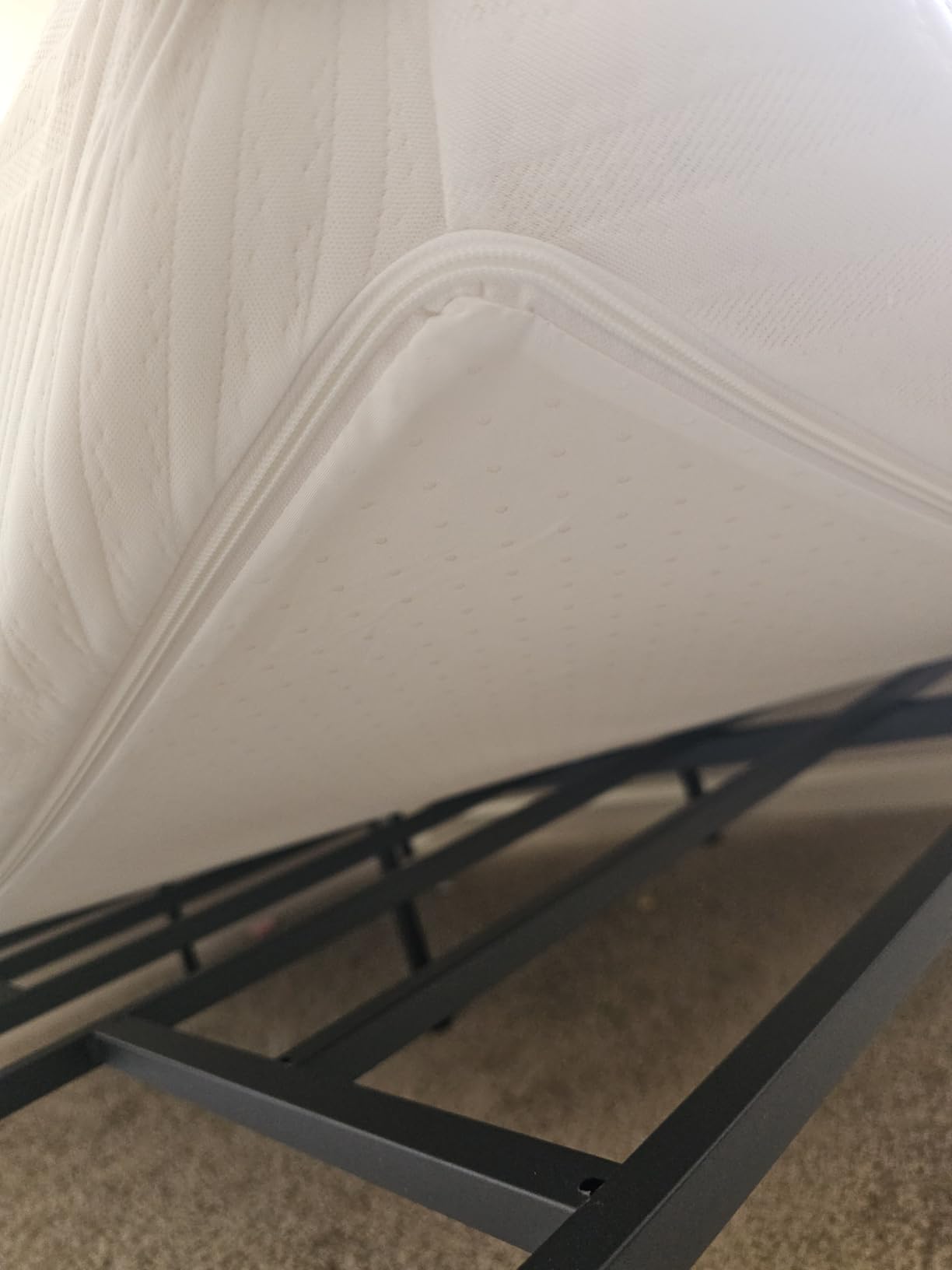
Owners single out the light weight and consistent medium-firm comfort with no off-gassing, which is a pleasant surprise at this price. The 34-pound build also makes it one of the easiest mattresses on this list to install alone.
The caution is the return policy. Returns are not permitted once the mattress is unboxed, so a wrong size is yours to keep. Confirm your platform dimensions and your door clearance before the box arrives.
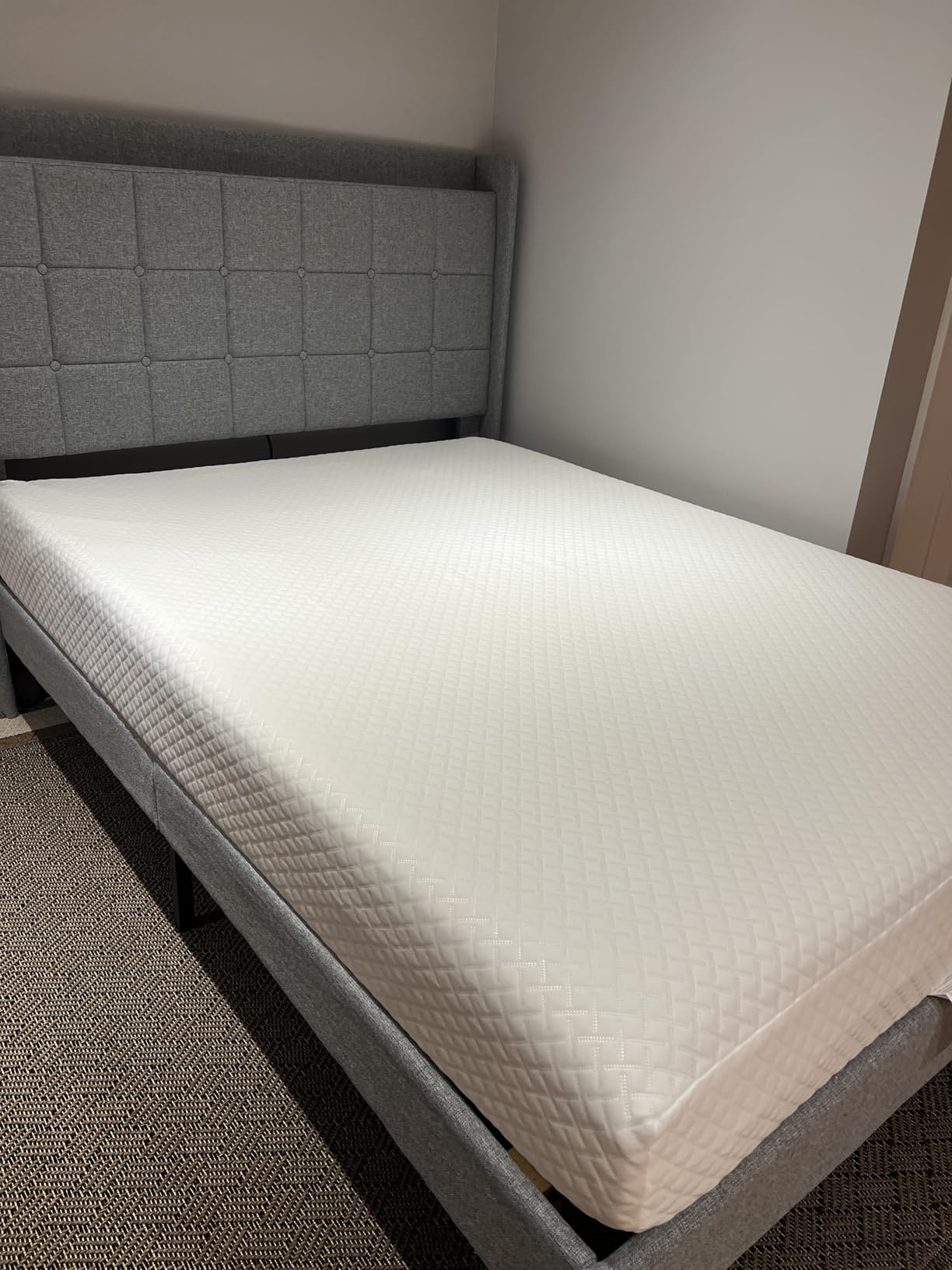
Why cover removability is worth more than it sounds
A mattress you can wash is a mattress you do not replace in two years. Foam absorbs moisture, and a fixed cover traps that moisture against the comfort layer where you cannot reach it. In humid climates or after a season of outdoor sleeping, the difference between a washable and a fixed cover shows up in odor.
The same zipper also lets you check the foam directly for a mold spot or a cracked edge, which is far easier than arguing with a warranty claim through a manufacturer.
Who should skip it
Heavier side sleepers should step up in thickness rather than relying on the washable cover. Anyone who expects a generous sleep trial should note that the 10-year warranty is strong but the return window closes at unboxing.
5. Celestial Sleep 10 Inch Short Queen – Best Short Queen RV Mattress for Back Pain
Celestial Sleep 10 Inch RV Short Queen Mattress, Made in The USA, CertiPUR-US®, Oeko-Tex®, and Fiberglass-Free™ Certified Cooling Memory Foam Camper Bed – Medium
60 x 75 x 10 inches
Medium
57 pounds
3 layers
Made in USA
Pros
- Firm support that owners with back pain rate highly
- Minimal off-gassing that cleared within a day
- Heat-wicking quilted cover with cooling technology
- Widest size range including a firm 8-inch variant
Cons
- Firmest-feeling option here at medium
- A portion of reviews report heat retention
- 57 pounds is the heaviest foam-only build
- No-refund policy on wrong sizes
This is the one to test first if you wake up with a stiff lower back. The three-layer build puts a comfort layer over a firmer base, and owners replacing a worn camper mattress frequently report meaningful pain relief within the first few weeks. Several describe sleeping comparably to an adjustable bed.
It is also made in the USA with CertiPUR-US certified materials and a Fiberglass-Free certification, which is a short list to find at this level. The heat-wicking quilted cover adds cooling on top of the gel bead infusion in the foam.
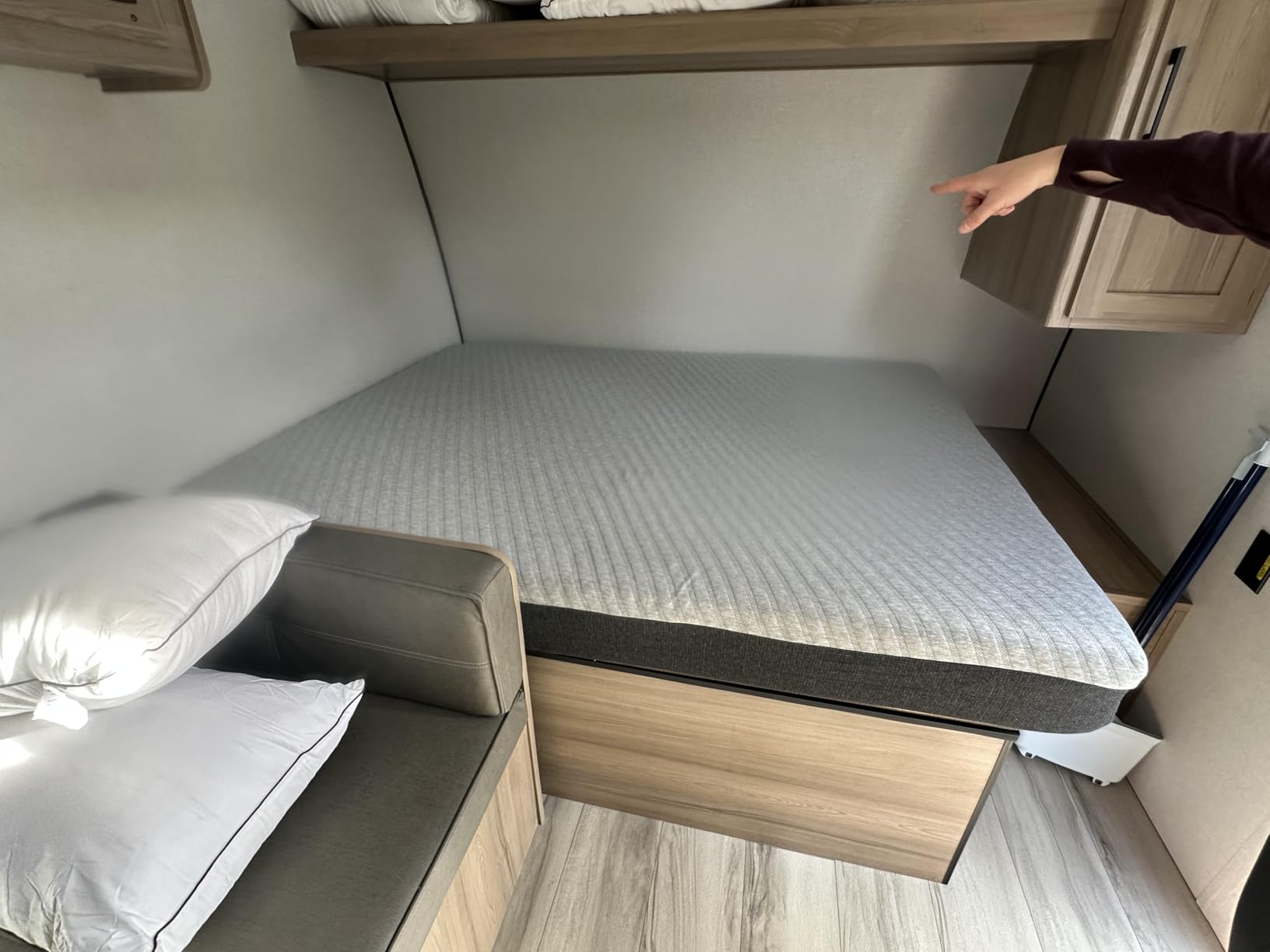
Two honest downsides. At 4.3 stars across 462 reviews, this carries the lowest average among the foam picks here, driven mainly by a firmer-than-expected feel and complaints from a portion of buyers who say the foam holds heat overnight.
The 57-pound weight is also worth planning for. On a lift bed or a tight slide, two people should be present when the mattress arrives.
Back and stomach sleepers versus side sleepers
Firm surfaces suit back and stomach sleepers because they keep the spine from curving as the hips sink. Side sleepers need the opposite: a surface that lets the shoulder and hip drop in without the midsection collapsing. That is why some owners add a 2-inch pad on top of this model.
If you sleep on your back or stomach and your old factory mattress sagged, this is the profile that most directly answers that problem. If you sleep on your side, test it lying down before committing.
Who should skip it
Skip it if you want a soft or plush surface, since the medium here reads firm to many people. Hot sleepers in an unconditioned rig should also weigh this carefully, because a portion of reviewers report retained heat through the night.
6. WanderRest Cool Hybrid 10 Inch Short Queen – Best Short Queen Mattress for Edge Support and Motion Isolation
WanderRest Cool Hybrid 10” RV Mattress, Short Queen 60×74, Medium, Cooling Gel Memory Foam & Pocketed Coil Mattress for RV, Camper, or Travel Trailer, Made in USA
60 x 74 x 10 inches
Medium
80 pounds
Hybrid
300 pocketed coils
Pros
- Only coil and foam hybrid short queen with true spring support
- 300 individually wrapped coils for near-total motion isolation
- HD edge system adds perimeter stability
- No off-gassing reported
- Made in USA with a 10-year warranty
Cons
- 80 pounds is a two-person job in a tight trailer
- Doubles as the vacuum-packed layers expand rapidly
- A minority report a lumpy top
- Returns route through the manufacturer
Everything else on this list is all foam, which means everything else compresses at the edge when you sit down to put on shoes. This hybrid solves that with 300 individually wrapped pocketed coils and a high-density edge system, and it is the pick if you share a 60-inch bed with someone who moves.
The coils are wrapped individually, so a bump on one side of the bed barely registers on the other. That is a real upgrade over bonded foam, where any movement ripples across the surface.
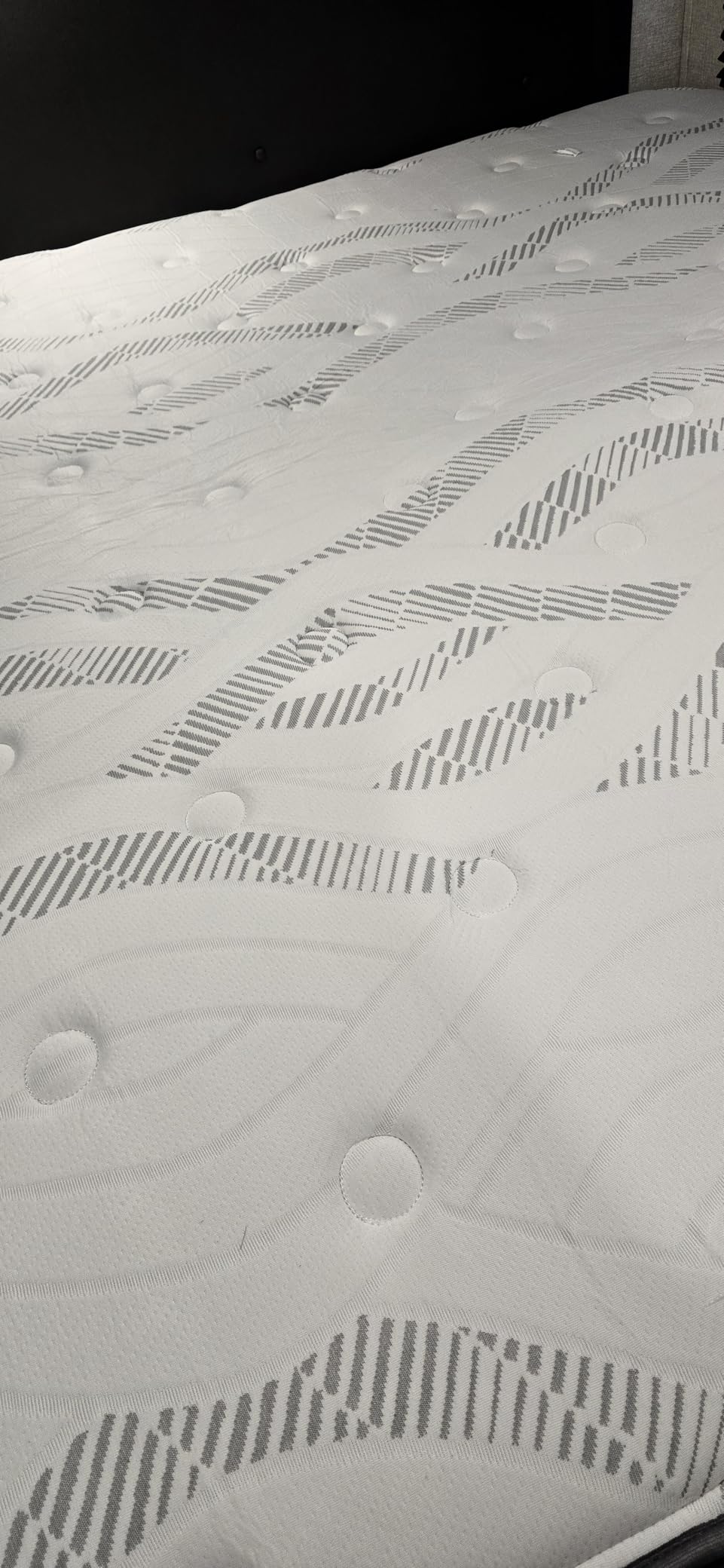
The weight is the deciding factor for many rigs. At 80 pounds this is by far the heaviest short queen here, and owners with lift beds or weight-sensitive slide floors flag it. It is also suction packed in two layers of plastic and needs open floor space to expand once cut loose.
Reviewers also report a bumpy top or unsupported edges in a minority of units, and the 4.0 average with a 14 percent one-star share is the lowest in the group. The return process routes through the manufacturer, which owners describe as slow.
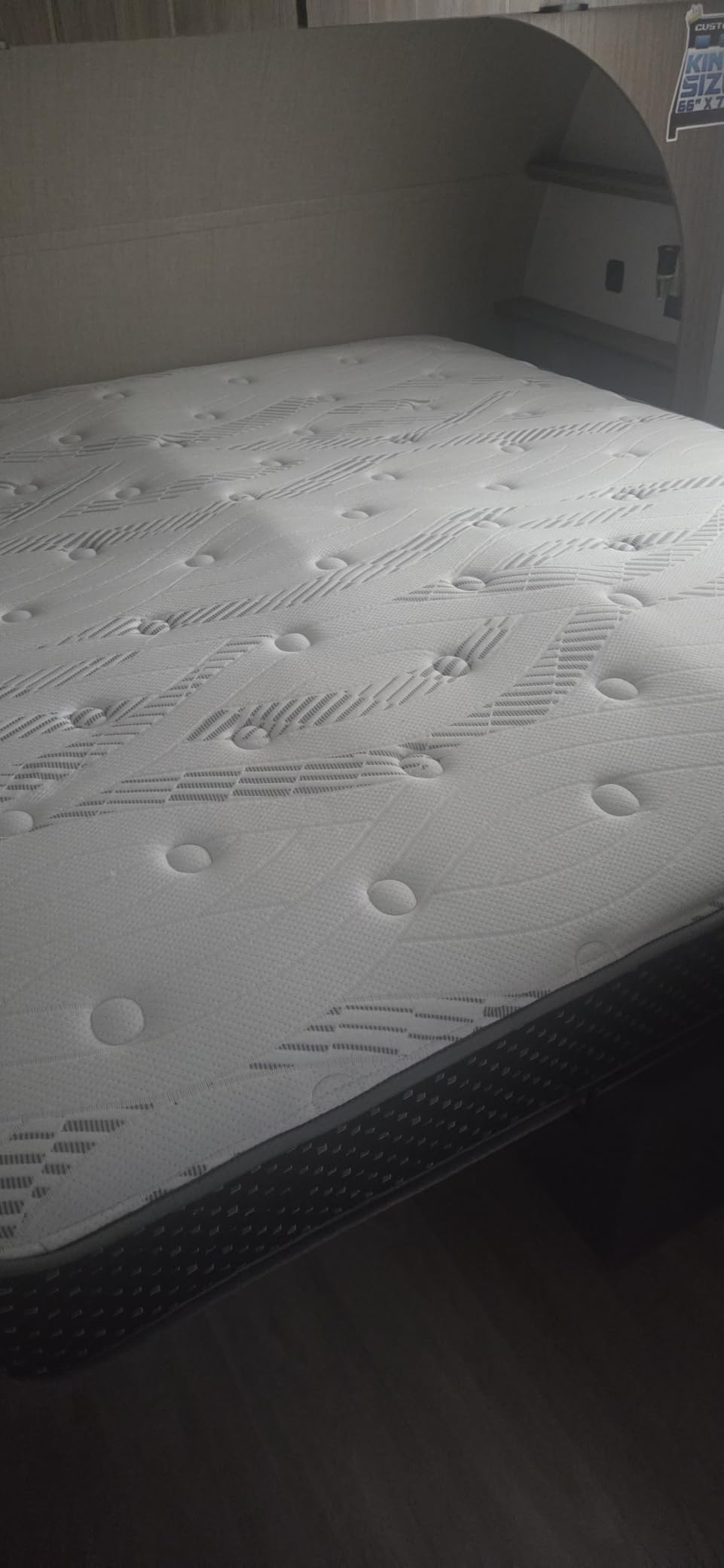
When a hybrid is worth the weight
Two situations justify the extra mass. First, if you sit on the edge of the bed daily, a foam comfort layer eventually takes a permanent dent that no amount of turning will fix. Second, if you share a short queen with a partner who moves during the night, coils isolate motion in a way foam cannot match.
Skip the hybrid if your platform is a lift bed with a modest rating or a slide floor with a posted load limit. Check the number before you commit.
Who should skip it
Solo travelers in a small trailer should stay with a foam option at 34 to 44 pounds, which one person can lift through a door without an audience. Buyers who want a long trial period should look at the pick with the 365-night policy instead.
7. Neohavn 12 Inch Short Queen Hybrid – Best Short Queen RV Mattress by Sleep Trial
Neohavn Short Queen Mattress,12 Inch Cooling Gel Memory Foam – Medium Firm Hybrid RV Mattress in a Box,Fiberglass-Free, Soft Knit Cooling Cover, Motion Isolation, CertiPUR-US Certified
75 x 60 x 12 inches
Medium firm
67.9 pounds
Hybrid
800 encased coils
Pros
- 365-night trial lets you evaluate it in your own rig
- 10-year manufacturer warranty
- 800 encased coils plus a memory foam comfort layer
- Reinforced edges add usable surface area
- Cool-touch knit cover helps with heat
Cons
- Heaviest short queen build outside the hybrids at nearly 68 pounds
- At 12 inches it is the tallest profile here
- Not cushiony
- Awkward to move
Almost every seller in this category closes the return window the moment you cut the box open. This one gives you 365 nights to decide, backed by a 10-year warranty, which makes it the lowest-risk way to test a thicker profile inside a small space where you can actually measure the clearance.
The build itself is a hybrid with 800 encased coils under a thick adaptive comfort layer, rated to 600 pounds. Owners in campers report it fits their platform well, that they wake without back aches, and that movement between partners is effectively cancelled out.
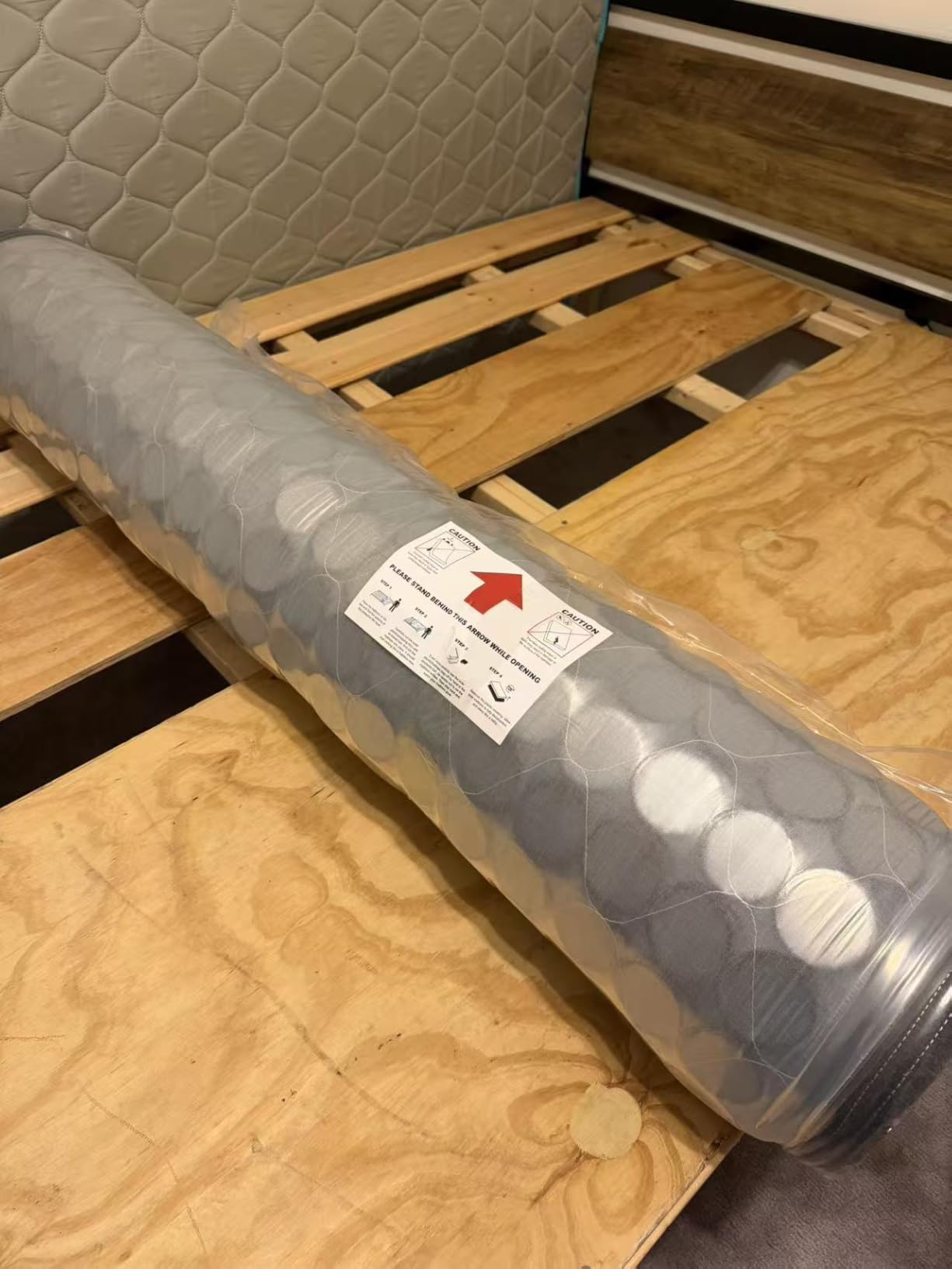
Two things temper that. At 12 inches it is one of the tallest short queens available, and that is precisely where it can collide with a bunk rail, a window sill, or a cabinet overhead. Measure the vertical gap before you order, not after.
The feel is medium-firm and described as supportive rather than plush. It comes in at 67.9 pounds, so plan on two people to position it.
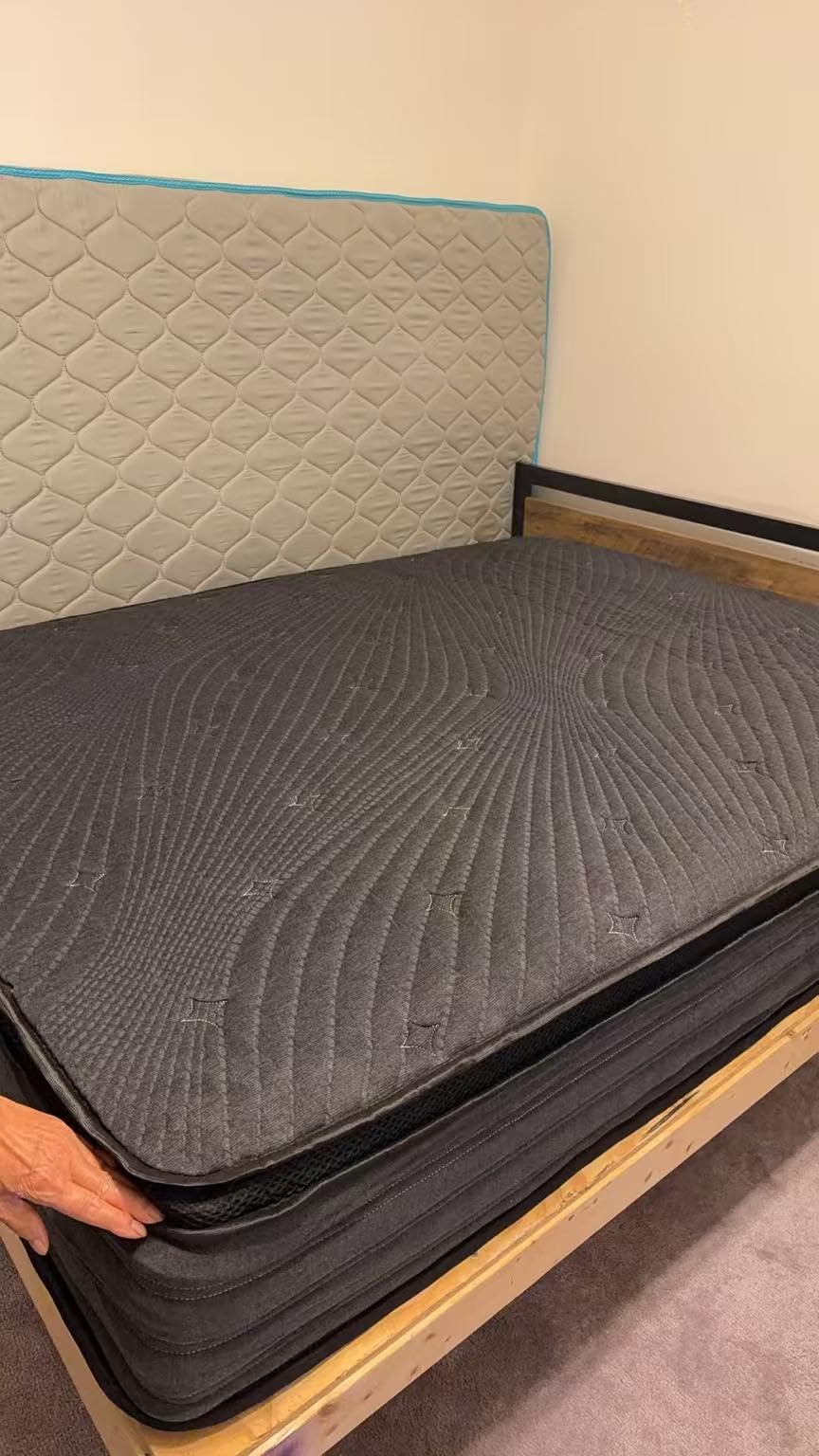
Why the trial length changes the decision
Foam mattresses change over the first 30 to 60 days. Comfort you dislike on night three is meaningless, because the surface has not finished breaking in. A year-long trial means you can judge the mattress after it has settled, which removes the single biggest source of disappointment in this category.
It also changes how you should order. With a short trial, buy the tallest profile that clears your window line and let comfort settle. With a no-return policy, buy conservative and stay at 8 or 10 inches.
Who should skip it
Skip it in low-clearance bunks and in trailers where the window sill sits close to the platform. Anyone who wants a plush top should also pass, since the feedback consistently describes support rather than cushioning.
8. Dyonery 10 Inch Short Queen – Best Short Queen RV Mattress Against Sagging
Dyonery RV Mattress Short Queen 10 Inch Gel Memory Foam Medium Support
75 x 60 x 10 inches
Medium
51 pounds
3 layers
Made in USA
Pros
- BraceSleeper high-density base reduces sagging and strengthens edges
- Cooling gel and breathable cover limit heat buildup
- Made in USA with dual certifications
- Ranks #2 in Amazon RV Bed Mattresses
- 10-year limited warranty
Cons
- Not returnable once the box is opened
- 51 pounds takes two people in a tight trailer
- 10-inch height can sit high on some trailer beds
- Smaller review base than the top picks
Sagging is the complaint that brings most people to this category, and this model targets it directly. The BraceSleeper high-density base is the thickest and densest support layer in this group, and it is credited with holding edges and resisting the compression that flattens cheaper foam after a season of use.
On top of that base sits a Gel AeroFusion layer over CoolFlex foam, which gives pushback rather than the shapeless sink of a soft memory foam. Buyers credit the layered construction with durability and edge stability over time rather than only on night one.
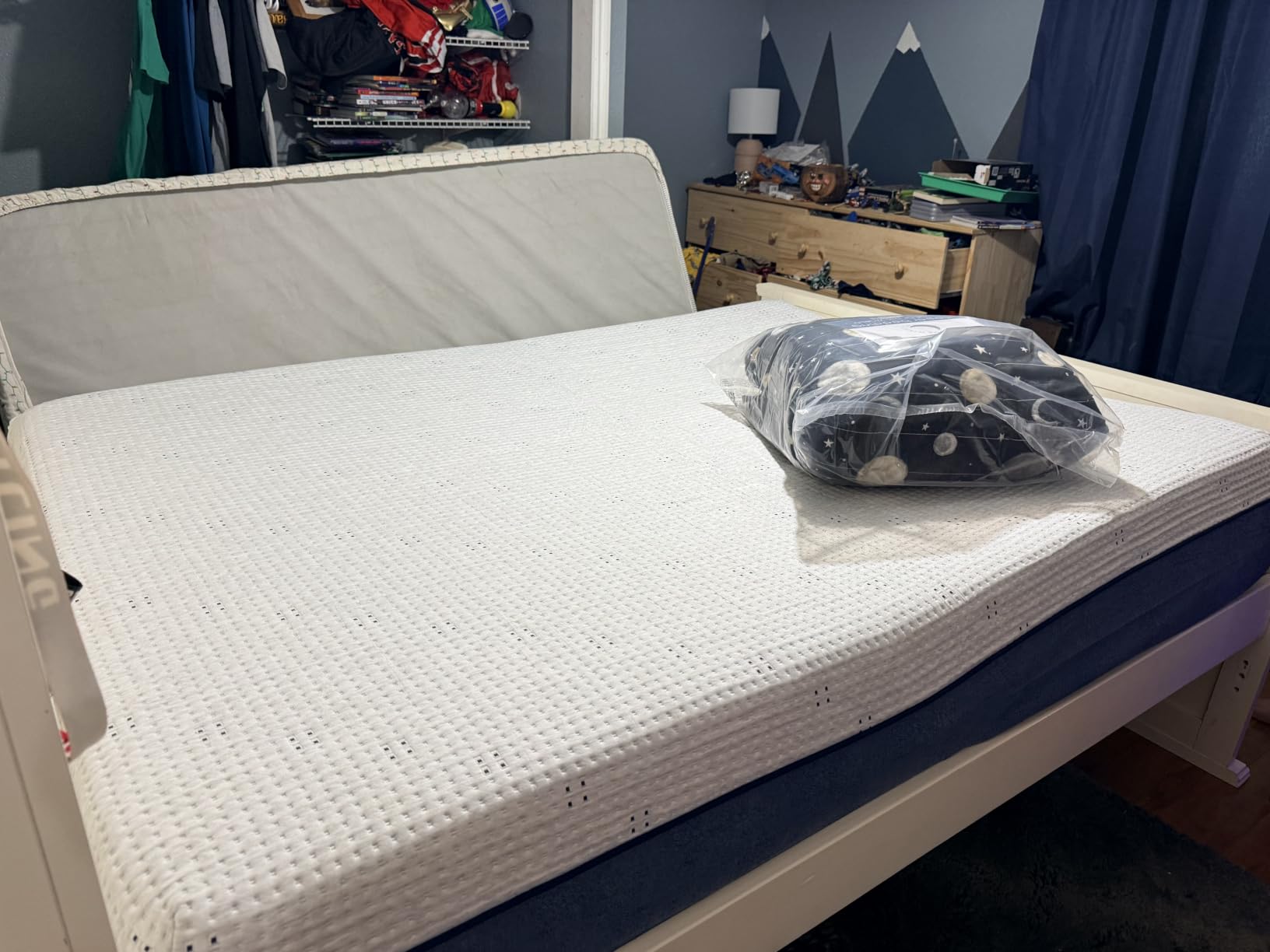
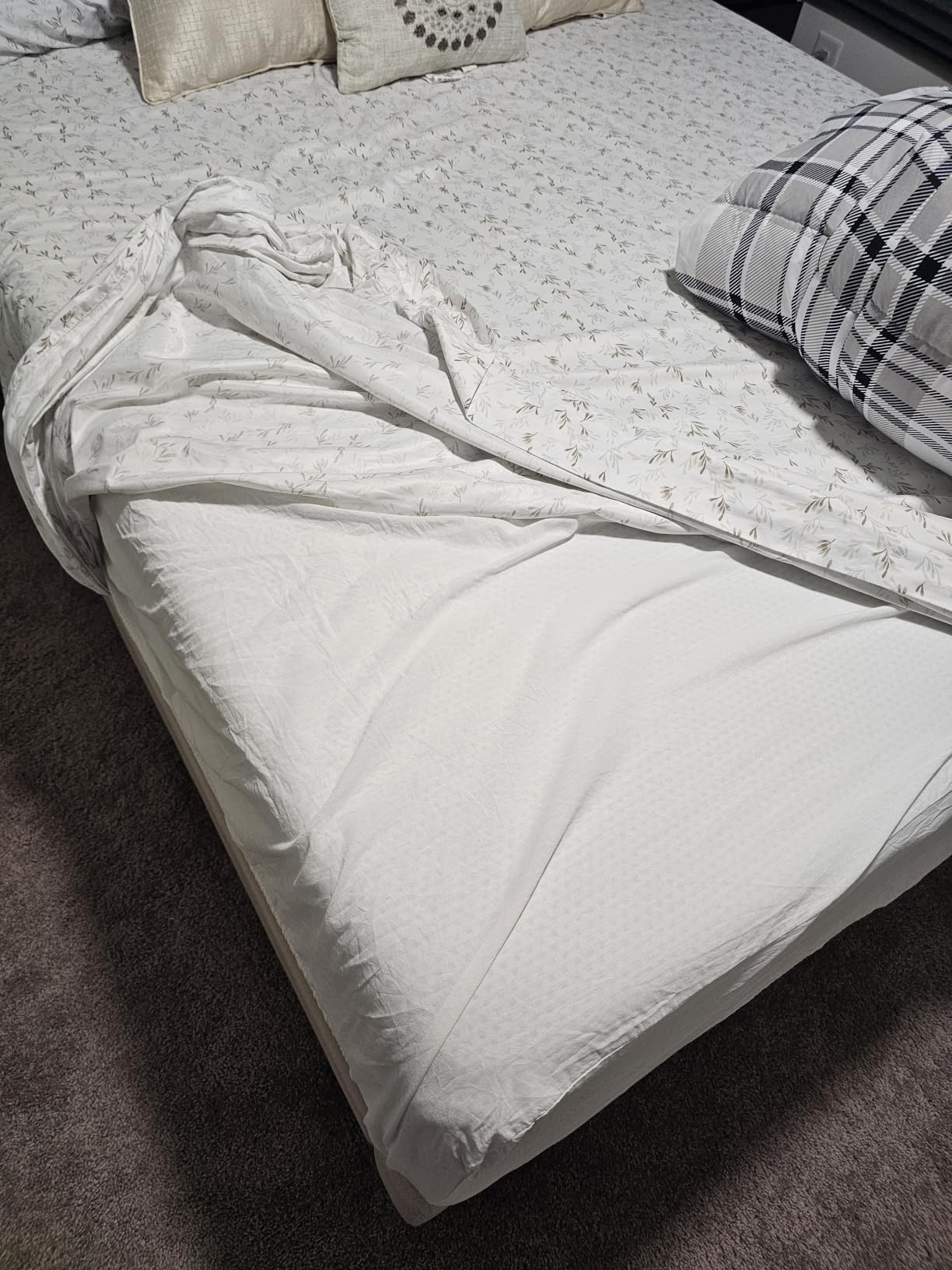
It also holds the strongest category signal we found, ranking #2 in Amazon’s RV Bed Mattresses department. The soft-fit cover blends breathable fabric with spandex for a snug fit that resists shifting on a platform with no headboard.
The 162-review base is smaller than the foam leaders, so treat the rating as less certain. At 51 pounds it needs two people, and the maker states opened mattresses cannot be returned.
How base density decides how long a mattress lasts
Sagging is a base problem, not a comfort problem. When the comfort layer is thick but the foam underneath is low density, your body pushes through the top and compresses the bottom, and the surface dips in the middle. That dip never fully recovers.
A high-density base costs more per cubic foot, so a well-built 10-inch mattress with a dense bottom will outlast a plush 12-inch model with a soft one. If sag is your main complaint, look at what is underneath before you look at thickness.
Who should skip it
Buyers who expect a sleep trial should know that returns close at unboxing. Anyone with under 10 inches of vertical room should choose a thinner profile, and anyone who must move the mattress alone should pick a lighter foam option.
9. Zinus 8 Inch Foam and Spring Short Queen – Best Coil Short Queen for the Money
Zinus 8 Inch Short Queen Foam and Spring RV Mattress, Medium Feel
74 x 60 x 8 inches
Medium
51.2 pounds
Foam and spring
400 Bonnell coils
Pros
- Real steel coil support at an entry price
- 400 interconnected heavy-gauge Bonnell coils
- Smaller box is easier to maneuver into an RV
- No fiberglass in the build
- 10-year limited warranty
Cons
- Memory foam comfort layer is thin at 8 inches total
- Basic feel that will not satisfy anyone wanting plush or cooling
- Second-highest one-star review share in this group
- Shortest warranty terms vary by seller
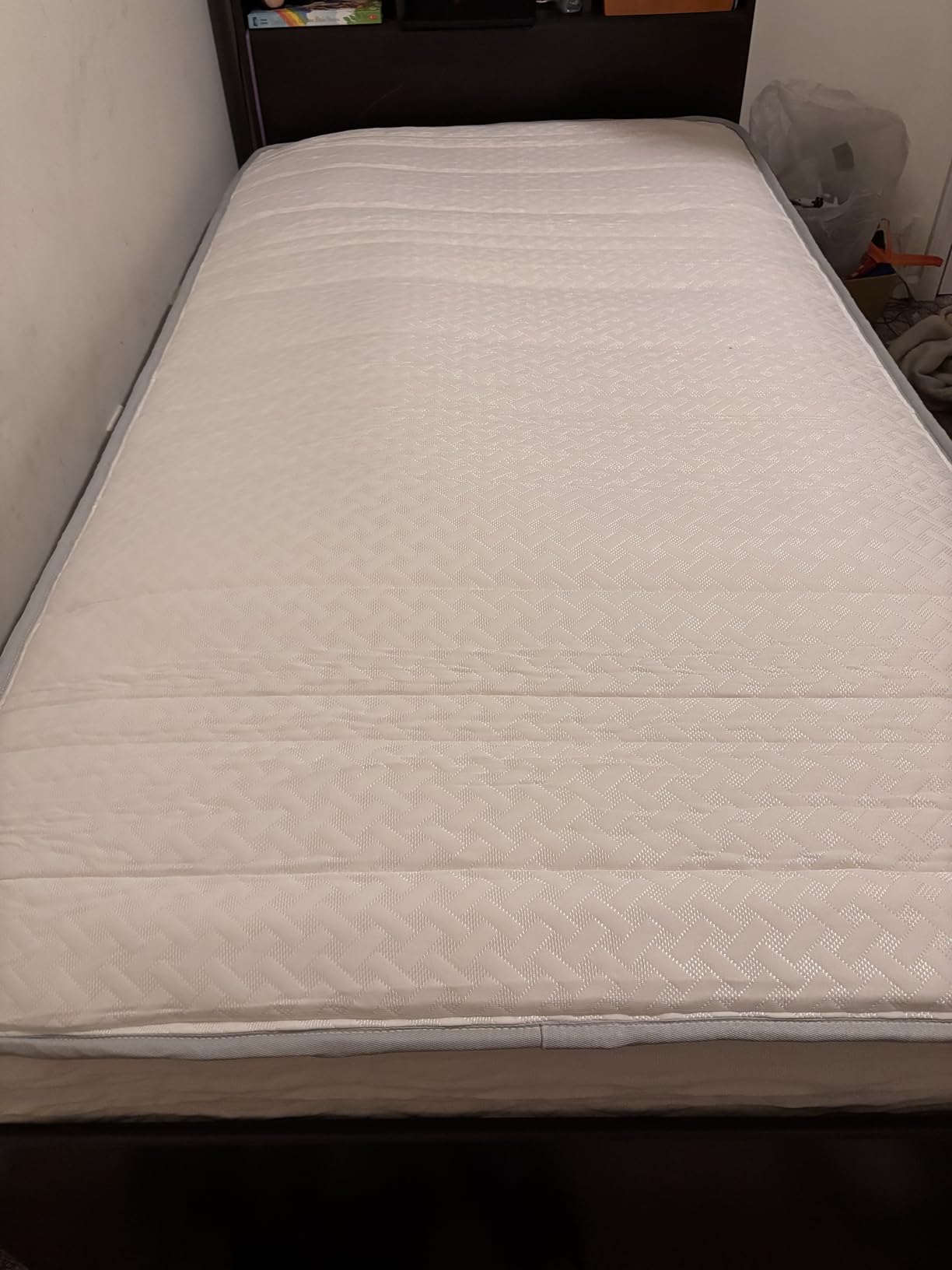
Coils are not expensive. They are heavy, and that is the only reason they are missing from most short queen mattresses. This Zinus pairs 400 interconnected heavy-gauge steel Bonnell coils with a thin memory foam comfort layer and a 500-pound weight capacity, which makes it the cheapest route to real spring support on this list.
Interconnected coils share load across the surface, so support stays even night after night rather than concentrating under the hips. For back and stomach sleepers who dislike the sinking feel of all foam, that consistency is the point.
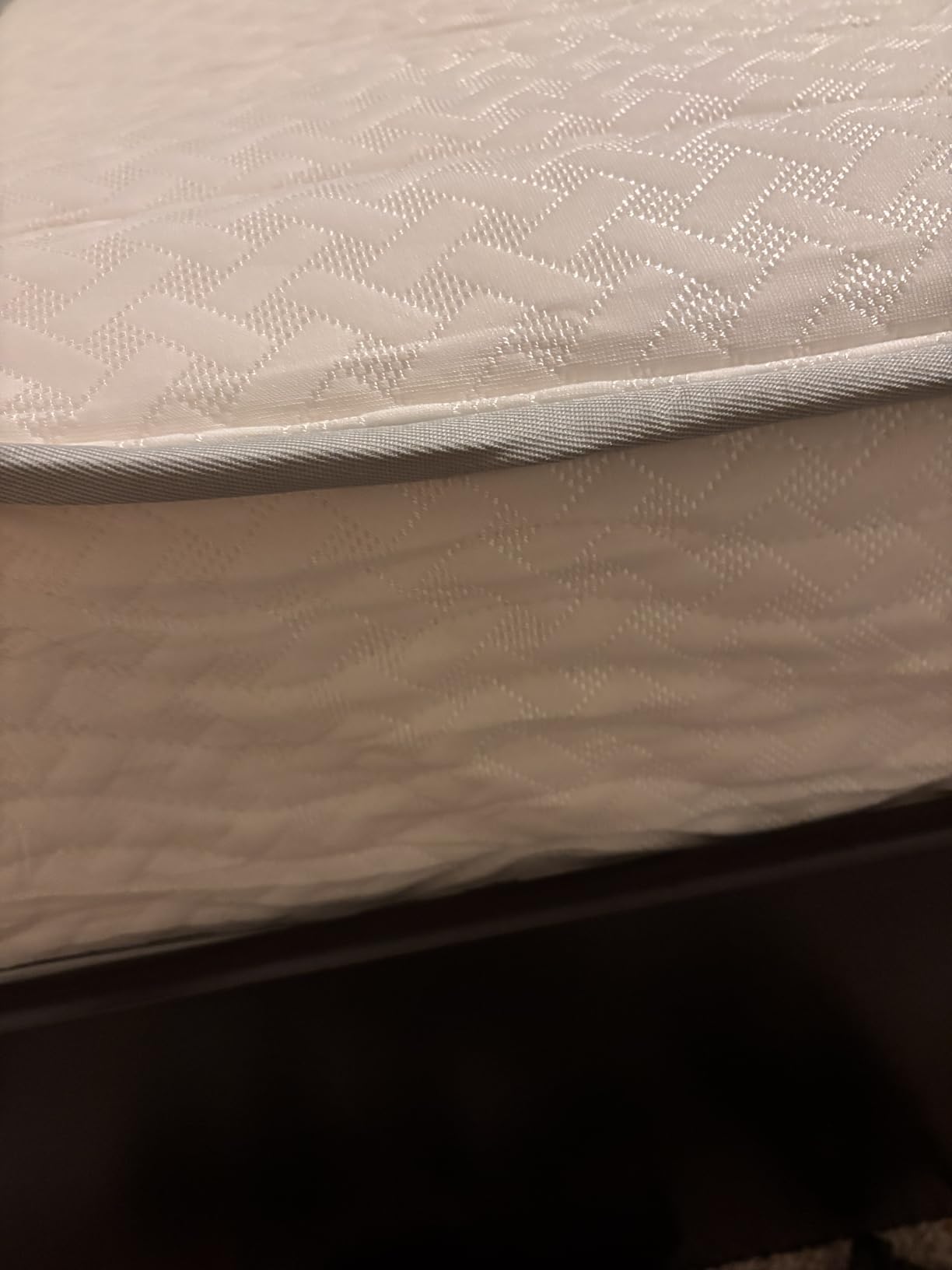
At 8 inches total, the foam layer on top is thin, and owners who sleep on their sides tend to feel the coils through it. This is a combination sleeper and back sleeper mattress rather than a side sleeper mattress.
It also carries a 4.3 average with the second-highest share of one-star reviews among these picks, mostly from buyers who expected a plush or cooling feel and got a basic surface. Buyers wanting that should choose a gel option instead.
Coil versus foam for a wooden platform
Coils and plywood disagree with each other over time. A coil unit flexes and moves air beneath itself, which is helpful, but the pockets can still print into a soft deck. A slatted base or a bunk board between the mattress and the wood solves this for both construction types.
Choose coils when you want a stable surface, low heat retention, and support that does not depend on foam density. Choose foam when you want pressure relief and silence, and you are willing to manage the heat that comes with it.
Who should skip it
Side sleepers and anyone who wants a plush or cooling surface should skip it. So should buyers who need a mattress one person can carry, since 51.2 pounds is a two-person job in a narrow trailer hallway.
10. Grbsy 12 Inch Firm Short Queen – Best Firm Short Queen RV Mattress
12 Inch RV Mattress Short Queen, Cooling Gel Memory Foam Mattress in a Box, Pressure Relief, Firm Support, Washable IceSik Cover, Motion Isolation, Fiberglass Free, Certified Safe Foams, 60”x75”
75 x 60 x 12 inches
Firm
61.3 pounds
3 layers
Gel memory foam
Pros
- Highest average rating in this group at 4.7 stars
- Washable IceSilk cool-touch cover for hot climates
- Reinforced edges resist sagging and support sitting
- Minimal odor and quick expansion
- 365-night trial and 10-year warranty
Cons
- Firm feel will not suit anyone wanting a soft surface
- A 12-inch profile can exceed clearance in low trailers
- Heavier at 61.3 pounds than the 8 and 10 inch options
- Some edge sag develops over time
At 4.7 stars across 155 reviews, this carries the highest average rating in the group, and the review breakdown backs it up with 88 percent five-star ratings. Buyers describe a genuinely firm but comfortable surface with minimal sink, minimal smell, and edges that hold when you sit on them.
The 7-zone ergonomic design with hex-cell dynamic-response foam is aimed at lower back and hip tension, and the cover is a washable cool-touch IceSilk that wicks moisture in hot, humid campsites. The fiberglass-free liner is compliant with 16 CFR 1633, which is the federal flammability standard for mattress flammability.
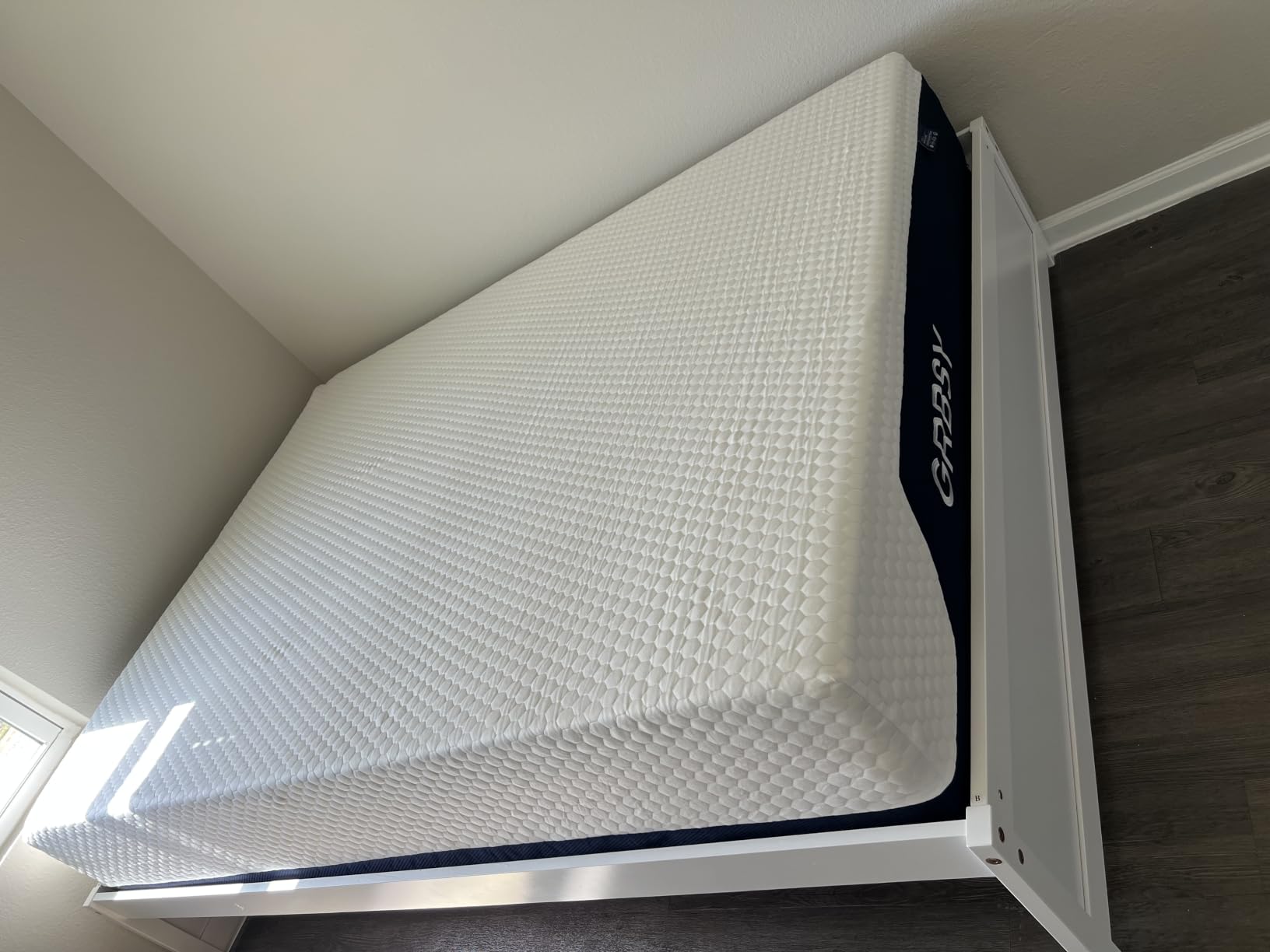
It is firm, and it means it. If you want a plush surface, this is the wrong pick regardless of its rating. A few reviewers also report some edge sag developing over time, and 12 inches is the second-tallest profile here, so clearance is a genuine concern in low trailers.
At 61.3 pounds, it is heavier than the 8 and 10-inch foam options but lighter than the coil hybrids, so two people can place it comfortably.
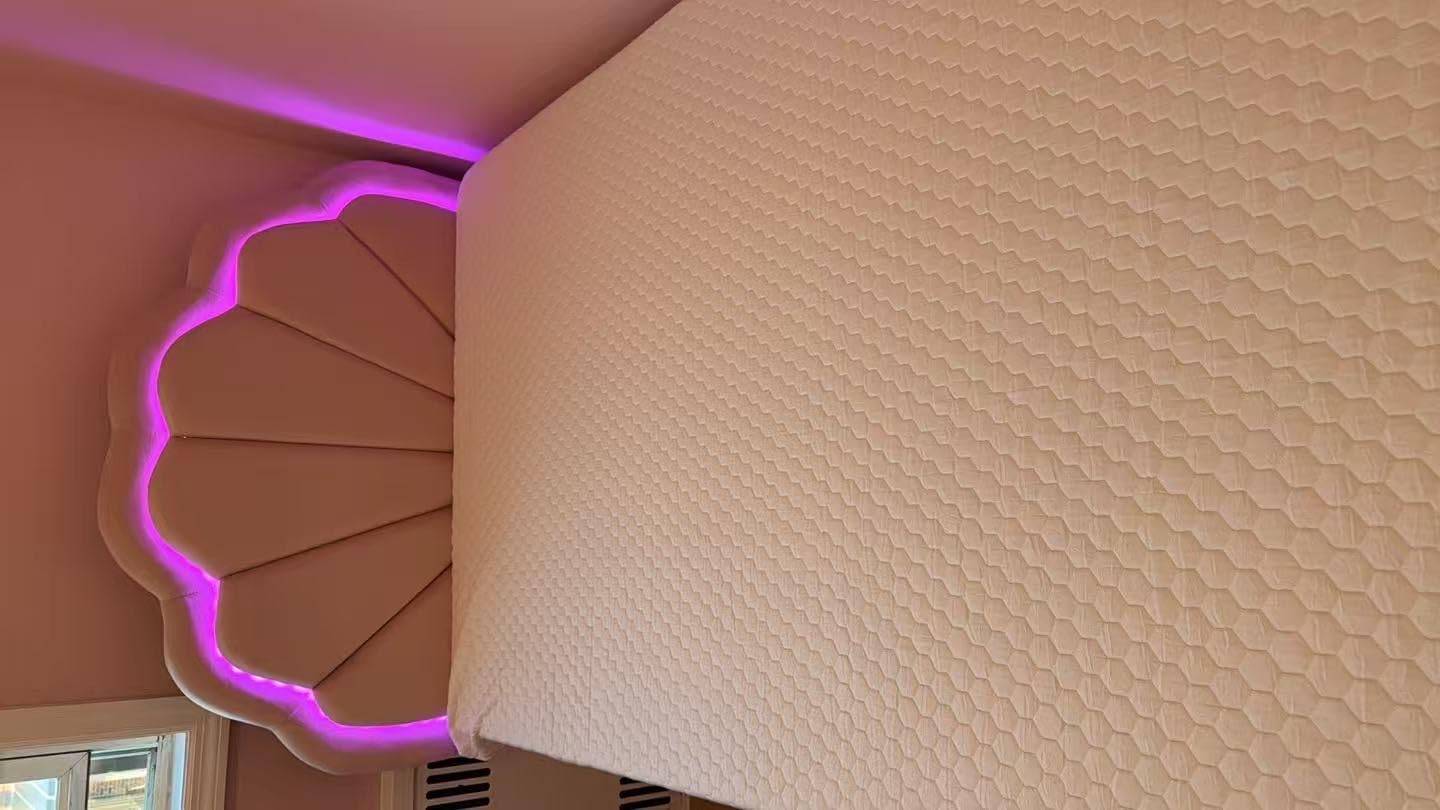
Firm mattresses and the plywood platform
A firm mattress is the correct answer to a hard platform because it adds the cushioning you need without adding the height. That matters in an RV where every inch of bed height is taken from headroom, window line, or the ability to sit up and read.
The reinforced edge is the practical bonus here. On a firm foam mattress without perimeter support, sitting down to dress compresses the side permanently. Reinforced edges make the mattress usable as a seat, which is how people actually use a camper bed.
Who should skip it
Skip it if you sleep on your side and want shoulder and hip pressure relief, since firm foam fights that. Anyone with under 12 inches of vertical room should choose a 10-inch profile instead, however good the rating looks.
Buying Guide: How to Choose a Short Queen RV Mattress
Measure your platform before you shop
Almost every wrong purchase in this category is a measurement mistake, and every mattress here is non-returnable once unboxed. Record these numbers with a tape measure before you spend a minute browsing.
Width at the head, middle, and foot. Most are 60 inches, but some are narrower.
Length on both sides of the bed. A tapered platform can be shorter at one end.
Maximum height from the platform surface to the ceiling, cabinet underside, or window sill.
Corner radius. Rounded platform corners mean a square mattress will not lie flat.
Slide-out hinge and window clearance, if the bed sits inside a slide.
The narrowest point between your entry door and the bedroom.
Any posted load limit on a lift bed or slide floor.
Leave a quarter inch of slack on width and length. Foam expands slightly as it breaks in, and a mattress cut exactly to the measurement can bow out of a platform that is only nominally square.
Understand the construction types
Memory foam gives pressure relief and silence but holds heat and bottoms out if the profile is too thin. Latex is responsive, breathable, and durable, though it is lighter on the market in short queen sizes than in residential sizes.
A hybrid combines a coil core with a foam comfort layer, adding edge support and motion isolation at the cost of significant weight. Innerspring sits at the coil end of the spectrum with minimal foam. Folding and bifold mattresses exist for storage, which matters most if you convert a bed back into a dinette for travel.
All-foam mattresses are the only ones that arrive in a compressed box small enough to move through a narrow RV hallway. A full-size coil mattress generally will not fit through the same door.
Get the thickness and clearance right
The thickness rule for an RV is different from the rule at home. Eight inches is the practical floor for a plywood slab, because below that a heavier sleeper compresses straight through the comfort layer. Ten inches is the safer choice for most adults.
Twelve inches works only where vertical clearance is confirmed, and owners on RV forums repeatedly warn against buying height without measuring the window line first. A tall mattress blocks a window, interferes with overhead cabinets, and makes sitting up in bed uncomfortable.
Pick firmness by body weight and position
Side sleepers need a surface that lets the shoulder and hip sink in, which usually means medium or medium-plush. Back and stomach sleepers need a flatter, firmer surface to keep the spine level, which usually means medium-firm or firm.
Adjust for body weight. The lighter you are, the softer a mattress feels, so a light sleeper under 130 pounds should probably avoid firm models. Above 230 pounds, stay away from anything under 10 inches or the base becomes the surface you actually sleep on.
Manage heat, moisture, and ventilation
Foam sleeps warm. In an unconditioned rig boondocking in desert heat, cooling gel, graphite or graphene-infused covers, and breathable knit fabrics all help, but airflow matters more than any of them.
Leave a ventilation gap under the mattress where the platform allows one, and use a slatted base or bunk board rather than laying foam flat on plywood. In humid climates, lift the mattress and air it out between trips. Owners in mold-prone regions report that odor under the mattress is usually a trapped moisture problem, not a foam quality problem.
Check certifications and what they mean
CertiPUR-US means the foam was made without ozone depleters and with limited volatile chemicals. OEKO-TEX Standard 100 means the fabric, including the cover and any inner barrier, was tested for harmful substances. GOLS and GOTS appear on organic latex and organic cotton covers but are uncommon in this category.
Fiberglass-Free certification matters more in an RV than in a house, because an RV uses a fiberglass body shell and the fire performance codes are stricter. If a brand makes no certification claim at all, treat it as unverifiable rather than harmless.
Rounded corners and custom cuts
Many RV beds have radiused corners rather than square ones, and a square mattress laid on top leaves four empty triangular gaps. Standard retail mattresses rarely ship with rounded corners, so the practical answer is a custom cut from a foam shop.
Custom-cut foam solves odd interior widths and corner radii that no retail size matches, and it is the only reliable route for unusual platforms. Owners on RV forums report successfully resolving fitment issues with local foam suppliers that a boxed mattress could never have solved. The trade-off is losing the sleep trial, since a custom build cannot be returned.
Check the warranty and the return window
A 10-year warranty is standard on most picks here and is a reasonable proxy for build quality. The trial window is where they differ sharply: the majority of sellers close returns at unboxing, and only a couple offer a year or more.
Remember what a return actually costs in an RV. Even when a seller accepts a return, you still have to unbox the mattress, handle a 50 to 80 pound object through a narrow hallway, and drive it somewhere. Confirm your measurements twice rather than relying on the trial.
Frequently Asked Questions
What is the best short queen mattress for an RV?
The best short queen RV mattress for most rigs is the Zinus 8 Inch Ultima, at 60 x 74 inches with medium-firm memory foam, CertiPUR-US certified foam, and a 10-year limited warranty. It draws the largest review base in this category and its compressed box moves through narrow RV doors easily. Heavy side sleepers should step up to a 10-inch profile, and anyone sharing the bed should consider a coil hybrid for motion isolation.
Is a short queen the same as an RV queen?
No. A short queen measures 60 x 75 inches while an RV queen measures 60 x 80 inches. Both share the same 60-inch width, so the only difference is five inches of length. Off-brand sellers frequently mislabel these sizes, which is why measuring your platform directly with a tape measure is more reliable than trusting any listing.
Can I put a regular queen mattress in an RV?
Usually not. A standard queen is 60 x 80 inches and is five inches longer than a short queen, so it will overhang most RV platforms or interfere with a slide-out wall, window, or cabinet. Some owners cut a residential queen down to size, but a purpose-built short queen fits without modification and keeps its warranty and return terms.
How thick should an RV mattress be?
Eight inches is the practical minimum on a plywood platform, ten inches suits most adults, and twelve inches works only where vertical clearance is confirmed. Going thinner than eight inches lets heavier sleepers compress through the comfort layer onto the base, which causes hip and lower back discomfort. Going thicker without measuring can block a window or overhead cabinet.
What size mattress is a 60 x 75?
A 60 x 75 inch mattress is a short queen, the most common sleeping surface in travel trailers, Class C motorhomes, and camper vans. It is also called a short queen RV mattress and is frequently listed as 60 x 74 or 60 x 74.5 inches by manufacturers to leave a little slack against the platform. Standard residential sheets do not fit this size; 60 x 75 RV sheets do.
Can an RV mattress be cut to fit?
Yes, and it is often the best answer for radiused corners or unusual interior widths. A local foam supplier can cut a mattress to your exact measurements, including rounded corners, in high-density foam that matches most retail builds. The trade-off is that custom cuts cannot be returned, so measure the platform and the corner radius carefully before ordering.
What is the best mattress that does not sag?
Look at the base layer, not the top. A mattress with a thick high-density support foam base resists sagging far better than a plush top over a soft core. The Dyonery 10 Inch uses a BraceSleeper high-density base for this reason, and coil hybrids with perimeter edge systems also hold shape well. Adding a slatted base or bunk board between the mattress and the platform helps as well.
Do RV mattresses need a special foundation?
Most RV platforms are flat plywood or a slatted deck, and no box spring is needed or wanted. A slatted base or bunk board with even spacing is the better option because it improves airflow under the mattress and prevents coil pockets from pressing into the wood. Laying foam directly on sealed plywood traps moisture and reduces support over time.
Why are people moving away from memory foam mattresses?
The complaints come down to heat and sinkage. Memory foam retains body heat, which is uncomfortable in an unconditioned rig, and a soft or thin foam mattress bottoms out onto the base so the sleeper ends up on the support layer. Latex and coil hybrids are chosen instead because they respond quickly, breathe better, and hold their shape for longer in a compact space.
Can two people fit on a short queen mattress?
Yes, though 60 inches of width is tighter than a standard queen for two adults. A short queen suits couples under six feet tall who want full shoulder width in a small space. Sleepers over six feet often find the 75-inch length short and upgrade to an RV queen. For motion isolation, a hybrid with individually wrapped coils works better than shared all-foam.
The Bottom Line: Measure First, Then Buy
The Zinus 8 Inch Ultima is our pick for the best RV mattresses for short queen beds because it combines the largest review base in the category with a compact box and a 7-zone build that holds shape. Choose the MLILY if you need something one person can carry, the Emerspring if you sleep hot, and a hybrid if you share the bed or sit on the edge.
Take five minutes with a tape measure before you order anything. Record width, length, vertical clearance, corner radius, and the narrowest doorway on your path to the bed, then pick the profile that fits inside those numbers. That single step prevents nearly every disappointment owners report in RV forums.