
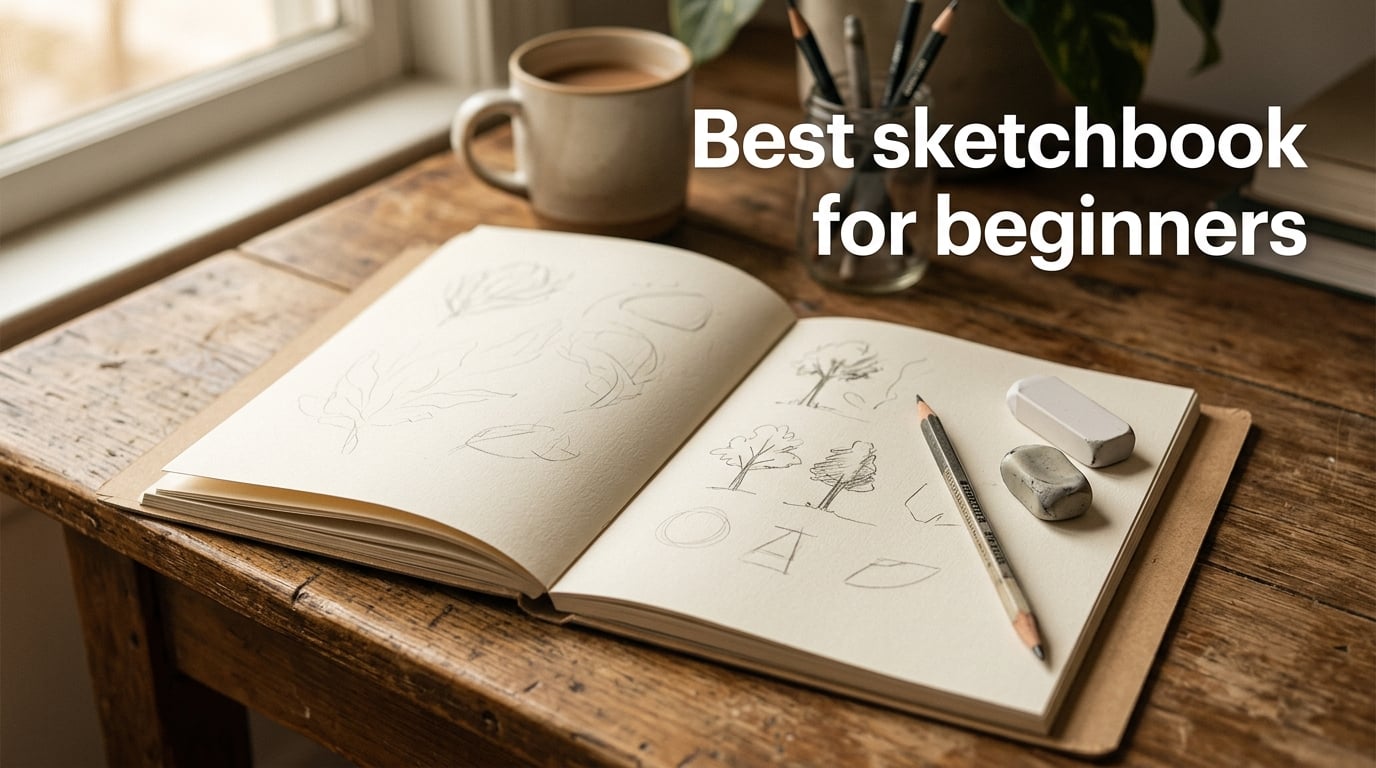
Starting your art journey means staring at rows of sketchbooks with wildly different paper weights, bindings, and price tags — and wondering which one you won’t regret buying two weeks later. I’ve been there, and I’ve wasted money on sketchbooks that sat untouched because they felt “too nice” or the paper couldn’t handle the medium I actually wanted to use.
The problem isn’t a lack of options — it’s too many of them. Visit any art supply store and you’ll find sketchbooks labeled “student grade,” “artist grade,” “mixed media,” “drawing,” “watercolor,” and a dozen other categories. Each one uses different paper weights measured in GSM, different binding styles that affect how the pages lie flat, and different surface textures that grip or repel your drawing media. Without knowing what these terms mean, you’re essentially guessing.
This guide breaks down everything you need to know about choosing the best sketchbook for beginners. You’ll learn how paper weight, size, binding, and surface texture affect your drawing experience — and how to pick the right combination for the art supplies you actually own. We’ll also cover the beginner mistakes that cost the most money, the practical habits that help you fill a sketchbook instead of abandoning it, and a quick overview of trusted brands that consistently deliver quality for the price.
Whether you’re picking up a pencil for the first time, returning to drawing after years away, or helping a student find their first proper sketchbook, the information below will save you time, money, and frustration. By the end, you’ll know exactly what to look for and what to avoid.
A quick note on mindset before we start: the “best” sketchbook is the one you’ll actually use. A cheap sketchbook you draw in daily teaches you more than an expensive one that stays closed. We’ll focus on practical, affordable choices that remove barriers to practice — because drawing every day matters far more than the brand on your sketchbook’s cover.
Table of Contents
What to Look for in a Beginner Sketchbook
Before you buy anything, there are five core factors that determine whether a sketchbook will work for you or collect dust on a shelf. Most beginners focus on price and cover design — two of the least important factors. The paper inside is what matters, and these five considerations will help you judge it correctly.
Understanding Paper Weight and GSM
GSM stands for grams per square meter — it measures how thick and heavy the paper is. For beginners, the sweet spot is between 80 and 120 GSM for dry media like pencil and ink. If you plan to use watercolor or markers, you need at least 180 GSM to avoid bleeding and buckling.
Paper below 80 GSM feels flimsy and tears easily when you erase. Paper above 200 GSM is thick, expensive, and overkill if you’re mainly doing pencil sketches. Stick with 90-120 GSM for everyday practice — it handles erasing well, works with most pencils and fine-tip pens, and keeps the sketchbook at a reasonable weight.
One thing beginners often miss: paper weight in pounds (lb) and grams per square meter (GSM) don’t convert directly. A “50 lb” sketch pad might be 74 GSM, which is thinner than you’d expect. Always check the GSM number if it’s listed. Some brands use the pound system for drawing paper and the GSM system for sketchbooks, which makes direct comparison confusing. When in doubt, look at the GSM — it’s the industry standard metric and the most reliable way to compare paper across brands.
You’ll also see terms like “acid-free” on packaging. This means the paper won’t yellow or deteriorate over time. For practice sketchbooks that you’ll flip through quickly, acid-free matters less. For anything you want to keep — finished drawings, travel journals, or portfolios — it’s worth paying a small premium for acid-free paper.
Choosing the Right Sketchbook Size
Sketchbook size affects how you draw, not just what you draw. Here’s how the common sizes break down:
A4 (8.3 x 11.7 inches): Best for drawing at a desk or table. Large enough for detailed work, but bulky to carry around. Good for home practice.
A5 (5.8 x 8.3 inches): The most versatile size for beginners. Portable enough for your bag, big enough to sketch comfortably. Most artist communities recommend A5 as a starting point.
Pocket / A6 (4.1 x 5.8 inches): Great for quick gestures and daily carry. Too small for detailed drawings, but perfect for capturing ideas on the go. Many artists keep a pocket sketchbook specifically for warm-up exercises and thumbnail sketches before working on larger pieces.
If you’re unsure, start with A5. You can always move to a larger size later once you know what kind of work you’re doing. Some artists also use square sketchbooks (6 x 6 inches or 8 x 8 inches) for Instagram-style compositions, but rectangular formats are more versatile for general practice.
One practical note: if you plan to scan or photograph your sketches for sharing online, standard sizes like A4 and A5 fit most scanners and flatbed cameras more easily than odd-sized formats. This matters more than you’d think when you start building a portfolio or sharing work on social media.
Landscape-oriented sketchbooks (wider than tall) are popular for urban sketching and panoramic scenes, while portrait orientation (taller than wide) suits figure drawing and character work. Some brands offer both orientations in the same size. For general practice, portrait orientation in A5 is the most versatile starting point.
Binding Types: Spiral vs Hardbound vs Tape-Bound
Spiral-bound sketchbooks fold back completely flat, which is great for drawing on your lap or at a cramped desk. The downside: pages tear out easily and the wire can snag on things in your bag.
Hardbound sketchbooks feel sturdy and professional. They protect your pages well and stack neatly on a shelf. The spine doesn’t always lie flat when new, though — you may need to break it in.
Tape-bound or stitched sketchbooks open reasonably flat after a few pages and tend to hold together better than spiral. They’re a middle ground that many artists prefer once they settle into a routine. Stitched bindings, in particular, hold pages securely even after heavy use and tend to last longer than glued alternatives.
For absolute beginners, spiral-bound is usually the least frustrating option because the pages lie flat immediately with zero effort. It’s also the easiest binding to remove finished pages from if you want to frame or display individual drawings.
Cover material matters too. Hardcover sketchbooks protect your work better, especially if you carry the sketchbook in a bag. Softcover and paper-cover sketchbooks are lighter and cheaper, but they bend and crease more easily. If your sketchbook will live on a desk, softcover is fine. If it travels with you, hardcover is worth the slight weight increase.
Medium Compatibility: Matching Paper to Your Art Supplies
The paper you need depends entirely on what you’ll draw with:
Graphite pencil and charcoal: Any paper above 80 GSM works. Slightly textured paper (called “tooth”) grips the media better and creates richer tones.
Pen and ink: Smooth, hot-pressed paper in the 90-120 GSM range prevents ink from feathering. Look for bleed-resistant paper if you use alcohol-based markers.
Watercolor: Minimum 200 GSM, cold-pressed texture. Standard sketchbook paper will buckle and warp with water.
Markers (Copic, Prismacolor): Bleed-proof paper around 180+ GSM. Some brands make specific marker pad paper that prevents ink from soaking through to the next page. If you work primarily with alcohol markers, investing in dedicated marker paper is worth it — standard sketchbook paper absorbs too much ink and makes blending difficult.
If you want to try a little of everything — pencil, ink, and maybe light washes — look for a “mixed media” sketchbook with 150-200 GSM paper. That’s the most forgiving category for beginners who haven’t picked a specialty yet.
Paper surface texture, called “tooth,” also plays a role. Cold-pressed paper has a slightly rough surface that grabs pencil and charcoal particles, creating richer darks and more visible texture in your strokes. Hot-pressed paper is smooth, which works better for pen-and-ink work, fine detail, and marker rendering. For beginners, cold-pressed or medium-texture paper is usually the safest bet — it handles the widest range of media without being too rough for detailed pencil work.
Some sketchbooks label their paper as “drawing paper” versus “sketching paper.” Drawing paper is typically heavier and smoother, designed for finished work in graphite or colored pencil. Sketching paper is lighter and rougher, meant for quick studies and practice. Both are fine for beginners, but drawing paper gives you more versatility if you want to experiment with different media later.
Beginner Mistakes to Avoid When Choosing a Sketchbook
After years of watching beginner artists struggle with their first sketchbook purchases — and making plenty of these mistakes myself — here are the traps to avoid. These come from real forum discussions, Reddit threads, and conversations with art teachers who see the same patterns over and over. Recognizing these mistakes before you make them saves both money and the frustration of an unused sketchbook.
Mistake 1: Buying an expensive sketchbook first. Forum discussions across r/ArtistLounge and r/learnart consistently echo one advice: start cheap. Many experienced artists admit to having piles of “fancy” sketchbooks they were afraid to ruin. A budget sketchbook removes the pressure to make every page perfect.
Mistake 2: Ignoring paper weight. If you buy a 70 GSM sketchbook and try to use markers or watercolor, the paper will bleed, buckle, and frustrate you. Match your paper weight to your medium before you shop.
Mistake 3: Choosing the wrong size for your lifestyle. A large A4 sketchbook sitting on your desk at home does nothing for you on a lunch break or commute. If you want to sketch daily, size down to something portable.
Mistake 4: Not using the sketchbook because it looks “too nice.” This is extremely common. The sketchbook exists to be used, not displayed. Scribble on the first page deliberately — break the blank-page barrier immediately.
Mistake 5: Buying too many at once. Having options sounds great until you have six untouched sketchbooks and decision fatigue. Buy one, fill it (or at least commit to using it for a month), then decide what you want next.
Mistake 6: Ignoring the binding type. A hardbound sketchbook that won’t lie flat on your desk will frustrate you every time you draw. A spiral sketchbook that snags in your bag will make you leave it at home. Think about where and how you’ll actually use the sketchbook before choosing the binding. The most expensive sketchbook with the wrong binding is a worse purchase than a cheap one that works perfectly for your drawing style.
How to Actually Fill Your Sketchbook
This is the part most guides skip. Buying the sketchbook is the easy part — filling it is where beginners get stuck. Across Reddit’s r/ArtistLounge, r/learnart, and r/sketches communities, the most common complaint isn’t “I don’t know what to draw” — it’s “I’m afraid to ruin my sketchbook.” The irony is that the sketchbook is meant to be messy, experimental, and imperfect. It’s practice space, not a gallery wall.
The real barrier is psychological, not technical. Beginners compare their rough sketches to finished artwork they see online and feel discouraged. But every polished piece started as a rough idea in someone’s sketchbook. Here’s how to actually build the habit of using yours — consistently and without judgment.
Start with a “ruined” page. Open the sketchbook to page one and make an intentionally bad drawing, a scribble, or just write “this book is for practice.” That one page breaks the psychological barrier of the blank first page. Forum threads on Reddit’s art communities confirm this trick works consistently for beginners.
Set a daily minimum — not a daily goal. Don’t promise yourself one finished drawing per day. Commit to one sketch, even if it takes two minutes. A rough gesture drawing counts. The goal is building the habit of opening the sketchbook, not producing masterpieces.
Use each page as a throwaway. The sketchbook is practice, not a portfolio. Draw boxes, circles, straight lines — any mark-making builds muscle memory and pencil control. Nothing in a beginner’s sketchbook needs to look “good.”
Number your pages. It sounds trivial, but watching the page numbers climb gives you a tangible sense of progress. You’ll look back at page 10 and realize how much better you’ve gotten since page 1.
Have a home sketchbook and a portable one. Many artists keep two sketchbooks — a large one for focused work at home and a small one in their bag for capturing ideas on the go. This isn’t indulgent; it removes the excuse of “I don’t have my sketchbook with me.”
Use reference material. Drawing from imagination is a skill you develop over time. In the beginning, draw from photos, still life setups, or YouTube tutorials. There’s no shame in copying — every master artist started by studying the work of others. Reference gives your practice sessions direction and helps you learn proportion, shading, and composition.
How to Choose the Best Sketchbook for Beginners
Here’s a decision framework that cuts through the noise. These three questions narrow your options from dozens of sketchbooks down to two or three solid choices. If you answer honestly, you’ll avoid the analysis paralysis that keeps many beginners from buying anything at all.
1. What will you draw with? Pencil-only users can get away with cheaper, lighter paper. Mixed media and watercolor artists need heavier paper at a higher cost. Match the paper weight to your primary medium first.
2. Where will you draw? At home, at a desk — go for A4 or A5. On the move, commuting, traveling — grab a pocket or A5 size with a hardcover for protection.
3. What’s your budget? For beginners, I recommend spending less on your first sketchbook so you feel free to experiment without guilt. Canson XL pads are a reliable entry point that many art teachers recommend. Strathmore 400 Series is a step up with slightly better paper quality. Stillman & Birn and Moleskine are brands you can explore once you know what you like.
There’s also a fourth question worth asking: Do you want to keep your work? If you plan to tear out pages, frame drawings, or build a portfolio, look for perforated pages or a spiral binding that makes removal easy. If you want to keep the sketchbook intact as a record of your progress, hardbound or tape-bound formats with acid-free paper protect your work for years without yellowing.
Trusted Sketchbook Brands for Beginners
Not all brands are created equal, but the five below have proven track records with beginner and intermediate artists. Each one offers something slightly different, so your choice depends on your medium and budget.
Canson: Known for affordable, consistent quality. The Canson XL Mix Media pad is one of the most recommended sketchbooks for beginners across multiple art forums and teacher recommendations. Handles pencil, ink, and light watercolor washes at 160 GSM. Their Mixed Media line uses a cold-pressed surface that grips graphite well and accepts light washes without significant buckling. Available at most art supply stores and widely stocked online.
Strathmore: Offers tiered quality — the 200 Series is student-grade, the 400 Series is a noticeable step up with better surface texture and consistency. The 400 Series Drawing paper at 80 lb is excellent for graphite and charcoal. Their Bristol pads are ideal for ink and marker work. Strathmore also makes dedicated watercolor paper in heavier weights for artists who want to explore wet media without buying a separate sketchbook.
Moleskine: Popular for their hardcover design and portability. The sketch paper version uses 165 GSM paper that works well with dry media. Some artists report inconsistent paper quality between batches, so it’s worth testing one before buying multiples. Moleskine sketchbooks are easy to find in bookstores and travel well, making them a common choice for urban sketchers and travel journaling.
Stillman & Birn: A step-up brand with heavier, higher-quality paper. Their Alpha series at 150 GSM handles mixed media better than most competitors. The Epsilon series at 150 GSM is designed specifically for pen and ink with a smooth hot-pressed surface. Well-regarded among serious hobbyists and art students who want consistent paper quality across an entire sketchbook.
Pentalic: Offers good value sketchbooks with decent paper weight. Their Aqua Journal line is a budget-friendly option for watercolor sketching at 200 GSM. Pentalic’s hardbound sketchbooks feature sewn bindings that open flat after a few uses. A solid mid-range brand that balances affordability with quality.
Other brands worth mentioning include Leuchtturm1917, which makes premium hardbound notebooks with numbered pages and a table of contents — popular among journalers and bullet journal artists. Hahnemuhle produces high-quality watercolor paper sketchbooks that serious wet-media artists prefer. Clairefontaine is known for exceptionally smooth paper that works beautifully with fountain pens and fine-tipped markers. For absolute beginners on a tight budget, store-brand sketchbooks from art supply chains like Blick or Jerry’s Artarama often deliver surprising quality at lower cost than name brands.
Frequently Asked Questions
What is the best sketchbook for a beginner?
The best sketchbook for a beginner depends on your drawing medium and budget. For pencil and ink, start with a 90-120 GSM sketchbook in A5 size. Canson XL and Strathmore 400 Series are reliable, affordable options recommended by art teachers and experienced artists alike.
Should I get an A4 or A5 sketchbook?
For most beginners, an A5 sketchbook is the better starting point. It’s large enough for comfortable drawing but small enough to carry in a bag. A4 is ideal if you primarily draw at a desk and want more space for detailed work. Many artists eventually own both sizes for different situations.
What GSM paper is best for sketching?
For pencil and charcoal sketching, 90-120 GSM paper works well. If you use markers or ink, look for 120-150 GSM to prevent bleeding. Watercolor requires at least 200 GSM paper. Beginners using mixed media should target 150-200 GSM as a versatile middle ground.
Is spiral or hardbound better for sketching?
Spiral-bound sketchbooks lie flat immediately, making them easier for beginners to draw on any surface. Hardbound sketchbooks are more durable and feel more polished, but the spine may resist lying flat when new. For a first sketchbook, spiral-bound is typically the least frustrating choice.
Final Thoughts
Finding the best sketchbook for beginners doesn’t require hours of research — it requires understanding a few basics about paper weight, size, and binding, then actually using the sketchbook you buy. Start with a mid-range option like Canson XL or Strathmore 400 in A5 size with spiral binding, commit to opening it daily, and don’t treat any page as precious.
The sketchbook that gets filled is always better than the one sitting on your shelf, regardless of brand or paper weight. Every professional artist started with messy, imperfect sketchbooks full of failed experiments and rough ideas. Your first sketchbook will be full of lessons — and that’s exactly what it’s supposed to be.
Remember: paper weight determines what media you can use, size determines where you can draw, and binding determines how comfortable the experience feels. Match those three factors to your actual drawing habits — not your idealized ones — and you’ll find a sketchbook that earns its place in your daily routine. Pick one, start drawing, and figure out your preferences as you go.