
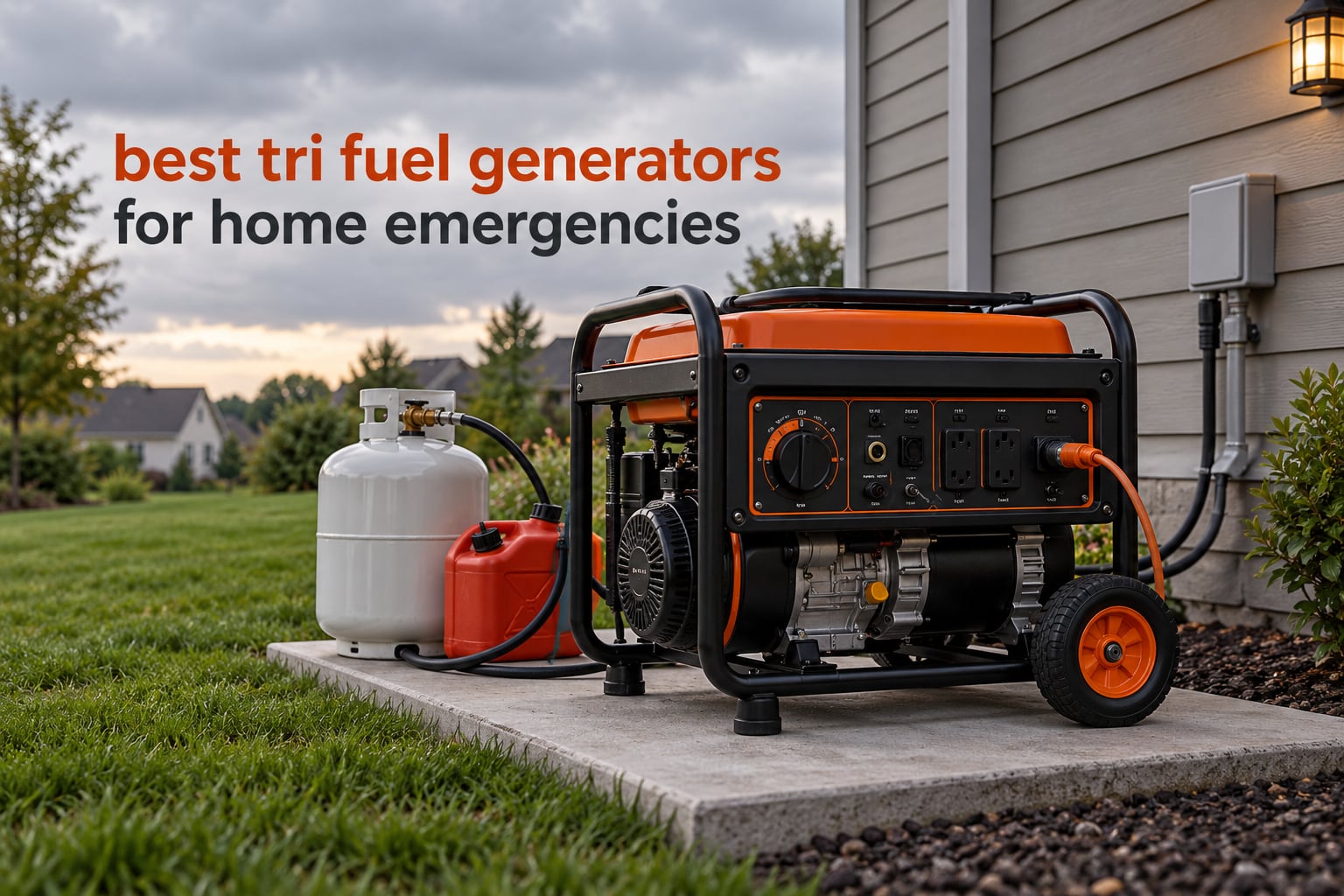
When the lights go out for more than a day, the generator you own decides how the rest of the week goes. A tri fuel generator runs on gasoline, propane, or piped natural gas, so you are never stranded if one fuel source is unavailable. We compared the best tri fuel generators for home emergencies across per-fuel output, runtime, transfer-ready outlets, CO protection, and real owner reports. Below is what actually matters before you spend money on a 200-plus pound machine.
Our method: we pulled the manufacturer specification sheets for each model, cross-checked the per-fuel wattage figures against the technical details, and read the owner review patterns for the recurring complaint themes. We did not run lab load tests, so treat the numbers as verified specifications rather than our own measurements.
One warning before we get into the list. A portable generator is an outdoor machine. It belongs at least 20 feet from your house, away from doors, windows and vents, every single time you run it. Nothing in this article overrides that.
Table of Contents
What a Tri-Fuel Generator Actually Runs On
A tri fuel generator is a portable generator engineered to run on three fuel types: gasoline, liquid propane, and natural gas. A fuel selector valve routes the engine to its onboard gasoline tank, an external propane cylinder, or a permanently plumbed natural gas line, and each position has its own calibration because the three fuels do not produce identical output.
That output difference is the single most misunderstood spec in this category. A model rated at 9,500 running watts on gasoline will often produce 8,500 on propane and 7,500 on natural gas. The peak wattage drops too. Sizing your purchase around the gasoline number and then switching to natural gas mid-outage is how people trip a breaker on a sump pump.
Storage life is the other difference. Gasoline in a tank degrades within weeks unless you add stabilizer and rotate it. Propane sits indefinitely. A piped natural gas supply is effectively unlimited for as long as the utility keeps the meter open.
There is a catch that no vendor page mentions clearly. Utilities routinely shut off gas service at the meter during a disaster, and distribution lines are the first thing damaged. Your natural gas option is worth nothing on the day it is most needed, unless you have confirmed your supply is still live. Owners on generator forums describe this as the most common disappointment with the third fuel.
Here is the practical takeaway. If you have no gas line, a tri fuel generator behaves like a dual fuel unit with extra steps. If you have a professionally installed line, it becomes the best long-outage option on this list by a wide margin, because refueling stops being your problem.
Top 3 Picks for Home Emergencies (October 2026)

Westinghouse WGen9500TFc
- 9500 running watts on gasoline
- 8500 on propane
- 7500 on natural gas
- 12 hour runtime
- Remote key fob start

DuroMax XP13000HXT
- 13000 starting and 10500 running watts
- 500cc OHV engine
- 8.3 gallon tank
- CO Alert shutdown
- 50 amp outlet

DuroStar DS13000MXT
- 13000 starting and 10500 running watts
- 13 hour runtime
- Fuel selection knob
- Remote electric start
- CO Alert
Quick Overview: All 8 Tri-Fuel Generators Compared in 2026
| Product | Specs | Action |
|---|---|---|
| Westinghouse WGen9500TFc 12500 Peak Watt Tri-Fuel |
|
Check Latest Price |
| DuroMax XP13000HXT 13000-Watt Tri-Fuel |
|
Check Latest Price |
| DuroStar DS13000MXT 13000-Watt Tri-Fuel |
|
Check Latest Price |
 Champion 201438 12500-Watt Tri-Fuel Champion 201438 12500-Watt Tri-Fuel |
|
Check Latest Price |
 Champion 201423 11000-Watt Tri-Fuel Inverter Champion 201423 11000-Watt Tri-Fuel Inverter |
|
Check Latest Price |
 Westinghouse iGen12000TFc Tri-Fuel Inverter Westinghouse iGen12000TFc Tri-Fuel Inverter |
|
Check Latest Price |
 GENMAX GM10500iETC 10500-Watt Tri-Fuel GENMAX GM10500iETC 10500-Watt Tri-Fuel |
|
Check Latest Price |
 Generac G0080631 12500-Watt Tri-Fuel Generac G0080631 12500-Watt Tri-Fuel |
|
Check Latest Price |
1. Westinghouse WGen9500TFc – Best Overall Tri-Fuel Generator for Home Backup
Westinghouse 12500 Peak Watt Tri-Fuel Home Backup Portable Generator, Remote Electric Start, Transfer Switch Ready, Gas, Propane, and Natural Gas Powered
Gasoline 9500 running watts
Propane 8500 running watts
Natural gas 7500 running watts
12 hours on a 6.6 gallon tank
Pros
- 9500 running watts covers a refrigerator and sump pump together
- Remote electric start with included key fob
- Transfer switch ready L14-30R plus RV ready 14-50R
- 457cc cast iron sleeve engine
- 3 year limited warranty
Cons
- Open frame design is louder than enclosed inverter models
- 215 pounds usually means a two person lift
- Natural gas output drops to 7500 running watts
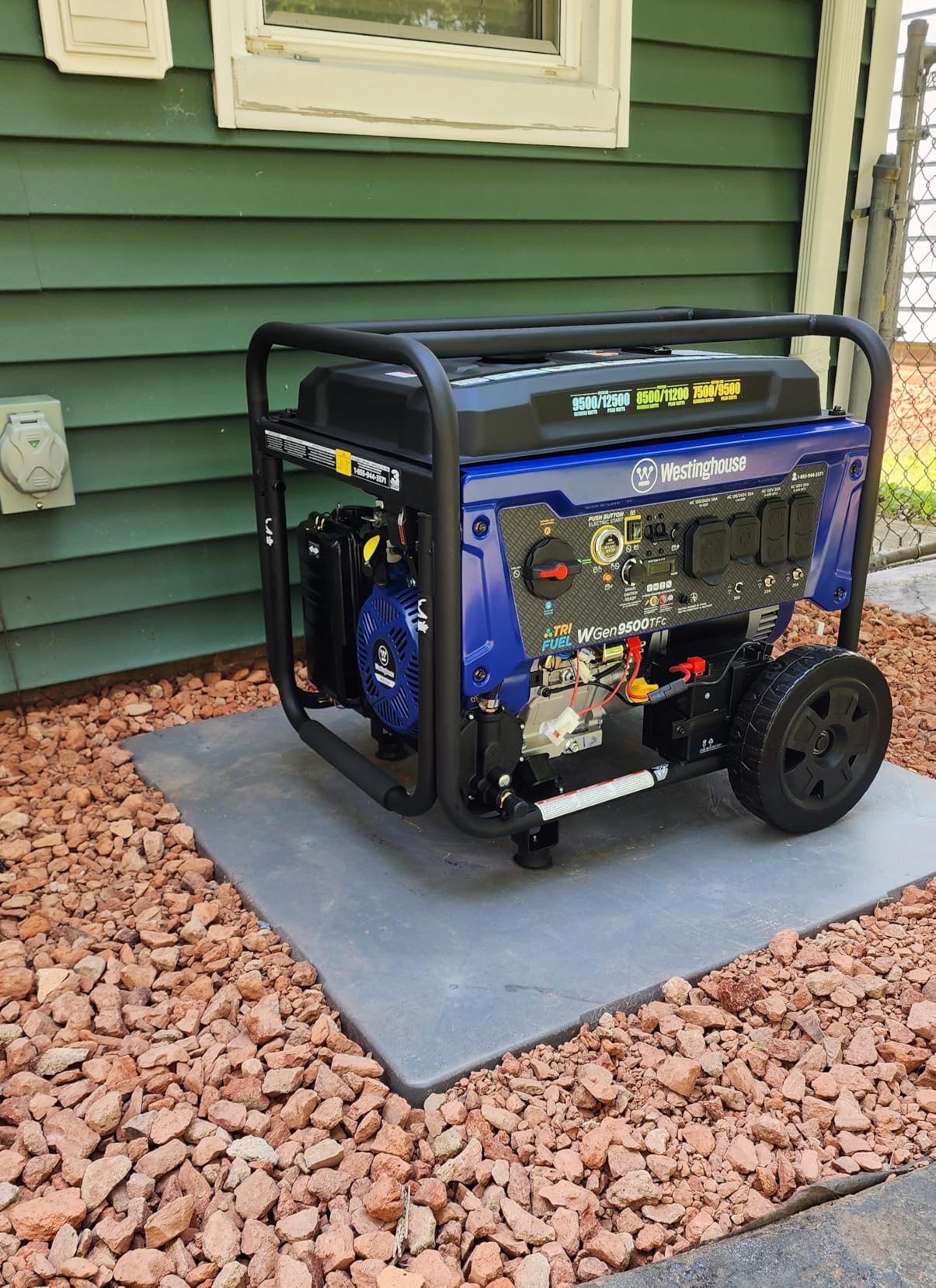
The WGen9500TFc is the one I would put in most homes. It produces 9,500 running watts on gasoline, which covers a refrigerator, a freezer, lights, a router, and a sump pump without the load juggling that smaller machines force on you. The 457cc four-stroke engine uses an overhead valve design with a cast iron sleeve, which is the part that decides whether the machine still starts in year five.
Owners consistently single out remote start with the included key fob as the feature that changes real outage behaviour. You can fire it up from inside a house in the dark without walking out into the weather, and there is a recoil start as backup if the battery has died. That is a genuine safety improvement, not a convenience gimmick.
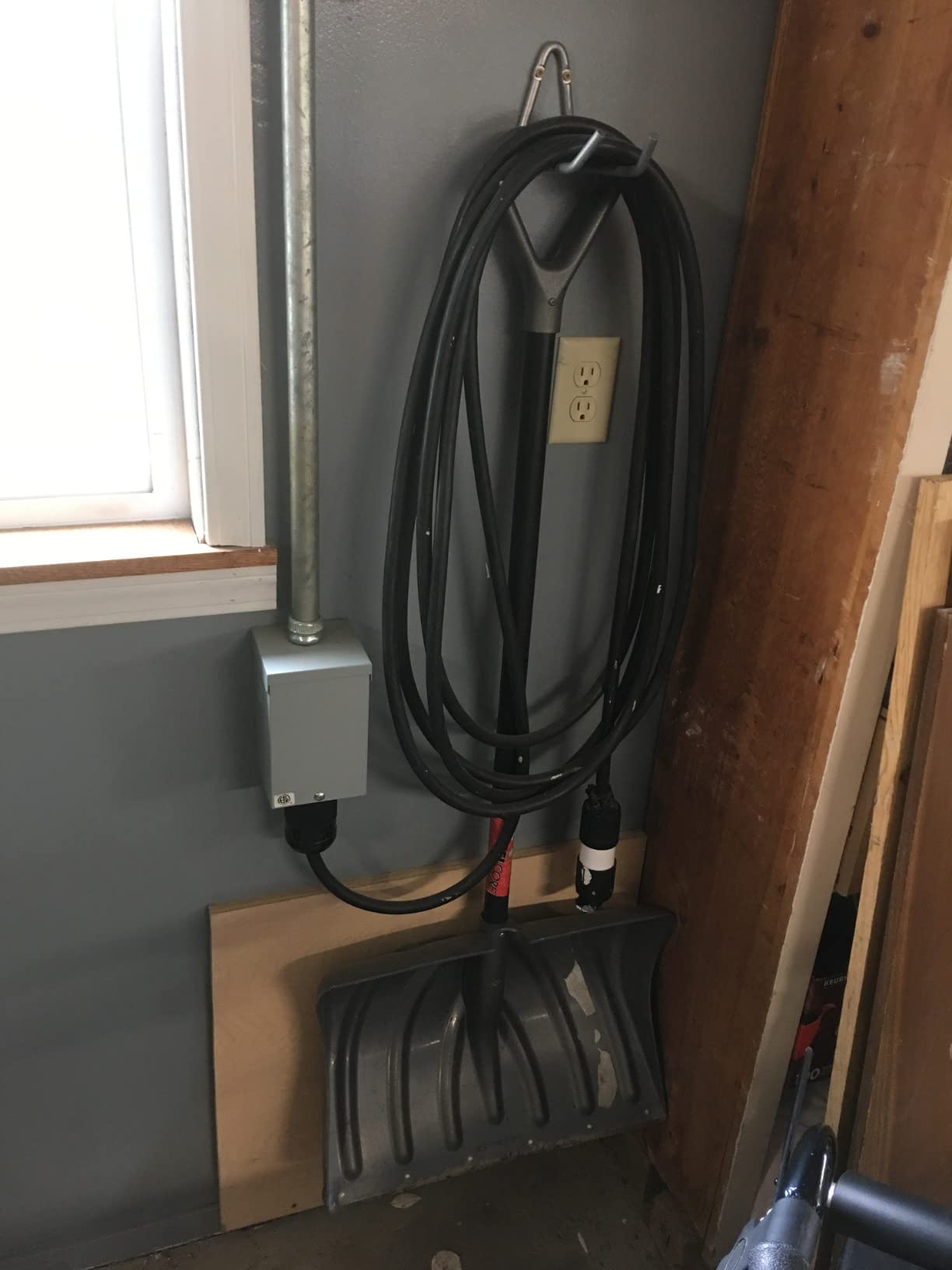
The outlet layout is the most thoughtfully arranged of any unit here. You get two GFCI 5-20R household duplex receptacles, a transfer switch ready L14-30R locking outlet, and an RV ready 14-50R for a 50 amp connection. Automatic voltage regulation, a fuel gauge, a digital hour meter, and low oil plus CO shutdown round out a panel that tells you what the machine is doing without guessing.
Owners on generator forums describe Westinghouse units as a long-term purchase, commonly recommended for reliability and fuel flexibility, and the fuel flexibility is repeatedly called the standout feature when an outage stretches past a day. One counter-example exists in that same conversation space, a Westinghouse that failed on its first use despite a full tank, so treat reliability as high but not uniform across every production run.
When the WGen9500TFc Is the Right Buy
Buy this if your essential load sits between 6,000 and 8,000 watts and you want the flexibility of three fuels with an outlet set that is already transfer switch ready. It suits a mid-size home where the AC compressor and the well pump cannot both run at the same time.
The 12 hour runtime figure on the 6.6 gallon tank gives you a full day of intermittent essential-load use before refueling. With a properly installed natural gas line, that constraint disappears entirely, which is where this model earns its place in an emergency kit.
When the WGen9500TFc Is the Wrong Buy
Skip it if you need to run central air or a heat pump compressor. The 12,500 peak figure is what gets a compressor turning, and 9,500 running watts leaves little margin once everything else is on. For that scenario, look at a higher-capacity conventional machine in this list.
Also consider the alternatives if noise or weight drives your decision. At 215 pounds and open frame, it is a two-person job to reposition on gravel or steps, and the exposed frame is meaningfully louder than an enclosed inverter. If you plan to run this overnight near the house, read the inverter section first.
2. DuroMax XP13000HXT – Best High-Capacity Tri-Fuel Pick
DuroMax XP13000HXT 13,000-Watt 500cc Tri Fuel Gas Propane Natural Gas Portable Generator with CO Alert, Black/Blue
13000 starting and 10500 running watts
500cc OHV engine
8.3 gallon tank with 8 hour runtime
CO Alert shutdown
Pros
- Highest running wattage among conventional tri fuel machines here
- 10500 running watts for motor starting loads
- Push button electric and remote start
- Transfer switch ready 50 amp outlet
- Natural gas hose and propane regulator included
Cons
- Heaviest conventional frame here at 240 pounds
- Open frame design runs louder than enclosed inverter models
- About 8 hours runtime is short for the tank size
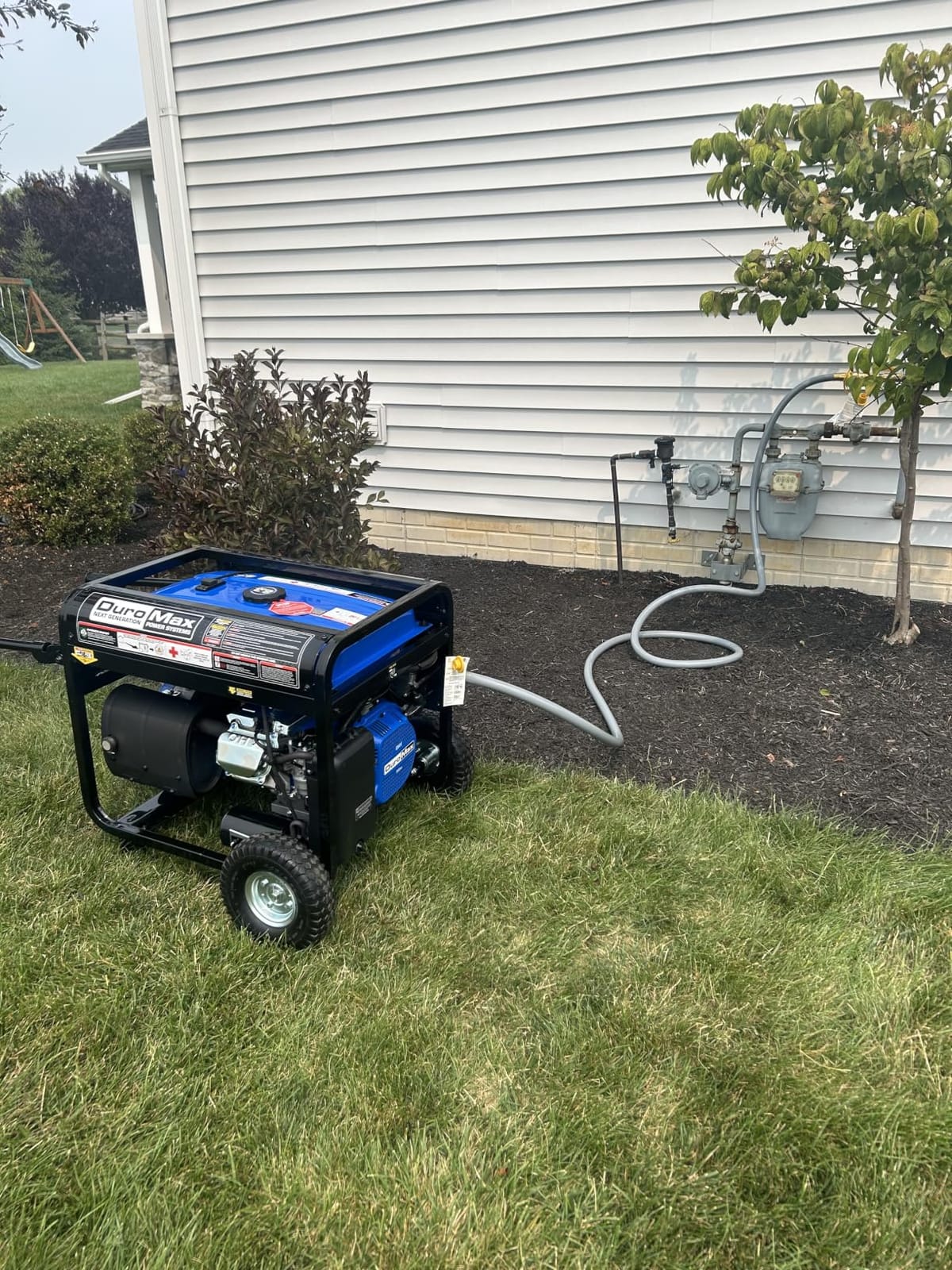
The XP13000HXT is the raw output pick. With 13,000 starting watts and 10,500 running watts, it has the most conventional-frame capacity in this group, and that headroom is what lets a compressor, a pump, and a refrigerator all start at the same time without a breaker trip.
Start control is a front-facing fuel type interface with a push button electric start and a remote control, so fuel switching and ignition happen in the same place. Owners frequently mention easy starting and the confidence of having whole-home capacity in a portable frame, which is exactly the feeling you want at 2 a.m. in a storm.
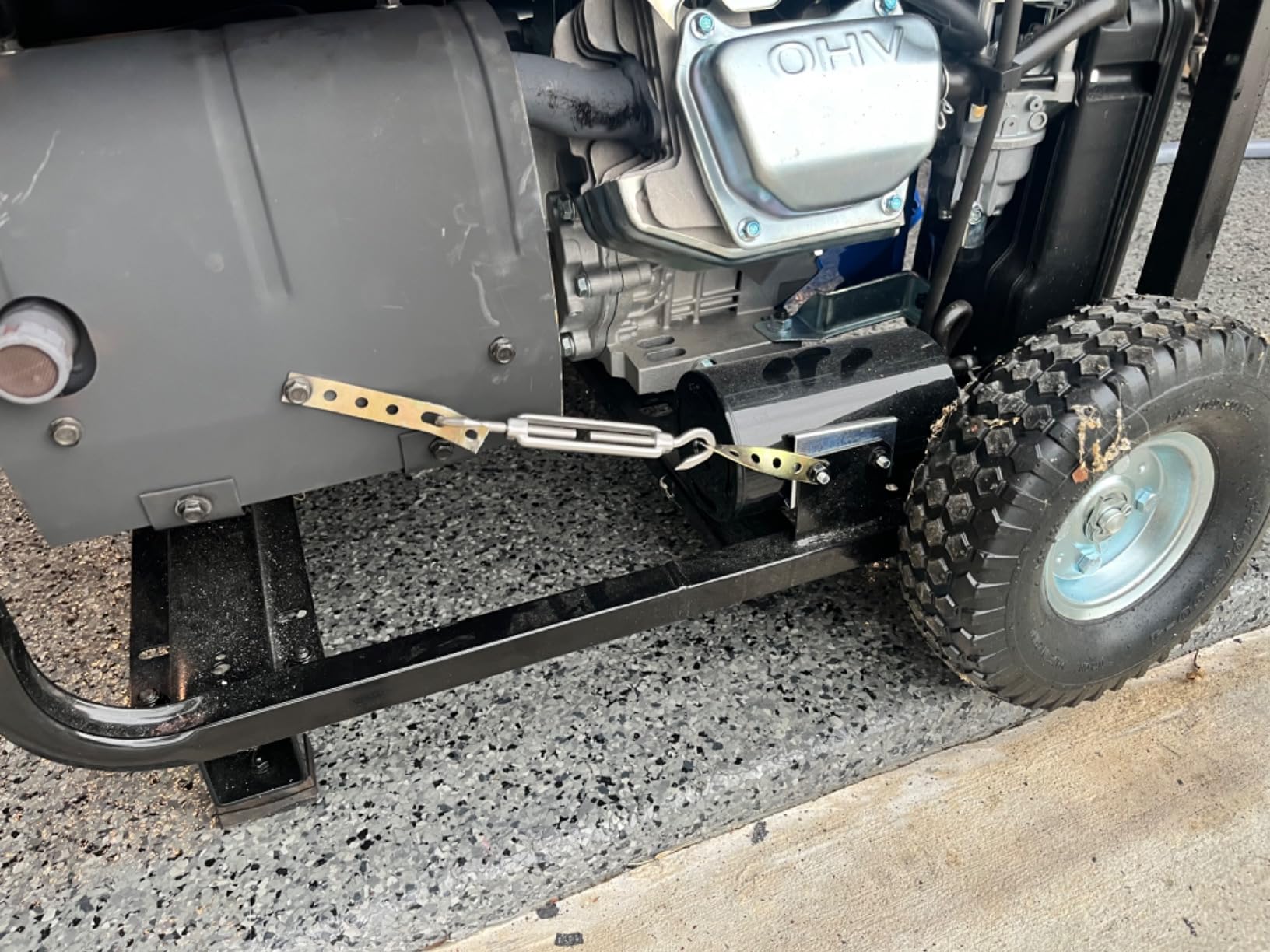
CO Alert carbon monoxide protection shuts the machine down rather than letting it run in a dangerous environment, and the 50 amp outlet means a transfer switch or interlock install is straightforward. The box includes a 15 foot by 3/4 inch natural gas hose, a propane regulator, a wheel and handle kit, an oil funnel, and a tool set, so there is nothing else to buy before first use.
The trade-offs are physical. At 240 pounds this is the heaviest conventional-frame machine here, and a wheel and handle kit helps on a flat driveway but not on stairs or soft ground. The open frame is loud. And an 8 hour runtime on an 8.3 gallon tank is the shortest pairing in this list, which means more fuel planning if you are off the grid for a week.
Why This One Earns the Premium Pick
If your home has a central air conditioner, an electric water heater, or a well pump with a high starting draw, running wattage is the only number that matters. 10,500 running watts covers those loads plus a refrigerator and some lighting, which no smaller machine in this roundup can do without careful load management.
It is also the pick for a homeowner whose load has grown since their last outage. Generators get undersized because people buy for the loads they remember, not the ones they actually have. This one absorbs the surprise.
Where the XP13000HXT Falls Short
It is not a machine for sensitive electronics. Conventional open-frame engines produce higher total harmonic distortion, and nothing in the specification suggests a clean inverter waveform. A home office setup or a medical device should point you to an inverter model instead.
Owners also flag the setup reality: without a transfer switch or an interlock kit, a 50 amp outlet is just a very large socket. Budget for that hardware and for the installation before you buy the generator, because the headline number is only the beginning of what a home install costs.
3. DuroStar DS13000MXT – Best Value 13,000-Watt Tri-Fuel Machine
DuroStar DS13000MXT 13,000-Watt 500cc Tri Fuel Portable Generator – Gas, Propane & Natural Gas, Remote Electric Start, Whole Home Power Backup, Transfer Switch Ready, RV & Emergency Ready
13000 starting and 10500 running watts
8.3 gallon tank with 13 hour runtime
Rated 43.75 amps
CO Alert shutdown
Pros
- 13000 starting and 10500 running watts in an open frame design
- 13 hour runtime on the 8.3 gallon tank
- Fuel selection knob on a fully loaded power panel
- Remote electric start with recoil backup
- Natural gas hose and propane regulator included
Cons
- 43.75 amp rating is lower than the 50 amp outlets on some rivals
- Open frame design is noticeably loud
- Higher share of one star reviews than the top rated models
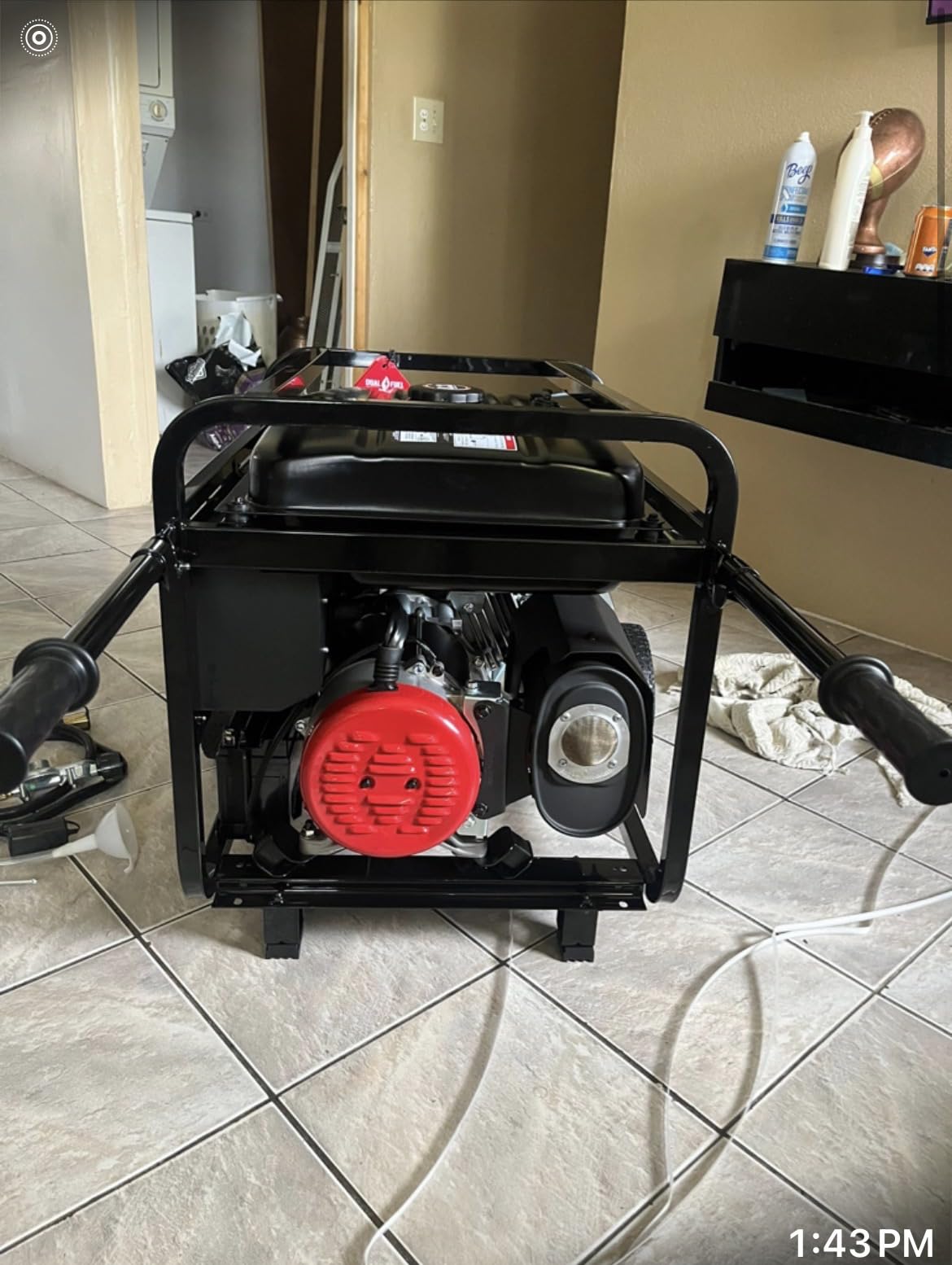
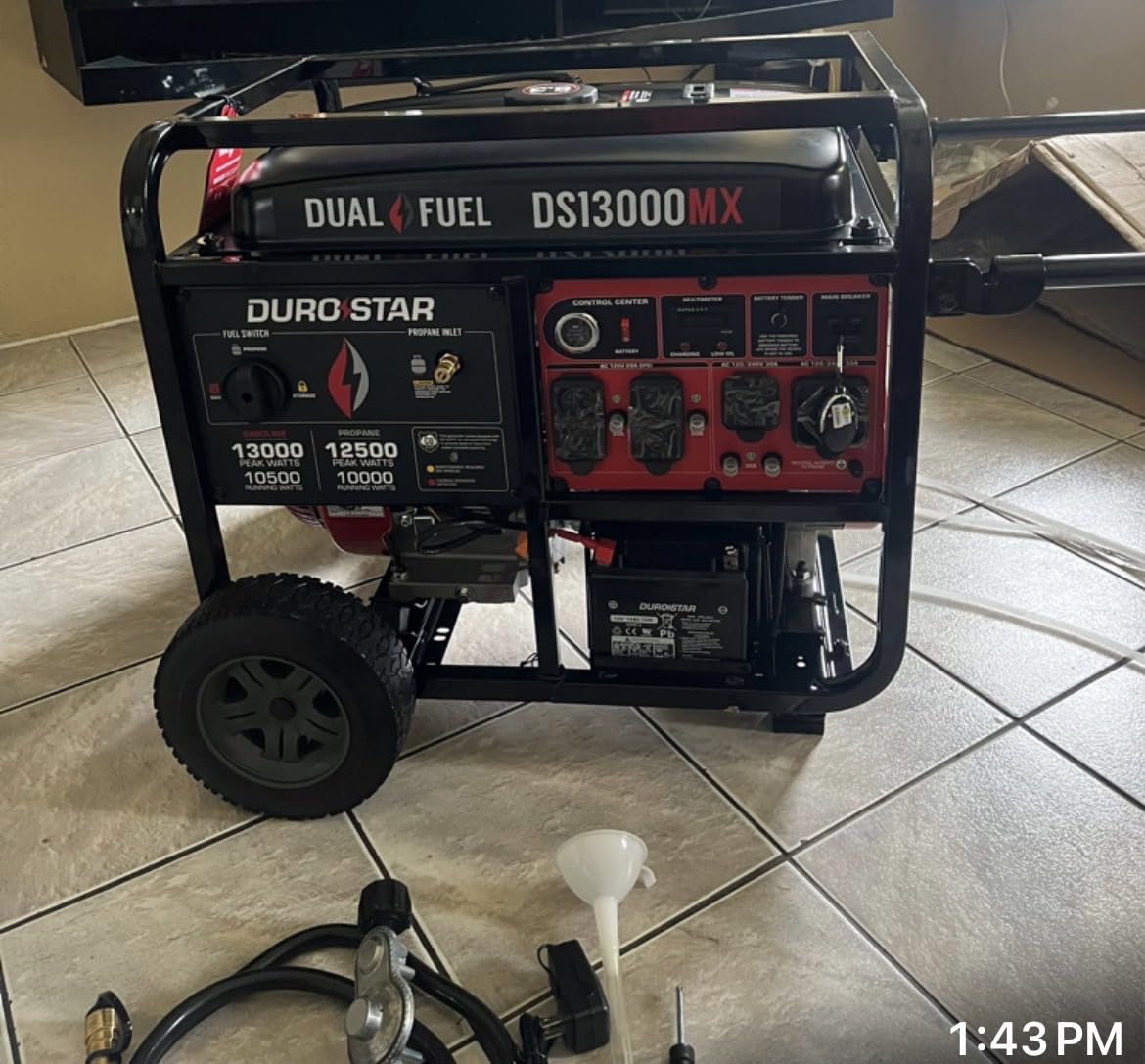
The DS13000MXT does something the XP13000HXT does not: it stretches an 8.3 gallon tank into a 13 hour rated runtime. Same 13,000 starting watt and 10,500 running watt headline, less fuel planning per outage. For anyone riding out a three-day storm on gasoline, that difference matters more than raw capacity.
The control panel is genuinely well laid out. A fuel selection knob sits on a fully loaded power panel alongside push button start, so switching between gasoline, propane, and natural gas takes one adjustment rather than a sequence of steps. The transfer switch ready 50 amp outlet is on the outlet array, and the electric and recoil start combination means a dead battery is not a dead weekend.
What you need to know before buying: the review distribution here carries a visibly higher share of one star experiences than the top rated models in this roundup, with complaints clustering around noise, current limits, and durability perceptions. The 43.75 amp rating is lower than the 50 amp outlets on some competing machines, which is a real constraint if you are planning a large 240 volt circuit.
The weight is also not disclosed in the product specification sheet, so plan on the same handling reality as other machines in this class. Nothing here is a dealbreaker on its own, but the combination means this is a value pick rather than a set-and-forget choice.
When the DS13000MXT Makes Sense
It is the right call when your outage profile is long and your load is moderate. If you are running a refrigerator, a few circuits, and lights for days rather than running a compressor and a pump simultaneously, the 13 hour runtime buys you time without a refuel trip in the middle of the night.
It also suits buyers who want a full 50 amp outlet and a remote start without stepping up a class. Those two features are usually what push a conventional tri fuel machine into a higher tier, and this one includes both.
When You Should Look Elsewhere
Choose a different model if your reputation for reliability under pressure comes first. This unit has the thinnest review base in the group and the most visible spread between enthusiastic and frustrated owners, and the higher one-star share deserves weight in a purchase you are making for emergencies.
Also look elsewhere if a 43.75 amp limit would force you to drop a 240 volt circuit you need. Read the generator’s continuous current rating before you assume the 50 amp socket is the whole story.
4. Champion 201438 12,500-Watt Tri-Fuel – Best for Homes That Need More Running Watts
Champion 12,500-Watt Electric Start Tri Fuel Home Backup Portable Generator
Gasoline 10000 running watts
Propane 9000 running watts
Natural gas 8000 running watts
8 hour runtime
Pros
- 10000 running watts with natural gas hoses and LPG hoses included
- Electric rocker switch start with battery in the box
- Intelligauge tracks voltage frequency and run hours
- CO Shield automatic shutoff
- Easy assembly and reliable first start
Cons
- Louder than enclosed inverter models in the same class
- 231 pounds
- 8 hour rated runtime is the shortest for its tank class
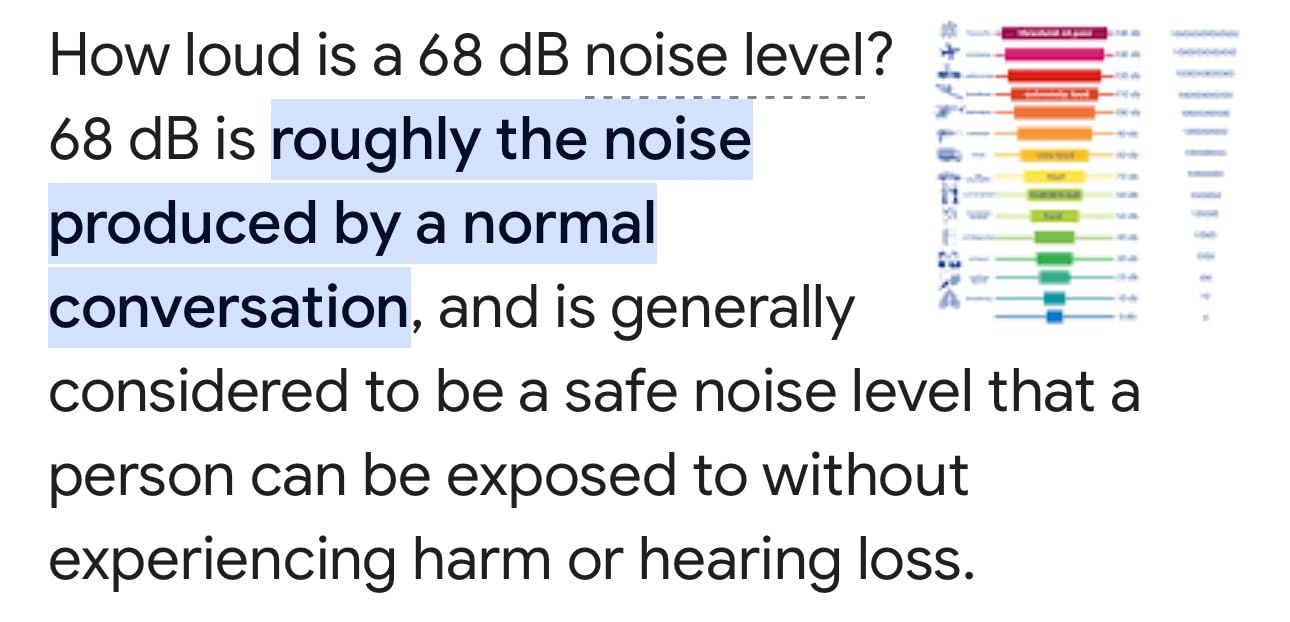
The Champion 201438 is the one to look at when 10,000 running watts is the number that makes your load list work. On gasoline it produces 12,500 starting and 10,000 running watts, and the per-fuel ladder is the steadiest in this roundup: 9,000 running on propane and 8,000 on natural gas.
That 8,000 watt natural gas floor is worth understanding. It means if you have a gas line and you plan to run on natural gas, you still have enough headroom for a refrigerator, a router, lights, and a small pump. Most competing machines lose more than 1,500 watts by the time you get to the third fuel.
Owners report easy assembly, reliable starting on the first attempt, and straightforward operation, and they call the natural gas hookup a game changer for a permanent installation. The Intelligauge display tracks voltage, frequency, session run time, and total run time, which is how you keep up with oil change intervals without guessing.
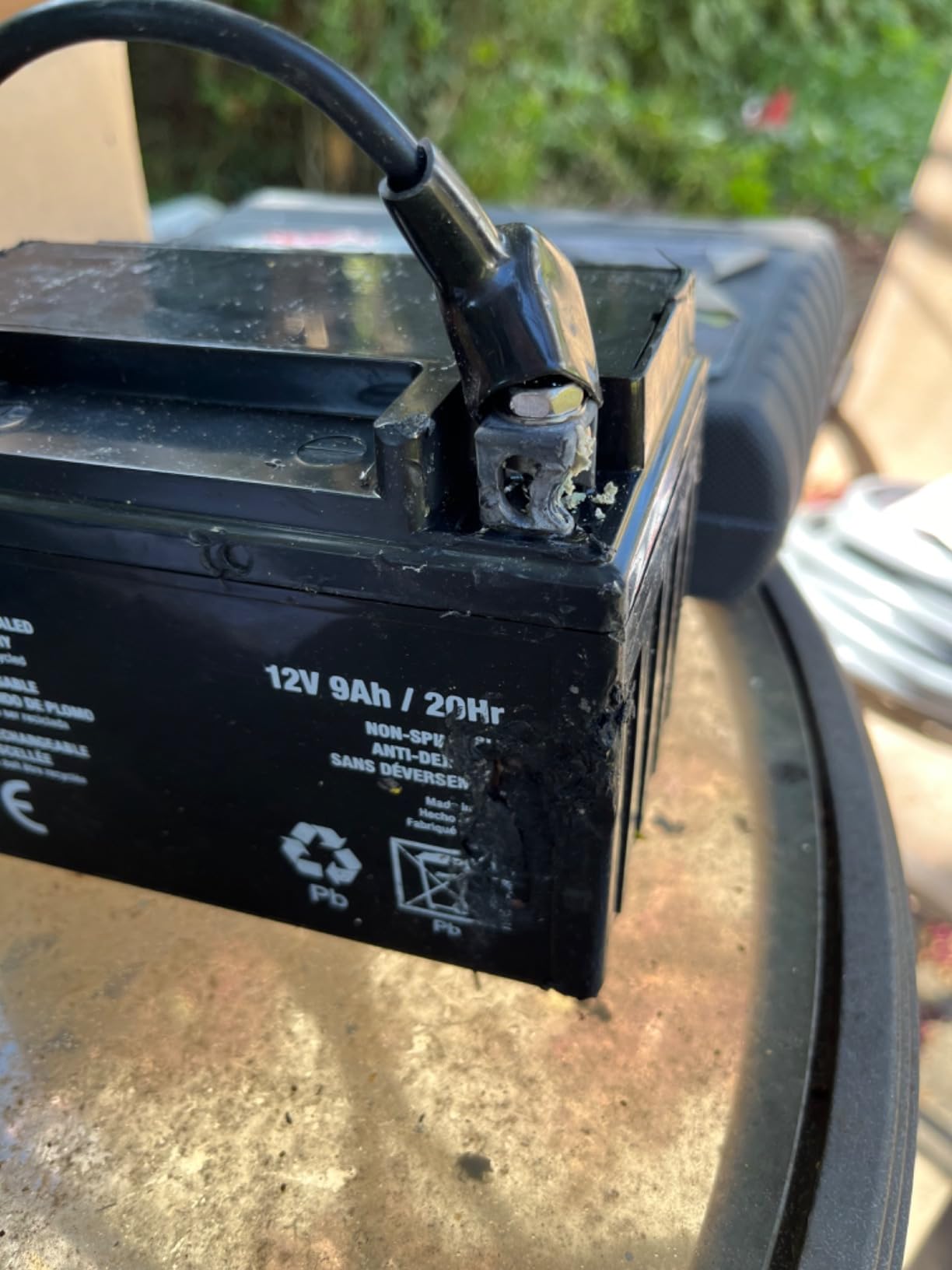
There are a few quality control notes in the reviews, and they are worth taking seriously because a machine bought for emergencies needs to start on the first pull. A few owners report bent frame tubing near the wheel bracing, and one reported the operator panel backing off during the break-in run. Neither is a widespread pattern, but both are things to check in the first ten minutes after delivery.
Why This Champion Suits Bigger Loads
The 231 pound frame is heavy, and the open frame is louder than the enclosed inverter models in this list. If you can place it far enough from the house, that is an acceptable trade for 10,000 running watts and a third-fuel floor of 8,000.
It is also the model to shortlist if you want a natural gas installation you barely have to think about. The LPG and natural gas hoses ship in the box, the electric start uses a rocker switch with the battery included, and the 3 year limited warranty comes with free lifetime technical support.
Where It Falls Behind the Class
The 8 hour runtime is the weak point. Against a similar tank size, several machines here run 12 to 15 hours on gasoline, so plan on more refuel cycles than the headline capacity suggests, especially on a multi-day event.
It is also the wrong choice for a home office or any load where waveform quality matters. This is a conventional open-frame engine, and its output is not designed for sensitive electronics.
5. Champion 201423 11,000-Watt Tri-Fuel Inverter – Best for Quiet Overnight Running
Champion 11,000-Watt Remote Start Tri Fuel Portable Inverter Generator
Gasoline 9000 running watts
Natural gas 7290 running watts
Inverter output
15 hours on a 6.08 gallon tank
Pros
- Quiet inverter output for an 11000 watt class
- Wireless remote start from up to 80 feet
- LPG and natural gas hoses included in the box
- Clean inverter power for sensitive electronics
- 3 year warranty with lifetime technical support
Cons
- Natural gas hose lacks a supply side quick connect
- No cover included
- Standby mode times out after 24 hours
- Plastic fuel sight glass can yellow with age
The Champion 201423 is the quietest way to run tri fuel power through a long night. It produces 11,000 starting and 9,000 running watts on gasoline, and owners regularly describe it as inaudible from inside the house, which changes where you can put it relative to a bedroom window.
Because it is an inverter, the output is clean enough for computers, phones, and audio equipment. That matters if your home office or medical device is on the same panel as your refrigerator. The outlet set covers it too: two 120V 20A GFCI duplex receptacles, a 120/240V 30A locking outlet, a 120/240V 37.5A outlet, and a 12V automotive socket.
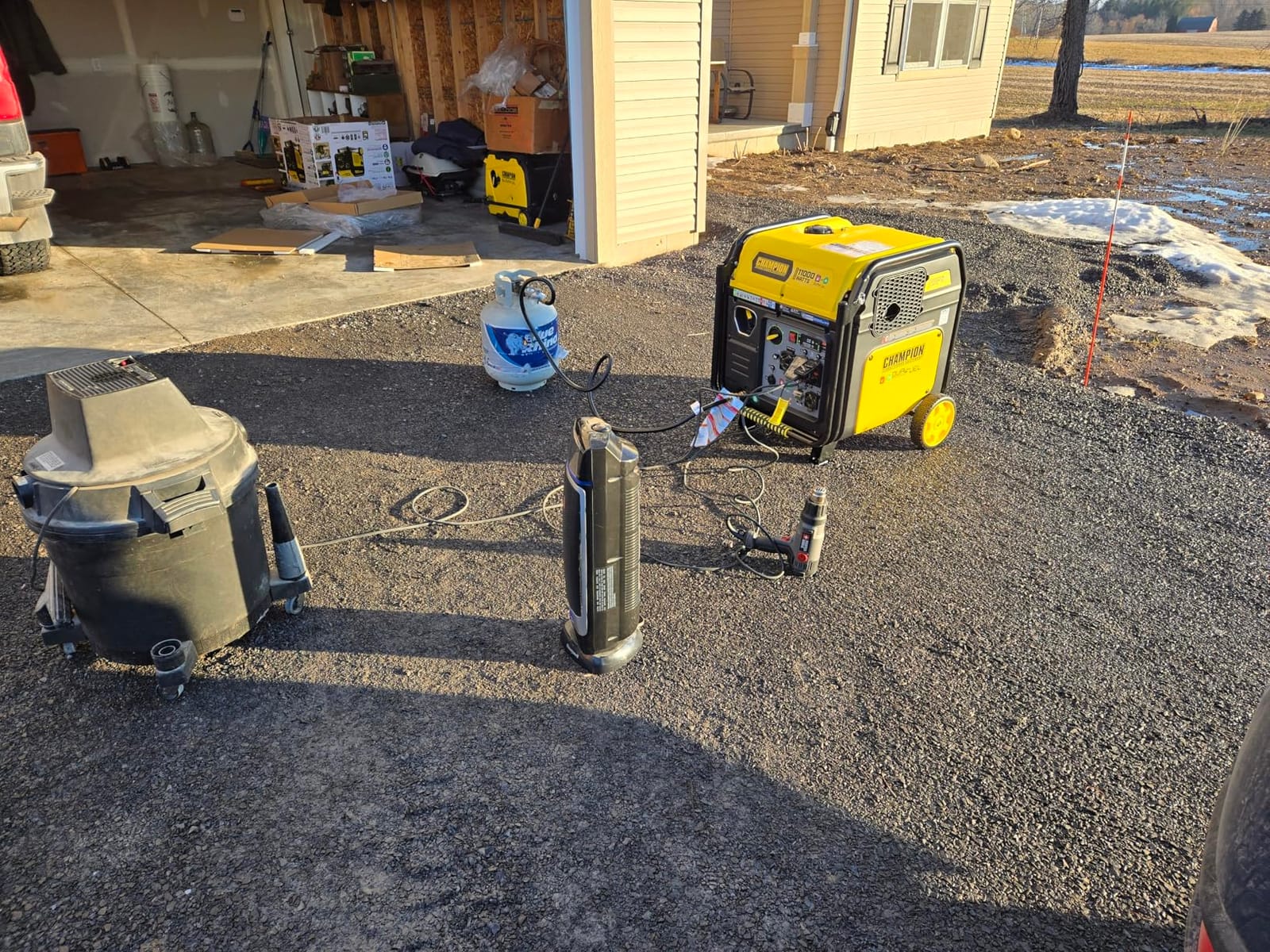
Wireless remote start works from up to 80 feet, and CO Shield handles carbon monoxide detection with an automatic shutoff. The floating neutral configuration is straightforward to set up for home backup with an interlock, and the 15 hour runtime on a 6.08 gallon tank is the longest gasoline figure in this roundup.
The complaints here are about missing features rather than failures, and that is a good sign. The natural gas hose has no quick connect on the supply side, there is no cover included, the standby mode times out after 24 hours, and there is no battery charging input or 2-wire auto start for solar interlock setups.

Where This Inverter Wins
Sleeping households get the most from this one. A quiet machine at 20 feet from the house changes the conversation with neighbours and with your own household, and inverter output means you can run a laptop, a monitor, and a network switch without a surge protector chain.
Owners also rate the build quality and maintenance access above the price class. Easy oil changes and a simple, accessible air filter design are small things that decide whether you actually perform the maintenance the manual asks for.
Where You Lose Something
Natural gas output falls to 7,290 running watts, the lowest third-fuel number in this list. If you plan to run on natural gas, your load budget shrinks noticeably, and the 24 hour standby timeout limits genuinely automatic standby behaviour for multi-day events.
The 212 pound weight still means a handling job, and the missing cover will matter if you leave it outside through a wet season.
6. Westinghouse iGen12000TFc – Best for Sensitive Electronics and Easiest Handling
Westinghouse 12000 Peak Watt Tri-Fuel Portable Inverter Generator, Remote Start, Transfer Switch Ready, Gas/Propane/Natural Gas Powered, Low THD, Safe for Electronics, Parallel Capable, CO Sensor
Gasoline 9000 running watts
THD of 3 percent or less
As low as 64 dBA
19 hours at 25 percent load
Pros
- Lightest 12000 watt class machine here at 191 pounds
- Total harmonic distortion of 3 percent or less for sensitive electronics
- As low as 64 dBA with Eco Mode
- Up to 19 hours at 25 percent load
- Parallel ready with 50A and 30A outlets
Cons
- Natural gas running wattage drops to 7200
- Battery can drain during extended storage
- Higher purchase price than open frame alternatives
The iGen12000TFc solves two problems at once: noise and weight. At 191 pounds it is the lightest machine in this roundup, and at as low as 64 dBA with Eco Mode it is the quietest. For a homeowner moving a generator across a driveway or repositioning it after rain, that combination removes the most common complaint about portable units.
Output quality is the other headline. Total harmonic distortion of 3 percent or less is inverter-grade, so computers, phones, monitors, and other sensitive electronics run directly. The enclosed design also runs cooler and quieter than an exposed frame under the same load.
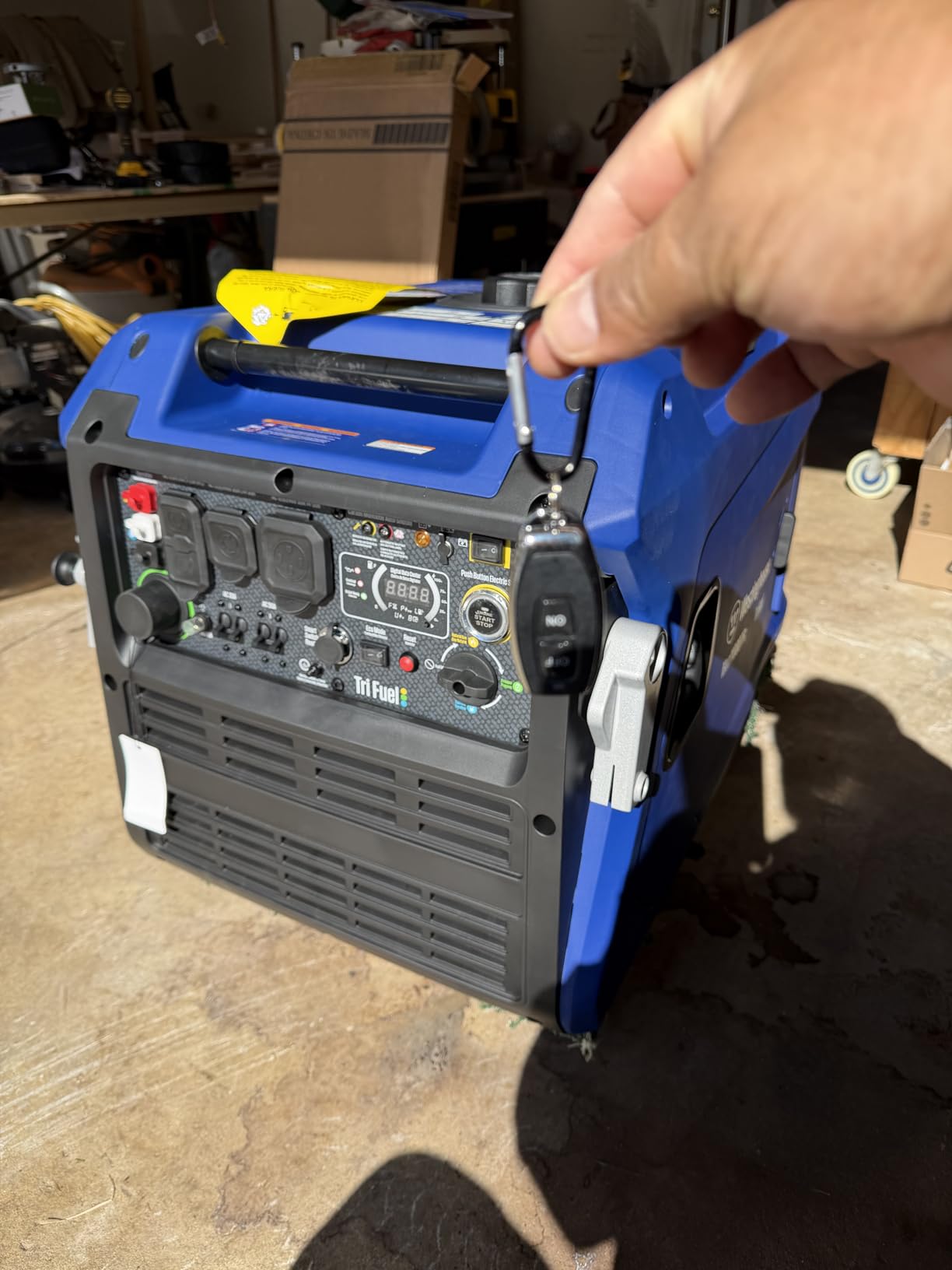
Runtime is the standout specification. Up to 19 hours at 25 percent load on a 7.9 gallon tank is the best endurance figure here, and combined with a per-fuel ladder of 8,100 running watts on propane and 7,200 on natural gas, it covers a typical essential load for a full day without a refuel.
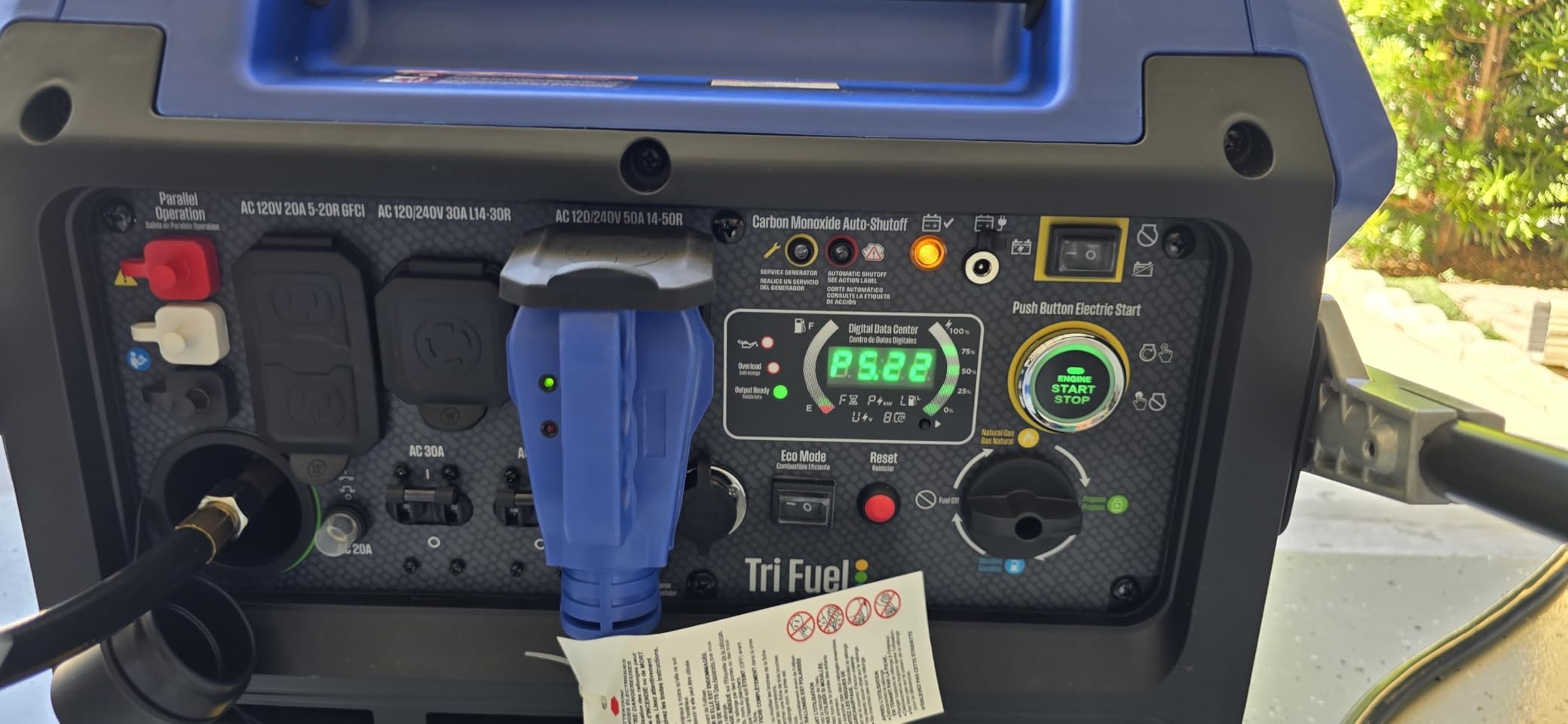
The panel includes a 50A 14-50R, a 30A L14-30R twist lock, and a GFCI duplex, so it works with a transfer switch or an interlock, and it is parallel ready to double output with a second matching machine. The LED data center shows fuel level, power output, remaining run time, voltage, and lifetime hours.
When This One Is the Smart Purchase
It fits renters and homeowners in tight lots, because 191 pounds is a one-person lift for many adults and the enclosed body is easier to store in a garage without a dedicated pad. It is also the natural choice for anyone whose outage load is dominated by electronics rather than motors.
Owners praise the quiet inverter operation and easy access to oil, battery, air filter, and carburetor, which matters because maintenance is what separates a generator that starts in year four from one that does not.
When It Is the Wrong Choice
Two caveats. Some owners report shorter than expected runtime on propane than the ratings suggest, and the battery can drain during extended storage even with the switches off, which is a common cause of no-crank failures after a long winter.
It is also the more expensive route into this power class, and at 7,200 running watts on natural gas it is the weakest third-fuel number among the inverters here. Put a rechargeable battery maintainer on your readiness checklist if you buy it.
7. GENMAX GM10500iETC – Best for Automatic Transfer Switch and Parallel Setups
GENMAX Tri Fuel Generator,10500-Watt 458cc Tri Fuel Gasoline Propane Natural Gas Portable 50A Generator with Remote Start,Ideal for Home backup power.
Gasoline 8500 running watts
Natural gas 6800 running watts
THD under 3 percent
50A and 30A outlets
Pros
- Total harmonic distortion under 3 percent for sensitive electronics
- Factory floating neutral makes home standby interconnection straightforward
- Full 50A 14-50R plus 30A L14-30R outlets
- Remote start with ATS capability
- Engine oil filter and forced lubrication
Cons
- Heaviest machine here at 304 pounds
- Warranty listed as 1 year in specifications
- Some reports of display voltage fluctuation
- Bonding plug sold separately
The GM10500iETC is the only machine in this roundup that ships with factory floating neutral, and for a home installation that single detail can remove a step from the job. A floating neutral generator is set up to be connected to your home’s distribution panel through a transfer switch without the neutral bonding arrangement that portable machines usually need.
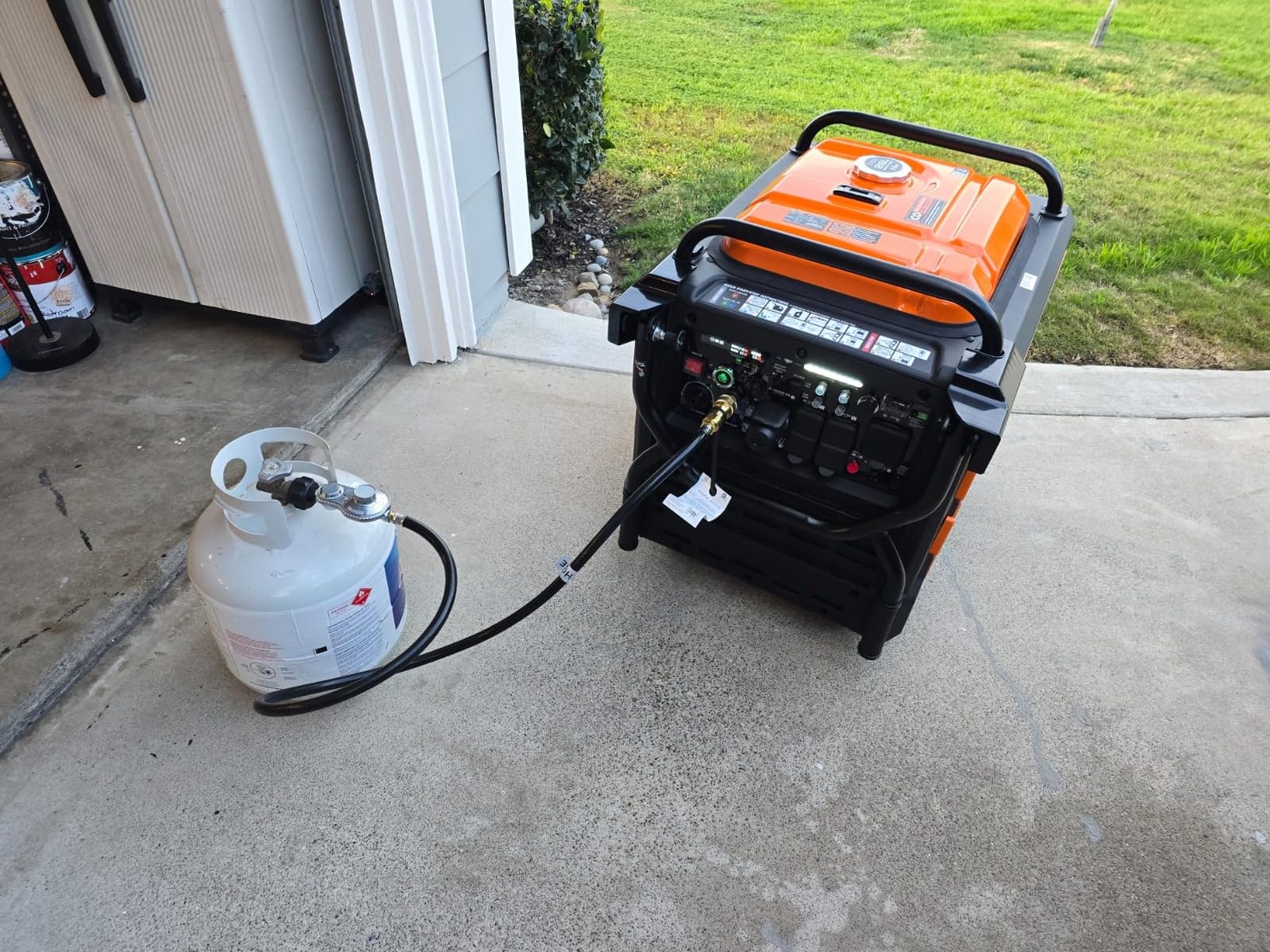
It also has the most complete control panel here: a 50A 14-50R, a 30A L14-30R, four 20A 5-20R household outlets, a 12V DC outlet, a CO alarm, parallel connectors, a battery charging port, an overload reset, and an LED light. Remote start, electric start, and automatic transfer switch control all run from the same panel.
Output quality is inverter-grade with total harmonic distortion under 3 percent, and the engine has forced lubrication with an oil filter, which is a longer service life story than a plain splash-lubricated OHV engine. Protection covers overload, thermal, overvoltage, undervoltage, overcurrent, short circuit, and overspeed.
Owners praise the inverter output quality, quiet operation, and the density of features at this level, and several report it is quiet enough for normal conversation beside the unit. The negative pattern is specific rather than general: a cluster of complaints about 240V display fluctuation paired with weak after-sales response.
Why an Installer Would Pick This One
If you are planning a permanent install with an automatic transfer switch, the factory floating neutral, the included ATS cable, the parallel connectors, and the 50A outlet are the specific items that make that install straightforward. It is also the only unit here with a documented floating neutral out of the box, which matters when the work is done by a professional rather than you.
Per fuel, it delivers 8,500 running watts on gasoline, 8,000 on LPG, and 6,800 on natural gas from a 458cc single-cylinder engine. Plan your natural gas load plan around that 6,800 figure.
Where You May Regret It
At 304 pounds this is by far the heaviest machine in the roundup, and weight is not a specification you discover after delivery. If your plan depends on a second person helping or on moving the machine between two locations, that is a daily friction most buyers underestimate.
The warranty wording is also inconsistent between the product specification sheet, which lists one year, and the feature description, which claims three years with lifetime technical support. Confirm the term in writing with the seller before you buy. And the bonding plug for portable use is sold separately, so add it to your list if you plan to run the machine before the permanent install is finished.
8. Generac 12,500-Watt Tri-Fuel G0080631 – Best for Single-Dial Fuel Switching
Generac 12,500 Starting Watt Tri-Fuel Portable Generator, Electric Start
9500 running and 12500 starting watts
7.5 gallon tank
9.5 hours at 50 percent load
COsense detection and shutdown
Pros
- 12500 starting watts for simultaneous air conditioner and sump pump starts
- Simple dial turn fuel selection across three fuels
- COsense detection with automatic shutdown
- Digital hour meter and onboard fuel gauge
- 30A twist lock plus 50A outlets
Cons
- Natural gas connection hardware is not fully included
- Customer support and local service reported as inconsistent
- One owner reported a carburetor governor spring failure
- Open frame design runs louder than enclosed models
The Generac G0080631 does the fuel switch with a single dial, and in an emergency that matters. No menus, no fuel selection knob sequence, no lever. Turn the dial from gasoline to propane to natural gas and start it. Owners who have used multiple machines describe that as the reason this one is easy to hand to another adult in the household.
Power is 12,500 starting and 9,500 running watts from a 500cc OHV engine with automatic voltage regulation, and Generac rates 32 percent more surge capacity than running output specifically for simultaneous air conditioner, sump pump, and power tool starts. That is the same use case that trips smaller machines.
The endurance figures are well specified. The 7.5 gallon tank gives up to 9.5 hours at 50 percent load on gasoline, 14 hours at 25 percent load, or continuous runtime on natural gas. Outlets include two 20A GFCI duplex receptacles, a 30A L14-30R twist lock, and a 50A 14-50R, plus a digital hour meter, and the unit is compatible with Generac HomeLink manual transfer switches.
Be clear-eyed about the service side, though. The natural gas conversion kit is listed in the box contents, but owners report that the connection hardware and parts are not fully included and may require a certified plumber. Customer support has also been reported as unhelpful, with local service options declining work. Warranty terms are stated differently in the specification sheet and the feature list, so confirm which applies to you before you buy.
There is also one reported mechanical failure worth noting, a carburetor governor spring failure after about 2.2 hours of use. One report is not a pattern, and 47 reviews is the smallest sample in this roundup, which is the main reason this model sits at the back of the list despite a respected brand name.
Why It Still Belongs on the List
The brand is the argument. Generac has a service network that most of the value-tier brands on shopping results do not, and support availability is a real factor when a machine fails in the first year. The steel-tube cradle, 9.5 inch never-flat wheels, and folding handle are also more durable than the norm at 219 pounds.
For a buyer who wants a name they can find a technician for, and who values one-dial fuel switching over maximum wattage, this is the pick.
Where the Decision Gets Difficult
The 47-review base is thin, which limits how much confidence any editorial read can give you. The stated 8 year limited warranty conflicts with the 3 year residential term in the feature list, and the natural gas hookup is described inconsistently across the listing. Ask all three questions in writing before you order.
If you want confirmed output and a much larger review base instead, the Westinghouse WGen9500TFc at the top of this list has roughly forty times the reviews at a similar running wattage.
How to Size a Tri-Fuel Generator for Your Home
Sizing is where most generator purchases go wrong, because people buy for the loads they remember rather than the loads they have. Work from a written list, not from a rule of thumb, and size to your weakest fuel rather than your headline number.
Step one, list your essential loads only. For a typical family home that is a refrigerator (about 150 watts running, 300 starting), a freezer (about 100 running), a router and modem (about 20), LED lighting (about 100 for a house), a sump pump (about 300 running, up to 1,800 starting), and a well pump if you have one (about 1,000 running, up to 2,000 starting). Add them.
Step two, add starting surge for motors. Refrigerator compressors, sump pumps, well pumps, and air conditioner compressors draw several times their running watts for a second or two when they start. A sump pump and a refrigerator starting at the same moment on a 7,000 watt machine is a breaker trip, not a surprise.
Step three, add 25 percent headroom. Continuous operation at more than about 80 percent of rated output shortens engine life and makes it easier to trip during a surge. If your essential list comes to 5,000 running watts, size for roughly 6,250.
Step four, check the natural gas number last, and size to it. If you have a gas line and expect to run on natural gas for a multi-day outage, the third-fuel figure is your real capacity. The Champion 201438 is the clearest example in this roundup, holding 8,000 running watts on natural gas while several competitors fall to 6,800 or 7,200.
To answer the common question directly: no, a 7,000 watt generator will not run a whole house. It can run a carefully selected subset of circuits, and it will not run central air, a well pump, and a refrigerator at the same time. The honest framing is essential loads on a transfer switch or interlock, not whole house.
Transfer Switch vs Interlock Kit: What Home Backup Actually Requires
Connecting a portable generator to home circuits is the step that turns a backup plan into a real one, and it is the step most first-time buyers skip. Two options exist, and both require a licensed electrician and a permit in most jurisdictions.
A manual transfer switch sits outside the panel and switches the whole generator feed between utility and generator. It gives you a defined set of whole circuits, which is safer and easier to manage. An interlock kit fits the main breaker so the generator breaker cannot be turned on while the utility breaker is on, which is cheaper and less flexible. The critical rule in both cases: the interlock is mechanical protection, and backfeeding the panel through a dryer or range outlet is illegal and lethal. We will not describe that method, and neither should anyone selling you a backfeed kit.
Cost matters here because it is where the headline generator number stops being meaningful. The generator is one line in a budget. Also on the list: the transfer switch or interlock, the electrician, the permit, and if you want natural gas, a certified plumber and a gas line run. Owners on forums describe the combined installed cost regularly exceeding the generator price itself. Plan for that before you shop, not after.
Before commissioning anything, confirm your generator’s largest outlet matches what your transfer equipment needs. A 30A L14-30R and a 50A 14-50R are not interchangeable, and a machine with a 43.75 amp continuous rating will not safely feed a full 50 amp circuit.
Natural Gas Setup Requirements and the Shut-Off Problem
Natural gas is the best long-outage fuel on this list and the most misunderstood. It is not plug-and-play. A permanent line needs a certified plumber, a permit, a gas shutoff valve at the generator, and code-compliant placement, and that work has to happen well before the storm.
Several units here ship with the hoses: the DuroMax, the DuroStar, and both Champions include LPG and natural gas hoses. The Westinghouse WGen9500TFc includes a propane hose and a quick-start guide, and the Generac listing describes a natural gas conversion kit that owners report is not fully complete. Confirm what is in the box before you assume you are ready to connect.
Now the failure mode nobody advertises. When a utility declares a gas emergency or a distribution line is damaged, service is shut off at the meter, and your generator loses its best fuel at the exact moment you need it. Assume a 60 percent or worse chance that natural gas is unavailable in a major regional event.
The practical response is redundancy, and forum owners reach the same conclusion independently. Keep gasoline with a stabilizer and rotate it, keep at least one full propane cylinder on hand, and treat natural gas as the fuel that saves you refueling trips when it is available, not as the fuel you depend on. Some owners go further and keep two smaller machines instead of one large one, so a single failure does not end the outage.
Generator Safety: Carbon Monoxide, Placement, and Never Backfeeding
Portable generators produce carbon monoxide, which is odourless and kills without warning. Every unit in this roundup has some form of CO detection and automatic shutdown, and every unit in this roundup is still an outdoor machine. The shutoff is a backup, not a licence to run indoors.
Operate at least 20 feet from the house, and specifically away from doors, windows, and vents. Exhaust points away from the structure, and never in an enclosed porch, garage, basement, or crawlspace, even with the door open. Do not run it in rain unless the unit is rated for it, and keep the area clear of dry grass and debris.
Do not backfeed the panel. Plugging a generator into a dryer or range outlet kills utility lineworkers and is the reason interlock kits and transfer switches exist. Use a licensed electrician for that work and pull the permit.
Keep fuel away from ignition sources, store gasoline in approved containers with a stabilizer, and never refuel a hot engine. A CO sensor is a backup layer, not a substitute for placement, and running a machine indoors to heat a home during a winter outage is the correct moment to stop and reconsider.
Fuel Logistics and an Outage-Readiness Checklist
Owners who do well in long outages plan fuel before the weather, not during it. A 6.6 gallon tank that covers 12 hours means two full tanks for a day of continuous essential loads, and a week of outages means far more than you want to be moving through a storm.
Buy a fuel stabilizer and date every container you store. Gasoline without stabilizer degrades within weeks, and a tank of bad fuel is a generator that will not start when you need it. Rotate stored fuel every few months and run the older stock first.
Run the generator for a break-in period after purchase, following the manual. Assembly is not plug-and-play: shipping braces, oil filling, and the break-in procedure catch out first-time owners, and several reviews across this roundup mention units that needed a second attempt on the first start.
Then run it monthly for fifteen minutes under a real load, not just no-load. A monthly cycle keeps the oil circulating, the fuel system sealed, and the battery charged, and it is the only way to know the machine starts before the emergency rather than during it.
For cold climates, keep a battery maintainer on the starter battery, since a discharged battery is the most common cause of a no-crank failure after long storage. Owners on this specific issue report units that sat all season and refused to crank on the first cold morning.
Finally, inventory your loads. Write the wattage list, tape it inside the transfer switch cover, and rehearse the start sequence with a household member who has never used the machine. An emergency is a bad time to be learning which knob goes where.
Frequently Asked Questions
What does a tri-fuel generator run off of?
A tri-fuel generator runs on three fuel types: gasoline from its own tank, liquid propane from an external cylinder, and natural gas from a permanently plumbed line. A fuel selector valve switches between them, and each fuel has its own output rating. Propane and natural gas produce less power than gasoline on the same machine, so always check the per-fuel numbers before sizing.
How many watts do I need for a home backup generator?
Add up the running watts of your essential loads only, then add starting surge for motors such as refrigerators, sump pumps, well pumps, and air conditioner compressors, then add 25 percent headroom. A typical essential list of refrigerator, freezer, lights, router, and a sump pump lands near 2,000 running watts before surge. Size to the natural gas rating if you plan to run on a gas line.
Can I run a tri-fuel generator in my garage?
No. Run any portable generator outdoors, at least 20 feet from the house and away from doors, windows, and vents. A garage is an enclosed space, and carbon monoxide accumulates faster than you can detect it by smell. CO sensor shutoff systems are a backup layer, not permission to operate indoors, and they do not cover every failure mode.
Do I need an electrician to install a natural gas connection for my generator?
You need a licensed gas fitter or plumber for the fuel line, and a licensed electrician for the transfer switch or interlock that connects the generator to your panel. Both require permits in most jurisdictions. Several units in this roundup ship with natural gas hoses, but the permanent line, shutoff valve, and supply connection are not homeowner install jobs.
What is the best tri-fuel generator on the market?
The Westinghouse WGen9500TFc is our top pick for most homes, combining 9,500 running watts on gasoline with remote key fob start, a transfer switch ready L14-30R outlet, an RV ready 14-50R, and the largest review base in the category. For higher motor loads, the DuroMax XP13000HXT offers 10,500 running watts, and for quiet inverter output the Westinghouse iGen12000TFc is the strongest choice.
How does a tri-fuel generator compare to a home standby system?
A home standby unit starts automatically, runs on natural gas permanently, and needs no manual refueling, but it costs far more to buy and install and takes professional site work. A portable tri-fuel unit costs a fraction of that, stores in a garage, and can be moved to different properties, but you start it yourself and it is a manual load-management exercise during the outage.
Final Verdict: Which Tri-Fuel Generator to Buy in 2026
The Westinghouse WGen9500TFc is the best tri fuel generator for home emergencies in most homes, because it pairs enough running watts for real essential loads with the deepest owner history in this category, a remote key fob, and an outlet set that is already transfer switch ready. If your loads are heavier, the DuroMax XP13000HXT buys headroom. If noise and weight drive your decision, the Westinghouse iGen12000TFc handles both.
Two things matter more than the model. Buy the transfer equipment, or the generator only powers extension cords. And assume the utility may cut your natural gas, so keep stabilized gasoline and one propane cylinder as the backup plan for the third fuel.
Run it monthly, keep it 20 feet from the house, and hand the start sequence to someone else in your household before you need it.