

A good vise is the difference between cutting a joint square and cutting it crooked. Hold a board flat and square in a proper bench vise and your saw, chisel and plane all work off one true edge. Hold it by hand or with a bar clamp and everything drifts.
That is also why the best woodworking vises for workbenches are not the same tools as metalworking vises. A metal vise has narrow, serrated steel faces built to survive an impact wrench. A woodworking vise has wide, flat faces and a top jaw that toes in toward the bottom jaw, so it pulls a board down tight along its whole length instead of pinching one edge. Get that wrong and you will crush a thin panel flat before the far end ever seats.
I have built and rebuilt benches for a living for a long time, and I have bolted, lagged and clamped vises onto more bench tops than I care to count. For this roundup I compared twelve vises across the sizes that actually fit real benches: two light-duty bench clamps, a run of 7 to 9 inch mid-size vises, and three heavy castings. I looked at jaw width, jaw opening, throat depth, body material, how the screw drives, and how each one actually bolted to a laminated top.
Twelve is a lot of iron on a bench, and the number I kept coming back to was how many turns it took to open and close the jaws between cuts.
Read the overview table first, then jump to the sections that match your bench. If you are still building the bench, the buying guide later in this article matters more than the picks, because the vise type you choose has to be decided before the top gets cut.
Table of Contents
Top 3 Picks: The Best Woodworking Vises of (October 2026)

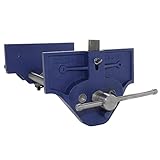
Eclipse EWWQR7 Quick Releas…
- Quick release trigger
- 7 inch jaw
- 3 inch throat
- Built-in front stop

Yost M7WW Rapid Action Vise
- 30000 PSI cast iron
- 7 inch jaw
- 8 inch opening
- Retractable bench dog
The IRWIN is our pick because it does the one job most bench tops need and does it without ceremony. The Eclipse is the quick-release option if you clamp and release all day. The Yost is the heavier quick-release if you want cast iron mass and a throat you can actually reach into.
Quick Overview: All 12 Woodworking Vises Compared in 2026
| Product | Specs | Action |
|---|---|---|
| IRWIN 226361 Woodworker’s Vise |
|
Check Latest Price |
 Pony Jorgensen 27091 Vise Pony Jorgensen 27091 Vise |
|
Check Latest Price |
| Eclipse EWWQR7 Quick Release Vise |
|
Check Latest Price |
 Pony 26545 Light Duty Vise Pony 26545 Light Duty Vise |
|
Check Latest Price |
| Yost M7WW Rapid Action Vise |
|
Check Latest Price |
 Yost F9WW Front Vise Yost F9WW Front Vise |
|
Check Latest Price |
 Yost F10WW Front Vise Yost F10WW Front Vise |
|
Check Latest Price |
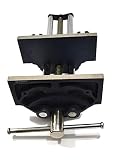 Groz 39012 Rapid Action Vise Groz 39012 Rapid Action Vise |
|
Check Latest Price |
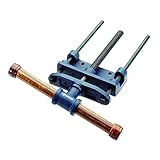 Groz 39020 Front Vise Groz 39020 Front Vise |
|
Check Latest Price |
 Wilton 78A Rapid-Action Vise Wilton 78A Rapid-Action Vise |
|
Check Latest Price |
 findmall 9 Inch Front Vise findmall 9 Inch Front Vise |
|
Check Latest Price |
 Rockler 9 Inch Dual Guide Rod Vise Rockler 9 Inch Dual Guide Rod Vise |
|
Check Latest Price |
Two things stand out in that table. First, there is a four inch spread in jaw width between the light bench clamps and the heavy front vises, and that spread decides what you can clamp. Second, only five of the twelve open without turning a handle.
1. IRWIN 226361 Woodworker’s Vise – the light-duty default for most bench tops
IRWIN Tools Woodworker’s Vise, 6 1/2″, 226361
Cast iron body
4-1/2 inch jaw capacity
Toe-in top jaws
454 g
Pros
- Toe-in top jaws pull a workpiece firmly onto the bed
- Most reviewed vise in this lineup
- Square body seats cleanly under a bench top
- Accepts wooden cheek inserts to protect finished work
- Light enough for a modest bench
Cons
- 4-1/2 inch jaw capacity rules out wide lumber
- Small jaw width next to full-size bench vises
- No quick release on the screw
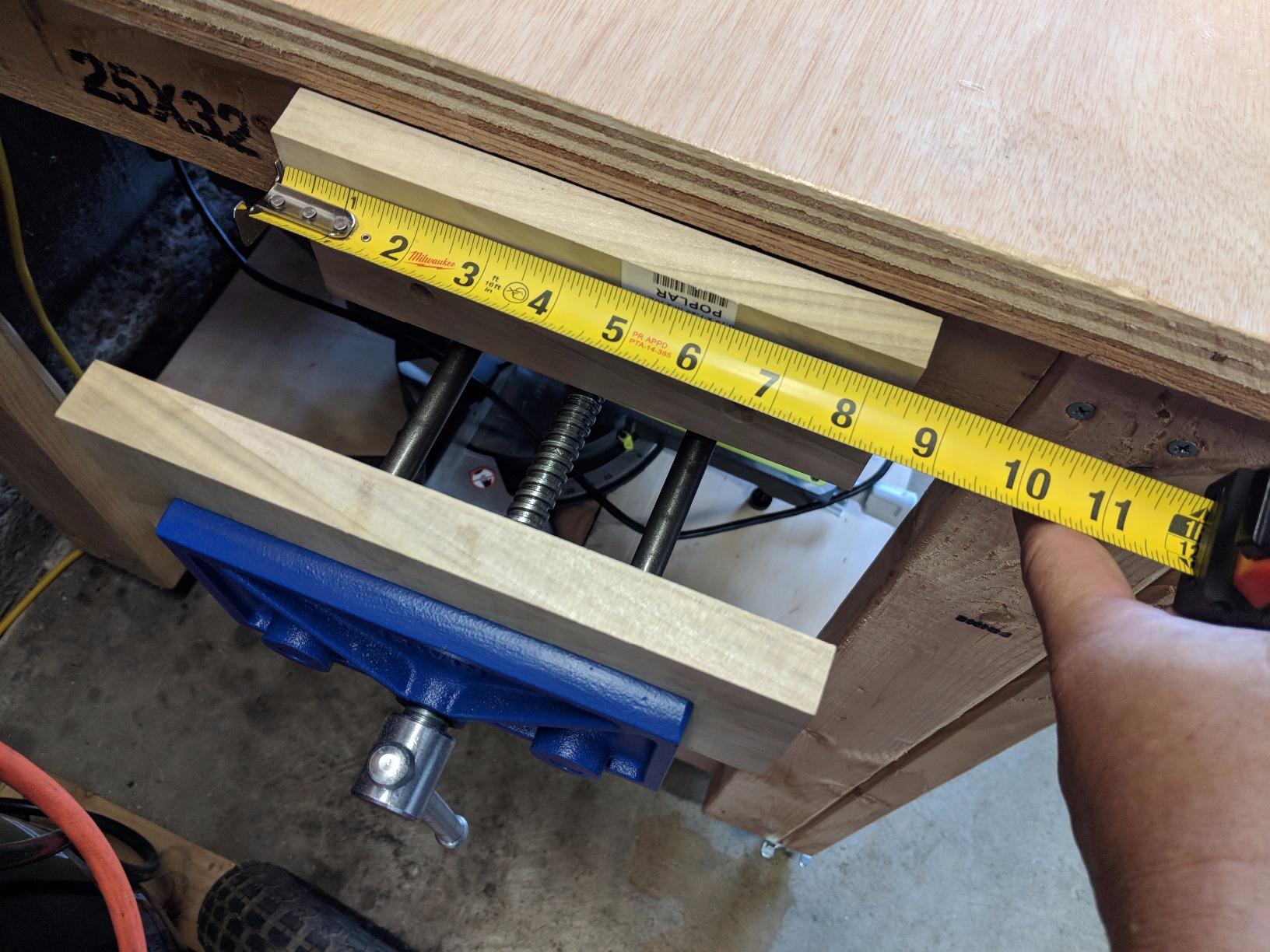
It measures seven by three and three quarter by eight inches and weighs 454 grams, and I have bolted the same model under two different bench tops. The IRWIN 226361 is the one I reach for when someone asks me what to put under a first bench, and the reason is unglamorous: it has worked for a very long time in a lot of hands.
The toe-in is the feature that matters most and the one most people do not notice. Instead of closing parallel, the top jaw tips a few degrees so the two faces meet at the top first and pull the workpiece down onto the bed as they tighten. Hold a wide board in it and the far end stays seated instead of lifting, which is exactly what you want for shooting a line with a hand plane.
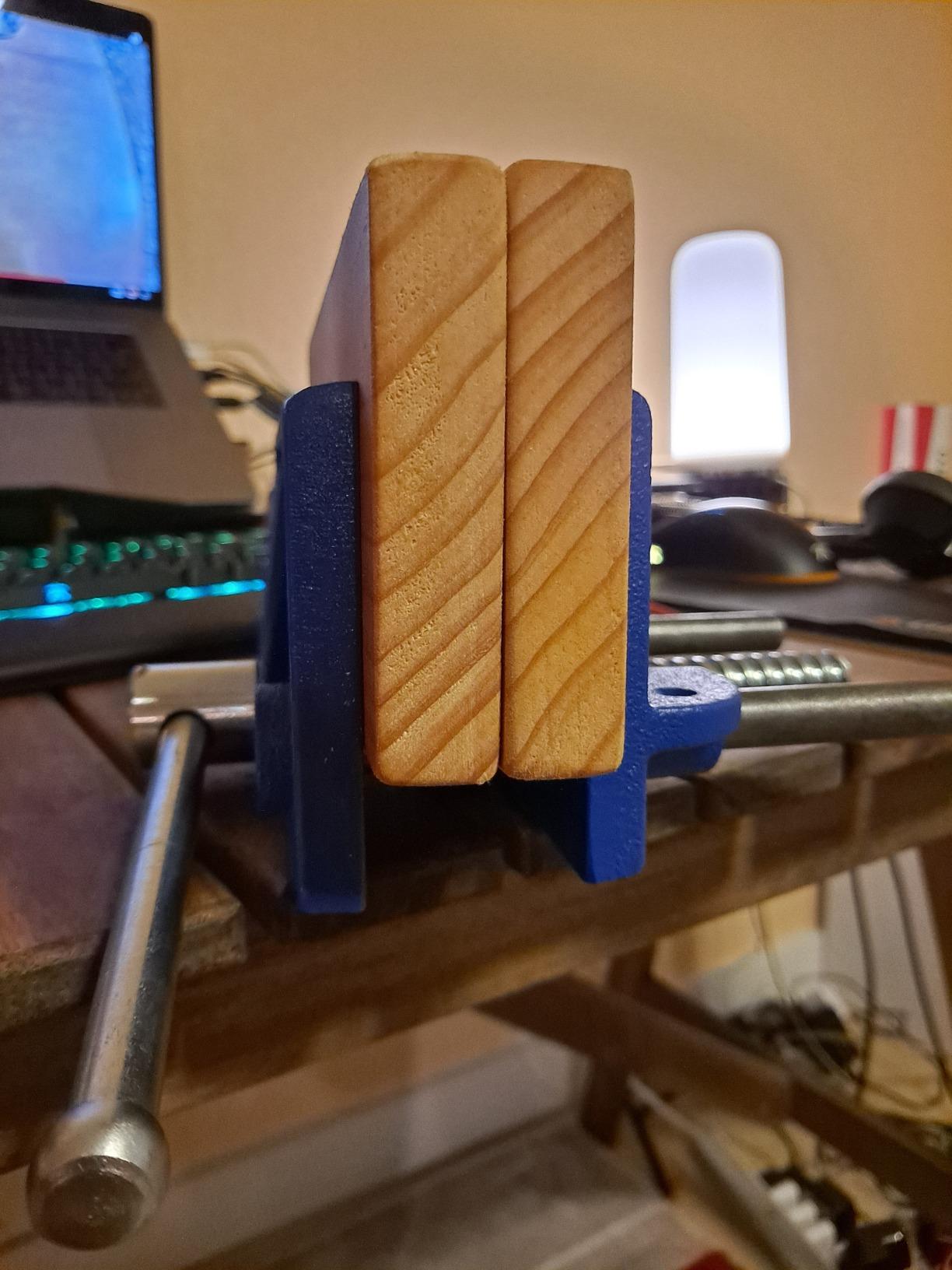
The square body is the second thing. It seats flat against the underside of the top with no wedges, no shimming and no fussy aligning, which matters enormously when your bench top is a two-inch laminated slab and the vise has to stay square to the dog holes.
There is a provision for installing wooden cheeks on the faces, and that is the difference between clamping a finished panel and leaving a row of dents in it. Fit a pair of beech or maple cheeks and you can clamp a dovetailed drawer side at full pressure without marking it.
Where the IRWIN 226361 works best
This is the vise for a four by six foot bench, a first build, a small shop, or anyone working in thinner lumber. It handles chiselling, paring, sawing thin stock, sanding, assembly gluing and light planing. At 454 grams you do not need to brace the top under it, and the square body means you can mount it to a bench you have already built.
It is also the one with the largest body of owner feedback of anything on this list, which means the failure modes are known rather than mysterious. Reviewers report a firm grip from the toe-in, easy under-bench mounting, and a jaw that keeps its alignment over years of use.
Where the IRWIN 226361 falls short
Four and a half inches of opening is genuinely small. A wide board will not go across the jaws, and a thick rough dimension will not fit between the faces, so you end up planing in shorter passes than you would like. If you regularly work on wide panels, look at the seven and nine inch vises below.
There is no quick release, so every reposition is a full crank of the handle. On a long session where you are moving between chisels, sawing and paring, that adds up. And because the top jaw is small, a lot of clamping leverage sits close to the workpiece, so this is a vise for holding work, not for crushing it.
2. Pony Jorgensen 27091 – the wide medium-duty face on a small budget
Pony Jorgensen 27091 Medium Duty Woodworker’s Vise, Orange, Grey, 9-Inch By 7-Inch
9 by 7 inch jaw
11.8 pounds
No quick release
Front-mounted
Pros
- Nine by seven inch jaw gives a broad clamping surface
- Medium duty rating for home shop or professional use
- Mounts to the front face of a standard bench
- Weighs enough to resist shifting once bolted down
Cons
- No quick release mechanism on the screw
- Fit and finish draw complaints from a minority
- Heavy for a small bench top
Jorgenson built a reputation in bench hardware over decades, and the 27091 is the mid-size face-mount vise they are known for. Nine inches by seven inches of jaw on an 11.8 pound body is a real step up in clamping area from the light bench clamps, and it still bolts to the front of an ordinary bench top.
A WoodTalk Online post in the vise recommendations thread names Jorgenson products as consistently good quality and the standard sliding block as the mechanism to look for. That is a fair read of this vise. The screw is smooth, the handle is long enough to generate real force one-handed, and the body does not creep once it is bolted down.
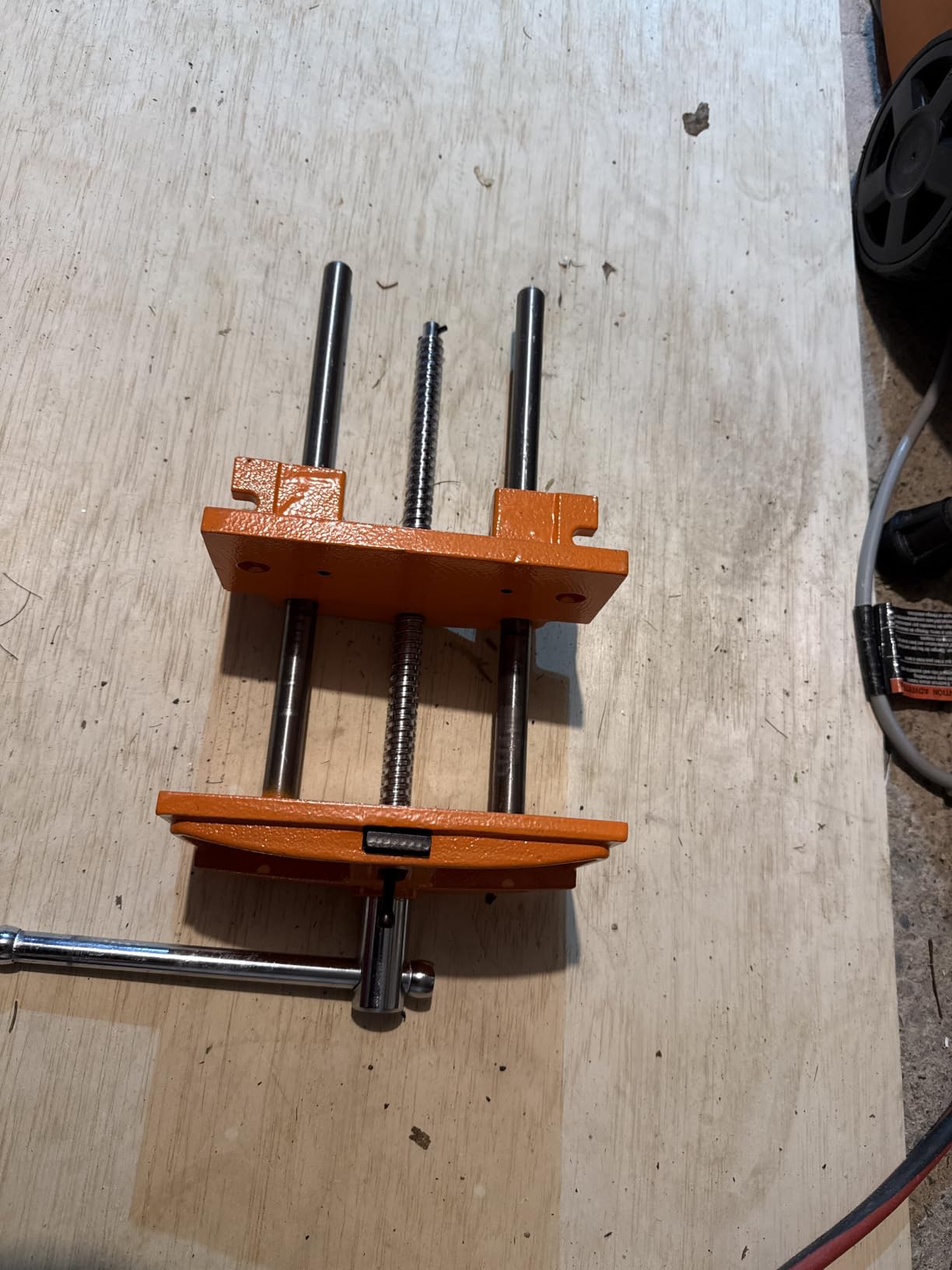
On a bench with a shallow top, that weight is a feature. A lightweight vise tends to rock when you clamp a long board off-centre, and the sliding jaw loses alignment as it moves. Eleven and a half pounds of front-mounted vise stays planted.
The machining is simpler than the vises further down this list. There is no front stop and no dog, so bench dog clamping is not part of the deal here. It is a plain clamping vise that holds a workpiece still while you work on it.
Who should buy the Pony 27091
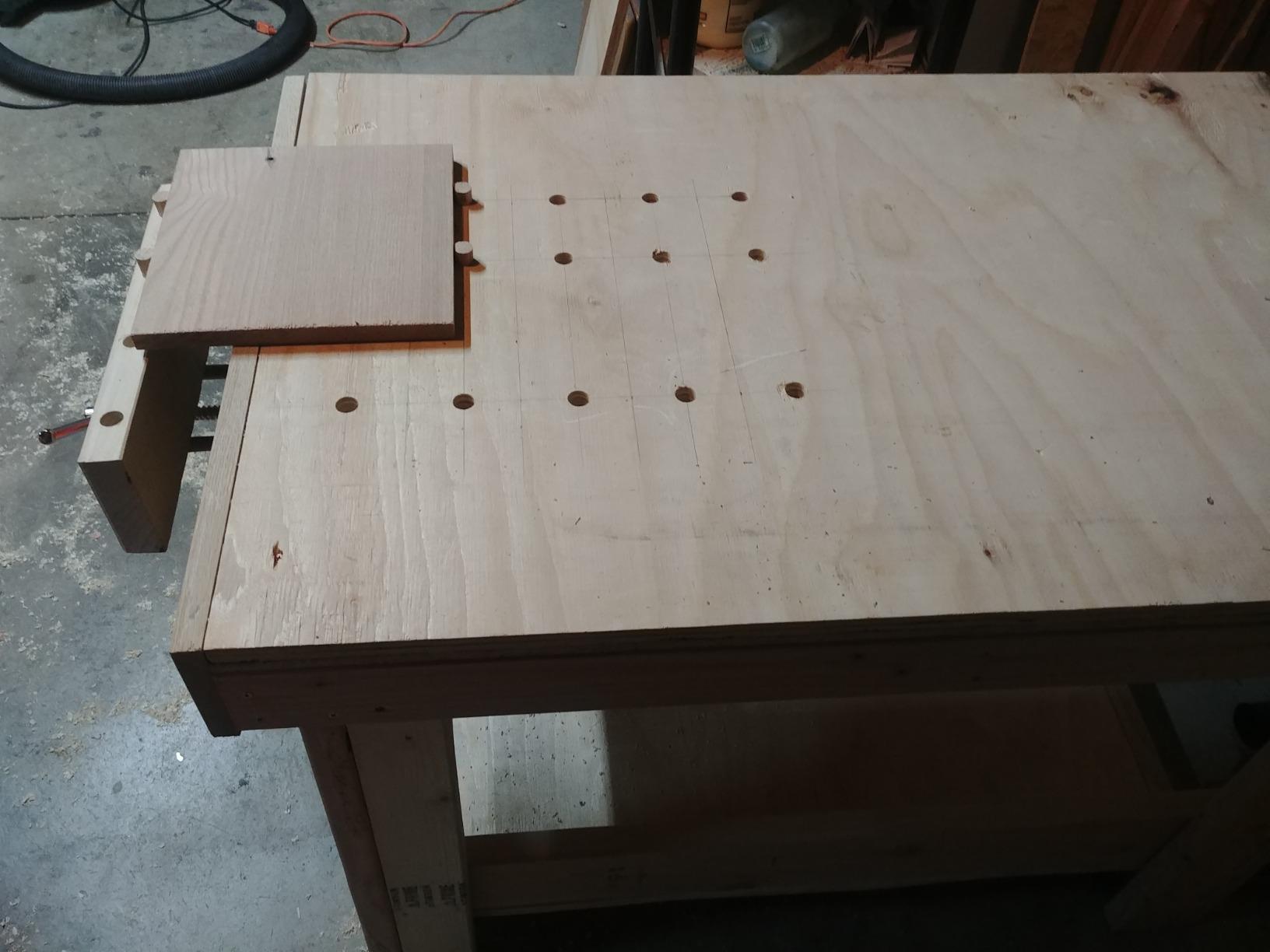
Buy this if your bench top is narrow and you want a jaw wide enough to hold a proper door panel or a drawer side flat. It suits cabinetmakers and anyone who clamps wide parts rather than small ones. The broad face also makes it a good bench-dog-free clamping station for assembly work.
It is a good second vise for a shop that already has a quick-release face on the front. Put the 27091 on the end and you have a wide, heavy clamping surface without crowding the main bench.
Who should skip it
There is no quick release, so the screw spins the whole way open and closed every time. If your workflow is repeated grip, cut, reposition, you will resent it within a week. Roughly three percent of reviews are one-star, and the recurring notes are fit, finish and the absence of a release mechanism.
It is also heavier than a small bench wants. On a narrow top with a single front apron, eleven pounds of vise at the end of the bench adds a load you should brace for before you bolt it on.
3. Eclipse EWWQR7 – the best value quick release you can bolt to a bench
Eclipse Professional Tools EWWQR7 7″ Quick Release Woodworking Vise, Grey
7 inch jaw width
3 inch throat depth
20.7 pounds
Quick release trigger
Pros
- Trigger opens and closes the jaws in one motion
- Heavy grey cast iron body resists flex and absorbs shock
- Adjustable front stop works with bench dogs
- Available in 7
- 9 and 10 inch sizes
- Two mounting hole patterns
Cons
- Arrives with heavy packing grease that must be cleaned off
- No mounting instructions or drilling template
- Front dog may need trimming to sit flush
If you want a quick release without paying for a machined import, this is the one. The Eclipse EWWQR7 is a grey cast iron body on steel slide rods with a single-start screw and a trigger that disengages the nut. Push the trigger, pull the sliding jaw, push the trigger again, and you are clamped. No cranking.
Twenty and a half pounds of cast iron is a lot of mass for a seven inch vise, and you feel it the moment a mallet comes down. The body does not ring, and it does not creep out of square the way lighter vises do over a long week.
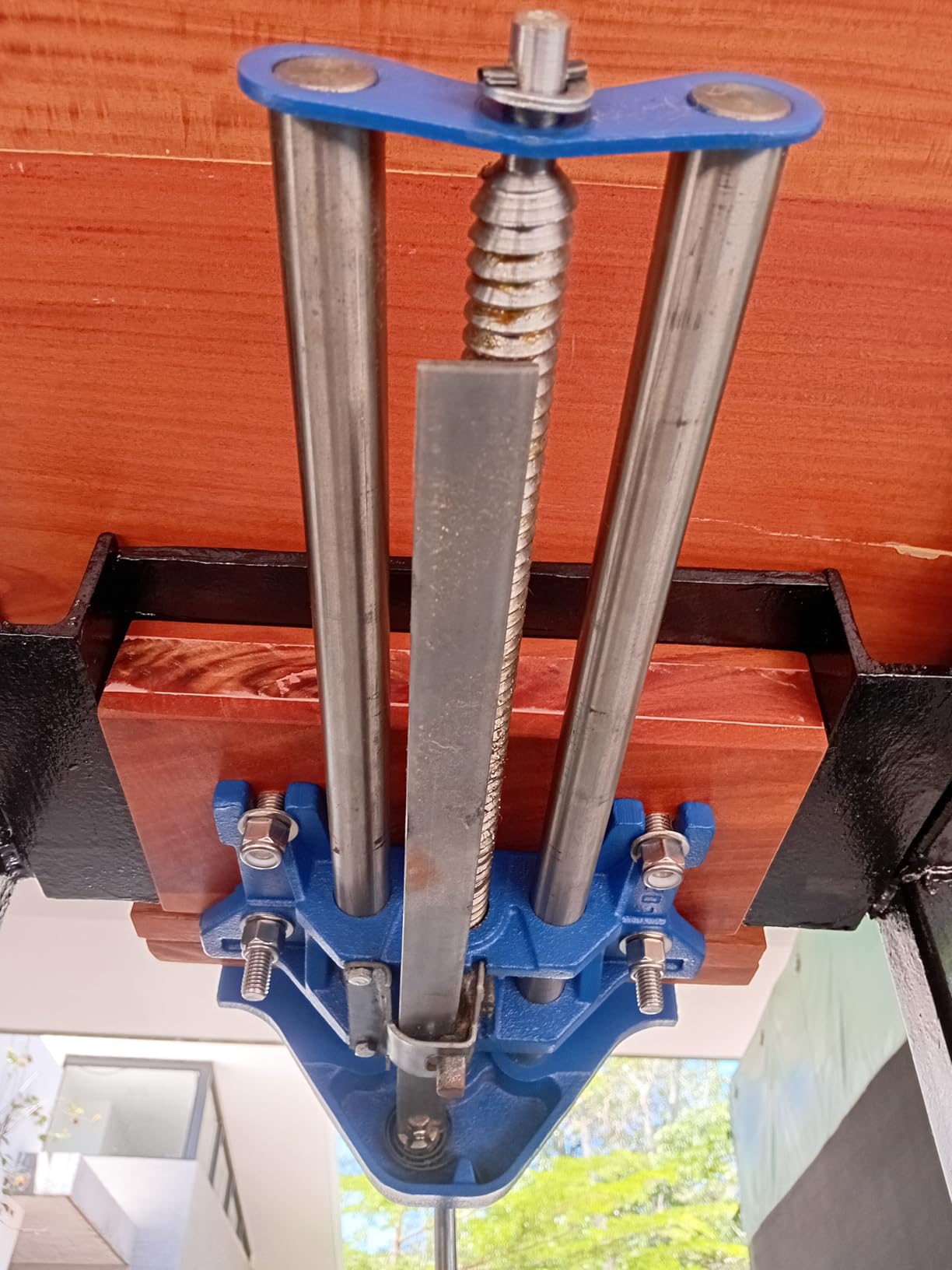
The adjustable front stop is the feature I did not expect to care about and now will not go without. Loosen the finger bolt, slide the dog to where your bench dogs are, tighten it, and the vise clamps a workpiece downward into the top as well as sideways. That turns a front vise into something that behaves more like a tail vise when you are mortising or sawing a joint.
The twin mounting hole patterns are quietly useful. One set suits lag bolts, the other suits carriage bolts, so the vise can go through a solid top or into a thicker laminated slab depending on what you have.
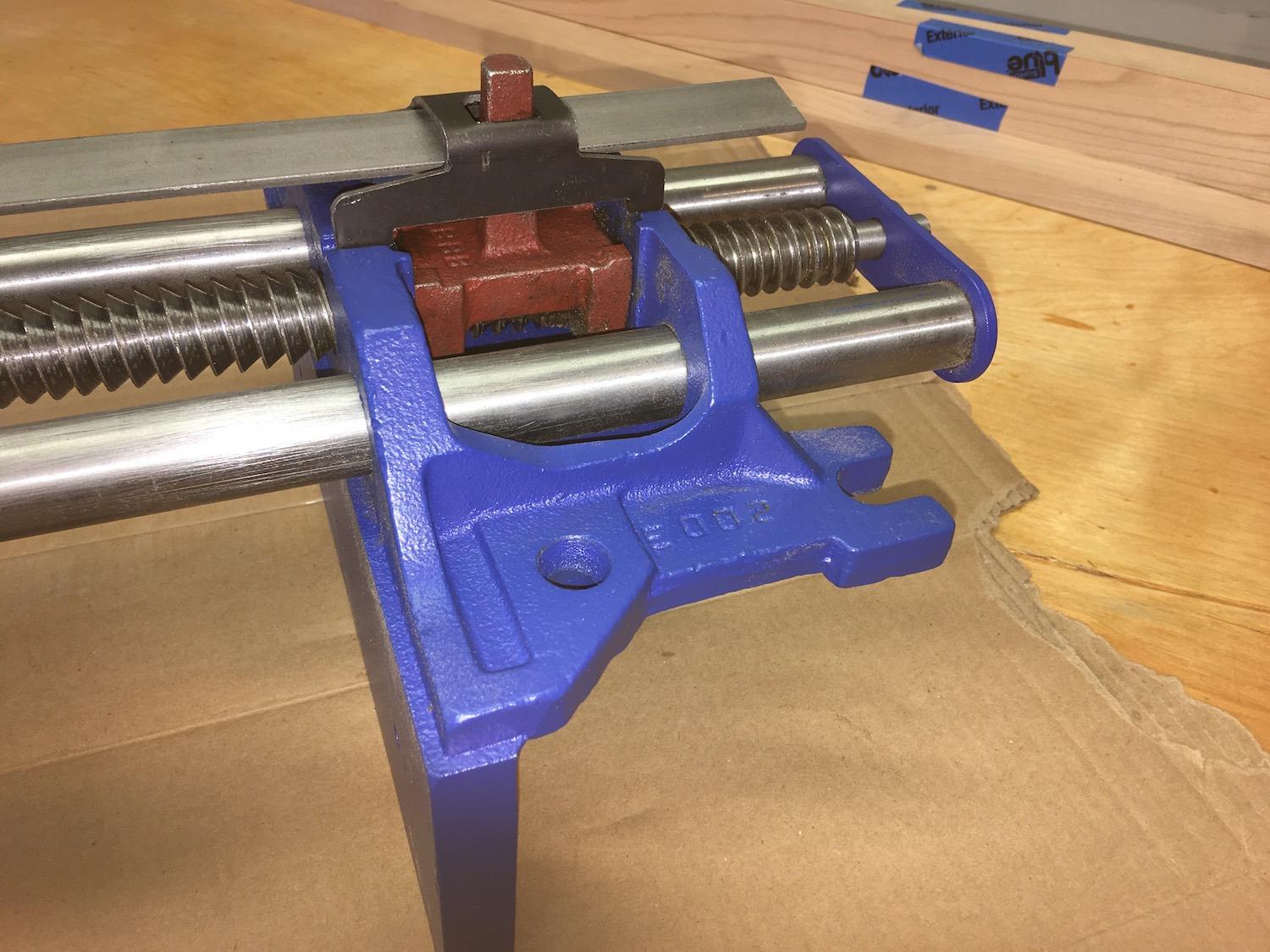
Why the Eclipse earns its place
This is the vise I recommend to someone who planes, saws and chisels all day on a bench they already own. The trigger saves a lot of time when you are taking a shoulder off a tenon, resetting a chisel and grabbing the next cut. The front stop means one vise covers both front and end style clamping.
Reviewers consistently describe it as heavy, smooth and strong for its class, and owners like the quick release and built-in dog as standout features. A seven inch jaw with three inches of throat handles boards, stiles and drawer stock comfortably.
What to watch out for
It arrives coated in heavy packing grease, and it needs cleaning before the screw will run properly. Plan ten minutes with a rag and a degreaser. Some units also arrive with casting dust from thin packaging, and a few owners find the front dog does not sit fully flush until it is trimmed.
There is no instruction sheet and no drilling template, which is the most common reason owners rate installation as difficult. Measure and mark your own holes from the vise body, and check the position of the front stop against your dog holes before you drill anything.
4. Pony 26545 – the highest rated light-duty vise in this group
Pony 26545 4-1/2-Inch x 6-1/2-Inch Light Duty Woodworker’s Vise
4-1/2 inch opening
6-1/2 inch jaw width
Grey iron with orange enamel
Low profile
Pros
- Highest average rating in this lineup
- Low profile that sits flush with a bench top
- Handles are drilled to accept wooden jaw liners
- Easy to install and quick to operate
Cons
- Light duty only by design
- Small opening suits small pieces
- No quick release
Ratings are not everything, but here the numbers and the owners agree. The Pony 26545 holds a 4.7 average across more than six hundred reviews, the highest in this group, and eighty percent of those reviews are five star. That is a well-loved tool rather than a lucky listing.
It is small. Four and a half inches of opening on a six and a half inch jaw, in a low profile casting with a grey iron body and orange baked enamel. What makes it pleasant is the shape: it sits almost flush with the underside of the bench top, so it does not eat your legroom the way a deeper face does.
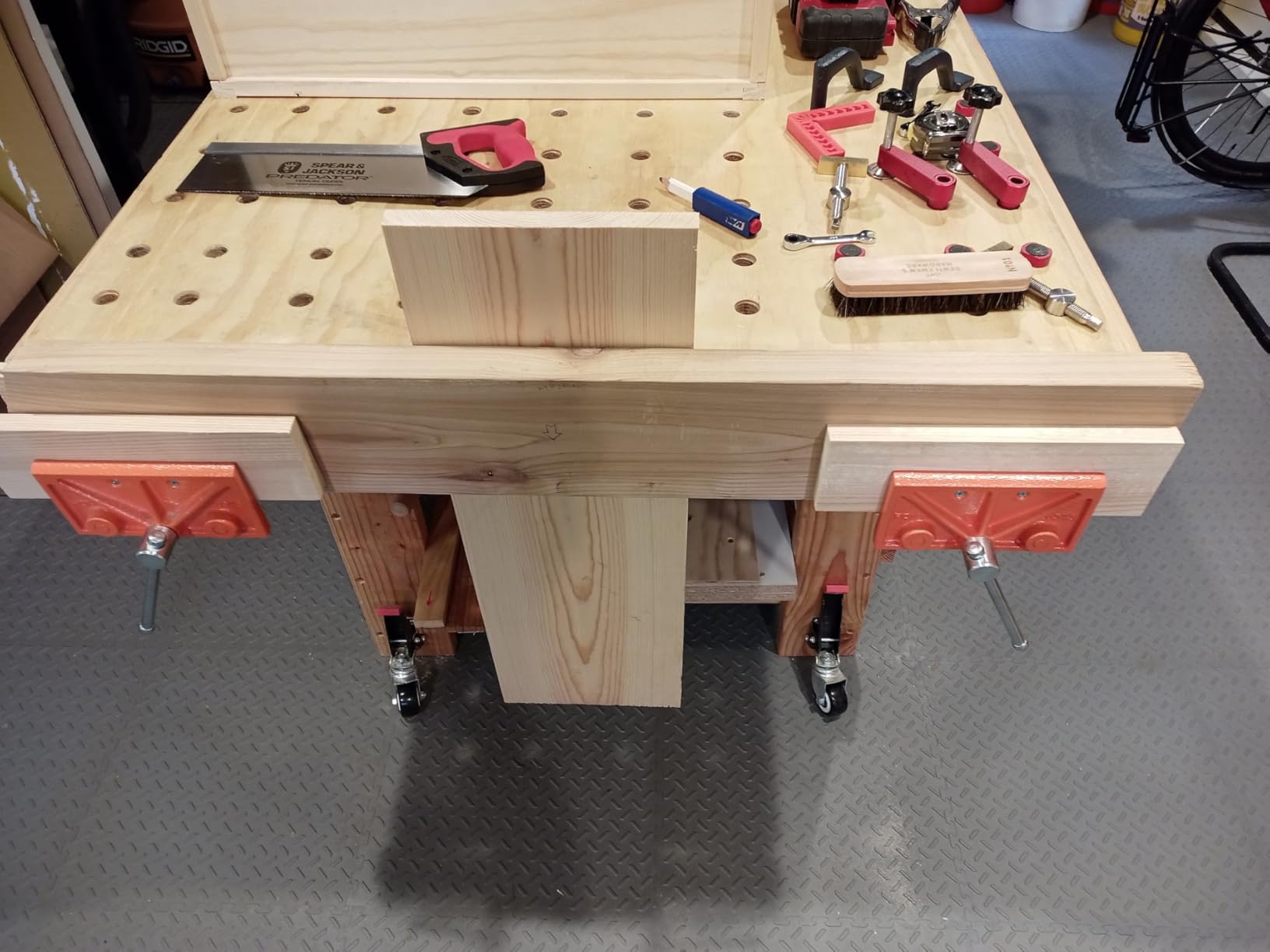
The mounting holes in the side are the detail I like. They are positioned so you can fit hardwood faces over them and screw them into place, which turns a plain iron vise into a dog-hole clamping pad for small parts, trim and offcuts.
The screw drive is smooth and the opening is immediate, even though there is no quick release. On a vise this small, spinning the handle is a two-second operation rather than a chore, so the missing release mechanism costs almost nothing.
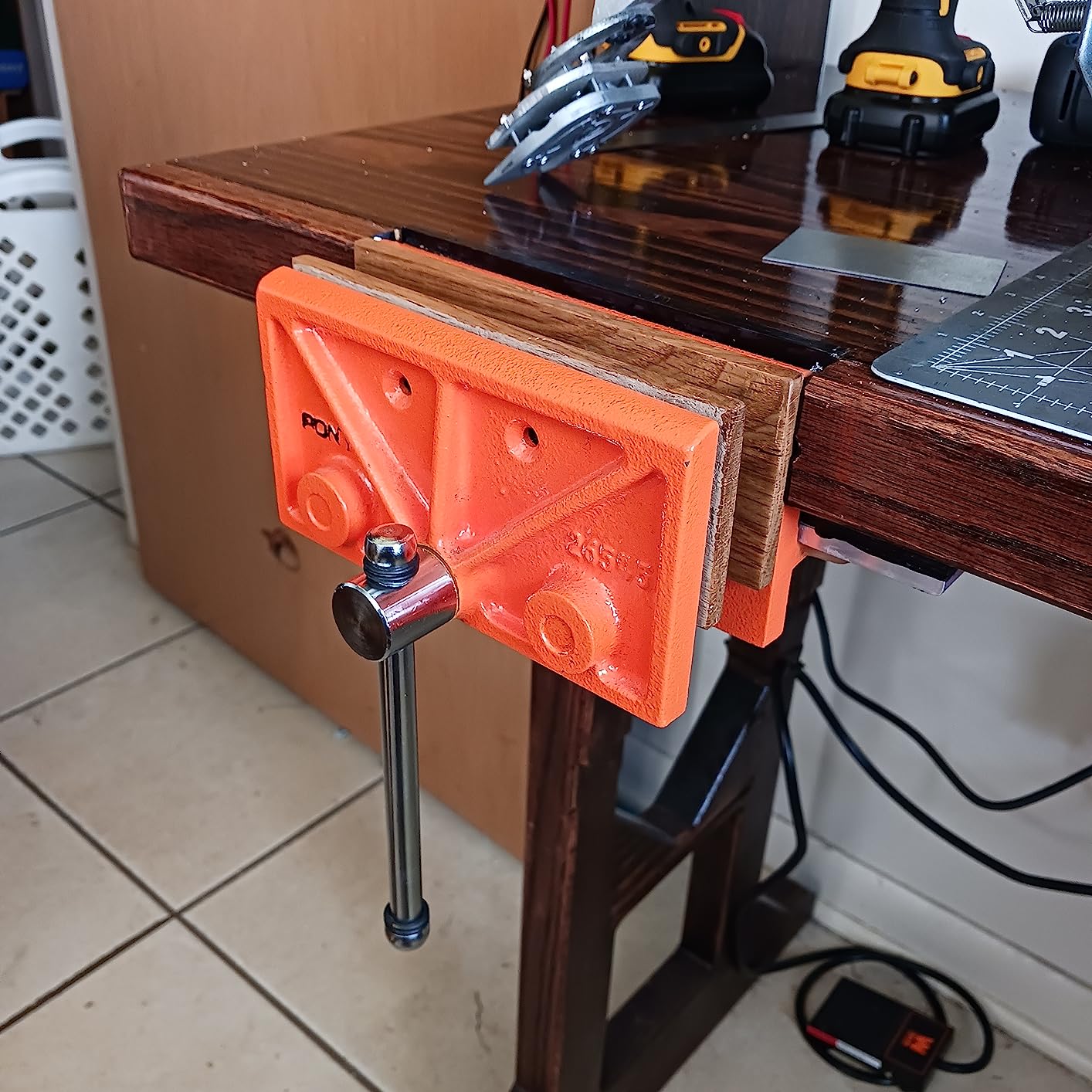
Where the Pony 26545 shines
Small parts, small benches, and small people. This is the vise for a child’s bench, a narrow bench in a hallway, a lap-desk build or a bench where knee room matters more than clamping capacity. It handles sanding, assembly, routing small pieces, drilling and general holding.
If you work on furniture parts rather than rough lumber, the low profile and the option to add hardwood faces make it a quiet performer. Owners describe it as sturdy and ideal for small pieces, sanding and assembly.
Where it is the wrong tool
Do not try to clamp a wide board across the jaws. Four and a half inches of opening and a six and a half inch jaw width were designed for light duty work, and pushing past that produces a clamped edge with a bow in it. Heavy planing, chopping and sawing want a bigger vise.
It is light duty by design, so if your work involves ripping rough material or chopping, you will grow out of it quickly. Treat it as a second vise for detail work, not the main clamping station.
5. Yost M7WW – the heavy quick release for a bench that gets worked hard
Yost Vises M7WW Rapid Action Woodworking Vise | Quick Release Lever for Quick Adjustments | 7 Inch Jaw Width | Made with Heavy-Duty Cast Iron | Blue
30000 PSI cast iron
7 inch jaw
8 inch opening
3 inch throat
Pros
- Rapid action lever opens the vise in about a second
- 21 pound cast iron body resists racking
- Operable with one hand
- Built-in retractable bench dog
- Owners rate it as strong value in its class
Cons
- Casting draft angle leaves the mounting face not quite square
- Quick release and screw can feel stiff when new
- Spindle machining is rough and can gall
The Yost M7WW is the vise that comes up most often when people who own vises talk about which one they would buy again. Thirty thousand PSI cast iron, a seven inch jaw, an eight inch opening and three inches of throat, with a rapid action lever that lets you open the whole thing in a second.
The mechanism is the point. Pull the lever toward the handle, the nut disengages, and the sliding jaw runs free. Push the lever back and the screw re-engages exactly where it was. It works with one hand, which sounds minor until you are holding a chisel in the other and trying to reposition a workpiece.
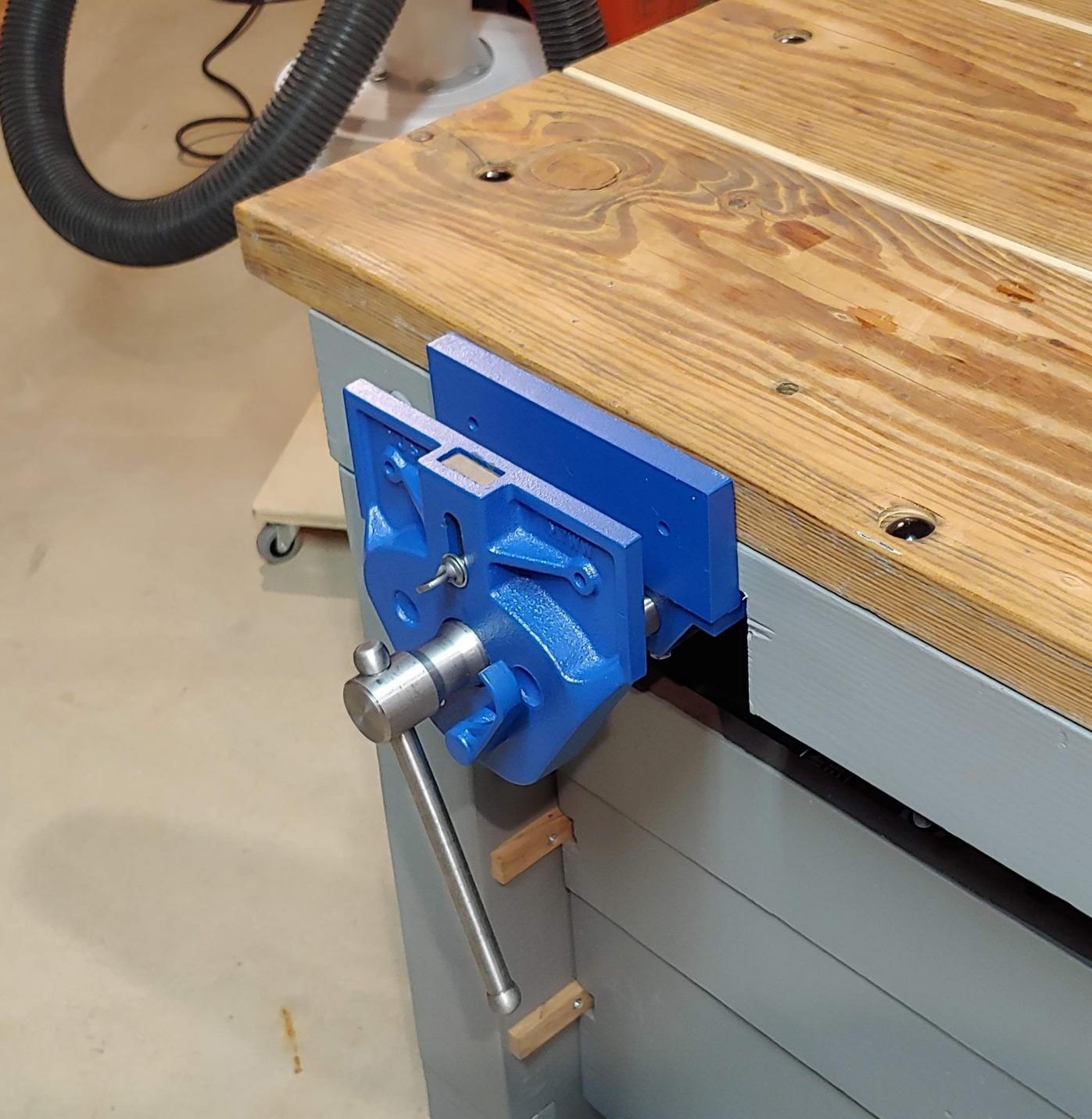
Twenty-one pounds of cast iron is a serious body for a seven inch vise. It sits still under planing pressure, and the steel guide rails plus chrome plated T-bar handle give you a comfortable grip when you are applying real force to close the jaws.
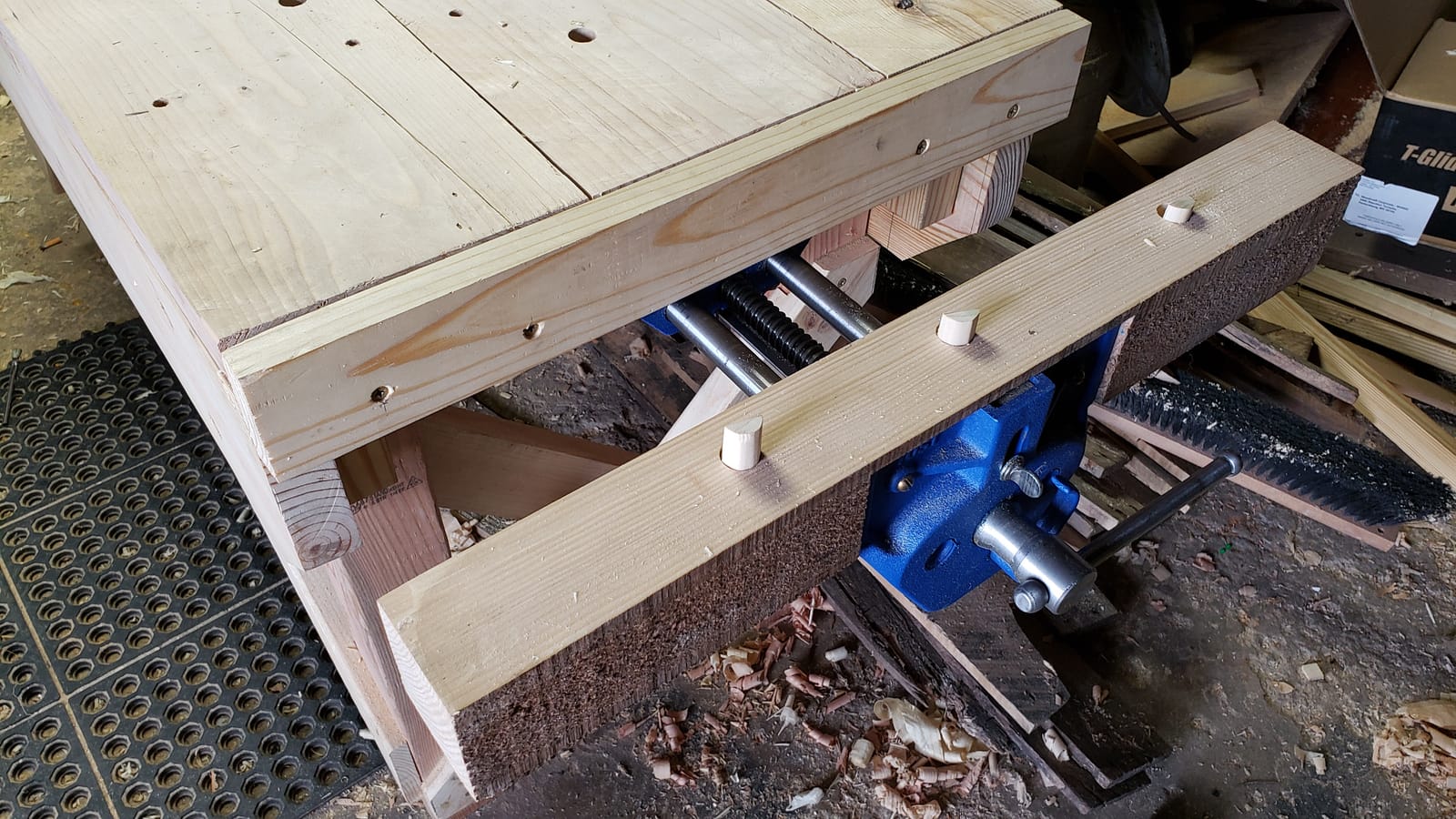
The built-in bench dog retracts out of the way and locks into position with a finger bolt. Set it against a row of dog holes and the vise stops pressing the workpiece sideways and starts pressing it down, which is what you want for joinery work and for holding a thin panel flat while you plane it.
Why the Yost M7WW is our rapid-action pick
It sits between the Eclipse and the heavier vises on cast iron mass without tipping into the weight class that makes installation a two-person job. Reviewers praise the heavy construction, the smooth rapid action and the chunky built-in dog as the three things that matter most.
Owners also rate this vise as strong value against comparable quick-release castings, and note that the jaws accept wooden chops for softer clamping when you are handling finished work. For a bench that sees daily hand-tool work, that combination is very hard to argue with.
What to plan for on install day
The mounting face is not perfectly perpendicular. The casting draft leaves it a fraction off square, which means the vise wants shims or an angled block to sit true against the underside of the top. This is a manufacturing characteristic rather than a defect, but you should account for it before you drill.
On a new unit the quick release and the screw can feel stiff, and the spindle machining is reported as rough enough to gall. Break both in early with a few dozen open and close cycles before you need the vise in a hurry, and put a light oil on the thread.
6. Yost F9WW – the affordable nine inch front vise for cabinet work
Yost Vises F9WW Front Vise | 9 Inch Woodworking Vise with guide bars | Blue
9 inch jaw with guide bars
9 pound body
Solid steel main screw
1-year warranty
Pros
- Light enough for a modest bench without extra bracing
- Good clamping torque from the steel screw
- Owners rate it as strong value against big-box vises
- Mounts cleanly between bench dog holes
Cons
- Jaw can flex when clamping near one edge
- No quick release
- Some lash in the screw threading
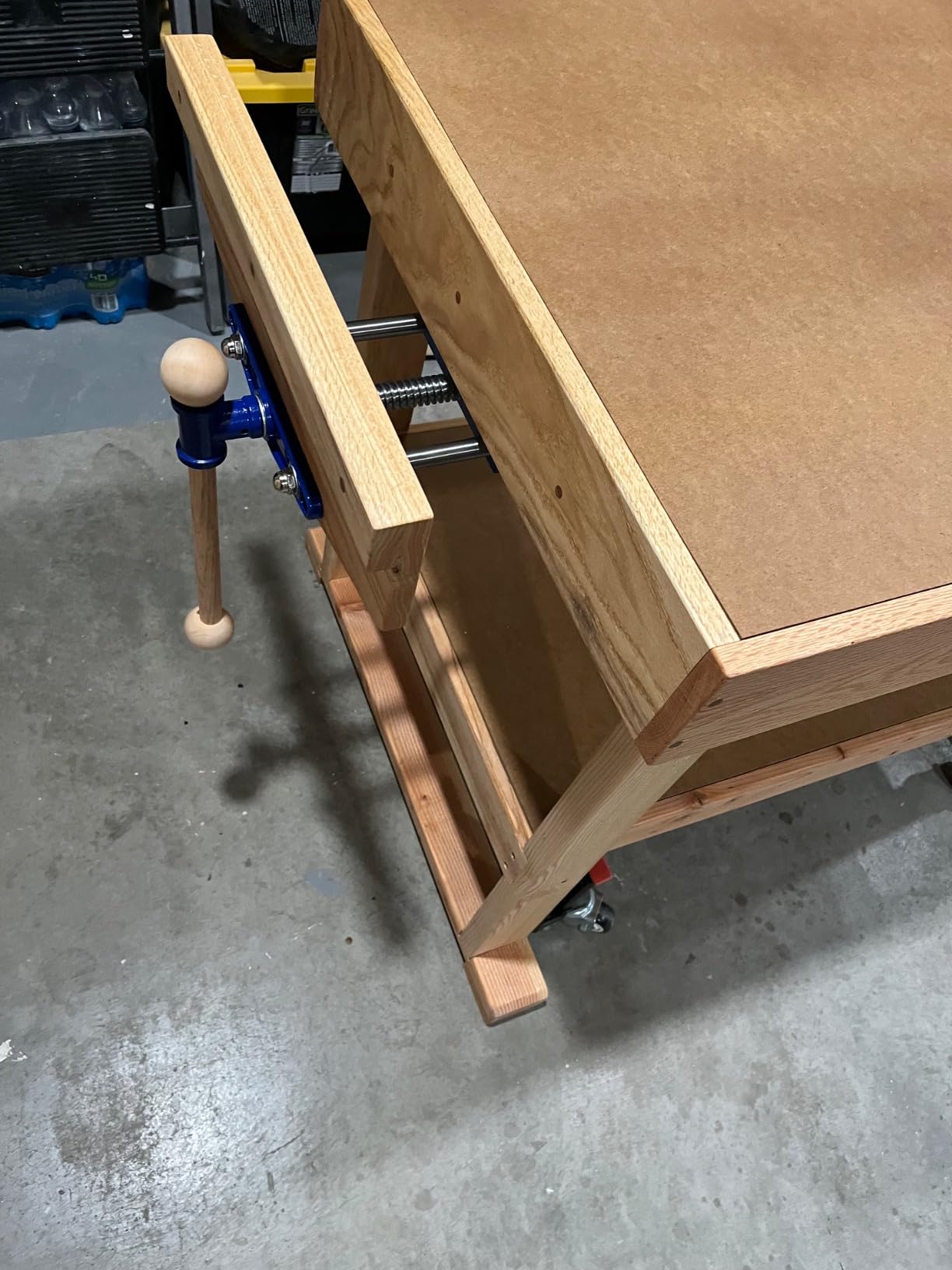
Sometimes the right answer is a nine inch jaw on a body light enough that you do not have to think about the bench. The Yost F9WW weighs nine pounds and carries a nine inch jaw on guide bars with a solid steel main screw, which makes it comfortable on a lighter bench than most vises in this size class.
The screw does the work here. It is solid steel rather than a plated light alloy, so it keeps its torque over years, and the long handle gives real closing force. The manufacturer lists it for cabinetmaking, drilling and sawing, which matches what owners use it for.
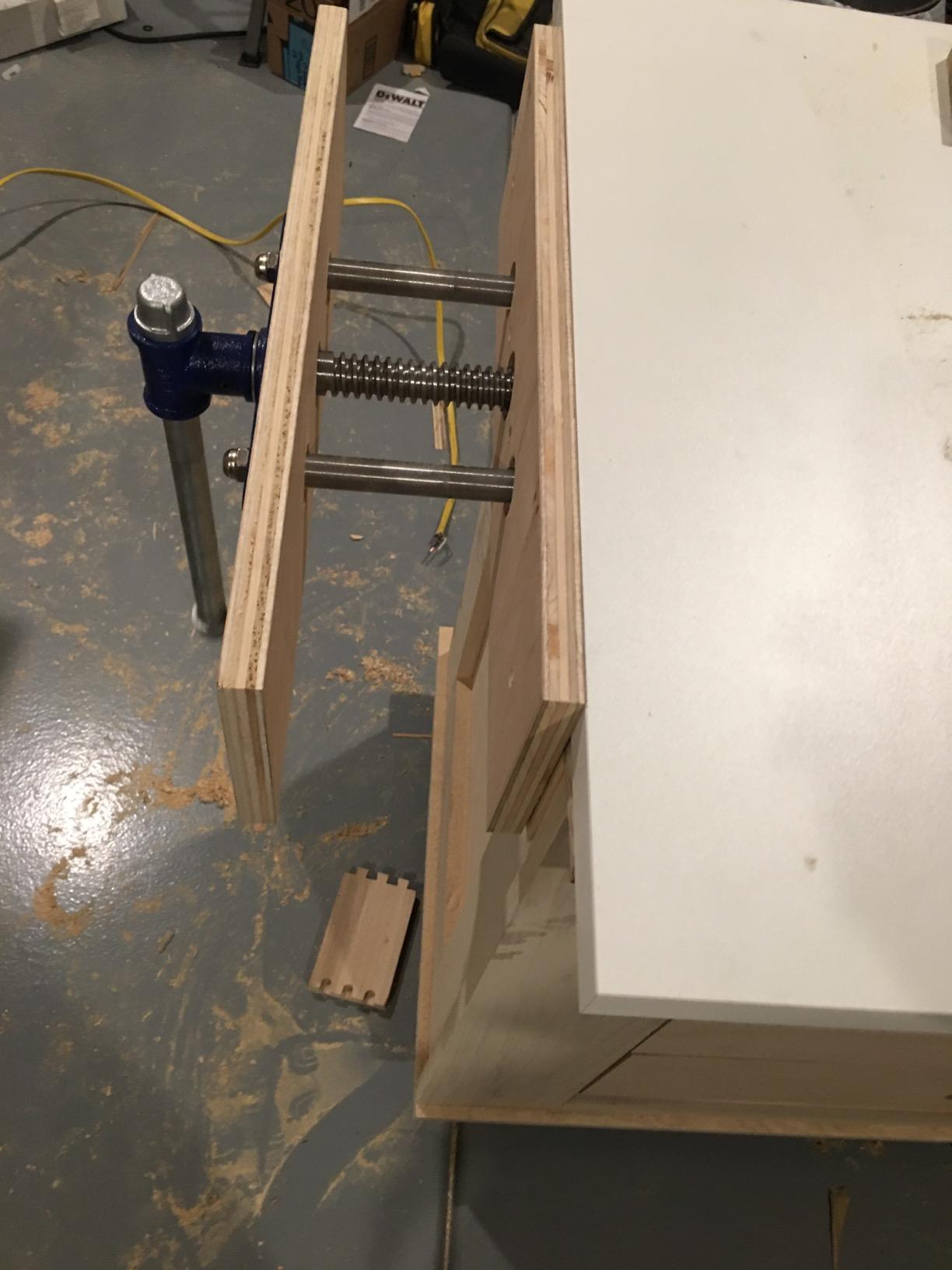
It mounts cleanly between bench dog holes, which is worth more than it sounds. If your dog spacing is standard, the vise can sit between two holes and the workpiece overhangs the dogs naturally for planing and jointing.
Reviews describe it as a strong budget front vise with good torque and durability, and buyers like the feel of a vise that opens and closes smoothly without any fuss.
Who the F9WW suits
This is a cabinetmaker vise. Nine inches of jaw holds a door stile, a drawer side or a shelf flat, and nine pounds will not load a modest bench. It also works for a retrofit, where you are adding a front vise to a bench that has already been through a few moves.
If your work is repetitive clamping of wide flat parts rather than chopping and heavy planing, the extra jaw width matters more than a quick release. You set the vise once, work through a batch, and move on.
What the F9WW gives up
The most reported complaint is jaw flex when you clamp close to one edge. A nine inch jaw with a light body will bow slightly if the workpiece is not centred, and the fix is a scrap block under the far side. Know that going in and you will never be surprised by it.
There is no quick release, and some owners report lash in the screw threading that makes the handle feel notchy at certain points. Neither is a dealbreaker for batch work, but both are noticeable if you are repositioning constantly.
7. Yost F10WW – the rigid ten inch front vise for a full shop bench
Yost Vises F10WW Woodworker’s Vise | Front Vise | 10 Inch Woodworking Tool | Cast Iron Body Construction with a Solid Steel Main Screw | Blue
10-1/4 inch width
19-1/4 inch length
3/4 inch guide rods
6.36 kg
Pros
- Guide rod bushings cut racking compared with the 9 inch model
- Clean castings and a mechanism that does not bind
- Solid powder coat that does not chip
- Owners rate it as strong value among 10 inch shop vises
Cons
- No drilling template or mounting hardware included
- No handle supplied and the T-handle fitting can burr a dowel
- Instructions reference the wrong model
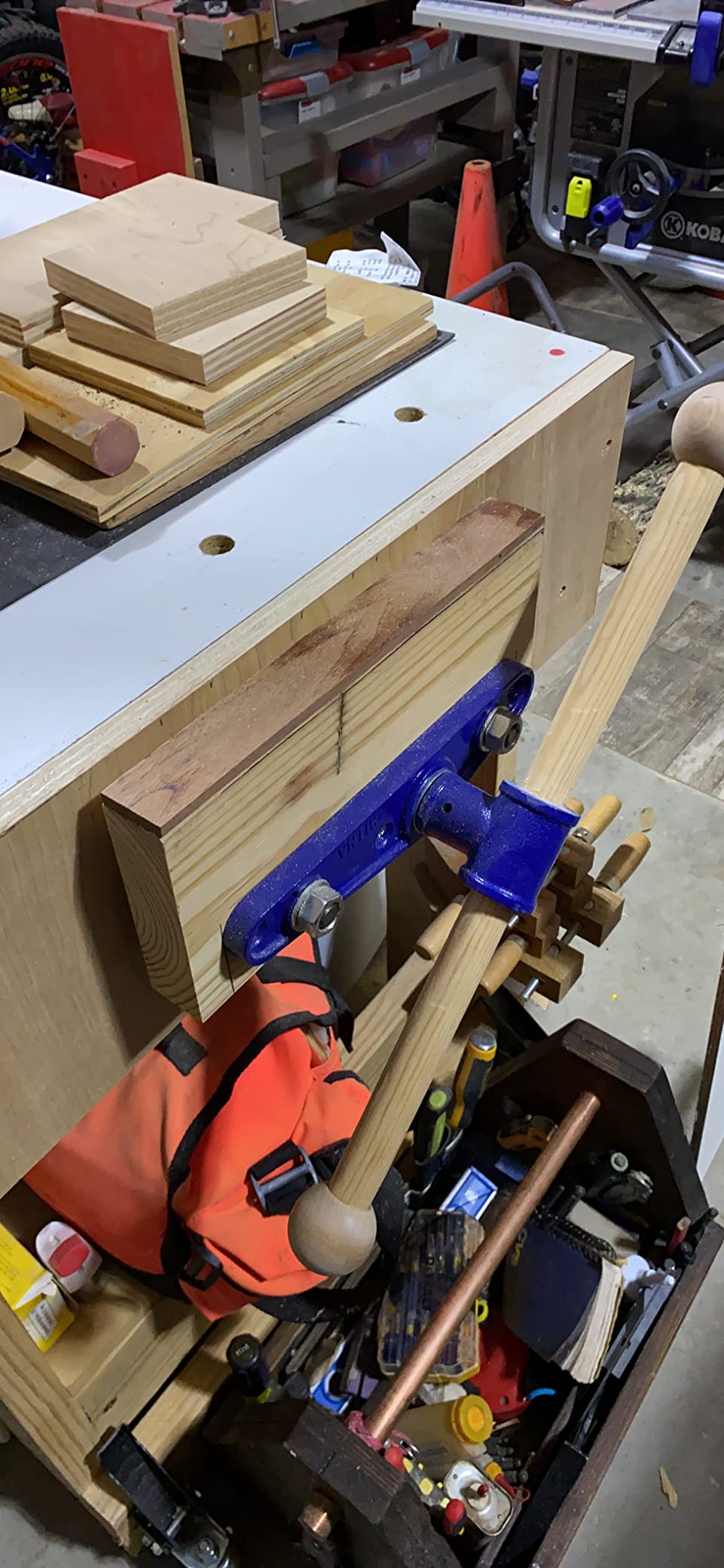
The step from nine inches to ten inches is where a front vise starts feeling like a real machine. The Yost F10WW measures ten and a quarter inches wide by nineteen and a quarter long, with three quarter inch guide rods running in metal bushings that cut vertical racking down hard compared with the smaller model.
Racking is the thing that ruins planing. When the top jaw tilts under load, the workpiece twists and the sole rides unevenly, which leaves a planed surface you have to sand anyway. The bushed guide rods on this vise keep the jaw square under real clamping pressure, and that is the reason to choose the 10 inch over the 9 inch.
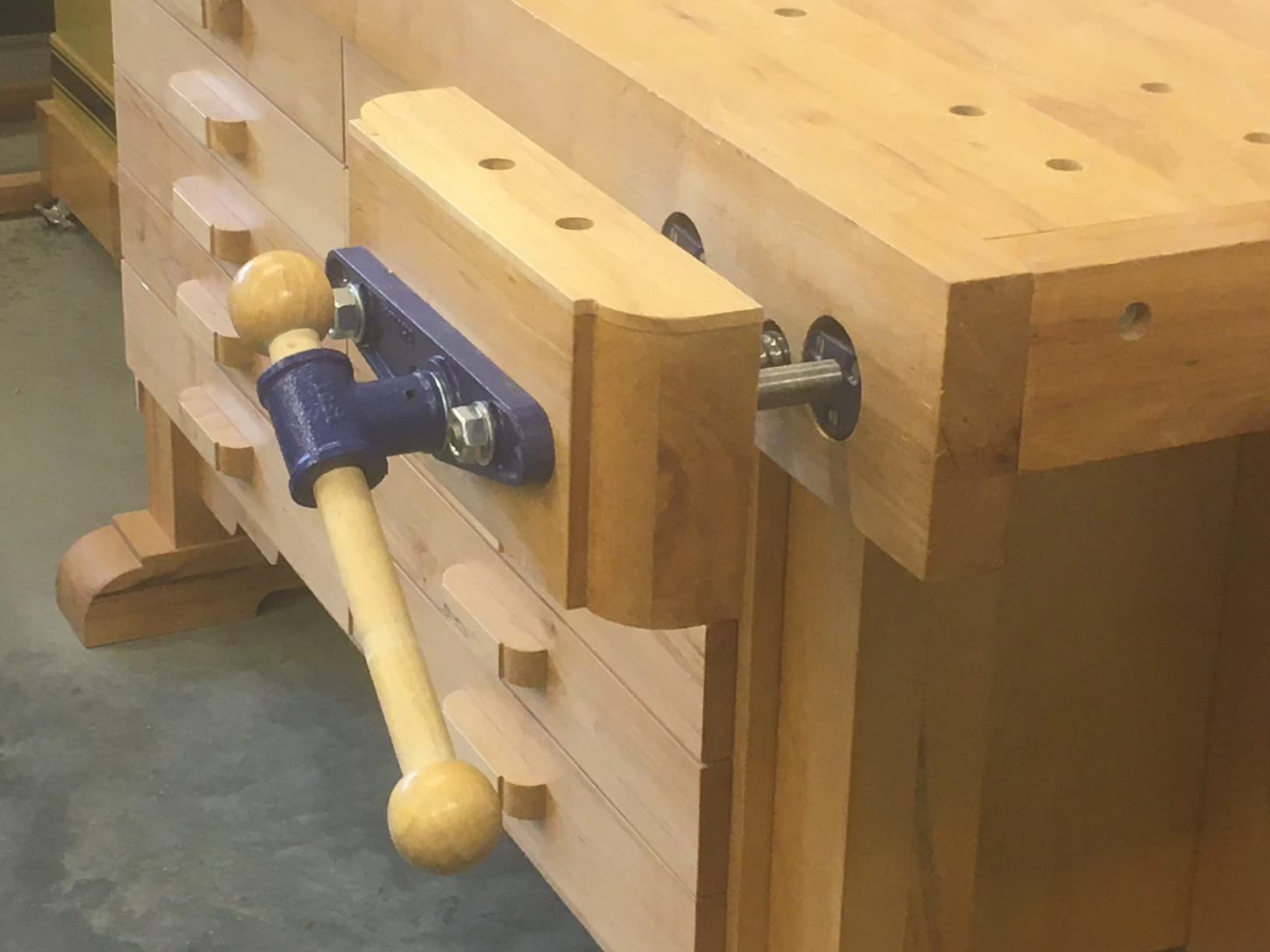
The main screw is solid steel, one and three sixteenths inches in diameter and fifteen and a half inches long, which is a serious amount of screw. It closes smoothly, it does not bind, and owners report the castings are clean and the powder coat is solid with no chipping.
It is also a value proposition without being a cheap tool. Owners rate it as a strong, rigid vise that outlasts pricier imports, and they single out the guide rod bushings as the feature that earns the extra size.
Why choose the 10 inch F10WW
If you plan wide panels, doors or workbench tops, ten inches of jaw is a meaningful upgrade from nine. It holds a full width door without overhanging, which means the workpiece sits between the jaws rather than cantilevered past them. That is the difference between a square mortise and a racked one.
It suits a serious hobbyist or a professional shop bench where heavy planing and chopping are routine. A year of daily use will not hurt it.
What to expect at install time
There is no drilling template and no hardware in the box, so installation takes care and your own measurements. Owners report this as the main difficulty. Mark the holes from the vise body itself and check the swing of the sliding jaw before you commit.
No handle is supplied, and the rough cast interior of the T-handle fitting can burr a wooden dowel where it seats. Most owners fit their own dowel handle, which is a five minute job with a file and a dab of wax. The instructions also carry typos that reference the 9 inch model, so treat them as a rough guide.
8. Groz 39012 – the wide-opening vise for big panels and rough material
Groz 9″ Rapid Action Woodworking Vise, 13-1/2″ Jaw Opening, Buttress Thread Screw, Cast Iron Body with TOE-IN Jaws for Workbench Cabinet and Furniture Building (39012)
13-1/2 inch opening
9 inch jaw width
32.8 pounds
Buttress thread screw
Pros
- Thirty pound cast iron body absorbs planing and mallet work
- Buttress thread gives smooth high-force closing
- Toe-in jaws clamp evenly down the full depth
- Opening handles thick material and wide panels
Cons
- Thirty-two pounds makes installation a two-person job
- Bulk and weight suit only a substantial bench
The Groz 39012 is the biggest vise in this group and the only one with a thirteen and a half inch opening. That travel means you can clamp a panel across the jaws, hold a thick rough dimension, and get your hands into the gap, which no other vise here does.
The screw is the technical standout. A buttress thread is not a normal Acme thread, it is asymmetric by design so that the flats on the screw push rather than wedge during closing. In practice you get smoother, higher force clamping in the direction that matters, with less backlash when the jaws are under load.
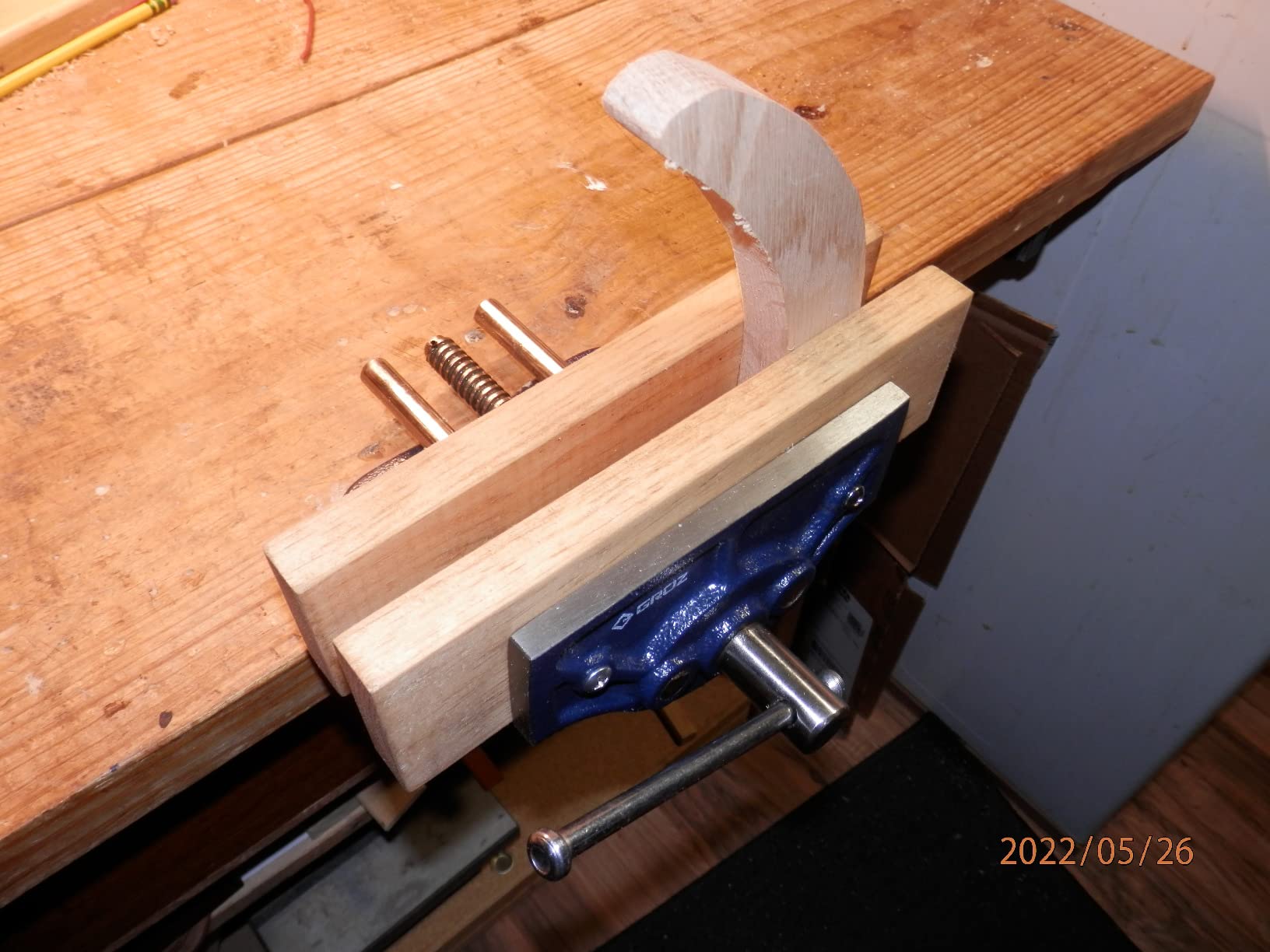
One counter-clockwise turn disengages the screw and the jaw runs out across the full opening, so you are not cranking a heavy casting through thirteen inches of travel. The rapid action slide and the buttress thread together are the reason this vise feels fast despite its size.
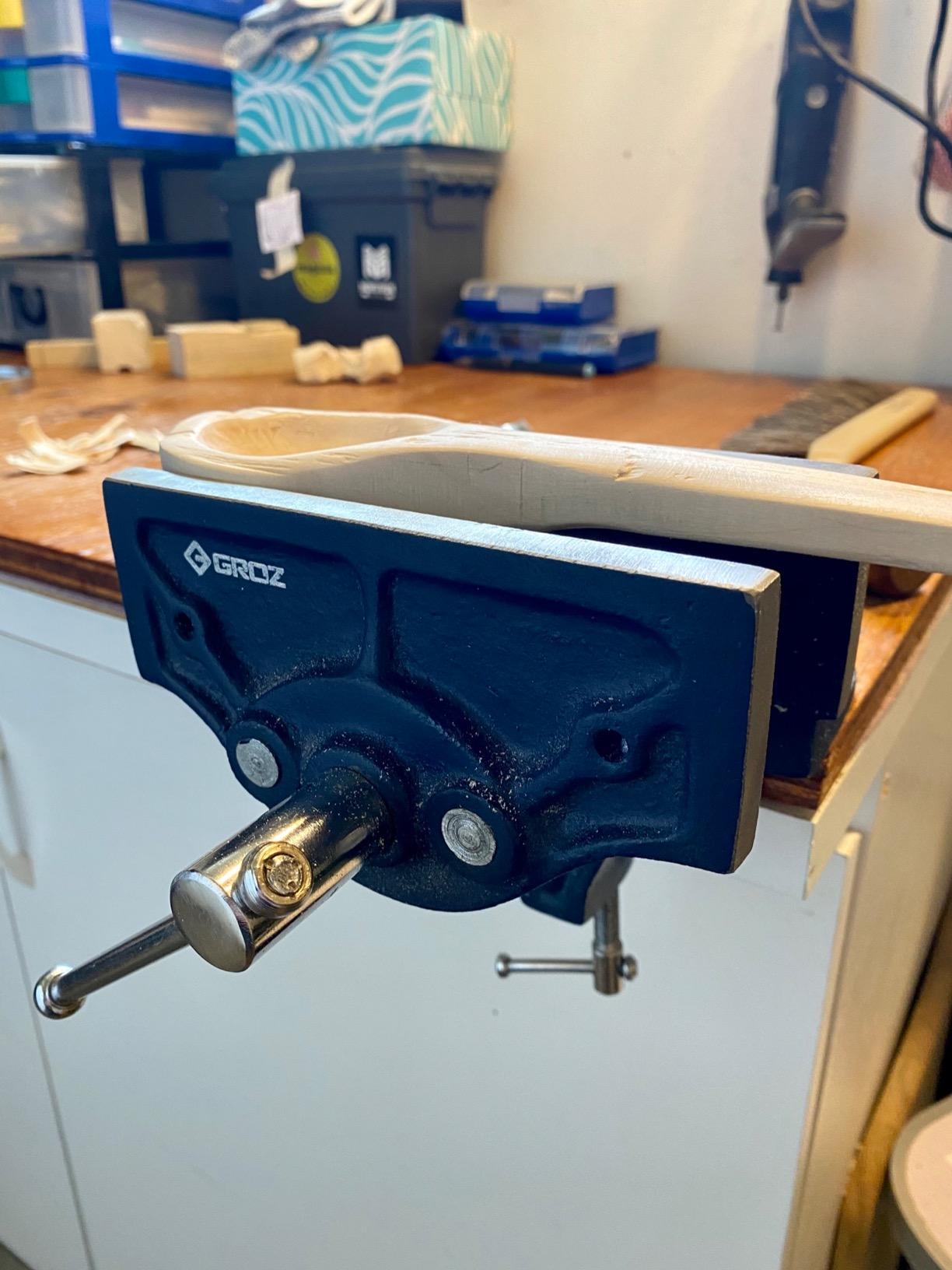
Toe-in jaws meet at the top first and pull parallel under load, which means a tall board or a stile is clamped evenly from top to bottom instead of being pinched. Jaw faces accept a wooden liner, so a finished surface can be held without marking it.
Where the Groz 39012 earns its place
On a heavy bench, in a shop that handles wide panels, doors and thick material, this is the vise that stops you compensating for a small opening. The thirty pound close-grained cast iron body absorbs planing and mallet work without chatter, and owners point to the wide opening and the precise buttress hold as the reasons to buy.
If you build large furniture or work with sheet goods and thick stock, the travel alone changes your workflow. You stop planning the work around what will fit.
When it is too much vise
Thirty-two pounds of casting is a genuine installation job, and most people will need a second set of hands to lift it into position under a bench top. The bulk also makes it a poor match for a lightweight bench, and the reach across that wide jaw is more than many people can comfortably work at.
It is also a premium-tier tool, and if your work stays under nine inches wide most of the time, you are paying for travel you will not use. Match it to a bench that can carry the load and the workspace it needs.
9. Groz 39020 – a twin-guided front vise kit for a shop-built setup
Groz Woodworking Front Vise, 7-1/8″ Jaw Width, 8-1/4″ Jaw Opening, Cast Iron Body and Handle Socket, Precision Rolled Threads with Twin Guides, Wooden Handle for Workbench Builds (39020)
7-1/8 inch jaw width
8-1/4 inch opening
Twin guide rods
Turned wooden handle
Pros
- Twin guide rods and rolled threads hold the jaw square under load
- Cast iron body and handle socket take punishment
- Turned wooden handle is in the box
- A good foundation for a custom shop-built bench
Cons
- Lowest rated vise in this group at 4.2 stars
- No quick release so every adjustment is a full crank
- Wooden jaw faces must be made by the buyer
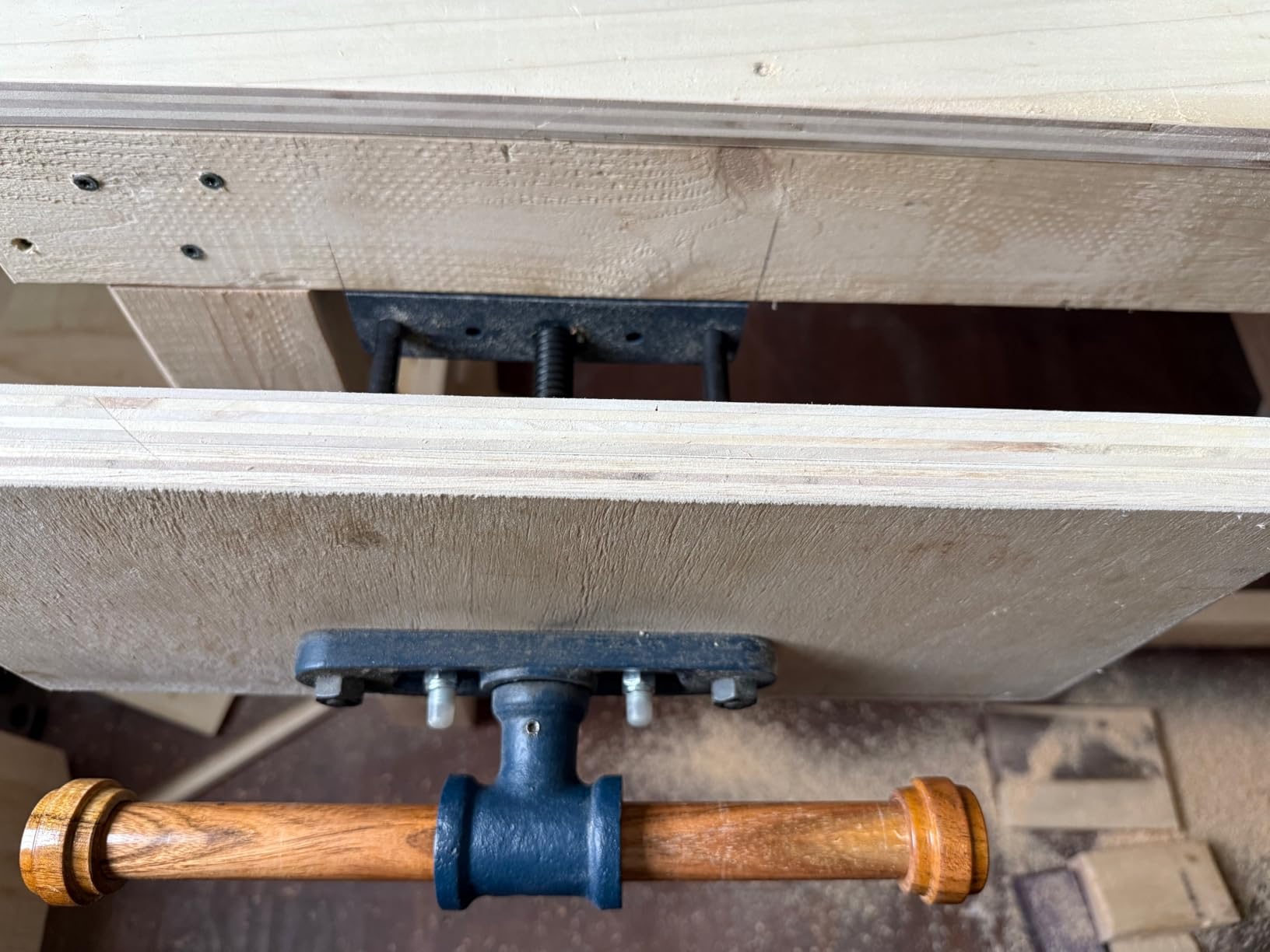
The Groz 39020 is a different proposition from the rest of this list. It is a kit rather than a finished assembly. You get a cast iron body and handle socket, twin guide rods, precision rolled threads and a turned wooden handle, and you build the clamping faces yourself from wood.
That is a real advantage if you like control. Wooden jaw faces let you choose the material, the hardness and the profile, and hardwood faces are the whole point of a woodworking vise in the first place. A serrated steel face is fine for metal, but a face you cut yourself is what keeps a finished panel unmarked.
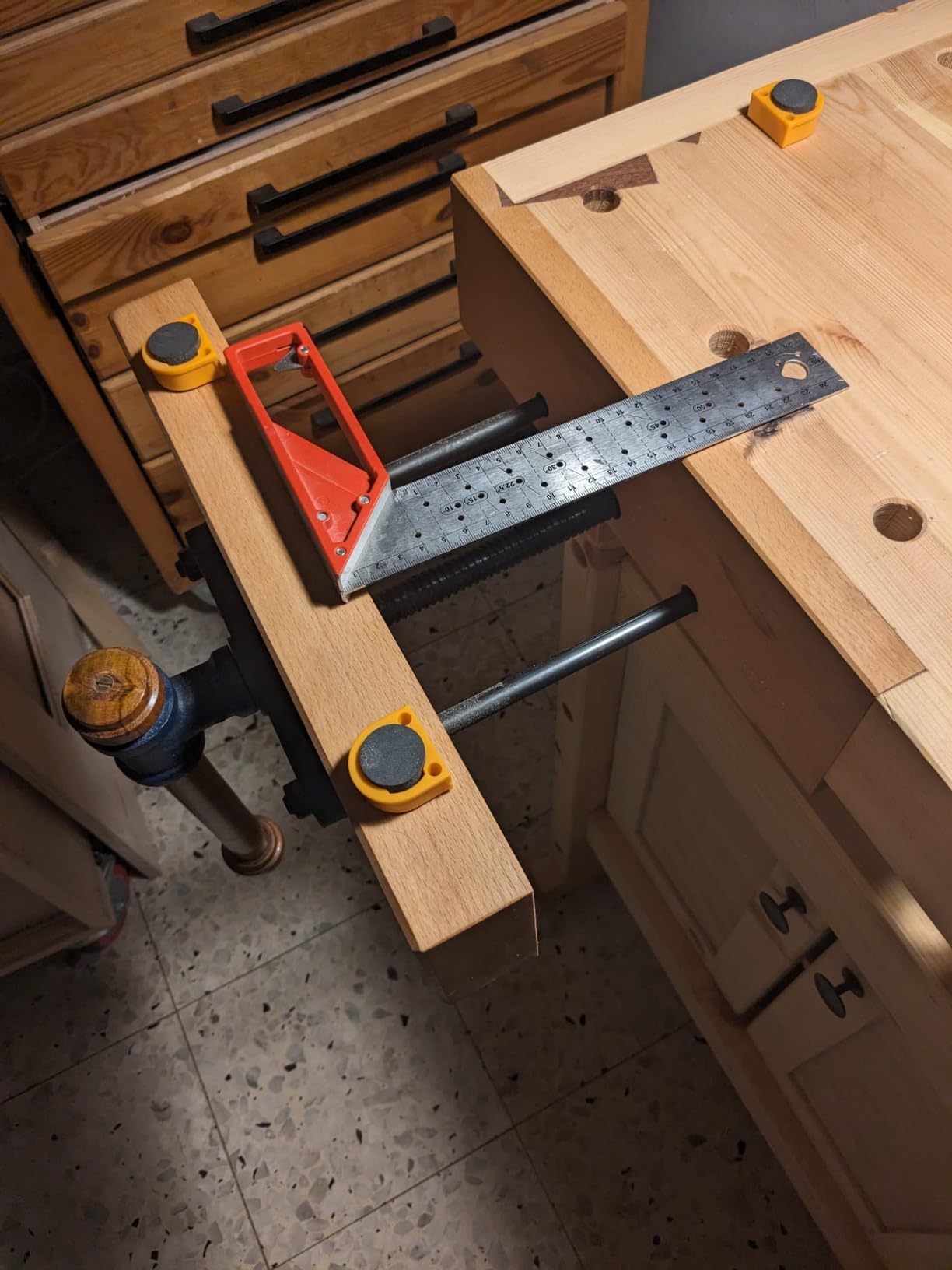
The twin guide rods and rolled threads are the mechanical reason to like this one. The rods keep the sliding jaw square when pressure goes on, and rolled threads run smoother and wear more evenly than cut threads, so the vise stays consistent over years of use.
At seven and an eighth inches of jaw width and an eight and a quarter inch opening, it handles boards, panels and drawer sides comfortably. The cast iron body and handle socket are the parts that take the punishment, and both are cast rather than fabricated.
Who should build the Groz 39020
If you enjoy making things for your bench, this is enjoyable work with a good result. Glue up a pair of hardwood faces, drill and tap them to the rods, chamfer the edges, and you have soft jaws that will never mark a finished surface. The included turned wooden handle means you do not have to make that part.
It also works as the starting point for a fully custom front vise arrangement, particularly if you are building a bench where the clamping face has to match a specific opening.
Why the rating is the lowest here
This is the lowest rated vise in the group, at 4.2 stars, and the reason is not the iron. Sixty-one percent of reviews are five star, but the balance reflects the fact that you are assembling part of the product yourself. Without quick release, every opening and closing is a full crank of the handle.
If you would rather buy a finished vise with everything fitted, choose a quick-release model. If you would rather spend a Saturday making the faces, this is a good base to start from.
10. Wilton 78A – the pivoting jaw for tapered and irregular parts
Wilton Woodworking Vise, 4″ x 7″ Jaw, 10″ Max Jaw Opening, Rapid-Action (Model 78A)
7 inch jaw
10 inch max opening
30 pounds
10 degree pivot jaw
Pros
- One-quarter turn rapid action with no lever to hold
- Self-centering pivoting jaw grips tapered stock
- Enclosed screw channel keeps threads free of grease and debris
- Removable magnetic maple jaw inserts included
- Backed by a lifetime warranty
Cons
- Rounded top surfaces cannot be used as a bench extension
- 30 pound weight makes install a two-person job
- Weak magnets on the jaw inserts
- Bench dog is fiddly to adjust
Wilton is one of the few names in this category with genuine multi-decade manufacturing history, and the 78A is its woodworking line. Thirty pounds of cast iron, a seven inch jaw, a ten inch maximum opening, and a self-centering front jaw that pivots ten degrees to close in on a tapered or irregularly shaped part.
That pivot is a mechanic most vises do not have. A cone, a drawbore, a piece of stock with a slight taper, a leg at an angle, a chair spindle. A parallel vise grips only the high spot and rocks on the rest; this one rotates until the face sits against the workpiece.
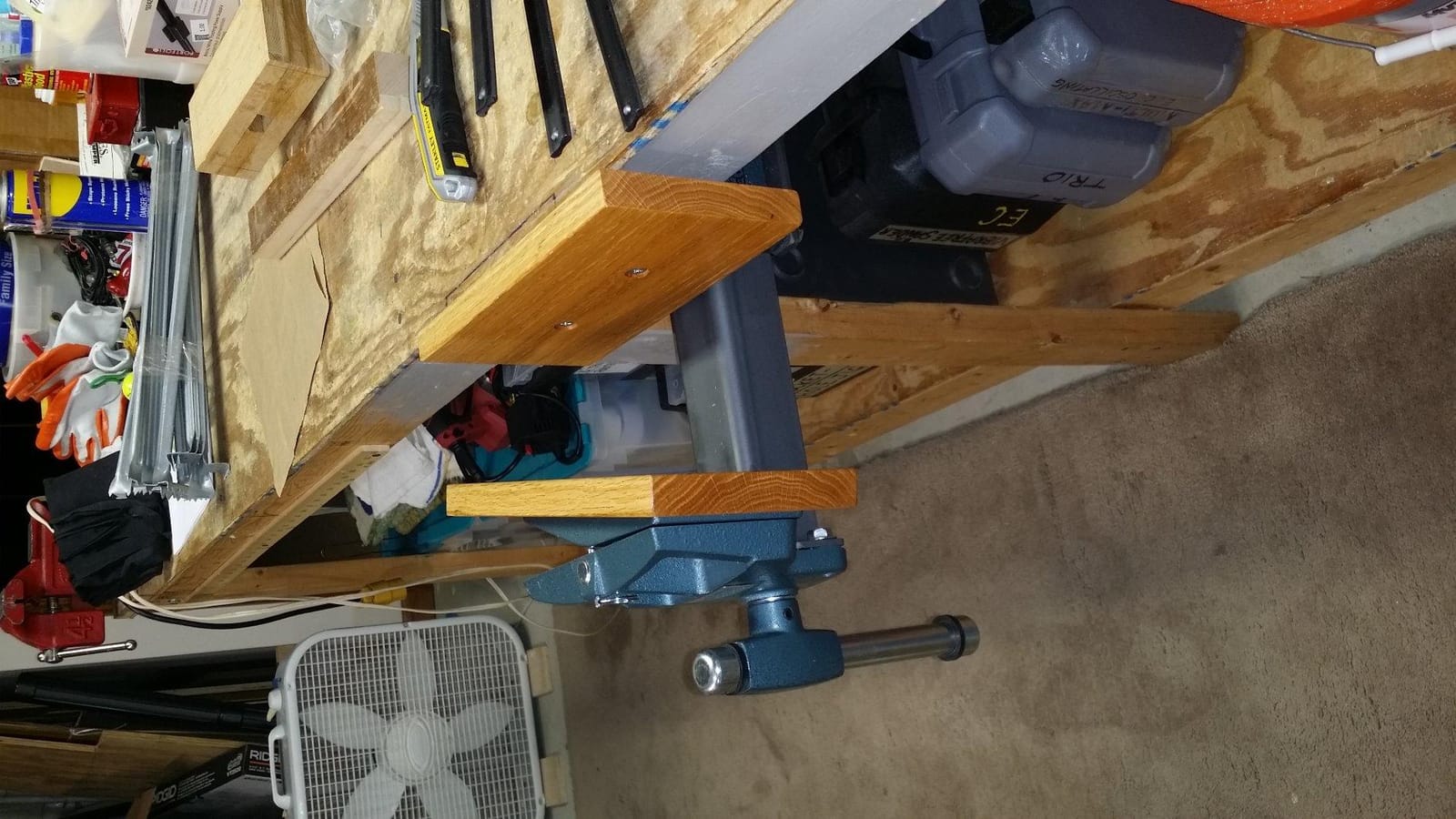
The rapid action needs one quarter turn, with no lever to hold down, so the jaws stand fully open when you are reaching in. Owners with decades of shop experience call this the best 7 inch bench vise available, and the enclosed U-channel screw housing is usually the reason given: it keeps grease and sawdust off the threads so the screw stays smooth.
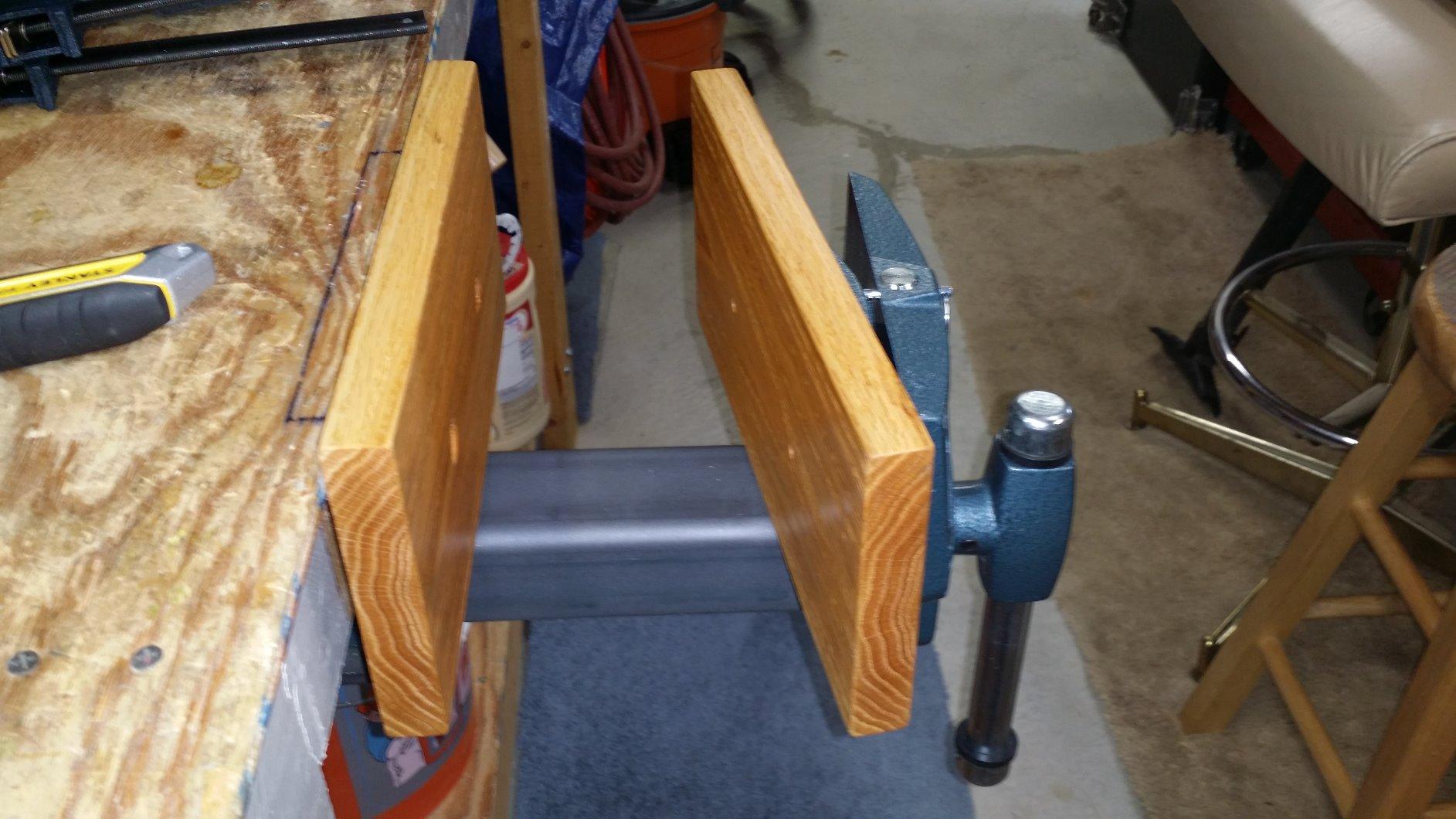
Magnetic maple jaw inserts are included and they come off cleanly, so you can swap between a gripping face and a soft face. The insert magnets are reported as weaker than a rare-earth magnet, so treat them as convenient rather than permanent.
Where the Wilton 78A fits
Tapered stock is the honest answer. If you turn spindles, build chairs, work with segmented or shaped parts, or cut compound joints on a mitered frame, the self-centering pivot removes a whole category of clamping problems. It is also backed by a lifetime warranty against manufacturing defects, which is a real differentiator on a bench tool.
The enclosed screw channel also wins in a dusty shop. An open screw on a woodworking bench collects glue, shavings and oil, and the cost shows up in how the vise feels after a year.
What you give up
The top surfaces are rounded, so you cannot use the vise as a flat bench extension the way you can with a squared-off casting. That is a real loss if you like to lay a part across the jaws and use the top as a reference surface.
At thirty pounds it is the second heaviest vise here and needs two people to install. The seven inch jaw is narrower than others at a comparable tier, the bench dog is fiddly to adjust, and the insert magnets are weak. None of that is disqualifying, but you should know it going in.
11. findmall 9 Inch Front Vise – the low-cost way to add a wide front vise
findmall 9 Inch Woodworking Front Vise Heavy-Duty Steel and Cast Iron Front Bench Vise – Fit for Woodworking Projects
9 inch guide bar
Cast iron and wood jaws
Painted iron body
Pull-up handle
Pros
- Painted iron structure resists rust and wears slowly
- Nine inch guide bar gives solid workpiece holding
- Simple pull-up handle operation
- Designed for both hobby and professional woodworking
Cons
- No quick release so the handle is spun for every change
- Reports of racking and loose hardware
- Thin wooden jaw pieces next to cast iron rivals
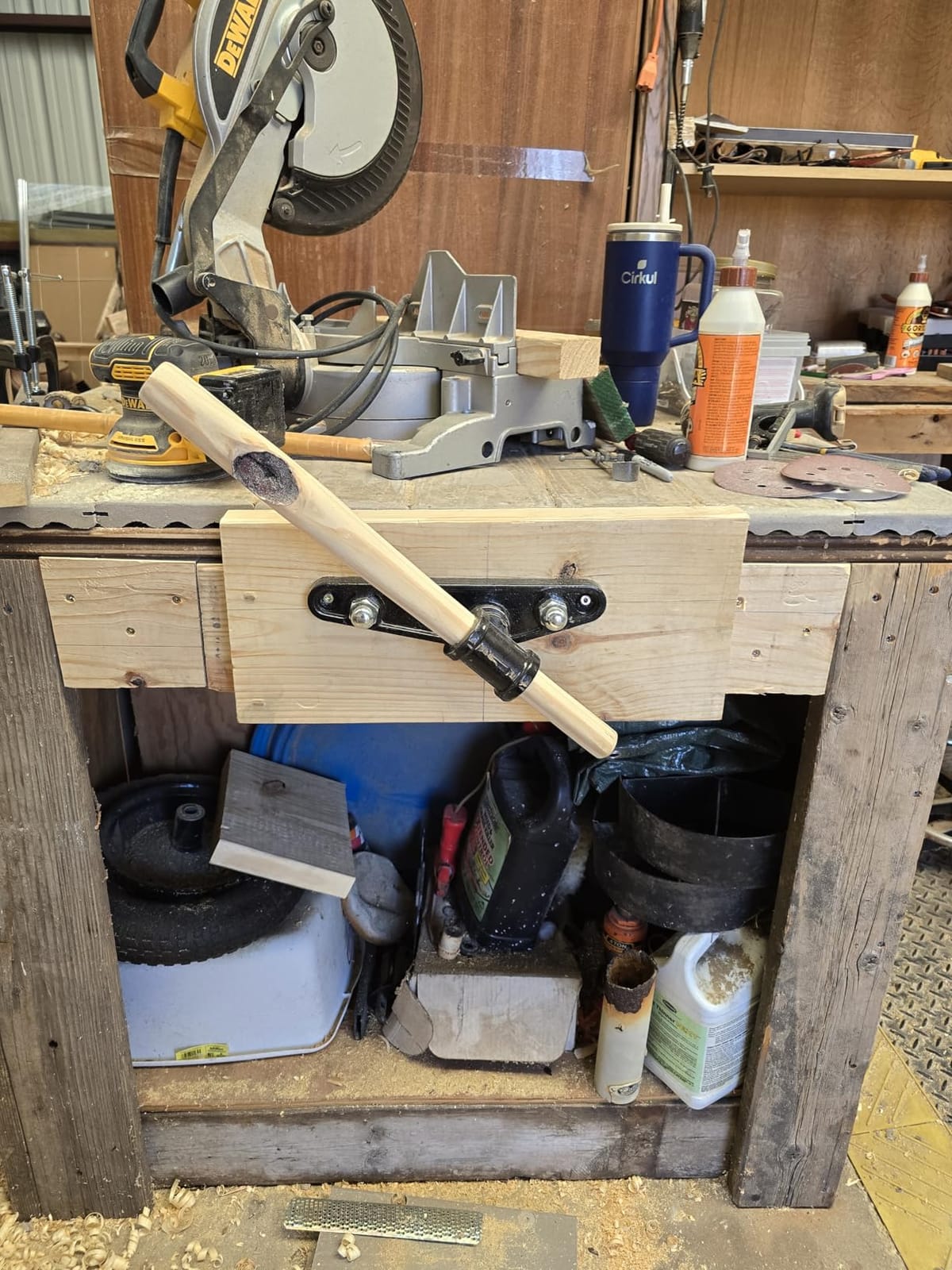
Sometimes the question is simply how to get a nine inch front vise onto a bench without spending much. The findmall does the basic job. All-iron painted structure, a nine inch guide bar, cast iron and wood jaws, and a handle arrangement with a pull-up lever that disengages the main handle for faster opening adjustments.
The paint coating is doing real work here. A painted iron structure resists rust and wears slowly, which matters if your shop is damp or you are in a garage rather than a conditioned space.
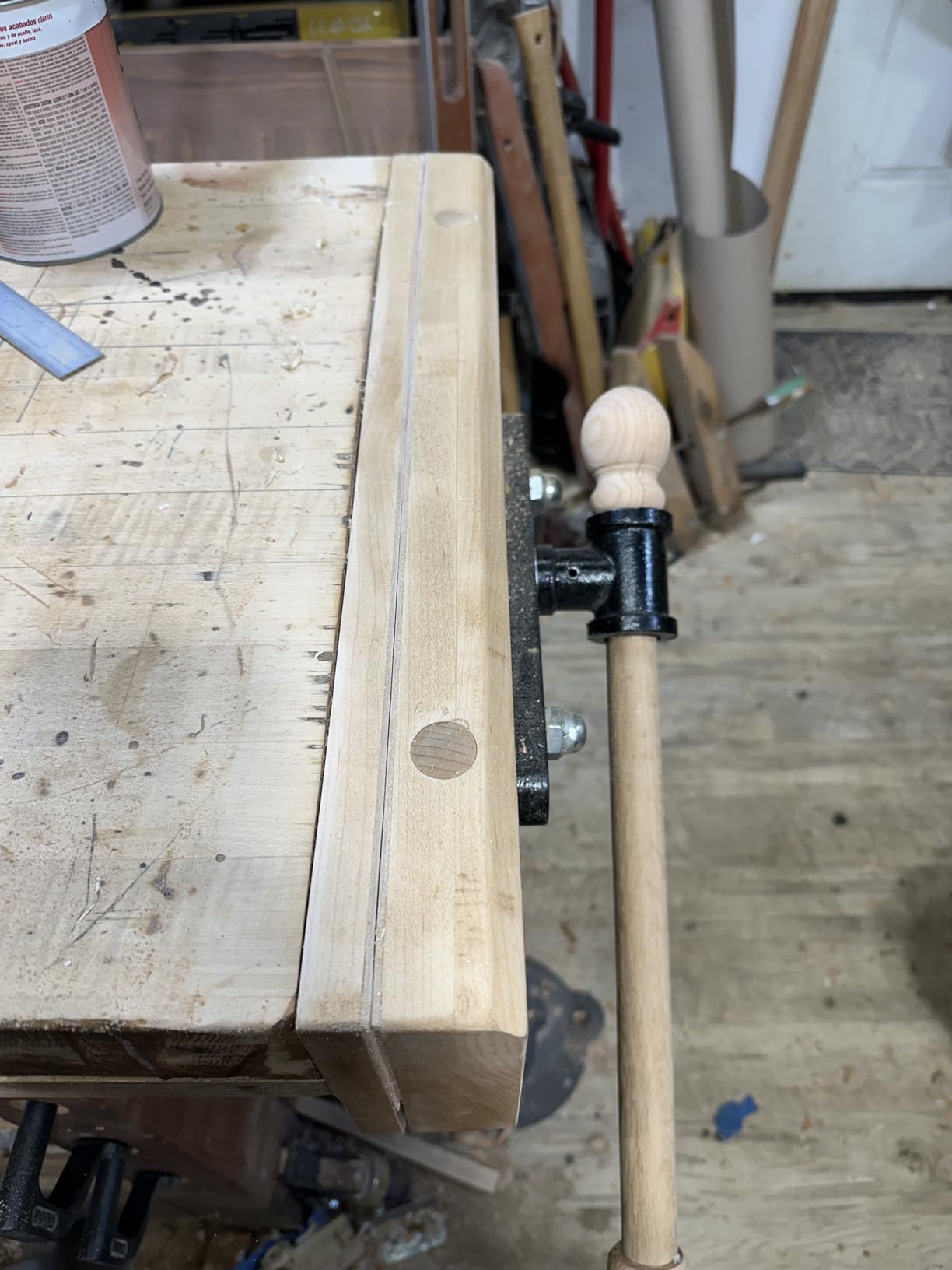
It is also available in a 10 inch version, which is unusual at this level and gives you a choice on jaw width. The manufacturer positions it for home craftspeople and professional woodworking both.
What you are giving up is refinement. The guide bar is the primary alignment element, and a single bar is easier to rack than the twin rods on the vises further up this list.
When the findmall makes sense
It makes sense for a first bench, a student shop, a rental space, or any situation where a cast iron front vise with a wide jaw is the goal and the budget is fixed. It clamps, it holds, and it will not rust out in an unheated garage.
The pull-up handle is worth mentioning. It is not a full quick release, but it is faster than spinning the handle the whole way, which is more than a lot of vises at this level offer.
Where it falls down
At 4.2 stars with 64 percent five star, the middle of the ratings tells the story. A notable share of owners report racking, hardware quality issues and the lack of a real quick release. If your workflow is repeated clamp and release, the spinning handle will wear on you.
The wooden jaw pieces are thin next to the cast iron competition. They will hold a workpiece, but they will not take much punishment, and the thin faces mean the vise is better for holding than for crushing. I would upgrade the jaws with hardwood before working anything finished.
12. Rockler 9 Inch Dual Guide Rod Vise – twin guides with a quarter-turn release
Rockler Quick Release Front Vise 9″ Dual Guide Rod Woodworking Vise
Dual guide rods
Quarter-turn quick release
Iron and steel body
Hardwood handle
Pros
- Dual guide rods eliminate racking
- Quarter-turn release saves repeated cranking
- Beefy iron and steel construction
- Hardwood handle with a 9 inch plate for a solid grip
Cons
- Instructions are weak and there is no drilling template
- Vise must be disassembled to install and the face is easy to reverse
- Fasteners and rods can sit at a slight angle when first assembled
- Some find the release hard to re-engage
The Rockler 9 inch puts twin guide rods behind a quarter-turn quick release, and that pairing is the whole design argument. Twin rods are the strongest answer to racking, and a quarter-turn release means you are not cranking a handle between every cut.
The iron and steel construction has real heft, and that mass is what keeps the jaw square. The extra wide nine inch handle plate gives you a full palm to push against, which is exactly what you want when closing the jaws on a wide board.
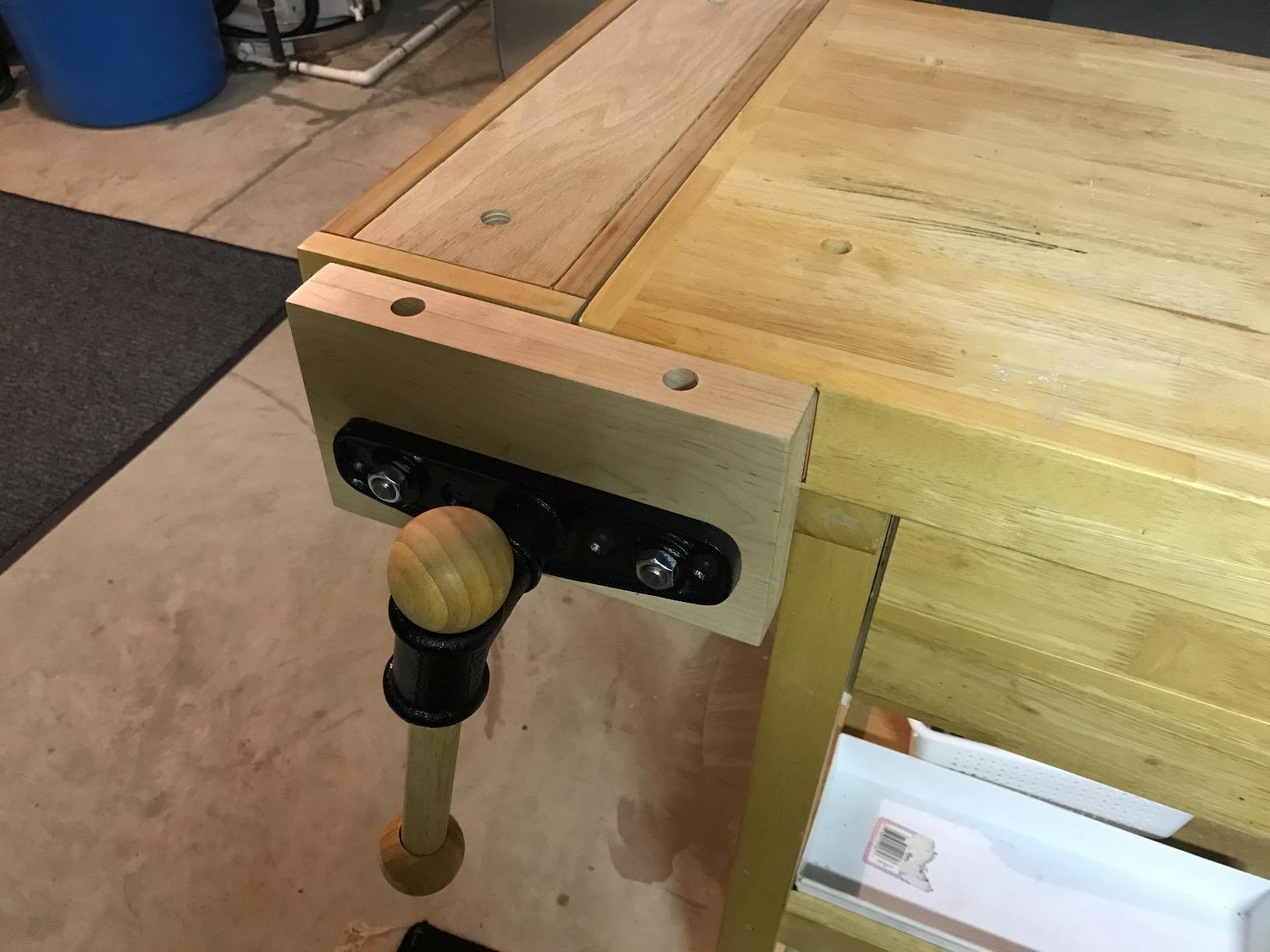
The hardwood handle is a nicer touch than a plain steel bar. It is comfortable in the hand over a long session, and it is long enough that the vise will see the load before the handle does.
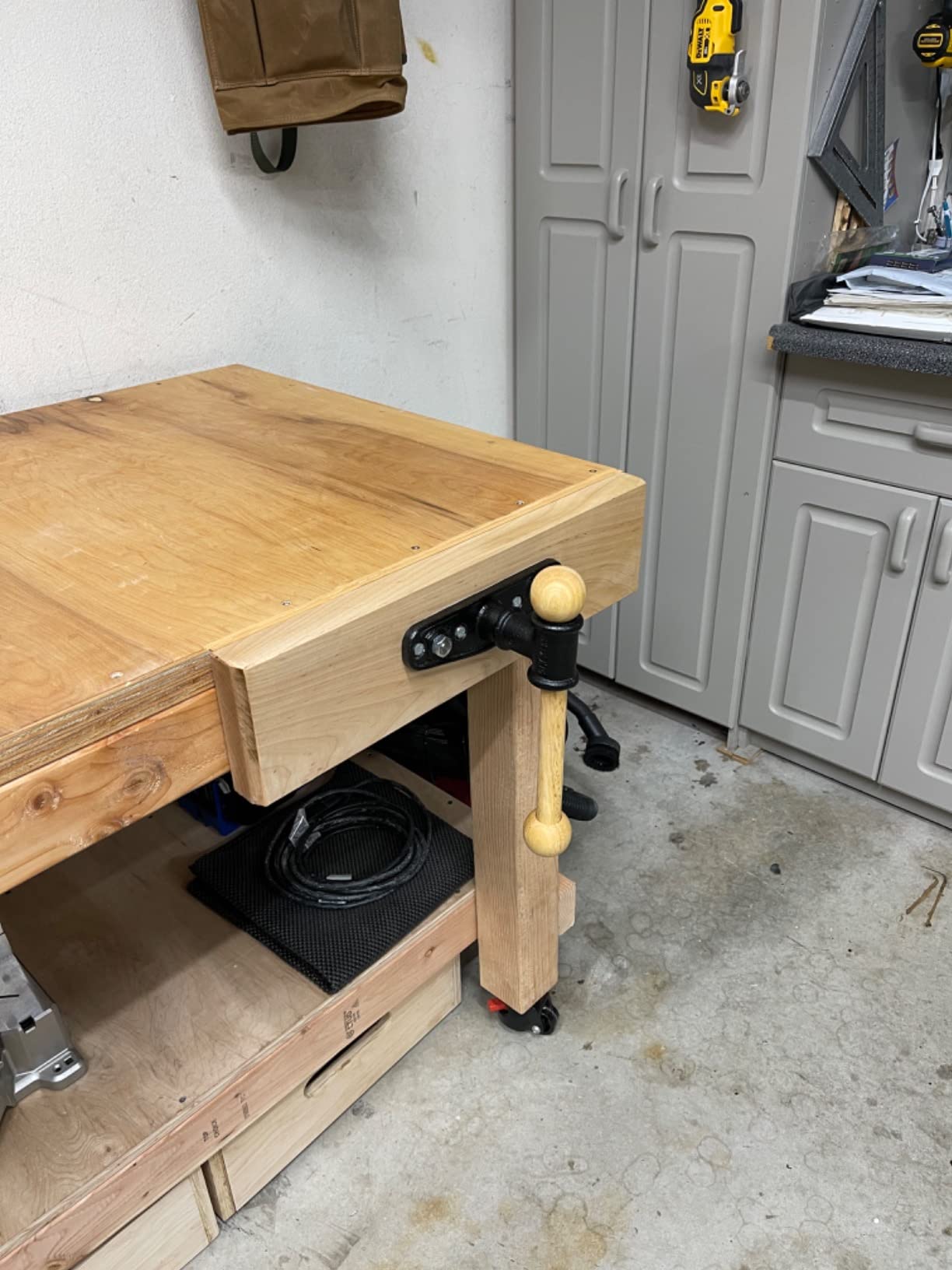
It also mounts with quarter inch lag bolts, so your fastener choice is up to you. That is worth noting for a retrofit, because you may already have lag bolts in the bench.
Where the Rockler works
It is a good choice for a hand-tool bench where you want rigid guiding and fast repositioning, and where the workpiece is wide enough that a nine inch jaw makes sense. Owners like the beefy build and the effective quick release.
If you are building a bench from scratch, the dual rod layout is the part you are really buying. Guide rod layout is not something you can add later, so a vise with two rods is a better base than one with a single bar.
What the ratings reveal
Only 58 percent of reviews are five star, which is the lowest share in this group, and it is worth reading why. The complaints cluster around installation rather than performance: weak written instructions, no drilling template, a face that is easy to fit backwards, and fasteners and rods that can sit at a slight angle on first assembly.
Some owners also find the quick release hard to re-engage. Budget extra time for installation, follow the diagram carefully, and check alignment before you tighten anything down. Handled properly it holds well; installed casually it will annoy you.
How to Choose a Woodworking Vise for Your Bench
The mistake I see most often is buying a vise first and building the bench around it afterwards. Vise type drives bench width, bench top thickness, dog hole spacing and where the legs go, so decide it before the top is cut.
Vise type comes before brand: front, face, end or clamp-on
Four types cover almost every bench. A front vise mounts on the front edge of the top, jaws horizontal, the workpiece held sideways while the bench dogs hold it up. A face vise mounts flat to the underside of the top with the jaws vertical, which is what most people picture. An end or tail vise mounts at the end of the bench and pulls a workpiece forward toward the user, which is the traditional woodworking arrangement. A clamp-on vise attaches temporarily to any edge and comes off when you need the space.
Front vises are the modern default. They leave the top clear, the sliding jaw travels along a horizontal line, and the whole thing is easier to reach from a standing position. All twelve vises on this list are face or front mount, which is why the differences between them are about jaw size and screw mechanism rather than about where they attach.
End and tail vises suit workbench traditions, particularly split-top benches, and they put the workpiece right at your hip where you can see both edges. The problem is space. A bench that sits between two walls cannot take a tail vise at all, which is a question that comes up repeatedly on r/woodworking, and a bench built against a wall needs the vise to project into the room.
A Sawmill Creek thread shows a builder treating the tail vise as the last design decision on a split-top bench, after the top thickness and the leg layout were settled. That is the right order of operations. If your bench ends are clear and you plan to work standing at the end of it, a tail vise is worth the extra build complexity.
Clamp-on vises are the retrofit answer, and they are not as inferior as they get treated. One r/Workbenches post praises an improved Moxon vise kit from Taylor Toolworks as great and a very decent price, and on r/HomeImprovement a builder describes a jaw horse that grips anything big or small and folds away, which is the whole appeal for someone working solo in a small space. The limitation is real, though: a clamp-on vise cannot add a dog, and it has less throat depth than a bolted-on casting.
Match jaw width to bench width and the wood you actually cut
Jaw width is the number that determines whether the vise fits your work. The rule of thumb is that the jaw should be as wide as the widest material you routinely clamp, with a little margin. A seven inch jaw handles most furniture parts. A nine inch jaw holds a full width door stile. A ten inch jaw holds a standard door or a wide panel without overhang.
Against bench width, aim for a jaw that is not a small fraction of the bench. A 4.5 inch jaw on a 72 inch bench looks lost and limits your work, and a 10 inch jaw on a 40 inch bench dominates the top. A vise jaw roughly a third of the bench width reads as balanced, and a bench top at least 3/4 inch thick gives a bolted vise real material to bite into.
Also check the depth of your bench top before you commit to a heavy casting. A 30 pound vise under a thin top will pull the top off the rail over time unless the top is properly laminated and screwed. If your top is thinner than an inch, either brace the rail below the vise or pick a lighter body.
Jaw width, jaw opening and throat depth are three different numbers
These three get confused constantly and they describe different things. Jaw width is how tall the face is, and it is how tall a piece of material the vise can hold without hanging off. Jaw opening is how far the faces separate, which is how thick a piece you can put between them. Throat depth is the distance from the underside of the top jaw down to the screw or guide rod, and it is how much working room you have below the workpiece.
Throat depth is the one to pay attention to when you work on large parts. If you need to saw a line across a panel with a backsaw, you need your hand and the saw to fit below the top of the workpiece. Three inches of throat, as on the Eclipse and the Yost M7WW, handles most work. Large panels and handsaw work want more.
A quick example: the Yost M7WW has a 7 inch jaw, an 8 inch opening and 3 inches of throat. The Groz 39012 has a 9 inch jaw, a 13.5 inch opening and no throat figure given, because its travel is the feature. Read all three numbers before you compare any two vises.
Quick release versus twin screw for planing and sawing
This is the debate that runs through every woodworking forum, and the honest answer is that it depends on how you work. A quick release lever disengages the screw so the jaw runs free in one motion. A twin screw mechanism uses two screws that close the jaws evenly from both sides. A scissor or sliding block screw uses one screw with a sliding nut block.
For planing and repeated repositioning, quick release wins clearly. Every time you take a shaving, set the plane down, take a measurement and go back to the vise, a crank you did not need is a crank you do not have to do. Five vises on this list have a release mechanism for exactly that reason.
For holding one workpiece for a long operation, a twin screw has a real argument. Two screws pull the faces together evenly and resist the tendency of a parallel jaw to bind on a wide, imperfect workpiece, and the thread stays engaged so the clamping force does not drift during a glue-up or a long glue clamp. WoodTalk Online discussion favours the standard sliding block mechanism as a reliable middle ground.
Whichever you pick, buy a vise with a long handle. A handle that is too short to generate force one-handed is a listed dealbreaker among bench builders, and it is the cheapest thing to get right.
Cast iron, forged and ductile bodies
Material explains the price spread more than any other single factor. Cast iron is brittle in theory and shock absorbing in practice, which is why almost every woodworking vise on this list uses it. It absorbs the vibration of planing and chopping instead of passing it into the bench, and it machines into the complex shapes these vises need.
Forged bodies are tougher and stronger than cast at the same dimensions, and they are used where impact matters, such as a pipe or combination vise. Ductile iron sits between the two, holding a higher tensile strength than grey cast while still casting cleanly.
On the tension figures: the Yost M7WW is specified at 30,000 PSI cast iron, which is a sensible floor for a woodworking vise. Cast iron generally runs in the 19,000 to 60,000 PSI tensile range and forged vises considerably higher, but beyond a point the number stops predicting how the vise feels in the hand. Weight, jaw rigidity and screw smoothness matter more in daily use.
One more material note. Several vises in this list ship with a paint, enamel or powder coat rather than bare iron. That is fine and it slows rust, but it means a chipped finish needs touching up if you want the casting protected long term.
Mounting and installation on an existing or new bench top
Most woodworking vises are face or front mount, which means the body bolts to the underside of the bench top and the top edge is flush with the surface. Mark the mounting holes from the vise body itself, using the predrilled holes as your template, because instructions and templates are missing on several vises here. A scrap of paper taped to the bench, with the vise laid on top and a pencil through the holes, transfers the pattern in under a minute.
Check that the sliding jaw clears your bench dogs and your leg vise position before you drill, and check it again with the vise in its closed position. Drilling twice is the most common install error and the easiest to avoid.
For a through-top installation on a bench you are building, you can recess the vise so the jaw faces sit slightly proud of the surface, which is the traditional arrangement and gives you a flat reference surface beside the jaws. Mark the dog holes after the vise is set, not before, and use the same spacing you want for planing support.
Use lag bolts into a thick laminated top and carriage bolts where you want a flat underside, and do not overtighten. Several vises here, including the Yost M7WW, have a casting draft angle that leaves the mounting face fractionally out of square, so shim the high corner with a thin strip of hardwood until the vise sits true.
Finally, add wooden jaw liners before you clamp anything finished. Hard maple or beech cheeks screwed to the faces turn a marking vise into a non-marring one, and they are the cheapest upgrade available to any of these tools.
Protecting the workpiece: toe-in, wooden jaw liners and soft jaws
Three things prevent a vise from damaging your work. The first is toe-in, where the top jaw tips so the faces meet at the top first and pull the workpiece down flat, instead of pinching it at the top edge. Several vises here have it, including the IRWIN and the Groz 39012, and it is worth noticing which ones do.
The second is the liner. A hardwood face screwed onto the steel or cast iron face spreads the load and kills the serrated marks that turn a finished panel into scrap. Make them in pairs so you can swap between a gripping face and a soft face.
The third is clamping pressure, which is entirely up to you. Close the vise until the workpiece stops moving, then stop. A vise that can generate a great deal of force will crush a thin panel flat long before it needs to, and crushed panels stay crushed. Ask anyone who has learned this by splitting a piece of plywood in a vise. For anyone fitting a used or reconditioned vise, the advice that circulates on r/Workbenches is the same: look for an older vise, fit wooden liners, and it is good to go.
Frequently Asked Questions
What is the best vise for woodworking workbenches?
For most benches, the IRWIN 226361 is the best all-round choice: a toe-in jaw, a cast iron body, a square mounting face and a light enough weight to bolt to a modest top without extra bracing. If you clamp and release all day, the Eclipse EWWQR7 adds a quick release trigger and a built-in front stop, and if you work wide panels, the Groz 39012 offers a 13-1/2 inch opening.
What is the best vise size for a workbench?
Match the jaw width to the widest material you regularly clamp. A 7 inch jaw handles most furniture parts, a 9 inch jaw holds a full width door stile, and a 10 inch jaw holds a standard door or wide panel. As a rule of thumb, pick a jaw roughly a third of the bench width, and check throat depth if you need hand clearance for sawing or planing.
How do I mount a woodworking vice to a bench top?
Face and front vises bolt to the underside of the bench top. Mark the holes by laying the vise on the top with a sheet of paper under it and tracing through the predrilled holes, checking that the sliding jaw clears your dog holes and your leg vise first. Use lag bolts into a thick laminated top, add thin hardwood shims if the casting is not perfectly square, and finish with wooden jaw liners.
Is a quick release vise better than a screw vise?
For planing and repeated repositioning, a quick release is faster, because a lever disengages the screw and the jaw runs free in one motion instead of a full crank. For holding a single workpiece through a long operation such as a glue-up, a twin screw or sliding block that stays engaged has the better argument, since it clamps evenly and holds force without drift. Many bench builders end up owning one of each.
Do I need a tail vise or a front vise?
A front vise is the modern default and suits most benches, because the top stays clear and the workpiece sits at a comfortable height. A tail or end vise suits traditional and split-top bench work and puts the workpiece at your hip, but it needs clear space beyond the end of the bench. If both ends of the bench abut a wall, a tail vise is not an option and a front vise is the answer.
What is the difference between cast iron and ductile iron vises?
Grey cast iron is brittle in theory but shock absorbing in practice, which is why most woodworking vises use it, and it machines into the complex shapes these vises need. Ductile iron holds a higher tensile strength than grey cast while still casting cleanly, so it resists cracking under heavy clamping. For most woodworking benches, cast iron above about 30,000 PSI is a sensible floor and the material is less important than jaw rigidity and screw smoothness.
How do I stop a vise from damaging my workpiece?
Fit hardwood jaw liners, which is the single biggest improvement you can make. Choose a vise with a top jaw that toes in, so the faces meet at the top first and pull the workpiece down flat rather than pinching one edge. Clamp only until the workpiece stops moving, since a powerful vise will crush a thin panel well before it needs the pressure.
Final Verdict: Which Woodworking Vise Should You Buy?
The IRWIN 226361 wins our roundup of the best woodworking vises for workbenches for a simple reason: it fits almost every bench somebody will actually build. Toe-in jaws, a square body that mounts cleanly under a laminated top, and a weight that does not need extra bracing.
If you clamp and release constantly, move up to the Eclipse EWWQR7 for the quick release trigger and the built-in front stop, or the Yost M7WW if you want more cast iron mass and a deeper jaw. If you work wide panels and doors, the Yost F10WW or the Groz 39012 cover the ten inch and thirteen inch ends of the range.
Whichever one you fit, decide the vise type before the bench top gets cut, add hardwood jaw liners before you clamp anything finished, and you will have a bench that holds work square for the next decade. Prices on these tools move, so check the current listing before you buy.