
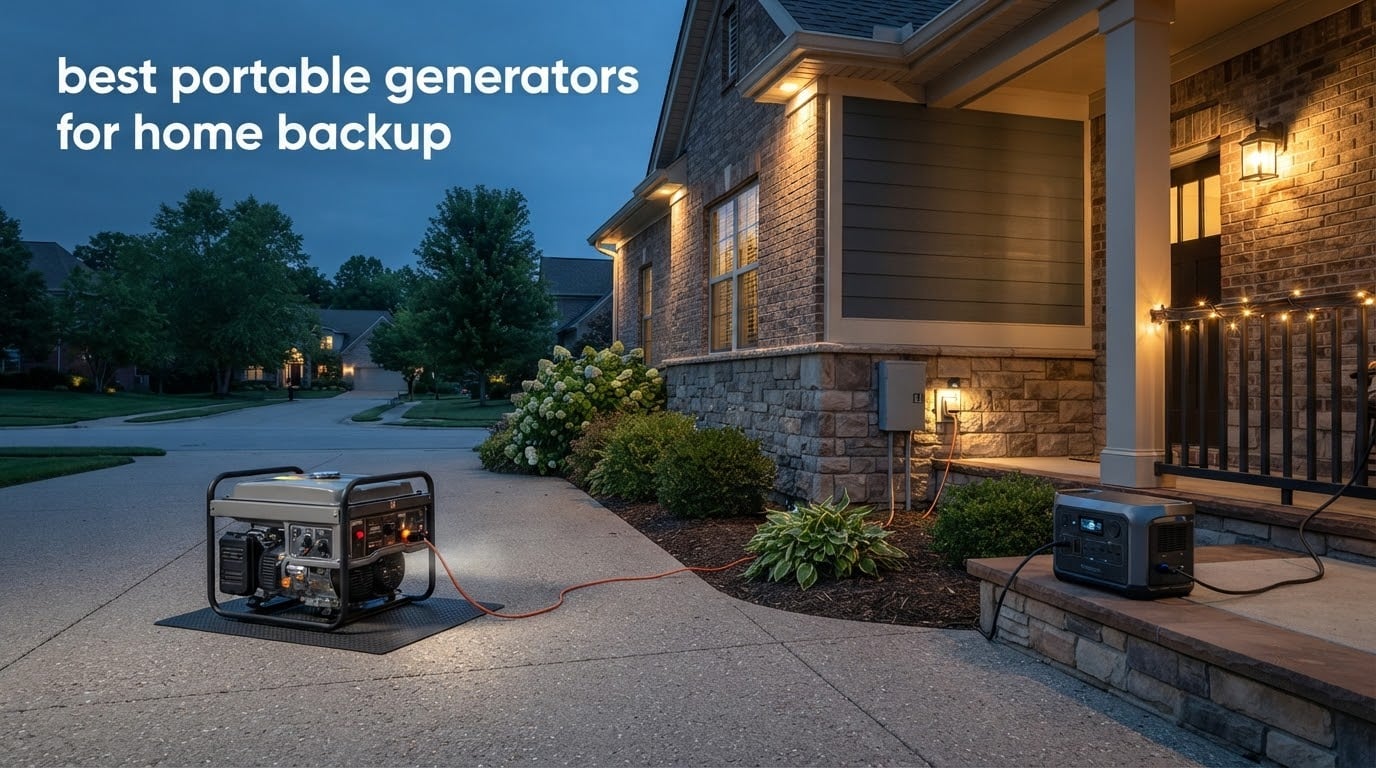
When the power goes out, the difference between a bad night and a manageable one is usually decided before the outage starts. It comes down to one question: how many watts do your actual loads pull when they start, and how long do you need them to run? Get that wrong and you will find out at the worst possible moment that your refrigerator compressor will not start on a unit that looked fine on paper.
That is why I built this list around real running and starting watts rather than marketing peak numbers. Over several months of comparing spec sheets, owner reviews, and real outage load scenarios, I narrowed the field to ten units that genuinely earn a place in a home backup plan. Six are fuel-driven portable generators, the class that shows up again and again in the shopping carousels and owner forums. Four are battery power stations, the quiet indoor-safe alternative that now handles more than phone charging.
The best portable generators for home backup are not necessarily the biggest ones. A 3,400-watt inverter unit can carry a refrigerator, a router, and a freezer through a twelve-hour ice storm without anyone hearing it. A 10,500-running-watt open-frame machine can carry a central air compressor and a well pump, but it will wake the neighbors. The right answer depends on your load list, your outage length, and how much noise and exhaust you are willing to live with.
Here is the short version before the details. The DuroMax XP12000EH is the strongest all-round fuel pick in 2026, pairing 9,500 running watts with dual-fuel flexibility and the largest review base in this group. If you want silence and indoor placement instead, the EcoFlow DELTA 3 Max switches over in under 10 milliseconds and runs quietly enough to sleep next to.
Everything below assumes the same safety baseline, and it is not optional. Fuel generators run outdoors only, at least 20 feet from windows, doors, and vents, because of carbon monoxide. Connecting either class to your breaker panel requires a manual transfer switch or an interlock kit installed by a licensed electrician. Never backfeed a panel through a household outlet.
Table of Contents
Top 3 Picks for Home Backup (October 2026)
These three cover the most common situations. The DuroMax covers whole-home fuel needs, the Pulsar covers heavy fuel loads with the longest gasoline runtime in the group, and the WEN covers the essentials-only buyer on a tighter budget.
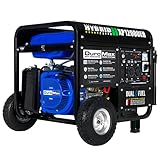
DuroMax XP12000EH
- 9500 running watts
- 12000 starting watts
- Dual fuel gas and propane
- Transfer switch ready 50A outlet

Pulsar G12KBN
- 9500 rated watts on gas
- 8-gallon tank
- 12 hours at half load
- 50A and 30A outlets
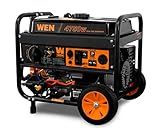
WEN DF475T
- 3800 running watts on gas
- Switchable 120V/240V output
- 11 hours on 4-gallon tank
- 105.8 pounds
All 10 Picks Compared in 2026
The table below lists every unit in this roundup so you can scan the class, output, and power source side by side. Fuel units are rated in continuous running watts, while battery power stations are rated in watt-hours of stored energy and peak inverter output.
| Product | Specs | Action |
|---|---|---|
| DuroMax XP12000EH |
|
Check Latest Price |
| WEN DF475T |
|
Check Latest Price |
| Pulsar G12KBN |
|
Check Latest Price |
 DuroMax XP13000HX DuroMax XP13000HX |
|
Check Latest Price |
 Oxseryn EDOG10 Inverter Oxseryn EDOG10 Inverter |
|
Check Latest Price |
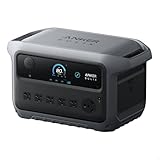 Anker SOLIX C2000 Gen 2 Anker SOLIX C2000 Gen 2 |
|
Check Latest Price |
 EcoFlow DELTA Pro EcoFlow DELTA Pro |
|
Check Latest Price |
 EcoFlow DELTA 3 Max EcoFlow DELTA 3 Max |
|
Check Latest Price |
 Champion 4500W Inverter Champion 4500W Inverter |
|
Check Latest Price |
 Anker SOLIX S2000 Anker SOLIX S2000 |
|
Check Latest Price |
How to Size a Backup Generator for Your Home
Sizing is not about floor count or square footage. It is about the sum of the running watts of the specific things you want to keep alive, plus enough headroom to cover the surge when motors spin up. This is the single most common mistake I see, and it is also the mistake that forums like r/Generator and r/Nightshift hear about most often.
Running watts is what an appliance draws once it is going. Starting watts, also called surge or peak watts, is the burst it needs to get going. Compressor-based loads such as refrigerators, freezers, air conditioners, well pumps, and sump pumps typically need two to four times their running watts to start, which is why a unit can fail to start a fridge even when the watts look adequate on a spec sheet.
Start by listing only your essential loads. Typical running and starting values, drawn from the standard sizing references used across the industry:
Wi-Fi router and modem: 10 to 20 running watts, negligible surge
LED lighting circuit: about 10 watts per bulb-equivalent
Laptop and phone charging: about 60 to 100 watts combined
Refrigerator: roughly 100 to 150 running watts, 300 to 450 to start
Chest or upright freezer: 100 to 200 running watts, similar surge
1/3 HP well pump: around 1,000 running watts, roughly 2,000 to start
1/2 HP sump pump: about 500 running watts, close to 1,500 to start
Window air conditioner: roughly 1,200 running watts, about double that to start
Central air conditioner: 3,000 to 5,000 running watts, up to 7,000 to start
Microwave: 1,000 to 1,500 running watts
Electric space heater: 10,000 watts or more
Now add those running watts together, then add 30 to 50 percent for headroom. That headroom is not padding; it is what lets a compressor start without the generator browning out and shutting down. A household running a fridge, a router, some lighting, and a well pump lands somewhere around 1,400 running watts before headroom, which puts it in the 2,000-watt class. Adding central air pushes the same household into the 5,000-watt running class and beyond.
Two definitions worth keeping straight. Watts measure instantaneous power, while watt-hours measure stored energy. A 2,000-watt load drawn from a 2,048Wh battery runs for roughly one hour at full tilt, and far longer on an intermittent load like a refrigerator that cycles on and off.
If you have no idea what your loads actually draw, an inexpensive clamp-style meter plugged into the appliances themselves will give you real numbers in an afternoon. That is more reliable than any calculator.
1. DuroMax XP12000EH – Best All-Round Fuel Generator for Whole-Home Backup
DuroMax XP12000EH 12,000-Watt Dual Fuel Portable Generator – Gas & Propane, Electric Start, Whole Home Backup Power, Transfer Switch Ready, RV & Emergency Ready
9500 running watts,12000 starting watts
Dual fuel gas and propane
8.3 gallon tank,8 hour runtime
224 pounds,50A outlet
Pros
- Genuinely covers whole-home loads including central air and well pumps
- Dual fuel hedges gasoline supply problems during a storm
- Copper windings and an all-metal frame and power panel
- Electric start with key ignition runs from one person
- Transfer switch ready 50 amp outlet
Cons
- Rough or surging idle on propane unless the idle control is switched off
- Arrives without engine oil so first-start setup is required
- Included foam-filled wheels develop a flat spot
- Open frame design is loud in residential settings
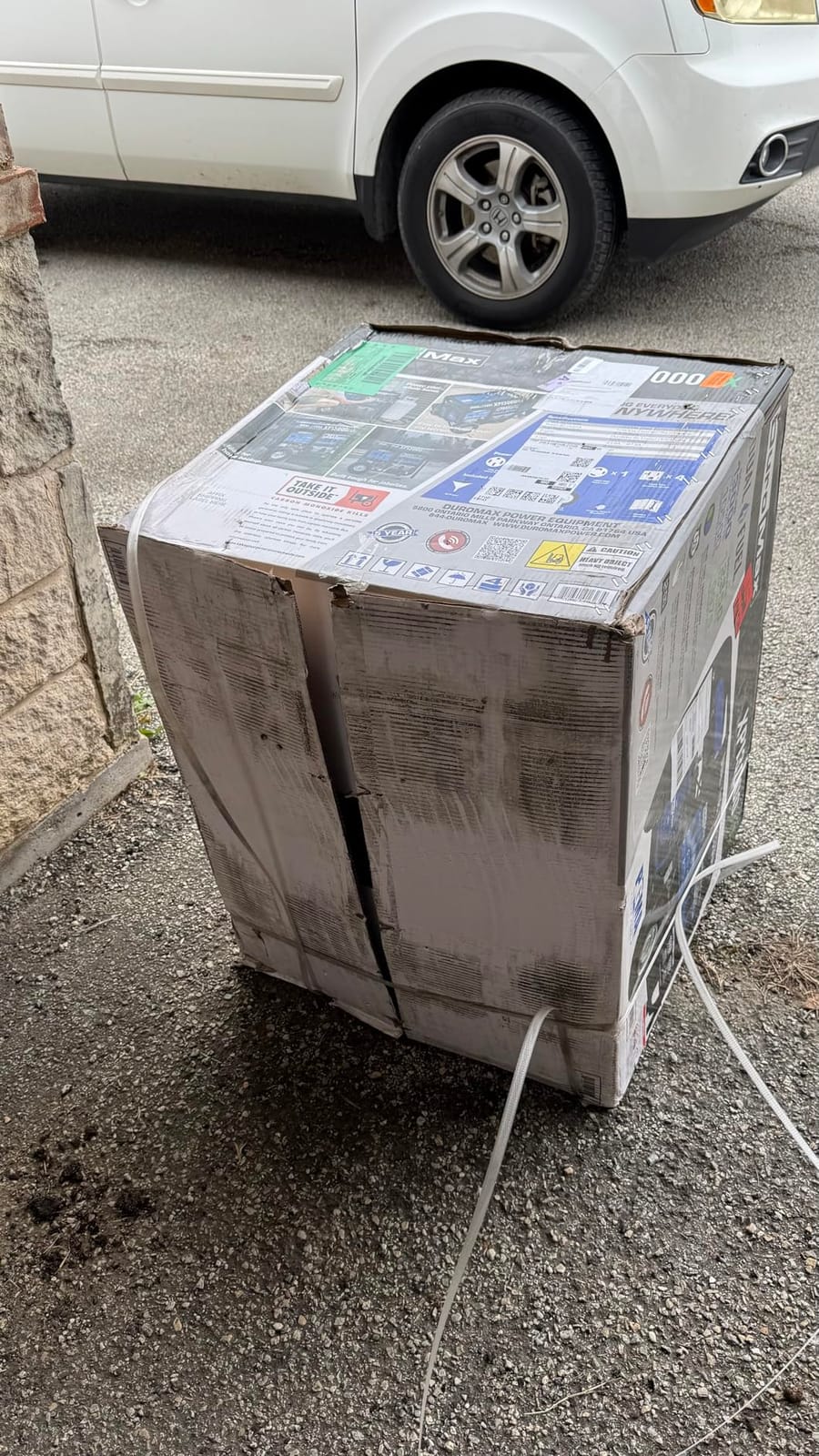
I keep coming back to this unit as the default recommendation because it is the one I would put in a house with no plan to change its mind mid-outage. It produces 9,500 running watts and 12,000 starting watts, with an 8.3-gallon tank that gives roughly 8 hours of run time. That is enough headroom to start a central air compressor or a well pump without the whole thing stalling, and enough capacity to carry a fridge, a freezer, a water heater, and some lights at the same time.
The dual-fuel capability matters more than most spec sheets suggest. During an ice storm, gasoline lines get long and prices climb, while a stored propane cylinder keeps working. Being able to switch fuel on the front panel in seconds means your fuel logistics do not become a single point of failure. The MX2 Power Boost mode also doubles available 120V output for appliances and RV hookups, which is a genuinely useful trick for tools.
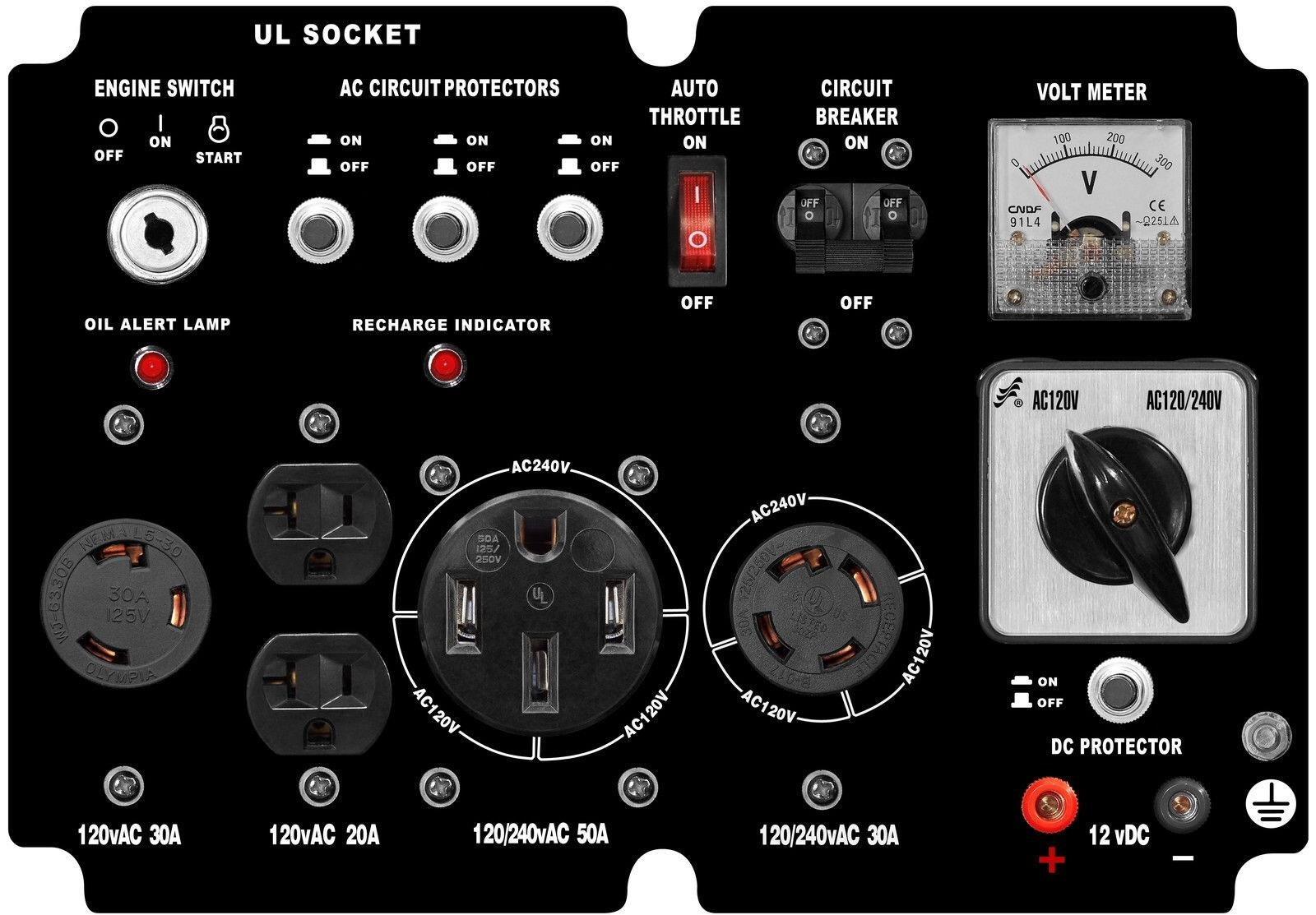
Build quality is the story owners repeat most. The windings are 100 percent copper, and the frame and power panel are all metal with no plastic structural parts. Outlets total six, including a 50 amp outlet that is transfer switch ready. For a unit you intend to depend on during a three-day outage, that combination of copper and metal is the difference between a machine that survives repeated start cycles and one that does not.
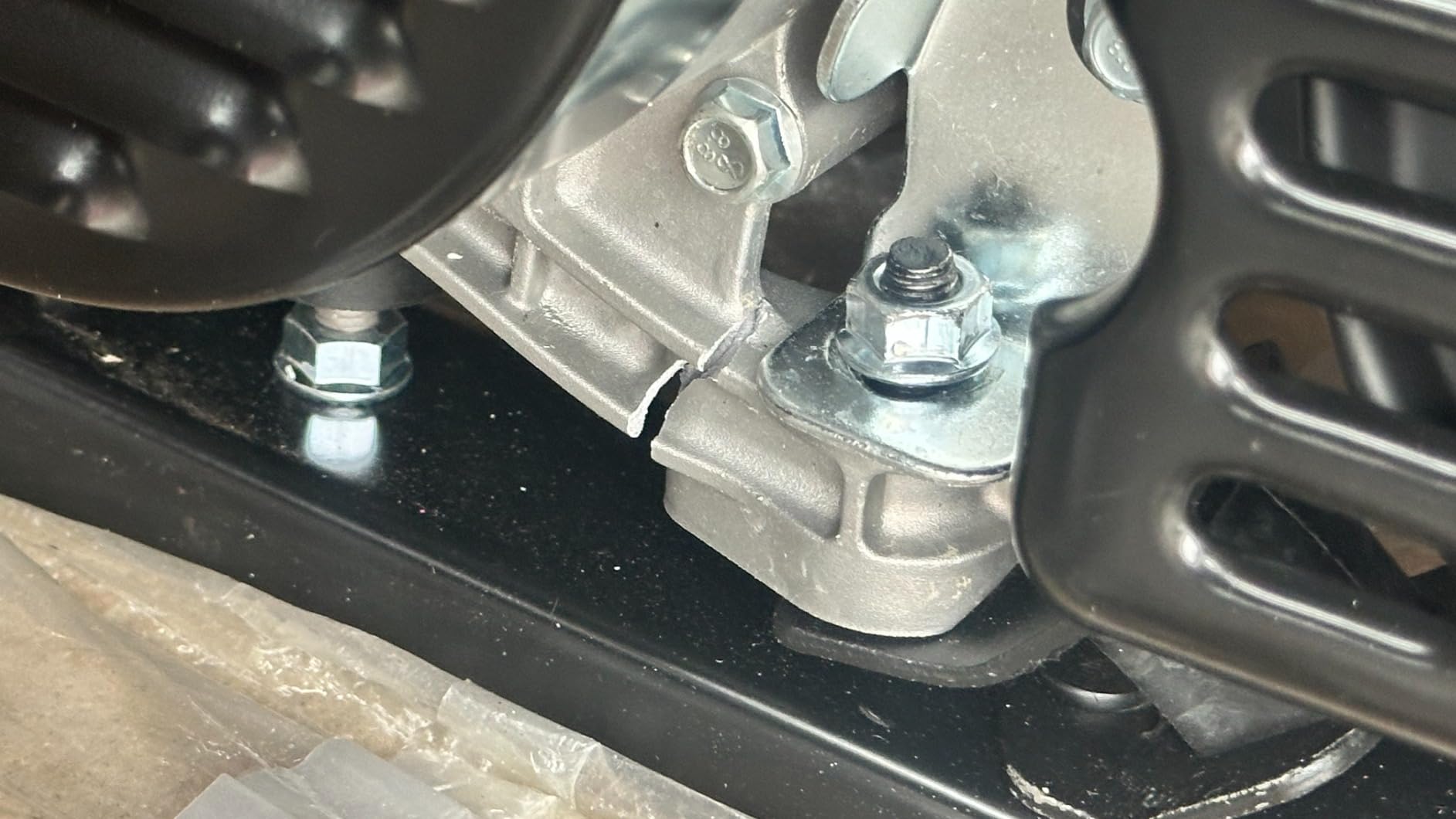
The first-run experience is where most complaints live, and all of them are fixable before you ever need power. It arrives without engine oil, so add roughly 1.5 quarts of 5W-30 before the first start. The battery negative lead ships disconnected, which means removing a four-screw cover to attach it. And on propane, the idle control switch causes a rough or surging idle if left on, something the manual does not explain clearly. Set that aside for five minutes and this unit behaves like a much more expensive machine.
What this unit handles well
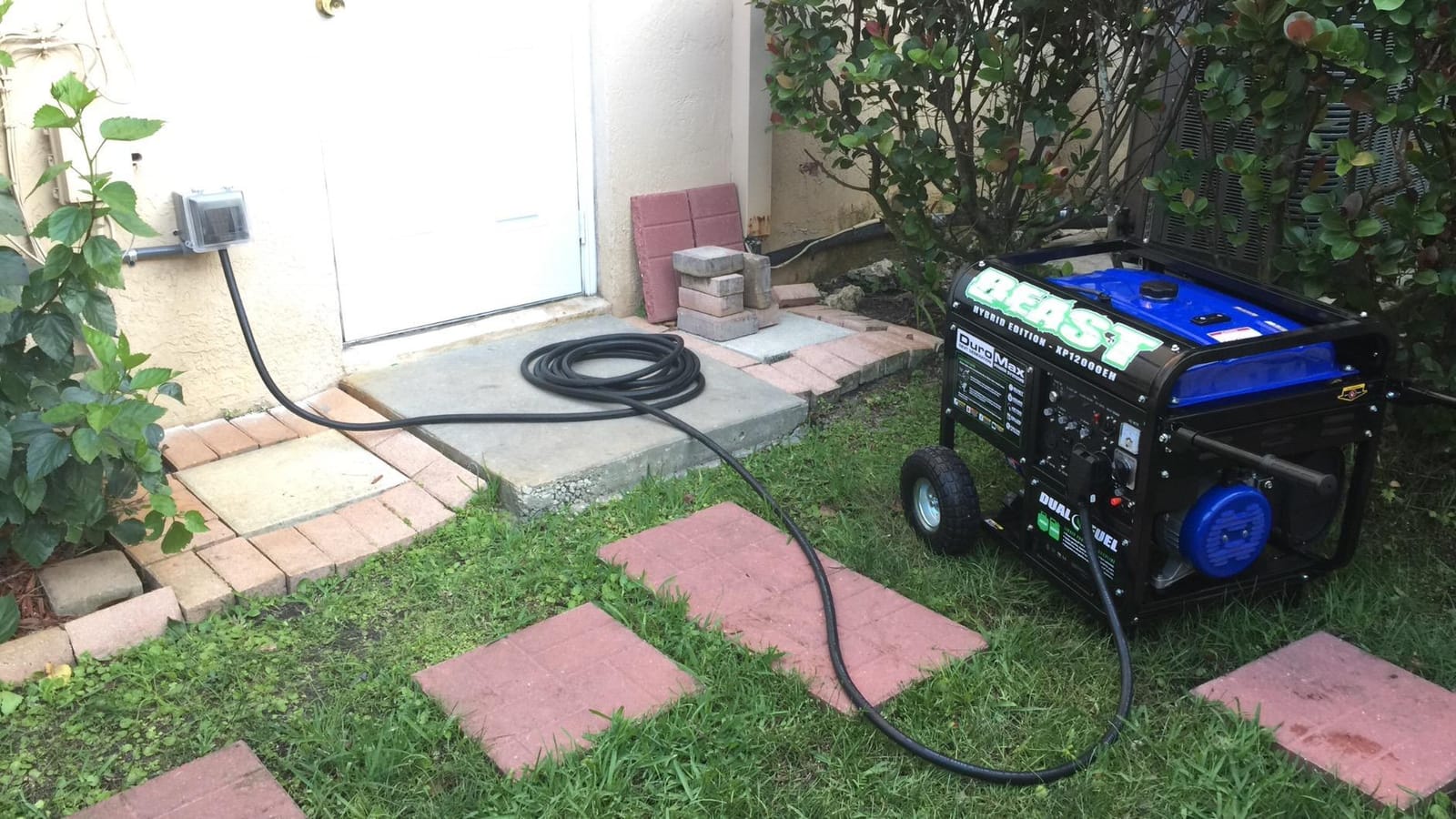
This is a whole-home-class machine at a fraction of what a permanently installed standby system costs. If your outage list includes central air, a well pump, a water heater, or multiple freezers, this is the pick. It also handles 240V appliances through the 30A and 50A outlets, and the electric start means one person can bring it online in the dark without a pull cord.
Where you will feel the trade-offs
At 224 pounds, this is a two-person lift for most people, and moving it into position during a storm is a real consideration. The open frame means it is loud, so plan the placement carefully with neighbors and any local noise rules. Sensitive electronics connected directly can benefit from a small line-conditioning UPS, since open-frame output is not as clean as an inverter generator’s.
2. WEN DF475T – Best Budget Dual-Fuel Generator for Essential Loads
WEN 4,750-Watt 120V/240V Dual Fuel Portable Generator with Wheel Kit and Electric Start (DF475T)
3800 running watts on gasoline
3500 running watts on propane
Switchable 120V/240V output
11 hours on a 4 gallon tank
Pros
- Straightforward fuel selection dial for quick switching
- Switchable 120V and 240V suits transfer switch setups
- Lightest-feeling fuel unit in the group under 106 pounds
- Wheel and handle kit included in the box
- 4 gallon tank delivers up to 11 hours at half load
Cons
- Surge capacity limits it to essentials rather than central air or well pumps
- Small 4 gallon tank needs refilling more often
- Open frame construction is louder than enclosed inverter models
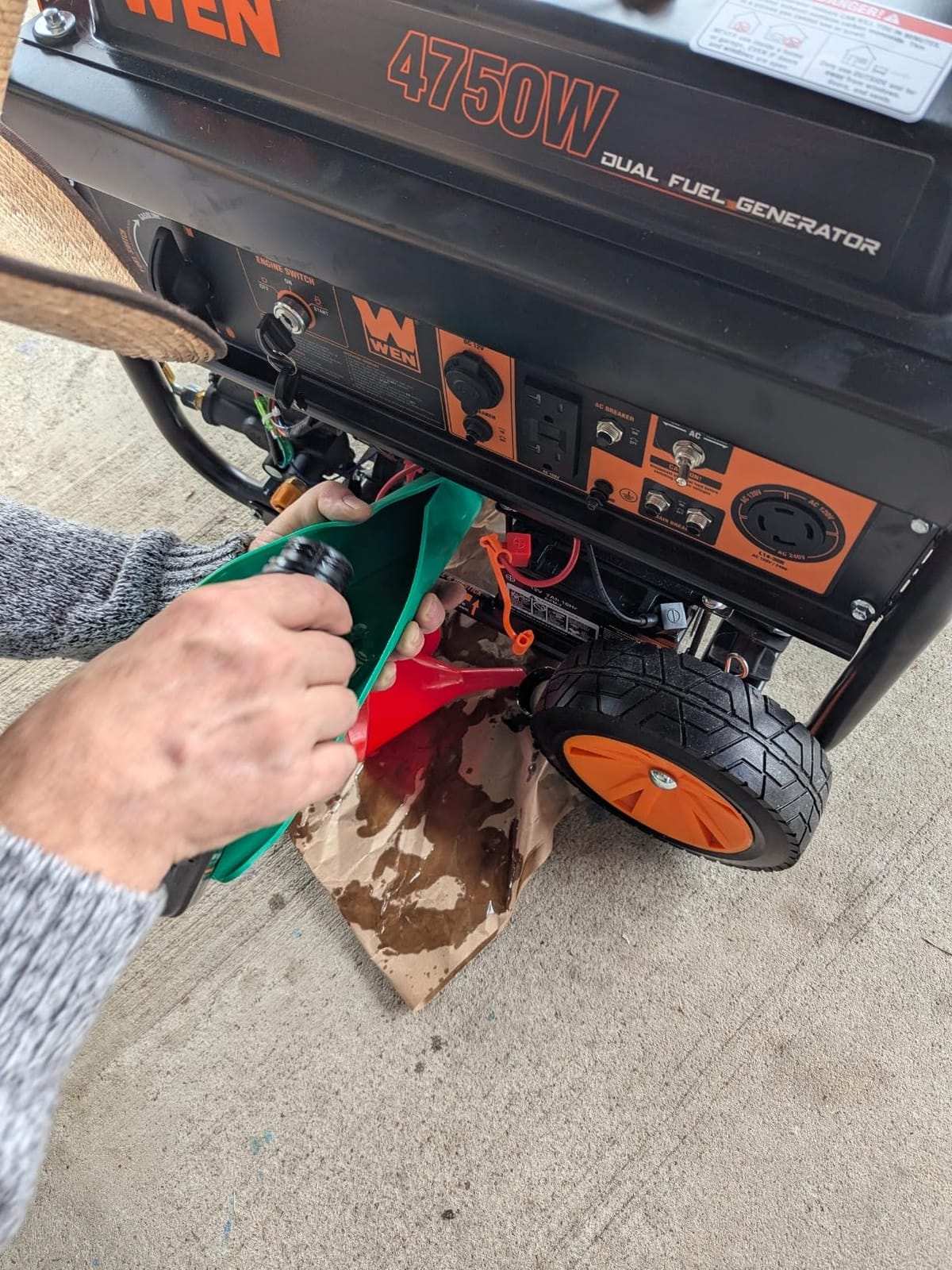
This is the unit I recommend when the goal is honest essentials coverage rather than ambition. It delivers 4,750 surge and 3,800 running watts on gasoline, and 4,350 surge and 3,500 running watts on propane. That is comfortably above the load of a refrigerator, a router, a handful of lights, and a laptop charger, with headroom to spare for a freezer cycling on and off.
The feature that separates it from cheaper single-fuel units is the selection dial for switching between 120V and 240V output. That matters for transfer switch compatibility, and it means one machine can cover both your regular outlets and a heavier 240V appliance. The box includes two 120V GFCI outlets, a 30A twist lock, a 12V DC plug, and a 47-inch LPG connection hose, so you are not buying accessories on day one.
In forums, WEN shows up constantly in the value conversation. The r/preppers consensus that circulates there is blunt: Honda is the top tier, WEN is genuinely great value, and the real answer is to buy one, preserve fuel, and rotate the stock. That is exactly how I would treat this unit. Treat it as your essentials tier, keep it maintained, and accept that a central air compressor is out of scope.
The 224cc four-stroke OHV engine with electric key start is a proven, simple design, and the two-year warranty is shorter than some competitors here but reasonable for the class. At 105.8 pounds it is a manageable carry for one person, which is a bigger deal than it sounds when the storm is already raging and you need to move the thing from the garage to the driveway.
What this unit handles well
Short outages, an ice storm evening, or a planned power cut are the sweet spot. Refrigeration, internet, lighting, phone charging, and a small appliance or two will run for most of a night on a single tank. Owners consistently treat it as the essentials generator and rate it well once expectations match the output.
Where you will feel the trade-offs
The ceiling is real. A 1/3 HP well pump or a window air conditioner will eat the margin you need for starting other loads, and trying both at once is a good way to trip the breaker mid-outage. The 4-gallon tank also means more refills than larger frames, and the open frame is louder than an enclosed inverter unit of similar output.
3. Pulsar G12KBN – Best Value Heavy-Duty Dual Fuel Unit
Pulsar G12KBN Heavy Duty Portable Dual Fuel Generator – 9500 Rated Watts & 12000 Peak Watts – Gas & LPG – Electric Start – Transfer Switch & RV Ready – CARB Compliant
9500 rated watts on gasoline
8550 rated watts on LPG
Up to 12 hours at half load
50A and 30A twist lock outlets
Pros
- Highest average rating among the fuel units in this roundup
- 9500 rated watts covers central air and household circuits
- 10 inch never-flat wheels move a heavy unit more easily
- 3-in-1 digital meter tracks voltage frequency and runtime
- 8 gallon tank with dual fuel capability
Cons
- Only a 1 year limited warranty
- Open frame design is noticeably louder than enclosed inverter units
- Listed item weight data is unreliable so confirm dimensions for storage
The Pulsar G12KBN posts the highest average rating of any fuel unit in this roundup, and owners describe the output as clean and stable under load. On gasoline it produces 12,000 peak watts and 9,500 rated watts; on LPG it drops to 10,800 peak and 8,550 rated. That is a slightly smaller ceiling than the two DuroMax units, but in practice the difference rarely matters for a typical essential-load plan plus one large appliance.
The 8-gallon tank gives up to 12 hours at half load, which is the longest gasoline runtime among the fuel units here. The outlet panel is well thought out: four 120V 20A AC outlets, a 120V/240V 30A twist lock, a 120V/240V 50A, and a 12V DC. The 50A outlet means a transfer switch installation is straightforward, and the 3-in-1 digital meter takes the guesswork out of monitoring voltage, frequency, and remaining run time during a long night.
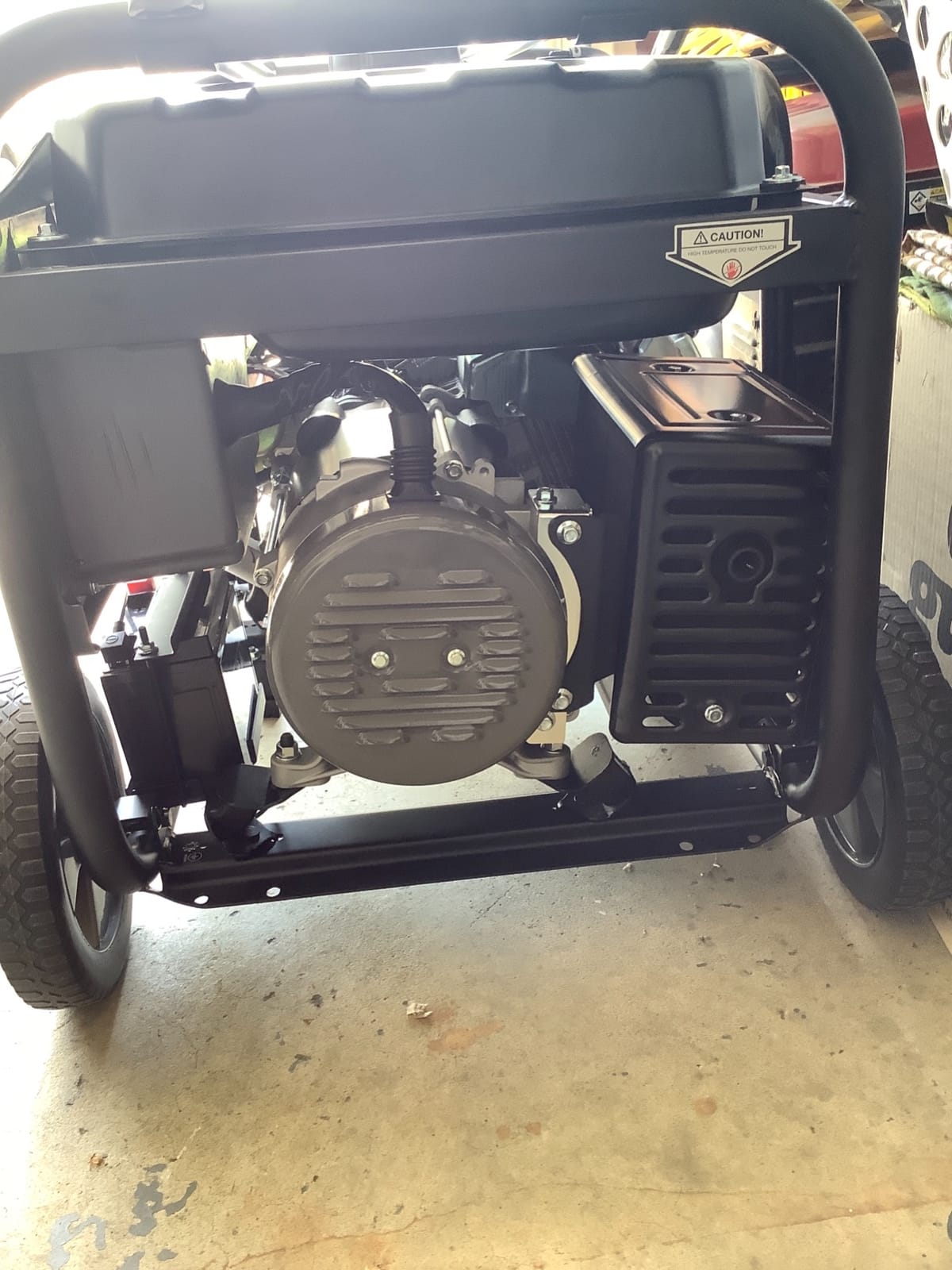
Two details set it apart in daily use. The 10-inch never-flat wheels are a real upgrade from the small foam-filled casters that develop flat spots on heavier machines, and this unit is heavy enough for that to matter. And the automatic voltage regulation paired with the digital meter means you can see the machine is healthy instead of hoping it is.
The honest weakness is the warranty. One year of limited coverage is the shortest term in this lineup, and it is the single most repeated reservation in reviews. If you buy it, buy the extra coverage if it is offered, and stay on a regular maintenance schedule. The 457cc single-cylinder four-stroke air-cooled OHV engine is a conventional, serviceable design, which is a point in its favor for long-term ownership.
What this unit handles well
Households that want a full-day-plus run on a single tank and need real 240V capability. Central air, pumps, water heater, and freezer loads are all within reach, and the never-flat wheels make repositioning it around a house or garage far less annoying than the alternative.
Where you will feel the trade-offs
One year of warranty coverage is thin for a machine intended as long-term storm infrastructure. The open frame means noticeable noise, so overnight placement next to a bedroom wall is a poor choice. And the listed weight figure on the product page is not reliable, so measure the storage space yourself before buying.
4. DuroMax XP13000HX – Best Surge Headroom for Heavy Loads
DuroMax XP13000HX 13,000-Watt Dual Fuel Portable Generator – Gas & Propane, Electric Start, Whole Home Power Backup, Transfer Switch Ready, RV & Emergency Ready
10500 running watts,13000 surge
500cc OHV engine with copper windings
CO Alert protection
Five year manufacturer warranty
Pros
- 13000 watts of surge capacity covers the toughest starts
- Front facing fuel selector and digital display simplify operation
- CO Alert adds carbon monoxide protection
- Five year warranty is the longest among the fuel units
- Copper windings and a 500cc OHV engine support durability
Cons
- 245 pounds makes it one of the heaviest units to move
- Open frame construction is loud in residential settings
- Whole-home use needs a transfer switch or interlock and electrician work
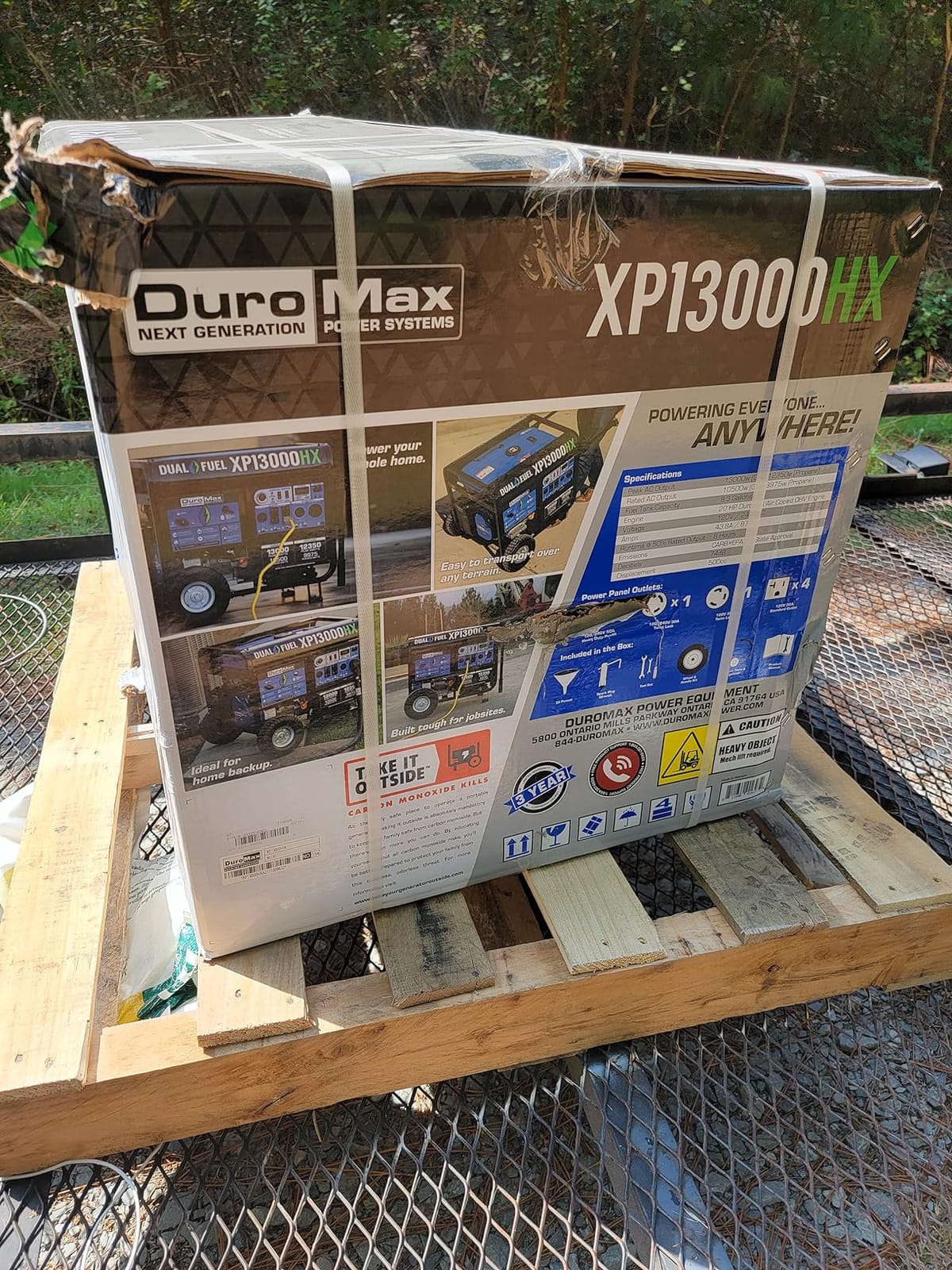
When the load list includes a central air conditioner plus a well pump plus a water heater all at once, surge headroom is the number that decides whether the machine survives contact. The XP13000HX delivers 13,000 watts of surge against 10,500 running watts, the highest surge figure among the units in this roundup. That margin is what allows several compressor motors to start in sequence without the generator browning out.
The 500cc OHV DuroMax engine is paired with 100 percent copper windings, and the five-year manufacturer warranty is the longest coverage on any fuel unit here. That combination of long warranty and copper construction is the single strongest durability signal available in this class, and it is why I place this above the XP12000EH when the load list is heavy.
Day-to-day usability is where the newer platform shows. The fuel selector sits on the front panel, so switching between gasoline and propane takes seconds in the dark rather than requiring you to walk around the frame. A digital display reports status, and CO Alert carbon monoxide protection adds a layer of safety for placement near the house. The panel carries four 120V GFCI outlets, a 30A 120V outlet, a 30A twist lock, and a 50A 120V/240V outlet.
Owners consistently describe this as the step up from the XP12000EH, citing the extra headroom and clearer controls. The reservations are about the physical machine and the install, not the electronics. At 245 pounds it is the heaviest unit in this roundup, and getting a whole home running means a transfer switch or interlock kit plus electrician work, so budget for the installation as part of the purchase.
What this unit handles well
Large homes, well and sump pump households, and anyone running central air through a multi-day outage. Seventeen hours of listed runtime on a full tank gives you real endurance, and the 50A outlet plus five-year warranty reduce the risk on a purchase intended as permanent household infrastructure.
Where you will feel the trade-offs
Weight is the first hurdle. One person should not plan to move 245 pounds through a wet yard in the dark, so plan the setup with a second person or a dolly before you need it. Noise is the second, and the third is the installation: without a transfer switch or interlock you are limited to running extension cords to essential outlets.
5. Oxseryn EDOG10 4400-Watt Inverter Generator – Best for One-Person Handling
Oxseryn Power Equipment 4400 Watts Inverter Generator Gas Powered, Portable Open Frame Generator, Low Noise with ECO Mode, RV Ready, Emergency Home Backup
3400 running watts,4400 peak
Inverter output,ECO mode,14 hour runtime at 25 percent
Under 72 dBA at 23 feet,56 pounds
Pros
- Lightest unit here at 56 pounds so one person can reposition it
- Under 72 dBA makes it usable at campsites and near a house
- ECO mode stretches a 2 gallon tank to about 14 hours at 25 percent load
- Inverter output is gentler on sensitive electronics
- Built in fuel gauge and low oil shutdown
Cons
- Gasoline only with no propane option for long term storage
- 3400 running watts limits it to essentials
- Covers only one year of warranty
- Units may arrive with a noticeable gasoline smell from factory testing
Everything else in this roundup that can run a meaningful load weighs between 100 and 245 pounds. This one weighs 56 pounds and still produces 3,400 running watts with inverter-style output. For a household with one person who has to move the machine themselves, that is not a minor spec difference, it is the difference between a plan that works and a plan that fails at 2am.
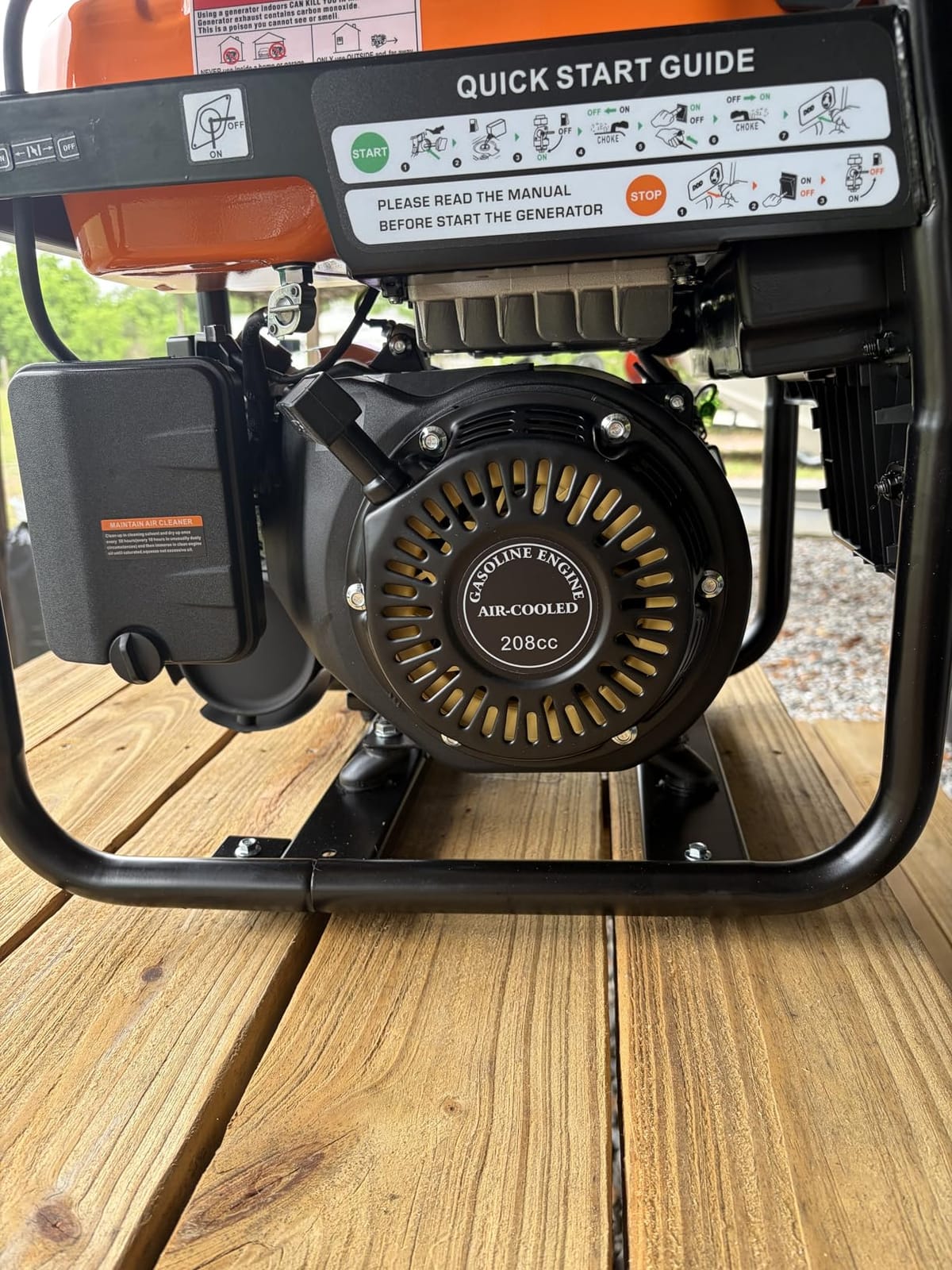
It is also quiet. The measured figure is under 72 dBA at 23 feet, which is in the range where conversation is still possible, and the ECO mode can run the 208cc four-stroke engine for up to 14 hours at 25 percent load off a 2-gallon tank. For a fridge, router, and lighting scenario, that is genuinely overnight-plus coverage on a small fuel load.
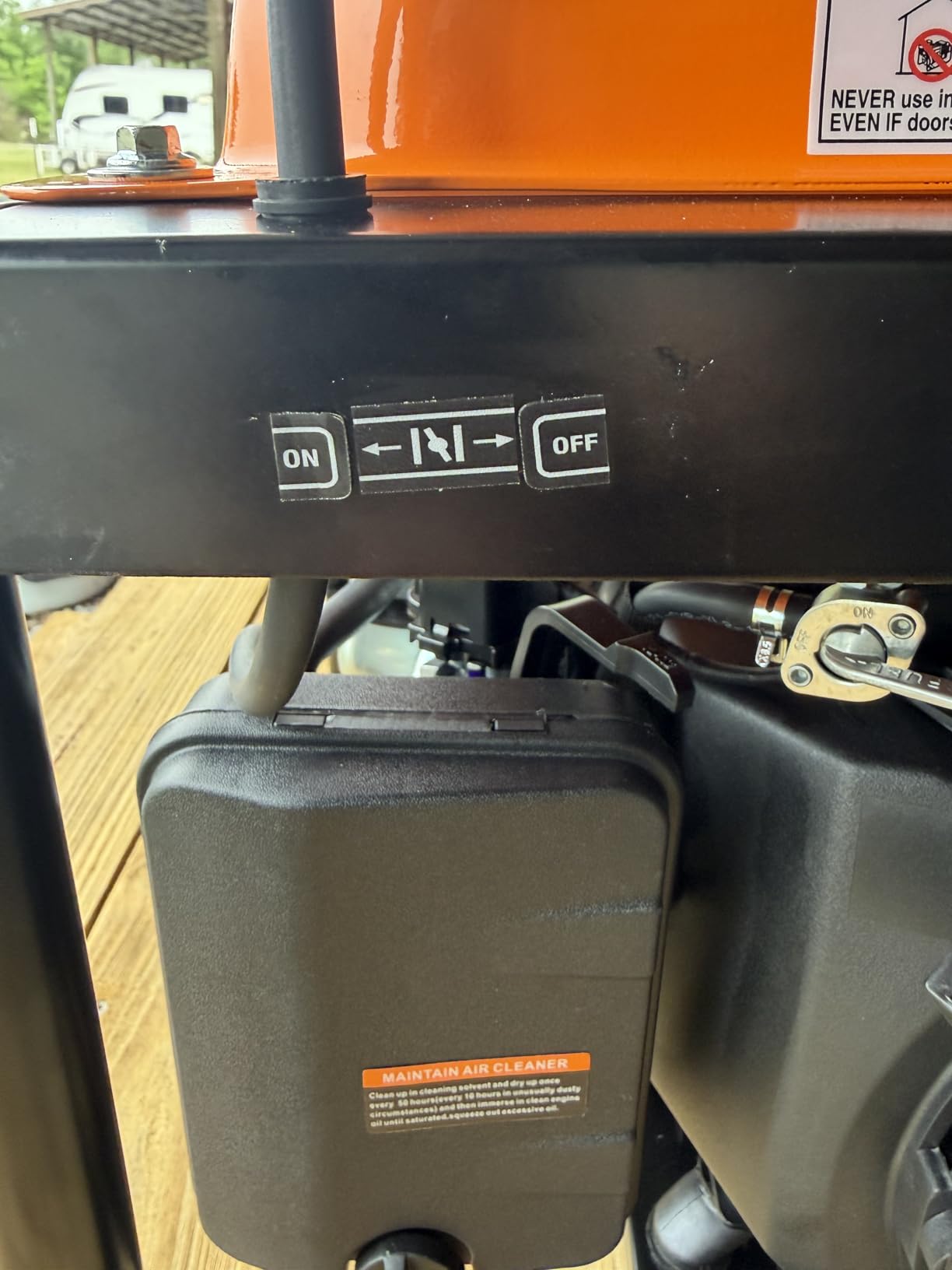
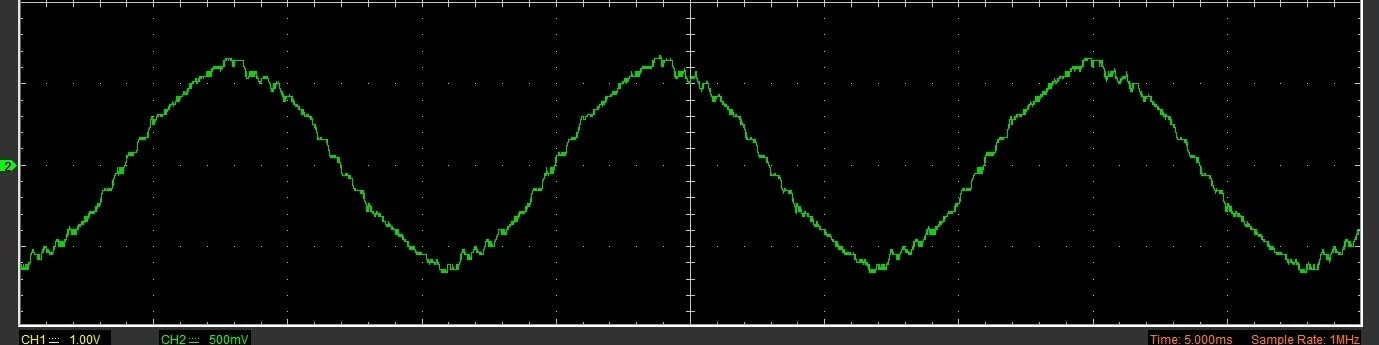
Inverter output is the technical detail that matters most here. A conventional generator produces a stepped waveform that some sensitive electronics dislike, while an inverter unit smooths that out. Computers, routers, medical devices, and modern TVs all behave better on this type of machine, which is why I would not hesitate to plug network gear directly into it.
Outlets total two 120V AC, one 12V DC, and one RV port, which is a modest selection. Cold start technology helps in cooler conditions, and a fuel gauge, low oil shutdown, and overload protection cover the basics. The trade-offs are straightforward: gasoline only, one year of warranty, and a power ceiling that rules out central air, well pumps, and electric heat.
What this unit handles well
Apartment or condo households, older adults, small homes, RV use, and camping. Refrigeration, internet, lighting, and electronics are the natural load set. It also serves as a second unit alongside a larger machine, covering the loads a big generator handles badly.
Where you will feel the trade-offs
Gasoline only is the significant one. There is no propane fallback, so during a storm when fuel is hard to source, you have a single point of failure. The 3,400-watt ceiling also means it cannot start a window air conditioner alongside a fridge, and some units arrive with a strong gasoline odor from factory testing that dissipates after the first run.
6. Anker SOLIX C2000 Gen 2 – Best Battery Power Station for Fast Recharging
Anker SOLIX C2000 Gen 2 Portable Power Station, 2,048Wh, 2,400W, Camping
2048Wh LiFePO4 expandable to 4kWh
2400W rated with 4000W peak
Full recharge in 58 minutes
41.7 pounds,9W standby draw
Pros
- Full recharge in under an hour
- one of the fastest in this class
- 4000W peak output handles window and RV air conditioners
- Compact at 41.7 pounds
- 9W standby draw preserves stored charge
- Expandable to 4kWh for longer refrigerator runtime
Cons
- 2400W continuous cannot carry central air or heavy resistive loads
- Higher cost per watt than smaller 1.5kWh class units
- Few owners have run it long enough to validate runtime claims fully
This is the unit I recommend when the grid is likely to come back within a day and you want to be able to refill fast. A full recharge in 58 minutes on AC or solar means that if the power returns for an hour before the storm resumes, you can meaningfully top up. That changes how you plan a multi-day event, and it is the capability that separates this from smaller 1,000-watt stations.
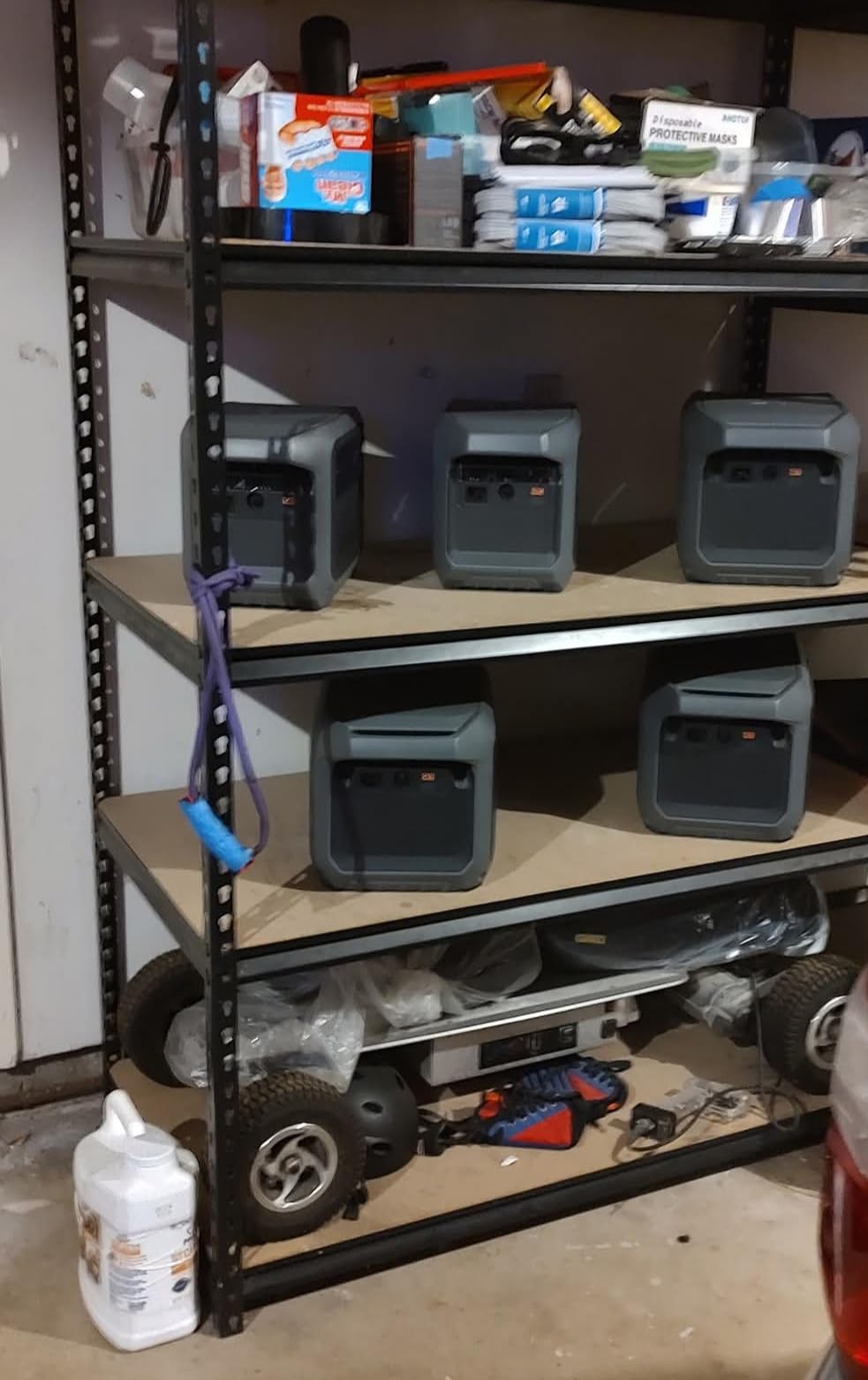
Capacity is 2,048Wh of lithium iron phosphate, expandable to 4kWh with an expansion battery. At the 9W standby draw, it runs a dual-door refrigerator for up to 32 hours, or about 64 hours with the expansion battery attached. Output is 2,400W rated with 4,000W peak, which is enough for a window air conditioner, a microwave run in short bursts, and a fridge simultaneously.
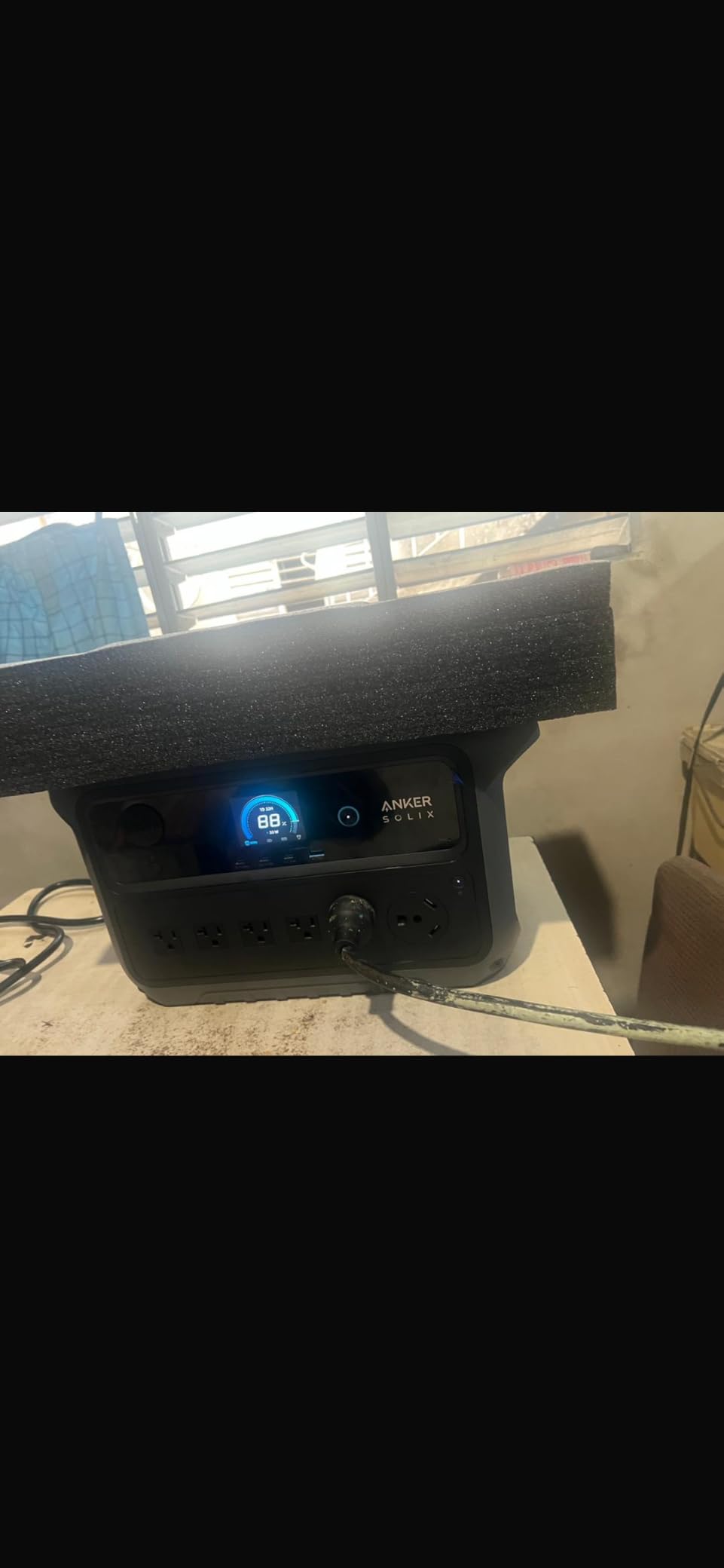
The 800W alternator charging path is the sleeper feature for homeowners, because it lets you refill from a car in about three hours. Between grid, solar, wall outlet, and car, the unit supports six recharging methods, so a multi-day outage rarely leaves you without a way to top up. Owners draw direct comparisons to larger EcoFlow units and find this one smaller, faster to charge, and easier to carry.
At 41.7 pounds and 10.1 inches tall, it fits under a desk or beside a bed, and it emits no exhaust, so it can run indoors in a hallway or garage with the manual’s ventilation guidance respected. The LiFePO4 chemistry and five-year warranty make it a long-term purchase rather than a storm-season impulse buy.
What this unit handles well
Refrigeration, network equipment, home office gear, medical devices, and short-to-medium outages where the grid returns intermittently. It is the best choice if you want quiet indoor operation and the ability to recover capacity fast rather than maximizing stored energy.
Where you will feel the trade-offs
2,400W continuous is the ceiling. Central air, an electric water heater, or electric heat are not realistic loads here. And at this size, cost per watt runs higher than smaller 1.5kWh units, so you are paying for recharge speed and peak output rather than capacity.
7. EcoFlow DELTA Pro – Best for Large-Capacity Battery Backup
EF ECOFLOW Portable Power Station 3600Wh DELTA Pro, 120V 3600W AC Output
3600Wh LFP expandable to 25kWh
3600W AC output,4500W with X-Boost
15 output ports
99 pounds
Pros
- Largest battery capacity here at 3600Wh expandable to 25kWh
- 15 output ports run many devices without extension cords
- Full recharge in 1.8 hours from a 240V outlet
- Owners running mobile businesses report steady power under heavy continuous load
- Five year warranty with app monitoring over Wi-Fi and Bluetooth
Cons
- At 99 pounds it is difficult to move without the extendable handle
- Solar input limited to about 15 amps which caps recharge speed
- Highest cost in this selection
- Some units report error codes requiring service intervention
When the goal is stored energy rather than wattage, the DELTA Pro is the strongest unit in this roundup. It stores 3,600Wh of lithium iron phosphate, and it expands to as much as 25kWh with add-on batteries or a smart generator. That expansion path is what separates a weekend backup asset from something that can carry a household through a serious multi-day outage without refueling.
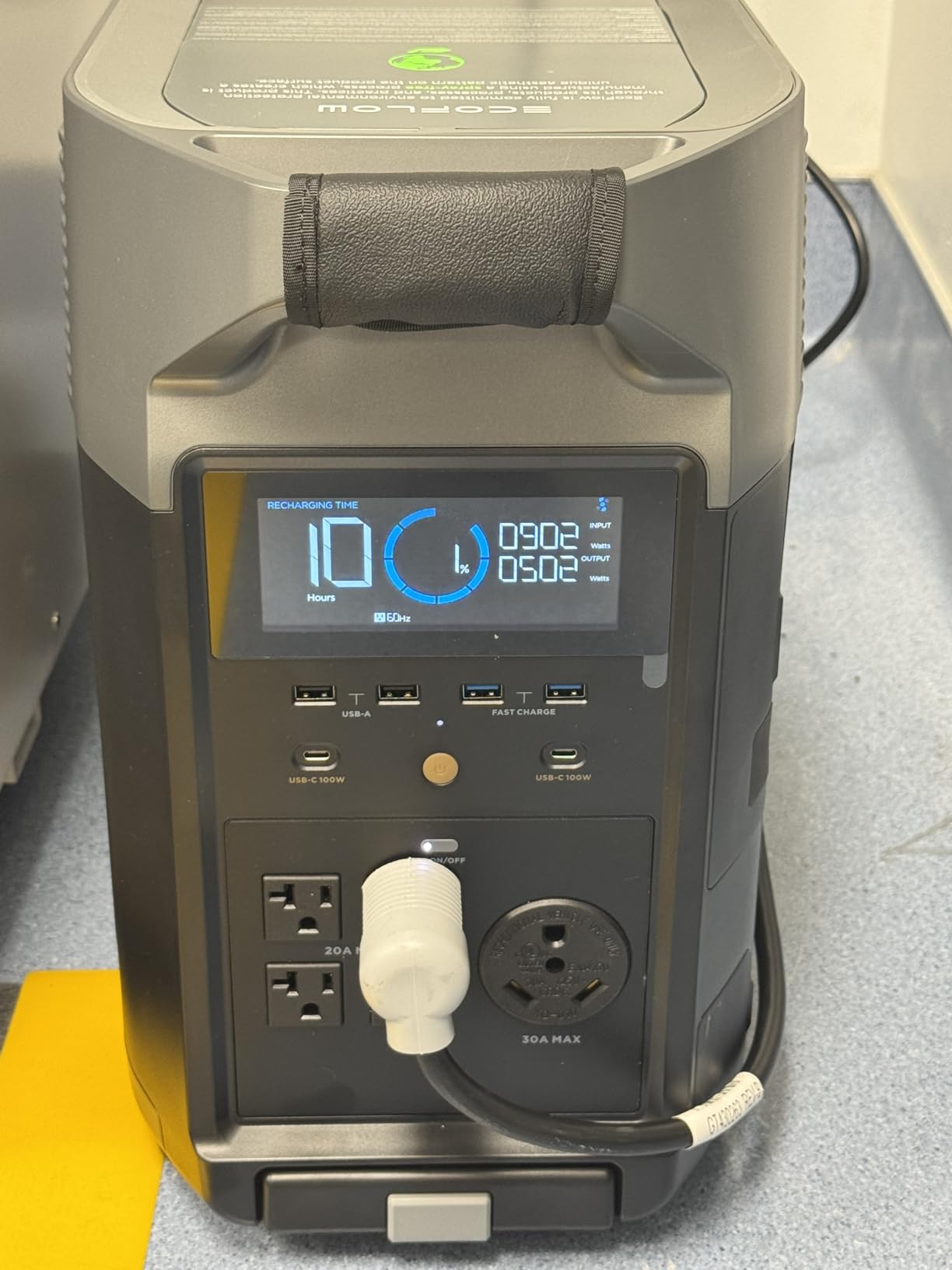
Output is 3,600W AC, rising to 4,500W with X-Boost and 7,200W when paired with a second unit. Fifteen output ports, including five AC outlets and 100W USB-C, mean you can run a fridge, router, lighting circuit, and several device chargers at once without a single extension cord. Charging is fast: full in 1.8 hours from a 240V outlet, 2.7 hours from a 1,800W wall, or 2.8 hours with four 400W solar panels.
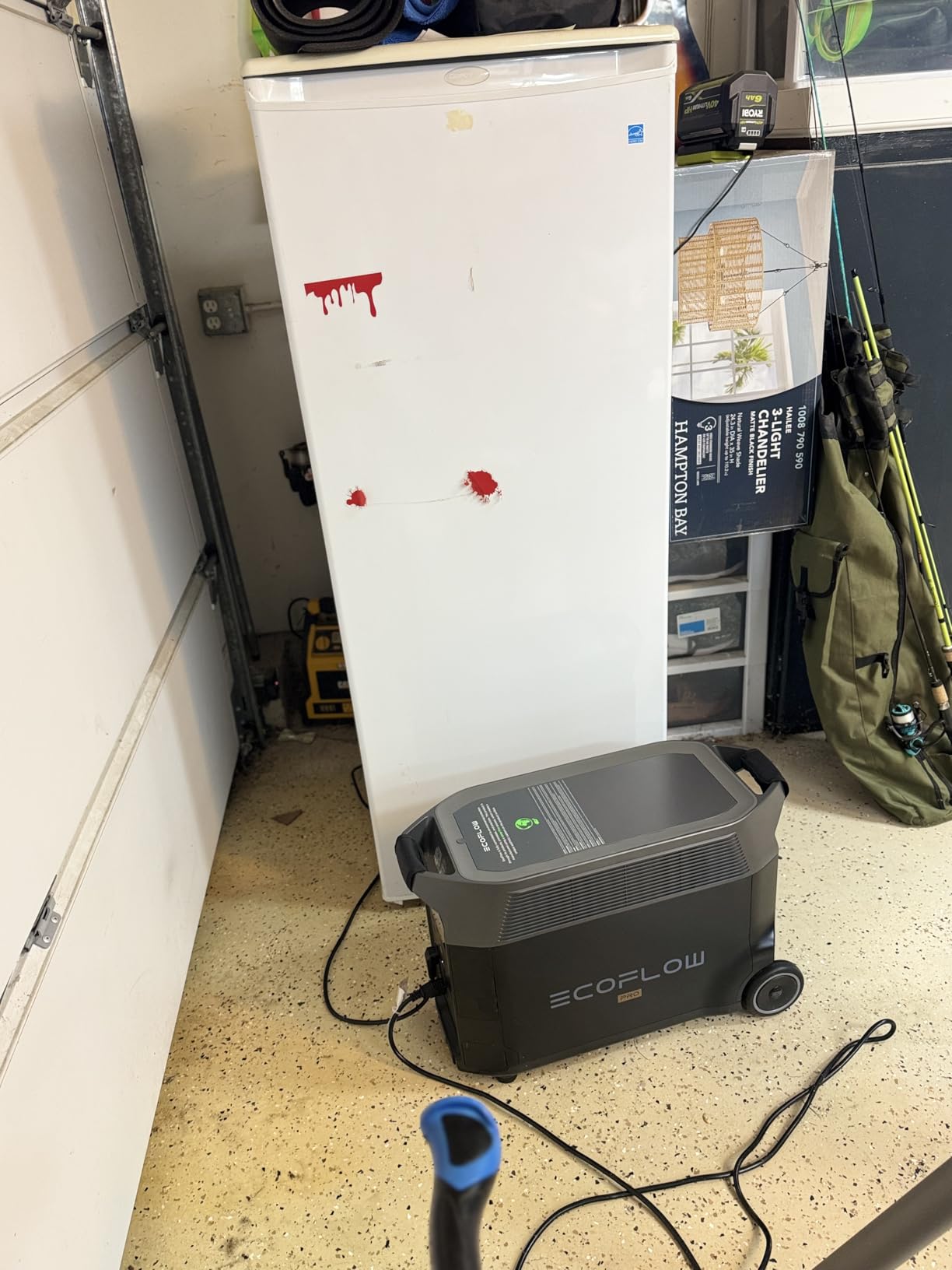
Owners who run mobile businesses report smooth, consistent power under heavy continuous load, which is the hardest test for a power station. The app gives real monitoring and control over Wi-Fi and Bluetooth, and the five-year warranty is backed by customer service experiences reported for warranty replacements. For a household that treats backup power as a working utility rather than an emergency prop, those operational details matter more than raw wattage.
The physics of a lithium iron phosphate pack is the real drawback. At 99 pounds it is a two-person move without the extendable handle, and once the battery is empty there is no fuel to carry in. Solar input is limited to roughly 15 amps, so a large panel array recharges more slowly than the headline charging times suggest. A handful of units have shown error codes and overload behavior that needed service intervention, and solar charging will not refill a 3,600Wh pack overnight on a single panel.
What this unit handles well
Households that want a fridge, freezer, network, lighting, and office loads running together for a day or more, plus anyone with an expansion plan. The 15-port panel and fast AC recharge make it the least fussy station to live with in a real outage.
Where you will feel the trade-offs
Weight, cost, and the fact that stored energy is finite. Plan your daily energy budget before the storm rather than during it, and keep the extendable handle in the setup so the move is not the bottleneck. Expect to expand with extra batteries if you want more than a day.
8. EcoFlow DELTA 3 Max – Best for Indoor UPS Use and Medical Devices
EF ECOFLOW DELTA 3 Max Portable Power Station, 2048Wh LFP Battery, 2400W
2048Wh LiFePO4 battery
0-80 percent recharge in 1.13 hours
3400W continuous X-Boost
Under 10ms transfer time
Pros
- Tied for the highest rating in this roundup at 4.7 stars
- 0-80 percent in 1.13 hours is the fastest recharge figure among the stations here
- Under 10ms switchover works as a home UPS for computers and medical devices
- 3400W X-Boost output runs microwaves fridges and power tools
- Light at 35.7 pounds and rated for a decade of daily use
- Quiet enough for indoor and overnight placement
Cons
- 2048Wh capacity is modest next to the larger DELTA Pro
- Costs more than 1500W class units such as the Anker SOLIX S2000
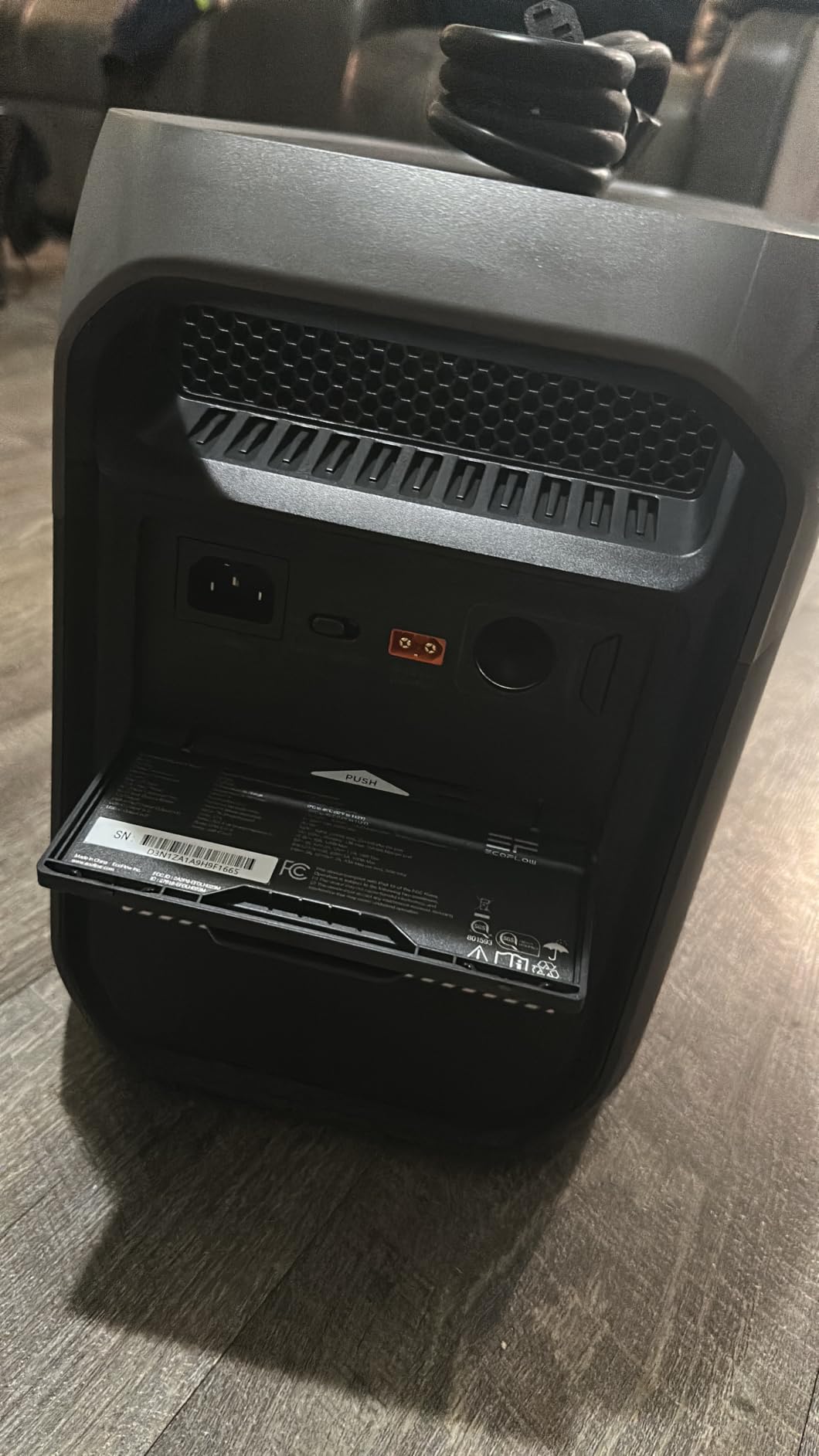
The number that defines this unit is 10 milliseconds. That is the switchover time between grid power and battery power, and it is short enough that a desktop computer, a network switch, or a home medical device does not notice the transition. That single specification is why I place this unit above larger stations for anyone whose outage concern is keeping critical electronics alive rather than running heavy appliances.
Capacity is 2,048Wh of lithium iron phosphate, and 0 to 80 percent recharge takes 1.13 hours using X-Stream technology, the fastest recharge figure among the power stations in this roundup. Continuous output in X-Boost mode is 3,400W, which comfortably covers a refrigerator, a microwave, and a handful of tools. The battery is engineered for 10 years of daily use, backed by a five-year warranty.
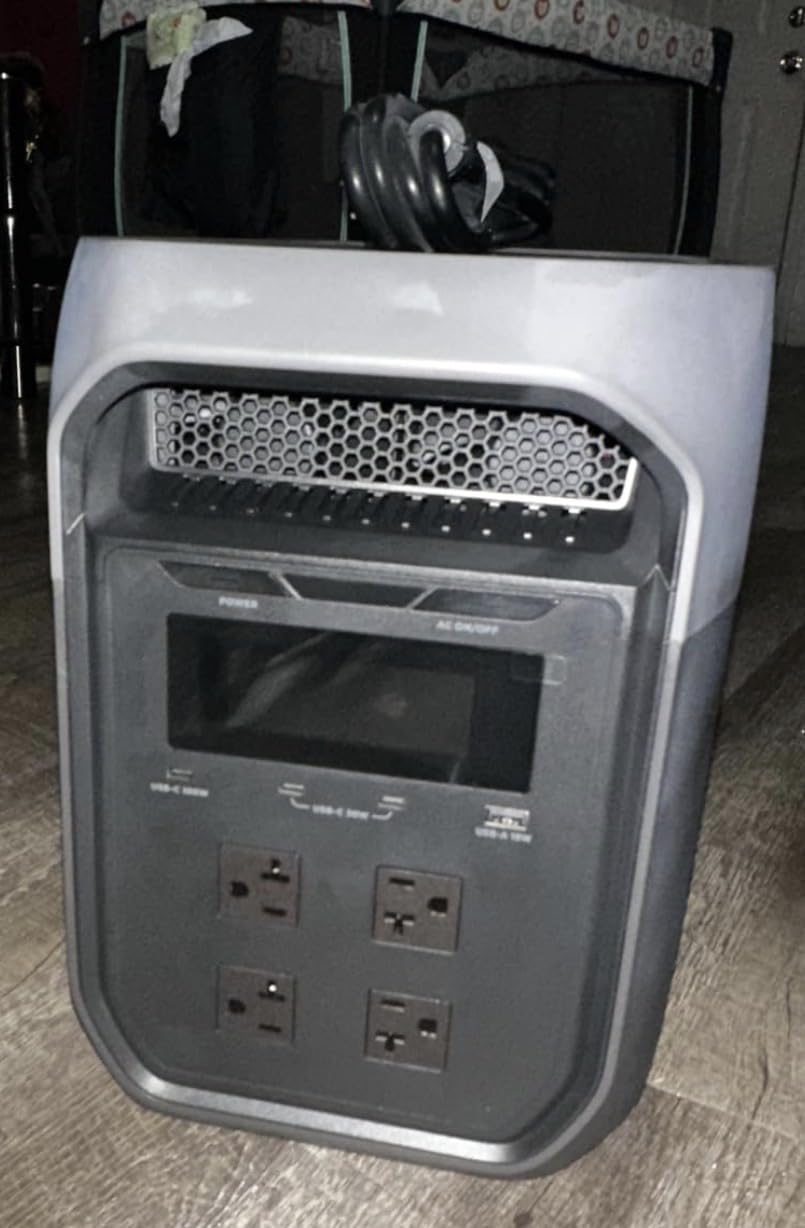
Reviewers consistently frame this as a home backup purchase rather than a camping one, and they keep coming back to the transfer time and the quiet operation. At 35.7 pounds with a 9.4 by 12 by 19.44 inch body, it lives in a hallway or closet rather than the garage. App control covers energy monitoring, priority settings, and charge and discharge scheduling, so you can reserve capacity for the fridge overnight and release it to the microwave in the morning.
Be realistic about the ceiling. 2,048Wh is half the DELTA Pro, so sustained heavy loads drain it quickly, and the port count is more modest than larger EcoFlow models, which limits how many devices you can run at once. For a UPS-plus-refrigeration role it is excellent. For running a house, it needs a partner unit or the DELTA Pro instead.
What this unit handles well
Medical equipment, home office continuity, network gear, and refrigerator plus lighting during a short to medium outage. It is the best pick in this roundup for indoor placement, where noise and exhaust would otherwise be disqualifying.
Where you will feel the trade-offs
Capacity is the limit. Two thousand watt-hours will not carry a household through a week of no power, and the port selection is smaller than the DELTA Pro. Costs also run higher than 1,500-watt class stations, so you are paying specifically for switchover speed and build quality.
9. Champion 4500-Watt Dual Fuel Inverter Generator – Best for Quiet Operation
Champion 4500-Watt Electric Start Dual Fuel Portable Inverter Generator
3500 running watts on gasoline,3150 on propane
61 dBA at rated load
Up to 21 hours on propane
CO Shield auto shutoff,parallel ready
Pros
- Genuinely quiet at 61 dBA
- quiet enough for campground rules
- Inverter output is clean enough for computers and TVs
- Up to 21 hours of runtime on propane
- Parallel ready to double output with a second unit
- Three year warranty plus free lifetime technical support
Cons
- CO Shield shuts the unit off in enclosed or poorly ventilated spaces
- 99.2 pounds is heavy to lift into a vehicle
- One of the higher costs in the 4500W class
- Some buyers find it louder than the advertised rating
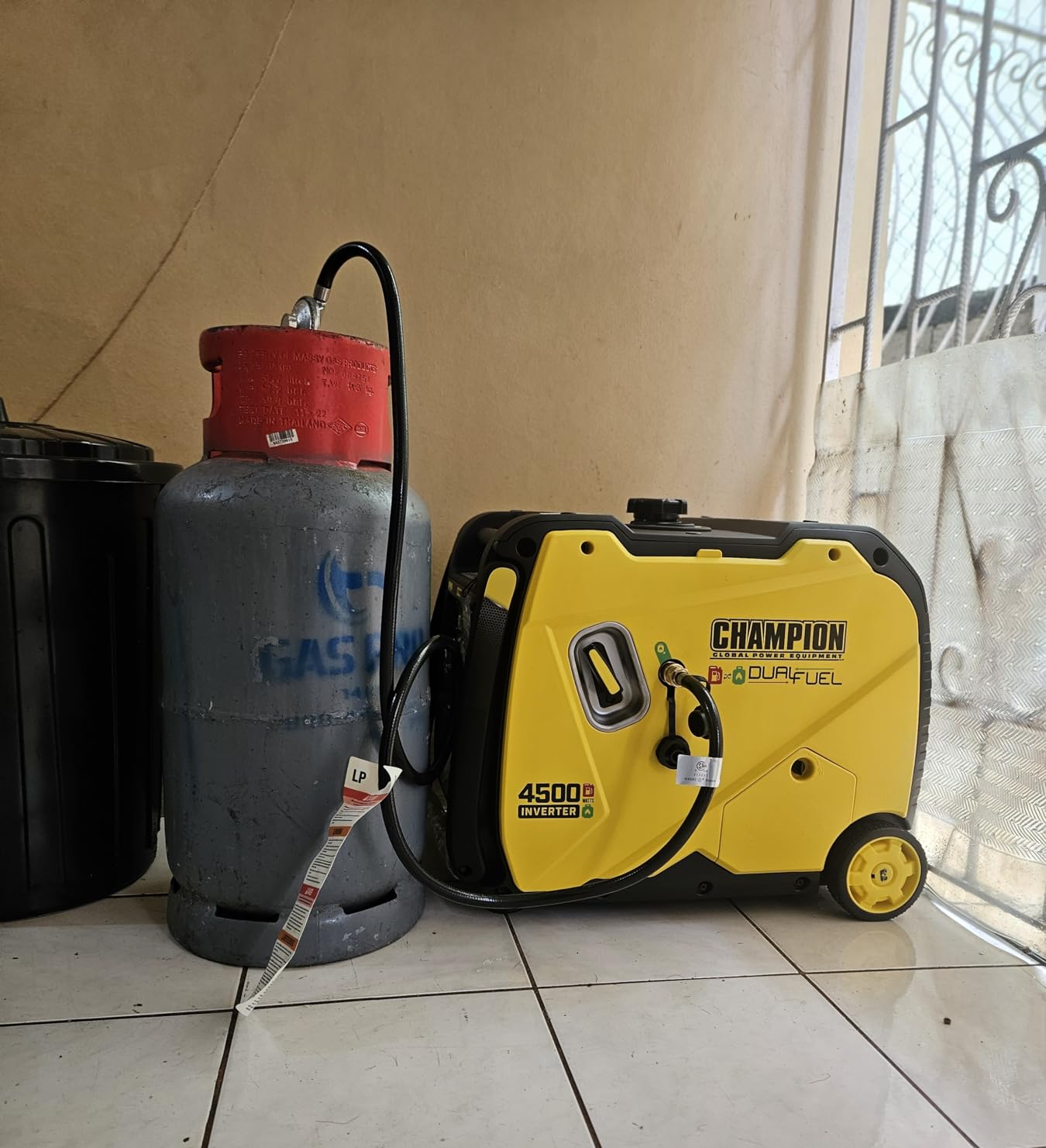
At 61 dBA at rated load, this is the quietest fuel-powered unit in the roundup, and the gap versus an open-frame machine is large enough that you can hear it. That matters if your generator has to run overnight, if a neighbor or a local noise rule is a factor, or if you are running it near a bedroom wall with the transfer switch inside.
It is also a genuine inverter unit, so the output is clean enough for computers, televisions, and network equipment without a line conditioner. The 212cc four-stroke engine produces 4,500 starting and 3,500 running watts on gasoline, and 3,150 running watts on propane with up to 21 hours of run time, the longest propane runtime of any unit here. That propane figure is the one to remember for a multi-day storm.
Long-term owners running food trucks and RVs report hundreds of hours of reliable use, and the Intelligauge with voltmeter, frequency meter, and hour meter plus the EZ Start dial keeps operation simple. Parallel-ready capability means a second matching unit doubles your output if you later decide you need more. Free lifetime technical support alongside a three-year limited warranty is a better service commitment than most of the fuel units in this list.
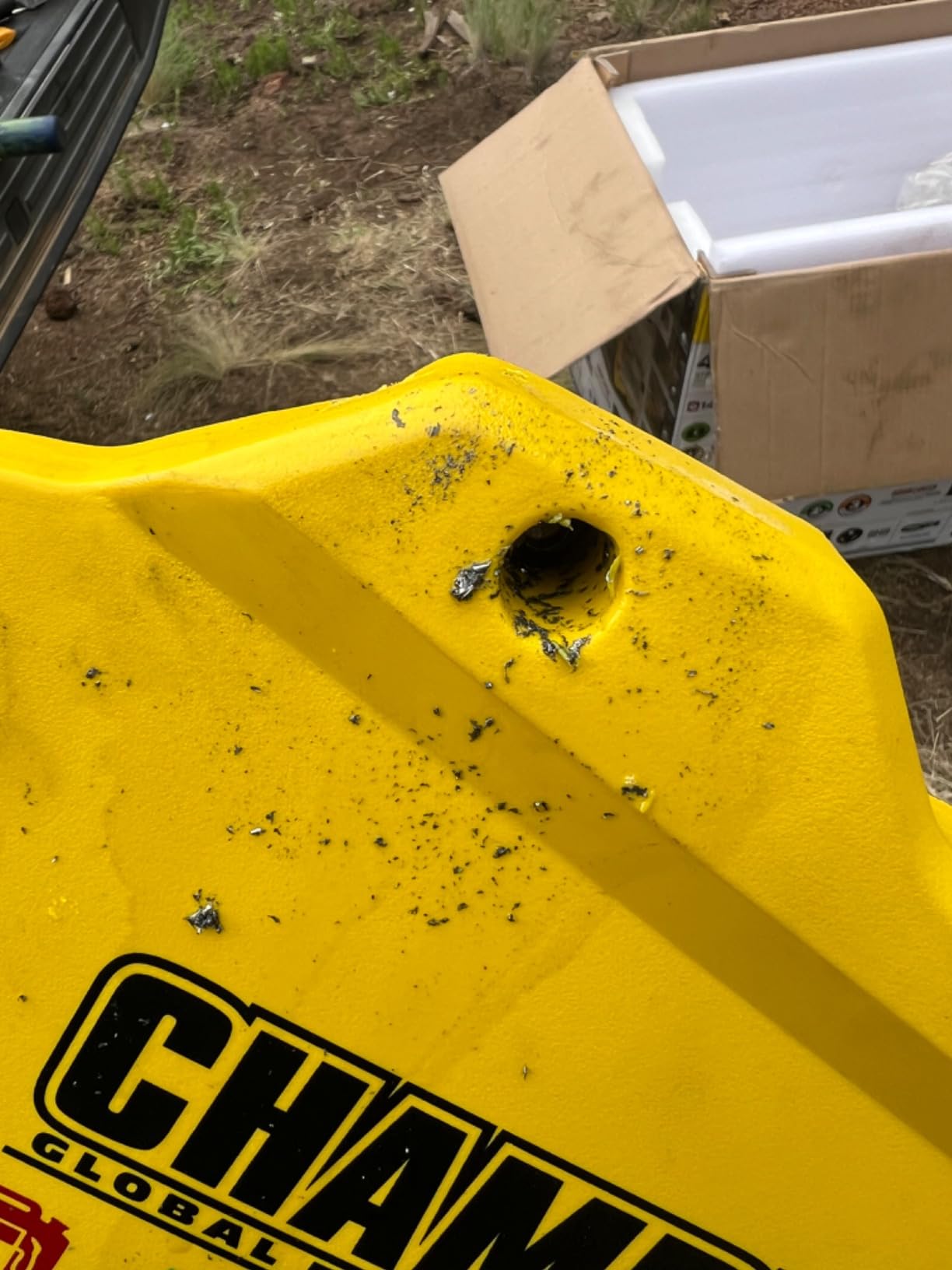
The CO Shield system is the feature to plan around. It will shut the unit down in an enclosed or poorly ventilated space, which is the system working as designed rather than a fault, but it surprises first-time owners. Plan an outdoor run location with clearance before you need it. At 99.2 pounds it is a two-hand lift, and a few buyers report it running louder than the published figure under heavy load.
What this unit handles well
Overnight and multi-day outages where noise is a genuine constraint. Refrigeration, electronics, lights, a small appliance, and propane endurance make it a strong core unit for a home that is sensitive to sound, or for RV and food-truck use alongside a house.
Where you will feel the trade-offs
3,500 running watts is below the heavy fuel units, so central air and well pumps are out of reach. The weight makes it awkward to load, and it sits at the upper end of its output class. Set the CO Shield expectation before first use so a safety shutdown is not mistaken for a broken machine.
10. Anker SOLIX S2000 – Best Plug-and-Play Small-Load Backup
Anker SOLIX S2 Portable Power Station, 2,010Wh, 1,500W
2010Wh LiFePO4 from 314Ah cells
1500W continuous,3000W peak
Up to 35 hours of fridge runtime
Under 10ms UPS switchover,8 outlets
Pros
- Only about 3 watts drawn in UPS mode
- among the lowest standby consumption reported
- Under 10ms switchover keeps computers running through brief outages
- Compact at 8.19 by 11.1 by 12.7 inches and 35.7 pounds
- Up to 35 hours of fridge runtime verified by several owners
- Battery rated for a 15 year lifespan and 10000 cycles
Cons
- Cooling fan is loud and droning during full 1200W charging
- Harsh chemical smell during the very first charge cycle
- 1500W continuous cannot run central air or high-draw appliances
- No 12V DC port
- only AC and USB connections
This is the unit most people actually need, even if it is not the one they first searched for. Owners overwhelmingly buy it as an always-on UPS-style backup rather than for camping, and they validate that use case with real outage tests lasting 12 to 30 hours on refrigerators, network gear, and medical devices. The 6W idle draw means leaving it plugged in costs almost nothing, and the fridge runtime of up to 35 hours covers the overwhelming majority of real outages.
Capacity is 2,010Wh of lithium iron phosphate built from 314Ah cells, rated for a 15-year lifespan and roughly 10,000 charge cycles, which is the longest durability claim in this roundup. Output is 1,500W continuous and 3,000W peak, and there are eight outlets laid out across front and rear panels so you can reach them without crawling behind furniture. Solar input is supported up to 400W, with six recharging methods in total.
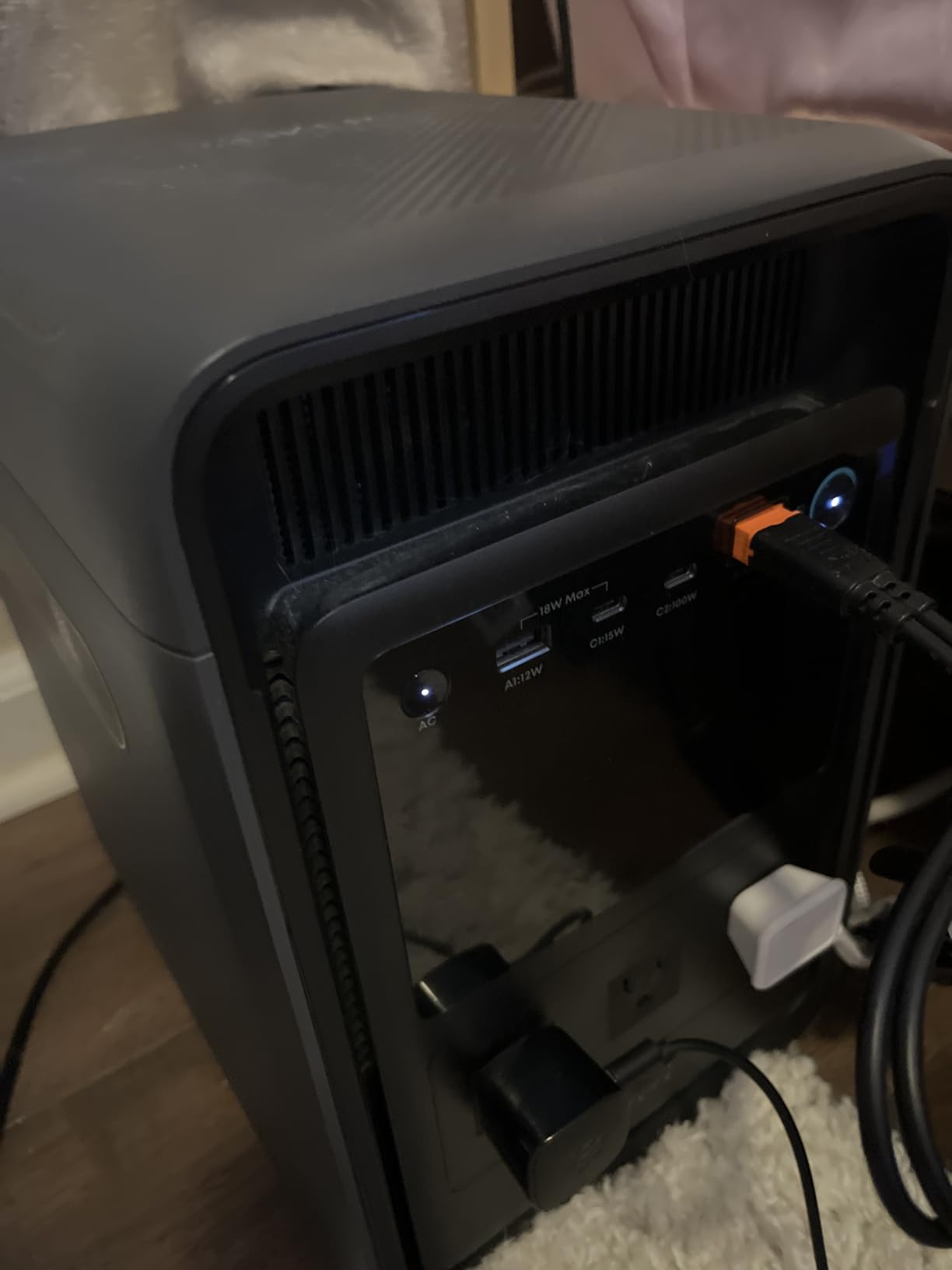
Under 10ms switchover is what makes the UPS role real, and the app lets you set charging speed, charge and discharge limits, and track energy use. The body measures 8.19 by 11.1 by 12.7 inches and weighs 35.7 pounds, so it moves around a house easily and stores without planning a shelf. It runs quietly in most operating situations, which is the point when it lives indoors.
Two drawbacks come up consistently. The cooling fan is loud and droning while charging at the full 1,200W, so it is not silent during a recharge, only during output. And a number of owners report a harsh chemical burn-off smell during the first charge cycle, which dissipates after that first cycle. At 1,500W continuous you also cannot run central air, and there is no 12V DC port, only AC and USB.
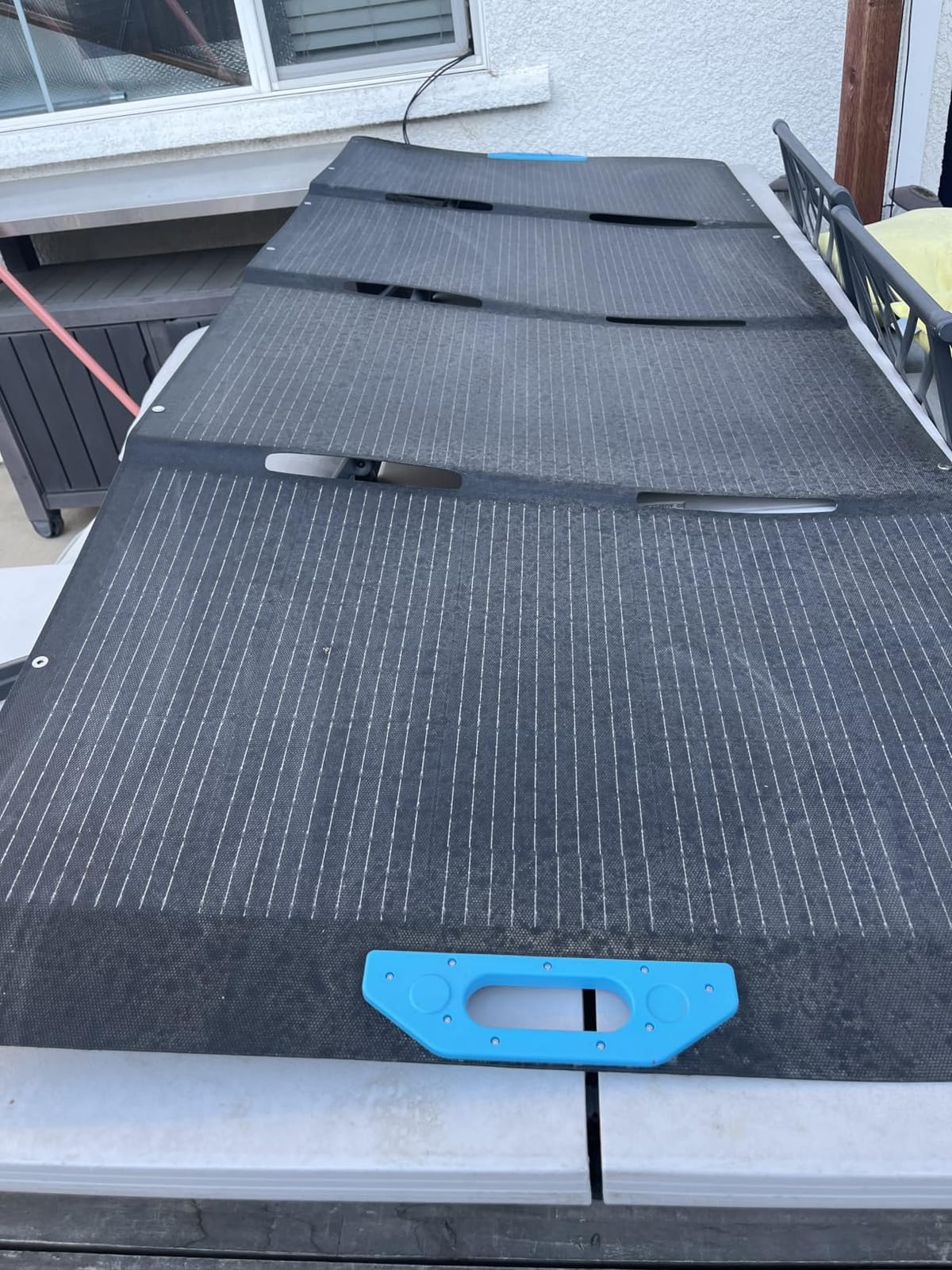
What this unit handles well
Refrigeration, routers and modems, network switches, home office equipment, and medical devices on an always-on basis. If your essential load list is small, this covers a full day on a single charge and refills quickly from a wall outlet.
Where you will feel the trade-offs
1,500W continuous is a hard ceiling, and no amount of stored energy changes it. The fan noise during high-rate charging can be distracting in a bedroom or office, and the first-charge smell is unpleasant enough that you should do that charge cycle before you need the unit.
Fuel Generator vs Battery Power Station: Which One Fits Your Outage
Fuel generators and battery power stations are not competitors in the way the marketing suggests. They solve different halves of the same problem, and the right choice depends almost entirely on how long your outage lasts and how much noise you can tolerate at three in the morning.
Fuel wins on endurance. A full tank plus stored propane means power as long as fuel is available, and propane cylinders can be set aside for months without degrading. Fuel units in this roundup deliver thousands of continuous watts, which is the only way to start a central air compressor, a well pump, or electric heat.
Battery wins on everything about the experience. No exhaust, no fuel logistics, no pull-start in the rain, and under 10ms switchover on the best units means electronics do not notice the outage. They run indoors per their manuals, which is the single biggest practical advantage for anyone with medical equipment or a home office.
A common pattern among owners in forums is to start with a portable unit and graduate. One r/Nightshift poster described beginning with a portable generator and ultimately settling on a 26kW standby system after sizing frustration. That is a reasonable path, and it is the right one when the essential load list keeps growing.
My practical rule: if your outage is likely to end within a day or two, battery is the better experience and the quieter one. If it may not, or if you have central air, a well pump, or electric heat, fuel is the only realistic class. Many households end up owning one of each, a large fuel unit for heavy loads and a compact station for the fridge, network, and medical gear.
Safety Setup: Outdoors, 20 Feet Away, and a Transfer Switch
This section is the one I would not cut for space. It mirrors the safety guidance that appears most often in utility and consumer guidance for this category, and it is where most home generator injuries happen.
Run fuel generators outdoors only, at least 20 feet from windows, doors, and vents. Never operate one in a garage, basement, crawlspace, shed, or enclosed porch, even with the door open. Carbon monoxide is odorless and colorless, and a CO sensor or CO Alert shutdown is a backup layer, not a substitute for distance.
Connect to the home through a manual transfer switch or an interlock kit installed by a licensed electrician. Plugging a generator into a household wall outlet and backfeeding the panel can start fires and electrocute utility lineworkers. Extension cords are fine for a defined set of essential appliances when they are outdoor-rated and properly sized, but they are not a panel connection.
Battery power stations emit no exhaust and are designed for indoor use within the manufacturer’s guidance, which makes them a genuinely different safety category rather than a lesser one. Keep them clear of vents and heat sources, and do not store a unit that has been outside in freezing rain without drying it.
Two more habits pay off. Never refuel a hot generator, and let it cool before you do. And run the machine under load for ten minutes once a month, because the most common failure is a unit that was never started after the last service.
Choosing by Outage Scenario, and What to Avoid
Sizing by scenario is more useful than sizing by price tier, and it is the framing I use with anyone asking where to start. A few hours of outage, an overnight event, a multi-day storm, and a full-week grid failure each point to very different hardware.
For a few hours, which is the most common case, you need a fridge, a router, and some lights. That is roughly 300 to 400 running watts, and any of the inverter units in this roundup covers it with room to spare. For an overnight outage, budget 800 to 1,500 running watts and add 50 percent headroom so the compressor starts cleanly. For a multi-day storm, either a large fuel unit with a full tank and stored propane, or a large battery station with an expansion plan and solar. For a week or more, a permanently installed standby generator is the honest answer.
Reliability red flags are worth naming directly, because the question of what to stay away from comes up constantly. A unit with no carbon monoxide sensor or auto-shutoff is the clearest one. So is a brand with no serviceable parts supply and no published warranty term longer than a year. An electronics-only warranty on a machine with an engine is another signal, because it means the failure most likely to happen is the one that is hardest to claim.
On engine provenance, the consensus repeated in the forums is that the engine brand matters more than the badge on the housing. People on r/Tools point to Honda GX390 and Kohler engines specifically as the reliability credential that outlasts the generator brand name. That is useful context when a premium-priced unit is under consideration, and it is also why budget units in this roundup carry shorter warranty terms.
Open-frame noise is not a defect but it is a deal breaker for some households, and buyers consistently report being more surprised by volume than by any other spec. If anyone in your home is a light sleeper, buy the quietest unit your load list allows rather than the largest one your budget allows.
Fuel Supply, Break-In, and Maintenance for New Fuel Generators
Two topics that never make it into product pages determine whether your machine works in month three. The first is fuel, and the second is the first hour with a new engine.
On fuel logistics, gasoline is the weak point. Untreated gasoline degrades within roughly a month, so a fuel stabilizer is essential for anything stored longer than that. The folk wisdom repeated in the prepper communities is to buy, preserve, and rotate: keep several full containers, treat each one, and swap them on a schedule so nothing sits past its useful window. Propane cylinders store far longer and lose nothing in storage, which is exactly why dual-fuel units hedge supply risk so well.
Break-in is straightforward. Add the correct oil, check that the fuel valve and choke are in the right position, and run the engine at roughly half of its rated load for the first hour or so, then change the oil. Most manufacturers specify a first service interval, and skipping it is the most common cause of early failure in cheap engines.
After that, the schedule is small: check and change oil on the interval in your manual, clean the air filter, keep the fuel lines and spark plug in good condition, and run the unit under load monthly. Add a fresh stabilizer to stored fuel each season. That is genuinely all of it, and a unit maintained this way will outlive the outage it was bought for.
Frequently Asked Questions
Which portable generator is best for home use?
For most homes the answer is a dual-fuel unit in the 3,500 to 9,500 running watt range, chosen by your load list rather than by brand. The DuroMax XP12000EH covers whole-home fuel loads with dual-fuel flexibility, while the Champion 4500W inverter is the quietest fuel option. If you want indoor placement instead, a battery power station such as the EcoFlow DELTA 3 Max switches over in under 10 milliseconds.
What size portable generator is needed to run a house?
Add up the running watts of everything you want to keep alive, then add 30 to 50 percent for headroom. A refrigerator, router, and lighting come to roughly 300 to 400 watts, so a 2,000-watt class unit covers a basic load. Central air, a well pump, or electric heat pushes a household into the 5,000-watt running class and above.
What is the best backup power generator for my home?
For outages that end within a day or two, a battery power station is quieter, safer indoors, and easier to run, with units like the Anker SOLIX S2000 covering a refrigerator for up to 35 hours. For longer outages or heavy loads, a fuel generator is the only realistic option, and dual fuel gives you flexibility if gasoline supply is disrupted.
What portable generators to stay away from?
Avoid any unit with no carbon monoxide sensor or auto-shutoff, no published warranty, or an electronics-only warranty on a machine with an engine. Also be cautious with very cheap unbranded units with no serviceable parts supply. Confirm the engine, the warranty term, and the availability of parts in your region before buying.
Which brand of portable generator is the most reliable?
Reliability conversations in owner forums focus less on the generator badge and more on the engine. Honda GX390 and Kohler engines are the most frequently cited durability credentials, and Champion and WEN are widely regarded as strong value tiers. Whatever the brand, a fuel stabilizer, regular oil changes, and a monthly load test matter more than the logo.
What is the best portable generator for whole home backup?
Whole-home fuel loads call for a unit with 9,000 running watts or more and a transfer switch ready 50 amp outlet, which is why the DuroMax XP12000EH and XP13000HX lead this roundup. On the battery side the EcoFlow DELTA Pro, expandable to 25kWh, is the closest equivalent, though no portable unit replaces a permanently installed standby system for a full week.
Conclusion: Match the Machine to Your Load List
Start from your load list, not from a wattage number on a listing page. If you are running a refrigerator, network gear, and lighting, a battery power station gives you the quieter and safer experience, and the Anker SOLIX S2000 or EcoFlow DELTA 3 Max will both cover it well. If central air, a well pump, or a water heater is on the list, you need a fuel generator, and the best portable generators for home backup in that category start with the DuroMax XP12000EH and step up to the XP13000HX when surge headroom is the deciding factor.
Whichever class you choose, set up the safety side before you need it: outdoor placement at least 20 feet from openings, a transfer switch or electrician-installed interlock, and a monthly test run under load. That preparation costs an afternoon and it is what turns a piece of equipment into backup power you can actually depend on in 2026.